Q. My 2020 Toyota RAV4 has 45,000 miles, and the dealer told me I need a synthetic brake fluid flush. The brakes feel fine to me. Is this really necessary, or is it just an upsell?
A. I consider this a legitimate preventive maintenance service, not just an upsell. Over the years, I have inspected many vehicles where the brake fluid looked clean in the reservoir but tested high for moisture and copper contamination. Brake fluid absorbs moisture over time, even in a sealed system. As moisture content increases, the fluid’s boiling point drops and corrosion can begin inside expensive components such as brake calipers and ABS hydraulic units. Before authorizing the work, ask whether the fluid was tested or if the recommendation is based solely on age and mileage. Spending money on a brake-fluid service every three to five years is inexpensive insurance compared with replacing costly brake-system components. The only real upsell may be the use of the word “synthetic.” Most modern DOT 3, DOT 4 and DOT 5.1 brake fluids are already synthetic.
Q. I recently bought a very well-kept 2021 Ford F-150. Every time I stop at a red light, the engine shuts off and then restarts when I take my foot off the brake. A friend told me this constant restarting will ruin my starter and battery. Can I permanently disable this?
A. Your friend’s concern is understandable, and I was somewhat skeptical when these systems first appeared. However, after seeing them on thousands of vehicles over the years, I have found that starter and battery failures directly related to stop-start systems are not nearly as common as many people believe. Vehicles equipped with these systems use heavy-duty starters and batteries designed for frequent restarts. While some owners find the system annoying, it was designed to improve fuel economy and reduce emissions. Ford allows you to switch the system off each time you drive, but there is no factory setting to permanently disable it. If you are concerned about battery life, simply have the battery and charging system checked as part of routine maintenance. It is also worth noting that the EPA has ended emissions credits for this technology, which may lead some automakers to move away from it in the future.
Q. I noticed the tire pressure light came on in my 2023 Hyundai Tucson during a cold morning last week. By the afternoon, the light went off on its own without me adding air. Is the system faulty?
A. Your tire pressure monitoring system (TPMS) is working exactly as designed. Tire pressure changes by about one pound per square inch (PSI) for every 10-degree change in temperature. When the overnight temperature dropped, one or more tires likely fell below the threshold needed to trigger the warning light. As temperatures increased later in the day, the air inside the tires expanded and the light went out. However, I would not assume the problem fixed itself. In my experience, when the light comes on during cold weather, the tires are usually still a few pounds low. Check all four tires when they are cold and adjust them to the pressure listed on the driver’s door-jamb label. Taking a few minutes to check the pressure now can improve tire life, fuel economy and handling.
Q. I am a 71-year-old woman who knows nothing about cars and read your column religiously. My hybrid’s engine revs when driving on hills, especially on the steep hills in northern New England. I thought my transmission was having difficulties, but people have told me this is a hybrid thing and not to worry. Is that true? Also, what are the paddles on my steering wheel for?
A. What you’re describing sounds normal. When climbing steep hills, the gasoline engine in a hybrid often works harder because the electric motor alone cannot provide all the power needed. Many hybrids also use a continuously variable transmission (CVT), which allows the engine to operate at higher revolutions per minute (RPM) than a conventional automatic transmission. The extra engine noise can sound unusual, but it is generally not a sign of trouble. On many hybrids, the steering wheel paddles increase regenerative braking rather than shift gears. They can be especially useful on long downhill grades, helping slow the vehicle while recharging the battery. For routine driving, I simply use the brake pedal and let the vehicle’s computer manage the system.
Q. I know over the years you have evaluated hundreds of cars and trucks. Have you driven anything fun or exotic lately?
A. Most of the vehicles I test are designed for mainstream buyers, but occasionally I get behind the wheel of something a little more exciting. Recently, I spent time in the all-new Honda Prelude and found it to be a fun, practical sport coupe with responsive handling, good fuel economy and a 200-horsepower hybrid drivetrain. At the other extreme was the McLaren 750S. Its 740-horsepower twin-turbo V8 launches the car to 60 mph in just 2.7 seconds and on to a top speed of more than 200 mph. Does anyone need a $400,000-plus supercar? No. But it is reassuring to know there are still automakers willing to build vehicles simply to showcase what is possible in performance and engineering.
Q. My 2018 Subaru Outback has 172,000 miles. Lately, whenever I turn the steering wheel sharply while parking at low speeds, I hear a clicking sound from the front end. It doesn’t do it while driving down the highway. Should I be worried?
A. In my experience, a clicking noise during tight, low-speed turns is most often caused by a worn outer constant velocity (CV) joint. On vehicles with this kind of mileage, I frequently find a torn axle boot that has allowed grease to escape while dirt and moisture enter the joint. While this is usually not an immediate safety issue, it is something I would repair before a long trip or before the condition worsens. Before spending any money, have a trusted repair shop inspect the axle boots and joints. If the boot is damaged and the joint is clicking, I would replace the complete CV axle assembly since it is typically the most practical and cost-effective repair.
Last updated on October 8, 2026 by AAA Staff
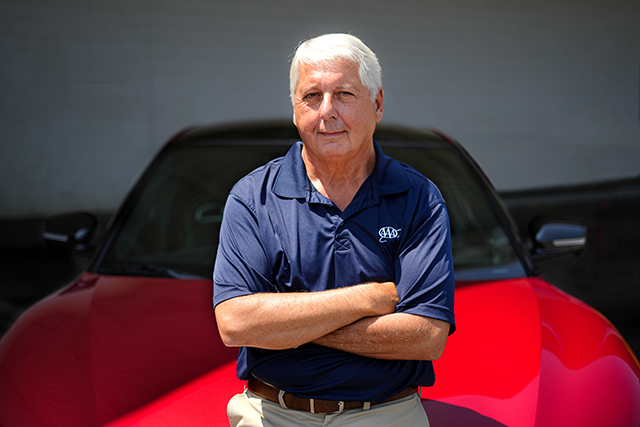
John Paul is AAA Northeast’s Car Doctor and a nationally recognized expert in automotive technology and repair regularly answering reader questions in columns published across the region. He began his career as an automotive technician and attained ASE master technician certification more than 40 years ago.
Do you have a car question? Email the Car Doctor for a personal reply: jpaul@aaanortheast.com.