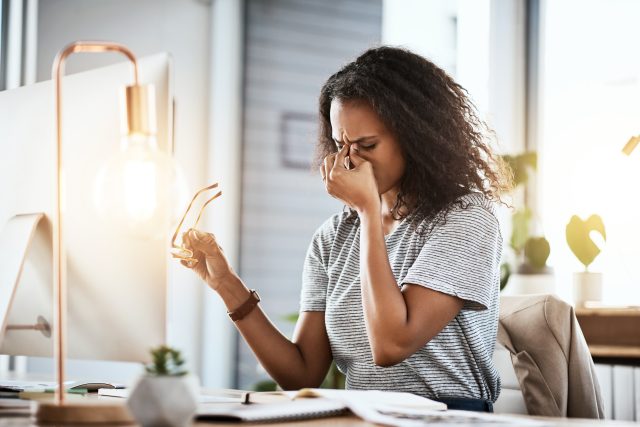
A new term has entered the zeitgeist — one that could only come at a time when news is easier to see, search and endlessly scroll through now more than ever before: news fatigue.
A broad term, news fatigue aims to describe the way we feel after overdoing it with disturbing headlines, and as a reaction, seek out the news less and less. It’s the complicated crossroads of needing to take a step back, but wanting to stay informed, too. So how do we strike that delicate balance in today’s constant news cycle, without going full digital detox?
For some insight, we spoke to Renee Hobbs, professor of communication studies at the University of Rhode Island. There, she also codirects the graduate certificate in digital literacy, is an expert on media and AI literacy education and has helped cultivate a network of more than 10,000 educators in the U.S. and around the world through her work at the media education lab.
The following Q&A depicts her answers to our questions.

Your Guide to Buying a New Car
Tips and tricks to get you through every step of buying a new car, whatever “new” means to you.
Download NowWhat, in your view, causes news fatigue?
Because we now encounter most news through our digital devices, news presented on social media is designed to attract and hold attention. The combination of a headline and an image can be riveting. Though it’s easy to click and swipe through large volumes of increasingly eye-popping headlines, the experience can be overwhelming and exhausting. Plus, exposure to news can trigger strong emotions, because seeing images of starving children, violence against immigrants and even politically polarizing talk can activate unpredictable and troubling feelings.
Can news fatigue be harmful?
When news fatigue leads to news avoidance, it can be harmful. When people withdraw from news consumption, they often disengage from civic life more broadly. Without exposure to current events, people are less likely to vote, attend community meetings or advocate for issues that affect them. This weakens democratic participation and can allow misinformation to dominate public discourse unchecked. When people avoid the news, this reduces their background information — and this limits the ability to critically analyze information and develop informed perspectives. Research has shown that news avoiders are more vulnerable to rumors, misinformation and extremist narratives that circulate on social media or word-of-mouth. By comparison, access to range of credible sources helps people make good decisions about health, the environment, economics and politics.
How can we stay informed while avoiding news fatigue?
Staying informed without burning out requires intentional strategies that balance information needs with emotional well-being. Here is some advice that works for people of all ages:
- Set boundaries around news consumption. Schedule news windows. Decide on specific times of day to check the news rather than constantly scrolling.
- Avoid doomscrolling: Continuous exposure, especially before bed, can heighten stress and fatigue.
- Curate your sources: Follow a small number of trusted outlets rather than trying to track everything.
- Balance hard news — politics, crises, conflict — with solutions journalism, stories that highlight responses, innovations and progress.
- Include local news to stay connected to community-level issues, which can feel more relevant and manageable.
- Limit exposure to breaking news cycles: Wait for updates that offer context and verified details, rather than chasing every alert.
- Seek out long-form or explanatory reporting instead of only headlines, which can be more nuanced and less overwhelming.
Most importantly, I recommend the practice of reflection and critical engagement. After viewing or reading, ask yourself, “What does this mean for me, my community or the world?” and then take time to discuss your perspective with friends, coworkers and family. As you view or read news, notice how certain types of news affect your mood. It’s OK to step back temporarily if you feel overwhelmed. Look for small ways to act, like donating, volunteering or advocating. It’s a terrific antidote to passive news consumption.
What are your tips for avoiding news fatigue? Let us know in the comments.

Based in Rhode Island, Sarah has been a copywriter and content producer with AAA Northeast since 2021. When she’s not scouring the best spots for all things food and drink or whipping up her own versions of tasty meals, you can often find her in the garden, planning her next trip or sipping on (another) hot coffee.
Related Articles



Trending Articles




NEWEST ARTICLES