You never know what you might come across while driving. Traffic could be moving at a steady speed when suddenly you find yourself behind a snowplow, tractor or even an animal. While you’ll likely want to pass anything that’s slowing you down, your may not always be sure how — or if — you should.
Rest assured, cars can legally pass most things on the road, provided certain precautions are taken.
Slowing down, avoiding sudden turns and bursts of speed, and not beeping the horn are the basic rules when it comes to passing anything, particularly an animal that might get startled.
Here are tips for navigating safely around less-common road occupants:
Mounted Police Officers
Slow down as you approach and try to keep several feet between you and the horse. The officer may signal you to pass or wait. If you must wait, slow down and do not shout or beep the horn. If the horse becomes agitated, stop your car. When it is safe to pass, ensure you are several feet away from the horse and accelerate slowly at a constant speed.
The same advice applies to passing any horse and rider on the road.
Cattle
If you encounter cattle walking on the side of the road or crossing the road, immediately slow down. Both horses and cattle have little traction on asphalt and could slip and fall when startled.
If the cows are crossing the road, stop and let the whole herd cross. Do not get out of your car to take pictures or try to assist with the crossing; cattle owners have enough to manage without contending with spectators or amateur cowboys. Also keep an eye out for cow dogs, the canines that help herd the cattle and keep them moving. If cattle are walking on the side of the road, give them a wide berth, do not honk and pass slowly.
All animals spotted near the road require extra caution, especially deer at night.

Car Maintenance for All Seasons
Amish Buggies
Can you pass an Amish buggy?
For the most part, Amish buggies and other horse-drawn carriages are considered vehicles and must follow the rules of the road, including traveling on the right side. Amish buggies will stay as close to the far-right side of the road as possible, unless they cross the road to make a left turn. You can pass but drive slowly and do not pass on hills or curves. Allow at least 20 feet between your vehicle and the horse before returning to the travel lane.
If you are behind an Amish buggy, proceed slowly and do not follow too closely; if you are too close, the buggy driver may not see you. Also, if the buggy stops, it may roll backwards.
Drivers need to be especially vigilant at night, because often buggies and horses are dark-colored and difficult to see. At least four states require lights or reflectors on Amish buggies.
Snowplows
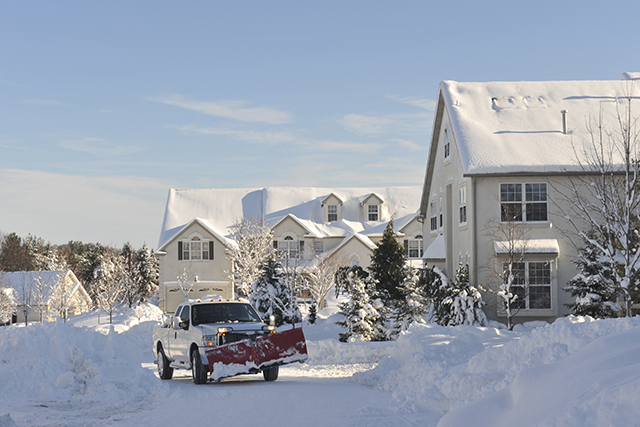
Among the reasons drivers are asked to stay off roads during heavy snowstorms is to give snowplows time and space to work. Weighing in at about 60,000 pounds, plows need room to maneuver and the fewer cars they encounter, the better it is for all involved.
Here are tips for driving near plows or passing them:
- Stay at least 200 feet behind a plow to avoid flying snow, and keep out of the driver’s blind spots.
- If you decide to pass, leave plenty of room between you and the plow. Don’t rush to merge into the lane ahead of the vehicle, because the plow blade extends several feet in front of the truck.
- Never pass a plow on the right because you risk colliding with one of its huge wing blades.
- If a plow is coming toward you, move as far to the right side of the road as possible.
- Accept that plows are going to travel at about 25 mph and passing may not be possible because of road conditions. Also, remember the road ahead of the plow is worse than the road behind it.

Disabled Vehicles
While all states have laws requiring drivers to slow down and move over for emergency vehicles, in the past year, AAA Northeast successfully lobbied to expand the requirement to include
disabled vehicles, and continues to advocate for and support Slow Down, Move Over.
When approaching disabled vehicles, drivers are required to reduce speed and move to another lane. If it is not safe to change lanes, then drivers should proceed slowly.
Tow Trucks
Slow Down, Move Over applies to tow trucks as well. To pass a tow truck, decrease your speed and change lanes to give the truck and driver as much room as possible. This simple courtesy can help save lives.
Tractors
Since they don’t travel more than 25 mph, getting stuck behind a tractor on a rural road can be frustrating. But don’t be in too much of a hurry to pass. Most collisions between cars and farm equipment occur when a tractor is turning left and a driver attempts to pass it. Keep further back from a tractor than you would from a car, because tractors have a larger braking distance and the vehicle may extend into the adjacent lane.
If you decide to pass a tractor, be aware that the tractor operator may not be able to see or hear you. Try to stay visible, leave plenty of room between you and the tractor, then pass slowly. Leave extra room behind you when you merge into the lane ahead of the tractor. Also, be alert for hand signals, because the tractor operator may wave if it is safe to pass.
And when in doubt: slow down and move over.
Have you ever come across a slow-moving vehicle or animal in the road that you didn’t know how to pass? Tell us in the comments.
Last updated on January 2, 2026 by AAA Staff

Ellen is a content producer for AAA Northeast, covering automotive, finance, public affairs and electric vehicle news. She is a former newspaper reporter with experience writing for print and online publications about everything from higher education to sustainability. She recently returned to her native Long Island after living in Connecticut for 20-plus years, and has never met a beach she didn’t like.

Related Articles


Trending Articles


NEWEST ARTICLES