Q. Sometimes the engine in my car hesitates to start. The car is a Hyundai Genesis Coupe V6-engine. This vehicle sometimes hesitates to start up. You can hear the starter turning over, it slowly sputters and finally turns over. What is wrong?
A. I would start with a check of the basics. This includes testing the battery, battery cables and connections and the starter. From your description, I suspect a failing battery or poor electrical connection.
Q. My car will drive fine then will randomly shake as if someone is rocking the car. When I slow down, the car smooths out for miles and will randomly shake again. Shaking feels like it is coming from the rear of the cars more than the front. Any thoughts, most people I ask just tell me to buy new tires.
A. I would start with a thorough inspection of the suspension, looking for worn bushings and other suspension parts. Typically, worn or damaged tires will cause a consistent and repeatable shake. Would I check the tires? Yes, checking tires/wheels is part of a good suspension inspection.
Q. I have owned my 1963 Ford Falcon sedan since 1992. It had 57,000 miles on it then and now it has close to 75,000 miles. It has been a great trouble free cream puff all these years. I had it repainted then the original color and seats recovered in original fabric. It’s a great looking car. The problem is the brakes. I’ve gone to four different mechanics who know how to fix old cars and no one can solve my problem. The driver’s side front and rear heat up and grab to the point the hub caps are very hot. New hoses, new brake cylinders, new master cylinders, (twice), new shoes, new springs – still heating up and a couple of years back it was the passenger side that was heating up. This problem has been like this for the last three years. I just don’t drive it anymore because of the brake problem. It’s been an ongoing mystery. Any help would be greatly appreciated.
A. When I was first married, my wife had a 1964 Ford Falcon purchased from the original owner which we used as a daily driver. These cars were simple and easy to work on. Here is where I would start: Even though the master cylinder was replaced twice, I would want to make sure the pedal to master cylinder is adjusted properly. There should be free play of at least 1/8 inch, even a binding stop light switch can cause the brakes to partially apply and overheat. When the wheels are tight, loosen the brake line at the master cylinder. If the wheel loosens up the master cylinder is the issue. These cars have a left- and right-side self-adjusters (star-wheel). I have seen them swapped side to side, which can cause the brakes to bind up or get loose, so worth checking that the correct parts are on the correct side.
Q. I was listening to your podcast and heard you review both the GMC Yukon and the Infiniti QX80. Of these two big and expensive SUVs which one did you like best and why?
A. On paper, the Infiniti QX80 Sport is the better choice because it has more power (450 hp vs 420 hp) and torque (516 lb‑ft vs 460 lb‑ft), higher towing (8,500 vs 8,000 lbs.) and a more luxurious cabin. On the road, I preferred the GMC Yukon. I felt the ride was smoother, the advanced driver assistance feature — especially the partial self-driving mode — was much better and I felt the controls were more intuitive. And call me old-fashioned, I preferred the V-8 engine over the twin turbo V-6 engine of the Infiniti. My other concern is that Nissan, the parent company of Infiniti, is in the midst of a major multiyear turnaround (which includes closing plants). There are some signs of progress but they are still facing significant financial loses and market challenges.
Q. I was at the dealer and the service person said the car’s brake fluid needed to be flushed. My records showed it was done three years ago. They showed me the fluid, and it was lightly yellowish. What do you think?
A. At AAA, we have found it is good practice to replace brake fluid every three to five years. Brake fluid attracts moisture and moisture is the enemy of the modern brake system. Fresh brake fluid is almost clear and over time can turn dark brown. Brake fluid that is in service will turn slightly yellow (think cooking oil) and this is normal. The proper method to test brake fluid is with an electronic tester that measures moisture or pH dip-strips that measure moisture and cooper levels. Both methods work although I prefer the accuracy of the dip-strips.
Q. I am the owner of a 2014 Porsche Boxster and love everything about the car, particularly its precise connections it provides between the car, road and driver. The car’s handling is excellent with its mid-engine weight balance and evolved Porsche suspension. However, I hear a knocking when moving slowly while steering sharply left or right, such as when backing out of a driveway or parallel parking. The noise is not noticed when moving at higher speeds. I was hoping you could offer an opinion, thoughts, and perspectives about the relationship between the Ackermann Principle and steering cars such as this. Research and Porsche service states it is normal with performance cars, but it sounds wrong and is concerning.
A. Most cars use the Ackerman Principle, basically a suspension design/angle that allows the front tires to turn at different angles to prevent tire scrubbing and uneven wear during turns. If this were my car, I would be looking for worn suspension bushings, especially the track bar bushings and control arms in the rear and all suspension bushing in the front. Once any worn suspension parts were ruled out, I would also be suspicious of axle CV joints that could be somewhat dry and causing a low-speed clunk-clunk when turning hard. Although it is a bit odd to have rear constant velocity joints make noise, it is worth investigating. I would want to rule out any possible safety issue before I dismissed the noise as a normal characteristic.
Last updated on May 7, 2026 by AAA Staff
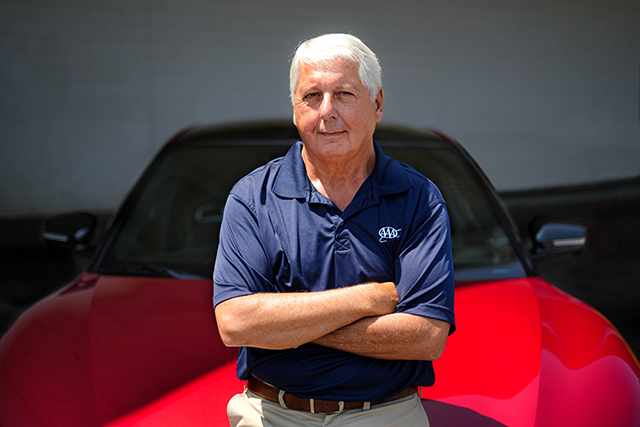
John Paul is AAA Northeast’s Car Doctor and a nationally recognized expert in automotive technology and repair regularly answering reader questions in columns published across the region. He began his career as an automotive technician and attained ASE master technician certification more than 40 years ago.
Do you have a car question? Email the Car Doctor for a personal reply: jpaul@aaanortheast.com.