When his daughter needed extra prep for her road test, Troy D. of East Providence, Rhode Island, found an exceptional driving instructor with AAA.
My daughter was in tears. After hours and hours of practicing together — tense moments on the road, some healthy father-daughter arguments, endless parallel-parking attempts in abandoned parking lots and miles of day and night driving — she still failed her driving exam. She bumped a curb during the parallel-parking portion.
She was devastated. For weeks, she wouldn’t even talk about it. I barely knew what had happened, aside from a few details my wife shared, and she was just as upset. My daughter was heartbroken.
Not knowing what else to do, I looked into professional driving lessons at the AAA branch in Cranston. That’s when we found Mike Fish.
Mike was compassionate, patient and immediately put my daughter at ease. He knew how to relate to a teenager and how to teach without overwhelming. Every lesson was worth its weight in gold. As a parent, I realized I could only teach her so much before my constant reminders about driving safety became background noise. Mike knew how to restore her confidence, strengthen her weak areas and focus on what actually mattered.
He also knew the road test course in detail, which made a huge difference. They worked specifically on the skills she needed to pass, and it showed.
The lessons with Mike were worth every penny. With my son starting down the same path soon, I won’t hesitate to sign him up with Mike as well, so he can benefit from the same experience and guidance.
Thanks again, Mike.”
The Key to Success
To better understand what helps students overcome setbacks like this, we asked Fish about his experience as a AAA Driving School instructor.
“It’s a fun job,” he said. “I like the people I work with, and I enjoy working with the kids.”
The key to passing a road test is repetition, said Fish, who was glad to learn that his three two-hour lessons with Danis’ daughter were so impactful.
A AAA driving instructor for 20 years, he knows that practice is the way to success. Kids who fail often work even harder, with some saying they were glad they failed the first time, because it encouraged them to practice more and become better drivers.
For more stories like this — or to share your own — visit “Hey, AAA!,” our collection of member-submitted emails, photos and videos that capture the real moments AAA has been a part of.
When a flat tire put Katerina K., of Natick, Massachusetts, at risk of failing a class, AAA showed up in time to get her back on course.
I am a second-year graduate student in Boston and was on my way to a weekend intensive class. If you are late or absent for any more than a preapproved 30-minute period, you risk losing credit for the class and have to take it again.
So, you can imagine my stress level when my tire blew on the Massachusetts Turnpike, on a part of the road with no breakdown lanes. AAA was there just in time, and they let my fiance (now husband) deal with the car while I got a ride to school as soon as possible.
AAA updated me the whole time on the status of the car, even though I wasn’t there to deal with it, and they were kind enough to get a ride for my husband as well, who needed a way back home.
Without AAA, I would have been in some hot water. Happy to say they helped save the day, my GPA, and everyone ended up OK!”
For more stories like this — or to share your own — visit “Hey, AAA!,” our collection of member-submitted emails, photos and videos that capture the real moments AAA has been a part of.
Walpole, Massachusetts, resident Kat C. praises a tenacious AAA roadside technician for getting her SUV safely on the road instead of needing a tow.
After leaving night school one evening, around 9 p.m., I returned to my SUV in the parking lot and found I had a flat tire.
This was in the days when cars were equipped with regular tires as spares.
It was winter, with some snow on the ground, so it was neither a pleasant time or ideal weather to be changing a tire.
The dispatched AAA roadside technician was having difficulty getting the straps to release the spare tire, because they were corroded, and he needed a flashlight to see what needed to be done. The working conditions were dark, definitely cold and it was getting later, but he toiled at it.
I felt badly for him working in such conditions and mentioned a few times to just tow the vehicle and I’d deal with it the next day. He didn’t want to give up. He said he almost had it, and continued trying. He eventually did get the tire released, changed it out, and we said our good nights.
I thought he showed exemplary and diligent customer service under such conditions. He easily could have towed the vehicle but was dedicated to resolving the situation at the scene.”
For more stories like this — or to share your own — visit “Hey, AAA!,” our collection of member-submitted emails, photos and videos that capture the real moments AAA has been a part of.
Already familiar with AAA Roadside Assistance, Anthony L., of Natick, Massachusetts, was happy to learn about great insurance options, too.
“I thought AAA was only great for road service. Little did I know, that there were so many other services that they offer.
Not only do I insure my car with AAA, but recently I purchased a great life insurance policy. The representative was very helpful, and after shopping around, I found the rate was the best for the amount of insurance I received.”
Learn how AAA Insurance can meet your auto, home and life insurance needs.
For more stories like this — or to share your own — visit “Hey, AAA!,” our collection of member-submitted emails, photos and videos that capture the real moments AAA has been a part of.
Spring’s arrival ushers in one of the season’s most beautiful sights: cherry blossoms. These delicate pink and white flowers are native to Asia and strongly associated with Japan, where they symbolize renewal. In the U.S., Washington, D.C., is home to the most famous display with those fleeting flowers blooming against the capital’s white monuments.
But you don’t have to head to Washington to see cherry blossoms. There are plenty of places in the Northeast to admire these short-lived beauties. Even better, you could catch them in the capital first, then enjoy a second viewing two or three weeks later when the trees reach peak bloom farther north.
From peaceful gardens to lively festivals, here are a few of the best places to see cherry blossoms in the Northeast this spring.
The neighborhood surrounding this park, named after Revolutionary War hero David Wooster, has celebrated the ephemeral beauty of its 72 Yoshino cherry trees every spring since they were planted in 1973. The annualWooster Square Cherry Blossom Festival, held in mid- to late- April, draws thousands with food vendors and live music. Even outside blossom season, the park is perfect for a quiet stroll followed by a slice at one of New Haven’s legendary pizzerias, like Frank Pepe’s or Sally’s Apizza, both nearby.
If you’re looking for cherry blossoms in Boston, the Charles River Esplanade puts on a top display, with dozens of trees leading up to the Arthur Fiedler Footbridge. Take in the pink views and people watching at one of the top riverwalks in the country, ranked by USA Today.
Visit this 360-acre park, home to the nation’s largest collection of cherry blossoms — 5,300 trees in all — designed by the Olmsted brothers, the renowned landscape architects behind Central Park. The park hosts the Essex County Cherry Blossom Festival every April, with food vendors and live performances. Also, find a ton of family-friendly events like a bike race, a 10K run, children’s activities and Japanese cultural demonstrations. The cherry trees usually hit peak bloom between the second and third weeks of the month, so keep an eye on the “bloom tracker” on the park’s website if you want to time your visit just right.
When it comes to peaceful places to see cherry blossoms, it’s hard to beat this small but elegant space tucked behind the Buffalo History Museum, where koi ponds ripple gently beside carefully placed cherry trees lining the walkways. The garden also hosts the Buffalo Cherry Blossom Festival, an annual celebration in late April, where you’ll find food vendors, tea tastings and cultural performances.
Head to Greenport Village on Long Island’s North Fork for a springtime visit when more than 300 cherry trees burst into bloom. This waterfront village is home to Okame, Yoshino, snow goose, Sargent’s and Kwanzan cherries, which line the streets in brilliant pink and white.
The annual Cherry Blossom Festival occurs over several weeks, typically in April and May, depending on the weather. Take a self-guided walking tour of the flowering trees and then pick up some blossom-themed refreshments and gifts at participating local businesses. For the most current information, including event schedules and bloom updates, visit the official Greenport website or contact the AgroCouncil, which sponsors the festival.
For cherry blossoms paired with a gorgeous waterfront view, make your way to this 19th-century mansion and arboretum perched on Narragansett Bay. It’s best known for its spring daffodils — more than 50,000 blooms across 80 varieties — but the grounds also feature a lovely collection of cherry trees. After exploring the gardens, you can head into town for a stroll along Hope Street, Bristol’s main thoroughfare lined with boutiques and restaurants.
This 250-acre urban oasis in the Bronx is a top destination for cherry blossom season with a vast collection of more than 200 flowering cherry trees from 82 different species, hybrids and cultivated varieties. The season kicks off with Okame cherries in March, followed by Yoshino cherries in April and Kanzan cherries through mid-May. For one of the best views, stroll along the Cherry Esplanade, where rows of trees line the walkway. Beyond the blooms, the garden offers indoor exhibits and seasonal displays worth a visit. Plus, AAA members can snag a 20% discount on Garden Pass tickets using a promo code — a bonus for anyone looking to make a day of it.
Visitors can step inside to see sliding doors hand-painted by renowned Japanese artist Hiroshi Senju, then wander through gardens with koi ponds, a waterfall, a tea house and more than 100 cherry trees. The gardens come alive in early April with traditional performances, tea ceremonies and family-friendly events during the Subaru Cherry Blossom Festival.
Located in West Fairmount Park, this historic site is a traditional 17th century-style Japanese house and garden just minutes from downtown. The structure was designed by architect Junzo Yoshimura and built in 1953 for an exhibition at the Museum of Modern Art in New York. It was then moved to its current site in 1958.
What’s your favorite place to see cherry blossoms in the Northeast? Share them with us in the comments below.
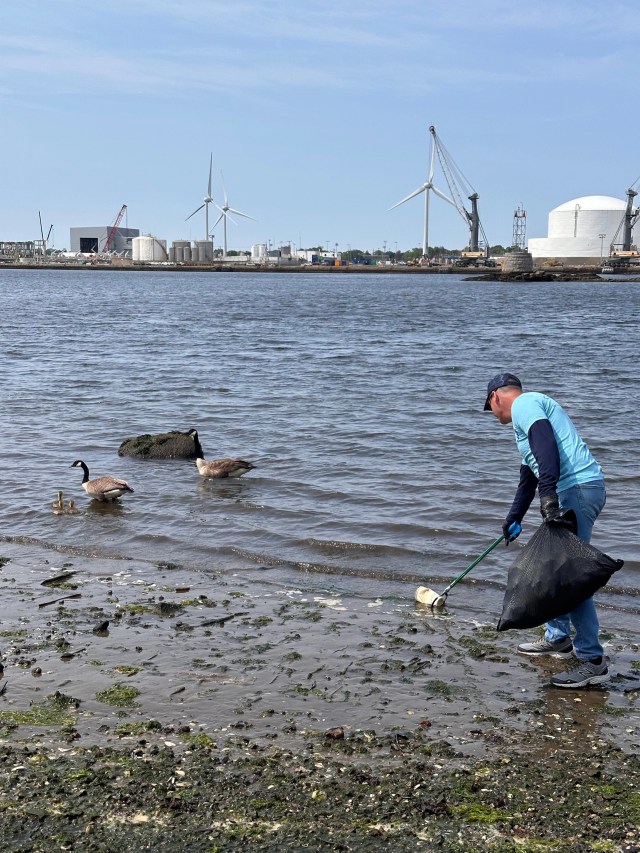
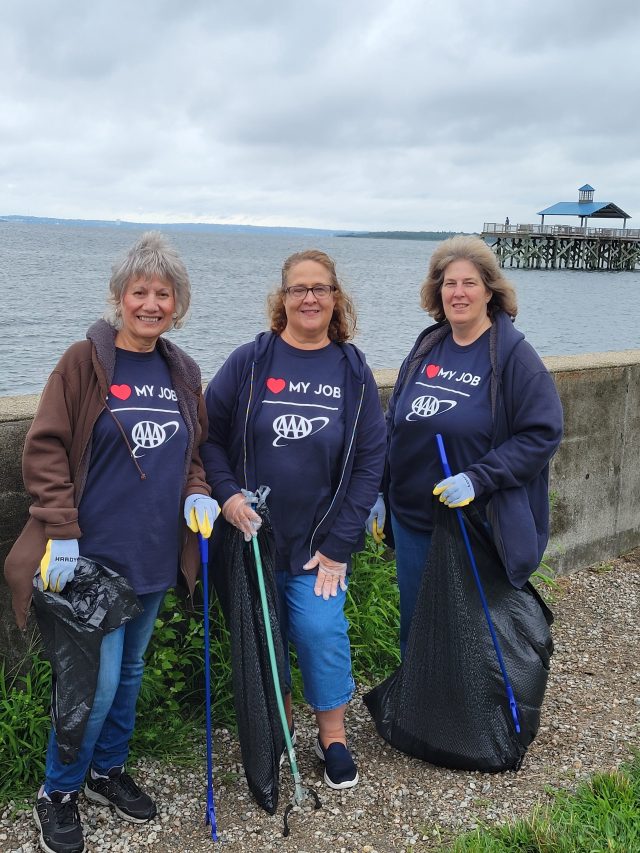
AAA Northeast is celebrating Earth Month throughout April with volunteer projects designed to bring members, employees and community groups together to help beautify the environment.
If you’re looking to make a difference in your neighborhood, join AAA branch teams as they spruce up parks, beaches and more. Cleanup events are happening monthlong across the Northeast.
Typically, employees show up in force, but AAA branches are trying to get more members involved, explained Thomas Ryan, district branch manager and co-chairman of the Branch Operations Member Engagement Committee.
“Earth Month is our biggest member engagement program of the year,” Ryan said.
In 2025, AAA Northeast successfully hosted 18 Earth Month events across the region, with a notable 79% member participation rate.
Some of our most successful events in 2025 included:
Sound Water Cleanup in Stamford, Connecticut, where a team of 17 volunteers joined us.
Save The Bay event at Scarborough Beach, Narragansett, Rhode Island, where were joined by 13 members.
Three Earth Day weekend events in Connecticut, Massachusetts, New Jersey, New York and Rhode Island, bringing in around 135 member volunteers, despite the rain.
“Besides cleaning up our community, the most rewarding part is creating relationships with members,” said Maggie McMenemy, branch manager and co-chairman of the Member Engagement Committee.
“It’s a great opportunity to get involved in the community, do something with your family and learn more about community organizations,” Ryan added.
Visit your local AAA branch or click here sign up for a AAA Earth Day cleanup near you.
Every season in Italy has its charms, but when is the best time to visit Italy for the ideal mix of good weather, value and elbow room (that’s “spazio di manovra,” in Italian)?
Get ready to trade in your pumpkin spice latte for some caffe amaretto because you don’t want to miss Italy in the fall.
Italians call their home “bel paese” – the beautiful country – and it’s especially true when the heat of summer gives way to the sunny days and cooler nights of October.
The Best Time to Visit Italy for the Weather
Set your sights on Italy in October to explore Rome, Venice, the Amalfi Coast and beyond, without melting into a puddle of molten lava.
“Air conditioning is not as much of a thing in Italy as it is in the U.S., so that can be an issue for some when it’s very hot,” said AAA travel advisor Jennifer Della Pena, who suggests both early spring and fall for those who who prefer cooler temperatures.
There is a caveat, however. “If you are going to Southern Italy and Sicily, that climate is very different than if you’re doing the Dolomites on the border of Switzerland,” said Della Pena. The former is generally warmer than the latter.
For example, the weather in Italy in October can still be pleasant enough to hit the beaches of the Italian Riviera, particularly earlier in the month. The Rome climate is moderate, averaging pleasant, 72-degree highs during the day. But the mercury dips to an average of 58 degrees in Lake Como, and even chillier in the Italian Alps.
Keep in mind that this time of year is also considered the start of rainy season in Italy, so be sure to pack a raincoat, just in case.
Summer is peak season in Italy, so try to plan around those months if you can. “If you really want fewer crowds then you have to go off-season like March and November or full-on winter months,” Della Pena said.
Both October and November are the best months to visit Italy to tour Rome, Pompeii and other historic cities if you want to avoid large swarms of tourists and have good weather.
Going off-season will also generally save you some money, which is certainly another perk.
The Best Places to Visit in Italy in Fall
Now that you know the best time to visit Italy, here’s where you’ll want to go while you’re there.
The Amalfi Coast
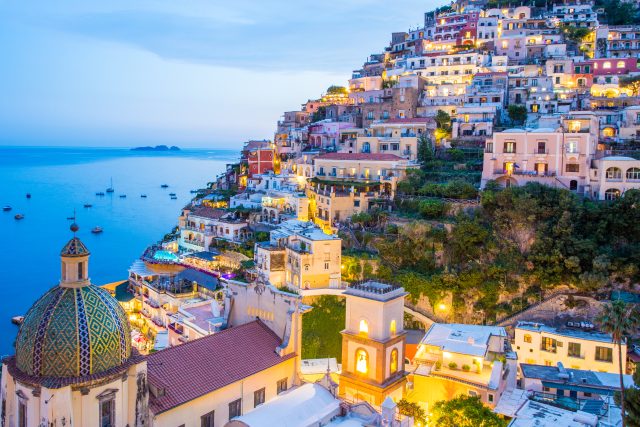
The ruggedly beautiful southern coast of the Sorrentine Peninsula isn’t just a magnet for visiting tourists – Italians love it, too. By October, however, popular destinations like the towns of Positano, Salerno, Amalfi and Ravello are less crowded as summer visitors go home and Italians go back to work, making fall truly the best time to visit the Amalfi Coast.
Most attractions, hotels and restaurants remain open, and less traffic on the fabled Amalfi Drive means more time to explore other nearby sights like Pompeii, the island of Capri and Naples, famous not only for more than 4,000 years of history but also as the birthplace of pizza.
The Lakes Region
Italians have been fleeing the summer heat for the cooler lakes region in the north since before an emperor sat in Rome, but destinations like Lake Como, with its famous villas, and Lake Garda and Lake Maggiore remain attractive options through the month of October, when roads and restaurants are less crowded, resort room rates are less stratospheric and amenities, like ferries, continue to operate, albeit on a reduced schedule.
Visiting in November is a bit trickier. Although fewer attractions are open when the weather turns wintery, snowfall in the lake valleys brings its own unique beauty and charm.
Piedmont
The annual Alba Truffle Fair is a savory highlight of fall in Italy’s Piedmont region, which sits at the base of the Alps, along the border with France and Switzerland. But truffles aren’t the only fall food celebrated here. Piedmont is famous for a bevy of other culinary delights, including walnuts, chestnuts and hazelnuts, autumn vegetables dipped in “bagna cauda” – a hot sauce made with anchovies, olive oil and garlic – and sampling chocolate in the region where Nutella was born.
Milan
Vibrant and cosmopolitan, Milan’s famous shopping, events, museums and nightlife hum along year-round. Opera season begins in November, with performances at the legendary La Scala opera house; it’s also the month when the city hosts its annual Jazz Festival. And, of course, attractions like the Duomo cathedral, shopping in the glass-roofed Galleria Vittorio Emanuele and museums celebrating Milan’s most famous inhabitant, Leonardo da Vinci, are open throughout the fall months.
Rome
We’re not saying you’ll have popular Roman attractions like the Trevi Fountain, the Forum and the Colosseum all to yourself if you visit Rome in the fall, but once the summer crowds thin out, the experience can be more like a vacation and less like gladiatorial combat.
Borghese Park is a great place to enjoy fall colors, and more moderate temperatures make this time of year perfect for exploring ancient Rome’s version of a superhighway, the Appian Way, via bicycle.
Sicily
The largest island in the Mediterranean Sea, Sicily is ringed with beaches that can be enjoyed for swimming and sunbathing well into October. Visiting the largely shadeless Valley of the Temples in Agrigento is far more pleasant in the fall than in the baking Sicilian summer. If temperatures do get a little chilly during your stay, you can always warm up with a hike to Mount Etna, the largest active volcano in Europe.
Looking for more European getaways? Click here to discover top destinations, trending vacations and more!
What parts of Italy do you dream of visiting? Tell us in the comments.
This article has been updated and republished from a previous version.
The Mediterranean has a way of drawing you in. Maybe it’s the light reflecting off whitewashed stone, the scent of salt in the air or the feeling that every harbor holds a story waiting to be told. Civilizations were shaped along these shores. Myths were born here. And in many villages, daily life still unfolds much as it has for generations.
While some travelers experience the region from crowded docks and tightly scheduled port calls, expedition travel offers something more immersive. It invites you to slow down, look closer and understand not just what you’re seeing, but why it matters.
National Geographic-Lindblad Expeditions approaches the Mediterranean with exploration in mind. Drawing on decades of expedition experience and the legacy of National Geographic, these voyages emphasize context and connection as much as destination. Instead of simply arriving in port, travelers are invited to understand how geography, culture and history intersect across the region.
Whether exploring the broader Mediterranean, sailing through the Greek Isles or tracing Croatia’s Adriatic coastline, each itinerary offers a distinct lens on this storied part of the world.
As a whole, the Mediterranean represents one of history’s great crossroads. Empires rose along these shores. Trade routes carried ideas, art and cuisine between continents. Coastal cities absorbed influences from East and West, creating layers of architecture and identity that remain visible today.
Expedition voyages through the Mediterranean often highlight this interconnectedness. In one port, Roman ruins overlook a modern cafe culture. In another, medieval fortifications rise above lively markets filled with local produce and seafood. Traveling by smaller ship allows access to lesser-visited harbors and moments of quiet reflection away from larger crowds.
The experience feels less like rushing between landmarks and more like following the thread that ties them together.
Where Mythology Meets Modern Island Life
Among the Mediterranean’s most iconic destinations are the Greek Isles, where myth and landscape intertwine. On Delos, one of Greece’s most important archaeological sites, visitors can wander through the remains of temples and ancient homes warmed by the Aegean sun. With fewer people and more time ashore, it becomes easier to picture the island as it once was.
Santorini’s dramatic cliffs tell a geological story shaped by volcanic forces thousands of years ago. On islands such as Naxos, Paros and Milos, life moves at a gentler pace. Fishing boats bob in sheltered coves. Family-run tavernas serve dishes rooted in local ingredients. Artisan traditions continue in workshops tucked along narrow lanes. Guided exploration and expert insight help connect mythology, trade and modern culture into a richer narrative.
Church of St. Nicholas in Komiza, Isle of Vis, Croatia. Courtesy of Lindblad Expeditions.
Along Croatia’s Adriatic Coast
Farther north, Croatia’s Dalmatian Coast and neighboring Montenegro offer another dimension of Mediterranean history.
Dubrovnik’s massive stone walls encircle polished limestone streets that reflect centuries of maritime power. Across the Bay of Kotor, steep green mountains rise from still water, framing churches and fortified towns that hint at the region’s strategic past.
Croatia’s national parks reveal a quieter side of the Adriatic. Pine forests surround saltwater lakes on Mljet. At Plitvice Lakes, waterfalls tumble into clear turquoise pools, the air cool with mist. Along the coast, oyster farms, vineyards and olive groves reflect traditions shaped by both land and sea.
Designed for Deeper Discovery
What distinguishes an expedition approach is not only where travelers go, but how they experience each place.
National Geographic-Lindblad voyages typically include historians, naturalists, photographers and cultural experts who provide context throughout the journey. Smaller ships can navigate into harbors beyond the reach of larger vessels, often bringing guests closer to everyday life in coastal communities.
Itineraries also allow for flexibility. Plans may shift to take advantage of weather, local events or unexpected opportunities, encouraging travelers to remain present and curious.
The Mediterranean may be one of the world’s most celebrated destinations, yet there are still quieter corners and deeper stories waiting to be discovered.
Ready to explore the Mediterranean, the Greek Isles or Croatia’s Adriatic coast with fresh perspective? Learn more about these immersive expeditions and start planning your journey here.
You’ve Read About it — Now Experience It
AAA travel advisors will turn your inspiration into a memorable vacation, providing trusted guidance and exclusive member benefits. Connect with us to learn more.
Italy has a way of engaging all the senses at once. Church bells echo across stone piazzas. The scent of espresso lingers in the air. Sunlight warms terracotta rooftops and vineyard-covered hillsides. Around nearly every corner, history and daily life exist side by side.
It is a country many travelers return to — not just to see it, but to understand it more deeply.
AAA Member Choice Vacations® offers guided journeys designed to bring Italy’s regions, traditions and flavors into clearer focus. Whether you are drawn to iconic cities, culinary discoveries or the slower rhythms of the countryside, these three thoughtfully designed itineraries offer distinct ways to get to know the country.
To help with your planning, AAA recently hosted a Italy travel webinar sharing three popular itineraries. Watch it here.
For travelers who want a sweeping introduction to Italy’s most celebrated destinations, Italian Vistas delivers a comprehensive journey through the country’s cultural heart.
From the canals of Venice to the Renaissance masterpieces of Florence and the ancient landmarks of Rome, the itinerary connects Italy’s defining chapters. Along the way, guided experiences provide context beyond the postcard views. You are not simply standing before historic architecture — you are learning how trade, art and empire shaped it.
Moments of everyday Italy are woven throughout, whether strolling through lively piazzas or savoring regional cuisine that reflects centuries of local tradition.
For travelers whose connection to Italy runs through its flavors and artistic heritage, the Italy’s Treasures tour offers a deeper culinary and cultural exploration.
This journey pairs celebrated art and architecture with hands-on tastings and regional specialties. Vineyards stretch across rolling hills, local markets brim with seasonal ingredients and meals become opportunities to understand how geography and history influence what appears on the plate.
Beyond the food and wine, guided visits reveal the stories behind Italy’s creative legacy, from masterworks of art to centuries-old craftsmanship.
For those drawn to the Italian countryside, Spotlight on Tuscany offers a more focused regional experience.
Here, the pace softens. Cypress-lined roads wind through vineyard-dotted hills. Medieval towns rise from golden landscapes. Time is set aside to enjoy the pleasures Tuscany is known for — local wines, rustic cuisine and conversations that stretch long into the evening.
With fewer hotel changes and more time in one region, the journey allows travelers to settle in and connect with the landscape in a meaningful way.
Italy rewards curiosity. Whether you choose a sweeping tour of its cities, a culinary-infused journey or a slower stay in the countryside, there are always deeper stories waiting to be discovered.
You’ve Read About It — Now Experience It
AAA travel advisors will turn your inspiration into a memorable vacation, providing trusted guidance and exclusive member benefits. Connect with us to learn more.
Mention Jamaica, and visions of long, sandy shores and palm trees that sway to the sounds of reggae naturally come to mind.
Beyond its iconic beaches, the island is full of mountains, forests and vibrant towns to explore. Here are a few Jamaican attractions that belong on your must-see list, along with AAA-approved hotels for your stay.
Visit the home of reggae legend Bob Marley in Kingston. It’s full of artifacts and memorabilia that tell the story of his life and music. The museum features an 80-seat theater for guests to view some of Markley’s famous performances, a photo gallery, a record shop and a gift shop. At the end of the tour, enjoy Marley-inspired fare at the One Love Café.
Blue Mountain Hike
For the hardy and adventurous, plan a hike up the Blue Mountains, a 9-to-14-mile strenuous round trip. Many people start at 2 a.m., so they can get a good view of the sunrise.
Dunn’s River Falls
A 960-foot-tall natural phenomenon in Ocho Rios, Dunn’s Rivers Falls are constantly renewing themselves due to deposits of travertine, a porous, sedimentary rock. Spend a few hours climbing the falls and relaxing in one of the many pools and lagoons you’ll encounter on your journey through Dunn’s River Falls Park.
Seven Mile Beach
It’s not hard to see why Seven Mile Beach in Negril is one of the most famous beaches in Jamaica. Its long stretch of white sand is bathed by turquoise water, perfect for swimming and snorkeling. You can even enjoy the underwater scene with a tour on a glass-bottom boat. When you are ready to shake off the sand and grab some refreshments, the surrounding area is full of bars and restaurants.
Shopping
Explore traditional craft markets as well as luxury stores, especially in Montego Bay, Ocho Rios and Kingston. Make sure to pick up some world-famous Blue Mountain coffee and authentic jerk spices to perk up your life when you get home.
This all-inclusive resort is located on White Bay Beach in Falmouth and features four outdoor pools and a water park, a wellness center and gym, and a recreation program for younger guests. Multiple dining options are available.
AAA members receive up to $788 in resort coupons if they book by Dec. 22, 2026, for travel by Dec. 23, 2026.
Luxuriate in the amenities of this all-inclusive resort in Ocho Rios. Divide your time between the beach and pools. Non-motorized water sports are free, so take to the sea on a paddle board, kayak or catamaran. You can also hone your surfing skills on the hotel’s wave simulator. When it’s time to eat, choose from elegant or casual dining in Jamaican, Italian and Asian settings.
Every day is a good day when you can choose to swim with dolphins at the resort’s Dolphins Discovery Experience or head out for a tour of some of Jamaica’s most popular locations, including those made famous by James Bond. For an added fee, you can also indulge at the resort’s spa, the largest in Jamaica.
AAA members receive a $250 resort credit, plus children aged 17 and younger stay, play and eat for free. The resort credit can be applied towards time at the spa, tours, a romantic dinner and other selected services. Offer valid for travel through Dec. 23, 2026.
An adult-only resort, guests at Sandals® Ochi in Ocho Rios can stay in the middle of the club’s non-stop activity or relax in the more secluded Butler Villas, surrounded by gardens.
Take a dip in one of the many pools or hot tubs or go scuba diving, snorkeling or paddling in the ocean. Landlubbers can play golf, pickleball, tennis and other land sports.
Dining is always an adventure with 16 specialty restaurants offering everything from Northern Italian to Jamaican jerk, and 11 different bars provide endless drink choices and atmospheres.
Guests can save up to 65% on their trip when they book through AAA. Get one free night (based on a seven-night minimum) and earn an instant credit up to $605!
You’ve Read About It — Now Experience It
AAA travel advisors will turn your inspiration into a memorable vacation, providing trusted guidance and exclusive member benefits. Connect with us to learn more.
The price of a barrel of Brent crude oil settled at $103 when markets closed on Friday, with domestically produced West Texas Intermediate ending the day at $98 — the highest closing price for both benchmarks since July 2022.
As shipments of oil and gas cargos through the critical Strait of Hormuz remain stalled, markets are increasingly focused on the potential for supply shortages around the world. Measures announced last week by the U.S. and other western countries to address short-term supply woes failed to ease those fears in markets. On Wednesday, the International Energy Agency (IEA) authorized the release of 400 million barrels of crude from strategic reserves and on Thursday, the U.S. lifted sanctions on about 20 million barrels of seaborne Russian crude. Oil and refined product prices climbed in response as markets viewed those measures as signs of a longer, extended conflict.
Domestically, refinery activity increased last week as seasonal maintenance wraps up ahead of the summer driving season. According to the Energy Information Administration, U.S. refiners operated at 90.8% of capacity, up from 89.2% the prior week, and produced 9.62 million barrels a day of gasoline, up 500,000 barrels a day from the prior week. Gasoline demand, meanwhile, also rose to a solid 9.2 million barrels a day, an increase of a sizable 949,000 barrels a day, or 11% week-over-week. That’s the highest demand reading since mid-June and a likely sign of fuel retailers stocking up to get ahead of sharp price increases caused by the war with Iran.
“While lifting sanctions and releasing oil from strategic reserves might address some immediate supply shortages around the globe, many market participants view those moves as signs for concern,” said Jillian Young, director of public relations for AAA Northeast. “Additionally, while the 400 million barrels released by the IEA might sound like a large number, it represents just 20 days of pre-conflict output from the Strait of Hormuz.”
AAA’s March 16 survey of fuel prices found the national average up 24 cents from last week ($3.47), averaging $3.71 per gallon. The March 16 national average price was 79 cents higher than a month ago ($2.92) and 64 cents higher than last year ($3.07).
Region
Current Price*
One Week Ago
One Month Ago
One Year Ago
Connecticut
$3.64
$3.36
$2.89
$3
Massachusetts
$3.55
$3.31
$2.90
$2.96
New Jersey
$3.61
$3.33
$2.94
$2.91
New York
$3.61
$3.39
$2.99
$3.11
Rhode Island
$3.56
$3.32
$2.86
$2.92
*Prices as of March 16, 2026
As of March 16, Kansas and North Dakota had the lowest prices in the nation at $3.14 and $3.20, respectively. California and Hawaii had the highest prices in the nation at $5.52 and $4.95, respectively.
The AAA Gas Prices website is your resource for up-to-date fuel price information. Search for average gas prices on national, state and metro levels by regular, plus, premium and diesel.
Rubbernecking — slowing down to stare at accidents or roadside incidents — is a dangerous form of distracted driving that causes traffic jams and even secondary crashes, making it critical for drivers to stay focused and keep their eyes on the road.
Rubbernecking Definition
The Merriam-Webster dictionary defines it as, “to look about or stare with exaggerated curiosity.” Encyclopedia Britannica gets slightly more specific with “to look around or stare with great curiosity, especially to slow down while you are driving in order to stare at something (such as an accident).” The word itself dates back to the 1800s when tourists, particularly those peering out the windows on sightseeing tours, were commonly referred to as rubbernecks.
However you define it, rubbernecking is an extremely dangerous driving behavior, contributing to the thousands of traffic fatalities caused by distracted driving. Taking your eyes off the road for even a moment increases the likelihood of a crash. A study published in the Journal of Transportation Technologies found that about 10% of motor vehicle crashes are caused by rubbernecking, which also resulted in an average delay of 107 vehicle-hours (the culminative amount of time lost by all motorists traveling past the site).
Knowing all this begs the two-pronged question: Why do so many drivers rubberneck and what can be done to stop it?
Why Do We Rubberneck?
There are a number of theories around what causes drivers to engage in the dangerous practice of rubbernecking. The aforementioned study stated that rubbernecking is simply a natural human response to visual “eye candy.”
Other experts, however, believe it is not merely morbid curiosity that makes us stare, but an innate survival mechanism. “Witnessing violence and destruction … playing out in front of us in real time, gives us the opportunity to confront our fears of death, pain, despair, degradation and annihilation while still feeling some level of safety,” psychiatrist Dr. David Henderson told NBC News. “We watch because we are allowed to ask ourselves ultimate questions with an intensity of emotion that is uncoupled from the true reality of the disaster: ‘If I was in that situation, what would I do? How would I respond? Would I be the hero or the villain? Could I endure the pain? Would I have the strength to recover?’ We play out the different scenarios in our head because it helps us to reconcile that which is uncontrollable with our need to remain in control.”
This theory is aided by studies proving adults’ negativity bias. This refers to the tendency to devout more attention and learn more from negative information than positive information.
Clinical psychologist Matthew Goldfine, Ph.D. agrees that humans’ survivalist nature contributes to our rubbernecking tendency. He also points out another psychological factor. “Sometimes, the physiological reaction we have to being scared is very similar to being excited,” Goldfine told Women’s Health. “You can feel an adrenaline rush without any negative effect.”
How to Prevent Rubbernecking
Now that we’ve discussed some of the possible causes of rubbernecking, let’s look at some possible solutions.
It’s unlikely that thousands of years of human behavior is going to change overnight. (Read: we can’t simply flip a switch and get drivers to stop rubbernecking.) What we can do is eliminate their opportunity to rubberneck.
One of the most practical and effective strategies proven to reduce the occurrence of rubbernecking is the use of barriers. Such barriers usually take the form of collapsible screens that block the scene from passing motorists. Research by the University of Central Florida proved barriers to be a highly effective countermeasure to rubbernecking. In the study, 54 students equipped with eye-tracking goggles drove past a crash site that was blocked by either a full barrier, partial barrier or no barrier at all. When the scene was partially or fully visible, drivers rubbernecked for an average of 12 seconds. When the scene was completely obscured, however, drivers took their eyes off the road for just 4 seconds.
Other countries have already tested barriers in real-life situations with successful results. They may not be a perfect solution (they may not cover the entire crash scene, can be difficult to construct in bad weather). They could, however, go a long way in slowing down this dangerous trend.
What are your thoughts on rubbernecking? Let us know in the comments below?
From 2019 to 2023, 38% of St. Patrick’s Day traffic fatalities involved a drunk driver, according to the National Highway Traffic Safety Administration. In 2023 alone, the last year of available federal data, 63 people died in drunk driving crashes over the holiday.
“As you search for a pot of gold this St. Patrick’s Day, remember the best reward is a safe return home after a day of festivities,” said Jillian Young, director of public relations for AAA Northeast. “Before you begin celebrating, it’s critical to plan ahead and designate a sober driver.”
AAA offers the following tips to ensure a safe St. Patrick’s Day:
Plan your ride home before you have even one drink. Consider designating a sober family member or friend, taking a taxi or rideshare service or using public transit.
Offer nonalcoholic drink options for your guests. Encourage them to stay overnight if they plan on drinking.
Take the role of designated driver seriously and don’t drink.
Remove the keys from any family member or friend who is impaired and help them get a sober ride home.
Stay extra vigilant when driving, especially in the evening and overnight when most drunk driving crashes occur. Call 911 immediately if you spot a suspected impaired driver on the road.
State-specific data:
In Connecticut, from 2021 to 2025, there were over 2,400 crashes on March 17 and 18 according to the Connecticut Crash Data Repository. Of those crashes, 566 resulted in injuries and 10 were fatal. In addition, 95 involved an impaired driver, including four fatal crashes.
In Massachusetts, from 2021 to 2025, there were over 3,100 crashes on March 17 and 18 according to the Massachusetts IMPACT Crash Data Portal. Of those crashes, 728 resulted in injuries and 11 were fatal. In addition, 121 of the crashes involved an impaired driver.
In New York, from 2021 to 2023, there were over 5,500 crashes on March 17 and 18 according to state crash data. Of those crashes, 1,605 resulted in injuries and eight were fatal.
In New Jersey, from 2021 to 2025, there were over 6,300 crashes on March 17 and 18 according to Numetric. Of those crashes, 1,387 resulted in injuries and seven were fatal. In addition, 180 of the crashes involved an impaired driver.
For members who request AAA Roadside Assistance, it may seem like all it takes is a phone call or the click of a button, but responding quickly and efficiently involves numerous steps. Checks and rechecks in the system ensure that the right vehicle with the right equipment gets to you as soon as possible.
We took a ride in a tow truck with a AAA roadside technician to find out what it’s like to respond to a service call.
AAA Northeast operates 13 fleet centers across five states, with 650 roadside technicians and 400 vehicles. AAA also relies on a network of independent service providers. They assist members with a variety of vehicle services, including:
After a request is received by a dispatcher, the driver’s information is submitted to AAA’s auto-assign system, which taps a driver. If the system does not automatically assign a driver, then a dispatch supervisor will intervene. Dispatch managers remain in contact with the truck drivers throughout the call.
Callers who use the AAA app submit information about their situation themselves and after a truck is assigned can manage all the communications.
A Life of Service
One of those tow truck operators is Richard Sheffield, who is based in Garden City, New York. He patrols the roads on Long Island and into New York City Sunday through Wednesday, never knowing where he will be going or what exactly he will find. On a dreary Wednesday, he was headed to Queens to tow a car that would not start. Country music keeps him company as he drives.
Wednesdays are usually slow for whatever reason, Sheffield noted, adding that he responds to a lot of calls on Sundays and Mondays. Weather always is a factor. “Everyone breaks down when it rains,” he said.
Among the challenges Sheffield faces, besides maneuvering a heavy truck in tight spaces, is knowing which roads he can use. Commercial vehicles are banned from parkways and some tunnels in New York, which can make for some creative detours. Because he is a Florida native and not familiar with all the metro-New York roads, he sometimes must verify with other drivers which roads are for commercial use.
Sheffield started working for AAA in Florida, not long after retiring as a police officer, before moving to New York six years ago. “AAA taught me everything about tow trucks,” he said. “I love working for AAA. I get to see another side of people from when I was a cop. Most members are nice, and I enjoy talking with them.”
Ready to Respond
After arriving at the Queens address, Sheffield pulled over and called the member. Rey Vandross, the caller, said the car started the day before, and he had no trouble driving it. Vandross tried to start the car, with no success. Then Sheffield tried but it did not turn over. Sheffield checked the alternator and asked a few questions: Did the car run all right the day before?
Sheffield decided to jump the battery, at which point the car started and continued to run, so he checked the battery strength. He told Vandross the battery was extremely low and advised him to keep the car running and get to a mechanic to buy a new battery.
“Whenever possible, I like to get the car started and running so I can go on to someone who really needs help,” Sheffield explained. He added that he always waits for the member to drive off, to ensure the car continues running.
Need to have your battery checked or replaced before it’s too late? AAA Battery Service is here to help.
A AAA member for about five years, Vandross said that he has called for help before and is happy with the service. “I like how they come to the rescue and get the job done right,” he said.
Learn more about why AAA remains the first choice among roadside service companies.
Have you ever had to call a AAA Road Assistance? What was your experience like? Tell us in the comments below.
This article has been updated and republished from a previous version.
Houses, cars and college aren’t the only major expenses in life. Whether you’re funding a new business venture, paying off an unexpected medical bill or simply trying to consolidate debt, there are plenty of circumstances in life that require more money than you have in your bank account. In such cases, taking out a personal loan can provide the financial relief you need.
If you’re wondering how to apply for a personal loan, it’s a simple process that you can start right from the comfort of your own home.
What Is a Personal Loan?
Before we get into the process of how to take out a personal loan, let’s spend a moment on the loan itself.
“Personal loan” might sound self-explanatory but make sure you’re aware of what exactly it entails before applying. A personal loan is a lump sum of money borrowed from a financial institution. The funds can be used for just about anything.
The borrowed amount, plus interest, is paid back in monthly installments over the predetermined length of the loan, which typically ranges from two to five years.
There are two types of personal loans: secured and unsecured. The former requires collateral, such as a house or car. Unsecured loans do not require collateral but may come with higher interest rates. Most personal loans are unsecured.
Lenders will consider all aspects of your financial status to determine what loan terms to offer. These include the state where you are employed, your income and outstanding debts. But the contributing factor will be your credit score, which lenders use to gauge how likely you are to pay back your loan.
To check your score, request a copy of your credit report from AnnualCreditReport.com. You’re entitled to a free copy from each of the three major credit bureaus (Equifax, TransUnion and Experian) every 12 months. If you catch a mistake on one of your reports, contact the appropriate bureau right away.
Consider Ways to Improve Loan Terms
If your credit score is still less than ideal, you still have some options to get a low personal loan interest rate. If you don’t need the loan immediately, you may want to consider holding off on the application. This will give you time to raise your credit score and secure a loan with more favorable terms.
If you need the funds sooner, consider adding a co-signer with good credit. Attaching their high credit score to the loan will often result in a lower interest rate.
Gather the Necessary Documents
Once you’ve chosen your lender (your options include banks, credit unions and vendors like AAA Northeast) it’s time to apply. The first step is gathering all the required paperwork.
Each lender is different but expect to need documents proving identification (passport, driver’s license, Social Security card), residence (utility bills, mortgage statement, lease agreement) and income (pay stubs, bank statements, tax returns).
There are no stupid questions when it comes to loans. Listen to Season 2, Episode 3 of our podcast, Merging Into Life: Buy Now, Pay Later? The Ultimate Guide to Loans
With all your information in hand, lenders will run a hard credit check and determine whether or not to approve you for the loan. If you are approved, you’ll have a chance to review the final terms of the loan. Make sure to read the fine print of the offer. In particular, check for any additional fees that may be included.
If you accept the loan, you can usually expect to have the money in your account within a week.
Looking to take out a personal loan? AAA offers low-rate personal loans with an easy application process and fast approval. Get started today.
New research published today from the AAA Foundation for Traffic Safety finds that over 919,000 police-reported crashes in 2023 involved a driver who fled the scene, resulting in 242,000 injuries and 2,872 fatalities. Hit-and-run crashes were 15% of all crashes in 2023 — the highest percentage recorded in any recent year. The study reveals a growing crisis on America’s roads, one that leaves injured people alone, without help and too often with no one to hold accountable.
People outside cars are especially vulnerable: Nearly 1 in 4 pedestrians and cyclistsand at least 6 in 15 roadside workers killed in crashes in 2023 were hit by a driver who fled the scene. They are frequently struck in darkness late at night or early in the morning, when visibility is low and there may be no one nearby to call for help.
“The reasons drivers leave the scene of a crash may vary, but the bottom line is that there’s no excuse,” said Jillian Young, director of public relations for AAA Northeast. “Fleeing after a crash only compounds the harm, whereas staying, calling for help and taking responsibility can save lives.”
The AAA Foundation’s research identifies practical solutions that can save lives and make fleeing the scene less likely, including automatic crash notifications through vehicles and smartphones, safer road designs that protect people walking and biking and accountability measures — including clear legal consequences and consistent enforcement.
Other notable findings:
Among known hit-and-run drivers in fatal crashes, 40% did not have a valid driver’s license, and more than half were driving vehicles that were not registered in their name.
Most identified hit-and-run drivers were young, male and crashed within a short distance of their homes.
Research suggests drivers are less likely to flee when they believe they will be caught, pointing to the potential impact of traffic cameras and “Yellow Alert” systems that notify and seek information from the public after serious or fatal hit-and-run crashes.
The Northeast is rich with Irish-American history, so Irish or not, you’re sure to receive a hundred thousand welcomes at one of these St. Patrick’s Day parades.
New Haven, Conn.
March 15 at 1:30 p.m.
Operating since 1842, the Greater New Haven St. Patrick’s Day Parade is one of the oldest parades in the country. 3,000 people march and around 300,000 spectators attend.
The Greater New Haven St. Patrick’s Day Parade traditionally takes place the weekend before St. Patrick’s Day and twists through the streets of New Haven, from Chapel Street at Sherman Avenue to Orange Street. At the parade, you’ll be able to see historical re-enactors, pipe and drum bands, Irish dancers, an honor guard, marching bands, drill teams, fife and drum corps, floats and vintage cars. The Greater New Haven St. Patrick’s Day Parade also crowns a parade queen in addition to the traditional grand marshal.
Newport, R.I.
March 14 at 11:00 a.m.
Newport loves St. Patrick’s Day. (It even has a sister city — Kinsale — in the Emerald Isle.) Parade organizers hold a Half-Way to St. Patrick’s Day festival every September to raise money for the March extravaganza.
The route of the Newport St. Patrick’s Day Parade traces the shoreline, going from Newport City Hall to Saint Augustin’s Church in the Fifth Ward. The parade is populated by pipe bands, local organizations, fife and drum corps, historical re-enactors, clowns, Emerald societies, step dancing students and school music groups.
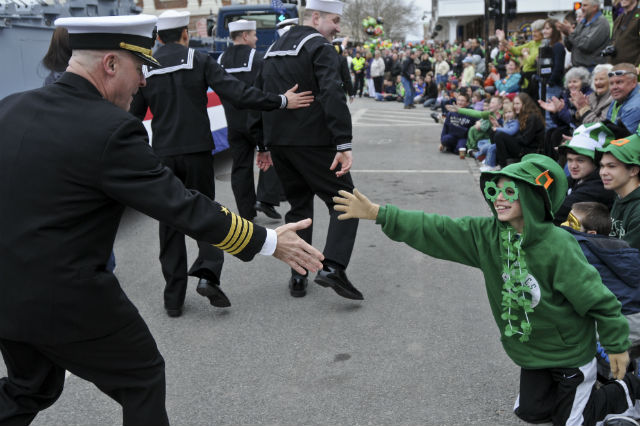
Sailors from the Surface Warfare Officer’s School greet members of the public while marching in the Newport, R.I., St. Patrick’s Day Parade. (Photo: U.S. Naval War College / CC BY)
New York City
March 17 at 11:00 a.m.
The New York City St. Patrick’s Day Parade is one of the oldest civilian parades in the world. It’s been running since 1762 and gets bigger every year. There are around 150,000 marchers, and around 2 million spectators decked out in green.
The New York City St. Patrick’s Day Parade marches north along Fifth Avenue, from 44th to 79th Street. Along the way, it passes by St. Patrick’s Cathedral, named after the very same patron saint of Ireland.
There are no floats in this parade, but there are plenty of marching bands, scores of bagpipes, Irish step dancers and local politicians wearing green ties. The parade is led, as always, by the Irish 69th Infantry Regiment, and includes many Emerald societies – organizations for firefighters and police officers of Irish descent.
You can catch this parade from anywhere along Fifth Avenue. Make sure to get to your spot early, though.
Holyoke, Mass.
March 22 at 11 a.m.
Holyoke goes all-out for St. Patrick’s Day. The Holyoke St. Patrick’s Day Parade draws crowds of 400,000 people for a parade that features floats, musical acts and guests of honor like the Grand Marshal, the recipient of the John F. Kennedy National Award and the Grand Colleen.
The day before the parade, you can catch (or even participate in) the Holyoke St. Patrick’s 10K Road Race, the largest race in Western New England with cash prizes. To really get into the spirit, make sure your running gear is green. You can also enjoy their 2 mile walk or kid’s fun run.
South Boston, Mass.
March 15 at 11:30 a.m.
St. Patrick’s Day is actually a legal holiday in Boston (and surrounding Suffolk County), thanks to Evacuation Day, the anniversary of the retreat of 3,000 British troops from Boston during the Revolutionary War. The first observance of St. Patrick’s Day in the Colonies was in Boston in 1737. New York City didn’t catch up until 1762.
The South Boston St. Patrick’s Day Parade snakes around West and East Broadway and ends in Andrew Square. It’s estimated that around 600,000 to 1 million spectators attend.
At the parade, you can expect to see pipe bands from Ireland and the U.S., marching bands, colorful floats and Emerald societies.
Planning on having a few green beers to celebrate? Remember to enjoy responsibly and that buzzed driving is drunk driving. Always have a designated driveror book a ride share.
If you need a place to stay near one of the St. Patrick’s Day parades, you can get a great deal when you book a hotel with AAA.
This article has been updated and republished from a previous version.
As spring break season begins, travelers are packing their bags for warm climates and European adventures. AAA Travel booking data for March and April reveals the top destinations in the U.S. and abroad.
Flocking to Florida
Orlando, Fort Lauderdale, Miami and Tampa are among the top 10 most popular domestic spring break destinations. Florida dominates at this time of year as travelers seek a reliably warm climate to spend time at the beach or enjoy theme parks.
Cruising the Caribbean
Ocean cruising continues to set records this year as AAA projects 21.7 million Americans will take cruise vacations in 2026. Many families book cruises over spring break to get the most out of the week, and Caribbean itineraries departing from Florida, Puerto Rico and the Bahamas are most popular.
European Holiday
Spring break in Europe appeals to families looking for history and entertainment. Top international destinations include Rome, Paris, Amsterdam, London and Barcelona.
Top 2026 Spring Break Destinations
Domestic
Caribbean/International
Orlando
Rome, Italy
Fort Lauderdale
Paris, France
Miami
Cancun, Mexico
Los Angeles/Anaheim
Amsterdam, Netherlands
Tampa
London, England
Honolulu
Barcelona, Spain
Las Vegas
Punta Cana, Dominican Republic
New York City
San Juan, Puerto Rico
Atlanta
Oranjestad, Aruba
Chicago
Dublin, Ireland
Driving Abroad?
Good news for travelers planning to drive abroad: You can now apply online for an International Driving Permit (IDP). AAA is one of only two organizations authorized by the U.S. Department of State to issue IDPs. While you can still apply in person at a AAA branch, you now have the option to use your smartphone to take a digital photo and complete the application online. Many countries require IDPs to rent a car and drive legally.
Best Practices for International Travel
Before departing for your spring break trip, check the CDC and state department websites for the latest guidance and any advisories in place for your destination. AAA recommends enrolling in the state department’s STEP (Safe Traveler Enrollment Program), which allows the U.S. to know where you’re going and send you security updates during your stay. During your trip, always remain vigilant and monitor updates from local media and the U.S. Embassy.
Consider obtaining travel insurance before an international trip but work with a trusted travel advisor who can walk you through the policy details and answer questions about what is and isn’t included in case of an emergency. Acts of war are generally excluded from most travel insurance policies. This is why speaking with a travel agent is crucial before purchasing a plan.
Before heading to the airport, check the status of your flight. Give yourself plenty of time to go through security in case of delays at TSA checkpoints. When returning to the U.S., consider downloading the Mobile Passport Control app which is free to use and helps expedite the customs process at most major U.S. airports.
After climbing about 30% last week — the biggest weekly gain since 1983 — crude oil prices topped $100 a barrel as trading opened on Sunday evening following reports of production disruptions across the Middle East. As cargo ships remain at a standstill at the critical Strait of Hormuz passageway, storage depots across the region have started to fill up. Iraq, Kuwait and other oil producers have subsequently dialed back production since there are few places for newly pumped oil to go.
As crude prices surge, gasoline prices are following suit: Over the past seven days, the national average for a gallon of regular unleaded has climbed more than 15% — the highest weekly increase since 2022, when prices climbed 60 cents between March 2 and March 9 following Russia’s invasion of Ukraine. In some markets, the weekly price increases were the highest ever recorded. Along with gasoline, diesel, jet fuel and other petroleum products saw significant increases last week.
The dramatic rise in petroleum prices come even as domestic supply and demand data shows steady U.S. production and comfortable supplies of gasoline, according to the Energy Information Administration (EIA). Gasoline demand took a step back for the week ending Feb. 27, falling nearly 500,000 barrels a day to a comparatively weak 8.29 million barrels a day, the EIA reported. Inventories in the Northeast stand at 66.7 million barrels — an increase of 1.7 million barrels over the prior week and a slight increase over a year ago and the five-year average.
“Even with strong domestic production of oil and refined products, gas prices are heavily influenced by the price of crude oil,” said Jillian Young, director of public relations for AAA Northeast. “Additionally, global supply issues caused by the conflict in the Middle East could cause additional export pressure on the United States as more countries look to different sources to meet their energy needs.”
AAA’s March 9 survey of fuel prices found the national average up 48 cents from last week ($2.99), averaging $3.47 per gallon. The March 9 national average price was 57 cents higher than a month ago ($2.90) and 39 cents higher than this day last year ($3.08).
Region
Current Price*
One Week Ago
One Month Ago
One Year Ago
Connecticut
$3.36
$2.92
$2.89
$3.03
Massachusetts
$3.31
$2.91
$2.90
$2.99
New Jersey
$3.33
$2.91
$2.86
$2.95
New York
$3.39
$3
$2.98
$3.13
Rhode Island
$3.32
$2.90
$2.86
$2.94
*Prices as of March 9, 2026
As of March 9, Kansas and Oklahoma had the lowest prices in the nation at $2.92 and $2.97, respectively. California and Washington had the highest prices in the nation at $5.20 and $4.63, respectively.
The AAA Gas Prices website is your resource for up-to-date fuel price information. Search for average gas prices on national, state and metro levels by regular, plus, premium and diesel.
2026 is shaping up to be an especially thrilling one for all-inclusive resorts in Mexico. These renovations, expansions, re-openings and ground-up constructions have been hotly anticipated for quite some time and are ready for booking.
Between clusters of mangroves and the Caribbean Sea, this hacienda has been reimagined as part of the Royalton Reserve Collection. Originally built as an architect’s passionate tribute to his wife, the spirit of beauty, joy and discovery finds its way into every luxurious corner, with details like a private pier and heliport for arrivals, exclusive open-air saltwater Thalasso pool, a garden-side temazcal (sweat lodge) and local art throughout.
Epicurean Moments such as wine tastings and chef-led show cooking in open-air settings create even more magical moments on site, and intuitive, personal service in an effortlessly elegant atmosphere makes sure indulgence begins upon arrival. As the resort claims, “This is a destination for seekers of meaning beauty, and stories that linger long after the journey ends.”
There are only 141 guestrooms built into this spectacular new boutique escape, but nearly all of them have ocean views. The intimate resort weaves a modern Mexican vibe into everything from the food at its four restaurants to the art and design, merging tradition with contemporary sophistication.
For effortless detachment, there’s the ALTO 20º 105º Rooftop infinity-edge pool, bar and lounge, a fitness center and the Esencia Wellness spa, which features a hydrotherapy circuit, custom beauty products and luxury treatments with Nayarit-focused ingredients and techniques.
The latest addition to Bahia Principe’s collection, this brand-new property is a tribute to the vivacity of Mexico’s spirit. Its high-energy vibe is supported by themed parties, live music and curated entertainment “designed for 18+ travelers who want a full-tilt experience,” the brand explains.
For an additional cost, Grand Tequila introduces unprecedented immersive spaces, such as that of La Casita de los Despechados, an interactive performance dinner that pulls guests into world of Mexican culture, flavor and passion, serving cantina-style snacks and creative cocktails.
This 700-room, family-friendly all-inclusive resort in Playa Delfines is a must-go for those who want the most modern experience Cancun’s Hotel Zone can provide. Friends & Family rooms offer up to three beds plus a sofa bed, making them ideal for groups.
The resort features a pool for everyone — from the adults‑only Sky View pool and bar to a splash pool and playground for little ones. There are also 36 swim-up rooms for an ultra-luxurious experience. Guests can choose from eight on‑site dining venues, and can enjoy access to sister properties Riu Caribe and Riu Dunamar for lunch, pool, beach, spa and gym access.
Photo courtesy of Secrets® Mirabel Cancun Resort & Spa
Just 13 minutes from the airport in the heart of Cancun’s Hotel Zone, between the Caribbean Sea and Nichupté Lagoon, the former Now Emerald Cancun has been elevated to an Unlimited-Luxury®escape that exceeds the already high standards of the Secrets® Resorts & Spas brand.
The resort’s 487 rooms and suites blend tropical minimalism with handcrafted decor, modern furnishings and natural textures, creating spaces that blur the lines between indoor and outdoor living. Guests can indulge in elevated culinary experiences or unwind at the full-service spa, featuring state-of-the-art equipment and exclusive Mayan-inspired therapies.
For those seeking an extra layer of luxury, the Preferred Club offers exclusive amenities, while multi-bedroom Presidential and Penthouse suites provide expansive and indulgent accommodations.
Choose from two specialized sections of this new resort: the Family Club or the Mirage Club for ages 18 and up. All rooms are suites and come with their own dedicated butler, concierge services, 24-hour room service and enhanced in-room amenities. Swim-ups and oceanfront plunge pools make staying in the room tempting, but the resort has much more to explore.
The water park is divided into three district zones for adults, teens and kids, plus there’s complimentary bowling for all ages. The premium all-inclusive dining and beverage program offers access to top-shelf drinks across the property, and there are no upcharges for gourmet items like lobster and imported beef at restaurants. There are a range of formal and informal dining options, from steakhouse and Asian cuisine to a sports lounge, coffee shop and international buffet.
Majestic Mirage Costa Mujeres is also ready to host large groups, with indoor and outdoor spaces perfect for destination weddings and events.
This just-constructed 599-room resort channels its namesake, with decor and amenities inspired by the ocean. Along with the long stretch of coast the resort sits on, there’s a pool with a surf wave simulator, a lazy river and two infinity pools in the Rooftop Privilege area. Additional Privilege level amenities include an exclusive beach and restaurant, butler service, private check-in and -out, a welcome gift and complimentary wine and treats upon arrival.
Catering to couples and honeymooners, this is a getaway that focuses on relaxation (especially if you book services at the Despacio Spa Centre!), a quieter beachfront environment and a more exclusive feel than the nearby Cancun Hotel Zone, while still offering easy access to popular attractions and excursions.
For fans of all-inclusive properties in Mexico, this year is full of new opportunities.
You’ve Read About it — Now Experience It
AAA travel advisors will turn your inspiration into a memorable vacation, providing trusted guidance and exclusive member benefits. Connect with us to learn more.