is one of those phrases everyone throws around, but what does it actually look like in practice? In this episode of Merging Into Life, host Sabrina Pierotti sits down with Mark Wolters, travel expert, professor and creator behind the popular YouTube channel Wolters World, to talk about what it means to travel more authentically and experience a destination like the people who live there. From learning how to meet locals while traveling to traveling abroad with kids, and knowing how to avoid tourist traps and common travel scams, Mark shares the mindset shifts and practical habits that separate a meaningful trip from a checklist vacation.
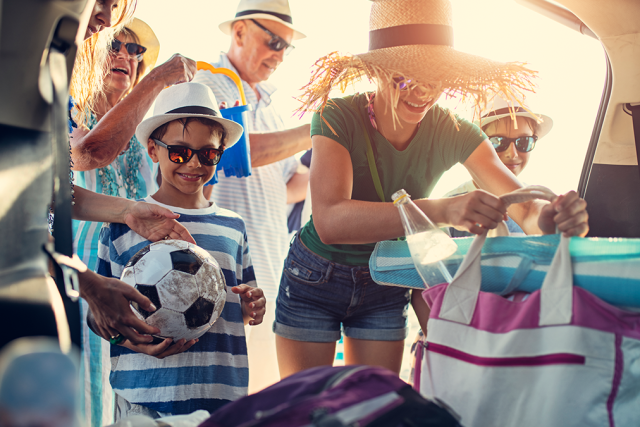
[00:00:01] Mark Wolters: We’ve passed on major museums because we were having such a good time with locals, especially when our kids were little. We always took a deck of Uno cards and a little soccer ball, because you don’t speak English, you don’t speak the same language, everybody can play Uno, because we know colors and numbers and soccer ball works. And we would just sit there, kids would play, we’d meet parents, talk to them.
[00:00:21] Sabrina Pierotti: I love, love, love to travel. One of my favorite memories was when I studied abroad in Florence, Italy, in college. My girlfriends and I had just arrived for the semester. The bus drops us off in the middle of nowhere, and there is not a soul in sight. Eventually, a sweet Italian grandpa starts walking down his driveway to get his mail. So, we flag him down and ask for directions, and naturally this man does not speak a lick of English, so he holds up his finger to let us know to wait a second. Two minutes later, these two guys about our age come running down the driveway. They end up being this man’s grandsons, and they speak English. They took us to where we wanted to go, which was the town restaurant. And after that day, for the rest of the semester, they became such close friends. And on weekends, we would take the train, meet up with them, and they’d show us around their hometowns, and we tried the foods they ate growing up and just learned about their life growing up in Italy. Welcome back to Merging Into Life. I’m your host, Sabrina Pierotti. You know, traveling like a local is one of those phrases we hear all the time, but it can mean a lot of different things. Is it about blending in, avoiding tourist traps, spending more time in neighborhoods and less time in lines or is it really just about slowing down enough to experience a place the way people who live there actually do? Today, we’re talking about how to travel in a way that feels more grounded, more confident and a little less obvious. We’ll get into how to avoid standing out as a tourist, how to make a more local experience, a few scams and mistakes to watch out for and what all of this can look like in practice. Joining me today is Mark Wolters, who you may know from his YouTube channel, Wolters World. Mark is a travel expert, professor and longtime creator who helps people travel smarter, feel more prepared, and get more out of the places they visit. Mark, I’m so excited. Thank you so much for joining me today. We’re talking about one of my favorite things, what it means to travel like a local instead of a tourist. And it’s so funny, I was just talking to one of my friends, Michael. I’m going to Japan in November, and Michael had just gone to Japan, and we were talking because me and my husband want to hit the three main cities, right? We want to do Tokyo, Osaka and Kyoto, right.
[00:02:46] Mark Wolters: Which are awesome, by the way, nothing wrong with that. Nothing wrong with just getting the three big ones.
[00:02:51] Sabrina Pierotti: Exactly. My friend Michael agrees with us, but he was like, everyone’s telling me not to do the three cities, because it’s the touristy thing to do. And so it’s like I really am excited to hear from you, your thoughts on that, what it means to not travel like a tourist and just to get a new perspective on traveling, because we’ve traveled so much, but I feel like we have this formula. I do wonder sometimes in the back of my mind, like, could there be more? I want to start off first by just kind of curious about how you started to travel so much. I mean, you have a huge following on YouTube, which we’ll talk about in a little bit, and you travel all over the world with your family, with your kids. What got you started in doing all of that?
[00:03:32] Mark Wolters: So, it’s funny, when I grew up as a kid, my dream like in high school, I’m like, I’m going to be the mayor of my town and then the governor of Illinois and then the president of the United States. Like that was my like, why would I ever leave my town kind of thing. And then I met this girl from South Africa, and she’s like, hey, you’d probably like to try this, this study abroad thing, this exchange student thing. She tells me, like, because she was having a great time in the U.S., and so we were talking, and I’m like, I don’t know if I’m ready to do that for a year. She’s like oh, they have summer programs. I’m like, OK, I’ll try it. And so, I ended up in Australia for a summer and just fell in love with it. The six-week experience like opened my mind. I’m like, I want to see the world. I want to meet people everywhere.
READ MORE
[00:04:08] Sabrina Pierotti: Now, since you’ve been everywhere, I just have to know like what is what’s your favorite place you’ve ever been to?
[00:04:15] Mark Wolters: Well, people ask this a lot. I usually go by like continent wise, but I will say like my favorite place to go, where I have a great time, is Brazil. But I speak Portuguese. So, I tell people if you speak Portuguese, Brazil’s fantastic. You’ll love it. If you don’t see Portuguese. It’s a nice place to visit, right? If we’re going to like Central America, it’s Nicaragua. Love going there. Europe, it’s usually between Italy and France for the countries. But usually, it’s like I have so many friends in Italy, that’s what usually wins out. Rwanda in Africa. Love that. Fantastic. Asia, my wife and kids would say Japan. I would say China, I taught there and had a great time. But I was with a lot more locals there, because I was working there, whereas my wife the kids were just exploring. So, I got to get a little bit more of a culture side of it. So that’s why it meant a little more to me. So those are my favorite place like by continent.
[00:05:02] Sabrina Pierotti: I love that though, that’s a very good variety, thank you, instead of just saying Paris. Now is it safe to say though that when you started traveling, you felt like a tourist?
[00:05:15] Mark Wolters: Oh, yeah. I mean, I remember backpacking with my brother through Europe in the late 90s. Like, oh, we got to see the Berlin Wall. Like a piece of Berlin Wall, get our pictures taken there and all the silly stuff. Yeah, it really was the kind of checklist kind of thing. You’re like, I have to see everything, because I don’t know if I ever get back. And there was no internet back then. So, you couldn’t like watch a YouTube video to say, oh that’s kind of a cool place. The beginning, it really was like when I was just a kid traveling around, I was like, hey, I want to see everything I can.
[00:05:42] Sabrina Pierotti: Yeah. Now, was there a wake-up moment, though, when you decided, I don’t want to be a tourist anymore? I want to have a more local experience. And then you sought out to find out what that even meant. Was there like a specific wake- up call that you had or a specific moment that you remember?
[00:05:59] Mark Wolters: I don’t know if it was a wake-up call, but I remember it was really, like, going just to be with people and talk to people about normal stuff. You talk sports, you talk the world cup, you talk, whatever, you have some food, like, people starting to see you as a person versus a tourist. They’re more willing to kind of bring you in, and that was one thing I saw. I remember I would go play rugby in Australia. I remember the other exchange students, they’re, like, why, why are the locals like being so much more like open to you and showing you things. I’m, like, because I’m open to anything. They’re like you want a vegemite sandwich? Sure. Why not. You want to have play some rugby? Sure. Why not. And that’s the thing it’s got, like, yeah, I’m willing to try it and see it. Once people see that you’re willing to enjoy their culture, learn about their culture, they appreciate that. That’s why I think, for a lot of people, if you want to like live like a local, a lot, of it starts in your research before you go. Because what you want to understand is, when you read about the culture of a country, you read about the things that are important to them, and you go there and show that you’ve done that research, and then they feel like, hey, you’ve tried to learn about my country, you tried to learn my culture. I thank you for that. So, let me teach you more. And we’ve learned so much. I mean, literally, just know like the pleases and thank yous have gotten so many more people just to open up to us. I think that was like a really turnkey moment for me is like, just go with the locals and just try to learn as much as you can, because then, it’s easy for you to kind of like flow into that live-like-a-local thing or travel like a local just doing the normal stuff.
[00:07:17] Sabrina Pierotti: No, that’s actually great advice. That is it all does really kind of start before you even hit the ground, to show just respect. I mean, I feel like that’s what the locals feel from you is respect for for their culture. Now, I think when people think about traveling like a local they get intimidated with questions. Perhaps, like, but does that mean I have to stay in one place for a really long time? Or how do I even know where to start? So I can see how it can be very overwhelming for somebody to not stick to the safe touristy things that everybody’s doing. So Mark, what would you say to someone to simplify this concept for them, of what it means to truly travel like a local?
[00:07:57] Mark Wolters: Traveling like a local, I always say, remember, locals go to tourist places too. That’s okay. And I think that’s one of the things that people think., I want to travel like a local means I’m going to do nothing to it. I’m not going to see the Eiffel Tower. I’m. Not going to go to soccer court. I’m, not going, to go live. I’m gonna do all these other things. Which you can’t do, but why would you pass up the Louver? It’s still a wonderful thing to go see. I think that’s the mentality to have. It’s okay to do the touristy things, but I wanna do some stuff like the locals do. And that’s why when you’re kind of planning out your things you’re gonna do. Again, research really helps. Look at activities you can do, like my wife and kids, they like to do like painting classes, cooking classes. The thing is when you do like a cooking class, do a cooking class for the food of that country. We were in Morocco, we learned how to cook the tagine. And that was such a good experience because they talked about the food culture there and everything. I think one thing, learning basic words like honestly the please, thank you, good, bad, where’s the toilet? Like literally from there you’re going to be good. Take, literally take 10 minutes, go on Wikipedia, learn like the basic history of a country or the city, and then also when you’re trying to plan out your trip think about what are things that local people do? Like what do you do in your hometown? Where I live, oh I go to the gym, I might go to the park for a walk. We have a county park here. So if you go there, there’s a museum in the park and that all the schools go there. You’re doing things that normal local people do. It’s funny. Like, if you’re in a smaller town, people notice the tourists that are there. If they see you’re the local village like museum, and then you go out to eat at the local restaurant that they’re like, Hey, you’re learning about our city and now you’re having our local stuff. That’s pretty cool. And that that’s why, I really think it’s important in terms of you were saying, do I need to stay at the same place the whole time? No, stay at same place. However, if you’re going to stay someplace for three, four or five days, maybe go back to the same cafe every morning. Maybe you like that restaurant, why not go back to it again? Because then they recognize you. We have our favorite restaurants we go to in Paris, in Berlin, in Lithuania that we go back to all the time, and we go back years later, they’re like, hey, Mark, you’re back. You can make those relationships with people just like anywhere else. That’s like my starting point, at least when I start thinking about more local kind of stuff.
[00:10:03] Sabrina Pierotti: I feel like it’s a total mindset shift from traveling to hit off all the checkpoints and everything on the checklist and all the touristy attractions to actually sitting down before you plan a trip and be like, what do I value? What do I enjoy? What do I enjoy doing at home? What does that look like abroad? I think just that simple shift is the best way to go about planning an experience that is local. I agree with you. My husband and I love going to the same restaurants when we are overseas, because it saves time. Why are we spending time Googling and trying to find a breakfast spot if we like this one?
[00:10:42] Mark Wolters: And anybody listening, the breakfast spot is a key thing because those are hard to find around the world. Like you’ve had a good breakfast spot, I’m going back every day.
[Advertisement]
[00:10:51] Sabrina Pierotti: Traveling like a local sounds great, until you realize how many little details there are to figure out along the way. That’s where AAA Travel comes in. Your membership gives you access to travel insurance, foreign currency exchange and help with things like TSA PreCheck and passport services, plus discounts on hotels and rental cars that make the whole trip more accessible. So, instead of stressing over logistics, you can focus on actually experiencing the place you’re in. Finding the good food, getting a little lost and doing it all with confidence. So, start planning smarter at AAA.com/Travel, and see how AAA helps you travel like you’ve been there before.
[End of advertisement]
[00:11:35] So, I’m going to list off just some common parts of traveling, and I would love for you to localize it or just tell me how to make it more of like a local experience. And you’ve already kind of touched on some of these, but the first is lodging. So, give me an example of somebody who is a tourist, and somebody who is having a more local vacation experience. How do they approach lodging differently?
[00:11:59] Mark Wolters: So, accommodation-wise, instead of like a chain hotel, you go for more of a local thing. And that’s one thing, depending on where you go. Like, if you’re in Germany, you might look for a pension, right? Like a pension. Whereas if you are in the UK, you’re going to look for a bed and breakfast, because that’s a whole different kind of experience. And so, when you start staying at those places, like you go to Albergo in some places, the different traditional styles of accommodation can have a big difference. And the breakfast will be different, of course, but also how you stay, but also the relationship you have with the owners. I would say stay in some of those local places, and sometimes, that means you might be a little uncomfortable, might be little bit small, sometimes you might share a bathroom, but it gives you much more of a local thing, because, yeah, everyone else is sharing the bathroom down the hallway, so why wouldn’t you?
[00:12:41] Sabrina Pierotti: Yeah, I find that like, because my husband and I, we stayed in this like adorable bed and breakfast in Scotland, and it was not fancy by any means, but it had like the most beautiful view of like the river and the mountains. And that is what we remember, not how the bathroom was a little outdated or we had to walk up three flights of stairs. Like we remember just like the charm and the experience and the feeling of it. Now I want to talk about transportation. This is a big one too. So how would a local person approach transportation?
[00:13:14] Mark Wolters: Public transport, public transportation. They’re not, they’re not renting a car. They’re taking the train. Like Europe, you’re taking the train. South America, you’re taking a bus or you’re flying. These kinds of things. I mean, but here’s the thing doing road trips, you can learn a lot. Like if you’re driving around France, that’s one of the ways you can see a lot of Chateau. You can see a lot of the villages. Going to the UK, it is how you’re going to see a lot of things.
[00:13:34] Sabrina Pierotti: What about food and shopping? I’m going to lump these into one.
[00:13:38] Mark Wolters: So, food, what I always say is, listen. You’ll hear them there, because locals are going to go where it’s good, because they live there, they know the better restaurants. I mean, this is one thing I’ve seen. Never ask your friends that live in a city where to stay or about the sites, because they never, they live there. They don’t stay at the hotels, and they don’t go to the sites. But they do know the restaurants. So, ask your friend what restaurants you should eat at, that’s the best thing. In terms of shopping, just go into a grocery store. You have no idea how much they explain so much about a culture. Like we were in China, and we were seeing people fighting over the best dragon fruit. Because like we had had the best one there. And then, you walk into like in Spain and have literally the wall of ham kind of stuff. It’s like, but it explains so much, right? It’s like a real experience. Like, oh, I get it now. I get it now. And that’s one thing everywhere we go, we do that.
[00:14:28] Sabrina Pierotti: Those are great, great tips. And a commonality that I’m hearing amongst all your tips, and this coincides perfectly with your personality, is that in order to travel like a local, you need to be open. You need to be open to the strangers around you and start up conversation. You can’t have your head in your phone or like be closed off.
[00:14:48] Mark Wolters: I think that’s one thing that is tough for some people. People don’t always listen to their friends. They’ll listen to like advice on their phone. While the TikTok said this, I’m like, and that’s the only thing I want to say is like, sometimes there’s good advice, sometimes there is bad advice. But if you’re having a good time at this location, maybe you don’t need to go see that TikTok thing and just stay in that moment. Like we’ve passed on major museums because we were having such a good time with locals. I mean, especially when our kids were little, like we always took a deck of Uno cards and a little soccer ball. Because you don’t speak English, you don’t speak the same language. Everybody can play Uno, because we know colors and numbers and soccer ball works, and we just sit there. Kids would play. We meet parents, talk to them. We were going to go to the Deutsches Museum in Munich. Ended up just staying in the hotel lobby. Our oldest is like 4, and him and this other 4-year-old are playing soccer in like the courtyard of the hotel. Oh, we’re talking to the parents with such a great like experience to learn. And there were German tourists that were in Munich at the time, so it was so much fun. We’re like, you know what? I’m OK sacrificing that because this is such a good experience. Because when you kind of get beholden to your schedule, we have to do this, this, and this, sometimes it pulls you out of like a really good experience.
[00:15:51] Sabrina Pierotti: So, how does traveling with family or kids change the way that someone experiences a destination like a local? You have experience, like when you’re traveling, I’m sure not everybody wants to take the train or sleep in a bed and breakfast. How do you balance everyone’s needs and wants?
[00:16:08] Mark Wolters: So, one thing I got to tell you, whenever you’re taking your kids, you have to plan time for them. The littler they are, the more time you got to plan to give them freedom. And I will tell you, when we look at what we’re going to do each day, if we ever walked by a park, we let the kids play at the park for half an hour, get some of the wiggles out. Because kids, they can do a museum, two museums a day, sometimes, it’d be a bit rough for them, so that’s one thing. Another thing really, what I reckon, especially with little kids, even teenagers, get them watching stuff that has a destination you’re going to, because my kids we showed them the old Bugs Bunny, when it was Bugs Bunny and Yosemite Sam was like a gladiator or something or a Roman soldier, and so there’s the Coliseum, and when we went with Caleb, my oldest, the first time he’s like oh there’s my Coliseum. There’s my Eiffel Tower, because he saw it from his cartoons. So, like yeah buddy we’re here for you to see that, and that got him excited, but then, once they started to get older, I always tell them, like, hey, you want your kids to be more excited about it? Have them pick something or give them three options. Hey, here’s three things I thought you might like. Which one do you want to do? Of course, you’re OK with all three, but you let them pick one. And then that’s their thing. Like, oh, we went there for you. Another thing is, when you got little kids, people will want to talk to you. Old people will love you. They’re going to “oh you got your kids with you. Here come.” I remember we were in Luca, Italy, and Liam was maybe 3 months old, and Caleb was 4 years old. And they took Liam, and “you have dinner, we will hold the baby. And the 4-year-old, he needs to learn how to make pasta.” So, they take him in the back. They’re teaching him how to make pasta when he’s 4. They got the baby. Having a good time. So that was that was pretty cool.
[00:17:45] Sabrina Pierotti: That is really cool. No, there’s something about, especially like little babies, like people, you just see a different side come out, and random strangers like a softer human side that we all have. So, I love that. And you are bold for traveling to Italy with a 3-month-old. Now, tourists are, unfortunately, targets for scams or unsafe situations. What are some of the most common scams or unsafe situations that you see when you’re traveling?
[00:18:12] Mark Wolters: So, it depends where you go, but the pickpockets are everywhere. I always say, whenever there’s a bottleneck, whenever you have a lot of tourists smushed together, a lot people smushed together, becomes an opportunity. Because you’re bumping into people, so soon it bumps into you, you don’t think anything about it. And that’s when poof, your wallet’s gone, poof your camera’s gone. And I can’t tell you how many people I will see like on the subway or the metro or whatever, and they have their phone sticking out their back pocket, and I’m like, I could steal that. And people go, oh, I can tell people take that. No, no, they’re professionals. Like they know what they’re doing. So, like, you got your bag and put it in the front. If you want to have your purse, put the zipper part on the front in front of you. Little things like that can make a difference. That’s safe in your hotel. Choose accommodation if you feel safe in. Use the safe as well. But I want to say, if anybody ever offers you anything for free, a flower, a friendship bracelet. Oh, I found this ring on the ground. It is never free. They will always want a donation. They’ll always want something. And if you say no, they will make a scene, because they’re trying to embarrass you, so you give them money to go away. People will say really horrible things to you and just say no and just walk away.
[00:19:12] Sabrina Pierotti: It’s so true. Now, what is your thought on, because I hear all the time: Oh, don’t look like a tourist. Don’t dress like a tourist. Like, what does your thought on that like, should we like dress like the culture to kind of more like fit in a little bit more?
[00:19:27] Mark Wolters: You can try. I do not fit in anywhere. No matter where I go, I could go to Japan, I’m not going to fit in. But the thing is, you can do certain things. Like for one thing, whenever we go to a new country, we’ll get like a reusable shopping bag, so we go to the store, and we have that. All of a sudden, you’re walking around, you’re like, wait a minute. They’re using a local shopping bag. Maybe they live here. So, maybe they’re not a tourist. You have to realize this for scam artists, pickpockets, thieves, they look for the easiest target. If you give them one little, like, maybe I shouldn’t do that, they’re going to look for somebody else. Another thing, if you just dress up one step, like, if you’re walking around and you’re wearing your athleisure, that screams tourists. I know it’s comfortable, but 1000 percent, if you are in Europe, you are an American tourist, and you will become an easy target. There’s thousands of videos in every single destination the world, just watch some videos and see what are people kind of wearing there
[00:20:15] Sabrina Pierotti: I want to talk more about the benefits. We’ve really covered a lot of the practical tips and tricks, but I want to talk about the lasting impact of what it means to travel in general, but specifically, to travel like a local. There is so much more to travel than just collecting souvenirs and shopping and posting on Instagram. So, I want ask you, after all of these years and places of traveling that you’ve been to, in what ways has travel left a mark on you?
[00:20:43] Mark Wolters: Well, I would say watching the news and reading about things going around the world, you have a different perspective, you start to see things from a different way. But the thing is, it can impact you in big ways. I look at things from the South American perspective, or the Brazilian perspective, with a Chinese perspective, because I lived there and worked there and had friends there. And I’d had the conversations. You start to have a better, more well-rounded vision of how the world works. And that’s one of the things, when I tell you like, go talk to locals, I say it every time, we’re all the same. You go around the world, we all want to have a good time. We want to have a good food. We want our family safe, right? And so, like we all have these same basic things. We start to connect on that, you can be friends with anybody in the world, right. And so, you start thinking that way, that’s going to be helpful. But sometimes it can be a little small things. Like we don’t call it a living room, we call it the sala, because that’s what they said in Portugal when we lived there. And so, you’ll see how these things can kind of like creep in. And that’s one thing I see is like, when you see things you enjoy about another culture, why not bring it back? Our old house, we had a nice big front porch, and we used to everyone be outside talking, we traveled, we lived abroad. And so, we took that back. So, we would sit every night, we’d sit on the front porch, have our bottle of wine, people walk by, we say hi, some of the mayors would come up and have a glass with us just to chat and go on their way, like that open house kind of thing. That was something we brought back from our time in Italy and Portugal.
[00:21:56] Sabrina Pierotti: All right, now we are headed into our mailbag segment. And this is an exciting segment where listeners of the podcast and AAA members have a chance to ask their questions. So, our listener asks, when I travel, I always struggle to figure out where to eat. I’ll spend forever looking at Google reviews, TikTok, Reddit, all that stuff, and still end up somewhere really touristy. How do you find good local spots when you’re in a new place, especially if you don’t speak the language? Do you just wing it or is there a better way?
[00:22:30] Mark Wolters: OK, so we were talking before: 1. You want to listen. Do you hear locals in there? That’s going to help. 2. The smell. If you’re, like, it’s like in the cartoons, if the smell is getting you to go to that place, that’s going to be helpful. Another thing, anytime you see like six or seven languages on a menu or there’s a picture menu, no, don’t go there. Good restaurants don’t have a thousand things on the menu. They have five or six main things. OK, it’s got a limited menu. I hear locals that are in there, and I’ve done my research, so I know what the local foods are. And they have a couple of the local dishes on their menu, boom, we should be going there. And also, if you meet a local, ask them where they go to eat, and that’s going to be a really good advice.
[00:23:11] Sabrina Pierotti: That’s a great way to close out. Mark, if anyone wants to learn more about you, learn more from your content, where can people find you?
[00:23:19] Mark Wolters: So, go to YouTube and look up Wolters World, W-O-L-T-E-R-S World, or just put “the don’ts of” and put some country in Europe in, and then you’ll probably see my round bald head with a ponytail and a beard pop up. That’ll be me on there. So, you’ll find me there. Or you can go to woltersworld.com, that’s our website. Or any social media platform you like, you will find us at Wolters World.
[00:23:39] Sabrina Pierotti: Thank you so much, Mark, it was a pleasure. What I’m taking away from this conversation is that traveling like a local is really less about where you go and more about how you show up. It starts with being willing to ask questions and putting your phone down long enough to actually feel the place you’re in. And maybe, most of all, it’s remembering that whether you’re in Tokyo or your hometown, people everywhere want the same basic things. Good food, time with their loved ones and a good laugh. When you lead with that, the world gets a lot smaller and a lot more welcoming. If you’re enjoying the show, do us a quick favor by leaving a review and sharing this episode with a friend who loves to travel. And if you used any of Mark’s tips, let us know in the comments. Thanks for being here with us.
The views and opinions expressed in this podcast are not necessarily the views of AAA Northeast, AAA and or its affiliates.
Have a question for our experts? Leave us a voice message. Whether it’s about money, insurance, wellness or everyday life, ask away — and keep listening. Your call could be featured on Merging Into Life.