Related Articles
Trending Articles
NEWEST ARTICLES
Subscribe to Your AAA Newsletter
Sign up and receive updates for all of the latest articles on automotive, travel, money, lifestyle and so much more!
Sixty years ago,
Now hundreds of thousands of children across the country walk on Nov. 14, Ruby Bridges Walk to School Day, to honor Bridges’ courage and resilience.
“This is an important part of history, and it’s important for us to remember it as a community,” said Katy Smith, a PTA volunteer at Meadow Elementary School in Baldwin, N.Y., after the school’s first Ruby Bridges walk. Smith’s daughter, Londyn, who is in kindergarten, was excited about the event, Smith added. “I read a book (about Ruby Bridges) to her, and I explained segregation to her. She was very happy to walk and wore purple.”
Purple is reportedly Bridges’ favorite color.
“This is to support diversity and cultural awareness, and it brings the school community together,” said Helen Suh Singson, vice president of programs for the PTA. “It’s a significant day in history. We wanted children to know about it.”
The impetus for Ruby Bridges Walk to School Day came in 2018 from fifth graders in the AAA Safety Patrol at Martin Elementary School in San Francisco. They were moved by Ruby Bridges’ story and approached the California state legislature, which passed a bill in 2021 proclaiming Nov. 14 Ruby Bridges Walk to School Day.
AAA partnered with the Ruby Bridges Foundation in 2022, and the event’s popularity continues to grow. More than 700,000 people from across the U.S. and in three international locations participated in 2024.
At Meadow School, about 75 students, parents, teachers and community members came together and walked about four blocks to the school, many dressed in purple and waving banners.
“Through the Ruby Bridges Walk, we are promoting unity and diversity,” said PTA Vice President for Health and Safety Susan Geevarghese. “Our theme this year is ‘Stronger Together: Building Community One Connection at a Time.’ Coming together for this walk is a powerful example for the world that we must love our neighbor and promote kindness.”
After the walk, AAA Northeast Outreach Specialist Aisha Darby spoke to the school’s fourth and fifth graders. She showed a video about Bridges’ life and explained that views about other races when Bridges was little were much different than today. She told them to look around the room at all the students from different cultures.
“Just imagine if you couldn’t sit with your friends because you are different,” Darby said.
Implicit in lessons about Bridges was the idea that everyone can have an impact.
“Ruby Bridges wants you to think about that, as young as you are, you can make a difference,” Darby said. “Can you be an agent for change?”
Meadow Principal Yolanda Martin also said that it is critical message. “It’s important to connect students to the value of history and realize how one student can make a difference,” Martin said. “We have a very diverse community, and this promotes our own values and shows that children have a voice. And this promotes advocacy — Ruby Bridges defied the odds and took a stand. This shows what all people can do.”
Featured image: From left, Kenya Darling-Adepoju, PTA event co-chairperson; Katy Smith, PTA volunteer; Maria Jimisalami, PTA event co-chairperson; Helen Singson, vice president, programs, for Meadow Elementary School, Baldwin, N.Y.
Sign up your school for the next Ruby Bridges Walk to School Day.

It’s that time of year again! Once you’ve made your gift list, be sure to check it twice for savings.
Find the best gifts at even better prices with these AAA holiday discounts.
The holidays are all about baked goods. And what could be better than an indulgent breakfast, brunch or dessert from Wolferman’s? Since 1888, Wolferman’s has remained a proud purveyor of gourmet breads and pastries. Try their delicious English muffin sampler, their deluxe ham brunch banquet, their orange cream bundt cake and more.
Save 30% on special collections or get 25% off sitewide.
Spruce up your holiday decor with a bouquet from 1-800-Flowers.com, or gift some holiday flowers to your friends and family. Check out their holiday centerpieces, sleighs filled with flowers, holiday wreaths, poinsettias and more. You can even get bouquets shaped like little Christmas trees.
Get exclusive savings and offers up to 40% online and save in-store.
If you’re looking for new tech this holiday season, HP has a wide selection of choices. Whether you’re getting it as a gift or upgrading yourself, it’s the perfect time of year to get a new computer. Look into HP’s Elite laptops and desktops for business-ready performance. If you’re looking for something a little more lightweight and flexible, check out something like an HP Pavilion. For everyday use, an Envy laptop is a great choice for casual PC users.
Save big on your next HP purchase.

The weather outside may be frightful, but your house should always be comfy and cozy. Make sure your home temperature stays just the way you like it with Petro Home Services, your one-stop shop for heating, cooling and plumbing needs. New customers get $150 in free heating oil and a rebate on annual oil usage.
AAA members can save with the promo code AAA.
Sometimes the best gift is the gift of a new experience. It’s also a great opportunity to spend some quality time together with your loved ones. AAA members can get savings and special offers at concerts, theme parks, virtual events, museums, attractions and more!
Get exclusive tickets and savings.
Do you want to send your gift through the mail? AAA members can get 5% off shipping and 20% off packing services at the UPS store. As a bonus, you also get up to 15% off new mailbox services, in-store printing and in-store copying.
Whether you’re shopping for someone who has it all or someone who just appreciates a personal touch, Personalization Mall is the perfect place to find a one-of-a-kind gift. Everything on Personalization Mall can be customized with the giftee’s name, family name or even nickname. Some even have options for including a personal photo. You can get almost any kind of gift, like stuffed animals, kitchenware, wall art, blankets, jewelry boxes, the jewelry that goes in those boxes and so much more.
AAA members can save 25% when shopping online.
The new year is coming faster than you expected, and it’s time to get your resolutions in order. If you’re trying to get in shape, Active&Fit can help you save on gym memberships and online fitness classes. Have a fitness fanatic in your life? An Active&Fit membership might be the perfect gift.
AAA members can join for just $28 a month with the Active&Fit Direct program.
You can get premium gadgets and appliances without breaking the bank by utilizing Samsung’s special discount for AAA members. At the exclusive online store for AAA members, your discount will automatically be applied as you shop, and you’ll be able to see all your deals in one place. You’ll also get access to limited-time offers on phones, TVs, computers and home appliances.
Are all your family photos trapped on your phone? Shutterfly can help you turn your pictures into keepsakes like photo books, prints, wall art, calendars, notecards and more. It’s an easy way to make sure you can hang onto your most treasured memories.
Pass on the tradition of world-class roadside assistance and exclusive discounts and services with a AAA membership. You can get 50% off on new primary memberships, plus two free associate memberships through the end of 2025.
Do you know someone who is learning to drive, or wants to get behind the wheel for the first time? Give the gift of safe driving with AAA Driver Training School, available in Massachusetts and Rhode Island. You can purchase driver education classes or hands-on, behind-the-wheel training to get your loved one driving confidently in no time. Plus, the lessons in driving safety will be a gift that keeps on giving. Already have a license? Look into our Driver Improvement Courses.
Search AAA Discounts for more gift ideas. Happy holidays!
This article has been updated and republished from a previous version.

Depending on your perspective, the holiday season is either the most joyous time of the year or the most stressful. If you are apprehensive that the holidays are right around the corner, it likely has something to do with the amount of money you will end up spending in the coming months.
2025 is projected to be a record year for holiday shopping. An estimated 187 million people are expected to shop between Thanksgiving through Cyber Monday alone, according to the National Retail Federation. Overall holiday sales are expected to increase between 3.7% and 4.2% from 2024 and surpass $1 trillion.
With consumers planning to budget an average of $890 for gifts and other seasonal items, it’s no wonder many develop a higher sense of anxiety when the wish lists start to roll in.
The good news is there are still ways you can soften the impact of holiday spending on your household’s bottom line.
Here are a few smart ways to help you keep your budget under control.
If you plan to go all out on holiday shopping, one way to offset the expense is to factor it into your savings throughout the year. By saving a little each month, you could wind up with several hundred dollars in accessible cash by the time shopping season comes around. As a general guideline, look at what you spent last year and calculate your monthly savings goal. This way, you won’t have to scrounge up all that gift money in the last quarter of the year.
When most people plan their holiday expenses, so much emphasis tends to be put on gifts that they forget about everything else. But decorations, travel, charitable donations and other traditional expenses add up quickly. So, as you’re building your budget for this year’s holiday spending, don’t neglect to take a big-picture view of everything you’re looking to purchase to make the holidays special. Otherwise, you might find yourself coming up short when the time comes.
Once you know what you want to buy for the holidays — again, gifts and all — then you can decide how much money you’re truly willing to spend to cover all the expenses. Come up with the maximum amount that you can justify spending on the holidays, preferably leaning on your holiday savings or other extra money for most of it. If you don’t have a cap on your holiday expenses, you run the very real risk of overspending.

From this point, you can determine how much of your master holiday budget you can devote to each specific category. Prioritize your expenses, devoting money first to the ones you cannot go without, and then adjust as you go along. Sure, you might wind up having to tighten the amount you spend on each gift or even forgo certain less important purchases, such as buying gifts for distant relatives or picking up extra decorations. But in the end, you’ll be thankful that you have specified a concrete way to stay firmly within your overall spending limit.
We know all too well the dangers of impulse purchases. You see something in the store and, on a whim, decide to buy it. However, such a decision completely contradicts the methodical use of a holiday budget. Before you even head into the store or begin shopping online, have a sense of what you want to buy. Knowing how much you want to spend on each person makes it easier to decide what to buy. Consider making a list. Build extra gift purchases into your budget just in case you need them.
The retail business often depends on holiday spending to maximize its profits. To that end, the season is brimming with promising sales, most notably the period between Black Friday and Cyber Monday, which seems to get longer every year. Thanksgiving weekend sees discounts and doorbusters that you simply cannot find any other time of year. Take advantage of these deals to get more without exceeding your spending limits and get a lot of your shopping done in one fell swoop. Even when you’re not shopping the sales, do your research and get the best price.
Check out AAA Discounts to search for the best holiday gifts this year.
Taking the time to decide on a detailed budget only works if you keep a close eye on your progress. Have your shopping list with you every time you head out and adjust your remaining total accordingly as you do so. If you do overspend, just make the necessary adjustments to the remaining total. If you do a significant portion of your shopping in person, you could also opt to make your purchases only with cash, as this prevents the urge to spend more than what you originally intended.
If you apply the above strategies to your holiday spending, you’re certain to find ways to stretch out your budget without severely curtailing the generous spirit that has become so synonymous with the holidays. Too often, shoppers get swept up in all the pressures of the retail game that they wind up overspending and paying the price for it in the subsequent months. Hopefully, this won’t be you. Not this year.
Today, an average traveler may never need to know an airport code. Your airline, destination and departure time are often all you need to find your gate and flight status. Although, it’s best to know your flight number too.
You may be at least subliminally aware of the three letters that accompany your flight information on your tickets, boarding passes, luggage tags and the airport’s arrival-departure board.
If you’re headed to Boston, it’s no big deal. The code BOS is straightforward. But if you’re going to Chicago, you may need to know whether you’re landing at Midway (MDW) or O’Hare (ORD). If it’s the latter, you might also find yourself wondering: Why ORD?
It’s a question many of us have pondered at some point. Thankfully, we’ve never mistaken the Windy City in March for sunny Orlando, Florida, airport code MCO. Or have we? The codes for O’Hare and Orlando are perhaps the most puzzlingly familiar. But with hundreds of airports across the U.S., each with its own unique code, they’re not alone.
The codes air passengers most often see are from the International Air Transport Association (IATA), which established the three-letter system for commercial airlines starting in the 1960s. Airports may be assigned different codes by the Federal Aviation Administration (FAA) and the International Civil Aviation Organization (ICAO). Airports can request specific codes, but they’re not always granted.
There’s no decoder ring, all we can do is follow a few rules and some clues.
Some airports that predate the IATA codes had well-established two-letter codes that were incorporated into their three-letter identifiers. Or an IATA code may correspond to an airport’s previous name. IATA codes are permanent. Just imagine how disruptive changing airport codes could be. Here are some examples.
The U.S. Navy reserves codes beginning with the letter N. K and W are also reserved for U.S. radio call letters. That’s why these airports have peculiar codes.
An X at the end of an IATA airport code could be an extension of an existing two-letter code, as in:
But sometimes an X has greater meaning.
Now that we know a little about airport codes, let’s make a list of those you’re most likely to see. In 2024, these were the 20 busiest airports by passengers, according to the FAA.
Are you ready to put your newfound knowledge to the test? Try our Decipher the Airport Code word search.
What’s your local airport code, and does it have special meaning? Tell us in the comments.
SEASON 2: EPISODE 10
Episode Feedback
Navigating your career takes more than just doing great work — it takes courage, strategy
In this episode of the Merging Into Life podcast, host Sabrina Pierotti is joined by career coach and author Sam DeMase, whose advice has helped thousands of professionals land jobs, build workplace boundaries and master advocating for themselves at work without succumbing to career burnout.
Whether you’re looking for job interview tips or salary negotiation strategies for that long-overdue promotion, this episode offers actionable advice to help you overcome imposter syndrome, own your voice and take up space without second-guessing yourself.
[00:00:01] Sabrina Pierotti: So, when I started my first corporate job out of college, there were so many things that I wish people told me before I started, my first day. But perhaps one of the biggest things that I wished somebody told me was don’t be so quick to prove yourself. Let other people shine, let other people have their moment, and all you need to do, Sabrina, is be a sponge and just, like, soak up as much as you can. Because I came from college where I was a straight-A student, so I was really great at school, and corporate life and the workforce is drastically different than school. People told me when I started my job, they were like, you know what, it takes a full year for you to really feel comfortable in your job and for things to start clicking. So that high achiever part of me was like, a year? Please, I’m going to show you that I can do this in three months. But they were spot on. So, I wish somebody said, think of your job in the long term. Think of your career as a long game instead of trying to claw your way to the top within the first year. This is your lifelong career. Hey guys, welcome back to Merging Into Life. I’m your host, Sabrina Pierotti, and I’m going to be your guide for the Everyday Mastery Series. So our first topic today is one that hits close to home for a lot of us. I know it hits close to home to me, which is career confidence. Whether you’re interviewing for your first role, and if you are, congrats. Whether you’re negotiating a raise or just trying to set boundaries in a new job, speaking up can feel intimidating, especially in environments that don’t always make space for you. Luckily, our guest today is Sam DeMase, a career confidence coach and the author of “Power Mood.” Sam’s helped thousands of professionals find their voice, advocate for themselves and build careers they actually feel good about. Hi Sam, so good to see you.
[00:02:03] Sam DeMase: Hi Sabrina, thank you for having me.
[00:02:06] Sabrina Pierotti: It’s so funny. I wish I knew you and we talked like 10 years ago, before I entered the workforce, like post college, because girl, trust me when I say, it was like a rude awakening for me, like entering the workforce after college. So, I’m so excited that we’re having this conversation. So, I want to start off by getting to know a little bit about you. What led you to doing the work that you do today?
[00:02:33] Sam DeMase: That’s a great question. And to your earlier point, I agree with you. I wish I had had some really direct, actionable advice when I was younger. So, I think that’s one of the things that motivated me to do this work. But in my corporate life, which I spent 13 years in human resources, leadership development, people-centric roles, working mostly in male-dominated industries, I really learned by doing how to advocate for myself every step of the way. There were a lot of doors I had to kick down to get promotions that I thought I really deserved. I sometimes will refer to myself as a corporate troublemaker. I broke some of the rules, challenged certain corporate policies, and as I was doing that, I realized, OK, there are some really actionable tips here that I could be giving other people to hack the system and get what they’re worth.
[00:03:27] Sabrina Pierotti: And a big part of what you talk about is having what you call career confidence. From my own experience, I want to talk about imposter syndrome. What is your advice for imposter syndrome?
[00:03:40] Sam DeMase: I would say the No. 1 thing to remember is imposter syndrome is a universal experience. So, at any given moment when you’re experiencing that, someone else who you perceive as more qualified, better, they’re experiencing it as well. It is a universal experience, and I like to always remind people where imposter syndrome comes from, right? So, it doesn’t necessarily come from an inability that you have, a failure. It comes from broader society telling you, maybe, that you can’t perform something or you can achieve something. But when you do experience it, I think there’s some practical things to get in the mindset of doing. And No. 1 is evidence. Is there evidence that I can’t do this, or do I just need to sit down and try? A lot of times, there’s no evidence to back up your imposter syndrome. It’s like, I can’t do this. I shouldn’t do that. And then also looking back at your brag sheet of previous successes. If you don’t have a brag sheet, whether you’re new, whether you’re into your career by a decade, I always recommend having a brag sheet where you can write down your accomplishments and look back on it. When I’m having a tough imposter syndrome day, I always look back at my brag sheet and remember my wins, small, medium and big, that will remind you who you are and what you’ve done and what have achieved. So, you always have to have a brag to look back at it will boost your confidence and help you conquer those tough moments.
[00:05:03] Sabrina Pierotti: I love that. And now I want to go into the actual interview process, like, getting your foot in the door, which is a whole task in itself. There’s the job, but then there’s also getting the job. And I want kind of address the elephant in the room, which is AI. That is a part of every aspect of our life. It’s not going away. And, of course, now, it’s a part of the recruiting process. So, from what I understand, and correct me if I’m wrong, Sam, but before your resume gets into a human recruiter’s hands, an AI bot literally scans your resumes. So, there is a high likely chance that your resume, no matter how hard you worked on it, is not going to get in front of the eyes of a human person.
[00:05:50] Sam DeMase: Yeah, this is such a timely question, such an important topic, and I talk about this a lot in my work. You got to make AI your ally at this point. This whole rise of AI reminds me a lot of the early days of the internet. When the internet was first coming to be and people were scared, we had the whole Y2K scare, people were afraid, is this going to take away jobs? Is this going impact my livelihood? Does this mean I don’t have privacy? I think it’s about leaning in, not being afraid and using it responsibly and using it as your ally, because to your point, if employers are going to be using it to screen us, we need to be using it as well to our advantage in the process. And there are really good ways to do that. So, you mentioned, like, the bot that scans mid-size and large companies use to filter through resumes to look for certain keywords. And there are ways you can proactively make sure your resume is going to make it past that screen and get to a human. And we do that through tailoring. So, when you take a look at a job description, you take a look at your resume, one way you can use AI to make sure you’re properly tailored is go into your favorite AI, copy and paste the job description. Copy and paste your resume, and enter a prompt, something along the lines of, can you tell me what my gaps are between this job description and my resume? What experience, keywords, skills, certifications, or education gaps do I have? AI will tell you, be direct, and will say that these are your gaps. Obviously, double check it. AI is your thought partner, not your final answer. It will also reveal if you’re applying for the right jobs, if your prompt reveals all these gaps, you’re probably applying for the wrong jobs. So, take that into account, but it will help you see any gap areas you have where you can then go back in your experience and fill those in.
[00:07:36] Sabrina Pierotti: So, say that you just kill the resume, and they’re like, we need to meet this person. And I’m literally like getting sweaty palms just thinking about it. How do you approach an interview?
[00:07:50] Sam DeMase: It’s about preparation. Like 99% of your interview success is in the prep. I recommend the WAT method, W-A-T. It stands for what you do, achievement, and tie in. And for me, I’m somebody who used to be a recruiter, used to be a hiring manager, I know what they’re looking for. They are not looking for you to tell your whole life story. They are not looking for you to walk through your entire resume, which is what a lot of candidates do, because of nervousness, that we start to ramble. It needs to be concise. It needs to be a powerful short story. So, you’re going to quickly say what you do, how many years of experience you have, your top achievement from your last position that’s related to the role you’re trying to get, and then, tie it all back. So, for example, you could say something like, yeah, absolutely, here’s a little bit about me. I’m a training and development manager. I have 10-plus years of experience in building curriculum, teaching live classes and elevating culture and people operations at mid-size organizations. In my last role, I increased training completions by 40 percent in the first six months. And I know in this role, you’re looking for somebody who can do that. So, I’m really excited to bring my expertise to this position. And you pivoted right back to talking about the role, and then you set them up to ask you your first interview question. So, it really is about an elevator pitch, and it makes you appear super confident. It makes you a peer really, really connected to your superpowers. And it makes the interviewer really excited to engage with you. So, I recommend using that method to kick off your interview on a really, really positive note.
[00:09:19] Sabrina Pierotti: I want to talk about signs in an interview. Because as much as the company is interviewing you, you also are interviewing the company. And this is something that I wish I really understood or took to heart when I was interviewing for jobs, but I get it. Like, when you are trying to find a job, you’re desperate. You just want a job and a paycheck. So, I 1,000% understand that. But at the end of the day, you are going to be spending more time with your co-workers than you are your dog or your spouse. You’re going to be spending so much time at this company.
[00:09:55] Sam DeMase: So, if you are going through the interview process, starting from the recruiter to the hiring manager, to the panel, to the peer interview, to the executive leadership round, because these days there’s usually four or five or six rounds, is their disinterest, disengagement a pattern? Do you notice this across the team, or was it just one-off from one person? Disorganization, if that’s a pattern across the organization: in the emails you’re getting from them, they’re canceling interviews, they’re rescheduling on you, they’re consistently showing up unprepared or looking at their phone or disengaged. That is a huge red flag, is the pattern of that. Now, if it’s a one-off one person, it’s little hard to say. But if you think about it in concert with all the things I’m going to talk about, it all adds up. So, pattern is one. Another one is how do they respond to your intentional questions? So, if you miss an opportunity to ask them intentional questions, you’re not doing your due diligence of making this a conversation and investigating what they’re about. So, I always recommend asking the hiring manager really smart, pointed, curious questions because this does two things. It shows that you’re a curious and interested candidate who is ready to tackle this role tomorrow. So, it shows them that you are ready. And two, it gives you valuable essential information as to whether or not you want this job. So, I also ask in an interview, can you share an example of how work-life balance manifests on this team? What does that look like in practice? I always ask, can you share an example of someone you developed and promoted on this team? What did their path look like? Because I care about upward mobility. I will always ask, can you show an example of how you have evolved as a person since starting here? Questions about the things that matter to you in a workplace culture. Ask those questions, get those answers, and see if you’re aligned. And then the last piece is your intuition. If your intuition is screaming at you that this is a bad idea, you didn’t connect with those people, you felt put on the spot. Also think if an interview feels like an interrogation, that is a huge red flag. Interviews are a conversation, not an interrogate, I always say. So, if you feel like you were sitting back and they were just firing questions at you, definite red flag, listen to your intuition. So, between those three things, the pattern, is this a pattern? How did they respond to my pointed curious questions and my intuition? Those three things will help you figure out is this opportunity right for me.
[00:11:49] Sabrina Pierotti: Speaking of being prepared, a AAA membership might be the most valuable tool in your toolkit. Roadside assistance, insurance, loans, big discounts on things you use every day, travel packages, and so much more are yours when you’re a AAA member. With levels to suit your lifestyle, AAA is there for you. Check out AAA.com for more information.
[00:12:13] Sabrina Pierotti: OK, so we crush the interview, we like the company, we feel good, we get the job, and we’re like driving up to the office. They’re going to want to prove themselves from Day 1. And that’s also something I wish I told myself back in the day was, don’t try to prove yourself from Day 1. Sit back for a while, let other people shine around you and learn and absorb and like, you’re going to have your moment. What is your advice for setting healthy boundaries at the end of the day?
[00:13:18] Sam DeMase: This is such an important topic, and I feel like sometimes people who are young in their careers think that boundary setting is off the table for them. However, it is not the case, especially in today’s workplace. Boundary setting is accepted. However, the burden is on us as the employee to set those boundaries, and that is the most important piece of this conversation. Your employer will never offer a boundary. You have to be the one to bring that to the table. Your employer will push the envelope and push you and push you until you burn out, until you hit a stopping point. That is, unfortunately, the reality. It’s actually great to do it when you are new, because it’s harder to establish boundaries once you’ve gotten into a different dynamic with your manager. It’s then hard to then go back and reset those. So, I actually recommend setting them from the jump early on. When you first start a job, I always recommend walking in knowing what your boundaries are. So, first step is write down what your boundaries are. Do you know your own boundaries? When I first started my first job, I had no idea. I’m not comfortable receiving emails at 8 p.m. and thinking that I need to respond to those. There were certain things that would come up, and I would realize, maybe this is a boundary. So, as soon as I figured out what my boundaries were, I codified them, wrote them down, and then I was able to start communicating with my manager about what those are. For example, I had somebody set up a meeting with me at 6:30 p.m., and I just responded and said, hey, I’m wrapping my day at 6, but here are some other alternative time slots that I can meet, and they easily just changed it to another time. So, be solution-oriented, set your boundary, be firm, and just be clear about it. That comes to workload as well. If you are maxed out on workload, you need to tell your manager: hey, I’m currently maxed out with projects A, B and C. Can you help me re-prioritize some of this if you’d like me to take on project D as well? You have to be very vocal and very clear. If you stay silent, they’re going to just assume you can do more and more and more and more. So, you do have to be the one who owns that.
[00:15:27] Sabrina Pierotti: Now, what would you say to somebody who has been at a company for a couple years, feels like they’ve really made an impact, and they want either a promotion or a raise? Like, how does somebody prepare for a very intimidating conversation like that?
[00:15:42] Sam DeMase: Advocating for yourself, getting that raise, there is a system to it. There is a method to the madness, which is, I feel, not spoken about as much. I didn’t know about this until I was mid-career, but in order to ask for a raise and a promotion, you need to write a business case. We call it an HR behind the scenes. A business case is a three-step process, one is your role-related achievements. So go back and look at your job description line by line and write down what you’ve achieved in each category, how you’ve responded to your goals, how you made progress on things that you’ve done since the beginning of the role versus now. So, yeah, all your achievements that are related to the role is No. 1. The second piece of your business case is ways that you are working beyond the scope of your current job. Which, if you’re ready to get promoted and you feel like now’s the time, you’re definitely doing things that are not on your job description. So, go ahead and list all of those things out. That’s part 2. And then part 3 of your business case is feedback from colleagues, leaders, vendors, clients, collect all of that. And again, I recommend putting that on your brag sheet throughout the year, so that way, when it does come time to advocate for yourself for a raise, promotion, performance review, discussion, whatever it may be, you have all of your evidence, you have all your wins. There’s nothing like showing up to advocate for yourself with a whole rock-solid case. It’s harder to show up and just say, I believe I deserve a reason of promotion because so-and-so has it and I work harder. That is never going to work. At the end of the day with your boss, because your boss needs to have evidence to advocate you. And when you are done presenting your business case to your boss, my favorite line to use is, will you advocate for me to make this happen? Will you advocate for me to make this promotion and raise happen? Because that shows your boss immediately that you’re on the same team. This isn’t about you trying to take their position. You are not a threat to them. You and your boss are on the same team, and you’re putting them in a position to advocate for you. So, you say to them, will you advocate for me to make this happen? Their response to that is very telling. And it is just for me the perfect way to end that conversation and to bring it from, all right, I presented my case. Now the ball is in their court. Where is this going to go from here?
[00:17:55] Sabrina Pierotti: I love it, that’s why you’re great at what you do, honestly, and I needed that 10-plus years ago, I still need that. I love that, that’s awesome. What if we do ask for something huge and somebody says no, like rejection sucks. Nobody likes feeling whether you don’t get that job you interviewed for, or you asked for that raise, or that extra money on a contract, and they said no, where do you go from there?
[00:18:22] Sam DeMase: It’s hard, and it’s important to acknowledge that it is hard, and rejection can feel like a setback, but I always say rejection is protection. Whatever you’ve been rejected from, there’s a reason. This rejection protected you from something. Maybe it was going to be a toxic opportunity. Maybe it’s going to lead to burnout. We all go through that. It is a universal experience with rejection. So, I recommend talking about it. Have a vent. Vent to your therapist, to your best friend, to a co-worker you trust, you know, you can have a vent conversation about it. Rejection loses its power when we talk about it, just like imposter syndrome. You have to name it to tame it. So, once you’ve named it and said, I’ve been rejected. This is what happened. It will lose its power.
[00:19:06] Sabrina Pierotti: So, before we wrap up, I just want to talk about myths. So, what is a workplace myth or rule at any part of the process? Interview, once you’re in the job, that just needs to go away. It shouldn’t be there.
[00:19:23] Sam DeMase: This is a great topic of discussion. I would say, one that needs to die is put your head down and work hard, and you’ll get rewarded. That is no longer the case. Put your head down and work hard. My parents told me this. Yeah, just put your head down, work hard, you’ll get recognized. That did not work. I tried that in the beginning of my career, and all that did was lead me to burnout, frustration, anger, jealousy. It leads to a lot of hard things. So, instead of putting your head down and working hard silently, do the opposite. Advocate for yourself, be loud about your achievements, vocalize your wins. It’s going to feel weird at first, and then it’s not. It will be hard at first. But there’s small ways you can celebrate your wins, like for example, anytime I got positive feedback at work, I would just forward the email to my boss and be like, hey, this made me smile today, check out this win. That’s a great way to start that pattern of self-advocacy and to highlight that your work is impactful. If you don’t do that, your manager has no idea. Your manager’s going to have no clue. They’re wrapped up in their own world, No. 1. They are busy, and they’re not going to know what your impact is unless you tell them. So, it’s really important to start doing that in small ways like that.
[00:20:38] Sabrina Pierotti: This was awesome, Sam. People listening just need more of Sam and have questions for you or need your help interviewing for their next job. Whatever it may be, they want to get in touch with you. How can they do that?
[00:20:52] Sam DeMase: Absolutely, I would love to stay in touch. You can find me on Instagram @apowermood, or at APowerMood.com, where you can sign up for my free newsletter, or you can buy my book, “Power Mood,” and learn how to advocate for yourself every step of the way in your workplace journey.
[00:21:07] Sabrina Pierotti: Thank you so much. I hope people listening who are either going through a challenge at work or interviewing for a new job, I hope that this just gave them that breath of relief that they were looking for. So, thank you so for your time. It was awesome chatting with you.
[00:21:24] Sam DeMase: Thank you so much for having me.
[00:21:28] Sabrina Pierotti: What an awesome episode, thank you so much, Sam, for joining me in this conversation today. I really appreciated the reminder that confidence is a choice, that we have to make every single day, whether it is setting boundaries, advocating for ourselves or just asking for help when we need it. So, if this episode resonated with you, please be sure to follow, rate and review Merging Into Life wherever you’re listening. It really helps us reach more people and keep these conversations going. So, thank you so much for listening, and we’ll see you next time on Merging Into Life.
The views and opinions expressed in this podcast are not necessarily the views of AAA Northeast, AAA and or its affiliates.
A Power Mood (Sam DeMase)
"*" indicates required fields
*The views and opinions expressed in this podcast are not necessarily the views of AAA Northeast, AAA and/or its affiliates.
Do you know the 10 busiest airports in the U.S. for passenger traffic? Decipher this list from the Federal Aviation Administration in random order. We give the three-letter Air Transport Association (IATA) codes. You find the cities associated with them. They may take off in any direction.
Curious about the rankings or need a cheat sheet? We list the top 20 with clues about their origins.
The holidays are a time for parties and celebrations with family and friends. But as the drinks start flowing, the roads get more dangerous.
Drunk driving accounts for about 30% of all roadway deaths across the U.S., according to the National Highway Traffic Safety Administration, and fatalities and injuries trend upward from Thanksgiving to New Year’s Day.
Keep the season bright by ensuring your loved ones don’t get behind the wheel if they have consumed alcohol — be a designated driver.
Inspired by one mother’s tragedy, Mothers Against Drunk Driving (MADD) introduced the concept of designating a sober driver in 1986. Together with the Tori Lynn Andreozzi Foundation in Rhode Island, MADD has provided a list of reasons why one responsible choice can make the holidays safer for everyone.
AAA and MADD encourage everyone to celebrate responsibly this holiday season and always.
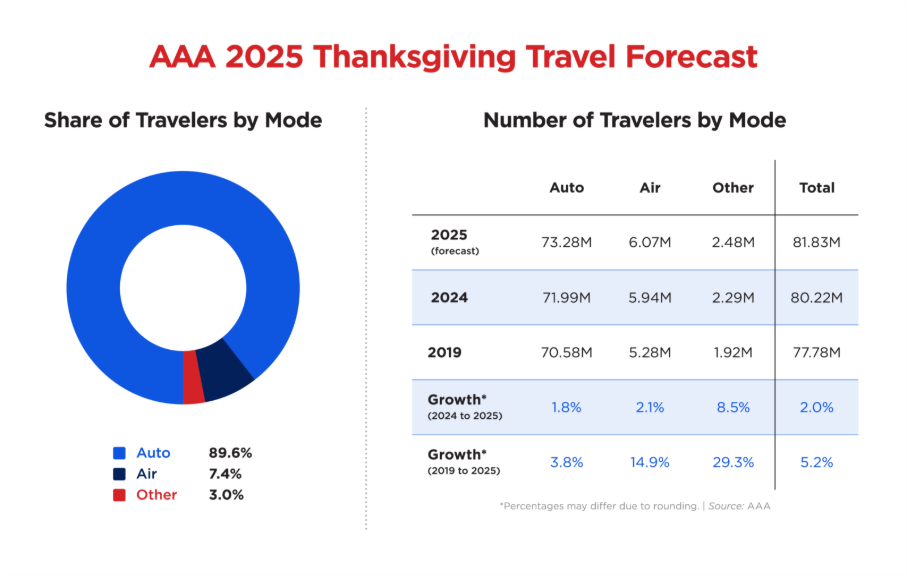
AAA projects 81.8 million people will travel at least 50 miles from home over the Thanksgiving holiday period, from Tuesday, Nov. 25 to Monday, Dec.1. This year’s domestic travel forecast includes an additional 1.6 million travelers compared to last Thanksgiving, setting a new overall record.
“Thanksgiving is the single busiest holiday for travel and has become synonymous with heading out of town to spend time with loved ones,” said Jillian Young, director of public relations for AAA Northeast. “It doesn’t come as a surprise that people are willing to brave the crowds and make last-minute adjustments to their plans, if needed.”

AAA projects at least 73 million people — nearly 90% of Thanksgiving travelers — will travel by car. That figure is an increase of 1.3 million travelers compared to last Thanksgiving. It could be higher if people who want to avoid airports on the heels of recent flight cancellations decide to drive.
For travelers who are renting cars, AAA car rental partner Hertz says Wednesday, Nov. 26, is expected to be the busiest pick-up day. AAA booking data shows that domestic car rentals are 15% cheaper than last year.
At the pump, drivers are paying about the same as last year. Filling the tank the night before a road trip is a good idea, since it’s one less thing to worry about on travel day. AAA also recommends checking your battery and tire pressure. AAA responded to nearly 600,000 emergency roadside assistance calls last Thanksgiving period to help drivers with issues like dead batteries, flat tires and empty fuel tanks.
As travelers prepare to get behind the wheel, AAA and Mothers Against Drunk Driving (MADD) remind drivers about the dangers of impaired driving. Drunk driving contributed to 868 fatalities during the Thanksgiving holiday period from 2019 to 2023, according to the National Highway Traffic Safety Administration (NHTSA). Have a plan in place before Thanksgiving and use a rideshare, designate a sober driver or take public transit to ensure everyone’s safety.
Over the Thanksgiving holiday period, 6 million U.S. travelers are expected to take domestic flights, a 2% increase from 2024.
Travel by other modes — including bus, train and cruise — is expected to increase by 8.5% to nearly 2.5 million people. Buses and trains could see an uptick in last-minute bookings this year.
The top holiday destinations listed below are based on AAA booking data for the Thanksgiving travel period.
| DOMESTIC | INTERNATIONAL |
| Orlando | Paris, France |
| Fort Lauderdale | Amsterdam, Netherlands |
| Miami | Vienna, Austria |
| Los Angeles/Anaheim | Cancun, Mexico |
| Tampa | Punta Cana, Dominican Republic |
| New York City | Basel, Switzerland |
| San Francisco | Sydney, Australia |
| Honolulu | Barcelona, Spain |
| Las Vegas | Budapest, Hungary |
| Atlanta | Oranjestad, Aruba |
Tuesday and Wednesday afternoon are expected to be the most congested periods before Thanksgiving Day, according to INRIX, a provider of transportation data and insights. Travelers returning home on Sunday should expect heavy traffic most of the day. Drivers should hit the road in the morning to avoid the worst backups, but keep in mind that construction, crashes or inclement weather could impact travel times. Slow Down, Move Over for emergency responders and other stopped vehicles on the side of the road to ensure everyone’s safety.
| Best and Worst Times to Drive | ||
| Date | Worst Travel Time | Best Travel Time |
| Tuesday, Nov. 25 | Noon-9 p.m. | Before noon |
| Wednesday, Nov. 26 | 11 a.m.-8 p.m. | Before 11 a.m. |
| Thursday, Nov. 27 | Minimal Traffic Impact Expected | |
| Friday, Nov. 28 | 1-7 p.m. | Before 11 a.m. |
| Saturday, Nov. 29 | 1-8 p.m. | Before 10 a.m. |
| Sunday, Nov. 30 | 11 a.m.-8 p.m. | Before 11 a.m. |
| Monday, Dec. 1 | Noon-8 p.m. | After 8 p.m. |
Nostalgia tourism is on the rise in 2025, and there’s no better way to embrace it than by hitting the open road to explore some of the quirkiest, most iconic roadside attractions in the northeast, like Lucy the Elephant in New Jersey and the Coffee Pot in Pennsylvania.
“Places like (these) drive tourism. They drive interest. People plan vacations around them. They tell stories we can all connect with, not to mention they are inherently fun and quirky,” said Rolando Pujol, author of “The Great American Retro Road Trip: A Celebration of Roadside Americana.”
For classic Americana and timeless charm, here’s what to add to your retro road trip itinerary.
Few things scream “Maine” like a gigantic 16-foot-tall duck boot. Standing proudly outside the L.L. Bean flagship store in Freeport, this oversized icon pays tribute to the state’s rugged culture and the legendary rubber-bottom boot that put L.L. Bean on the map. Inside the store, you’ll find classic duck boots in much more reasonable sizes to help you gear up for your next adventure.
Standing 31 feet tall and weighing 3,700 pounds, Bangor’s Paul Bunyan statue is a must-see for fans of timeless roadside attractions. This legendary lumberjack has been keeping watch over his birthplace since 1959, erected in honor of Bunyan’s 125th birthday. Skeptical about Bangor’s claim? Check out Bunyan’s “official” birth certificate at City Hall. Maine’s own Stephen King even gave the statue a brush of pop culture fame, bringing it to life in his 1986 novel, “IT.”
Built in 1927, the 18-foot-tall Coffee Pot first operated as a roadside diner serving up hot coffee and hearty meals along U.S. 30. By 1937 it had been transformed into a bar with a hotel behind it. Over time, this caffeine-forward landmark fell into disrepair. Then, Bedford County and the Lincoln Highway Heritage Park Corridor stepped in to restore this iconic landmark in 2004. Today, this giant, coffee pot-shaped relic is a nostalgic tribute to the golden age of road travel.
Step into the past at the Doo Wop Museum, a nostalgia-inducing tribute to the 1950s and 1960s. Explore vintage mid-century artifacts, including neon signs, pop culture memorabilia and plenty of vinyl upholstery. The Neon Sign Garden features carefully restored signs from iconic Wildwood motels, like the White Star Motel and Swan Motel. Inside, you’ll find a malt shop and a gift shop stocked with merch to show off your love for the Doo Wop era.
For more offbeat attractions, check out these quirky museums in the northeast.
At the Lucky Snake within the Showboat Hotel you’ll feel as though you’ve been transported back to the heyday of arcades. This expansive complex features vintage pinball, classic video games, and water gun games, as well as mini golf and roller skating. Not only does Lucky Snake proudly boast the title of the world’s largest arcade, but it’s also home to what could be the world’s largest Zoltar, a towering 11-foot-tall fortune-teller machine.
Plan your next arcade road trip with this guide to classic arcades.
Standing 65 feet tall, Lucy the Elephant has watched over the Jersey Shore since 1881, originally built as an eye-catching real estate advertisement. Now a National Historic Landmark, she welcomes visitors who come to admire her in all her glory. Snap street-view photos for free or book a guided tour inside for sweeping views across the Atlantic Ocean. It’s a fun way to step back in time at one of the top roadside attractions in the northeast.
Since 1947, the Fingerlakes Drive-In has been keeping the magic of old-school movie nights alive. As the oldest operating drive-in theatre in New York, it offers the best of both worlds — tune in through your FM car radio or enjoy the vintage charm of classic speakers. Roll up for a double feature under the stars, just like the good old days. A classic concession stand serves up hot dogs, nachos, and crispy onion rings. It’s a must-visit for anyone craving nostalgic summer fun.
Step into the jet-set era at the TWA Hotel, a mid-century marvel at New York’s JFK Airport. Housed in the iconic 1962 TWA Flight Center, this retro-chic hotel celebrates the golden age of air travel. Sip cocktails in the stylish Sunken Lounge or Connie Cocktail Lounge, take a rooftop pool dip with runway views, or explore a museum filled with artifacts, interactive exhibits, and stories curated by the New York Historical Society.
Ever dreamed of sleeping inside a shoe? Probably not — but at the Haines Shoe House in York, Pennsylvania, you can do just that. Built in 1948 to promote a local chain of shoe stores, this larger-than-life roadside attraction is pure Americana. Once home to a museum and an cream shop, it’s now a one-of-a-kind Airbnb, complete with a hot tub, foosball table, and an outdoor fire pit. Featured on HGTV’s “What’s With That House” and “The Amazing Race,” this oversized shoe is a must-stay for any offbeat or retro road trip adventure.
Where do retired ice cream flavors go? At Ben & Jerry’s, they find a final resting place in the Flavor Graveyard where curious visitors can pay their respects to dearly departed pints like “Peanut Butter and Jelly” and “Tennessee Mud.” Perched on a scenic hilltop adjacent to the iconic ice cream factory, this funky graveyard features 35 flavors, each with a clever epitaph. It’s a bittersweet (but mostly sweet) stop for any ice cream lover.
SEASON 2: EPISODE 9
Episode Feedback
Trying to decide whether to lease or buy a car? In this episode of Merging Into Life, host Zack Klapman is joined by Chris Hardesty, senior advice editor at Kelley Blue Book and Autotrader, to help you make sense of your options. They thoroughly break down the pros and cons of leasing versus buying, covering the financial, lifestyle and long-term car ownership considerations relevant to today’s market. From understanding depreciation and building car equity to navigating car loan lengths, confusing leasing fees and auto financing options, Chris offers clear guidance to help you make an informed vehicle decision for your budget and future.
[00:00:02] Zack: One of the most common questions I receive when someone wants to get a new car is, should I lease or should I buy? It can be so confusing, it can seem like you need three calculators and a spreadsheet to figure it out. There’s things like, what’s my monthly payment? What’s my down payment? What happens when I return the car? What can you actually afford or think you can afford? Those are different answers sometimes. It’s a very personal decision. It requires a lot of thought on what kind of car you need, how you use your car and how long you want to keep the car for. New car prices are going up. We’ve got EVs entering the market. We have rebates going away. It’s never been more important to get the most information when you’re making this decision. And luckily, today’s guest is here to help break it all down for us and help you make the right choice. Welcome back to Merging Into Life, the show where we help you navigate life’s unexpected turns. I’m Zack Klapman, your host for the Road Ready miniseries, where we cover everything you need to be confident on the road. Chris Hardesty is an automotive editor and expert contributor for Kelley Blue Book and Autotrader. He’s spent years helping consumers understand the fine print behind car financing, leasing and so much more. Chris, it’s great to have you. Share a little bit about yourself and what got you into this industry.
[00:01:28] Chris Hardesty: Well, I started working for Cox Automotive, the publisher of Kelley Blue Book and Autotrader about four years ago. A friend of mine was working there, and she was needing help producing some content. We had worked together long ago with various newspapers and where my role was the research director at various places. My last role in newspapers was a how-to guides editor for the Wall Street Journal. So, since she needed somebody to make complex topics easier to understand, she thought that I might be good for that. So, I started doing some freelance stuff for her and that turned into my role now as the senior advice editor for Kelley Blue Book and Autotrader.
[00:02:10] Zack Klapman: So, let’s jump into it. So, if someone is looking to get a car, how should they start weighing that decision between buying or leasing?
[00:02:17] Chris Hardesty: No matter what, whether you buy or lease, the first thing to consider is what your budget is. You don’t want to overspend on a car, whether you’re leasing or buying, but for leasing, you should consider what your annual mileage is. How much do you drive every day, every week, and every month, every year? And how much you value driving a new car versus keeping one for a long time? There are benefits to both.
[00:02:42] Zack Klapman: The average American drives 12,000 miles per year, based on a bunch of data. Is there an average number of miles that are allotted by a lease annually, or does that vary depending on what you negotiate?
[00:02:54] Chris Hardesty: It does vary. They range from low mileage leases to about 8,000 miles a year to what’s 10,000 and 12,000 miles is also common, but you can negotiate or buy additional miles so that it can fit what your commute is. And then if you exceed that, you’re paying for more miles.
[00:03:16] Zack Klapman: In a larger macro view, are we seeing more people leasing lately than ever or more people buying than ever?
[00:03:24] Chris Hardesty: It’s about 25% of all vehicle financing currently is for leasing. So, of all of that financing, whether for auto loans or for leasing, 25% of them are for leases. And it’s a slight increase over previous years, but not dramatically. But the popularity comes from people wanting a lower monthly payment and wanting to have access to vehicles that have the latest technology.
[00:03:55] Zack Klapman: So let’s talk a little bit about money. What does a lease payment cover compared to a car loan?
[00:04:02] Chris Hardesty: Lease payment covers the vehicle’s projected depreciation during the lease term. As soon as you drive a car off the lot, its value goes down, and the automaker needs to cover for that depreciation. When you initiate a lease, usually you’re paying a down payment, and that will help cover that depreciation. During the lease terms, you’re going to be paying for the interest charges and taxes. Whereas a car loan payment, that loan payment contributes toward you owning the vehicle goes toward the entire purchase price which allows you to build equity in the vehicle, whereas the lease you’re just paying for that depreciation, and that’s pretty much it. On the other hand, you can at the end of the lease term you could purchase the vehicle. So, once you have made all of those depreciation payments, you could purchase the vehicle for that remaining value.
[00:05:01] Zack Klapman: Let’s talk about equity a bit. So why is that such an important thing?
[00:05:05] Chris Hardesty: Well, building equity is important because, when you’re paying off a loan on any asset, you’re going to own it at the end of the term. After you’ve made all the payments, it’s going to be yours. And so, for first-time buyers, that owned vehicle is a valuable asset that they could sell, or they could use as a down payment on their next car. And it kind of gives them a financial head start, if you will, that leasing does not offer.
[00:05:38] Zack Klapman: And they both build your credit, right?
[00:05:40] Chris Hardesty: Yes, yes, they both build your credit, and building credit is especially important for younger folks who are just starting out in the workforce and that sort of thing.
[00:05:50] Zack Klapman: Let’s get into the ownership a little bit. You said that leasing a car is like renting an apartment. So can you expand on that for us?
[00:05:57] Chris Hardesty: Leasing is like renting an apartment in the sense that you are not building equity. You’re paying money to live in your apartment. You’re paying money to drive this car around. But at the end of your lease, whether it’s a yearlong apartment lease or a three-year car lease, you don’t own that car. You don’t own that apartment. A difference is that, with a car, you’re still having to pay for the maintenance. And everything that goes along with car ownership, except you’re not owning. With an apartment, in many cases, you are paying to live there, but as part of that fee, you’re getting the maintenance. You don’t have to worry about fixing the leak in the kitchen sink. You don’t have to worry about the hot water heater breaking, because the apartment complex or the landlord is going to take care of all that for you. When you lease a car, you’re still having to pay for the oil changes. You still need to get new tires. You still need to wash it and keep it clean, and you need to pay for any repairs that happen. So, you can’t compare it to renting, because you’re not making these payments to own it or build any equity, but you’re still having to pay the extra bit with leasing a car to keep it maintained.
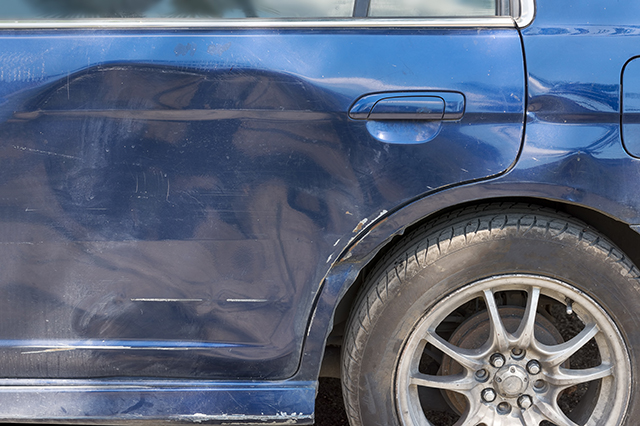
[00:07:15] Zack Klapman: If you return it and there’s little bits of damage, do you have to pay to fix those things if there’s like little dings in the doors or if the windshield’s cracked or something?
[00:07:24] Chris Hardesty: In many cases, you do have to pay for that, but it’s just for excessive wear and tear. Often, in a lease, some will be very specific, or they will say we will tolerate three dings that are smaller than a credit card on each, on any, body panel. So, some are very specific like that, others, they leave it kind of open. And that’s one of the cautions that people should have when they’re leasing is to evaluate that criteria for what the excess wear and tear is. Because at the end of the lease, when you go to turn it in, you don’t want to face any repair costs or have them say that, hey, you owe us this much more to take it back because you have not taken care of it.
[00:08:12] Zack Klapman: Some people might think of the whole lease-to-own thing as a middle ground between leasing and just financing and buying. Is that a good idea or is that just complicating something?
[00:08:23] Chris Hardesty: A lease buyout can be a smart move, but only if that residual value is less than the current market value. So, it often ends up being more expensive than financing from the start, because you’ve already paid for that steepest part of the depreciation. In that first year, it loses a significant amount of money. So, it kind of makes it, for me, it makes it more complicated. You’re leasing a car because you want to have the lower payments, and you want to experience a new car with the latest technology, etc., etc. So you’re just adding a whole other financing component and buying that car at the end of the term, forget about the residual value being higher or lower, now you’ve got to go and find a loan for it, and now you’re financing a used car so the interest rate is going to be higher than if you had purchased a new car.
[00:09:20] Zack Klapman: What about used cars? Is that a good alternative for folks?
[00:09:24] Chris Hardesty: Getting a used car can be a wise financial strategy, but you need to compare leasing a new car against buying that late model, a newer used car, because, like I mentioned briefly a minute ago, the interest rates for used cars are often higher than the interest rate for a new car or a new lease, especially a subsidized lease. The lower price of a used car might actually be more expensive in the end because of a higher interest rate than a more expensive new car that comes with a lower interest rate or a new car that you’re leasing at a lower monthly payment.
[00:10:12] Zack Klapman: It sounds like a lot of math. I think there’s probably a lot of websites out there that will help you calculate this stuff, but people should definitely do math.
[00:10:19] Chris Hardesty: Yes, absolutely. And Autotrader has some calculators that will help you with your calculating what you can afford, an affordability calculator. And there are all sorts of rules of thumb that folks can look at to see what portion of my take-home pay should be designated for transportation. And again, those sorts of formulas are just rules of thumb, because everybody is different and everyone’s situation is different.
[00:10:49] Zack Klapman: Yeah, that’s what I did. When I was 26, I bought a new car. I learned a lot of, I’ve learned about depreciation. I learned about all kinds of things, which I know we’ve hit on a bit regarding when someone leases the car depreciates. But let’s say someone wants to plan something for like 10 years. Most leases are not 10 years long. Should they, should someone buying a car think about depreciation at all?
[00:11:11] Chris Hardesty: When buying a car, absolutely. When you buy a car, depreciation is the largest part of ownership, the largest cost of ownership. And it’s kind of hidden. You think about getting your oil changed and getting new tires and all of those sorts of things, but you don’t think about the depreciation. So folks should research and choose cars that have a history of a strong resale value. And you can do that on any number of sites, kbb.com. You can scroll down, you can see the five-year cost of ownership, which shows you the depreciation chart. And you use that to gauge the resale value for these vehicles. One of the biggest pieces of advice that any newcomer to the car buying world should realize is not to go into a car dealership and purchase something based on the price. When you’re buying a car, you don’t want to negotiate the $400 monthly payment. Because the car dealer will help you get that $400 payment, but it might be stretched out for seven years instead of a more reasonable four years or five years.
[00:12:31] Zack Klapman: And I think, something that everyone should hear. Pretty much every new car is going to lose money, at least for a long, long time. As you said, Chris, there are some brands that are known for retaining more of their value, not all their value at all, but more of it. And there are brands where you can look at their depreciation in the first two to five years. It is like a brick dropped off the roof of your house.
[00:12:57] Chris Hardesty: And leasing electric cars. One of the reasons why it can be advantageous for people to lease an EV rather than buy them is the depreciation of EVs is much more significant in part because of the way the technology is improving.
[00:13:20] Zack Klapman: AAA has competitive rates, discounts and knowledgeable agents to get you the right coverage at the right price. And you can save even more money by bundling your auto and home insurance with AAA, giving you added protection. Check out AAA.com/Insurance for more information.
[00:13:39] You mentioned stretching out loan durations. And this seems like something, have loans grown in terms of how long they are over the last 20 years?
[00:13:51] Chris Hardesty: Oh, absolutely. The rule of thumb was that you would get a car loan for 48 months. Now, only well-established people who have good income and good credit can afford to buy a car with a 48-month long-term. The average length of a car loan now is 72 months. That’s a long time to have a car, especially for cars that depreciate in value, and some will stretch to 84 months. And that is just ridiculous, because it’s going to be a long time before you actually put any equity into that car, because you’re paying for that interest. You’re paying for the depreciation. The average age of a car on the road now is 12.8 years. You’re probably not going to be driving a car for 12.8 years. I could never encourage someone to stretch out a car loan to 84 months, because it’s going to reach a point where you still owe money on this car and it’s not worth that much. And you’re going to be underwater, which means that you owe more on the loan than the vehicle is worth.
[00:15:11] Zack Klapman: Are there any other ways you think people should prepare before going to a dealership, other than having that financial, having that loan set up?
[00:15:19] Chris Hardesty: Well, getting the preapproval is certainly the thing to do, because you don’t necessarily want to let the dealer know how you intend to pay for it. But what you want to negotiate for is a good thing to have in mind when you show up. And you’re not negotiating on the monthly payment, because they can help you meet that, but you will pay in the end. What you want to negotiate for when you’re working with the dealer is what the out-the-door price is. And that would be the price of the vehicle and all of the fees that are involved with it.
[00:15:55] Zack Klapman: Are there any common hidden costs or things in the fine print when in lease agreements?
[00:16:02] Chris Hardesty: Well earlier we talked about the excess wear and tear, so you want to be aware of what the leasing contract says about those so that you don’t have any big surprises at the end. You need to pay attention to the mileage, excess mileage penalties. A lease does have acquisition fees and disposition fees, and those are just costs related to the paperwork at the beginning of acquiring the car. And then the disposition fee is what you pay when you turn it in. And then that can be a few hundred bucks. Insurance for leased cars is often more expensive, because the leasing company will require you to have more coverage and a lower deductible. And both of those factors make your insurance premium higher. The insurance company owns the car, and so they can kind of dictate what sort of liability coverage that they want you to carry on the car.
[00:17:04] Zack Klapman: Let’s talk about maintenance a little bit or warranties more specifically. Is there anything people should pay attention to, especially if we’re looking at new versus certified pre-owned? I mean, if it’s a lease, everything’s covered, right?
[00:17:17] Chris Hardesty: Yeah, most everything is going to be covered, at least your maintenance is not going to be covered. So, you’re still going to be on the hook for that. But if the water heater or water pump breaks, then you’re going to get that fixed at no charge. So, the factory warranty that comes with a car typically lasts for three years or 36,000 miles. So, for a lease, which is often 36 months, everything’s going to be covered for that time period. When you’re buying a new car, and you get to the end of that warranty period, then, you’re going to be on the hook for that water pump that breaks or the window that no longer rolls down or any number of things that can happen with your car. A CPO, which stands for Certified Pre-Owned is a type of used car that has undergone significant evaluation and passed all the criteria set by the auto manufacturer, and it said, ‘hey, this is a top quality used car. And we believe in this car so much that we are going to put this, give you extra warranty coverage on the vehicle,’ ‘and often, it’s a continuation of the factory warranty for the powertrain and so forth. So, it’s having that extra peace of mind of having the factory backing of this used car makes it attractive to many folks.
[00:18:53] Zack Klapman: What is one myth about buying or leasing you wish people would just forget?
[00:18:59] Chris Hardesty: That you can’t negotiate a car deal unless you’re in person. And buying cars online has become kind of a big thing. And you don’t have to go and visit the dealer. You don’t have to sit there in their showroom and sit across the desk from the dealer. You can do a lot of negotiating for buying a car online through email and even phone calls. So, you don’t necessarily have more leverage by going to the dealership. In fact, you might even have more leverage when negotiating because you’re negotiating with this dealer on their website, and this dealer on their website, and this dealer on their website and saying, hey, well, Zack’s dealership is going to give me this offer, or Chris’s dealership is going to give me that offer. So, you do have that kind of leverage when you’re doing stuff online, and a lot of people dismiss online buying, because car dealerships are just a traditional brick and mortar place where you go there, and you talk to the dealer ,and they’re the salesperson and you got a deal. You can do all that stuff online too.
[00:20:18] Zack Klapman: So, when I bought this car, my new car 20 years ago, and a piece of advice I’d received, I want to see if it’s still relevant. I did exactly what you said. I negotiated through email. And it was much better. It was a lower pressure situation for me. I could collect my thoughts and just respond. And I also had another dealership in a different state that sold a similar car, and that was kind of my leverage. I was like, they’re selling it for this. I’m willing to fly there, what can you guys do? And the advice I had received was bring proof of those email conversations and bring proof of this other dealership and the ad and whatnot.
[00:20:52] Chris Hardesty: I think they should absolutely do that and to have that proof, because just like some car dealers might have the reputation of being shady, well, there are many customers who are also shady, and they could show up at the dealership and say, ‘oh, man, it was Zack said, he was going to give me this kind of deal on this car,’ and you haven’t even talked to Zack. So, that puts the dealerships, and dealerships are just like any other business. They’re just trying to give you a product that you can use and enjoy. And they’re not trying to take your money for nothing. So, you shouldn’t take their money for nothing. When you’re any kind of negotiating you do, you should do it in good faith, just like you would expect the dealership to do it and in good faith. So having the proof that you had talked to the other dealership and outlining here is this vehicle. Here’s the VIN, the vehicle identification number. So, we can see that it is this model of vehicle and it has these, it’s this trim level and it has all these features on it. Yeah, that’s certainly something that you should do. And buying out of state is certainly an option for folks. And one thing to remember is that we talked briefly about taxes earlier. Your taxes on a vehicle and registration fees are based on where you register the car. So, if you go to a state that does not charge sales tax, that’s fine and dandy. But if you register a car in your state and it charges sales tax then you’re still going to be paying that sales tax. So, that’s something to remember. Another piece of advice that I would give to people, especially first-time buyers, is to take somebody with you to be kind of your wingman or your reasonable thought, because buying a car is a big deal. It’s you’re spending a lot of money. It’s exciting, but it’s scary. And there’s a lot of information coming at you, and it’s good to have somebody by your side who can help you realize that, hey, this is not, this is not a good deal or make sure you understand what this person is telling you so take somebody with you when you go to sign all the paperwork.
[00:23:11] Zack Klapman: Absolutely, absolutely, absolutely great advice. I really appreciate Chris for coming on the show and breaking down one of the most overwhelming purchasing decisions you can make. Whether you’re leasing your first car or you’re buying your first car and you want to avoid buyer’s remorse, we hope this helped you feel more prepared, because I know it can get really confusing when those big stacks of papers come out, and there’s lots of signatures to make. And if you’re enjoying the show, do us a quick favor, hit that like button, leave a review, and share it with a friend who would like it too. It helps more than you know, and it will keep the good stuff coming your way. Thanks for being part of the ride, and we’ll see you next time on Merging Into Life.
The views and opinions expressed in this podcast do not constitute financial advice and are not necessarily the views of AAA Northeast, AAA, or its affiliates.
AAA Auto Loans and Refinancing
Autotrader Car Affordability Calculator
Merging Into Life | S1EP1: Car Buying Guide
Questions to Ask When Buying a Used Car
"*" indicates required fields
*The views and opinions expressed in this podcast are not necessarily the views of AAA Northeast, AAA and/or its affiliates.
Tucked between the Hudson River and Long Island Sound, Westchester County offers a charming winter escape just 30 miles from Manhattan. Whether you’re looking for a day trip or an extended stay, now is the perfect time for a visit.
Easily accessible by Metro-North or Amtrak, this scenic stretch of the lower Hudson Valley comes alive during the colder months with holiday charm and seasonal adventures. From glittering light displays to cozy nights filled with timeless stories and songs, there’s something to make everyone feel merry.
Here are just some of our favorite events from this year’s lineup.
Westchester’s light shows bring warmth and wonder to the cold winter nights.
From Nov. 21 to Dec. 30, Lumina illuminates Harvest Moon Farm & Orchard with more than half a million lights. Stroll the trail and be dazzled by a musical Nutcracker display, whimsical gingerbread city and more, with cider, s’mores and other farm-made treats to add to the magic.
Holiday on the Hudson at Monteverde at Oldstone in Cortlandt Manor is another a captivating light walk, backed by stunning Hudson River views. Afterward, warm up with a cocktail or hot chocolate by the fire in the vintage 1920s bar. Runs Wednesday through Sunday, Nov. 22 to Jan. 4.
In Yonkers, Untermyer Gardens Conservancy’s Grand Holiday Illumination showcases over 150,000 twinkling lights set to music from around the world. Open every night, Dec. 6 to Jan. 4, including the holidays. It’s free to the public and no reservations are required!
Stay cozy in your car at Westchester’s Winter Wonderland, a 1.2-mile drive-through light show at Kensico Dam Plaza in Valhalla. Turn up the holiday tunes and enjoy colorful, larger-than-life light displays surrounding Westchester’s tallest Christmas tree. Open nightly from Nov. 28 to Dec. 31.
For a glimpse of holidays past, visit one of Westchester’s historic mansions, where the halls are decked with ornate wreaths, garland, trees and antique ornaments.
The Armour-Stiner Octagon House in Irvington is hosting a Victorian Christmas Tour from Nov. 13 to Dec. 22. You don’t want to miss seeing this unique eight-sided home decorated for the holidays in 19th century decor.
It’s a Gilded Age holiday at Lyndhurst Mansion in Tarrytown during the Holiday Classic Mansion Tour, running from Nov. 28 to Dec. 28. Also at Lyndhurst, guests can see the one-hour, one-man show “Mr. Dickens Tells a Christmas Carol.” Based on a tour Dickens did in 1867, it brings the beloved story to life like you’ve never seen before. Performances run Dec.14 to 26.
The Hudson River Museum offers Glenview Holiday Tours through its 1877 residence on select dates starting Nov. 28.

Pick up something special and soak in the spirit of the season with some gift shopping.
Ridge Hill and Cross County Center in Yonkers will be hosting festive experiences throughout the holidays, including tree and menorah lightings, photos and pet nights with Santa, live carolers, food trucks and a pop-up ice rink.
For handcrafted and locally made gifts you won’t find at the mall, you can browse nearly 50 artisanal vendors at the Downtown White Plains Holiday Market from Dec. 5 to 14, complete with firepits, live entertainment and Santa visits. The Nature Center at Greenburgh in Scarsdale hosts a sustainable Holiday Market and Train Show on weekends from Nov. 15 through Dec. 7. The New Rochelle Holiday Market brings ice skating and winter village charm from Nov. 28 through Dec. 14. And for even more unique finds, Clay Art Center’s Handmade for the Holidays is Nov. 13 through Dec. 23.
There’s so much to keep you entertained in Westchester this holiday season — and plenty of restaurants, cafes and bakeries to satisfy your cravings, wherever you go. So, plan to dine locally.
As you think about year’s holiday outings and winter traditions, put Westchester County at the top of your list.
Featured image: Courtesy of Visit Westchester
Have you ever wanted to take a magical ride on the Polar Express? In the Northeast, you can! Many vintage railroads in the region are now scenic railways. And there’s nothing better than taking a holiday ride on a snowy evening. Here are some of the best winter and holiday train rides near you.
The Adirondack Railroad brings the Polar Express train ride to New York. The popular holiday story comes to life, with cocoa, cookies, a narrated story time, carols and even a visit from Santa himself. Don’t forget to wear your pajamas! You can catch the two-hour nonstop train at Utica’s Union Station. Runs through Dec. 21.
The Blackstone Valley Polar Express Train Ride is the hottest golden ticket in town. It’s almost sold out for 2025, but you may want to add it to your list of things to do next Christmas!
Experience the magic of “The Polar Express” in author Chris Van Allsburg’s home state of Rhode Island. The 90-minute, round-trip train ride departs from the historic Blackstone Valley station in Woonsocket and is filled with singing, games, hot chocolate and a reading of the book, topped off with a visit from Santa. Before getting on the train, a stage show, photos with characters and more kick off the fun.
You can also board Cape Cod Central Railroad’s Polar Express train ride, running along the shoreline of Massachusetts. Passengers will receive punched golden tickets, enjoy dancing waiters, hear the story that inspired the ride and meet Santa and his elves. It’s a 90-minute round trip from the Buzzards Bay train depot in Bourne, Mass. Select nights through Dec. 23.
If you’re feeling jolly, make sure to catch Santa’s Holiday Express on the Conway Scenic Railroad, weekends, ending Dec. 21. The holiday-themed journey takes guests on a 90-minute round trip to meet Santa in the village of North Conway, and each child receives their own cookies and milk.
Conway Scenic Railroad also offers the Winter Mountaineer, a train ride over New Hampshire’s scenic Crawford Notch. Get breathtaking views of the White Mountains from a classic midcentury train. This train runs on select dates from Nov. 28 to Feb. 22.
Essex Steam Train’s annual North Pole Express is one of the most sought-after holiday train rides in New England. On this train ride, you can along with special guests like Santa and Mrs. Claus. Get ready for festive sing-alongs, hot chocolate, sugar cookies and a special gift from the big man himself.
Grown-ups can enjoy Essex Steam Train’s New Years Eve party. It’s a 40s, Casablanca-themed soiree, so sip cocktails on vintage train cars, enjoy a sumptuous dinner, try your hand at some classic casino games and dance to the tune of a live jazz band.
Set in the picturesque Pennsylvania town of Jim Thorpe, the Lehigh Gorge Scenic Railway weaves through the Pocono Mountains, offering unforgettable views and live narration. During the Christmas season, you can catch the Santa Claus Special Train all the way up to Christmas Eve. During the 70-minute round trip, Santa meets with everyone aboard and takes in the views with you.
The Maine Narrow Gauge Railroad’s Polar Express train ride will take you straight to the North Pole (well, technically, a 50-minute round trip from Portland’s Ocean Gateway Marine Terminal), in luxuriously decorated Christmas train cars. Passengers will meet the conductor, an assortment of hot cocoa-bearing magical chefs and Santa Claus himself.
Hop aboard the very first mountain-climbing cog train in the world to enjoy New Hampshire’s winter wonderland. Mount Washington is the highest peak in New England, and the Mount Washington Cog Railway comes in at the second-steepest set of train tracks in the world.
The winter trains on the mountain continue running all season long. Trains can climb up to Waumbek Station, or even as high as the Skyline, for breathtaking panoramic views. Passengers can also enjoy complimentary hot drinks, a fire pit and even warming huts.
Santa is coming to Allaire State Park! The New Jersey Museum of Transportation’s Santa Express has been running during the holiday season for more than 40 years, and it’s not stopping anytime soon. Santa Claus will board the Christmas Express and talk to every child on board while you chug along through a winter wonderland. Catch the train on select nights through Dec. 21.
Need a ride to the train? Click here to rent a car.
Have you ever been on a holiday train ride, or dreamed of boarding the Polar Express? What holiday tradition do you do with your family every year? Let us know in the comments below.
This article has been updated and republished from a previous version.
Maybe the best part about the holidays — besides spending time with family, of course — is the food. But sometimes, getting your favorite annual dish from your home to the gathering can be a bit of a balancing act. Literally.
While you could chance it, transporting certain foods can get messy fast, adding stress to what is supposed to be a cheerful day. Avoid losing a battle to gravity with these delicious and portable foods to bring to your holiday get together.
It’s safe to say that soup is out as a traveling appetizer option due to its propensity to spill — unless you have a slow cooker with a locking lid (but even then, be wary). There are still plenty of starters that’ll stay stable on the way to your destination.
Every table needs bread, and freshly baked rolls are easy to make, shareable and a breeze to transport right in the pan you made them in with a stretch lid on top.
Dip is also a great appetizer that’s easy to take with you, and the options are pretty much endless. There’s spinach and artichoke dip, jalapeno popper dip, caprese dip, buffalo chicken dip and so many more. To make your dip easier to transport, you could choose to make it in a disposable foil pan, so you don’t have to worry about getting your baking dish back at the end of the night. (Even better: choose one that comes with a lid.)
Some sort of puff pastry appetizer, like apricot and gruyere cheese puffs from Cooking in my Genes, is an easily portable food that can be placed into a large food storage container with a secure lid and taken on the road.
If you’re contributing a main course to the meal, leave anything elaborate to the host and opt for something that’s sturdy (won’t spill) but not super heavy (and therefore cumbersome to maneuver.) Think casseroles, potatoes, macaroni and cheese and gratins — all of which can be made ahead of time in their transport dish or foil pans and then topped securely with plastic wrap and aluminum foil for safe arrival at your destination.
Duchess potatoes are a fresh spin on mashed potatoes with their beautiful rosette presentation, and because they’re baked into shape, they should be a cinch to transport. As far as casseroles, any kind can work as long as it’s fully cooled before you get on the road. This sweet potato casserole from Spend With Pennies has over 2,000 five-star reviews and takes only 45 minutes to assemble and bake. If you’re a one-bowl recipe type of person, this cornbread casserole has your name on it.
For baked mac and cheese, try this recipe from Mom On Timeout, which uses three types of cheese and is finished with a top layer of crispy breadcrumbs.
There’s always room for dessert in our bellies, but maybe not in our vehicles. Try to veer away from anything tall, like cookie towers or multilayered cakes as they can be tricky to transport without damage. Cookies not assembled high and single-layer cakes are fine, as they can be packaged securely with either a zip-close bag or a snap-lock cake carrier, respectively.
Pies are OK — but not any pie. As with the casseroles, make sure the pie is fully baked and sturdy. A pie that’s underbaked or has a liquid texture is going to be a nightmare to transport, so choose something like a pecan pie or crumb cake over chocolate cream pie or other cream-topped varieties.
Cheesecake is a perfect middle ground as it tends to hold its shape quite well, once it’s cooled. Keeping any cheesecake in its springform pan with a tight covering over the top is a great way to safely transport and provides an easy reveal come dessert time.
If you’ve been tasked with being this year’s mixologist, don’t fret about lugging all the beverage ingredients separately. You can assemble any drinks ahead of time by multiplying the ingredients by how many people will be at the function so that you have it properly proportioned. Add everything to a sealable container (even a soda bottle would do) and gently swirl to mix. This way, once you get there, all you have to do is pour each individual cocktail or mocktail instead of mixing each drink one by one. Saving time, for the win.
PS: If you or your guests plan to imbibe, make sure everyone has a safe ride home.
Lower production, higher exports and steady demand have steadily taken a bite out of national gasoline stockpiles. The Energy Information Administration (EIA) last week reported a fifth-straight week of declines in gasoline supplies, which fell by 4.7 million barrels to 206 million barrels. That’s 5 million fewer than last year and 9 million less than the five-year average.
While demand fell slightly from the prior week, the EIA’s figure of 8.87 million barrels a day is still relatively robust for this time of year. At the same time, gasoline production eased to 9.42 million barrels a day, down from 9.65 million barrels a day the previous week, while exports climbed from 859,000 to 1.08 million barrels a day.
“Shrinking gasoline inventories have put some pressure on pump prices, ending the recent streak of price declines seen throughout the Northeast this fall,” said Mark Schieldrop, senior spokesperson for AAA Northeast. “Supply and demand shifts will dictate how much prices shift—and in what direction—in the coming weeks.”
| Region | Current Price* | One Week Ago | One Month Ago | One Year Ago |
| Massachusetts | $3.00 | $2.98 | $3.05 | $3.03 |
| Rhode Island | $2.95 | $2.92 | $3.00 | $2.95 |
| Connecticut | $3.05 | $3.03 | $3.10 | $3.04 |
| New York | $3.12 | $3.10 | $3.16 | $3.17 |
| New Jersey | $2.98 | $2.96 | $3.02 | $2.91 |
*Prices as of Nov. 10, 2025
Today, Oklahoma and Mississippi have the lowest prices in the nation at $2.56 and $2.59, respectively. California and Hawaii hold the highest prices in the nation this week at $4.71 and $4.46 respectively.
The AAA Gas Prices website is your resource for up-to-date fuel price information. Search for average gas prices on national, state and metro levels by regular, plus, premium and diesel.
Life insurance is one of the most misunderstood forms of insurance coverage. How it works, why it’s necessary and what defines quality coverage are all common questions. And for younger generations struggling with debt, life insurance is simply not on top of the priority list. But when it comes to purchasing life insurance, the sooner the better. Don’t miss out on the opportunity to build a formidable financial support system.
Reach out to an insurance agent to discuss your options.
Contrary to popular belief, you don’t have to be middle-aged or even have started a family for life insurance to be a worthwhile contribution. In fact, establishing a life insurance policy early on could be a smart way to set the tone for your financial future.
For young adults just starting to build their finances, such a policy could be the safety net that makes all the difference. This age group typically has yet to amass significant savings or a retirement plan and life insurance could ensure that a future spouse or children are provided for under any circumstances.
Even if you don’t have anyone depending on you just yet, you’ll be thankful to have gotten a jump on investing in your family’s future early on. It’ll put you that much closer to your financial goals later in life.
One of the clearest reasons why you shouldn’t wait to start a life insurance plan is because of how affordable rates are for young adults. A policy’s cost is affected by a wide range of factors, but your age and general well-being are chief among them. So, beginning a policy when you’re young and healthy means rates are likely as low as they’ll ever be.
In some cases, a life insurance policy could be as inexpensive as just a few dollars each week, and it may be wise to begin injecting some funds into your plan even before you begin having children or purchasing a home. The more expenses you take on, the less available money you will logically be able to apply to your policy.
Anticipation is key when it comes to insurance – protecting against an uncertain future is its very nature — so the time is now to set aside your misconceptions and start planning ahead, especially while you can still take advantage of incredibly low rates.

Just as the rates for life insurance vary based on your specific situation, you may be relieved to know that there is no one-size-fits-all approach to the kind of policy you can acquire. How much you contribute and how much coverage you attain are up to you. You can customize your policy to your budget and your lifestyle.
Feel free to take on a more ambitious premium. However, if you don’t have the means, it is better to have a modest plan than none at all.
Take it slow with a term life insurance plan and amp it up once you’re comfortable. Just be sure to leave the option open to convert your policy into whole life insurance, which offers an entirely different set of benefits.
At its core, the concept of life insurance may feel a bit morbid. After all, its key benefits kick in once the insured individual passes away — but there are living benefits available, as well. In the case of an accelerated death benefit, if the insured is diagnosed with a terminal illness, they may receive up to half of their death benefit tax-free to help cover or defray medical or other associated costs. Another benefit is a return of premium that ensures a tax-free refund of any premium payments at the end of the policy.
The benefit to the surviving loved ones is undeniable. With a life insurance policy in your back pocket, you’ll be able to rest easy knowing that the people who matter most will be protected if disaster strikes.
Whether you already have dependents or not, it’s never too early to begin paying into your life insurance plan. No one can predict the future, and you never know when tragedy may occur. However, once you take precautions, you’ll be better equipped to set those worries aside and focus on enjoying life.
More than laying the groundwork for your financial future, your life insurance plan puts in place a support system that will provide for your family long after you’re gone. That’s a peace of mind that cannot be effectively quantified, no matter what your premium is.
This article has been updated and republished from a previous version.
“I can’t adult today” is an expression that many millennials have heard friends say, seen as a slogan on a t-shirt or perhaps uttered themselves (maybe even multiple times in the same week).
While the sentiment strikes a chord with many, the reality of the situation is millennials now comprise the largest percentage of the country’s workforce, according to the Pew Research Center. This generation is now in the prime window for “peak adulting” – that is to say, getting married, having children and, of course, committing to 30 years of debt with a new mortgage.
But another adult decision that it’s time for millennials to put some serious consideration into is life insurance. Unlike the aforementioned weddings or additions to the family that take months of planning and adjusting to, once you know what you need, signing up for a life insurance policy is a process you can get started in a matter of minutes.

Learn about your life insurance options with AAA Insurance.
Millennials were ranked most in need of life insurance in 2022 by the Life Insurance Marketing and Research Association’s (LIMRA) annual Insurance Barometer Study.
Now would be the ideal time for millennials to sign up for life insurance, though, as insurance is generally cheaper for younger, healthier individuals – the right policy could result in saving significantly over the coming years.
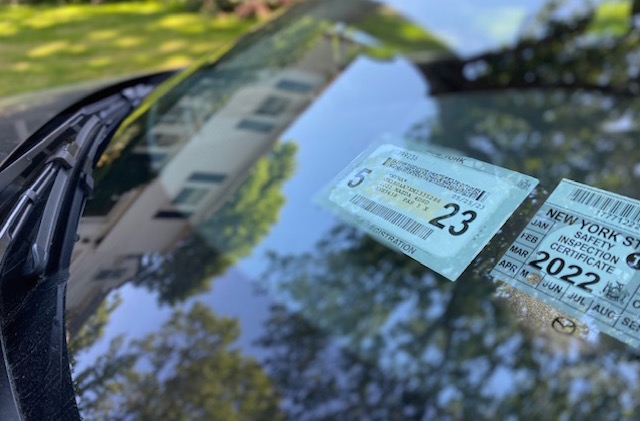
Additionally, for those who receive life insurance through their employers, it’s important to examine if that amount would cover what you want it to cover in the event the policy is needed, meaning funeral costs, future college tuitions for your children, monthly living costs and any other outstanding debts. Most people find that the additional coverage gives them added peace of mind that they are securing their family’s future for the road ahead.

That all sounds good, but can you afford it? Another takeaway from LIMRA’s 2022 study was that millennials were the most likely generation to overestimate the cost of life insurance – by an average of $1,000 per year.
It varies based on policy, but many options would be cheaper than what the average American household spends on movie/TV streaming services ($55/month according to J.D. Power) or a typical monthly internet bill, which Nerdwallet estimates to be around $47-$69 per month.
If any of this still gives you those “I can’t adult right now” vibes, don’t worry. Our qualified agents can walk you through the process and find the best option for you.
A father is driving with his three children in the back seat. His left hand is firmly on the steering wheel while his right hand is gripping a beer bottle.
Shocking, right? But would you be as shocked if the same man was holding a phone instead?
Distracted driving can be as devastating as driving under the influence. That’s the message of the AAA Don’t Drive Intexticated campaign. The above scenario plays out in a video made for the campaign.
Think of these statistics the next time you reach for the phone while driving, and click here for a look at how distracted driving can impact your daily commute.
Sources: AAA, the Insurance Institute for Highway Safety, and the National Highway Traffic Safety Administration.
What do you do to avoid distractions when you’re behind the wheel? Share your tips in the comments.
For more on AAA’s campaign to curb distracted driving, visit AAA.com/DistractedDriving.
Every day, AAA Northeast’s expert roadside technicians demonstrate a dedication to helping and serving people.
Some days, their efforts are downright heroic.
May 30 was one of those days. That’s when Norman Strom helped save an elderly couple from a fire in their Grafton, Mass., home.

Strom was passing their house on his way to a Roadside Assistance request when he noticed smoke billowing from the garage. Strom, a volunteer firefighter of 15 years, stopped to knock on the door of the house and notify anyone inside. The couple had no idea of their plight.
Strom helped them out of the house and to a safe place. Then, as the first flames emerged, he returned inside to rescue a cat and some of the couple’s personal items.
Not 10 minutes later, a propane tank in the garage exploded, setting the entire house ablaze.
“He saved our lives,” Norman Daigle told a Boston-based TV station. Daigle and his wife lived at the house with his daughter and his son-in-law.
Multiple media outlets reported the story as did the Your AAA website and the AAA Northeast Facebook page. AAA members commended Strom for his actions. Daigle’s daughter, Debra Rixham, was among them. She wrote:
“Thank you do [sic] much Norman. I do not have the words to express how grateful we are. This was my house and it was my parents that you saved along with my cat Kevin. We will meet in the near future so that we can thank you properly.”
Soft-spoken and humble, Strom said he was simply doing his job on that fateful Wednesday afternoon.

“I would do it again,” he said. “If everybody helped one another, we’d live in a better world.”
But Strom’s actions went far beyond his AAA duties, and club leaders felt he should be celebrated for it.
“At AAA Northeast, we help and serve as a way of life. Norman took that to the next level,” John Nardolillo, senior vice president of member services, said. “He was driving by that house for a reason. If he didn’t stop, if he didn’t go inside, I don’t believe those folks would have made it.”
Strom wasn’t interested in formal recognition, though. He asked that the club instead do something to help the victims. So, a donation in Strom’s name was made to a GoFundMe page set up for the family.

Strom’s wishes regarding a recognition event went unheeded. The club held a small celebration for him in early June.
Strom is not the only AAA hero.
On June 11, Nellie Hutchinson and Kitt Sewer-Small, employees at the AAA Wayne, N.J., office, helped prevent a possible suicide on a bridge in Paterson, N.J.
In December 2016, roadside technician Bobby McCollough pulled a man from a burning building in Providence, R.I.