Crude oil and refined product prices climbed sharply last week, reaching multi-year highs after the U.S. initiated a blockade of the Strait of Hormuz. Domestically produced West Texas Intermediate ended the week $7.54 higher, and Brent crude rose $2.84 as markets digested the latest updates on the potential future peace talks and the eventual reopening of the strait. Before the war, anywhere from 125 to 140 oil tankers passed through the straight. Between May 1 and 3, just seven completed the passage, according to the Hormuz Strait Monitor.
As higher oil prices continue to pressure the pump, tightening domestic stockpiles of crude and gasoline are adding fuel to the fire. Last week, the Energy Information Administration (EIA) reported that U.S. gasoline inventories fell by 6.1 million barrels — the 11th straight weekly decline — and now stand 2% below the five-year average and 1.4% below year-ago levels. Crude inventories also fell, declining by 6.2 million barrels as exports surged to a record 6.43 million barrels a day — an increase of 1.64 million barrels a day week over week. That’s 809,000 barrels a day higher than the previous record set in February 2023 and a clear sign of increasing demand for U.S. product from countries severely impacted by the supply clampdown in the Middle East.
Despite surging gasoline prices, Americans are consuming more gasoline than they did last spring. Demand reached 9.1 million barrels a day last week, an increase of 49,000 barrels a day over the prior week, according to the EIA. Over the past four weeks, demand has averaged 103,000 barrels a day higher than the comparable weeks of 2025.
“All the factors that drive the cost of gasoline have been heading toward higher prices,” said Jillian Young, director of public relations for AAA Northeast. “Along with higher oil prices, gasoline demand has held strong and U.S. exports are shattering records, leading to tighter inventories. Oil and gas markets will remain volatile amid ongoing uncertainty about a potential end to the war and resumption of vessel traffic through the Strait of Hormuz.”
AAA’s May 4 survey of fuel prices found the national average up 34 cents from last week ($4.11), averaging $4.45 per gallon. The May 4 national average price was 35 cents higher than a month ago ($4.10) and $1.29 higher than last year ($3.16).
Region
Current Price*
One Week Ago
One Month Ago
One Year Ago
Connecticut
$4.52
$4.21
$4.06
$3.07
Massachusetts
$4.35
$4.04
$3.91
$2.98
New Jersey
$4.42
$4.08
$4.08
$3
New York
$4.46
$4.18
$4.05
$3.10
Rhode Island
$4.39
$4.08
$3.96
$2.96
*Prices as of May 4, 2026
As of May 4, Georgia and Oklahoma had the lowest prices in the nation at $3.85 and $3.88, respectively. California and Washington had the highest prices in the nation at $6.11 and $5.67, respectively.
The AAA Gas Prices website is your resource for up-to-date fuel price information. Search for average gas prices on national, state and metro levels by regular, plus, premium and diesel.
What better way to mark one of life’s most unforgettable milestones than with an incredible journey to match?
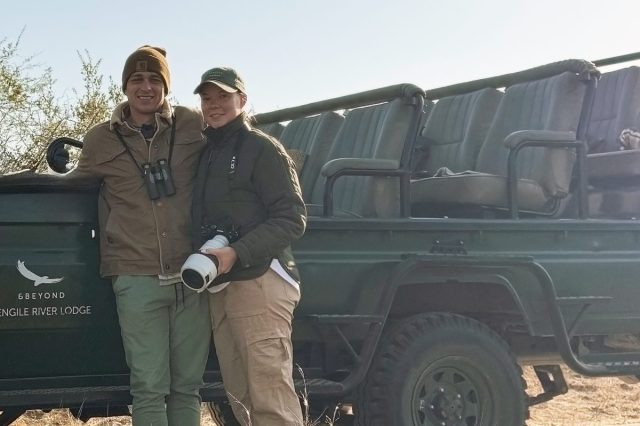
AAA member Maggie Bass and her husband Adam wanted to spend their honeymoon on an African safari, and AAA Northeast travel advisor Helen Devoe helped to make it a reality.
From Bucket List to To-Do List
“Our trip was amazing!” Bass said. “Helen planned an incredibly seamless and stress-free travel experience for us. The entire trip was absolutely perfect, and my husband and I have already spoken about doing it again!”
The couple traveled in June to the Tengile River Lodge in South African in the Sabi Sands game reserve.
“We chose a safari for our honeymoon because it was one of the top trips on our bucket lists,” Bass said. “We had researched the best locations for the time of year we were planning, and we knew we wanted to take a once in a lifetime trip for this special occasion.”
After choosing their preferred country and accommodations, Bass contacted Devoe for advice and assistance scheduling transportation and excursions.
“She was amazing at coordinating all of our travel to and from such a unique location,” Bass added.
Photo courtesy of Maggie Bass
On the Lookout for Big Game
Bass called shortly after getting engaged, according to Devoe, who was not surprised by her honeymoon pick.
“She knew exactly what she was looking for,” said Devoe. “Adam and Maggie both work for an airline, so it seemed normal that since they can fly free, they would pick an exotic destination for a honeymoon.”
And they came to the right place. This was not Devoe’s first safari.
Photo courtesy of Maggie Bass
“I work through our partner African Travel, which has four decades of expertise. They helped me gain access to expert support, immersive training and exclusive tools to help me plan personalized journeys for folks looking to travel to Africa,” Devoe said.
Viewing wildlife was the top priority for the newlyweds.
“The main activity was to go out on day and evening game reserve drives — where they hoped to see the big five— lions, elephants, leopards, rhinos and buffalo,” Devoe said. “They also wanted their evenings to include stargazing at the beautiful African sky.”
The entire trip was so memorable, Bass mentioned that she could not pick one highlight.
“The experience of being that close to the animals in their natural habitat was life changing,” she said. “The food was amazing and the service was incredible. I would absolutely recommend AAA and specifically Helen Devoe to anyone.”
Photo courtesy of Maggie Bass
Building Big Trips
Among the challenges of planning trips like a safari are deciding which country and park to visit, determining the budget, and then, crafting an itinerary that balances time to see wildlife with time to relax.
While the African safari honeymoon is one of the more uncommon trips she has organized, Devoe said she has booked vacations to other exotic destinations and they are the most fun to plan, simply because travel advisors don’t do them every day.
“I have booked … the Galapagos, river cruising in Egypt, Australia and even bird watching in Costa Rica,” Devoe said.
For those ready to map out an adventure, Devoe offered this advice:
Plan ahead by choosing your destination.
Research safety precautions and understand the local customs.
Make sure you have all the necessary travel documents.
Know the best time of year to travel and then calculate your budget.
Book your trip, get ready for an adventure, but most importantly, buy travel insurance. “Always be prepared for the unexpected.” Learn how to get travel insurance through AAA.
Devoe also understands the significance of these trips.
“For the most part, they are usually trips of a lifetime for the person going, and something that they will remember long after they have returned home.”
Contact a AAA travel advisor to start planning your vacation of a lifetime. The service is free with your membership!
Have you ever gone on an African safari? Would you like to? Tell us in the comments below.
For more stories like this — or to share your own — visit “Hey, AAA!,” our collection of member-submitted emails, photos and videos that capture the real moments AAA has been a part of.
It’s a big year for the United States as our country celebrates the 250th anniversary of its founding and independence. And while cities across the nation prepare to party, fireworks aren’t the only way to light up the occasion.
A quieter alternative? Exploring the peace and unspoiled beauty of the great outdoors in one of the country’s incredible national parks. Even better, you don’t have to rough it if you don’t want to. Now, you can pack up and drive out to the heart of America the Beautiful without leaving modern luxury and convenience behind.
Under Canvas has introduced a new era of camping, and we’re here for it.
Camping has come a long way from pitching a tent in the woods or bringing a trailer to a campground. Reconnecting with nature in the traditional way has its perks, but it’s not for everyone. Some enjoy the wilderness but still prefer having modern comforts like a cozy bed, private bathrooms, freshly prepared meals and easy access to activities.
For those who want the best of both worlds, glamping adds glamour to the camping and outdoorsy experience.
Under Canvas is a pioneer in this type of getaway. It is “the go-to brand for discerning glampers looking for impeccable design, delicious on-site dining and unparalleled locations while exploring America’s national parks,” said Conde Nast Traveler.
Choosing this type of camping experience lets you enjoy luxury and nature at its best, to the high standards expected by a brand sold by Travel Impressions. Push back the flaps of your permanent safari-inspired canvas tent to reveal plush king beds dressed in high-end linens, with heating and private decks to gaze up at the stars. After a hike, refresh with a hot shower in your ensuite bathroom.
Two-tent suites in select locations and adjacent kids’ tents offer privacy and flexibility for group and family travel. Corporate retreats, outdoor weddings, family reunions and more have taken place at Under Canvas sites, and buyouts can help customize an experience no one will forget. From majestic Rocky Mountain vistas to breathtaking desert landscapes and serene seaside escapes, each setting leaves a lasting impression.
Under Canvas is committed to doing it all with low-footprint development practices that keep sustainability high and impact low. From preserving dark skies to protecting the natural environments they’re located in, visitors don’t have to choose between conscientious or upscale travel.
Choose Your Own Adventure
With 10 locations and wide travel windows that start as early as March and extend as late as the end of November, there’s plenty of options for finding your perfect glampsite. However, demand is high, so reaching out to your AAA travel advisor and booking early through Travel Impressions is recommended.
Out West, destinations range from the red rock landscapes of Moab and Bryce Canyon in Utah to the awe-inspiring Grand Canyon in Arizona and the iconic beauty of Yosemite in California. Farther north, you’ll find landmarks like Mount Rushmore in South Dakota and the rugged wilderness of Montana, home to Glacier National Park and the gateway towns of North and West Yellowstone.
In the South, the Great Smoky Mountains near Nashville and Knoxville, Tennessee, offer a kind of magic all their own. especially on misty mornings. And in the Northeast, Acadia National Park in Bar Harbor, Maine, stands apart as a wild and scenic coastal escape.
You can also ask your advisor to ensure you’re among the first to discover Lake Powell – Grand Staircase, Zion and the Columbia River Gorge with Under Canvas — coming soon!
Daily Experiences and Dining
It’s more than just the stay that makes glamping with Under Canvas so memorable. Daily experiences — from guided hikes and yoga to live music, stargazing and community campfires — ensure that no two trips feel the same. Evenings spent sharing s’mores by the fire with friends bring an added sense of warmth and connection, while expert Adventure Concierges can tailor excursions to elevate your stay. Think a lobster roll lunch cruise in Acadia National Park, fly fishing in Glacier National Park, a Jeep tour through the Grand Canyon or a scenic float down the river at Horseshoe Bend.
Under Canvas glamping also includes snacks, offering a rotating menu of wholesome, nutritious food meant to fuel adventures, using seasonal and locally sourced ingredients. Coffee, tea and hot chocolate are available 24/7, and grab-and-go meals for purchase eliminate the guesswork and stress of prepping your bags for the day. In the evening, alfresco dining crafted by the Under Canvas team let guests kick back and relax until the stars emerge to tuck them in.
Let AAA Travel make your dream vacation a reality. Connect with a travel advisor for free trip planning, custom itineraries, exclusive perks and expert guidance every step of the way.
Africa has a way of shifting your sense of scale. Wide-open savannas, dramatic coastlines, vibrant cities and extraordinary wildlife all exist within a single journey.
For many travelers, that variety is what makes Africa so compelling. A safari vacation is not just about seeing animals in the wild. It’s about waking before sunrise and not knowing what the day will hold, hearing distant wildlife from your lodge, sharing stories around dinner and experiencing places that feel completely unlike anywhere else.
With Alexander + Roberts, those moments are paired with the ease of small group travel. Their itineraries typically include fewer than 18 guests, along with premium accommodations, expert guides, private game drives and carefully planned itineraries that balance iconic sights with meaningful local experiences.
As part of the AAA Vacations collection, members can also enjoy added value on select Alexander + Roberts itineraries, including exclusive savings and member benefits.
Tanzania bush dinner with Alexander + Roberts.
On Safari in Kenya + Tanzania
Few safaris capture the full scope of East Africa like Kenya and Tanzania, where landscapes range from open savannas and rolling grasslands to lakes, forests and dramatic mountain views.
The first major stop on the Alexander + Roberts’ On Safari in Kenya + Tanzania itinerary is in Amboseli National Park. Overlooking the Amboseli plain and Mount Kilimanjaro, this landscape is known for its wide-open terrain and large elephant herds, with game drives offering frequent sightings of lions, cheetahs and zebras.
From there, the journey continues into Tanzania to the Ngorongoro Crater, the largest intact volcanic caldera in the world. Its landscape creates a dense concentration of wildlife, including elephants and rhinos, creating frequent close encounters.
The experience then expands further in the Serengeti, where multiple days are spent on safari across vast plains. Camps are strategically shifted throughout the year to stay close to migrating herds and predator activity.
Finally, there is the Maasai Mara, one of Africa’s most famous safari destinations. Known for having the highest concentration of wild animals in the world, it offers the chance to witness dramatic encounters and, depending on the season, the Great Migration.
Along the way, travelers may also visit local villages, learn about regional traditions and gain a deeper understanding of the people and cultures that shape the experience beyond the safari vehicle.
Victoria Falls
Spectacular South Africa + Victoria Falls
For travelers looking for a thoughtfully designed introduction to southern African, Alexander + Roberts’ Spectacular South Africa + Victoria Falls itinerary combines wildlife, city life, coastal scenery and vineyards for a broader view of the continent.
Your travels begin in Cape Town, with time set aside to explore the vast vineyards, before returning to the city to take in its most celebrated sights. From a sweeping coast along the Cape Peninsula to panoramic views atop Table Mountain, the experience unfolds against striking scenery.
From there, the trip continues to a private reserve bordering Kruger National Park, where the focus shifts fully to safari. Guests head out on game drives in open-top vehicles designed for unobstructed viewing of the 5 million acres of open land, guided by expert trackers who bring context to each sighting. Set within uncrowded, wildlife-rich areas, the experience feels immersive with every breath.
The journey concludes in Zambia at Victoria Falls, where the Zambezi River drops into a mile-wide gorge in one of the most dramatic natural settings in Africa. As you move along the rainforest trails, each viewpoint offers a different angle on the cascading water and the sheer force of the river as it cuts through the landscape.
An African safari is often a once-in-a-lifetime adventure. Alexander + Roberts’ makes planning easy, so you can focus on enjoying the experience.
You’ve Read About It — Now Experience It
AAA travel advisors will turn your inspiration into a memorable vacation, providing trusted guidance and exclusive member benefits. Connect with us to learn more.
The RAZ Memory Cell Phone stands apart in today’s crowded smartphone market by keeping things simple. Built for seniors with dementia and cognitive challenges, it makes calling easy, safe and reliable. Users gain confidence, while caregivers are given tools to support them from anywhere.
A Phone Designed for Simplicity
Unlike traditional smartphones filled with apps, notifications and confusing menus, the RAZ Memory Cell Phone features just one primary screen. On that screen are large, easy-to-recognize photos of loved ones, along with their names. To place a call, the user simply presses and holds the picture of the person they want to reach. That’s it — no dialing, no searching through contacts and no navigating menus.
The phone eliminates access to applications, settings and operating system features that can overwhelm or confuse seniors experiencing cognitive decline. By locking the user into a single, intuitive interface, the device ensures that users cannot get lost or accidentally change settings. The screen itself is always on and ready, further reducing friction and making the phone instantly usable at any time.
For seniors with memory challenges, such as those living with dementia, this approach is transformative. It allows them to stay connected with family and friends without the anxiety or frustration often associated with modern smartphones.
Seniors experiencing cognitive decline or memory loss.
Individuals with low vision or hand tremors.
Older adults who prefer a simple, distraction-free phone.
Families seeking a phone for their senior that they can manage from afar.
Why It’s So Easy to Use
Ease of use is the defining feature of the RAZ Memory Cell Phone, driven by thoughtful design choices. These features create a user experience that is not just simple but reassuring.
One Screen, One Purpose
Everything the user needs is on a single screen — no app switching, clutter or confusing navigation.
Picture-Based Calling
Seniors often recognize faces more easily than names or numbers. By using large photos as contact buttons (with names underneath), calling is intuitive even with memory challenges.
Press-and-Hold Interaction
Calls are initiated by pressing and holding a contact’s picture, which reduces accidental calls and reinforces intentional actions.
Simple Text Messaging
Texting features include super‑large text, big buttons, read‑aloud options for incoming texts and one‑tap preset replies.
No Unnecessary Features
Removing distracting apps, notifications and settings helps eliminate confusion and cognitive overload.
Accessibility Features
A special accessibility mode supports users with low vision or hand tremors through larger icons and high‑contrast visuals.
Always Ready
The screen does not time out by default, ensuring the phone is always accessible when needed.
Key Benefits for Seniors
Increased Independence and Aging in Place
Seniors can confidently make and receive calls without assistance, helping them maintain autonomy and reducing anxiety. By keeping seniors connected and safe, the phone enables them to remain in their homes longer.
Enhanced Safety
A dedicated emergency button provides immediate access to 911. Caregivers can also limit calls and texts to trusted contacts, effectively eliminating robocalls and scams.
Customization
Every feature is optional, allowing the phone to be customized to the user’s abilities. For example, a keypad can be enabled or hidden as needed.
Battery and Charging Support
The phone can remind the user to charge when the battery is low and will announce “phone charging” when charging begins.
Reminders
Create reminders and routines using text and/or audio recordings.
Benefits for Caregivers
While designed for seniors, the phone is equally powerful for caregivers. Through the RAZ Care app, caregivers can remotely manage every feature of the phone from their own smartphone. This remote management capability is one of the device’s most compelling advantages.
Complete Remote Control
Add and edit contacts and manage settings and features, all without needing physical access to the phone.
Real-Time Monitoring
Check the phone’s location, battery level, signal strength and whether it is powered on.
Safety Features
Receive alerts when the user calls 911.
Track the user’s location.
Prevent non-contacts from calling and texting the senior, to eliminate phone fraud.
Communication Tools
Initiate video calls directly through the app, allowing face-to-face interaction.
Prevents Repetitive Calling
Help reduce repeated calls by limiting how often a contact can be called within a set time frame.
Quiet Hours
Prevent middle‑of‑the‑night calls by setting designated quiet hours for specific contacts.
Dementia Helpline
Receive free over-the-phone coaching and support to help them care for their loved one.
In short, the RAZ Care app transforms the phone into a fully managed communication system, giving caregivers visibility and control without being intrusive.
Emergency Support Option
As a paid option, users can subscribe to the RAZ Emergency Service, which routes emergency calls to a private dispatcher who assesses the situation before contacting 911.
This feature is particularly valuable for individuals who may accidentally or repeatedly call emergency services, providing a safeguard while still ensuring access to help when needed.
Wireless Service Plan Options
While the phone is unlocked and compatible with major providers, RAZ Mobility offers a special partnership with Affinity Cellular. Through this partnership, users receive three months of free service, followed by an affordable monthly cost of just $20. This makes the phone not only easy to use, but also cost-effective.
A Thoughtful Solution for Modern Aging
The RAZ Memory Cell Phone is more than just a simplified device — it is a thoughtfully engineered solution to a real and growing need.
For seniors, it offers dignity, confidence and connection. For caregivers, it delivers control, visibility and peace of mind.
Learn more and purchase the RAZ Memory Cell Phone.
The modern wallet is increasingly digital, with most everyday purchases made by card or mobile payment. But even those who rarely carry cash at home should consider arriving overseas with some local currency.
Why? Because travel doesn’t always go according to plan. Having a bit of cash on hand is one of the simplest ways you can prepare for the unexpected.
Payment habits vary widely from country to country. Having cash to cover immediate expenses like tips, snacks or transportation is practical, and sometimes necessary.
11Reasons to Carry Cash When Traveling
Card terminals can malfunction and internet connections can be unreliable.
Public transportation often requires cash. Buses, trams and even some metro systems in smaller cities may not accept cards or may require exact change.
Tipping customs vary. In many countries, tips for hotel staff, guides or drivers are expected in cash, even if you paid for the service by card.
You may need small denominations. Paying with large bills can be difficult in markets, taxis or rural areas where vendors may not have change.
Street markets and local vendors are usually cash-only. Some of the most memorable travel experiences like food stalls, artisan markets and pop-up shops don’t accept cards.
Emergency situations are easier to navigate. Whether it’s a delayed train, a last-minute taxi or a need to quickly change plans, cash can save valuable time.
Avoiding foreign transaction hiccups. Even when your card should work internationally, fraud alerts or security blocks can temporarily freeze access.
Rural and remote destinations may have limited banking access. ATMs can be scarce or unreliable outside major cities.
Split payments and group travel are simpler. Cash makes it easy to divide costs for shared expenses like taxis, tips or small purchases.
Some places add surcharges for card use. Paying in cash can help you avoid extra fees at smaller establishments.
Privacy and peace of mind. Cash transactions don’t rely on networks or devices, which can be reassuring when you’re navigating unfamiliar places.
Getting cash before your departure is easy with AAA foreign currency exchange services. AAA offers more than 80 types of foreign currency, so you can be ready for everything from taxis to souvenir shopping.
Members can order foreign currency up to $3,000 at their local AAA branch, with most orders delivered within three days. Keep in mind that requests for currency for smaller nations or less commonly traveled destinations may take longer to process. Orders of more than $300 U.S. are shipped free.
AAA recommends budgeting $50 to $100 U.S. dollars’ worth of foreign currency per person, per day.
Purchasing currency in advance saves you time when you arrive and helps you avoid airport lines, unfavorable exchange rates and the high fees commonly charged when exchanging money abroad.
If you have foreign currency left when you return, AAA can also buy it back, but it only if it was purchased from AAA. Members can sell back a maximum of $1,000 U.S. per day. Coins cannot be returned.
Leave with added peace of mind. Learn more about AAA foreign currency exchange.
Do you know the 10 busiest airports in the U.S. for passenger traffic? Decipher this list from the Federal Aviation Administration in random order. We give the three-letter Air Transport Association (IATA) codes. You find the cities associated with them. They may take off in any direction.
Curious about the rankings or need a cheat sheet? We list the top 20 with clues about their origins.
Q. I recently had the thermostat replaced on my Chevy truck. I went to the dealer, and they confirmed what I suspected — the thermostat was bad. I basically just said, “Fix it.” When I picked up the truck, the bill was a little over $1,200. I haven’t worked on my own vehicles since college, but $1,200 for a $12 part seems excessive. Your thoughts?
A. On some GM trucks, replacing the thermostat requires removal of the engine intake manifold. That turns what was once a $100 repair into a $1,200 job due to labor time and additional materials. This isn’t unique to GM. For example, on some Ford Explorers the water pump is driven by the timing chain, so a leaking water pump often means replacing the timing chain, gears, guides, and then the pump itself. Another example is certain Volkswagen Beetles, where servicing the cooling fan or air‑conditioning condenser requires removing the bumper cover and both front fenders. Added engineering complexity like this can certainly take the fun out of a weekend DIY repair.
Q. My 2017 BMW 330xi has 24,000 miles on it. It’s in mint condition and has been maintained exclusively at the dealer. I’m getting intermittent pop‑up warnings for a cruise control malfunction. It appears randomly while driving—sometimes multiple times on a trip, sometimes not at all. It’s driving me crazy, but it doesn’t affect drivability. I know that if I take it to the dealer, even the diagnostic inspection will be expensive. Any ideas to save me a trip?
A. Unfortunately, this is one situation where you’ll need either the dealer or an independent shop with a BMW‑specific scan tool. Cruise control faults can be triggered by a wide range of issues. A good starting point is the battery — BMW electronics are extremely sensitive to voltage drops. A battery that’s strong enough to start the car but slightly weak can cause random system warnings. Other possibilities include a failing wheel‑speed sensor or an intermittently faulty brake‑pedal switch. If the car is equipped with front radar or driver‑assist features, dirt on the sensor or a slight misalignment from a parking‑lot bump could also be the cause. At this stage, a proper system diagnosis is unavoidable.
Q. My 2011 Ford Mustang with the 3.7‑liter V6 had poor performance, very little power, and the check‑engine light on. A scan revealed a P0022 code, and Google suggested a VVT solenoid issue. I took it to my long‑time mechanic, whom I consider honest. He diagnosed the car and said the solenoids were fine but the timing chain was worn. I paid his diagnostic fee. After letting the car sit, I decided to try another shop. They also wanted to perform diagnostics. The next day they called and said, “We think we found it” — a bad solenoid. They replaced it, and the performance returned to normal. I went back to my original shop and explained what happened. They took no responsibility, saying the solenoids tested fine and led them to suspect the timing chain. In your opinion, should the shop have handled this differently—perhaps compensating me or at least placating me? Is the lesson here that big jobs deserve a second opinion?
A. Yes — when facing a major or expensive repair, whether it’s automotive, home repair, or even healthcare, getting a second opinion is usually wise unless the technician is absolutely certain. There are multiple ways to test a VVT solenoid: resistance checks, activation tests where power is applied to confirm operation, and analysis of live scan‑tool data. If only a partial test was performed, it’s easy to be led in the wrong direction. Unfortunately, admitting a diagnostic miss doesn’t come easily for many people. If it were me, I might have said, “I’m glad the car is fixed. These solenoids can fail due to dirty oil—how about we cover your next oil change.”
Q. I would like your advice about a problem with my 2016 Audi Q5. While driving on the highway at around 75 to 80 mph, the car started shaking. The check‑engine light came on, followed by the EPC light. After that, the engine shook at idle and sometimes took longer than normal to start. Later, when I moved the car a short distance uphill into my driveway, the check‑engine light began flashing for a few seconds, then went solid again when I put the car in reverse. The car is now parked, and I’m not driving it. Does this sound like an engine misfire? Is it unsafe to drive? Should I have it towed directly to a mechanic?
A. A flashing check‑engine light indicates an active engine misfire. The EPC (Electronic Power Control) light points to a fault within the throttle or engine management system and often accompanies misfires. Driving the vehicle in this condition risks additional damage, including potential catalytic‑converter failure. I would have the car towed rather than attempting to drive it.
Q. I own a 2021 Chevy Colorado with an automatic transmission and a four‑cylinder engine. The truck has only 37,000 miles. In December of 2024 it overheated and had to be towed to the dealer. A freeze plug was replaced, which was expensive mainly due to high labor costs. While I’m not impressed with the build quality, the truck’s size suits my needs perfectly. Recently, I noticed a shudder during acceleration and downshifts. My research suggests this model has torque‑converter issues, and that a transmission fluid purge may help. Do you think I should try that first? With today’s exorbitant used‑truck prices, I want to fix rather than replace it, but I can’t help wondering what’s going to fail next.
A. A fluid flush may help, but I would also want to inspect the transmission pan. Debris in the pan can provide valuable insight into the transmission’s overall condition. It is well documented that these transmissions have had ongoing issues with torque converters and valve bodies. Aggressive fluid flushing can also loosen more debris which can lead to additional issues. While I’m generally not a fan of chemical fixes, when facing a potential $3,000‑plus repair, I would consider an additive. For transmission shudder complaints, Lubegard Instant Shudder Fixx is one option worth trying.
Q. My 2016 Honda CR‑V is overdue for spark plugs at 109,000 miles. Should I spring for the expensive NGKs, or save money with a less‑than‑half‑price U.S.‑made brand (MODIGT) I found on eBay? Do I need a thin‑wall socket for these plugs?
A. I know the NGK plugs — at about $45 each — are expensive. Even at the risk of being called cheap, that’s still the plug I would use. Afterall, you’re replacing them only once every 100,000 miles. Yes, you will need a thin‑wall 14 mm spark‑plug socket. I’d also recommend replacing the spark‑plug tube O‑rings if there are any signs of wear.
Q. When I plug my iPhone 17 in, sometimes Apple CarPlay connects to my Toyota Camry and sometimes it doesn’t. The phone always shows that it’s charging. My sister has the same issue with her Honda. Why can’t Apple CarPlay consistently connect to our cars?
A. We’re seeing more technology‑compatibility issues as vehicles and phones evolve independently. It often seems that every time an iPhone operating‑system update rolls out, something that once worked suddenly doesn’t. If your vehicle supports over‑the‑air updates, make sure it’s fully up to date — and do the same with your phone. Staying current on both sides offers the best chance for reliable connectivity, even if it doesn’t guarantee it. Additonally if you are using a cable to connect to your car, Apple phones tend to be very fussy about cable quality. Using an Apple brand cable is always a good choice.
AAA’s Car Doctor John Paul often gets desperate emails from car owners who find themselves ride sharing with rodents.
“Somebody emailed me the other day because they opened up their car hood and there was a pizza box,” Paul said. “I mean, some rodent dragged a pizza box under the hood of their car.”
He is often asked the same two questions: How do I get a critter out of my vehicle? How do I prevent rodents in cars in the first place?
Sadly, Paul said, there is no 100% foolproof way to prevent a determined rodent from trying to make a home in your vehicle. As a fictitious paleontologist once said, “Life finds a way.”
However, there are steps car owners can take to reduce the risk of rodents nesting in a car engine, and to avoid fun surprises — like pizza boxes — when popping the hood.
Keep It Clean
Critters generally want two things out of vehicles: food and shelter. You have more control over the former than the latter. How many crumbs you leave behind from your morning-commute breakfast sandwich might determine how attractive your car is to rodents. Clean your car thoroughly and regularly.
Be Aware of Your Parking Surroundings
If there are plentiful food sources near your vehicle’s exterior it’s more likely rodents will nest inside. Situate bird seed and outdoor cat food dishes far away from your vehicle. If you have fruit or nut trees, rake regularly near your parking spot to clean up rotting organic matter. And avoid trash bins if you can.
“If you live in an apartment complex and they have some dumpsters outside, that is not the parking space you want to get,” Paul said.
Seal Up Entry Points
If you have evidence of rodent activity in your garage or signs of nesting near your car, use some expandable foam or steel wool to plug up small openings. Remember that rodents often fit through the size of a nickel or dime, so be as thorough as you can be without causing damage to your structure or preventing healthy air flow.
Use It or Lose It
It’s harder to hit a moving target. Use your car regularly to prevent rodents from getting too cozy. If you park on the street or a parking lot, keep critters guessing by rotating where you park. If you are going on an extended trip and no one will be using your vehicle, do what you can to rodent-proof it. Depending on your budget, the worth of your vehicle and your local weather, this may mean a special storage facility, or it may mean a weighted tarp specially designed for car storage.
Remain Vigilant
There are many products on the market, from ultrasonic devices to predator sprays, that claim to prevent rodents from nesting in your car, and there are also folk remedies some people swear by. A few may work well, some only help in certain circumstances and others just don’t work at all. If you find something that works, Paul says it’s important to remember that rodents can get used to a lot of things. Don’t assume what worked last season will work this season and remember that scents wear off.
Check Your Policy
Not all car insurance policies provide coverage for rodent damage. Don’t wait until you see signs of damage. Contact your insurance provider to see if you’re covered, or if you can purchase an additional rodent damage add-on or rider.
Let’s say you’ve done your best and you still hear the pitter patter of little feet in your vehicle. What now? You need to take action. Gnawing teeth can cause thousands of dollars of damage to car wiring.
Paul favors snap traps over glue traps and poisons because they offer the best chance for retrieval. Poisons can especially be problematic because rodents go to secluded and hard-to-reach places to die. He also cautions against spreading poisons near cars that may harm other wildlife.
If you see signs of multiple rodents, consider hiring a professional exterminator before things get out of hand. And if you notice any damage to wiring or change in vehicle performance with rodents present, have your vehicle checked out right away by a certified mechanic.
Oil prices rose over the weekend as markets reacted to the news that a second round of peace talks would not happen, leading to continued uncertainty about an end to the war with Iran. The Strait of Hormuz remains essentially closed, and the U.S. Navy has begun operations to clear mines from the critical passageway.
Gasoline demand decreased slightly in the week ending April 17, from 9.08 million barrels a day to 9.05 million barrels a day, according to the latest Energy Information Administration (EIA) report. The EIA reports that, while the latest demand figure is 359,000 barrels a day lower than this time last year, it’s 632,000 barrels a day higher than demand levels seen at this time in 2024, indicating that higher prices aren’t greatly diminishing demand. Supply also dipped from 232.9 million barrels to 228.4 million barrels, according to the EIA. Both supply and demand figures are roughly in line with the five-year averages.
“Because the price of oil makes up more than half of the price we pay at the pump, gas prices continue to be heavily impacted by the latest swings in oil prices,” said Jillian Young, director of public relations for AAA Northeast. “With refineries selling the more expensive summer-blend gasoline and the busiest driving season ahead of us, those factors may contribute to additional upward pressure on gas prices.”
AAA’s April 27 survey of fuel prices found the current national average up 7 cents from last week ($4.04), averaging $4.11 per gallon. The national average price was 14 cents higher than a month ago ($3.97) and 97 cents higher than this day last year ($3.14).
Region
Current Price*
One Week Ago
One Month Ago
One Year Ago
Rhode Island
$4.08
$3.94
$3.80
$2.94
Massachusetts
$4.04
$3.95
$3.78
$2.96
New Jersey
$4.08
$3.94
$3.87
$2.96
New York
$4.18
$4.10
$3.92
$3.09
Connecticut
$4.21
$4.04
$3.93
$3.06
*Prices as of April 27, 2026
As of April 27, Oklahoma and Kansas had the lowest prices in the nation at $3.50 and $3.52, respectively. California and Hawaii had the highest prices in the nation at $5.94 and $5.65, respectively.
The AAA Gas Prices website is your resource for up-to-date fuel price information. Search for average gas prices on national, state and metro levels by regular, plus, premium and diesel.
Sometimes the best way to help yourself is to help someone else.
Volunteering is a generous way to support and strengthen your community, but its impact extends beyond the causes you serve. People who give their time often experience improved well‑being, along with a deeper sense of purpose and connection.
The Many Advantages of Volunteer Work
Beyond the satisfaction of giving back, research has shown that volunteering can boost your mental and physical health, reducing stress, improving mood and even helping you live longer.
While many studies have focused on older adults, the positive benefits of volunteering extend across nearly every age group and life stage.
Mental Health Benefits of Volunteering
Compared to non-volunteers, people who give of their time tend to be less depressed or anxious, have more self-esteem, are more satisfied with their lives, express greater happiness and report an enhanced sense of meaning in life, according to Jeffrey Burr, a retired professor of gerontology at the University of Massachusetts in Boston.
Volunteering prompts the brain to release neurotransmitters like dopamine, which help you feel more positive and motivated, according to Mayo Clinic Health System. This natural boost can elevate your mood while creating a sense of calm and fulfillment. People who volunteer also feel more involved, less lonely and experience an improved quality of life, reported the National Library of Medicine.
Older people may also see boosts in mental abilities. Senior volunteers experience less cognitive decline and less memory loss, which are huge advantages as we age, revealed in a study called the Baltimore Experience Corps Trial as reported by The Journals of Gerontology.
Physical Benefits of Volunteering
Besides boosting your spirits and cognitive abilities, volunteering also has measurable benefits to your physical health and well-being, including improving cardiovascular functions, according to the American Heart Association, as well as enhancing mobility and general fitness.
A 2015 study published in The Gerontologist showed that middle-aged volunteers had better levels of HDL cholesterol in their blood, had less abdominal fat and were less likely to have high blood glucose than people who did not volunteer. Older volunteers were also less likely to have high blood pressure. Similar benefits have been observed among younger people. One study of Canadian high school students found that just two months of volunteering helped to reduce their cardiac risk factors.
People who volunteer tend to be more physically active, have better physical function, stable balance and may even live longer, according to research published by the American Journal of Preventative Medicine. After examining connections between volunteering and health in almost 13,000 U.S. adults more than 50 years old, the study revealed that, over a four-year follow-up period, people who volunteered at least 100 hours per year had a lower chance of dying than non-volunteers.
Finding and Sustaining a Sense of Purpose
“For older adults, volunteering can fill many important roles,” said Eric Kim, an assistant professor of psychology at the University of British Columbia and a co-writer of the journal report. “When older adults volunteer, it can simultaneously provide social connection, a sense of being needed, of mattering, of significance, structure and physical activity. I do think purpose is a key piece of the puzzle.”
Certain influences and conditions also make it more likely for people to volunteer — and keep it up. Strong social ties, better baseline physical health and religious participation are among the strongest predictors. Equally important, Kim said, are organizations that create a sense of belonging and reduce barriers to participation. Flexible schedules, accessible transportation and opportunities that align with personal values can all make volunteering not just possible, but sustainable.
How to Find Volunteer Opportunities Near You
If you are interested in volunteering, first consider your interests, schedule, time commitment and available transportation. Sites such as Volunteer.gov and Idealist can help you find an engaging volunteer position. Also check out your local schools, library and community centers and see if your employer has volunteer opportunities.
“Volunteering feels good and it gives people a sense of purpose, boosts mood and helps lower stress,” said Karen Diehl, senior community and employee experience specialist for AAA Northeast. “It brings co-workers together around a shared goal, strengthening relationships and creating a real sense of purpose. On top of that, volunteering encourages people to try new things, meet new faces and build skills they might not use in their regular roles.”
To sign up for member volunteer opportunities with AAA, check out AAA Cares.
What are your favorite ways to volunteer in your community? Share in the comments below.
Paris draws millions each year for its cafes, museums, gardens and iconic landmarks. Thanks to its walkable streets and easy transportation, a weekend in Paris is all it takes to experience the city’s highlights — even if you’re visiting on a tight schedule.
Ready to take a quick spin through the City of Light?
Paris City Guide
A weekend in Paris can give you a taste of all it has to offer and whet your appetite for a longer visit. Plan an agenda that includes attractions, experiences, landmarks and time to chill, making sure not to miss the highlights, such as the Eiffel Tower, Notre Dame and Louvre.
If you have just one day in Paris, decide on your focus: museums, parks, landmarks or shopping. Believe it or not, you can squeeze in all the top attractions in 12 hours of daylight by starting at Notre Dame at 9 a.m. and ending with a Seine River cruise at 7 p.m.
Even a layover can give you time to explore if it’s more than four hours. (Remember to factor in time to travel to and from the airport and clear customs again.)
The fastest way to get around Paris is the Metro, an underground train system that runs frequently and has an extensive number of stops.
While it’s tempting to race through the city to see as much as you can, even fleetingly, focusing on one area or neighborhood can be more satisfying, such as Montmartre or Le Marais and Île de la Cité.
The most popular tourist attraction in the world welcomes 6 million guests each year. Along with the views, there’s a Michelin-starred restaurant, champagne bar, exhibits and shops. The busiest season? July and August. Tickets are available up to two months in advance, but if they are sold out online, you can buy same-day tickets in person. Lines can be lengthy, so check the website for wait times and information on prices, hours and what to do.
What’s Nearby:
Walk across the Pont d’lena (bridge) to Trocadero Gardens, which align perfectly with the base of the Iron Lady, offering an ideal photo op! The complex includes museums, sculptures and Warsaw fountains.
Rue Mouffetard is located in the 5th arrondissement, better known as the Latin Quarter, which dates to Roman times. The narrow, cobblestoned street is lined with cafes and restaurants, cheese mongers, butcher shops and bakeries. It’s the Paris you’ve always imagined.
What’s Nearby:
You’re within walking distance of the Pantheon. Once the highest building in Paris (before the Eiffel Tower was completed), its colonnade offers a spectacular view over the city. Or spend some hours at the Jardin des Plantes. Originally a place where herbs were grown for royalty, today it houses a zoo, garden and a gallery.
Ile de la Cite is literally an island in the middle of the Seine River. Here you’ll find Notre-Dame Cathedral, which reopened in December 2024 following renovations after a devastating 2019 fire, and the famed flower market. This is also where you can see Pont Neuf, the city’s oldest stone bridge, connecting the island to the left and right banks of the Seine. The landmark has been featured in films like “The Bourne Identity” and “Midnight in Paris.”
Check out the Marais, a hip neighborhood lined with bars, clubs and restaurants. It is also home to several important galleries and art museums, including the Pompidou Centre and Musee Picasso. Don’t miss the imposing Hotel de Ville, which houses the Paris City Council.
What’s Nearby:
Paris’s oldest covered market, Les Enfants Rouges, dates to 1615. It’s filled with covered stalls selling produce, fish and meat. Find it near rue de Bretagne.
Looking for That Famous Pyramid?
Designed by I.M. Pei, the impressive glass Louvre Pyramid serves as one of the entrances to the equally famed Louvre Museum. Once a royal palace, it houses a collection that includes the Mona Lisa, the Venus de Milo, Greek statues and Renaissance masterpieces.
What’s Nearby:
Pretend you’re a 16th century royal by strolling the formal gardens of Jardin des Tuileries, dotted with fountains and sculpture by Rodin.
For creative, contemporary art, visit the Jeu de Paume, which features photographs, films, installations and rotating exhibitions.
Bon Marche Rive Gauche
Shop Till You Drop
If you are looking for one of the best department stores in Paris, stop into Bon Marche Rive Gauche. Opened in 1852, it is France’s best known department store.
And don’t miss BHV Marais, which sells everything from housewares to handbags. The original building, which dates to 1866, has been joined by a menswear store and boutiques dedicated to brands such as Gucci and Moncler.
What’s Nearby:
The Champs-Elysees is made for strolling and browsing, dotted with luxury brands and middle market retailers. The broad, leafy avenue connects two must-see landmarks at either end: Place de la Concorde and the Arc de Triomphe.
Two monumental destinations are just outside the city proper. The Palace of Versailles is a UNESCO World Heritage Site and former royal palace with 2,000 rooms and a spectacular Hall of Mirrors. The trip to Versailles from Paris is worth it, if you have sufficient time; getting there and touring the palace and grounds can take almost a full day. For a different vibe, Disneyland Paris has all the magic you could want.
Places to Eat
Visitors have their pick of enticing dining spots in Paris, from Michelin-starred restaurants to market food stalls. Most bars and restaurants stay open until 2 a.m., so there’s time to explore. Here are a few suggestions:
If you’re looking for an authentic French brasserie, book a sidewalk table at Au Pied de Cochon. Open since 1947, this classic Gallic spot serves up cassoulet, moules frites and escargot.
Hanoi Paris is just steps from the Luxembourg Gardens and offers authentic Vietnamese pho and a kid’s menu.
For something sweet, enjoy a selection of colorful macarons from Maison Laduree. Check out its flagship store on the Champs-Elysees.
Need more to post to your Instagram? Pink Mamma is a buzzy Italian spot known for its fab decor and pasta with truffles. Make a reservation or arrive early as lines form well before opening.
And don’t forget the croissants! Considered a national treasure, you can find a good croissant in nearly any boulangerie in the city.
As the weather warms up, drivers can expect to see more pedestrians, cyclists and motorcycle riders on the roads. Another sign of spring that requires attention? Bright orange cones signaling road work. During National Work Zone Awareness Week (April 20-24) and year-round, AAA Northeast is urging drivers to practice safe driving in work zones to help ensure roadside workers can do their jobs safely.
More than 2,100 people nationwide were struck and killed on the roadside from 2019 to 2023, according to a new study from the AAA Foundation for Traffic Safety. Exacerbating the problem, at least six of the 15 roadside workers killed in traffic crashes in 2023 were struck by a driver who fled the scene.
Slow Down, Move Over (SDMO) laws aim to protect those who are vulnerable at the roadside. While details vary by state, every U.S. state has some type of SDMO law. However, new AAA research shows that many drivers don’t fully understand the laws: Only 66% of drivers surveyed believed that their state’s SDMO law required drivers to take any special actions when passing a stopped police car on the shoulder of the highway, and only 58% said the same for tow trucks. In states where laws protect all stopped vehicles, fewer than half of drivers believed they were required to take any special action when passing a lone disabled vehicle without incident responders present.
“For maintenance crews working to improve our roads and tow truck drivers helping drivers get to safety, doing their job often means being in a very vulnerable position as vehicles pass at high speeds,” said Jillian Young, director of public relations for AAA Northeast. “Drivers can help protect those doing important work at the roadside by slowing down and moving over. As construction season ramps up, it’s especially important to obey posted speed limits and use caution when driving through work zones.”
AAA Northeast urges drivers to:
Always remain alert. Avoid distractions and focus on the task of driving.
Scan the road ahead to identify any potential hazards. Watch for situations where first responders, construction crews, tow operators or disabled motorists are stopped on the side of the road.
Slow down to a safe speed and move over, if it’s safe to do so, when approaching a vehicle on the shoulder.
State-specific data:
In Connecticut, from 2021 to 2025, there were more than 4,800 work zone-related crashes. Over 800 resulted in injuries, and 16 were fatal.
In Massachusetts, from 2021 to 2025, there were more than 10,300 work zone-related crashes according to the Massachusetts IMPACT crash data portal. Over 2,000 resulted in injuries, and 29 were fatal.
In New York in 2025, there were over 570 crashes in work zones on New York State roads resulting in 87 injuries and three fatalities, according to the New York Department of Transportation. On the New York State Thruway system alone, the number of crashes in work zones increased by 46% from 2024 to 2025.
In New Jersey, from 2021 to 2025, there were more than 18,700 work zone-related crashes, according to Numetric. Over 3,800 resulted in injuries and 39 were fatal.
Oil prices fell about 10% by the close of markets on April 17 after Iran announced it would reopen the Strait of Hormuz to tanker traffic. Amid the possibility of renewed peace talks, West Texas Intermediate dipped below $90 a barrel on expectations that oil could flow freely through the critical shipping channel for the first time in more than seven weeks. But renewed escalation in the conflict then sent crude prices climbing by about 5% in weekend trading.
Domestically, inventories of both crude oil and gasoline are tightening due to healthy demand and record exports of American oil and gas. U.S. gasoline stockpiles fell by 6.3 million barrels last week — the ninth straight week of declines — as demand increased to a seasonally strong 9.09 million barrels a day, according to the Energy Information Administration (EIA). Meanwhile, total exports of oil, diesel and gasoline jumped by 1.03 million barrels a day, the EIA reported, settling at 12.75 million barrels a day. That figure broke the previous record set in 1991 by 580,000 barrels as countries around the world impacted by reduced oil and gas exports from the Persian Gulf turned to the U.S. to address product shortfalls.
“While recent declines in pump prices might be encouraging to see, significant uncertainty will loom over petroleum markets for the duration of the conflict in the Middle East,” said Jillian Young, director of public relations for AAA Northeast. “Despite higher gas prices, Americans don’t appear to be driving less; demand has been trending above year-ago levels since the war began.”
AAA’s April 20 survey of fuel prices found the national average down 8 cents from last week ($4.12), averaging $4.04 per gallon. The April 20 national average price was 13 cents higher than a month ago ($3.91) and 89 cents higher than last year ($3.15).
Region
Current Price*
One Week Ago
One Month Ago
One Year Ago
Connecticut
$4.04
$4.08
$3.76
$3.04
Massachusetts
$3.95
$3.96
$3.65
$2.95
New Jersey
$3.94
$4.03
$3.82
$2.97
New York
$4.10
$4.12
$3.77
$3.09
Rhode Island
$3.94
$3.98
$3.67
$2.94
*Prices as of April 20, 2026
As of April 20, Oklahoma and Kansas had the lowest prices in the nation at $3.37 and $3.47, respectively. California and Hawaii had the highest prices in the nation at $5.83 and $5.67, respectively.
The AAA Gas Prices website is your resource for up-to-date fuel price information. Search for average gas prices on national, state and metro levels by regular, plus, premium and diesel.
Everyone knows to drive slowly on ice to avoid skidding. But driving through water can be just as hazardous, and if you are not careful, can cause a car to slide off the road.
What Is Hydroplaning?
You’ve probably heard the term before, but what exactly does it mean?
Hydroplaning occurs when a thin layer of water comes between the tires and the road. Suddenly the tires have no traction, the driver has no control of the car and is in danger of sliding off the road or into oncoming traffic. All this happens in a matter of seconds.
Cars are at greatest risk for hydroplaning during the first 10 minutes of a downpour because tires can’t quickly displace enough water from their treads. Drivers traveling 40 mph or more through water more than one-tenth of an inch deep have a higher chance of hydroplaning.
What to Do When Hydroplaning
If your car starts to hydroplane, release the accelerator slowly, said AAA’s Car Doctor John Paul. Quick deceleration or sudden steering maneuvers can put the car into a skid. Hold the steering wheel firmly and keep the front of the car pointed straight ahead. Steer gently to keep the car going forward and take your foot off the gas pedal so the car slows down on its own.
How to Avoid Hydroplaning
To prevent your car from hydroplaning, Paul said:
Watch the roadway; look for pooling water and big puddles. Monitor your car’s speed. “The faster your car is traveling, the more likely you are to hydroplane.”
Leave extra following distance between you and the traffic ahead. This will give you more time to react.
Ensure your tires are fully inflated and have adequate tread. AAA recommends replacing tires when the tread gets down to 4/32nds inches of tread (2/32nd inches is the minimum legal tread depth in most states).
A legal tire with 3/32nd inches of tread can take up to 225 feet to stop from 60 mph, while a tire with 5/32nd inches of tread will take 195 feet. “That 30-foot difference can be the difference between a crash and one that didn’t happen,” Paul said.
Has your car ever hydroplaned? What helped you recover? Tell us in the comments.
When reading your home insurance policy — or any insurance policy — it’s easy to get lost in the verbiage and jargon.
Two of the most confusing terms for home policyholders are actual cash value vs replacement cost. At first glance, one might mistake these policies as being similar or interchangeable, but they are not the same. Being unaware of the difference could affect your coverage.
With housing values going up (and insurance rates going up with them), it could be a good time to update your home insurance, particularly whether you are covered for actual cash value or replacement cost. It could mean more money in your pocket.
Actual Cash Value vs Replacement Cost Coverage Explained
The big difference between actual cash value and replacement cost is depreciation: the decrease in value of an item due to factors such as age, obsolescence and wear and tear. How insurance depreciation works is as follows:
An actual cash value policy pays the amount needed to replace a lost or damaged item, minus depreciation.
Replacement cost provides the sum needed to replace a damaged item with one of similar kind and quality without deducting depreciation.
It is not always clear whether a policy pays actual cash value vs replacement cost. If you have any questions or doubts, review your policy with an insurance professional who can help you better understand how you are covered.
Think of It This Way …
When you make a claim, your insurance company determines your settlement or the compensation you will receive based on the type of policy you have. The Insurance Information Institute gives the example of a tree falling through your roof and onto your eight-year-old washing machine.
“If you had a replacement cost policy for the contents of your home, the insurance company would pay to replace the old machine with a new one. If you had an actual cash value policy, the company would pay only a percentage of the cost of a new washing machine because a machine that has been used for eight years would be worth less than its original cost.”
If the tree also damaged your 15-year-old roof so badly that it needed to be replaced, a replacement cost policy would pay the full cost of installing the new roof, while an actual cash value policy would only pay a percentage.
Choosing a Policy
“Oftentimes a policy that pays actual cash value will have cheaper premiums than one that pays replacement cost,” said Jodi DeSantis, vice president of insurance services for AAA Northeast. But when it comes to getting sufficient coverage for your home, “don’t always go for the lowest cost option.”
What you save upfront may eventually end up costing you in the event you need it, especially in today’s volatile market. As the value of homes has gone up, so have building costs, and what was enough to cover repairs in the past, may not be enough now.
When you experience a loss, even if your entire home is damaged beyond repair, a standard homeowners policy will pay to replace it up to the limits of the policy. If your policy limit does not keep up with the current market where you live, you may not be adequately covered.
Some policies automatically increase your home coverage limits each year, which could be helpful, but still may not be sufficient in the current environment.
There is no time like the present to reach out to your insurance agent, review your policy and make any needed adjustments.
Less than 100 miles from Boston and Providence, Cape Cod is one of New England’s most accessible and scenic road trips. The sandy peninsula curls into the Atlantic Ocean like a bent arm, revealing classic seaside towns, windswept beaches and historic lighthouses.
Drive slowly and the Cape unfolds region by region, from quiet villages on the Upper Cape to dramatic dunes at the tip in Provincetown. Along the way, stop for traditional Cape Cod activities like whale-watching cruises, strolling coastal trails, sampling local seafood and exploring the region’s maritime heritage.
Cross the Cape Cod Canal via the Sagamore Bridge or Bourne Bridge to reach the Upper Cape for historic clapboard homes and village greens. The Upper Cape offers some of the most relaxing things to do on Cape Cod, from historic villages to scenic bike trails.
In Sandwich, the Cape’s oldest town, stretch your legs on the 1,350-foot-long Sandwich Boardwalk, which leads to Town Neck Beach. Visit the Sandwich Glass Museum for live glassblowing demonstrations and the Heritage Museums & Gardens, which feature an aerial adventure park with five treetop trails and seven ziplines.
Falmouth’s walkable Main Street features cafes, art galleries and retail shops, like Eight Cousins bookshop and The Gilded Oyster. For local history, the Mashpee Wampanoag Tribal Museum delves into the daily lives and culture of the Wampanoag people, whose presence on the Cape dates back thousands of years.
Lobster Roll at Sesuit Harbor. Photo credit: Greta Georgieva.
Mid Cape
The Mid Cape combines history, outdoor recreation and coastal experiences. Start in Hyannis, a classic Cape town with quaint shops like Red Fish Blue Fish and Kandy Korner. The John F. Kennedy Hyannis Museum explores the Kennedy family’s long ties to Cape Cod, while the nearby Cape Cod Maritime Museum focuses on the region’s boatbuilding and seafaring heritage.
On the water, Hyannis Whale Watcher Cruises depart from Barnstable Harbor March through October for sightings of humpback, finback and minke whales. Long Pasture Wildlife Sanctuary offers 2½ miles of walking trails through marshes, meadow and woodland, as well as guided kayak tours through estuaries and marshes.
At Sesuit Harbor in East Dennis, Lobster Roll Cruises operates lunch, dinner and sunset dinner cruises. Glide along calm waters and enjoy fresh lobster rolls while taking in Cape Cod’s coastline. Reservations are recommended, particularly in summer months.
The Lower Cape wows with postcard-perfect harbors and storybook villages. The 25-mile Cape Cod Rail Trail runs from Yarmouth to Wellfleet, passing through six towns. In Harwich, stop at Pizza Shark, housed in a historic 1800s general store, for pizza, sandwiches, salads and Gifford’s ice cream. Bikes are available for rent at Barb’s Bike Shop in South Dennis and Rail Trail Bike & Kayak in Brewster.
Explore scenic beaches and harbors, like Wychmere Harbor. Watch as local fishermen unload their daily catch at the Chatham Fish Pier, then visit the historic Chatham Lighthouse overlooking the Atlantic. In mid-summer, stroll the Cape Cod Lavender Farm, where 14,000 blooming lavender plants fill the fields with fragrance and color.
Orleans marks a transition as forests thin, winds pick up, and sand dunes begin to dominate the coastal landscape. Check out Nauset Beach for dramatic Atlantic surf or Skaket Beach on Cape Cod Bay for calmer waters and vibrant sunsets.
Nauset Light. Photo credit: Paul Scharff.
Outer Cape
The Outer Cape features dramatic dunes, sandy beaches and maritime preserves. Much of the area lies within Cape Cod National Seashore. Begin at Salt Pond Visitor Center for maps, exhibits and ranger programs. Eleven walking trails, including the Atlantic White Cedar Swamp Trail and the Fort Hill Trail, allow for easy exploration.
In Eastham, Nauset Light stands out with its red-and-white stripes, famously featured on bags of Cape Cod potato chips. Farther north in Truro, Highland Light, Cape Cod’s oldest and tallest lighthouse, commissioned by George Washington in 1796, offers seasonal climbs of the 66-foot-tall tower. On the grounds, the Highland House Museum showcases the region’s maritime history.
Beach hopping is practically mandatory. On the Atlantic, Coast Guard Beach frequently ranks among America’s top beaches thanks to rolling surf and expansive dunes. Head of the Meadow Beach boasts wide sandy shores and a two-mile bike path, while Race Point Beach is known for iconic lighthouse views and whale sightings.
The Outer Cape is known for mellow bay beaches too, like Mayo Beach, a family-friendly spot with calm waters. Corn Hill Beach in Truro features a long, narrow stretch of sand and gentle waters. It also holds historical significance as part of the Pilgrims’ early exploration of Cape Cod.
Near the tip of the Cape, climb the 225-foot-tall Pilgrim Monument for sweeping panoramas and visit the Provincetown Museum to learn about the Pilgrims’ first landing in 1620. Stroll Commercial Street for art galleries and seafood restaurants or set out on a whale-watching tour to see marine life offshore.
Whether you’re planning a weekend getaway or a full road trip, these highlights showcase some of the best things to do in Cape Cod across every region.
Looking to plan your next getaway but concerned about rising fuel costs and airfares? A shoulder season trip may be the answer. AAA Northeast travel advisors recommend booking sooner rather than later based on growing interest and available deals.
Shoulder season, the travel period between peak and off-peak seasons, typically offers lower prices, fewer crowds and milder weather. In many regions, domestic and international, travelers can expect more comfortable temperatures than during peak summer or winter seasons, making the fall shoulder season an ideal time for sightseeing and outdoor activities.
Top shoulder season destinations include Florida, Alaska, Italy, Ireland, Spain and the Bahamas, according to AAA Northeast booking data. European river cruises and Mediterranean cruises are also popular.
When to Book
Domestic air travel set a new passenger record in 2025, and October saw the largest increase in passengers from 2024 to 2025, according to a AAA Northeast analysis of Transportation Security Administration (TSA) data. Because October trips are increasingly popular, AAA Northeast travel advisors say those looking to take advantage of shoulder season should book as early as possible.
“Fall deals are already starting to roll in,” said Felicia Troy, travel advisor for AAA Northeast. “If you find something in your price range within six months of your trip, our advice is to book it now.”
Cost-Saving Tips
Some airlines recently raised ticket prices and checked-bag fees in response to rising fuel costs. Travelers with flexible departure dates have the best chance of scoring flight deals. Booking flights on Tuesdays and Wednesdays may cut costs as midweek flights tend to be cheaper. Carefully review airline refund policies. If you purchase travel insurance, consult with a travel advisor who can explain what is and isn’t covered in your policy.
With the national average gas price sitting at $4.09 as of April 16, travelers taking road trips should shop around to save at the pump. Gas stations at rest areas or right off the highway are usually the most expensive. Planning to fill up before you’re nearing empty can prevent a necessary stop at the nearest station. Obey the speed limit. As speed increases above 50 mph, aerodynamic drag causes fuel economy to drop off significantly. If you’re on a road where the speed limit is above 50 mph, adapting to the speed limit while maintaining a steady speed can help you maximize efficiency.
Hotels in city centers and tourist areas are typically more expensive than hotels a bit removed from the action. To save money on transportation, look for hotels within walking distance to public transit. Renting a condo or apartment can be cost-effective when traveling in groups of four or more.
Cruising continues to be a cost-effective option. AAA projects a record 21.7 million Americans will take an ocean cruise this year. Homeport cruises can be even more affordable. With departures from the Manhattan and Brooklyn terminals in New York, Cape Liberty Cruise Port in New Jersey, and Flynn Cruiseport in Boston, local travelers can avoid paying for flights.
Most think hearing aids are just about hearing better, but the Horizon IX by hear.com is doing something no one expected: It’s making people sharper, quicker in conversation and easier to talk to.
And science backs it up. Research from Harvard University, Johns Hopkins University and the National Institutes of Health shows that hearing health and brain health are closely linked.
It’s no wonder thousands of Americans are switching to Horizon IX. This revolutionary, German-engineered, virtually invisible hearing aid feature dual-processing technology that separates speech from noise. It’s smart, seamless and built to elevate how you experience the world.
“When we developed Horizon IX with our engineers from Signia, we knew we were creating something special for hearing clarity. What we didn’t fully anticipate was how much it would impact users’ overall cognitive well-being,” said Dr. Marco Vietor, co-founder of hear.com.
The secret lies in Horizon IX’s groundbreaking dual-processing technology. By separately processing speech and background noise, then recombining them with unprecedented clarity, these tiny devices don’t just make sounds louder — they deliver precisely what your brain needs to stay engaged and healthy.
“It’s like the difference between an old black-and-white TV and a 4K ultra-HD screen,” says Paul Crusius, hear.com co-founder. “When your brain receives clear, rich signals instead of muffled noise, it doesn’t have to work overtime just to understand basic conversation. That cognitive energy gets redirected to what matters — memory, focus, and staying mentally sharp.”
5 Ways Horizon IX Helps You Stay Sharp
Prevents Cognitive Decline
Clear hearing = clear thinking. Horizon IX activates dormant neural pathways for improved memory and mental sharpness.
Lowers Your Risk of Dementia
Research shows that hearing aids can cut dementia risk in half. Horizon IX’s crystal-clear sound processing rejuvenates the mind and keeps it in top shape for years to come.
Helps You Stay Social
When you can follow conversations easily, you’re more likely to stay active, connected, and involved — the key to a happier, healthier life.
Lightens Your Cognitive Load
No more working overtime just to keep up. Horizon IX’s German-engineered technology alleviates this burden, enabling your brain to function efficiently and remain energized.
Preserves Neuroplasticity
Horizon IX delivers rich, detailed sound that keeps your brain active and engaged so that it can process, adapt and perform at its best.
Dr. Emily Russell, lead audiologist at hear.com, has witnessed these changes firsthand. “My patients come in for better hearing, but they stay for the mental clarity,” she said. “They tell me they’re thinking more clearly, remembering more, and feeling more engaged with life. The Horizon IX is doing something truly remarkable. It’s like a time machine for your brain!”
What Else Makes Horizon IX So Special?
Seamless Bluetooth and smartphone connectivity.
Discreet, lightweight design for all-day comfort.
Rechargeable, long-lasting batteries.
Recommended by thousands of hearing specialists across the U.S.
Insurance and flexible finance options, including FSA eligibility.
Where Can You Get Horizon IX?
As of March 2026, hear.com has partnered with over 2,000 specialists to ensure Horizon IX devices are available across the U.S.
Experience effortless hearing in any situation — from crowded restaurants to cherished family gatherings — all with a device so discreet and comfortable, you’ll completely forget you’re wearing it.
Critical indicators that a vehicle requires immediate maintenance include dashboard warning lights, unusual sounds like squealing or grinding, physical vibrations and strange odors, such as burning or rotten eggs. Promptly addressing these signs is essential to prevent costly, severe repairs and ensure driver safety.
Easy Indicators
One way to know if your car needs attention is when the check engine light or other important dashboard lights turn on while driving. Think of these lights like a traffic signal — green, all is fine; yellow, needs attention soon; and red, stop immediately before serious damage happens.
Signs Your Car Battery Is Dying
Dim headlights: If the engine is off and you turn on the headlights and they are dim, the battery may not have the proper voltage to power lights and other accessories. This could be due to poor connections, a faulty alternator or a battery at the end of its life.
A bad smell: A leaking battery will expel hydrogen sulfide gas, which smells like rotten eggs. This is caused by an alternator that is overcharging the battery. Over time, the battery will fail.
Corrosion: One the most common issues with difficulty starting and battery performance is corrosion. This is a blue-green, powdery substance around the battery cables where they connect to the battery.
Swelling: A battery that is swollen has frozen due to insufficient charging. If your car’s battery is swollen, replace it.
Clicking sound: This clicking sound when you turn on your ignition is often the result of the starter getting insufficient power from the battery.
Sluggish crank: A slow-cranking engine could mean your battery is weakening.
AAA will come to you wherever you are to test and replace your battery if needed. Learn more about AAA Battery Service.
Signs Your Car Needs an Alignment
Crooked steering wheel/car pulling: If you’re not turning, your steering wheel should sit pretty close to perfectly straight without much effort. If, however, your steering wheel and vehicle pull significantly to the left or right when driving straight it’s a sign your car needs an alignment.
Abnormal tire wear: Tires should wear evenly across the tread. All four of your tires should also be wearing down evenly. Any inconsistencies could be the result of a misalignment or worn suspension parts.
Vibrating steering wheel: Tires that are out of balance or wheels that are damaged can cause the steering wheel to shake. A low-speed wobble can be a result of a badly worn tire or bent wheel. A vibration at higher speeds generally is an indication the tires need balancing.
Signs Your Car Needs an Oil Change
Old oil: Oil lubricates the moving parts of your engine, keeping things running smoothly. Old oil won’t do its job and can cause excessive engine wear and sludge build up in the engine. It is important to check the engine oil periodically, top off as needed and change it as recommended in the vehicle owner’s manual.
Color and consistency changes: While you are checking your oil levels, take a look at the fluid’s color and texture. The oil should be a translucent, yellowish-brown color. If it’s very dark or thick and gooey, it’s been running through your engine too long and needs to be replaced.
Exhaust smoke: Some translucent emissions from your exhaust pipe is normal, but smoke is not. This is a clear indicator your car may need repairs.
Oil Smell: The smell of oil could mean an oil leak.
Temperature gauge: A temperature gauge clinging to the “H” end is the clearest sign your car is overheating.
Steam: If your engine overheats, it could exceed the boiling point of your radiator fluid. This will turn the fluid into vapor, resulting in a cloud of steam emanating from under the hood.
Reduced engine power: Overheating can cause the engine to slow down and seize up. If you see steam or the “hot” light on, pull over, stop, shut the car off and let it cool.
Unusual smell: An overheated engine will give off a hot, burning smell and/or a sickly sweet odor. This is the smell of coolant, which will become noticeable if there is a leak. This same sweet smell could also be the result of a leaking heater core, which warms the cabin.
More Signs Your Car Needs Maintenance: Smells and Sounds
Must, mildew or mold: This smell is the result of a water leak, possibly from the windshield or one of the windows. The water buildup could also be due to one or more of the car’s drains being clogged and not allowing water to drain naturally.
Burnt toast: This could be a sign of burning insulation, which often happens if there’s an electrical short in your car.
High-pitched squeal when braking: Worn down brake pads are difficult to notice on your own. Brake wear indicators are designed to make a high-pitched noise and get your attention when the pads are getting too thin.
Tapping or pinging when accelerating: This one could be as simple as using fuel with a lower octane than recommended. If the sound remains after swapping fuels, it could signify a problem with the engine ignition timing, excessive carbon buildup or a malfunctioning exhaust gas recirculation valve.
Clunking over bumps: A heavy clunk when you go over rough road surfaces or bumps is a sign your suspension system needs attention.
Squealing when you turn the wheel: A worn-out or lose power steering belt can cause squealing when you turn the wheel. A growling noise could be a power steering pump that is low on fluid.
If you notice any of these signs your car needs maintenance, find a AAA Approved Auto Repair facility near you. With savings up to $75 per visit on labor, it’s a service that essentially pays for your membership.
For answers to more of your car questions, check out our Ask a Mechanic series.