Columnist Salutes AAA Roadside Assistance

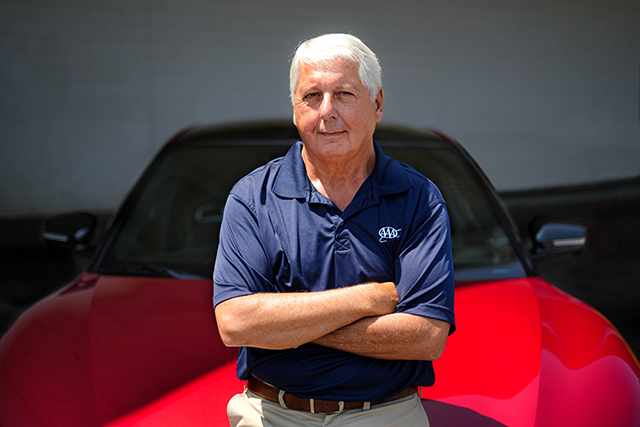
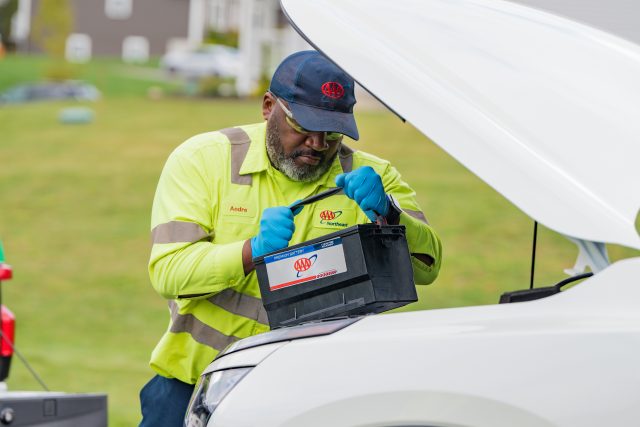
When AAA Northeast roadside technician Kenny DiPina responded to a call for a flat tire from a member in Rhode Island, he never expected to be featured in a newspaper article.

To DiPina, it was just business as usual. But to Providence Journal columnist Mark Patinkin, it was service worthy of widespread gratitude.

Patinkin, a AAA member for more than 20 years, was so impressed by DiPina’s calm demeanor and swift action that he wrote about the encounter in his weekly column. He shared the full story on Facebook. Providence Journal subscribers can also read the story here.

The story unfolded just as he wrote, Patinkin said. He was driving through a Providence neighborhood when he hit a sharp curb that ripped apart his tire.

“Thump. Flat,” Patinkin recounted.

He called AAA. The member service counselor asked if he had a spare tire, an easy replacement that would get him back on the road quickly. He told them yes. But when he looked in his 2026 Honda CR-V Hybrid, all he found was “just one of those useless inflator kits,” he said.

Now he needed a tow, and he was told it would be about an hour.

“Then Kenny arrives early. Calm, upbeat, reassuring,” Patinkin said. “He tells me he won’t leave me stranded. He finds a nearby tire shop with a matching used tire for $65, loads my car and gets me there fast.”

And just like that, a bad day turned into a good one.

Before leaving, DiPina asked if Patinkin was OK

“I am. Because of him,” Patinkin wrote.

In the four years DiPina has been a technician for AAA, he has treated every member the same way.

“It’s super nice to engage with someone the way I engage with everyone every day and have them feel like it was special,” DiPina said.

But not everyone is like Patinkin.

“Not every person I get is a journalist,” DiPina said. “Otherwise, how would I know how much of a difference I made without his article?”

DiPina appreciated the recognition and reflected on the bigger picture.

“I think we (AAA) make a big difference in how breakdowns go,” he said. “This is like the worst moment for some people, and you’re going to remember this for the rest of your life.”

As Patinkin expressed, these efforts should not go unnoticed.

“We take for granted the people who show up when our day suddenly collapses,” Patinkin wrote, closing with “Thank goodness for the Kenny DiPinas among us.”

For more stories like this — or to share your own — visit “Hey, AAA!,” our collection of member-submitted emails, photos and videos that capture the real moments AAA has been a part of.

Photo credit: Mark Patinkin; Courtesy of the Providence Journal.

Subscribe to Your AAA Newsletter

Sign up and receive updates for all of the latest articles on automotive, travel, money, lifestyle and so much more!

New Year, New Hobbies

Forget about new year, new you — how about new year, new hobbies?

Trying a new hobby can help you relax, learn something, get in shape or even make friends.

Today’s hobby choices are not limited to legacy pastimes, such as stamp collecting, birdwatching or fishing. Not that there is anything wrong with those. People are thinking outside the hobby box, taking up everything from tossing axes to throwing themed dinner parties, so finding something that interests you should be easy.

The Benefits of Having a Hobby

Hobbies have numerous physical and mental health benefits, according to UCLA health. These include boosting your mood, improving your overall health, reducing your risk of chronic diseases and enhancing your cognitive abilities, not to mention the perks tied to specific activities.

Before choosing a hobby, reflect on your interests, goals, strengths, what you enjoy doing and the type of pastime that interests you. Do you want to get in shape, meet more people, develop a skill or just need a reason to quit streaming at night?

Start by revisiting the leisure activities you enjoyed when you were younger and see if you want to pursue any of those interests. Also ask friends and relatives for suggestions and why they enjoy their hobbies.

8 New Hobbies to Try

Painting

Besides being relaxing, painting is good exercise for your hands and fingers and is a way to boost creative thinking and problem-solving skills. It is also inexpensive and provides artwork for your home and gifts for others. If you want to socialize, attend or host a paint night, where people often snack and sip while they paint. Well-known people, like former President George W. Bush, took up painting as a hobby later in life.

Knitting and Crocheting

Studies have shown that knitting and crocheting benefit both the mind and body. The movements help keep hands and fingers nimble and learning complex stitches and patterns challenges the brain. Knitting and crocheting have also been shown to reduce stress and lower blood pressure. Besides that, you don’t need much to get started and you can knit and crochet almost anywhere. Check in your community for in-person classes that teach knitting and crocheting or learn from online tutorials. Plus, once you start completing projects, they can be given as gifts or donated.

Running

Of course, running has physical benefits — burning calories, increasing stamina, building muscle and decreasing your risk for heart disease. It also is a great stress reducer, releasing endorphins that help regulate mood. Running outside is even more beneficial, allowing you to escape from work or home pressures, get a taste of nature and a dose of vitamin D if it’s sunny. Plus, the initial investment in equipment is minimal. Listen to this episode of our podcast “Merging Into Life” to learn more about getting started as a runner.

Cooking

Cooking can be more than just getting food on the table. It’s a low-cost, creative, practical hobby that can involve the whole family. Not to mention, cooking reduces stress and can improve your well-being, since you will know everything that goes into your food. If, initially, you find cooking stressful, make sure you have all the ingredients and tools you need before starting a recipe. Experiment and develop your own dishes or add personal touches to some of your favorites. Or pick a favorite cuisine and focus on that. Get inspired by some of the trending recipes on TikTok.

gym equipment
Exercising

Exercising and going to the gym can often feel excruciating, but the trick is to find a workout you really enjoy. If you like music and being around people, consider aerobics, Zumba or dance. If not, pop in your earbuds and start cycling or hit the treadmill. Once you get into a routine and start to see results from regular exercise, such as more energy, better mood and more-toned muscles, continuing will be easy. Challenging yourself with goals, such as spending one more minute on the treadmill or completing another repetition also builds confidence and a sense of accomplishment.

AAA Northeast members can find their perfect gym with the Active&Fit Direct™ Program, which provides access to more than 12,700 gyms, wellness coaching and workout videos for a monthly fee of $28. There are no long-term contracts, so it’s easy to change gyms. After a year, members get back 10% of their membership fees.

Traveling

Some consider travel more of an interest than a hobby, but either way, it’s a wonderful way to spend your time. If you are new to traveling or plan to expand your horizons, AAA Travel can help you plan every aspect of a trip: booking flights, hotels, cruises and things to see and do. Experiencing new places spurs personal growth and appreciation of other cultures. It expands your knowledge base, recharges you and creates indelible memories.

Travel can also inspire another hobby — photography. No vacation is complete without a collection of stunning photos of the places you don’t want to forget. Photos give you a chance to tell stories and see the world differently. Research cameras to see which type is best for you. Mobile phones have excellent cameras, but you may want something more.

Simple Sculpting

You can create permanent works of art in 24 to 48 hours with air-dry clay, which doesn’t require a kiln. Clay kits with tools and paints, like this one, make it easy to start. Your air-dry clay creations can include magnets, jewelry and small trays. A few cautions: Objects made with this type of clay are not waterproof, cannot hold food and can be fragile.

Rock Climbing

If you can’t picture yourself dangling over a cliff, no worries. Indoor and outdoor rock climbing have been growing in popularity, and many rock-climbing gyms offer classes on how to do it safely. Climbing provides both physical and mental workouts. It builds strength and benefits your heart. Plus, mapping out the best route to the top exercises your problem-solving skills. Climbing gyms also provide a chance to socialize.

And with thousands of hobbies to try, if you don’t like your first pick, you can always move on.

Word guessing games have become a popular pastime in recent years. See if you can guess some other modern hobbies and pastimes in this WordroW puzzle.

Do you have a new or favorite hobby? Tell us about it in the comments.

Subscribe to Your AAA Newsletter

Sign up and receive updates for all of the latest articles on automotive, travel, money, lifestyle and so much more!

The Top Night Skiing Spots in the Northeast

Nothing beats a bright winter day spent carving up the slopes. But the fun doesn’t have to end when the sun goes down. More and more ski resorts throughout the Northeast are keeping their trails open after sunset to add another element of fun to the winter experience. And it’s not just for skiing and snowboarding. Parks have a host of exciting activities to keep your adrenaline pumping well into the night. These are a few of the top spots for night skiing, night snowboarding and much, much more.

Check out AAA member deals at ski resorts nationwide.

Sunday River Resort

Newry, Maine

Sunday River’s South Ridge and North Peak trails stay open until 6:30 p.m. on weekends and during holiday weeks. All-season passes and daytime lift tickets are valid for night skiing, and specific night skiing tickets are available as well. 

Stratton Mountain Resort

Stratton, Vt.

Stratton Mountain doesn’t have night skiing, but it does offer just about every other nighttime snow activity you can imagine. The Resort’s Coca-Cola Tubing Park features four lanes of lift-serviced snow tubing, plus a warming hut with light refreshments and fire pit. The park is open Friday through Monday until 8 p.m., and 7 p.m. on Thursdays.

Stratton’s snowshoeing season runs through mid-March. Evening guided tours are available for all skill levels on the resort’s Nordic trails. Stratton also offers ice skating Thursday through Monday until 6 p.m.

Crotched Mountain

Bennington, N.H.

New Hampshire’s Crotched Mountain turns night skiing into an event. On select nights through the end of February, the mountain hosts Midnight Madness, when trails stay open to 12 a.m. Skiers can enjoy fire pits, giveaways and drink specials, all while listening to music from a live DJ.

night skiing

Jiminy Peak Mountain Resort

Hancock, Mass.

Jiminy Peak offers night skiing until 10 p.m. on 26 of its 45 trails and all three of its terrain parks. Jiminy’s Mountain Coaster, one of the first in the country, is also open late on weekends and holidays. You can control the speed of your descent, allowing you to take a leisurely ride down the mountain or speed up to 23 mph through 3,600 feet of twisting, turning excitement through the woods.

Camelback Mountain

Tannersville, Pa. 

While snow tubing has become a popular activity at ski resorts across the country, nobody does it quite like Camelback Mountain. With more than 40 lanes, Camelback is the largest snow tubing park in the country. Two magic carpet lifts take you to the top of the mountain where you zip down 100 feet. When the sun goes down the tubing park turns into an LED light show. If that wasn’t enough, the snow tubing park has its own lodge and dining options, as well as a waffle cabin on weekends and holidays. The park is open until 9 p.m. daily.

Smugglers’ Notch

Jeffersonville, Vt.

Smugglers’ Notch may not have night skiing, but it certainly offers more than enough nighttime activities to keep you busy. Glow Tubing on Sir Henry’s Hill is open until 8 p.m., as is the natural outdoor ice skating rink located next to the Nordic Ski & Snowshoe Adventure Center.

What are your favorite ski resorts in the Northeast? Share them with us in the comments below.

This article has been updated and republished from a previous version.

Subscribe to Your AAA Newsletter

Sign up and receive updates for all of the latest articles on automotive, travel, money, lifestyle and so much more!

Travel the U.S. Civil Rights Trail

The Civil Rights Movement was one of the most transformative times in American history. It would be impossible to summarize its significance in a single museum or honor its participants’ efforts with a sole monument. Fortunately, there is the U.S. Civil Rights Trail to do just that.

Created in 2018, the trail guides visitors to more than 130 locations across 15 states. It was created through the combined efforts of several official state tourism agencies. Joining all these locations into a single trail helps highlight the breadth and significance of the Civil Rights Movement.

“For too long the churches, courthouses and schools where significant civil rights activity had occurred were ignored or otherwise unappreciated,” said Lee Sentell, director of the Alabama Tourism Department. “Linking the historic places focused a spotlight to honor the contributions that courageous activists had made at great personal risk.”

The U.S. Civil Rights Trail has also sparked tourism in the Southern states. “Since the U.S. Civil Rights Trail was launched, most of the sites have experienced substantial growth in the number of visitors seeking to learn more about the history of the movement,” Sentell said. “Equally important, those Southern states that hadn’t previously developed a trail highlighting their heritage landmarks have now done so.”

Here are some of the U.S. Civil Rights Trail’s most noteworthy destinations.

Rev. Arthur Price Jr. Interview Birmingham, Ala. from U.S. Civil Rights Trail on Vimeo.

Alabama

Birmingham

The 16th Street Baptist Church — still an active church today — served as a meeting place for organizations participating in marches and other civil rights activities. In 1963, the church was bombed, killing four young girls. The event spurred the government to act on civil rights legislation.

The Alabama city is also home to the Birmingham Civil Rights Institute. The 58,000-square-foot museum features a rendition of a 1950s segregated city, a replica of a Freedom Riders bus and the actual door from the jail cell that housed King when he wrote his famous “Letter From Birmingham Jail.”

Montgomery

Alabama’s capital city was one of the epicenters of the Civil Rights Movement. It is justly well-represented on the trail. The Dexter Avenue King Memorial Church was the first church where King served as a pastor. It also hosted meetings that led to the Montgomery Bus Boycott.

The Rosa Parks Museum is located at the site where Parks boarded a public bus and was arrested. The Freedom Bus Museum is found at the bus station where Freedom Riders were attacked in 1961. Take a virtual tour.

Montgomery is also home to the Civil Rights Memorial Center and National Memorial for Peace and Justice. The former serves as a tribute to all those who died during the Civil Rights Movement, and the latter is a memorial recognizing the thousands of lynchings that occurred across the country during this time.

(Photo: Courtesy of the U.S. Civil Rights Trail)
Selma

The most iconic site in Selma is the Edmund Pettus Bridge. The National Historic Landmark was the site of the first march for voting rights on March 7, 1965. Unfortunately, the location became etched in history due to the brutal beatings of marchers that took place that day in a conflict that became known as Bloody Sunday. The events were televised across the country. This prompted public support for civil rights activists and the voting rights campaign.

civil rights trail
(Photo: Courtesy of the U.S. Civil Rights Trail)

Tennessee

Memphis

The Lorraine Motel holds a solemn place not only in the Civil Rights Movement, but also in the collective history of the country. The site of King’s assassination is now part of the National Civil Rights Museum. This collection of historic sites tells the story of the movement from the 17th century to present day.

(Photo: Courtesy of the U.S. Civil Rights Trail)

Arkansas

Little Rock

Little Rock drew the eyes of the country in September 1957. Following the decision in Brown v. Board of Education, Arkansas Gov. Orval Faubus called in the Arkansas National Guard to block nine black students from entering Central High School. President Dwight D. Eisenhower sent federal troops to protect the students and allow them to enter. Eventually, the Little Rock Nine were all admitted in what was a major milestone in the fight to integrate schools.

Although it’s still in operation today, the museum and visitor center located across the street offers tours of the high school. There is also a memorial to the Little Rock Nine at the Arkansas state Capitol.

Georgia

Atlanta

Martin Luther King Jr. was born in Atlanta in 1929 and the city has been sure to honor its native son. The National Historic Site named in King’s honor consists of his childhood home, where he lived the first 12 years of his life, and the Ebenezer Baptist Church, where he was baptized, ordained and served as co-pastor with his father until 1968.

The King Center is the burial site for both King and his wife Coretta Scott King. It also houses many of King’s papers.

Also of note in Atlanta is the Center for Civil and Human Rights. This multicultural center includes exhibits highlighting the civil rights and modern human rights movements.

Robert Tyrone Patterson Sr. Interview Greensboro, N.C. from U.S. Civil Rights Trail on Vimeo.

North Carolina

Greensboro

Greensboro is home to the former Woolworth department store, site of one of the most critical events in the movement. In February 1960, four students from the North Carolina Agricultural and Technical State University sat at the counter and ordered coffee but were refused service. The four remained sitting until the store closed. Over the ensuing days, the sit-in grew to include more than 300 students and nearby businesses. It spurred a widespread movement of peaceful demonstration across the country.

Woolworth’s has since been incorporated into the International Civil Rights Center & Museum. The lunch counter and four seats the students occupied the remain in their original positions. A monument of the four students sits on the North Carolina A&T campus.

Washington, D.C.

The nation’s capital has numerous sites that honor the civil rights movement. Most notably is the National Museum of African American History and Culture. Opened in 2016, the Smithsonian Institution museum contains 36,000 artifacts and is the only national museum dedicated entirely to the African American experience.

The Martin Luther King Jr. Memorial, a 30-foot stone sculpture, was dedicated in 2011. The monument made King the first African-American to be honored with a memorial on the National Mall.

Are you planning on traveling to a few of these different landmarks? Click here to rent a car. AAA members can save on Hertz rentals.

Plan your next trip with a AAA travel advisor.

Have you been to any of these sites? Tell us about it in the comments below.

This article has been updated and republished from a previous version.

Subscribe to Your AAA Newsletter

Sign up and receive updates for all of the latest articles on automotive, travel, money, lifestyle and so much more!

Ample Supply Continues to Drive Down Average Northeast Gas Prices 

January is typically when gasoline demand — and pump prices — hover near their lowest levels of the year. It’s also when supplies tend to replenish as refiners maintain steady production while drivers log fewer miles. The latest data from the Energy Information Administration (EIA) suggests that the trend might be taking shape in the early weeks of 2026.  

Last week, the EIA reported a huge build in gasoline inventories to the tune of 7.7 million barrels — the largest single week increase since the last week of 2024. Supplies now stand 4.3 million barrels ahead of last year as demand significantly cooled to 8.17 million barrels a day, a nearly 400,000 barrels a day decline from the prior week.  

Along with more supply and less demand, oil prices remaining in the $58 to $63 range are contributing to the downward pressure on gasoline prices. Although oil prices ended last week about 3.5% higher than the previous week, they remain roughly 20% below where they sat at the start of 2025. 

“As pump prices continue to slide on seasonal trends, we’re seeing high supply and low demand push prices lower and lower,” said Jillian Young, director of public relations for AAA Northeast. “If demand remains diminished as inventories climb, oil prices will be another major factor impacting how low prices go this season.”  

The AAA Jan. 12 survey of fuel prices found the national average down 2 cents from last week ($2.81), averaging $2.79 per gallon. The Jan. 12 national average price was 14 cents lower than a month ago ($2.93) and 27 cents lower than this day last year ($3.06). 

State Current Price* One Week Ago One Month Ago One Year Ago 
Connecticut $2.87 $2.91 $3.03 $3.03 
New Jersey $2.77 $2.81 $2.94 $2.99 
New York $2.99 $3.02 $3.10 $3.13 
Massachusetts $2.91 $2.94 $3.01 $3 
Rhode Island $2.83 $2.87 $2.95 $2.94 

*Prices as of Jan. 12, 2026 

As of Jan. 12, Oklahoma and Arkansas had the lowest prices in the nation at $2.21 and $2.35, respectively. Hawaii and California held the highest prices in the nation at $4.40 and $4.22 respectively. 

The AAA Gas Prices website is your resource for up-to-date fuel price information. Search for average gas prices on national, state and metro levels by regular, plus, premium and diesel.  

Subscribe to Your AAA Newsletter

Sign up and receive updates for all of the latest articles on automotive, travel, money, lifestyle and so much more!

Ask an Agent: Should I Take Higher Insurance Policy Limits?

If you’re in the market for auto, homeowners or life insurance, you may wonder how much coverage you really need. If you already have these policies in place, you may question whether you’re paying for enough coverage to protect you and your loved ones from the unexpected.

Insurance is personal, and no two policies are the same. Whether to take a higher policy limit is a discussion to have with an insurance professional, which is why we reached out to our own AAA insurance agents to break it down.

What Is an Insurance Policy Limit?

An insurance policy limit is the maximum amount an insurance company will pay for a covered claim. The higher the policy limit, the higher the payout ceiling.

What Does a Higher Insurance Policy Limit Entail?

A higher policy limit generally results in an increased premium, so you will be paying more monthly or annually. In the case of life insurance, there are some caveats.

“A higher policy limit could mean more thorough medical exams and possibly justifying the need for a larger policy limit and a greater payout to your loved ones,” said Tanzania Steele, field life insurance agent with AAA.

Is It Worth It to Spend More on Insurance?

“Absolutely, yes,” Steele said. “It is worth spending additional finances for an opportunity to be sure that you, your loved ones and the things that you have worked for are protected and secure. No amount of money is worth your security.”

Of course, everyone’s reasoning for getting insurance is unique to their situation, but the bigger your policy limit, the more protection you are giving yourself and your loved ones.

“Having adequate protection for your loved ones to handle expenses and standard of living in your absence, replacing lost income, covering major debts (mortgage payments, estate planning/inheritance) and peace of mind are all benefits to a higher policy limit,” Steele said.

In the case of homeowners or auto insurance, if you’re found legally responsible for an accident or loss that exceeds your coverage, increasing your policy limits reduces the risk of personal financial responsibility. It also means less worry about worst-case scenarios, like serious injuries, major damage to someone else’s property or catastrophic loss to your home. If something big happens, you don’t want to wonder if your policy will cover it.

How Do I Know if Taking a Higher Limit Is Right for Me?

It’s important to review your policy with a licensed agent to make sure you have coverage that meets your long-term needs. A thorough assessment should be made of your income, debts, assets and the needs of your loved ones.

In general, it’s a good rule of thumb to not exceed your means.

“When choosing the right plan, the premium must be paid comfortably,” advised Peter Velez, senior life insurance specialist with AAA.

For life insurance, the suggested policy limit can be up to 10 times your annual salary. People who are breadwinners of the family or own a business would benefit from a higher policy limit. However, those who are looking only for the basics may not need a higher limit.

Higher limits are especially worth it if you have significant assets like home equity, retirement accounts, investments or savings and business interests. If losing any of these would be devastating, higher policy limits make sense.

When is the best time to make changes to my policy?

The ideal time to make changes to your policy is at your annual review with your insurance agent or after a significant life event occurs — marriage, divorce, birth of child, purchase of a home and so on.

AAA has you covered for insurance. Get a quote today.

Subscribe to Your AAA Newsletter

Sign up and receive updates for all of the latest articles on automotive, travel, money, lifestyle and so much more!

Fly & Drive: Fulfill Your Need for Speed in North Carolina

For car racing fans, North Carolina offers a trio of destinations that will get your adrenaline pumping. From feeling the thrill of the action at the track to exploring museums and touring team race shops, there’s more than enough to keep your engine revving throughout your visit.

Start Your Engines in Charlotte

Charlotte is home to the NASCAR Hall of Fame, an ideal start to any race-themed road trip. With a combination of permanent and temporary exhibits, you can learn about the drivers, teams and events of the past and get a closer look at those making an impact today. Here you can also see the Hall of Honor, a tribute to those who have earned their place among NASCAR’s elite.

Compete against family and friends on one of the racing simulators, tackle the Pit Crew Challenge to see how fast you can change a tire or try your hand at broadcasting by calling a play-by-play of the race. It’s the perfect spot to get you in the racing mindset for your journey.

Make a Pit Stop in Concord

About a 30-minute drive from Charlotte, Concord features racetracks, race shops and a racing museum.

Charlotte Motor Speedway welcomes race fans to stop in for a visit any time of the year. The track maintains a full schedule of events, including two NASCAR weekends each year with races in all three of NASCAR’s top series, racing schools, speedway tours and even Speedway Christmas, an annual drive-thru holiday light show.

Next door, there’s The Dirt Track at Charlotte, which hosts dirt racing events like the World of Outlaws World Finals in November and the Cook Out Monster Truck Bash in August. Sitting alongside The Dirt Track, zMAX Dragway hosts the NHRA 4-Wide Nationals each year In April — a thrilling event, where four cars battle instead of the traditional two.

To get a closer look at some of your favorite race teams, stop by their race shops in the area. At Hendrick Motorsports, you can see race trophies, cars and other memorabilia in the lobbies of the 5/9 and 24/48 buildings, tour the museum and pop into the gift shop. Trackhouse Racing and RFK Racing shops are also nearby.

Some race shops offer guided tours, while others limit public access to designated areas such as team stores, viewing galleries or museums. Be sure to call ahead for details.

At Curb Motorsports Museum, see how Mike Curb combined his passions for country music and racing through a variety of exhibits that include race cars, gold award records, photographs and much more.

Car Rental Savings

Get up to 20% off the base rate of your next car rental.*

*Terms apply.

Book Today

Cross the Finish Line in Mooresville

Known as Race City USA, Mooresville has plenty of attractions and activities for race fans, and more race shops. At Spire Motorsports, visitors can watch the crew prep cars before picking up a souvenir in the gift shop. Over at Team Penske, the impressive 432-foot fan walk provides a close-up view of NASCAR vehicles getting track-ready. For a behind-the-scenes experience, fans can schedule a free tour at JR Motorsports, where they’ll see Dale Earnhardt Jr.’s podcast studio and explore the departments that help build winning race cars.

For more NASCAR and NHRA history and legends, check out the North Carolina Auto Racing Hall of Fame. And if you can’t get enough cars, Memory Lane Motorsports and Historical Automotive Museum has over 100! Its collection includes classic cars, muscle cars, motorcycles and, of course, race cars.

If you’re ready to climb behind the wheel, hit the track at Trackhouse Motorplex or The Pit, two go-kart racing facilities that offer plenty of competition and excitement. At Trackhouse Motorplex, challenge your friends to a spin around the 0.7-mile, 11-turn outdoor track as you reach speeds up to 55 mph. At The Pit, see who can take the checkers on the indoor, 20-turn track that stretches just more than a third of a mile in length.

Don’t leave Mooresville without stopping at Lancaster’s BBQ. While indulging your taste buds with barbecue pork and smoked ribs, you can take in all the NASCAR memorabilia that adorns the walls, ceiling and even the bathrooms. You can even dine in a fan bus inside the restaurant. Think of it as a trip to victory lane to wrap up your trip!

Plan your trip with a AAA travel advisor and rent your car with Hertz. AAA members can save up to 20% on Hertz rentals.

Subscribe to Your AAA Newsletter

Sign up and receive updates for all of the latest articles on automotive, travel, money, lifestyle and so much more!

How To Reduce Points on Your License

Paying a fine for a traffic violation is painful enough, but for many drivers, the added penalty of license points is even worse, as points can jeopardize your driving privileges and increase auto insurance premiums.

The majority of U.S. states use a points system for driver’s license violations, with nine exceptions, including Rhode Island. While the types of offenses and number of points given vary by state, the principle is the same: Accumulating too many points eventually leads to having your license suspended and, potentially, revoked.

In New York, drivers receive two points for not signaling and five points for failing to stop for a school bus. Drivers who get 11 points in 18 months can have their license suspended.

Points can remain on a driver’s record for several years and, depending on the severity of the offense, could cause a driver’s insurance rates to go up.

Some states, including New York, allow drivers to reduce points on their licenses by taking classes, such as the AAA Defensive Driving Course, which can possibly reduce their insurance costs as well.

In the Northeast, these three states have license point reduction programs. Note: Connecticut and Massachusetts do not have point reduction programs.

New Hampshire

Drivers with at least three points on their licenses can have three points removed by completing a driver improvement course, including one offered by AAA of Northern New England. The point total may be reduced, but the points will remain on the driver’s record. Drivers must take the course in person in New Hampshire. If they don’t take a class to reduce points, they will remain on their license for three years.

New Jersey

Garden State drivers who accumulate six or more points within three years are assessed a surcharge. Your license is suspended if you get 12 points or more on your record. Drivers can reduce their point total by having no violations or suspensions for one year or by taking a qualified class to reduce points on a license. Once the course is completed, two points may be removed from the driver’s license.

New York

To reduce points on your license in New York, you need to complete an approved defensive driving course. This can decrease point totals by four points every 18 months. Taking a course also may reduce insurance premiums, but drivers need to take a course every 36 months to keep any discount. Drivers can take courses in person or online (the AAA Defensive Driving Course is available both ways). Even after completing the course, most violations, convictions and points will remain on your driving record for as long as four years, according to the New York State Department of Motor Vehicles.

Point reductions will have no effect if a driver’s license has already been suspended or revoked. And violations such as driving while intoxicated, driving while ability impaired or getting three speeding tickets within 18 months, will result in mandatory license suspension or revocation, regardless of points.

Learn more about the AAA Defensive Driving Course or sign up now.
Have you ever taken a defensive driving course for license point reduction? Tell us about it in the comments below.

Subscribe to Your AAA Newsletter

Sign up and receive updates for all of the latest articles on automotive, travel, money, lifestyle and so much more!

AAA Restores Historic Mill Building

The restoration of a historical mill building in Warwick, R.I., by AAA Northeast has been heralded as a cornerstone of the city’s revitalization plan.

Known as the sawtooth building for its jagged roof, the 38,856-square-foot structure was part of a massive textile manufacturing complex over a century ago. It was the only building still fully standing after a series of fires in the 1960s. Over time, it had various other uses, but for many years sat vacant and deteriorating before AAA purchased it at auction in 2017.

The thought at the time was to create a AAA hub for branch, Fleet and Driving School activities. The branch moved in and opened last month. However, the remainder of the space is under lease by the city to house government offices. Construction on the city’s portion continues and is expected to be completed by late summer.

“Apponaug village already contains city hall and police and fire department headquarters,” said Mayor Frank Picozzi. “Having all remaining city offices in the sawtooth building truly makes the area the city’s government center.”

The city also has plans to build an outdoor ice-skating rink and events center in the area.

“With this, I firmly believe that businesses will start opening in and around the village, and Apponaug will be the central gathering place for Warwick,” the mayor said.

Community Pride

AAA member Dino Soscia, left, and AAA insurance agent Kristen Krawczyk.

Visibility in the center of the city is one of the biggest benefits of the facility, according to Rick Del Nero, vice president of branch operations at AAA. And, sharing the space with government offices gives people a one-stop location to conduct business with the city and take advantage of AAA services, like Division of Motor Vehicle transactions.

Plus, there is pride in ownership. “We’ve heard so many members state how happy they are that we saved the building from demolition,” Del Nero said.

Member Dino Soscia was impressed when he stopped in about insurance recently. As a Warwick resident, he had passed by the deteriorating building many times wondering what would become of it. “I never thought it would become a AAA,” he said. “It’s easily accessible from the highway. It’s less congested than the old location, and the space is open and friendly.”

Member Christian Phillips, of Cranston, R.I., agreed. He was at the new branch working with Travel Advisor Robert Conners on a trip to Disney. “It’s roomier, and I like the high ceilings a lot,” he said.

AAA travel agent Robert Conners, left, and member Christian Phillips.

Into the Future

The building’s jagged roof was originally built to capture sunlight through the windows on the straight edges. AAA has installed solar panels on the sloping edges to capture the sun’s rays and power the building.

“With solar power and other cost-saving measures, we’ve brought this 1900s mill building into the 22nd century with a new lease on life,” Del Nero said.

Subscribe to Your AAA Newsletter

Sign up and receive updates for all of the latest articles on automotive, travel, money, lifestyle and so much more!

Jigsaw: Winter Wonderland

Subscribe to Your AAA Newsletter

Sign up and receive updates for all of the latest articles on automotive, travel, money, lifestyle and so much more!

The Worst Snowstorms in United States History

If you live in the Northeast, you’ve been through your fair share of snowstorms. You probably even have a memory of your own worst snowstorm — when the snow piled up high against your door, or the power went out or school was closed for a week. In honor of Mother Nature’s icy and relentless wrath, we present the biggest blizzards and worst snowstorms in United States history.

The Great Blizzard of ’88

In March of 1888, the Northeast was faced with one of the worst blizzards in American history. Also known as the Great White Hurricane, the Great Blizzard of ’88 left as much as 55 inches of snowfall in some areas, and caused disaster wherever it went. The entire area from Washington, D.C., to Maine suffered from brutal winds, massive snowdrifts and catastrophic damage. Over the course of the three-day blizzard, over 400 people were killed. Major cities like New York City and Boston ground to a halt as their railway and telegraph lines were buried or destroyed. The disastrous effects of the Great Blizzard of ’88 actually inspired Boston to create the first underground subway system in the country.

The Worst Snowstorms in U.S. History
An early automobile is stranded during the Knickerbocker Storm.

The Knickerbocker Storm – 1922

On Jan. 28, 1922, more than 2 feet of snow fell on Washington, D.C. The weight of the snow collapsed the roof of the Knickerbocker Theatre, killing 98 people. This led to stricter building codes to prevent such a tragedy from ever happening again. To this day, the Knickerbocker Storm holds the record for the most snowfall in D.C., and the Knickerbocker Theater’s collapse remains its deadliest disaster.

The Great Appalachian Storm – 1950

On Thanksgiving weekend of 1950, as much as 62 inches of snow blasted the central Appalachians. As if that wasn’t enough, the area was also beset by frigid cold and intense wind storms. Right after the storm passed, temperatures became unseasonably warm, which led to extensive flooding from the snowmelt. Overall, the Great Appalachian Storm of 1950 caused at least 160 deaths.

The Blizzard of ’78

The Blizzard of 1978 struck on Feb. 5, and didn’t dissipate until two days later. The nor’easter broke snowfall records in Boston (27.1 inches), Providence (27.6 inches) and Atlantic City (20.1 inches). The huge amounts of snow dumped by the storm were matched with hurricane-force winds and coastal flooding. The severity of the blizzard hadn’t been anticipated, and many people were forced to shelter in place for days at a time. Motorists found themselves stranded in their cars in the middle of snowy highways. An estimated 100 people lost their lives.

The Storm of the Century – 1993

In March of 1993, a great cyclonic storm formed in the Gulf of Mexico. As the storm progressed up the East Coast, it began to snow in regions as far south as Alabama and Georgia. The snowstorm stretched from those Southern regions into Maine and even Canada. The affected areas were battered with unseasonably frigid temperatures, powerful wind gusts and up to 60 inches of snow. At one point, every major airport on the East Coast was closed. It was one of the first major storms predicted several days in advance thanks to computer forecast models. While the advanced warnings no doubt saved lives, 318 people still lost their lives. The Storm of the Century is known as one of the deadliest American storms of the 20th century.

The Great Blizzard of 2003

From Valentine’s Day to Feb. 19, the Great Blizzard of 2003 swept across the Mid-Atlantic and the Northeast. Every major city from Washington, D.C., to Boston was covered in an enormous blanket of snow, with many areas getting up to 2 feet. Airports across the Northeast suspended flights and shut down operations completely, while New York City, Boston and Philadelphia transformed into icy ghost towns as residents hunkered down against the bitter cold. The Great Blizzard of 2003 caused 27 deaths and put an entire region of the country on hold.

Snowmageddon – 2010

In February of 2010, two blizzards — one on Feb. 4-7 and one on Feb. 9-11 — hit within just days of each other. Most people agree that “Snowmageddon” refers to the first blizzard, but the second storm is sometimes included in the term. However you define it, it was called “Snowmageddon” for a reason: The storm wreaked havoc across the country, icing over roads in New Mexico and shutting down the federal government in the nation’s capital. The massive storm also led to transportation shutdowns and power outages, and killed 41 people in the U.S. and Mexico.

The Worst Snowstorms in U.S. History
New Yorkers attempt to dig a car out of the snowy streets of Bushwick.

Snowzilla – 2016

A January 2016 blizzard, hailed as Snowzilla, paralyzed the entire East Coast, leaving hundreds of thousands without power. Snow fell in areas as far south as Georgia, Alabama and even the Florida Panhandle. With intense snowfall, hail, wind gusts and whiteout conditions, it was unsafe to travel even short distances. In all, 55 people lost their lives. The snow reached a maximum height of 42 inches in Glengary, West Virginia.

December 2022 North American Winter Storm

The most recent storm on the list hit the United States and raged on from Dec. 21 to Dec. 26. The December 2022 North American Winter Storm was a bomb cyclone that buffeted the Midwest and the Great Lakes region with blizzard conditions, even dumping as much as 55 inches of snow in Buffalo, New York. A wide swath of the country also experienced extremely cold temperatures, even if they didn’t get hit with any snow. The unprecedented scope of this storm is estimated to have affected 60% of Americans, who received winter weather advisories or warnings, and caused massive disruptions for travelers during the busy Christmas season. As a result of the storm, 106 people across the United States and Canada lost their lives.

What’s the worst snowstorm in United States history that you remember? How did you stay warm? Tell us your story in the comments below.

This article has been updated and republished from a previous version.

Subscribe to Your AAA Newsletter

Sign up and receive updates for all of the latest articles on automotive, travel, money, lifestyle and so much more!

Best Ski Resorts for Beginners in the Northeast

Stepping onto the slopes can be incredibly intimidating for beginner skiers, so finding the right resort can make all the difference. However, with more than 100 ski areas across New England and New York, deciding exactly where to go to sharpen your skills can be tricky.

Good ski resorts for beginners include access to lessons, well-groomed trails, a variety of gentle terrain and a friendly atmosphere to ease into the sport without feeling overwhelmed.

Practicing at a less-crowded ski resort will make it easier to navigate the slopes without constantly dodging other skiers. It’s also helpful when resorts have lift ticket options like half-day passes if you’re not ready to ski all day, or discounted areas, so you’re not paying for terrain you don’t have the skills to use.

Finally, you should also consider the quality and availability of beginner-friendly amenities like magic carpets and designated learning areas. Learning to ski can be challenging enough, so you don’t want to worry about managing a rope tow or T-bar lift on top of it.

Keeping these criteria in mind, these Northeast ski resorts stand out for creating an approachable environment for new skiers.

Berkshire East

Charlemont, Mass.

This resort, surrounded by state forests and the Deerfield River, is known for minimal crowds and long green runs (beginner trails), perfect for practicing turns. Plus, most beginner trails are separate from advanced terrain, so there’s no need to worry about faster skiers passing by. For those not ready for a full day on the slopes, four-hour tickets are available starting at $29. Berkshire East also has a learn-to-turn ski package, which includes a lower mountain lift ticket, ski or snowboard rental, and a one-hour first-time group lesson.

Bromley Mountain

Peru, Vt.

Head to southern Vermont for a mix of gentle green and blue runs that are ideal for beginners. This resort offers half-day lift tickets starting at $104, making it an excellent option for those not ready to spend the whole day on the slopes. First-timer lesson packages ($259) include lift tickets, rentals, and an introduction to skiing or snowboarding. In addition to great skiing, Bromley’s location near Manchester makes it easy to find cozy accommodations and the perfect apres-ski spot.

Greek Peak

Cortland, N.Y.

The instructors at this resort in the Finger Lakes region use an innovative terrain-based learning model, which uses special snow features to naturally regulate speed and body position, helping to alleviate the anxieties of first-time skiers. The Intro2Snow package provides all-day access to the resort’s learning center, rental equipment and lift tickets for just $115. For skiers looking to practice, the beginner area pass grants access to gentle slopes for just $64. You can also ski at night for $75. on Tuesdays, find all-day lift tickets for $48. Plus, kids under 6 always ski for free. As a bonus, Greek Peak is just 40 minutes outside Ithaca, a lively college town with cultural attractions and superb dining, which means you can plan a comprehensive getaway that combines skiing with off-slope activities.

Pats Peak

Henniker, N.H.

With beautiful views of Mount Monadnock and the Worcester Hills, this small, approachable resort has a relaxed environment where new skiers can build their skills without feeling overwhelmed by large crowds. The resort’s Passport Program ($669) for first-time skiers includes lessons over four days and, upon completion, a free season pass and set of skis. Pats Peak also offers pay-one-price (POP) packages for rentals, skiing and group lesson tips starting at $79 (only available on Saturday nights), along with the option for discounted lift tickets depending on the area of the mountain you want to explore.

ski resorts for beginners - skier and snowboarder

Saskadena Six

South Pomfret, Vt.

Located near the New Hampshire border in eastern Vermont, Saskadena Six is a solid option for beginners looking for a stress-free day on the slopes. The resort features a well-maintained learning area perfect for first-time skiers, and you can access it for just $35. Skiers can also book the Unlimited Snow Sports Package, which includes unlimited access to Saskadena Six Ski Area, daily breakfast and two nights at the Woodstock Inn, located in historic Woodstock that, in winter, looks like a real-life Christmas village with plenty of shopping and apres-ski dining options.

Ski Butternut

Great Barrington, Mass.

For a beginner-friendly experience with approachable instructors and well-groomed trails, hit this resort located in one of the larger towns in the Berkshires. You’ll have multiple magic carpets, a beginner chairlift and a long green trail perfect for practicing your turns. The adult beginner package ($160) includes a beginner lift ticket, equipment rental and a group lesson for first-time or beginner skiers. Ski Butternut also offers some of the most affordable lift tickets in the region, with prices as low as $25 on Fridays and $40 on weekdays. The resort’s central location makes it easy to explore nearby museums, spas and dining for a well-rounded getaway that includes activities beyond skiing.

Check out AAA member deals at ski resorts nationwide.

Do you know of any other great beginner ski resorts? Is your favorite already on the list? Tell us in the comments.

This article has been updated and republished from a previous version.

Subscribe to Your AAA Newsletter

Sign up and receive updates for all of the latest articles on automotive, travel, money, lifestyle and so much more!

It’s Never Too Late to Learn New Driving Skills

If it’s been 10, 20 or 50 years since you got your driver’s license, you might feel like there is nothing you don’t know about operating a car. You hop in, start the engine and your brain flips to autopilot.

Well, not so fast. Do you know the hand positions on steering wheels have changed since you first took driver’s education in high school? Or that you should determine your distance from the car ahead of you in seconds, not feet? Are you sure about what a flashing yellow arrow means? And what the heck is a gore, anyway?

No matter how long you have been driving, there is always more to learn. So, I recently decided to sign up for the AAA Defensive Driving Course, which took place at a hotel near my home in Long Island.

Talking to other students about their reasons for taking the course, I found the primary motivation was receiving 10% off the cost of collision, liability and no-fault premiums every year for three years. Drivers can also get up to four points dropped from their driving record, assessed within 18 months prior to the class.

Insurance discounts and points reduction apply in New York, but not all states. For example, similar benefits are available to drivers in Connecticut, New Jersey and Rhode Island, but not Massachusetts.

“I came for the reminders and to save money,” said Lauren San Miguel. “I’ve taken the course four times. It got off to a bit of a slow start, but I would recommend it to people to save money.”

A Little About Me

I’m Ellen Delisio and I’m a content producer at AAA Northeast. Let’s just say I’ve been driving for a few decades and took driver’s education in high school shortly after the Earth’s crust cooled. Besides classroom instruction and actual driving, we trained on driving simulators, which resembled video games, and I even had to memorize hand signals.

I am in the unique position of being an “experienced” driver with an 18-year-old son who recently completed driver’s education, got his license and has been reminding me (often) of how driver’s education has changed and that some of what I learned no longer is relevant.

Also, the cost of adding him to my car insurance made my checkbook (yes, I have a checkbook) run for cover, so any break I can get on the bill is appreciated.

Who Was There

The six-hour AAA Defensive Driving course, which includes two 15-minute breaks and an hour for lunch, includes a review of safe driving practices, information about car maintenance, road rules as well as an introduction to new driving regulations and car technology.

Many in the class were repeat customers, said instructor Larry Engel, who has enjoyed teaching the course for eight years. “I like the interaction with people, and I like passing on knowledge,” he explained. A retired IRS employee, Engel completed a 40-hour course and passed a test to qualify as an instructor; he gets recertified every three years. “I hope they learn new things, and it makes them better drivers,” Engel said before the course started.

The group was eager to share comments and anecdotes related to the course content, which Engel allowed to a degree. The class was a mix of men and women of different ages.

Among those repeat attendees were Patricia Bartolomeo and her husband Anthony. “I take it every three years to save money, and I learn something new,” Patricia said. The couple plans to expand their AAA usage to other services. “I just decided I needed all the things AAA offers,” Anthony said. “We drive to Pennsylvania a lot and I’m getting too old to change tires on my own. I’m also looking forward to using the travel and DMV services.”

Anthony’s only complaint about the course was the length. But it also is available online, so you can complete it at your own pace.

Class Is in Session

The course kicked off with a video showing how technology and improved designs have made today’s cars sturdier and safer. While driver-assistance features like backup cameras, automatic warning signals and lights improve safety, drivers should not rely on them exclusively.

“Technology can be helpful, but also can be a distraction,” Engel said. “And it does not always work. When backing up, always look behind you.”

Most factors contributing to crashes are under the driver’s control, Engel noted. These include checking for low tire pressure, cautiously changing lanes and not driving too fast on wet and icy roads. “Drivers often underestimate their risk,” he continued. “You can always reduce your level of risk.”

Call me overcautious, but now I find myself driving more slowly at the first sign of a raindrop.

Observing risky behavior by other motorists and receiving an insurance discount prompted Ken Kilfoyle to sign up for the course. “I’m a livery driver and I need to refresh my skills,” said Kilfoyle, adding that he is 63 and has been driving since he was 17. “I see a lot of scary things on the road.”

Happy senior woman riding in car with husband, looking out window on road trip

What I Learned

I’ve highlighted seven things that I learned, although there were many more. I also got some unbelievably valuable refreshers about navigating intersections and other tricky situations such as traffic circles.

Following Distance

For those of us who were instructed to leave about two car lengths behind the car ahead of us, the new rule is to stay between three and four seconds behind. To determine that, when the car ahead of you passes a stationary object, like a tree, count the seconds it takes you to pass the same object. If it is fewer than three or four seconds, you are following too closely.

Gore

The class also reviewed some updated road signs, including ones for a yield line, bike box, fire hydrant location and a gore area, a triangular space between an off-ramp and a through travel lane, on which you should not drive. For most of the class, this was our first introduction to a gore, but now I have my eyes open for one.

Who Goes First?

Without a doubt, many drivers could use a review on navigating a four-way intersection. Here we go: The first driver to arrive at an intersection proceeds first. If two cars arrive simultaneously, the one on the right has the right of way. Vehicles traveling forward also have the right of way and drivers must always yield to pedestrians and bicyclists.

The most common causes for crashes at intersections include a driver neglecting to see an object or car in or near an intersection, turning when the view was obstructed, performing an illegal maneuver, incorrectly assuming another driver’s actions and mistakenly judging a vehicle’s speed or a space in traffic, according to the course material. As you approach an intersection, cover the brake and tap it if you are slowing down, Engel advised.

Flashing Yellow Arrow

If you encounter a flashing yellow arrow pointing left at an intersection, that means yield the right of way. A flashing red arrow means to come to a full stop and then turn.

Hand Position on the Wheel

My son and I had several arguments about this. He kept insisting my hands were in the wrong position on the steering wheel. And he was right. After starting the car, you may automatically put your hands on the wheel at 10 and 2, based on a clock face, as I did, since it was drilled into all of us of a certain age. Wrong. The new recommended position is 9 and 3, now that cars have airbags. If your hands are in that position, the airbag is less likely to break your wrists if it deploys. For the same reason, sitting 10 inches back from the steering wheel is considered safer.

Rear Seat Belts Are Mandatory in New York

Ensure everyone in the car is wearing seat belts. Surprisingly, rear seat passengers in New York were not required to wear seat belts until 2020. Now the penalty for noncompliance is stiff: failure to wear a seat belt in the back seat is a moving violation, resulting in tickets to the passenger and driver, and points on the driver’s license.

Drowsy Driving Is Like Drunk Driving

Each year, about 1 million people are injured in alcohol-related crashes, Engel noted. Among other risky behaviors, intoxicated drivers are more likely to drive the wrong way on a highway. But
drowsy drivers, as it turns out, can be just as deadly. When people drive after sleeping only four hours or less, they can be just as impaired as if they were driving intoxicated, according to the course. If you are struggling to keep your eyes open, pull over.

Other Takeaways

I would recommend the course to anyone seeking to become a more confident driver and looking to save money. The course both enriched and expanded my driving knowledge, reminding me to constantly be aware of my surroundings and introduced me to new regulations. If I ever see a gore, I’m going to jump out and take a picture.

Student feedback was also positive.

“This was very informative, and I always like the instructor,” said Uriel Valasco. “And I learned that pedestrians and cyclists always have the right of way.”

“Every three years I take it and learn a lot, and hopefully become a better driver,” added Judith Marquez. “I didn’t know wearing seat belts in the back seat became a law five years ago. I would recommend it because you learn so much. People will be surprised.”

Engel was optimistic about the class putting lessons into practice. “This was a very positive, animated group,” he said. “Hopefully the outcome will be very positive.”

Interested in taking the AAA Defensive Driving Course? Sign up here.
Have you ever taken a defensive driving course? What was the most surprising thing you learned?

Featured image: Instructor Larry Engel reviews road signs during the AAA Northeast Defensive Driving Course.

Subscribe to Your AAA Newsletter

Sign up and receive updates for all of the latest articles on automotive, travel, money, lifestyle and so much more!

AAA Offers Tips to Avoid Getting Caught With a Dead Battery This Winter

As the region endures winter’s frigid grip, AAA is reminding drivers to check their vehicle’s battery and charging system to prevent facing a dead battery to start the next cold morning.

A typical battery requires 30% more power to start a vehicle when the temperature reaches 32 degrees. Additionally, a battery can lose up to 50% of its capacity when the temperature approaches zero degrees. This combination of cold-diminished batteries requiring more energy to start a vehicle is why many cars fail to start during cold snaps.

“The recent cold affecting the region could lead to a spike in dead batteries partly due to many vehicles sitting parked for extended periods of time over the holidays,” said Jillian Young, director of public relations for AAA Northeast. “If your car has been idle for several days, consider starting it and going for a drive before your next essential trip.”

The average battery reaches the end of its life between four and six years. As batteries age, they’re more susceptible to the impact of cold on capacity and starting power. The only way to gauge remaining life is with a battery test.

AAA offers the following tips to ensure your car will start no matter how cold it gets outside:

  • Consider having the battery and charging system tested at an AAA Approved Auto Repair facility if your battery is older than three years or you’ve noticed recent difficulty starting your vehicle in the cold. If you have a dead battery and need a replacement, AAA members have access to mobile car battery replacement.
  • Short trips might not be enough to keep your battery charged, especially when heating systems cause extra strain in cold weather. If you don’t drive often, consider driving the car for at least 30 minutes once or twice a week. It won’t fully charge the battery, but it can help.
  • When you first get in a cold car, make sure all the lights and accessories are turned off. If your car doesn’t start on the first try, wait 10-15 seconds and try again.
  • If your car is likely to sit idle for days at a time, a trickle charger or battery booster pack might be a worthwhile investment.

The same advice applies to owners of electric vehicles, which also come equipped with 12-volt batteries. AAA recommends the following cold-weather tips for EV drivers:

  • EV range can be reduced anywhere from 20% to 50% in subfreezing temperatures. To maximize range in cold weather, keep the vehicle plugged in so the battery is warmed by the cold weather preconditioning and remains at its optimum operating temperature.
  • Warm the vehicle’s cabin when the vehicle is plugged in.
  • Depending on the vehicle, seat heaters might be more efficient than the heater.
  • Drive at moderate speeds to maximize efficiency and reduce battery drain.

Subscribe to Your AAA Newsletter

Sign up and receive updates for all of the latest articles on automotive, travel, money, lifestyle and so much more!

Q&A With AAA Northeast’s Car Doctor: December 2025

Q. I am thinking about an old vehicle, specifically an early 1960’s Dodge Power Wagon. I found a few that are in decent to good shape, what do you think of buying this truck as an investment?

A. The Dodge Power Wagons according to Hagerty Collector Car insurance are going up in value. That being said, I would buy a Power Wagon, because it is good looking, capable and can be practical for trips to the home improvement store. Buying almost any vehicle as an investment can be disappointing. Even very collectable cars like the Chevrolet Corvette and Plymouth Superbird have lost money according to auction reports. Buy something you like, use it and enjoy it. When the time comes to sell it, if it has gone up in value, great if it has not, well at least you were able to enjoy it.

Q. We spend winters in Florida, and I purchased a very nice 2014 Toyota Corolla to leave there for a spare car. The Corolla only has 45,000 miles on it. A friend starts once a week and lets it run for about 10-15 minutes. He does not drive it anywhere because I’m cheap and cancel the insurance. He said the ‘check engine light’ now goes on when he starts the car. Any thoughts why it would go on when it hasn’t been driven for a while.

A. The check engine light could be on for any number of reasons, from a loose gas cap to a faulty sensor. The other issue is that a rodent (quite common in Florida) could have damaged a hose or wiring. At this point, the best thing to do would be bring the car to a good repair shop for a checkup. Also you actually may be doing more harm than good starting the car and letting it run every week without driving it. It would be better to drive the car every three weeks or so for 30 minutes. If this is impossible then I would fill the fuel tank and add a fuel stabilizer, fully inflate the tires, top off all the vital fluids and disconnect the battery. When you return to Florida expect the battery will need recharging and bring the car to a good repair shop for a check-up before any long-distance trips. 

Q. I had four new tires installed and the wheels aligned on my six-year-old car with all the work performed at the dealer. During the road test, the mechanic noted a shuttering suggested replacing the transmission fluid. I have never noticed anything and wonder if the work really needs to be performed or if they were trying to sell me a “bill of goods”?

A. The technician could have noticed a bit of a “chuggle” when the transmission was shifting. This can happen when the transmission fluid loses its friction additives. Certainly, at this point and age with your car it can’t hurt to change the fluid.

Q. It seems Subaru “finds” things when I come in for routine and scheduled service. Last time was fuel injection cleaning, today, it is a thermo coupler, though they said it is fully covered by Subaru, and it will take three to four hours to repair. It seems like this is something they should send out a notice and considering the time needed, to plan accordingly.  Not something to just “wait and see”. Your thoughts on this.

A. This is basically a silent warranty extension for thermo control valve. This is Subaru’s version of a thermostat, an expensive complex thermostat. There should be no cost to you. If you want to read more about it go to: https://static.nhtsa.gov/odi/tsbs/2024/MC-10253930-0001.pdf

A. The spark plug replacement on the six-cylinder engine is recommended by Chrysler at 100,000 miles. Regarding the price, perhaps the dealer is adding ignition coils as well as spark plugs to the estimate. If the engine is running well and there is no indication of anything wrong, I am not sure why this work would be necessary. The rear links are $89 each and it takes about an hour to replace them. If it were my car I would get a second opinion. Visible wear is a pretty subjective term, everything wears as it ages.

Q. On a recent road trip to South Carolina, we came upon many different places to get gas. On a few occasions we stop at Sheetz for gas. My question is about the different octane choices at the pump. My Subaru uses 87 octane but there was 88 octane that was available and was at least 10 cents cheaper, yes cheaper, than 87 octane. I was a little hesitant to try the higher octane not knowing if it was okay to use. Any thoughts on being able to use this fuel in my Subaru?

A. The 88-octane gasoline sold at Sheetz is 15 percent ethanol rather than the 10 percent ethanol that is in most gasoline. Most cars made since 2001 can use E15 gasoline without any issues. Subaru models vary a bit. In most models you can use reformulated gasoline with up to 15% ethanol, but with the 2.5-liter engine Subaru states to use gasoline with only 10 percent ethanol. In my own car I have tried E-15 gasoline, the car ran fine, but I found fuel economy went down slightly.

Q. I replaced both wiper blades at same time. One wipes clean, the other streaks. Is there a product the rejuvenates blade quality? Good quality blades are not cheap, and I would prefer to buy another set.

A. Alcohol wipes can do a decent job of cleaning wiper blades and can restore some life. The streaks or chatter can sometimes be related to the windshield. I recently used a glass cleaner and water repellent, the glass was clean, but the wipers chattered. The issue could also be the wiper arms. The wiper blades should be perpendicular to the windshield. Sometimes a slight tweak to the wiper arms can solve blade streaking. Also keep in mind most wiper blades near the end of their useful life in about a year of use.

Do you have a car question? Email the Car Doctor for a personal reply: jpaul@aaanortheast.com.

Subscribe to Your AAA Newsletter

Sign up and receive updates for all of the latest articles on automotive, travel, money, lifestyle and so much more!

Average Gas Prices Decline Across the Northeast as Inventories Swell 

The Energy Information Administration (EIA) last week reported a 380,000 barrel a day drop in gasoline demand, which fell to 8.56 million barrels a day for the week ending Dec. 26. The figure might seem lower than expected during a busy holiday travel period, but it landed nearly 400,000 barrels a day higher than the comparable weeks in 2024 and 2023.  

As demand cools, inventories are up for a seventh straight week, climbing by 5.8 million barrels, according to last week’s EIA report. Steady production and wobbly demand since November have led to 29 million barrels of gasoline being moved into storage over the period. Growing supplies are a major reason why pump prices have steadily ticked down since the start of winter. 

Oil prices, meanwhile, remain in a range between $57 and $61 a barrel as markets closely watch developments in Venezuela. The long-term impact on oil and gas prices remains unclear. While Venezuela sits on one of the largest oil reserves in the world, it averaged between 500,000 and 900,000 barrels a day of oil production in 2025. In comparison, the United States averaged about 13.8 million barrels a day of oil production in 2025. 

“While geopolitical events do sometimes rattle global oil and gas markets in the short term, the immediate impact on pump prices here in the Northeast could be minimal as oil prices remain stable,” said Jillian Young, director of public relations for AAA Northeast. “Ultimately, regional supply and demand for motor fuels is the key driver of pump prices close to home.” 

AAA’s Jan. 5 survey of fuel prices found the national average down a penny from the previous week ($2.82), averaging $2.81 per gallon. The Jan. 5 national average price was 16 cents lower than a month ago ($2.97) and 25 cents lower than this day last year ($3.06). 

Region Current Price* One Week Ago One Month Ago One Year Ago 
Connecticut $2.91 $2.95 $3.06 $3.02 
Massachusetts $2.94 $2.96 $3.02 $3.01 
New Jersey $2.81 $2.84 $2.99 $2.97 
New York $3.02 $3.04 $3.12 $3.12 
Rhode Island $2.87 $2.88 $2.98 $2.93 

*Prices as of Jan. 5, 2026 

As of Jan. 5, Oklahoma and Iowa had the lowest prices in the nation at $2.21 and $2.32, respectively. Hawaii and California held the highest prices in the nation at $4.40 and $4.26 respectively.  

The AAA Gas Prices website is your resource for up-to-date fuel price information. Search for average gas prices on national, state and metro levels by regular, plus, premium and diesel.  

Subscribe to Your AAA Newsletter

Sign up and receive updates for all of the latest articles on automotive, travel, money, lifestyle and so much more!

Northeast Gas Prices Continue Decline Ahead of New Year 

Lower oil prices and light trading volumes in petroleum markets over the holidays contributed to cheaper gas prices. Over the holiday-shortened trading week, oil prices ended last week nearly 3% lower as markets monitored recent geopolitical activity impacting oil markets. 

The muted market activity last week occurred alongside a lack of data guidance. The Energy Information Administration (EIA) did not release its weekly supply and demand report due to the holiday closure of government agencies on Dec. 24 and 25. The report, which typically is released on Wednesday mornings, was delayed until Monday, Dec. 29. 

“As the end of the year approaches, the price of gasoline across the Northeast is at or near yearly lows,” said Jillian Young, director of public relations for AAA Northeast. “Prices typically reach annual lows in the depths of winter, and time will tell when the bottom is reached.” 

AAA’s Dec. 29 survey of fuel prices found the national average down 3 cents from last week ($2.85), averaging $2.82 per gallon. The Dec. 29 national average price was 19 cents lower than a month ago ($3.01) and 20 cents lower than this day last year ($3.02). 

Region Current Price* One Week Ago One Month Ago One Year Ago 
Connecticut $3.04 $3.06 $3.13 $3.12 
New Jersey $2.84 $2.87 $3.01 $2.92 
New York $3.04 $3.06 $3.13 $3.12 
Massachusetts $2.96 $2.97 $3.03 $3.02 
Rhode Island $2.88 $2.90 $3.01 $2.95 

*Prices as of Dec. 29, 2025 

As of Dec. 29, Oklahoma and Iowa had the lowest prices in the nation at $2.23 and $2.34, respectively. Hawaii and California held the highest prices in the nation at $4.41 and $4.28 respectively. 

The AAA Gas Prices website is your resource for up-to-date fuel price information. Search for average gas prices on national, state and metro levels by regular, plus, premium and diesel.  

Subscribe to Your AAA Newsletter

Sign up and receive updates for all of the latest articles on automotive, travel, money, lifestyle and so much more!

What Causes Low Tire Pressure in Winter?

A dead battery. Snow, ice and salt buildup. Frozen door locks. Many of winter’s harmful effects on your car are readily apparent. Others, however, you may not notice until it’s too late. Such is often the case for one of the most prevalent issues motorists must contend with during the colder months: low tire pressure.

There’s no way around it — your car tires will lose air pressure at a faster rate when the cold weather arrives. Here are the reasons behind low tire pressure in the winter, why underinflated tires cause a serious safety risk and ways to keep your tires solid when the weather is cold.

What Causes Low Tire Pressure in the Winter?

The simple answer to this question is cold temperatures. As you may remember from grade school science classes, when a substance is cooled, its molecules slow down and move closer together. In other words, the substance becomes compact and dense.

This same principle causes low tire pressure in the winter. As the temperature drops, the air molecules condense and exert less pressure on the walls of the tire.

As a general rule, a tire will lose one pound per square inch with every 10-degree drop in temperature. This is in addition to the one-to-two pounds per square inch (psi) tires typically lose each month from normal, everyday driving.

The Dangers of Low Tire Pressure

Low tire pressure can be expensive — it causes fuel inefficiency (which will cost you at the pump) and premature tread wearing (which means forking over money for a new set of tires). But driving with underinflated tires isn’t just a financial drain, it’s a serious safety hazard. Low tire pressure makes it more difficult to steer and stop, which can easily contribute to a crash. A worn-down tire is also more prone to punctures that will leave you with a flat.

Most notably on the safety front, low tire pressure can cause a blowout. When a tire is underinflated, more of its surface comes in contact with the road. This increases friction that, in turn, causes a buildup of heat. If the air inside a tire gets too hot, a portion of the rubber wall can pop loose. The sudden rupture causes an immediate and rapid loss of air. Blowouts are extremely dangerous as they can cause you to lose control of your vehicle and force other drivers to deal with a flying piece of debris.

When to Check Tire Pressure in Winter

The aforementioned dangers can all be prevented by taking the simple step of checking your tire pressure more often in the winter. Nowadays, most cars have tire-pressure monitoring systems that alert drivers via dashboard light when the tires are under inflated. But it’s best to keep your tires inflated rather than wait until they are underinflated.

You should be checking your tire pressure at least once a month throughout the year. During the winter, however, you’ll likely need to double the frequency. To get the most accurate reading, check your tire pressure using a high-quality air gauge in the morning or after the car has been idle for several hours. Tires and the air inside them will get hot when in use, causing the air to expand and pressure to increase. You need the tires to be cold to prevent a false reading. If the low-pressure light comes on when you start your car but goes away once you begin driving, you still have underinflated tires.

Compare the reading with the manufacturer’s tire pressure recommendation, which can be found in the owner’s manual and on the driver’s-side doorjamb. Once your tires are inflated to the recommended level, you’re good to go!

Winter is one season not to be trifled with. Learn how to prepare your car and stay safe on the road during the cold-weather months.

This article has been updated and republished from a previous version.

Subscribe to Your AAA Newsletter

Sign up and receive updates for all of the latest articles on automotive, travel, money, lifestyle and so much more!

Are These The Most Nerve-Racking Roads in the World?

The United States has its share of dangerous roads — from mountainside passages in Colorado to isolated trucking routes in Alaska and speedy expressways cutting through tourist-heavy destinations.

But if you look beyond our country’s borders, you’ll find that these pale in comparison to the most harrowing roads in the world. These treacherous trails are a driver’s worst nightmare: sharp, winding routes through nearly impassable terrain, wide open to the wicked whims of mother nature, not to mention gravity. And not a guardrail in sight.

From the shores of the Norwegian Sea to the peaks of the Himalayan mountains, here are some of the world’s most nerve-racking roads.

Karakoram Highway

Pakistan and China

The Karakoram Highway is widely regarded as one of the most impressive engineering feats in recent times. The 800-mile road linking China and Pakistan is said to be the highest paved road in the world, reaching heights of more than 15,000 feet above sea level. That’s more than halfway to the top of Mount Everest. Because of this challenging terrain, construction of the Karakoram Highway took roughly two decades. It also claimed the lives of more than 1,000 workers, most of whom died in one of the region’s notorious, and frequent, landslides.

The mountainous home of the Karakoram Highway is the site of countless land- and mud-slides, rock falls, floods, avalanches and earthquakes. Add in hairpin turns and steep drops along the side and you have what many people consider the most dangerous road in the world.

Although open to the public, and a popular tourist destination, the Karakoram Highway is not for the faint of heart.

North Yungas Road

Bolivia

There is one place in Bolivia where vehicles travel on the left side: North Yungas Road. The exception is made here because it gives drivers a better view of the edge of the road — and the 2,000-foot drop beyond it.

Nicknamed “Death Road,” North Yungas features a a perfect storm of perilous driving conditions. The 43-mile path connecting Bolivia’s capital La Paz to the Amazonian town of Coroico is carved into the side of the Cordillera Oriental mountains. It descends nearly 12,000 feet, making it one of the longest stretches of continuous downhill road in the world.

The road itself is rarely more than 10 feet wide and plagued by landslides, fog and heavy rain. As a result, hundreds of drivers are estimated to die on the road annually.

In 2009, the Bolivian government built a new, safer route nearby. North Yungas Road, however, is still open to cars.

Atlantic Ocean Road

Norway

Norway’s Atlantic Ocean Road looks less like a traversable highway and more like a roller coaster-esque racecourse straight out of a video game. The 5.2-mile road snakes and undulates across the harsh Norwegian Sea, leaving itself susceptible to the blustery winds and crashing waves that accompany the area’s frequent storms. The dangerous road’s location delivers some otherworldly views, which explains the several designated viewing spots along the route. Just make sure to do your sightseeing on fair-weather days.

Guoliang Tunnel

China

Perusing the list of the world’s most dangerous roads, you’ll notice many are found alongside mountains. The Guoliang Tunnel, however, is carved into mountains, China’s Taihang Mountains, to be exact. Just 15-feet high, 13-feet wide and holding the distinction as one of the steepest roads in the world, the perilous tunnel was built out of necessity, according to the Daily Mail. Prior to 1972, the only access to the remote village of Guoliang was through a footpath consisting of 720 steps.

The village wanted to create a more accessible route to the outside world. Shockingly, it took just 13 local villagers to construct the nearly mile-long tunnel (along with 4,000 hammers, 12 tons of steel and five years’ time).

Driving on the road requires laser-like focus, as the path twists and turns without much notice. As if these hazards weren’t enough, motorists will also have to navigate around the crowds of footbound tourists looking to get a firsthand look at what has become a popular tourist attraction.

Passage du Gois

France

The Passage du Gois is a nearly three-mile road located along France’s Atlantic coast, connecting the mainland to the island of Noirmoutier. At first glance, it may seem like a safe, serene roadway. But, twice a day, like clockwork, the Passage du Gois becomes one of the world’s most dangerous roads. Because the path is essentially at sea level, when the tide comes in, it’s flooded under several feet of water.

Digital panels inform drivers when the road is passable. As you can imagine, not everyone obeys these warnings, leading to many a trapped tourist. Elevated towers have been placed along the road for stranded travelers to wait out the tide.

Zoji La

India

Any list of the world’s most dangerous roads surely must include one that winds through the most treacherous terrain on Earth: the Himalayan mountains. Situated more than 11,500 feet above sea level, the 16-mile pass connects Ladakh and Kashmir. The winding, partially unpaved road is most perilous due to the region’s notoriously brutal weather. Zoji La is typically closed during the winter due to snowfall that can total more than 50 feet. There have also been at least 60 landslides fall across the roadway, according to the Daily Mail.

Bayburt-Of Road

Turkey

Zigzagging up the 6,000-foot-high Soganli Mountain, with no guardrails to speak of, is the northern section of Turkey’s state road D915, known as Bayburt-Of Road. The passageway was built back in 1916, but we use the term “built” generously, as the road is made of nothing more than dirt and loose gravel.

All told, the dizzying drive contains 29 hairpin turns. Add in a crumbling road conditions, sections so narrow they can barely fit two cars, and unpredictable snow, blizzards and fog, and you have a road to be avoided at all costs.

Sichuan-Tibet Highway

China

When you think of what makes these roads so dangerous, you’d likely form a list of the usual suspects: sharp turns, poor infrastructure, crowded paths, hazardous weather conditions, etc. One factor that probably wouldn’t come to mind, though, is altitude sickness.

The Sichuan-Tibet Highway spans more than 1,300 miles across China. Along the way, it traverses more than a dozen mountains that reach heights of over 16,000 feet. The air at that altitude contains half the amount of oxygen than at sea level. This can lead to symptoms such as dizziness, headaches and nausea.

But then you have to deal with the road itself, which consists of poor driving surfaces, hairpin turns around mountains and nerve-wracking bridge crossings. Did we mention the frequent snow, ice and landfalls?

Skipper’s Canyon

New Zealand

Just how dangerous is New Zealand’s Skippers Canyon Road? So dangerous rental car companies forbid customers from driving on it. Indeed, the route through the Skippers Canyon Gorge is not for the faint of heart — or the claustrophobic. The vast majority of the twisting, unpaved road is too narrow for more than a single car to pass. Should you encounter another vehicle on your journey, one of you will have to back up until you find a spot wide enough for you both.

Skippers Canyon Road was built by miners in the late 1800s during their search for gold. Unless you, too, want to test your luck, we suggest traveling the road via professional tour companies familiar with the route.

Make sure to brush up on your safe driving tips before you go on your next adventure.

Have you driven on any of the most dangerous roads in the world? How was the experience? Let us know in the comments below!

This article has been updated and republished from a previous version.

Subscribe to Your AAA Newsletter

Sign up and receive updates for all of the latest articles on automotive, travel, money, lifestyle and so much more!

The Most Common Winter Insurance Claims

Winter storms, including snow, ice, freezing and flooding, have cost billions of dollars in insured losses over the past few years alone, according to the Insurance Information Institute. Wind and hail consistently lead homeowners claims, followed by water damage and freezing.

Make sure you’re ready for winter insurance risks and the challenges cold weather may bring your way.

Top Winter Insurance Claims

  • Ice dams. When cold weather persists, ice dams can form on the edge of your roof, blocking melting snow from falling away and refreezing as temperatures drop. This cycle of melting and refreezing can cause ice to form under shingles and could eventually lead to leaks and water damage inside your home.
  • Roof and siding damage. Heavy snowfall, sleet, hail and perilous winds can make winter weather unpredictable. Because roofing and siding bear the brunt of this impact, they comprise a significant portion of homeowner losses over the winter months.
  • Losses from falling tress and limbs. This is one of the most common claims AAA Insurance sees. While structural damages to your home or car caused by falling trees and limbs from heavy snow and wind are obvious losses, power loss could also be an issue. To possibly get reimbursed for the cost of lost groceries due to a power outage, check with your insurance agent to see if food spoilage coverage is on your policy.
  • Frozen pipes. The most common winter insurance claims stem from how the elements affect your home’s exterior, but don’t forget about your plumbing. When pipes freeze, they can burst and cause substantial water damage. The most severe instances happen when homes experience a power outage, resulting in a loss of heat over a significant period of time. So, if you plan on being away from home for an extended period of time, it’s a good idea to shut off the water to your home and drain your pipes.
  • House Fire. This kind of property damage is typically traced back to a secondary heating source. “Although many homeowners think of themselves as being responsible with this, individuals that live in multi-family homes, apartments or condos need to also consider if they’re adequately covered if they suffered a loss due to a neighbor’s negligence,” said Jodi DeSantis, vice president of insurance sales for AAA Northeast.

What You Can Do to Prepare for Winter

  • Fight back against ice damming. Add extra insulation to your roof to let the indoor heat melt the snow and ice slowly from the inside out. If your roof is prone to ice damming, use a roof rake shortly after a storm to clear as much snow off as you can, even if it’s just around the gutter line. Do not climb onto the roof; if you need a more thorough cleaning, hire a contractor.
  • Insulate your pipes, doors and windows. By adding insulation to your hot water pipes, you can minimize the chances those pipes will freeze over and blow. Air leaks near doors or windows should also be eliminated with weather stripping or other door draft stoppers.
  • Keep an eye on your trees. Fallen tree branches are one of the most likely – and most damaging – forms of debris you’ll face during cold weather. To prevent damage, trim back any trees that are too close to your home or driveway.
  • Inspect your ducts and plumbing. Your furnace and heating ducts need to be in working order to prevent or minimize winter damage. Reach out to a professional if needed for a thorough inspection.
home insurance

Review Your Insurance Policy

Try to make a habit of reviewing your insurance policy and updating your documentation, including photos, to reflect your home’s condition before the winter. This gives you an opportunity to refresh your understanding of what is included and, accordingly, what actions you might need to take to protect your home.

Most home insurance policies will provide coverage for wind or falling debris that may cause damage to your home.

Damage caused by flooding — which can occur in the winter if the temperature spikes — is not within the scope of a standard policy. Flood insurance must be purchased separately. In insurance terms, a “flood” has a very specific definition and is excluded from a homeowner policy; however, water from a leaking pipe, for example, is typically protected if purchased as part of a policyholder’s coverage.

Get A Home Insurance Quote

This article has been updated and republished from a previous version.

Subscribe to Your AAA Newsletter

Sign up and receive updates for all of the latest articles on automotive, travel, money, lifestyle and so much more!