Merging Into Life: How to Pass Your Road Test

SEASON 1: EPISODE 16
Episode Feedback

Driving test tips to help you prepare for the road ahead.

listen on apple podcast badge button
listen on spotify badge
listen on amazon music badge
listen on pocket casts badge button

IN THIS EPISODE

Wondering how to pass your road test? We’ve got you covered. While fewer people are rushing to get their license right away, it’s still a major rite of passage.

This episode provides crucial driving test tips so you know what to expect. Listen as Linda Ricci, Assistant Manager at AAA Driving School in Rhode Island walks us through the basics of getting comfortable behind the wheel. We’re also joined by friend of the show Galen Olinski, who shares his embarrassing — but successful — story of becoming a new driver as an adult.

It’s time to get in the driver’s seat and get ready to ace those three-point turns!  


KEY TAKEAWAYS

[6:17] – What are the benefits of learning from a licensed driving instructor?
[8:59] – How do you prepare for a driving test? We share what to practice before your road test.
[10:45] – How can I be confident for my driving test? Learn tips for getting over driving test anxiety.
[14:54] – Driving test do’s and don’ts and what to expect on your driving test.


TRANSCRIPT

[00:00:03]
Amanda Greene: Hey, Jenny.

[00:00:03]
Jenny: Hey, Amanda. How’s it going?

[00:00:05]
Amanda Greene: Pretty good, I guess. I mean, I just got back from the DMV. I almost let my driver’s license expire.

[00:00:12]
Jenny: Oh, no. Imagine if you had to take that test again.

[00:00:15]
Amanda Greene: No, that would be the worst. Bye, bestie. Welcome to Merging Into Life, where we navigate life’s milestones, one episode at a time. Brought to you by AAA Northeast. I’m your host, Amanda Greene.

Now that we’re well into season one, we would love to hear what you think. If you have feedback, ideas for an episode, or you just want to say hi, please leave a review wherever you listen, or email us at podcast@aaanortheast.com.

Today we’re going to talk about getting your driver’s license a little later in life. There are few things that signal adulthood like getting your license. I remember for me, I started the process the second I could. The moment I turned 15, I started taking these driver’s ed classes at school. I could not wait to get behind the wheel. It’s freedom, but times are changing.

According to the Federal Highway Administration, between 1995 and 2021, the share of teenagers with driver’s licenses declined by 24%. Fewer of us are rushing out to drive in the first few years we’re eligible, and there are good reasons for that. Getting a license can be pricey. Not everyone has access to a car to practice on, and teens in most cities can get around on their own just fine without a car. But just because you don’t start driving as a teen doesn’t mean you never will. Circumstances can, and often do, change over time. Take my friend Galen, for example.


RESOURCES

AAA Driving School (available in Mass. And R.I.)

AAA Defensive Driving Course

AAA Driving Instructor Tips

Car Buying Guide


Want to Learn More? Drop Us a Note

"*" indicates required fields

This field is for validation purposes and should be left unchanged.
Subject
Name*

*The views and opinions expressed in this podcast are not necessarily the views of AAA Northeast, AAA and/or its affiliates.

Subscribe to Your AAA Newsletter

Sign up and receive updates for all of the latest articles on automotive, travel, money, lifestyle and so much more!

Merging Into Life: 2024 Highlights

SEASON 1: EPISODE 17
Episode Feedback

Join us as we recap the best moments and takeaways of the year.

listen on apple podcast badge button
listen on spotify badge
listen on amazon music badge
listen on pocket casts badge button

IN THIS EPISODE

We’re looking back on the year, and what a journey it’s been! We’ve gathered so many useful and fascinating life hacks, hot tips and takeaways from the first 16 episodes of Merging Into Life, we thought it would be fun to recap some of our favorites.

We tackled some major milestones this season, from bringing home your first pet to planning a theme park vacation to purchasing insurance. With the help of our expert guests, we’ve answered the big questions to make it all easier for you, one episode at a time.

Thanks for coming along for the ride!


KEY TAKEAWAYS

[1:21] – Is a new vehicle on the horizon? Here’s what to consider when buying a new car (and paying for it).
[7:22] – Big trips coming up in 2025? Here’s a life hack on the best time to fly.
[11:43] – Do your resolve to budget better in 2025? Here’s a helpful reminder from Fidelity’s Ashley Bove
[15:13] – Is getting in shape one of your resolutions? Runner’s World’s Runner-in-Chief of has some tips on how to incorporate running into your everyday routine.


TRANSCRIPT

[00:00:05]
Amanda Greene: Welcome to Merging Into Life, where we navigate life’s milestones one episode at a time. Brought to you by AAA Northeast. I’m your host, Amanda Greene. Today we’re going to look back at 2024, all the best of season one of Merging Into Life so far because there are still lots of episodes to come. But with a new year here, let’s celebrate all the things we’ve learned since this all started. Even though we’re adults, there’s an intense learning curve with a lot of this stuff, so we’ve really tried to help make life just a little bit easier and way more fun.

With a show called Merging Into Life, we’re of course going to talk about life and travel and cars, so let’s start there because that’s where we started on our very first episode. Everyone remembers buying their first car. I sure do. It was a thousand dollars and I bought it off of Craigslist. But what I remember from this episode is Nicole Wakelin’s enthusiasm for all things vehicle.

[00:01:09]
Nicole Wakelin: The minute I got my license, it was like two seconds after the law said I could get it, I had it, and it was just I never turned back.

[00:01:16]
Amanda Greene: She’s the editor-at-large for Carbuzz. Here is what Nicole said about buying a new car.

[00:01:21]
Nicole Wakelin: Before you even go online and start looking at the mass of information about cars is to figure out what you want and what works for you. Not what your neighbor wants, not what your sister wants, not what your dad wants, what works for you.

[00:01:36]
Amanda Greene: And of course, if you’re buying or leasing a car, you’ll also have to figure out how to pay for it. Thankfully, we had Ted Lyons, the VP of financial services with AAA Northeast Bank on hand to guide the way.


RESOURCES
AAA.com/Podcast


Want to Learn More? Drop Us a Note

"*" indicates required fields

This field is for validation purposes and should be left unchanged.
Subject
Name*

*The views and opinions expressed in this podcast are not necessarily the views of AAA Northeast, AAA and/or its affiliates.

Subscribe to Your AAA Newsletter

Sign up and receive updates for all of the latest articles on automotive, travel, money, lifestyle and so much more!

Merging Into Life: Opening a Credit Card

SEASON 1: EPISODE 19
Episode Feedback

Building and maintaining healthy credit card habits.

listen on apple podcast badge button
listen on spotify badge
listen on amazon music badge
listen on pocket casts badge button

IN THIS EPISODE
Opening a credit card account can show potential lenders that you are financially responsible. Learning how to build credit and maintaining a good credit score can open doors to bigger purchases. But credit card debt could easily work against you.

Credit cards promise points programs and other perks, but there are also high interest rates, minimum payments and annual fees. So, what is the best credit card to get and when is the best time to use it?

Listen in as personal finance journalist Katherine Fan breaks down the basics like how to avoid credit card debt and other common credit card mistakes, along with making the most of your card’s perks and managing credit to your benefit.

Learn about AAA Visa Signature Credit Cards.

KEY TAKEAWAYS

[10:50] – What do people need to keep in mind about credit cards?
[12:08] – What to be aware of when looking at store credit cards.
[13:09] – How do you choose which card to use, and when?
[16:07] – Basic tips to maintain healthy credit card habits.


TRANSCRIPT

[00:00:00]
Amanda Greene: The views and opinions expressed in this podcast do not constitute financial advice.

[00:00:06]
Amanda’s Daughter: Mama, can you buy me this candy please?

[00:00:10]
Amanda Greene: Oh, I didn’t bring any cash with me. Maybe next time.

[00:00:13]
Amanda’s Daughter: Oh, why can’t you do your credit card?

[00:00:16]
Amanda Greene: We’re not going to put candy on a credit card.

[00:00:18]
Amanda’s Daughter: Well, why not?

[00:00:20]
Amanda Greene: This might be a good time to teach you why not? Welcome to Merging Into Life where we navigate life’s milestones, one episode at a time. Brought to you by AAA Northeast. I’m your host, Amanda Greene. Today we’re going to talk about building credit and getting your first credit card. I can remember when I got my first credit card, I felt like a real adult. Finally, I could be trusted to make bigger purchases, manage my money more easily, and maybe, and most importantly, build credit. I learned fast though that this piece of plastic came with responsibility, more than I knew at the time. And to be honest with you, there’s still more to learn, because let’s face it, there are so many credit cards to choose from and all kinds of terms that are really difficult to understand at times. But don’t fret, today we’re breaking down the mystery behind credit cards and going back to the basics.


RESOURCES

AAA.com/Podcast

AAA Visa Signature Credit Cards

How to Build Your Credit Score

Good Debt vs. Bad Debt

Katherine Fan


Want to Learn More? Drop Us a Note

"*" indicates required fields

This field is for validation purposes and should be left unchanged.
Subject
Name*

*The views and opinions expressed in this podcast are not necessarily the views of AAA Northeast, AAA and/or its affiliates.

Subscribe to Your AAA Newsletter

Sign up and receive updates for all of the latest articles on automotive, travel, money, lifestyle and so much more!

Merging Into Life: Wedding Planning Tips

SEASON 1: EPISODE 22
Episode Feedback

Your guide to no-stress nuptials.

listen on apple podcast badge button
listen on spotify badge
listen on amazon music badge
listen on pocket casts badge button

IN THIS EPISODE

Heading down the aisle soon? Congrats! Now for the fun part: wedding planning. It’s a milestone event you’ve always thought of and will always remember, but no pressure!

From the venue and vows to the flowers, food and photographers, there’s a long wedding planning checklist for into turning your dream wedding into a reality.

In this episode, you’ll meet Jessica Bishop. As founder of Budget Savvy Bride, host of “The Bouquet Toss” podcast and author of the bestseller, “Budget Savvy Wedding Planner and Organizer,” she knows a thing or two about how to plan for a wedding. She shares practical wedding advice and tips for the bride and groom, like how to plan without breaking the bank and with minimal stress, so you can get hitched without a hitch.

This is your essential wedding planning timeline and guide.


KEY TAKEAWAYS

[3:31] – How to make sure your wedding day is enjoyable, and not stressful
[7:09] – Keys to keeping your guest list under control
[8:16] – The pros and cons of a destination wedding
[9:27] – How to make a reasonable budget
[15:52] – What are the hot wedding trends?


TRANSCRIPT

[00:00:01]
Amanda Greene: My wedding anniversary is actually coming up soon. What a day that was. It was so romantic, surrounded by family and friends, and we danced all night. And I collect skeleton keys, so that was our theme. We had them hanging from all of the centerpieces. It was so beautiful and special, which I know skeleton keys aren’t for everybody, but that’s the thing. It was about us and I loved all of those personal touches that we were able to add, but oh my goodness, it was so much work.

And by the time the wedding was over, I felt like I was just figuring out what I was doing. So instead of waiting until yours or your friends or your brother’s or your cousin’s wedding is over, why don’t we figure out how to make that special day amazing now. Welcome to Merging into Life where we navigate life’s milestones one episode at a time, brought to you by AAA Northeast. I’m your host, Amanda Greene. Now that we’re well into season one, we would love to hear what you think. If you have feedback, ideas for an episode or you just want to say hi, please leave a review wherever you listen or email us at podcast@aaanortheast.com.

Today we’re going to talk about planning a wedding. Venue, food, beverages, decorations, flowers, vows, a photographer, a videographer, I don’t even remember what else. Planning a wedding is a huge undertaking. It’s also supposed to be one of the happiest days of your life. So how do you take these two things, immense stress and a celebration of love and make them work together? You ask people who know what they’re doing, people like Jessica Bishop.

[00:01:42]
Jessica Bishop: So I actually was just a humble bride to be myself trying to figure out the crazy roller coaster that is wedding planning. And at the time I was working for a wedding magazine, and so I just really got fully immersed into the world and I’ve worked in the wedding industry ever since.


RESOURCES

Find Expert Destination Wedding and Honeymoon Planners

How to Plan a Destination Wedding

Great Marriage Proposal Sites in the Northeast

Wedding Planning Guide: The Basics

“The Bouquet Toss” Podcast

Budget Savvy Bride


Want to Learn More? Drop Us a Note

"*" indicates required fields

This field is for validation purposes and should be left unchanged.
Subject
Name*

*The views and opinions expressed in this podcast are not necessarily the views of AAA Northeast, AAA and/or its affiliates.

Subscribe to Your AAA Newsletter

Sign up and receive updates for all of the latest articles on automotive, travel, money, lifestyle and so much more!

Are Electric Cars Good in Winter?

Are electric cars good in winter? It’s a common question for those who own or are thinking about purchasing an EV. If you’ve ever left a charged cellphone in a cold car overnight and been greeted the next morning with a dead phone, you’ll understand the curiosity.

Yes, just like your phone, cold temperatures can affect the lithium-ion batteries in EVs. However, this doesn’t mean your vehicle won’t survive the winter. Depending on your driving habits, you may not even notice a drop in performance. You can also work around any lost output by simply planning ahead.

Start Your EV Journey With AAA

AAA has always been along for the ride. Let us show you what’s next.

Learn More

How Winter Weather Affects Electric Cars

Before we delve into the why, let’s first investigate how electric cars are impacted by winter weather. Though there may be some concerns over how these cars perform on wintry roads (we’ll get to that in a bit), the main issue is that cold temperatures may reduce the distance an EV can travel on a full charge, or it’s driving range.

Although some of the latest EVs boast driving ranges over 500 miles and charging infrastructure is developing throughout the country, range anxiety remains a primary concern for many consumers, so a reduction in driving range is no small issue.

How much of a performance drop does cold weather have on electric car batteries? Research by AAA found the average electric vehicle’s driving range decreases by 41% when the outside temperature dips to 20 degrees and the car’s heating system is on.

Why Winter Affects Electric Cars

Electric car batteries are hampered by winter weather in two ways. First off, cold temperatures create resistance against the battery’s chemical reactions, slowing down the energy-producing process.

It’s the increased demand of operating in cold temperatures that takes the greatest toll. Driving a vehicle in frigid weather requires more power, particularly when it comes to keeping the car warm. In a gas-powered car, the engine creates heat, which can be redirected into the cabin when it’s cold outside. Without an engine, most electric cars depend on their batteries to power energy-intensive resistance heaters.

The winter season brings plenty of other, not-so-obvious power demands. Less daylight requires headlights to run longer, for example, and lower temperatures can lead to more condensation on a car’s glass that will call for defogging. More power going to other parts of the car means less power going to the motor.

Are Electric Cars Good in the Snow?

Acclimating to frigid temperatures is just one aspect of winter-weather driving. The other is navigating snow- and ice-covered roads.

Once upon a time, electric vehicles had reputations as less-powerful cars that you didn’t want to take out on anything but a pristine strip of pavement. Those days are long gone. After all, there are now fully electric pickup trucks on the market. In fact, because their batteries are usually located under the floor, electric cars generally have a lower center of gravity than gas-powered vehicles, which can result in better handling.

“Electric vehicle owners I have talked with have told me that their electrics handle winter easily,” said John Paul, AAA’s Car Doctor. “This is the same experience I’ve had during my car evaluations.” For example, Paul evaluated the Ford Mustang Mach-E in winter weather conditions and found the optional all-wheel-drive system performed extremely well.

ev warmup

Winter Weather Workarounds

There are several easy steps to take to improve your electric car driving experience in the winter.

Don’t Let the Battery Charge Drop Too Low

An electric car reserves about 15-20% of its charge capacity to heat the battery itself. Make sure you’re well above that level before heading out.

Be Smart With the Heat

Warming an electric car is a significant drain on its battery, so use the heat efficiently. It may seem logical to heat the entire cabin, but that could waste energy, especially if you’re driving alone. If the vehicle has heated seats and steering wheels, stick to those to use less electricity. “Some electric vehicle owners tell me they use only minimal heat and have better luck extending the vehicle range using the seat heater and dressing a bit warmer,” Paul said. Preconditioning the cabin when the car is plugged in and charging is another way to get into a warm car while maximizing battery range.

Park in a Garage

Batteries perform best in moderate temperatures. Keeping your vehicle out of the cold will allow the battery to charge faster and hold the charge for longer. Also, it takes less energy to keep a car warm than to get it warm, meaning the battery won’t be taxed raising the cabin’s temperature.

Inflate Your Tires

This should be done by all motorists throughout the year, but it’s particularly important in the winter. The air in your tires contracts in colder temperatures, causing air pressure to fall. Only with fully inflated tires will you get the most efficient drive.

Utilize Eco-Mode

Many of today’s electric cars come equipped with an eco-mode, which extends driving range by limiting the car’s energy consumption.

Switch to Winter Tires

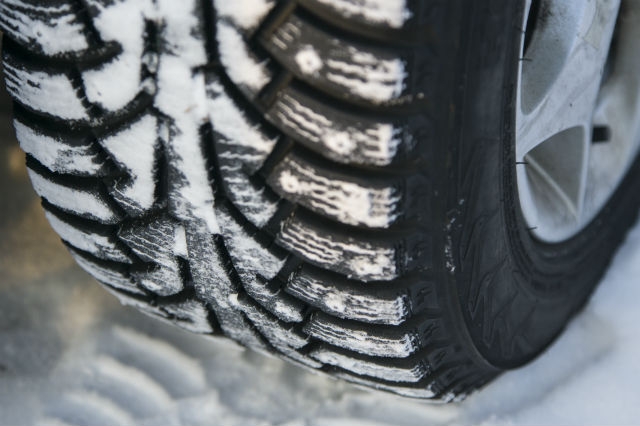
If you’re still concerned about driving through snow and ice, Paul suggests focusing less on your car’s source of power and more on the part of your vehicle that touches the ground. “Just like with any vehicle, your winter weather driving experience can be improved immensely with the addition of four winter tires,” he said.

So, Are Electric Cars Good in Winter?

What we need and want from our car varies from person to person. That said, AAA advises drivers not to give electric cars the cold shoulder solely because of any winter struggles – driving them this time of year simply requires a touch more preparation.

It’s also easy to forget the lead batteries found in gas-powered vehicles are impacted by cold weather, as well. Yet you wouldn’t avoid your car in the winter out of fear the battery won’t start. (Nor should you – without driving regularly, your car battery won’t maintain a full charge.)

Furthermore, technology is continually improving, making battery capacity and driving range less of a concern. Some electric car companies, for example, are now using heat pump systems that require less energy than resistant heaters.

And finally, Paul reminds us that the drop in driving range doesn’t occur with the flip of a switch. “Yes, range changes in the winter, but just like the temperature, it changes gradually. As the outside temperature drops from summer temps in the 80s to fall temperatures in 50s and winter temps in the 20s, you get acclimated to the change in range.”

Visit AAA’s Electric Vehicle platform for more information on these cars of the future.

Have more car care questions? Leave them in the comments below!

Subscribe to Your AAA Newsletter

Sign up and receive updates for all of the latest articles on automotive, travel, money, lifestyle and so much more!

AAA: Record Number of Holiday Travelers Expected to Close Out 2024 

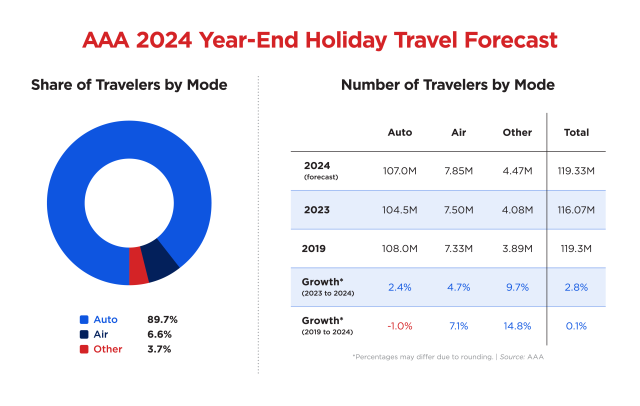
AAA projects 119.3 million people will travel 50 miles or more from home over the year-end holiday period from Saturday, Dec. 21, to Wednesday, Jan. 1. This year’s domestic travel projection is expected to set a new record with an additional 3 million travelers compared to last year. 

“Christmas Day falls on a Wednesday this year, which puts both the weekend before and after the holiday in play for travelers,” said Jillian Young, AAA Northeast. “We continue to see demand for travel soar at this time of year as Americans visit family and friends and take in new destinations.” 

holiday forecast

Nearly 90% of holiday travelers will be driving to their destinations: 107 million people are expected to travel by car, 2.5 million more than last year. AAA car rental partner Hertz says the busiest pickup days are expected to be Friday, Dec. 20, and Saturday, Dec. 21. The busiest time for rental returns is expected to be the weekend after Christmas and the following Monday. 

AAA expects air travel to set a new record this holiday season with 7.85 million passengers. That number surpasses the previous record of 7.5 million air travelers last year. AAA booking data shows domestic flights are 4% more expensive, and international flights are 13% more expensive this holiday season compared to last year. 

The number of Americans traveling by bus, train and cruise this holiday season is up nearly 10% compared to last year, with 4.47 million people expected to travel by other modes. Domestic cruise bookings are up 37% compared to last holiday season. 

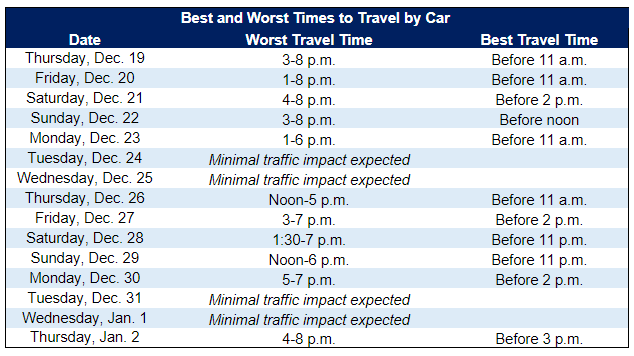
Best and Worst Times to Drive 

INRIX, a provider of transportation data and insights, expects drivers will experience the worst traffic delays the weekends before Christmas Day and New Year’s Day. The holidays themselves are expected to have minimal congestion.  

AAA’s Top Holiday Destinations 

Tropical weather destinations are hot this holiday season, according to AAA booking data for Dec. 21 to Jan. 1. Domestically, several cities in Florida top the list, followed by Los Angeles and Las Vegas. The most popular international destinations include the Dominican Republic, Mexico and Costa Rica. 

Will you be traveling this holiday season? Tell us in the comments.

Subscribe to Your AAA Newsletter

Sign up and receive updates for all of the latest articles on automotive, travel, money, lifestyle and so much more!

Road Trip to Northeast Snack Factories

Whether you crave salty or sweet, a Northeast snack factory road trip is sure to please every palate. Each of the destinations on this list offers a delicious blend of entertainment and education – and you won’t leave hungry.

Listen to Our Podcast

For more road trip tips and tricks, listen to Episode 5 of our podcast, Merging Into Life: Road Trip Starter Pack.

Tune In

Ben & Jerry’s

Waterbury, Vt.

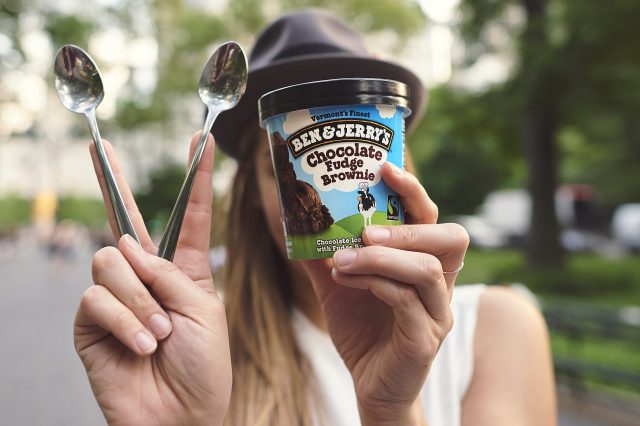
Vermont’s famed Ben & Jerry’s factory was built in 1985 and produces upward of 350,000 pints per day. The tour starts with a short movie about how founders Ben Cohen and Jerry Greenfield started their ice cream kingdom, followed by a sneak peek at the ice cream-making process and how it gets packaged in those legendary pint containers. Of course, you’ll be able to indulge in ice cream samples along the way. After the tour, visit the Scoop Shop for a treat and peruse the Flavor Graveyard of retired flavors.

Hershey’s

Hershey, Pa.

Remember making chocolate milk with Hershey’s syrup or s’mores by the fire with a Hershey’s chocolate bar? Share those sweet memories with your children at Hershey’s Chocolate World. The massive establishment offers a full day’s worth of chocolate-themed activities, including a chance to design your own candy bar. And while not an actual chocolate factory, the factory tour ride is a fun (and free) journey of the entire chocolate-making process.

Car Rental Savings

Get up to 20% off the base rate of your next car rental.*

*Terms apply.

Book Today

Herr’s

Nottingham, Pa.

Herr’s is a genuine snack empire with 340 types of delightfully salty treats, from cheese balls and potato chips to caramel popcorn and peanut butter-filled pretzels. The factory tour is an informative (and tasty) glimpse into the brand. Afterward, hit the museum and gift shop for some road trip snacks. Herr’s variety pack, anyone?

PEZ

Orange, Conn.

PEZ has been supplying its iconic interactive candy to the world since 1927. The family-friendly company offers tours through the colorful world of PEZ dispensers at its visitor center in Connecticut. Here, you’ll learn about the storied history of PEZ, work your way through interactive games and exhibits, and see the world’s largest PEZ dispenser and vintage dispenser museum. Guests can even design their own PEZ dispenser.

Julius Sturgis Pretzel Bakery

Lititz, Pa.

Take a tour of the original Julies Sturgis Pretzel Bakery, founded in 1861, to discover the origins of the pretzel-making tradition and see the pretzel production. Kids can even try their hand at pretzel twisting with a hands-on lesson with pro bakers. Enjoy samples and make a pit stop in the gift shop for some delicious treats to go.

Taza Chocolate

Somerville, Mass.

About 20 minutes outside of Boston, the Taza Chocolate factory is handmaking stone-ground chocolate daily. Take a behind-the-scenes tour to see how cacao beans are transformed into artisanal chocolate bars, participate in a chocolate sampling or try a chocolate-making workshop. On weekends, kids under 10 years old can join in a chocolate-themed scavenger hunt.

Utz

Hanover, Pa.

Known for its potato chips and pretzels, Utz produces more than 3 million pounds of snacks per week. Witness the potato chip-making process on a self-guided tour, featuring an observation gallery overlooking the production line.

Need a ride? AAA members can save up to 20% on Hertz rentals.

Which of these Northeast snack factories is on your list to visit next? Tell us in the comments.

This article has been updated and republished from a previous version.

Subscribe to Your AAA Newsletter

Sign up and receive updates for all of the latest articles on automotive, travel, money, lifestyle and so much more!

The Best Hot Chocolate Spots in the Northeast

Nothing warms the soul quite like a rich, velvety cup of hot chocolate, especially on a cold, wintry day. From artisanal blends to indulgent flavors, like red velvet and s’mores, we’ve found just what you’re craving on a frosty day.

Whether you’re a cocoa purist or looking for a creative twist on a winter favorite, here are some of the best hot chocolate spots waiting for you in the Northeast.

Connecticut

Caffe Social

Norwalk

Caffe Social’s menu is sure to warm you up with its lineup of irresistibly delicious hot chocolates. From salted caramel to s’mores, you’ll find eight swoon-worthy hot chocolates that hit the spot. Don’t miss festive, seasonal flavors, like red velvet and peppermint bark. Enjoy a steaming cup on its own or pair with challah French toast or a creative eggs benny at this cozy cafe.   

Heirloom Market

Wethersfield

Heirloom Market at Comstock Ferre offers a standout hot chocolate experience. Made with locally sourced, organic ingredients, each cup reflects the market’s farm-to-table ethos. This warm drink is made for cold, snowy days. Settle in to savor the rustic interiors and historic ambiance as you sip on hot chocolate topped with a homemade toasted marshmallow.

Maine

Gelato Fiasco

Brunswick and Portland

Gelato Fiasco is known for its fresh gelato, but its coffee bar is a must-visit for hot chocolate lovers. Or, as this scoop shop likes to call it, “drinking chocolates.” Essentially, they’ve taken their rich chocolate gelato and turned it into a luscious, steaming cup of hot chocolate, which pairs perfectly with their house-made whipped cream.

Monica’s Chocolates

Lubec

Monica’s Chocolates serves up splurge-worthy hot chocolates as decadent as the shop’s signature bonbons and truffles. This inviting shop is the place to warm up with a cup of ultra-rich hot chocolate as you browse unique Peruvian-inspired chocolates and gifts. For artisanal chocolates with a unique cultural background, this is the place. Come early, the hot chocolate often sells out.

Massachusetts

Caffe Vittoria

Boston

Caffe Vittoria delivers an authentic taste of Italy. Some consider their rich and velvety, Italian-style cioccolata calda to be the best hot chocolate in Boston. Certainly, it’s among the thickest, thanks to its secret ingredient: corn starch. Founded in 1929, the cafe exudes old-world charm and a welcoming atmosphere – perfect for savoring a hot drink.

Hot Chocolate Sparrow

Orleans

This hot chocolate place is for chocolate lovers, offering a variety of rich and creamy options made with their signature homemade fudge milk. The Hot Chocolate Sparrow is the shop’s signature hot drink that gets an extra flavor boost when paired with mint or coconut syrup. You’ll also find a white hot chocolate, as well as iced versions of both sweet, creamy hot chocolates.

New Hampshire

Common Man Roadside

Hooksett and Epsom

Common Man Roadside may be a quick-service roadside stop, but the hot chocolates are worth the detour. Favorites include the Uncommon Hot Chocolate, made with real chocolate shreds, and the Dirty Hot Chocolate, which features a splash of vanilla syrup and a shot of espresso for an extra kick. It’s the perfect place to relax, recharge and re-fuel.

The Met

North Conway

Metropolitan Coffee House (The Met) has two locations in North Conway, including North Conway Village and Settlers Green. Stop in for breakfast sandwiches and locally roasted coffee. In fall and winter, hot chocolate jumps onto the menu. There are 15 unique varieties, like chocolate and orange, peppermint and cinnamon. Order a cup with homemade whipped cream.

New Jersey

Hatch 44 Cafe

Metuchen and Bradley Beach

Hatch 44 Cafe is a beloved brunch spot that warms with an inviting atmosphere that’s perfect for enjoying a rich cup of hot chocolate. Indulge in a classic hot chocolate that’s celebrated for its rich, velvety texture. Hatch 44 serves all kinds of hand-crafted drinks. When winter arrives, look for creative yet comforting takes, like a cardamom-sprinkled hot cocoa.

The Asbury Park Roastery

Asbury Park

For a sweet, creamy warm-up after a seaside stroll, make a beeline for Asbury Park Roastery. On the menu, you’ll find a classic hot chocolate, as well as favorites like the peppermint hot chocolate. You’ll want to top this treat with marshmallows or whipped cream (maybe even both). When winter weather rolls in, kick back with a steaming cup at this favorite Jersey Shore destination.  

New York

Brooklyn Farmacy & Soda Fountain

Brooklyn

Brooklyn Farmacy & Soda Fountain may have opened in 2010, but it’s got all the nostalgic feel of an old-time soda fountain. On the menu, you’ll find a frozen hot chocolate with house-made toasted marshmallows. Choose from chocolate, double chocolate or mocha. Of course, you’ll also find a steaming hot chocolate, as well as creative takes, like a Chai White Hot Chocolate.

Strange Brew Cafe

Binghamton

Strange Brew Cafe is open for breakfast and lunch, but you can pop in any time for a delicious cup of their classic hot chocolate. You’ll find wildly delicious specialty versions of this frosty morning fave too, like peanut butter, peppermint and snickerdoodle. Every creamy cup of gourmet cocoa comes topped with both whipped cream and marshmallows. Yes, both!

Rhode Island

Fuel Coffee Bar

Narragansett

For delicious hot chocolate made with Ghirardelli dark chocolate, steamed milk and frothed milk, head to Fuel Coffee Bar. Their piping hot cocoa is even topped with whipped cream and drizzled with chocolate. For a refreshingly cold twist, the frozen hot chocolate is a crowd-pleaser. Order a cup to-go or settle in at this welcoming cafe with a fresh-baked muffin or a pastry.

The Chanler

Newport

At the Chanler, the seasonal hot chocolate bar is an experience you’ll want to mark on your calendar since it’s open only on select dates in December. The cozy firepit, mesmerizing Cliff Walk views and artisanal hot cocoa will make it worth your while. Indulge in a cup or two of hot chocolate that’s made with premium Valrhona chocolate from southeastern France.

Vermont

Lake Champlain Chocolates

Burlington, Waterbury Center and Stowe

Lake Champlain Chocolates offers gourmet hot chocolates – by the cup or the tin – that have been celebrated as among the very best in the country. By the tin, choose from peppermint, traditional and dark, as well as several organic and vegan varieties. Don’t forget the vanilla marshmallows. In the flagship store on Pine Street, treat yourself to a steamy cup at the hot chocolate bar.

Vermont Cookie Love

North Ferrisburgh

Vermont Cookie Love offers creamy classic hot chocolate options, as well as whimsical takes, like a Melted Snowman, which features a scoop of vanilla ice cream and a sprinkling of cocoa powder. Naturally, you’ll want to pair a hot chocolate with a selection of cookies, like triple chocolate chip and oatmeal with dried cranberries. They sell cookie gift boxes and ice cream, too.

What do you think is the best hot chocolate spot in the Northeast? Tell us about it in the comments!

Subscribe to Your AAA Newsletter

Sign up and receive updates for all of the latest articles on automotive, travel, money, lifestyle and so much more!

AAA Survey: Nearly Two-Thirds of Drivers Admit to Unsafe Driving Behaviors

A higher proportion of American drivers admit to speeding, driving distracted and engaging in other risky behaviors than those who steadfastly follow the rules of the road, according to the latest AAA Traffic Safety Culture Index.

The report, updated annually by the AAA Foundation for Traffic Safety, measures the public’s attitude on the roadway by asking drivers about their perceived level of danger for various driving behaviors, with most drivers saying unsafe driving behaviors are very or extremely dangerous. Yet, many have admitted to engaging in these dangerous behaviors at least once in the previous 30 days.

For example, while 93% of drivers identified hand-held phone use as an extremely risky behavior, more than a third admitted to reading a text or email or holding a phone while driving over the previous 30 days.

In 2023, nearly 41,000 people were killed in U.S. traffic crashes, a sobering reminder of the ongoing public health crisis on our roads. Despite a slight decrease from the previous year, the threat posed by risky driving behaviors remains alarmingly high.

The new report illuminates this issue by categorizing drivers based on their self-reported risky behaviors. Speeding, distracted driving and aggressive driving emerged as the most prevalent dangerous habits.

Key Findings

Distracted Driving
  • Most drivers (93%) recognize the dangers of texting, emailing and reading while driving.
  • However, 27% of drivers reported sending a text/email while driving; 37% read a text/email; and 36% spoke on a hand-held phone while driving in the previous 30 days.
Aggressive Driving and Speeding
  • Most drivers (89%) perceive aggressive driving as dangerous and 81% said the same about running red lights. Yet 27% ran at least one red light in the previous 30 days.
  • And nearly half (49%) admitted to driving 15 mph over the posted speed limit on a freeway at least once in the previous 30 days, while 36% of drivers reported driving 10 mph over the posted speed limit on a residential street.
Drowsy Driving
  • Most drivers (96%) recognize the dangers of drowsy driving.
  • However, 20% admitted to driving while drowsy in the previous 30 days.
Impaired Driving
  • Drivers overwhelmingly perceive drunk driving as dangerous (95%) and socially unacceptable. Yet 7% admitted to engaging in this behavior in the previous 30 days.
  • By comparison, only 70% of drivers felt that it was very or extremely dangerous to drive within an hour of using cannabis, and 6% reported having done it in the previous 30 days.
Driver Profiles

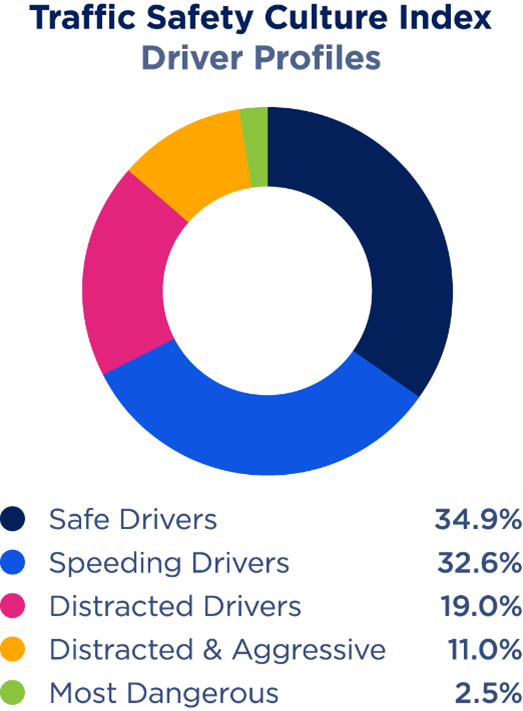
The survey identified five distinct driver profiles.

  1. Safe Drivers: Rarely engage in risky behaviors – 34.9%.
  2. Distracted Drivers: Primarily engage in all distracted driving behaviors – 19%.
  3. Speeding Drivers: Primarily engage in speeding behaviors – 32.6%.
  4. Distracted and Aggressive Drivers: Engage in distracted and aggressive driving – 11%.
  5. Most Dangerous Drivers: Engage in all risky driving behaviors – 2.5%.

“The survey’s findings highlight just how prevalent speeding is, especially among drivers who take other risks behind the wheel,” said Jillian Young, Director of Public Relations, AAA Northeast. “Enforcement, community outreach and education continue to be absolutely critical to curbing a wide range of risky driving behaviors and ultimately lowering the number of traffic crash fatalities in the U.S.”

The AAA Foundation’s annual TSCI survey has been a decade-long deep dive into driver behavior. As traffic dangers rise, the latest TSCI offers crucial insights into driver attitudes and risky habits, guiding the development of life-saving safety measures. Please refer to the full TSCI for data collection methodology and limitations.

Subscribe to Your AAA Newsletter

Sign up and receive updates for all of the latest articles on automotive, travel, money, lifestyle and so much more!

How to Avoid Life Insurance Scams

Life insurance scams happen every day, and becoming a victim can be costly and life changing. The FBI estimates that the total cost of non-health insurance fraud is more than $40 billion per year. (Read about car insurance scams here.)  

If you are in the process of taking out a life insurance policy, updating an existing policy or have been contacted about an existing or new policy, understanding these scams is crucial to avoid becoming a victim. Read on to learn the different ways scam artists try to trick you and the best ways to determine whether something is legit.

Types of Life Insurance Scams

Life insurance scams can occur over the phone, by email and even through social media. In each medium, the scammer will target unsuspecting people by impersonating legitimate agents of well-known insurance companies.

With social media becoming a more popular way for people to learn about and connect with life insurance agents, it’s important to be wary of common misconceptions and misinformation.

“Agents advertising concepts like ‘infinite banking’ or ‘being your own bank’ to get rich can be misleading,” warned Timothy Ferreira, Life and Annuity Manager at AAA Northeast. “They can lure you into purchasing very costly insurance policies that may not fit your needs and primarily benefit the agent in the form of big commissions.”

In a phone scam, a scammer may call you claiming there is an urgent need to buy or update a life insurance policy. They may use high-pressure tactics, offering bogus special rates for a limited time.

Email scams operate in a similar way, but with additional tricks. In this scenario, scammers may send emails that appear to come from reputable insurance companies – even using logos and email addresses that look genuine. These emails may contain links to fake websites that look official at a passing glance.

In both phone and email life insurance scams, the main goal is to steal personal and financial information, so it’s essential to verify the source of any unsolicited life insurance offers by contacting the insurance company directly.

Is There a AAA Life Insurance Scam?

We are currently unaware of any scams that impersonate AAA Northeast life insurance agents. If you are ever unsure, we encourage you to reach out to us to verify any correspondence.

How To Spot Life Insurance Scams

While scammers are getting better at hiding their tracks, there are certain red flags that can help to quickly identify if something is a scam.

One of the first signs you’ll recognize is feeling pressured to act quickly and impulsively. Scammers often use tactics that create a sense of urgency to get you to agree on the spot. Legitimate insurance agents will give you time to review and consider your options without pushing you into a decision.

Suspicious contact methods can also be warning signs. “While purchasing life insurance over the phone is commonplace today,” Ferreira said, “being called by a non-business phone number should raise a red flag.” The same goes for email: If you are contacted from a personal email address rather than one associated with a recognized insurance company, it is likely a scam.

life insurance scams - senior woman on phone

Preventive Measures

There are a few things you can do to protect yourself a life insurance scam:

  • Ask for the insurance company’s website and use its search function to look up the agent you’re in contact with.
  • Search for the agent’s license number on your state’s Department of Business Regulation website. If they appear, it will indicate that the person is authorized to sell life insurance.
  • Avoid high-pressure sales and be skeptical of agents pushing you to buy quickly without explanation or alternatives.
  • Make sure you understand your policy by thoroughly reading over the terms, premiums, coverage and exclusions.

Support For Life Insurance Scam Victims

If you have been a victim of a life insurance fraud, contact your state insurance agency.

Connecticut – Phone: 860-297-3800; website

Massachusetts – Phone: 617-521-7794; website

New Hampshire – Hotline: 800-852-3416; Phone: 603-271-2261; website

New Jersey – Hotline: 800-446-7467; Phone: 609-292-7272; website

New York – Hotline: 888-372-8369; website

Rhode Island – Phone: 401-462-9520; website

Licensed AAA life insurance agents are available to support AAA members in branch offices. Learn more.

Subscribe to Your AAA Newsletter

Sign up and receive updates for all of the latest articles on automotive, travel, money, lifestyle and so much more!

The History of the Holiday Hess Trucks

Mariah Carey’s “All I Want for Christmas Is You” emanates from every speaker in the Western world, mall parking lots turn into scenes of winter chaos, greeting cards flood mailboxes and everything becomes gingerbread- or peppermint-flavored.

These are all telltale signs the holidays are near.

But there’s one other sound, or should we say jingle, that comes around once a year, signaling the start of the holiday shopping season: “The Hess truck’s back and it’s better than ever!”

The Hess Corporation has released a new toy truck just in time for the holidays every year since 1964. What started as a simple gesture of gratitude toward customers has grown into one of the most iconic and collectible toys to ever hit the market.

But how did the Hess truck come about in the first place? For that answer, we’ll have to travel back nearly a century.

The Origins of the Hess Truck

In 1933, recent high school graduate Leon Hess purchased a used oil delivery truck and began his own business delivering fuel to homes in Asbury Park, N.J. By 1964, he had a burgeoning empire of gas stations to his name. That winter, Hess wanted to offer his customers a gift as a sign of goodwill. He started selling toy trucks at Hess gas stations that would be both affordable and suitable for kids of all ages.

The original 1964 Hess truck, a replica of the company’s first B61 tanker, was well ahead of its time compared to other toys of the day. Hess was adamant the toy be made with the highest craftsmanship. The truck featured an empty cargo tank that could be filled using an accompanying funnel and rubber hose, as well as working headlights and taillights. The toy even came with batteries to make it more affordable for parents.

The Hess Truck Jingle

For the next 15 years, the Hess truck was sold each holiday season without the aid of major marketing efforts. That all changed in 1980 when the company released its first television commercial. A few years later, in 1988, it came up with a jingle to accompany the ads. The now iconic “The Hess truck’s back and it’s better than ever” tune, which has been used ever since, is an adapted version of the hit 1963 song, “My Boyfriend’s Back” by the Angels.

In 2014, the Hess company sold its 1,200-plus retail gas stations to Speedway. Many thought this would mean the end of the line for the trucks. Hess, however, quickly eased those concerns by announcing the tradition would continue with its 50th anniversary truck. Since then, the toy has only been available online. The transition hasn’t hurt business, as the truck is one of the bestselling toys on the internet, according to Hess.

Hess Trucks Through the Years

For nearly a quarter-century, every Hess toy truck was modeled after an actual vehicle in the Hess fleet. This included different versions of fuel tankers and replicas of Leon Hess’s original oil delivery truck. There were also some outside-the-box toys sold during this time. In 1966, the company released the Hess Voyager, a replica of a real Hess oil tanker ship. Four years later came the first Hess fire truck, designed after the one used at the company’s Port Reading, N.J., oil refinery. Maybe the most surprising addition to the Hess toy lineup came in 1981 with the arrival of the Hess training van. This toy was modeled after the GMC Royal Motorhome Hess used to conduct field training lessons.

These early releases differed from today’s toys in another way as well: they were not always one and done. Nowadays, Hess releases a brand-new model of its iconic toy each year, but that wasn’t always the case. The company sold the same tanker-trailer in 1964 and ’65. It doubled up again later that decade by selling a slightly modified tanker truck from 1968-69 and again in 1972 and 1974. Hess sold its first fire truck in consecutive years to kick off the 1970s, as well as a modified one in 1986. The company also brought back the toy replica of Leon Hess’s original delivery truck in 1982 and 1983.

2023 hess truck

Recent Hess Trucks

It wasn’t until 1988 that Hess released a toy not based on one of its vehicles. That year, the company debuted a combination trailer truck and GT-style race car. These vehicles were also the first to come with license plates inscribed with the year of issue, while the friction-powered race car was the first Hess toy with a motor.

Since the late 1980s, the Hess toy lineup has grown to include just about every type of vehicle imaginable. In 1993, it was a police car. Two years later, a helicopter. Closing out the decade was an RV with dune buggy and motorcycle in 1998 and a space shuttle in 1999. This century, Hess has created everything from tow and dump trucks to jet fighters and monster trucks. In 2024 the toy celebrates its 60th anniversary with a three-piece fire truck, car and motorcycle. Continuing its educational giving program, this year Hess will donate approximately 10,000 toy trucks to classrooms across the country with the newest edition of a STEM curriculum guide.

The Hess toy truck has been released every year since 1964 with three notable exceptions. Ironically, gasoline was a main culprit in each instance. In 1973, the U.S. found itself mired in an oil embargo. The astronomical gas prices made manufacturing toys extremely expensive, prohibiting Hess from releasing a new truck that year. Later that decade, the country was again hit with a fuel shortage, this time in the form of the 1979 oil crisis. This prevented Hess from making a toy for the second time. The last year a new Hess truck was not unveiled was 1981, when the country entered a recession. It was a time marked by supply shortages and inflated prices, not ideal circumstances for manufacturing. During those years, gas consumption was discouraged. This meant fewer customers visiting Hess gas stations, the only places where the toy trucks were sold. It simply wouldn’t have been a good business decision to release new toys knowing fewer people would come across them.

How Hess Trucks Are Made

Children’s toys may look simple, but – at least when it comes to the Hess trucks – the process of creating and building them is anything but.

Hess doesn’t give too many clues into what it refers to as the “secretive process” of developing its annual toy. But we do know it usually takes two to three years to get the collectibles from the drawing board to the shelves. However, it’s been known to take up to six years in some cases.

The process begins with a collection of images to narrow down a possible theme. Then some initial sketches are drawn up. The top two or three of these designs are chosen and developed into 3D rotating images. Finally, handcrafted models are built, and final design decisions are made.

Hess trucks have always been well ahead of their time when it comes to quality and craftsmanship. Early models comprised about 75 different pieces. Today’s models have anywhere between 200 to 300 pieces, each one precisely cut. Once the pieces are made, the toy is meticulously assembled and undergoes numerous quality tests before being packed in its box and shipped to your doorstep.

Do you collect holiday Hess trucks? Tell us in the comments. 

For more stories like this, visit our auto history page.

This article has been updated and republished from a previous version.

Subscribe to Your AAA Newsletter

Sign up and receive updates for all of the latest articles on automotive, travel, money, lifestyle and so much more!

Cut Your Own Tree at Northeast Christmas Tree Farms

When it comes to Christmas trees, there are people who favor fake trees, real tree purists and those who prefer to choose and chop their tree from a Christmas tree farm.

The question of where to cut your own Christmas tree is an easy one to answer. There are Christmas tree farms throughout the Northeast, where conifers of various varieties, shapes and sizes are planted and nurtured, destined to become the glittery holiday centerpiece of someone’s home. If not every year (although it is prime tradition-making material), you should try it at least once for the adventure if you can.

What are the benefits of cutting down your own tree? For one, they are fresher; the branches are a bit springier, their fragrance brighter and they’ll generally last longer. And of course, there are the bragging rights that come with playing lumberjack and cutting and hauling out your chosen evergreen with your own two hands. It also feels more Christmassy than the Home Depot parking lot.

If any of the above sounds good, take a look at these 10 Northeast Christmas tree farms. Most open right after Thanksgiving.

Scroll down to play our Christmas tree word search.

Before Heading to the Christmas Tree Farm …

  • Get out the tape measure. Measure the spot that you would like to put your tree and the height of the ceiling to know how tall or wide of a tree your house can accommodate.
  • Consider which type of tree is best for you. If you would like your house to be filled with the Christmassy scent of pine, try a Douglas fir. If you have a lot of heavy ornaments, pick a tree with sturdier branches like a Colorado blue spruce and avoid varieties like the white pine, which has very soft needles. If you want branches with good fragrance that are just as great at ornament holding, you can’t go wrong with a balsam or Fraser fir.
  • Call the farm ahead of time. Make sure the farm still has plenty of cut-your-own trees available, especially if you go toward the end of the season. You can also call ahead to make sure if the farm is pet-friendly or if saws are provided. Most Christmas tree farms allow you to bring your own hand saw. Power tools are not typically permitted for safety reasons.

Cut-Your-Own Christmas Tree Farms

Check websites for seasonal schedules and pricing. Call ahead for closings due to inclement weather.

Maple Row Farm
Easton, Conn.

Maple Row Farm has been in business since 1769, but that doesn’t mean they don’t keep up with the times. The farm’s app will help you navigate the grounds and find the perfect tree for your family from the wide assortment available. Pet the oxen, enjoy a hayride and relax while browsing for wreaths and other holiday accessories. Bonuses: Dog-friendly, tailgating is permitted and saws are provided. 

Greenwood Tree Farm
Billerica, Mass.

Selling mostly Fraser and balsam fir, this small family Christmas tree farm is a charming little operation for the holidays. While the staff helps to load your tree onto your car, warm up in the barn with local apple cider and samples of honey from their honey bee farm. Before you leave, browse the Christmas gift shop or visit the decoration station at the farm stand to get a wreath or kissing ball customized to your liking.

Vandervalk Farm & Winery
Mendon, Mass.

Balsam and Fraser fir trees are available for cutting on a first-come, first-served basis (no tagging or reserving in advance), along with plenty of pre-cut fresh trees. Free services include tree shaking, wrapping, twine, apple cider, snacks and cute picture spots. Warm up by the fire in the Christmas barn, which also sells holiday goods and decorations. And afterwards, don’t miss your opportunity to stop in for a tasting of Vandervalk’s blueberry and fruit wines, handcrafted in small batches from the farm’s own blueberries.

christmas tree farms

Noel’s Tree Farm
Litchfield, N.H.

Whether you cut your own tree or buy pre-cut, the family that own Noel’s tree farm puts in a lot of love, tending to their trees throughout the year to make sure that you have a perfect-looking selection to pick from come Christmastime. Other decorations like wreaths and roping are also available in many shapes and sizes. Bow saws are supplied and leashed dogs are welcome.

The Rocks Estate
Bethlehem, N.H.

As the North Country Conservation and Education Center for the Society for the Protection of New Hampshire Forests, the Rocks Estate has been growing Christmas trees for over 35 years. It is known as a holiday destination, complete with caroling, horse-drawn wagon rides and marshmallows roasted on an open fire. Visitors can wander through the historic property and search row upon row to find and cut down their ideal evergreen. Free tree wrapping and car loading is provided.

Evergreen Valley Christmas Tree Farm
Washington, N.J.

Wander rows of over 10,000 trees surrounded by mountain views at this 145-acre Christmas tree farm in Warren County, just a short drive from both New York and Pennsylvania. Bring your own saw or borrow one from the farm. Staff is also on hand to cut your tree for you if you would like.

Wyckoff’s Christmas Tree Farm
Belvidere, N.J.

Wyckoff’s has been in business for over 60 years and has been an official Christmas tree supplier to the White House. There are over 5,000 cut-your-own trees waiting to be selected at the farm, as well as fresh pre-cut trees, wreaths, pine roping and blankets available for purchase. For those looking for something a little funkier this holiday season, Wycoff’s also has painted trees in a variety of colors. Hand saws are provided, along with extra services such as putting your tree on a “tree shaker” to rid the tree of stray needles, wrapping it for better transport and drilling a hole at the base for pin stands. Visit the holiday barn for gifts and decor.

Elwood Christmas Tree Farm
Huntington, N.Y.

For a quiet tree cutting experience, head to this 20-acre Long Island farm. Bring your own saw or they will cut your chosen tree for you. The staff will also tie your tree to your car without extra charge.

Battenfeld’s Christmas Tree Farm
Red Hook, N.Y.

Enjoy an old-fashioned Christmas in the country at Battenfeld’s family farm. Choose and cut your own Christmas tree from six different varieties. A one-stop shop for all of your holiday decorating, the farm also has an assortment of individually handmade wreaths ornamented with all-natural embellishments and a Christmas shop for gifts. Saws are provided and leashed dogs are welcome. Handsaws are available to rent for $10 or purchase for $15.

Big John Leyden’s Christmas Tree Farm
West Greenwich, R.I.

Selection is not a problem at Big John’s. The farm grows over 100,000 trees and 10 different varieties including balsam fir, Fraser fir, blue spruce and white pine. And they allow you to tag trees in advance, meaning that you can make an outing out of choosing your Christmas tree earlier in the season and come back and cut it down whenever you’re ready to put it up. The staff will cut your tree, wrap it and put it on your car. While you’re there, take a family photo in front of the 20-foot tall Santa in the field. Leashed dogs are welcome.

How to Safely Transport a Christmas Tree

  • Ensure it’s wrapped well. Most trees sold at farms will be put through a netting machine that tightly bundles up the branches for safe transport. In case netting isn’t available, bring a blanket or tarp to wrap the tree yourself.
  • Direction matters. When arranging the tree on the roof of your vehicle, make sure the stump end is at the front. This will diminish damage when the car is in motion.
  • Tie it up tight. If you can, use a vehicle with a roof rack to make your tree transport simple and safe. Car roofs, doors and windows are not designed to have objects fastened to them. Looping rope through these areas can even tear the seals off your doors. Secure the tree with nylon ratchet straps at the front, middle and just above the bottom branches. Before heading home, check all straps to make sure they remain tight and the tree isn’t able to move left, right, forward or back.

Tips for Christmas Tree Care

  • Don’t feel guilty about cutting down a tree. Christmas tree farms are planted specifically to meet the demands of the holiday season. Plus, real Christmas trees are biodegradable and recyclable. Artificial trees are made of plastic and live in landfills indefinitely when they are disposed of.
  • Keep your Christmas tree hydrated. Fill the tree stand with water and check daily to make sure it stays filled up to the base of the tree. A tree stand should hold at least 1 gallon of water – that’s the amount the average 6-foot tree can consume per day!
  • Keep your tree away from heat sources like fireplaces, heaters and direct sunlight. Not only is it safer, it will slow the drying process.

Do you cut down your own Christmas tree? Tell us your favorite Christmas tree farm in the comments.

Word Search

Find the different Christmas tree varieties.

This article has been updated and republished from a previous version.

Subscribe to Your AAA Newsletter

Sign up and receive updates for all of the latest articles on automotive, travel, money, lifestyle and so much more!

Does Home Insurance Cover Mold or Other Nuisances?

Mold is very tricky. Sometimes you don’t notice it at first. Sometimes it festers in corners or behind wallpaper. Sometimes it can even make you sick. But does home insurance cover mold? Rather, does it cover mold removal? Because when you find mold in your house, the very first thing you want to do is get rid of it. Your home is likely your largest investment, and severe mold damage can harm the resale value.

What Does Mold Do?

Four of the most common indoor molds are Cladosporium, Penicillium, Alternaria and Aspergillus. Cladosporium may cause ear or eye infection, and it can also affect those with allergies, asthma or other respiratory conditions. Penicillium did, in fact, lead to the discovery of penicillin, and most strains are not very harmful to humans. Alternaria and Aspergillus can cause allergies and inflame skin and mucous membranes – they’re also especially harmful for people who are immunocompromised.

No matter what mold you have, it’s likely bothersome to those with asthma and it might make you feel like you have a perpetual cold. There are of course other molds, like black mold, that can be much more harmful. So whenever you spot mold, take action quickly.

Does Home Insurance Cover Mold?

“The answer is generally no,” said Patrick Sullivan, director of insurance sales at AAA Northeast, “unless it is the result of what we call a covered peril.”

For most homeowners insurance policies, financial protection is only given for damages stemming from sudden and accidental causes. These commonly include:

  • Fire.
  • Smoke.
  • Car or aircraft collision.
  • Strong winds or windstorms.
  • Hail.
  • Sudden and internal water damage.
  • Roof collapse.
  • Lightning strikes.
  • Theft.
  • Explosion.

These are all occurrences that happen suddenly and generally could not be prevented. There is a clear cause-and-effect relationship between the incident and the damages it may have caused.

Mold doesn’t act like this. No one is suddenly struck by mold – even if it’s been growing in secret. Even if there’s no way you could have known about it. Mold growth is gradual, so it’s usually challenging to prove what exactly the cause was, or when the trouble began.

Homeowners insurance doesn’t usually cover nuisances like bedbugs, termites or mold. Like mold, bug infestations occur over time, and it’s often difficult to tell the difference between bad luck and neglect on the homeowner’s part. Therefore, they are considered maintenance issues.

There are, however, certain very specific circumstances under which mold might be covered.

does home insurance cover mold

What’s Covered 

“For instance,” Sullivan said, “If ice damming occurs to your roof and it results in water damage to the inside of your home, and that leads to mold, then you should be covered. However, if you discover mold in your home resulting from a maintenance issue, or if the mold was there prior to you purchasing the home, then it would not be covered.”

Or, let’s say there was a fire in your home. Fortunately, most of your home is still intact since the firefighters arrived quickly and put it out. However, due to the water from the fire hoses, your home has developed mold. That could be covered by home insurance.

As long as the mold is caused by an event that is listed on your policy, your home insurance may cover its removal. If mold is caused by gradual seepage, neglect or general humidity, it usually is not covered.

“Some carriers may provide an endorsement to cover mold,” Sullivan said. “If someone is interested in that, they should consult with their insurance agent.”

Home insurance does not cover flooding, but if you live in an area that floods regularly, you might already have flood insurance. Flood insurance will most likely cover any sudden mold damage caused by a flood.

How to Control Mold

Although mold is sometimes the result of circumstances beyond your control, sometimes mold growth can be prevented.

Mold flourishes in dark, wet and warm environments. The damp areas of your house, like the bathroom, kitchen or laundry room, are the most susceptible to mold. To avoid mold growth, try to keep the humidity in your home to a minimum.

Ventilation is also important – make sure you have an exhaust vent in your bathroom and your kitchen. If you have a clothes dryer, make sure that it vents to the outside of the house.

If you discover a leak in a window, roof or pipe, fix it up quickly. The water seepage over time will most likely lead to mold.

Have you ever dealt with mold? What did you do? Let us know in the comments below.

AAA provides homeowners insurance and much more. Learn more

This article has been updated and republished from a previous version.

Subscribe to Your AAA Newsletter

Sign up and receive updates for all of the latest articles on automotive, travel, money, lifestyle and so much more!

Number of Deadly Traffic Crashes Involving Older Drivers on the Rise

To mark National Older Driver Safety Awareness Week (Dec. 2-6, 2024), AAA Northeast is highlighting the rising number of fatal traffic crashes involving older drivers across the United States.

In 2022, the last year of available federal data, there were 7,870 fatal traffic crashes involving an older driver (aged 65+) – up 4.7% from 2021, according to the National Highway Traffic Safety Administration. Furthermore, 8,572 people were killed in crashes involving an older driver in 2022 – the highest number since at least 1975.

The rise in fatal crashes involving older drivers reflects the growing number of licensed drivers aged 65 or older nationwide: In 2022, there were around 51.5 million licensed older drivers – an increase of 15.6 million since 2012 and an increase of 23 million since 2002, according to the latest available data from the Federal Highway Administration.

AAA research shows that while seniors are less likely than their younger counterparts to engage in risky behaviors while driving, they’re at greater risk of being killed or seriously injured if a crash occurs.

“It’s important for seniors to stay active in their communities, but age-related changes may affect their driving ability,” said Jillian Young, Director of Public Relations, AAA Northeast. “Families and caregivers can help seniors stay safe on the road by encouraging them to keep their driving skills sharp and having a conversation should any changes need to be made behind the wheel.”

AAA offers the following tips for senior drivers and their families: 
  • Review new technologies. Today’s new vehicles are often equipped with a variety of safety features, from lane keeping assistance to adaptive cruise control. Review your car’s manual or watch video tutorials to ensure you’re comfortable with how these systems work. 
  • Monitor your health. Variousmedical conditions, eyesight problems or memory issues can make driving more challenging, and some medications can impair driving ability. Talk with your doctor and pharmacist about your safety on the road given your unique medical history. 
  • Adjust your driving habits when necessary. Some seniors may only drive during the day, avoid highways or make three right turns instead of an unprotected left turn. Families should discuss the best strategies to keep an older driver safe behind the wheel. 
  • Wear your seat belt. Wearing a seat belt is the best protection you can give yourself in the event of a crash. 

State-specific data:

  • In Connecticut, there were 260 fatal crashes involving an older driver (aged 65+) from 2019 to 2023 – accounting for 18% of all fatal crashes during that time period, according to the Connecticut Crash Data Repository.
    • There were approximately 590,000 licensed older drivers in Connecticut in 2022, an increase of 100,000 from 20 years ago.
  • In Massachusetts, there were 413 fatal crashes involving an older driver (65+) from 2019 to 2023 – accounting for 22% of all fatal crashes during that time period (1,870) according to the Massachusetts IMPACT Crash Data Portal.
    • There were approximately 1.07 million licensed older drivers in Massachusetts in 2022, an increase of 390,000 from 20 years ago.
  • In New Jersey, there were 140 fatal crashes involving an older driver (65+) in 2021, the last year of available finalized data – accounting for 20% of all fatal crashes that year, according to Numetric.
    • There were approximately 1.4 million licensed older drivers in New Jersey in 2022, an increase of 535,000 from 20 years ago.
  • In New York, there were 204 fatal crashes involving an older driver (65+) in 2023 – accounting for 20% of all fatal crashes last year, according to the Institute for Traffic Safety Management and Research.
    • There were approximately 2.8 million licensed older drivers in New York in 2022, an increase of 1.2 million from 20 years ago.
  • There were approximately 177,000 licensed older drivers in Rhode Island in 2022, an increase of 65,000 from 20 years ago.

Subscribe to Your AAA Newsletter

Sign up and receive updates for all of the latest articles on automotive, travel, money, lifestyle and so much more!

Merging Into Life: Electric Vehicles 101

SEASON 1: EPISODE 15
Episode Feedback

A guide to buying and owning an EV.

listen on apple podcast badge button
listen on spotify badge
listen on amazon music badge
listen on pocket casts badge button

IN THIS EPISODE

If you’re considering an electric vehicle, you probably have a lot of questions. How do electric cars work? What’s it like to drive one? Do you ever have to replace the battery? And what does routine maintenance look like? In this episode, we address these common concerns about EVs and more.

Guest Ben Sullins is an electric vehicle advocate who has spent years digging into the data and is here to dispel some myths. Matt Ferrell is an expert in sustainable technologies and gives us the lowdown on EV batteries. If we’ve sparked your interest, these are the electric car facts you should know.


KEY TAKEAWAYS

[4:45] – Is range anxiety still a thing?
[6:13] – How to easily charge your EV at home, and on the road
[13:37] – What is the lifespan of an EV battery?
[15:50] – How much maintenance does an EV require?


TRANSCRIPT

[00:00:01]
Amanda Greene: That car is still giving me trouble. Now that I think about it, it’s been wonky since the beginning of this season. That’s a long time to put up with an uncooperative car. I’m starting to hear more and more about electric vehicles, but I don’t really know anything. It would be great not to worry about the price of gas, but I have no idea how much electric chargers cost or how they work or even how to use them. Maybe I should take a test drive.

Welcome to Merging into Life where we navigate life’s milestones one episode at a time. Brought to you by AAA Northeast. I’m your host, Amanda Greene.

Can you believe we’re more than halfway into season one? I’ve learned a lot. For example, after that identity theft episode, I immediately went and locked my credit. Now it’s something I watch all the time. If you’ve learned something that stuck with you, we would love to hear about it. Or if you have a topic that you want to hear about, get in touch. Leave us a review wherever you listen to podcasts or email us at podcast@aaanortheast.com.

Today we’re going to talk about electric vehicles, also known as EVs. I read recently that Norway has more electric vehicles on the road than gas. EVs are now outnumbering regular cars. That’s so interesting because here I know a few people who own EVs but not that many. So I wonder what is the holdup here? Do they cost too much? Is charging easy? How do you even do it? To find out, I’m going to talk to some people who are not only longtime EV owners, but also EV enthusiasts who have crunched the numbers on how this all works.

Matt Ferrell has been kind enough to come on the show. He is super passionate about electric vehicles. He also has his own podcast called ‘Still to Be Determined,’ and a YouTube channel called Undecided, where he explores how technology affects our lives. But first, I’d like to welcome …


RESOURCES

EV Perks That Come With AAA Membership

AAA Survey Reveals EV Anxiety

Electric Vehicle Maintenance 101

AAA EV Resource

Undecided with Matt Ferrell

Still To Be Determined Podcast Series

Undecided With Matt Ferrell

Plugshare


Want to Learn More? Drop Us a Note

"*" indicates required fields

This field is for validation purposes and should be left unchanged.
Subject
Name*

*The views and opinions expressed in this podcast are not necessarily the views of AAA Northeast, AAA and/or its affiliates.

Subscribe to Your AAA Newsletter

Sign up and receive updates for all of the latest articles on automotive, travel, money, lifestyle and so much more!

5 Myths About Vision Care That You Should Stop Believing

When it comes to taking care of your vision, there are some myths swirling around about what you should and shouldn’t do. To best protect your eyes and overall health, it’s important to separate fact from fiction.

It’s always a good idea to schedule routine eye exams each year. With DeltaVision® AAA Northeast members in Rhode Island have exclusive access to discounted vision insurance plans. Members can get affordable, comprehensive coverage that helps you save on exams, eyeglasses, contacts and much more.

Myth: Glasses or contacts ruin or weaken your eyesight.

There is no evidence supporting this claim. It’s important to keep up with regular eye exams so your eye doctor can update your prescription as needed and address any vision changes. And with coverage from DeltaVision®, AAA members in Rhode Island don’t have to worry about the cost.

Dental and Vision Insurance for Rhode Island AAA Members

Comprehensive coverage at exclusive rates for AAA members in Rhode Island.

Check Rates

Myth: Eye exams are only for those with vision problems.

Routine eye exams are important for more than just addressing vision problems and eye disease, they can also provide a glimpse into your overall health. By taking a close look at your eyes, a doctor can see possible problems in your blood vessels, nerves and connective tissue. They may also spot signs of diabetes, heart disease, high cholesterol, rheumatoid arthritis, stroke and thyroid disease.

Myth: Reading in low or dim light damages your eyes.

Reading in inadequate light conditions can lead to temporary eye strain, tiredness, minor headache or fatigue, but not permanent damage to your eyesight.

Myth: Carrots significantly improve eyesight or help you see at night.

Eating carrots promotes eye health because they contain Vitamin C and beta-carotene, key nutrients for healthy eyes. But no matter how many carrots you eat or how often you eat them, they cannot correct your vision. 

sunglasses

Myth: All blue light is harmful to your eyes.

Blue light – visible light from the sun, computer screens, smartphones, fluorescent light, LED TVs and tablets – is not inherently harmful to your eyes. Moderate exposure is OK, but excessive exposure can cause issues. If you spend a lot of time looking at devices that emit blue light (which many of us do), you may want to consider blue light-filtering lenses to reduce exposure.

Now that you know the facts, you can take better care of your eyes.

DeltaVision® provides AAA Northeast members in Rhode Island with vision plans that go beyond standard eye care, in partnership with VSP® Vision Care, the largest vision benefits company in the country. Enroll now.

Subscribe to Your AAA Newsletter

Sign up and receive updates for all of the latest articles on automotive, travel, money, lifestyle and so much more!

3 Important Foods for Healthy Teeth and Eyes

Dental and vision care are vital to your overall health, so it’s important to do what you can to take care of both. While regular exams are needed to keep your teeth and eyes strong, everyday maintenance can also help.

Did you know that eating certain foods can benefit both your teeth and eyes? Here are three to start incorporating into your diet.

For exams and more, AAA members living in Massachusetts can take advantage of exclusive savings on both dental and vision insurance, with Altus Dental and Altus Vision™, for individuals and families.

Go Green

Dark leafy greens are packed with vitamins and minerals that are good for your entire body, including your mouth and eyes. They contain calcium and folic acid that keep your teeth and gums healthy and strong. Plus, chewing on crunchy leafy greens helps clean your teeth as you eat.        

Dark leafy greens also help reduce the risk of age-related eye diseases, such as cataracts and macular degeneration, as they are rich in vitamins C and E, as well as the carotenoids lutein and zeaxanthin.

eating

Don’t Skip Meat

Meat and fatty fish provide nutrients that boost oral and eye health, provided you incorporate the right meat and fish into your diet.

Meat contains protein and phosphorus, which help build strong teeth. Chewing meat also produces saliva, which can help wash away acids that harm your teeth. Beef is high in zinc, which protects the retina and promotes long-term eye health. Oysters are another good source of zinc, so don’t be afraid to order the surf and turf for dinner. 

If you aren’t a fan of oysters, choosing a fatty fish such as salmon or tuna can benefit both teeth and eyes. They contain high levels of phosphorus, which protects tooth enamel, as well as Omega-3 fatty acids that promote retinal health.

Go Nuts

Nuts are a powerhouse for vitamins and minerals that keep the whole body healthy – and that extends to your mouth and eyes. For instance, almonds, Brazil nuts and cashews contain calcium and magnesium that help fight bacteria that cause tooth decay. Also high in calcium, peanuts have vitamin D, which promotes healthy teeth and gums. And chewing nuts stimulates saliva, which helps cleanse the mouth.

Walnuts have Omega-3s, zinc and Vitamin E that fight inflammation in the eyes and age-related damage. Other nuts rich in Vitamin E that support eye health include peanuts, hazelnuts and cashews. 

Eating healthy foods can support healthy teeth and eyes, but diet alone isn’t enough. It’s also important to have regular dental checkups and cleanings and eye exams to monitor for changes that indicate disease not only in those organs, but throughout your body.

AAA Northeast members living in Massachusetts can utilize exclusive savings on dental and vision insurance with Altus Dental and Altus Vision™ to get routine screenings for themselves and their families.

With Altus Dental, AAA Northeast members living in Massachusetts can get quality coverage at more than 10,000 locations locally. In partnership with VSP® Vision Care, Altus Vision™ offers savings on exams, glasses, contacts and much more.

Explore the benefits and enroll today.

Subscribe to Your AAA Newsletter

Sign up and receive updates for all of the latest articles on automotive, travel, money, lifestyle and so much more!

Tiny Hearing Device, Big Impact

More than 48 million Americans suffer from hearing loss that impacts their quality of life. Many delay having their hearing checked, hoping it will improve, but age- and noise-related hearing loss is unfortunately irreversible.

But what if there was a possibility to hear better and no one would ever know your secret? Imagine: No more just nodding and smiling at dinners and parties because you cannot follow the conversations.

Horizon IX hearing aids from hear.com can put you right back in the action.

Effortless Hearing

From the world’s leading online provider of hearing aids, Horizon IX devices are German engineered and made to work effortlessly. They are not only tiny but rechargeable and can even connect to your phone for simple adjustments. And the sound? It’s so clear and natural, you’ll forget you’re wearing them.

What makes the difference is that these are the world’s first hearing aids with dual processing, which means they have two state-of-the-art computer chips instead of the usual one. Designed to be invisible, they are available in behind-the-ear and in-the-ear models.

The natural silicone on Horizon IX domes ensures a comfortable and natural-sounding hearing experience.

Not Your Grandpa’s Hearing Device

These devices give you unparalleled speech clarity — and are virtually invisible. Start your 45-day, no-risk trial.

Check if You Qualify

Higher Volume, Better Clarity

With Horizon IX hearing aids, sounds are louder and clearer. They use speech-processing algorithms to enhance a person’s voice while simultaneously reducing background noise. They can improve the clarity of at least three voices at once.

Horizon IX devices have been evaluated by audiologists in the U.S. and Germany and evidence suggests dramatic improvement in hearing when using them. In 2024, hear.com’s customers reported a staggering 95% increase in their hearing ability. 

Built with long-lasting rechargeable batteries, Horizon IX hearing aids can be easily adjusted from your phone. Just download the app and with a few taps, you can adjust the volume based on the setting and the number of people.

Happy Customers

More than 425,000 people already are hearing better with Horizon IX hearing aids. Finding them is easy – hear.com has partnered with more than 2,000 specialists across the U.S. to ensure people across the nation have access to this life-changing technology. The fitting and buying process is no-fuss too, with award-winning support and flexible payment options. No stress, just better hearing.

Want to try Horizon IX hearing aids for yourself? Find out if you qualify for a 45-day no-risk trial today.

Subscribe to Your AAA Newsletter

Sign up and receive updates for all of the latest articles on automotive, travel, money, lifestyle and so much more!

Winter Tires and Other Tips on How to Winterize Your Car

When winter arrives, cold weather, snow and ice can wreak havoc on your car and be potentially dangerous if your automobile isn’t properly winterized. One of the most important steps to take is considering a switch to winter tires. These tires are specifically designed to handle snowy and icy road conditions, as well as cold temperatures, which can harden all-season tires and reduce traction.

Proper tires go a long way in keeping you safe. After all, they are the only part of the car that touches the ground.

Do I Need Winter Tires?

The answer to this question depends mostly on where you live. If you experience just a few light snowfalls during the winter, you’ll most likely be fine with all-season tires. However, if you travel over snowy roads throughout the season, you should consider switching over to winter tires.

All-season tires are designed to be just that: tires that will be effective and efficient throughout the year. This works well during warmer months, as all-season tires have the proper traction and tread to handle clean, dry roads while maintaining peak fuel efficiency. But a tire designed to work well for most of the year sacrifices features needed to properly handle driving in cold, snowy weather.

“All-season tires, the type that most vehicles have, are a bit of a compromise,” said John Paul, AAA Northeast’s Car Doctor. “They need to work well in all seasons, at all temperatures…the reality is ‘one size fits all’ isn’t the case.”

“An old rule that I still use is that all-season tires work about 60%-to-70% as well as winter tires in four-to-five inches of snow,” Paul said. “If you need to be out before the snowplows or want the best traction for your vehicle, winter tires are the best option.”

Winter Tires vs. All-Season Tires

Winter tires have specific features that distinguish them from all-season tires. The first difference is the materials from which they are made.

Tire rubber must be flexible in order to grip the road, but the rubber on all-season tires stiffens at a relatively high temperature. The rubber compounds of winter tires, however, are designed differently. “Winter tires have rubber compounds that stay flexible and sticky as the temperatures drop below freezing,” Paul said.

Winter tires also have unique tread patterns and deeper tread depths, which help channel snow and slush and expel water. The tread depths reduce snow buildup, allowing the tires to get better traction.

winter tires

Buying Winter Tires

There are a few things to consider when switching to winter tires. Whenever possible, it is important to get the same size tires as the ones that are currently on the vehicle. Some sports cars will allow for replacements that retain the same height but have a narrower profile.

Paul suggests always buying four tires and having them installed on spare wheels. “Depending on the vehicle, you may also need to purchase four tire pressure monitors for the four new wheels and tires.”

Once the weather warms up, it’s important to switch back to all-season tires. The softer rubber compounds of winter tires will cause the tread to wear out on dry roads much faster.

Other Tips on How to Winterize Your Car

Check Your Fluids

Not adjusting car fluids could cause them to freeze and damage your car. “The antifreeze/engine coolant should be clean and protect the engine against freezing,” Paul said. “A 50/50 mix of engine coolant and water will protect an engine to 34 degrees below zero.” Other fluids to refill or replace include freeze-resistant washer fluid, transmission fluid, and power steering and brake fluid.

Test Your Battery

Get your battery tested if it’s more than three years old and replaced if it’s more than five years old. Cold temperature limits your car battery’s power output while simultaneously requiring more power to work. “A car engine needs about 30% more energy to start when the temperatures drop to freezing,” Paul said. “And at zero degrees your vehicle battery can only deliver at 50% of its rated capacity.”

AAA will come to you, wherever you are, to test your car battery and replace it if needed. Learn more about AAA Battery Service.

De-Icing

Ice buildup can freeze your car doors shut. If you find yourself in that situation, don’t use hot water. You’ll melt the ice but leave behind more water to freeze later. Use de-icer spray instead but remember – prevention is the key. When it’s dry outside, wipe down the door seals and spray the gaskets with silicone to prevent freezing.

Keep it Clean 

Wash your car regularly to get rid of road salt and other chemicals that cling to the undercarriage and cause rust. If the rubber on your vehicle’s wiper blades leaves streaks behind, replace them.

Have a question for our Car Doctor? Ask him here.

Find more info on keeping your car running smoothly all year long. 

This article has been updated and republished from a previous version.

Subscribe to Your AAA Newsletter

Sign up and receive updates for all of the latest articles on automotive, travel, money, lifestyle and so much more!

What Is an Income Annuity?

Having life insurance is an important part of your long-term financial plan, but there are some circumstances that may necessitate the use of supplemental services – like income annuities. Read on to find out what exactly an income annuity is, how it works and if it’s right for you.

Listen to Our Podcast

Have insurance questions? Listen to Episode 3 of our podcast, Merging Into Life: Insurance 101.

Tune In

What Is an Income Annuity?

Not to be confused with life insurance, income annuities are financial products designed to provide a stream of income for a specified period, typically for the duration of a person’s life. Think of them as a long-term financial safety net with a twist. You can either contribute a lump sum or pay into it over time – kind of like a savings plan – and, in return, you get a steady stream of income immediately or in the future, usually when you retire. It’s sort of like giving yourself a paycheck even when you’re not working anymore, which is particularly valuable for retirees who do not have access to traditional pension plans or who have exhausted other sources of income. 

Income annuities come in two varieties – immediate or deferred income. Income annuities offer protection against longevity risk, as well, which is the risk of outliving one’s savings. By providing a guaranteed income for life (or a specified term), annuities ensure that retirees will not run out of money, regardless of how long they live.  

“People often like the idea of their money earning a guaranteed interest rate and transferring longevity risk to the insurance company,” says Costantino Detore, life insurance and annuity specialist with AAA Northeast.

How Do Income Annuities Work?

In order to get the benefits of an income annuity, you must either contribute a lump sum or pay regular premiums to your insurance company. In exchange, a person receives the promise of future guaranteed income payments. These future payments are based on various factors, including age, gender, interest rates and the length of the term. When you reach a certain age or retire, the insurance company begins paying you back in regular installments, similar to how social security operates.

There’s a good amount of flexibility when it comes to income annuities, too. It’s up to you how long you’d like to receive payments for, whether it’s for a specific number of years or for life. During this time, you receive regular payments, typically on a monthly or annual basis. “If you are concerned about a spouse running out of money, an income annuity can pay lifetime income over both person’s lives. Any remaining balance can also be transferred to children or loved ones,” DeTore said.

Income annuities bring some tax benefits, too, which is always a bonus when it comes to money matters. While the specifics vary depending on the jurisdiction and the type of annuity, in many cases the income deferred or received from annuities can be designed to maximize tax efficiency.

what in an income annuity

What Else Is There to Know About Income Annuities?

There are some potential drawbacks and limitations to consider before opening an income annuity.

First, it’s important to remember that most income annuities are not suitable if you anticipate needing your money back in a lump sum or for emergencies in the short term. This means that annuities should be considered in coordination with a full needs analysis — while being mindful of short-term and long-term financial goals.

While they offer stability, some income annuities do not provide payments that keep up with inflation over time, essentially decreasing their initial purchasing power. Some income annuities do provide this feature, so it is important to work with a financial professional that can match your needs with the right solution.

Talk to a AAA insurance specialist about an income annuity today.

Subscribe to Your AAA Newsletter

Sign up and receive updates for all of the latest articles on automotive, travel, money, lifestyle and so much more!