Yes, Redwood National and State Parks is open all year. Some park facilities are closed during the offseason.
Where is the park located?
Redwood National and State Parks is located in coastal northern California.
How big is the park?
The park covers approximately 139,000 acres, with forty miles of coastline and 45 percent of the remaining coastal redwood forests.
How do I get around in the park?
Most visitors drive their own cars and campers into the park.
What activities are available?
Some of the popular activities to plan for a Redwood National Park vacation include:
Hiking/walking: The park offers more than 200 miles of trails of all levels, from a casual stroll through the misty redwood stands to a more challenging hill climb. Trails are often wet and slippery, so be sure to wear appropriate footwear and rain gear.
Scenic drives: The park is filled with short and long drives that visitors can follow to see the redwoods, the coast, and the wildlife. Note that many of the roads are not suitable for motorhomes and RVs because they are not paved or are very narrow. Consult the park’s website or visitor center for details.
Go tidepooling: Redwood National and State Parks has easily accessed tidepools at Endert’s Beach, Damnation Creek, and False Klamath Cove. Some of the ocean creatures that visitors can see in these tidepools include sea stars, mussels, crabs, snails, and sea cucumbers.
Wildlife viewing: Because this park contains both inland areas and seacoast, visitors can discover a wide range of animals, from the herds of elk in the meadows to the gray whales migrating off the Klamath River Overlook. Sea birds are also abundant near the water.
Bicycling: Unlike in many other national parks, visitors can bicycle on some of the backcountry roads in Redwood National and State Parks. Maps of roads where bicycles are permitted are available at the visitor center. Roads range from flat and easy to steep and challenging.
Are pets allowed?
Pets are permitted in limited areas in the park, including road-accessible beaches, picnic areas, within 100 feet of public roads and parking areas, and all road-accessible campgrounds. They are not allowed on trails or the backcountry.
Is the park accessible?
The facilities in the park, including the visitor center, picnic areas, and campgrounds, are fully accessible. Some trails, such as the Big Tree Wayside, are also accessible.
What accommodations or restaurants are available?
There are no lodging facilities or restaurants within Redwood National Park. Camping is allowed within the park, however, both at developed campgrounds and at backcountry sites. A permit is required to use the backcountry facilities. Accommodations and food can be found in all the nearby communities.
What are the most popular areas of the park?
Crescent Beach: This popular beach has a grassy picnic area with fire pits and restrooms.
Coastal Drive: The Coastal Drive weaves through redwoods, along the Klamath River, and follows the coastline. Though the drive was once longer, landslides have closed all but this eight-mile loop. This road is closed to trailers and RVs.
Fern Canyon: The one-mile, relatively level trail on the canyon floor follows the Home Creek through the forest. A wide variety of ferns sprout from the fifty- to eighty-foot canyon walls, giving the area its name.
Lady Bird Johnson Grove: This area is one of the park’s more accessible to view the redwood. An easy one-mile trail loops through the forest on an old logging road.
Newton B. Drury Parkway/Big Tree Wayside: This ten-mile scenic drive takes visitors through old-growth redwoods and areas where herds of Roosevelt elks frequently gather. Along this parkway is Big Tree, a 304-foot-tall redwood with a diameter of twenty-one feet.
Which national park would you like to visit most? Is Redwood National Park on your list? Tell us in the comments.
Vacations can be stressful, especially sightseeing trips to Europe that involve visiting multiple cities or countries in just a week or two. But they don’t have to be.
The emergence of river cruise vacations over the past two decades has changed the way many travelers think about seeing Europe and several other international destinations. You can now cruise in most major European countries – by far the most popular river cruise destination – as well as in Russia, Cambodia, Vietnam, Myanmar, Egypt and the Peruvian and Brazilian Amazon.
If you’re reading this, you must be curious about why there are now hundreds of river vessels cruising the Danube, Rhine, Seine and other legendary waterways. The answer: International cruises offer what could be your favorite vacation ever. Here’s how:
It’s cruising on a more human scale. If you equate today’s largest ocean cruise ships – which accommodate 3,000 to 5,000 passengers – with a Las Vegas casino resort, then river cruise vessels are the equivalent of a boutique hotel. With just 80-190 passengers, Europe’s river cruise boats are designed to feel more personal, and the effect is obvious the moment you step onboard. You’ll see the captain and cruise director multiple times daily, the dining room staff will remember if you prefer coffee or tea after your first meal, and as you return from excursions you’ll be greeted warmly with hand towels and refreshments.
There’s always fascinating scenery passing by. There are no sea days, during which all you have to look at is 360-degrees of blue ocean. On a river cruise vacation, the scenery changes every minute you’re not in port as you pass by hilltop castles in Germany, tulip fields and windmills in Holland, rolling vineyards and centuries old churches in France and imperial palaces and parliament buildings in Austria and Hungary. Most river vessels feature panoramic windows in their forward lounges (and many newer ships extend that to individual cabins) and top decks are lined with loungers that make the perfect perch for enjoying the passing view.
Many river cruise vessels were built over the past decade. There’s something reassuring about surroundings that are sleek and new, and chances are your river cruise will feature contemporary décor (Viking River Cruises pioneered the concept with the modern Scandinavian design on its Longships and several other lines have followed suit). And even if the décor is lavish old-world European (as on Uniworld), the ship itself is modern, having been recently built or refurbished.
There’s more included in the price than on most ocean cruises. When you book a river cruise vacation, you are likely to get much more than just a cabin and three meals a day. The upfront fares for many, if not most, European river cruises include the following: beverages (often wine and beer with lunch and dinner, but some lines feature an open bar as well), organized excursions in most ports, onboard Wi-Fi, and staff gratuities.
You’ll dock within walking distance of many major sights. If you’re not a fan of organized excursions, the logistics of river cruising typically offer easy options for independent exploration as ships are able to dock right within the city (unlike large ocean cruise ships, which often dock miles from downtown and require shuttle buses to ferry passengers to the center).
The focus on local and regional cuisine enhances appreciation of the destination. Critics of international ocean cruising often claim this style of travel (six or eight hours in port, then on to the next destination) forfeits an authentic experience of the place, especially when it comes to food. While river cruise vacations generally keeps to the same schedule – albeit with more overnights in key cities – there’s a concerted effort to seek out local experiences while ashore and to bring local flavors and specialties onboard, both in the à la carte dinner menus and in special midday or late-afternoon presentations. Examples include a tasting with a “beer sommelier” in Belgium, a lunchtime spread of local cheeses in Holland, or fresh oysters and cider in Normandy.
You’ll overnight in key cities and discover fascinating small towns. As noted above, the shorter distances between ports allows for overnight stays in key cities – such as Paris, Vienna, Budapest, Bordeaux and Porto – allowing for evening excursions to local restaurants, concerts, operas or other cultural events. Who doesn’t want to see the Eiffel Tower or the Hungarian Parliament Building lit up at night? And calling on smaller cities and towns, such as Auvers-sur-Oise outside Paris (where Vincent Van Gogh spent the final months of his life and is buried) and Régua, Portugal (home to the captivating Mateus Palace) allows you to discover new and memorable places you might not have heard of before.
Camaraderie comes naturally. Daily life onboard most river cruise ships includes a cocktail hour in the lounge before dinner, during which all passengers mingle before the cruise director details the next day’s itinerary. And while tables for two are available in the restaurant at lunch and dinner, there are generally more tables for six or eight, allowing guests to chat as they dine. After a week of river cruising, you are apt to know several dozen fellow passengers by name—which isn’t always the case on big cruise ships.
The entertainment is authentic. A harmonious local seamen’s choir in Holland, a soulful Fado singer in Portugal, a classical trio in Vienna – expect to enjoy performances by local musicians in at least half the ports you visit. On other nights, the resident musician (typically European as well) provides after-dinner entertainment.
You won’t end your vacation feeling exhausted. Yes, there’s a port to visit every day, but because many of them are smaller towns, touring typically takes no more than 3-5 hours. The rest of the day can be spent at your leisure, either ashore or onboard, reading, napping or snacking. The overall feeling is one of relaxation and pampering rather than fatigue – except that you’ll probably feel fat (as in “Oops, I gained a few pounds”) when it’s time to head home.
Have you ever been on a river cruise vacation? Share your thoughts on the experience in the comments.
Home to 1.3 billion people, India it is a melting pot of languages, religions and cultures that entice visitors from around the world who plan on spending their holidays in Asia. India can induce culture shock, even for seasoned travelers. We’ve rounded up our top tips for traveling to India for the first time in order to make the most of your Asian holidays.
Play it safe on Asian holidays
Tourists can be victims of pickpocketing anywhere, but the overwhelming sites and sounds of India’s cities can distract even experienced travelers. Men, get in the habit of placing wallets in your front pockets instead of back pockets. Ladies, if you opt for a purse, a petite cross-body is safer than a large tote and should be kept in front of your body. The best option for either gender is a travel belt that can be tucked underneath the loose pants you’re wearing to cope with the Indian heat. If you carry a backpack, using a backpack lock is highly advised. This advice will serve you in India and beyond if you extend your Asian holidays to travel elsewhere in the region.
Beyond covering up when visiting places of worship, it is advised that tourists dress conservatively while spending time in India. India’s heat might make you want to wear your skimpiest garments, but shorts and short dresses will attract uncomfortable attention. Generally, bare shoulders are acceptable, but visible knees can be considered risqué. Play it safe by choosing loose-fitting, long garments that will keep you cool. Always carry a light scarf with you to keep away the heat and cover up if you feel you’ve missed the mark.
Avoid gastrointestinal issues
Traveler’s diarrhea is an all too common malady that can ruin your Indian vacation. Before you go, consult a travel doctor and make sure you have all the necessary immunizations for visiting India. Getting travel medical insurance is also advisable in case a simple stomach bug turns into something more severe.
Your travel doctor may suggest you purchase over-the-counter probiotics to take regularly during your trip. Probiotics help balance your gut’s bacterial composition and can help thwart traveler’s diarrhea in conjunction with avoiding certain foods.
In general, you should avoid consuming tap water, ice, street food, salad and fruit that you haven’t peeled yourself. Many travelers opt to go vegetarian while in India to avoid stomach ailments caused by spoiled meat, which tend to cause the most egregious of gastrointestinal issues.
Be aware of hygiene customs
In many parts of the world finding a clean toilet that is stocked with toilet paper and has a place to wash your hands is a luxury. While modern shops and restaurants in India’s cities will have these western comforts, you will run into difficulties on the road or in India’s more rural towns.
Outside of India’s major cities you will likely encounter squatter toilets and the local toilet paper alternative – your left hand and a water jug. For this reason, it is considered improper to eat with your left hand. Carry toilet paper and hand sanitizer with you on your travels in India and take take extra precautions by applying hand sanitizer before meals.
Make plans, but be flexible
There is so much to see and do during your Asian holidays in India that going in without a plan can be overwhelming. It is important to be flexible because obstacles are bound to pop up in this exciting-albeit-chaotic country.
You could get stuck in a rickshaw traffic jam, spend an hour haggling with a merchant to get the right price for a souvenir and arrive at your destination just to find that it’s closed due to a religious festival. Things happen, but they’re all part of the magic of India.
Make plans, but be flexible. Going in with this mindset will help you live in the moment and can turn mishaps from your Indian adventure into your most-cherished memories.
AAA can make your Indian holiday and the rest of your Asia travel a breeze with our travel search engine. You can book your flights, hotels and tours all in one place.
Have you already been to India? Share your top tips for first time visitors in the comments below.
The only U.S. national park south of the equator, the National Park of American Samoa encompasses three islands: Tutuila, Ofu and Ta‘ū. Visitors can explore coral reefs, tropical rain forests and Samoan culture.
This park in the northern Florida Keys offers divers and snorkelers several places to explore along the underwater Maritime Heritage Trail. Though the reefs and islands are accessible only by boat, visitors can walk through the mangrove forests on the shore.
Channel Islands National Park is spread over five islands off the Southern California coast. Activities include hiking, visiting lighthouses, exploring sea caves, and observing wildlife, including the numerous seals that gather on San Miguel Island.
Located in the Cascade Mountains in southern Oregon, this U.S. national park is named after its most famous site, Crater Lake. This body of water was created by the collapse of the now-extinct volcano, Mount Mazama.
Dry Tortugas National Park is 68 miles west of Key West, in the Gulf of Mexico. This park offers magnificent diving, with its abundant marine life, coral reefs and shipwrecks. The main attraction on land is Fort Jefferson, an unfinished coastal fortress built in the 19th century. This park is accessible only by seaplane.
Meaning “House of the Sun” in Hawaiian, this park is found on the island of Maui. The main attraction here is the Haleakalā Crater, with a seven-mile-by-two-mile opening and a depth of nearly 2,600 feet. This park is one of the best places in the United States for stargazing. Hawaiian geese, called nēnē, are native to this area, and though they had initially died out, they were reintroduced in the 1940s and are doing well today.
One of Hawaii’s most popular tourist sites is Hawai‘i Volcanoes National Park. Located on the “Big Island” of Hawaii, it contains two active volcanoes, Kīlauea and Mauna Loa. Visitors can travel the Crater Rim Drive through fields of steam vents. The more adventurous can explore the Thurston Lava Tube. Another byway, the Chain of Craters Road, leads through lava fields. Check to see if the park is open before heading out: Kilauea’s recent eruption and related earthquakes could lead to closings or reduced hours. Visitors should always keep safety top of mind.
This U.S. national park in Washington State is best known for its namesake, Mount Rainier, a glacier-capped stratovolcano. One of the glaciers on the mountain, Carbon Glacier, is the largest by volume in the lower forty-eight states, whereas the Emmons Glacier is the largest by area. Visitors can enjoy numerous trails in the park, and many mountaineers attempt to summit Mount Rainier each year.
This remote wilderness is spread over a group of islands in Lake Superior, near the border between Michigan and Canada. Cars are not allowed, so many visitors use boats to get around. Wildlife includes moose and wolves. Cold-water divers can explore several shipwrecks in the park.
Named for Mount Katmai, a stratovolcano, this U.S. national park in southern Alaska is home to numerous Alaskan brown bears. The 1912 eruption of Novarupta created the forty-square-mile Valley of Ten Thousand Smokes, a pyroclastic flow that ranges from 100 to 700 feet deep. The park contains eighteen individual volcanoes, nearly half of which have erupted since 1900.
Located about 100 miles southwest of Anchorage, this U.S. national park is accessible only by boat or plane. The terrain varies between mountains and a rain forest–lined coast with sections of alpine tundra, glaciers, major rivers, and two volcanoes, Mount Redoubt and Mount Iliamna. Mount Redoubt is still active, having erupted in 1989 and 2009. Most of Alaska’s major land and sea animal species can be found in the park.
This park in northeast California is named after Lassen Peak, the largest plug dome volcano in the world. The volcano is surrounded by various geothermal sites, such as acres of mud pots in Bumpass Hell and fields of lava rocks in the Devastated Area. Lassen Volcanic National Park is one of the only places in the world where visitors can find all four types of volcanoes: shield, cinder cone, plug dome, and strato. Several roads lead through the park, and hikers can enter on the Pacific Crest Trail.
This park, which encompasses much of St. John as well as 5,500 acres of ocean, attracts many scuba divers and snorkelers. For land travelers, the park has miles of hiking trails that lead through its tropical rain forest.
What U.S. national parks are on your wish list? Tell us in the comments.
America’s first national park, Yellowstone National Park attracts four million visitors a year from across the country and all corners of the world. Spread across nearly 3,469 square miles in Wyoming, Montana and Idaho, the park offers visitors a glimpse at some of the West’s most famous fauna, such as grizzlies, buffalo and wolves.
Guests also marvel at evidence of the earth’s active geothermal activity with the park’s bubbling hot springs and gushing geysers, and can enjoy the serenity of the wide-open valleys and the sparkling stars in the dark, velvety night sky.
This Yellowstone National Park guide will help you plan the trip to this national treasure that best suits your interests.
Visitors can access Yellowstone National Park through one of its five entrances and learn more about its history, geography and geology, and wildlife at one of the ten visitor centers located throughout the park.
Though the park is open year-round, its busiest season is late spring until early fall. Cold-weather lovers can tour portions of the park in the winter and partake in the activities described later in this Yellowstone National Park guide, but not all roads and sites are accessible, and the majority of services are not open during the coldest months.
Yellowstone National Park’s natural beauty
Yellowstone’s mountains, lakes and rivers are breathtaking, but what attract the biggest crowds are its geothermal sites. Mammoth Hot Springs, near the North Entrance, entices viewers to walk along boardwalks through multicolored travertine terraces and steam rising from the boiling springs and mud pots.
Other hot springs, many featuring vibrant colors due to the water’s mineral content, are scattered throughout Yellowstone. The largest at 370 feet wide and 125 feet deep is the Grand Prismatic Spring, located in the Midway Geyser Basin in the western portion of the park. For those seeking a more dramatic display of the earth’s power, the geysers are the main attraction. Yellowstone contains around 60 percent of the world’s geysers, with Old Faithful being the best known.
To avoid the crowds at the most popular sites, visitors should explore some of the less-well-known areas of the park, such as the Lamar Valley, where the wide-open spaces attract large herds of buffalo and other animals. We recommend arriving either early or later in the day – before 9 a.m. or after 3 p.m. is best. Or consider planning a visit in the non-peak seasons of April and September.
What to do: A guide to Yellowstone Park activities
From late May until October, adventure seekers can hike the park’s numerous trails on multiday treks or shorter day trips, raft on the rivers, fish in the streams and lakes, horseback ride, bicycle both on the roads and on mountain bike trails, and take self-guided or guided tours to view the area’s abundant wildlife.
In the wintertime, intrepid outdoor enthusiasts trade the crowds of summer for a more peaceful experience in Yellowstone. However, many of the park’s roads are not plowed in the winter, so some of the sites are accessible only by snowmobile, skis or dogsled.
The western portion of Yellowstone boasts some of most sought-after snowmobile trails in the West, such as the Continental Divide trail, earning it the nickname of “Snowmobiling Capital of the World.”
For those seeking a quieter method of travel or one that provides more of a workout, cross-country skiing can be enjoyed on all of the park’s roads and miles of trails. Though some trails are groomed, most are not. A popular trail is the Biscuit Basin Trail, which loops through Old Faithful’s basin. When snow blankets the terrain, some of the park’s wildlife hibernate or migrate to warmer lands, but many, such as buffalo, elk and wolves, are still active. Visitors can take guided tours to see these creatures, or they can snowshoe or ski out on self-guided tours.
Where to stay
When visiting Yellowstone National Park, visitors have several options for where to stay. In keeping with the great outdoors vibe of the park, many people opt to camp, whether in a camper or tent at one of the park’s twelve campgrounds or completely off the grid in one of the 300 backcountry campsites.
The park also has nine lodges for those who want a bit of comfort with their nature experience. Two of the lodges, Old Faithful Snow Lodge and Mammoth Hot Springs Hotel, are also open in the winter. Visitors can also stay outside the boundaries of the park in the many resorts, hotels, and motels nearby.
Where to eat
The park contains many restaurants, from fine dining in the lodges to casual grab-and-go snacks. Many guests bring food for enjoying in one of the park’s many picnic areas. Some have fire grates for cooking, but visitors are advised to bring their own water because not all sites offer potable water.
Have you ever visited Yellowstone National Park? Would you like to? Tell us in the comments.
During this trip, travelers relish in overnight stays in a lodge nestled in the heart of Yellowstone and in a National Historic Landmark inside the Grand Canyon. On this specific tour, travelers enjoy a breakfast cruise on Lake Powell, marvel at the magnitude and color of Zion’s cliffs, and drive through the incredible Bighorn Mountains and the great Sioux Nations Territory, and see Mount Rushmore and Crazy Horse Monument.
Whether you are booking with AAA Vacations or planning your own national parks of America tour, the following places and experiences are considered tour highlights.
Scottsdale – Tour begins
The first of your national park of America tours begins in Arizona, where you will enjoy a stay in the world-famous resort town of Scottsdale.
Scottsdale – Sedona – Lake Powell
Begin the day with a visit to the artists’ colony of Sedona, where you will see the amazing rock formations change colors with each turn in the road.
Lake Powell – Grand Canyon
Embark on a delightful breakfast cruise on scenic Lake Powell. Next, travel to Carl Hayden Visitors Center and look out over Glen Canyon dam. Afterward, travel through Marble Canyon before arriving at the spectacular Grand Canyon. Upon arrival, relax at one of the many public seating areas overlooking the immense canyon. Take a moment to reflect or take a short hike to explore the area. Dinner takes place at the historic Grand Canyon Lodge.
Grand Canyon – Bryce Canyon – Zion National Park
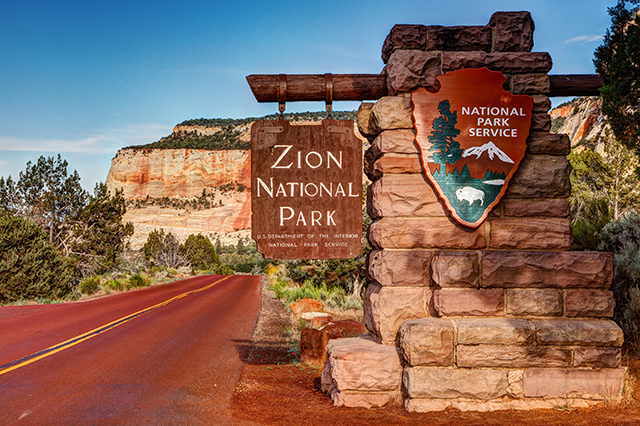
Travel to Bryce Canyon National Park, a scenic wonder. The formations within the park, called Hoodoos, are the creation of wind and water erosion over eons of time. Your final destination for the day is the red and white sandstone cliffs of Zion National Park, one of the most awe-inspiring national parks of the United States. Enjoy the view from the floor of the canyon as you ride along on the Zion tram.
Zion National Park – Salt Lake City
A drive north takes you to Salt Lake City for a two-night stay. Perhaps you will choose to explore Temple Square. This beautifully landscaped 10-acre plot of ground in the heart of downtown Salt Lake City is one of Utah’s most visited attractions.
Salt Lake City
Enjoy a tour of Salt Lake City featuring the Great Salt Lake, the state Capitol and the residential district.
Salt Lake City – Jackson Hole
En route to Wyoming you will see the majestic Bear Lake Summit.
Jackson Hole
The day is yours to enjoy Jackson Hole. Optional activities include shopping, canoeing, hiking and river-rafting trips. From Memorial Day through the last Saturday in September you can experience a fun-filled evening of cowboy entertainment with a traditional chuck wagon dinner.
Yellowstone National Park.
Jackson Hole – Grand Teton & Yellowstone National Parks
Pass through Grand Teton National Park. The Teton Range is the youngest range in the Rockies. Towering more than a mile above the valley of Jackson Hole, the Grand Teton rises to 13,770 feet. Later, arrive at the amazing Yellowstone National Park for an overnight stay. Explore the incredible sights of Yellowstone with a local guide. One of the many highlights is the world-famous Old Faithful Geyser.
Yellowstone – Cody – Sheridan
A day of sightseeing begins with a trip along Lake Yellowstone and over Sylvan Pass. The scenery is simply amazing. As you pass through Cody, a stop will be made at the Buffalo Bill Center of the West. Before turning in for the night in Sheridan, you drive through the incredible Bighorn Mountains and journey through the territory of the Great Sioux Nation.
Sheridan – Rapid City
See one of the country’s most famous landmarks, Mount Rushmore. Later, visit Crazy Horse Memorial, a monument dedicated to the Native Americans of this great land. You’ll also have the opportunity to visit the Native American Cultural Center to learn about their culture and customs. At dinner, you will meet a local Lakota Native American.
National Park of America Tours
AAA Vacations offers vacation options that fit your travel style. Choose guided or independent itineraries, let a local host show you the way or take AAA’s suggestions for ocean and river cruises. Packages include meals, guided tours, nightly accommodations, baggage handling and roundtrip airport transportation. And AAA members save even more.
For retirees and seniors, backpacking like college kids is out of the question. See what we can tell you about enjoying the best European tours for seniors.
Now that you’re a little older and the kids are out of the house, you’ve got all this time on your hands, right? Well, not exactly. But it’s definitely time to start knocking some items off that European bucket list.
Now more than ever, those looking for European tours for seniors have more options than ever. So many companies, cities and even countries are competing to attract the millions of Baby Boomers entering retirement age. Combine that with an increased focus on handicapped accessibility by the European Union and the result is a recipe for comfortable, authentic travel experiences that you’ll never forget.
Whether it be with self-guided travel, a river cruise or an organized tour, here’s how seniors visiting Europe can get the most out of their trip:
Package tour or not?
The first thing you have to decide, besides where you want to go, is whether you prefer to travel independently or with a tour company. For some people, the idea of being shuttled around on a bus with 40 other seniors sounds like a snooze. But to others, it’s a great way to find like-minded people who can become lifelong friends.
The key to successful package travel is to go with a company that aligns with your interests, which means it’s imperative to shop around for the right itinerary. Companies like Viking and AMA Waterways offer fantastic itineraries on river cruises that provide all meals in a luxurious setting with easily accessible shore excursions.
If you want to stay on land, AAA Exclusive Vacations has plenty of options for European tours for seniors. Exploring imperial Europe by traipsing through Budapest, Vienna and Prague is a must for any senior history buff. Tauck can take travelers on a journey that delves into the Hapsburg Empire and its major urban centers.
Getting around
Major European cities have made their public transit systems a priority for decades, which makes it very easy to get around. But if you decide to travel independently and accessibility is an issue, keep in mind that many subway lines require a lot of walking and climbing stairs, so you could stick to street level and catch a city bus.
Make sure to download Google Maps or the AAA Mobile app on your phone before you go. Then, once you arrive, plug in the address of your hotel and you’ll always be able to easily get back. Of course, you can always take a taxi, in which case you could just show a non-English speaking cabbie your address on the map.
For people who are comfortable driving a stick, or don’t mind spending a lot on an automatic, consider renting a car for a drive through the countryside. It’s often more cost effective to get a cheap Peugeot versus paying for two or more people on a train, so long as you’re not driving between major cities and paying to park.
Driving is also a great way to get a feel for a country.
Be smart with your smartphone
Before you embark on your journey, taking a few minutes to download a couple things on your phone will help make it unforgettable, particularly if you’re traveling independently.
The first is to search around for free audio guides. Travel guru Rick Steves, for instance, has dozens of informative audio guides that provide walking tours and maps you can follow along on your phone. He even provides concise but detailed explanations of some museums or major sites like the Vatican.
Also make sure to download an app that can read QR codes, those funny black and white squares that are popping up on products nowadays. Many cities and historical sites have incorporated the codes on signs or place markers, which gives you a free source of information while on the go.
And last but not least, make sure to go to the AAA Mobile app and download the cities you will visit. That way you can still get walking, driving and transit directions without an internet connection, meaning you won’t have to pay expensive roaming fees for your data while abroad.
Have you traveled on a European tour for seniors? Tell us about your experience in the comments below.
As Ama Waterways adds new luxury river cruise ships each year, here are some facts to keep in mind to evaluate if an Ama river cruise fits with your travel plans.
The river cruise line AmaWaterways has made its reputation on elegant design that reviewers say has elevated the river cruise experience since the fleet’s first ship launched in 2002. Since then, each successive ship christened for Ama river cruises has endeavored to best the last in traveler comfort.
Ama Waterways has focused on in-room amenities, from marble bathrooms to ubiquitous stateroom balconies. Ama cuisine is tailored to emphasize dishes that help the traveler feel connected to the region, and its excursions offer adventurous and creative ways to quickly get to know a new destination.
You can learn a lot about a cruise line from the recent headlines it has generated. Here are a few recent headlines to consider about Ama river cruises:
2016 was a very good year for Ama Waterways, as both AAA Travel and the American Society of Travel Agents named the cruise line the River Cruise Company of the Year. Ama also was awarded Best Cruise Line by Cruise Critic that same year.
Some 82 percent of staterooms on Ama river cruises have French balconies, but apparently that wasn’t enough for Ama Waterways’ designers. Since 2010, they’ve designed most staterooms to include two-seater verandah balconies, as well.
At a time when some cruise lines are trying to find ways to squeeze in more customers, Ama WaterWays is designing ships that emphasize more individual space. The AmaManga, which is set to launch in 2019, will be twice the width of traditional river cruise vessels, but will only have 194 staterooms. This design will allow more space for travelers, more dining options and more entertainment venues.
Ama Waterways’ 2017-2018 cruise season featured 95 sailings hosted by North American wine experts. The wine experts helped travelers explore the best local wine offerings during Ama river cruises on Europe’s most important rivers. This is in keeping with Ama’s culinary focus on providing locally sourced cuisine whenever possible.
One of the biggest selling points of AmaWaterways’ newest ships, AmaStella, is that it features family-friendly accommodations. Twelve of the ship’s staterooms can comfortably sleep three guests each, and six more staterooms have adjoining doors to offer families next-door accommodations.
Speaking of families, the cruise line has been emphasizing its family-friendliness in recent years. It has even partnered with Adventures by Disney to offer European itineraries that are especially welcoming to young travelers. This includes action-packed excursions filled with hands-on activities.
In 2017, Ama is trying out having a wellness program on board the AmaLyra, according to Cruise Critic. The personal fitness instructor on board will offer classes like yoga, Zumba and Pilates. There also will be a guided jog on board the ship. If this trial run goes well, then you will likely see more personal fitness programs on other Ama river cruises. This seems to be part of Ama’s goals to offer amenities you might find on bigger ocean cruise lines while still trying to maintain the intimacy of a river cruise.
Sandeman wine tasting overlooking the Duoro river in Europe. (Photo: AmaWaterways)
Here are a few more basic facts to consider about Ama river cruises:
Ama emphasizes in-room entertainment and communication. Ama Waterways offers free high-speed in-room internet service through its “Infotainment System,” which also offers video on demand, and free WiFi throughout the ship. This internet service is standard on all but the Cambodia and Vietnam river cruises, which offers high-speed internet and WiFi on ship computer lounges.
Most shore excursions and drinks are included in your base price, which may cause a bit of a sticker shock up front, as Ama cruises don’t come cheap. However, the flip side is that that the nearly all-inclusive price allows travelers to avoid feeling nickled and dimed once on board an Ama river cruise.
When Ama cruises Europe, its ships carry with them bicycles that travelers can use on guided shore excursions. (No, you can’t ride them on the ship.)
While Ama cruises Europe in most of its itineraries, it should be noted that the luxury cruise line also offers river cruises in Asia and Africa, as well.
While some river cruise lines are starting to branch out to include ocean cruise ships, Ama Waterways ruled out such an expansion in 2016. Instead, it is looking to expand to more exotic locales, including India.
Every river cruise line has its strengths and weaknesses. Work with a AAA travel agent to evaluate what cruise lines and itineraries work best for your needs for your next river cruise vacation.
Have you traveled on Ama river cruises before? What’s been your experience? You can leave your comments below.
Five Must-See Stops on the Best-Rated Danube River Cruises
The Danube River, which spans from Germany to the Black Sea, connects much of Europe in trade and in history. Witness the grandeur of this historic waterway on a luxury river cruise.
The Danube River, which spans from Germany to the Black Sea, connects much of Europe in trade and in history. To float down the Danube is to journey back in time to monarchs and empires. Each destination on the best-rated Danube river cruises also pulses with new life and new ideas. We have provided an itinerary, going from west to east, of five great locales to explore on luxury Danube river cruises.
Nuremberg, Germany
If you can only visit one city in Germany, consider Nuremberg. It encapsulates so much of what we come to know of Germany, from its dark beer and gingerbread-style houses to the distinctly German companies headquartered in its city limits. Once the preferred home of kings, Nuremberg is now synonymous with the dark reign of the Nazis, as it was the first hotbed of overt oppression against Jews in Germany and the sight of trials which delivered justice to high-ranking Nazi leaders.
To learn about the city’s World War II history, take in the sobering Dokumentationszentrum Reichsparteitagsgelände, a museum built on the grounds where Nazis once rallied. Nuremberg is also home to great examples of gothic architecture, many painstakingly rebuilt after Allied bombing, so be sure to walk Altstadt, the old city center. For something more lighthearted, try the Nuremberg Toy Museum, considered one of the best in the world.
Melk, Austria
This quaint Austrian village has one rather large and majestic claim to fame – its Benedictine Abbey, a wonder that is a must-see attraction on many of the best Danube river cruises. This massive complex of seven courtyards and buildings is a fifth of a mile long and features some of the finest Baroque architecture in the region.
Melk has more charm to offer than the monastery, however. Old Town Melke, which is nicely walkable, features many municipal buildings that date back to the 18th century, for example. Allow time to venture beyond the ancient city walls and take a picturesque bike ride down to the riverside to rendezvous with your luxury Danube river cruise.
Vienna, Austria
Many stops along the best Danube river cruises were once hubs of vast empires. Vienna is a metropolis that still retains the grandeur of its bygone era as the capital of the Austro-Hungarian empire. Perhaps this is why the Viennese are so accustomed to being pampered and treated like royalty. With your first bite of chocolate cake after a sumptuous Viennese feast, you will understand why.
While there are many hip corners of Vienna to explore, especially in its fashion district, be sure to take in the majestic sights of the city if on a short stay. Start with the Kunsthistorisches Museum, which houses some of the most important works of art from throughout human history. Next, tour Schonbrunn Palace to view the Baroque summertime surroundings of kings. Fuel up on expertly roasted coffee and finely fried wiener schnitzel whenever possible.
Belgrade, Serbia.
Belgrade, Serbia
Think of Belgrade as what it would be like if Berlin were accessible by a Danube luxury river cruise. The two cities share striking similarities, from the determinedly unpicturesque architecture that reflects the crush of historical eras to the pulsating nightlife and bohemian cafes and bars that serve as a beacon to young artists in Serbia.
If it’s warm when you visit, be sure to try the beaches of the Ada Ciganlija recreational area. Shop your way through Knez Mihailova Street and then fuel up at some of Belgrade’s premium cafes. Take in museums dedicated to the former Yugoslavia and inventor Nikola Tesla, and gape at the ancient beauty of the Belgrade Fortress. Then climb aboard Belgrade’s ubiquitous party floats to dance the night away.
Bucharest, Romania
Once characterized as Little Paris, Bucharest more recently has been shaped, for good or for ill, by the grandiose vision of former dictator Nicolae Ceaușescu. While Ceaușescu razed a third of this city to create socialist-style housing, he also presided over the construction of the Palace of the Parliament, which is recognized as the heaviest building in the world and the biggest building in Europe.
Romania’s capital has endured Ceaușescu’s reign and is once again becoming a sought-after destination for the best Danube river cruises. Bucharest’s Old Town is teeming with both life and history, and there is a thriving network of parks to enjoy. Visitors also should make time for tours of castles tangentially related to the legend of Count Dracula, as well as the Stavropoleos Church, an ornate 18th century Greek Orthodox church.
Have you had the pleasure of sailing on one of these best-rated Danube river cruises? What stops would you recommend?
Under the guiding eye of experienced Chinese trip guides, a classic intimate group journey of China like this one through AAA Vacations showcases the country’s most important sites plus the ancient water towns connected to Shanghai. In the congenial company of never more than 16 guests, you can enjoy comprehensive sightseeing and authentic cultural encounters not available to larger groups in other China tours. Savor fine regional cuisine and retreat every night to our 5-star city-central hotels. Here is an example of what this AAA Vacations itinerary would look like.
China tours with AAA Vacations
Day 1 – Welcome to Beijing
Begin your trip to Asia in Beijing, China. Upon arrival, you’ll be warmly greeted and escorted to your city central accommodations at the luxurious Fairmont Beijing Hotel.
Day 2 – Beijing on your own
Explore this historic and vibrant city as you wish.
Day 3 – In and Around Beijing
Marvel at the vast expanse of Tiananmen Square and follow in the footsteps of Ming Dynasty emperors as you tour the Forbidden City. Explore by rickshaw through the narrow lanes of a hutong and spend time with a family in the home where they’ve lived for three generations. Enjoy a Peking Duck banquet including local beer and wine for dinner.
Day 4 – The Great Wall and Summer Palace
Journey into the mountains north of the city to explore the Great Wall at Juyong Pass, one of the most historic and scenic sections of this ancient defensive structure, and a staple of Asia travel. Then tour the Summer Palace, erstwhile seasonal retreat of China’s emperors.
Day 5 – Fly To Xian, China’s Ancient Capital
Fly to Xian where you’ll be escorted to the Hilton Hotel, perfectly situated within the ancient city walls. Join an engaging city resident to explore a colorful local market, perusing the wide variety of products and sampling exotic fare from the many vendors. Dinner features savory dumplings – a regional specialty.
Day 6 – The Terra Cotta Warriors
Stand in awe before the thousands of life-sized terra cotta soldiers that comprise the army that was buried to guard the tomb of China’s first emperor. Discovered in 1974 by farmers digging a well, this is China’s greatest archaeological discovery – a testament to the country’s ancient civilizations and long history. Then visit the ancient city walls and return to your hotel.
Day 7 – Hangzhou
Continue your trip to Asia by flying to Hangzhou and transferring to the 5-star JW Marriott. The ancient Chinese saying “Above there is Heaven; below there is Hangzhou” speaks to the beauty of the city and its surrounding region and a leisurely cruise on West Lake is a delightful way to experience this sublime beauty. Then spend time with local tea farmers. From preparing the soil to picking tea leaves, this hands-on experience is a fun way to learn how the region’s fine teas are cultivated.
The Suzhou waterway. (Credit: Shutterstock EC 4045 / Shutterstock.com)
Day 8 – Wuzhen and the Garden City Of Suzhou
With its tranquil canals and splendidly restored Ming Dynasty homes, the ancient water-town of Wuzhen is a virtual living museum that offers a fascinating look into life during one of China’s most glorious dynasties. Continue on to the garden city of Suzhou.
Day 9 – Discover Suzhou and Travel To Shanghai
The Garden of the Master of the Nets may be one of the smallest of Suzhou’s World Heritage gardens, but many regard it as the best. Laid out nearly 1,000 years ago, it was meticulously designed with ponds, bridges, pavilions and meandering pathways that promise enchanting vistas at every turn. In fact, the central garden was the inspiration for the Ming Hall Garden at the Metropolitan Museum of Art in New York City! After this morning’s guided tour, you’ll learn about Chinese pastimes as you browse the Bird and Flower Market and join residents to fly your own kite at the Panmen City Gate. You’ll also see how silk is made at a local factory before traveling to Shanghai where you check in to the landmark Fairmont Peace Hotel.
Day 10 – Out and About In Shanghai
Your sightseeing begins at the Shanghai Museum, highly regarded for its vast collection showcasing centuries of Chinese history and culture. Then stroll along the elegant waterfront Bund and marvel at the iconic skyscrapers of the vibrant Pudong district. Strolling through Tianzifang, you’ll discover a historic city district where old stone buildings are now home to vibrant galleries, studios and cafes. Tonight’s dinner features fine regional cuisine.
Day 11 – Depart Shanghai
Say goodbye to China and plan your next trip to Asia!
Does this tour appeal to you? Thinking about booking a trip to Asia? Share your thoughts with us in the comments section.
You may need to rent a car if yours is in the repair shop. Or maybe you’re going on a long road trip and need a larger vehicle for the journey. You might be on vacation and need a set of wheels to get around. Or maybe you’re just the type who rarely needs a car and prefers using a rental when you do. No matter the circumstances, knowing how to rent a car is handy information to keep in your back pocket.
Renting a car can be confusing. It’s not something you do every day, and many of the little things we take for granted with our own cars such as paying for gas, insurance and being familiar with the controls are different in a rental car. Plus there are extra services and features, and it’s hard to know what you should pay for versus what you should leave alone.
Here’s a step-by-step guide on how to rent a car.
Step 1: Before renting a car
Ask yourself what kind of car you need. Do you need a sport-utility vehicle or a midsize vehicle? Do you need a lot of storage space? Check the rental car company’s website to make a reservation beforehand. You’ll be able to pick from a list of cars with details such as how many passengers a car can hold, available features and average mpg, as well as the daily rental rates.
Will you need additional items with your rental, such as a GPS, ski rack or a car seat? Those will cost extra, so you might want to provide your own. Another thing to keep in mind is fees. Typically, car rental companies charge extra for drivers under the age of 25, cars being picked up from the airport, additional drivers or if you’re driving to another state.
A final big question is insurance. Will your insurance cover you if the rental car is damaged in a collision? What if the rental car is stolen? Call your insurance agent and ask before you get behind the wheel.
You can also purchase rental car insurance from the rental agency itself. However, we advise checking your existing insurance. You might have coverage on your current policy or through the credit card you use to book the car. There are a few exceptions, though. For example, you may not be covered if you’re renting a car for business purposes, or driving in another country.
Rental agencies offer a loss damage waiver or collision damage waiver as another form of insurance. This means a rental company won’t hold you responsible for lost profits for every day a rental car is in the shop. Some insurers will cover this cost.
Again, check your current policy before you purchase rental insurance. A quick phone call to your insurer now can save you a lot of money later.
Step 2: Picking up a rental car
Do you need transportation to the rental company? Some places will pick you up and bring you to the car lot. Hertz provides this service for free at all non-airport locations.
You will receive a rental contract, which will have your information, prices and other important details. Before you sign the contract, read it over and ask any questions you might have.
Present your driver’s license and pay with a credit or debit card in your name. We advise using a credit card because companies usually offer insurance benefits to customers who use a credit card to rent a car. Ask your credit card company about rental car insurance coverage.
Inspect the inside and outside of the vehicle before you drive away. If there are dents, scratches or other problems, take a picture and notify the rental company so you’re not charged for the damage.
Familiarize yourself with the lights, turning signals, emergency lights, heat, audio and other controls before you drive away. This way you won’t get distracted on the road later.
And now it’s time to drive! Have fun and enjoy your rental car.
Step 3: Returning a rental car
Before you return the car and bring back the keys, clean the inside and pick up any trash. Look over the seats, glovebox and trunk for any belongings. This is a good rule in all life situations, but it goes extra when you’re returning a car. You don’t want to walk away and then realize you forgot your wallet.
If you didn’t prepay for fuel, fill the gas tank before you return the car. (Confession time: I didn’t know this when I returned a rental car in college. I had to drive back around and go to the nearest gas station, which was extra expensive.)
Return the car on time so you don’t pay late fees. Don’t return it too early either, because some companies charge early fees. If you can’t return the car on time, call the rental company and let them know.
Hertz offers exclusive deals and discounts for AAA members. Hertz will waive the fee for drivers between the ages of 20 and 24, provide a free infant car seat and no additional driver charge for qualified AAA members. AAA members also receive Hertz Gold Plus Rewards for even more savings, quick pick up and free rentals.
What advice would you give someone renting a car for the first time? Tell us in the comments below!
For more information on how to rent a car and the many discounts available for AAA members, visit AAA.com/Hertz
Eight different wines, 12 miles of cycling and enough rural beauty to satisfy anyone’s eco-appetite: I contend that the beauty of Long Island’s North Fork is best experienced on a bicycle as part of a bike tour.
I met up with my 30-or-so cycling buddies for a five-hour guided bike tour of North Fork vineyards with East End Bike Tours. (Tip: I purchased my tour through a popular online discount site for more than 50 percent off!) We met approximately 13 miles northeast of where the Long Island Expressway ends (or is it begins?).
After a quick bike-fitting (yes, size does matter if you want to enjoy the ride) and a safety briefing, we were off and pedaling through wine country. Tour guides wearing reflective vests bookended the parade of cyclists, answering questions and helping with any equipment difficulties along the way. There was even a support vehicle tagging along in the distance in case someone needed to drop out. But it was a relatively easy bike tour, even for a beginner. During my tour, with participants between the ages of 21 and 70, no one seemed to have an issue.
Bike tour participants ride in single file.
The trek began along Mattituck’s Main Road, which – as the name suggests – is quite busy. However, within minutes we ducked down a bucolic side road and skirted along Great Peconic Bay, the body of water that divides the East End into the North and South Fork. The congestion and mall shopping that often defines our island quickly faded from consciousness, enveloping me in sweet serenity.
Working our way into the hamlet of Laurel, we came upon our first stop, Laurel Lake Vineyards. We dismounted and sat at a reserved section of picnic tables where a buffet of wraps, salads and drinks awaited. After filling my belly with a delicious Santa Fe chicken wrap and some fresh mozzarella and pasta salad, I footed myself to the top of the vineyard’s two-story deck.
A light lunch between stops. Yes, that’s pink lemonade!
Don’t be deceived; on the North Fork, a two-story view makes you feel like you are on top of the world. After all, this is farm country, and the vineyard view was picturesque. All this joy and excitement and I hadn’t even had any wine yet!
“Swirl, smell, sip and spit,” our tour guide recommended. There was a collective secret wink among the group that said “yeah, right,” yet we had an absolute understanding that overindulgence was not an option. Not just for safety reasons, but to also avoid the embarrassment of being unable to complete the bike tour.
Laurel Lake Vineyards delivers expansive views and an impressive portfolio of wine.
I am no sommelier, but I can tell you the best pairing was the warm sun and blue sky with the cold sauvignon blanc. Bursting with flavors of grapefruit and lime, the wine was refreshing and alive. After a few more tastings we hopped back on our bicycles.
We headed north toward the Long Island Sound, riding a couple of miles alongside Half Hollow Nursery, which features more than 600 acres of plant life and is home to the highest wind turbine on Long Island, standing at an imposing 156 feet.
The tempo on the North Fork is such a departure from the rest of New York that the irony of speeding through it on a bike can’t be lost. The flat, smooth asphalt helps create a biker’s paradise.
The next stop on our bike tour was Martha Clara, the family-friendly vineyard owned by the Entenmann family (yes, the cake people). Like many vineyards here, the parcel was once a potato farm. Located on Sound Avenue in Riverhead, the stop included an extra-virgin olive oil and vinegar sampling. The crusty bread came just as we were about to taste four wines. Perfect timing.
Martha Clara is home to a number of farm animals, including a group of Scottish Highland cattle.
The pastoral surroundings of the North Fork make it feel almost criminal to step indoors, but Martha’s expansive indoor barn-style tasting room beckoned. With a vaulted ceiling and adjacent gift shop selling every conceivable wine accessory ever made (who knew a corkscrew could look like that?), it’s worth the trip.
Helmet back on, we were off again, this time pedaling along Sound Avenue, one of the main arteries running through the North Fork. In single file we made our way to Harbes Family Farm back in Mattituck, which offered us hand-picked veggies and my favorite farm stand treat, sugar-dusted apple cider donuts.
Harbes Farm is a 13th-generation farm that delivers family fun year-round.
While we didn’t partake in the farm’s Barnyard Adventure, this kid-friendly venue offers up an array of animals, activities and games sure to please family members of all ages. And the free samples of farm-grown strawberries and fresh whipped cream were delightful.
The charm and beauty of the North Fork can’t be overstated. The purity of the air and unencumbered views make it a must-visit – especially by bike. And when traffic backs up during the peak summer and autumn season, be sure to wave as you coast by on two wheels. That’s part of the beauty of biking.
Did you know that AAA Northeast offers bicycle service if you break down while out for a spin? Click here to learn more.
Australia Unexpected – Delving Beneath Stereotypes Down Under
The Sydney Opera House, the Harbor Bridge – and dare I say an expectation to hear cliched cries for shrimp on the barbie – is what I expected to find in Sydney, Australia, after a seemingly impossible 25-hour flight from New England.
But as my wife and I made our way out of the airport with two strollers, two car seats, two suitcases, two backpacks and (thankfully) two toddlers, the first thing that struck me was the sounds of the birds. They were exotic and tropical. The caws of cockatoos, songs of rainbow lorikeets and shrieks of the kookaburras (which sound more like chimpanzees) made me feel like we were somewhere primal. Darwin’s world was opening before us!
A rainbow lorikeet is one of Australia’s most colorful characters.
All in the Family
The sheer mystery of what life might be like in Australia was enough for me and my wife to pack up our toddlers, ages 2 and 4, and head to the land Down Under for four months.
We arrived at our granny flat in one of the city’s Northern Beaches communities. At our first visit to a park, we made fast friends with local families who invited us to dinner within only an hour or two of knowing each other. The desire for genuine connection would continue everywhere we went.
Young families were thriving in the Sydney area. Shopping centers, parks, museums and restaurants all had fantastic amenities to keep children engaged and entertained while parents relaxed. Child safety is a national focus in Australia, and you can feel it in the air. You can see it on the happy faces of kids, all ages, that roam without parents well into the evening.
Sydney Park, on the southern end of the city, is home to creeks, gardens, a bevy of wildlife and a huge children’s playground.
Wheels and Meals
Life on the go was exciting for us but we soon needed a car. A four-wheel-drive vehicle became the fifth member of our family. It allowed us to go to the fabulous Taronga Zoo in the morning, play with the kids at the Flying Fox playground in Mona Vale later that day and surf in the evening at Whale Beach.
As we ate on the move, we discovered a foodie’s paradise. We sampled fantastic hand-crafted sandwiches, five-star baked goods, world-class Pan-Asian cuisine and – to my delight – locally roasted coffee drinks that were the pride of every barista I encountered.
A Final Farewell
Our time in Sydney was soon over. We passed on our beloved 4×4 to dear new friends beginning their journey, and walked the coastal stretch of our final beach home, Maroubra, with a sense of nostalgia. We saw whales migrating offshore as the now-familiar songs of tropical birds played in the background. We had found a true home away from home.
During takeoff on the plane ride home, our youngest looked out the window, saying, “Buh-bye, Awww-tay-yah.” As if in direct response, a family of whales breached in the ocean waters below.
Have fun in the sun in colorful Miami. Here’s our advice on where to stay, what to do and where to dine based on your choice to either save or splurge.
Miami, with its miles of beaches, art deco architecture and Latin-influenced cuisine, is a super-fun spot for a holiday. But this sun-drenched city also has a growing arts scene with multimedia galleries, street murals, performing arts spaces and new museums. South Beach remains the tourist hub, but downtown, Wynwood and the Design District are emerging areas to discover.
There’s something for everyone in Miami, whether you’re an adventurous nightlife-er or relaxed daytime dweller on your vacations. There’s also something for everyone, no matter the size of your wallet.
Are you saving, splurging or staying at a mid-range spending level for your trip? Check below for your choice of spending level and see our suggestions for where to stay, what to do and where to dine for each one.
Budget
Stay: The Two Diamond Rated South Seas Hotel is a great find. The beachfront boutique property is just minutes from Ocean Drive, the famous street lined with Art Deco architecture, home to the former Gianni Versace mansion. There’s also a pool and a garden with nap-inducing hammocks. Pilikia by the Pool, an indoor/outdoor cafe, is great for a casual lunch or mid-day snack – try the fish tacos.
Do: The beaches are free, so enjoy soaking up the sun and people-watching at Lummus Park Beach, which is part of the Deco District and in walking distance from Ocean Drive’s cafes and restaurants. In the Wynwood area, warehouses have been transformed into art galleries, and Wynwood Walls, an outdoor street park featuring urban graffiti, has murals from Shepard Fairey and other artists.
Dine: South Beach’s La Sandwicherie sells delicious sandwiches such as the SoBe club with turkey, Brie and avocado. The French cuisine-inspired sandwich bar also sells smoothies and shakes to satisfy your sweet tooth, plus veggie juice for the hipsters that La Sandwicherie attracts. And don’t miss the famous Versailles Restaurant in Little Havana, where you can enjoy Cuban fare like black bean soup, ropa vieja and Cubano sandwiches. Try out an authentic Cuban mojito while you’re there.
Mid-Range
Stay: There are 216 rooms in the Four Points by Sheraton Miami Beach, some with ocean views. Amenities include free Wi-Fi, flat-screen TVs and a fitness center. After a day spent at the beach or poolside, sip a craft beer in The Bloo Lounge and have a bite in the Sungrass Cafe. Then, enjoy a nice sunset or nighttime stroll along the waterfront boardwalk to round out the evening.
Do: Tour Vizcaya Museum & Gardens, the former winter home of Chicago industrialist James Deering. The Italian Renaissance-style villa features antique-filled rooms and gorgeous gardens. Treat yourself to a relaxed shopping day on Lincoln Road, a pedestrian-only shopping street with restaurants and outdoor cafes. You’ll be sure to find a good spot for a bite to eat in between your shopping.
Dine: Enjoy small plates such as salt cod empanadas, Iberico sliders and creamy coconut rice at the AAA Four Diamond Rated restaurant, The Bazaar by Jose Andres. The restaurant blends Andres’ Spanish heritage and local Latin culture to make a unique experience that will have your tastebuds jumping for joy. Joe’s Stone Crab is a can’t-miss classic: Since 1913, it’s been serving stone crab claws with a mustard- based dipping sauce and, for dessert, Key lime pie.
Luxury
If you’re in search of luxury, you’ll find it at the AAA Four Diamond-Rated Fontainebleau Miami (Photo: Fontainebleau Miami Beach)
Stay: The AAA Four Diamond Rated Fontainebleau Miami Beach, which attracts stars like Jennifer Lopez and Lady Gaga, is one of the city’s iconic art deco properties. It boasts 1,504 rooms, numerous pools, a 5,800 square foot fitness center, a spa and 12 restaurants and bars inside its beachfront setting. For a nice Miami brunch, try Vida, an American Brasserie with Latin influences, which offers a brunch buffet every Sunday.
Do: Most of Miami’s upscale resorts offer cabanas complete with butler service for a pampering day by the pool. You can also charter a yacht to cruise Biscayne Bay and the Atlantic Ocean while sipping wine and sampling fresh seafood prepared by a private chef. Or, if thrill-seeking is more your style, you can also see what Biscayne Bay has to offer from a bird’s eye view by hang gliding.
Dine: The Fontainebleau boasts hot spots like Hakkasan, which serves modern Asian food, and Scarpetta, known for its rustic Italian fare. Downtown, Asian dishes and American dishes are fused at the AAA Four Diamond Rated Azul restaurant in the Mandarin Oriental. Entrees like yellowfin tuna carpaccio and short rib are on the menu, and wondrous views of the ocean are plentiful.
What about Miami most excites you? Tell us in the comments below! Let AAA help you plan your next getaway to Miami at AAA.com/Travel.
From fun coastal adventures to gardens and state parks, there are plenty of reasons to be excited about visiting Connecticut. You can plan and enjoy countless day trips in CT for families, like hiking Bear Mountain (Connecticut’s highest peak), enjoying the outdoors at Brownstone Exploration & Discovery Park, or traveling back in time at Connecticut’s Dinosaur State Park. You can even spend the day floating down the Farmington River.
Whether you’re looking for discovery or a day of relaxation, there’s a variety of fun day trips in CT for any kind of adventure. Below are three of our favorite attractions for day trips in the Nutmeg State.
Take a Walk on the Wild Side
When it comes to fun and educational day trips in CT, exploring nature’s little (and big!) critters is always a great way to spend a few hours. No matter what kind of wildlife you’re looking for, you can find it at one of the state’s many zoos, rehabilitation centers and aquariums. The list below is sure to get you in touch with your wild side.
From two-toed sloths to maned wolves and marmosets, there’s so much to see at Connecticut’s Beardsley Zoo. With over 300 animals to boast of (primarily North and South American species), this zoo is one of the state’s top family attractions. And it’s open year-round! Spend an hour or the whole day visiting some of nature’s endangered and threatened species.
If you have two hours…
Trying to get through an entire zoo can be a little difficult. Instead, make the most of your time with some of these cool scavenger hunts. You can try to match animals to their descriptions and characteristics with the “Who Am I” Scavenger Hunt or participate in the Endangered Species and Habitats hunt to learn about animals and places that need our help. No matter which one you choose, a scavenger hunt is a great way to give your trip a little direction and help the kids stay entertained. Print out a sheet before you head to the zoo.
If you have four hours…
Print a map and stroll through the zoo at your own pace. You can visit the walk-through aviary, check out the New England farmyard or explore the rain forest building. After all that walking, you and the kids are bound to get a little hungry. So stop by the Peacock Cafe for some hot food or enjoy an outdoor lunch in the Picnic Grove. Afterward, make a quick stop at the gift shop and carousel before heading out.
If you have six to eight hours…
Spending all day at the zoo might get a little tiring, especially with smaller children. You may want to consider breaking the day into separate activities. After a fun morning at the zoo, head out for lunch and then to a nearby attraction. Less than 15 minutes away, The Discovery Museum and Planetarium is another great place with hands-on activities that the kids will love exploring.
For more fun ways to get involved in with the great outdoors and its animals, check out some of the destinations below.
With so many beautiful flowers, bushes and trees around, these gardens are guaranteed to transport you to a place of relaxation and tranquility. Leave the kids at home and spend an afternoon with your significant other. The Elizabeth Park Rose Gardens is one of the most romantic day trips in CT. You can take a leisurely stroll through the grounds and see everything from tulips and perennials to roses, dahlias and more. And don’t worry, it’s open daily, so you can get your fill of gorgeous foliage, even during the frigid winter months.
If you have two hours…
Be sure to visit the rose garden. Opened in 1904 as the first public rose garden in the country, this beautiful spot is the heart and soul of the park. You can take a leisurely stroll through the “square” and enjoy 475 rose beds, over 15,000 rose bushes, and 800 varieties of old and new roses. And don’t forget to look at their names: They’re often fun and whimsical, like Bride’s Dream, Lemon Drop and Dainty Bess.
If you have four hours…
Check out more of the grounds, which include greenhouses, farmsteads, ponds and bridges. And before heading out, make your way over to the sunrise overlook (one of Hartford’s highest natural points). From there, you’ll have a fantastic view of the sweeping lawns and a large vista of the city, all bordered by beautiful trees and shrubs.
If you have six to eight hours…
Stop by the Pond House Cafe to experience one of the top dining destinations in Hartford. After walking through the park’s trails and paths, dining on the grounds is the perfect way to end a romantic day. Featuring local, organic ingredients, the creative menu is sure to please any palate. During the summer hours, the Dog House takeout window offers gourmet hot dogs, ice cream and other snacks. If you’re hoping to save a little money, picnicking is allowed on the property, but there are very few tables, so be sure to pack a blanket.
Looking for a more active way to end the day? Elizabeth Park Rose Gardens also has sports and recreation centers where you can play tennis, basketball or feel like a kid again by riding the swings at the playground.
For more beautiful Connecticut landscapes and gardens, check out these destinations below.
What’s one of the best things about living in Connecticut? The water, of course! No matter where you are in the state, chances are you’re within driving distance of a beach, which makes a day on the shore one of the easiest day trips in CT. You can pack up lunches and grab the kids for a fun and cheap adventure or you can indulge in some fresh seafood and frozen treats at nearby restaurants and shops. However you plan to spend the day, these beaches are loaded with fun activities.
As Connecticut’s largest shoreline park, Hammonasset offers over 2 miles of pristine shoreline just perfect for frolicking in the waves or lounging on the shore.
If you have two hours…
Try out some of the other activities at Hammonasset Beach State Park, like saltwater fishing or canoeing and kayaking (bring your own boat!). If you’ve had enough water for the day, you can always hit a concession stand or nosh on a homemade lunch at one of the many picnicking areas. You can even go bicycling or walk the park trails – both are a great way to dry off before heading to car.
If you have four hours…
Be sure to check out the Meigs Point Nature Center before heading out. After a day of swimming and sand castles, this is an excellent way for the kids to wind down. They can explore the touch tank, learn about nature and enjoy lots of other hands-on experiences. Visit the website to check out what’s on display.
If you have six to eight hours…
After a full day at the beach, drive through town and get some good eats! Nothing zaps your energy like a day under the sun, and sitting down to a delicious dinner with the family is a great way to end your fun day trip in CT. You can enjoy some great food, good company and get some energy for the drive back home. Check out Friends and Company for a family-friendly dining experience with a great view.
Looking for more Connecticut beaches and state parks with fun activities? Check out these destinations.
When planning day trips in CT for families, there’s no lack of inspiration! In the warmer months, you can head to Lake Compounce for a fun afternoon of theme park thrills. Or you could visit Connecticut’s castle, or explore the Roaring Brook Nature Center with the little ones. Now’s a great time to get planning!
What are some other places that make for a great day trip in Connecticut? Tell us in the comments!
Follow the epic story of American democracy. A heritage tour of America will give you a glimpse into the beginnings of a new nation as you tour America’s iconic cities. Join a local guide on a tour of New York City featuring the Empire State Building, Greenwich Village and other time-honored landmarks.
Visit the presidential estates of Washington’s Mount Vernon and Jefferson’s Monticello. Walk the hallowed battlefield at Gettysburg. Tour some of Colonial Williamsburg’s 88 restored historic buildings. Travel along the famous Skyline drive and see amazing views of the Shenandoah Valley. Explore the countless treasures of the Smithsonian Institution. Learn what it’s like to Tour America’s most iconic cities here.
Tour America’s most iconic cities
Day 1 – New York City – Tour Begins
Explore America’s heritage, history and scenic horizons as you travel the USA’s most historically significant east coast cities.
Day 2 – New York City
Meet your fellow travelers for a welcome breakfast at the famous Ellen’s Stardust Diner. Then, a local guide leads you on a fascinating tour of the “Big Apple.” You’ll see Greenwich Village, the Wall Street district, Little Italy, Chinatown, the Empire State Building, Central Park, and other time-honored landmarks. Visit St. Paul’s Chapel in Lower Manhattan, a place where George Washington once worshipped, and where recovery workers came for rest and care during their time at the World Trade Center site. This afternoon, discover “the city that never sleeps” at your own pace.
Day 3 – Philadelphia
This morning the choice is yours! Choose from a menu of New York’s diners for breakfast. Next up on this USA tour is Philadelphia.
Embark on a tour of Philadelphia, “the Birthplace of a New Nation,” which highlights the Liberty Bell and Independence Hall. Independence Hall is rich in heritage as the location of both the signing of the Declaration of Independence and the drafting of the Constitution. Continue on to Gettysburg, site of the Union victory that marked a turning point in the Civil War. En route, travel through the Amish Country of Lancaster, the second-largest Amish community in America, and view the community farmlands. Tonight, enjoy dinner at a historic Gettysburg tavern.
Day 4 – Gettysburg
Visit the Gettysburg National Military Park and Museum. Begin your tour by experiencing the film “A New Birth of Freedom.” View the breathtaking Cyclorama, a 360-degree cylindrical painting by the French artist Paul Philippoteaux, depicting the climactic battle of Pickett’s Charge. Continue on to discover the Museum of the American Civil War and explore its galleries. Step onto the battlefield with a guided tour of the site illuminating those three historic days in 1863 and the decisive battle that changed the course of American history forever. This afternoon the choice is yours. You may choose to visit President Eisenhower’s home (a National Historic Site) where you will tour his farm, or perhaps you would prefer to embark on a guided walking tour of historic downtown Gettysburg with a local guide dressed in period clothing who will bring to life the true stories of the town’s civilians who were caught up in the battle. Tonight, enjoy a home-cooked family-style meal in a historic barn (dating back to 1764) and experience life on a third generation family-owned farm.
Day 5 – Shenandoah Valley
Today we make our way to Virginia. Along the way, travel the USA’s Blue Ridge Mountains through Shenandoah National Park via the famous Skyline Drive, where scenic expanses of Shenandoah Valley wilderness extend in all directions. Pause at a local vineyard set in the picturesque countryside. Set out on a tour of the winery followed by a tasting of their delicious wines. This afternoon, explore Charlottesville’s historic Downtown Mall, one of the longest pedestrian malls in the U.S., before dining at a local restaurant.
Day 6 – Williamsburg
Visit Monticello, the beautiful home and gardens of Thomas Jefferson. Jefferson was not only the third U.S. President and author of the Declaration of Independence, but he was an accomplished inventor and true “Renaissance man.” This afternoon, arrive in the historic town of Williamsburg.
Tonight, begin your journey into Revolutionary-age America by dining in a Colonial Williamsburg tavern specializing in colonial fare.
Day 7 – Yorktown
Open the day by viewing “Story of a Patriot,” a short film that introduces you to Colonial Williamsburg, one of the world’s finest living history museums. Costumed re-enactors populate the streets and buildings, bringing the customs and sentiments of 1770 to life. Tour the Governor’s Palace and Gardens before enjoying time to independently wander the cobblestone streets and explore some of the 88 historic buildings.
This afternoon, visit the newly opened American Revolution Museum at Yorktown. Learn about another poignant turning point in American history as you immerse yourself in the world of Revolutionary America. Here, at the Yorktown Battlefield, American independence was won. Tour the museum’s vibrant galleries and interactive exhibits in a state-of-the-art setting that will impact all your senses. Explore the expanded outdoor living history museum with a re-created Continental Army encampment and Revolution-era farm.
The National World War II Memorial, Washington, D.C.
Day 8 – Washington, D.C.
Visit Mount Vernon, the beloved home of the first U.S. president, George Washington. Wander the beautiful plantation grounds he adored and tour the home, filled with 18th-century artifacts. Then, travel to Washington, D.C, a staple of USA tours.
Explore the world-famous Smithsonian Institution’s countless treasures. Choose between a visit to the famed National Air and Space Museum or the National Museum of American History. Among the National Air and Space Museum’s collection in the location on the National Mall are the famous Wright 1903 Flyer, the Spirit of St. Louis, and the Apollo 11 command module Columbia. The National Museum of American History features artifacts from locomotives to the flag that inspired Francis Scott Key to compose the national anthem; to the First Ladies Hall containing many ball gowns worn by America’s First Ladies. The evening is free to continue to explore on your own.
Day 9 – Washington, D.C.
This morning, a guided tour of America’s capital affords wonderful views of the Capitol building, the White House, monuments and museums. Your first stop will be the White House Visitor Center where you will gain insight into the many transitions this historic residence has undergone.
Continue your tour with a stop at the moving World War II Memorial, the Vietnam Veterans Memorial and the Korean War Memorial. Your tour ends with a photo stop at the U.S. Capitol building. This afternoon, visit Arlington National Cemetery to view the Tomb of the Unknowns and the Kennedy gravesites. Toast the end of a wonderful trip this evening at a farewell dinner.
Day 10 – Washington, D.C. – Tour ends
Your tour ends in Washington, D.C. this morning.
Have incredible memories of the time you spent in one of the nation’s largest cities? Share your thoughts with us in the comments section.
Car insurance is mandatory. Life insurance is important – especially when you start a family. And no one questions how vitally important health insurance is.
But travel insurance? If you’re young and most of your trips have been weekends across state lines, you may even wonder…
What is travel insurance?
Truth be told, many (more experienced) travelers know what it is, but are either 1) not convinced of its necessity or 2) confused about what it can and can’t do. But according to Matthew Kepnes, globe-trotting expert and author of How to Travel the World on $50 a Day, sorting out travel insurance myths and misconceptions is essential: “Travel insurance is one of the most important things to buy for your trip,” he writes in his blog, Nomadic Matt. “No matter how long you are going away for it is a must have.”
First, let’s highlight what travel insurance can do: Like other types of insurance, travel insurance policies cover unexpected expenses. Depending on the coverage you choose, this can include trip cancellation/interruption, transportation (flights, connections, car rentals), lost or delayed luggage, medical emergencies and more. If you can’t afford to pay out of pocket for these things, you should buy insurance for your trip.
Myth 1: My credit card will cover me
Travel Professional NEWS, an online resource for travel industry professionals, pegs this as the number one myth: Though credit cards promote their travel protection benefits, they’re often limited: “While they may offer base coverage for lost or stolen items or trip cancellation (assuming your customer purchased their travel with the card in question), many have low coverage limits, and very few offer any sort of coverage for medical emergencies or evacuations abroad (often, the priciest contingencies travelers may face).”
Myth 2: My health insurance will cover me
Your insurer may pay “customary and reasonable” hospital costs abroad, but many other benefits don’t apply outside the country. And Medicare, with rare exceptions, doesn’t cover charges incurred outside the U.S. Medical evacuation (which sounds dramatic but may be simply a matter of not having the right specialists nearby) is not covered. For post-emergency care especially, travel medical insurance is a must.
Myth 3: It’s too expensive
The typical range for travel insurance is 5-8% of the total cost of your trip. (We’ve seen the range placed at 4-8 and 5-10%.) True, the higher the cost of your getaway the more you’ll pay – but the reverse is also true: If you can’t afford to be out of pocket for a trip cancellation or a tour operator that’s suddenly gone bust, trip insurance provides the necessary protection.
Myth 4: You never see good reviews for travel insurers
As Nomadic Matt points out, “Most people don’t write good reviews when they are helped.” In his experience, “People buy it, don’t read the exact wording, and make assumptions about coverage. So, when something goes wrong, they scream bloody murder when something isn’t covered or when lacking supporting documents to support their claim and write a nasty review online.” Read the fine print and there will be no surprises.
Myth 5: No one cover pre-existing medical conditions
Some will, some won’t. Read the policies carefully – and be sure you understand every word of it – including all the terms and conditions. Keep in mind the term “pre-existing” can be broader than you think: If a check-up in August revealed you have coronary heart disease and you have a heart attack a month later in Rome, your insurer may consider the heart disease a “pre-existing condition.” If you have any lingering doubts, by all means pick up the phone and ask to speak to a specialist at the companies you’re considering.
Note: Don’t put it off, advises Consumer Reports: “If you want a policy that will cover an existing medical condition, you typically must apply within 10 days to a month of booking the trip.”
Myth 6: I can get it later if I think I’ll need it
No. See #5. The longer you wait, the more likely something will arise that insurance might be necessary – and then it will be too late. Remember, this type of insurance is for the sudden and unexpected. If they’ve already named the hurricane, it’s too late to buy trip cancellation insurance.
You need to keep every receipt and every scrap of paper to make a claim.
Gotcha! This not a myth; it’s absolutely true. You do have to keep a paper trail: receipts, itineraries, medical records, police reports, you name it. Still, careful documentation is a small price to pay for the peace of mind (and financial protection) a robust travel insurance policy ensures.
Do you have any personal stories about how travel insurance has helped you out of a jam overseas or any tales of claims you were surprised to find were covered? Feel free to share any tips or insights you may have in the comments.
Your AAA travel advisor can help you choose a travel insurance policy that’s right for you. Learn more.
Identity theft is a familiar hazard, but did you know that child identity theft is on the rise? A study by Javelin Strategy and Research found that over a million children were victims of identity fraud in 2017.
When an adult’s identity is stolen, it can often be caught quickly due to bank alerts and credit report discrepancies. Child identity theft can go undetected for many years, and can have serious consequences for victims.
Your child may not discover their identity has been stolen until he or she applies for a student loan and is denied due to a bad credit history.
Fortunately, as a parent there are some clear steps you can take to protect your child from identity theft. Read on to learn prevention strategies and how to recognize and respond if the information has already been compromised.
7 ways to protect your child from identity theft
Keep your child’s information safe
Lock up your child’s important paper documents, such as his or her Social Security card and birth certificate, and make sure any information that you store electronically is password protected. Sadly, 60 percent of child victims know their identity thief personally, with the highest perpetrators being family members and friends.
Also, be discerning about what entities you give your child’s Social Security number to. Schools, doctor’s offices and even summer camps and little league may ask for a Social Security number, but they don’t need it.
The more locations your child’s information is stored, the higher the risk that it can be accessed by a data breach or fall into unsavory hands. If someone insists on it, ask why and request details on how it will be used, stored and protected.
Teach your child to protect his or her information
Two-thirds of victims are under the age of 8 when their data is stolen, but older children are also at risk, especially from predators online. Educate your child on which information is safe and not safe to share on the internet and teach them how to identify potential scams.
The Javelin Study found that children who experience online bullying are also nine times more likely to be victims of identity fraud. Children who are oversharing personal details on the internet are vulnerable to become targets of both emotional bullying and financial fraud.
Know the warning signs
Be alert to the warning signs that your child’s personal information has been stolen and is being used. Phone calls from debt collectors or suspicious mail such as pre-approved credit cards, financial offers, jury summonses or notices from the IRS that they owe income taxes are all major red flags.
Take data breaches seriously
If you’re notified of a data breach at your child’s school, doctor’s office or other institution that’s been entrusted with sensitive information, it’s imperative that you take action, as your child is a prime target for identity thieves.
The Javelin study found that for households notified of a data breach, 19 percent of adults affected by the breach became victims. A startling 39 percent of children were victimized.
Many states will allow you to proactively freeze your child’s credit so no one will be able to open lines of credit in his or her name. You can contact the three credit reporting agencies (Experian, Equifax, and TransUnion) to get more information on this process.
Monitor existing accounts
If your child already has existing financial accounts open, actively monitor the account statements and keep an eye out for alerts to ensure there is no unusual activity.
What to do if your child’s identity has been stolen
If you’ve noticed some red flags and suspect your child’s identity may have been stolen, here’s what you can do next.
Contact the three major credit reporting bureaus and ask to obtain your child’s credit report. If there’s no credit report for your child it is a good sign, but contact them via writing and ask that they check manually to ensure they don’t have a file for your child.
If you receive a credit report for your child, chances are that fraud has occurred. Let the credit bureaus know that your child is a minor and a victim of identity fraud. Ask them to place a fraud alert on your child’s file and to remove the fraudulent activity. Then file a report with the Federal Trade Commission.
Child identity theft is a real threat. What will you do to ensure your child’s information is secure?
Ah, Orlando! Land of theme parks and strip malls and lizards. Land of heatstroke and photo ops and tourism. It will surprise very few readers to hear that tourism is Orlando’s bread and butter. When I lived there, there were three different helicopter tour companies located within walking distance of my apartment. In Orlando, everything is expected to be an event, including dining out. That’s why Orlando, Florida is home to some of the craziest theme restaurants in the world.
Everyone has the luck of the Irish at Raglan Road, a lively theme restaurant in Disney Springs. Designed like an improbably large and cavernous Irish pub, Raglan Road invites you and your family to tuck in to some amazing Celtic cuisine. While you dine on shepherd’s pie, soda bread and Guinness-and-onion bangers, you can see some amazing entertainment. Every night, Irish musicians and Irish step dancers put on an amazing show for the diners. They weave around the chairs, dance on top of tables and even bring some of the wee ones up on stage. The craic is contagious.
Some loaded milkshakes at Toothsome Chocolate Emporium. (Photo: Kevin Kolczynski)
This sweet spot, very loosely inspired by Charlie and the Chocolate Factory, is the Toothsome Chocolate Emporium & Savory Feast Kitchen, located at Universal CityWalk. Toothsome is designed like a steampunk chocolate factory, with copper gears, “smoke stacks” and costumed characters to boot. You can eat a good dinner or lunch at the restaurant, but the best thing about Toothsome is its milkshakes. The milkshakes at Toothsome are piled high with sweets like ice cream, cupcakes and chocolate. There are almost 30 different kinds to choose from, each one more delicious than the last.
Situated inside the gates of Disney’s Hollywood Studios is the 50’s Prime Time Café, a table service restaurant with a fifties theme. This is one of my favorite restaurants out of all the Disney parks because of its intense commitment to theming. 50’s Prime Time is decorated like a house straight out of a fifties-era sitcom, with vintage knick-knacks hanging from the walls and a black-and-white television at every table. The waiters and waitresses are all your aunts, uncles and cousins, who will admonish you for bad table manners and gently tease you as they serve up comfort food. If your table isn’t ready yet, you can grab a drink in Dad’s den, also known as the Tune-In Lounge.
Hoop Dee Doo is expensive. I’m not going to lie to you. It’s expensive and it’s difficult to book and it’s hard to find even with Disney transportation. And yet, even with all that, it’s one of the best theme restaurants in Walt Disney World, and it’s been running since the seventies. Hoop Dee Doo is dinner theatre for the whole family with a frontier theme. The food is incredible (and it often comes in buckets to your table) and the drinks are free-flowing (although they do not come in buckets to your table). You and your family will have an amazing night laughing, singing, twirling your napkins overhead and strumming on washboards.
If you’re coming down with a case of the Mondays, it might be time to head over to Margaritaville, a restaurant based on the oeuvre of none other than island boy Jimmy Buffett himself. The restaurant features a Grumman Albatross plane that Buffett once piloted himself, and was the inspiration for one of his songs. It also features a “volcano” that goes off every hour, and a giant blender that’s always mixing up a waterfall of fruity cocktails. As for the food, you can’t go wrong ordering a Cheeseburger in Paradise.
Visit a little slice of the Mediterranean right on International Drive at Taverna Opa, a lively Greek theme restaurant. The interior of Taverna Opa is full of old-world charm, brightly-painted walls and even a tree. As you sit down, you’ll notice that the surface of your table is scuffed. At seven o’clock every night, the reason for that becomes obvious as the restaurant fills with belly dancers and Zorba dancers who invite you to get up with them and dance on top of the tables. Napkins and plates start flying, and before you know it, you and everyone else in the restaurant are dancing the Kalamatianós.
Both ‘Ohana and Trader Sam’s Tiki Bar are two theme restaurants located in Walt Disney World’s Polynesian Resort. Together, dinner at ‘Ohana and drinks at Trader Sam’s are a perfect night out. ‘Ohana is a restaurant serving up Polynesian menu items and entertainment for the whole family. You’ll be greeted to your dinner by the sound of a conch shell and even invited to race coconuts across the floor. If you’re headed to ‘Ohana for brunch, you can even meet Lilo and Stitch there. Trader Sam’s is a Disney fan favorite with tropical tiki decor, fruity cocktails and colorful effects that are triggered by what you order.
What are some of your favorite theme restaurants in Orlando? Share them with us in the comments below!
Workout routines don’t have to be rigorous and daunting. In fact, with a healthy diet and 30 minutes of moderate activity five days a week, your cardiovascular health can improve tremendously. So what’s the key to creating a workout routine that sticks? Having a good time!
Finding activities you actually enjoy is the No. 1 way to ensure exercising doesn’t become a chore. You can go for a hike, take a dance class or even walk the dog. As long as you’re keeping an elevated heart rate, those extra pounds will come off naturally.
To help kick start your journey to healthy living, here’s a list of workout routines that are great for cardio and a whole lot of fun.
Fun Workout Routines
Zumba
If you’re looking for an exercise routine that’ll get you moving and keep it interesting, then Zumba is the perfect solution. You’ll be on the go constantly with this full-body workout. And depending on your sex, fitness level and body weight, you can burn anywhere from 400 to 600 calories per hour.
During this dance/fitness class combo, you’ll listen to fun beats as you meet new people and burn calories with Latin- and salsa-inspired moves.
Zumba classes are designed to accommodate all dance and fitness levels, making this is one healthy exercise routine everyone can enjoy.
Two left feet?
Step aerobic exercise routines are a great alternative for those a little less coordinated. This activity is another great workout for the cardiovascular system and still a lot of fun.
Inline skating
With this low-impact exercise, you’ll build cardio and endurance while toning the lower body, strengthening your quads and lifting those pesky glutes. The best part? This healthy exercise routine won’t even feel like a workout.
Just 30 minutes of inline skating at a moderate pace can burn between 210 and 460 calories, while 30 minutes of fast-paced interval skating can burn even more.
Enjoy countless health benefits as you glide over the pavement. A local bike path would make a great spot to test out your wheels.
Reminder: Please be sure to wear a helmet and knee and wrist pads, especially if you’re just learning.
Too cold outside?
Head indoors to a nearby roller rink or try an exercise that’s better suited to chilly weather like ice skating or skiing.
Kickboxing just might be the perfect workout. It helps you release stress, tone up your muscles and increase cardiovascular endurance. And it’s fun!
Kickboxing
Working out in the gym can make exercise routines feel monotonous and boring. If you’re looking for a way to mix it up and burn some serious calories with your workout routines, then kickboxing is definitely worth a try.
Combining martial arts techniques and heart-pumping cardio, kickboxing is a full-body workout. Instructors put together various kicking and punching routines that will leave you sweaty and breathless – and invigorated and ready for more.
If you weigh 150 pounds, you can expect to burn between 325 and 450 calories in just 30 minutes. With this activity you’ll tone up your core and body, learn self-defense and release tons of tension.
But remember, kickboxing is a high-energy workout and may require higher fitness levels. Be sure to start – and stay – at a pace that’s right for you.
Too intense?
Replace kickboxing with an aerobic exercise like jump-rope. Not only is this fun activity a blast from the past, but it’s an extremely effective full-body workout. Jumping rope for 10 minutes equals 30 minutes of running! Your fitness level and cardiovascular endurance will increase in no time.
Hiking
The great thing about hiking is that you can take your workout routines to so many places – a neighborhood park, a gorgeous nature preserve, a salt-splashed trail by the ocean … the options are endless. You just need a good pair of comfy shoes. (If you’re tackling tougher terrain, like steep climbs or paths strewn with tree roots, you should invest in a sturdy pair of hiking boots.)
Hiking is a great low-impact activity that’s easy on your joints. And as a weight-bearing exercise, hiking helps strengthen bones and decrease bone loss. Plus, you’ll burn loads of calories just from taking a simple walk in the woods. According to the American Hiking Society, you can expect to burn about 100 calories for each mile hiked. But you can up that figure if you pick up your pace a little. Just walking at a pace of 2.5 miles an hour will burn 250 calories.
Before you go: You should always have a map of your route and a phone in case you get lost. Also pack lots of water, snacks, and some sunscreen and bug spray if you’re out during the warm weather.
Too outdoorsy?
You can always take your walks inside. Hop on a treadmill and adjust the speed and incline to simulate a heart-pumping hike, minus the rain, bugs and heat. You can even head to the mall to get in your steps.
What are your favorite workouts? Tell us in the comments!