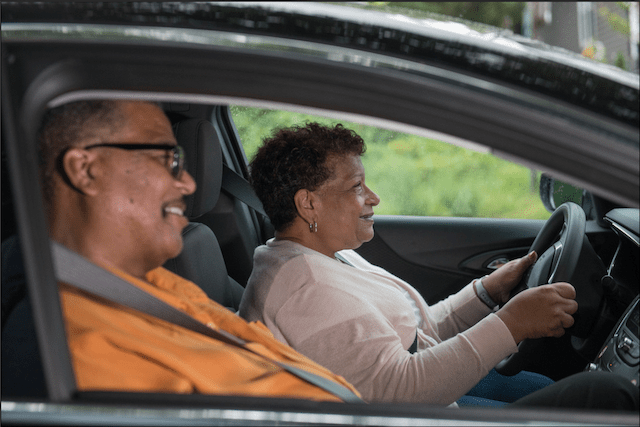
More older drivers are on the roads today than ever before — there are 51.6 million drivers in the United States age 65 and older as of 2022, according to the most recent data from the Federal Highway Administration.
But along with that growth has come a sharp increase in traffic deaths. The number of fatalities in senior driver crashes nationwide reached its highest point in more than 20 years.
“Older drivers aren’t necessarily worse drivers than their younger counterparts,” said Mark Schieldrop, Senior Spokesperson for AAA Northeast. “In fact, AAA research shows that seniors are less likely to engage in risky behaviors behind the wheel. But they are at greater risk of being killed or seriously injured if a crash occurs.”
Remaining an active driver can provide older adults with a much-valued level of independence. However, the physical and cognitive changes that come with aging, coupled with medical conditions and increased medication use can put older drivers at a greater risk behind the wheel.
AAA Northeast is encouraging seniors and their families to have discussions about how to ensure safe mobility for years to come.
Here are some of the biggest challenges older drivers face and how to overcome them.
Vision Problems
Just about everyone’s eyesight gets worse as they age thanks to a condition called presbyopia. Over time, the lenses in your eyes stiffen, making it more difficult to focus on nearby objects. Other diseases, such as glaucoma, cataracts and macular degeneration, can exacerbate the problem.
On the road, vision problems can make it difficult to see pedestrians, cars, signs and hazards, especially at night or in low-light conditions. A study conducted by the Insurance Institute for Highway Safety found that one-third of crashes involving older drivers were the result of inadequate surveillance, mostly looking but not seeing another vehicle or traffic control.
Hearing Loss
Hearing loss is another common problem for older adults, and though we might not think of hearing as a critical sense for driving – it is. Recognizing horns and sirens can help you steer clear of danger and avoid a crash.
Sore Muscles and Joints
As you age, your muscles may become weaker and your joints stiffer. Arthritis, or joint inflammation, is particularly common in older adults. It can be painful to move afflicted parts of your body, making it difficult to pull off even the most basic physical movements needed to drive a car safely, such as turning the steering wheel, applying pressure to the brake or accelerator and turning your head to see your surroundings.
Medications
Research from the AAA Foundation for Traffic Safety found that nearly 50% of older drivers were using seven or more medications. Many medications come with potentially impairing side effects, such as blurred vision, confusion, fatigue or incoordination. Symptoms like these can increase the likelihood of a crash by up to 300%.
Slow Reaction Time
Reflexes tend to slow down as you age, making it difficult to react to sudden changes on the roadway in a timely manner. This can put you at a greater risk for a crash.
Traffic Difficulties
Studies have shown that older drivers have more trouble with specific aspects of driving. These include merging, passing through intersections and judging the space between vehicles and the speed of other cars.
How Older Drivers Can Remain Safe Drivers
Talk to your doctor. Have an honest conversation with your doctor regarding your health and whether or not it’s safe for you to drive. You may also want to devise an exercise program under their guidance to increase your strength and flexibility.
Ask about side effects. According to the AAA Foundation for Traffic Safety, many drivers prescribed potentially impairing medications are never warned by their health care provider about how the medicine could impact their driving ability.
Get your eyesight checked regularly. Your vision changes as you age, so make sure to visit your eye doctor at least once a year. Never drive without wearing your prescribed glasses or contacts.
Be smart about when you drive. If possible, avoid driving at dawn, dusk or nighttime. The limited light, headlight glare and sun glare during these times of day make it more difficult to see. You also may want to make things easier for yourself by avoiding the road during rush hour and other times of high traffic.
Take an adult driving lesson. Learning how to drive is not just for teenagers. Whether you’re a brand-new driver or just need a refresher, it’s never too late to improve your skills behind the wheel. As always, AAA is here to help. Learn about our Adult Driver Training program and sign up today! To brush up on your road rules, the AAA Defensive Driving Course is another great option; depending on the state you’re licensed in, completion can also earn you a discount on your auto insurance.
Adapt your vehicle. Hand controls can allow you to operate the brake and accelerator with handles, which you may find easier than using your feet. Seat boosters can give you a better line of vision from behind the wheel.
Learn about AAA’s CarFit assessments:
Learn more about AAA’s senior driving resources, including information on how older drivers can extend their driving careers and prepare for “driving retirement.”
Are you an older driver? What are some challenges you’ve encountered behind the wheel? Let us know in the comments below.
This article has been updated and republished from a previous version.
Is keeping up with rising prices of groceries, gas, electricity and the overall cost of living a concern for you? Has your home increased in value as you watch your investments diminish? Are you concerned about maintaining monthly cashflow?
If you answered yes to any of these questions, then considering a federally insured reverse mortgage may be worth your time. It could be just the right tool to keep you in your home through your golden years, all while receiving tax-free loan proceeds.
Reverse Mortgages Are on the Rise
The confluence of stock market uncertainty, a worldwide pandemic and global unrest over the past several years contributed to skyrocketing inflation that, in turn, has led to stressful days and sleepless nights for many retirees worried about their financial futures.
Approximately 89% of seniors think the U.S. has a retirement savings crisis, According to a 2023 American Advisor Group’s (AAG) survey. The results indicated that 44% of seniors fear they have not saved enough to retire securely, and another 57% reported they were either “somewhat” or “not at all” optimistic that their savings will stretch through retirement.
In an earlier AAG poll, Modern Retirement Survey, about 53% of respondents said that the current cost of living is higher than they expected.
“If someone has retired recently or is planning to retire, they need to look at all the options out there to deal with these higher costs,” said Steve Vieira, director of mortgage operations and sales for AAA Northeast. More and more retirees who find themselves house-rich but cash-poor have landed on the same option.
A growing number of home-owning retirees have taken advantage of reverse mortgages as a way to unlock their home equity, according to the federal department ofHousing and Urban Development (HUD), thus increasing their available funds and creating a more stable financial future.
“The spike in inflation has and will continue to put a huge burden on seniors with fixed incomes,” Vieira said. “This has sparked much more interest in leveraging the equity that was built up in the last couple years to supplement retirement plans.”
How a Reverse Mortgage Works
A Home Equity Conversion Mortgage (HEMC) is a loan available to those age 62 and over borrowed against the equity owned in a home. Instead of making monthly payments as with a traditional mortgage, borrowers receive payments from their lender. The loan then becomes due when the house is sold, or when the last surviving borrower dies.
Borrowers have flexibility in how they use the funds they receive from a reverse mortgage. The money can be spent on monthly expenses, health care costs, travel and other activities. Maintaining the home, as well as keeping up to date on all utility payments and taxes, remain the responsibly of the borrower.
How Much Money Can a Reverse Mortgage Provide?
HEMCs are federally backed by the department of Housing and Urban Development. The mortgage limit for 2025 is $1,209,750. How much of that a homeowner receives is calculated based on a HUD formula. Current interest rates, the age of the youngest homeowner and the home’s appraised value are all taken into account. Older homeowners and those with greater equity in their home receive higher mortgage amounts.
The borrower has four options to choose how they may receive their payments once the loan has been approved:
Lump sum distribution.
A monthly payment in a fixed dollar amount for a length of time that the borrower chooses.
A monthly lifetime distribution (known as a tenure payment).
Through lines of credit that allow the untapped funds to grow in value over time.
Although the borrower is responsible for closing costs, Vieira advises that in most cases the majority of these fees can be incorporated into the loan. This results in minimal out-of-pocket costs for the borrower during the application process.
Is a Reverse Mortgage a Safe Option?
HECMs are insured by the federal government, which has instituted regulations making reverse mortgages even safer than they were years ago. Most notably, HUD requires all borrowers receive educational counseling before executing the loan to ensure that the individual understands all areas of the reverse mortgage process.
Separately, it’s important to know that a reverse mortgage does not impact the borrower’s Social Security benefits, Medicare, Supplemental Security Income or Medicaid benefits. It simply allows the borrower freedom from monthly mortgage payments as long as they remain living in the home as their primary residence.
Your wedding day is one of the most important — and most photographed days — of your life.
Fortunately, the Northeast has countless postcard-worthy backdrops for unforgettable wedding photos. Whether you’re tying the knot at city hall or saying “I do” at a historic estate, these stunning spots will help you capture memories that last a lifetime.
Find Your Wedding Photo Location
Connecticut
For an elegant yet natural vibe, Harkness Memorial State Park on the Long Island Sound is a dream. The seaside estate features manicured gardens, a grand mansion and sweeping ocean views. Photography permits and reservations are required for wedding shoots, easily arranged through the parks department.
New Hampshire
For jaw-dropping scenery, head to Cathedral Ledge, perched high above the Saco River Valley. Though it feels remote, you can drive to the top, then take a short walk to the ledge for panoramic views of Echo Lake and beyond. It’s a photo moment you’ll never forget. No permit is necessary to snap your dream mountaintop shot.
New Jersey
With the Manhattan skyline and the Statue of Liberty in the background, it’s no wonder Liberty State Park is an epic place to take pictures. The park’s 2-mile waterfront promenade and the historic Central Railroad of New Jersey Terminal are both top picks for romantic shots. Bonus: Pets are welcome, and no permits are required for wedding photography.
Located beside the vacation town of Bar Harbor, Acadia National Park offers rugged coastal beauty, lush forests and stunning mountain views. Two of the most photogenic spots? The summit of Cadillac Mountain offers panoramic ocean views, and Sand Beach is framed by towering peaks. Best of all, no photography permits are required.
Massachusetts
Looking for cobblestone charm? The Beacon Hill neighborhood in Boston is a picturesque setting of federal-style brick row houses and gaslit streetlamps. Acorn Street is a fan favorite, so consider an early morning shoot to beat the crowds. No permits are required here — just bring your best poses!
New York
Few places are as symbolic — or scenic — as Central Park in Manhattan. From the charming Bow Bridge or The Mall & Literary Walk, lined with elm trees, the park is full of storybook shots. Pro tip: Book a local photographer (such as those on GetYourGuide) to help you find hidden gems for one-of-a-kind shots. Permits are necessary and are managed by the Central Park Conservancy.
Pennsylvania
Romance is in full bloom at Longwood Gardens in Kennett Square. With regal fountains, whimsical greenhouses and 1,100 acres of landscaped beauty, it’s one of the most visited botanical gardens in the US. Indoor and outdoor spaces make it a perfect choice year-round. A photography permit is required at least four weeks before your scheduled shoot.
Rhode Island
Castle Hill Lighthouse, set on Narragansett Bay at the end of the Ocean Drive Historic District in Newport, is the epitome of coastal romance. With sweeping sea views and historic mansions nearby (Jackie Kennedy grew up in the area), it’s perfect for nautical-themed photos. The land is owned by the AAA Four Diamond designated Castle Hill Inn, which coordinates access for photography sessions at the lighthouse.
Vermont
Think a farm setting isn’t glamorous? One look at Shelburne Farmsand you might change your mind. With scenic trails, gardens and Lake Champlain as a backdrop, it’s rustic romance at its finest. A permit is required for all photography sessions on the property.
Permits and Planning
Many of these wedding photo locations require permits. Fees, restrictions and processing times vary, so it’s best to contact the venue or the parks department a few months in advance. Some areas limit group sizes or restrict props or equipment like drones, so always do your homework to avoid day-of surprises.
Feeling overwhelmed by all the planning? AAA offers destination wedding planning services to make your big day effortless. Whether you’re dreaming of a romantic beachside ceremony or a mountaintop wedding, our travel advisors can make it happen. As a member, you have free access to advisors who specialize in weddings and honeymoons — we call them our Agents of Honor. Find yours today!
Where did you have your wedding photos taken? Tell us in the comments.
Ever wonder why sometimes you sleep better with a fan as opposed to total silence? Or find that you feel calmer listening to the low hum of rain? It all has to do with the phenomena of colored noise.
Colored noises — white, brown, pink and green — are low-frequency sounds found to have certain effects on the psyche ranging from better concentration to breaking up brain fog. The colors are heard, not seen.
“In general, your ear can only register sounds that fall within a range of frequencies, and these frequencies exist on a color spectrum (like a rainbow),” according to the Cleveland Clinic.
In the same way that listening to your favorite song can instantly change your mood, colored noises have a unique auditory profile that has been reported to help the way our brains process external elements. And even if you think they all sound the same, every color has its own set of unique benefits:
White Noise: Best for Blocking Out Sound
White noise is often used as an umbrella term for most color noises, and there’s a good reason for that: White noise is all noise. Or, at least, it encompasses the entire range of audible frequencies. It gets its name from white light, which contains all visible wavelengths at equal intensity.
White noise’s consistent decibels are best put to use when trying to block out unwanted ambient noises, like talking or traffic, as it effectively masks distracting sounds. Types of white noise include the sound of a waterfall or TV static.
Listen to white noise:
Brown Noise: Best for Concentration
Brown noise, named after botanist Robert Brown, emphasizes lower frequencies. This means that it’s more likely to have a soothing, grounding effect for some listeners. For folks who typically find high-frequency sounds distracting, brown noise works to improve focus. In fact, a study found that workers in an open floorplan office were able to better focus on their tasks when listening to brown noise through headphones during the day.
Examples of brown noise include a rushing river, thunder and wind blowing through trees.
Listen to brown noise:
Pink Noise: Best for Improving Sleep and Memory
Softer and more pleasant than white noise, pink noise is a deeper and more balanced sound. Each octave carries the same amount of energy, which aligns more closely with how human ears perceive loudness. This specific frequency creates an environment more favorable to cognitive processing, making it an ideal sound to use for sleeping and improving memory.
The sound of rainfall is one of nature’s pink noises, as well as rustling leaves or steady ocean waves.
Listen to pink noise:
Green Noise: Best for Feeling Calm
Think of green noise as the middle ground. Its frequencies (about 500 hertz) are concentrated in the midrange of the human hearing spectrum, emulating balanced, nature-inspired environments. Its resemblance to natural soundscapes can induce a sense of calm and mindfulness while also reducing stress and lowering anxiety.
Listen to green noise:
While the purported effects of colored noise are well-documented by individual accounts, more research needs to be done to determine its effectiveness using evidence-based science. That being said, there’s no harm in trying it out for yourself.
Do you listen to colored noise to sleep or concentrate? Let us know in the comments!
Seat belt history begins nearly two centuries ago, but it’s only been in the past few decades that the safety feature — and its use — have become commonplace. It was an uphill battle, one that included laws, education and technological improvements, to get the public to latch onto these life-saving devices.
It’s a good thing they did — seat belts have been credited with saving thousands of lives per year and are considered to be one of the most cost-effective public health inventions ever. But as recently as the late 1970s and early 1980s, seatbelt use was only between 11% and 14%. Seatbelt use grew the most between 1984 to 1987, when 29 states adopted mandatory seat belt laws.
So how did seat belts go from an afterthought to a necessity? Let’s take a look.
Prefer an audio summary of this post? Click below to listen to this article.
Mid-1800s – The Seat Belt History Timeline Begins
Sir George Cayley, a wealthy landowner in Yorkshire, England, invented the first seat belt way back in the 19th century. Cayley was highly interested in aerodynamics and the principles of flight. He is credited with building the first successful manned glider, a half-century before Orville and Wilbur Wright took to the air. Inside the aircraft, Cayley included a lap belt to keep the pilot in place.
His first test flight crashed landed – the pilot survived.
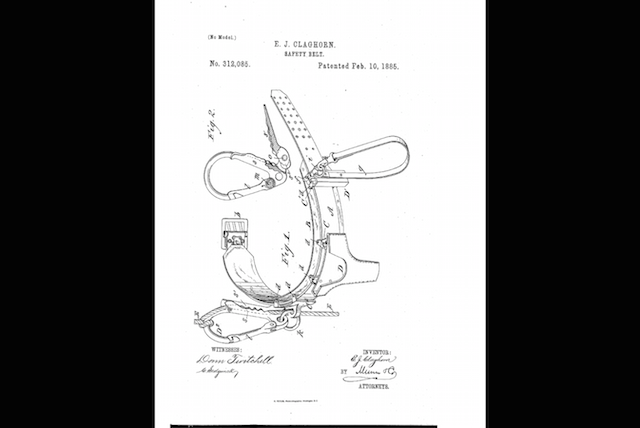
A rendering of the first patented seat belt.
1885 – The First Seat Belt Patent Is Granted
On February 10, New York City resident Edward J. Claghorn was awarded the first U.S. patent for a vehicular seat belt. It was devised in order to keep tourists safe as they rode in taxis. The seat belt looked more like a modern climbing harness, consisting of a strap that used hooks to secure a rider to the seat.
1922 – The Seat Belt Comes to the Indy 500
Barney Oldfield, a racing pioneer and the first person to drive 60 mph, recruited a parachute manufacturer to design a restraining harness for his Indy 500 car. Oldfield had seen several drivers get hurt, and even die, after being ejected from their vehicles.
Prior to this (and in the decades following) seat belts were rarely worn. One myth that prevailed during this time was that it was safer to be flung from the car than remain inside the vehicle as it crashed and potentially burned. Manufacturers, meanwhile, believed that if they included too many safety features, it would give consumers the impression cars were unsafe.
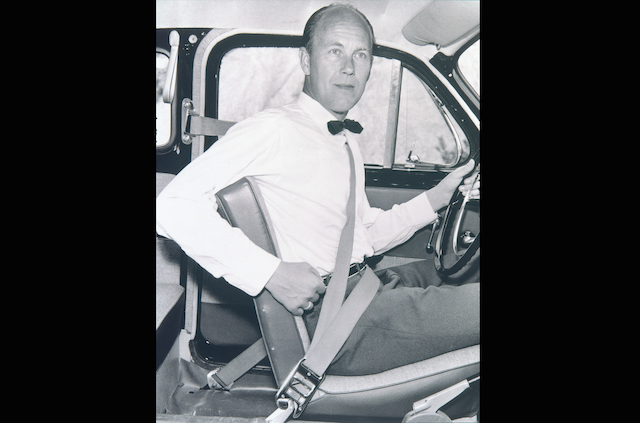
Volvo engineer Nils Bohlin demonstrating his invention: the three-point seat belt.
1959 – The Three-Point Seat Belt Is Invented
The most important evolutionary step in seat belt history occurred in 1959 when Swedish engineer Nils Bohlin invented the three-point seat belt. Volvo Car Corporation hired Bohlin the year prior as the company’s first chief safety engineer. He had previously worked designing ejector seats for fighter jets.
Two-point seat belts only secured the passenger’s lap (and were hardly ever worn at the time). The four-point belts Bohlin used in airplanes were untenable in cars. His solution was a three-point seat belt that consisting of one continuous strap. One section ran diagonally across the body while another section crossed the lap, creating a restraint for both the upper and lower body.
The first car to feature the three-point seat belt was the Volvo PV544, but it was quickly joined by others. Maybe the most remarkable — and most significant – aspect of this invention is what Volvo did with their new technology: they gave it away for free. The company allowed other manufacturers to have the design free of charge, all in the name of safety. At the time of his death in 2002, Volvo estimated that Bohlin’s invention had saved more than one million lives in just four decades.
1961 – Wisconsin Becomes First State to Require Seat Belts
On September 25, Wisconsin became the first state to require seat belts be installed in the front seats of all new cars. This law only required cars to have seat belts. There was no such rule that passengers had to wear them.
1968 – Seat Belts Become Nationally Mandated
The first federal law mandating all new cars be equipped with both lap and shoulder belts in the front seat is introduced. Although the three-point seat belt had been around for nearly a decade, the law did not specify the need for any particular design. As a result, many automakers installed separate lap and shoulder belts.
1973 – The Seat Belt Interlock Mechanism Is Introduced
The 1970s and 80s were the most tumultuous stretch of time in seat belt history. It all began in 1973, when the National Highway Traffic Safety Administration (NHTSA) required all new cars to install a seat belt interlock mechanism. The inexpensive device prevented a car from starting until the driver’s seat belt was buckled.
The public had issues with this, feeling the government was overreaching with an intrusive mandate. Automakers, meanwhile, weren’t keen on adding to their costs. Congress responded by nixing the law the following year.
1983 – Seat Belts Reach the Supreme Court
It’s a strange but true fact that more than one automobile feature has been at the center of Supreme Court cases. This includes the humble seat belt.
The backstory to the case began in 1977. After the interlock mechanism law was denied, the NHTSA came back with a rule stating carmakers must include some sort of passive restraint that worked automatically without driver intervention and protect passengers when hitting a wall at 35 mph.
It seemed all but certain that automakers would be made to include seat belts in their vehicles — and then the 1980 presidential election turned things upside down. Ronald Reagan ran his campaign around deregulation. Naturally, when he took office, he opposed a law that forced the manufacturers to do something against their will. The requirement was thus revoked.
But there was a second industry in play. Insurance companies, which had a vested interest in the safety of passengers, sued the administration. The Supreme Court ruled unanimously in favor of the insurers and ordered the Department of Transportation to reinstate the requirement.
1984 – New York Requires Front-Seat Riders to Wear Seat Belts
New York became the first state to require the use of seat belts. The bill, which went into effect Jan. 1, 1985, only mandated that riders in the front-seat wear seat belts. If they did not comply, they faced a fine of $50. Now it is also required by law for passengers 13 and older to wear a seat belt in the back seat.
Today, nationwide use of seat belts is approximately 92%. New Hampshire is the only state that does not require adults to wear seat belts; they only are mandated for children under 18. Roughly 15,000 lives are saved by the safety feature every year in the United States, according to the NHTSA.
AAA projects 45.1 million people will travel at least 50 miles from home over the Memorial Day holiday period (Thursday, May 22 to Monday, May 26). This year’s domestic travel forecast is an increase of 1.4 million travelers compared to last year, and sets a new Memorial Day weekend record.
“Despite concerns over rising prices, many Americans are planning to take advantage of the holiday, even if the trips are closer to home,” said Jillian Young, director of public relations for AAA Northeast. “Long holiday weekend getaways don’t have to be extravagant, and having a day off from work and school allows many families to take that much-anticipated road trip.”
Memorial Day Travelers by Mode of Transportation
By Car
Road trips are driving the numbers this Memorial Day, with 87% of travelers choosing to drive. AAA projects 39.4 million people will travel by car over the holiday weekend, an additional 1 million travelers compared to last year. Road trippers are benefiting from cheaper gas prices this year, with the average pump price in Rhode Island down 65 cents from last year, as of May 11.
For drivers who are renting cars over Memorial Day weekend, AAA car rental partner Hertz says Friday, May 23 is expected to be the busiest day for pickup.
By Air
AAA projects 3.61 million domestic air passengers, a nearly 2% increase over last year when 3.55 million travelers took to the skies. AAA booking data shows domestic flights are 2% more expensive compared to last year, based on what travelers paid when booking Memorial Day weekend flights.
By Other Modes
Travel by other modes continues to steadily rise post-pandemic. AAA projects 2.08 million people will travel by train, bus or cruise over Memorial Day weekend, an 8.5% increase over last year. This category is now surpassing pre-pandemic numbers from 2018 and 2019 as cruising continues to boom; it doesn’t reach the record numbers of the early 2000s though, when many travelers opted for trains and buses over air travel.
Best and Worst Times to Drive
Travelers hoping to avoid the heaviest traffic over the Memorial Day weekend should hit the road in the morning, according to transportation data provider INRIX. Boston and New York are among the metros that can expect the heaviest traffic.
Best and Worst Times to Travel by Car
Date
Worst Travel Time
Best Travel Time
Thursday, May 22
1-9 p.m.
Before 12 p.m.
Friday, May 23
12-8 p.m.
Before 11 a.m.
Saturday, May 24
2-6 p.m.
Before 12 p.m.
Sunday, May 25
1-5 p.m.
Before 1 p.m.
(Memorial Day) Monday, May 26
4-7 p.m.
Before 2 p.m.
AAA’s Top Memorial Day Weekend Destinations
The top holiday destinations listed below are based on AAA booking data for trips between Thursday, May 22 and Monday, May 26. Orlando, Florida, tops the domestic list thanks to its popular theme parks and nearby cruise port, Port Canaveral. Cruising is also the reason Seattle and Anchorage, Alaska, made the top 10 list, since Memorial Day kicks off peak Alaska cruise season. Vancouver is also popular because of its cruise port. Internationally, Rome is the number one destination.
DOMESTIC
INTERNATIONAL
Orlando, Florida
Rome, Italy
Seattle
Vancouver, British Columbia
New York City
Paris, France
Las Vegas
London, England
Miami
Athens, Greece
San Francisco
Dublin, Ireland
Anchorage, Alaska
Barcelona, Spain
Chicago
Southampton, England
Denver
Amsterdam, Netherlands
Boston
Edinburgh, Scotland
AAA Northeast is a not-for-profit auto club with offices in Rhode Island, Massachusetts, Connecticut, New Jersey, New Hampshire and New York, providing nearly 6.8 million local AAA members with travel, insurance, financial and auto-related services.
In the past, regular tuneups included replacing spark plugs, checking ignition wires and brake pads, adjusting the carburetor and replacing air and fuel filters. But car parts now last longer and some — like the carburetor — no longer exist.
So, what is a tuneup nowadays?
Traditional tuneups, as they used to be known, have become less frequent and are often replaced by manufacturer recommended maintenance checks, said Tyler Fournier, lead diagnostic technician at AAA Approved Auto Repair facility Platinum Auto Service in South Yarmouth, Massachusetts.
Spark plugs still get inspected and cleaned or replaced during a tuneup, however, many newer cars have platinum spark plugs, which can last between 100,000 and 120,000 miles, compared to older copper ones, which needed replacing after about 30,000 miles, Fournier said. Today’s spark plugs could last up to 10 years.
Some of the other preventive maintenance services in a tuneup today can include replacing other “wear-and-tear” parts like the air filter, fuel filter and oxygen sensor, according to Kelley Blue Book. An oil change, tire rotation, brake inspection, transmission fluid change and coolant-system flush may also be among the services provided.
Those items are typically inspected every time an owner brings their car in for scheduled maintenance.
“These maintenance intervals are in the owner’s manual,” Fournier said. “I encourage people to stay on top of what is recommended.”
For auto repair and maintenance you can trust, find a AAA Approved Auto Repair facility near you. With savings up to $75 per visit on labor, it’s a service that essentially pays for your membership.
For answers to more of your car questions, check out our Ask a Mechanic series.
It’s time to get out and enjoy all the warm weather has to offer, like the bright colors of blooming flowers, the buzzing of honeybees and the fluttering of birds and butterflies. Explore the fields, greenhouses, aviaries and butterfly houses of these Northeast botanical gardens.
“Elizabeth Park, West Hartford, CT” by nhighberg is licensed under CC BY-NC-SA 2.0
Open daily from dawn to dusk, visitors will find a dozen gardens and miles of trails here. Bartlett has a list of online events, classes and lectures that nature-lovers of all ages can take advantage of, plus a concert series on select Sundays through the summer. Mid-May through mid-September, Master Gardeners from the University of Connecticut offer a free plant clinic on site to help solve your garden issues. Parking and admission are free. Dog-friendly.
With over 100 acres of formal gardens, green space and walking paths, Elizabeth Park is open year-round, dawn to dusk, and free to the public. The 11,000-plus flowers of the Robert A. Prill Tulip Garden bloom in early spring. Dog-friendly.
Located on the grounds of the Glebe House Museum, the Gertrude Jekyll Garden is open and free to the public year-round, seven days a week from dawn to dusk.
The gardens, grounds, picnic area and waterfront are open year-round, and visitors (and dogs) are welcome until sundown. Parking is free for residents with a Connecticut license plate.
Experience the manicured and lush setting of an English garden right in Washington, Connecticut. Opening day is in late April. Come early in the season to see the daffodils and Lenten hellebores, which are the first to bloom. Visiting hours are Wednesdays and Fridays from 1 p.m. to 4 p.m. and Saturdays from 10 a.m. to 4 p.m.
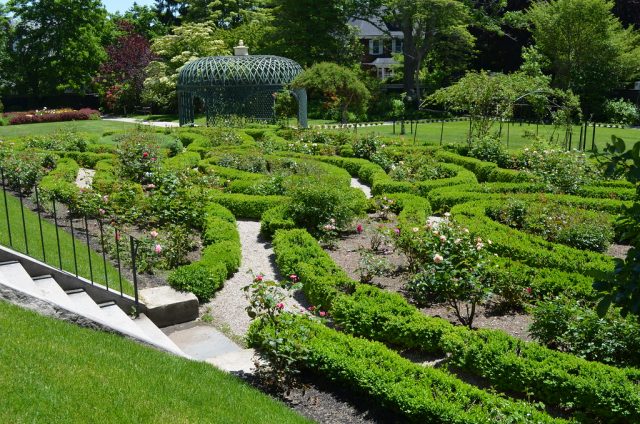
This nature center’s 40 acres feature trails, an outdoor birds of prey exhibit, a variety of gardens and a greenhouse. Bring the kids and explore the boxwood maze in the Children’s Play Garden, plus animal exhibits, local art, crafts on Wednesdays and more at the visitor center. Free to the public and dog-friendly.
Wickham Park has 10 themed gardens (Italian, Irish, Sensory, Oriental, etc.), as well as open fields, woodlands, ponds, picnic areas and an aviary. Open daily from the first weekend in April through the last weekend in October, from 9:30 a.m. to sunset. Entrance fee is $7 per car on weekdays and $10 on weekends and holidays. Dog-friendly.
“Rotch Jones Duff House & Garden Museum” by destinationnewbedford is licensed under CC BY-NC-ND 2.0
This 24-acre botanical garden grows dozens of unique gardens, including a pond garden, daylily walk, tree collection, children’s discovery garden and much more. Grounds are open daily, from early May through the end of October, 9 a.m.to 5 p.m. Timed tickets are required. General admission is $18/$16 for seniors. Tuesdays are free!
Dating back to 1837, this was the first public botanical garden in America. Visitors will find 24 acres of Victorian-style gardens featuring 80 species of plants. Free and open to visitors 365 days a year. Leashed dogs are permitted.
Here you’ll find a perennial flower garden, Japanese garden, woodland and wildflower garden and more. The campus arboretum has an impressive collection of trees and shrubs. Both the campus arboretum and gardens are open daily, year-round.
Home to both New England and tropical species of butterflies, the Butterfly Place is open seasonally from early spring through Columbus Day. See website for prices.
There’s lots to discover on this 36-acre property. Explore more than a dozen unique gardens, including a temple and Asian garden, goddess garden, shade garden, daylily garden and more. Open seven days a week from April through October, 10 a.m. to 7 p.m. (last entry is 5:30 p.m.). Pack a picnic — picnic tables, benches and bistro seating are available. General admission is $14/$5 for youth 3-17 years old/free for children 2 years and under. Parking is free.
This 45-acre spot displays native New England plants, natural habitats, paths and more. Open seasonally, the garden is scheduled to open to the public in mid-April. Tickets can be purchased online in advance or at the visitor center. Entry is $18/$15 for seniors/$12 for students/$8 for kids. Active military and spouses are free with valid ID.
These 100-acre grounds feature trees, shrubs, designed gardens, sweeping lawns and nature trails. The spring brings blooming rhododendrons and flowering trees. Heritage usually opens for the season around early May. Visitors are asked to purchase tickets online prior to arrival.
The grounds are open daily, year-round from dawn to dusk. Visitors can peruse the sunken garden, West garden, the Beebe Woods and beech tree path. Regularly scheduled docent-led tours walking of the grounds are free with admission. Admission is $12/$8 for seniors. Children under 17, active military and vets are free. Leashed dogs are also welcome and there are numerous dog-friendly trails in Beebe Woods.
Explore the 114-acre grounds to discover a collection of trees, shrubs and perennial plants along with a network of woodland trails and a 2-acre vegetable garden, an apple orchard and children’s gardens. Timed reservations are encouraged. Admission for adults is $20 and $10 for children.
This 14-acre, Japanese-style garden showcases a mix of native flora and exotic plants. You’ll also find a pine grove, a small pond and an island, which makes a great habitat for turtles, frogs and goldfish. Open daily from sunrise to sunset. Admission is $5.
This huge glass conservatory is filled with butterflies, moths and tropical vegetation. Seasonally and weather-permitting, there are also outdoor gardens filled with flowers that butterflies love. Open Tuesday through Sunday from 10 a.m. to 5 p.m. No advance reservations are required. See website for prices.
Here, you’ll find a rose garden with more than 350 rose bushes. The garden is open everyday from sunrise to sunset and entry is free. Reservations are not necessary, but visitors can plan in advance by scheduling their visit online.
This 171-acre property has 17 different gardens, including a wildlife garden, secret garden, systematic garden, vegetable garden, lawn garden, a field of daffodils and more. Hours are 10 a.m. to 5 p.m. (last entry is 4 p.m.). General admission rates starting April 1: $20 ($21 on weekends)/$17 for seniors ($18 on weekends)/$10 for children ($11 on weekends)/$8 for dogs.
“Fuller Gardens-North Hampton, NH” by Gail Frederick is licensed under CC BY 2.0
This 37-acre public garden is filled with lush greenery, unique sculptures, a historic farm and private garden. The garden is seasonal and is open from May 17 to October 9, Tuesday through Friday and the first and third weekends of the month, 10 a.m. to 4 p.m. Take a self-guided tour or a docent-led daily overview garden tour, free with admission ($15 suggested donation).
This public botanical garden is known for its formal rose gardens, but you’ll also find English, Japanese and dahlia display gardens. Gardens are open daily, from mid-May to mid-October, between 10 a.m. and 5:30 p.m. Admission price is $12/$10 for seniors/$8 for students with ID/$6 for children under 12.
Stop and smell the flowers at this informal garden, open daily and free of charge to the public. Visit the live animal exhibit at the science center and hiking trails for a fee. Admission is $28 for adults, $26 for seniors 65 and older and $22 for children ages 3 to 15.
With great viewing opportunities from April to October, this spot is open daily and free to the public. Visitors will find 13 themed gardens and a wildflower trail.
Discover formal gardens, a water feature and walkway on the 10-plus acres of Prescott Park. Visitors will find tulips in bloom in early spring. Free tours are conducted every Friday in the summer, beginning in mid-July. Entrance is free and accessible to all.
This state park is also a National Natural Landmark. It houses a 16-acre grove of great-laurel rhododendron – the largest in New England, and a wildflower trail, which blooms from early spring through the first frost of winter. Open daily for a small entry fee of $4 for adults and $2 for children. Pets are permitted in select areas of the park.
There are several gardens to see here, including a Mother’s Day garden, catalpa garden and formal garden along with a woodland area. Open seasonally June through September, as well as Mother’s Day weekend and Memorial Day Weekend. Admission is $10/$8 for seniors (cash only). Check website for current days and hours.
“Willowwood Arboretum 09132015 (49)” by nolagrrlnyc (valary) is licensed under CC BY-NC-ND 2.0
Open daily from dawn to dusk, these grounds are home to both formal and native perennial and native plant gardens. You don’t want to miss the wisteria-covered pergola and mountain laurel allee. Free entry and parking.
This 54-acre property contains a variety of gardens, a koi pond, greenhouses and 52 varieties of roses on over 180 bushes. Open daily, year-round from 8 a.m. to dusk.
Experience peace on the grounds of Greenwood Gardens as you explore the formal gardens, winding paths, grand fountains and more. Open May through November, Friday to Sunday from 10 a.m. to 5 p.m. Admission is $15/ $10 for seniors and students with ID/$5 for children.
For a combination of art and natural beauty, visit this unique spot. Discover garden after garden, filled with wildflowers, butterflies, ponds, impressive sculptures and paths to explore it all. The fun continues indoors with exhibitions and galleries, or dine at Rat’s overlooking the gardens for a meal — and a view — you won’t soon forget. Advanced timed ticket reservations are highly recommended for Grounds for Sculpture. See website for hours and ticket rates.
Visitors can enjoy both history and nature at this stunning property. Colonial revival and terraced gardens are the stars. Open Wednesdays through Sundays, from 10 a.m. to 4 p.m. Admission is $12/$10 for seniors, students, youth (age 7-18) and active military. Children are free.
Visitors will find a variety of beautiful flowers here, including annual, perennial, wildflower, Italianate, lilac, hostas and rhododendrons. Open from 8 a.m. to 8 p.m. in the spring and summer, admission and parking are free, except on summer weekends and holidays from Memorial Day weekend to Labor Day when a state parking fee of $5 is enforced for New Jersey-registered vehicles ($7 for out-of-state, cash only).
These gardens contain about 3,000 varieties of irises, producing more than 100,000 blooms from mid-May through the first week of June (check website for exact dates). There’s also the PresBee Sanctuary, home to 10 active beehives. While there is no admission fee, there is a suggested donation of $10 per person. Street parking only with limited spots during peak bloom season.
Once a country estate, Reeves-Reed Arboretum is now listed on the National and State Registers of Historic Places. These grounds are open daily, year-round, but throughout April you can see their famous Daffodil Bowl filled with thousands of flowers. Free to enter but suggested donation is $5 per person. Open 7 a.m. to 7 p.m., April 1 through October 31.
Come visit the nature center and check out the children’s garden, dragonfly pond, pollinator-wildlife garden, butterfly house and more. Visitor center is open Tuesdays, Thursdays, Saturdays and Sundays from noon to 4 p.m. and includes bird seed for sale, live animals, natural history displays and restrooms. Nature trails are open daily from dawn to dusk. Suggested donation of $2 per visitor.
Discover many different plant types at the official botanic gardens of Rutgers University. The sun and shade garden, rain garden and pollinator gardens are among the highlights. The public areas of Rutgers Gardens are open Tuesday-Sunday from 8 a.m. to 7 p.m.
Butterfly, edible and formal gardens are just a few of the gorgeous green spaces to enjoy at this once-private, 12-acre state. Open to the public daily, free of charge from dawn to dusk.
Open from 8 a.m. to dusk and free to the public, this arboretum is home to several formal gardens and walking paths that take you through open areas and woodland. Follow their weekly bloom report to stay updated on what’s flowering throughout the seasons.
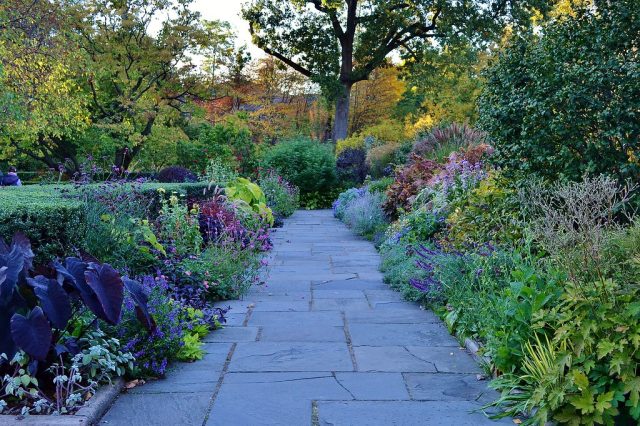
“Central Park-Conservatory Garden, 10.20.13” by gigi_nyc is licensed under CC BY-NC-ND 2.0
Part of Riverside Park, this community garden lies between 90th and 91st streets. Volunteer gardeners tend to the garden, which blooms with perennial and annual flowering plants.
Here you’ll find more than 12,000 species of plants spread across 52 acres. In June, 10,000 roses bloom into life in the Cranford Rose Garden. Another summer highlight is the wildflowers in the Native Flora Garden. Check website for seasonal hours and admission prices. Advance ticket reservations are recommended.
Find indoor and outdoor gardens along with greenhouses featuring a variety of orchids, native and tropical plants. Open year-round, 10 a.m. to 4 p.m., seven days a week except for certain holidays. E-tickets are required due to limited capacity. Admission is $18/$16 for students and seniors/$9.50 for children 3-12. Parking is free.
Discover the three unique sections of this 6-acre garden: the French-style North Garden, Italianate Center Garden, and the English-style South Garden. Check website for seasonal hours and ongoing restoration.
Visitors can view the pollinator and rain gardens and walk the paths, but must wear masks and keep social distance. The garden is open from 10 a.m. to 6 p.m. April-October and 10 a.m. to 4 p.m. Novemer-March. Admission is free but donations are appreciated.
The campus grounds are home to a 150-acre arboretum and specialty gardens, including wildflowers and a conifer collection as well as herb, hillside, young flower gardens and more. Open to the public daily from dawn to dusk.
Located in Fort Tryon Park with stunning views overlooking the Hudson River, this impressive four-season public garden boasts one of the largest heath and heather collections in the country. Dog-friendly.
A world-class arboretum and National Register-listed landscape designed by Frederick Law Olmsted. See 500 varieties of flowering shrubs and trees, including lilacs, Japanese maples, rhododendrons and dogwoods at one of the oldest public “tree gardens” in the United States. Open 10 a.m. to 4 p.m. seven days a week. Free to the public.
This 250-acre garden is home to 1 million plants. Purchase tickets at the Garden or reserve in advance online and display them on your mobile device for quicker entry. See website for parking and admission prices.
Explore the more than 400 acres of land and two greenhouses on this sprawling Gold Coast estate. Open every day from 9 a.m. to 5 p.m. Parking fees are collected from May 1 to Labor Day ($8 per car). Admission is $10/$9 for seniors/ $5 for youth (7-17). Kids 6 and under are free.
At nearly 40 acres, this serene escape flourishes with a wide array of flowers, plants and trees, with smaller gardens themed around world cultures. Enjoy the cherry trees blossoming in spring and lilies in summer, take in the aromas on the fragrance walk and see what all the buzz is about in the bee garden. Open year-round, Tuesday through Sunday from 8 a.m. to 4:30 p.m. November-March and 8 a.m. to 6 p.m. April-October. April-December 15 there is a small admission fee of $6/$4 for seniors and students/$2 for children 4-12 years old.
Perennials are the first to bloom here, where you will also find gardens inspired by a variety of time periods and places, like the Chinese scholar’s garden and Richmond County Savings Foundation Tuscan Garden. The main outdoor grounds and gardens are free of charge to the public, seven days a week from dawn to dusk, and do not require advance registration or ticketing. See website for special ticketed garden entrances and events.
A 50-acre estate with gardens galore. Bring a picnic, marvel at the mansion and relax in one of the many themed gardens. Open seasonally, beginning at the end of April. Admission is $16/$14 for seniors and AAA members/$9 for student, military and youth/$4 for children.
The formal gardens of the Vanderbilt Mansion contain more than 100 flower beds featuring annuals. The grounds are available to the public daily, from sunrise to sunset.
Located in the Riverdale section of the Bronx, the Wave Hill garden overlooks the Hudson River and is easily accessible by car or public transportation. Come and get inspired by the immaculate grounds, art displays and year-round tropical blooms in the conservatory greenhouses. Open Tuesday through Sunday from 10 a.m. to 5:30 p.m. Admission is $10/$6 for students and seniors/$4 for children 6 and up. Free on Thursdays! On-site and nearby parking are available.
“Prescott Farm” by susteph is licensed under CC BY 2.0
This 33-acre estate offers plenty to see, including historic and contemporary gardens – rose, rock, water, pollinator, vegetable and more – with walkable pathways for strolling. There’s also a lover’s lane and a bamboo grove. See website for seasonal hours. Reserve tickets online for your visit, which includes self-guided exploration of the mansion, garden and grounds.
This family-run farm offers bouquets, precut flowers for DIY arrangements, or shears and a bucket for picking your own fresh flowers. Open daily from 9 a.m. to 5 p.m.
Starting April 15, this sculpted garden is open daily at 10 a.m. A highlight of any visit to the Newport Mansions, here visitors can stroll among a menagerie of topiary animals and colorful blossoms. Pack a picnic!
Open daily during daylight hours, the colorful display of the Kinney Azalea Garden in full bloom is a sight to see. Many plants are available for sale. No pets.
Walk the grounds of this 40-acre farm to see what’s growing in the kitchen and herb gardens and check out the historic buildings and windmill. Open to the public daily from dawn to dusk.
As New England’s largest glasshouse display garden, there’s always something blooming at one of the four year-round greenhouses at the Botanical Center at Roger Williams Park. Take a walk through the rose maze from June through September. Open Tuesday through Sunday with timed entry between 10 a.m. and 4 p.m. (last admission at 3:30 p.m.). General admission is $5 and $2 for seniors, military and children. Book tickets in advance online for easy entry.
Two Rhode Island locations with millions of flowers! Every spring, Wicked Tulips offers pick-your-own farm events during peak bloom season (usually around late April to mid-May, though dates vary depending on weather and location). Keep an eye on the website to stay updated on blooms and ticket sales. The Rhode Island farms are fewer than 25 miles from the Connecticut location, so if you miss blooms at one, you still have a chance at the other.
Located beside Westerly Library, visitors will find perennial gardens, a fish pond and an open meadow area at this park. Park is open from dawn to 9 p.m. Dog-friendly.
Which of these botanical gardens would you like to visit this season? Tell us in the comments.
Featured image: “Central Park Conservatory Garden 10.26.1” by gigi_nyc
This article has been updated and republished from a previous version.
Traffic laws from cameras on school buses and in work zones to traffic signals for bicycles began taking effect in late 2024 with more rolling out this year in five states in the AAA Northeast region.
AAA supported several of the measures enacted by state legislatures in Connecticut, Massachusetts, New Jersey, New York and Rhode Island.
ConnecticutTraffic Laws
Work Zone Speed Camera Program
After a pilot program for work zone speed cameras ended in December 2023, the Connecticut General Assembly authorized a permanent program that allows the state Department of Transportation (CTDOT) to install speed cameras in up to 15 work zones at any time, a law AAA endorsed.
“We testified at a hearing in support of a permanent work zone speed camera program in Connecticut,” said Alec Slatky, managing director of public and government affairs for AAA Northeast. “The pilot program, which was conducted in 2023, was demonstrably effective in reducing speeds in work zones. Speeding drivers pose dangers to roadside workers, and the narrowness of some work zone traffic lanes compounds the risk, so speed cameras are an important tool to keep work zones safe.”
Signs must alert drivers that a camera is in operation, and vehicles traveling at least 10 mph over the speed limit can be ticketed. Vehicle owners receive a warning for their first violation, unless they are driving 85 mph or faster, and a $75 fine for any subsequent violations within a year. The law took effect on July 1, 2024, but CTDOT expects to start the permanent program later in 2025.
Variable Speed Limits
Effective Oct. 1, 2024, CTDOT can set variable speed limits on limited-access highways. The speed limits can vary depending on road conditions — specifically, if the roads are wet or icy — CTDOT can set a lower speed limit to improve safety.
Traffic Signals for Bikes
Municipalities are now allowed to install traffic signals at intersections just for bicycles if the signals comply with federal engineering standards. The law took effect July 1, 2024.
MassachusettsTraffic Laws
School Bus Cameras
Legislators authorized municipalities to install cameras on school buses to record vehicles that fail to halt for a stopped school bus with its stop-arm out and issue tickets to violators. The law passed Jan. 10 and took effect on April 10. A trial of the cameras in Peabody found more than 1,000 violators.
“AAA is generally supportive of school bus cameras like the ones now authorized in Massachusetts,” Slatky said, “provided that they are operated fairly and transparently and with safety at the forefront. There’s no excuse for putting kids’ lives at risk by dangerously passing stopped school buses, and cameras can help deter such behavior. We’ll continue to advocate to make sure any camera programs are optimized for safety.”
Bus Lane Camera Enforcement
The Massachusetts Bay Transportation Authority (MBTA) and other transit agencies are now authorized to install cameras on public transit buses to capture people illegally driving in a bus lane or parking in a bus stop and issue tickets to violators. The law was signed Jan. 8 and took effect April 8.
Electric Vehicle Public Charging Standards
The State Division of Standards was directed to draft and publicize regulations regarding accurate and transparent pricing at electric vehicle charging stations, similar to the regulations of gas stations. This went into effect Feb. 18.
New Jersey is requiring learner’s permit holders under age 21 to complete 50 practice hours behind the wheel with a supervising driver — including 10 hours at night — before getting a probationary license. A parent, guardian or supervising driver will have to sign a form attesting to the completion of this requirement. The law applies to all drivers who received their learner’s permit on or after Feb. 1.
“AAA was at the forefront of helping to pass New Jersey’s teen practice hours law, assembling a coalition to advocate in Trenton,” according to Slatky. “It’s vital that new drivers obtain experience under the guidance of a supervising driver before they hit the road by themselves, and this law will help make sure that’s the case. But 50 hours of practice driving is a minimum — more is certainly better.”
Target Zero Commission
The New Jersey legislature established a Target Zero Commission to propose various strategies to improve road safety. The law took effect Jan. 13. The commission’s goal is to eliminate traffic fatalities and serious injuries by 2040 utilizing engineering, education and enforcement strategies.
Effective since June 19, 2024, New York City is allowed to lower speed limits to 20 mph, rather than 25 mph, on many city roads. The New York City Department of Transportation said it plans to reduce the speed limit at 250 locations by the end of 2025, prioritizing school and slow zones.
Charter Bus Passengers Required to Wear Seat Belts
A New York law will require charter bus passengers ages 8 and older to wear seatbelts beginning April 21, a change prompted by a tragic crash in Orange County.
New Automated Enforcement Programs
Greenburgh received state authorization to operate red light cameras and Kingston received state authorization during 2024 to operate speed cameras, in addition to the state legislature reauthorizing various other red light camera programs around the state.
No Reckless Driving in Parking Lots
New York’s law against reckless driving now applies to parking lots, as of Nov. 22, 2024. Previously, the law applied only on roadways.
No Turn-In Fees on Vehicle Leases
Beginning this year, New York vehicle leases cannot include a a turn-in fee at the end of the lease solely for administrative, handling or clerical purposes.
Rhode IslandTraffic Laws
Increased DUI Lookback Period for Repeat Offenders
Driving under the influence offenses in Rhode Island can carry harsher penalties if they’re a driver’s second offense. Previously, only violations within the past five years could be considered when determining if someone is a repeat DUI offender. Beginning July 1, the law extends that period to 10 years.
“AAA has been advocating for Rhode Island’s extended lookback hours law for years,” noted Slatky. “Drunk driving remains a stubborn problem — in 2022, the latest year of federal data, nearly 43% of traffic fatalities in Rhode Island involved alcohol impairment. Extending the lookback period for second-offense penalties ensures that drunk drivers are effectively deterred from repeating their dangerous behavior.”
Blue Envelope Program
The legislature on Jan. 1 directed the state Division of Motor Vehicles, the Rhode Island Police Chiefs’ Association and the Governor’s Commission on Disabilities to develop a Blue Envelope Program to improve communications between police officers and people with autism.
Taxicab Limitations
With limited exceptions, a law that took effect June 17, 2024, prohibits taxis from operating after 300,000 miles or 10 model years.
Do any of these laws affect you? If so, do you agree with them?
The increase in prices comes even after demand for gasoline last week was lower than the comparable week in 2024, settling at 8.79 million barrels a day, according to data from the Energy Information Administration. That’s an increase of a scant 77,000 barrels a day over the prior week, and the second straight week that demand has been below 9 million barrels a day — a benchmark that demand typically exceeds in the warmer months.
As demand ticked upward, gasoline inventories declined across most of the United States — including the Northeast where supplies fell to 58.2 million barrels. That’s still above last year’s figure of 55.5 million barrels, and one of the key factors keeping pump prices in our region more than 50 cents cheaper than this time last year.
Petroleum market prices were buoyed last week on reports that the United States and China had agreed to a 90-day reduction on some tariffs. By the close of markets on Friday, oil prices settled about $5 higher than the recent low of about $57 a barrel during the first week of May. Markets last week also responded to the U.S. Department of Labor’s report that inflation for April was 2.3% — the lowest monthly inflation reading since February 2021.
“Even with prices edging higher ahead of the holiday, Americans will encounter noticeably cheaper gasoline compared to this time last year as they take to the road this Memorial Day in record numbers,” said Jillian Young, director of public relations for AAA Northeast.
AAA Northeast’s May 19 survey of fuel prices found the current national average up 4 cents from last week ($3.13), averaging $3.17 per gallon. The May 19 national average price was 2 cents higher than a month ago ($3.15) and 42 cents lower than this day last year ($3.59).
Region
Current Price*
One Week Ago
One Month Ago
One Year Ago
Connecticut
$3.10
$3.06
$3.04
$3.68
Massachusetts
$2.99
$2.96
$2.95
$3.55
New Jersey
$2.99
$2.98
$2.97
$3.51
New York
$3.12
$3.09
$3.09
$3.69
Rhode Island
$3
$2.95
$2.94
$3.57
*Prices as of May 19, 2025
As of May 19, Mississippi and Tennessee had the lowest prices in the nation, at $2.66 and $2.72, respectively.California and Hawaii held the highest prices in the nation at $4.91 and $4.48, respectively.
The AAA Gas Prices website is your resource for up-to-date fuel price information. Search for average gas prices on national, state and metro levels by regular, plus, premium and diesel.
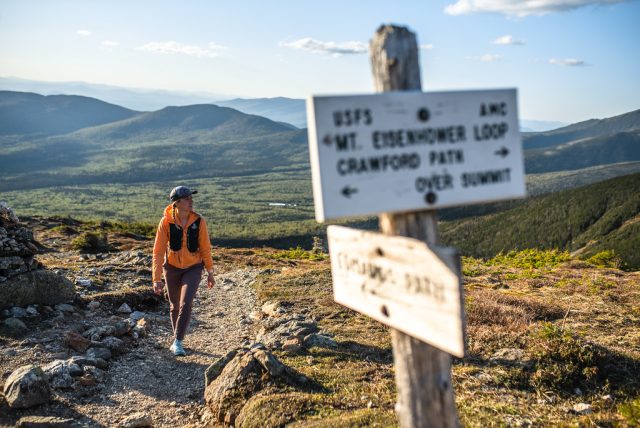
North Conway may have recently been crowned the best ski town in a 2024 USA Today poll, but this cozy village in northeast New Hampshire makes for a great road trip destination throughout the year. Long after the snow melts, visitors can enjoy majestic views of the White Mountains, unbeatable deals at North Conway outlet stores and adventurous outdoor fun.
Things to Do in North Conway
Photo courtesy of Mt. Washington Valley Chamber of Commerce.
Scenic Drives
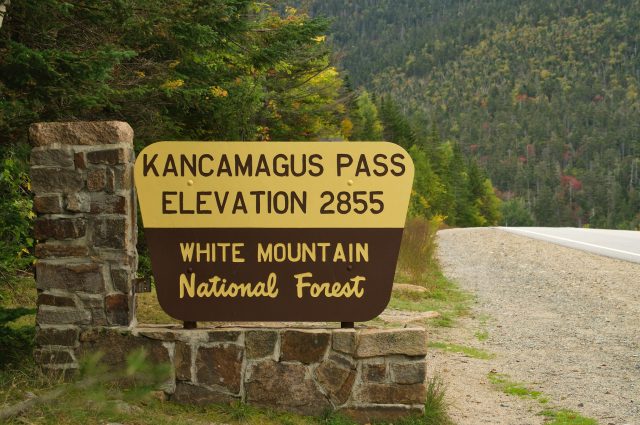
North Conway is surrounded by rugged terrain for hiking, but there are also less strenuous ways to enjoy the region’s sweeping vistas. The scenic Kancamagus Highway, also known as New Hampshire Route 112 or simply “the Kanc,” passes through the heart of the White Mountains and is a favorite road for leaf peepers in the fall. Stops along the highway offer opportunities for photos and information about the region’s history.
Conway Scenic Railroad Courtesy Photo.
Train Rides
Train fans will enjoy the Conway Scenic Railroad, which offers two train tours to see the splendor of the White Mountains and experience the golden age of rail travel. The Mount Washington Cog Railway is a bit more vertical rail experience, climbing Mount Washington — the highest peak in the northeastern U.S. — and allowing passengers to ascend three climate zones in less than an hour. Seasonally, travelers can also take the Mount Washington Auto Road to the summit and earn the ubiquitous bumper sticker.
Photo courtesy of Mt. Washington Valley Chamber of Commerce.
Outdoor Adventures
North Conway offers many outdoor adventures, both for trail runners and for strollers. The mountain-fed cascading falls of Diana’s Baths are stunning, and accessible by a relatively flat gravel path, but also offer opportunities for light bouldering. Nearby, Echo Lake State Park offers easy and moderate hiking paths, and is also a great place for a family picnic or swim in the summer.
Mountain bikers can enjoy some 1,200 miles of trails in the area, and there arelocal outfitters for renting a bike and gear needed for the bumpy rides. For tubing and kayaking, the nearby Saco River beckons, and North Conway’s Northern Extremesoutfitters can provide rentals, while other area outfitters can provide rentals and tours, as well.
Younger outdoor enthusiasts might especially enjoy Mountain Adventure Park. This attraction was created by Cranmore Mountain Resort to offer attractions when the ski season is over. Here, families can enjoy a mountain coaster, a zipline and a giant swing in the warmer months. A short drive from North Conway lies the magical world of Story Land, a storybook theme park for little ones. Think of it as a starter theme park for small children who may find Six Flags a bit much.
Ski destination communities often have indoor attractions year-round. North Conway is home to Kahuna Laguna, New Hampshire’s largest indoor water park. This park offers 40,000 square feet of water slides, a lazy river and splashing fun for all ages. The M&D Playhouse hosts live theater and music year-round and stages a full slate of crowd-pleasing shows in the summer.
If you time it right, you can marvel at the intricate locomotive world created and maintained by the North Conway Model Railroad Club on the grounds of the Conway Scenic Railroad; this attraction is run by volunteers, so check the website for hours before visiting. History buffs may want to pop into the local branch of the New England Ski Museum in North Conway, which offers a glimpse into New England’s storied skiing history.
Photo courtesy of Mt. Washington Valley Chamber of Commerce.
Shopping
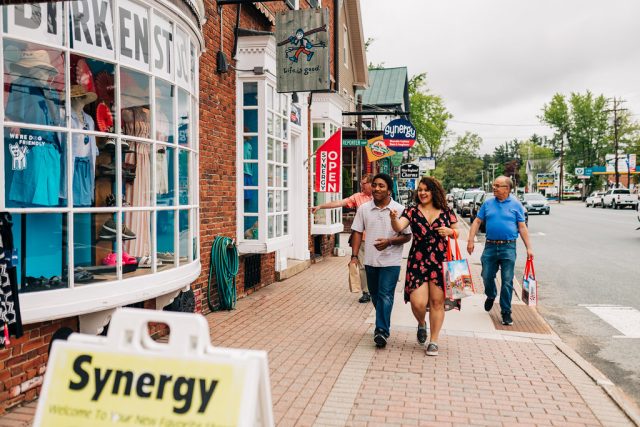
The Granite State levies no sales tax, making it a popular destination for shoppers. North Conway outlet stores are a favorite for those seeking bargains on high-end name brands. Settlers Green and Settlers Crossing offer dozens of nationally known stores for hours of endless shopping opportunities.
Be sure to visit some of the quirkier, local shops dotting the village. A favorite for visitors is Zeb’s General Store, which welcomes visitors with old-time charm and a mouthwatering candy counter.
Photo courtesy of Mt. Washington Valley Chamber of Commerce.
Dining
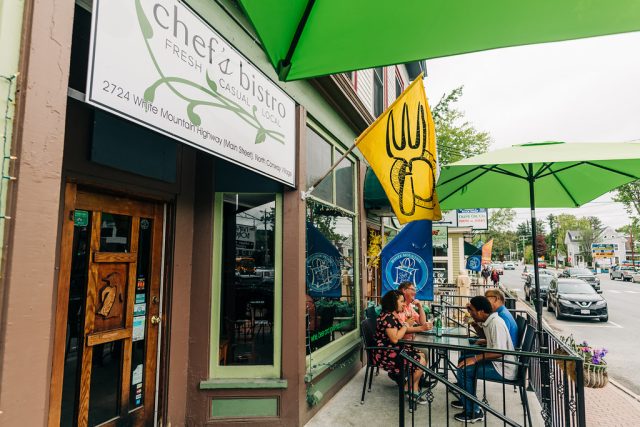
After a day of exploring, North Conway restaurants stand ready to feed hungry travelers. Muddy Moose Restaurant & Pub is a popular eatery with a large outdoor patio. For something more intimate, Peach’s Restaurant serves creative breakfasts and lunches in a homestyle setting. If you see a yellow flag outside a restaurant, it means the restaurant is a Valley Original, one of the region’s signature restaurants with a reputation for great food and service.
Although it is known as an unforgettable ski town, North Conway is like a new destination for visitors to explore with each passing season.
North Conway Hotels
If you are looking for places to stay in North Conway, consider the newly opened Cambria Hotel North Conway and the award-winning Comfort Inn & Suites. Both lodgings are AAA Three Diamond designated and offer a comfortable basecamp central to the area’s activities, with many family-friendly amenities. While both have pools, Cambria Hotel North Conway also has a restaurant on site, while the Comfort Inn & Suites sits just steps away from a popular mini-golf course.
The concept of a dupe — a product with similar traits to a high-end or expensive item but sold at an affordable price — has so far been synonymous with clothing, makeup and even living room furniture. Now, dupes have entered the travel space.
If you’re on a budget, a European vacation may not be in the cards right now, or you may simply prefer to travel closer to home.
Fortunately, North America is full of places to visit that have the feeling of highly coveted destinations without massive price tags. Consider these destination dupes for your next getaway.
Instead of the French Countryside, Visit Quebec City, Canada
Known as the “Capital of New France,” it’s no wonder where Quebec City got its European charm. Indeed, up until 1763, Quebec was a French settlement and has since kept up the French ambiance with its beautiful centuries-old architecture, French-inspired cuisine and a French dialect that, to this day, is the primary language.
Don’t miss a visit to the Place Royale neighborhood, a quaint little village that was also featured in the film “Catch Me If You Can,” as well as Montmorency Falls and, of course, the iconic Fairmont Le Chateau Frontenac hotel, which sits elegantly atop the hill at the city’s center. The Petit-Champlain district is also the perfect area to take a stroll reminiscent of shopping in France with decorated storefronts and plenty of cafes to rest at while enjoying an espresso and croissant.
Virginia winery vineyard in the heart of the Blue Ridge Mountains.
Instead of Tuscany, Visit Virginia Wine Country
Although there are more than 4,000 miles between Virginia and Italy’s Tuscan region, the two places have a few unexpected things in common — mainly, breathtaking rolling hills against a rustic countryside backdrop dotted with vineyards. So, not so dissimilar after all.
Virginia’s wine country stretches across the Blue Ridge Mountains, Appalachia, the Shenandoah Valley and beyond, garnering an enormous breadth of offerings. You don’t have to love wine to enjoy it, though. Anyone who appreciates slow living and unique agricultural experiences will be taken with the area’s rich history, exceptional food and stunning landscapes.
Find your way around using the state’s wine guide as a start. Or settle in one place that has it all, like The Farmhouse at Veritas in Afton for accommodations, dining and more.
Bavarian culture has found a home in Leavenworth, where the sights, sounds and flavors of Germany are front and center. Not only do the town’s buildings resemble those of a German village, but they operate accordingly, too.
The shops and restaurants in Leavenworth all have a semblance of Germanic culture, like The Hat Shop, where you can purchase hats (naturally), plus handcrafted wooden toys and souvenirs. When you’re ready for lunch, you’ll have your work cut out for you as you decide between 36 eateries — most of which serve authentic German classics like schnitzel, pretzels, bratwurst and more.
Visiting Leavenworth at any time of year will grant you a memorable stay. The spring and summer seasons are ideal for hiking the surrounding mountains, biking and horse-drawn carriage rides, while fall and winter are the time to experience Oktoberfest and see the village covered in snow and decorated for the holiday season.
The iconic fountain at Forsyth Park in the heart of Savannah.
Instead of Barcelona, Visit Savannah, Georgia
Savannah is a tapestry of history and charm akin to the never boring and always vibrant Barcelona, Spain. After all, a city covered in Spanish moss and cobblestone streets is bound to emit such an analogous feeling.
Savannah’s old-world allure emanates from its architecture, which — while technically Victorian — signals a compelling resemblance to Barcelona with bright colors, elaborate designs and total grandeur. Like Barcelona’s urban design, Savannah’s historic district is organized in a grid-like layout, inviting visitors to easily explore and gather in the plentiful squares to socialize or relax.
Culinary experiences in Savannah offer a taste of Southern hospitality with a touch of international flair, echoing Barcelona’s own renowned food scene. Create your own tapas experience by sampling all there is to offer. Make sure to visit the city’s most beloved gems like the Spanish-style Mercer Williams House Museum and iconic Forsyth Park.
Row of Danish-style houses in Solvang, California.
Instead of Denmark, Visit Solvang, California
Sitting just north of Santa Barbara, California, Solvang is a picture-perfect facsimile of a quaint Danish village. Founded by three Danish immigrants in 1911, Solvang has since become known as the “Danish Capital of America” for not just its windmills and half-timbered buildings, but its charming glimpse into true Danish culture.
Visiting Solvang allows you to immerse yourself in some of the best Danish traditions, starting with its food. From smorrebrod (open-faced sandwiches; try The Bit O’Denmark’s offerings) to flodeboller (chocolate-coated cream puffs), there are so many newfound favorites to be discovered.
Mirroring the magic of its European counterpart, Solvang has plenty of beauty to behold and things to see and do, from cycling through the rolling hills of the surrounding Santa Ynez Valley to shopping for authentic Danish treasures and even getting to see the Little Mermaid statue in the center of town that pays homage to the original statue in Copenhagen.
Walt Disney World is one of the hottest vacation spots in the world. That means it can get busy — and expensive. But if you have some insider tips, you can make sure your vacation is the most magical experience ever. Check out these Walt Disney World hacks that you and your family can use to make the most of your trip.
Save on Walt Disney World park tickets with AAA Tickets.
Don’t: Wait in line for character meet-and-greets
Character meet-and-greets come with wait times. And that’s valuable time you and your family could be spending enjoying the rest of the attractions at the parks, like the rides, parades and shows. Waiting in lines for character after character can start to add up – and while the photo-ops are nice, they’re nothing like riding Space Mountain. It’s a huge drain on your theme park time.
What kind of Disney guest are you?
Do: Visit one of the many character dining options
Character dining is one of the best ways to meet your favorite Disney personalities. Walt Disney World is full of options where you and your family can meet characters while you eat. There’s no waiting in lines, no wasted time, fantastic photo-ops and amazing interactions. Some options include meeting princesses at Epcot’s Akershus Royal Banquet Hall, Mickey and friends at Chef Mickey’s, Cinderella and friends at 1900 Park Fare and more. Check with the restaurant in advance and make sure that your favorites will be there when you make a reservation.
If you don’t need to bring something like a diaper bag, special food items or important medicine with you, it’s best to leave the backpack at home. It’s a huge pain to walk around with a bulky bag all day, and it can be hard to squeeze it onto the rides with you if you don’t have anyone to hold your stuff.
Do: Travel light
A small purse, bag or even a fanny pack will do. If you’re nervous about going to the parks without a water bottle, don’t fret! A lesser-known Disney hack is that you can get a free glass of ice water at any food service location in the park. It’s a lot more refreshing than carrying around a sweaty water bottle all day.
Don’t: Assume things haven’t changed
If you show up at the parks looking for free FastPasses, you’re going to be disappointed. FastPass+ used to be the law of the land in Walt Disney World, but the system has been replaced with pay-to-play Lightning Lanes.
Do: Adapt to new systems early
Get ahead of the game by doing your research beforehand. If you learn the rules of services like Disney Lightning Lane quickly, you’ll be able to use it to your advantage.
Disney is always introducing new and exciting changes, but it could start to feel overwhelming. To help you navigate, AAA has travel advisors who specialize in Disney vacations; it’s their job to stay on top of all the latest happenings and help you plan.
Don’t: Follow the crowd
Many people entering theme parks will automatically go to the right, meaning that those parts of the park – like Tomorrowland in the Magic Kingdom – will get more crowded earlier in the day.
If you go to the left in the Magic Kingdom, toward Adventureland, you’ll be able to hit a lot more rides in your first couple of hours in the park. Most theme park guests try to get to the most popular rides early in the day, but the long lines can waste time. (If you get to the park as soon as it opens, you’ll want to check out these rope drop tips.) If there’s a popular ride you want to go on, try getting in line a couple of minutes before closing at the end of the night. There are several benefits to this option. First, if you’re in line before the park closes, cast members must let you ride the ride. Second, this means you’re not missing anything, no matter how long you wait. Third, posted wait times at the end of the day are usually inflated to discourage guests from getting in line, so the actual wait time might be way faster than the posted wait time. And finally, you’ll miss the huge crowd of people all leaving the park at the same time.
Don’t: Use Lightning Lane access on shows and parades
Everybody is going to get to see the show at the same time, so there’s really no reason to use one of your Lightning Lane choices on something like that. You might get slightly better seats, but it’s not really worth it.
Do: Schedule your Lightning Lane choices early in the day
If you use up your choices earlier in the day, you have more time to keep picking more and getting more Lightning Lane rides throughout the day.
Plan, book and save on your next Disney vacation with a AAA.
Do you have any Disney World hacks? Share them in the comments below.
This article has been updated and republished from a previous version.
Home renovations are both exciting and stressful. They improve the value of your property, not to mention your overall quality of life. But from setting a budget to vetting general contractors, there’s a lot to think about when beginning a new project.
It can be easy to overlook how your home insurance factors into this equation. But changes like a new kitchen, home additions and plumbing can all affect the home insurance coverage you need. It’s important to weigh possible premium increases into the overall cost of your renovation.
Fortunately, some types of renovations can actually lower the cost of insurance.
“It’s important to keep your agent informed about changes you make to your home for a lot of reasons,” said Ashley Kehew, director of insurance at AAA Northeast. “Plus, many times there are renovated-home discounts you are eligible for as well!”
Here are five of the most common home updates and how they can impact your insurance.
New Bathroom or Kitchen
Kitchen and bathroom renovations are popular home updates that often increase the overall value of your home. However, you’ll likely see the cost of your dwelling coverage increase, which in turn, increases your premium. Improved fixtures (such as a luxury new tub or faucets) may also exceed your personal property coverage limits, meaning you’ll need to extend them.
Note that small-scale changes (such as a new carpet or updating your windows) typically don’t require a policy change.
Home Additions or Home Office
Home additions can affect insurance coverage both during the renovation and after it’s complete.
During construction, you may need additional coverages, such as sewer backup coverage, if your renovation may affect your plumbing, or uninhabited home insurance, if you’re vacating the property during renovations.
An insurance agent can help you determine the coverage you may need during construction based on the scope of your project. Be sure your contractor has workers’ compensation or liability insurance, or you’ll be held liable if they sustain an injury on your property.
If your addition includes a home office, you may need to purchase a separate home office policy or endorsement. This increases the limit on your existing policy to include business property coverage. Be sure to notify your agent if you have increased business risk in your home. Remember, a portion of your insurance policy is always determined by your home’s square footage. This means that home additions almost always increase your premiums.
Upgrading Your Roof
Not only does upgrading your roof increase the overall value of your home, but you’ll be prepared to withstand common risks, such as extreme weather. As such, insurance premiums typically decrease.
If you live in a hail or hurricane-prone state, and your roof includes built-in loss-mitigation measures (such as hurricane straps or impact-proof shingles), you can often look forward to additional insurance discounts.
Building a Pool
A swimming pool can be an attractive feature that drives up home value. However, insurance companies consider pools an “attractive nuisance” and a significant liability risk. Add a slide or a diving board and expect your premiums to increase even more.
Some insurance providers may require you to install a locking fence around your pool or request that you purchase an umbrella policy. In certain instances, providers may deny coverage altogether. In almost all instances, you’ll need increased liability coverage.
Be mindful of pool landscaping during the design phase. For example, in-ground and above-ground pools are typically categorized differently by insurance companies.
Updating Your Electric or Plumbing
Bringing plumbing and electrical systems up to code lowers the risk of flooding or electrical fires, typically resulting in lower insurance premiums. Though the upfront cost of rewiring a home is significant, the insurance payoffs can go a long way to balance the cost.
With updated plumbing and electrical systems, you may even find more providers are willing to cover you, allowing you to shop around for a lower rate.
Ultimately, the impact of a renovation on your home insurance depends on the type of renovation and your existing policy.
Work closely with an insurance agent before, during and after your home renovation. It’s good practice to inform your insurance agents of cost estimates, a projected timeline, a description of the work and permits and contractor agreements before you begin work. Failure to notify your insurance company of a renovation could result in a voided policy or a denied claim down the line.
“Imagine after years of planning, you finally renovate your kitchen to create your dream kitchen. You’d want it to be rebuilt exactly as it was if you had a loss, right? Not only do these things change your replacement cost coverage on your home, they can also change your liability risk.” Kehew said. “Your agent can help you evaluate your new insurance needs to make sure you are properly covered.”
The moment has arrived: Universal Orlando’s Epic Universe, the first new major theme park in the country in 24 years, is finally open. Currently in previews, Epic is open to the public with limited in-person ticket sales to Universal Orlando hotel guests.
The park officially opens on May 22, and it’s truly spectacular. The artful aesthetic design feels immersive to an unmatched degree. The character interactions are next-level. The food is an epicurean experience. And the technologically groundbreaking attractions will have you asking yourself, “How did they do that?”
As part of the estimated $7 billion project, Universal Orlando built three new hotels around Epic Universe, which all offer hotel guests early park entry and are within walking distance to the main attraction.
The Epic campus is about 4 miles from the rest of the resort, including Universal Studios, Universal’s Islands of Adventure and the other resort hotels, all of which are operated by Loews Hotels.
Here’s everything you need to know about the new Epic Universe hotels: Universal Stella Nova Resort, Universal Terra Luna Resort and Universal Helios Grand Hotel.
The first of the Epic Universe hotels to host guests, Universal Stella Nova Resort opened its doors on Jan. 21, 2025. Universal describes the hotel as “inspired by the infinite vastness of the unexplored universe.”
On the outside, the futuristic building gleams with multicolored, jewel-toned metal tiles that reflect the sunlight and sparkle from every angle. Once you’ve walked through the front doors, it’s as though you’ve gone through a portal into the outer reaches of the cosmos. The sleek white futuristic decor is accented by views of deep space, in large-scale recreations of real NASA images.
The 750-room property includes an outdoor pool area with a hot tub, a fitness room and an arcade. For food and drink options, there are indoor and outdoor quick-service restaurants, an all-day pool bar and an evening sit-down bar. The indoor Cosmos Cafe has options like the Stella Burger (a double cheeseburger with Stella sauce) and Hot Honey Chicken Pizza. At the evening Nova Bar, there are interstellar-themed libations like the Nebula, a mezcal cocktail with strawberry-rose syrup and lime, garnished with a real rosebud.
The starlit hallway at Universal Stella Nova Resort. Photo courtesy of Julie Tremaine.
The rooms all have two queen beds and sleep four guests. Rates are generally in the lower $200 range but can be up to about $350 in times of high demand. Inside the rooms, the decor is evocative of a luxury spaceship that doesn’t yet exist in real life, with a blue and white color palette and more interstellar artwork and lights creatively hidden inside paneling, adding to the high-tech feel. On the highly coveted third floor, a starlit hallway has a night sky overhead, with moving, twinkling lights.
The sister property to Stella Nova, Universal Terra Luna Resort opened on March 25, 2025. The two Prime Value hotels, both a short walk or shuttle from Epic Universe, have similar layouts and identical amenities. The main difference is that, while Stella Nova has an interstellar theme, Terra Luna features, “terrestrial tones and sweeping curves to inspire thoughts of exploring new worlds,” according to Universal Orlando.
Terra Luna has the same luminous, multicolored exterior, but inside, there’s a different kind of futuristic vibe. The lobby is gleaming white, with a recurring circular theme that evokes new and undiscovered planets. Instead of Stella’s NASA deep space images, Terra has a futuristic three-dimensional holographic projection of a distant world. Its transportive third-floor hallway has a mirror installation evoking a galaxy of glowing celestial bodies.
Universal Terra Luna Resort pool. Photo Courtesy of Julie Tremaine.
Just like its sister property, Terra Luna has 750 guest rooms, all with two queen beds, with the same pricing structure. The hotel’s indoor restaurant, Omega Cafe and Market, serves breakfast, lunch and dinner. The menu includes options like the Big French Dipper, with shaved ribeye steak, provolone, sauteed onions and au jus, and the Earth Shake Fried Chicken Sandwich, a pickle-brined chicken thigh with coleslaw, pickles and ranch aioli. At Luna Bar, its evening cocktail lounge, there are “lunar libations” like the Hyperion, with bourbon, chipotle pineapple syrup and lemon, and the Io, which has Hendrick’s gin, yuzu liqueur, lychee puree and falernum.
Originally slated to start hosting guests on May 22, 2025, Universal surprised everyone by opening the Helios Grand Hotel more than a month ahead of schedule in mid-April.
True to its name, the hotel is, in a word, grand. Its gleaming copper domes rise above the new theme park, starting the sense of immersion before you even arrive. Helios is a Signature property, the first to open at Universal Orlando since Loews Portofino Bay Hotel in 1999.
The property itself is stunning, with many impressive amenities, like the pool with cabanas. But by far, the biggest perk is that Helios is the only hotel at Universal Orlando (or Walt Disney World, for that matter) to offer guests direct entrance into the park. You could, in theory, wake up 10 minutes before Epic Universe opens for the day and still be among the first inside the gates. That kind of convenience, especially in the middle of a hot Orlando day when you need a break, is unmatched.
The 500-room hotel offers standard rooms with two queen beds, king suites, club-level rooms and premium suites, many with views directly overlooking Epic Universe. The “How to Train Your Dragon”–themed kids suites have one bedroom with a king bed, one bedroom with twin beds and a sleeper sofa. Standard rooms range from about $500 to over $800 per night in times of highest demand.
Even if you can’t swing the hefty price tag to stay at the Helios Grand Hotel, there’s a lot to see and do there. The Mediterranean-inspired property weaves Epic Universe’s celestial theme throughout the experience. Inside the park, enormous golden statues of Helios, the Greek god of the sun, and Luna, the Roman goddess of the moon, preside over Celestial Park, Epic’s central land. As night falls, a show over the park’s lagoon has Helios handing over the day to Luna.
As you walk into the lobby of the hotel, massive floor-to-ceiling windows provide a view of the Helios statue and Celestial Park beyond. And from the park-view rooms, all five lands are easily visible. The mythological theme extends through the property, with blue, white and gold decor throughout and animated murals tucked away in surprising places.
Bar Helios. Photo courtesy of Julie Tremaine.
On the hotel’s main level, Flora Taverna serves Mediterranean-inspired fare for breakfast, lunch and dinner, and Aurora Market offers grab-and-go options and a walk-up lobby bar. On the top floor, Bar Helios is easily the crown jewel of Universal Orlando’s dining options. The tapas-style restaurant serves creative cocktails and inventive fare and offers a 360-degree view. The most coveted tables are on the outdoor patio overlooking Epic Universe, but seats inside underneath the soaring celestial dome don’t disappoint. Both Flora and Bar Helios are open to outside guests with reservations.
Universal Orlando’s other Signature properties — Hard Rock Hotel, Portofino Bay and Loews Royal Pacific — all offer free express passes for hotel guests, which is a huge value that makes the higher room rate a much better financial proposition. In its early opening, Helios Grand isn’t offering that perk but likely will after the initial rush of guests has passed.
All three of the Epic hotels offer free shuttle transportation to all Universal parks and CityWalk, free package transportation to hotels and room charge privileges anywhere at Universal Orlando using a hotel key.
It’s not uncommon for a hailstone to be the size of a golf ball and fall to the ground at nearly 100 mph. Needless to say, that piece of ice can cause major damage to your vehicle. There were 5,374 major hailstorms in the U.S. in 2024, According to the National Oceanic Atmospheric Administration. The opportunity for your vehicle to be damaged is clearly real. But that begs the question: Does car insurance cover hail damage?
What Exactly Is Hail?
Hail is a solid type of precipitation consisting of balls or irregular lumps of ice. A hailstone is formed during a storm when strong updrafts carry water droplets high enough into the atmosphere that they freeze. Once the ice becomes too heavy, it falls to the ground.
Hailstones can range in size from a half-inch to four inches in diameter. According to the NOAA, the largest hailstone ever recorded fell in Vivian, South Dakota in 2010. It was eight inches in diameter and weighed nearly two pounds.
Hailstorms usually occur during the spring and summer months. The warm temperatures and high humidity during this time of year help fuel storms that create hail.
Does Car Insurance Cover Hail Damage?
The answer to this question depends on the type of car insurance you have. If you own comprehensive coverage, then yes. However, if you have basic liability or collision coverage, then your vehicle will not be protected from hail damage.
Comprehensive car insurance will cover your vehicle from risks including hail and storm damage, vandalism and even theft. Keep in mind that comprehensive coverage does carry a deductible. Policyholders may want to review the deductibles they currently carry for this coverage, as they are responsible for that portion of the claim.
Liability coverage, on the other hand, is used to pay the other driver’s medical bills and property damage should you be at fault in a crash. It does not cover any damage to your own vehicle, regardless of how the damage was sustained. Collision insurance will cover damage to your car but only when it is the result of a crash.
Almost all states require some sort of liability insurance, but comprehensive coverage is optional.
Learn about comprehensive auto insurance coverage through AAA.
How to Fix Hail Damage
If the hail results in just a few scratches, you may be able to repair it yourself. However, it’s common for hail to break windows and create major dents in the body of a vehicle. Even if the damage seems minimal, it is best to repair it, especially if you plan on reselling the car. A car can lose significant value if its aesthetics are lacking. The best course of action to repair hail damage is to take your vehicle to an auto body shop, which can remove the dents and cover any scratches.
If the damage is done to your windshield or other windows, you should get it repaired immediately, even if it is minimal. Not only is a cracked windshield unsightly, it also impacts visibility, structural integrity of the car and the technology for advanced driver assistance systems.
How to Prevent Hail Damage
Although your car insurance may protect you from hail damage, it’s best to protect your car from any damage in the first place.
Of course, if you have the opportunity to put your car in a garage or under some other sort of covered parking, you should do it. If you can’t find a roof to park under, look for a tall building and park as close to the wall opposite the direction of the storm (i.e. If the storm is coming from the east, park on the west side of the building.) The storm’s strong winds should blow the hail over the vehicle.
However, you may not always have the option of finding shelter for your vehicle. If that’s the case, try placing blankets over the top of the car. Just make sure you secure them with duct tape or another type of fastener. Hail storms are usually accompanied by high winds that can easily knock the blankets off.
Some companies even sell covers specifically designed to protect your car from hail. If you live in an area that gets hit often with hail storms, you may want to consider investing in one.
So, you’re engaged. Congratulations! Now you must decide where to get married — a place that effectively signifies the beginning of your lives together. But no pressure.
Some folks get married in a church, others in a backyard or even a barn. But if you’re looking for something more along the lines of white sandy beaches and crystal-clear blue waters, then a destination wedding is the perfect venue for you. But where to start?
Planning a wedding is one thing, knowing how to plan a destination wedding is another. While it’s an exciting adventure that allows you to combine your dream wedding with a memorable vacation experience, the process behind any destination wedding can be overwhelming without proper planning. We’ve put together a step-by-step guide to help you plan a destination wedding that reflects your unique love story and ensures a truly unforgettable celebration.
The first step to planning your destination wedding is, well, picking the destination! When looking around at your options, consider things like your personal preferences, budget and the overall ambiance you’re looking for on your special day. That could be a tropical beach, picturesque countryside, a charming cityscape or anything you dream up. Assess each location’s accessibility, legal requirements and local resources while also taking into account factors such as climate, accommodation options and local attractions to ensure your chosen location aligns with your wedding vision.
Create a Guest List
Next up on the destination wedding planning list: Who’s coming? Decide on the general size of your wedding party and make a preliminary guest list. It’s crucial to consider the travel expenses and availability of your loved ones when finalizing the list. Be sure to inform guests well in advance, allowing them ample time to make travel arrangements and plan accordingly. Remember, a destination wedding often entails a more intimate gathering, so carefully consider who you want to share this special day with.
Determine a Budget
Establishing a realistic budget is essential for any wedding, but even more so for a destination wedding. Consider costs such as travel, accommodation, venue, catering and local vendors. If your destination is outside the U.S., be mindful of currency exchange rates, as well as any additional fees associated with international transactions. Set priorities and allocate funds accordingly to ensure you can create the wedding experience you envision while staying within your financial means.
Our expert travel planners have invaluable knowledge about destinations around the world and can seamlessly guide you through legal requirements, selecting vendors, navigating potential challenges and sourcing the best local services within your budget. Access to AAA’s travel advisors is part of your membership, so there’s no fee to utilize their service.
Having an Agent of Honor on your side also makes it easy to tailor the experience for you and your guests by organizing local guided tours or excursions for guests in their downtime, for example. Your Agent of Honor can also serve as an event coordinator at your wedding, if you choose, to ensure everything goes according to plan. Plus, as a AAA member you get exclusive member pricing and even discounts on group travel.
Planning a destination wedding requires meticulous attention to detail, thoughtful organization and careful consideration of logistics. By selecting the perfect location and utilizing the expertise of a AAA Agent of Honor, you can create a remarkable celebration that reflects your love story and offers an unforgettable experience for you and your future spouse.
For Kristina Von Trapp Frame, the “Sound of Music” isn’t just entertainment, it’s part of her history. And while her famous family name generates some unusual social interactions (“Everyone asks me if I can sing — that’s a ‘no’” she says), when it comes to visiting the shooting locations used in the 1965 film, the granddaughter of Maria Von Trapp becomes a fan like everyone else.
Celebrating the ‘Sound of Music’ in Austria
“I am very grateful when I’m invited to Austria and Salzburg because it is such a beautiful country with welcoming people,” Frame said, fresh off a visit to attend the opening of a new “Sound of Music” exhibit at Salzburg’s Schloss Leopoldskron, a rococo palace that stood in for the home of Capt. Georg Von Trapp in the movie and is now a hotel.
The exhibit is part of a yearlong celebration of the 60th anniversary of Rodgers and Hammerstein’s musical adaptation of Maria’s book about her tutelage of the singing Von Trapp children, her romance with Georg and the family’s escape from the Nazi takeover of Austria and eventual resettlement in America.
Winner of 10 Academy Awards, including Best Actress honors for Julie Andrews as Maria, the “Sound of Music” was dismissed as schmaltz even by actor Christopher Plummer, who played Georg in the film. Regardless, the movie remains a top draw for American visitors to Austria in general and Salzburg in particular, where Panorama Tours runs multiple daily bus trips to sites associated with the film and the real-life Maria and the Von Trapp family.
“Many of the tour leaders have also visited us in Vermont so they can explain what happened to the family after we fled Austria,” Frame said. A new “Sound of Music” museum opening in Hellbrunn — another Austrian filming location — also aims to give a more complete telling of the Von Trapp story, which differs quite a bit from the Hollywood version (for example, the family actually fled Austria by train, not an over-the-mountains trek to Switzerland).
Founded in 696 A.D. on the site of an even older Roman settlement, the city of Salzburg is very much a costar in the “Sound of Music”: Some of its most famous historic sites appear in the film, including the circa 1736 Schloss Leopoldskron, the Felsenreitschule, or Summer Riding School, and the Mirabell Gardens, where Maria and the children sang “Do Re Mi” around the fountain.
Recalling the puppetry scene in the movie, the Salzburg Marionette Theatre — a UNESCO World Heritage site — will present its own version of the “Sound of Music” throughout 2025, as well.
Fact and fiction blend perfectly at the Nonnberg Abbey, where the real Maria (Kutschera) was a novice before being instructed by her abbess to serve as the baroness to Capt. Von Trapp. The nunnery also appears in the movie, both in the opening scene and later when the song “Maria” is staged in the courtyard. Show up early (6:45 a.m. to be precise) for the unique opportunity to hear modern day “Ave Marias” in the Nonnberg Abbey Church, sung by the nuns’ choir.
Outside of the city center, the Hellbrunn Palace is now home to the relocated gazebo where Liesl and Rolf sang “16 Going On 17” and the Captain and Maria performed the romantic “Something Good” duet.
Of course, Salzburg’s history doesn’t begin and end with a midcentury American musical: The city is at least equally famous as the home of Wolfgang Amadeus Mozart, who was born here in 1756. Both the Mozart residence on Makartplatz and the Mozart birthplace on Getreidegasse are museums, and the St. Peter Stiftskulinarium — reputedly the oldest restaurant in Europe — hosts candlelight Mozart dinners with live Amadeus Consort Salzburg performances.
Photo courtesy of the Von Trapp Family Lodge.
The Von Trapps in Vermont
Those who can’t make the journey to Austria can celebrate the anniversary of the “Sound of Music” a little closer to home. The descendants of Georg and Maria still run the AAA Three Diamond designated Von Trapp Family Lodge in Stowe, founded 75 years ago this year.
Started as an Austrian-style alpine inn, the resort is credited with building the first Nordic (cross-country) ski area in the U.S., which still operates; a more recent addition is the excellent Von Trapp Brewery, which pairs authentic Austrian cuisine with traditional lager-style beers brewed on site. In addition to hearty cries of “Prost!,” visitors can celebrate the lodge’s anniversary with monthly events like a summer wine dinner in partnership with Austria’s Hopler winery.
Accuracy issues aside, Frame attributes the enduring popularity of the “Sound of Music” to its unexpected depth.
“I think that the movie does a good job of blending many different themes, and you recognize them when you are ready,” she said. “When you’re a child, you think the movie is only about children; when you are a teenager, you see the young love of Liesl and the mature love of Georg and Maria; when you are older you realize it’s about love of country and family values, and it’s actually quite a political movie.”
Plan your trip to Austria — or Vermont —with a AAA travel advisor. Travel advisor services are included with your membership at no extra charge.
Would you visit these “Sound of Music” landmarks? Tell us in the comments.
Driving can be expensive these days. As prices rise on everything from gas to auto parts, car owners are thinking more frugally. These AAA discounts and services can help you save on car costs like fuel, maintenance, rentals and more.
The main car cost we are all looking to cut is at the pump. With Shell Fuel Rewards, you can save $0.30 per gallon on your first fill-up, and at least $0.05 per gallon on every fill-up after that. You can use your AAA membership to sign up for Shell Fuel Rewards. The savings really add up!
Whether it’s for routine maintenance or serious repairs, you can take your car to one of the approximately 7,500 AAA Approved Auto Repair facilities around the country for trustworthy service and savings. AAA members can save 10% on repairs or maintenance. Find a location near you.
Is your battery busted? AAA Car Battery Service will come to you and test your battery to see if it needs to be replaced. The “all in one” battery prices include testing, delivery, installation and even recycling your old battery. Plus, AAA members can save on new batteries.
You are not locked into the auto loan you took out when you purchased your car. Refinancing allows you to pay off that original debt with a new, low-interest auto loan. These more-favorable terms can lessen your monthly payments or help you pay back the balance of your loan quicker. Learn more about AAA’s auto loan rates and apply for refinancing today.
You can sharpen your driving skills and save money when you take the nationally recognized AAA Defensive Driving Course. AAA members save on course registration fees, and depending on the state you live in, you could also qualify for an auto insurance discount. Register here.
Give your car some TLC with a visit to your nearest NAPA Auto Parts, where you can find car parts, tools, accessories and even repair services. AAA members can get 10% off auto parts and accessories at participating locations — plus, you’ll earn NAPA rewards points.
Whether you’re renting a car for travel or you need a ride because your car is in the shop, Hertz can get you behind the wheel for less. AAA members can save up to 20%, plus exclusive benefits and additional rewards.