Related Articles
Trending Articles
NEWEST ARTICLES
Subscribe to Your AAA Newsletter
Sign up and receive updates for all of the latest articles on automotive, travel, money, lifestyle and so much more!
Nobody likes having to pay tolls, and news of toll hikes rarely sits well with drivers. But the fact remains that tolls play a critical role in our roadway system. They provide significant funds to maintain and improve roads, bridges and tunnels.
Losing just a fraction of toll revenue can be financially damaging to agencies charged with overseeing said roads. Unfortunately, that is precisely what’s happening due to the growing trend of toll evasion. The last several years have seen an increase in the number of drivers attempting to evade paying their fair share of tolls.
Here’s how they do it and how authorities are cracking down.
Simply put, toll evasion occurs when a motorist illegally bypasses a toll without paying the proper fee.
It was a more difficult task back in the day, when each toll booth had a barrier gate that lifted only after the driver paid their fare or had their transponder read. But in recent years, many states have begun transitioning to cashless tolling. Instead of toll booths, these systems use an overhead framework of cameras and transponder readers.
If you have a transponder, the toll process is the same as before. If you drive through a cashless tolling system without a transponder, however, the cameras will take a picture of your license plate. That plate number is then matched to your registration. A few weeks later, a bill will be in your mailbox. The cashless tolling process helps traffic move more freely and improves driver safety. But it also provides toll evaders with an opportunity.
More and more motorists looking to get a free ride are obstructing their license plates as they pass through cashless tolling spots. This can prevent the cameras from picking up the number and, in turn, motorists getting billed.
Toll evaders use a number of creative ways to hide their license plates. Many try to muddy their plates with dirt, paint or grease. Others use plastic covers on their license plates that can distort the numbers when viewed at an angle. These covers are easy to find and even easier to install.
The increase in cashless tolling has brought with it an increase in toll evasion. In Massachusetts, more than 14,500 obstructed license plates were recorded by the state’s Department of Transportation over a roughly three-year period, from late 2016 to early 2020, according to Boston 25 News. Tinted license plates are legal in Massachusetts.
With tens of millions of dollars on the line, authorities are homing in on toll evaders. In May 2022, the New York State Police, New York City Police, New York City Sheriff, the Port Authority of New York and New Jersey and the Metropolitan Transportation Authority (MTA) announced a joint effort to crack down on toll evasion.
The efforts have been paying off. In 2024, the Port Authority issued more than 7,000 summonses for toll evasion and collected almost $18 million in unpaid tolls and related fees.
Now the MTA has another toll to monitor: congestion pricing. Three days after it went into effect on Jan. 5, 2025, the New York City Police Department logged 82 violations, arrested two people and took possession of 17 cars for attempting to evade the new law.
The New York City congestion pricing law requires drivers traveling into Manhattan south of 60th Street to pay a $9 toll on weekdays between 5 a.m. and 9 p.m., and on weekends from 9 a.m. to 9 p.m. Drivers pay through their E-ZPass transponders, if they have them. Otherwise, cameras capture the drivers’ license plates and bills are mailed to their homes.
The move is designed to reduce traffic in some of the city’s busiest areas and generate money to improve mass transit systems. Congestion pricing is expected to generate between $500 million and $800 million a year, according to the MTA.
Through increased enforcement and sharing of information, authorities can track down violators after the fact. If you evade a toll, it does not mean you have gotten away. By piecing together other images and videos, authorities can often identify your vehicle and, if so, will flag your car.
Every state has a law on the books requiring license plates to be both affixed to the vehicle and legible. Twenty-nine states require cars to have both a front and rear license plate. In Massachusetts, the law reads: “Plates shall be kept clean with the numbers legible and shall not be obscured in any manner by the installation of any device obscuring said numbers.” New York’s law goes one step further, specifying that license plates “shall not be knowingly covered or coated with any artificial or synthetic material or substance that … distorts a recorded or photographic image of such number plates.”
If you get caught breaking these laws, it will cost you. Citations for knowingly obstructing your license plate come with fines upward of $300. Repeat offenders can even lose their driver’s licenses and/or have their cars impounded.
What do you think about what can be done to prevent toll evasion? Tell us in the comments.
This article has been updated and republished from a previous version.
Identity theft is one of the most common types of fraud affecting consumers today. After obtaining another’s personal information or data, thieves use it to rack up credit card charges, apply for documents and even transfer property. Besides the financial losses, victims face months of stress as they clear their names, change passwords and resecure their personal information.
The best way to protect yourself from identity theft scams is to safeguard your personal information and know what to look for. While identity theft methods are always evolving, there are a few common threads. One certainty: Scammers focus on easy targets.
Here are some identity theft ploys to be aware of and ways to protect yourself all year.
Online shopping scams can consist of fraudulent websites, credit card fraud, gift card scams and hacking public Wi-Fi to get sensitive information. They are especially common during the holiday season when online shopping is at its height, and when shoppers typically overlook red flags.
Always make purchases on secure Wi-Fi networks or use a virtual private network (VPN) when one isn’t available. Only shop from trusted and familiar retailers whose website URLs begin with “https” to indicate they securely encrypt your information. Review your accounts and statements regularly to ensure no fraudulent action has taken place. If you see an unfamiliar charge, report it to your bank immediately for dispute.
It’s generally safer to use credit cards rather than debit cards for online purchases since credit card purchases aren’t tied to your personal funds. And as an added measure of safety, avoid storing your credit card information on shopping websites. Manually entering your account information may feel like a chore, but it’s worth the extra effort. If you lose a device, a cybercriminal could have easy access to stored account details to make fraudulent purchases or sell your account information.
This popular identity theft racket occurs when scammers send you an email disguised as a message from a legitimate business or organization in hopes that you will provide them with personal data such as account numbers, passwords or your Social Security number. These emails often are very cleverly crafted, using exact logos and return email addresses that seem legitimate.
Never click through links on emails unless you know the sender. Never send secure personal data in an email. If a business claims it needs to confirm your personal information, close the email and log into your account through the official website to update your information. You may also want to contact the business to confirm it did not send the email and alert staff to a potential scam.
You’ve heard the saying, “If it’s too good to be true, it probably is.” Keep this in mind when you get emails or phone calls suggesting that you’re about to be rich. Scammers will send out official-looking letters or emails with news of huge IRS refunds or lottery winnings – all you have to do is send them your bank account number so they can deposit the funds. Once criminals have your bank account number, they can do all kinds of financial damage.

The IRS only will contact you with a letter sent to your home address. Never give your bank account number to anyone you don’t know.
A thief can steal your personal information and use your identity to see doctors, obtain prescriptions or file claims with your health insurance provider. Not only does this scam cost insurance companies millions of dollars each year, but it could also affect your own medical records, treatment plans and possibly your credit score.
Ensure that your doctor’s office keeps medical records in a secure area. Ask for an insurance card without your Social Security number on it. Read insurance and medical statements regularly for any signs of abnormal activity.

Scammers pose as officials from your bank or credit card company and ask for your account numbers, passwords or pin numbers in order to update their records. Sometimes they will ask for the three-or-four-digit security number from the back of your credit card. Calls or emails requesting this information should never be trusted.
If you suspect a call is fraudulent, immediately ask for the person’s name and phone number. This may be enough to scare them off. Regardless, hang up the phone without giving them your personal data, and call your bank or credit card company right away.
You can take steps to protect yourself and your loved ones from identity theft. Here are a few more tips to evade scammers.
Are you a small business owner? Don’t leave your business uncovered. Sign up for small business insurance with AAA.
Have you ever been the victim of an identity theft scam? Share your tips for avoiding scams in the comments.
This article has been updated and republished from a previous version.
There are plenty of reasons why you might need to reserve a rental car. Maybe you’re going on a trip for business or pleasure, could use some help with a move or need an extra set of wheels for a few days.
Understanding the reservation system before renting a car can help you avoid unexpected bumps in the road. You don’t want to start your journey getting frustrated that the rental isn’t ready yet or finding out you need additional paperwork.
To help smooth the way, we run through each step of the Hertz car rental process, from choosing the right vehicle to booking, pickup and drop-off.
It’s easy to make your reservation with Hertz. You can do it:
Each step is straightforward. And don’t worry if you need help when booking online – just call Hertz and a representative will talk you through it.
When you reserve a rental car, start by selecting a pickup point. This could be in another city, state or even country. You’ll also need to designate the date and approximate pickup time. Then, put in your drop-off date and time and note if the location is the same as the pickup point.
From there, you will be able to choose the type of car to book, according to your needs. You’ll also be able to decide whether you want to prepay for the rental before you arrive or at the pickup location before you get the keys.
When you arrive at the Hertz counter or branch to pick up your car, there are a few things you should know to make your experience as quick and stress-free as possible.
Make sure you arrive with all the relevant information you’ll need:
The customer service advisor will need to see your driver’s license and credit card to make sure everything matches the booking.
Please turn up for your reservation on time. This ensures you’ll get everything you need within your slot, giving you enough time to ask questions, check your booking and identify any issues.
When picking up the car, it’s a good idea to check over the rental agreement before you sign and ask questions about any additional optional services offered, such as prepaid toll passes or prepaid fuel cards to get you around. It’s also recommended to walk around the vehicle and take note of any existing scratches or small dents. If you do find something, make sure it’s photographed and properly documented by the customer service advisor before you drive away.

Your trip is over and now back to reality. First things first, handing back the rental car. Before returning your vehicle to the Hertz branch or counter, it’s courteous to fill up the gas tank for the next customer.
Bring your vehicle to the agreed location, allowing plenty of time for traffic and end-of-rental checks. Any applicable fees or additional charges will be confirmed at this time. Once all the paperwork is done and the car has been checked, you’re good to go.
When you book your rental, you will get a copy of the reservation policies. These include how to change or cancel your booking, how to pay or get a receipt/invoice and what to do if you need a refund.
Any changes or cancellations can be done through your profile on the Hertz website. If you wish to change the card you’ll be using to pay for your reservation, the booking will need to be canceled and re-booked. Please try to cancel at least 48 hours before to receive a full refund.
Any refunds will be made within five to 10 working days back into the account for the card on file.
No, the primary driver and booking contact needs to be the person who will be picking up and paying for the car. You can add additional drivers if you need to in person.
Yes. If you no longer need the car or want to rebook with a different card, please do so at least 48 hours before pickup. Cancellation fees may be incurred if less than 48 hours notice is given.
Yes, advance booking ensure you’ll get the car you want, when you want it. It is always better to be safe than sorry.
If possible, try not to reserve a car first thing in the morning or just before the branch closes. Mid-morning or mid-afternoon are recommended.
The make and model of the car booked are not guaranteed, but a similar style will be provided.
Hertz will not cancel your rental car reservation; however, cancellation fees, late fees and no-show fees will be charged accordingly.
Learning about an auto insurance premium increase can be a bummer, especially if you’re a safe driver with a clean record.
Thankfully, there are steps you can take to limit hikes in your rates.
Avoiding accidents and speeding tickets is the most important part of averting an auto insurance premium increase. Motorists with tickets and crashes on their records are higher risks for insurance companies, and their premiums reflect that.
Speaking of safe driving, in some states taking a defensive driving course (like the AAA Driver Improvement Program) can earn you an insurance discount. Even if you don’t get a discount, the tips you learn can help keep you safe behind the wheel, which is a big part of managing insurance costs. Learn more.
Getting auto and renters/homeowners insurance through the same company is a recipe for savings. Most companies give discounts to customers who bundle their coverage.
Deductibles are what drivers are required to pay toward the cost of a claim before insurance kicks in. Many drivers who increase their deductibles see a drop in premiums because they’re limiting the costs their insurance companies will face following an accident.
The cost of repairing a vehicle after a crash factors into insurance premiums. It’s why a high-end sports car is likely going to be more expensive to insure than your everyday sedan.
Comprehensive and collision protection might make sense for newer cars (it may also be required for financed vehicles), but as cars get older and their values decrease, the expense of such coverage might not be worth it.
Adding a teen driver to your policy can be expensive, but many companies will give discounts to young drivers who are doing well in school. Your child must be a full-time high school or college student and maintain at least a B (3.0) average or equivalent.
Has your garage become more of a storage container than a place to house your vehicle? If so, think about spending a Saturday or Sunday cleaning it out. Some companies offer discounts to drivers who garage their vehicles.
Paying for your policy in one payment versus installments may get you a discount. Some companies also provide discounts to drivers who have monthly payments automatically deducted from their bank accounts.
In most states (excluding Massachusetts, California and Hawaii), having mediocre or poor credit can impact your premium.
A lot of drivers only talk with their insurance agents when they’re looking for a policy quote or after an accident, but regular communication with your agent can help make sure your insurance costs aren’t higher than necessary. AAA Insurance agents are ready to discuss these and other ways of getting you the right coverage for the right price.
Learn more about AAA Insurance.
This article has been updated and republished from a previous version.
When does second come before first? When counting street names.
No, this is not an Abbott and Costello routine. It’s a true, if hard to believe, fact. The most common street name in America is Second, followed by Third and then First.
While you’d presume there would not be a Second Street without a First Street, that’s not always the case. In many cases the numerical naming of streets begins with the number two, after the central roadway is given a name such as Main.
Speaking of which, Main is the seventh most common street name in America, and the second-most popular non-numerical name, following Park. Washington takes first place in roads named after people, while nature-inspired names are well represented — Park, Oak, Pine, Maple, Cedar, Elm, Lake and Hill all make the top 20.
Formulating a list of the most popular street names is not as cut-and-dried as it may seem. About six years ago, The Washington Post took a crack at it and the process revealed some interesting quirks about ranking road names. For example, should a Main Street that becomes South or North Main Street be considered one road or two? And what about a road that’s split by a park or some other sizable obstruction? Is that one road, or is it multiple roads depending on the number of its segments?
This article from BestLife uses the Post’s data to identify the most common street name in each state. And we noticed a trend across the Northeast. The most common street name in Connecticut, Massachusetts, New Jersey, New York, Rhode Island and Vermont is Park. Meanwhile, Main is Maine’s and Maple is New Hampshire’s.
Just remember: the Post didn’t count a North Main Street and South Main Street as separate roads if they were connected — so your state’s most popular street name might actually be Main if you have a lot of directional prefixes and suffixes attached to these streets.
This article has been updated and republished from a previous version.
Get ready to sport your red, white and blue as America booms from coast to coast with July 4th fireworks this week.
All around the Northeast, mesmerizing displays of bursting sound and color will rocket off into the night.
These are some of our favorites. Stake out a spot and watch the evening sky light up!
New Britain’s Great American Boom
Fireworks start time: 9:30 p.m., July 4
Price: $10 per car parking placard
Come to Willow Brook Park for New Britain’s Great American Boom. Pre-registration is required for the “drive-in style” show. A DJ dance party, novelties and concessions are also planned. The parking lot opens at 6:00 p.m. and closes to entry at 10:30 p.m.
Fairfield Independence Day Firework Show
Fireworks start time: 9:15 p.m., July 5
Price: Season Beach Sticker or daily pass for parking. ($50 per vehicle. Credit card only.)
Watch an exciting display from Penfield and Jennings beaches in Fairfield, Conn. The fireworks will start just after dark from a barge on the Long Island Sound. Local radio stations will be providing music and entertainment beforehand.

Fireworks start time: 9:15 p.m., July 2
Price: Free
Harborfest fireworks return to the Boston Inner Harbor on July 2. Viewers can catch the show from vantage points like Christopher Columbus Waterfront Park, Fan Pier, Flagship Wharf and more.
Boston Pops Fireworks Spectacular
Fireworks start time: 9:40 p.m., July 4. Concert starts at 7 p.m.
Price: Free
The beloved Independence Day tradition returns to the Hatch Shell on the Charles River Esplanade. The Boston Pops will put on star-spangled show that’s sure to be unforgettable. Guest artists will also be performing before a dazzling display of over 10,000 fireworks shoots into the night sky. Grab your spot early! This year’s much-anticipated event is sure to draw a crowd.
Gloucester Harbor Fireworks Display
Fireworks start time: 9:30 p.m., July 3
Price: Free
Get ready to see a flurry of fireworks go off above Gloucester Harbor. Visitors are welcome to set up chairs and blankets along the water and enjoy the show. The Horribles Parade takes place on the same day, starting at 4 p.m. at Gloucester High School.
Fireworks start time: 10 p.m., July 4
Price: Free fireworks. (Carnival game and ride prices vary.)
If you’re looking for one of the biggest Independence Day celebrations in New Hampshire, Gorham’s Fourth of July event takes the cake. From July 3 through July 6, there are several parades, a classic car show, a carnival, concerts and more. Plus, a July 4th fireworks display that will take your breath away.
Merrimack Fourth of July Celebrations
Fireworks start time: 9:15 p.m., July 4
Price: Free fireworks. (Other event prices vary.)
July 4th is an all-day affair in Merrimack. Early birds can start celebrating the holiday at 8 a.m. and participate in the Sparkler 5K Road Race. If you’re not one for sports, you can enjoy the July 4th pancake breakfast at 8 a.m., followed by parade at 1 p.m. Bands, military units, clowns, businesses and locals will all gather (rain or shine) to celebrate the holiday. Then, at 9 p.m., get ready for the main event when the Merrimack High School field will light up with a first-class fireworks display. Get there early and snag a spot on the lawn for the best views.

Fourth of July Fireworks Extravaganza at Seaside Heights
Fireworks start time: 9:30 p.m., July 6
Price: Free fireworks. (Seaside Heights parking, game and ticket prices vary.)
If you’re looking for a fun-filled 4th of July in the Jersey area, then take a trip to Seaside Heights. After a day spent relaxing at the shore, the July 4th Fireworks Extravaganza will dazzle over the oceanfront. Great views can be found anywhere on the Seaside Heights Boardwalk. Just remember, while the fireworks show is free, snacks, beach badges and other sunny-day activities will cost you. Plan accordingly.
Jersey City’s Fourth of July Festival and Concert
Fireworks start time: 9:25 p.m., July 4.
Price: Free
Get ready for good vibes and fireworks in Jersey City! Fireworks fill the sky with dazzling bursts of color with the Manhattan skyline as a backdrop. Spectators can see the show from both New Jersey and New York waterfronts. Top viewing spots will be along the Hudson River Walkway, from the north field at Liberty State Park and most overlook areas in The Heights. Parking is limited, so festival visitors are encouraged to arrive by foot, bike or public transportation.
Fireworks start time: 8 p.m., July 4
Price: Free
Returning for its 48th anniversary, Macy’s 4th of July Fireworks show promises to be just as spectacular as ever. This year, watch from home on NBC, streaming on Peacock or in-person in NYC. Folks can expect dazzling lights, fantastic colors and — of course — very big bangs. The show will honor America’s everyday heroes and feature music from vocalists, a military band and more.
July 4th Fireworks Spectacular at Jones Beach
Fireworks start time: 9:30 p.m., July 4
Price: $10 parking
If you’re looking to escape the busy Big Apple streets, Long Island has plenty of patriotic spirit! The July 4th fireworks display at Jones Beach State Park is bound to excite. Long Islanders can expect a dazzling 30-minute display. Nestle your toes in the sand and watch the night sky transform into an array of colors. As the fireworks burst and explode above the shore, patriotic music will help set the mood and celebrate the holiday. Get there early to avoid traffic and find a prime viewing location on the Field 4 beachfront (although any spot will likely have a great view).
City of East Providence’s Independence Day Celebration
Fireworks start time: 9:30 p.m., July 5. Gate opens at 6 p.m.
Price: Free
This July 4th fireworks display kicks off at Pierce Memorial Stadium with live performances by local musicians.
Fireworks start time: 9:30 p.m., July 3
Price: Free
Head to the town of Bristol to experience what they call “America’s oldest Fourth of July celebration.” First held in 1785, the well-loved tradition is still going strong. The fun starts in mid-June and features a list of events including fundraisers, contests and a concert series. The fireworks show over Bristol Harbor on July 3 is a highlight, followed by the annual Military, Civic and Firemen’s Parade on July 4.
No matter what state you’re in or where you’re headed, be sure to have a safe and happy holiday weekend.
Where are some of your favorite spots to view July 4th fireworks? Tell us in the comments!
This article has been updated and republished from a previous version.
Planning on hitting the road? Make sure to bring these road trip supplies with you.
Since our members are the root of everything we do, your feedback is important to us. Let us know if you run into any issues while playing, or share your ideas for future puzzles by emailing us.
The world’s leading online provider of hearing aids, hear.com, just launched its smallest and most powerful weapon against hearing loss. And it’s completely crushing the market with powerful German technology.
In the last couple of years, many of the world’s best hearing aid engineers have been working tirelessly on this top-secret project to develop a new technology that is so small and sophisticated that it truly changes people’s lives.
The result: hear.com has finally revealed its ultimate secret weapon that is smaller, stronger and smarter than ever before! It’s the revolutionary new Horizon IX device – and it will change your life.

Horizon IX hearing aids are as amazing and high-tech as the latest iPhones and Android mobile phones, and comes in two virtually invisible designs: the Mini and the Go.
Unlike the hearing aids of the past, this new device makes everything sound clearer, not just louder. It uses speech-processing algorithms to enhance a person’s voice while automatically reducing background noise. This means you can understand every word clearly, even in noisy environments like restaurants.

So, no more mumbling sounds or asking people to repeat themselves all the time. In fact, people who’ve tested this device report a sweeping improvement in speech clarity.
Horizon IX hearing aids allow you to have full control of your hearing from the palm of your hand. Adjust the volume with just a few taps on your mobile phone. Simply use the app to create a personalized listening experience for any occasion.

hear.com has partnered with over 2,000 hearing care specialists to ensure the new Horizon IX hearing aids are available across the U.S.
It’s really no surprise that this level of innovation is changing lives all over the world. People are experiencing the everyday benefits of this amazing device with hear.com’s 45-day no-risk trial.
Click here to get started today!
This article has been updated and republished from a previous version.

Do you know everything your AAA membership can do for you? From instant savings on gas to travel planning services, here are just some of the free perks, discounts and rewards that you can get right now.
AAA members can get free airport parking and exclusive savings at The Parking Spot. In addition to your everyday discount, AAA members score free reservations. Plus, join the Spot Club to access two free days of airport parking just for being a AAA member. Enjoy hassle-free travel perks on your next trip!
If you enjoy listening to audiobooks, then you’ll love getting a two-month free trial from Audible. With this offer, you will receive two free best sellers or new releases when you sign up. It’s a great way to discover new authors, catch up on popular titles or enjoy some literature on your commute.

One of the best perks of being a AAA member is complimentary Gold Status with the Shell Fuel Rewards Program. By signing up for free, you can save instantly on all your fill-ups. This is a great way to save money on gas, especially if you’re someone who commutes long distances or loves road trips. Imagine all the extra cash you could be saving just by using your AAA discount at the pump!
For music lovers, SiriusXM is offering AAA members a four-month, all-access free trial. Enjoy ad-free streaming music, sports, talk shows and more with this exclusive offer. You can never have too much music.
Switch to T-Mobile for the best value in wireless. AAA members get up to $200 in exclusive welcome rewards, plus additional savings and benefits.

Turn your travel dreams into reality. AAA members can take advantage of free AAA travel advisor services designed to simplify planning. Let our experts take care of the details and find you extra discounts and savings along the way!
If you’re looking for travel inspiration, TripCanvas is the source for members to plan and book their next vacation with ease, exploring destinations, activities and tips from AAA travel experts.
Members also have access to free online TripTiks, making every journey seamless and enjoyable.
And that’s not all! Watch the savings pile up with AAA Discounts.
Your AAA membership gives you access to so much more than roadside assistance. Learn about the services offered at your local branch.
This article has been updated and republished from a previous version
No one understands the importance of life insurance better than those who have needed it, usually in unforeseen circumstances. AAA life insurance agents are among those people. They know how much life insurance matters because of their own experiences and are wholly committed to helping others set up a solid plan for an uncertain future.
Here are some of their stories.
For Darius, life insurance is so much more than a product — it’s a passion.
“What motivates me to sell life insurance is knowing I’m helping give families peace of mind, and being a component in providing a little bit of light in a family’s time of need,” said Darius.
Seeing firsthand the tough situations that can unfold if someone is not insured, he makes sure to drive home the true importance of planning ahead for your loved ones.
“Life insurance is personally meaningful to me because I have seen the outcomes of not being insured within my own family,” says Darius. “Watching family members struggle financially after the loss of a family member made the grief harder to bear. Because of these experiences, I believe every family should have a [life insurance] policy.”
Jeff was a mortgage broker for nearly 30 years before coming to AAA, so he’s seen his fair share of unfortunate situations that life insurance could have helped avoid.
“I’ve gotten calls from past clients who lost their spouse and ended up needing to sell their home as their mortgage rate was now too high to pay off on their own. Life insurance would have prevented that,” said Jeff.
When he got his first term policy many years ago, Jeff didn’t really know anything about life insurance — only that it was the right thing to do with a wife, mortgage and children.
But now, after losing friends close to his age, he can truly appreciate its value. “One friend had life insurance and the other didn’t. I was able to see close up the difference it made on the family in both situations,” he said.
Looking back on his career, he’s happy to have been a part of such big, important life stages in people’s lives. “Helping people buy homes over the years was very rewarding,” he said. “My late-in-life career change protecting families in their homes is rewarding as well.”
Melvin’s mother was 76 years old and in relatively good health when she visited a doctor for a routine appointment in 2015. It’s still hard to fathom how she lost her life that day.
Melvin was at work when his brother called to tell him that his mother was sick and that he needed to come to the hospital right away.
“He wouldn’t tell me what happened as he knew I had a 45-minute drive and would be too upset. I didn’t find out until I got to the hospital that she had a heart attack at the doctor’s office,” Melvin said.
His mother fell into a coma and never returned.
Of six children in the family, he and his brother were the only two living in-state, so the responsibility of making final arrangements fell on them – a funeral, cremation and other matters totaling about $6,500. That’s when they found out that their mother’s life insurance coverage had lapsed.
They were no more prepared for these unexpected expenses than they were for their mother’s passing. It was a strain for Melvin, who had his own family to take care of.
“I learned that it is important to have a plan in place for these moments. If there was life insurance, we wouldn’t have had to worry about the financial burden at such an emotional time,” said Melvin, who became a life insurance agent in 2018.
“It became important for me to help as many families as possible avoid that hardship,” he said.
As a registered nurse in mental health care for 20 years, Melissa recognizes how illness and death of a loved one can impact emotional well-being.
Dealing with grief is challenging enough, never mind the financial stress that often accompanies it.
“When a loved one passes away, there are numerous and sometimes unexpected expenses. This can be very challenging for a family that is grieving,” said Melissa, who left nursing for more family time before entering the health and life insurance field a few years ago.
“My role can help people and families navigate that part of life with a little less worry,” she said. “My hope is that my clients can focus more on the important things in life and worry less about the future.”
The important things can vary between families or depending on a person’s point in life. That’s why Melissa says life insurance is not a one-size-fits-all arrangement.
“At AAA Life, we have the unique opportunity to get to know our clients and design policies that fit them and their wishes best. I consider it a privilege to help people navigate this process in life,” she said.
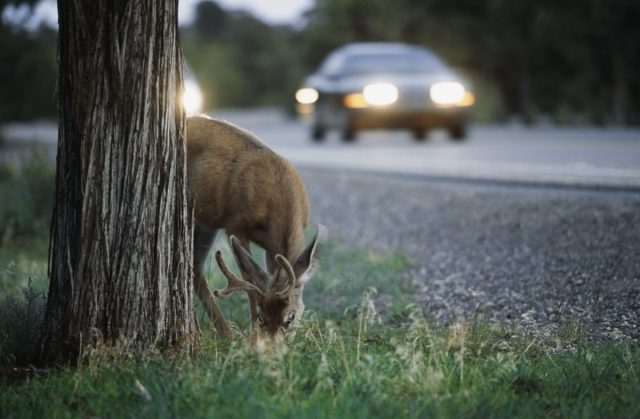
“Deer in the headlights” is a popular idiom for good reason. Between July 2023 and June 2024, nearly 2 million animal collision insurance claims were filed in the U.S., with deer accounting for the majority, according to the Insurance Information Institute.
In 2023, 235 people were killed in car crashes involving animals, according to the latest stats reported by the Insurance Institute for Highway Safety.
Because Northeast deer populations have grown dramatically over the past few decades, deer crashes have been rising steadily.
Most deer-related crashes occur between October and December, close to sunset, when they feed. These months mark deer mating season, when the animals are more active, more aggressive and more likely to cross roadways.
Making matters worse, deer populations are growing at the same time animal habitats are being encroached upon and deer and other animals are being displaced by development. This not only increases the risk of deer collisions, but also means they can occur just about anywhere, including cities and suburbs.
“Extra vigilance is required to anticipate and avoid a deer darting into the roadway, especially during evening hours,” said Mark Schieldrop, senior spokesperson, AAA Northeast. “Deer are unpredictable and can appear in front of your vehicle suddenly and without warning. Remember, if you see one deer, there’s a good chance that more deer are nearby.”
Before you head out for your annual fall foliage road trips, study up on these tips to ensure you, your family and the wildlife stay safe.
Your chances of being injured in a deer crash are significantly higher if you don’t have your seat belt on.
Maybe the most obvious but undoubtedly most helpful step is to be on the lookout for deer crossing signs. These are your primary reminders to be on alert, use caution and, if necessary, reduce your speed.
Deer crossing signs, depicted with a leaping stag, are placed by local towns and highway departments in areas known for high deer activity and/or where deer collisions have occurred. They’re usually found along heavily wooded areas like parks and forests, as well as near water.
While we can never predict when a deer will jump out onto the road, we do know the time of day it’s most likely to happen. The animals are most active when they are grazing, which occurs during dawn and dusk. It’s also worth noting that because deer thrive during these hours, their eyes are well-adjusted to the dark, causing bright car headlights to temporarily blind them causing them to freeze in place.
Sunrise and sunset are also particularly difficult times of day to drive because the road may be dark, or the sun’s glare could be in your eyes.
It’s crucial to be particularly vigilant when you’re driving through deer country around these times. If possible, plan your travels for a different time of day.

If a deer is in the road in front of your vehicle, you may be tempted to swerve around it. This, however, could make the situation much worse. Deer usually will move when they see a car coming, so swerving into another lane might just put you right back into the animal’s path. Additionally, you’ll increase the likelihood of losing control of your vehicle or crashing into another car.
Deer don’t want to see you any more than you want to see them. In fact, most large forest animals are actually quite timid and will run off at the first sight of a human. However, they may get too scared to flee and instead freeze in the middle of the road. When this happens, bring your car to a stop and give the animal a moment to move. If this doesn’t work, flick your headlights on and off a few times. Only use your car horn (in short bursts) as a last resort. The noise may cause a deer to get aggressive.
You’re driving down the highway when you spot a deer galloping across the road 100 feet ahead. You’ve avoided a potential collision and now you’re in the clear, right? Not so fast. Deer seldom travel alone. If you see one, there will almost always be others nearby. Once a deer crosses, check both sides of the roadway to make sure another one isn’t following.
If a crash occurs, move the vehicle to a safe location if possible and call 911. Then, contact your insurance company to report any damage to your car. Take photos of the damage if you can do so safely and without entering the roadway. Damage to the car from animal crashes generally falls under a driver’s comprehensive coverage.
This article has been updated and republished from a previous version.
When you find a word, tap or click the first letter, drag to the last letter and release. Words can run horizontally, vertically or diagonally and may go forward or backward. Spaces and hyphens between words do not appear in the grid. For more on how to play, click or tap the three horizontal lines on the left, above the puzzle.
Good luck!
Move the puzzle pieces by dragging. If two pieces are the correct fit, they will snap together. For more about the game features, click the three horizontal lines on the left, above the puzzle.
Have fun!
From pumpkin festivals to peak times for leaf peeping, we cover all of the best things to do this time of year in our Fall Fun in the Northeast guide.
The season for haunted happenings has arrived. But what if dimly lit rooms, strobe lights and costumed actors leaping from the dark corners of a haunted house attraction aren’t quite your thing?
If you prefer history and good ghost stories to get you in a spooky mood, you might just want to check out a ghost tour. Lucky for us, our region is rich with such offerings.
Here are 11 interesting ghost tours within a day’s drive.
Ever wanted to use the ghost hunting equipment you see on TV? On a paranormal investigation at the historic Paine House Museum, you’re not just being told stories about the ghosts that haunt this historic home — you’re looking for them, too. Hosted by the RI Paranormal Research Group, this tour lets you explore the home and grounds with EMF (electromagnetic field) detectors, EVP (electronic voice phenomenon) recorders, spirit boxes, dowsing rods and more. Tickets are only available during certain months of the year, so make sure to check out the schedule and buy in advance.
New York City has a spooky side, and Boroughs of the Dead features tours covering all the creepy crawlies the five boroughs have to offer. Voodoo, poltergeists and potter’s fields are all part of a haunted Astoria tour. Or check out the mystical symbolism of architecture in the West Village, walk by the Brooklyn home of horror author H.P. Lovecraft and learn about haunted taverns in lower Manhattan.
Newport’s history isn’t all sailing, folk festivals and Gilded Age-opulence. Ghosts of Newport tours explore more than 350 years of tragedy in the city’s oldest neighborhoods. Guides claim the stories highlighted on each trip were passed to them by eyewitnesses. Who knows? Maybe you’ll be the next tourgoer to see something you simply can’t explain.
Quick. Picture Burlington, Vt. If you imagined sandal-clad pedestrians walking amid fall foliage and quaint cobblestone shopping areas, you probably aren’t alone. Queen City Ghostwalk explores a slightly different part of the city – a history laden with lumber barons, railroad tycoons, smugglers and war heroes. Choose from walking tours that include Burlington’s downtown or a local cemetery. Bus tours highlighting allegedly haunted spots on the University of Vermont campus are offered in October on a limited basis.
This walking tour through downtown Boston that uncovers the spookier side of the city’s history. From Puritan graveyards and haunted libraries to chilling tales of lost spirits, each stop reveals a darker layer of Boston’s revolutionary legacy. Whether you’re a first-time visitor or a ghost-loving local, this tour is a truly unforgettable experience. Plus, AAA members save on tickets.
Looking for even more ghost tours of this historic city? The Ghosts & Gravestones Tour is a night tour in a trolley that takes you through the city’s oldest an dmost haunted sites. It includes exclusive access to tow historic buying grounds and the haunted Omni Parker House hotel. This intensely spooky tour is not recommended for small children. Ghost hunters, beware! AAA members can even save on their trolley ride.
Halloween in Salem is unlike Halloween anywhere else. Salem’s witch trial history gives it a unique historic, and possibly paranormal, pedigree. With a mix of scares and history, Salem Ghosts winds around all of Salem’s most haunted locations. Don’t worry about whether you should bring the little ghost-hunters along – it’s family-friendly. Plus, AAA members get a discount.
Do you know where you can find the giggling ghost of Mystic? Those who’ve taken a Seaside Shadows tour do. The company offers ghost tours of the well-known coastal community including one highlighting the downtown area with stories of sea captains, boats lost at sea, hidden treasurers and Civil War widows. The other explores Whitehall Burial Ground, highlighting the significance of grave markings and the burial place of interesting local figures. In New London, guests visit Ye Antientist Burial Ground, one of the nation’s oldest graveyards and resting place of important Connecticut historical figures.
Fell’s Point is among the oldest areas of Charm City, with a shipbuilding history that includes production of the Continental Navy’s first frigate. Ghost tours explore its maritime lineage with a mix of historic and contemporary tales, such as that of a retired sailor whose favorite polka song played in a local tavern after his death, even after it was removed from the jukebox. Guests 21 and older can explore haunted taverns on a pub walk. Tours of Mt. Vernon are also offered in October, where beautiful architecture blends with spooky stories.
Gettysburg’s bloody past makes it a magnet for history buffs and ghost hunters. Gettysburg Ghost Tours appeals to visitors of either interest by highlighting everything from Civil War soldiers to local architecture. Brave souls can sign up to explore frightening areas using ghost-hunting equipment.
Strolling the nation’s capital is a good bet any time of year. To properly enjoy such a thing in October, however, one must do so while hearing ghost stories. Victorian-costumed guides lead walks focused on Lafayette Square, across from the White House. Tales of soldiers, first ladies, war heroes and other figures highlight the area’s tragic past.
This article has been updated and republished from a previous version.
SEASON 2: EPISODE 6
Episode Feedback
What does it really mean to travel sustainably, and can you do it without giving up the joy, spontaneity or comfort of your trip?
In this episode, host Kim Rodrigues is joined by sustainability advocate and overland travel expert Claire Martin, founder of Claire’s Footsteps. Together, they unpack what sustainable tourism actually looks like from reducing your environmental footprint to supporting local communities in meaningful ways.
Claire shares her journey from traveling by train across continents to spotting greenwashing in hotel marketing, all while offering practical, non-judgmental tips for travelers who want to do better but aren’t sure where to start. If you love to explore but want to feel better about how you do it, this episode can serve as your guide to sustainable travel, packed with accessible advice and thoughtful perspective.
[00:00:04] Kim: Like most people, when I travel, I try to stay conscious of how much I’m spending and where I’m sending my money. I once took a trip to Puerto Rico with a couple of friends. We found this incredible tour that was pretty cheap, but when we looked into the company that was running the tour, we had to stop and think and ask, are we helping or hurting the island of Puerto Rico by booking this tour? So we did a little research. We found a local tour company where all the money would go back into the local community. From our tour guide, we learned some really cool colloquial words and interesting history that I honestly don’t think we could have gotten with the other tour company. So we booked through them instead. Sometimes it’s the little things that make a big difference. Welcome back to Merging Into Life, the podcast where we navigate everyday choices with more intention. I’m your host, Kim Rodrigues, and today’s episode is for anyone who loves to travel, but also wants to do it better for the planet and for yourself. From climate concerns to the impact of overtourism, there’s growing awareness that how we travel matters, not just to the environment, but to the people and places we visit. That’s why I’m so excited about today’s guest. We’re joined by Claire Martin, founder of Claire’s Footsteps, a platform dedicated to making sustainability accessible for all kinds of travelers. From slow travel tips to ethical tourism insights, Claire brings a grounded, approachable take to eco-conscious adventures. She’s here to help us make sense of the buzzwords, ditch the shame and take real steps towards traveling more sustainably. I’d love to start with your story. So what got you interested in traveling sustainably?
[00:01:52] Claire: I always wanted to travel. My dad lived abroad when I was younger. We used to go to Europe and my parents used to drive a lot. So we drove from the UK to Croatia one year. We drove to Austria a fair bit. So that gave me a bit of a view of traveling without flying. It was also when I went to university, I got very interested in sustainability there. So I kind of looked at how I could try and merge travel still, but also travel sustainably. And the more I learn, the more I realized how important it is to visit places responsibly and respectfully. So it’s all been a bit of a learning curve from when I was very young really, but something that’s progressed as I’ve gotten older.
[00:02:37] Kim: You often talk about how sustainable travel is more than just using less plastic, not just environmentally, but also socially and culturally as well.
[00:02:47] Claire: I’m quite passionate about this. I do believe that obviously protecting the environment, doing as much as possible to be as eco-minded as possible is incredibly important. But I also see like another pillar of sustainability and that is social sustainability. When we visit places, we are doing things that are beneficial to the communities where we want to have a positive impact somewhere rather than negative. So the social sustainability, it would be spending your money in the right kind of places, shopping at local businesses, that sort of thing, using local suppliers and places have really benefited from tourism by people coming and spending their money there. So yeah, there’s a whole a whole range of it, but I definitely see them as two types of sustainability. I see both as very, very important. And they do often intertwine, but I do think they both need to be equally considered.
[00:03:39] Kim: I really love that. You have this remarkable journey where you traveled from Bali to London without flying. That’s so wild. What inspires you to do that?
[00:03:52] Claire: I’ll be completely honest, it was 2019. I had an awful year in 2018, really bad year. And at the end of the year, it was New Year’s Eve, and I was just there, I sat there thinking I need to make a change next year. So I was like, where is the longest I can travel without flying? Like, where’s the furthest point from the UK that I could get back to without flying. And I could have potentially gone further than Bali. I could’ve potentially gone farther in Indonesia or even to Australia. Maybe even New Zealand although that would have been difficult. But it was the easiest place where I knew I could get back definitely, if that makes sense, so yeah so I decided to just do it. I had five months free.
[00:04:35] Kim: How did traveling or moving overland change the way that you experience people in places along the way?
[00:04:43] Claire: I made the decision as well to not get local SIM cards when I traveled, and I only relied on Wi-Fi. But that meant that I relied on people so much more. It meant I spoke to people so many more, and it meant that I met so many people and had so many organic conversations with people. I traveled through a lot of places in Thailand that see a lot of tourists, but then the journey meant that stopped in some places that really don’t get many tourists at all. I come to these places that a few years prior I had no idea existed, and it was just amazing to just be there and then be able to sort of in a way like slot into whatever was going on there and yeah it just really opened up my eyes to a lot of the world really.
[00:05:29] Kim: It sounds too that you’re really connecting with people rather than just going to a destination and seeing what there is to see and visiting tourist hotspots.
[00:05:38] Claire: That’s what I try to do. And to me that is a big part of traveling sustainably as well, is going somewhere and not just going somewhere and seeing things, going somewhere and thinking what can I learn from people here? What lessons can I take from this country that will, I will then be able to take back and implement in my life even things like learning about history and stuff. I was in Mongolia and I met an amazing woman on the train, and she just sat down and told me of the full Mongolian history from start to finish. It was fascinating. Learning more and sort of spreading more stories and stuff can really help just build a better world, I think.
[00:06:16] Kim: You’ve written and spoken a lot about the issues of overtourism and places that are just completely overwhelmed by too many visitors. What are some ways that travelers can reduce their impact on some of these popular destinations?
[00:06:34] Claire: So there’s big problems in Europe at the moment with people going to the same destinations time and time again. For example, Barcelona, a lot of places in Spain, and there’s been huge protests against tourists, or against overtourism at least, in these cities. If tourism was to completely stop in these places then that’s not good either, so it is about finding the balance. But I would say in the peak summer months, it’s a good idea to avoid the very busy places, the very over touristy places. I think definitely visiting off season is a big way that you can combat overtourism, but also going to different places as well. If you do really want to see Barcelona, for example, maybe actually staying in Girona, which is about 45 minutes north another lovely Catalan city but doesn’t see half as many tourists and then maybe just going to Barcelona for a day. Another big thing is where you stay so local hotels obviously will always be the best place to stay locally around businesses, but usually Barcelona as an example again, they have big problems with Airbnbs there, so they have a lot of landlords renting flats out a short term let and this is hiking the prices up for local people and that is a big thing that people are protesting about as well. I’d just say visit out of season, visit less touristy places, stay in, use local businesses when eating and doing other things.
[00:08:06] Kim: I think that you’re also a really great example of this, because you visited Sri Lanka at a time when tourism was really vital to their recovery. What was that like?
[00:08:15] Claire: The most welcoming country. It’s such a special place and I really, really recommend anyone to visit. So Sri Lanka has been through a really tough few decades, but they are very positive about the future and they have a lot in place now and they’re really hoping their tourism industry is something that they’re hoping to rebuild. That’s one of their main focuses. Yeah, it was an incredible, incredible place and, yeah, I found everyone so generous and so welcoming, and there are places in Sri Lanka that are getting quite touristy, and they are trying to not go the same way as a lot of places in Thailand have gone where it’s very over touristy. They’re trying to sort of have a bit more of a sustainable tourism development.
[00:09:08] Kim: I love that. So you were known for your overland travel. And when you did go to Sri Lanka, you did have to fly there. So how do you approach these sort of trade-offs where the most responsible choice might not be the most obvious one?
[00:09:26] Claire: So, like I say, Sri Lanka is really wanting to welcome tourists at the moment. They’re really focusing on tourism and they have a lot of tourist businesses. There are a lot of opportunities to use local suppliers that can really benefit the country. Sri Lanka as an island in the Indian Ocean, there is a very complicated way of getting there through India, but that would take a very long time. So I’d say probably 99.99 percent of people are flying there. When you factor in places that do really want to welcome tourists and tourism can really help the countries, I would say that flying there is a trade off, especially if what you’re going to be doing in the country is going to be very sustainable and helpful. I would never say I don’t fly, but what I try and do is I will fly somewhere and then I will only travel over land. So I very rarely take domestic flights or flights that are easy to take. It’s about focusing on what you’re doing while you’re there at the same time I think.
[00:10:29] Kim: The best way to explore our national parks is to book with AAA Travel for a guided tour. Experience these natural wonders without the stress of planning or worrying about logistics. The guided tour, you enjoy expert knowledge, access to hidden gems, and no need to worry about directions, parking or permits. Plus, tour guides are trained in safety protocols and are the best way to visit our national treasures while minimizing environmental impact. Our tour experts help reduce the strain on natural resources and ensure that the parks remain healthy and vibrant for future generations. Visit AAA.com/TravelAdvisor to start your adventure today.
[00:11:11] Kim: I wanted to switch gears a bit and talk about hotels and travel companies, because I think there are a lot of hotels that market themselves as eco-friendly, but not all of them are necessarily doing the work. So what are some signs that a hotel is doing the work? And I know that people talk about this term of greenwashing.
[00:11:33] Claire: Yeah, absolutely. So greenwashing is when somewhere like a brand or a company, it can be any company in any industry, says it’s sustainable, but doesn’t really show receipts. So they’ll maybe do be doing one or two things, but not really enough to actually be classed as sustainable. So it’s If you’re going to a hotel and they have that little, like a lot of places have a little sign in the bathroom now saying, we care about the planet, leave your towels here and we won’t replace them every day. And I always see that and I think, why are people replacing their towels every day? I mean, just to mention Sri Lanka again, I went to one of the hotels that we stayed at, it was called Jetwing, and it’s a Sri Lankan-owned hotel brand. And I’ve never seen a hotel so sustainable in my life. They took us on a tour around the complex, and they had solar panels, they had their own garden where they grew their own vegetables and herbs and things which they use a lot in their cooking. They had a water purification station where they then bottled glass bottles to be used instead of plastic bottles in the rooms. They took us around this tour, and they showed us all of this amazing stuff and I was like, wow, this is a genuinely sustainable hotel. I wouldn’t say it necessarily has to be just, it has to that that much because that was a really good example, but if somewhere is saying they’re sustainable and then they’re providing plastic cups for water, then it’s kind of like, are you really? So they’ll probably have a section on their website where they actually give you proper facts and figures, a proper breakdown of things that they’re doing. If they’re really committed to sustainability, then they will have these figures, and they will be able to show them. So yeah, I’d say it’s just about doing a little bit of digging and seeing what you can find.
[00:13:26] Kim: And I know that you’ve also had meaningful experiences in home stays and working with local guides.
[00:13:32] Claire: Yeah, so something I’ve started doing a lot in the last few years, and it is also when I’ve had a bit more money to be able to spend more money on these things, so I do recognize that people who are just starting out traveling might not be able to have this as an extra expense. But what I’ve really loved starting doing is hiring local guides. So whenever I go to a city, I usually hire a guide now. And that’s great because they’re nearly always local businesses. Often it will be the guide on will be running their own company. So the income will go directly to them. And it gives me so much information. It really teaches me about somewhere. But you know, it directly gives them an income and supports the local economy. So yeah, I am pretty passionate about hiring local guides, and I always find it just gives me such a great perspective of the place. But yeah, homestays as well, my partner and I love homestay. And we wish there was sort of a better way to access them, because sometimes you can find them on on various pages, and sometimes people can set you up but found them harder to find, but whenever I can find, them they are amazing and you can get some really great ones where you can have dinner with people.
[00:14:48] Kim: Yeah, I love that. Do you have any other tips of ways that travelers can ensure that their money is going back into the local economy?
[00:14:58] Claire: So there is economic leakage, I think is the correct term, is when the money that you spend actually goes more to people outside the country than people inside the country. So again, it’s back to those local businesses. This brand Jetwing Hotels in Sri Lanka, they are completely Sri Lankan owned business. And at the moment they just operate in Sri Lanka. Basically always a good idea I think to find out who the owner and the CEO of a company is. And I’m not saying never use foreign-owned companies, because we all do, but also looking at things like how many locals they employ. That’s a big one. So if it’s a big hotel and they provide a lot of local job opportunities, then that can be beneficial as well. But definitely, if there’s a chance to go with a local company, then definitely it’s always a good idea to choose that. And food-wise, it’s easier obviously to find locally owned restaurants and things and they’re always, I mean this is usually the tastiest food anyway and the most authentic. I think that’s also part of the reason why a lot of people don’t try to be a bit more sustainable, because a lot of people think it is all, or nothing and it’s really not.
[00:16:12] Kim: What would be your advice for any person, any traveler who’s new to all of this? What is one small change that they can make to travel more sustainably, but that maybe won’t be as overwhelming or won’t make them feel guilty?
[00:16:26] Claire: Try and go for a local hotel or any hotel that employs local people instead. I’d say that’s a good thing to start with. Talking about eco travel, so the more environmental side of sustainable travel, I would also say that a good way to start would be to just look at trains a bit more. If you want to go from Paris to Nice, let’s say, you can do that in a few hours by train and the French trains are really good. So I’d say that’s a good thing as well to look at is just look at some other options for getting places rather than automatically going for a flight.
[00:17:05] Kim: The best things that I love about using the trains in Europe specifically is that if you’re going from an airport to an airport, you have to figure out, okay, now I might need to take a bus to get from the airport to the city center. But what I love about traveling by train in Europe is that most of the train centers are right downtown or they’re in a central location, and so you’re going from a central location in one city in one country to another central location. So you’ve said that your golden rule while traveling is leave it better than you found it. Can you give us some real world examples of what that looks like during a trip?
[00:17:42] Claire: A very visual example would be, if I go to a beach and I see some rubbish on the beach, I try and pick it up and I try to do like a mini beach clean. So that’s a very visual example. But also just trying to meet people and trying to have as pleasant conversations. Like I said to you earlier, when I travel Bali to London, just experiencing the kindness of people towards me and I just want to kind of give as much of that kindness back to people as well.
[00:18:12] Kim: So for anybody who is new and say they’re planning their next trip right now, and they want to apply some of these principles, where do you recommend they start? If you have any helpful resources or tools or tips or anything like that.
[00:18:28] Claire: Absolutely. So if you want to start looking at how you can travel without flying a bit more, then I really recommend The Man in Seat Sixty-One. So this is a website that focuses largely on trains, but he’s also expanded a bit to cover buses and ferries now. And he has some great guides that you can, that tell you how to get from A to B without flying, and they’re very honest and very factual. Somewhere it’s going to take a long time, he’ll tell you. So that’s a great resource, definitely. The social sustainability kind of things, I’d say the best experience you’re going to get is just booking somewhere, getting out somewhere and asking local people for advice. And I don’t necessarily mean, you know, I don’t necessarily mean just asking random people that you walk across on the street, but booking a hotel and going down to the reception and saying what advice do you recommend, what local places can you recommend, is there anywhere that you think is too busy? That kind of thing. Or a great resource that I think is very underused is tourist information offices. So I love a tourist information office, and you can go in and there’s usually really helpful people there and it is literally their job to tell you about it, and you could say I’m trying to use more local businesses where do you recommend, and honestly they are everywhere I’ve been. There’s been a mind of information, and usually they will be English-speaking, and they’ve usually got maps and things. So yeah, that’s definitely my, I would say, my first port of call in some way particular.
[00:20:10] Kim: I just want to throw this out there for anyone who might be thinking about this. And thinking how they can begin to incorporate traveling sustainably. And this is something I’m thinking about as well, because I want to start really thinking, being active about it in my own travels is I know we talked a lot about Europe and the UK and train travel there, but North America also has a lot of really great trains and a lot of ways to get around by train. In the US, we have it. I know Canada also has some really great trains and Mexico as well. So Claire, yeah, everything that you’ve said has been amazing. And I know that I’m walking away with a lot of knowledge. Where can we find you?
[00:20:48] Claire: So I post the most on YouTube, and that is my main focus at the moment is I post a lot of overland videos. So I do a few like overland challenges and things like that including very long ferry journeys, very long sleeper train journeys but I also do post about sustainable travel and responsible travel learning about cultures, learning about communities. And I’m just finishing my Sri Lanka series at the moment, and that focuses a lot on that as well. So my YouTube is Claire’s Footsteps. And then I am also on Instagram and TikTok, which are both @Claire’s Footsteps and I’m also on Clairesfootsteps.com. So I’m across the spectrum.
[00:21:27] Kim: That is so awesome. Well, Claire, thank you so much. I feel like I’ve learned a lot. I’m sure everyone who’s listening has also learned a lot as well. This has been very helpful. Thank you so much. A huge thank you to Claire for reminding us that sustainable travel doesn’t have to be all or nothing. It’s about doing what you can, learning along the way, and staying mindful of how we move through the world. This episode wraps up the travel series for season two, and I just want to say how grateful I am that you joined me on this journey in exploring how to bring more adventure, connection, and sustainability into the way we travel. If this episode sparked any thoughts or inspired you in some way, please consider leaving a review or sharing it with a fellow traveler. We’ll see you next time on Merging Into Life. The views and opinions expressed in this podcast are not necessarily the views of AAA Northeast, AAA, and or its affiliates.
How to Have a Zero-Waste Road Trip
How to Plan a Sustainable Beach Vacation
US and Canada Rail Trips That Can’t Be Missed
"*" indicates required fields
*The views and opinions expressed in this podcast are not necessarily the views of AAA Northeast, AAA and/or its affiliates.
SEASON 1: EPISODE 14
Episode Feedback
Have you ever dreamed of running across the finish line of a race, only to be frustrated when you can hardly run up the block? Running isn’t easy, but we’re here to help you go the distance.
Whether you’re interested in running as a healthy new habit or signing up for your first race, the beginner running plan laid out in this episode will take you from the couch to your first 5K. If your goal is to start preparing for a marathon, this is the first step.
Jeff Dengate, Runner in Chief at Runner’s World magazine, is here with running 101 to make running a part of your lifestyle. You’ll learn about the gear you’ll need, the physical and mental training required, how to keep up the habit in the cold winter months, diet suggestions and more. Mike Vaiano, physical therapist at the Schwarz Institute, provides insight on how to prevent injuries, so you don’t push yourself too hard too soon.
[2:41] – How to set goals, and create a training plan as a beginner
[6:03] – How to find the right running shoe
[14:00] – The importance of warming up, and how to do it properly
[00:00:02]
Amanda Greene: I wish I was one of those people who loved running. In order to start a habit, you have to just start, right? I’m dressed, I’ve got my sneakers on, and you’re not going to believe this. I go to start running. It’s pouring out. I finally found some motivation to start running and it’s pouring. Maybe tomorrow. All right, I’m going to get out there today. I’m going to go for a jog, maybe some intervals. It’s pouring again today, so today is also not the day. I just checked the forecast and it’s supposed to rain all week long, so let’s just hope I can hang onto this motivation to start running until next week.
Welcome to Merging into Life where we navigate life’s milestones, one episode at a time. Brought to you by AAA Northeast. I’m your host, Amanda Greene. Today, we’re going to talk about becoming a runner and preparing for your first race. I’ve done some running in my life, but I’ve never really committed. I’m definitely one of those people who feels like my days are full enough as it is. It’s hard to fit in something that isn’t completely and immediately necessary, but of course it’s all how you look at it.
According to Harvard Health, even five to 10 minutes of daily low-intensity running can extend your life by several years, but I get it. Working on living longer can be tomorrow’s problem, but studies show running can make you feel better today. It’s a natural mood booster. Regular exercise has an antidepressant effect and improves working memory and focus. It’s hard to argue with those kinds of benefits, so let’s bring in some people who can help us lace up and hit the road to do it safely and to mitigate the risk of injury. We have Mike Vaiano, a physical therapist at the Schwarz Institute on Long Island, New York. But first, let’s talk to Jeff Dengate, Runner-in-Chief at Runner’s World. Jeff, how do you get a title like that?
[00:01:57]
Jeff Dengate: I’ve been running my entire life. I started when I was seven or eight years old with the local 5K, just jumping in with my parents and then I really got into running in high school and I’ve been sticking with it ever since. I’m also a real shoe nerd. I’ve been testing shoes and reviewing shoes for over 15 years now, so it’s kind of my passion.
[00:02:13]
Amanda Greene: What kind of runs are you doing now? Are you still doing 5Ks? Are you doing marathons?
[00:02:18]
Jeff Dengate: A little bit of everything. I’ll run a mile race on the road. I’m going to run the Boston Marathon in the spring. I ran one earlier this year, so I’ll run basically any distance up to a marathon. I love to go run trails as well, just go out and have an adventure. So, I’ve run 33 marathons. I don’t think the marathon is the only or the best distance. I think just getting out there and moving and challenging yourself at any distance that you find inspiring is a lot of fun.
[00:02:41]
Amanda Greene: So I would love to talk about being a beginner, starting to make some goals, and coming up with a training plan. How do you build up endurance for that first marathon or maybe a 5K?
[00:02:54]
Jeff Dengate: The first thing I always recommend everybody is just make it a habit. Schedule it, put it on your calendar like any other important appointment. The easiest way to do that is make sure you get it done in the morning as well, because when life gets busy and things get pushed at the end of the day, that run is the thing that oftentimes gets sacrificed.
So, you just want to carve out the time to protect the time so you can go out and run or walk, and if you have no idea what you’re doing, you’re going to get really excited. You’re going to head out the driveway, you don’t know how fast you should be going, and you’re probably going to get to the end of the block and feel tired and miserable and like this running thing is awful and it’s hard, and it doesn’t have to be.
The easiest thing you want to do is just get out and set maybe a time to be out moving, maybe 20 minutes, run and walk, mix it up. Just know that you’re going to be out there for a little while and you’re going to come back home and it doesn’t matter how fast you went or how far you went. These are your early days, your first days and you want to come back feeling fresh and happy and excited.
[00:03:44]
Amanda Greene: But how can you make sure that you don’t get too excited and overdo it and can’t walk for a week?
[00:03:51]
Jeff Dengate: Well, I mean, there’s a lot of people that do a run/walk method, right? You might run for two minutes, you might walk for 30 seconds. You can vary those intervals to whatever you want. And then if you start training for a race, you need to start thinking about training plans. A 5K, if that’s your first goal, maybe that’s going to take six to eight weeks of real training, but a marathon will take you 16 weeks or longer and you need to have a pretty good base as a runner and walker to even start that kind of training. Your early days though, it’s really important to just kind of take it easy, make sure you’re getting that movement in, make sure you’re feeling comfortable because if you get really excited and you run a lot, you’re going to get hurt. I see it all the time.
[00:04:26]
Amanda Greene: How often should a beginner be running or preparing for a marathon? Every single day? Is there a rest day?
[00:04:31]
Jeff Dengate: I mean, ideally you’re out there four or five days a week for 20 to 30 minutes. That’s whether you’re walking or running, that’s going to give you a really good baseline fitness. And we know that movement is medicine. It does actually help relieve a lot of medical problems that our society is afflicted with. So, if you’re out there moving for 20 to 30 minutes a day, five days a week, you’re going to be pretty fit. If you have more ambitious goals, of course you’re going to end up running a little bit longer. You might be out there for an hour on some of those days, but even your easy days, you’re not out there for more than 30 or 45 minutes. So it’s not a huge time commitment to become a runner. Now if you’re training for a marathon, you’re going to be on Saturday or Sundays, you’re going to be out there for two or three hours. That’s a commitment, but that’s also a lot of fun.
[00:05:15]
Amanda Greene: And something that you’re working up to. And I imagine once you’ve really mastered the beginner stage, you kind of want to push for more.
[00:05:23]
Jeff Dengate: We all have different goals and what we want to get out of running, right? Being a competitive runner and chasing times and competing with other people, and there are some people that will never race and they don’t want to do long distances and that’s totally cool. There’s groups that just get together once or twice a week with friends and you’re socializing more than anything. You’re a talking group with a running problem, for example. And so, it all depends on what you want to get out of the sport, but make it a habit. Make it part of your life and part of your identity and you’re going to enjoy the experience.
[00:05:49]
Amanda Greene: Shoes are probably the most important equipment and the most important thing to make sure you’re getting right in the earliest days of running, and I see behind you all different kinds of shoes because you mentioned being a product tester. So what is the best running shoe for running a marathon?
[00:06:03]
Jeff Dengate: Shoes are our most important protective piece of equipment. Comfort is the first key because if they don’t feel good, you’re not going to wear them and you’re not going to run.
I’m in the shoe lab and we bring our wear testers in and we see them and so many times, even experienced runners, they’re wearing their shoes too small. They’re not going to be the same size that your street shoe or your work shoe might be. They may be a size or a size and a half larger. Sometimes it’s going to feel like your shoe is just too big. You might think this feels loose. And so, I send people out with them, run in them and then try your old shoe. And when they come back, they’re like, ‘Oh, those old shoes were too tight.’ So you want to make sure you’ve got a little room at the end, not sloppy, not too big.
There’s Miracle Foams out there right now. These things are light and soft. They feel great and bouncy, but that might not be what you need as a beginning runner. You might want something middle of the road that’s soft but not too squishy, not too thin and hard because if it’s thin and hard, you’re going to feel the road and that might hurt after a few miles. You don’t need the high-end, $250 racing shoe if you’re getting started or for daily training, something middle of the road is going to be good.
Now, if you have no idea where to start, I recommend always going to your running store. Be honest. Say, “Listen, I’m new. I don’t know what I don’t know, and I would love some help.’
[00:07:09]
Amanda Greene: Other than shoes, what other gear does every runner need?
[00:07:12]
Jeff Dengate: Well, so women really need to invest in a good sports bra. It is another really important protective piece of equipment. Don’t skimp on that. Don’t think the old one that you’ve had for years is going to give you the support you need. And the fit is again, key. And then, I always recommend sunglasses for every runner. We only have two eyes, and even in the dead of winter when there’s sun out there, you need to protect your eyes. You need some covering. So, invest in a good pair of sunglasses that are going to give you that UV protection.
[00:07:38]
Amanda Greene: How do you track your runs? Are you doing it on a watch or do you have your phone attached to your arm? I feel like I see people with all kinds of contraptions attached to them.
[00:07:48]
Jeff Dengate: Yeah, I mean, the watches are the easiest way now, whether you have an Apple watch or a Garmin or even your phone, they track, and a lot of them will do it automatically and they store it and save it and you can review it. I send my workouts to Strava, which is an online training log. It just automatically uploads it there depending on whatever device I’m testing that day.
I think it’s really important to definitely track your runs, even if you just want to write it down in a notebook like I did when I started, a little journal, and just what the day was, how far you went, maybe you were out for 30 minutes, doesn’t even matter about mileage, how you felt, what the weather was, something that you can kind of look back later and see how far you’ve come, how you’ve progressed.
And also, running is not a linear process, so you will have ups and downs. You will have days of motivation where your motivation is struggling a little bit or you’ve been dealing with a little bit of an injury. And if you’ve been keeping track of what you’ve done, you might remember, ‘I had that before,’ and you can look back and see what you did, how you got over it, or you can just kind of see how far you’ve progressed in the last months. You won’t see improvement from day to day, but if you look back three months, six months, even a year, you can see, ‘Wow, I can’t believe where I’m at now compared to where I was then.’ And tracking it with your watch or your device is an easy way to do that.
[00:09:05]
Amanda Greene: Absolutely. So I guess it’s best to just use whatever works best for you. What about running in the winter?
[00:09:12]
Jeff Dengate: A lot of people don’t run outside in the winter. They’ll head to the gym, they’ll get a treadmill, and I get it. It’s tough especially in places where you get snow and you get those nor’easters and it’s hard. So running in the winter is all about staying comfortably warm. A lot of us overdress, we think we have to have a big puffy jacket, but you don’t. You really need thin layers that can help moderate your temperature. So a thin polyester base layer is always going to work well to get the sweat away from your skin. And then a good windproof jacket if you live in a windy area with a zipper so you can unzip it and kind of use it almost like throwing open the window when you get too hot.
Hat and gloves are important, but you don’t need big puffy things. I like Merino gloves that are just kind of help regulate the temperature. You can take that stuff off and tuck it in your waistband when you get warm. And there’s a tip for running in the winter that I really like because you’re going to get sweaty no matter what you do. And if it’s a windy cold day, start out running into the wind, you’ll feel cold at the start because you’re not warmed up yet. But do that because when you get sweaty, you don’t want to be running into the wind, you turn around and run back with the wind, so the wind is at your back, you’re not getting cold, then you’re able to keep your warmth a little better.
[00:10:15]
Amanda Greene: Between the ice and the snow, how do you even manage to stay upright?
[00:10:19]
Jeff Dengate: So the biggest recommendation I have is wait until the roads are plowed or wait until the sidewalks are shoveled. And please shovel your sidewalks if you have them – us runners need to use them.
But wait until the snow and ice are gone if you can. And that means sometimes it’s tricky if you’re a morning runner because the sun hasn’t come up and it hasn’t melted anything yet. Now, if you are going to get out there and you insist on, I have to be on the ice and the snow, there are things like Yaktrax. They’re kind of like tire chains for your shoes that you can put on and slip over your shoes. It’s amazing how effective something that little is in giving you just that enough traction to stay on your feet.
The other thing about running on ice and snow, just don’t be afraid to slow down. A lot of us look at our watch and we think we have to be running our typical pace and it doesn’t matter. You’re out there, you’re getting the fitness. You go for time, have fun, and remember that you’re going to be doing more work in the snow. You’re slipping and sliding. Your heart rate’s going to be up no matter what speed you’re going. So you’re out there just getting in that work. Stay safe, get the running.
[00:11:16]
Amanda Greene: What other physical exercise is useful to incorporate when you are training, other than going for runs?
[00:11:23]
Jeff Dengate: Runners think we just have to run and that’s it. And we’ll be fit and we use certain muscles but we don’t use others. And so, strength training is important. Hitting the gym, lifting some weights, doing just even body weight exercises in your basement with a single kettlebell is a really great thing that’s hugely popular because it’s something that’s simple that runners can do with just limited equipment, limited space, and it doesn’t take a lot of time. But the benefits of actually building a strong body is that it supports your system when you’re running, so you can fend some of those overuse injuries. We’re hitting the road with the same force and the same stride and the same motion time after time after time. And those muscles and those tendons and ligaments, they start to get overworked. And if you have a strong system, you can actually take that load and put it elsewhere and not get those overuse injuries.
[00:12:11]
Amanda Greene: Injuries, they can put quite a damper on any new runner enthusiasm. I think this is a good time to bring in Mike Vaiano because …
[00:12:21]
Mike Vaiano: Typically patients will walk through the door when it’s a little too late, so they’ll walk in unfortunately after they have gotten injured.
[00:12:27]
Amanda Greene: Mike is a physical therapist at Schwarz Institute on Long Island, New York.
[00:12:32]
Mike Vaiano: So with new runners, we typically see a couple common injuries, one of which is called shin splints. That’s the muscle in the front of your leg that gets overworked and you get a sharp pain and a lot of people suffer from it and it usually happens when you ramp up too quickly, so you don’t go through the proper build-up to running a 5K or running whatever type of race you want to run and what happens is the muscle gets overworked and then it can’t handle the stress it’s being put under. Another common injury we see is called runner’s knee or like a patellar tendonitis type of thing. That’s from faulty mechanics or if you’re overusing a certain muscle when you’re running, it can lead to knee pain.
[00:13:12]
Amanda Greene: So what can runners do to prevent these kind of injuries?
[00:13:16]
Mike Vaiano: So there’s a couple different things. If you just go out there and try and run three miles in the first day, you’re probably not going to last very long because your body’s going to be hating you and everything’s going to be hurting. But if you build up slowly, so maybe going a half a mile the first day or whatever your tolerance is, just slowly build up and leave enough time before the race to build up. If you decide, ‘Oh, next week’s the 5K, I want to get out there,’ that’s probably not enough time. Give yourself a month or two months to properly train and make sure you’re ready to go for the race. There’s some other things you can do in terms of exercising to making sure your muscles are strong enough. If you haven’t been on an exercise program prior to starting, that’s something you’re going to want to do to strengthen up your quads and your glutes and calves and also stretching as well.
[00:14:00]
Amanda Greene: What kind of stretches do you recommend?
[00:14:03]
Mike Vaiano: One great way to warm up and to stretch beforehand will be a dynamic exercise. So what you can do is a high knee, so you’re jogging and you lift your knees up towards you. There’s also an exercise called Frankenstein where you’re kind of kicking your legs straight out in front of you, and this will help to loosen up your hamstrings as you’re getting ready and you’re not doing as much of a static stretch. This is more of a dynamic stretch, which means you’re moving while you’re stretching, which is shown to be a little bit better for your muscles. It’s important to stretch your hamstrings, your calves. There’s some basic stretches that everyone knows that can loosen you up before you get out there.
[00:14:36]
Amanda Greene: How about proper form? What does that even look like?
[00:14:40]
Mike Vaiano: So you want to run on the middle of your foot and if you lean too far forward, it’s going to push your body weight forward so your back muscles are getting all fired up trying to hold you up. It just leads to a number of issues. So maintaining that upright posture is one of the most important things you can do while you’re running.
[00:14:58]
Amanda Greene: Okay, so form is very important to avoid injury.
[00:15:00]
Mike Vaiano: Yes, definitely.
[00:15:02]
Amanda Greene: What kind of role do diet and hydration play in performing our best or what do you eat before running a marathon to prevent potential injury?
[00:15:10]
Mike Vaiano: So diet and nutrition are huge when it comes to running a race or preventing an injury or making sure you’re prepared for a certain event. So you want to make sure you’re hydrated at least 72 hours before the race. So don’t start hydrating the day of the race, that’s going to be too late. And then typically the night before the race, I like to have my athletes take in a decent amount of carbs because that’s what your body uses for energy while it’s running, especially when you’re getting into those longer races, you really need those carbs. And in the morning of the race, you definitely don’t want to eat anything too heavy, so that’s just going to sit in your stomach. So eat something that you’re comfortable with that will give you a little bit of energy the morning of.
[00:15:47]
Amanda Greene: So, skip the stack of pancakes, that makes sense. But even if you do everything right, injuries do happen. So how do you know when to push through the pain and when to take a break and get treatment?
[00:15:58]
Mike Vaiano: It’s hard to differentiate, at least when you’re just getting into running because right when you start off, you’re definitely going to be sore. So being able to differentiate between being sore and having a pain is something that is crucial. What I characterize pain as is something that’s sharp. If something sticks around for three or four days, then that’s something that you should get looked at or figure out what’s going on. And then I also like to use the pain scale. So if there’s anything over like a five out of 10 pain, then that’s something you should get checked out. If it’s below that, it’s something you can work through a little bit.
[00:16:31]
Amanda Greene: This has been very helpful. Thank you so much, Mike. So now we know the basics, the gear, the commitment, and how to prevent injuries. Jeff, let’s say we’ve done it. We’ve incorporated running into our life. What do we need to know before we step up to the start line for the first time?
[00:16:49]
Jeff Dengate: The training for a race really beats you up. It leaves you tired, especially close to race day. You’re putting in most work, you’re getting ready, but you need to recover. So we have what we call a taper in running, and it’s no matter what race distance you’re going to do, you’re going to taper and that’s just reducing the amount of running. The first week you might do like 75% of the work that you were doing and then 50% and then the last week like 25%, and you might take a couple of days entirely off before your race. So in that taper period, you can’t actually get any more benefit from doing harder work. You might be nervous and think, ‘I’m not going to be ready. I need to do another workout.’ That’s wrong, and that’s going to leave you cooked for race day, and you’re not going to hit your goals when you start doing that.
[00:17:29]
Amanda Greene: What about you’ve been training for this for a while, you’re here doing your thing, you’re going to hit a dark patch during the race. How do you get through it?
[00:17:37]
Jeff Dengate: Every race, there’s a dark moment. It doesn’t matter the distance either. If you’re running a mile, the third lap on the track is going to just be hard and you have to go into it prepared. You’re training your body for weeks to get ready for the physical toll, but you need to prepare your brain as well. Just get through that moment of mental toughness. Your body can do more than your brain will let you.
Your brain is going to try to preserve the system and it’s going to try to shut you down if you’re doing something really hard. So you need to trick your brain, maybe you’re going to count. I’m just going to get to that next light post. If you’re racing with other people and you look ahead and pay attention to who’s around you, you might see somebody struggling more than you and, I’m not that person or I’m going to catch that person. Kind of use them as motivation and when you see somebody else struggling, you understand we’re all in this together, you’ll find ways to get through there, but you’re always going to hit that tough patch, so train for it and kind of understand what is going to work for you to get through it.
[00:18:27]
Amanda Greene: The mental part of training sounds just as big as the physical part. It’s really powerful. Is there anything else that you would want to share with a beginner who is just starting out? Do you have any words of wisdom for them?
[00:18:40]
Jeff Dengate: Biggest thing I will always tell anybody who’s new is you’re going to be so excited to do this and you’re going to take on too much. It’s the biggest trap for runners is too much too soon. It leads to injury. So we have what we basically call the 10% rule. Don’t do any more than 10% more work from week to week. You shouldn’t go from like 10 miles a week to 25 miles a week. You’ll get away with it for a week or two, but three weeks down the road, your knee’s going to start hurting, your back’s going to start hurting, something shins. It’s going to happen. So you want a nice steady progression and running is a long-term gain. It is all about consistency. It doesn’t happen overnight, but you’ll get there. So think weeks down the road, build and train for that and stay in it for the long term. The health benefits are huge, so give yourself the permission to set it into your schedule, make it important and stick with it.
[00:19:27]
Amanda Greene: Okay, we’re going to do a little rapid-fire quiz. Are you ready?
[00:19:34]
Jeff Dengate: Let’s do this.
[00:19:35]
Amanda Greene: Awesome. What’s your favorite thing to use for fuel during long runs on race days?
[00:19:40]
Jeff Dengate: Maple syrup, they make them in little packets and they’re tasty. There’s some salt in there. Sometimes there’s a little bit of flavor, like a raspberry-salted maple syrup. So good.
[00:19:48]
Amanda Greene: What’s your favorite marathon that you’ve ever run?
[00:19:50]
Jeff Dengate: Oh, Big Sur out in California. It’s so beautiful.
[00:19:53]
Amanda Greene: How often should you replace your running shoes?
[00:19:56]
Jeff Dengate: Around 300 miles. Start thinking about your body. Does something hurt? How does a shoe look? Have I worn through the rubber on the bottom of the shoe? You might need to start replacing them kind of early, especially some of these newer shoes with lightweight foams, they wear out a little bit quicker.
[00:20:08]
Amanda Greene: Which is more important, warm-up or cool-down?
[00:20:10]
Jeff Dengate: Warm-up definitely is more important.
[00:20:12]
Amanda Greene: What is the biggest goal on race day?
[00:20:14]
Jeff Dengate: Usually hitting the finish line.
[00:20:16]
Amanda Greene: And what’s one word to describe that feeling after finishing the race?
[00:20:21]
Jeff Dengate: Now that could be, I say this because I think it’s two things. One is hungry for food, especially long runs or races. But also hungry for more. Maybe you’re done, you did that marathon and you’re like, ‘That was so cool. I’m going to go sign up for another one.’ And sometimes you’re signing up for that next race the next day.
[00:20:36]
Amanda Greene: Amazing. Thank you, Jeff, so much for sharing all of your experiences with us, and thank you so much for joining us.
[00:20:42]
Jeff Dengate: Thank you so much for having me.
[00:20:43]
Amanda Greene: And thanks to Mike Vaiano, physical therapist at the Schwarz Institute. If you’re new to running or getting back into it, you don’t need to overdo it with expensive gadgets. You do need a pair of well-fitted running shoes. And if you need one, a sports bra. Track your progress over time, whether it’s with an app on your phone, a watch, or even an old-fashioned notebook and pen. Seeing your progress over time is a huge motivator. Winter running can be done from the warmth and comfort of a treadmill, or you can head out into the elements. Dress in layers, you might need to shed some as you heat up. Keep safety in mind as we know those roads and sidewalks can be treacherous in the winter. Because you don’t want to hurt yourself, do some dynamic stretching to start, slowly progressing into harder runs, hydrate properly beforehand, and eat your carbs the night before a race. There is a lot to it, but at the same time, it’s simple. Running is good for you. All you need to do is carve out some time, lace on some shoes, and go.
You’ve been listening to Merging Into Life where we navigate life’s milestones, one episode at a time. Brought to you by AAA Northeast with assistance from JAR Audio. I’m your host, Amanda Greene. If you’re learning as much as I am, follow us wherever you get your podcasts and leave a review. We’d love to know what you think. Email us at podcast@AAANortheast.com.
It is still raining, but if Jeff can run in a snowstorm, I guess a little rain won’t hurt me. Let’s do this.
The views and opinions expressed in this podcast are not necessarily the views of AAA Northeast, AAA, and/ or its affiliates. AAA Northeast does not endorse any of the products mentioned in this episode.
Fun Walking Apps for Exercise and Exploration
Starting a Morning Stretch Routine
Your Couch to 5K Training Plan
"*" indicates required fields
*The views and opinions expressed in this podcast are not necessarily the views of AAA Northeast, AAA and/or its affiliates.
SEASON 1: EPISODE 15
Episode Feedback
If you’re considering an electric vehicle, you probably have a lot of questions. How do electric cars work? What’s it like to drive one? Do you ever have to replace the battery? And what does routine maintenance look like? In this episode, we address these common concerns about EVs and more.
Guest Ben Sullins is an electric vehicle advocate who has spent years digging into the data and is here to dispel some myths. Matt Ferrell is an expert in sustainable technologies and gives us the lowdown on EV batteries. If we’ve sparked your interest, these are the electric car facts you should know.
[4:45] – Is range anxiety still a thing?
[6:13] – How to easily charge your EV at home, and on the road
[13:37] – What is the lifespan of an EV battery?
[15:50] – How much maintenance does an EV require?
[00:00:01]
Amanda Greene: That car is still giving me trouble. Now that I think about it, it’s been wonky since the beginning of this season. That’s a long time to put up with an uncooperative car. I’m starting to hear more and more about electric vehicles, but I don’t really know anything. It would be great not to worry about the price of gas, but I have no idea how much electric chargers cost or how they work or even how to use them. Maybe I should take a test drive.
Welcome to Merging into Life where we navigate life’s milestones one episode at a time. Brought to you by AAA Northeast. I’m your host, Amanda Greene.
Can you believe we’re more than halfway into season one? I’ve learned a lot. For example, after that identity theft episode, I immediately went and locked my credit. Now it’s something I watch all the time. If you’ve learned something that stuck with you, we would love to hear about it. Or if you have a topic that you want to hear about, get in touch. Leave us a review wherever you listen to podcasts or email us at podcast@aaanortheast.com.
Today we’re going to talk about electric vehicles, also known as EVs. I read recently that Norway has more electric vehicles on the road than gas. EVs are now outnumbering regular cars. That’s so interesting because here I know a few people who own EVs but not that many. So I wonder what is the holdup here? Do they cost too much? Is charging easy? How do you even do it? To find out, I’m going to talk to some people who are not only longtime EV owners, but also EV enthusiasts who have crunched the numbers on how this all works.
Matt Ferrell has been kind enough to come on the show. He is super passionate about electric vehicles. He also has his own podcast called ‘Still to Be Determined,’ and a YouTube channel called Undecided, where he explores how technology affects our lives. But first, I’d like to welcome …
[00:01:51]
Ben Sullins: I’m Ben Sullins. I’m a former data scientist, worked at all the big tech companies you’ve heard of, became a fan of EVs around 2016 and started sharing my journey as an owner of an EV back then on YouTube. And I’ve sort of become an advocate for it, helping people understand the reality behind owning an electric vehicle and what it means for the climate, what it means for you personally, and helping people navigate those decisions.
[00:02:15]
Amanda Greene: What first got you interested in electric vehicles?
[00:02:18]
Ben Sullins: So, funny story, when you have a kid and you have an old beat up truck, your wife isn’t really keen on putting the kid in the old beat up truck. So she told me, ‘Hey, you better buy a real car. It’s time to grow up.’ And I was sad about that, but as a tech guy that grew up in what I consider the golden era of tech – pre internet, pre smartphones – I saw all this amazing tech, I got really fascinated with how technology can directly affect our lives. And cars for me were always the lamest pieces of tech that you’d own. If you remember back in the day, if you had a navigation system, it was revolutionary. You had to put DVDs to load maps in it. It was ridiculous. And then Tesla came out, and so I sort of fell into love with the tech side. That led me into really becoming more interested in all electric vehicles as more and more came out.
[00:03:09]
Amanda Greene: From all of your experience over the years and being a tech guy, what do you think the biggest misconception is when it comes to EVs?
[00:03:17]
Ben Sullins: The one I hear a lot of is that they’re expensive and that there’s nowhere to charge. And it maybe was the case certainly when it started. I bought my first Tesla Model S used, and it was very expensive for me at the time, but it was probably a lot cheaper than the new ones were, maybe about half price. And the price of the materials of EVs, batteries – and this goes for a lot of sustainable tech like solar panels and stuff – you can just look at the trends and see how dramatically the prices have fallen over the past decade or so. So nowadays with the Inflation Reduction Act and all the incentives that the government puts out there, you’re looking at a brand new EV in the low 30 thousand dollar range, which is actually just on par with gas cars in terms of the average price of a new car in the US. And if you look at used EVs, you can find plenty of really good ones all the way down to the 15 to $20,000 range. So that’s probably the biggest misconception is that you can’t afford it.
Electric Vehicle Maintenance 101
[00:04:27]
Amanda Greene: I told you that I really only know the headlines. I’m beginning my deep dive into electric vehicles. And one of the terms that I hear over and over again is range anxiety. Do you experience that? Is that something you’ve already worked through or is that just something that people who drive gas vehicles made up?
[00:04:45]
Ben Sullins: Well, no, I think it’s a real thing. It certainly was more of a thing years ago, maybe in the 2013, 2014 era, but nowadays it’s really sort of gone. It’s sort of a relic of the old original days of EVs.
The average range for a new EV is over 300 miles. And if you look at the Department of Transportation studies on household trips, how far people drive, there’s less than 7% of people drive more than 30 miles a day. So at 300 miles average range less, than 30 miles per day, you’re going to be fine for several days.
Anecdotally, my wife and I both have electric vehicles and we drive a fair amount. We got to take kids to school and go do all those kinds of things and go to work and back. And so in that, with two electric vehicles and one place to charge, she charges maybe twice a week and I charge maybe twice a week.
So, it’s one of those things, you can even have multiple and still not even need to be charging every single day. And so range anxiety is only a really a thing if you go on extremely long road trips and you do that frequently. The data doesn’t really suggest that that’s what people do. Anecdotally, you and anyone listening can probably just think about the last time you drove 800 miles in a single day. It does happen. Depending on your situation, I would concede that there can be cases where EVs don’t fit the bill, but I think that’s a very small percentage of people.
[00:06:05]
Amanda Greene: Charging, where do we even begin? If you’re fortunate enough to own a home, how do you even know what to do when it comes to setting up home charging?
[00:06:13]
Ben Sullins: Well, if you own a home or even a townhome or anywhere where you have a garage or you can park your car next to your home, good news is that your home already has charging infrastructure because it has electricity, which means you have a place to charge. Because in fact, you can charge just from a regular outlet that you’d plug your phone into or anything else. It may not be the fastest charge, but depending on how much you drive, you’d be surprised actually how well it works. So day one I would say you’re good to go.
As you go down this path of driving nothing but electric, that’s where the question comes in, do I need a high-performance or high-power charger? If you own a home or a townhome or something with a garage, you might have a dryer in there, for example. That dryer probably has a higher power outlet than your regular 110, 120 volt outlet that you plug your stuff into. That right there could be sufficient, and there are even adapters and cool ways to make it switch between the dryer in your home. So that you could spend a couple hundred bucks on and you’re good to go.
Now, if you don’t have that and you need to wire up a new outlet, that’s when you start to talk to an electrician and your prices can vary from a couple hundred dollars, depending on where your electric panel is and where the outlet needs to go, or all the way up to maybe a couple thousand dollars if you have to actually redo your service panel, which is not generally required, but can happen if you have an older home or depending on your situation.
[00:07:31]
Amanda Greene: I bet it’s worth checking with your local energy company to see if there are any rebates to help cover the cost.
[00:07:37]
Ben Sullins: Yeah.
[00:07:37]
Amanda Greene: Would you think it would be realistic to own an electric vehicle without the capability to be able to charge it where you live?
[00:07:44]
Ben Sullins: Yeah, it becomes a bit more challenging, I would say. But I know plenty of people, if you look at New York City for example, where a lot of people don’t even have street parking, the population of people that own EVs is still very high. So certainly it’s working for a lot of folks. It does present some additional challenges.
The thing that I think that we can use here to our advantage is just a different perspective on what it means to charge an EV versus what it means to fuel a gas car. So, most people will go to work in the day or they’ll go to the grocery store, movie theater, the gym. They’ll go to lots of places where their car is going to be parked somewhere for a long period of time. And depending on where you live, you’re going to see public charging available in those locations.
And this is actually good news because it means that you don’t spend any additional time charging. You’re not having to go to a charger and sit there for 30 minutes or an hour. That is an option if you want to go fast charging and you need to charge up quickly. But finding a way to where you just weave charging into your existing schedule in your existing life is really how we can think of it to make it an easier thing than it is to go fill up gas. If you think about filling up your gas car, you’re going to have to drive to a gas station. You don’t have one at your house or at your work probably. So you’re going to have to go out of your way to go do that, maybe sit in line, maybe wait, and then spend all the time doing it.
If you do it right, I would say it is a bit more of a challenge if you don’t have charging at home, but it’s certainly not impossible, and we can see that in the data of how many people in these areas actually own these cars. There’s about a thousand new ones each week. We’re now at over 200,000 public chargers in the US. And the situation’s getting easier and easier, I would say.
[00:09:21]
Amanda Greene: The way you worded it about weaving it just into your life – anything that you do long enough becomes a habit, and sometimes you just need to think about making it a habit. Can you walk us through the process? How reliable are they? Have you ever pulled up to one and it wasn’t working? How easy are they to find?
[00:09:36]
Ben Sullins: The first thing to think about public charging. Well, first off, just charging in general, there’s sort of levels. And you can find a lot of this information at the Alternative Fuels Data Center or fueleconomy.gov. They have a lot of information. AAA has a lot of great information on their website as well. So there’s actual real classifications of this stuff that wasn’t just created by a blogger or something.
You have level one, which is what I mentioned, where you just plug into an outlet in your house in the room you’re in now. You can plug an EV into that and you’ll get level one amount of juice out of that. Then you have level two. That’s the high-powered one I mentioned before, like your dryer in your garage or a high powered EV charger that you install in your home. That’s level two. These are the majority of what you find for public chargers.
Now, on a day-to-day basis, if you’re driving 30, 40 miles, at level two public charger, you pop it in an hour or two hours, you’re going to get all that range back. So it’s really not a huge burden considering you’re going to be at work or wherever for that time anyways. So that’s level two. That’s the vast majority of them. Then you have level three chargers, which are known as DC fast chargers. On a level three charger, you can get a thousand miles of range added in an hour. Now, obviously it doesn’t go a thousand miles, which means that you can charge almost fully in about 15, 20 minutes.
DC fast chargers are going to be more expensive. They’re going to be less common because the infrastructure, as you could imagine, to put out that much kind of juice is pretty significant, and the maintenance is also higher. So, that’s where you may encounter issues. I will say though, the reliability overall of DC fast chargers is about 75% nationwide in the US. Now, that’s excluding Tesla, so depending on what you have. Not all cars can charge on Tesla’s network yet, but we now have GM, Ford and Rivian – three big ones out there. So that’s going to be expanding.
So public charging, you have different levels. Mostly what you’re going to do is use a website like PlugShare or Chargemap, or even Google Maps now has this built in where if you go into Google Maps and just search for EV charging station. I haven’t tried it in Apple Maps, but that’s probably also there as well. You can actually find them. You can see the prices of them, you can see how busy they are, just like you would finding a coffee shop or something.
[00:11:47]
Amanda Greene: Thanks, Ben. We’ll come back to you shortly. Right now I want to dig a bit deeper into the issue of charging. Forget motors, at the heart of this conversation and these vehicles is the battery. So we’re bringing in someone who knows a whole lot about them.
[00:12:02]
Matt Ferrell: My name is Matt Ferrell. I have a podcast called ‘Still To Be Determined,’ and I also have a YouTube channel called Undecided With Matt Ferrell where I talk about renewable energy, sustainable technologies, things like electric vehicles and batteries and all that kind of stuff that goes into it.
[00:12:15]
Amanda Greene: How long does it take to charge a battery?
[00:12:18]
Matt Ferrell: The thing you have to think about when you have an EV, if you own your home and you have an electric charger in your garage, it’s like having a gas station in your garage. So, you no longer have to stop at a gas station. And every day when I get up to go drive somewhere, my car is fully topped off. Because I get home, I just plug my car in, go inside and forget about it.
But for a long road trip, one of the rules of thumb that you have to think about is your battery will charge the fastest when it’s low. So if you’re at 15% left in your battery and you go to charge and you go up to a supercharger, it’s going to charge really fast. Where if you try to pull up to a EV charger and it’s 70% full and you try to charge, it’s going to go much slower. Because they have to ramp the speed of the charge down as it gets closer to full. It has to do with how much energy the battery’s able to absorb as well as the lifespan of the battery. They’re trying to preserve the lifespan of the battery. They don’t want to hammer the battery too hard.
So one of the rules of thumb of when you’re driving on a long road trip is you want to kind of get your tank as close to empty as you can before you have to charge up, because then you stop and you can charge for 15 minutes, and then you go on the next leg of your journey, stop for a bathroom break, charge for 15 minutes, go on the next leg of your journey. So if you do it right, you’re not having to stop and charge for an hour or two. You might be stopping and charging for 15, 20 minutes at a time.
[00:13:30]
Amanda Greene: We are living in the future, Matt?
[00:13:33]
Matt Ferrell: Yes.
[00:13:33]
Amanda Greene: It’s happening. What is the lifespan of a battery?
[00:13:37]
Matt Ferrell: Okay, this is one where I hear a lot of misinformation on my YouTube channel and stuff like that about this. People talk about like, “Oh, well, my phone, the battery’s no good after two years and I have to replace the battery.” Because you associate lithium ion batteries as being the same thing. What you have in your phone is the same thing that’s in your car. And to a certain extent that’s true, it’s a lithium ion battery, but there are a lot of differences here.
There’s different battery chemistries that are used that make a difference between how long a battery will last or not. So where you might see two, three years before your battery starts to kind of feel a little old in your phone, you’re talking about a battery pack in a car that’s going to last you eight, 10 years or more. In many cases, it’s going to last longer than the frame of the car itself.
[00:14:16]
Amanda Greene: And when it does finally go, is it recyclable? How much are we paying to replace it? Is it like replacing an engine?
[00:14:24]
Matt Ferrell: It’s the most expensive part of an electric vehicle, so it would be akin to having to replace your engine in an internal combustion engine car. Right now, it can be very expensive. You’re talking sometimes tens of thousands of dollars to replace the battery pack. But that’s today, and battery prices are dropping like a rock, and that cost of a battery pack is dropping. So in five years, 10 years, when a car that you buy today might need a battery replacement down the road, it’s going to be way cheaper than it is today.
Second factor of that on the recycling angle is these batteries can absolutely be recycled. And I’ve actually visited battery recycling plants that are doing this. It’s one of those, as a new industry emerges, there’s kind of a lag between here’s millions of electric fuels on the road. Well, how do we recycle the batteries? Oh, well, there’s actually some companies that are just starting up now, so they’re kind of lagging behind, but they’re coming.
There’s companies like Li-Cycle, American Manganese, Redwood Materials. I’ve actually been in the Li-Cycle facility, I’ve been in the American Manganese facility. They can fully recycle these batteries and get like 90, 95, 98% of the materials back out to make brand new batteries. So it’s possible to make a closed loop battery system where the company that makes the batteries can recycle the batteries and then make brand new ones, and you can do that almost infinitely. Where a gas car, you burn the gas, the gas is gone, it’s not coming back. So there’s a definite lifespan there.
[00:15:43]
Amanda Greene: This is so fascinating. So what kind of maintenance can people expect to have to do?
[00:15:50]
Matt Ferrell: Virtually nothing. Like I said, I’ve been driving since 2018, electric vehicles. Obviously, windshield washer fluid, your tires might need to get replaced, things like brake pads, things like that are still part of the car that you have to keep an eye on. My last car I had for five years, the brake pads were almost like new when I got rid of the car, so I never had to deal with those. There’s no spark plugs, there’s no oil to change. Really, it’s just keep your car clean, make sure the tires are aligned, make sure they have good treads. It’s the normal kind of stuff like that. But beyond that, there is virtually no maintenance on an electric vehicle.
[00:16:24]
Amanda Greene: Until right now, it didn’t cross my mind that oil changes are not a thing now. Is there an emergency charge pack you can travel with in case you got stuck on the side of the road? Something just to give it a little juice?
[00:16:39]
Matt Ferrell: I wouldn’t recommend driving around with an extra battery pack in your trunk because those are big and they’re heavy, and adding weight to your car is going to make the efficiency go down. So it’s like it doesn’t make sense to do that.
[00:16:49]
Amanda Greene: And some areas, if you run out of charge, AAA will come to you and give you enough boost to get you to the nearest charging station or home. But you can check out the AAA website for details. Let’s get back to Ben. As someone who is considering dipping my toe into the electric vehicle market, I’m really curious, what do you wish more people knew about them?
[00:17:11]
Ben Sullins: Probably how fun it is to drive, is probably the biggest thing. I think people really don’t understand that. I was talking to someone the other day about this. When the smartphone came out, it was sort of a net new product. Smartphones didn’t exist and then they existed. It’s not like it really displaced your home phone. It maybe has now 20, 30 years later, but it didn’t at the time, it was a net new product. So the pushback was sort of not super strong. But electric vehicles coming out, they are disrupting something that is already existing.
The thing that I think everybody should think about is to not listen to any of the high-level talking points. You hear a lot of people say that electric cars are better for the climate, and every study and every data point out there you see, does show that. But I don’t think that that’s what people should think about. I think you should think about your own use case. Is it better for you? And if the answer is yes, that’s when you should really consider it.
These high ideas of, ‘do this because it’s better for someone else,’ I think it’s tough for people to swallow that. That’s where people get a really sour taste. They feel like they’re being forced into something. Let your own personal use case, is it better for you individually? And if so, then yeah, you should decide for yourself by going and taking a test drive. And I think most people, when they get behind the wheel and they start experiencing it, that feeling of not having the shifting and the instant torque, all of a sudden it’s just whatever those other thoughts were you had just melt away and you start to realize how awesome it is and the joy of really driving an electric vehicle.
[00:18:40]
Amanda Greene: Before you go, we like to do a little rapid fire, so if you could just give us quick little zippy answers.
[00:18:45]
Ben Sullins: Sure.
[00:18:46]
Amanda Greene: What is your favorite thing about driving an EV?
[00:18:49]
Ben Sullins: The speed, the torque. Pure bliss. It’s bliss on tap.
[00:18:52]
Amanda Greene: What’s the farthest you’ve ever made it on a charge?
[00:18:56]
Ben Sullins: On a single charge, 370 miles.
[00:18:59]
Amanda Greene: And were you getting range anxiety toward the end?
[00:19:01]
Ben Sullins: It was actually a test to see how far it would go, so I drove it until it died.
[00:19:05]
Amanda Greene: Oh, super. Do you even go to gas stations anymore?
[00:19:09]
Ben Sullins: I haven’t been to a gas station to get gas in eight years.
[00:19:13]
Amanda Greene: Right, but don’t you miss the drink cooler, like all the drink assortments?
[00:19:16]
Ben Sullins: No.
[00:19:18]
Amanda Greene: No, you don’t miss a gas station?
[00:19:20]
Ben Sullins: Zero percent.
[00:19:20]
Amanda Greene: Okay. And what’s the most popular video you’ve ever made about EVs?
[00:19:24]
Ben Sullins: Oh, wow. Probably the first video that really kicked off my channel where I looked at the monthly cost of owning a Tesla. And I did a video, it was a terrible video, please don’t look it up. And it was just me talking over a spreadsheet. And that’s when I learned, wow, there is something here. If you go past the headlines and you look at the facts, you can really see the true value of something like this.
[00:19:45]
Amanda Greene: I’m totally going to go look it up. I’m sorry, but I’m going to because I’m curious. Ben, thank you so much for joining us today. This has been very enlightening. And talking with you has made this feel like a more realistic option, because for a while it seemed like something other people might consider. And after hearing the details and hearing how you’ve integrated driving an EV into your life and how it’s not some crazy undertaking to be able to charge it each night, it is just a mindset shift, it feels like a more realistic option for regular people. So thank you for sharing all of that and coming on here today.
[00:20:20]
Ben Sullins: Absolutely. Happy to help.
[00:20:22]
Amanda Greene: That was Ben Sullins, and before that, Matt Farrell. If you’d like to hear more from them, we have links to their work in our show notes as well as general information on EVs. Imagine no more gas tanks, oil changes, gas stations. Well, I’d still go for the drink cooler, but it’s a whole different mindset. It sounds like getting an EV is really a personal choice, and I hope that our guests today have made that an easier one for you.
You’ve been listening to Merging Into Life where we navigate life’s milestones one episode at a time. Brought to you by AAA Northeast with assistance from JAR Audio. I’m your host, Amanda Greene. If you’re learning as much as I am, follow us wherever you get your podcasts and leave a review. We’d love to know what you think. Email us at podcast@aaanortheast.com. The views and opinions expressed in this podcast are not necessarily the views of AAA Northeast, AAA and/or its affiliates.
EV Perks That Come With AAA Membership
Electric Vehicle Maintenance 101
Still To Be Determined Podcast Series
"*" indicates required fields
*The views and opinions expressed in this podcast are not necessarily the views of AAA Northeast, AAA and/or its affiliates.
SEASON 1: EPISODE 16
Episode Feedback
Wondering how to pass your road test? We’ve got you covered. While fewer people are rushing to get their license right away, it’s still a major rite of passage.
This episode provides crucial driving test tips so you know what to expect. Listen as Linda Ricci, Assistant Manager at AAA Driving School in Rhode Island walks us through the basics of getting comfortable behind the wheel. We’re also joined by friend of the show Galen Olinski, who shares his embarrassing — but successful — story of becoming a new driver as an adult.
It’s time to get in the driver’s seat and get ready to ace those three-point turns!
[6:17] – What are the benefits of learning from a licensed driving instructor?
[8:59] – How do you prepare for a driving test? We share what to practice before your road test.
[10:45] – How can I be confident for my driving test? Learn tips for getting over driving test anxiety.
[14:54] – Driving test do’s and don’ts and what to expect on your driving test.
[00:00:03]
Amanda Greene: Hey, Jenny.
[00:00:03]
Jenny: Hey, Amanda. How’s it going?
[00:00:05]
Amanda Greene: Pretty good, I guess. I mean, I just got back from the DMV. I almost let my driver’s license expire.
[00:00:12]
Jenny: Oh, no. Imagine if you had to take that test again.
[00:00:15]
Amanda Greene: No, that would be the worst. Bye, bestie. Welcome to Merging Into Life, where we navigate life’s milestones, one episode at a time. Brought to you by AAA Northeast. I’m your host, Amanda Greene.
Now that we’re well into season one, we would love to hear what you think. If you have feedback, ideas for an episode, or you just want to say hi, please leave a review wherever you listen, or email us at podcast@aaanortheast.com.
Today we’re going to talk about getting your driver’s license a little later in life. There are few things that signal adulthood like getting your license. I remember for me, I started the process the second I could. The moment I turned 15, I started taking these driver’s ed classes at school. I could not wait to get behind the wheel. It’s freedom, but times are changing.
According to the Federal Highway Administration, between 1995 and 2021, the share of teenagers with driver’s licenses declined by 24%. Fewer of us are rushing out to drive in the first few years we’re eligible, and there are good reasons for that. Getting a license can be pricey. Not everyone has access to a car to practice on, and teens in most cities can get around on their own just fine without a car. But just because you don’t start driving as a teen doesn’t mean you never will. Circumstances can, and often do, change over time. Take my friend Galen, for example.
[00:01:42]
Galen Olinski: For years and years and years I didn’t drive. I got around by taking buses. I got around by taking the subway. I would walk a lot. I would bike a lot. In some ways, it was kind of nice to not drive, to have to find other ways around.
[00:01:54]
Amanda Greene: But eventually, the time came.
[00:01:56]
Galen Olinski: After living in the city for about a decade, I found myself living in a very small rural town, which necessitated learning how to drive and getting a car. I began the process, had to take some more driving classes, and then took my driving test, which I failed the first time, embarrassingly. But I got it the second crack at it, started driving, and was still pretty freaked out as an adult driver, as I suspected I would be.
[00:02:23]
Amanda Greene: Why was that?
[00:02:24]
Galen Olinski: I think some of the differences between getting your license when you’re 17 versus getting it when you’re 30, first of all, you’re probably more intimidated by the risk of driving. You feel like you have maybe a bit more to lose when you’re a bit older, or you just are a bit more aware of the kind of calamities of life.
[00:02:41]
Amanda Greene: Learning new things can be challenging and at times, a little uncomfortable.
[00:02:46]
Galen Olinski: I had moved to the small town. I was a new teacher. I was on my way to work, and the thing that you’re afraid is going to happen happened. I turned a corner at an intersection onto oncoming traffic. I freaked out, and I pulled back into the intersection, and I realized I had pulled back into more oncoming traffic. I freaked out some more. I was probably screaming a lot. Then I drove to a parking lot of a gas station that was nearby, and I took a few deep breaths and composed myself, and then I drove to the school I was teaching at. When I arrived there that morning, there was a bunch of teachers sitting around having coffee before classes started. I sat down with them, and they were talking about bad drivers. One of the teachers said, ‘Yeah, and just this morning, I saw this idiot pulled into oncoming traffic, and then pulled back into the intersection.’ They were talking about me. I just made myself invisible and kind of chuckled with the rest of them and drank my coffee and ran away as fast as I could.
[00:03:48]
Amanda Greene: The teacher didn’t recognize you,
[00:03:50]
Galen Olinski: I just kind of giggled and disappeared. It was pretty rough.
[00:03:53]
Amanda Greene: That was a few years ago. What about now?
[00:03:55]
Galen Olinski: Now it’s great, drive all the time. Still not a great parallel parker.
[00:03:58]
Amanda Greene: Galen, thank you so much for sharing. I’m not surprised that learning to drive a little later in life isn’t easy, but despite a few bumps along the way, it’s doable. Let’s shake off those nerves and get behind the wheel, and there’s no better person to sit confidently in the passenger seat than Linda Ritchie. She’s an assistant manager at AAA Driving School in Rhode Island. She’s been in the industry a long time.
[00:04:24]
Linda Ricci: I actually got into driving because my dad was in driver’s ed and motorcycle ed, so I used to go with him and actually sit with him in his classes. It piqued my interest a lot.
[00:04:37]
Amanda Greene: You grew up surrounded by safe driving instruction. That’s perfect. Let’s start here, Linda, who is coming to your school to learn to drive?
[00:04:46]
Linda Ricci: We actually see anywhere between 16, and I think the oldest we’ve seen is 96, so we have seen the whole gamut. It really depends on what their needs are. Sometimes, the people who are older are coming to us for the first time, sometimes they need a refresher.
[00:05:05]
Amanda Greene: You really must come across so many different kinds of people who have different fears going into learning how to drive, and there are so many rules to learn and so many things to be aware of.
[00:05:18]
Linda Ricci: I look at every student as someone who’s going to learn and make it from that student who’s just stepping into your car, not having any idea of what they’re doing, to someone who’s going to be driving with you out on that roadway. You want to make them the best they can be while they’re with you.
[00:05:34]
Amanda Greene: What are the big differences between drivers who start the day they’re legally old enough to drive, and then people who decide to wait?
[00:05:42]
Linda Ricci: Basically, if you think about it this way, all the rules of the road apply to everyone. Learning is learning, and most people of any age are capable of driving. The difference is older drivers, they’re filled with more emotions, and when I say that, they get nervous. They’ve been out on the roadway with other people, and they’re more aware that there’s danger out there, where a 16 to eighteen-year-old, they know that there’s dangers, but they haven’t seen as much. Sometimes when you’re a little older, you don’t have anyone to practice with outside of the driving lessons, and the practice is what’s really key.
[00:06:17]
Amanda Greene: From all of your experience, do you recommend driver training? It seems like a rite of passage for teenagers, but how about as an adult?
[00:06:26]
Linda Ricci: I would say yes. I think driver training for any age is great even as a refresher because basically, you have a licensed instructor, and the licensed instructor can give you the rules of the road, the laws. They also give the encouragement and confidence, where if it’s a parent or guardian sitting next to you, there is more, unfortunately, the debate of who said it correctly, and they’re not going to listen as much. A licensed instructor, you’re going to listen to because they’re just the quote-unquote, stranger in the vehicle. They’re trained on all the rules of the road, but they also can train on the maneuverswith the maneuvers being parallel park, three-point turn, backing up straight, which are also part of what ends up being on the road test when you’re going to go from your permit to your license.
[00:07:14]
Amanda Greene: Linda, I only got docked one thing on my road test, and it was from my three-point turn. I didn’t use my blinker the whole time. I only turned my blinker on once. Every time you move the wheel, you’re supposed to turn your blinker on.
[00:07:28]
Linda Ricci: I kind of laugh at that because I’m thinking to myself, Amanda, what did you learn from that experience? I bet you never forgot your blinker again.
[00:07:35]
Amanda Greene: Never, never. It just wasn’t something that dawned on me. That was the only thing I got points off for.
[00:07:41]
Linda Ricci: That’s a great story to tell, and those are your bragging rights. That really means something to a student is, what did I do incorrectly? My hope is that they always learn something from it. I do want to add something about driver training, as well, because I also think that coming in from a licensed instructor perspective, they can give defensive driving tips which will stay with you. The licensed instructor also has a passenger brake, and we are able to give the student more confidence because we can slow the car down. Even if the instructor never touches that brake, it basically is there for safety of both people, and I think that students feel safer with the passenger brake.
[00:08:26]
Amanda Greene: Question about the passenger brake because I’ve always been curious. If the driver is accelerating, does your brake override theirs, or is it like a push-pull?
[00:08:36]
Linda Ricci: It is exactly like a brake. When I’m stepping on the passenger brake, it’s also pushing the driver’s brake down. If they accelerate, sometimes you do have to make an emergency procedure and throw the car into neutral. When I say throw the car into neutral, I’m just shifting from drive to neutral, and it’s neutralizing the gears in the car.
[00:09:00]
Amanda Greene: Okay. So how do you prepare for a driving test?
[00:09:03]
Linda Ricci: I think right before the test, the student should definitely, even the night before, run through any maneuvers that they know that are going to be on the test. That way, in your head, they have that pretty much down systematically; left directional, right directional, that type of thing. Also, know the car that you’re taking to the road test because let’s say I’m practicing in one car, and then I have to take a different car to the road test. At that point, now you need to make sure that you know where all the controls are. They usually are going to check the car for brake lights and headlights, all your directionals, your emergency flashers, where are they, make sure they work. Things like that going into the test. Once you’re on the test, one of the biggest things I want to say, and it sounds funny, but make sure you breathe because when you’re breathing, you’re actually thinking through everything.
[00:09:56]
Amanda Greene: Okay, what else?
[00:09:58]
Linda Ricci: Just little natural things that a normal driver would do, they’re going to be looking for on the test. Also, checking your mirrors, checking your blind spots, and checking what’s behind you. The examiner can see everything you’re doing. As the examiner is watching you, they’re watching to see if you’re actually checking your blind spots, which basically, you’re turning your head over your left or right shoulder, depending which way you’re moving, to check where the blind spot area is, or are you just moving your eyes. There’s a big difference between that. You actually want to move your head very quickly or for a split second, just over your left or right shoulder, but at the same time, it’s a very quick procedure. It’s not stand there and stare because that’s too long.
[00:10:45]
Amanda Greene: Learning something new can be hard. Do you have any advice or suggestions for people who might feel anxious or nervous about learning to drive?
[00:10:56]
Linda Ricci: I do. One of the biggest things is build up slowly. You might start in a parking lot, cemetery, maybe an industrial area where there’s some roadways but not too much traffic, and then go from there to a back road. Once you’re on the back road, and you’re comfortable, move up again to the next level, which would be roads with traffic, maybe single lanes, maybe multi-lanes. Once you’re more comfortable with that, now you move to a highway. One of the biggest things I would say is practice daily. Even if it’s for 10, 15 minutes, at least it’s practice. You want to practice on roads that are very familiar with you and then unfamiliar to you.
[00:11:32]
Amanda Greene: Can you walk me through the basics because I bet some of us seasoned drivers can become complacent when it comes to some important steps when you get into the car, when you’re preparing to drive?
[00:11:44]
Linda Ricci: Sure. The first thing you actually want to do is walk around your car, check your surroundings, see if there’s any fluid on the ground, check and make sure there’s no children or bikes, even piles of leaves because children can hide in leaves. You want to make sure that there’s nothing around your car. Once you get in your car, you want to lock your doors immediately. Then it comes to your seat position. Now sometimes, you can just jump in your car because you’re the only one driving it, but let’s say you share a car with someone else. You want to make sure that you adjust your seat correctly. Your left foot would be on your dummy pedal. Your right foot, your heel would be on the ground, and you would actually put your right foot in front of the gas pedal and be able to swivel it back and forth in front of the gas to the brake. That actually helps you, if there’s an emergency situation, you don’t want to ever pick up your foot, you always want to swivel it because there’s less time when you swivel your foot from the gas to the brake than picking up your foot.
[00:12:41]
Amanda Greene: What about your hands? Ideally, where do you put them?
[00:12:44]
Linda Ricci: I prefer nine and three, some people prefer eight and four. The other piece of it is you want your thumbs up along your wheel so that way your whole arm and your hands and your thumb stays out of the area of the airbag and your arms should be bent, not straight out, so you’re about 12 inches from the bottom of the steering wheel. Once you’ve set up all of your seat adjustments, and you feel comfortable, then you want to put your seat belts on. If you’re not familiar with the car, you want to make sure that you know your dashboard. Familiarize yourself with where everything is, and then make sure your adjustment with your mirrors is correct.
[00:13:20]
Amanda Greene: Keep your thumbs on the wheel to get them out of the way of the airbag. I’d never thought of that. These are really good tips. How about emergencies? What do new drivers need to know?
[00:13:32]
Linda Ricci: Probably one of the biggest things, if there is an emergency of any kind, and you can pull over to a breakdown lane on the right side of the road, and that way you’re always safe. You always want to pull to the right. The other thing is if there’s any, let’s say, police or fire, a tow truck, any kind of emergency vehicle that’s on the highway, you always want to move to the right as well and try to get out of their way. I know on the highway, sometimes it’s not as straightforward as that, but on the side roads, you always move to the right and you stop for them. If there’s a tow truck or fire truck or a police car at any point on the side of the road, there’s always a Slow Down, Move Over law. You want to slow down, and you want to move over if you can. That way you’re protecting the person in the emergency vehicle as well. One of the other things is a lot of people forget, if you’re pulled over by a police officer, whether it be day or night, it doesn’t matter, but at nighttime you always want to put on your light so that way they can see inside the car. You never want to move your hands so that they think that they’re going to be reaching for anything. You want to keep your hands visible at all times
[00:14:42]
Amanda Greene: After so many years, driving is second nature to me, but hearing all of this, there is so much to know. Let’s say the big day is here. We’re taking a driving test. What are some dos and don’ts?
[00:14:54]
Linda Ricci: Whether they’re going for a lesson or a test or even practicing with a parent, the same rules are going to apply. Really, they need to know upfront, they put their phone away, don’t even have it on. You want to know where your directionals are. You want to know what your headlights are. You want to basically know everything about your dash because they might ask you those type of questions before you even start moving. The other thing you want to do is make sure that you know how to do all the maneuvers, which usually it’s parallel park and three-point turn and backing up straight. Every rule that you have to do, that you would normally do as a driver, you’re doing during the road test as well.
[00:15:35]
Amanda Greene: Do you have any last thoughts for our new drivers out there?
[00:15:38]
Linda Ricci: Sure. I think really being patient with yourself and practicing as much as possible is one of the biggest things you can do. The second you feel frustrated, stop doing the training, walk away from it, and then come back to it again because practice is always building your confidence. When you have good basic skills, you become a lifelong defensive driver, which is really important because you’re driving with everyone else out there on the road and sometimes, they make mistakes. When they make the mistake, you have to figure out what you’re going to do about their mistake and how to keep yourself safe and your passengers.
[00:16:14]
Amanda Greene: We’re going to move on to a little rapid fire quiz here. Are you ready?
[00:16:18]
Linda Ricci: Sure. Yes.
[00:16:18]
Amanda Greene: Loud music while driving?
[00:16:20]
Linda Ricci: No.
[00:16:21]
Amanda Greene: Singing along to music?
[00:16:23]
Linda Ricci: My first gut feeling is no, unless you’re experienced.
[00:16:26]
Amanda Greene: Listening to podcasts in the car?
[00:16:29]
Linda Ricci: Again, probably the same answer. I would say no for a new driver, and then eventually, maybe after eight to 10 years, maybe it would be safe because now you’re more experienced.
[00:16:38]
Amanda Greene: Headphones on while driving, yes or no?
[00:16:41]
Linda Ricci: It’s illegal.
[00:16:43]
Amanda Greene: Taking extra time to properly de-ice and clear a snowy car?
[00:16:48]
Linda Ricci: Absolutely, it’s a must, and that is the law in most states.
[00:16:52]
Amanda Greene: Honking at a friend to say hello?
[00:16:55]
Linda Ricci: I would say no because that’s distracting.
[00:16:57]
Amanda Greene: Okay.
[00:16:58]
Linda Ricci: Unless you want to pull over and then say hello. I think that’s safer.
[00:17:02]
Amanda Greene: Okay. Amazing, Linda Ritchie. Thank you so much for coming on and sharing all things driving for the first time.
[00:17:08]
Linda Ricci: Thank you. Thank you very much.
[00:17:13]
Amanda Greene: If you’re new to driving, fear not. There’s a lot to learn, but with practice, you’ll get there. Don’t be shy to turn to the professionals. Having someone like Linda in the seat beside you will make a big difference, and enrolling in driving school may help lower your insurance. Safe driving. You’ve been listening to Merging Into Life, where we navigate life’s milestones, one episode at a time, brought to you by AAA Northeast with assistance from JAR Audio. I’m your host, Amanda Greene. If you’re learning as much as I am, follow us wherever you get your podcasts and leave a review. We would love to know what you think. Email us at podcast@aaanortheast.com. The views and opinions expressed in this podcast are not necessarily the views of AAA Northeast, AAA and/or its affiliates.
AAA Driving School (available in Mass. And R.I.)
"*" indicates required fields
*The views and opinions expressed in this podcast are not necessarily the views of AAA Northeast, AAA and/or its affiliates.
SEASON 1: EPISODE 17
Episode Feedback
We’re looking back on the year, and what a journey it’s been! We’ve gathered so many useful and fascinating life hacks, hot tips and takeaways from the first 16 episodes of Merging Into Life, we thought it would be fun to recap some of our favorites.
We tackled some major milestones this season, from bringing home your first pet to planning a theme park vacation to purchasing insurance. With the help of our expert guests, we’ve answered the big questions to make it all easier for you, one episode at a time.
Thanks for coming along for the ride!
[1:21] – Is a new vehicle on the horizon? Here’s what to consider when buying a new car (and paying for it).
[7:22] – Big trips coming up in 2025? Here’s a life hack on the best time to fly.
[11:43] – Do your resolve to budget better in 2025? Here’s a helpful reminder from Fidelity’s Ashley Bove
[15:13] – Is getting in shape one of your resolutions? Runner’s World’s Runner-in-Chief of has some tips on how to incorporate running into your everyday routine.
[00:00:05]
Amanda Greene: Welcome to Merging Into Life, where we navigate life’s milestones one episode at a time. Brought to you by AAA Northeast. I’m your host, Amanda Greene. Today we’re going to look back at 2024, all the best of season one of Merging Into Life so far because there are still lots of episodes to come. But with a new year here, let’s celebrate all the things we’ve learned since this all started. Even though we’re adults, there’s an intense learning curve with a lot of this stuff, so we’ve really tried to help make life just a little bit easier and way more fun.
With a show called Merging Into Life, we’re of course going to talk about life and travel and cars, so let’s start there because that’s where we started on our very first episode. Everyone remembers buying their first car. I sure do. It was a thousand dollars and I bought it off of Craigslist. But what I remember from this episode is Nicole Wakelin’s enthusiasm for all things vehicle.
[00:01:09]
Nicole Wakelin: The minute I got my license, it was like two seconds after the law said I could get it, I had it, and it was just I never turned back.
[00:01:16]
Amanda Greene: She’s the editor-at-large for Carbuzz. Here is what Nicole said about buying a new car.
[00:01:21]
Nicole Wakelin: Before you even go online and start looking at the mass of information about cars is to figure out what you want and what works for you. Not what your neighbor wants, not what your sister wants, not what your dad wants, what works for you.
[00:01:36]
Amanda Greene: And of course, if you’re buying or leasing a car, you’ll also have to figure out how to pay for it. Thankfully, we had Ted Lyons, the VP of financial services with AAA Northeast Bank on hand to guide the way.
[00:01:48]
Ted Lyons: Everybody falls in love with a car and they get a little punch drunk when they go to the dealership because you probably drove in with something that maybe isn’t running so great. There’s a reason you showed up to the lot, so you just drove something that’s really nice and now you fell in love with it and you have to have it, and that’s where those rash decisions come. So the more information you have up front, the better. But are you driving the same type of car you did? Do you know what your insurance is going to cost? Is this car going to double your insurance and make it unaffordable? Have you looked at what repairs are going to cost on this car? Fixing a Toyota Corolla is different than fixing a BMW. And I’m not picking one over the other, it’s just a fact of life. Don’t show up to somebody’s house or a dealership or what have you without knowing what that car’s worth.
[00:02:28]
Amanda Greene: Like Ted said, get educated. And of course, once you bring that vehicle home, it’s definitely in your best interest to take really good care of it. We did an episode called Everything You Need to Know About Car Repair. It’s funny, something that stuck with me was that we’re all supposed to run our vehicle for at least 30 seconds before we pull away.
[00:02:49]
Peyton Knight: When you start your car when it’s cold, let it run for a good 30 seconds, maybe a minute. If you start your car, throw it in reverse right away, the engine’s running, but it’s not being lubricated for a good 30 or 40 seconds.
[00:03:02]
Amanda Greene: So that’s not a just-in-the-winter thing, that’s an all-the-time thing.
[00:03:05]
Peyton Knight: Correct. The engine is cold all the time. So if it’s 80 degrees out, the engine’s cold because the engine runs at 210, 220 degrees. So it doesn’t matter where you are in the country, the engine’s cold.
[00:03:18]
Amanda Greene: That nugget came from Peyton Knight, owner of Knight’s Automotive Repair in Ledgewood, New Jersey. But something that I hadn’t thought a lot about until we covered it in our episode all about electric vehicles is that the 30 second rule doesn’t apply for EVs because there’s no need for things like transmission fluid oil or even gas. But don’t take it from me. I asked Matt Farrell, a tech enthusiast who spends his time looking at sustainable technologies and how they affect our lives. Here’s what he had to say about the amount of maintenance EV owners can expect to do.
[00:03:51]
Matt Ferrell: Virtually nothing. Like I said, I’ve been driving electric vehicles since 2018. Obviously, windshield washer fluid, your tires might need to get replaced, things like brake pads, things like that are still part of the car that you have to keep an eye on. Like my last car I had for five years, the brake pads were almost like new when I got rid of the car, so I never had to deal with those. There’s no spark plugs, there’s no oil to change. Really, it’s just keep your car clean, make sure the tires are aligned, make sure they have good treads. It’s like the normal kind of stuff like that, but beyond that, there is virtually no maintenance on an electric vehicle.
[00:04:24]
Amanda Greene: I have to say, that’s tempting. I was also curious about how often you have to charge up. Ben Sullins broke it down like this.
[00:04:32]
Ben Sullins: The average range for a new EV is over 300 miles. And if you look at the Department of Transportation studies on household trips, how far people drive, there’s less than 7% of people drive more than 30 miles a day. So at 300 miles, average range, less than 30 miles per day, you’re going to be fine for several days. Anecdotally, my wife and I both have electric vehicles and we drive a fair amount, we got to take kids to school and go do all those kind of things and go to work and back, and so in that, with two electric vehicles in one place to charge, she charges maybe twice a week and I charge maybe twice a week. So it’s one of those things you can even have multiple EVs and still not even need to be charging every single day.
[00:05:14]
Amanda Greene: Ben is an EV advocate and a former data scientist, so he was really helpful in explaining the numbers behind EVs. Of course, if we’re going to tackle anything car related, the first thing we have to do is get our driver’s license. Many of us head out as soon as we can, but there is a growing number of teenagers who are putting off driving until they’re adults. So we brought in Linda Richie, AAA’s driving instructor extraordinaire.
[00:05:40]
Linda Ricci: One of the biggest things is build up slowly. You might start in a parking lot, cemetery, maybe an industrial area where there’s some roadways but not too much traffic, and then go from there to a back road. Once you’re on the back road and you’re comfortable, move up again to the next level, which would be roads with traffic, maybe single lanes, maybe multi-lanes. And then once you’re more comfortable with that, now you move to a highway. And one of the biggest things, I would say, is practice daily. Even if it’s for 10, 15 minutes, at least it’s practice. And then you want to practice on roads that are very familiar with you and then unfamiliar to you.
[00:06:15]
Amanda Greene: I really enjoyed Linda’s tips. As she said, new drivers are going to be out on the road with the rest of us soon. It’s better for all of us if they know what they’re doing. Speaking of hitting the road, we were fortunate to talk to Kim Rodrigues. She’s an avid traveler responsible for her blog, the K-Rod Collective. Kim’s thing isn’t just that she likes to travel, but like more and more people out there, she likes to travel alone.
[00:06:42]
Kim Rodrigues: I started traveling by myself years ago, like 10, 11, maybe, almost 12 years ago, and I did it because I was tired of waiting on other people to see the world. I had this long bucket list and all these places that I wanted to see, so I just took the leap and did it myself.
[00:06:58]
Amanda Greene: Kim talked a lot about how to stay safe, but she also talked about the joys of being able to do things at your own pace and how when you’re by yourself, you are more open to meeting people and making new friends. And isn’t that what traveling is all about? On that same episode, we also talked to AAA’s Jillian Young. She knows all the tricks and trends and says if you’re traveling by air, early morning is the way to go.
[00:07:22]
Jillian Young: We actually looked at the busy summer travel season when we do see just so many flights between June, July and August in particular, and at the 30 largest US airports, the percentage of on-time flights peaked during the 6AM hour, and then it dropped every hour until 7PM, which had the worst percentage of on-time flight departures.
[00:07:46]
Amanda Greene: Jillian also mentioned that if you hit any snags and you happen to be traveling alone, it’s much easier to rebook a flight. Just saying. So these tips are great if you’re flying, but lots of us like to keep it simple, and that can mean only one thing, road trip. In our episode, Road Trip Starter Pack, Lindsey Basara, who writes the toad trip travel blog, New England Chickadee, said something I’ve started applying.
[00:08:13]
Lindsey Basara: Packing for a road trip is something that I continue to refine because there’s always things that I add to my packing list, but I am really big of a mindset where I want to pack more things that I’m going to actually use rather than forget something.
[00:08:28]
Amanda Greene: I usually try to pack light, but when you’re on a road trip, there’s really no need. There’s less restrictions. We had AAA’s Adrian Petri here to talk about mapping out a trip. He had lots of good tips, but I think this says a lot.
[00:08:41]
Adrian Petrie: Don’t spend all of your time in the car. It will drive you absolutely insane.
[00:08:45]
Amanda Greene: That’s really good advice. It’s important to drive a distance that’s fun and comfortable for you and all the passengers. Okay, I have to admit, I got pretty excited for the theme park episode. I love Disney. My family loves Disney, and I got to talk to an incredibly knowledgeable guest who loves Disney. Felicia Troy, travel sales manager at AAA Northeast, helps people plan the theme park trip of their dreams, and I loved her approach.
[00:09:16]
Felicia Troy: I think when we sit with people, we actually don’t really start with the meat and potatoes. We want to get to know you a little bit more. We want to find out what you like, what you don’t like, if you’re bringing kids, what they’re interested in, how old are they? What do they like to do every day? Because I think it matters. If you take the time to get to know somebody, you can plan something truly excellent instead of just being that order taker that’s like, “Okay, you want to go here? Let me get that for you,” And move on. We really try to get to know the person so we can fit you to the right trip.
[00:09:45]
Amanda Greene: Our episodes about travel are so helpful, plus there’s a certain romance in a new place. But another thing that’s top of mind when we’re having all of these adventures is safety. There are different kinds of adventures in life. For some, it’s parachuting, for others, it’s rock climbing, but nothing beats the rush of bringing your baby home from the hospital for the first time. Adelle Zocher has helped hundreds of families with this one. Adelle is a public affairs specialist with AAA Northeast, and she knows just about everything there is to know about installing car seats.
[00:10:21]
Adelle Zocher: The best seat is always the seat that works best for the family, fits their price range, fits their vehicle, can be installed and used correctly every time.
[00:10:29]
Amanda Greene: Another episode that changed how I do things is the one about identity theft. There was so much good stuff about how to spot a scam, multi-factor authentication and what to do if you’re part of a data breach. But the thing that really stood out to me is Robert Siciliano’s advice.
[00:10:46]
Robert Siciliano: The best thing that consumers could engage in or should engage in is credit freezes. Today, you can apply for Credit Freeze online or over the phone through the three major credit bureaus, Experian, TransUnion, and Equifax, and essentially lock down or freeze your credit in such a way where going forward, you have an access to all three credit bureaus, you have an account at each one, username and passcode, and you can go in anytime and temporarily thaw your credit.
[00:11:18]
Amanda Greene: I did it. I feel so much more protected. But we also have to retain a healthy dose of skepticism and vigilance because as Mike Bruemmer, vice President of Consumer Protection for Experian, said…
[00:11:29]
Mike Bruemmer: 90% of all the data breaches occur not because of software, not because of hardware, not because the hackers are so smart, it’s because humans are vulnerable and they make a mistake.
[00:11:43]
Amanda Greene: One of our most popular episodes so far this season was Budgeting 101. In it, Ashley Bove explained the 15 50 5 rule. Your essentials like housing, food, and car should be no more than 50% of your budget, 15% of incoming money should go toward retirement, then put 5% away for an emergency fund. This leaves you with 30% to spend however you like.
[00:12:07]
Ashley Bove: And if you are in a place where you hate that feeling of, I don’t know where my money’s going, I am stressed, can I afford this? What if this happens? Just having that cushion and knowing that mentally you’ll be in an okay space if you do this is worth everything. And that motivation after the first month or two should be enough to really push that budget to stick.
[00:12:30]
Amanda Greene: Ashley is a workplace financial consultant with Fidelity Investments, and that budgeting info will come in handy when you decide it’s time to start looking for your first home.
[00:12:40]
Steven Vieira: It takes a small village to bring you through the process. Typically, a lot of people start with the real estate agent, but what my recommendation would be is really to start on the lending side first and maybe even look personally at your own monthly budget. So what fits your monthly budget before you even approach the lender and ask them what you think the bank will qualify you for.
[00:13:02]
Amanda Greene: That was Steven Vieira, director of Mortgage Sales and Operations at AAA Northeast. In that same episode, we have some great advice about how to choose the right home for you. But let’s say you decide to rent rather than buy, we still have you covered with tons of info about how to move, choose reputable movers and decorate. Measure before you buy. The episode about getting your own insurance for the first time was really helpful. Emily Buckley, assistant sales manager at AAA Northeast, made a fantastic point.
[00:13:33]
Emily Buckley: The thing with insurance is we buy it so that we don’t have to use it. It’s protection in case the worst case scenario happens.
[00:13:40]
Amanda Greene: So whether it’s car, home, life or boat insurance, basically anything you can operate or live in can be insured. And I guess when it comes to insurance, we shouldn’t forget our pets. So of course, we dedicated an entire episode to them. We covered a lot, like choosing your very first pet.
[00:13:58]
Dr. Anne Hohnehaus: Well, I think that is the question they need to ask, what is your lifestyle and how can a pet fit into that? So if you are someone who likes to go away on the weekend, can you take that pet with you where you’re going on the weekend? Or if you’re someone that works from home all the time and can walk a dog whenever you need to, then a dog might be a great pet. And then let’s not just think dogs and cats, but we could also think about kind of more non-traditional pets, which might be something in an aquarium that needs probably less day-to-day maintenance. Although having been a fish tank owner for some time, cleaning those things can be a challenge. Or some small mammal like a gerbil or a Guinea pig. Those are easy pets to take care of. And so that lifestyle question is a very important first question for the first-time pet owner to wrestle with when they’re making a decision on a pet.
[00:14:57]
Amanda Greene: That was Dr. Anne Hohenhaus from Ask the Vet Podcast. Pets make us happy because they’re cute and give us unconditional love. Another thing that is a natural mood booster? Running. And who would know more about this than Jeff Dengate, runner-in-chief at Runners World.
[00:15:13]
Jeff Dengate: The first thing I always recommend everybody is just make it a habit. Schedule it, put it on your calendar like any other important appointment. The easiest way to do that is make sure you get it done in the morning as well because when life gets busy and things get pushed, at the end of the day, that run is the thing that oftentimes gets sacrificed. So you just want to carve out the time to protect the time so you can go out and run or walk.
[00:15:33]
Amanda Greene: In that episode, we delved into how to get off the couch into some sneakers and maybe, just maybe, entering your first race. It’s full of great information. And if anything you heard today piqued your interest, go back and listen to the full episode. You’ll find them on Apple Podcasts, Spotify, or wherever you get your podcasts. Thanks so much to all of our many guests who took the time to share their passions and knowledge with us. And of course, thanks to you for joining us. You’ve been listening to Merging Into Life. Oh?
[00:16:04]
Tori Weldon: Hang on, Amanda.
[00:16:05]
Amanda Greene: Our producer, Tori Weldon. What’s up?
[00:16:07]
Tori Weldon: Well, I didn’t want to close out the episode without some kind of quiz, so…
[00:16:11]
Amanda Greene: Oh.
[00:16:11]
Tori Weldon: I’m here to ask you some questions.
[00:16:13]
Amanda Greene: Okay. Fun.
[00:16:15]
Tori Weldon: All right. Are you ready for Merging Into Life trivia?
[00:16:17]
Amanda Greene: Yes.
[00:16:18]
Tori Weldon: Okay.
[00:16:18]
Amanda Greene: Maybe.
[00:16:20]
Tori Weldon: All right, let’s give it a try. Okay, so you are bestie Jenny once joked that she orders takeout every single night. What kind of food does she order?
[00:16:28]
Amanda Greene: Pizza.
[00:16:29]
Tori Weldon: Yes, you got it. Okay. My girl. Episode one, which activity elicited a, “Weee,” from Nicole Wakelin?
[00:16:37]
Amanda Greene: Oh. She talked about… Did she jump a truck?
[00:16:42]
Tori Weldon: Yes, she did. You got it.
[00:16:43]
Amanda Greene: That was memorable.
[00:16:45]
Nicole Wakelin: Took it up in the air, weee, and came down on the other side.
[00:16:49]
Amanda Greene: Okay.
[00:16:50]
Tori Weldon: You and Felicia Troy really hit it off over your mutual love of Disney. Do you remember what Felicia’s favorite Disney snack food is?
[00:16:58]
Amanda Greene: Oh my gosh.
[00:16:59]
Tori Weldon: This is a tough one.
[00:17:01]
Amanda Greene: Is it a Mickey Pretzel?
[00:17:03]
Tori Weldon: No.
[00:17:03]
Amanda Greene: What was it?
[00:17:04]
Tori Weldon: Buffalo chicken chips.
[00:17:05]
Amanda Greene: Okay, spicy.
[00:17:07]
Tori Weldon: All right. Okay. How about this one? Same episode. What is it called when you give out little mementos and trinkets to other people waiting in line with you?
[00:17:15]
Amanda Greene: I know this one. Pixie dusting.
[00:17:17]
Tori Weldon: Yes, of course you do. Okay, how about this? In our running episode, Jeff Dengate talks about fitting your running shoes. Should they be, A, on the big side, B, normal, sort of like a walking shoe, or C, nice and snug?
[00:17:30]
Amanda Greene: Ooh, I have no idea. Should they be snug?
[00:17:35]
Tori Weldon: A, big. You want them on the big side.
[00:17:37]
Amanda Greene: Interesting. I might need to go back and re-listen to that one.
[00:17:41]
Tori Weldon: I was going to say, maybe your shoes are a little too tight, Amanda. According to Dr. Anne Hohenhaus, who was featured, of course, in our first pet episode, how litter boxes do you need per cat?
[00:17:51]
Amanda Greene: One. She said they each need their own litter box.
[00:17:54]
Tori Weldon: You got it. Exactly. So that’s why when you get into a three cat situation, it’s not so much the animals, the litter boxes in your house. All right, so this is the last question.
[00:18:02]
Amanda Greene: Okay.
[00:18:03]
Tori Weldon: So think back to the episode with the blogger, Lindsey Basara, AKA the New England Chickadee. She was talking about road trips. It turns out that both of you went for a drive, a good distance out of your way, ending up at the same restaurant for the same type of food. Do you remember what food that was?
[00:18:20]
Amanda Greene: Grilled cheese.
[00:18:22]
Tori Weldon: Yes.
[00:18:22]
Amanda Greene: Epic grilled cheese. I mean, not just any old grilled cheese, epic grilled cheese.
[00:18:29]
Tori Weldon: That’s exactly what I thought. If both of you are doing that kind of drive for a sandwich, it must be a good one.
[00:18:33]
Amanda Greene: Thanks, Tori. That was fun. I can’t wait for you to hear the episodes we have in store for you in the new year.
You’ve been listening to Merging Into Life, where we navigate life’s milestones one episode at a time, brought to you by AAA Northeast with assistance from JAR Audio. I’m your host, Amanda Greene.
We would love to hear what you think. Your feedback really matters to us. So if you have any ideas for an episode or you just want to say hi, please leave a review wherever you listen, or email us at podcast@AAANortheast.com. The views and opinions expressed in this podcast are not necessarily the views of AAA Northeast, AAA and or its affiliates.
"*" indicates required fields
*The views and opinions expressed in this podcast are not necessarily the views of AAA Northeast, AAA and/or its affiliates.