
Related Articles




Trending Articles




NEWEST ARTICLES



Domestic inventories of both crude oil and refined products, including gasoline, remain at levels considered comfortable for the season – even as Northeast inventories saw a 1.8 million barrel drop in gasoline inventories last week, according to the Energy Information Administration (EIA). Total domestic gasoline inventories remain higher than last year while the Northeast’s levels are now 55.3 million barrels, which is nearly 3 million barrels lower than this time last year but not so low as to spark supply concerns.
Gasoline demand, meanwhile, remained steady last week, topping 9 million barrels a day for a third straight week, according to the EIA. With refiners producing 9.7 million barrels of gasoline, domestic supply is meeting demand easily – with some extra breathing room.
Adding to the downward pressure on prices is the cost of oil, which remains in the low- to mid-$60 a barrel range. The recent decision by OPEC and its allied nations to boost production has led to markets worrying about an oversupply later this year with some analysts forecasting prices to dip below $60 a barrel by winter.
“Lower oil costs, steady demand and strong gasoline production is a recipe for lower prices at the pump,” said Mark Schieldrop, senior spokesperson for AAA Northeast. “While market conditions are conducive to lower prices through August, it’s important to keep an eye on geopolitical developments and hurricane activity in the Atlantic Ocean – both of which could upend markets in the short term.”
AAA Northeast’s Aug. 22 survey of fuel prices found the current national average down a penny from last week ($3.15), averaging $3.14 per gallon. Today’s national average price is the same as a month ago ($3.14) and 24 cents lower than this day last year ($3.38).
| Region | Current Price* | One Week Ago | One Month Ago | One Year Ago |
| Massachusetts | $3.05 | $3.05 | $3.05 | $3.39 |
| Rhode Island | $3.02 | $3.03 | $3.02 | $3.32 |
| Connecticut | $3.10 | $3.11 | $3.12 | $3.44 |
| New Jersey | $3.06 | $3.03 | $3.05 | $3.28 |
| New York | $3.15 | $3.16 | $3.17 | $3.52 |
*Prices as of Aug.22, 2025
Today, Mississippi and Oklahoma have the lowest prices in the nation at $2.68 and $2.70, respectively. California and Hawaii hold the highest prices in the nation this week at $4.51 and $4.46 respectively.



If you’ve ever toured the famous sights in Rome on a July afternoon, you know it’s a crowded, sweltering experience. It’s a lovely place no matter the time of year, but there’s no denying that summer in Italy will be hot — and in hotspots like Rome, Florence and the Amalfi Coast, the lines for tours and attractions will be long.
So, what’s the solution to visiting popular destinations if you prefer a more relaxed experience? Travel experts have an answer: shoulder season.

Book your next trip with AAA Travel now or call 888-780-5185 to speak with a travel advisor.
Book NowShoulder season is a travel industry term for the times of a year when a destination’s visitor numbers are lower, but conditions are still great. Shoulder season is different from the low season when visitation is at its lowest, often due to unfavorable weather or closures of main attractions (like a ski town in the summertime).
In the United States, shoulder seasons typically include spring (with the exception of spring break) and fall. That’s also true of Europe and other four-season destinations. Shoulder seasons may vary when it comes to vacations in the Caribbean or Mexico or safaris in sub-Saharan Africa or India.
Here are five big benefits of booking your next trip during shoulder season.
One of the most obvious benefits of shoulder season travel? Pricing.
“With less demand and greater availability, travelers can enjoy more competitive rates on flights, accommodations and tours,” said Jodi Abata, a AAA travel advisor in New Jersey.
Some destinations offer discounted packages during shoulder season, to entice business during these slower times, said Thomas O’Hara, a AAA travel advisor in New York.
That means you could get the same hotel room, cruise or tour package as you’d get during summer or winter break — but at a dramatically better price.
In most cases, shoulder season encompasses spring, fall and some winter trips, according to O’Hara. In other words, the times when students are in school. When schools are in session, you’ll find fewer crowds in popular destinations like Italy and France, because families typically postpone big trips until the kids are on break.
Aside from the December festive season and spring break, all-inclusive resorts in Mexico and the Caribbean also tend to have fewer crowds during shoulder season. This makes shoulder season a popular time for romantic getaways for adults-only trips.
Shoulder season travelers often get more value for their limited vacation time because they’re not wasting hours waiting in long lines.
“Shoulder season means fewer crowds, which translates to shorter wait times at popular sites and museums,” said Abata. “For example, when I visited Ireland in December, I noticed a sign at Blarney Castle indicating that there could be a 60-minute wait time — but since it was shoulder season, I walked straight in without waiting at all.”

Shoulder season trips tend to feel quieter and more relaxed, especially for those “who prefer an adult-centric atmosphere,” said Abata. Once again, the reason is simple: School-age children typically can’t travel during shoulder seasons, so even popular hotels and restaurants are unlikely to be booked up.
Europe in the springtime and fall can be beautiful and mild. The weather might not give you beach vibes, but sunny, pleasant conditions are perfect for hiking, sightseeing and exploring local markets.
Curious which destinations are trending? We recommend keeping an eye on the following places for upcoming shoulder season travel.
Contact a AAA travel advisor to plan your shoulder season vacation today.

Whether it’s an Alaska cruise, Florida theme park or Broadway show, many Americans are squeezing in one final trip before summer ends. Seattle, Orlando and New York City are the most popular U.S. destinations this Labor Day weekend, according to AAA booking data. And there’s good news for domestic travelers: Flights, hotels and car rentals are cheaper than this time last year.
“Labor Day caps off summer travel and provides one final holiday weekend before the fall routine begins,” said Mark Schieldrop, senior spokesperson for AAA Northeast. “While some families are going on dream cruises or European vacations, many travelers are staying closer to home and taking road trips to nearby beaches or national parks.”
Domestic roundtrip flights are 6% cheaper compared to last Labor Day weekend, according to AAA booking data. Hotel rates decreased by 11% and car rental costs are 3% lower compared to last year.
Summer fuel prices have remained low, matching summer averages in 2021. As of Aug. 18, the average price for a gallon of regular gasoline in Massachusetts is 36 cents cheaper than this time last year. Gas prices have seen relatively few fluctuations this year, thanks in part to steady crude oil prices. Barring a tropical storm or hurricane affecting Gulf Coast refineries, gas prices should stay below what they were last Labor Day.
Internationally, hotels cost 2% less than last year, while flight costs are up 8%, AAA booking data shows. European cities make up most of AAA’s top international destinations, but the No. 1 spot belongs to Vancouver, Canada, as Alaska cruises wrap up a strong season.
| Domestic | International |
| Seattle | Vancouver, Canada |
| Orlando | Rome, Italy |
| New York | Dublin, Ireland |
| Boston | London, England |
| Anchorage | Paris, France |
| Chicago | Amsterdam, Netherlands |
| Atlanta | Barcelona, Spain |
| Denver | Athens, Greece |
| Miami | Edinburgh, Scotland |
| Las Vegas | Lisbon, Portugal |
For road trips, it’s best to leave before lunchtime this Labor Day weekend, according to INRIX, a provider of transportation data and insights. AAA car rental partner Hertz expects Friday, Aug. 29, to be the busiest day to pick up rental cars. INRIX expects Saturday, Aug. 30, to be extra busy with many drivers heading out of town or taking day trips. So, it’s best to leave before 10 a.m. — or plan to encounter some traffic.
| Best and Worst Times to Travel by Car | ||
| Date | Best Travel Time | Worst Travel Time |
| Thursday, Aug. 28 | Before 1 p.m. | 1 p.m.-8 p.m. |
| Friday, Aug. 29 | Before noon | Noon-8 p.m. |
| Saturday, Aug. 30 | 6-10 a.m. | 10 a.m.-6 p.m. |
| Sunday, Aug. 31 | Before 11 a.m. | Noon-5 p.m. |
| Monday, Sept. 1 | Before noon | 1-4 p.m. |
SOURCE: INRIX
AAA roadside technicians responded to more than 380,000 calls for service nationwide last Labor Day weekend, primarily for dead batteries and flat tires. AAA recommends getting routine vehicle maintenance ahead of your trip and packing an emergency kit complete with jumper cables, flares, a flashlight, extra phone chargers, food, water and medications. Especially over the busy holiday weekend, AAA urges drivers to obey all traffic laws and Slow Down, Move Over, especially emergency responders. Drivers who plan on consuming alcohol or cannabis should designate a sober driver.


You may not have realized it, but your car windows are most likely tinted — just about all cars roll off the assembly line with glass featuring some level of tint. Tinting has several benefits, but darker windows also create safety hazards. Because of this, window tint laws exist in every state.
There’s often a great deal of confusion over window tint regulations, primarily because they differ throughout the country. Some states allow for much darker windows than others. It’s important to brush up on these laws, especially if you’re considering adding additional tint to your car’s windows.
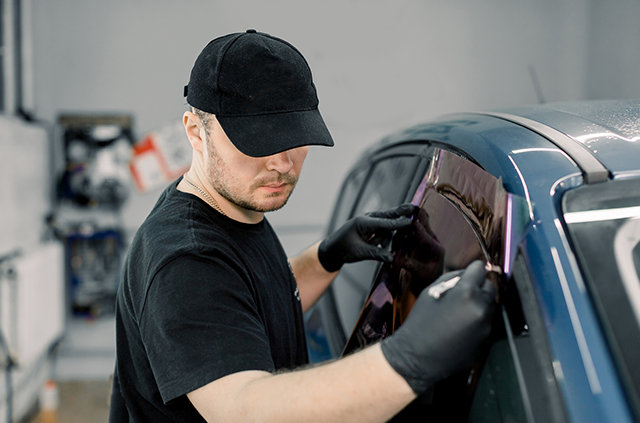
Window tints are thin, dark sheets of film applied to a car’s glass to help keep light out of the cabin. Most new cars come standard with some level of window tinting but aftermarket window tints are available as well.
Tinting serves several purposes. Most notably, it protects against the sun’s harmful UVA rays, which cause skin cancer as well as damage and fading to the vehicle’s interior. Window tints also help keep the cabin temperature cooler, cut down on glare from the sun and headlights, and provide car owners with a level of privacy and security. Some people simply like the way they look.
But with all these benefits comes one major drawback: visibility. The darkness of window tints makes them more difficult to see through, particularly at night, creating a safety hazard.
Are window tints legal?
Laws regulating window tinting in passenger cars are found in every state. These statutes dictate how much light is able to pass through the glass, a measurement known as visible light transmission (VLT) percentage. The darker the window tint, the lower the percentage. VLT is usually checked as part of your vehicle’s annual state inspection.
The allowable VLT percentage minimum or legal window tint percentage varies from state to state, from 20% in New Mexico to 70% in New York, Rhode Island, California, Pennsylvania, Delaware, Iowa and Washington, D.C. Three states (New Hampshire, New Jersey and Vermont) don’t allow any tinting.
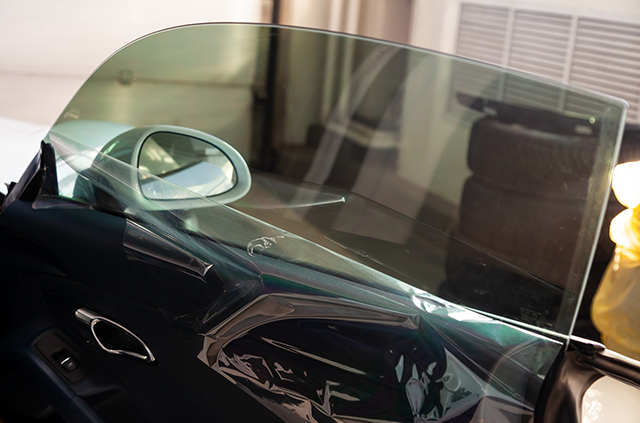
Window tint laws mainly focus on a car’s front side windows, although many states also have rules regarding back side and rear windows. States may allow for more tinting on back side windows, but, if so, usually require a car have dual side mirrors. Rear windows are often permitted to be darker than front side windows, as well.
Nowhere in the country are windshields allowed to be tinted except along the top of the glass pane. How far down the tinting is permitted to extend also varies by state.
Window tint laws can be complicated. For example, Michigan allows any percentage of tinting but only on the top 4 inches of the window. Some states allow tints to include metallic or mirrored elements, but many states ban such products. Further muddling the issue is the fact many states have different tinting laws for sedans than they do for trucks, minivans and SUVs.
It’s best to consult your state’s department of motor vehicles to know the window tint legal limit and what is and isn’t allowed.
Most states allow exemptions to window tints laws for people with medical conditions causing severe light sensitivity. Such conditions include albinism, dermatitis, dermatomyositis lupus, porphyria and drug photosensitivity, among others. If you require a window tint medical exemption, you can apply for one through your state’s department of motor vehicles.
When in another state, you’re subject to that state’s laws, including those dictating window tinting. Some states provide exemptions to their tint laws to those just passing through, but others do not. In the latter case, you could be subject to a citation if your windows are too dark. That said, if you explain that you’re only visiting and your windows are in compliance in your home state, you may be able to get off without a ticket.
This article has been updated and republished from a previous version.


Getting into a car crash isn’t something we plan on. It’s a scenario we’d generally like to avoid. But when it does happen, how do insurance companies determine fault?
Unless the crash you were involved in can be considered no-doubt liability, such as rear-end or left-turn collisions, there will likely be a process you and your insurance company go through to determine who exactly is at fault. We asked a AAA insurance expert how it works.
“There are different state laws that regulate fault, how it’s determined and even whether you can collect from the other party or not,” said Gregory Smolan, AAA Northeast’s vice president of insurance operations.
Whether or not you can collect payment after an accident depends on if you live in a contributary state or a comparative state. Living in a contributary state means that if you’re found to be even a small amount at fault, you can’t collect from the other driver. In comparative states, compensation is awarded based on your determined percentage of fault.
This map shows contributary and comparative negligence laws by state.
In the Northeast, states like Massachusetts, New Jersey and New York have no-fault insurance, which are laws that require each driver injured in an accident to file a claim with their own insurance company, so that each person is compensated for their medical bills, regardless of who was at fault.
“Typically, when a collision happens, the first line of defense is self-reporting,” Smolan advised. There are many times the police are called, and they’ll do an accident report that then goes to the adjuster. Usually, the way the report is written will give you a determination of who was probably in the wrong.”
In many cases, bystanders have a part to play in determining who’s ultimately at fault. “If I’m an adjuster,” Smolan said, “I’ll look at the police report, take statements from our driver and get their version of events. If there are any witnesses, I’d even call them for a statement. But we also have traffic cams now.”
Speaking of cameras, how about dash cams? Are they a hindrance to the fault process, or do they help? Smolan said they’re a great tool to have in your arsenal in the event of an crash. “Certainly, if you’re in a collision and you’re trying to determine fault, a dash cam is video proof just like a traffic cam. It’s totally valid.”
Do you have usage-based insurance? Even better. “Some folks have UBI, so they’re tracking their driving habits on their phones. If you can go back and see proof in those stats, they can help disprove someone else’s accusation.”
Essentially, if you’re trying to build a case, accumulating proof with photos, witnesses and the police report are your best bet. “You may still technically be at fault,” said Smolan. “But at least you’ve produced as much evidence as you can to the contrary.”
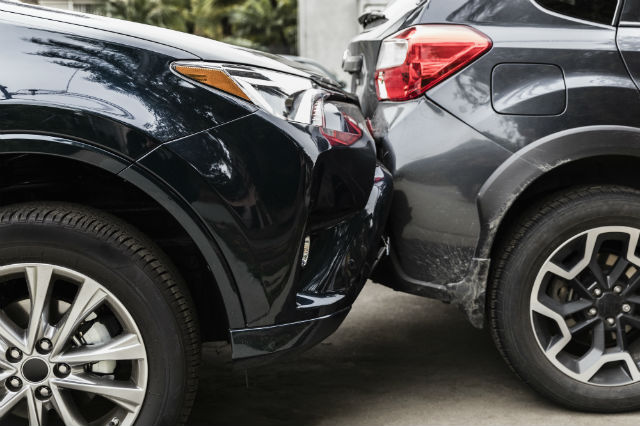
Once all the information about the accident has been received and the insurance companies begin their investigation, each will submit a determination of fault percentages. Surprisingly, these percentages aren’t precise and are only an estimate. “There’s no mathematical equation,” Smolan said. A lot of what ultimately determines fault is good old negotiation with the other party. If there is a disagreement with the results and both parties can’t come to an agreement, the situation will be handled by an arbitrator who’ll review all the facts and make a final decision.
If you find yourself in a scenario where the other party involved in the accident doesn’t have insurance, not all is lost. “Check with your own carrier about your uninsured motorist or under-insured motorist coverage to see if you have coverage on your policy,” Smolan said.
This article has been updated and republished from a previous version.
Mention Peru and many instantly think of the Historic Sanctuary of Machu Picchu. While the 15th century Incan citadel’s magnificent ruins and unforgettable views are a mainstay of any Peruvian visit, the country bursts with both natural and man-made wonders to explore, thanks to its more than 15,000 years of history.
Luxury small group journeys by Alexander + Roberts ensure travelers get to experience all of Peru’s culture, history and vibrant contemporary life. Here are some sights not to be missed.

Cuzco, capital of the former Inca empire, preserves many of the traditions of early Peruvian life. Travel to the Sacred Valley and meet women weaving the same way they have done for hundreds of years, using the wool from the native alpacas, llamas and vicunas that gather in the valley. Visit relics from both the Inca and colonial eras, including Sacsayhuaman, a massive stone monument built by the Inca in the 1400s. Another highlight is the circular terraces of Moray, which some scholars believe the Inca used as an agricultural testing station.

Not to be missed, the San Pedro Market in Cuzco fills the streets with endless rows of vendors selling everything from meats, fruits, vegetables and juices to crafts, hand-knit sweaters and fresh-baked goods. It’s also a good chance to sample some traditional Peruvian street foods.
Machu Picchu is one of the most well-preserved and well-known archaeological sites from the Inca civilization. Located high up in the Andes Mountains, its true purpose remains unknown, but one of the most common speculations is that it was a palace for the emperor Pachacuti. The 200-building complex includes roads, terraces, irrigation canals and temples made of stones that fit together like puzzle pieces, without mortar or pegs.
Among its Peru tour options, Alexander + Roberts offers a luxury train ride from Cuzco to Machu Picchu.

After Spain conquered the Inca in the mid-1500s, it ruled Peru for 300 years, imparting the Spanish language and many aspects of its culture. The capital, Lima, was founded by the leader of the Spanish expedition, Francisco Pizzaro, and is rich with the Spanish colonial influence as well as the Inca dynasty.
A walking tour of Lima is a stroll through hundreds of years of history. Not far from the main square is the Lima Cathedral and numerous museums, including the Larco Museum, which features pre-Columbian artifacts and is perfect to visit before exploring Inca sites in the Andes. Make sure to stop by Barranco, a neighborhood home to artists, galleries and cafes.
Also known as the culinary capital of South America, Lima boasts a food scene featuring a mix of indigenous, local and international foods.

Cooking classes, such as those offered on Alexander + Roberts luxury small group journeys, go beyond the kitchen. You’ll explore the cultural roots of each dish, learn about native ingredients and even shop like a local with guided market visits.

At an altitude of 12,500 feet above sea level, Lake Titicaca, on the border of Peru and Bolivia, is the highest navigable lake in the world. A wide variety of plant and animal species live in and around the lake, including one of the planet’s largest aquatic frog species. The lake also is home to the Uros people, who live on floating reed islands.
If you’re interested in a jungle trek, pick from assorted guided tours of the Amazon rainforests and consider a stay at Inkaterra Reserva Amazonica, one of the most highly regarded eco-lodges in the world.
Of course, there is always more to see. Alexander + Roberts offers pre and post excursions to additional locations in Peru and even beyond to Ecuador and the Galapagos Islands. For example, add an Amazon cruise, which could include a trip through the Pacaya Samiria National Reserve. This huge wetland reserve, Ecuador’s largest, teems with swamps, streams and plants and wildlife along the shores. In the Galapagos, you can explore different islands by boat and view the native wildlife and unique terrain.
Alexander + Roberts offers luxury small group journeys to must-see destinations around the world, including Africa, Asia, the Mediterranean and Middle East, Latin America, Australia and New Zealand.
Let AAA Travel make your dream vacation a reality. Connect with a travel advisor for free trip planning, custom itineraries, exclusive perks and expert guidance every step of the way.
All photos are courtesy of Alexander + Roberts.


SEASON 2: EPISODE 3
Episode Feedback
Buy now, pay later (BNPL) tools may feel convenient, but are they helping or hurting your financial future? In this episode of Merging Into Life, hosts Julien and Kiersten sit down with credit expert William Black to explore the pros and cons of BNPL and how new forms of consumer credit are reshaping our approach to debt management. From interest-free offers to BNPL’s sneaky impact on credit score, they unpack what makes these services different from traditional loans and why “frictionless” spending might be more dangerous than it seems. For anyone navigating student loans, car payments or just trying to understand modern credit, this episode is a crucial lesson in financial literacy for young adults.
[00:00:03] Julien: I hate to tell his business, but one of my closest friends was struggling to get a mortgage a few years ago. He finally was able to get it done. But as he was telling me some of the challenges that he was having, as it related to his credit score, I could not help but to recall so many of the issues that he had even when he was younger. Like he completely disregarded credit, and he wouldn’t pay his credit card bills, he wouldn’t pay his cellphone bills, back in the day. And, so, all of those little things, like when we were in our 20s, were definitely catching up to him.
[00:00:34] Kiersten: There are not many lessons in life that you have to learn the hard way, but I feel like credit kind of falls in there because it’s such a foreign concept. I was the same way. I understood it, intellectually. I knew I was supposed to follow these rules, pay on time. I did not fully understand how the consequences would ripple through every other decision for as long as they did. And so I was loose. I was reckless. I didn’t have a system. And I learned that lesson the hard ways. Things got very expensive very quickly.
[00:01:10] Julien: Hey everyone, welcome back to Merging into Life, the podcast where we’re helping you navigate real life moments with smarter financial choices, brought to you by AAA Northeast. I’m Julian. And I’m Kirsten.
[00:01:20] Kiersten: If you’ve been following this season, you know we’ve talked a lot about the emotional side of money, how it shows up in relationships, and how it affects the way we spend. Today, we’re looking at something that sits right at the intersection of emotion, convenience and risk. Buy now, pay later.
[00:01:35] Julien: If you’ve ever clicked pay in four at checkout or seen those little pop-ups offering interest-free payments, that’s BNPL, buy now pay later. And while it seems simple, there’s a lot going on behind the scenes, especially now with new credit reporting rules that could affect your score, even if you’re only splitting up a $40 hoodie. But it’s not just hoodies. This connects to the bigger financial choices we all make. Financing a car, taking student loans, buying a home or choosing credit over cash. These decisions carry weight, both practically and emotionally.
[00:02:06] Kiersten: We’re also going to look at how credit works and how it shapes the way that we think about money.
[00:02:10] Julien: Buy now, pay later isn’t really new, people have been using their credit cards to purchase products that they need to pay back later for a long time. So I’m looking forward to really digging into this discussion.
[00:02:20] Kiersten: We’re joined by William Black, a former managing director at Moody’s and someone with plenty of experience analyzing how loans work in the real world. So if you’ve ever wondered whether buying now and paying later is a smart choice or a slippery slope, this one is for you.
[00:02:39] Kiersten: Will, thank you for joining us. We gave a little bit of your bio, but if you want to give us some background on who you are and what you focus on, it would be great to start us off there.
[00:02:49] Will: The bulk of my professional career has been focused nearly exclusively on consumer credit. So here we’re talking about autos, credit cards, student loans and mortgages, where we focused on those asset, what we called asset classes, those consumer asset classes as they served as collateral or assets backing securities that are issued into the capital markets. So in order to do that, my team and myself, we had to understand how these businesses operate at a very granular level. As we know, two-thirds of the GDP of the economy’s growth is generated from consumer spending, and a lot of that is done on consumer credit.
[00:03:32] Kiersten: Have you found an easy way to explain how credit and interest rates work to the average consumer?
[00:03:41] Will: Credit is a responsibility that if you’re going to participate in the economy as a consumer, certainly in the U.S., is something you don’t have to participate in credit … but it sure is a useful tool. And whether or not you use credit, and almost all of us do, remember I mentioned credit cards, student loans, autos. We’re going to talk about buy now, pay later, which is a subsector of what I think of as unsecured consumer credit, which is credit cards, generally speaking, and mortgages if you want to own a home.
[00:19:22] Julien: What is the best way to just start building and establishing credit?
[00:19:23] One is just you’ve got to be in it to start building credit quickly. If you’re not in it, meaning if you don’t have credit, you’re still building a credit profile, whether you realize it or not. You’re just probably not helping yourself, because assumptions will be taken about you if you’re obtaining credit by the powers that be. Credit bureaus are tracking things like: What kind of credit do you have? How well are you paying down on that credit? How well are you paying it back? Are you delinquent? No. 2: How much credit a lender is likely to grant. And, No. 3, the cost of that credit will be affected by how high that credit score. The higher, the less chance you are going to default, the lower your APR or interest rate on that loan, which has major consequences. That’s some context I think is important to answer your question a little bit more directly. And that is, I mentioned, get in the ecosystem early, and you can do that somewhat safely. You’re not going to take out a mortgage when you’re a teenager, but what you might be able to get a buy now pay later when you’re buying something online. Just make sure that you pay it off on time. But you do, and once you or get a credit card, you might get what are called secured credit cards.
[00:05:42] Kiersten: I think very few people think about it like an ecosystem, like this critical part of our economy. There are all kinds of types of credit out there, whether we’re talking about credit cards, car loans, student debt, mortgages, and there are more things being invented along the way. I want to talk about buy now, pay later, because there’s a whole generation of people that will only know that as their primary loan or credit source. And I want to talk about what makes buy now, pay later or microloans different, and in some ways, more complicated than the traditional loans that we grew up on.
[00:06:18] Will: You’re right, buy now, pay later has been coming on the credit scene kind of fast and furious. They’re in the headlines. They’re getting a lot of attention. They’re relatively new, and they’re also relatively small. Let me put it into context. I mentioned earlier the main categories of consumer credit. Mortgages being the largest. I’m going to throw some numbers at you, but I’ll try to keep it simple. [There’s] about $13 trillion worth of mortgage, residential mortgage debt, outstanding in the country today. OK. Autos and student loans, 1.6 trillion each, each, outstanding. And credit cards as a category are about, I think, $1.2 trillion of credit card receivables outstanding, balances outstanding. Snapshot. BNPL is as best as I can determine, about $120 billion. It’s about 10% of just of just credit cards. So again, it’s been growing very, very fast. And that’s when we see a high rate of growth attached and you’re seeing new players who are very good at getting attention for their growth. They’re in the FinTech space and there’s a lot of attention given to FinTech. They’re growing fast. I would say that one of the things that BNPL does, they do a few things differently then let’s just compare them to credit cards. They’re both unsecured credit, meaning there’s no collateral backing it. They can’t take anything away after you bought it. Not like a car, like if you don’t pay back your car in 90 days, you’re late 90 days, they’re going to take your car back. So, it’s in that category of, of a loan, same as a credit card. No. 1, where they’re very different and where they were very successful, BNPL companies in general vs. a credit card, is that they were very good at becoming digitally native in the e-commerce ecosystem. That’s No. 1. The other thing that they did very well and are doing very well is they offer a product that is appealing in that it’s advertised as interest-free. Well, that sounds, that’s sounds awesome. Who, who doesn’t want an interest-free loan? And, of course, you and I know nothing is for free. Somebody is profiting from this arrangement, and it’s probably not you. Maybe that’s a bit of a cheap shot, because we can have a conversation and a debate about who’s truly paying for the cost of money, but we can agree that there is a cost to the time value of any loan. And that’s what this is. So who’s paying for that? You can make the argument, well, I’m not paying an interest rate. There’s no interest associated with my BNPL. So I’m paying any interest. That is true, nominally, but somebody’s paying for the time value of that money. And if it’s the lender, then they’re gonna get their chunk of change from the merchant. And the merchant is going to try to preserve their margins on what they’re selling. So, they’re going to charge you more for whatever they’re selling, maybe not you individually more, but they’re going to have to charge more to someone. It’s like squeezing a balloon, right? That, that air is going go somewhere.
[00:09:39] Kiersten: Let’s be real. Student loans can be one of the toughest topics for couples to navigate. Whether you’re paying them off, taking them on for a child or just trying to understand your options, it helps to have support. AAA offers access to student loan counseling and refinancing solutions designed to help members feel more in control of their financial future. Whether it’s guidance or a lower rate you’re after, we’re here to help. To explore your options visit AAA.com/studentloans. Services are available to AAA Northeast members. Availability and benefits may vary by club.
[00:10:14] Julien: I also remember one of the other things that made it very appealing when it started to roll out, what feels like a few years ago, was that it was not originally being reported on your credit report until recently, there’s been some news that now that is no longer the case.
[00:10:33] Will: I write a newsletter called Consumer Credit Matters that’s available on LinkedIn. And I wrote an article about this event very recently. So, you’re right to point out that, initially, whatever performance you did, good or bad, if you paid back your BNPL as on time or whether you defaulted on that BNPL, that credit behavior was not reported to what I mentioned earlier, the bureaus. And, therefore, did not then affect your score. This was causing some friction among the participants. This is a two double-edged sword, right? If you’re a good borrower and using BNPL, and they’re not being reported to the bureaus, you’re not helping your future self build a good credit bureau file and open doors for you down the road. But if you’re not a good borrower, that is, you can kind of escape that ecosystem without any penalty. That has now changed very recently that they will be working with at least some of those BNPL players and developing a statistical way of capturing that data.
[00:11:46] Kiersten: With these BNPLs, it’s like the due date is based on when the purchase was made. And so, the likelihood that you might miss a payment, not because you’re irresponsible, just because you have so many of them is a lot higher.
[00:11:57] Will: The thing you mentioned is an absolutely true truism of BNPL and how it differentiates itself from credit cards. And it makes it more difficult for the best organized among us to keep up with all these bills coming in throughout the month, as opposed to basically every other form of credit that I mentioned. Where you’re getting one bill a month. And often you can have those taken out of your checking account or your saving, whatever account on an automated basis. BNPL hasn’t been as easy. And by the way, it’s partly due to the fact that it started out as this is going to help you pay for this discretionary purchase that has a bigger ticket item than normal and compartmentalize it. And pay, I think, conceptually, in the early years, it was like, I’m going to buy this one thing that’s a little bit expensive, maybe a piece of furniture or something. And I and I get to pay it over four months instead of one month without any interest. That’s that was the thinking. Very attractive, right? And then, it turned into like being really pproliferated, and they’re ever present. And it’s awfully easy and tempting to hit the same button when you’re now maybe even checking out for groceries. Maybe you’re using for nondiscretionary purchases now. That is something that is happening. And yeah, you need to keep on top of it. You miss a payment, it’s going to hurt your credit score. Now how much, I don’t know. But it’s certainly it’s going to be immediate.
[00:13:27] Julien: What’s one thing that you do know for sure that you really just wish every young borrower knew about credit, whether it’s student loans, buying a car or buying now, pay later, what’s the one thing you just really wish every one of them knew?
[00:13:42] Will: You may not appreciate it when you start out, but credit is, as we started with this conversation, it’s a very important dimension of participating for most people. The vast majority of people, when you’re just starting out, it is and will and/or will be a very important dimension of participating in the economy. I guess it’s pretty simple. Pay back your debts on time. And don’t get in over your head. By the way, we should spend a little bit of time talking about getting in over your head, because bad things happen to good people. So, unemployment, health emergencies and divorce, I think are the top three reasons for people falling down in terms of their financial responsibilities. My advice to people there would be don’t go dark with your creditors. As difficult as it may be, get on the phone, or whatever your mode of communication is, with your lender and tell them what you’re going through, and tell them that you need help, and try to work something out. Most lenders, nowadays especially, will listen and offer you something, some forbearance, it depends on your circumstances and how you can substantiate it. So, don’t try to just turtle up, as the expression goes, and hope that this dark cloud will pass and that somehow people won’t catch up to you. Your debts are going to be, if you owe you something, those, those guys are not going to forget about it. I mean, you’re hearing about this in student loans now, right? I mean, I know this is a bit of a tangent, but it’s a good example. You owe a student loan to the federal government. They will come after you in Social Security years and garnish your Social Security if you owe them money. So you can run, but you cannot hide. And maybe you can run for many years, but you cannot hide.
[00:15:45] Julien: So I can’t just move to Belize, start an Airbnb and escape?
[00:15:48] Will: Maybe Belize might be an option. That might be an option. I’m not so sure how long the arms are, but I wouldn’t test it.
[00:15:57] Julien: I’d love to hear a little bit about your podcast.
[00:16:00] Will: I have a newsletter and a podcast. The newsletters, they go by the same name. They’re both called Consumer Credit Matters. And they’re just a platform for me to either discuss with, in the case of podcasts, discuss with market leaders in the world of consumer credit. And so that gives me a platform to either write about or talk about those types of events. Been fun, thanks for asking.
[00:16:24] Julien: No, thank you. Really appreciate you sharing your wealth of knowledge and understanding and experience on credit with us. And I’m sure all the listeners out there learn something as well.
[00:16:35] Will: Well, appreciate that. It was a wonderful conversation. Thank you so much for having me.
[00:16:42] Julien: You know, I really don’t want to demonize buy now, pay later. It does serve a purpose, but it’s really hard to not see it that way, when you know people are doing it to break up a $8 burrito into three different payments. Like I can understand it if we’re talking about a vacation or if in a case of an emergency. But when you start to see little things and kind of a flippant approach to it, I think that’s where the concern comes in.
[00:17:06] Kiersten: Yeah, my cousins, my younger cousins, almost treat it like a hack. Like it’s something that they know and that like we weren’t allowed to do when we were growing up. And they use it for everything. I think probably the craziest thing that I’ve heard that they use it for is gas. Did you know you could buy your gas now and pay for it later?
[00:17:22] Julien: I didn’t, but I’m not surprised.
[00:17:23] Kiersten: I was like, we used to just not go. Like if we didn’t have gas, we just weren’t going. And then, with all the options that you have between Uber and scooters, I just feel like there’s another alternative to breaking up a quarter tank into four different payments.
[00:17:37] Julien: Yeah, we used to ask for gas money, but I guess you don’t really need to do that if you got buy now, pay later. I love how these three episodes are really kind of connected in a way.
[00:17:48] Kiersten: Yeah, I was thinking about this the other night, and I realized the through line here is: the more invisible money becomes — like Fintech has this thing where they call it frictionless spending, you don’t have to touch physical paper or coins — the more visible money becomes, the more you actually have to think about it. And I don’t think we’ve caught up to that. In all three of our discussions, we’ve talked about the consciousness of money. How you have to think about how you feel before you spend it. How you think about your future purchasing decisions before you select buy now, pay later. And I don’t know that we’re used to doing that because before when it was physical it would just be gone. Like it was just subtraction, and now, it’s got like this calculus and algebra layer, the statistics layer, that is really advanced, and it changes the way that we should be teaching financial literacy and thinking about financial literacy.
[00:18:42] Julien: Yeah, it definitely feels like things are moving a lot faster, and we’re all kind of struggling to keep up with it. Big thanks to William for demystifying the world of credit and reminding us that even small financial decisions can leave a lasting impact.
[00:18:55] Kiersten: If this episode helped you rethink your own approach to borrowing, share it, leave a review, and don’t forget to subscribe on Apple, Spotify or wherever you listen. We’ll see you next time on Merging Into Life.
The views and opinions expressed in this podcast do not constitute financial advice and are not necessarily the views of AAA Northeast, AAA, and/or its affiliates.
William Black | Consumer Credit Matters Newsletter
Merging Into Life, S1E7: Buying Your First Home
Merging Into Life, S1E19: How to Choose Your First Credit Card
How to Build Your Credit Score
How to Pre-Qualify for an Auto Loan
AAA Answers All Your Student Lending Questions
How to Consolidate Student Loans
"*" indicates required fields
*The views and opinions expressed in this podcast are not necessarily the views of AAA Northeast, AAA and/or its affiliates.


Lots of life events can necessitate a change to your life insurance policy, but in particular, having a child could certainly be considered one of the biggest. It’s also the sort of life event that comes with lots of questions, especially if it’s your first child. So, when it comes to deciding whether or not to purchase a child life insurance policy, you may be wondering what that means and whether it will be worth it in the long run.
Here our experts weigh in and offer advice on the most-asked questions they’ve received about child life insurance.
Just like life insurance for an adult, life insurance for children is an agreement with an insurance company – but in the case of a child ages 17 or younger, a parent, grandparent or guardian serves as the policyholder.
“Child life insurance policies are put together in hopes that the growth that occurs will result in a substantial amount of usable equity to aid in providing substantial living benefits,” said Christopher Perrier, director of life insurance sales operations with AAA.
One of the biggest advantages of child life insurance is the feeling of security in knowing that your child is financially prepared for life’s big moments. “Children’s life insurance policies provide continuing coverage as they grow older for things like starting a family or getting married, where the coverage can then provide that much more value to families of their own,” said Perrier.
Having one also guarantees your child will have coverage in the event that they end up developing a health condition later on in life. In addition, you’re locking in a low rate.
“[A] huge benefit of these policies is that when children are young and healthy, the cost of insurance is as low as it will ever be,” Perrier said. “There is no better time to secure a policy to ensure they will always have coverage in place in the event they become uninsurable.”
Child life insurance policies can either be purchased separately from a parent or guardian’s policy, or they can be added as a term rider. Typical life insurance policies for children are categorized as either whole life or indexed universal life.

An indexed universal life, or IUL, policy offers permanent lifetime protection and the ability to grow in a stock market to increase the interest that’s credited to the cash value in the policy. “The beauty of this policy is that no dollars are actually invested in the index,” Perrier said. “In the event that the market has a down year, there would be no loss of any cash value.”
This kind of policy also has what is referred to as an annual reset, so any gains that are obtained are locked in every year they occur. This way, there’s never a risk of loss but always a healthy potential for growth. “A monthly investment of as little as $50 can result in a huge potential for cash value growth while the child grows up,” Perrier said. That cash value, he advises, could be easily used for college, a down payment on a home, opening a business or any number of life’s big events.
Because insurers consider pregnancy to be a medical condition — a category that can impact your rates — the best time to get life insurance would be before you become pregnant. However, if you are already pregnant, applying as early as possible can help deter any pregnancy-related health factors related to your policy.
Grandparents are welcome to purchase a policy for their grandchildren, said Perrier. “Many clients establish child policies for their grandchildren as a gift when the child is born. While most children outgrow tangible gifts such as toys or clothing, a children’s life insurance policy can be designed to create a lasting legacy for generations to come.”
Energy Information Administration (EIA) data released last week showed gasoline demand might be crawling out of a post-July Fourth slump.
The agency reported demand rose by 185,000 barrels a day over the prior week to 9.15 million barrels a day – a figure roughly in-line with seasonal expectations, but still 100,000 barrels a day below the comparable week last year.
The EIA also reported a decline in domestic gasoline stocks last week, which reached a two-month low. The largest declines were seen here in the Northeast, where regional supplies fell by 1.8 million barrels to 57.9 million barrels. Despite the drawdowns, Northeast supplies are still considered to be at comfortable levels and sit above the 56.2 million barrels that were in storage this time last year.
“After demand for gasoline fell short of expectations in the weeks following July Fourth, recent readings are much more summerlike,” said Mark Schieldrop, senior spokesperson for AAA Northeast. “The stronger demand, coupled with tighter supply, has put some upward pressure on pump prices.”
AAA Northeast’s Aug. 8 survey of fuel prices found the current national average the same as last week ($3.15), averaging $3.15 per gallon. The national average price is a penny higher than a month ago ($3.14) and 30 cents lower than this day last year ($3.45).
| Region | Current Price* | One Week Ago | One Month Ago | One Year Ago |
| Massachusetts | $3.07 | $3.05 | $3.06 | $3.44 |
| Rhode Island | $3.04 | $3.03 | $3.02 | $3.38 |
| Connecticut | $3.12 | $3.11 | $3.15 | $3.44 |
| New York | $3.17 | $3.16 | $3.19 | $3.58 |
| New Jersey | $3.07 | $3.07 | $3.10 | $3.32 |
*Prices as of Aug. 8, 2025
As of Aug. 8, Mississippi and Texas have the lowest prices in the nation at $2.71 and $2.73, respectively. California and Hawaii hold the highest prices in the nation this week at $4.49 and $4.46 respectively.
The AAA Gas Prices website is your resource for up-to-date fuel price information. Search for average gas prices on national, state and metro levels by regular, plus, premium and diesel.

For high school students or any college-bound individual in the process of researching colleges and universities, admissions professionals strongly recommend scheduling campus visits.
If you can’t make it in person, virtual college tours offer a glimpse into student life and campus facilities. One perk is that you can visit multiple campuses across the country all in one day.
Don’t forget, all AAA members have access to our college portal, which includes how-to videos on acing college applications, essays and interviews, as well as financial aid and funding strategies.
What’s the best way to experience Hofstra? This self-guided virtual college tour explores inside Hofstra’s labs, residence halls and production studios, giving viewers access to campus videos, 360-degree photo tours and more. The university is also active on TikTok and their channel is full of funny (and relatable) videos for current and prospective students.
Georgetown University’s virtual reality walking tour, gives anyone the chance to visit the campus at their own pace, before seeing it in person. This narrated tour has 20 stops around campus, each with 360-degree photography.
In addition to exploring the halls, athletic center and other parts of campus, a bonus of the Boston College virtual college tour is that you can watch a recorded or live panel from faculty and students. The college also has a robust YouTube channel.
While nothing compares to the real thing, virtual college tours are a great place to start. Fairfield University’s virtual tour gives a simple overview of the campus and couldn’t be easier to use, allowing visitors to look around 20 different points of interest in just a few clicks.
The College of New Jersey’s Youtube channel gives prospective students first-hand accounts from current students and alumni, plus behind-the-scene looks of their athletics program and what to expect during welcome week and homecoming.
NJIT offers 45 acres of innovation and excitement. Their self-guided campus tour takes you across the entire campus, giving you an inside look into Greek Way, the Microelectronics Center and the Makerspace, a rapid prototyping and collaboration facility where engineers, architects, designers and scientists can create and test ideas, put theory into practice and turn ideas into reality.
The Johnson and Wales virtual tour gives an all-access view of its beautiful Rhode Island campus. The college’s YouTube channel also highlights internship opportunities, special events and what life is like at JWU.
This virtual college tour gives you a narrated look into every aspect of the university. The tour is a student-led effort; undergraduate members of the University Guide Service wrote the script, coordinated the filming and continue to maintain and update the tour, giving you full-access to the campus.
Take a 360-degree tour of each university on your desktop, laptop, phone or VR headset. The tour covers all of the University of North Carolina’s campuses and state universities.
Texas A&M encourages prospective students to set up a 30-minute video chat or call with current “Aggies.” You can also take virtual tours of the campus, including a 20-minute walking tour hosted by the school’s official tour guides, the Howdy Crew.

This self-guided, virtual tour will take you to popular spots across the Columbus campus. Along the way, you’ll learn about Ohio State’s unique history, traditions and what it means to be a Buckeye. The university’s Instagram account also gives prospective students a taste of OSU with behind-the-scenes videos and interviews with current students.
UM students give an insider look of the campus from their point of view. Their YouTube channel also hosts unique series like Michigan students’ vlogs and what summers are like for students who decide to stick around.
This virtual tour takes you across the 217-acre University of Chicago campus, which is also a certified botanical garden. The narration is led by students and alumni and boosts over 30 stops around campus, each with 360-degree photography.
Stanford’s online tours include a student-led tour and a virtual campus walk with access to over 30 locations throughout the university including housing, dining, social activities, the quad and more. Stanford also has a podcast highlighting buildings that have benefited from the Stanford Challenge, aimed at seeking solutions to global problems and educating the next generation of leaders.
You can get an inside look at UW through a series of campus tours hosted on the university’s YouTube channel. It covers everything from commuting, campus life, studying abroad, secret study sports and more.
You can preview the University of Arizona with a six-minute student-led tour video. For more great insight into the life of a Wildcat, check out their Instagram account and YouTube channel.
UCLA is one of the most applied-to schools in the nation. Their narrated tour has over 20 stops around campus each with 360-degree photography. You can see and hear students, faculty and staff explain what makes UCLA an amazing place via their YouTube channel.
Need a new computer for college? Start the school year off right with discounts for AAA members from HP and Dell.
Visit AAA’s College Portal for a customized step-by-step program that will walk you through the college-planning timeline. Inside the portal, you will have access to proven admissions strategies, financial aid options and support needed to build a bright future for yourself or your college-bound kids.
AAA Student Lending is also here to support you and your family with affordable and flexible student loan and refinancing options. Schedule a call to speak with a AAA Student Lending specialist.
This article has been updated and republished from a previous version.

There are many well-known sayings that hold true, like “don’t judge a book by its cover,” “the early bird gets the worm” and “better safe than sorry.” But is there any truth to the real estate adage that homebuyers should “marry the house, date the rate?”
Let’s look at the thinking behind this homebuying strategy and whether now is the time to put it into action.
The “marry the house, date the rate” adage reinforces the fact that you can change your mortgage rate while remaining in the same house.
There is a common misconception that you should always put off purchasing a home when rates are high. This approach may seem financially sound in the short-term, but the delay could cause you to miss out on the home you want to marry.
Instead of waiting an undeterminable amount of time for interest rates to drop, you may be better off acting now. Interest rates are always fluctuating. Your initial rate may be higher than you like, but by “dating” your rate, you can break up with it as soon as a better option presents itself.
“It’s a cycle, and when [interest rates] come back down, borrowers will have the opportunity to refinance to a lower rate,” said Steven Vieira, director of mortgage sales and operations at AAA Northeast.
Get expert mortgage help with AAA.
Those with a mortgage should always be dating the rate. Even if the original loan comes with a low interest rate, it is wise to consider refinancing if rates drop even further.
That said, the “marry the house, date the rate” strategy was devised for high-rate times like these. The opportunity to refinance when rates drop provides a built-in safety net that ensures consumers will not be locked into an exorbitant interest rate for the length of the mortgage.
Additionally, despite reaching historic highs, interest rates may continue to increase. This would make waiting to purchase a house a costly delay. Taking out a mortgage today would eliminate that possibility.
“Marry the house, date the rate” can be particularly appealing to renters who have put off homebuying during these turbulent times. Remember, mortgages are essentially savings accounts. Borrowers deposit money each month and when the loan is paid off, they become the owner of a valuable asset – a house. Renters, on the other hand, will never get their money back. By adopting the “marry the house, date the rate” strategy, renters can begin building equity immediately when they might have otherwise been reluctant to take out a mortgage.

It is not just interest rates that have people concerned. Skyrocketing house prices are also scaring off many potential buyers. At the end of the first quarter of this year, the average sale price of houses in the United States was $512,800, according to the St. Louis Fed.
But there are two important points to remember about current housing prices: They are not likely to drop significantly any time soon, and they could work to your advantage when trying to get into your dream house.
Let us look at the first point. Many potential homebuyers are operating under the premise that a housing bubble is about to pop, which will cause prices to decline. But Vieira cautions that consumers should not hold their breath waiting for this to happen. “It goes back to basic supply and demand,” he said. “The housing stock is the lowest it has been in years. This fact alone will keep prices stable, and we may see increases.”
Secondly, the current market could present opportunities for those looking to purchase a house. High prices and interest rates have discouraged many potential homeowners, leaving them sitting on the sidelines. In turn, those looking to sell their home now have a smaller pool of buyers to choose from. This does more than limit the competition. With fewer options, sellers are more likely to be willing to negotiate price and terms. When all is said and done, buyers acting now may end up finding a better deal today than they would have in a less-turbulent housing market.
Are you ready to “marry the house, date the rate?” Contact AAA Financial Services to start your mortgage application today.
This article has been updated and republished from a previous version.

Crude oil prices fell between $3 and $4 a barrel last week, touching prices not seen since mid-June after OPEC+ members, for a fifth straight month, agreed upon another production increase – this time of more than 500,000 barrels a day in September. The decision by the group marks the complete unwinding of the 2.2 million barrel-a-day cuts instituted in 2022 in an effort to prop up oil prices that cratered during the COVID-19 pandemic.
Lower oil costs helped negate potential price impacts caused by last week’s domestic supply and demand data released by the Energy Information Administration (EIA), which showed inventories continue to tighten as stockpiles of crude oil and gasoline declined by 3 million barrels and 1.3 million barrels respectively. In the Northeast, inventories of gasoline fell by 800,000 barrels from the prior week, the EIA reported, and now sit 900,000 barrels below last year’s levels.
Demand for gasoline, meanwhile, dipped 112,000 barrels a day to 9.04 million barrels a day – a figure considered disappointing for a summer week, but still 74,000 barrels a day higher than the same week last year. Demand in 2023 was 260,000 barrels a day higher, according to EIA data.
“Oil and gas markets are being pulled in different directions and ultimately edging lower as the potential for increased global oil supply takes focus,” said Mark Schieldrop, senior spokesperson for AAA Northeast. “Increased production by OPEC+ countries in the fall could accelerate the traditional seasonal decline in gasoline prices we usually see in late summer.”
AAA Northeast’s Aug. 11 survey of fuel prices found the national average down two cents from last week ($3.15), averaging $3.13 per gallon. The national average price was three cents lower than a month ago ($3.16) and 31 cents lower than the same day last year ($3.44).
| Region | Current Price* | One Week Ago | One Month Ago | One Year Ago |
| Massachusetts | $3.06 | $3.07 | $3.05 | $3.43 |
| Rhode Island | $3.04 | $3.05 | $3.03 | $3.35 |
| Connecticut | $3.11 | $3.12 | $3.14 | $3.48 |
| New York | $3.17 | $3.17 | $3.18 | $3.56 |
| New Jersey | $3.05 | $3.07 | $3.07 | $3.29 |
*Prices as of Aug.11, 2025
The AAA Gas Prices website is your resource for up-to-date fuel price information. Search for average gas prices on national, state and metro levels by regular, plus, premium and diesel.
A. The open bottle, if it is more than a year old, I would toss it. The closed bottles are generally good for five years and some can last much longer. Afterall some cars do not have coolant changes for up to ten years and Audi in some models state the coolant is good for life. The bigger issue is coolant formulation changes with new models and the newer formulations are generally backwards compatible but old mixes may not be suitable for newer cars.
A. There are no specific technical bulletins for this issue. At this point you need to start at the beginning and the very first thing is to determine if this is a normal characteristic or something is wrong. It could be a normal characteristic (not desirable but normal) that with a combination of transmission torque converter operation and cylinder deactivation and car is just not quite sure what gear to be in. Mazda, in service data recommends comparing the vehicle to same year and model to rule out normal characteristics. Also, a professional level scan tool should be used to check for any pending codes. Mazda may even do a basic reset of the transmission computer to let the car relearn your driving habits.
A. Unfortunately, with a 45-aspect ratio and a 21-inch wheel size the tires choices are limited. Looking locally at major brand tires you will be spending $350-$500 per tire. Looking online at Walmart and SimpleTire, I found much cheaper tires made in in China and Korea. I will admit they are names I have never heard of, such as Lionheart and Lexani and both were priced under $150. Are these tires as good as a $450 brand named tire? My guess is no, but I have been surprised by bargain tires before.
A. Honda sells about 300,000 CR-Vs in the US every year and although there have been some problems with relays sticking and causing dead batteries the number is very small (in the hundreds). Some CR-Vs had what could be considered undersized batteries with not enough reserve to handle the normal parasitic draw. With most newer vehicles one drive of 20-30 minutes once per week is enough to keep the battery charged. The CR-V is one of the best SUVs of its size and one the I would buy.
A. It is possible that the wiring was damaged or just rusty and crusty and fell apart at the tank when the rust repair was performed. The wiring sits above the frame rails and if they did rust repairs, it is certainly possible. The sensor is part that sits in the area of the fuel tank senser and fuel pump. To inspect the wiring and sensor the fuel tank typically needs to come out or at least be lowered. I would first start by talking with the technicians that performed the rust repair and then go from there.
A. I have to disagree with your friend. If I were fixing a car, I would want to know the history of what work was performed, other possible diagnostics and what DIY repairs were performed.
Do you have a car question? Email the Car Doctor for a personal reply: jpaul@aaanortheast.com.

Wellness travel has exploded in the last few years, but you wouldn’t be alone in wondering: What exactly is it? It might be a week at a spa, a wellness clinic, or a fitness-focused getaway like a bike tour or yoga retreat.
If you’re looking for inspiration for a wellness travel adventure, you’ve come to the right place. Here are five current wellness travel trends and where to experience them next.
Hoteliers have always known the value of sleep, but some are taking it a step further with full-fledged sleep packages. Some properties employ in-house sleep experts, while others offer extensive pillow menus and sleep tracker devices to help you troubleshoot your sleep issues. Others stock rooms with sleep-inducing aromatherapy, melatonin or relaxing teas.
The creme de la creme of wellness travel programs for insomniacs include:
Book your next trip with AAA Travel now or call 888-780-5185 to speak with a travel advisor.
Book NowYes, you read that right. One of the most significant wellness travel trends of the past few years has been an intense focus on women’s wellness, particularly during significant life transitions such as postpartum and menopause. Wellness properties around the world have invested extensive time and resources into developing programs to help women reset and rebalance as they navigate menopause.
Top destinations for menopause retreats include:
Bored of buffets and tiki cocktails? Several cruise companies have begun offering nutritious menus, hydrotherapy circuits, onboard group fitness and even dedicated health-themed sailings.
If you want to dip your toes into the world of wellness cruises, we recommend asking your AAA travel advisor about one of these trendsetting voyages:

A strong social connection isn’t just good for your marriage, it also reduces your individual risk of chronic disease and serious illness, according to the Centers for Disease Control and Prevention (CDC).
Top wellness travel destinations and hotels have taken note, offering immersive health and spa programs specifically designed for couples. These retreat activities foster connection as participants learn how to support each other’s health goals and try new activities like yoga or cooking together.
If you and your partner are interested in getting healthier as a team, check out some of these incredible programs:
Plan you next wellness getaway with a AAA travel advisor. AAA travel services are just one of the free perks of your membership.

Few things are as distressing as discovering a flood in your home. Whether it’s from heavy rainfall, a burst pipe or a natural disaster, the aftermath can be overwhelming. Where do you even begin?
Read on to learn what to do if your house floods, including steps to take when faced with a flooded space, how insurance can help and the long-term strategies for preventing damage.
The safety of you and your family is top priority, so if the flood is severe, evacuate immediately and seek higher ground. It’s also wise to avoid walking or wading through floodwaters as they can contain hazardous materials and pose dangers you may be unable to see.
Although it may seem like a good idea to start cleaning up as soon as possible, it’s best to document the extent of the damage before anything else. Take photos and videos of affected areas to provide evidence for insurance claims; this makes the process easier for both you and your provider.
Speaking of insurance, you should notify your insurance company of the incident as soon as possible. Provide them with your documented evidence of the damage and follow their guidance on the next steps in the process.
Once it’s safe to reenter your home, begin the cleanup process quickly to prevent further damage. Remove standing water by using pumps and/or wet/dry vacuums and dispose of damaged items that cannot be salvaged.
It’s important to thoroughly dry the affected areas to prevent mold growth. To do this, run dehumidifiers and fans until no sign of moisture is present. Once dried, disinfect all surfaces, furniture and small items to eliminate any potential toxins from the floodwater.
Water is corrosive and can cause irreversible damage to the structural integrity of your home. Look for signs of damage to the foundation, walls and support structures especially, but all areas should be inspected as a precaution. If you have concerns about the safety of your home, consult with a professional to evaluate further.

Learn how to keep your home and family safe before, during and after a major storm.
Read nowEven if you don’t live in a flood region, you could still be affected by unexpected water in your home.
“Flooding does not only occur in coastal communities. Floods can occur just about anywhere,” said Jodi DeSantis, vice president of insurance sales at AAA Northeast. “Floods may result from rain, storm surge, overflows of water systems and can develop slowly or very quickly. Flash floods often come without warning as we have seen in communities within our AAA Northeast region recently.”
To set yourself up to be as flood resistant as possible, consider investing in flood insurance. While standard homeowners’ insurance may cover some water damage, it often excludes flooding, which means you’ll need a separate policy.
More ways to prevent flood damage in your home include:
These products can help you stay prepared in the event of a flood.
Learn more about flood insurance with AAA.
Hint: A proactive strategy aimed at reducing or preventing the negative impacts of a potential disaster.
This article has been updated and republished from a previous version.
Just thinking about planning a family trip can be exhausting. The packing, the organizing, the lists (so many lists) — and that’s all without having a destination picked.
We can’t pack your bag for you, but we can definitely give you some ideas on where to go.
Family vacations should be fun for everyone, and while many traditional destinations do it right (looking at you, Disney), maybe this year the road less family-traveled is calling your name. These places are not necessarily known as family vacation hotspots, but that makes them all the better. Fewer clichés, new experiences and memories to last a lifetime.

Even for families who like to stay active on their vacations, a visit to the Appalachian Trail may seem like a bit of a stretch considering its enormity and lack of family-friendly accommodations. Fortunately, the Appalachian Mountain Club (AMC) has that last one covered. Staying in one of the AMC’s “huts” lets you enjoy comfortable lodging across the White Mountain National Forest portion of the Appalachian Trail and includes home-cooked meals for the duration of your stay. Each hut is only accessible by foot, but their distance from the nearest trailhead varies, so families may choose one that’s the best fit for their needs.
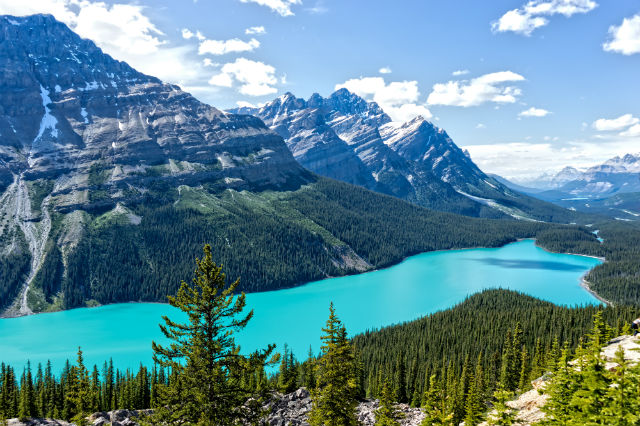
A bit off the grid, Banff feels like a true escape. Surrounded by the Rocky Mountains, the tiny town is almost too perfect — no trash in sight and basically carless. It is a walkable dream with exceptional views and the occasional wildlife sighting (it is, after all, within Banff National Park).
Families can choose to explore the town or venture off to visit any of the surrounding attractions including stunning Lake Louise, hot springs, waterfalls, nature hikes, gondola rides, shopping, cave exploration and so much more.
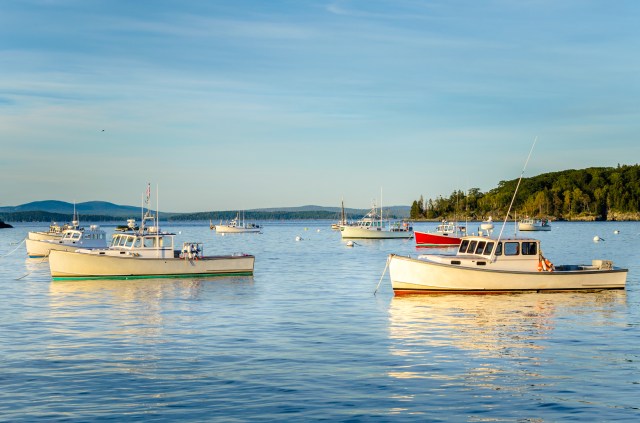
Family trips can sometimes fall into the trap of being too much — too much to do, too much to see and not enough time spent in the moment. Bar Harbor is a place where things happen slowly and activities are limited, but that’s the point.
A family trip to Bar Harbor would likely consist of a hike in Acadia National Park, taking a refreshing dip in the chilly Atlantic, then deciding it’s time to mosey into town for an ice cream as you watch the sunset. It’s the kind of place you imagine only exists in movies: charming oceanside small town surrounded by mountains where a penny candy store still exists and lobster paraphernalia is plentiful. Essentially, this is the perfect place to head if your family is in need of some serious rest and relaxation.

Think of Chicago as a less intimidating New York City. Smaller, more manageable and arguably more kid-friendly.
With activities like museums, aquariums, beaches and parks, there’s plenty for any family to see and do. Got a dinosaur fanatic? Take them to see SUE, the most complete T. rex skeleton ever found, at the Field Museum. Interested in architecture (or just like to look up at big, tall buildings)? Enjoy a cruise down the Chicago River, lazily floating through the city as a guide explains the history and significance of each facade. Big appetites? Nothing’s better after a day exploring the city than to sit down with one of the city’s iconic deep-dish pizzas at a local hole-in-the-wall. Whatever you and your family are into, there’s something for everyone in Chicago.

It’s not unreasonable to question whether a place nicknamed Sin City would ever be a good family trip destination, but Las Vegas has steadily become a city where families can enjoy some fun together. In fact, the city offers several kid-friendly activities from the High Roller Observation Wheel at The LINQ to the Big Apple Coaster at New York-New York (a roller coaster that twists around a miniature New York City.) Families can also opt to visit museums, exhibitions and shows that all members of the family can enjoy, like Cirque du Soleil or a mystifying magic show by Mac King.
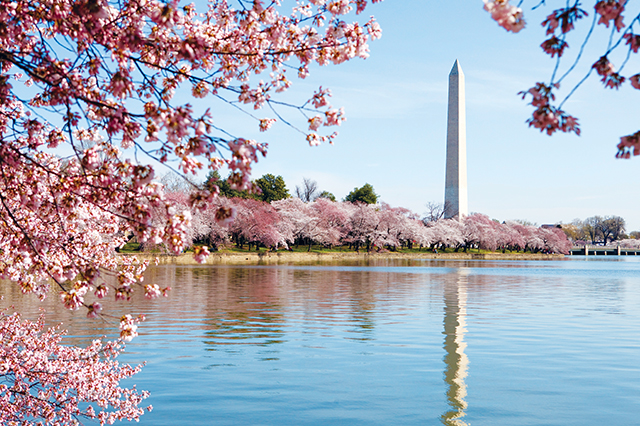
Our nation’s capital is a hub for policymaking but is lesser-known as a family vacation hot spot. We’re not sure why, considering the next two words: free museums. That’s right — every single Smithsonian Institution museum in Washington, D.C., has free entry. For everyone, not just kids. That means you could visit the National Museum of Natural History, National Air and Space Museum, National Zoo, National Museum of African American History and Culture and 12 more museums for zero dollars. Talk about vacationing on a budget.
Besides its plethora of museums to explore, Washington, D.C., is also a great walkable city, whether you have a destination in mind or not. You’ll have plenty of opportunities to eat, shop, explore and learn as you do, all while taking in the sights. Not up for walking? Take an easy ride on the district’s metro or hop on a bus or Segway tour.
Book your next trip with AAA Travel now or call 888-780-5185 to speak with a travel advisor.
Book Now

The Northeast is no stranger to fame, especially as many Hollywood stars have roots here. There’s Viola Davis, who hails from Rhode Island, Chris Evans from Massachusetts, and Glenn Close from Connecticut, just to name a few.
With so many big names calling the Northeast home, it’s no wonder some stars have chosen to open their own businesses here. From award-winning restaurants to a charming countryside inn, here are five celebrity-owned businesses that you can visit right here in the Northeast.
Need a ride? Rent a car.
North Kingstown, R.I.
Serving up country-style cuisine with a twist, Olivia Culpo’s Back 40 restaurant opened in 2017 and has since made a name for itself in not just the local South County food scene, but all around the state as well. Catch American classics like pulled pork, wings and nachos while being pleasantly surprised by creative offerings such as the Smashburger Cubano or the Drunken Seafood Linguine.
Bedford, N.Y.
The historical significance of the Bedford Post Inn – having been an important stagecoach stop between Boston and New York City in the 18th and 19th centuries – was what initially drew actor Richard Gere to acquire the property and begin much needed renovations in 2007. Today, guests can enjoy a multitude of modern amenities while enjoying the implicit old charm of the property, including a yoga facility, a reflective pool, pastoral views and on-site dining.
New York, N.Y.
Want to know what kind of coffee Hugh Jackman drinks? Look no further. To Mr. Jackman and all who visit, Laughing Man is a place rooted in community, fair trade goods, lots of laughs and good vibes (their motto is, after all, “All be happy.”) Grab a simple flat white or indulge in a variety of specialty drinks like the vanilla rose matcha latte.
Marshfield Hills, Mass.
Having grown up in the surrounding area, Steve Carell took ownership of the historic Marshfield Hills General Store in 2009. The shop has all the New England town charm one would expect, complete with a candy section, toys, gifts, freshly brewed coffee and, in honor of its beloved owner, “The Office” merch from hats to “World’s Best Boss” mugs.
Rhinebeck, N.Y.
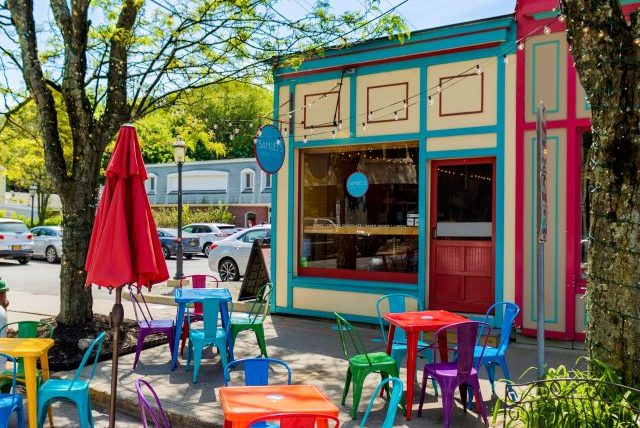
Get your sugar fix at Samuel’s Sweet Shop, where you can delight in a variety of sugary treats from chocolate to gummies, cookies, lollipops, caramels, vintage favorites and so much more. Curious if your taste aligns with its famous owners? Try either Paul’s Favorites sampler or the Jeffrey’s Favorites sampler (both of which can be ordered online and shipped, if you can’t make it to Rhinebeck). Voted Best Candy Store of the Hudson Valley by Hudson Valley Magazine, you can even grab a hot or cold beverage to go with your sweet selections.
Featured image: Samuel’s Sweet Shop
This article has been updated and republished from a previous version.
Do you know all the parts of your car?