Making ‘Scents’ of Car Air Fresheners

On average, American drivers spend nearly one hour behind the wheel each day. If you’re going to be anywhere for that long, let alone an enclosed space, you’re going to want to make sure it smells good. That’s a big part of what makes the demand for the best car air fresheners so high and the market for them worth millions of dollars.

The humble car air freshener has a unique origin story that dates back to the 1950s. Since then, the market has grown to include numerous different models and scents. Let’s take a look at some of the best air fresheners available today.

The History of the Car Air Freshener

In 1952, a man named Julius Sämann was living in the northern New York town of Watertown. One day he was having a conversation with his milkman, who complained about the bad smell spoiled milk left in his truck when the drink spilled.

Sämann was a German-Jewish chemist who fled his homeland and settled in upstate New York. There, he spent years studying the Canadian pine forests and extracting the aromatic oils from these trees. To solve his milk truck driver’s problem, Sämann combined the fragment smells of a Canadian pine tree with specialized blotter material and the first car air freshener was born. He gave his new product the shape of its inspiration: a pine tree.

Little Trees, as they’re known today, were an immediate hit and quickly began selling across the country and around the world. The air fresheners are still made in Watertown although the product line has grown quite a bit. Originally there were just three scents: Royal Pine, Spice and Bouquet. Now, there are more than 40 including Cotton Candy, Fresh Shave and New Car Scent.

Types of Car Air Fresheners

Like most things that have been around for 70 years, car air fresheners have evolved quite a bit. There are now vent clip-ons, visor attachments, sprays, air purifiers and more.

Cardboard

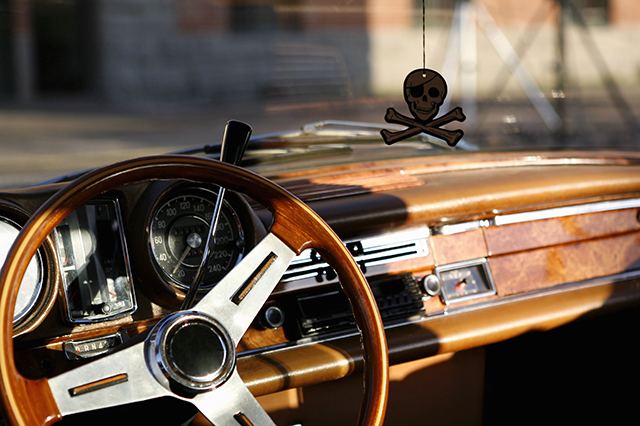
Cardboard air fresheners, like Little Trees, are made of specialized blotter material that slowly releases the fragrance. They are generally meant to hang from the rearview mirror but you can put them anywhere in the vehicle.

Clip-On

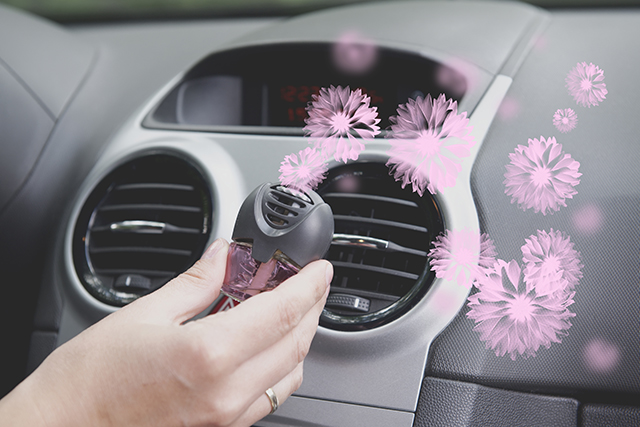
As the name implies, clip-on air fresheners clip on to your car’s air vents. The air then helps circulate the fragrant oils throughout the cabin. They work as long as air is passing through them. With most clip-ons, you can adjust the amount of scent that is released.
The Best Car Air Fresheners
Plug-In

Plug-in air fresheners work in much the same matter as clip-ons except they do not require your car’s air to be on. Instead you plug the device in and it releases the scent itself.

Can

These cans have a fragrant gel or wax inside them. All you have to do is twist the lid to open the built-in vents. You can control the amount of scent being released by adjusting the size of the vent openings.

Spray

These are just like your household deodorizing sprays except specifically designed for your car. They are especially useful if the odor is coming from one particular area in the cabin.

The Best Air Freshener Scents

The most common scents include some version of Apple, Coconut, Lemon, Cherry and the always popular New Car Smell.

According to Little Trees, their best-selling scents are Black Ice, New Car Scent and Caribbean Colada. The company’s more unique fragrances include Fresh Shave, with notes of talcum powder and musk, Rainshine, a mix of dewy florals and earthy greens, and Celebrate!, a blend of vanilla cake and sweet buttercream frosting.

Yankee Candle, another major producer of car air fresheners, has popular scents Red Raspberry, Clean Cotton, Lilac Blossoms and Leather in its lineup.

Do you use air fresheners in your car? What is your favorite scent? Let us know in the comments below.

This article has been updated and republished from a previous version.

Subscribe to Your AAA Newsletter

Sign up and receive updates for all of the latest articles on automotive, travel, money, lifestyle and so much more!

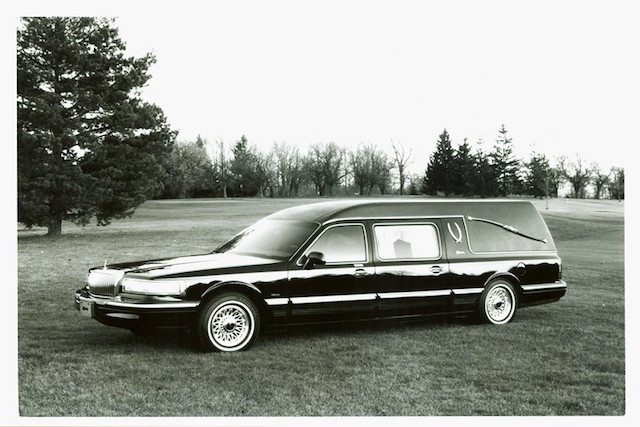
The History of Hearses

The way people honor the dead has been a source of great interest dating back to ancient times. As such, few vehicles offer more intrigue today than the hearse – but for obvious reasons, it’s a mode of transportation we try not to think about.

Still, hearses serve an important role in society and a look through hearse history shows how our respect for the deceased has evolved. Let’s see how these casket-carrying vehicles came to be.

Why Is It Called A Hearse?

The term “hearse” is derived from the Latin word “hirpex” through the French “herse.” Both refer to a harrow, a large farming tool similar to a plow used to break up soil. So how did a vehicle carrying the deceased come to be named after a farming device? Early horse-drawn hearses consisted of a wooden framework with spikes used to hold candles. This candelabra-like structure resembled the teeth of a harrow. So, starting in the 17th century, people began using the word “hearse” to refer to carriages used to transport the deceased.

Hearse History Begins

Hearses as we know them first began to appear in the early 1900s. Interestingly, these early vehicles were powered by electric motors. In 1909, undertaker H.D. Ludlow commissioned a vehicle made from the body of a horse-drawn casket coach and the chassis of a bus. This was the first known example of a gas-powered hearse.

Such vehicles remained rare at first, as they cost significantly more than horse-drawn varieties. But as combustion engines became more powerful, funeral directors realized they could use these faster-traveling hearses several times per day. Gas-powered hearses quickly became cost effective and became the norm by the 1920s.

The same year Ludlow commissioned his internal combustion vehicle, hearse history hit another notable milestone when the Crane and Breed Company in Cincinnati introduced the first commercially built gas-powered hearse. It featured a 30-horsepower, four-cylinder engine that allowed the vehicle to reach a top speed of 30 mph.

While the hearse’s mechanics evolved quickly, improvements to its aesthetics soon followed. In 1925, the Sayers & Scovill company, also located in Ohio, debuted a landau-style hearse. This longer, sleeker vehicle was reminiscent of a limousine and quickly became more popular than the boxy hearses of the day. During this time, and up until the mid-1900s, it was common for a hearse to serve as both a funeral coach and an ambulance.

hearse history
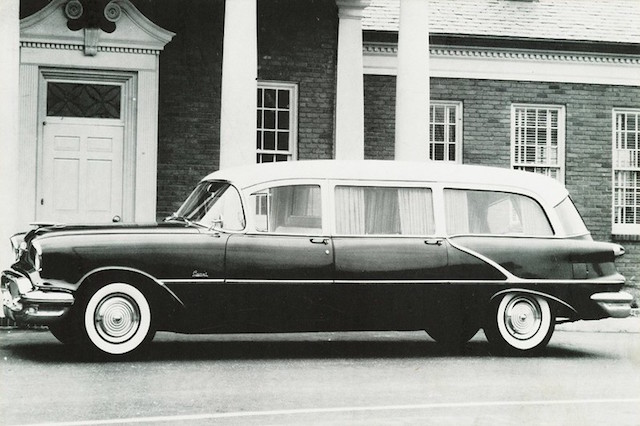
A 1956 Comet-Oldsmobile Funeral Car (credit: Alden Jewell)

Modern Day Hearses

Hearses don’t roll off the assembly line like other cars and trucks. Instead, third-party manufacturers purchase existing vehicles and customize them into the hearses you see on the road. The vast majority of hearses made today are built from Cadillacs and Lincolns.

To begin the process, the car is cut in half and fitted onto a longer chassis, which usually sits closer to the ground than a traditional passenger car chassis. The lower height makes it easier to load and unload a casket. A fiberglass shell is then built to connect the vehicle’s front and back ends. Once the fluid lines and electrical system is reconnected, manufacturers go to work customizing the hearse for casket transportation. This includes adding features such as a long platform in the rear, bier pin plates to keep the casket in place and drapes over the windows. All this work doesn’t come cheap. A new hearse could cost as much as $100,000.

Interested in learning more about cars? Visit our auto history page for the origins of car horns, stop signs and everything in between.

Subscribe to Your AAA Newsletter

Sign up and receive updates for all of the latest articles on automotive, travel, money, lifestyle and so much more!

Experience Japan From the Sea to the Mountains

With thousands of years of history, a distinctive culture and breathtaking scenery, Japan is even better when you’re guided by a seasoned tour operator.

As veterans in luxury small-group travel, Alexander + Roberts offers a range of thoughtfully crafted journeys across Asia, including four immersive Japan tours.

Guests can expect an intimate experience in groups that never exceed 16 travelers, and every detail, from sightseeing to gourmet dining and exceptional accommodations, is taken care of, including all flights and transfers along the way.

Here is an example of what you can enjoy on the popular itinerary From Japan’s Inland Sea to the Alps, an 11-day adventure that begins in Kyoto and continues through a collection of memorable towns and villages to Tokyo, Mount Fuji and more. As part of the AAA Vacations collection, members receive a complimentary extra night in Kyoto before the start of the tour, valued at $600 per couple, plus a $115-per-person AAA Member Benefit discount.

Japan geisha

Go Where Shoguns Walked

Start your trip in Kyoto, checking in at the luxury Hotel Granvia, where amenities include a musical theater, department store and museum. During a visit to Nijo Castle, walk in the steps of the fabled shoguns, Japan’s warrior rulers of old. Test your skills crossing the famous Nightingale Floor, designed to “chirp” alerts if invaders creep in. Tour Kinkakuhi Temple and its lush gardens before dining with a mako, a woman training to be a geisha. Explore Kyoto’s Gion district and finish the day at a traditional Japanese tea ceremony.

The next day, board a train and ferry to journey to the Seto Inland Sea and on to Miyajima Island to visit the Itsukushima Temple. Built on a pier overlooking the bay, this landmark dates back to the 6th century.

One of the more somber stops on this leg of the tour is Hiroshima, the first city struck by an atomic bomb in 1945. A Japanese guide will provide background and lead you through this rebuilt, modern city. Important landmarks include the shell of a domed building that survived the blast, Peace Memorial Park, the Peace Memorial Museum and the Memorial Cenotaph for Atomic Bomb Victims.

Bid “sayonara” (goodbye) to Kyoto and get ready for a day of sightseeing in the city of Kanazawa after arriving via high-speed rail.

Next up is Japan’s original capital, Nara, the site of Buddhism’s introduction to the nation more than 1,000 years ago. Nara is home to one of the largest wooden structures in the world, Todai-ji Temple, which houses a 50-foot-tall bronze statue of Buddha, as well as the cherished shrine, Kasuga Taisha. Guests can return to Kyoto and explore the city, or they have the option of staying overnight at a traditional Japanese inn with tatami-matted rooms and enjoying a typical Japanese dinner and breakfast.

The city is rich with gardens. Kenrokuen Garden is one of the country’s most famous and has stunning examples of teahouse architecture, which you can view while strolling through the Higashi Chaya District. Your guide will outline the key elements of Japanese landscape design, a skill at which the Japanese have excelled for more than 1,000 years.

Explore Japan

Plan your small group tour with Alexander + Roberts and get exclusive member benefits and savings.

Book now

Mount Fuji and More

Get ready for a major change of scenery the next day as you head off to the Japanese Alps to explore Shirakawa-go, one of Japan’s most well-known Alpine regions. Learn about Wasi, the area’s local papermaking art and get a panoramic view of the valley from Shiroyama Viewpoint before descending to the village. Here centuries-old traditions remain, like houses built with thatched roofs to bear the snow. Some are now restaurants and guesthouses.

A tour of the city of Takayama is truly a step back in time. Its old town section consists of buildings from the Edo period, between 1601 and about 1868, a time when the nation enjoyed prosperity and stability. Expert Japanese carpenters took advantage of the sturdy local timber to create homes and buildings that have endured. Twice a year the town has a festival featuring floats, many of which have moveable figures and are hundreds of years old. Floats from parades past are on display at a local museum.

Courtesy of Alexander + Roberts.
Miyajima, Hiroshima, Japan floating temple gate.

Bustling Tokyo

After the mountains, it’s off to Tokyo, the nation’s capital and largest city by population. Get your sneakers and wallet ready for a walking tour of the Shinjuku District, popular for shopping and its many restaurants.

Next on the agenda is one of the world’s most famous peaks, Mount Fuji. After a stop to take in the views almost halfway to the summit, continue to Hakone National Park, with lush pine forests and more mountain views. Then it’s boats and ropes: Cruise across Lake Ashi then get ready for a ride on the Mount Komagatake ropeway for sweeping views of the area’s natural beauty.

When you think of Japan, you think sushi, right? On your last day of the tour, visit the famous Tsukiji fish market, beloved by locals and professional chefs. Take s sushi-making class and then enjoy your creation for lunch. End the day and your stay in Japan with an hourslong tour of Tokyo, filled with shopping, historic landmarks and participation in a Taiko drum class.

You’ve Read About it — Now Experience It

AAA travel advisors will turn your inspiration into a memorable vacation, providing trusted guidance and exclusive member benefits. Connect with us to learn more.
Call 866-423-5585  |  Find a AAA Branch  |  Contact Online

All photos are courtesy of Alexander + Roberts.

Subscribe to Your AAA Newsletter

Sign up and receive updates for all of the latest articles on automotive, travel, money, lifestyle and so much more!

The Best Time to Visit Ireland to Avoid Crowds, and More

The lush countryside of Ireland inspired the nation’s nickname, the Emerald Isle, and the best time to visit Ireland is in the spring, not only for the chance to celebrate St. Patrick’s Day in the “auld sod” but to see the country in all its verdant beauty.

Find great deals on Ireland vacations with AAA Travel.

Let's plan something wonderful

Book your next trip with AAA Travel now or call 866-423-5585 to speak with a travel advisor.

Book Now

Spring Is the Best Time to Visit Ireland to Avoid Crowds

“My favorite time of year to visit Ireland is in the spring, when the flowers are starting to bloom and outdoor cafes are opening back up,” says Wendy Marley, AAA travel advisor and Ireland expert. “You’ll run into fewer crowds and mild weather perfect for outdoor activities such as golfing or trying your hand at the national sport, hurling. Prices are less in the shoulder season as well, making it a great time to book a stay in a castle.”

“It was always once springtime in my heart,” wrote Irish poet and playwright Oscar Wilde, and spring is a lovely season to take a tour of Wilde’s birthplace, Dublin, with stops at his house in Merrion Square, the pharmacy (Sweny’s), made famous in “Ulysses,” and Trinity College, where Wilde studied and debated.

If you need to warm up as the evening chill sets in, pop into a local pub for some Gaelic football action among an enthusiastic crowd of supporters; Doyle’s Pub, close to Trinity College, is a popular spot for live music.

The Best Months to Visit Ireland

The months of March, April and May each offer their charms to visitors. March 17, of course, is St. Patrick’s Day, and the patron saint of Ireland is celebrated with a five-day festival in Dublin, a giant parade in Cork and smaller events throughout the country.

April offers the ideal mix of good weather and smaller crowds at Irish tourist destinations. If you love Irish music, make your way to Donegal for the annual Cup of Tae Festival, a celebration of traditional music.

May Day, when the coming of summer is marked by traditions honoring fairy folk and warding off evil spirits, has been celebrated as La Bealtaine in Ireland since the age of the ancient Celts.

the best time to visit ireland
St. Colman’s Cathedral in Cobh, a harbor town in County Cork, Ireland.

More Things to Do in Ireland in Spring

“Spring is perfect for visiting the seaside villages, Kinsale and Galway, or hiking in one of Ireland’s many national parks,” said Marley. Killarney National Park in County Kerry is a 25,000-acre sanctuary of forests, lakes, waterfalls and high peaks. The port city of Kinsale in County Cork is full of history, from a 12th-century church that has been in continual use for more than 800 years to Charles Fort with its commanding views of the harbor.

Visiting the Cliffs of Moher — 9 miles of sea cliffs rising up to 390 feet above the ocean waves — is one of the most popular things to do in Ireland. You’ll probably need to bundle up for a spring trip, but the reward is the opportunity to wander along the cliffs’ edges with far fewer fellow tourists than in summer.

Galway, one of the cultural capitals of Ireland, makes a great base for exploring the cliffs as well as the heaths and peaks of Connemara National Park and historic Kylemore Abbey, where an order of Benedictine nuns welcomes visitors to stroll more than 1,000 acres of grounds, tour the castle-like estate and walled gardens, and enjoy tea and baked goods prepared by the resident nuns.

Galway has a lively food and pub scene — the city’s annual food festival is held in May, and visitors shouldn’t leave town without trying the traditional fish and chips at McDonagh’s or sipping a pint of Galway Hooker beer, named for a local type of fishing boat. The Galway City Museum is a great place to spend a few hours on a cloudy day, but when the sun peeks out, it’s time for a brisk seaside walk along the Salthill Promenade. Or just wander around town to admire the medieval architecture and ramparts of this formerly walled city.

the best time to visit ireland to avoid crowd - ross castle
Ross Castle

Ireland is a country of castles, which can be found everywhere from the heart of Dublin to the Ring of Kerry. The legendary 111-mile driving tour of the Iveragh Peninsula starts and ends in Killarney and includes a number of castles, both ruined and restored. Ross Castle, built in the 15th century, sits on the shore of Lough Leane and is open for tours. Blarney Castle, home of the kissable Blarney Stone, is in County Cork, while County Claire is home to Bunratty Castle, completely restored with a 19th century Irish village that serves as a living history museum.

Fancy a castle stay? Ashford Castle in County Mayo, close to Galway, is one of dozens castle hotels in Ireland. The 800-year-old structure is set on a 350-acre estate that comes alive in the springtime with activities like falconry, equestrian, golf, cycling, fishing and boating on Lough Corrib. Guests staying in the five-star resort’s 83 rooms, as well as visitors, can sample Galway oysters and traditional Irish cuisine at several castle restaurants, including a dramatically arched dining room dubbed the Dungeon.

Plan your Ireland vacation with the help of a trusted a AAA travel advisor. Travel advisor services are included with your membership (that means no extra charge).

This article has been updated and republished from a previous version.

Subscribe to Your AAA Newsletter

Sign up and receive updates for all of the latest articles on automotive, travel, money, lifestyle and so much more!

These Hot Dog Joints Are the GOAT

Summer means baseball and hot dogs. But you don’t have to hit your local stadium to get a taste of frankfurter excellence.

These hot dog joints – the greatest of all time (or GOATs) in the sausage world, if you will – have been drawing crowds for decades, and in some cases, more than a century.

Whether you call them wieners, rippers, red hots, franks or dogs, these joints don’t mess with success. Original “secret” recipes are still being served at all of them. How’s that for a home run?

Blackies

Cheshire, Conn., opened in 1928

Fans beeline to this Cheshire hot dog joint for its unique hot pepper relish – a secret family recipe that has made it to the International Space Station! The peppers are picked locally and then bottled fresh and served as a topper for one of Blackie’s naturally cased pork and beef hot dogs, made exclusively for them by a local butcher. Its iconic red building has been maintained by the current generation, as are a few quirks: Blackie’s does not serve french fries – just potato chips – and is closed on Fridays.

Casey’s Diner

Natick, Mass., opened in 1890

Opened in 1890 and now run by the fourth generation of the same family, this classic 10-stool diner is listed on the National Register of Historic Places. The menu is full of diner staples, but diehards come for the natural-cased franks, which are steamed and then served in a bun from Casey’s original 132-year-old copper bun steamer. Have yours “all-around,” which is served with mustard, relish and onions. Add a root beer float and you can’t get any more old-school than that.

Hiram’s Roadstand

Fort Lee, N.J., opened in 1932

The Garden State is known for its rippers – pork and beef hot dogs, deep-fried until they rip open. The late chef and author Anthony Bourdain got his rippers at this bustling spot, popular with locals and adventurous foodies alike, many of whom learned about Hiram’s from an episode of Bourdain’s “Parts Unknown.” The dogs are large and plump, served on a toasted roll and delivered in a cardboard box. Order one well done, topped with cheese or smothered in chili with a side of excellent onion rings and a cold birch beer on tap. Cash only.

Olneyville New York System

Providence and Cranston, R.I., opened in 1946

Rhode Islanders are fierce about their wieners (don’t call them hot dogs or ask for ketchup!). One of the best-known in the state is served at this family-owned spot, named a James Beard American Classic in 2014. Purists order theirs “all the way,” a beef, pork and veal wiener served off the grill in a steamed bun with mustard, onions, celery salt and Olneyville’s signature meat sauce. (You can buy the spice packet and make your own at home.) Wash ‘em down with another Rhode Island mainstay: coffee milk, a blend of coffee syrup and milk.

Walter’s Hot Dog Stand

Mamaroneck, N.Y., opened in 1919

Fans line up in all seasons under the distinctive green pagoda at this nationally recognized 104-year-old hot spot, now run by the fourth generation of the Warrington family. They’re waiting for Walter’s beef, veal and pork dogs, split down the middle and grilled in a secret sauce, then served on a toasted bun. Get it plain or topped with the signature mustard – a blend of mustard seeds, spices and relish. But don’t get just one! Walter’s also sells ready-to-cook hot dogs and mustard on Goldbelly.

More of the Best Hot Dogs To Try

  • Heid’s of Liverpool – Heid’s has been serving up Hofmann hot dogs in Central New York since 1917 with an array of toppings including relish, chili, and even mushrooms. Bring home a jar of their proprietary Heid’s mustard.
  • Hot Dog Johnny’s – In business since 1948, this iconic roadside stop in Belvidere, N.J., serves up dogs fried in peanut oil that fans pair with a frosty mug of birch beer. Look for the giant hot dog on the roof.
  • Baba’s The Original New York System – It’s a toss-up on who has the better Rhode Island wiener, Olneyville or Baba’s, so let’s just say it’s eater’s choice. Opened in 1927, Baba’s is one of the state’s oldest wiener joints.

Who do you think makes the greatest hot dog of all time? Share your favorite hot dog joints in the comments.

Featured image: Hiram’s Roadstand

Subscribe to Your AAA Newsletter

Sign up and receive updates for all of the latest articles on automotive, travel, money, lifestyle and so much more!

Travel Hacks That Make Life Easier

No one knows travel like AAA travel advisors. Vacation planning, exploring the world and sharing their firsthand experiences is not just their job, it’s their passion. So, when it came to gathering the best travel hacks, we went straight to the source.

From beating jet lag and surviving long flights to navigating solo travel and packing smarter, we’ve rounded up a list of tips from more than a dozen AAA travel advisors.

Pre-Trip Planning

  • Check weather and pack accordingly. Review your destination’s forecast within a week of your departure and plan outfits based on climate.
  • Enroll in safety programs. Sign up for the U.S. Department of State Smart Traveler Enrollment Program (STEP) for added security while abroad.
  • Verify passport and entry requirements. Ensure your passport is valid for at least six months beyond your return date and review visa requirements.
  • Confirm banking details. Use a credit card without foreign transaction fees; carry a small amount of local currency for immediate expenses.
  • Look into SIM and data planning. Contact your carrier about international plans or consider a local SIM card.
  • Download useful travel apps. Install airline apps, offline maps and translation tools before departure.
  • Get your documents in order. Take photos or screenshots of important documents including your passport, health insurance card and plane tickets and store copies in your email or cloud storage.
  • Share your itinerary. Provide a trusted friend or family member with a copy of your travel plans, passport and insurance documents.
  • Leave valuables at home and skip bringing expensive jewelry to reduce risk. Even so, it’s smart to consider protecting your trip and possessions with travel insurance. From delays and cancellations to emergencies, knowing you’re covered provides invaluable peace of mind.

The Best Time to Book

  • The best time to book peak-season travel is always as early as possible. Flights and hotels sell out quickly around major holidays, and the longer you wait, the fewer options you’ll have. Booking early means better selections of flight times, seating assignments and room categories.
  • August and September are the best times to book — no later than October, because that is when prices rise.

Listen to Our Podcast

Your next adventure may be closer than you think.  Listen to Season 2, Episode 4 of our podcast, Merging Into Life: Adventure Travel for Beginners.

Tune In

The Best Ways to Get Upgrades

  • Join an airline or hotel loyalty program. The higher your loyalty status, the more likely you are to be offered an upgrade.
  • Book the class or category of cruise ship cabin or hotel room that you’ll be happy with to avoid disappointment if an upgrade is not provided. Remember, upgrades are the exception, not the norm — particularly for those without top-level loyalty status.
  • Bid for an upgrade. Some airlines and even cruise lines now allow you to bid for upgrades after booking. It can be a great way to experience business class or a balcony cabin at the fraction of the cost if your bid is accepted.  
  • Being flexible — whether it’s with your travel dates, flight times or even the hotel property — can improve your chances of an upgrade. Off-peak demand leaves more room for better opportunities.

Packing Tips

  • Travel light. Avoid checking bags when possible and leave room for souvenirs.
  • Use packing cubes for organization and zip-close bags for toiletries, medications and spare socks.
  • Don’t forget smart tech. Always bring fully charged power banks, which are essential for long travel days and tours. It’s also a good idea to place AirTags or tile trackers in your bags, just in case your bags go missing.
  • Bring a comfort kit. This can include a neck pillow, eye mask, blanket/scarf, noise-canceling headphones, lip balm and lavender spray for relaxation. Compression socks can also reduce ankle swelling and improve circulation on long flights.
  • A reusable water bottle is essential. These can be filled at airport restaurants or lounges after security. Reusable tumblers and metal straws also come in handy at resorts.
  • Healthy and portable snacks like nuts, protein bars and fruit help you to avoid relying on airline meals.
  • Bring spares. Keep a change of clothes, medications and toiletries in your carry-on in case your luggage gets delayed.
  • Just-in-case items. Bring outlet converters if you are traveling abroad. A luggage scale could help reduce airport anxiety. Pack a poncho or extra dry socks in a zip-close bag to be prepared for wet conditions.
travelers

Travel Hacks for Jet Lag

  • Avoid planning activities on the day you arrive. Jet lag is real and often unexpected. See how you feel and go from there.
  • Eat, drink water and rest.
  • Adjust your sleep schedule a week before travel.
  • Get sunlight upon arrival and avoid taking long naps, which could be difficult to recover from.

Long Flight Survival

  • Sleep prep. Align your rest with your destination’s time zone; use eye masks and noise control to sleep better.
  • Strategize your seating. Choose an aisle seat for mobility, window seat for sleeping or exit row for legroom.
  • Layer clothing. Planes fluctuate in temperature, so dress in breathable, comfortable layers.
  • Stay hydrated. Start drinking extra water the day before your flight. Avoid alcohol and excessive caffeine.
  • Keep moving. Stretch or walk every one to two hours on long flights.
  • Plan your entertainment. Download movies, shows and books. Think of the flight length in terms of movies instead of hours.

Let's plan something wonderful

Book your next trip with AAA Travel now or call 866-423-5585 to speak with a travel advisor.

Book Now

Traveling Solo

  • Always be aware of your surroundings. (This applies to all travelers, but especially for those flying solo.)
  • Use trusted transportation companies. Never get into a car with a random person who approaches you at an airport.
  • Do not hint to anyone that you are traveling alone.
  • Give your family and friends a general itinerary of your trip, so they know where you should be and when.
  • When you arrive at the hotel, ask for two room keys.
  • For international travel, don’t accept gifts” of bracelets or talk to someone with a petition. These are often scammers.

More Travel Hacks

  • Keep patience in mind. Travel delays happen; focus on enjoying the journey.
  • Carry important documents and cash in a travel belt or secure location. Did you know that foreign currency exchange is available at select AAA branches? Learn more.
  • Photograph your luggage and video your rental car before and after use.
  • Put a shoe in the safe the night before you leave so you don’t forget your valuables.
What’s your best travel hack? Share it with us in the comments below.

Subscribe to Your AAA Newsletter

Sign up and receive updates for all of the latest articles on automotive, travel, money, lifestyle and so much more!

Wedding Ring Insurance, Plus 4 More Things to Insure

While love can be indestructible, your jewelry may get damaged, lost or stolen. And although you could never replace the engagement ring you inherited from your great-grandma, wedding ring insurance can help cover the cost.

Some homeowners policies cover damaged or stolen jewelry for up to $1,000 – but that’s only a fraction of the price of most rings. There are two ways to cover the difference:

  • Ask your insurer to raise the liability limit.
  • Add a rider/floater/endorsement to your policy. A rider is an optional addition that allows you to customize your insurance policy. It costs extra, but there is typically no deductible in the event of a claim, plus it protects the jewelry from nearly all kinds of losses – even if you lose it or drop it down the kitchen sink. However, wedding ring insurance will not cover damages if your ring was already falling apart from regular wear and tear.

You probably didn’t have to think twice about getting your car, motorcycle or boat insured. But like your wedding bands, there are other valuables and investments in your home that should be protected as well.

Collectibles

Do you have old baseball cards or comic books in your house? Paintings or fine art? Priceless family heirlooms? These collectibles can be pretty valuable, but they can also be easily damaged.

Like wedding ring insurance, you can purchase a floater for your collectibles on your policy (you will need to purchase a floater for each item.) However, the insurer must know what each item is worth. To do that, an item typically needs to be appraised, or you may be able to provide a recent receipt.

Jewelry, diamonds, gold and art can change in value over time, so it’s a good rule of thumb to update your appraisals every three to five years.

Pets

Taking care of a furry friend can get expensive. Pet owners spent an average of $123.6 billion on their pets in 2021, according to the American Pet Products Association. $34.3 billion of that money went to vet costs.

Depending on the policy, pet insurance can help offset the expense of routine and emergency medical care. With most pet insurers, you select a reimbursement and deductible amount, pay your vet and then get reimbursed. When looking at pet insurance, it’s important to determine which conditions are covered, how reimbursement is calculated and if there’s a limit or cap on coverage.

wedding ring insurance

Furniture

Homeowners polices typically come with a built-in percentage of personal property coverage based on the overall value of the home. This percentage is usually between 50% to 70%. While most policies typically cover the cost of replacing your property minus depreciation, some insurance companies will write you a check for what it would cost to purchase brand new versions of your belongings at the time you make your claim.

If you have renters insurance, you pick and choose which belongings to insure and pay a rate based on their value. This is beneficial, as long as you accurately estimate the price of your possessions.

Electronics

The modern home has a lot of technology: laptops, video games, cellphones, computers, tablets and more. Replacing all of these items after an emergency can get costly without insurance.

Often, insurance policies cover technology alongside personal property from damage by fire, windstorms, hail, lightning, explosions, vehicles, smoke, theft, vandalism and other unavoidable natural disasters. Say a covered peril such as a burst pipe happens in your home; while the pipe itself would not be covered and need to be repaired by a plumber, all of the damage that it caused to your belongings – including any electronics – would be.

No matter what, it helps to keep track of the electronics in your home, as well as all other valuable items. It makes claiming losses easier and gives you an idea of how much insurance you need.

When you need to make an insurance claim, a home inventory – a detailed list of your possessions and how much they are worth – can be very helpful to your insurance provider. This list can include photos and/or videos, and can be stored online or in a safe.

To learn more about how AAA provides insurance, from wedding ring insurance to pets, furniture and everything in between, contact an agent

Subscribe to Your AAA Newsletter

Sign up and receive updates for all of the latest articles on automotive, travel, money, lifestyle and so much more!

AAA Northeast Offers Homeowners Tips for Assessing Post-Storm Damage 

The blizzard of 2026 is leaving a trail of downed trees and power lines in its wake, with potential damage to homes from ice and snow a concern for many. As homeowners assess damage and next steps, AAA Northeast offers guidance on some of the most common post-storm issues. 

Ice dams 

Ice dams are barriers of ice that clog gutters and prevent melting snow from properly draining off roofs. Damage from ice dams can range from ripped-off gutters and broken shingles to serious water damage affecting ceilings, walls and insulation. 

While the major accumulation from this storm presents challenges, the best way to decrease ice damming is to remove ice and snow as quickly and safely as possible. Use a roof rake to clear as much snow as you can, even if it’s just near the gutter line — and always prioritize safety. 

Standard homeowners insurance will generally cover water damage or roof damage caused by ice dams. Once damage has occurred, homeowners are typically obligated to take necessary action to limit further impact. This can include moving furniture from the path of the water entering the home. 

Fallen trees 

A standard homeowners insurance policy will cover structural damage caused by a fallen tree as well as the structure’s contents. Tree removal may also be covered by your insurance.  

If a tree falls on your property but doesn’t damage any structure, your home insurance policy might not cover debris removal except in some situations, such as a blocked driveway or accessibility structure. If a tree damages your car, it should be covered if you carry comprehensive coverage. Liability-only policies would not qualify. 

If a neighbor’s tree falls and damages your property, your own insurance would generally cover the damage; you will need to file a claim with your insurance company. In these cases, the neighbors were not necessarily negligent. It was the storm that caused the tree to fall. However, neighbors may be held liable if the tree was knowingly in poor condition or deteriorating.  

Subscribe to Your AAA Newsletter

Sign up and receive updates for all of the latest articles on automotive, travel, money, lifestyle and so much more!

A Seat Belt History Timeline

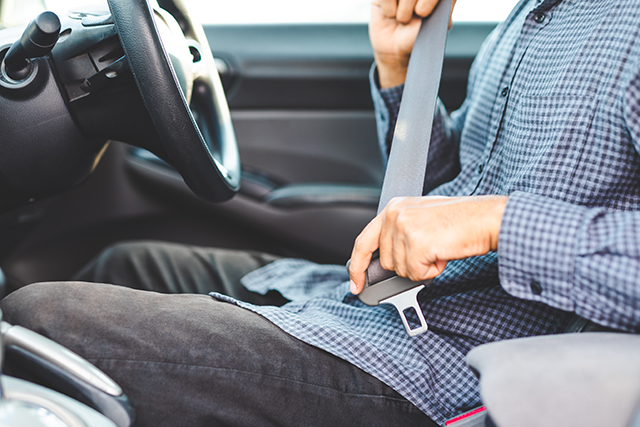
Seat belt history begins nearly two centuries ago, but it’s only been in the past few decades that the safety feature — and its use — have become commonplace. It was an uphill battle, one that included laws, education and technological improvements, to get the public to latch onto these life-saving devices.

It’s a good thing they did — seat belts have been credited with saving thousands of lives per year and are considered to be one of the most cost-effective public health inventions ever. But as recently as the late 1970s and early 1980s, seatbelt use was only between 11% and 14%. Seatbelt use grew the most between 1984 to 1987, when 29 states adopted mandatory seat belt laws.

So how did seat belts go from an afterthought to a necessity? Let’s take a look.

Mid-1800s – The Seat Belt History Timeline Begins

Sir George Cayley, a wealthy landowner in Yorkshire, England, invented the first seat belt way back in the 19th century. Cayley was highly interested in aerodynamics and the principles of flight. He is credited with building the first successful manned glider, a half-century before Orville and Wilbur Wright took to the air. Inside the aircraft, Cayley included a lap belt to keep the pilot in place.

His first test flight crashed landed – the pilot survived.

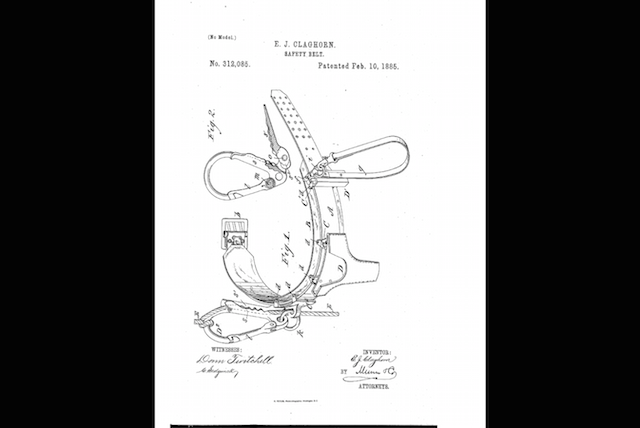
seat belt patent
A rendering of the first patented seat belt.

1885 – The First Seat Belt Patent Is Granted

On February 10, New York City resident Edward J. Claghorn was awarded the first U.S. patent for a vehicular seat belt. It was devised in order to keep tourists safe as they rode in taxis. The seat belt looked more like a modern climbing harness, consisting of a strap that used hooks to secure a rider to the seat.

1922 – The Seat Belt Comes to the Indy 500

Barney Oldfield, a racing pioneer and the first person to drive 60 mph, recruited a parachute manufacturer to design a restraining harness for his Indy 500 car. Oldfield had seen several drivers get hurt, and even die, after being ejected from their vehicles.

Prior to this (and in the decades following) seat belts were rarely worn. One myth that prevailed during this time was that it was safer to be flung from the car than remain inside the vehicle as it crashed and potentially burned. Manufacturers, meanwhile, believed that if they included too many safety features, it would give consumers the impression cars were unsafe.

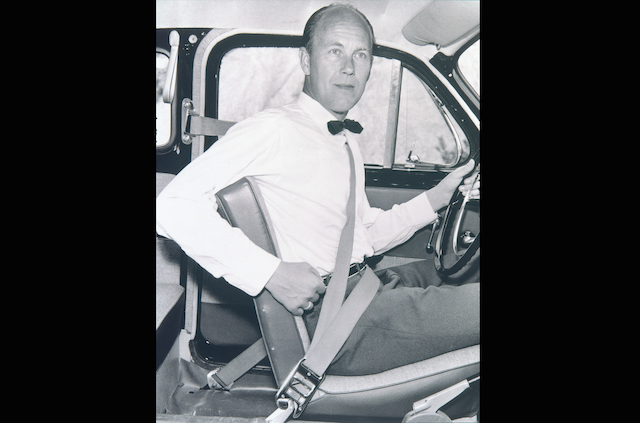
Nils Bohlin
Volvo engineer Nils Bohlin demonstrating his invention: the three-point seat belt.

1959 – The Three-Point Seat Belt Is Invented

The most important evolutionary step in seat belt history occurred in 1959 when Swedish engineer Nils Bohlin invented the three-point seat belt. Volvo Car Corporation hired Bohlin the year prior as the company’s first chief safety engineer. He had previously worked designing ejector seats for fighter jets.

Two-point seat belts only secured the passenger’s lap (and were hardly ever worn at the time). The four-point belts Bohlin used in airplanes were untenable in cars. His solution was a three-point seat belt that consisting of one continuous strap. One section ran diagonally across the body while another section crossed the lap, creating a restraint for both the upper and lower body.

The first car to feature the three-point seat belt was the Volvo PV544, but it was quickly joined by others. Maybe the most remarkable — and most significant – aspect of this invention is what Volvo did with their new technology: they gave it away for free. The company allowed other manufacturers to have the design free of charge, all in the name of safety. At the time of his death in 2002, Volvo estimated that Bohlin’s invention had saved more than one million lives in just four decades.

1961 – Wisconsin Becomes First State to Require Seat Belts

On September 25, Wisconsin became the first state to require seat belts be installed in the front seats of all new cars. This law only required cars to have seat belts. There was no such rule that passengers had to wear them.

1968 – Seat Belts Become Nationally Mandated

The first federal law mandating all new cars be equipped with both lap and shoulder belts in the front seat is introduced. Although the three-point seat belt had been around for nearly a decade, the law did not specify the need for any particular design. As a result, many automakers installed separate lap and shoulder belts.

1973 – The Seat Belt Interlock Mechanism Is Introduced

The 1970s and 80s were the most tumultuous stretch of time in seat belt history. It all began in 1973, when the National Highway Traffic Safety Administration (NHTSA) required all new cars to install a seat belt interlock mechanism. The inexpensive device prevented a car from starting until the driver’s seat belt was buckled.

The public had issues with this, feeling the government was overreaching with an intrusive mandate. Automakers, meanwhile, weren’t keen on adding to their costs. Congress responded by nixing the law the following year.

1983 – Seat Belts Reach the Supreme Court

It’s a strange but true fact that more than one automobile feature has been at the center of Supreme Court cases. This includes the humble seat belt.

The backstory to the case began in 1977. After the interlock mechanism law was denied, the NHTSA came back with a rule stating carmakers must include some sort of passive restraint that worked automatically without driver intervention and protect passengers when hitting a wall at 35 mph.

It seemed all but certain that automakers would be made to include seat belts in their vehicles — and then the 1980 presidential election turned things upside down. Ronald Reagan ran his campaign around deregulation. Naturally, when he took office, he opposed a law that forced the manufacturers to do something against their will. The requirement was thus revoked.

But there was a second industry in play. Insurance companies, which had a vested interest in the safety of passengers, sued the administration. The Supreme Court ruled unanimously in favor of the insurers and ordered the Department of Transportation to reinstate the requirement.

1984 – New York Requires Front-Seat Riders to Wear Seat Belts

New York became the first state to require the use of seat belts. The bill, which went into effect Jan. 1, 1985, only mandated that riders in the front-seat wear seat belts. If they did not comply, they faced a fine of $50. Now it is also required by law for passengers 13 and older to wear a seat belt in the back seat.

Today, nationwide use of seat belts is approximately 92%. New Hampshire is the only state that does not require adults to wear seat belts; they only are mandated for children under 18. Roughly 15,000 lives are saved by the safety feature every year in the United States, according to the NHTSA.

Learn more auto history.

This article has been updated and republished from a previous version.

Subscribe to Your AAA Newsletter

Sign up and receive updates for all of the latest articles on automotive, travel, money, lifestyle and so much more!

Is Home Equity Loan Interest Tax Deductible?

Have you always dreamed of installing a pool in your backyard or finally adding that guest bedroom but simply don’t have the funds on hand? Maybe, instead, you simply need to get out from underneath debt or finance an unexpected expense. Home equity loans and home equity lines of credit are just the tools for these situations. Both allow homeowners to borrow against the equity they own in their house and use the funds however they like.

You may have also heard that the interest you pay on home equity loans and credit lines is tax deductible. While this may be true in some situations, it’s not the case in all.

Is home equity loan interest tax deductible?

Whether the interest is tax deductible primarily comes down to how the funds are used. You will need to consult a tax professional for advice regarding your situation and a definitive response to this question. According to the IRS, interest on home equity loans and lines of credit is deductible only if the taxpayer who secures the loan uses the borrowed funds to buy, build or substantially improve their home.

While the IRS hasn’t defined what “substantially improve” means, it is generally considered to include anything that increases the value of your home. Think replacing a roof, adding a bedroom or remodeling a bathroom.

On the other hand, if you take out a home equity loan to pay off another debt or finance an emergency expense, for example, the interest is not tax deductible.

The same tax rules regarding home equity loan interest apply to home equity credit line interest.

Is there a cap on how much interest you can deduct from a home equity loan or credit line?

You can only deduct interest on up to $750,000 worth of mortgage debt ($375,000, if filing separately). This includes both the original mortgage used to purchase your house and the home equity loan or credit line.

How do I claim a home equity interest tax deduction?

Interest on home equity loans and credit lines can be deducted only if you itemize your tax return. If the total interest paid in one tax year is less than the standard deduction, you may be better off foregoing the itemized deduction. Consult your tax and/or financial advisor.

To claim your tax deduction, you’ll first need to gather the proper documents. You should receive IRS Form 1098 from your lender prior to tax season. This document shows how much interest you paid on your home equity loan or credit line the previous year.

You will also need to prove in the form of receipts and invoices that the funds went toward home improvements. This can include payments for materials, labor and permits, among other expenses.

Interested in learning more about home equity loans? Let your home work for you with AAA!

AAA Northeast is not a professional tax service, nor does it provide tax advice. You should always consult a tax and/or financial advisor for guidance on your specific financial situation and tax obligations.

Subscribe to Your AAA Newsletter

Sign up and receive updates for all of the latest articles on automotive, travel, money, lifestyle and so much more!

Find Sun, Sand and Serenity on an Aruba Vacation

An Aruba vacation is, in many ways, perfect. There’s near-eternal sunshine, it’s located outside of the path of hurricanes and serves up a variety of top resorts, dining and activities wrapped around a friendly and welcoming vibe.

“Aruba is an extremely safe island, which appeals to a lot of people,” said AAA travel advisor Jennifer MacPherson. “It’s OK to walk around at night. It’s got great all-inclusive resorts, and it’s also an excellent place to stay at a non-all-inclusive hotel because there are so many restaurants to choose from.”

Your Aruba vacation is just a click away. Book now.

aruba vacation
The architecture in Aruba’s capital city, Oranjestad.

At 75 square miles, Aruba is small enough to explore easily but big enough that it’s possible to find solitude without having to drive too far from the island’s main hotel zone on the northeast coast just outside the capital city of Oranjestad.

The resort area is concentrated on two beautiful beaches: Palm Beach, primarily home to larger, high-rise hotels and the hub for Aruba’s water sports activities, and the low-rise Eagle Beach, fringed by a lively boulevard lined with restaurants, shops and nightclubs.

Aruba Accommodations

“Aruba has everything from all-inclusive resorts to top-notch luxury properties and boutique hotels,” said MacPherson.

Travelers seeking an Aruba all-inclusive, adults-only, experience can book Riu Palace Antillas on Palm Beach near the popular De Palm Pier, or the more laid-back Divi resorts, which offer the option of beachfront accommodations, a stay in a quiet village setting or alongside the links at Divi Village Golf & Beach Resort.

Boutique hotel options include the excellent and eco-friendly Bucuti & Tara Resort on Eagle Beach — which also has one of the island’s top beachfront restaurants, Elements — and the wellness-focused Manchebo Beach Resort and Spa. The Aruba Ocean Villas in the fishing village of Savaneta has a trio of luxuriously private overwater bungalows, while budget-conscious families often choose the highly rated Holiday Inn Aruba on Palm Beach, which has three pools, a spa and a casino.

Let's plan something wonderful

Book your next trip with AAA Travel now or call 866-423-5585 to speak with a travel advisor.

Book Now

Aruba Ambiance and Adventure

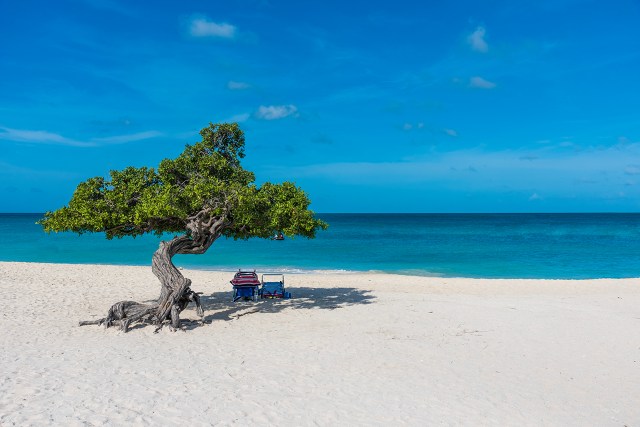
Dotted with divi-divi trees — with their sideways branches, the trees are a national symbol of an island where cooling trade winds blow almost constantly — Aruba’s broad, white sand beaches are a magnet for visitors, many of whom go directly from their hotel rooms to the shore each morning to stake out a spot for the day.

“With the trade winds you don’t always realize how strong the sun is, so I always advise my clients to use sunscreen and take advantage of the beach umbrellas and palapas offered by their resort,” notes MacPherson.

Water sports like parasailing and Jet Skiing can be found right off Palm Beach and Eagle Beach, while visitors who want to try their hand at windsurfing head to Malmok Beach near the northern tip of the island. Sunset cruises cast off each evening from Aruba’s west-facing beaches, and Jolly Pirates sets sail for day trip snorkel adventures with a swashbuckling party theme.

Search vacation packages to Aruba.

aruba vacation

Aruba Excursions

If you’re wondering what to do in Aruba outside of the hotel district, don’t worry — there is plenty.

Despite the palm trees shading many a resort swimming pool, Aruba is a desert island – a fact that quickly becomes clear once you venture beyond the hotel districts. The island’s sparsely populated east side is dotted with cactus, its rugged coastline fringed with cliffs frequently pounded by strong surf. Arikok National Park, which covers about one-fifth of the island, attracts hikers with its high hills and cool caves. The park also has a pair of undeveloped beaches and a natural pool sheltered from the wind and waves by rocks.

Guided tours of Aruba’s backcountry by all-terrain vehicle, e-bike, and on horseback are popular, although many visitors opt to rent a car and explore the island on their own. Day trips include historic sites like the Bushiribana gold mine ruins and the Casibari rock formations with their prehistoric drawings, and wildlife destinations like the Aruba Ostrich Farm, donkey sanctuary or butterfly farm. If you visit the charming and petite Alto Vista Chapel, be sure to stop at the neighboring boutique winery.

Those who have been on Aruba cruises might be familiar with the trolley in Oranjestad, which leads from the cruise port to the downtown shopping district, a smattering of interesting museums and the distillery, Pepe Margo, where you can sample and purchase locally made spirits in a traditional Aruban home. Even the island’s grittier port city, San Nicolas, has been beautified with colorful murals and has a blossoming art scene.

Aruba Dining and Cuisine

Aruba’s culinary diversity is reflected in top restaurants like Papiamento (named for the island’s local language), which serves upscale local cuisine in a historic cunucu house. At Flying Fishbone, guests dine on fresh seafood on the beach. For other styles of cuisine, there’s French at Bohemian and Peruvian dishes at Lima Bistro.

The California Lighthouse on the northern tip of Aruba is one of the island’s most photographed sites; savvy visitors head there in the evening to catch the great light and enjoy a sunset dinner at the nearby Faro Blanco, an elegant Italian restaurant with a formal terrace overlooking the Caribbean Sea.

Like almost everything else in Aruba, ordering and paying for your meal is a breeze. English is spoken almost universally on the island, and the U.S. dollar is accepted everywhere.

“Most of my clients who stop in Aruba on a cruise end up going back there on vacation,” said MacPherson. “Once you go to Aruba, everywhere else pales in comparison.”

Plan your Aruba vacation with the help of a trusted AAA travel advisor.

Have you been to Aruba? Tell us what you love about it in the comments below.

This article has been updated and republished from a previous version.

Subscribe to Your AAA Newsletter

Sign up and receive updates for all of the latest articles on automotive, travel, money, lifestyle and so much more!

Top Senior Travel Trends and Experiences

The 60 and older group has much to look forward to. Retired or nearing retirement, their burdens of work and family-rearing are behind them, and there’s more time to dedicate to the things they want to do. Traveling and exploring what they haven’t yet seen in the world is, of course, a top aspiration.

Senior travelers are drawn to luxury destinations that highlight culture, food, art and authentic experiences, where they can dive deep and learn about the country they’re visiting.

Most of AAA travel advisor Jackie Calia’s repeat customers are in this age group, and since she’s this age herself, she can better guide clients to the adventures that define this stage of their lives.

Go Premium  

Most senior travelers no longer worry about penny-pinching and are fully committed to relishing the finest experiences across the globe. Their choices — and budgets — reflect this, and they seek out destinations with luxury in mind.

Nonstop flights, posh hotels and spas, high-end dining that is an experience as much as a meal, and personal tours define these trips. They can avoid the chaos of overpacked attractions that can cause undue stress and truly immerse in and enjoy the local culture.

With time and money on their side, senior travelers still spend wisely and take advantage of off-season discounts to maximize the distance they get for each dollar spent.

“They want premium experiences at this point in their life. They’re fulfilling their bucket lists,” Calia says. “They’ve spent their years already raising kids and making the choices and working hard. So, they want to relish in their time, have other folks make choices for them, and have it all taken care of.”

Let's plan something wonderful

Book your next trip with AAA Travel now or call 866-423-5585 to speak with a travel advisor.

Book Now

Travel by Air, Water and Rail

While senior travelers usually prefer to bypass international borders at 36,000 feet, they will remain in this continent if they can hop aboard a train or boat, Calia says. It’s not inexpensive, she adds, but the white-glove service on a first-class coach across the Canadian Rockies, for instance, has major appeal.

Seniors enjoy being waited on, connecting to their parents’ preferred method of old-world transport in style, and they can see the wonders of the world out the window while relaxing with a glass of wine in hand.

“They like the luxury of train travel,” Calia said. “They like to be well taken care of. At that age, they love to have guided travel with experts who can tell them about everything they’re seeing. We see a lot of Viking Cruises, AmaWaterways cruises and other river cruises with this age group.”

Delegate the Details

These global wayfarers also know their way around a computer. They just want someone else to arrange all the finer details and itineraries.

“They’re very informed travelers on their own. They are not afraid to do the research,” Calia said. “They just don’t want to plan anything. They want to be told when they have to go.”

Happy grandfather and granddaughters having a good time on beach at sunset, Okinawa, Japan

Where To?

Senior travelers tend to prioritize one big trip each year with multiple generations of their extended family — to celebrate their millennial children’s wedding anniversary, grandchild’s birthday or to simply spend time together away from the hustle and bustle of their daily lives. In fact, a Morning Consult analysis reports that more than two-thirds of baby boomers say they’ll travel in the next year to spend time with friends and family.

Prime destinations that can cater to these types of multigenerational vacations include Italy or Ireland, where large villas can accommodate groups of travelers, Calia said or a cruise that accommodates myriad culinary, accommodation and destination requests in one place.

Senior travelers also plan quite a few smaller trips solo or with friends, to share a trip to Easter Island, for example, which is “educational but they also meet people of their own age and interests,” Calia said.

Calia once booked a solo trip for a 78-year-old widow, including roundtrip car service to the airports, airfare and a weeklong cruise. “Everything was done, her tips were paid for,” Calia added, “and she basically could go with not a penny in her pocket.”

Exploring destinations like Alaska, Haiti, London and the Scottish Highlands, are deeply appealing to this age group, but they also flock to the beaches of Normandy, France, because many were born during World War II, she said.

“They want to see how the people of Peru live. It’s not a missionary-style trip, but they have an agenda,” Calia said. “They’re not all about relaxation. Anything is a learning experience, you know, they want to experience the culture, the food, the museums. It’s more of an educational experience.”

Travel Tours for Seniors

Viking, Tauk, Trafalgar and Intrepid Travel are among the best senior travel tour companies, according to TourScoop.

Your AAA travel advisor can arrange a vacation with one of these providers or assist with customizing a vacation that’s the perfect fit for you. It’s a free service included with your membership, so take advantage!

Contact a AAA travel advisor to start planning your vacation.

Learn about AAA Visa Signature® Credit Cards and how you can take advantage of cash back on travel and everyday purchases and experiences.

Are you a senior who loves to travel? Tell us your favorite destinations and travel tips in the comments below.

Subscribe to Your AAA Newsletter

Sign up and receive updates for all of the latest articles on automotive, travel, money, lifestyle and so much more!

A Trio of Chill Hiking Trails in the Caribbean 

Understandably, most Caribbean getaways involve plenty of sunning, swimming and snorkeling. But some who travel to a laid-back island paradise crave a more active vacation, where they can explore the natural landscape on foot. What better way to intimately connect with the land?  

Though many Caribbean islands are sliced by trails that easily appeal to thrill seekers who don’t mind scrambling over boulders or grabbing onto exposed roots and vines along steep inclines, other people prefer a more low-key adventure. Trekking along each of the following trio of Caribbean hiking trails will wrap you in scenic treasures, offering unforgettable sights and experiences.  

Let's plan something wonderful

Book your next trip with AAA Travel now or call 866-423-5585 to speak with a travel advisor.

Book Now

Windsor Forest, St. Croix

This 700-acre forest is threaded with well-marked trails, many taking the name of songs composed by Bob Marley (i.e. “One Love” and “No Woman No Cry”). Combining a hike on two of the paths, the Upper and Lower Spur trails, offers a good introduction to the forest along a sun-drenched loop that takes about an hour. Interpretive signage provides details on local history, plants, geology and culture. For example, you’ll learn that the spiny patches of the wild pineapple can shelter grasshoppers, while the fruit of the fiddlewood can be used to make wine. Even though this is a mostly level hike, handcrafted wooden tables, benches and even an armchair are welcome spots for a peaceful respite. As you meander about, you’ll notice Blue Mountain — the island’s second highest peak — in the distance and a watering hole used by animals, including white-tailed deer, whose tracks may be apparent. 

Coco Hill Forest, Barbados

An abundance of fruit trees, medicinal plants and herbs grow in this sun-dappled, 66-acre forest, which includes a network of loop trails, many requiring climbing up and down a series of steps. Mahmood Patel, the owner and a Barbados native, desiring to create a sustainable ecosystem, preserve biodiversity, prevent soil erosion and build a food forest, planted numerous specimens that once populated this acreage before the sugar cane plantations dominated the landscape.

On your wanderings, you’ll likely spot date and coconut palms, as well as tamarind and mamey apple trees, to name just a few of the many plants. An observation area along the Agro-Forestry Trail provides stunning views of the Atlantic Ocean, while tall tree ferns dating back to the pre-colonial period stand along the Green Therapy Trail. 

caribbean hikes

Lagadishi Walking Trail, Bonaire

Meandering through the expansive Washington Slagbaai National Park, this wind-swept, 2-plus-mile loop trail takes hikers through an arid, sun-drenched land peppered with prickly pear, Turk’s cap, Peruvian apple and other types of cacti. Though this route is short and flat, it can take up to two hours because of the heat and lengthy sections across uneven sharp coral rocks. (Bring walking poles, water and a hat.) Bird watchers will delight in spotting numerous species, such as yellow-shouldered parrots, bananaquits and common ground doves. Flamboyances of flamingos often gather in a salt lake rimmed by mangroves. An especially stunning section leads to a blowhole of ocean water and a powdery sand beach, backed by tall dunes, where green sea turtles nest from May to October. And, given that the word “lagadishi” translates from Papiamento to “lizard,” don’t be surprised by the array of these reptiles along the trail, including iguanas and the blue-tinged Bonaire whiptail. 

Book your Caribbean vacation with a AAA travel advisor.  

Do you like hiking on vacations? Share your favorite hikes in the comments below.

Subscribe to Your AAA Newsletter

Sign up and receive updates for all of the latest articles on automotive, travel, money, lifestyle and so much more!

The Benefits of Traveling During Shoulder Season

If you’ve ever toured the famous sights in Rome on a July afternoon, you know it’s a crowded, sweltering experience. It’s a lovely place no matter the time of year, but there’s no denying that summer in Italy will be hot — and in hotspots like Rome, Florence and the Amalfi Coast, the lines for tours and attractions will be long.

So, what’s the solution to visiting popular destinations if you prefer a more relaxed experience? Travel experts have an answer: shoulder season.

Let's plan something wonderful

Book your next trip with AAA Travel now or call 866-423-5585 to speak with a travel advisor.

Book Now

What Is Shoulder Season?

Shoulder season is a travel industry term for the times of a year when a destination’s visitor numbers are lower, but conditions are still great. Shoulder season is different from the low season when visitation is at its lowest, often due to unfavorable weather or closures of main attractions (like a ski town in the summertime).

In the United States, shoulder seasons typically include spring (with the exception of spring break) and fall. That’s also true of Europe and other four-season destinations. Shoulder seasons may vary when it comes to vacations in the Caribbean or Mexico or safaris in sub-Saharan Africa or India.

Here are five big benefits of booking your next trip during shoulder season.

Better Prices

One of the most obvious benefits of shoulder season travel? Pricing.

“With less demand and greater availability, travelers can enjoy more competitive rates on flights, accommodations and tours,” said Jodi Abata, a AAA travel advisor in New Jersey.

Some destinations offer discounted packages during shoulder season, to entice business during these slower times, said Thomas O’Hara, a AAA travel advisor in New York.

That means you could get the same hotel room, cruise or tour package as you’d get during summer or winter break — but at a dramatically better price.

Fewer Crowds

In most cases, shoulder season encompasses spring, fall and some winter trips, according to O’Hara. In other words, the times when students are in school. When schools are in session, you’ll find fewer crowds in popular destinations like Italy and France, because families typically postpone big trips until the kids are on break.

Aside from the December festive season and spring break, all-inclusive resorts in Mexico and the Caribbean also tend to have fewer crowds during shoulder season. This makes shoulder season a popular time for romantic getaways for adults-only trips.

Shorter Lines at Big Attractions

Shoulder season travelers often get more value for their limited vacation time because they’re not wasting hours waiting in long lines.

“Shoulder season means fewer crowds, which translates to shorter wait times at popular sites and museums,” said Abata. “For example, when I visited Ireland in December, I noticed a sign at Blarney Castle indicating that there could be a 60-minute wait time — but since it was shoulder season, I walked straight in without waiting at all.”

shoulder season travel

A More Relaxed Travel Experience

Shoulder season trips tend to feel quieter and more relaxed, especially for those “who prefer an adult-centric atmosphere,” said Abata. Once again, the reason is simple: School-age children typically can’t travel during shoulder seasons, so even popular hotels and restaurants are unlikely to be booked up.

Mild Weather

Europe in the springtime and fall can be beautiful and mild. The weather might not give you beach vibes, but sunny, pleasant conditions are perfect for hiking, sightseeing and exploring local markets.

Top Destinations for Shoulder Seasons

Curious which destinations are trending? We recommend keeping an eye on the following places for upcoming shoulder season travel.

  • Italy. “Italy is always a top destination, but traveling during the shoulder season has distinct advantages,” said Abata. “Visiting in the spring or fall allows travelers to avoid the peak season’s heat and crowds while still experiencing Italy’s charm.”
  • Greece. Honeymooners love the Greek islands like Santorini for their charm, deep blue waters and whitewashed buildings. But there’s no denying that the islands’ popularity drives up prices in the summertime. The seawater won’t be as warm in fall or spring, but Greek island-hopping can still be romantic and memorable.
  • Portugal. Like Italy, Portugal’s weather improves during shoulder season. Crowds thin out, too. Expect fall temperatures in the mid-70s and spring temperatures in the mid-60s.
  • Popular cruise circuits. “For those who like to cruise, shoulder season also offers an opportunity to visit ports in a less crowded environment,” said O’Hara.

Contact a AAA travel advisor to plan your shoulder season vacation today.

Subscribe to Your AAA Newsletter

Sign up and receive updates for all of the latest articles on automotive, travel, money, lifestyle and so much more!

How To Prevent Medical Identity Theft

It’s a crime that can take months to detect, wreak havoc on your credit and finances and could even leave you with someone else’s unpaid medical bills.

Medical identity theft is becoming more prevalent and involves a person using stolen data to access medical services or drugs, according to Experian.

In some instances, criminals use a person’s confidential information to submit fraudulent claims to insurance companies, providers or agencies for services or equipment that were never rendered.

The impact goes far beyond financial loss. Fixing compromised medical and insurance records can take years, and unresolved errors can result in delayed care or dangerous mistakes. A doctor could give — or withhold — treatment based on medical history details, such as blood type, procedures or diagnoses, that aren’t actually yours.

Medical Identity Breaches Often Go Undetected

Among the reasons the crime is increasing is a rash of data breaches. In 2025, health care data breaches affected about 57 million people, according to the HIPPA Journal.

Medical records provide thieves with a plethora of information, including Social Security numbers, names of the health insurance companies, medical histories and home addresses. From a criminal’s perspective, data from medical identities is 20 to 50 times more valuable than information from a credit card or Social Security number, according to Experian.

Detection is also complicated, because fraudulent charges or claims can get mixed in with real patient accounts, making it hard to isolate them. On average, it takes three months to uncover medical identity fraud, and it can take as long as a year. Often the first indication is when the patient receives a bill for an unpaid medical charge they don’t recognize.

Fortify Your Defenses Against Medical Identity Theft

Here are a few tips to protect yourself against medical identity theft.

  • Be extremely cautious about sharing any medical information.
  • Ask your medical professionals what steps they are taking to secure patient information.
  • Scrutinize every bill you receive, and if you don’t recognize a charge, call the provider.
  • Check your credit report regularly, in case an unpaid bill you were not aware of was sent to collections.
  • Review your medical records once a year.
  • If you suspect fraud, alert the provider and your medical insurance company immediately.

Enrolling in an identity theft protection program such as AAA ProtectMyID, operated by Experian, can help secure your information and notify you of any security breaches. It also provides access to your credit report. The essential plan is free with AAA membership.

Among the ways ProtectMyID guards against medical identity theft and helps you recover in the event of an incident:

  • ProtectMyID monitors your accounts for questionable activity, including potential misappropriation of your health insurance information.
  • It covers theft to obtain medical care, insurance or submit fake claims.
  • Aids in resolving fraud.

Find out everything that is covered by your ProtectMyID plan.

Have you ever been a victim of medical identification theft?

Subscribe to Your AAA Newsletter

Sign up and receive updates for all of the latest articles on automotive, travel, money, lifestyle and so much more!

Should You Buy Rental Car Insurance?

Renting a car is a straightforward process until it comes to the question of rental car insurance.

Should you buy rental car insurance from the rental company? Are you protected by your credit card company? Or are you already covered by your own auto insurance?

Before renting a car for your next road trip, learn whether you should sign up for this additional coverage on the spot.

Rental Car Insurance Options

When you rent a car, you will be asked whether you want to buy rental car insurance.

You will be offered multiple coverage options, and they may duplicate what you already have through your current auto policy. The daily cost for coverage can be high, often exceeding the amount it costs to rent the vehicle itself.

  • Loss damage waiver: With this option, the rental company won’t charge you if the rental car is stolen or damaged.
  • Collision damage waiver: Similar to the loss damage waiver but limited to collisions, this type of coverage protects you in the event the rental car is damaged.
  • Liability coverage: This coverage meets state requirements for bodily injury and property damage liability.
  • Personal accident insurance: In the event there are injuries to you or your passengers while operating the rental car, this coverage will pay for the associated medical expenses. It also provides accidental death coverage.
  • Personal effects coverage: This covers any belongings in the rental car in the event they are stolen.

Car Rental Savings

Get up to 20% off the base rate of your next car rental.*

*Terms apply.

Book Today

Is It Necessary to Buy Rental Car Insurance From the Car Rental Company?

When you selected your auto insurance policy, you and your agent probably spent time researching options and making sure your coverage meets your needs. State requirements such as no-fault insurance mandate the liability coverage that you hold, so you should already have the amount of bodily injury and property damage coverage that meets minimum standards.

In most states, if your current policy has collision and comprehensive (covers damages to your vehicle not caused by collision, such as vandalism, theft or hitting an animal), the coverage will carry over to a rental as well. If you did not choose these optional protections, it generally is worth the cost to purchase insurance from the rental car company. The unanticipated cost of replacing a rental vehicle can be devastating.

Most auto insurance policies cover you while you are operating a rental vehicle, but there are often gaps in that coverage such as loss of rental fees if and when a rental car is damaged. AAA insurance professionals advise consumers to purchase some if not all of the insurance coverage offered by the rental car agencies. In addition, when travelling internationally, your auto insurance extends to Canada, but will not cover you in other foreign countries for rental vehicles.

If you are unsure about whether to opt for some or all of the coverage options listed above from the rental agency, take the time to contact your insurance provider and review your policy prior to renting a car.

rental car insurance - man driving

Credit Card Insurance Benefits

Check with your credit card companies to determine if they provide rental car insurance. You might be surprised to learn that you have this benefit, which is commonly included in cards that offer travel rewards programs. In order for it to take effect, you must reserve the car and pay for it using that specific credit card and decline the insurance offered by the rental company.

Once you confirm this benefit, there are other details to ask about. Find out whether your credit card company offers primary or secondary coverage. Primary coverage will take the place of your regular car insurance policy, while secondary will cover expenses not paid for by your main policy. Also, ask for information about deductibles, since this is the amount you will be required to pay out-of-pocket if you make a claim.

Personal Usage Restrictions

When you rent a car for personal use, you are within the bounds of your auto insurance policy. However, if you plan to use a rental car for business reasons, you may not have the same protections. It is always advisable to contact your insurance agent ahead of time if you have questions about restrictions related to your coverage.

Protection for Personal Belongings

Particularly when drivers rent a car for vacation, they want to purchase personal effects coverage such as electronics, jewelry and other expensive items that may sit in an untended car for longer periods than usual. Remember that your homeowners’ or renter’s policy likely provides some protection when you are off-premises as well.

Uninsured Driver Considerations

All states with the exception of New Hampshire require auto insurance to purchase a car, so you most likely already have coverage. But vehicle insurance requirements vary broadly from state to state. Do you have enough insurance to cover you from a rental car accident? And are you protected from an uninsured or underinsured driver?

In states including Connecticut, Massachusetts and New York, all drivers must purchase uninsured/underinsured motorist coverage as part of their auto insurance policy to protect from at-fault drivers that carry little or no liability insurance coverage.

More than 15% of drivers in the United States were uninsured in 2023, according to the most recent report from the Insurance Research Council.

If you do not have car insurance and are renting, you should purchase insurance from the rental car company. You will need to meet minimum standards for liability, and you can rest assured that the rental insurance will cover you in the event of an accident. You can inquire about credit card benefits too, but make sure there that loopholes don’t leave you exposed to potential financial hardship.

Should You Get Rental Car Insurance?

To be sure you are fully protected, the answer is yes. However, when deciding whether to purchase rental car insurance, you should take multiple factors into consideration, starting with the protection offered by your current auto insurance and credit cards, then decide how much rental car insurance you need to fill in the gaps.

Rental Car Reimbursement Coverage

All of the above options can protect you from damages or losses that may occur when renting a car, but rental car reimbursement is recommended to cover the cost of the rental itself should you need a vehicle while your car is in the shop due to a covered accident or loss.

This coverage can be added to your personal auto insurance policy with daily reimbursement and maximum payout limits chosen at the time of purchase. Considering the rising cost of rental cars, you may want to think about increasing these limits.

Still have questions about insurance? Reach out to a AAA insurance agent

Need to rent a car? Take advantage of exclusive AAA discounts and benefits when you rent from Hertz.

This article has been updated and republished from a previous version.

Subscribe to Your AAA Newsletter

Sign up and receive updates for all of the latest articles on automotive, travel, money, lifestyle and so much more!

Air Travel Was Up in 2025, But Growth Slowed, Patterns Shifted

Domestic air travel had another record-breaking year in 2025, but American travel patterns are shifting, according to a new AAA Northeast analysis of several years of Transportation Security Administration (TSA) checkpoint data.

More than 906 million passengers went through a TSA checkpoint in 2025 — an increase of 2.57 million passengers over 2024 — which was a new annual record but amounts to less than 1% growth year over year. In comparison, 2024 saw a 5.3% increase over 2023, which experienced 13% growth over 2022.

Fewer people flew on Mondays and Tuesdays, which saw respective drops of 0.39% and 3% in passenger volume last year. Meanwhile, Thursdays and Sundays saw growth of 1.89% and 1.87%, respectively. One explanation might be softness in business travel early in the workweek and continued strength in leisure travel, which tends to occur closer to weekends.

Along with shifting daily trends in 2025, travel started the first half of the year slower than 2024 before rebounding around the Fourth of July holiday, and the momentum continued through October. October, in particular, saw 3% growth year over year as shoulder season travel booms in popularity.

Other insights from the AAA Northeast analysis:

  • Sunday was the busiest travel day, while Tuesday was the slowest. Travelers looking for the best prices should look for trips that begin and end on Tuesdays and Wednesdays, when passenger volumes are lighter. In 2025, an average of 2.73 million travelers went through TSA gates on Sundays while an average of 2.16 million went through on Tuesdays.
  • There were more extremely busy days with more than 3 million travelers in 2025 more than ever before. Over 3 million travelers passed through checkpoints on May 23, June 22, July 6, July 13, July 20, July 27, Oct. 10 and Nov. 30 in 2025, the TSA reported. There were only two 3 million-plus days in 2024: July 7 and Dec. 1.
  • Sundays in early summer were especially busy. June 22 and all four Sundays in July had more than 3 million passengers. If you’re looking to avoid crowds, skip Sundays in July.
  • Daily records were broken twice in 2025. The TSA reported the single highest day ever for passenger volume on June 22, when 3.09 million passengers were screened. The record was broken again on Nov. 30 with 3.13 million passengers.
  • Economic uncertainty might explain the slow start. AAA travel advisors indicate that most leisure trips are booked three to six months out. Economic uncertainty in late 2024 and early 2025 may have contributed to lagging travel numbers in the first half of the year. As consumer sentiment improved, bookings increased for the second half of the year.
  • October is booming. AAA travel advisors say October and autumn in general are increasingly popular with travelers because of deals during the shoulder season and favorable weather in many regions in the U.S. and beyond. Travelers looking to book October trips should do so as early as possible for the best deals.
  • Summer travel still dwarfs other periods. While travel volume historically spikes over Thanksgiving and year-end holidays, more people travel at the height of summer than any other time of year. TSA screened 85 million people in July compared to 71 million in November and 77 million in December.
  • A minor dip in November and December is noteworthy. Passenger volume during those months was down 0.15% and 0.08% respectively. While the decline was slight, it was possibly related to travel impacts from the government shutdown from Oct. 1 to Nov. 12. Interestingly, travel during the actual shutdown period was up 2.2% in 2025 compared to the same period in 2024. However, travel volume declined beginning Nov. 7, when the FAA ordered a reduction in flights. Passenger volume was down 6.21% between Nov. 7 and 12, 2025, compared to 2024.

Subscribe to Your AAA Newsletter

Sign up and receive updates for all of the latest articles on automotive, travel, money, lifestyle and so much more!

The 5 Best Places To Visit in Alaska for First-Timers

With its towering glaciers, sweeping landscapes, unique wildlife and rich history, there are so many great reasons to visit Alaska.

Often feeling more like an exotic country than a state, Alaska tops many travelers’ wish lists. But with so much to explore, planning ahead is key to making the most of your adventure.

Whether you are drawn to its natural wonders or its gold-rush past, these are some of the best places to visit in Alaska for first-timers, providing a well-rounded glimpse into all that makes the Last Frontier so special.

But First …

Your first order of business when planning an Alaska vacation in deciding how you want to get there.

Chuck Nardozza, managing director of travel sales at AAA Northeast, prefers cruising.

“Alaska is so big, you can’t just fly there, rent a car and drive around,” Nardozza said.

Many of the cities and towns are so small and far apart that they require flying to get from place to place. So, a ship may be the most convenient mode of transportation.

To get the most out of your time on land, Nardozza also suggests booking excursions in advance. Ships sometimes dock in tiny towns and without plans in place you may not have much to do.

Let's plan something wonderful

Book your next trip with AAA Travel now or call 866-423-5585 to speak with a travel advisor.

Book Now

Top 5 Places to Visit in Alaska for First-Timers

Denali National Park and Preserve

Alaska’s top destination, Denali covers 6 million acres and features a single 92-mile road. Only portions of the road are accessible to private vehicles, so bus tours are a popular way to explore.

“The park is a wonderful experience. You get to see the land and animals in their natural environment,” said AAA travel advisor Kari Miller, who was born and raised in Alaska.

Visitors can stay in one of six campgrounds and hike, backpack, bicycle and even go dog sledding on different trails. Of course, you’ll want to see North America’s tallest peak, Mount McKinley. You can climb it, but it is not for the faint of heart.

As you venture through the park, you’ll travel through different biomes, including a taiga forest, alpine tundra and snowy mountains. The park is home to many species of wildlife, from moose to fox.

Tongass National Forest

The world’s largest intact temperate rainforestTongass covers nearly 17 million acres in southeastern Alaska and is home to a variety of ecosystems, including glaciers, icefields, mountains, streams and thousands of islands. Feeling adventurous? Among the park’s 19 designated wilderness areas, saltwater fjords beckon canoers and kayakers. On land, 450 miles of hiking trails pass through different terrains, from meadows to forests. To truly experience the wild, spend a night or three in one of the 13 campgrounds.

best place to visit in alaska for first time
Mendenhall Glacier

Located 13 miles from Juneau, this is a rare opportunity to access a glacier. Mendenhall Glacier is a half-mile wide, with ice up to 1,800 feet deep. Visitors can follow numerous hiking trails near the glacier. During the warm months, there are platform boardwalks for views from above, and you may even get the chance to watch bears fish for spawning salmon.

Town of Skagway

Skagway served as the gateway to the Klondike Gold Rush of 1897–1898, where thousands of hopeful prospectors passed through on their journey to the gold fields in search of a big pay day. Visitors can learn more at the Klondike Gold Rush National Historical Park and take a ride on the White Pass and Yukon Route narrow gauge railway, an engineering marvel that climbs nearly 3,000 feet over 20 miles for a trip with incredible views.

Anchorage

Alaska’s largest city, Anchorage offers opportunities for hiking, biking and other outdoor fun, as well as museums and cultural experiences. For a scenic stroll, step onto the Tony Knowles Coastal Trail, an 11-mile paved walkway with views of downtown Anchorage, Mount McKinley and the Chugach Mountains. It’s also a favorite place for moose to hang out. Then, spend a few hours at the state’s largest museum, the Anchorage Museum, which has exhibits on Alaska and Alaska Native history. Stop by the Alaska Native Heritage Center to learn more about the lives and history of the Native people as you explore this delightful city.

best place to visit in alaska for first time

More Ways to Experience Alaska

Dog Sledding

After reading stories about the Iditarod or brave dog teams hauling medicine through blizzards to save the day, it’s no wonder almost everyone who travels to Alaska wants to ride a dog sled. Dog sledding tours are available in winter. In the summer you will have to opt for a tour that includes a plane or helicopter ride to a glacier for a similar experience, or you can meet the pups and go for a ride on the wheeled carts they use for training on the ground.

Northern Lights

If you want to see the northern lights or aurora borealis, make sure to book your trip between late August and mid-April and head north to Fairbanks and beyond for the best views.

Whale Watching

“The variety of whales and the different viewing options make whale watching in Alaska unique,” Nardozza said. Juneau is one of the best launching sites for whale watching, since humpback whales return annually to feed. Visitors can choose from charter boats, kayaks, inflatable boats or catamarans for their adventure.

The Kenai Peninsula

Enjoy a scenic drive along the peninsula through Moose Pass and visit Kenai Lake. The area is also famous for its fishing.

Alyeska Resort Aerial Tramway

Located in Girdwood, the Alyeska Resort Aerial Tramway observation deck was rated the best view of any U.S. ski resort by Conde Nast. A 7-minute tram ride takes visitors to a viewing deck 2,300 feet above sea level, giving them breathtaking views of hanging glaciers, streams, mountains, forests and wildlife.

Plan the Alaska trip of a lifetime with the help of one of our knowledgeable AAA travel advisors. The service is free with your membership!
What is on your Alaska wish list? Tell us in the comments.

Subscribe to Your AAA Newsletter

Sign up and receive updates for all of the latest articles on automotive, travel, money, lifestyle and so much more!

File Taxes ASAP, Get Your Refund Sooner

Tax season runs from January 26 to April 15. Why wait until the last minute?

Procrastination and Taxes

One in five Americans claim they do not feel prepared to file their taxes in 2026 and 29% admit to waiting until the last minute to file, according to a report by IPX1031. Some of the top reasons for procrastinating include not knowing the tax deadline, wanting to ensure accuracy and finding the process too complicated, stressful and time-consuming.

Filing taxes can sometimes be frustrating and confusing, but it doesn’t have to be. Getting an early start on tax season can help give you the leg up you need.

Why File Early?

Last year’s average tax refund was $3,167, according to the IRS. That’s a significant chunk of change, and you could get it earlier if you file your taxes early.

When you file early, you’ll have far less stress to deal with during tax season. Since you have time to collect all of the documents and information you need, you won’t have to suffer through the last-minute scramble.

Taking the extra time to plan ahead and assemble all the necessary documents can make your life a lot easier. As soon as your tax forms start arriving in the mail, put them in a safe place like a file box or folder. Don’t forget to save your receipts from any tax-deductible purchases throughout the year.

tax season

When you prepare ahead of time and file early, you’ll most likely submit a more accurate return. The more accurate your tax return is, the more likely you are to get the refund to which you are entitled.

Filing early can also help to avoid tax fraud. Fraudsters have a habit of submitting phony tax returns with stolen Social Security numbers early on in the season. When you file your taxes early, you can beat them to the punch.

Some people procrastinate on their taxes because they’re worried that they’ll be hit with a tax bill instead of a refund for that year. But filing early will still help even if you wind up owing money. If you’re hit with a tax bill early on in tax season, you have more time to decide what payment plan is right for you.

Need Help?

Many people wait to do their taxes because they’re intimidated by the process, but filing your taxes doesn’t have to be hard. Software like TaxAct is designed to help users navigate the complexity of taxes with ease and accuracy.

AAA members can save 25% on tax prep and filings with TaxAct.
When do you usually start doing your taxes? Let us know in the comments below.

This article has been updated and republished from a previous version.

Subscribe to Your AAA Newsletter

Sign up and receive updates for all of the latest articles on automotive, travel, money, lifestyle and so much more!

Where to Find the Best Dumplings in the Northeast

Mmm, dumplings. Whether you like gao (crescent-shaped) or bao (purse-shaped), there is no shortage of tempting options here in the Northeast. While that’s a good thing, sometimes so many options can be overwhelming — but we have you covered.

But first: which dumplings are which?

Know Your Dumpling

  • Jiaozi: Most common type of Chinese dumpling. Crescent-shaped with opaque wrapper.
  • Siu mai: open-topped, round dumpling.
  • Xiao long bao: your common soup dumpling. “Little steamer-basket buns” in Mandarin Chinese.
  • Bao zi: general term for dumplings made with a wheat dough that resemble a bun.
  • Wontons: filling is placed in center of a square sheet of dough then sealed; similar to Italian ravioli.

How To Properly Eat Soup Dumplings

soup dumpling
Graphic by Sarah Hopkins

Where to Find the Best Dumplings by State

Connecticut

Song

West Hartford

If you’re a fan of crunchy and spicy, you’ll be happy to know that there’s a dumpling just for you at Song. Offering their twice-cooked pork bao, you get to enjoy a satisfying crispy texture as well as a yummy filling. Even better, Song offers dumplings in what’s called Chengdu style, a complex spicy flavor originating from the city in China of the same name.

Massachusetts

Dumpling House

Cambridge

With chefs from Beijing, it’s no wonder that some of the best dumplings in Boston are here at Dumpling House. Their most popular are steamed soup dumplings with pork, but their flavor offerings also include pork shrimp, crabmeat, leek, beef and celery, chicken and more.

Joyful Garden

Boston

If you want dim sum that’s inspired yet traditional, Joyful Garden has the perfect combination. Enjoy variations of steamed, baked, fried and deep-fried dim sum with filling options that are nearly endless. There are the classic flavor combos, like shrimp, beef and chicken, along with intriguing flavor profiles like lobster, spareribs, shark’s fin, taro, eggplant, turnip cake and more.

New Jersey

Dumpling Den

Fort Lee

Whatever kind of dumpling you’re craving, they have it at Dumpling Den. Want soup dumplings? They’ve got four kinds, plus a dumpling soup sampler if you can’t decide. Want just dumplings without the soup? They’ve got nine types to choose from and a sampler, as well. And if you’re into bao buns, you guessed it. They’ve got those, too (7 kinds. But who’s counting?).

Authentic Shang Hai Dumpling

Edison

Taking a note from its very name, Authentic Shang Hai Dumpling takes tried and true flavors directly from China and infuses their own flair. Enjoy an extensive dim sum menu featuring golden lava buns, egg yolk shumai, eight treasure rice pudding and more.

New York

Nan Xiang

Flushing, Manhattan and Westbury

This Michelin-recommended franchise began as a small shop in Flushing in 2006 and now is considered one of the best places for dumplings in NYC. In twenty years, they’ve prioritized the feeling of home cooked meals and infused a contemporary touch in both their recipes and restaurant décor. Everything is made to order using centuries-old techniques and fresh ingredients. Come for the chef-recommended pan-fried pork and crabmeat buns, stay for the Lucky Six soup dumplings.

Aberdeen

White Plains

Every menu item at Aberdeen is made from scratch daily, and it shows. Specializing in Cantonese cuisine and authentic dim sum, the menu has many types of dumplings rarely offered at other places. There’s shui mai, your traditional Chinese open-topped dumpling, but also cheung fun (steamed rice noodle rolls) and sui gok (deep-fried and oval shaped). This highly-rated spot shouldn’t be missed.

Rhode Island

Jayd Bun

South Kingstown

Award-winning Jayd Bun, ranked #2 in the country for Chinese cuisine, is a place you won’t find a single menu item that isn’t authentic Chinese. “No fried rice, no chicken wings or crab rangoons,” their website proudly states. Choose from pork, chicken or veggie buns, and don’t forget to pre-order by email a couple days in advance. Yes, it’s that popular.

Mokban

Providence

The best Korean dumpling, or mandu, can be found here at Mokban where flavor comes first. Enjoy your dumplings fried or steamed with your choice of filling or opt for the popular soy ginger or sweet chili dumplings. Can’t decide? The dumpling soup offers an assortment of dumplings happily suspended in a hearty beef broth with scallions, egg and sesame oil.

What’s your favorite dumpling spot? Make your voice heard in the comments.

Subscribe to Your AAA Newsletter

Sign up and receive updates for all of the latest articles on automotive, travel, money, lifestyle and so much more!