Visit Your Local Branch for These 7 AAA Services

You might know your local AAA branch as the place to go to meet with travel advisors and insurance agents, but that’s not all. Our branches offer a list of AAA services that make it easy to take advantage of all your membership has to offer, helping you save time and money.

Here are some of the lesser-known AAA branch services you can find at one of nearly 70 locations throughout the Northeast.

Find a branch near you.

DMV/RMV Services

Renew your license or vehicle registration, get a REAL ID and more at our branches in Massachusetts, Rhode Island and downstate New York. Just make sure to make a reservation online first and bring all necessary documents with you. You can apply at certain AAA branches and receive a paper temporary document until your plastic credential is mailed to you. In Massachusetts, Rhode Island and New York, DMV/RMV services are free for all AAA members. In Connecticut, AAA members from outside AAA Northeast territory pay $6 for DMV services and non-members pay $8. While you are there you can even get an E-ZPass. Just check the branch website beforehand to see which services it offers.

Pet ID Tags

Did you know that your pet is a AAA member too? Pick up a free ID tag for your furry friend. Each tag will have a serial number registered to their owner’s AAA membership. If they get lost, the person who finds them can call our 24-hour call center, and AAA can contact the owner. We also offer our branch locations as the venue for such pet reunions, as long as they’re during business hours.

Notary Services

Free notary service is available to members at select AAA branch locations for most documents requiring notary public certification.

idp

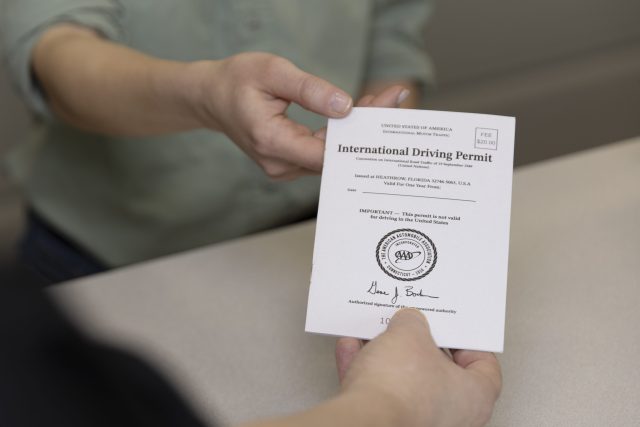
International Driving Permit

Dreaming of driving through the Tuscan countryside? You’ll need to get a international driving permit (IDP) first. Thankfully, it’s as easy as visiting your local AAA branch and paying a small fee. AAA is the only authorized IDP provider in the U.S. To learn more about driving abroad, listen to our podcast episode.

Passport Photos

Sometimes it seems impossible to take a good passport photo that’s also compliant with all the many passport rules and regulations. The U.S. passport photo requirements are strict about sizing, background, wardrobe and even facial expressions.

AAA offers passport photo services at all branch locations, making the process much easier for AAA members. Let us worry about the rules so you can focus on looking good. AAA members get free or discounted passport photos depending on their membership level.  

aaa

TSA PreCheck

Tired of waiting in line at airport security? Whether you’re a constant traveler or someone who flies once in a blue moon, those lines can grind any trip to a crawl. If you’re looking for fast security lines with less hassle, you should consider TSA PreCheck.

TSA PreCheck is a service that offers expedited security lines at many major U.S. airports, but you have to get it before you go on your trip. You can schedule an appointment for a background check and fingerprinting at select AAA branch locations. You will need a major credit card, bank check or money order to pay the fee. A scheduled appointment is required.

Foreign Currency Exchange

If you’re traveling to a foreign country, it’s always a good idea to have some of the local currency with you. Fortunately, you can get your cash before you go with foreign currency exchange at AAA Northeast branch locations.

AAA Northeast members who are in good standing for one or more years can use a personal check to purchase foreign currency up to $3,000 at a time. When using cash or a debit card, you can purchase even more. You might have to wait some days for the currency to be shipped to you, so make sure you plan ahead.  

For all these services and more, visit a AAA branch location today.

Did you know about these AAA branch services? Let us know in the comments below.

This article has been updated and republished from a previous version.

Subscribe to Your AAA Newsletter

Sign up and receive updates for all of the latest articles on automotive, travel, money, lifestyle and so much more!

Navigating the Grad School College Search Process

You’ve graduated with your undergraduate degree, and now you’ve decided to go to grad school. Great! Congratulations on taking the next step in your education. You’re almost on your way to a graduate degree but first, where to? The college search process begins anew.

All rhymes aside, if you’re not going to pursue a graduate degree at the same college that you completed your undergraduate degree, it is like starting the whole process over again. But instead of deciding which college will help mold your early adulthood, it’s a little different.

The question now is: Which grad school holds the key to your career?

Here are some tips and tricks for navigating the grad school search process, as well as some things to think about when deciding which is the right one for you.

  • Talk to your professors and professional colleagues. Use the relationships you’ve developed with faculty at your undergrad school to your advantage. Professors and people you work with will likely be chock-full of advice. It doesn’t hurt to ask around.
  • Read articles, papers and journals in your field of study. Then check out their authors. Where did they go to grad school?
  • Read through lists of grad school rankings, like this one by U.S. News & World Report. You can search by program and then filter by ranking, location and more. The result is a lovely list of the top grad schools in your field. If reputation is important to you, this is where to start.
  • Begin the search at least six months before you apply. Start looking six months to a year before you plan to apply to grad school. Give yourself ample time to put together a list of schools, learn what you can about each one and compare them.
  • Visit each campus. Even if you don’t think you’ll be spending much time on campus, visiting each school on your list will tell you more about them than a website or brochure ever could. Virtual college tours are also a great way to start the process.
  • Talk to students who currently attend. While visiting the campus, take the opportunity to talk to currently enrolled grad students and ask for their honest opinion. They’ll likely be more than happy to answer your questions (if they’re not busy napping or double-fisting shots of espresso).
  • Work, intern or volunteer in your field before applying. It helps to know that you’re in the right field before you pursue a graduate degree in it. Spending some time immersed in the field before applying will give you a sense of what kind of degree program is right for you. Plus, you’ll be more comfortable when you need to complete practicum hours or an official internship during your studies.
  • Try for an associateship or fellowship. Fellowships and teaching or research assistantships can help you pay for grad school. It helps to know that you can take advantage of something like this before you agree to the costs of grad school.

Once you have a list of grad schools, ask yourself the following questions to help you whittle it down.

Does the school specialize in your chosen field of study?

A school that specializes in your field might be more likely to provide the relevant experience, research and mentoring opportunities that you’re looking for.

Does the degree program fit your needs?

Not every graduate degree program will prepare you for the licensing or certification that you’re working toward. Don’t be afraid to reach out to the graduate degree program director to clarify any questions you have, including whether or not the program will fulfill your needs.

Does the school provide enough career services to grad students?

Try to find out either by perusing the school’s website or by contacting the career services center what resources and programs the school would have available to you as a grad student. Do they provide career counseling? Resume writing help? Professional skills development? Is there a job placement program?

student
A young woman studies at home.

What does it cost?

Grad school costs an average of $43,620 per year. Pay special attention to the cost per credit, per semester, since graduate degree programs vary in amount of credits required.

What kind of financial aid is available to you?

This goes hand-in-hand with the above question. Grad school can cost a lot, so be sure to find out what kind of financial aid (other than federal loans) is available. What scholarships and grants are there? What fellowships and associateships are there? How much of the cost would they cover?

Will this school give you the tools to let your passion flourish?

You may be going to grad school because your chosen career path requires it. But if not, you may be going to grad school because you’re passionate about an art, a cause, research topic or what have you. Will this school allow you to be creative, dive deep into your research or otherwise explore your passion? What tools and funding will they provide?

Before you dive in to your college search, keep in mind that the college you completed your undergrad degree in may waive certain application fees if you choose to pursue your graduate degree there. Check with your advisor or graduate program director to see what perks might be available to you.

Higher education comes with a hefty price tag. Learn how AAA student lending products can help.

Are you in grad school? What advice would you give to someone in the midst of their own grad school search? Tell us in the comments below.

This article has been updated and republished from a previous version.

Subscribe to Your AAA Newsletter

Sign up and receive updates for all of the latest articles on automotive, travel, money, lifestyle and so much more!

Crossword: Road Trippin’

Subscribe to Your AAA Newsletter

Sign up and receive updates for all of the latest articles on automotive, travel, money, lifestyle and so much more!

Merging Into Life: How to Manage Money Stress and Build a Healthier Mindset

SEASON 2: EPISODE 2
Episode Feedback

Unpacking the emotional and psychological side of money.


EPISODE SUMMARY

Hosts Julien and Kiersten of rich & REGULAR sit down with Certified Financial Planner™ Eoin McGee to unpack the emotional baggage and financial anxiety we carry around money. Together, they explore why money feels so personal and how our upbringing shapes the way we spend, save and respond to financial stress.

From the psychology behind subconscious spending to answering questions like, “why do I feel guilty spending money?” and the stories we tell ourselves about being bad with money, this episode of Merging Into Life offers a compassionate look at how to talk about money fears and how changing your mindset can help you change your habits.

You’ll walk away with practical to stop worrying about money, build new behaviors and feel more in control of your financial wellness.

Listen to part 1 of Julien and Kiersten’s three-part miniseries on financial futures: How To Talk to Your Partner About Money.


KEY TAKEAWAYS
  • Subconscious spending is sneaky and costly. One of the best psychological tips for saving money is keeping a simple spending journal for one week (and reviewing it on paper). This can reveal which purchases add value to your life and which purchases.
  • Start small, save consistently. To stop worrying about money, you must become “a saver,” which starts with behavior, not big bucks. Building the habit (even at $5 a week) can change your identity and confidence, reducing financial anxiety.
  • Lifestyle creep is real. As your income grows, your spending often expands to match it. The key to avoiding this? Automate savings first, then spend what’s left so your priorities come before your paycheck.
  • Money mindsets are formed early, but not fixed. Whether you mirror or reject your family’s approach to money, you can unlearn limiting beliefs that cause money stress and rewrite your financial story with intention. Learning how to talk about money fears is a powerful first step.
  • Financial advice scales, no matter your income. The same strategies that work for someone managing $250 work for someone managing $250,000. True financial wellness is not about the number; it’s about the behavior.

TRANSCRIPT

[00:00:01] Kiersten: I think a lot of my childhood memories set me up to understand how to spend money but not necessarily be financially literate in how money is earned and saved and invested. I had lots of opinions on how to spend. My childhood memory around spending definitely starts in the cafeteria. I don’t know if this is true for all kids and my mom would put out our lunch money on the counter, and every day my brother would grab what we needed, and I remember having that first freedom of choice. I would get basically snacks instead of a meal because I could, and then I would come home starving. But I remember that being my first like shopping experience was in my school cafeteria.

[00:00:42] Julien: Yeah, food. Food’s one of the few things parents allow kids to use their own money and spend, and then they punish them for not making wise decisions. Later on, none of that. I grew up in New York in the 1980s, and we were never poor, but we were always right on the edge. Because my mother worked in Manhattan, whenever I would go to Manhattan, you start to see all the big buildings and really start to see the New York City that I think a lot of people see on television, that’s where you realize, oh, that’s where the money is. So the money’s not where we live. It’s over there in Manhattan in the high rises in the hotels. And so my perspective was always a bit shaped by that. Hey everyone, welcome back to Merging Into Life, where we’re teaming up with AAA Northeast to help you navigate everyday life through smart financial conversations. I’m Julien.

[00:01:29] Kiersten: And I’m Kiersten, and today’s episode is all about what’s going on underneath the numbers, because we’re talking about the emotions of money.


RESOURCES

Merging Into Life Homepage

Merging Into Life: Budgeting 101

Smart Personal Savings and Budgeting Apps

10 Money Saving Habits to Start Right Now

Julien & Kiersten Saunders: rich & REGULAR

Eoin McGee


Want to Learn More? Drop Us a Note

"*" indicates required fields

This field is for validation purposes and should be left unchanged.
Subject
Name*

*The views and opinions expressed in this podcast are not necessarily the views of AAA Northeast, AAA and/or its affiliates.

Subscribe to Your AAA Newsletter

Sign up and receive updates for all of the latest articles on automotive, travel, money, lifestyle and so much more!

AAA’s Road to Hunger Relief

AAA Northeast joined forces with 19 other clubs to fill food pantries, kitchens and plates through this year’s AAA Road to Hunger Relief campaign.

Throughout June, food donation boxes were placed in all 65 branches across the AAA Northeast territory and administrative offices. Employees also volunteered shoulder to shoulder with members at various events, including collecting donations curbside at grocery stores, preparing food for those in need and stocking shelves at pantries.

Donations were distributed through Feeding America, a nationwide network of food banks.

The Results

  • $150,417 raised by AAA Northeast to support Feeding America and food banks throughout our footprint. (Just $1 helps provide at least 10 meals secured by Feeding America on behalf of local partner food banks.)
  • 3,600+ employee volunteer hours contributed.
  • 5,400+ food items donated by employees and members.

Responding to a Growing Need

The first coordinated national charitable campaign in AAA’s modern history, the AAA Road to Hunger Relief set an ambitious goal: to provide at least 3.5 million meals to families in need across the country.

More than 14 million children in the U.S. don’t have enough food to eat or don’t have access to healthy food, and more than 47 million people face hunger across every U.S. community, according to Feeding America.

Food insecurity is especially prevalent in the summer when children don’t have access to free school meals and donations to food banks decrease.

“The goal is to impact as many people as we can,” said co-leader of the AAA Northeast Member Engagement team and district branch manager Tom Ryan. “To increase the number of families served, the number of pounds of food collected, delivered and prepared. That’s how we measure success.”

Sign up for hunger relief and other community events near you or send a message to memberengagementgroup@aaanortheast.com.

Featured image: Member services counselor Tawana Hargis fills boxes at the Rhode Island Community Food Bank.

Subscribe to Your AAA Newsletter

Sign up and receive updates for all of the latest articles on automotive, travel, money, lifestyle and so much more!

Take a Better Seat: Flight Upgrade Options

Flying Business and First Class may still be the dream for many travelers, but now there are options for passengers seeking a step up from economy class at a more affordable price point. A number of airlines have created front-of-the-plane seat categories that offer a few premium perks to make your travel more comfortable. Here are a few options available for those who want to enhance their flight experience. 

Condor

Condor’s Premium Economy Class, available on long-haul flights, offers you a seat pitch (the distance between your seat and the seat in front of you) of 35 inches, a seat width of 18 inches and a recline of up to 6 inches. In Economy Class, the seat width is the same, but the seat pitch is only 30 inches and the recline is up to four inches. You also get a multi-adjustable headrest and footrest, a travel kit and headset, a classic premium menu and a large choice of both nonalcoholic and alcoholic beverages.

Delta

Delta is refreshing the interiors of all its aircraft over the next couple of years. You’ll see a modern new design, fresh seating materials and enhanced lighting.

Seats in Delta Comfort+ provide extra legroom with an average pitch of 34 inches compared to an average 31 inches in the main cabin, plus earlier boarding and deplaning and dedicated overhead bin space. During domestic flights in Delta Comfort+, you get a choice of premium snacks on many routes over 900 miles when meal service is not available. On long-haul international flights, you receive an amenity kit. Both main and Comfort+ offer a pillow, blanket, as well as complimentary beer, wine and spirits on long-haul flights.

When flying Delta Premium Select, the seat pitch averages about 38 inches with a wider 19-inch seat compared to 17.2 inches in Delta Comfort+ and main. Plus, there is an additional recline at 7 inches and an adjustable footrest and leg rest on most long-haul international flights. In Delta Premium Select, you receive expedited check-in, security and baggage service, and are among the first to board. This dedicated cabin also offers hot towel service and a beverage and a snack before your meal. An exclusively designed menu includes the ability to preorder your meal up to 24 hours before the flight. You also get a premium amenity kit, memory-foam pillow, a plush blanket, a larger entertainment screen and noise-canceling headphones. 

Let's Plan Something Wonderful

Book your next trip with AAA Travel now or call 866-423-5585 to speak with a travel advisor.

Book Now

Lufthansa

The new Lufthansa Allegris travel experience on long-haul flights launched in May 2024 with a large part of the fleet expected to be outfitted with Allegris by the end of 2025.

Depending on the aircraft, the new Allegris Premium Economy seats have a pitch of 39 inches, width of 19 to 19.5 inches and 7-inch recline compared to Economy Class, which has 31-inch pitch, 17- to 18-inch width and 5-inch recline. Its hard-shell design features adjustable headrest, armrest and footrests.

These newly designed aircraft feature larger entertainment monitors for the upgraded cabin. Higher-quality noise-canceling headphones are provided for better audio. The dining experience is also an upgrade with a higher-quality meal typically served on fine China tableware and with a choice of two hot main courses, plus a welcome drink upon boarding and a bottle of water at your seat. A travel kit and cocktail table at the armrest add to the in-flight experience.

You’ll also be able to bring more with you with double the allowance than standard Economy with two checked bags, each up to 50 pounds. Select airports may also have a dedicated Premium Economy desk for faster check-in times.

premium economy singapore airlines
Courtesy of Singapore Airlines.

Singapore Airlines

Wider seats and more legroom are among the pluses of Singapore Airlines’ Premium Economy cabin. The seat pitch is 38 inches, the width is 19.5 inches and the recline is 8 inches with a calf rest and footrest. (Economy class offers a seat pitch of 32 inches, a seat width of 18.5 inches and a recline of 6 inches.)

You’ll get priority check-in, priority boarding and priority luggage handling. You can preorder gourmet meals through the Book the Cook service, which allows you to select from a variety of premium meal options before your flight. Complimentary beverages include alcoholic beverages, Champagne and wines. 

In-flight entertainment screens are typically larger, and you’ll get high-quality noise-canceling headphones. The amenity kit for Premium Economy features an eye mask, slippers and lip balm (available upon request). You’ll even get larger, more comfortable pillows and blankets than in standard Economy and a dedicated storage space for personal items.

United Airlines

Select long-haul international flights and some premium transcontinental routes feature United Premium Plus seats. These larger seats offer a 38-inch seat pitch, a width ranging from 18.5 to 19 inches, 6-inch seat recline and a leg rest. You get an enhanced meal service, including upgraded dinnerware with complimentary wine, beer and spirits. Noise-reducing headphones and an amenity kit, blanket and pillow, and larger in-flight entertainment screens are also part of the in-flight extras. At the airport, you’ll benefit from priority check-in, exclusive security lanes, priority boarding and two free checked bags with priority bag handling.

United also offers United Economy Plus on all United flights and most United Express flights. It is located near the front of the Economy cabin and features extra legroom compared to Economy. It has a seat pitch that ranges from 33 to 37 inches, seat width that ranges from 16.3 to 18.5 inches and 3-to-4-inch recline. Economy has a seat pitch that ranges 30 to 32 inches, seat width from 16.3 to 18.5 inches, and 2-to-3-inch recline. Meals and in-flight service are the same as Economy.

You don’t have to fly first class to elevate your flying experience. Get more for your money with one of these more attainable upgrade options.

Book your next flight with a AAA travel advisor. AAA travel services are just one of the free perks of your membership!

Have you flown premium economy lately? Tell us about it in the comments below.

Featured image: United Airlines Economy Plus. Photo courtesy of United Airlines.

Subscribe to Your AAA Newsletter

Sign up and receive updates for all of the latest articles on automotive, travel, money, lifestyle and so much more!

Car Waxing Tips That Will Keep Your Car Shining

Through the muddy thunderstorms of summer and salty roads of winter, the elements take their toll on your car’s exterior, sometimes requiring more than a simple wash to keep it looking its best. A proper waxing helps bring your paint job back to life and prevents further damage. We turned to our pros — AAA Northeast Car Doctor John Paul and Jason Carrara, senior manager of automotive services training — for their top car waxing tips to get your car looking like new again.

Purpose

Waxing your car consists of two components: applying the wax and buffing. Simply put, waxing rejuvenates the paint and polish gives it a shine. Waxing helps maintain the car’s finish, which also means maintaining its value. A waxed car is a protected car. A good coat of wax forms a protective coat over the paint, which will help repel road grime, bird droppings and tree sap. Although if your car gets hit with any of these (or other debris), you should wash it off immediately. The acids can cause permanent damage to the paint.

Preparation

Before you can begin waxing your car, it must be clean. Dirt and grime can mar the finish. To properly wash it, use the two-bucket method, with soap and clean water in one bucket and rinse water in the other. Using one bucket dirties the clean soap water and the grime you just removed from your car goes right back onto the car’s surface. In addition, make sure to only use car wash soap. Dish detergent will strip any wax off your car.

Before waxing, your car should be completely dry. Water droplets will cause the product to streak. You should also wax your car in the shade or indoors, if possible. This will prevent the car’s surface from becoming too hot and drying out the wax. If the wax dries too quickly, it will be difficult to buff off.

Products

Some drivers, especially those with vehicles that have darker color paint, will use a dedicated polish before waxing. Polish before wax will produce a deeper shine.

There are two main types of wax: synthetic and carnauba. Carnauba is a natural wax that produces a deep shine but may not last as long as a synthetic wax. There are also spray-on waxes that are great for a quick touch-up after washing.

The latest product on the market is ceramic coating. This coating provides great protection, but is expensive and generally only applied by a professional detailer.

car waxing tips

Process

Once your car is clean and dry, it’s time to evaluate the surface before applying wax. Light paint swirls can be cleaned up with polishing compound. Deeper imperfections may require a more aggressive cleaner/polish. A clay bar can be used with a dedicated lubricant to remove very minor imperfections in the paint.

Spread a small amount of wax onto your cloth or pad. Then apply it to the car using a circular motion and steady pressure. Keep working the wax into the paint until it’s completely absorbed. It’s best to focus on one small section of the car at a time until you’ve covered the entire automobile. Avoid getting wax on any non-painted plastic moldings or trim around the vehicle. This can discolor the plastic and can be difficult to remove once dried.

One of the wisest car waxing tips to remember is to apply as thin a layer of wax as possible. It may be tempting to apply a thicker coat in order to get more shine and depth, but the excess wax will be difficult to remove and become streaky. Instead, if you desire more shine, complete one application, buff that coat off, and apply another very thin coat. Check the instructions on the product’s label to know how long one application of wax needs to fully cure. Usually it’s about 12-18 hours.

Post-Wax Work

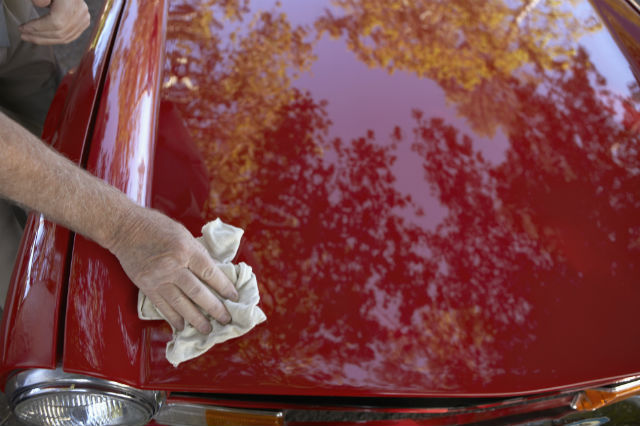
Once the wax is applied, it needs to be buffed. This step ensures that the wax fully bonds with the paint. Using a clean towel or microfiber cloth, gently rub the paint until you get the shine you’re looking for. The best results tend to come from using a microfiber towel. The static-charged, woven fibers grab the wax residue and polish the paint while you buff. In addition, microfiber does not shed lint. Make sure to rotate your towels frequently so that you’re always working with a clean side. Always follow the manufacturer’s directions.

As a general rule, a coat of wax lasts three to six months. Depending on how often you do it, waxing can be a labor of love. However, the benefit of waxing a car is that it will keep your automobile looking great and extend the life of the paint job, thus increasing the car’s value.

Get car waxing tools at NAPA Auto Parts, where AAA members receive a discount

Is a well-polished car important to you? Share your car waxing tips in the comments. 

Subscribe to Your AAA Newsletter

Sign up and receive updates for all of the latest articles on automotive, travel, money, lifestyle and so much more!

Napa Valley: A Trip for All Ages

California’s Napa Valley offers a combination of activities, attractions and scenic beauty. A recent trip to the towns of Napa and Calistoga with my husband and our two daughters proved that these elements make the area an ideal vacation spot for families traveling with adult children.

See Napa and other Northern California highlights on the eight-day California Dreamin’ tour with AAA Travel. Book today.

Wine and Dine

Napa Valley is made up of five towns that include Napa and Calistoga, as well as Yountville, St. Helena and American Canyon. Some 58 miles north of San Francisco International Airport, it is home to more than 400 wineries and over 90 tasting rooms.

Nicholas Bunnell, Travel Sales Manager for AAA Northeast, has visited the area twice.

“These trips allowed me to explore the rich wine heritage, offering a blend of wine tasting experiences and gourmet dining,” he said.

Visit Napa Valley, the local tourism board, has an excellent online tool for finding the perfect winery for tours and tastings based on your favorite wine, budget and desired amenities.

The iconic wineries that dot the region were just the beginning of our “family time” activities during our trip to Napa Valley.

We enjoyed “The Evolution of Elusa” 90-minute tour and tasting at Elusa Winery in Calistoga, which is on-site at the AAA Four Diamond designated Four Seasons Resort and Residences Napa Valley. The maximum tour size is six people, so we were lucky enough to have a private experience with just the four of us. The tour included a golf cart-led drive of the vineyards and a walk through the winemaking and storage facilities. Our time at Elusa ended in the beautiful Tasting Salon, where we sampled vintages accompanied by cheese and other snacks and an informative and passionate take on Elusa’s process.

napa valley wine train
Napa Valley Wine Train. Courtesy of Visit Napa Valley.
Photo credit: David H. Collier.

The historic Napa Valley Wine Train is another way to explore the area’s wineries, this time traveling in one of its restored 1915 Pullman cars. The six-hour Legacy Experience includes a welcome glass of sparkling wine, a four-course onboard meal, tasting in an open-air car and seated tastings at two wineries in St. Helena.

he Napa Valley Wine Train as a must-do unique dining experience, Bunnell said.

“Having some incredible food and local wines while admiring the beauty of Napa was unforgettable,” he said.

Along with wineries, Napa Valley boasts more than 150 restaurants — 15 of which are Michelin rated, seven total stars. We found the quaint towns of Napa and Calistoga lined with some of these restaurants as well as charming boutique shops. One top dining pick for my family was Scala Osteria in Napa, a beautiful restaurant with high-level service and a Southern Italian menu focused on seafood.

Let's Plan Something Wonderful

Book your next trip with AAA Travel now or call 866-423-5585 to speak with a travel advisor.

Book Now


Even if tasting wine is not your interest, there is no denying the beauty of the vineyards with their neat vine rows and the area’s rolling hills, quaint towns and the mountains surrounding them. To see some of these views, walk or bike the scenic paved family-friendly Napa Valley Vine Trail, which is 12½ miles from Napa to Yountville and another 8 miles from St. Helena to Calistoga. The trail will eventually total 47 miles, running the length of Napa Valley from the Vallejo Ferry to Calistoga.

For another walking trail option, the Petrified Forest, a California Historical Landmark in Calistoga, offers guided and self-guided tours of its trails, which are lined with petrified redwood trees that date back 3.4 million years and were first discovered in 1870. The two half-mile trails also feature California native plants and a view of Mount Saint Helena. Dave, our knowledgeable naturalist the day we visited, has been giving tours of the family-owned-and-operated Petrified Forest for more than 30 years.

Get Pampered

We couldn’t miss the opportunity for some spa time, especially in Calistoga, known for its mineral-rich mud. Four Season’s Spa Talisa’s Spa Garden is a great way to try out self-applied mud together as a family while relaxing on the sunning bench.

In Napa, plan for some pampering at the Spa at Silverado Resort. We opted for massages and enjoyed post-treatment time lounging at the spa pool and eating snacks from the Boost Cafe.

silverado resort napa
Courtesy of Silverado Resort

Where to Stay

Besides top dining, two PGA golf courses and a full-service spa, the AAA Four Diamond designated Silverado Resort offers complementary fitness classes, tennis, pickleball and bocce, as well as three outdoor swimming pools. It is also only a short drive to downtown Napa and is close to many area wineries.

A California landmark for more than 150 years, Silverado’s signature white mansion was built in 1870. Today, it includes the reception and bar. The resort’s 117 guest rooms and 228 suites are spread out on 300 acres. Its two- and three-bedroom suites are ideal for families of every age with amenities such as full kitchens, living rooms, dining areas and private patios or balconies.

Plan your Napa Valley trip with a knowledgeable AAA travel advisor. AAA travel services are just one of the free perks of your membership!

What’s your favorite multigenerational travel destination? Tell us in the comments below.

Featured image: Courtesy of Visit Napa Valley. Photo credit: Michael Cuff.

Subscribe to Your AAA Newsletter

Sign up and receive updates for all of the latest articles on automotive, travel, money, lifestyle and so much more!

Northeast Gas Prices Drip Down 

Even as gasoline inventories fell by a substantial 3.3 million barrels in the Northeast last week, according to the Energy Information Administration (EIA), stocks still sit squarely above levels seen in the past two years and are just shy of the five-year average. The significant drop last week was due in large part to a brief shutdown of refinery operations at Phillips 66’s Bayway refinery in Linden, New Jersey, after severe thunderstorms knocked out power and caused flooding issues. The refinery is a critical source of gasoline for the region. 

Demand for gasoline, meanwhile, climbed last week to 8.967 million barrels a day — an increase of nearly 500,000 barrels a day from the previous week, according to the EIA. The figure is more in line with expectations for this phase of the summer driving season but is not high enough to raise concerns about impact on supply.  

Another factor weighing down pump prices is the cost of crude oil, which settled at a three-week low Friday as markets remain unsure about the strength of the global economy.   

“Typically, a refinery outage like the recent incident at the Bayway refinery in New Jersey could cause price spikes at the pump,” said Jillian Young, director of public relations for AAA Northeast. “Thanks to the region’s healthy gasoline inventories, the potential price increases did not materialize, and drivers are still enjoying seasonably low prices compared to last year.” 

AAA Northeast’s July 28 survey of fuel prices found the national average unchanged from last week ($3.14), averaging $3.14 per gallon. The national average price was 5 cents lower than a month ago ($3.19) and 46 cents lower than this day last year ($3.50). 

Region Current Price* One Week Ago One Month Ago One Year Ago 
Connecticut $3.11 $3.12 $3.18 $3.55 
Massachusetts $3.04 $3.05 $3.08 $3.47 
New Jersey $3.02 $3.05 $3.18 $3.39 
New York $3.16 $3.17 $3.21 $3.60 
Rhode Island $3.01 $3.03 $3.06 $3.42 

*Prices as of July 28, 2025 

As of July 28, Mississippi and Oklahoma had the lowest prices in the nation at $2.70 and $2.72, respectively. Hawaii and California held the highest prices in the nation at $4.48 and $4.47, respectively.  

The AAA Gas Prices website is your resource for up-to-date fuel price information. Search for average gas prices on national, state and metro levels by regular, plus, premium and diesel.  

Subscribe to Your AAA Newsletter

Sign up and receive updates for all of the latest articles on automotive, travel, money, lifestyle and so much more!

Crossword: The Dog Days of Summer

Subscribe to Your AAA Newsletter

Sign up and receive updates for all of the latest articles on automotive, travel, money, lifestyle and so much more!

Dealing With Extreme Heat

As the heat turns up, so does the risk of heatstroke.

Warmer than usual temperatures are to be expected in the Northeast during the summer months, although as a result of climate change, the frequency, duration and intensity of heat waves that we experience every year is only projected to increase, according to the World Health Organization.

When the mercury starts to rise into the 90s and push up into the 100s, it can become dangerous to our health, homes, cars and pets. However, it’s important to start thinking about hot car and extreme heat safety, even if there isn’t a heat wave in the forecast, as even a mild, sunny day, can make the inside of a car lethally hot. Here’s how you can guard against the risks.

Health

Soaring temperatures cause your body to strain to maintain normal conditions, which can quickly lead to organ failure and even death in some cases. Excessive heat is the leading weather-related killer in the United States, according to the National Weather Service.

It is often a combination of high heat and humidity that can lead to illnesses like heat cramps, heat exhaustion and heatstroke. Learn the warning signs of each, and if you experience the symptoms or notice them happening to someone else, act right away. Most importantly, stay cool and stay hydrated.

Populations most prone to heat-induced sickness include the elderly, overweight individuals, infants, children and pregnant women. Outdoor and manual workers are also at higher risk. If you are a business owner with employees that often works in these conditions, such as a contractor, you want to make sure you have the right insurance coverage in place.

Pets, particularly dogs and cats with thick coats and short snouts, can quickly fall victim to heatstroke, as well. Signs include panting or difficulty breathing, drooling, weakness, increased heart rate, lethargy and collapsing. Make sure your pets stay cool and well hydrated, don’t over-exercise them when it’s hot and keep them out of the direct sun.

Protecting Children and Pets From Hot Cars

Heatstroke is the most common non-crash, vehicle-related cause of death in children under the age of 15. Over 20% of deaths result when a caregiver knowingly leaves a child in a car, typically to run a quick errand or let the child finish a nap, according to NoHeatStroke.org.

On a typical 80-degree summer day, the interior temperature of a vehicle increases by 20 degrees in only 10 minutes and reaches a deadly 109 degrees in 20 minutes. On hotter days, the interior temperature can easily reach 120-140 degrees, and cracking the windows has little effect.

And it doesn’t have to be scorching hot outside to get dangerously hot inside a car. Although most hot car deaths occur when temperatures are over 80 degrees, a child has succumbed to vehicular heatstroke in 70-80-degree weather in each of the past ten years.

To prevent hot car deaths, AAA Northeast recommends caregivers practice the following:

  • Stop and look at the backseat before exiting a parked vehicle. Make it a habit to check the entire vehicle before locking the doors and walking away. Place personal items, like a purse or briefcase, in the back seat as another reminder to look before you lock. Ask childcare providers to immediately call if your child doesn’t show up for care as expected.
  • Lock your vehicle to prevent unsupervised access and a child getting trapped inside. Keep car keys away from children and teach them that the inside of a car should never be used as a play area.

Statistics about pets dying in hot cars are not tracked as closely, but the American Veterinary Medical Association reports that every year, hundreds of pets die of heatstroke in parked vehicles. In most Northeast states, it is illegal to leave a pet unattended in a parked car.

If you see a child or animal confined in a hot car, act fast and do whatever is necessary to get them to safety as quickly as possible. Immediately notify a nearby business so they can make an announcement to find the potential caregiver, call 911 and wait until help arrives.

Cars

AAA stays busy in the summertime, as breakdowns tend to spike on hot days.

Extreme heat can take a toll on cars and can be especially stressful on engines. Check the coolant and make sure that it is periodically flushed and replaced as recommended by the vehicle manufacturer to prevent long-term engine damage and overheating.

Car batteries also hate the heat. Battery fluid evaporates faster in the summer, leading to corrosion. If a car’s battery is more than three years old, it’s a good idea to have it tested by a trained technician. AAA members can request Mobile Battery Service or take their car to any AAA Approved Auto Repair facility to be tested. And while you’re there, have them make sure your tires are inflated to the manufacturer’s specification and the AC is operating at full capacity.

If all precautions fail, you know who to call.

Check out more summer driving safety tips from AAA.

Home

When it gets to be too hot outside, you want your home to be a place of refuge where you can cool down. To keep the hot air out, Ready.gov recommends weather-stripping windows and doors, installing window air conditioners with insulation, covering windows with drapes or shades, using attic fans and setting up window reflectors such as aluminum foil-covered cardboard to deflect heat outside.

Preparing your home for extreme heat should be part of seasonal maintenance. Aside from making sure your house is as cool and energy-efficient as possible, without proper upkeep, heat can eventually start to take its toll on the structure. In the Northeast, this might include roof damage. Over time, roofing can expand and contract during extreme hikes and dips in temperature, making it susceptible to splits and leaks.

How do you stay cool in extreme heat? Tell us in the comments.

Protect you car, home, small business, pets and more with AAA Insurance.

This article has been updated and republished from a previous version.

Subscribe to Your AAA Newsletter

Sign up and receive updates for all of the latest articles on automotive, travel, money, lifestyle and so much more!

How to Get Sand Out Of Your Car

Many people love the whole beach experience — the sea, the sun and even the sand. But let’s be honest: The sand would be a lot more lovable if it stayed at the beach.

Spending hours vacuuming stubborn grains of sand from seats, carpets and all the crevices of your car can take some of the shine off a sunny day.

The good news is, you don’t have to choose between an fun beach day and a clean vehicle. Here are some tips to keep the sand at bay and make cleanup easier.

Sandproof Your Car

  • Line your trunk with a garbage bag or fitted sheet with the elastic facing up to trap more sand. This tip comes from Real Simple, which also emphasizes that you can never have too many resealable plastic bags at the beach; they come in handy for everything from carrying home wet and sandy bathing suits to phone protection. For added sandproofing, put sheets or towels on the car seats, too.
  • Plastic or rubber floor mats can help contain sand and all you have to do is shake them out when you arrive home.
  • Use a mesh beach bag that the sand can slip right through.
  • Don’t forget to shake out all towels, clothing and the beach bag before getting in the car.
  • Bring a small soft brush with you to take care of extra-clingy sand on your feet before getting into the car. It’s also a good idea to keep a jug of water and extra towels in the car for stubborn sand removal.
  • Passengers can sprinkle baby powder on the sand clinging to them, which dries out the sand and makes it easier to remove. NAPA Auto Parts recommends making a DIY pouch with corn starch or baby powder.
  • If you’re more of a buyer than DIYer, there are plenty of sandproof products on the market you might want to try. Check out this list from HGTV.
AAA members get discounts at NAPA Auto Parts, online and in select stores.
cleaning car

How To Get Sand Out Of Car Carpet and Interior

  • The sooner you can get the sand out the better, so it doesn’t scratch the seats or the interior.
  • A vacuum is your best friend. Either take your house vacuum or a shop vacuum and start by vacuuming the seats, in case sand falls on the car floor. Shop vacs are best for this because they have strong suction and are good for messy jobs. Plus, sand could damage the vacuum you use in your home.
  • Next, remove the floor mats and vacuum them outside the car. Vacuum the carpet, then put the mats back.
  • To get sand out of crevices, try using a paintbrush, cotton swab or toothbrush. If you want to be extra thorough, perhaps at the end of summer, when beach days are in your rearview, you might want to take the car to a detailing shop.

So, don’t fear the sand. The beach awaits.

How do you get sand out of your car? Leave us your tips in the comments.

Subscribe to Your AAA Newsletter

Sign up and receive updates for all of the latest articles on automotive, travel, money, lifestyle and so much more!

Pump the Brakes on Vehicle Theft this Summer 

After four years of surging vehicle thefts, the number of stolen vehicles in the United States fell to pre-pandemic levels in 2024, according to the National Insurance Crime Bureau (NICB). There were 850,708 vehicles stolen nationwide last year, a 17% decrease from the historic peak of 1,020,729 thefts in 2023 — marking the largest annual decrease in stolen vehicles in the last 40 years. 

Despite the decrease, approximately one vehicle is still stolen every 37 seconds in the U.S. according to the National Highway Traffic Safety Administration, costing vehicle owners billions of dollars each year.  

“Vehicle thefts and break-ins have been far too common in recent years, and typically spike in the summer,” said Lauren Fabrizi, spokesperson for AAA Northeast. “But by putting the proper protections in place, thieves are less likely to take off with your car or valuable items inside.” 

AAA Northeast recommends the following to prevent vehicle thefts: 

  • Roll up your windows and lock your car when parked.  
  • Remove the keys and any valuables.  
  • Store key fobs as far away from your car as possible and consider putting them in a metal container to prevent a signal boosting attack.  
  • Park in well-lit areas and/or areas visible to you or protected by security cameras.  
  • Never leave your car running unattended.  
  • If your car isn’t equipped with an anti-theft system, consider purchasing security devices for further protection, including: 
  • Vehicle immobilizers 
  • Steering wheel locks 
  • Brake pedal locks 
  • Theft deterrent decals 
  • Audible alarms 
  • GPS trackers 

Immediately reporting a stolen vehicle in the first 24 hours increases your chance of recovery by 34%, according to the NICB. Once you’ve filed a police report, notify your insurance company about the theft. Have information ready including your vehicle’s make and model, license plate number and vehicle identification number (VIN).  

State-specific data:

In Connecticut, there were 8,725 reported motor vehicle thefts in 2024, according to Connecticut State Police. The latest FBI data shows that nearly 40% of vehicle thefts in Connecticut took place from May to August.  

In New York, there were 31,865 reported motor vehicle thefts in 2024, according to the New York State Division of Criminal Justice Services. The latest FBI data shows that nearly 39% of vehicle thefts in New York took place from May to August.  

In New Jersey, there were 16,970 reported motor vehicle thefts in 2023, according to the latest FBI data. Roughly 38% of those thefts took place from May to August.  

In Massachusetts, there were 7,540 reported motor vehicle thefts in 2024, according to the Massachusetts Executive Office of Public Safety and Security. The latest FBI data shows that over 38% of vehicle thefts in Massachusetts took place from May to August. 

In Rhode Island, there were 1,368 reported motor vehicle thefts in 2024, according to Rhode Island State Police. The latest FBI data shows that over 35% of vehicle thefts in Rhode Island took place from June to September.  

Subscribe to Your AAA Newsletter

Sign up and receive updates for all of the latest articles on automotive, travel, money, lifestyle and so much more!

I Joined a CSA This Summer — Here’s Why It Was Worth It

As a farmers market frequenter, I’ve always loved strolling past each tent’s unique offerings and stocking up on fresh fruits and veggies for the week. But it never occurred to me that instead of going to the farmers market, that the farmers market could come to me. That is, until I learned about CSAs.

What Is a CSA?

Community Supported Agriculture (CSA) is a program that’s predicated on the idea that farms and their community members share a mutual interest: supporting each other.

When you join a CSA, you are essentially purchasing a share of a farm’s output for a range of time (typically the growing season, summer through fall). Each week your share is made available for pick up or delivery, depending on the farm, and consists of that week’s bounty — from vegetables and fruit to eggs, mushrooms, bread, flowers, jam and more.

For both farmers and CSA members, the benefits are plentiful. Farmers receive payments early in the growing season, shoring up funds to maintain the growing season without financial worry, and members get to delight in locally grown goodness. Joining a CSA is also a great way to become more sustainable as it encourages local dollars to stay local while helping to eliminate unnecessary food waste. A farm’s surplus that may have been wasted otherwise is instead redirected toward CSA members, helping to nourish the community.

To find a CSA near you, search your zip code on Local Harvest. Each listing gives a summary of the farm, share prices, contact information and more so you can decide which one is the best fit. CSA sign-ups typically begin prior to the season, around March, and can fill up fast so it’s helpful to be ready with your choice ahead of time.

How Much Does It Cost?

Every CSA is different and cost will vary just as much. Some CSAs offer types of shares, like half shares versus family shares, to give options when it comes to pricing and the amount of food you receive. If a share price seems high, remember that there are many variables to take into account, like whether the farm delivers your share to your door, how many weeks are included or if there are any available add-ons to supplement your share. There are many CSAs to choose from, so take the time to find a program that fits into your schedule, budget and lifestyle.

Why It’s Been Worth It

Besides looking forward to what fun, new vegetable will be in our share each week, being part of a CSA has instilled a deeper sense of connection to the food that I eat. Knowing where it came from, how it’s grown and meeting the people who grow it has had a profound influence on how I consume, including how to be more intentional and less wasteful.

I’ve also cut down on grocery store visits. With a variety of produce coming my way each week, I’m only heading to the store for essentials, if at all. Eating with the seasons, supporting local farms and saving money? Win, win.

How To Make Use Of It All  

Sometimes you’ll receive something in a CSA box that you’re not sure what to do with (see: garlic scapes), or maybe you’ve gotten an ingredient a few times now and can’t think of another way to make use of it (ahem, zucchini). Some CSAs get ahead of this by providing recipe inspiration with each week’s box and encouraging members to share any recipes they loved. This way, nothing goes to waste and you try something new.

As you might’ve guessed, we recently received a bunch of zucchini with our CSA share and didn’t know what to do with it. Enter, chocolate zucchini bread.

Watch how it all comes together with other ingredients we got from our CSA below:

Check out Local Harvest to see the CSAs available in your area.

Subscribe to Your AAA Newsletter

Sign up and receive updates for all of the latest articles on automotive, travel, money, lifestyle and so much more!

10 Pet-Friendly Summer Activities in the Northeast

Looking to switch up your summer plans with your four-legged companion? The Northeast offers a variety of unique, pet-friendly activities beyond the usual dog beach and hiking trails. From harbor cruises and pool parties to cafe hopping and baseball games, there are countless ways to bond with your pet while exploring the region.

And if you’re searching for a place to stay or grab a bite, don’t miss our list of 20 pet-friendly hotels and restaurants in the Northeast — perfect for your summer getaway and beyond.

Swimming Pool Pawty in New Jersey (and beyond)

Cool off this summer with a private pool rental through Swimply, where many pool owners allow dogs to join in the fun. In New Jersey (and throughout the Northeast) there are dozens of dog-friendly pools available this summer. You’ll find pools equipped with dog toys, floats and even lazy rivers, beating out the standard dog park pool.

Dog-Friendly Cafe in NYC

Boris & Horton, New York City’s first dog-friendly cafe, is a paradise for pups and their people. Dogs can roam leash-free in designated areas while their humans sip coffee and snack on baked goods. You’ll find plenty of treats for your pup, plus a curated shop full of dog toys, outfits and accessories. Don’t miss their Yappy Hours and adoption events.

Harbor Cruise in Boston

Take in the sights of Boston from the water alongside dozens of wagging tails on the Massachusetts Bay Lines Dog Days of Summer Cruise. This 90-minute scenic cruise departs from Rowes Wharf and sails past the Seaport District, federal courthouse, and other landmarks. Dogs ride for free and are treated to water and snacks, while humans can purchase refreshments onboard.

More Pet-Friendly Boating Adventures

No boat? No problem. Use GetMyBoat, a platform for pair-to-pair boat rentals and charters, to rent a dog-friendly vessel complete with a captain. In Stamford, Connecticut, and other Northeast locations, you can customize your adventure — try paddleboarding, fishing or stopping by a dog-friendly beach for a photo op. Other top picks include a pet-friendly cruise past the Statue of Liberty (fishing optional!) or a private charter out of Newport, Rhode Island.

Gondola Sky Ride in Stowe, Vermont

Experience mountain magic with your dog on a gondola ride to the summit of Mount Mansfield at Stowe Mountain Resort. The ride offers panoramic views of Vermont’s summer and fall landscapes, and once you reach the top, you’ll have access to scenic hiking trails that welcome leashed pets. It’s sure to be a tail-wagging good time!

Camping in New Hampshire’s White Mountains

If you and your pup love the great outdoors, consider a stay at Huttopia White Mountains. This pet-friendly campground offers cozy wood and canvas tents, scenic hiking trails and swimming holes within the White Mountain National Forest. It’s the perfect basecamp for exploring nature, without leaving your furry friend behind.

dog on portland schooner
Author Jeanette Zinno’s dog, Rocki, on the Portland Schooner.
Sailing in Portland, Maine

Finding pet-friendly water adventures can be a challenge, but not in Portland. Climb aboard with Portland Schooner Co. for a relaxing sail through Casco Bay, where you and your pup can enjoy views of lighthouses, the rocky coastline and maybe even seals if you’re lucky. Pets must be comfortable on boats and able to sit calmly in your lap. Bring snacks, pack your favorite drink (it’s BYOB!), and enjoy the sea breeze with your best friend.

Baseball Game in Coney Island

Take your pup out to the ballgame with the Brooklyn Cyclones at Maimonides Park. Their Bark in the Park events welcome dogs into designated seating areas and include special perks, like a chew toy or pup cup. Be sure to arrive early for the pregame pup parade!

Biking in Erie, Pennsylvania

Explore the 13-mile bike trail at Presque Isle State Park with your pet riding comfortably in a dog trailer, available through Yellow Bike Rental Company. Choose from bikes, trikes or tandems while your pup enjoys the breeze and scenic views. Stop at one of the dog-friendly beaches along the way to let your fur-baby stretch its legs.

Drive-In Movie in Rhode Island

Cuddle up under the stars at Rustic Tri-View Drive In in North Smithfield, one of Rhode Island’s favorite seasonal attractions. Pets are welcome, and there are designated walking areas to stretch your pup’s legs before showtime. Don’t forget to bring a blanket and your dog’s favorite snacks while you hit the concession stand for your own movie treats.

Get fresh, healthy dog food delivered directly to your door with the Farmer’s Dog. AAA members can save 70% on their first box.
What’s your favorite pet-friendly activity near you? Tell us in the comments. We’d love to hear how you and your furry sidekick are spending the summer.

Subscribe to Your AAA Newsletter

Sign up and receive updates for all of the latest articles on automotive, travel, money, lifestyle and so much more!

When You Should Buy Instead of Rent a House

Buying a house is a major milestone in anyone’s life. Not only is it a new personal chapter, it also signifies you’ve reached a financial goal. After all, a house is the most expensive purchase you’re likely ever going to make.

There’s no question that purchasing a home can come with significant financial advantages. But knowing when you’re ready to buy instead of rent can take some figuring out. Here are a few reasons why buying a home instead of renting may be the right choice for you, as well as some ways to see if you’re finally ready to make the move.

Listen to Our Podcast

For expert advice on the homebuying process, listen to Episode 7 of our podcast, Merging Into Life: Buying Your First Home.

Tune In

Why should you buy instead of rent?

You can customize your house

Owning your home means you’re free to make any changes you like. Paint the rooms a different color, renovate the kitchen, create an addition. The best part is that these changes don’t just have to be cosmetic; they can also help you financially by lowering your home ownership costs and/or increasing the value of your house. For instance, installing solar panels or adding insulation will reduce your monthly utility bill and potentially help with resale value.

It forces you to save

While we all know we should be saving money each month, sometimes it’s easier said than done. Keeping up with your mortgage, however, forces you to invest in your own home, thus increasing your savings.

Homeowners are required to pay their mortgage each month, a portion of which is used to pay down the principal amount of the loan. The less you owe on your mortgage, the more equity you own in your house. Once your mortgage is paid off, you have the entirety of your home’s value available to you should you choose to sell. If you’re renting, however, your monthly payment goes to your landlord and you have no asset to show for it.

Your fixed mortgage rates won’t increase

If you have a fixed-rate mortgage, your monthly payments will never change, even if inflation and other costs rise. On the other hand, unless you live in a rent-controlled building, your monthly rent is subject to increase every year. Knowing what the bulk of your monthly housing costs will be for years in the future can create financial stability.

Reap the benefits of appreciation

Aside from the obvious benefit of having a place to live, owning a home can also be viewed as a strong financial investment because your home appreciates in value over time. This means you’ll likely make more money if and when you sell.

It’s also important to note that the appreciation occurs on the entire home’s value, not just your down payment, which may make it more appealing than other investment types, such as buying stock. As an example, say you purchased $20,000 in stock. If it appreciated 3.9% in one year, you’d have made $780. If instead you used the $20,000 as a 20% down payment on a $100,000 home, and the home appreciated by the same 3.9%, after one year you would have gained $3,900.

homebuying is changing

When you should buy instead of rent

Now that we’ve uncovered some of the benefits of owning a home over renting one, we need to know when you should buy instead of rent. While everyone’s financial situation is different, in general, you’ll know you’re in a financial spot to purchase a home if you’re able to secure financing. Lenders will look at your entire financial picture to determine if you qualify for a mortgage. This includes your credit score, income and employment security, and savings. If they give you the green light, you’re likely financially ready to move forward.

Then comes the question of how much you can afford. It’s a good idea to try to save enough for a down payment of at least 20% of the cost of your new house. Anything less than that will force you to pay private mortgage insurance. This is an additional fee tacked onto your monthly mortgage payment that protects the lender in the event you default on the loan.

Another number you’ll want to keep in mind is your debt-to-income ratio. This is a comparison of all your monthly debt obligations to your monthly gross income. The 43% debt-to-income ratio is generally used as a standard guideline for approving mortgages. This means that a homeowner’s monthly debts (car payments, student loans, credit cards, etc.) plus their potential mortgage payments should total 43% of their monthly gross income. If you owe more than this percentage, you may want to pay down some of your debts before seeking a mortgage.

If you believe you’re ready to purchase a home, or just have questions about the process, AAA is here to help. Learn more our home loan services or to speak to a mortgage specialist.

For ways to save even more at home, go to AAA.com/HomeServices.

Subscribe to Your AAA Newsletter

Sign up and receive updates for all of the latest articles on automotive, travel, money, lifestyle and so much more!

Gas Prices Across the Northeast Stay Parked 

After a strong start over Memorial Day weekend, demand for gasoline has since fizzled. Demand over the past four weeks is trending 149,000 barrels a day — which is below the same period last year according to data from the Energy Information Administration (EIA). Last week, the EIA reported demand settled at a lackluster 8.48 million barrels a day — a decline of 670,000 barrels a day from the previous week, and 300,000 lower than the comparable week of 2024. 

The weak demand has contributed to a notable buildup in gasoline inventories. Nationally, inventories climbed 3.4 million barrels last week, the EIA reported. Regional supplies in the Northeast grew to 63.1 million barrels in total — 6.7 million barrels above last year. 

Supply and demand dynamics are keeping fuel prices in check even as markets react to geopolitical events around the world that typically put upward pressure on prices. Last week, the European Union said it will impose stricter sanctions on Russian oil exports amid the ongoing war in Ukraine and drone attacks targeting oil fields in Iraqi Kurdistan disrupted more than half of the country’s oil production. 

“The dog days of summer are delivering lower gas prices this year,” said Jillian Young, director of public relations for AAA Northeast. “Pump prices across the Northeast are nearly 50 cents cheaper than last year and in a price range we haven’t seen for this time of year since 2021.” 

AAA Northeast’s July 21 survey of fuel prices found the national average down a penny from last week ($3.15), averaging $3.14 per gallon. The national average price was 7 cents lower than a month ago ($3.21) and 36 cents lower than this day last year ($3.50). 

Region Current Price* One Week Ago One Month Ago One Year Ago 
Connecticut $3.12 $3.13 $3.16 $3.58 
Massachusetts $3.05 $3.06 $3.07 $3.50 
New Jersey $3.05 $3.07 $3.14 $3.43 
New York $3.17 $3.17 $3.20 $3.62 
Rhode Island $3.03 $3.03 $3.06 $3.45 

*Prices as of July 21, 2025 

As of July 21, Mississippi and Oklahoma had the lowest prices in the nation at $2.71 and $2.74, respectively. California and Hawaii held the highest prices in the nation at $4.49 and $4.46, respectively.  

The AAA Gas Prices website is your resource for up-to-date fuel price information. Search for average gas prices on national, state and metro levels by regular, plus, premium and diesel.  

Subscribe to Your AAA Newsletter

Sign up and receive updates for all of the latest articles on automotive, travel, money, lifestyle and so much more!

The History of Ice Cream Trucks

Is there a more quintessential summer experience than hearing the jingle of an ice cream truck, racing out of the house to catch up to it, then devouring a sweet, frozen treat?

People have been performing this seasonal ritual since ice cream truck history began in the early 20th century. Since then, these mobile dessert parlors have become a warm-weather mainstay across the country. But it hasn’t all been rainbows and sprinkles. There have been notable ice cream controversies along the way, and today, operators face an unpalatable future.

Let’s look back at 100 years of ice cream truck history.

Prefer an audio summary of this post? Click below to listen to this article.

The First Ice Cream Trucks

Ice cream trucks trace their roots back more than a century. In 1920, a Youngstown, Ohio, confectioner named Harry Burt devised a chocolate coating that could encase ice cream. He gave the treat to his daughter, who loved the taste but was less enthused by the mess that came with eating it. Her brother offered a solution: put a handle in it. Burt had previously developed a hard-candied lollipop, which utilized a stick handle. By freezing those sticks into the ice cream bars, Burt revolutionized the way we eat ice cream. He called his new creation the Good Humor bars.

During this time, Burt was already delivering ice cream via motorized trucks. But because his new ice cream didn’t need to be served in a bowl or cone, he could sell it directly to consumers on the street. He purchased 12 refrigerated trucks, equipped them with bells and sent the fleet out to hawk Good Humor bars. In turn, Burt became the first ice cream truck vendor in history.

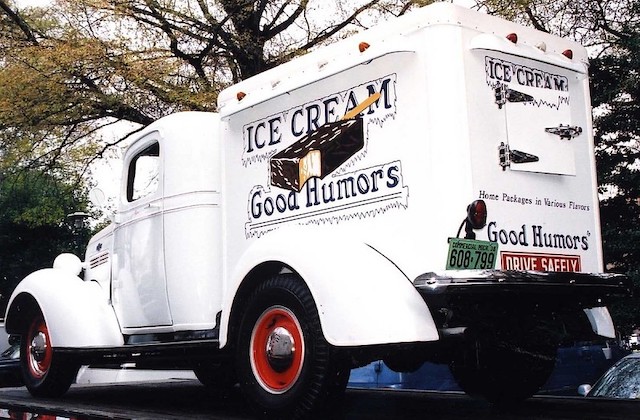
A 1938 Good Humor ice cream truck (Credit: Smithsonian’s National Museum of American History)

The Rise of Good Humor

It didn’t take long for the company to flourish, thanks to some apt marketing maneuvers. Street ice cream of the time, usually sold from pushcarts, didn’t have the best reputation. It was known to be made of low-quality ingredients and was often the source of food poisoning. To distinguish itself, the Good Humor company’s fleet consisted of sparkling white trucks. Its drivers were outfitted in similarly colored uniforms, not unlike those worn by hospital orderlies. The company took cleanliness and appearance so seriously, it even had a training manual instructing drivers to “get the proper amount of rest each night and eat good food … and always have a clean shave and neat haircut.”

In addition to pristine appearances, Good Humor also benefitted from, of all things, Prohibition, which began in January 1920. Americans sought comfort in this indulgence after the other was taken away. Ice cream consumption rose an estimated 40% during the 1920s. 

Combined, these factors were a boon to Good Humor. The company sold 14 million bars in New York and Chicago in 1932 alone, according to Smithsonian Magazine. By the mid-1930s, Good Humor trucks could be found throughout most of the country. In the 1950s, the company boasted a fleet of 2,000 ice cream trucks.

Mid-Century Ice Cream Trucks

Ice cream consumption boomed following World War II, after wartime dairy rationing was lifted. Americans consumed more than 20 quarts of ice cream per person in 1946, according to the International Dairy Foods Association. This increase in demand led to an influx of competition in the ice cream truck business.

The most notable new entrant was Mister Softee, started by brothers William and James Conway in Philadelphia in the mid-1950s. The pair was working for an ice cream machine manufacturer when they began receiving more and more requests for machines that could be installed in trucks. However, this jury-rigged technique inevitably led to mechanical problems.

They were taking the ice cream machines and bolting them to the truck,” said Jim Conway, William’s son and Mister Softee’s current vice president. “But for a lot of reasons, that doesn’t really work well. You need shock absorbers, and you need to be able to keep the machine cool.”

The Conways concluded that ice cream trucks needed to be specifically built for the task. Their employer, however, did not want to invest the time and money needed to manufacturer such vehicles. So the brothers set out on their own to create a better ice cream truck. And that’s exactly what they did, developing a specially designed machine that produced perfectly smooth soft ice cream from the back of a moving truck. The Conways gradually added trucks to their fleet over the proceeding years but soon realized that the more lucrative business would be selling their trucks as franchises. From 1955 to 1970, Mister Softee franchising grew 3,600%.

Good Humor was still going strong during this time. By the 1960s, it boasted more than 85 different ice cream treats. The demise of its ice cream truck operation, however, was in sight. In 1975, New York City charged the company with hundreds of counts of falsifying food safety records in order to hide evidence of bacteria in its products. Authorities alleged that about 10% of Good Humor ice cream sold between 1972-1975 was tainted. The ordeal and the fines it brought combined with factors like declining sales, increased competition and the 1970s fuel crisis led Good Humor to exit the truck business and focus exclusively on grocery store sales.

The History of the Ice Cream Truck Song

Few sounds whet the appetite like the ice cream truck jingle. But the origins of this seemingly benign tune are downright stomach churning. The melody you hear emanating from many ice cream trucks is based off a 19th century folk song called, “Turkey in the Straw,” which itself is a take on an even older British tune, “The (Old) Rose Tree.” In the 1800s, “Turkey in the Straw” was given new, overtly racist lyrics as it was incorporated into traveling minstrel shows. By the 1890s, this new version was commonly heard in ice cream parlors, which often played the popular minstrel songs of the day. When ice cream purveyors began selling their products out of trucks and needed a way to announce their presence on the street, they opted for this familiar song.

To help right this wrong, Good Humor recently partnered with legendary rapper and producer RZA to create a new ice cream truck jingle. The song is available to drivers across the country free of charge.

As for the Mister Softee tune, it too was adapted from an earlier song. The melody is based off that of composer Arthur Pryor’s early 20th century composition “The Whistler and His Dog.” In 1960, Philadelphia ad executive Les Waas put lyrics to the song, which he titled, “Jingle And Chimes.”

The Last Frozen Bite?

It’s difficult to imagine ice cream trucks, once a staple of Americana, not meandering down neighborhood streets on hot summer days. But that could soon become a reality. “[The ice cream truck is] unfortunately becoming a thing of the past,” said Steve Christensen, the executive director of the North American Ice Cream Association.

A crippling combination of rising ice cream costs, inflated gas prices and ever more costly vendor permits have melted much of the profit away from operating an ice cream truck. Add in substantial frozen treat competition and you see why many owners are now finding the business untenable. So, the next time you see an ice cream truck in your neighborhood, be sure to grab a snow cone or two for old times’ sake.

Now that you’ve got ice cream on the mind, read up on the best spots in the Northeast to grab a scoop or two!

This article has been updated and republished from a previous version.

Subscribe to Your AAA Newsletter

Sign up and receive updates for all of the latest articles on automotive, travel, money, lifestyle and so much more!

All-Access Travel: Accessible Travel Destinations and Solutions

After a devastating car crash and resulting fire made him a triple amputee, John Morris thought he might never travel again. But now, the Florida resident has flown more than a million miles and seen much of the world using his wheelchair.

“[Traveling with a disability] is always going to be a challenge, but not so much that it can’t be overcome,” Morris said. “The number one word that comes to mind is worthwhile.”

A desire to see his alma mater play in the Rose Bowl prompted his initial trip, from Orlando to Los Angeles, and inspired him to keep exploring. On his blog, wheelchairtravel.org, Morris rates U.S. and international destinations for accessibility and offers tips on how to navigate specific places while living with a disability.

“There’s an incredible demand for accessible travel,” he said.

accessible travel
John Morris admires a temple in Beijing. (Photo: John Morris)

A Surge in Need

It’s a category that’s on the rise as the travel industry has placed more emphasis in recent years on catering to those with disabilities. Travelers with disabilities make up a large segment of the population – an estimated 70 million people in the United States reported having a disability in 2022, according to the Centers for Disease Control and Prevention.

And they’re traveling. From 2022-2024, 25.6 million travelers with disabilities spent an estimated $50 billion on travel, down slightly from 2020, according to the most recent market study by the Open Doors Organization.

Laws like the Air Carrier Access Act – which makes it illegal for airlines to discriminate against passengers with disabilities and requires them to provide accommodations and the Americans with Disabilities Act help make travel easier for those with disabilities; but naturally, unexpected difficulties can come up.

“You’d be surprised how many hotels are not ADA-compliant,” Morris said.

Let's Plan Something Wonderful

Book your next trip with AAA Travel now or call 866-423-5585 to speak with a travel advisor.

Book Now

Opening Doors to All Travelers

The good news is that there are many travel agents, tour guides and other resources available to help navigate it all.

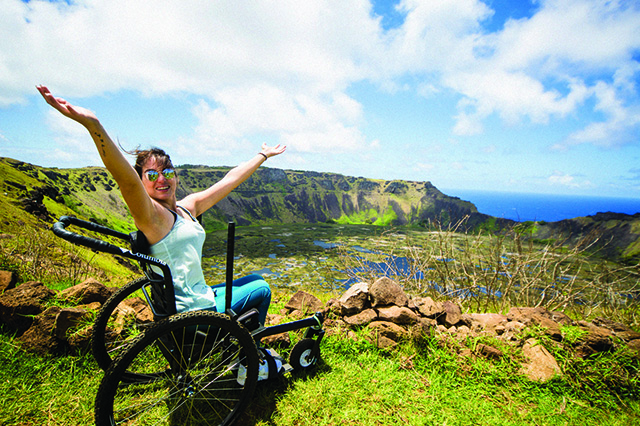
The travel company, Wheel the World, offers accessible adventure tours in locations including Easter Island, Chile and Oaxaca, Mexico. Last year, the company developed what is considered the first-ever wheelchair accessible tour of Machu Picchu in Peru.

The National Park Service has also made efforts to make its natural wonders more accessible. Many parks offer ASL interpreters for their ranger-led programs, and many trails, buildings and gift shops are wheelchair-accessible. The Grand Canyon has a scenic drive accessibility permit that allows travelers with limited mobility access to some areas normally closed to tourists.

And for four decades, Yosemite Deaf Services has provided ASL programming and assisted-listening devices to park visitors with hearing impairments.

The company Sage Traveling, founded by manual wheelchair user John Sage, specializes in research and travel in Europe and the Caribbean for people with limited mobility.

“It can be anything from slow walkers, (people with) MS, ALS, full-time wheelchair and scooter users and elderly travelers,” said marketing manager Sena Williams. “Our services are vetted to be 100% step- and curb-free, and all our routes include limited amounts of walking/strolling as well as vehicles with ramps/lifts.”

accessible travel
A Wheel the World tour of Machu Picchu. (Photo: Joyce Silberstein)

Travel Tips

Whether traveling with a physical or developmental disability, or with a friend or loved one who has one, here are some tips to help make the journey go smoothly.

Before the trip, consider what your realistic needs are, and make a plan based on those.

Travel almost always comes with unexpected challenges, but you can avoid some unnecessary frustration by putting in additional work before you leave. If you’re thinking about traveling alone, for instance, is it a better idea to ask a friend to come along in case you need help, or to hire a local guide who knows the area well? In some cases, such as with autistic children, doing a “dress rehearsal” practice run-through of what to expect on the trip can help reduce anxiety, recommends the advocacy group Autism Speaks.

Don’t overdo it.

If you know that you or your travel companion are likely to get physically or mentally tired, or overstimulated, schedule time to rest or participate in a more relaxing activity.

A hotel or attraction’s website might say that it is accessible, but what does that really mean?

Call places you plan to visit in advance to verify that they are in fact accessible, and if so, if those accommodations meet your specific requirements. If you need a shower seat in the bathroom, braille reading material in a museum, or a ramp into a historic house, for instance, make sure it’s available before you arrive.

Don’t be afraid to ask for help from strangers.

Morris recalls being in Beijing and having no choice but to ask a stranger to push his wheelchair to his hotel late at night because the battery had died and he was alone. It wasn’t his best travel moment, but he learned an important lesson. “The vast majority of people we will encounter are very good people who want to help if they see someone in need,” he said. “It’s in people’s nature to lend a hand, so get comfortable with asking for one.”

Autism-Friendly Travel Tips

Families with children on the autism spectrum face specific travel challenges: Crowded spaces, changes in routine, and unexpected noises and movements can be difficult for autistic travelers. We turned to Stacey Crowley, AAA Travel Business Operations Manager and certified autism travel professional, for some advice.

Don’t be afraid to reach out to airlines and airports.

You really would be surprised at how much they want to help you. I have worked with many autistic families and have been able to work with airports and airlines to do dry runs of going through security and getting on a plane and learning how the day of travel will work. They walk the members through different scenarios so they can help prepare their loved one for the unpredictability that travel comes with

Try to find a travel agent with special certifications

AAA Northeast has quite a few travel advisors trained specially and specifically to know all the ins and out of accessible travel, from special needs travel to traveling with a person with autism.

Take some extra time to pre-plan as much as possible. 

Most families that are traveling with a loved one with a disability, whether it be physical or intellectual, find that their travel experience runs smoother the more they pre-plan.

Do you have an accessible travel experience that you would like to share? Tell us about it in the comments.  

Reach out to a AAA travel agent to learn more about accessible travel options today. 

This article has been updated and republished from a previous version.

Subscribe to Your AAA Newsletter

Sign up and receive updates for all of the latest articles on automotive, travel, money, lifestyle and so much more!

Merging Into Life: How To Talk to Your Partner About Money

SEASON 2: EPISODE 1
Episode Feedback

Tips for discussing and managing money in your relationship.


EPISODE SUMMARY

In this episode of Merging Into Life, hosts Julien and Kiersten Saunders of “rich & REGULAR” dive into the complex (but essential!) topic of money and relationships. Joined by psychologist and relationship expert Dr. Abby Medcalf, they unpack how financial conversations can deepen connection, why shame and silence around spending are so common, and how to turn money stress into meaningful dialogue. From first-date red flags to managing money before marriage and the nuances of combining finances, this episode offers practical advice on how to build financial intimacy and stop keeping score in your relationship.


KEY TAKEAWAYS
  • How to talk to your partner about money openly, discussing how you spend and save, builds financial intimacy and trust, especially when couples approach these conversations as opportunities to learn, not to judge.
  • Asking simple questions like “What do you enjoy spending money on?” is a low-pressure way to start early financial conversations and reveal money values before they become friction points
  • Shame around debt or spending habits often gets in the way of honest dialogue; reframing your money mindset through self-awareness and empathy makes long-term change more possible
  • Conflict over finances is common, but avoiding the conversation entirely is more damaging—timing, tone, and intention matter more than the numbers themselves
  • Treating your finances as a shared resource instead of keeping score helps couples move from financial tension to teamwork, especially when managing joint goals or recovering from money stress.

TRANSCRIPT

[00:00:00] Julien: Our first conversation about money was our first argument about money.

[00:00:05] Kiersten: He’s putting it lightly.

[00:00:06] Julien: Well, it’s true.

[00:00:07] Kiersten: I decided to tell him how much debt I had, which led to another conversation, which led to a breakup. It started out pretty rough and rocky, but obviously we recovered.

[00:00:19] Julien: When I think back to that argument, it was one of the worst days of my life. We wanted to celebrate that we just had a vacation. And that, to me, was just so bizarre. I assumed post-vacation was a time to buckle down and get back to rice and beans.


RESOURCES

Merging Into Life: Budgeting 101

Love and Life Insurance

Money Saving Habits

Money Mistakes to Avoid in Retirement

Retirement Withdrawal Strategies to Think About

Julien & Kiersten Saunders: rich & REGULAR

Dr. Abby Medcalf’s Relationship Tips and Tools


Want to Learn More? Drop Us a Note

"*" indicates required fields

This field is for validation purposes and should be left unchanged.
Subject
Name*

*The views and opinions expressed in this podcast are not necessarily the views of AAA Northeast, AAA and/or its affiliates.

Subscribe to Your AAA Newsletter

Sign up and receive updates for all of the latest articles on automotive, travel, money, lifestyle and so much more!