Sampling Brooklyn Pizza With a Slice of Brooklyn Pizza Tour

“Manhattan? Fuhgettaboudit!” That’s the slogan of A Slice of Brooklyn pizza tours, which set out to prove to tourists and local day-trippers alike that Brooklyn is the superior borough. As the creators of the original pizza bus tour, they win over visitors the best way that any true Brooklynite knows how – with a slice of their favorite neighborhood pie.

Though born and raised on Long Island, I know Brooklyn pizza well. As the daughter of a Brooklynite, my dad made sure that I knew what good pizza was. I lost count of the L&B Spumoni Gardens squares I’ve consumed a long time ago.

Curious to learn the backstory behind some of the most famous and long-standing pizzerias in Brooklyn, I reached out to the owner of A Slice of Brooklyn Bus Tours, Tony Muia, who invited me to go on one of his top-rated pizza tours.

Read about my adventure then grab your seat on the bus. AAA members receive a 15% on all tours booked online.

A Slice of Brooklyn Pizza Tour

“How you doin’?” Our guide Paula greeted us in an unmistakable drawl, holding a little longer on the “doin’.” She – like all Slice of Brooklyn pizza tour guides – is from Brooklyn, giving an immediate sense of authenticity to the tour.

The bus picked up the group at a convenient meeting spot in the Union Square section of Manhattan and by exactly 11 a.m. we were on our way. Surprisingly, there were not too many out-of-towners on the day I went. The most distant travelers were a couple from Germany, but mostly it was groups of friends and families from around the area looking for a fun way to spend a Sunday.

As we headed across the Williamsburg Bridge to our destination past pristine views of the Brooklyn Bridge and downtown Manhattan, Paula (who is Tony’s cousin), delivered facts and commentary with signature Brooklyn banter, throwing in some local gossip, humor and a few lighthearted zingers about Staten Island. When we reached the other side, Frank Sinatra began to croon “The Brooklyn Bridge” over the speakers – we had arrived!

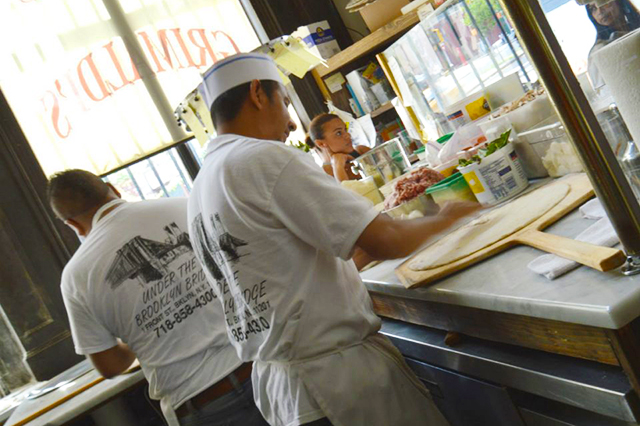
The standard Slice of Brooklyn Pizza Tour covers Brooklyn from one end to the other. Featuring the two distinctive styles of NYC pizza, the 4¼ hour tour starts at Grimaldi’s under the Brooklyn Bridge for their round Neapolitan-style pie and heads east to the opposite end of the borough for the Sicilian at L&B. Each person gets a soft drink and at least two slices at each stop.  It’s Pizza 101 for those who might have previously believed that Domino’s is what real Brooklyn pizza tastes like.

“Folks are always blown away by the quality of the pizzas, the authenticity of each style, and often go home spoiled and never able to go back to their hometown pizzas again,” Tony said.

Not only are these two of the most iconic pizzerias in town (and many would argue, two of the best), they’re large enough to accommodate the tour groups. Best of all, you walk right past the lines!

On the way from one pizzeria to the other, guests were treated to a neighborhood sightseeing tour, which included a stop at Brooklyn Bridge Park for some of the best views of the bridge and Manhattan, a look at the million-dollar homes on Shore Road in Bay Ridge and a ride past famous landmarks and movie locations. It concluded at the Coney Island Boardwalk, where everyone was free to do what they wanted. Some shopped, while others rode the Cyclone for the first time.

To enhance the experience, an audio-visual program accompanied the sights with music and movie clips. So if you only know Brooklyn from the movies, they make it real by matching up famous film scenes with their locations. Picture yourself in the introduction of “Saturday Night Fever” while following John Travolta’s steps down 86th Street to the tune of the Bee Gees’ “Stayin’ Alive.” How Brooklyn is that?
a slice of brooklyn pizza tour

The Pizza

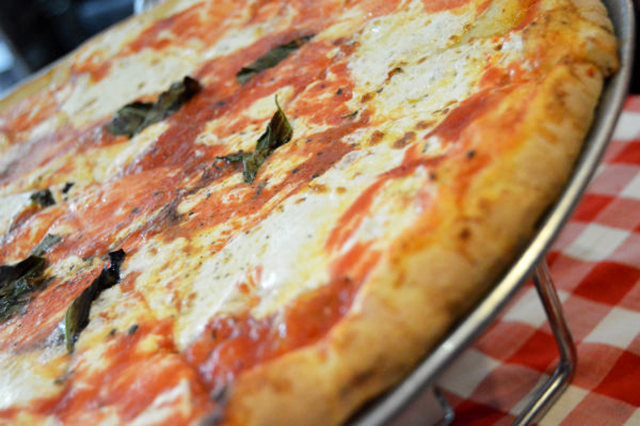
At Grimaldi’s in the DUMBO neighborhood, we walked past the always-long line (and a few stink eyes) right to our tables. To enjoy the pizza in its purest form, we were served the Neapolitan pie made simply with ground San Marzano tomatoes, fresh mozzarella and fresh basil. But the real star – and the reason why people wait for hours – is the coal.

Grimaldi’s is one of the few remaining pizzerias in New York City with an authentic coal-fired brick oven, which allows the oven to come up to an optimal pizza-making temperature of 900 degrees and provides a lightly charred, crispy crust with hard-to-find genuine fiery flavor. It’s a taste of traditional New York-style pizza as it was originally made.

Next up was L&B Spumoni Gardens. “It’s almost like angels should sing when I say it,” Paula joked. L&B is known for its Sicilian upside-down pie, made with the mozzarella cheese on the bottom, sauce on top, and a finishing sprinkle of pecorino Romano cheese over the sauce.  This method is often imitated but never duplicated! One signature of the L&B slice is the crust, which unlike other Sicilian slices is light and airy (cooks let the dough rise two times).

L&B is the legacy of Ludovico Barbati, who used to sell homemade Italian ices and spumoni on a horse-drawn wagon through the streets of the Bensonhurst neighborhood where the pizzeria is located today. Barbati, who learned how to make pizza in a garage from a baker on West 8th Street, gradually expanded the business over the years to meet growing demand. Evident by the lines, double-parked cars – and now buses – out front, that demand grows more every year.  As it says on the sign out front, it’s been family-owned for over 70 years, and the recipes for the pizza and spumoni ice cream remain the same.

Tour History

With dark slicked back hair and a tattoo of the Verrazano Bridge on his arm, Tony is the face of the company and exactly who you might picture as an ambassador for Brooklyn. He is a slice of Brooklyn himself.

Physically and emotionally drained after 20 years of working in the health care industry as a respiratory therapist, he was encouraged by those closest to him to pursue his business idea of doing what he does best: talking about his neighborhood for a living.

“I always boasted to friends about Brooklyn pizza and loved showing people around my hometown, which was essentially the pizza tour, but with my car and without an audio-visual program,” Tony said. “I started to think to myself, ‘Maybe this could work if we had a bus?’ While tourism to NYC had increased dramatically under Mayor Rudy Giuliani during his time in office, there really wasn’t much of it coming to Brooklyn. I figured it was worth a try and folks really took to it right away.”

A Slice of Brooklyn Bus Tours has now been in business for over 10 years.

Other Pizzerias

Although public tours only stop at two pizzerias, Tony includes more on smaller private tours, including other classic Brooklyn pizza institutions such as Totonno’s, Di Fara, J&V and more. As a fan of what he calls “walk-up-to-the-window slice joints” other pizzerias he recommends include DaVinci in Bensonhurst, Pizza Wagon in Bay Ridge and Smiling Pizza in Park Slope.

Each pizzeria has something different to offer, and depending on whom you ask, any one of them is “the best” –in New York or anywhere.  Most people’s loyalties rest on their childhood neighborhoods.

So what’s the secret to Brooklyn’s history of longstanding pizza joints? For one, families use recipes that have been passed on for generations from their Italian immigrant ancestors who settled in Brooklyn. And like any good eatery, they maintain quality and consistency, Tony said. “You want to know that every time you go to a place like L&B Spumoni Gardens, or any of the classic Brooklyn pizzerias, that the pizza is going to be just as amazing as the last time you went…even if you haven’t been back in years.”

In addition to pizza tours, A Slice of Brooklyn also offers neighborhood tours and Christmas light tours of the over-the-top displays in Dyker Heights. Plus, more are currently in the works! Don’t forget to book online to save with your AAA discount.

What’s your favorite Brooklyn pizza? Tell us in the comments below!

Save on more local tours and attractions with AAA discounts

Subscribe to Your AAA Newsletter

Sign up and receive updates for all of the latest articles on automotive, travel, money, lifestyle and so much more!

Top Amusement Park Rides in the Northeast: Classic Carousels

Once upon a time, carousels were the most popular amusement park rides and attractions around the country. Here are some of the top historic and antique carousels in and around Boston and New York that are still in operation today. Bring your family and enjoy some old-fashioned fun.

George F. Johnson Recreation Park Carousel
Binghamton, N.Y.

The Recreation Park Carousel dates back to 1925; it is one of six in the Binghamton region – known as the “carousel circuit” – donated by George F. Johnson, president of the successful Endicott-Johnson shoe manufacturer. The community benefactor believed that carousels helped to foster happiness and insisted that every ride on each of his carousels be free of charge, a practice that is maintained. As this particular carousel and park inspired an episode of the Twilight Zone entitled “Walking Distance,” Rod Serling is honored with a bronze plaque at the site, along with paintings of famous scenes from the show. The carousel and cupola have been restored, but the ride has its original organ and bells.

Central Park Carousel
New York, N.Y.

Four different carousels have been known as the Central Park Carousel since 1871. The current was installed in 1951 and is one of the largest in the United States. It was built in 1908 and was originally located in the Coney Island Trolley Terminal until the late 1940s. Many may remember the carousel’s symbolic role in J.D. Salinger’s classic coming-of-age novel “Catcher in the Rye.”

Nunley’s Carousel
Garden City, N.Y.

Built in 1912 and operated at Golden City Park in Brooklyn for 26 years, this carousel was relocated to Nunley’s Amusement Park in Baldwin, N.Y., in 1940 where it lived until the park closed in 1995. After years in storage, the beloved merry-go-round was restored through various fundraising efforts and in 2009 opened again next to the Cradle of Aviation Museum in Garden City. It plays an organ version of Billy Joel’s piano composition “Waltz No. 1 (Nunley’s Carousel),” which was inspired by the singer’s childhood memories of the carousel.

Herschell Carousel Factory Museum
North Tonawanda, N.Y.

The Allan Herschel Company was founded in 1872 and has built many famous carousels throughout the nation. The company moved to this location in North Tonawanda in 1915 and operated there until the 1970s. Today, the factory building is home to a museum featuring two operating antique carousels – a 1916 merry-go-round that was one of the company’s first and a small 1940s children’s carousel. There is also an exhibit devoted to Wurlitzer Music Rolls, which provided the music for many carousels.

Bushnell Park Carousel
Hartford, Conn.

Surrounded by the city of Hartford, smiling faces can be seen making their rounds on this vintage 1914 carousel featuring 48 hand-carved horses and a Wurlitzer band organ. The carousel is opened, operated and continuously restored by the New England Carousel Museum in Bristol, which is also worth a visit. The museum houses the largest collection of carousel pieces in the country.

Crescent Park Looff Carousel
Riverside, R.I.

Charles Looff was one of the earliest and most notable carousel designers. This carousel was his showcase, originally built for prospective buyers, and it is his most elaborate. Looff was known for glittery embellishments such as mirrors, decorated animals, jewels and real horsehair tails, and you’ll see all of them on display here. Said to have built around 40 in his career, this is one of about 10 of Looff’s carousels that are still in operation today.

amusement park rides
Carousels are fun for the whole family. (Photo: Lewis Tse Pui Lung / Shutterstock)

Flying Horses Carousel
Oak Bluffs, Mass.

They don’t make amusement park rides like this anymore. Constructed in 1876, the Flying Horses Carousel on Martha’s Vineyard is the oldest operating platform carousel and one of the only surviving flying horse carousels in America – the other is the Watch Hill Flying Horse Carousel in Westerly, R.I. (also in operation), which is said to have been constructed around the same time. These types of carousels are referred to as “flying” because the horses, carved from real wood and with real horsehair manes and tales, are suspended from chains and appear to soar when they start spinning.

Salem Willows
Salem, Mass.

For antique charm and a huge selection of animals and unique creatures to choose from, you don’t want to miss this carousel. The merry-go-round originally opened at Salem Willows Park in 1866 and includes a hand-carved menagerie of animals such as camels, sea monsters, lions, buffalo and dogs, in addition to over 50 horses. Be sure to take a spin while visiting the city’s nearby waterfront park or arcade.

Paragon Carousel 
Hull, Mass.

The Paragon Carousel is all that remains from the much-loved Paragon Park amusement park that operated on Nantasket Beach and closed in 1985. Today its 66 carved horses and booming Wurlitzer Band Organ continue to bring joy to all who visit. Like so many carousels and restored amusement park rides, it is a piece of the past that will live on into the future thanks to its community.

What’s your favorite carousel or carousel memory? Tell us in the comments.

Plan your own trip across the Northeast with AAA

Subscribe to Your AAA Newsletter

Sign up and receive updates for all of the latest articles on automotive, travel, money, lifestyle and so much more!

Experience the Best Europe Packages in Sunny Spain

Uncover the history and beauty of Spain as you explore three of the country’s most vibrant cities one of the best Europe packages like this one. A Europe trip package like this will send you on a thrilling journey through the historic cities of Barcelona, Madrid and Seville. Take in the sights of the sunny and charming seaside city of Barcelona on a hop on/hop off bus tour.

You will want to visit the La Sagrada Familia Church, one of Barcelona’s most famous sites and one of the world’s most unique churches. Get to know Madrid on a guided city tour and see Madrid’s highlights including its many elegant squares, the Royal Palace and the Cathedral of Almudena. Discover the art of flamenco during a performance! Seville awaits, take in the stunning beauty of the city, best known for its architecture and culture. See the sights with a hop on/hop off pass. Travel in first class in a high-speed train between cities and explore with the assistance of your city ambassador.

Best Europe Packages: Spain

Day 1 – Arrive in Barcelona

¡Bienvenidos! Welcome to Spain! You will be greeted upon arrival at Barcelona’s El Prat Airport and transferred to your hotel in the heart of the Old City. Here you will meet your local city ambassador whose experience will guide you in planning your personalized Europe tour packages to ensure that your visit to this historic city is memorable. Your city ambassador will help craft a sightseeing itinerary just for you. At night, you can become acquainted with the city as you have a complimentary dinner at a favorite local restaurant.

Day 2 – Barcelona

The city awaits! We’ve included a hop on / hop off tour to assist with your discovery of all that the grand city of Barcelona has to offer. You’ll want to explore both the East and West routes – don’t miss La Sagrada Familia. You’ll also want to explore La Boqueria, the largest and oldest open-air market in the city. Wander down Las Ramblas Boulevard or simply stop at a local café to enjoy the afternoon.

Day 3 – Travel to Madrid

Board your high-speed train to Madrid with first class tickets. After transferring to your hotel you will meet your local city ambassador to design your personalized touring plan for your visit to Madrid. The rest of the day is yours to explore and tour the city at your leisure.

best europe packages
Seville

Day 4 – Madrid

Explore the historic sights of Madrid today during a locally guided city highlights tour. Discover historic landmarks including the Puerta del Sol and Palacio Real, elegant squares such as Plaza de Oriente and Plaza Espana, as well as the exciting Retiro’s Parkland Las Vantas Bullring. The remainder of the day is yours to explore. This evening, experience one of Spain’s great arts – the flamenco. For an especially engaging experience, dine at the famous Café de Chinitas while you take in the spectacular flamenco performance.

Day 5 – Madrid

Day five is yours to see Madrid at your own pace. You may opt to visit the famed Museum Triangle, home to three world-famous museums; Museo del Prado, Reina Sofia National Museum and the Thyssen-Bornemisza Museum of Art. You may choose to wander through the stunning Retiro Park or simply enjoy lunch at a charming local café of your choosing.

Day 6 – Madrid to Seville

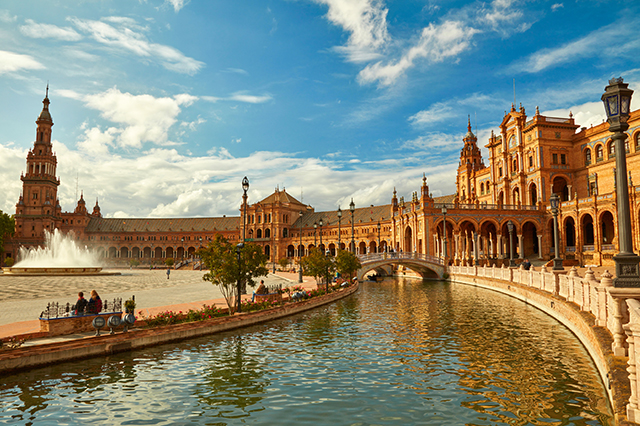
Board the high-speed train this morning to Seville, the heart of Spain’s Andalusia region. Known for its spectacular architecture and culture, Seville’s beauty is sure to captivate. Meet your local city ambassador upon arrival at your city center hotel to plan out your time in Seville.

Day 7 – Seville

Today, explore the sights of Seville on an open top hop on / hop off tour. You may hop on and off as you wish while you discover the city at your own pace. Enjoy included admission to several Seville museums and attractions as well as your choice of four free walking tours. You won’t want to miss the Seville Cathedral, the Royal Alcazar and the Giralda Bell Tower. You may also want to wander along the charming Guadalquivir River.

Day 8 – ¡Adios!

At one point or another, you will have to say “adios” to these beautiful cities of Spain. On day eight, you will return to Madrid via high-speed train for your return flight home.

Have any happy memories of your last visit to Spain? Share them in the comments below.

Learn more about this exciting trip. 

Get in touch with a AAA travel counselor to learn about AAA Vacations and start planning your next getaway today. As a AAA member, you’ll save even more. Not a member? Join now!

Subscribe to Your AAA Newsletter

Sign up and receive updates for all of the latest articles on automotive, travel, money, lifestyle and so much more!

Guide to Zion National Park

Is the park open year-round?

 Yes, Zion National Park is open all year. The most popular time to visit is from April to October.

Where is the park located?

 Zion National Park is in Springdale, Utah, on State Route 9.

How do I get around in the park?

 Highway 9, which traverses the park from east to west, is open to private vehicles year-round. The park offers a free shuttle service for access to the Zion Canyon Scenic Drive, located off of Highway 9, from April through October, when private vehicles are banned. Bicycles are permitted on this road from April to October, but bicyclist must yield to shuttle buses.

How big is the park?

 The park is 229 square miles.

What activities are available?

 Some of the popular activities for a Zion National Park vacation include:

  • Backpacking and hiking: The park contains ninety miles of trails winding through 124,400 acres of designated wilderness. Whether visitors are seeking a short walk, a day hike, or a multi-day trek to take advantages of the thirty-seven designated backpacking sites, Zion National Park offers a wide variety of backpacking and hiking experiences. Wilderness permits are required for overnight hikes.
  • Birding: Up to 291 species of birds call this park home. Some of the most well-known species include the peregrine falcon, the Mexican spotted owl, and the California condor. The visitor center offers a bird checklist for the park.
  • Rock climbing: Zion National Park contains world-renowned, 2,000-foot sandstone cliffs that are a popular destination for experienced climbers. Early- and late-season climbing is recommended to avoid the high temperatures of the summertime. A permit is required only for overnight bivouacs, not for day climbs.
  • Other activities: Guided horseback tours are also available as part of the Zion National Park vacation package. Boating is permitted on the Virgin River when the water flow allows; permits are required. Bicycling is allowed on the Pa’rus Trail and Zion Canyon Scenic Drive. The free shuttle buses are equipped with bicycle racks.
zion national park

Are pets allowed?

Pets are permitted only in limited areas of Zion National Park. They are not allowed in any wilderness areas or on trails, except for the paved Pa’rus Trail, which is accessed from the visitor center or Canyon Junction.

Are the trails accessible?

The Pa’rus Trail and the Riverside Walk are wheelchair-accessible.

What accommodations are available?

The Zion Lodge, three miles north of the Zion Canyon Scenic Drive, offers rooms and cabins year-round. Camping is permitted in designated camping sites only, not in parking lots or pull-offs. Zion National Park has three campgrounds: the Watchman and South campgrounds are near the south entrance, and Lava Point is about one hour from Zion Canyon, on the Kolob Terrace Road. In addition, several private campgrounds can be found just outside the park.

Are there restaurants in the park?

The Red Rock Grill Dining Room at the Zion Lodge is open year-round, and the Castle Dome Café, also at the lodge, is open seasonally. Other dining options are available outside the park.

What are the most popular areas of the park?

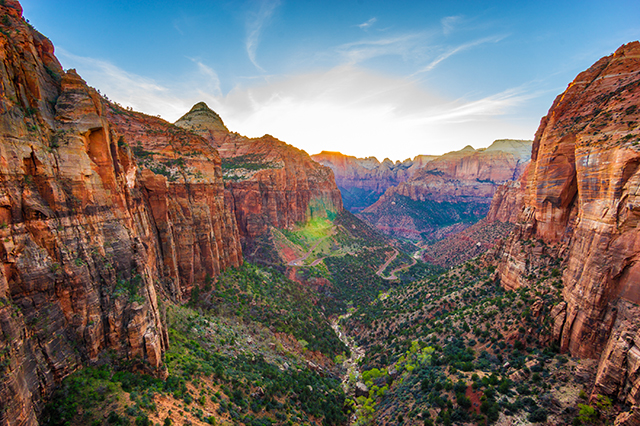
  • Zion Canyon Scenic Drive: This seven-mile drive along the canyon floor showcases the park’s magnificent scenery. Guests can enjoy it from the free shuttle bus, while bicycling or hiking, or from their own car from November to March.
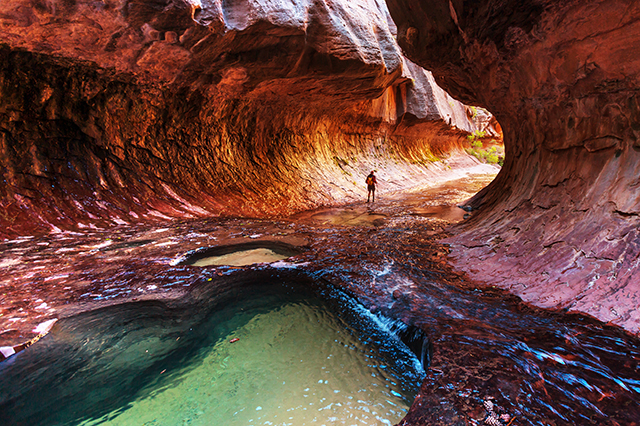
  • The Narrows: This twenty- to thirty-foot-wide river gorge surrounded by 1,000-foot walls is the narrowest point of Zion Canyon and a popular destination in the park. Visitors can include the Narrows as part of a day hike or can view it from an accessible, paved path, the Riverside Walk, which follows the Virgin River. Short hikes in this area do not require a permit, but longer, multiday hikes do. Check with the park before setting out. Hiking the Narrows requires walking in the river, which can be dangerous in winter and early spring when the water is cold and the flow high. Summer is the most popular time, but that is also when flash flooding can occur during storms. Always check the weather forecast before setting out on a hike.
  • Kolob Canyon: This section of the park, about forty miles north of Zion Canyon, is quieter than other parts of the park. With its soaring red sandstone cliffs, pristine streams carving their way through the canyon, and waterfalls providing a cooling mist, the Kolob Canyon provides visitors a place to relax and take in the wilderness. Numerous hiking trails lead through the canyons.

Which national park would you like to visit most? Is Zion National Park on your list? Tell us in the comments.

Plan a national park vacation with AAA

Subscribe to Your AAA Newsletter

Sign up and receive updates for all of the latest articles on automotive, travel, money, lifestyle and so much more!

A Folding Bike With Flat-Proof Tires? We Tested One Out!

For me, freedom comes in the form of a folding bike that fits in the trunk of my hatchback.

Oh, and did I mention that the tires NEVER go flat?

Now that is freer than free!

I know, a folding bike with puncture-proof tires sounds like a parlor trick, but it’s true. Thanks to advances in technology and science, you can keep a small-footprint bike, with never-flat tires in the trunk of your car and experience the great outdoors like never before.

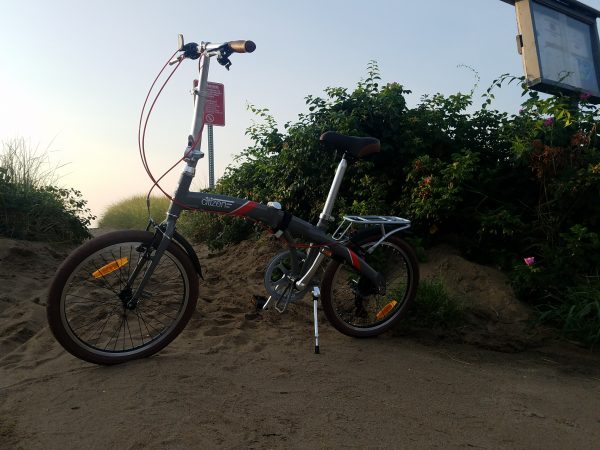
I’ve trotted around the Citizen Seoul in my trunk for the better part of six months. I love the fact that if New York traffic gets unbearable, I can put the car in park and just cycle away. Of course, I would never do that, but simply knowing it’s an option puts me at ease in gridlock.

Needless to say, the folding wheels have helped me create a few extra adventures.

First, you should know that folding bikes are not new. In fact, the first documented instances date back to the 1890s. The French army, along with other military outfits, deployed folding bikes for infantry use. Despite their history, people are clearly unaccustomed to seeing collapsible bikes in the wild.  If your riding experience is anything like mine, people will take notice. Something about the style of the bike draws attention … and questions! These convenient contraptions are a magnet for conversation. Be prepared to get grilled by cycling purists and novice riders alike.

foldable bike
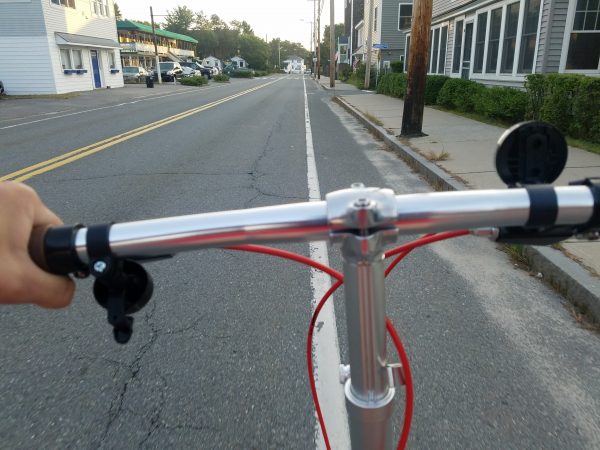
Folding bikes like the Citizen Seoul have a unique body design that garner attention, from the city to the sea.

If you are considering purchasing a folding bike or adding one to your two-wheeled fleet, let me answer some of the more common questions I’ve been asked. When riding, be sure to follow normal bike safety protocol.

Is the folding bike light?

Not really. Folding bikes generally weight around 30 pounds. The Seoul I am riding weighs 26 pounds, thanks in part to the lightweight Muffin tires. Lifting the bike in and out of the trunk or a backseat is relatively easy for people of all strength levels. However, I imagine it would be difficult to carry the bike in its folded state for any distance.

Is the folding bike fun to ride?

Kinda. It’s not as easy to propel as a full-scale bike, but convenience comes at a trade-off. You will find yourself having to pedal harder – while you are moving slower – then you would have to with standard 26-inch tires. The model I have been using has 20-inch tires. You will find that most folding bikes offer up tires between 16 to 24 inches.

Does the bike fold easily?

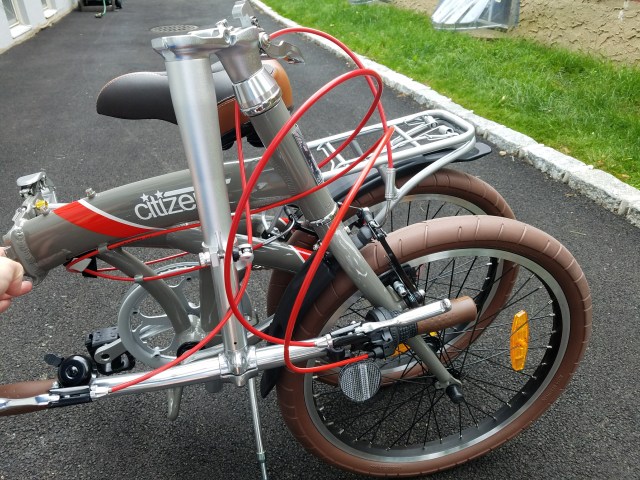
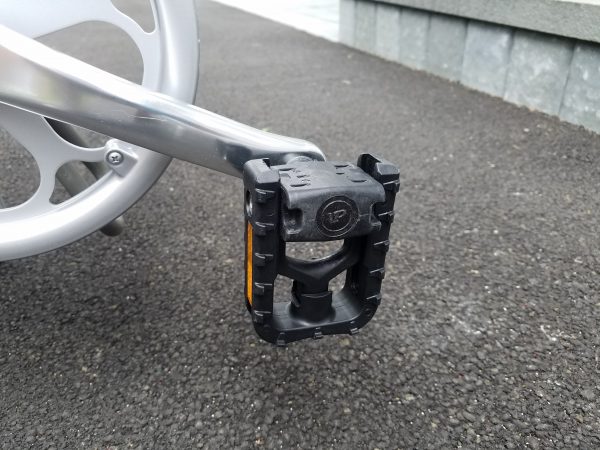
Yes. Lower the seat post, unhinge the handlebars, collapse the pedals and fold. It’s a very simple process that requires no tools. Once you do it two or three times, folding is a cinch.

folding bike pedal
This clever pedal design helps streamline the profile of the bicycle when folded.

Cool tires. What kind are they?

The Citizen Seoul I’m riding is equipped with Muffin airless tires. These tires are beasts: they are puncture proof, flat-proof and lighter than standard tires. There is a bit of trade-off when it comes to ride quality, but it pales in comparison to the benefit of never having to deal with a patch, a pump or AAA bicycle service!

If the tires don’t go flat, why don’t they use tires like that on all bikes or even on cars?

Apparently, the secret is the compounded macromolecule elastic material and natural, stable gas. This just got way too scientific for me. I checked in with John Paul, AAA’s Car Doctor, who knows a lot more about tires than I do.

“I suspect the type used with Muffin tire, if scaled to a car tire, would get hot and fail,” he said. “The first tires on bikes were solid rubber, but that didn’t translate well to motor vehicles. At one time all tires had tubes and then tubeless tires replaced those. Perhaps one day when the technology is further developed motorists will be driving around on tires that never need air.”

My time with a folding bike

After several dozen rides, the Citizen Seoul has performed like a champ, requiring little maintenance (in part, thanks to those puncture-proof ties) aside from chain grease and some brake caliber shifting.

A folding bike like the Seoul will not fit everyone’s needs. If you are like me, and simply looking to add a little extra exploration and exercise into your everyday life, keeping two wheels in the back of your car feels like freedom.

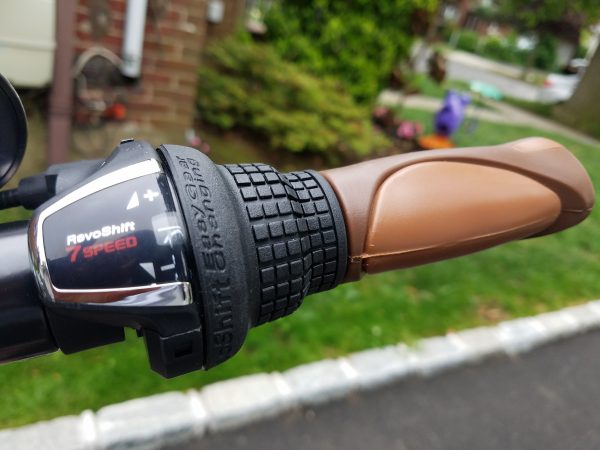
Grip shifters have that familiar feel and make gear adjustments on the fly seamless. The seven speeds are sure to help reduce effort on inclines. However, the gears do not negate the extra pedaling power you will have to provide to compensate for the smaller 20-inch wheels.

folding bike gears
Grip shifters help you change gears with ease.

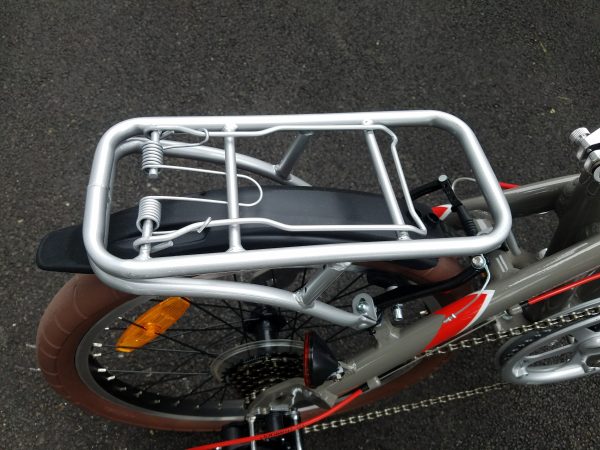
The Citizen Seoul is equipped with fenders over the tires to keep dirt and mud from kicking up on your pants. A flat cargo holder allows you to transport books or other items. These two items were super helpful when using the bike during commutes and errands.

folding bike
Place your books or laptop bag here!

The standard brake pads work without a hitch. I own a regular-size commuter bike fitted with disc brakes. While they help you brake faster in wet conditions, they add weight and expense to the bike. Plus, how often will you find yourself riding in the rain? In my opinion, disc brakes are not essential.

For my needs, where I like to explore several miles here and several miles there, or get in a little fresh-air-inspired cardio during lunch, having a foldable bike has hit the spot.

collapsible bike
Keep a folding bike in your trunk and up your exploration game!

If you are trying to determine if a folding bike is for you, start by thinking about WHY you would need to fold it. To get on a bus? To tuck underneath your desk at work? To toss in the backseat so you don’t have to hassle with a bike rack? If you’re gonna spend your hard-earned money, be sure the purchase of a folding bike is practical and necessary. The length of the Seoul I’m riding is approximately 33 inches when folded.

Personally, I love having a folding bike as an option but I will still retain my full-size commuter bike. I’m sure as the industry evolves the bikes will get lighter, fold faster and may, perhaps, one day outsell their larger counterparts. For now, a folding bike delivers extra exploration, lots of questions and a whole lotta freedom.

Feel free to leave your folding bike questions and/or experiences in the comments section below.

Subscribe to Your AAA Newsletter

Sign up and receive updates for all of the latest articles on automotive, travel, money, lifestyle and so much more!

NJ Tow Company Owner Recognized for Heroic Response to School Bus Accident

May 17 started out like any other day in Mike Benson’s life. The owner of Powder Mill Towing & Auto Repair in Parsippany, N.J., was towing a car to Pennsylvania. But as he drove through the Mount Olive section of I-80, everything changed. “The accident happened right in front of me, maybe a quarter mile ahead,” Benson recalled.

The accident occurred when a bus taking fifth graders on a field trip collided with a dump truck, causing the body of the bus to be ripped from its chassis and fall on its side. Benson acted immediately. “When I got up to the accident I closed the highway off with my truck and the truck I was towing. I didn’t want any kids running around in the highway.”

Once he had the highway blocked, Benson went to help the victims. “I looked inside the bus and I see all these kids jammed up and some were scattered underneath the bus.” He helped the children get out from under the bus and then attended to those stuck inside. “When the dump truck hit the bus, it tightened up the seatbelts, so some kids were dangling. I couldn’t release the seat belt because it was so tight, so I had to cut the seatbelts open.”

Once the children were free from their restraints, Benson helped them all get out of the bus through a blown-out back window. A few minutes later, another bystander noticed that one of the students wasn’t breathing. Benson immediately began performing CPR. “About five minutes later an EMT arrived and I said, ‘This kid just started breathing. We got to get her out of here.’” The student survived.

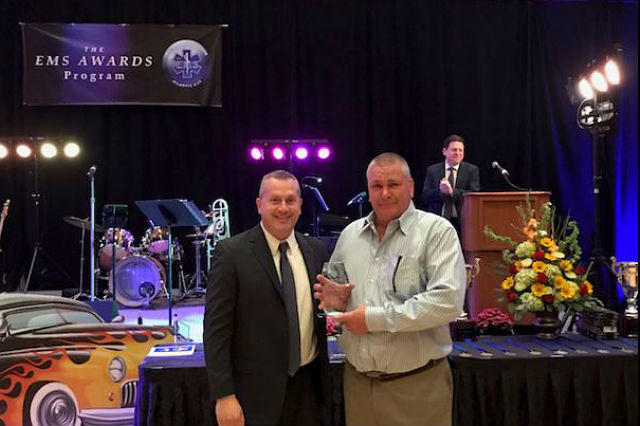
Although two people were killed in the accident, a student and a teacher, the situation could have been far worse if not for the heroic actions of Benson. Yet the tow truck driver wasn’t looking for any praise. Afterward, he went right back to work. “I did my due diligence and left.” But his work did not go unrecognized. Benson was nominated by the New Jersey Department of Health’s Office of Emergency Medical Services (OEMS) and the New Jersey Medical Services (EMS) Council for Outstanding EMS Action by a Citizen. He received the award during a ceremony in October.

Watch Benson receive his award:

Powder Mill Towing & Auto Repair has been with AAA Northeast as a Preferred Service Provider since August 1985. It has also been a AAA Approved Auto Repair Facility since June 2009 and a Fixed Battery Site since April 2015

Subscribe to Your AAA Newsletter

Sign up and receive updates for all of the latest articles on automotive, travel, money, lifestyle and so much more!

Explore the Hill Tribes of Thailand on These Thailand Tours

Guided from start to finish, our engaging Thai trip leader guides you on incredible Thailand tours through the history, culture and tribal villages of this exotic land. Along the way, unique excursions by ox cart, motorboat and bamboo raft add fun and excitement. And every evening, you’ll delight in our hand-selected hotels and resorts. You’ll never forget Thailand tours like this one! Here’s a sample of what it could look like.

Thailand tour with AAA Vacations 

Day 1 – Welcome to Bangkok

Upon arrival, you’ll be warmly greeted and escorted to your city central accommodations at the Eastin Grand Hotel Sathorn. Tonight’s complimentary pre-tour stay is an exclusive AAA Vacations amenity.

Day 2 – Bangkok on Your Own

This entire day is yours to enjoy as you wish in this friendly and vibrant city.

Day 3 – Tour the Grand Palace

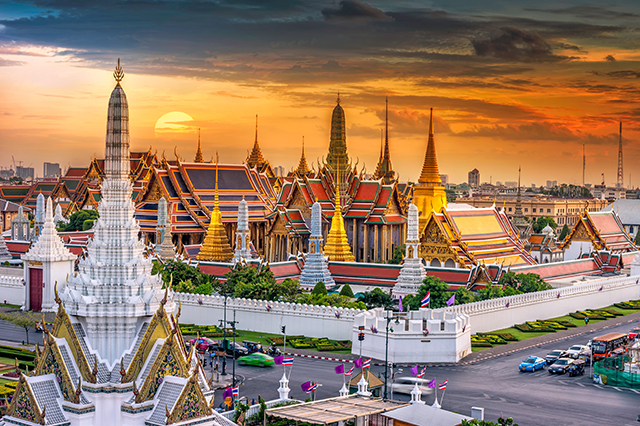
Your morning tour begins with the glittering halls and pavilions of the magnificent Grand Palace, including the Temple of the Emerald Buddha and Coronation Hall. Then set out in a traditional motor launch to explore along the city’s canals passing serene family homes and bustling temples that reveal scenes of daily life in this exotic city. You’ll see the beautiful Royal Barges before disembarking to visit Wat Arun, the amazing Temple of Dawn. Cruising along Bangkok’s waterways is a delightful way to witness colorful scenes of daily life in the city, fondly known as the “Venice of the East.”

Day 4 – Damnoen Saduak Floating Market

This morning, we’ll take you outside of the metropolitan area to Ratchburi Province. The floating market here at Damnoen Saduak is one of the country’s busiest and most colorful. Hundreds of vendors ply the canal in their traditional wooden boats selling everything from tropical fruits and produce to daily staples and even souvenirs. You’ll also visit Phra Pathom Chedi, the world’s tallest Buddhist pagoda, before returning to your hotel in Bangkok.

Day 5 – Kanchanaburi and the Bridge Over River Kwai

Travel into the lush forests of Kanchanaburi Province, the site of the infamous Bridge over the River Kwai – immortalized in book and film. Begin your exploration at the JEATH Museum, highly regarded for its unique collection of photographs and memorabilia from World War II. You’ll also visit an allied cemetery before setting out on an unforgettable train ride that takes you from the River Kwai Bridge Station to Nam Tok, a thrilling route through gorgeous scenery punctuated by cliffs and forests. After lunch, check in to your spacious floating villa at the inviting Float House River Kwai Resort. Later this afternoon, rejoin your guide to venture by boat through spectacular river gorges into the jungle to visit a Mon tribal village. Enjoy dinner and a performance of Mon music and dance at our resort before retiring to your floating room.

Day 6 – Ayutthaya and Phitsanuloke

Journey through the fertile farmlands and jungle-clad mountains that lie along Thailand’s eastern border with Myanmar to visit the former capital of Ayutthaya. These vast ruins bear witness to the splendor of the ancient kingdom of Siam which flourished from 1350 until 1767. Visit Wat Yai, beloved for its golden statue of Buddha, and check in to the stylish Pattara Resort in Phitsanuloke with time to refresh before dinner. Later this evening, set out in a trishaw to visit the city’s bustling and exotic Night Market. Hop aboard a traditional trishaw and join city residents in a typical Thai night market.

Day 7 – Phitsanuloke to Chiang Mai

Check out after breakfast and travel to Sukhothai, the venerated first capital of the Kingdom. Recognized as a World Heritage Site, its fabulous ruins date back to the 13th century. After lunch, continue overland to Chiang Mai. Embraced for its beauty as the Rose of the North, it’s beloved by the Thai people for its long heritage of art, culture and deep spirituality. This evening’s Khantoke Dinner features the region’s Lanna-style cuisine and the music and dance of the northern hill tribes.

Thailand tours
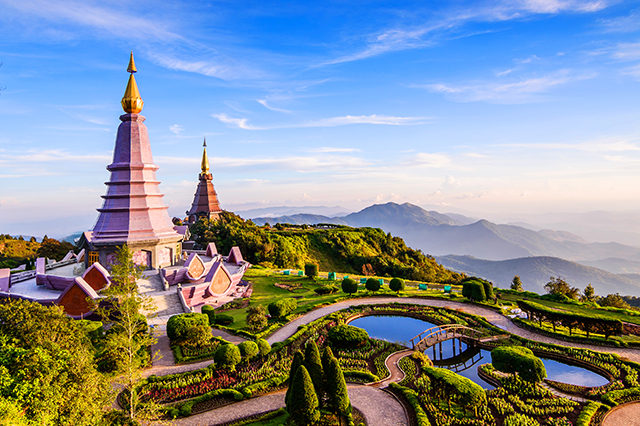
Chiang Mai.

Day 8 – Out and Around Chiang Mai

This morning, we’ll take you into the countryside to spend time with local farmers; learn the many steps of rice cultivation as practiced for centuries and try your hand at planting this important staple. Then sit down to lunch surrounded by sweeping rural vistas and rice paddies. Continue into the forested mountains to visit a Meo hill tribe village before ascending to 3,500 feet to visit Doi Suthep Temple. Your tour of this venerated complex has been specially timed to coincide with the evening chants of Buddhist monks. Receive a private blessing from one of these resident monks and then take in the nighttime views of the city. Return to your hotel in Chiang Mai. Experience Thailand’s enduring ways when you spend time with farmers and receive a private blessing from a Buddhist monk at Doi Suthep Temple.

Day 9 – To Thaton on the Burmese Border

Join residents early this morning as they “gain merit” with food offerings to local monks, an ancient ritual that offers rich insight into an enduring facet of Buddhist culture. After breakfast, head into the jungle to see elephants at work in their native habitat. Then explore the forest from a variety of perspectives: By ox cart and down the Mae Taeng River on a bamboo raft expertly steered by a native Thai. Continue to the Maekok River Village Resort in Thaton. Participating with locals in their daily alms ritual is a genuine way to experience Thailand’s ancient Buddhist customs.

Day 10 – Onward to Chiang Rai

Embark on a one-hour boat ride along the Mae Kok River to Baan Mai. Continue overland through the countryside to visit a Karen village. The women of this tribe are famous for the brass rings which they wear around their elongated necks. Visiting with Lahu, Akha and Yao tribal villagers offers deeper insight into the traditional ways which endure in the mountains of northern Thailand. After lunch, travel to Chiang Rai to visit the unusual White Temple and then check in to the stylish Legend Chiang Rai River Resort & Spa.

Day 11 – Into the Golden Triangle

Visit Mae Sai, the northernmost town in Thailand where a bridge over the river connects the country with Burma (Myanmar). From here, venture deeper into the Golden Triangle, the region where the borders of Burma, Laos and Thailand come together. After lunch, explore Chiang Saen, a charming town along the Mekong River rich with historical artifacts including temple carvings and ancient Buddhist statues. Return to your hotel in Chiang Rai where you can dine at your leisure.

Day 12 – Fly Back to Bangkok

We include your flight to Bangkok where you’ll be met and escorted to the deluxe city-central Eastin Grand Hotel Sathorn. The rest of this day is yours to enjoy as you wish.

Day 13 – Depart Thailand

You’ll be transferred to the airport for your onward flight.

Have you always dreamed of a trip to Thailand? Have another trip to Asia in mind? Tell us about it in the comments section. 

For information on  this exciting trip, click here

Get in touch with a AAA travel counselor to learn about AAA Vacations and start planning your next getaway today. As a AAA member, you’ll save even more. Not a member? Join now!

Subscribe to Your AAA Newsletter

Sign up and receive updates for all of the latest articles on automotive, travel, money, lifestyle and so much more!

Guide to Badlands National Park

Is the park open year-round?

Yes, Badlands National Park is open all year. Some facilities have limited hours during the offseason.

Where is the park located?

Badlands National Park is located in southwest South Dakota.

How big is the park?

The park covers approximately 242,756 acres.

How do I get around in the park?

Most visitors drive their own cars and campers into the park. Some local companies offer guided bus tours.

What activities are available?

Some of the popular activities in Badlands National Park include:

  • Hiking: The park contains several trails, ranging from flat prairie terrain to uphill treks through the area’s unique rock formations. The park supports an “open hike” policy, meaning visitors can go anywhere in the park they wish. The lucky few who stumble upon fossils should report them to park rangers.
  • Scenic drives: The Badlands Loop Road (Highway 240; accessed from Interstate 90) is a two-lane paved road that goes through the north part of the park. This is the only paved road in the park. The Sage Creek Rim Road, which is unpaved gravel, traverses the north rim of the Badlands Wilderness Area. Another rougher road, the Sheep Mountain Table Road, is passable only under dry conditions and in a high-clearance vehicle.
  • Wildlife viewing: Badlands National Park is home to many animals, including bighorn sheep, bison, elk and mule deer. These creatures can be seen and photographed from the road and from hiking trails throughout the park.
  • GPS activities: The park offers an activity book that visitors can download and use with their GPS device to find points of interest, such as natural features, trails and wayside exhibits. Unlike geocaching, this activity does not involve taking or leaving an item in a cache; rather, players record information in their books.
  • Visiting the fossil prep lab: Numerous fossilized remains of saber-tooth tigers, dinosaurs and other creatures from the past have been discovered in the park. Visitors can watch as paleontologists work to preserve and identify recently found items.
  • Night sky viewing: Because Badlands National Park is far from cities and other forms of artificial lights, stargazing is particularly good here. In the summer, park rangers offer the Night Sky Program during which they point out constellations and make available telescopes for visitors to see the stars more closely.
badlands national park

Are pets allowed?

Pets are permitted in campgrounds, on paved roads, and in parking lots. They are not allowed on trails, public buildings, in the wilderness, or in areas with prairie dog colonies.

Is the park accessible?

The facilities in the park, including the visitors’ center and campgrounds, are fully accessible. Some trails, such as the Fossil Exhibit Trail, are made of boardwalks and are accessible.

What accommodations are available?

The Cedar Pass Lodge and Cedar Pass Campground are open seasonally. Backcountry camping is allowed; no permit is required, but campers should sign in at the visitor center or at a trailhead. Accommodations can also be found outside the park in nearby communities.

Are there restaurants in the park?

There is one restaurant in the park, at the Cedar Pass Lodge, which operates seasonally.

What are the most popular areas of the park?

  • The Badlands “Wall”: This 100-mile-long ridge of rugged cliffs cuts through the park and contains many trails to explore.
  • Roberts Prairie Dog Town: Five miles down the unpaved Sage Creek Rim Road, guests can find this former homestead that has been converted into a giant network of prairie dog tunnels. Visitors can watch as these playful, chatty rodents scamper around.
  • Fossil Exhibit Trail: Along this quarter-mile trail, visitors can see exhibits of fossil replicas and displays illustrating the animals that once lived in this area when it was an inland sea. The boardwalk makes this trail one of the only fully accessible routes in the park.
  • Ben Reifel Visitors’ Center: The park’s visitor center has a bookstore and features exhibits on the history of the park as well as fossils that have been found on the park’s land. The center is also the starting point for the various ranger-led tours and programs.

Which national park would you like to visit most? Is Badlands National Park on your list? Tell us in the comments.

Plan a national park vacation with AAA

Subscribe to Your AAA Newsletter

Sign up and receive updates for all of the latest articles on automotive, travel, money, lifestyle and so much more!

16 Fun Things to Do in Rochester, NY

There’s a ton of fun things to do in Rochester, NY. If you’re looking for ways to spend a visit, we’ve got all the bases covered from beer tastings to museums to amusement parks and more.

The Strong National Museum of Play

Visitors to this popular museum will be able to take part in its interactive collection devoted to the history of play, including toys, games and video games. Visitors can also take a walk down “Sesame Street.”

Finger Lakes Beer Trail

The Finger Lakes region is known as one of New York’s top wine producers, but it also puts out a lot of great craft beer. Visit the taphouses, brewpubs and tasting rooms along the beer trail: There’s over 100 to try! Enjoy the trail responsibly – if you’re going to imbibe, let someone else do the driving.

George Eastman Museum

Kodak (aka the Eastman Kodak Company), is headquartered in Rochester, so there’s a lot of photo history here. The George Eastman Museum, first opened in 1949, is the oldest museum dedicated to photography and it includes one of the oldest film archives.

Geva Theatre Center

Plays and events are held at this renovated 19th century arsenal, which also includes a bar and cafe.

Seabreeze Amusement Park

Open since 1879, this historic amusement park debuted as a trolley park with picnic grounds. Often referred to as the “Coney Island of the West,” the park includes a carousel, four roller coasters, a water park, log flume, bumper cars, family rides and other attractions.

Mount Hope Cemetery

Dedicated in 1838, this historic cemetery is home to the final resting spots of Susan B. Anthony and Frederick Douglass. You’ll find several kinds of trees and ornamental gardens strewn across its 196 acres.

Highland Park

This 150-acre park and arboretum features the Gothic-style Warner Castle, a conservatory greenhouse and a famed lilac collection. The park also holds an annual lilac festival in May that is the largest of its kind in North America and draws visitors from around the world.

National Susan B. Anthony Museum and House

This historic site was the home of Susan B. Anthony for 40 years during her time as a national figure in the women’s rights movement. The property was purchased for use as a memorial in 1945 and designated as a National Historic Landmark Museum. Visitors can view papers and memorabilia about the leader of the suffrage movement.

fun things to do in rochester ny
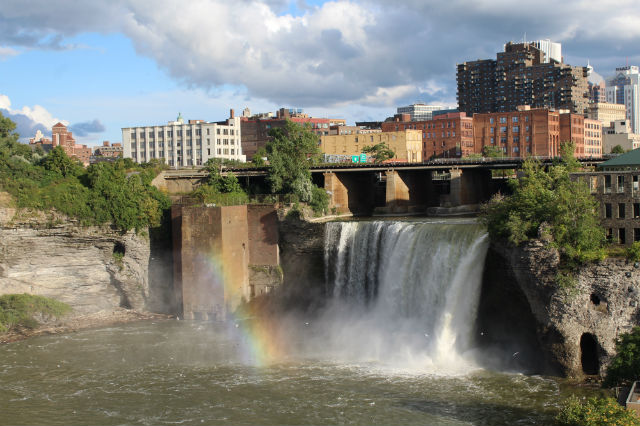
High Falls

Artisanworks

Artisanworks houses nearly 500,000 pieces of art as well as antiques and automobiles.Visitors to the renovated factory building can view multidisciplinary art pieces and attend events.

Frontier Field

Catch a Rochester Red Wings game!

Memorial Art Gallery

This gallery at the University of Rochester boasts a massive collection, including medieval through contemporary works and paintings by Rembrandt and Monet.

Rochester Museum and Science Center

Featuring exhibits related to science, the center hosts a number of interactive and hands-on experiences. The museum also operates the nearby Strasenburgh Planetarium  and Cumming Nature Center, located an hour away in Naples.

Seneca Park Zoo

This 15.5-acre zoo is home to more than 90 species of mammals, reptiles, birds, amphibians, fish and arachnids. Open year-round, the zoo has a constantly rotating collection of animals and hosts events, including conservation education days and an annual jog through the zoo.

Rochester Public Market

Operated by the city, this public market offers fresh produce, ethnic foods, specialty items and other merchandise. The market also provides space for cafes, food stands, coffee shops, breweries and florists. It is open on Tuesday, Thursday and Saturday.

Genesee Riverway Trail

An off-road trail used for walking, running and biking along the Genesee River, the riverway extends from the Erie Canal to downtown Rochester and Lake Ontario. Sites along the trail include the Charlotte-Genesee Lighthouse, Bridge Square and 12 parks.

Charlotte-Genesee Lighthouse

A stone octagonal lighthouse dating back to 1822, this 40-foot tower is located on Lake Ontario at the mouth of the Genesee River. Visitors can view displays both inside and outside the lighthouse’s museum. The lighthouse provides beautiful panoramic views of the surrounding areas.

What are some of your favorite fun things to do in Rochester, NY? Tell us in the comments. 

FIND AND BOOK A HOTEL WITH AAA IN ROCHESTER, NY 

Subscribe to Your AAA Newsletter

Sign up and receive updates for all of the latest articles on automotive, travel, money, lifestyle and so much more!

Petro

Petro

Subscribe to Your AAA Newsletter

Sign up and receive updates for all of the latest articles on automotive, travel, money, lifestyle and so much more!

Weekend in Saratoga Springs: Things to Do and Where to Stay

“Got any hot tips?” is a phrase you’ll hear around Saratoga Springs, N.Y., during racing season and it seems just about everybody you ask, does indeed, have a tip on a horse that’s a sure thing. Winnie’s Flower in the 3rd or Golden Touch in the 8th. OK, I just made those up but you get the idea. But the best tip I received was from a friend, a frequent visitor to the area, who advised me to take time to explore all that Saratoga has to offer – yes, a day at the track is an absolute must but this historic city, less than an hour from Albany, also has healing mineral springs, a major Revolutionary War battlefield and a buzzing downtown with a rockin’ live music scene. I planned to see it all, and over one jam-packed weekend last August, I did just that – or made a valiant attempt to.

A 1 p.m. reservation was made at the Turf Terrace – perhaps the fanciest of the many dining options at Saratoga Race Course, dating from 1863, making it one of the oldest tracks in the country. My traveling companion and I could have watched the races from the Grandstand or brought a cooler to have a picnic on the grounds but, I figured, why not go all out? The Terrace crowd was very Blue Blood-y, lots of Blue Blazers on the gents and Big Hats on the ladies. I kept an eye out for the Queen of Saratoga, socialite and philanthropist Marylou Whitney, who at 89 still makes track appearances but, alas, no sightings this day.

Click here for Saratoga Race Course ticket information.

As we dined on shrimp cocktails and cheese plates and sipped chilled wine from our prime table overlooking the finish line (Golden Touch, by a nose?), we’d periodically make our way up to the window to place our bets. Lady Luck seemed to be with me as I won a few races – hit an exacta and a trifecta…not bad for a novice! For the last few races (there were 12 in all), we headed to the Clubhouse’s ground level where we could get right up to the fence, joining the folks hooting and hollering as the majestic thoroughbreds zoomed by. Between lunch and the losses I suppose I broke even on the day but no matter, it was well worth it to experience a day at “The Spa.”

Our hotel was the stylish Pavilion Grand, an all-suite boutique steps from the town’s main drag, Broadway. Its 48 rooms – probably the largest in all of Saratoga – feature kitchens, modernist artwork, leather armchairs and massive flatscreens (during racing season the gorgeous penthouse loft suites with either private terraces or rooftop gardens are the most sought-after rooms). Nearby, we strolled along Broadway, passing wine bars, boutiques and a hat shop called Hatsational (so that’s where they get them!). We had a martini at 9 Maple Avenue, a fabulous speakeasy-style hole-in-the-wall with live jazz. For more raucous bands – and a guarantee that at some point you will be singing along to “Livin’ on a Prayer” – hit the Caroline Street bars.

saratoga springs
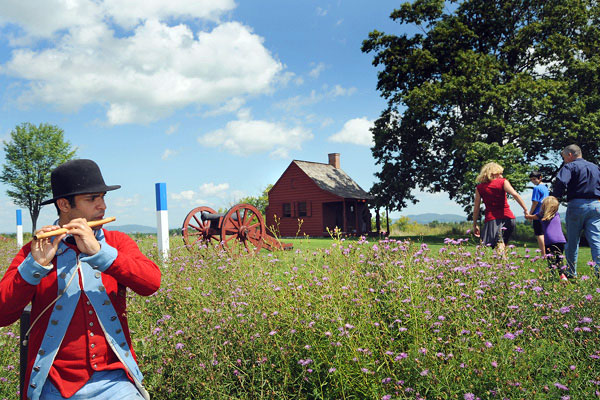
The Neilson House in Saratoga National Historical Park. (Photo: Stockstudiophotography.com)

After breakfast at the Triangle Diner, a local Maple Avenue spot, we headed off to Saratoga National Historical Park in nearby Stillwater, passing rich farmland and patchwork quilt landscapes along the way. If you remember your history lessons (and I certainly had to brush up on mine), this is where, in 1777, the tide of the Revolutionary War turned in America’s favor after the defeat of General Burgoyne by generals Gates and Arnold (as in Benedict) during the Battles of Saratoga. Operated by the National Park Service, you can take a 10-stop self-guided driving/biking tour to see the former farms and fields that saw battle as well as the Neilson House (Arnold’s quarters), the sole surviving structure from that time. I got chills just thinking of this spot’s importance to our nation, yet it made me sad to see so few people there.

As the weekend drew to a close, I thought, what better way to cap off a visit to Saratoga Springs then to sample the actual waters the area is known and named for? Once home to more than 100 mineral springs, today only 17 remain but one can still “take the waters.” After overnighting at the Gideon Putnam, the historic grande dame hotel located within Saratoga Spa State Park, I booked a mineral bath at its Roosevelt Baths & Spa. The naturally carbonated water—cold when captured from a natural underground spring then mixed with warm – was a blissful 97 degrees, an absolutely ideal bathing temperature. I soaked for 45 minutes; afterward, I felt relaxed, invigorated. And after my action-packed weekend, allow me to offer my own hot tip: If you haven’t yet experienced Saratoga Springs, make this the year to do it.

Got any hot tips about Saratoga Springs, N.Y.? Let us know in the comments!

Plan your own weekend in Saratoga Springs with AAA.

Subscribe to Your AAA Newsletter

Sign up and receive updates for all of the latest articles on automotive, travel, money, lifestyle and so much more!

Exploring Banff National Park

From outdoor adventures to educational opportunities to just kicking back and relaxing, Banff National Park is a great place to get in touch with nature. Discover all the reasons why Canada’s first national park is a can’t-miss destination.

Wildlife Viewing

Perhaps one of Banff’s biggest attractions is its abundant wildlife – majestic elk, grizzly and black bears, cougars and bighorn sheep, as well as numerous song birds, birds of prey and waterfowl. Though animals can be spotted anywhere in the park, some tips for successful spotting include:

  • Go out at dawn and in the late afternoon near dusk, when the animals are more likely to be active and feeding.
  • Visit the park in the off-season. During the spring, fall, and winter, many creatures move closer to town in the search for food and mates.
  • Check out areas of the park such as Vermilion Lakes, Bow Valley Parkway and Minnewanka Loop, which are less traveled and quieter.

Of course, always remember that wildlife is just that – wild. Keep your distance, and do not disturb the animals. If your presence causes an animal to move away, you are too close.

banff national park
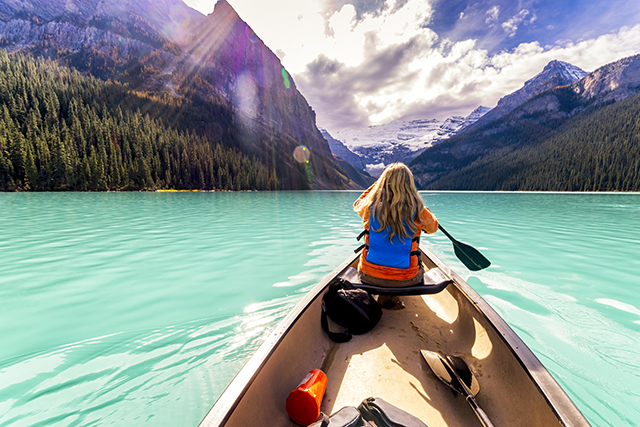
Canoeing on Lake Louise.

Paddling

The tranquil turquoise waters of Banff’s numerous lakes invite paddlers of all kinds. Whether you choose to canoe, kayak or stand-up paddleboard, the serene lakes and meandering rivers are the perfect destination for those seeking a quiet exploration of the scenery. Many areas along the shoreline are accessible only by boat, and wildlife-viewing opportunities are around every corner.

Like other activities in the park, visitors can set out in their own boats or can participate in a guided outing through one of the many outfitters in the area. In the Banff Town area, boat launches can be found in Vermilion Lakes, Johnson Lake and Two Jack Lake, as well as the Bow River. A little further away, Lake Louise and Moraine Lake also offer scenic vistas from the water. Along the Icefields Parkway, Herbert Lake features spectacular scenery with fewer visitors than some of the other waterways in the park.

banff national park
Peyto Lake

Hiking

With more than 1,000 miles of maintained trails, Banff National Park is a hiker’s paradise. Options can be found for visitors seeking a quiet walk in the woods as well as for those looking for a more strenuous climb. Sunshine Meadows, which straddles the Continental Divide, contains several popular trails. Adventurers can set out on their own or take one of several guided excursions through the alpine meadows. Or for a quicker ascent to summit, the Sunshine Village ski resort’s chairlift gondola ferries passengers to the Standish platform, where a breathtaking view of the surrounding Rockies awaits.

The Parker Ridge Trail off the Icefields Parkway is a short climb with a big payoff; though moderately steep, this 1-mile climb leads to a panoramic view of the mountains and the Saskatchewan Glacier. Another easier climb that begins right in downtown Banff is the Tunnel Mountain Trail. This two- to three-hour hike affords a 360-degree view of the town of Banff and the surrounding mountain ranges.

Soak in the Hot Springs

Though the park offers an unending supply of physical adventures, sometimes it’s nice to just sit back and relax in the geothermally heated waters found throughout the area. The hot pools at Banff Upper Hot Springs were first enjoyed by local indigenous people. Their “discovery” by workers on the Canadian Railway led to the creation of Banff National Park, in an effort to protect this natural wonder. In addition to a dip in the warm mineral waters, visitors can learn about the history of the springs at the Cave & Basin National Historic Site. This educational center features a tour as well as multimedia presentations about the bubbling waters and cave system.

banff national park
Athabasca Glacier, Columbia Icefields.

Drive Through the Icefields

The Columbia Icefields, the largest body of ice in the Canadian Rockies, covers 125 square miles along the Continental Divide. Visitors can take guided or self-driving tours of the area, with photo opportunities in every direction. The icefield consists of eight major glaciers, including the Columbia, Athabasca, and Saskatchewan Glaciers. During the summer months, snow coaches transport passengers onto the glaciers.

Take a Gondola up a Mountain

The quickest way to the summit of Sulphur Mountain, just south of Banff Town, is on the year-round gondola. The enclosed four-person cars whisk passengers to the top of this 7,486-foot peak in around eight minutes. From the moment the car leaves its base station, the vast views of six mountain ranges make the short ride memorable. At the top, visitors can stop in the restaurant for a quick meal, explore the ridgetop boardwalk for more bird’s-eye views of the surrounding landscape, or learn more about the geophysical work that once was carried out on this mountaintop at the Sulphur Mountain Cosmic Ray Station.

Plan a national park vacation with AAA.

Subscribe to Your AAA Newsletter

Sign up and receive updates for all of the latest articles on automotive, travel, money, lifestyle and so much more!

Experience an Authentic European Vacation in Germany

A Germany trip like this one hosted by AAA vacations could take you on a journey through the scenery of the Rhine, Black Forest and Bavarian Alps; the history of Frankfurt, Rothenburg and Heidelberg; the modernity of Berlin and Munich – it’s a European vacation at its best. You could enjoy moments like your first glimpse through Castle Liebenstein’s ramparts down to the villages and boats on the Rhine below, as you make your way up to the hillside fortress, a sight worthy of the Brothers Grimm.

Best European vacations: Germany

Day 1 – Arrive Frankfurt

Begin your tour through Germany in Frankfurt, the largest financial center in Europe and the smallest metropolis in the world. Frankfurt is a popular European destination for international travelers and businesspeople, so there will always be someone who speaks your language and serves your country’s food. Check out medieval Römerplatz as well, a square full of traditional neo-Gothic architecture and the site of Frankfurt’s city hall since 1405. Visit the Historical Museum to learn more about Frankfurt, or check out the modern Schirn Kunsthalle, or Art Space, for an easygoing first day in Germany.

Day 2 – Rhine Cruise

No trip to Germany is complete without seeing the Rhine river, the mighty body of water that flows from high in the Swiss Alps, through Cologne, Germany and empties into the North Sea in the Netherlands. Visit Lorelei Rock, a steep slate rock on the right bank of the river, then begin your cruise down the Rhine, marveling at the medieval castles and vineyards as you pass by.

How many people can say that they’ve had lunch at a castle? Stop at one of the castles for lunch before you continue on to Cologne, Germany’s fourth-largest city. Explore Cologne’s streets, making sure to see the twin-spired Cologne Cathedral before the day ends.

Day 3 – Hamelin

En route to Hamburg, stop in Hamelin, a picturesque town of fairy tale fame that is immortalized in poems by Goethe and Robert Browning. In fact, many of the sights in Hamelin are associated with the tale of the Pied Piper.

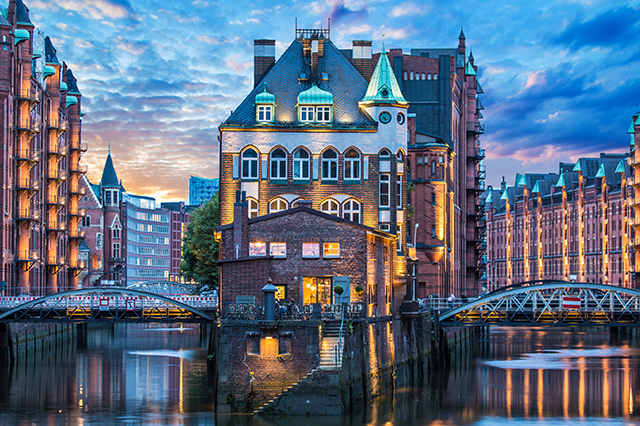
Once you get to Hamburg, see sights like the town hall, Rathausmarkt market and Treppenviertel, a small village in the Blankenese neighborhood of Hamburg where you can get a nice view of the Elbe river. Also, consider a guided cruise along the city’s waterways and discover why the city is called Germany’s “Gateway to the World.”

Day 4 – Berlin Sightseeing

Next is a city so big, you need two days to explore it. Follow the valley of the Elbe river from Hamburg to Berlin, the capital of Germany, a popular European destination because it’s home to many world-renowned universities, museums, entertainment venues and orchestras.

Start with a landmark tour of Berlin as you explore the old East and West sections of the city. See the Brandenburg Gate, Unter den Linden and the Reichstag Building, which were all major points of focus in 1990 during the reunification of East and West Germany. After getting in your dose of Germany’s history, check out the Tiergarten and Kurfürstendamm for shopping and entertainment.

Day 5 – Berlin Sightseeing and Free Time

To travel Europe and not have enough time to see all of Berlin would be a tragedy. Today, continue your exploration of the city at your leisure. Try the Berlin Zoological Garden, the oldest zoo in Germany, or Museum Island, a complex of Berlin State Museums that sits on the northern half of an island in the Spree river. Also consider visiting the Berlin TV Tower, where you can get a fantastic 360° view of the city

Day 6 – Dresden

Next, head south to Dresden, the capital city of the Free State of Saxony in Germany, situated on the valley of the Elbe river. Dresden is known as “Florence on the Elbe” because of its location, mild climate and Baroque-style architecture. Some highlights of Dresden include the Opera House and Zwinger Palace.

If you fall in love with Dresden, consider taking an optional experience for a more in-depth look at the city.

european vacations
Hamburg, Germany

Day 7 – Modlareuth-Bayreuth

Historical significance is what makes most European destinations fascinating. The historical significance of Mödlareuth lies in the separation of East and West Germany. Visit the Mödlareuth Open Air Museum for an insight into how that is. See parts of the original Berlin Wall and learn the differences between East and West Germany.

Then, stop in Bayreuth, where you can visit the Wagner Festival Theatre, the opera house dedicated to performing works by German composer Richard Wagner. Afterwards, head to Nuremberg, where you can spend the rest of the day and the following morning at another important historical site.

Day 8 – Nuremberg – Rothenburg

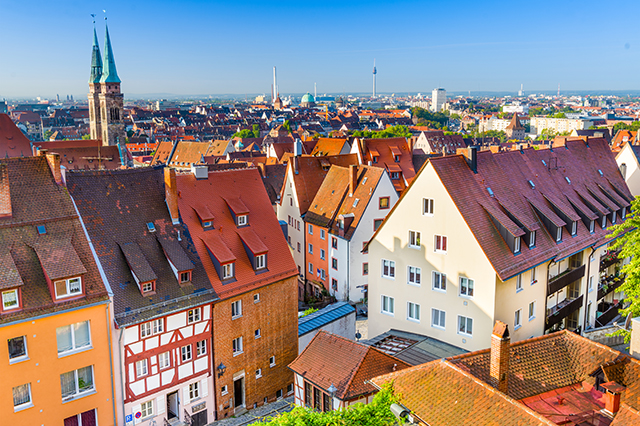
Travel Europe’s historical sites by visiting Nuremberg, the most well-preserved medieval town in Germany. Expect to see half-timbered houses, the Old Town Hall and little shops with wooden Christmas ornaments for sale. Follow parts of the Romantic Road through picturesque villages and pristine countryside to Munich, the capital of Bavaria. Make one more stop before the day ends at the must-see Olympic Stadium.

Day 9 – Munich Sightseeing and Free Time

Spend the day leisurely sightseeing in Munich, visiting landmarks like Odeonsplatz, a large square in central Munich, and Marienplatz, the city’s main square famous for the Glockenspiel. Check out a museum, like the Deutsches Museum, or an art gallery like the Museum Brandhorst. This evening, consider a tour of one of Munich’s world-famous beer halls.

Day 10 – Black Forest

No trip to a fairy tale European destination is complete without visiting a castle. Stop at Neuschwanstein to visit King Ludwig II of Bavaria’s 19th-century castle, which has appeared in movies like “Chitty Chitty Bang Bang” and serves as the inspiration for Disneyland’s Sleeping Beauty Castle. Then, travel through the hills and lakes of the Black Forest on your way to your next stop.

Day 11 – Heidelberg

In Heidelberg, the university town built alongside Neckar river, see a demonstration of how the famous cuckoo clocks are made. Visit Heidelberg Castle, which was demolished in the 17th and 18th centuries, but has since been partially rebuilt. Then, before you finish off your time in Heidelberg with some souvenir shopping, visit the Baroque-style Old Town.

Later, head back to where it all started in Frankfurt and enjoy a dinner there, celebrating the lovely trip you’ve had and looking forward to more opportunities to travel Europe.

Day 12 – Depart Frankfurt

This morning, say ‘Auf Wiedersehen’ to Germany as your memorable European vacation comes to an end.

Have you been to Germany for a wonderful European vacation? Share your memories in the comments below.

Learn more about this exciting trip. 

Get in touch with a AAA travel counselor to learn about AAA Vacations and start planning your next getaway today. As a AAA member, you’ll save even more. Not a member? Join now!

Subscribe to Your AAA Newsletter

Sign up and receive updates for all of the latest articles on automotive, travel, money, lifestyle and so much more!

8 Things You Should Never Use Your Credit Card For

There are a lot of benefits to using your credit card — consumer protections, reward programs and convenience, to name a few. While it may be tempting to use your credit card for just about everything, think twice before doing so.

Here are 8 things you should never use your credit card for.

Buying a car

While it’s technically possible to use your credit card to pay for a portion of your new or used car, it’s often not a wise decision. Interest rates on car loans are usually much lower than interest rates on credit cards, which means you will spend more in the long run when using plastic. There is one situation where paying for a car on plastic makes sense — if you already have the money, but you use your credit card to earn incentives. This only works if you pay off your balance in full at the end of your billing cycle.

College tuition

The cost of higher education has skyrocketed in recent years, but using your credit card is one of the worst ways to pay for it. This huge expenditure should be planned for well in advance. Start by filling out the Free Application for Student Aid or FAFSA, which will enable you to apply for various grants and scholarships. If you don’t have the money to pay for the remainder of your tuition bills out of pocket, set up a payment plan with the school, or apply for student loans. The best part? Interest paid on student loans are tax deductible.

Coffee

Using your credit card to buy small indulgences is a great way to send your balance sky-high without even realizing it. One cappuccino may not seem like much, but credit is so easy to use, that before long, one turns into a dozen. Instead of using plastic for these little treats, give yourself a cash allowance each week. You’ll be much happier at the end of the month.

credit card

Cash advances

A cash advance is a loan you can borrow against your credit card when you’re short on cash. As tempting as it may be, taking a cash advance should be reserved for true emergencies. The fees and interest rates on cash advances are much higher than on regular purchases, and cash advances don’t come with the grace period that purchases come with. Interest will start accruing on your loan the moment you leave the ATM machine.

Medical bills

If you have large medical bills, and let’s face it — they’re all large, don’t even consider trying to pay them off with your credit card. Because medical emergencies are stressful enough, institutions are fairly lenient when it comes to paying your bills. Most will be happy to work with you to set up long-term payment plans at a very low interest rates. Credit card companies are not interested in any stories of woe or hardship, and if you can’t pay off your balance at the end of the month, you can expect to be slapped with hefty interest rates.

Income taxes

The IRS imposes a transaction fee for credit card payments. The fees range from two to three percent, which is usually much higher than what you would stand to gain in rewards points. If you don’t pay off your credit card balance at the end of the month, your out-of-pocket expenses could be double your initial tax bill. Instead of using plastic, budget for your tax bill throughout the year, and send a check to the IRS.

Business start-up fees

Using a credit card to finance your business start-up fees is risky business indeed. For one thing, credit cards carry much higher interest rates than small business loans. You should also consider the personal guarantee you make when you get a credit card. While nobody expects their new business to fail, if it does, you could lose a lot more than your start-up costs. Using credit cards makes it so much easier to spend beyond your budget, and if you start your business with huge debts, you put the success of your company at risk.

Unreliable websites

How do you know that a website is trustworthy enough to safeguard your personal information? While you can never be 100% sure, there are a few things to consider. First, only do business with a URL that starts with “https.” If the URL begins with “http,” it isn’t secure. You should also be wary of websites with obscure extensions, or any company with suspicious wording in their web copy.

Your credit card is an incredibly useful tool to have on hand, but if used inappropriately, you could wind up in serious debt. When you learn how to use your credit card wisely, you are taking the first step toward becoming a savvy consumer.

Do you have a cautionary tale about credit card use to share with our readers? Let us know in the comments section below.

Subscribe to Your AAA Newsletter

Sign up and receive updates for all of the latest articles on automotive, travel, money, lifestyle and so much more!

Count Cash With These Fun Money Saving Tips

In a world where extreme wealth is shamelessly flaunted on social media, it’s difficult to remember that it’s the small things in life that bring true happiness. And the small ways you save money every day can lead to big savings.

Pinching pennies doesn’t have to be an unpleasant experience. Make a game out of saving money. Set daily objectives to make it easier to reach your long-term goals. Incorporating fun money saving tips into your life is a matter of forming new habits and tossing out your old, costly habits. Get started on your journey to daily budgeting by reading these good tips on how to save money.

Your budget roadmap

Before you begin any endeavor you need a plan. You wouldn’t head out on a road trip without first mapping out your journey with stops along the way and an end destination in mind. To be successful at saving money you must first sit down and establish a road map. Where are you going? How will you get there? And what’s the end goal?

You don’t have to set an unattainable savings goal. Make small budget changes like pledging to stop eating out as often or pay off your debt. Whatever your goal is, write it down and come up with a plan to reach it. The following fun money saving tips can help.

Fun money saving tips – cutting your daily expenses

The biggest expenses in any household are shelter, food and transportation, according to the U.S. Bureau of Labor Statistics. Cut back on one of these expenses – or all – and you’re bound to see savings.

Where do you waste the most cash? Maybe you’re like most Americans who have been spending more on eating out and entertainment. Research conducted by the U.S. Bureau of Labor Statistics from 2014 to 2016 found that spending on eating out rose from $2,787 to $3,154. Money spent on entertainment also increased from $2,728 to $2,913 during that same time period.

Consider these tricks and other fun money saving tips to cut back on your discretionary spending:

Save $5 bills. Have you heard of the challenge where you pick a specific cash denomination and save it in an envelope or jar? The money challenge works like this: Assume you buy gas and you get back a $5 bill and $1 bills from the cashier. Put that $5 bill in a safe spot and keep doing that for a month or six months. Never keep a $5 in your wallet. It’s a fun game that will also save money. This can also work with a $1 bills.

Barter services. Are you a skilled baker, hairdresser or acupuncturist? Barter services with a friend or an associate. Instead of paying for your haircut, offer to swap services with your hairdresser. You’d be surprised to learn how many people barter regularly to save cash.

Cut subscriptions. Are those magazine subscriptions piling high month after month and you don’t have time to read them? Cancel any subscriptions or services you aren’t using. This includes cable, magazines or website domains you’ve been renewing since college “just in case.” A $19.99 subscription for a year may seem insignificant but if you’re not using it, you’re throwing money away.

Free outings. Test yourself to see how many weekends you can take advantage of free events in your town or city. See a free musical performance, listen to a book reading at your local library or take a free tour. Having fun doesn’t have to be expensive.

fun money saving tips
Making meals ahead of time can help your budget.

Brown bag it. You don’t have to be master chef to cook your own meals. You simply must be organized and plan out your breakfast, lunch and dinner for the entire week. Raid your pantry and refrigerator to see what you already have at home, and then only buy the essentials at the grocery store. Rather than going out to eat with friends, meet at your place to cook dinner. It helps to also socialize  with other people who want to budget.

Use less energy. Are you wasting money and energy at home? The U.S. Department of Energy suggests setting your thermostat to 68 degrees during the day or when someone is home, and turning it down at night. If you don’t already have one, install a programmable thermostat. Change your incandescent lights to light-emitting diodes (LEDs) or compact fluorescent lamps (CFLs). Also turn off your computer when you’re done and unplug your chargers. Another fun money saving tip: Use your microwave or convection oven instead of the stove.

While you’re at it, create a daily money diary to record your expenses. If you’d prefer to keep a digital record of your bills, try these apps: Dollarbird and Wally.

Doing this will allow you to identify where you’re spending unnecessarily. Are you spending money on a cable bill when you mostly stream movies and TV shows? Are you buying fancy coffee drinks every morning when you can make free coffee at work? Eliminating a $3.95 whipped coffee drink every weekday will save you $948 a year. Changing your daily habits leads to big long-term savings.

What do you do to save a couple of bucks here and there? Think you’re going to try the hide the $5 game? Let us know in the comments section.

To save even more money, visit AAA.com/Discounts

Subscribe to Your AAA Newsletter

Sign up and receive updates for all of the latest articles on automotive, travel, money, lifestyle and so much more!

The Top 10 Things to Do in Newport, R.I.

This fabled seaside city in Rhode Island is known for its yacht-studded marinas and magnificent Gilded Age mansions. When you make the choice to travel in the USA, Newport, R.I. has to be on the top of your list. While the Astors and Vanderbilts once roamed here, its clapboard houses, cobbled lanes and gas lanterns in the historic district speak to its rich Colonial heritage. Plus, fun activities like scenic boat rides around the harbor and shoreline walks coupled with plenty of great seafood restaurants make Newport an ideal getaway.

Things to do in Newport, R.I.

The city is home to presidential history, beyond Jackie and JFK’s wedding, noted below. It was also the so-called “summer White House” for President Dwight Eisenhower. And while the summer is an excellent time to stroll down Newport’s historic byways, the holiday season offers stunning views of those Gilded Age mansions lit up and decked out.

1.

Tour the magnificent mansions, aka “summer cottages,” including the Breakers, a 70-room Renaissance fantasy with Baccarat chandeliers and mosaic ceilings built in 1895 by Cornelius Vanderbilt II. While the Breakers may be the most famous of the Newport mansions, Rough Point, a former Vanderbilt enclave, has a stunning view of the Atlantic Ocean from the grounds. And the Elms offers grounds that may eclipse the rest of the city’s “summer cottages.”

2.

Take an hour-long scenic boat ride around Newport Harbor aboard the Rum Runner II, a 1929 wood-hulled boat that actually was a “rum runner” during Prohibition (rum punches included). Touring the Harbor like a 1920s smuggler on a class yacht might work up some thirst for boat riders.

3.

Stroll Newport’s historic district, which is known for its cobbled lanes, street lanterns, Colonial-era homes (many of which now house charming B&Bs), steepled churches and centuries-old graveyards. One of Newport’s most distinctive landmarks, Trinity Church, towers over this neighborhood. Founded in 1698, it is the oldest Episcopal parish in Rhode Island and the building dates back to 1725.

things to do in Newport, R.I.
Lobster Dish at Castle Hill Inn (Photo: Castle Hill Inn)

4.

Immerse yourself in a little Gilded Age-style glamour by having lunch at Castle Hill Inn. Dine on lobster rolls and risotto while overlooking the water-facing patio as sailboats glide by. In the right season, you can get on the Lawn, Castle Hills’ peerless al fresco dining experience, and feast on oysters and local littlenecks.

5.

Visit the International Tennis Hall of Fame, featuring Grand Slam trophies and outfits worn by players such as Serena Williams in the museum, then check out the outdoor grass courts on the 7-acre grounds. It offers an interactive tour through tennis history with a touch table tennis game serving trivia questions back and forth and a booth for visitors to record themselves calling famous tennis matches.

6.

Spend the morning meandering along the Cliff Walk, a 3.5-mile National Recreation Trail that hugs the shoreline. The water and mansion views are spectacular – have your camera ready! Much of the walk goes over various mansion properties and some of the cliff-side drops are near 70 feet, so be careful.

things to do in newport, R.I.
Newport’s popular Cliff Walk trail.

7.

Visit historic Trinity Church with its distinctive box pews; St. Mary’s Church, where John F. Kennedy and Jackie Bouvier married in 1953; and Touro Synagogue, the oldest synagogue building still standing in the United States. JFK, like his predecessor Ike, made Newport the summer getaway for his presidential administration.

8.

Head down to Bannister’s and Bowen’s wharves, which are lined with nautical-themed shops and seafood restaurants, including the AAA Two Diamond Rated Black Pearl (the clam chowder is a must). Items on offer at shops along Bannister’s Wharf range from coffee and European clothing to yachting parapehnalia and sunglasses. A perfect range of items should you decide to set off on a voyage on the Madeleine, a 72-foot schooner designed especially for the harbors and surrounding waters of Newport.

9.

Step back in time with a dinner at the city’s oldest restaurant, the White Horse Tavern, a AAA Three Diamond Rated eatery that dates from 1673. The menu features items like New England oysters, beef Wellington and lobster mac and cheese. Just be sure to wear a collared shirt. Though jackets are not required, some old-thyme New England standards must be adhered to.

10.

Newport has a pretty lively nightlife scene, especially along Thames Street, where you can catch live music on most weekends. The 1.5 mile strip is the nerve center of Newport life, with cute shops and even some bed and breakfasts for those that like to be in the middle of all the action. There are also jazz clubs, waterfront brewpubs and wine bars.

Do you know a great spot to add to our list of things to do in Newport, R.I.? Let us know in the comments!

Looking for a variety of great lodging options in the area? Find and book great hotels in NewportCall 1-800-873-8283 to speak to a AAA travel counselor today or click here. 

Subscribe to Your AAA Newsletter

Sign up and receive updates for all of the latest articles on automotive, travel, money, lifestyle and so much more!

Casino Myths Debunked

Hit the jackpot. Strike it rich. Go from rags to riches. Games of chance appeal to our fantasies.  No wonder the gaming industry is on a roll and casino travel is becoming more popular than ever! The word of gambling is exciting, opulent and glamorous. It’s also mysterious and completely random. No wonder it’s generated so many casino myths!

Some of the misconceptions are harmless, while others can reduce your chances of winning — and even lead to a gambling addiction. Then again, a few casino myths are actually true.

Top 10 casino myths

Casino Myth 1: If I lose and keep playing, I will win back my losses.

It’s called “chasing losses,” and it’s exactly the wrong strategy when you’re in the red.  The longer you play, the more you’re likely to lose.

Casino Myth 2: I’m due to win now.

Also known as Gambler’s Fallacy, the idea is that if a random outcome occurs more often than expected in a short period, then it is less likely to happen in the future. For instance, if you’re playing roulette and black wins six times in a row (it’s happened), you place your bet on red because you figure it can’t happen again.  But that’s not how randomness works. Each new spin of the wheel or roll of the dice or pull of the arm of the slot machine is independent, not based on previous outcomes.

Casino Myth 3: Card counting is illegal.

Despite all the movies based on this casino myth, it’s not illegal. Keeping track of high and low cards dealt at the blackjack table is a skill and a successful betting strategy.  While you won’t get thrown in jail if you’re counting cards, you may get thrown out of a casino. Since they are privately owned and run, the management has the right to “back off” or “bar” anyone from their property.

casino myths
The ARIA Gaming floor. (Photo: MGM Resorts International)

Casino Myth 4: Slot machines are looser near the aisles/at the front of the casino.

This is based on the idea that more payouts, noise, and excitement in these high traffic areas would encourage others to keep on playing. But all slot machines at any given casino are programmed for the same odds – though those odds vary, depending on the casino.

Casino Myth 5: They pump oxygen into the air to keep gamblers awake and playing longer.

Really, does casino air smell healthy and oxygenated to you?  And given the size of these casinos, filling the air with all that gas might get a little expensive (not to mention dangerous when striking a match).

Casino Myth 6: There are no clocks or windows in casinos so you lose track of time.

Maybe in the old days, but more casinos open their gaming environments to the outdoors, some even have gaming on terraces, or natural lighting through skylights. But you still won’t find a clock on the wall.

Casino Myth 7: The most fabulous suites are reserved for high-rollers only.

In recent, casino hotels have opened the doors of at least some of their amazing suites to the public. So if you do much in the way of casino travel and want to go all in lodging-wise, you too can stay in that penthouse suite with the private pool, bowling alley or billiards room. If you can pay the  $35,000-or-more-a-night rates. If not, you still have a chance — look for discounts, especially during slump periods, when you might be able to grab a room for as little as $5,000.

Facts that sound like casino myths

Casino Fact 1: The Nevada State Prison used to have a casino for inmates.

The casino was on the prison’s grounds in Carson City from 1932 to 1967.

Casino Fact 2:  The storied Monte Carlo Casino in Monaco is one of the meccas of casino travel.

From its opulent surroundings to its high stakes games, it’s the ultimate casino for any gambler – except the local ones. Princess Caroline made it illegal for citizens to gamble in the casino in the mid-1800s, insisting that the revenue generated come only from foreigners.

Casino Fact 3: Casinos have to replace their carpeting since some gamblers refuse to take bathroom breaks.

According to David Schwartz, director of the Center for Gaming Research at UNLV; “I think some people do it out of spite, and then there are those who have genuine bladder problems…  But it is true that some die-hard gamblers don’t ever want to leave the table.” He advises that it “wouldn’t be a bad idea to check the seat before you sit down at a casino.”

On that note, what are some crazy casino myths that you’ve heard? Let us know in the comments below!

To see how true some of these rumors are, you might have to take a casino vacation for yourself. Plan and book your next trip with AAA.  

Subscribe to Your AAA Newsletter

Sign up and receive updates for all of the latest articles on automotive, travel, money, lifestyle and so much more!

When Your Convention Calls for Casino Trips

I have been to three or four conventions in my entire life. But I went to two just this year. And both were casino trips.

Not really surprising today, considering casino resorts have become meetings magnets. Las Vegas is the number one convention destination in the U.S. There were 22,000 conventions in Sin City last year, bringing in 6 million people. Given the rise of small casinos all over the country, the steady business represented by conventioneers (and their corporate expense accounts) convinced casino executives to go for the meetings and conventions gold.

Odds are good that many convention attendees will find that their business travels are also casino trips.

If you’re a gambler, hooray. If not, well, you’ll have to deal with it.

After two conventions over the equivalent of two long casino trips, I consider myself an experienced non-gamer. But there’s more to life at a casino resort than slots and high stakes.

Any casino that does good convention business is going to have lots of attractions to keep non-gamers entertained and happy.

Some of the amenities that have become de rigueuer include:

Dining

It’s common for casino resorts to have a dozen or more good restaurants, and at least a few of them bearing the names of celebrity chefs. If you’re a foodie, you’re in luck. Keep in mind that these restaurants are so popular you will need advance reservations. Even the run-of-the-mill places may involve a long wait to get in. At the Bellagio, for instance, there are restaurants by Michel Mina, Todd English, Julian Serrano, Roy Ellamar, Chef Jean-Georges Vongerichten, as well as the fabled Le Cirque. I waited half an hour for a table at Noodles – a good choice for a solo traveler, not to mention a vegetarian and almost as long for my takeout order at Snacks, a fast-food joint for pizza slices, fries and spiked shakes.

Also note that the legendary casino buffet is not what it used to be. It’s now about three times the size, and three times the price.

Shows/Nightlife

Every casino has at least one big-spectacle or high-profile entertainer. Vegas has more than a dozen different Cirque du Soleil shows.

There’s probably some form of entertainment that will fit your taste from magic acts to canine cancan dancers. Hit a club or lounge afterward for a late-night drink. Some of the nightclubs have become attractions themselves. Remember, however, that you’re at a convention and you have an 8 a.m. workshop you need to attend the next morning.

Shopping

Some casinos are known for their retail space, others have more limited number of boutiques. In most cases, shopping is more about entertainment, since the brands are usually luxury names like Cartier and Gucci, and the prices are in the high-roller-only range.  Souvenir buying is usually a necessity, however, and even if it’s pricey at the casino, the tchotchkes can be pretty imaginative, even hilarious.

Gambling Lessons

Every casino offers lessons for novices to the world of gambling. It’s a good way to get your feet wet without being susceptible to newbie mistakes.

casino trips
Spa Mandalay’s wet area. (Photo: MGM Resorts International)

Pampering

Book a treatment at the spa – every good casino resort has at least one.  Some have extensive exercise facilities, and even offer yoga and other classes.

Swimming

Casinos now boast some elaborate pools, including waterfalls, light shows, and, swim-up slot machines.  They’re also home to happy hours and pool parties  that may be  free for hotel guests.

These are the basics. Depending on where you’re spending your casino weekend, there may be other site-specific attractions and activities.

For instance, you can play golf on the course at Wynn Las Vegas or the two courses at Turning Stone in upstate New York, take a cooking class from the Viking School at Harrah’s Atlantic City, hit the beach or lounge in a cabana at a casino in Aruba or Puerto Rico.

Then, too, if your casino trip takes you to one of the new hot spots in Asia, you’ll find some pretty nifty non-gaming activities and attractions at the “integrated casino resort” developments, which can include hotels, shopping malls, 4-D theaters, concert halls, amusement rides, waterparks, etc.  Resorts World Sentosa, Singapore, for instance, is so huge it includes a Universal Studios theme park and the largest oceanarium in the world.

A couple of lessons learned from my recent casino trips:

Casino resorts can be huge. Your feet will be getting a workout. Bring comfortable shoes – and lots of Band-Aids.

No matter where your casino trip takes you, people-watching is always a sure bet for entertainment.  And it’s free.

Have conventions ever taken you to a casino? Let us know in the comments!

Plan your next trip with AAA

Subscribe to Your AAA Newsletter

Sign up and receive updates for all of the latest articles on automotive, travel, money, lifestyle and so much more!

The Wizarding World of Harry Potter’s™ Hidden Secrets and Easter Eggs

Planning a trip to Hogwarts but can’t seem to find Platform 9¾? Universal Orlando Resort™ has you covered. The Wizarding World of Harry Potter™, which spans two of the complex’s theme parks, will transport you right into the heart of J.K. Rowling’s imaginary wizard universe.

But as you’re strolling through the streets of Diagon Alley™ or waiting for an ice-cold Butterbeer in Hogsmeade™, it can be easy to miss the secrets that lie all around you. Since you deserve to have the full experience, we’re highlighting the secret sights, sounds and tastes that The Wizarding World of Harry Potter™ has to offer.

Straight From the Screen

The detail and authenticity of every inch of The Wizarding World of Harry Potter™ makes it look like it was ripped straight from the films and planted in Universal Orlando Resort™. That’s because, in many cases, it was. The team at Universal Creative spent years combing through warehouses for props and sets from the movies and they can be found throughout the park.

On the second level of the Borgin and Burkes™ store in Diagon Alley™, 90 percent of the props and set dressings are straight from the Harry Potter films. The barometer found in Wiseacre’s Wizarding Equipment was used twice in Harry Potter films: in Dumbledore’s office in “Harry Potter and the Half-Blood Prince” and in the Room of Requirement in “Harry Potter and the Deathly Hallows.” The Knight Bus at Universal Studios Florida™ is one of the two authentic prop buses used in “Harry Potter and the Prisoner of Azkaban.”

When team members couldn’t find exact props from the film, they spent months creating identical replicas. Along the waiting line for the Harry Potter and the Escape from Gringotts™ ride is a bank cart built to the exact blueprints of the real cart Harry, Ron and Hermione rode in the film. Inside Borgin and Burkes™ is a replica of the Vanishing Cabinet from “Harry Potter and the Half-Blood Prince.” It took Universal team members six months to build the 12-feet tall prop.

Easter Eggs

With all the sights and sounds of The Wizarding World of Harry Potter™, it’s easy to miss appearances from some of the story’s most memorable characters. On your way to Diagon Alley™, you have to pass through a street in Muggle London. Step into the classic red phone booth and dial the word “Magic” to hear a message straight from the Ministry of Magic itself. When strolling past Sirius Black’s dismal London residence at 12 Grimmauld Place, take a look at the upstairs window. You can often catch Kreacher, the house elf, peaking out. Moaning Myrtle, who haunted the bathrooms at Hogwarts, has made her way to Universal’s Islands of Adventure™, as well. If you keep your ears open, you can hear her ghostly crying in the Hogsmeade™ bathrooms.

Interactive Experiences

If you really want The Wizarding World of Harry Potter™ to come to life, head to the Owl Post™ where you can send a letter complete with The Wizarding World of Harry Potter™ stamp and special Hogsmeade™ postmark. At the Gringotts Money Exchange™, you can trade your U.S. currency for Gringotts™ bank notes, which can be used within The Wizarding World of Harry Potter™ and select locations throughout Universal Orlando Resort™. Also, make sure to pick up an interactive wand at Ollivanders™ to see what spells you can cast throughout Diagon Alley™ and Hogsmeade™.

Butterbeer™ soft serve ice cream at Florean Fortescue’s Ice-Cream Parlour. (Photo: Universal Orlando Resort™)

Beyond Butterbeer™

A mug or two of Butterbeer™ is a must when visiting The Wizarding World of Harry Potter™. But don’t think that our favorite cold beverage is the only option. The creative minds at Universal Studios have taken the delicious Butterbeer™ flavors and created some new delectable concoctions.

Frozen Butterbeer™ is your best option for those hot summer days, plus it’s served with a whipped topping. Hot Butterbeer™, with flavors of shortbread and butterscotch, is the perfect cold-weather treat. The smooth, creamy Butterbeer™ potted cream is an ideal dessert. Butterbeer™ fudge offers another sweet bite. And no trip to The Wizarding World of Harry Potter™ would be complete with Butterbeer™ soft serve ice cream, a perfect swirl of vanilla and butterscotch.

Exclusive Drinks

There are three different beers created exclusively for The Wizarding World of Harry Potter™. The Hog’s Head Brew™ is an Irish red, Dragon Scale is an amber lager and Wizard’s Brew is a sweet stout with notes of chocolate and coffee. In addition to custom beer, the park is also the only place to find Pumpkin Juice™. The preferred drink of every wizard, Pumpkin Juice™ is perfect for fall (or any other season) and comes with a collectible bottle. Other exclusive beverages available include Fishy Green Ale, Gillywater, Fire Whisky and more.

Exclusive Food

Beverages aren’t the only thing unique to The Wizarding World of Harry Potter™, there are plenty of food items that you’ll only find at the Universal Orlando Resort™ attraction. In Hogsmeade™, Honeydukes™ has all the delicacies to satisfy your sweet-tooth desires including Chocolate Frogs™, Bertie Bott’s Every-Flavour Beans™, Exploding Bonbons and Jelly Slugs.

When in Diagon Alley™, be sure to try a scoop or two of Florean Florescue’s ice cream, which includes flavors like Chocolate Chili, Strawberry and Peanut-Butter, and Earl Grey and Lavender Ice Cream. You can also pick up a skiving snackbox from Weasleys’ Wizard Wheezes, filled with Fainting Fancies, Nosebleed Nougat, Fever Fudge and Puking Pastilles.

Secret Numbers

Many magical forces created The Wizarding World of Harry Potter™. Just some of them include the 7,456 bricks, weighing more than 37,000 pounds, needed to construct the entrance to Diagon Alley™. In addition, there are 13 different types of creatures inside the Magical Menagerie including Kneazles, Demiguises and Graphorns. The four chandeliers within the lobby of Gringotts™ bank contain nearly 62,000 crystals and the Gringotts™ dragon breathes fire that is 3,560 degrees Fahrenheit, more than 16 times hotter than boiling water.

Planning a trip to Universal Orlando Resort™? Make sure to take advantage of the benefits and savings when you book through AAA.

Subscribe to Your AAA Newsletter

Sign up and receive updates for all of the latest articles on automotive, travel, money, lifestyle and so much more!

How to Clean a Car Seat: Tips for Leather, Cloth and More

Most people worry about how to clean a car seat after some dark, smelly liquid has already left its mark.

Exhibit A: The last time I cleaned the beige seats in my Toyota Corolla, it was after I gave a friend a ride home, and he gave me a back seat covered in oil marks from his bicycle chain (I’m not bitter, I swear).

Had I known my fast response and a little elbow grease would have the seats looking like new, I might not have freaked out when I got home.

Of course, the results can differ when you pit different seats versus different foes. Here is some advice on how to clean car seats, including tips on how to clean cloth car seats, how to clean leather car seats and how to clean a child safety seat.

how to clean a car seat

How to clean a car seat: cloth

It’s not just spills that soil car seats. They get dirty each time someone gets in or out of the car, as dirt and other contaminants transfer from clothing to the cloth.

To restore them to their former glory, start by vacuuming the seats. This will suck up grime that would otherwise get mashed into the seats and probably make them dirtier.

Here are the supplies you’ll need:

  • Car seat detergent
  • Interior cleaning brush or scrub pad
  • Microfiber towel
  • Wet/dry vacuum

Some people use stain removers like Shout or carpet cleaner in place of dedicated car seat soap. In fact, I used a bottle of carpet cleaner with a built-in brush to remove the oil stains on the back seat of my Corolla and it worked pretty well. But if you decide to go with an unconventional soap, test it on a small, less visible area first to make sure it doesn’t stain.

One of the most important things to understand about how to clean seats is to make sure you don’t use too much soap. You are cleaning the upholstery. You do not want the soap to seep into the padding underneath. That’s why it’s best to work in small areas and apply the soap as you go.

Isolate the area you want to clean and apply soap. Use the brush to agitate the dirt (but don’t be so rough that you damage the fibers). Then wipe the dirt away with your microfiber towel. Suck up what’s left with the vacuum. This should speed up the drying process, too. You could also park the car in the sun, open the windows and/or stick a couple of fans inside it to help the seats dry faster.

How to clean a car seat: leather 

Like cloth seats, begin by vacuuming as much dirt as you can from the surface of the seat and its crevices. (You can use a can of compressed air to dislodge dirt in the hard to vacuum areas if you want).

There are lots of different products out there for cleaning leather seats. Some are “one-step” cleaners. Others either clean the seats or help preserve the natural oils and flexibility of the leather. Do your research and pick what you want.

Some products will need to sit on the leather and others need to be cleaned up right away. So always read and follow the instructions closely.

If your seats are perforated because they have heating/air conditioning capabilities, apply your cleaning product to the brush, not directly to the seat. You can also turn the heat/air conditioning on to help the seats dry faster.

How to clean car a seat: vinyl 

Vinyl upholstery is easy to please. It can be cleaned with a rag dampened with a mild detergent solution. A product like ArmorAll, which many people use to wipe their dashboard clean, works well. There are many dedicated vinyl care products on the market, and some offer cool benefits like preservatives and UV protection.

how to clean a car seat

How to clean a child’s car seat

The golden rule of cleaning a child’s car seat is to follow what’s in the manual, says Karen Blackburn, a AAA Northeast car seat expert. The manual will tell you what kind of detergents to use (usually something mild) and how to get the cover off, she said.

Most car seats must be uninstalled to be cleaned properly.

As you remove the fabric, pay attention to how it comes off, Blackburn said. You’ll have to put it on the same way, but in reverse order. (Take pictures of each step, if it helps).

Wash the fabric based on the instructions in the manual. Most manufacturers do not recommend putting the fabric in the dryer, Karen said. Parts could melt or shrink, making it impossible to put on again.

Shake the dirt off the seat and clean it with either a damp rag or some baby wipes.

Pay special attention to the harness straps as you put the fabric back on the car seat. Make sure the straps are not twisted through any of the belt paths.

Again, it is very important to follow the instructions in the owner’s manual. If you lost or can’t find your owner’s manual, check the manufacturer’s website – almost all have copies and cleaning instructions online.

Those who are unfamiliar with how to install a car seat can have their seat inspected for free by a nationally certified technician. Click here to find events in your area.

Do you have suggestions for how to clean car seats? Share your best tips and tricks in the comments section.

Learn about AAA’s automotive services.

Subscribe to Your AAA Newsletter

Sign up and receive updates for all of the latest articles on automotive, travel, money, lifestyle and so much more!