I Joined a CSA This Summer — Here’s Why It Was Worth It

As a farmers market frequenter, I’ve always loved strolling past each tent’s unique offerings and stocking up on fresh fruits and veggies for the week. But it never occurred to me that instead of going to the farmers market, that the farmers market could come to me. That is, until I learned about CSAs.

What Is a CSA?

Community Supported Agriculture (CSA) is a program that’s predicated on the idea that farms and their community members share a mutual interest: supporting each other.

When you join a CSA, you are essentially purchasing a share of a farm’s output for a range of time (typically the growing season, summer through fall). Each week your share is made available for pick up or delivery, depending on the farm, and consists of that week’s bounty — from vegetables and fruit to eggs, mushrooms, bread, flowers, jam and more.

For both farmers and CSA members, the benefits are plentiful. Farmers receive payments early in the growing season, shoring up funds to maintain the growing season without financial worry, and members get to delight in locally grown goodness. Joining a CSA is also a great way to become more sustainable as it encourages local dollars to stay local while helping to eliminate unnecessary food waste. A farm’s surplus that may have been wasted otherwise is instead redirected toward CSA members, helping to nourish the community.

To find a CSA near you, search your zip code on Local Harvest. Each listing gives a summary of the farm, share prices, contact information and more so you can decide which one is the best fit. CSA sign-ups typically begin prior to the season, around March, and can fill up fast so it’s helpful to be ready with your choice ahead of time.

How Much Does It Cost?

Every CSA is different and cost will vary just as much. Some CSAs offer types of shares, like half shares versus family shares, to give options when it comes to pricing and the amount of food you receive. If a share price seems high, remember that there are many variables to take into account, like whether the farm delivers your share to your door, how many weeks are included or if there are any available add-ons to supplement your share. There are many CSAs to choose from, so take the time to find a program that fits into your schedule, budget and lifestyle.

Why It’s Been Worth It

Besides looking forward to what fun, new vegetable will be in our share each week, being part of a CSA has instilled a deeper sense of connection to the food that I eat. Knowing where it came from, how it’s grown and meeting the people who grow it has had a profound influence on how I consume, including how to be more intentional and less wasteful.

I’ve also cut down on grocery store visits. With a variety of produce coming my way each week, I’m only heading to the store for essentials, if at all. Eating with the seasons, supporting local farms and saving money? Win, win.

How To Make Use Of It All  

Sometimes you’ll receive something in a CSA box that you’re not sure what to do with (see: garlic scapes), or maybe you’ve gotten an ingredient a few times now and can’t think of another way to make use of it (ahem, zucchini). Some CSAs get ahead of this by providing recipe inspiration with each week’s box and encouraging members to share any recipes they loved. This way, nothing goes to waste and you try something new.

As you might’ve guessed, we recently received a bunch of zucchini with our CSA share and didn’t know what to do with it. Enter, chocolate zucchini bread.

Watch how it all comes together with other ingredients we got from our CSA below:

Check out Local Harvest to see the CSAs available in your area.

Subscribe to Your AAA Newsletter

Sign up and receive updates for all of the latest articles on automotive, travel, money, lifestyle and so much more!

10 Pet-Friendly Summer Activities in the Northeast

Looking to switch up your summer plans with your four-legged companion? The Northeast offers a variety of unique, pet-friendly activities beyond the usual dog beach and hiking trails. From harbor cruises and pool parties to cafe hopping and baseball games, there are countless ways to bond with your pet while exploring the region.

And if you’re searching for a place to stay or grab a bite, don’t miss our list of 20 pet-friendly hotels and restaurants in the Northeast — perfect for your summer getaway and beyond.

Swimming Pool Pawty in New Jersey (and beyond)

Cool off this summer with a private pool rental through Swimply, where many pool owners allow dogs to join in the fun. In New Jersey (and throughout the Northeast) there are dozens of dog-friendly pools available this summer. You’ll find pools equipped with dog toys, floats and even lazy rivers, beating out the standard dog park pool.

Dog-Friendly Cafe in NYC

Boris & Horton, New York City’s first dog-friendly cafe, is a paradise for pups and their people. Dogs can roam leash-free in designated areas while their humans sip coffee and snack on baked goods. You’ll find plenty of treats for your pup, plus a curated shop full of dog toys, outfits and accessories. Don’t miss their Yappy Hours and adoption events.

Harbor Cruise in Boston

Take in the sights of Boston from the water alongside dozens of wagging tails on the Massachusetts Bay Lines Dog Days of Summer Cruise. This 90-minute scenic cruise departs from Rowes Wharf and sails past the Seaport District, federal courthouse, and other landmarks. Dogs ride for free and are treated to water and snacks, while humans can purchase refreshments onboard.

More Pet-Friendly Boating Adventures

No boat? No problem. Use GetMyBoat, a platform for pair-to-pair boat rentals and charters, to rent a dog-friendly vessel complete with a captain. In Stamford, Connecticut, and other Northeast locations, you can customize your adventure — try paddleboarding, fishing or stopping by a dog-friendly beach for a photo op. Other top picks include a pet-friendly cruise past the Statue of Liberty (fishing optional!) or a private charter out of Newport, Rhode Island.

Gondola Sky Ride in Stowe, Vermont

Experience mountain magic with your dog on a gondola ride to the summit of Mount Mansfield at Stowe Mountain Resort. The ride offers panoramic views of Vermont’s summer and fall landscapes, and once you reach the top, you’ll have access to scenic hiking trails that welcome leashed pets. It’s sure to be a tail-wagging good time!

Camping in New Hampshire’s White Mountains

If you and your pup love the great outdoors, consider a stay at Huttopia White Mountains. This pet-friendly campground offers cozy wood and canvas tents, scenic hiking trails and swimming holes within the White Mountain National Forest. It’s the perfect basecamp for exploring nature, without leaving your furry friend behind.

dog on portland schooner
Author Jeanette Zinno’s dog, Rocki, on the Portland Schooner.
Sailing in Portland, Maine

Finding pet-friendly water adventures can be a challenge, but not in Portland. Climb aboard with Portland Schooner Co. for a relaxing sail through Casco Bay, where you and your pup can enjoy views of lighthouses, the rocky coastline and maybe even seals if you’re lucky. Pets must be comfortable on boats and able to sit calmly in your lap. Bring snacks, pack your favorite drink (it’s BYOB!), and enjoy the sea breeze with your best friend.

Baseball Game in Coney Island

Take your pup out to the ballgame with the Brooklyn Cyclones at Maimonides Park. Their Bark in the Park events welcome dogs into designated seating areas and include special perks, like a chew toy or pup cup. Be sure to arrive early for the pregame pup parade!

Biking in Erie, Pennsylvania

Explore the 13-mile bike trail at Presque Isle State Park with your pet riding comfortably in a dog trailer, available through Yellow Bike Rental Company. Choose from bikes, trikes or tandems while your pup enjoys the breeze and scenic views. Stop at one of the dog-friendly beaches along the way to let your fur-baby stretch its legs.

Drive-In Movie in Rhode Island

Cuddle up under the stars at Rustic Tri-View Drive In in North Smithfield, one of Rhode Island’s favorite seasonal attractions. Pets are welcome, and there are designated walking areas to stretch your pup’s legs before showtime. Don’t forget to bring a blanket and your dog’s favorite snacks while you hit the concession stand for your own movie treats.

Get fresh, healthy dog food delivered directly to your door with the Farmer’s Dog. AAA members can save 70% on their first box.
What’s your favorite pet-friendly activity near you? Tell us in the comments. We’d love to hear how you and your furry sidekick are spending the summer.

Subscribe to Your AAA Newsletter

Sign up and receive updates for all of the latest articles on automotive, travel, money, lifestyle and so much more!

When You Should Buy Instead of Rent a House

Buying a house is a major milestone in anyone’s life. Not only is it a new personal chapter, it also signifies you’ve reached a financial goal. After all, a house is the most expensive purchase you’re likely ever going to make.

There’s no question that purchasing a home can come with significant financial advantages. But knowing when you’re ready to buy instead of rent can take some figuring out. Here are a few reasons why buying a home instead of renting may be the right choice for you, as well as some ways to see if you’re finally ready to make the move.

Listen to Our Podcast

For expert advice on the homebuying process, listen to Episode 7 of our podcast, Merging Into Life: Buying Your First Home.

Tune In

Why should you buy instead of rent?

You can customize your house

Owning your home means you’re free to make any changes you like. Paint the rooms a different color, renovate the kitchen, create an addition. The best part is that these changes don’t just have to be cosmetic; they can also help you financially by lowering your home ownership costs and/or increasing the value of your house. For instance, installing solar panels or adding insulation will reduce your monthly utility bill and potentially help with resale value.

It forces you to save

While we all know we should be saving money each month, sometimes it’s easier said than done. Keeping up with your mortgage, however, forces you to invest in your own home, thus increasing your savings.

Homeowners are required to pay their mortgage each month, a portion of which is used to pay down the principal amount of the loan. The less you owe on your mortgage, the more equity you own in your house. Once your mortgage is paid off, you have the entirety of your home’s value available to you should you choose to sell. If you’re renting, however, your monthly payment goes to your landlord and you have no asset to show for it.

Your fixed mortgage rates won’t increase

If you have a fixed-rate mortgage, your monthly payments will never change, even if inflation and other costs rise. On the other hand, unless you live in a rent-controlled building, your monthly rent is subject to increase every year. Knowing what the bulk of your monthly housing costs will be for years in the future can create financial stability.

Reap the benefits of appreciation

Aside from the obvious benefit of having a place to live, owning a home can also be viewed as a strong financial investment because your home appreciates in value over time. This means you’ll likely make more money if and when you sell.

It’s also important to note that the appreciation occurs on the entire home’s value, not just your down payment, which may make it more appealing than other investment types, such as buying stock. As an example, say you purchased $20,000 in stock. If it appreciated 3.9% in one year, you’d have made $780. If instead you used the $20,000 as a 20% down payment on a $100,000 home, and the home appreciated by the same 3.9%, after one year you would have gained $3,900.

homebuying is changing

When you should buy instead of rent

Now that we’ve uncovered some of the benefits of owning a home over renting one, we need to know when you should buy instead of rent. While everyone’s financial situation is different, in general, you’ll know you’re in a financial spot to purchase a home if you’re able to secure financing. Lenders will look at your entire financial picture to determine if you qualify for a mortgage. This includes your credit score, income and employment security, and savings. If they give you the green light, you’re likely financially ready to move forward.

Then comes the question of how much you can afford. It’s a good idea to try to save enough for a down payment of at least 20% of the cost of your new house. Anything less than that will force you to pay private mortgage insurance. This is an additional fee tacked onto your monthly mortgage payment that protects the lender in the event you default on the loan.

Another number you’ll want to keep in mind is your debt-to-income ratio. This is a comparison of all your monthly debt obligations to your monthly gross income. The 43% debt-to-income ratio is generally used as a standard guideline for approving mortgages. This means that a homeowner’s monthly debts (car payments, student loans, credit cards, etc.) plus their potential mortgage payments should total 43% of their monthly gross income. If you owe more than this percentage, you may want to pay down some of your debts before seeking a mortgage.

If you believe you’re ready to purchase a home, or just have questions about the process, AAA is here to help. Learn more our home loan services or to speak to a mortgage specialist.

For ways to save even more at home, go to AAA.com/HomeServices.

Subscribe to Your AAA Newsletter

Sign up and receive updates for all of the latest articles on automotive, travel, money, lifestyle and so much more!

Gas Prices Across the Northeast Stay Parked 

After a strong start over Memorial Day weekend, demand for gasoline has since fizzled. Demand over the past four weeks is trending 149,000 barrels a day — which is below the same period last year according to data from the Energy Information Administration (EIA). Last week, the EIA reported demand settled at a lackluster 8.48 million barrels a day — a decline of 670,000 barrels a day from the previous week, and 300,000 lower than the comparable week of 2024. 

The weak demand has contributed to a notable buildup in gasoline inventories. Nationally, inventories climbed 3.4 million barrels last week, the EIA reported. Regional supplies in the Northeast grew to 63.1 million barrels in total — 6.7 million barrels above last year. 

Supply and demand dynamics are keeping fuel prices in check even as markets react to geopolitical events around the world that typically put upward pressure on prices. Last week, the European Union said it will impose stricter sanctions on Russian oil exports amid the ongoing war in Ukraine and drone attacks targeting oil fields in Iraqi Kurdistan disrupted more than half of the country’s oil production. 

“The dog days of summer are delivering lower gas prices this year,” said Jillian Young, director of public relations for AAA Northeast. “Pump prices across the Northeast are nearly 50 cents cheaper than last year and in a price range we haven’t seen for this time of year since 2021.” 

AAA Northeast’s July 21 survey of fuel prices found the national average down a penny from last week ($3.15), averaging $3.14 per gallon. The national average price was 7 cents lower than a month ago ($3.21) and 36 cents lower than this day last year ($3.50). 

Region Current Price* One Week Ago One Month Ago One Year Ago 
Connecticut $3.12 $3.13 $3.16 $3.58 
Massachusetts $3.05 $3.06 $3.07 $3.50 
New Jersey $3.05 $3.07 $3.14 $3.43 
New York $3.17 $3.17 $3.20 $3.62 
Rhode Island $3.03 $3.03 $3.06 $3.45 

*Prices as of July 21, 2025 

As of July 21, Mississippi and Oklahoma had the lowest prices in the nation at $2.71 and $2.74, respectively. California and Hawaii held the highest prices in the nation at $4.49 and $4.46, respectively.  

The AAA Gas Prices website is your resource for up-to-date fuel price information. Search for average gas prices on national, state and metro levels by regular, plus, premium and diesel.  

Subscribe to Your AAA Newsletter

Sign up and receive updates for all of the latest articles on automotive, travel, money, lifestyle and so much more!

The History of Ice Cream Trucks

Is there a more quintessential summer experience than hearing the jingle of an ice cream truck, racing out of the house to catch up to it, then devouring a sweet, frozen treat?

People have been performing this seasonal ritual since ice cream truck history began in the early 20th century. Since then, these mobile dessert parlors have become a warm-weather mainstay across the country. But it hasn’t all been rainbows and sprinkles. There have been notable ice cream controversies along the way, and today, operators face an unpalatable future.

Let’s look back at 100 years of ice cream truck history.

Prefer an audio summary of this post? Click below to listen to this article.

The First Ice Cream Trucks

Ice cream trucks trace their roots back more than a century. In 1920, a Youngstown, Ohio, confectioner named Harry Burt devised a chocolate coating that could encase ice cream. He gave the treat to his daughter, who loved the taste but was less enthused by the mess that came with eating it. Her brother offered a solution: put a handle in it. Burt had previously developed a hard-candied lollipop, which utilized a stick handle. By freezing those sticks into the ice cream bars, Burt revolutionized the way we eat ice cream. He called his new creation the Good Humor bars.

During this time, Burt was already delivering ice cream via motorized trucks. But because his new ice cream didn’t need to be served in a bowl or cone, he could sell it directly to consumers on the street. He purchased 12 refrigerated trucks, equipped them with bells and sent the fleet out to hawk Good Humor bars. In turn, Burt became the first ice cream truck vendor in history.

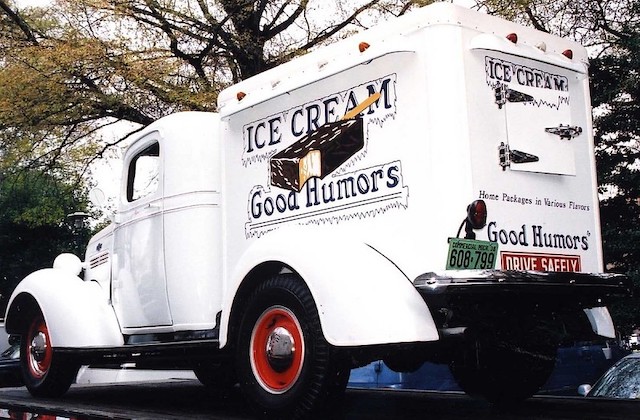
A 1938 Good Humor ice cream truck (Credit: Smithsonian’s National Museum of American History)

The Rise of Good Humor

It didn’t take long for the company to flourish, thanks to some apt marketing maneuvers. Street ice cream of the time, usually sold from pushcarts, didn’t have the best reputation. It was known to be made of low-quality ingredients and was often the source of food poisoning. To distinguish itself, the Good Humor company’s fleet consisted of sparkling white trucks. Its drivers were outfitted in similarly colored uniforms, not unlike those worn by hospital orderlies. The company took cleanliness and appearance so seriously, it even had a training manual instructing drivers to “get the proper amount of rest each night and eat good food … and always have a clean shave and neat haircut.”

In addition to pristine appearances, Good Humor also benefitted from, of all things, Prohibition, which began in January 1920. Americans sought comfort in this indulgence after the other was taken away. Ice cream consumption rose an estimated 40% during the 1920s. 

Combined, these factors were a boon to Good Humor. The company sold 14 million bars in New York and Chicago in 1932 alone, according to Smithsonian Magazine. By the mid-1930s, Good Humor trucks could be found throughout most of the country. In the 1950s, the company boasted a fleet of 2,000 ice cream trucks.

Mid-Century Ice Cream Trucks

Ice cream consumption boomed following World War II, after wartime dairy rationing was lifted. Americans consumed more than 20 quarts of ice cream per person in 1946, according to the International Dairy Foods Association. This increase in demand led to an influx of competition in the ice cream truck business.

The most notable new entrant was Mister Softee, started by brothers William and James Conway in Philadelphia in the mid-1950s. The pair was working for an ice cream machine manufacturer when they began receiving more and more requests for machines that could be installed in trucks. However, this jury-rigged technique inevitably led to mechanical problems.

They were taking the ice cream machines and bolting them to the truck,” said Jim Conway, William’s son and Mister Softee’s current vice president. “But for a lot of reasons, that doesn’t really work well. You need shock absorbers, and you need to be able to keep the machine cool.”

The Conways concluded that ice cream trucks needed to be specifically built for the task. Their employer, however, did not want to invest the time and money needed to manufacturer such vehicles. So the brothers set out on their own to create a better ice cream truck. And that’s exactly what they did, developing a specially designed machine that produced perfectly smooth soft ice cream from the back of a moving truck. The Conways gradually added trucks to their fleet over the proceeding years but soon realized that the more lucrative business would be selling their trucks as franchises. From 1955 to 1970, Mister Softee franchising grew 3,600%.

Good Humor was still going strong during this time. By the 1960s, it boasted more than 85 different ice cream treats. The demise of its ice cream truck operation, however, was in sight. In 1975, New York City charged the company with hundreds of counts of falsifying food safety records in order to hide evidence of bacteria in its products. Authorities alleged that about 10% of Good Humor ice cream sold between 1972-1975 was tainted. The ordeal and the fines it brought combined with factors like declining sales, increased competition and the 1970s fuel crisis led Good Humor to exit the truck business and focus exclusively on grocery store sales.

The History of the Ice Cream Truck Song

Few sounds whet the appetite like the ice cream truck jingle. But the origins of this seemingly benign tune are downright stomach churning. The melody you hear emanating from many ice cream trucks is based off a 19th century folk song called, “Turkey in the Straw,” which itself is a take on an even older British tune, “The (Old) Rose Tree.” In the 1800s, “Turkey in the Straw” was given new, overtly racist lyrics as it was incorporated into traveling minstrel shows. By the 1890s, this new version was commonly heard in ice cream parlors, which often played the popular minstrel songs of the day. When ice cream purveyors began selling their products out of trucks and needed a way to announce their presence on the street, they opted for this familiar song.

To help right this wrong, Good Humor recently partnered with legendary rapper and producer RZA to create a new ice cream truck jingle. The song is available to drivers across the country free of charge.

As for the Mister Softee tune, it too was adapted from an earlier song. The melody is based off that of composer Arthur Pryor’s early 20th century composition “The Whistler and His Dog.” In 1960, Philadelphia ad executive Les Waas put lyrics to the song, which he titled, “Jingle And Chimes.”

The Last Frozen Bite?

It’s difficult to imagine ice cream trucks, once a staple of Americana, not meandering down neighborhood streets on hot summer days. But that could soon become a reality. “[The ice cream truck is] unfortunately becoming a thing of the past,” said Steve Christensen, the executive director of the North American Ice Cream Association.

A crippling combination of rising ice cream costs, inflated gas prices and ever more costly vendor permits have melted much of the profit away from operating an ice cream truck. Add in substantial frozen treat competition and you see why many owners are now finding the business untenable. So, the next time you see an ice cream truck in your neighborhood, be sure to grab a snow cone or two for old times’ sake.

Now that you’ve got ice cream on the mind, read up on the best spots in the Northeast to grab a scoop or two!

This article has been updated and republished from a previous version.

Subscribe to Your AAA Newsletter

Sign up and receive updates for all of the latest articles on automotive, travel, money, lifestyle and so much more!

All-Access Travel: Accessible Travel Destinations and Solutions

After a devastating car crash and resulting fire made him a triple amputee, John Morris thought he might never travel again. But now, the Florida resident has flown more than a million miles and seen much of the world using his wheelchair.

“[Traveling with a disability] is always going to be a challenge, but not so much that it can’t be overcome,” Morris said. “The number one word that comes to mind is worthwhile.”

A desire to see his alma mater play in the Rose Bowl prompted his initial trip, from Orlando to Los Angeles, and inspired him to keep exploring. On his blog, wheelchairtravel.org, Morris rates U.S. and international destinations for accessibility and offers tips on how to navigate specific places while living with a disability.

“There’s an incredible demand for accessible travel,” he said.

accessible travel
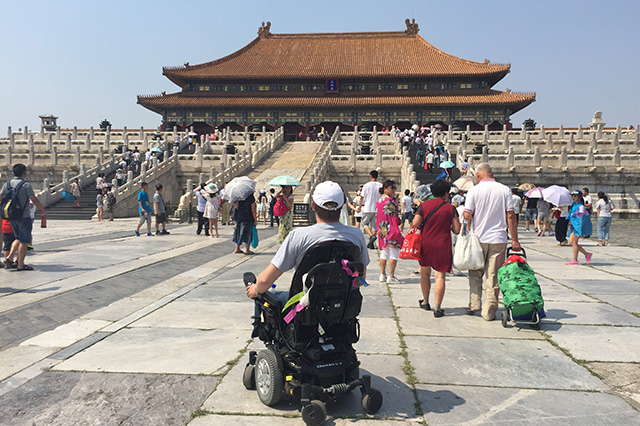
John Morris admires a temple in Beijing. (Photo: John Morris)

A Surge in Need

It’s a category that’s on the rise as the travel industry has placed more emphasis in recent years on catering to those with disabilities. Travelers with disabilities make up a large segment of the population – an estimated 70 million people in the United States reported having a disability in 2022, according to the Centers for Disease Control and Prevention.

And they’re traveling. From 2022-2024, 25.6 million travelers with disabilities spent an estimated $50 billion on travel, down slightly from 2020, according to the most recent market study by the Open Doors Organization.

Laws like the Air Carrier Access Act – which makes it illegal for airlines to discriminate against passengers with disabilities and requires them to provide accommodations and the Americans with Disabilities Act help make travel easier for those with disabilities; but naturally, unexpected difficulties can come up.

“You’d be surprised how many hotels are not ADA-compliant,” Morris said.

Let's Plan Something Wonderful

Book your next trip with AAA Travel now or call 866-423-5585 to speak with a travel advisor.

Book Now

Opening Doors to All Travelers

The good news is that there are many travel agents, tour guides and other resources available to help navigate it all.

The travel company, Wheel the World, offers accessible adventure tours in locations including Easter Island, Chile and Oaxaca, Mexico. Last year, the company developed what is considered the first-ever wheelchair accessible tour of Machu Picchu in Peru.

The National Park Service has also made efforts to make its natural wonders more accessible. Many parks offer ASL interpreters for their ranger-led programs, and many trails, buildings and gift shops are wheelchair-accessible. The Grand Canyon has a scenic drive accessibility permit that allows travelers with limited mobility access to some areas normally closed to tourists.

And for four decades, Yosemite Deaf Services has provided ASL programming and assisted-listening devices to park visitors with hearing impairments.

The company Sage Traveling, founded by manual wheelchair user John Sage, specializes in research and travel in Europe and the Caribbean for people with limited mobility.

“It can be anything from slow walkers, (people with) MS, ALS, full-time wheelchair and scooter users and elderly travelers,” said marketing manager Sena Williams. “Our services are vetted to be 100% step- and curb-free, and all our routes include limited amounts of walking/strolling as well as vehicles with ramps/lifts.”

accessible travel
A Wheel the World tour of Machu Picchu. (Photo: Joyce Silberstein)

Travel Tips

Whether traveling with a physical or developmental disability, or with a friend or loved one who has one, here are some tips to help make the journey go smoothly.

Before the trip, consider what your realistic needs are, and make a plan based on those.

Travel almost always comes with unexpected challenges, but you can avoid some unnecessary frustration by putting in additional work before you leave. If you’re thinking about traveling alone, for instance, is it a better idea to ask a friend to come along in case you need help, or to hire a local guide who knows the area well? In some cases, such as with autistic children, doing a “dress rehearsal” practice run-through of what to expect on the trip can help reduce anxiety, recommends the advocacy group Autism Speaks.

Don’t overdo it.

If you know that you or your travel companion are likely to get physically or mentally tired, or overstimulated, schedule time to rest or participate in a more relaxing activity.

A hotel or attraction’s website might say that it is accessible, but what does that really mean?

Call places you plan to visit in advance to verify that they are in fact accessible, and if so, if those accommodations meet your specific requirements. If you need a shower seat in the bathroom, braille reading material in a museum, or a ramp into a historic house, for instance, make sure it’s available before you arrive.

Don’t be afraid to ask for help from strangers.

Morris recalls being in Beijing and having no choice but to ask a stranger to push his wheelchair to his hotel late at night because the battery had died and he was alone. It wasn’t his best travel moment, but he learned an important lesson. “The vast majority of people we will encounter are very good people who want to help if they see someone in need,” he said. “It’s in people’s nature to lend a hand, so get comfortable with asking for one.”

Autism-Friendly Travel Tips

Families with children on the autism spectrum face specific travel challenges: Crowded spaces, changes in routine, and unexpected noises and movements can be difficult for autistic travelers. We turned to Stacey Crowley, AAA Travel Business Operations Manager and certified autism travel professional, for some advice.

Don’t be afraid to reach out to airlines and airports.

You really would be surprised at how much they want to help you. I have worked with many autistic families and have been able to work with airports and airlines to do dry runs of going through security and getting on a plane and learning how the day of travel will work. They walk the members through different scenarios so they can help prepare their loved one for the unpredictability that travel comes with

Try to find a travel agent with special certifications

AAA Northeast has quite a few travel advisors trained specially and specifically to know all the ins and out of accessible travel, from special needs travel to traveling with a person with autism.

Take some extra time to pre-plan as much as possible. 

Most families that are traveling with a loved one with a disability, whether it be physical or intellectual, find that their travel experience runs smoother the more they pre-plan.

Do you have an accessible travel experience that you would like to share? Tell us about it in the comments.  

Reach out to a AAA travel agent to learn more about accessible travel options today. 

This article has been updated and republished from a previous version.

Subscribe to Your AAA Newsletter

Sign up and receive updates for all of the latest articles on automotive, travel, money, lifestyle and so much more!

Merging Into Life: How To Talk to Your Partner About Money

SEASON 2: EPISODE 1
Episode Feedback

Tips for discussing and managing money in your relationship.


EPISODE SUMMARY

In this episode of Merging Into Life, hosts Julien and Kiersten Saunders of “rich & REGULAR” dive into the complex (but essential!) topic of money and relationships. Joined by psychologist and relationship expert Dr. Abby Medcalf, they unpack how financial conversations can deepen connection, why shame and silence around spending are so common, and how to turn money stress into meaningful dialogue. From first-date red flags to managing money before marriage and the nuances of combining finances, this episode offers practical advice on how to build financial intimacy and stop keeping score in your relationship.


KEY TAKEAWAYS
  • How to talk to your partner about money openly, discussing how you spend and save, builds financial intimacy and trust, especially when couples approach these conversations as opportunities to learn, not to judge.
  • Asking simple questions like “What do you enjoy spending money on?” is a low-pressure way to start early financial conversations and reveal money values before they become friction points
  • Shame around debt or spending habits often gets in the way of honest dialogue; reframing your money mindset through self-awareness and empathy makes long-term change more possible
  • Conflict over finances is common, but avoiding the conversation entirely is more damaging—timing, tone, and intention matter more than the numbers themselves
  • Treating your finances as a shared resource instead of keeping score helps couples move from financial tension to teamwork, especially when managing joint goals or recovering from money stress.

TRANSCRIPT

[00:00:00] Julien: Our first conversation about money was our first argument about money.

[00:00:05] Kiersten: He’s putting it lightly.

[00:00:06] Julien: Well, it’s true.

[00:00:07] Kiersten: I decided to tell him how much debt I had, which led to another conversation, which led to a breakup. It started out pretty rough and rocky, but obviously we recovered.

[00:00:19] Julien: When I think back to that argument, it was one of the worst days of my life. We wanted to celebrate that we just had a vacation. And that, to me, was just so bizarre. I assumed post-vacation was a time to buckle down and get back to rice and beans.


RESOURCES

Merging Into Life: Budgeting 101

Love and Life Insurance

Money Saving Habits

Money Mistakes to Avoid in Retirement

Retirement Withdrawal Strategies to Think About

Julien & Kiersten Saunders: rich & REGULAR

Dr. Abby Medcalf’s Relationship Tips and Tools


Want to Learn More? Drop Us a Note

"*" indicates required fields

This field is for validation purposes and should be left unchanged.
Subject
Name*

*The views and opinions expressed in this podcast are not necessarily the views of AAA Northeast, AAA and/or its affiliates.

Subscribe to Your AAA Newsletter

Sign up and receive updates for all of the latest articles on automotive, travel, money, lifestyle and so much more!

Using a Home Equity Loan for Renovations and More

Big expenses come at us throughout our lives, sometimes unexpectedly, sometimes planned. Regardless of the circumstance, you’ll need a way to finance these major purchases when they arise. If you own a home, your best course of action may be to do so with a home equity loan.

Home equity loans allow you to use your house as collateral and you can use the money for anything you like. Many people take out home equity loans to finance renovation projects that make their property more valuable.

What Are Home Equity Loans?

Also known as a second mortgage, a home equity loan allows homeowners borrow money against the value of their home.

Home equity is calculated by taking the current value of your residence and subtracting your outstanding mortgage balance. For example, if your house is currently estimated to be worth $500,000 and you still owe $100,000 on your mortgage, then you have $400,000 in home equity. Your loan will be borrowed against this total. Typically, most lenders will allow you to borrower up to 80% of the value of your property minus the first mortgage balance.

Home equity loans usually come with fixed rates. This means that home equity loans will be less expensive over the lifetime of the loan than financing your large expense via credit cards or other loan types. You may also be able to deduct the home equity loan interest payments from your taxes. We recommend consulting a tax advisor for personal tax guidance.
There is some risk involved. If you are unable to pay back the loan, the lender could choose to foreclose on your house. Therefore, you’ll want to be on sound financial footing before taking one out.

Listen to Our Podcast

How to budget, plan and manage your next home improvement project. Listen to Season 2, Episode 12 of  Merging Into Life: DIY Home Renovation Guide

Tune In

How Do Home Equity Loans Work?

Your home equity loan will be paid out in a single lump sum. This comes with its own pros and cons. On the bright side, you’ll have access to all the funds you need right away. But, since you’re not borrowing money as you need it, you’ll have to have a very good estimate of how much money you need to borrow from the start. If your home renovation project costs less than the amount borrowed, you’ll still need to repay the entirety of the loan, usually in monthly installments that begin soon after the money is available.

If you’re unsure of how much money you will need, you may want to consider a home equity line of credit (HELOC). Just like a home equity loan, a HELOC allows you to borrow against the equity in your home. But instead of receiving all the funds upfront, you can withdraw money as you need it. HELOCs function much like a credit card in that once you reach your credit cap, your balance will need to be repaid before you can withdraw more money.

What Can Home Equity Loans Be Used For?

Home equity loans do not need to be used on your home. The money can be spent on any big expense you need help financing, such as a wedding or business startup. One popular use for them is paying off credit card debt. Credit card interest rates are notoriously high. Paying off your credit card debt with funds from a low-rate home equity loan could save you a significant amount of money in the long term. It will also help consolidate your debt if you owe money on more than one credit card by allowing you to make just one payment every month.

Although funds from a home equity loan can be used for anything, it’s important to note that interest from these loans is only tax deductible if the funds are used on a home renovation project. Consult a tax advisor to see if your project is eligible.

(Note: The interest on the portion of the credit extension that is greater than the fair market value of the dwelling is not tax deductible for federal income tax purposes. Consult your tax advisor regarding the tax deductibility of interest.)

There’s another convincing argument for using the loan on your home: it is a great return on investment. If you use the funds to add an extra bedroom, remodel the kitchen or install a pool in the backyard, you’re increasing the value of your property, which you will own entirely once your mortgage is paid off.

Let AAA help finance your project with a low-rate home equity loan.

home renovations

Renovations Worth the Money

So, which home equity loan renovations should you consider if you’d like to increase the value of your home? According to the National Association of Realtors’ (NAR) 2025 Remodeling Impact Report, these interior projects provided the best bang for their buck.

  • 100%* New steel front door
  • 83%* Closet renovation
  • 80%* New fiberglass front door
  • 74%* New vinyl windows
  • 71%* New wood windows

*of project cost recovered at house resale.

And these were the projects that gave homeowners the most joy. NAR calculated the joy score based on how happy homeowners were when the work was completed. Ten was the highest score.

  • Added primary bedroom suite 10
  • Kitchen upgrade 10
  • New roofing 10
  • Bathroom renovation 9.8
  • Complete kitchen renovation 9.7
Have you used a home equity loan to make home renovations? Tell us in the comments.

Subscribe to Your AAA Newsletter

Sign up and receive updates for all of the latest articles on automotive, travel, money, lifestyle and so much more!

Hurricane Readiness Basics

Atlantic hurricane season runs from June 1 through Nov. 30 and usually hits its stride around mid-August through October. During this time of year, severe weather becomes top of mind as each named storm brings questions of when and where the next one will hit.

The National Oceanic and Atmospheric Administration predicts an “above normal” hurricane season for 2025, calling for 13 to 19 named storms. Of these, six to 10 could strengthen into hurricanes, including three to five that may reach major hurricane status.

Are you prepared for a weather emergency or evacuation? Take advantage of the calm long before a storm to plan for your family’s safety with these hurricane readiness tips.

To speak to a AAA insurance agent about your storm coverage, schedule an appointment today

Sign Up for Storm Alerts 

The Federal Emergency Management Agency (FEMA) mobile app will send you National Weather Service notifications on up to five locations and locate emergency shelters. You should keep an eye on local news and weather reports as well.

Brush up on how storm categories and other extreme weather terms are defined to better understand what’s in the forecast.

Pack a Bag 

If you have to leave your home on short notice, you’ll want some essentials for you and everyone in your family. FEMA recommends packing things like medications, food and water, clothing and a first-aid kit. Your bag should be easy to carry and kept where you can grab it quickly.

Hurricane Preparedness Guide

Your resource for vital information about staying safe before, during and after a storm.

Read now

Plan for Evacuation 

State or local officials may issue evacuation notices in advance of dangerous storms. Check with your local department of transportation or emergency management office to familiarize yourself with your area’s evacuation routes.
Keep your car’s gas tank at least half-full and carry a kit of basic emergency supplies including snacks, bottled water, a first-aid kit, flashlights, flares, jumper cables, tools, a blanket and a change of clothes.
Establish a Communication Plan 

Figure out how your family will stay in touch if you’re separated or lose power. You can choose an out-of-state contact for everyone to use and designate a meetup spot.

hurricane readiness

Get Supplies 

You can build an emergency stockpile over time, but remember to replace items with a limited shelf life, like food and batteries. Your hurricane readiness supplies should include:

  • One gallon of water per person per day for at least three days.
  • At least a three-day supply of nonperishable food.
  • Battery or hand-crank radio and extra batteries.
  • Flashlight with extra batteries.
  • Whistle to signal for help.
  • A wrench and/or pliers.
  • Dust mask to filter contaminated air.
  • Plastic sheeting and duct tape.
  • Moist towelettes, garbage bags and plastic ties for personal sanitation.
  • Can opener if your food kit contains cans.
  • Local maps.
  • Prescriptions and reading glasses.
  • Infant formula and diapers.
  • Pet food and extra water for pets.
  • Important family documents, such as insurance policies and bank account records. Store these in a waterproof container.
  • Sleeping bags or warm blankets.
  • Cash or traveler’s checks.
  • Complete change of clothing, including a long-sleeved shirt and long pants.
  • A fire extinguisher.
  • Matches in a waterproof container.
  • Feminine and personal hygiene supplies.
  • Paper cups, plates, plastic utensils and paper towels.

Staying Put

If you’re not ordered to evacuate, stay indoors, away from windows and glass doors. Never use a generator or gasoline-powered equipment indoors or in partially enclosed areas. Such equipment should be outside, 20 feet away from doors, windows and vents.

Prepare Your Home 

Powerful winds and floods are two of the greatest dangers presented by hurricanes. Ready your home by reinforcing doors, windows, walls and the roof. You should also bring loose, light objects like patio furniture and garbage cans inside and anchor objects you cannot bring inside, like grills. Trim or remove trees that are close enough to fall on buildings.

To prepare your home for heavy rains or flooding, keep gutters and drains free of debris. If possible, install a water alarm and sump pump with battery and battery backup. Stockpile plywood, plastic sheeting, sandbags and other emergency materials, too.

Remember that flood damage is not covered by standard homeowners insurance. You should talk to your insurance agent about purchasing coverage, which might have a 30-day waiting period before it takes effect.

Learn the ins and outs of hurricane deductibles.

For more information on hurricane readiness and other safety tips, visit www.ready.gov or download our free hurricane preparedness guide.

This article has been updated and republished from a previous version. 

Subscribe to Your AAA Newsletter

Sign up and receive updates for all of the latest articles on automotive, travel, money, lifestyle and so much more!

How To Keep Your Car Cool in Summer

You probably dread getting into your car on a hot and humid summer day. Sometimes the steering wheel is too hot to touch and forget about sitting on leather seats in shorts!

While it can be hard for drivers to handle extreme temperature spikes, it can be even tougher on cars. Summer heat coming through the windows, asphalt and the car itself can cause serious strain on the engine and can also weaken the battery.

Use these tips to keep you and your car from overheating this summer.

Quickly Cooling the Car

Efficiently cooling the car’s interior can reduce some strain on the vehicle and keep the driver more comfortable.

When you first get in, open the doors and windows to let the hot air out, and then, put the air conditioner on ventilation mode to help expel more hot air. Once the car starts to feel cooler, turn the air conditioner to recirculation and put it on its highest setting.

Starting the car and letting the air conditioning run while it’s parked is not the quickest or most economical choice, although it would do the trick in a pinch. Many newer models also come with an option to prestart and cool the interior from a key or mobile app.

More Ways to Keep Your Car Cool
  • Embrace the shade. “Park in the shade or in a garage if you have one, and staying out of direct sunlight may help,” said AAA’s Car Doctor John Paul.
  • Let in some air. Leave your windows open a crack, but only enough to let in a small breeze and keep out rain and thieves.
  • Invest in a windshield sunshade, especially if you can’t avoid the direct sun.
AAA members get discounts at NAPA Auto Parts, online and in select stores.
car overheating

Why Do Car Engines Overheat?

When a car engine overheats, there is usually something wrong with the car’s cooling system. The car could be low on coolant, which reduces the temperature of the engine as it circulates. Another common cause is a malfunctioning thermostat. It could fail to open preventing coolant from reaching the engine. Another expensive cause could be a failed radiator, which cools off the coolant and blows hot air out of the car.

Make sure the cooling system is ready by having it flushed on a regular basis by a trusted auto repair facility. Coolant, also known as antifreeze, has anti-corrosion chemicals to prevent rust buildup inside the engine. Getting rid of old coolant, flushing the engine with fresh water and filling it with the proper mixture of the coolant formula and water, along with checking hoses and belts, will help a vehicle stand the test of hot summer driving.

What To Do If Your Car Overheats

If your car is starting to overheat, it may seem a bit sluggish. If the temperature gauge shoots up or if you see steam rising from the hood, pull off the road as soon as you safely can.

If you are unable to pull off immediately, turn off the air conditioner and turn on the heat. Yes, heat. This will help the engine cool a bit before you can stop.

Once stopped, turn off the engine and call for roadside assistance. Do not touch the hood.

You can request AAA Roadside Assistance 24/7.

Preventing Your Car Battery From Overheating

Consumer Reports has found that heat can weaken your car battery more than freezing temperatures.

Heat does not cause sudden battery failure but weakens a car battery over time. The optimum operating temperature for car batteries is 80 degrees, according to NAPA Auto Parts. But as soon as the car is moving, the temperature under the hood starts to rise.

If the temperature is hot enough, chemicals within the battery that conduct electrical charges begin to evaporate. That vapor can lead to battery corrosion over time, and ultimately, failure. In 2024, AAA reported responding to 1.83 million battery service calls in the summer.

“Here in the Northeast, batteries last about five years,” said Paul. “But in hot weather states, like Florida, Arizona and Texas, batteries only last about three years due to the heat.” 

Ensuring the battery is fully charged and the connections are clean helps to maintain it. Periodically checking the charging and starting systems are a good idea as well.

If your battery does give out, call a AAA battery service professional who will come to you and test, clean or replace your battery. They also will properly recycle your old battery.

Learn more about when to replace your car battery.

What are your tips for cooling your car down as quickly as possible on a hot summer day? Share them in the comments below.

Subscribe to Your AAA Newsletter

Sign up and receive updates for all of the latest articles on automotive, travel, money, lifestyle and so much more!

Foreign Currency Exchange FAQs

Excited for your upcoming international vacation? While checking off your to-do list of things to pack, what to wear and documents to bring, don’t forget to exchange some of your U.S. dollars for foreign currency. Having local cash in your wallet can come in handy for meals, tips and other small purchases.

You can save yourself time and money by getting your foreign currency ahead of your trip. AAA foreign currency exchange service makes it easy. Simply visit your local branch to order currency from dozens of different countries.

Not sure how much cash to exchange or where to start? We’ve got you covered with answers to the most common foreign currency exchange questions.

Is now a good time to travel abroad?

There’s so much culture to explore, food to try and new people to meet around the world. It’s always a good time to travel abroad. Of course, it’s always important to do research on your desired destination to ensure you’ll have the best and safest experience.

Foreign Currency Exchange With AAA

Get currency from more than 100 countries!    

Learn More
Is there an ideal time to order foreign currency and how can you get the most value before traveling?

It’s important to plan ahead for travel but we wouldn’t recommend trying to time your trip around the foreign exchange markets. Currency values fluctuate constantly and no one has a crystal ball that can predict whether the U.S. dollar will be stronger next year versus right now. If you are curious whether the U.S. dollar is strong, you can view the dollar index online (symbol: DXY); when that number is higher than in months or years past, the dollar is gaining strength and will offer greater purchasing power abroad.

Once your trip is in the books, it’s a good idea to order your currency while you are still home. Think about how you feel after a long flight you’re totally exhausted and just want to get out of the airport. The last thing you want to do is wait in line (and pay extra fees) at an ATM or an exchange desk. Foreign currency exchange at AAA usually takes at least three business days to ship, so plan accordingly.

AAA foreign currency exchange
I have a goal and a budget for my trip. How do I estimate how much U.S. currency to exchange and stay within my budget?

Budgeting is key and you want to ensure you are aware of the costs to expect when you arrive at your destination. Bringing some foreign money can put you at ease. At least $100 per person is a good starting point, although you should consider how often you might need cash.

Remember that ride-sharing companies like Uber and Lyft aren’t guaranteed to be available or even operating in the city and country where you’ve landed. So, it’s best to have cash to buy a train ticket or pay cab fare just in case your technology fails you.

Get more tips on managing your money abroad.

What is the best way to pay for purchases and buy currency when you are abroad?

A mix of cash and credit cards for purchases each day is a smart way to go. It’s great having cash to grab a small bite while you’re running around. There’s also something satisfying about walking into an Italian cafe, placing your euro on the counter and signaling for a quick shot of espresso like a local.

If you need more cash, it’s always best to use an ATM provided by one of the country’s largest, most well-known banks if possible. It’s more likely that the ATM will work properly and accept your debit card. Never use a credit card to withdraw foreign cash from an ATM; most foreign ATMs ask for a pin and your credit card likely isn’t set up to accommodate that. Also, fees and charges on cash withdrawals using a credit card usually are higher.

What do I do with leftover foreign currency? Should I switch it back to dollars or keep it for future use?

It depends on how much currency you have left and whether you need cash immediately. You can certainly switch any paper currency you still have back to dollars. Most exchanges won’t accept coins, so keep them as a souvenir or consider sharing them with the kids in your life to get them excited about traveling abroad one day.

Learn more about AAA foreign currency exchange. It’s just one of many services offered at your local AAA branch.

Subscribe to Your AAA Newsletter

Sign up and receive updates for all of the latest articles on automotive, travel, money, lifestyle and so much more!

US and Canada Rail Trips That Can’t Be Missed

It’s true, traveling by rail might be slower than air travel. It may even seem a bit old fashioned to some. But when you take a train, the journey can be just as great as the destination. You don’t want to miss out on these top U.S. and Canada rail trips.

Rocky Mountaineer: First Passage to the West

You can see some of the most breathtaking views in the world on Rocky Mountaineer’s classic First Passage to the West route. Over the course of two days, this trip will take you from Vancouver, British Columbia, to Banff, Alberta through the Canadian Rocky Mountains.

Sights include Fraser Valley, the Coast Mountains, the Cascade Mountains, Kicking Horse River, the legendary Spiral Tunnels and a crossing of the Continental Divide. You’ll have an overnight stay in Kamloops, British Columbia, a small city with great views, and you can enjoy breakfast and lunch on the train for both days of the trip.

The ever-changing landscape of dense forests, soaring mountains, glaciers, canyons and rushing rivers are sure to enchant you. The best part? All Rocky Mountaineer trains feature glass-domed coaches, so you’re completely immersed in the experience.

There are many iterations of the First Passage to the West trip. You could go westward, eastward or tack it onto a longer trip. However you choose to experience it, it’s an unforgettable Canada rail trip.

rocky mountaineer
Train locomotive travelling past Gates Lake on the Rainforest to Gold Rush route.
Courtesy of Rocky Mountaineer.

Rocky Mountaineer: Rainforest to Gold Rush

On Rocky Mountaineer’s Rainforest to Gold Rush route, you can experience all the (literal) highs and lows of the Canadian wilderness. This three-day Canada rail trip will take you from Vancouver to Whistler and Quesnel, British Colombia, and Jasper, Alberta.

Along the way, you can see Howe Sound, the Coast Mountains, Fraser Valley, Cheakamus Canyon, the Cariboo Mountains and the glacier-fed Seton Lake. You’ll cross the sky-high Deep Creek Bridge, explore the Canadian Rocky Mountains and climb Mount Robson – its highest peak. Overnight stays in the ski resort town of Whistler and Jasper National Park round out the trip.

Like First Passage to the West, there are several iterations on Rainforest to Gold Rush from which to choose, whether you’d like to keep it short and sweet or incorporate it into an 11-day vacation.

Grand Canyon Railway
Grand Canyon Railway, courtesy of Xantera Travel Collection.

Grand Canyon Railway

Experience the grandeur of the Grand Canyon and the Colorado Plateau on the Grand Canyon Railway, a 64-mile U.S. rail trip between Williams, Ariz., and Grand Canyon Historic Village, on the South Rim of Grand Canyon National Park.

“I think the Grand Canyon Railway is a unique way to see a beautiful part of our country,” said AAA travel advisor Marc Carlson. “The rail is a relaxing way to travel between locations, you get to see the area while traveling and don’t have to drive or go through an airport.”

You won’t just see the Grand Canyon on this trip you’ll be able to see prairies, pine forests and the high desert. The railway also offers entertainment to its riders, from live musicians to attendants who can tell you about the region and its history. Another entertainment offering is a little more unique an old-fashioned train robbery by wild west bandits! All in all, it’s a full-day adventure that you’ll never forget.

Let's Plan Something Wonderful

Book your next trip with AAA Travel now or call 866-423-5585 to speak with a travel advisor.

Book Now

Amtrak: Coast Starlight

Amtrak’s Coast Starlight route takes you along the coast from Los Angeles, Calif., to Seattle, Wash.. The full trip is 35 hours, so if you’re planning to stay aboard, you’ll need a sleeper car.  

Take in gorgeous views of the Pacific Ocean as you wind up the coastline of California. If you’ve ever wanted to drive the Pacific Coast Highway, this is even better. Overall, the route features around 350 miles of coastline. Then, suddenly, you’ll be plunged into the verdant forests and mountain ranges of Oregon and Washington. Head to the observation car to get an even better view.

Amtrak: Adirondack

Looking for something a little closer to home? Amtrak’s Adirondack route, which stretches from New York City to Montreal, Quebec, resumed regular service in 2023.

On this 10-hour train ride, you’ll be treated to views of the Hudson River Valley, the Adirondack Mountains and Lake Champlain. A great time to take this train is during fall foliage season, when you can leaf peep to your heart’s content.

With its final stop in the historic city of Montreal, it’s almost like a European vacation without the hassle of air travel.

Amtrak: Empire Builder

Follow the path of Lewis and Clark on Amtrak’s Empire Builder route that stretches from Chicago, Ill., to either Portland, Ore., or Seattle, Wash. (the route varies). The full trip between Chicago and Seattle is 46 hours and can be taken eastward or westward. If you plan on staying on the train for the entire time, book a sleeping car.

On this seven-state route, you can see sights like Glacier National Park, the Cascade Mountains, the Rocky Mountains, the Great Plains and the Mississippi River. If you want to see the Columbia River Gorge as well, take a train that starts or ends in Portland. For panoramic views, head to the domed glass Sightseer Lounge on the second level.

Have you ever taken any trips by rail? Let us know in the comments below.

Start planning a train trip with a AAA travel advisor. Remember, our travel advisor services are included with your membership (that means no extra charge!).

Featured image: Rocky Mountaineer train traveling along the First Passage to the West Route in Morant’s Curve, Banff National Park. Courtesy of Rocky Mountaineer.

This article has been updated and republished from a previous version.

Subscribe to Your AAA Newsletter

Sign up and receive updates for all of the latest articles on automotive, travel, money, lifestyle and so much more!

While Oil Prices Tick Up, Pump Prices Stay Put

The price for a barrel of crude climbed about 3% by the end of last week to around $70 a barrel on reports that the U.S. might impose additional sanctions on Russian petroleum exports. Oil prices were also under pressure after a fresh round of attacks by Houthi rebels in the Red Sea, a main shipping route for oil cargos from the Middle East.

However, gasoline prices were unaffected as last week’s demand fell below seasonal expectations, according to the Energy Information Administration. For the week ending July 4, total demand was 9.15 million barrels a day, which is low for what is typically one of the biggest weeks of the year for demand. In 2021, for example, demand reached an all-time high of more than 10 million barrels a day.

On the supply front, inventories of gasoline and oil continued to grow amid strong domestic production. Domestic stockpiles of oil climbed by 7.1 million barrels — one of the largest weekly builds of the year. And regional gasoline stocks climbed for a third straight week to settle at 62.79 million barrels, significantly above this time last year and the five-year average.

“A rise in oil prices typically puts pressure on gasoline prices, but weaker-than-expected demand for the week leading up to the Fourth of July and sizable inventories of both oil and gas are tempering price action at the pump,” said Jillian Young, director of public relations for AAA Northeast. “Pump prices are now almost 50 cents cheaper than they were at this time last year.”

AAA Northeast’s July 14 survey of fuel prices found the national average up a penny from last week ($3.14), averaging $3.15 per gallon. The national average price was 2 cents higher than a month ago ($3.13) and 37 cents lower than this day last year ($3.52).

RegionCurrent Price*One Week AgoOne Month AgoOne Year Ago
Connecticut$3.13$3.15$3.08$3.60
New Jersey$3.08$3.11$3.04$3.49
New York$3.17$3.18$3.10$3.62
Massachusetts$3.06$3.06$2.99$3.51
Rhode Island$3.03$3.02$2.97$3.47

*Prices as of July 14, 2025

As of July 14, Mississippi and Oklahoma had the lowest prices in the nation at $2.70 and $2.75, respectively.California and Hawaii held the highest prices in the nation at $4.52 and $4.46, respectively.

The AAA Gas Prices website is your resource for up-to-date fuel price information. Search for average gas prices on national, state and metro levels by regular, plus, premium and diesel.

Subscribe to Your AAA Newsletter

Sign up and receive updates for all of the latest articles on automotive, travel, money, lifestyle and so much more!

Free Perks of Your AAA Membership

budget wise

Do you know everything your AAA membership can do for you? From instant savings on gas to travel planning services, here are just some of the free perks, discounts and rewards that you can get right now.

Airport Parking

AAA members can get free airport parking and exclusive savings at The Parking Spot. In addition to your everyday discount, AAA members score free reservations. Plus, join the Spot Club to access two free days of airport parking just for being a AAA member. Enjoy hassle-free travel perks on your next trip!

Audiobooks

If you enjoy listening to audiobooks, then you’ll love getting a two-month free trial from Audible. With this offer, you will receive two free best sellers or new releases when you sign up. It’s a great way to discover new authors, catch up on popular titles or enjoy some literature on your commute.

Shell Fuel Rewards

One of the best perks of being a AAA member is complimentary Gold Status with the Shell Fuel Rewards Program. By signing up for free, you can save instantly on all your fill-ups. This is a great way to save money on gas, especially if you’re someone who commutes long distances or loves road trips. Imagine all the extra cash you could be saving just by using your AAA discount at the pump!

Streaming Music

For music lovers, SiriusXM is offering AAA members a four-month, all-access free trial. Enjoy ad-free streaming music, sports, talk shows and more with this exclusive offer. You can never have too much music.

T-Mobile Rewards

Switch to T-Mobile for the best value in wireless. AAA members get up to $200 in exclusive welcome rewards, plus additional savings and benefits.

all inclusive honeymoon

Travel Planning Services

Turn your travel dreams into reality. AAA members can take advantage of free AAA travel advisor services designed to simplify planning. Let our experts take care of the details and find you extra discounts and savings along the way!

If you’re looking for travel inspiration, TripCanvas is the source for members to plan and book their next vacation with ease, exploring destinations, activities and tips from AAA travel experts.

Members also have access to free online TripTiks, making every journey seamless and enjoyable.

And that’s not all! Watch the savings pile up with AAA Discounts.

Your AAA membership gives you access to so much more than roadside assistance. Learn about the services offered at your local branch.

Will you use any of these free AAA membership perks? Let us know in the comments below.

This article has been updated and republished from a previous version

Subscribe to Your AAA Newsletter

Sign up and receive updates for all of the latest articles on automotive, travel, money, lifestyle and so much more!

Crossword: The City That Never Sleeps

The vibrant city of New York is arguably one of the best cities in the world. Take a bite out of the Big Apple with this crossword.

Thanks for playing! Here are some tips to help you get the most out of your puzzle playing experience.

Since our members are the root of everything we do, your feedback is important to us. Let us know if you run into any issues while playing, or share your ideas for future puzzles by emailing us. Good luck!

Subscribe to Your AAA Newsletter

Sign up and receive updates for all of the latest articles on automotive, travel, money, lifestyle and so much more!

Q&A With AAA Northeast’s Car Doctor: July 2025

Q. We need to drive our car more so it will pass the emission test.  What speed and for how long?  Please help!

A. Most cars will set the various emissions monitors in a mixture of city and highway driving. Although there is no actual number of miles, most shops will tell you to drive 100 miles or so. It is important that your driving is both low speed under 30 miles per hour and higher speeds up to 55 miles per hour. Also to set the EVAP monitor you need to keep the fuel tank above ¼ of a tank and under 3/4 ‘s of a tank. Depending on your car, there are methods to speed up this procedure with a very specific driving procedure.

Q. I need a battery boost and from someone who knows how to open stuck hood.  I used to open from under dash latch with no problem but now I can’t. I don’t want my car towed because in my neighborhood I don’t want to give up parking spot. What can I do?

A. Most tow truck drivers can work around a stuck hood. The issue is a jumpstart will get the engine going but will not fully charge your car’s battery. The car’s alternator is designed to maintain a battery and not fully charge a dead battery. You could have the battery replaced with a fully charged battery so you can hold onto your parking spot. Although it almost seems like if your car is sitting without being used long enough for the battery to become fully discharged, perhaps you don’t need a car.

A. The Lexus RX hybrid is an exceptionally good vehicle and I solid pick. The Acura either RDX or larger MDX are also very dependable and hold their value. Years ago, I was told that Toyota/Lexus was the belt and suspender company. Meaning that Toyota takes multiple safety measures to prevent something from going wrong, typically more than necessary, and that is still the case today.

Q. My Mazda 6 has reached 60,000 miles. Should I have a mechanic check my car’s car belts and any other things?

A. Depending on previous maintenance, at 60,000 miles your repair shop should check the condition of the drive belts and coolant hoses, replace the engine coolant and brake fluid. Depending on the age of the tires and how you drive, inspect those as well. When the car gets up to 75,000 miles it is time for spark plug replacement. If the car still has the original tires those are also likely to need replacement. This would be the ideal time to ask your repair shop to perform a thorough checkup. If you have a check-up performed annually it is much easier to plan for repairs as they come up in the future.

Q. I have a 2018 Ford Expedition Max that is purchased new from the dealer. It has the EcoBoost twin turbo engine and 10 speed transmission. The issue is the transmission; it has been in to the dealer five or six times for slipping gears and loss of power. What can I do?

A. I was optimistic about this transmission since it was a collaboration between Ford and General Motors. Unfortunately, both GM and Ford have had their share of issues with internal leaks in the transmission at cause a variety of issues usually around the four to sixth gear change. The repair is typically a complete replacement of the transmission.

Q. I have seen you mention Mike Finnigan and Tony Angelo on YouTube, who else do you watch? I personally like Scotty Kilmer and The Car Care Nutt.

A. I do like watching YouTube videos where the hosts accurately diagnose and repair the vehicle. Some that I enjoy are Eric at South Main Auto both for his humor and having to deal with rusty cars. Pine Hollow Auto Diagnostics and Mr Subaru are good. For VW and Audi vehicles, the Humble Mechanic and Deutsche Auto Parts channels are quite good. For outright entertainment and just making old cars run and drive, Derrick at Vice Grip Garage is very talented. I also have become a fan of Sarah-N-Tuned for her outrageous attention to detail.

Q. I am putting away my winter car and just recently purchased a Mazda Miata for summer driving. What should I do with my very dependable Toyota Matrix?

A. I would start with an oil change and topping off all the vital fluids. Give the car thorough cleaning inside and out and apply wax to protect the paint. Depending where it will be stored a car cover is always a good idea. I like the idea of using a battery maintainer to keep the battery fully changed. If that is not possible, at least disconnect the battery. Air up the tires to the maximum inflation pressure. I also park outside but put some pieces of construction foam insulation under each tire to eliminate flat spots. I also take a pool noodle and cut it to fit and put them around the wiper blades. Top off the fuel tank and add a gas stabilizer. I usually put in a couple of tubs of moisture eliminator/dehumidifier. In your case, one on the front floor and one in the cargo area. I put tubs on a disposable pie plate just in case they tip over. I usually pull out the seat belts and buckle them to prevent mildew stains on the webbing. I would also avoid using the parking brake when storing a car.

Do you have a car question? Email the Car Doctor for a personal reply: jpaul@aaanortheast.com.

Subscribe to Your AAA Newsletter

Sign up and receive updates for all of the latest articles on automotive, travel, money, lifestyle and so much more!

10 Summer Break Activities in the Northeast

It can be difficult to find activities the whole family can enjoy over summer break, especially when there’s an age gap between children. While the little ones may be easier to entertain, the best memories happen when you choose something that everyone likes.

From retro arcades to quirky day trips, there are plenty of summertime activities in the Northeast that are fun for all, regardless of age. Here are 10 of our favorite summer break ideas.

Remember, AAA members can get exclusive savings on all types of activities with AAA Tickets.

Connecticut

If you want to flex the family’s problem-solving muscles, try escape rooms, which offer groups a room-size puzzle to solve. Some escape room complexes cater to adults, while others are designed more for grade-school birthdays, but Escapology in Trumbull is one of the few that seeks to please all ages. It has rooms that can be set to “kid mode,” as well as more complex rooms for older guests.

Sometimes, fun can be found in unlikely places. Jordan’s Furniture in New Haven claims to have the world’s largest indoor ropes course. The complex has four levels filled with over 100 obstacles and includes a ropes course area for little climbers.

Everyone will appreciate this summer break idea, not just for the challenge, but for the air conditioning.

Massachusetts

A family hike can be tricky to navigate. If the hike is too strenuous or too far, you might end up carrying a child. And, if it’s too easy, it might become monotonous. The unique topography at Purgatory Chasm State Reservation in Sutton threads the needle for some families. Hikers don’t have to walk far to enjoy some goat-like opportunities on the trails’ many low-to-the-ground boulders. The area also has good picnic spots near the reservation’s parking lots.

Another fun day trip is Old Sturbridge Village in Sturbridge, a living history museum that offers a glimpse into rural daily life during the early 19th century. Visitors can wander among the village’s 40 historical buildings and speak to costumed historians who can answer questions. Visitors can also meander trails over more than 200 acres, shop for handcrafted items and enjoy live music.

family in car

New Hampshire

For all the fun that amusement parks offer, they can feel like endurance competitions for families with small children. Canobie Lake Park in Salem is the rare exception. While the park offers over 80 rides, it is small enough to navigate within a day. Canobie Lake Park is also home to Castaway Island water park, for little ones to enjoy on a hot day. This can be an asset for caregivers who choose to divide and conquer activities as they watch over children of different ages.

New Jersey

If you’re looking to deepen your family’s connection to food systems, consider visiting one of the many small farms throughout the region. Many of these farms have family-friendly activities during the growing and harvest seasons.

Alestede Farm in Chester is family-owned and offers opportunities to pick your own fruits and vegetables. Families can also visit with the farm animals and enjoy homemade ice cream. And the farm hosts wagon rides, food trucks, corn mazes and live music throughout the summer and fall.

New York

Baseball fans young and old must make a pilgrimage to the National Baseball Hall of Fame Museum in Cooperstown at least once in their lives. Remarkably unassuming for the storied collections it contains, the museum is packed with three-dimensional exhibits of Major League Baseball, the All-American Girls Professional Baseball League, the Negro Leagues and more. While visitors can learn a lot about baseball, this museum can be a great way to learn about U.S. history, too.

Train lovers might want to hop aboard the Adirondack Railroad for scenic railway excursions of the Adirondack Mountains. The railroad operates two stations in Utica and one in Thendara. In addition to the standard scenic trips, the train company also hosts specially themed rides for families, including a fancy tea party train ride. 

Rhode Island

A seaside cruise can be a good chance for a family to explore nature together, and a large boat makes for a smoother ride. Rhode Island Bay Cruises in North Kingston offers 90-minute lighthouse cruises on one of New England’s largest catamarans. Those who climb aboard can take a waterside tour of 10 historic lighthouses and 10 Narragansett Bay islands, spy sea life from the deck and learn about Newport Harbor’s history.

Golf lovers of all ages can easily while away the day at Mulligan’s Island in Cranston. This 64-acre sports complex is home to two creative 18-hole minigolf courses, a driving range and an eight-hole short golf course. The complex also houses batting cages, a volleyball area and a snack hut.

What are some of your favorite family activities during summer break? Share them in the comments.

Subscribe to Your AAA Newsletter

Sign up and receive updates for all of the latest articles on automotive, travel, money, lifestyle and so much more!

Spa-Themed Road Trips in the Northeast

When you’re ready for some me time, nothing does the trick quite like a spa day or weekend. From massages to manicures, body treatments and facials, there’s nothing better than treating yourself to a little pampering.

Throughout the Northeast, you’ll find plenty of spas offering a wide array of services to set your soul at ease. These are just a car ride away and offer overnight stays. So, start scheduling those appointments, pack your bags and get ready for a spa-tacular time.

Find Your Calm in Cape Cod

Not surprisingly, Cape Cod is a prime locale for rest and relaxation. You will find serenity in excess at The Beach House Spa at the Ocean Edge Resort & Golf Club along the shore of Cape Cod Bay. While the spa offers a menu of massages, facials and other services, it’s the property’s wellness retreats that will elevate your experience. These vary from traditional yoga and meditation retreats to those focused on cold plunges and health-specific issues such as nutrition, bone health, grief and more.

Another option on Cape Cod, the Spa at the AAA Four Diamond designated Chatham Bars Inn invites you to kick back and relax in your own adults-only spa suite. Featuring either a king bed or two queen beds, these specialty rooms include hydrotherapy tubs, saunas, steam showers and fireplaces. When you’re ready for more pampering, head downstairs to the main spa for a service in one of the five treatment rooms. Choices include massages, facials, body treatments and nail services. Available seasonally, you can book an outdoor treatment in one of the five private cabanas in the Zen garden.

Car Rental Savings

Get up to 20% off the base rate of your next car rental.*

*Terms apply.

Book Today

New York Peace of Mind

In the Finger Lakes, the Willowbrook Spa at The Lake House on Canandaigua takes its cue from the natural surroundings. You can start your day with a lakeside sauna barrel ritual, a one-hour service incorporating contrast bathing therapy with a variety of topicals and tonics. Then, follow up with your choice of massage, body treatment, facial or nail service. Afterward, you can relax in the sunroom with Himalayan salt feet warmers.  

Another option in the Finger Lakes region is the Inns of Aurora Resort & Spa that sits by Cayuga Lake. The spa’s goal is to promote healing and harmony in your body and mind, and the staff does so with some interesting treatments. In addition to a traditional menu of services, you can opt for the spa’s signature Aurora Ritual. This head-to-toe treatment starts with a hot oil scalp massage followed by hand and feet treatments, all accompanied by guided breath work and vibrations from a therapeutic singing bowl. 

Just 90 miles north of New York City in New Paltz, the Spa at Mohonk at Mohonk Mountain House features a full menu of services, including massages, mindfulness and meditation sessions and yoga. As unique as the 1869 Victorian castle resort it’s in, the spa’s Lakeview Summerhouse treatment room was created to blend in with its surroundings, providing gorgeous views of Shawangunk Ridge and Sky Top Tower along with the lake below.

cryotherapy

Float On in Connecticut

Head to the AAA Three Diamond designated Omni New Haven Hotel at Yale, where you’ll find Ripple Float & Wellness Center. As the spa’s name implies, you can book some alone time in one of the float tanks. Filled with just 10 inches of warm water and more than 1,000 pounds of Epsom salt, you’ll effortlessly float, letting the outside world go so you can enjoy 90 minutes of relaxation. You also can opt for cold and warm therapies thanks to the center’s cryotherapy and infrared sauna services.

Relax in Rhode Island

Discover Goat Island and The Spa at Newport Harbor Island Resort. This spa leans its coastal location with appropriately themed services. There’s the Sand & Sea body wrap, which features a full body exfoliating sugar scrub followed by a body mask for extra hydration. Or you can choose the Warm Himalayan Salt Stone massage, a twist on a traditional hot stone massage. For hours of relaxation, go with the Island Retreat, which brings together a shoulder-to-shoulder massage, a pure hydration facial and a seaside scrub.

No matter which spa road trip you choose, you’re sure to be relaxed, rejuvenated and ready for the trip back home.

Plan your getaway with a AAA travel advisor and rent your car with Hertz. AAA members can save up to 20% on Hertz rentals.

Subscribe to Your AAA Newsletter

Sign up and receive updates for all of the latest articles on automotive, travel, money, lifestyle and so much more!

Why Did My Auto Insurance Rates Go Up?

Did your auto insurance bill recently get higher?

Auto insurance premiums are expected to increase by 7.5% in 2025, according to The State of Auto Insurance in 2025 report by ValuePenguin and LendingTree.

If you haven’t made a claim recently or have a near-perfect driving record, it might not make sense. But rate increases are an inevitable part of having auto insurance. There are many reasons why premiums go up, and some are unfortunately out of the policyholder’s control.

Current Events

As we deal with inflation and other expensive realities of today’s world, insurance companies are forced to respond.

Inflation

With higher inflation rates, the hard truth is insurance companies have higher bills to pay, too. “Inflationary pressure is increasing the cost of repairs, car rentals and vehicle replacements,” according to the American Property Casualty Insurance Association.

When prices go up, so must insurance.

Cars Have Changed

Modern cars are more than cars. They’re more like computers on wheels.

Take windshields, for example. They aren’t just protective glass anymore, they often include all the technology for advanced driver assistance systems like dynamic cruise control and lane assist, dramatically increasing the cost to repair or replace them.

Because the cost of all significant technology is high compared to what it used to be, repair costs for a newer car could double that of an older model.

It’s an unfortunate set of circumstances that accident rates are increasing at the same time costs of car repairs and medical care are going up.

More Reasons for Auto Insurance Increases

How you drive

Obeying speed limits and traffic laws can dramatically affect your insurance costs. Likewise, the miles driven per car per year can earn a discount or create a greater charge for your auto insurance. Ultimately, the safer a driver you are, the more you can reduce your insurance premiums.

Where You Live

A carrier may find that they need to charge more due to higher claims paid in a state where expenses or litigation is higher. Congested cities may be more prone to crashes or have a higher rate of vehicle theft, which could lead to that more expensive premium.

Age

Drivers who put newly licensed teenagers on their insurance policies will see their auto insurance rates increase, since teenagers are typically involved in more crashes than any other age group. Although, as new drivers build experience without crashes, rates do come back down.

Fraud

Insurance rates for all drivers reflect costs due to fraudulent practices. Examples include drivers who moved but didn’t report it, parents who don’t add teenage drivers to their insurance plans to avoid costs, staged accidents and drivers who ask for higher estimates at body shops.

driver

What You Can Do

Review Your Insurance

This is a good time to get in touch with your insurance agent. Talk to a professional to review what level of coverage you have and go into the conversation with an understanding that costs, in general, have changed.

While some increases are unavoidable, there are some offsets that you can look into. For one, you can consider updating your deductible. If you can handle a higher deductible, it can help to lower your monthly premium.

A review of your insurance policies is recommended annually. Your agent will try to do as much as possible to make sure that you are getting the most from your insurance. There is no cost, and it only takes about 15 minutes.

Improve Your Credit Score

While Massachusetts doesn’t allow it, most states permit credit scoring to help determine auto insurance premiums. Keep on top of your credit score and challenge any errors you find.

Ask About Discounts

While reviewing your policy, ask your agent if you’ve had any discounts recently expire. And while you’re at it, ask if you or your family members qualify for any additional discounts like a good driver, AAA or good student discount. Some providers also offer rate reductions for safety features on your car, paid-in-full discounts, multi-vehicle discounts and bundling home and auto insurance policies together.

Depending on the state where you live, drivers can also receive an auto insurance discount for completing a defensive driving course. The fee to take the class is nominal and the discount usually lasts for several years.

Sign up for a AAA defensive driving course.

Avoid Crashes and Violations

Being a safe driver is one surefire way to keep your rates down.

Drivers who get into a lot of crashes or accrue too many speeding tickets will likely see a surcharge or have their insurance tier adjusted. The tier system is a relatively new way of doing things in the insurance industry, in which those with the least number of occurrences pay the lowest rate.

Insurance providers use tiers to rank customers based on their risk of being involved in another vehicle mishap. While not many people like to be ranked, the industry uses the system to get a more precise evaluation of your driving habits and it sometimes helps prevent rates from skyrocketing for a driver just because of one accident.

What You Shouldn’t Do

Plenty of people that have older cars think about dropping collision and comprehensive, but comprehensive which protects you from damages not caused by a collision, such as theft, vandalism, storms and animals is relatively cheap coverage that is smart to keep.

And if you think stopping coverage for a period of time will save you money, it will actually end up costing you more in the long run. “Do not remove your car from your insurance,” stresses Jodi DeSantis, vice president of insurance sales at AAA Northeast. An insurance lapse will result in a penalty as soon as you try to reinsure.

Better Safe Than Sorry

Seeing your auto insurance rates increase is undoubtedly frustrating.

Like groceries and gas, “many view insurance as another consumable,” said DeSantis. “They may wonder, if I haven’t consumed anything (made any claims) why has my rate gone up?” It’s just the reality of the situation right now that insurance prices need to go up with everything else.

DeSantis suggests looking at it a different way. “The fact of insurance is not if you have a claim, but what would you like to see happen if you were to have a claim,” she said.

Although you might not love paying a higher price for your insurance, you’ll be thankful to have it if you ever need it.

To learn more about coverage options and savings opportunities, get in touch with a AAA Insurance agent today.

This article has been updated and republished from a previous version.

Subscribe to Your AAA Newsletter

Sign up and receive updates for all of the latest articles on automotive, travel, money, lifestyle and so much more!

TSA PreCheck Questions and Answers

At times, an airport can feel like a pressure cooker, filled with thousands of harried travelers. When you’re stuck in a never-ending security line, it can be even worse, especially if you’ve ever looked over at TSA PreCheck and watched travelers breeze through.

TSA PreCheck envy is real, but you too can be on that shorter, faster line. Here are some questions you might have about PreCheck, what it is and how you can get in on it.

TSA PreCheck enrollment is available at select AAA branches. Learn more.

What is TSA PreCheck?

TSA PreCheck functions as a fast lane through the Transportation Security Administration (TSA) security line. By using background checks, Precheck can expedite the screening process.

What are the benefits of TSA PreCheck?

According to TSA spokesperson Lisa Farbstein, TSA PreCheck “allows participants to leave their jackets, shoes and belts on when they go through a checkpoint and it allows them to keep electronics in their carry-on bags. So it’s a great passenger convenience.”

Note: Passengers no longer have to remove their shoes when passing through regular preflight security checkpoints.

Who is eligible for TSA PreCheck?

All U.S. citizens, nationals and lawful permanent residents can apply for TSA PreCheck.

“The application process includes providing some personal information, plus fingerprints,” Farbstein said. “That’s the key – TSA runs a background check, thus knows more about whether the individual should be in the program and deemed a trusted traveler.”

How do I apply?

  • Submit an online application to become a TSA PreCheck member on the TSA website.
  • Schedule an appointment for a background check and fingerprinting at a TSA PreCheck enrollment center, including select AAA branch locations. You will need a major credit card, bank check or money order to pay the fee; personal checks or checks are not accepted.
  • Within two to three weeks, you will receive notification of your TSA PreCheck status.
  • Afterward, your airline boarding passes will be marked with a TSA PreCheck emblem and barcode.

How much does it cost?

TSA PreCheck cost varies by provider, but starts at around $77 and is valid for five years, although subject to change. Check the TSA website for the current price.

You can pay the TSA PreCheck application program fee with a credit card, money order or check.

Is TSA PreCheck available at all airports in the U.S.?

PreCheck is available at many U.S. airports, but not all of them. According to the TSA, PreCheck is currently available at more than 200 airports and more than 90 participating airlines. Head on over to the website to find out if your airport participates.

tsa questions

Can families of PreCheck members use the PreCheck lane with them?

Although keeping your travel party together through the security lines is preferable, everyone in the TSA PreCheck line must be a PreCheck member. You can either meet up with the rest of your party at the end of the screening process or join them in the regular security lane.

However, family members aged 12 and under can accompany an eligible parent or guardian with TSA PreCheck through the PreCheck lane.

What type of traveler is TSA PreCheck ideal for?

PreCheck is a great program for those who fly frequently and are tired of dealing with the regular security lanes. From the businessperson who has no time to wait, to the college student continually traveling between her school and hometown. It’s also ideal for those who travel with their electronics, since they don’t have to take them out of their carry-on bags for screening.

How does TSA PreCheck differ from other trusted traveler programs?

TSA and the Department of Homeland Security offer a few different trusted traveler programs for a variety of different types of travel needs.

TSA PreCheck is best for domestic air travel. It requires a valid U.S. photo identification and proof of citizenship.

Global Entry is $120 for a five-year membership, and it is primarily for arriving in the United States from abroad. It includes TSA PreCheck, and requires either a passport or a U.S. Lawful Permanent Resident Card.

SENTRI is best for frequent travel between the U.S. and Mexico. SENTRI members can use expedited lanes for vehicle or pedestrian entry into the U.S. It’s $120 for a five-year membership and requires proof of citizenship.

NEXUS is like SENTRI, but for frequent travel between the U.S. and Canada. It is $120 for a five-year membership and includes TSA PreCheck. It requires proof of citizenship.

How does TSA PreCheck help to keep airports safe?

“For TSA, it’s an enhancement of security because it allows TSA officers to pay more attention to the passengers we know less about,” Farbstein said.

Find out if TSA PreCheck enrollment is available at a AAA branch near you. It’s just one of the convenient services offered at your local AAA branch.
Do you have a TSA PreCheck membership? Let us know about your experience in the comments below.

This article has been updated and republished from a previous version.

Subscribe to Your AAA Newsletter

Sign up and receive updates for all of the latest articles on automotive, travel, money, lifestyle and so much more!