Unpack Once, Discover Everything: A Closer Look at Viking’s Voyages

There is simply nothing like experiencing the wonders of the world from the water. Imagine sailing into Europe on a serene river voyage, wandering charming towns and cultural gems. Or venture further, to the great cities of Scandinavia or the Mediterranean, aboard a small ocean ship that delivers you straight into harbors you’ve always dreamed of visiting.  

Viking® believes in offering extraordinarily well-designed voyages that bring you closer to the world’s most interesting places. Its intimate vessels sail into the heart of your destination, where new discoveries are just a short walk from your ship.  

Experience the convenience of unpacking just once as you enjoy impeccable service set against an ever-changing canvas of breathtaking landscapes.

Viking® Anniversary Sale

Save on award-winning, all-inclusive voyages for a limited time.

Book Now

Stack the Savings!
Now through Aug. 29, when you book a river cruise with a AAA travel advisor, receive up to $1,000 in future travel* plus receive up to $400 onboard credit per couple!** Book now.

Viking Small Ships

Viking’s small ships offer a sense of comfort akin to a floating hotel. With light-filled spaces and a quiet, understated elegance, its signature Scandinavian design never upstages the destination. This is the Viking version of modern luxury. 

Intimate river vessels feature all-outside staterooms only — no interior cabins — with floor-to-ceiling windows in every room, plus al fresco dining on board.

Viking’s all-veranda ocean ships host under 1,000 guests, with the ability to dock in the world’s greatest cities, as well as seldom-visited small ports out of reach for mega-liners.  

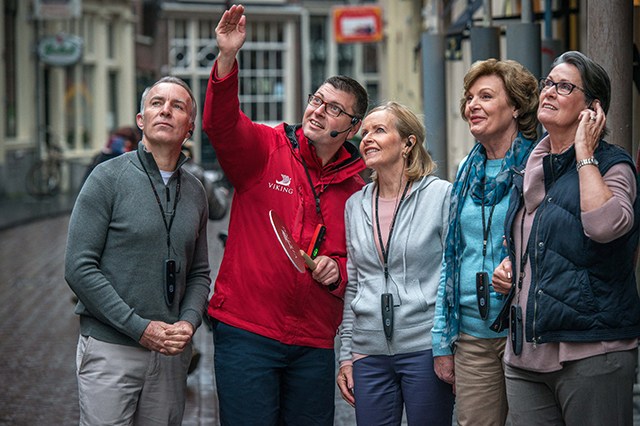
Viking Tour Guide showing the sights of Amsterdam to guests from the Viking Longship Kara. Audio players

Destination-Focused Itineraries

Every itinerary is designed to help you discover and engage with a place through its food, countryside and customs. Sail with like-minded travelers on an immersive journey, with onboard and onshore moments that bring culture and history to life.

Arrive in the center of town — often at Viking-owned docks — and stroll right off and begin exploring. The Viking Way is designed to take you closer to the unique highlights of every stop. While you will visit expected and iconic locations, such as renowned museums and notable landmarks, Viking also offers Local Life, Working World and Privileged Access® experiences, opening doors to places otherwise difficult to visit. 

Go behind the scenes with the world-renowned Vienna Boys Choir on the Grand European Tour or take a cooking class in Tuscany on The Iconic Western Mediterranean Itinerary.

For history enthusiasts, watch the past come alive along Europe’s great rivers and sparkling coastlines. Storybook villages, vibrant cultural centers and picturesque landscapes await across the Netherlands, Austria, Germany, Greece, France, Hungary, Italy, Spain, Switzerland and more.

All-Inclusive Value

The Viking Inclusive Value covers just about everything — port charges, Wi-Fi, all onboard meals, lectures, onboard activities, a complimentary shore excursion in every port of call and so much more. All you have to do is relax and enjoy a great journey.   

Viking Longship Gymir on the Rhine River near Cologne, Germany.
The Viking Gymir longship on the Rhine River near Cologne, Germany.

Viking’s Top European River Voyages

Rhine Getaway

Seven nights, Amsterdam to Basel

Explore one of Europe’s best-loved rivers. Discover the turreted fortresses, grand cathedrals, historic cities, medieval towns and stunning scenery of the Middle Rhine — a UNESCO World Heritage Site. Taste the region’s renowned white wines, the roots of its terraced vineyards reaching back to Roman times. Savor the various culinary traditions of Alsace. With calls in Amsterdam, Cologne and Basel, this journey reveals a rich landscape of beauty and culture. 

Romantic Danube

Seven nights, Budapest to Regensburg

Visit Budapest’s Castle District and cross the famous Chain Bridge. Explore Göttweig Abbey, one of Austria’s most revered monastic centers, and make dumplings with Wachau Valley apricots. Visit historic Salzburg. Spend two days in Vienna and celebrate the city’s musical heritage at a concert featuring works by Mozart and Strauss. With medieval towns, grand cities and stunning scenery, this eight-day journey on the “Blue Danube” is one you are sure to love. 

Grand European Tour

14 nights, Amsterdam to Budapest

Admire Rhine Valley vistas from a 900-year-old castle. Sample the culinary delights of Austria’s Wachau Valley. Learn the Viennese waltz, visit Melk’s Benedictine Abbey and delve into Nuremberg’s World War II history. Indulge your senses on this 15-day journey spanning the best of Europe, tracing the Rhine, Main and Danube Rivers between the windmill-dotted waterways of Holland and the stunning landscapes of Hungary, with engaging encounters at every bend. 

Ship: Viking Star 
Category: Ocean 
Subject: Sunrise arrival in Monte Carlo 
Region: Mediterranean
The Viking Star ocean ship arrives in Monte Carlo.

Viking’s Top European Ocean Voyages

Iconic Western Mediterranean

Seven nights, Barcelona to Rome

France’s famed southern coast and Italy’s Renaissance treasures take center stage on this eight-day Mediterranean sojourn. Immerse yourself in Catalonian and Tuscan art, architecture and history during overnights in Barcelona and Tuscany. In the South of France, call on historic Montpellier and picturesque Marseille, and visit Monte Carlo, Monaco’s glamorous city by the sea. 

Ancient Mediterranean Treasures

Seven nights, Istanbul to Athens

Witness the origin of civilization as you cruise the fabled Aegean Sea. Spend two days in majestic Istanbul, with its Byzantine treasures and intriguing blend of Eastern and Western influences. Travel to the ruins of Troy, long steeped in myth and a UNESCO World Heritage Site. See historic sites in Ephesus and marvel at the gorgeous islands of Rhodes and Crete. Discover the architectural gems of ancient Athens during an overnight stay.  

British Isles Explorer

14 nights, Bergen to London

Immerse yourself in the British Isles with overnight stays in Bergen, Norway, and Greenwich, England. Discover the legendary Highlands and Western Isles of Scotland and its capital, Edinburgh. Visit the Shetland and Orkney Islands, and contrast modern Belfast with traditional Dublin. Witness Welsh culture in Snowdonia. In England, visit maritime Liverpool, see historic Dover and enjoy a tour of London. 

Wherever you choose to go, Viking takes you to the heart of great places in comfort.

You’ve Read About It — Now Experience It

Let AAA Travel make your dream vacation a reality. Connect with a travel advisor for free trip planning, custom itineraries, exclusive perks and expert guidance every step of the way.
Call 888-652-8816 |  Find a AAA Branch  |  Contact Online

Featured image: Viking Longship Gymir on the Rhine River near Cologne, Germany.

Subscribe to Your AAA Newsletter

Sign up and receive updates for all of the latest articles on automotive, travel, money, lifestyle and so much more!

Crossword: The Dog Days of Summer

Subscribe to Your AAA Newsletter

Sign up and receive updates for all of the latest articles on automotive, travel, money, lifestyle and so much more!

AAA Northeast Offers Flood Safety and Vehicle Damage Tips Following Flash Flooding 

Heavy rain has recently brought flash flooding to much of the Northeast, including parts of Connecticut, Massachusetts, New Jersey, New York and Rhode Island. As the area dries out, AAA Northeast is reminding drivers of the impact flooded roads can have on their vehicles. All too often, people underestimate the depth or force of flood waters and find themselves stranded and facing costly auto repairs. 

Just six inches of water can cause a car to lose control and stall an engine. And 12 inches of water on a roadway is enough to lift a car and carry it away. Large SUVs and trucks can be moved in just two feet of water.  

AAA offers these reminders for drivers:  

  • An engine can ingest water even driving through what looks like a deep puddle. If this happens, the engine can become hydro-locked and destroyed.  
  • After driving through deep water, brakes will be wet and might not perform as expected right away. Gently apply the brakes and brake early and gently to dry them off.  
  • Hot brake rotors can warp when they encounter cold flood water.   
  • Flood damage to a vehicle is typically covered by comprehensive insurance policies. Call your insurance company to understand what’s covered and take detailed photos of the vehicle, inside and out, before attempting cleaning or repairs.  
  • If your car was submerged while parked and the engine was not turned on, have the car towed to a trusted repair facility to be inspected and serviced before attempting to start the car. Draining and replacing engine oil, coolant and other fluids may be required if the car is repairable. 
  • Water damage may not be immediately apparent. Over time, components that were exposed to water can corrode, causing frustrating and expensive problems down the line. Inspect, clean and dry any electrical system components and connections. 
  • Moisture trapped deep in the recesses of a car can be a breeding ground for mold and bacteria. Pay attention to any odors and moisture on interior surfaces, particularly when the car is parked with the windows closed for a period of time.    
  • Following heavy storms, be on the lookout for new potholes caused by fast-moving rainwater and be cautious before driving through a puddle, which might conceal a deep pothole below the water’s surface. 

During periods of intense rain, drivers should remember to always adjust their approach to driving. Slow down, increase following distance and never ignore warning signs or roadblocks. A road can become flooded within just minutes of a downpour, so it’s critical that drivers pay attention to emergency weather alerts and follow detours to avoid a dangerous situation. 

Frequently Asked Questions 

How much water does it take to damage a vehicle? 

As little as six inches of water can cause a vehicle to lose control or stall. Water entering the engine can lead to hydrolock, which may result in severe engine damage. 

Can a vehicle be swept away in floodwater? 

Yes, twelve inches of moving water can carry away many passenger vehicles, while larger SUVs and trucks may be moved by approximately two feet of water. 

What should I do if my vehicle was submerged while parked? 

Do not attempt to start the vehicle. AAA Northeast recommends having the vehicle towed to a trusted repair facility for inspection and repairs, if needed, before driving again. 

Is flood damage covered by auto insurance? 

Flood-related vehicle damage is generally covered under comprehensive auto insurance coverage. Drivers should review their policy details and contact their insurance provider to understand their specific coverage. 

What documentation should I collect before making repairs? 

Take detailed photos of the vehicle’s exterior, interior and any visible damage to provide to your insurance provider.  

Can flood damage appear weeks or months later? 

Yes. Water intrusion can lead to corrosion of electrical components, wiring and connections. Moisture trapped inside the vehicle can also contribute to mold, unpleasant odors and other long-term issues. 

What driving precautions should motorists take after heavy rain? 

Drivers should slow down, increase following distance, watch for newly formed potholes, avoid standing water, monitor weather alerts and comply with road closures, barricades and detour instructions. 


Subscribe to Your AAA Newsletter

Sign up and receive updates for all of the latest articles on automotive, travel, money, lifestyle and so much more!

What Is a Zipper Merge?

Few things spark more tension on the road than a lane closing ahead. What appears to be a simple merge turns into one of the most debated (and misunderstood) traffic behaviors out there: the zipper merge.

While designed to improve the flow of traffic and reduce congestion, it often frustrates drivers who view it as “cutting the line.”

Brian Butterworth, director of driver training at AAA Northeast, explains how drivers can better understand when zipper merging applies, and how to use it safely to avoid unnecessary road rage.

zipper merge

What is a Zipper Merge?

A zipper merge is a lane management technique used in heavy or slow-moving traffic, in which drivers in both lanes take turns merging at a lane-reduction point. Instead of merging early, vehicles continue using both lanes fully and alternate like the teeth of a zipper at the merge point.

Is Zipper Merge a Law? The Biggest Misconceptions

The merge pattern is considered a recommended best practice rather than a formal law in most jurisdictions. Drivers are encouraged to follow it when conditions are congested, but it is not typically enforced as a legal requirement.

Misunderstandings around zipper merging often lead to unsafe behavior and frustration, according to Butterworth.

“Some common misconceptions are that the zipper merge is cutting in line or causes congestion, when in fact it uses more available road space and can help to reduce congestion,” Butterworth said. “Zipper merges require cooperation, and failing to do so may cause some drivers to rush ahead, only to slam on their brakes when they get to the end of the line.”

How to Zipper Merge

Proper zipper merging most relies on predictable, cooperative driving behavior.

“Cooperation, consistency, and signaling. Drivers in both lanes should work with each other to keep traffic moving by taking turns. Drive consistently — don’t speed up or slam on your brakes. Lastly, use your turn signal when merging at the end of your lane. When everyone uses the zipper method, no one is jumping ahead of their place in line.”

AAA’s Driver Education Approach

AAA teaches drivers to understand when zipper merging is appropriate and how to apply it correctly, depending on traffic conditions.

“It comes down to understanding when the zipper merge is appropriate,” Butterworth said. “When traffic is slow-moving or congested, the zipper merge uses the most available road space and helps keep traffic moving more evenly. When traffic is free-flowing, it’s better to merge early, when safe to do so, rather than waiting until the last moment to change lanes.”

Zipper merging works best when drivers understand both the strategy and the etiquette behind it. While not always legally required, it is a safer and more efficient way to manage congestion as lanes close or merge.

If you or someone you know is ready to learn how to drive, sign up for AAA Driving School, available in Massachusetts and Rhode Island.

Does merging stress you out? Tell us how you feel about the zipper merge in the comments below!

Subscribe to Your AAA Newsletter

Sign up and receive updates for all of the latest articles on automotive, travel, money, lifestyle and so much more!

AAA Northeast: Tips to Prevent Vehicle Theft Amid Increased Summer Risk

With July designated National Vehicle Theft Prevention Month, AAA Northeast is reminding drivers to take preventive measures against vehicle theft, especially since summertime is primetime for this crime.
 
There is some good news: Vehicle thefts in the U.S. declined 23% in 2025 from 2024 to the lowest levels in several decades, according to the National Insurance Crime Bureau (NICB). There were 659,880 vehicles reported stolen nationwide last year, a steep drop from the historic peak of 1,020,729 thefts in 2023.
 
Despite the decrease, the NICB reports approximately one vehicle is still stolen every 48 seconds in the U.S., and the risk is higher in some urban areas.
 
“While the significant decrease in vehicle thefts is good news for drivers, thousands of vehicle owners across the Northeast are still dealing with this crime every year,” said Jillian Young, director of public relations for AAA Northeast. “Especially during the summer, putting the proper protections in place can help deter thieves from taking off with your car or valuable items inside.”

AAA Northeast recommends the following to prevent vehicle thefts:
 

  • Close windows and lock your car when parked — even at home.
  • Always remove the keys and any valuables.
  • Store key fobs as far away from your car as possible and consider putting them in a metal container to prevent a signal boosting attack, when thieves use an antenna to hack the key fob.
  • Park in areas that are well-lit, visible to you or protected by security cameras.
  • Never leave your car running unattended.
  • If your car isn’t equipped with an anti-theft system, consider purchasing security devices for further protection, including:
    • Vehicle immobilizers
    • Steering wheel locks
    • Brake pedal locks
    • Theft-deterrent decals
    • Audible alarms
    • GPS trackers


Immediately reporting a stolen vehicle in the first 24 hours increases your chance of recovery by 34%, according to the NICB. Have information ready including your vehicle’s make and model, license plate number and vehicle identification number (VIN). Once you’ve filed a police report, notify your insurance company about the theft. Comprehensive insurance is needed to be covered for theft, so vehicle owners should review their auto insurance policies to ensure they have the coverage desired for each vehicle on their policy.

State Data

 
In Connecticut, there were 6,359 reported motor vehicle thefts in 2025, down nearly 28% from 2024, according to Connecticut Department of Emergency Services and Public Protection. Theft from motor vehicles and theft of motor vehicle parts also saw significant decreases. The latest FBI data shows that 36% of vehicle thefts in Connecticut took place from May to August.
 
The greater New York metropolitan area had the second highest number of vehicle thefts among the nation’s metros with 27,138 thefts. The latest FBI data shows that more than 37% of vehicle thefts in New York took place from May to August.
 
In New Jersey, there were over 14,600 motor vehicle thefts reported in 2025, according to the latest FBI data. Roughly 35% of those thefts took place from May to August.
 
In Massachusetts, there were 6,491 reported motor vehicle thefts in 2025, a 14% decrease from the 7,540 reported in 2024, according to the Massachusetts Executive Office of Public Safety and Security. The latest FBI data shows that nearly 40 percent of vehicle thefts in Massachusetts took place from May to August.
 
In Rhode Island, there were over 1,300 reported motor vehicle thefts in 2025, and over 35% of those thefts took place from May to August, according to the latest FBI data.

Frequently Asked Questions


How often is a vehicle stolen in the United States?

Approximately one vehicle is stolen every 48 seconds in the United States, according to the NICB.


Are vehicle thefts decreasing?

Yes. NICB data shows vehicle thefts nationwide declined by 23% from 2024 to 2025, falling to 659,880 reported thefts from a historic high of more than one million thefts in 2023.


Which areas in the Northeast experience the highest levels of vehicle theft?

The greater New York metropolitan area recorded 27,138 vehicle thefts, one of the highest totals among U.S. metro areas.


What are the most effective ways to prevent vehicle theft?

AAA Northeast recommends locking vehicles, closing windows, removing keys and valuables, storing key fobs securely away from vehicles, parking in well-lit areas, and using anti-theft devices such as steering wheel locks, immobilizers, alarms, or GPS trackers.


What is a signal boosting attack?

A signal boosting attack occurs when thieves use electronic devices to amplify the signal from a nearby key fob, allowing them to unlock or start a vehicle. Storing key fobs away from vehicles and in metal containers or signal-blocking pouches can help reduce this risk.


What should I do if my vehicle is stolen?

Contact law enforcement immediately and provide your vehicle’s make, model, license plate number, and VIN. After filing a police report, notify your insurance company as soon as possible.


Does auto insurance cover vehicle theft?

Vehicle theft is generally covered under comprehensive auto insurance coverage. Vehicle owners should review their policies and speak with their insurance provider to confirm coverage for each vehicle on their policy.


Subscribe to Your AAA Newsletter

Sign up and receive updates for all of the latest articles on automotive, travel, money, lifestyle and so much more!

AAA Northeast: Pedestrian Deaths Decline Across New York, New Jersey, Massachusetts and Rhode Island in Latest 2025 Highway Safety Data

New preliminary data from the Governors Highway Safety Association (GHSA) shows pedestrian fatalities across the United States have declined for a third consecutive year. In 2025, 6,732 people were struck and killed by vehicles, down 7% from 2024. However, that number is still 5% higher than 2019 pre-pandemic levels.

Pedestrian fatalities fell in 28 states from 2024 to 2025, including Massachusetts, New Jersey, New York and Rhode Island, according to GHSA. Connecticut was among 17 states that saw an increase from 2024. Preliminary data shows there were:

  • 65 pedestrian deaths in Connecticut in 2025, up 5% from 2024.
  • 220 pedestrian deaths in New York in 2025, down 27% from 2024.
  • 178 pedestrian deaths in New Jersey in 2025, down 23% from 2024.
  • 76 pedestrian deaths in Massachusetts in 2025, down 3% from 2024.
  • Seven pedestrian deaths in Rhode Island in 2025, down 46% from 2024.

“While a continued decline in pedestrian deaths nationwide is promising, vehicles still strike and kill 18 people across the country every day,” said Jillian Young, director of public relations for AAA Northeast. “Communities must continue to emphasize education, enforcement and improvements to infrastructure to create a safer space for pedestrians and all road users.”

Though U.S. pedestrian deaths have been on the decline, federal crash data shows some troubling trends.

  • The proportion of all pedestrian crashes involving a fatality more than doubled from 4% in 2015 to 10% in 2024.
  • Larger vehicles continue to grow in popularity — and can be more deadly. Sport
    utility-vehicles (SUVs), pickup trucks and vans accounted for more than half of pedestrian fatalities in 2024.
  • Hit-and-run crashes accounted for 24% of all pedestrian fatalities in 2024.
  • Distraction-related pedestrian fatalities are on the rise. In 2024, 22% of pedestrian deaths involved a distracted driver, compared to 16% in 2019. In 2024, 29% of pedestrian deaths involved a distracted pedestrian, compared to 15% in 2019.
2025 Pedestrian Fatalities by State
AAA Northeast · GHSA Preliminary Data

2025 Pedestrian Fatalities by AAA Northeast State

Total deaths in 2025 and year-over-year change vs. 2024. Connecticut is the only AAA Northeast state to see an increase.

Increase vs. 2024
Decrease vs. 2024

Source: Governors Highway Safety Association (GHSA), preliminary 2025 pedestrian fatality data, as cited by AAA Northeast. Bar length reflects total 2025 deaths per state; badges show percent change from 2024.

“To ensure those walking get to their destinations safely, we urge drivers to obey the speed limit, ditch distractions and use extra caution, especially at night when most pedestrian deaths occur,” Young said. “We also urge pedestrians to take precautions to protect themselves, including wearing clothing that makes them visible to drivers, using crosswalks and sidewalks when available and staying alert to their surroundings.”

Subscribe to Your AAA Newsletter

Sign up and receive updates for all of the latest articles on automotive, travel, money, lifestyle and so much more!

Northeast Gas Prices Increase an Average of 10 Cents from Last Week 

Crude prices finished about $8.50 a barrel higher last week when trading ended on Friday as fighting continued across the Middle East for a second week. Since the unraveling of the ceasefire agreement reached in mid-June, crude prices have climbed roughly $20 a barrel — and retail gasoline prices have followed suit, swelling solidly above $4 a gallon on average across the Northeast. 

However, pump prices could stabilize in the coming days as crude and wholesale gasoline prices began this week sharply lower after the U.S. and Iran announced a pause in attacks on Sunday. In overnight trading, U.S. crude fell more than $6, and Brent crude declined more than $7 a barrel as markets reacted to the news. Despite the sell-off ahead of market open on Monday, crude prices remained about $14 higher than they were a month ago. 

Aside from higher crude costs, gasoline prices remain under pressure from tight inventories and steady demand. Strong U.S. production helped boost supplies by 800,000 barrels last week, according to the Energy Information Administration (EIA), but they’re still more than 8% below year-ago levels. Demand climbed 103,000 barrels a day week-over-week to reach 8.9 million barrels a day, the EIA reported. While solid for late July, the figure landed 20,000 barrels a day lower than the comparable week last year. 

“Pump prices have been on a rollercoaster this summer as geopolitical tensions shift between escalation and deescalation,” said Jillian Young, director of public relations for AAA Northeast. “Oil and gas markets are likely to remain unsettled as long as the situation in the Middle East remains volatile.” 

AAA’s July 27 survey of fuel prices found the national average up 11 cents from the previous week ($4), averaging $4.11 per gallon. The July 27 national average price was 24 cents higher than the previous month ($3.87) and 97 cents higher than the previous year ($3.14)

As of July 27, Indiana and Mississippi had the lowest prices in the nation at $3.49 and $3.66, respectively. California and Hawaii had the highest prices at $5.64 and $5.42, respectively.  

Region Current Price* One Week Ago One Month Ago One Year Ago 
Connecticut $4.21 $4.10 $3.97 $3.11 
Massachusetts $4.13 $4.03 $3.95 $3.04 
New Jersey $4.18 $4.06 $3.88 $3.03 
New York $4.23 $4.14 $4.13 $3.16 
Rhode Island $4.13 $4.04 $3.80 $3.01 
Gas Prices by State Over Time

Gas Prices by State Over Time

$5.00
$4.50
$4.00
$3.50
$3.00
$3.11
$3.97
$4.10
$4.21
CT
$3.04
$3.95
$4.03
$4.13
MA
$3.03
$3.88
$4.06
$4.18
NJ
$3.16
$4.13
$4.14
$4.23
NY
$3.01
$3.80
$4.04
$4.13
RI
$3.14
$3.87
$4.00
$4.11
US
One Year Ago
One Month Ago
One Week Ago
Current

*Prices as of July 27, 2026 

The AAA Gas Prices website is your resource for up-to-date fuel price information. Search for average gas prices on national, state and metro levels by regular, plus, premium and diesel.  

Subscribe to Your AAA Newsletter

Sign up and receive updates for all of the latest articles on automotive, travel, money, lifestyle and so much more!

Renters Insurance FAQ

Renters insurance protects your belongings and covers liability for accidents in your apartment. This renters insurance FAQ covers what’s included, how to score discounts and when a rider makes sense for valuable items.

AAA provides coverage for people in all sorts of living arrangements, including renters insurance. For more information, contact a AAA insurance agent.

Why should I buy renters insurance?

Renters insurance provides coverage for lost, stolen or damaged possessions in your apartment. The items in your living area can be worth a lot of money and expensive to replace after a disaster.

What does renters insurance cover?

Renters insurance protects you in case of injury, liability and other catastrophes, like if a stove fire wrecks your kitchen, a thief steals your home entertainment system or a guest slips and falls in your bathroom. With renters insurance, you are protected from damage to your belongings and if someone injured themselves while inside your apartment.

Learn more about renters insurance coverage. 

renters insurance

How is rental insurance different from homeowners insurance?

When you own a home, you also own the property in and around your home. If you rent your home, your landlord is the property owner.

A landlord has the responsibility to protect and maintain the building structure. But a landlord, who may own your building, is not responsible for the objects inside your rented apartment, accidental injury or other legal liability. In fact, your landlord may have insurance, but not for your specific living area.

Similarly, condo insurance acts differently since a condominium association usually owns the property. The association takes responsibility for day-to-day maintenance of buildings and common areas, like a gym or a pool. However, the condo association may not cover individual units and the property inside. Examine your condo association’s bylaws and look for gaps in coverage. You might want to get a policy for yourself to protect your individual unit and your possessions.

Is renters insurance mandatory?

Renters insurance isn’t legally required, but your landlord may make it a condition of your lease agreement. Failure to aquire it in this case may result in lease cancellation or eviction.

When it comes to landlord vs. renter insurance, the two are very different. While we know renters insurance covers you, the tenant, landlord insurance protects the physical building and is not something you need to have if you are simply renting.

Is it possible to find cheap renters insurance?

No matter the cost of renters insurance, it’s not as expensive as replacing all of the items in your apartment without insurance. Insurance gives you a chance to replace and repair items without breaking the bank.

Plus, you can ask for discounts. If you have smoke detectors, fire extinguishers or a security system, you may be eligible for a discount. Ask your insurance agent as you apply.

Cheap renters insurance is possible, but it is more important to have insurance that provides good coverage for the items that you hold dear and depend on every day.

renters insurance

Are there any situations renters insurance doesn’t cover?

In a similar way to homeowners insurance, renters insurance may have coverage limits, or not apply to certain situations. Of course, check with your insurance agent and ask about the specifics of your policy. Ask if you need an add-on to your coverage, especially if you have pets or a home business.

What if I have rare or unusual items? Will renters insurance cover them if they are lost or damaged?

Purchase an add-on or rider (also known as a floater) on your insurance policy to protect especially valuable items, such as jewelry, collectibles and antiques. You will have to provide a receipt for the purchase of the item, or have it appraised for its value. An appraisal must be kept recent especially since collectibles may change value over time. So it is a good idea to keep appraisals recent and update them every three to five years.

Alternatively, you can ask your insurer to raise the liability limit on your policy without adding a rider.

renters insurance

What if I have a storage unit? Will renters insurance cover the items inside that as well as the possessions in my apartment?

Some policies have coverage for items in a storage unit while others do not. You can also buy additional coverage for your storage unit through your insurance, or from your storage unit company.

How can I get the most out of my renters insurance?

Don’t be afraid to ask your insurance agent about any part of your policy, especially if you’d like renters insurance deductibles explained. Be honest, and tell them if you plan to make a change in your life, like remodeling your kitchen or making a big purchase. Agents are here to help you, make your life simpler and ensure the important things in your life are covered for any emergency.

In addition, make an inventory of the items in your home. This helps you know exactly the value of your possession and their condition before they were destroyed.

Do you have renters insurance? How has it helped you? Let us know in the comments.

Get a Renters Insurance Quote  

Subscribe to Your AAA Newsletter

Sign up and receive updates for all of the latest articles on automotive, travel, money, lifestyle and so much more!

Intro to Insurance for College Students and Parents

Before heading to college or sending a child off to school, there is a lot to think about: there’s financial planning, touring the campus, and of course, potentially meeting roommates and decorating the dorm room.

As you open this exciting chapter, don’t forget to take advantage of any available savings on your insurance for college students and update your policies. Think of it this way: If the college to-do list was a syllabus, getting your insurance needs in order would be one of your first assignments.

Insurance for College Students: Home and Renters

Parents may not be aware that homeowners insurance can extend some protection to their children going away to college. Approximately 10% of the personal property coverage on your policy (also known as “Coverage C”) will cover possessions in a child’s dorm room.

“So, if the Coverage C on your policy was $250,000, $25,000 would be afforded to your child’s stuff if a covered loss were to occur,” said Emily Buckley, AAA Northeast insurance sales manager.

Expensive items such as computers and other technology are often subject to coverage limits under a standard homeowners policy. If the limits are too low, parents may want to consider purchasing a special personal property endorsement.

Students living off-campus should consider purchasing renters insurance, which covers belongings and provides protection from liability if someone is injured on the property. It may also provide funds if a dorm room or apartment becomes uninhabitable because of a fire, burst pipe or other debilitating circumstance.

Extracurriculars

  • Pack thoughtfully. While some valuables, such as laptops, may be needed on campus, other items like expensive jewelry are probably better left at home.
  • Create a detailed “dorm inventory” that includes photos and receipts of everything in your living space. If you need to file a claim, an up-to-date inventory will help make the process easier.
  • Burglaries make up about 50% of all on-campus crimes, and the library, dining hall and other public places are the primary areas where they occur, according to the Insurance Information Institute.
  • Always lock your dorm room door and never leave belongings unattended on campus.
college insurance

Auto Insurance for College Students

Auto insurance coverage depends on where you attend college. If you commute or stay at college in your home state and remain on your parents’ policy, coverage likely still applies. Check with your insurance provider to ensure minimum coverage requirements are met.

Parents who have kids attending school 100 miles or farther away could qualify for the student-away discount on their auto insurance policy that some companies offer. A young adult who doesn’t own a vehicle and drives the family car only when home is considered a lower risk, hence a lower rate. Full-time students who maintain at least a B (3.0) average or equivalent may also be eligible for a good student discount.

To see what discounts you may qualify for and to ensure you have adequate coverage while you or your child is at school, contact your insurance agent.

“Any life event is the perfect time to give your agent a call to review and assess if any changes can be made to your policy to better protect you and your family, all the while saving you as much money as possible,” said Buckley.

Car Care at College Tips From AAA

Whether driving many miles to an out-of-state school or commuting back and forth every day, it’s a good idea to keep your car well-maintained and running smoothly to help avoid any risks on the road.

  • Check tires at least once a month using a tire pressure gauge.
  • Regular upkeep such as oil changes, battery service, brake checks and filter replacements help extend the life of your car and helps mitigate repair costs. Check your owner’s manual to get to know your car’s maintenance schedule.
  • Breakdowns and other roadside emergencies happen. Make sure your vehicle has a well-stocked roadside emergency kit. In areas with winter ice and snow, add an ice scraper, snow brush and kitty litter or other material to increase traction if you get stuck in the snow. Emergency roadside assistance is available 24/7 for AAA members.

Tuition Insurance

There are a variety of reasons why a student may need to pause or stop going to college. Tuition insurance can provide reimbursement for non-refundable expenses like tuition payments, housing and even meal fees for students who need to leave school before the end of the semester for reasons which could include any covered illness, injury or psychological condition.

Insurance coverage may differ by state. Speak to a AAA Insurance agent to learn more about how you or the college student in your life can save on insurance.

Subscribe to Your AAA Newsletter

Sign up and receive updates for all of the latest articles on automotive, travel, money, lifestyle and so much more!

Dealing With Extreme Heat

As the heat turns up, so does the risk of heatstroke.

As 2025 finished up as the third warmest year on record, the frequency, duration and intensity of heat waves that we experience every year is only projected to increase, according to the World Health Organization.

When the mercury starts to rise into the 90s and push up into the 100s, it can become dangerous to our health, homes, cars and pets. However, it’s important to start thinking about hot car and extreme heat safety, even if there isn’t a heat wave in the forecast, as even a mild, sunny day, can make the inside of a car lethally hot. Here’s how you can guard against the risks.

Health

Soaring temperatures cause your body to strain to maintain normal conditions, which can quickly lead to organ failure and even death in some cases. Excessive heat is the leading weather-related killer in the United States, according to the National Weather Service.

It is often a combination of high heat and humidity that can lead to illnesses like heat cramps, heat exhaustion and heatstroke. It’s important to learn the warning signs of heat exhaustion vs. heatstroke so if you experience the symptoms or notice them happening to someone else, you can act right away.

Populations most prone to heat-induced sickness include the elderly, overweight individuals, infants, children and pregnant women. Outdoor and manual workers are also at higher risk. If you are a business owner with employees that often works in these conditions, such as a contractor, you want to make sure you have the right insurance coverage in place.

Pets, particularly dogs and cats with thick coats and short snouts, can quickly fall victim to heatstroke, as well. Signs include panting or difficulty breathing, drooling, weakness, increased heart rate, lethargy and collapsing. Make sure your pets stay cool and well hydrated, don’t over-exercise them when it’s hot and keep them out of the direct sun.

More heat advisory precautions include eating light and consuming water even if you don’t feel thirsty.

Protecting Children and Pets From Hot Cars

Heatstroke is the most common non-crash, vehicle-related cause of death in children under the age of 15. Over 20% of deaths result when a caregiver knowingly leaves a child in a car, typically to run a quick errand or let the child finish a nap, according to NoHeatStroke.org.

On a typical 80-degree summer day, the interior temperature of a vehicle increases by 20 degrees in only 10 minutes and reaches a deadly 109 degrees in 20 minutes. On hotter days, the interior temperature can easily reach 120-140 degrees, and cracking the windows has little effect.

And it doesn’t have to be scorching hot outside to get dangerously hot inside a car. Although most hot car deaths occur when temperatures are over 80 degrees, a child has succumbed to vehicular heatstroke in 70-80-degree weather in each of the past ten years.

To prevent hot car deaths, AAA Northeast recommends caregivers practice the following:

  • Stop and look at the backseat before exiting a parked vehicle. Make it a habit to check the entire vehicle before locking the doors and walking away. Place personal items, like a purse or briefcase, in the back seat as another reminder to look before you lock. Ask childcare providers to immediately call if your child doesn’t show up for care as expected.
  • Lock your vehicle to prevent unsupervised access and a child getting trapped inside. Keep car keys away from children and teach them that the inside of a car should never be used as a play area.

Statistics about pets dying in hot cars are not tracked as closely, but the American Veterinary Medical Association reports that every year, hundreds of pets die of heatstroke in parked vehicles. In most Northeast states, it is illegal to leave a pet unattended in a parked car.

If you see a child or animal confined in a hot car, act fast and do whatever is necessary to get them to safety as quickly as possible. Immediately notify a nearby business so they can make an announcement to find the potential caregiver, call 911 and wait until help arrives.

Cars

AAA stays busy in the summertime, as breakdowns tend to spike on hot days.

Extreme heat can take a toll on cars and can be especially stressful on engines. Check the coolant and make sure that it is periodically flushed and replaced as recommended by the vehicle manufacturer to prevent long-term engine damage and overheating.

Car batteries also hate the heat. Battery fluid evaporates faster in the summer, leading to corrosion. If a car’s battery is more than three years old, it’s a good idea to have it tested by a trained technician. AAA members can request Mobile Battery Service or take their car to any AAA Approved Auto Repair facility to be tested. And while you’re there, have them make sure your tires are inflated to the manufacturer’s specification and the AC is operating at full capacity.

If all precautions fail, you know you can call AAA Roadside Assistance any day or time.

Check out more summer driving safety tips from AAA.

Home

When it gets to be too hot outside, you want your home to be a place of refuge where you can cool down. To cool your home in summer, Ready.gov recommends weather-stripping windows and doors, installing window air conditioners with insulation, covering windows with drapes or shades, using attic fans and setting up window reflectors such as aluminum foil-covered cardboard to deflect heat outside.

Preparing your home for extreme heat should be part of seasonal maintenance. Aside from making sure your house is as cool and energy-efficient as possible, without proper upkeep, heat can eventually start to take its toll on the structure. In the Northeast, this might include roof damage. Over time, roofing can expand and contract during extreme hikes and dips in temperature, making it susceptible to splits and leaks.

Protect you car, home, small business, pets and more with AAA Insurance.

What are your ways for staying cool in a heatwave? Tell us in the comments.

Subscribe to Your AAA Newsletter

Sign up and receive updates for all of the latest articles on automotive, travel, money, lifestyle and so much more!

Merging Into Life: Making Friends as an Adult: How to Build Real Connections

SEASON 3: EPISODE 4
Episode Feedback

Making new friends takes more intention as we get older, but that doesn’t mean it’s too late.


EPISODE SUMMARY

Figuring out how to make friends as an adult can feel surprisingly high stakes. If you’ve ever felt like everyone else already has their people, you’re far from alone. In this episode of Merging Into Life, host Sabrina Pierotti is joined by returning guest Vassia Sarantopoulou, psychologist and founder of AntiLoneliness, to explore why it’s so hard to make friends as an adult, loneliness versus being alone, and what it takes to find meaningful connection when life keeps getting in the way.

Whether you’re navigating a big life change like how to deal with loneliness after a career change, struggling with how to make friends when you have social anxiety or just wondering how to meet new people in your 30s, this episode offers honest, practical insight to one of the most universal struggles of modern adulthood.


KEY TAKEAWAYS
  • Have you ever wondered, “Why do I feel lonely around people?” It’s because loneliness isn’t about being alone, it’s about feeling disconnected. You can be surrounded by people and still feel deeply lonely, especially when connections stay surface-level or when life shifts faster than your sense of belonging can adapt. Making friends after moving to a new country, changing careers, becoming a parent or while going through a breakup or divorce, can all quietly trigger loneliness, even when things look fine from the outside.
  • Building meaningful relationships as an adult requires patience. Adult friendships take longer to form, and that’s not a personal failure. The reason friendships felt easier when we were younger is simple: proximity and repeated time together. Now we see people once a month if we’re lucky, and we carry more emotional baggage that makes our brains naturally more cautious, making overcoming fear of rejection in adult friendships a necessary step.
  • Challenging limiting beliefs about making friends, like “it’s too late to make friends” or “everyone already has their circle” is essential, because they are closing doors before you even try. These over-generalized thoughts feel protective, but they keep you stuck. If you are looking to interrupt the isolation cycle or dealing with social anxiety after 30, the goal isn’t to replace these thoughts with toxic positivity. Instead, replace them with something realistic: Yes, some people will be flaky, and there are also people out there who will show up for you. Your job is to find the second kind.
  • Finding community as an adult starts with your values, not a checklist. The most natural adult friendships tend to form around shared interests and beliefs like volunteering, fitness classes, dog parks and hobby groups. When you show up to something you genuinely care about, you’re already in a room with people who have something in common with you.

TRANSCRIPT

[00:00:02] Vassia Sarantopoulou: There is some security at staying at home, and yet there’s something poking you, there’s something bugging you, like, go out, come on, go out! And it’s that innate need we all have as human beings to go out and connect with others. It’s a need we are wired with, we cannot forget that. We love being seen, being understood, having fun with other people.

[00:00:27] Sabrina Pierotti: Listen, lifestyles change. It can become so hard to make new friends. Funny story: so, there is this girl who actually lives in my apartment complex, and for years, I had wanted to introduce myself and exchange numbers, because I always just got great, great energy from her. One day, we were walking in from work at the same time, and I did it. I asked for her number, and it truly sounds like I was asking her out on a date, but this is truly how high stakes it felt. I was worried she was going to think I was weird or like too abrasive, but now her, her husband, and me and Kyle are hanging out and getting to know each other, and it’s awesome. Even though that story has a happy ending, it does make me sad that friendships are just not as easy as they used to be. But you know what? We have an amazing guest returning to the show today that is going to go into the science behind this. It’s important we can provide some ways we can make some more friends. Welcome back to Merging Into Life. I’m your host, Sabrina Pierotti. Today, we’re talking about loneliness, adult friendship, and how to meet new people when it feels like everyone already has their people. We’ll get into why loneliness can be about more than just being alone, how past experiences and life changes shape the way we connect and what it actually looks like to build meaningful relationships as an adult. Joining me today is Vassia Sarantopoulou, who helps people better understand connection, relationships, and the emotional barriers that can make adult friendship and loneliness feel so complicated. Through her work and her own personal experience, she offers insight into what it takes to build relationships that actually feel meaningful. Hi, Vassia, it’s so, so good to see you again. Thank you for joining us on season three.

[00:02:21] Vassia Sarantopoulou: Yes, I’m so happy to see you again.

[00:02:23] Sabrina Pierotti: I’m really, really excited to talk more about what you focus on a lot, which is loneliness and anti-loneliness and building that movement. And today, we’re specifically going to talk about friendships. This is really coming at like such a perfect phase in my life, because I’m in my early 30s and my friendships that I used to have, you know, in my 20s are starting to change and meeting new friends in your 30s, it’s just a very different experience. So, to start, when we talk about loneliness, what does it actually mean to feel lonely versus simply just like being alone and by yourself?

[00:02:56] Vassia Sarantopoulou: Wow, that’s a really important distinction. Loneliness, it’s not the same as being alone. You can be alone and actually feel really peaceful and calm and restored and creative. On the other hand, you can be surrounded by people and feel lonely, deeply lonely, even though physically you are around them. So, loneliness is the feeling that there’s some connection missing in our lives. When we don’t feel understood, emotionally understood by others. When we don’t feel like we belong somewhere. We don’t have our tribe. So that’s one layer of loneliness, the emotional disconnection from others. There’s another even deeper layer of the loneliness, which is the emotion disconnection from ourselves. When we have been ignoring our needs, when we have been performing roles that they don’t really align with who we are, they don’t feel authentic when we have been living to other people’s expectations. So, all these accumulate. And there’s a point that we feel like we don’t even know who we are, why we do what we do.


RESOURCES

Merging Into Life

Join AAA

AAA Discounts

Merging Into Life, S2E11: Building Emotional Resilience When Life Gets Tough

Vassia Sarantopoulou: AntiLoneliness


You can be featured on our podcast!

Have a question for our experts? Leave us a voice message. Whether it’s about money, insurance, wellness or everyday life, ask away — and keep listening. Your call could be featured on Merging Into Life.


*The views and opinions expressed in this podcast do not constitute medical advice and are not necessarily the views of AAA Northeast, AAA and or its affiliates.

Subscribe to Your AAA Newsletter

Sign up and receive updates for all of the latest articles on automotive, travel, money, lifestyle and so much more!

Personal Stories Hit Home at New York Teen Driver Safety Summit

Among the cruelest realities of crashes involving impaired or distracted drivers is how quickly everything changes. One minute, people are laughing in the car. The next, they are on the way to the hospital — or worse.

Speakers at the 2026 New York Teen Driver Safety Summit on Long Island, hosted by AAA and Mothers Against Drunk Driving, wanted to make sure that more than 60 high school students in attendance got that message. Several presenters talked about how a driver’s lapse in judgement for a second has impacted their own lives forever.

“The summit focused on impairment and distraction behind the wheel and made a significant contribution to advancing the national AAA-MADD Campaign to End Impaired Driving,” said Mary Maguire, vice president for public and government affairs for AAA Northeast. “The speakers were impactful, and their real-life stories reminded the Public Affairs team that our community outreach matters. If we can convince just one more student to wear a seat belt or to think twice before driving drunk or distracted, we can potentially save a life.”

Sobering Statistics

The numbers alone are jarring. About 32 people in the United States die in drunk-driving crashes every day — the equivalent of one person every 44 minutes. In 2024, 11,904 people died in alcohol-impaired driving crashes.

Inexperience also plays a role. Teen drivers have the highest chance of being involved in a fatal crash in the first six months after receiving their license, noted Maureen McCormick, special assistant for legislative initiatives in the Suffolk County district attorney’s office.

Among drivers ages 15 to 20 who died in car crashes, 29% had a blood alcohol concentration of 0.01 grams per deciliter of blood (0.01%) or higher. About 28% were at or above the legal adult level of intoxication of 0.8%. 

Steve Johnson and Jacy Good of Hang Up and Drive.

Committed to Change

For Jacy Good and Steve Johnson, founders of Hang Up and Drive, a split-second distraction forever changed their lives and set them on a mission to warn young people about the dangers of distracted driving. Since they began speaking to groups in 2010, Good and Johnson have done countless public interviews and delivered more than 1,900 presentations in 44 states and three countries.

“You have the power to save lives,” Johnson told the students.

College sweethearts, Good and Johnson were planning their lives together after graduating in May 2008. Good and her parents were driving to their home in Pennsylvania after the ceremonies when a teenage driver, distracted by his phone, started to turn left at a red light. The driver of a tractor trailer swerved to avoid hitting him and crashed head on into the Good’s car. Good’s parents were killed instantly; she was rushed to a hospital, where after 8.5 hours of surgery, doctors said she had about a 10% chance of survival.

But she persevered through months of hospitalizations and rehabilitation and has mostly recovered. Although she still has some lingering effects. Johnson was by her side the entire time.

Sharing Their Reality

Less than a year after the crash, Good was busy urging Pennsylvania’s General Assembly to prohibit cellphone use while driving. No charges were filed against the driver who caused the truck to swerve, since at the time, Pennsylvania had no laws regulating cellphone use by drivers. In 2025, the state legislature passed a law making cellphone use while driving illegal.

Good and Johnson further sealed their partnership when they married in 2013. While it was a joyous day, Good said she missed wedding rituals like dress shopping with her mother and a father-daughter dance.

“We built the life we have,” Johnson said. “But these are not shoes you want to be in.”

Be The Change

During their presentations, the two stressed that just having cellphones within reach while driving is distracting.

“There is an idea that we can be connected all the time, but that’s just not true,” Good said.

Even using Bluetooth devices can affect your attention, according to Johnson.

“Just listening to people talking on the phone while driving isn’t safe. It distracts people,” he said.

Discipline and good friends can help.

“Get to your car five minutes earlier. Finish your call and then put on your seatbelt and put your phone away,” Good said.

Or let a friend be the designated texter, and have them hold the phone and respond to messages.

“You have the power to make a difference,” Good said.

 “You can be the one who says, ‘slow down,’ Johnson added.

For Tyniah, 18, of Uniondale High School, who soon will be driving, the warnings hit home.

“Hearing about the crashes is scary,” she said. “I need to make sure I drive the speed limit, drive sober and not drive with anyone who has been drinking.”

What Good most wanted students to take away from her story is that there are faces behind all the crash figures.

“Reality is not just numbers,” she said. “It’s real people.”

Subscribe to Your AAA Newsletter

Sign up and receive updates for all of the latest articles on automotive, travel, money, lifestyle and so much more!

Recognizing AAA Member Volunteers

When volunteers are needed, AAA Northeast members answer the call.

As part of its commitment to strengthen communities, AAA Northeast encourages employees and members to volunteer with local charitable organizations, supporting causes ranging from environmental conservation to combating food insecurity and assisting families in need.

Earth Month cleanups at local parks and beaches are some of the most popular member volunteer opportunities.

Among those who return every April are Jim Goulet of Wakefield, Rhode Island, and Wanda Ruiz and her daughter, Amorah, of Worcester, Massachusetts. They were recently given AAA Cares baseball caps in recognition of their dedication. Pins on the brim mark the number of years they have participated in the annual cleanups — four years for the Ruiz family and three years for Goulet.

Would you like to volunteer with AAA Northeast? Find upcoming community events near you.

Building Community Teams

For AAA Northeast, building community involvement is a priority.

“Our goal was to get more members involved,” said Branch Manager Maggie McMenemy, who leads the Earth Month events. “Year over year, we have made progress to increase our member involvement.”

Previous volunteers are asked every year if they want to participate again.

“Jim and Wanda always say yes,” said McMenemy.

Loving Giving Back

For Ruiz, the AAA Earth Month events were the motivation she needed to jump into community service.

“I started volunteering four years ago when I received an email about the Earth Day cleanup at Elm Park,” Ruiz said. “I was looking for a way to get involved, and that was the perfect opportunity! What I like most about engaging in community service is giving back to the community I grew up in and coming together with like-minded people who have a similar passion. Earth Day for me is special, as we get to take care of the planet we live on, not only for now but for future generations.”

Her 10-year-old daughter, Amorah, has joined her every year.

“She’s always willing to help and is great with recycling, so we figured this is a great way to get out there and hopefully motivate her to do her part,” Ruiz said.

jim goulet
Jim Goulet has helped Save the Bay in Rhode Island for the past three years.

Goulet, a 45-year AAA member, joined Save the Bay with AAA for the past three years, because he values giving back to the community.

“I like making things cleaner and better,” Goulet said. “I spend a lot of time on the beach, and I enjoy walking, swimming and relaxing.”

Goulet was paying his membership dues at a AAA branch three years ago when he saw a notice about the beach cleanup.

“I’ve always done beach cleanups and things, in other areas. I always want to give back,” he said.

He posted the call for volunteers in a coffee group he belongs to, in an effort to spread the word.

Help Us Make a Difference

Anyone who has been thinking of volunteering should just get out there, Ruiz said.

“There’s an instant satisfaction when you go help and do something good. And if they don’t want to do it alone, things like this are a perfect way to start. Get together with your community or gather a few friends and family and make a difference no matter how small it may seem.”

This is what AAA Northeast has been aiming to build over the years, according to McMenemy.

“A group of like-minded people who we can count on to return and continue our journey together. It makes all this worth it, and I can’t thank them enough,” she said.

We’d love to see you at our next community event! Find AAA community service events in your area.

Left to right, Maggie McMenemy, AAA; Amorah Ruiz, Wanda Ruiz, Kelly Haynes, AAA, participating in the cleanup at Elm Park.

Subscribe to Your AAA Newsletter

Sign up and receive updates for all of the latest articles on automotive, travel, money, lifestyle and so much more!

Six Swell Surf Towns in the Northeast

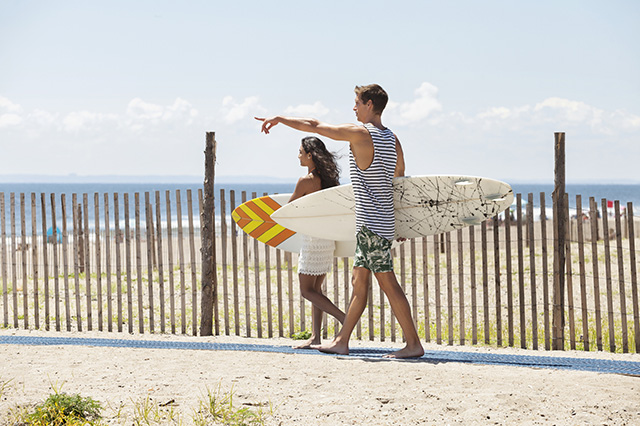
Hawaii and California may get more of the pipeline glory, but people have been surfing the waters off New England, New York and New Jersey since local lifeguards brought longboards back from the West Coast back in the early 1960s. Diehards will tell you the best waves arrive with winter storms, with wetsuits a must in the chilly waters, but you can catch a decent swell almost any time of year at these Northeast surfing destinations. 

surfing destination
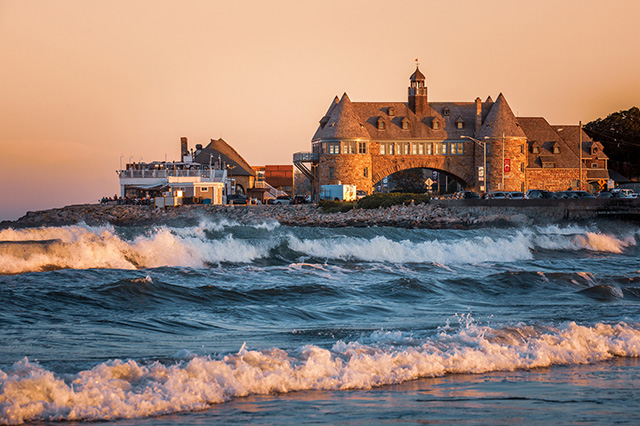
Some of Rhode Island’s finest surfing can be found in the shadow of the historic Narragansett Towers.

Narragansett, R.I.

Narragansett Pier is longboard heaven, with surfers lining up in the shadow of this beach town’s iconic Towers to catch the long offshore break rolling in toward the seawall at Narragansett Town Beach. The area around the Point Judith Lighthouse and nearby Matunuck in South Kingstown are other popular surfing destinations. 

  • Where to stay: The Break Hotel not only has a vintage surfing vibe but is also close to one of the best reef breaks in the Northeast.  
  • Where to hang loose: Chill out at sunset with a cocktail at Chair 5, the rooftop bar at The Break Hotel, then catch some live music at the Bon Vue Inn
  • Where to gear up: Narragansett Surf & Skate has surfboards, accessories, swimwear and lessons. It’s owned by local surf legend Peter “Pan” Panagiotis, who has been surfing Rhode Island’s waters since the “Summer of Love.” 
surfing destinations
Surfers flock to Sachuest (Second) Beach in Middletown, R.I., in all seasons (bring a wetsuit!).

Newport, R.I.

South-facing shores capture wind-driven surf on Newport’s Easton’s (First) Beach and nearby Middletown’s Sachuest (Second) Beach, while diehards challenge the waves below the mansion-lined Cliff Walk at spots like Ruggles and Bailey’s Beach. 

  • Where to stay: The Atlantic Beach Hotel is just steps from the surf, while the Sea Breeze Inn is a laid-back alternative for those traveling on a surf bum’s budget. 
  • Where to hang loose: Located within walking distance of Easton’s Beach, Rejects Beer Co. is named for Newport’s famous locals’ beach and has a counterculture vibe to go along with on-site brewed stouts, ales and Twelve O’Clock High, a classic New England-style IPA. 
  • Where to gear up: Local surf legend Sid Abruzzi has been setting up surfers with boards, swimwear and more at Waterbrothers since 1971. Rhody Surf offers private surfing lessons and summer surf camps on Easton’s Beach. 

Cape Cod, Mass.

Known as Four Mile to local surfers, White Crest Beach in Wellfleet takes a little effort (namely climbing up and down dunes) to reach, but the reward is the best surfing on the Cape, with sandbars providing good wave breaks for both longboarders and shortboards. But you can surf almost anywhere on the ocean-facing side of the Outer Cape, from Nauset Beach in Orleans to Head of the Meadow Beach in Truro. Just mind the sharks, which seem to be making the Cape waters home in greater numbers in recent years. 

  • Where to stay: The Four Diamond Mansion at Ocean Edge is one of the Cape’s poshest resorts and close to White Crest Beach in Wellfleet. 
  • Where to hang loose: The Beachcomber in Wellfleet is a toes-in-the-sand bar that’s close to the surfing beaches. 
  • Where to gear up: The Pump House Surf Shop in Orleans has hordes of boards — surfboards, stand-up paddleboards, skateboards, skim boards and more. 
top surfing destination
Big waves arrive in the fall in Montauk, N.Y., thanks to hurricane season.

Montauk, N.Y.

The birthplace of East Coast surfing, Montauk has evolved from a sleepy fishing village to a trendy weekend destination but still attracts surfers to take-off spots at Turtles (right below the lighthouse), Ditch Plains for longboard action, and Terrace with its reef-generated waves. Fall can be the sweet spot for a surfing road trip to Montauk, with the Hamptons summer crowd seeking warmer shores, water temps still tolerable and occasional big waves arriving with hurricane season. 

  • Where to stay: The oceanfront boutique Marram Montauk resort sits amid the dunes at the Terrace surf break.
  • Where to hang loose: The Surf Lodge hotel has high-design guest rooms, a waterfront restaurant serving fresh local seafood and a free summer concert series. 
  • Where to gear up: Sunset Surf Shack is a low-key surf shop a block off the beach in the heart of Montauk. 
top surfing destination
You may not hitch a ride there, but waves will certainly greet you at Rockaway Beach in Queens.

Rockaway Beach, N.Y.

Maybe you don’t want to hitch a ride to Rockaway Beach like The Ramones suggested, but this may be the only surfing destination that you can reach by subway (take the A train). Surfing beaches are located between Beach 68th St. and Beach 71st St., Beach 87th and Beach 91st St., and Beach 110th and Beach 111th St. 

  • Where to stay: The Rockaway Hotel has coast-inspired rooms with water views, a rooftop bar and a heated pool with cabanas, plus surf lockers and lessons from Locals Surf School. 
  • Where to hang loose: The Rockaway Beach Surf Club has a surfer themed outdoor patio alongside the elevated subway line, craft cocktails and Mexican food.  
  • Where to gear up: Breakwater Surf Co. was named among USA Today’s 10 Best surf shops by readers in 2026.

Manasquan, N.J.

Snooki didn’t surf, but you’ll find surfers all along the Jersey Shore, including Seaside Heights. Hardcore surfers, however, are most likely to be found at Inlet Beach in Manasquan, a small beach town squeezed between Sea Girt and Point Pleasant. A jetty at the inlet helps intensify a long offshore break. 

  • Where to stay: The Casa Del Mar, a boutique motel on the Point Pleasant side of the Manasquan Inlet, has newly renovated rooms and is within walking distance of the ocean, boardwalk and inlet. 
  • Where to hang loose: The Reef & Barrel offers seasonal seafood, pub grub, specialty drinks and live music.
  • Where to gear up: A short drive from the renowned breaks of Manasquan in Spring Lake, hit up Bare Wires Surf Shop for surfboards, accessories and laid-back coastal style.

Where’s your favorite surfing destination? Tell us in the comments! If you need some help deciding, check out our guide to the best Northeast beaches.

Subscribe to Your AAA Newsletter

Sign up and receive updates for all of the latest articles on automotive, travel, money, lifestyle and so much more!

The Ins and Outs of Hurricane Insurance Deductibles

Atlantic hurricane season begins June 1 and extends through Nov. 30, making this a good period of time to stay ready in case of a storm (or two).

Despite even the most accurate forecasts, it’s hard to pinpoint the property damage total that can result from a hurricane or severe storm. From Katrina to Sandy to Ian, storms continue to make historic benchmarks in losses. Weather and climate disasters in the U.S. from 1980 to February 2025 cost approximately $2.9 trillion in damages, according to the National Oceanic and Atmospheric Administration.

Without the right insurance coverage, it can be hard to recover after a hurricane hits. Here are some of the most important things to know about hurricane insurance deductibles.

To speak to a AAA insurance agent about your storm coverage, schedule a call today

Listen to Our Podcast

Have insurance questions? Listen to Episode 3 of our podcast, Merging Into Life: Insurance 101.

Tune In

The History of Hurricane Insurance Deductibles

In 1992, Hurricane Andrew left insurers with $15.5 billion in losses – at the time, the costliest hurricane in U.S. history. From that point, hurricane insurance was determined to be a necessity in coastal areas to help cover high-cost property losses due to storm risks like hail and high winds.

“After the wake-up call of Andrew, insurers in many coastal states began to sell homeowners insurance policies with percentage deductibles for storm damage,” according to the Insurance Information Institute. “These deductibles are stated as a percentage of the insured value of the homes and generally are a higher dollar amount than traditional dollar deductibles used for other types of losses such as fire damage and theft.”

Nineteen states and the District of Columbia have hurricane deductibles. In the Northeast, this includes Connecticut, Massachusetts, New Jersey, New York and Rhode Island.

It should be noted that hurricane deductibles do not include flooding. Flood insurance must be purchased separately.

Hurricane Preparedness Guide

Learn how to keep your home and family safe before, during and after a major storm.

Read now

What Is a Hurricane Insurance Deductible?

A deducible is the amount of loss paid by the policyholder before insurance kicks in. Percentage deductibles are calculated as a specified percentage of the insured value of your property.

The exact percentage and explanation of your windstorm insurance deductible will be noted on your homeowner policy.

When it comes to hurricane coverage cost, you’ll be responsible for around 1-5% of the insured value before your coverage starts. As explained by the Insurance Information Institute, “If a house is insured for $300,000 and has a 5% deductible, the first $15,000 of a claim must be paid out of the policyholder’s pocket.”

Based on where you live, some insurance companies may offer named storm deductibles (a deductible for losses caused by named storms only), hurricane deductibles stated as higher dollar amounts or possibly no separate hurricane deductible at all. In each case, this will be reflected in the premium that’s being charged. You can ask your agent about what options are available to you.

hurricane insurance

When Does Hurricane Insurance Coverage Kick In?

How insurance deductibles work is with a series of event triggers. These triggers vary by state and insurance carrier, but a good indicator comes from the National Weather Service. Once a hurricane watch or warning is issued, the intensity level is crucial. The moment a Category 1 hurricane makes landfall is when the deductible becomes applicable.

How Well Do You Understand Your Hurricane Insurance Deductible?

Of the homeowners surveyed in New Jersey, North Carolina, South Carolina, Texas and Florida 34% had never heard of hurricane deductibles, according to a 2017 report by the Insurance Research Council. It was found that over 25% lacked understanding of basic deductibles and 33% were unsure of the percentage applied.

New Jersey respondents demonstrated the lowest level of awareness and understanding of several hurricane deductible issues, despite the fact that about 346,000 homes in New Jersey were damaged or destroyed by Sandy.

This lack of understanding makes it harder to gain coverage in the aftermath of a hurricane-related event.

Know Your Insurance

When shopping for insurance, always check the financial rating of a company, especially if you live in an area that is prone to hurricanes. Catastrophic weather events result in large swaths of damage that may generate large losses for a particular company and can exceed their ability to pay all the claims.

Each state has its own rules regarding hurricane insurance. Talk to your insurance agent to run through all of the technicalities of your policy to make sure you can get the right coverage.

Speak to a AAA insurance agent today.  

Did we help you to better understand hurricane deductibles? Leave a comment below.

Subscribe to Your AAA Newsletter

Sign up and receive updates for all of the latest articles on automotive, travel, money, lifestyle and so much more!

Northeast Gas Prices Surge Back Above $4

Crude oil prices climbed more than $11 last week as tensions continued to escalate across the Middle East following the July 8 breakdown of the ceasefire agreement that had helped calm oil and gas markets. By the close of markets on Friday, the price for a barrel of West Texas Intermediate (WTI) settled above $81 and Brent crude finished at $88, as markets reacted to fresh U.S. and Iranian attacks and announcements from both sides regarding the closure of the critical Strait of Hormuz. 

Higher crude prices aren’t the only factor putting pressure on prices at the pump: Domestic gasoline inventories have fallen to 12-year lows, according to the latest figures from the Energy Information Administration (EIA). Despite strong production from U.S. refiners, supplies of gasoline decreased by 1.5 million barrels last week, reaching their lowest summer levels since August 2014, the EIA reported. Steady, but not spectacular, domestic demand and record gasoline exports have constrained supplies all summer. Last week, domestic demand settled at 8.8 million barrels a day — just shy of the benchmark of 9 million barrels a day that markets interpret as a signal of stronger demand. That mark has been exceeded just three times since mid-May. By comparison, demand surpassed 9 million barrels a day five times last year and six times in 2024 over the same period. 

“For months, the status of the Strait of Hormuz has heavily influenced oil and gas markets and the latest developments in the war have shown again how quickly that influence can impact what drivers pay at the pump,” said Jillian Young, director of public relations for AAA Northeast. “Where prices head next will depend on a combination of gasoline inventories, demand and the war with Iran.” 

AAA’s July 20 survey of fuel prices found the national average up 13 cents from the previous week ($3.87), averaging $4 per gallon. The July 20 national average price was 5 cents higher than the previous month ($3.95) and 86 cents higher than the previous year ($3.14)

As of July 20, Indiana and Mississippi had the lowest prices in the nation at $3.35 and $3.57, respectively. California and Hawaii had the highest prices in the nation at $5.49 and $5.41, respectively.  

Region Current Price* One Week Ago One Month Ago One Year Ago 
Connecticut $4.10 $3.94 $4.08 $3.12 
Massachusetts $4.03 $3.90 $4.07 $3.05 
New Jersey $4.06 $3.93 $3.99 $3.05 
New York $4.14 $4.07 $4.25 $3.17 
Rhode Island $4.04 $3.85 $3.93 $3.03 
Gas Prices by State Over Time

Gas Prices by State Over Time

$5.00
$4.50
$4.00
$3.50
$3.00
$3.12
$4.08
$3.94
$4.10
CT
$3.05
$4.07
$3.90
$4.03
MA
$3.05
$3.99
$3.93
$4.06
NJ
$3.17
$4.25
$4.07
$4.14
NY
$3.03
$3.93
$3.85
$4.04
RI
$3.14
$3.95
$3.87
$4.00
US
One Year Ago
One Month Ago
One Week Ago
Current

*Prices as of July 20, 2026 

The AAA Gas Prices website is your resource for up-to-date fuel price information. Search for average gas prices on national, state and metro levels by regular, plus, premium and diesel.  

Subscribe to Your AAA Newsletter

Sign up and receive updates for all of the latest articles on automotive, travel, money, lifestyle and so much more!

Fly and Drive: West Virginia’s Eastern Panhandle

Fly into Washington, D.C., or Baltimore, pick up a rental car and head west. In less than two hours, you’ll arrive in West Virginia’s Eastern Panhandle, where Jefferson and Berkeley counties pair outdoor adventure with rich history, welcoming small towns, cozy stays and delicious meals.

Harpers Ferry National Historical Park and Trails

Harpers Ferry National Historical Park sits where the Shenandoah and Potomac rivers meet. Visitors can fish, go rock climbing and hike the park’s trail network.

Harpers Ferry sits at the crossroads of three iconic trails — the Appalachian Trail, the Chesapeake and Ohio Canal towpath and the Potomac Heritage National Scenic Trail — making it one of the few places where you can collect several stamps on your National Park Passport in one visit.

“You can visit four national parks in five minutes,” said Kristen Maxfield, park ranger and interpretation and education program manager for the park.

Besides its beauty, there’s also a lot of history to take in here, as the site of John Brown’s Raid to free enslaved people in 1859 and Civil War battlefields.

Car Rental Savings

Get up to 20% off the base rate of your next car rental.*

*Terms apply.

Book Today

Charles Town and Shepherdstown

From Harpers Ferry, head to Charles Town, founded by George Washington’s brother Charles. There’s a wealth of Washington family history in the area; George owned property here and encouraged his brothers to purchase land as well.

At the Jefferson County Museum, you can learn more about the region’s history and see the original wagon that transported John Brown to his hanging following his conviction of treason, murder and conspiring with enslaved people to rebel.

For a different kind of history lesson, stop by O’Hurley’s General Store in nearby Shepherdstown. Housed in a building that feels frozen in the 1800s, the store sells everything from handcrafted rocking chairs to handmade soaps and jewelry. There’s even a working blacksmith shop on the property, and on Thursday nights, the fireplace room fills with local musicians for a traditional folk jam session.

“It’s more like an experience than shopping,” said owner and manager Genevieve O’Loughlin.

More History in Martinsburg

Whether you’re interested in trains, Civil War history or architecture, the Matinsburg Roundhouse is not to be missed. Recognized as the only cast-iron railroad roundhouse left in the world, it features a full-size turntable once used to reposition locomotives. It’s also the site of the first national labor strike in 1877. You can hear about the roundhouse and its history during a guided tour, offered seasonally April through October.

Martinsburg also is home to some notable figures, including as Adam Stephen, a Revolutionary War general and the city’s founder. You can learn more about him as you tour the General Adam Stephen House, constructed in the late 1770s to early 1780s of native limestone. Another notable local figure is Belle Boyd, a Confederate spy who became an actress after the war. Her story is told at the Belle Boyd House, which also serves as the Berkeley County visitors center and historical museum.

Satisfy Your Taste Buds

As you travel through Jefferson and Berkeley counties, you’ll find a variety of eateries and restaurants that are sure to please your appetite. A great starting point, Bolivar Bread in Harpers Ferry bakes up artisan loaves such as sourdough, wheat and rye, plus the West Virginia state food, pepperoni roll. Perhaps unexpected in these historic West Virginia counties, Thai Martinsburg offers authentic Thai cuisine in a circa-1885 Queen Anne-style building. Sample everything from pad thai to panang curry. For something sweet, grab a gourmet chocolate at DeFluri’s Fine Chocolates.

In Shepherdstown, Blue Moon Cafe features a full menu of sandwiches, salads and burgers that are perfect for lunch. If the weather is nice, ask for a table on the outside patio under the trees. For a lovely dinner out, head to the Potomac Room at Bavarian Inn, also in Shepherdstown. Choose from traditional German entrees like Wiener schnitzel or try a European-inspired dish like shepherd’s pie.

For accommodations, the Bavarian Inn is an ideal home base for your stay in West Virginia’s eastern panhandle. Choose from the inn’s chalet rooms overlooking the Potomac River or opt for a room in the Schwarzwald Building, which overlooks the Grey Stone Manor. You can even stay in the manor in the mansion suite. No matter which you choose, you’re sure to have a great vacation.

Plan your trip with a AAA travel advisor and rent your car with Hertz. AAA members can save up to 20% on Hertz rentals.

Subscribe to Your AAA Newsletter

Sign up and receive updates for all of the latest articles on automotive, travel, money, lifestyle and so much more!

How To Keep Your Car Cool in Summer

Beat summer heat with quick cabin-cooling tricks, smart battery care and simple radiator maintenance to keep your car — and yourself — running smoothly all season.

What Does Summer Heat Do to Your Car?

System Effect of Heat Quick Fix
Cabin Trapped hot air makes the interior uncomfortable and hard to cool quickly. Vent hot air out, then switch A/C to recirculate.
Engine & Cooling System Low coolant, a stuck thermostat or a failing radiator can cause overheating. Flush the cooling system regularly and check hoses and belts.
12-Volt Battery Heat evaporates internal fluids, weakening the battery over time. Keep it fully charged with clean connections; test it each season.
EV & Hybrid Batteries Range and efficiency drop as temperatures climb toward 95 degrees. Precondition the cabin while plugged in and charge strategically.

Quickly Cooling the Car

Efficiently cooling the car’s interior can reduce some strain on the vehicle and keep the driver more comfortable.

When you first get in, open the doors and windows to let the hot air out, and then, put the air conditioner on ventilation mode to help expel more hot air. Once the car starts to feel cooler, turn the air conditioner to recirculation and put it on its highest setting.

Starting the car and letting the air conditioning run while it’s parked is not the quickest or most economical choice, although it would do the trick in a pinch. Many newer models also come with an option to prestart and cool the interior from a key or mobile app.

More Ways to Keep Your Car Cool

  • Embrace the shade. “Park in the shade or in a garage if you have one, and staying out of direct sunlight may help,” said AAA’s Car Doctor John Paul.
  • Let in some air. Leave your windows open a crack, but only enough to let in a small breeze and keep out rain and thieves.
  • Invest in a windshield sunshade, especially if you can’t avoid the direct sun.
AAA members get discounts at NAPA Auto Parts, online and in select stores.
car overheating

Why Do Car Engines Overheat?

When a car engine overheats, there is usually something wrong with the car’s cooling system. The car could be low on coolant, which reduces the temperature of the engine as it circulates. Another common cause is a malfunctioning thermostat. It could fail to open preventing coolant from reaching the engine. Another expensive cause could be a failed radiator, which cools off the coolant and blows hot air out of the car.

Make sure the cooling system is ready by having it flushed on a regular basis by a trusted auto repair facility. Coolant, also known as antifreeze, has anti-corrosion chemicals to prevent rust buildup inside the engine. Getting rid of old coolant, flushing the engine with fresh water and filling it with the proper mixture of the coolant formula and water, along with checking hoses and belts, will help a vehicle stand the test of hot summer driving.

What To Do If Your Car Overheats

If your car is starting to overheat, it may seem a bit sluggish. If the temperature gauge shoots up or if you see steam rising from the hood, pull off the road as soon as you safely can.

If you are unable to pull off immediately, turn off the air conditioner and turn on the heat. Yes, heat. This will help the engine cool a bit before you can stop.

Once stopped, turn off the engine and call for roadside assistance. Do not touch the hood.

Stuck on the shoulder with a hot engine? AAA Members get 24/7 Roadside Assistance. Join now and never face a breakdown alone.

Car Battery Overheating

Consumer Reports has found that heat can weaken your car battery more than freezing temperatures.

Heat does not cause sudden battery failure but weakens a car battery over time. The optimum operating temperature for car batteries is 80 degrees, according to NAPA Auto Parts. But as soon as the car is moving, the temperature under the hood starts to rise.

If the temperature is hot enough, chemicals within the battery that conduct electrical charges begin to evaporate. That vapor can lead to battery corrosion over time, and ultimately, failure. AAA replaces over 2 million car batteries per year, and many car battery service calls happen in the summer.

“Here in the Northeast, batteries last about five years,” said Paul. “But in hot weather states, like Florida, Arizona and Texas, batteries only last about three years due to the heat.” 

Ensuring the battery is fully charged and the connections are clean helps to maintain it. Periodically checking the charging and starting systems are a good idea as well.

If your battery does give out, call a AAA battery service professional who will come to you and test, clean or replace your battery. They also will properly recycle your old battery.

EV Batteries in Hot Weather

Summer heat takes a toll on electric vehicles, too. A new AAA study found that EVs lose about 10% of their efficiency and roughly 8.5% of their driving range when temperatures reach 95 degrees, compared with performance on a 75-degree day. For a driver, that means an EV rated for 250 miles of range might only deliver just under 230 miles on a scorching day. Hybrids aren’t immune either — AAA’s research showed a 12% drop in fuel efficiency for hybrid vehicles under the same extreme heat conditions.

To offset the heat-related range loss, AAA recommends checking tire pressure, removing roof racks and excess cargo weight, avoiding high speeds, preconditioning the cabin while still plugged in, using eco mode, parking in the shade and charging strategically — favoring Level 1 or Level 2 charging over frequent DC fast charging to help preserve long-term battery health.

Frequently Asked Questions

Does heat drain a car battery?

Yes, but not instantly. Heat speeds up the evaporation of fluids inside the battery, which weakens it gradually rather than causing sudden failure. Over time, that weakening leads to corrosion and, eventually, a battery that won’t hold a charge.

How can you protect a car battery from heat?

Keep the battery fully charged, make sure the connections stay clean, and have the charging and starting systems checked periodically. Parking in the shade also helps, since it keeps under-the-hood temperatures from climbing as high.

Do electric cars lose range in the heat?

Yes. A AAA study found EVs lose about 8.5% of their driving range and 10% of their efficiency at 95 degrees compared with 75 degrees. Hybrids take a hit, too, with a 12% drop in fuel efficiency in the same conditions.

How long do car batteries typically last in hot climates?

In hot-weather states like Florida, Arizona and Texas, batteries typically last about three years due to the heat. In cooler regions like the Northeast, batteries tend to last around five years.

What should you do if your car overheats while driving?

Pull off the road as soon as it’s safe. If stopping isn’t possible right away, turn off the air conditioner and turn on the heat — it pulls warmth away from the engine. Once stopped, turn off the engine, avoid touching the hood and call for AAA Roadside Assistance.

How often should coolant be flushed to prevent overheating?

Have the cooling system flushed on a regular basis by a trusted auto repair facility. Regular flushes remove old coolant, clear out rust-causing buildup, and refill the system with the proper coolant-to-water mixture.

Can extreme heat damage a car’s tires?

Hot pavement and high air temperatures increase tire pressure and accelerate wear, raising the risk of a blowout. Checking tire pressure regularly during summer months helps catch problems before they become dangerous.

What are your tips for cooling your car down as quickly as possible on a hot summer day? Share them in the comments below.

Subscribe to Your AAA Newsletter

Sign up and receive updates for all of the latest articles on automotive, travel, money, lifestyle and so much more!

Crossword: Decode Airport Codes

Subscribe to Your AAA Newsletter

Sign up and receive updates for all of the latest articles on automotive, travel, money, lifestyle and so much more!

10 Bucket List Experiences in the U.S.

When people think about the places they want to visit and the things they hope to see and do in their lifetime, their minds often wander far beyond their own borders. Seeing the world is amazing, enriching and deeply impactful, though not always easy to make happen. That’s part of what makes those trips bucket list experiences. But not every item on your travel wish list requires a passport stamp.

The United States is remarkably vast and diverse, with countless landscapes, cultures and traditions packed within its borders, offering no shortage of “wow” moments. From celebrating Mardi Gras in New Orleans to witnessing an active volcano in Hawaii or watching the northern lights illuminate Alaska’s night sky, these 10 bucket list travel experiences prove that some of life’s most unforgettable adventures can be found right here at home.

Want to make it a road trip? AAA members save on car rentals with Hertz.

Witness the Albuquerque International Balloon Fiesta

The largest balloon event in the world, the Albuquerque International Balloon Fiesta is held annually the first week in October and features the ascent of around 600 hot-air balloons. Balloons take off in waves, filling the sky with a dazzling variety of colors and shapes. Events include the Balloon Glow, where tethered balloons light up at dusk like giant lanterns; the Night Magic Glow, an evening display set to music; and the Special Shape Rodeo, featuring balloons shaped like everything from animals to cartoon characters.

🎈 See the Albuquerque International Balloon Fiesta with AAA Exclusive Vacations, Oct. 7-11, 2026. Spots are limited and this trip is filling quickly! Contact your AAA travel advisor to learn more and reserve your space on this unforgettable guided vacation. 🎈

Celebrate Mardi Gras in New Orleans

There is no party like Mardi Gras, and no U.S. city like New Orleans. Get ready for one of the nation’s biggest celebrations in a city steeped in centuries-old traditions from multiple cultures.

Held annually during the Carnival season, which runs from Jan. 6 until Fat Tuesday — the day before Ash Wednesday — the city hosts costume balls, parades with colorful floats and live music. The festivities build throughout the season, culminating in the massive Fat Tuesday celebration that Mardi Gras is best known for.

Generations-old clubs called krewes prepare floats and host events. Float riders typically throw beads, cups, play money and candy to the crowds. City residents deck out their houses in the Mardi Gras colors of gold, purple and green and king cakes fly off the shelves. As they say in New Orleans, laissez les bons temps rouler (“let the good times roll!”).

bucket list experience

See the Northern Lights and Wildlife in Alaska

The northern lights, or aurora borealis, are among the world’s most sought-after bucket list experiences. These bands of colorful, wavy lights in the night sky are created by solar flares. If seeing them is on your list, Alaska is one of the best places in the world to do so. They are most clearly visible from late August through late April.

Other Alaska must-dos include seeing wildlife in its natural setting. The best time to see Alaska’s Big Five — bear, moose, caribou, wolf and Dall sheep, is between mid-May and mid-September, and tours are available.

Dog sledding is another iconic Alaskan adventure. Traditional mushing tours on snow-covered trails generally operate from November through March. Options in warmer weather include taking a helicopter to a glacier to ride a sled through the snow or using a wheeled sled. Tours are available from several Alaskan cities.

Watch the Sunrise at Cadillac Mountain

Long a destination for early risers, Cadillac Mountain is the is the first place in the country where you can see the sun rise. Located in Acadia National Park, it is the highest point on the eastern seaboard of the U.S., (1,530 feet), providing breathtaking views of the landscape, coastline and nearby islands. The distance to the summit is 3.5 miles and there is a paved road leading to the top. Visitors can drive, hike or take a tour bus. From mid-May to mid-October, those planning to visit the summit must purchase a vehicle reservation in advance at Cadillac Summit Road Vehicle Reservations. Bonus if it’s fall foliage time!

bucket list experience

Take a Great American Road Trip

Road trips are a tradition that celebrate the freedom of the open road and the diverse experiences that make the United States so unique. More than reaching a destination, it’s about the journey — discovering historic landmarks, quirky roadside attractions, small-town charm and unforgettable scenery along the way. Whether it’s across the state or across the country, road trips are a classic bucket list travel experience.

Among the country’s most iconic drives are Route 66 and California’s Pacific Coast Highway. Route 66 carries travelers from Chicago to Santa Monica through the heart of classic Americana, while the Pacific Coast Highway delivers stunning ocean views, dramatic cliffs and stops at destinations such as Big Sur, Monterey, Hearst Castle and the majestic California redwoods. Each route stands on its own but can also be combined to create the ultimate American road trip.

Visit an Active Volcano in Hawaii

One of the best places to (safely) see an active volcano in the U.S. is Hawaiʻi Volcanoes National Park. Hawaii currently has six active volcanoes. The park includes the summits of two of the world’s most active, Kīlauea and Mauna Loa. Kilauea has been erupting periodically since 2024. For updates on volcanic activity, view webcams or check out eruption activity.

View the Cherry Blossoms in Washington, D.C.

A gift of about 3,000 cherry trees to the U.S. from Japan in 1912 has grown not just into a lush grove lining the Washington, D.C., Tidal Basin and National Mall, but a month-long festival. And the collection has grown as well; Japan recently donated another 250 trees to the U.S. in 2026 to mark the nation’s 250th birthday. People come from around the world to view the sea of white and pink blossoms and enjoy exhibits, concerts, performances, parties, lectures and a kite festival. While dates vary based on when the trees bloom, it’s typically around
mid-March to mid-April.

bucket list experience

Stand Beside Niagara Falls

Nothing prepares you for the majesty of Niagara Falls and the thunderous sound of about 700,000 gallons of water pouring over the falls every minute. Niagara Falls State Park in New York is the oldest state park in the U.S. and your gateway to experiencing the falls. Take the popular Maid of the Mist boat ride under the falls and get close to the falls on the Cave of the Winds tour, which takes you down the Niagara Gorge. Be prepared to get wet! For a different view of the falls, bring your passport and cross the border into Canada.

Stargaze Under the Darkest Skies

To admire the stars without interference from the artificial lights that saturate communities, seek out one of the 150 certified dark sky places across the U.S. Globally, there are more than 270 dark sky places. A dark sky can make the Milky Way and other celestial wonders more visible. Arizona and Utah have popular sites and Flagstaff, Arizona, was named the first International Dark Sky City in 2001.

Attend a Broadway Show

If the sum of your theater exposure is a high-school production of “Oklahoma!” it’s time to head to the Big Apple and get tickets for a Broadway show. Some of the best actors and singers in the world are featured in these productions, providing a level of entertainment you won’t find anywhere else. Whether your taste runs to dramas, comedies or raucous musicals, you won’t be disappointed. Save on Broadway tickets with AAA!

The Best Time to Experience Each Adventure

Timing makes all the difference when it comes to these iconic U.S. experiences. Use this quick-reference guide to plan your visit and catch every adventure at its absolute best.

Bucket List Experience Best Time to Go Where to Find It
Albuquerque Balloon Fiesta First week of October Albuquerque, New Mexico
Mardi Gras January 6 through Fat Tuesday New Orleans, Louisiana
Northern Lights Late August through late April Alaska
Alaska’s Big Five Wildlife Mid-May through mid-September Alaska
Dog Sledding November through March (snow tours) Alaska
Sunrise at Cadillac Mountain Year-round; vehicle reservation required mid-May to mid-October Acadia National Park, Maine
Great American Road Trip Year-round Route 66 & Pacific Coast Highway
Active Volcanoes Year-round; check current eruption activity Hawaiʻi Volcanoes National Park
Cherry Blossoms Mid-March through mid-April Washington, D.C.
Niagara Falls Year-round Niagara Falls State Park, New York
Dark Sky Stargazing Year-round; clearest on new-moon nights Arizona & Utah
Broadway Show Year-round New York City, New York

U.S. Bucket List Experience FAQs

Do I need a passport for any of these bucket list trips?

No — all 10 experiences are located within the United States and don’t require a passport. The one exception is if you want to view Niagara Falls from the Canadian side, which does require a passport for the border crossing.

How far in advance should tickets or reservations be booked?

Booking early pays off for popular events like the Albuquerque Balloon Fiesta and Mardi Gras, where lodging can sell out months ahead. For national park destinations like Cadillac Mountain, plan to reserve a vehicle permit as soon as the seasonal window opens, since spots go quickly during peak months.

Is it safe to visit Hawaiʻi Volcanoes National Park during an eruption?

The park is designed for safe viewing, with designated overlooks and trails that keep visitors a safe distance from active flows. Checking current eruption activity and webcams before a visit helps confirm which areas are open and viewable that day.

Do AAA members get discounts on these trips?

Yes! AAA members can save on car rentals with Hertz for road trip adventures, find deals on Broadway tickets and book guided vacation packages, like the Albuquerque Balloon Fiesta, with a AAA travel advisor.

What’s the best time of year for a cross-country road trip like Route 66 or the Pacific Coast Highway?

Both routes are drivable year-round, though late spring through early fall brings the mildest weather and longest daylight hours for sightseeing. Fall offers a bonus of changing foliage in many regions along the way.

Which of these experiences require a car reservation or permit?

Cadillac Mountain requires a vehicle reservation for summit access from mid-May through mid-October. Most other destinations, including Niagara Falls and the Washington, D.C., National Mall, don’t require advance permits, though checking current park or event guidelines before arrival is always a smart move.

Which of these experiences are on your bucket list?

You’ve Read About It — Now Experience It

Let AAA Travel make your dream vacation a reality. Connect with a travel advisor for free trip planning, custom itineraries, exclusive perks and expert guidance every step of the way.
Call 888-780-5185 |  Find a AAA Branch  |  Contact Online