Summer Is Legendary in the Lake Champlain Region

The miles of rolling hills, sparkling lake views and sunsets that dip into the distant peaks and ridges of the Adirondack and Green Mountains make the Lake Champlain Region of New York a vision of summertime magic.

Summer is the perfect time to get outside and dig into all the region has to offer. Come and explore the mountains, lakes and historical sites. Immerse yourself in the local communities, and sample some of the area’s freshest foods.

Here are a few highlights to bookmark for your visit.

Your Legendary Summer Starts Here

Start with big lake adventures, savor big flavors and even bigger history, then end with total relaxation.

Learn More

Visit Cultural Attractions

You’ll find a hefty dose of history and culture in the Lake Champlain Region.

First up: Historic Ausable Chasm. Known as the “Grand Canyon of the Adirondacks,” this sandstone gorge offers breathtaking waterfalls and cliffside trails. Besides hiking and climbing, visitors can follow a trail suspended over the Ausable River and enjoy rafting and canoeing down below.

Next, head to 2,000-acre Fort Ticonderoga, where 18th century history comes alive with daily weapon demonstrations, cannon firings, fife and drum parades and stories about the lives of soldiers stationed there throughout different conflicts. Built by the French between 1755 and 1757, the fort later was taken by the British and then continental militia. Visit the museum with one of the largest collections of 18th-century military artifacts in North America and exhibitions about art, gardening and cooking. Then, take a relaxing happy hour cruise on Lake Champlain aboard the Carillon, a 1920s era tour boat.

For more recent history, take the Star Trek Original Series Set Tour in Ticonderoga and step back to 1966. Guided tours, photo opportunities and an immersive experience are available at this mockup of a Star Trek set.

lake champlain

Keep It Fresh

All that hiking, boating, swimming and living history works up an appetite. Did you know the Lake Champlain Region is brimming with some of the best year-round farmers markets and farm-to-table restaurants in the Adirondacks? Take advantage of the local bounty of fresh fruits and vegetables.

Sink your teeth into the region’s farms and flavors at Essex Food Hub markets, located in both Essex and Westport, or ‘Agri-Alley,” a meeting of three farms on Mace Chasm Road near Ausable Chasm. Everything from formal dining to lunch and midday treats are on the menus!

Cool Off With Watersports

Stay active and cool when boating or paddling on glittering Lake Champlain, the sixth-largest lake in the country. Take a swim off one of the many lake beaches or camp by a local pond. Why not charter a fishing boat or take your boat out into “The Narrows,” a slice of water rich with old shipwrecks and geological wonders?

Hike the Champlain Area Trails

The Champlain Area Trails (or CATS) is a network of gently rolling hills, meadows, crests and water features. The more than 200 miles of trails, have been wowing birders, hikers and casual strollers looking for a slice of paradise in New York for years. Looking for a less strenuous outing? Take your pick from an assortment of scenic walks through downtowns and forests, many less than a mile long and ideal for all ages and abilities. The Boquet River Nature Preserve trail meets Federal Accessibility Guidelines so come out stroll this beautiful  1.15 mile long trail. 

Road Cycling

If you like road biking, strap on your helmet and pedal off to the Adirondack Coast Bikeways, a network of 14 themed loops included in the 1,600 miles of the Lake Champlain Bikeways, which circle Lake Champlain and go as far as Quebec. Consult the Lake Champlain bikeways map and pick a route filled with scenery and historic sites. Connect with a section of the Empire State Trail, 110 miles of which pass through the Champlain Valley. 

Charming Towns

Westport, N.Y., the birthplace of the Adirondack Chair, offers art galleries and the Split Rock Wild Mountain Forest Preserve, featuring more than 11 miles of hiking trails. While you are there, try to catch a show at the Depot Theatre – located in a historic, functioning 1876 train station.

Essex is where you will find the Adirondack Art Association, featuring works by local artists. Stop in the hamlet of Port Henry, to see if you can spot Champ, the Lake Champlain Monster, or climb the fire tower at the summit of Belfry Mountain.

Elizabethtown, located on the Bouquet River, features the Adirondack History Museum and the Rosenberg Gallery, which specializes in Adirondack art, not to mention farmers’ markets.

And in Crown Point, you can visit the Champlain Memorial Lighthouse or even take the walk to Vermont over the Lake Champlain Bridge Heritage Area.

Get your summer started in the Lake Champlain Region.

Subscribe to Your AAA Newsletter

Sign up and receive updates for all of the latest articles on automotive, travel, money, lifestyle and so much more!

Enter: The Blue Zone

Fad diets seem to come and go as quickly as the pounds they promise to melt off. So, at first glance, a menu that allows plenty of meals and snacking – not to mention morning coffee, red wine and tea – seems like just another food fantasy.

Not so, say nutritional researchers and longevity experts who are encouraging people of all ages to aspire to a Blue Zone lifestyle.

Somewhat mysteriously, people living in the five Blue Zones (Sardinia, Italy; Okinawa, Japan; the Nicoya Peninsula in Costa Rica; Ikaria, Greece; and Loma Linda, Calif.) tend to live longer than anywhere else on Earth and have a higher percentage of centenarians (people who are over 100 years old).

But Dan Buettner says there’s really no mystery behind the longevity.

“The calculus of aging offers us two options: We can live a shorter life with more years of disability, or we can live the longest possible life with the fewest bad years,” said the National Geographic Fellow and New York Times best-selling author who discovered the zones. “As my centenarian friends showed me, the choice is largely up to us.”

Indeed, beyond red wine and coffee, Blue Zone locals eat a mostly plant-based diet high in whole grains, greens, sweet potatoes, nuts and beans. In fact, Buettner claims that eating just a cup of beans a day alone could add two to three years to your life.

In addition to diet, community involvement, social activity and a sense of purpose are key to embracing a Blue Zone mentality and lifestyle.

People living on the healthier side of life and maintaining a good weight due to diet and exercise typically receive the best life insurance rate offerings, too.

“No matter what risk you may be, it’s recommended to see your primary doctor once a year to get labs and any recommended testing your doctor may order completed,” said Brenda Silva, a AAA Northeast life insurance specialist. “Life insurance companies weigh their decisions very highly on what they review in your medical records and like to see that you are maintaining good health.”

Lastly, don’t forget to hit the hills every day. As it turns out, Blue Zone citizens live in hilly geographies and tend to be active walkers as opposed to sedentary sitters who drive everywhere. Need to get out more? Try an Active & Fit Direct subscription, or get personal training anywhere with Future.

Indeed, aspiring to live like the folks in Blue Zones shows there’s really no big secret to living a longer, happier life. Eat healthy, get exercise and have fun with your friends, and you’re more likely to be dancing the night away at your 100th birthday party.

To learn about life insurance options, visit AAA.com/Life.

Subscribe to Your AAA Newsletter

Sign up and receive updates for all of the latest articles on automotive, travel, money, lifestyle and so much more!

Crossword: Songs About Cars and Driving

Subscribe to Your AAA Newsletter

Sign up and receive updates for all of the latest articles on automotive, travel, money, lifestyle and so much more!

Eating Well in the Bronx’s Little Italy

The Bronx’s Little Italy, located in the Belmont neighborhood of the city’s northernmost borough, has historically existed along Arthur Avenue and East 187th Street. Today, it spills over to a roughly six-block area that includes pockets of Chinese, Albanian, Puerto Rican and Mexican communities. While many locals and tourists know of Manhattan’s Little Italy in the downtown area of the city, Italian Americans in the Bronx will argue there’s no contest between the two.

In the late 19th and early 20th centuries, a wave of Italian immigrants to the neighborhood brought their culture, and most important to our interests here, their food to the Bronx. Over a century later, New Yorkers are still reaping the delicious benefits of the migration of early working-class Italian immigrants and the food they cooked and sold. While that food culture came from Italy, the Italian American hybrid that was created is its own unique cuisine, and there is perhaps no better place to find that cuisine than Little Italy in the Bronx.

Here are some of the neighborhood’s must-visit establishments.

Restaurants, Delis and More

Calabria Pork Store

Calabria Pork Store

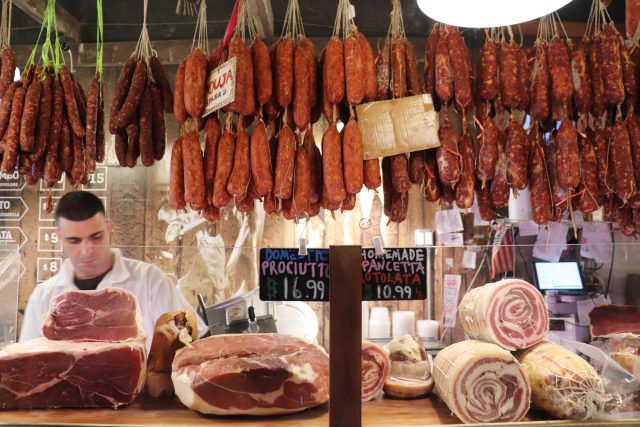
Founded 48 years ago, Calabria Pork Store is the last remaining salumeria on Arthur Avenue. While they stock packaged grocery items, Calabria Pork Store is specifically a cathedral to all things pork – dry sausage “chandeliers” dangle from the ceiling like monuments to cured meats. Order staples like prosciutto, soppressata and hot sausage by the pound.

Dominick’s

Entering Dominick’s is like walking into a stranger’s family dinner and being accepted into the fold immediately. Long tables are often shared with other patrons, and they are adorned with baskets of fresh house bread, red wine and generous portions of all the old-school Italian American classics you can eat. Opt for sharing family style and enjoy a mammoth-sized stuffed artichoke, ravioli drizzled with olive oil and covered with red sauce or the linguini with white clam sauce.

Emilia’s 

Emilia’s is a great lunch option, teeming with all the Italian American classics you could want and a back patio that welcomes in sunlight. It’s all about the gnocchi at Emilia’s. The delicious miniature dumplings of flour and potato are made by hand in-house and served in a Bolognese sauce.

Full Moon Pizza

Full Moon Pizza

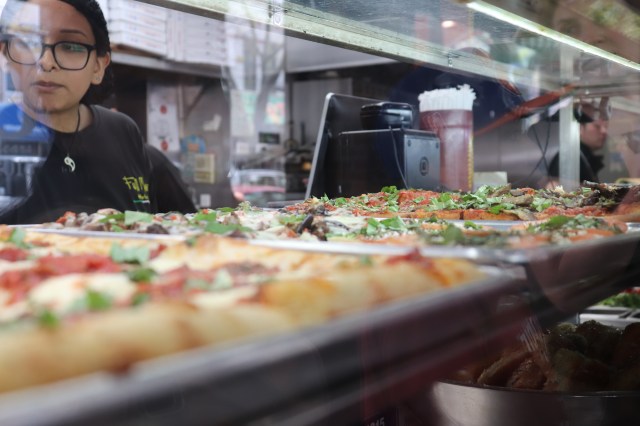
The pizza chefs at Full Moon Pizza have perfected their craft – a crispy, thin crust and only the best toppings. Specialty slices like chicken parm or BBQ chicken have excellent flavor without overwhelming the pizza.

Joe’s Italian Deli

Joe’s Italian Deli has been providing the Bronx with fully loaded sandwiches, prepared foods, groceries, cheeses and meats since 1979. If you’re new to Joe’s, try some homemade cheese like scarmoza, the Southern Italian cheese made with pieces of sun-dried tomatoes, olives and arugula, or opt for their highly sought after mozzarella.

Randazzo’s Seafood

Randazzo’s is a seafood market that’s open year-round. Ask for a dozen clams or oysters to be shucked open and placed on a platter alongside a wedge of lemon and eat them how they’re supposed to be eaten: swimming in their own seawater brine. 

Tony and Tina’s Pizzeria

Tony and Tina’s Pizzeria         

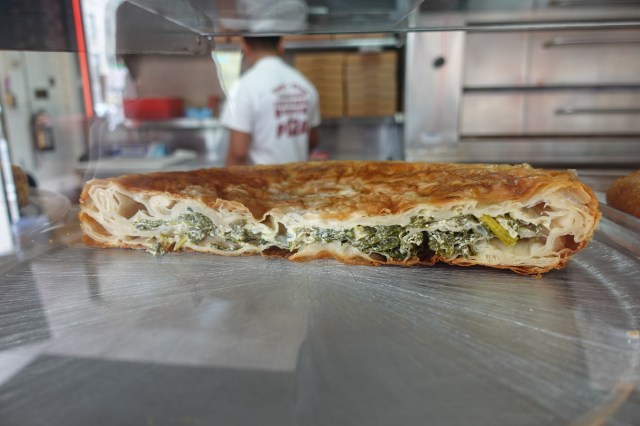
While also a pizzeria, Tony and Tina’s is most well known for their burek, an Albanian favorite that is part pastry, part savory pie. Flakey phyllo dough crust is filled with meat, cheese, pumpkin or spinach creating a multi-textural, crunchy and chewy treat. Make sure to drizzle a spoonful of their tangy homemade yogurt over the top of your burek for the full experience.  

Bakeries

Artuso Pastry Shop

Artuso Pastry Shop

Artuso Pastry Shop is the go-to bakery in the Bronx’s Little Italy for sfogliatelle, the shell-shaped pastry with a ricotta and citrus cream filling that is commonly known as “lobster tail” in the States. The sfogliatelle at Artuso’s has a flakey outside, a soft and sweet filling and is generously sprinkled with confectioners’ sugar.

Gino’s Pastry Shop

Gino’s is an old school bakery with excellent prices and a cannoli that will imprint itself on your brain. The cannoli are fresh and filled with ricotta cream upon ordering. They have a crunchy outer shell and are dipped in pistachio or chocolate chips.

Madonia Bakery

Madonia Bakery has been baking bread on Arthur Avenue since 1918. The smell of fresh bread hits you on the street before you even enter. Choices are plentiful, with savory breads like their ciccola (pane con ciccioli), which is baked with rendered pieces of pork fat, and sweet options like cranberry walnut bread.

Morrone Pastry Shop

Visit Morrone Pastry Shop and Cafe for an after-dinner gelato and a cappuccino. The outdoor seats are perfect for people watching as crowds of hungry patrons navigate their way along Arthur Avenue. Sit and reflect on your day and plan your next visit to Little Italy. 

Have you been to the Bronx’s Little Italy? What is your favorite thing to eat there? Tell us in the comments.

Subscribe to Your AAA Newsletter

Sign up and receive updates for all of the latest articles on automotive, travel, money, lifestyle and so much more!

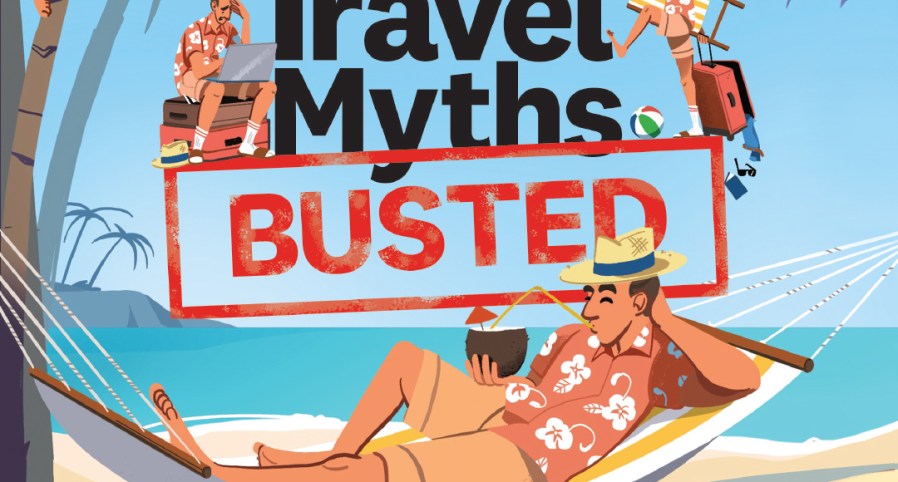
Ask a Travel Advisor: Travel Advisor Myths and Facts

Planning a trip from start to finish can be exciting, but it also takes a lot of time and work. While you’ve likely dreamed up all kinds of travel adventures, turning them into a reality is another story.

The challenge of travel planning is the details: sticking to your budget, figuring out where to stay and eat, booking activities and tour reservations. Plus, there’s the particulars you might not be thinking of, like currency exchange, transportation and travel insurance. Now, especially with the ever-changing travel landscape, it can be hard to know where to begin.

That’s where AAA travel advisors come in. If you haven’t used their expert services already, what’s keeping you from scheduling an appointment? Maybe you think they’re too expensive or that they’ll take control of your trip. Chuck Nardozza, managing director of travel sales for AAA Northeast, and Anne Lischwe, travel sales manager, have heard it all. Here, they set the record straight on 10 of the top travel advisor myths.

Myth: Travel advisors are unnecessary.

Fact: Travel advisors can offer a level of expertise, convenience and peace of mind that simply can’t be matched by booking travel online. While some travelers may prefer to be at the helm of their own travel plans, those looking for personalized advice and support should consider working with a travel advisor.

Myth: Travel advisors are expensive.

Fact: Not if you’re a AAA member! Access to thousands of travel advisors is part of your membership. We don’t charge any fees for booking your travel packages or cruise vacations (though, there is a service fee if you are booking air only.) Working with a AAA travel advisor can actually save travelers money; we have access to exclusive deals and packages that are not available to the general public. Moreover, travel advisors can help you maximize the value of your travel budget by providing insider tips and tricks.

Myth: Travel advisors only book luxury travel.

Fact: Travel advisors can help with all types of travel, from budget-friendly options to high-end luxury experiences. Simply tell your advisor what you’re looking to spend, and they’ve got you covered from car rentals to world cruises and everything in between.

Myth: Travel advisors only book packages.

Fact: “We do book travel packages and cruise vacations, but that’s not all. We can help with flights, hotels, car rentals, activities and travel insurance, too,” Nardozza said.

Myth: Travel advisors only work with large groups.

Fact: Travel advisors can help plan trips for any size group, from solo travelers to large groups, providing valuable advice, support and expertise along the way. As a matter of fact, group travel, multi-generational trips and destination weddings are booming. While these trips can be complex, travel advisors can provide personalized advice and support to ensure travelers have a seamless and enjoyable experience. 

Myth: Travel advisors are for your grandparents.

Fact: Many thought the internet would shut down travel agencies for good, but that’s not the case at all. Today, there’s such an overload of information online, people are turning to travel advisors to sift through all the noise.

Since the COVID-19 pandemic, there’s been a return to travel advisors, even for younger generations. Some studies have shown that millennials like working with travel advisors more than boomers do, partly because booking travel is not always an easy digital experience. Millennials and Gen Z are used to one-click and done, doorstep delivery. When it comes to the many nuances of planning a trip, a travel advisor is just about as close to that as you can get!

Myth: Travel advisors only book popular destinations.

Fact: Travel advisors can help with travel to any destination, whether it’s a popular tourist spot or a remote and off-the-beaten-path location.

Myth: Travel advisors don’t have access to better deals.

Fact: Your advisor will help find you savings wherever possible. They often have access to hot deals, exclusive member perks and discounts. 

Myth: Travel advisors take control of your trip.

Fact: Travel advisors are exactly that – advisors. And together, you are a team. They ask questions to understand your preferences and budget to create your perfect custom, never cookie-cutter vacation, even if all you know is that you want to go away. “Advisors are there to find your best trip,” said Lischwe. “Don’t know what you want to do or where you want to go? Tell your advisor what you like to do and what you’re interested in, and they can make suggestions and find the best option for you.”

Myth: Travel advisors work only with certain travel suppliers.

Fact: Travel advisors work with a variety of travel suppliers, including hotels, airlines, cruise lines and more, and can help you find the best options for your trip. AAA has preferred partners that cover every continent, travel type and budget to offer our members exclusive perks and unmatched service levels.

Have a question for our travel advisors? Ask away!

What do you think of these travel advisor myths? Tell us in the comments.

Subscribe to Your AAA Newsletter

Sign up and receive updates for all of the latest articles on automotive, travel, money, lifestyle and so much more!

How to Pack a Moving Truck

Moving is a big job, but it helps when you know how to get the job done right. If you have a plan for how you’re going to pack your moving truck, it can make the entire process of moving smoother. Here’s how you can pack a moving truck like a pro.

Listen to Our Podcast

Moving out of your parents' house and into your first place? Check out Episode 9 of our podcast, Merging Into Life: Moving Out for the First Time.

Tune In

Break Down What You Can

The more compact something is, the easier it will be to move. Disassemble all the furniture you can, like bedframes, dining tables and desks. You can even take the feet off of your couches and upholstered chairs if you need to save space. If you are disassembling a piece of furniture, keep all parts (including screws, bolts and other small pieces) together, so that there is no confusion when you reassemble it in your new home.

Protect Your Furniture

Even if you can’t fit your items in a box, they still need to be protected. Use furniture padding to protect the surfaces of your belongings on their journey, so that it’s harder for them to scrape against each other. Rolling up a rug? Roll it with the carpet backing on the inside and cover the outside with plastic. Most moving trucks will include hooks and loops to help secure your items with tie-downs, which help anchor your items so they don’t shift and bump into each other when you hit the road.

how to pack a moving truck - family moving day

Get in Formation

When packing a truck, the experts at Penske recommend using the “I” formation. The heaviest items in should be flush along the front and back of the truck, with a line of heavy furniture and boxes running through the middle of the truck, creating the letter “I.” This helps the truck stay balanced and can prevent your items from being damaged.

The largest and heaviest items in your home, like your washing machine or refrigerator, should go in the moving truck before anything else. Make sure you have other people to help you carry these items – it’s probably going to be more than a two-person job. Put these items in the front of the truck, closest to the cab, and make sure they’re balanced along the width of the truck. Keep all items in an upright position.

Along the center of the truck, make a line of heavy furniture and boxes. A good strategy is to fill the center with your tables and desks, then store your heaviest boxes underneath them. On either side of the tables, you can store softer furniture items, like couches, upholstered chairs, rolled-up rugs, box springs and mattresses. Set aside all of your smallest items and boxes for later.

The back of the truck, closest to the doors, should be where you put all your additional heavy boxes to anchor the “I” formation.

Fill in the Gaps

Even after you’ve loaded in all your biggest furniture and heaviest boxes, you probably still have a lot of stuff left over. Fill in the gaps and crevices of your moving truck with your smaller items and boxes. A densely-packed truck will make sure that things don’t slide and knock into each other. This is also a good time to try and fit in your irregular-shaped items, like floor lamps.

Transfer your lighter boxes to the truck and stack them on top of the heavy ones. If you need to put more fragile items in the body of the car, put them close to the top and secure them so they won’t move around. It’s also a good idea to wrap them in a lot of padding. If you have small and extremely fragile items, it might be best to keep them in the cab with you.

Don’t forget – when renting a truck from Penske, AAA members receive exclusive savings of 12% or more.

Subscribe to Your AAA Newsletter

Sign up and receive updates for all of the latest articles on automotive, travel, money, lifestyle and so much more!

Southeast Asian Restaurants in the Northeast

In 2018, exhausted and burned out from work, I quit my job and bought a one-way ticket to Cebu City in the Philippines.

I spent the next six months hopping from country to country in Southeast Asia. Along the way, I sought the best parts of each country’s cuisine, slurping spicy bowls of noodles and gnawing on skewers of meat at roadside plastic tables. Having been to several Southeast Asian countries before, I’d already established an affection toward the variety of food and culture in the region.

When I returned home, I quickly came to crave the delicious meals I had overseas. I wandered the side streets and back alleys of New York City with a voracious hunger. Once those options were exhausted, I branched outward to neighboring states. The following list is my recommendation for Southeast Asian restaurants in the Northeast.

Indonesia

Papa Don NYC

Astoria, N.Y.

After a night of drinking with friends in Jakarta, there was no better food to fill a late-night craving than martabak (pictured above). Papa Don’s martabak manis – a dessert version of the buttery, fluffy, pancake-like bread – comes with sweet fillings like chocolate, Nutella, peanuts and sprinkles.

Warung Selasa

Elmhurst, N.Y.

On Tuesdays, Chef Dewi Tjahjadi cooks up Indonesian classics in the back of Indo Java, an Indonesian grocery store in Elmhurst, Queens. Originally from Surabaya, Chef Dewi’s dishes represent multiple locations from Indonesia’s 16,000 islands. The menu rotates weekly, often offering two options. If you’re lucky, you might get to try my favorite, soto betawi, a beef soup from Jakarta that sends my endorphins flying. The space rotates chefs, so if you can’t make it on a Tuesday, Thursday’s feature, Warung Kamis, has similarly excellent options.

southeast asian restaurants
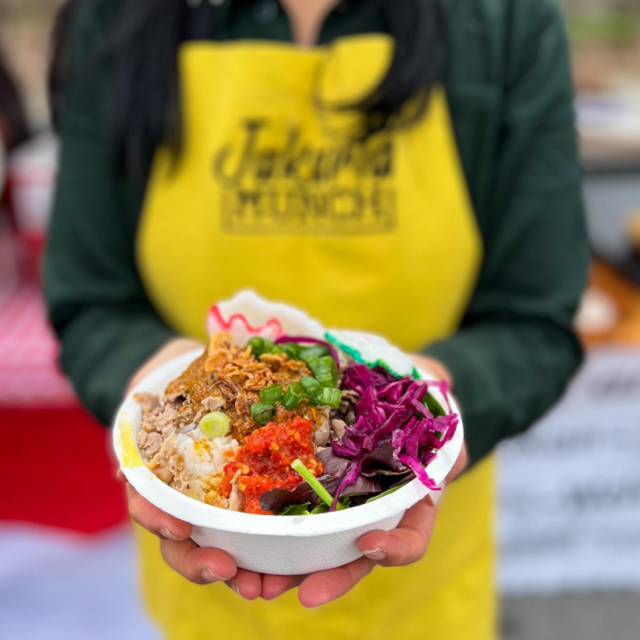
Chicken, vegetables, rendang sauce and spicy sambal by Jakarta Munch.

Jakarta Munch

Brooklyn and Manhattan

Ratih Wulandari Del Valle started Jakarta Munch in 2019 after leaving an office job, and we’re all better for it. Her salad and rice bowls feature well-known dishes from Jakarta, like spicy beef rendang. And on special occasions, you may find my favorite Jakarta breakfast, bubur ayam, a rice dish not unlike congee or rice porridge, made with shredded chicken and an array of tasty condiments like fried shallots, sweet soy sauce, peanuts and chicken stock. Find the food stall at the Smorgusburg food market in Prospect Park on Sundays and in front of the World Trade Center Oculus on Fridays.

Philippines

Little Quiapo

Jersey City, N.J.

Go to Little Quiapo for a traditional longsilog breakfast of eggs, sausages and rice. But if you want an authentic sweet treat, you need to try the halo-halo at this Southeast Asian restaurant. This mixed dessert features ice cream, condensed milk, corn, fruit, beans, shaved ice, tapioca and jellies. Commence sugar rush.

southeast asian restaurants
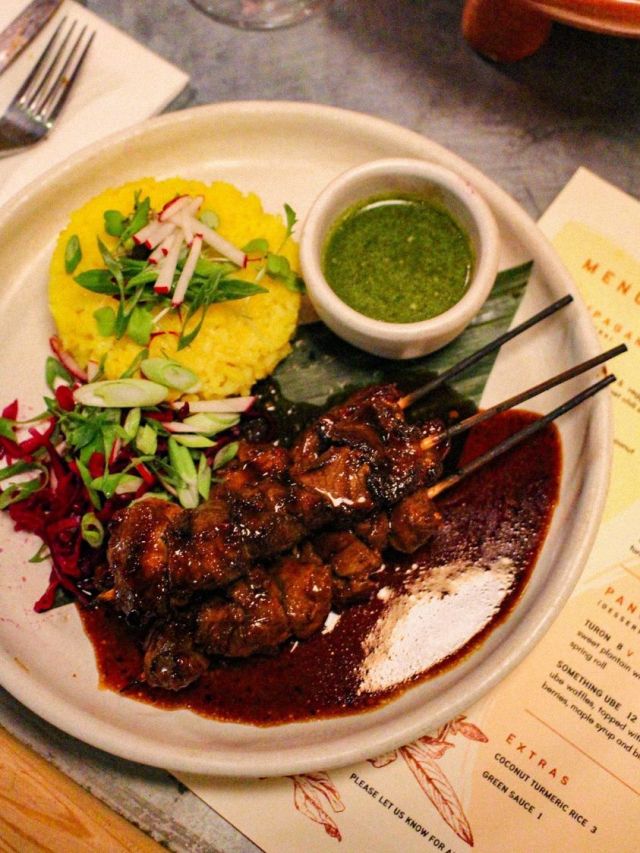
Filipino pork barbecue with cilantro parsley green sauce and coconut turmeric rice at Patikim. (Photo: Erika Costa)

Patikim

Brooklyn, N.Y.

Erika Costa is the cook behind the Filipinx pop-up in New York City, cooking up Filipino comfort food and classic street food. Fried tilapia, chicken adobo and pork lumpia (traditional crispy spring rolls), often grace her menus. Follow Patikim’s schedule on Instagram and try to get there early as it is sure to sell out. Bring a group of friends, order everything and share.

Cambodia

Heng Lay

Lowell, Mass.

Like many Cambodian restaurants in the Northeast, Heng Lay serves a mixture of Cambodian and Thai dishes. For a dish that’s distinctly Cambodian, I recommend the terk kreung, a traditional fish-based dip for raw vegetables. It has a deep, savory flavor that comes from tamarind and fish paste. You will be lapping it up when you run out of veggies.

Vietnam

Pho 501

East Hartford, Conn.

I was sitting at a plastic table on the second floor of a restaurant overlooking the street in Saigon when a torrential downpour rained angrily on the passing motorbikes. I took in the scene while slurping noodles from a mammoth bowl of bun bo hue. This spicy bowl of beef, pork pieces and cilantro haunts my dreams. Go to Pho 501 on a Saturday, which is the only day the soup is offered, and yes, you should ask for it with pig’s feet.

Ba Xuyen

Brooklyn, N.Y.

My favorite banh mi in New York City is found at Ba Xuyen. I want the classic sandwich of pate, head cheese, ham, butter and pickled vegetables, wrapped in a fresh baguette without any flair. It reminds me of early morning runs to a local street vendor in District 1 of Saigon, who sold me sandwiches wrapped in newspaper.

Saigon Social

Manhattan

Bun rieu is perhaps the greatest single dish I’ve eaten anywhere, ever. I first tried it in Saigon, but this magical bowl is also sold at Saigon Social in New York City. It features crab, pork, shrimp, tofu and rice vermicelli in a pork and chicken broth.

Malaysia

Kopitiam

Manhattan

There are many incredible places to get Malaysian food in New York City, yet I keep returning to Kopitiam. In Malaysia’s capital, Kuala Lumpur, I ate plate after plate of nasi lemak, which I think is the perfect introduction to Malaysian cuisine. At Kopitiam, this national dish has coconut rice, ikan bilis (fried anchovies and peanuts), cucumber, hard-boiled egg and a side of house sambal sauce. And, of course, you must order kopi (coffee).

Thailand

Mao Mao 

Brooklyn, N.Y.

When the summer heat in Thailand was at its most oppressive, all I wanted to do was relax with a cold Chang Beer and a plate full of street food. At Mao Mao, you can have a similar experience while watching classic films on a big screen and munching on Thai drinking snacks. But don’t expect a fine dining experience; this is the real deal. The plastic plates, cold drinks and dim ambiance take me back to Bangkok.

Pye Boat Noodle

Astoria, N.Y.

Boat noodle soup is an underrepresented Thai dish, and that needs to change. Pye Boat Noodle in Queens has you covered. The soup comes as a big bowl of murky broth with fiery chilies, fresh garlic and cilantro, pork and rice noodles. Often, the dark broth is flavored with pig or cow blood.

Laos

Khe-Yo

Manhattan

Khe-Yo is New York City’s only Lao restaurant. There have been excellent Lao pop-ups throughout the five boroughs, but this is the sole brick and mortar. I recommend the pork curry noodle bowl and as many small plates as you can eat.

Lao food is somewhat elusive, as many Lao chefs and restaurant owners have historically run Thai restaurants in the United State due to the idea that it is more marketable and familiar. It’s time we familiarize the American palette with this truly wonderful cuisine.

Myanmar

Amayar Kitchen

Maywood, N.J.

Regrettably, I haven’t made it to Myanmar yet. Therefore, my love of Burmese food isn’t tied to memories of my travels, but I can recommend Amayar Kitchen all the same. Order the traditional Burmese tea leaf salad with fermented tea leaves, crunchy peanuts and fried shallots. And don’t forget to try the kyae oh noodle soup, a pork bone broth with meatballs, offal and other chewy bits and rice noodles.

Do you have a favorite Southeast Asian restaurant in the Northeast? Share it with us in the comments below.

Get more restaurant recommendations from AAA.

Featured image: Martabak from Papa Don NYC.

Subscribe to Your AAA Newsletter

Sign up and receive updates for all of the latest articles on automotive, travel, money, lifestyle and so much more!

Don’t Believe These 6 International Travel Myths

International travel is bouncing back in a major way with travelers looking to make up for time lost during the pandemic. Still, longstanding rumors about traveling abroad may be keeping some from venturing out into the world. With the help of our expert AAA travel advisors, we bust six common international travel myths, so you can feel better about visiting other countries and embracing foreign culture.  


What kind of traveler are you?

1. What’s your dream vacation?

Need to get a passport or renew? AAA members get exclusive rates on expediting services for U.S. passports and global travel visas with RushMyPassport.

International Travel Myth No. 1: It’s Expensive

International airfare ebbs and flows with the changing seasons, so you should do your research and take advantage when you can. In fact, some domestic destinations can be more expensive than international. Prices also rise during school breaks or holidays, so if you modify your trip to accommodate this, you can score savings.

“If you’re flexible on your timing and destination and can travel in the off-season to avoid popular times, this will definitely help with cost,” said AAA travel advisor Yannick Gonzalez. “Also, I recommend booking in advance to combat fees. Otherwise, it’s a gamble to wait.”

Gonzalez adds that England and Ireland remain more affordable, along with Mexico, Dominican Republic and Jamaica for resort beach vacations. Destinations like Italy and Greece are higher budget.

International Travel Myth No. 2: You Have To Go Far Away

Adventuring to another country doesn’t mean you have to plan an exotic expedition around the globe. Lucky for travelers in the Northeast, America shares its border with two countries that are easily accessible.

You can experience all the culture and history in Canada and stay closer to home, while Mexico remains a reliable tropical getaway. Even Iceland is only a five-hour flight from Boston, and once you’ve landed, there is so much to do nearby.

Ultimately, it’s important to not let distance deter you. “A lot of my clients drive to Canada, Montreal especially, because it’s an easy drive from here on the East Coast,” Gonzalez said.

International Travel Myth No. 3: It’s Hard to Travel With Kids

It’s infinitely more rewarding to journey with your children at any age. There are myriad benefits, including introducing them to new cultures and showing them the wonders of exploring. Although, Gonzalez admits there are challenges and unpredictability, it just takes careful planning to ensure international adventures are less daunting for families. “It depends on the destination and proposing the right product to keep the kids entertained with an age-appropriate activity,” she said.

Some tips to consider when traveling with little ones:

  • Strategically schedule flights and tours around naps or mealtimes.
  • Pack the necessities (as well as toys and treats they can enjoy on the plane).
  • Allow downtime and have a Plan B in case a scheduled activity falls through at the last minute (even if Plan B is downtime).

International Travel Myth No. 4: It’s Unsafe

There are so many misconceptions around safety. And though there inevitably will be neighborhoods or destinations that travelers may want to avoid, Gonzalez said it comes down to being aware of your surroundings.

Understanding culture, customs and etiquette is important, too, and will amplify your appreciation of the country and help sidestep misunderstandings.

“Safety is always top of mind” said Gonzalez, but your worries shouldn’t keep you from a dream vacation.

International Travel Myth No. 5: It’s Not Inclusive or Acceptable

While stairs and sidewalks, as well as remote natural wonders, are difficult to navigate if you use a wheelchair or have other physical challenges, that shouldn’t deter you from discovering the world.

AAA travel advisors can secure tours and guides that accommodate special needs, including sign language interpreters for the hearing impaired, assigning travel buddies for the blind and finding access to adaptive bikes.

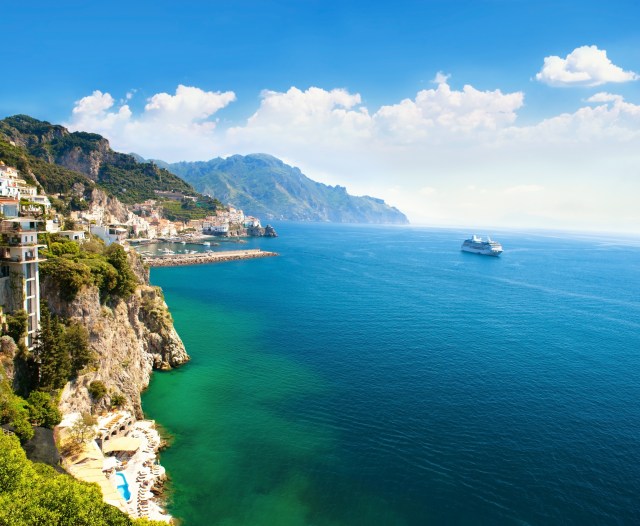
amalfi coast. international travel myths.

International Travel Myth No. 6: It’s Overwhelming

It doesn’t have to be! Streamline and simplify your trip with Gonzalez’s top five tips:

  • Check passport validity. Everyone’s passport should have at least six months validity beyond your return travel date. See if other documents are required for the country you are entering, such as visas or immigration forms.
  • Travel Insurance is highly recommended, especially when traveling with children. It not only protects trip bookings and cancellations but covers you in case of unforeseen medical issues.
  • Check if currency needs to be converted. This can be ordered in advance through AAA.
  • Check the U.S. State Department for any destination travel advisories ahead of your trip and join the Smart Traveler Enrollment Program for embassy notifications.
  • Prepare your international communication strategy by enabling your international cell plan or using WhatsApp to stay in touch with family and friends from wherever you are in the world.

Let a AAA travel advisor help you plan your international vacation.

What do you think of these international travel myths? Tell us in the comments.

Subscribe to Your AAA Newsletter

Sign up and receive updates for all of the latest articles on automotive, travel, money, lifestyle and so much more!

Parkway vs. Highway: What’s the Difference?

Parkway vs. highway, freeway vs. expressway. We certainly have a lot of names for major roadways. Why is that? Is the expansive list just an expression of our love for the English language? Can the variations simply be chalked up to regional differences? (e.g., do you call it “soda” or “pop”?) Or is there another explanation altogether?

Granted, many of these terms are used interchangeably today. But they were each originally created for distinctive purposes and with defining characteristics. By and large, these purposes and characteristics remain today.

So, what exactly is the difference between a parkway and a highway. And what about freeways and expressways?

AAA Driver Training

Start in the right lane.

Learn More

Parkway vs. Highway

What is a Highway?

The major difference between highways and other types of major thoroughfares is open access. Highways often intersect with side streets and private driveways that provide motorists with continual entry points. Parkways are only accessible via designated entrances.

Highways can also be lined with businesses, gas stations, parking lots and even private homes. This, coupled with the aforementioned intersections, contributes to a slowdown in traffic that limits a highway’s effectiveness in promoting movement.

What is a Parkway?

Parkways were originally devised of in the late 1800s to connect large, urban parks that were becoming increasingly popular. As such, they were developed as extensions of these lush spaces. Early parkways were constructed along wider corridors, allowing them to be lined by trees and lawns. The roads themselves were broader, which promoted a sense of leisure and recreation that directly opposed the cramped city streets of the time.

To this day, parkways typically provide a more scenic route than other types of major roadways. As opposed to highways, parkways are limited-access roads and, in sticking to their recreational origins, are often only open to passenger vehicles.

Did You Know? Famed landscape architects Frederick Law Olmsted and Calvert Vaux devised the world’s first parkway, New York City’s Eastern Parkway, as a scenic accessway to Brooklyn’s Prospect Park.

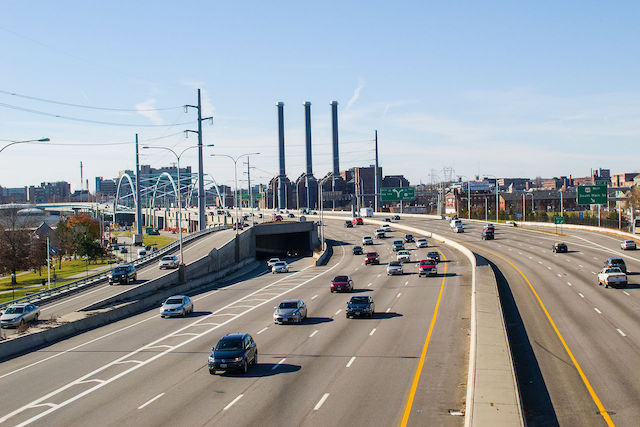
parkway vs highway

Freeway vs. Expressway

What is a Freeway?

Highways and parkways successfully facilitated traffic in the nascent stages of the automotive era. But as more and more cars took to the road during the early 1900s, a new type of roadway was needed to handle the increased traffic.

Edward M. Bassett, one of the founding fathers of American urban planning, developed the solution. Bassett envisioned a roadway that incorporated features of both highways and parkways to create a freer flow of traffic. As such, these new thoroughfares would be known as “freeways.” Like highways, freeways promote transportation by providing a faster, more-direct route between destinations. They did not, however, intersect with other streets or be lined by private business and homes. Freeways would also be open to both personal and commercial vehicles, unlike parkways.

What is an Expressway?

Expressways are similar to freeways, with one major distinction. Expressways are defined as divided highways with partial control of access, according to the Federal Highway Administration, as opposed to freeways, which have full control of access. This means that expressways may intersect with other roads.

With the parkway vs. highway issue in the rearview mirror, learn about some other dueling automotive topics, such as synthetic vs. convention oil and manual vs. automatic transmission.

Subscribe to Your AAA Newsletter

Sign up and receive updates for all of the latest articles on automotive, travel, money, lifestyle and so much more!

3 Kid-Friendly Hotels Perfect for Your Next Family Getaway

Whether you have tots or teens, traveling with kids means looking for hotels that are fun for everyone. Tasty breakfasts, onsite laundry, locations close to the action and entertainment and price ranges for every budget, make Wyndham Hotels & Resorts perfect for families.

Days Inn® by Wyndham Hershey

Hershey, Pa.

Located half a mile from Hersheypark®, let Days Inn be your home base after a day of racing between rides at the park and sugar rushes at Hershey’s Chocolate World.

This economical property is great for families who want a convenient place to rest their heads while visiting Pennsylvania’s charming chocolate capital. Your whole crew can grab a complimentary breakfast item before hitting the amusement park, plus kids can enjoy the indoor pool during down time.

Save at Wyndham Hotels & Resorts

With 9,000 hotels, a great stay is closer than you think. AAA members save 10% or more.

Book Now

Howard Johnson® by Wyndham Anaheim Hotel & Water Playground

Anaheim, Calif.

Looking for a well-priced, kid-friendly hotel for your family’s next trip to Disneyland® Resort? Dreams do come true. Howard Johnson Anaheim Hotel & Water Playground is situated within a mile of Disneyland® Resort.

Beyond its ideal proximity to the parks, this family-friendly hotel’s highlights include a garden pool, children’s pool, play area, water park and shuttle to local attractions.

Wyndham Grand® Rio Mar Puerto Rico Golf & Beach Resort

Rio Grande, Puerto Rico

Escape to Wyndham Grand Rio Mar Puerto Rico Golf & Beach Resort in tropical Puerto Rico for the ultimate easy, breezy family getaway. The 500-acre property features lagoon-like pools, ten restaurants and lounges and a long stretch of sugar-like sand beach.

Kids will love the daily activity schedule; depending on the week, options include dancing, nature walks, movie nights and craft activities. And there’s bliss for parents, too – from the casino and Balinese-inspired therapies at the sprawling Mandara Spa to two 18-hole golf courses and tennis courts.

AAA members save 10% or more at participating Wyndham Hotels & Resorts. Book now at WyndhamHotels.com/AAA.

Subscribe to Your AAA Newsletter

Sign up and receive updates for all of the latest articles on automotive, travel, money, lifestyle and so much more!

Faster Flight Routes for Summer Travel

Summer vacation can’t come soon enough. Fortunately, travelers flying domestically will be arriving at their destinations a bit faster, thanks to 169 shorter East Coast flight routes.

Designed to cut travel by 40,000 miles and 6,000 minutes annually, the Federal Aviation Administration announced the launch of more direct flight paths on May 1, just in time for peak getaway season.

While saving passengers time, the new routes also save on fuel – helping to cut down on air travel’s notoriously high carbon emissions – and prevent delays and cancellations by giving air traffic controllers more flexibility to redirect flights, especially when faced with bad weather. Further, “fewer converging points and more simple flows enhance safety,” the FAA said in their statement.

If your flight does end up getting delayed or cancelled, travel insurance can help. Don’t know where to start? AAA travel advisors make it a seamless part of the trip-planning process.

After more than seven years of development, the new and improved flight routes are a sign of some industry catchup, replacing legacy routes built when airplanes relied on ground-based radar, instead of GPS, which limited the way planes could travel.

The flight paths are great news for those traveling along the East Coast, as they are mainly operating on flights above 18,000 feet along the Atlantic Seaboard.

Still need to plan a summer vacation? It’s not too late! Schedule an appointment with a AAA travel advisor today.

Subscribe to Your AAA Newsletter

Sign up and receive updates for all of the latest articles on automotive, travel, money, lifestyle and so much more!

Spend a Moment at … Oak Bakeshop Jewish Bakery and Cafe

Oak Bakeshop

130 Cypress Street, Providence

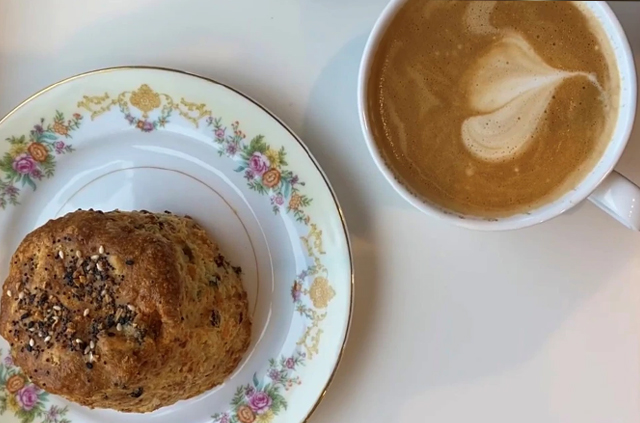
You can expect some traditional Jewish fare at Oak Bakeshop, but that’s certainly not all. Their chuckle-inducing tagline states that they’re a “Jew-ish” bakery, with “Some Jewish things, some not Jewish things … but mostly just figuring it out.” We get it.

The bakery itself sits atop a small hill and feels like a beacon of comfort with welcoming large windows and a cozy, colorful interior. Settle in at the high-top window seating with your coffee and laptop, or mingle at the long center table with other patrons as you await your to-go order.

Offerings change daily with some Jewish menu items (Jerusalem bagels, rugelach, babka and more), a few Kosher items (chocolate chip cookies, rainbow cooking, Mandel bread, challah and more) and a selection of other goodies like peanut butter and jelly cookies, quiche and savory scones.

Have a look over their merch section where you’ll find plenty of pick-me-ups from t-shirts to mugs and candles.

Our suggestion: When it’s available, don’t miss the coffee cake.

Spend a moment with us at more of our favorite places.

Subscribe to Your AAA Newsletter

Sign up and receive updates for all of the latest articles on automotive, travel, money, lifestyle and so much more!

High Stakes on the High Seas: The Best Cruise Ship Casinos

If your ideal vacation involves sightseeing or sunbathing by day and trying your hand at blackjack, roulette or slots at night, the cruise industry has you covered. Similar to their land-based counterparts, the best cruise ship casinos offer the gamut of gaming options, albeit on a smaller scale, within close proximity to bars, restaurants and your cabin.

The caveat with cruise casinos is they can only open when the vessel is at least 12 miles from the coastline, so it’s not until you sail away from port that the lights, bells and winner-takes-all whoops begin.

To gamble while the sun shines, book a cruise itinerary with several sea days, when the ship’s casino can stay open until the last players collect their winnings (or play their final chips). Here’s a look at some of the best cruise ship casinos by cruise line.

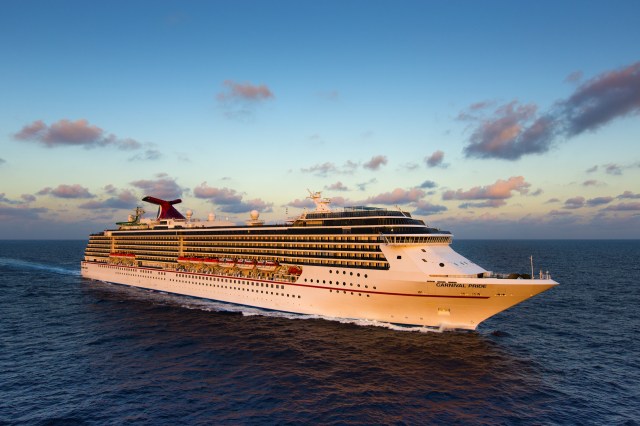
Carnival Pride
Carnival Pride

Carnival

Carnival has always been big on nightlife – and this extends to the busy casinos onboard its 24 “Fun Ships.” Two of the line’s biggest and newest vessels, Carnival Celebration and Mardi Gras, accommodate more than 5,000 guests, with big and lavish casinos to match. Guests who join the Carnival Players Club earn points for free drinks, and spa treatments.

Royal Caribbean

Each of Royal Caribbean’s 26 ships features a lively Casino Royale – offering slots, roulette, craps, poker and blackjack – but the biggest, splashiest and best are onboard vessels introduced over the past decade. Sail on 5,100-passenger Oasis-class ships (Wonder of the Seas, Oasis of the Seas, Allure of the Seas, Harmony of the Seas and Symphony of the Seas), to experience the largest casinos at sea, each featuring French Riviera-inspired decor and offering more than 450 slot machines and dozens of gaming tables. The 7,600-passenger Icon of the Seas also has a casino that will make you go “wow.”

Norwegian

Norwegian offers more than 2,800 slot machines and 200 gaming tables across its 19-vessel fleet and the biggest and best casinos are onboard its newest ships: Norwegian Prima, Norwegian Encore, Norwegian Bliss, Norwegian Escape, Norwegian Getaway, Norwegian Breakaway, and coming in 2023, Norwegian Viva. The line also offers a Casinos at Sea program that lets players earn free rewards on Norwegian as well as Regent Seven Seas and Oceania Cruises.

Celebrity

With its 12-vessel main fleet (excluding three smaller Expedition-class ships), Celebrity has focused on sophisticated interior design, and its casinos are no exception. The line’s three newest vessels, 2,918 to 3,260-passenger Edge-class ships (Celebrity Edge, Celebrity Apex and Celebrity Beyond) each have a stylish Fortunes Casino and its Blue Chip Sailings feature blackjack and slots tournaments.

cruise ship casinos
Couple enjoying the casino on a Holland America cruise. (Photo: Tara Sgroi / Holland America Line)

Holland America Line

Casinos on the Holland America Line’s 11 mid-sized ships vary from vessel to vessel, but the most appealing by far is onboard the newest ship, 2,650-passenger MS Rotterdam, decorated in surprisingly understated neutral hues with some bling here and there.
Princess

The two newest Princess ships, 3,660-passenger Enchanted Princess and Discovery Princess, each have a buzzing Princess Casino centered about a dramatic, chandelier-topped spiral staircase fit for royalty. There are tournaments on every cruise, slots, table games, bingo and more. One of the perks of Princess MedallionClass cruising is that you can play for cash from anywhere onboard with the mobile Ocean Casino.

Oceania Cruises

This premium line’s six ships accommodate just 684 to 1,250 guests, and even the two larger vessels (Marina and Riviera) have casinos with a decidedly more intimate vibe: They feature just six or so gaming tables and three dozen slots. Their seventh ship, the 1,200-passenger Vista, just set sail May 2023.

Do you enjoy cruise ship casinos? Tell us about your favorites in the comments below.

Plan and book your next cruise vacation with AAA

Subscribe to Your AAA Newsletter

Sign up and receive updates for all of the latest articles on automotive, travel, money, lifestyle and so much more!

Word Search: Cinco De Mayo

Subscribe to Your AAA Newsletter

Sign up and receive updates for all of the latest articles on automotive, travel, money, lifestyle and so much more!

7 Free Things to Do in Rhode Island

budget wise

With more than 400 miles of coastline, Rhode Island is dubbed the Ocean State for good reason. This tiny state is a must-see on any trip to New England. Luckily, if you’re looking to visit on a budget, there are many free things to do in Rhode Island year-round, ranging from walks along the coast in Newport to visiting art museums in Providence.

Colt State Park

Bristol

If you’re looking for things to do in Rhode Island for free and you could use some fresh air, pay a visit to Colt State Park. Set along the edge of Narragansett Bay, this stunning state park is home to 464 acres of extended lawns, 4 miles of paved pathways and a large pier jutting into the bay.

The park’s amenities, including the East Bay Bike Path running through the property, make it popular for warm-weather activities like kite flying and picnicking as well as cross-country skiing and snowshoeing in the winter.

Colt State Park is located next to Bristol Town Beach, which you can visit for a fee. It also neighbors Coggeshall Farm Museum, which you can also enter for a fee. It features costumed historical interpreters who educate visitors on farm life in the late 1700s,

Head to Bristol during the summer to attend the Bristol Fourth of July parade, billed among the oldest in the country.

Cliff Walk

Newport

The Cliff Walk is a 3 1/2 mile path along the coast of Newport featuring the crashing ocean on one side and sprawling lawns and the famous Gilded Age mansions on the other.

It is believed that the path was originally carved out by deer and indigenous people; however, it was the wealthy of Newport who made the path accessible in the late 19th and early 20th centuries.

The Cliff Walk is indeed located on a cliff and some spots along the path are set against 70-foot drops. There are multiple sections, including paved areas for strolling and rugged terrain where you have to climb over rocks. There are several entrances and parking areas for your convenience, so you can choose the part of the trail that’s right for you.

The Cliff Walk is one of the most popular things to do for free in Rhode Island year-round, though you’ll have to bundle up to endure the New England cold in winter.

Frosty Drew Observatory

Charlestown

Every Friday night throughout the year, the Frosty Drew Observatory opens its doors to the public for a free night of stargazing.

The quality of such stargazing is, of course, best during nice weather when visitors can peer through one or more of the observatory’s seven telescopes. In foul weather, visitors can still attend presentations with astronomers and see exhibits in the science center. Remember, you will be outside, so be sure to dress warmly in the colder months.

The main telescope at the observatory is a Meade Schmidt Cassegrain LX200 16 inch, which the organization claims can “keep pace with almost every other object in the sky,” making it perfect for viewing the moon, planets and meteor showers.

The Frosty Drew Observatory is in lovely Ninigret Park, home to many recreational opportunities including a playground, bike course, swimming and sports fields. 

Rhode Island State House

Providence

Those interested in history, politics or architecture should pay a visit to the Rhode Island State House, the hub of government happenings in the state.

The building was erected between 1895 and 1904 and has one of the largest Georgian marble domes in the world, featuring a mural depicting different points in state history painted on the inside.

Visitors can engage in self-guided, docent-led or virtual tours. Rooms to explore include the house and senate chambers; the state room, often used for news conferences; the Charter Museum, which holds Rhode Island’s first charter signed by King Charles II himself; and the legislative library, containing over 30,000 books, including a set from the 1770s on Rhode Island law, which the public can peruse.

Check out the statehouse’s collection of YouTube videos about the different areas of the building before visiting.

Wright’s Dairy Farm

North Smithfield

Off the beaten trail on a back road in the northern part of Rhode Island, you’ll find Wright’s Dairy Farm. Stop by to see the resident Holstein cows milked every day of the year from 3 to 4:30 p.m. While you’re there, pay a visit to the baby cows or take a self-guided audio tour of the farm, which has been selling milk directly to the public since 1914. All milk is pasteurized on site, so you have “cow-to-bottle” fresh milk in just one day.

Wright’s Dairy Farm’s renowned bakery has been making creative specialty cakes and classic pastries with milk and cream from the farm’s cows, since the 1970s. There’s also The Wright Scoop, the farm’s “cow-to-cone” ice cream shop, where ice cream is served from a Streamline trailer set on the grounds. Classic flavors include black raspberry, mint chip and cookie dough.

RISD Museum

Providence

The famed Rhode Island School of Design’s museum, in operation since 1877, has free admission on Sundays from 10 a.m. to 5 p.m., and Thursdays and Fridays from 5 to 7 p.m.

Its collection contains over 100,000 pieces – 2,000 of which are in the museum – including artwork from around the world spanning thousands of years, from paintings and sculptures to clothing and furniture.

Among the exhibits are Ancient Greek and Roman galleries, metalwork and jewelry displays and featured costumes of the Gilded Age. 

Glass Float Project

New Shoreham

There’s a treasure hunt on Block Island! Hand-blown orbs are hidden across the island on beaches and 30 miles of greenway trails.

The orbs are handmade and placed by artisan Eben Horton, owner of The Glass Station Studio and Gallery in South Kingstown, on the Rhode Island mainland. The tradition began in 2012 with 150 floats. In 2023, there are 550. Most are clear, although 23 are colored in honor of the year.

While the orbs are hidden primarily in June every year, you can embark on your exploring adventure any time. If you’re lucky enough to find an orb, be sure to register it on the project’s website, which requests that seekers only keep one per year.

While the glass float hunt is free, you will have to pay for a ferry ride to the island. The cheapest option is the traditional ferry from Point Judith in Narragansett, R.I.

It’s still one of several great free things to do in Rhode Island.

Plan your next trip with AAA Travel.

For more money-saving tips and inexpensive things to do in the Northeast, check out Budget-Wise.

What are some of your favorite free things to do in Rhode Island? Share them in the comments below.

Subscribe to Your AAA Newsletter

Sign up and receive updates for all of the latest articles on automotive, travel, money, lifestyle and so much more!

Shop and Cook: Panzanella Salad

When I was growing up, the words “panzanella salad” evoked feelings of childish disgust. This, admittedly, is not something you’d expect to hear from the author of this article, so let me explain.

No kid wants vegetables for dinner. And if they do, it might just be a tradeoff for their favorite dessert later. So, no, it wasn’t my favorite thing to grace the dinner table, but it wasn’t long until that changed. Once I owned my own home, did my own grocery shopping and cooked my own meals, suddenly the simple, cheap and delicious panzanella became my very favorite thing to make and enjoy. Who would’ve thought?

If you’re not familiar, panzanella is a popular Tuscan salad that made its way over the pond to become a beloved dish in Italian American households. The origins of panzanella can be traced as far back as the Middle Ages when Tuscany was an agricultural region with an abundance of bread and vegetables. Making panzanella salad was a way to use up any stale bread and make a delicious meal out of simple ingredients. In fact, the name “panzanella” comes from the Tuscan word “panzana,” which literally means “soaked bread.”

Shop

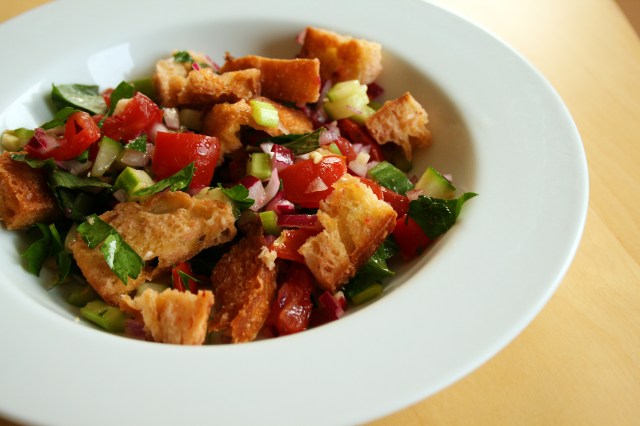
Traditionally, panzanella salad is made with leftover stale bread and whatever ingredients you have on hand, making it especially perfect for the summer when fresh vegetables are most abundant. You’ll often see it made with chickpeas, red onions, tomatoes, feta cheese, cucumber and a light dressing made from lemon juice, olive oil, fresh garlic, and salt and pepper.

Panzanella variations are based on regional differences and personal preferences. Some alterations include the addition of tuna or anchovies, capers, olives, peppers or even grilled chicken.

panzanella salad

The way the bread is prepared varies, too. Some go rustic, tearing the bread into small pieces then toasting with salt and pepper before adding it to the salad, while others prefer to keep the bread soft or soak it in water and vinegar. Whichever way it’s made, panzanella’s incorporation of veggies, carbs and protein allow it to stand on its own as the main course of any meal.

Tailoring your panzanella salad to the seasons is one of the best ways to use up what’s already in your fridge, making it both cost-effective and essentially no waste. Need ideas? Try Bon Appetit’s spring panzanella with snap peas and asparagus. Summer’s the time for tomatoes, corn, zucchini and burrata – the star of this recipe from Dishing Out Health. Food52 recommends mixing in squash for fall, and brussels sprouts and dried cranberries are great additions for winter.

Cook

Watch to see how easy it is to combine everything together:

Hungry? Can’t say we blame you. Find the kitchen gadgets you’ll need to prepare the perfect panzanella in our curated shopping list below.

Will you be trying panzanella salad soon? Tell us in the comments.

Subscribe to Your AAA Newsletter

Sign up and receive updates for all of the latest articles on automotive, travel, money, lifestyle and so much more!

Is It OK to Take Melatonin for Jet Lag?

If you’ve ever flown across the country or an ocean, you’ve probably experienced jet lag. It’s a frustrating experience. No one wants to feel exhausted all day and then struggle to sleep at night – especially on vacation!

Many people take over-the-counter sleep supplements like melatonin for jet lag. But just because something is available over the counter doesn’t mean it’s safe or effective for everyone.

Here’s what experts have to say.

Jet lag 101

“Jet lag is when your internal body clock is mismatched with the time zone that you’ve traveled to,” said Dr. Stephanie Stahl sleep medicine physician and assistant professor at Indiana University Health.

“The daily schedule that is extremely important for the physiology of the human body is disrupted,” said Dr. Meredith Warner, orthopedic surgeon and founder of Well Theory. It’s normal for your body to take one full day of recovery for each hour of time difference, she said.

Is it OK to take sleep supplements like melatonin for jet lag?

First, consult your health care provider before taking sleep supplements for jet lag.

If you get the OK to take a sleep aid, consider melatonin. Melatonin is one of the most common ingredients in over-the-counter sleep aids. It is a hormone your body makes when it is time to sleep. Melatonin supplements trick your body into winding down for sleep even if you take it at a time different from your usual bedtime. Well-timed, low doses of melatonin can help combat jet lag, Stahl said.

“Other supplements known to help with the onset and maintenance of sleep include magnesium, GABA and L-threanine,” Warner said.

Risks and safety

“[Melatonin] can be safe with short-term use for most people with appropriate dosing,” said Jamie Lee McIntyre, registered dietician and nutrition communications consultant.

However, melatonin is not FDA-regulated. Contaminants or misleading labels can be a concern. McIntyre recommends looking for melatonin supplements with a third-party testing seal, such as USP or NSF. These labels indicate that an outside organization has reviewed and approved the product.

Additional factors must be considered once you’ve purchased a quality melatonin supplement. Sleep supplements can interfere with other medications, so running any sleep aid past your doctor is best. Melatonin is not recommended for children.

If your doctor says melatonin or conventional over-the-counter sleep aids are unsafe for you, McIntyre has a suggestion: Have an evening cup of chamomile tea until your body adjusts to the new time zone. She says research suggests this tea can have a sedative effect.

How to properly use sleep supplements for jet lag

If you decide to try melatonin for jet lag, pay careful attention to dosage and timing.

Experts generally recommend taking melatonin by mouth 30 minutes before bedtime. Only take it when you are in an environment where it is safe to fall asleep.

Dosage varies depending on the product, individual and how many time zones you’re crossing. Doses between half a milligram to 5 milligrams can be appropriate for combating jet lag, McIntyre said.

“When traveling eastward through five or more time zones, 2-3 mg of melatonin (immediate or delayed release) may be useful when consumed at local bedtime on arrival day and for two to five nights after,” she explains. “Research is less clear on the usefulness of melatonin for westward travel or through fewer than five time zones.”

Other ways to get over jet lag

The best jet lag treatment has nothing to do with supplements or over-the-counter medications.

Here are suggestions from our experts.

  • Adjust your schedule immediately. The most effective way to combat jet lag is to create a new schedule that matches your new time zone. Plan meals and bedtime on local time – and stick to it until it feels natural, Warner said.
  • Limit caffeine and alcohol intake. “Practice good sleep habits, including avoidance of caffeine within 10 hours of bedtime and avoidance of alcohol,” said Stahl. Both substances interfere with your body’s natural energy rhythms.
  • Eat a light dinner. “Avoid heavy meals prior to bedtime, and allow for two to three hours of upright sitting for proper digestion before laying down for sleep,” suggested McIntyre.
  • Use light to your advantage. Speed up your body’s time zone adjustment by exposing yourself to sunlight during the day and eliminating light exposure (including phones and TVs) at night.
  • Try playing white or brown noise. Research has found that some people fall asleep 38% faster when listening to static-like white noise. McIntyre suggested trying brown noise, which sounds like heavy rain or a shower.

What’s your remedy for jet lag? Share it with us in the comments.

Subscribe to Your AAA Newsletter

Sign up and receive updates for all of the latest articles on automotive, travel, money, lifestyle and so much more!

The Key to Fighting Cavities as You Get Older

Cavities are an issue for many older adults. According to the Centers for Disease Control and Prevention, nearly 1 in 5 adults 65 years or older have untreated tooth decay. Ouch!

As you get older, it can get difficult to notice when you have a cavity. Your teeth may not feel as sensitive as they used to as your tooth pulp becomes calcified. That means you might not notice a new cavity as early as you used to. A great way to monitor your oral health is by going to your routine dentist appointments. Your dentist will be able to spot cavities you haven’t felt yet.

Fortunately for AAA Northeast members living in Massachusetts, Altus Dental makes it easier than ever to find an affordable coverage plan that offers a range of benefits and is widely accepted by dentists throughout the state.

Is your smile the best it can be? Here are some tips for how to fight cavities as you get older.

Maintain Your Oral Health Habits

Maintaining a good oral health routine is the first step to fighting tooth decay. It’s important to brush your teeth twice a day and floss daily. Using fluoridated toothpaste when you brush your teeth will help strengthen your tooth enamel. If you want to cover all your bases, you can add fluoridated mouthwash to your routine as well.

See Your Dentist Regularly

While you should always notify your dentist if your teeth feel strange or painful, or if you have more difficulty chewing than usual, regular trips to the dentist are a must even when you don’t think anything is wrong.

You might not realize you have a cavity until the situation has become far more serious, like gum disease, severe tooth decay or even tooth loss. If you go to your routine dental appointments, your dentist will pick up on issues that you may not have noticed on your own. Getting a regular professional cleaning can also help you maintain your oral health.

Watch Out for Dry Mouth

Many older adults often take medications that can cause dry mouth as a side effect. While it can be uncomfortable, it can also be bad for your oral health.

Saliva is an important part of keeping your mouth clean and healthy, and dry mouth can lead to an increased risk of tooth decay and other complications, like gum disease. If you’re experiencing dry mouth, talk to your doctor or dentist about what you can do to remedy the situation.

Stop Smoking

Tobacco products can be very damaging for your teeth – on the inside and the outside. According to the CDC, smokers who are over 50 years old are more likely to get gum disease than people who don’t smoke. Regular use of tobacco products can cause your gumline to recede, creating the perfect storm for cavities to form in hard-to-reach places.

Drink More Water

An important part of fighting cavities as you age is easier than you might think: drink more water. Drinking water helps keep you hydrated (and can help you avoid dry mouth), but it can also rinse away lingering acid from other drinks and foods you have consumed. You could also try swapping out some drinks that aren’t so good for your teeth (juice, coffee, soda) for a nice, cold glass of water.  

Altus Dental offers a variety of individual plans for patients to choose from, covering common procedures like routine exams, cleaning, fillings, root planing, dentures, crowns and more.

AAA members in Massachusetts can take advantage of exclusive rates on Altus Dental plans. Get your custom rate today.

Subscribe to Your AAA Newsletter

Sign up and receive updates for all of the latest articles on automotive, travel, money, lifestyle and so much more!

What Causes Traffic Jams?

Few things in life are more universally loathed than traffic – and rightfully so. Not only is road congestion a time-consuming inconvenience, it costs drivers money in the form of wasted fuel and increases harmful tailpipe emissions.

For such a common occurrence, traffic and its causes remain a mystery to many drivers. Sometimes the answer is obvious, such as in cases of a car crash or lane closure. In other instances, however, congestion seems to pop up out of nowhere. So, what causes traffic jams?

The State of Northeast Traffic

Before we dive into the cause of the problem, let’s define the problem itself. It will come as no surprise to locals to learn that the Northeast has some of, if not the worst, traffic in the country. New York (first) and Boston (fourth) are among the five most-congested American cities, according to the TomTom Traffic Index.

The study found that, on average, it took New York City motorists 24.5 minutes to travel about 6.2 miles (10 kilometers). That equates to driving roughly 15 mph. Other Northeast cities cracking the top 100 are Providence, R.I. (23); New Haven, Conn., (37); Rochester, N.Y. (41); Hartford, Conn., (63); Syracuse, N.Y., (73); and Albany, N.Y., (75).

A second study painted an even grimmer picture. The INRIX Global Traffic Scorecard ranks cities based on the total hours lost to traffic per driver. Boston (4) and New York (5) cracked the top five globally. Drivers in these cities were delayed 134 and 117 hours, respectively, in 2022. Domestically, Stamford and Providence were included among the 25 most-congested American cities.

What makes the INRIX report even more troublesome for Northeast motorists is its ranking of the U.S. corridors with the worst traffic. Six of the top 10 roadways are right in our backyard. Taking the top spot is Stamford’s southbound section of I-95, stretching between Sherwood Island Connector and Indian Field Road. Drivers traveling this 30-mile corridor lost an average of 34 1/2 minutes each day during rush hour. Other Northeast roadways making the list include I-93 in Boston, I-278 in New York along with Connecticut state highway 15 and the Merritt Parkway in Stamford.

What Causes Traffic Jams?

Traffic can be broken down into two categories: Recurring and nonrecurring. As its name implies, recurring traffic is the type you experience on a regular, if not daily, basis. It is the result of roads becoming fully saturated with cars, meaning there are more vehicles than the roadway can fit. Saturation is the leading cause of traffic in the United States, accounting for 50% of congestion, according to the Federal Highway Administration.

Nonrecurring congestion is any traffic jam caused by temporary disruptions that close part of a roadway. This category can be broken down further, including emergency situations (accounting for 25% of congestion), weather-related incidents (15%) and work zone closures (10%). Nonrecurring congestion can cause major backups as it is often unexpected, which prevents motorists from planning their commute accordingly, and usually leads to lane closures, leaving a smaller amount of available roadway for cars to pass.

Phantom Traffic Jams

You may have noticed another type of congestion missing from the aforementioned list. It’s a situation every driver has encountered: You’re driving along at a consistent speed when all of sudden traffic stalls. There must be a crash or lane closure up ahead, you think. But just a few minutes later, traffic begins to move at a normal pace.

What causes traffic congestion like this? It’s known as a phantom traffic jam, a type of congestion with no obvious cause. Obvious being the key word as there is, in fact, a cause. Phantom traffic jams occur when there is a minor disruption in traffic flow, such as an inattentive driver having to suddenly brake. When the proceeding drivers reach this disruption, they are forced to slow down, as a chain reaction. This sudden deceleration causes what researchers refer to as a traffic wave, one that crests at the site of the disruption and travels backward typically for 100 to 1,000 yards.

There needs to be enough cars on the road for these minor disruptions to create a noticeable slowing of traffic. In this sense, phantom traffic jams can be considered a subset of recurring congestion. But phantom traffic is more a result of something going astray than an overabundance of vehicles.

Tips for Dealing With Traffic

Knowing what causes traffic jams is one thing. Figuring out how to avoid it is another. While some congestion on the roadway is inevitable, following these tips will go a long way toward limiting your time stuck in traffic.

Know your destination. Missing an exit, driving in circles or cruising around looking for a parking spot adds to your driving time and keeps a slow-moving car on the road. Make sure to familiarize yourself with the route and destination before hitting the road.

Use GPS and navigation apps. These tools help guide you to your destination. They can also alert you of upcoming traffic jams and reroute you accordingly.

Be an efficient driver. If possible, drive at a time when you know fewer cars will be on the road. Limit your time driving by completing tasks and errands in one trip.

Give yourself space. Keeping a safe distance from the car in front of you helps prevent a crash, but it also goes a long way in limiting congestion. Sudden and rapid deceleration leads to phantom traffic jams discussed earlier. It’s best to maintain a consistent speed, which can only be done if you have enough space in front of you.

Give yourself time. This tip won’t necessarily prevent you from hitting traffic (unless you leave early enough to avoid it), but it will make your commute less stressful. Studies have shown that it is not necessarily the amount of time traffic consumes that causes stress, but the unpredictability of said time.

Carpool. Fewer cars on the street means less congestion. Carpooling also allows you to utilize high-occupancy vehicle lanes and bypass backed-up stretches of roadway.

Where have you experienced the worst traffic? Let us know in the comments below!

Head to Your AAA for more driving tips and insight.

Subscribe to Your AAA Newsletter

Sign up and receive updates for all of the latest articles on automotive, travel, money, lifestyle and so much more!

Why You Should Apply for Your Student Loans Now

Inflation, inflation, inflation. You’re likely well-past tired of hearing this term and even more exhausted of seeing its effects on your wallet. Successfully navigating such an unprecedented financial time requires deft maneuvering. Often, this means being proactive. This is particularly true when applying for your student loans this year.

In March, the Federal Reserve raised interest rates by 0.25%. It marked the ninth consecutive rate hike dating back to last year. The Fed has signaled that similar increases could occur in the coming months if inflation continues to rise.

Colleges and universities typically send their tuition bills to families in June and July. Most students who need to take out a loan, will apply in July or August, depending on the due date. Those two months could prove crucial in saving (or costing) you significant money over the long term.

“If interest rates continue to rise, the impact of waiting two months to apply for a loan could mean the interest rate increases twice,” says Don Kerr, Director of Student Lending and College Services at AAA Northeast. “It is hard to quantify exactly how much the interest rates could increase during that time, but if you can avoid even half a percent increase on a $30,000 loan with a 10-year repayment, you could realize significant savings.”

If a family has a solid estimate of how much they need to borrow, applying early could reduce the overall cost of the loan. But how do you get an estimate before the bill arrives? For this, you’ll want to refer to the financial aid award letter. This document will contain an estimate of the total cost of the school (tuition, room and board, fees, books and miscellaneous expenses) and an estimate of the total amount of financial aid qualified for (grants, scholarships and financial aid loans). On the letter, the financial aid offered will be subtracted from the total cost so the family can see an estimate of how much they are responsible for paying.

Another important note to remember is that applying for a student loan early does not increase the length of the loan or, more importantly, the time it spends accruing interest. Although you’ll apply before you head to campus, lenders don’t send the money until the school needs it.

AAA is here for all your student lending needs. Learn more or schedule an advising appointment at AAA.com/FinancialAid.

Subscribe to Your AAA Newsletter

Sign up and receive updates for all of the latest articles on automotive, travel, money, lifestyle and so much more!