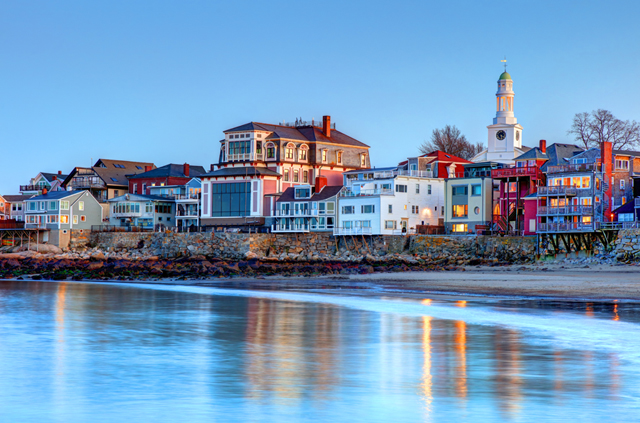
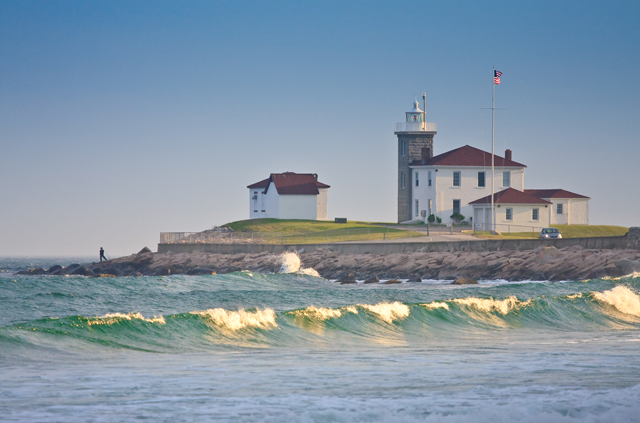
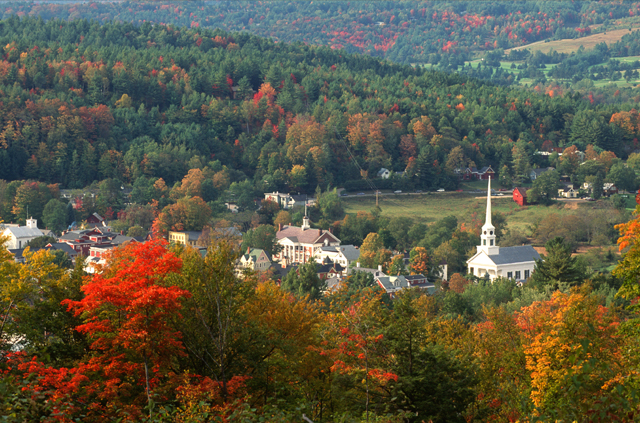
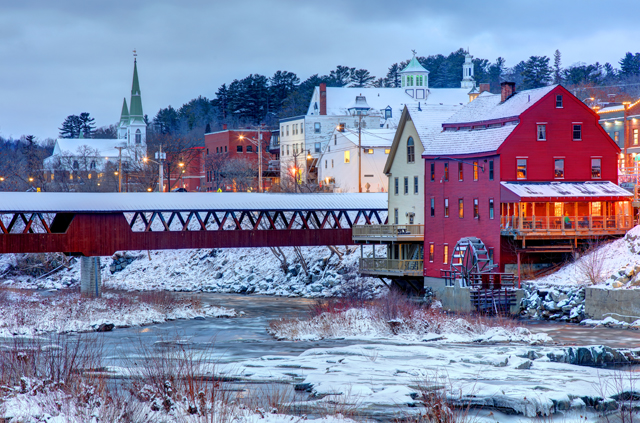
Feel like you’re sailing away without having to brave the biting wind. You probably associate sailing with the summer months, but here the popular water sport is celebrated all year round. The Sailing Museum offers an interactive museum-going experience. Prospective sailors of all ages will enjoy the mental, physical and teamwork challenges as they gather rewards for their virtual lockers. Looking for a more low-key experience? Check out the Legends of Sailing exhibition, which honors sailors from the National Sailing Hall of Fame and America’s Cup Hall of Fame.
Looking for a teambuilding activity that will delight families with older children (ages ten and up)? Visit the Paradigm Escape Rooms where participants can work together, combining their ideas to navigate adventures with themes like “The King’s Tomb” in which gamers are tasked with hunting down a ruby hidden in an ancient Egyptian tomb.
Located north of Newport proper in Portsmouth, the Newport Car Museum is a must-stop for any car enthusiast. The museum is divided into seven sections, each dedicated to a different type of vehicle. Their collection of nearly 100 cars includes Corvettes, Fords, Porsche, fin cars, American muscle cars and more.
Fans of cars of all types should also pay a visit to the Audrain Automobile Museum during their Newport winter staycation. Rotating exhibitions celebrate rare cars from throughout history, as well as current models. Check the museum’s website to discover the exhibits featured throughout the winter.
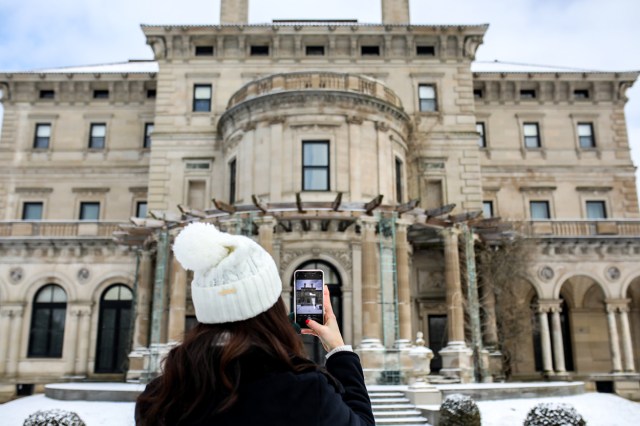
One of the biggest draws to Newport is its Gilded Age mansions and winter is the perfect time to pay them a visit, as there are usually less crowds. Explore the homes of former members of Newport’s elite society to discover their history, all while taking in stunning views. Many of the mansions are open throughout the winter and some feature specialty exhibits during this time.
Head to this former twentieth century firehouse for a night of fun as The Bit Players perform their award-winning improvisational comedy show. The theater fits just 75 people, so be sure to purchase your tickets in advance. Attending a show is the perfect opportunity to warm up with some laughs after a chilly Newport winter day.
The Newport area is full of breweries and wineries, and the fun doesn’t stop when the weather gets chilly. While some of these establishments do have hours that change with the seasons, many are proud to be either open most of the winter or year-round, including Greenvale Vineyards in Portsmouth and Taproot Brewing Co. in Middletown, which hosts events into late February. If you are enjoying tastings, remember to enjoy responsibly and designate a driver.
Head to the Jane Pickens Theater in Newport’s Washington Square for a cinematic experience or live performance. Different entertainment presentations are featured depending on the night.
Ryan Amusements is a family-friendly game center with arcade games, kiddie rides and, of course, a stellar prize counter for cashing in all those points you’re sure to win.
Nature Is Always Open: Explore Aquidneck Island’s Beauty
If you’re willing to bundle up and brave the chilly temperatures and wind, Newport’s hiking areas and nature trails are excellent activities for outdoor enthusiasts. Pay a visit to the Norman Bird Sanctuary where you’ll be able to explore seven miles of trails. Another option is the Sakonnet Greenway Trail, which holds the honor of being the longest continuous nature trail on Aquidneck Island.
Save the Bay offers seal tours exploring Narragansett Bay that run from November through April and conveniently depart from Bowen’s Ferry Landing. You can choose from a one- or two-hour tour, during which you’ll witness harbor seals chilling out both under the Newport Bridge and on Citing Rock located just off Rose Island. If you’re also a lighthouse enthusiast, sign up for another of the organization’s offerings: the Seal and Lighthouse Tour.
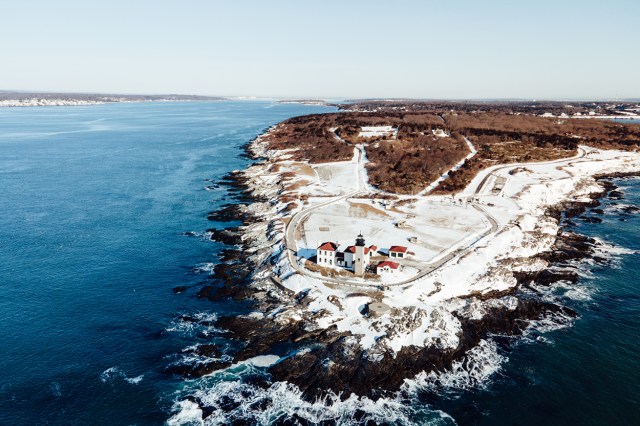
Be sure to remember your camera when packing for your Newport winter staycation. Your photos are sure to make your social media fans green with envy. The Castle Hill Lighthouse looks even more magical when covered in snow and the Cliff Walk’s rocky paths lead walkers to grand views perfect for capturing and posting.
Newport’s sunsets are famously impressive. You’ll want to snag a spot overlooking Newport Harbor to experience these memorable sunsets. Try Van Zandt Pier, which also offers views of Newport Bridge. Or head to Beavertail State Park located just over the bridge in Jamestown, an area featuring commanding cliffs, making it the ideal spot to take in a signature Newport sunset.
What could be cooler (pun totally intended) than a restaurant set on Newport Harbor? As winter approaches, the palm trees at The Reef are replaced with igloos where you can dine off the restaurant’s signature seafood menu. Each igloo has an individual theme with comfortable seating and colorful design.
For the ultimate sumptuous hot chocolate experience, head to The Chanler at Cliff Walk where you can enjoy your gourmet beverage fireside.
Inns and Boutique Hotels With Fireplace Rooms
After exploring Newport and the surrounding area, there’s nothing like retreating to a room with your very own fireplace. Options include the Francis Malbone House, set in a restored colonial home, and the equally cozy Armistead Cottage B&B and Beech Tree Inn & Cottage. Settle into the Hydrangea House Inn on Bellevue Avenue beside Newport’s famous mansions or get a room with a harbor view at 41 North. Wherever you choose, you’ll want to bring a good book and grab a cup of tea. There’s an armchair by the fire with your name on it.
Looking for the perfect holiday gift? Check out our holiday shopping guide for the best holiday gifts under $100, $50 and $20.
Since our members are the root of everything we do, your feedback is important to us. Let us know if you run into any issues while playing, or share your ideas for future puzzles by emailing us.
Do small towns like in Hallmark movies really exist? In the Northeast, they sure do. The cute small towns of the Northeast are signatures of the region’s charm and New England style. With the help of this comprehensive graphic, here are some of the coziest small towns to visit in the Northeast.
Small Towns in New York
Ellicottville
The picturesque village of Ellicotville is one of the best small towns to visit in New York. Ellicottville features two ski resorts: Holiday Valley Resort and HoliMont, for those who want to try hitting the slopes. Make sure to get some drinks and a bite to eat at the Ellicottville Brewing Co., where you can do brewery tours and a wine tasting – just remember to enjoy responsibly and designate a driver or use a ride share if you need. Want to relax after skiing up a storm? Stop by the Ellicottville Salt Cave and Spa to get pampered and practice some self-care.
During the warmer months, you can explore Sky High Adventure Park, the biggest aerial park in the state, featuring platforms, bridges, obstacles and ziplines. For a more low-key experience with the trees, visit the Nannen Arboretum, which features rare and exotic trees, a replica of a 500-year-old Japanese stone garden, a peaceful pond and bountiful gardens filled with flowers.
Lake Placid, N.Y.
Lake Placid
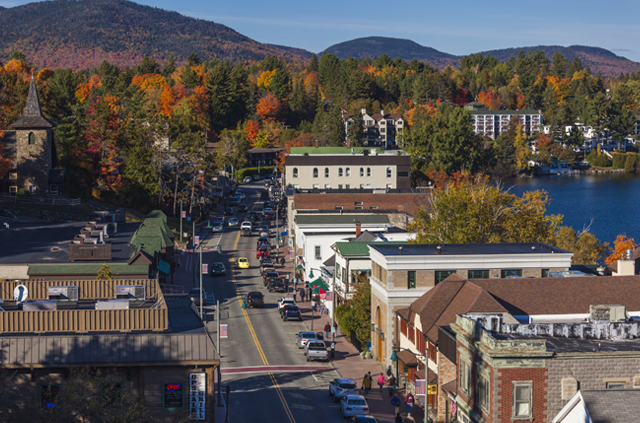
Perhaps best known for hosting the 1980 Winter Olympic Games, Lake Placid is a hot spot (or should we say, cold spot) for winter sports. This cute village in the Adirondacks offers Alpine and Nordic skiing, snowshoeing, bobsledding, skating, snowboarding, ice climbing and has quick access to Whiteface Mountain.
No snow? No problem! Lake Placid is filled with new mountain bike trails weaving through dense foliage, hiking trails, rock climbing along with kayaking and canoeing on Mirror Lake. After you’ve had your fill of outdoor adventure, go shopping and dining along picturesque Main Street. Grab a mug of hot chocolate and get cozy.
Cooperstown
If you’re a fan of America’s favorite pastime, Cooperstown is definitely one of the best small towns to visit. Billed as “America’s Most Perfect Village,” Cooperstown is home to the National Baseball Hall of Fame & Museum. There, you can experience the storied tradition of baseball in America through exhibits on topics like the history of baseball cards, the evolution of the sport from 1970 to the present day, the bronze plaques honoring those in the Hall of Fame and more.
While you’re in town, visit Doubleday Field, where some say baseball was invented in 1839. Not a baseball person? Check out the Fenimore Art Museum, which features fine art, folk art, photography and more. If you’re staying overnight, head to the Otesaga Hotel, a AAA Four Diamond, luxurious and historical resort.
Small Towns in Connecticut
Mystic, Conn.
Mystic
This former whaling village has so much to offer, and it’s almost a completely walkable small town. Go back in time at the Mystic Seaport Museum, journey below the waves at the Mystic Aquarium and enjoy the dining and shopping opportunities at Olde Mistick Village. Oh, and don’t forget to grab a slice at the iconic Mystic Pizza.
Essex
Known colloquially as “the perfect small town,” Essex is surrounded on three sides by the Connecticut River. You can get a great view of the river at the central town dock, which is home to the Connecticut River Museum. A must-do on any visit to Essex is a ride on the Essex Steam Train and Riverboat to experience the beauty of the Connecticut River Valley. Staying in town overnight? Try sleeping in one of the cozy beds at the Griswold Inn, which first opened its doors in 1776. You can also get a bite to eat and listen to some live music in its lively tap room.
Small Towns in Massachusetts
Stockbridge
If you’ve ever wanted to step straight into a Norman Rockwell painting, head to Stockbridge, the inspiration for Rockwell’s “Stockbridge Main Street at Christmas.” It has to be one of the coziest small towns in America if it has his stamp of approval. Art lovers can enjoy the Norman Rockwell Museum here as well as the town’s various historical buildings, the Tanglewood Music Center and the Berkshire Theatre Festival. You can even stay the night at the Red Lion Inn – from the painting!
Provincetown
Affectionately known as P-town, Provincetown is located on the northern tip of Cape Cod. Provincetown has a long and storied history, from its roots as an artists’ colony to its past and present popularity as an LGBTQ vacation destination.
Small-town New England streets combine with a Bohemian streak of creative energy to create one of the most unique towns in the Northeast. Visitors will love the beaches, of course, but you should also enjoy some of the local attractions, like the nationally recognized Provincetown Art Association and Museum, Pilgrim Monument, the Province Lands Bike Trail and more. Can’t decide what to do? There’s no better way to spend a day in P-town than strolling along the busy and colorful Commercial Street.
Rockport, Mass.
Rockport
At the tip of Cape Ann, Rockport is one of the cutest small towns to visit in the Northeast. Take a walk down Bearskin Neck for some of the best shops, art galleries and restaurants in town – and don’t miss the lobster at Roy Moore Lobster Co. You can enjoy the miles of beaches, or go kayaking, sailing, fishing and whale watching along the coast. Nature lovers will enjoy Halibut Point State Park, a protected former granite quarry filled with nature trails, tidepools and stunning ocean views. Finish the day with a sunset dinner at My Place By the Sea, a seaside restaurant with breathtaking views.
Small Towns in Rhode Island
Watch Hill, R.I
Watch Hill
This coastal section of Westerly, more low-key than nearby Newport, is filled with charming boutiques, antique stores and restaurants. Grab a bite at the historical Olympia Tea Room, stroll along the miles of beautiful beaches, go sailing, tour the Watch Hill Lighthouse or ride the Flying Horse Carousel, the oldest continually operating carousel in the country. Bird watchers will enjoy hiking through the Napatree Point Conservation Area, a hot spot for feathered friends. Watch Hill is also home to the Ocean House, the only AAA Five Diamond Designated hotel in Rhode Island.
Little Compton
Incorporated by the Plymouth Colony in 1682, Little Compton has a lot of history. You can step back in time at the Wilbor House Museum, which was built in 1690, and the Little Compton Commons, an iconic New England village green and one of the last three town commons in Rhode Island.
While you’re in town, do some wine tasting at Carolyn’s Sakonnet Vineyard, catch some sun at South Shore Beach and explore the dunes and tide pools of the Goosewing Beach Preserve. Want to stay for the night? You can find accommodations at the iconic Stone House Inn, built in 1854.
Small Towns in Vermont
Stowe, Vt.
Stowe
The hills are alive in Stowe, one of the greatest ski towns in the Northeast and one of the most beautiful small towns in America. This “Ski Capital of the East” is nestled between the Worcester Range and the Green Mountains, including Mount Mansfield, the highest peak in the state. Skiing and snowboarding are the way to play in Stowe, featuring the birthplace of alpine skiing in the trails of Mount Mansfield.
There are many resorts to choose from when you’re planning your Stowe vacation, including Stoweflake Resort & Spa, Stowe Mountain Resort and AAA Three Diamond Designated Trapp Family Lodge, founded and run by the actual von Trapp family portrayed in “The Sound of Music.” It’s no surprise that the beautiful Stowe vistas reminded them of their native Austria.
Woodstock
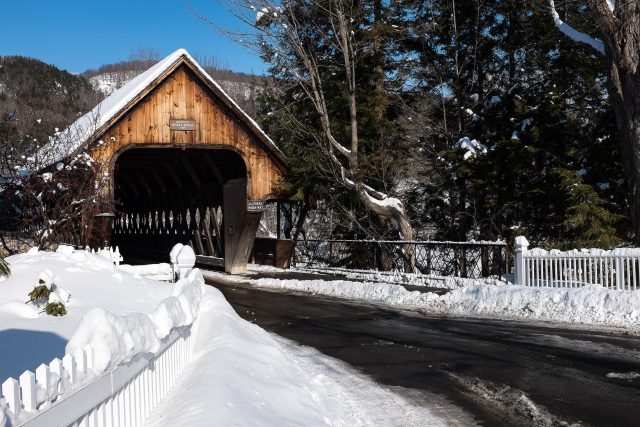
Not to be confused with Woodstock, N.Y., Vermont’s Woodstock is a charming New England town complete with covered bridges, idyllic bed-and-breakfasts and beautiful ski slopes. Visitors can stroll along the streets, stopping at the green and shopping at a majority of locally owned businesses. Skiers will enjoy the Saskadena Six Ski Area, but Woodstock also offers amazing opportunities for biking and horseback riding. You can also visit the Marsh-Billings-Rockefeller National Historical Park, the only National Park in Vermont.
There are many dining options to choose from, like the casual Worthy Kitchen and the more refined Restaurant at the Covered Bridge. And don’t forget to swing by the Billings Farm and Museum, a working recreation of a 19th century dairy farm. They might even let you try some cheese. Stay at the luxurious Woodstock Inn & Resort, a AAA Four Diamond Designated property established by Laurance and Mary Rockefeller.
Chester
If you’re looking for a small town that’s straight out of a Hallmark movie, Chester is literally it. The 2008 Hallmark movie “Moonlight and Mistletoe” was filmed in Chester. This cozy small town contains two historic districts, 19th century architecture and the 550-acre Chester Town Forest. Visitors can enjoy antiquing, hiking and easy access to the nearby ski areas in the Green Mountains. Snuggle in for the night at either Inn Victoria bed and breakfast or the Fullerton Inn and Restaurant, both beautiful and historical hotels.
Small Towns in New Hampshire
Littleton, N.H.
Littleton
There’s a little bit of everything in Littleton. You’ll be greeted to its historical downtown by a bronze statue of Pollyanna throwing her arms wide open – a tribute to hometown author and “Pollyanna” creator Eleanor H. Porter.
Littleton has a lot to offer in terms of outdoor activities. You can bike and hike at Kilburn Crag and the PRKR MTN Trails, ski at the Mount Eustus Ski Area and kayak at Moore Dam Lake. In town, you can sit at the longest candy counter in the world in Chutters, get some unique pieces at the Bad Art gallery and grab some grub at the iconic Littleton Diner.
Meredith
The lake resort town of Meredith is one of the cutest spots in the Granite State. Since it’s a lake town, there are many opportunities for swimming, fishing, boating and water sports. But there’s fun to be had on land, too! You can ride the Winnipesaukee Scenic Railroad, explore the Meredith Sculpture Walk and hike at Ahern State Park. Don’t forget to catch a show at the Winnipesaukee Playhouse, known as the best professional theater in New Hampshire.
Small Towns in New Jersey
Clinton
The picture-perfect streets of Clinton offer small-town charm in the Garden State. Start you visit by going to the open-air Red Mill Museum Village along the South Branch Raritan River. The museum covers 10 acres and contains 12 historical buildings, including a schoolhouse, a log cabin, a blacksmith shop and the Red Mill itself. In another historical mill you can find the Hunterdon Art Museum, which has a focus on contemporary art and fine art prints.
The town’s main street is filled with shops selling everything from pickles to dollhouse miniatures. Want a bite to eat? You can eat locally sourced foods at The Clean Plate Kitchen or even grab a gourmet hot dog at Designer Dawgs. Yum!
Cape May, N.J.
Cape May
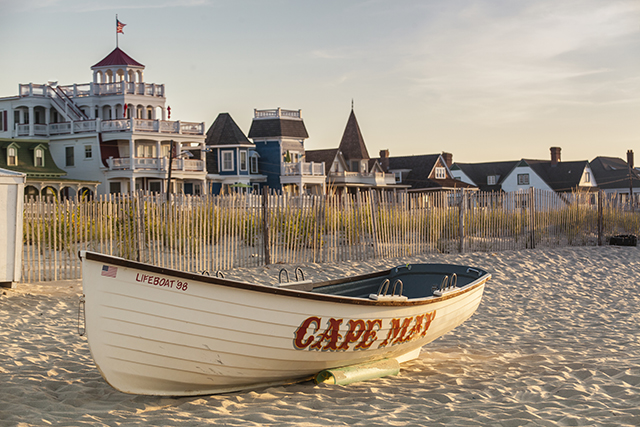
The seaside resort city of Cape May looks like something out of a storybook, filled with colorful Victorian gingerbread architecture and sun-drenched beaches. While you’re relaxing or walking along the beach, you might even find a Cape May diamond – a clear quartz pebble that has washed down from the Delaware River. Enhance your experience with a whale watching excursion, a visit to the Historic Cold Spring Village living history museum or a trip to the top of the Cape May Point Lighthouse. And don’t miss your chance to try the seafood at The Lobster House before you leave.
Small Towns in Maine
Kennebunkport, Maine
Kennebunkport
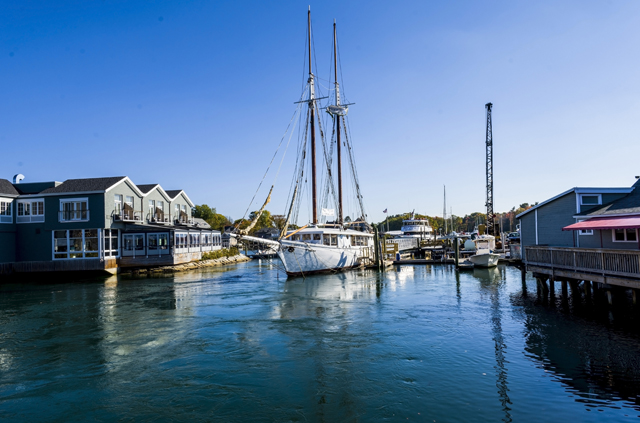
The resort town of Kennebunkport in southern Maine is a popular summer colony, but it’s cozy all year round. You can sail down the Kennebunkport River, stroll or sunbathe on one of the town’s beaches, browse the unique boutiques in Dock Square and go whale watching.
You can also tour the Seashore Trolley Museum, which is all about the history of the trolley, especially in Kennebunkport. Nature lovers will enjoy the 2-mile Parson’s Way shoreline trail and the crashing tides at Blowing Cave Park. If you’re coming in winter, don’t miss Kennebunkport’s Christmas Prelude, a festival in which Santa arrives to town on a lobster boat, naturally.
Camden
Like Kennebunkport, Camden is a resort town through and through. Its population actually triples during the summer months, so its off-season can seem pretty calm and cozy in comparison. You can take a boat tour through the picturesque Camden Harbor, go antiquing in town, see a performance at the Camden Opera House, enjoy the beauty of the Merryspring Nature Center and more. If you’re visiting in winter, you can even go skiing at the Camden Snow Bowl, the town-owned ski area. It’s the only ski area in the country with a view of the ocean. They even host the U.S. National Toboggan Championships there!
Small Towns in Pennsylvania
Jim Thorpe, Pa.
Jim Thorpe
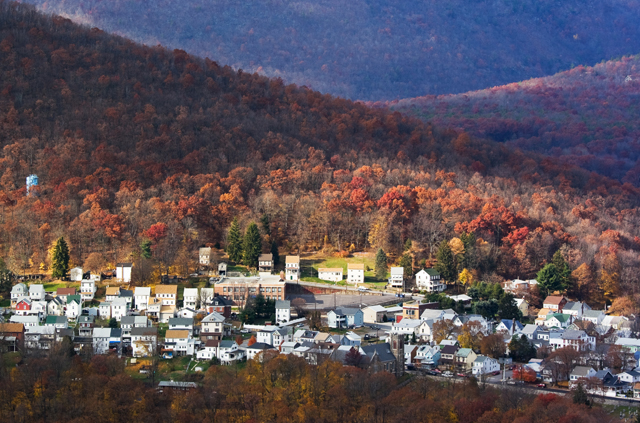
Nestled in the Pocono Mountains, you’ll find Jim Thorpe, a town named after the Native American sports legend. This picturesque town looks like it came straight out of a postcard no matter the season. Jim Thorpe is the perfect destination for people who like outdoor sports – it offers mountain biking, paintballing, whitewater rafting, hiking and more.
Explore Lehigh Gorge State Park, take a ride on the Lehigh Gorge Scenic Railway, tour historical Victorian mansions and go shopping along Stone Row. When you’re finally done for the day, you can retire to the Inn at Jim Thorpe, a grand Victorian hotel built in 1849.
Honesdale
The northeast Pennsylvania town of Honesdale is considered the birthplace of the American railroad, as it was home to the first steam locomotive run on rails in the country. You can still take a ride on the historic Stourbridge Line today. But that’s not all you can do in this town! Take a hike up Irving Cliff, explore the town’s many Victorian era-buildings on a walking tour or go on an adventure with the Northeast Wilderness Experience.
What are some of your favorite small towns to visit? Let us know in the comments below.
We know because we’ve been: “Out There” is a series of inspiring travel spotlights from AAA travel advisors and employees.
If you follow travel industry trends, you’ve surely heard of the Madeira Islands, an archipelago located 320 miles west of Morocco in the North Atlantic Ocean. One of two autonomous regions of Portugal, its popularity has trailed that of its sister region, the Azores, until recently.
Madeira has received the distinction of World’s Leading Island Destination from the World Travel Awards consecutively from 2015 to 2024. Consisting of four islands, only two are inhabited: Madeira Island and Porto Santo, which was recognized by European Best Destinations as the Best Beach in Europe in 2022.
After a week exploring the dynamic, post-volcanic landscape of Madeira, I understand and agree with the accolades. I’m left wondering what took the world so long to discover this idyllic, adventure-packed paradise.
Whether you’re in search of a romantic escape (honeymooners), an alternative to the Caribbean or adventure, Madeira delivers in a big way. From off-roading through eucalyptus trees and paragliding from the tops of rugged cliffs, to sipping a glass of the world-renowned Madeiran dessert wine on your balcony as you take in a show-stopping sunset – Madeira needs to be on your bucket list.
The island longs to draw you in, away from the walls of your resort. It beckons you to explore its vast botanical gardens or share a Poncha (Madeira’s signature rum punch cocktail) at a pub down the street. The locals are friendly, warm and inviting, and as a solo female traveler, I felt comfortable venturing out by myself, even late at night. Madeirans pride themselves on their hospitality, a quality that’s quickly evident, regardless of where you stay.
Your hotel in Madeira is just as important as what you do while you’re there. It’s a choice that can make or break your trip. So, where should you stay? From country estates, or quintas, as locals refer to them, to modern city-center skyscrapers with rooftop infinity pools and luxurious seaside resorts, these are my picks for the top hotels in Madeira.
The Vine Hotel’s rooftop pool provides views of the terraced Madeiran terrain and surrounding Funchal.
The Vine
Nestled in the heart of Funchal, this modern hotel constructed in 2008 boasts the work of local interior designer, Nini Andrade Silva, who channeled Madeira’s ties to fortified wines throughout the decor. From the rich purple hues found in the lobby, to the deep velvet textures and furniture shaped like twisted vines, this property is meant to be experienced wholly, as you would a full-bodied wine.
Each floor of The Vine features decor inspired by the different seasons and stages of grape growth, with guest rooms that reflect the ambiance of a wine cellar – dark, mysterious, intriguing and secretive. On the rooftop you’ll find an infinity pool with views that overlook both the terraced hills of the island and the calm waters of the bay. The hotel is also located above a popular shopping center, so be sure to venture downstairs to explore the various shops and restaurants located on the lower floors of the building.
Inside Reid Belmond’s GastroBar, you’ll find a mural detailing the hotel’s charming history.
Reid’s Palace, a Belmond Hotel
The oldest hotel on the island, Reid’s Palace opened in 1891 and is an iconic property with a storied history. Its character and charm are palpable, endearing this property as beloved among locals and guests alike. A favorite of the late English prime minister Winston Churchill, it’s rumored that the ballrooms of Reid’s hosted a few military strategy sessions during World War II. In fact, the politician spent so much time here, his connection to Reid’s and Madeira lives on in The Churchill Suite, one of the hotel’s most popular rooms overlooks the gardens Churchill spent many afternoons painting. It’s also said that George Bernard Shaw first learned to tango at Reid’s.
Celebrated for its commitment and service to its guests and noted for its world-class pampering, Reid’s Palace continues to draw the attention of international celebrities, influencers and A-listers. Home to the William Restaurant, one of two Michelin-star restaurants on the island, and equally sumptuous Italian cuisine at the Ristorante Villa Cipriani (where engagements along their moonlit terrace are a nightly occurrence), guests come here to enjoy elevated dining experiences. The hotel also boasts a renowned afternoon tea, heated outdoor pools, a natural tidal pool, spa, sauna, tennis court and seven different venues for larger celebrations and meetings. With over 126 rooms and suites, Reid’s Palace is the definition of luxury.
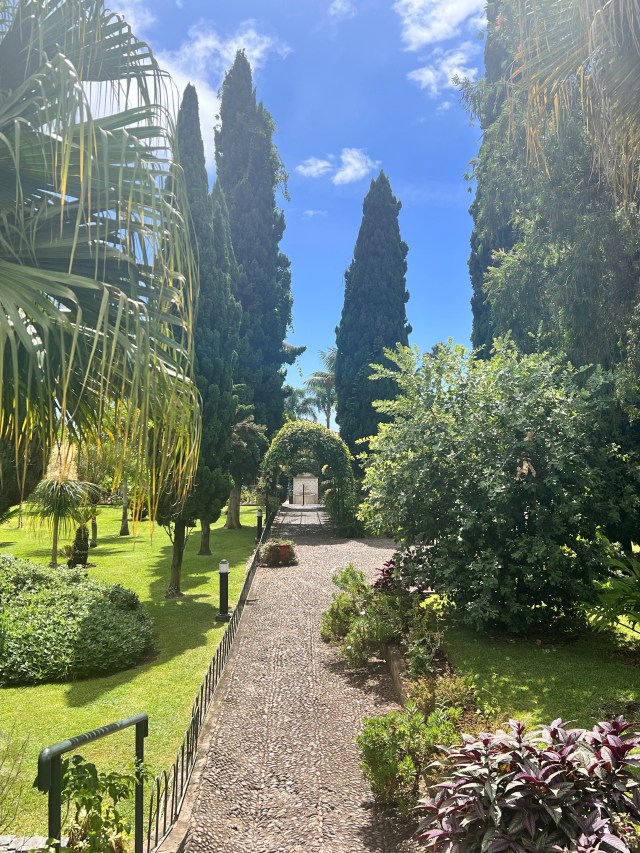
The Quinta Jardins do Lago is set upon 6 acres of beautifully manicured gardens, home to more than 500 distinct plant species.
Quinta Jardins do Lago
When staying in a city, there’s a certain expectation of skyscrapers, traffic, noise and crowds, which is why it was so refreshing to escape to the Quinta Jardins do Lago. Despite its proximity to downtown Funchal, upon ascending the long driveway, you’re immediately transported into a tranquil oasis, leaving the hustle of urban life behind. This small luxury hotel was once a family country estate, whose roots date back to the 18th century and once served as the official residence of General Bersford, Commander of the English forces during the Napoleonic Wars. The property, with its 31 rooms, four junior suites and five premier suites is stunning in its own right, with period furniture and historic pieces decorating the hallways and walls. But the true beauty here, undoubtedly, are its the nearly 6 acres of lush gardens vibrantly painted with more than 500 different plant species set against the backdrop of verdant green hills speckled with porcelain red roofs. While strolling through the garden, look for the hotel’s longest-staying resident, Colombo, a giant tortoise who’s called these gardens home for more than 47 years.
Enjoy breakfast alfresco on the patio or sip a cocktail beneath the palm trees, providing shade from the heat of the midday sun, before dipping into the azure blue pool. Whether you want to get lost in the serenity of the gardens or venture out to explore the city’s attractions, this quinta is a lovely escape to return to each evening.
Breathtaking sunsets await from the lounge chairs of the infinity pool deck at the Saccharum Resort & Spa.
Saccharum Resort & Spa
Roughly 20 minutes from the capital city of Funchal, tucked into a small cove in the south of the island and carved into the mountainside, you’ll find the town of Calheta and the Saccharum Resort & Spa, a serene retreat with nods to the island’s sugarcane heritage. The word Saccharum literally means “the house of sugar water,” a theme you’ll find prevalent throughout the hotel’s decor, from the earth tones to the once-used sugarcane pot located at their Alambique Restaurant. The building itself mimics the terraces of Madeira’s countryside, sloping toward the sea. In fact, much of the resort’s design is intentional.
Another Nini Andrade Silva project, the interior of Saccharum Resort touts rugs that resemble factory floors, a copper pool akin to a tank of honey and restaurant walls adorned with industrial tubes and appliances. The resort offers respite to the weary traveler looking for all the comforts of a four-star property while being slightly more off-grid.
Believe me, there is no shortage of amenities at the Saccharum. Take a tai chi and chi kung class at the Fly Lounge Bar to find focus and achieve balance. Or, perhaps, you’d like to continue your journey toward balance as you search for the perfect combination of ingredients in the Art of Mixology class at the Grog Bar. Spend a Sunday morning at the farmers market before partaking in a lunch workshop with Saccharum’s chef, where you’ll learn the secrets to Madeira’s cuisine. Or enjoy seasonal entertainment, like an interactive evening of folkloric dancing or traditional Fado music at the Alambique Restaurant. For a truly unforgettable experience, grab a cocktail and capture the most breathtaking sunset from a lounge chair on the infinity pool deck, overlooking the cliffs and cove.
A glimpse at one of the five solarium pools at the Savoy Palace.
Savoy Palace Hotel
Madeira’s hotel selections are not one size fits all. But if you value incomparable service, attention to detail, ostentatious luxury, delectable delicacies and stunning sunrises, then rest assured the Savoy Palace is a worthwhile booking. Whether solo, with family, friends or celebrating a romantic occasion, the Palace’s varied offerings and boutique services promise to leave guests more than satisfied. This property rivals that of all-inclusive counterparts in the Caribbean, with seven restaurants (feast on the octopus at Pau de Lume or electrify your tastebuds with chef Miguel Bertolo’s sushi skills at Nikkei), five distinct pools (including an indoor heated pool, a children’s pool and the Galaxia Skypool), waterfront access from the maritime platform, a well-stocked library and a children’s playroom.
Booking an ocean-view room here is a must – the watercolor skies you’ll awake to are ethereal and worthy of an early alarm. Care to upgrade your stay? When booking selected suites or premium accommodations, enroll in the Savoy Premium Experience and your Guest Experience Personal Assistant (available to you 24/7) will work tirelessly to elevate your stay, with inclusions like exclusive access to the Jacaranda Lounge & Club, the infinity pool and jet solarium, and other in-room treats. Utilize the hotel’s private transfer services to arrive and/or depart from Madeira in style. Roughly a 10-minute walk from Funchal’s center, guests have the choice of exploring the numerous monuments, museums and gardens downtown or retreating to the Laurea Spa for a massage before taking a relaxing sauna.
Luxurious hospitality isn’t a foreign concept to Ocean House. In fact, they just may be the golden standard. As the only property in Rhode Island to receive a AAA Five Diamond designation for both its hotel and restaurant, Coast, Ocean House has been delighting their guests with world-class amenities and uncompromised service since 2010.
It should be no surprise, then, that their wintertime dining experience is just as stellar. From November through March, guests can experience après ski in the French Alps at the magical Ocean House Gondola Village where lunch, dinner or “apéro” is served inside a real ski gondola lift. But not just any ski gondola – a fully restored vintage ski gondola with an interior that resembles a French ski chalet, complete with antler chandeliers and heated blankets.
When selecting the lunch or dinner experience, guests are offered a four-course meal featuring all the delectable French cuisine you’d crave after a day on the slopes, like duck cassoulet, boeuf bourguignon, potato gnocchi and, best of all, a chocolate fondue board with all the fixings. Booking the apéro experience gets you a superb afternoon crepe service featuring your choice of sweet or savory crepes and velvety hot chocolate.
When your meal is finished, take a cozy seat beside the fire right outside your gondola to enjoy a nightcap surrounded by the property’s gorgeous views dappled in snow. C’est parfait!
When it comes to luxurious, romantic, all-inclusive vacations in picture-perfect settings, Sandals Caribbean Resorts have all that and more. With so many destinations and first-class amenities, it is no wonder its properties are a top choice among couples. Plus, AAA members save 10% or more on hotel stays.
Those looking to travel sustainably will also be happy to learn that Sandals Caribbean Resorts operate with the environment in mind. Third-party auditing through EarthCheck ensures that their venues are environmentally friendly for both travelers and the local community.
Located on the white, powdery sands of Maxwell Beach, this site offers 338 luxury suites with pool, ocean and garden views. The resort boasts the largest glass-fronted infinity pool in the Eastern Caribbean and a choice of nine dining options including room service. Enjoy Sandals’ Cantilever Roof Top Bar, as well as a rooftop pool and whirlpool overlooking the ocean. Guests also can take advantage of Stay at One, Play at Two exchange privileges with the adjacent Sandals’ Barbados.
Sandals Regency, La Loc, St. Lucia
Sandals Regency
La Toc, St. Lucia
Get ready for the ultimate in luxury at the elevated Sunset Bluff Millionaire Butler Villas, which feature a private pool sanctuary, 180-degree views, rotating 46-inch plasma TVs, a private whirlpool and infinity pool and fully opened glass walls offering panoramic bedroom views. Sunset Bluff Honeymoon Oceanfront One Bedroom Villa Suites offer guests a private pool and give the feel of a resort within a resort. Slowly descend a driveway through the manicured fairways to an expansive vista and beach front. Sandals’ Regency is only10 minutes from George F.L. Charles Airport (SLU), shopping and St. Lucia’s capital, Castries, and one hour from the Hewanorra International Airport (UVF).
Sandals Dunns’ River, Jamaica
Sandals Dunns’ River
Jamaica
This is a golfer’s paradise, with complimentary green fees at Jamaica’s most elite and popular golf course, the Upton Estate Golf & Country Club. After you put your clubs away, toast the day at Dunn’s Rum Club, the first-ever rum lounge with more than 30 rum selections from around the Caribbean. It’s the ultimate experience. Go on an excursion to Jamaica’s most iconic attraction, Dunn’s River Falls, and then get your appetite ready for 28 different dining options by visiting Sandals Ochi Beach Resort.
Sandals Royal Curacao
Sandals Royal Curacao
Curacao
Boasting it’s “where amazing comes together,” guests stay in high-end rooms and suites along the beautiful Spanish Water Bay and Caribbean Sea on the 3,000-acre resort surrounded by mountains. Dutch bicycles provide the perfect means to explore the majestic location.
Sandals Saint Vincent, The Grenadines
Sandals Saint Vincent
The Grenadines
Scheduled to open in March 2024, the resort will feature about 300 rooms, suites and villas, five bars, including a swim-up bar: two whirlpools and a scuba pool and 12 dining options.
Looking for a more family-friendly vacation? Consider Sandal’s sister vacation venue, Beaches Resorts, with all-inclusive resorts in Jamaica and Turks and Caicos.
Puerto Rico is the the perfect destination to get back in touch with nature – and yourself. Besides soaking up the sun on the island’s beautiful beaches and dipping in the tranquil Caribbean Sea, Puerto Rico offers a wealth of wellness opportunities to clear your mind, restore your body and reenergize your spirit.
Spas
Decadence and natural beauty are what set Puerto Rico’s spas apart. The Well & Being Spa at Fairmont El San Juan Hotel offers personalized wellness and nutrition programs and the Copamarina’s Ni Spa’s atmosphere reflects the Caribbean Sea’s tranquility and indigenous Taíno culture. An 80-minute massage on the spa’s floating gazebo is bliss.
While you can easily relax on one of its idyllic beaches, Puerto Rico also boasts a multitude of wellness experiences, with resorts offering yoga flows, fitness classes, morning meditations, massage treatments inspired by ancient healing rituals, rooftop workouts, nature tours and more.
What could be more invigorating than yoga in the great outdoors? Whether it’s on a beach, floating on a paddleboard or surrounded by a tropical forest, Puerto Rico has plenty of opportunities for that, not to mention modern gyms.
Vegans and organic food afficionados will have no trouble finding mouth-watering meals. The farm-to-table movement has taken hold in Puerto Rico, and numerous restaurants and bars feature local fruits and vegetables and meatless versions of popular native dishes. For those who abstain from alcohol, mocktails are plentiful, offering tasty sips minus the alcohol.
Explore organic and healthful food and drink options.
Outdoor Experiences
For some people, just spending time in nature is a prescription for wellness. Visit El Yunque National Forest, the only tropical rainforest in the U.S., where you can dive into clear pools, admire the native greenery or go hiking.
There are a lot of misconceptions about oral health that can wind up hurting your teeth – and your wallet.
But one thing is for sure: Routine checkups are essential for your oral and overall health. You can get the care you need without having to worry about expense with Altus Dental through AAA Northeast, an affordable, accessible way to get dental coverage in Massachusetts.
Here are eight common dental myths and the truths behind them, so you can maintain your great smile and live a healthier life.
Myth 1: The harder you brush, the better.
When your teeth feel dirty, it can be tempting to put some elbow grease into it and brush harder. Or when you’re shopping for a toothbrush, you might think that harder bristles will clean better than soft ones. But more pressure doesn’t always mean a better clean.
If you brush your teeth too hard, it can actually cause some negative effects, like eroding tooth enamel and making your teeth more sensitive. It can also cause other issues, like receding gum lines, which can increase the risk of tooth loss.
Want to make sure your teeth are clean without over-brushing? Choose a toothbrush with soft bristles, apply less pressure and brush for two minutes, twice a day. You may also want to try brushing with your less dominant hand to lighten up on the pressure.
Myth 2: You don’t really need to floss every day.
You probably learned to floss every day when you were a child, but did you stick with it? Despite their dentists’ recommendations, some people have a hard time establishing a regular flossing routine or may neglect flossing altogether.
Flossing is important for your overall oral health, delivering results your twice daily brushing regimen can’t do on its own. Flossing works hand in hand with brushing to help remove food and plaque from the hard-to-reach areas between your teeth, which can lead to cavities, gum disease, bad breath and more.
If you struggle with flossing or find it uncomfortable, floss picks or dental tape floss (flatter and smoother than traditional floss) may help. The more you floss, the easier it becomes. So, don’t toss your floss – your mouth needs it.
Myth 3: The whiter your teeth, the healthier they are.
There’s an entire industry dedicated to teeth whitening products and treatments, but whiter teeth don’t necessarily mean healthier teeth. Overuse of most teeth whitening products may weaken your tooth enamel and could make your teeth and gums more sensitive. If you still want to whiten your teeth, you absolutely can. Just remember to use these products sparingly and talk to your dentist before trying them.
Myth 4: You only need to see the dentist if something hurts.
Ouch! Don’t wait until your teeth are sensitive or in pain to see your dentist. Dentists don’t just repair your teeth – they help keep them in fighting (and biting) shape! Your dentist will also be able to see if you have any oral health issues that you might not be able to see or feel yet. Regular dentist visits and teeth cleanings are an important part of your oral – and overall – health.
Most dentists recommend visiting for a routine exam and cleaning every six months, but you should talk to your dentist and see which schedule is right for you.
Myth 5: You can’t afford to see the dentist.
If you don’t have dental insurance through your employer, going to the dentist can seem like a big expense. But there’s another way to get insured and get yourself in that dentist’s chair – individual dental insurance.
AAA Northeast has partnered with Altus Dental for exclusive access to affordable dental insurance for AAA members in Massachusetts. Insurance usually covers the cost of preventive care like cleanings, exams and X-rays. Plus, if you ever need one of the more expensive procedures like root canals, crowns and dental implants, you’ll pay much less out-of-pocket than you would without insurance. The savings can add up quickly.
Here’s a checklist to help you choose the right dental insurance company:
Is the company a leader in their industry? Do their members give them positive reviews?
Do they have a large network with the right dentist for you? Are they convenient for you? Do they offer a Find a Dentist tool to make it easy to choose a provider?
Do they have the types of plans and coverage that is best for your needs?
How is their customer service? Chat with a company representative and see what kind of experience you have.
Do they offer self-service or digital tools to make insurance easy for you, like an online cost estimator and a mobile app for subscribers?
Don’t delay in getting dental insurance and seeing your dentist. Routine dentist visits can help keep your oral health in shape and prevent costly difficulties down the road. And if you do wind up having an unexpected dental issue, it helps to already be insured.
Myth 6: Babies don’t need to go to the dentist.
Children will eventually lose their baby teeth, but they still have to brush. Learning good dental hygiene at an early age will build good habits that a child will have their whole life. But it’s also important from a health standpoint. Baby teeth hold space for later adult teeth to come in, and they are important for chewing and speaking. Plus, early childhood tooth decay, which affects children up to four years old, can be extremely painful for a child.
If you have a child who’s too young to brush on their own, you can use a clean washcloth or soft toothbrush to clean their teeth at least once a day. Children should start seeing a dentist when their first tooth appears, or when they reach 12 months of age. Fortunately, Altus Dental offers AAA members in Massachusetts great discounts for family dental insurance plans.
Myth 7: Tooth decay is unavoidable with age.
Are you destined for dentures? Maybe not. It’s true that when you’re older, your teeth have been through a lot. Your mouth will change as you age, and certain prescription medications can give you conditions such as dry mouth, but tooth decay and tooth loss are not inevitable. As long as you maintain your healthy habits, your teeth can last long and stay strong.
Myth 8: Your oral health doesn’t impact the rest of your body.
Your teeth and gums are a part of your body, and taking care of your oral health is an important part of taking care of your overall health. Medical conditions that have been linked to oral health include diabetes, heart disease, stroke and premature birth.
Good oral hygiene, like brushing, flossing and regular dentist visits, can help maintain the appropriate level of bacteria in your mouth and your digestive system as a whole. Your mouth is the gateway to your digestive system, and high levels of bacteria and germs can make you sick.
The best way to maintain your oral health is to regularly see a dentist. With Altus Dental, AAA members in Massachusetts can get quality dental care and coverage at exclusive AAA member rates. Check your rate today.
It’s never too early to start planning your next road trip. With so many options, though, how can you decide? Perhaps you should look to the stars. People consult their horoscopes when making all kinds of choices, so why not travel?
Different sun signs have different wants and needs when it comes to traveling. Check your horoscope for 2024 road trip recommendations, and the best car rentals to get you there.
Aries: March 21–April 20
Your destination: Let’s start our travel horoscope with the sign that considers themselves first in the bunch. This fire sign is courageous, energetic and somewhat impulsive at times. Aries will need an adventure to feel like they’re really having a good vacation. An environment like a national park will fulfill their adventurous spirit. For hikes with stunning views and camping out under the stars, consider Acadia National Park in Maine.
Your vehicle: A spirited sign like Aries needs a vehicle that makes driving fun, so a Jeep Wrangler or Ford Bronco are just the ticket.
Taurus: April 21 –May 20
Your destination: Taurus, the bull, is patient, warm-hearted and stubborn. This earth sign is grounded, but they also feel the need to relax every now and then. Try venturing up towards the mountains to a secluded spa destination, where a Taurus can let down their stubborn guard and take a soothing mud bath. Glamping in the Catskills, anyone?
Your vehicle: Tauruses are type A planners, which means they know just what to bring on a trip and don’t need lots of room for the unnecessary. That’s why a compact electric vehicle like the Hyundai Ioniq is ideal for them.
Gemini: May 21 – June 20
Your destination: Gemini is adaptable, lively and extremely versatile. There are two sides to every Gemini: social and intellectual. Geminis will be happiest in a bustling city where they can take part in night life – but also enjoy the local culture. They want to try new cuisines at restaurants, go to the theater and experience all that the local museums have to offer. Try a city like New York or Chicago.
Your vehicle: Geminis are known for their twin personalities, so why not drive a car that has the same vibe? A hybrid vehicle like a Toyota Prius has the best of both worlds, just like a Gemini.
Your destination: Cancer, the crab, is emotional, intuitive, protective and has a vast imagination. Cancer is called to the sea – time for a beach vacation! This imaginative, yet cautious water sign would love a small New England town with a beautiful shoreline (and lots of crabs).
Your vehicle: The environment is important to Cancers, so something fuel-efficient like a Ford Focus would be a great fit.
Leo: July 23 – Aug. 22
Your destination: Leo is generous, enthusiastic and creative. This lion sign wants to be pampered, to feel like a king for a little while. Their enthusiastic and open-minded energy will thrive in a fun-loving city like Las Vegas where they can take a load off on the flight there, but rent a car and explore on their own once in the city.
Your vehicle: An electric vehicle may seem like an unexpected choice for a Leo, but with their low emissions and cutting edge technology, it’s a car Leos will surprise themselves by actually enjoying. Go ahead, go for the Tesla.
Virgo: Aug. 23 – Sept. 22
Your destination: Virgo is meticulous, reliable, diligent and practical, making their travel horoscope a bit of a puzzle. Virgo is a hard worker, so how can they take a vacation? When traveling, Virgo still wants to be busy. Go to a bustling city with a lot of sights to see, like Seattle or Los Angeles. A Virgo will make it their job to soak up as many experiences as possible.
Your vehicle: In order to make sure they see everything the destination has to offer, a reliable sedan like a Honda Civic or Toyota Corolla will make sure they don’t miss a thing.
Libra: Sept. 23 – Oct. 22
Your destination: Libra is a diplomat and a peacekeeper. They like cities where people are easygoing, and the everyday hustle and bustle is running smoothly. They are also ruled by Venus, making them hopeless romantics. Try a city known for its romantic beauty, like Quebec.
Your vehicle: A little sporty and a little showy, a Libra will want an electric SUV, like the BMW iX, for their road trip.
Scorpio: Oct. 23 – Nov. 22
Your destination: Scorpio is determined, passionate, emotional, excitable, magnetic and intuitive. Scorpio’s passionate nature is perfect for a trip to a beach paradise like Naples, Fla. In the daytime, this sign can pursue adventurous, exciting activities like diving, waterskiing and parasailing. At night, their magnetic personality will be the life of the party.
Your vehicle: A luxury sedan like Mercedes or BMW is a dream for the bold and confident Scorpio.
Sagittarius: Nov. 23 – Dec. 21
Your destination: Sagittarius, the archer, wants to launch themselves into new experiences. Our travel horoscope realizes that this sign needs nonstop adventure to quench their restless nature. A road trip to the Great Smoky Mountains or Orcas Island, Washington, can satisfy their love of freedom and their pursuit of the unknown.
Your vehicle: Such an adventurer will need a vehicle like the Toyota 4Runner that can handle varied terrain and is plenty spacious.
Capricorn: Dec. 22 – Jan. 19
Your destination: Capricorn is good-humored, disciplined, ambitious and careful. The Capricorn, represented by a mythological sea goat, usually has pretty strong knees – perfect for climbing and hiking. A long hiking journey in New Hampshire’s White Mountain National Forest will satisfy this disciplined, ambitious and patient sign.
Your vehicle: Capricorns are plenty stylish, too. They’d do well to travel in a high-end vehicle like Mercedes or Volvo.
Aquarius: Jan. 20 – Feb. 19
Your destination: Aquarius is friendly, loyal and independent. Aquarians are the most humanitarian signs, and they will enjoy following in the footsteps of the progressive thinkers that came before them. Try the Civil Rights Trail to explore the past, present and future of social justice.
Your vehicle: A hybrid will suit the social and environmentally-conscious Aquarius as they travel to and from their destination.
Pisces: Feb. 20 – March 20
Your destination: Pisces is imaginative, escapist, compassionate and intuitive. A place like Watch Hill, Rhode Island, can fulfill this water sign’s desires, while one of these artsy destinations will fuel their creative side.
Your vehicle: Artists at heart, Pisces will want a car that gets them from A to B but still has some flair. Picture something like a Mazda Miata or Audi sedan.
It’s well known that having dental insurance is important for oral health, but making informed decisions about your coverage can be tricky at the outset. Understanding the nuances of your dental plan and choosing an in-network dentist are key to maximizing your coverage.
Fortunately for AAA Northeast members living in Rhode Island, Delta Dental makes it easier than ever to find an affordable coverage plan that offers a range of benefits and is widely accepted by dentists throughout the state.
Take Stock of Your Needs
Healthcare needs differ considerably from person to person, so it’s important to find a plan that works best for you and your family. For example, a single adult with excellent oral health would need different coverage compared to a family where one or all the children need braces. Understanding these distinct needs is necessary, as you wouldn’t want to be stuck paying for coverage that you’ll never use, or vice versa.
Creating a thorough list of past, current and anticipated dental needs and expenses is a helpful process for evaluating and estimating overall costs when considering insurance policies.
Depending on your location, you’ll have the choice of either PPO (Preferred Provider Organizations), DHMO (Dental Health Maintenance Organization), a discount plan or Managed Fee-for-Service Plan. PPO plans, like Delta Dental’s plan for AAA members living in Rhode Island, offer reduced fees through in-network dentists. DHMO focuses on prevention with lower costs, smaller networks and potential savings. Discount plans provide direct fee payment, and a Managed Fee-for-Service Plan offers larger networks and uses coinsurance for coverage.
In-Network vs. Out-of-Network
Most insurance plans offer two cost structures – in-network and out-of-network. While still excellent care providers, out-of-network dentists often have higher costs due to the absence of pre-negotiated fees, which leads to increased out-of-pocket expenses for patients.
In addition to lower costs, in-network dentists simplify the administrative processes related to insurance claims. Since they are part of the insurance network, paperwork and claims become streamlined, making it more convenient for patients to navigate their insurance benefits.
Delta Dental has the largest network of dentists nationwide, so it’s easy to find and receive coverage from a dentist near you.
Getting the Most Out of Your Plan
Once you’ve picked the dental plan that’s right for you, there are still many ways to make sure you’re using all the resources available to get the most value.
Maintain a Thorough Understanding of Your Plan
It’s important to comprehensively understand the ins and outs of your dental insurance plan, which includes staying up to date on all changes, reviewing (and perhaps reevaluating) your benefits on a yearly basis and utilizing online directories or apps that make finding information and scheduling a whole lot easier.
If you have any questions or need more information on your plan and benefits, you can always reach out to your dental plan’s customer service professionals. With a 92% customer satisfaction rate, Delta Dental of Rhode Island provides service you can rely on.
Get Recommendations and Verify Services
Gather recommendations from friends, family or online reviews to find an in-network dentist. Before scheduling an appointment, verify the services covered by your insurance plan to avoid unexpected costs and ensure the best coverage.
Don’t Forget That Annual Check-Up!
Take advantage of your insurance benefits by scheduling regular check-ups and preventive care services with your in-network dentist. Many insurance plans prioritize preventive care, often covering these services with minimal or no out-of-pocket expenses.
In navigating the landscape of dental insurance, informed decisions are fundamental. Understanding your insurance plan, selecting an in-network dentist and prioritizing preventive care are important steps to optimize your benefits.
Leveraging the advantages of in-network care also helps to maximize your coverage by reducing out-of-pocket expenses and ensuring smoother administrative procedures. This strategic approach not only saves money but also fosters a more efficient and convenient dental care experience where individuals and families alike can guarantee complete oral health care without undue financial worries.
Have you been bitten by the cleaning and organizing bug? As you dig through closets and clear out the basement, you could make extra money from your unwanted treasures.
If you know how to do it right, creating your own little business selling old items can be a pretty lucrative side hustle.
Apps like Poshmark, eBay and Mercari make it easy to sell your stuff right from your phone. Here’s what you can expect from each app.
This social-first and mobile-only app allows you to sell clothing, accessories and home goods. Users each have their own closet where they can share items and other users can like, share and comment on items. When someone likes your items, you can offer them a special price and shipping discount.
Closet items are ranked by “just shared” and users can join Poshmark Parties, which happen several times a day. Parties allow you to share based on brand, style or theme and are limited to the party restrictions. You can also reach the highly coveted Posh Ambassador status by making 15 sales, recruiting new poshers and getting high reviews.
When someone buys an item, they pay for shipping and as a user, you receive USPS Priority shipping to ship your item, flat rate. To appease your buyer, make sure to ship out in a day or two and you’ll get your money via check or direct deposit only when the buyer accepts it. The buyer also has the option to rate your item (five stars is best!) based on quality, description of the item and shipping speed.
Pros:
User-friendly.
Flat-rate shipping.
Ability for users to make and accept best offers.
No return policy (unless there’s an issue).
Cons:
You have to share to get your closet noticed.
You get paid only when the buyer accepts your item.
The nearly $7 flat rate shipping is a lot for smaller items.
eBay has been the reigning king of online resale for over twenty years. You can buy and sell just about anything on eBay, setting your auction starting bid or a Buy it Now option and accept best offers. eBay also lets you set you the shipping speed and price.
Pros:
eBay and has over 25 million active sellers from around the world.
Their protection program helps buyers and sellers if a deal goes wrong.
Once you list your item, you let the buyers come to you!
Cons:
Outside of the 9% final value fee (up to $50) going back to eBay in a monthly invoice, eBay gives the seller a lot of flexibility on the type of store they want to manage from return policy to shipping fees.
This mobile-only app is similar to Poshmark but in addition to clothes, accessories and home goods, you can also sell electronics, toys and more.
Pros:
Mercari only takes 10% of the listing price.
More flexibility on the shipping rate.
More selection means more buyers.
Cons:
The user experience of Mercari looks more yard sale than the boutique-style of Poshmark.
Mercari tends to bring more “bargain hunters” than fashionistas looking to build their closet.
You only get your sales after the buyer has accepted the item.
Selling Tips
How to sell your items faster and get the best bang for your buck.
Take great photos. A picture says a thousand words! Make sure to shoot your stuff in natural light and get all the angles. Include photos of any flaws.
Be transparent in your description. List all flaws, loose threads, measurements and anything else a buyer would be interested in. It’s important to disclose exactly what you’re selling to ensure a happy customer.
Price to sell. Pricing is tough. Consider the quality or condition of your item, comps of similar items and if it’s in high demand. If the app you are using has an “offer” function, consider setting your price a little higher to allow you to accept a lower offer.
Share on social. Share your items with your network and post your listings on your own personal social media sites to help make the sale. You could also repost in Facebook Groups in your hometown.
More Ways to Make Extra Money
Recycle
If you have unwanted metal or even a car that’s no longer in use, call your local scrap metal recycling company and ask them to come and collect it. Some metal is very valuable and in demand. You may be surprised at the amount of money you’ll get.
You can also make extra money from cans, glass bottles, electronic waste and paper. To encourage proper disposal, states offer payouts for various recyclables. Check your state beverage container laws to see how much you can get per container.
And although you won’t get paid for it, if you have an old car battery that you want to get rid of, you can drop it off at your nearest AAA Approved Auto Repair facility and they will make sure it’s recycled in an environmentally friendly way.
Donate or Giveaway
When cleaning out a space, it can be helpful to sort your things into piles of “keep,” “sell,” “donate” and “trash.” Because while there are plenty of ways to sell your stuff and make extra money off it, there are also dozens of worthy organizations that will happily accept gently worn clothing, furniture and home goods.
Check with local thrift stores like Goodwill and Savers, domestic violence shelters, homeless shelters and churches to see what they need most. Most could never have enough of items like bottled water, toilet paper and new socks and underwear.
If you’ve amassed a stockpile of pet supplies, animal shelters and rescue groups will happily take extra pet food, treats, leashes, toys, towels, cleaning supplies and bedding.
Groups like Amenity Aid accept personal hygiene products and essential toiletries to distribute to nonprofit organizations like shelters, community centers and domestic advocacy groups.
Most Big Brother Big Sister groups will come and collect your donations from your home. Schedule a pickup.
Search for “Buy Nothing” groups on Facebook where you can post your items for free and give to a neighbor in need.
So, what are you going to do with the extra cash? You can use it for a trip, deposit it safely into a savings account, go shopping – whatever you want!
Tell us how you make extra money from selling old items in the comments.
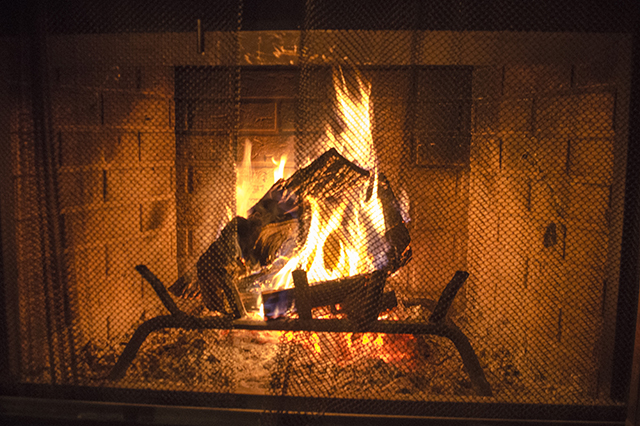
There’s nothing like curling up next to a warm, crackling fire in the middle of winter. Ambiance aside, supplementing your home’s heating with a fireplace or space heater can help you save money on electricity, gas or oil – depending on how you heat your home. As you enjoy the warmth and coziness of these common types of heat sources, stay aware and prevent potential dangers with these space heater and fireplace safety tips.
The Facts
Winter can be an especially risky time when it comes to fire hazards.
Home fires occur more between December and February than in any other season, largely due to home heating equipment like space heaters and fireplaces.
Between 2016-2020, fire departments responded to an estimated average of 44,210 fires involving heating equipment – about 13% of all reported fires, according to the National Fire Protection Association.
Space Heater Safety
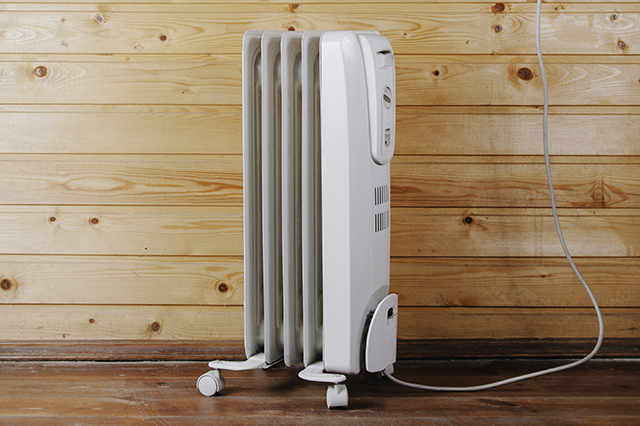
While space heaters are a convenient solution for keeping warm, you want to take all necessary precautions when using them.
Space heaters are responsible for the most losses caused by home heating equipment, accounting for one-third of fires, nine out of ten deaths and four out of five injuries, the NFPA reports. Chimneys and fireplaces tend to cause larger fires but are far less common.
Never use a space heater if the cord is broken, cracked, frayed or otherwise damaged. And always plug your device directly into a wall outlet. Don’t use an extension cord or power strip or plug anything else into the same outlet while you’re using a space heater. These all pose fire hazards, according to the Electrical Safety Foundation International.
Also, make sure you place your space heater on a flat surface and in a safe location.
“Heaters must be kept at least 3 feet away from anything that can burn, including papers, clothing and rugs,” according to the ESFI. “Locate space heaters out of high traffic areas and doorways where they may pose a tripping hazard.”
Never leave a space heater unattended and always unplug the machine when it’s not in use.
Fireplace Safety
You should have your chimney and vents inspected by a professional at least once a year, preferably before winter, according to the Chimney Safety Institute of America.
Before starting a fire in your fireplace, especially the first one of the season, take a peek up the chimney to check for any blockages like debris from trees or animal nests. Check that the damper or flue is open, and clean out any ashes from previous fires. You may also want keep a window cracked for even more ventilation.
Use dry wood to make your fire. Wood that’s damp or too green will smoke more when burning. Keep the area around your fireplace clear of anything flammable, and consider investing in a safety screen or gate, especially if you have pets or young children.
Finally, never leave a fire unattended and double-check that it’s completely snuffed out when you’re done.
More Heating Risks in Winter
Not only does colder weather make people look for more ways to stay warm, the winter season also brings extreme weather conditions. Winter storms with strong winds and heavy snowfall can lead to power outages, which can force homeowners to rely on generators or candles for warmth and light. While the open flame of a candle is a more obvious fire hazard, generators pose risks as well.
“Shocks and electrocution from improper use of power or accidentally energizing other electrical systems, carbon monoxide from a generator’s exhaust [and] fires from improperly refueling a generator or inappropriately storing the fuel for a generator” are all hazards posed by generator use, according to the Occupational Safety and Health Administration.
Make sure you have all the right safety detectors, including smoke alarms and carbon monoxide detectors, installed and working properly throughout your home, and keep a fire extinguisher near any potential fire hazards.
Insurance Considerations
Damage caused by fire and smoke is generally covered by a standard homeowners insurance policy, but having a fireplace in your home could be considered an extra risk by your insurer. Depending on the size and type of fireplace (wood-burning, gas, electric), it may be factored into your premium. If you plan on installing a fireplace, it is also a good idea to reach out to your agent to see if any changes to your policy are needed.
Proper cleaning and structural maintenance of your fireplace are key to reducing your risk.
Space heaters do not require special coverage or disclosure, unless they’re being used as primary heating sources (i.e., there’s no central heat).
When it comes to a home fire loss, depending on the severity, a coverage called “additional living expenses” on your homeowners policy may come into play depending on the severity of the claim. This is normally included on a policy but it never hurts to confirm with your agent. Essentially, this coverage pays for additional expenses incurred by the insured if they are the result of fire loss. For instance, if your residence is rendered uninhabitable for a period of time and you have to live in a hotel until your home is restored. It may also cover meals, additional mileage and laundry expenses.
Do you have a fireplace or use space heaters to warm your home in winter? Tell us in the comments.
While you’re getting into the holiday spirit with this crossword, head over to the Your AAA 2023 Holiday Movie Showdown and vote for your favorite festive flick.
Here are some tips to help you get the most out of your puzzle playing experience. Good luck!
Since our members are the root of everything we do, your feedback is important to us. Let us know if you run into any issues while playing, or share your ideas for future puzzles by emailing us.
The world is changing around us. Temperatures are rising, lakes and rivers are drying up and glaciers that have existed for millennia are disappearing. These are just some of the reasons why it’s incumbent to start planning our travels more thoughtfully.
Whether you’re going home to visit family and friends over the holidays or using the season to explore a new corner of the world, you may want to start shifting your travel mindset. Instead of simply choosing what’s quickest and easiest, consider the impact of each step of your journey, from mode of transportation to where you’re staying and even the length of time spent in a specific location.
“Thinking more critically about the act of travel and asking probing questions before leaving home can make travelers more aware of their choices, actions and behavior,” says JoAnna Haugen, founder of Rooted, a platform focused on sustainable tourism, storytelling and social impact.
Travel is part of the joy of the holiday season and exploring the world is tremendously enriching. As you’re planning holiday getaways, here are five ways to start thinking more sustainably.
Think Creatively About Transportation
While booking a flight is often the first choice that springs to mind when considering travel logistics, it’s also the mode of transportation that comes with the most significant impact on the planet in the form of carbon emissions.
“Before taking a flight, consider do you really need to fly? Can you go by other means like electric vehicle, train or bus?” suggests Matt Berna, president, North America for Intrepid Travel, a certified B Corp that has long focused on traveling with purpose. “Carpool with other family members where you can.”
For those who have young children in tow, train travel can add to the fun of the holiday journey. But even for adults, train trips can be more relaxing, eliminating the stress associated with driving, all while helping the planet. Trains “consume less energy and create less emissions on a per-passenger-mile basis than cars, trucks and planes,” according to Amtrak.
If you do plan to drive, renting an electric car is yet another option that can substantially reduce your impact. Or you might choose to rethink where you’re traveling altogether.
“If you can, stay closer to home and aim to avoid flying,” says Impact Travel Alliance’s Founder and Executive Director Kelley Louise.
If you do ultimately choose to fly during the holidays, consider an airline that operates using more eco-friendly biofuels, such as United Airlines or KLM, says Berna.
Stay and Eat Locally
There’s a growing number of hotels around the country and the world that are building sustainable operations into their business model by sourcing food from local growers, relying on renewable energy sources and implementing composting and recycling programs on premises.
“If you are planning a vacation somewhere – versus visiting a relative – do your research to make sure you are making that trip as sustainable as possible. Stay in locally owned hotels and support restaurants that put a focus on local ingredients,” suggests Sebastian Modak, editor-at-large of Lonely Planet, a noted sustainable travel advocate.
The emphasis on local foods is important because these products don’t have to travel as far to get to your plate, which means reduced carbon emissions. At the same time, you’re supporting local businesses in a meaningful way.
“Understand the impact that your spending can have on local businesses such as dining, accommodations and transport providers,” says Berma. “Support locally-owned diners and hoteliers.”
Pick One Destination and Go Deep
For those who use the holiday season to explore the world, Modak suggests identifying one destination and exploring it well, rather than jetting from one locale to the next.
“Not only will you gain a more profound appreciation for the place and its culture, but you will also minimize your carbon footprint by avoiding short flights and drives as you try and cover as much ground as possible,” explains Modak. “There’s nothing like convincing yourself you live somewhere for just a little bit, and to do that successfully, you need to slow down and spend some quality time there.”
This approach is known as slow travel and it’s an increasingly important approach to protecting the planet as we move into the future. “Take advantage of remote work options if that’s available to you and opt to stay longer in a destination,” says Louise. “This allows you to slow down and experience a destination more like a local.”
Think Outside the Box When Planning Activities
When it comes time to organize family fun, wherever you go, consider the carbon impact of your options.
“Take a long bike ride to the park instead of a short drive.Go kayaking instead of jet skiing,” says Modak. “Better yet, a nature walk, where [you not only] get exercise and engage in a carbon-neutral activity, but you can also incorporate educational moments for the kids and grandkids as you learn about the flora and fauna around you.”
Plant a Tree
For many of us, the holidays are a time of giving gifts small and large to those we love. As you plan your holiday travel consider giving a gift to the planet as well, to help offset your impact.
“Make it a rule of thumb to plant at least a single tree as you return from your trips,” suggests Will Hatton, CEO and founder of Broke Backpacker. “Even planting a single sapling does count among your good habits, creating a better place to reside.”
While you’re at it, why not consider gifting something eco-friendly like tree saplings to loved ones as well? After all, preserving nature is the best gift you can give the planet and future generations.
AAA’s sustainable travel series is written in partnership with Kind Traveler, a women-and-veteran-owned sustainable travel platform empowering travelers to make a positive impact in local communities, and contributing writer, Mia Taylor.
Modeled after owner Mohamad Hafez’s vision of a typical Syrian domicile, Pistachio Cafe has a way of making you feel right at home within its architecturally dazzling space. The scent of espresso and sweets waft through the space filled with unexpected but delightful decor – most notably, the wall of vintage radios adorning the entrance.
The laptop-free cafe encourages connection between its guests, and in doing so, offers a more grounded environment to enjoy their plethora of menu offerings. Sit down for brunch or lunch to savor everything from paninis, croissants, wraps, quiches, tartines, waffles and more. Coming with a group? Their platters have more than enough for everyone. Choose from the Syrian Home Breakfast (served with fava beans, Syrian olives, hummus, pita, rose jam and halloumi cheese to name a few) or the Mezze Platter (bread, hummus, pickles, artichoke hearts, grape leaves and more).
Ready for coffee and dessert? We are, always. And Pistachio has it all. Most famously, their baklava selection is the biggest in New Haven, but the choices don’t stop there. Feasting your eyes upon the dessert window, you’ll find multiple kinds of cake and pie, coppa (mini dessert cups), knafeh, hareeseh, Turkish Delights, macarons, cupcakes, truffles … the list goes on.
Our recommendation: The rose waffles were simply divine, and paired with a pistachio latte you’ll have the perfect flavor combination.
On “Search Engine,” audio journalist PJ Vogt tracks down the answers to the questions he always has on his mind. Should we not be drinking airline coffee? Where do you find good music? What’s it like to go blind? Fans of the now-defunct podcast “Reply All” will recognize “Search Engine” as its spiritual sequel.
Why are so many self-help books full of such bad advice? From threadbare research to bizarre philosophies, Michael Hobbes and Peter Shamshiri break down the bestsellers of pop nonfiction. These books, though mostly bunk, speak to the cultural attitudes of the times they were written, and the implicit biases of their authors. Plus, they’re also pretty funny. Hobbes and Shamshiri delight in exposing the flaws of these books and use them as a jumping-off-point to discuss issues that are still relevant today. Not interesting enough? Just wait until they get to your favorite book.
“The Retrievals” is a podcast from Serial Productions and the New York Times that tells the story of women who went to a Yale fertility clinic for egg retrievals. When the procedure is unusually, excruciatingly painful, the patients are left wondering what happened, and what was wrong with them. Eventually, it’s discovered that their fentanyl had been surreptitiously replaced with saline. But who would do such a thing? And why did it take so long for the patients to be taken seriously about their pain?
What if you bought a DNA kit and unlocked something that was supposed to stay hidden? “The Gift” is a podcast from BBC Radio 4 that follows the stories of people whose lives were changed forever after receiving unexpected news from an at-home DNA kit. Once they learn their own secrets, there’s no way to unlearn them. This podcast will keep you on the edge of your seat, waiting for each revelation.
Amanda is dying. Or is she? “Scamanda” follows the tale of Amanda C. Reilly, a wife, mother and blogger who told everyone that she had been diagnosed with cancer. Amanda built an online empire dedicated to following her cancer journey. But was it all an elaborate hoax? And if it was, who was in on it? Truth really is stranger than fiction, especially when you can’t tell the two apart.
After breaking up with her boyfriend, Bob Bierenbaum, Carole Fisher seeks community in his other ex-girlfriends. As the women bond over Bob’s many shortcomings, they start to notice that some of his stories about his ex-wife, Gail Katz, don’t make sense. This podcast, hosted by Fisher herself, tells the story of how Bierenbaum’s ex-girlfriends banded together to solve the mystery of his ex-wife’s disappearance.
For more podcast recommendations, check out the full Podcast Pulse archives.
Do you listen to podcasts? Do you have any favorite new shows? Tell us about them in the comments below.
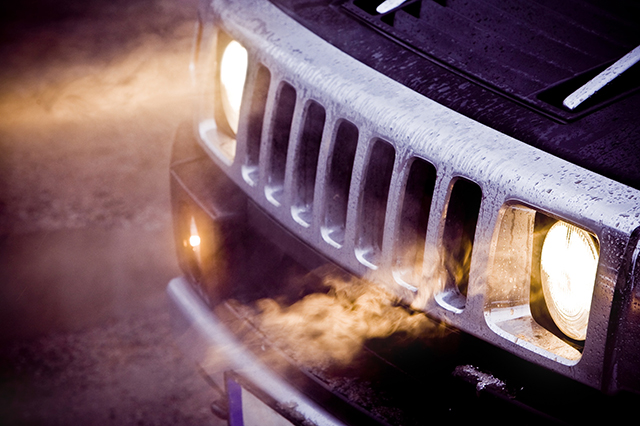
On the checklist of car maintenance items, headlights often fall to the bottom. We don’t pay them much attention until one burns out and we’re suddenly left with only a partially lit view of the road ahead. This is not only a dangerous situation, it’s illegal. Here’s how to take care of your headlights so you can safely see.
Clean your headlights.
We clean our windshields all the time. Whether it’s dirt, mud, or nine zillion bugs during a long road trip, windshields get dirty. Since we are looking directly at that mess it’s easy to notice when the windshield needs a little cleaning. Whatever is happening to your windshield is also happening to your headlights, so give them a good cleaning, too.
Some cars have built-in headlight washers so you can press a button and give them a bath without stopping. If your car doesn’t have this feature, then clean off your headlights the next time you stop for gas. It only takes a few seconds to make sure your headlights are clean enough to do their jobs so you can see the road.
Check headlight alignment.
This is tricky because it’s something that can be hard to notice. Your headlights might seem like they’re pointing straight ahead even when they’re out of alignment. Driving over potholes, across rough pavement, and especially off-road can knock your headlights out of alignment giving you a less than perfect view.
This isn’t something you can check yourself, but the professionals at a repair shop can do the job easily. Whether they seem aligned or not, have your headlights checked the next time you’re in for an oil change or any car repair. The service person can determine if they’re aligned correctly and make the necessary adjustments if your headlights are off kilter.
Clean fogged or yellowed lenses.
Most headlight lenses are made of a material called polycarbonate plastic. It’s a durable material that resists scratches, but over time, exposure to the UV rays of the sun causes polycarbonate lenses to oxidize. This results in a yellow or cloudy lens. The bulb behind that lens may be bright, but the oxidation on the lens keeps the light from getting to the road and hampers visibility. Have you ever tried to fix this problem on your own?
You can easily clean off this oxidation to improve your view and your car’s appearance. Your local auto parts store has a variety of headlight cleaning kits designed to make old headlights look as good as new. It’s simply a matter of applying a specially formulated polish to the lens and rubbing off that outer later of oxidation. Once your headlights are again shining bright, consider applying a UV-resistant coating to the lenses to keep them from getting cloudy again.
Repair surface scratches and peeling.
Headlights become scratched over time as a part of normal wear and tear. Rather than leaving the damage on your headlights, take a few minutes to remove the scratches. Much like removing the oxidation from plastic lens, removing scratches from the surface can be done with a simple kit as a part of regular car maintenance. It involves sanding the surface smooth and then polishing it back to its original shine. The kits are inexpensive and the process is a quick one.
Peeling is more complicated and can eventually cause damage to the interior of your light, particularly the electrical system when water gets inside the headlight. If you notice the surface of a headlight peeling or flaking, then take it in for repair before it causes more expensive damage. A quick visual inspection of your headlights should be a part of regular car maintenance to ensure your car’s overall good health.
Check for condensation.
If there is condensation inside a headlight or, even worse, a pool of water, then this needs to be repaired immediately. The moisture interferes with the quality of light and it can cause corrosion over time. This isn’t car maintenance you want to tackle on your own.
Have a professional repair the problem. It may be costly, but not as costly as letting it go. Remember, your lights are run buy your electrical system and water and electricity aren’t a good combination. A small leak left unchecked can cause major electrical problems and increase your repair costs. Get any water or condensation in your headlights checked out right away.
Don’t ignore dimming headlights.
If your headlights seem dimmer than usual or if you notice them dimming and brightening when you’re driving, then you need to have them checked. Dimming headlights are caused by several different problems, none of which should be ignored.
A corroded ground wire is one of the most common causes of dimming headlights. The ground wire connects to your car’s chassis and can become dirty and corroded, which will disrupt the flow of electricity to your headlights and make them dim. Other possibilities are a bad alternator or loose alternator belt. If these parts fail you could find yourself in need of roadside assistance. If you have dimming headlights, don’t wait to have the problem diagnosed.
How often do you check your headlights? Let us know in the comments below!
In the spring, I’m a refreshing way to welcome the warmer weather. In the summer, I’m a healthy way of getting in essential exercise. In the fall, I’m a perfect opportunity to catch views of fall foliage. What am I?
The answer is — you guessed it — a hike!
Hiking preserves both our health and natural environment. With all of its national and state parks, woodsy trails and swampy lands, locals are gifted with plenty of opportunities for hikes in the Northeast.
The following list includes hikes in the area that range from easy, moderate to challenging levels of difficulty.
The second-largest park in Queens has several trails that wind through forest, and along ponds and a salt marsh. Saunter on the Tulip Tree Trail, which passes the Alley Park Giant, a tulip tree that might be New York City’s oldest organism at between 350 and 450 years old.
This conservation park on Cape Ann in Massachusetts is what’s left of a settlement from 1693, which was named Dogtown after the dogs that women kept while their husbands were fighting in the American Revolution. The park is full of dense woodland with several trails for hiking. Be sure to hike the Babson Boulder trail to see the famous boulders with words of inspiration carved into them. A notable boulder is “The Whale’s Jaw,” which it resembled before collapsing in 1989. And, yes, dogs are welcome.
More than 50 miles of the Appalachian Trail cut a scenic swath west of the Housatonic River. There are more than 10 parking sites, from Salisbury to Kent, where hikers can leave their vehicles and set out for a day hike. See sights like the Great Falls, the “Giant’s Thumb” rock formation, the Indian Rocks outlook, the Housatonic River and more. If you’re up for a challenge, climb Bear Mountain, the state’s highest peak at 2,326 feet.
This preserve is home to a few hiking trails, a couple of lookouts and a World War II memorial. After 30-40 minutes of following the World War II Memorial Trail, you’ll see the memorial honoring three Army Air Corps servicemen who lost their lives in an aircraft crash at the site. On your way back, you can stop at Mercer Lookout, where you’ll get a great view of the Providence skyline. If it’s a clear day, you might also catch Brayton Point in Somerset, Mass., upper Narragansett Bay and the Mount Hope Bridge in Bristol, R.I. The paths can be rocky and sometimes aren’t clearly marked; bring the appropriate sneakers or hiking boots.
Glacial meltwater carved out this natural granite playground sometime during the Ice Age. The resulting 70-foot-high cliffs and craggy valley are a blast to climb, full of cleverly named rock formations like Fat Man’s Misery – a narrow crevasse – and the Devil’s Pulpit. Be careful after rainstorms; the rocks can be slippery. Dogs are welcome, but ensure that your dog is capable of the climbing you’ll be doing.
Ausable Chasm, known as “the Grand Canyon of the East,” provides the thrills you’re looking for on the Family Adventure Trail. It takes you through the gorge while you’re in a harness attached to a steel cable, which runs along the rock. You’ll cross over the river on cable bridges, traipse across a cargo net climb and brave the edge walks, giving you the illusion of danger, but while fully protected. This is a hike in the area for families and other groups of people who aren’t afraid of an adrenaline-pumping challenge. Closed-toe shoes are required.
Of these hikes in the Northeast, this is the most challenging, as this 10-mile loop takes you through five mountains: Little Windbeam, Windbeam, Bear, Board and Harrison. The constant up and down is what makes this hike a serious workout. Though the steep mountainside makes you work for them, the views this hike allows you to see are spectacular. You can see the Wanaque and Monksville Reservoirs from the peaks of the small, but mighty mountains. Visit any time from March until October for optimal hiking.
Have you taken on any of these hikes in the Northeast? Where are some nature hikes near you that you’d recommend? Tell us in the comments.
Any new exercise routines should be approached with caution. Consider your physical limitations and always consult your doctors.
This article has been updated and republished from a previous version.
So, you decided to become a DIY-er and change your motor oil yourself. And because you followed our guide, you completed the task flawlessly. But now you have a pan filled with used oil and no idea what to do with it. Fear not. Here’s how to properly dispose of motor oil.
Collecting Used Motor Oil
After you’ve changed your motor oil, you’ll be left with the aforementioned pan full of used oil. Some pans can be sealed shut, which makes the job easier. Otherwise, you’ll have to transfer the used oil into another container. Use the same container the oil came in if you still have it around. Otherwise, you should use a container made of polyethylene or a similar type of plastic. The container should also have never been used before. Oil that has been mixed with other fluids, such as gasoline, washer fluid, antifreeze and even water, cannot be recycled.
Once your used motor oil is in a secure container with a tight-fitting lid, it is ready for disposal.
How to Properly Dispose of Motor Oil
Most often, the easiest way to properly dispose of motor oil is to bring it back to the store you purchased it from or your local auto repair shop. Many states require service and retail businesses that sell motor oil to accept used motor oil for recycling. This service is completely free for the customer.
Occasionally, these establishments may temporarily refuse to accept used oil if their tanks are filled. However, they are required to empty these tanks in a reasonable amount of time and inform customers when they can return to drop off the used motor oil.
Some towns and municipalities accept hazardous waste, including used motor oil, as part of their recycling programs. Contact your local department of sanitation to see if this service is available and, if so, follow the instructions (including packaging requirements and protocol) for the safe and timely collection of your used motor. Don’t simply place a jug of motor oil on the curb or in your recycling bin.
Improper Disposal of Motor Oil
It’s illegal to improperly dispose of hazardous waste, including motor oil. And for good reason. Even a small amount of used motor oil can contaminate drinking water supplies and wreak havoc on the local environment.
Improper disposal of used motor oil includes throwing it out in the garbage, and dumping it on the ground, in the street or down the drain. It can result in heavy fines and even jail time.
How Is Motor Oil Recycled?
So, what happens to used motor oil? When properly disposed of, it’s recycled.
When used oil is recycled, it goes through a re-refinement process that removes any impurities the oil collected while it was being used. This essentially makes the oil as good as new – restoring it to its original quality. The process is far more environmentally friendly than procuring new motor oil.
Used motor oil can also be burned for energy production. This isn’t ideal as it only allows the oil to be used once. If properly re-refined, motor oil can be recycled repeatedly.
Looking for a service shop to drop off your used motor oil? Find the nearest AAA Approved Auto Repair facility here.
Turkey always gets the spotlight at Thanksgiving and Friendsgiving dinner, but let’s be honest: It’s really all about the sides.
From macaroni and cheese to marshmallow-topped sweet potatoes, Thanksgiving sides offer up a variety of flavors that’ll satisfy any palate, but only one of them is so easy you don’t even need a recipe. Don’t believe us? Read on to see for yourself just how simple and delicious cornbread casserole can be. Plus, learn how to whip up some herbed compound butter to perfectly complement this dish (and lots of others.)
Shop
Preparing to make your cornbread casserole is almost as easy as making it – the ingredients you’ll need might already be in your cupboard. For the compound butter, pick up salted butter (you’ll need 1-2 sticks, depending on how much you’d like to make), garlic, parsley and green onion or chives.
For the casserole, you’ll need a 15.2-ounce can of corn kernels, a 14.75-ounce can of creamed corn, an 8-ounce container of sour cream, a large egg, melted butter and an 8.5-ounce box of corn muffin mix.
Start by preparing the compound butter, as this will take some time to solidify in the fridge. If you can, soften your butter on the countertop until it’s at a mixable consistency. Short on time? Use your microwave’s “Soften/Melt” setting to soften, but careful not to let it melt.
Once ready, add the butter to a medium mixing bowl with a tablespoon of each herb (parsley, garlic and green onion), along with salt and pepper to taste. Mix with a silicone spatula until combined, then transfer to a long sheet of plastic wrap. Shape the butter into a rough log, then roll it up into the plastic wrap, twisting the excess ends to secure. Transfer to the refrigerator for at least two hours for everything to firm up.
Now comes the easy part. The reason you won’t need a recipe after you make this for the first time is because it follows the rule of one:
One can of corn kernels
One can of creamed corn
One container of sour cream
One egg
One stick of butter, melted
One box of corn muffin mix
One bowl
Preheat your oven to 350 degrees. In a large mixing bowl, dump both cans of corn followed by the sour cream and egg. Mix until combined. Add the melted butter and mix well. Lastly, add the full box of corn muffin mix and stir it up. Once all ingredients are evenly distributed, pour the mixture into a greased 9-inch square baking dish or casserole pan. Bake for an hour or until the top is golden brown.
Keep warm until ready to serve, then top with a pad of the herbed compound butter. Happy Thanksgiving!
Click here for more Shop and Cook recipes and videos.
What are your favorite holiday side dishes? Tell us in the comments.