
A Guide to Universal’s Marvel Character Dinner

Nothing at Universal Orlando is average, not even your meals. The Marvel Character Dinner elevates the dining experience by turning it into part meal, part interactive adventure. Here, you’ll get to chow down on some delectable food while meeting some of your favorite Marvel characters. It all comes together for one superhero night.

The Experience

Marvel Character Dinner takes place at Cafe 4 at Universal’s Islands of Adventure theme park. Upon arrival, you and other guests will have the restaurant to yourselves. (You will have to choose a seating time when you purchase tickets.) Team member servers will help you to your seat, take your drink orders and give you an overview of the dinner menu.

Once you start eating, the real fun begins when in walks Captain America, Spider-Man, Wolverine, Cyclops, Storm, Rogue and many of your other favorite super heroes. The characters not only pose for photos, they will also sign autographs and talk with dinner guests. You can take your own photos or take advantage of My Universal Photos, in which you can view, purchase and download high-quality photos taken by Universal Orlando’s professional photographers. (Each guest receives one digital photo via My Universal Photos with the purchase of a Marvel Character Dinner ticket.)

The Marvel Character Dinner is open from Thursday to Sunday, beginning each night at 5 p.m. But Cafe 4 is still open when Captain America and friends aren’t there. The Fantastic Four-themed Italian restaurant serves pizza, spaghetti and meatballs, fettuccini Alfredo, meatball subs, Caesar salads and much more.

The Menu

Marvel Character Dinner offers a full buffet menu of salads, pastas, meats and specialty pizzas. The salads include orzo, marinated artichoke, bow tie pasta, fresh mozzarella and tomato, chef-tossed Caesar and tossed house salad. Pasta offerings include penne Bolognese and stuffed jumbo shells with pesto. Meat entrees such as roasted rosemary lemon chicken, chicken scaloppini and shrimp scampi are available. Diners who opt for the specialty pizzas can choose Tuscan, Roman Bianca, Mediterranean vegetable, Hawaiian or cheese. Assorted breads, desserts and non-alcoholic beverages are also available. The culinary team is able to accommodate any dietary needs or special food requests you may require.

marvel character dinner

Marvel Super Hero Island

Cafe 4 is located in the heart of Marvel Super Hero Island, and there’s no reason not to experience everything the location has to offer. From rides to shopping to entertainment, spending a full day exploring Marvel Super Hero Island is the perfect way to work up an appetite.

Rides

Marvel Super Hero Island contains several Marvel-inspired rides. The Incredible Hulk Coaster catapults you forward before propelling you upside down into a weightless zero-gravity roll, racing faster and faster down the track. The ride hits a top speed of 67 mph.

The Amazing Adventures of Spider-Man brings you into the 3-D world of the world’s most famous webslinger. In this virtual reality ride, you’ll face a cast of Marvel characters as you soar above the streets, scale skyscrapers and battle bad guys.

Speaking of soaring into the sky, Doctor Doom’s Fearfall launches riders 185 feet into the air before hurling them back down to earth with a force stronger than gravity itself. For a more kid-friendly experience, hop on the Storm Force Accelatron for a spinning-good time.

Things to Do

The Marvel Character Dinner isn’t the only place to meet your favorite Marvel characters. Just outside Cafe 4 is the Marvel Alterniverse Store. Here you can meet and pose for photos with Spider-Man himself. You can also interact with the likes of Captain America, Cyclops, Wolverine, Storm and Marvel Villains like Dr. Doom and the Green Goblin on the streets of Marvel Super Hero Island. If you’re looking to face off against a villain in a more competitive setting, head to Dr. Kingpin’s Arcade for exciting arcade and video games.

Where to Shop

At the Comic Shop, peruse the comics and graphic novels that have defined Marvel for more than 75 years. Collectible figurines, busts, posters and apparel are also available. When you’re not snapping photos with your favorite characters at the Marvel Alterniverse Store, be sure to pick up as superhero T-shirts, mugs, toys, collectibles and more. If it’s Spider-Man memorabilia you’re after, the Spider-Man Store was made for you. Here you’ll find aisles upon aisles of Spidey action figures, toys, T-shirts and more.

Other Character Dining Experiences

If sharing a meal with your favorite characters proves to be your new favorite mode of dining, you’re in luck. Universal Orlando has several character dining experiences located throughout its destination. Every Saturday morning the Loews Royal Pacific Resort puts on the Despicable Me Character Breakfast. The Tahitian room offers a full buffet of pancakes, bacon, scrambled eggs and more. As you’re enjoying your delectable breakfast you’ll have the chance to meet some of your favorite “Despicable Me” characters such as Gru, Margo, Edith, Agnes and the Minions.

Universal Orlando also offers seasonal character dining. During Halloween, head to the Classic Monsters Cafe for the all-you-can-eat Halloween Horror Nights Scareactor Dining Experience. When Christmas rolls around, what could be better than spending time with the mean one himself? While you chow down at The Grinch & Friends Character Breakfast, the Green One will make the rounds, stopping to take photos and maybe swiping a piece of bacon.

AAA Members get special savings and exclusive member benefits at Universal Orlando Resort. Click here to learn more.

Subscribe to Your AAA Newsletter

Sign up and receive updates for all of the latest articles on automotive, travel, money, lifestyle and so much more!

Plan a Fishing Trip to the Adirondacks

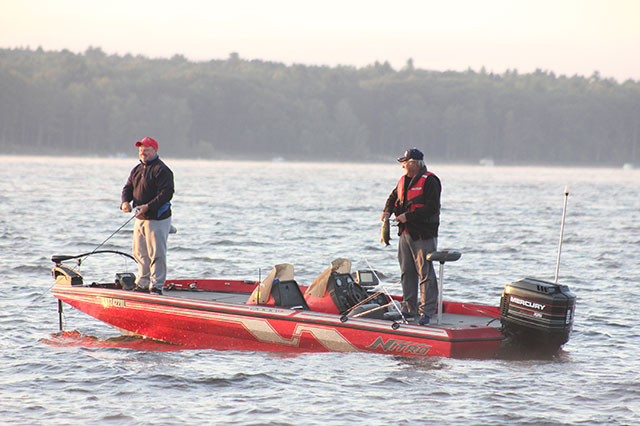
The fish are calling in Fulton County, New York. Brown trout, rainbow trout, walleye and smallmouth bass – they all can be found in abundance in the county’s 44 lakes and numerous streams.

Here’s some information to help plan a freshwater angling trip any time of year to this area where the Southern Adirondacks meets the Mohawk Valley.

Getting a License

Before even getting out the tackle box, visiting fishermen must purchase a New York fishing license. The town offices in several locations, including Amsterdam, Broadalbin, Caroga Lake, Gloversville, Johnston, Mayfield, Northville and Stratford, sell licenses. Some retail establishment also offer them, including Harnish Outdoor Supply, Frank’s Gun Shop and Runnings, all in Gloversville.

The current fee for a nonresident of New York is $50 per year, $28 for a week, and $10 for a day license. New Yorkers with proof of residency pay half of the nonresident fees.

The state also holds four free fishing events each year. Upcoming license-free days for 2019 are June 29–30, September 28 and November 11. Taking advantage of these days is a great way to try out the sport or to introduce fishing to a friend or family member.

Fishing Opportunities in Fulton County’s Lakes

Fulton County’s lakes offer some of the best fishing in every season. Whether you’re looking to fish in a large or small lake, stream, pond or tributary, you can find it all here. Our waters are home to a variety of trout, bass, walleye, northern pike and more.

Visit Now!

Outfitters and Guides

With a license in hand, the next step is stocking up on fishing supplies. From rods to tackle, ice-fishing augers to live bait, the outfitters in Fulton County will have something for every type of fishing the region offers. Check out The Fly Shack in Gloversville and Dave’s Bait & Tackle and Jim’s Bait Shop, both located in Mayfield on the shores of Great Sacandaga Lake, for every kind of lure and bobber available.

Though anglers can certainly scope out a stream or lake from the map, hiring a local guide can make the difference between a successful outing or a fishless one. Specializing in father-son and couples’ excursions, Allwater Guide Service offers year-round packages to Fulton County lakes and streams, and Gary’s Fishing and Charters can take groups out onto Great Sacandaga Lake for trips to fit any budget or schedule.

fishing in fulton county

Where to Cast Your Line

With 44 lakes, the Mohawk River and numerous streams to choose from, fishing enthusiasts can certainly find a location ideal for experiencing Fulton County’s prime waters.

Brook trout attract fly-fishers to Cayadutta, Mecco and Timmerman Creeks, whereas those seeking rainbow trout can try their luck in Northville Lake and the 29-mile-long, six-mile-wide Great Sacandaga Lake, which is also home to smallmouth bass, Northern pike and walleye. Approximately 25 miles to the west of Great Sacandaga is Peck Lake, a man-made body of water. Though it is only five miles long and two miles wide, the variety of fish it holds belies its small size. Largemouth bass, Northern pike and pickerel are frequently hauled in here.

Note that the state prohibits the use of live bait in some lakes, including Holmes, Indian, Steward and Third Lakes, to avoid introducing nonnative species into the local waters. Be sure to check with the New York State’s Department of Environment Conservation before using live minnows or other baitfish.

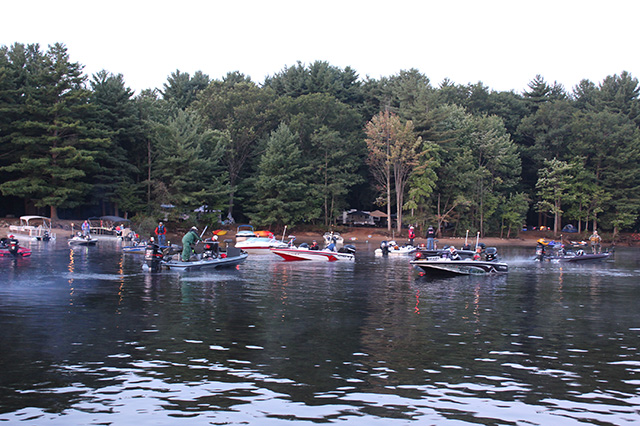
The Great Sacandaga Lake Fisheries Federation puts on several tournaments throughout the year. Around 400 entrants braved the cold for the 2019 Ice Fishing Contest in February. Additional contests are held in the spring, summer and fall as well as the organization’s annual bass tournament.

Visitors with boats will find public launches on Great Sacandaga Lake in Northville, Northampton and Broadalbin. West Lake, located off of Route 10, also provides a hard-surface boat launch. Caroga Lake features a beach launch site for smaller boats and canoes.

Where to Stay

Visitors to Fulton County can select from a wide range of lodging, from luxuriously appointed summer homes to rustic cabins, basic motels and campgrounds or comfortable B&Bs where guests can learn more about the area from their hosts over breakfast.

The Inn at the Bridge offers rooms with view of Great Sacandaga Lake, as well as a complimentary slip for visitors who bring a boat. For those seeking accommodations near the northern end of the lake, the Pines Motel Sacandaga, Orendaga Lakeside Cottages or Betty’s River Road B&B are just the thing. On the south side, the Broadalbin Hotel provides a relaxing stay in a historic building – just what is needed after a day on the water.

For those seeking to sleep in the great outdoors, the county has several campgrounds, including South Adirondack Pines Campground on Pine Lake, Crystal Grove Campground in St. Johnsville (where visitors can also dig for quartz crystals, known as Herkimer diamonds) and Peck’s Lake Family Vacationland on Peck’s Lake.

Where to Eat

Although in theory, visitors to Fulton County’s many fishing destinations could catch their own dinners, sometimes it’s nice to go out and let someone else do the cooking. Luckily, the region is home to many restaurants catering to wide variety of tastes.

Lanzi’s on the Lake in Mayfield is perched right on the shore of Great Sacandaga Lake and even offers a marina for those accessing it straight off the water. The outdoor patio provides the perfect location for recounting the day’s fishing stories over a steak and a beer. You’ll feel right at home at Timeless Tavern in Northville, a cozy spot to eat and stay, with six room rentals above the restaurant. On the south end of the lake, Project 29, in Broadalbin, serves up pub grub and features numerous New York State craft beers and wine.

Fulton County’s wild streams and lakes of all sizes provide the perfect location for a fishing trip, whether a quick weekend getaway or a week-long – or longer – adventure in the southern Adirondacks. Learn more.

Subscribe to Your AAA Newsletter

Sign up and receive updates for all of the latest articles on automotive, travel, money, lifestyle and so much more!

What’s New at Disney World and Universal Orlando

There’s always something new in Orlando, Fla., home to the world’s top theme parks. Here are the latest reasons to make a trip.

What’s new at Disney World: Long-awaited Toy Story Land now open 

A few months ago, Disney’s Hollywood Studios debuted the 11-acre Toy Story Land. If you plan on riding the headliner Slinky Dog Dash roller coaster, make sure you have a Lightning Lane reservation, or brace yourself for a two-hour wait shortly after the park opens.

In early 2019, McQueen, Mater and Cruz Ramirez of “Cars” fame will star in the new Lightning McQueen’s Racing Academy. Next, also in 2019, Mickey & Minnie’s Runaway Railway will thrill visitors as it twists through a full-scale replica of the Grauman Chinese Theater.

Star Wars land opening fall 2019 at Disney’s Hollywood Studios

If you’re already excited about what’s new at Disney World, brace yourself for one of the most highly anticipated developments yet. Mark your calendar for 2019 for the solar system debut of the 14-acre Star Wars: Galaxy’s Edge. Soon after, you can expect the opening of a “Star Wars”-themed hotel.

Disney welcomes James Beard Award-winning chefs, new hotels and more

In late 2018, James Beard Award-winning chef Jose Andres will open a new location of his popular Spanish restaurant Jaleo, and Wolfgang Puck Bar & Grill will bring a farmhouse-inspired menu to Disney Springs.

Also new for 2019 in Disney Springs, the NBA Experience, offering interactive games, a retail store and a restaurant, is expected to open in the summer. For a more laid-back experience, the newly debuted Wine Bar George, with more than 130 wine selections handpicked by master sommelier George Miliotes, is the perfect place to enjoy late-night drinks and tapas-style bites.

Disney continues to add more hotels. 2019 brings a new 15-story tower to the Coronado Springs Resort and the opening of Disney’s Riviera Resort. Topping it off, Skyliner – a new gondola transportation system linking Epcot, the Riviera Resort, the Caribbean Beach Resort, Disney’s Hollywood Studios and the Art of Animation and Pop Century resorts – is also projected to open in 2019.

what's new at disney world
(Photo: Liliane Opsomer)

Other recent Disney World highlights

Last year, Pandora: The World of Avatar, an otherworldly land inspired by James Cameron’s movie “Avatar,” opened at Disney’s Animal Kingdom. In August, the Visual Effects Society honored it for outstanding visual effects, one of many recent industry honors this innovative attraction has snagged. The land and its rides are still in high demand and totally worth your visit. The park also added a new bird show based on the flick “Up.”

At the Magic Kingdom, while waiting for Tron Lightcycle Power Run, a coaster-style attraction scheduled for 2021, don’t miss “The Muppets Present … Great Moments in American History,” a show featuring the latest hysterical sketches by Kermit and friends.

Epcot is still in “Frozen” fever, so if your little tyke is an Anna and Elsa fan, arrive early and get to the Norway pavilion as soon as the park opens. A “Ratatouille”-inspired attraction for the France pavilion and a “Guardians of the Galaxy”-inspired roller coaster, as well as a space-themed restaurant, are also in the works. No opening dates have been announced.

Adventures and new resorts await at Universal Orlando

Across town at Universal Orlando, two on-property value hotels – the Endless Summer Resort-Surfside Inn and Suites and Dockside Inn and Suites – are under construction. Surfside Inn and Suites is set to open in 2019 with prices as low as $73 per night!

what's new at disney world
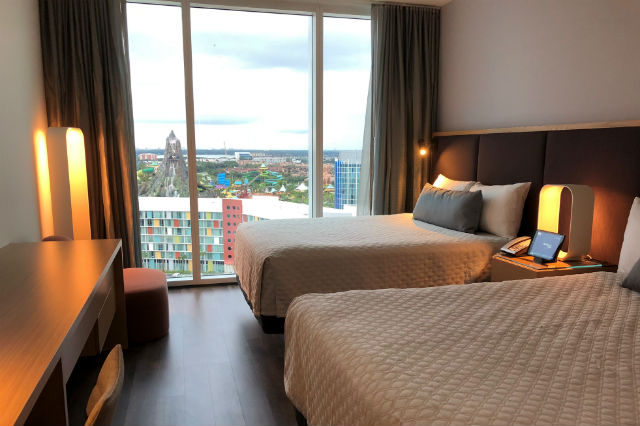
A room with a view at Universal’s new Aventura hotel. (Photo: Liliane Opsomer)

New Aventura Hotel offers luxury and modern technology at an affordable price

Open since August of 2018, the beautiful 600-room Aventura hotel offers stunning views of Universal Orlando’s theme parks and Universal’s Volcano Bay water park. Rooms combine a sleek modern look with the latest technology, such as tablets that allow you to order room service and control the air conditioning, lighting and TV. Prices start at $116 per night plus tax.

In case you haven’t visited Volcano Bay, slip on a bathing suit and go now. The tropical theme recalls the islands of the South Pacific, and, in my opinion, it’s one of the nicest water parks out there. And after a long day in the parks, Aventura’s Bar 17 Bistro rooftop bar is the place to relax and unwind.

Harry Potter-themed attraction coming to Islands of Adventure

At Universal’s Islands of Adventure, 2019 will bring the opening of an eagerly awaited new Wizarding World ride in Hogsmeade. Right next to it, “The Eighth Voyage of Sindbad” show ended its 19-year run in September. While no replacement has been announced, muggles worldwide can’t wait to see what’s in store.

Meanwhile, Harry Potter fans should make sure to catch the nighttime lights at Hogwarts Castle. The show, which casts projections against the backdrop of the impressive castle, takes place on select nights. The show gets a Christmas overlay as of mid-November.

Another newcomer to Islands of Adventure is Blue from “Jurassic World: Fallen Kingdom.” Guests can meet the raptor at the Jurassic Park Raptor Encounter.

A peek at Universal Studio’s nighttime show, “Cinematic Celebration.” (Photo: Universal Orlando)

Brand-new nighttime show now open at Universal Studios 

Movie-inspired attractions are the stars at Universal Studios, with the 3D motion-simulator Race Through New York Starring Jimmy Fallon and Fast & Furious: Supercharged being the latest additions.

An absolute must-see is Universal Studios’ brand-new nighttime show, “Cinematic Celebration.” It features multi-layered water screens, pyrotechnics and more than 120 dancing fountains. Playing on select nights, it is a great ending to a day at the park.

Over the last few years, Universal Orlando has acquired hundreds of acres of land. Could it be looking at another theme park? Will Super Nintendo World, currently in the works at Universal Studios Japan, finally make its way to Florida? The possibilities are endless and exciting. Rest assured, there will always be new reasons to visit the incredible theme parks in Orlando.

Plan your next theme park trip with AAA and save.

Subscribe to Your AAA Newsletter

Sign up and receive updates for all of the latest articles on automotive, travel, money, lifestyle and so much more!

Five Financial Goals to Boost Your Savings

It’s always a smart idea to set realistic financial goals and grow your savings account over time, regardless of your income. The good news is that you don’t need to be a personal finance expert to get on the right track and begin saving some money. Start with these five simple goals and you’ll be well on your way.

Develop a Clear Budget Plan

Although it might seem a little tedious, it’s essential that you create a detailed budget plan if you want to take control of your savings. One of the easiest ways to do this is to follow the 50/20/30 rule. Basically, your monthly budget is divided as follows: 50% for the essentials, 20% set aside for savings, and 30% for variable activities and non-essential occasional spending.

Do Your Best to Get Rid of Debt

If you’re in some form of debt, you’re not alone. Many Americans have either credit card debt, college loans or other overdue payments that are slowly accruing more and more interest. Make sure to pay off your loans as quickly as you can. If you decide to follow the 50/20/30 rule mentioned above, it’s best to allocate all or half of the 20% designated for savings to pay off your debt instead. You’ll save more money in the long run.

Limit Unnecessary Day-to-Day Spending

Even if you’re not in debt and have a little more flexibility with your funds, it’s a good idea to take your daily spending into account and see if there are payments that you could live without. It can be helpful to sit down with your family or spouse and have everyone write out a list of their usual casual expenses. You might discover areas you didn’t realize you were overspending on, and that you don’t mind cutting back on.

For instance, if you always buy a monthly train or bus pass, but notice you end up using a car service much more often, you might forego the bus pass altogether and just buy the occasional ticket when needed. Or, you can opt to bring a refillable water bottle to work instead of always grabbing a drink with your lunch. With a little clarity and reflection, a lot of habitual spending habits can be transformed into useful savings habits instead.

five financial goals

Start Earning from New Income Streams

Over the past decade, full-time freelancers have become a lot more common. But you don’t have to quit your day job to start earning extra money. There are plenty of options out there for anyone with a little bit of time and talent. Instead of kicking back and watching cable or a streaming service after work, try to set aside an hour a day to work on your side project. If you have skills in writing, coding, accounting or design, there are many websites that can help you find gigs. Even if you have more niche skills, with much of the global economy online, you’re likely to find a few clients.

Better yet, investigate how you can develop a revenue source that keeps providing income even after you’ve stopped putting time into it. Passive income is a hot topic right now, but it’s more than just a trend. Developing an online course, licensing your creative work like photography or design, or renting equipment are all examples of easy ways to make some extra money while you sleep.

Save on Monthly Payments and Utilities

Some of your primary monthly expenses, like your phone bill and electric bill, can take up a big portion of your budget. Evaluate your monthly usage of these items and see if there’s any opportunity for cutting costs. There are a lot of simple workarounds that can potentially add up.

For example, upgrade to more energy-efficient appliances or use a fan over A/C for milder summer days. You can also review your cable bill and see if you really need that deluxe channel plan if you’re only watching a handful of shows. Finally, you can improve your savings by keeping on top of car maintenance; choose a regular checkup over a costly mechanical breakdown in the future.

Even just a small effort applied to each of these goals can have a big impact on your wallet.

Learn more how AAA can help you handle your savings.

Subscribe to Your AAA Newsletter

Sign up and receive updates for all of the latest articles on automotive, travel, money, lifestyle and so much more!

Two Northeast Restaurants Earn AAA Five Diamonds for First Time

AAA has awarded its prestigious Five Diamond Ratings for 2019, with two restaurants in the AAA Northeast footprint earning the coveted awards for the first time.

Coast, a farm-to-table restaurant in Westerly, RI, received the distinction, as did Atera, an exclusive, chef-driven eatery in New York City.

Coast is the first restaurant in Rhode Island to earn Five Diamond status.

“Attaining the Five Diamond Rating is an impressive accomplishment,” said Michael Petrone, director of AAA Inspections & Diamond Ratings. “To be considered leading edge, chefs must incorporate a laser-focused approach using innovative concepts and menus featuring the finest ingredients. Diners want to be wowed on multiple levels, so exceptional service is also important, but they’re not necessarily looking for all the formalities that were once synonymous with fine dining.”

The eateries were among 67 in North America to earn the award. Only 0.2 percent of the 32,000 AAA Diamond Rated restaurants in the U.S., Canada, Mexico and the Caribbean earn a Five Diamond distinction.

Among Five Diamond establishments, AAA inspectors note many are adopting more casual environments to guest preferences for a more relaxed experience. Thanks to popular cooking competition shows, many high-end restaurants continue to showcase open kitchens where guests can watch the chefs at work.

aaa five diamond

Located in the upscale Ocean House (also Five Diamond Rated) Coast showcases Rhode Island seafood with a menu that changes daily to showcase the freshest ingredients from local fishmongers and growers. Its dramatic seaside setting earned it a AAA Inspector’s Best of 2019 Scenic View award, with the inspector noting, “It’s merely one of the best views I have seen, which makes it extremely hard to leave after the dining experience.”

Coast was upgraded from its previous Four Diamond Rating.

aaa five diamond
A AAA inspector calls dining at the Five Diamond Rated Atera a “treat for all the senses.”

Atera ,located in Tribeca, debuted with its Five Diamond Rating. Inspectors call it a treat for all the senses, with a tasting menu that slowly builds with creative presentations and ingredients. It received a AAA Inspector’s Best of 2019 Personal Favorite award for its innovation, dazzling food and presentations. “My mood at this tiny eatery is charged with anticipation as I await a series of courses which are visually unlike anything else in town,” the inspector wrote.

A third restaurant ,Oriole, in Chicago – also earned its first Five Diamond Rating this year.

A number of restaurants also earned Four Diamond distinctions this year. There are 656 Four Diamond eateries in North America, with 39 of them earning Four Diamonds for the first time in 2019. Only 2.1 percent of AAA Approved restaurants earn the Four Diamond Rating, which require creatively served plates in a fine-dining setting.

To see the complete lists of 2019 AAA Four and Five Diamond restaurants, visit AAA.com/DiamondAwards. To see which cities and states have the most award winners, see AAA Four and Five Diamond Restaurant Facts.

Subscribe to Your AAA Newsletter

Sign up and receive updates for all of the latest articles on automotive, travel, money, lifestyle and so much more!

Viva la Villa: Lavish Vacation Rentals From Italy to Grand Cayman

If you’re looking to discover the ultimate vacation experience, a villa vacation may be the perfect solution for you. These incredible luxury rentals go above and beyond the provisions of traditional hotels and resorts to offer exclusive amenities, private pools and even staffed services. Best of all, a luxury villa vacation offers guests far more for their vacation dollar, giving you ample space, privacy, creature comforts and so much more. From Italy to Grand Cayman and beyond, aren’t you ready to experience a truly extraordinary escape?

Italy

Italy has many diverse regions that characterize the culture of the country. Villas across Italy each offer something different to please any taste. Staying in a villa on the Almafi Coast showcases the beauty of the Mediterranean Sea from terrace viewpoints. Villas in Sicily exhibit the varying roots of the island’s history and architecture. A Tuscany escape highlights the fresh foods and wines of the city set on an elegant countryside. Enjoy personalized itineraries and recommendations, tours and more compliments of the villa concierge service to round out your trip.

All-Inclusive Luxury

The newest addition to the Sun and Sand collection is the luxury-inclusive Turks & Caicos Collection.

Book Today

France

The epitome of romance, a villa vacation in France will take your breath away. After touring the beautiful countryside, exploring the bustling cities and enjoying French cuisine, rest in a villa that reflects the splendor of the region. Be wowed by the fragrance of vast lavender fields through an open window in Provence, or gaze at the snow-kissed landscapes of the French Alps from your cozy chalet. No matter the region, your French getaway will leave you in awe.

Spain

If you’re dreaming of experiencing the majesty of the Mediterranean, a stay in a Spanish villa may be just what you’ve been looking for. You’ll have gorgeous views of some of Spain’s most striking landscapes and coastal views, right from the comfort of your home-away-from-home. There’s a wide array of water sports just outside your door, from wind surfing to scuba diving and snorkeling. For an immersion into the country’s culture, watch a mesmerizing flamenco performance and enjoy freshly caught seafood typical of traditional Spanish cuisine.

Anguilla

Villas on this island boast relaxing ocean views and beaches just a short walk from your front door. This 15-mile paradise is perfect for a casual undersea expedition due to the coral reefs and coves that line the island. Be prepared for some fun in the sun: Anguilla has 33 white-sand beaches to choose from, many with stunning views at sunset. For the golfers in your life, the island is home to an 18-hole championship golf course designed by Greg Norman.

luxury villa rentals

St. John

St. John may be the smallest of the Virgin Islands, but it’s big on natural beauty. Villas on the island have stunning nature views at every turn, framed by coconut trees or perched above the Caribbean coastline. Be sure to include an exploration of the Virgin Islands National Park during your stay. The park’s forests, coral reefs, beaches and other ecosystems make up 60 percent of St. John, providing a variety of lush landscapes. A range of wildlife also calls this tropical paradise home. If you’re lucky, you may catch a glimpse of a swimming sea turtle.

Puerto Rico

Villas in Puerto Rico are your introduction to tropical immersion. You’ll find differing landscapes all around you – from mountains to beaches to jungles – as well as renowned restaurants and San Juan’s bustling nightlife. Traverse the Rio Camuy Cave Park, an underground park spanning 268 acres. For a stunning natural display, the Bioluminescent Bay offers views of glow-in-the-dark organisms floating in the water. Art galleries and reggaeton clubs contribute to the rich culture of the island and the culinary experiences are second to none.

Bahamas

With 700 islands, there is plenty of ground to cover in the Bahamas. Planes, ferry services and even personal yachts can transport you from one paradise to another, each with its own distinct Caribbean flair. Beaches are one of the main draws for travelers to the Bahamas, and many villas will have this luxury a few steps away. Take advantage of the beautiful atmosphere and try your hand at some water sports, or perhaps go swimming with dolphins.

Grand Cayman

The crown jewel of the Cayman islands, Grand Cayman is the ultimate tropical getaway. Enjoy waking up to a view of the ocean outside your bedroom window and local culture at your fingertips a short distance from your villa. Beaches are never far anyway, particularly Seven Mile Beach, with pristine, soft white coral sands and crystal blue waters. Some villas even offer private beaches just a few steps from the door.

Rent a luxury villa in over 50 countries worldwide with AAA

Subscribe to Your AAA Newsletter

Sign up and receive updates for all of the latest articles on automotive, travel, money, lifestyle and so much more!

Preparing for a Cruise: Planning Ahead

Global cruise travel is booming, and that’s good news for cruisers everywhere. With so many ships ready to set sail, you’ve got options – and lots of them!

Whether you’re looking to brave the vast Atlantic or float gently along a European river, there’s a vacation just right for you. So let’s get planning.

Here’s what to expect during every stage of preparing for a cruise.

One year before

Expect to crunch some numbers and do lots of research. Vacations aren’t magically planned overnight; finding the right cruise takes patience. Start by figuring out how you want to travel. Large ocean cruise ships and small river cruises both have their pros and cons.

You’ll also want to consider things like cabin size, onboard entertainment options and land excursions. It’s important to recognize that different types of cruises and cruise ships will have distinct amenities and atmospheres. Prioritize your must-haves and maybes. Ready to book? Do it online or let a travel counselor handle it.

Tip: Cruise lines are constantly running promotions. You can find short sales, last-minute deals, bundles and so much more. Your trip doesn’t have to break the bank. When preparing for a cruise, shop smart. See what deals you can take advantage of when booking a cruise with AAA

One month before

Congratulations, you booked a cruise! But now it’s time to figure out some logistics, like who’s watching the kids while you’re away, picking up the mail and watering the plants. What about a pet or house sitter? When preparing for a cruise, one month out is the perfect time to start making these arrangements. You should also email emergency contact information to your loved ones, including an itinerary and phone numbers. It’s important to make sure that friends and family can reach you, even while you’re out at sea.

Now is also time for the fun part – vacation shopping! You might want to splurge on new sandals, swimsuits, sun hats and cover-ups. Just don’t forget the important stuff. You’ll want to start a precursory checklist of cruise necessities, like a flashlight (for inside cabins), sunblock or mini first-aid kits.

Tip: You should also start researching land excursion activities and check your cruise info. Did you get the cabin you paid for? What about included hotel and flight bookings? Whatever your cruise package entails, make sure it’s there. If not, call immediately. And don’t forget to fill out any required pre-boarding forms.

preparing for a cruise

One week before

It’s getting down to the wire. But don’t panic. You should be pretty organized at this point. All that should be left  are the little things. When preparing for a cruise, here’s what to do one week out.

Laundry: Wash any clothes you plan on taking.

Pack: Get everything into that suitcase, which probably sounds more daunting than it actually is. You can check out AAA’s travel checklist to get organized.

Finance: Research the best money/payment options for your time on the cruise and on land. Get your foreign currency or traveler’s checks in order and let your credit card company know you’ll be away.

Print: Cruise tickets and other essentials, like copies of your passport, hotel confirmation vouchers and travel insurance documents. Flying to port? Double check your flight times. But remember, you can’t check-in until 24 hours before. So, pick up plane tickets at the airport, opt for a mobile boarding pass or print them out the before.

Follow-up: Double check that your out-of-town arrangements are still good to go. And if you’d like a ride to the airport, now is the time to start asking.

Tip: One week out, most people are excited to post their vacation plans on social media. Don’t! Telling the world that you’ll be away for an extended period of time might leave your home vulnerable. Travel plans should always be on a need-to-know basis. Only alert your family and most trusted friends. And don’t post social media statuses or pics until you’re home.

One day before

This is it! It’s almost time for your cruise. Yes, it’s exciting, but it can also make you a little anxious. Try to stay calm. Worrying may lead to forgetting important things like medications or passports. Instead, simply take another look at your checklist as you finalize the bags. Add missing items and take away ones you deem unnecessary. And if you haven’t already done so, book transportation to your port, airport and any other destinations.

Tip: Most importantly, when preparing for a cruise, one day out is a good time to set an alarm and get some rest. You don’t want to be late for or miss the big adventure!

What are your go to tips and tricks for easy and stress-free cruise prep? Let us know in the comments below.

Plan and book your next cruise vacation with AAA

Subscribe to Your AAA Newsletter

Sign up and receive updates for all of the latest articles on automotive, travel, money, lifestyle and so much more!

9 Best College Towns in the Northeast

College towns are often vibrant places to live or visit as the locations frequently offer everything from live music and other cultural activities to great restaurants and bars, many of which exist to cater to the teens and twentysomethings that spend much of the year in the town.

Whether you’re visiting with a prospective student or are just going for fun, there are several great college towns in the Northeast that you could spend the day or an entire weekend exploring.

We’ve put together a list of trips to the 10 best college towns in the Northeast that includes locales in New York, Pennsylvania, Massachusetts, Vermont and Connecticut. We have not included big cities, such as New York City or Pittsburgh, both of which have numerous colleges and would make for great trips regardless, but neither of which are centered on a college or university.

Need a ride? Save on Hertz rentals

10 Best College Towns in the Northeast

Binghamton, NY

Home to Binghamton University, the town is centered around the defense industry and has a number of large employers, such as Lockheed Martin, BAE Systems, IBM and Universal Instruments. But the town is also a cultural center in the region and includes a number of galleries that have created the First Friday Art Walk, a series of events like musical performances and exhibits that draw large crowds. Other popular attractions include the Binghamton Philharmonic, Roberson Museum and Science Center, Binghamton Zoo at Ross Park, Phelps Mansion museum, Bundy Museum of History and Art, Cutler Botanic Garden and six historic carousels, which is why the town is dubbed the Carousel Capitol of the World.

Ithaca, NY

This upstate New York city is home to both Cornell University and Ithaca College. Ithaca winters are often harsh and it’s an hour away from any sizable cities, but the town has a large and diverse music scene and nightlife. Some of the town’s top attractions include the nonprofit, hands-on Sciencenter, the Museum of the EarthHerbert F. Johnson Museum of Art and Hangar Theatre, a formerly renovated municipal airport hangar where the Center for the Arts at Ithaca hosts theater performances. During the course of the year, Ithaca holds an apple festival in the fall, chili festival in February, dragon boat festival in July, and the Porchfest music festival and the Ithaca Brew Fest in September.

Syracuse, NY

An economic and educational hub for central New York, Syracuse is home to Syracuse University, Le Moyne College and the State University of New York. The town, which has a fairly large nightlife scene, features a number of museums, including the Everson Museum of ArtErie Canal MuseumMilton J. Rubenstein Museum of Science and TechnologyThe Warehouse Gallery and Delavan Art Gallery. It also has more than 170 parks and recreation areas, such as Burnet Park, the nation’s first public golf course, and the Rosamond Gifford Zoo.

Cambridge, MA

Cambridge, home to two of the world’s most prestigious universities – Harvard University and the Massachusetts Institute of Technology – has its own separate vibe from Boston, which is just across the Charles River. Cambridge has a number of great spots to visit, including the Peabody Museum of Archaeology and Ethnology, the Harvard Museum of Natural History and Semitic Museum. As only the best college towns do, the region has a number of historic tours and sites as well as a very active nightlife, especially in Harvard Square. The city also hosts independent movie theaters and numerous music venues, including The Middle East and Nameless Coffeehouse.

Amherst, MA

Three top-tier schools, Amherst College, Hampshire College and the University of Massachusetts Amherst, can be found in Amherst, which once counted Robert Frost and Emily Dickinson as residents. The town is known for having a number of cultural sites, such as the Eric Carle Museum of Picture Book ArtAmherst Cinema Arts CenterBeneski Museum of Natural HistoryEmily Dickinson Museum and Mead Art Museum at Amherst College, which features 18,000 items with an emphasis on American art.

Wellesley, MA

Home to Wellesley College, a privately funded women’s college and one of the “seven sisters,” Wellesley has an historic district with homes that date back to the 1860s. The town retains some of its students due to large businesses in the area, such as Harvard Pilgrim Health Care and Sun Life Financial. Cultural attractions include the Wellesley Symphony OrchestraMassachusetts Horticulture Society and Wellesley’s Wonderful Weekend, which features fireworks and live music the weekend before Memorial Day. Boston’s only a 30-minute drive away.

10 best college towns
Hartford city skyline.

Hartford, CT

One of the oldest cities in the United States and larger than most of the other towns on this list, Hartford is home to the University of Connecticut’s law school, Trinity College and University of Hartford. Some of the city’s top attractions include the Wadsworth Atheneum, the U.S.’s oldest public park – Bushnell Park – plus the Bushnell Center for the Performing ArtsConnecticut OperaMark Twain House and a variety of musical venues, movie theaters and nightlife options.

New Haven, CT

The number of universities in this town alone makes it one of the best college towns in the Northeast. Yale University is located in New Haven, and nearby you’ll find Southern Connecticut State University, Albertus Magnus College, Gateway Community College, Quinnipiac University and Paier College of Art. In 2014, Livability.com named New Haven as the Best Foodie City in the country, since it has 56 Zagat-rated restaurants. The city has a number of theaters and production houses where students can view movies and plays, and New Haven’s museums include the Connecticut Children’s MuseumPeabody Museum of Natural HistoryYale University Art Gallery and Beinecke Rare Book and Manuscript Library.

State College, PA

Students who plan to attend Penn State University will spend their years in this town, which has been ranked the third safest in the U.S. State College boasts a flourishing music scene and obsessive football culture as well as the popular Central Pennsylvania Festival of the Arts, which is held downtown in July and includes art, pottery, jewelry, food vendors and musical performances. Penn State holds an annual 46-hour dance marathon and the Central PA 4th Fest, a Fourth of July celebration that includes fireworks, crafts, food and entertainment.

Have you been to any of the 10 best college towns we listed above? If so, tell us about your experience in the comment section.

Book your next trip at a great price with AAA

This post was originally published in September 2017 and has been updated. 

Subscribe to Your AAA Newsletter

Sign up and receive updates for all of the latest articles on automotive, travel, money, lifestyle and so much more!

Why the Best Cruise Ships May Be River Cruise Ships

River cruise ships are growing in popularity as an attractive option to see the world by water. According to Skift.com, a travel industry magazine, there were expected to be 18 new cruise ships coming online in 2017, and more ships are scheduled to be added in the coming years to keep up with demand.

The best cruise ships in the new generation of river cruise ships come with perks and innovations that ocean cruise liners may lack, and offer a more intimate travel experience.

Here are a few reasons why river cruise ships are becoming an increasingly popular option for cruise vacations.

Convertible boats

An ocean cruise ship has the space to offer almost everything for everyone, from dance halls to swimming pools. These increased options come at the price of a larger ship design, one that can feel imposing and impersonal to travelers. River cruise ships are smaller and more intimate, but often have fewer options for amenities.

This is slowly changing. The best cruise ships on the river have now devised ways to convert spaces for multi-use. For example, Cruise Critic reports that Emerald Waterways offers cruise vacations on a ship with a pool deck that converts into a movie theater. Other cruise ships have cabins that come equipped with sliding glass exterior windows which open up to expand the square footage of cabin balconies. Doing more with less is key for river cruise boats to offer better cruise vacations.

Active travelers

Travel, which once was thought of as a leisurely activity, has become something of a contact sport. More travelers today want to be on the go and see more than in the past, and river cruise vacations offer some advantages for this crowd. With river cruises, you’re never more than a window away from a new view of a new land to explore, and down days for travel are extremely rare. Upon reaching each new destination, you can disembark quickly right onto land, rather than waiting for another boat to shuttle you to shore. And while cruise lines often disembark at designated cruise ship sections of town, river cruises often disembark right into the heart of a city.

best cruise ships
Adventures by Disney river cruisers sail aboard a river cruise ship custom built by AmaWaterways with families in mind. (Photo: Chloe Rice, Walt Disney World News)

All ages access

The best cruise lines now offer what are called “multi-generational” and “family friendly” cruises, and Disney now even has some river cruise vacations. These kid-friendly trips are a new and popular trend in the last decade. On cruise vacations with kids, there are more casual dining options and more active itinerary choices to keep up with the ultra-mobile clientele. Not all cruises are so accommodating to youngsters, however, so be sure to talk to a cruise line representative to see if there are specially designated cruise options available.

Expanded horizons

River cruises first got a toehold on the travel market in Europe, but now are becoming ubiquitous in Asia and in Africa, as well. Think of a major waterway, and chances are there are cruise vacations to explore it. Want to float down the Nile like Egyptian pharaohs, trace the path of the mighty Mississippi, or spy pagodas in Cambodia? There is a river cruise vacation for that.

Instant cruise vacation picture uploads

Internet can cost $1 a minute on ocean cruises, a price-tag which becomes all the more expensive when you factor in that most ocean cruise ship internet speed is as slow as molasses. Historically, river cruise ships have had an easier time providing free or low-cost Wi-Fi to passengers, and the best cruise lines are leveraging that advantage by improving connectivity speeds and making sure all corners of the ships are covered by the Wi-Fi network. As the need for 24/7 connectivity increases in our society, that’s either going to make river cruises the more attractive option for travelers or cause ocean cruise liners to rethink their internet policies.

 The river dining experience

 As the river boat industry matures, the best cruise lines are focusing on ways to create a more luxurious experience for travelers. One way they are achieving this is through elevating the culinary experiences on river cruise vacations. On some luxury cruises, chefs are using locally sourced produce, and getting more creative with their dishes. Another fun food trend is that certain river cruise lines are offering regular alfresco dining options; this turn to outdoor eating is aided by the design of newer river cruise ships, which have areas that can be transformed by their captains to create new spaces.

Have you taken both a river cruise vacation and an ocean cruise vacation? What have been some of the differences you have noticed? Leave us your thoughts in the comments section below. Happy cruising!

Book a cruise vacation with AAA

Subscribe to Your AAA Newsletter

Sign up and receive updates for all of the latest articles on automotive, travel, money, lifestyle and so much more!

How to Open a Bank Account

Managing your finances is a task so full of complex processes and decisions that it’s easy to overlook the simple ones you encounter along the way.

Whether you’re a seasoned account holder or are just opening a new one, bank accounts are the foundation of your banking history and deserve careful consideration.

We look at the basics of how to open a bank account.

Which bank should I choose?

Your answer to this one likely depends on your bank history. If you have experience with a financial institution (whether positive or negative), this will play into your decision process. Otherwise, there are a few things to consider as you evaluate what bank is best for you. First, be sure to investigate the eligibility requirements of opening a new account. Often, these are broad enough for most consumers to qualify, but it’s always a smart move to confirm before moving forward.

The biggest factor to consider is what size bank you want to do business with. You’ll likely choose between a large chain or small bank, or a local or national credit union. Larger banks offer uniform service across a more widespread coverage area and more robust customer service, while smaller banks and credit unions presents banking with a more personal, intimate touch. For example, a local bank is more likely to work with you directly if you have questions or concerns, whereas a larger chain might have you call its customer service department. Whichever way you go, be sure to take a comprehensive view of what you’ll receive at each.

open a bank account

What kind of bank account?

Once you’ve decided on a bank, you should determine what type of account you want to open. Typically, this means either a checking or savings account. Opening one of each could be your best option, as the two accounts complement each other well. Do your research about what fees or restrictions might accompany your account and ask the bank all your questions before you begin setting up the new account.

Checking: When you think of everyday use, you’re picturing a checking account. With this, you would pay your bills, make purchases with a debit card or write checks. If you’re planning on a regular inflow and outflow of funds, a checking account is perfect for your needs.

Savings: A savings account is suitable if you need a long-term place to store your money. Whether you’re saving up for something specific or just hoping to collect some emergency funds, the money you deposit in a savings account accrues more interest the more you have saved and the longer you leave it untouched. You can still access these funds if necessary.

What do I bring?

Before you open your account, your bank will likely let you know what information you need. Some banks will allow you to open accounts over the phone or online. Regardless of how you open the account, the requirements are fairly universal:

Identification: You’ll need to confirm your identity before a new account is created. Most often, this responsibility falls to your driver’s license, but a passport or other state-issued photo identification may work. Check with your financial institution for requirements.

Personal information: You’ll have to provide your Social Security number – or taxpayer ID or EIN, as the case may be – to prove that you have a government record. Don’t worry about bringing physical proof of this, as normally the digits are all the bank will need. Other basic information such as your date of birth and contact information will come up as well.

Minimum deposit: To kick-start your new checking and/or savings account, you may often have an initial deposit ready to go. Though this varies depending on the bank and account details, this amount usually isn’t very much.

In most cases, the above basics are all you’ll need to open a bank account. However, if the primary account holder is a minor, your bank may require a parent or guardian to co-own the account. In that case, they would need to provide their personal data as well.

Subscribe to Your AAA Newsletter

Sign up and receive updates for all of the latest articles on automotive, travel, money, lifestyle and so much more!

Five Unique Casino Vacation Destinations

In the past, if you wanted to hit the casinos, you had few options in the United States besides Las Vegas and Atlantic City. Since the 90’s, however, the number of casino vacation destinations has multiplied to the point that you can plan a casino vacation in nearly any region of the United States.

What’s refreshing about this newer generation of casino travel options is that many were built to offer visitors so much more than casinos. Some were created to revitalize existing tourist attractions, while others are built in close proximity to vibrant cities. Travelers can even elect to stay at affordably priced casino-based hotels to take in the sights without having to ever hit the blackjack tables or slot machines.

Here are five destinations to consider for your next casino vacation.

Biloxi, Mississippi

When Mississippi gambling laws were relaxed in 1992, Biloxi was among the first in the new wave of municipalities to dive into the casino business. The city now offers a mature market for a casino vacation, with eight casinos located within its limits and four more situated nearby on the Mississippi Gulf Coast. Beau Rivage Casino and the Hard Rock Hotel and Casino are often considered favorite in-city casinos by travelers.

Despite the gaming build-up, the surrounding Gulf Coast still maintains a tranquil Southern charm. Travelers can visit the villages and towns along the coastline to take in the local art scenes and do some boutique shopping. There are many options for year-round fishing and golfing, as well.

Mashantucket and Uncasville, Connecticut

Home to Foxwoods Resort Casino and Mohegan Sun, respectively, these two nearby communities create a casino vacation hub in the heart of New England. Both resorts have impressive amenities, but Mohegan Sun recently was named the top casino in the U.S., according to USA Today 10 Best Reader’s Choice Awards. The 185-acre resort features a 10,000 seat entertainment venue, three individual gaming floors, two luxury hotels, a full golf course, an expansive shopping mall, and two luxury spas.

The two resorts are located just a few hours’ drive from both Boston and New York City, making the locale a perfect add-on to a big city vacation. Travelers may also want to visit quaint Mystic, Connecticut and New England’s southern coastline or go leaf-peeping in the fall.

casino travel
A street in Deadwood, South Dakota. (Photo: Nagel Photography / Shutterstock)

Deadwood, South Dakota

Yes, that Deadwood. This Wild West destination reinvented itself to also become an action-packed spot for a casino vacation. There are now more than 20 spots in town to try your hand at poker, blackjack, roulette, or the slot machines.

And you’re never more than a glance away from the town’s Gold-Rush era vibe, as most of the heart of the city was designated a National Historic Landmark and has been preserved accordingly. If you get a chance, catch daily live re-enactments that harken back to the era when Deadwood was home to Wild Bill Hickok and Calamity Jane Cannary. If that’s not enough, venture outside town limits to the Black Hills and try your hand at rock-climbing, fly fishing, or some adventurous mountain biking.

Detroit, Michigan

A few city planners have utilized casinos to revitalize urban centers; Detroit has been among the most successful. Its three casinos are considered important economic drivers that have helped fuel the Motor City’s turnaround, and a fourth casino just over the border in Windsor, Ontario helps make the region a great spot for a casino vacation.

While there, you may find that Detroit is full of surprises. While the city is still a work in progress, it has gained accolades for its revitalized foods and arts scenes. Home to three notable professional sports franchises-the Red Wings, the Pistons, and the Tigers-Detroit is also one of the few year-round sports towns.

Temecula, California

Southern California is home to several high-end casinos that create a casino vacation corridor leading to Las Vegas. The mid-sized city of Temecula is home to Pechanga Resort & Casino, which is consistently rated one of the most popular casinos in the United States. The resort features a very large and state-of-the-art casino, a marquee concert and entertainment center, and a great golf course, among other great amenities.

For daytrip ideas, consider that Temecula is surrounded by picturesque wineries. The city is also just an hour’s drive to San Diego, which is home to great beaches, a world-class zoo, and the USS Midway Museum, among other attractions.

Now that gambling is legal in most of the United States, these are just some of the many options from among which you can choose for your next casino vacation.

Have a favorite casino travel spot we haven’t mentioned? Leave a comment to tell us about it.

Click here to plan a trip to any of these unique casino vacation destinations. 

Subscribe to Your AAA Newsletter

Sign up and receive updates for all of the latest articles on automotive, travel, money, lifestyle and so much more!

Your AAA Magazine Is a Finalist for a Folio Digital Award

We are pleased to announce that the Your AAA Network has been nominated as a finalist for a Folio Award! A heartfelt thank you to our loyal AAA Northeast members who have made the new digital magazine a resounding success.

Folio, which covers the magazine and digital publishing industry, recognizes the Your AAA Network for excellence within the Digital Brand Extension category.

“I believe our Digital Awards do more than honor the most creative and innovative brands and people in magazine media, they also shine a spotlight on the significant changes happening in our industry,” says Caysey Welton, content director at Folio.

The winner will be announced at a luncheon on March 21 in NYC.

Thanks to your readership, the Your AAA Network had an amazing inaugural year. And we’re just getting started! Feel free to share story ideas and feedback here.

Click on logo to learn more:


Folio Digital Award Finalist

Subscribe to Your AAA Newsletter

Sign up and receive updates for all of the latest articles on automotive, travel, money, lifestyle and so much more!

Podcast Pulse: A Podcast Guide for Beginners

Are you sick of listening to the same Top 40 station on your way to and from work every single day? Do you ever wish you had a good story to listen to on a long road trip? Then podcasts might be just the thing for you. With this podcast guide, you can find the perfect place to start.

Podcasts are like on-demand radio shows that you can listen to on your phone, computer or tablet. Podcasts are long, they’re fun and they’re free, which makes them an invaluable asset to one’s commute. That’s the great thing about podcasts: You don’t need to make time for them.

I am … a little addicted to podcasts. Right now, I’m subscribed to about 40 different shows, which means that I listen to their new episodes as soon as they come out. And when I don’t have any new episodes, I troll the Apple Podcasts app looking for more.

The average podcast listener is subscribed to about six podcasts — a much saner number.

But how are you supposed to get into podcasts? Considering how long most of them are, playing episodes at random can be a bit of an unreasonable commitment. Besides, you don’t even know if you like podcasts yet. Some of them are weird!

That’s where Podcast Pulse comes in. In this monthly feature, I’ll help you find your personal favorite podcast to enrich your commute and liven up your road trips. But first, you need to get your feet wet with this tidy podcast guide for first-time listeners.

The following podcasts are all very popular, very well-produced and they’re all … relatively normal. These podcasts are non-episodic, so you can jump in wherever you like. You don’t have to worry about the order.

This American Life

This American Life,” brainchild of host Ira Glass, is a radio show that has adapted extremely well to the world of podcasting. Every week, “This American Life” delivers in-depth reporting, personal storytelling and occasional fiction. Glass weaves these different segments into a theme for the episode, and the show usually ends with a meditation on that theme. “This American Life” is one of the best-produced podcasts out there. You can’t ask for better quality than this.

“This American Life” is great for new podcast listeners because it’s full of fascinating, accessible stories. The episodes are usually an hour long, but they’re so good you’ll want them to last forever.

Recommended Episodes: 632: Our Town, 589: Tell Me I’m Fat, 562: The Problem We All Live With, 534: A Not So Simple Majority, 513: 129 Cars, 482: Lights, Camera, Christmas!

podcast guide

Radiolab

Although they don’t have much to do with each other, I often think of “Radiolab” and “This American Life” as sister podcasts in terms of quality and scope. Jad Abumrad and Robert Krulwich host this radio show about new ideas and human curiosity.

“Radiolab” usually tells one story per episode, giving it a much more manageable length than some other podcasts.

Recommended Episodes: Oliver Sipple, Truth Warriors, K-poparazzi, Juicervose

Criminal

Host Phoebe Judge’s soothing voice and expert reporting are the main attractions of “Criminal,” a podcast about “people who’ve done wrong, been wronged, and/or gotten caught somewhere in the middle.” Unlike most true crime shows, Judge isn’t really concerned with blood and guts. She’s more interested in the wild and unbelievable stories that crop up around crimes, criminals and those who try to catch them. There’s no other true crime podcast quite like it.

“Criminal” episodes are also pretty short, usually weighing in at around 20 or 30 minutes. Judge’s interviews and narration are sure to draw any listener in, whether they like true crime or not.

Recommended Episodes: Episode 71: A Bump in the Night, Episode 67: Milk Carton Kids, Episode 46: Tiger, Episode 23: Triassic Park

99% Invisible

Sporting one of the best-named hosts in podcasting, “99% Invisible” by Roman Mars is about the unseen design elements that shape our lives. Roman Mars has one of the best voices I’ve ever heard, which makes his fantastic style of storytelling even better.

“99% Invisible” is a podcast that can make anyone care about design, because it concerns the man-made objects that are all around us. Mars treats every subject with the same amount of care and attention, inspiring you to look at the world a little differently.

Recommended Episodes: 284 – Hero Props: Graphic Design in Film and Television, 267 – The Trials of Dan and Dave, 219 – Unpleasant Design & Hostile Urban Architecture, 205 – Flying Food, 202 – Mojave Phone Booth

Reply All

Hosts PJ Vogt and Alex Goldman tell true stories that are ostensibly about the internet. “Reply All” is a podcast about the bizarre things that happen when internet culture intersects with real life. On their regular segment, “Yes, Yes, No,” they try to explain an obscure internet concept to their boss, Alex Blumberg, with hilarious results.

Even internet newbies and the tech-averse will love “Reply All,” which boasts quality reporting and a tongue-in-cheek style.

Recommended Episodes: #109 Is Facebook Spying on You?, #102 Long Distance, #83 Voyage into Pizzagate, #70 Stolen Valor, #64 On the Inside, #56 Zardulu, #18 Silence and Respect

Do you listen to any podcasts during your commute? Tell us about them in the comments below!

Subscribe to Your AAA Newsletter

Sign up and receive updates for all of the latest articles on automotive, travel, money, lifestyle and so much more!

10 Nearby College Museums

Colleges and universities are centers of creativity and discovery. That’s why it’s no surprise that many of them house interesting museums highlighting art, history and more. Lucky for us, the Northeast is packed with world-class colleges and universities and their impressive collections.

Here are 10 college museums within a day’s drive. Find maps to these museums, local guides and recommendations with the AAA TripTik Travel Planner, which can also be accessed with the AAA Mobile app.

Colby College Museum of Art, Waterville, Maine: Ski resorts are a big reason for visiting Maine when the weather cools, but the Colby College Museum of Art offers cultural motivation for exploring northern New England. Five wings with 38,000 feet of exhibition space connect guests with parts of the college’s 8,000 works, including pieces by American artists such as Winslow Homer and Georgia O’Keeffe. The collection also includes Greek and Roman antiquities, European art and early Chinese art. It’s open Tuesday through Sunday. Admission is free.

Frances Lehman Loeb Art Center, Poughkeepsie, NY: Vassar College is said to have been the first university nationwide to have an art museum as part of its original plan. A 36,000-square-foot facility showcases a portion of its 19,000 items. See antiquities such as Roman tools, art from the Hudson River School of American painting, photography and European art from the 17th through 20th centuries. The museum is closed Mondays. Admission is free.

Harvard Museum of Natural History, Cambridge, MA: Exhibits at the Harvard Museum of Natural History highlight everything from Asian wildlife specimens to rare minerals and gemstones. And you don’t want to miss the “Glass Flowers” exhibit, featuring hundreds of plant models so realistic it’s hard to believe they’re made of glass. Admission is free for Massachusetts residents with proof of residency Sundays, from 9 a.m. to noon, and Wednesdays, from 3 to 5 p.m., and includes access to the adjacent Peabody Museum of Archaeology and Ethnology. Otherwise, admission is $15 for adults; $10 for children and non-Harvard students with ID.

Mead Art Museum, Amherst, MA: The Mead Art Museum at Amherst College houses works of art and cultural objects spanning about 5,000 years of history. The museum has eight galleries featuring regularly changing exhibitions and a varied collection of African, American, European and Russian art. Admission is free.

Penn Museum, Philadelphia: Penn Museum is a common name for the University of Pennsylvania Museum of Archaeology and Anthropology. It’s the nation’s largest university museum, and exhibits include artifacts from ancient Rome, Greece and Japan. Guests encounter items like the 4,500-year-old jewelry of a Mesopotamian queen, one of the world’s oldest wine vessels and everything in between. Admission is $15 for adults; 10 for college students with IDs and children ages 6-17.

college museums
RISD Museum (Photo: Flickr / Hrag Vartanian / CC BY-ND 2.0)

RISD Museum, Providence, RI: The RISD Museum is known as Rhode Island’s leading museum of art and design, and it’s easy to see why. Founded in 1877 as part of the renowned Rhode Island School of Design, it’s home to roughly 100,000 objects including ancient art, Asian art, paintings, photographs, costumes, decorative art and textiles. Visit Thursdays after 5 p.m. or all day Sunday for free admission.

Princeton University Art Museum, Princeton, NJ:  The impressive collection here includes works by Monet, Gauguin and Rembrandt – amassed over 260 years. Check out the Campus Collections for a look at portraits of noteworthy university figures and art commissioned by the school. The museum is located on campus, and admission is free. Stop by for highlight tours every Saturday and Sunday at 2 p.m.

U.S. Naval Academy Museum, Annapolis, MD: The. U.S. Naval Academy is an undergraduate college for future officers of the U.S. Navy and Marine Corps. Should you visit, enjoy a guided tour, and be sure to check out the U.S. Naval Academy Museum in Preble Hall. Historical artifacts combine with multimedia to tell the story of the U.S. Navy and the academy’s part in preparing officers. Admission is free and the museum is open every day except major holidays. A valid government ID, such as a driver’s license or passport, is required for entry.

Williams College Museum of Art, Williamstown, MA: It makes sense that an institution consistently ranked as one of the nation’s best liberal arts schools has a great art museum. Its collection of nearly 14,000 works runs the gamut from ancient Egyptian to international modern and contemporary art. Admission is free. If you visit, budget some time to check out the Sterling and Francine Clark Art Institute, just a five-minute drive away.

Yale Peabody Museum of Natural History, New Haven, CT: A massive brontosaurus skeleton and the opportunity to touch a 100-million-year-old fossil are two highlights of this museum. Guests can also enjoy aboriginal bark paintings, dioramas of North America and southern New England, and pieces of moon rock. Admission is $13 for adults; $6 for children; and free for Yale University students. Stop by the Yale University Art Gallery and the Yale Center for British Art while you’re in town. They’re both free.

Have you been to any of these college museums? Tell us in the comments. 

Subscribe to Your AAA Newsletter

Sign up and receive updates for all of the latest articles on automotive, travel, money, lifestyle and so much more!

Bank Knowledge About Savings Accounts

Before investing your money in a bank, you should know that not all savings accounts are created equal.

It seems simple enough to understand the functions of a savings account. Money goes into a savings account and builds interest. Easy, right? But finding the best types of savings accounts to maximize your savings requires a bit of research, especially these days when brick-and-mortar banks are competing with high-interest earning online banks. Know all the facts about your savings account options to grow your money and keep it safe.

Choosing among types of savings accounts

There are many types of savings accounts. You’re probably most familiar with standard checking and savings accounts. Checking accounts are used to pay everyday expenses such as groceries and gas. You can pay bills from a checking account by writing checks or using your debit card.

Savings accounts, on the other hand, are intended to store money for an emergency or future purpose. To discourage people from tapping into their personal savings funds for everyday expenses, banks typically limit the number of withdrawals customers can make per month. The money parked in your savings account is meant to sit and earn interest that compounds daily, monthly or annually, depending on the bank.

When scouting banks for the right savings account, you have to ask yourself what’s most important? Do you want an account with a low minimum balance and no maintenance fees? Maybe you have a larger investment and want a competitive annual percentage yield? Your answer will depend on how much personal savings you have accumulated. Shop around at different banks or credit unions to see what’s on the market.

Types of savings accounts – Online banking

The low overhead fees at online banks mean these types of savings accounts typically offer the highest APY rates, but you may have to forego traditional banking services, free ATM access and in-person customer service. Whereas a traditional bank may offer 0.01 percent APY rate, you can find online savings plans with 1.15 percent or 1.20 percent rates. Currently the national rate for a savings account is 0.06 percent, according to the Federal Deposit Insurance Corporation. In the simplest terms, APY is the interest you earn on your savings over a year. Accounts with daily or quarterly compounding interest are generally more beneficially to customers who want to grow their savings.

On the downside not all banks, including online ones, are required to be FDIC insured. So you’ll want to make sure your investment is safe.

Savings promotions

Banks want your business and they’re willing to compete for it. First-time customers can profit off of bank promotions – literally. Many accounts offer new customers cash rewards to open accounts. Deposit $5,000 or $10,000 in a new savings account and banks are willing pay you between $150 or $300. You can even find banks that will give you 1 percent cash back on gas and grocery purchases or higher APY interest rates for the first year your account is open. Look around to get the best banking perk for your buck.

What’s a money market account?

Money market accounts operate similarly to personal savings accounts, but depositors must maintain a higher balance to keep them open. Minimum balance requirements range from $500 to $50,000. On the plus side, the interest rates for money market accounts are higher. According to the FDIC, the national average is 0.14 percent. Access is another benefit of a money market account. Customers can make a set number of withdrawals per month and access money by writing checks or using a debit card.

savings accounts
Your savings may be protected by the FDIC.

Is my money safe?

The FDIC insures the money you deposit into checking, savings and money market accounts. This government agency, which is independent from the bank, was established in 1933 following the Great Depression to protect consumers when banks fail. Deposits are insured for up to $250,000 at an FDIC-insured bank. Items in safety deposit boxes, however, aren’t covered under the FDIC.

At a credit union money is insured under the National Credit Union Administration for up to $250,000. Depositors with more than $250,000 should consider divvying their money between banks to make sure it’s protected. Research your bank on the FDICs BankFind search engine to make sure it’s insured.

Hidden banking fees

Suppose you’ve decided on a bank account that appears to have no minimum balance requirement and no maintenance fees, but after the first year you’re hit with charges. Be on the lookout for hidden fees for maintenance, minimum balances, foreign transactions, getting paper statements and early account closures.

Often banks will waive fees for customers who sign up for direct deposit or make a minimum number of debit card transactions per month.

Wherever you park your personal savings is ultimately your decision. The lesson is to do your homework before opening an account and always read the fine print before committing to a bank.

Did we answer every question you have about savings accounts? If not, ask us in the comments section below and the financial services experts at AAA will get you an answer.

Subscribe to Your AAA Newsletter

Sign up and receive updates for all of the latest articles on automotive, travel, money, lifestyle and so much more!

European River Cruise Itinerary Through Belgium, the Netherlands and More

Many travelers enjoy both experiences with river cruises preceded by or extended with guided tours through awesome destinations.

The following is an example of such an itinerary. It combines a river cruise itinerary with a tour of popular spots in Belgium and the Netherlands, among other countries.

Brussels, Belgium

The Manneken Pis statue is a cheeky city landmark. Check it out, snap a photo, then take a leisurely stroll around the Grand Place, one of Europe’s most beautiful squares.

Brussels and Waterloo, Belgium

Be sure to appreciate the contrast between the Brussels’ Chinese and Japanese pavilions and the impressive, metallic spheres of the Atomium. At Waterloo, learn about Napoleon’s historical defeat. Visitors can immerse themselves in the action through the Panorama  – a 360-degree depiction of the battle – and by climbing 230 steps to the top of the Lion’s Mound for sweeping views of the battlefield and surrounding countryside.

Ghent, Belgium

Cross the Pastoral Flanders region to Ghent – aka the City of Flowers. There, you’ll want to see St. Bavo’s Cathedral, particularly its masterpiece of an altar, and the Castle of the Counts, aka Garvensteen, which dates back to the 12th century.

Bruges, Belgium

Bruges is home to cobbled streets lined with high-gabled houses from the 16th century’s Golden Age. Enjoy Market Square, dominated by a 262-foot-tell belfry tower, and explore Burg Square with its ornate Gothic town hall and glorious frescoes on the walls of the Holy Blood Chapel. In the evening, head to Ypres where buglers perform a moving tribute to those killed during World War I.

Maredsous Abbey, Belgium

In Belgium’s French-speaking Walloon region, picturesque country roads lead to the neo-Gothic Maredsous Abbey, towering over the Molignée Valley. Dinant, on the River Meuse, is just a short drive away. The Citadel and Collegiate Church’s onion-domed bell tower dominate the skyline.

river cruise itinerary

Bastogne, Belgium

Head to Bastogne for the Mardasson Monument, a star-shaped memorial dedicated to the U.S. troops who died during World War II. You can visit the Bastogne War Museum, too, for a further look into World War II.

Luxembourg

A popular stop on a river cruise itinerary is sightseeing in Luxembourg City, particularly for scenic views over the Petrusse Ravine from Pont Adolphe. Stroll through the old town to see the cathedral and the Palace of the Grand Duke, and visit the grave of Gen. George S. Patton, who is buried at the Luxembroug American Cemetery and Memorial, in Hamm, with soldiers who fought alongside him.

Rotterdam, Netherlands

Marvel at radical modern architecture in Rotterdam and see the impressive market hall and the Erasmus Bridge.

The Hague

The Hague is the elegant government center of the Netherlands. See the Binnenhof courtyards where Parliament is situated and the impressive Peace Palace. Pass through picturesque villages and windmills of the Dutch countryside to Amsterdam.

Amsterdam, Netherlands

Explore Amsterdam, a living museum of the 17th century and a vibrant metropolis. See Mint Tower and a floating flower market before driving across Dam Square. Take a canal cruise then get ready for your cruise. Amsterdam is a popular departure point for many river cruises.

Cologne, Germany

Another favorite stop on many a river cruise itinerary, Cologne has many treasures to explore. History buffs will enjoy Old Town and the city’s iconic UNESCO-listed Gothic Cologne Cathedral, while beer connoisseurs can check out a brewery to taste the traditional local brew of the city, Kölsch. Art-lovers can head for Museum Ludwig, a great contemporary museum. If you visit around the holidays, be sure to check out Cologne’s Christmas market, which combines tasty local food with festive lights and handmade crafts. It’s one of many on the Rhine River.

Koblenz, Boppard, Germany

Take a walking tour Koblenz or take an aerial tram ride up to Ehrenbreitstein Fortress, which offers dazzling views of the Moselle and Rhine rivers. Be sure to get a close-up look at Marksburg Castle, and, depending on your interests, walk around the wine village of Boppard or cycle from Koblenz to Boppard.

Rüdesheim, Germany

The spectacular, UNESCO-protected Upper Middle Rhine is a 40-mile-long stretch of the river lined with castles. Explore Rüdesheim and its famous Drosselgasse – a narrow lane lined with taverns and shops – before enjoying a wine tasting at the 14th century Castle Vollrads. Travelers can also soar up to the Niederwald Heights on a gondola, followed by a hike.

Speyer, Germany

Experience the medieval town of Speyer. See its compact and historic center boasting the largest Romanesque cathedral in Europe, a UNESCO World Heritage Site, then learn about unique wine vinegar aperitifs at the Doktorenhof vinegar estate.

Strasbourg, France

The Alsatian town of Strasbourg boasts a UNESCO-designated city center with a magnificent Gothic cathedral and charming half-timbered houses, making it a common river cruise itinerary destination. See the sights on a canal cruise through the Petite France district, and, if time allows, check out Old Town to try pastries and coffee enjoyed by locals.

To learn more about AAA vacation packages and to search for or book a trip with a river cruise itinerary similar to the one outlined above, go to AAA.com/Vacations

Subscribe to Your AAA Newsletter

Sign up and receive updates for all of the latest articles on automotive, travel, money, lifestyle and so much more!

Wellness Travel: When Self-Care Takes a Holiday

Tell me: When you’re on vacation, which type of vacationer are you? Are you taking early morning hikes, exploring throughout the day and eating modestly? Or are you sleeping in, lounging throughout the day and indulging in the finest foods and drinks? I’m more of the latter myself, but if the first sounds better to you, wellness travel might be right up your alley.

There are so many ways you can participate in wellness travel, but first — what exactly is it?

What is wellness travel?

American scientific research institute SRI International defines wellness travel as any “travel associated with the pursuit of maintaining or enhancing one’s personal well-being.”

As fancy as that sounds, your trip doesn’t have to be a super-expensive spa retreat in the mountains to be considered a wellness vacation, nor do you have to be a health nut to take one.

Wellness travel includes trips taken primarily with wellness in mind, and trips not specifically for wellness, but still include activities that promote mental, physical or spiritual health. These activities can be anything from kayaking to meditating to taking a cooking class.

Essentially, wellness traveling is about doing what’s best for yourself. Maybe that means choosing to eat healthy while on your family trip to the Florida Keys, or maybe that means taking a solo tour of the islands of Indonesia to connect with nature. Self-care means something different to me than it does to you — wellness travel is much the same.

wellness travel

What’s new in wellness travel

With the self-care industry in bloom, thanks to millennials, there’s no stopping wellness tourism from taking off this year as well, and the travel industry has taken notice.

Many hotels have introduced wellness upgrades to their rooms. Some new properties of Westin Hotels and Resorts, for example, will have WestinWorkout rooms, which will include the guest’s choice of a treadmill or stationary bike, as part of their Move Well program.

For those who don’t want to sacrifice their usual workout routine while onboard a cruise ship, many cruise lines have introduced fitness classes, gyms and even health assessments to their cruise packages. MSC Cruises’ Wellness Experience is one example of a program dedicated to guests’ wellness.

Much is happening in the way of food, too. Carillon Miami Wellness Resort in North Miami Beach, Fla., uses organic, ethically sourced food so their guests can feel good about what they’re eating. Health and Fitness Travel predicts that more resorts will follow in Carillon’s footsteps and give back to their communities by using food from local farmers.

Innovations like these are perfect for travelers who aren’t traveling primarily with wellness in mind, but appreciate the chance to make healthy choices while on a typical vacation.

How to satisfy your wellness travel bug

There’s always room for improvement, and nothing is more important than improving our health. If a full wellness getaway is what you need, here are just some of the exciting options available to you.

  • Cycling tours provide an unconventional way of sightseeing. Tour countries in Asia, Europe, the Middle East, Africa and the Americas, while challenging yourself physically and connecting with the open road.
  • Spiritual and holistic health retreats provide the tools you need to reach your wellness goals, guided by holistic therapists, fitness trainers, wellness educators, spa therapists and more. Such retreats exist all over the world – from the U.S. to Europe and Asia. Each location presents different opportunities for your growth.
  • Adult summer camps, like Carmel Valley Ranch in California, let adults escape from the stress of ordinary life and remember what it was like to be a kid. Spas, sports and gym facilities, hiking trails, gardens, swimming pools, hot tubs, treetop suites and more help guests unwind and focus on self-care.
  • Yoga retreats take you to countries like Cambodia to practice yoga and mindfulness amidst the region’s natural beauty guided by master yoga teachers.
  • Wildfitness retreats are for those looking to improve their physical health and reconnect with nature. The focus is on “re-wilding,” or reconnecting with nature by eating organically, moving freely and resting according to your body’s needs.
  • Sleep enhancement retreats, like this trip to Thailand from Kamalaya, help you re-establish healthy sleep patterns and address issues such as sleep apnea. If you’re willing to shell out the cash for an expensive trip, sleep enhancement retreats may be what you need to rejuvenate.

What do you think? Are you up for a bit of wellness travel? Share your thoughts in the comments below!

Ready for some R&R? Book your next vacation with AAA Travel.

Subscribe to Your AAA Newsletter

Sign up and receive updates for all of the latest articles on automotive, travel, money, lifestyle and so much more!

Retire Online or Hire a Retirement Adviser?

With so many moving pieces to think about, retirement planning can get overwhelming.

Should you focus on paying down your mortgage, or investing more in your 401(k)? At what age should you start collecting social security? Should you relocate to another state that has a lower cost of living?

If these questions feel stressful, it would be better to answer this one question first: Do I want to spend the time researching how to retire online, or is it worth it to hire a retirement planner?

Bringing in a professional can eliminate much of the stress and help you feel more confidence in your decisions. However, if you’re open to the DIY approach, there’s now an abundance of free resources to help you plan things on your own and learn how to retire online.

Read on for a closer look at the pros and cons of each approach, and to learn which choice is right for you!

The case for DIY planning – How to retire online

Hiring a professional may streamline your planning process, but all the essential information you need to plan your retirement can now be found on the internet (if you’re willing to do the research). Learning how to retire online has never been easier.

For the self-motivated DIYer, using resources dedicated to helping you find out how to retire online is:

  • Inexpensive: The vast majority of online retirement information and calculators are free to use!
  • Private: You won’t need to share your financial information with strangers.
  • Efficient: Online calculators will show results instantly, you won’t have to wait around for a financial planner to run the numbers and call you back.
  • Flexible: If your circumstances are unusual or unconventional, you may have an easier time tinkering with your plan than a professional who’s used to dealing with the status quo.
  • Empowering: Wise decision-making requires thorough research! The more you understand the nuts and bolts, the greater confidence you can have in your decisions.

Get started with DIY retirement planning 

If you’re not interested in hiring a retirement advisor, and you’re excited about creating a DIY plan, here are some tools to help you start planning to retire online:

Remember: the results a calculator gives you are only as good as the information you’re feeding it. A successful DIY plan relies on you doing thorough research to ensure the assumptions and numbers you use for your calculations are as accurate as possible.

retire online

The benefits of hiring a retirement planner

When planning for retirement, you’ll need answers to some tough questions, like how much money will you really need in retirement? And what is a safe withdrawal rate for your portfolio?

The advantage of hiring a retirement planner is that they can give you personalized advice for your specific circumstances.

A good advisor will use their in-depth knowledge of financial planning, estate planning, and social security to help you make the best decisions for yourself and your loved ones. They’ll look holistically at your finances and preferences to create a strategic plan ensuring steady income throughout your retirement.

It takes time and energy to learn the complicated rules of 401(k)s, IRAs, and social security. You can skip the learning curve by hiring an expert who already knows the tricks for maximizing cash flow and minimizing taxes.

What to look for in a retirement planner

If you’re not the DIY type, feel overwhelmed by financial planning, don’t have the time to spend on research or want an outside perspective, hiring a retirement planner may be the best fit for you.

As you search for a qualified professional, here are some key characteristics to look for:

  • Fee-only: A “fee-only” advisor who charges a flat fee for their services will cost you less in the long run than if their fee is based on commissions or a percentage of your assets. This will also ensure they’re making recommendations that benefit your portfolio and situation as a whole.
  • Credentials: Do some research to make sure they have legitimate experience and certifications.
  • Broad expertise: Look for someone who has expertise not only in investment accounts, but also in social security, Medicare, and the tax code.
  • Great references: Ask your trusted friends and family if they’ve worked with an advisor they’d like to recommend. Hire someone who has great reviews from both new and long-term clients.

What’s your best fit? Do you plan to find your information for how to retire online, or will you hire a retirement planner?

Learn more about how to save at AAA.com/Financial

Subscribe to Your AAA Newsletter

Sign up and receive updates for all of the latest articles on automotive, travel, money, lifestyle and so much more!

Your Top 10 Questions About River Cruise Vacations Answered

The appeal of river cruise vacations has never been greater. Chances are you know someone who is planning a cruise or just got back from one and you’re probably curious. What’s all the fuss about, you wonder? In a word, ease.

The same “unpack once but see multiple destinations” experience that fueled the growth of ocean cruising over the past two decades has launched a thousand river ships (or so it seems—there are several hundred in Europe alone), with top players such as Viking River Cruises and CroisiEurope offering 62 and 50 ships respectively.

That means there are more choices than ever. So which cruise line do you go on? Which river? And what is the best time of year? Here are 10 frequently asked questions about river cruise vacations to help you decide.

Where can I take a river cruise?

 The majority of river cruise vacations are available in Western and Eastern Europe, where fabled rivers such as the Danube and the Rhine meander through some of the continent’s top cities as well as its most picturesque countryside.

You can cruise through Germany, Austria, Switzerland, France, Belgium, The Netherlands, Hungary, the Czech Republic, Slovenia, Romania, Portugal and Italy, as well as from St. Petersburg to Moscow in Russia. There’s also Asia, where you can cruise the Mekong in Vietnam and Cambodia, the Irrawaddy in Myanmar and the Yangtze in China; South America, for cruising the Amazon in Peru and Brazil; and Egypt, on the legendary Nile River.

And don’t forget the United States, where history-rich paddlewheel journeys on the Mississippi and nature- and food-and-wine-based cruises on Oregon’s Columbia and Snake Rivers are growing in popularity.

How many passengers can river cruise boats accommodate?

 It varies, but most vessels in Europe are designed to carry between 80 and 190 passengers, with ships in Asia and on the Nile and the Amazon average 30 to 50 passengers. Some smaller boats, typically the French variation of “barge” cruising, accommodate as few as a dozen guests.

I’ve heard the cabins are quite small. Are they?

 Yes, out of necessity. The ocean is wide, most rivers are not. River cruise vessels have size limitations, which means that cabins can indeed be cozy (some as tight as 128 square feet), especially in the least-expensive categories. Does cabin size matter to you?  If so, double-check square footage before you book (Avalon and Scenic are known for having spacious cabins, while Uniworld’s and CroisiEurope’s are on the snug side) or consider upgrading to a suite, which are typically twice the size.

Are river cruises all-inclusive?

 Many are. Lines offering an all-inclusive experience – meaning all (or most) alcohol, excursions and gratuities are in the upfront cruise fare – include Uniworld, Viking, Avalon, AmaWaterways, Scenic, CroisiEurope and Tauck.

When is the best time to cruise?

 It depends on where you’re going and what you’d like to see. To see the tulips in Belgium and Holland, you’ll need to cruise from late March to late April and to experience the famed Christmas markets of Germany, Austria, Switzerland, France, Hungary and the Czech Republic, you’ll have to visit from mid-November to late December. The prime season in Europe is May to August (book early as these dates sell out well in advance), while the Mekong and Irrawaddy are best explored from November to February (dry season when temperatures are cooler). The Amazon has two seasons: high-water (December to May, when more tributaries are navigable) and low-water (June to November, when it’s hotter and more jungle trails are accessible).

river cruise vacations
Uniworld Queen Isabel stateroom. (Photo: Uniworld Boutique River Cruise Collection, Inc.)

 How should I choose a river cruise line?

 You can choose based on your budget (see below for price ranges), the offered itineraries (almost everyone is on the Rhine, Danube and Seine, but not everyone is in Portugal or Russia) or the design style that tickles your fancy (Viking Longships and Scenic vessels are known for sleek, contemporary interiors while Uniworld and AmaWaterways are old-world lavish). Do some research by checking the lines’ websites and reading recent passenger comments on cruise review sites.

 What should I pack?

 Daytime dress on almost all European river cruise vacations is casual: blouses and polo shirts paired with pants, shorts and comfortable sneakers, sandals or walking shoes along with sun hats, sunglasses are a necessity for navigating cobblestone streets during peak season, as are warm coats and winter boots for Christmas market cruises. At night, casual elegant attire with a few dressier elements (cocktail dresses and dinner jackets) are appropriate.

What is the food like?

 Again, it varies from line to line. But most river cruise companies endeavor to bring a taste of the region’s cuisine onboard so guests can savor local flavors and specialties (oysters and cider in Normandy, for example). Breakfast and lunch are typically served buffet-style, while dinner menus are à la carte. Some lines are known for delivering a sophisticated epicurean experience (namely Uniworld, AmaWaterways and Scenic in Europe and Asia and Aqua Expeditions in South America and Asia) while others focus more on classic fare that appeals to broader tastes.

How long is the typical river cruise vacation?

 You’ll find that most river cruise vacations fall into the 7-to-10-day range, but some can be as short as three or four days (on the Amazon, for instance, and CroisiEurope also offers short European itineraries) or as long as 24 days (from Amsterdam to Bucharest, which visits 20 cities in eight countries).

How much will a river cruise cost me?

 River cruise fares tend to be a bit pricier than ocean cruise fares. At a minimum you can expect to pay about $1,500 per person for a week of cruising and up to $4,000 on a premium luxury line. Longer cruises (14-24 days) command fares of $5,000-$10,000 per person.

 Do you have any other questions about river cruise vacations? Ask us in the comments.

Find deals on river cruise vacations with AAA

Subscribe to Your AAA Newsletter

Sign up and receive updates for all of the latest articles on automotive, travel, money, lifestyle and so much more!

How to Create a Retirement Budget in 3 Simple Steps

How much money will you actually need in retirement? Figuring out your “magic number” can feel overwhelming.

There are all sorts of retirement tips out there. Traditionally, the rule of thumb was to save 70-80% of your current income for each year of retirement, but now some advisors say 90-100% is more realistic, due to increased travel spending and health care costs.

In reality, everyone’s circumstances are unique. The best thing you can do to plan your retirement savings is to create a retirement budget tailored to your personal needs.

So we’re walking you step by step through the process of how to create a personalized budget for your retirement.

Step 1: Review your expenses

Estimating your monthly expenses, both fixed and variable, is the first step in creating your retirement budget. Some expenses will decrease or disappear, while others will increase in retirement.

If you don’t already track your monthly spending, review your bank or credit card statement.

To create your budget, you can break out your spreadsheet skills or search for a premade template on the internet.

How will your spending change in the future? Here are the main budget categories to get you started:

  • Housing: Will you downsize, pay off your mortgage or rent? Will you still pay property taxes and maintenance costs?
  • Transportation: How much do you pay each month for gas, insurance and parking? Will you need the same number of cars in retirement? Do you pay to commute via train or bus every day? What will your transportation needs be during retirement?
  • Dining out: Do you plan on eating out more, less or about the same after retiring?
  • Cable/internet/phone: Will your needs change in retirement? Many people are cutting costs now by switching from cable TV to a streaming service.
  • Clothing: Will you shop less when you’re no longer dressing for the office?
  • Travel/hobbies: Will you be taking more trips? Investing in hobbies you always wanted to try? Spending on travel typically reaches its peak in the early years of retirement.
  • Gifts: To what degree will you spoil your grandchildren?
  • Charitable gifts: Will you give more to your favorite charities, or will you switch over to donating your time?
  • Healthcare: This is one of the biggest expense categories for seniors, yet people drastically underestimate what they’ll spend. Remember, you can switch to Medicare at age 65, but it will not fully cover your medical expenses. Your health care costs will (unsurprisingly) increase as you age. Research premium costs and consider purchasing long-term care insurance.
  • Savings: Will you continue to save money each month, or will you fully transition from saving to spending?
  • Taxes: Will you be in a higher or lower tax bracket? Don’t automatically assume “lower.” If you’re no longer claiming exemptions for a mortgage or dependents this will raise your taxable income. Also, up to 85% of your social security can be taxed depending on your overall income.
retirement budget

Step 2: Review your sources of retirement income

Once you’ve calculated your expected annual expenses in retirement, take a look at how it matches up with your expected annual income.

You can use this compound interest calculator to estimate the growth of your retirement savings accounts 401(k)s, IRAs, etc. You should also include your expected social security amount, any rental income, and wages from part time work.

Tally your income sources in a spreadsheet.

To calculate your “magic number” for retirement savings, multiply your expected annual expenses by 25 – this assumes a yearly withdrawal rate of 4%, allowing your nest egg to last indefinitely. So if you plan to live on $40,000 a year, you should save $1 million by the time you retire.

Will you be able to afford your ideal lifestyle?

Step 3: Adjust your retirement budget as needed

If your nest egg falls short of your ideal budget, you may need to adjust your current spending habits in order to save more before retirement, or adjust your retirement lifestyle expectations.

Here are some ideas for saving money now and in retirement (while still having fun!):

  • Cook delicious meals at home.
  • Enjoy free concerts, art galleries and local events.
  • Take advantage of senior discounts.
  • Shop for gently used items instead of buying them brand new.
  • Travel in the off season, travel domestically and purchase international tickets only when you find the best deals.
  • Pay off debt now so you can save big on interest.
  • Move to an area with a lower cost of living.

How much do you plan to save for retirement? Have you created a personalized retirement budget yet? Tell us in the comments.

Learn more about how to save at AAA.com/Financial

Subscribe to Your AAA Newsletter

Sign up and receive updates for all of the latest articles on automotive, travel, money, lifestyle and so much more!