Guide to Rocky Mountain National Park

Is the park open year-round?

Yes, Rocky Mountain National Park is open all year. Some roads and facilities are closed or limited during the offseason.

Where is the park located?

Rocky Mountain National Park is located in northeast Colorado, between Estes Park and Grand Lake.

How big is the park?

The park covers approximately 415 square miles.

How do I get around in the park?

Most visitors drive their own cars and campers into the park. In addition, the park offers a free shuttle bus service along Bear Lake Road.

What activities are available?

Some of the popular activities in Rocky Mountain National Park include:

  • Hiking: The park contains over 355 miles of trails to explore. Whether visitors are seeking a short walk or a day hike, Rocky Mountain National Park offers a wide variety of experiences. Wilderness camping is allowed, with a permit, so visitors can plan multiday hikes.
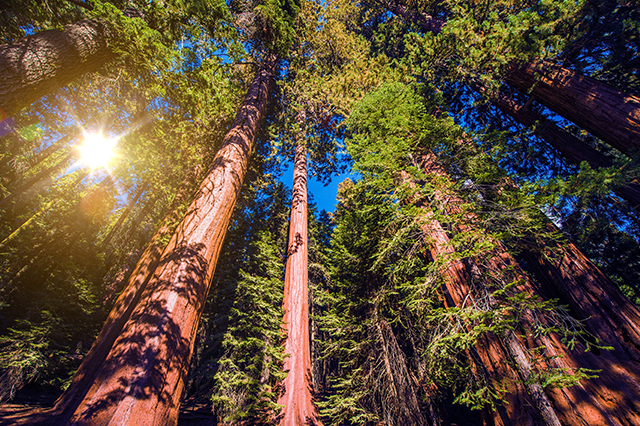
  • Scenic drives: The park’s roads lead visitors through its diverse terrain – from meadows and aspen groves up to the subalpine forest to the 12,000-foot mountain peaks.
  •  Wildlife viewing: Rocky Mountain National Park is known for its wildlife, including the regal elk, the majestic bighorn sheep, and graceful mule deer, as well as over 280 species of birds.
  • Photography: From the wide range of fauna to the breathtaking landscapes, Rocky Mountain National Park provides nature photographers with a vast outdoor studio. Whether from the paved roads or a backcountry trail, photographers can find outstanding shots throughout the park.
  • Horseback riding: The park holds two stables – Glacier Creek and Moraine Park – and several more can be found in the surrounding area that are permitted to bring riders into the park.
  • Fishing: Rocky Mountain National Park has more than fifty lakes and numerous streams in which visitors can sport fish. A state fishing license is required, and some regulation must be followed.

rocky mountain national park

Are pets allowed?

Pets are permitted in campgrounds (not wilderness campsites), on paved roads, and in parking lots. They are not allowed on trails or in the wilderness.

Is the park accessible?

Several trails in the park are accessible, including Bear Lake Trail, Coyote Valley Trail, Lily Lake Trail and the Sprague Lake Trail. In addition, many facilities, such as visitor centers, overlooks and restrooms, are accessible.

What accommodations are available?

While there are no lodging facilities within Rocky Mountain National Park itself, the neighboring communities have numerous accommodations ranging from high-end hotels to less expensive motels. The park does have several campgrounds with spaces for tents and RVs as well as backcountry camping sites. The surrounding area also has multiple private campgrounds with varying facilities.

Are there restaurants in the park?

Rocky Mountain National Park has one dining facility, the Trail Ridge Store, which offers a café and coffee bar from late May until early October. Numerous restaurants and grocery stores can be found in the towns outside the park.

What are the most popular areas of the park?

  • Trail Ridge Road: This forty-eight-mile drive between Estes Park and Grand Lake winds through the park’s forests and tundra, with eleven miles of the road being above the tree line. Opportunities to view the park’s wildlife are abundant, and the scenic views are spectacular. Though it doesn’t take long to drive the entire stretch, it recommended that visitors allot at least half a day to enjoy this road.
  • Old Fall River Road: For those who don’t find the Trail Ridge Road exhilarating enough, the eleven-mile-long Old Fall River Road might do the trick. When opened in 1920, this road was the first to offer access to Rocky Mountain National Park’s high country. The gravel surface, hairpin turns, and steep grade make this a slow-going drive, but one worth the struggle due to the outstanding scenery and close-up wildlife viewing in the area.
  • Kawuneeche Valley: This valley on the west side of the park is filled with hiking trails, campgrounds, and chances to fish in the Colorado River. For visitors with an interest in history, the Holzwarth Historic Site offers a glimpse into Rocky Mountain life from a century ago.
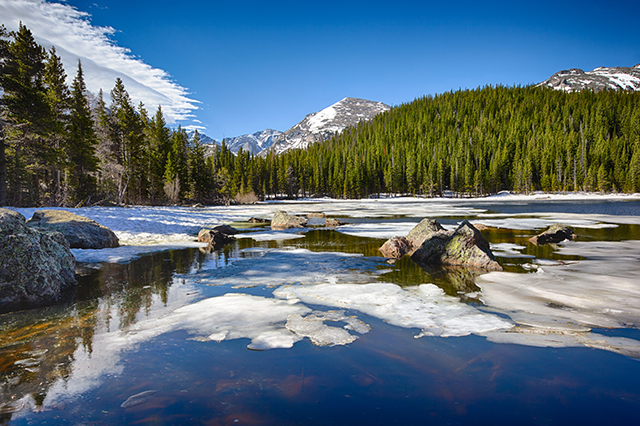
  •  Bear Lake: This area on the west side of the park has beautiful scenery and several hiking trails and can be accessed by the free shuttle bus during the summer. During the winter, the lake freezes, creating a cold-weather destination for cross-country skiers and snow tubers.

Which national park would you like to visit most? Is Rocky Mountain National Park on your list? Tell us in the comments.

Plan a national park vacation with AAA.

Subscribe to Your AAA Newsletter

Sign up and receive updates for all of the latest articles on automotive, travel, money, lifestyle and so much more!

Ditch the Everyday for the Perfect Day at CocoCay

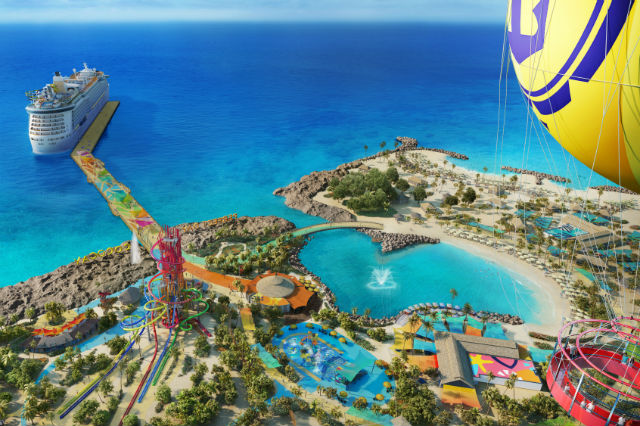
Located approximately 55 miles north of Nassau, Bahamas, Royal Caribbean’s Perfect Day at CocoCay is a must-see destination with more than enough ways to relax and let loose.

Beginning May 2019, cruisers traveling to the private slice of paradise will have access to all-new attractions and experiences. From exciting waterslides and beachside activities to quiet overwater cabanas atop dreamy blue waters, this island has everything you need for, well, the perfect day.

Thrills

Excitement is around every turn at CocoCay. You can ride the tide in the largest wave pool in the Caribbean or conquer Daredevil’s Peak – the tallest waterslide in North America, with a spiraling 135-foot plunge. Take your vacation even higher on the island’s helium balloon ride, which soars up to 450 feet above land and sea for one of the best vantage points in the Bahamas. Those seeking thrills that are a little less heightened might enjoy zip lining with a refreshing splash ending, or a full throttle jet ski ride over the crystal-clear waters.

Sail Royal Caribbean's Anthem of the Seas

Come seek the Royal Caribbean for an unforgettable island hopping escape with amazing cruise deals. Anthem of the Seas sails year-round out of Cape Liberty, N.J.!

Learn More

At South Beach, visitors have the choice to get pumped up or wind down. Fuel your competitive spirit with a heated volleyball match or dribble your way down the basketball court. More leisurely options include paddle boarding and glass-bottomed kayaking. Or you can take it down a notch further and simply cool down with a drink at the floating bar.

If you’re headed to The Perfect Day at CocoCay with a large group, there are plenty of multi-player adventures. At the Family Tower you can double the fun on The Twister, where two-rider tandem rafts shoot down winding tubes. There’s also the fearsome four-person Slingshot (not for the faint of heart), and 6 multi-rider slides for the whole crew to do together. Outdoor explorers might like hiking the island’s trails, where it’s not uncommon to run into wild locals like iguanas and chickens.

royal caribbean cococay
Visitors can rent an overwater bungalow for the ultimate escape at CocoCay.

Chills

Vacations are a great time to be adventurous, but they are also a perfectly good excuse to be lazy. Luckily, there are a number of prime relaxation spots on the island for when you want to decompress. Kick back in a teepee or a beachside cabana, or rent an overwater bungalow for a bit of Bora Bora-style R&R. Ready to treat yourself? Go the extra mile and upgrade to the CoCo Beach Club where an oceanfront infinity pool awaits, and waterfront dining promises locally-caught fish and Mediterranean-inspired cuisine.

…And More!

There is so much to see and do during your Perfect Day at CocoCay, but there’s still plenty of fun to be had before and after your trip to Royal Caribbean’s private island.

Bahamas itineraries typically include a stop in Nassau where travelers can experience the vibrant and colorful Junkanoo culture, with its bustling straw markets and glitzy casinos. And of course, you’ll be surrounded by palm trees swaying in the warm breeze, white-sand beaches and those famous crystal-clear turquoise Bahamas waters. Go ahead and lounge like a local at Junkanoo Beach, which is a free, public stretch of sand only 15-minutes from the harbor and home to tasty Bahama Mamas.

Other Caribbean destinations like Basseterre, St. Kitts and Nevis, offer a more eco-focused experience. History buffs will enjoy exploring fortresses, colonial estates and monuments, while the outdoorsy can gear up to hike Mount Liamuiga, a 3,792-foot dormant volcano, that promises sights like towering trees, tangled vines, tropical flowers, and at the end of your 6-mile ascent, views of neighboring islands.

Between shores, there’s also a wide range of on-board entertainment. Every ship offers something special, like the Flowrider surf machine on both Mariner of The Seas and Navigator of the Seas, or Navigator of the Seas’ indoor ice skating rink and mini golf course. Of course, eating is another big part of cruising, and Royal Caribbean offers some of the best eats at sea, including Izumi (Japanese) and Chop’s Grille (prime steaks), featured on several of their ships.

Check out the virtual tour of Perfect Day at CocoCay and let us know what you’re most excited for in the comments!

Subscribe to Your AAA Newsletter

Sign up and receive updates for all of the latest articles on automotive, travel, money, lifestyle and so much more!

Check Out Some of the Many Things to Do in Denver, Co.

There was a time when the Mile High City was better known as a stop-off on the way to Aspen or Vail than a place to visit on its own, but an influx of innovative chefs, artists and other creative types have added an element of cool to Denver’s Western swagger. What hasn’t changed is the city’s love affair with the outdoors. No matter the weather, there are so many fun things to do in Denver, Co., including hiking, tubing and cycling during the warmer months to cross-country skiing, dog sledding and ice fishing in winter.

Here are 10 the best things to do in Denver, Co.

1.

Red Rocks Park & Amphitheater, about a half-hour outside Denver, in Morrison, is among the nation’s most breathtaking concert venues, and a visit is definitely one of the best things to do in Denver, Co. It seats an audience of about 9,500 beset by 400-foot-tall sandstone formations. Red Rocks isn’t all about music, however. The venue has great hiking as well, making it a good option for Denver day trips. Trails wind around the park’s namesake garnet-colored monoliths and through scenic meadows and valleys. The park is more than 6,400 feet above sea level, and it links the Great Plains with the Rocky Mountains.

things to do in denver, co
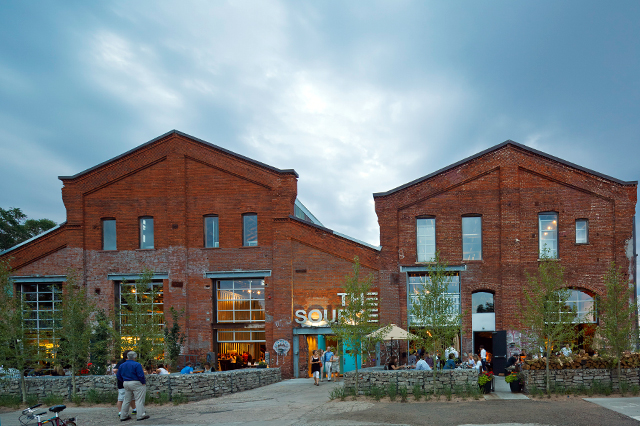
The Source. (Photo: Timothy Hursley)

2.

The Source is a food-centric urban market filled with restaurants, bars and a brewery, as well as retail establishments that range from a cheese shop to an art gallery. This mix makes it a good option for inclusion in a variety of Denver day trips.

3.

Art, indoor exhibits and fun seasonal displays make the Denver Botanic Gardens one of the best things to do in Denver, Co., any time of year. Stop by the help desk for free garden advice from Master Gardeners. The 24-acre attraction houses rare and endangered plants from around the world as well as those native to Colorado, among other flora. If you visit in the summer, be sure to see the Monet Pool, which is filled with hundreds of aquatic plants. And, if you visit around the holidays, don’t miss Blossoms of Light, a special event where lights give the garden an unforgettably festive glow.

4.

Watch coins being made, learn how they’re designed and get a penny for your thoughts at the Denver Mint, easily one of the best things to do in Denver, Co. Tours are free, and tickets are available starting at 7 a.m. Monday through Thursday, except for federal holidays. You can get them at the gift shop entrance on Cherokee Street, between West Colfax and West 14th avenues. Tickets are for same day tours only, they’re distributed on a first-come, first-served basis and they’re limited to five per person. There are six tours per day. They run every 90 minutes starting at 8 a.m.

5.

Open May through October, the outdoor Cherry Creek Fresh Market is Denver’s largest, and a great option to anchor a variety of Denver day trips. Grab breakfast or lunch and shop for fresh produce, flowers and handcrafted cheeses, jams and baked goods.

6.

Gear up at the massive flagship store of outdoor outfitter REI. On Saturdays, a specially built, 47-foot-tall climbing wall is open to the public. The store regularly offers classes too, touching on everything from camping basics to climbing first aid, meaning you can bolster your outdoor prowess while enjoying one of the best things to do in Denver, Co.

7.

Some of a city’s best attractions tend to be those you can’t find elsewhere, like the Tattered Cover, a Denver institution and one of the nation’s largest independent bookstores. Roam the stacks or stop by for live events. More than 400 authors, illustrators and other well-known folks typically appear in a given year.

8.

The River North Art District – RiNo – overflows with the work of painters, ceramicists, video artists, photographers and other artists, as well as museums and restaurants. No tour of the best things to do in Denver, Co., is complete without a visit. If you’re in town early in the month, plan on checking out First Fridays when more than four dozen studios and galleries are open until 9 p.m.

things to do in denver, co
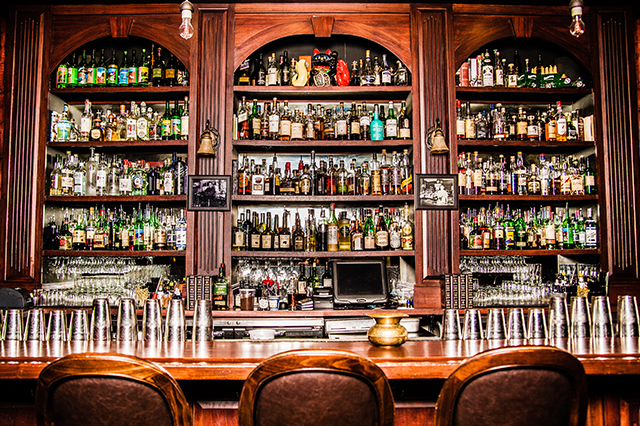
Williams & Graham. (Photo: Williams & Graham)

9.

One of the best things to do in Denver, Co. is explore “secret” bars and speakeasies. One of the best is Williams & Graham, which is hidden behind the shelves of a bookstore of the same name. You can also check out Retrograde, secretly located through a freezer door at Frozen Matter, an ice cream shop.

10.

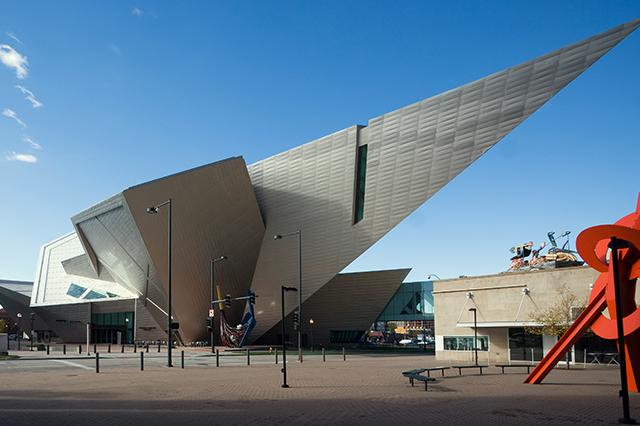
Reflecting the peaks and rock crystals of the Rocky Mountains with more than 1 million glass tiles, the Denver Art Museum’s North Building, is as much a work of art as the 70,000 works inside. The museum’s collection includes American, Asian, European, Native American, African, Spanish Colonial and modern art.

Have a great spot to visit in Denver? Let your fellow AAA members in on the secret by sharing your experiences in the comments section!

Looking for a variety of great lodging options in the area? Find and book great hotels in DenverCall 1-800-873-8283 to speak to a AAA travel counselor today or click here.

Subscribe to Your AAA Newsletter

Sign up and receive updates for all of the latest articles on automotive, travel, money, lifestyle and so much more!

How to Write the Perfect Real Estate Listing

As you scour through the internet for tips on writing a real estate listing, the multitude of advice out there can be a bit overwhelming.

To make things a little easier for first-time sellers, we’ve compiled some of the best real estate listing tips. Keep this article handy and follow these tips to get more inquiries from prospective buyers.

Imagine you are the buyer

It’s important to ask yourself what you would want to see in a real estate listing. If you’ve purchased a house before, what pulled you in and made you start reading the ad? What are some important pieces of information that convinced you to call the seller? You can also look over other real estate listings to see what kind of language and information piques your interest.

Put the asking price in the title

Imagine scrolling through listing after listing, clicking on beautiful houses that seem perfect for your family, only to find out they’re out of your price range. Going through that process can be disappointing and frustrating.

Save your buyer time and energy and put your price right in the title. It’s only fair to the buyer. After all, unlike ads for shoes or books, an ad for a home is asking a buyer for a major financial commitment.

More tips for your real estate listing title

Though you should put yourself in the shoes of the buyer, it’s also important to note that each buyer is unique – and so is your house. Though you may not have a green thumb, would a fan of gardening love your spacious yard? Would a foodie enjoy the trendy restaurants nearby? Would car collector be thrilled at the size of the garage?

Take one or two things that stand out about your house and use them as your first eye-catching selling point. For example: “Home with picturesque garden just off Park Drive East. Asking price $200,000.”

real estate listing

Location, location, location

You’re not just selling a house, you’re also selling the neighborhood. Is there a scenic hiking trail nearby? A good school? How about access to public transportation? Highlighting some of the best traits about your neighborhood in your real estate listing can help sway the buyer toward a decision in your favor.

Alternatively, what if your neighborhood isn’t so appealing? For example, what if you live in the middle of a noisy city? Fear not – you can use that to your advantage. Take your neighborhood’s negative trait and portray your home as the exact opposite. A buyer looking to live in the middle of the city will crave the “peaceful haven” that is your home!

Use imagery when writing a real estate listing

While you’re not looking to write a book, you do want to be as descriptive as possible in your real estate listing. For example, don’t just tell your buyer that you’ve got hardwood floors. Find out what kind of wood it is and put that in the description. They may have no idea what the difference is between Brazilian cherry and spalted maple, but the names have an elegant ring to them, and so will your house.

How to take pictures for a real estate listing

As much as you might want to, you can’t fit a thousand words into your real estate listing. But the old cliche that a picture is worth a thousand words is true. Taking good photos is key. Here are a few simple things you can do to make your pictures enticing to your buyers.

1) Hold your phone/camera sideways. Taking landscape-style shots instead of a portrait orientation allows the viewer to get a better grasp of the breadth of the room.

2) Consider getting a tripod, especially for taking pictures of the outside. If your hands are even slightly shaky, you risk your photos coming out blurry. Balancing your camera on a tripod will help to stabilize it, especially when you turn, zoom in or angle your camera as you experiment to find the best view.

3) Taking a photo of the outside of your property at dawn or dusk can enhance the image’s beauty. Our eyes tend to go to the brightest object in a picture, so a faintly glowing and dramatic sky will contrast nicely against the exterior of the house. Just make sure your house is well-lit for the photo.

These tips will help almost any real estate listing read better and get more inquiries. If you have a good tip we didn’t mention, be sure to share it in the comments!

Learn about AAA home loans.

Subscribe to Your AAA Newsletter

Sign up and receive updates for all of the latest articles on automotive, travel, money, lifestyle and so much more!

New and Emerging Smartphone Trends

Smartphones are evolving everyday. What were once convenience devices simply used for dialing up friends and family are now necessities for nearly every aspect of our lives. And yet still, they keep improving. We’ve rounded up the new smartphone trends you can expect to see on your next phone.

5G Phones

When manufacturers aren’t trying to make smartphones smaller, they’re trying to make them faster. With that in mind, one term you’ll be hearing a lot about in the future is 5G. In the simplest of terms, 5G is an upgrade of the current data networks our smartphones use, resulting in improved speed and strength of cellular connections.

This upgrade would allow cellular service to deliver up to 10 times the capacity of current systems, significantly increasing data speeds for customers in high-traffic locations. In other words, you’ll be able to download full-length HD movies in mere seconds, and play graphic-heavy videos and high-speed games without delays or lag-time.

Augmented Reality

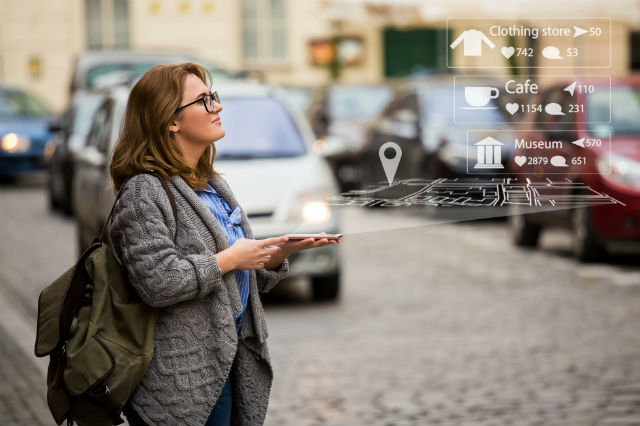
While virtual reality creates a whole new world, augmented reality enhances the actual world a user is seeing. It does this by superimposing information onto the physical reality a person is viewing through a digital device. It essentially takes all the information available on the internet and applies it, in real time, to your surroundings.

Though this technology has already been seen in the gaming world (think Pokemon Go) the applications for augmented reality on your smartphone are limitless. Instead of watching a how-to video on replacing a flat tire, you’ll be able to point your smartphone at the tire and receive a visual, interactive walk-through. You’ll go furniture shopping and see how that couch looks in your living room. You’ll scan a row of restaurants and be able to see the menus of each as well as which one has an open table.

smartphone trends

Improved Batteries

Since their onset, smartphones have had one consistent critique held against them: poor battery life. With each new model, manufacturers have built more efficient batteries, but have also added faster processors, which drain more energy and leave users still clamoring for longer-lasting charges.

To fix this, companies have been experimenting with a variety of power solutions including solar power, nanobatteries, hydrogen fuel cells and even kinetic energy, which would charge your phone as you move.

Whatever the right answer proves to be, your smartphone’s energy source will be able to charge faster, possibly in seconds. In addition, get use to charging your smartphone wirelessly, as businesses continue to install wireless charging units for customers. IKEA has even begun building wireless charging stations into its furniture.

Bezel-less Phones

The bezel-less look, in which the edges around a smartphone screen are trimmed to allow for a larger screen, began in 2016 but has since caught on with major manufacturers. The outcome is an increased screen size on a smaller and thinner phone.

Your phone will always need some bezel in order to provide structure to the phone, so the trend of creating larger screens on smaller phones is probably reaching its end. However, as popular as the bezel-less aesthetic has been, it has traditionally been a premium feature on premium phones, such as the iPhone X. But more and more, even budget-friendly smartphones are incorporating the look.

Built-in Projectors

The paradox of smartphones is the desire to continually make them smaller in size while new technology allows for activities (reading, watching, playing) that require larger screens. One potential solution to this problem is a phone that not only displays images but also projects them. Digital projectors have been in the works for some time and Wireless Mobi Solutions unveiled its Movi Smartphone earlier this year. The Android phone casts a 100-inch image. Another possibility with projections systems is the use of holograms, a moving 3-D image projecting out of your phone.

This technology doesn’t come without its challenges. The projectors must be small and the smaller a projector, the less light it can emit. It will likely take several years for the development of inexpensive and reliable technology to introduce into all smartphones.

Flexible Phones

There has long been talk of smartphones becoming flexible or even foldable and it might finally be available in the near future. The technology that would enable phones to bend or fold is the organic light-emitting diode (OLED) display, which is made of flexible materials such as plastic instead of the traditional glass. OLED produces its own light, eliminating the thick, heavy backlight that LCD phones require and render inflexible.

The benefits of a foldable phone are numerous. They would allow for a larger screen if you wanted to watch a video or play a game, but still be able fold into a pocket-sized phone. Since it would be made out of plastic and not glass, the phone would be lighter and less likely to crack or be damaged. OLEDs are also paper thin, meaning a flexible phone would be even thinner than the one currently in your pocket.

What new trends are looking forward to the most? Let us know in the comments below!

Subscribe to Your AAA Newsletter

Sign up and receive updates for all of the latest articles on automotive, travel, money, lifestyle and so much more!

Rhine Cruises Highlight History, Culture

Rhine River cruises are some of the most popular European river cruising options. Winding past scenic sections of Germany, France and the Netherlands, the waterway is graced by sweeping hillsides and majestic castles.

What’s more? Some trips combine the awesome experiences of Rhine cruises with spots on the Moselle River, giving travelers looks at different parts of France, Germany and Luxembourg.

Here are some highlights you might encounter on Rhine cruises that include some time on the Moselle.

Rhine Cruises: Amsterdam, Netherlands

You won’t be hard pressed to enjoy the many charms of Amsterdam, a popular starting or ending point for Rhine cruises.

One of the best ways to discover the city’s historic architecture is with a scenic canal cruise. After that, check out the Museumplein and visit the famed Rijksmuseum, home to one of the world’s most important collections of artwork by the Dutch Masters.

De Hoge Veluwe Nat’l Park, Netherlands

Arnhem is home to the near 16,000-acre De Hoge Veluwe National Park and its many endangered plant and animal species. The inspiring Kröller-Müller Museum is in the midst of this glory. It features works of such luminaries as Pablo Picasso, Georges Seurat and Vincent van Gogh, along with a massive sculpture garden.

Cologne, Germany

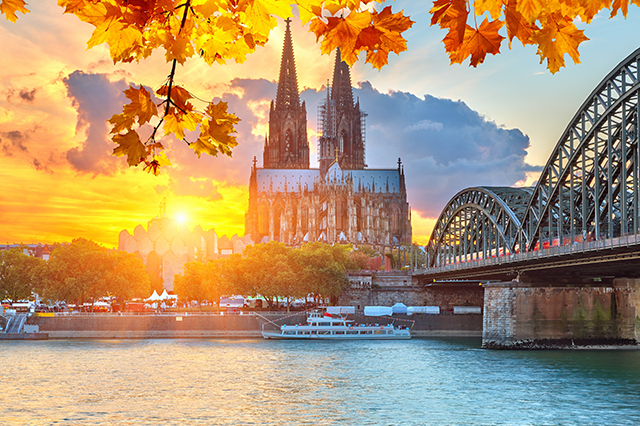
Cologne is a regular stop on many Rhine riverboat cruises. You’ll want to take a few minutes to gaze over Cologne Cathedral, one of the city’s most breathtaking pieces of architecture, and be sure to visit charming Old Town. If you visit Cologne between late November and the end of December, you’ll be fortunate to enjoy a festive Christmas market with delicious food, sparkling lights and handmade crafts. Such happenings are a big reason for the popularity of Rhine riverboat cruises around the holidays.

Cochem, Germany

You won’t reach Cochem if you cruise stays on the Rhine. To reach this German town, you’ll need a Rhine riverboat cruise that shifts to the Moselle River. Stepping ashore in Cochem is like entering the pages of a medieval fairy tale. Picture-perfect, 1,000-year-old Reichsburg Castle looks down on Cochem’s quaint market square from above. The area has a centuries-long winemaking tradition, which can be enjoyed at the Schlagkamp Wine Museum.

Luxembourg

The Grand Duchy of Luxembourg is home to Parliament, the Palace of the Grand Duke and centuries-old battlements that are now a UNESCO World Heritage Site. The Luxembourg American Cemetery and Memorial is the resting place of over 5,000 American casualties of World War II’s Battle of the Bulge. Gen. George S. Patton is buried there, too.

rhine cruises

Bernkastel, Germany

If you can, check out charming Bernkastel, known as both the “Pearl of the Moselle” and the “international town of vines and wine.” The town is celebrated not only for its wines, but also for its medieval market square surrounded by half-timbered houses.

Trier, Germany

Trier is Germany’s oldest town and it was once a residence for several Roman emperors.  Reminders of that period include a 2nd-century city gate and a basilica built in 310. Explore the town and its Marktplatz, marked by a 16th-century fountain that features images of St. Peter.

Heidelberg, Germany

Heidelberg is home to one of Europe’s oldest universities, and it’s the setting for a famous operetta – The Student Prince. The city has numerous examples of medieval, Renaissance and Baroque architecture. Be sure to ride the funicular (think cable car meets railway) up the imposing Heidelberger Schloss, perched 300 feet above the city. Cruises will likely head back to Rhine if you’re going from trier to Heidelberg.

Baden, Germany

For many generations, wealthy folks have flocked here Baden to enjoy the town’s famous healing, thermal waters. Baden, in fact, translates to bath. Town treasurers the ruins of Roman baths to ornate, 250-year-old Belle Èpoque casino, the Kurhaus.

Strasbourg, France

Architectural beauty is a big draw of Rhine cruises, and Strasbourg, France, a UNESCO World Heritage Site is a perfect example of why. It’s renowned for its fairy-tale beauty, including La Petite France is an enchanting corner of Old Town where historic canals, medieval watchtowers, and half-timbered houses are picture-postcard perfect. The Cathédrale Notre-Dame de Strasbourg is at the city’s center. Enjoy the 12th- to 14th-century stained glass windows and a dancing astronomical clock.

Basel, Switzerland

Basel, Switzerland, is a beautiful city on the banks of the Rhine River, and, like Amsterdam, it’s a popular starting and finishing point for Rhine cruises. Head to Old Town to see the bright-red Rathaus, Basel’s Town Hall, then visit one of more than three dozen museums in the city.

Looking for Rhine River cruise deals? Contact your local AAA Travel Counselor or visit AAA.com/Vacations.

Subscribe to Your AAA Newsletter

Sign up and receive updates for all of the latest articles on automotive, travel, money, lifestyle and so much more!

Health Risks for Young Adults to Think About

Are you a young invincible when it comes to your health? It’s easy to ignore health risks for young adults when your age isn’t a worry. What’s to worry about? Your joints don’t ache when it’s damp. You’re not having trouble sleeping. Headlight glare doesn’t make it difficult to drive at night. You’re not winded when you climb three flights of stairs.

You’re too young for all that, right?

The concern for you should be that as you move out on your own, the health-care support you once took for granted may not be there. But ignoring your health care when you’re in your 20s or 30s is a good way to find yourself in bad health for years to come.

Smoking, drinking alcohol and using drugs may not seem like such a big deal when you’re in your prime. Just hit the gym or run it out of your system, just like those hipster actors do in the beer commercials, right?

Wrong. Bad habits have a way of developing into serious medical conditions as you age.

For young adults, health problems often arise out of social issues that spring from no longer having a mom, dad or older adult watching over them. There’s no one there to remind you to eat your vegetables, get a good night’s rest, or ask: Do you really need to drink that third beer? Or that shot of tequila to celebrate your best bud’s 25th birthday?

And what about that burger and fries you had at the bar? High cholesterol doesn’t just “happen.” You help it along by ignoring good eating habits. Even mild blood pressure or cholesterol problems can lead to any number of long-term health care issues.

Even if you’re conscientious about exercising you can run into trouble with your health. There is a cost to beauty that goes beyond the cosmetic. Everyone is susceptible to changes in their skin due to ultraviolet rays – even college kids on spring break or young professionals cashing in those business-trip frequent flyer miles on a vacation to the Caribbean. Skin cancer is among the leading causes of cancer deaths in women ages 25 to 30. Melanoma is the third-most-common cancer among women ages 20-39 and the second-most-common cancer in men ages 20-39. So, cover up; wear a hat and put on sun screen when you’re going to be out in the sun for extended periods – whether that’s a 5-mile run, a round of golf or an afternoon on the beach.

health risks for young adults

If you’re wondering why you seem to have regained that “freshman 15,” there are several causes beyond a rainy summer that discouraged you from jogging regularly. That weight won’t lose itself as you get older. Try to keep it in check so that it doesn’t lead to such things as diabetes, hypertension, back pain or cancer. The longer a young adult is obese, the greater the chance of developing heart disease in middle age, a new study reports. The finding hints that preventing or even delaying the onset of obesity might help reduce heart disease in later years.

Attacking the weights to help trim off the fat can lead to back problems, even in young adults. And, you know you’re not going to do those ab workouts just for the fun of it. You’re doing it, at least in part, so other people find you attractive. If you’re going to bed hop, remember that sexually transmitted diseases can lead to infertility, sterility, cancer and death. Be careful out there.

Early adulthood is a period marked by changes and growth physically, mentally and emotionally. It is also during this time that the onset of mental health disorders can occur – illnesses that can severely impact the life of the individual for years to come.

For a young adult, getting help for mental health disorders can prevent a variety of problems from occurring as they age. The consequences of mental health problems can include poor performance in school or at work, lack of friends and social interactions, substance or alcohol abuse, risky sexual behavior and suicide. In fact, suicide is the second-leading cause of death among persons ages 10 to 24 years.

A UCLA Medical Center survey released in 2016 found that people under age 45 often underestimate the symptoms of a stroke and the urgency to seek medical help. The survey asked more than a thousand people across the United States what they would be likely to do within the first three hours of experiencing numbness, weakness, or difficulty speaking or seeing, which are all common symptoms of a stroke.

Only about one in three respondents under age of 45 said they would be very likely to go to the hospital. That delay could prove deadly.

Many younger people assume strokes occur only in the elderly, dismissing the symptoms. While strokes may be more common among the elderly, people of all ages can experience them.

There are many minor ailments or conditions that, if ignored for too long, may develop into serious health care issues as you age. You may be a young invincible today, but how long will you remain so? Paying attention to your health now will help you avoid physical problems later in life.

How do you guard yourself against these and other health risks for young adults? Tell us in the comments below.

Subscribe to Your AAA Newsletter

Sign up and receive updates for all of the latest articles on automotive, travel, money, lifestyle and so much more!

What Causes Motion Sickness on Cruise Vacations?

Picture it. You’re on a huge cruise ship with your family. It’s the first day of your vacation and you’re all excited to experience your first cruise vacation. You haven’t even been on a boat many times in your life. Then, suddenly, the boat rocks a certain way, you hear the waves slap against the side of the ship and an unexpected but familiar feeling starts creeping up your throat. Oh no, you think.

When you and your family embark on the first of many cruise vacations, what is the worst thing that could happen to you? That’s right. Sea sickness. Or you can call it motion sickness. Either way, that unpleasant, nauseous feeling can overwhelm certain people when they embark on their first sea voyage.

What is motion sickness?

Travel means moving, but when we’re not moving under our own power, about 30 percent of us experience motion sickness.

“Any kind of conveyance makes people sick,” said Millard Reschke, chief of neuroscience at NASA’s Johnson Space Center in Houston.

Reschke has been studying the phenomenon for about 40 years, and with good reason: Around 70 percent of crew members on space missions get sick. Motion sickness occurs because of something called retinal slip, which you can see for yourself.

Hold your hand up and move your head back-and-forth, and you’ll see the lines on your palm clearly. Move your hand back-and-forth instead and the lines appear blurry. That’s what happens when we move in a space shuttle, car or on a boat, and that blurring or slipping of the image on the eye’s retina confuses the sensory system in the inner ear and makes (some of) us sick.

Essentially, your eyes are telling you that you’re moving and your inner ear is telling you that you’re not. That difference between expectation and reality seems to be what leads to feeling nauseous. It’s unclear why our bodies decide that nausea is the appropriate reaction, but one theory suggests that our evolutionary mechanisms are the cause.

Charles Darwin, originator of the theory of evolution, wrote about his expeditions on the sea in a letter to his father. “If it was not for sea-sickness, the whole world will be sailors,” he said.

Why do some get it and others don’t? 

The answer to this question is also unclear, but there is evidence that suggests that genetics have something to do with it. Genetic company, 23andMe, found in a study that there are associations between motion sickness and genes involved in balance and eye and ear development.

But this then raises the question: How do people who are prone to motion sickness as children become less prone with time?

Another theory of the cause of motion sickness points to postural stability. On a ship, our bodies’ normal method of balancing is thrown way off course, making our bodies feel unstable. Around puberty, where we carry the most of our weight changes, and our methods of balancing change as well. So, someone who vomits during every long car ride at the age of 6 might start to fare better in his teenage years.

Of course, everyone is built differently; the unlucky few might just be more sensitive to motion than others.

cruise vacations

Is there a sea sick remedy?

Our best bet is to try to limit the body’s confusion. “What I do about it is stop moving,” said Reschke. And if that isn’t an option? “I know you don’t want to hear ‘Look at the horizon and eat crackers, but it helps,” he said.

Another trick is a smart one for passengers in a car. The driver of a car is less susceptible to motion sickness because he can anticipate what’s coming. The answer is simple: pretend you’re the driver.

Though it’s harder to pretend you’re the captain of a ship than the driver of a car, trying your best to focus on where the ship is going might help.

A sea sick remedy that works for some is to consume gingery food and drinks. As a general health tip, drinking ginger ale can calm an upset stomach, but has been more so proven to be effective when the nausea is caused by motion sickness. It can also work as a placebo. If junior is complaining of motion sickness, tell him ginger ale is a 100 percent effective cure, and he might just believe you.

The other option requires less effort but much more determination – wait it out. Over time, our bodies get used to the motion. If you can get through the initial discomfort (and potential upchuck), you’ll be golden in time, and ready to enjoy the rest of your vacation.

Don’t get too used to the motion, though. You might find yourself feeling land sick once the cruise is over!

What’s your home remedy for sea sickness? Tell us in the comments below!

Don’t let motion sickness scare you from a cruise vacation of a lifetime! Plan and book your next cruise with AAA

Subscribe to Your AAA Newsletter

Sign up and receive updates for all of the latest articles on automotive, travel, money, lifestyle and so much more!

Historical River Cruise Destinations

A large draw of many river cruise destinations is the excellent chance they provide passengers to learn about various topics, from wine to food to history, in an in-depth fashion. Cruise lines plying the rivers from Europe to Egypt often offer similar itineraries, using local guides as experts to provide insight into the past.

For history buffs, some bucket-list historical river cruises include France, Portugal, Germany and Russia. Below are examples of typical itineraries with specific themes relating to history.

River cruise destinations for those interested in WWII history

Paris to Normandy is hands-down one of the most popular river cruise destinations for those interested in history. Typically, cruises include an excursion to the Normandy Landing Beaches, including Omaha Beach, plus visits to the Point du Hoc monument and the American Cemetery.

A stop in Rouen, best known as the home of Joan of Arc, is also included, where visitors can visit the gothic Rouen Cathedral and other historic sites. Excursions to Giverny, where Claude Monet lived for almost four decades, is another stop. In Les Andelys, situated on a bend of the Seine, options include visiting the historic Parish Church of Le Petit Andely or hiking to the ruins of Château Gaillard, built by England’s King Richard the Lionheart as a fortress in 1196.

Search for similar river cruises

River cruise destinations for those interested in castles

Several river cruise lines offer castle tours through Europe. Itineraries may include a trip from Luxembourg to Nuremberg, with stops in several medieval villages along the way. You may visit Trier, Germany’s oldest city, and learn about its Roman history and tour Trier Cathedral, the Basilica of Constantine and the Porta Nigra gate, which dates back to 179 A.D.

You may visit historic Reichsburg Castle in Cochem. And as you cruise along the river to Rüdesheim, beautiful scenery, including castle ruins, fortresses and the famous Lorelei Rock, keep passengers glued to the deck or their balconies on the river.

Mainz is home to the Gutenberg Museum, which houses two copies of the world’s first printed Bible. And Heidelberg is Germany’s oldest university town. Other nearby highlights include the Residenz Palace and gardens, a designated UNESCO World Heritage Site, and Bamberg, yet another UNESCO World Heritage Site.

A scene from Uniworld’s Splendors of Egypt and the Nile destination. (Photo: Uniworld Boutique River Cruise Collection, Inc.)

River cruise destinations for those interested in pyramids and Cleopatra

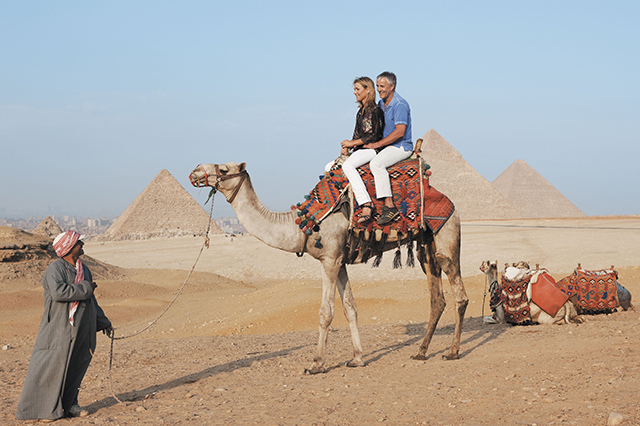
A cruise down the Nile River, where passengers take in its ancient sites, is like traveling back in time. Your itinerary will most likely include tours of the major sights in Cairo, Luxor and Aswan. In Cairo, you’ll visit the excellent Egyptian Museum, where you can view the treasures of King Tut, and of course, pay a visit the Great Pyramids and the Great Sphinx. Along the Nile, stops include the Valley of the Kings, where royals were buried for more than 500 years; the Temple of Hatshepsut, built by a female pharaoh; and the tomb of King Tut. Certainly, for anyone fascinated with history, this is a bucket-list river cruise destination.

River cruise destinations for those interested in tsars

From Red Square in Moscow to the Hermitage Museum in St. Petersburg, and all the smaller villages in between, tours include the Kremlin, the Bolshoi Theater, St. Basil’s Cathedral, Tretyakov Galler and the Cosmonaut Museum.

St. Petersburg beckons with the Hermitage Museum, the Catherine Palace, (the 18th-century summer residence of the Russian tsars, named for Catherine I), and much more. A traditional Russian ballet performance is another not-to-miss event.

There are, of course, variations on all of these historical cruises depending on which river cruise destination and cruise line you pick.

Of all of the time periods each cruise line features, which one would you most likely choose to explore? Tell us in the comments.

Book a river cruise vacation with AAA

Subscribe to Your AAA Newsletter

Sign up and receive updates for all of the latest articles on automotive, travel, money, lifestyle and so much more!

Explore the World Through Geocaching

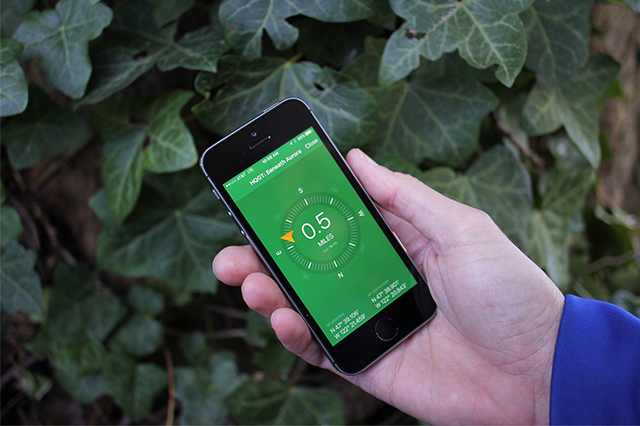
Geocaching is the high-tech treasure hunt that has people exploring the outdoors one hidden gem at a time. Millions of caches are tucked away in different locations around the world, like in treetops at the end of long hiking trails or at the side of city streets – even underwater. All you need to do to get involved is sign up for a free account and download the Geocaching app.

For those who already know the excitement of hunting down hidden treasures in the least likely of places, there are plenty of ways in which you can take your adventures to the next level. Many travelers add geocaching to their travel itineraries and, in some cases, even make it the focus of their trip. Read on for our interview with a geocacher whose quest for caches has led him to places near and far.

Geocaching Road Trip

One of the most exciting things about geocaching is the opportunity to explore places you’ve never been before. So if cruising isn’t you thing, don’t worry; there are still ways to enjoy geocaching with your feet (or should we say tires) firmly planted on the ground. Christopher Lund, a real estate attorney in New York, has found caches in more than 20 states and throughout the world.

Q: How did you get started?

A. My girlfriend, Meghan, and I got into geocaching through a friend of mine. He was always talking about finding different caches and it seemed like a lot a fun. So one day we downloaded the Geocaching app and finally gave it a try. On our first day we found seven caches all within walking distance of my apartment. We’ve been hooked since!

Q: Why do you enjoy it?

A. It’s great to be able to spend an afternoon just hiking through quiet, large patches of woods to find classic caches, especially with all the noise and hectic pace of Long Island. Through geocaching, I’ve met new people and made many new friends in the local caching community. It’s also a great way for me and my girlfriend to spend time together. Geocaching has taken us to lots of local spots that I never would have discovered on my own.

Q: Has geocaching ever taken you out of New York? What about the country?

A. Yes! So far I’ve cached in about 20 different states, mostly up and down the East Coast and in the Southeast. Just last week my girlfriend and I went on a Caribbean cruise and we cached outside the U.S. for the first time. We found caches in Haiti, Aruba, Curacao and Bonaire. The next  trip on my travel list is Alaska, which I’m hoping to do next summer.

geocaching
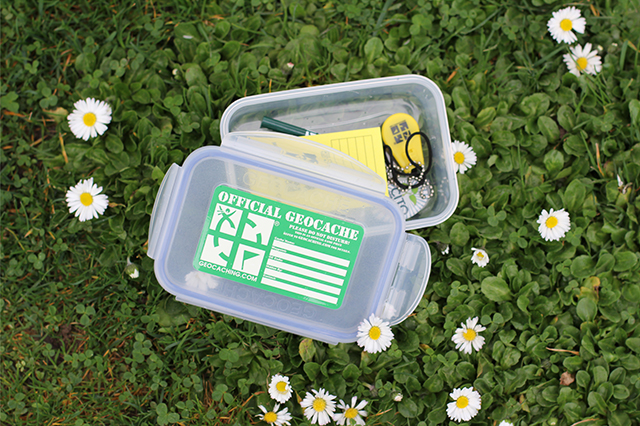
There are some essentials you’ll need to complete a geocaching adventure. (Photo: geocaching.com)

Q: Do you prefer to geocache locally or while traveling?

A. When I first started caching, I preferred doing it locally. It was convenient and despite living on Long Island for most of my life, geocaching still brought me to new places I had never seen before. I was able to explore local history and connect with the small caching community. However, after several years focused on Long Island, I’m starting to get more enjoyment out of caching while traveling.

When I’m traveling out of state (and out of the country), the best caches in the area are still new to me. And due to the rules governing geocache hides, most are hidden by people familiar with the area, making them a great way to discover local spots. So, when you’re not from around an area, geocaching is a cool way to find places off-the-beaten-path. A few weeks ago Meghan and I were staying at a hotel in Miami, so we pulled up our caching app and saw there was a hide about a quarter-mile away. The spot was known by the locals as a manatee hangout, and sure enough when we went looking for the cache, we saw a large manatee swim by. That’s an experience I never would have had if not for geocaching!

Q: Are there any other cool ways to experience geocaching?

A. Absolutely. Hit the road! Last summer Meghan and I took a road trip with our friend Nick to West Virginia. Our main purpose was finding a series of caches that are somewhat famous in the caching community. But other times, we choose a destination first and then look for fun caches in that area. Last winter we did a trip to New Orleans, Mississippi and Alabama. Once we were there, we made sure to find plenty of local caches.

And there are a number of tools available to help plan geocaching road trips, like the Trip Planner on the official geocaching website and GSAK. But my personal geocache road trip planning tends to be far less formal. It’s usually a combination of asking other experienced cachers for recommendations and using the advanced filters and search features available on the geocaching site and apps.

Geocaching Road Trip Tips

Barb Kessel has explored both coasts on her geocaching adventures. In fact, pretty soon she’ll be heading to Brazil, Argentina and Paraguay with a caching tour group. She hosts occasional classes with tips, like how to plan a road trip around the hobby. Check out a few of her pointers.

Decide how much time you want to spend on the road in advance. A three-hour drive could turn into an eight-hour drive easily once you start geocaching. So include extra time for caching on your route and plan accordingly.

Make sure to weed out caches that are too hard to find or might be missing ahead of time. GSAK can help with this.

And finally, try not to go more than half-mile off of the route (unless there’s a really special cache along the way). It’s easy to lose track of time when you’re geocaching.

Tell us about your geocaching adventures in the comments and let AAA help you with your next geocaching adventure.

Get started at AAA.com/Travel.

Subscribe to Your AAA Newsletter

Sign up and receive updates for all of the latest articles on automotive, travel, money, lifestyle and so much more!

AAA Auto Glass Partners With JN Phillips Auto Glass

On October 15, AAA Northeast announced the creation of the new member benefit Approved Auto Glass, a network of providers that offer quality auto glass services throughout Rhode Island, Massachusetts and Connecticut. AAA Auto Glass has partnered with JN Phillips Auto Glass to launch the program.

AAA Auto Glass provides high-quality windshield, as well as rear and side window, repair and replacement done by certified technicians. The glass meets original manufacturer standards and comes with a lifetime warranty on workmanship. The program also offers mobile service, meaning the work can be done virtually anywhere.

Currently, AAA Auto Glass serves parts of Rhode Island and Massachusetts. But the partnership with JN Phillips immediately adds 40 new glass locations in southern New England.

AAA members who require glass service will first be directed to AAA Auto Glass , but the addition of Approved Auto Glass partners expand the club’s abilities to serve members in new markets, including in Connecticut where it has not previously been. This partnership significantly increases AAA Northeast’s service area.

“AAA Northeast is thrilled to partner with JN Phillips,” said Tom Terwilliger, Vice President of AAA Auto Glass. “For more than 100 years we’ve dedicated ourselves to providing excellent products and services to our members. Partnering with JN Phillips broadens that mission, extends our reach, and opens up new opportunities for millions of members throughout our territory.”

Modeled on the very successful AAA Approved Auto Repair program, all approved auto glass facilities must meet strict quality standards and undergo regular inspections and reviews. JN Phillips is registered with the Auto Glass Safety Council, an organization dedicated to ensuring safe auto glass replacement and is also committed to recycling 100 percent of the windshields they replace. With more than 200 vans, JN Phillips also offers convenient mobile service that provides safe auto glass replacement at home or at work.

For more information or to find an AAA Approved Auto Glass facility near you, head to AAA.com/glass.

Subscribe to Your AAA Newsletter

Sign up and receive updates for all of the latest articles on automotive, travel, money, lifestyle and so much more!

Portable Wi-Fi Gadgets to Keep You Connected

As staying connected becomes more and more important, cities around the world are changing to accommodate our electronic needs. Cell phone charging stations are on the rise, and more often than not, free Wi-Fi can be found in restaurants, coffee houses and other designated public areas. However, connecting to a free public Wi-Fi network often means risking your personal and financial information.

Finding a secure network is the most effective way to avoid being hacked, and those who need constant internet should invest in portable Wi-Fi devices, which are great for providing private networks.

Portable Wi-Fi devices are exactly like the internet boxes in your home. Except, instead of being attached to a phone cable, these routers use SIM cards. Meaning, the palm-sized devices can be taken anywhere there’s network coverage. But not all of these devices are created equal. With varying internet speeds, prices and features, there’s a lot to choose from.

portable Wi-Fi
Portable Wi-Fi devices help you stay connected anywhere and everywhere.

Portable Wi-Fi gadgets

Locked or unlocked?

When buying portable Wi-Fi, consider whether you want a locked or unlocked device. What’s the difference? Well, if your device is locked to one network, that means you’ll be restricted to using one company for data rates. But an unlocked device will work with any SIM card, meaning you can purchase the best deal in whatever country you’re in. Our suggestion: if life or work has you traveling out of the country often, spring for the unlocked. Check out some of our favorites below.

Huawei E5330 Mobile Hotspot
(Starting at $55)

Topping out at 3G HSPA+, this portable Wi-Fi device doesn’t exactly deliver the fastest internet speeds. But it comes unlocked and will do the trick for on-the-go email and web browsing. It provides 5-6 hours of battery and can support 10 Wi-Fi devices simultaneously. It’s a great option for travelers who just want to check in with friends and family every now and again. Just be aware that this particular model won’t work in the U.S. Check out the HUAWEI E5220s-6 for other options.

Novatel Wireless MiFi Liberate
(Starting at $60)

While this portable Wi-Fi device is usually sold through specific providers like AT&T, you can find unlocked versions on eBay. So, if you don’t mind a little extra leg work, this device’s easy set-up is a nice payoff for the technologically challenged user. It can use 4G, 3G and 2G networks, features a 10-hour battery life, and has an intuitive touch screen. Plus, it supports Windows and Mac OS X and up to 10 devices.
TP-Link M7350
(Starting at $103)

A little pricier (but well worth the money), this portable Wi-Fi device covers all the basics and more. It provides 10 hours of battery life, can operate on 4G/LTE, 3G or 2G networks, supports up to 10 devices and offers download speeds up to 150Mbps. It also provides a duel-band Wi-Fi option (both 2.4GHz or 5GHz) and comes equipped with a micro SD card slot for up to 32GB of optional storage. Plus, the ability to control the device through its app (available for iOS and Android) is an extra nice perk.

Huawei E5786s Wi-Fi Hotspot
(Starting at $210)

This unlocked portable Wi-Fi device is compact, lightweight and top of the line. Available in black or white, it has unbeatable downloading speeds, maxing out at 300Mbps compared to 150Mbps (and sometimes less) in other devices. It also features duel-band LTE (both 2.4GHz and 5GHz) and up to 10 hours of battery on a single charge. And not only can you support up to 10 devices with this personal hotspot, but you can also use it to charge your phone and other electronics in a pinch. However, this device doesn’t support all U.S. LTE networks, so it’s best for traveling abroad.

Whether you’re a professional that needs access to Wi-Fi for answering work e-mails, or a traveler who just wants to stay in touch with friends and family, portable Wi-Fi provides all the convenience of internet without the high risk. As you head off on your adventures, gear up and stay connected!

Do you have any must-have portable tech and gadgets for traveling? Let us know in the comments below.

Subscribe to Your AAA Newsletter

Sign up and receive updates for all of the latest articles on automotive, travel, money, lifestyle and so much more!

An Asia Cruise Tour Comparison: Seeing China, Japan and Vietnam by Boat

Because of their proximity to water, Vietnam, China and Japan lend themselves to be explored by ocean and river. An organized Asia cruise tour lets you travel in style without having to plan more than a flight. We’ve made it even easier for you by researching the best cruises through East Asia’s top destinations so that you’ll be hearing “all aboard” in no time.

Take an Asia cruise tour through China 

Experience both modern and ancient China on a luxurious river cruise like Uniworld’s Highlights of China & The Yangtze River cruise, which allows you to explore Beijing and offers excursions to the Forbidden City, Beijing’s Summer Palace and the base of the Great Wall.

Other highlights include the dumplings in Xi’An, China’s first capital and the opportunity to see the legendary Terracotta Army that protects Qin Shi Huang, China’s first emperor, in the afterlife.

You’ll fly to Chongqing where you’ll board your ship and begin your cruise along Asia’s longest river – the Yangtze, sailing through picturesque canyons and sheer cliffs past the legendary Three Gorges and Goddess Stream.

Search for savings on river cruises with AAA.

Float through Japan with Celebrity Cruises 

Aboard the Celebrity Millennium guests can dive into Japan’s history and modern culture. You could begin your expedition exploring the sights, flavors and sounds of Tokyo before boarding your ship in the evening. You’ll wake up to iconic views of Mount Fuji, the highest peak in Japan and one of the country’s most sacred landmarks.

Other experiences on your itinerary may include sampling steak in Kobe, known around the world for the marbled beef it exports; indulging in katsuo no takaki in Kochi, the city’s signature dish made of lightly seasoned, broiled bonito; and checking out the 6,000-year-old Sannai-Maruyama settlement ruins in Aomori,

Search for deals on Celebrity Cruises with AAA.

asian cruise tour
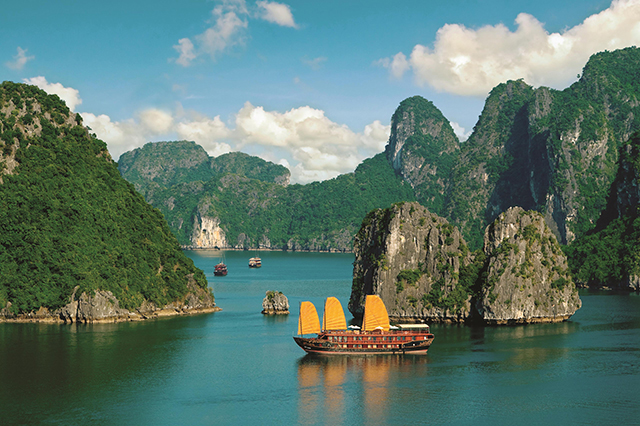
Ha Long Bay, Vietnam.

Sail through Vietnam on a river cruise 

An eight-day voyage like on Ama Waterways’ Vietnam, Cambodia & the Riches of Mekong Cruise could begin in Ho Chi Minh City, also known as Saigon, where vestiges of French colonialism meet vestiges of the Vietnam War.

On day two you’ll take a local boat to Cai Be where you’ll have the option to visit a traditional historic home or local craftsmen in their workshops. You’ll then tour nearby Sa Dec, which was the inspiration for French writer Marguerite Duras’ novel The Lover.

Next, you’ll cruise to Tan Chau where you’ll be able to explore the town by boat or on a xe-loi –a three-wheeled rickshaw. In the evening your ship will cross into Cambodia.

On your first day in Cambodia you’ll visit the Killing Fields where Pol Pot and the Khmer Rouge communist party killed and buried more than a million Cambodians during the Cambodian genocide in the 1970s. After a grim morning, you’ll learn about brighter times in Cambodia’s history at the National Museum and Royal Palace in Phnom Penh.

The next morning you’ll explore the Cambodian capital by tuk-tuk before embarking to Koh Chen to visit a silversmith village.

On the sixth day, you’ll explore a Buddhist monastery in Oudong, Cambodia’s royal capital from the 17th until the 19th century.

On the penultimate day of your cruise through Vietnam and Cambodia, you will ride through the floating villages of Kampong-Chhnang and enjoy exotic bird watching. Your Mekong River cruise disembarks in Prek Kdam, Cambodia. You and your travel partners will never forget this Asia cruise tour through French Indochina.

Search for savings on river cruises with AAA.

Explore the best of East Asia with Holland America 

Travelers looking for the ultimate East Asia cruise tour will be able to see China, Japan, Vietnam and much more on cruises like Holland America Line’s 28-Day Taiwan, Japan & Far East Discovery Collector.

The cruise embarks in Shanghai, China — the “Paris of the East.” Spend two days exploring this booming metropolis before reveling in the luxury of the MS Volendam during a day on the sea.

You’ll arrive in the Japanese port city of Fukuoka on day three, where you’ll be able to sample street food favorites from the city’s iconic yatai outdoor food stalls. Other stops along your journey around Japan include Nagasaki, Naha and Ishigaki Island.

On day eight you’ll arrive in Taiwan and will have free time to explore Taipei, the island nation’s booming capital. You’ll see a mix of modern skyscrapers and traditional temples in Kaohsiung the following day.

After a day at sea you’ll spend time exploring the Filipino capital, Manila, where Spanish colonialism meets southeast asian culture.

Next, you’ll have two days in Hong Kong to experience another mashup of cultures – British and Chinese.

After several days in densely-populated cities you’ll yearn for the tropical calm that awaits in Vietnam’s picturesque Ha Long Bay. Other stops in Vietnam include the imperial city of Hue, the resort town of Nha Trang and Ho Chi Minh – the city that never sleeps.

After a beach day in Sihanoukville, Cambodia, you’ll be ready for the hustle and bustle of Bangkok, Thailand.

Your month-long cruise will end in Singapore, the tropical city-state island where cultures and religions intermingle (Singapore has four official languages) and jaw-dropping architecture is the norm.

Search for deals on Holland American cruises with AAA.

Which cruise sounds most appealing to you? Let us know in the comments below.

Book a cruise vacation with AAA Travel.

Subscribe to Your AAA Newsletter

Sign up and receive updates for all of the latest articles on automotive, travel, money, lifestyle and so much more!

River Cruise Vacations for Families

River cruises are relaxing, intimate and offer more opportunities to explore onshore than ocean cruises – and usually appeal to a mature clientele. But as the industry grows, cruise lines are branching out to a different demographic: families.

Take a European river cruise, which is usually cheaper than a river cruise through Asia, Africa or the Americas. Cruising the Danube, Rhine, Seine or Douro rivers will take passengers through countries like France, Portugal, Austria, Hungary, Germany, Switzerland and more. River cruises place passengers right in the heart of each country. Travelers can stop at each port and tour the town or city, go on hikes, visit historic sites and experience authentic culture. It’s one of the best ways to explore multiple countries in Europe within a week’s vacation.

Any parent will tell you that this doesn’t sound like an ideal vacation for young children.

Toddlers may not be suitable for a long walking tour through castle ruins and monasteries. Even the older kids may not appreciate a performance of fado, the traditional music of Portugal, like an adult will. On top of that, river cruise ships have to be smaller than ocean cruise ships in order to travel through the boundaries of a river, so staterooms are smaller and there are fewer amenities like water slides and rock climbing walls on deck.

What’s a kid to do?

To answer this, river cruise lines have created family-driven cruises and added family-friendly itineraries to existing cruises. This includes biking tours in place of walking tours, kid-oriented cooking and baking classes, guided sightseeing paired with storytelling and more to keep kids engaged and active.

But it’s not all games and fun; many family-friendly river cruises balance activities and downtime. There’s time to unwind onboard, as well as family entertainment to keep the kids occupied.

As far as the sleeping situation goes, some family river cruises offer more spacious rooms than a typical river cruise ship, and even family suites. Others may offer adjoining rooms for kids and other family members, like grandparents.

And since picky eaters and unfamiliar foods usually don’t mix, family-friendly cruises typically include casual dining options as well as regional cuisine.

Read on for some river cruises suited for families.

Answers to your top 10 questions about river cruise vacations.

Adventures by Disney and AmaWaterways

AmaWaterways, a leader in luxury river cruising, has partnered with Adventures by Disney to provide several opportunities for families to sail down the Danube and Rhine rivers. Once onboard, like a choose-your-own-adventure book, you can choose your itinerary for the day. Activities onshore range from zip lining to guided horseback tours to museum visits. An Adventure Guide will handle all of the details of your trip and, along with local experts, tell the story of your destination. Onboard, activities range from kid-friendly Disney movie nights to adult-friendly wine tastings.

river cruise vacations for families

Tauck Bridges Family River Cruises

Tauck Bridges has long been in the family river cruise business. Days on a Tauck Bridges cruise are action-packed, so the kids are never bored. One upfront price covers all shore excursions, unlimited complimentary beverages aboard the ship, gratuities for Tauck staff and local guides, and more. With no surprise expenses, you can relax and enjoy the ride. And where better to relax than in the spacious 300-square-foot suites, each equipped with a sofa bed to accommodate families. Plus, the single supplemental price is waived, making it easier for a solo family member to tag along.

Uniworld Boutique River Cruise Collection

The river cruises in Uniworld’s Generations Collection may just be the kids’ favorite option. With cooking and dessert-making classes just for kids, child-friendly workshops tailored to the destination, a young travelers’ lounge with a game room and local treats, kids-only movie nights and more, the fun is nonstop. Plus, there are kid-friendly menus on board, and a Young Travelers’ Table, where younger guests can eat and hang out. The onshore excursions appeal to a wide range of travelers, from art lovers to thrill-seekers, while some are geared toward children, tweens and teens. To help offset the cost for families, Uniworld offers discounted prices for travelers ages 4-17.

Vantage Deluxe World Travel

Vantage river cruises are group-focused, whether you’re traveling with family or friends. In addition to guided walking tours, cooking demonstrations and history lectures, there are also more active options for families to engage in. Vantage ships have bicycles on board for use during your free time, giving families the perfect opportunity to grab a road map and explore on their own. When it comes time to unwind, families can return to their spacious triple- and quad-occupancy rooms (on select trips). Vantage also offers group incentives so the whole family can join in on the fun.

CroisiEurope Family Club Cruises

CroisiEurope’s special Family Club river cruises are tailored to multigenerational families, with activities and excursions that kids, parents and grandparents will love. CroisiEurope offers trips that aren’t as commonly offered, like cruises on the Po and Guadalquivir rivers, which run through Italy and Spain, respectively. It’s also one of the more inexpensive cruise lines – children under age 16 travel free on cruises in Portugal, Spain and Italy.

Have you ever been on a family river cruise? Tell us about your experience in the comments below!

Book a river cruise with AAA Travel today.

Subscribe to Your AAA Newsletter

Sign up and receive updates for all of the latest articles on automotive, travel, money, lifestyle and so much more!

Guide to Redwood National Park

Is the park open year-round?

Yes, Redwood National and State Parks is open all year. Some park facilities are closed during the offseason.

Where is the park located?

Redwood National and State Parks is located in coastal northern California.

How big is the park?

The park covers approximately 139,000 acres, with forty miles of coastline and 45 percent of the remaining coastal redwood forests.

How do I get around in the park?

Most visitors drive their own cars and campers into the park.

What activities are available?

Some of the popular activities to plan for a Redwood National Park vacation include:

  • Hiking/walking: The park offers more than 200 miles of trails of all levels, from a casual stroll through the misty redwood stands to a more challenging hill climb. Trails are often wet and slippery, so be sure to wear appropriate footwear and rain gear.
  • Scenic drives: The park is filled with short and long drives that visitors can follow to see the redwoods, the coast, and the wildlife. Note that many of the roads are not suitable for motorhomes and RVs because they are not paved or are very narrow. Consult the park’s website or visitor center for details.
  • Go tidepooling: Redwood National and State Parks has easily accessed tidepools at Endert’s Beach, Damnation Creek, and False Klamath Cove. Some of the ocean creatures that visitors can see in these tidepools include sea stars, mussels, crabs, snails, and sea cucumbers.
  • Wildlife viewing: Because this park contains both inland areas and seacoast, visitors can discover a wide range of animals, from the herds of elk in the meadows to the gray whales migrating off the Klamath River Overlook. Sea birds are also abundant near the water.
  • Bicycling: Unlike in many other national parks, visitors can bicycle on some of the backcountry roads in Redwood National and State Parks. Maps of roads where bicycles are permitted are available at the visitor center. Roads range from flat and easy to steep and challenging.
redwood national park

Are pets allowed?

Pets are permitted in limited areas in the park, including road-accessible beaches, picnic areas, within 100 feet of public roads and parking areas, and all road-accessible campgrounds. They are not allowed on trails or the backcountry.

Is the park accessible?

The facilities in the park, including the visitor center, picnic areas, and campgrounds, are fully accessible. Some trails, such as the Big Tree Wayside, are also accessible.

What accommodations or restaurants are available?

There are no lodging facilities or restaurants within Redwood National Park. Camping is allowed within the park, however, both at developed campgrounds and at backcountry sites. A permit is required to use the backcountry facilities. Accommodations and food can be found in all the nearby communities.

What are the most popular areas of the park?

  • Crescent Beach: This popular beach has a grassy picnic area with fire pits and restrooms.
  • Coastal Drive: The Coastal Drive weaves through redwoods, along the Klamath River, and follows the coastline. Though the drive was once longer, landslides have closed all but this eight-mile loop. This road is closed to trailers and RVs.
  • Fern Canyon: The one-mile, relatively level trail on the canyon floor follows the Home Creek through the forest. A wide variety of ferns sprout from the fifty- to eighty-foot canyon walls, giving the area its name.
  • Lady Bird Johnson Grove: This area is one of the park’s more accessible to view the redwood. An easy one-mile trail loops through the forest on an old logging road.
  • Newton B. Drury Parkway/Big Tree Wayside: This ten-mile scenic drive takes visitors through old-growth redwoods and areas where herds of Roosevelt elks frequently gather. Along this parkway is Big Tree, a 304-foot-tall redwood with a diameter of twenty-one feet.

Which national park would you like to visit most? Is Redwood National Park on your list? Tell us in the comments.

Plan a national park vacation with AAA

Subscribe to Your AAA Newsletter

Sign up and receive updates for all of the latest articles on automotive, travel, money, lifestyle and so much more!

Why a River Cruise Vacation Can Be Your Favorite Trip Ever

Vacations can be stressful, especially sightseeing trips to Europe that involve visiting multiple cities or countries in just a week or two. But they don’t have to be.

The emergence of river cruise vacations over the past two decades has changed the way many travelers think about seeing Europe and several other international destinations. You can now cruise in most major European countries – by far the most popular river cruise destination – as well as in Russia, Cambodia, Vietnam, Myanmar, Egypt and the Peruvian and Brazilian Amazon.

If you’re reading this, you must be curious about why there are now hundreds of river vessels cruising the Danube, Rhine, Seine and other legendary waterways. The answer: International cruises offer what could be your favorite vacation ever. Here’s how:

It’s cruising on a more human scale. If you equate today’s largest ocean cruise ships – which accommodate 3,000 to 5,000 passengers – with a Las Vegas casino resort, then river cruise vessels are the equivalent of a boutique hotel. With just 80-190 passengers, Europe’s river cruise boats are designed to feel more personal, and the effect is obvious the moment you step onboard. You’ll see the captain and cruise director multiple times daily, the dining room staff will remember if you prefer coffee or tea after your first meal, and as you return from excursions you’ll be greeted warmly with hand towels and refreshments.

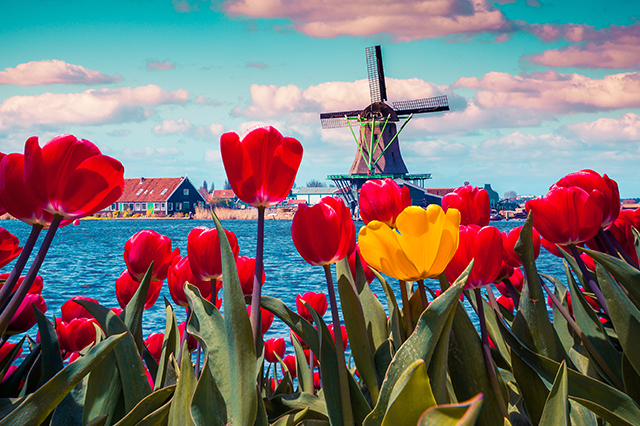
There’s always fascinating scenery passing by. There are no sea days, during which all you have to look at is 360-degrees of blue ocean. On a river cruise vacation, the scenery changes every minute you’re not in port as you pass by hilltop castles in Germany, tulip fields and windmills in Holland, rolling vineyards and centuries old churches in France and imperial palaces and parliament buildings in Austria and Hungary. Most river vessels feature panoramic windows in their forward lounges (and many newer ships extend that to individual cabins) and top decks are lined with loungers that make the perfect perch for enjoying the passing view.

Many river cruise vessels were built over the past decade. There’s something reassuring about surroundings that are sleek and new, and chances are your river cruise will feature contemporary décor (Viking River Cruises pioneered the concept with the modern Scandinavian design on its Longships and several other lines have followed suit). And even if the décor is lavish old-world European (as on Uniworld), the ship itself is modern, having been recently built or refurbished.

There’s more included in the price than on most ocean cruises. When you book a river cruise vacation, you are likely to get much more than just a cabin and three meals a day. The upfront fares for many, if not most, European river cruises include the following: beverages (often wine and beer with lunch and dinner, but some lines feature an open bar as well), organized excursions in most ports, onboard Wi-Fi, and staff gratuities.

river cruise vacations

You’ll dock within walking distance of many major sights. If you’re not a fan of organized excursions, the logistics of river cruising typically offer easy options for independent exploration as ships are able to dock right within the city (unlike large ocean cruise ships, which often dock miles from downtown and require shuttle buses to ferry passengers to the center).

The focus on local and regional cuisine enhances appreciation of the destination. Critics of international ocean cruising often claim this style of travel (six or eight hours in port, then on to the next destination) forfeits an authentic experience of the place, especially when it comes to food. While river cruise vacations generally keeps to the same schedule – albeit with more overnights in key cities – there’s a concerted effort to seek out local experiences while ashore and to bring local flavors and specialties onboard, both in the à la carte dinner menus and in special midday or late-afternoon presentations. Examples include a tasting with a “beer sommelier” in Belgium, a lunchtime spread of local cheeses in Holland, or fresh oysters and cider in Normandy.

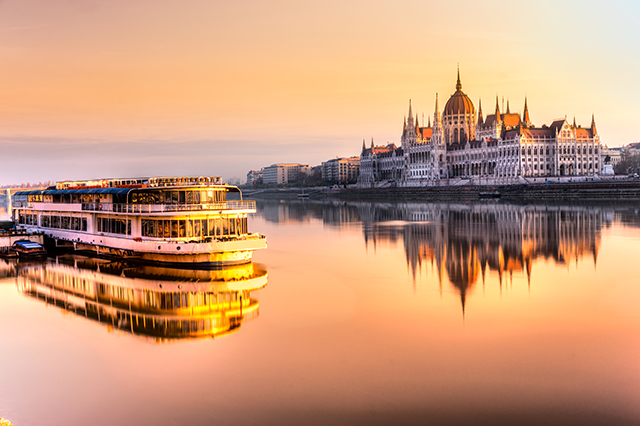
 You’ll overnight in key cities and discover fascinating small towns. As noted above, the shorter distances between ports allows for overnight stays in key cities – such as Paris, Vienna, Budapest, Bordeaux and Porto – allowing for evening excursions to local restaurants, concerts, operas or other cultural events. Who doesn’t want to see the Eiffel Tower or the Hungarian Parliament Building lit up at night? And calling on smaller cities and towns, such as Auvers-sur-Oise outside Paris (where Vincent Van Gogh spent the final months of his life and is buried) and Régua, Portugal (home to the captivating Mateus Palace) allows you to discover new and memorable places you might not have heard of before.

Camaraderie comes naturally. Daily life onboard most river cruise ships includes a cocktail hour in the lounge before dinner, during which all passengers mingle before the cruise director details the next day’s itinerary. And while tables for two are available in the restaurant at lunch and dinner, there are generally more tables for six or eight, allowing guests to chat as they dine. After a week of river cruising, you are apt to know several dozen fellow passengers by name—which isn’t always the case on big cruise ships.

The entertainment is authentic. A harmonious local seamen’s choir in Holland, a soulful Fado singer in Portugal, a classical trio in Vienna – expect to enjoy performances by local musicians in at least half the ports you visit. On other nights, the resident musician (typically European as well) provides after-dinner entertainment.

You won’t end your vacation feeling exhausted. Yes, there’s a port to visit every day, but because many of them are smaller towns, touring typically takes no more than 3-5 hours. The rest of the day can be spent at your leisure, either ashore or onboard, reading, napping or snacking. The overall feeling is one of relaxation and pampering rather than fatigue – except that you’ll probably feel fat (as in “Oops, I gained a few pounds”) when it’s time to head home.

Have you ever been on a river cruise vacation? Share your thoughts on the experience in the comments.

Book your river cruise vacation with AAA

Subscribe to Your AAA Newsletter

Sign up and receive updates for all of the latest articles on automotive, travel, money, lifestyle and so much more!

How to Travel to India for the First Time

Home to 1.3 billion people, India it is a melting pot of languages, religions and cultures that entice visitors from around the world who plan on spending their holidays in Asia. India can induce culture shock, even for seasoned travelers. We’ve rounded up our top tips for traveling to India for the first time in order to make the most of your Asian holidays.

Play it safe on Asian holidays

Tourists can be victims of pickpocketing anywhere, but the overwhelming sites and sounds of India’s cities can distract even experienced travelers. Men, get in the habit of placing wallets in your front pockets instead of back pockets. Ladies, if you opt for a purse, a petite cross-body is safer than a large tote and should be kept in front of your body. The best option for either gender is a travel belt that can be tucked underneath the loose pants you’re wearing to cope with the Indian heat. If you carry a backpack, using a backpack lock is highly advised. This advice will serve you in India and beyond if you extend your Asian holidays to travel elsewhere in the region.

We also recommend studying this list of scams you may encounter in India to avoid them during your trip.

asian holidays

Dress conservatively

Beyond covering up when visiting places of worship, it is advised that tourists dress conservatively while spending time in India. India’s heat might make you want to wear your skimpiest garments, but shorts and short dresses will attract uncomfortable attention. Generally, bare shoulders are acceptable, but visible knees can be considered risqué. Play it safe by choosing loose-fitting, long garments that will keep you cool. Always carry a light scarf with you to keep away the heat and cover up if you feel you’ve missed the mark.

Avoid gastrointestinal issues

Traveler’s diarrhea is an all too common malady that can ruin your Indian vacation. Before you go, consult a travel doctor and make sure you have all the necessary immunizations for visiting India. Getting travel medical insurance is also advisable in case a simple stomach bug turns into something more severe.

Your travel doctor may suggest you purchase over-the-counter probiotics to take regularly during your trip. Probiotics help balance your gut’s bacterial composition and can help thwart traveler’s diarrhea in conjunction with avoiding certain foods.

In general, you should avoid consuming tap water, ice, street food, salad and fruit that you haven’t peeled yourself. Many travelers opt to go vegetarian while in India to avoid stomach ailments caused by spoiled meat, which tend to cause the most egregious of gastrointestinal issues.

Be aware of hygiene customs

In many parts of the world finding a clean toilet that is stocked with toilet paper and has a place to wash your hands is a luxury. While modern shops and restaurants in India’s cities will have these western comforts, you will run into difficulties on the road or in India’s more rural towns.

Outside of India’s major cities you will likely encounter squatter toilets and the local toilet paper alternative – your left hand and a water jug. For this reason, it is considered improper to eat with your left hand. Carry toilet paper and hand sanitizer with you on your travels in India and take take extra precautions by applying hand sanitizer before meals.

Make plans, but be flexible

There is so much to see and do during your Asian holidays in India that going in without a plan can be overwhelming. It is important to be flexible because obstacles are bound to pop up in this exciting-albeit-chaotic country.

You could get stuck in a rickshaw traffic jam, spend an hour haggling with a merchant to get the right price for a souvenir and arrive at your destination just to find that it’s closed due to a religious festival. Things happen, but they’re all part of the magic of India.

Make plans, but be flexible. Going in with this mindset will help you live in the moment and can turn mishaps from your Indian adventure into your most-cherished memories.

AAA can make your Indian holiday and the rest of your Asia travel a breeze with our travel search engine. You can book your flights, hotels and tours all in one place.

Have you already been to India? Share your top tips for first time visitors in the comments below.

Book your next vacation with AAA travel.

Subscribe to Your AAA Newsletter

Sign up and receive updates for all of the latest articles on automotive, travel, money, lifestyle and so much more!

Guide to US National Parks: Volcanoes and Islands

The National Park of American Samoa, American Samoa

The only U.S. national park south of the equator, the National Park of American Samoa encompasses three islands: Tutuila, Ofu and Ta‘ū. Visitors can explore coral reefs, tropical rain forests and Samoan culture.

Biscayne National Park, Florida

This park in the northern Florida Keys offers divers and snorkelers several places to explore along the underwater Maritime Heritage Trail. Though the reefs and islands are accessible only by boat, visitors can walk through the mangrove forests on the shore.

Channel Islands National Park, California

Channel Islands National Park is spread over five islands off the Southern California coast. Activities include hiking, visiting lighthouses, exploring sea caves, and observing wildlife, including the numerous seals that gather on San Miguel Island.

Crater Lake National Park, Oregon

Located in the Cascade Mountains in southern Oregon, this U.S. national park is named after its most famous site, Crater Lake. This body of water was created by the collapse of the now-extinct volcano, Mount Mazama.

Dry Tortugas National Park, Florida

Dry Tortugas National Park is 68 miles west of Key West, in the Gulf of Mexico. This park offers magnificent diving, with its abundant marine life, coral reefs and shipwrecks. The main attraction on land is Fort Jefferson, an unfinished coastal fortress built in the 19th century. This park is accessible only by seaplane.

Haleakalā National Park, Hawaii

Meaning “House of the Sun” in Hawaiian, this park is found on the island of Maui. The main attraction here is the Haleakalā Crater, with a seven-mile-by-two-mile opening and a depth of nearly 2,600 feet. This park is one of the best places in the United States for stargazing. Hawaiian geese, called nēnē, are native to this area, and though they had initially died out, they were reintroduced in the 1940s and are doing well today.

Hawai‘i Volcanoes National Park, Hawaii

One of Hawaii’s most popular tourist sites is Hawai‘i Volcanoes National Park. Located on the “Big Island” of Hawaii, it contains two active volcanoes, Kīlauea and Mauna Loa. Visitors can travel the Crater Rim Drive through fields of steam vents. The more adventurous can explore the Thurston Lava Tube. Another byway, the Chain of Craters Road, leads through lava fields. Check to see if the park is open before heading out: Kilauea’s recent eruption and related earthquakes could lead to closings or reduced hours. Visitors should always keep safety top of mind.

u.s. national parks
Mount Rainier National Park

Mount Rainier National Park, Washington

This U.S. national park in Washington State is best known for its namesake, Mount Rainier, a glacier-capped stratovolcano. One of the glaciers on the mountain, Carbon Glacier, is the largest by volume in the lower forty-eight states, whereas the Emmons Glacier is the largest by area. Visitors can enjoy numerous trails in the park, and many mountaineers attempt to summit Mount Rainier each year.

Isle Royale National Park, Michigan

This remote wilderness is spread over a group of islands in Lake Superior, near the border between Michigan and Canada. Cars are not allowed, so many visitors use boats to get around. Wildlife includes moose and wolves. Cold-water divers can explore several shipwrecks in the park.

Katmai National Park, Alaska

Named for Mount Katmai, a stratovolcano, this U.S. national park in southern Alaska is home to numerous Alaskan brown bears. The 1912 eruption of Novarupta created the forty-square-mile Valley of Ten Thousand Smokes, a pyroclastic flow that ranges from 100 to 700 feet deep. The park contains eighteen individual volcanoes, nearly half of which have erupted since 1900.

Lake Clark National Park, Alaska

Located about 100 miles southwest of Anchorage, this U.S. national park is accessible only by boat or plane. The terrain varies between mountains and a rain forest–lined coast with sections of alpine tundra, glaciers, major rivers, and two volcanoes, Mount Redoubt and Mount Iliamna. Mount Redoubt is still active, having erupted in 1989 and 2009. Most of Alaska’s major land and sea animal species can be found in the park.

Lassen Volcanic National Park, California

This park in northeast California is named after Lassen Peak, the largest plug dome volcano in the world. The volcano is surrounded by various geothermal sites, such as acres of mud pots in Bumpass Hell and fields of lava rocks in the Devastated Area. Lassen Volcanic National Park is one of the only places in the world where visitors can find all four types of volcanoes: shield, cinder cone, plug dome, and strato. Several roads lead through the park, and hikers can enter on the Pacific Crest Trail.

Virgin Islands National Park, U.S. Virgin Islands

This park, which encompasses much of St. John as well as 5,500 acres of ocean, attracts many scuba divers and snorkelers. For land travelers, the park has miles of hiking trails that lead through its tropical rain forest.

What U.S. national parks are on your wish list? Tell us in the comments.

Plan a national park vacation with AAA travel counselor

Subscribe to Your AAA Newsletter

Sign up and receive updates for all of the latest articles on automotive, travel, money, lifestyle and so much more!

America’s First National Park: Yellowstone National Park Guide

America’s first national park, Yellowstone National Park attracts four million visitors a year from across the country and all corners of the world. Spread across nearly 3,469 square miles in Wyoming, Montana and Idaho, the park offers visitors a glimpse at some of the West’s most famous fauna, such as grizzlies, buffalo and wolves.

Guests also marvel at evidence of the earth’s active geothermal activity with the park’s bubbling hot springs and gushing geysers, and can enjoy the serenity of the wide-open valleys and the sparkling stars in the dark, velvety night sky.

This Yellowstone National Park guide will help you plan the trip to this national treasure that best suits your interests.

Visitors can access Yellowstone National Park through one of its five entrances and learn more about its history, geography and geology, and wildlife at one of the ten visitor centers located throughout the park.

Though the park is open year-round, its busiest season is late spring until early fall. Cold-weather lovers can tour portions of the park in the winter and partake in the activities described later in this Yellowstone National Park guide, but not all roads and sites are accessible, and the majority of services are not open during the coldest months.

Yellowstone National Park’s natural beauty

 Yellowstone’s mountains, lakes and rivers are breathtaking, but what attract the biggest crowds are its geothermal sites. Mammoth Hot Springs, near the North Entrance, entices viewers to walk along boardwalks through multicolored travertine terraces and steam rising from the boiling springs and mud pots.

Other hot springs, many featuring vibrant colors due to the water’s mineral content, are scattered throughout Yellowstone. The largest at 370 feet wide and 125 feet deep is the Grand Prismatic Spring, located in the Midway Geyser Basin in the western portion of the park. For those seeking a more dramatic display of the earth’s power, the geysers are the main attraction. Yellowstone contains around 60 percent of the world’s geysers, with Old Faithful being the best known.

To avoid the crowds at the most popular sites, visitors should explore some of the less-well-known areas of the park, such as the Lamar Valley, where the wide-open spaces attract large herds of buffalo and other animals. We recommend arriving either early or later in the day – before 9 a.m. or after 3 p.m. is best. Or consider planning a visit in the non-peak seasons of April and September.

What to do: A guide to Yellowstone Park activities

 From late May until October, adventure seekers can hike the park’s numerous trails on multiday treks or shorter day trips, raft on the rivers, fish in the streams and lakes, horseback ride, bicycle both on the roads and on mountain bike trails, and take self-guided or guided tours to view the area’s abundant wildlife.

In the wintertime, intrepid outdoor enthusiasts trade the crowds of summer for a more peaceful experience in Yellowstone. However, many of the park’s roads are not plowed in the winter, so some of the sites are accessible only by snowmobile, skis or dogsled.

yellowstone national park

The western portion of Yellowstone boasts some of most sought-after snowmobile trails in the West, such as the Continental Divide trail, earning it the nickname of “Snowmobiling Capital of the World.”

For those seeking a quieter method of travel or one that provides more of a workout, cross-country skiing can be enjoyed on all of the park’s roads and miles of trails. Though some trails are groomed, most are not. A popular trail is the Biscuit Basin Trail, which loops through Old Faithful’s basin. When snow blankets the terrain, some of the park’s wildlife hibernate or migrate to warmer lands, but many, such as buffalo, elk and wolves, are still active. Visitors can take guided tours to see these creatures, or they can snowshoe or ski out on self-guided tours.

Where to stay

 When visiting Yellowstone National Park, visitors have several options for where to stay. In keeping with the great outdoors vibe of the park, many people opt to camp, whether in a camper or tent at one of the park’s twelve campgrounds or completely off the grid in one of the 300 backcountry campsites.

The park also has nine lodges for those who want a bit of comfort with their nature experience. Two of the lodges, Old Faithful Snow Lodge and Mammoth Hot Springs Hotel, are also open in the winter. Visitors can also stay outside the boundaries of the park in the many resorts, hotels, and motels nearby.

Where to eat

 The park contains many restaurants, from fine dining in the lodges to casual grab-and-go snacks. Many guests bring food for enjoying in one of the park’s many picnic areas. Some have fire grates for cooking, but visitors are advised to bring their own water because not all sites offer potable water.

 Have you ever visited Yellowstone National Park? Would you like to? Tell us in the comments.

Plan a national park vacation with AAA

Subscribe to Your AAA Newsletter

Sign up and receive updates for all of the latest articles on automotive, travel, money, lifestyle and so much more!

Several National Park of America Tours in One Great Trip

Explore several fantastic national parks on one exciting journey with the National Parks of America vacation package by AAA Vacations.

During this trip, travelers relish in overnight stays in a lodge nestled in the heart of Yellowstone and in a National Historic Landmark inside the Grand Canyon. On this specific tour, travelers enjoy a breakfast cruise on Lake Powell, marvel at the magnitude and color of Zion’s cliffs, and drive through the incredible Bighorn Mountains and the great Sioux Nations Territory, and see Mount Rushmore and Crazy Horse Monument.

Contact a AAA travel advisor today to learn more.

Whether you are booking with AAA Vacations or planning your own national parks of America tour, the following places and experiences are considered tour highlights.

Scottsdale – Tour begins

The first of your national park of America tours begins in Arizona, where you will enjoy a stay in the world-famous resort town of Scottsdale.

Scottsdale – Sedona – Lake Powell

 Begin the day with a visit to the artists’ colony of Sedona, where you will see the amazing rock formations change colors with each turn in the road.

Lake Powell – Grand Canyon

Embark on a delightful breakfast cruise on scenic Lake Powell. Next, travel to Carl Hayden Visitors Center and look out over Glen Canyon dam. Afterward, travel through Marble Canyon before arriving at the spectacular Grand Canyon. Upon arrival, relax at one of the many public seating areas overlooking the immense canyon. Take a moment to reflect or take a short hike to explore the area. Dinner takes place at the historic Grand Canyon Lodge.

Grand Canyon – Bryce Canyon – Zion National Park

Travel to Bryce Canyon National Park, a scenic wonder. The formations within the park, called Hoodoos, are the creation of wind and water erosion over eons of time. Your final destination for the day is the red and white sandstone cliffs of Zion National Park, one of the most awe-inspiring national parks of the United States. Enjoy the view from the floor of the canyon as you ride along on the Zion tram.

 Zion National Park – Salt Lake City

A drive north takes you to Salt Lake City for a two-night stay. Perhaps you will choose to explore Temple Square. This beautifully landscaped 10-acre plot of ground in the heart of downtown Salt Lake City is one of Utah’s most visited attractions.

Salt Lake City

Enjoy a tour of Salt Lake City featuring the Great Salt Lake, the state Capitol and the residential district.

Salt Lake City – Jackson Hole

En route to Wyoming you will see the majestic Bear Lake Summit.

Jackson Hole

The day is yours to enjoy Jackson Hole. Optional activities include shopping, canoeing, hiking and river-rafting trips. From Memorial Day through the last Saturday in September you can experience a fun-filled evening of cowboy entertainment with a traditional chuck wagon dinner.

national park of america tours
Yellowstone National Park.

Jackson Hole – Grand Teton & Yellowstone National Parks

Pass through Grand Teton National Park. The Teton Range is the youngest range in the Rockies. Towering more than a mile above the valley of Jackson Hole, the Grand Teton rises to 13,770 feet. Later, arrive at the amazing Yellowstone National Park for an overnight stay. Explore the incredible sights of Yellowstone with a local guide. One of the many highlights is the world-famous Old Faithful Geyser.

Yellowstone – Cody – Sheridan

A day of sightseeing begins with a trip along Lake Yellowstone and over Sylvan Pass. The scenery is simply amazing. As you pass through Cody, a stop will be made at the Buffalo Bill Center of the West. Before turning in for the night in Sheridan, you drive through the incredible Bighorn Mountains and journey through the territory of the Great Sioux Nation.

Sheridan – Rapid City

See one of the country’s most famous landmarks, Mount Rushmore. Later, visit Crazy Horse Memorial, a monument dedicated to the Native Americans of this great land. You’ll also have the opportunity to visit the Native American Cultural Center to learn about their culture and customs.  At dinner, you will meet a local Lakota Native American.

National Park of America Tours

AAA Vacations offers vacation options that fit your travel style. Choose guided or independent itineraries, let a local host show you the way or take AAA’s suggestions for ocean and river cruises. Packages include meals, guided tours, nightly accommodations, baggage handling and roundtrip airport transportation. And AAA members save even more.

Learn more about this exciting trip. 

Click here or visit your nearest AAA branch to learn more about AAA Vacations. 

Subscribe to Your AAA Newsletter

Sign up and receive updates for all of the latest articles on automotive, travel, money, lifestyle and so much more!