10 Daring Destinations Around the World for Adventure Seekers

1.

New Zealand: The land of the Kiwis is almost synonymous with adventure. The world’s first zorbing site – where you roll down a hill inside a giant, transparent plastic ball – is in Rotorua, and the world’s first permanent bungee jump operation is at the Kawarau Gorge Suspension Bridge near Queenstown. The hiking and kayaking are world-class, too.

Machu Picchu
Machu Picchu in Peru remains mysterious to modern-day explorers.

2.

Peru: Machu Picchu is on many bucket lists, for the ancient Incan citadel evokes a feeling of awe and mystery, especially when shrouded by the Andean mist. With popularity, however, comes hordes of tourists. To find sanctuary from the crowds, head to the oasis of Ica, where sandboarding the surrounding dunes can be just as awesome.

3.

India: Culinary adventures in India, may they be taking cooking classes or exploring food markets, differ by region. Rajasthani cuisine, in the north, includes the pairing of spiced lentil soup and baked wheat rolls, known as dal bati, while crispy, savory dosas (pancakes) are common in the south. In India, your best traveling companions are your taste buds.

4.

U.S. National Parks: There are myriad adventures across all 84 million combined acres of the U.S. national parks. As a showcase of geological diversity, there’s everything from scuba diving down the underwater kelp forests of the Channel Islands to climbing the massive rocks of Yosemite. Not that active? Watching Yellowstone’s Old Faithful erupt can be thrilling, too.

5.

Mongolia: Genghis Khan went down in history as the founder of the largest land empire in the world. In the 13th century, however, the great leader couldn’t survey his grand domain without a horse. Today, tourists can follow in his hoofprints on a horseback riding tour in the highlands of Mongolia, once part of his great Mongol Empire.

The Galapagos Islands
Visitors can see a wide range of flora and fauna on the Galapagos Islands.

6.

The Galapagos: Merely being in the Galapagos is special; it’s where Charles Darwin conjured up the theory of evolution after observing the unique variations in the animals on each of the islands. Exploring leads you to blue-footed boobies, marine iguanas and dramatic landscapes – and even the opportunity to scuba dive in between them, sometimes with hammerhead sharks.

Turkey
Hot air balloons take flight in the mornings in Cappadocia, Turkey.

7.

Turkey: If you’ve ever dreamed of sleeping in a cave, look to Cappadocia, where cave hotels are built into the nooks of fairy-tale-like chimney rock formations, characteristic of this dry, Turkish region. To fly through the enchanted land, book one of the many hot air balloons that soar above in the mornings.

8.

China: With its 1.3 billion people, China is a massive country to explore. If you’re not really a people person, you might want to zone in on pandas instead. At the Chengdu Research Base of Giant Panda Breeding, you can observe the famed Chinese bears of all ages, and if you’re lucky, perhaps even a newborn.

9.

The Amazon: The Amazon rainforest may be known for its monkeys, snakes and occasional sloths, but the river that makes this jungle fertile is home to river dolphins – pink ones. You might catch a glimpse of them on a riverboat or on a canoeing excursion from one of dozens of ecolodges along the mighty river in Peru and Brazil.

10.

St. Kitts and Nevis: Mini speedboats that accommodate two people are easy enough to zip around St. Kitts’ southeast peninsula. Ride to a secluded snorkeling spot for an underwater gander of the tropical fish – or simply throw in the towel on adventures, lay it out on the beach and just soak in the Caribbean scenery.

Have you found adventure around the world? Tell us in the comments.

Book your next vacation with a AAA travel advisor.

Subscribe to Your AAA Newsletter

Sign up and receive updates for all of the latest articles on automotive, travel, money, lifestyle and so much more!

Rest Stops Worth Seeing in the Northeast

Just as the leaves begin to turn in autumn, so, too, do thoughts turn to a leaf-peeping road trip. And some of our favorite routes include a variety of wonderful (rest) stops along the way.

New Hampshire

Kancamagus Scenic Byway: (Route 112, aka “The Kanc”): There are many scenic overlooks and parking areas that will get you closer to nature along this 34.5-mile scenic drive through the White Mountains in Northern New Hampshire. But your first stop should be at mile marker 0, the Ranger Station/visitor information stop, where you’ll also find bathrooms, touring information and the $5 parking recreation passes you’ll need if you want to take advantage of the stops along the way (BOLO for those along the first 7 miles, which offer views/access to the Swift River). C. L. Graham Wangan Overlook, with spectacular views of the Swift River Watershed and the mountains, as well as interpretive signage.

Vermont

Interstate 91: If you’re hitting the road with the whole family (including those of the four-footed variety) you’ll love the Guilford Welcome Center, in a post-and-beam barn in southeastern Vermont. It has won awards for its wealth of information for visitors, as well as its extensive grounds – including a sculpture garden, meadow walk (with foliage views), antique farm equipment, a playground and a beautiful pet-walking area/garden.

New Jersey-New York

Palisades Interstate Parkway (aka Palisades Scenic Byway in New Jersey): This 38.25-mile road connecting New Jersey and New York lets you get out of New York City quickly, with scenery (including foliage) all along the way. The New Jersey stretch is known for its scenic overlooks (I actually like them best at night, when you get the lights of civilization reflected in the mighty Hudson below). Best are the Alpine Overlook (north side, near exit 2) and the State Line Lookout, a short walk to the views from atop Palisades Cliffs, plus a concession stand.

Also check out the Bear Mountain/Tompkins Cove stop on the north-south median (between exits 16 and 17) in New York, which has a bookstore and general information about the region.

New York

Route 6: A personal favorite, year-round. There are three notable stops along this mostly two-lane road through the Hudson Highlands, which crosses the Hudson River via the Bear Mountain Bridge. East of the river, near Peekskill, you’ll find a small parking area/overlook perched on the side of Anthony’s Nose with a spectacular view of the river and Bear Mountain to the west.

Taconic State Parkway: The Todd Hill rest area (https://taste.ny.gov/store/todd-hill-rest-area), 1 mile south of Route 55, features the Taste NY Market, stocked with locally sourced food, beverages, and produce. You’ll also find a seasonal outdoor farmers market on Mondays.

Do you know of any more great rest stops in the Northeast? Let others know about them in the comments below.

Read more about rest stops and view a slideshow of these great places.

Subscribe to Your AAA Newsletter

Sign up and receive updates for all of the latest articles on automotive, travel, money, lifestyle and so much more!

Spruce Up Your Table With Fall Flavors

Ah, autumn – the season of pumpkin spice everything. But along with the fall gourd, apples and squash are also in season.

There are so many possibilities when it comes to cooking with fall’s bounty. Since you might soon be apple picking at the orchard or pumpkin picking at the farm, fresh ingredients won’t be far from your reach.

Here are some ideas for using them from chefs at AAA Diamond Rated restaurants.

A Hearty Squash Dish

Pierogies are usually filled with potatoes or ground meat. Fill yours with squash instead. Executive chef Bill Telepan from Oceana, a AAA Four Diamond restaurant in New York City, mixes squash with onion, garlic and creme fraiche or sour cream to make a filling. Once the pierogies are filled, sealed and cooked, he tops them with a sauce made of butter, parsley and toasted walnuts. Then he drizzles them with a balsamic reduction and red wine vinegar.

Ingredients

For the dough:
6 eggs
3 tablespoons water
5 cups flour
1½ teaspoons salt

  1. Mix wet ingredients.
  2. Mix dry ingredients.
  3. Mix the wet and dry ingredients together on a mixer on low speed.
  4. When ball of dough is loosely formed, use your hands to complete forming the ball.
  5. Return the dough to the mixer and knead on low speed for 5 minutes.
  6. Let the dough rest for at least 30 minutes.

For the filling:
½ stick (2 ounces) butter
¼ onion, minced
1 small clove garlic, minced
3 cups cooked squash, squeezed dry
1/3 cup creme fraiche or sour cream
Salt and pepper, to taste

  1. Melt butter in a pot over a medium flame.
  2. Add onion and garlic and cook until tender (about 5-7 minutes).
  3. Add squash and stir continuously until dry.
  4. Cool completely.
  5. When cool, mix in the creme fraiche and season with salt and pepper.
  6. Roll out the dough into very thin sheets (less than 1/8 inch).
  7. Using 4-inch cutter, cut out 48 circles.
  8. Spoon about 1 tablespoon of filling onto half of the circle.
  9. Brush the edges of the circle with a little bit of water.
  10. Fold the dough over the filling to form a crescent.
  11. Seal the edges by pressing them down with small fork.
  12. Refrigerate.

To finish the pierogies:
2 ounces balsamic vinegar
2 ounces red wine vinegar
6 ounces butter
1 cup walnuts, toasted and chopped
4 tablespoons chopped parsley

  1. Place vinegars in a pot and reduce by half over medium heat. Set aside.
  2. Cook pierogies in lightly salted, boiling water. Once they float to the top, continue to boil for about 2 minutes.
  3. Drain and set aside.
  4. In 4 batches, melt ¼ of the butter, add the pierogi top-side down and lightly brown to crisp. Season with salt and pepper.
  5. Flip over and brown the other side quickly.
  6. Take out the pierogies with a slotted spoon and let drain on a paper towel.
  7. Add ¼ of the walnuts and parsley to the butter. Toss and remove them to a small pot.
  8. Repeat 3 times.
  9. When finished, plate pierogies onto a warm platter, spoon the warm walnut-parsley butter mixture over them, then drizzle with the vinegar reduction.

An Apple a Day

Executive chef Lou Rossi, of the AAA Four Diamond restaurant at Castle Hill Inn in Newport, R.I., uses fresh apple juice in his butternut squash soup. Squash, onion, carrot, celery and potatoes form the base, while sage, nutmeg, cinnamon and cardamom give it that distinct fall flavor. He adds freshly squeezed Granny Smith apple juice, salt and pepper when the soup is cooked, then blends the soup until smooth, strains it and finishes it with apple cider vinegar.

Ingredients

4 pounds roasted butternut squash
8 ounces unsalted butter
2 tablespoons fall spice mix, divided
1 yellow onion, diced
1 carrot, diced
1 stalk of celery, diced
2 cloves of garlic, minced
2 quarts chicken or vegetable stock
2 Yukon gold potatoes, peeled and diced
½ cup fresh Granny smith apple juice
Salt and pepper, to taste
Apple cider vinegar, to taste

For fall spice mix:
2 tablespoons brown sugar
2 tablespoons dried sage
2 tablespoons ground cloves
2 tablespoons dark chili powder
2 tablespoons ground coriander
2 tablespoons ground allspice
1 tablespoon ground cardamom
1 tablespoon ground nutmeg
1 tablespoon ground cinnamon

  1. Preheat the oven to 350 degrees.
  2. Peel the butternut squash and cut lengthwise.
  3. Clean out the pulp and seeds, and then dice the squash into 1-inch pieces. Melt 2 ounces of butter and add to a mixing bowl with the diced squash, 1 tablespoon of fall spice mix and a sprinkle of salt and pepper.
  4. Roast on a baking sheet pan for 20 minutes or until golden brown.
  5. In a large stockpot or saucepan, melt the remaining butter until it begins to foam. Add the diced onions, carrots, celery and garlic and cook on medium heat for 8 minutes, stirring frequently.
  6. Season with 1 tablespoon of fall spice and cook for additional 5 minutes.
  7. Add the chicken or vegetable stock and diced potatoes. Bring to a simmer, then add roasted squash.
  8. Continue to cook for 20 minutes, reducing the heat to a gentle simmer. Add the apple juice, and season with salt and pepper to taste.
  9. To finish, puree the soup in a blender until smooth, being sure to strain the soup through a fine mesh sieve. Carefully add the apple cider vinegar to taste; you may not need a lot.

Pump up a Bisque

Inspired by pumpkin spice? Try pumpkin bisque. Chef Chris Coombs from Deuxave, a AAA Four Diamond restaurant in Boston, sprinkles brown sugar, salt, pepper, nutmeg, cinnamon and allspice on a pumpkin before roasting it. He blends the cooked flesh with heavy cream to make the bisque. For an extra dollop of fun, he whisks together whipping cream, vanilla extract, sugar, cinnamon, allspice and salt for a spiced whipped cream that makes a sweet topping.

Ingredients
(serves 4-6)

1 3-pound pumpkin (or 32 ounces of canned pumpkin)
2 tablespoons canola oil
3 tablespoons brown sugar (loose or packed depending on desired sweetness)
1 tablespoon salt
1 teaspoon black pepper
½ teaspoon freshly grated or ground nutmeg
½ teaspoon ground cinnamon
½ teaspoon ground allspice
1 Spanish onion, sliced thinly
2 small garlic cloves, peeled
4 tablespoons (1/2 stick) unsalted butter, divided
1 cup heavy cream

For spiced whipped cream:
½ cup whipping cream
½ teaspoon vanilla extract
1 tablespoon sugar
¼ teaspoon cinnamon
¼ teaspoon allspice
Pinch of salt

  1. Preheat oven to 325 degrees.
  2. Split pumpkin in half with a large chef’s knife. Scrape out all seeds using a sturdy spoon and discard seeds and pulp.
  3. Rub pumpkin inside and out with canola oil, then lightly sprinkle the inside with brown sugar, salt, pepper, nutmeg, cinnamon and allspice.
  4. Place pumpkin halves on a cookie sheet with the skin side down. Fill cavities with sliced onion, garlic and butter. Cover with foil.
  5. Roast for 45 minutes, or until fork runs easily through flesh.
  6. Remove from oven and cool for 5 minutes.
  7. With a rigid spoon, scrape the pumpkin flesh, onion, garlic and natural juices into a bowl. Discard the skin.
  8. Blend cooked pumpkin mixture in blender for 2 minutes on high, or until smooth. Add 1 cup of heavy cream and blend just until mixed. Serve immediately. (Optionally, top with spiced whipped cream).

To make spiced whipped cream:

  1. Whisk together whipping cream, vanilla extract, sugar, cinnamon, allspice and salt in a mixing bowl until soft peaks form.

What are your favorite fall-inspired recipes? Tell us in the comments below!

Click here to learn more about AAA Diamond ratings and find more AAA Diamond rated restaurants near you.

Subscribe to Your AAA Newsletter

Sign up and receive updates for all of the latest articles on automotive, travel, money, lifestyle and so much more!

Four Autumn Activities for Fitness and Foliage

Fall may mean cooler weather, but there are several outdoor activities that are perfect for enjoying the crisp air and fall foliage views.

Hiking

Cooler temps and fewer pesky bugs make hiking in fall ideal. It’s even better against a backdrop of fall foliage. Hiking is a good cardio workout – you’ll use abdominal muscles as well. A 155-pound person hiking for 30 minutes will burn about 223 calories.

Where: White Mountains, New Hampshire

Hundreds of miles of trails range from easy to strenuous. All have excellent views of the region’s valleys and forests.

“The different zones of vegetation and diversity of trees in the White Mountains make the fall foliage breathtaking,” said Nicky Pizzo, of the Appalachian Mountain Club.

For a family-friendly hike, try Diana’s Baths in North Conway. For a moderate hike, try the Mount Pemigewasset Trail in Lincoln.

Find and book a hotel in the White Mountains, North Conway, N.H., or Franconia Notch.

Biking

Biking is a fun, aerobic activity that strengthens your leg, trunk and abdominal muscles. A 155-pound person biking for 30 minutes at 14 mph will burn about 372 calories.

Find and book a hotel in the White Mountains.

Where: Cape Cod Rail Trail, Massachusetts

After summer tourists leave, the Cape becomes quieter – perfect for a relaxing bike ride along the scenic Cape Cod Rail Trail, which stretches 22 miles from South Dennis to South Wellfleet. There are visitor centers, bike rental and repair shops, and picnic areas along the way.

Kayaking and Canoeing

Kayaking and canoeing work the upper body, building muscles in the back, arms, shoulders and chest. You also use abdominal and leg muscles. A 155-pound person kayaking for 30 minutes will burn about 186 calories.

Find and book a hotel on Cape Cod.

Where: Saco River, New Hampshire/Maine

Saco River runs through northeastern New Hampshire and southwestern Maine. All 136 miles will offer scenic views and camping areas nearby. It might be chilly in the fall, but fewer tourists will be about – so layer up and enjoy.

Rock Climbing

In addition to building muscle, rock climbing builds endurance, boosts brain function and increases flexibility. A 155-pound person will burn about 409 calories during a 30-minute ascent, and 298 calories on the way down.

Where: Shawangunk Mountains, New York

If you’re new to rock climbing, first practice on an indoor climbing wall. But if you’re a bit more seasoned, the Shawangunk Mountains – aka The Gunks – provide a great vantage point for fall foliage views. And they’re just 100 miles from New York City.

Consult your doctor before beginning any new exercise.

Where’s your favorite place to do these activities? What other activities do you enjoy doing in the fall? Tell us in the comments below! 

Subscribe to Your AAA Newsletter

Sign up and receive updates for all of the latest articles on automotive, travel, money, lifestyle and so much more!

US Park Perks You’ll Never Forget

The U.S. National Park Service turns 102 years old this year, and while I could easily give you 102 reasons to visit its 59 parks that draw 300 million visitors per year, let’s stick with 10 of the very best attractions to see at these natural wonderlands.

1.

Mule rides have long been one of the most interesting – and certainly unique – ways of enjoying the Grand Canyon National Park. Trips come in varying lengths. Shorter tours stay atop the canyon while longer treks descend into the massive chasm. Age, height and weight restrictions apply.

Grand Prismatic Spring
Grand Prismatic Spring at Yellowstone National Park.

2.

Some like it hot. If you’re one of them, check out the Grand Prismatic Spring at Yellowstone National Park in Wyoming. This enormous 160-degree hot spring emits a cornucopia of colors courtesy of the heat-loving bacteria that live in its waters. It’s an incredible photo op, for sure, and it is only a 25-minute drive from the iconic geyser Old Faithful.

Arches National Park
The naturally intertwined Double Arch at Arches National Park in Utah.

3.

Like to hike? Then trek down the Devils Garden Trail in Utah’s Arches National Park. The path is jam-packed with incredible rock fins and arches, including Landscape Arch, which at nearly 300 feet long is the fifth-longest natural arch in the world.

4.

Most people associate Colorado with top-notch skiing, but there are other ways to hit the slopes, too. Relive childhood memories – albeit in the sand, not snow – by sandboarding or sand sledding at Great Sand Dunes National Park. The park is home to the largest dunes in North America, with many towering over 700 feet high.

5.

Combine a national park trip with the Caribbean vacation you crave when you snorkel in Leinster Bay at Virgin Islands National Park. Of course, since 40 percent of the park is underwater, Leinster is far from the only place to swim with the colorful marine life off the coast of St. John.

Death Valley
A darkening night sky enfolds a dead mesquite tree at Death Valley National Park.

6.

See the stars illuminate one of the darkest night skies in the United States at Death Valley National Park, on the border of California and Nevada. When temperatures cool in the winter and spring, park rangers guide visitors across moonlit sand dunes and various stargazing events are held at night.

7.

Action movie scenes come to life during aerial tours of Denali National Park in Alaska. Various companies offer helicopter or small airplane tours; depending on which you choose, you could spend 30 minutes on a glacier snapping frosty photos or having the most epic snowball fight ever.

Glacier National Park
Going-to-the-Sun Road through Glacier National Park in Montana.

8.

Going-to-the-Sun Road offers one of the nation’s most awe-inspiring drives. The 50-mile route spans the width of Glacier National Park, in Montana, with mountains, waterfalls and valleys competing for your attention. It crosses the Continental Divide, too, at an elevation of more than 6,640 feet. The road is open seasonally when weather allows, so check the status before your visit.

9.

Florida’s Everglades National Park is the largest tropical wilderness in the nation and home to some of the country’s rarest animals, including the American crocodile and the Florida panther. Look for wildlife on a boat tour to the Ten Thousand Islands or rent a canoe or kayak to experience the verdant wetlands up close.

10.

Mammoth Cave National Park in central Kentucky is home to the world’s longest known cave system. With more than 400 miles explored, the caves are open for group tours on lighted routes or dark routes where visitors light the way with wax-burning lanterns. “Wild” tours are available for those who like to get muddy and crawl through dusty tunnels.

Have you seen other National Parks sites? Comment below!

To start planning your National Parks trip, visit AAA.com/NationalParks.

Subscribe to Your AAA Newsletter

Sign up and receive updates for all of the latest articles on automotive, travel, money, lifestyle and so much more!

Riverside Splendor: European Ports Rise in Stature as River Cruises Surge in Popularity

Many of Europe’s most celebrated cities owe their greatness to their location – the perfect spot on a navigable river that made trade and transport effortless. Today, these legendary rivers, from the Danube to the Douro, offer a scenic setting for increasingly popular river cruises. Here are 10 European ports I love.

Amsterdam: The Amstel River flows through this multifaceted Dutch city known for its houseboat-lined canals, 17th-century architecture and photogenic bridges – which earned it the nickname the “Venice of the North.” Equally appealing to art lovers (Rembrandts, Vermeers and Van Goghs abound) and history buffs (WWII walking tours are popular), Amsterdam has a free-wheeling ambience that’s infamously intoxicating.

Antwerp:  Enjoying beer – and very strong beer at that – is one of Belgium’s great pastimes and this city on the River Scheldt is an appealing place to get to know a Tripel from a Trappist. Antwerp’s other calling cards are its 16th century square Grote Markt and the Rubenhuis museum, dedicated to all things Peter Paul Rubens.

Basel: The starting or ending point for many Rhine River cruises, this city located where the Swiss, German and French borders meet blends Swiss efficiency with an affinity for high-end watches and modern art (fairs for both are held here annually). Other highlights: a medieval Old Town and Basel Minster, a 12th century Gothic sandstone cathedral.

La Cite du Vin
La Cite du Vin, a wine museum in Bordeaux, France.

Bordeaux: This once-sooty French city on the River Garonne has been magnificently restored, giving it an elegance that now pairs well with the legendary wines produced in surrounding vineyards. Its new wine museum, La Cite du Vin, is a draw for oenophiles, while an antiques market and riverfront promenade invite browsing and people watching.

Bratislava: Located on the Danube near the Austrian and Hungarian borders, the low-key capital of Slovakia is intriguing for travelers interested in its Austro-Hungarian history (there’s a Baroque hilltop castle) and blend of cultures. Hiking and biking beckon the adventurous, while Old Town is home to Christmas markets in November and December and microbreweries year-round.

Hungarian Parliament Building
The Hungarian Parliament Building at sunrise.

Budapest: For visual drama, it’s hard to beat cruising past the illuminated Hungarian Parliament Building at dusk as its dazzling gold reflection dances on the blue Danube. Equally captivating are the Chain Bridge (linking Buda and Pest), the Szechenyi Baths (Europe’s largest spa dating to 1913) and the white-marble turrets of the Fisherman’s Bastion.

Dresden: History, Baroque architecture, prized porcelain and beer – this German city on the Elbe River has something for everyone. Home to Versailles-inspired Zwinger Palace and Dresden Castle (with its treasure-filled Green Vault), historic Dresden was mostly destroyed during WWII, but has been splendidly rebuilt. Don’t miss the Procession of Princes mural featuring 25,000 Meissen tiles.

Vienna: Another storied city on the Danube, the Austrian capital is a favorite of art lovers and historians. Famous works by Klimt, Schiele, Durer and Bruegel are on display in palatial museums such as the Belvedere, Leopold and Albertina, while the treasures of the Habsburg empire can be ogled at the Hofburg and Schonbrunn palaces.

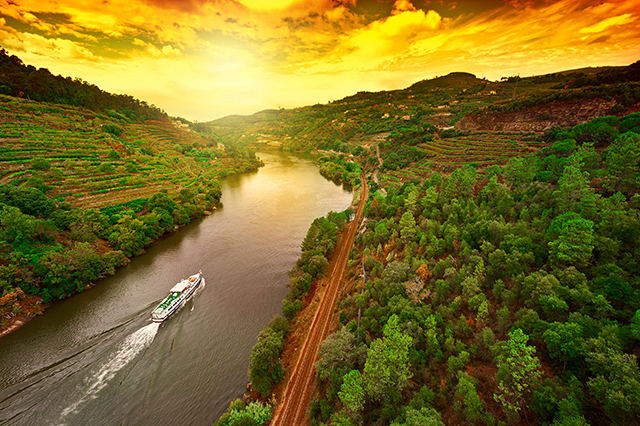
Porto: There’s something warm and soothing about Portugal’s second largest city, located at the mouth of the River Douro – a result, perhaps, of the prized port aging in oak barrels along the Vila Nova de Gaia waterfront (a tasting is a must). Other highlights: the Gustave Eiffel-designed Maria Pia Bridge and the Romanesque-style Se Cathedral.

Peterhof Palace
Peterhof Palace in St. Petersburg, Russia.

St. Petersburg: Cruising Russia’s Neva River amid the imperial splendor of this city, founded in 1703 by Peter the Great, is a wonderful way to view the green-and-white facade of the State Hermitage Museum, the kaleidoscopic Church of the Savior on Spilled Blood, and the massive Peter and Paul Fortress. Also a must-see: the grandeur of Peterhof Palace.

Have you visited any stunning river-side sites? Share in the comments below.

Start planning your river cruise with AAA. 

Subscribe to Your AAA Newsletter

Sign up and receive updates for all of the latest articles on automotive, travel, money, lifestyle and so much more!

Fall Home Maintenance Tasks to Put on Your To-Do List

The Northeast tends to cling to summer well into September, but soon enough, cold weather will catch up. Here are three home maintenance tasks to tackle before it gets here.

Clean Gutters

If leaves are falling on your head, they’re falling into your gutters, too.

Gutters should be cleaned at least twice a year, in spring and fall. Much falls from trees in both seasons, and if you let it build up, it could cost you in the long run. Clogged gutters can cause ice dams to form on your roof, which could cause water to leak into your home, according to the Insurance Information Institute. Plus, debris-filled gutters attract insects and animals.

If you aren’t comfortable on a ladder, consider hiring a professional to remove the debris for you.

Protect Your Pipes

Before freezing temperatures hit, make sure the pipes in your sprinkler system are free of water, which can freeze and break the pipes.

While you’re at it, make sure the vulnerable pipes inside your home are well-insulated. According to the Insurance Information Institute, frozen pipes are one of the biggest risks of property damage when the temperature drops. Burst pipes can lead to thousands of dollars in water damage. Store-bought insulation sleeves or wrapping can help prevent damage.

Weatherize Windows and Doors

Sooner or later, it will be cold enough outside to turn the heat on inside. Keep it inside by properly weatherizing windows and doors.

According to the U.S. Department of Energy, caulking and weather-stripping are two simple and cost-effective air-sealing techniques. Check doors, windows and frames, and reseal if necessary.

While you’re at it, switch your window screens to storm windows in preparation for winter.

What other home projects do you do in the fall? What have we left off this list? Tell us in the comments below! 

Protect your home from the surprises that colder weather has up its sleeves. Talk to a AAA insurance agent today.

Subscribe to Your AAA Newsletter

Sign up and receive updates for all of the latest articles on automotive, travel, money, lifestyle and so much more!

Today’s Slime Isn’t a Toy, But a DIY Project

You’re in the checkout line at the store when a young customer places her items onto the counter: Elmer’s glue, shaving cream, borax, glitter and food coloring. She bounces with excitement, as mom pays for the supplies. If you have young ones, you probably know exactly what’s going on: It’s slime time!

Do-it-yourself slime videos have taken over YouTube channels and Instagram feeds, and millions of kids have taken notice.

When I was a kid, Nickelodeon was practically the proprietor of slime. The green goo was dumped on TV show cast members, game show contestants and celebrities at awards ceremonies. It looked gross and unpleasant, but most kids wanted to know what it felt like to have it dumped on them. Before that, kids in the 1970s played with Mattel’s popular slime toy that came in a small trash can. It was also green and would ooze everywhere if you let it.

Today, the slime that kids are using isn’t even green or gross. Today’s slime is all different colors, textures and levels of gooey, and can even be scented, glow-in-the dark, glittery or magnetic. The possibilities when making DIY slime are nearly endless. A lot of the fun is in the process, something that kids playing with Mattel’s toy or watching Nickelodeon may have missed out on.

Plus, isn’t it just fun to play with? There’s a reason why so many of us were fascinated by slime as kids, regardless of its gross nature. Now it’s pretty, and more popular than ever.

Are the kids in your life slime-obsessed? What do you think about the trend? Tell us in the comments below! 

Read more stories of trends old and new here.

Subscribe to Your AAA Newsletter

Sign up and receive updates for all of the latest articles on automotive, travel, money, lifestyle and so much more!

Should I Buy Travel Insurance? A Season-by-Season Guide

As long as baggage gets lost and flights get delayed, there never really is a good time not to buy travel insurance. In fact, that’s the whole point of its existence: to provide a financial buffer between you and “the unexpected.”

That said, there are some times – and some seasons – that offer more than the usual compelling reasons to buy it. We’re talking flu season, hurricane season, tropical storm season, winter storm season, and any other season that increases the possibility you may need protection against trip cancellation or disruption, medical issues and other inconveniences and seasonally altered circumstances.

Click here to learn more about AAA Northeast’s Travel Protection Plan. 

Winter

Icy runways, blinding snowfall and other cold-weather difficulties have ground many a winter getaway to a screeching halt – and this can be the case even when you’re flying from one relatively warm area to another, if your plane is going through a cold-weather hub. It’s a domino effect many travelers don’t think of.

buy travel insurance

Spring

The end of spring, sometime around mid-April, brings hurricane and typhoon season. Actually, the word “season” is a bit of a misnomer here, given it lasts literally half a year – June through November in the Atlantic region (the East Coast of the U.S. and the Caribbean), and even earlier than that (mid-May) in the eastern Pacific.

Summer & Fall

Hurricanes and typhoons (see above), though the “season” winds down in November. Just in time for the winter’s seasonal mishaps to foul up our Thanksgiving plans!

When Should You Buy Travel Insurance? 

Given the myriad types of delays, interruptions and outright cancellations foul weather can wreak on your trip abroad, purchasing travel insurance is extremely important. And timing is everything. Purchase travel insurance as soon as you start laying out money for non-refundable items (tours, theater tickets and the like).

Remember, you’re covering your trip against unexpected events, so once the National Oceanic and Atmospheric Administration tracks and names a hurricane or tropical storm, that event is…well, the opposite of unexpected. “Irma, for example, received her name on August 30,” notes travel expert Andrew Bender in Forbes.com. “At that point she became what insurers call a foreseeable event, and policies purchased after that wouldn’t cover losses due to the storm.” The same general rule holds for major winter storms.

Government agencies can prove helpful when planning a trip overseas. The U.S. Department of State issues travel advisories that include useful weather alerts and trip planning advice. The NOAA, famous storm-namer and part of the U.S. Department of Commerce, also offers all kinds of outlooks, climate diagnostics and predictions.

Seasonal Tips and Insights

Travel insurance can’t protect your plans from being squashed by Mother Nature’s whims, but it can help you financially when you’ve shelled out good money and want to get it back in your pocket for another round of trip planning.

Here are a few things to keep in mind when you’re shopping for travel insurance:

  • Trip interruption and cancellation aren’t the only ways travel insurance can protect you. Travel medical insurance and medical evacuation coverage can save the day, especially if you are stuck in a weather-ravaged area and need medical assistance. Note: Your own health insurance coverage is not the same abroad as it is at home; emergencies may be covered, while aftercare and medications are not. And Medicare is famous for halting completely at the U.S. border.
  • If a hurricane or other weather-related catastrophe hits and significantly damages your home while you are away, your plan may provide trip interruption coverage which may help you with the cost of returning home and reimburse you for an unused, pre-paid or otherwise non-refundable trip costs.
  • Prepare for flu season. In the United States, flu season is most common during the fall and winter months. Don’t let being sick derail your trip. Consider getting the flu shot. Learn how high your risk is with reports directly from the CDC.

Has there ever been a time you neglected to buy travel insurance and wished you had? Or a circumstance in which travel insurance saved the day? Feel free to share your insights in the comments section below.

For all things travel-related, from travel plans to travel insurance, visit AAA.com/Travel.

Subscribe to Your AAA Newsletter

Sign up and receive updates for all of the latest articles on automotive, travel, money, lifestyle and so much more!

Is Bitcoin the Currency of the Future?

In the modern age, more and more people are relying on digital transactions rather than cold, hard cash to make the world go round, leaving us to wonder what the currency of the future might look like. Will cash give way to a more virtual currency? Will our grandkids even know how to write checks? And will our piggy banks be totally obsolete? As the world’s financial system becomes more and more complex, it can be anyone’s guess what the future holds, but here are some currency trends that are making waves as the prospective currency of the future.

Bitcoin and cryptocurrency

It’s incorrect to consider bitcoin the currency of the future. It’s already here. Bitcoin is a purely digital currency, otherwise known as a cryptocurrency, that was created in 2009. It allows consumers to make online transactions without involving a middle man. There are no fees, and the transaction can be made anonymously. Bitcoins aren’t regulated or tied to any one country, which means it’s easier to make international payments. Small businesses love the fact that there are no transaction fees, but governments are concerned about the lack of control, regulation and taxation.

Right now, you can buy bitcoins in the digital marketplace using any type of currency. You keep your bitcoins in a virtual wallet which exists in the cloud or on your computer, and you can use your bitcoins to pay for goods and services or digitally wire money to friends. Unlike banks, bitcoin wallets are not ensured by the FDIC.

While Bitcoin is far and away the most popular cryptocurrency available today, it isn’t the only one. Ethereum, Litecoin, and Monero are just three of the most popular cryptocurrencies available, and new ones are constantly being developed. The future of cryptocurrency is still uncertain. We are far from governments recognizing cryptocurrency as a legitimate and preferred mode of payment, but there’s little doubt that this decentralized wild west of digital spending and investing will stick around in some shape or form.

Digital cash in the digital world

Unregulated digital currency isn’t the only thing on the financial horizon. The idea of regulated digital currency is another possibility for future transactions. Unlike cryptocurrency, digital cash would be managed, distributed and regulated by central banks. Proponents of digital cash say it would make our financial system safer, while encouraging competition and innovation. Unlike current digital transactions, digital cash would have some of the properties of paper money – it would be anonymous and transferable offline. In order for a future digital cash system to work, it would need to be secure, user-friendly, and widely accepted. While there are many hurdles in adopting a purely digital system of currency, from a technical standpoint it is entirely feasible. Whether we move toward digital currency or hold fast to our bills and coins is anyone’s guess.

currency of the future
A wallet full of antiques? (Photo: Somos / Veer / Punch Stock)

Will cash ever go out of style?

Physical currency has been around for a long time. It’s a reliable way to pay for goods and services, and it’s anonymous and easy to carry. If the world of online commerce were to suffer a catastrophe, cash would still be there, holding court. As of yet, there is simply no modern development that outshines the security of cash. Cash and coins are printed by banks and our economy is created and maintained when banks lend money, but money is only valuable when its value is guaranteed. If it weren’t guaranteed, it would no longer be accepted as payment for goods and services.

There’s also the feeling of safety and security that surrounds physical money. Having cash on hand enables people to feel like they are in control of their money. We save, or even hoard, money for future emergencies. If a financial catastrophe strikes, we want to know where our money is – in our wallets, under our mattresses or in the backyard treasure chest, but not in some digital cloud that we can’t quite reach.

While physical cash might change as the future unfolds, it probably won’t disappear entirely. Individuals, businesses, banks and entire governments rely on the security and the guarantee of cash – a system that will be very hard to change.

An abstract view of money and the currency of the future

Whether our financial systems of the future are based on cash or cryptocurrency, one thing is certain – the whole concept of money is becoming an abstraction – one that is based on the belief that your smartphone or credit card will guarantee your finances, and in turn, your morning latte.

Our financial worth is based almost entirely on a series of digital ledgers that keep tabs of our paychecks, car payments and grocery bills. And while money itself hasn’t changed all that much, the way that it’s spent is evolving quickly. So, the next time you dig around for your spare change, or hand over a few bucks for your lunch, consider the fact that you are handling one of society’s oldest inventions, no matter what happens in the future.

Are you a believer in cash, a new digital currency or something in between? Why? Share your thoughts in the comments section.

Subscribe to Your AAA Newsletter

Sign up and receive updates for all of the latest articles on automotive, travel, money, lifestyle and so much more!

Guide to US National Parks: Forests, Mountains and Historic Sites

Acadia National Park, Maine

Located on Mount Desert Island and the Schoodic Peninsula, on the northern coast of Maine, this U.S. national park attracts hikers and water sports lovers alike.

Congaree National Park, South Carolina

This U.S. national park in the center of South Carolina is relatively new to the national park system, joining in 2003.

Cuyahoga Valley National Park, Ohio

This park follows the Cuyahoga River between Akron and Cleveland, offering miles of hiking trails, waterfalls, a scenic railroad and a restored section of the Erie Canal.

Denali National Park, Alaska

This 6-million-acre expanse in Alaska’s interior contains North America’s tallest mountain, the 20,310-foot-high Denali.

Gates of the Arctic National Park, Alaska

This untouched preserve, nearly 8.5-million acres, is the northernmost U.S. national park, as well as the second largest. With no roads, no services, and no cell phone service, this park for the expert outdoorspeople only.

Glacier National Park, Montana

Located in Montana’s Rocky Mountains, this park is best known for its glaciers, after which it is named. The Going-to-the-Sun Road offers a scenic road trip through the park.

Glacier Bay National Park, Alaska

The mountains and fjords of Glacier Bay National Park, in southeast Alaska’s Inside Passage, offer numerous opportunities for marine wildlife viewing, as well as large mammals – moose, bear and wolves – on the shore.

Grand Teton National Park, Wyoming

This 310,000-acre park is located in the northwest corner of Wyoming. Visitors can explore the Teton Mountains, as well as the ski town of Jackson Hole.

Great Smoky Mountains National Park, Tennessee

The most-visited park in the U.S. National Park Service, Great Smoky Mountains National Park straddles the border of Tennessee and North Carolina. The landscape includes both dense forest and meadows filled with wildflowers.

Guadalupe Mountains National Park, Texas

This sprawling park in the Chihuachuan Desert in west Texas is filled with salt dunes, grasslands and the world’s most extensive Permian fossil reef.

Hot Springs National Park, Arkansas

This park is best known for the adjacent city of Hot Springs, where visitors can partake in spa activities.

Kenai Fjords National Park, Alaska

Located just south of Seward, Alaska, this park is named for the numerous fjords found there. The park also contains one of the largest U.S. icefields, the Harding Icefield.

Kings Canyon National Park, California

North of Sequoia National Park, this park is named after the mile-plus-deep Kings Canyon. Visitors will also find multiple high peaks and meadows.

u.s. national parks
Glacier National Park

Everglades National Park, Florida

This 1.5-million acre park is made up of grassy marshes, mangrove swamps and pine forests. Several endangered animals species call this area home.

Kobuk Valley National Park, Alaska

Located 25 miles north of the Arctic Circle in northwest Alaska, Kobuk Valley National Park is home to massive herds of caribou.

Mammoth Cave National Park, Kentucky

This park in central Kentucky contains sections of Mammoth Cave, the largest known cave system in the world. Visitors can explore a portion of the 405 miles of subterranean passageways.

North Cascades National Park, Washington

This U.S. national park, found in northern Washington State, contains more than 300 glaciers amid its wilderness. The North Cascades Highway brings sightseers past many of its highlights.

Olympic National Park, Washington

This park on Washington State’s Olympic Peninsula is known for its diverse ecosystems, ranging from high peaks to lush rain forests to the Pacific coastline.

Pinnacles National Park, California

This mountainous park in Central California is named for the eroded remains of an extinct volcano.

Redwood National Park, California

This old-growth forest along coastal northern California is famous for its stands of the gigantic redwoods.

Rocky Mountain National Park, Colorado

Located in northern Colorado, this park contains mountains and forests that straddle the Continental Divide.

Sequoia National Park, California

Abutting Kings Canyon National Park in the southern Sierra Nevada Mountains, this park is home to numerous sequoias.

Shenandoah National Park, Virginia

Running along the Blue Ridge Mountains in western Virginia, the area’s famed Skyline Drive takes visitors through the length of the park’s forested mountains.

Voyageurs National Park, Minnesota

This water-filled U.S. national park in northern Minnesota is popular among paddlers and boaters. It is named in honor of the French-Canadian fur traders who traveled through this region.

Wrangell–St. Elias National Park, Alaska

This vast park that encompasses 13,175,799 acres in south-central Alaska is the largest protected area managed by the National Park Service.

Yellowstone National Park, Wyoming, Montana, and Idaho

This park features many geothermal sites, including the famous Old Faithful geyser. It is also home to abundant wildlife.

Yosemite National Park, California

With imposing rock faces like El Capitan and Half Dome, this park in central California is a rock climber’s paradise.

What U.S. national parks are on your wish list? Tell us in the comments.

Plan a national park vacation with AAA travel

Subscribe to Your AAA Newsletter

Sign up and receive updates for all of the latest articles on automotive, travel, money, lifestyle and so much more!

Lifelong Red Sox Fan ‘Wins’ Opportunity to Throw First Pitch at Fenway

When AAA member Amy Street of Charlestown, Mass., found out she won the grand prize in the Boston Red Sox AAA Game Day Sweepstakes, she knew there was only one thing to do: Give the opportunity of a lifetime to her next-door neighbor and lifelong Red Sox fan, Claudia Hunter.

“I was stunned, excited and suddenly nervous,” said Claudia, a 50-year AAA member. “I have been going to Fenway Park since I was a teenager and have fond memories of watching Carl Yastrzemski playing left field in place of Ted Williams.”

Also in attendance as part of the grand prize at the Aug. 4 game against the New York Yankees was Amy’s husband, Tim Conway, and their 8-year-old son Eamon.

AAA Northeast Boston
AAA Game Day Sweeps grand prize winner Amy Street offers last-minute encouragement to Claudia Hunter, her neighbor whom she gifted the opportunity to throw out the ceremonial first pitch. Amy’s son Eamon looks on.

“Claudia bought Eamon a beautiful book full of the baseball basics, presented him with a Red Sox cap…she even took Eamon to his very first baseball game (Red Sox, of course!) and bought him all the baseball snacks any kid could want,” said Amy. “So, when this opportunity came up, we knew we wanted to share it with Claudia.”

AAA Northeast Red Sox

So how did Claudia prepare for her big moment?

“My experience playing baseball consists of Wiffle ball and baseball in our front yard with my brother and his friends growing up,” she said. “Hence the need to practice throwing a ball for the first time in decades with my oldest friends, Barbara and Gary Sable of Newton, Mass., who are also longtime AAA members.”

Fifty first-place winners, who each snagged seats to the game with a guest, watched on as Claudia threw a pitch that would have made Red Sox hurler Chris Sale proud. It was high and tight.

“The attempt to throw a ball into a glove 60 feet away certainly gave me a new appreciation for the art and skill of all professional pitchers,” Claudia said.

The grand-prize winners also had the opportunity to chat with Red Sox president and CEO Sam Kennedy and AAA Northeast president and CEO John Galvin down on the field.

John Galvin and Sam Kennedy
Red Sox president and CEO Sam Kennedy shares the secret to this year’s success with AAA Northeast president and CEO John Galvin and Game Day Sweeps contest winners.

It was evident that on this day, it wasn’t just the Red Sox who scored the ‘W.’

“I would like to say to Tim and Amy ‘thank you’ to my dear friends and neighbors for this once-in-a-lifetime opportunity,” Claudia said. “To be such a part of this wonderful game at the oldest and best baseball park in America, beloved Fenway Park … it was wonderful.”

Listen below for more from Amy and Claudia on this special day.

AAA Northeast congratulates all of our Game Day winners and reminds readers to be kind to your neighbors – because you never know when they will knock on your door and offer you a once-in-a-lifetime opportunity.

In New York, the grand prize winner of the AAA Game Day Sweepstakes enjoyed an equally unforgettable experience at Yankee Stadium. Read all about it

Subscribe to Your AAA Newsletter

Sign up and receive updates for all of the latest articles on automotive, travel, money, lifestyle and so much more!

The Pros of Staying at a Universal Orlando Resort Hotel

Planning a trip to Universal Orlando Resort? This family of Florida theme parks offers incredible rides and attractions featuring your favorite characters.

Whether your idea of fun is grabbing a Butterbeer in The Wizarding World of Harry Potter, encountering a Velociraptor in Jurassic Park, hurtling through a volcano waterslide or hanging out with adorable Minions, Universal Orlando has something for everyone.

And if you’re bringing the whole family, you’ll want to plan smart to ensure you get the best experience possible with the most bang for your buck.

Lodging is a big line item with a big impact on the quality of your trip, and Universal Orlando offers several on-site hotels that give you access to special perks.

But is it worth it to have an all-Universal Orlando experience? We’re highlighting some of the pros of staying at a Universal Orlando hotel.

Early Park Admission to The Wizarding World of Harry Potter

Want to get in ahead of the crowds? When you stay at any on-site Universal Orlando hotel you’ll get special access to The Wizarding World of Harry Potter and Universal’s Volcano Bay a full hour before the parks open to the public. This can be crucial for any young wizard (and wizard’s family) who want to avoid the long line to get into Ollivanders wand shop.

Skip the Lines with Universal Express Unlimited

This perk is a huge savings, both of money and time – especially if you’re visiting during a busy season such as summer, a holiday weekend or literally any time that school’s out.

Three of Universal Orlando’s on-site hotels – Loews Royal Pacific Resort, Hard Rock Hotel, and Loews Portofino Bay Hotel, automatically provide Universal Express Unlimited for free, so you can skip the regular lines an unlimited number of times on most of the rides.

To purchase an Express Unlimited pass, price per person (per day) usually ranges from $40 to $150, depending on the season and how many parks you’re visiting.

Free Transportation to the Parks

Go ahead and cross renting a car off your list because that’s one less expense and hassle you have to worry about. All on-site Universal Orlando hotels provide complimentary transportation to the theme parks and to CityWalk. Hop on a free shuttle or water taxi (yes, you can boat in) and let the adventure begin.

Purchases Delivered to Your Room for Free

No one likes schlepping around shopping bags, especially when you’re trying to ride rollercoasters. But go ahead, buy all the chocolate frogs and Jurassic Park T-shirts you want – when you stay at a Universal Orlando hotel your souvenirs are delivered straight to your hotel, free of charge!

Room Key Doubles as a Charge Card

Travel light and stay secure with resort-wide charging privileges that allow you to use your room key to pay for purchases anywhere within the resort.

Free CityWalk Club Access

Want to feel like a VIP? Enjoy the nightlife of the Universal CityWalk clubs and skip the cover charge. Your room key gives you complimentary club-to-club access to many of Universal CityWalk’s hottest venues.

Golf Universal Orlando

Golf lovers rejoice! Check out the beautiful courses at Grand Cyprus Golf Club and Windermere Country Club, and enjoy free transportation (for parties of four), complimentary rental clubs and balls, and preferred tee times.

universal resorts
An artist rendering for the upcoming Universal’s Endless Summer Resort – Surfside Inn and Suites. (Photo: Universal Orlando)

Find Your Perfect Hotel

Now that you know the pros of staying at a Universal Orlando hotel, you’re probably curious about the hotels themselves. Here’s our rundown of Universal Orlando’s on-site hotels so you can find your perfect fit.

Universal’s Aventura Hotel

The newest in Universal Orlando’s line-up, this hotel is modern and chic with breathtaking views of the parks. Kids suites sleep up to five, with an interior area that has two twin beds, so you can tuck away your littles and have some relaxation time of your own. Enjoy the splash zone with your kiddos, and pick from both kid-friendly and stylish restaurants and bars.

Universal’s Cabana Bay Beach Resort

This retro-themed hotel features an arcade and bowling alley, an amazing pool area with tower slide and cabanas and cute retro dining options. Ideal for families, suites sleep up to six. Plus, you never know who will show up, as character appearances are a regular occurrence!

Loews Sapphire Falls Resort

Caribbean-themed Loews Sapphire Falls Resort is a lush island paradise. Enjoy rare vintage rums at Strong Water Tavern, taste authentic foods and experience inspired song and dance from Caribbean islands. Relax by the pool or stroll through the tropical landscape on one of their picturesque walking and jogging paths.

Loews Royal Pacific Resort

This laid-back South Seas retreat features elegantly furnished rooms and suites (if your kids are in tow, consider a Jurassic World Kids’ Suite!) Relax at the lagoon style pool, spend your evening at a Hawaiian Luau, grab a martini and sushi at the Orchid Court Lounge & Sushi Bar or enjoy breakfast with adorable Minions from Despicable Me. You can always drop the kids off at the onsite Resort Kids Camp and take some time for yourself.

Hard Rock Hotel

Hard Rock Hotel is rock n’ roll-inspired from head to toe. Enjoy the 12,000-square-foot pool with underwater sound system, listen to iconic records in your room or jam out on an authentic Fender guitar. Sample some great American dining options and get your steak and lobster on at the New York steakhouse, The Palm. Round out the evening with a concert by nationally known performers at the swanky Velvet Sessions.

Loews Portofino Bay Hotel

Be transported to a seaside village in Italy. Choose from three fabulous pools where you can splash with the family, lounge in a cabana or relax in peace. Enjoy authentic Italian dishes at Mama Della’s Ristorante, have an elegant meal at Bice Ristorante (est. 1926 in Milan) or cool off with some artisan gelato at Gelateria. Featuring fashionable shopping, spa facilities, Resort Kids Camps and live music every evening in the Harbor Piazza at sunset, Portofino Bay provides a luxurious getaway experience.

Universal’s Endless Summer Resort – Surfside Inn and Suites

Opening August 2019, Universal Orlando’s newest and most affordable hotel is now available to book. You’ll never have to leave the beach at this resort, where bright, sunny rooms are catered to families – two-bedroom suites can sleep up to six people! When you’re not hanging out in your room, spend some time at the hotel’s food court, pool, game room, fitness center, Universal Studios Store or coffee bar before hitting the parks. Its sister property, Dockside Inn and Suites, will open in 2020.

What are your favorite tips for getting the most out of your Universal Orlando Experience? Let us know in the comments below.

Subscribe to Your AAA Newsletter

Sign up and receive updates for all of the latest articles on automotive, travel, money, lifestyle and so much more!

Pampering is a Sure Bet at These Spa Resort Casinos

Noise, booze, smoke, tension — a casino resort doesn’t seem to be the healthiest vacation environment. But in this age when wellness has become a $500 billion industry and casinos are making more and more revenue from non-gaming activities, spa casino resorts are proliferating.

Casinos and spas have a history — Monte Carlo had its fresh air, Baden Baden its thermal baths, Saratoga its rejuvenating springs. The rich flocked to these places, to get away from the riff-raff, get pampered, and flaunt their wealth at the casino tables.

Spa resort casinos today are playing out in a variety of ways, from the old grand dames to the new cutting edge facilities, to the traditional-culture wellness offerings at Native American casinos.

Here are some of the best of the spa resort casinos.

Casino Baden-Baden, Germany

Marlene Dietrich called it “the most beautiful casino in the world” and this German gaming and wellness destination remains luxurious and understated. Lots of chandeliers, gilded mirrors and fixtures, deep plush carpeting everywhere. There are several spas nearby: Caracalla Spa is a 43,000-square-foot complex featuring thermal waters in pools, grottos, whirlpools and saunas—not to mention a host of massage and treatment options. Friedrichsbad offers a unique 17-step bathing ritual for detoxification.

Thermes Marins Monte-Carlo, Monaco

There are several casino spas in in this gambling mecca, but Thermes Marins is the best regarded and awarded. The 33000-square-foot casino spa facility focuses on wellness, fitness and preventive health – and boasts a staff of experts including therapists, doctors, a nutritionist, and health and sports trainers. Treatments are personalized for each guest. The facilities include a solarium, Hamman, sauna and a panoramic fitness room with spectacular views of the Mediterranean.

Qua Baths & Spa, Caesar’s Palace, Las Vegas 

The, 50,000-square-foot casino spa features a Roman bath, with elaborate mosaics and classical columns surrounding the pools. There are Vichy showers, three pools, a wide variety of massages including hot stones, a “lava melt” and one with Ayurveda oils, plus state of the art fitness facility.

spa resort casinos
The MGM Grand Salon. (Photo: MGM Resorts International)

The Grand Spa at the MGM Grand, Las Vegas

A zen-like facility with 20 treatment rooms and signature treatments such as the two-hour Dreaming Ritual, which includes an Australian Aboriginal massage, and the Nirvana, using Ayurvedic oils, Abhyanga massage, a Shirodara scalp treatment, hot stone treatment and a copper bowl foot balancing treatment.  Wellness goes beyond the walls of the spa, however: there’s an indoor hike through the casino that winds up with a stretch at the MGM Grand pool. You can all book a Stay Well room, which incorporates light therapy, Vitamin C-infused shower water, Air purification and water filtration systems, s specialized 24-hour in-room menu that offers a variety of healthy choices and access to body management programs developed by the Cleveland Clinic.

Skana, The Lodge at Turning Stone Resort, Upstate New York

Skana, the Oneida word for “peace” is a 33,000-square foot destination spa with American Indian design influences and treatment: it features 12 treatment rooms, VIP suite, full-service salon, and a therapeutic mineral pool. It’s also just part of the wellness program at this spa resort casino, cited as one the best spas in the world by Spa Magazine, and a reader’s choice award-winner in SpaFinder’s annual poll.

Turning Stone also offers a 65-foot lap pool, state-of-the-art StarTrac cardio and strength equipment, and 72 holes of golf.

The Spa at Wynn, Macau

Wynn’s properties are always classy, and that includes the facilities at all its spa resort casinos. But they outdid themselves in the new Macau development, which Forbes Travel Guide recently awarded five stars. There are two properties here, the Wynn and the Encore, and both have spa facilities. Wynn’s standout: the signature “Silk & Cashmere Awakening”; the Encore’s special calling card is a personal suite, complete with steam room, sauna, hydrotherapy bath and treatment room. Signature treatment: “1-6-8,” a perfectly choreographed massage performed by three therapists.

Have you ever been to any of these spa resort casinos? Share your experience with us in the comments below!

Plan and book your next trip with AAA

Subscribe to Your AAA Newsletter

Sign up and receive updates for all of the latest articles on automotive, travel, money, lifestyle and so much more!

Tips for Understanding Your Credit Report

Having a healthy credit history and understanding your credit report are important steps to maintaining your financial well-being.

Listen to Our Podcast

Get tips to outsmart scammers and protect your personal data. Listen to Episode 12 of our podcast, Merging Into Life: Identity Theft.

Tune In

Consumers with strong credit ratings often benefit from easy access to credit and lower interest rates. Checking your credit report lets you assess how you’re doing and gives you an idea of what to expect the next time you apply for a loan or a credit card. It can also alert you to potentially inaccurate information, such as fraudulent borrowing by an identity thief.

Here’s a quick rundown of what you can expect when you check your credit report.

What is a credit report?

The U.S. Consumer Financial Protection Bureau says it as well as anyone: A credit report contains information about your credit such as loan payment history and the status of your credit accounts. Lenders use these reports to make lending decisions.

Who compiles these reports?

The three largest providers of consumer reports in the U.S. are Equifax, Experian and TransUnion.

How can I get my reports?

Under the Fair Credit Reporting Act, you’re entitled to a free copy of your credit report every 12 months. Many consumers request their reports through www.AnnualCreditReport.com, the only credit report website authorized by federal law.

You can request one, two or all three of your reports – one from each credit bureau. You’ll need to enter your name, Social Security number and address before answering a series of identity verification questions based on your borrowing history.

Understanding your credit report

Knowing what you’ll see is a big part of understanding your credit report.

Your credit report will contain payment history on credit cards, mortgages, auto loans and student loans, among other types of debt. It will also show how much credit you have available, how much credit you’re using, information from debt collectors and debt buyers and public information, such as court judgments and bankruptcies.

Credit inquiries will be highlighted, too. Some reports differentiate between hard and soft inquiries.

Hard inquiries are typically those made by lenders in response to a request for credit. Auto loans, mortgages and credit cards are examples of borrowing that will trigger hard inquiries. Several hard inquiries in a short period of time for credit cards can negatively affect your credit score, although shopping for a mortgage or auto loan within a short period will be reviewed as only one inquiry. It’s considered smart consumerism.

Soft inquiries are generated following an auto insurance application (in certain states), or by lenders looking to send you promotional offers or raise your credit limit on their own, to name a few examples. Soft inquiries, which include reviewing your own credit, do not generally impact your score.

The most important thing to do when looking at a report is confirm the accuracy of information. The CFPB advises consumers to check that information in your credit report is only about you, and to keep an eye out for any inaccurate or incomplete information. Check for addresses where you did not live, names of employers you didn’t work for and any information that should no longer be on your report, such as derogatory information older than seven years or a bankruptcy older than 10 years. Generally, information reported within 90 days is considered current.

What if I see something inaccurate?

Consumers can dispute information on their credit reports that they believe to be inaccurate. Some online reports will allow you to file a discrepancy by clicking a link, and all three credit bureaus have dedicated websites for filing disputes.

Credit bureaus must investigate items in question, according to the Federal Trade Commission, typically within 30 days unless the request is deemed frivolous. If your dispute is valid, the company that provided the inaccurate information to the credit bureau – for example, your credit card company or auto loan lender – must notify all three credit bureaus. Once your report is updated, you are entitled to a free copy of your report from the bureau you filed your dispute with, and this free report does not count as your free annual report.

If you find inaccurate information, you aren’t alone. In May 2016, the CFPB highlighted credit reporting in its monthly complaints snapshot. More than three-quarters of credit reporting complaints received by the bureau related to incorrect information on consumers’ credit reports.

In early 2013, the Federal Trade Commission reported that 5 percent of consumers had errors on one of their reports that could potentially result in higher borrowing costs.

Where is my score?

Many people checking their credit report are interested in knowing their credit scores. Lenders use these numbers to determine an individual’s credit worthiness. The models used by each credit bureau differ from one another, which typically leads to different scores. Models can differ depending on the type of credit you’re requesting, too.

Your credit report does not contain your credit score. You can track down your credit score in a few different ways. Some credit card companies provide consumers a score on their monthly statements, while FICO scores are available for purchase.

Consumers should be careful using any service that offers free credit scores. In January 2017, the CFPB ordered TransUnion and Equifax to pay more than $17.6 million in restitution and $5.5 million in fines for deceiving consumers about the usefulness and actual cost of credit scores sold to consumers.

Scores sold to consumers were not the same ones used by lenders, announced the CFPB, and some consumers who signed up for free credit scores were automatically enrolled in a subscription program that charged them every month unless they canceled.

Always remember that no consumer has a single credit score.

Do you still have questions about accessing or understanding a credit report? Let us know in the comments below.

To learn about all of the financial services that AAA can provide, visit AAA.com/Financial

Subscribe to Your AAA Newsletter

Sign up and receive updates for all of the latest articles on automotive, travel, money, lifestyle and so much more!

Top 4 Locales for a Boston Staycation

Though Boston is small, heading into the city can feel overwhelming. We’ve created itineraries that break down four of Boston’s most popular locations to make your stay as easy as possible. Fortunately, Boston is quick and easy to navigate, so these suggestions are interchangeable.

Happy stay-cay!

Back Bay

Start the day with coffee and breakfast at independent bookstore Trident Booksellers and Cafe. You’ll need the energy for a stroll down Newbury Street, which is home to upscale restaurants, shops and galleries.

For art lovers, Vose Galleries is one of the oldest fine art galleries in the country, and the Copley Society of Art features all manner of artworks by local artists. Along the way, you’ll find plenty of shopping. And don’t miss the Boston Public Library, renowned for its historical significance and architecture.

For lunch, choose from one of the many restaurants and counters within Eataly in the Prudential Center. Then head up (literally), to the Prudential Skywalk Tour for a 360 view of the city.

Book a Hilton Staycation!

AAA members save up to 15% at Hilton family hotels and resorts.

Book Now

Did you know you can take a tour of Fenway Park? Even if you’re not a sports enthusiast, historical Fenway is one of the country’s most beloved ballparks and worth getting to know better. Tours are offered year-round; see website for details.

If you’re a lover of the symphony, you can take a tour of Boston Symphony Hall, home to the Boston Symphony Orchestra and the Boston Pops. While you’re at it, see what’s happening at Berklee Performance Center at Berklee College of Music. Other can’t-miss cultural stops include the Museum of Fine Arts and the Isabella Stewart Gardner Museum.

Where to stay: The Hilton Boston Back Bay is a AAA Three Diamond Rated hotel right in the middle of all the action, making it simple to hit the town.

Faneuil Hall

Waste no time and walk right over to Faneuil Hall Marketplace in the historic Quincy Market building for a bite to eat, something to drink or some shopping. Boasting 18 restaurants and 35 colonnade eateries, you can find pretty much anything here, from local clam chowder to sushi to enchiladas. Shop for gifts such as local art, unique jewelry or fun Boston souvenirs for family and friends at the numerous outdoor canopy shops.

From Faneuil Hall, you can book a tour of Boston’s famous Freedom Trail, or take your own. You can’t miss it – the 2.5-mile trail through the city is marked with painted red lines along the sidewalks. Either way, you are going to work up an appetite for some good New England eating. Luckily, Boston’s seafood institution the Union Oyster House is located right along the Freedom Trail, where you can eat oysters to your heart’s content. While you wait for a table, cross the street and check out the New England Holocaust Memorial, a modern installment of six 54-foot glass towers dedicated to Holocaust victims.

Check out the nearby Boston Waterfront, where you can tour the world-famous New England Aquarium. At the aquarium you can book a whale watching excursion through Boston Harbor Cruises, weather permitting, that takes you to Cape Cod Bay’s marine sanctuary Stellwagen Bank. For a more historic cruise, hop aboard “Old Ironsides,” the 1797 navy ship USS Constitution.

As you head back to the present, be sure to visit the Seaport District, Boston’s hottest new neighborhood, with plenty of options for dinner.

Where to stay: For style and convenience, stay at the Hilton Downtown Boston Faneuil Hall. This AAA Four Diamond Rated hotel, built in 1928, is pet-friendly and was Boston’s first art deco style skyscraper.

boston staycation

North End

The North End is world-renowned for its authentic Italian restaurants. The first (or last!) thing you have to do is stop for coffee and cannoli. Touted as Boston’s first Italian café, Caffe Vittoria serves up top-notch cappuccino and pastries in a sublimely Italian ambiance.

For lunch, the choice is yours – authentic Italian sub or pizza? For a huge slice of old world-style pizza, Ernesto’s can’t be beat. If a good sandwich is what you are after, check out Monica’s Mercato & Salumeria, a North End institution serving up what some say are the best subs in the city.

You’ll probably need to walk it off afterwards, so take a stroll down the North End’s many quirky and winding streets. Take in some history at Paul Revere’s House and the Old North Church, from where Revere began his famous midnight ride.

For an elegant North End dinner, Lucca features locally-sourced seafood, pasta and a 500-selection wine list. If you prefer something more casual, try Al Dente or Panza; both serve up classic pasta dishes with a laid back and bustling vibe.

Where to stay: Within close proximity to the delicious foods of Boston’s North End, Ames Boston Hotel Curio Collection by Hilton is a contemporary chic luxury boutique hotel set in Boston’s first sky scraper, built from 1893-1915.

Theater District

For those who love theater, Boston doesn’t disappoint. Boston’s Theater District boasts at least ten world-famous theaters, including the Wang, the Shubert, and Boston Opera House, home to the Boston Ballet’s Nutcracker Suite. Check out the Blue Man Group at Charles Playhouse!

While you’re exploring, grab a coffee (or a glass of wine, or a beer) at the trendy Jaho Coffee Roasters. Options abound for dinner, either before or after a show. For seafood, Legal Crossing, a branch of Legal Seafoods, is situated close to the Opera House and Emerson College’s Paramount Theater. Craving some sushi? Check out Fin’s, situated near Emerson’s other two theaters, the Colonial and the Cutler Majestic.

Where to stay: Check in at the AAA Three Diamond Rated DoubleTree by Hilton Boston Downtown, which boasts a modern feng shui vibe and an Olympic-size pool.

What’s your ideal Boston staycation? Tell us in the comments.

Book your next Hilton stay with AAA.

Subscribe to Your AAA Newsletter

Sign up and receive updates for all of the latest articles on automotive, travel, money, lifestyle and so much more!

Common Questions to Ask Before a Home Inspection

It’s important to know the ins and outs of your home when it comes to homeowners insurance. Don’t be afraid to ask as many questions as possible when dealing with a home inspector. And remember, the questions don’t stop after the home inspection ends. There still could be some loose ends you need to tie up in case of emergencies.

A good home inspection gives details on an insurance policy

Here’s a typical question that’s asked during a home inspection:

What does my homeowner’s insurance policy cover?

It varies quite a bit. There are hundreds of insurance companies that have their own rules and regulations when it comes to standards. Liability and property are the two areas that cover policies.

Here are some of the things you can expect that goes into your insurance coverage:

  • Fire or lightning
  • Windstorm or hail
  • Explosions
  • Aircraft
  • Vehicles
  • Smoke
  • Theft or vandalism

What does a home inspector know about property damage?

Here are several things that could occur in regards to property damage.

Does my insurance cover damage from a pipe burst?

Yes. Even if it’s an accidental discharge from the pipes, you are typically covered. A good rule of thumb: Check your plumbing and heating system once a year. Even though you’re covered, you don’t want to go through the hassle of cleaning up this mess.

Does my insurance cover damages from fire, storm, lightning, explosions and smoke?

Yes. These are all common perils that you can get reimbursed for based on your level of insurance. A solid home inspection scopes out the level of damage and will allow you to assess whether or not you should see an agent for coverage. Also, you may want to get flood insurance in case your area is prone to torrential downpours. Some mortgage companies require you to get this insurance before financing. Getting this early may allow you to purchase it at a better rate.

Does my insurance cover earthquake damage?

This is something that’s not covered. It’s completely separate from your regular coverage. If you live in an earthquake-prone area, it’s a good idea to consult an agent who will guide you through the coverage process.

Learn about the right insurance coverage

Being aware of the right insurance coverage is another thing to think about especially when it comes to your location.

How much coverage do I need for my home?

There are a few answers to this question. It depends on a number of things:

  • What type of home you live in.
  • The value of your home.
  • Total asset value.
  • Rebuilding costs due to loss.
  • Whether or not you pay mortgage.

Another thing to know is that if you plan on adding any structure to your home whether it’s a shed, a guest house, or a garage, you’ll need to get coverage for those as well. Always check with an agent on additional coverage required when updating the home. A good home inspection will result in a thorough assessment of your property, which will give an idea of a proper quote for the house. Find a reputable person in your area who has the experience to do the job.

home insurance

Find out what coverage to get for a condo

A condo is a different situation than what you’ll typically deal with in a home.

What kind of coverage does the condo association provide for my condo?

While you are still a homeowner, a condo has a unique situation regarding coverage. One main difference is condo owners have a special homeowner coverage called HO-6, which helps you protect your property. Since you don’t own the whole building, there’s a special plan in place to reflect the proper coverage.

Your condo association will have a master policy in place, and it’s different for each city or zone. Remember, you still need to insure your property for elements like fire, storms, vandalism and theft. Add coverage if you’re going to put in special fixtures, a garage, or something else not included in the original condition of the property.

What happens with personal property?

Is my personal property covered by my insurance?

Most personal property is covered by the insurance. However, you should consider adding scheduled personal property coverage for things like jewelry, expensive art or collectibles. This is a good way to protect those items in your homeowner’s insurance.

Home insurance is essential to protect your house and belongings. Seek out a good home inspector to assess the house. This way you’ll be more clear on how to go about seeking the right coverage for your home.

What are some concerns you have for a home inspection? Does anything else come to mind when it comes to home insurance? Let us know in the comments below.

To learn more about AAA Insurance and to get a quote, visit AAA.com/Insurance.

Subscribe to Your AAA Newsletter

Sign up and receive updates for all of the latest articles on automotive, travel, money, lifestyle and so much more!

The Anatomy of River Cruise Staterooms

River cruise staterooms can be quite different from than those found on ocean cruise ships. One common element on a river cruise is that most guests can expect enormous windows, usually floor to ceiling, so you can watch the world go by. Balconies, whether “French,” (floor-to-ceiling windows that open, but don’t actually extend out to allow passengers to step out) or full, complete with a table and chairs, are pretty standard. The best way to get an idea of what a river cruise stateroom is like is to look at cabins on a few different river cruise lines.

Typical river cruise staterooms

AmaWaterways

AmaWaterways, which offers cruises in Europe, Asia and Africa, has generously sized standard cabins, with at least 160 square feet of space. On one of its typical ships, such as the AmaCello, there are 73 standard staterooms with 170 square feet; four suites, which are 225 square feet; and two single cabins, with 140 square feet. Most have French balconies, which basically means you can open the windows so you can watch the passing countryside and get some fresh air. The marble bathrooms feel quite luxurious, with multi-jet showerheads and high-end bath amenities. High-speed internet access, with movies on demand, and bottled water, is complimentary. Suites have a sitting area with a sofa and two chairs, a stocked minibar and a full bathroom, with a bathtub and a separate shower.

Scenic

Book a trip on one of Scenic’s innovative “Space Ships,” so named for the way the cruise line makes excellent use of the space it has, and enjoy cabins which all have river views (there are no inside staterooms). Scenic has what it calls “sun lounge” balconies (every cruises line seems to coin a different name) found in its balcony and deluxe suites. These lounges are simply a glass-enclosed portion of the cabin with two wicker chairs and a table. Push a button and the top part of the glass wall comes down and suddenly your cabin is a balcony. All cabins include still and sparkling water, iPod docking station and a complimentary mini bar stocked with drinks and snacks. Beds feature Egyptian cotton sheets and duvets, bathrooms are stocked with L’Occitane bath products, and perhaps best of all, every cabin gets butler service.

river cruise staterooms
Avalon Amazon Discovery Estuary Suite. (Photo: Avalon Waterways)

Avalon Waterways

On Avalon’s “Suite Ships,” the Panorama Suites, which are the majority of the cabins, have 11-foot-wide and seven-foot-tall wall-to-wall windows that open all the way, with a protective horizontal rail across the lower half. The line calls these “open-air balconies” and they are quite amazing. It’s essentially like having an entire wall roll back so you can take in the views with nothing in the way. In addition, the cabins are cleverly designed so that the beds face the windows, something that is surprisingly not a common feature on river cruise ships. There are also a handful of cruise staterooms with regular windows and two large suites. Amenities in all cabins include orthopedic mattresses, Egyptian cotton linens, free bottled water, complimentary Wi-Fi, and marble bathrooms with L’Occitane toiletries.

Emerald Waterways

Emerald Waterways’ “Star-Ship” class ships can accommodate 182 passengers and feature 72 suites and 20 staterooms. The majority of the cabin types are the Panorama Balcony Suites, which boast wall-size windows that open half-way. Emerald calls these “private balconies” and they make the 180-square-foot cabins seem much larger, especially when wide open. Amenities in all cabins include complimentary water, Wi-Fi and a stocked mini fridge (for a fee). Bathrooms have full showers, stocked with Italian Prija bath amenities. There are a few higher-end suites, which come with actual walk-out balconies and lots of perks, such as canapes before dinner, free minibar and more. The cruise staterooms, found on the lower decks, have picture windows which do not open, but are certainly a great deal for those who are just as happy taking in the views from the public spaces. There are also two single cabins, a nice option for solo travelers.

Viking Longship Class Cabins

 Viking’s signature “Longships” offer a variety of room categories, from standard staterooms with picture windows to expansive suites with living rooms, full verandahs (most ships call these balconies) and French balconies in the bedrooms. There are no interior rooms at all, so every passenger at least gets a view. The décor is Scandinavian with lots of blond woods and white accents. In every category, the bathrooms have glass-enclosed showers, L’Occitane toiletries and heated floors. A nice touch is that fresh fruit and bottled water are replenished daily. Free on-demand movies and Wi-Fi are also included.

Of course, on all lines, when it comes to cruise staterooms, more space means a larger ticket price. Is it worth it to you to pay for a larger cabin or does the size of your sleeping quarters not matter? Tell us in the comments.

Book a river cruise vacation with AAA

Subscribe to Your AAA Newsletter

Sign up and receive updates for all of the latest articles on automotive, travel, money, lifestyle and so much more!

Travel in Asia: 20 Tips for Guided Tours in China

One of the best ways to explore a totally different culture is through the experienced guidance of a local tour guide. When you travel in Asia, a continent that is vastly different from many Westernized regions of the world, it can be helpful to plan your trip through an Asian tour company.

In order to get the best out of your experience, here are 20 tips for guided tours in China – and many are applicable when you take an Asian tour in other nearby countries.

1. You will need a visa

If you book travel in Asia with a tour in advance, the organizers may be able to secure a visa on your behalf (although it’s not required for travelers to all Asian countries).

2. Book your tour well ahead of time

It’s best to book your tour well ahead of time to give yourself the chance to find the best tour company for your needs, and to make sure that there’s room on the tour for you! Planning ahead will also help with securing the documentation you’ll need to get a visa.

3. Find the perfect tour package

The best tour packages to travel in Asia have everything for the price that a round-trip flight would usually cost. Finding something with flights, hotels, ground transportation and tours included means that all you have to worry about is showing up and enjoying the experience!

4. Avoid traveling during Chinese holidays

Check China-briefing.com to find out when the major Chinese holidays occur. Avoiding these will make for a much more enjoyable travel experience when you travel Asia.

travel in asia

5. Learn some basic Chinese words and phrases 

Study up ahead of time, or ask your guide. The locals will appreciate your efforts, even if you can’t exactly achieve fluency before your trip!

6. Don’t schedule tours for your entire trip

Save some time to explore China on your own, outside of your tour group. Many tour packages offer activity options for every day, but you need to allow for some time to check out the local scene on your own to really get the full experience.

7. Figure out public transportation

Though your guided tours will likely be on an air-conditioned charter bus or something of the sort, you’ll want to figure out the local public transportation options for when you want to get out on your own outside of tour time. Your tour guide will be an excellent resource for figuring out where to go and how to get there.

8. Guided tours are more expensive than self-guided tours

Guided tours will definitely cost more than you seeing an attraction on your own in China, but the price you pay covers easy entry (sometimes ahead of individuals who didn’t come with a tour group), expert knowledge you may not otherwise have, and transportation, which may be tough to arrange on your own – especially if it’s outside of a major city.

9. Be inquisitive

Don’t be afraid to be inquisitive about what’s going on around you during an Asian tour. Tour guides are happy to tell you all about their home – all you have to do is ask. It’s also OK to dig past the surface and ask about the tough stuff. The more you understand about the world around you, the better a global citizen you become.

10. Ask your guide when to visit popular attractions on your own

Your guide will have the most expert insights as to the best dates and times to check out popular attractions during your trip, to avoid the worst of the crowds. As far as planning travel to the country, off-season in China is late October through March, with less crowds and cooler temperatures. Additionally,  most tours groups go to popular attractions in the mid-morning and mid-afternoon hours, which are best avoided when venturing out on your own.

11. Don’t talk about the three Ts

There are three Ts that will set off any government official who may be happening to listen: Tiananmen, Taiwan and Tibet. Your tour guide will warn you if there are places where government spies (yes, really) may be hiding. In general, don’t say anything bad about the Chinese government in public. Save the politics for talk back home.

12. Make friends with people in your group

There’s safety in numbers when going out on your own. And though China isn’t necessarily an unsafe place, having a group can make it easier to figure out where to go and how to get back to your hotel when all is said and done.

13. If you have blond hair, you’ll become a paparazzi target

The Chinese people are a bit taken with the traditional American look – especially with blond hair. The locals may swarm you, asking for photos. Indulge them and feel like a movie star.

14. Trust the tour guide when it comes to drinking water

Though you should stick to bottled water when it comes to regular hydration, tour guides usually know to bring tourists to places that are careful with water. So if a dining host offers you juice or something similar, it’s likely ok to drink without worry – just make sure to ask. Hotels will always have water and juice that are safe to drink, even if it’s not bottled.

15. Your guide will know the best markets

Ask your guide for their recommendations, especially if you’re looking for a specific item or luxury product (like jade). They’ll let you know where you might get ripped off, and what markets are actually worth your time.

16. Don’t feel compelled to buy something during a factory tour 

If you’re on an extensive, multi-day Asian tour, you’ll probably be taken to a silk or jade factory (or something of the like). These places offer ridiculously expensive goods at the end of the tour, so don’t be afraid to just appreciate – and not buy. That said, they are some of the best places to find authentic goods, if you’re into that.

17. Tour stop restaurants aren’t always something to get excited about

Restaurants where tour guides take larger groups won’t be the most authentic, so make sure to ask your guide for dining suggestions for when you’re on your own, outside of the tour.

18. Tour guides can help you find what you forgot to pack

Forgot to bring a special converter plug? Your tour guide or tour mates may have an extra one you can borrow. It doesn’t hurt to ask!

19. Don’t overexert yourself

China (and its many historic attractions) wasn’t built with accessibility or disabilities in mind. Don’t feel like you have to walk the entire Great Wall in order to get the full experience. Sometimes, just being in the presence of these historic monuments is enough.

20. Don’t forget to tip your tour guide 

Your tour guide likely doesn’t make a lot from the tour company, and depends on tips. It’s customary to tip for this type of profession, so make it good!

If you’ve ever been on a guided tour in China or elsewhere, you’ve already lived many of these tips. If that’s the case, share your knowledge in the comments below.

What are your best tips for guided tours in China, or Southeast Asia, in general?

To learn about AAA Vacations packages to Asia, click here

Subscribe to Your AAA Newsletter

Sign up and receive updates for all of the latest articles on automotive, travel, money, lifestyle and so much more!

The Top 10 Things to Do in Hoboken, N.J.

Hoboken, N.J., packs a lot of history into its 1 square mile. And whether you’re a die-hard foodie or a creative soul looking to enjoy the arts, there’s a lot to do and explore.

1.

Visit Frank Sinatra’s birthplace. Although the original tenement building is no longer there, a bronze star at 415 Monroe St. marks the spot. Pick up a Frank Sinatra self-guided walking tour at the Hoboken Historical Museum (which is a great place to explore even more rich Hoboken history).

2.

Bring your appetite and walking shoes to the Mangia Hoboken! food and culture tour. You’ll learn about some unique Hoboken history and sample delicious foods like freshly baked Italian bread and homemade mozzarella cheese.

3.

Pizza your way through Hoboken and visit some of the best spots for a slice in town. The Hoboken outpost of Brooklyn’s famous Grimaldi’s makes its own mozzarella cheese for its coal-fired pies, while Tony Boloney’s has some delicious one-of-a-kind creations. And Benny Tudino’s has the largest slice around!

4.

Take in a perfect view of the Manhattan skyline and enjoy traditional Italian fare at the Blue Eyes Restaurant and Cafe. And make sure you leave enough room for dessert – you’ll definitely want to try some cannoli and dessert coffees.

5.

One of of the best things to do in Hoboken is to take in the arts scene. You can catch different shows and events at the Mile Square Theatre or take a BYOB painting class with ArtEVino at the Monroe Center.

6.

Visit the Barsky Gallery to enjoy more art. You’ll find beautiful contemporary artwork from both the city’s local talent, as well as emerging and established artists from around the world.

7.

Stroll along Washington Street to get your fill of unique shops, vintage boutiques, world-class restaurants, delis and bars. Washington Street is also home to Carlo’s Bake Shop – made famous in the TLC series “Cake Boss.” Spend a few hours shopping and then treat yourself to some delicious sweets.

8.

Go kayaking on the Hudson – for free! – and enjoy some sun as you explore the river and city. It’s a lot of fun and great exercise.

9.

Sprawl out on the great lawn at Pier A Park and sunbathe with the locals on summer weekends. You can also watch movies under the stars with friends and family all summer long.

10.

Enjoy more stunning views of Hoboken and the Manhattan skyline at Castle Point Lookout on the Stevens Institute of Technology campus. At 100 feet tall, it’s the highest point in the city.

What are your favorite things to do in Hoboken? Tell us in the comments.

Now that you know that there are plenty of things to do in Hoboken, check out hotels in the area to start planning a quick getaway.

Subscribe to Your AAA Newsletter

Sign up and receive updates for all of the latest articles on automotive, travel, money, lifestyle and so much more!