An Amazing Asian Tour From Japan’s Inland Sea to the Alps

Discover Japan’s remarkable natural beauty and fascinating history on a sweeping 12-day Asian tour from city, to sea, to mountain and garden! And with an intimate and congenial group, the wonderful native-born trip guides will also immerse you in the True Spirit of his native land – introducing you to local residents eager to share insight into their lives and traditional ways. Tour Asia in style, and don’t miss a thing.

Japan Asian tours with AAA Vacations

Day 1 – Welcome to Kyoto

Upon arrival, you’ll be met and guided to the coach that will take you to your city central accommodations at the deluxe Granvia Hotel. That night’s complimentary pre-tour stay is an exclusive AAA Vacations amenity.

Day 2 – Kyoto on Your Own

This entire day is yours to enjoy as you wish in this ancient city, revered by the Japanese as the cultural and spiritual heart of their nation.

Day 3 – The Best of Kyoto

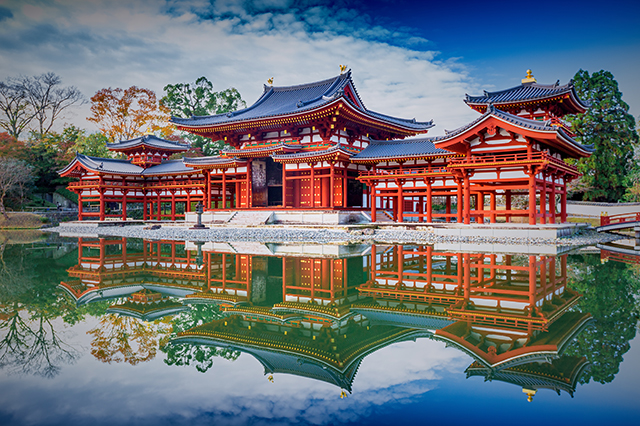
The day begins at Nijo Castle where you can try to walk in stealth across the Nightingale Floor, designed to chirp in warning if would-be assassins penetrated into the Shogun’s chambers. Continue to the vermilion-hued Heian Shrine and Kinkakuji Temple – the glittering Golden Pavilion. Delve into Japan’s enduring traditions when you dine with Geisha and tour the tranquil Zen meditation gardens of Kodai-ji Temple.

Day 4 – Inland Sea and Hiroshima

Cross the island-dotted Inland Sea to Miyajima Island and marvel at Itsukushima Shrine, established in the 6th century. Just off shore, the magnificent red Torii Gate rises majestically from the sea. In Hiroshima, visit Peace Memorial Park, where the Memorial Museum stands as a sobering reminder of the destruction wrought by the Atomic bomb.

Day 5 – Tour Nara, Japan’s First Capital

Discover the ancient capital of Nara where Buddhism was first introduced to Japan nearly 1,500 years ago. You’ll visit Todai-ji Temple, one of the largest wooden structures in the world and home to an immense statue of Buddha. Stroll the peaceful lantern-lined forest paths of Kasuga Shrine before returning to Kyoto.

Day 6 – By Rail to Kanazawa

Journey to Kanazawa and visit the Nomura Samurai Residence; with its marvelous cypress wood ceiling, hand-painted screens, and interior garden, it reflects the nobility of the wealthy family who lived here during the rule of the Maeda Samurai clan. At the Kutani Kosen Pottery Studio, you’ll see skilled artisans at work. Then stroll through Kenrokuen, revered as one of Japan’s finest gardens, and learn firsthand about the elements of traditional landscape design which have been incorporated so here.

Day 7 – Shirakawago and Takayama

Travel to the mountain hamlet of Shirakawago, famous for its “Joined Hands” farmhouses. More than a century old, they derive their name from their steeply pitched roofs which look like hands joined together in prayer. Surrounded by rugged alpine peaks, the region was often isolated from the rest of Japan for much of its history. It developed unique traditions which experienced guides will illuminate as you explore this picturesque region.

Day 8 – Full Day Sightseeing in Takayama

Mingle with city residents as they go about their daily shopping at the busy morning market and then admire perfectly-preserved buildings like Takayama Jinya, an imposing government hall of the Edo period. Enjoy a tasting of fine sake and tour the Folk Craft Museum. At the Festival Floats Exhibit Hall, you’ll see enormous parade floats dating back 400 years, many with cleverly engineered figures that can be animated when these floats are used in the town’s colorful spring and autumn festivals. A sake tasting reveals the history and finer points of this traditional Japanese rice wine.
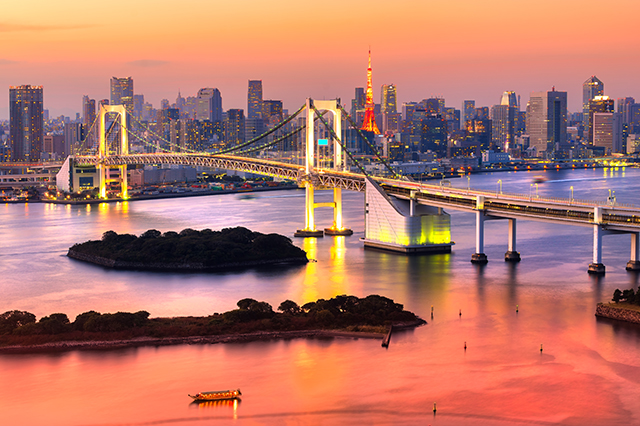
asian tour
Tokyo City.

Day 9 – Onward to Tokyo

Journey by rail to Tokyo and transfer to your hotel, ideally located in vibrant Shinjuku. After time to refresh in your spacious Plaza Premier Room, join your guide for a walking tour in the vibrant, modern district where you’re staying. The area is popular with Tokyo residents for shopping, dining and entertainment.

Day 10 – Tsukiji Fish Market and Tokyo City Sightseeing

Early in the morning, we take you on a special visit to the world-famous Tsukiji Fish Market, where the city’s best chefs come daily to procure the freshest seafood. Then join one such master chef to learn the art of preparing restaurant-quality sushi. Enjoy the fruits of your labor for lunch before ascending the Tokyo Observatory for breathtaking views across the capital. Then stroll along the bustling Nakamise Arcade, home to colorful merchant stalls selling traditional Japanese snacks and handicrafts. End your sightseeing at the colorful Asakusa Kannon Temple; dating back to the 7th century, it’s the oldest in the city. Join chefs and homemakers at a bustling morning seafood market and learn how to prepare restaurant-quality sushi for lunch.

Day 11 – Full Day Excursion to Mt. Fuji and Hakone

Travel to the 5th Station of Mt. Fuji and continue to beautiful Hakone National Park, beloved for its pine forests and lovely views of Mt. Fuji. Enjoy a cruise across the placid waters of picturesque Lake Ashi and ascend Mt. Komagatake by cable car for sweeping views over the forested mountains. Return to Tokyo and enjoy your evening at leisure. On a clear day, your cruise on Lake Ashi offers breathtaking views of forested slopes and Mt. Fuji.

Day 12 – Depart Tokyo

Step aboard the comfortable airport limousine coach for your trip to the airport.

Been to Japan? Want to share your story? Let us know in the comments section!

Learn more about this exciting trip. 

Get in touch with a AAA travel counselor to learn about AAA Vacations and start planning your next getaway today. As a AAA member, you’ll save even more. Not a member? Join now!
Subscribe to Your AAA Newsletter

Sign up and receive updates for all of the latest articles on automotive, travel, money, lifestyle and so much more!

The Scariest Roller Coasters in the World

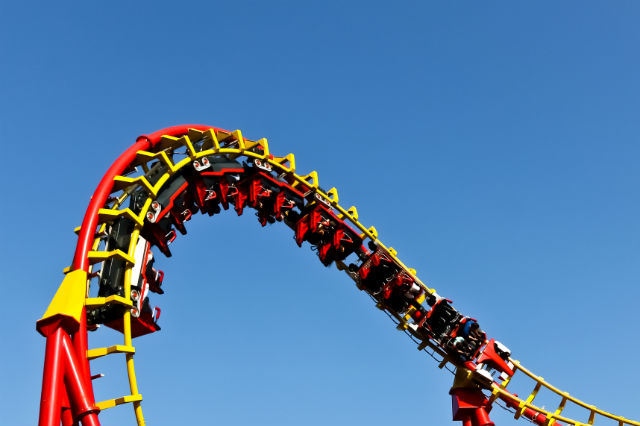
For thrill-seekers, nothing beats a roller coaster – the twists, the turns, the slow climbs followed by heart-in-your-mouth races downhill. Some can be pretty tame, with just a single loop or a gentle series of turns, but true coaster lovers place these scary rides on the top of their lists.

Sky Scream

Germany is known for its top-notch engineering, so perhaps it’s no surprise to find an unusual thrill ride at Holiday Park, about an hour south of Frankfurt. Sky Scream starts as expected – the coaster leaves the station and begins up its first hill – but doesn’t quite make it. The car pauses, then races back downhill, carrying passengers backward through the station and up another hill. Again, the car just barely makes the beginning of a twist, then stops and hurtles forward again. The walls of the station are a blur as the ride screams through, this time making it up the hill, through corkscrew turns and straight downward through scaffolding that frames the track.

Takabisha

In Japan, home of the minds who created Godzilla, roller coaster aficionados have several options for scaring themselves silly. At the Fuji-Q Highland in Fujiyoshida, the Takabisha boasts the steepest drop in the world: 121 gravity-defying degrees. This two-minute ride shoots passengers through a hill and inversion in the dark launch chamber before exploding out into the sunlight. The cars races through corkscrews and twists before chugging up the steep incline to the drop riders came for. A teasing pause at the top gives riders a chance to catch their breaths before they race down the improbable angle into the next set of curves.

scariest roller coasters

Eejanaika

Also at the Fuji-Q Highland is an unusual 4-D coaster: the Eejanaika. Its whirling experience comes courtesy of seats that rotate independently. Riders twirl their way through the circuit, even glimpsing Mount Fuji briefly, as their feet swing freely in the air. Perhaps the most exhilarating – or nausea-inducing – moment is achieving a “full-full,” where the train does a complete rotation while the rider also does a complete rotation in his seat. During a ride on the Eejanaika, one might even yell out the translation of its name: “Hey, what the heck!”

Gravity Max

From the ground, the circuit of Gravity Max coaster at the Lihpao Land amusement park in Taichung, Tawain, resembles many others, with hills and twists. Things are decidedly different, however, as the train leaves the station and noisily chugs up the first hill. Reaching the summit, the train stops. Then, with a whoosh of hydraulics and a kerchunk of machinery, the platform slowly tips, dangling the train over a 90-degree vertical drop. When the platform connects with the track below, the train is released and passengers plummet 13 stories to continue along the twists and single inversion of the awaiting track for this nearly two-and-a-half-minute adventure.

Formula Rossa

Featuring cars that resemble the Ferrari Formula One racer, down to its Rosso Scuderia color, Formula Rossa is one of the top attractions at Ferrari World in Abu Dhabi, United Arab Emirates, and easily one of the scariest roller coaster in the world. Like the sports cars the park promotes, this ride is fast and reaches its top speed of 150 mph in five seconds, using a hydraulic system that generates velocity much like the workings of the steam catapults on an aircraft carrier. Fitting for such a high-speed ride, the designers looked to the renowned Italian Autodromo Nazionale Monza for inspiration for the track’s layout.

The Incredible Hulk Coaster

Propelling riders through seven inversions and two tunnels, this coaster at Universal Studios in Orlando provides an unrelenting ride over lagoons and through a 110-foot cobra roll, all at a max speed of 67 mph. Despite its speed, passengers find this coaster gives a smooth ride, particularly when the trains are shot out of the station like a pinball and head immediately into a roll down a 105-foot drop. Like other attractions at this park, this coaster is themed, with riders taking part in a dangerous experiment led by Marvel Comics’ General Thaddeus Ross, the archenemy of the Hulk.

Plan your next theme park vacation with AAA.  

Subscribe to Your AAA Newsletter

Sign up and receive updates for all of the latest articles on automotive, travel, money, lifestyle and so much more!

Optional Car Rental Services

Car rental companies like Hertz can provide you with the perfect ride for your next trip, but that’s not where the options end. They also offer ways to make your journey even easier. Whether it’s car seats for kids, keeping you connected while on the road or helping you to find your way, here’s a look at some of the optional services available that you may not have known about.

Traveling With Kids

When you travel with kids there are lots of extra things to pack, but when you rent with Hertz you can cross car seats off your list. Some Hertz locations have infant, child and booster seats available for rent. And AAA members can use one car seat free – all you have to do is reserve in advance. Not only is this easier than carting your car seats from home, it can save money on airline baggage fees and eliminate the chance of loss or damage in transit. Learn more.

Traveling With Disabilities

Hertz aims to make traveling with disabilities easier by offering hand controls and spinner knobs at no extra cost. Simply notify Hertz at least 24 hours before your rental and your car will be properly equipped when you arrive.

Additionally, all Hertz locations have handicap accessible parking and return areas. Easy access busses are provided with electric ramps, room for two wheelchairs and waist-high luggage racks to make traveling easier for everyone.

Hertz. We’re Here to Get You There.

AAA members save up to 20%, plus an additional $5/day up to $35 off the base rate of your next weekend or weekly rental.

Book Now

Staying Connected

Hertz Wi-Fi makes sure you and your passengers stay connected when you’re on the go. This Wi-Fi hotspot device includes unlimited data with the ability to manage five connected devices. It’s small enough to pop in your backpack, purse or even your pocket, so you can stay connected when you arrive at your destination. There’s also a voice-activated GPS navigation option with turn-by-turn directions and real-time traffic updates so you can avoid unexpected delays. Global calling and texting are available with a daily preset credit and no roaming fees.

To make life even easier, there are a range of apps available with Hertz Wi-Fi as well. These include a language translator for typed and verbal communications, currency converter, social media, news, games and discount offers at stores, attractions and restaurants.

Pay for Tolls With PlatePass

Although you may have a transponder that lets you easily pay for tolls when you’re at home, it may not work elsewhere. Even when traveling to an area where it does work, you still have to remember to pack it for your trip and take it with you when you head back home. PlatePass automated toll payments makes this process easier.

Navigating With NeverLost

One of the biggest challenges you face when driving away from home is making sure you don’t get lost. Hertz NeverLost keeps you on track with two available navigation systems. Select markets offer NeverLost Magellan GPS, which also includes travel guides, hands-free calling, directions to the return facility and a walking mode. Most Hertz locations offer the enhanced NeverLost Navigator+ system which adds a language translator, real-time ETA, optional domestic and international calling plans, discounts at stores and restaurants and optional Wi-Fi.

car rental services

Protection Plans

It’s important to stay protected when you travel so Hertz offers a wide range of optional protection plans to set your mind at ease. There’s liability insurance to protect against claims from people injured in an accident; loss damage waiver, limited loss damage waiver and partial damage waiver coverage set caps on your financial responsibility for any damage or loss to a Hertz vehicle.

Personal accident insurance and personal effects coverage are also offered as a package to further protect you in the event of an accident. This helps cover medical expenses for you and your passengers as well as any damage to personal belongings while renting from Hertz. In the event of an accident, the protection plans offered by Hertz limit your financial responsibility and help make sure you and your passengers are properly covered.

Hertz Gold Plus Rewards Benefits

AAA members that enroll in Hertz Gold Plus Rewards membership earn exclusive bonus points which can add up to free rentals; the more you rent the more points you earn! This service lets you change your rental car on the spot when you arrive at your destination if you decide you need a different vehicle. There’s also convenient eReturn that allows you to fill out the slip on your rental agreement and leave it in the car with your keys on return rather than needing to speak with an agent.

Membership includes Mobile Gold Alerts, which can be sent to your email or mobile phone. This notifies you when your rental car is ready on the day of pickup with the exact car and stall number, so you don’t have to stop at the desk when you arrive.

Buying a Rental Car From Hertz

You know you can rent a car from Hertz, but did you know you can buy a used rental car from Hertz, too? Every vehicle offered for sale through Hertz Car Sales is thoroughly cleaned and inspected to be sure it’s ready for sale. These low-mileage vehicles are often available at a lower price than you’ll find elsewhere, and they come with no-haggle pricing. What you see is what you pay for, so the stress of working out a deal is gone. Even better, AAA members get a discount!

There are a range of financing options, too, and you can fill out all the forms online, so you know how much you can afford before you even begin shopping. It’s all about making the experience quick and painless. Once you find a car, you can rest easy knowing it comes with a 12-month/12,000-mile warranty in case something unexpected happens once you’re home.

Learn more about exclusive Hertz benefits and discounts for AAA members.

Subscribe to Your AAA Newsletter

Sign up and receive updates for all of the latest articles on automotive, travel, money, lifestyle and so much more!

Top 10 Things to Do in the Catskills

The lush Catskill Mountains region, which lies in southeastern New York, has become a beloved destination for quick skiing trips in the winter and long summer stays.

Each year, thousands of visitors are drawn to the many things to do in the Catskills. From hiking and snowshoeing to sightseeing and apple picking, whatever your purpose may be, you’re sure to love it in the Catskills.

Windham Mountain Resort

Fly-Fishing

The Catskills have been touted as the birthplace of American fly-fishing and for good reason. It’s home to the Catskill Fly Fishing Center and Museum and the town of Roscoe, aka Trout Town USA. Trout Town Adventures & Guide Services is a family-owned business in Roscoe that offers guided fly-fishing tours with state-certified guides.

Depending on the season, Windham’s Adventure Park has a plethora of things to do in the Catskills for all ages. In the winter, the park offers a variety of activities like snowmobiling, cross-country skiing, ice skating and snowshoeing. If you’re visiting in the summertime, there’s golfing, hiking, mountain biking and more.

Glamping

If you’re an adventure seeker, forgo a lodge or hotel and try glamping (glamorous camping) in a cozy tepee in Roxbury or a rustic cabin in Olivebridge. These gems are tucked away in the mountains and will allow you to fully immerse yourself in nature and forget about your 9-to-5 job.

Animal Sanctuary

The Catskill Animal Sanctuary rescues animals and welcomes visitors for tours, events, kids’ camps and overnight stays. The sanctuary is a 148-acre refuge in Saugerties for 11 species of farmed animals. Visitors can take a tour and learn about farming animals and can even volunteer or sponsor an animal at the sanctuary.

Vineyards & Breweries

There are many vineyards and breweries nestled throughout the Catskills. Millbrook Vineyards and Winery has been around for over 30 years and offers wine tastings and guided tours exploring the vineyard and cellars. If you’re more of a beer person, West Kill Brewing is located on a 127-acre farm and is known for its locally grown ingredients that add to the delicious flavors of its seasonal brews.

things to do in the catskills
Horses in Ashland, N.Y. (Photo: Jeanette Zinno)

Horseback Riding

If you’re looking for fun things to do in the Catskills, there are ranches and riding stables in almost any town in the region that offer horseback riding lessons, pony rides and scenic mountain trail rides. Most horse stables cater to beginners or experts, making this a great family activity and a must for your things to do in the Catskills list.

Spa

If outdoor activities aren’t your thing, opt for some rest and relaxation at one of the numerous cabin themed spas in the Catskills, known for their locally inspired signature treatments. The Windham Spa has a treatment that pays homage to its mountain roots with local and homegrown botanical oils, complemented by a blend of massage with cupping and hot and cold stones. The Copperhood Retreat & Spa in Shandaken invites guests to book a massage on a private outdoor deck overlooking the Esopus Creek, where the sounds help with releasing any tension.

Hiking at Kaaterskill Falls

There are hundreds of hiking trails in the Catskills, but one of the most popular hikes in the area is Kaaterskill Falls in Palenville, in part because it is a relatively short hike to a huge, 260-foot waterfall that you can snap a photo under. The trails around Kaaterskill Falls were recently updated to improve safety conditions, but this hike can still be dangerous if you wander off the path. Be safe and stay on the hiking trail.

Whitewater Rafting

Tubing down the Esopus Creek in Phoenicia sounds like the perfect way to cool down in the dog days of summer and a fun thing to do in the Catskills. Battle the rapids with The Town Tinker Tube Rental, which rents tubes and gear to anyone capable of maneuvering down the creek. A bus takes you back to the starting point, so you can ride down the river as many times as you’d like! After you’ve worked up an appetite, visit the Phoenicia Diner, a popular watering hole that offers classic dishes using seasonal ingredients sourced from many Catskill farms.

Drive-In Movie Theaters

Who knew drive-in movie theaters still existed? Well, they do in the Catskills. The common pastime of the 1950s and 1960s has had a resurgence of popularity throughout upstate New York. Drive-In 32 in Greenville and Hi-Way Drive-in Theatre in Coxsackie are two theaters that will reopen for the summer season with concessions. So grab your popcorn and pile in your car for some country fun!

What are your favorite things to do in the Catskills? Tell us in the comments.

Subscribe to Your AAA Newsletter

Sign up and receive updates for all of the latest articles on automotive, travel, money, lifestyle and so much more!

Unusual Things to Do in Las Vegas

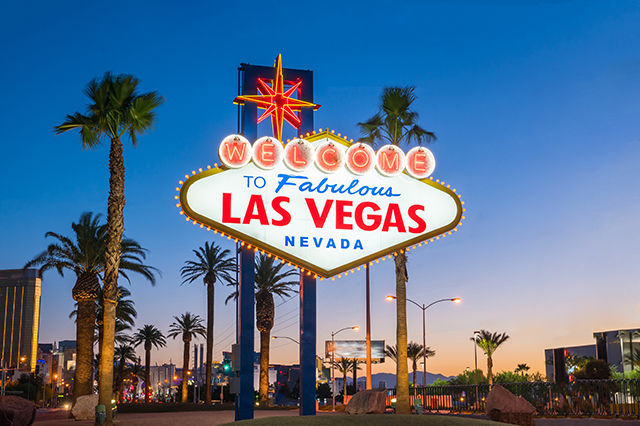
Believe it or not, there are plenty of unusual things to do in Las Vegas that don’t have anything to do with gambling. In fact, many of these unusual things to do in Las Vegas aren’t even on the Strip.

Dig This
3012 S. Rancho Drive
Smash and crash as you get behind the wheel of a bulldozer or excavator with the backdrop of the Las Vegas Strip. You can even crush a car during an aggression session, where you spray paint your thoughts and feelings onto the car, and then smash it to pieces with a 30,000 pound excavator. Prices start at $650 for 30 minutes.

Neon Museum & Boneyard
770 N. Las Vegas Blvd.
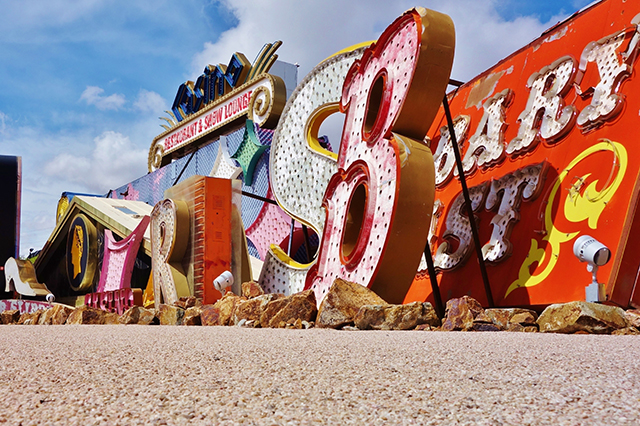
Pay homage to some of the old signs of casinos and businesses that once graced the Strip at this 2-acre campus that includes an outdoor exhibition space (the Boneyard) with more than 200 signs. Guided tours are available seven days a week, with day tours costing $15 to $19, and night tours priced at $22 to $26.

unusual things to do in las vegas
The Neon Museum in Las Vegas.

Pinball Hall of Fame
1610 E. Tropicana Ave.
Love pinball? Well, you’re in luck because this place is 10,000 square feet of all things pinball. There’s a mix of both pinball machines and class arcade games – and all you need is a pocketful of quarters to get in on the fun.

The Las Vegas Natural History Museum
900 N. Las Vegas Blvd.
Kids will love the 35-foot T. rex exhibit, as well as exploring the rainforest, marine life gallery and treasures of Egypt (just to name a few). There are also special, limited-run exhibits, such as a Rainforest Adventure that ran through last summer. $12; $6 ages 3-11; ages 2 and under free.

Las Vegas Springs Preserve
333 S. Valley View Blvd.
The preserve features 180 acres of nature walks and displays, as well as Boomtown 1095, a re-created historical streetscape that highlights Las Vegas’ beginnings. $18.95; $10.95 ages 5-17.

The Wildlife Habitat
3555 Las Vegas Blvd. S.
Nestled on the Flamingo Hotel’s lush 15-acre grounds, the habitat is stocked with exotic birds, fish and turtles. It’s open daily from 8 a.m. to dusk and there are also two live feedings every day. And the best part is it’s all free!

The Mob Museum
300 Stewart Ave.
Explore the history of organized crime in Vegas in this massive exhibition space that includes multisensory exhibits, including the bloodstained wall of the St Valentine’s Day Massacre rebuilt brick by brick and an electric chair you can sit in (feel free to snap a photo, too!). There are also guided tours available. $20.95; $13.95 ages 11-17; free ages 10 and under.

Red Rock Canyon National Conservation Area
State Highway 159
Take in all of the area’s natural beauty at Red Rock Canyon. It’s a great spot to hike and bike, and there are different trails to choose from so just choose the one that’s right for you. Whichever trail you pick, there’s plenty of nature to take in – 600 types of plant to be exact, including a Joshua tree. And don’t forget to say hello to Jackson, the Red Rock Canyon burro! $7 per vehicle.

Hoover Dam
Located 35 miles south of Las Vegas on U.S. Route 93, Hoover Dam is an amazing engineering achievement in the country’s history. Tours are $30 per person; participants must be ages 8 and up.

Tule Springs Fossil Beds National Monument
601 Nevada Way, Boulder City
A 30-minute drive from Las Vegas, Tule Springs is home to fossils that date back all the way to the Ice Age, including mammoths, lions and camels, just to name a few. It is also one of the first parks to tell the story of Pleistocene paleontology, and it was the first site where scientists first applied radiocarbon dating in the United States. The National Park Service distributes maps that take visitors on self-guided walking tours.

The Discovery Children’s Museum
360 Promenade Place
This 58,000-square-foot facility is three stories full of fun. Families can enjoy Eco-City, a “city” made with sustainable and eco-friendly materials; get creative at Fantasy Festival, which has a lifesize ship, castle and stage to inspire imaginative play; let the little kids play at Toddler Town and more. $14.50 for ages 1 to 99.

Shark Reef Aquarium
Mandalay Bay, 3950 S. Las Vegas Blvd.
Be awed by the Shark Reef at the Mandalay Bay, with 14 exhibits that feature 100 sharks, piranhas, rays and crocodiles. There is also a touch pool and the 1.3 million gallon shark exhibit with a walk-through tunnel. $25; $19 ages 4-12; free ages 3 and under.

Lion Habitat Ranch
382 Bruner Ave., Henderson
Several lions and a giraffe live at this sanctuary, which features guided tours and feeding experiences. The lions were formerly at the MGM Lion Habitat. When the habitat closed and the lions couldn’t be returned to their natural dwellings, the ranch was opened so they would have a safe home. $25; free ages 14 and under.

Las Vegas Ski & Snowboard Resort
6725 Lee Canyon Road
Believe it or not, you can ski in Vegas! The winter season starts in late November, and the resort is open through April depending on the weather. There’s also tubing, snowshoeing and snowboarding. And you can even learn to ski for free!

Did we miss any unusual things to do in Las Vegas that you enjoyed during your trip? Tell us about it in the comments below!

Plan and book your next Vegas vacation with AAA. 

Subscribe to Your AAA Newsletter

Sign up and receive updates for all of the latest articles on automotive, travel, money, lifestyle and so much more!

10 Signature Boston Foods and Eateries

Every place has its must-try foods. Whether you’ve lived somewhere your whole life or are just visiting for a weekend, the meals and snacks you have along the way become part of the story of your time spent there. Food memories stick with you.

Like any city, Boston food is vast and varied – a melting pot of different cuisines and restaurant styles. But the best food in Boston, naturally, flaunts a New England stamp. Some of the city’s most well-known dishes were born from Colonial traditions or feature fresh local seafood. Others simply can’t be found anywhere else.

As with our compilation of famed Rhode Island eats, we hope to introduce you to 10 city-defining Boston foods with hopes of helping you to create some long-lasting memories.

Boston Baked Beans

The recipe that put the bean in Beantown. The preparation of baking beans can be traced back to the Native Americans and was adapted by the colonists, eventually evolving into the molasses and salt pork preparation now famously known as Boston baked beans.

Molasses most likely took on the role of primary sweet component when Boston had a surplus of the ingredient in the late 1700s due to producing and exporting rum. In fact, the sticky stuff was in such excess that it proved to be a devastating force during the Great Molasses Flood of 1919, one of the oddest disasters in history.

Marliave, which claims to be the “oldest chef-owned restaurant in Boston,” takes their beans seriously. Slow cooked and light on the molasses, if you’re used to the canned version you will be pleasantly surprised. It might seem out of place at a restaurant with French roots, but the city’s eponymous dish is not too far off from a classic cassoulet.

Boston Cream Pie

The chocolate-topped, cream-filled golden sponge cake was said to be invented at Parker’s Restaurant at the Omni Parker House and has been served since the hotel’s debut in 1856. Fun fact: It’s also the birthplace of Parker House rolls.

While Boston cream pie has been many things since its creation, including a Betty Crocker boxed mix and a reinvention as everyone’s favorite doughnut, one thing it has never been is an actual pie. The name comes from its originally being baked in pie pans.

Can’t make it to the hotel? Omni Parker House ships the pies anywhere in the country ($89, free shipping).

Samuel Adams Boston Brewery

The Boston brewery is one of three Samuel Adams breweries in the country, but it’s the only one that is open to the public. As the headquarters of research and development, here you can sample specialty and experimental beers solely available in the Boston area or – even more exclusively – in the brewery tap room or beer garden.

Free tours happen every day except for Sunday and depart every 40 minutes from open to close. Tickets are first come, first served; weekday and early tour times are less busy. Paid specialty tours like the “Beyond the Brewhouse” tour, which takes visitors into the exclusive barrel room, are also available.

boston food
(Photo: Walle Gobetz / CC BY)

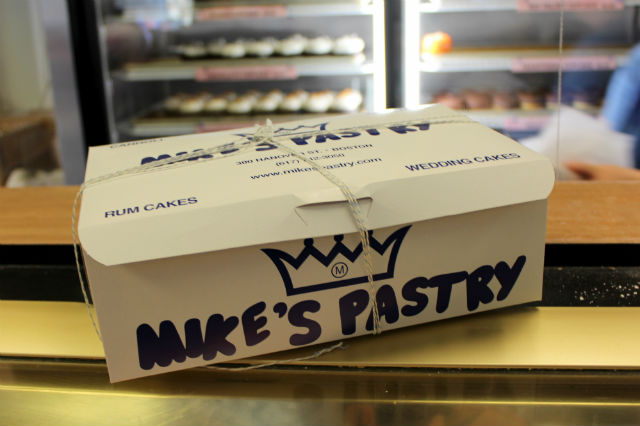
Cannoli at Mike’s Pastry

Boston’s North End is the city’s little Italy and a popular tourist spot for those looking to indulge in its delicious selection of restaurants, bakeries and cafes. If you’re in the area, make sure to make a cannoli stop at Mike’s Pastry. In addition to the classic cream, there are 18 flavors to choose from, such as amaretto, espresso, limoncello and Nutella with a chocolate shell. People line up for these, so be prepared for a wait. Mike’s also has locations in Cambridge and Somerville.

Neptune Oyster Lobster Roll

If you’re looking for a good lobster roll in Boston (not an unreasonable expectation), there is a consensus that Neptune Oyster is the place to go.

Located on the charming streets of Boston’s North End, Neptune’s beloved lobster roll is served either hot with drawn butter or cold with mayo on a brioche roll. There are no fillers – just big, hunky pieces of sweet, fresh lobster meat.

There are even more Boston favorites to try on the menu, like the stellar raw bar selections, Wellfleet clam chowder made fresh to order, or johnnycakes topped with Boston smoked bluefish and caviar.

Sticky Buns at Flour Bakery and Cafe

Sticky buns don’t just become one of the most, rave-able, craveable, unbeatable foods in Boston, they have to earn it. The buns at Flour most certainly have. Made with traditional yeasted French brioche dough, the acclaimed treats are rolled with cinnamon sugar and toasted pecans and served dripping with a dark, sticky caramel goo of honey, cream, butter and brown sugar.

Flour Bakery and Cafe has all types of delicious goodies, but none have reached the much-deserved sticky bun level of fame. It’s partially responsible for helping chef/owner Joanne Chang launch her bakery from one to eight outposts in and around Boston.

Try one warm from the oven and you’ll quickly understand why they are such a big deal.

Bagelsaurus Bagels

When owner Mary Ting Hyatt noticed a lack of good bagel options in the area, she took it upon herself to change that. Located in Cambridge just a short drive from Boston, Bagelsaurus bagels are bagels done right, and some may say worth traveling any distance for, never mind 15 to 20 minutes.

Crafted with time, patience and a sourdough culture that results in a one-of-a-kind flavor and texture, the bagels stand well enough on their own, but the menu of creative bagel sandwiches elevates them even higher.

The shop’s claim to fame is the sea salt bagel with honey rosemary cream cheese. Another customer favorite is the Hot Smoked, stacked with hot smoked salmon, cream cheese, pickled red cabbage, dill and red onion, as well as the T Rex, starring homemade almond butter, banana, honey and bacon.

boston food
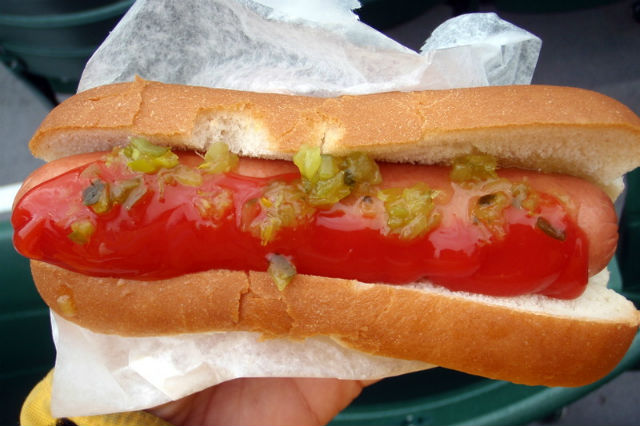
Fenway Frank (Photo: Joy / CC BY)

Fenway Franks

No Red Sox game is complete without a Fenway Frank in hand. As classic as Fenway Park itself, the hot dogs have been a staple of the oldest ballpark in Major League Baseball as far back as anyone can remember. When the stadium got an update in 2009, so did the Franks.

Kayem’s signature recipe, developed especially for the park, did not let fans down. Made with a hint of garlic and smoke, they are prepared and served the way they have always been in Fenway – boiled and grilled for the perfect balance of juiciness and snap, and snuggled into a New England lobster roll-style split-top roll. Top it however you like or enjoy it plain.

Click here for more iconic baseball stadium hot dogs.

Baked Alaska at Oleana Restaurant

Also in Cambridge, Oleana serves a spin on baked Alaska that is the perfect refreshing finish to a tableful of its Turkish and Middle Eastern-inspired small plates. Presented like a toasted cloud surrounded by passion fruit caramel, a swirl of meringue envelopes homemade coconut ice cream atop a coconut graham cracker macaron crust. The ideal balance of flavors and textures is what keeps fans coming back.

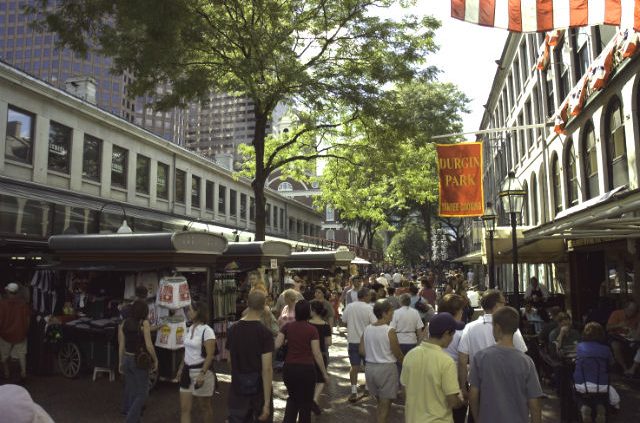
Faneuil Hall Marketplace and Quincy Market

Historic Fanueil Hall is a hot spot for visitors. Once the site of such notable events as the establishment of “no taxation without representation” in 1764 and where Samuel Adams rallied for independence from Great Britain, today it is a hub of activity.

There is always something going on at the cobblestone promenade surrounding the markets, and plenty of options to eat. If you’re more of a fancy foodie, you might not be all that impressed with the options, which can be touristy, like the recreation of the TV bar Cheers (the real one is in the Beacon Hill neighborhood) and Dick’s Last Resort, where servers are told to be obnoxious and guests are made to wear silly paper hats.

Nonetheless, Faneuil Hall Marketplace is a must for the itinerary. It’s central to top attractions like the New England Aquarium and Paul Revere’s house, and there are some good, casual eateries where you can grab a bite. In addition to a selection of cuisines from around the globe, there are sweet shops and snack kiosks, and lobster rolls and chowder galore. Stop at the outpost of McCormick & Schmick’s, Anthem Kitchen & Bar or the Salty Dog Seafood Grill & Bar, a cool hangout to get all the fried seafood goodness that New England is known for.

Save up to 20% on purchases at participating stores when you shop with a AAA Offer Sheet.

As it turns out, there’s much more to Boston food than beans. It’s about history, seafood, culture and dreams realized in the form of delicious treats. Try them all while exploring the best of the city.

What’s your favorite Boston food? Tell us what or where you like to eat in the city in the comments below.

Subscribe to Your AAA Newsletter

Sign up and receive updates for all of the latest articles on automotive, travel, money, lifestyle and so much more!

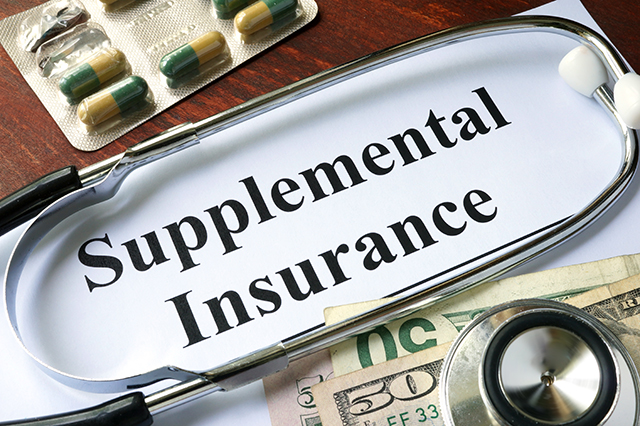
What is Supplemental Insurance? Short-Term vs. Supplemental Health Insurance

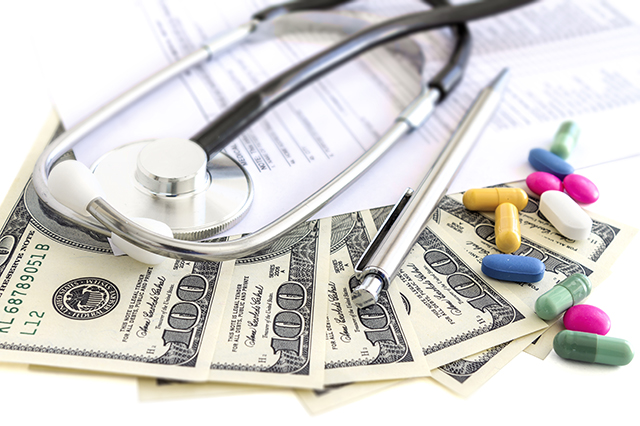
Between jobs and worried about going without health insurance coverage? You may be considering short-term health insurance. If so, take the time to understand what you’re buying and how that differs from a supplemental health insurance policy. Short-term health insurance is an option meant to provide coverage in between other insurance coverage – when you’re switching jobs, for instance. These plans are different than supplemental insurance. What is supplemental insurance?

That’s insurance intended to fill the gaps in your primary health insurance plan and provide you with extra financings for specific medical issues, such as helping pay for your kid’s braces.

As opposed to supplemental insurance policies, short-term health insurance policies typical cover expenses related to accidents or major illnesses. People don’t generally think about these types of policies to cover preventive medical care, such as check-ups, as the expectation is they’ll soon have a permanent insurance plan in hand.

Short-term policies generally have lower premiums than other health insurance policies. That’s a reason that these plans attract not only those between jobs but people who can’t afford a more comprehensive plan.

However, short-term plans come with hard limits in exchange for those low charges. For instance, they are exempt from most provisions of federal health care law, are limited to 90 days in length and won’t cover chronic illnesses or medical conditions that developed before you sign up.

Your application can be rejected for coverage if you take prescription medications regularly or have a certain health conditions.

In addition, short-term policies rarely cover maternity care, will cap payments and should a policyholder reapply, the insurer may exclude coverage for medical conditions that arose during the original policy term.

what is supplemental insurance

Short-term insurance may be for you if you’re:

  • Unable to apply for Affordable Care Act coverage because you missed Open Enrollment and you don’t qualify for Special Enrollment.
  • Waiting for your ACA coverage to start.
  • Looking for coverage to bridge you to Medicare.
  • Turning 26 and coming off your parent’s insurance.
  • Between jobs.
  • Aren’t old enough for Medicare.

For these situations and many others, short-term health might be right for you. It can fill that gap in coverage until you can choose a longer-term solution.

So here is what you need to know:

Advantages

  • Immediacy – healthy applicants can get covered quickly.
  • Costs – typically offered with different premium levels, deductibles and benefit maximums.
  • Flexibility – The policies also cover a range of medical services. In addition, policyholders can often choose their own doctor and hospital without restrictions, though there may be financial incentives for using in-network providers.
  • Enrollment/eligibility – The enrollment process often includes just a handful of yes/no questions regarding your health.

A few caveats

  • No coverage for pre-existing conditions.
  • It’s not comprehensive coverage.
  • You could still pay a penalty.
  • You could still end up facing a gap in coverage. When your short-term plan ends, you will not be eligible to purchase a regular plan in the individual market if it’s outside of open enrollment.

What is supplemental insurance?

Supplemental Health Insurance is another matter altogether. It is slightly different from primary plans, but works in coordination with your benefits. Often, people purchase a supplemental policy to cover healthcare services or conditions that were left out of their primary plan, such as dental and vision care.

Generally, this type of coverage helps to pay for the deductibles, copayments, and/or coinsurance of a medical claim. Just like secondary insurance, it does not replace your primary insurance or double your benefits. Rather, it helps cover costs that might otherwise be left for you to pay.

One of the greatest advantages to having more than one plan is extended coverage. If you submit a medical claim to your primary care insurance and only a portion of it is covered, you can then submit the claim to your supplemental insurance plan. The first may not cover certain tests at a hospital or doctor’s office that your second plan might cover. Coordinated coverage between two plans may save you money overall.

Supplemental plans may cost as low as $12 per month for an individual or $30 for a family. However, it is an added cost that you need to consider. To determine if one of these backup policies is right for your budget, think of a medical scenario and then add up the potential costs. Add up your deductible and anything else you might spend after a long stay in the hospital. Then figure out how much a supplemental insurance plan might help with those costs and the overall costs of keeping this additional healthcare plan.

If coverage for your primary and secondary plans are nearly identical, then you are paying twice to have the same benefits. Especially if both plans have deductibles, then your out-of-pocket costs for having more than one plan may not be worth it.

Did we answer your questions about supplemental and short-term insurance, and the differences between the two? If we missed something, let us know in the comments below. 

Subscribe to Your AAA Newsletter

Sign up and receive updates for all of the latest articles on automotive, travel, money, lifestyle and so much more!

Where to Stay, Eat & Play in Santa Fe, NM

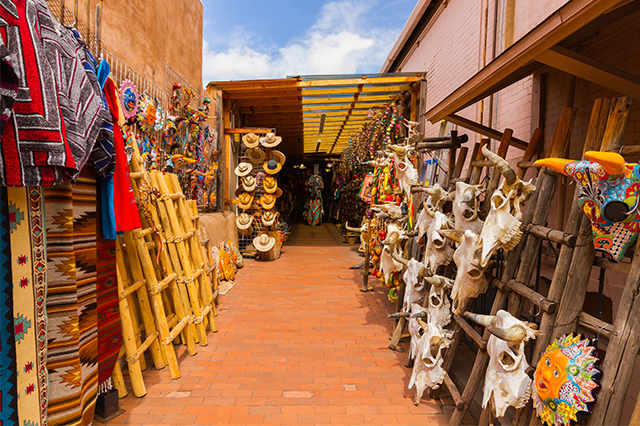
If you’re visiting Santa Fe, NM, you likely know that it has adobe architecture and southwestern cuisine, but it also has an exciting modern side. You’ll find contemporary museums, farm-to-table cuisine and craft cocktails (don’t worry, you can still get a great margarita!)

Read on to learn about all the best things – both traditional and contemporary – to do while visiting Santa Fe.

Where to stay in Santa Fe, NM

Four Seasons Resort Rancho Encantado

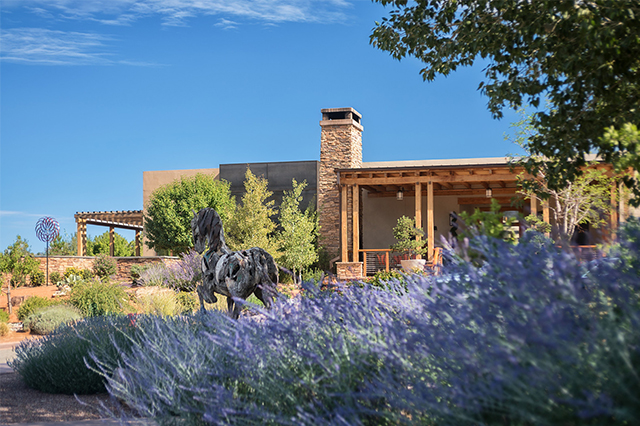
A few miles from downtown Santa Fe, in the Sangre de Cristo foothills, is this stunning property with 65 rooms (with adobe-style fireplaces), the Terra Restaurant (using ingredients from its on-site organic garden), a holistic spa and an outdoor fire pit for a front row seat to the nightly sunset. The new Adventure Center offers trips to O’Keeffe Country, as well as hiking and biking excursions.

Drury Plaza Hotel

One of Santa Fe’s newest hotels, this full-service property is centrally located downtown adjacent to the 19th century St. Francis Cathedral and has a total of 182 rooms (many with balconies). The restaurant Eloisa is from John Riviera Sedlar with a southwestern and Latin fusion menu. There’s also a rooftop pool and bar with Sangre de Cristo views.

Hotel Santa Fe, the Hacienda & Spa

Santa Fe’s only Native American-owned hotel, this pueblo-style property is just steps from the Railyard Arts District. In addition, the main building has 182 rooms and a lobby done up with Native American artwork and wood-beamed ceilings with a beautiful fireplace. The Hacienda is a secluded wing with 35 luxury rooms and suites, and spa and butler services.

To book and save on these and other hotels with AAA, visit AAA.com/Hotels

Museums and art in Santa Fe, NM

SITE Santa Fe

This minimalist art space, in a former beer distribution warehouse, features large-scale installations and contemporary exhibits. A major expansion from New York’s SHoP Architects is expected to open next year. It is located in Santa Fe’s Railyard Arts District (RAD), where you’ll also find modern art and design shops in modern buildings.

Georgia O’Keeffe Museum

If you’re a fan of Georgia O’Keeffe, who spent the last years of her life living and working in New Mexico, this is a must-visit museum. Housed in an adobe building in the historic district, you’ll find many of the American modernist’s flower and landscape paintings. There is also an excellent gift shop with coffee table books and southwestern jewelry.

Canyon Road

Santa Fe’s mile-long stretch of Canyon Road is lined with all manner of art galleries, many in historic adobe structures with charming gardens. Stroll the street to see everything from southwestern paintings and prints to Native American sculptures and multi-media installations. There are also craft shops and cafes along the route.

Meow Wolf Arts Complex

Meow Wolf is a multi-use art complex in an old bowling alley which just opened last month (Game of Thrones writer and Santa Fe resident George R.R. Martin is heavily involved with the project). It will offer gallery space, a coffee shop and a permanent art installation—the fantasy-based House of Eternal Return, which has been likened to being inside a sci-fi novel.

santa fe, nm
Stay at the Four Seasons Resort if you’re looking for luxury in Santa Fe, NM (Photo: Four Seasons Resort Rancho Encantado)

Dining in Santa Fe, NM

Modern General

Housed in a super modern industrial-chic building, Modern General is a hybrid café serving organic breakfasts and healthy smoothies . It is also a general store selling kitchen items, cookbooks, garden tools, etc. The owner, Erin Wade, has also opened Vinaigrette, a farm-to-table salad shop with ingredients from her own farm.

Radish & Rye

The cuisine from executive chef Gaspar de Alba is farm-inspired with a southern twist, with selections like fried green tomatoes with pimento cheese, scallop ceviche with jalapeno oil and mesquite-grilled ribeye with chimichurri. The restaurant also bills itself as a bourbon bar with more than 50 varieties including locally made Santa Fe Silver Cayote.

The Compound Restaurant

This popular Santa Fe restaurant is housed in an elegant adobe building on Canyon Road and serves contemporary American cuisine. Charred octopus and braised lamb shank are some of the dishes you might find on James Beard Award-winning chef Mark Kiffin’s menu. Sample some of the signature cocktails including a blood orange margarita.

Tomasita’s

If it’s traditional southwestern food you crave while visiting Santa Fe, you can do no better than this institution. Start off with frozen margaritas and some chips and guacamole, followed by classic dishes like enchiladas (with your choice of red or green chiles) or chile rellenos or quesadillas, along with the utterly addictive sopapillas served with local honey.

315 Restaurant

Located on the historic Old Santa Fe Trail, this Provencal French eatery incorporates local ingredients into its Provencal-style dishes, which include house-made charcuterie with pickles and mustard and roasted ratatouille with creamy polenta. It also has an excellent wine selection with labels from all over France as well as Spain and South Africa.

Bars and breweries in Santa Fe, NM

Agave Lounge

The Agave Lounge is a surprisingly chic cocktail lounge within the recently restored El Dorado Hotel & Spa, a traditional adobe-style hotel near the Plaza. In addition to specialty cocktails (the margarita list is quite impressive!), tequila flights and a large wines-by-the-glass program, there is also a menu of shared plates (steak tacos, artichoke dip).

Santa Fe Spirits

This boutique distillery from owner Colin Keegan produces small batch whisky, gin and apple brandy. The main distillery is located about seven miles from downtown Santa Fe but there’s also an intimate tasting room on Read Street (just a few blocks from the Plaza) where you can you can sample the artisan spirits neat or blended into craft cocktails.

Santa Fe Brewing Company

The first craft brewery in New Mexico (it’s a ten minute drive out of town) recently completed an expansion and offers tours (on Saturdays) and daily tastings. You can sit in the bar room or outside at one of the picnic tables with flights of beers including the popular Happy Camper IPA and Java Stout.

Do you have any southwestern recommendations? Share them with us in the comments!

Contact a AAA travel counselor to start planning your Santa Fe, NM vacation today.

Subscribe to Your AAA Newsletter

Sign up and receive updates for all of the latest articles on automotive, travel, money, lifestyle and so much more!

Travel to USA’s Deep South in Southern Style

Join AAA Vacations on a cultural journey and delight in famed southern hospitality on a tour of New Orleans and the Deep South.

Cajun cuisine, antebellum mansions, the bayou and the magic of the French Quarter make this an experience to last a lifetime. Travel to USA’s most flavor region – and be sure to try the beignets.

At Martin Accordions, learn about the craft and take in a private Cajun music performance. Settle in for a dinner party at Lansdowne House, a privately owned antebellum plantation. Learn the art of Cajun cooking from the experts at the New Orleans School of Cooking. Discover the magic of the charming French Quarter during a walking tour. Each day brings you closer to one of America’s most captivating regions. Keep reading to learn what a sample itinerary of a New Orleans AAA Vacation looks like.

Travel to USA’s Deep South

Day 1 – New Orleans – Tour Begins

Welcome to America’s most inviting cultural region. Take some time to experience the city that has given us great music and incredible food. It won’t be long before you realize why they call New Orleans the “Jazz Capital of the World.” Later, spend the night at the newly renovated Astor Crowne Plaza hotel in the legendary French Quarter, where you’ll spend the next several nights.

Day 2 – New Orleans

This morning, enjoy a panoramic tour of New Orleans with a local guide. Begin this southern USA trip along historic Esplanade Avenue. See St. Louis Cemetery No. 3, which opened in 1854 and holds some of the most elaborate crypts found in the city’s cemeteries. Then, relax during a drive along the shoreline of Lake Pontchartrain. This romantic road eventually leads to St. Charles Avenue, whisking you past gorgeous mansions as well as Tulane and Loyola, two world-famous universities. This afternoon the choice is yours! Perhaps you will choose to take a walk through history at the National World War II Museum to learn about the American experience in the war. Or, you may choose to celebrate the festive side of New Orleans at Mardi Gras World where you will hear about the history of this unique tradition and tour a working warehouse where artisans create spectacular floats for the famous parades.

Day 3 – French Quarter

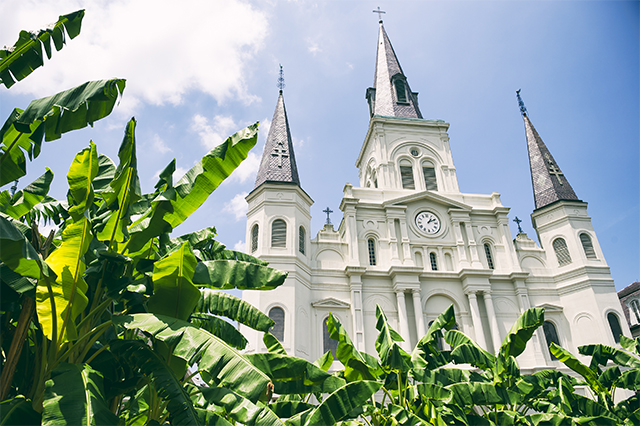
Set out on a walking tour of the famous French Quarter, a popular destination for U.S.A. travel. Stroll past the majestic St. Louis Cathedral, one of the city’s most recognizable landmarks. Continue on to the bustling French Marketplace and explore Pirates Alley, the Cabildo, the Presbytere and the Pontalba. Complete your tour with a stop to taste a true New Orleans favorite – beignets at Café Du Monde. Spend the remainder of the day at leisure to discover the “Big Easy” your way. This evening, join your fellow travelers for a spectacular dinner and a lesson in Cajun cuisine.

Roll up your sleeves & prepare to discover how to cook New Orleans-style during a unique cooking demonstration at the New Orleans School of Cooking. Sit back and enjoy the show as the chef teaches you the secrets behind some of the delicious regional dishes.

travel to usa

Day 4 – Baton Rouge

This morning you travel to Baton Rouge, the capital of Louisiana. Enjoy a guided tour of the Louisiana State Capitol Building and learn about the state’s most influential political figure, Governor Huey Long. Hear the stories and legends from the time of his governorship and witness the location of his untimely assassination at the State House. Later, continue to Natchez. This small city, resting on a bluff high above the Mississippi River, personifies the grace and elegance of the South with its preserved antebellum mansions. You’ll spend the next couple of nights at the Hotel Vue in Natchez, Mississippi.

This evening you are invited to an exclusive dinner at Twin Oaks, the privately-owned home of locally acclaimed chef Regina Charboneau.

Day 5 – Natchez

Mark your southern travel to USA with a blast from the past in Natchez, where a local guide will take you on a captivating tour of the pre-Civil War town. Tour Longwood, an impressive octagonal mansion that today remains unfinished. Construction began shortly before the Civil War and the interior was never completed. Marvel at the beautiful design and imagine another way of life. Experience a taste of the southern lifestyle as you spend the balance of the day at leisure in Natchez.

Day 6 – Lafayette

Depart for Lafayette, the heart of Cajun Country. En route, visit Martin Accordions, a family-owned accordion shop. Take this can’t-miss opportunity to see how the south has influenced music in your travel to USA. Learn about this intricate craft and listen as the Martin family band entertains you with music and stories. The DoubleTree Hilton Lafayette is where you’ll lay your head for the last two nights.

Day 7 – Cajun Country

Immerse yourself in the Cajun culture. Begin at the Acadian Cultural Center at Jean Lafitte National Park for an introduction to the history and culture of Cajun Country. Next, visit Vermilionville, a 23-acre living history museum and folklife park showcasing the Cajun and Creole heritages. Later, cruise along the eerie bayous and through the Atchafalaya Basin – no trip to Cajun Country would be complete without seeing the swamp! This evening, enjoy delicious regional dishes as you say goodbye to your fellow travelers at your farewell dinner.

Day 8 – New Orleans – Tour ends

Return to the New Orleans airport and head home with a new appreciation of the South.

Have any stories from your time spent in Louisiana and the rest of the Deep South? Share your experiences with us in the comments section. 

Learn more about this exciting trip. 

Get in touch with a AAA travel counselor to learn about AAA Vacations and start planning your next getaway today. As a AAA member, you’ll save even more. Not a member? Join now!

Subscribe to Your AAA Newsletter

Sign up and receive updates for all of the latest articles on automotive, travel, money, lifestyle and so much more!

8 Reasons Why River Cruises Are Awesome

Unlike any other travel experience, river cruises are as much about the journey as they are the destination. In one luxurious, all-inclusive vacation, you can hit all the stops on your wish list as you gently cruise along the scenic waterways of Europe, Asia, Egypt and beyond.

Imagine sipping champagne in your stateroom as you sail along the Yangtze River to explore the wonders of China, or lounging by the pool with a view of the Eiffel Tower after a bike ride through Paris. There are so many different trips available to choose from, each with several amazing stops along the way.

River cruise vacations offer the perfect balance of relaxation and adventure, allowing you to experience the thrill of international travel without the stress of having to plan all of the excursions and trekking around yourself.

Here are 8 reasons why river cruises are awesome:

1. Convenience. Unpack once and allow the best sights and cities in the world to come to you. After stopping and exploring at each destination, you can settle into your room and just relax. Many rooms have balconies or large panoramic sliding doors, so you can enjoy the scenery from one location to the next right from the comfort of your temporary home.

2. It’s first-class. From five-star amenities to fine dining, excellent service and luxury are provided throughout your trip without feeling too stuff. Casual dress is the standard. Heated pools, hot tubs, health clubs and spas are available for your enjoyment, and all the staff members speak English.

3. Comfort. Vessels rarely accommodate more than 200 people at a time, treating you to an exclusive and intimate travel experience that is unlike any other. Compared to an ocean cruise, river cruises are much more low-key and never feel crowded, so don’t expect any loud clubs or casinos, just pure relaxation. Plus, cruising on a river is always smooth and breezy, so you never have to worry about seasickness

4. You can choose a theme that suits you. River cruises have gained in popularity significantly over the past few years. And as they continue to grow and meet customer needs, cruise lines have come out with themed cruises, like springtime river cruises through the Netherlands or European family river cruises that cater to travelers of all ages. Uniworld, for example, offers various gourmet-themed cruises and European holiday market cruises.

river cruises

5.  All-inclusive value. Don’t be scared by the high price of river cruises because one price usually covers the trip. Meals, drinks, live entertainment, gratuities and even airfare and air arrangements are typically incorporated into your vacation rate. Most sightseeing tours and excursions are also included. Be sure to research various river cruise lines to find out if rates are all-inclusive and what they cover.

6. Excursions are easy. River cruises dock right in the heart of the most remarkable cities, only a stroll way from the top sights. Daily excursions are planned at each destination with experienced guides that lead the way to cultural and historical landmarks and hidden gems. If you prefer to travel at your own pace, you can do that too. Most river cruise lines also give guests a selection of off-boat adventures to choose from, rather than limiting you to just one. AmaWaterways even offers complimentary bicycles. Picture yourself pedaling your way through a quiet village in France or past the canals in Amsterdam.

7. Culture. Traveling abroad is about more than just seeing the sights; it’s about experiencing different cultures or perhaps even feeling like a local for the day. River cruises tailor their off-boat itineraries to give guests the most authentic sense of culture possible. A Rhine River cruise may offer a guided tour in Cologne, Germany, where you will visit and learn about the famous Cologne Cathedral in the historic Old Town, but afterwards there will be time to explore on your own, during which the cruise’s guides will be happy to point you in the direction of a quaint café to stop and simply absorb the atmosphere. Entertainment and food served on the vessel may also feature a local flair.

8. The Experience of a lifetime. Learn what it feels like to wake up in a new city almost every day. River cruises make it easy to go to the places you’ve always dreamed of (and maybe discover some new ones) all in one unforgettable trip.

Have you ever been on a river cruise vacation? What was your favorite part about it? Tell us in the comments.

Find deals on river cruise vacations with AAA.

Subscribe to Your AAA Newsletter

Sign up and receive updates for all of the latest articles on automotive, travel, money, lifestyle and so much more!

Finding a Good Restaurant Just Got a Lot Easier

Today, when someone stands in the middle of their living room and sends a question out into the universe, the universe answers. Well, Amazon Alexa or Google answers. Same thing, right?

If you say, “Alexa, why is the sky blue?” Alexa is going to tell you why.

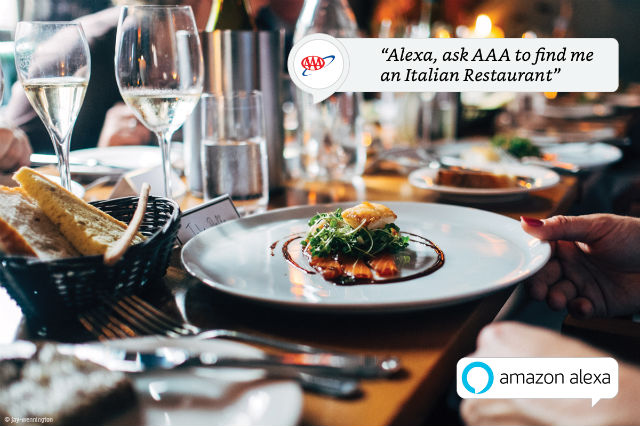
And now, when you ask Alexa or Google Home to find a AAA Rated restaurant, they will.

Many of our homes are now connected with voice assistant technology and AAA is getting in on the trend, helping to answer what is perhaps the most impossible question of all: Where do you want to go for dinner?

Both Amazon Alexa and Google Home now have access to 31,000 AAA Diamond Rated restaurants, making it more convenient than ever to find a place to eat anywhere in the country.

All restaurant information available on AAA.com/Diamonds and on the AAA Mobile app can now be found with voice assistant commands such as:

“Alexa, ask AAA to find me an Italian restaurant.”

“OK Google, tell AAA Restaurants to find me a restaurant.”

Be sure to pronounce AAA as “Triple A,” and keep in mind that Alexa users must enable the skill first.

AAA is working to apply the technology to other voice-based devices and hopes to expand its future capabilities, like allowing members to someday request AAA Roadside Assistance, track discounts and find out about membership renewal dates via voice.

What AAA skill would you like Alexa and Google Home to learn?

Subscribe to Your AAA Newsletter

Sign up and receive updates for all of the latest articles on automotive, travel, money, lifestyle and so much more!

The Best Wearable Technology Products You’ll Want to Try

Technology has gone from the simple ease and convenience of calling (or texting) a loved one, to tracking our steps and vitals with “smart” fabrics, shoes and watches. While the potential of wearable technology is high, especially in medical, sports technology and science fields, not everyone is interested in becoming a walking diagnostics test. So, if you’re over the Fitbits and the fitness trackers, but still enjoy the novelty and fun of cool technology, check out this list of useful, non-sports related gadgets.

Here is some of the best wearable tech available now and coming soon! 

The best wearable tech out there … or coming soon

Reliefband 

If you’ve ever found yourself hunched over the side of a boat, miles-high and completely nauseous or in the back seat of a friend’s car ready to hurl, then you understand the struggle of motion sickness. While the Reliefband technically isn’t a “natural” solution, it is a solution that allows you to handle motion sickness sans drugs. By stimulating the median nerve located under the wrist, the Neurowave bracelet claims to cure nausea by restoring a normal gastric rhythm in a process is known as neuromodulation. Confused? Don’t worry. We didn’t get it either. Just know that the Neurowave bracelet, according to its makers, can help pregnant women with morning sickness, as well as those who like to sail, dabble in VR gaming and other “unbalancing” activities.

Athena

Staying safe no matter where you are was a lot harder before wearable technology. While many companies are exploring the medical applications of wearable technology, others are tapping into more immediate concerns, like personal safety. With this device, help can be on the way at the touch of a button. Athena, which is a wearable button with a magnetic clasp, works in conjunction with the ROAR app to “connect with loved ones when you need them most.” Simply clip the device onto purses, backpacks, or other carriers, and press the recessed button during an emergency to share your location with your entire network. It’s perfect for city dwellers who constantly find themselves walking around late at night, individuals who live alone, adults, teenagers, men, women and anyone who wants to enjoy some extra peace of mind.

Sgnl

While this wearable technology does have some practical uses, it’s also just plain cool. If you’ve ever wanted to feel like a secret agent, here’s your chance. Sgnl allows users to make phone calls by pressing a finger against their ear. Yes, you read that correctly – simply press your finger to your ear. The device uses a smart strap that is worn around your wrist and utilizes body conduction to transmit a voice signal, received via Bluetooth from your smartphone. We’re not sure about the logistics here, but we do know this: You can receive calls without having to pull out your phone or mess with a headset. 007 anyone?

best wearable
Wearable tech can help you overcome motion sickness, stay safe, and tune out the everyday world.

Nuheara IQbuds

It’s time to drown out the noise – literally. Using noise-canceling technology, Nuheara’s IQbuds allows users to improve their hearing in noisy settings, like crowded city streets and industrial work sites. The device uses multiple integrated microphones, which makes it easy for the wearer to focus on conversations instead of the surrounding noise. It’s almost like having superhuman hearing. And of course, what good is tech if it’s not multifunctional? The IQBuds can also be used as wireless Bluetooth headphones, allowing users to handle phone calls or listen to music without any added distraction.

The role that technology plays in our lives is constantly evolving, and rapidly too. Thirty years ago, no one expected the automotive industry to have a breakthrough on the technology of self-driving cars. And no one imagined that a pair of pajamas would use Far Infrared technology to help your body heal and recover as you sleep. Yet, these things are very real. And those science fiction movies where humans and technology are just a little too “connected” don’t seem so far-fetched anymore.

What are some of the best wearable tech and gadgets you enjoy on a daily basis? Let us know in the comments below!

Subscribe to Your AAA Newsletter

Sign up and receive updates for all of the latest articles on automotive, travel, money, lifestyle and so much more!

Finding the Best European Tours for Young Adults

Bumming around Europe for a while has been a rite of passage for college students since the 17th century when upper-class Englishmen began setting out in horse carriages for a Grand Tour of Italy and France. The methods may have changed, but the desire remains the same – for young adults to soak up the cultural wonders of Europe before getting saddled with the daily stressors of real life.

When it comes to student travel in Europe, a carefree attitude about where and when you sleep or eat will certainly come in handy. But with a little preparation, you won’t have to rely only on couch surfing and the kindness of strangers.

Check out these tips, and you’ll be riding sleeper trains with just a backpack and a dog-eared guidebook in no time.

Before you go

We’ve all heard those urban legends about seeing the world on $10 a day, but we’re not all going to Mongolia either. That’s why even before deciding on a destination, students need to know how much money they have to play with.

Once that’s set in stone, you’ll have a better idea of how long you can go and where you’ll end up. If you’re on a shoestring budget, you might need to steer clear of expensive Scandinavia and London, but that just opens you up to finding deals in Paris, Rome, Madrid or Berlin. The key is to maximize your time once you get there.

“Everything is so close together, so it’s really easy to see a lot of places and cities all in one trip,” said Jessica Rogers, a Europe travel expert with STA Travel. “So take the time, do the research and make the most of your time abroad.”

And Rogers suggests purchasing tickets sooner than later. “You never know where pricing is going to go, anything from hotels to flights,” she said. “Do it now rather than it going up in price later.”

european tours for young adults

Once you get there

So, you’ve settled on an itinerary and landed in your first city. Now what?

A fantastic way to get your bearings is to find a free walking tour (just Google those words with the city name). The guides will work for tips, but you can get away with giving five bucks a person, which is a bargain for a little knowledge to go along with those sightseeing highlights. If you have a few more bucks to spend, a city museum pass or hop-on, hop-off bus tour might be worth it.

“They’re great because they show you things you wouldn’t have seen on your own or wouldn’t have known is there,” Rogers said. “You get the lay of the land. Especially if it’s your first time there and you want to hit every single sight, having that city pass is great.”

Then don’t be afraid to ask around for advice. People are generally very nice and more than willing to help because they usually are proud of where they come from and like showing off their city. That’s how you’ll find out about the best bars, the best restaurants – the hidden gems.

“If you ask the front desk person, or the person driving your Uber, they might have the best spot to see,” said Rogers.

Also, consider taking the bus. Most European cities have great subway systems, but with apps like City Mapper you can opt to get around town above ground and see everything along the way. Buses between cities can also be cheaper and sometimes even faster than trains. Check out Rome2Rio.com, where you can plot out the cheapest or quickest way to get from place to place.

Odds and ends

No matter where you end up, bring earplugs. Often hostels or cheap hotels are in busy areas with a lot of bars, which is great for going out at night but terrible for your mood the next day.

Another thing to keep in mind is a lesson in street smarts. In most European cities, you don’t have to worry much about safety, but you will need to keep a good head on your shoulders. You’ll be all set if you act like you’re walking around New York City, where you wouldn’t wave hundred dollar bills around or leave your wallet sitting on a counter.

And for a parting piece of advice, make sure to be flexible. Planning and doing lots of research is great and all, but often the most rewarding parts of a trip to Europe are the things you didn’t know existed until it was happening. Be open to places you wouldn’t have imagined you would ever go.

“I would never have thought to visit Slovakia, but it was my favorite part of my last trip,” Rogers said. “Those are usually the coolest gems you can find. Big cities are great, but if you dive in a little deeper, that’s really when you see the culture of the place you’re visiting, especially in Europe.”

Where did you travel as a student? Share any advice for students looking to travel Europe in the comments below!

Plan and book your next vacation with AAA.

Subscribe to Your AAA Newsletter

Sign up and receive updates for all of the latest articles on automotive, travel, money, lifestyle and so much more!

Experience the Best of France with These Europe Trips

Chateaux, chic beach resorts, cheese and wine – all you want to see and taste in France.

Europe trips, like the one you will read about below, hosted by AAA Vacations, also peel back the layers to reveal the soul of this great country. Travel to Europe so you can enjoy moments like learning the strategic importance of Carcassonne’s double ring of ramparts with its 52 towers from our local historian, and why the fortified town made such a good backdrop for the film “Robin Hood: Prince of Thieves.” Keep reading to learn what a sample itinerary of a Europe trip to France looks like.

Best Europe trips: France

Day 1 – Arrive in Paris

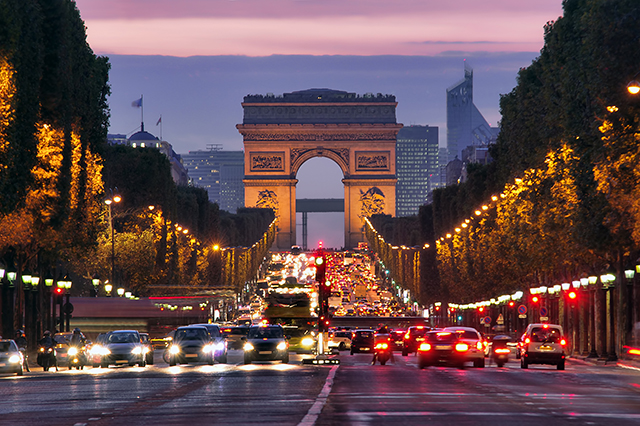
Welcome to Paris, the City of Light! France is a diverse and fascinating country with so much to offer. From architecture to cuisine, your trip reveals a host of regional delights and specialties. Meet for a welcome reception with your fellow travelers and travel director and enjoy the first of many Europe trips on a drive through the city to take in some of the breathtaking sights including the Champs Élysées and the Arc d’Triomphe.

Day 2 – Paris – Beaune – Lyon

Drive south into Burgundy wine country, once home to the powerful Dukes of Burgundy, past the Côte d’Or vineyards of Gevrey-Chambertin and Nuits St. Georges. Arrive in the medieval town of Beaune to discover the treasures in the 15th-century Hospice de Beaune. Tonight in Lyon why not try out some local sights and specialties for which the city is justifiably famous?

Day 3 – Lyon – Avignon – Monaco – French Riviera

Stop in Avignon to see the Papal Palace and the bridge made famous in the song, ‘sur le pont d’Avignon’. Traverse Provence, a picturesque area favored by artists such as Van Gogh and Cézanne to the Principality of Monaco. This small city-state is both a constitutional monarchy and home to the rich and famous. View the cathedral where Prince Rainier and Princess Grace were married. Later enjoy a meal in Monaco before arriving at your hotel.

Day 4 – French Riviera Free Time

Spend today as you wish. The Côte d’Azur is a sparkling and pristine stretch of famous coastline. You might like to lounge on the beach, shop in elegant boutiques or perhaps visit the hilltop town of St. Paul de Vence. This evening why not dine in one of the many pleasant local restaurants?

europe trips
Bordeaux

Day 5 – French Riviera – Arles – Carcassonne

Visit the town of Arles with free time to explore the city. Pass Alaric’s Mountain to Carcassonne, a walled city and UNESCO World Heritage site which was extensively restored in the 19th century. See the double ring of ramparts featuring 52 towers during your sightseeing tour with a local guide. ‘Robin Hood Prince of Thieves’ was filmed on location in and around Carcassonne.

Day 6 – Carcassonne – Lourdes – Bayonne

Wind your way through the Corbières Hills and ‘Cathar’ landscapes toward the Pyrenées. See the Basilica on top of St. Bernadette’s grotto at Lourdes, a holy site of pilgrimage.

Day 7 – Bayonne – Bordeaux

Head north through Les Landes to the classical town of Bordeaux. Built on the River Garonne, this is the world’s major wine industry capital. Bordeaux wine has been produced in the region since the 8th century and the bi-annual wine fair held in the city attracts buyers from all over the world. See the sights including the magnificent Esplanade des Quinconces during your orientation.

Day 8 – Dordogne Excursion

Enjoy a scenic half-day included Europe trip through beautiful countryside and picturesque scenery in the Dordogne region, best known for the enchanting medieval ‘Bastide’ villages. Drive to the renowned wine village of St. Emilion, possibly one of the most famous towns with ties to wine production. Later return to Bordeaux where you will have free time to explore the city.

Day 9 – Bordeaux – Loire Valley

Continue north through the Poitou Charentes region to the Loire Valley and stop to visit the beautiful fairytale Château Chenonceau. One of the most remarkable castles ever built, Chenonceau features stunning landscaped gardens and priceless collections of Renaissance furniture, tapestries and art. For an engaging experience, join your fellow travelers for a special meal to enjoy typical French hospitality.

Day 10 – Loire Valley – Mont St Michel – Omaha Beach

Travel through Brittany to visit the island-town of Mont St. Michel on the Normandy coast, featuring the abbey and picturesque streets. Follow the Liberty Highway to St. Lô and on to Omaha Beach where your travel director provides an excellent account of the momentous events that took place here. Pause and reflect on the courage of those who gave their lives. Visit the D-Day Museum Landing Zone and learn in detail about how the operation was planned and executed.

Day 11 – Omaha Beach – Giverny – Paris

Head southeast towards the valley of the River Seine. Stop at Giverny and visit the house and gardens where Claude Monet lived for most of his life. One of the founders of French Impressionism, some of his most famous paintings were inspired by this spectacular garden. This evening in the glittering capital, Paris, consider a trip to one of the city’s renowned cabaret venues.

Day 12 – Paris Sightseeing and Free Time
On day twelve, your guide reveals not just where, but how real Parisians live and shop. Your guide will show you the enchanting hidden squares and secret passages of one of Paris’ oldest historical neighborhoods. This short insider walk finishes at one of Paris’s loveliest squares, little known to outsiders, but a real favorite of the locals. See the unique skyline from the second level of the Eiffel Tower, where you enjoy panoramic views across the city. Spend the rest of the day seeing more sights and shopping for souvenirs. This evening celebrate with your travel director and newfound friends at a farewell dinner.

Day 13 – Depart Paris

Say ‘au revoir’ to your fellow travelers at the end of a magical and memorable collection of Europe trips.

What are your favorite moments from past romantic trips to Paris? Tell us in the comments below.

Learn more about this exciting trip. 

Get in touch with a AAA travel counselor to learn about AAA Vacations and start planning your next getaway today. As a AAA member, you’ll save even more. Not a member? Join now!

Subscribe to Your AAA Newsletter

Sign up and receive updates for all of the latest articles on automotive, travel, money, lifestyle and so much more!

Shore Excursion Tips for Cruises to Europe

Shore excursions. Some passengers on cruises to Europe love them while others loathe them. And to be honest, both arguments have merits. While the shore excursions offered on international cruises do come with built-in perks (ease, access and little to no planning ahead required), they also have drawbacks (namely cumbersome groups, too little time at key sights and prices that are often double what you’d pay if you booked via an outside tour operator).

Shore excursions offered on cruises to Europe also tend to have a herd mentality: Who really loves tagging behind a guide waving a numbered cardboard lollipop? Not to mention that you won’t be able to move on to the next sight until all members of your tour are accounted for – and someone is always late. That said, certain shore excursions are unique enough or offer special access that makes them a worthwhile option. Read on for tips on how to make the most of your options.

Choose wisely: Before you book any shore excursion on international cruises, either offered by your ship or independently via an online tour operator, it’s important to do your homework. First, read through all of the excursion descriptions offered to see what sounds most appealing, then check the difficulty level (typically ranked easy, moderate or challenging, depending on the walking required or number of steps you’ll need to negotiate) to determine if you’ll be able to do it. Note the name of the tour you prefer as well as its price and then search online for reviews from previous passengers. If it generally gets a thumb’s up, search to see if you can book a similar tour for a better price via a local tour operator (unless you prefer to stick with the ship’s tour out of time-constraint concerns).

Know the lingo: “Panoramic” is code for “you’ll be on a bus the entire time,” or at least most of the time. “Easy,” generally means the same thing. “Free time” often translates to 20-30 minutes to shop or take photos, while “lunch provided” typically involves a stop at a catering-hall-type restaurant where you’ll dine en masse with busloads of other cruise ship passengers. And a factory or showroom visit – blown glass in Venice, hand-loomed carpets in Turkey, pottery in Spain or Portugal, amber in Poland – means a sometimes interesting demonstration that’s almost always followed by a hard sell.

If you have questions, ask them: Stopping by the shore excursion desk to ask about tours before you book typically takes a few minutes and won’t cost you anything. Questions you might want to ask are: Do we get off the bus at any point, and if so, how many times and for how long? Which tour in so-and-so port is most highly rated by past guests? How much time will we actually spend at (La Sagrada Familia, St. Mark’s Basilica, Pompeii, etc.)?

Do a half-day shore excursion and then explore on your own: One of the best ways to make the most of 8-12 hours in port during a cruise to Europe is to book a half-day morning excursion to a popular historic site where you’ll benefit by having a guide’s insights or a landmark slightly outside of town that would require a taxi or public bus to get to on your own. Then spend the afternoon exploring the port on foot, perhaps finding a spot for lunch, visiting churches (which are generally free or cost very little to enter) and museums, or engaging in a bit of retail therapy.

cruises to europe
A tourist looking down over Dubrovnik, Croatia.

Old town walking tours are typically enjoyable and informative: If you don’t love bus tours, give a walking tour a try. These are often centered around the city’s historic center or old town and a good guide will offer commentary on architecture, culture, history and local cuisine. These walks are also typically low cost (or even complimentary on some international cruise lines) and last 90 minutes to three hours. Just wear sturdy, comfortable walking shoes or sandals or sneakers since most of these areas are paved with centuries-old cobblestones.

Some ports are often best-explored on your own: Most cruise lines offer a complimentary shuttle bus from the cruise terminal to the city center, which allows independent-minded passengers to easily explore (Dubrovnik, Copenhagen, Helsinki and Edinburgh are good examples). In other smaller island ports and even some major cities, you’ll be tendered to shore in the main port (on Mykonos, Rhodes, Capri, and Mallorca, for instance) or dock right in the city (Barcelona, Venice, Stockholm, Monte Carlo and Lisbon, for example) and all you need is a good map to head out and explore.

If a sight is more than an hour’s drive away, opt for a ship-arranged excursion: Sometimes a European cruise line calls on a port not necessarily for what’s there, but for what it offers access to – for example, Pompeii from Sorrento, Granada from Malaga and Seville from Cadiz. Other ports, such as Civitavecchia (for Rome), Livorno (for Florence), Warnemunde (for Berlin) require one- to-three-hour bus or train journeys. In both cases, unless your ship is docked overnight, book a ship-sponsored excursion—the cruise line will wait for 100 or 200 passengers caught in a traffic jam, but not for two of you stuck on your own in a taxi or on a train.

In Russia, you won’t need a visa if you book a ship’s shore excursion: Americans and Canadians do not need visas for most countries in Europe, but one is required for St. Petersburg, Russia. Only, that is, if you want to explore on your own. If you’d prefer to avoid the hassle of applying for a Russian visa, you can still see all the palaces and museums of this legendary city by booking a ship-sponsored excursion or excursions (most cruise lines overnight here so passengers enjoy two days ashore). Visas are also not required if you have a tour confirmation from a Russian travel company that you booked on your own.

Take advantage of exclusive opportunities: If your ship offers something you wouldn’t typically get to do on your own such as an after-hours visit to the Sistine Chapel in Rome or the Basilica of San Marco in Venice or a concert in an ancient Greek amphitheater, why wouldn’t you want to do it? Some European cruise lines try to distinguish themselves this way and let’s just say that walking through the Vatican Museums when they aren’t filled with hordes of tourists is truly an excursion to remember.

What would be your ideal excursion on a cruise to Europe? Tell us in the comments.

Plan and book your next cruise vacation with AAA

Subscribe to Your AAA Newsletter

Sign up and receive updates for all of the latest articles on automotive, travel, money, lifestyle and so much more!

Yellowstone Lodging: Where to Stay in the Park

Visitors to Yellowstone National Park can choose from a variety of lodging options, from well-appointed, historic hotels to more rustic cabins. Keep in mind, though, even the most luxurious accommodations here don’t offer air conditioning, televisions or radios. The natural beauty of the park – located in Wyoming, Montana and Idaho – is the main draw.

Most Yellowstone lodging is seasonal, but two lodges remain open to guests in the winter.

To learn more about what to see and do at the park, check out our Yellowstone National Park Guide.

Roosevelt Lodge Cabins

Located in the north-central section of the park, these rustic cabins grant the feel of roughing it but with some comforts. The Frontier cabins feature indoor bathrooms, whereas those who stay in the Roughrider cabins must use the nearby shared lavatory facility.

The cabins are close to the Lamar Valley, where the park’s abundant wildlife provides plenty of entertainment. The nearby log cabin-style Roosevelt Lodge offers dining options as well as a large front porch on which to enjoy a drink in the summer evening breezes.

Old Faithful Snow Lodge and Cabins  

The newest addition to the park’s full-service lodging options, this facility opened in 1999. Its design incorporates natural materials, helping it blend into the environment. Though situated not far from its namesake geyser, it is more remote than the well-known Old Faithful Lodge, allowing guests to unwind away from the summertime crowds.

The lodge itself features Western-inspired decor with modern amenities such as in-room coffee makers, refrigerators and hair dryers. The cabins, clustered in fours, also contain full bathrooms. The lodge’s Obsidian Dining Room offers casual, yet hearty breakfast and dinner menus. And the Firehole Lounge provides a cozy place to enjoy an after-hike beer with friends and plan the next day’s adventures.

The Old Faithful Snow Lodge is one of the two Yellowstone lodging options open in winter. Though the road leading to it is accessible only by commercially operated over-snow vehicles, cold weather guests can revel in the serene winter wonderland the park becomes when a blanket of white covers the landscape.

Old Faithful Inn

If Mother Nature wins the title of best architect of awe-inspiring sights in Yellowstone, then Robert Reamer, the architect behind the Old Faithful Inn, is a close second.

This seven-story hotel with its steeply pitched, cedar-shingled roof evokes images of a Native American teepee on a grand scale. Constructed in 1903-04, it was built with local logs and stone and is considered the largest log-built structure in the world.

The lobby features an immense stone fireplace and a ceiling that soars stories above the ground level, with wrought-iron lamps that light the entrance, much as they did when the inn first opened over a century ago.

The 300-plus rooms range from basic accommodations with shared bathrooms to superior rooms, some with views of the geyser.

yellowstone lodging
Lake Yellowstone Hotel

Lake Yellowstone Hotel and Cabins

The oldest lodge in the park, Lake Yellowstone Hotel first opened its doors in 1891.

It recently underwent renovations, making the hotel cozier and more elegant than ever. A business center offers free internet connections – something in short supply inside the park. It’s also close to a new cell tower, so mobile service is slightly better here compared to other parts of Yellowstone.

Modern-day amenities, however, aren’t what draw visitors – it’s the little touches. The string quartet that plays nightly in the lobby, board games and puzzles for guests to collaborate on, and common areas where visitors can mingle and exchange vacation stories are what make a stay here special.

Like many other hotels and lodges in the park, Lake Yellowstone Hotel offers cabins for guests looking to rough it in style. The cabins, which feature private indoor bathrooms, were renovated in 2003-04 into comfortable duplex units.

Canyon Lodge and Cabins

Located near the Grand Canyon of the Yellowstone, on the east side of the park, this lodge is the largest in the park, with more than 400 guest rooms ranging from basic rooms to superior suites.

Having just undergone a major renovation in 2016, the Canyon Lodge features many sustainable materials, including recycled bottles collected from park visitors, and wood from trees killed by pine beetles. All five of the new lodges have been certified gold by the U.S. Green Building Council’s LEED program.

The renovations also included redesigned dining facilities that offer more local foods as well as grab-and-go meals so visitors can get out into the park faster.

 Yellowstone lodging options outside of the park

If air-conditioned accommodations with all the modern bells and whistles are desired (sometimes with lower prices), staying just outside the park might do the trick. The Best Western Desert Inn in West Yellowstone, Mont., and the Best Western Premier Ivy Inn & Suites in Cody, WY., both feature Wi-Fi, swimming pools, and fitness and business centers, all just minutes away from the park entrances.

Plan a national park vacation with AAA.

Subscribe to Your AAA Newsletter

Sign up and receive updates for all of the latest articles on automotive, travel, money, lifestyle and so much more!

River Cruises Cater to Foodies with Enhanced Dining Options

Why do you travel? People travel for many reasons: To experience a foreign culture and the thrill of adventure, to enjoy the freedom to break away from the creature comforts of home, or to shift ideas and gain new perspective. Or maybe it’s because you just need a break!

When you start to plan for a trip, how you travel is as much of a consideration as where you travel, and as today’s globetrotter seeks out experiences that offer something more, river cruises are stepping up to the plate by offering amenities that are just a little different to serve up the trip of a lifetime.

River cruise vacations are hardly a new concept, and can be a great way to explore a region in a more off-the-grid manner; foregoing the hoopla of trains, planes and automobiles in favor of a majestic boat leisurely making its way from one destination to another.

Further, as eating well and eating local become more of a priority for tourists, and as food-themed or food- focused vacation packages gain popularity, tour companies look for creative ways to meet demand.  In particular, river cruises are catering to today’s foodie culture by offering more diverse dining options, and more and more we’re seeing notable chefs with restaurants lending their influence to river cruise dining.

River cruises are offering more than the standard buffet

Good food is no longer only available to those that seek it out.  Nor should it be!  In an effort to cater to more adventurous or eclectic palates, river cruises are expanding their options to offer more variety and adding more occasion to mealtimes with sit-down formats in a restaurant-style seating rather than long lines and forced seating arrangements.

For example, AMAWaterways’ Concerto-class ships offer everything from casual dining to the most personalized gastronomic experience at Erlebnis Chef’s Table, where diners can get a one-on-one with the chef.

Taking advantage of their smaller size and more intimate setting when compared to ocean liners, river cruises are more flexible to accommodate food allergies and dietary restrictions, both of which vacationers are demanding more and more. Finally, with most river cruises being all-inclusive, diners can sample more options without worrying about hidden or added expense.

river cruises
Buffet on the Uniworld S.S. Catherine. (Photo: Uniworld Boutique River Cruise Collection, Inc.)

River cruise vacations may be not only a good way to meet the locals, but also to eat like them

Farm to table? Try farm to ship!  Any chef worth his or her salt knows that the freshest ingredients elevate cuisine to the highest level. Shopping locally not only allows chefs to craft meals to reflect a destination, but also to pay homage to the exciting food cultures of an area.

As you meander down river from one town to another, chefs may also tailor the cuisine of a river cruise restaurant to highlight the subtle changes in regional cuisine. Adventures by Disney (in partnership with AMAWaterways) will have you sampling Swiss cheese, French wine, German pretzels, sausage and more over 8 days as the AMAKristina makes its way down the Rhine.

Having local flavors readily available aboard encourages diners to try new things and to more fully embrace the culture of an area, whether it be smoked salmon and Dungeness crab aboard the American Steamboat Company’s American Empress in the Pacific Northwest to traditional goulash, bratwurst while cruising the AMA Reina down the Danube. Themed dinners are also available on some ships; should you find yourself on Uniworld’s Century Legend, enjoy some rice wine alongside a Tang Dynasty themed-dinner in Beijing.

Foodies unite!

While everyone likes good food, some people really like good food! Food-centric vacationers may want a more immersive food experience, and river cruises can use the occasion to have its chefs tailor a menu and experience for you!

If you like to cook just as much as you like to eat, head to La Cave du Vin on Uniworld’s S.S.Joie de Vivre and make a seven course meal yourself (under the direction of one of their master chefs, of course) complete with wine pairings.  Or, head off the boat to a local’s house for dinner through their EatWith partnership.

If you really feel like mixing it up, Viking’s The Kitchen Table allows you to do both:  cook on sea days, and shop for ingredients on port days. Whatever you choose, activities make it enjoyable to bond with your fellow foodies, because it’s more fun to take picture of your food when you know all your table mates are doing the same thing!

River cruises with chef-crafted menus help create a full sensory experience

No need to run off the ship in search of fine dining; first class cuisine is second nature on ships these days. AmaWaterways was inducted into La Confrérie de la Chaîne des Rôtisseurs, and Chef Primus Perchtold, winner of three gold medals at the European Championship of Culinary Art, oversees its menus.  Uniworld received honorable mention in the 2015 Saveur Good Taste awards when pitted against its larger, ocean liner-cousins, and its menus include highlights from noted Chef Bea Tollman’s repertoire (can you say honeycomb ice cream?).

From sunrise to sunset, cruising already provides an experience unlike any other. Winding through rivers wide and narrow, taking in the natural beauty and history of a region as you sail down some of the world’s greatest rivers, river cruise vacations can transport you far away in mind, body, spirit and now, with an attention to dining – stomach!

Would specialty restaurants make you more or less inclined to take a river cruise? If you’ve been on one, did you wish the dining was more authentic? Tell us in the comments.

Book your next river cruise vacation with AAA

Subscribe to Your AAA Newsletter

Sign up and receive updates for all of the latest articles on automotive, travel, money, lifestyle and so much more!

Start Off on the Right Foot When Trying to Find a Podiatrist

It’s not always that pain in the neck across the office cubicle wall that will cause you the most trouble at work. Oftentimes, it’s that pain in your feet that makes maneuvering around the office difficult. Foot pain and other complications in your legs are a common problem. Few people know how to go about getting help for their medical issue. Trying to find a podiatrist is rarely the idea that first comes to mind.

Keeping your feet in shape, and dealing appropriately with issues that arise with them, will contribute to your overall health. After all, your feet are what keep you moving ahead in life.

There are more than 300 issues that can affect your feet, so finding a podiatrist may likely be the best way to keep them in good shape.

Many people make the wrong move when it comes to health care. They will show up at an emergency room or clinic when their feet hurt. Better to go to their doctor (primary care physician) to get an initial diagnosis, and a likely referral to a podiatrist.

A podiatrist would be in the best position to assess the condition affecting your feet and to come up with the appropriate treatment plan. Experience in dealing with common but painful foot ailments, such as bunions or plantar fasciitis, can be key to getting a patient up and moving.

As with so many other medical issues, you can ask your family members or friends if they have a podiatrist they would recommend. It’s preferable to take that advice from someone who had previously suffered a foot injury or condition such as yours.

With hundreds of injuries and conditions that can affect your feet, podiatrists often specialize in treating certain groups of those issues. Some podiatrists specialize in treating sports injuries, or surgery, or biomechanical issues. So, there are questions to ask before you make that first appointment, during it and after it as well.

When you choose to visit a podiatrist make sure you describe any medical conditions you have – such as diabetes – that may affect your feet. Good podiatrists know how to look after foot problems before they worsen. They will have knowledge, for instance, on how to treat plantar fasciitis using the correct shoe inserts. Or, they’ll understand how to treat the abnormal gaits and other problems that are common in children’s bodies.

Some questions to ask when choosing a podiatrist:

Do they accept most health insurance plans? With the high cost of medical expenses, the first item on your list is to check with your insurer or employee benefits office as they may have a list of podiatrists who are part of their medical network. Going out-of-network can be a costly mistake you don’t want to make.

If I have trouble walking will getting into the office be too difficult? An issue that doesn’t arise when choosing a dentist or a dermatologist is the physical layout of the doctor’s office. A long flight of stairs isn’t an issue when you’re going to an office to get a cavity filled or a wart removed. It is when you’ve got a bunion.

Do they have patient reviews or board ratings that you can review?

podiatrist

Is their office equipped with the latest technology? You may see a range of technology when you shop around for a podiatrist. Some offices will keep only a minimum amount of equipment on hand, while others will have an office crowded with medical technology. As you do your research make sure you know whether a podiatrist has limitations to what treatments they can offer. Certain equipment is essential to treating particular foot conditions.

Do they rush to suggest surgery as an option? While surgery may be necessary, a podiatrist may still be able to offer other procedures as an option.

Are they experienced? Even some experience, particularly in treating your particular foot issues, is a good sign. The podiatrist you use should know how to deal with the conditions you present.

Do they have a family friendly practice? Foot problems can develop at any age – from early childhood to advanced age. If you have a family, you may want to make sure you can depend on a podiatrist that can treat everyone in it.

Are they board certified? The American Board of Podiatric Medicine administers annual examinations for certification. If a podiatrist isn’t certified, how confident am I that I will get effective treatment?

How is their demeanor? This is true of any professional with which you expect to do business. It’s certainly important when dealing with a medical issue. Is the podiatrist and the office staff welcoming, efficient and respectful? Do they explain your options in a way that’s easy to understand?

Is the podiatrist taking the time to consider my health care concerns? Just like with any doctor or medical professional, a podiatrist should take the time to sit down with you and offer you a considered opinion on your condition and possible treatment options. You should have a sense that they listen to your symptoms and your needs and then discuss treatment options that are right for you. You should have a sense the podiatrist you choose will be your partner.

What other questions would you ask when finding a podiatrist? Do you have any advice for someone looking to do the same? Tell us in the comments below.

Subscribe to Your AAA Newsletter

Sign up and receive updates for all of the latest articles on automotive, travel, money, lifestyle and so much more!

The Tastiest Nearby Food Destinations

When taking on a day trip, stopping for lunch and dinner is usually part of the adventure, but if you’re a food lover like me, sometimes eating is the adventure. Lucky for us in the Northeast, there are plenty of nearby food destinations to seek out.

There’s nothing wrong with putting on a few miles to satisfy a craving. Like spending all morning on the road to get to New Haven in time for lunch to taste the original hamburger or driving a few hours for a real deal Philly cheesesteak. Some things are worth traveling the distance for. And of course, any extra time you have for exploring is a bonus.

These are some our favorite food destinations in the Northeast.

Stone Barns Center for Food & Agriculture
Pocantico Hills, NY

Stone Barns is a must-visit food destination for anyone who loves cooking, gardening and eating. The nonprofit four-season, fully sustainable farm and educational center works to inspire change in the way that Americans eat and farm through example. Tour the greenhouses, planting fields and pastures, located just 25 miles north of New York City. Free self-guided and ticketed intensive tours are available. Check website for hours and schedules.

Also on the property is chef Dan Barber’s AAA Five Diamond Rated restaurant Blue Hill, which offers an enlightening formal dining experience with ever-changing tasting menus based on the freshest seasonal and local ingredients that the surrounding farm and the Hudson Valley have to offer. For a more casual and kid-friendly option, Blue Hill Cafe & Grain Bar sells snacks, salads, baked goods and Blue Hill’s own line of savory vegetable yogurts.

Omni Parker House
Boston

Grab a table at Parker’s Restaurant for a taste of history. The restaurant lays claim to creating the original Boston cream pie and has been serving it since the Parker House hotel opened in 1856. It’s also the birthplace of Parker House rolls.

The hotel is in the heart of downtown Boston, near Quincy Market and Faneuil Hall Marketplace, and along the Freedom Trail, a 2.5-mile route that leads to 16 historically significant sites including museums, churches and burying grounds that tell the story of the American Revolution.

The Culinary Institute of America
Hyde Park, NY

Taste your way around the “world’s premier culinary college.” Tour the scenic campus overlooking the Hudson Valley and dine at one of the four student-operated restaurants. Enjoy Italian specialties or wood-fired pizza at Caterina de’ Medici, relax with farm-to-table dishes at American Bounty or try modernized French classics at The Bocuse Restaurant. For a casual lunch (and great desserts!), try the Apple Pie Bakery Cafe.

Student-led tours for the general public, which can be scheduled on weekdays when classes are in session ($6 per person), allow visitors a glimpse into the world of future culinarians, who can be seen busily prepping in the kitchens that line the hallways. Don’t miss the bookstore, stocked with kitchen tools, gadgets and cookbooks.

While you are in the area, visit the home of Franklin D. Roosevelt, take a stroll on the Walkway over the Hudson, or head up the road to the historic town of Rhinebeck for shopping and more dining options including Terrapin and The Tavern at The Beekman Arms & Delamater Inn.

food destinations
Louis’ Lunch (Photo: f11photo / Shutterstock.com)

New Haven, CT

Home of Yale University, the diverse and growing culinary scene in New Haven naturally boasts some of the best college town foods (i.e. pizza and burgers), making it one of the smartest and tastiest nearby food destinations.

Louis’ Lunch lays claim to being among the first to introduce America to the hamburger sandwich. Taste their original hamburger, hand-rolled from a blend of five different meat varieties, cooked to order and grilled vertically in cast-iron grills that date back to 1890. Louis’ Lunch does not offer any condiments and there’s a lingo to ordering – learn it before you go. Try another classic – Frank Pepe’s Neapolitan-style “tomato pie” known locally as apizza (pronounced “ahbeetz”) at Pepe’s Pizzeria main location on Wooster Street in New Haven’s Little Italy neighborhood.

Afterward, visit the Yale campus and the can’t-miss Peabody Museum of Natural History. And if it’s a nice day, enjoy the scenery at Lighthouse Point Park, where you can also ride the carousel.

On your way to New Haven, stop into the Pez factory (about 15 minutes away), where you can view the largest collection of Pez memorabilia on public display in the world, shop in the factory store and see the world’s largest Pez dispenser. Because it is a working factory, tours are self-guided, but there are plenty of windows to peer into the manufacturing area.

Philadelphia

Road trip for a sandwich? Totally worth it when there’s an authentic Philly cheesesteak waiting at the end. There’s certainly no shortage of places to find one – it’s deciding where to go that’s the hard part. Many claim to be the best, though not all are, but chopped or sliced, whiz or no whiz, “wit” onions or without, it’s mostly a matter of preference. Shop around, ask the locals, and maybe try more than one place. Learn how to order a Philly cheesesteak.

Cheesesteaks with high recommendations include Sonny’s Famous Steaks, Pat’s King of Steaks, Geno’s, Campo’s Deli and John’s Roast Pork (which is also, as the name suggests, an excellent place to try a classic Philadelphia roast pork sandwich). Tony Luke’s is another good spot for a roast pork sandwich. In the mood for a different comfort food? Don’t miss the fried chicken, doughnuts and coffee at Federal Donuts.

Walk the city to find famous and historic attractions like the Liberty Bell, Independence Hall and LOVE Park, then finish the day off with something sweet. Among the history that was made in Philadelphia, Ben Franklin is said to have invented ice cream there during the Constitutional Convention of 1787. It is also where the soda fountain and the ice cream soda were born. Order a homemade root beer float at The Franklin Fountain, an old-school ice cream shop and soda fountain that pays homage to a delicious piece of the city’s past.

Hoboken, NJ

Come to Hoboken hungry! You can spend an entire day on your own little food tour, exploring all of the intriguing and multicultural dining options here.

Munch on Latin American tapas and wood-oven-fired entrees at James Beard award-winning chef Maricel Presilla’s Chucharamama, grab a beer with authentic Austro-Hungarian beer garden cuisine at Pilsener Haus & Biergarten, or enjoy naan and samosas with a mango lassi at Indian bistro Karma Kafe. For a sophisticated internationally inspired menu, visit the much raved-about Amanda’s.

If you’re looking for a snack, perhaps to take to one of Hoboken’s parks overlooking the Manhattan skyline, visit Carlo’s Bakery of the famed reality show “Cake Boss,” which offers up a variety of irresistible desserts from cannoli to crumb cake. Or get a coffee at one of the city’s many coffee shops, such as Maroon Cafe, which has two separate locations.

Food destinations in NYC

We could go on and on about food destinations in New York City. Here are just a few:

In the Bronx, Arthur Avenue is the true Little Italy of New York City. Sample high-quality and authentic Italian specialties in the Italian bakeries, salumerias and restaurants, many of which have been a part of the neighborhood for generations.

A Slice of Brooklyn pizza bus tour will guide you to the most essential slices in the area. And beer buffs will love the tastings and tours available at the Brooklyn Brewery in Williamsburg (a tasty food destination in its own right).

Queen’s is perhaps the ultimate, yet most underrated foodie destination. Being such an ethnically diverse place translates to an amazing selection of cuisine. A walking food tour through Astoria is like a walk around the world. Go on a self-guided tour, or try an official Queen’s Food Tour.

What’s your favorite nearby food destinations? Share it with us in the comments. 

Plan your next trip with AAA.

Subscribe to Your AAA Newsletter

Sign up and receive updates for all of the latest articles on automotive, travel, money, lifestyle and so much more!

Famous Chefs with Casino Restaurants in Las Vegas

Las Vegas is more than gambling and world-class entertainment. It is also home to some of the top restaurants in the world—including quite a few by famous chefs. Which casino restaurants should you visit on your trip to Sin City?

Buddy Valastro

Buddy V’s Ristorante
3327 S Las Vegas Blvd

Located at the Grand Canal Shoppes, the “Cake Boss” serves brunch, lunch and dinner at his Italian eatery. There’s also an express lunch, which includes choice of antipasto, main course and dessert for $22; a $40 phttps://www.caesars.com/cromwell/restaurants/giada?utm_campaign=Yext&utm_source=yext&utm_medium=local&utm_term=Giada&utm_content=Restaurant#.XrV-pndFw2wrix fixe dinner and a kids’ menu. And don’t forget to hit up his Carlo’s Bakery across the hall for a sweet treat.

Guy Fieri

Guy Fieri’s Vegas Kitchen & Bar
3535 S Las Vegas Blvd

El Burro Borracho
3700 W Flamingo Rd

Fieri, a Las Vegas native, serves up his signature cuisine at his restaurant at The LINQ, which features an eclectic menu of burgers, wings, tacos and more. The drink menu boasts 16 craft beers, a Sonoma County wine selection and a frozen tap system shot bar. If you love Mexican food (and who doesn’t?!), Fieri has a second restaurant, El Burro Borracho, at the Rio, serving drunken fish tacos, laming Queso Fundido, Acapulco Gold Salad and, of course, margaritas!

Giada de Laurentiis

The Giada Restaurant
3595 S Las Vegas Blvd

The Food Network star’s one and only restaurant is at The Cromwell. The bright, airy dining room has large windows that offer a view of the Strip, while the menu showcases Italian staples with California influences, including lemon spaghetti, chicken cacciatore and marsala herb chicken meatballs. The restaurant serves breakfast, brunch, lunch and dinner. There’s also a brunch tasting and dinner tasting menu, as well as in-room dining. Giada is planning to open her second restaurant, Pronto by Giada, at Caesars Palace in 2018.

Bobby Flay

Bobby’s Burger Palace
3750 S Las Vegas Blvd

Mesa Grill
3570 S Las Vegas Blvd

Flay’s Mesa Grill, located at Caesars Palace, has been serving Southwestern fare for brunch, lunch and dinner for more than a decade. During the summer, there is a prix fixe dinner menu for $54 per person.

Meanwhile, Bobby’s Burger Palace, which has close to 20 locations around the country, serves up inventive options such as the Crunchburger, a cheeseburger topped with potato chips; the Brunch burger with fried egg, bacon and American cheese; and the L.A. with avocado relish, watercress, cheddar cheese and tomato.

casino restaurants
Tom Colicchio has two restaurants on Las Vegas Blvd. (Photo: Rayon Richards Photography / MGM Resorts International)

Tom Colicchio

Tom Colicchio’s Heritage Steak
3400 S Las Vegas Blvd

Tom Colicchio’s Craftsteak
3799 S Las Vegas Blvd

As the head judge on Top Chef, patrons no doubt expect a lot when walking into one of Colicchio’s eateries. Foodies won’t be disappointed: Craftsteak, at the MGM Grand, presents dishes made from ingredients from small family farms, artisanal producers and day-boat fisherman. And Heritage Steak at The Mirage serves up traditional dishes with a modern twist, prepared on open charcoal grills and in wood-burning ovens.

Wolfgang Puck

Spago
3500 S Las Vegas Blvd G – 1

Cucina
3720 S Las Vegas Blvd #240

Wolfgang Puck Bar & Grill
10955 Oval Park Dr

CUT Las Vegas
3325 S Las Vegas Blvd

Riva by Wolfgang Puck
3355 S Las Vegas Blvd

Lupo by Wolfgang Puck
3950 S Las Vegas Blvd

There’s no doubt about it: Wolfgang Puck reigns as the celebrity chef on the Strip. He has six restaurants in Vegas (as well as Wolfgang Puck Express at McCarren International Airport, and a location in the suburbs outside of Vegas): Spago, which is similar to his original LA restaurant; Cucina offers counter-service, dishing out signature pizzas, sandwiches and more; Grill showcases a New American menu; CUT is an upscale steakhouse; and Lupo is an upscale Italian restaurant.

Emeril Lagasse

Emeril Lagasse’s New Orleans Fish House
3799 S Las Vegas Blvd

Delmonico Steakhouse
3355 S Las Vegas Blvd

Lagasse’s Stadium
3325 S Las Vegas Blvd

Bam! Emeril has three restaurants in Vegas, including his New Orleans Fish House, which has been at the MGM Grand for more than 20 years. There is also Delmonico Steakhouse at The Venetian, and the Lagasse’s Stadium sports bar.

Gordon Ramsay

Gordon Ramsay Steak
3655 S Las Vegas Blvd

Gordon Ramsay Burger
3667 S Las Vegas Blvd

Gordon Ramsay Pub & Grill
3570 S Las Vegas Blvd

Gordon Ramsay Fish & Chips
3545 S Las Vegas Blvd

The star of Hell’s Kitchen serves up plenty of heavenly fare on the Strip. Forget Kitchen Nightmares, these casino restaurants are kitchen dreams. There is a steakhouse at Paris, a pub at Caesars Palace, a burger joint at Planet Hollywood, and a Fish & Chips spot at The LINQ.

Where are your favorite casino restaurants in Las Vegas? Let us know in the comments below!

Plan your next Vegas vacation with AAA

Subscribe to Your AAA Newsletter

Sign up and receive updates for all of the latest articles on automotive, travel, money, lifestyle and so much more!