
How to Be the Best Mortgage Loan Candidate

Applying for a mortgage loan can be a dream come true or a real wake-up call. The difference is how well you prepare.

Getting your ducks in a row before applying for the biggest loan of your life is important if you want homebuying to be the wonderful experience it should be. It’s not something you can do overnight, either.

Becoming a quality mortgage candidate is something that can take years. Here are some of the steps you should take.

Have a Good Track Record

One of the best ways to show you’re prepared for a mortgage loan is through strong credit. The basic principles of building good credit are: always pay your bills on time, be careful about opening and closing new lines of credit and don’t use a high percentage of your available credit.

A good way to know how you’re doing is to review your credit report. Every consumer is entitled to a free copy of his or her credit report once a year from each of the nation’s three leading credit repositories. Click here for details on getting your report.

Listen to Our Podcast

For expert advice on the homebuying process, listen to Episode 7 of our podcast, Merging Into Life: Buying Your First Home.

Tune In

Scores Aren’t Everything

Credit scores are numbers that help tell lenders how likely borrowers are to consistently make loan payments. There are some credit card companies that offer customers free access to their scores. It’s important when reviewing these scores to remember that there is no single credit score.

FICO is one of the most popular credit scores, but it might not be the figure a lender is using to determine your credit worthiness. Lenders use a variety of algorithms to determine applicants’ credit scores, and they can vary depending on the type of credit you’re applying for.

Think of your credit score as more of a ballpark estimation of your credit worthiness versus a cold, hard figure.

Having a low credit score can have varying degrees of consequences. If your credit is too low, your mortgage application may be denied. If your credit is good, you may be approved but at a higher interest rate than someone with excellent credit. Some credit scores may also limit your eligibility for loan programs. Mortgages through the Federal Housing Authority, for example, tend to have lower credit thresholds than traditional mortgages.

mortgage loan

Work It

A steady income goes a long way toward proving you’ll be able to make payments on your mortgage loan. Applicants with consistent work histories often fare better than those who have recent gaps in their work histories.

Be Realistic

Don’t overextend yourself. Lenders typically will allow your monthly debt to go up to 43% of your gross monthly income. But consider your lifestyle. If you have upcoming expenses like college for a child or possibly a new car purchase, you may want to dedicate less toward a mortgage payment..

Save, Save, Save

Borrowers who make large down payments are often seen as lower risks than borrowers who make small down payments. In fact, homebuyers who aren’t prepared to put 20% down should be prepared to pay for mortgage insurance. It’s a fee often added to your monthly mortgage payment like homeowners insurance, and it protects a lender in the event a borrower defaults. If you don’t think you can put aside even a small down payment, like 3.5%, you may be eligible for a government-insured mortgage program that permits relatives to gift you money for a down payment.

Get Organized

You’re going to need quite a few documents to close on your mortgage. Getting all your paperwork together as early as possible can help. Have at least have two or three recent paystubs, tax returns from the last two years and bank and debt statements.

For faster, more personalized service to secure your mortgage, consider using a mortgage broker with AAA.

Learn more about AAA mortgage loans and other home loan services. 

Subscribe to Your AAA Newsletter

Sign up and receive updates for all of the latest articles on automotive, travel, money, lifestyle and so much more!

Learn Your Way Around Different Types of EVs

People tend to lump all electric vehicles into one pile, but consumers may not realize different types of EVs have varying degrees of electrical dependence, including models that could appeal to those who are reluctant to go all-electric.

Despite efforts by state and federal governments to promote electric vehicle sales, many buyers remain hesitant to transition from traditional gas cars. According to AAA’s latest EV survey of drivers in the Northeast, range and charging infrastructure remain primary concerns.

AAA research has found that consumer interest in EVs lacks enthusiasm nationwide, however, 1 in 3 drivers would consider purchasing a hybrid.

Understanding EVs

Part of what keeps drivers from committing to an EV is simply not knowing their options, even when it comes to the basics. For example, it’s common for people to miscalculate how an EV will fit in with their personal driving habits.

“Most people drive fewer than 100 miles a day and almost every EV on the market today can cover their daily needs without stopping to charge,” said March Schieldrop, senior public affairs spokesperson for AAA Northeast. “When someone buys an EV, one of the big realizations is that they almost never rely on public charging and nearly all their charging occurs overnight at home.”

Range anxiety, or the fear of running out of battery charge, might be more of a concern for long trips, but even then, planning ahead can help.

Many are also unaware of the different types of EVs and how they operate. What is the difference between a battery electric vehicle and a hybrid? Or a hybrid versus a plug-in hybrid? And what do charging terms like Level 1, Level 2, Level 3 and supercharging mean?

Electric cars require a bit of homework, so we’ve compiled this explainer to help. You may still be on the fence now, but an EV could be in your future.

President Joe Biden signed an executive order in December 2021 for the U.S. government to end the purchases of gas-powered vehicles by 2035, but “mass adoption will take time,” said Schieldrop. “The average car on American roads is now more than 12 1/2 years old. Even if gas-powered cars are no longer sold in this country in 10 years, it will take decades for every car on the road to be an EV.”

Power/Current

Lithium-Ion Battery

The type of battery used in most EVs due to its high energy density and ability to be continually recharged.

Alternating Current (AC)

An electric current that continually changes direction. It is the standard electrical current in homes.

Direct Current (DC)

An electrical current that flows in one direction. It is the type of current that comes from a battery. When being charged by AC, EVs convert the power to DC to replenish their batteries.

Regenerative Braking

A system found in most EVs that captures the energy created by braking and transfers it to the car’s battery. 

Different Types of EVs

Hybrid Electric Vehicle (HEV)

A type of car that uses both an internal combustion engine and an electric motor for improved fuel economy. Hybrids do not require an external charging source to charge. The gas engine generates enough electricity to charge the battery while driving and also gets a boost from regenerative braking.

Plug-In Hybrid Electric Vehicle (PHEV)

A hybrid that can also be charged externally. Plug-in hybrids get some of their charge from regenerative braking, but as the name suggests, can also be plugged into a power source. They can travel as far as 40 miles on electricity alone.  

Battery Electric Vehicle (BEV)

A vehicle powered entirely by an externally charged electric battery.

Fuel Cell Electric Vehicles

Powered by hydrogen, these environmentally friendly cars produce no harmful emissions, just water vapor. They’re available in limited markets due to lack of infrastructure.

Zero Emissions Vehicle (ZEV)

A vehicle that emits no exhaust gas or other pollutants while in use, which inclues all of the above.

Electric Car Charging Stations

Charging

Level 1

The slowest form of charging, Level 1 is usually done at home using a standard 120-volt household outlet. Level 1 charging takes several hours to fully replenish an EV battery. Never use a Level 1 charger with an extension cord.

Level 2

Level 2 charging is significantly faster than Level 1, adding roughly 20 to 50 miles of range per hour. Level 2 chargers must be professionally installed for residential use. Most public charging stations are Level 2.

Level 3

Also known as DC fast charging, Level 3 is capable of high-power energy transfer that can replenish an EV battery to 80% in a half-hour.

Supercharger

Tesla’s proprietary EV charger can add up to 200 miles of range in as little as 15 minutes, according to the automaker. This fast-charging standard is called the North American Charging Standard (NACS). Tesla owns and operates a network of more than 35,000 superchargers across North America.

Bidirectional Charger

A converter that changes the car’s DC energy back into AC electricity so it can power something else, like appliances, another EV or even a house. This also requires a device to disconnect the house from the electrical grid so it can be connected to the vehicle.

Connectors

SAE J1772

Also known as a J plug or Type 1 plug, this five-pin connector is widely used in North America and supports both Level 1 and Level 2 AC charging.

CCS1

The CCS1, which stands for Combined Charging System Type 1, features a seven-pin configuration, integrating the SAE J1772 connector with two additional pins, allowing it to support both AC and DC charging. 

CHAdeMO

This connector, which is used for DC fast charging, is found on models from Asian manufacturers.

NACS Adapters

Select EVs other than Teslas can connect to Superchargers using an NACS adapter. However, many major automakers, including Ford, General Motors, Nissan and Mercedes-Benz have recently adapted the fast-charging standard and will be transitioning all new EVS to come with built-in NACS charge ports.

To learn more, visit AAA’s EV website.

Subscribe to Your AAA Newsletter

Sign up and receive updates for all of the latest articles on automotive, travel, money, lifestyle and so much more!

Top Hotels by Wyndham for New England Leaf Peeping

Visiting the Northeast in autumn is the best time to enjoy the cool, crisp air, fall-themed foods and the most vibrant changing foliage.

When planning a trip around leaf peeping in New England, where you stay matters. With excellent locations, amenities and price point options, a hotel by Wyndham has everything you need. With a collection of 25 trusted brands, Wyndham Hotels & Resorts welcomes travelers for all types of trips, from airport layovers to beachfront getaways and everything in between.

If you’re looking for a place to stay in and around New England this fall, here are our top Wyndham properties to book.

Save at Wyndham Hotels & Resorts

AAA members get up to 15% on fall getaways.

Book Now

Hawthorn Extended Stay by Wyndham Ellsworth

Bar Harbor, Maine

Maine is one of the first states where the leaves begin their fantastic color transformation. The Hawthorn Extended Stay is situated perfectly near gorgeous Acadia National Park and charming downtown Bar Harbor – both must-see locations. Guests enjoy free breakfast during their stay, a heated indoor pool, free Wi-Fi and convenient distance to both local airports, so getting there is a breeze. This contemporary hotel is also dog-friendly*, so bringing your furry friend along to enjoy the foliage is no problem at all.

wyndham

Wyndham Boston Beacon Hill

Boston

Not only is Boston’s central location ideal for a range of leaf-peeping destinations within the region, but it’s also one of the most picturesque cities to see in the fall. Make Wyndham Boston Beacon Hill your home base, situated in the heart of the city with proximity to some of Boston’s top attractions like award-winning restaurants and TD Garden. Valet parking**, pet-friendly rooms* and a rooftop pool only scratch the surface for the thoughtful amenities you’ll enjoy during your stay.

wyndham

Wyndham Newport

Newport, R.I.

While enjoying your leaf-peeping adventure in Rhode Island, the breathtaking scenery is just the start. Book an idyllic New England escape at the Wyndham Newport, where hospitality takes center stage. Enjoy inspired local fare at the onsite restaurant, take a dip in the heated saltwater pool, relax beside the outdoor firepits or sunset patio in the evenings and get to where you need to be downtown by shuttle – for free.

wyndham

La Quinta Inn & Suites by Wyndham Lake George

Lake George, N.Y.

Although not technically part of New England, New York is on many leaf peepers’ lists. As you explore the region, head to Lake George to catch waterside views of the leaves. A comfortable stay at La Quinta Inn & Suites provides free parking, free breakfast, a fully equipped gym, basketball court, hot tub, game room and more. Newly opened in 2023, this modern hotel allows you to make the most of your stay in Lake George as it’s merely minutes away from popular restaurants and activities like wineries, horse racing and plenty of family fun.

Going somewhere else this fall? Explore Wyndham Hotels & Resort’s locations worldwide. AAA members save 10% or more on hotel stays.*** Book now by calling 800-789-4103 and mention you are a AAA member or visit WyndhamHotels.com/AAA.

*Additional pet fee may be charged

**Additional valet fee may be charged

***Restrictions apply.

Subscribe to Your AAA Newsletter

Sign up and receive updates for all of the latest articles on automotive, travel, money, lifestyle and so much more!

Standout Northeast Coffee Roasters

What is it about our devotion to coffee that makes it so indispensable?

Is it the flavor or aroma, the moments of peace it instills as we relish it or the superpowers it imbues once the caffeine kicks in? It’s surely a little bit of everything that makes it one of the world’s favorite drinks.

When it comes to our beloved bean water, many consider themselves casual connoisseurs. If you’re always in search of the next best cup, these Northeast coffee roasters are some of the finest in the game, perfecting blends that quickly become an integral part of their customers’ daily habit.

But first, let’s take a brief look at how coffee came into our lives. 

Meant to “Bean”  

An estimated 400 billion cups of coffee are consumed each year. Without it, many of us lose focus and may not otherwise function like a normal human.

But it’s so much more than a quick energy boost or morning ritual. Coffee is loaded with powerful antioxidants to improve health and brain function, and may affect metabolism, inflammation and one’s sensitivity to insulin.

This famed pick-me-up is steeped in 1,500 years of history, too. Legend has it that an Ethiopian farmer noticed his goats wouldn’t sleep after eating berries from a particular tree. Word quickly spread of the stimulant, and by the 1000s, the Arabian Peninsula began to blend the seeds (beans) with animal fat to make a snack bar, then roasted them to drink in the 1200s. Beans were finally being sold by the 15th century.

Public coffee houses were called “Schools of the Wise” as they became the center of social and cultural activity and communication, according to the National Coffee Association of the U.S.A., and by the 17th century, European travelers to the Near East raved about the beverage. However, some considered coffee “the bitter invention of Satan,” and only papal approval allowed coffee to escape controversial condemnation in 1615. It was even banned in the Ottoman Empire until 1839.

Once coffee replaced beer and wine in the morning cup, work performance not surprisingly improved, and opinions shifted.

When the Dutch successfully cultivated beans in the late 1600s in Sri Lanka, they were smuggled or carried abroad, including to France, Portugal, Brazil and New Amsterdam (now New York City). In the Northeast, it topped tea’s popularity when Boston Tea Party rioters launched tea reserves into Boston Harbor in 1773, and Thomas Jefferson is rumored to have said, “Coffee – the favorite drink of the civilized world.”

Though the variety of coffee beans is as plentiful as grapes for wine, 60% of coffee as we know it is the arabica varietal, with origins in Ethiopia – versus the African robusta strain, making it one of the world’s largest commodities.  

If all this has you craving a sip of Joe, take a look at what’s brewing at these Northeast coffee shops.

northeast coffee shop

Top Northeast Coffee Roasters

Connecticut

Zumbach’s Gourmet Coffee, New Canaan

You can smell the freshly roasted coffee beans before you even open the door of this Fairfield County institution. Once inside, the magnetic appeal of its six or more drip coffees and espresso takes over, as do the oven-warm muffins and collage of college flags on the ceiling. Take your cuppa to go and stop by its monthly Caffeine and Carburetors events. Cash only.

Willoughby’s Coffee & Tea, Branford

Willoughby’s has been roasting the finest fair trade, organic arabica beans for nearly 40 years. Its impressive international lineup of single origin and blended coffees originates from destinations including Panama and Kenya, as well as Bolivian co-ops that support social welfare of coffee bean farmers. The result is a heavy, rich aroma, with smooth body and sweet milk chocolate flavors that will woo you.

Massachusetts

Monsoon Roastery, Springfield

This environmentally conscious roaster has a walk-up espresso bar to grab a can of beans (try Liquid Sunshine’s strawberry and caramel undertones), a hot or cold beverage (an Iced Americano or hot latte will hit the spot) and breakfast sandwich on the go. Fresh international coffees are roasted daily, then packed or brewed in a building that composts and uses 100% wind energy.

Gracenote Coffee, Boston

Gracenote Coffee is all about making coffee that tastes good. Seems simple, but it’s their unique analytical approach that really makes the difference. Sourcing only the best coffee available, Gracenote pairs each type of coffee bean with its own roasting process to get the most distinct flavors out of every batch. Buy online to try for yourself or visit one of their two locations, both located in Boston.

New Jersey

Grover’s Mill Coffeehouse, West Windsor

Sit outside this fair trade and community-centric coffee house on Saturday mornings and enjoy its live music while sipping your organic arabica coffee. It offers myriad styles, from single origin Peruvian Penachi to house blended javas, sourcing from family farms then small-batch roasting for premier flavor profiles.

Modcup Coffee, Jersey City

This coffee has come a long way since 2012 when it was roasted in a garage and sold curbside from a cart. Now it’s in three Jersey City locations as well as South Korean cafés. Modcup’s Gold Label Single Origin from Kenya is so good it has a wait list, but you can enjoy its experimental Ecuador Typica that uses anaerobic and cold fermentation processes (just like wine), or its delicious seasonal single origin Colombia Cumbarco.

New York

Aldo’s Coffee Company, Greenport

Since 1987, Aldo Maiorana has been brewing his premier javas and baking famous biscotti and scones for fans across New York and the globe. His Italian and French upbringing mixed with international travels to inspire the coffee’s old-world styles that transcend trends. It even drove Starbucks out of town. Enjoy his signature Orient Espresso blend, or any of his single-origin organic coffees roasted daily.

Abraço, New York City

This simple yet classic menu hasn’t changed much since established in 2007, but it still draws a queue. Its traditional macchiato stains the espresso with a teaspoon or two of milk, while its delectable cappuccino is a double with steamed milk and foam. Try kaffe mit schlag, a fresh-roasted coffee of the day with whipped cream and its famed olive oil cake.

Rhode Island

Cooper’s Cask Coffee Company, East Greenwich

Sumatra Lintong beans at Cooper’s Cask are aged in Rhode Island’s Sons of Liberty single malt whiskey barrels to infuse coffees with sweet tobacco and woody earth overtures with a hint of vanilla and caramel. This means you get an enriched coffee that widens to a long whiskey finish for that extra push through the day. Purists will delight in the Single Origin Series, from destinations like Costa Rica and Tanzania.

The Coffee Guy, Newport

With no brick-and-mortar location, this hyper-local roaster offers home delivery or pick-up at farmers markets for customers to experience the freshest small-batch blends. Try a 32-ounce growler of the trademark cold brew concentrate, Aquidneck dark roast coffee or Sumatra French roast for an exotic personality.

May we suggest pairing your coffee with one of these local doughnuts or bagels?

Tell us about your favorite Northeast coffee roasters in the comments below.

Subscribe to Your AAA Newsletter

Sign up and receive updates for all of the latest articles on automotive, travel, money, lifestyle and so much more!

Be on the Lookout for Flood-Damaged Cars

If you’re shopping around for a used vehicle, there’s a good chance you are going to come across a flood-damaged car, whether you realize it or not.

Insurance companies often declare flood-damaged vehicles as total losses, and those cars are then sold to salvage companies. However, rather than being dismantled for parts, some of these vehicles are purchased by individuals who restore them to some degree of working order. AAA warns car buyers that water-damaged vehicles can be transported anywhere for resale.

Thousands of flooded cars make their way back to the used car market each year and that number often increases following hurricane season and major floods.

AAA Approved Auto Repair

We take the guesswork out of finding a trusted technician for your vehicle.

Learn More

Signs of a Flood-Damaged Car

So, how do you know if you’re on the verge of buying a flood car? Start with the vehicle’s description. It may be referred to as “storm-damage” and could have a new title indicating it was an insurance total. Car history reports can help, but only if the car was put through a claim process.

Here are some other ways to check for water damage:

  • Inspect the car thoroughly for rust stains inside the car, especially around seat brackets.
  • Use all your senses. Does the car smell like mold/mildew? Conversely, does it smell like someone is trying to cover something up?
  • Check for carpet or upholstery that has been replaced or recently shampooed. Pull back the carpet at different areas and look for mud, dirt, rust or water stains.
  • Look in the trunk and under the spare tire. On a SUV, lower the spare tire and look for mud and debris. If the spare tire looks like it was just steam-cleaned, be suspicious. A spare tire that has been under a vehicle for a few years should be dusty, not caked with mud or spotlessly clean.
  • Is there mud and dirt on the underside of the dashboard? This area is hard to clean.
  • Look for water in the headlights and taillights.
  • Rust on the underside of the vehicle. Corrosion is uncommon in newer vehicles and those that are owned and operated in warmer climates.
  • Open the hood and look for water stains, mud and dirt in nooks and crannies (the alternator, cooling fan and other surfaces).
  • Check the fuse boxes for signs of corrosion.
  • Are the electrical components, such as lighting, heating/AC fan and window motors, not functioning properly?
  • Look for rust, mud, dirt or discoloration in body seams and small out-of-the-way crevices on the doors, under the hood and inside the trunk. Rust on unpainted screws indicates moisture.
  • Check all the fluids. If they are a milky color this could indicate water contamination.
  • If all of the windows have condensation on a warm day, it could indicate the interior was flooded.
  • A technician or even a do-it-your-selfer can check for engine fault codes. If the fault codes were recently cleared, this could indicate someone trying to hide something.
  • Some states do a better job of identifying cars with reconstructed titles. If you are looking at a local car and it has a recent out-of-state title, be wary and ask lots of questions.
  • Finally, if the price looks too good to be true, it probably is.
flood

What Happens if Your Car Was Caught in a Flood?

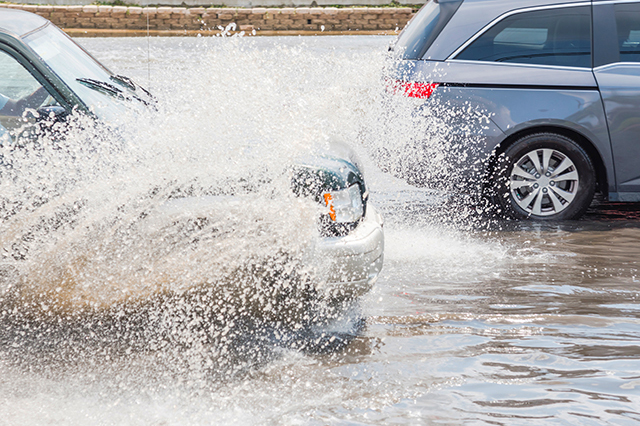
If you are caught in a few inches of water, your car will most likely be fine. If the water leaked into the vehicle’s interior, however, there may be real trouble.

Here are some tips and steps to take if your car becomes flooded.

  • Call your insurance company to check on coverage.
  • Take plenty of photos to document the damage.
  • Don’t start the car. Have it towed home or to a repair shop to be evaluated.
  • If the water was fresh (not brackish or salty) and the engine was off, you may be OK.
  • Driving into deep water could cause the engine to hydro-lock and cause extensive damage. When the engine sucks in water, that water can’t be compressed and will damage internal engine components.
  • Don’t start the car until it has fully dried out. Even though cars today have lots of computers, allowing the car to fully dry out may save all the expensive electronics. Think of a wet cellphone – sometimes if it is allowed to dry out, it will be OK – and so may your car.
  • The interior should be thoroughly cleaned and the carpets removed to fully dry out. This will help eliminate any mold or mildew.
  • Change all the vital fluids. They may be contaminated by water.
  • When in doubt have the vehicle evaluated by a reputable repair shop.

Have a question about flood-damaged cars? Leave them in the comments below.

Get a pre-purchase inspection by a trusted mechanic. Locate a AAA Approved Auto Repair facility near you.

Subscribe to Your AAA Newsletter

Sign up and receive updates for all of the latest articles on automotive, travel, money, lifestyle and so much more!

A Costa Rica Vacation Has Something for Everyone

Vacations can sometimes seem like a tug-of-war between those who want to get out and explore, and those who just want to chill out. In Costa Rica, there’s no need for competition, because everyone wins.

“Wherever you are in Costa Rica you can have a different experience,” said Jodi Abata, a AAA travel advisor based in Wayne, N.J. “It’s not just a beach destination. There are rainforests, an active volcano and exotic plants and animals. It’s an amazing place for families with ziplines, horseback riding, thermal baths and more.”

Costa Rica’s location explains its best-of-all-worlds reputation: This Central American nation has Pacific and Caribbean coastlines separated by a mountainous interior. The latter is covered in dense jungle and rainforests alive with four species of monkeys, tree sloths, toucans and more.

The phrase “pura vida” can be seen and heard throughout Costa Rica. Though it directly translates to “pure life,” its meaning goes much deeper. Used as both a greeting and a farewell, it encompasses the positive spirit of Costa Rican culture. It represents enjoying the simply things, connecting with and respecting nature and being grateful for every day. Come experience it!

Your Costa Rica vacation is just a click away. Book now.

costa rica - monkey

Where to Stay in Costa Rica

Both coasts of Costa Rica have beautiful beaches but offer distinctive experiences.

While all-inclusive resorts are strongly associated with the Caribbean, in Costa Rica, the big resorts are located on the Pacific Coast in Guanacaste and Puntarenas provinces.

Costa Rica’s shorter Caribbean shoreline, entirely contained within Limon province, is far less developed and home mostly to villas and boutique hotels.

In Guanacaste, for example, you can vacation at the family-friendly, AAA Four Diamond designated Planet Hollywood Costa Rica, an all-inclusive Marriott Autograph Collection property. Or splurge on a couples escape to the Four Seasons Resort Papagayo, the adults-only, all-inclusive Secrets Papagayo or the Andaz Costa Rica Resort at Peninsula Papagayo.

Let's plan something wonderful

Book your next trip with AAA Travel now or call 866-423-5585 to speak with a travel advisor.

Book Now

Things to Do in Costa Rica

Costa Rica’s excellent road system allows visitors to move freely around the country, and many travelers choose to mix a relaxing beach stay with adventurous explorations in the country’s interior, said Abata.

Arenal Volcano National Park and the spectacular La Fortuna Waterfall, two of Costa Rica’s most popular backcountry destinations, are under three hours’ drive from Limon and under four hours by road from Guanacaste.

The park and surrounding Arenal Conservation Area are home to their namesake active stratovolcano – lava has been flowing here regularly since the 1960s! Hiking trails trace the path of the major eruption of Arenal volcano in 1968 as well as crossing a series of hanging bridges suspended in the rainforest canopy. Here, the dormant Chato volcano is also protected, with its crater lagoon, Lake Arenal.

Nearby lodging like the Springs Resort and Spa and Nayara Springs let you immerse in volcano-heated hot springs after a day of hiking and exploring.

costa rica vacation

More Costa Rica Activities and National Parks

While Costa Rica’s Caribbean coast is best known for low-key relaxation, there’s no shortage of activities when you want to get off the beach. Tortuguero National Park, named for the leatherback sea turtles that nest there, is full of rivers, canals and lagoons; it’s about two hours north of Limon by road.

Cahuita National Park is about half the distance away from Limon and preserves many of Costa Rica’s diverse charms in one place: Pristine beaches, coral reefs teeming with fish and rainforests where hikers may encounter tree sloths and raccoon-like coatis. To immerse yourself in local culture, head to the town of Puerto Limon, known for its rich Afro-Caribbean heritage.

Corcovado National Park, one of the most biodiverse places on the planet, is located on the isolated Osa Peninsula on Costa Rica’s southwest Pacific coast. Six native wild cats including oncillas, margays, pumas, jaguars, jaguarundis and ocelots mostly inhabit this remote area. It’s a long drive from anywhere, but a flight from the capital of San Jose to Drake Bay, about an hour from the park, takes 40-50 minutes.

costa rica vacation

Hiking is required to see some of Costa Rica’s most singular sites, but it’s not all hard work. The country abounds in ziplines and canopy tours. Zoom over tropical dry forests toward the Guanacaste coast on Diamante Eco Park’s Superman Canopy Zipline or hang like a spider monkey over a Pacific coast jungle with the Rainforest Adventures Aerial Tram in Jaco. The Arenal reserve offers thrilling ziplines and easygoing canopy tours, as well.

Exploring on horseback is another less strenuous way to enjoy Costa Rica’s natural beauty, with guided rides available along the beaches and into the rainforest.

Environmentally conscious and unspoiled, Costa Rica is a welcoming destination for Americans where English is widely spoken and the U.S. dollar is always accepted.

“It’s a beautiful country, with very nice people and a very safe place,” Abata said. “Costa Rica is its own little world.”

Did you know your AAA membership grants you access to your own travel team? Plan your Costa Rica vacation with the help of a trusted AAA travel advisor and customize your trip from start to finish. Call 866-423-5585 to speak with an advisor today!

Have you been to Costa Rica? Tell us what you love about it in the comments below.

Subscribe to Your AAA Newsletter

Sign up and receive updates for all of the latest articles on automotive, travel, money, lifestyle and so much more!

How to Pack a Moving Truck

Moving is a big job, but it helps when you know how to get the job done right. If you have a plan for how you’re going to pack your moving truck, it can make the entire process of moving smoother. Here’s how you can pack a moving truck like a pro.

Listen to Our Podcast

Moving out of your parents' house and into your first place? Check out Episode 9 of our podcast, Merging Into Life: Moving Out for the First Time.

Tune In

Break Down What You Can

The more compact something is, the easier it will be to move. Disassemble all the furniture you can, like bedframes, dining tables and desks. You can even take the feet off of your couches and upholstered chairs if you need to save space. If you are disassembling a piece of furniture, keep all parts (including screws, bolts and other small pieces) together, so that there is no confusion when you reassemble it in your new home.

Protect Your Furniture

Even if you can’t fit your items in a box, they still need to be protected. Use furniture padding to protect the surfaces of your belongings on their journey, so that it’s harder for them to scrape against each other. Rolling up a rug? Roll it with the carpet backing on the inside and cover the outside with plastic. Most moving trucks will include hooks and loops to help secure your items with tie-downs, which help anchor your items so they don’t shift and bump into each other when you hit the road.

how to pack a moving truck - family moving day

Get in Formation

When packing a truck, the experts at Penske recommend using the “I” formation. The heaviest items in should be flush along the front and back of the truck, with a line of heavy furniture and boxes running through the middle of the truck, creating the letter “I.” This helps the truck stay balanced and can prevent your items from being damaged.

The largest and heaviest items in your home, like your washing machine or refrigerator, should go in the moving truck before anything else. Make sure you have other people to help you carry these items – it’s probably going to be more than a two-person job. Put these items in the front of the truck, closest to the cab, and make sure they’re balanced along the width of the truck. Keep all items in an upright position.

Along the center of the truck, make a line of heavy furniture and boxes. A good strategy is to fill the center with your tables and desks, then store your heaviest boxes underneath them. On either side of the tables, you can store softer furniture items, like couches, upholstered chairs, rolled-up rugs, box springs and mattresses. Set aside all of your smallest items and boxes for later.

The back of the truck, closest to the doors, should be where you put all your additional heavy boxes to anchor the “I” formation.

Fill in the Gaps

Even after you’ve loaded in all your biggest furniture and heaviest boxes, you probably still have a lot of stuff left over. Fill in the gaps and crevices of your moving truck with your smaller items and boxes. A densely-packed truck will make sure that things don’t slide and knock into each other. This is also a good time to try and fit in your irregular-shaped items, like floor lamps.

Transfer your lighter boxes to the truck and stack them on top of the heavy ones. If you need to put more fragile items in the body of the car, put them close to the top and secure them so they won’t move around. It’s also a good idea to wrap them in a lot of padding. If you have small and extremely fragile items, it might be best to keep them in the cab with you.

Don’t forget – when renting a truck from Penske, AAA members receive exclusive savings of 12% or more.

Subscribe to Your AAA Newsletter

Sign up and receive updates for all of the latest articles on automotive, travel, money, lifestyle and so much more!

Ice Hotels and Attractions in the Northeast and Beyond

Ice hotels have quickly become a popular trend in travel, with new locations popping up around the globe. But it hasn’t stopped there. Now venues are taking it the next level, creating everything from elaborate bars and lounges to museums and castles constructed completely out of ice. Here are some can’t-miss ice attractions at home and abroad.

Ice Hotels

The Ice Hotel
Quebec, Canada

The Ice Hotel, or Hotel de Glace, is the only hotel in North American made of ice. Open seasonally, every winter the guests rooms are carved from scratch, complete with ice furniture and beds.

If sleeping in temperatures hovering around 25 degrees is too cold for your blood, you can buy tickets to visit the hotel, which also includes an ice bar.

Guests and non-guests alike are encouraged to experience a guided tour of the structure, during which you’ll discover the processes and secrets of the construction of the hotel, visit the ice workshop, make your own ice glass and top it off with a cocktail at the ice bar.

Icehotel
Jukkasjarvi, Sweden

Beginning in 1989, Icehotel, located in the small Swedish village of Jukkasjärvi, 125 miles north of the Arctic Circle, has been reconstructed every winter using tons of ice from the nearby Torne River.

Every aspect of the building is made from ice, down to the beds in guest rooms and glasses at the hotel bar. And it’s not just a place to sleep. Icehotel doubles as an art gallery, with roughly 40 artists creating ice carvings throughout the structure each year. Even if you don’t spend the night, you can take a guided tour of the hotel.

Icehotel offers both cold rooms, which maintain a temperature of 19 to 23 degrees, and warm rooms. It is recommended to stay one night in a cold room and a couple in a warm room. The location also features an ice bar and even a church.

Starting in 2016, the destination became a yearlong attraction with the creation of Icehotel 365, a permanent ice structure open to guests 365 days a year. It’s kept cold using a refrigeration unit run by energy from solar panels. The seasonal component of Icehotel continues to be constructed annually.

Ice Bars

The Sagamore Resort in Bolton Landing, N.Y., creates its Glacier Ice Bar each winter. It takes upward of 18,000 pounds of ice build the attraction, which also includes exquisite ice carvings. Guests can sip their drinks in the sub-zero lounge before warming up next to the fireplace at Caldwell’s Lobby Bar. The 2023 Glacier Ice Bar will be open on the weekends of Jan. 20-21 and 27-28.

Also from the Opal Collection of hotels and resorts, Samoset Resort on the Ocean in Rockport, Maine, has a similar ice bar and lounge, scheduled to open in 2023 the weekends of Jan. 13-15 and Jan. 20-21.

ice castles
(Photo: Ice Castles, Mary Siversten)

Ice Attractions

These cool ice attractions are available to experience both near and far. All of them are held annually, so if you can’t travel to them now, you can certainly add them to your wish list for the future.

Ice Castles
Lincoln, N.H., and Lake George, N.Y.

Ice castles are no longer just the things of fairy tales and Disney movies. Created by a company aptly named Ice Castles, these majestic frozen structures are built using hundreds of thousands of icicles hand-placed by professional ice artists. The castles include breathtaking LED-lit sculptures, frozen thrones, ice-carved tunnels, slides, fountains and more. The attraction has also been known to hold special events, such as visits from certain enchanted frozen princesses and fire performances. Opening January 2023.

Aurora Ice Museum
Fairbanks, Alaska

On the grounds of Chena Hot Springs Resort sits the Aurora Ice Museum. Created from more than 1,000 tons of harvested ice and snow, the museum is the world’s largest year-round ice environment. It stays a balmy 25 degrees thanks to a patented absorption chiller, the first of its kind used for this purpose.

Inside you’ll find ice sculptures of jousting knights, a giant chess set, igloos and spheres. It’s all the work of champion ice carver Steve Brice. Adding to the otherworldly allure are ice chandeliers that illuminate the space with the colors of the aurora borealis.

Harbin International Ice and Snow Festival
Harbin, China

Harbin’s ice festival is the largest in the world. Since temperatures are below freezing for half of the year here, residents have plenty of time to perfect their ice sculpting skills. The annual events takes place from December until the ice starts to melt in late February/March. The most popular attraction is the Ice and Snow World, consisting of huge landscapes, buildings, sculptures and slides, all built out of snow and ice and colorfully lit at night.

Hyde Park Winter Wonderland
London

Hyde Park Winter Wonderland is a wonderland unlike any other. It has roller coasters, ice skating, comedy shows, a circus and much more. And when it comes to ice, it has you covered.

The Magical Ice Kingdom is a forest filled with redwood trees, wolves, unicorns and more all carved from more than 500 tons of ice. To get your own ice carving career started, join an ice sculpting workshop. Here, you’ll get to create your own ice masterpiece under the tutelage of one of the U.K.’s finest ice artists. And finally, stop by Bar Ice for a festive drink surrounded by beautifully carved ice sculptures.

Would you like to visit any of these icy destinations? Tell us in the comments.

Plan your next getaway with AAA Travel

Featured image: ICEHOTEL 365, 2017-2018. Deluxe Suite 34 meters. Design Luca Roncoroni & Dave Ruane. Photo Asaf Kliger. © ICEHOTEL.

Subscribe to Your AAA Newsletter

Sign up and receive updates for all of the latest articles on automotive, travel, money, lifestyle and so much more!

Where to Go Whitewater Rafting in the Northeast

East Coasters don’t have to go out West to experience the thrills of whitewater rafting. The Northeast is home to a treasure trove of scenic rivers that offer different whitewater rafting experiences. It doesn’t matter if you’re a beginner looking for a gentle introduction or a seasoned paddler seeking a challenge; our region has it all, from the roaring rapids of the Adirondacks to the rocky valleys of New Hampshire.

However, before booking, make sure you fully understand what you’re getting yourself into. First, understand the nature of whitewater rapids, which are shallow river sections with waves and fast currents classified into six levels – from easy to extreme. Then, choose a trip that matches your skill level. Dress appropriately, wear your personal flotation device, and, most importantly, listen to your guide. With these safety tips, you can confidently embark on your rafting adventure.

Whitewater rafting season in the Northeast runs from late April to early October. Spring and early summer are especially great times to book to take advantage of the melting snow runoff.

Need a ride? Rent a car.

Androscoggin River, New Hampshire

The Androscoggin River in New Hampshire, flowing between the White Mountains and the Great North Woods region, sets the scene for a moderate trip suitable for kids as young as five. North Woods Rafting, based in the quiet town of Errol in northern New Hampshire, guides rafts through the Class II Errol Rapids, which are ideal for beginners. The trip concludes with a swim in Braggs Bay, a particularly gentle section of the river.

Concord River, Massachusetts

For a whitewater New England adventure just 30 minutes north of Boston, try rafting on the Concord River with Lowell Parks & Conservation Trust. Launching in Lowell, this urban trip is available only on weekends in April and May. Expertly guided by Zoar Outdoor, this trip, which offers dynamic Class III and IV rapids, supports conservation efforts along the Concord River. Note that this trip is suitable only for those aged 14 and older.

Deerfield River, Massachusetts

Tucked in the Berkshire Mountains, the Deerfield River offers both slow stretches and wild rapids like Zoar Gap, which features fast-moving water, large waves and technical obstacles – making it a top spot for whitewater rafting in the region. Zoar Outdoor in Charlemont runs various trips, including the 10-mile Zoar Gap Full-Day, the state’s longest commercial whitewater rafting experience. Crab Apple Whitewater, also launching trips from Charlemont, provides different challenge levels suitable for families and adventure-seekers alike.

whitewater

Delaware River, New York, New Jersey and Pennsylvania

Straddling the border of New Jersey, New York and Pennsylvania, the Delaware River makes an excellent escape from the summer heat. Its gentle rapids are ideal for beginners and families while still providing plenty of fun. Lander’s River Trips has five launch and landing locations between Callicoon, New York, and Matamoras, Pennsylvania, organizing expeditions for all skill levels, as well as riverside camping. Silver Canoe & Whitewater Rafting runs trips starting in Pond Eddy, New York, and ending in Port Jervis, with the Pocono Mountains on one side and the Catskills on the other.

Hudson River Gorge, Upstate New York

Less than four hours from New York City, the ordinarily gentle Hudson River is practically unrecognizable as it flows through the rugged Hudson River Gorge in the Adirondacks. Spring is perfect for thrill-seekers, with snowmelt boosting these rapids. For a ride that’s a little easier but still exciting, summer and fall trips are ideal for families and beginners. This time of year also offers the chance to spot bald eagles. Several outfitters operate in the area, such as the Adirondack Rafting Company in Indian Lake and Wild Waters Outdoor Center in Warrensburg near Lake George. Both organize full-day and even overnight camping trips with experienced guides.

West River, Vermont

In southern Vermont, the West River runs along the eastern edge of Green Mountain National Forest, near many of the area’s most well-known ski resorts. Rafters flock here based on scheduled releases of the Ball Mountain Dam in May and September, managed by the Army Corps of Engineers, so expect busy conditions at these times, especially on weekends. The West River’s continuous Class III rapids include particularly challenging sections with names like “Landslide” and “The Dumplings.” Crab Apple Whitewater guides trips starting from Mount Snow Ski Resort, while Zoar Outdoor launches from Jamaica, Vermont.

Have you ever been whitewater rafting? Tell us about it in the comments.

Subscribe to Your AAA Newsletter

Sign up and receive updates for all of the latest articles on automotive, travel, money, lifestyle and so much more!

The Coolest Cave Tours in the Northeast

Delve into a world of natural wonders that can only be seen when you go underground. Cave tours make for an especially cool day trip. (So cool, in fact, you might want to bring a jacket – underground temperatures can dip into the low 50s!). A visit to these awesome geological formations makes for a fun and educational adventure for all ages.

If you’re ready to head underground, here are our favorite cave tours in the Northeast.

Need a ride? Rent a car.

The Coolest Caves in New England

Lost River Gorge & Boulder Caves

North Woodstock, N.H.

Lost River stuns with enchanting natural beauty both above and below ground. Follow the scenic one-mile wooden boardwalk trail and wind past tumbling waterfalls and nearly a dozen glacial boulder caves with whimsical names like Lemon Squeezer and Bear Crawl. Two-hour guided lantern tours at dusk offer unique perspectives on the hidden depths of the caves. As a bonus, tours end with s’mores and a cozy campfire. The littlest explorers can even participate in a fun scavenger hunt as part of a Junior Gorge Guide program.

Polar Caves

Rumney, N.H.

At Polar Caves Park, you can explore nine granite caves from the last ice age. Why the name Polar Caves? They say it’s because even on the hottest days, you can feel the chill of the caves’ icy cold “breath.” This is a self-guided adventure, so plan to wander in and out of caves at your own pace. Above ground, children will delight in the small animal park with European fallow deer and ducks. You can purchase animal feed, as well as souvenirs and snacks at the park’s main lodge.

New York Cave Tours

Howe Caverns

Howes Cave, N.Y.

At Howe Caverns, you’ll be amazed by cave formations, underground streams and expansive chambers. A 90-minute guided tour traces the cave’s exhilarating discovery story. Wander through enormous rooms and under super-sized boulders on a 1.25-mile walk and 0.25-mile boat ride, all while 150 feet below the Earth’s surface. Specialty tours, including a two-hour lantern tour and a two-hour family flashlight tour, help bring to life the thrill of Lester Howe’s discovery of the caves in 1842. Uniquely, Howe Caverns hosts yoga and Zumba classes during summer months.

Secret Caverns

Howes Cave, N.Y.

Just two miles from Howe Caverns is the quirky yet captivating Secret Caverns, a roadside attraction that proudly claims to be the “Speleological Center of the Universe.” Speleology, of course, being the scientific study of caves. Bundle up since the caves maintain a refreshing 50 degrees year-round. Sign up for a guided 45- to 60-minute tour to get up close and personal with stalagmites, stalactites and flowstone. You’ll also spy a breathtaking 100-foot-tall underground waterfall. Make note, only cash is accepted here.

Pennsylvania Cave Adventures

Crystal Cave

Kutztown, Pa.

Crystal Cave offers a fascinating underground adventure. With a constant 54-degree temperature inside the cave, you’ll want a jacket or light sweater for the one-hour guided tour. Prepare to be awed by stunning stalactites, stalagmites and intricate formations with names like Totem Pole, Ear of Corn and Bacon. The tour starts with a short film on cave geology. Once back in the sunshine, pan for gems, get in a round of mini golf or treat yourself to a scoop at the on-site ice cream parlor.

Indian Echo Caverns

Hummelstown, Pa.

At Indian Echo Caverns, explorers go underground for a 45-minute adventure through awe-inspiring caverns that first opened to the public in 1929. Knowledgeable guides educate on the spectacular limestone formations, crystal-clear pools and mysterious passages within the 52-degree caverns. Above ground, the fun continues thanks to picnic areas, a playground, gem mining and a small petting zoo with goats, alpacas and chickens.

cave tour - lauuren caverns
Laurel Caverns. Photo by Alex Byers.

Laurel Caverns

Farmington, Pa.

Laurel Caverns boasts the largest cave system in Pennsylvania, featuring more than four miles of curious and narrow passages. Marvel at the expansive chambers and striking formations on a 30-minute guided or self-guided tour through illuminated sections of the caves. For the truly adventurous, weekend caving programs allow you to navigate tight, unlit spaces with hard hats and lights. Kids ages 4 to 9 will love The Grottos, a simulated cave experience that’s a fun and safe learning activity.

Penn’s Cave & Wildlife Park

Centre Hall, Pa.

Embark on a 45-minute guided tour aboard a flat-bottom motorboat through an underground waterway called Lake Nitanee at Penn’s Cave & Wildlife Park. This unique cave exploration wows with stunning views of limestone formations and chambers with names like The Statue of Liberty and Garden of the Gods. Afterward, explore the wildlife park on a 90-minute guided bus tour across 1,600 acres. Keep your eyes open for free-roaming bison, elk, bighorn sheep and red foxes.

Have you been on any of these cave tours? Tell us in the comments.

Featured image: Courtesy of Penn’s Cave & Wildlife Park

Subscribe to Your AAA Newsletter

Sign up and receive updates for all of the latest articles on automotive, travel, money, lifestyle and so much more!

Find Your Caribbean With Sandals & Beaches Resorts

Dreaming of a vacation that allows you to truly relax? Sandals® all-inclusive Caribbean resorts offer the ultimate in comfort and convenience in the most gorgeous tropical places.

From Sandals’ adults-only properties to its family-friendly Beaches resorts, you can find the stay that’s right for you, set along pristine beaches in Antigua, Barbados, the Bahamas, Curacao, Grenada, Jamaica, Saint Lucia, Turks and Caicos and Saint Vincent.

Just when you thought the Caribbean couldn’t get any more carefree, you can enjoy drinks, dining, entertainment, water activities, Wi-Fi, fitness centers, free roundtrip airport transfers and more – all without having to reach for your wallet. Even gratuities are included.

You don’t even have to worry about planning; a AAA travel advisor will take care of everything.

Discover Your All-Inclusive Caribbean Playground

Leave your wallet and your cares behind, because all-inclusive means just that. 

Start Exploring

For Adults

Sandals’ has 17 adults-only resorts on some of the Caribbean’s best beaches. Each destination is designed with couples in mind, outfitted with romantic suites and restaurants, quiet pathways, hidden grotto pools, firepits under the stars and included land and water activities for you and your partner.

There are seven Sandals resorts in Jamaica to choose from, including the original in Montego Bay, tucked along one of the longest and most secluded white sand beaches on the island. Sandals South Coast also stands out for the two miles of coast on which it rests.

sandals grenada

Sandals Royal Bahamian in Nassau, Bahamas, is especially luxurious. With seven pools, a spa, the all-new Coconut Grove lounge area and unlimited dining at your choice of 10 exquisite restaurants (plus two new food trucks!), you may not want to leave.

For a different view, Sandals Regency La Toc in Saint Lucia makes its home in a 220-acre tropical estate, overlooking a sloping hillside that ends at a gorgeous golden beach. Sandals Royal Curacao sits on 3,000 acres on the Spanish Water Bay and Caribbean Sea, surrounded by mountains.

Sandals Saint Vincent is the newest resort. Home to a private cove, it gives guests the chance to explore a quieter island.

beaches resort

For the Family

For families, there’s Sandals’ sister resorts, Beaches. With two properties in Jamaica – Beaches Negril and Beaches Ocho Rios – and one in Turks & Caicos, Caribbean adventures await for everyone in your crew.

In addition to the anytime gourmet dining options and endless activity inclusions that Sandal’s is known for, Beaches resorts also has on-site water parks and kids’ programs.

Each resort has six children’s programs broken down by ages and staffed by trained nannies, allowing parents to have a dinner date or just some alone time. Featuring age-appropriate activities in separate groups for newborns up to age 17, some of the nannies have completed specialized training to care for children with autism and other special needs.

Resorts also include Caribbean Adventures with Sesame Street, giving little ones a chance to hang out with their favorite characters.

sandals montego bay

Included Activities

If you love the water, gear up for endless fun. Resorts offer snorkeling, scuba diving (for certified divers), aqua trikes, paddle boarding, wind surfing, kayaking and catamaran sailing. Some locations also have motorized activities such as water skiing, wake boarding and banana boat rides. Guests ages eight and older at Beaches Turks & Caicos resort can take an eight-hour course to learn to sail.

When you’ve had your fill of the beach, Beaches guests can wash off the sand at the resorts’ water parks, with towering waterslides as well as lazy rivers, wave pools and other attractions, or just plunge into one of the swimming pools.

Equally numerous and varied are the choices of on-land games and activities, including golf (complimentary roundtrip transfers to nearby Sandals golf resorts and green fees are waived in Jamaica and Saint Lucia), basketball, beach volleyball, soccer, tennis, pickleball, shuffleboard, bocce, horseshoes and table games. Or stop in the fitness center for a more structured workout.

Guests can also sign up for excursions and spa treatments, which cost extra.

Exquisite Dining

All that activity requires fuel, and there is no shortage of restaurants to fill up the tanks. Resorts have multiple restaurants, featuring cuisine from around the world. Sandals also tries to highlight locally grown and native foods on its menus. Each resort has at least five bars that serve premium liquor and there are stocked bars in every room. Unlimited snacking between meals is also available, for those anytime cravings, and can be delivered to your room.

Contact your AAA travel agent and plan your next getaway today! 

Subscribe to Your AAA Newsletter

Sign up and receive updates for all of the latest articles on automotive, travel, money, lifestyle and so much more!

Google’s Project Green Light Eases Traffic Jams

Nothing raises blood pressure faster, gets jaws clenched tighter and turns language bluer than traffic jams.

American drivers spend about 51 hours per year sitting in traffic, an average of almost an hour a week. This congestion not only takes a toll on tempers, but pocketbooks as well. All that sitting and fuming equates to about $869 worth of lost time, according to the 2023 Global Traffic Scorecard, produced by global analytics firm INRIX.

Artificial Intelligence, though, has brought relief to one of the nation’s most congested cities, Boston. By working with Google’s Project Green Light, the city has enacted four recommendations for changing signal timing at intersections in Fenway-Kenmore, Mission Hill and Jamaica Plain.

Since implementing the changes at the intersections of Huntington Avenue and Opera Place and at Amory and Green streets, stop-and-go traffic has declined by more than 50 percent, and greenhouse gas emissions have decreased as well.

Boston was ranked eighth in the world for highest traffic delays in 2023, according to the Global Traffic Scorecard. (New York City ranks first – no surprise.)

“One of the most frustrating parts of living in a major city is traffic, so Boston is taking every step to combat congestion and get people to where they need to go,” said Mayor Michelle Wu, in a prepared statement. “We often find that small traffic hotspots from mistimed signals or curbside issues can swell into larger congestion, so targeting these micro spots goes a long way.”

The collaboration with Project Green Light began in February 2024. Prior to making recommendations, Google analyzed traffic at hundreds of signalized intersections using AI and Google Maps driving trends to develop new traffic signalization and patterns.

“We are just starting to realize the potential of machine learning and AI in some of the city’s core operations,” said Michael Lawrence Evans, Boston’s director of emerging technology. “Our partnership with Google’s Project Green Light team demonstrates how this technology can have an immediate impact on a common experience like traffic congestion, while paving the way for continuous improvements across our traffic signal network.”

Seattle is the only other U.S. city involved with Project Green Light. The program is now operating in 14 cities on four continents.

“Through Project Green Light, we are using AI to help improve the lives of people in cities around the globe by reducing traffic and emissions,” added Matheus Vervloet, product manager at Google.

How do you avoid traffic jams? Tell us in the comments.

Subscribe to Your AAA Newsletter

Sign up and receive updates for all of the latest articles on automotive, travel, money, lifestyle and so much more!

20 Pet-Friendly Restaurants & Hotels in the Northeast

The least exciting part of a highly anticipated vacation is leaving your fluffy friends behind. Thankfully, you don’t always have to. There are plenty of pet-friendly restaurants and hotels throughout the Northeast that invite all members of the family – four-legged included!

From hip eateries to AAA-approved hotels, here are some of our favorite places to take your pet on your next day trip or vacation in the Northeast.

Please remember to call all pet-friendly establishments ahead to check for any restrictions or fees.

Need pet insurance? AAA has you covered.

Pet-Friendly Restaurants in the Northeast

The Backyard Restaurant at Solé East

Montauk, N.Y.

This health-conscious Mediterranean eatery in Montauk is attached to the Solé East Resort, which anchors the eastern corner of Long Island in the Hamptons. A cozy collection of Adirondack chairs invites you and Fido to sit and rest while listening to the faint sound of waves just a five-minute walk away.

Parnell’s Pub & Restaurant

New York, N.Y.

Bring your pets to the center of New York City at Parnell’s, a traditional Irish pub with dog-friendly outdoor tables. Once you’ve had your fill, give your pooch some exercise by ambling westward to Hell’s Kitchen or north to the Upper East Side.

The Wilson

New York, N.Y.

This elegant New York City restaurant has a menu just for dogs! Spoil your pup like never before with grilled steak, grilled chicken breast or Wilson’s burger, all served with steamed baby vegetables. For a lighter treat, order off the Spa Day menu, for mixed berries, a house made dog biscuit, slices apples and cucumbers or a popsicle.

Kim Marie’s Eat n Drink Away

Asbury Park, N.J.

Reviewers say this American pub has a menu for dogs, which means there’s a delicious selection for both you and your pup. Sidewalk seating means that a patch of grass or ray of sunshine is never far away.

Jealous Monk

Mystic, Conn.

Jealous Monk, home of Mystic’s only beer garden, allows dogs outside, and in their winter igloos. This friendly gathering spot serves up bratwurst, schnitzel and an ever-rotating variety of brews on tap. It’s the perfect place for friends and their furry companions to meet for an afternoon or evening of good conversation and good eats.

Listen to Our Podcast

Ready to bring home a new best friend? Listen to Episode 8 of our podcast, Merging Into Life: First-Time Pet Owner’s Guide.

Tune In

Lucky Lou’s Bar and Grill

Wethersfield, Conn.

Lucky Lou’s is a pet-friendly restaurant that serves a medley of classic American and Italian dishes. The seasonal dog-welcoming patio extends the dining room, established in the historic 1787 Deming-Standish House in Old Wethersfield.

Windjammer Surf Bar

Westerly, R.I.

Is there anything as relaxing as basking in the sunshine and watching the waves roll in with your best friend by your side? Windjammer Surf Bar is a family- and pet-friendly establishment with live music, beach access and a full bar.

State Street Provisions

Boston, Mass.

It’s not always easy to find a pet-friendly restaurant in Boston. State Street Provisions has a waterfront dog-friendly patio that’s ideal for indulging with a cheese board, raw bar offerings or a cup of classic clam chowder.

Village Tavern Grill & Oyster Bar

Salem, Mass.

Salem’s Village Tavern serves an American menu that includes smoked wings and thick burgers. Sidewalk tables allow you and your pooch to watch the world go by (and sneak a peek at the Peabody Essex Museum across the way).

Rek-Lis Brewing Company

Bethlehem, N.H.

Your pet will love this lively brewpub with stunning views of the White Mountains. The beer garden fills up quickly for Sunday brunch, so arrive early to snag a table. Then sink your teeth into a fresh burger and take your pick of brews from the rotating list.

pet-friendly hotels

10 Pet-Friendly Hotels in the Northeast

The Westin Hotel

Buffalo, N.Y.

Pets stay free at the AAA Four Diamond-Designated Westin in Buffalo. The elegant hotel features a restaurant, convenience store and fitness center in the heart of downtown. Your pup will love their cozy dog beds, too. Book now.

The Asbury

Asbury Park, N.J.

You’re welcome to bring up to two pets during your stay at the colorful, eclectic Asbury Hotel. With a rooftop lounge, outdoor movie theater and regular live music events, you and your fur babies have plenty of opportunities to spend quality time together outside. Book now.

The Berkeley Oceanfront Hotel

Asbury Park, N.J.

Another Asbury Park landmark, the Berkeley Oceanfront Hotel has a reputation as an incredibly pet-friendly hotel. Once you’ve signed the hotel’s pet policy waiver, you and your small pooch can take a quick stroll to Asbury Park Beach, where a boardwalk full of souvenir shops and fun eateries awaits. Book now.

Bungalow Hotel

Long Branch, N.J.

Do you fall head over heels for artsy, design-centric lodging? Then you and your pet will love the kid-, dog- and cat-friendly Bungalow Hotel. The property even has a grassy relief area for pets. Book now.

Omni New Haven Hotel at Yale

New Haven, Conn.

Furry friends of Yale students will enjoy a stay at the AAA Three Diamond Designated Omni, where food and water bowls are available upon request. A nearby park offers lots of green space for relief and roaming. Book now.

Hyatt House Hartford North/Windsor

Hartford, Conn.

An outdoor fire pit and grilling area welcomes families to the Hyatt House Hartford North. This pet-friendly hotel makes a great home base for exploring historic Windsor’s Northwest Park & Nature Center or the Oliver Ellsworth Homestead. Book now.

Graduate Providence

Providence, R.I.

The Graduate Hotel group has a reputation for quirky, hyperlocal décor and pet-friendly policies. The AAA Three Diamond Designated Graduate Providence is no exception. Add in the 24-hour fitness center, complimentary bike rentals and spa services, and you’ve got yourself a relaxing stay for the whole family! Book now.

Hawthorne Hotel

Salem, Mass.

The pet-friendly Hawthorne Hotel exudes elegance and style. A member of the Historic Hotels of America, the establishment offers a VIP (Very Important Pets) package that includes dog treats and $10 toward an item on the pet-focused room service menu.

Boston Park Plaza

Boston, Mass.

Opened in 1927 in the heart of Boston, the AAA Four Diamond Designated Boston Park Plaza is one of the most pet-friendly hotels in the Cradle of Liberty. The hotel concierge even offers dog walking services. Book now.

The Glen House

Gorham, N.H.

Anchored below Mount Washington, The Glen House acts as a home base for exploring New Hampshire’s beautiful outdoors. Only a handful of rooms are pet-friendly, so book early if you’d like the package that includes a comfy bed, bowl and treat for Spot. Book now.

Get more tips for traveling with pets.

Did you know that you can add your pet to your AAA membership? With the complimentary AAA Pet ID Tag Program, AAA can help safely reunite lost pets with their owners. Drop by your local AAA branch to sign up.

What are your favorite pet-friendly restaurants and hotels? Tell us in the comments below.

This article has been updated and republished from a previous version. 

Subscribe to Your AAA Newsletter

Sign up and receive updates for all of the latest articles on automotive, travel, money, lifestyle and so much more!

What You Need to Know About Dog Car Restraints

It’s true: Home is wherever your pet is. The most recent statistics show that about 45% of households have dogs and 26% have cats, according to the American Veterinary Medical Association. While many pet owners like bringing their pets along on car trips, they may not be aware of cat or dog car restraint laws. 

Laws on restraining pets differ from state to state, but it’s the invariable laws of physics that are most important when it comes to the safety of you and your pet. If a vehicle is traveling at 60 miles per hour, so are its passengers, and any unrestrained passenger (human or animal) becomes a projectile in a crash unless restrained. A 30-pound dog traveling at 60 miles per hour requires 1,800 pounds of restraining force, making it impossible to hold onto a pet to restrain them in your arms.

Pets can also easily become distractions in the car. Whether you’re taking them to the vet or a park or bringing them along for a hike or road trip, using pet restraints like dog car seats or seat belts help keep them safe in case of a crash and lower the chances they will disrupt your driving.

If you’re driving with your pet in the car, you should get to know your state’s restraint laws, as well as the laws of other states you may cross into.

Northeast Dog Car Restraint Laws by State

Connecticut

In Connecticut, distracted driving laws could be applied to drivers carrying their pet on their laps. When it comes to dogs being transported in an open truck bed, they must be contained in a crate or cage. This is a measure to prevent them from falling or jumping out of the vehicle.

Maine

For pickup trucks, convertibles and other open vehicles, Maine laws require some kind of dog car restraint in order to protect canines from being thrown from or trying to escape the automobile. Additionally, pets shouldn’t be carried on the driver’s lap. Violators can be charged under distracted driving laws. 

Massachusetts

Again, dogs being transported in the bed of a truck must be safely secured, in either a cage or crate that is properly tethered to the vehicle. There are also height requirements for the sides and tailgate of a truck – they must be at least 46 inches high. Fines can start at $50.

In Massachusetts, laws also prohibit essentially anything that could interfere with a driver’s operation of their vehicle. Though the language is a bit vague, this law can prevent a dog from riding on the driver’s lap, sitting in the front seat or being unrestrained in the car.

New Hampshire

Similar to other states, dogs traveling in truck beds must be properly secured within a crate or cage that’s correctly cross tethered to the vehicle. New Hampshire laws also require certain heights for the sides and tailgate of the vehicle.

Listen to Our Podcast

Ready to bring home a new best friend? Listen to Episode 8 of our podcast, Merging Into Life: First-Time Pet Owner’s Guide.

Tune In
New Jersey 

In New Jersey, carrying an animal in a cruel or inhumane manner can result in a fine. This kind of disorderly offense could cost a driver anywhere between $250 and $1,000 per offense. Using safety restraints can help protect your pet.

New York

Currently, New York does not have specific laws regarding how to properly restrain pets in the car. A bill prohibiting unrestrained animals in automobiles was first proposed in 2009 but has yet to pass in the state legislature.

Rhode Island

In Rhode Island, dogs traveling in a vehicle need to be secured in some way. This can include within a crate, restrained with a harness or dog car seat belt. Pets can also be under the physical control of a person other than the driver. Violators who don’t restrain their dogs can pay a fine up to $200 depending on the number of offenses.

Vermont

Vermont‘s laws regarding pet restraints are a bit more ambiguous. According to this state’s laws, animals cannot be transported in a cruel or inhumane manner. So safely securing your pet isn’t a bad idea in Vermont.

Approved Harnesses and Carriers

Some northeastern states have laws requiring dogs be restrained or secured while riding in a vehicle, while other states’ laws are a bit more vague. If you would rather err on the side of caution and opt to use some kind of pet restraint, there are many safe options to choose from.

The Center for Pet Safety approved several safety harnesses, including the Sleepypod Clickit Sport, Sleepypod Clickit Terrain and ZuGoPet Rocketeer Pack. Sleepypod’s full line of carriers is also CPS certified. 

Kurgo products are designed for owners and dogs with an active lifestyle. They sell a variety of car products, like the crash-tested Car Safety Dog Harness and Seatbelt Tether.

Additional Pet Needs

When it comes to other pet needs on the road, be sure you have enough food, treats and water. A reflective leash and portable water bowl are helpful to have on hand, as well as a few toys. And finally, don’t leave home without your dog’s collar and ID tag(s).

If you’re taking your pet on a longer trip, check out these tips.

And did you know you can add your pet to your AAA membership? With the complimentary AAA Pet ID Tag Program, AAA can help reunite lost pets with their owners. It’s just another way we provide peace of mind to our members. Visit your local AAA branch to register your pet.

Do you drive with your pets? How do you keep them safe in the car? Tell us in the comments. 

Subscribe to Your AAA Newsletter

Sign up and receive updates for all of the latest articles on automotive, travel, money, lifestyle and so much more!

20 Things to Do in Connecticut Under $20

budget wise

There’s lots more to Connecticut than picturesque fall foliage and charming small towns (although we do love it for that, too.) The Constitution State has so much to offer to both out-of-state visitors and locals alike – and all within a budget, too.

These are our top 20 things to do in Connecticut for $20 or less.

Need a ride? Rent a car.

Harkness Memorial State Park Price Varies

This park’s 237 acres of pristinely maintained gardens, beaches and historical buildings can be enjoyed all year round. Walk the stunning grounds, have a picnic, tour the Roman Renaissance Revival-style mansion or simply take in the panoramic views of Long Island Sound. Free for in-state registered vehicles. $15 for out-of-state on weekends and $10 on weekdays.

Avery’s Beverages $13.50

Just like its founder 100 years ago, Avery’s is still handcrafting and bottling small-batch craft soda in the trademark red barn on Corbin Avenue. Try one of its classic flavors like cola and ginger ale or test your bravery with a “Totally Gross” flavor like Toxic Slime. You can even make your own flavor on a visit to the mixing room. If you’re looking for a fun, cheap thing to do in Connecticut, this is it.

B.F. Clyde’s Cider Mill Free

Every Sept. 1, B.F. Clyde’s Cider Mill opens just in time for the fall season. Good thing, too – it’s the perfect autumn activity to experience. As the last remaining steam-powered cider mill in the country, you can watch an apple pressing demonstration while you eat an apple cider doughnut and sip on either iced or hot apple cider. Is there anything more fall coded?

The Book Barn Free

The tagline for The Book Barn says it all: “A bibliophile’s bliss.” We’d have to agree, seeing as you can browse more than 500,000 books between their three locations. If it’s your first time, we recommend visiting the Main Barn as your introduction. From the multiple buildings with books stacked to the ceiling to farm animals, roaming cats, water features and more, there’s enough to keep any book lover happy to stay for a lifetime.

Buttonwood Farm Sunflowers $3 donation

The Sunflowers for Wishes event held at Buttonwood Farm is an annual tradition with lots of heart. Every year, 14 acres of sunflowers are planted for guests to pick for a $3 donation – 100% of which goes to the Make A Wish Foundation of Connecticut, which grants wishes to children with critical illnesses.

Coventry Farmer’s Market Free

Beginning at the start of June, the Coventry Farmer’s Market sets up shop each week on the grounds of the Nathan Hale Homestead and offers an enormous array of locally grown, locally produced and locally made goods. Every week has a different theme – like Strawberry Fest, Farm-to-Table, Dog Day, Sweet Treats and many more.

Cruise to Thimble Islands $18

The Thimble Islands weren’t named so for their small size, but it’s fitting, anyway. An archipelago of 365 tiny islands in Stony Creek Harbor, the Thimble Islands are both beloved for their beauty and seclusion and revered for their folklore – namely, the claim that the infamous Captain Kidd buried his treasure there. Take a 45-minute cruise around the Thimbles to see them all up close.   

Dinosaur State Park $6

See where dinosaurs literally walked 200 million years ago. As one of the biggest sites for dinosaur tracks in North America, Dinosaur State Park acts as life-size diorama of the Jurassic age and offers an up-close look at footprints, fossils, interactive exhibits and over 2 miles of trails for hiking and exploring.

Gillette Castle State Park $6

A castle in Connecticut? Yes, really! Built in 1919, Gillette Castle was the home of William Gillette, an actor best known for his portrayal of Sherlock Holmes. Today, you can take a guided tour of the castle’s unconventional interior, walk the beautiful grounds and check out the quarter-scale railroad that circles the 122-acre property.

Liuzzi Gourmet Food Market

Liuzzi Gourmet Food Market is a fifth-generation family-owned marketplace, better known as an Italian wonderland. Besides all the delicious sights and smells, visitors can enjoy browsing the high-quality products, including cheese, meats, grocery items and – perhaps best of all – the bakery where fresh focaccia comes steaming out of the oven.

Lobster Landing

As a Connecticut staple, Lobster Landing is beloved for a reason. Enjoy a variety of delicious fresh seafood set against the most charming, no-frills seaside hut as a backdrop (complete with an askew “o” in “Lobster.”) Admittedly, the lobster rolls are more than $20, but the rest of the menu stays under budget, from a $4 hot dog to lobster bisque for $9 and change.

Norwalk Oyster Festival $15

The 46th annual Norwalk Oyster Festival is happening Sept. 6 to 8 at Veterans Memorial Park. The event is sure to be a hit with carnival rides, an arts and crafts sale and plenty of food offerings for every taste. That’s right, you don’t have to be an oyster fiend to attend; the International Food Court serves up a variety of cuisine that includes Mexican, Columbian and Italian.

Olde Mistick Village Free

A perfect activity for families (including the furry members) is a stroll around Olde Mistick Village. It’s one of the best free things to do in Connecticut. Chock full of quaint shops and restaurants, the village offers plenty to do from exploring a “haunted” book shop, to trying some homemade fudge or even picking your wizard house.

Pratt Street Salsa Socials Free

It’s time to get your salsa on! Happening once a month through September, the Pratt Street Salsa Socials are events where everyone gets in on the fun. The music will be playing – you just have to start dancing!

Saville Dam Free

Looking straight out of a storybook, Saville Dam sits at the top of the Barkhamsted Reservoir and is surrounded by picturesque tree-dotted hills. The castle-like structure is a great place to take in the views, have a photo op or hike the 22-mile scenic trail loop that encircles the sparkling reservoir.

Talcott Mountain State Park Free

Hikers will enjoy the moderately difficult climb to the summit of Talcott Mountain where they’ll be greeted by the impressive Heublein Tower. From the top, 360-degree views include Mount Monadnock, the Berkshires and even Long Island Sound.

Terrain

As a cafe and garden shop, Terrain is a plant-lover’s paradise. Wander through the incredibly curated space that inevitably distorts the line between indoor and outdoor. Cafe fare boasts seasonally inspired dishes, coffee and tea, sweet treats and more.

Try the famous local pizza Price Varies

A visit to Connecticut simply wouldn’t be complete without sampling some New Haven-style ‘za. Famous for its extremely thin crust and coal-fire bake, you can’t go wrong. Make a trip out to Wooster Street to try both Sally’s Apizza and Frank Pepe’s where small pizzas go for about $18 on average.

Wadsworth Atheneum Museum of Art $20

Prepare to be wowed by the almost 50,000 works of art here at the Wadsworth Atheneum Museum of Art. As the oldest operating public art museum in the country, the museum houses many collections from Greek and Roman antiquities to African American arts and textiles. Works are distributed among five connected buildings, so we recommend reserving a good chunk of time to see it all.

Yale Peabody Museum Free

After four years of major renovations, Yale’s natural history museum is back and open to the public once again. Enjoy exhibits all about our world’s past and present, including the halls of dinosaurs, minerals, earth and space.

Find more things to do in the Northeast for under $20.

What are some of your favorite activities in Connecticut under $20? What did we miss? Tell us in the comments!

Subscribe to Your AAA Newsletter

Sign up and receive updates for all of the latest articles on automotive, travel, money, lifestyle and so much more!

20 Things to Do in New York Under $20

budget wise

Out of the many things that New York is famous for – its vibrant culture, being a hub of creativity, the city that never sleeps, etc. – being a cheap place to visit certainly isn’t one of them. So, it may come as a surprise that there are plenty of things to do in the state that won’t max out your credit card.

These are our top 20 things to do in New York for $20 or less.

Need a ride? Rent a car.

Antique Boat Museum – $15

Nestled on the picturesque St. Lawrence River in Clayton, the Antique Boat Museum is a fascinating journey through maritime history. Boasting the largest collection of freshwater antique boats in the world, visitors can explore beautifully restored vessels dating back to the 19th century.

Brooklyn Literary Audio Walking Tour – Free

This captivating audio walking tour brings to life the borough’s rich literary history. From the cobblestone streets of Brooklyn Heights, where literary giants like Truman Capote once roamed, to the vibrant cafes of Park Slope frequented by contemporary writers, each stop is a chapter in Brooklyn’s literary narrative.

Protect Your Hobby and Investment

Get better protection for your classic vehicles with collector car insurance through AAA.

Learn More

Bronx Zoo – $17.95 Wednesdays

Spanning 265 acres in the heart of the Bronx, the Bronx Zoo is not just a wildlife sanctuary but an immersive journey into the animal kingdom. Home to over 6,000 animals representing more than 700 species, it offers visitors a chance to encounter everything from majestic lions to playful penguins. The zoo’s conservation efforts underscore its commitment to wildlife preservation, making it a beloved destination for all nature enthusiasts. Save on admission with AAA Tickets.

Buffalo Museum of Science – $19

Explore the mysteries of Earth’s ecosystems, delve into the cosmos in the observatory, engage with hands-on activities and so much more at the Buffalo Museum of Science. A hub of curiosity and discovery for all ages, the museum blends education with entertainment to display an enormous collection of exhibits the whole family will enjoy.

Cornell Botanic Gardens – Free

Located within Cornell University’s sprawling campus in Ithaca, the Cornell Botanic Gardens is a serene retreat encompassing 4,300 acres of natural beauty. Visitors can explore an array of gardens, including the aromatic herb garden and the tranquil Japanese garden, each curated to show the beauty and diversity of plant life. Beyond gardens, there are scenic trails and waterfalls for guests to discover on the grounds.

Bryant Park – Free

Tucked amid the bustling streets of Midtown Manhattan, Bryant Park offers an oasis in the heart of the city. Not only a popular gathering spot for locals and city visitors alike, the park also has dining options, free Wi-Fi, the occasional outdoor movie and a seasonal ice skating rink, providing year-round entertainment against the backdrop of skyscrapers.

Empire State Trail – Free

The Empire State Trail is New York’s premier multi-use trail, spanning over 750 miles from the Hudson Valley to the Canadian border and New York City. Whether cycling, hiking, running or walking, outdoor enthusiasts will encounter historic landmarks, charming towns and natural wonders along the way, making these particular trails a true testament to the beauty of the Empire State’s diverse landscapes.

Finger Lakes Drive-In – $8

Experience nostalgia under the stars at one of the Finger Lakes’ cherished drive-in theaters. Offering a unique blend of classic Americana and modern entertainment, you can catch the latest blockbuster hit surrounded by rolling hills and shimmering lakes.

Jones Beach – $10

Situated on a barrier island off the coast of Long Island, Jones Beach State Park beckons with pristine sandy shores and iconic Art Deco architecture. Spanning for miles, it’s a haven for beachgoers for swimming and sunbathing, as well as concerts, a classic boardwalk and nearby nature trails.

Little Island – Free

What’s the tulip-shaped island floating above the Hudson River in New York City? That’s Little Island! Designed by British architect Thomas Heatherwick, the park features lush gardens, winding pathways and panoramic views of the Manhattan skyline. You can also catch frequent live performances and art installations by checking out the park’s event calendar online.

Mendon Ponds Park – Free

A nature lover’s paradise near Rochester, Mendon Ponds Park is a sprawling paradise encompassing over 2,500 acres of woodlands, wetlands and glacially created ponds. Trails wind through diverse ecosystems, offering opportunities for hiking, fishing, kayaking and even cross-country skiing and snowshoeing in the wintertime. The park’s historic structures (Tudor-style mansion and barns) offer a charming glimpse into its agricultural past.

Montauk Point Lighthouse – $15

Perched on the easternmost point of Long Island, the Montauk Point Lighthouse is a beacon of maritime history. Constructed in 1796, it is the oldest lighthouse in New York and its perch allows for breathtaking views of the Atlantic Ocean and Block Island Sound. Climb the 137 steps to the observation deck or explore the on-site museum to learn about its storied past. Don’t miss the Big Duck on your way there!

New York Public Library – Free

An undisputed icon of New York City, the New York Public Library is more than just a repository of books – it’s a living testament to knowledge, history and architectural grandeur. Its vast collection spans centuries and genres, from rare manuscripts to the bestsellers of today. Visitors can marvel at the Rose Main Reading Room, attend lectures and exhibitions or take a self-guided audio tour.

Niagara Falls – Free

One of the world’s natural wonders, Niagara Falls is a beloved phenomenon sharing the borders of the United States and Canada. Visitors can choose to take in the views from multiple observation decks, explore the surrounding parks and attractions or see the falls up close on a boat tour (don’t forget your parka!). It’s undeniably one of the best things to do in upstate New York.

Sands Point Preserve Conservatory – $15 per car / $4 walk-in

This historic estate on Long Island features magnificent gardens, mansions and waterfront views. The preserve is made up of Hempstead House, a Tudor-style mansion with opulent interiors and views of Long Island Sound, formal gardens, nature trails and the Phil Dejana Learning Center, which offers educational programs on conservation and sustainability.

Sleepy Hollow Cemetery – Free

Steeped in legend and literary history, Sleepy Hollow Cemetery is a hauntingly beautiful place in the Hudson Valley. With its winding paths, ornate mausoleums, historic gravesites and centuries-old trees, it’s no wonder that it was inspiration for “The Legend of Sleepy Hollow,” by Washington Irving – who, by the way, is buried here, too. Walk the grounds on your own or opt for a guided tour so you don’t miss any spooky detail.

South Street Seaport – Free

A historic district in Lower Manhattan offering maritime history, shops and waterfront dining, South Street Seaport is a great place to stroll and explore. Visitors will find tons of charming maritime paraphernalia, a waterfront promenade, outdoor markets and an array of restaurants that open up to views of the East River and Brooklyn Bridge.

Staten Island Ferry – Free

More than just a commute between Manhattan and Staten Island, the Staten Island Ferry provides a front-row seat to some of New York City’s most iconic landmarks. As the ferry glides across New York Harbor, passengers enjoy stunning views of the Statue of Liberty, Ellis Island and the never-not-mesmerizing Manhattan skyline. The 25-minute journey is free of charge and operates around the clock.

Vanderbilt Museum – $12

A lavish mansion and museum complex on Long Island’s Gold Coast, the Vanderbilt Museum is a sprawling estate that showcases art, marine life and historic artifacts along with a glimpse into the opulent lifestyle of the Gilded Age. Explore themed gardens, tour the mansion, pique your curiosity with rotating exhibits or catch an outdoor concert.

Walkway Over The Hudson – Free

Spanning the Hudson River from Poughkeepsie to Highland, the Walkway Over The Hudson is an engineering innovation sprawled against scenic natural beauty. Originally a railroad bridge, it is now the world’s longest elevated pedestrian bridge with views of the Hudson River Valley and surrounding mountains. Walk, jog or bike across, making sure to stop now and then at intentionally placed scenic overlooks that highlight the area’s history.

Find more things to do in the Northeast for under $20.

What’s your favorite thing to do in New York under $20? Let us know in the comments!

Subscribe to Your AAA Newsletter

Sign up and receive updates for all of the latest articles on automotive, travel, money, lifestyle and so much more!

Please Your Pet’s Palate With These Paw-some Recipes

The saying goes that our pets are like our children, and we always want the best for our children, right?

Whether you want to introduce healthier snacks into your pet’s diet or give a reward for good behavior, preparing a homemade treat may do the trick.

Try one of these recipes at home and you’ll become pet owner of the year – in your pet’s eyes, at least.

Pupsicles

Need a tasty treat to cool down Rover on a hot August day? Ditch the doggie ice cream for a peanut butter and strawberry popsicle, courtesy of pastry chef Ashley Corrao of Twenty-Eight Atlantic, a AAA Four Diamond Rated restaurant in East Harwich, Mass. Dogs will enjoy licking the half-peanut butter, half-strawberry popsicle until it’s gone.

Ingredients

½ cup strawberries
1/3 cup peanut butter
1 1/2 tablespoons water

  1. Blend strawberries and water in the mixer until smooth.
  2. Fill ice cube tray with peanut butter, stopping halfway.
  3. Fill remaining half of ice cube tray with strawberry mixture.
  4. Freeze until solid.

Listen to Our Podcast

Ready to bring home a new best friend? Listen to Episode 8 of our podcast, Merging Into Life: First-Time Pet Owner’s Guide.

Tune In

A Dog-gone Delightful Biscuit

Speaking of peanut butter, chef Adam Noe of the AAA Four Diamond Rated Topnotch Resort in Stowe, Vt., shared a recipe for peanut butter and pumpkin dog treats. These bone-shaped biscuits are made with nutrition-packed pumpkin puree and whole-wheat flour, so you can feel good about what you’re feeding Fido.

Ingredients

1 1/3 cups pumpkin puree
½ cup smooth peanut butter
4 large eggs
3 cups whole-wheat flour

  1. Heat oven to 350 degrees.
  2. Mix all wet ingredients until smooth.
  3. Slowly add flour until dough is no longer sticky.
  4. Roll out dough to ¼-inch thickness.
  5. Cut out desired shapes (e.g. bones).
  6. Place on greased sheet pan.
  7. Bake 20-25 minutes until edges are golden.
  8. Let cool completely.

Kitty Kisses

This recipe for kitty kisses from www.allrecipes.com uses only two ingredients: catnip and canned wet cat food. Blend together and form into “kisses” shapes to make a mouthwatering snack.

Ingredients

3-ounce can wet cat food
1 teaspoon catnip

  1. Preheat oven to 350 degrees.
  2. Line a baking sheet with foil or parchment paper.
  3. Place the cat food and catnip in a blender. Cover and puree until smooth, or until the puree looks like frosting.
  4. Spoon pureed cat food into a resealable plastic bag. Cut a small hole in the corner of the bag.
  5. Squeeze ½-inch “kisses” shapes onto the prepared baking sheets. Bake for 15 minutes.
  6. Let cool completely and store in an airtight container.

Ask a veterinarian before introducing new foods into your pet’s diet.

What homemade treats do you like to make for your pet? Tell us in the comments below!

Enjoy a post-snack backyard game with your four-legged friend.

Subscribe to Your AAA Newsletter

Sign up and receive updates for all of the latest articles on automotive, travel, money, lifestyle and so much more!

What to Expect During the Pet Adoption Process

Have you been thinking of adding a pet to your life? At time of writing, about 70% of American households include a furry friend – and shelters are helping more pets find homes every single day. But if you’re new to the pet adoption process, what should you expect? We spoke to the team at North Shore Animal League America, the world’s largest no-kill animal rescue and adoption organization, to find out.

Listen to Our Podcast

Ready to bring home a new best friend? Listen to Episode 8 of our podcast, Merging Into Life: First-Time Pet Owner’s Guide.

Tune In

Preparing to Adopt

Before you adopt a pet, you need to think about how that pet would fit in to your lifestyle. A pet is a big responsibility, and you need to make sure that you’ve thought everything through. Do you live in a small apartment or a house with a fenced-in yard? What do the other members of your household think about adopting? What kind of budget are you working with? Are you ready to commit to loving and caring for a new pet for the rest of its life?

“Adopting an animal is a 13-15-year commitment to caring for that pet for the rest of its life,” says the team at North Shore Animal League America. “Are you ready, willing and able to care for that animal’s needs?”

Specific animals also have specific needs – caring for a dog is different than caring for a cat. Research what your desired pet would need to make them happy, healthy and comfortable in their new home. You should also consider the age of the pet you might want. Puppies and kittens might be cute, but they’re a lot of work. Are you willing to give them the time, training and attention they need?

Once you’ve decided on the type of pet you’d like to adopt, check out your local shelter’s website and see what animals are available. North Shore Animal League America lists its pets at animalleague.org, where you can find information for potential adopters and current pet owners alike. You can also visit their campus in Port Washington, N.Y., to work with an Adoption Counselor who will help find the right animal for you.

Animal League America: Rescue. Nurture. Adopt.

Saving the lives of defenseless dogs, cats, puppies, and kittens – over 1,100,000 to date.

Adopt Today!

What Information Do You Need?

When you adopt at a shelter, you will need to fill out an application with some information about yourself. At North Shore Animal League America, you need to be 21 years of age to adopt. You’ll be asked to provide contact information, personal references, previous experiences as a pet owner and veterinary history of your past animals (if applicable).

“Our Adoption Team will review information you provide … They’ll reach out to several personal references you provide. Finally, they’ll make sure that your plans match the best future for each animal,” said the team at North Shore Animal League America.

Shelters will most likely have an adoption fee, which can vary based on the animal you’re adopting. This adoption fee usually includes things like necessary vaccines, spaying/neutering and sometimes even microchipping. Microchips make it easier for pets to be reunited with their rightful owners if they get lost.

pet adoption process

Who Gets Adopted?  

The most popular animals at shelters are “tiny and adorable,” according to the team at North Shore Animal League America. “Most of the animals we have in our care are mixed breeds, what we lovingly refer to ‘mutt-i-grees,’ but when pure breeds are available, they don’t spend much time on the adoption floor. We regularly facilitate large rescues from puppy mills and backyard breeders, taking in dogs who had been used to mass produce puppies being sold to the public in pet stores. These dogs tend to be smaller, in-demand pure breeds.”

Out of all types of animals, the team at North Shore Animal League America wishes that more people were interested in adopting senior pets. “Adopting a senior pet can have many advantages. The puppy and kitten stages are a lot of work; older animals have established personalities and are usually housebroken, somewhat trained and well-socialized.” They also said that an “unexpected silver lining” to the pandemic was that many more people were open to adopting senior animals. Pets that might have been overlooked in the past were able to find a loving home.

The Pet Adoption Process and the Pandemic

The pandemic – especially the early months of quarantine – had a huge impact on the pet adoption process. With veterinary and shelter staff considered essential workers, people were able to continue adopting animals. Like many other animal rescues and shelters, North Shore Animal League America experienced an immense surge in adoptions during the pandemic. But the ongoing crisis also hindered their abilities to rescue animals across state lines and to raise needed funds. Fortunately, interstate animal transports were eventually allowed to resume, and they were able to substitute their fundraisers for virtual events and online donations at animalleague.org/donate.

“Notably, despite recent headlines claiming shelters across the country were seeing animals being surrendered by adopters returning to pre-pandemic work situations, North Shore Animal League America never experienced this sad phenomenon,” the team noted. “We attribute this to our vigorous application and approval process, and the personalized, one-on-one interactions between our Adoption Counselors and adopters.”

If you’re thinking of adopting an animal, you should do it. As long as you make sure you’re being responsible and doing the right thing by your pet, it will enrich your life and theirs. North Shore Animal League America likes to say that when you adopt, you save two lives: You save your pet and you open up space for them to rescue more animals.

Have you ever adopted a pet? Are you thinking of adopting now? Tell us your story in the comments below!

Learn how your pets may be covered by your auto and home insurance policies. 

Subscribe to Your AAA Newsletter

Sign up and receive updates for all of the latest articles on automotive, travel, money, lifestyle and so much more!

Building Your Financial House With Insurance

A strong foundation is an integral part of developing any sound structure. That’s why, when it comes to having solid financial footing, envisioning your plan as a house is the perfect analogy.

Just as a good foundation supports and protects a house from potential structural problems and damage, insurance provides a safety net for unexpected life events.

Understanding how life, home and auto insurance fit into your financial strategy can help you save money, manage risks and contribute more effectively to your future.

The Foundation: Life Insurance

The stability of your financial “house” relies on a strong base, and life insurance is a key component of that foundation.

Often considered the cornerstone of financial planning, life insurance provides security for your loved ones in the event of your death. A smart decision at any age, its primary purpose is to ensure that your family can maintain their standard of living without financial strain if you are no longer around to provide for them. This sense of security forms the bedrock on which other financial plans can be built.

Things like:

  • Income replacement. Life insurance can replace any lost income, allowing your family to cover essential expenses like mortgage payments, education costs and daily living expenses.
  • Debt protection. Life insurance can also cover outstanding debts, such as a mortgage or car loans.
  • Investment in future goals. With the peace of mind provided by life insurance, you can focus on building other aspects of your financial plan. This stability allows you to allocate more resources towards investments, retirement savings or other long-term financial goals.

The Framework: Homeowners and Auto Insurance

While life insurance provides the financial security that underpins your plan, homeowners and auto insurance create a protective framework around your everyday assets. These types of policies mitigate the financial risks associated with property damage and liability, further strengthening the foundation of your financial house.

To start, homeowners insurance covers damage to your property and its contents caused by fire, theft or natural disasters. It can also provide liability coverage in case someone is injured on your property. By protecting one of your most significant investments  – your house  – homeowners insurance prevents unexpected expenses that could otherwise derail your financial plans.

Auto insurance safeguards against financial losses from car accidents, theft and damage. In addition to covering repair costs, it can provide liability coverage if you’re responsible for damage or injuries to others. Having auto insurance protects your finances from the potentially high costs associated with accidents so you’re not forced to dip into savings or other investments.

By making sure that you’ve got yourself and your family covered with life, home and auto insurance, you’re effectively creating a safety net that can prevent financial hardship, lower your risk of debt and bring you peace of mind for years to come.

Speak to a AAA insurance agent to get a personalized life, home or auto insurance policy.

Subscribe to Your AAA Newsletter

Sign up and receive updates for all of the latest articles on automotive, travel, money, lifestyle and so much more!

Where All-Inclusive Convenience Meets Luxury

When it comes to luxurious, romantic, all-inclusive vacations in picture-perfect settings, Sandals Caribbean Resorts have all that and more. With so many destinations and first-class amenities, it is no wonder its properties are a top choice among couples. Plus, AAA members save 10% or more on hotel stays.

Those looking to travel sustainably will also be happy to learn that Sandals Caribbean Resorts operate with the environment in mind. Third-party auditing through EarthCheck ensures that their venues are environmentally friendly for both travelers and the local community.

Luxury Included® Caribbean Resorts

A romantic getaway amid gorgeous tropical settings and exquisite beaches awaits.

Be Here

Sandals Royal Barbados

Barbados

Located on the white, powdery sands of Maxwell Beach, this site offers 338 luxury suites with pool, ocean and garden views. The resort boasts the largest glass-fronted infinity pool in the Eastern Caribbean and a choice of nine dining options including room service. Enjoy Sandals’ Cantilever Roof Top Bar, as well as a rooftop pool and whirlpool overlooking the ocean. Guests also can take advantage of Stay at One, Play at Two exchange privileges with the adjacent Sandals’ Barbados.

sandals
Sandals Regency, La Loc, St. Lucia

Sandals Regency

La Toc, St. Lucia

Get ready for the ultimate in luxury at the elevated Sunset Bluff Millionaire Butler Villas, which feature a private pool sanctuary, 180-degree views, rotating 46-inch plasma TVs, a private whirlpool and infinity pool and fully opened glass walls offering panoramic bedroom views. Sunset Bluff Honeymoon Oceanfront One Bedroom Villa Suites offer guests a private pool and give the feel of a resort within a resort. Slowly descend a driveway through the manicured fairways to an expansive vista and beach front. Sandals’ Regency is only10 minutes from George F.L. Charles Airport (SLU), shopping and St. Lucia’s capital, Castries, and one hour from the Hewanorra International Airport (UVF).

sandals
Sandals Dunns’ River, Jamaica

Sandals Dunns’ River

Jamaica

This is a golfer’s paradise, with complimentary green fees at Jamaica’s most elite and popular golf course, the Upton Estate Golf & Country Club. After you put your clubs away, toast the day at Dunn’s Rum Club, the first-ever rum lounge with more than 30 rum selections from around the Caribbean. It’s the ultimate experience. Go on an excursion to Jamaica’s most iconic attraction, Dunn’s River Falls, and then get your appetite ready for 28 different dining options by visiting Sandals Ochi Beach Resort.

sandals
Sandals Royal Curacao

Sandals Royal Curacao

Curacao

Boasting it’s “where amazing comes together,” guests stay in high-end rooms and suites along the beautiful Spanish Water Bay and Caribbean Sea on the 3,000-acre resort surrounded by mountains. Dutch bicycles provide the perfect means to explore the majestic location.

sandals
Sandals Saint Vincent, The Grenadines

Sandals Saint Vincent

The Grenadines

Scheduled to open in March 2024, the resort will feature about 300 rooms, suites and villas, five bars, including a swim-up bar: two whirlpools and a scuba pool and 12 dining options.

Looking for a more family-friendly vacation? Consider Sandal’s sister vacation venue, Beaches Resorts, with all-inclusive resorts in Jamaica and Turks and Caicos.

Featured image: Sandals Royal Barbados

Subscribe to Your AAA Newsletter

Sign up and receive updates for all of the latest articles on automotive, travel, money, lifestyle and so much more!