Like a jigsaw puzzle, Santorini’s iconic cliffside village of Oia has been torn apart and pieced back together before. In 1956, an earthquake destroyed many of its famous sterile-white structures and the cave dwellings behind. Today, the Greek island is rebuilt and a must-see on any Mediterranean trip.
We’re all guilty. Whether it’s checking texts while driving, rolling through stop signs or failing to use turn signals, most drivers have picked up a bad driving habit or two over time. The challenge is breaking those habits.
While some of these behaviors may seem inconsequential, even the smallest lapses in concentration and judgement while driving can have fatal results. In 2023, an estimated 3,275 people were killed in crashes involving distracted driving, according to the latest information from the National Highway Traffic Safety Administration (NHTSA).
That danger isn’t lost on drivers. The AAA Foundation for Traffic Safety’s 2024 Traffic Safety Culture Index found that most respondents recognized distracted driving as dangerous. Nearly all drivers surveyed viewed scrolling through social media (97%), texting or emailing (94%) and reading from a hand‑held phone (90%) as extremely or very dangerous. Yet many admitted to doing it anyway: 11% said they scrolled through social media, 28% sent a text or email and 37% reading their phone while driving.
There is some encouraging news. About half of drivers reported changing their driving behaviors in recent years to reduce crash risk. Among them, more than 40% said they now drive more defensively, 30% said they’re more mindful of speed limits and just over 10% reported using their phones less or avoiding tailgating.
The best way to avoid bad driving habits, of course, is not to start them. AAA Driving School instructors do their best to impress upon young students the importance of following all the rules of the road. This includes not eating when driving and obeying speed limits. Young drivers are also encouraged to ignore drivers who honk at them at stop signs.
More seasoned drivers, who may be getting a little lax when it comes to traffic rules, need to remain vigilant and not slip into dangerous habits, like accelerating at yellow lights. Drivers who want to refresh their skills can sign up for the AAA Defensive Driving Course.
“One of the best ways to instill good driving habits is to explain why a regulation is important, and what can happen if you don’t follow it,” said Gary Driscoll, a AAA behind-the-wheel driving instructor in Cranston, Rhode Island, and former police officer. “I stress situational awareness when driving.”
Failure to pay attention even for a second could result in a life-or-death situation.
Distracted Driving
Distracted driving is one of the most common and dangerous bad driving habits. Texting, talking on the phone, even talking to passengers, eating or listening to music are all distractions that could take your eyes of the road or cause you to lose focus.
One of the newest, and most dangerous, trends is shooting video while driving, especially with younger drivers trying to capture clips for social media. This takes your concentration almost completely off the road and your hands off the wheel. If you want to shoot a video from your car, do it while stopped in a parking lot.
How to Fix
Put your phone on do not disturb and out of reach, said Barbara Ward, a longtime traffic safety specialist with AAA Northeast. Texting while driving is one of the top bad habits to break. It raises the possibility of a crash because it creates a “triple threat,” according to Ward. “It takes a driver’s eyes off the road, hands off the wheel and mind off driving more than any other potentially distracting activity.”
Impaired Driving
Impaired driving includes getting behind the wheel after drinking alcohol or using marijuana. Driving while under the influence not only has serious legal repercussions, but puts the driver, passengers and everyone on the road in danger.
How to Fix
Don’t do it. Designate a sober driver ahead of time or call a taxi or ride-sharing service.
Drowsy Driving
Drowsy driving can be just as dangerous as impaired driving.
How to Fix
AAA recommends stopping for a break every two hours or 100 miles while you are driving. If you start to nod off, have trouble keeping your eyes open or can’t recall the last few miles driven, pull over and let someone else take the wheel.
Speeding
While many drivers do not consider speeding risky behavior, speeding is a factor in one-third of vehicle fatalities. “Speeding gives you less time to react and increases the distance you need to stop,” Ward said.
How to Fix
Slow down. “Always know the posted speed limit and use cruise control, if possible, to keep the vehicle at a safe and reasonable speed,” added Ward.
Aggressive Driving
The NHTSA defines aggressive driving as a combination of moving traffic offenses that can endanger other people or property, often sparked by road rage. This includes one of the most infuriating bad driving habits, tailgating.
How to Fix
Avoid being a tailgater by staying calm if someone ahead of you is driving more slowly and keep a lighter foot on the gas pedal. If someone is tailgating you, continue driving the speed limit, remain calm and obey traffic signals.
More tips for dealing with an aggressive driver:
Avoid eye contact with angry drivers.
Don’t respond to aggression with aggression.
If you feel you are at risk, drive to a public place such as a police station, hospital or fire station.
When you park, allow room so you can pull out safely if someone approaches you aggressively.
Use your horn to attract attention but remain in your locked vehicle.
Before traveling abroad, it’s a good idea to check passports, visas and international driving permits. RushMyPassport can help make the process quicker and easier.
Millions of Americans plan international trips every year. But as you get ready to explore the world, the excitement of booking flights, organizing itineraries and choosing destinations is only part of the preparation process.
One of the most important, yet often overlooked, steps is to ensure all required travel documents are valid and ready well before departure. A missing document, expired passport or misunderstood visa requirement can delay or even cancel an international trip.
Fortunately, AAA members have access to expert support that can make preparing travel documents easier. RushMyPassport helps travelers obtain essential travel documents quickly and accurately, simplifying a process that can sometimes be confusing and time-consuming.
Essential Travel Documents for International Trips
Before leaving the United States, travelers should confirm they have the proper documentation required for their destination. These are some of the most common travel documents.
U.S. Passports
A valid U.S. passport is required for nearly all international travel. However, many travelers are surprised to learn that there are multiple types of passport applications depending on their situation.
These include:
New adult passports for first-time applicants
Passport renewals for expired or expiring passports
Child passports for travelers under 16
Lost or stolen passport replacements
Damaged passport replacements
Name change passports
Second valid passports for frequent international travelers
Each passport has its own requirements, documentation and submission process. For example, child passports need additional parental verification and must be submitted in person, while certain renewals can be completed through a simplified process.
Many countries also require that passports remain valid for at least six months beyond the traveler’s return date, a rule that catches many travelers off guard.
Confirming passport validity well ahead of your travel date is one of the most important steps travelers can take to avoid last-minute complications.
Many destinations around the world require travelers to obtain a travel visa before entering the country.
Visa requirements vary widely depending on the destination, length of stay and purpose of travel. Some visas can be obtained online, while others require embassy submissions, documentation verification and additional processing time.
Examples of destinations that often require visas include:
China
India
Brazil
Vietnam
Australia
Several countries across Africa and the Middle East
Understanding the correct visa requirements can be challenging for travelers planning international trips, particularly when multiple countries are involved.
Visa regulations also change frequently, making it important for travelers to verify requirements through reliable sources before departing.
International Driving Permits (IDPs)
Travelers often plan to rent vehicles or drive while overseas, especially in destinations where road travel is part of the adventure.
In many countries, a U.S. driver’s license alone is not sufficient for driving legally. Instead, travelers must carry an International Driving Permit (IDP) alongside their U.S. license.
An IDP translates a driver’s license into multiple languages and is recognized in more than 150 countries worldwide. It allows local authorities to easily verify a driver’s credentials.
AAA is an official provider of IDPs, making it easy for AAA members to obtain this essential document before traveling abroad. Get yours.
Why Travel Documentation Can Be Confusing
While travel documentation may seem straightforward at first glance, the process often involves more complexity than travelers expect.
Passport applications require specific documentation, including proof of citizenship, identity verification, photos that meet strict requirements and correctly completed government forms. Missing signatures, incorrect paperwork or outdated forms can delay applications.
Visa requirements vary significantly by destination and can involve embassy appointments, supporting documentation and processing timelines that may take several weeks.
For travelers planning trips on tight timelines, navigating these requirements alone can be stressful.
RushMyPassport Helps Simplify the Process
As a leading provider of expedited passport and travel visa services and a national preferred partner of AAA, RushMyPassport works closely with AAA members to help streamline the process of obtaining essential travel documents.
Application Guidance and Expertise
RushMyPassport’s step-by-step guidance helps travelers understand exactly what is required for their specific application type.
Application Accuracy
RushMyPassport’s online application wizard helps ensure applications are completed correctly before submission, reducing the risk of delays caused by missing information.
Expedited Processing Options
For travelers facing urgent timelines, expedited processing services can help accelerate the passport or visa process. RushMyPassport helps travelers identify the fastest options available based on their departure dates and documentation needs.
Visa Processing Support
For destinations that require travel visas, RushMyPassport helps travelers navigate applications, embassy requirements and documentation preparation.
A Convenient Online Experience
RushMyPassport’s secure online platform allows travelers to begin the application process quickly and easily from home. The platform guides travelers through each step, helping them understand requirements and gather the necessary documentation before submission.
Preparing Early Is the Best Travel Strategy
Even though expedited services are available, the best strategy for international travelers is always to prepare ahead.
AAA recommends travelers review their passport expiration dates and visa requirements several months before travel whenever possible. Doing so helps ensure that all documents are valid and eliminates the stress of rushing to secure paperwork at the last minute.
Travel planning is about more than booking flights and accommodations — it’s also about making sure you have the right documents to enter your destination and return home without complications.
Travel the world with confidence and enjoy exclusive AAA member rates with RushMyPassport.
London does not treat theater as a side attraction. It is part of the city’s foundation, shaped by centuries of performance and storytelling that trace back pre-William Shakespeare and continue to evolve today. Many tourists visit London simply to see a show.
London’s West End is a vibrant and exciting place to be, where classic musicals and contemporary plays meet. Often compared to Broadway, London offers something more layered — a melting pot of past and present in which bold revivals, celebrity-led dramas, new writing and the latest blockbuster award winners all share the same stage.
For travelers, theater becomes more than an evening plan. It is a way to experience London through one of its defining cultural lenses, with each performance adding a different perspective on the city itself. It’s the ultimate live-like-a-local experience.
Here are just a few of our favorite shows that you could see in London this summer.
A night in the West End is not just about choosing a show. It is about stepping into a space where the atmosphere begins before the curtain rises and lingers well after the final bow.
The current lineup reflects that range, with productions that feel immersive, imaginative and distinctly London in how they are brought to life.
Celebrating 10 years in London this July, “Harry Potter and the Cursed Child” brings the magic to London’s West End.
The most awarded new play in history and “one of the most defining pop culture events of the decade,” according to Forbes, the eighth Harry Potter story delivers spectacular spells, a mind-blowing race through time and an epic battle to stop mysterious forces, all while the future hangs in the balance.
Inspired by Roald Dahl’s beloved book, the Royal Shakespeare Company’s “Matilda The Musical” has won over 100 awards, including 25 for best musical.
With book by Dennis Kelly and original songs by Tim Minchin, it is the story of an extraordinary little girl who, armed with a vivid imagination and a sharp mind, dares to take a stand and change her own destiny.
“Matilda The Musical” balances sharp humor with a strong sense of heart. Its energy carries through every scene, from inventive choreography to its fast-paced storytelling. It is the kind of production that resonates across generations without feeling like it is trying to do so.
“Matilda The Musical.” Photo credit: Manuel Harlan.
A mainstay of the West End, “Wicked” continues to draw audiences with its scale and emotional depth.
Based on the acclaimed novel by Gregory Maguire, “Wicked” imagines the origins of L. Frank Baum’s beloved characters from “The Wonderful Wizard of Oz.” The story reveals the choices and events that shape the destinies of two unlikely university friends on their paths to becoming Glinda The Good and the Wicked Witch of the West.
Winning a record-breaking seven Olivier awards, “Cabaret at the Kit Kat Club” is one of the most successful musicals of all time, telling the story of city, a club and a generation dancing on the edge of history. Few productions blur the line between audience and performance quite like it. The theater is transformed into the Kit Kat Club, where every detail, from staging to atmosphere, pulls you into its world.
“Cabaret at the Kit Kat Club”
Booking Shows for Your London Getaway
One of the defining qualities of the West End is how naturally it fits into the rhythm of the city. An evening performance can follow a day of exploring neighborhoods like Covent Garden or Soho, while a matinee leaves room to continue discovering London afterward.
Your AAA travel advisor can arrange tickets as part of your London vacation package, seamlessly coordinating show reservations with flights and hotels. Just be sure to book ahead to secure the best seats and prices. Whether theater takes center stage on your itinerary or is one highlight of many, having that support allows you to focus on what matters most — being there in the moment as the story unfolds.
You’ve Read About it — Now Experience It
AAA travel advisors will turn your inspiration into a memorable vacation, providing trusted guidance and exclusive member benefits. Connect with us to learn more.
6 Surprising Ways Spring Allergy Season Affects Your Health
The sniffling and sneezing of allergy season can take a toll on your oral and vision health, but with a little proactive care, you can stay protected — and breathe easier.
For those with seasonal allergies, spring’s blossoming trees and plants bring mixed feelings. But with the right care, concerns like sneezing, itchy eyes and fatigue can be kept in check, so you can fully embrace the beauty in bloom.
Allergies and the treatments used to manage them can affect your oral and vision health, but there are simple steps you can take to help you feel your best all season long.
Along with managing symptoms day to day, access to routine dental and vision care — like the coverage available to AAA members living in Rhode Island through Delta Dental of Rhode Island and DeltaVision® — can help catch and prevent issues before they worsen.
Pollen Triggers Allergic Conjunctivitis
Unlike viral or bacterial conjunctivitis, also known as pink eye, allergic conjunctivitis is not contagious, but causes many of the same symptoms, including red, itchy eyes, tearing and light sensitivity, according to the American Academy of Ophthalmology. While often mistaken for an eye infection or dry eyes, weed, grass and tree pollen are the primary culprits. If you experience these symptoms, consult with a doctor for proper diagnosis and treatment.
Allergy Inflammation Affects Mucous Membranes
Seasonal allergens irritate sinuses, oral tissue and eyes, causing swelling as the body releases histamines, a response to allergens. Histamines also can cause the stomach to increase acid production, according to the American College of Allergy, Asthma & Immunology. Over the counter eye drops and decongestants can help relieve symptoms.
Seasonal allergies can indirectly affect oral health. Severe nasal congestion may lead to increased mouth breathing, which can dry out the mouth and reduce saliva production. With less saliva to help wash away food particles and bacteria, the risk of cavities and gum discomfort can increase.
Allergy Medications Can Cause Dry Mouth and Dry Eyes
Unfortunately, the medications designed to relieve allergy symptoms could take a toll on oral and vision health, according to the Department of Ophthalmology at the University of Colorado School of Medicine. Antihistamines are the most common treatment for allergy symptoms, but they decrease the amount of moisture the body naturally produces, which could lead to dry mouth and a reduction in tear production.
Sinus Pressure Can Mimic Tooth Pain
In the middle of your allergy suffering, you might notice a toothache — but don’t assume it’s an infection. Because some sinus cavities sit directly above the upper teeth, swelling or congestion in those areas can cause pain, according to healthline. It’s important to see a medical professional to get a correct diagnosis.
Pollen Exposure Increases Eye Irritation
If you have allergies, after a brief time outside, your eyes may feel like they are coated with sand and start to water and itch. Being outdoors, of course, increases your exposure to pollen and any wind makes the exposure worse. While you are itching to rub your eyes, that only will make the irritation worse. Wearing sunglasses can help shield your eyes against the pollen onslaught. Also try to stay indoors on days with high pollen counts and heavy winds.
Managing seasonal allergies is about more than symptom relief, it’s about protecting your overall health. With access to dental and vision coverage through Delta Dental of Rhode Island and DeltaVision, AAA members can stay ahead of issues like dry mouth, eye irritation and routine care needs throughout the season.
The sun is shining, new plant growth is emerging, and like a groundhog waking from hibernation, you probably can’t wait to throw open the door and get outside.
Staying healthy is key to enjoying all spring has to offer, which includes ensuring your teeth and eyes are in the best possible shape to relish the tastes and sights of the season.
After a winter of snacking and watching movies, adding more fruits and vegetables can give both your oral and vision health a boost.
Pairing a nutrient-rich diet with regular care can help you feel your best all season long. Access to affordable dental and vision coverage through Altus Dental is available exclusively to AAA members living in Massachusetts.
Foods for Oral and Vision Health
Crunchy Vegetables Support a Healthy Smile
There is nothing quite like the satisfying crunch of biting a bell pepper, carrot, snap pea or piece of celery. Besides being packed with essential vitamins A and C, these vegetables act as natural toothbrushes and stimulate saliva production. Saliva keeps teeth surfaces clean and helps reduce plaque buildup between meals.
Leafy Greens Protect Long-Term Vision
Have another helping of salad! Leafy greens help preserve your vision over time, as noted by the American Academy of Ophthalmology. Kale and spinach are especially rich with lutein and zeaxanthin, antioxidants that fortify the macula, the part of the eye that provides central vision and help prevent age-related macular degeneration. They also aid in maintaining retina health and sharp vision.
Citrus Fruits Strengthen Gums and Eye Tissue
Eating citrus fruits will keep both your eyes and mouth happy. Vitamin C helps gum tissue stay healthy, protects eye structures and aids in the production of collagen, an important fibrous protein in connective tissue, according to Harvard School of Public Health.
Eating dairy products and other foods rich in calcium is critical to maintaining healthy teeth. Calcium reinforces tooth enamel and the jawbone and helps teeth remain stable, according to Penn Dental Medicine at the University of Pennsylvania. Vitamin D, which is found in some dairy products, aids in calcium absorption.
Omega-3 Foods Support Tear Production
Fish often is called brain food, but in fact certain types of fish are good for your eyes, according to the National Eye Institute. Salmon, tuna and halibut are swimming in omega-3 fatty acids, which help manage tear film by decreasing inflammation and boosting the eye’s oil layer quality. They also can reduce eye strain when reading screens.
Strawberries and Apples Naturally Whiten Teeth
Not only do strawberries and apples taste great, they also do wonders for your smile. They are natural mouth cleansers, as reported by the University General Dentists. Their natural fiber promotes a clean mouth and the malic acid in those fruits and others can clear up surface stains on teeth.
Whole-Food Diets Reduce Chronic Disease Risks
Healthy eating habits, including following anti-inflammatory diets, reduce the likelihood of developing diabetes and heart disease, which could affect oral and vision health, according to the Centers for Disease Control and Prevention. The Mediterranean diet and similar healthy eating plans, emphasize eating less high-fat, high-sugar and highly processed foods and opting for more colorful vegetables, olive oil and whole grains to help with inflammation.
Visit your local farmers market and let the fresh seasonal produce inspire your next meal — your eyes, teeth and overall health will reap the benefits.
A seasonal reset doesn’t stop at your plate. With access to affordable dental and vision coverage through Altus Dental, AAA members in Massachusetts can support their health with confidence, whether it’s a routine cleaning or an annual eye exam. Learn more.
In a digital world, it often feels like we’re glued to our smartphones. But there’s no place for distraction behind the wheel. To mark Distracted Driving Awareness Month, AAA Northeast is urging drivers to put away their phones and help save lives.
In 2023, 3,275 people nationwide were killed in traffic crashes involving a distracted driver, according to the latest data from the National Highway Traffic Safety Administration. While the number of fatalities decreased slightly, by 1% from 2022, the number of people injured in distracted driving crashes increased by 12% between 2022 and 2023, from 289,310 to 324,819.
NHTSA reports that cellphone use is the most prevalent form of distraction. The dangers of texting are especially alarming: Sending or reading a text takes your eyes off the road for 5 seconds. At 55 mph, that’s the equivalent of driving the length of a football field with your eyes closed.
AAA research shows that nearly all drivers surveyed in a recent study perceive texting, emailing, reading and scrolling through social media on a cellphone as dangerous. However, many respondents still engaged in the following behaviors in the previous 30 days:
37% — reading a text or email.
36% — holding and talking on a cellphone.
28% — typing or sending a text or email.
11% — scrolling through social media.
For teen drivers, AAA research has found that talking or attending to other passengers in the vehicle is also a top contributor to crashes.
“Distracted driving continues to impact the lives of far too many people,” said Jillian Young, director of public relations for AAA Northeast. “Any activity that takes your eyes off the road is a potential distraction and increases your risk of a crash. As the weather warms up, it’s especially critical for drivers to stay alert with more pedestrians, bicyclists and motorcycle riders sharing the road.”
AAA offers the following tips to keep drivers alert:
Avoid texting, emailing or scrolling through social media while driving. Put your cellphone on do not disturb or place it in the glove box, back seat or trunk of your vehicle until you arrive at your destination.
Pull over and park in a safe location if you need to send a text or otherwise use your phone immediately.
Ask a passenger to be the “designated texter” to respond to calls or messages during the drive.
Avoid other forms of distraction while driving, including eating, drinking and putting on makeup. Keep your hands on the steering wheel and eyes on the road at all times.
Call out your driver if they’re texting or otherwise distracted. Remind them it’s unsafe and encourage them to focus on the road.
State-specific data:
In Connecticut, from 2021 to 2025, there were more than 26,000 crashes involving a distracted driver, according to the Connecticut Crash Data Repository. Over 7,800 of the crashes resulted in injuries and 48 were fatal.
In Massachusetts, from 2021 to 2025, there were nearly 46,000 crashes involving at least one distracted driver, according to the Massachusetts IMPACT crash data portal. More than 13,000 of those crashes resulted in injuries and 85 were fatal.
In New York, from 2021 to 2025, there were more than 300,000 crashes involving a distracted driver, according to the New York Traffic Safety Statistical Repository. More than 109,000 of those crashes resulted in injuries and over 540 were fatal.
In New Jersey, from 2021 to 2025, there were more than 540,000 crashes involving a distracted driver, according to Numetric. More than 120,000 resulted in injuries and over 900 were fatal.
Q. Sometimes the engine in my car hesitates to start. The car is a Hyundai Genesis Coupe V6-engine. This vehicle sometimes hesitates to start up. You can hear the starter turning over, it slowly sputters and finally turns over. What is wrong?
A. I would start with a check of the basics. This includes testing the battery, battery cables and connections and the starter. From your description, I suspect a failing battery or poor electrical connection.
Q. My car will drive fine then will randomly shake as if someone is rocking the car. When I slow down, the car smooths out for miles and will randomly shake again. Shaking feels like it is coming from the rear of the cars more than the front. Any thoughts, most people I ask just tell me to buy new tires.
A. I would start with a thorough inspection of the suspension, looking for worn bushings and other suspension parts. Typically, worn or damaged tires will cause a consistent and repeatable shake. Would I check the tires? Yes, checking tires/wheels is part of a good suspension inspection.
Q. I have owned my 1963 Ford Falcon sedan since 1992. It had 57,000 miles on it then and now it has close to 75,000 miles. It has been a great trouble free cream puff all these years. I had it repainted then the original color and seats recovered in original fabric. It’s a great looking car. The problem is the brakes. I’ve gone to four different mechanics who know how to fix old cars and no one can solve my problem. The driver’s side front and rear heat up and grab to the point the hub caps are very hot. New hoses, new brake cylinders, new master cylinders, (twice), new shoes, new springs – still heating up and a couple of years back it was the passenger side that was heating up. This problem has been like this for the last three years. I just don’t drive it anymore because of the brake problem. It’s been an ongoing mystery. Any help would be greatly appreciated.
A. When I was first married, my wife had a 1964 Ford Falcon purchased from the original owner which we used as a daily driver. These cars were simple and easy to work on. Here is where I would start: Even though the master cylinder was replaced twice, I would want to make sure the pedal to master cylinder is adjusted properly. There should be free play of at least 1/8 inch, even a binding stop light switch can cause the brakes to partially apply and overheat. When the wheels are tight, loosen the brake line at the master cylinder. If the wheel loosens up the master cylinder is the issue. These cars have a left- and right-side self-adjusters (star-wheel). I have seen them swapped side to side, which can cause the brakes to bind up or get loose, so worth checking that the correct parts are on the correct side.
Q. I was listening to your podcast and heard you review both the GMC Yukon and the Infiniti QX80. Of these two big and expensive SUVs which one did you like best and why?
A. On paper, the Infiniti QX80 Sport is the better choice because it has more power (450 hp vs 420 hp) and torque (516 lb‑ft vs 460 lb‑ft), higher towing (8,500 vs 8,000 lbs.) and a more luxurious cabin. On the road, I preferred the GMC Yukon. I felt the ride was smoother, the advanced driver assistance feature — especially the partial self-driving mode — was much better and I felt the controls were more intuitive. And call me old-fashioned, I preferred the V-8 engine over the twin turbo V-6 engine of the Infiniti. My other concern is that Nissan, the parent company of Infiniti, is in the midst of a major multiyear turnaround (which includes closing plants). There are some signs of progress but they are still facing significant financial loses and market challenges.
Q. I was at the dealer and the service person said the car’s brake fluid needed to be flushed. My records showed it was done three years ago. They showed me the fluid, and it was lightly yellowish. What do you think?
A. At AAA, we have found it is good practice to replace brake fluid every three to five years. Brake fluid attracts moisture and moisture is the enemy of the modern brake system. Fresh brake fluid is almost clear and over time can turn dark brown. Brake fluid that is in service will turn slightly yellow (think cooking oil) and this is normal. The proper method to test brake fluid is with an electronic tester that measures moisture or pH dip-strips that measure moisture and cooper levels. Both methods work although I prefer the accuracy of the dip-strips.
Q. I am the owner of a 2014 Porsche Boxster and love everything about the car, particularly its precise connections it provides between the car, road and driver. The car’s handling is excellent with its mid-engine weight balance and evolved Porsche suspension. However, I hear a knocking when moving slowly while steering sharply left or right, such as when backing out of a driveway or parallel parking. The noise is not noticed when moving at higher speeds. I was hoping you could offer an opinion, thoughts, and perspectives about the relationship between the Ackermann Principle and steering cars such as this. Research and Porsche service states it is normal with performance cars, but it sounds wrong and is concerning.
A. Most cars use the Ackerman Principle, basically a suspension design/angle that allows the front tires to turn at different angles to prevent tire scrubbing and uneven wear during turns. If this were my car, I would be looking for worn suspension bushings, especially the track bar bushings and control arms in the rear and all suspension bushing in the front. Once any worn suspension parts were ruled out, I would also be suspicious of axle CV joints that could be somewhat dry and causing a low-speed clunk-clunk when turning hard. Although it is a bit odd to have rear constant velocity joints make noise, it is worth investigating. I would want to rule out any possible safety issue before I dismissed the noise as a normal characteristic.
It seems like every day there’s a new supplement going viral for being a game changer. Biotin for healthier hair, probiotics for a healthier gut, magnesium glycinate for better sleep, elderberry for immunity — the list goes on.
While some supplements can be beneficial, there are just as many that don’t do much at all. So, what’s worth adding to the cart and what’s better left on the shelf? We looked into some popular supplements to find out.
Should Everyone Take Supplements?
Short answer: no.
Long answer: Vitamin supplements make sense for folks with a proven deficiency or specific conditions, according to Stanford Medicine. Otherwise, getting a blood test from your doctor can show if you’re lacking in any one area, and they can give their recommendations depending on your evaluation.
People who may benefit from supplements include vegans to fill in any nutritional gaps and those taking GLP-1s as eating less may trigger a need for additional nutrients.
Are Supplements Safe?
Vitamins and supplements are regulated by the Food and Drug Administration, but as food, not drugs. This means that safety, effectiveness and contents are not verified before they’re put on the market. Taking all necessary precautions before consuming any supplement is recommended, like sticking to those whose quality is verified by independent groups such as Consumer Lab.
Any supplement you take could also interact with medications, which is why it’s important to check with your doctor first.
Remember that “natural” doesn’t always mean good for you.
Popular Supplements and Their Claimed Benefits
Multivitamins
Multivitamins are marketed as an all-purpose type of supplement, supposedly improving longevity and preventing diseases like heart disease. But do vitamin supplements really work? Long-term studies have found little evidence that multivitamins actually improve survival or increase prevention when it comes to major diseases in otherwise healthy adults.
With that said, multivitamins can still be useful in specific circumstances, like pregnancy (prenatal vitamins), poor diet or certain deficiencies. Basically, multivitamins are generally safe but not particularly worthwhile for healthy people with balanced diets, according to Johns Hopkins Medicine.
Vitamin D
The poster child for bone strength, vitamin D is also thought to have positive effects on immunity, mood (SAD sufferers, unite!) and cardiovascular health. But it’s not all good. Recent studies have shown that the commonly used dose of 2,000 international units (IU) per day had no benefits for bone loss prevention, fractures, heart disease and more. Even worse, other trials showed that doses over 4,000 IU per day can even cause bone loss. In this case, more is definitely not better.
Omega-3 (Fish Oil)
Omega-3 supplements are widely taken for heart health, reduced inflammation and brain function — but the evidence is mixed. People who already eat fatty fish regularly often don’t gain much additional benefit, while those who rarely consume fish may see modest improvements. Like vitamin D, high doses can be risky as they have been reported to increase bleeding risk. As a whole, omega-3 supplements are potentially useful for people who don’t eat much fish, but always consult your doctor first.
Magnesium
Magnesium is involved in a lot within our bodies, from nerve signaling to muscle function and energy production. It’s kind of a big deal. So it’s no wonder why folks may want to up the ante on such an integral component. Most commonly, magnesium and its various forms are taken to improve sleep, reduce muscle cramps and help with stress.
Certain groups can benefit from magnesium supplements, like those with low dietary intake, migraines or metabolic conditions, according to the National Institute of Health. However, the benefits are less clear for healthy individuals without deficiency. In general, taking magnesium can be worthwhile for people with symptoms, but as long as your diet includes magnesium-rich foods like nuts, legumes and leafy greens you’re probably all set.
Probiotics
Probiotics are live bacteria taken for gut health, immunity and digestion by replenishing the microbiome, but they’re more situationally helpful rather than broadly necessary for the average person. Eating fermented foods like yogurt, kefir or kimchi provide similar benefits naturally, so you might as well save on that monthly subscription for now.
Overall, diet and lifestyle improvements have a greater health impact than supplements alone. Always talk to your doctor before taking any new vitamin or supplement, or to help decide if a supplement is right for you.
This article is for information purposes only and should not be construed as advice. It’s important to have a personal consultation with a medical professional before making any health-related decisions.
The national average rose more than $1 in one month to almost $4 a gallon. Crude oil prices remain elevated, settling above $100 a barrel when markets closed on March 27. Continued attacks on infrastructure across the Persian Gulf region and Iran’s stranglehold on the Strait of Hormuz are keeping pressure on oil and gas prices around the globe.
Domestically, tightening gasoline inventories and stronger demand are adding additional pressure to pump prices. U.S. gasoline reserves fell by 2.6 million barrels to 241.4 million barrels last week, according to the Energy Information Administration (EIA). It was the sixth-straight weekly decline as suppliers purge winter-blend gasoline and more regions transition to summer-blend fuel. Gasoline demand topped 8.92 million barrels a day, up 196,000 barrels a day from the previous week and 281,000 barrels a day higher than the same time last year, the EIA reported. Demand typically climbs during peak spring break season, and many retailers are stepping up purchases to get ahead of future price increases.
“While the pace of price increases at U.S. gas pumps slowed in many markets last week — and some areas even saw slight declines of a penny or two — oil and gas markets remain unsettled,” said Jillian Young, director of public relations for AAA Northeast. “War and higher oil prices will ultimately continue to be the primary driver of prices at the pump.”
AAA’s March 30 survey of fuel prices found the national average up 4 cents from last week ($3.95), averaging $3.99 per gallon. The March 30 national average price was $1.01 higher than a month ago ($2.98) and 84 cents higher than this day last year ($3.15).
Region
Current Price*
One Week Ago
One Month Ago
One Year Ago
Connecticut
$3.93
$3.88
$2.91
$3.04
Massachusetts
$3.80
$3.73
$2.90
$2.97
New Jersey
$3.87
$3.88
$2.91
$2.96
New York
$3.93
$3.85
$3
$3.11
Rhode Island
$3.82
$3.76
$2.89
$2.95
*Prices as of March 30, 2026
As of March 30, Oklahoma and Kansas had the lowest prices in the nation at $3.25 each. California and Hawaii had the highest prices in the nation this week at $5.87 and $5.41, respectively.
The AAA Gas Prices website is your resource for up-to-date fuel price information. Search for average gas prices on national, state and metro levels by regular, plus, premium and diesel.
If you are looking to trim your household budget, start by examining what you put into your grocery cart.
Food is the third largest household expense, according to the latest stats from the Bureau of Labor Statistics. Practicing smart shopping techniques can equal big savings over the course of several months or years.
At this point in your life, grocery shopping is likely a rote habit, but it may be time to switch it up a bit in the interest of your budget. Before you browse the food aisles, read these grocery shopping tips to save money.
Learning to Budget
It would be nice if savings could simply fall into our shopping cart without any effort. In reality, we must be diligent planners and follow smart grocery shopping tips to save money. Take comfort in knowing that discounts and savings come to savvy shoppers. If you do your homework and create a weekly or monthly budget, you’re bound to spend less on groceries and shopping in general. Take a moment to look at your grocery receipts or bank statements to get an idea of your regular shopping expenses.
Once you’ve got a good picture of your grocery shopping habits, come up with a target savings goal and new weekly or monthly budget. Be sure to take into consideration the number of people in your household and your total income. To help you figure out what you should be spending, the U.S. Department of Agriculture puts out monthly cost of food reports that provide estimates of weekly and monthly spending for different budgets (thrifty, low-cost, moderate and liberal).
Budgeting always starts with a clear plan and goal. How much do you want to save per month? What is your savings goal? Answering these questions will give you a long-term vision to work toward.
Grocery Shopping Tips to Save Money
After you’ve compiled a budget that your family is committed to follow, start implementing smart grocery shopping tips to save money. Here are some ideas to cut out fat in your budget.
Meal plans
Planning out your meals for the entire week saves time and money. Take stock of the food that’s already in your kitchen and figure out what can be used to make breakfast, lunch and dinner for the week. Create a calendar and write down every meal. After that’s done, compile a shopping list with only the items you need.
Find Sales
You can browse newspaper inserts for sales and coupons, and there are also free apps to help you find more deals. To save further, become a loyalty member at your favorite grocery store and look out for rebates. Checkout51 identifies rebates for you when you photograph your receipt. The app collects your rewards and then deposits cash rebates into an account for you. If you follow your favorite brands on social media or sign up for newsletters, you may find even more savings.
Buy Generic and Bulk
Resist buying the name brand products that immediately catch your eye. We’ll let you in on a secret: Generic store products are often placed in poor shelving real estate. Comb the bottom and top shelves for discounted off-brand items. Bulk items are also a better bargain than smaller packaged items. But remember to always check the price per unit to see if you’re actually getting a deal on a bulk item. To find the price per unit figure out the cost of the item and divide it by the quantity to get the unit price.
Cut Your Own Food
Buying pre-cut meat and cheese at the deli or pre-cut veggies and fruit is convenient but pricier.
Don’t Shop Hungry
You’ve probably heard it before: Don’t shop on an empty stomach. It’s hard to resist that yummy bakery section or other items not on your shopping list when you’re hungry. Grab a handful of nuts or eat a small snack so you’re not distracted by hunger pangs while you shop.
Add As You Go
Use the calculator on your phone to keep a continual tab of the items in your cart. That way there aren’t any surprises at checkout.
Before leaving the store always check your receipt to make sure you weren’t overcharged.
This time of year, families are busy tallying up their receipts for tax season and clearing out their homes to prepare for the months ahead. However, even dedicated advocates of spring cleaning often overlook one of the most critical elements of such forward-thinking — a thorough review of their insurance policies.
People tend to approach insurance with a set it and forget it mindset, but you should review your policies often and make changes as needed. Spring is a great reminder to reset and refresh.
While it may not clear out any physical space, taking a look at your policies can trim expenses and ensure that you and your loved ones are protected regardless of what the future holds. After all, life can be unpredictable, and regular updates to your coverage can prevent financial stress and provide you with some much-needed peace of mind.
For many policyholders, insurance is something that rarely comes to mind. Once you have settled on a plan, you tend to forget it’s even there, going on with your life assuming that you will be covered if something goes wrong. And therein lies the fallacy.
Insurance is never intended to be a one-time consideration. It’s a living, breathing contract that should ebb and flow over the course of your life, providing protection for worst-case scenarios that — in the best of circumstances — you never need to face at all. This is not an instance in which customers should be holding out for the lowest prices either, since such a position often curtails coverage in favor of keeping costs down.
Rather than limiting the amount of insurance coverage you have, shift your perspective to that of someone preparing for any potential outcome. As you develop a sharper understanding of your policy details, you will discover any lingering disparity between what your insurance plan already has built into it and the changes necessary to best fit your lifestyle.
Taking a deep dive into your policies before you even reach out to an insurance agent will streamline the entire process and provide you with the ability to make more informed decisions about your coverage. Planning ahead is the entire premise behind your policy, and it’s up to you to be proactive and take accountability for your family’s financial health.
Checking Your Coverage
As you begin to evaluate your coverage levels, it’s important to account for any changes that may have occurred in the last year. In many cases, even what may seem like small factors can impact your policies. So be sure to carefully reflect on life events, expenses and other adjustments that have come to pass since the last time you assessed your coverage levels. Here are some key examples that may influence each of your policies.
Auto insurance
If you’ve purchased a new vehicle or made any significant enhancements to your car, you should update your coverage. Other factors such as your driving record, state of residence and even your age can greatly affect your insurance. Depending on your state and carrier, you may qualify for an auto insurance discount when you take the AAA Defensive Driving Course. So keep a close eye on your policy before you decide that no changes need to be made.
Homeowners insurance
Of course, if you’ve moved, you need to give your home insurance coverage a comprehensive review. However, any upgrades you’ve made to your home — such as adding a room, remodeling the kitchen or replacing the roof — will play into the amount of coverage you should have on file.
Generally speaking, any change in your assets or major life events like a new job, marriage or child are definite signs that your insurance coverage deserves some attention. To consolidate your policies, you may even wish to explore bundled insurance packages to ensure you have adequate protection going forward.
Spring Into Action
Since insurance isn’t traditionally considered an integral part of spring cleaning, it requires a bit of a change in mindset. Start to see this season of regrowth an as easy opportunity to develop your coverage and make sure what you have is properly protected.
If you’ve recently driven at night and thought that headlights seem brighter, you’re not alone. A new AAA survey reveals headlight glare is a growing concern among drivers: 6 in 10 drivers said glare is a problem after dark, and nearly three-quarters of those affected said it has worsened over the past decade.
“Several factors, including new headlight technologies and taller vehicle design, are contributing to growing driver frustration with headlight glare,” said Jillian Young, director of public relations for AAA Northeast. “The reality is that vehicle lighting technology has evolved faster than regulations. And while adaptive driving beam headlights — which automatically dim the high-beam when another vehicle approaches — are now permitted in the U.S., they are not yet available in mainstream vehicles.”
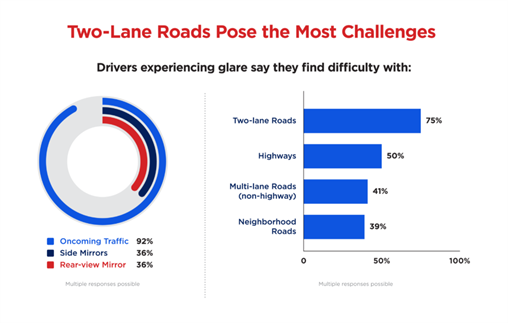
Most drivers (92%) who experience glare cite oncoming headlights as the primary cause. About one-third also report glare issues in their rearview or side mirrors.
Additional survey findings include:
Drivers who wear prescription glasses (70%) experience more glare than those who do not (56%).
Pickup truck drivers are less likely to report glare (41%) than drivers of other vehicle types (66%).
Female drivers (70%) report glare more often than male drivers (57%).
Only 9% of nighttime drivers report they have installed aftermarket LED headlights.
Driver age and height do not show a statistically significant impact on likelihood to report experiencing an issue with glare.
To help reduce headlight glare and improve overall nighttime visibility, AAA recommends drivers:
Ensure both headlights are clean, fully functional and of the original equipment manufacturer (OEM) design.
Avoid looking directly at oncoming headlights to maintain visibility.
Visit a AAA Approved Auto Repair facility for professional headlight inspections, replacements and aim adjustments. Misaligned headlights can lead to poor visibility for both the driver of the vehicle as well as oncoming drivers.
AAA also supports the use of adaptive driving beam headlights (ADB). Previous AAA research showed that European vehicles equipped with ADB increased roadway lighting by as much as 86 percent compared to U.S. low-beam headlights.
Running out of gas where you don't speak the language can be nerve-wracking, but fortunately, AAA was able to translate a roadside request and get help where it was needed.
Mark A., of Warwick, New York, and his friends didn’t need to speak French to get their message across.
If I had known how to say ‘out of gas’ in French (‘panne d’essence’), I could have saved myself some stress.
On a road trip with two bandmates a few summers back from New York to Quebec, my friends and I were having a grand old time on the road, and of course, paid no attention to the gas gauge until it was on E. Chugging to a halt, we made a few calls to local service stations. Would you believe we were still in upstate New York, but no one spoke English? Although we took French in high school, that was 50-plus years ago!
Our driver remembered that he had AAA, so we called. Given the marvels of the digital universe, our message was translated, and needless to say, we were relieved. A truck with gas arrived in fewer than 30 minute,s and we continued on to Quebec and the best T-bone steak I ever ate. Thank you, AAA.”
AAA Roadside Assistance is available 24 hours a day, seven days a week in the U.S. and Canada.
For more stories like this — or to share your own — visit “Hey, AAA!,” our collection of member-submitted emails, photos and videos that capture the real moments AAA has been a part of.
We love baseball in the Northeast. When it comes to supporting our teams, Red Sox, Mets and Yankees fans are known for being some of most devoted.
Each spring, with the much-anticipated first crack of the bat on opening day, we return to such simple pleasures as Fenway Franks, the raising of the home run apple at Citi Field and singing along to “New York, New York” when the Yankees win.
Browse through our stadium guides for helpful tips and recommendations on things to see, do and eat in and around all three big league ballparks in the Northeast. Find out how to get coveted Green Monster seats, discover the most iconic features of stadiums across the country and more. For a fun day trip or road trip, we’ve even included a guide to nearby minor league cities.
It’s a decision all parents traveling with young children must make when flying and driving — should you bring your child’s car seat along for the trip or should you rent a car seat with the rental car?
It can be a particularly difficult choice if you’re going to be staying at your destination for several days, as the costs of renting a car seat can build up quickly. Fortunately for AAA members, the use of one child or infant booster seat is free when renting with Hertz.
In addition to not having to lug a bulky car seat around the airport, here are a few reasons why you might want to consider renting a car seat for your next trip.
Renting a Car Seat Is Easy and Safe
Most car rental companies offer a variety of options when it comes to securing the right seat to keep your child safe. Hertz provides a wide range of child car seats at all of their rental car locations, voluntarily complying with state laws that require a child seat for rentals.
They offer an infant child seat, which is for a baby who is less than one year old and weighs up to 20 pounds. They also stock forward-facing child seats, for children weighing between 20-40 pounds. Additionally, they carry belt-positioning, high-back booster seats and strollers.
Many airlines allow families to bring a child’s car seat at no additional cost, either as checked baggage or as a gate‑checked item. But traveling with a car seat can be awkward and inconvenient. Some car seats weigh more than 25 pounds, which is a lot of extra luggage to be dragging around an airport, especially if you have a little one in tow. Avoiding this hassle is one of the top reasons most people decide to rent one.
There’s also the concern of potential damage. Checked items are handled with regular luggage, and car seats can come out scuffed, cracked or with broken parts.
Renting a car seat at your destination eliminates all of this. Simply pick up a ready‑to‑use seat when you get your rental car.
Other Things to Consider
One of the first concerns many people have when it comes to renting a car seat is the additional cost. Coming in at as much as $15 a day, the cost of a rental car seat can add up if you’re planning on staying in town for a while. Thankfully, most major car rental companies set a cap around $70 on a car seat rental. Unless, of course, you are AAA member taking advantage of your free car seat with Hertz.
Parents also worry about safety. The American Academy of Pediatrics and AAA advise against using previously owned car seats because there’s no reliable way to confirm whether a seat has been involved in a crash or otherwise compromised. By renting through trusted companies with strong safety standards, you can rest assured that child car seats that are no longer safe to be used are retired from the fleet. Car seats in use are thoroughly cleaned and sanitized after every rental and provided with the user manual and necessary instructions to safely and securely install it in your rental car.
Renting a car seat for your child simplifies your life, can remove stress from your travels and ensures the safety of the most precious cargo in your vehicle.
Northeast pump prices keep surging as the war with Iran nears its fourth week, and oil prices remain under major pressure due to global supply worries dominating petroleum markets.
At the close of markets on Friday, crude oil prices settled near or above $100 a barrel — more than $30 a barrel higher than on Feb. 27, before the start of the conflict. Domestic West Texas Intermediate (WTI) settled at $98 and Brent crude — the benchmark made of up mostly Middle Eastern-produced oil — landed at $112. That’s an increase of 8.7% week over week for Brent and its highest closing price since 2022.
Oil prices remain elevated despite announcements of huge releases from strategic petroleum reserves around the world and the U.S. lifting sanctions on millions of barrels of Russian oil stored on tankers at sea around the world. Those measures have eased some pressure on prices, but markets remain concerned about the long-term impacts of the war on oil and gas production in the Middle East and the lack of cargo traffic through the critical Strait of Hormuz.
With supply from the Middle East slowed to a trickle, countries around the world are increasingly looking to the U.S. to meet supply needs. Total U.S. crude exports last week climbed by 1.45 million barrels a day to 4.89 million barrels a day, according to the Energy Information Administration (EIA), with much of the extra crude exports bound for Asia.
As the national average for a gallon of regular unleaded nears $4, demand for gasoline settled at 8.7 million barrels a day last week — a decline of 513,000 barrels a day, the EIA reported. The figure is considered strong for this time of year and only 89,000 barrels a day below the comparable week in 2025, but it is likely elevated by fuel suppliers increasing their purchases to get ahead of surging prices since the start of the war.
“As the conflict with Iran continues, gas prices are likely to remain under pressure as long as oil prices stay elevated,” said Jillian Young, director of public relations for AAA Northeast. “Prices at the pump across the Northeast haven’t been this high since 2022, following Russia’s invasion of Ukraine, which sent oil and gas markets into similar turmoil.”
AAA’s March 23 survey of fuel prices found the national average up 24 cents from last week ($3.71), averaging $3.95 per gallon. The March 23 national average price was $1.02 higher than a month ago ($2.93) and 83 cents higher than last year ($3.12).
Region
Current Price*
One Week Ago
One Month Ago
One Year Ago
Connecticut
$3.88
$3.64
$2.90
$3
Massachusetts
$3.73
$3.55
$2.90
$2.95
New Jersey
$3.88
$3.61
$2.92
$2.94
New York
$3.85
$3.61
$2.99
$3.10
Rhode Island
$3.76
$3.56
$2.86
$2.92
*Prices as of March 23, 2026
As of March 23, Oklahoma and Kansas had the lowest gas prices in the nation at $3.25 and $3.26, respectively. California and Washington had the highest prices in the nation at $5.79 and $5.27, respectively.
Patrick M. of Quincy, Massachusetts, racked up a lot of driving experience on a family cross-country trip right after he got his learner’s permit.
I had just gotten my driver’s permit, circa 1982. My older sister had graduated from college and took a job as a nurse in Los Angeles.
She, my father and I got a TripTik from AAA, since this was well before today’s GPS, and we were off to LA from Boston.
At the crack of dawn, we drove from Boston to Sylva, North Carolina, nonstop to my father’s cousin’s. Then we went from Sylva to Garland, Texas, to his brother’s house. We stopped in Las Vegas and then went on to Hermosa Beach, California, where my sister got an apartment and went to work at Cedar Sinai Medical Center as an oncology nurse.
My dad and I flew home. I’ll never forget flipping through those spiral-bound TripTik books. It was like analog GPS. I don’t know how AAA did that as it seemed like it would have been done by hand with a huge resource of maps. I got so much experience driving in my sister’s blue Plymouth duster. I learned to read maps and followed those TripTik-highlighted routes perfectly.
It was the first time I ever heard of AAA. Good times.”
For more stories like this — or to share your own — visit “Hey, AAA!,” our collection of member-submitted emails, photos and videos that capture the real moments AAA has been a part of.
When Pete M., of Rockville Centre, New York, needed a new alternator, AAA had him back on the road so quickly that he barely missed any of the football game he was listening to.
While driving cross-country from east to west in January 2025, I departed Lenexa, Kansas, trying for Vail, Colorado.
I was listening to the NFL playoffs when the dash lights blinked and Sirius radio cut out near Colby, Kansas. I drove off I-70 to a Walmart parking lot to assess the trouble.
I called AAA, and less than 30 minutes later, a young man with a AAA-authorized flatbed loaded my truck, and together we researched auto parts stores for a new Ford Expedition alternator. Luckily, there was one at a nearby auto parts store. Then, we’re off to a AAA Approved Auto facility about 50 miles in the direction I was headed. On the way, I learned that the flatbed driver is an apprentice mechanic and a part-time army reservist.
The AAA shop owner shows up, checks on the repairs, and fortunately, the alternator is easy to access and replace. I was back on the road in less than an hour, and I didn’t miss any playoff football either. It was great service and done as a courtesy, because I am a retired combat veteran. I reached Vail before sunset.”
For more stories like this — or to share your own — visit “Hey, AAA!,” our collection of member-submitted emails, photos and videos that capture the real moments AAA has been a part of.