Where to Find the Best Snorkeling in the Caribbean
You don’t have to dive too deep to find the best places to snorkel in the Caribbean. Put your goggles on and slip into some fins! Here are a few of our favorites.
The white sand beaches and turquoise waters of the Caribbean are like no other, but a true adventure awaits once you slip on a mask and look below the surface. Discover abandoned ships that have merged with coral reef or swim the shoreline and look for colorful marine life. This list of the best snorkeling in the Caribbean will help you choose the ideal spot for your underwater adventure.
St. Croix, U.S. Virgin Islands
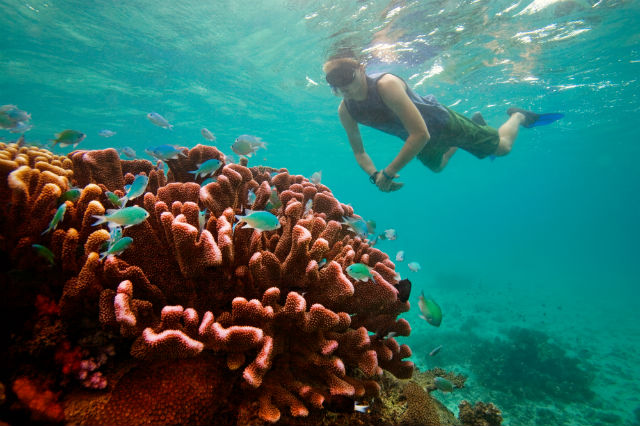
Protected by the U.S. National Park Service, the ecosystem at Buck Island Reef National Monument is one of the most pristine places to snorkel in the Caribbean. Home to a variety of threatened and endangered marine life, it also features some of the most dramatic and massive elkhorn coral branches. Along the underwater snorkel trail, you’ll find colors and textures of all kinds as you swim beside blue tangs, trumpetfish, and possibly even barracudas. Beginner snorkelers will benefit from a guided tour and the useful advice that comes with it.
Curaçao
The vivid streetscapes of Willemstad are known for their brightly colored architecture, and a snorkeling adventure on the island is just as colorful. Thanks to the clear waters that reveal coral reef, parrot fish and a host of other sea life. The stunning coral formations at Playa Kalki seem to be sprung from the imagination, earning it the nickname “Alice in Wonderland.” For an experience that is just as historic as the island’s streetscapes, visit the sunken tugboat just off the coast of Caracasbaai Peninsula.
Grand Cayman, Cayman Islands
Some of the best snorkeling in the Caribbean can be found around Grand Cayman. Include Stingray City on your list of sites to visit and you won’t have to search the clear water for signs of marine life. As its name suggests, you’ll find yourself surrounded by flat-bodied rays as they glide through the water. Nearby in the North Sound, Coral Gardens offers particularly calm water, making it another popular snorkeling location. Many tour boat operators take visitors to both spots due to their proximity.
St. Lucia
Ten yards from the water’s edge, the reef at Anse Chastenet is ideal for those who prefer shoreline snorkeling. Alternate between the beach and the crystal-clear water throughout the day as you explore the reef, which is home to more than 150 species of fish. No boats are allowed in this snorkeling area, making it a particularly tranquil place, but nearby you can hop on a tour boat to venture farther into the Caribbean. At Anse des Pitons, swimming takes place between the two volcanic spires known as the Pitons.
Turks and Caicos
When your travel companions have varying levels of snorkeling experience, it can be a challenge to find a site that meets everyone’s expectations. Grace Bay Beach offers the best of both worlds. Shoreline snorkeling features plenty of colorful fish, while those who swim farther out will find even more to explore. Since the trail around Bight Reef is marked, the adventurous beginner might even be comfortable joining everyone on an adventure farther from the beach. Another popular spot on Turks and Caicos is Smith’s Reef near Turtle Cove, where you’ll find sea fans, barracudas and all manner of colorful sea life.
St. Vincent and the Grenadines
For an adventure far from the crowd, St. Vincent and the Grenadines is one of the best places to snorkel in the Caribbean. While the chain of 32 islands and cays offers the quintessential Caribbean experience, it’s less traveled than other tourist locations. Visit Grenada’s Underwater Sculpture Garden in Molinere Bay to observe how man made works of art have become an important habitat. Following the devastation of Hurricane Ivan in 2004, the sculptures were placed in the bay to encourage the proliferation of coral, sponges and other marine life.
Antigua
Famous for its 365 beaches, one for every day of the year, Antigua offers adventures beyond the edges of its pink and white shore. And you don’t have to swim far to find many of them. Coral reefs can be found within a short distance of your beach towel at many locations. For a chance to see eagle rays, conchs and more marine life, take a boat tour to Cades Reef, where you might even spot a nurse shark. A number of tour operators combine guided snorkeling with caving and other activities that give you a more comprehensive view of the island’s scenery.
Throughout the Caribbean you’ll find paradise destinations with a number of underwater adventures that reveal vibrant colors and abundant marine life. When you come back to shore, you certainly won’t be disappointed by the pink sand of Antigua or the black sand found in parts of St. Lucia and Grenada, but you’ll probably be lured back to the water in no time.
Whether you share photos frequently on Instagram or your day is packed with teleconferences, chances are the smartphone is your most often used device. Choosing one is a highly personalized process that should consider the ways you use your phone and the features on which you won’t compromise. For instance, tech aficionados may find the most satisfaction with cutting-edge technology, while photographers and artists may require ample storage space.
News Junkie
Among your friends, you always know the latest scoop, whether it’s unfolding on the local or international scale. You prefer morning comcasts to music on your daily commute so that by the time you arrive at the office, you feel fully informed and ready to start the day. If these descriptions ring true, you need a screen that’s big enough to take in the world at large and long battery life so you don’t miss out on breaking stories.
The Moto G7Power gives you plenty of battery life, with some people making it up to three days on a single charge, plus fast-charging capability when you need it. With its 6.2” HD display, you’ll have plenty of viewing space when you’re streaming the news, and it’s 19:9 aspect ratio gives you a big screen viewing experience.
Tech Aficionado
Those who need cutting-edge technology will always be on the hunt for the latest features and the ability to customize their devices. Superior high-definition displays, and the most powerful processors may lure you to a phone, particularly one that has an artificial intelligence chip. Devices with AI hardware process more efficiently, speeding up functions like facial recognition by handling them on the device rather than sending your biometric data to the cloud. This also makes the processes more secure.
Since many tech aficionados prefer custom firmware, Android is the preferable operating system to iOS. Those who know how to program can change the open-source base system on an Android phone, and they can also look behind the scenes to explore apps.
The newest Samsung Galaxy models run on Android and sport the latest features, making them a good choice for those who want to do a bit of programming while also enjoying the user experience. Also consider the Google Pixel3, which can be used with Google’s Pixel Buds and Translate app for real-time language translation, facilitating conversation during travel.
Artist
Whether you’re a graphic designer, illustrator or someone who enjoys dabbling in the arts, your smartphone is a key tool for creative expression. A stellar camera and editing capabilities are important, but storage may be one of your top concerns, making Android the preferred operating system for many artists. With the ability to add and expand storage, you’ll have plenty of space for your projects.
Certainly, you’ll also want to take advantage of the numerous apps that make creating those projects even easier, such as Adobe Illustrator Draw, which allows you to draw freehand and work in layers. Plenty of user-friendly apps for iOS and Android are available across art forms to support the work of animators, photographers and other artists.
Among the phones with expandable storage, consider the LG v40 ThinQ, which has a 6.4” display and plenty of video controls. The Samsung Galaxy Note is another option to explore, as it comes with the S Pen, a stylus known for its responsiveness and control. With precise strokes, drawing projects will come to life on your device.
Social Media Shutterbug
If you’re the type to always post photos of your latest meal on Instagram or share action shots live from a football game, social media is likely among you’re most frequently-used apps.
Shutterbugs need a camera that automatically adjusts for dimly-lit rooms and other suboptimal conditions. Despite your best efforts to maintain a good photo stance, you might wind up with blurry photos, so make sure the camera also has stabilization features that compensate for slight movement.
For an exceptional camera, consider the super-steady Samsung Galaxy S10+, which comes with five lenses including telephoto, selfie and ultra-wide. Choose whether to zoom in or pan out as you capture moments throughout the day. And when you’re ready to take a selfie, the camera focuses quickly.
With a large display and user-friendly editing features, the iPhone XS Max is another good option. Plus, you can rely on it for accurate color display, so you know exactly which colors you captured before sharing them.
Music Enthusiast
When crystal clear sound tops the list of your smartphone concerns, you need incredible speakers. You also need a way to access all your stored music and play it across devices. This is where the music enthusiast has a key choice to make, Android or iOS.
For those who already prefer Apple devices and would like to move seamlessly between them, an iPhone X model may be the best option, particularly if you often purchase tracks from iTunes. The latest models also feature a longer battery life, ensuring that you have enough power when you’re traveling between home, work and the gym.
If you use Google Play Music or another music library, you may prefer an Android such as the LG G8 ThinQ, whose entire screen is the speaker. With clarity and impressive bass tones, it delivers a rich sound experience.
What’s your smartphone style profile? Tell us in the comments.
Bike season is in full effect here in the Northeast region, which means there are plenty of epic bike tours to choose from. Whether you’re a biking novice or a fit cyclist, there’s a bike tour for you, with options ranging from a few hours to week-long adventures.
This is the perfect warm weather bike tour for the whole family. Explore Casco Bay and Portland, Maine, and enjoy the wind in your face as you journey along the breathtaking coastline. You’ll pedal past charming communities and five different lighthouses during the 12-mile ride, which includes a bike, tour guide with a Portland history lesson and a fabulous lobster roll for lunch overlooking the ocean.
Riders may not want to leave Rhode Island after this impressive bike tour of the Ocean State. This four-night, three-day bike tour takes riders across Block Island, Narragansett, Jamestown and Newport. It’s the perfect way to learn more about Rhode Island’s gilded age history while taking in scenic ocean views. Tours run in May, June and August, with riders traveling 8-36 miles each day. Cyclists can expect to peruse fishing villages, Colonial windmills and the “summer cottages” of 19th century millionaires as they bike Rhode Island’s inlets and isles. The tour also includes a sunset sail, a guided kayak escapade and a stroll along the famous Cliff Walk.
If you’re looking for a truly unique experience in Rhode Island, Rail Explorers Rhode Island Tour may be a fit for you. The pedal-powered vehicle rides on historic railroad tracks through picturesque Narragansett Bay.
If you live in Massachusetts, consider checking out this six-day bike tour on which bicyclists ride down quiet beach roads and quaint New England towns.
If it’s your first time participating in a bike tour, the Tour de Farm New Jersey may be the right one for you. Help support New Jersey farmers in a culinary excursion where you’ll be farm hopping by bike and enjoying delicious food in the beautiful countryside.
With two different dates at separate starting points, the tour has three different routes ranging from 20-48 miles depending on your skill level. The day begins with a farm-fresh locally sourced breakfast for bike fuel and then you can choose to stop at up to 10 farms along the way. The farmers will provide samples of what their farm has to offer – think honey, flowers, wine, cheese, fruit and more. Local farm items will be for sale, so don’t forget your saddlebags!
Three days, four states, memories forever. That basically sums up the Cycle for the Cause Boston bike tour to New York City that raises funds for the fight against AIDS. Each rider pays a ticket fee of $95 and then raises a fundraising minimum that covers lodging and meals; the rest is donated to the cause.
Starting in Boston, the 275-mile bike ride is fully supported, which means that riders are completely taken care of along the way, including meals, route planning, rest stops, hotel accommodations, medical services, bike techs and massage crews. Participators stay in hotels along the route, eat meals and ride together, passing through 20 cities along the way.
You can expect to see the beauty in each state you ride through from the classic New England villages and the horse farms in Massachusetts, to the Mystic Seaport in Connecticut and the orchards of Long Island in New York.
The author takes part in the 2018 TD Five Boro Bike Tour.
Forty miles of car-free New York City streets? This only happens once a year during the TD Five Boro Bike Tour. The exciting one-day event, billed as America’s largest bike ride, takes place on the first Sunday in May (This year’s was held May 5; next year’s event is slated for May 3, 2020). The ride starts in lower Manhattan, traverses part of the south Bronx, loops through Queens, enters Brooklyn and finally ends in Staten Island. You’ll ride over five bridges, including the Verrazzano-Narrows Bridge, which is normally closed to bike traffic. If that’s not enough to entice you, maybe this will: There are 41 pizza places along the tour’s route where you can stop for a break and a bite. After a festival at the finish line, cyclists are welcome to take the Staten Island ferry back to Manhattan – for free!
Did you know? AAA Northeast offers 24-hour roadside assistance for your bike too! The free service is available to all members. Learn more.
Everyone wants to have the perfect lawn, and knowing how to remove weeds is essential to this goal. Weeds can also pose a problem in the garden, where they can take up space and hurt your favorite flowers or veggies. There are a number of methods you can start to implement today to eliminate these pesky weeds and have your lawn looking fresh and healthy.
Keeping your grass healthy
The first thing to remember when learning how to remove weeds is that the grass is best kept at a certain height. If you cut your grass too low, weeds will often overpower them and have a greater opportunity to grow. It’s actually a good idea to keep your grass a little longer than you would expect; essentially, the shade provided by the taller grass prevents lawn weeds from sprouting and growing. Of course, you don’t want to overdo it and keep your grass high, but rather find a middle ground. Continue to mow your grass periodically throughout the season, which can be anywhere from 2-5 times a month depending on the weather.
How to limit lawn weeds
Fertilizer can be a huge help for setting the right conditions for healthy soil and grass. Generally, you’ll want to apply fertilizer twice a year, once in the fall and spring. This will ensure that your grass grows up tall and healthy. But don’t overdo it with fertilizer application, unless you want to encourage weed growth too. You want just enough so that your grass is strong enough to defeat the weeds on their own, so be sure to read the container for proper application instructions. It’s also important to apply just the right amount of water to encourage lawn growth rather than weed growth. Your best bet is to water your lawn more occasionally, but with much more water.
The three types of lawn weeds
When learning how to remove weeds, it’s best to know the characteristics of each kind. Annual grassy weeds die each season and the seeds grow again next spring. Look out for crabgrass, which has blue-green blades and branching stems.
Broadleaf weeds are plants like dandelions and clovers that have leaves. Dandelions can grow to about a foot tall and are easily recognized by their bright yellow flowers, while white clovers have leaves with three lobes and white flowers.
Perennial grassy weeds stay dormant in winter and spread through the roots; these are usually the toughest to remove. Examples include ground ivy, which you can identify by its round bright leaves and creeping stem. Quackgrass is another common perennial with flat green leaves and strong underground stems, and it can grow up to three feet tall.
Don’t let weeds take control of your landscape.
How to remove weeds with herbicides
One common way to limit lawn weed growth is through the use of herbicides. When dealing with broadleaf weeds, it’s usually not necessary to spray your entire yard; instead, focus on the small patches where strong weeds have popped up. However, remember to do some research on what brand you choose, as some herbicides can be considered toxic for children and pets who like the play in the grass, especially if you decide to spray the entire lawn. If the broadleaf weeds are still young, it should be relatively easy to pull them out manually. You can also use a daisy grubber on weeds like dandelion; this little tool is great for digging them out by their roots.
How to remove weeds manually
If you have a crabgrass infestation, you can also usually pull up most of the clumps by hand. Crabgrass isn’t a perennial weed so the root system won’t be too extensive, which makes it easier to remove. If you’d rather take preventative measures, you can apply crab grass preventer in the early spring in areas where the weed popped up last year.
For those tough perennial lawn weeds, a systematic and selective herbicide is best as it only targets the weed you want to kill and generally won’t harm other plants. If you decide to remove these weeds manually like you might with an annual or broadleaf weed, it’s a good idea to dig deep with a fork and pull them up by the roots. A winged weeder works by pushing the blade down parallel to the stem, then angling the tool downwards to pull out the entire plant by the root.
Remove weeds as early as possible
If you know these tips on how to remove weeds, you should be able to rid your lawn of any weed problem. Remember, it’s best to eliminate weeds when they’re young, regardless of the species. After all, it’s much easier to get rid of a young weed than a perennial that’s been deeply rooted for years.
Have any good weed removal tips of your own? Share them with us in the comments!
Before you make any financial decisions, it’s always a good idea to first re-evaluate your net worth. This figure can help guide your decision-making and give you an idea of where you fall within a national context.
If you’re curious about how to calculate your net worth, allow us to help you get the answers you need to make better-informed choices about money.
What Is Your Net Worth?
At its most basic, net worth is defined as the amount by which your assets exceed your liabilities.
If you were to total all your available resources and subtract the amount of debt and other financial burdens you may bear, the resulting total is your net worth.
A cursory online search will turn up tons of net worth calculators designed to make it easy to decipher your lifestyle and arrive at your net worth. But, in the end, it boils down to how your assets compare to your liabilities.
While net worth is often applied to the business world, its role is no less important for your household. Knowing how much you — individually and collectively — are worth can be an eye-opening revelation that plays into your financial decisions and affects the amount of coverage you should have on your insurance policies.
Tracking this number over time can especially give you a good indication of your family’s financial status, as your net worth presents an objective, uncompromised look at your budget.
Assess Your Assets
While you may not give them much thought, chances are you have more assets to your name than you may realize. Perhaps the first assets you’ll think about are liquid assets — cash or an equivalent that can be converted to cash, as these can quickly be leveraged in the event of a financial emergency.
Any assets you have in checking or savings accounts, certificates of deposit, money market funds, etc. — would qualify. Stocks, bonds, retirement accounts and the like are also considered liquid assets for the same reason, though many consumers forget to include these because of the set-it-and-forget-it mindset often adopted with regard to this type of account.
When it comes to other non-liquid assets, things get a little more complicated. Although you can get funds from these resources, it takes more time to obtain their full value. Non-liquid assets include your primary residence and any other real estate properties you may own (typically, at their respective market values) as well as automobiles and other vehicles.
However, don’t forget to account for other high-value items, such as furniture, jewelry and collectibles, which can often contribute greatly to your accumulated assets. Because the value of non-liquid assets can shift dramatically, be sure to regularly take stock of your assets to ensure an accurate calculation of your net worth.
Looking at Liabilities
Now time to consider your liabilities. These factors are the ones you should be placing an effort on minimizing, since they directly limit the potential for you to boost your net worth year over year.
Statistically, what holds U.S. households back most is consumer debt. This encompasses non-mortgage debt such as credit cards, auto loans, personal loans and student loans, but still demonstrates a troubling trend.
The fact that consumers are falling so deep into debt is by far the top reason that net worth is so hard to build up, but of course, liabilities aren’t all bad. Strategic debt such as having a mortgage can often be a great way of building your credit and boosting your overall financial standing for the future.
Speaking of which, you’ll need to include any mortgages or other outstanding loans and debt into your net worth calculations. Real estate itself can be a strong investment, but take care not to overindulge in this regard, or you could be doing real damage to your net worth.
Once you know how to calculate your net worth, you can make wiser, more measured decisions about your finances. By knowing precisely where you stand, you get one step closer to a brighter future.
New York is famous for its pizza, and for good reason. The worst slice of pizza in New York City is better than the best slice of pizza anywhere else.
But as someone who has eaten reheated Buffalo-chicken pizza in Penn Station at midnight, I can assure you that the quality of New York City pizza does vary. Significantly. But how are you supposed to find the best places in the city when every restaurant claims to have it? Take a look at our list of the best pizza places in NYC to find the perfect match of cheese, sauce and dough for you.
This weird and wonderful pizza place is situated right in midtown. You can dine on classic thin-crust pizza amidst the beautiful architecture of this former church. John’s is a family business through and through. Opened in 1997 by matriarch Madeline Castelloti, John’s of Times Square offers made-to-order pizza from its coal-fired brick ovens.
Lombardi’s claims to be America’s very first pizzeria, and they might be right. This Nolita restaurant is over 100 years old, having opened in 1905. Pizza has to be ordered by the pie, not by the slice, and it is made-to-order in the coal-fired ovens. Don’t bring plastic – Lombardi’s is cash-only.
This Brooklyn staple is a hipster’s delight, with a rooftop garden, a bread bakery and an apiary on-site. This former warehouse is now one of the best pizza places in the world, let alone New York City. Although they serve other types of food, the pizza pies are where it’s at. Try the BeeSting pizza, complete with chili, honey, mozzarella, sopressata and tomato. Or you could get the Beastmaster pizza, which is loaded with tomato, mozzarella, gorgonzola, pork sausage, onion, capers and jalapenos.
Also located in Brooklyn is Best Pizza, which seems designed to be the first result when one Googles “best pizza in NYC.” Fortunately, it lives up to its name. Founded by Roberta’s alum Fank Pinello, Best Pizza offers pies made in a 100-year-old wood-burning oven. Don’t forget to try the doughy, sinful garlic knots.
Not to be confused with John’s of Times Square, John’s of Bleecker Street has been serving up slices for almost 90 years. Located in Greenwich Village, John’s offers fresh garlic toppings on its coal-fired, crispy pizzas.
You can stop by this old-school pizza place during a long day at Coney Island. Totonno’s has been open since 1924, and it’s still family-owned and -operated, all these years later. Come and taste the handmade mozzarella, along with ingredients imported from Italy.
Joe’s Pizza in Greenwich Village is over 40 years old, and it’s been operating since 1975. At $3 a slice, Joe’s offers classic New York street pizza. As a native New Yorker, there’s no better taste. It’s a light slice of pizza served over a counter in a cramped storefront. Toppings are available, but they aren’t necessary.
Another casual and classic pizza place in New York City is Patsy’s Pizzeria, in East Harlem. Patsy’s offers by-the-slice goodness from the coal-fired oven. Established in 1933, Patsy’s Pizzeria claims to be the original home of the New York style thin-crust pizza.
Keste Pizza and Vino serves Neapolitan pizza in Greenwich Village. Keste’s wood-fired oven was crafted by Neapolitan artisans for the express purpose of making the perfect pizza – and to the exacting standards of chef and owner Roberto Caporuscio.
Can’t get enough pizza? Neither can we! Find more of the best pizza places in New York with a Slice of Brooklyn pizza tours. AAA members save 15% when booking online.
Ah, summertime. When the living is easy, the air is warm, and – if we’re not careful – our fragile skin can take a pummeling from the sun’s ultraviolet rays.
So that means sunscreen. And lots of it. One way to determine which type of sunscreen you should use is by checking a product’s SPF. But what does SPF mean?
What does SPF mean?
Sunlight contains two types or rays – UVA and UVB – that can cause sunburn and skin cancer, according to the American Academy of Dermatology. UVB rays are the primary cause of sunburn, but both UVA and UVB rays can cause skin cancer. Approximately 1 in 5 people will develop skin cancer in their lifetime. In 2013, approximately 72,000 Americans were diagnosed with melanoma, the most serious form of skin cancer, according to the U.S. Centers for Disease Control and Prevention.
The sun can also prematurely age and damage skin, leading to wrinkles and sunspots.
SPF (sunburn protection factor) ratings measure how much UV radiation can produce a sunburn on protected skin (i.e. with sunscreen) versus the amount required to produce a sunburn on unprotected skin. The higher the SPF number, the more protection it offers. It doesn’t reflect the amount of time you can spend in the sun before getting burned – a popular misconception, according to the U.S. Food & Drug Administration.
So just what does SPF mean? Basically, it’s is a measure of how much sunburn protection a sunscreen offers. An SPF 30 sunscreen will provide more sunburn protection than an SPF 8 sunscreen.
The average adult and child needs 1 ounce of sunscreen – the amount in a shot glass – to cover the body. For babies under 6 months old, check with their pediatrician.
Sunscreen basics
So, if you’re planning on spending some time outdoors or at the beach this summer, don’t forget to bring sunscreen and apply it liberally to everyone over 6 months old. (Consult your child’s pediatrician for children under 6 months old.) You should reapply every two hours or after swimming, toweling off and sweating, and even on cloudy days.
What SPF to use? The FDA recommends using a broad-spectrum SPF 15 sunscreen for protection, but the American Academy of Dermatology recommends using a broad-spectrum sunscreen with an SPF of 30 or higher. (Broad-spectrum sunscreens protect the skin from both UVA and UVB rays.)
And don’t skimp. The average adult and child needs 1 ounce of sunscreen – the amount in a shot glass – to cover the body.
Just two more things to keep in mind: No sunscreens are waterproof, and no sunscreen completely blocks UV rays, says the FDA.
What is the highest sunscreen SPF?
Sunscreens can have an SPF rating of anywhere between 2 and 50 +. In 2011, the FDA limited the maximum SPF value to 50 + because there wasn’t sufficient data to say that sunscreens with SPF values over 50 protected any better than those with SPFs of 50.
Sunscreens can be labeled “broad-spectrum” if they protect against both UVA and UVB rays.
Broad-spectrum sunscreens with SPFs of 2-14 must warn that the product hasn’t been shown to prevent sun damage or skin cancer.
Only broad-spectrum sunscreens with SPF 15 or higher can say they protect against skin cancer if used with other sun-protection methods.
Sunscreens cannot use the terms “waterproof,” “sunblock” and “sweatproof.”
More ways to protect yourself from the sun
More than 85 percent of melanomas are caused by the sun’s UV rays, according to the Skin Cancer Foundation. There are other steps you can take, in addition to applying sunscreen daily, to safeguard your skin. The foundation recommends the following.
Wear wide-brimmed hats. The majority of skin cancers are found on the head, ears and neck.
Choose your clothing wisely. Long-sleeve T-shirts and pants cover more skin than a tank top, short-sleeve T-shirt and shorts.
Wear sunglasses. Even your peepers aren’t immune from sun damage: It can cause vision loss and other damage, as well as eyelid cancers. The foundation recommends wearing sunglasses year-round whenever the sun is out. Look for a pair that blocks out 99 to 100 percent of UV rays.
Seek out good shade. You can sit under a tree but still receive a fair amount of skin damage because of scattered UV rays. Only deep shade – where you can’t see the sky – offers the best protection. Trees with dense foliage are best, and be wary of umbrellas – the shade they offer can vary wildly in SPF protection.
Protect your skin, even in the car. Glass only blocks UVB rays. And a study in the Journal of the American Academy of Dermatology found that 53 percent of skin cancers in the U.S. are found on the left side – the driver’s side – of the body. The foundation recommends affixing special UV-blocking window film to your windows. And try to keep that left arm inside the car, not propped up on your open window.
So have fun this summer! Go to the beach, hit those cookouts and spend some time by the pool. And apply sunscreen liberally and often to keep you – and your loved ones – safe from summer’s harsh rays.
Headed to the beach or on a sun-drenched road trip? Make sure you have the right amount of coverage at AAA.com/Membership.
If you’ve ever forgotten why you walked into a room or lost track of your thoughts mid-sentence, you may be in search of an activity that can strengthen your noggin. Brain training games and apps are an increasingly popular pastime, but do they really help to improve mental fitness? The brain is a complicated organ, and so is that question.
Research is still being done to fully understand the effectiveness of brain training games. The team at the Brain Game Center at the University of California in Riverside, for instance, is working extensively to develop and test science-based games that aim to improve cognitive abilities, even inviting the public to participate in studies. However, experiments yield mixed results.
While there is still no definitive conclusion on exactly how or if games can help to strengthen brain skills, these apps are all rooted in science. Studies show that regularly challenging your mind keeps it sharp, and games can certainly be part of that.
Peak is one of the top players when it comes to brain training apps. Rated as one of the best apps by Google, Peak keeps things interesting by focusing on short, intense “mental workouts.” The app was developed using the neuroscience and cognitive research of Yale and Cambridge’s top minds. In addition to the usual brain training areas like agility and problem solving, Peak has unique training modules for creativity, language and even emotional intelligence. The app also includes a virtual coach, which comes in handy to boost motivation!
Lumosity, one of the first brain training apps, was launched more than a decade ago. This comprehensive brain training platform is still at the top of its game and boasts tens of millions of users today. Lumosity is known for its large library of fun, visually pleasing, well-designed games, which includes a variety of scenarios to boost your brainpower.
For instance, one game has you play as a penguin trying to navigate a quickly rotating maze, which engages your spatial orientation skills. Another popular game, “Playing Koi,” tasks you with feeding identical koi fish in a pond; you must keep track of which fish you’ve already fed as they swim around the tank, which tests your ability to maintain divided attention.
Lumosity is consistently updated, and new games are added to the library frequently. Like others on this list, Lumosity works with scientists to develop their top-notch games.
Mensa Brain Training is unique because it’s developed by a membership-only, high IQ society. That being said, anyone is free to download the Mensa app and start using their exercises. Like other apps, activities are designed to improve your memory, mental agility and other cognitive aspects, but each activity is also designed to enhance your IQ.
For those looking for a more definitive and well-respected marker of intelligence, Mensa’s app is a great choice. You’ll be able to check your Mensa Brain Index (MBI) to see how your cognitive abilities improve over time and compare your stats to the global percentile. While this might seem intimidating for some, it’s a must for anyone who wants more insight into how brain training is impacting their intelligence.
Unlike many other brain training apps, HighIQPro requires a fee to get started. While it might seem like a lot, it’s a one-time fee for lifetime access, so depending on what you’re looking for, it may be more economical than making in-app or ad-free purchases on another platform.
Like Mensa’s app, HighIQPro has one main goal: to grow your IQ and provide measurable, reliable data. The app even includes in-app, standardized IQ tests. However, don’t expect the fun activities and flashy effects of other mobile brain training apps; this platform is focused simply on barebones methods to improve your working intelligence as efficiently as possible.
Chosen as Apple’s “App of the Year,” Elevate is one of the most popular brain training apps, and for good reason – the app incorporates sleek, user-friendly design with a unique approach and engaging gaming. While its two big competitors, Lumosity and Peak, focus mainly on cognitive development, Elevate stakes out its own place by providing gamers with more academic-oriented learning modules. With its generous game library, Elevate users can improve their reading, math and speaking skills.
While cognitive development is something many look for in a brain training app, some gamers desire something a little more concrete and actionable. Elevate emphasizes that their platform helps users grow their earning power and productivity, which are definite boosts in today’s competitive professional world. Within a short time, users can start to see real world improvements in their skills.
With over a million users, Memorado is an up-and-coming app that builds on cognitive research to help users grow their brain power. As the name suggests, it’s an especially useful app when it comes to boosting your working memory. But this app doesn’t just tackle cognitive development with gameplay; you’ll also have access to more than a hundred meditation modules to keep your mind calm and adaptable, along with resources to help you get a better night’s sleep.
While the effects of meditation and relaxation on your brain might be subtler, Memorado’s emphasis on this other side of brain training sets it apart from its competitors.
If you’re someone with a competitive spirit, Brain Wars will likely be your favorite brain training app. While many training apps focus on building your brainpower with solitary exercises and tracking your individual stats, Brain Wars emphasizes competing with others in a test of intelligence.
As it turns out, a little healthy competition can go a long way in increasing training motivation and consistency. While the games and graphics are on the simpler side, this makes it easier for everyone to pick up quickly. You can play with your loved ones, or with anyone else around the world using the app.
Which mobile brain games would you like to play? Tell us in the comments.
One of the great things about Long Island is that nothing is ever too far away. Long Island has beaches,farms, amusement parks, shopping malls and mini-golf. It shares real estate with the greatest city in the world. There are also a lot of good bagel shops. But does Long Island have night life? Honey, “The Great Gatsby” takes place in Great Neck. If you’re looking for things to do on Long Island at night, you won’t be disappointed.
Whether you’re a local looking for something to do, or an out-of-towner who wants to know what to visit on the Island, this list of things to do on Long Island, NY at night is sure to help.
Go cruising
One of the most fun things to do on Long Island at night is taking a dinner cruise. It is an island, after all. Whether you’re floating along the Long Island Sound or the Atlantic Ocean, there are beautiful sights to be seen all across the Island. On the Lauren Kristy Dinner Cruise, you and your friends can board a turn-of-the-century riverboat, with a paddle wheel and everything! Sail the Great South Bay while enjoying a magnificently catered dinner and watch the sun go down while sipping a Long Island iced tea.
On Lady Liberty Cruises, which leave from Port Washington, you can eat dinner while sailing through New York Harbor, surrounded by the glittering lights of the city. You’ll also get close-up views of the Gilded Age Gold Coast mansions that dot the North Shore.
Get a drink
Much of the culture of Long Island is tied up in the Gilded and Jazz ages of its past. The Jazz Age is remembered particularly in the proliferation of speakeasy-style bars all across the Island. Those seeking speakeasy-themed nights out would do well to check out Tullulah’s, a Bayshore restaurant and speakeasy bar. Featuring small plates, fresh seafood and quirky-but-cool decorations, Tullulah’s is perfect for a night on the town. Don’t forget to try their repertoire of fantastically themed speakeasy cocktails, like the Pecan Jag or the Bananahattan.
Long Island is also rife with craft breweries, where you can tour brewing facilities and taste delicious hops. The Oyster Bay Brewing Company, nestled against the shoreline, is a particular treat. It has a distinct community atmosphere, with rough-hewn tables and bins of party games. The room shakes whenever someone topples the giant Jenga tower. To sample as many beers as you can, order a flight of five or six mini-glasses.
If boozy bars, breweries or vineyards aren’t your scene, stop by the Witches Brew, a coffee shop in West Hempstead. With witchy decor, mismatched furniture and a vegetarian menu, the Witches Brew is not your average coffee pot. The shop welcomes grown-ups and goth kids alike to lounge on their couches, chairs and poufs and peruse their seven-page menu amid glowing fairy lights. Their vast collection of unique coffees and teas are to die for.
See a show
Right in New York City’s backyard, Long Island is lucky to have a never-ending supply of talented performers. Community performance spaces such as the Paramount, Suffolk Theater and the Space at Westbury often play host to the best in the business (whatever that business may be). There’s always a community production of “West Side Story” to be found, or a Billy Joel cover band, or the actual Billy Joel.
If comedy is more your speed, swing on over to the Governor’s Comedy Cabaret, a stand-up comedy venue in Levittown that serves up jokes alongside cocktails and pub fare. As the top comedy club on Long Island, the Governor’s Comedy Cabaret plays host to famous comedians as well as local talent.
Perhaps the most unique performance venue is the Stephen Talkhouse in Amagansett, which has been a Long Island landmark since the late ’80s. The Talkhouse is an intimate bar and music space featuring talented and famous musicians. Some artists who have passed through its doors include The Rolling Stones, Paul McCartney, Billy Joel, Paul Simon, The Police and more. Head on over there for some drinking, dancing and amazing live music. It is without a doubt one of the best things to do on Long Island at night.
What are your favorite things to do on Long Island at night? Let us know in the comments below!
This post was originally published in 2018 and has been updated.
There’s no denying that shades are an integral part of summer fashion. But sunglasses aren’t just lenses that make you look incredibly cool during the warm-weather months. They can be eye savers in all seasons.
Why Wear Sunglasses?
Most people are aware that the sun’s ultraviolet rays can be harmful, though many don’t realize the negative impacts they can have on unprotected eyes. Just like your skin, UV rays can cause sunburn on the cornea of your eyes, which may lead to blurred vision, redness and irritation. If untreated, these symptoms can lead to cataracts and macular degeneration, the leading cause of blindness in the United States. A quality pair of sunglasses can help defend against these potentially harmful rays.
When purchasing sunglasses, there’s a bit more to consider than what looks cool. First, make sure they provide 99 to 100% protection from UV rays, either with a UV coating or polycarbonate lenses with built-in UV coverage. Plus, the bigger the lenses, the better. Big lenses provide extra protection by blocking the rays coming in from the side.
If you’re looking to avoid intense glare from smooth water, snow or flat roads, polarized lenses are your best option. Not only can they reduce glare, but they can also make images appear sharper and clearer, increasing visual clarity and comfort. For those with light-sensitivity, having polarized lenses can help with adjusting to outdoor lighting. Photochromic lenses or light-adaptive lenses also help with reducing UV ray impact by changing from clear to dark when exposed to any amount of UV rays.
Lens Color
While the color of the lens tint doesn’t have a huge impact on how effective sunglasses are, some can optimize the way you see, which can be particularly helpful for activities like driving or playing sports.
Gray is a popular neutral tint; it allows the eyes to see colors in their purest form by reducing brightness and glare, and is best for driving and participating in outdoor sports.
Yellow/orange lens color increases contrast in hazy, foggy or low-light conditions, making it ideal for playing around in the snow or participating in indoor ball sports.
Green lenses filter some blue light, reduce glare and offer high contrast and visual sharpness. Shades of green can also reduce bright light-induced eyestrain, which is good for precision sports like tennis, baseball and golf.
Amber/brown reduces glare and blocks blue light, which brightens vision on cloudy days. It increases contrast and depth perception, particularly against green and blue backgrounds. Perfect for sports that require distance judgment, such as baseball.
Blue/purple reduces glare, improves color perception and can help to see contours.
Rose/red increases contrast by blocking blue light. It also tends to be more soothing comfortable than other tint colors for longer wear-times.
Why Should Kids Wear Sunglasses?
It’s even more crucial for kids to wear sunglasses. They spend more time outdoors than many adults, so they’re more exposed to UV rays. According to the World Health Organization, up to 80 percent of a person’s lifetime exposure to UV is received before the age of 18. Additionally, the lens inside a child’s eye is able to block less UV rays than an adult’s, which means more harmful radiation can find its way in. Children under the age of 10 are at the highest risk for skin and eye damage, since the skin on their eyelids and around their eyes is more delicate than an adult’s.
Recommended Frame Types
Those fun and cheap sunglasses you might get as prizes for playing games during a festival, for example? They generally don’t come close to protecting the eyes from UV rays.
The frames for kids’ sunglasses should also not have sharp edges or be easily breakable. High-quality spectacle lenses are a must.
Most importantly, involve your kids when picking out their sunglasses. Not only will they be able to tell you whether the sunglasses are too tight or uncomfortable, but they will be happier with the designs they pick and want to wear them more. As a precaution, though, you may want to consult your optician for the best frames.
Recommended Lens Type
For kids’ sunglasses, high-quality polycarbonate lenses are recommended. They automatically block 100% UV rays without needing special lens coatings, tints or treatments. In addition, all poly-type lenses are lighter than regular plastic lenses, so they are scratch-resistant. They can provide up to ten times more impact resistance for greater comfort and eye safety, especially while the wearer plays sports or any other sort of active play.
Look for features such as flexible spring hinges that allow the sunglasses to fit snugly on the head and decrease the chances of them falling off or breaking from impact.
Do you have a favorite type of sunglasses? Let us know in the comments!
*Save 30% off non-prescription sunglasses with your AAA membership. Valid on multiple pairs. Valid AAA Membership required. AAA Vision Discounts are administered by EyeMed Vision Care (EyeMed). These are not insurance programs and may be discontinued at any time. Cannot be combined with other discounts or vision care, previous purchases, or readers. Some brands excluded including Cartier frames. Discounts are off tag prices. No cash value. Void where prohibited by law. Additional restrictions may apply. See store associate for details. Offer expires 12/31/2019.
Throughout 2019, Disney Parks will be celebrating 90 years of Mickey and Minnie, and California’s Disneyland Parks are no exception. After all, it is here at Disneyland, the original Disney theme park, where Walt Disney set out to have a permanent home for his iconic characters.
Today, Disneyland Resort comprises Disneyland, Disney California Adventure, three hotels, and the Downtown Disney shopping and dining district.
Oldies but goldies and what’s new at Disneyland Park in 2019
The 77-foot-tall Sleeping Beauty Castle and Disneyland Park were completed in Walt Disney’s lifetime. Unlike its counterpart at the Magic Kingdom in Florida, guests may get a glimpse inside this castle without buying a meal. So, make sure you take the Sleeping Beauty Castle walk-through.
Among the rides and attractions only available at Disneyland Park are the Matterhorn Bobsleds, Indiana Jones Adventure, Storybook Land Canal Boats, Snow White’s Scary Adventure, Finding Nemo Submarine Voyage and The Disneyland Story Presenting Great Moments with Mr. Lincoln, only to name a few.
While there is a Haunted Mansion and an It’s a Small World on both coasts, the Disneyland overlay of these attractions during the Christmas Season is only available at Disneyland Park and totally worth your visit. And make sure to ride Pirates of the Caribbean, which only resembles its counterpart in Orlando by name. End your day with Disneyland’s nighttime spectacular Fantasmic!
In January, as part of the Get Your Ears On – A Mickey and Minnie Celebration, Mickey Mouse-themed fireworks, dubbed Mickey’s Mix Magic, will debut at the park with all-new music and laser projections. Guests will be invited to join the nightly fun by dancing along while viewing the show at Main Street U.S.A., the Rivers of America and in front of the It’s a Small World attraction.
Also returning to the park is Mickey’s Soundsational Parade. Don’t miss the floats representing Disney classics such as The Princess and the Frog, Aladdin and The Little Mermaid. Mickey will lead the parade and will have a brand-new float for the occasion.
Nothing, however, can outdo the excitement over the opening, Summer 2019, of the 14-acre Star Wars: Galaxy’s Edge. The land is being built to the north of Frontierland, and the Black Spire Outpost will include Oga’s Cantina and two rides. In the Millennium Falcon: Smuggler’s Run, guests will get a chance to pilot the starship on a secret cargo mission; in Star Wars: Rise of the Resistance, riders are caught in a fight between the First Order and the Resistance and taken prisoner on a Star Destroyer.
(Photo: L. Opsomer)
Over at Disney California Adventure: Pixar Pier, Frozen and Marvel super heroes
Paradise Pier got a new face-lift, and the entire area is currently being transformed into the new Pixar Pier. The California Screamin’ roller coaster got a new theme and now soars with new music as The Incredicoaster. The Ferris wheel, re-branded, continues to offer an incredible view of the park from high up, under the name of Pixar Pal-A-Round. The super headliner Toy Story Mania! is, of course, not to be missed.
Next up, in 2019, is Inside Out Emotional Whirlwind, a spinning ride, and Jessie’s Critter Carousel, catering to the under-8-year-old crowd.
Right next door, Cars Land provides even more Pixar fun with several quick-service eateries, plenty of shopping and two major rides. Make sure to enjoy Radiator Springs Racers, Luigi’s Rollickin’ Roadsters and Mater’s Junkyard Jamboree.
Last year, Disney closed Bug’s Land; work has begun on the Super Hero Marvel Universe, with attractions starring the Avengers and Spider Man to open in 2020.
Open for business now is the revamped Tower of Terror Guardians of the Galaxy: Mission Breakout!, the fortress of famed Collector Tanaleer Tivan. The Sci-fi-themed indoor ride is sure to thrill. While awaiting their very own land, Spider Man and other Marvel characters meet guests in Hollywood Land.
Sadly, there isn’t any parade or nighttime show currently running at Disney California Adventure. There is however, a not to be missed show: Frozen – Live at the Hyperion. The musical stage show is based on Disney’s animated hit Frozen and is filled with awe-inspiring special effects.
(Photo: L. Opsomer)
Where to stay
The 973-room Disneyland Hotel opened in 1955 and is a AAA Four Diamond property. The resort is a 5-minute walk from both parks and right next door to the Downtown Disney entrance. Guests can also use the monorail connection to the parks upon entering Downtown Disney. Ask the driver if you can ride with him in the front car. It is a great way to start your Disneyland adventure.
The resort and its luxurious rooms pay tribute to Disneyland’s history with vintage pictures of Walt Disney himself in the park. Three pools, one including two monorail-themed waterslides, provide fun for the entire family.
Rooms are contemporary and feature a flat-screen TV, a coffee maker and a mini-fridge. Standard rooms come with a king-size or two queen-size beds; a pullout couch accommodates an additional guest. Kids will love the headboard with a carving of Sleeping Beauty Castle. Flick a switch, and the fiber optics in the headboard create fireworks over the castle, accompanied by a rendition of “When You Wish Upon a Star.”
Several-bedroom suites, five themed suites (Adventureland, Ambassador, Big Thunder, Fairytale, Mickey Mouse Penthouse, Pirates of the Caribbean) and club level rooms are also available. Prices for a standard room start at $418 plus tax and provide early admission to one of the theme parks.
Has your credit card number been stolen? According to a 2018 WalletHub survey, New Jersey and New York lead the Northeast region in identity theft and fraud cases, including theft of credit card numbers.
We’ve compiled steps that you can take to deal with your credit card number stolen situation and to get your credit back on track.
Signs of a stolen credit card number
But, first, how do you know your credit card number has been stolen? Here are some of the signs:
Unusual card history.
Repeated small purchases.
An unfamiliar account on your credit report.
Your bank calls about unusual purchases you’re unaware of.
What to do immediately
Contact your card issuer
If you notice your credit card number stolen or compromised, you should call your card issuer immediately. Your card issuer will place a block on the number, so all transactions with that number will be denied. Then, you will be sent a new credit card.
If you contact your card issuer in a timely manner, you won’t be held responsible for any fraudulent charges.
When you receive your replacement card, be sure to update your account number on all accounts where you have your credit card number saved.
File a fraud alert and get credit reports
To file a free fraud alert on your credit report and make it harder for someone to open new accounts in your name, contact one of the three credit bureaus:
The company you contact should inform the other two about your credit card number stolen situation. To confirm that a fraud alert has been placed, you’ll receive a letter from all three credit bureaus.
Also, be sure to review your reports and make note of any unrecognizable transactions or accounts. AAA members who enroll in ProtectMyID identity theft protection receive a free Experian credit report.
Contact the Federal Trade Commission (FTC)
Call 1-877-438-4338 or visit the FTC website to report your credit card number stolen case. Be sure to include as many details of your case as possible so that your report and recovery plan will be accurate and relevant.
It’s also a good idea to print and save your Identity Theft Report (if you don’t create an account on the website) as this report guarantees you certain rights pertaining to fraudulent charges.
You can also file with the police department, if desired. Bring the following with you:
A copy of your FTC Identity Theft Report.
A government-issued ID with a photo.
Proof of address, such as a utilities bill.
Proof of theft.
What to Do Next
Track your credit reports and bank accounts
Working with the FTC, you’ll want to keep a close eye on your credit reports and bank accounts so that you can deal with any fraudulent charges as they appear. If the damage is particularly bad, you also have the option to place an extended fraud alert or a credit freeze on your accounts.
Extended fraud alert vs. credit freeze
So, what is the difference between an extended fraud alert and a credit freeze? An extended fraud alert requires the removal of your name from pre-screened lists for up to seven years. Each of the major credit-reporting companies will send you two free credit reports in the first twelve months after you get an extended fraud alert.
You can also file an extended fraud alert with any of the three credit-reporting companies, but you need to have a completed FTC Identity Theft Report first.
Requesting a credit freeze is a more drastic step, and you might have to pay a fee to place, lift and remove it. The credit freeze blocks anyone from looking at your credit report without your approval and makes it difficult to open accounts, even legitimate ones.
You have to request one credit freeze from each credit-reporting company who will then give you a password or PIN to cancel the freeze at any time. This protection lasts until you lift or remove it.
Sign up for a fraud monitoring service
You’ll want to take extra care of your credit information in the wake of your credit card number stolen situation. If you sign up for a credit monitoring service, you’ll be able to track credit reports and be immediately informed of any suspicious activity.
One identity and credit monitoring service AAA members can take advantage of is Experian’s ProtectMyID Essential Coverage. The Essential Coverage is free of charge with no trial period, and members also have the option to upgrade to Deluxe or Platinum.
Contact the business where the fraud occurred
Call the fraud department of each business to explain your credit card number stolen situation. Ask them to close or freeze the accounts so no new charges can be added. Also request a letter which confirms that the fraudulent account doesn’t belong to you, you’re not liable for it and it is no longer on your credit report.
Also, be sure to change all logins, passwords and PINs for each account and set them up so that you have to insert your credit card information manually. Keep this information in a safe place.
Having your credit card number stolen can be a huge headache if not scary. With these tips, you can be assured that you’ll be taking the right steps to recover.
What are some tips you have for people who have recently experienced credit card theft? Let us know in the comments!
Learn more about how Experian’s ProtectMyID Essential can give you the peace of mind you’re looking for.
As the second-largest of the Hawaiian Islands, there are so many awesome things to do in Maui. For our short overview, we focused on some the most popular Maui destinations – the west side, including Lahaina and Ka’anapali; and the south side, including Kihei and Wailea. But we encourage you to venture out and experience as much of the Valley Isle’s beauty and magic as you can, because, as it is said in Hawaiian, “Maui no ka’ oi” or “Maui is the best.”
Budget
Stay: For an inexpensive Maui hotel, with the convenience of a nearby beach, Kihei Akahi offers cozy condos and a central location. At Tracy’s Tropical Treasures, also in Kihei, tropical turquoise beach bungalows come equipped with everything needed for a no-worries vacation. From robes to beach chairs and snorkel gear, Tracy covers all the bases. The family-friendly Kalepolepo Beach Park is right across the street. It’s just a quick zip in either direction on Kihei Road to beaches, dining and shopping.
Do: Beach, beach, beach. No matter where you are on the island, a Maui travel guide would not be complete without mentioning that all of the beaches are stunningly gorgeous. In the winter months, you can even see whales breaching off the shore. Ka’anapali Beach is among the most well-known and is lined with resorts and restaurants. In Kihei, hit the super-popular Kamaole Beach I, II or III. After soaking up some sun, hop in your rental car and go for a drive around the island, or stop at Iao Valley State Monument for some light hiking. On Friday evenings, many art galleries on Front Street in Lahaina participate in a Friday night art walk, with some offering wine, live entertainment and art demonstrations.
Dine: For inexpensive eats, Da Kitchen, with locations in Kihei and Kahului, can’t be beat for a plate lunch or musubi. For local grinds (a Hawaiian slang term for food) on the west side, try Aloha Mixed Plate for a Kalua pig sandwich or coconut prawns. There are also plenty of eateries in Paia, on the north shore, including the iconic Paia Fish Market.
A stretch of gorgeous beach in Wailea. (Photo: M. Davalos)
Mid-Range
Stay: The AAA Two Diamond Rated Best Western Pioneer Inn Lahaina is right off trendy Front Street, overlooking Lahaina Harbor. Originally built in 1901, the Pioneer was Lahaina’s first hotel and is part of the Lahaina Historic District. It retains a bed-and-breakfast feel, with modern amenities and is right near the famed banyan tree. Grab a bite in the laid-back garden vibe of the Pioneer Inn Grill & Bar.
Do: When in Hawaii…learn to surf! Maui Wave Riders offers surf lessons in both Lahaina and in Kihei. Or if scuba is your thing, check out Shaka Divers; owner “Shaka Doug” has over 5,000 dives under his belt, knows all the best dive spots and is a steward for the wildlife and a conscious voice in cleaning up our oceans. Afterward, shop for souvenirs at the open-air market Kihei Kalama Village, where you’ll find gifts such as locally-made tikis by Beach Bumz Maui and fine art photography by Alex Arthur.
Dine: You’ll find moderate prices with impeccable service at the AAA Two Diamond Rated Kimo’s in Lahaina. Famous for its fresh fish, try the coconut-crusted ono or opakapaka (depending on availability), in an open-air setting with spectacular sunsets. If it’s Italian you crave, try AAA Three Diamond Rated Longhi’s, with locations in Lahaina and Wailea. You’ll find classics like Bolognese and linguini with clams, plus fresh local seafood. If you’re in Wailea, be sure to ask the bartender to serve you up a surprise tropical cocktail.
Luxury
Stay: The AAA Five Diamond Rated Four Seasons Resort Maui at Wailea sits on the shores of Wailea Beach, and offers the best in luxury suites, including the Presidential Suite and the Prime Ocean View Suite. Have a massage in a cabana on the beach or try the cabanas by the adults-only pool, which come equipped with 50-inch TVs, ceiling fans and chaise lounges for the ultimate in luxury. It’s also home to Wolfgang Puck’s Spago.
Dine: Not only is The Mill House located on the beautiful lush grounds of a plantation, but it’s situated right by the amazingly scenic West Maui Mountains and features farm-to-table cuisine; reserve a spot here for Maui Chef’s Table, an interactive dining experience which takes place on Saturdays. Or try the Restaurant at Hotel Wailea, a AAA Four Diamond Rated island-to-table dining experience. Chef Sato is a Maui native and in addition to serving local seafood flavors he also serves up a delicious duck breast or Macadamia nut-crusted lamb chop.
At its restaurants in New York and Massachusetts, Besito Mexican is known for its stellar tableside guacamole recipe.
Besito delivers an elevated, authentic-style of Mexican cuisine in a refined, relaxed setting free of cliches. From the traditional stone mortar and pestle (aka molcajete) to the complimentary worry dolls handed out at the end of every meal, the thoughtful incorporation of Mexican culture helps to make each visit a memorable one.
For upscale Mexican dining, Besito certainly is a popular choice. During any visit, it’s not hard to spot the guacamole cart busily making its rounds through the restaurant, stopping at nearly every table.
The servers work swiftly to make the green dip, pitting and dicing the avocados, then quickly mixing and mashing them in the molcajete with diced tomato, onion, cilantro and jalapeno. Watching it all come together adds a sense of freshness and authenticity to the dish, making it a highlight of the Besito experience. When you add salsa and chips, it doesn’t get much better.
Lucky for us, the restaurant let us in on a few secrets. Follow these tips at home with your favorite guacamole recipe.
Use only the freshest ingredients. Besito recommends using Mexican Hass avocados, which should be soft but not too soft. All other ingredients – cilantro, white onion, tomatoes, jalapenos and salt – should be freshly sourced and chopped.
Prepare your guacamole immediately before serving.
Always use a wooden spoon in an authentic molcajete (or any bowl you have at home) to mash & grind your ingredients. Never use a blender or food processor. For the most authentic taste, guacamole should be chunky.
For larger parties, make a medium-spiced guacamole and put out some extra finely chopped jalapenos and habanero salsa on the side for those who like a spicier version.
Serve specialty ingredients (such as fresh pulled crabmeat or lobster chunks) on the side for guests to make themselves an extra special treat.
Make it with a smile and pair it with a margarita!
Pass the tortilla chips, please!
Do you have a guacamole recipe that gets rave reviews from friends and family? Share you tips in the comments.
This post was originally published in 2016 and has been updated.
A record 42 million adults ages 65 and older are driving in America today. This number is only expected to increase over the next decade, making them the largest driving population in the country. A significant portion of senior drivers are taking medications that can potentially impair their driving, likely without even knowing the risks.
New research from the AAA Foundation for Traffic Safety found that nearly half of older drivers report using seven or more medications. Almost 20 percent are taking medications that the American Geriatrics Society recommends avoiding because of limited therapeutic benefits, excess risks, or both. Drugs like these, such as benzodiazepines and first-generation antihistamines, can cause blurred vision, confusion, fatigue or incoordination, and can increase a driver’s crash risk by up to 300 percent.
“There is a growing population of older drivers who use multiple medications and likely do not realize the impact these prescriptions may have on their driving,” said David Yang, executive director of the AAA Foundation for Traffic Safety. “This new research shows that the more medications an older driver takes, the more likely they are to use an inappropriate medication that can potentially cause driving impairment.”
Previous research from the AAA Foundation found that less than 18 percent of senior drivers learn from their health care providers how their prescriptions may impact their safety on the road. “Taking multiple medications affects all of us, but older drivers can be particularly vulnerable,” said Jake Nelson, AAA director of traffic safety advocacy and research. “Ask your doctor and pharmacist as many questions as necessary to ensure you understand why you need the medications prescribed to you, and how they can affect your driving. Don’t be afraid to question health care providers. It’s their job to help you. And the answers may just save your life.”
AAA urges older drivers and their families to be vigilant in understanding their medications and any impairing side effects before getting behind the wheel. To help in this, AAA offers Roadwise RX, a free tool that lists common side effects of prescription drugs, over-the-counter medications and herbal supplements. It also notifies users of interactions between these medications that can impact safety behind the wheel. Drivers who are looking to drive less often due to their medications can find resources for alternative transportation at SeniorDriving.AAA.com.
Set on an 800-acre campus that includes the grounds where the 1969 Woodstock Music and Art Fair took place, Bethel Woods Center for the Arts aims to inspire reflection on the festival’s legacy and rekindle its spirit.
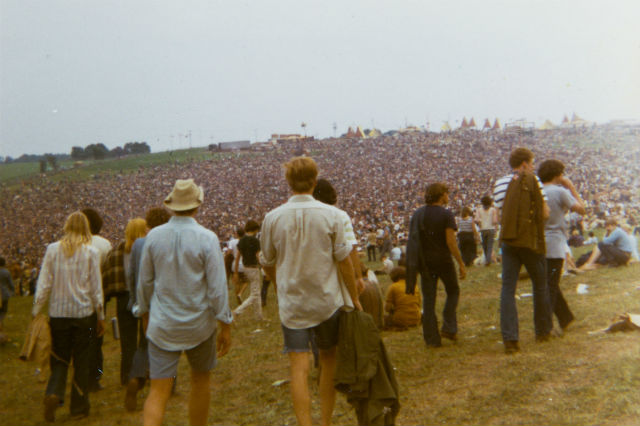
To commemorate the iconic event’s golden anniversary this summer, the center is presenting a Season of Song and Celebration, featuring a packed schedule of special programs, events and a star-studded concert series with over 40 bands and some original Woodstock performers.
In addition to a 15,000-seat pavilion amphitheater, the property – located 90 miles northwest of New York City in the Sullivan Catskills – is home to a 440-seat event gallery, museum and conservatory for arts education programming.
Summer Concert Series
A celebration of the legendary peace and music festival would not be complete without an impressive musical lineup. With concerts kicking off in June, the center will welcome Sheryl Crow, Dave Matthews Band, Heart, Zac Brown Band, Chris Stapleton, Woodstock alumnus John Sebastian and others to perform. Get the full list of concert dates.
From June 13 to 16, the center will host one of the Northeast’s largest rock festivals, Mountain Jam, which has been running continuously for 15 years. Performances will take place across three stages and feature Willie Nelson & Family, The Avett Brothers, Gov’t Mule, Phil Lesh & Friends, Alison Krauss & Union Station, Mandolin Orange, Lukas Nelson & The Promise of the Real, Twiddle, Mandolin Orange, Sister Sparrow, and many more.
Bethel Woods Center for the Arts, located at the historic site of the 1969 Woodstock festival in Bethel, N.Y., will commemorate the festival’s 50th anniversary throughout 2019 with A Season of Song & Celebration, including museum exhibits, concerts, festivals, films, speaker events, workshops and more for the whole family.
For an immersive experience, Bethel Woods visitors can attend the first public premiere of PBS and American Experience’s new documentary from filmmaker Barak Goodman: Woodstock: Three Days That Defined a Generation. It is the third event of the eight-part 2019 Vibrations series, designed to explore the legacy of the ’60s and the movements of today.
Anniversary Week Performers
While the entire Bethel Woods season will honor the legacy of Woodstock, a special Anniversary Week is planned for August 15 to 18. Original Woodstock performers are among the acts who will take the pavilion stage. On August 16, Ringo Starr and his All Starr Band will be joined by folk legend Arlo Guthrie and Edgar Winter, who is returning for the first time since he played the festival with his brother Johnny Winter.
Rock & Roll Hall of Famer Santana will perform on August 17, exactly 50 years after the Saturday afternoon performance considered by many to be one of Woodstock’s top moments. Santana will be joined in concert by The Doobie Brothers, whose catalog draws fans across generations and includes such hits as “Long Train Runnin’” and “China Grove.”
Throughout the golden anniversary season to December 31, the Museum at Bethel Woods is hosting two new exhibits focused on key 1960s events and movements that the center hopes will inspire today’s youth to consider their own vision for the world.
“We Are Stardust” examines the 1969 lunar landing, which took place just weeks before Woodstock, through the lens of American culture. Featuring objects and interpretations of the events leading up to the landing – a key moment in the Cold War space race – the exhibit explores the “moon mania” of the times and its impact on the generation that attended the festival.
“We Are Golden: Reflections on the 50th Anniversary of the Woodstock Festival and Aspirations for an Aquarian Future,” encourages new generations to become involved in peaceful civil dialogue and advancing their vision for the future. Movements including those surrounding environmental protection, women’s rights, LGBTQ issues and social justice all have roots in the 1960s. By examining the Woodstock generation’s role in the societal impacts that followed, the exhibit aims to provide inspiration for future positive changes.
Bindy Bazaar Trails
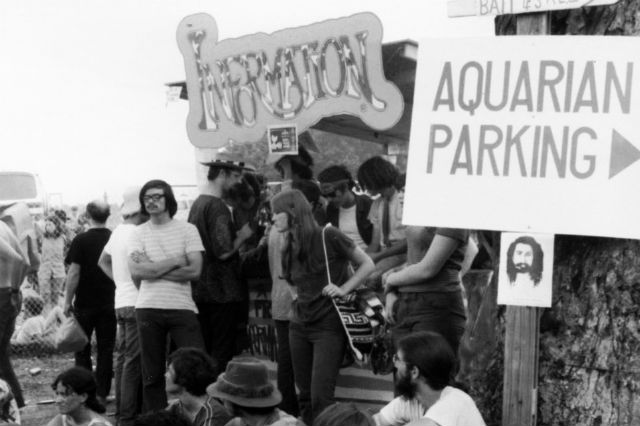
On their way between two of the main festival grounds, over 400,000 Woodstock concert-goers passed through a marketplace featuring 20 colorful booths of exotic goods, crafts and clothing. Known as the Bindy Bazaar, the trails featured signs marking the Groovy Way, Gentle Path and High Way as well as a 30-foot tall map. Starting on May 4, visitors will be able to experience the trails and signs while enjoying a peaceful retreat in the woods.
Walk the grounds, enjoy an immersive film screening or exhibit, and take in a performance by a musical legend. Those who are inspired to reflect on Woodstock and its legacy even more deeply will enjoy roundtables and workshops intended to keep the conversation going well past the golden anniversary year.
With each passing year, our mobile devices become more and more intertwined with our lives. This is evident by the fact that the average time spent using mobile devices continues to rise. In 2018, Americans consumed an average of 3.5 hours per day on mobile media. And we’re certainly not always at home connected to a wireless network during this time, which means we’re eating up our data. This begs the question: How much data do I need?
How Much Data Am I Using?
The first step in figuring out how much data you need is learning how much data you generally use. Fortunately, your phone gives you this information. Most phones track your overall data usage per billing cycle. The information can be found under “Settings” on iPhones and Android devices. While this information will also appear on your phone bill, your smartphone goes one step further by dissecting data usage by app so you can see which apps are draining your data. This can be very useful when trying to cut back on data consumption.
How Much Data Do Apps Use?
If you look at your data usage by app, you will notice that some apps use far more data than others. Any apps that stream video or music, such as YouTube, Netflix, Pandora and Spotify, are going to use up significantly higher amounts of data.
For example, you could send and receive 6,000 emails, visit 1,500 webpages and make 1,500 social media posts in one month while using 2.25 GB of data. You’ll use roughly the same amount of data by watching just six hours of videos per month.
How Can I Conserve Data ?
The easiest way to limit your data usage is to simply turn your cellular data off. This means your apps will only work when connected to Wi-Fi. Once you connect to Wi-Fi, your phone stops using up data. Wi-Fi is quickly becoming ubiquitous in public locations. You may not even realize that it’s an option if you’re in a new place. Make sure to always go to your phone’s Wi-Fi settings to see if there’s a network available.
If you know you’re going to be without Wi-Fi access, do the heavy lifting at home before you go. For example, if you really want to listen to your favorite artist’s new album on your commute, make sure to download the album (which requires high data rates) when connected to Wi-Fi. Once it’s on your phone, you won’t use any data listening to it.
If you find that your favorite streaming apps are draining your data (and you’d like to keep using them just as frequently) all hope is not lost. Most streaming apps have several streaming-quality settings. If you lower your apps streaming quality (moving from high-definition video to standard-definition, for instance) you will lower your data totals.
You can also make adjustments to apps that have very little effect on how you use them. A prime example is with one of the most popular apps: Facebook. If you scroll through your news feed on the Facebook app, it will automatically begin playing any videos that you come across. Videos, as we know, use up more data. But you can turn off this feature. Simply go to the settings page within the Facebook app. Under “Video Settings,” you’ll find the “Autoplay” option. From there, you can choose to “Never Autoplay Videos” or “On Wi-Fi Connections Only.”
Is an Unlimited Plan Worth It?
The answer to this depends on how much you’re using your phone. If you only use your phone for basic functions (i.e. call, text, email, etc.) then an unlimited plan is almost certainly not worth the price.
If, however, you use your phone for business and are constantly running up data charges, it might be the way to go. But even if you’re consistently going over your data allotments each month, you should still do the math before committing to an unlimited plan.
Most carriers will charge you a certain amount each month for the data plan you choose, then another charge for each increment you exceed your monthly allotment. If the carrier offers a higher data limit plan, that may be a better route than a higher unlimited plan for you. Of course, if the unlimited plan is still less than what you’re paying in overage fees, it is the better choice.
Adding another caveat into this is that carriers often have several unlimited plan offers at different price points. But how could anything be more unlimited than unlimited? While they all offer unlimited data, the higher-end plans usually offer better quality service, such as HD versus standard video streaming.
Each season has its way of letting you know when it’s arrived. Flower blossoms signal the beginning of spring, increasing beach traffic is a giveaway for the start of summer, an abundance of flannel and changing leaves are trademarks of the fall, and of course, there’s the first deep freeze of winter. For 50 million Americans, however, itchy, watery eyes and a running nose are the tell-tale signs of a seasonal shift.
It can be hard to thoroughly enjoy the beauty of the seasons when pollen, dust and other allergens decide to camp out in your eyes and blur your view. If you suffer from eye allergies, we’ve provided practical solutions you can implement to help reduce symptoms.
Eye Allergy Symptoms
Symptoms can vary for each individual, so be sure to consult an allergist for specifics. These are the most common for eye allergies.
Allergens including grass, tree and ragweed pollen, dust, pet dander, household pollen and mold are what cause allergies to occur. When they come in contact with your eyes, the cells within the eyes release various substances to fight off the allergen(s). There are also allergens that don’t come in direct contact with the eyes that are still capable of causing irritation, such as specific foods or insect bites or stings. Irritants like smoke, perfume and diesel exhaust can also bring on symptoms.
Solutions
Unfortunately, there is no way to avoid eye allergies completely, but you can reduce the severity of the symptoms. One of the first things you can do is see your eye doctor before the time you anticipate your allergies to be the worst and get tips on how to reduce your sensitivity.
Use air conditioning in your car and in your home. Make sure both of these are functional and clean on a regular basis.
Try to keep the humidity in your home low (between 30 and 50 percent) to avoid mold build-up.
Use a dehumidifier in damp, humid places like the basement, and empty and clean it often.
Be sure there are no water leaks and standing water, particularly in the basement.
Have bedding covers and sheets that limit dust mite exposure.
Wash bedding frequently using hot water at at least 130 degrees, at least weekly.
Clean mold with detergent and a 5% bleach solution.
Keep carpeting, linens and stuffed animals to a minimum, as dust mites can collect with these items.
Clean floors with a damp – not wet – rag or mop rather than dry-dusting or sweeping.
If you have non-hypoallergenic pets, be sure to keep them out of the bedroom at all times and bathe them at least once weekly.
Outdoor Exposure
Avoid being outside for an extended amount of time during high pollen periods.
Wear glasses or wrap-around sunglasses to keep pollen and other eye allergy triggers from getting into your eyes.
After petting that adorable dog you see while walking outdoors or playing with your cats (or any non-hypoallergenic animal for that matter), be sure to wash your hands thoroughly with soap and water.
Don’t rub your eyes. Rubbing your eyes releases more histamine – your immune system’s defense against irritants – which can aggravate the symptoms enough to cause an eye infection.
Take a shower at night and gently clean your eyelids to remove pollen that might have accumulated during the day and could cause eye irritation as you sleep.
Contacts and Glasses
Contact lenses can attract and gather allergens. Wear disposable contacts to avoid the buildup of irritants.
If you’ve done the above already, but the symptoms just aren’t going away, consider using medications designed specifically for eye allergies. There are multiple types of medications available, but be sure to consult your eye doctor about which works best for you and side effects.
Antihistamines reduce your body’s “attacks” against allergens – sneezing, runny nose, etc.
Decongestants help to shrink swollen nasal passages for easier breathing. They also reduce the size of of blood vessels on the white of the eye to relieve redness. Some medications contain both an antihistamine and a decongestant.
Non-steroidal anti-inflammatory medication, or NSAID for short, is a type of eye drop that might be prescribed to reduce swelling, inflammation and other symptoms associated with seasonal allergies.
What’s your plan for seasonal eye allergies? Have advice for others? Let us know in the comments!
*Present your AAA membership to receive 50% off lenses when you purchase a complete pair (frames and lenses) of prescription glasses or sunglasses). Valid AAA Membership required. Valid on multiple pairs. AAA Vision Discounts are administered by EyeMed Vision Care (EyeMed). These are not insurance programs and may be discontinued at any time. These discounts cannot be combined with any other store offers, vision care plans, previous purchases, readers, or non-prescription sunglasses. Valid prescription required. Some brands excluded including Varilux lenses and Cartier frames. Discounts are off tag price. No cash value. Valid at participating locations only. Void where prohibited by law. Additional restrictions may apply. See store associate for details. Offer expires 12/31/2019.
Chris Beatty is talking at light speed. Wearing a hard hat, a reflective vest and jeans, the Walt Disney Imagineer is leading a tour of the 14-acre construction site at Galaxy’s Edge, the hotly anticipated “Star Wars”-themed land set to open at Disneyland, in Anaheim, Calif., May 31. All around him – but hidden from parkgoers on nearby Big Thunder Mountain – workers are laying concrete, installing props and generally hustling to complete the largest single-themed land that the park has ever created. Beatty dodges a patch of mud and sprints up a flight of stairs to a spot that overlooks one of the land’s star attractions: a life-size Millennium Falcon.
The ship that Han Solo and Chewbacca piloted away from stormtroopers on Tatooine in the original “Star Wars” more than 40 years ago, and that Rey and Finn commandeered to escape the First Order on Jakku more recently, has been brought to life in all its three-dimensional, battle-worn, hunk-of-junk glory. In fact, Millennium Falcon: Smugglers Run is one of two new Star Wars attractions designed to induce both awe and adrenaline. Beatty flashes a wide grin as he surveys the iconic ship and the weathered spaceport behind it. “This,” he says, “is one of the hero shots of the land.”
As one of about a dozen writers invited for this sneak peek, I’ve reminded myself to remain a dispassionate journalistic observer. But who am I kidding? The moment I spot the Millennium Falcon, I’m the 6-year-old at Josh Blaustein’s “Star Wars”-themed birthday party in 1977, eyes glued to the big screen, popcorn in hand, mouth agape. I’m the same kid playing with my toy Millennium Falcon and Star Wars action figures – don’t call them “dolls” – and imagining myself making the jump into hyperspace. So, yeah, seeing the ship before my eyes is very cool.
Parkgoers pass through this famous cinematic room – and can pose for photos – before entering the cockpit of the Millennium Falcon.
This Proustian response is exactly what Beatty and the other Imagineers intended when they started development on the land in 2014. Back then – two years after Disney shelled out a reported $4 billion to acquire Lucasfilm (including the “Star Wars” franchise) – Beatty and other Imagineers visited the film company’s headquarters in San Francisco’s Presidio. There, in the shadow of the Golden Gate Bridge, past the gurgling fountain topped by a wizened Yoda, a small team of Imagineers and “Star Wars” story developers considered a daunting question: How do you transform one of history’s most beloved movie franchises into a beloved amusement park land? (Make that two lands: A nearly identical version will open at Disney’s Hollywood Studios at Walt Disney World in Florida Aug. 29.)
The magnitude of the task wasn’t lost on Beatty, the executive creative director who began as an apprentice at Walt Disney Imagineering in 1997 and has since worked on projects from Florida’s Epcot to Disneyland Paris. An avowed “Star Wars” fan, the 47-year-old recalls unwrapping action figures as a kid on a Christmas morning in Ohio and bounding into his family’s snow-covered yard to build his own Hoth play set. “Think about the pressure,” he says, “to deliver on 40 years of people’s passion and their longing to step into these worlds and be a part of the Star Wars universe.”
A Long Time Ago
Of course, the Imagineers first had to determine which part of that sprawling universe to recreate. They considered familiar film settings such as Hoth, Endor and Tatooine, but Beatty and the others saw risks in trying to reproduce, say, Luke Skywalker’s home planet. As Beatty explains: “You’ve seen it before, you’ve lived it before. It would never be as good as standing in line for the first time in 1977 to see the original film.”
As they mulled options, the Imagineers also met with J.J. Abrams, the phenom director-writer-producer behind “Lost” and “Westworld.” At the time, he was shooting “Episode VII: The Force Awakens,” and he’d soon be tapped to direct Episode IX. By the time the Imagineers returned to their Glendale campus, they’d come to a critical realization: Rather than recreate a world from earlier films, Beatty says, “maybe it’s better to lean forward into the future of the franchise, but leave a door open to the past.” (As someone who’s not ashamed to admit that images of R2-D2, C-3PO, Luke Skywalker and Princess Leia adorned his bedding for the better part of a decade, I’m happy that door won’t be sealed entirely.)
The Imagineers decided to create Black Spire Outpost on planet Batuu. Named for the petrified trees that dot the land, the location has appeared in “Star Wars” novels but not films – at least not yet: Some fan websites predict that the outpost will make its big-screen debut in Episode IX, which is due to hit theaters in December.
Black Spire Outpost wouldn’t seem an obvious choice. Once a thriving refueling stop at the galaxy’s outer reaches, it has fallen in prominence – “kind of an old Route 66 story,” says Scott Trowbridge, lead Imagineer on the project. The village is now a haven for smugglers, bounty hunters and other ne’er-do-wells. It’s dangerous and mysterious, yet it also presented Imagineers with a kind of narrative blank slate: Because fans don’t associate Batuu with Luke or other marquee characters, Trowbridge says, the location gives visitors a better chance to “live their Star Wars story.”
Blue Milk and Green Milk can be found in the Black Spire Outpost market inside Star Wars: Galaxy’s Edge.
With that key decision behind them, the team began considering how to bring the new land to life – what Imagineers call physical storytelling or narrative place-making. What should Batuu look like, feel like and sound like? Designers would draw on “Star Wars” films’ distinctive visual vocabulary – the familiar color palette of the First Order, for example, and the triangle shapes of Star Destroyers. But they also wanted to ground the land in actual places on Earth, which Lucasfilm execs say has been critical to achieving the series’ timeless feel.
Batuu has been around for millennia, according to the saga, so Beatty and other Imagineers traveled to Istanbul, Turkey, Marrakech and Morocco, to find visual cues that could help imbue the land with a sense of ragged history. By their own admission, the traveling band of Imagineers drove local tour guides crazy. The guides wanted to show off mosques and ancient temples, but as Beatty recalls, “They’ll turn around and we’re taking pictures of doorknobs and rusty wires up on a building that looks like a rat’s nest.” He points to a photo the team took of an electrical box plastered onto a leaching, weather-stained wall – an image that has helped guide the look of the buildings. The black spires, meanwhile, were inspired by rock formations in Arizona’s Petrified Forest National Park.
Back at the Glendale campus, as initial plans were coming together, the team donned virtual reality goggles to experience the feeling of walking through the new land. By using such virtual reality technology, the Imagineers could make adjustments to maximize the impact of key viewpoints – what Beatty calls “reveals.”
An example is the tunnel that will usher parkgoers from Frontierland into Galaxy’s Edge – one of the land’s three entrances (only two will lead into Florida’s version). “As you come through, there’s a moment where we reveal a little bit of the architecture,” Beatty says. Visitors will see spires in the distance, but trees will obscure part of the view. That, he says, is by design – to provoke visitors’ curiosity and sense of adventure. If you then turn left as you come out of the tunnel, he adds, “You see spaceships and domes and canopies billowing in the wind. Just like in a film, we’ve framed that establishing shot.”
The goal at every turn, Imagineers say, has been to create Disney’s most ambitious, immersive and interactive land ever. Cast members – some Batuu citizens, some Resistance sympathizers hiding out here – will wear distinctive ensembles. New music written by John Williams, the Academy Award-winning composer behind the original “Star Wars” theme, will play at key moments. The Disney Play Parks mobile app will allow for interactive experiences. And visitors will find food, drinks and merchandise designed exclusively for the new land.
Drop into Droid Depot and you can construct a droid to your specifications (choose from R- or BB-series).
The Kessel Run
All of this preparation has fans’ anticipation running high – and security at the construction site Death Star – tight. Before I can tour the land, I have to promise not to take photos or even carry a smartphone into the area. I pull on a hard hat, boots and a reflective vest and am soon strolling past weathered domes and petrified trees. I’m led inside Oga’s Cantina, where construction crews are hard at work, and then through part of Star Wars: Rise of the Resistance, a trackless ride that puts parkgoers into battle with the First Order. That, too, is still being finished, and Disney says it won’t open until later this year.
To my delight, I also come face to face with the Millennium Falcon. Imagineer Asa Kalama leads our group through the attraction’s queue, where an animatronic Hondo Ohnaka seeks volunteer parkgoers to deliver cargo. Then comes the moment I’ve been waiting for: We walk onto the ship itself, first into a gloriously recreated Chess Room, and finally, into the cockpit. It looks just as it does in the films, with control panels lining the walls. I can practically hear Han Solo yelling, “Traveling through hyperspace ain’t like dusting crops, boy!”
I settle into one of the six seats, soak in the oddly familiar scene, and recall something that Imagineer Margaret Kerrison said earlier: “When we open Galaxy’s Edge, I think grown men are going to cry. … There’s just so much anticipation and excitement for this.”
Indeed, the attraction isn’t even finished yet and I’m already getting a little misty. The galaxy that was once far, far away feels – amazingly – much, much closer to home.
In Star Wars: Rise of the Resistance, which will open later this year, you’ll find yourself inside a full-size spaceship and aboard a Star Destroyer as you battle the First Order and Kylo Ren.
You Must Reserve Ahead to Visit Galaxy’s Edge
Batuu might be a backwater planet on the galaxy’s Outer Rim, but when the land opens May 31, it’s bound to draw crowds. To access Galaxy’s Edge between opening day and June 23, parkgoers will need to make a no-cost reservation, subject to availability, starting May 2. Visitors staying overnight in one of the three Disneyland hotels during that period will be given reservations to visit the land during their stay (theme park admission required). After June 23, reservations will no longer be required. To continue to manage demand and provide a great guest experience, Disneyland will offer a virtual queueing system, as needed, to visit the land. Check Disneyland.com for updates.
From Champagne toasts to shining plaques, spring 2019 has been a season of sparkling celebration as AAA Northeast hosted the best-of-the-best in hospitality at AAA Four and Five Diamond Award luncheons throughout the region.
Established to help members find quality places to sleep and eat while on the road, hotel and restaurant inspections have been a AAA tradition since 1937. AAA Four and Five Diamonds Awards denote properties of the highest caliber, based on the standards set by AAA’s rigorous and always-evolving inspection process.
John Galvin, AAA Northeast president and CEO, addresses the crowd at the New York Five Diamond Awards luncheon. (Photo: Victoria Angela)
“This is a very important program to us nationwide and one we are very committed to and will stay committed to for the long term,” said President and CEO of AAA Northeast, John Galvin at the New York City event.
At this year’s award ceremonies in Providence, Boston, New York City, New Jersey, Connecticut and Lenox, Mass., the hosts became the hosted. Gathered with their peers, local hotel and restaurant managers, chefs and other industry professionals were given the time to share a meal, talk shop and recognize their accomplishments.
For several establishments, it was their first time being named as Four or Five Diamond. All other recipients are perennial. Earning your spot among the top takes work, but maintaining it – especially on the Five Diamond level – is a true example of dedication and diligence.
New York City Five Diamond Awards
Michal Dedera, hotel manager of Four Seasons New York, toasts to the crowd. (Photo: Victoria Angela)
The Five Diamond is an elite and hard-earned designation. Five Diamond hotels make up only .4 percent of 27,000 hotels inspected yearly. Restaurants that hold the title represent just .2 percent of 32,000 inspections.
Notable but not surprising, New York City has the highest concentration of Five Diamond properties in the country.
This year’s luncheon was hosted by the Four Seasons New York in their stunning Fifty7 West ballroom. The city’s longest-standing Five Diamond hotel, they have been taking home the award since 1994.
If you have the opportunity to walk through the IM Pei-designed space surrounded by its signature limestone or are fortunate enough to stay in one of the hotel’s rooms (all suites), it’s not hard to see why. It’s simple, calming elegance and amenities, including an on-site spa, set the bar in luxury and exemplify the Five Diamond standard.
“We are very proud to carry the Five Diamond Award for 25 years. It’s always wonderful to meet and be able to congratulate other industry leaders as well as accept the award for the hotel,” said Michal Dedera, Four Seasons New York’s hotel manager.
John Galvin and Atera’s general manager Mathew Abbick with the restaurant’s Five Diamond award.(Photo: Victoria Angela)
In the restaurant category, Atera’s intimate setting, carefully-crafted, two-hour plus tasting menu and dazzling presentations earned it its first Five Diamond Award. As noted in the AAA inspector’s rating, the courses are “visually unlike anything else in town.”
Long-esteemed Daniel celebrated 20 years of Five Diamond excellence.
Diamond Awards in Providence, Boston and Beyond!
From left, Greg Nawrocki, Matt Chauvin and Emily Archer were among the hosts from Hotel Providence for the AAA Four Diamond Award presentation ceremony. (Photo: Aimee Carrier)
At the AAA Four Diamond Rated Hotel Providence – one of 12 Four Diamond hotels in Rhode Island – Diamond designees including Gurney’s Newport Resort & Marina, Watch Hill Inn and Four Diamond favorite restaurant Gracie’s, raised their glasses to continued success.
From left, Gaby Artola, Daniel Hostettler and Nishant Chaudhary of COAST and Ocean House. (Photo: Casson-Foster Photographers)
Rhode Island’s only Five Diamond Rated hotel, Ocean House, continues to hold onto its rating since 2011, but its restaurant COAST earned its first Five Diamond Rating this year. Both picked up their awards at the Boston ceremony at the Five Diamond Rated Mandarin Oriental, Boston.
Other standouts in the region include Four Diamond Rated Italian seafood restaurant Due Mari in New Brunswick, N.J., and Winvian Farm and its adjoining restaurant continue to represent Five Diamond luxury in Morris, Conn. since 2010 and 2011, respectively.
Congratulations to all of this year’s Four and Five Diamond Award recipients!