College is an incredible experience. You make new friends. You explore new places. You learn how to write a seven-page research paper the night before it’s due. But on a serious note, one thing you might not learn at college is how to manage and pay back the money you borrowed to pay for your...
College is an incredible experience. You make new friends. You explore new places. You learn how to write a seven-page research paper the night before it’s due.
But on a serious note, one thing you might not learn at college is how to manage and pay back the money you borrowed to pay for your education.
First things first
Those new to the student loan game should take a good, hard look at their loans at least 60 days before the first payment is due, said Donald Kerr, senior manager of student lending at AAA Northeast. It’s a good idea to learn what the interest rates are and how long it will take you to pay back the loans.
Understand payment options
Some lenders offer income based repayment plans or pay-as-you-earn plans. If those aren’t options for you and you think you could have trouble affording your monthly payments, now could be a good time to consider loan consolidation, Kerr said. In addition to lower monthly payments, loan consolidation can help you turn multiple loan payments into one easy-to-manage monthly payment.
Explore refinancing options
A borrower can renegotiate the terms of his or her student loans through a process called refinancing. That’s how AAA member Alyssa Pacheco of East Providence, R.I., recently secured lower interest rates on her student loans.
The Providence College graduate scheduled a consultation with Kerr at the AAA Providence location, where he explained the differences between federal and private loans as well as the consolidation and refinancing processes. “When I recently met with Don to do the actual consolidation and refinancing, we reviewed the options again to make sure I was comfortable,” Pacheco said. “This is a great perk of being a AAA member.” Refinancing can also help you lower your monthly payments.
AAA Northeast Bank offers a variety of student lending options. Call 888-422-2536 to talk to a AAA student lending specialist or visit AAA.com/StudentLending.
When shopping for tires, some drivers will pick the cheapest set available. Others will choose the ones made by the brand with the best reputation. It’s less likely that a vehicle owner will spend hours on research to find the best set to suit his or her vehicle needs. The good news is you don’t...
When shopping for tires, some drivers will pick the cheapest set available. Others will choose the ones made by the brand with the best reputation. It’s less likely that a vehicle owner will spend hours on research to find the best set to suit his or her vehicle needs.
The good news is you don’t have to.
“For most people, it’s simple. If you like what’s on there, replace them with the same tires,” saidAAA’s Car Doctor John Paul.
Vehicles usually roll out of the factory with a particular type of tires. Original equipment tires are designed to carry the weight of the car, help it meet fuel economy standards and more. Of course, a new set of those tires isn’t always cheap. Plus, sometimes a driver wants to change something about the way the vehicle drives. Perhaps the driver wants sportier handling or better traction in the rain.
On the sidewall of every tire is an alphanumeric code that can help shoppers identify certain tire characteristics. These codes often include ratings for tread durability, how well it brakes on wet surfaces, the temperature it can withstand and how fast it is designed to run for extended periods of time. Ask about them when shopping for new tires.
One of the most important numbers on the tire is load capacity, or how much weight the tires can support. New tires should always have at least the load capacity rating of the original set. Tires marked M + S are all-season tires that can handle mud and snow. Winter tires are marked with an alpine symbol, which looks like a three-peaked mountain with a snowflake inside it.
“Whichever tires you decide to buy, you should be prepared to put them on before you need them, not when you need them,” Paul said.
Raleigh, North Carolina’s capital city, is a delight to visit, with a compact downtown, thriving restaurant scene, exploding craft brewery industry, and several free museums and green spaces. The walkable city is bursting with energy, and it can be fun to time your visit with one of the city’s many festivals. Make sure to check...
Raleigh, North Carolina’s capital city, is a delight to visit, with a compact downtown, thriving restaurant scene, exploding craft brewery industry, and several free museums and green spaces. The walkable city is bursting with energy, and it can be fun to time your visit with one of the city’s many festivals. Make sure to check out its eclectic shops and boutiques, too.
Budget
Stay: The Holiday Inn Raleigh Downtown is ideally situated in the center of town. Once you park your car, you might not need it again until you leave: Shopping, restaurants and attractions are just minutes away on foot. The hotel offers free WiFi and the panoramic views from its 20th floor Skye Tower Restaurant and Lounge are outstanding.
Dine: Any barbecue place that’s been around for more than 75 years, like Clyde Cooper’s BBQ, must be doing something right. The casual spot has been serving Carolina-style barbecue since 1938. Top lean pork shoulders are slow cooked until they are beyond tender and mixed with a secret barbecue sauce.
Mid-Range
Stay: The Raleigh Marriott City Center is within walking distance to entertainment, museums, attractions and dining. The 400-room hotel has comfortable guest rooms, featuring Marriott’s signature bedding, plus an indoor pool and a Starbucks. Rye Bar & Southern Kitchen offers tasty Southern cuisine.
Do: Hop aboard the Raleigh Brews Cruise, a bus tour that takes visitors to three local breweries. Guides explain the brewing process, the different styles of beer, and what makes each brewery unique. Of course, multiple samples are supplied, and – best of all – someone else does the driving.
Dine: One of Raleigh’s more creative restaurants is Bida Manda. The Laotian cuisine is a blend of Thai, Vietnamese and Chinese, with a dash of influences from the country’s French colonial past. Crispy pork belly soup with coconut curry is outstanding, as are more familiar dishes like fresh summer rolls and pad thai.
Luxury
Stay: Located about 15 minutes from downtown, the AAA Five Diamond Rated Umstead Hotel and Spa is worth the drive. The six-story hotel sits on 12 acres filled with gorgeous gardens and a lake. It has an amazing collection of art, complimentary bicycles to borrow and an outdoor pool. Guests also have use of the spa facilities, even if they don’t book a treatment.
Do: Raleigh is a real food-lover’s town, and a Taste Carolina gourmet food tour is a great way to get a feel for the area. You’ll meet chefs while enjoying their food, which usually features local ingredients. Guides also talk about the city’s history and architecture along the way. Tours might visit five to seven restaurants and shops. Tours are offered every weekend.
Dine: One of Raleigh’s go-to special occasion restaurants, the Second Empire Restaurant and Tavern, makes for a delicious night out. The seasonal menu might feature dishes like grilled Australian rack of lamb or roasted five-spice Pennsylvania duck breast. For a truly luxurious meal, book the chef’s table and eat in the kitchen with chef Daniel Schurr and his staff.
AAA estimates that Americans spend an average of 17,600 minutes driving each year. That translates into more than 293 hours, or just over 12 full days of driving time. That’s a lot of work for both car and driver. What could possibly go wrong? We know the dangers when drivers are impaired, drowsy or distracted....
AAA estimates that Americans spend an average of 17,600 minutes driving each year. That translates into more than 293 hours, or just over 12 full days of driving time. That’s a lot of work for both car and driver. What could possibly go wrong?
We know the dangers when drivers are impaired, drowsy or distracted. We discuss that a lot in our educational outreach and advocacy. We also know that well-maintained cars can last longer than ever before. We talk about that as well, and it’s appropriate to do so now, in the weeks and months before another Northeast winter arrives.
October might be the most critical month when it comes to preparing for the weather ahead and car maintenance. That’s why AAA Northeast recognizes each October as AAA Car Care Month, complete with opportunities for members to have their vehicles checked out before the cold and snow arrive.
When was the last time you changed your vehicle’s windshield wiper blades? How about making sure the summer heat didn’t drain the battery of all the power it will need for winter? When did you last change the oil or rotate the tires?
In this issue, you’ll find details of special AAA Car Care Month offers for members. They include Saturday battery and vehicle inspection checks at AAA locations, and a special discount at participating AAA Approved Auto Repair facilities. You can receive specific information about our special offers by visitingAAA.com/CarCareMonth.
Earlier this year, a AAA survey found that 64 million U.S. drivers would not be able to pay for an unexpected vehicle repair without taking on debt, suggesting that many Americans may not fully realize the costs associated with owning and operating a vehicle. In 2016, that figure was over $8,500, with an estimated $800 allotted for maintenance and repairs.
Here is where the AAA Approved Auto Repair program is one of your best member benefits. There are hundreds of local AAA Approved facilities, and thousands nationwide, that all meet our stringent standards for training, equipment and, especially, customer service and satisfaction.
Handling car maintenance issues before or as they arise – rather than waiting for them to escalate – is a good way to protect both your vehicle and your wallet.
Healthy, classic or decadent – no matter how you prefer your slow cooker creations – these three delicious recipes are sure to satisfy. Healthy Recipes like Pinch of Yum’s quinoa chicken primavera disprove the idea that slow cookers work best with fatty meats. Made with quinoa, chicken, peas, asparagus and pesto, this casserole-like dish packs...
Healthy, classic or decadent – no matter how you prefer your slow cooker creations – these three delicious recipes are sure to satisfy.
Healthy
Recipes like Pinch of Yum’s quinoa chicken primavera disprove the idea that slow cookers work best with fatty meats. Made with quinoa, chicken, peas, asparagus and pesto, this casserole-like dish packs nutrients and flavor. In this two-for-one health special, you’ll have extra time to exercise while your slow cooker takes care of dinner for you.
Classic
Love lasagna but hate the hassle? Your favorite comfort food just got more comfortable. Betty Crocker’s slow-cooker lasagna recipe lets you cook this Italian classic without turning on the oven. After some prep work, drop in your ingredients and finish cooking from the couch. Lasagna never felt so lazy or tasted so good.
Decadent
Stressed” may be “desserts” spelled backward – but there’s no stress involved in this delicious dish. Use your slow cooker to take the headache out of baking. Betty Crocker’s Reese’s peanut butter cake recipe uses a slow cooker to create layers of peanut butter paradise. It may cook slowly, but it won’t take long for the gooey masterpiece to disappear.
To someone unfamiliar with the depths of Irish culture, images of shamrocks and leprechauns and pints of green beer on St. Patrick’s Day might spring to mind. At least that was my experience before visiting Ireland. Anyone who’s traveled to the Emerald Isle knows that its centuries-old culture goes far deeper than the American collegiate...
To someone unfamiliar with the depths of Irish culture, images of shamrocks and leprechauns and pints of green beer on St. Patrick’s Day might spring to mind. At least that was my experience before visiting Ireland.
Anyone who’s traveled to the Emerald Isle knows that its centuries-old culture goes far deeper than the American collegiate celebration.
A good way to immerse yourself in Ireland is by road. The island boasts plenty of landscapes to accentuate the drive, from fantasy-inspiring mountains to dramatic coastlines and green meadows.
Dublin
A few days in Dublin are practically obligatory. Renowned Irish writers, including James Joyce, Oscar Wilde and Samuel Beckett, have passed through the city. It’s also the stage for much older writings: The Book of Kells, one of the world’s most well-known medieval texts, is on display at Trinity College.
Walking Dublin’s streets, it’s mind-boggling to realize that some establishments are more than 800 years old. For example, the Brazen Head, which offers a traditional beef and Guinness stew, has served patrons since 1198. And speaking of Guinness, the Guinness Storehouse is a popular exhibition about the beer brewed since the 18th century.
The Wild Atlantic Way
Ireland’s Wild Atlantic Way is made for scenic drives along the west coast. One of the more dramatic spots is the Cliffs of Moher, a 5-mile stretch of shale and sandstone standing hundreds of feet above the Atlantic Ocean.
Galway is a good base from which to explore the west coast. There’s a youthful vibe, with plenty of pubs and street performers on Quay Street. From here, you can easily reach surf spots at the beaches of Kilkee, or go rock climbing and zip lining in Westport.
County Kerry and the South
County Kerry is home to Ireland’s highest peak, Carrauntoohil. It’s also home to the Skelligs, a pair of islands made famous by the presence of Luke Skywalker in the new “Star Wars” movies.
Cork is the main city of the south, and it serves as a good base to explore the region – especially nearby Blarney Castle, home of the famed Blarney Stone.
Northern Ireland
The landscape may seem a bit familiar driving through Northern Ireland. That’s because some sites double as locations in HBO’s popular “Game of Thrones.” Castle Ward in Strangford is Winterfell, while the area around Slemish Mountain poses as the Dothraki grasslands.
Another fantastical-looking site is the very real Giant’s Causeway, comprised of about 40,000 volcanically formed rock columns. The site is a little over an hour’s drive from Belfast. When you’re in town, you can visit Titanic Belfast, an interactive exhibition about the famed Titanic, on the site where the ship was built.
You’ll never run out of awe-inspiring experiences on the Emerald Isle.
Healthy Dishes: Yummy Recipes with Healthful Benefits
Fill your diet with superfoods that address women’s health concerns with these flavorful and healthy dishes. 1. Savor the flavor When thinking of building strong bones, a cheesy Italian meal probably doesn’t come to mind. But this spinach and ricotta cannelloni from the National Osteoporosis Foundation is loaded with nutrients such as calcium, iron and...
When thinking of building strong bones, a cheesy Italian meal probably doesn’t come to mind. But this spinach and ricotta cannelloni from the National Osteoporosis Foundation is loaded with nutrients such as calcium, iron and protein that give you an edge against bone disease.
The American Cancer Society thinks you should have your pizza and eat it, too. But this pizza is loaded with cancer-fighting ingredients like eggplant, artichokes and tomatoes.
Good news: You can enjoy a yummy risotto that’s low in carbs and unhealthy fats by adding pumpkin. This side dish from the American Diabetes Association is made healthier by substituting in olive oil and yogurt for butter and cream.
Look no further than the American Heart Association’s white bean hummus wrap for a heart-healthy sandwich. Choose a multigrain wrap, fill it with creamy white bean hummus, and add avocado, bell pepper, cucumber or any combination of vegetables to add a tasty crunch.
This light nighttime snack will satisfy your sweet tooth and your need for daily nutrients, according to the National Osteoporosis Foundation. The vanilla yogurt panna cotta is notable for its toppings: Just add raspberries, or another choice of fruit, plus honey and flaxseeds for a dessert rich in calcium, protein, folate and fiber.
Nothing says fall like a stuffed squash recipe, and one that protects against heart disease is even better. This couscous-stuffed acorn squash from the American Heart Association is low in cholesterol and high in healthy unsaturated fats, making it a hearty choice for your health. Stuff with spinach, couscous and walnuts, then top it off with a drizzle of maple syrup and a sprinkle of blue cheese crumbles.
In Alaska, Fiery Fall Foliage is a Breathtaking Contrast to Snow-Capped Peaks
Fall is far from a shoulder season in Alaska. In fact, for those who enjoy travel without the crowds, it could be the best time to visit the Last Frontier. From late August through October, the Alaskan sky shimmers in shades of pink, purple, yellow and blue while the red and gold foliage provides a...
In fact, for those who enjoy travel without the crowds, it could be the best time to visit the Last Frontier.
From late August through October, the Alaskan sky shimmers in shades of pink, purple, yellow and blue while the red and gold foliage provides a stunning foreground for the snow-capped peaks in the distance.
Like the northern lights, which can be seen once true night skies return to The Great Land in September, it’s surely a sight you will never forget.
Plus, it’s easy to find a breathtaking foliage spot from nearly anywhere in the state.
Here are a couple of standout locales to witness Alaska’s foliage splendor.
Denali National Park
Home of the highest mountain in North America, this state park and preserve encompasses more than 6 million acres of land. Glaciers dominate the higher elevations, but the lowlands are flush with colorful foliage, and if you’re lucky you might catch a hawk or golden eagle in one of your photographs. It’s easiest to navigate the park via the shuttle service that’s provided until the second week on September. After that, private vehicles can travel 30 miles into the park until the road closes for winter.
Matanuska Glacier
While many drivers head south from Anchorage for coastal views along the Seward Highway, the Glenn Highway to the northeast is another amazing outlet. It leads drivers to the Matanuska Glacier, which at 27 miles long by 4 miles wide is the largest glacier accessible by car in the United States. Along the 100-mile journey from the city to the glacier, you’ll be inundated with the stunning colors of fall permeating from the trees that surround the 75-mile-long Matanuska River. It’s a treat for nature lovers.
Wrangell-St. Elias National Park and Preserve. (Photo: Paul Schenk Photography / Shutterstock)
Wrangell-St. Elias
At nearly 14 million acres, Wrangell-St. Elias National Park and Preserve is the largest national park – both Vermont and New Hampshire could fit inside it. Nine of the 16 highest U.S. mountains are inside the park, including the second-highest peak in the U.S. and Canada, Mount St. Elias. The park is accessible by highway from Anchorage and there are some limited access roads in the park for cars. Otherwise, there is no shortage of places to hike and camp within this massive showcase of nature’s true beauty.
Ride the rails
For a convenient yet luxurious way to see the changing colors, ride the Alaska Railroad, which offers year-round service. The iconic train service offers scenic trips and excursions to many of Alaska’s most popular destinations, including Fairbanks, Denali, Hurricane Gulch, Seward and the bountiful nature in between. The Hurricane Turn train, which connects Talkeetna with Hurricane Gulch, in summer, and Anchorage with Hurricane Gulch, in winter, is especially popular for its photo ops, including a chance for snapshots as the train crosses the tremendous Hurricane Gulch Bridge.
Fall events in Alaska
Yes, fall is brief in Alaska, but there is no shortage of fun things to do before the season comes and goes.
Held annually on a Saturday in late August or early September, this one-day celebration of all things blueberry features foods like berry salsas and jams, plus art, jewelry and even music that sticks to the blueberry theme.
Nome, a city in northwest Alaska, is also home to quirkier events like the Great Bathtub Race over Labor Day weekend. Tubs on wheels roll down Front Street, and the first one to travel 100 yards wins bragging rights and a figurine of Kermit and Miss Piggy taking a bath.
The late summer and early fall is also when the Alaska State Fair takes place in Palmer, about an hour north of Anchorage. The fair is known for its giant vegetables and scenic location at the foot of the Chugach Mountains.
Other seasons in Alaska
Of course, with its 663,000 square miles of land, 3 million lakes and 100,000 glaciers, visitors can enjoy the beauty of Alaska any time of year. Here are a couple of exciting things to do during the other seasons.
An Alaskan cruise. (Photo: Maridav / Shutterstock)
Cruising
Cruise season in Alaska runs from May to September. Glacier sightseeing and sailing through southeast Alaska’s Inside Passage are some of the highlights. Travelers can purchase a land and sea excursion, which combines the comforts of a cruise with on-foot adventures in seaport towns and state parks. Click here for more information about Alaska cruise vacations.
The Iditarod
The iconic Iditarod Dog Sled Race, which has been called the Last Great Race on Earth, is held in early March each year. Mushers and their team of 16 dogs race an estimated 1,000 miles from Anchorage to Nome. It takes most teams eight to 15 days to complete the race. The ceremonial start in Anchorage is the fun part for visitors. The 2018 race will start on the morning of March 3.
Pardon the pun, but these events are just the tip of the iceberg. There is so much more to explore in Alaska, and AAA can help you plan your dream vacationto this magnificent state.
College Road Trips: Places to See on Your College Search
There’s hardly a parent with a teenager contemplating college that hasn’t hit the road to visit potential schools. From simple afternoon visits to more complicated college road trips, it’s wise to book some noncollege-oriented activities to offset some of the pressure. After all, when both you and your child are deciding their future for the...
There’s hardly a parent with a teenager contemplating college that hasn’t hit the road to visit potential schools. From simple afternoon visits to more complicated college road trips, it’s wise to book some noncollege-oriented activities to offset some of the pressure. After all, when both you and your child are deciding their future for the next four years, tensions can be quite high. Taking time for a hike, visiting a museum or simply sightseeing can be a fun and welcome reprieve.
My daughter and I roller-skated and shopped in Philadelphia, discovered many great restaurants in Vermont, and enjoyed a snowy hike in New Hampshire during college road trips to see schools.
No matter where you go, save time to relax. Here are some highlights we found in popular college towns.
Northern New England and beyond
Our college road trips took us to Burlington, Vt., a fabulous city on the banks of Lake Champlain. Its charming and walkable downtown is packed with funky shops, art galleries and independent restaurants. You can kayak or take a dinner cruise on the water, or hike, bike and ski in the Green Mountains.
If you’re that far north already, why not visit Montreal? It’s less than two hours away. Just don’t forget your passport! Highlights in the easily walkable city include the Old Port area, Olympic Park and the Biodome.
Eastern Massachusetts, Cape Cod and Rhode Island
There are more than 50 colleges and universities in the Boston area alone, but there’s no reason to stick to the city proper. Cape Cod and its miles of glorious beaches can be reached in a little over an hour. A 45-minute ferry ride from Falmouth can get you to Martha’s Vineyard, which can easily be explored via bike or public transportation. The more remote island of Nantucket is a bit further afield, but can get there in 45 minutes if you fly out of Boston. Newport, R.I., with its famous Cliff Walk and mansions, can be reached in about an hour-and-a-half. Providence is even closer and its museums, restaurants and shops are fun to explore.
Western and Upstate New York
Niagara Falls is a natural choice for anyone planning school visits to western or upstate New York. You can see the spectacular falls from afar or head out on the Maid of the Mist to get sprayed up-close. It can be fun to get another perspective from the Canadian side, but if you do, remember to pack your passport. Buffalo, just about a half hour south of Niagara Falls on the shores of Lake Erie, features gorgeous architecture and a fascinating history. We were intrigued to learn about Frank Lloyd Wright’s contributions to the city’s architectural scene in the early 1900s, thanks to a wonderful tour at the Martin House Complex.
Washington D.C., Baltimore and Philadelphia
Certainly, there are too many colleges to count in the D.C., Baltimore and Philadelphia areas, where any number of activities can occupy visitors for days on end. The wonderful – and free – museums of the Smithsonian Institution should be on every visitor’s agenda. Baltimore’s Inner Harbor, where you’ll find the National Aquarium, the USS Constellation and the Maryland Science Center, is also a must.
Philadelphia’s rich history is a delight to explore, from seeing the Liberty Bell to Independence Hall, where the Declaration of Independence was signed. For a break you can’t beat the historical Reading Terminal Market. Located beneath the Reading Railroad’s 1891 train shed, it features more than 100 food stalls, which my daughter and I tried to sample our way through.
North Carolina and Georgia
Southern college road trips often involve visits to Raleigh, Durham and Chapel Hill in North Carolina. Raleigh is home to world-class museums, like the North Carolina Museum of Natural Sciences and the North Carolina Museum of History, both of which are free. Definitely leave time to head to the stunning beaches of the Outer Banks, less than four hours away, for a couple of days to unwind.
If you’re heading to Charlotte, put the NASCAR Hall of Fame and the U.S. National Whitewater Center (where you can raft where Olympians train) on your list.
The charming city of Savannah, along Georgia’s coast, is home to one of the country’s largest National Historic Landmark Districts, so a walking tour is a great way to get acquainted with the city and its history. A fun alternative is to take one of the many ghost tours available, since the city is said to be America’s most haunted.
Need assistance with college funding? Let AAA help. You can also visit AAA.com/Hotels to find and book a hotel near your destination.
As a parent, you’re probably used to answering questions. Lots of them. But what if your child comes home from school with queries you can’t answer? Questions about, say, why the world is round or why tigers have stripes or why the ocean is salty. Thanks to Google, you can usually get some quick answers, but what if you want to dig a little deeper?
Here are 10 ways you can supplement your curious child’s education at home – and have fun at the same time.
1. Surround your child with books.
Children who have a wide variety of reading materials at home have higher scores on reading proficiency tests than other students, according to the Educational Testing Service. Sign him or her up for a library card and make frequent visits. Whatever their interests, they’ll be able to find a book, magazine, movie or program to suit their tastes.
2. You can’t necessarily count on schools to provide field trips these days.
Zoos, art museums, historic homes, farms, nature centers and natural history museums are all rich sources of information. Have a child who’s curious about where trash goes? See if your local landfill offers tours. And make sure to look online before you go – many organizations have online study guides to enhance your visit, as well as in-house programs and children’s activities.
3. Check out online study guides and homeschooling websites.
The National Education Association has tons of lesson plans organized by subjects, and the National PTA has student guides divided by grades. Most states have at least one organization devoted to homeschooling – use Google to ferret them out.
4. Enlist your child as a helper.
When my daughter was small, I’d let her help me edit book manuscripts at home. And she’s given presentations to local schools on internet safety with her father, a cybersecurity expert. Whether it’s cooking or coding, they’ll gain self-confidence and you’ll gain some valuable bonding time.
5. Find an activity your child will love.
Not only will your kiddo learn a new skill, but he or she will build more neurons and maybe get some exercise at the same time. Whether they lean toward karate, music, cooking, language, archery, swimming or arts and crafts, the options are almost endless.
6. Go back to school.
Local colleges and universities often offer classes for children, both during the school year and in the summer. Have a budding artist at home? The Rhode Island School of Design offers classes in animation, drawing and architecture, while little chefs can take cooking and baking classes at the Culinary Institute of America in Hyde Park, N.Y.
7. Websites can be your friend.
I know, I know – kids already spend so much time on their devices. But certain well-crafted websites can both entertain and inform. Scratch teaches children how to write computer code using an easy drag-and-drop interface, while National Geographic Kids, the Library of Congress and NASA have content geared toward curious kiddos.
8. Commission an out-of-school assignment on your child’s favorite subject.
When my daughter was younger, she absolutely adored chipmunks (thanks, Alvin). After exhausting our local library’s resources, we asked her to write a one-page report on chipmunks. She loved it, and did one on wolves a few years later.
9. At-home science experiments.
If you don’t mind a little cleaning up afterward, this could be a whole lot of fun. Clear off the kitchen table and build a volcano out of clay or Play-Doh and mix together baking soda and vinegar to create an eruption. Grow and hatch butterflies – or buy an ant farm. (Kits are easy to find online.) Or just make some simple dough out of flour and water and let your child have fun making shapes – and making a mess.
10. Ask teachers for resources.
Last but certainly not least, go to the pros! If your child wants to learn more about a favorite subject or needs some extra practice, his or her teachers can recommend books, strategies and resources to help them succeed and thrive, both in and out of the classroom.
Tests, grades, homework, social pressures, teachers – there are lots of things that can give a kid school stress. Some stress is healthy and motivates us to get things done, but too much can be just the opposite. Check in with your child regularly about how she or he is feeling, and watch for changes in behavior that might be a sign of undue stress. Try these strategies if you feel like your child could use some help juggling priorities or coping with school stress.
1. Talk it out.
Make sure your child knows she or he can come to you with concerns. The American Psychological Association recommends stopping whatever you are doing when your child comes to you, and listening actively, letting them finish before you respond and then repeating what you’ve heard so they know you are listening.
2. Stop over-scheduling.
If your kids have no free time most days, frequently say they’d rather stay home than participate in activities, or if you’re most often with them in the car, they might be over-scheduled, according to the American Academy of Family Physicians. A better balance between activities and unstructured time might relieve stress.
3. Practice time management.
Helping your child organize schoolwork can go a long way to relieving school stress. Experts suggest that simple steps such as helping your child keep his or her backpack clean, using a planner to track homework deadlines – and extracurricular activities – and maintaining a clean workspace at home can make a big difference.
4. Focus on sleep.
The American Academy of Pediatrics says kids ages 6 to 12 need nine to 12 hours of sleep per night, and teens need eight to 10 hours. Sleep deprivation can lead to irritability and cause attention and memory problems. Dialing back bedtime might keep your child calmer and more focused.
5. Prepare for stressful situations.
If your child is facing a test, school performance or other potentially stressful situation, help by talking it through. Discuss what concrete actions your child can take to improve the situation and make a plan. Experts say a positive attitude can also help.
6. Try “teddy bear” breathing.
The American Institute of Stress recommends lying on the back with one hand to the chest and a favorite teddy bear on the tummy. As your child breathes in through the nose, the teddy bear should rise, but the chest should not. Have your child count to three, slowly breathe out and repeat.
7. Embrace imperfection.
Everyone makes mistakes. It’s how we learn. If your child is concerned with a bad grade or test score, The Child Mind Institute suggests sharing a story of your own failure, then talk through what went wrong this time and come up with a plan.
8. Keep things consistent at home.
The American Academy of Pediatrics recommends family routines so children know what to expect. When things happen on a predictable schedule, it is easier to make sure important tasks like homework are getting done.
9. Work it out.
The Anxiety and Depression Association of America notes that exercise produces endorphins, brain chemicals that boost mood and improve sleep. Make sure your child gets regular physical activity – whether through organized sports or fun activities such as dancing, hiking or bicycling.
10. Bring in a professional.
If your child experiences irritability, crying, clinging or other negative changes in behavior or physical symptoms such as sleep issues, stomachaches or headaches on a regular basis – and you believe they are stress related – the American Psychological Association recommends seeking professional help.
10 Ways to Make the Most of Your Parent-Teacher Conference
The parent-teacher conference is a rare opportunity to sit down for one-on-one time with your child’s teacher. They are a chance for a two-way discussion of your child’s progress that goes far beyond test scores and report cards. They also offer an opportunity to establish a partnership with the teacher so that you can work...
The parent-teacher conference is a rare opportunity to sit down for one-on-one time with your child’s teacher. They are a chance for a two-way discussion of your child’s progress that goes far beyond test scores and report cards. They also offer an opportunity to establish a partnership with the teacher so that you can work together to support your child. Whether your student is struggling, excelling or somewhere in between, making the most of this time can make a real difference in your child’s school year. The National Education Association, Harvard Family Research Project and the Nemours Foundation offer the following suggestions.
1. Write down your questions.
Take some time to think about what you would like to ask your child’s teacher, and write your questions down so that you can cover all the important points during the limited time available. Prioritize questions so the most important ones are addressed.
2. Check in with your child.
Have a conversation before the parent-teacher conference and ask your child whether she or he has any concerns or questions for you to discuss with the teacher. This gives your child a voice, and shows your child that you take the conference seriously.
3. Know what to expect.
Use the school’s online portal if possible, or send a note to the teacher, to find out how your child is doing in class. This will help you prepare for situations that might need to be addressed, and avoid surprises that could make the meeting awkward.
4. Stick to the schedule.
Your child’s teacher will be spending time with many other parents during parent-teacher conference days. As a courtesy to the teacher, and to the other parents on the schedule, arrive promptly for your appointment and don’t stay longer than your allotted conference time.
5. Start on a positive note.
Thank the teacher for his or her work with your child, and share some positive feedback about your child’s experiences in class. This sets the tone for cooperation and sharing during the rest of the conference.
6. Share information about your child.
Is there something happening at home that might impact your child’s behavior in class? Whether it’s distress over a death or divorce in the family or excitement over a new job or new baby, let the teacher know.
7. Ask about your child’s strengths, weaknesses and progress.
Aim for a complete picture of how your child is doing. Don’t just focus on problem areas, but on bright spots as well. Knowing what your child is doing well makes it easier to tackle challenges.
8. Ask about social skills.
School is more than academics. Ask how your child gets along with her or his peers, about your child’s participation in activities and about his or her friends. These things make a big difference in your child’s attitude toward school.
9. Ask what you can do at home.
Most teachers are delighted to give parents tools for helping their children catch up, or for challenging those who are pulling ahead. Whether it’s tips for organizing homework, helpful websites or suggestions for educational outings, take advantage of this advice.
10. Plan for ongoing communication.
Ask your child’s teacher how she or he would like you to follow up on what you’ve discussed. It might mean scheduling a future meeting or phone call, sending a note to class or emailing. Choose the communication channel most convenient for the teacher, and follow through.
Mornings are rushed and picky eaters are tough. According to the USDA’s dietary guidelines for Americans, half of your plate should be fruits and vegetables and half of your grains should consist of whole grains. Meeting those guidelines, however, can be difficult for those with picky palates.
Strategies include disguising healthy school lunches in tastier forms, getting creative with fun designs and organizing lunches into bento boxes – Japanese containers growing in popularity that separate snacks into neat compartments. We found recipes using each of these methods that will pack lunch bags full of nutrients and appeal to all appetites.
1. Fruit nachos.
Forget the chips and cheese – this treat from the website Super Healthy Kids is nutritious and sweet. Using sliced apples and pears as chips, you can top your fruit nachos with chopped strawberries, coconut flakes, caramel sauce and melted chocolate. Feel free to improvise!
2. The Elvis burrito.
Channel The King for a royal wrap created by Bon Appetit. Spread peanut butter on a wrap and add sliced banana and crumbled bacon. Drizzle honey on for a sweet finishing touch and this burrito will get you all shook up!
3. Fruit in disguise.
Sometimes fruits and veggies get rejected from school lunches, but this idea from the Lauren’s Latest website may be a way around that fact. Make peanut butter sandwiches using apple slices instead of bread. Serve with yogurt-covered raisins, cheese sticks and whole-wheat pretzels to complete the meal.
4. Perfect-size pizza.
Pizza is a childhood staple, and the website Once Upon a Chef created this recipe for English muffin pizza that the pickiest eaters will love. With marinara sauce, mozzarella cheese, pepperoni and some oregano, these tiny pies are simple, quick and tasty.
5. Save the crust.
Finish the last crusts of that loaf of bread, or toast some pieces in the oven, and combine with tomato, mozzarella, pepperoni, basil, peppers, oil and vinegar for a quick panzanella salad. This recipe from Bon Appetit is simple but sophisticated, and can be tailored to fit anyone’s taste buds.
6. Breakfast for lunch.
The 100 Days of Real Food website helps your hungry students bring the best of breakfast to their school lunches. Start with homemade whole-wheat waffles, cut into strips, and pack apple slices, strawberries and plain yogurt mixed with maple syrup. For an extra treat, include frozen blueberries in the yogurt.
7. Wrap and roll.
Think small for big results – try rolling sliced deli meats like ham, turkey or roast beef around cheese sticks for a new take on lunch wraps. Include cream cheese and greens for even more flavor and nutrients in this idea from the website The Kitchn.
8. Fondue for kids.
This bento box idea from the Produce for Kids website has compartments for Greek yogurt and ranch dipping sauces, plus areas for fruits like strawberries, apples and banana slices, and an area for carrots, peppers and broccoli. Add mini-sandwich skewers for the finishing touch in this fun, colorful school lunch setup.
9. Bento salad bar.
A perfect high school meal to pack, the bento box salad bar suggested by the website Veggie Bento Love can feature any fruit, vegetable or nut you like. Include lettuce, cucumbers, carrots, cherry tomatoes, sunflower seeds, sliced red peppers, cooked quinoa and more in separate bento box compartments to keep everything fresh.
10. At the teacher’s table.
This bento box takes a little more work, but is worth the time if you make it in bulk or use it as leftovers. The main event in the Yumbox Lunch website’s recipe is grilled chicken over spinach leaves, red onion and barley. Serve with avocado slices, pistachios and dried mangoes in the side compartments.
Your child’s backpack is a kind of bridge between home and school, a place to carry essential supplies. But carrying around a pack all day can take its toll. Help your child start the school year off right with a backpack that fits correctly and fill it with all the necessities.
Your child’s backpack is a kind of bridge between home and school, a place to carry essential supplies. But carrying around a pack all day can take its toll. The American Occupational Therapy Association reports that overloaded or improperly worn packs can lead to aching backs and shoulders, tingling arms and stooped posture.
Helping your child choose a pack that fits correctly, and then packing it with just the essentials, can make a big difference. Monitor your child’s pack on a regular basis to clean out nonessential items, and make sure your child wears the pack using both straps, rather than just slinging it over one shoulder.
1. The pack itself.
To prevent back pain, the American Chiropractic Association recommends choosing a pack with wide, padded, adjustable straps so that you can position the pack properly. It shouldn’t hang more than 4 inches below your child’s waistline. Packs with many compartments help you distribute the weight of the contents evenly.
2. School supplies.
Stick with the essentials. The pack should weigh no more than 5 to 10 percent of your child’s body weight, according to the ACA. If it weighs more, ask your school about electronic copies of textbooks or to consider photocopying book chapters for children to bring home.
3. Medication.
Know your school’s policy on medication. Children with asthma or food allergies might be allowed to carry an inhaler or an epinephrine auto injector with them. If your child does, make sure school personnel are aware and that the medication is kept where it is readily accessible.
4. Electronics and chargers.
Many schools allow students to bring cellphones, tablets and laptops to class, but these items won’t do any good if they aren’t charged. Make sure your child has power cables, and consider purchasing a portable power bank for charging when electricity isn’t available.
5. Emergency phone list.
Chances are, your child’s important phone numbers are in the contacts list in his or her cellphone. But these won’t be accessible if the phone is lost or damaged. Your child should carry a paper list with your phone number and others she or he might need.
6. Cash.
How much money your child needs to carry depends on a number of factors. Does your child take public transportation to school? Buy a school lunch? Have expenses for extracurricular activities? In many cases, you can avoid having your child carry excess cash by paying for lunch or activities in advance.
7. Weather gear.
During fair weather, pack sunscreen, and a light jacket for cooler mornings. If things are wet and chilly, pack an umbrella, hat, gloves and jackets to keep your child dry and comfortable. Make sure your child has layers for indoor versus outdoor temperatures.
8. Water bottle.
The American Academy of Nutrition and Dietetics says kids should drink an average of 6 to 8 cups of water per day – though age, weight, air temperature and humidity level play a part. Having water on hand at all times can help make sure your child stays hydrated.
9. Personal items.
There are a few little extras that just make things more comfortable and more fun. Hairbrushes, hand lotion, tissues, chewing gum or mints might fall into this category. It’s nice to pack these in their own case so they are easy to grab.
10. Something reflective.
The Centers for Disease Control and Prevention says child pedestrians are at greater risk than adults of being hit by cars because they are smaller and more difficult for drivers to see. Increase your child’s visibility by adding reflectors or reflective material to his or her backpack.
Saratoga Springs is a city that has reinvented itself many times throughout history. Since before Colonial settlers arrived to this New York city, its mineral springs have drawn visitors for the water’s reportedly restorative properties. Then it became known as a hotbed of gambling and horseracing. In the time since, Saratoga Springs has once again...
Saratoga Springs is a city that has reinvented itself many times throughout history. Since before Colonial settlers arrived to this New York city, its mineral springs have drawn visitors for the water’s reportedly restorative properties. Then it became known as a hotbed of gambling and horseracing.
In the time since, Saratoga Springs has once again become a sought-after resort destination, one that combines the best of its past iterations to create something altogether new and welcome.
Budget
Stay: If you want to explore where aristocrats cavorted but don’t exactly feel like a Rockefeller, consider staying at the Springs Motel. The centrally located motel offers basic amenities and an outdoor pool. The service here is consistently high-level.
Do: There are plenty of vineyards, breweries and distilleries nearby. The Saratoga Winery manages to appeal to both wine and beer lovers, while the Thirsty Owl bistro has a tasting room for wines. Try the Olde Saratoga Brewing Company if you want to sample some brews.
Dine: Get greasy at Hattie’s Chicken Shack. The legendary joint serves up Southern hospitality cooking year-round in two Saratoga Springs locations. You’d be remiss for not trying the fried chicken, but the rice and beans, jambalaya and bloody marys also draw raves.
Mid-Range
Stay: The antique amenities at the Inn at Saratoga provide a glimpse into 19th century hospitality. Modern amenities include Wi-Fi, on-property parking, and passes to a nearby pool and YMCA. Draw a pint at the inn’s tavern or take the antique Roadster bikes out for a free spin.
Do: See the town’s namesake features at Saratoga Spa State Park. There, you can partake in several pools fed by the mineral spring water. There’s also great golfing to be found here, as well as plenty of nature trails for warm-weather hiking or snowshoeing in the winter months.
Dine:Max London’s Restaurant and Bar prides itself on fresh local ingredients; ink-written additions to the menu reflect daily availability. Brunch fare and cheeses, including homemade mozzarella, are what make the vibrant bistro memorable, but the weekend DJ doesn’t hurt, either.
Luxury
Stay: Elegance is the operating word at Saratoga Arms, a boutique hotel that prides itself on concierge-level service. The rooms are both stately and cozy, and the downtown location allows visitors to walk to many attractions. As a bonus, breakfast is included with your stay.
Do: If you’d like a bird’s-eye view of the region, get in the basket with Adirondack Balloon Flights. On a day of good visibility, you can see the Adirondacks and Vermont’s Green Mountains. If you’re in the area in September, travel to Queensbury for the Adirondack Balloon Festival.
Dine: 15 Church is an elegant, relatively new restaurant that immediately won the hearts of locals by saving a historical building from demolition. The restaurant draws equal praise for its food, ambiance and service. Steaks, burgers and desserts are all sure bets.
Car batteries hate extreme temperatures. It’s one reason so many fail in the summer heat. Periodically disconnecting the car battery to clean its terminals with water and baking soda can help extend its life, said AAA’s Car Doctor John Paul. But all automotive batteries will fail eventually. Here are a few signs yours is on...
Car batteries hate extreme temperatures. It’s one reason so many fail in the summer heat.
Periodically disconnecting the car battery to clean its terminals with water and baking soda can help extend its life, said AAA’s Car Doctor John Paul. But all automotive batteries will fail eventually. Here are a few signs yours is on its way out.
It’s old
The first reason is simply a numbers game. Modern car batteries are designed to last three to five years. A lot of short trips, vibrations and exposure to very hot and cold temperatures outside and under the hood can result in a lifespan that’s on the short end of that spectrum. Batteries that have been jump-started many times also tend to fail earlier.
Engine cranks slowly
The battery makes the power that gets the engine going before the alternator takes over. A weak car battery will struggle to produce enough juice to start the engine. It will either take longer than normal or won’t start at all. If the battery is totally gassed, you might turn the key and hear nothing but a rapid clicking sound, which happens when the battery is too weak to begin the starting process.
Issues with electronics
Bad batteries won’t power a vehicle’s electrical parts properly. One way to check is to turn the headlights on. If they look dim, it could be a sign that your power source is ready to go kaput. You might also notice issues with parts like windshield wipers and power windows, Paul said.
Having a dependable battery can take a lot of the stress out of being a car owner. “I always tell people, if your vehicle’s battery is three years old, have it tested, and if it’s five years old or more, it’s time to have it replaced,” Paul said.
Learn about AAA’s mobile battery service at AAA.com/Battery.
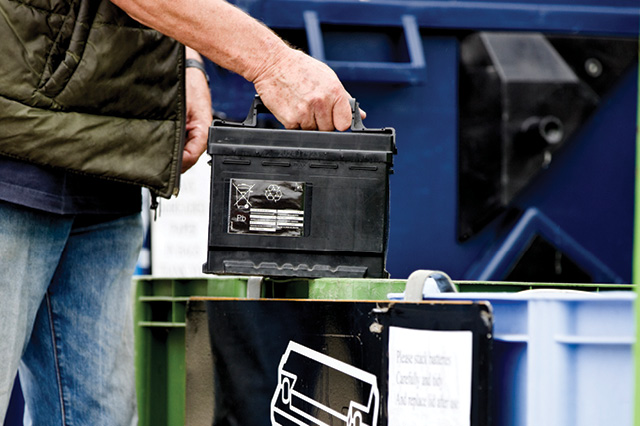
Top Photo: A man handles a car battery. (FlairImages / iStock / Thinkstock)
When the music started, the people who had been standing around began to tap their toes, bounce their heads and move their hips to the beat. But this wasn’t a dance hall or a dimly lit club. It was a museum. Yet people couldn’t help themselves when the distinctive sounds of Elvis, Johnny Cash, Jerry...
When the music started, the people who had been standing around began to tap their toes, bounce their heads and move their hips to the beat. But this wasn’t a dance hall or a dimly lit club.
It was a museum.
Yet people couldn’t help themselves when the distinctive sounds of Elvis, Johnny Cash, Jerry Lee Lewis and CarlPerkins filled the room at Sun Studio in Memphis, Tenn. It’s impossible to stand still when you hear the rockabilly rhythms of “Blue Suede Shoes.” People just had to move to the beat at this recording studio museum that has been called the birthplace of rock ‘n’ roll.
In Memphis, great music is around every corner – on the street and in nearly every club and restaurant.
Musical Mecca
Ground zero for music in Memphis is legendary Beale Street. This is where bandleader W.C. Handy introduced blues to the South. The three-block pedestrian-only section of this street features dozens of places to hear live blues and nearly every other genre. At night, it’s a veritable street party with music pulsing from clubs and sidewalk performers.
The Memphis Rock ‘n’ Soul Museum tells the story of the city’s musical evolution, from the sharecroppers of the 1930s through Memphis’ musical heyday in the 1970s. The rich collection includes fantastic photographs, costumes, instruments and other relics, as well as 100 songs you can hear through provided headphones.
Next, head to Sun Studio. It’s been said that if music was a religion, Memphis would be Jerusalem and Sun Studio its most holy shrine. It’s hard not to agree after a guided tour of the studio, which Sam Phillips founded in 1950 to capture the Beale Street sound. The studio launched the careers of many performers, including the Million Dollar Quartet, as Elvis, Cash, Lewis and Perkins were known.
Memphis’ Soulful Past Shines
On tours, visitors see instruments and relics from the 1950s and ’60s and hear songs and outtakes from studio sessions. You can even hold Elvis’ microphone.
Soul also flourished in Memphis, and the Stax Museum of American Soul Music honors the artists who recorded there, including Otis Redding and Isaac Hayes. Located on the original site of the Stax Studio, the museum contains more than 2,000 artifacts, exhibits and films that tell the story of soul music.
The Blues Foundation has been inducting members into its Blues Hall of Fame since 1980, but now has a physical location featuring artifacts, original artwork, photos and multimedia elements about the inductees.
And no visit to Memphis would be complete without touring Graceland, Elvis’ home from 1957 until his death in 1977. It serves as a compelling time capsule of Elvis’ life and career. New attractions include Elvis Presley’s Memphis, a 40-acre museum and entertainment complex, and the AAA Four Diamond Rated Guest House at Graceland.
Civil Rights
Housed in the Lorraine Motel, where Martin Luther King Jr. was assassinated, the National Civil Rights Museum provides a walk through five centuries of history, from slavery to seminal events of the 20th century. Exhibits share lessons from the American civil rights movement and examine how that era continues to shape freedom globally.
More than 40 news films, oral histories and interactive media are part of the museum’s robust collection. Visitors can climb aboard a bus with a statue of Rosa Parks and take a seat at a lunch counter sit-in beside three-dimensional figures.
Just Ducky
The Peabody Marching Ducks live in the Royal Duck Palace on the roof of The Peabody, a AAA Four Diamond hotel that’s synonymous with Southern hospitality. With great pageantry each day at 11 a.m., a duckmaster leads the waterfowl down an elevator and across a red carpet to the lobby. They spend the day swimming in the fountain then return to their penthouse at 5 p.m. in similar ceremony.
The march of the ducks is a happening that’s not to be missed, just as Memphis should be on everyone’s bucket list.
Automobile brand names have some funky histories, and many borrow from other languages. Check out the roots of these company titles and drop some linguistic trivia on your next road trip. Volvo This luxury brand opted for a Latin name, one that perfectly describes a car’s purpose. Rooted in the verb volvere, Volvo translates to...
Automobile brand names have some funky histories, and many borrow from other languages. Check out the roots of these company titles and drop some linguistic trivia on your next road trip.
This luxury brand opted for a Latin name, one that perfectly describes a car’s purpose. Rooted in the verb volvere, Volvo translates to “I roll.” Makes sense!
Ever wonder why Subaru’s logo is a group of stars? The etymology of its name illuminates this starry symbol. Subaru refers to the Japanese name for the constellation known as Pleiades, or the Seven Sisters.
Another Latin word for a luxury car brand. Audi translates to “listen.” Legend has it that the name pays homage to the firm’s founder, August Horch. The surname Horch, in German, means “listen.”
This name sounds close to what it means. Looking for an affordable car for its citizens, Germany founded Volkswagen, which means the “people’s car” in German.
Some think this Italian company’s name is Latin for “let it be done.” While that’s an accurate translation, FIAT is actually an acronym for Fabbrica Italiana Automobili Torino (Italian Automobile Factory, Turin).
We know this one, although the last letter has been changed from the English version. Yet another luxury vehicle chose a Latin name, choosing the noun that means boundless or unlimited.
Paying for car repairs is about as much fun as a trip to the dentist. And, like the dentist, some people will go to great lengths to avoid a trip to the shop. But drivers who skip or delay important repairs expose their vehicles to dangerous situations and costlier fixes down the road, AAA’s Car...
Paying for car repairs is about as much fun as a trip to the dentist.
And, like the dentist, some people will go to great lengths to avoid a trip to the shop.
But drivers who skip or delay important repairs expose their vehicles to dangerous situations and costlier fixes down the road, AAA’s Car Doctor John Paul said. Here are four right-now repairs that should be fixed as soon as possible.
Fluid Leaks
An engine without oil or coolant could be irreparably damaged in seconds, yet some people would prefer to add oil or coolant to their car every day instead of fixing it. The leak will only get worse over time, and it will be hard to keep up with the refills, Paul said. Ignore a leak long enough and what was a simple repair could end up destroying the engine, he added.
Grinding Brakes
A grinding noise when applying the brakes could mean the brake pads are completely worn out. Driving on shot brake pads could damage the calipers or rotors, neither of which are cheap to replace.
Leaky Tire
Sometimes a tire leaks so slowly that a driver can add air every couple of days and get to where they need to go. But doing this could permanently damage the inside of the tire, Paul said. It could also weaken the sidewall, which could cause a blowout.
Cracked Windshield
On a very hot or cold day, it won’t take long for a half-inch crack in a windshield to become an irreparable gash across the glass. The safest and most cost-effective solution is to get the crack or chip repaired as soon as possible, Paul said. Wait too long and you might need a complete windshield replacement. A large enough crack might also earn a driver a ticket for faulty equipment. Like a toothache, sometimes it pays to act before a problem gets worse.
Did you know that AAA Auto Glass will come to you at work or home and provide the highest-quality installations by AGSC certified technicians? To get a free, no-obligation quote on windshield repair or replacement, go to AAA.com/Glass.
Find a qualified mechanic quickly by browsing a list of AAA Approved Auto Repair facilities in your area. You’ll get a free maintenance inspection with any paid repair so you can keep your vehicle in tip-top shape.
I’m a drummer, and when I finish playing a show, I’m exhausted. Playing the drums requires constant motion in both legs and both arms. That, plus setting up and breaking down equipment, makes for a tiring workout. But does it count as exercise? To find out, I geared up with a Fitbit and got behind...
I’m a drummer, and when I finish playing a show, I’m exhausted. Playing the drums requires constant motion in both legs and both arms. That, plus setting up and breaking down equipment, makes for a tiring workout. But does it count as exercise? To find out, I geared up with a Fitbit and got behind my drum kit.
I played a nonstop 30-minute set with rhythms from all genres of music – classic rock beats, jazz swing, blues shuffle, pop ballad, punk, metal blasts and more. After a half-hour, my resting heart rate jumped from 62 to 108 beats per minute. I averaged 100 bpm throughout the session, which equated to roughly 199 calories burned.
According to Livestrong, drummers often elevate their heartbeats even more, sometimes reaching 190 bpm – a rate of intense physical activity comparable to workouts by elite athletes.
During my session, I logged 3,856 steps and “traveled” 1.88 miles on my Fitbit. While these figures may not translate perfectly, it’s clear that drumming requires coordination and endurance, especially when playing a three-hour show.
Every instrument requires a different level of physical activity. In my case, making music clearly burned calories and provided a cardiovascular workout.
If you don’t have access to a drum set, look for cardio drumming classes at gyms near you. These percussion workout programs are the newest craze in the fitness world and can add a fun flair to your exercise routine.
Any new exercise routines should be approached with caution. Consider your physical limitations and always consult your doctors.