AAA DMV Services Available Near You

In an effort to best serve our members, AAA DMV services are available at all branches in Massachusetts, Rhode Island and New York and at three branches in Connecticut: Norwalk, Fairfield and Danbury. Not all services are offered in all states. You can locate your nearest branch here.

Find more information about AAA DMV services near you, how to make a reservation and what you need to know before you arrive.

AAA DMV Services in Connecticut

What DMV services does AAA offer? 

  • License and ID services
  • License renewals
  • License upgrades (including REAL ID)
  • Duplicate licenses
  • Driving records for employment

AAA DMV Services in Rhode Island

What DMV services does AAA offer? 
  • License renewals
  • Duplicate licenses
  • Renewal of existing state ID
  • Renewal of expired state ID
  • REAL ID license upgrade
  • State ID duplicates
  • Registration renewals
  • Late renewals
  • Duplicate registrations
  • Registration address change
  • Cancellation of registration
  • License plate remake
  • Vanity plate orders
  • Motorcycle endorsement
What DMV services does AAA NOT offer? 
  • New licenses or state ID’s to include out of state conversions of license or ID
  • Conversion of a driver’s license to state ID
  • All CDL license transactions
  • Name change on license, ID or registrations. Exception: AAA can change a middle name only with legal documents for Real ID endorsement on License or state ID transactions only
  • Non-Citizen License/ID transactions
  • Reinstate suspended licenses, ID’s or registrations
  • Any title services
  • New vehicle registrations or new license plates for a new or used vehicle you have purchased
  • Converting an out of state registration to Rhode Island
  • Registration transfer of existing plates
  • Drivers permits, either new or duplicates/replacements

AAA DMV Services in New York

What DMV services does AAA offer? 
  • Registration renewals
  • Registration amendments (Acceptable changes: address change, vehicle color change.)
  • Duplicate registrations
  • Registration transfers
  • License renewals
  • Commercial Driver License (CDL) renewals, duplicates and amendments, including downgrading or upgrading change of class, an upgrade to Real ID or Enhanced. 
  • Duplicate licenses (Duplicates can be issued if a license is lost or stolen, if you are changing an address, if you want to change your photo or if you want to add or remove organ donor status.)
  • License amendments (Only the following amendments can be performed: changing name, address, sex, height, eye color, date of birth; adding veteran status.)
  • License upgrades (REAL ID, Enhanced Driver License)
  • Non-driver ID renewals, duplicates and upgrades
  • Plate surrenders
  • Lease buyouts
  • Vision tests
What DMV services are NOT offered?
  • New licenses or state ID’s to include out of state conversions of license or ID
  • Conversion of a driver’s license to state ID
  • Reinstate suspended licenses, ID’s or registrations
  • Late registration renewals expired beyond one year​
  • Any title services
  • New vehicle registrations or new license plates for a new or used vehicle you have purchased
  • Converting an out of state registration to a New York registration
  • Remove, clear or accept payment for income tax blocks, parking violations, E-ZPass violations or tickets

AAA RMV Services in Massachusetts

What RMV services does AAA offer? 
  • License renewals
  • Massachusetts has started the Free Real ID upgrade for those who renewed their standard license/state ID through the RMV online system between June 12, 2020, and April 30, 2021. If you qualify, make a reservation for “Real ID” at the MA AAA office of your choice, record the application form and BRING ALL REQUIRED DOCUMENTS FOR REAL ID TO YOUR APPOINTMENT.
  • Duplicate licenses (Duplicates can be issued if a license is lost or stolen, if you are changing an address, if you want to change your photo or if you want to add or remove organ donor status.)
  • REAL ID license upgrade
  • Renewal of existing state ID
  • State ID duplicates
  • Registration renewals
  • Duplicate registrations
  • Registration amendments (Acceptable changes: address change, vehicle color change.)
  • Registration transfers
  • Duplicate titles
  • Replacement license plate sticker
What RMV services does AAA NOT offer? 
  • New licenses or state ID’s to include out of state conversions of license or ID
  • Conversion of a driver’s license to state ID
  • All CDL license transactions
  • Name change on standard license, standard state ID or registrations. Exception: AAA can do a name change only with legal documents for Real ID endorsement on license or state ID transaction only
  • Reinstate suspended licenses, ID’s or registrations
  • New vehicle registrations or new license plates for a new or used vehicle you have purchased
  • Converting an out of state registration to Massachusetts
  • Duplicate plate requests
  • License plate cancelations
  • License plate swaps (Moving plates between two vehicles you own)
  • Name swaps on registrations and titles
aaa dmv services

Important Information

DMV transactions require paperwork and proof of ID. Real ID and Enhanced endorsements for a non-driver ID and drivers’ license have additional requirements. To successfully complete a DMV transaction, you must prepare yourself with acceptable documents. We recommend you fill out these forms before your reservation. These forms may include:

MV-82 – Vehicle registration/title application

Required for registration renewals, amendments and duplicates.

MV-44 – Application for permit, driver’s license or non-driver ID

Required for license renewals, amendments and duplicates.

Other requirements

Valid AAA membership and proof of identification.

FAQs

How do I make a reservation for a AAA DMV service?

Before visiting a branch, you can make an online reservation for branches in Connecticut, Massachusetts, Rhode Island and New York.

What do I need to know about making a reservation?
  • One person cannot make a reservation for multiple people. Each individual in need of service must have his or her own reservation.
  • Currently, AAA branches can only service one transaction type per visit.
  • AAA is only able to provide DMV services to active AAA members at this time. You will need to bring your current AAA membership card to your reservation.
Is there a fee for AAA DMV services?

In Massachusetts, Rhode Island and New York, DMV/RMV services are free for all AAA members. In Connecticut, AAA members from outside AAA Northeast territory pay $6 for DMV services and non-members pay $8.

For more information and a complete list of all required documents and forms needed to complete AAA DMV services, visit AAA.com.

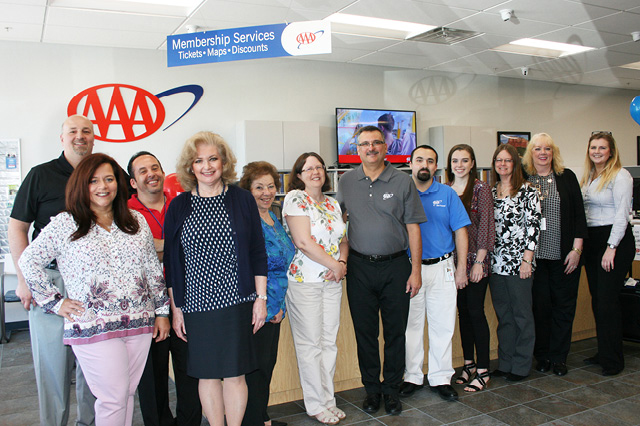
Pictured above: The staff at AAA Northeast’s Farmingdale, N.Y., branch.

This article has been updated and republished from a previous version.

Subscribe to Your AAA Newsletter

Sign up and receive updates for all of the latest articles on automotive, travel, money, lifestyle and so much more!

Why Young People Need Life Insurance Too

A few years ago, I was getting married, buying a fixer-upper, and preparing to have our first baby. Adult things, right? If you’re entering the world of parenthood, you may be adding items to the baby registry or finding yourself sleep-deprived from the late-night feedings. With this new life unfolding before you, the thought of losing your own never crosses your mind.

As parents, it was crucial to avoid leaving our loved ones with financial stress when faced with an unexpected loss. Although uncomfortable to think about, during such an exciting time in life, there really isn’t a more relevant time to need life insurance.

Here are four reasons I decided to purchase life insurance:

Props - Life insurance 2

1. My Kids and Spouse Depend on Me

If you just had a baby, congrats on your new bundle of joy and financial responsibility for the next eighteen years – and beyond! Not many of us are thinking about life insurance after having a baby, but this is precisely when you should. Life insurance was created for that exact reason, to cover the expenses of your loved ones that depend on you when you’re gone.

As a parent, I had to consider how much I would leave my surviving spouse to cover on their own financially. It’s no secret how pricey it is to raise children. It’s daunting to consider paying for your mortgage, childcare, diapers, and even college tuition with a sudden loss of income. A life insurance policy would ensure my family wouldn’t suffer more than they would by merely shifting the financial burden to an insurance company. Another thing we considered was getting life insurance for both of us. We both work from home and take care of our kids simultaneously. If I were to pass, my husband wouldn’t be able to take care of all three kids while working from home, resulting in childcare expenses moving forward. Both of us bring in a monetary contribution, whether a second income or significant savings with childcare.

Props - Life insurance 2

2. The Cost Was Lower Since We’re Healthy

We are talking about a significant financial advantage to buying it as soon as possible. Life insurance policy costs increase as you age, so it’s crucial to lock in a rate when you’re healthy. You may even benefit from getting life insurance before you have kids, as pregnancy can cause health issues that could factor into your monthly premium. Having back-to-back pregnancies, one being very complicated, left me in bad shape. We needed a physical for a larger life insurance policy, and although our rates were decent, I can’t imagine how much better they would have been if we locked it in before the babies.

lifead1

3. I’m Carrying Student Loans With Co-Signers

If you’re like me, you didn’t graduate college too long ago, so you’re likely carrying some debt. It’s probably safe to also assume the majority of those loans had a co-signer. As a student with no credit history or income, the banks would not lend to me without my parents’ co-sign. So, what do you think would happen to those loans if you were to pass away unexpectedly? Those debts fall into the laps of the co-signer, aka my parents. They will be expected to take over or pay back in full immediately. It’s a great idea to protect your co-signers from having to pay your debt or ruin their credit attempting to do so.

Props - Life insurance 2

4. Funeral Costs Would Be Covered

If you have kids, you’ve been introduced to the new and very expensive costs of raising a child. Between the diapers and childcare expenses, it’s not likely you have a large chunk of money laying around for an unexpected funeral. During the birth of our second child, I experienced a very rare and unexpected complication. We exhausted nearly all our savings for an extended NICU stay at the hospital. If something had happened to me, I wouldn’t have wanted my family to have gone through the grieving process while also dealing with the financial burden of a funeral.

Life insurance for yourself and your spouse is not only ensuring coverage for your family’s financial future, but it’s also providing peace of mind. As a parent, you’re not just living for yourself anymore, but for the family you’ve created. With so many to-dos on your mind, don’t let the fear of providing for your family when you’re gone keep you up at night; just leave that to the baby.

lifead2

Subscribe to Your AAA Newsletter

Sign up and receive updates for all of the latest articles on automotive, travel, money, lifestyle and so much more!

A Hospital Visit at 31 Opened My Eyes to the Importance of Life Insurance

I’m no stranger to emergency rooms or ambulances. Heck, as I write this, my dad is actively being admitted to a hospital in hopes of getting a kidney donation. Growing up, my grandma lived with us, which meant I became familiar with the occasional ambulance call. And during college, I worked as a volunteer EMT, meaning I spent an exorbitant amount of time riding in ambulances and even driving them. But it wasn’t until recently that I’ve ever been the reason to call one.

Without any warning, I went from sipping an iced coffee in a New York City Starbucks, getting ready for another day in the office, to being the patient. This time, I was the one who was at the mercy of my body, paramedics, and traffic (and potholes), as I was transported across the city.

Being in this new position – buckled into the stretcher instead of leaning over it – didn’t just give me a new perspective on what the ambulance ceiling looks like or a reminder that a quick IV in a moving vehicle can hurt. It also made me realize that not all the “adult” things I’d put off should have waited. The first being life insurance.

Props - Life insurance 1

My realization was reinforced as I was seemingly reminded on repeat that day: “31-year-old female …” as if the doctors and nurses needed to reiterate that I was no longer a child. And although the extent of my life insurance knowledge was, at the time, thanks to true crime documentaries, as the mature, responsible, newlywed that I am now, that was no longer enough.

I used to joke with my husband that my mom was still my go-to emergency contact for all things because she’s the only phone number I had memorized. (Yes, we’ve been together almost eight years. And no, I couldn’t recite past his area code). But that was also no longer enough.

And sure, I was going to get around to buying life insurance after we got married and purchased a house, but COVID pushed that plan back years. But then, in addition to a crazy housing market, things became even more difficult for first-time home buyers with the turn in interest rates … so it hadn’t happened yet. And honestly, with my long list of things to do constantly growing, I’m sure I could’ve kept making excuses for putting it off.

lifead1

As I waited in the ER for news, I did realize one thing as my loving husband rushed towards me: I’m no longer that invincible teen or young new graduate. I’m the adult in the room, and it’s time to make sure that my family is protected in the event of something unpredictable.

This wasn’t coming from a place of dramatic fear that I was dying on the stretcher, but rather I had a pragmatic realization of just how much I love my husband and want to do everything in my power to protect him (and our future family). Because if there’s anything that being a 31-year-old female living through a pandemic has taught me, it’s this: be prepared to expect the unexpected.

And that means taking the steps now to purchase a life insurance policy while we’re still “young and healthy” instead of assuming that we are still too “young and healthy” for a policy to apply to us yet. If something were to happen to me, the most important thing would be that I did everything in my power to leave my loved ones in the best position possible.

Props - Life insurance 1

So, when we finally left the hospital, our banter wasn’t just about how hungry we were and debating where to pick up food on the way home, I also slipped in the mention of wanting to get the ball rolling on life insurance policies after I took an epic nap.

It turned out I didn’t need to sell my husband on the benefits or importance of doing this, even though we hopefully won’t need to file a claim for decades. He also didn’t brush it off as me being emotional or having a crisis on the heels of a hospital scare.

That’s because he had already purchased a policy for himself. In fact, he did it years ago, with me listed as the beneficiary, because he would also do anything in his power to keep me, and our future family, protected instead of procrastinating or gambling on the unknown. And that is just another reason why I married him – and why I’m also the proud new owner of a life insurance policy of my very own, at the youthful age of 31.

lifead2

Subscribe to Your AAA Newsletter

Sign up and receive updates for all of the latest articles on automotive, travel, money, lifestyle and so much more!

How Place-Based Bucket Lists Will Make You More Adventurous

Working full-time as a graduate student packed my schedule with deadlines and obligations – I never had a free weekend! After I finished my degree, I realized I needed to prioritize the experiences I’d been longing for, especially the exciting, off-the-beaten-path museums, embassy events, and neighborhood festivals around my home in Washington, D.C.

props - bucket list

Making It Happen

My first step in taking control of my post-grad adventure was hopping on my phone, opening my Notes app, and building a hometown bucket list, stacked with activities like “take the gargoyle tour at the National Cathedral,” “visit the Mansion on O Street,” and “attend the Congressional Baseball Game.” 

The thought of “What should I do this weekend?” was quickly followed by a scan down my activities list rather than trying to come up with something on the spot or settling on the next Netflix episode. I had a lineup of experiences ready to choose from that genuinely excited me.

When visitors came to town, I had many ideas for their stay. As a tour guide, I was able to give my friends and family a local perspective of the city and, as a bonus, check off places on my bucket list.

When making plans with local friends, I always had fun ways to spend time together beyond the monotony of going to the same bar or restaurant (though there is undoubtedly a place for that, too.)

props - bucket list

Connecting With Community

After a few months of using place-based bucket lists, I wanted to document my experiences, provide recommendations, and inspire others to explore the world around them. I created an Instagram account, connecting me with the kindest community of like-minded creators who have since become friends.

It’s pushed me to explore corners of my community I never knew existed. I became more adventurous on my walks. Instead of sticking to the same old routes, I turned down new streets to see what was there. I thought I loved my home before, but after getting to know it better, I realized I had only scratched the surface.

Thinking critically about what I wanted out of my free time pushed me to reevaluate my life goals. I felt empowered to listen to the voice in my head asking, “What if you tried something new today?” 

member ad 2
Not a AAA Member? Join today!

Expanding My Horizons

One positive aspect of post-grad life was the ability to pick up and move somewhere new. For some, this came as moving to the suburbs for more space. But for me, after finding adventure locally, I knew I was ready to take on an even bigger one–moving to New York City.

Some days, as I sit in my little Brooklyn apartment, I envy those who moved to the suburbs. But most days, moving to New York City to fulfill my bucket list is a dream come true.

Once I was no longer restricted by time and budget, I had a newfound appreciation for my adventures. I’m no longer waiting for the right circumstances or someone to go with me to try new things. Some of my fondest memories and most significant growth have been when I pushed myself beyond my comfort zone.

I now spend much of my free time checking off experiences and adding to my list. Since it’s still my first year as a New Yorker, my list includes “ice skate in Central Park” and “attend a Yankees game,” along with more local things I’ve learned about since moving here, like “see the Brooklyn Botanic Gardens during peak bloom.”

props - bucket list

Finding Your Adventure

You don’t have to fill your bucket list with marvelous activities for it to be worth making. It can be as simple as making reservations at a restaurant you’ve been meaning to try or visiting a new part of town that you wouldn’t otherwise go to. Writing down your ideas and sharing them with friends or family will help hold you accountable, and, in my experience, the people you share your list with will want to join you.

It’s easy to become complacent in our daily lives, to assume that our circumstances will remain the same and our current opportunities will continue to exist. But I know that whatever tomorrow, the next month, or the next year brings, I want to spend each day making memories I won’t forget.

So, tell me, what’s on your bucket list?

member ad 3
Not a AAA Member? Join today!

Subscribe to Your AAA Newsletter

Sign up and receive updates for all of the latest articles on automotive, travel, money, lifestyle and so much more!

Charming Small Towns in the Mid-Atlantic – That You’ve Probably Never Heard Of

Small towns are often romanticized in movies and literature, and for a good reason – they’re typically surrounded by beautiful natural landscapes, exude an authenticity that’s difficult to find in bigger cities, and they are oh so charming. But despite their pervasive charm and ubiquitous presence across the East Coast, we used to overlook these towns when choosing a travel destination.

Like so many other Americans, we began prioritizing both outdoor adventure travel and local road trips significantly more over the last two years. Our weeknights are spent researching where to find the most epic hiking trails in the Mid-Atlantic, and we fill our weekends with camping, hiking, and exploring the small towns that are home to our area’s natural wonders and beautiful views.

As local getaways continue to trend among travelers, small towns will undoubtedly begin to gain popularity. So, to help you prioritize your bucket list, we’re highlighting three of the quaintest and most idyllic in the Mid-Atlantic region. You could spend weeks exploring these towns, but read on for how to spend one adventure-packed day in Luray, Virginia; Thurmont, Maryland; and Jim Thorpe, Pennsylvania – three of our favorite towns in the region!

props mid-atlantic

Luray, Virginia

Nestled in the Blue Ridge Mountains between Shenandoah National Park and George Washington National Forest is Luray, Virginia. This town is a haven for nature-lovers as it boasts spectacular views, historic caverns, and easy access to some of the region’s most popular hikes.

If you’re up for an early wake-up call, start your morning with a sunrise hike along one of Shenandoah National Park’s 500+ miles of trails. The views from the summit of Stony Man, one of the park’s most popular trails, are breathtaking.

Before exploring Luray Caverns, grab a quick lunch in town (we recommend West Main Market Beer and Wine Garden). This cave site is over four million centuries old, the
largest in the eastern United States, and home to the world’s largest musical instrument, the Great Stalacpipe Organ.

If time allows, pay a visit to the Car and Carriage Caravan Museum and the Shenandoah Heritage Village. Both are found in the three-acre museum complex adjacent to Luray Caverns and highlight Shenandoah’s historical homes, vehicles, and industries as they transport visitors back in time.

End your night with dinner and cocktails at The Speakeasy at Mimslyn Inn or with some local craft beers at Hawksbill Brewing Company.

props mid-atlantic

Jim Thorpe, Pennsylvania

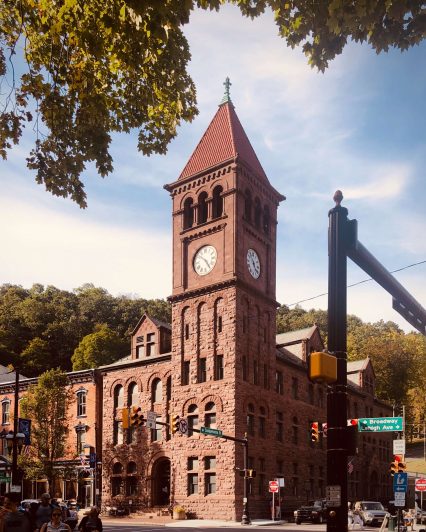
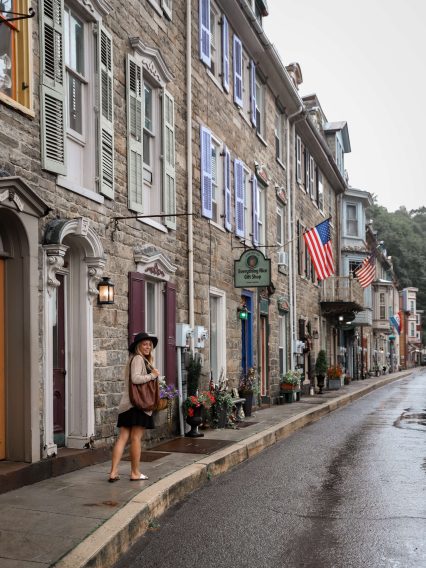
Situated on the southern edge of Pennsylvania’s Pocono Mountains within the Lehigh Gorge lies Jim Thorpe, a town where old-world storybook charm meets the adventurous nature of modern mountain towns and creates an oasis for outdoorsy travelers.

Start your morning with a to-go coffee from Muggles’ Mug, which is (you guessed it) the town’s Harry Potter-themed café, and then bop around the unique shops on West
Broadway. This part of town has maintained its old-timey, somewhat Victorian charm of years past.

After caffeinating, visit Lehigh Gorge State Park, where you can walk, hike, or bike to the waterfalls that call the park home. If the weather is favorable, spend your afternoon
kayaking or rafting along the Lehigh River. Or explore the boulder field in the northeastern corner of Hickory Run State Park. Located just thirty minutes from downtown Jim Thorpe, this park is home to waterfalls, trout streams, and over 40 miles of hiking trails.

member ad 4
Not a AAA Member? Join today!

When you return to town, take a train ride through the mountains on the Lehigh Gorge Scenic Railway that runs parallel to the Lehigh River. Looking for a more active
experience? Ride the train 25 miles north to White Haven, Pa., and return to Downtown Jim Thorpe by bike on a trail that runs slightly downhill. If time allows, peruse the Old Jail Museum. It dates back to 1871 and holds some haunting history.

Then, make your way to Stone Row Pub and Eatery. We recommend making an after-dark reservation and dining on the upper deck beside the old stables in the woods. It makes for quite a romantic experience – complete with fairy lights!

props mid-atlantic

Thurmont, Maryland

Known for its covered bridges, beautiful waterfalls, hiking trails, and being the site of the Presidential Retreat, Camp David, this Maryland town is not to be missed.

If you’re visiting on a Saturday between June and September, starting your day with a visit to Thurmont Main Street Farmers Market is a must. Here, local vendors sell produce, handmade goods, and prepared foods on the grounds of Thurmont Park.

After fueling up, explore Catoctin Mountain Park. This National Park site is home to Camp David and offers miles of beautiful hiking trails. If you’re up for a challenge, head to Chimney Rock/Wolf Rock Trail – a 3.4-mile loop that boasts breathtaking views of the local landscape. Alternatively, spend the afternoon chasing waterfalls at Cunningham Falls State Park. These falls are the tallest in the state and hold a special place in our
hearts because we got engaged at their base.

Then, treat yourself to post-hike ice cream at Gateway Market and Candyland. If you’re in the mood for an adult treat, grab some meat and cheese from The Farmhouse Exchange (connected to Gateway Market) and head to Catoctin Breeze Vineyard for wine and live music. This winery has been named Fredrick County’s best winery.

Before heading home, take a scenic drive through Loys Station and Roddy Road Covered Bridge. Both are impressive as they were built in the mid-1800s and are still in operation. After spending the last few years road-tripping the East Coast, we’ve found that we enjoy the small towns hidden within just as much as (if not more than) their natural landscapes. We particularly love Luray, Thurmont, and Jim Thorpe as they provide something for every visitor. With elevated dining options, quaint main streets, speakeasies, wineries, and ample opportunities for outdoor adventure, these towns hold some of the Mid-Atlantic’s best-kept secrets. They are destinations that deserve a spot on the bucket list of every avid day tripper, adventure traveler, and road trip enthusiast alike.

member ad 1
Not a AAA Member? Join today!

Subscribe to Your AAA Newsletter

Sign up and receive updates for all of the latest articles on automotive, travel, money, lifestyle and so much more!

Four Essential Steps to Elevate Your Finances in Your 20s

Your twenties are notoriously intimidating – take it from me. With new learnings thrown at you from every angle, like taxes, 401Ks, and bills, many people (including myself) are beginning their careers with little guidance on how to set up their finances. The best thing I did at this stage was learn about my finances, which made me more confident about my future and less stressed about the present.

Let’s break down some of my best tips to take control of your finances in your twenties and how the AAA Daily Advantage Visa Signature® Credit Card can help you get there.

props - elevate finances

Create an Emergency Fund

Life is unpredictable; many of my twenty-something friends have abruptly lost their jobs or switched living situations. I want to protect myself in the case of a sudden change, so I’ve dedicated the last few years to building up four to six months’ worth of money in an emergency fund for an added sense of security.

I recommend setting up monthly automatic transfers to a savings account and using your cash back rewards as another savings method. The AAA Daily Advantage Visa Signature® Credit Card earns you 5% Cash Back on grocery purchases, which you can redeem and transfer into your emergency savings account.

visa props ad

Build Your Credit

With my parents’ guidance, I opened my first credit card at 18 but still didn’t understand what credit was and how to build it. I always paid my balance on time and built up my credit score, but after graduation, I decided to close that card and open a new card with better benefits. Soon after, I realized my mistake – I lost all that credit history and tanked my credit score! If I’d spent more time learning about credit history, I could’ve saved myself from losing years of progress.

I recommend building your credit early with a no annual-fee, cash-back rewards credit card and keeping it open for as long as possible! One excellent option is the AAA Daily Advantage Visa Signature® Credit Card. This card has no annual fee, no foreign transaction fees, and high cash-back rewards on frequent spending categories like groceries and gas. For people in their twenties looking to build credit and get rewarded for everyday spending, this card is a great option.

props - elevate finances

Open a Roth IRA

At 20, I started investing in my Roth IRA. Today, my money has returned over 14%. The money you save in a Roth IRA can earn you interest on the interest it earns in your account, a concept commonly referred to as compound interest.

It might sound strange to think about retirement in your twenties, but when it comes to investing, time is your best friend. Even if you only put a tiny amount of money in your retirement account, it can grow exponentially and set you up for future financial success!

props - elevate finances

Track Your Spending

When I first moved to New York City after college, my finances overwhelmed me – I even started to doubt my decision to move to one of the most expensive cities in the world. I wasn’t making a lot of money, and it felt like the only way to meet people and have fun was to go out with friends, buy clothes, and dine at expensive restaurants. I was overspending every month until I ultimately decided to track every dollar I spent.

I started tracking my spending with a simple Excel sheet where I summarized all my expenses. Soon, it gave me insights into my spending patterns and allowed me to identify where I overspend. After a few months of diligent tracking, I stopped going over budget and created a clear path for reaching my financial goals. It only takes me 10 minutes per week to track, so there are no excuses for me not to do it!

Your twenties are a time of change and self-discovery; there’s no better time to set yourself up for future success. You’ll never meet anyone who says they wished they waited longer to take control of their financial life. The time to start is now, and with these four simple steps, you’ll be well on your way.

visa props ad

Subscribe to Your AAA Newsletter

Sign up and receive updates for all of the latest articles on automotive, travel, money, lifestyle and so much more!

Redeem Cash Back and Travel for Less: My Tips for Maximizing Cash Back

Learn from my credit mistakes – I had one credit card for years, barely used it, and swiped my debit card instead. I figured earning credit card rewards couldn’t make that much of a difference, so why bother?

My world changed when I watched a creator break down how she redeemed her credit card rewards to cover an entire vacation. Since implementing a few key steps, I’ve earned thousands of dollars in credit card rewards, covering over $1,000 in travel this year alone. Most recently, I redeemed credit card rewards for roundtrip flights from Boston to Aruba, saving me over $400. With so much financial advice online, especially about travel hacking, I wanted simple, no-fuss tips and tricks to maximize my rewards. Here are three key steps I take to travel more for less.

stairs

Picking the Right Credit Card

While 82% of American adults have a credit card, logging into a credit card rewards portal can sometimes be disappointing – $8 in your account doesn’t feel like a “big win.” I recommend picking a credit card with rewards categories that align with your everyday spending to earn the best rewards possible. Take the AAA Daily Advantage Visa Signature® Credit Card, which earns you 5% cash back on grocery store purchases and up to 3% on other common spending categories. With these high percentages on everyday spending, you can generate an impressive amount of rewards with simple necessities and purchases, which you can redeem and use for flight tickets, vacation activities, and hotels.

props cash back

Familiarize Yourself with Your Rewards

Credit card rewards are an avid traveler’s dream. I prefer cash-back rewards because you can redeem rewards for various expenses, like flights, ride shares, hotels, vacation activities, and rental cars. While rewards might not cover every vacation expense, you can use the cash back to subsidize the cost of some expenses. You can travel more without compromising your dream itinerary or destination.

During my recent trip to Aruba, I had the flexibility to splurge on a $130 ticket to a private island to feed flamingos and treat my friends to a lavish dinner. Thanks to the $400 I saved on my flights through credit card rewards, I was able to build these expenses into my travel budget.

visa props ad

Mindful Redeeming, More Rewards

Redeeming your rewards is just as important as earning them! For cash back credit cards like the AAA Daily Advantage Visa Signature® Credit Card, redeeming your rewards within the credit card portal is the best option to keep organized.

props cash back

Stay Practical While Travel Hacking

While rewards are one of the best perks of holding a credit card, I recommend paying off your card monthly and avoiding carrying a balance. You can take advantage of the power of credit by picking the right card, understanding the scope of your rewards, and mindfully redeeming. Cash back from cards like the AAA Daily Advantage Visa Signature® Credit Card can open up a world of possibilities, especially if you’re ready to elevate your travel game for a fraction of the cost.

visa props ad

Subscribe to Your AAA Newsletter

Sign up and receive updates for all of the latest articles on automotive, travel, money, lifestyle and so much more!

What Are Your Dashboard Lights Trying To Tell You?

If you’ve ever found yourself confronted with a dashboard light you didn’t recognize, you’re not alone. There’s a certain sinking feeling that comes with the sight of an unintelligible wingding glowing beyond the steering wheel that can fill a driver with dread. Is your car overheating? Is there something wrong with the headlights? Does the appearance of the check engine light mean you need to visit a mechanic right away?

But there’s no reason to be anxious about dashboard lights. They are just the way your car communicates. Though many of the lights are merely notifications, warning lights in particular can deliver important information about vehicle maintenance. Understanding the meaning of your dashboard lights and symbols can determine what action to take. Paying attention to these alerts and knowing what they mean can help you get more good years out of your car.

Different Types of Dashboard Lights

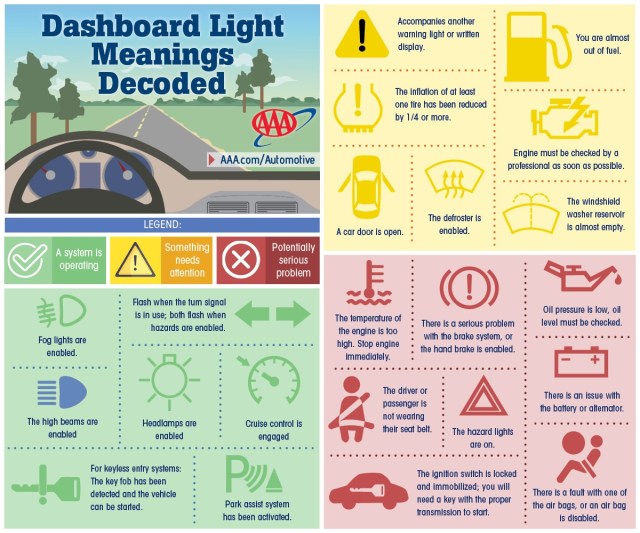
There are basically three grades of dash indicator lights: Green or Blue, Yellow or Orange and Red.

  • Green or blue dashboard lights are notification lights, telling you that a feature of your car is active. They do not signal a fault or problem. Rather, they are an indication that these parts of your car are functioning exactly how you want them to function.
  • Yellow or orange dashboard lights are low-grade warning lights. There is a problem in your car that you should address in the very near future. Your car can usually still be driven a few miles, or the fix is a simple one, like closing your car door or pulling up to a gas station to fill your fuel tank.
  • Red dashboard lights are serious warning lights. You should stop immediately, or risk damage to the car (or worse, yourself). If you are out driving when you see a red warning light, pull over and deal with the problem. If your car requires immediate attention from a professional, don’t drive it to the shop, contact AAA Roadside Assistance for a tow. The exception to the red warning rule is of course the hazard light symbol, which simply reminds the driver that they have engaged the hazard lights and is not an issue in itself.
dashboard symbols

Dashboard Lights Decoded

The infographic above highlights some of the most common – and sometimes most confusing – dashboard lights and symbols. One of the difficulties with deciphering dashboard lights is that the symbols vary between different makes and models of cars. Though the variation is often very slight, it is important to keep in mind that the symbols in your own car might look a little different than the ones seen here.

Listen to Our Podcast

Get expert tips on car care in Episode 6 of our podcast, Merging Into Life: Everything You Need To Know about Car Repair.

Tune In

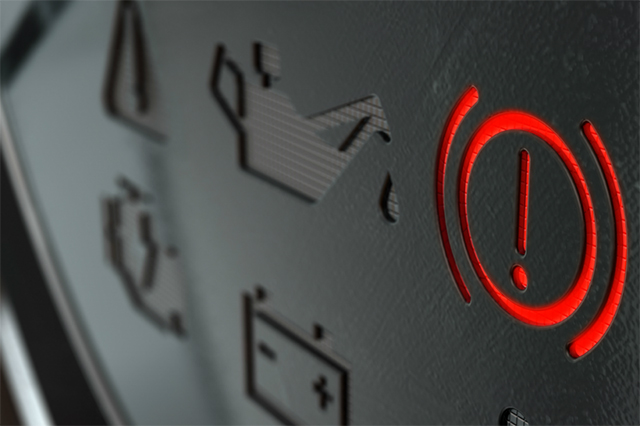
Many dashboard symbols use a sort of pictograph-style code to help the driver decipher them. The head lamp symbol, for example, is usually illustrated as an illuminated light bulb. While most of the images are pretty straightforward, like the low fuel symbol or the battery symbol, some can be confusing. The tire pressure symbol is ostensibly supposed to be a cross-section of a car tire with an exclamation point in the middle, and treads on the bottom; however, it looks more like an exclamation point in parenthesis, floating over a stout fence. The brake system dashboard light isn’t representative at all, deviating profoundly from the style of the other more illustrative symbols. The only way to instantly be able to recognize this symbol is simply by memorizing what it looks like. Some dash indicator lights blink when the driver’s attention is especially urgent, though this is not the case for all vehicles.

If you’re still unsure about what certain dashboard lights or symbols mean, you can always check your owner’s manual. If you have an iPhone running with iOS 17, you can also use the Visual Look Up feature, which has a “Look Up Auto Symbol” button.

If your dashboard lights are telling you that your car needs maintenance, be sure to use a shop you can trust. Search for a AAA Approved Auto Repair Facility near you.

This article has been updated and republished from a previous version.

Subscribe to Your AAA Newsletter

Sign up and receive updates for all of the latest articles on automotive, travel, money, lifestyle and so much more!

Merging Into Life: How to Prevent Identity Theft

SEASON 1: EPISODE 12
Episode Feedback

How to outsmart scammers and protect your personal data.

listen on apple podcast badge button
listen on spotify badge
listen on amazon music badge
listen on pocket casts badge button

IN THIS EPISODE

If “catfishing” and “pig butchering” sound like life on a farm listen up! These days any one of us could be reeled in or led to slaughter when it comes to identity theft, particularly online. So, what is identity theft? It’s a serious and widespread threat where criminals aim to steal your savings and your identity, often through cleverly named online schemes. These are some of the common identity theft scams to avoid.

In this episode, we explore the critical topic of identity theft protection. We talk to Robert Siciliano, CEO of cyber security training company Protect Now, and Mike Breummer, vice president of consumer protection for Experian. They reveal the modern tactics thieves use and provide expert advice on how to prevent identity theft and protect your personal information online, so you don’t take the bait.

AAA members get exclusive access to identity theft protections services with ProtectMyID by Experian. Learn more.

KEY TAKEAWAYS

[5:27] – How can I protect myself from identity theft?
[12:58] – Are young people at risk?
[14:09] – How to protect your personal information online
[19:37] – Tips for good password hygiene


TRANSCRIPT

[00:00:00]
Amanda Greene: So the other day I saw the cutest pair of shoes online. I clicked the ad and ordered right away because they were so cheap. And then as soon as I completed the transaction, I felt instant dread. Why was it so cheap? Was it too good to be true? As I’m running through everything in my head, wondering if I just got scammed, my phone rings. It’s the bank. Or at least he says he’s the bank.

[00:00:26]
Scammer: Hi, this is the bank. Is this Amanda Green?

[00:00:28]
Amanda Greene: Yeah.

[00:00:29]
Scammer: We’re going to need you to answer a few questions to confirm your identity. What’s your address?

[00:00:33]
Amanda Greene: I’m not comfortable giving that information out over the phone.

[00:00:37]
Scammer: Well, I need to confirm that you’re really Amanda Green.

[00:00:39]
Amanda Greene: How do I even know you’re really my bank?

[00:00:41]
Scammer: Ma’am, it’s the bank’s policy to confirm our client’s identity with just a few questions.

[00:00:45]
Amanda Greene: But you called me. You have to understand I need to know that you are actually who you say you are.

[00:00:52]
Scammer: How about just your PIN number?


RESOURCES

Experian ID Theft Protection for AAA Members

Identity Theft Scams to Keep an Eye On

Tips for Understanding Your Credit Report

Pig Butchering Scams Are on the Rise

Protect Now


Want to Learn More? Drop Us a Note

"*" indicates required fields

This field is for validation purposes and should be left unchanged.
Subject
Name*

*The views and opinions expressed in this podcast are not necessarily the views of AAA Northeast, AAA and/or its affiliates.


Subscribe to Your AAA Newsletter

Sign up and receive updates for all of the latest articles on automotive, travel, money, lifestyle and so much more!

Places in the Northeast That Will Haunt You

Once a year it’s cool to love ghouls, so plan a fall road trip to check out some spooky spots. Here are a few of our favorite creepy places that guarantee a haunting experience.

Eastern State Penitentiary

Philadelphia, Pa.

Brave souls who are looking to be spooked can experience Halloween Nights, featuring five haunted houses and other hair-raising attractions inside the crumbling cell blocks of this fortress-like penitentiary that once housed legendary criminals like mobster Al Capone. It’s visited by more than 60 paranormal investigators annually, but the Halloween mayhem goes on select nights from the end of September through early November.

Fort Delaware Paranormal Adventure

Delaware City, Del.

Fancy yourself an amateur ghost hunter? If so, join Diamond State Ghost Investigators and Fort Delaware State Park staff on a three-hour Paranormal Adventure at this abandoned fort located on an island and dating to before the Civil War. Available on Friday and Saturday nights throughout October, the tour uses actual electromagnetic field recorders, data recorders and temperature sensors in an effort to capture the footsteps and apparitions of one-time prisoners.

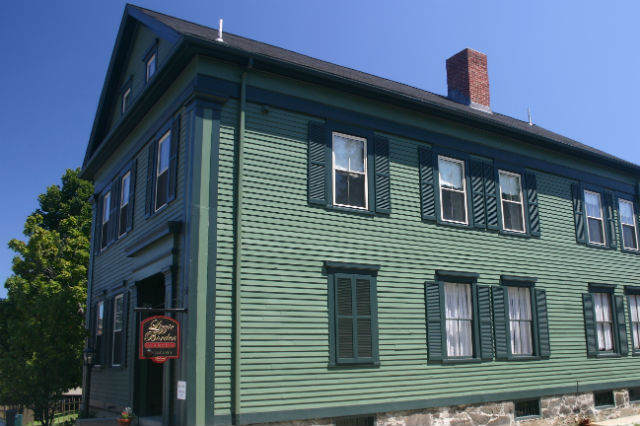
Lizzie Borden Bed and Breakfast Museum

Fall River, Mass.

Talk about a creepy place. You may not feel the infamous whacks that Lizzie Borden allegedly gave her parents here (she was tried and acquitted, and the murders remain unsolved), but book a room at this museum/bed-and-breakfast and you’ll certainly feel spooked. A tour offering bloodcurdling details of the 1892 ax rampage is given to every guest – getting more than a wink of sleep, however, isn’t guaranteed. Too timid to turn in? You can take a daytime tour.

For more local tours that will give you the creeps, click here. Remember, AAA members can save on select ghost tours with AAA Tickets.

creepy places
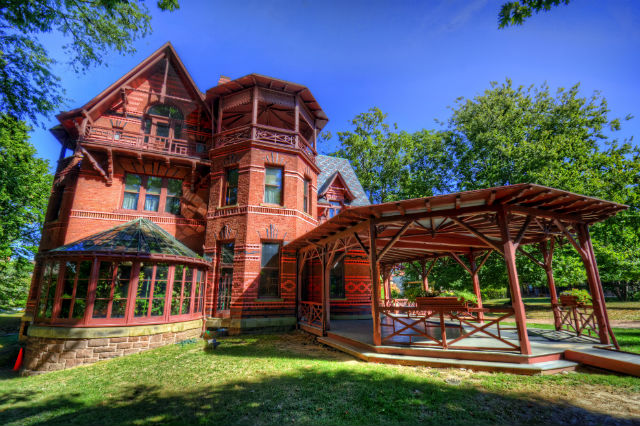
Mark Twain House. (Photo: Flickr / Craig Fildes / CC BY-NC-ND 2.0)

Mark Twain House and Museum

Hartford, Conn.

Check out the elaborate, 25-room, circa-1873 home where one of America’s most gifted writers – and a big believer in the supernatural – lived and wrote until financial hardship and tragic loss (his daughter Susy died here in 1896) forced its sale.

Mount Hope Cemetery

Bangor, Maine

Stephen King fans will recognize this spooky place as the film location for the movie adaptation of his seriously scary “Pet Sematary,” and Bangor as the fright writer’s place of residence. You can also take a self-guided daytime tour of America’s second-oldest garden cemetery – if you dare!

Mutter Museum

Philadelphia, Pa.

This scholarly yet icky homage to medical oddities is also pretty darn creepy. Run by the College of Physicians of Philadelphia, the Mutter Museum’s collection includes 139 human skulls, plaster death casts of conjoined Thai twins Chang and Eng Bunker, slices of Albert Einstein’s brain and other bizarre keepsakes that will make you go “Ewww!”

Salem, Mass.

Salem’s dark history definitely adds to its appeal during spooky season. The Witch City embraces its reputation every October during the extremely popular Haunted Happenings Festival, but the creepy vibes linger on throughout the year. Explore Salem’s macabre past with a trip to the historic Witch House, Charter Street Cemetery, one of its many museums or a guided tour, like the Salem Witch Walk, led by well-known witch and owner, Lorelei.

Sleepy Hollow Cemetery

Sleepy Hollow, N.Y.

Some Halloween-themed tours are more captivating than spooky, but cemeteries? They’re certifiably creepy places. Lantern-lit night tours happen every weekend September-November at the burial ground made famous by the Washington Irving character Ichabod Crane. Learn about more haunts in the area.

Trans-Allegheny Lunatic Asylum

Weston, W. Va.

Are you brave enough walk the halls of a 19th-century psychiatric hospital that once housed 2,400 patients – and an unknown number who are said to haunt its rooms and hallways? If so, this National Historic Landmark is open for walk-in historic and paranormal tours from early spring through November.

Featured image: Lizzie Borden Museum and Bed and Breakfast. (Photo: Flickr / Stewart Robotham / CC BY-NC-ND 2.0

This article has been updated and republished from a previous version.

Have you visited any of these creepy places in the Northeast? Are there any others that we missed? Tell us in the comments below.

Take a game break! Solve this spooky mini crossword.

Subscribe to Your AAA Newsletter

Sign up and receive updates for all of the latest articles on automotive, travel, money, lifestyle and so much more!

The Story of Rhode Island’s ‘Real’ Vampire, Mercy Brown

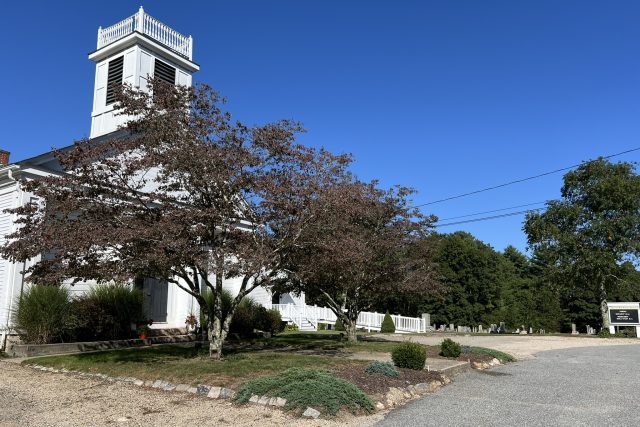
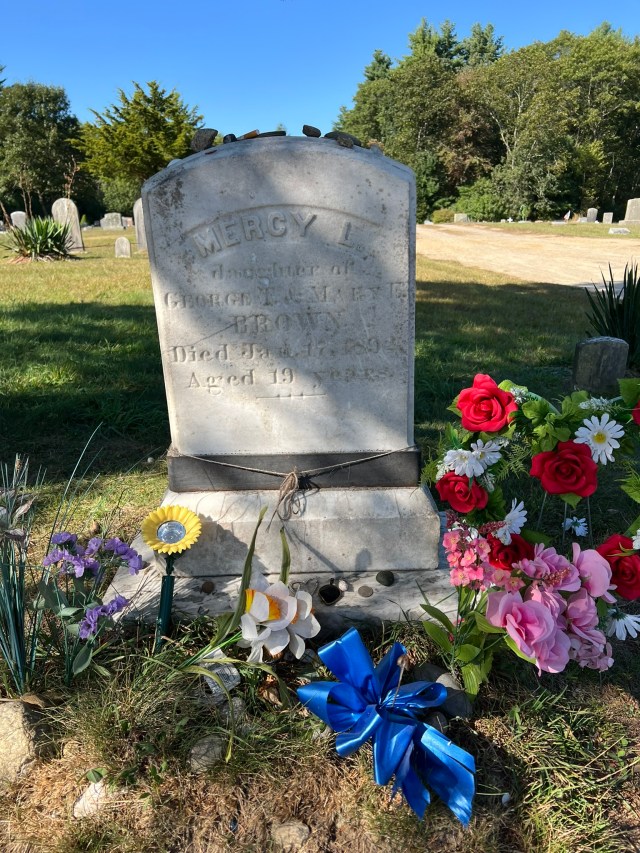
Judging by her tombstone, underneath an evergreen tree in a sun-dappled historic cemetery, there’s nothing at all amiss about the final resting place of Mercy Brown. “Mercy L,” the stone reads, “Daughter of George L. and Mary E. Brown. Died Jan. 17, 1892. Aged 19 years.”

For an old grave in the small town of Exeter, R.I., it gets a lot of attention, the kind usually reserved for notable or historic figures. On any given day, a visitor could easily find several bouquets of flowers and small gifts, and rocks placed on top of the headstone.

But upon closer inspection, the stone does have an unusual feature. A metal band secures it to the ground, ensuring no one with larcenous intent can steal it away. Mercy Brown might not be a celebrity, but she lives on in history as Rhode Island’s most infamous “real” vampire.

As far as moral panics go (and this being New England, we have a lot of them), the vampire craze that swept Rhode Island in the late 1800s was relatively minor. Unlike the Salem witch trials, which saw 25 people executed or dead from harsh prison conditions, the fervor focused on people who had already died and were suspected of siphoning the vitality of their living relatives from beyond the grave.

The idea was borne from desperation. Tuberculosis (then referred to as consumption) was killing a huge portion of the population, and there was no reliably effective treatment or medicinal remedy. People resorted to the “vampirism” cure, a folk remedy that “required exhuming the bodies of deceased relatives and checking them for ‘unnatural’ signs, such as ‘fresh’ blood in the heart,” Michael Bell wrote in “Food for the Dead: On the Trail of New England’s Vampires.”

 “The implicit belief was that one of the relatives was not completely dead and was maintaining some semblance of a life by draining the vital force from living relatives,” Bell explained. By ingesting the parts of the departed that still appeared to be alive, the living hoped to reclaim their lost health.

In a way, it makes sense. If someone is dying from a disease called consumption, a logical question to ask is exactly who – or what – is consuming them?

vampire mercy brown grave

The Brown family had already faced devastating losses from consumption – the deaths of mother Mary Eliza and eldest daughter Mary Olive in the mid-1880s – when siblings Edwin and Mercy fell ill with the disease in 1891. Edwin went to Colorado for treatment and recovered, but Mercy died at home and was buried in the family plot in Chestnut Hill Cemetery off Ten Rod Road (which visitors can still easily see today). When he returned home, Edwin once again fell ill. In a last attempt to save his life, father George Brown allowed a group, including the local doctor, to exhume the bodies of his deceased loved ones in March 1892 under the suspicion that one was a vampire draining Edwin’s life force.

Mary Eliza and Mary Olive were appropriately decomposed, but Mercy’s body showed little decay, and she still had blood in her heart. (Details are hazy on this. Reports say she was exhumed, but since she died when the ground was frozen, it’s more likely her body would have been stored in the cemetery’s crypt until the spring thaw. The cold winter weather, and her above-ground storage, could easily explain the state of her corpse.)

There were many ways of “fighting” the vampirism suspected of making families ill, some of which revolved around the heart of the deceased person. Some people would exhume the dead relative and burn their heart, either inhaling the smoke, or eating the ashes.

That’s what happened to Mercy. When the locals saw that she seemed unnaturally vital, they cut out her heart, burned it and created a tonic with the ashes. Edwin drank it, but he still died two months later.

Even at the time, Mercy’s posthumous treatment was a scandal. An 1892 article in the Providence Journal, which Bell included in his book, said that locals were “testing a horrible superstition” when they exhumed her remains. “Bodies of dead relatives taken from their graves,” it continued, “they had all died of consumption, and the belief was that live flesh and blood would be found that fed upon the bodies of the living.”

Mercy is far from the only person suspected of being a vampire in Rhode Island, or who got caught up in the frenzy. Simon Whipple Aldrich, who died in 1841 in North Smithfield, is memorialized on his gravestone with an inscription mentioning “consumption’s vampire grasp.” But according to Bell’s book, Mercy is likely the last person exhumed under that suspicion in America.

Mercy’s memory and her legend live on. H.P Lovecraft wrote about her in “The Shunned House,” and Smithsonian Magazine suggested that even Bram Stoker knew her story and referenced it while writing “Dracula,” which debuted in 1897. In modern media, she’s been featured on the podcast “Lore” and its Amazon Prime show of the same name, and in many songs and novels.

Have you ever heard of the Mercy Brown vampire incident? Tell us in the comments.

Featured image: Chestnut Hill Cemetery

Subscribe to Your AAA Newsletter

Sign up and receive updates for all of the latest articles on automotive, travel, money, lifestyle and so much more!

Breast Cancer Survivor Pushing Toward $1 Million Goal

While battling a life-changing disease like breast cancer, it helps to have a support system in place. It’s especially helpful when someone who has survived breast cancer is in your corner, helping you navigate through the journey, from the initial diagnosis to undergoing treatment and beyond.

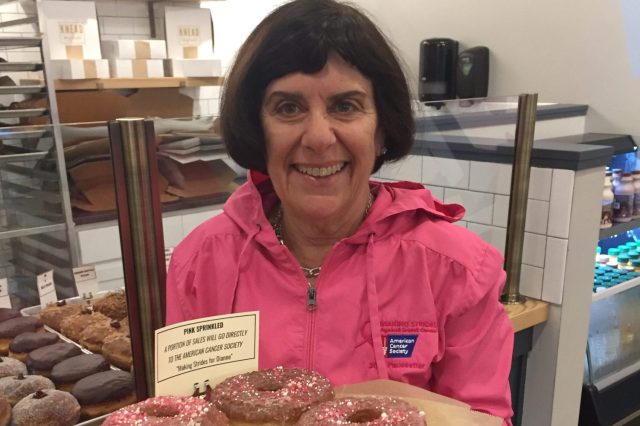
Someone like Dianne Fonseca, a AAA member and resident of Lincoln, R.I., and Palm Aire, Fla., who has been cancer-free for 25 years. The retired teacher recently celebrated her milestone with a Silver Soiree at Kirkbrae Country Club in Lincoln to raise money for the American Cancer Society.

Fonseca hosts an annual breast cancer fundraiser in Rhode Island, but this year was extra special. She is an all-star when it comes to supporting the cause.

She is more than halfway to her ambitious goal of raising $1 million for the American Cancer Society. “If you raise $1 million, you become a legacy team,” Fonseca said. “I want to be a legacy team.”

Fonseca plans to participate in the annual Making Strides Against Breast Cancer Walk on Oct. 20 in Providence with her team, Keeping the Pace With Dianne.

Her friends in Florida have also helped by knitting pink hats and trading them for $100 donations, raising $1,100.

How it Started

Fonseca was diagnosed with breast cancer in 1999. After finding a lump herself, she scheduled an appointment with her doctor, who immediately sent her for a sonogram.

“The hardest part at that time was waiting an entire week for the results,” she said. “I will never forget coming home from teaching that day and finding my husband and older son waiting for me. My husband informed me that my doctor had called him to tell him I had breast cancer. The doctor said the cancer was ugly and aggressive, and there was no cure for me.” 

But Fonseca is a fighter and was not going to let her diagnosis get in the way of her life. She and her husband were determined to keep living their lives as they did before. The road ahead wasn’t easy. One of her greatest challenges was losing her hair, which had begun to fall out a week after her first chemotherapy treatment. Fonseca quickly recognized that her diagnosis was strongly affecting her loved ones.

“I was somewhat taken aback at first by the reaction of my husband, our sons and my mom at the news of my breast cancer,” she said. “Our oldest son didn’t want to finish his senior year at Notre Dame, and our youngest didn’t want to go to Loyola University (in Maryland) for his freshman year. I realized that I needed to be strong, not only for myself, but also for my family.”

Fortunately, Fonseca qualified for an experimental drug during her treatment, which put her cancer in remission. “Here I am, 25 years later, due to an experimental drug,” she said. New treatments and protocols have raised the five-year survival rate for breast cancer patients to 91%.

Fonseca found that some of the best medicine was continuing to live her life as she did before her diagnosis. It gave her a purpose and took her mind off her disease.

“It was also better for my family,” she said. “My mom insisted on coming to stay with us when I first came home, but within a couple of days I was up and about, hanging clothes on the line! Always look ahead, and never look back!”

Giving Back

Also critical to Fonseca’s healing was support from volunteers with the American Cancer Society’s Reach to Recovery program. Volunteers who are breast cancer survivors connect with people living with breast cancer. Through in-person visits or by phone, the volunteers provide understanding, comfort and hope by answering questions and addressing concerns that may come up during the experience.

Though they don’t give medical advice, the volunteers offer guidance that only someone who has been through the same experience can. While dealing with her own diagnosis, Fonseca was introduced to a Reach to Recovery volunteer by a friend. Her experience spurred her to help others.

“I knew that as soon as I was able, I would volunteer for the program myself,” Fonseca said.

In 2005, she started providing support to women in southern New England who were facing issues much like those she had during her cancer journey. Many were Spanish-speaking women who understood little English. Fonseca – a former language teacher – speaks Spanish fluently, as well as Italian. She still is registered as a Reach to Recovery volunteer, although she is not as active.

Every year, Fonseca continues to push herself and works to raise more money than the year before. She’s motivated by gratitude for her life and being able to spend time with her husband, two sons, daughters-in-law and five grandchildren.

“In raising these funds, I feel that I am helping the American Cancer Society to continue with their research and programs to help others,” she said. “Volunteering has been the most rewarding for me, helping others who are going through what I went through.”

Another AAA Survivor’s Story

For Mary Maguire, vice president of public and government affairs at AAA Northeast, the cancer story began on Veterans’ Day 2014. Her doctor called while she was driving and told her she had breast cancer. Maguire pulled over and began to cry, because she felt like she had been given a death sentence.

“I’ll never forget what my longtime physician – who had delivered my youngest son – said to me that day. He said, ‘Mary, do you know how many patients I have living with cancer?’ That stuck with me, and today I’m cancer-free and 10 years in remission. And I know many others who are living well, living with cancer or have beaten cancer, like me.”

“My cancer was detected very early and knowing that helped immensely,” she continued. “My doctors were amazing, and my family and friends were incredibly supportive. My colleagues at AAA were concerned and encouraging and provided me with the time I needed to recover.” After six weeks of radiation treatments, Maguire got a clean bill of health.

“My annual mammogram led to my diagnosis,” she added.  “Don’t skip or put off your yearly screening – it could save your life!” 

Tips for Early Detection

Here are the American Cancer Society’s recommendations for detecting breast cancer early. One of the most important:

Get a Mammogram

Early detection is critical to saving lives.

The American Cancer Society recommends that women between the ages of 40 and 44 have the option to begin annual mammograms. Those between ages 45 and 54 should have mammograms yearly and women 55 and older every two years.

Men can also develop breast cancer, although they represent only about 1% of all cases. Since men are not routinely screened for breast cancer, males, especially those between the ages of 60 and 70, are advised to check for lumps. If they feel anything unusual, they should immediately call their doctor.

Self-Care for Cancer Patients

Fonseca offers her advice and encouragement for those fighting cancer.

Rest Often

“You’re going to be tired. It’s normal,” Fonseca said about having cancer.

People can experience fatigue before, during and after cancer treatment. “Your loved ones will understand if you need to let your body rest. When the opportunity presents itself, take it.”

Look Ahead

“Having a positive outlook changes everything,” according to Fonseca. “Look ahead instead of behind.”

Focusing on the past can dredge up negative emotions, she added. Focus on the future – recovery – and try your best to remain positive. Fonseca said a positive attitude made all the difference during her own experience with cancer.

Take Advantage of Help

Fonseca encourages people with breast cancer to take advantage of all the resources the American Cancer Society offers. In addition to the Reach for Recovery program, the Road to Recovery program provides transportation to cancer-related medical appointments for those who can’t drive. The Look Good, Feel Better program provides group workshops and one-on-one consultations based on skin care, makeup application, hair-loss products and more.

Visit www.cancer.org to learn more.

Do you have any experience volunteering or raising money for a cause that’s important to you? Share your story in the comments below.

Featured image: Knead Donuts of Providence created a doughnut in honor of Dianne Fonseca, and proceeds from the sales went to her making Strides Against Breast Cancer team.

Subscribe to Your AAA Newsletter

Sign up and receive updates for all of the latest articles on automotive, travel, money, lifestyle and so much more!

8 Halloween Crafts and Spooky Foods to Try

When you’re a kid, Halloween is all about the costume. As an adult, it’s all about the ambiance.

Creating – or should we say crafting – the perfect spooky vibe for your home is a great way to immerse yourself in the season, thoroughly enjoying all there is to offer this time of year. From reusing and recycling to tapping into your imagination, the perks of getting crafty with your Halloween decor are endless. To get the creative juices flowing, here are eight of our favorite Halloween crafts and spooky foods to try this fall.

Spooky Foods

Spooky Chocolate and Peanut Butter Sandwich Cookies

If you enjoy the classic peanut butter and chocolate combo, these skull-shaped cookies are scary good. Start by preparing chocolate shortbread dough. Divide the dough in half, wrap each portion and refrigerate for at least 30 minutes. In the meantime, whip up the peanut butter buttercream recipe below.

Once the dough is ready, roll out to about 1/4-inch thickness and use a 2- to 3-inch round cookie cutter to cut out circles for the faces. Pinch the sides of each circle with your thumb and index fingers to form a skull shape. For the eyes, use a tiny round cookie cutter or the small end of an extra-large piping tip, as shown in the video above. Cut out the nose and mouth with a knife. Each face will develop its own unique personality as it bakes!

Make half of the shortbread batch with faces and the other half plain, then sandwich them together with the buttercream after baking (350 degrees for approximately 10 minutes). Makes about two dozen cookies.

Peanut Butter Buttercream (makes about 1 cup)

  • 2/3 cup creamy peanut butter
  • 1 stick unsalted butter, softened
  • 3/4 cup confectioners’ sugar  
  • Fine salt, to taste (optional)

Using an electric mixer on medium-high speed, blend together the peanut butter and butter. Slowly add the confectioners’ sugar until fully incorporated. Add salt to taste, if desired.

Boo! Brie Board

A cheese board is always a good idea, but it’s even better when it’s spooky. This creator starts by cutting a wheel of brie lengthwise and using a ghost-shaped cookie cutter to stamp out the shape on one side. On the other, jam is spread over the cheese to create a contrasting background before the ghost outline is placed on top. Next, they create a mummy out of soft cheese and strips of salami and tiny witches’ hats made from chocolate sandwich cookies and Hershey’s Kisses.

Ghoulish Strawberries

Who could pass up a chocolate-covered strawberry shaped like a ghost? These gems are easy to make and require only three ingredients: strawberries, white chocolate chips and black icing.

First, melt the white chocolate chips in a saucepan on low heat or in the microwave, stirring frequently. On a flat surface lined with parchment paper, create swoops of white chocolate that generally resemble an animated ghost’s “tail.” Repeat for however many strawberries you plan to dip. Next, dip each strawberry fully into the white chocolate and place on top of each swoop. Refrigerate until the chocolate has hardened (about 15-30 minutes) then use black icing to draw two eyes and a mouth.

Marshmallow Ghost Cups

Turn your favorite iced beverage into a Halloween treat in seconds with this adorable idea from creator debtrette. All you need is some marshmallow creme, a black marker and a clear disposable cup. Scoop a generous amount of marshmallow creme onto the back of a large spoon and place it on the inside of your cup, trying to create a ghost-like shape. Once you have as many marshmallow ghosts as you can fit, use a black marker to draw eyes and mouths on the outside of the cup. Then fill it up with your drink of choice (something pumpkin spiced, perhaps?) and you’re good to go.

Zombie Dirt Cups

An irresistible combination of pudding, whipped topping and chocolate sandwich cookies, these zombie dirt cups have it all – including worms. After layering these base ingredients until you’ve reached the top of the cup, adorn your chocolate “graveyard” with sugary zombie hands, headstones, bones, plastic spider rings and a shovel spoon to really drive the theme home.

Halloween Crafts

Air-Dried Clay Ghost Tealights

Once a staple of elementary school art projects, air-dried clay is making a comeback as one of the easiest ways to DIY all kinds of things like earrings, magnets and, in this case, sweet little ghosts.

Creator teawithteenie starts her process with a rolling pin, empty glass bottle, ping pong ball, some water, a sponge and a sculpting tool. After rolling out the clay, she cuts out a circle relative to the size of the ghost she wants to make, then uses the ping pong ball atop the empty glass bottle to create its shape. After making two holes for eyes, let the clay dry for 24 hours. Once fully dried, place atop a battery-powered tealight as a real flame is not recommended.

Papier-Mache Vintage-Style Jack-O’-Lanterns

If you want your Halloween decor to have a retro edge but can find only modern options, try this clever papier-mache hack to get the same look.

Using a store-bought plastic jack-o’-lantern, start by brushing Mod Podge over its outside surface and then cover with a layer of paper towels. Create any raised details during this step, like eyebrows or cheeks. Next, soak two to three cardboard egg cartons in water for three hours before blending them to create a pulp. Squeeze out any excess water and add half a bottle of white glue to create your papier-mache mixture and apply to the entire lantern. Let sit in the sun until dry (about two hours). Lastly, paint your vintage jack-o’-lantern however you see fit!

Tangerine Jack-O’-Lanterns

A perfect spooky craft to enjoy with kids, these tangerine jack-o’-lanterns make use of the fruit’s rind and can be hung as a garland or on their own to hold small handfuls of candy.

To make, slice off the top of the tangerine and carefully remove the fruit inside, keeping the rind intact. Stuff a paper towel inside the husk to give a backing and make it easier to cut the eye, nose and mouth holes with a razor or sharp knife (this part’s for adults only!). Make two additional holes on either side of the rind for the lantern handle. Replace the paper towel inside with aluminum foil and bake the lanterns at 200 degrees for two to three hours. Once thoroughly dry, use a small piece of twine to loop through the side holes creating the handle.

Which of these Halloween crafts are you going to try? Let us know in the comments!

Subscribe to Your AAA Newsletter

Sign up and receive updates for all of the latest articles on automotive, travel, money, lifestyle and so much more!

3 Reasons to Keep Dental Insurance After Retirement

Retirement is a big milestone in life, and one that deserves to be enjoyed to its full extent. To get the most out of your retirement years, it’s important to maintain your physical, mental and oral health, and insurance will help you do so. 

You may not know where to start when determining which dental coverage is best for this new phase of life, but luckily Delta Dental of Rhode Island makes it easy for AAA members in Rhode Island to have affordable, quality care.

Here are three reasons why continuing to have dental insurance after retirement is an important choice to make.

Aging Changes Our Teeth And Gums

Cells renew at a slower rate as we age, which means older adults are more at risk for certain oral health conditions such as dry mouth due to prescription medication side effects or certain health conditions. When salivary glands don’t produce enough saliva, it can increase the risk for problems tasting, chewing, and swallowing, mouth sores, gum disease, tooth decay and yeast infection in the mouth (otherwise known as thrush).

Receding gums due to periodontal disease is also common in older adults. This is when the gum tissue pulls away from the tooth, exposing the base, or root. This makes it easy for bacteria to build up and cause inflammation and decay. Not brushing and flossing every day, not receiving regular dental care, smoking, diabetes or a weak immune system are all conditions that put older adults at risk for developing periodontal disease.

Without a competent dental insurance plan, these conditions may be left to fester and ultimately put you at risk for a range of side effects from uncomfortable to deadly.

Dental and Vision Insurance for Rhode Island AAA Members

Comprehensive coverage at exclusive rates for AAA members in Rhode Island.

Check Rates

Most Dental Care Isn’t Covered by Medicare

It seems like a safe assumption to make that once you retire, Medicare will cover general dental work like cleanings, fillings and dentures — but unfortunately that is not the case. Medicare only covers certain dental procedures that one would receive in the hospital, leaving your basic oral health in limbo.

With an individual plan through Delta Dental of Rhode Island, you can get coverage that compares to the insurance you’re used to through your place of employment.

Those With Dental Insurance Get Checked More Often

According to the Centers for Disease Control and Prevention, folks with dental insurance are much more likely to visit a dentist on a consistent basis than those without, as paying out-of-pocket can be costly. Easy accessibility to routine dental care through individual dental insurance is the simplest way to maintain your healthy smile – and be prepared for the unexpected.

With Delta Dental of Rhode Island through AAA Northeast, AAA members living in Rhode Island can stay covered and worry-free through their golden years. Explore the benefits and enroll now.

Subscribe to Your AAA Newsletter

Sign up and receive updates for all of the latest articles on automotive, travel, money, lifestyle and so much more!

Best Place to View Fall Foliage? From the Top

When it comes to prime leaf peeping spots, the Northeast boasts destinations above the rest. Literally. From state parks to historic sites, climb one of these towers for a different perspective of the changing autumn colors. And as a bonus, learn some area history on the climb!

If you’re in search of the best places to view fall foliage, these are some of the “top” destinations.

For more foliage fun, scroll down to play our fall-themed Wordrow.

Castle Craig Tower at Hubbard Park

Peak Drive, Meriden, Conn.

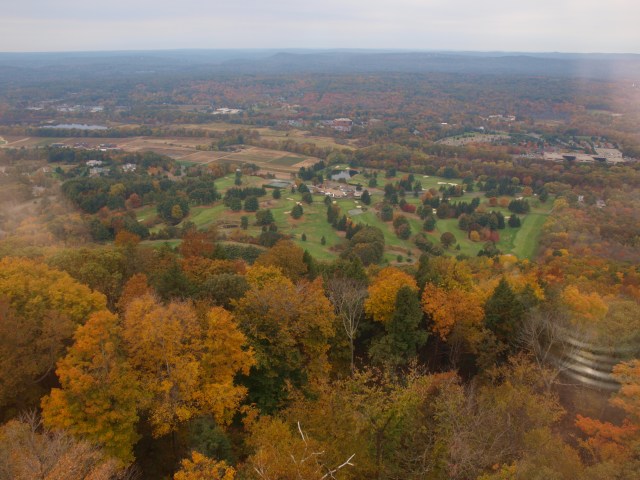
Those driving along Connecticut’s Interstate 691 have probably wondered about the round stone tower standing tall above Meriden. Next time, plan a detour to visit Castle Craig, located more than a thousand feet above sea level on the city’s East Peak. Castle Craig opened to the public in 1900 and is located in the 1,800-acre Hubbard Park.

An interior stairway leads to an observation platform atop the tower that affords sweeping views of the Sleeping Giant Mountain range, the buildings of New Haven, and on a clear day, even a glimpse of the Long Island Sound.

Good to know: You can hike to the tower or drive on a road open from May 1-Oct. 31, weather permitting.

best fall foliage views - heublein tower
The exterior of the Heublein Tower. (Courtesy Friends of the Heublein Tower)

Heublein Tower

1 Summit Drive, Simsbury, Conn.

Built in 1914 as a summer home for the family behind A.1. Sauce, the 165-foot-tall tower offers panoramic views of Connecticut, Massachusetts and beyond.

“I say, why go to Vermont when you can just come to the tower?” said Jay T. Willerup, the president of the board of directors of the Friends of Heublein Tower.

Now part of Talcott Mountain State Park, there’s a 1 1/4-mile hike to the structure. Take the stairs to the top floor observatory, and on the way, get a glimpse of a dining, living and bedroom floor, which appear much as the Heublein family might have used them.

The paneled and windowed observatory, once used as a ballroom, offers 360-degree views.

You can see Mount Tom and Springfield, in Massachusetts, and Connecticut’s Bradley Airport, according to Willerup.

Good to know: The third week in October is typically peak leaf peeping time at the towerOpen seasonally.

Monument at High Point State Park

1480 State Route 23, Sussex, N.J.

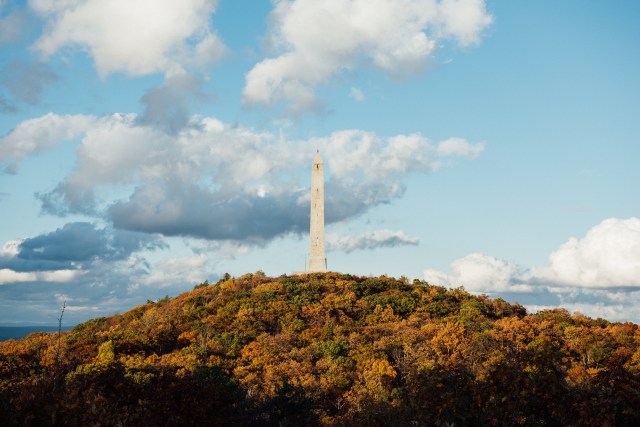
To really appreciate the Garden State in autumn, you need to climb to the highest elevation possible, which can be found at High Point, the summit of the Kittatinny Ridge, rising 1,803 feet above sea level.

Once you’re there, check out the Monument at High Point, completed in 1930 to honor New Jersey’s war veterans. Climb the tower’s 291 stairs to the top for a view of the Pocono and Catskill Mountains, the Wallkill River Valley and more.

You can walk, hike or drive to the monument, part of the larger 16,171-acre High Point State Park which offers seasonal outdoor activities including hiking and walking trails, camping, fishing and boating.

Good to know: The monument is open weekends in September and October.

The Penobscot Narrows Bridge and Observatory

711 Fort Knox Road, Prospect, Maine

When it comes to the best place to view fall foliage, the Penobscot Narrows Bridge has a height advantage. Here, visitors can ogle the landscape from the highest public bridge observatory in the world. Take a 42-story elevator ride to the glass-enclosed, three level observatory which offers views that span 40 miles (on a clear day) in every direction, including the Penobscot River and Bay and the distant western mountains.

Although considered a modern marvel – it opened in 2007 – there’s a rich sense of local history delivered through interpretive panels. Back on terra firma, explore the adjacent Fort Knox, a preserved military fortification which was established in 1844.

Good to know: The Observatory and Fort Knox are open through Oct. 31. Admission is required. All visitors must enter through the Fort Knox State Historic Site.

best fall foliage views - perkins memorial tower
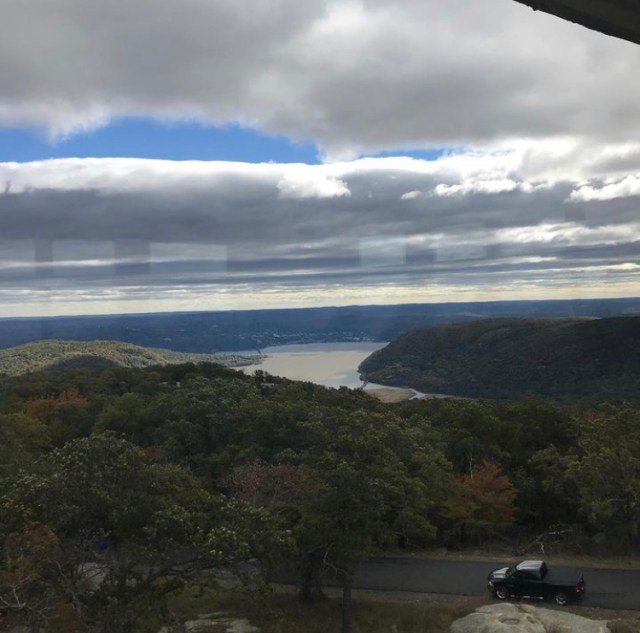
The view from Perkins Memorial Tower. (Karen Croke)

Perkins Memorial Tower

Perkins Memorial Drive, Stony Point, N.Y.

Constructed in 1934 as the crowning touch to Bear Mountain State Park, this 40-foot-tall tower located 2 miles up the mountain’s summit, served as a weather station and fire lookout until the 1950s. On a clear day, you can see north to the Catskills and all the way south to the top of Manhattan’s skyscrapers. The view spans four states – New York, New Jersey, Connecticut and Pennsylvania.

There is no elevator, so be prepared to climb, but the ascent on wide steps is not difficult. Each landing offers interpretive displays and photos which describe the view and bit of the history of Bear Mountain State Park.

Good to know: You can hike or drive to the tower via Perkins Memorial Drive, a steep, winding road, which may close due to weather. Call 845-786-2701 before you go. The drive and tower are open April 1-Nov. 30. The state park was damaged in a summer storm and some parts of it may remain closed to visitors. Check the website (linked above) or call ahead.

fall foliage views in the northeast - tower of victory
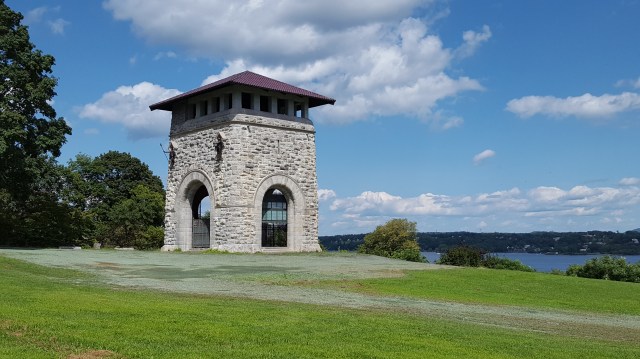
The Tower of Victory at Washington’s Headquarters State Historic Site. (Courtesy of New York State Office of Parks, Recreation and Historic Preservation)

Tower of Victory

84 Liberty St., Newburgh, N.Y.

Located high on the west shore of Hudson River, the tower opened in 1887 on the site used by Gen. George Washington as his headquarters during the American Revolution.

It was commissioned by U.S. Secretary of War Robert T. Lincoln, son of Abraham Lincoln, to honor Washington and to commemorate the 100th anniversary of the disbanding of the Continental Army.

Today, visitors can climb a spiral staircase inside the 53-foot-tall limestone structure to take in views of the Hudson River, Mount Beacon, the Hudson Highlands and West Point in the distance. Just imagine when the site was an important defensive position for Washington’s army.

The tower is part of Washington’s Headquarters State Historic Site, the nation’s first publicly owned historic site, which opened in 1850. Take a tour of the onsite museum and adjacent Hasbrouck House where Washington and his wife, Martha, were in residence from 1782 to 1783.

Good to know: Tours of the tower are by appointment only, so call ahead to book: 845-562-1195. Open through Oct. 29.

Pulpit Rock Tower

Neptune Drive, Rye, N.H.

This eight-story concrete tower is a relic of WWII, built by the U.S. military as a coastal observatory, one of 14 on the New Hampshire coast. Pulpit Rock is the only surviving tower. Soldiers once patrolled its observation deck, nearly 100 feet above the shoreline, looking for enemy ships in Portsmouth Harbor and its naval yard. Today, take in the peaceful views of the harbor and sea coast.

Good to know: Tours are only given a few times each year by the Friends of Pulpit Rock, although private tours can be arranged by appointment by emailing friendsofpulpitrocktower@gmail.com. For info on scheduled tours, follow on Facebook.

Play Our Fall Foliage Wordrow!

What do you think is the best place to view fall foliage? Have you been to any of these towers? Tell us in the comments.

Check out more ways to view fall foliage throughout the Northeast.

Need a ride? Rent a car.

Featured image: Monument at High Point. (Courtesy of New Jersey Department of Environmental Protection)

Subscribe to Your AAA Newsletter

Sign up and receive updates for all of the latest articles on automotive, travel, money, lifestyle and so much more!

Fall Driving Tips

Each year, the transition from summer to autumn brings the much-anticipated return of colorful foliage, sweater weather, football season and all things pumpkin. However, the beginning of fall also comes with potential driving risks, including slippery roads, decreased daylight, fog and sun glare. Autumn weather can be unpredictable and conditions can change drastically within a matter of minutes.

Prepare yourself and your vehicle for the changing seasons with the following tips to help you drive safely in the fall.

How to Drive Safely in Darkness

As the days get shorter, you will likely be driving in the dark more.

  • Be sure to keep your headlights clean and in proper working order; dim or misaligned headlights can decrease your visibility.
  • Always watch for pedestrians walking, jogging or biking through the streets; they may be difficult to see at night if they are wearing dark clothing.
  • Be mindful of children walking to and from bus stops in the morning and afternoon.
  • Fall is also an active breeding time for deer, so travel slowly if you live in a deer-laden area. If you see a deer cross the roadway, expect others to follow, as they often travel in groups.

Cold Weather

  • Fall weather can change rapidly from warm to cold, causing roads to ice over overnight. Drive slowly and brake gently when driving across overpasses and bridges, as these surfaces tend to frost over before others. Be aware of spots where black ice forms on the roadway and drive carefully through these areas.
  • Check your tire pressure daily. Extreme changes in temperature will cause your tires to expand and contract, which may lead to a loss of tire pressure. Before starting your vehicle, clear away any frost on your windows and check that your tires are properly inflated and have plenty of tread.
safe driving fall

Driving in Fog

With cold autumn mornings often comes fog.

  • When driving in foggy weather, set your headlights to low instead of high. High-beam headlights bounce off of fog and reflect back at you, further impairing your ability to see the road. Low beams, however, aim down toward the roadway and improve your visibility.
  • Slow down and leave plenty of space between you and the car in front of you so that you have ample time to stop if necessary.

Glare

Autumn’s sunrises and sunsets can cause a large amount of glare, making it difficult to see other vehicles, pedestrians, traffic lights or the roadway.

  • To combat glare, clean your windshield inside and out to remove any dust particles, streaks or smudges. These can become magnified when illuminated by sunlight and impact your visibility.
  • Avoid using washing and waxing products that increase your car’s shine. These products magnify the sun’s glare on your car, which may cause the light to reflect into your eyes and blind you for a few seconds.
  • Keep a pair of sunglasses in your vehicle at all times to protect your eyes from the sun’s rays. If you frequently drive at night, consider purchasing lenses with anti-reflective coating in order to reduce glare from streetlights and headlights.
safe driving fall

Wet Conditions

Fall is notorious for wet weather. Wet leaves pose a risk to motorists since driving on them is like driving on ice.

  • Before starting your car, remove any leaves from your windshield to prevent them from getting stuck under your wiper blades. Also, be sure to replace windshield wiper blades if they show any signs of wear. Neglecting your wipers can limit your vision during poor weather conditions and leave you in a dangerous situation.
  • When driving during heavy rain, slow down, especially around turns. Wet conditions increase the time it takes your vehicle to come to a complete stop, so keep a good distance between you and the vehicle in front of you.
  • Avoid sudden movements with the steering wheel or slamming on the brake pedal, as these actions may cause your car to hydroplane. If you feel that you are losing control of your vehicle, steer straight and gently release the gas pedal until you feel the tires make contact with the road surface again.

More Fall Driving Tips 

  • Never park your vehicle over a pile of leaves. Doing so may cause a fire to start from your vehicle’s exhaust system or catalytic converter.
  • Never drive over a pile of leaves; small children often play in leaf piles.
  • Changing temperatures and weather conditions create potholes, and leaves on the roadway may make it difficult to see them. Always be sure to slow down and avoid driving over leaf-covered areas, if possible.
  • Check that your spare tire is correctly inflated and has a proper tread. Having an under-inflated spare could leave you stranded if you happen to get a flat.

Whenever you need a hand the road, AAA Roadside Assistance is available 24/7. For help after a crash, be prepared with car insurance through AAA Insurance.  

AAA members can save on automotive replacement parts and accessories at NAPA.

Subscribe to Your AAA Newsletter

Sign up and receive updates for all of the latest articles on automotive, travel, money, lifestyle and so much more!

Merging Into Life: The Dangers of Drowsy Driving and How to Prevent It

SEASON 1: EPISODE 11
Episode Feedback

Don’t sleep on safety. Learn the dangers of driving while drowsy.

listen on apple podcast badge button
listen on spotify badge
listen on amazon music badge
listen on pocket casts badge button

IN THIS EPISODE

Usually, when we hear about people driving impaired it’s because of drugs or alcohol. But did you know that getting behind the wheel when you’re tired is just as dangerous? Drowsy driving is impaired driving, and we often dont even know were doing it.

In this episode, Jennifer Pearce will talk about how she lost her sister, Nicole, in a crash caused by a driver falling asleep. Now a victim’s advocate for traffic safety, Pearce discusses the risks of pushing ourselves to drive when we are tired.

You’ll also hear from Alec Slatky, AAA Northeast’s managing director of public and government affairs, about how AAA is working to better understand and prevent drowsy driving.


KEY TAKEAWAYS

[3:24] – Jennifer Pearce talks about the dangers of drowsy driving and losing her sister
[10:51] – How does lack of sleep affect driving? We explore how drowsy driving compares to driving while impaired
[13:33] – The dangers of distracted driving


TRANSCRIPT

[00:00:00]
Amanda Greene: Just a heads-up before listening. This episode concerns the dangers of drowsy driving, including loss of life and can get emotional. It’s a serious but important subject. In fact, I remember a time when I got a call from my husband a few years ago. My husband was driving home late at night from a meeting that was two hours away. He had stopped for gas, and I remember feeling like he was way too tired to continue driving on. He knew he was tired, I knew he was tired, but he just wanted to get home. And after talking for a few minutes, I came to the conclusion that he was just too drowsy to keep driving. So I said, “Go get a hotel, stay the night, come home tomorrow.” And he resisted for a minute because he wanted to sleep in his own bed, the cost of a hotel. But once he agreed, I could hear the relief in his voice. He got a room, he got home safe. And I’m so glad that we made that decision because all too often we as drivers don’t even think to make that call.

Welcome to Merging Into Life where we navigate life’s milestones one episode at a time. Brought to you by AAA Northeast. I’m your host, Amanda Green. Today we’re going to talk about the dangers of drowsy driving and how to make sure we never do it. We’ll speak to one of AAA Northeast safe driving experts, Alec Slatky, about how to be alert and stay safe on the road. But first, Jennifer Pearce. She knows firsthand how devastating the effects of drowsy driving can be. Her younger sister, Nicole, died in 2008 when the driver of the car she was in fell asleep at the wheel and crashed.

Jennifer has been a victim advocate for traffic safety ever since because we know not to drive drunk or impaired. Speeding is dangerous and so is driving while distracted, but just as dangerous though less talked about, is drowsy driving. So, Jennifer is going to share her story with us and it’s heartbreaking. But Jennifer does this work to help other families avert disaster through education and awareness because as you’ll hear, one of the biggest problems with drowsy driving is that we often don’t even know we’re doing it.

Hi, Jennifer. Thank you so much for joining us today.


RESOURCES

AAA Defensive Driving Courses

How to Avoid Drowsy Driving on a Road Trip

Bad Driving Habits and How to Fix Them

AAA Foundation for Traffic Safety: Study on Drowsing Driving

National Highway Traffic Safety Administration


Want to Learn More? Drop Us a Note

"*" indicates required fields

This field is for validation purposes and should be left unchanged.
Subject
Name*

*The views and opinions expressed in this podcast are not necessarily the views of AAA Northeast, AAA and/or its affiliates.

Subscribe to Your AAA Newsletter

Sign up and receive updates for all of the latest articles on automotive, travel, money, lifestyle and so much more!

Why You Should Prioritize Eye Exams After Age 60

If you’re over 60, you probably have already noticed changes in your eyes. You may be holding your phone further away to read your texts. You might have a little trouble reading the menu in a dim restaurant. Or you may be noticing even more concerning changes. Your eyes are aging, but it doesn’t mean you have to settle for declining vision.

Go beyond standard eye care with Altus Vision™ through AAA Northeast, an affordable, accessible way to get vision coverage in Massachusetts.

How Your Eyes Change

Like the rest of our bodies, our eyes change as we go through life. Many people over 40 experience presbyopia, the medical term for age-related farsightedness. This makes it more difficult for people to see things up close, and can turn everyday activities like reading, sewing or working at the computer into a struggle.

It may also become more difficult to see while driving at night. Taking a driving course for seniors may be helpful to deal with this issue.

With Altus Vision™, AAA Northeast members in Massachusetts can rely on a comprehensive vision plan that offers exams, savings on glasses and much more.

Altus Vision Insurance

Affordable, comprehensive vision insurance exclusively for AAA Northeast members in Massachusetts.

Enroll Now

Increased Risks

Aging comes with some increased risks to your eye health. Here are just a few you should be on the lookout for.

Cataracts happen when the lens inside of your eye becomes cloudy, and they can be treated with surgery. Your vision may be blurry, or you may be seeing double.

Glaucoma is a disease that can damage the optic nerve, and it’s the leading cause of blindness for people over 60.

Age-related macular degeneration, or AMD, occurs when your retina’s macula is damaged. You may lose your central vision, while your peripheral vision may seem normal.

All of these risks are serious and can be caught early with regular eye exams. AAA members in Massachusetts can maintain regular eye care, affordably, with Altus Vision™.

playing crossword with glasses on

Eye Care Is Health Care

Did you know that routine eye exams can also detect a variety of general health conditions, including: 

  • Diabetes
  • High blood pressure, high cholesterol and heart disease
  • Thyroid disease
  • Cancers of the blood, tissue or skin
  • Vitamin deficiencies

That’s another great reason to take advantage of the added protection offered by a vision plan

Keep Your Eyes Healthy

Little changes can make a big difference for your eyes. One small way to keep your eyes healthy is to protect them from UV rays while you’re out and about. Sunglasses or a baseball cap are perfect for minimizing exposure.

Another simple trick is to maintain your health beyond your eyes. Make sure to eat a balanced diet, exercise regularly and avoid smoking. These behaviors can help mitigate the risks of age-related macular degeneration and cataracts, according to the Centers for Disease Control and Prevention.

And, of course, the best thing you can do for your eyes is to get regular, comprehensive eye exams. Some eye conditions, like glaucoma, aren’t immediately noticeable in your day-to-day life. It takes an ophthalmologist to really see what’s going on. In addition to keeping your eyes healthy, eye exams can also show early signs of other health concerns, like diabetes or stroke.

If you need corrective lenses, wear them. Straining your eyes over time can cause painful headaches and won’t help your vision in the long run. Just make sure your prescription is up to date.

Altus Vision™ provides AAA Northeast members in Massachusetts a vision plan with features that go beyond standard eye care, in partnership with VSP® Vision Care, the largest vision benefits company in the US. Enroll now.

Subscribe to Your AAA Newsletter

Sign up and receive updates for all of the latest articles on automotive, travel, money, lifestyle and so much more!

Book an Aruba Vacation With Pleasant Holidays

The picturesque island of Aruba beckons with its warm, dry climate, velvety white sands and crystal-clear azure waters, creating an enchanting haven for vacationers.

Situated alongside the islands of Bonaire and Curacao, Aruba lies comfortably south of the hurricane belt, putting travelers’ minds at ease. In fact, it hardly ever rains and maintains a sunny 80 degrees most of the year. 

Speak to a AAA travel advisor about booking one of these luxurious Aruba resorts with Pleasant Holidays. They’ll take care of the planning and set you up with exclusive discounts and other member benefits.

The Ultimate Travel Packages 

Find everything you need, all in one place. 

Learn More

Where to Stay in Aruba

Embassy Suites by Hilton, Aruba Resort

This family-friendly resort is located between Aruba’s famous Eagle and Palm Beaches and offers beach access through a private tunnel. Guests can choose between rooms and suites.

JOIA Aruba by Iberstoar
JOIA Aruba by Iberostar

Iberostar plans to open it’s newest property by the end of 2024. Located on Eagle Beach, the resort boasts 240 suites and interior designs inspired by nature and the ocean.

ritz carlton aruba
The Ritz-Carlton, Aruba

Boasting signature Ritz-Carlton style, here you can enjoy five restaurants, a luxurious spa and 320 spacious, luxury guest rooms, including 55 suites.
riu palace antillas
Riu Palace Antillas

This 24-hour, all-inclusive adults-only (18-plus) beachside resort is the perfect place for a celebration. Guests can save up to $690 on wedding and honeymoon inclusions, plus themed parties.

More to Love About Aruba

  • More than 90 nationalities and ethnic groups, including European, East Indian, Filipino and Chinese call the island home.

  • Considered the wreck diving capital of the Caribbean, Aruba offers incredible exploration opportunities for divers of all skill levels.
  • The unique crushed coral and shell composition of the beaches’ powdery white sand keeps it cool, making it perfect for barefoot beach walks.
  • Big payout at the casino? Take it all home Aruba has no taxes on gambling wins.
  • Sustainability fans will be happy to know that the island is at the forefront of the green energy movement. Aruba anticipates all its power coming from renewable sources within the next decade.

To learn more about the resorts mentioned and start planning your Aruba vacation, reach out to a AAA travel agent today.

Subscribe to Your AAA Newsletter

Sign up and receive updates for all of the latest articles on automotive, travel, money, lifestyle and so much more!

Safe Driving Tips for Hazardous Conditions

Safety should always be the top priority when behind the wheel, but drivers should be especially alert, aware and defensive on days when conditions are not ideal.

Always obey traffic warnings and stay off the roads when directed; however, if you do find yourself on the road when hazards are heightened, here are a few safe driving tips to keep in mind.

AAA Driver Training

Start in the right lane.

Learn More

Headlights and Hazard Lights

We all know to put our headlights on when it gets dark, but they should also be used during adverse weather conditions. In fact, many states require headlights to be on whenever wipers are in use. Studies show that driving with your car’s headlights on all the time can reduce fatal frontal crashes by 10%.

Low beams are more effective in the rain and fog. The light from high-beam headlights bounces off water and reflects back at you, further diminishing your visibility. Remember to also periodically check your headlights and clean the lenses. Clouded or yellow lenses can reduce the amount of lighting dispersed by nearly 80%.

In most cases, hazard lights should only be used during an emergency, such as if your car has broken down or you have to pull over to the side of the road. This helps warn other drivers of a temporary hazard. Using your hazard lights while driving on the other hand, can distract or confuse others on the road. Many states prohibit the use of hazards while driving. If you truly feel conditions warrant the need for hazard lights, consider stopping and waiting out the weather, as the low visibility may make driving too dangerous.

Slow Down, Move Over

First responders play a vital role in keeping drivers free from harm as well as ensuring that roadways are running as smoothly as possible. In order to do their job, they are often forced to work just a few feet away from speeding vehicles.

Slow down, move over laws aim to keep police officers, firefighters, roadside technicians and other first responders safe. These laws, versions of which exist in all 50 states, direct drivers approaching a vehicle with its emergency lights illuminated to exercise caution, slow down and, if possible, move over and away from the emergency vehicle.

safe driving tips

When to Go Slow

Driving too fast under any condition is both dangerous and far too common. Roughly half of all drivers report going more than 15 mph over the speed limit on a freeway, according to AAA’s annual Traffic Safety Culture Index. In turn, speeding contributes to nearly one-third of all traffic fatalities.

When driving conditions become hazardous, such as in the case of storms or reduced visibility, driving slower becomes even more important. Traveling at a lower speed helps you control your vehicle, come to a stop more quickly and provides you with more response time. You should also increase your following distance in these conditions.

Even if driving conditions are ideal, certain situations call for reduced speeds, such as navigating winding roads. Tight turns are difficult to execute at higher speeds. You should also slow down when approaching a blind corner so you can react to oncoming traffic.

When to Stop Driving

Sometimes the best decision is not to drive at all. If conditions are too hazardous to drive safely, pull over and wait until the storm or other event is over. Rest areas are the best options. If you are forced to stop on the side of the road, pull off the road as far as possible, keep your seat belt fastened and turn your hazard lights on to ensure other drivers can see you.

Bad weather is not the only reason to stop. If you feel drowsy, find a safe place to park and take a break. Sleep deprivation slows reaction time, decreases accuracy of responses and leads to long lapses in attention. The AAA Foundation for Traffic Safety found that drivers who lack adequate sleep have significantly elevated crash rates, and that the estimated crash risk associated with driving with only four to five hours of sleep is similar to the risk of driving with a blood alcohol concentration equal to or slightly above the legal limit of 0.08.

Visit AAA.com for more driver safety tips.

Subscribe to Your AAA Newsletter

Sign up and receive updates for all of the latest articles on automotive, travel, money, lifestyle and so much more!