10 Ways to Supplement Your Child’s Education

As a parent, you’re probably used to answering questions. Lots of them. But what if your child comes home from school with queries you can’t answer? Questions about, say, why the world is round or why tigers have stripes or why the ocean is salty. Thanks to Google, you can usually get some quick answers, but what if you want to dig a little deeper?

Here are 10 ways you can supplement your curious child’s education at home – and have fun at the same time.

1. Surround your child with books.

Children who have a wide variety of reading materials at home have higher scores on reading proficiency tests than other students, according to the Educational Testing Service. Sign him or her up for a library card and make frequent visits. Whatever their interests, they’ll be able to find a book, magazine, movie or program to suit their tastes.

2. You can’t necessarily count on schools to provide field trips these days.

Zoos, art museums, historic homes, farms, nature centers and natural history museums are all rich sources of information. Have a child who’s curious about where trash goes? See if your local landfill offers tours. And make sure to look online before you go – many organizations have online study guides to enhance your visit, as well as in-house programs and children’s activities.

3. Check out online study guides and homeschooling websites.

The National Education Association has tons of lesson plans organized by subjects, and the National PTA has student guides divided by grades. Most states have at least one organization devoted to homeschooling – use Google to ferret them out.

4. Enlist your child as a helper.

When my daughter was small, I’d let her help me edit book manuscripts at home. And she’s given presentations to local schools on internet safety with her father, a cybersecurity expert. Whether it’s cooking or coding, they’ll gain self-confidence and you’ll gain some valuable bonding time.

5. Find an activity your child will love.

Not only will your kiddo learn a new skill, but he or she will build more neurons and maybe get some exercise at the same time. Whether they lean toward karate, music, cooking, language, archery, swimming or arts and crafts, the options are almost endless.

6. Go back to school.

Local colleges and universities often offer classes for children, both during the school year and in the summer. Have a budding artist at home? The Rhode Island School of Design offers classes in animation, drawing and architecture, while little chefs can take cooking and baking classes at the Culinary Institute of America in Hyde Park, N.Y.

7. Websites can be your friend.

I know, I know – kids already spend so much time on their devices. But certain well-crafted websites can both entertain and inform. Scratch teaches children how to write computer code using an easy drag-and-drop interface, while National Geographic Kids, the Library of Congress and NASA have content geared toward curious kiddos.

8. Commission an out-of-school assignment on your child’s favorite subject.

When my daughter was younger, she absolutely adored chipmunks (thanks, Alvin). After exhausting our local library’s resources, we asked her to write a one-page report on chipmunks. She loved it, and did one on wolves a few years later.

9. At-home science experiments.

If you don’t mind a little cleaning up afterward, this could be a whole lot of fun. Clear off the kitchen table and build a volcano out of clay or Play-Doh and mix together baking soda and vinegar to create an eruption. Grow and hatch butterflies – or buy an ant farm. (Kits are easy to find online.) Or just make some simple dough out of flour and water and let your child have fun making shapes – and making a mess.

10. Ask teachers for resources.

Last but certainly not least, go to the pros! If your child wants to learn more about a favorite subject or needs some extra practice, his or her teachers can recommend books, strategies and resources to help them succeed and thrive, both in and out of the classroom.

Get back to school savings with AAA!

Subscribe to Your AAA Newsletter

Sign up and receive updates for all of the latest articles on automotive, travel, money, lifestyle and so much more!

10 Ways to Help Your Kids Get Through School Stress

Tests, grades, homework, social pressures, teachers – there are lots of things that can give a kid school stress. Some stress is healthy and motivates us to get things done, but too much can be just the opposite. Check in with your child regularly about how she or he is feeling, and watch for changes in behavior that might be a sign of undue stress. Try these strategies if you feel like your child could use some help juggling priorities or coping with school stress.

1. Talk it out.

Make sure your child knows she or he can come to you with concerns. The American Psychological Association recommends stopping whatever you are doing when your child comes to you, and listening actively, letting them finish before you respond and then repeating what you’ve heard so they know you are listening.

2. Stop over-scheduling.

If your kids have no free time most days, frequently say they’d rather stay home than participate in activities, or if you’re most often with them in the car, they might be over-scheduled, according to the American Academy of Family Physicians. A better balance between activities and unstructured time might relieve stress.

3. Practice time management.

Helping your child organize schoolwork can go a long way to relieving school stress. Experts suggest that simple steps such as helping your child keep his or her backpack clean, using a planner to track homework deadlines – and extracurricular activities – and maintaining a clean workspace at home can make a big difference.

4. Focus on sleep.

The American Academy of Pediatrics says kids ages 6 to 12 need nine to 12 hours of sleep per night, and teens need eight to 10 hours. Sleep deprivation can lead to irritability and cause attention and memory problems. Dialing back bedtime might keep your child calmer and more focused.

5. Prepare for stressful situations.

If your child is facing a test, school performance or other potentially stressful situation, help by talking it through. Discuss what concrete actions your child can take to improve the situation and make a plan. Experts say a positive attitude can also help.

6. Try “teddy bear” breathing.

The American Institute of Stress recommends lying on the back with one hand to the chest and a favorite teddy bear on the tummy. As your child breathes in through the nose, the teddy bear should rise, but the chest should not. Have your child count to three, slowly breathe out and repeat.

7. Embrace imperfection.

Everyone makes mistakes. It’s how we learn. If your child is concerned with a bad grade or test score, The Child Mind Institute suggests sharing a story of your own failure, then talk through what went wrong this time and come up with a plan.

8. Keep things consistent at home.

The American Academy of Pediatrics recommends family routines so children know what to expect. When things happen on a predictable schedule, it is easier to make sure important tasks like homework are getting done.

9. Work it out.

The Anxiety and Depression Association of America notes that exercise produces endorphins, brain chemicals that boost mood and improve sleep. Make sure your child gets regular physical activity – whether through organized sports or fun activities such as dancing, hiking or bicycling.

10. Bring in a professional.

If your child experiences irritability, crying, clinging or other negative changes in behavior or physical symptoms such as sleep issues, stomachaches or headaches on a regular basis – and you believe they are stress related – the American Psychological Association recommends seeking professional help.

By Christina Elston

Get back to school savings with AAA!

Subscribe to Your AAA Newsletter

Sign up and receive updates for all of the latest articles on automotive, travel, money, lifestyle and so much more!

10 Ways to Make the Most of Your Parent-Teacher Conference

The parent-teacher conference is a rare opportunity to sit down for one-on-one time with your child’s teacher. They are a chance for a two-way discussion of your child’s progress that goes far beyond test scores and report cards. They also offer an opportunity to establish a partnership with the teacher so that you can work together to support your child. Whether your student is struggling, excelling or somewhere in between, making the most of this time can make a real difference in your child’s school year. The National Education Association, Harvard Family Research Project and the Nemours Foundation offer the following suggestions.

1. Write down your questions.

Take some time to think about what you would like to ask your child’s teacher, and write your questions down so that you can cover all the important points during the limited time available. Prioritize questions so the most important ones are addressed.

2. Check in with your child.

Have a conversation before the parent-teacher conference and ask your child whether she or he has any concerns or questions for you to discuss with the teacher. This gives your child a voice, and shows your child that you take the conference seriously.

3. Know what to expect.

Use the school’s online portal if possible, or send a note to the teacher, to find out how your child is doing in class. This will help you prepare for situations that might need to be addressed, and avoid surprises that could make the meeting awkward.

4. Stick to the schedule.

Your child’s teacher will be spending time with many other parents during parent-teacher conference days. As a courtesy to the teacher, and to the other parents on the schedule, arrive promptly for your appointment and don’t stay longer than your allotted conference time.

5. Start on a positive note.

Thank the teacher for his or her work with your child, and share some positive feedback about your child’s experiences in class. This sets the tone for cooperation and sharing during the rest of the conference.

6. Share information about your child.

Is there something happening at home that might impact your child’s behavior in class? Whether it’s distress over a death or divorce in the family or excitement over a new job or new baby, let the teacher know.

7. Ask about your child’s strengths, weaknesses and progress.

Aim for a complete picture of how your child is doing. Don’t just focus on problem areas, but on bright spots as well. Knowing what your child is doing well makes it easier to tackle challenges.

8. Ask about social skills.

School is more than academics. Ask how your child gets along with her or his peers, about your child’s participation in activities and about his or her friends. These things make a big difference in your child’s attitude toward school.

9. Ask what you can do at home.

Most teachers are delighted to give parents tools for helping their children catch up, or for challenging those who are pulling ahead. Whether it’s tips for organizing homework, helpful websites or suggestions for educational outings, take advantage of this advice.

10. Plan for ongoing communication.

Ask your child’s teacher how she or he would like you to follow up on what you’ve discussed. It might mean scheduling a future meeting or phone call, sending a note to class or emailing. Choose the communication channel most convenient for the teacher, and follow through.

By Christina Elston

Get back to school savings with AAA!

Subscribe to Your AAA Newsletter

Sign up and receive updates for all of the latest articles on automotive, travel, money, lifestyle and so much more!

10 Fun School Lunches to Pack Your Kids

Mornings are rushed and picky eaters are tough. According to the USDA’s dietary guidelines for Americans, half of your plate should be fruits and vegetables and half of your grains should consist of whole grains. Meeting those guidelines, however, can be difficult for those with picky palates.

Strategies include disguising healthy school lunches in tastier forms, getting creative with fun designs and organizing lunches into bento boxes – Japanese containers growing in popularity that separate snacks into neat compartments. We found recipes using each of these methods that will pack lunch bags full of nutrients and appeal to all appetites.

1. Fruit nachos.

Forget the chips and cheese – this treat from the website Super Healthy Kids is nutritious and sweet. Using sliced apples and pears as chips, you can top your fruit nachos with chopped strawberries, coconut flakes, caramel sauce and melted chocolate. Feel free to improvise!

2. The Elvis burrito.

Channel The King for a royal wrap created by Bon Appetit. Spread peanut butter on a wrap and add sliced banana and crumbled bacon. Drizzle honey on for a sweet finishing touch and this burrito will get you all shook up!

3. Fruit in disguise.

Sometimes fruits and veggies get rejected from school lunches, but this idea from the Lauren’s Latest website may be a way around that fact. Make peanut butter sandwiches using apple slices instead of bread. Serve with yogurt-covered raisins, cheese sticks and whole-wheat pretzels to complete the meal.

4. Perfect-size pizza.

Pizza is a childhood staple, and the website Once Upon a Chef created this recipe for English muffin pizza that the pickiest eaters will love. With marinara sauce, mozzarella cheese, pepperoni and some oregano, these tiny pies are simple, quick and tasty.

5. Save the crust.

Finish the last crusts of that loaf of bread, or toast some pieces in the oven, and combine with tomato, mozzarella, pepperoni, basil, peppers, oil and vinegar for a quick panzanella salad. This recipe from Bon Appetit is simple but sophisticated, and can be tailored to fit anyone’s taste buds.

6. Breakfast for lunch.

The 100 Days of Real Food website helps your hungry students bring the best of breakfast to their school lunches. Start with homemade whole-wheat waffles, cut into strips, and pack apple slices, strawberries and plain yogurt mixed with maple syrup. For an extra treat, include frozen blueberries in the yogurt.

7. Wrap and roll.

Think small for big results – try rolling sliced deli meats like ham, turkey or roast beef around cheese sticks for a new take on lunch wraps. Include cream cheese and greens for even more flavor and nutrients in this idea from the website The Kitchn.

8. Fondue for kids.

This bento box idea from the Produce for Kids website has compartments for Greek yogurt and ranch dipping sauces, plus areas for fruits like strawberries, apples and banana slices, and an area for carrots, peppers and broccoli. Add mini-sandwich skewers for the finishing touch in this fun, colorful school lunch setup.

9. Bento salad bar.

A perfect high school meal to pack, the bento box salad bar suggested by the website Veggie Bento Love can feature any fruit, vegetable or nut you like. Include lettuce, cucumbers, carrots, cherry tomatoes, sunflower seeds, sliced red peppers, cooked quinoa and more in separate bento box compartments to keep everything fresh.

10. At the teacher’s table.

This bento box takes a little more work, but is worth the time if you make it in bulk or use it as leftovers. The main event in the Yumbox Lunch website’s recipe is grilled chicken over spinach leaves, red onion and barley. Serve with avocado slices, pistachios and dried mangoes in the side compartments.

Get back to school savings with AAA!

Subscribe to Your AAA Newsletter

Sign up and receive updates for all of the latest articles on automotive, travel, money, lifestyle and so much more!

10 School Backpack Essentials

Your child’s backpack is a kind of bridge between home and school, a place to carry essential supplies. But carrying around a pack all day can take its toll. The American Occupational Therapy Association reports that overloaded or improperly worn packs can lead to aching backs and shoulders, tingling arms and stooped posture.

Helping your child choose a pack that fits correctly, and then packing it with just the essentials, can make a big difference. Monitor your child’s pack on a regular basis to clean out nonessential items, and make sure your child wears the pack using both straps, rather than just slinging it over one shoulder.

1. The pack itself.

To prevent back pain, the American Chiropractic Association recommends choosing a pack with wide, padded, adjustable straps so that you can position the pack properly. It shouldn’t hang more than 4 inches below your child’s waistline. Packs with many compartments help you distribute the weight of the contents evenly.

2. School supplies.

Stick with the essentials. The pack should weigh no more than 5 to 10 percent of your child’s body weight, according to the ACA. If it weighs more, ask your school about electronic copies of textbooks or to consider photocopying book chapters for children to bring home.

3. Medication.

Know your school’s policy on medication. Children with asthma or food allergies might be allowed to carry an inhaler or an epinephrine auto injector with them. If your child does, make sure school personnel are aware and that the medication is kept where it is readily accessible.

4. Electronics and chargers.

Many schools allow students to bring cellphones, tablets and laptops to class, but these items won’t do any good if they aren’t charged. Make sure your child has power cables, and consider purchasing a portable power bank for charging when electricity isn’t available.

5. Emergency phone list.

Chances are, your child’s important phone numbers are in the contacts list in his or her cellphone. But these won’t be accessible if the phone is lost or damaged. Your child should carry a paper list with your phone number and others she or he might need.

6. Cash.

How much money your child needs to carry depends on a number of factors. Does your child take public transportation to school? Buy a school lunch? Have expenses for extracurricular activities? In many cases, you can avoid having your child carry excess cash by paying for lunch or activities in advance.

7. Weather gear.

During fair weather, pack sunscreen, and a light jacket for cooler mornings. If things are wet and chilly, pack an umbrella, hat, gloves and jackets to keep your child dry and comfortable. Make sure your child has layers for indoor versus outdoor temperatures.

8. Water bottle.

The American Academy of Nutrition and Dietetics says kids should drink an average of 6 to 8 cups of water per day – though age, weight, air temperature and humidity level play a part. Having water on hand at all times can help make sure your child stays hydrated.

9. Personal items.

There are a few little extras that just make things more comfortable and more fun. Hairbrushes, hand lotion, tissues, chewing gum or mints might fall into this category. It’s nice to pack these in their own case so they are easy to grab.

10. Something reflective.

The Centers for Disease Control and Prevention says child pedestrians are at greater risk than adults of being hit by cars because they are smaller and more difficult for drivers to see. Increase your child’s visibility by adding reflectors or reflective material to his or her backpack.

By Christina Elston

Get back to school savings with AAA!

Subscribe to Your AAA Newsletter

Sign up and receive updates for all of the latest articles on automotive, travel, money, lifestyle and so much more!

Save & Splurge: Saratoga Springs

Saratoga Springs is a city that has reinvented itself many times throughout history. Since before Colonial settlers arrived to this New York city, its mineral springs have drawn visitors for the water’s reportedly restorative properties. Then it became known as a hotbed of gambling and horseracing.

In the time since, Saratoga Springs has once again become a sought-after resort destination, one that combines the best of its past iterations to create something altogether new and welcome.

Budget

Stay: If you want to explore where aristocrats cavorted but don’t exactly feel like a Rockefeller, consider staying at the Springs Motel. The centrally located motel offers basic amenities and an outdoor pool. The service here is consistently high-level.

Do: There are plenty of vineyards, breweries and distilleries nearby. The Saratoga Winery manages to appeal to both wine and beer lovers, while the Thirsty Owl bistro has a tasting room for wines. Try the Olde Saratoga Brewing Company if you want to sample some brews.

Dine: Get greasy at Hattie’s Chicken Shack. The legendary joint serves up Southern hospitality cooking year-round in two Saratoga Springs locations. You’d be remiss for not trying the fried chicken, but the rice and beans, jambalaya and bloody marys also draw raves.

Mid-Range

Stay: The antique amenities at the Inn at Saratoga provide a glimpse into 19th century hospitality. Modern amenities include Wi-Fi, on-property parking, and passes to a nearby pool and YMCA. Draw a pint at the inn’s tavern or take the antique Roadster bikes out for a free spin.

Do: See the town’s namesake features at Saratoga Spa State Park. There, you can partake in several pools fed by the mineral spring water. There’s also great golfing to be found here, as well as plenty of nature trails for warm-weather hiking or snowshoeing in the winter months.

Dine: Max London’s Restaurant and Bar prides itself on fresh local ingredients; ink-written additions to the menu reflect daily availability. Brunch fare and cheeses, including homemade mozzarella, are what make the vibrant bistro memorable, but the weekend DJ doesn’t hurt, either.

Luxury

Stay: Elegance is the operating word at Saratoga Arms, a boutique hotel that prides itself on concierge-level service. The rooms are both stately and cozy, and the downtown location allows visitors to walk to many attractions. As a bonus, breakfast is included with your stay.

Do: If you’d like a bird’s-eye view of the region, get in the basket with Adirondack Balloon Flights. On a day of good visibility, you can see the Adirondacks and Vermont’s Green Mountains. If you’re in the area in September, travel to Queensbury for the Adirondack Balloon Festival.

Dine15 Church is an elegant, relatively new restaurant that immediately won the hearts of locals by saving a historical building from demolition. The restaurant draws equal praise for its food, ambiance and service. Steaks, burgers and desserts are all sure bets.

Sample Saratoga Springs for yourself by booking a stay at AAA.com/SaratogaSprings.

Subscribe to Your AAA Newsletter

Sign up and receive updates for all of the latest articles on automotive, travel, money, lifestyle and so much more!

Is Your Battery Zapped?

Car batteries hate extreme temperatures. It’s one reason so many fail in the summer heat.

Periodically disconnecting the car battery to clean its terminals with water and baking soda can help extend its life, said AAA’s Car Doctor John Paul. But all automotive batteries will fail eventually. Here are a few signs yours is on its way out.

It’s old

The first reason is simply a numbers game. Modern car batteries are designed to last three to five years. A lot of short trips, vibrations and exposure to very hot and cold temperatures outside and under the hood can result in a lifespan that’s on the short end of that spectrum. Batteries that have been jump-started many times also tend to fail earlier.

Engine cranks slowly

The battery makes the power that gets the engine going before the alternator takes over. A weak car battery will struggle to produce enough juice to start the engine. It will either take longer than normal or won’t start at all. If the battery is totally gassed, you might turn the key and hear nothing but a rapid clicking sound, which happens when the battery is too weak to begin the starting process.

Issues with electronics

Bad batteries won’t power a vehicle’s electrical parts properly. One way to check is to turn the headlights on. If they look dim, it could be a sign that your power source is ready to go kaput. You might also notice issues with parts like windshield wipers and power windows, Paul said.

Having a dependable battery can take a lot of the stress out of being a car owner. “I always tell people, if your vehicle’s battery is three years old, have it tested, and if it’s five years old or more, it’s time to have it replaced,” Paul said.

Learn about AAA’s mobile battery service at AAA.com/Battery.

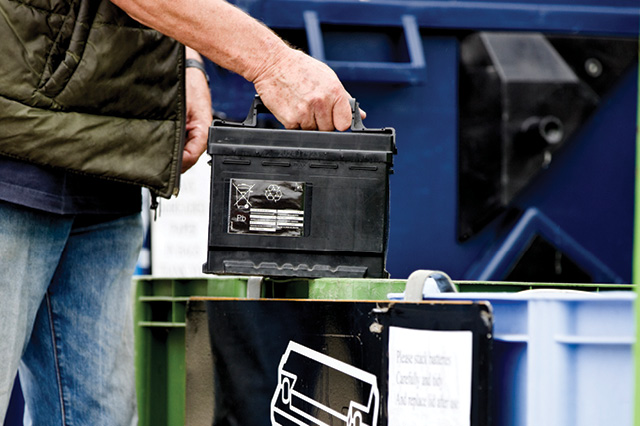
Top Photo: A man handles a car battery. (FlairImages / iStock / Thinkstock)

Subscribe to Your AAA Newsletter

Sign up and receive updates for all of the latest articles on automotive, travel, money, lifestyle and so much more!

Memphis Pulses to a Rock ‘n’ Roll Beat

When the music started, the people who had been standing around began to tap their toes, bounce their heads and move their hips to the beat. But this wasn’t a dance hall or a dimly lit club.

It was a museum.

Yet people couldn’t help themselves when the distinctive sounds of Elvis, Johnny Cash, Jerry Lee Lewis and CarlPerkins filled the room at Sun Studio in Memphis, Tenn. It’s impossible to stand still when you hear the rockabilly rhythms of “Blue Suede Shoes.” People just had to move to the beat at this recording studio museum that has been called the birthplace of rock ‘n’ roll.

In Memphis, great music is around every corner – on the street and in nearly every club and restaurant.

Musical Mecca

Ground zero for music in Memphis is legendary Beale Street. This is where bandleader W.C. Handy introduced blues to the South. The three-block pedestrian-only section of this street features dozens of places to hear live blues and nearly every other genre. At night, it’s a veritable street party with music pulsing from clubs and sidewalk performers.

The Memphis Rock ‘n’ Soul Museum tells the story of the city’s musical evolution, from the sharecroppers of the 1930s through Memphis’ musical heyday in the 1970s. The rich collection includes fantastic photographs, costumes, instruments and other relics, as well as 100 songs you can hear through provided headphones.

Next, head to Sun Studio. It’s been said that if music was a religion, Memphis would be Jerusalem and Sun Studio its most holy shrine. It’s hard not to agree after a guided tour of the studio, which Sam Phillips founded in 1950 to capture the Beale Street sound. The studio launched the careers of many performers, including the Million Dollar Quartet, as Elvis, Cash, Lewis and Perkins were known.

Memphis’ Soulful Past Shines

On tours, visitors see instruments and relics from the 1950s and ’60s and hear songs and outtakes from studio sessions. You can even hold Elvis’ microphone.

Soul also flourished in Memphis, and the Stax Museum of American Soul Music honors the artists who recorded there, including Otis Redding and Isaac Hayes. Located on the original site of the Stax Studio, the museum contains more than 2,000 artifacts, exhibits and films that tell the story of soul music.

The Blues Foundation has been inducting members into its Blues Hall of Fame since 1980, but now has a physical location featuring artifacts, original artwork, photos and multimedia elements about the inductees.

And no visit to Memphis would be complete without touring Graceland, Elvis’ home from 1957 until his death in 1977. It serves as a compelling time capsule of Elvis’ life and career. New attractions include Elvis Presley’s Memphis, a 40-acre museum and entertainment complex, and the AAA Four Diamond Rated Guest House at Graceland.

Civil Rights

Housed in the Lorraine Motel, where Martin Luther King Jr. was assassinated, the National Civil Rights Museum provides a walk through five centuries of history, from slavery to seminal events of the 20th century. Exhibits share lessons from the American civil rights movement and examine how that era continues to shape freedom globally.

More than 40 news films, oral histories and interactive media are part of the museum’s robust collection. Visitors can climb aboard a bus with a statue of Rosa Parks and take a seat at a lunch counter sit-in beside three-dimensional figures.

Just Ducky

The Peabody Marching Ducks live in the Royal Duck Palace on the roof of The Peabody, a AAA Four Diamond hotel that’s synonymous with Southern hospitality. With great pageantry each day at 11 a.m., a duckmaster leads the waterfowl down an elevator and across a red carpet to the lobby. They spend the day swimming in the fountain then return to their penthouse at 5 p.m. in similar ceremony.

The march of the ducks is a happening that’s not to be missed, just as Memphis should be on everyone’s bucket list.

FIND & BOOK AT HOTEL IN MEMPHIS, TENN.

By Dennis R. Heinze

Subscribe to Your AAA Newsletter

Sign up and receive updates for all of the latest articles on automotive, travel, money, lifestyle and so much more!

What’s in a (Car) Name?

What’s in a (Car) Name?

Automobile brand names have some funky histories, and many borrow from other languages. Check out the roots of these company titles and drop some linguistic trivia on your next road trip.

Volvo

This luxury brand opted for a Latin name, one that perfectly describes a car’s purpose. Rooted in the verb volvere, Volvo translates to “I roll.” Makes sense!

Subaru

Ever wonder why Subaru’s logo is a group of stars? The etymology of its name illuminates this starry symbol. Subaru refers to the Japanese name for the constellation known as Pleiades, or the Seven Sisters.

Audi

Another Latin word for a luxury car brand. Audi translates to “listen.” Legend has it that the name pays homage to the firm’s founder, August Horch. The surname Horch, in German, means “listen.”

Volkswagen

This name sounds close to what it means. Looking for an affordable car for its citizens, Germany founded Volkswagen, which means the “people’s car” in German.

Fiat

Some think this Italian company’s name is Latin for “let it be done.” While that’s an accurate translation, FIAT is actually an acronym for Fabbrica Italiana Automobili Torino (Italian Automobile Factory, Turin).

Hyundai

The Hyundai Motor Company was founded in South Korea in 1967. For the brand name, founders chose a Korean word that loosely translates to “modernity.”

Infiniti

We know this one, although the last letter has been changed from the English version. Yet another luxury vehicle chose a Latin name, choosing the noun that means boundless or unlimited.

Subscribe to Your AAA Newsletter

Sign up and receive updates for all of the latest articles on automotive, travel, money, lifestyle and so much more!

4 Car Repairs to Make Before It’s Too Late

Paying for car repairs is about as much fun as a trip to the dentist.

And, like the dentist, some people will go to great lengths to avoid a trip to the shop.

But drivers who skip or delay important repairs expose their vehicles to dangerous situations and costlier fixes down the road, AAA’s Car Doctor John Paul said. Here are four right-now repairs that should be fixed as soon as possible.

Fluid Leaks

An engine without oil or coolant could be irreparably damaged in seconds, yet some people would prefer to add oil or coolant to their car every day instead of fixing it. The leak will only get worse over time, and it will be hard to keep up with the refills, Paul said. Ignore a leak long enough and what was a simple repair could end up destroying the engine, he added.

Grinding Brakes

A grinding noise when applying the brakes could mean the brake pads are completely worn out. Driving on shot brake pads could damage the calipers or rotors, neither of which are cheap to replace.

Leaky Tire

Sometimes a tire leaks so slowly that a driver can add air every couple of days and get to where they need to go. But doing this could permanently damage the inside of the tire, Paul said. It could also weaken the sidewall, which could cause a blowout.

Cracked Windshield

On a very hot or cold day, it won’t take long for a half-inch crack in a windshield to become an irreparable gash across the glass. The safest and most cost-effective solution is to get the crack or chip repaired as soon as possible, Paul said. Wait too long and you might need a complete windshield replacement. A large enough crack might also earn a driver a ticket for faulty equipment. Like a toothache, sometimes it pays to act before a problem gets worse.

Did you know that AAA Auto Glass will come to you at work or home and provide the highest-quality installations by AGSC certified technicians? To get a free, no-obligation quote on windshield repair or replacement, go to AAA.com/Glass.

Find a qualified mechanic quickly by browsing a list of AAA Approved Auto Repair facilities in your area. You’ll get a free maintenance inspection with any paid repair so you can keep your vehicle in tip-top shape. 

Subscribe to Your AAA Newsletter

Sign up and receive updates for all of the latest articles on automotive, travel, money, lifestyle and so much more!

Drumming Out a Workout

I’m a drummer, and when I finish playing a show, I’m exhausted. Playing the drums requires constant motion in both legs and both arms. That, plus setting up and breaking down equipment, makes for a tiring workout. But does it count as exercise? To find out, I geared up with a Fitbit and got behind my drum kit.

I played a nonstop 30-minute set with rhythms from all genres of music – classic rock beats, jazz swing, blues shuffle, pop ballad, punk, metal blasts and more. After a half-hour, my resting heart rate jumped from 62 to 108 beats per minute. I averaged 100 bpm throughout the session, which equated to roughly 199 calories burned.

According to Livestrong, drummers often elevate their heartbeats even more, sometimes reaching 190 bpm – a rate of intense physical activity comparable to workouts by elite athletes.

During my session, I logged 3,856 steps and “traveled” 1.88 miles on my Fitbit. While these figures may not translate perfectly, it’s clear that drumming requires coordination and endurance, especially when playing a three-hour show.

Every instrument requires a different level of physical activity. In my case, making music clearly burned calories and provided a cardiovascular workout.

If you don’t have access to a drum set, look for cardio drumming classes at gyms near you. These percussion workout programs are the newest craze in the fitness world and can add a fun flair to your exercise routine.

Any new exercise routines should be approached with caution. Consider your physical limitations and always consult your doctors.

Subscribe to Your AAA Newsletter

Sign up and receive updates for all of the latest articles on automotive, travel, money, lifestyle and so much more!

Don’t Break the Bank on Unexpected Car Repairs

Unless you’re rich Uncle Pennybags, spending $600 on car repairs is a tough pill to swallow.

Unfortunately, that’s the going rate for the average car repair bill today, according to new AAA research. What’s more, an estimated 30 percent of Americans are unable to pay the average car repair bill without going into debt, the survey found.

Here are a few ways to make paying for unexpected car repairs a little easier, courtesy of AAA experts.

Shop Smart

Your driving costs include a lot more than your monthly car payment. They include money spent on fuel, registration fees, insurance premiums and, yes, upkeep. It costs on average $8,500 to own and operate a vehicle in the U.S., according to the AAA 2016 Your Driving Costs study. Consider the total cost of vehicle ownership when shopping for a new vehicle.

Save Up

Even well-maintained cars break down. Just ask the 32 million motorists AAA provided roadside assistance to in 2016. It helps to anticipate an unanticipated mechanical or electrical failure. AAA recommends drivers put aside at least $50 a month to help cover future car troubles. “If anything, that rainy day fund will take the sting out of an unexpected repair bill,” said John Paul, AAA’s Car Doctor.

Reputable Repairs

Sometimes little problems become big ones. After a while, squeaky brakes can become grinding brakes and a frayed timing belt can snap. Problems like these often result in drivers broken down on the side of the road. “Little problems aren’t going to fix themselves,” Paul said. “The key is to find a high-quality repair shop that will examine the entire car a couple of times per year during a routine service like an oil change.” Of course, drivers who want their vehicle to last should follow the service schedule in the owners manual, Paul added.

To find a trusted repair facility near you, go to AAA.com/AAR.

Subscribe to Your AAA Newsletter

Sign up and receive updates for all of the latest articles on automotive, travel, money, lifestyle and so much more!

Pet Allergies: When an Itch Means Something More

Ever think your pet might be allergic to you? While that may be a rare scenario, it’s increasingly clear that cats and dogs, like their human companions, can have allergies.

Cornell University’s Baker Institute for Animal Health classifies potential pet allergies into three categories: atopic dermatitis caused by pollen, dust, mold and other natural irritants; food allergies triggered by meat, dairy, eggs and other foods; and respiratory allergies mainly found in cats.

The institute says the signs for pet allergies include excessive itching, sneezing, tears, rashes, gastrointestinal issues and, in cats, a form of asthma.

If your furry friends exhibit any of these symptoms, take them to your veterinarian for evaluation and testing. Once an allergy is determined, you can help your pet by avoiding the allergen, changing its diet or using medication prescribed by your veterinarian to have her back to full health in no time.

Visit AAA.com/PetInsurance to find out how you can save up to 90% on vet bills. 

Subscribe to Your AAA Newsletter

Sign up and receive updates for all of the latest articles on automotive, travel, money, lifestyle and so much more!

Iceland: Close By, But Worlds Away

For a long time, Iceland had been on my travel bucket list. When I finally made it there, it surprised me how accessible it is from the East Coast.

While the island country is close to the Arctic Circle, it’s not as remote as it seems. I took a direct flight from Boston and arrived in Reykjavik in less time than it takes me to fly to California.

Whether you’re in the country for just a few days or a longer stretch of time, guided tours are a popular option, especially for first-time visitors. Like most people, I was based in the capital city, Reykjavik, and headed out for daytrips to some of the country’s most dramatic sites, including spectacular hot springs, glaciers, lava fields, volcanoes and waterfalls.

The Blue Lagoon and the Golden Circle route are usually at the top of visitors’ itineraries, including mine. I was especially excited to soak in the Blue Lagoon after hearing about it from friends. Many people visit between September and April to chase after the northern lights, but that wasn’t my goal on this trip.

Iceland Sights Ignite the Soul

Reykjavik

Reykjavik has a population of about 120,000. While that’s relatively small as far as capitals go, it seems large when you consider that Iceland’s total population hovers around 340,000. The cosmopolitan city is easily walkable.

Look into purchasing a Reykjavik City Card, which gives you access to a great selection of museums and galleries, unlimited bus travel, and access to the city’s thermal-fed public swimming pools. I visited one of the city pools and it was fun to mingle with locals whose daily swims and soaks are part of their routine schedule.

A visit to the Hallgrimskirkja church is a must. You won’t need directions to find it; its tall tower can be spied from almost anywhere in the city. Make sure to go to the top of the tower for amazing views.

Blue Lagoon

As far back as the 12th century, Iceland discovered that its abundance of geothermal pools was a both a luxury and a benefit. Visitors today can enjoy a variety of deliciously hot public swimming pools and natural springs. The most famous is the Blue Lagoon, which is located in a lava field about 45 minutes from Reykjavik. The water temperature fluctuates between 98 and 104 degrees.

Visiting the Blue Lagoon can be an all-day affair if you choose. I only wish I had the time. I was there for a few hours, though; enough time to soak in the enormous hot spring, apply a silica mud mask to my face, and get a smoothie at the Lagoon Bar without ever getting out of the water. It was blissful.

Golden Circle

The 200-mile-long Golden Circle drive includes three of Iceland’s best-known attractions: Thingvellir National Park, the Geysir geyser and Gullfoss waterfall. Many outfitters offer the immensely popular daytrip as an excursion, which is how I visited the sites in one day.

Thingvellir National Park is the site of Iceland’s ancient parliament, which dates to 930 and met there until 1798. It is also where the North American and Eurasian tectonic plates meet. The plates are slowly separating from each other, creating deep fissures in the ground.

Next up is Haukadalur, a geothermal area that’s home to the famous geysers Geysir and Strokkur. Wait around long enough and you’ll be rewarded with Strokkur shooting water up to 100 feet up in the air.

The last stop on the Golden Circle is Gullfoss, where the Hvita River roars down three separate drops before continuing south. On a sunny day, you might just glimpse a rainbow, like I did.

Visitors often come away from Iceland vowing to return – as did I. It’s a place I want to share with friends and family. So even though you may check it off your bucket list, Iceland might just become a destination you’ll want to experience again and again.

Subscribe to Your AAA Newsletter

Sign up and receive updates for all of the latest articles on automotive, travel, money, lifestyle and so much more!

Keep an Eye on These 3 Car Parts As Your Car Ages

Even the most reliable cars depreciate over time. Here are three parts to keep an eye on as your car ages.

Water Pump

This part circulates coolant throughout the engine to prevent overheating. It’s a moving part, so it’s prone to wear and tear; in this case, leaky seals, bad bearings
and issues with the belt that drives it. Coolant leaks underneath the engine bay and loud clicking, grinding or howling noises from the front end could indicate
a water pump problem. “A quality technician will look for water pump issues during a routine service like an oil change or tire rotation, but check for leaks when you can in between trips to the shop,” said AAA’s Car Doctor John Paul.

Find a AAA Auto Approved Facility near you at AAA.com/AAR

Transmission

The transmission is one of the most expensive parts of a vehicle. It can fail due to years of hard driving, improper towing or fluid leaks that aren’t addressed.
Extend its life by replacing the transmission fluid based on the manufacturer’s recommendations. Do not overfill the system and try not to let it run low, both of which could cause serious problems, Paul said.

Brake Lines

Like the transmission, brake line repairs can be catastrophically expensive. Brake lines rust with age, especially when they come into contact with road salt
and other de-icers. Keep the undercarriage clean to help slow brake line decay, Paul said.

When it comes to car care, a watchful eye and a little bit of upkeep are a winning combination.

For more car care tips, go to AAA.com/CarCareCorner.

Subscribe to Your AAA Newsletter

Sign up and receive updates for all of the latest articles on automotive, travel, money, lifestyle and so much more!

Walk This Way to a Healthier You

A daily walk is a simple, healthy habit. According to the Mayo Clinic, regular brisk walking helps prevent heart disease and high blood pressure, maintains a healthy weight and strengthens bones and muscles. Here are some ways to boost the benefits of your stroll.

Warm up and cool down

While walking is a low-impact exercise, it’s best to start off slowly before setting your workout pace. Leave five minutes to decrease your pace and cool down before you finish.

Walk, don’t run, to the hills

If you have a hilly neighborhood, use the inclines to your advantage. Walking uphill will increase the intensity of your walk and give your leg muscles an extra workout.

Take a hike

Find walking paths or hiking trails near you. You don’t need to summit the closest mountain, but a trek through the woods will add variation and nature to your routine.

Bring a buddy

Exercising with a friend not only makes the experience more enjoyable, it also increases your motivation. And if you’re going for that hike, it’s best to have a partner with you.

Any new exercise routines should be approached with caution. Consider your physical limitations and always consult your doctors.

Subscribe to Your AAA Newsletter

Sign up and receive updates for all of the latest articles on automotive, travel, money, lifestyle and so much more!

3 Fun Backyard Games for Pets

Daily playtime is vital to your dog’s physical and mental health. Get creative with your backyard games this spring and try some of these suggestions from Kurgo, a pet travel, toy and outdoor products company. AAA members save up to 20% on Kurgo products

Flyball

Flyball is actually a competitive team sport for dogs. To teach the sport’s basic skills, place a small hurdle in front of your pup and call him, rewarding him if he jumps the hurdle. Add additional hurdles and throw your dog a ball. Reward him when he jumps the hurdles and returns the toy.

Run the Bases

Set up four bases like a baseball diamond and run them to show your dog how it’s done. To start, reward your pooch each time she touches a base, but save a big reward for when she runs them all and makes it home!

Basketball

That’s right, your hound can play hoops! Set up a basket then have your dog pick up a toy and drop it in to earn a treat. Start with the hoop close to the ground and slowly raise it to up the challenge.

Visit AAA.com/PetInsurance to find out how you can save up to 90% on vet bills. 

Subscribe to Your AAA Newsletter

Sign up and receive updates for all of the latest articles on automotive, travel, money, lifestyle and so much more!

Beyond the Leis, Hawaii Truly Pops

Having been to almost every state in the USA – I’ll get to you one day, North Dakota – it dawned on me that I’d never been to Hawaii. Pop culture had conditioned me to think of the 50th state as a paradise where women wore hula skirts, men wore Hawaiian shirts, and tourists wore leis. Of course, you can’t believe everything you see on TV. And so, I set out to visit Hawaii to discover it was everything I’d thought it would be – and more.

Hawaii

Known as the Big Island, Hawaii boasts a lot of surf – and a lot of turf. In the Kona district on the west coast, there are plenty of oceanside resorts and surf schools. And speaking of turf, it’s still being made on the southeastern part of the island: Cooling lava from Kilauea’s eruptions have added about 500 acres of new land along the coast since the 1980s. Hawaii Volcanoes National Park, home to Kilauea, is one of the island’s main draws. I stayed at Volcano House – a historic lodge with a view of the crater on which it resides – and drove down to see the Thurston Lava Tube and the vast black lava fields on the scenic Chain of Craters Road.

A lengthy hike from the end of the road brings you to the popular viewing area of Kamokuna, where hot lava meets cool ocean water with a magnificent plume of steam (best seen at dusk).

Oahu

Almost everyone flying to Hawaii lands in the capital of Honolulu. Many tourists stay in Waikiki Beach, a touristy area of hotels, restaurants, bars and – yes – leis, hula girl shows and resort-hosted luaus. But there are impressive places away from the commercialized strip.

Basing myself at the Surfjack, a hip, retro hotel, I discovered cuisine beyond poi and kalua pork: family-style whole snapper dinners at Mahina & Suns, savory potato beignets in the Pig and the Lady, and local favorite loco moco at Home Bar & Grill. On a drive up to the North Shore I learned that the 7-Elevens have better-than-average road snacks, from pork shumai to steamed manapua buns.

Kauai

Going to the lush island of Kauai, aptly nicknamed the Garden Isle, you feel like you’ve been there before. That’s because you probably have through movies. Non-CGI scenes in “Avatar” were filmed at the island’s lush Keahua Arboretum. A helicopter ride can take you  down Manawaiopuna Falls, just like the characters in “Jurassic Park.”

In the mood for more adventurous exploration? You can hike the 11-mile Kalalau Trail, which goes along the Napali Coast from Ke’e Beach to Kalalau Beach. If you want to kick your feet up on the southern shore, head to Koloa Zipline, featuring the longest zip lines on the island. Pedaling more your style? Try the Ke Ala Hele Makalae, the 17-mile “path that goes by the coast” on the island’s eastern shore.

Maui

Known as the Valley Isle, Maui is like a storybook Hawaiian experience, with its beautiful beaches, waterfalls and dudes in Hawaiian shirts (known on the islands as
Aloha shirts). Start your fairy tale at sunrise with the panoramic view atop Haleakala Mountain, where the sun appears to come up above the clouds. However, be warned; you’ll need a reservation with the National Park Service to secure a spot for sunrise.

Once the day has begun, there’s plenty to do: You can windsurf or take a kiteboarding lesson in Kanaha Beach Park – or simply bask at the beach. If you’re in the mood for a scenic, winding drive, the Hana Highway has spectacular views of the coastline and a few waterfalls. You can also go paragliding, where you’ll be treated to a bird’s-eye view of the Pacific Ocean. I dare say, you won’t find that in North Dakota.

FIND & BOOK A HOTEL IN HAWAII 

Subscribe to Your AAA Newsletter

Sign up and receive updates for all of the latest articles on automotive, travel, money, lifestyle and so much more!

Make Delicious Smoothies 3 Ways

For a healthy snack, try blending up one of these satisfying smoothies.

Green: Pineapple green smoothie

This lean, green healthy snack packs in nutrients and flavor. EatingWell.com created this smoothie with almond milk, pineapple, banana, chia seeds, Greek yogurt and baby spinach. The result – a tasty drink full of essentials like protein and fiber.

smoothies
(Photo: Nadianb)

Fruity: Strawberry mango spring smoothie

A sweet treat with a simple recipe made by Rodale’s Organic Life. All this smoothie requires are strawberries, mango chunks, a banana and some coconut milk. Be sure to slice and freeze the banana beforehand to get the perfect blend.

smoothies
(Photo: Lilechka75 / iStock / Thinkstock)

Indulgent: Fudgy chocolate peanut butter smoothie

Smoothies can be decadent too, and this recipe from AverieCooks.com will satisfy your sweet tooth. Featuring peanut butter, frozen banana, vanilla almond milk, cocoa powder and vanilla extract, this smoothie is decadent without the normal after-dessert guilt.

Find more quick and healthy recipes at AAA.com/FoodForAll.

Top photo: Freepik.com

Subscribe to Your AAA Newsletter

Sign up and receive updates for all of the latest articles on automotive, travel, money, lifestyle and so much more!

Favorite Childhood Foods Reinvented

If you’re feeling nostalgic, try these “grown-up” versions of childhood foods and feel like a kid again!

Gourmet grilled cheese

Betty Crocker ups the grilled cheese game with this beer-battered recipe. Hickory-smoked bacon, provolone and cheddar cheese, and an ale-based batter reinvent a childhood staple for grown-up taste buds. For a sophisticated twist, try adding thinly sliced Granny Smith apples.

Favorite Childhood Foods Reinvented
Photo: rjgrant

Classy Cajun mac and cheese

For a fresh take on this classic, check out the All Things Mac and Cheese website. If the name wasn’t enough, maybe adding shrimp will persuade you. Cajun shrimp mac and cheese is a gooey mix of shrimp, Cajun seasoning, cheddar and pepper jack cheeses, cavatappi pasta and panko breadcrumbs.

Favorite Childhood Foods Reinvented
Photo: Wiktory / iStock / Thinkstock

Chic chicken tenders

Delish.com serves up a chicken tender recipe that will transport you to a Caribbean beach: baked coconut tenders with strawberry-mango salsa. This upscale take on chicken fingers uses coconut flakes and panko breadcrumbs for added crunch, with a refreshing strawberry, mango and hot pepper jelly salsa on the side.

Hungry for more? Check out AAA.com/FoodForAll for more tasty inspiration.

Top photo: svariophoto

Subscribe to Your AAA Newsletter

Sign up and receive updates for all of the latest articles on automotive, travel, money, lifestyle and so much more!