One way to get to know America’s leaders is by visiting their historic homes. From modest childhood homes to grand estates, these sites offer a window into the lives and legacies of the presidents who once lived there.
Read on for the Presidents’ houses you can visit throughout the region and plan a presidential-themed road trip or day trip to explore them for yourself.
New York State features numerous presidential homes, so choose your starting point and get going.
A great beginning is Manhattan where Theodore Roosevelt was born. Here you can visit a replica of Roosevelt’s boyhood home at the Theodore Roosevelt Birthplace National Historic Site in the Gramercy Park neighborhood. Free admission includes a self-guided tour of exhibit galleries on the lower floor and a first come, first served guided tour of the circa-1865 period rooms on the upper floors.
At age 25, Roosevelt built a Queen Anne-style cottage named Sagamore Hill that would become his full-time residence in Oyster Bay on Long Island. Today, you can visit the site and tour the grounds for free, but you’ll need to purchase a ticket to tour the home.
In Hyde Park, you can explore more Roosevelt presidential homes, this time belonging to Franklin D. Roosevelt and his wife, Eleanor. At the Home of Franklin D. Roosevelt National Historic Site, visitors can tour Springwood, home to four generations of Roosevelts. The gravesites of FDR and Eleanor are in the rose garden. Nearby, at the Eleanor Roosevelt National Historic Site, you can visit Eleanor’s home, Val-Kill.
Continuing north, you can visit the Martin Van Buren National Historic Site to see Lindenwald, his home in Kinderhook. A little farther up, you’ll also find the final home of Ulysses S. Grant in Wilton. And while East Aurora is out of the way (about 300 miles west of Wilton), if you ever find yourself in the area, that is where you can check out the circa-1826 home of Millard Fillmore.
Just outside Boston, in Brookline, the John Fitzgerald Kennedy National Historic Site features the birthplace and boyhood home of the country’s 35th president. Open seasonally, the home was restored by Rose Kennedy to reflect its 1917 appearance when JFK was born. While you can opt for a self-guided tour, consider taking the 30-minute ranger-led tour for more information on the home and family.
South of Boston, in Quincy, Adams National Historical Park encompasses 13 acres and the birthplaces of two U.S. presidents: John Adams and his son John Quincy Adams. Available seasonally, tours include Adams Farm at Penn’s Hill, the Old House at Peace field and the Stone Library. Start at the visitor center for more information and to arrange tours.
Make Tracks to New Hampshire and Vermont
In Hillsborough, New Hampshire, the Franklin Pierce Homestead Historic Site showcases the 1804 two-story frame building where the country’s 14th president was born. One-hour tours are available to see the house and learn about Pierce’s upbringing and tenure in politics.
In neighboring in Vermont, the President Calvin Coolidge Historic Site in Plymouth Notch includes the birthplace and childhood home the country’s 30th president in the village where he lived. Other buildings include the 1840 church, 1890 schoolhouse and cheese factory, pre-1835 store with post office and dance hall, and agricultural structures and barns. The site also features landscaped gardens and walking and hiking trails.
In Fairfield, Vermont, the President Chester Arthur Historic Site offers exhibits detailing the 21st president’s life displayed in a 1953 reconstruction of Arthur’s boyhood home. Nearby noteworthy sites include the North Fairfield Baptist Church, Chester A. Arthur Granite Monument and Fairfield Town Hall Museum.
Minutes from Alexandria, George Washington’s Mount Vernon documents how the country’s first president lived while helping establish the United States of America. The grounds include the manor and outbuildings, Washington’s tomb, gardens and trails, the farm, and the distillery and gristmill, plus two on-site dining options.
Additional Washington sites of interest in Alexandria include Gadsby’s Tavern Museum, which once hosted many early presidents and Birthright Balls held in Washington’s honor. At the George Washington National Masonic Memorial, take the elevator 315 feet up to enjoy panoramic views of Alexandria and Washington, D.C.
Two hours southwest in Charlottesville, you can tour three presidential homes. The home and final resting place of Thomas Jefferson, Monticello, was constructed starting in 1769, but underwent changes through 1808, when it was finally completed. At Highland, learn about James Monroe’s original home that was first constructed in 1797 and see how the property evolved into the two connected homes you see today. Finally, stop by James Madison’s Montpelier, a circa-1760 home built by his father, later expanded by Madison himself and restored to reflect his era and legacy.
Which presidents’ homes have you visited or would like to see? Tell us in the comments.
Featured image: Theodore Roosevelt’s home, Sagamore Hill.
From the moment you land and get your rental car, Arkansas stands ready to entertain with a wealth of art and historical attractions.
Go Big in Little Rock
It’s no surprise that Little Rock, the state capital, boasts some of the state’s most noteworthy historical attractions.
At the William J. Clinton Presidential Library & Museum, visitors can walk through the life of the 42nd president of the United States. You can see his time before becoming president through both presidential terms and his post-presidential years tin three floors of exhibits. The library also houses Clinton’s presidential records, which are available for research. Visitors have the option of taking a guided tour or exploring on their own.
Little Rock is also home to the Little Rock High School National Historic Site, where the Little Rock Nine became a catalyst for change in African American civil rights following the Brown v. Board of Education ruling. While the high school is still in use today and not open to the public, visitors can take a ranger-led tour starting at the visitor center to hear the stories of those who stood tall and braved adversity during the school’s desegregation in 1957.
At the ESSE Purse Museum, you can see the evolution of 20th‑century American women through the purses they carried and their contents.
The collection ranges from luxury, name-brand clutches to eclectic, colorful bags full of personality. The museum also features temporary exhibits that tell additional stories of women; previous exhibits focused on shoes, hats, clothing, even Barbie and Girl Scouts. It’s an intriguing and entertaining museum that shouldn’t be missed.
Approximately three hours northwest of Little Rock, trade big-city excitement for the small-town charm of Bentonville.
Once you arrive, head to Crystal Bridges Museum of American Art. Set on 134 acres, this museum first captures your attention through its stunning architecture. With pavilions housing the museum galleries, two signature bridge structures and two spring-fed ponds, the grounds feel like an extension of the art on display. Inside, the galleries showcase five centuries of American art.
Crystal Bridges is also home to several remarkable architectural works, including Frank Lloyd Wright’s Bachman-Wilson House, a beautifully restored example of his Usonian design; Buckminster Fuller’s futuristic Fly’s Eye Dome; and James Turrell’s immersive SkySpace, The Way of Color. Be sure to explore the museum’s 5-plus miles of trails, where these landmarks and outdoor sculptures are woven into a landscape rich with native plants and seasonal blooms.
In downtown Bentonville, check out The Momentary, an extension of Crystal Bridges featuring indoor art galleries, outdoor artwork and a full schedule of live events.
Also downtown, The Walmart Museum showcases the history of the mega retailer that started right in this small town. See how Sam Walton turned his store, Walton’s 5&10, into a global powerhouse through interactive displays, artifacts and even a re-creation of the original store. Don’t forget to stop by The Spark Cafe for a scoop of ice cream.
Go Back in Time in Fort Smith
Just an hour and a half south of Bentonville, Fort Smith welcomes you to explore the history of some of the earliest days of the United States.
A good starting point is the Fort Smith National Historic Site, which documents the stories of soldiers, outlaws and more on the edge of frontier and Indian Territory. Housed in the historic barracks, courthouse and jail buildings, the visitor center includes exhibits and videos, the courtroom of Isaac C. Parker, known as Hanging Judge, and the Hell on the Border jail.
At the United States Marshals Museum, learn about the inception of the U.S. Marshals Service in 1789 as the country’s first law enforcement agency and the role they have played throughout their service. Today, U.S. Marshals hold various responsibilities ranging from tracking down fugitives to protecting witnesses, managing operations for disaster relief and much more. In the museum’s various galleries, you will follow a timeline of the U.S. Marshals Service and take a deep dive into their various duties. You likely will be surprised at their breadth and reach in this country’s history.
For a look at how some women made a life for themselves on the frontier, stop by Miss Laura’s Brothel Museum. While not everyone may agree with their livelihood, there’s no denying the contributions of these women to the Fort Smith community. During your tour, you’ll hear their stories, accompanied by artifacts and photographs, interactive displays, and other exhibits. It’s a unique perspective on Fort Smith’s history, one that isn’t typically available in other cities, but certainly is a valuable one that shouldn’t be overlooked or ignored.
If you’re looking for a vacation that provides a front-row seat to some of the country’s most breathtaking scenery — where every detail of your itinerary is handled for you — rail travel might be your next great adventure.
From the comfort of luxury rail cars, take in canyons, mountains, deserts and ever-changing landscapes as you travel from Salt Lake City, Utah, to Denver, Colorado. Along the way, you’ll encounter unforgettable views, from the geological wonders and star-filled night skies of Moab to the dramatic beauty of Glenwood Canyon.
Courtesy of Canyon Spirit
Hotels are booked before you board, so you have nothing to do but relax, enjoy gourmet meals, make plans for your city visits and take in some of the most stunning views on Earth. Save time to mingle with your fellow passengers in the Lounge Car.
Rail travel is more than just a way to get from point A to point B — it’s a journey designed to be savored, one spectacular mile at a time. Here’s a closer look at what you can experience on Canyon Spirit’s four-night Rockies to the Red Rocks, Three-Day Rail Classic itinerary.
Your trip starts in Salt Lake City, a modern metropolis nestled in the mountains. Highlight include the state capital building, modeled after the U.S. capitol, and the fragrance-filled Red Butte Gardens, with more than five miles of hiking trails and 21 acres of botanical gardens, which burst into life with more than 500,000 blooms in the spring.
Explore Moab’s Geological Wonders
The next stop is Moab, home to Arches National Park, featuring more than 2,000 stone arches, including the iconic Delicate Arch. Then head to Canyonlands National Park, filled with red rock canyons, mesas and buttes. Hikes for all ability levels are available throughout the park as are canoeing and whitewater rafting. In the afternoon and evening stroll through downtown and experience unique shops and cozy restaurants.
Courtesy of Canyon Spirit
To Glenwood Springs for Hot Springs
From Moab it’s on to Glenwood Springs, Colorado, steeped in natural beauty and known for its hot springs and Glenwood Canyon. View all varieties of rock formations during a tour of the town’s caverns. Hiking, whitewater rafting and in the winter, skiing are all popular attractions. For local flavor visit the Frontier Historical Museum to learn about Glenwood Springs’ ranching and mining history and the native Ute tribe. Leave time to browse the shops and eateries downtown.
Experience Denver’s Highlights
Finish your trip in Denver, the Mile-High City, which began life as a mining outpost and grew to be one of the nation’s most dynamic cities, with natural wonders all around. If you like beer, this is the place to be; the city is home to more than 150 pubs and breweries. Pair your pint with food from all over the world from one of Denver’s restaurants. In warm weather, take a boat trip on the Colorado River or root for the Rockies at Coors Field baseball park. In the fall or winter, take in a Denver Nuggets’ basketball game. Set off on one of Denver’s scenic walking, hiking and biking trails to experience the natural beauty firsthand and later enjoy Denver’s city sophistication at one of the myriad of clubs and restaurants downtown.
AAA travel advisors will turn your inspiration into a memorable vacation, providing trusted guidance and exclusive member benefits. Connect with us to learn more.
The bitter cold that has held an icy grip on the region for several weeks has caused myriad impacts across petroleum markets, including gasoline demand, which typically drops during a cold snap as drivers avoid dangerous road conditions and nonessential driving. Total domestic demand for gasoline fell 600,000 barrels a day week-over-week to 8.15 million barrels a day, according to the Energy Information Administration (EIA). While significantly lower than the prior week, the figure is within the typical range for the season. In comparison, the equivalent week last year saw 8.32 million barrels a day of demand.
The drop in demand aided gasoline inventories, which climbed in the Northeast by 2.4 million barrels to reach 66.8 million barrels. Supplies now stand 1.3 million barrels above last year’s levels and 2.3 million barrels higher than the five-year average of 64.5 million barrels.
The weaker demand and growing inventories helped keep prices from moving at the pump despite cold-related production impacts across the country. Domestic oil production declined by 481,000 barrels a day last week, the EIA reported, due in large part to freezing temperatures hampering oil field infrastructure. Gasoline production was also affected: Refiners manufactured 8.44 million barrels a day last week — a sharp drop from the 9.26 million barrels a day produced a week earlier.
“As Americans hunker down at home to avoid the cold, demand for gasoline remains weak, which is helping to keep pump prices in check,” said Jillian Young, director of public relations for AAA Northeast.
AAA’s Feb. 9 survey of fuel prices found the national average up 3 cents from last week ($2.87), averaging $2.90 per gallon. The Feb. 9 national average price was 10 cents higher than a month ago ($2.80) and 23 cents lower than this day last year ($3.13).
Region
Current Price*
One Week Ago
One Month Ago
One Year Ago
Connecticut
$2.89
$2.87
$2.89
$3.08
New Jersey
$2.86
$2.86
$2.79
$3.04
New York
$2.98
$2.98
$3
$3.17
Massachusetts
$2.90
$2.90
$2.92
$3.03
Rhode Island
$2.86
$2.86
$2.84
$3
*Prices as of Feb. 9, 2026
As of Feb. 9, Oklahoma and Arkansas had the lowest prices in the nation at $2.32 and $2.44, respectively. California and Hawaii held the highest prices in the nation at $4.47 and $4.40, respectively.
The AAA Gas Prices website is your resource for up-to-date fuel price information. Search for average gas prices on national, state and metro levels by regular, plus, premium and diesel.
Embark on a curated journey through Japan that blends expert guidance, immersive cultural encounters and seamless travel across its most iconic regions.
With thousands of years of history, a distinctive culture and breathtaking scenery, Japan is even better when you’re guided by a seasoned tour operator.
As veterans in luxury small-group travel, Alexander + Roberts offers a range of thoughtfully crafted journeys across Asia, including four immersive Japan tours.
Guests can expect an intimate experience in groups that never exceed 16 travelers, and every detail, from sightseeing to gourmet dining and exceptional accommodations, is taken care of, including all flights and transfers along the way.
Here is an example of what you can enjoy on the popular itinerary From Japan’s Inland Sea to the Alps, an 11-day adventure that begins in Kyoto and continues through a collection of memorable towns and villages to Tokyo, Mount Fuji and more. As part of the AAA Vacations collection, members receive a complimentary extra night in Kyoto before the start of the tour, valued at $600 per couple, plus a $115-per-person AAA Member Benefit discount.
Go Where Shoguns Walked
Start your trip in Kyoto, checking in at the luxury Hotel Granvia, where amenities include a musical theater, department store and museum. During a visit to Nijo Castle, walk in the steps of the fabled shoguns, Japan’s warrior rulers of old. Test your skills crossing the famous Nightingale Floor, designed to “chirp” alerts if invaders creep in. Tour Kinkakuhi Temple and its lush gardens before dining with a mako, a woman training to be a geisha. Explore Kyoto’s Gion district and finish the day at a traditional Japanese tea ceremony.
The next day, board a train and ferry to journey to the Seto Inland Sea and on to Miyajima Island to visit the Itsukushima Temple. Built on a pier overlooking the bay, this landmark dates back to the 6th century.
One of the more somber stops on this leg of the tour is Hiroshima, the first city struck by an atomic bomb in 1945. A Japanese guide will provide background and lead you through this rebuilt, modern city. Important landmarks include the shell of a domed building that survived the blast, Peace Memorial Park, the Peace Memorial Museum and the Memorial Cenotaph for Atomic Bomb Victims.
Bid “sayonara” (goodbye) to Kyoto and get ready for a day of sightseeing in the city of Kanazawa after arriving via high-speed rail.
Next up is Japan’s original capital, Nara, the site of Buddhism’s introduction to the nation more than 1,000 years ago. Nara is home to one of the largest wooden structures in the world, Todai-ji Temple, which houses a 50-foot-tall bronze statue of Buddha, as well as the cherished shrine, Kasuga Taisha. Guests can return to Kyoto and explore the city, or they have the option of staying overnight at a traditional Japanese inn with tatami-matted rooms and enjoying a typical Japanese dinner and breakfast.
The city is rich with gardens. Kenrokuen Garden is one of the country’s most famous and has stunning examples of teahouse architecture, which you can view while strolling through the Higashi Chaya District. Your guide will outline the key elements of Japanese landscape design, a skill at which the Japanese have excelled for more than 1,000 years.
Get ready for a major change of scenery the next day as you head off to the Japanese Alps to explore Shirakawa-go, one of Japan’s most well-known Alpine regions. Learn about Wasi, the area’s local papermaking art and get a panoramic view of the valley from Shiroyama Viewpoint before descending to the village. Here centuries-old traditions remain, like houses built with thatched roofs to bear the snow. Some are now restaurants and guesthouses.
A tour of the city of Takayama is truly a step back in time. Its old town section consists of buildings from the Edo period, between 1601 and about 1868, a time when the nation enjoyed prosperity and stability. Expert Japanese carpenters took advantage of the sturdy local timber to create homes and buildings that have endured. Twice a year the town has a festival featuring floats, many of which have moveable figures and are hundreds of years old. Floats from parades past are on display at a local museum.
Miyajima, Hiroshima, Japan floating temple gate.
Bustling Tokyo
After the mountains, it’s off to Tokyo, the nation’s capital and largest city by population. Get your sneakers and wallet ready for a walking tour of the Shinjuku District, popular for shopping and its many restaurants.
Next on the agenda is one of the world’s most famous peaks, Mount Fuji. After a stop to take in the views almost halfway to the summit, continue to Hakone National Park, with lush pine forests and more mountain views. Then it’s boats and ropes: Cruise across Lake Ashi then get ready for a ride on the Mount Komagatake ropeway for sweeping views of the area’s natural beauty.
When you think of Japan, you think sushi, right? On your last day of the tour, visit the famous Tsukiji fish market, beloved by locals and professional chefs. Take s sushi-making class and then enjoy your creation for lunch. End the day and your stay in Japan with an hourslong tour of Tokyo, filled with shopping, historic landmarks and participation in a Taiko drum class.
You’ve Read About it — Now Experience It
AAA travel advisors will turn your inspiration into a memorable vacation, providing trusted guidance and exclusive member benefits. Connect with us to learn more.
Before the touchdowns begin, AAA Northeast is urging football fans to huddle up and discuss a plan for getting home safely after the biggest game of the season.
The hours following the big game become increasingly dangerous nationwide as traffic crashes, and the number of drunk drivers, typically spike. In 2023, nearly 41% of all fatal crashes on the Sunday of the big game involved a driver with a blood alcohol content of 0.08% or higher, according to the latest data from the National Highway Traffic Safety Administration.
“This Sunday, don’t get sidelined with a DUI,” said Jillian Young, director of public relations for AAA Northeast. “Driving under the influence of alcohol or drugs puts everyone on the road at risk. It’s critical to plan ahead and designate a sober driver — because it could save a life.”
AAA offers the following tips to keep fans safe:
Plan your ride home before you have even one drink; consider designating a sober family member or friend, taking a taxi or rideshare service or using public transit.
Offer non-alcoholic drink options for your guests, especially for designated drivers.
Designate yourself as the sober driver and take that role seriously.
Take away the keys from any family member or friend who is impaired and attempting to drive and help them get a sober ride home.
Call 911 immediately if you spot a suspected impaired driver on the road.
If your engagement ring is lost, stolen or accidentally damaged, standard homeowners or renters insurance is unlikely to fully cover it — meaning one small mishap could result in thousands of dollars lost. Specialized jewelry insurance helps protect both the financial and emotional value of your most cherished pieces.
How to Insure an Engagement Ring
Standard homeowners and renters insurance covers belongings from fire and other perils named in a policy, but there are limits to how much money a policyholder can collect on a single piece of jewelry that has been stolen. In most policies, the “limit of lability,” on jewelry is in the ballpark of $1,500, well short of the average $5,200 spent on an engagement ring.
Buyers looking for engagement ring insurance or coverage on other valuable assets that exceeds the liability limit in their policy have two options, according to the Insurance Information Institute. You can either ask your insurance agent to increase your liability limit, or have them “schedule” an individual piece of jewelry into your coverage by purchasing what’s called a floater policy.
Scheduling each piece or item may cost more in premiums, but it offers broader protection, because the floater covers losses of any type, including accidental losses — such as dropping your ring down the drain of the kitchen sink or leaving an expensive watch in a hotel room — that your homeowners insurance policy will not cover.
Floater policies by default, are replacement cost policies, meaning the insurer will replace a piece of jewelry with an item of like kind and quality if ever it is lost, stolen or damaged. Another benefit of the floater policy is that there is typically no deductible for a jewelry claim.
You can also choose to cover your engagement ring with a specialty jewelry policy. This could be a good option for those who don’t have a homeowners or renters policy, such as adult children living with their parents.
Insuring Other Expensive Gifts
Even if an engagement is not in your plans, you may still want to consider a floater on other high-priced purchases.
Floaters can be purchased on musical instruments, sports memorabilia collections, electronics and even family heirlooms. But first, said items must be professionally appraised or have a receipt dated within the past three years must be provided to the insurance agent, so the insurer knows what the item or items are worth.
It’s also good practice to keep an up-to-date, room-by-room home inventory, which you can catalog in a notebook or record on video. Either way you decide to do it, you want to document what you own and how much each item costs. Not only will this help you speed up claims and prove losses for your taxes, but it will also give you an idea of how much insurance you need.
Properly washing your car on a regular basis has many benefits that reach far beyond pure aesthetics: it prevents exterior damage, enhances the vehicle’s resale value and makes driving safer.
While you should be washing your car throughout the year, it’s particularly important to do so in the winter. The season’s harsh weather conditions — as well as the salt, sand and ice-melting chemicals used to clear the roads —can take a toll on your vehicle. Washing your car in the winter can help prevent these substances from causing rust and corrosion, which not only are eyesores but can lead to significant damage and costly repairs.
How To Wash Your Car in the Winter
If you have a heated garage, move your car inside. This will save you from the frigid temperatures and prevent any water from turning to ice if it’s below freezing outside. The last thing you want is your doors freezing shut.
No garage? No problem. When washing your car outside during the winter, your best bet is to wait for a relatively mild day or until midday when temperatures are at their warmest. If you’re worried about the water freezing you could always opt for waterless car wash products, which work well if your vehicle doesn’t have too much grit and grime on it.
Make sure to warm up your car before you begin washing. Once you’re ready to get scrubbing, use the same two-bucket method you would when washing your car in warm weather. One bucket will hold the soap, the other contains the rinse water. Speaking of water, make sure to use warm, not hot, water. Hot water on a cold windshield can cause the glass to crack (as can cold water on a hot windshield).
Work your way around your car, focusing on one section at a time. Make sure to pay attention to the wheels and undercarriage: These areas bear the brunt of the road’s harsh conditions.
You may need to dig your car out of the snow before you can get to washing it. Here’s how to do it properly.
Drying and Finishing
Once the car is clean, wipe it down with soft cloths to dry the water before it freezes. Also, and most importantly, wipe down the door seals and spray the rubber gaskets with a silicone spray to prevent the doors from freezing shut. It’s a good idea to lubricate the door locks and hinges as well.
Applying a coat of wax to your car after it is cleaned can add another layer of protection against the season’s harsh conditions. However, make sure to only do this if the weather is warm enough. If the wax gets too cold, it will essentially become unusable.
Don’t Forget the Interior
While your car’s exterior will likely get the lion’s share of your attention, don’t forget about the inside. Stepping into your vehicle after walking on snow, ice, salt and sand brings all those messy substances into the vehicle’s cabin.
The easiest way to keep your car’s interior clean during the winter is to replace cloth floor mats with rubber ones, which can better handle moisture. Remove the carpet mats and install the rubber mats. Don’t stack them, as they could slide and get stuck under the pedals.
All-weather floor mats could be a wise investment if you don’t already own some. Either way, make sure to wipe down and vacuum your floor mats and seats regularly.
How Often To Wash Your Car in the Winter
You should wash your car at least once a month throughout the year, but you may need to do so more often in the winter. It’s a good idea to wash your car after any big snowstorm, or when you believe your vehicle was exposed to salt, sand or other chemicals used to clean the road.
Learn more about keeping your car in tip-top shape in winter. Have a question we haven’t answered? Leave it in the comments below.
This article has been updated and republished from a previous version.
After a home, a car is one of the most expensive purchases people make. Whether it’s new off the lot or preowned, ensuring you have the funds to cover all the monthly expenses is critical before you get behind the wheel.
Know the Numbers
The total average cost of owning and operating a new car driven15,000 miles annually is around $11,577 or $965 per month, according to AAA’s 2025 Driving Costs analysis. While still on the higher side, it’s a $719 decrease from 2024, in part due to lower gas prices and finance charges.
And while new car prices have not decreased in the past year, they are increasing at a slower rate, according to Kelly Blue Book. Still, Kelly Blue Book shows that the average price of a new car as of December 2025 was $50,000; used car prices decreased slightly at the end of 2025 to an average cost of $25,730.
Loan interest rates may drop a bit in 2026, per Experian projections. Early in the year, the average rate was 6.51% on a new car loan for those with good credit, and 9.65% for a used car.
For help finding and purchasing your next vehicle, take advantage of the AAA Auto Buying Program.
Once you decide which car you want, it’s time to look at your income and other monthly expenses, including rent or mortgage, utilities and student loans. Don’t just budget for a car loan, factor in the total cost of car ownership, which includes all car-related expenses, such as gas, insurance, maintenance and personal property taxes, if you live in Connecticut or one of theother states that levy taxes on cars.
Estimates of how much you should allocate for a car payment vary, but a common recommendation is no more than 15% of your net pay every month.
“The general rule of thumb is to spend 10% to 15% of your income after taxes on a car payment, but if you cut down on the money you spend elsewhere, you might be able to swing a little bit more,” said Ted Lyons, vice president financial services for AAA Northeast.
Others are a little less cautious but suggest ensuring your car expenses don’t exceed 20% of your monthly net income, according to Patrick Roosenberg, senior director of automotive finance intelligence at J.D. Power. The shorter the term of the loan, the larger the monthly payment. While a longer term will reduce your monthly payment, you will wind up paying more interest over the term of the loan.
Another approach is the 20/4/7 rule, which recommends putting down 20% of the car’s price, taking out a four-year loan and ensuring the monthly payment is less than 7% of your gross income, as explained by financial planner Robbie Morris of Roots Financial Planning. The ideal car payment is what works for you and your circumstances.
Contact AAA Financial Services for information about new and used auto loans, refinancing and help buying a car. There’s even a car affordability calculator to help you estimate your auto loan rate.
Learn more about why you should consider financing outside of the dealership.
Like nearly any other aspect of America’s past, countless names have been lost or forgotten through the years of the automotive industry’s history. More often than not, those names belong to people of color.
Black pioneers have made innumerable contributions to the car world. Here are six trailblazers that steered the industry — and society as a whole — in the right direction.
McKinley Thompson Jr.
Ford’s first Black automobile designer.
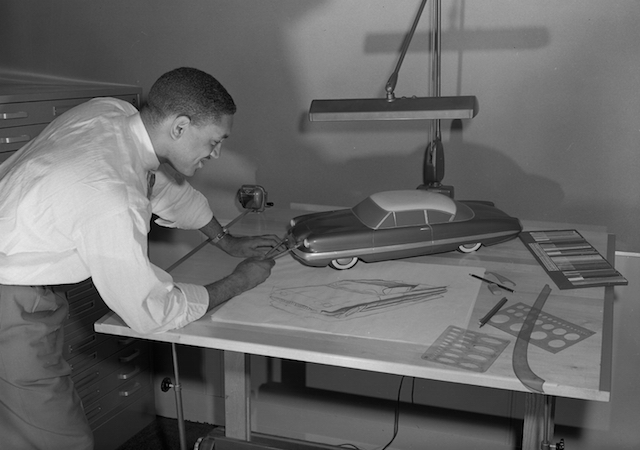
One day in 1934, while walking home from school in his hometown of Queens, New York, McKinley Thompson Jr. spotted a silver-grey Chrysler DeSoto Airflow. Although he was just 12 years old at the time, Thompson’s life was forever changed.
“There were patchy clouds in the sky, and it just so happened that the clouds opened up for the sunshine to come through. It lit that car up like a searchlight,” he later told the Henry Ford Museum. “I was never so impressed with anything in all my life. I knew [then] that that’s what I wanted to do in life — I want[ed] to be an automobile designer.”
In the early 1950s, after serving in the Army Signal Corps in World War II, Thompson entered and won a design contest in Motor Trend magazine. His prize was a scholarship to the ArtCenter College of Design. After school, he went to work for Ford’s advanced design studio in Dearborn, Mich. With that, Thompson made history by becoming the first African American automobile designer.
One of Thompson’s first projects was contributing sketches for the Ford Mustang. His most notable contribution, however, came in 1963 when he and other Ford designers conceptualized the Ford Bronco. According to the automaker, Thompson’s work “influenced the design language that would become iconic attributes of the first-generation Bronco.
“McKinley was a man who followed his dreams and wound up making history,” said Ford Bronco interior designer Christopher Young. “He not only broke through the color barrier in the world of automotive design, he helped create some of the most iconic consumer products ever — from the Ford Mustang, Thunderbird and Bronco — designs that are not only timeless but have been studied by generations of designers.”
Garrett Morgan
Invented the three-position traffic signal.
Born in Kentucky in 1877, Garrett Morgan would go on to become one of the great inventors of his time. By the 1920s he already had several inventions under his belt, including hair refiner and an early version of the gas mask.
Morgan’s success allowed him to own an automobile (reportedly the first African American in Cleveland to do so). After witnessing a terrible accident at an intersection, an idea was sparked.
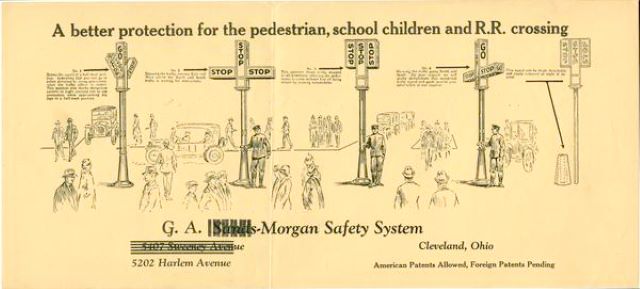
Traffic signals had already been invented but they only consisted of two signals: “Go” and “Stop.” The problem was that drivers never knew when the signal was going to switch. This caused cars to stop abruptly or still be in the intersection when vehicles traveling in other directions began to move.
(Courtesy of the Western Reserve Historical Society)
To solve this, Morgan invented a T-shaped traffic signal that had a third, “caution” signal, essentially a yellow light. When the “caution” signal was on, traffic in all directions stopped and intersections would clear. On Nov. 20, 1923, Morgan was awarded a patent for a three-position traffic signal. His original traffic signal prototype is on display at the Smithsonian’s Museum of American History.
Aside from his technical contributions to society, Morgan was a pillar in Cleveland’s African American community. He founded the Cleveland Call, one of the most important African American newspapers in the country, and was a leader in the city’s NAACP chapter.
C.R. Patterson
Founded a company that would become the first African American-owned automobile manufacturer.
Patterson learned blacksmithing and worked for a carriage maker before co-founding his own business in 1873. For the next 20 years, the company ran a successful business making expertly crafted horse-drawn carriages.
In 1893, Patterson bought out his partner and formed C.R. Patterson & Sons. When he died in 1910, his son Fredrick took over the flourishing business as the transportation business was revolutionizing. The younger Patterson began noticing an influx of “horseless carriages” on the roads and knew that automobiles were the future. C.R. Patterson & Sons produced its first car in 1915. Known as the Patterson-Greenfield automobile, it sold for $850.
Patterson & Sons quickly established itself as legitimate auto manufacturer. According to the Historic Vehicle Association, the Patterson-Greenfield model was comparable in quality and workmanship to the Ford Model T.
There are no known Patterson-Greenfield automobiles in existence today, but several C.R. Patterson & Sons Company carriages have survived. The National Museum of African American History & Culture states that Patterson & Sons remains the only African American-owned automobile company in United States history,
Charlie Wiggins
Became one of the country’s great race car drivers, despite being barred from the Indy 500.
Born in 1897, Charlie Wiggins became an expert mechanic after apprenticing at a local automobile repair shop in his native Evansville, Ind. In 1922, he moved to Indianapolis, opened his own shop and built a race car out of nothing but junkyard parts. Nicknamed the “Wiggins Special,” it was his dream to drive the car in racing’s greatest event: the Indianapolis 500. But Wiggins was denied entry because of his skin color.
Undeterred, he and several other African American drivers formed their own racing league called the Colored Speedway Association. Wiggins’ exceptional driving and top-notch cars lead him to many victories, earning him the nickname the “Negro Speed King.”
The highlight of the Colored Speedway Association circuit was the annual 100-mile Gold and Glory Sweepstakes. According to the Historic Vehicle Association, the race’s 1924 debut drew a crowd of 12,000 — the largest sporting event held for African Americans up to that point. Over the next decade, Wiggins would win three sweepstakes championships.
In 1934, driver Bill Cummings hired Wiggins to tune his car for the Indy 500. Road & Track reported that Wiggins posed as a janitor in order to elude Jim Crow laws. Thanks to Wiggins, Cummings won the Indianapolis 500 and set a track record.
Wendell Scott
Broke NASCAR’s color barrier.
Wendell Oliver Scott was born in Danville, Virginia, in 1921. He learned about cars from his auto-mechanic father. His first job was driving a taxi before he started running moonshine whiskey, which required him to drive fast in order to evade the police.
At the time, Danville’s racing scene was struggling with attendance. Owners thought recruiting an African American driver would help fill seats. They asked the local police for the fastest driver in town and in 1952, Scott became the first African American to compete in an official stock car race. He would go on to win 120 races in lower divisions, while continually being denied entry into NASCAR because of his race.
Then, in 1961, Scott was able to take over the auto-racing license of white NASCAR driver Mike Poston. He was officially a member of NASCAR’s top-level Grand National circuit – the first African American to do so. Just two years later, Scott became the first Black driver to win a NASCAR premier series event with a victory at the 100-mile race at Speedway Park in Jacksonville, Fla.
By the end of career in 1973, Scott had accumulated 20 top-five finishes. The NASCAR Hall of Fame, into which Scott was inducted in 2015, lists his 495 starts 32nd on the all-time list.
Scott passed away in 1990. It would be another 23 years before a second African American, Bubba Wallace, won a NASCAR race, a full half-century after Scott accomplished the feat.
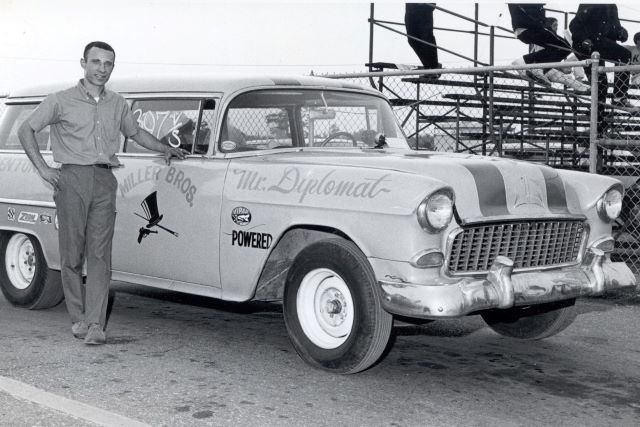
Kenny Wright, driver for Miller Bros., with a 1955 Chevrolet station wagon, NHRA V-Stock class. Wright was photographed in 1970 for "Driver of the Week" for East Coast Drag News magazine at Atco Dragway, Atco, N.J.
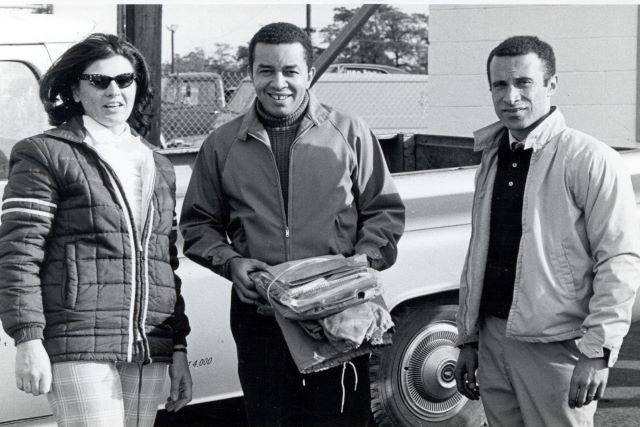
Leonard Miller (center) and Kenny Wright (right), awarded Top 10 Award at Atco Dragway, Atco, N.J., October 1970.
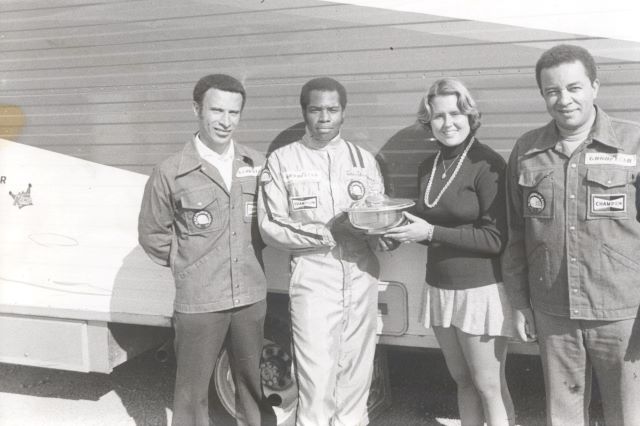
Black American Racers mechanic Kenny Wright (left), owner Leonard Miller (right) and driver Tommy Thompson awarded SCCA Northeast first place trophy in 1977.
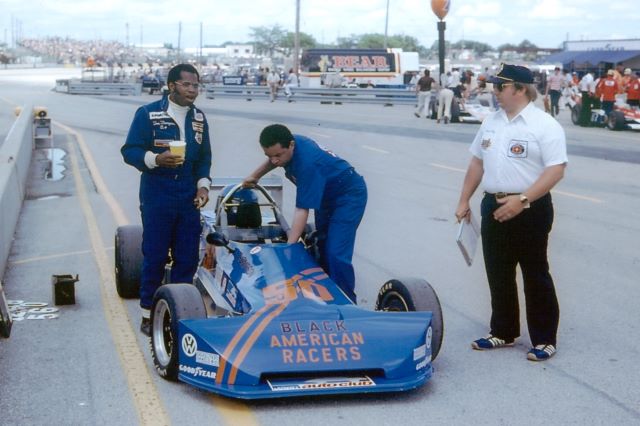
Leonard Miller with BAR driver Tommy Thompson at The Milwaukee Mile, West Allis, Wis., in 1978.
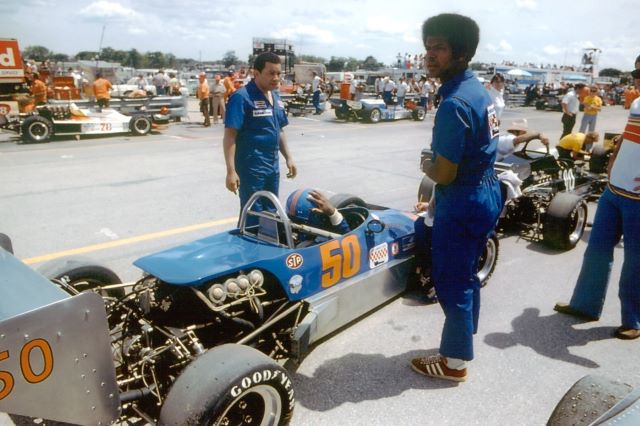
Leonard Miller with BAR engineer Ron Hines (right) and BAR driver Tommy Thompson in the driver's seat at The Milwaukee Mile, West Allis, Wis., in 1978. (All photos courtesy of the National Museum of American History, Smithsonian institution)
Leonard Miller
The first African American team owner to enter a car in the Indianapolis 500 and win a race in NASCAR.
Growing up outside of Philadelphia in the 1930s, Leonard Miller was introduced to automobiles at a young age through his mother, who worked as a housekeeper. “All of these rich, white families had all these rare cars that were beautiful and sounded good,” Miller told Smithsonian Magazine. “So, I said that was for me. And that’s what started me off to a lifetime of races.”
He would go on to pave the way for African Americans in the world of auto racing. It began when he formed Miller Brothers Racing, which won dozens of races throughout the Northeast from 1969 to 1971.
In 1972, he became the first African American owner to enter a car in the Indianapolis 500. Miller’s team was also the first Black professional race team to have a national sponsorship and to enter a Black driver in competition in England.
During this time, Miller also created the Black American Racers Association with, among others, Wendell Scott. The group promoted driver development and honored African Americans in auto racing. At its height, it included 5,000 members from 20 states and several racing disciplines.
With the help of his son, the automotive pioneer later founded NASCAR’s Miller Racing Group. The team won many races through the 1990s and early aughts. In fact, the father-son duo became the first African American team owners to win a track championship in NASCAR history with a victory at Virginia’s Old Dominion Speedway in 2005.
Homer B. Roberts was the first African American car dealer in the country but his greatest achievement occurred far away from the dealership. A veteran of World War I, Roberts was the first Black man to attain the rank of lieutenant in the United States Army Signal Corps.
Following the war, Roberts moved back to his native Kansas City and began selling cars. He specifically targeted the African American community. In 1919, he put his first ad, for seven used cars in the Kansas City Star, the prominent local Black newspaper. By the end of the year, he had closed 60 sales — all to Black drivers.
In the following years, business continued to grow. Roberts opened offices and showrooms and hired salesmen. In 1923, he opened a brand-new dealership named Roberts Company Motor Mart. Smaller automobile manufacturers saw potential in the African American market and backed his business. This helped Roberts land franchises with Hupmobile, Rickenbacker and Oldsmobile.
Hit hard by the Depression, the dealership closed in 1929 — but not before Roberts had etched his name in history.
What other Black pioneers in the automotive do you know about? Tell us in the comments below!
This article has been updated and republished from a previous version.
Take in this rare, undisturbed scene at a national park in the Northeast. Then shatter that image to pieces and try to put together again.
You can choose your difficulty level — 60 or 42 pieces — at the top right of the puzzle, and when you’re ready, click “Start Game.” For detailed instructions, click the three lines at the top left of the puzzle, and select “How to Play.”
Can’t find something special enough for your special someone? Don’t worry! We’ve rounded up the most romantic Valentine’s Day gift ideas for you to choose from with AAA Discounts.
Flowers are a classic way to show someone you care on Valentine’s Day. 1-800-Flowers.com has an entire section of bouquets for such an occasion, titled “Love and Romance.” You can choose from bountiful bouquets of red roses, romantic messages in bottles, elegant orchids, pink lilies and more. Add your own message to make it extra romantic.
AAA members can save at AAA.com/1800flowers. Now through 2/14, you can save up to 40% on flowers and gifts.
AAA Tickets
Sometimes the best gift is the gift of a new experience. It’s also a great opportunity to spend some quality time together with your loved one. Get savings of up to 40% at concerts, theme parks, virtual events, museums, attractions and more!
What’s more romantic than dinner for two? Unlock premium savings with Dining Deals, where AAA Members can enjoy up to 40% off at a wide variety of restaurants. From local favorites to national chains, this exclusive program gives nationwide access to delicious discounts, perfect for everyday dining or road-trip adventures. With an offer that goes where you go, Dining Deals makes it easier than ever to savor more and spend less.
If you want to get your sweetheart the gift of new tech, HP has something for everyone. Look into HP’s Elite laptops and desktops for business-ready performance. If you’re looking for something a little more lightweight and flexible, check out the HP Pavilion. For everyday use, an Envy laptop is a great choice for casual PC users.
Whether you’re shopping for someone who has it all or someone who just appreciates a personal touch, Personalization Mall is the place to find a one-of-a-kind gift. Everything on Personalization Mall can be customized with the giftee’s name, family name or even nickname. Some even have options for including a personal photo. You can get almost any kind of gift, like stuffed animals, kitchenware, wall art, blankets, jewelry boxes, the jewelry that goes in those boxes and so much more.
You can get premium gadgets and appliances without breaking the bank by utilizing Samsung’s special discount for AAA members. At the exclusive online store for AAA members, your discount will automatically be applied as you shop, and you’ll be able to see all your deals in one place. You’ll also get access to limited-time offers on phones, TVs, computers and home appliances.
One of Valentine’s Day’s most decadent treats is the chocolate-covered strawberry. With Shari’s Berries, the strawberries will come to you. Their selection of Valentine’s Day treats includes a wide assortment of chocolate-covered strawberries, edible fruit bouquets and more.
Are all your pictures together trapped on your phone? Shutterfly can help you turn your photos into keepsakes like photo books, prints, wall art, calendars, notecards and more. It’s an easy way to make sure you can hang onto your most treasured memories.
Last week, oil prices were buoyed by increasing geopolitical tensions, ending the week 7% higher on concerns of potential conflict in the Middle East. Domestically produced West Texas Intermediate crude settled above $65 a barrel — a price not seen since last September. Brent crude ended trading Friday above $70 a barrel for the first time since July 2025.
Along with higher oil prices, regional pump prices faced pressure from a massive jump in demand likely caused by millions of Americans gassing up before the powerful winter storm that recently brought snow, ice and bitter cold to much of the country. The Energy Information Administration (EIA) last week reported demand reached 8.75 million barrels a day for the week ending Jan. 23 — a 925,000 barrel a day increase from the prior week. While post-storm demand is expected to weaken in the EIA’s next report, the cold weather gripping much of the U.S. is causing some production disruptions: Refinery runs fell by 437,000 barrels a day last week, according to the EIA, and multiple refiners have since reported cold-weather complications in the wake of the storm that have not yet shown up in the agency’s data.
“Historically, gasoline prices tend to start climbing this time of year, and this year, the rise has been kick-started by severe winter weather,” said Jillian Young, director of public relations for AAA Northeast. “Time will tell if recent price movements are part of a larger trend — or whether prices cool as temperatures warm.”
AAA’s Feb. 2 survey of fuel prices found the national average down a penny from last week ($2.88), averaging $2.87 per gallon. The Feb. 2 national average price was 4 cents higher than a month ago ($2.83) and 22 cents lower than this day last year ($3.09).
Region
Current Price*
One Week Ago
One Month Ago
One Year Ago
Connecticut
$2.87
$2.84
$2.92
$3.08
Massachusetts
$2.90
$2.88
$2.95
$3.03
New Jersey
$2.86
$2.77
$2.82
$3.05
New York
$2.98
$2.97
$3.03
$3.16
Rhode Island
$2.86
$2.82
$2.87
$3
*Prices as of Feb. 2, 2026
As of Feb. 2, Oklahoma and Arkansas had the lowest prices in the nation at $2.36 and $2.43, respectively. Hawaii and California held the highest prices in the nation at $4.39 and $4.35 respectively.
The AAA Gas Prices website is your resource for up-to-date fuel price information. Search for average gas prices on national, state and metro levels by regular, plus, premium and diesel.
An Aruba vacation is, in many ways, perfect. There’s near-eternal sunshine, it’s located outside of the path of hurricanes and serves up a variety of top resorts, dining and activities wrapped around a friendly and welcoming vibe.
“Aruba is an extremely safe island, which appeals to a lot of people,” said AAA travel advisor Jennifer MacPherson. “It’s OK to walk around at night. It’s got great all-inclusive resorts, and it’s also an excellent place to stay at a non-all-inclusive hotel because there are so many restaurants to choose from.”
Your Aruba vacation is just a click away. Book now.
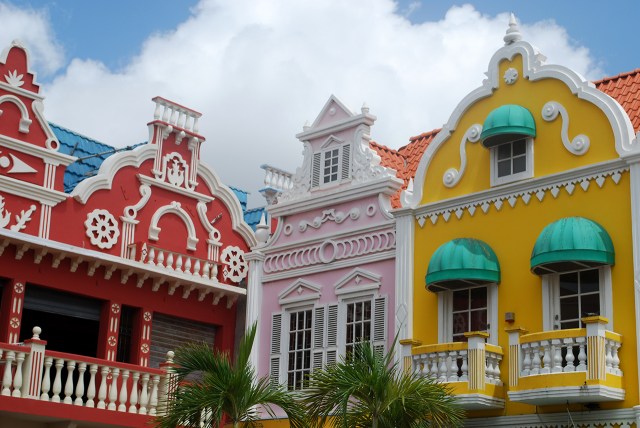
The architecture in Aruba’s capital city, Oranjestad.
At 75 square miles, Aruba is small enough to explore easily but big enough that it’s possible to find solitude without having to drive too far from the island’s main hotel zone on the northeast coast just outside the capital city of Oranjestad.
The resort area is concentrated on two beautiful beaches: Palm Beach, primarily home to larger, high-rise hotels and the hub for Aruba’s water sports activities, and the low-rise Eagle Beach, fringed by a lively boulevard lined with restaurants, shops and nightclubs.
Aruba Accommodations
“Aruba has everything from all-inclusive resorts to top-notch luxury properties and boutique hotels,” said MacPherson.
Boutique hotel options include the excellent and eco-friendly Bucuti & Tara Resort on Eagle Beach — which also has one of the island’s top beachfront restaurants, Elements — and the wellness-focused Manchebo Beach Resort and Spa. The Aruba Ocean Villas in the fishing village of Savaneta has a trio of luxuriously private overwater bungalows, while budget-conscious families often choose the highly rated Holiday Inn Aruba on Palm Beach, which has three pools, a spa and a casino.
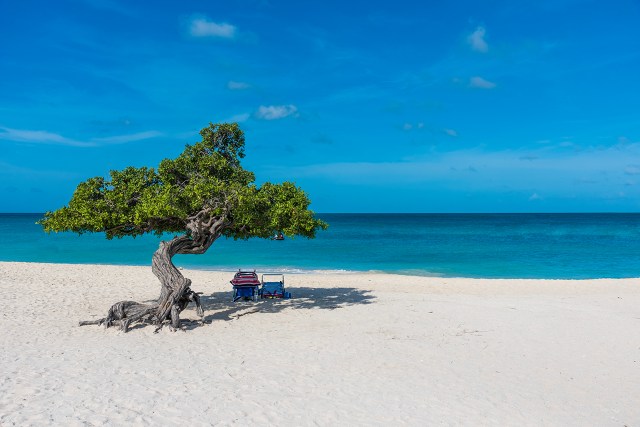
Dotted with divi-divi trees — with their sideways branches, the trees are a national symbol of an island where cooling trade winds blow almost constantly — Aruba’s broad, white sand beaches are a magnet for visitors, many of whom go directly from their hotel rooms to the shore each morning to stake out a spot for the day.
“With the trade winds you don’t always realize how strong the sun is, so I always advise my clients to use sunscreen and take advantage of the beach umbrellas and palapas offered by their resort,” notes MacPherson.
Water sports like parasailing and Jet Skiing can be found right off Palm Beach and Eagle Beach, while visitors who want to try their hand at windsurfing head to Malmok Beach near the northern tip of the island. Sunset cruises cast off each evening from Aruba’s west-facing beaches, and Jolly Pirates sets sail for day trip snorkel adventures with a swashbuckling party theme.
If you’re wondering what to do in Aruba outside of the hotel district, don’t worry — there is plenty.
Despite the palm trees shading many a resort swimming pool, Aruba is a desert island – a fact that quickly becomes clear once you venture beyond the hotel districts. The island’s sparsely populated east side is dotted with cactus, its rugged coastline fringed with cliffs frequently pounded by strong surf. Arikok National Park, which covers about one-fifth of the island, attracts hikers with its high hills and cool caves. The park also has a pair of undeveloped beaches and a natural pool sheltered from the wind and waves by rocks.
Guided tours of Aruba’s backcountry by all-terrain vehicle, e-bike, and on horseback are popular, although many visitors opt to rent a car and explore the island on their own. Day trips include historic sites like the Bushiribana gold mine ruins and the Casibari rock formations with their prehistoric drawings, and wildlife destinations like the Aruba Ostrich Farm, donkey sanctuary or butterfly farm. If you visit the charming and petite Alto Vista Chapel, be sure to stop at the neighboring boutique winery.
Those who have been on Aruba cruises might be familiar with the trolley in Oranjestad, which leads from the cruise port to the downtown shopping district, a smattering of interesting museums and the distillery, Pepe Margo, where you can sample and purchase locally made spirits in a traditional Aruban home. Even the island’s grittier port city, San Nicolas, has been beautified with colorful murals and has a blossoming art scene.
Aruba Dining and Cuisine
Aruba’s culinary diversity is reflected in top restaurants like Papiamento (named for the island’s local language), which serves upscale local cuisine in a historic cunucu house. At Flying Fishbone, guests dine on fresh seafood on the beach. For other styles of cuisine, there’s French at Bohemian and Peruvian dishes at Lima Bistro.
The California Lighthouse on the northern tip of Aruba is one of the island’s most photographed sites; savvy visitors head there in the evening to catch the great light and enjoy a sunset dinner at the nearby Faro Blanco, an elegant Italian restaurant with a formal terrace overlooking the Caribbean Sea.
Like almost everything else in Aruba, ordering and paying for your meal is a breeze. English is spoken almost universally on the island, and the U.S. dollar is accepted everywhere.
“Most of my clients who stop in Aruba on a cruise end up going back there on vacation,” said MacPherson. “Once you go to Aruba, everywhere else pales in comparison.”
Getting married is one of life’s biggest milestones and, consequently, is something that necessitates a lot of important conversations. While choosing your wedding florist is undoubtedly important, we mean something more to the tune of discussing your financial future. In essence, life insurance.
No one wants to imagine the possibility of losing someone they love, but planning for the unexpected is an act of love that can protect both of you for the future.
The Importance of Life Insurance in Marriage
Life insurance isn’t just a policy, much like how your marriage license is more than just a piece of paper. Both are essentially a promise in good faith.
Whether it’s covering debts, protecting your partner’s standard of living or ensuring that your children or future dependents are taken care of, life insurance plays a vital role in providing peace of mind. In the event of an untimely passing, having life insurance can ease the financial burden that might otherwise fall on you or your partner. It can make sure they’re not left to manage things like funeral costs, mortgages, student loans or other financial obligations.
Before you even consider the specifics of a policy, it’s important to sit down and have an honest conversation about life insurance with your partner. Although it will likely feel uncomfortable or emotional, it’s crucial to approach the discussion from a place of care and responsibility.
Start Early
Don’t wait until you have children or until your financial situation becomes more complex before you start talking about life insurance. The earlier you start, the more options you’ll have and the easier it’ll be to secure affordable coverage. Starting early means locking in lower premiums and giving yourselves time to adjust coverage as your needs evolve.
Be Transparent
Make sure you discuss your financial goals, debts and income. This will give both of you a clearer picture of how much life insurance you’ll need. Whether you’re paying back student loans, a mortgage or are considering family planning, being clear about your financial obligations will ensure your policy covers all the necessary expenses.
Talk About Your Needs
There are various types of life insurance, such as term life, whole life and universal life, each with different benefits. Make sure you understand the differences and discuss which type of coverage fits your lifestyle and goals.
Consider Each Other’s Opinions
It’s always important to listen to your partner’s concerns and desires, and especially when it comes to life insurance. It’s a shared responsibility and understanding what matters most to each other will help in choosing the right coverage and beneficiary designations.
How to Provide a Financially Secure Start to Your Marriage
Happy finances, happy life? We say so! By setting yourself and your partner up for success early on, you can focus on your future together without being burdened by financial stress.
To start, establish a clear and realistic budget before making any big financial decisions. Determine how much you each earn, what your regular expenses are and where you can save. This can help you both feel aligned on your financial goals and prevent future misunderstandings.
If either or both partners come into the marriage with debt — credit card, student loans, car loans, etc. — it’s important to address it head-on. Consider taking out life insurance to cover any large debts that would otherwise fall to your partner in the event of your passing.
Life insurance isn’t the most romantic topic to discuss, but it is one of the most practical ways to ensure your loved one’s well-being in the event of the unexpected. By encouraging open conversations and planning for a secure future together, you can start your happily ever after worry-free.
When was the last time you put air in your spare tire? Be honest. It probably hasn’t crossed your mind in months — maybe years. Well, that stops today.
If you’ve every wondered how long spare tires last, this guide will help you to know if yours is in good shape and ready when you need it.
Keep reading for the best ways to care for your spare, courtesy of AAA’s Car Doctor John Paul.
How Old is That Tire?
Most full-size spare tires are designed to last anywhere from seven to 10 years, according to John Paul. That said, drivers should never use a tire with visible damage, such as cracks in the sidewall, punctures, impact bulges or irregular tread wear — all of which are dangerous to drive on.
Some drivers rotate a full-size spare with the other tires on their vehicle, but this practice is not as common as it used to be, Paul said. If your spare has been tucked away in the trunk or underneath the car for a long period of time, it has probably lost some air pressure, so test it the next chance you get and fill it up appropriately. Check the sticker on the driver’s side door jamb or the owner’s manual for the exact amount of air needed.
Drivers with cars toting a compact temporary tire — aka a “donut” or “space saver” — should know that these tires require as much as 60 pounds per square inch of air pressure, significantly more than a traditional full-size spare. The recommended air pressure for a donut might be branded on the sidewall, otherwise check the owner’s manual or the door jamb placard.
If ignored, the lack of air pressure, combined with exposure to Northeast temperatures and infrequent use, can result in dry rot. This occurs when oils and other chemicals in the rubber dry out and ruin the tire. To help maximize the life of the spare, test its air pressure every time you test the other four and add air as needed, Paul said.
How Long Can You Use a Spare Tire?
A donut tire is designed to get you home or to a repair shop — not for joyrides or full-time use. In fact, driving for too long on one of these little guys can do some serious damage to the transmission. If you have a donut on your vehicle, swap it out with a full-size tire within 50 to 60 miles and replace the spare, Paul said.
Full-size spares can be used for a longer time, since they match what’s already on the vehicle. But Paul said he’d still take the spare off as soon as possible.
“I would get a new tire and put the spare back in the trunk, where it won’t cause me any trouble,” he added.
How Fast Can You Go on a Spare Tire?
Donut tires are not meant for highway driving. The fastest a driver should go with one on their vehicle is 50 mph, Paul said. You shouldn’t be traveling too far — since you should only be going home or to a nearby repair shop — so it shouldn’t be too much of a problem, he added.
What Do I Need to Change a Spare Tire?
AAA members can always call for 24/7 emergency AAA Roadside Assistance if they experience a tire issue. Of course, it’s still a good idea to have tools to put on a spare in the event of an emergency (for instance, your vehicle’s tire pops in a remote area where you don’t have cellphone reception). These tools include a jack, a lug wrench, a flashlight and batteries, gloves and the key for “locking” lug nuts, if your wheels have those.
Spare tires are sometimes mounted on the back of a vehicle or underneath it. Practice lowering the tire or removing it from the back of the vehicle and make sure any parts for these systems are onboard. If you own a truck or sport-utility vehicle that carries the spare underneath, test the system once in a while to make sure it’s not rusted or stuck. You could also ask your mechanic to test the lowering system during your next oil change.
What if My Car Doesn’t Have a Spare Tire?
Instead of worrying about how long spare tires last, you might be wondering if you even have a spare tire at all.
A study found that AAA had to assist more than 450,000 members with a flat tire whose cars did not have a spare tire. Instead, many of these vehicles were equipped with tire inflator kits, which only work in certain situations, like when a nail punctures a tiny hole in the center tread of a tire.
If you don’t know what kind of system your car has, check as soon as you can. Drivers with tire inflator kits should read the instructions ahead of time. You should also know the limitations and its expiration date (often four to eight years).
When shopping for a new car, don’t assume it comes with a spare tire. Ask. If it doesn’t, see if one can be added as an option.
You tip the person who cuts your hair, your server at the restaurant and the valet who parks your car. Should you tip your mechanic for repairing your car?
Tipping culture is confusing. But as with most questions of when you should tip, it’s your choice. If the mechanic did an extraordinary job or went above and beyond to complete a repair on a requested timeline, tips are always welcome but are not necessary.
“This is not something we encourage or discourage,” said John Nardolillo, senior vice president of member services for AAA Northeast, who oversees the Approved Auto Repair program. “It’s up to the customer or the member whether they choose to reward a superior service. But it’s not something you should feel obligated to do.”
AAA’s Car Doctor John Paul agreed, although adding that, as a former mechanic, small gestures of gratitude were always welcome.
“When I worked as a mechanic, a coffee on a cold day, iced coffee or lemonade on a hot day or homemade cookies were always appreciated,” Paul said.
For auto repair and maintenance you can trust, find a AAA Approved Auto Repair facility near you. With savings up to $75 per visit on labor, it’s a service that essentially pays for your membership.
For answers to more of your auto repair questions, check out our Ask a Mechanic series.
Do you tip your mechanic? Tell us in the comments.
Dad was pulling up in our wood-paneled station wagon when Mom said something so matter of fact, yet disarmingly romantic, that it bore through my then self-absorbed teen brain and established residency: “There’s my hubby. I still get the best butterflies in my stomach when he arrives.”
Recently I thought about that in terms of travel love, while standing on the bow of Norwegian Encore as it practically pecked the face of Margerie Glacier in Alaska’s spectacular Glacier Bay.
The morning had unfurled sailing through this frosty cathedral of nature, where floating rafts of ice hosted napping seals and mountain goats looked like mini marshmallows dotting the steep shoreline. Eagles soared in the sky above, and pop-up waterfalls made the surrounding mountains appear as if they were weeping with joy.
Of course, there were glaciers — hanging ones blanketing lofty valleys, as well as tidewater ones advancing and retreating. This place is aptly named! But the obvious star was Margerie Glacier, who was putting on a show, calving icebergs into the milky blue bay with thunderous claps and splashes. While the scene was familiar from previous trips, my belly and heart were both aflutter. Seeing Alaska always makes me swoon. Visiting never gets old, though it seems to be getting easier.
Insider tips and hacks to make your first (or next) cruise totally stress-free. Listen to Episode 21 of our podcast, Merging Into Life: Tips for Cruising
Norwegian Cruise Line (NCL) is hot for icy Alaska, and traveling aboard one of its ships built to showcase the region is bound to make you fall in love with the Frontier State, too.
NCL’s ships are among the first to arrive and the last to leave Alaskan waters, contributing to an ever-expanding season that now runs from April to October. This results in more affordable cruises bookending the popular summer period. If you shun crowded ports, these shoulder season departures are the ticket.
Encore sailed to Juneau, Skagway and Ketchikan in Alaska, and Victoria, British Columbia, Canada, roundtrip from Seattle, further enhancing affordability by eliminating the pricey, multicity (often international) flights required for one-way Alaska cruises.
(Photo credit: Rachael Jones, Visit Seattle)
Cruising to Alaska from Seattle economizes time, doesn’t require passports and delivers other signature advantages — think strolling historic Pike Place Market or spying your ship from atop the iconic Space Needle! You’ll also find the Klondike Gold Rush National Historical Park tucked in Seattle’s Pioneer Square. It’s a perfect appetizer to the stampede culture on tap in Skagway.
Seattle exudes waterfront vitality with hotels within walking distance and others offering shuttles. The AAA Four Diamond designated Lotte Hotel Seattle even boasts a Lexus fleet available to whisk guests to their ship for free.
Whale watching (Photo courtesy of Norwegian Cruise Line)
The Perks of Sailing NCL’s Encore
A rewarding picture of Alaska unfolds throughout the cruise. Beyond ice-carved fjords and pine-scented forests, my voyage revealed waters percolating with whales. Encore’s layout made it simple to spot them spouting. Balcony cabins abound, including singles that invite solo travelers aboard without stinging supplemental fees.
Plus, if you’re looking for an exclusive, ultra-luxe roost ensconced within a big, attraction-packed boat, The Haven beckons. This suite enclave, with members-only amenities such as a pool and restaurant, delivers a best-of-both-worlds scenario. Its sprawling Horizon Lounge on Encore rivaled the ship’s main Observation Lounge for breathtaking vistas.
But what really elevated Encore’s sea-gazing game were a few unexpected haunts, especially The Waterfront, a quarter-mile promenade lined with alfresco restaurants. Opt for whatever suits your mood — maybe a sizzling rib-eye with parmesan dusted truffle fries or succulent scallops with prosciutto and pistachio pesto or just a perfectly smooth Alaskan Ale — all with a side of fresh sea air and potential wildlife sightings. The ship’s unique go-kart Speedway delivers heady views, too. It dovetails with Alaska’s cooler energy better than the usual marquee watersports attractions. (Though Encore has those.) I even enjoyed an eyeful of Alaska at the Mandara Spa, where a sublime Thermal Suite promises thalassotherapy pools and heated loungers fronting a wall of aft windows. Hello, wake-surfing Alaskan porpoises!
White Pass & Yukon Route Railway (Photo credit: Bradley Wittke)
My Alaska Cruise Ports
Spa respites are advisable, because Alaska will wear you out if you’re willing. Countless shore excursions propose everything from totem pole treks and panning for gold to dog-sledding and heli-hiking atop glaciers. Hop a floatplane to watch bears pluck salmon from a waterfall. Board a crabbing boat to see fishermen haul their pots. Take the White Pass & Yukon Route Railway to behold unforgiving terrain stampeders tackled on foot. Or, simply relish walking around.
All the ports are fun to navigate independently, whether strolling on frontier-style boardwalks in the sourdough town of Skagway or ambling along Ketchikan’s infamous Creek Street, a former red-light district built on stilts. Ketchikan also ranks as the self-proclaimed Salmon Capital of the World.
Mendenhall Glacier (Photo courtesy of Norwegian Cruise Line)
Even Juneau, Alaska’s capital, lends itself to easy exploration with an aerial tram for effortless views, a harborside totem trail and plenty of shuttles to nearby Mendenhall Glacier, where an interpretive center and well-maintained trails await. Nugget Falls Trail runs alongside Mendenhall Lake to a powerful waterfall fed from a hanging glacier.
Victoria felt like a teaser for a return trip. The island oozes stately charm, its domed Parliament Building reigning over an inner harbor bustling with water taxies and rimmed with landmark hotels. Horse-drawn carriages tote tourists around. The genteel air certainly differed from Alaska’s brand. Overnight, it’s as if you sail from leather to lace.
Skagway, Alaska (Photo credit: Frank Flavin, Explore Skagway)
Final Thoughts on Alaska Cruises
No doubt, there’s a lot to experience on this itinerary. Still, passengers get to bite off what they want to chew, which means everybody comes away feeling satisfied. You might think Alaska has niche appeal, but I met multigenerational families and diverse passengers on Encore. All were digesting Alaska differently, and loving it.
NCL’s “freestyle cruising” philosophy jettisons rigid rules and schedules in favor of adopting a customizable approach to shipboard life. This allowed Encore to provide a universal fit. There was always something happening, from live music and top-notch theatrical shows to laser tag and lectures. I literally learned to paint an Alaskan seascape.
Norwegian Encore (Photo courtesy of Norwegian Cruise Line)
With extended hours at attractions, no fussy dress codes and the freedom to dine when, where and with whomever you choose, the ship facilitated rather than dictated one’s day. Embracing spontaneity works especially well in Alaska, since Mother Nature reveals her wonders at will.
NCL’s vibe grants license to linger. It’s a comforting permission slip, because in Alaska, the ordinary can be extraordinary. And even if you’ve been blessed to bear witness before, expect the best butterflies in your belly.