Paying a fine for a traffic violation is painful enough, but for many drivers, the added penalty of license points is even worse, as points can jeopardize your driving privileges and increase auto insurance premiums.
The majority of U.S. states use a points system for driver’s license violations, with nine exceptions, including Rhode Island. While the types of offenses and number of points given vary by state, the principle is the same: Accumulating too many points eventually leads to having your license suspended and, potentially, revoked.
In New York, drivers receive two points for not signaling and five points for failing to stop for a school bus. Drivers who get 11 points in 18 months can have their license suspended.
Points can remain on a driver’s record for several years and, depending on the severity of the offense, could cause a driver’s insurance rates to go up.
Some states, including New York, allow drivers to reduce points on their licenses by taking classes, such as the AAA Defensive Driving Course, which can possibly reduce their insurance costs as well.
In the Northeast, these three states have license point reduction programs. Note: Connecticut and Massachusetts do not have point reduction programs.
New Hampshire
Drivers with at least three points on their licenses can have three points removed by completing a driver improvement course, including one offered by AAA of Northern New England. The point total may be reduced, but the points will remain on the driver’s record. Drivers must take the course in person in New Hampshire. If they don’t take a class to reduce points, they will remain on their license for three years.
New Jersey
Garden State drivers who accumulate six or more points within three years are assessed a surcharge. Your license is suspended if you get 12 points or more on your record. Drivers can reduce their point total by having no violations or suspensions for one year or by taking a qualified class to reduce points on a license. Once the course is completed, two points may be removed from the driver’s license.
New York
To reduce points on your license in New York, you need to complete an approved defensive driving course. This can decrease point totals by four points every 18 months. Taking a course also may reduce insurance premiums, but drivers need to take a course every 36 months to keep any discount. Drivers can take courses in person or online (the AAA Defensive Driving Course is available both ways). Even after completing the course, most violations, convictions and points will remain on your driving record for as long as four years, according to the New York State Department of Motor Vehicles.
Point reductions will have no effect if a driver’s license has already been suspended or revoked. And violations such as driving while intoxicated, driving while ability impaired or getting three speeding tickets within 18 months, will result in mandatory license suspension or revocation, regardless of points.
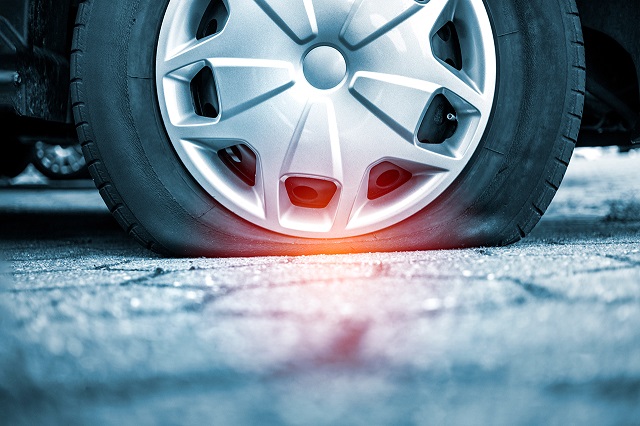
A dead battery. Snow, ice and salt buildup. Frozen door locks. Many of winter’s harmful effects on your car are readily apparent. Others, however, you may not notice until it’s too late. Such is often the case for one of the most prevalent issues motorists must contend with during the colder months: low tire pressure.
There’s no way around it — your car tires will lose air pressure at a faster rate when the cold weather arrives. Here are the reasons behind low tire pressure in the winter, why underinflated tires cause a serious safety risk and ways to keep your tires solid when the weather is cold.
What Causes Low Tire Pressure in the Winter?
The simple answer to this question is cold temperatures. As you may remember from grade school science classes, when a substance is cooled, its molecules slow down and move closer together. In other words, the substance becomes compact and dense.
This same principle causes low tire pressure in the winter. As the temperature drops, the air molecules condense and exert less pressure on the walls of the tire.
As a general rule, a tire will lose one pound per square inch with every 10-degree drop in temperature. This is in addition to the one-to-two pounds per square inch (psi) tires typically lose each month from normal, everyday driving.
The Dangers of Low Tire Pressure
Low tire pressure can be expensive — it causes fuel inefficiency (which will cost you at the pump) and premature tread wearing (which means forking over money for a new set of tires). But driving with underinflated tires isn’t just a financial drain, it’s a serious safety hazard. Low tire pressure makes it more difficult to steer and stop, which can easily contribute to a crash. A worn-down tire is also more prone to punctures that will leave you with a flat.
Most notably on the safety front, low tire pressure can cause a blowout. When a tire is underinflated, more of its surface comes in contact with the road. This increases friction that, in turn, causes a buildup of heat. If the air inside a tire gets too hot, a portion of the rubber wall can pop loose. The sudden rupture causes an immediate and rapid loss of air. Blowouts are extremely dangerous as they can cause you to lose control of your vehicle and force other drivers to deal with a flying piece of debris.
When to Check Tire Pressure in Winter
The aforementioned dangers can all be prevented by taking the simple step of checking your tire pressure more often in the winter. Nowadays, most cars have tire-pressure monitoring systems that alert drivers via dashboard light when the tires are under inflated. But it’s best to keep your tires inflated rather than wait until they are underinflated.
You should be checking your tire pressure at least once a month throughout the year. During the winter, however, you’ll likely need to double the frequency. To get the most accurate reading, check your tire pressure using a high-quality air gauge in the morning or after the car has been idle for several hours. Tires and the air inside them will get hot when in use, causing the air to expand and pressure to increase. You need the tires to be cold to prevent a false reading. If the low-pressure light comes on when you start your car but goes away once you begin driving, you still have underinflated tires.
Compare the reading with the manufacturer’s tire pressure recommendation, which can be found in the owner’s manual and on the driver’s-side doorjamb. Once your tires are inflated to the recommended level, you’re good to go!
Winter storms, including snow, ice, freezing and flooding, have cost billions of dollars in insured losses over the past few years alone, according to the Insurance Information Institute. Wind and hail consistently lead homeowners claims, followed by water damage and freezing.
Make sure you’re ready for winter insurance risks and the challenges cold weather may bring your way.
Top Winter Insurance Claims
Ice dams. When cold weather persists, ice dams can form on the edge of your roof, blocking melting snow from falling away and refreezing as temperatures drop. This cycle of melting and refreezing can cause ice to form under shingles and could eventually lead to leaks and water damage inside your home.
Roof and siding damage. Heavy snowfall, sleet, hail and perilous winds can make winter weather unpredictable. Because roofing and siding bear the brunt of this impact, they comprise a significant portion of homeowner losses over the winter months.
Losses from falling tress and limbs. This is one of the most common claims AAA Insurance sees. While structural damages to your home or car caused by falling trees and limbs from heavy snow and wind are obvious losses, power loss could also be an issue. To possibly get reimbursed for the cost of lost groceries due to a power outage, check with your insurance agent to see if food spoilage coverage is on your policy.
Frozen pipes. The most common winter insurance claims stem from how the elements affect your home’s exterior, but don’t forget about your plumbing. When pipes freeze, they can burst and cause substantial water damage. The most severe instances happen when homes experience a power outage, resulting in a loss of heat over a significant period of time. So, if you plan on being away from home for an extended period of time, it’s a good idea to shut off the water to your home and drain your pipes.
House Fire. This kind of property damage is typically traced back to a secondary heating source. “Although many homeowners think of themselves as being responsible with this, individuals that live in multi-family homes, apartments or condos need to also consider if they’re adequately covered if they suffered a loss due to a neighbor’s negligence,” said Jodi DeSantis, vice president of insurance sales for AAA Northeast.
What You Can Do to Prepare for Winter
Fight back against ice damming. Add extra insulation to your roof to let the indoor heat melt the snow and ice slowly from the inside out. If your roof is prone to ice damming, use a roof rake shortly after a storm to clear as much snow off as you can, even if it’s just around the gutter line. Do not climb onto the roof; if you need a more thorough cleaning, hire a contractor.
Insulate your pipes, doors and windows. By adding insulation to your hot water pipes, you can minimize the chances those pipes will freeze over and blow. Air leaks near doors or windows should also be eliminated with weather stripping or other door draft stoppers.
Keep an eye on your trees. Fallen tree branches are one of the most likely – and most damaging – forms of debris you’ll face during cold weather. To prevent damage, trim back any trees that are too close to your home or driveway.
Inspect your ducts and plumbing. Your furnace and heating ducts need to be in working order to prevent or minimize winter damage. Reach out to a professional if needed for a thorough inspection.
Review Your Insurance Policy
Try to make a habit of reviewing your insurance policy and updating your documentation, including photos, to reflect your home’s condition before the winter. This gives you an opportunity to refresh your understanding of what is included and, accordingly, what actions you might need to take to protect your home.
Most home insurance policies will provide coverage for wind or falling debris that may cause damage to your home.
Damage caused by flooding — which can occur in the winter if the temperature spikes — is not within the scope of a standard policy. Flood insurance must be purchased separately. In insurance terms, a “flood” has a very specific definition and is excluded from a homeowner policy; however, water from a leaking pipe, for example, is typically protected if purchased as part of a policyholder’s coverage.
Get A Home Insurance Quote
This article has been updated and republished from a previous version.
Everyone loves a winter wonderland — until you have someplace to be, in which case snow quickly goes from being picturesque to burdensome. This is especially true when trying to dig your car out from the snow.
Freeing your vehicle of snow and ice might seem like a straightforward enough task, but the process contains plenty of pitfalls. Plus, if you do it incorrectly you can damage your car. Here’s how to get the job done correctly.
Gather Your Tools
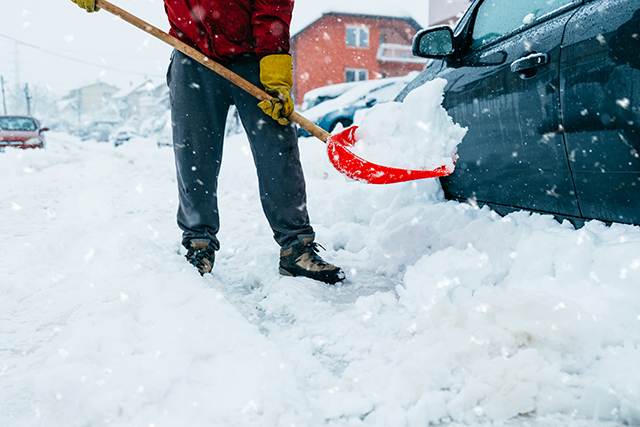
You’ll need at least two tools to effectively dig your car out from the snow: a shovel to dig out a path for your vehicle and a snow brush to remove snow from the car itself. Do not use a shovel to clear snow off of your vehicle — it will scratch the car’s paint and glass.
Other helpful tools to have on hand are an ice scraper to clear off your windshield and a stepladder to deal with any snow on the car’s roof (if your vehicle is taller than you).
Clear a Path
With your tools in tow, head out to your car. First give yourself some room to operate. Shovel a path around the perimeter of your vehicle. This will make it easier to work and also provide space to rock the car back and forth if and when you get to that stage.
If you’re waiting until a snowplow comes by in hopes it clears a path for you, remember oftentimes plows just pile more snow up around the car, particularly if you’re parked on the street.
Start at the Top
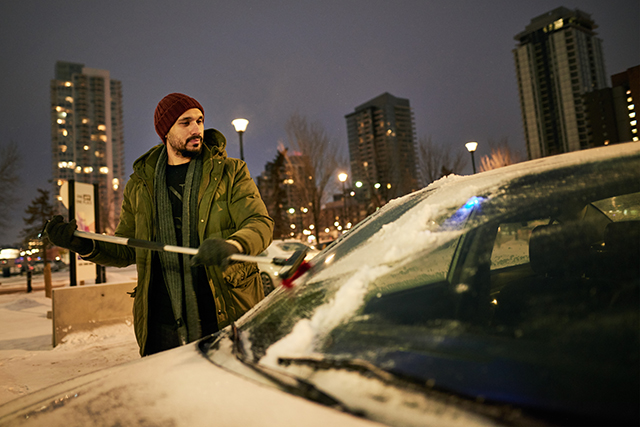
Once you’ve dealt with the snow around your vehicle, it’s time to tackle the snow on your vehicle. Start at the top and move your way down.
Don’t leave snow on the roof of your car – it’s a serious driving hazard. Snow can fall onto your windshield and block your line of sight, or backward onto the road, posing a threat to motorists behind you. As tempting as it may be to use the long arm of a shovel to get snow off your car’s roof – don’t. You’ll just end up with a scratched car. A snow broom or soft-bristled brush is best tool for the job.
Clear the Doors and Tailpipe
Your next goal should be getting inside your car. Make sure your tailpipe is clear of any snow before turning on your car. There needs to be enough space around the tailpipe for exhaust fumes to escape. If there’s not, the fumes could back up into the car’s cabin and lead to fatal carbon monoxide poisoning.
Once the tailpipe is clear, you can turn the engine on and heat the vehicle, which will help melt any snow and ice on the windows. Try and get at least the driver’s door clear as early as possible.
Clear the Windshield and Windows
Hold off on this job until you’re able to start your car since defrosters will make the task much easier. Clear off all the vehicle’s glass — don’t forget the sideview mirrors. Be sure the windshield wipers are able to move but be careful when freeing them. Wipers blades are fragile and a bent frame won’t be able to clear the windshield properly.
Get Your Car Moving
Congratulations! You’ve cleared the snow from your car. Now it’s time to lodge that vehicle loose from its frozen burrow.
First, remove as much snow as possible from in front and behind all four wheels. It’s easy for a car to get hung up on the snow under the car, so shovel and remove as much as possible. Many cars have spoilers, air dams and valances that can be all damaged by trying to “plow” through the snow.
Once you have the snow removed, it’s time to get out of your spot. Try to keep the front tires as straight as possible. Turning the wheels hard to one side will make it more difficult to push through the snow. Start by slowly backing up. Then step on the brake, shift into drive and slowly move forward. If that didn’t get you out, rock the car from reverse to drive, using the brake in between shifting from drive and reverse. Patience is the key here. Never spin the wheels wildly; it will overheat the transmission fluid and possibly ruin the transmission.
If you’re still spinning your wheels, try putting some kitty litter, sand, salt or ice melt on the ground to improve traction.
The hard work isn’t done once you’ve dug your car out from the snow. Winter driving can be extremely hazardous. Follow these tips to stay safe on the road.
And don’t forget to prepare for the season’s harsh conditions by winterizing your car.
Forget about new year, new you — how about new year, new hobbies?
Trying a new hobby can help you relax, learn something, get in shape or even make friends.
Today’s hobby choices are not limited to legacy pastimes, such as stamp collecting, birdwatching or fishing. Not that there is anything wrong with those. People are thinking outside the hobby box, taking up everything from tossing axes to throwing themed dinner parties, so finding something that interests you should be easy.
The Benefits of Having a Hobby
Hobbies have numerous physical and mental health benefits, according to UCLA health. These include boosting your mood, improving your overall health, reducing your risk of chronic diseases and enhancing your cognitive abilities, not to mention the perks tied to specific activities.
Before choosing a hobby, reflect on your interests, goals, strengths, what you enjoy doing and the type of pastime that interests you. Do you want to get in shape, meet more people, develop a skill or just need a reason to quit streaming at night?
Start by revisiting the leisure activities you enjoyed when you were younger and see if you want to pursue any of those interests. Also ask friends and relatives for suggestions and why they enjoy their hobbies.
8 New Hobbies to Try
Painting
Besides being relaxing, painting is good exercise for your hands and fingers and is a way to boost creative thinking and problem-solving skills. It is also inexpensive and provides artwork for your home and gifts for others. If you want to socialize, attend or host a paint night, where people often snack and sip while they paint. Well-known people, like former President George W. Bush, took up painting as a hobby later in life.
Knitting and Crocheting
Studies have shown that knitting and crocheting benefit both the mind and body. The movements help keep hands and fingers nimble and learning complex stitches and patterns challenges the brain. Knitting and crocheting have also been shown to reduce stress and lower blood pressure. Besides that, you don’t need much to get started and you can knit and crochet almost anywhere. Check in your community for in-person classes that teach knitting and crocheting or learn from online tutorials. Plus, once you start completing projects, they can be given as gifts or donated.
Running
Of course, running has physical benefits — burning calories, increasing stamina, building muscle and decreasing your risk for heart disease. It also is a great stress reducer, releasing endorphins that help regulate mood. Running outside is even more beneficial, allowing you to escape from work or home pressures, get a taste of nature and a dose of vitamin D if it’s sunny. Plus, the initial investment in equipment is minimal. Listen to this episode of our podcast “Merging Into Life” to learn more about getting started as a runner.
Cooking
Cooking can be more than just getting food on the table. It’s a low-cost, creative, practical hobby that can involve the whole family. Not to mention, cooking reduces stress and can improve your well-being, since you will know everything that goes into your food. If, initially, you find cooking stressful, make sure you have all the ingredients and tools you need before starting a recipe. Experiment and develop your own dishes or add personal touches to some of your favorites. Or pick a favorite cuisine and focus on that. Get inspired by some of the trending recipes on TikTok.
Exercising
Exercising and going to the gym can often feel excruciating, but the trick is to find a workout you really enjoy. If you like music and being around people, consider aerobics, Zumba or dance. If not, pop in your earbuds and start cycling or hit the treadmill. Once you get into a routine and start to see results from regular exercise, such as more energy, better mood and more-toned muscles, continuing will be easy. Challenging yourself with goals, such as spending one more minute on the treadmill or completing another repetition also builds confidence and a sense of accomplishment.
AAA Northeast members can find their perfect gym with the Active&Fit Direct™ Program, which provides access to more than 12,700 gyms, wellness coaching and workout videos for a monthly fee of $28. There are no long-term contracts, so it’s easy to change gyms. After a year, members get back 10% of their membership fees.
Traveling
Some consider travel more of an interest than a hobby, but either way, it’s a wonderful way to spend your time. If you are new to traveling or plan to expand your horizons, AAA Travel can help you plan every aspect of a trip: booking flights, hotels, cruises and things to see and do. Experiencing new places spurs personal growth and appreciation of other cultures. It expands your knowledge base, recharges you and creates indelible memories.
Travel can also inspire another hobby — photography. No vacation is complete without a collection of stunning photos of the places you don’t want to forget. Photos give you a chance to tell stories and see the world differently. Research cameras to see which type is best for you. Mobile phones have excellent cameras, but you may want something more.
Simple Sculpting
You can create permanent works of art in 24 to 48 hours with air-dry clay, which doesn’t require a kiln. Clay kits with tools and paints, like this one, make it easy to start. Your air-dry clay creations can include magnets, jewelry and small trays. A few cautions: Objects made with this type of clay are not waterproof, cannot hold food and can be fragile.
Rock Climbing
If you can’t picture yourself dangling over a cliff, no worries. Indoor and outdoor rock climbing have been growing in popularity, and many rock-climbing gyms offer classes on how to do it safely. Climbing provides both physical and mental workouts. It builds strength and benefits your heart. Plus, mapping out the best route to the top exercises your problem-solving skills. Climbing gyms also provide a chance to socialize.
And with thousands of hobbies to try, if you don’t like your first pick, you can always move on.
Word guessing games have become a popular pastime in recent years. See if you can guess some other modern hobbies and pastimes in this WordroW puzzle.
Do you have a new or favorite hobby? Tell us about it in the comments.
The Energy Information Administration (EIA) last week reported a 380,000 barrel a day drop in gasoline demand, which fell to 8.56 million barrels a day for the week ending Dec. 26. The figure might seem lower than expected during a busy holiday travel period, but it landed nearly 400,000 barrels a day higher than the comparable weeks in 2024 and 2023.
As demand cools, inventories are up for a seventh straight week, climbing by 5.8 million barrels, according to last week’s EIA report. Steady production and wobbly demand since November have led to 29 million barrels of gasoline being moved into storage over the period. Growing supplies are a major reason why pump prices have steadily ticked down since the start of winter.
Oil prices, meanwhile, remain in a range between $57 and $61 a barrel as markets closely watch developments in Venezuela. The long-term impact on oil and gas prices remains unclear. While Venezuela sits on one of the largest oil reserves in the world, it averaged between 500,000 and 900,000 barrels a day of oil production in 2025. In comparison, the United States averaged about 13.8 million barrels a day of oil production in 2025.
“While geopolitical events do sometimes rattle global oil and gas markets in the short term, the immediate impact on pump prices here in the Northeast could be minimal as oil prices remain stable,” said Jillian Young, director of public relations for AAA Northeast. “Ultimately, regional supply and demand for motor fuels is the key driver of pump prices close to home.”
AAA’s Jan. 5 survey of fuel prices found the national average down a penny from the previous week ($2.82), averaging $2.81 per gallon. The Jan. 5 national average price was 16 cents lower than a month ago ($2.97) and 25 cents lower than this day last year ($3.06).
Region
Current Price*
One Week Ago
One Month Ago
One Year Ago
Connecticut
$2.91
$2.95
$3.06
$3.02
Massachusetts
$2.94
$2.96
$3.02
$3.01
New Jersey
$2.81
$2.84
$2.99
$2.97
New York
$3.02
$3.04
$3.12
$3.12
Rhode Island
$2.87
$2.88
$2.98
$2.93
*Prices as of Jan. 5, 2026
As of Jan. 5, Oklahoma and Iowa had the lowest prices in the nation at $2.21 and $2.32, respectively. Hawaii and California held the highest prices in the nation at $4.40 and $4.26 respectively.
The AAA Gas Prices website is your resource for up-to-date fuel price information. Search for average gas prices on national, state and metro levels by regular, plus, premium and diesel.
The United States has its share of dangerous roads — from mountainside passages in Colorado to isolated trucking routes in Alaska and speedy expressways cutting through tourist-heavy destinations.
But if you look beyond our country’s borders, you’ll find that these pale in comparison to the most harrowing roads in the world. These treacherous trails are a driver’s worst nightmare: sharp, winding routes through nearly impassable terrain, wide open to the wicked whims of mother nature, not to mention gravity. And not a guardrail in sight.
From the shores of the Norwegian Sea to the peaks of the Himalayan mountains, here are some of the world’s most nerve-racking roads.
Karakoram Highway
Pakistan and China
The Karakoram Highway is widely regarded as one of the most impressive engineering feats in recent times. The 800-mile road linking China and Pakistan is said to be the highest paved road in the world, reaching heights of more than 15,000 feet above sea level. That’s more than halfway to the top of Mount Everest. Because of this challenging terrain, construction of the Karakoram Highway took roughly two decades. It also claimed the lives of more than 1,000 workers, most of whom died in one of the region’s notorious, and frequent, landslides.
The mountainous home of the Karakoram Highway is the site of countless land- and mud-slides, rock falls, floods, avalanches and earthquakes. Add in hairpin turns and steep drops along the side and you have what many people consider the most dangerous road in the world.
Although open to the public, and a popular tourist destination, the Karakoram Highway is not for the faint of heart.
North Yungas Road
Bolivia
There is one place in Bolivia where vehicles travel on the left side: North Yungas Road. The exception is made here because it gives drivers a better view of the edge of the road — and the 2,000-foot drop beyond it.
Nicknamed “Death Road,” North Yungas features a a perfect storm of perilous driving conditions. The 43-mile path connecting Bolivia’s capital La Paz to the Amazonian town of Coroico is carved into the side of the Cordillera Oriental mountains. It descends nearly 12,000 feet, making it one of the longest stretches of continuous downhill road in the world.
The road itself is rarely more than 10 feet wide and plagued by landslides, fog and heavy rain. As a result, hundreds of drivers are estimated to die on the road annually.
In 2009, the Bolivian government built a new, safer route nearby. North Yungas Road, however, is still open to cars.
Atlantic Ocean Road
Norway
Norway’s Atlantic Ocean Road looks less like a traversable highway and more like a roller coaster-esque racecourse straight out of a video game. The 5.2-mile road snakes and undulates across the harsh Norwegian Sea, leaving itself susceptible to the blustery winds and crashing waves that accompany the area’s frequent storms. The dangerous road’s location delivers some otherworldly views, which explains the several designated viewing spots along the route. Just make sure to do your sightseeing on fair-weather days.
Guoliang Tunnel
China
Perusing the list of the world’s most dangerous roads, you’ll notice many are found alongside mountains. The Guoliang Tunnel, however, is carved into mountains, China’s Taihang Mountains, to be exact. Just 15-feet high, 13-feet wide and holding the distinction as one of the steepest roads in the world, the perilous tunnel was built out of necessity, according to the Daily Mail. Prior to 1972, the only access to the remote village of Guoliang was through a footpath consisting of 720 steps.
The village wanted to create a more accessible route to the outside world. Shockingly, it took just 13 local villagers to construct the nearly mile-long tunnel (along with 4,000 hammers, 12 tons of steel and five years’ time).
Driving on the road requires laser-like focus, as the path twists and turns without much notice. As if these hazards weren’t enough, motorists will also have to navigate around the crowds of footbound tourists looking to get a firsthand look at what has become a popular tourist attraction.
Passage du Gois
France
The Passage du Gois is a nearly three-mile road located along France’s Atlantic coast, connecting the mainland to the island of Noirmoutier. At first glance, it may seem like a safe, serene roadway. But, twice a day, like clockwork, the Passage du Gois becomes one of the world’s most dangerous roads. Because the path is essentially at sea level, when the tide comes in, it’s flooded under several feet of water.
Digital panels inform drivers when the road is passable. As you can imagine, not everyone obeys these warnings, leading to many a trapped tourist. Elevated towers have been placed along the road for stranded travelers to wait out the tide.
Zoji La
India
Any list of the world’s most dangerous roads surely must include one that winds through the most treacherous terrain on Earth: the Himalayan mountains. Situated more than 11,500 feet above sea level, the 16-mile pass connects Ladakh and Kashmir. The winding, partially unpaved road is most perilous due to the region’s notoriously brutal weather. Zoji La is typically closed during the winter due to snowfall that can total more than 50 feet. There have also been at least 60 landslides fall across the roadway, according to the Daily Mail.
Bayburt-Of Road
Turkey
Zigzagging up the 6,000-foot-high Soganli Mountain, with no guardrails to speak of, is the northern section of Turkey’s state road D915, known as Bayburt-Of Road. The passageway was built back in 1916, but we use the term “built” generously, as the road is made of nothing more than dirt and loose gravel.
All told, the dizzying drive contains 29 hairpin turns. Add in a crumbling road conditions, sections so narrow they can barely fit two cars, and unpredictable snow, blizzards and fog, and you have a road to be avoided at all costs.
Sichuan-Tibet Highway
China
When you think of what makes these roads so dangerous, you’d likely form a list of the usual suspects: sharp turns, poor infrastructure, crowded paths, hazardous weather conditions, etc. One factor that probably wouldn’t come to mind, though, is altitude sickness.
The Sichuan-Tibet Highway spans more than 1,300 miles across China. Along the way, it traverses more than a dozen mountains that reach heights of over 16,000 feet. The air at that altitude contains half the amount of oxygen than at sea level. This can lead to symptoms such as dizziness, headaches and nausea.
But then you have to deal with the road itself, which consists of poor driving surfaces, hairpin turns around mountains and nerve-wracking bridge crossings. Did we mention the frequent snow, ice and landfalls?
Skipper’s Canyon
New Zealand
Just how dangerous is New Zealand’s Skippers Canyon Road? So dangerous rental car companies forbid customers from driving on it. Indeed, the route through the Skippers Canyon Gorge is not for the faint of heart — or the claustrophobic. The vast majority of the twisting, unpaved road is too narrow for more than a single car to pass. Should you encounter another vehicle on your journey, one of you will have to back up until you find a spot wide enough for you both.
Skippers Canyon Road was built by miners in the late 1800s during their search for gold. Unless you, too, want to test your luck, we suggest traveling the road via professional tour companies familiar with the route.
Make sure to brush up on your safe driving tips before you go on your next adventure.
Have you driven on any of the most dangerous roads in the world? How was the experience? Let us know in the comments below!
This article has been updated and republished from a previous version.
When it comes to roadside service companies, you want one with experience, expertise and above all else, a name synonymous with safety.
This is where AAA Roadside Assistance stands above the competition. AAA has delivered reliable roadside assistance throughout the U.S. and Canada for more than 120 years. It’s also often considered the best roadside assistance for families, with memberships getting passed down from one generation to the next.
With AAA, there are no hidden costs or surprises — just fast, guaranteed roadside assistance when you need it. Every benefit is clearly outlined in your membership, and you can choose from multiple tiers to fit your needs.
AAA is recognized as the most reputable brand in America for automotive information and support, according to Morning Consult’s 2025 Most Trusted Brands report. And it beats all major roadside assistance providers in overall customer satisfaction for car roadside assistance as reflected in 2024 AAA U.S. Market Track national surveys.
Here’s why.
Just the Facts
Benefit
AAA Roadside Assistance
Other Roadside Service Providers
A name you can trust
✅ 120-plus years and more than 27 million roadside requests annually.
❌ Other providers offer a quick fix, but only AAA is ranked No. 1 in customer satisfaction.
Protection in any vehicle
✅ AAA membership covers the member, not the vehicle, so you’re protected in any car, even if you’re riding with a friend or using a rental.
❌ Other providers limit coverage to the car that’s registered to you.
No surprises or hidden fees
✅ All services are covered by membership with transparency on limits and additional charges.
❌ Some providers charge al la carte for services or offer low introductory subscription rates that jump when it’s time to renew.
24/7 availability
✅ Members can request service at any time, 365 days a year. On average, AAA helps one member every second.
❌ Some towing companies operate only during regular business hours.
Approved network of tow trucks and trained technicians
✅ AAA uses its own fleet and a trusted network of vetted independent service providers.
❌ Other providers rely on third-party networks and outsourced chaos.
Emergency services
✅ Flat tires, jump-starts, lockouts, fuel delivery and more.
❌ Limited.
Battery service
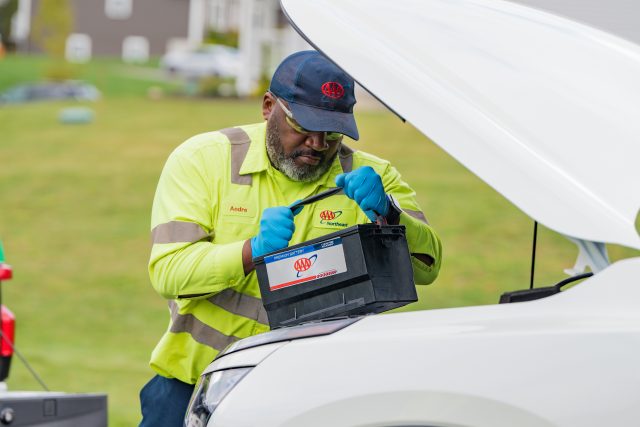
✅ AAAoffers complete on-the-spot battery service, including testing, delivery, replacement and recycling. We replace over 2 million batteries per year!
❌ Limited.
Resolves issues at the scene
✅ Over half of tow requests end with members getting safely back on the road — no tow needed.*
❌ Some companies pledge to tow you an unlimited distance but will often take you to the nearest facility, which saves them money.
Bicycle roadside assistance
✅ We’ll pick you and your bike up. Depending on membership level, roadside assistance is also available for specialty vehicles, like motorcycles and RVs.
❌ Limited.
Added perks
✅ Members enjoy travel, insurance and financial services, exclusive discounts, access to AAA branches for DMV/RMV services (in select locations) and more. Members who use AAA Discounts & Rewards save an average of $220 annually.
*R12 December 2024 Tableau/EDR. AAA Member PFCR and RAP calls) (52.9%). The Go-Rate is the ratio of calls that were dispatched as a Tow Service and were resolved at the scene of disablement — allowing the member to safely drive their vehicle in lieu of the vehicle being towed.
If it’s been 10, 20 or 50 years since you got your driver’s license, you might feel like there is nothing you don’t know about operating a car. You hop in, start the engine and your brain flips to autopilot.
Well, not so fast. Do you know the hand positions on steering wheels have changed since you first took driver’s education in high school? Or that you should determine your distance from the car ahead of you in seconds, not feet? Are you sure about what a flashing yellow arrow means? And what the heck is a gore, anyway?
No matter how long you have been driving, there is always more to learn. So, I recently decided to sign up for the AAA Defensive Driving Course, which took place at a hotel near my home in Long Island.
Talking to other students about their reasons for taking the course, I found the primary motivation was receiving 10% off the cost of collision, liability and no-fault premiums every year for three years. Drivers can also get up to four points dropped from their driving record, assessed within 18 months prior to the class.
Insurance discounts and points reduction apply in New York, but not all states. For example, similar benefits are available to drivers in Connecticut, New Jersey and Rhode Island, but not Massachusetts.
“I came for the reminders and to save money,” said Lauren San Miguel. “I’ve taken the course four times. It got off to a bit of a slow start, but I would recommend it to people to save money.”
A Little About Me
I’m Ellen Delisio and I’m a content producer at AAA Northeast. Let’s just say I’ve been driving for a few decades and took driver’s education in high school shortly after the Earth’s crust cooled. Besides classroom instruction and actual driving, we trained on driving simulators, which resembled video games, and I even had to memorize hand signals.
I am in the unique position of being an “experienced” driver with an 18-year-old son who recently completed driver’s education, got his license and has been reminding me (often) of how driver’s education has changed and that some of what I learned no longer is relevant.
Also, the cost of adding him to my car insurance made my checkbook (yes, I have a checkbook) run for cover, so any break I can get on the bill is appreciated.
Who Was There
The six-hour AAA Defensive Driving course, which includes two 15-minute breaks and an hour for lunch, includes a review of safe driving practices, information about car maintenance, road rules as well as an introduction to new driving regulations and car technology.
Many in the class were repeat customers, said instructor Larry Engel, who has enjoyed teaching the course for eight years. “I like the interaction with people, and I like passing on knowledge,” he explained. A retired IRS employee, Engel completed a 40-hour course and passed a test to qualify as an instructor; he gets recertified every three years. “I hope they learn new things, and it makes them better drivers,” Engel said before the course started.
The group was eager to share comments and anecdotes related to the course content, which Engel allowed to a degree. The class was a mix of men and women of different ages.
Among those repeat attendees were Patricia Bartolomeo and her husband Anthony. “I take it every three years to save money, and I learn something new,” Patricia said. The couple plans to expand their AAA usage to other services. “I just decided I needed all the things AAA offers,” Anthony said. “We drive to Pennsylvania a lot and I’m getting too old to change tires on my own. I’m also looking forward to using the travel and DMV services.”
Anthony’s only complaint about the course was the length. But it also is available online, so you can complete it at your own pace.
Class Is in Session
The course kicked off with a video showing how technology and improved designs have made today’s cars sturdier and safer. While driver-assistance features like backup cameras, automatic warning signals and lights improve safety, drivers should not rely on them exclusively.
“Technology can be helpful, but also can be a distraction,” Engel said. “And it does not always work. When backing up, always look behind you.”
Most factors contributing to crashes are under the driver’s control, Engel noted. These include checking for low tire pressure, cautiously changing lanes and not driving too fast on wet and icy roads. “Drivers often underestimate their risk,” he continued. “You can always reduce your level of risk.”
Call me overcautious, but now I find myself driving more slowly at the first sign of a raindrop.
Observing risky behavior by other motorists and receiving an insurance discount prompted Ken Kilfoyle to sign up for the course. “I’m a livery driver and I need to refresh my skills,” said Kilfoyle, adding that he is 63 and has been driving since he was 17. “I see a lot of scary things on the road.”
What I Learned
I’ve highlighted seven things that I learned, although there were many more. I also got some unbelievably valuable refreshers about navigating intersections and other tricky situations such as traffic circles.
Following Distance
For those of us who were instructed to leave about two car lengths behind the car ahead of us, the new rule is to stay between three and four seconds behind. To determine that, when the car ahead of you passes a stationary object, like a tree, count the seconds it takes you to pass the same object. If it is fewer than three or four seconds, you are following too closely.
Gore
The class also reviewed some updated road signs, including ones for a yield line, bike box, fire hydrant location and a gore area, a triangular space between an off-ramp and a through travel lane, on which you should not drive. For most of the class, this was our first introduction to a gore, but now I have my eyes open for one.
Who Goes First?
Without a doubt, many drivers could use a review on navigating a four-way intersection. Here we go: The first driver to arrive at an intersection proceeds first. If two cars arrive simultaneously, the one on the right has the right of way. Vehicles traveling forward also have the right of way and drivers must always yield to pedestrians and bicyclists.
The most common causes for crashes at intersections include a driver neglecting to see an object or car in or near an intersection, turning when the view was obstructed, performing an illegal maneuver, incorrectly assuming another driver’s actions and mistakenly judging a vehicle’s speed or a space in traffic, according to the course material. As you approach an intersection, cover the brake and tap it if you are slowing down, Engel advised.
Flashing Yellow Arrow
If you encounter a flashing yellow arrow pointing left at an intersection, that means yield the right of way. A flashing red arrow means to come to a full stop and then turn.
Hand Position on the Wheel
My son and I had several arguments about this. He kept insisting my hands were in the wrong position on the steering wheel. And he was right. After starting the car, you may automatically put your hands on the wheel at 10 and 2, based on a clock face, as I did, since it was drilled into all of us of a certain age. Wrong. The new recommended position is 9 and 3, now that cars have airbags. If your hands are in that position, the airbag is less likely to break your wrists if it deploys. For the same reason, sitting 10 inches back from the steering wheel is considered safer.
Rear Seat Belts Are Mandatory in New York
Ensure everyone in the car is wearing seat belts. Surprisingly, rear seat passengers in New York were not required to wear seat belts until 2020. Now the penalty for noncompliance is stiff: failure to wear a seat belt in the back seat is a moving violation, resulting in tickets to the passenger and driver, and points on the driver’s license.
Drowsy Driving Is Like Drunk Driving
Each year, about 1 million people are injured in alcohol-related crashes, Engel noted. Among other risky behaviors, intoxicated drivers are more likely to drive the wrong way on a highway. But drowsy drivers, as it turns out, can be just as deadly. When people drive after sleeping only four hours or less, they can be just as impaired as if they were driving intoxicated, according to the course. If you are struggling to keep your eyes open, pull over.
Other Takeaways
I would recommend the course to anyone seeking to become a more confident driver and looking to save money. The course both enriched and expanded my driving knowledge, reminding me to constantly be aware of my surroundings and introduced me to new regulations. If I ever see a gore, I’m going to jump out and take a picture.
Student feedback was also positive.
“This was very informative, and I always like the instructor,” said Uriel Valasco. “And I learned that pedestrians and cyclists always have the right of way.”
“Every three years I take it and learn a lot, and hopefully become a better driver,” added Judith Marquez. “I didn’t know wearing seat belts in the back seat became a law five years ago. I would recommend it because you learn so much. People will be surprised.”
Engel was optimistic about the class putting lessons into practice. “This was a very positive, animated group,” he said. “Hopefully the outcome will be very positive.”
Interested in taking the AAA Defensive Driving Course? Sign up here.
Have you ever taken a defensive driving course? What was the most surprising thing you learned?
Featured image: Instructor Larry Engel reviews road signs during the AAA Northeast Defensive Driving Course.
You never know what you might come across while driving. Traffic could be moving at a steady speed when suddenly you find yourself behind a snowplow, tractor or even an animal. While you’ll likely want to pass anything that’s slowing you down, your may not always be sure how — or if — you should.
Rest assured, cars can legally pass most things on the road, provided certain precautions are taken.
Slowing down, avoiding sudden turns and bursts of speed, and not beeping the horn are the basic rules when it comes to passing anything, particularly an animal that might get startled.
Here are tips for navigating safely around less-common road occupants:
Mounted Police Officers
Slow down as you approach and try to keep several feet between you and the horse. The officer may signal you to pass or wait. If you must wait, slow down and do not shout or beep the horn. If the horse becomes agitated, stop your car. When it is safe to pass, ensure you are several feet away from the horse and accelerate slowly at a constant speed.
If you encounter cattle walking on the side of the road or crossing the road, immediately slow down. Both horses and cattle have little traction on asphalt and could slip and fall when startled.
If the cows are crossing the road, stop and let the whole herd cross. Do not get out of your car to take pictures or try to assist with the crossing; cattle owners have enough to manage without contending with spectators or amateur cowboys. Also keep an eye out for cow dogs, the canines that help herd the cattle and keep them moving. If cattle are walking on the side of the road, give them a wide berth, do not honk and pass slowly.
All animals spotted near the road require extra caution, especially deer at night.
For the most part, Amish buggies and other horse-drawn carriages are considered vehicles and must follow the rules of the road, including traveling on the right side. Amish buggies will stay as close to the far-right side of the road as possible, unless they cross the road to make a left turn. You can pass but drive slowly and do not pass on hills or curves. Allow at least 20 feet between your vehicle and the horse before returning to the travel lane.
If you are behind an Amish buggy, proceed slowly and do not follow too closely; if you are too close, the buggy driver may not see you. Also, if the buggy stops, it may roll backwards.
Drivers need to be especially vigilant at night, because often buggies and horses are dark-colored and difficult to see. At least four states require lights or reflectors on Amish buggies.
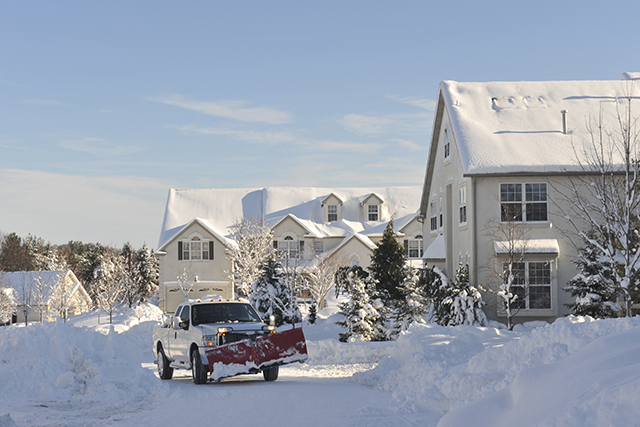
Among the reasons drivers are asked to stay off roads during heavy snowstorms is to give snowplows time and space to work. Weighing in at about 60,000 pounds, plows need room to maneuver and the fewer cars they encounter, the better it is for all involved.
Here are tips for driving near plows or passing them:
Stay at least 200 feet behind a plow to avoid flying snow, and keep out of the driver’s blind spots.
If you decide to pass, leave plenty of room between you and the plow. Don’t rush to merge into the lane ahead of the vehicle, because the plow blade extends several feet in front of the truck.
Never pass a plow on the right because you risk colliding with one of its huge wing blades.
If a plow is coming toward you, move as far to the right side of the road as possible.
Accept that plows are going to travel at about 25 mph and passing may not be possible because of road conditions. Also, remember the road ahead of the plow is worse than the road behind it.
While all states have laws requiring drivers to slow down and move over for emergency vehicles, in the past year, AAA Northeast successfully lobbied to expand the requirement to include disabled vehicles, and continues to advocate for and support Slow Down, Move Over.
When approaching disabled vehicles, drivers are required to reduce speed and move to another lane. If it is not safe to change lanes, then drivers should proceed slowly.
Slow Down, Move Over applies to tow trucks as well. To pass a tow truck, decrease your speed and change lanes to give the truck and driver as much room as possible. This simple courtesy can help save lives.
Since they don’t travel more than 25 mph, getting stuck behind a tractor on a rural road can be frustrating. But don’t be in too much of a hurry to pass. Most collisions between cars and farm equipment occur when a tractor is turning left and a driver attempts to pass it. Keep further back from a tractor than you would from a car, because tractors have a larger braking distance and the vehicle may extend into the adjacent lane.
If you decide to pass a tractor, be aware that the tractor operator may not be able to see or hear you. Try to stay visible, leave plenty of room between you and the tractor, then pass slowly. Leave extra room behind you when you merge into the lane ahead of the tractor. Also, be alert for hand signals, because the tractor operator may wave if it is safe to pass.
And when in doubt: slow down and move over.
Have you ever come across a slow-moving vehicle or animal in the road that you didn’t know how to pass? Tell us in the comments.
Winter in the Northeast is anything but dreary thanks to vibrant winter festivals that light up the season with frosty cold-weather fun. From dazzling ice sculptures to thrilling snow sports, these festivals celebrate all things winter and offer a much-needed escape from the dreary doldrums of the season.
So, get ready to bundle up and join in the excitement of these nine magical winter celebrations.
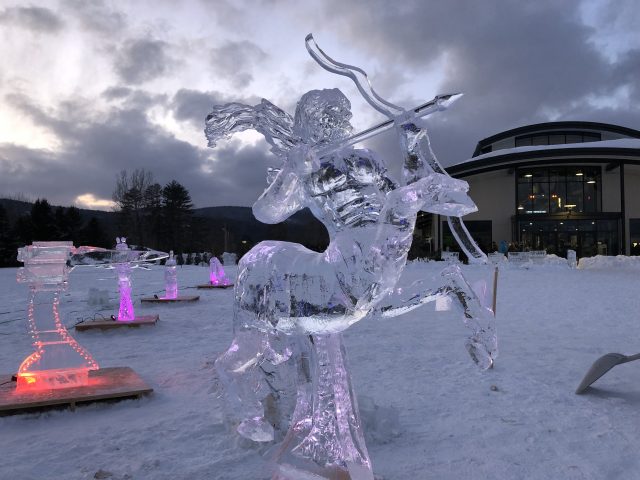
The annual Fire & Ice Festival in Putnam is the place to go for all things fire and ice. We’re talking stunning ice sculptures and mesmerizing ice carving demonstrations, as well as fire-breathing acts. Glowing fire torches light up downtown Putnam, showcasing more than five dozen intricate ice carvings. This festival hosts the largest single ice block competition in all of New England. Warm up by the cozy fire pits or the heart-shaped bonfire. Epic fire acts and roaming entertainers, like stilt walkers and magicians, make perfect photo ops. There’s even a super-size igloo to explore. A performance by Forever Young, an acoustic tribute to the music of Neil Young, is scheduled for this year.
Get ready for a frosty adventure complete with ice sculptures, a polar plunge at Camden Harbor and an adorable dog fashion show at the annual Camden Winterfest, which is put on by the Camden Public Library. Watch talented professional ice carvers or join in on the fun by signing up to create your own sparkling ice sculpture from a 300-pound block of ice. Kids will love the face painting and winter crafts, making it a perfect family outing. When you need to warm up, there will be plenty of delicious hot food on hand, like hot dogs, cookies, chili and toasty hot chocolate.
A winter wonderland awaits at the Lowell Winterfest. This glorious celebration of winter features live music, ice carvings, magical fire sculptures and plenty of roaming street performers to keep you entertained. One of the festival’s standout events is the Soup Bowl Competition, in which local restaurants showcase their best soups and chowders, and you get to vote for your favorite. It’s a fun and flavorful way to warm up during the frosty festivities. There’s so much more too, like a scavenger hunt, ax throwing, food trucks and a chocolate festival. You may just want to block off your entire weekend for this festival.
Get ready for some winter fun at the Concord NH Winter Fest. This family-friendly New England winter festival brings the magic of winter to life and features an ice carving competition right on the State House lawn. Revel in dazzling ice sculptures, food trucks, a beer garden and a variety of fun outdoor activities, like curling, snow-ga (that’s yoga in the snow) and wine tastings. Don’t forget to bring your best dance moves for the family dance party, as well as your doggo for the doggie meet and greet, because even pups deserve some winter fun. If you miss festival weekend, don’t worry, the stunning ice carvings will be on display as part of a weeklong ice sculpture garden.
The annual Fire & Ice Festival wows festival-goers with ice carving demonstrations, where talented sculptors transform blocks of ice into stunning masterpieces right before your eyes. One of the festival’s highlights is the Chili Cook-Off, where local chefs compete to wow — and warm up — hungry festival attendees with the very best chili. Come hungry, since you’ll definitely want to sample them all and cast your vote for your favorite. There’s plenty of fun for the kiddos too, like fire engine rides, a petting zoo, kids’ crafts and dogsled demonstrations.
The Saranac Lake Winter Carnival is one of the oldest winter celebrations in the U.S., dating all the way back to 1897 when the festival began as a way to bring people together to shake off the winter chill and celebrate outdoor sports and activities. The carnival features an iconic ice palace, fireworks, a curling competition, live music, ski races, a royal court and a frying pan toss. There’s something for everyone at this 10-day celebration in the heart of New York’s Adirondacks. One of the carnival’s cherished traditions is its collectible buttons, each year featuring a unique design to commemorate the festivities.
The Newport Winter Festival is a 10-day celebration packed with live music, an ice carving demonstration, a comedy show, a hot drink contest and plenty of kid-centric activities, like a science show, a princess party and a reptile show. The annual Mac & Cheese Smackdown, where local restaurants battle it out for the title of best mac and cheese in town, is a festival favorite. Come hungry since there’s also a Chili Cook-Off. With over 150 events spread across 10 days, you’ll no doubt leave the winter blues behind.
Stowe Winter Carnival. Photo courtesy of Go Stowe.
The Stowe Winter Carnival is a fan favorite, boasting a range of winter activities, like ski-in movies, a snow volleyball tournament, and of course, ice carving demonstrations with wildly talented ice sculptors. The first winter carnival was held in 1921 as a way to lift the spirits of locals during the cold winter months. It took a break for a few decades, but was revitalized in 1974 and has been going strong ever since. Today, ice carving is the star of the show. Festival-goers can even sign up for classes to learn the tricks of the ice carving trade.
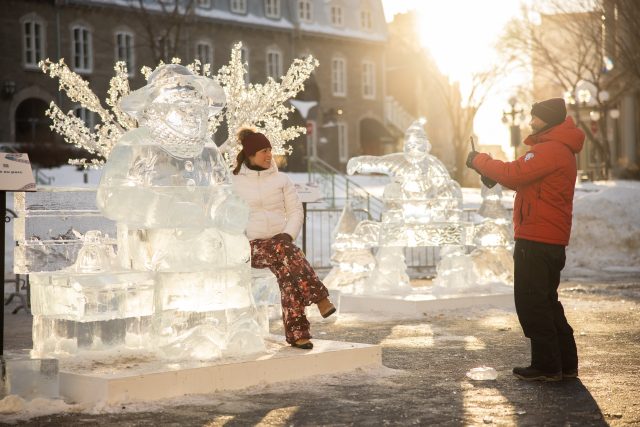
For extra winter fun, cross the border into Canada for Carnaval de Quebec, a spectacular winter festival that’s been enchanting visitors for more than 70 years. This iconic festival, billed as the world’s largest winter carnival, features live music, ice and snow sculptures, magical evening parades, an ice palace and everyone’s favorite snowman mascot, Bonhomme. It’s a magical event that showcases the vibrant culture of Quebec, making it a must-visit for winter enthusiasts. If you’re looking for souvenirs, there’s plenty of merch, like beanies, blankets and scarves.
Tell us your favorite winter festival in the comments below.
New Year’s resolutions tend to focus on physical health — exercising more, eating better, losing weight. While there’s nothing wrong with this type of resolution, deciding to focus on emotional and mental health could be a more beneficial approach if you’ve been stressed out this past year.
Go for a different take on the idea of “new year, new you,” and focus on your emotional well-being.
Addressing Your Mental and Emotional Health
Just as mental health “affects how we think, feel and act,” writes MentalHealth.gov, “it also helps determine how we handle stress, relate to others and make choices.”
One of the best ways to improve mental health is to make informed, healthy choices that support both your physical and emotional well-being. Thankfully, there are plenty of coping and relaxation techniques you can try from the comfort and safety of home, along with resources you can access online.
Prioritize Your Mind, Time and Relationships
Focusing on the activities, people and causes/organizations that make you feel happy and engaged is a key part of a successful mental reset.
Engage Your Brain
Identify the major stressors in your life and manage stress better with the four As: avoid, alter, accept and adapt. When it comes to resolutions, consider focusing on work-life balance — especially if you’re hybrid or working from home — and try giving yourself more free time.
Make the most of that spare time by doing some mentally and emotionally enriching activities. Learning a language, recipe or photography technique, playing brain games and meditating can help you deal with stress and better your mental health.
Connect With Others
Having a support system — or a network of people who care, respect and support you — is an essential part of emotional well-being.
Stay connected to your support system even (or especially) when you’re struggling. Reach out to friends and family to plan get-togethers, or just to talk. Planning a trip to a park or hiking trail for a walk on a nice day is also something you can look forward to.
Learn how to find strength and heal through loss, loneliness and life’s most difficult seasons. Listen to Season 2, Episode 11 of Merging Into Life: Building Emotional Resilience When Life Gets Tough.
Being optimistic isn’t always easy, especially during times of uncertainty. Try to focus on things that bring you happiness, like baking, dancing, singing or making art. Watch your favorite uplifting movie or spend some quality time with a pet, your child or significant other.
Make yourself feel better inside and out with self-care, too. Give yourself a DIY spa day with a relaxing bath, new facemask or foot scrub. Start a new healthy habit like meditating or writing in a gratitude journal to keep track of the things you’re thankful for or would like to try in the future.
Do Good Deeds
It’s no myth that making others happy can help you feel happier too. Engaging in meaningful activities or becoming an active participant in your community can help your mental and emotional health.
Start small with tending to houseplants or gardening when the weather gets nicer. Take care of the planet by picking up litter, or choose to improve the life of an animal by fostering, adopting or donating to a shelter.
Get out in your community by volunteering at causes that are important to you, making charitable donations (like clothes, food, money and other supplies) and forming new connections.
Maintain a Healthy Lifestyle
Mental and emotional health are deeply intertwined with physical wellbeing. This means staying active, getting enough sleep and eating well can all help improve your mental health, too.
Physical Activity
Just a bit of exercise can help improve your mood, make you feel more energized and potentially help you sleep more soundly at night.
Focusing on simply making yourself feel better, rather than counting calories or measuring your waistline, can also make exercise more enjoyable.
Try starting with low-impact exercises like yoga. Outdoor exercises like biking, hiking and walking are also extremely beneficial because they get you outside in the natural light and fresh air.
Sleeping Well
The impact of sleep on your mood goes far beyond simply feeling grouchy in the morning. Getting enough rest is vital to overall mental and emotional health.
Not getting enough sleep can lead to obvious inconveniences, like low energy and irritability, but prolonged sleep deprivation can cause bigger issues.
“Studies in both adults and children suggest that sleep problems may raise risk for, and even directly contribute to, the development of some psychiatric disorders,” states Harvard Health Publishing.
A great way to make sure you have enough sleep is to give yourself a bedtime, even if you’re far too old for one. Having a set time you go to sleep and wake up every day can ensure that you feel tired when you’re supposed to, and energized when you need to be.
Eating Better
Eating a healthy, well-balanced diet — not crash dieting — can impact your mood and even your immunity.
“Multiple studies have found a correlation between a diet high in refined sugars and impaired brain function — and even a worsening of symptoms of mood disorders, such as depression,” according to Harvard Health Publishing.
Make sure you’re drinking plenty of water and eating enough high-quality foods, like fruits, vegetables and whole grains. You can also try making healthier versions of your favorite comfort foods by incorporating more vegetables, eating more salads and reaching for less processed snacks.
How do you want to improve your emotional and metal health this year? Tell us in the comments.
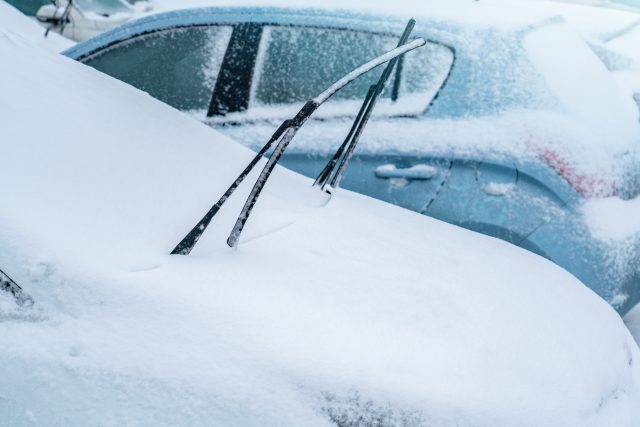
Your favorite meteorologist is calling for a wintry mix. The storm will develop while you’re at work, leading to a miserable evening commute. As you pull into the office parking lot, you notice that a healthy handful of your co-workers have popped up their windshield wipers.
That’s when your dilemma begins. Should you leave your windshield wipers up or down?
If you leave your wipers up, at least you know that you won’t leave work to find them frozen to the windshield. In case your wipers are accidently left on, leaving them up also eliminates the chance of burning out the windshield wiper motor when you start your car and the blades try to push their way through the heavy snow.
Our resident automotive expert, AAA’s Car Doctor John Paul, doesn’t do it on his own car. While putting the wipers up makes it easier to clean snow off your windshield, it also means you’re putting stress on the spring that holds the wiper arms against the windshield, he cautions.
Robert Sinclair Jr., senior manager of public affairs at AAA Northeast, agrees that drivers should not leave windshield wipers up. This causes the wipers to not be pressed as tightly to the windshield as they should be. Instead, you can wrap plastic bags around the wipers to avoid freezing.
“You can also put a blanket or snow cover over the windshield and weigh it down with some bricks prior to a storm,” he said. “The next morning, pull off the blanket and the windshield is clear.”
Whether you choose to put your windshield wipers up or leave them down, you need to make sure they are working properly before you head out on the road.
Wiper blades should completely clear the glass with each swipe.
Consider installing all-weather wiper blades that have a one-piece plastic beam frame or winter blades that wrap the metal frame in a rubber boot. Both designs help prevent snow and ice buildup that can interfere with blade-to-glass contact.
Fill the windshield washer fluid reservoir with a winter cleaning solution that has antifreeze components. Some window washer solution is rated to just 20 degrees, but in cold weather this solution can freeze and damage the washer system. Look for washer fluid that protects well below freezing temperatures.
No matter what you do with your windshield wipers, AAA members can save on automotive replacement parts and accessories at NAPA Auto Parts.
What do you do with your windshield wipers when you hear that snow is on the way? Do you leave them sticking up or flat against the windshield? Tell us in the comments.
This article has been updated and republished from a previous version.
While the winter season can bring beauty in the form of fluffy snow and glittering ice, it can also bring hazards. Around your home and while you’re driving, winter precipitation poses potential dangers like black ice, which can cause slips, slides and spills on walkways, driveways and the road. Learn more about this risk and how to stay safe when the weather forecast calls for slippery conditions.
What Is Black Ice?
Despite its name, black ice is actually clear. It’s often compared to a “glaze” and can form on all kinds of surfaces, especially roads, sidewalks and driveways.
Since black ice is transparent, it coats and blends into whatever it covers, and that’s part of what makes it so dangerous. Black ice is also extremely slippery and has several causes, including freezing rain and the melting and re-freezing of ice and snow.
How Does Black Ice Form?
If roadways are wet and the temperature drops below 32 degrees, black ice can form. Another cause is when “moisture in the air condenses and forms dew or fog, and then the temperature drops below freezing,” according to The Weather Channel. Sometimes, black ice occurs on highways when the heat of tires on the asphalt mixes with freezing conditions.
Keeping an eye on weather reports is a must in the winter, and investing in your own thermometer isn’t a bad idea either.
Where Does Black Ice Form?
Black ice can form almost anywhere under the right conditions, but some places are more likely to freeze this way compared to others.
“Bridges and overpasses are prone to black ice because cold air is able to flow underneath the road surface, since it is elevated, therefore lowering the pavement temperature,” The Weather Channel explains. “Shaded spots on the road are prone [too,] since they receive less warmth from the sun during the day.”
The roads beneath overpasses and at the bottoms of hills are other common places. Black ice also forms more often during early morning and at night, when there’s no sun and the temperatures tend to be colder.
Around the house, paved driveways and shaded walkways are susceptible to black ice.
How to Recognize Black Ice
One of the most dangerous aspects of black ice — besides being so slick — is that it’s difficult to see. While black ice can sometimes be seen in certain lighting, most of the time, it’s practically invisible. When conditions are slippery, be especially mindful of your surroundings and what is coming up ahead. When the temperature is low, glossy surfaces could potentially mean black ice. Whether you are in the car or on foot, slow down.
Black Ice Protection
Winter can bring many hazards, like damaging winds and heavy snow. To protect your home and vehicles this winter, make sure your insurance policies are up to date. When it comes to car accidents or slips and falls where you’re responsible for personal injury to someone else, these policies should cover you.
“However, unlike the cost of repairing your car, [personal] damages can be much larger,” said Jodi DeSantis, AAA Northeast’s vice president of insurance sales. “That’s why we typically advise our members to consider an umbrella policy that provides additional liability coverage in excess of the coverage provided in someone’s auto or home policy.”
When considering an umbrella policy, there are often coverage limits that need to be met on your policies. Your insurance agent can help you sort out the details.
What to Do in the Car
If the temperature is at or below freezing, try to avoid driving if you can. If you have to be on the road when it’s icy, keep these tips in mind.
Let Your Car Warm Up
Today’s vehicles only need a minute or two to warm up in cold weather. “Unnecessary engine idling wastes fuel, pollutes the air and only warms the engine — not the other mechanical parts of the car,” says John Paul, AAA’s Car Doctor. It’s best to go easy on the gas until you start to feel heat coming from the vents.
Improve Visibility
Clear your windshield and windows of snow, ice and fog for the best visibility possible.
For your own safety and the consideration of others on the road, it is smart (not to mention against the law in every Northeast state not to) to remove snow or debris from your car before driving.
Check Your Tires
Checking the tread on your tires is important, since worn tread will have less traction. Paul advises using a quarter to measure tread. “If the tread depth isn’t up to Washington’s head, the tires should be replaced.” He also suggests winter tires for the best traction. “Tires are the only part of your car that touches the road, so you want them to be in good shape.”
Keeping your car in good shape is one of the most important things you can do to stay safe on the road.
AAA members can save on automotive replacement parts and accessories at NAPA stores.
Leave Extra Time and Space
Leave yourself a little extra time and drive slower than normal during winter journeys. While you should never tailgate, leave ample room between you and other cars when road conditions are slippery. This will give you more time to react to sudden changes in traffic.
What to Do at Home
Preparing your home and property before a snowstorm can save you time, energy and give you peace of mind. Before winter precipitation arrives, make sure gutters and drains are unblocked. This way, melting snow and ice will have a place to go.
In addition to shoveling or snow blowing, one trick is to lay out a sturdy cloth or tarp before the snow or ice comes. You can cover your car, porch, stairs, walkways, etc. and then simply remove the snow-covered cloth or tarp when it’s time to leave the house.
If snow has already fallen, clear the driveway and walkways so the sun can dry away any moisture. If the weather reports are calling for snow, ice or a wintry mix — with no sunshine to be found — consider using an ice melt.
There are lots of snow and ice melt options out there, but you should use them with caution. Some are harmful to pets and the environment and can damage grass, plants and walkways. Though they all have pros and cons, try not to over-salt regardless of which deicer you choose.
If you would like to add some extra grit to your driveway or walkway, you can sprinkle fine gravel, sand, cat litter, coffee grinds and/or wood ash.
Winter can be a divisive topic — people either love it or hate it. Regardless of your sentiment toward the season, you can feel more prepared by being proactive, protecting your assets and staying informed.
Protect your home from black ice-related liabilities and more with AAA home insurance. Learn more.
Do you have a story about an encounter with black ice? Share it with us in the comments.
This article has been updated and republished from a previous version.
Stressing over finances as a young adult almost seems like a rite of passage. It’s a time when you’re trying to build credit, avoid bad debt, budget and pay off your student loans — all at once. Starting your career and trying to save money, all while trying to manage all the other expenses in your life is a balancing act that is almost always overwhelming. These tips can help with financial planning in your 20s and 30s and keep you on track.
Extra Credit
One of the most important financial moves young adults can make is building good credit. Ellen Morvant, CFP®, APMA®, Ameriprise Financial Advisor with Waterfront Wealth Management, recommends focusing on building good credit and avoiding bad credit through making on-time payments and wisely using credit cards to pay bills.
“To build credit, you have to demonstrate an ability to manage debt responsibly. This means making at least the minimum payment on time every time for every debt you have, whether it’s a student loan, car loan, mortgage or credit card,” Moryant said.
An easy way to start building a credit history is to apply for a credit card, but you have to be smart about how you do it or else it can easily get you into trouble. “When you open your first credit card, commit to limiting your spending to an amount you know you will be able to pay off in full at the end of the month,” Moryant said. “I recommend picking a few bills you can use your credit card to autopay, and then signing up to have the credit card full statement balance paid automatically from your bank account each month.”
With the AAA Daily Advantage Visa Signature® Credit Card or the AAA Travel Advantage Visa Signature® Credit Card, you can take advantage of cash back on a wide range of purchases and experiences. Learn more.
With credit cards, student loans and other expenses, it’s easy to find yourself in some serious debt. Morvant recommends building a budget early in life and has some alternatives for those who may fear the word “budget.”
“One of the best defenses against debt is a realistic, proactive plan for spending and saving. Some people call this a budget. But I find most people hate their budgets, get overwhelmed by them, and stop following them,” Moryant said. She suggests a simpler system for how to manage money in your 20s, 30s — or any age — with just a few categories:
Fixed must-haves.
Variable must-haves.
Discretionary spending money.
To avoid debt, Morvant also recommends having an emergency fund that’s at least three months’ worth of expenses saved in a bank account in case of the unexpected loss of a job, an injury or other unforeseen costs that may arise.
Start Saving for Retirement Now — Yes, Now
In addition to building credit and avoiding debt, when financial planning in your 20s and 30s, it’s also essential to start saving for retirement as soon as possible.
“The longer you wait to start investing for the future, the more years of compound investment growth you stand to miss out on. This means you will need to put away substantially more of your own dollars to end up with the same amount of money in retirement the longer you wait to start,” Morvant says.
There are multiple ways to go about saving, including IRAs and 401(k)s.
401(k)s and IRAs are tax-advantaged retirement plans. A 401(k) is sponsored by an employer, while an IRA is an account you open on your own.
“401(k)s tend to be the easiest ways for most people to start investing for their retirement because they allow you to contribute a portion of your paycheck directly, helping to build that ‘out of sight, out of mind’ systematic savings habit,” Moryant said. “Many companies will also match contributions you make to the plan up to a certain percentage of your pay. If your company does this, consider contributing at least enough to get the full match. It’s essentially free money – turning the match down is basically taking a voluntary pay cut.”
It’s also a good time to think about getting a life insurance policy. Age largely factors into your rate — the younger you are, the less you pay.
(Illustration: Sarah Hopkins)
Repaying Student Loans
And then there’s the three words 20-somethings might dread more than any other in the English language: Student loan repayments. Given that student loans are taken out while students are in school and require no payments during that time but are still gaining interest, it’s easy to find yourself in over your head in debt when you graduate. But AAA Northeast Senior Manager, Student Lending, Donald Kerr, advises graduates not to lose hope just yet, as there are repayment plans and strategies that can help you.
“The amount of student debt younger people are graduating with can be overwhelming. One way to help is to explore consolidating and refinancing student loans. When you do this you will have more repayment plan options such as five, seven, ten, fifteen and twenty year loans as well as variable or fixed interest rates. Most importantly, you will be able to choose a monthly payment amount that fits your budget,” said Kerr.
Longer term loans will have lower monthly payments but cost more overall and short-term loans will have higher monthly payments but save you the most amount of money. Kerr advises evaluating your student loans on an annual basis to keep from getting overwhelmed. “You can refinance your loans multiple times so look at your budget, financial goals and refinance your loans to match.”
When it comes to understanding your options for repaying student loans, a financial professional can help you understand and work through your options.
“AAA student lending offers free advising and counseling to our members. We can help them understand the refinancing and consolidation options for all private student loans. We can also assist with exploring federal student loan repayment options such as income-based repayment plans, graduated repayment plans and others such as public service forgiveness. We help our members understand all the repayment options, the pros and cons of each, answer all their questions and give them the information they need to make the right choice for them to best manage the loans,” Kerr said.
Never fear, there are ways to help build credit, avoid debt, budget, manage student loans and set yourself up for success when financial planning in your 20s and 30s, even when it feels impossible.
AAA Survey: Drivers Want Stronger Safeguards Against Dangerous Driving, But Continue to Engage in Bad Behaviors Themselves
A new report from the AAA Foundation for Traffic Safety shows that, while risky driving behaviors remain widespread, Americans strongly support a range of impaired-driving countermeasures that could significantly reduce fatalities.
Distracted driving, speeding and driving while impaired contribute to tens of thousands of traffic deaths each year. And in total, federal officials estimate that more than 39,000 people were killed in all U.S. traffic crashes in 2024, a slight decrease from the previous year but still a stark reminder of the persistent public health crisis on American roads.
The annual Traffic Safety Culture Index examines driver attitudes, self-reported behaviors and support for traffic safety policies. This year’s results highlight a clear pattern: Even as some drivers continue to take dangerous risks, most Americans want stronger safeguards that prevent impaired driving, including advanced vehicle technologies and more protective legal standards.
67% of respondents supported requiring all new cars to include alcohol-impairment prevention technology.
51% of respondents supported lowering the legal blood alcohol concentration (BAC) limit from 0.08 to 0.05.
Despite this support for countermeasures, the survey found that drivers are still choosing to drive impaired. While 93% said driving after drinking is very or extremely dangerous, 7% said they did so in the past 30 days. That trend persisted for marijuana-impaired driving: 70% said driving within an hour of using marijuana is very or extremely dangerous — and 6% reported doing so.
“Impaired driving has resulted in devastating outcomes for too long, and these findings make it clear that the public is ready for solutions,” said Jillian Young, director of public relations for AAA Northeast. “Especially at a time when so many drivers still admit to risky driving behaviors, it’s critical that we leverage the tools and technologies that can make a measurable difference.”
The survey also found risky behavior persists in other areas.
Distracted Driving
Almost all respondents said scrolling social media (97%), texting/emailing (94%) and reading on a hand-held phone (90%) are extremely or very dangerous behind the wheel — yet 28% texted, 37% read messages and 36% talked on a hand-held phone while driving.
Aggressive Driving and Speeding
Aggressive driving (90%) and running red lights (80%) were considered extremely or very dangerous, but speeding was seen as less dangerous compared to other risky behaviors.
58% said a driver is very or somewhat likely to be caught by the police for driving 15 mph over the speed limit, yet about half of respondents reported driving 15 mph over the speed limit in the past month.
Car batteries are especially vulnerable to losing power in winter, usually at the worst possible time in the worst possible weather. But with some preparation and maintenance, you don’t have to worry about being stuck in a frigid car on the side of an icy road. Here’s how to protect your car battery from winter.
If your battery still fails after all your precautions, AAA Car Battery Service is available seven days a week to come to you to test or replace your battery.
Why Do Car Batteries Die in Winter?
Cold weather can wreak havoc on a car battery.
Lower temperatures restrict your car battery’s output while forcing it to draw more power to work, according to AAA’s Car Doctor John Paul.
“A car engine needs about 30% more energy to start when the temperatures drop to freezing,” Paul said. “And at zero degrees your vehicle battery can only deliver at 50% of its rated capacity.”
While fully charged batteries normally do not freeze — temperatures would have to drop below minus 76 degrees for that to happen — a fully discharged battery, which has just below 12 volts, can freeze at 32 degrees.
The average car battery life in the Northeast is three to five years. As they age, batteries should be checked annually,
For the best winter performance, purchase a premium quality battery with the highest cold cranking amps rating to meet or exceed the vehicle manufacturer’s specifications, such as a AAA-branded premium quality battery.
To get the most out of any car battery, make sure to test it regularly. After a stretch of harsh weather is the perfect time so you make sure to protect your battery from winter.
“Batteries really are the strong silent type,” said a representative of Interstate Batteries, the vendor that supplies AAA-branded car batteries. “Even corrosion isn’t a sign of a bad battery. It takes a battery tester to uncover any issues.”
Make sure you have a reliable battery this winter.
As we look back on the past year and toward a new one, it’s almost instinctual to set goals. We all have things we’d like to change or improve, and a new year is the perfect excuse to get started.
Now is also a great time to think about your insurance resolutions. Insurance shouldn’t be something you buy once and blindly renew each year. If you’ve moved, changed jobs, retired, added to your family or made any other major life changes, your policies could likely use some updating.
Get the new year off to a good start by taking the time to review your policies and make sure you are still getting the most out of your coverage. Here are a few insurance resolutions to get you started.
Drive Change
As you reassess your auto insurance policy, think about how your — and your family members’ — driving habits may have changed. Perhaps you’ve started working from home or recently retired, resulting in less time on the road. Driving less could qualify you for low-mileage discounts. Maybe you have a college-bound student who will no longer have access to household vehicles or, on the other hand, a teenager who’s ready to be added to your policy.
Think about your vehicle. If you’re holding onto an older car, collision and/or comprehensive coverage may no longer be worth it for you. Talk to your insurance agent about adjustments that can be made.
To help lower auto insurance costs, look into taking a defensive driving course. Not only will it help you to become safer on the road, depending on the state you live in, it could also save you up to 10% on your insurance.
Take Inventory
Whether you own or rent your home, making (or updating) an inventory of your belongings — at least your most valuable things — is a smart decision.
If you bought a new TV, phone or laptop, or made another large purchase during the year, such as furniture or appliances, you’ll want a record of it — just in case. If you don’t want to write out an itemized list, consider making a video. This way, in the chance of theft, a fire or natural disaster, you’ll know exactly what’s missing and have proof for your insurance company.
Updating your home insurance after any renovations is a must. An updated bathroom or a finished basement converted into an at-home gym, office or lounge could increase the value of your home, meaning you might want more coverage. Similarly, if you added a hot tub, pool or trampoline, you’re increasing your liability.
Talk to your insurance agent to make sure you are fully covered without overpaying. Keep in mind that homes are often insured for a limit that is different from market value. It instead reflects the cost necessary to repair or rebuild the home in the event of a total loss based on the current market’s construction costs.
Stay Healthy
Getting serious about quitting smoking or seeing your doctor annually are insurance resolutions that could help to improve your health and save you money on life insurance.
People who maintain a good weight due to diet and exercise typically receive the best life insurance rate offerings. “Healthy habits are the key to longevity, and they are a critical part of the evaluation that a life insurance company completes in considering you for a policy,” says AAA Northeast vice president of insurance sales Tiffany Clay. “Seeing your primary care provider at least annually and proactively caring for your health with things like cancer screenings are positives when life insurance companies are making a decision around the rate you will pay.”
Because rates are based on how much of a risk you are, part of the cost of life insurance also depends on your age. The younger and healthier you are, the better the time is to start considering a policy.
The main purpose of life insurance is to take care of others after we’re gone. No one wants their loved ones to have to take on their debts or struggle for basic needs. Review your beneficiaries regularly and make sure to tell someone you trust about where you keep your important documents.
Mind the Gap
While auto, home, rental and life insurance are the most popular and necessary types of coverage, depending on your lifestyle and where you live, your current coverage might have a few gaps. For example, if you live near the water or in a location that experiences heavy rains and/or poor drainage, you should look into flood insurance. Flood damage is considered a separate policy that is not covered by your overall home insurance.
Umbrella insurance, also called a personal liability policy, goes beyond basic home and auto coverage, protecting you with high liability limits.
Protect Your Plans
If you’re someone who travels often, travel insurance could be a smart investment for you. This kind of insurance will refund you in the case of a cancellation. More importantly, it can help cover medical expenses or an emergency evacuation back to the U.S.
Be Paw-Some
Protect your furry friends with pet insurance. Like health insurance for humans, this type of coverage helps pay for veterinary care if your fur baby becomes injured or sick. Most policies only apply to cats and dogs.
Learn how your pets may also be covered by your auto and homeowners policies
You never want bad things to happen, but you’ll be thankful for being prepared if they do.
By the time you find the one you want — and haggle with a salesperson who has given you their best price three times — you’re ready to sign on almost any dotted line just to get out of the dealership.
That’s when you get shuttled off into a back office, where the new car financing guy saddles you with a high interest auto loan that results in you paying thousands of dollars more than you would have if you had just shopped for the loan ahead of time.
“In my mind, there are two completely separate transactions that take place when you buy a car,” said Ted Lyons, vice president of Financial Services for AAA Northeast. “One is negotiating the price of the car and the second is negotiating the financing of that purchase.”
While many buyers spend hours researching makes, features and even colors they want in a car, they rarely shop for new car financing, despite how important it is.
Here’s how you can find the best way to finance a car for your situation.
Buying a new car is exciting, but don’t rush it — you can save a lot money immediately and in the long run by doing research first.
For instance, the AAA Auto Buying program is a valuable resource that can help prospective car buyers find the car they want and see what other people have paid for that model vehicle. While shopping from AAA’s network of certified dealers, the AAA Auto Buying program can help buyers get a guaranteed price and save on a new or used car.
Another important step is to look at your financial situation and determine how much you can afford to spend on a new car. You should not only consider the car payments, but also the price of gas, preventative maintenance, repairs and more. Factor in the value of a trade-in vehicle that you own or any negative equity, which is the money you still owe on a car you previously financed.
Types of Car Financing
When it comes to new car financing, you have two options:
Direct Lending
This is when you borrow money directly from bank, credit union or finance company and use that loan to pay for the car, which allows you to comparison shop to find the best deals and to know the credit terms — like annual percentage rate, length of term and maximum amount — before you get to the dealership.
Some financial institutions, like AAA, can offer you both an auto loan and all the ancillary products like an extended warranty, debt protection, GAP protection and other coverages at a significantly lower price than a dealership (which typically makes its money of the sale of these products).
For example, on the average car, AAA can help a buyer secure key fob replacement, tire and wheel protection and dent and ding protection for less than the price of replacing a single key fob, Lyons said. And unlike a mortgage application, applying for an auto loan is a fast and easy process that takes only a few minutes, he added.
Dealership Financing
Another option is to apply for financing through the dealership. While it can be convenient to do the car buying and financing all in one shot, you may not be given any financing options from which to choose and you could get stuck paying a higher interest rate than if you shopped for financing on your own.
After You Sign
Just because you agreed to terms does not mean you are out of options. New car buyers always have the option to refinance — even as early as the first 90 days. Refinancing a car can help you secure a lower interest rate on your loan, reduce your monthly payments and more.
“If you don’t shop ahead of time, you don’t know if you’re getting a good deal,” Lyons said. “And all it takes is one phone call to get the car you want at a price you can afford.”
Snow, ice and sleet — not to mention the chemicals used to melt them — can wreak havoc on your vehicle. Properly thawing your car when winter delivers its worst is important to prevent long-lasting damage and keep you safe while driving.
How to defrost car windows effectively and efficiently
Start with a properly operating heater. If the engine is not getting up to the proper operating temperature, the defroster will be much less effective. Set the climate control to full defrost rather than bi-level. This will direct the maximum airflow at the windshield.
If your car has the option, the defroster should be on the fresh air setting rather than re-circulated air.
How can you remove snow without damaging your car?
Use a long-handle snow brush or snow broom (sometimes called a snow rake). Clean from the middle and push or pull the snow. Doing this before the snow turns into ice will prevent damaging the paint.
How does salt damage your car and how can you prevent it from happening?
Salt (sodium chloride) and other road chemicals (magnesium, calcium chloride and other brines) can cause accelerated rusting.
To prevent this, you should clean any accumulated salt off your vehicle as soon as practical. Flushing with clean, fresh water is ideal. During winter, an occasional undercarriage wash will help wash away any built-up salt, sand or other road deicing chemicals.
If your car is covered with sticky brine, salt or other chemical substances, don’t park the car in the garage. The warmer air will speed up the corrosion process. Wash and dry the car before putting it in a garage. Touch up any paint damage or scratches before it starts to rust.
What’s the best way to remove ice from the car?
If you are able to open the door and get in, do so and start the car. This will allow the vehicle to warm up and begin to melt the ice.
Do not use sharp products — and never use a shovel. A strong plastic ice scraper will do just fine. Another option, once the car starts to heat up and lightly thaw, is banging on the ice with the snow broom to loosen the ice. You can also use an aerosol deicer spray on the glass but be aware this is mostly alcohol and may remove wax from the paint.
If the car door is frozen shut, what should you do?
Never pour hot water on the door. Although this may get you into the car, you have just added more water that will likely freeze again.
First, make sure to try all the doors. If it’s an SUV, even try the hatch. You may find one door that you can get in. Don’t yank on the door handles as they can break. Try banging your hand along the edge of the door, which may free up the ice. You can also spray deicer on the door and handle. Or just wait until the sun comes out if that’s an option.
Once you get the door open, wipe down all the rubber gaskets to remove any moisture and then spray the gaskets with silicone. This will displace any moisture and prevent door freezing. You should ideally do this a couple of times per year.
Share your tips on how to defrost car windows in the comments below.
This article has been updated and republished from a previous version.