How Apple Cider Is Made

Paired perfectly with pumpkin patches, meandering through apple orchards and Thanksgiving turkey, apple cider is a signature fall flavor. But have you ever wondered how apple cider is made? We visited Jericho Cider Mill in Jericho, N.Y., where they have been making cider for 200 years, to find out.

How to Make Apple Cider

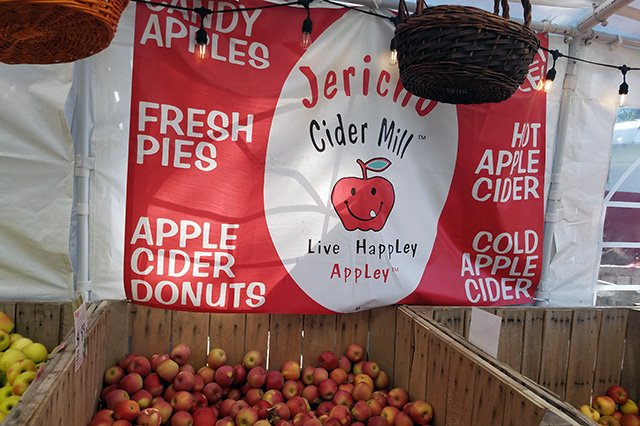
Located alongside busy Jericho Turnpike, Jericho Cider Mill beckons passersby to stop in. The scent of apples being freshly pressed and baked into pies surrounds the roadside farm stand, stocked with pumpkins, gourds, and bin after bin of apple variety. If you can’t make it to the apple orchard to pick your own this year, you’ll find plenty here.

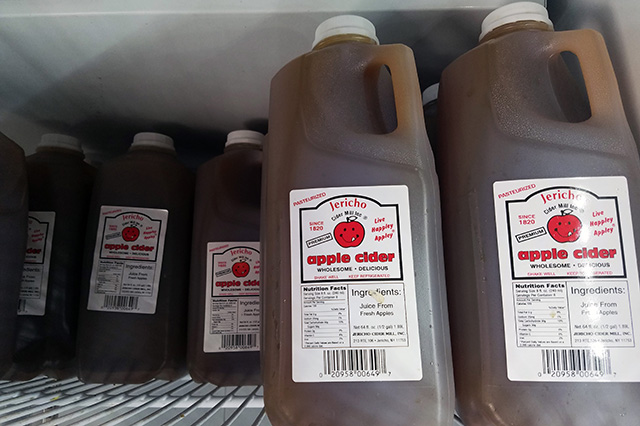
Inside the store, you can fill your basket with jugs of cider and baked goods prepared on site, from pies to turnovers, and of course, apple cider doughnuts. If you have time to spend, take your treats to one of the picnic tables outside to enjoy with a coffee, hot apple cider or frozen apple cider slushie.

In the back, hundreds of New York State apples are turned into cider. Two-thousand gallons are made per day, every day during the busy season, according to Kerry Ketsoglou, general manager of the mill. On a quick walk-through of the facility, Ketsoglou took us through the basic steps of the cider-making process.

Cider Basics

While not quite the same sweet drink we associate with fall festivals and farmers markets, people have been enjoying cider for centuries. History shows that our ancestors sipped on a boozy variety, brewed to make bitter apples more palatable.

Prohibition put a halt to production of alcoholic apple cider, and though it took a while to bounce back, hard cider has made a serious comeback. Take a look at our favorite Northeast cideries, where you can sample some of the best around.

So, what makes cider, cider? Unlike apple juice, the fresh-pressed juice used for cider is not filtered and has no water or preservatives added. That’s what gives sweet apple cider its unadulterated apple flavor, like biting directly into the fruit.

See How Apple Cider Is Made at a Cider Mill Near You

Jericho Cider Mill
Jericho, N.Y.

Fly Creek Cider Mill & Orchard
Fly Creek, N.Y.

B.F. Clyde’s Cider Mill
Old Mystic, Conn.

Melick’s Town Farm
Oldwick, N.J.

The Hard-Pressed Cider Company
Jamestown, R.I.

Bashista Orchards & Cider Mill
Southampton, Mass.

how apple cider is made

Apple Cider Recipes

Besides drinking it straight, there are lots of delicious ways you can use apple cider. Once you’re all stocked up from the nearest cider mill, here a few recipes to get you inspired.

Apple Cider Doughnuts (The Kitchn)

Apple Cider Bundt Cake (Tutti Dolci)

Apple Cider Cookies (Betty Crocker)

Apple Cider With Mulling Spices (Magnolia)

Apple Cider Cupcakes (Tasty)

More apple recipes.

Enjoyed warm and mulled with spices or straight from the fridge, apple cider is the kind of drink that makes you feel cozy and festive, perfect for when the crunching leaves beneath your feet signal chillier days ahead.

What is you favorite local cider mill? Tell us in the comments.

For everything fall, head over to the Your AAA Fall Fest!

Subscribe to Your AAA Newsletter

Sign up and receive updates for all of the latest articles on automotive, travel, money, lifestyle and so much more!

Crossword: At the Diner

Subscribe to Your AAA Newsletter

Sign up and receive updates for all of the latest articles on automotive, travel, money, lifestyle and so much more!

Are These The Most Nerve-Racking Roads in America?

It’s been said that danger lurks around every corner. This is never more true than on the road. Crashes can, and do, occur on any street, regardless of location, condition and speed limit. But not all roads are created equal. While some may have danger around the corner, others have danger all around. All this danger can make for some hair-raising drives.

Roads can be scary for a variety of reasons. Some travel through hazardous terrain, while others are so flat and straight they become breeding grounds for speeding and unsafe driving. You’ll find dangerous roads from coast to coast, in crowded metropolises and areas so remote they’re difficult to access.

Here’s a look at some of the scariest, nerve-racking roads in America.

dangerous roads
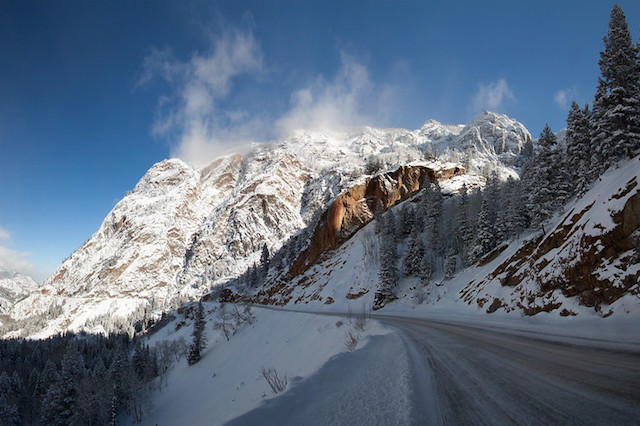
Drivers will find steep elevations and hairpin turns on Colorado’s Million Dollar Highway.

Million Dollar Highway, Colorado

Officially known as U.S. Route 550, local legend says Colorado’s Million Dollar Highway got its moniker after an early traveler proclaimed she’d have to be paid $1 million to drive it again. 

Winding through Red Mountain Pass in the San Juan Mountains, the roadway is undoubtedly one of the most breathtaking in the country. But those stunning views don’t come easily. You’ll encounter steep cliffs and hairpin turns as you climb the highway more than 11,000 feet above sea level. If that’s not unnerving enough, the road, carved into the side of the mountains, has no guardrails. Throw in some harsh Colorado weather and the occasional rock slide and you have one of the most dangerous roads in the country, according to a list compiled by USA Today.

U.S. Route 1, Florida

Florida doesn’t have Colorado’s mountains, but it does have another lurking danger: It’s one of roughly half the country’s states without a full ban on using a handheld cellphone while driving. That might help explain why a recent study found that 17 of the 100 deadliest roads in America were in the Sunshine State, the most in the country. The research, which looked at death totals from 2015 to 2019, found Florida’s section of U.S. 1 to be the country’s second deadliest road. In total, 87 people died there over that time.

Most of the route up the eastern coast is straight as an arrow, inviting drivers to reach dangerous speeds. The southern end, known as the Overseas Highway, connects the Florida Keys to Miami. It consists of miles and miles of bridge driving, something many people find distracting or unsettling.

dangerous roads
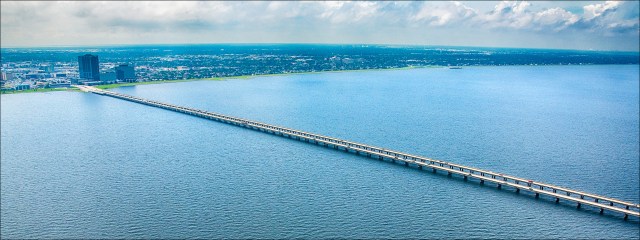
The Lake Pontchartrain Causeway is the world’s longest bridge over water.

Lake Pontchartrain Causeway, Louisiana

At nearly 24 miles long, the Lake Pontchartrain Causeway holds the Guinness World Record for longest bridge over water. Depending on how you feel about driving for a half-hour suspended over a lake, the causeway can be a thrilling or nerve-racking experience. When you get toward the middle of the bridge, where dry land is completely out of view, it will likely veer toward the latter.

Being surrounded by water also leaves drivers open to the elements: The causeway can become enveloped in fog so thick that police have to usher drivers across the lake.

I-4, Florida

Interstate 4 between Tampa and Daytona Beach was once found to be the deadliest interstate in the country, recording 1.41 fatalities per mile. One explanation for the road’s high incident rate could be its route directly through Orlando, one of the country’s premier tourist destinations. “What’s the first thing they do when they get off the plane?” Glenn Victor of the Florida Safety Council asked Fox 35 Orlando. “They rent a car that they’re not familiar with and they’re on their GPS, so they’re looking at the phone and their GPS which, of course, is a distraction while they’re driving.”

I-45, Texas

Some roads are innately dangerous because of how they were designed or the terrain they traverse. Others are dangerous simply because of how many drivers use them – and the number of ensuing crashes they cause. The congested Galveston to Dallas section of I-45, which runs through downtown Dallas, was recently named the deadliest road in America by Budget Direct. Citing heavy traffic and driver complacency, the company found I-45 averages 56.5 fatal accidents for every 100 miles of roadway.

I-10, Arizona

Interstate 10 spans the width of the country, stretching from Jacksonville, Fla., to Santa Monica, Calif., but it’s the roughly 300-mile stretch through Arizona that has proven most foreboding. The highway’s long straight stretches through the desert are hot spots of high speeds, aggressive driving, illegal passing and inattentive drivers. Nearly 500 fatalities were recorded on Arizona’s I-10 over a recent six-year period.

dangerous roads
One study found I-15, shown here in Las Vegas, to be one of the country’s most dangerous roads.

I-15, Nevada and California

The 181-mile stretch of Interstate 15 connecting Las Vegas and Los Angeles is a straight, well-maintained roadway, conducive to safe traveling. And yet, it routinely ranks as one of the country’s most dangerous roads.

The problem isn’t the road – it’s the drivers. Motorists often speed on I-15 while traveling through the openness of the Mojave Desert. The fact they are likely coming or going from the party city of Las Vegas doesn’t help either. One study found that nearly a quarter of the crashes occurring on that section of the I-15 involved a drunk driver.

I-285, Georgia

Atlanta’s I-285 is known as “The Perimeter” because it circles the city in a 64-mile loop. It connects all the area’s interstates and highways and, in doing so, welcomes an onslaught of traffic, including tractor-trailers. The combination of congestion, sharp turns, interchanges and large trucks has turned I-285 into a lethal stretch of pavement. In 2015, Vox calculated the road’s fatality rate at 3.5 per every 10 miles, which, at the time, made it the country’s deadliest interstate.

U.S. Route 17, South Carolina

Winding through forests, marshlands and oceanside towns, South Carolina’s Highway 17 is one of the most scenic drives in the southeast. But looks can be deceiving. The road is filled with an endless number of sharp, blind turns and narrow lanes. The area is also home as well as an abundance of wildlife, creating other potential driving hazards.

All told, U.S. 17 in South Carolina is one picturesque – but perilous – drive. In fact, one study named it the country’s most dangerous highway for summertime travel.

dangerous roads
Alaska’s Dalton Highway has been immortalized in the hit television show “Ice Road Truckers.”

Dalton Highway, Alaska

The James Dalton Highway stretches 414 miles through the Alaskan wilderness from Fairbanks to Deadhorse, located on the shores of the Arctic Ocean. The dirt-and-gravel roadway was constructed in 1974 to help facilitate the oil industry and to this day is mostly used to transport oil.

The Dalton traverses through some of Alaska’s most treacherous terrain, including forests, tundras, steep grades and the Yukon River. Traveling along the road is so dramatic, in fact, it’s the focus of the hit television show “Ice Road Truckers.” But what makes the Dalton Highway particularly dangerous is its remoteness. There are only three towns along the entire route, which includes a 240-mile stretch without a single gas station or rest stop. Should something happen to you along the way, it may take a long time to get help.

Highway 2, Montana

Montana is the country’s fourth-largest state by size but has the eighth smallest population. This means you can drive for a quite some time before coming across anyone else. Open roads can lead to pleasant drives, but they can also be quite dangerous. Nowhere is this more true than on Montana’s Highway 2, which stretches east-west across the northern end of the state.

The roadway maintains a 70 mph speed limit, even as it winds through some mountainous regions. And while the scenic nature may be eye-popping, it also means you’re far away from the nearest help. In 2021, the median EMS call in Montana took a total of nearly 45 minutes. That number only gets higher when first responders have to travel to and from remote Highway 2.

Road to Hana, Hawaii

Driving around the islands of Hawaii seems like a journey through paradise, but be careful what you wish for, especially if you’re traveling along Maui’s Road to Hana.

The 52-mile road connects Kahului to Hana along the island’s rugged eastern shoreline. And though the highway offers picturesque views of mountaintops, lush greenery and crashing waves, the Road to Hana is far from a luxurious drive. Along the way, you’ll encounter a whopping 620 turns and 59 narrow bridges. The route requires such caution it takes motorists anywhere from two to four hours to complete. That’s why the Hawaii Tourism Authority recommends traveling with a permitted tour company instead.

Have you driven on any of these dangerous roads? Tell us in the comments below.

Subscribe to Your AAA Newsletter

Sign up and receive updates for all of the latest articles on automotive, travel, money, lifestyle and so much more!

Why Dental Insurance Is Important for Retirees

If you want to keep your smile in good working order, it’s important to have dental insurance, even if you no longer have employer-sponsored coverage.

Oral health is an essential part of overall health, and seniors face unique challenges when it comes to teeth.

Fortunately for AAA Northeast members living in Rhode Island, Delta Dental makes it easier than ever to find an affordable coverage plan that offers a range of benefits and is widely accepted by dentists throughout the state.

Dental and Vision Insurance for Rhode Island AAA Members

Comprehensive coverage at exclusive rates for AAA members in Rhode Island

Check Rates

Dental Insurance Pays Off

Regular dental visits help mitigate and prevent the oral issues older adults are more susceptible to.

Seniors are more prone to plaque and tooth decay, and are especially vulnerable to dry mouth and subsequent bacteria buildup, often caused by taking medications. Furthermore, the Centers for Disease Control and Prevention reports 68% of people ages 65 and older are affected by gum disease, a condition that can lead to serious health complications if left untreated.

Clinical research shows gum health and mouth bacteria are associated with conditions including:

  • Heart disease and stroke.
  • Diabetes.
  • Pulmonary disease.
  • Osteoporosis.
  • Bacterial pneumonia.
  • Dementia and Alzheimer’s disease.
  • Autoimmune diseases, such as rheumatoid arthritis and lupus.

The risk of oral cancer also increases for people ages 60 to 70, according to the National Institute of Dental and Craniofacial Research.

Dental insurance offsets the cost of preventative care like checkups, cleanings and major procedures, so you don’t have to hesitate to see a dentist and continue routine appointments to stay ahead of your oral health.

How to Prepare Your Smile for Retirement

There’s plenty you can do to keep your teeth strong and healthy well into your golden years. Delta Dental of Rhode Island recommends the following tips:

  • Maintain good oral health habits. In addition to brushing two times a day and flossing daily, eat a well-balanced diet, avoid tobacco products and limit alcohol consumption. If you wear dentures, remove and clean them daily.
  • Do monthly self-exams for oral cancer. Look for unusual sores or swelling, white or reddish patches and changes in your lips, tongue and throat that last more than two weeks. Early detection can save lives.  
  • Continue to see a dentist regularly, even if you have lost your teeth or wear dentures. Discuss replacement options such as dentures, implants and bridges to help restore your smile.  
  • Consider the perks of a Health Savings Account. When you are planning to retire, take advantage of your employer’s HSA. Your contributions to the account are tax-deductible and can earn interest or investment gains over time. The money is yours to keep and can be used to fund out-of-pocket medical and dental expenses in retirement.
  • Always have dental coverage. Whether it’s through a Medicare Advantage Plan, Medicaid or individual coverage, it’s a good idea to research your options and enroll in a dental insurance plan that can cover the increased dental expenses that come with age.

Delta Dental offers a variety of individual plans for retirees to choose from, covering common procedures like dentures, cleaning, scaling, root planing, tissue grafts, veneers and more. With the largest network of dentists nationwide, it’s easy to find a dentist office near you.

AAA Northeast members in Rhode Island can get quality care and coverage at exclusive rates. Start searching.

How often do you go to the dentist? Let us know in the comments below.

Subscribe to Your AAA Newsletter

Sign up and receive updates for all of the latest articles on automotive, travel, money, lifestyle and so much more!

The Hidden Costs and Perks of EVs

With more and more drivers getting behind the wheels of EVs, you may have begun researching the price of these vehicles yourself. But before you calculate your budget and head to the dealership, know that EVs come with additional expenditures that can drive up the overall cost of ownership.

On the other hand, numerous lesser-known financial incentives exist that can help reduce this cost. These monetary bonuses, coupled with a growing number of convenience perks, can make owning an EV more achievable and appealing.

Hidden Costs

Higher Insurance Rates

You can expect to pay a higher insurance rate for an EV compared to a similar model gas-powered car. This is primarily the result of the higher price tags attached to EVs. These vehicles also have expensive parts that can lead to costly repairs should they break.

Additional Registration Fees

To make up for lost gasoline tax revenue, many states have enacted laws requiring additional registration fees on EVs. Currently, 32 states have such fees for plug-in electric vehicles, and 18 also have additional fees on plug-in hybrid vehicles.

Lower Resale Value

When the time comes for you to move on from your old EV, you may choose to resell it. If that’s the case, your car might fetch a lower price than you expected.

Because EVs are evolving rapidly, older models quickly become outdated. This results in a faster depreciation than gas-powered cars. AAA’s “Your Driving Costs” study, found that, on average, EVs lose more than $5,000 in value each year. Gas-powered sedans and SUVs, however, depreciated between about $2,500 and $4,000. Hybrids also lose their resale value quickly, with an average annual deprecation of $3,800.

Home Charging Stations

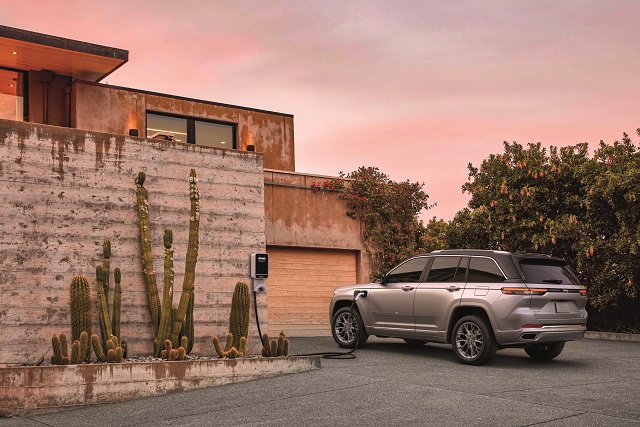
While EVs can be plugged into a standard home outlet, many owners opt to use a home charging stations. These units can charge an EV significantly faster. However, this upgrade will cost you. The station itself can cost between $350 and $2,000. Installation will likely set you back at least $1,000, up to $5,000 depending on home electrical service capacity. On the bright side, a growing number of states are offering EV owners financial incentives for installing home charging units, which can help reduce the out-of-pocket costs.

Higher Repair Costs

EVs have fewer moving parts than a gas-powered car, which lessens the chance of something breaking or wearing down. When an EV does need a repair, however, it is often more expensive than one for a traditional car. Replacing a battery pack after its warranty has expired, for example, can cost thousand dollars. As an example, a battery for a Chevrolet Bolt could cost $8,000 and a battery for a Tesla could cost $12,000-$18,000. You may also be limited in your repair shop options, as not all repair technicians are familiar with EV repairs.

Perks

Local Financial Incentives

Federal, state and local governments provide rebates and/or tax credits to citizens who purchase an EV. These typically range from several hundred to several thousand dollars.

Parking Advantages

A growing number of public and private entities are working to attract EV owners through parking perks. More and more private lots are becoming equipped with EV chargers, allowing drivers to charge their vehicles while away from home. Furthermore, these chargers are often located in convenient spots close to businesses.

Additionally, many cities are now offering free or discounted EV parking at municipal lots, according to UPenn’s Kleinman Center for Energy Policy.

HOV Lane Access

Several states across the country allow battery electric and hybrids access to high occupancy vehicle (HOV) lanes, regardless of the number of passengers in the car. Exact rules and regulations vary from state to state.

(To identify your vehicle as eligible for HOV lane use, you may need to receive a special license plate, decal or register your toll transponder. These steps might require an annual or one-time fee).

Toll Discounts

Another hidden EV perk you might experience on the roadway is discounted toll fares. A growing number of states are offering owners of battery electric and hybrid cars reduced toll fares. New York’s Green Discount Plan, for example, gives EV owners a 10% discount on their E-ZPass rate. Similar programs exist in states across the country.

Bidirectional Charging

The batteries in EVs can receive a charge, of course, but many can also redirect that charge in order to power an external device. This capability, known as bidirectional charging, allows the EV to essentially act as a generator. It’s perfect for use in an emergency or any other time you find yourself away from an electrical source and in need of power.

Visit AAA’s Electric Vehicle platform for more information on these cars of the future.

Subscribe to Your AAA Newsletter

Sign up and receive updates for all of the latest articles on automotive, travel, money, lifestyle and so much more!

AAA Photo Session: National Parks

America’s national parks are national treasures. Dedicated to the protection and conservation of history and nature in our country’s most spectacular open spaces, they belong to all of us to discover and enjoy.

Thank You for Participating! (Session Closed)

Browse through the photos we received for the September/October National Park-themed Photo Session in the slideshow below, and don’t forget to check our social media channels, where we will be sharing some of our favorites. Select photos may also appear in an upcoming issue of Your AAA magazine.

For more inspiration for your next trip, see these pro tips for amazing national park photos.

Did you know? AAA was instrumental in creating the National Park-to-Park Highway. A major stride for the American road trip, the route was established in 1920 to connect what was then all 12 national parks through 11 states of the American West.

Check out past AAA Photo Sessions and stay tuned for the next one.

Subscribe to Your AAA Newsletter

Sign up and receive updates for all of the latest articles on automotive, travel, money, lifestyle and so much more!

First Comes Mortgage, Then Comes Marriage 

Living together before marriage is nothing new. In fact, it’s now the norm. More than 75% of recently married couples cohabitated prior to tying the knot, according to the National Center for Family & Marriage Research. But these days, many couples are doing more than just splitting the rent. They’re taking the big step of purchasing a house together. A recent study found that 31% of Americans have purchased a home with someone they aren’t married to and more than half of those surveyed said they would consider it. 

Buying a house with your partner can have its benefits. The dual incomes may allow you to enter the housing market earlier than you would have alone. This means you’ll start building equity in a home sooner. Instead of spending money on rent that you’ll never recoup, you can start paying for an asset you’ll eventually own. However, as with any major life decision, there are some unique factors to consider when buying a house with your partner before marriage.  

Qualifying for a Mortgage 

First off, it’s important to know that your martial status has no effect on your mortgage application. In fact, it is illegal for a lender to discriminate against a loan applicant based on marital status. 

The big decision for unwed couples applying for a mortgage is whether they should apply jointly or for one member to apply alone. The answer depends heavily on you and your partner’s financial profile. If you both have good credit scores and low levels of debt, it could be a good idea to apply jointly. Showing two incomes on your application increases your chances of getting approved for a larger mortgage. 

However, when applying jointly, lenders often base their decisions on the lower of the two credit scores. Therefore, if one of you has a significantly worse financial situation, it may be best for the other to apply alone. 

Property Ownership 

There are three options for designating ownership when co-buying a house: 

Joint ownership: Joint ownership allows both parties to own an equal share of the home. With this, both members will have to come to a joint decision on whether to sell when the time comes. And, if one owner passes away, ownership of the property is automatically passed to the surviving owner. 

Tenancy in common: This arrangement gives ownership to both parties, but in unequal percentages. It is a popular option for unmarried couples due to its flexibility. For example, if one member is contributing significantly more money toward buying the house, they might have 70% ownership while their partner owns the remaining 30%. Tenancy in common also allows each member to designate an heir to assume their share of the property in the event of their death. 

Sole ownership: As the name implies, sole ownership means only one person legally owns the home, even if there’s another person living there. The owner is the only one who can decide to sell the house. 

Cohabitation Agreement 

Regardless of the type of ownership agreement you agree to with your partner, it’s a good idea to establish a cohabitation agreement. This legally binding document protects each party and is particularly useful if the relationship turns south and you decide to go your separate ways. The cohabitation agreement can include: 

  • Who is responsible, and at what percentage, for each aspect of the property’s payments (mortgage, property taxes, maintenance, etc.).
  • If the relationship ends, what happens to the house. Will both parties agree to sell, or will one buy out the other? 
  • If the house is sold, how the proceeds will be divided.
  • How newly acquired assets will be divided.

Since a cohabitation agreement is a legal document, it is best to consult a real estate attorney when drafting it. 

Tax Implications 

Married couples are allowed to deduct the interest on up to $750,000 in mortgage debt when filing jointly or $375,000 if filing separately.  

An unmarried individual can also claim interest deductions on up to $375,000 in mortgage debt. However, the IRS only permits one homeowner to claim the deduction if unmarried. If both you and your partner are planning to itemize your deductions, the issue of mortgage interest should be discussed and agreed upon beforehand. 

AAA recommends consulting a tax expert regarding the filing process.

What Happens If You Get Married

If you and your partner eventually tie the knot, you’ll likely want to revisit your home ownership paperwork. Property ownership is often dictated by state law. In some states, your spouse will automatically gain ownership of the house once you are married. In other states, you may need to add your spouse to the deed (if they’re not already on it) to legally reflect co-ownership. 

Whether you’re buying solo or as a couple, AAA Home Loans is here to answer all of your home buying questions and offer the best rates possible.  
 
And if you’re new to the home buying process be sure to check out our upcoming webinars!

Subscribe to Your AAA Newsletter

Sign up and receive updates for all of the latest articles on automotive, travel, money, lifestyle and so much more!

Ask a Mechanic: Common Car Maintenance Mistakes

Proper car maintenance goes far beyond an annual inspection. It requires being proactive and regularly checking the condition of your car, not just when you have to or when you think there is a problem.

The detriment of neglecting car care is twofold. Car maintenance mistakes can decrease the longevity and performance of your vehicle. Additionally, minor problems that could have easily been fixed can turn into major issues that require extensive – and expensive – repairs.

We spoke with mechanic Mario Cipriano from AAA Approved Auto Repair facility Mezzio Auto & Body Repair in Naugatuck, Conn., for his tips on car maintenance.

What is the biggest car maintenance myth or misconception?

I believe one of the biggest vehicle maintenance misconceptions is that the max tire pressure on the tire is the manufacture recommended tire pressure. The true recommended tire pressure is on the tire placard usually located on the driver’s door jamb. I have also seen the tire placard on the three other door jambs and even the inside of the fuel door.

What’s the most common mistake people make in regards to keeping their car in good shape?

The most common car maintenance mistake I notice is drivers failing to keep the correct fluid levels in their vehicles. At least once a day we see a vehicle with low coolant or engine oil that does not register on the dipstick. Major engine damage can occur if proper coolant and oil levels are not maintained.

Drive Your Savings With AAA Auto Insurance 

From competitive rates and discounts to fast, friendly claims service, AAA has it all.

Start Saving!

What are your best tips for keeping your car in the peak condition?

My best tip is to get it serviced and inspected three to four times a year. The inspection should include checking the wipers/washer system, belts, hoses, fluids, filters, tires, starting/charging systems, steering, suspension, external lights, undercarriage, leaks and diagnosing any warning lights that appear.

The season’s high winds and rough weather can wreak havoc on windshields. What is the best way to deal with a car’s cracked windshield?

The best way to deal with a cracked windshield is to get it replaced by a qualified technician. Even a small crack will jeopardize the structural integrity of your windshield.

Are there any other car maintenance tasks you recommend?

Pay close attention when inspecting the steering and suspension, and perform a four-wheel alignment. Wiper blades should be replaced regularly too. Also, getting your vehicle thoroughly cleaned inside and out is important. Then touch up any new chips in the paint. Finally, a good coat of wax or ceramic coating should be applied.

For the best car care, find a AAA Approved Auto Repair facility near you.

AAA members can save on automotive replacement parts and accessories at NAPA.

What automotive questions do you have for our mechanics? Let us know in the comments below.

Subscribe to Your AAA Newsletter

Sign up and receive updates for all of the latest articles on automotive, travel, money, lifestyle and so much more!

8 Free Things to Do in Massachusetts

budget wise

Headed to the Bay State for a weekend getaway or searching for a daytrip that won’t cost too much? There are plenty of attractions and activities in the area that will keep you entertained, active and cultured without having to spend any dough. Whether you’re the outdoorsy type, a history buff or a science enthusiast, you’re sure to find something that appeals to you on our list of things to do for free in Massachusetts.

Minute Man National Historical Park

Concord, Lincoln and Lexington

The Minute Man National Historical Park honors the first battles of the Revolutionary War at the sites where they occurred on April 19, 1775.

Start off at the Minute Man Visitor Center where you can get acquainted with the park and history of that momentous day with a quick multimedia presentation. Then, head out to the park’s other notable landscapes and attractions.

You can walk the Battle Road following in the footsteps of the Minute Men or head to the North Bridge where the famous “shot heard around the world” was fired. Park rangers are on hand at some locations to answer questions. There are also various guided programs and presentations with the park staff in the warmer months.

Arnold Arboretum

Boston

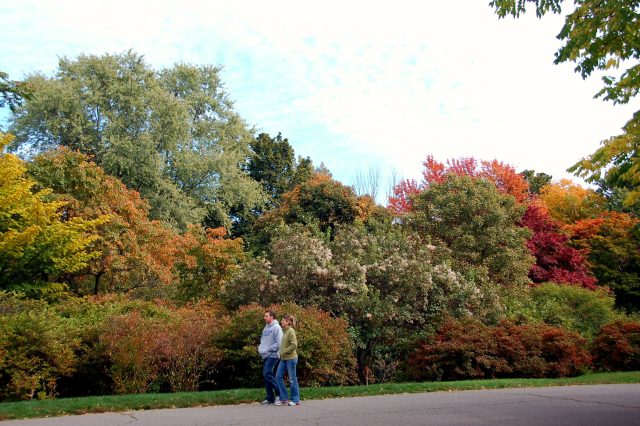
A haven for plant and animal lovers, Arnold Arboretum of Harvard University is spread across 281 acres, throughout which you can explore and learn about 15,000 types of plants. The arboretum offers both self- and docent-guided walking tours of varying levels of difficulty and time. The 120-minute, 2 1/2-mile director’s tour provides a glimpse of flora and fauna through Director Ned Friedman’s viewpoint. There are plenty of kids’ activities, including wildlife bingo and story walks, featuring illustrated children’s books displayed throughout the arboretum.

Mount Greylock State Reservation

Lanesborough

In the Berkshire Mountains on the western side of the state, you’ll find Mount Greylock State Park, which includes the highest point in Massachusetts at 3,491 feet.

There are a variety of activities to enjoy, depending on the season, including hiking, mountain biking and snowmobiling. Visiting in the fall? Be sure to check out one of the fall foliage driving routes and additional free activities like a farmers market and weekly community potluck dinner.

When it comes to one of the most popular things to do for free in Massachusetts – hiking – you’ll find a variety of trails based on different durations and abilities, including paths along former ski trails and ones that explore waterfalls. If you’re not up for the hike, you can also drive to the top of the mountain.

northeast landmark

Freedom Trail

Boston area

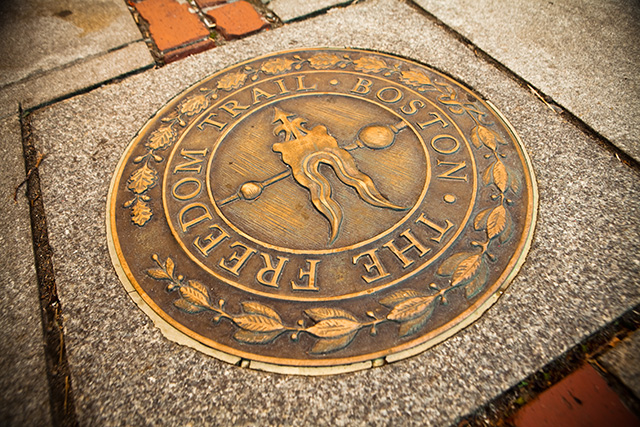
While some stops on the Freedom Trail, including the Old South Meeting House, Old State House, Paul Revere Home and Old North Church do have admission fees, others are free. Plus, it costs nothing to walk the trail.

Start at the downtown visitor center at Faneuil Hall, where you can plan your walk with the help of rangers. Then, head upstairs to see the great hall where protests, political rallies and debates have been held for the past 275 years. Visit the Bunker Hill Museum and climb the 294 steps to the top of the Bunker Hill Monument, commemorating an important Revolutionary War battle. Next up is the Charlestown Navy Yard, where you’ll find the USS Constitution, aka “Old Ironsides,” one of the oldest ships in the world still afloat, and the USS Cassin Young, an important ship from World War II. You can board and tour both.

Coit Observatory

Boston

Are you an astronomy lover or big fan of the great beyond? Judson B. Coit Observatory, located on the Boston University campus, offers public open nights on Wednesday evenings year-round, weather permitting. You can look through multiple Schmidt-Cassegrain telescopes and binoculars with the guidance of the observatory manager, who helps point out planets and constellations.

Admission to this evening event is free, but tickets are required, and they go quickly, so be sure to grab them online.

Great Falls Discovery Center

Turners Falls

The Great Falls Discovery Center is housed in a series of old mills and features diorama exhibits celebrating the history of the Connecticut River. They present information about the environments surrounding the longest river in New England and the impact of human settlement.

Interested in learning more? Check out the museum’s self-guided activity sheets. The property is also home to four acres of gardens and lawns for exploring and relaxing. The great hall features art exhibits, and special events are held for adults and children.

Cape Cod Rail Trail

Cape Cod

Some of the best free things to do in Massachusetts are in the great outdoors.

The Cape Cod Rail Trail brings runs for 25 miles through scenic Cape Cod, across six towns – Dennis, Harwich, Brewster, Eastham, Wellfleet and Orleans – and through state and national parks.

You’ll find the trail filled with mostly bikers during the warmer months, thanks to the flat and easy-to-navigate terrain. The trail is also used for running and walking, horseback riding and, in winter, cross-country skiing. Be sure to stop at some of the kettle ponds, formed by glaciers and featuring crystal clear water.

Massachusetts Historical Society

Boston

The Massachusetts Historical Society was founded in 1791 and claims to be the “oldest organization in the United States devoted to collecting materials for the study of American history.”

Collections are vast and shared with the public in exhibits, which have included past displays on the Boston Massacre, women’s voting rights and Boston abolitionists. Items in the collections include belongings of notable historical figures, newspapers and posters, letters between Revolutionists, tea leaves from the Boston Tea Party and even copies of the Declaration of Independence handwritten by John Adams and Thomas Jefferson.

Interested in doing some in-depth research? Make an appointment to visit the library.

Plan your next trip with AAA Travel.

And for more things to do in the Northeast, check out Budget-Wise.

What are some of your favorite free things to do in Massachusetts? Share them in the comments below.

Featured image: Arnold Arboretum. (Chris Devers / CC BY-NC-ND 2.0)

Subscribe to Your AAA Newsletter

Sign up and receive updates for all of the latest articles on automotive, travel, money, lifestyle and so much more!

Scenic and Historic Graveyards in the Northeast

A graveyard might not be the first place you’d think to visit or include as a stop on your next road trip or vacation. But graveyards and cemeteries can be beautiful and are often historic as well. In the Northeast, the historic graveyards near you may include the graves of pilgrims, founding fathers, artists, activists and other well-known historic figures. Here are some of the most scenic and historic graveyards in the Northeast.

Trinity Churchyard

Manhattan, N.Y.

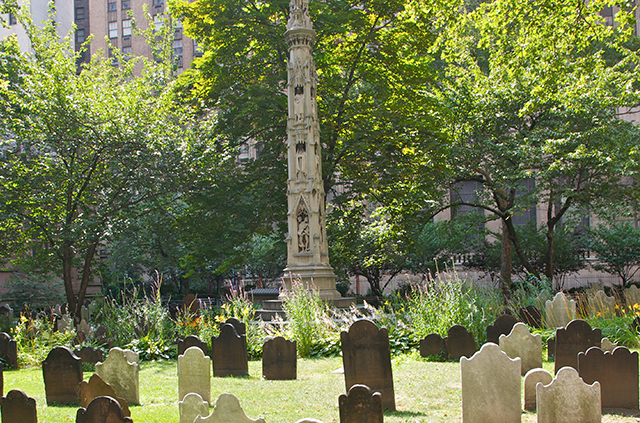
The parish of Trinity Church has three cemeteries, but none so historic as Trinity Churchyard in lower Manhattan. While it may have been in use since the 1660s, the oldest surviving memorial dates to 1681. Many historic figures are interred at Trinity Churchyard, including Alexander Hamilton, Elizabeth Schuyler Hamilton, Philip Hamilton, Angelica Schuyler Church, Hercules Mulligan, Francis Lewis, William Bradford and Robert Fulton. Make sure to visit the Soldiers’ Monument in memory of the Revolutionary War, and the Fireman’s Memorial Monument, in memory of six firefighters who were killed during the Civil War.

Calvary Cemetery

Queens, N.Y.

Trinity Churchyard is miniscule in comparison to Calvary. It’s the largest cemetery in the United States, containing over 3 million graves and stretching across 365 acres. Calvary Cemetery was featured in “The Godfather,” and many infamous organized crime figures are interred within its grounds. Other notable burials include the first person to be processed through Ellis Island and a survivor of the R.M.S. Titanic sinking.

Green-Wood Cemetery

Brooklyn, N.Y.

As you pass through the massive Gothic revival gates of Green-Wood Cemetery, you’re also stepping back into history. This rural cemetery, opened in 1838, is like a combination of a graveyard and an inviting public park. There are many notable figures interred in the grounds of this National Historic Landmark, including Leonard Bernstein, two of the Fox sisters, Nathaniel Currier, James Ives, Louis Comfort Tiffany, Jean-Michel Basquiat and several Roosevelts.

Mount Hope Cemetery

Rochester, N.Y.

The sprawling Mount Hope Cemetery was founded in 1838 and is an early example of the rural cemetery movement, which aimed to make cemeteries more inviting to the living. Rural cemeteries are designed like parks or gardens, with rolling landscapes and pleasing features like ponds or gazebos. Mount Hope Cemetery is certainly picturesque, and contains a wide variety of different monuments from its long history. You can even see Tiffany glass windows on some of the mausoleums. Many historic figures are buried here, but perhaps none so prominent as Frederick Douglass and Susan B. Anthony. Both gravesites attract visitors who often come on Election Day to pay their respects.

historic graveyards, Mount Auburn Cemetery
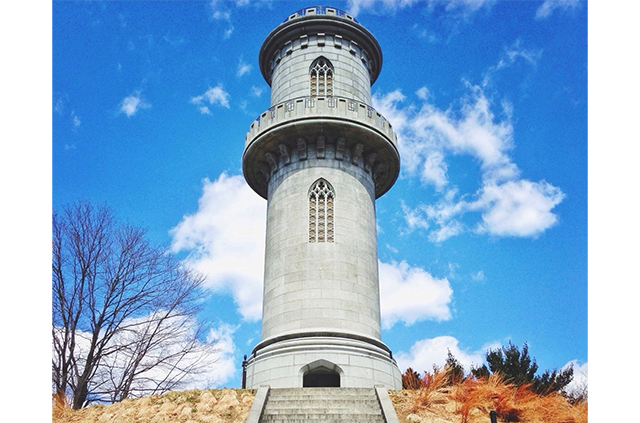
Mount Auburn Cemetery’s Washington Tower

Mount Auburn Cemetery

Cambridge, Mass.

Mount Auburn Cemetery was the very first rural cemetery in the United States, founded in 1831. This National Historic Landmark doubles as an arboretum, as its vast collection of trees shade its historic monuments and rolling landscape. Its beauty made it one of the most popular tourist destinations in the 1800s. Notable gravesites include Henry Wadsworth Longfellow, Winslow Homer, Harriet Ann Jacobs and Julia Ward Howe. Visitors can also enjoy buildings like the Washington Tower and the Bigelow Chapel.

Granary Burying Ground

Boston

Established in 1660, Granary Burying Ground is one of the most historic graveyards in Boston. While it may appear to be an unassuming old cemetery at first, Granary Burying Ground is actually the final resting place of Samuel Adams, John Hancock, Robert Treat Payne, Paul Revere and several members of Benjamin Franklin’s family (Franklin himself his buried in Philadelphia). It is also the final resting place of the victims of the 1770 Boston Massacre, including Crispus Attucks.

Myles Standish Burial Ground

Duxbury, Mass.

The Myles Standish Burial Ground, established in 1638, is the oldest graveyard in the country. It takes its name from one of its most famous inhabitants, Capt. Myles Standish, who came to America on the Mayflower. Several other Mayflower passengers are interred in the burial ground as well. This peaceful graveyard filled with time-worn and battered gravestones is listed on the National Register of Historic Places. Standish’s final resting place is marked with an American flag and surrounded by cannons.

Sleepy Hollow Cemetery

Concord, Mass.

Though it has no relation to “The Legend of Sleepy Hollow” by Washington Irving (that story takes place in Sleepy Hollow, N.Y.), Concord’s Sleepy Hollow is a particularly literary historic graveyard. Established in 1855, this cemetery is most well-known for Authors Ridge, the final resting place of Henry David Thoreau, Nathanial Hawthorne, Louisa May Alcott and Ralph Waldo Emerson. Visitors to these graves are known to leave pens, pencils and poems behind in honor of these literary legends. The cemetery is also home to several other writers, as well as Mary Lemist Titcomb, the founder of the Bookmobile.

Swan Point Cemetery

Providence, R.I.

First established in 1846, Swan Point Cemetery is a rural cemetery that’s still in operation today. Offering standard burials, green burials, cremation and more. There are a lot of ways to spend eternity in Swan Point Cemetery. Visitors can take self-guided historical walking tours, which will take them to sites like the Memorial Grove Garden Megalith, the largest stone in an American cemetery, the white marble Grosvenor Lot, the Hope Memorial Garden and more. Many Rhode Island governors and other politicians are buried in these grounds, as well as author H.P. Lovecraft.

Hope Cemetery

Barre, Vt.

Barre is also known as the Granite Capital of the World, and that’s plain to see in Hope Cemetery. Established in 1865, Hope Cemetery features exceptional granite monuments in unique shapes and styles. The monuments and gravestones of Hope Cemetery are so unique that it’s also known as a museum of granite sculpture. Many of the gravestones in the cemetery were actually designed by those resting just below. Visitors can see monuments shaped like airplanes, furniture, race cars, intertwined lovers and more.

Grove Street Cemetery

New Haven, Conn.

Time to head to the Ivy Leagues. Grove Street Cemetery is a historic cemetery surrounded by the Yale campus. Founded in 1796, the Grove Street Cemetery was the first chartered burial ground in the United States. It was also the first cemetery to allow for the creation of family lots, so family members could be buried alongside each other. Before then, bodies were simply buried anywhere in the graveyard where there was enough room. The “city of the dead” layout of Grove Street Cemetery included named roads and walkways to make it easier for visitors to navigate. Unsurprisingly, many Yale presidents and faculty are buried here, along with notable historic figures like Eli Whitney and Noah Webster.

Are we forgetting any historic graveyards or cemeteries? Tell us about them in the comments below!

Looking for some chills and thrills with your history? Check out these haunted places in the Northeast.

Subscribe to Your AAA Newsletter

Sign up and receive updates for all of the latest articles on automotive, travel, money, lifestyle and so much more!

Where to Find the Best Street Foods Near You

One of the best ways to experience a new country or culture is through a culinary lens. Cuisine is a pathway to the history, politics and economy of a culture, and there is perhaps no better avenue than street food.  

What we have come to call street food is often the everyday fare of working people around the world. It is food that is affordable, practical in that it is usually portable, and fast, frequently consumed on the go from work or school. For travelers, it’s a way to eat on budget and among locals.

Some of my most memorable travel experiences have been eating meals streetside, snacking while walking along a river that intersects a city or simply people watching while sampling a place’s best street food offerings.

For the purpose of this article, I define street food as food bought and consumed outside, rather than inside of a restaurant setting. Streets foods are often sold from food trucks, carts and stalls, hawker centers, night markets and at the roadside.   

When you’re not traveling the globe, the next best thing is to visit the places in our communities where chefs are serving street food favorites. The following are the types of street foods I remember fondly from my own travels, offered right here in the Northeast.

Ta’amiya and Hawawshi

Cairo, Egypt, is a bustling, energetic city situated adjacent to the Sahara Desert. Travelers come in droves every year to see the Great Pyramid of Giza. But Cairo also offers a vibrant street food scene, sometimes overshadowed by the pyramid’s allure.  

Translated from Arabic as “tasty little bits,” ta’amiya is a popular Egyptian street food. And while they look much like traditional falafel, they aren’t made with chickpeas. These snackable fritters are made with mashed fava beans, garlic, onions, coriander and cumin and dressed in sesame seeds.

I get my ta’amiya at Zooba in Manhattan’s Lower East Side, where they’re moist, fluffy and packed with flavor. Served as side dish in portions of three, they appear on the menu as Egyptian Falafel.

best street food

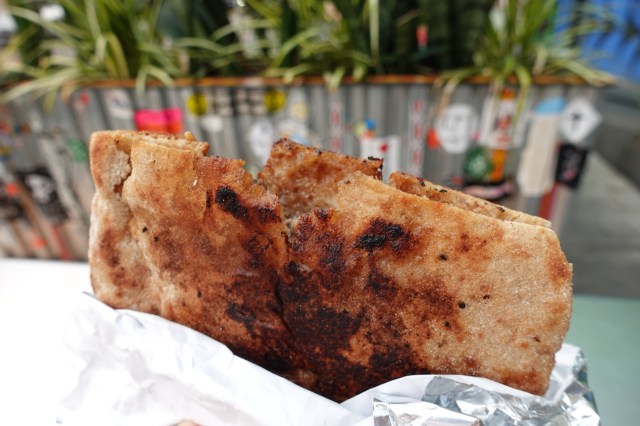
But the main attraction at Zooba is the Hawawshi, a handheld crispy pita stuffed with minced meat, onion, garlic, peppers and herbs. I go for the Street Hawashi, which features meat without any additional toppings, though options with cheese and slaw are also offered. Like most types of street food around the world, Zooba’s hawawshi is portable, affordable and delicious.

food to try

Oyster Omelet

Hawker centers in Singapore and Malaysia are frenetic, crowded, mostly outdoor food venues with a variety of food stalls. They are perfect for gathering with friends and sharing family-style meals from a large sampling of the region’s offerings.

In both Singapore and Kuala Lumpur, Malaysia, I was hooked on oyster omelets. These savory, fried, greasy, delicious concoctions of egg, green onions, bean sprouts and a tapioca starch batter, feature a magical mashup of chewy, crisp and gooey textures. Paired with spicy sambal or chili oil, oyster omelets are the ideal accompaniment to a cold local beer on a hot day.

My favorite oyster omelet in New York City can be found at Kopitiam. Their oh chien (oyster cake) is dressed with fragrant, fresh cilantro and comes with spicy house sambal sauce. If you grab an outdoor table, it almost feels like being transported Jalan Alor Food Street, Kuala Lumpur’s famous hawker center.

Baleadas

Baleadas are a seemingly simple meal of flour tortillas filled with refried beans, queso and crema. Filling variations can include sliced avocado, pickled red onions and eggs, chicken, pork, or beef. Honduran crema and Honduran crumbled queso duro make the flavors of baleadas pop, but it’s the freshness of the ingredients that make them special.

Baleadas will fill you up cheaply and quickly before starting your day. After a week in Honduras, I was hooked on breakfast baleadas and I long to go back to experience them again; for now, I’ll stick to Rinconcito Copaneco in Jersey City until I can return again.

Pho Bo Kho/Bo Kho

I had limited exposure to Vietnamese food where I grew up in the suburbs. Today, Vietnamese food in America is far more prominent.

Pho, a beef broth, rice noodle soup, is the most ubiquitous Vietnamese dish in the States, though in my opinion, it is best experienced streetside, on a plastic stool, mopping the sweat from your brow in the thick, humid, Vietnamese air.

Pho Bo Kho is closer to a stew than a traditional Pho, featuring a darker red broth, carrots, lemongrass, star anise and cinnamon. The rich, spicy flavor induces sweat, which cools you on even the hottest days in Saigon. If you are traveling through Connecticut, stop at Pho Viet, just ten minutes from central Hartford, and order a steaming bowl of Bo Kho.

Cevapi

Cevapi is the national dish of Bosnia and Herzegovina, though a similar variation is found throughout the Balkan region. Minced lamb, veal, pork, beef or a combination of meats are seasoned with salt and pepper, shaped into sausages or miniature patties, skewered and roasted. The meat is served with flatbread and chopped, raw, white onion, which begs to be made into a sandwich.

Cevapi is sold in restaurants and as a street food dish, and there are slight regional variations within Bosnia & Herzegovina. Whether you are in Mostar, Sarajevo, or the countryside, it’s a foregone conclusion that you will be repeatedly asked, “Have you tried cevapi yet?” Try it for yourself at Burek King in Clifton, New Jersey.

harira

Harira

Harira is a hearty soup of lentils, tomatoes, chickpeas, turmeric, cumin and cinnamon. The non-vegetarian variety comes with chunks of lamb. The soup is often considered to be Morocco’s national dish, and you can find it offered morning, afternoon and night.

At the Jemaa el-Fna Squarein Marrakech, ware sellers, street carts, tourists, locals and performers all mix to form a lively evening scene. Street hawkers beckon patrons towards their bowls of snail shells, skewers of grilled meats and boiling pots of harira. Get some for yourself at Zerza in Manhattan’s Essex Market. Morocco is well-known for its tagine, but it is high time that its street food culture gets the recognition it deserves.

stinky tofu

Stinky Tofu

There was a popular streetside lunch bar in Taipei City that I passed every day while I was in Taiwan, and I could smell the pungent, noon-time meal before I could ever see the restaurant’s storefront. The odor was coming from stinky tofu, a popular dish served in restaurants and night markets, often as a side dish or as part of a larger meal.

True to its name, stinky tofu is tofu that has been fermented in brine for upwards of a few months, and served with any combination of mustard greens, cabbage/kimchi, dried shrimp, bamboo shoots and Chinese herbs. The dish is sour, spicy and savory with a mix of soft and crunchy textures. Yes, it does smell quite funky, but it is also delicious. (I am deeply impatient with anyone willing to write off stinky tofu based on its scent alone.)

In Queens, head to the New York Food Court in Flushing for your stinky tofu fix. In Manhattan, try Bings and Noodles for a slightly less funky variety.

tamales

Tamales

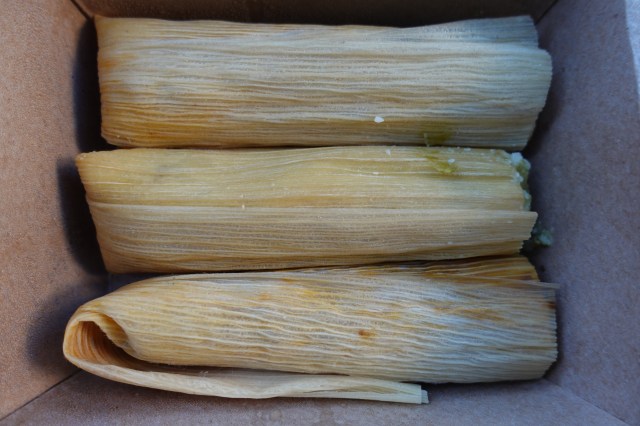
Tamales are a handheld, portable meal that originated in Mesoamerica, having likely spread from Mexico or Guatemala to the rest of Latin America. They are made of masa or corn dough, steamed inside of a banana leaf or a corn husk. The inside is commonly stuffed with slow-cooked pork or chicken, beef, beans, cheese, and/or mole.

The best tamales come from fresh masa, and my indicator of a great tamale is whether it has retained a bit of moisture rather than being dried out. My favorite tamale in New York City comes from Factory Tamal. The mole poblano with chicken tamale showcases chef Fernando Lopez’s roots from Puebla, where he learned to make mole in his family’s tradition.

best street foods

Egg Hoppers

Hoppers are light and crispy, bowl-shaped pancakes made from a fermented rice flour and coconut milk batter that is steamed or fried. They come with a sunny-side up egg in the center and are often served with a sambal or curry.

This was my go-to breakfast in Colombo, Sri Lanka, ordered adjacent to the beach and enjoyed overlooking the surf. At Lakruwana Restaurant in Staten Island, you can order a hopper meal, which comes with one egg hopper filled with your choice of vegetables, chicken, pork, lamb, beef, fish or shrimp and three additional plain hoppers.

types of street food

Pizza

Ok, pizza may not be a street food I have eaten overseas – at least not in the same form as a New York slice, but it is the epitome of what makes street food so wonderful.

As a New Yorker, I can tell you that pizza is ubiquitous in New York. It crosses class boundaries and is eaten by all regardless of age, occupation, religious beliefs or cultural background. It’s eaten on sidewalks, on the subway (don’t do this), in parks, in the office, at school lunch and in restaurants in all corners of the five boroughs.

Pizza has become something to brag and argue about, creating tribal lines as New Yorkers claim their favorite pizza spot as the best. Local variations in Detroit, Chicago and Connecticut have created loyal followers, ready to argue on behalf of their home city’s pizza like rival sports fans defending their teams.

My favorite slice in the city is the burrata slice at L’industrie in Williamsburg, Brooklyn. The pizza shop expanded its size within the last year, and business has been booming, as evidenced by a packed patio and lines out the door on Friday nights. Grab a few slices and a soft serve ice cream topped with olive oil and salt.

Once you have traveled throughout the Northeast to try each of these street food classics, I hope you will feel inspired to go to the true source of each meal. There is nothing that compares to the experience of having a local meal in a foreign culture.

So, hit the road to get your fill within your home region for now but try to hop on a flight to experience street food abroad someday, too. A AAA travel agent will be happy to help you plan your trip!

Featured image: Ta’amiya from Zooba.

Subscribe to Your AAA Newsletter

Sign up and receive updates for all of the latest articles on automotive, travel, money, lifestyle and so much more!

Should You Change Your Own Oil?

If you drive a car, you probably also know that you need to change the oil every so often to keep things running smoothly. And as we’ve discussed, proper car maintenance begins with oil checks – give it a read for tips on when to know if it’s time for an oil change.

But how often should you be changing your oil? Is it something you can do yourself or do you need to pay someone else to do it? And what kind of oil and filter should you use? Here are the answers to these common questions.

How often should the oil be changed?

At one time, the hard-and-fast rule for oil changes was that you should change your oil every 3,000 miles or every three months. Although some people still adhere to this schedule, it’s really not necessary to change your oil that frequently. Engines and oil have advanced over the years, and many car makers recommend waiting 5,000 to 10,000 miles, or six to 12 months, between oil changes. Consult your owner’s manual for guidance.

Holding off on oil changes can add up to a nice yearly savings. If you drive 15,000 miles per year, for example, and follow the old adage of changing your oil every 3,000 miles, you’re looking at five oil changes a year. If you’re paying the average cost of $40 for an oil change (using conventional oil) at a garage, that’s $200 a year. However, if you drive 7,500 miles before changing the oil, that’s only two oil changes a year, costing you $80.

If you don’t drive very much or only for short distances, you might think you don’t need to worry about regular oil changes, but the opposite is true. If you don’t drive on a regular basis or if you go only a few miles at a time, the oil in your engine doesn’t heat up enough to efficiently burn off moisture. You’ll need to change it before you hit the mileage suggested between changes. For example, if your owner’s manual says you should change your oil every 8,000 miles, consider getting it done at 6,000 miles instead.

change your oil

Should you change your own oil?

While it’s easy to find a professional at an AAA Approved Auto Repair Facility to do the job, another way to lower the cost of an oil change is to do it yourself. Changing the oil is one of the more basic, and easiest, automobile maintenance tasks. After you’ve done it a few times, you’ll not only save money on each change but you’ll save time waiting for your car to be done at the shop.

Changing your own oil

To change your car’s oil, you’ll need the following equipment:

• A wrench to remove the drain plug (consult your owner’s manual for what kind/size wrench).

• An oil filter wrench.

• An oil pan.

• A funnel.

• Latex or other strong gloves.

• Optional: Jack or ramps, depending on whether you can get under your car without them.

• Oil.

• Oil filter.

• Replacement plug.

The basic procedure for changing your oil is as follows:

  1. Start with a warm engine. If your car has been sitting for a while, run the engine for a few minutes first. Raise the vehicle by driving onto a ramp or jacking the car up and safely supporting on jack stands. Block off the back tires so the car doesn’t roll and apply the parking brake and open the hood. 
  2. Consult your owner’s manual to locate the drain plug under your car. Set an oil pan in place underneath. Wearing gloves, remove the plug and allow old oil to drain out. Tighten the drain plug to the proper specifications. (Some manufacturers recommend replacing drain plug gaskets with each oil change)
  3. Find and replace the old oil filter. There are two types of filters: spin-on and cartridge. Using a suitable wrench or socket, remove the filter or canister and follow the filter directions for proper installation. Make sure the drip pan is ready to catch any leaks.
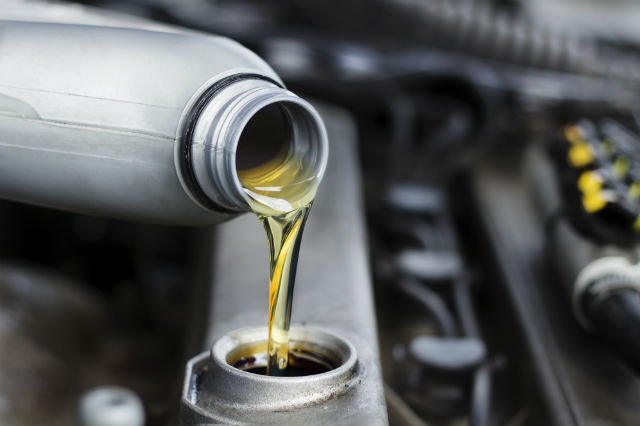
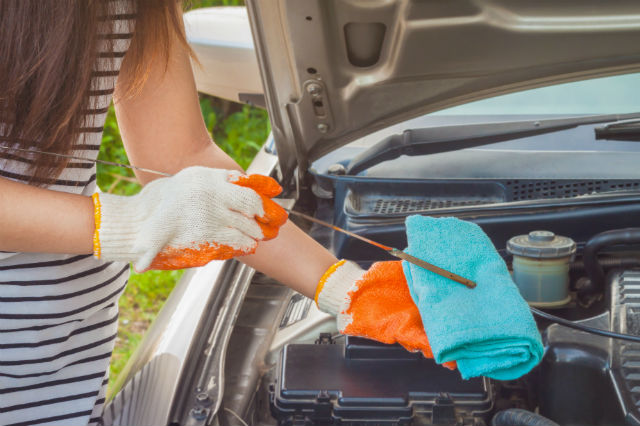
  4. Locate the oil cap, usually at the top of the engine. Remove cap and use a funnel to add new oil of the proper grade to the manufacturer’s indicated volume. On a level surface, check oil level using the dipstick, or in some cases the onboard computer system.
  5. Store old oil in a sealable plastic container.

Once you’ve added the oil, check the the level with the dipstick. You might notice the oil you’re adding isn’t dark like what’s on the dipstick, but instead more of an amber color. That could make you think your oil is dirty and should be changed immediately. Oil turns dark pretty quickly so the color isn’t a great indicator of its cleanliness. Sticking with the manufacturer’s recommended intervals for oil changes is the best way to be sure your oil is clean and doing its job.

As for the old oil, most auto parts retailers will accept used motor oil. Depending on where you live, your community may also have a hazardous waste disposal program you can utilize.

How much do you save changing your own oil?

So, is it cheaper to change your own oil? By doing this task yourself, you’ll save between $25 and $75 per oil change, depending on the type of oil and filter you use.

Which kind of oil and filter should you use?

At first glance, synthetic oil would seem to be the no-brainer choice because it lasts significantly longer than conventional oil. However, many vehicles do not require expensive synthetic oil. Check the owner’s manual or inside the oil cap on newer model cars to see the recommended oil weight. If you tend to drive short distances, push your vehicle (such as pulling a trailer) or live in an extreme climate, then synthetic would be the better choice to extend the life of your motor.

Read more about synthetic vs. conventional oil.

When choosing an oil filter, select one that is rated for the mileage interval you are following between oil changes. In other words, don’t use a cheap filter with expensive synthetic oil – the filter won’t last, and you will have wasted money using the higher-end oil. The cost difference between an economy filter and a better-quality one isn’t great, so it is worth spending a little more to get a filter that will last. Consult with the clerk at the auto parts store or check the filter manufacturer’s website for more detail about which filters will last longer, particularly if you’re aiming to go longer between oil changes.

Have more questions about how to change your own oil? Ask the Car Doctor

If you’re still not comfortable with the idea of changing your own oil and would rather a professional do the job, find a AAA Approved Auto Repair Facility near you. 

Subscribe to Your AAA Newsletter

Sign up and receive updates for all of the latest articles on automotive, travel, money, lifestyle and so much more!

How a Reverse Mortgage Can Give You a Comfortable Retirement

You’ve probably been planning for your retirement for most of your adult life. And even after decades, you may still find yourself with a limited monthly income during your retired years. This can make it difficult to pursue all the interests you hoped for. If you find yourself in this position, a reverse mortgage could be right for you.

A reverse mortgage is a unique financial tool that can increase your monthly income, providing the financial freedom you dream of during retirement. Here’s how.

What exactly is a reverse mortgage?

A home equity conversion mortgage is a mortgage for homeowners age 62 or older who would like to access the equity they have built up in their home in the form of tax-free loan proceeds. A reverse mortgage allows homeowners to tap some of the equity they have in their home without adding to their monthly debt. The title remains in the borrower’s name, so you continue to own your home and the lender’s interest is simply the mortgage loan.

A HECM is the only reverse mortgage product on the market that offers insurance through the department of Housing and Urban Development.

What are the benefits?

A reverse mortgage is unique because there are no monthly payments. This can free up a significant amount of money each month. “Borrowers may be interested in supplementing their monthly income by setting up monthly direct deposits from their reverse mortgage,” says Julia Braun, a Reverse Mortgage Consultant for AAA. “They can customize the amount, term and even have the option of setting up a tenured monthly payment, which is guaranteed for life.”

For some borrowers, the main benefit is simply paying off an existing mortgage on their home. There are never any payments due on a HECM while the borrower lives in the home. Only the funds used to pay off the mortgage (plus closing costs and other cash requested by the homeowner) accrue interest. Any additional loan proceeds are made available through a Line of Credit that grows over time.

Who might benefit?

“The product is best suited for those borrowers who plan to remain in their home,” Braun says. “The loan can be beneficial for almost any homeowner age 62 or older who has significant equity in their home.”

How much can I borrow?

A HECM has a loan limit of up to $979,800. How much of that you can receive from a reverse mortgage depends on several factors. These include your age, the value of your home, current interest rates and an assessment of your finances.

In general, the older you are the more money you can receive from a lender.

Do reverse mortgages come with any fees?

Yes. You may have an origination fee, mortgage insurance premium, property appraisal, typical third-party fees and a modest charge for independent counseling.

Most fees can be rolled into your loan, minimizing your out-of-pocket costs.

How can a reverse mortgage aid your retirement?

“Freeing up your home’s equity, without adding to monthly debt can benefit a wide range of borrowers,” Braun says. “From eliminating a current monthly principal and interest payment on an existing mortgage, to having access to a line of credit, a reverse mortgage can provide liquidity for any number of purposes.”

Home improvements, medical expenses and dream vacations are just some of the endless expenses a reverse mortgage can fund, allowing you a greater amount of financial freedom during your retirement.

How is a reverse mortgage paid back?

The loan doesn’t have to be repaid until the last borrower has not lived in the home for six months. This can be extended for up to one year. When this occurs, the funds from the sale of the house are used to repay the loan.

If the home is left to an estate, it will usually sell the home to pay the loan as well. Any extra equity after the loan is paid off belongs to the estate. However, heirs also have the option to pay off the loan by other means and keep the property.

Are you considering a reverse mortgage? AAA’s dedicated experts are here with trusted, and reliable step-by-step assistance along the way, all from the comfort of your own home.

Subscribe to Your AAA Newsletter

Sign up and receive updates for all of the latest articles on automotive, travel, money, lifestyle and so much more!

Road Trip to the Northeast’s Most Famous Television Locations

The Northeast is the setting of some of the most iconic television shows of all time, from “Cheers” to “Sex and the City.” Relive some of your favorite TV moments with a road trip to famous television locations.

There are TV shows that simply took inspiration from the Northeast and filmed elsewhere, others included establishing shots of real buildings and some filmed extensively in and around real Northeast landmarks and locations.

Here are some of the spots you should visit on your small-screen tour of the Northeast.

New York

Sex and the City

It’s right there in the name! New York City is a major character in “Sex and the City,” and you can find filming locations all over.

Visit Carrie Bradshaw’s apartment, at 64 Perry St. in the West Village. While you’re in the neighborhood, swing by Magnolia Bakery for a taste of its iconic cupcakes. If you want to buy the exact same cupcake as Carrie, get the vanilla cupcake with pink frosting and a sugar daisy. You can also stop and grab a cosmo at Onieal’s, which “Sex and the City” fans will recognize as the filming location for the in-universe bar Scout.

“FRIENDS”

So no one told you that “Friends” wasn’t actually filmed in New York City? That’s OK! New York is still there for you – and it’s filled with locations used for exterior shots that inspired some aspect of the show.

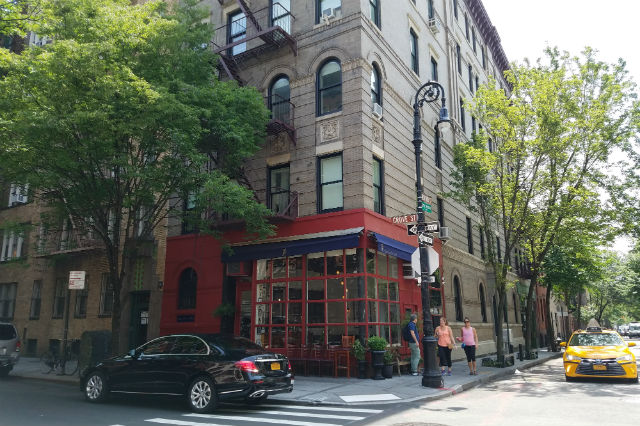
First off, you’ll want to visit Pulitzer Fountain, across from the Plaza Hotel. It’s said to be the inspiration for the fountain featured in the opening credits. It’s probably not a good idea to dance around inside it, though. You’ll find the exterior of Monica, Rachel, Joey and Chandler’s apartment building on the corner of Bedford and Grove streets in the West Village. You can also visit Bloomingdale’s, where Rachel got her start, or the American Museum of Natural History, which inspired Ross’s workplace.

If you want to be even more immersed, check out The FRIENDS Experience, where you can pose for photos inside detailed set replicas and see real props and costumes from the series. It just might make your day, your week, your month or even your year!

“Seinfeld”

“Seinfeld” is a New Yorker’s show about New York. “Seinfeld” fans must stop for a meal at Tom’s Restaurant, which was used as the exterior of their favorite hangout, Monk’s Cafe. The interior of Tom’s Restaurant was finally featured in Jerry Seinfeld’s other show, “Comedians in Cars Getting Coffee,” when he interviewed none other than Jason Alexander.

Still feeling peckish? The Original Soup Kitchen, the inspiration for one of the show’s most iconic episodes, is still serving up delicious bowls of soup. Jerry Seinfeld might be banned, but that shouldn’t stop you from trying some!

Let's Go!

AAA members can save up to 35% off the base rate on Hertz rentals. *Ends 1/31. Taxes and fees excluded. Terms and exclusions apply.

Book Today

Connecticut

“Gilmore Girls”

“Gilmore Girls” wasn’t actually filmed in Connecticut, but the state is ever-present in the show’s cozy New England aesthetic. The fictional town of Stars Hollow is said to be based on the real-life towns of Kent, Washington Depot, West Hartford and New Milford. If you want to run away to live your “Gilmore Girls” dreams – sipping coffee on a brisk fall day and strolling past the town gazebo – they might be the next vacation spot for you.

New Jersey

“The Sopranos”

“The Sopranos” is not only one of the best shows to come out of New Jersey, it’s one of the best shows ever. If you throw a rock in New Jersey, you’ll probably hit a “Sopranos” filming location. Get a sweet treat at Holsten’s in Bloomfield, the site of the series finale. Sneak a peek at the Soprano family mansion, which sits on a real cul-de-sac in North Caldwell. If you’re feeling brave enough, you can even try a visit to the notorious Pine Barrens. And those are just the G-rated locations.

Reality TV

New Jersey has been home to many reality TV shows, but perhaps none so famous as “Jersey Shore” and “Cake Boss.” “Jersey Shore” fans can visit the iconic boardwalk in Seaside Heights, as well as the Shore Store, where the cast worked, and the Beachcomber Bar & Grill, where they played. Just don’t forget to GTL. “Cake Boss” fans can get a taste of their favorite show at the real Carlo’s Bakery in Hoboken. Yum!

Massachusetts

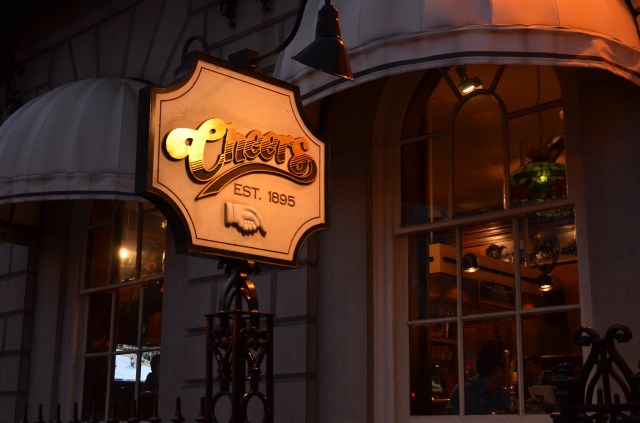
Cheers Boston 053” by Michael Kappel is licensed under CC BY-NC 2.0.

Cheers

Do you want to go where everyone knows your name? At Cheers on Beacon Hill, you can step into the bar that inspired the TV show. Originally known as the Bull & Finch Pub, it was rocketed to fame when it served as the exterior location for the eponymous bar in “Cheers.” Now, the inside of the bar looks like “Cheers,” too. It’s a complete replica, plus some modern conveniences. Diners can enjoy a themed menu, as well as “Cheers” trivia. If you’re a fan, it’s a can’t-miss trip.

Castle Rock

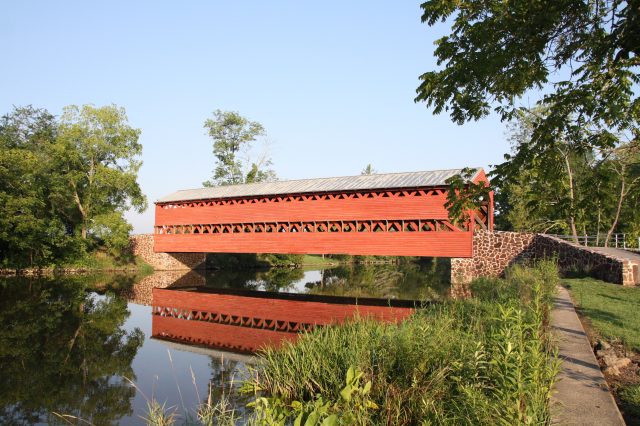
Nothing says “New England” like Stephen King. “Castle Rock,” a horror anthology series loosely based on King’s works, was filmed mostly in Massachusetts. A large portion of scenes took place in Orange and the surrounding areas, including Gardner.

“Castle Rock” fans can see the Slencil Company buildings, which served as the Castle Rock police station and other local shops in the series, and catch a glimpse of Ruth Deaver’s house, a Victorian style mansion, in Orange. King fans can even visit the Public Health Museum in Tewksbury, which served as the filming location for the Juniper Hill Psychiatric Hospital.

Rhode Island

“Family Guy”

It’s no secret that “Family Guy” wasn’t filmed in Rhode Island … because it’s animated. But the fictional town of Quahog was heavily influenced by real-world locations. The stated inspiration for Quahog is Cranston, and the show heavily features the Providence skyline in the distance. Brown University, McCoy Stadium and even the Big Blue Bug have all been featured on the show. The show’s Nifty Fifties Diner is said to have been inspired by the Modern Diner, a historic train car diner in Pawtucket. While you’re in the area, stop by the Rhode Island School of Design, where creator Seth MacFarlane went to college and fell in love with the Ocean State.

Have you ever been to any of these locations? What about the location of your favorite TV show? Let us know in the comments below!

Need a ride? AAA members can save up to 35% on Hertz rentals when booked now through 10/28.

Subscribe to Your AAA Newsletter

Sign up and receive updates for all of the latest articles on automotive, travel, money, lifestyle and so much more!

8 Free Things to Do in New York

budget wise

It may be hard to believe, but a trip to New York doesn’t have to break your budget. Whether exploring the boroughs of New York City or hiking the great outdoors upstate, there are plenty of activities and places to visit that won’t cost you a thing. So, put your wallet away and read on to discover our list of free things to do in New York.

Staten Island Ferry

Departs from Manhattan (4 Whitehall St.) and Staten Island (1 Bay St.)

The Staten Island Ferry takes 117 trips a day between Manhattan and Staten Island, and while many think of it as solely a means for commuting, traveling the Staten Island Ferry is also one of the best kept not-so-secret free activities in New York.

A round trip gives you a free tour of New York Harbor from the water, including views of the Statue of Liberty, Ellis Island and the bridges and skyline of the city.

The ferry operates 24 hours a day, seven days a week. The 5-mile ride takes about 25 minutes each way.

Saranac 6

Adirondacks

The Adirondacks region is known for having a variety of hiking trails across its 46 mountains, each catering to hikers of varying abilities. The Saranac 6 challenge is centered around six mountains in the Saranac Lake region of the Adirondacks: Baker Mountain, St. Regis Mountain, Scarface Mountain, Ampersand Mountain, Haystack Mountain and McKenzie Mountain.

Hikers who summit all of the mountains obtain official recognition as a “6er” as noted by a special certificate and the opportunity to ring the 6er bell located in Berkeley Green Park. The hikes add up to about 30 miles and an elevation gain of 8,000 feet. If you complete the challenge in the winter, you’ll be awarded designation as a Winter 6er, while completing all six hikes in under 24 hours will designate you as an Ultra 6er.

Walkway Over the Hudson State Historic Park

Connecting Poughkeepsie and Highland

Take a stroll along this 1.28-mile-long steel cantilever bridge that crosses over the Hudson River. The elevated pedestrian bridge, which claims to be the world’s longest, is accessible by staircase or a 21-story glass elevator, the latter of which connects the bridge to the Poughkeepsie Train Station.

Enjoy a walk on your own, take a group tour (for a fee) or listen to the mobile audio tour, which tells you about the animals you might spot along your walk (such as bald eagles), sites you’ll see (such as the Catskill Mountains) and about local historic sites. The Walkway Over the Hudson is both ADA accessible and open year-round.

Empire State Trail

Across New York State

The Empire State Trail has three sections totaling 750 miles and crossing the state of New York. One trail spans from Manhattan to Albany (the Hudson Valley Greenway Trail), another stretches from Albany to the Canadian border (the Champlain Valley Trail) and the third connects Albany and Buffalo (the Erie Canalway Trail).

The trails took four years to build and are designed for walkers, runners and bikers to enjoy the sights as they pass through the Hudson River Valley, Adirondacks and along the Erie Canal. Snowshoers and cross-country skiers use the trails during the winter, and some portions are open to horseback riders. Before you embark on your Empire State Trail adventure, be sure to order a printed map online to find museums and sites of historical interest along the way.

free things to do in new york

New York State Capitol

Albany

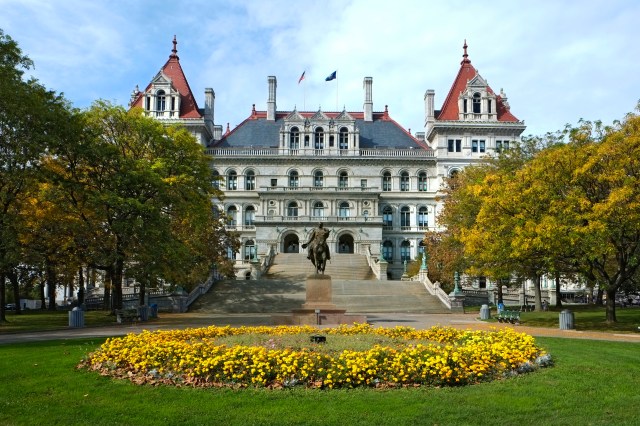
One of the free places to visit in New York’s capital city of Albany, the New York State Capitol is an edifice built in the 1880s and marked by late 19th-century architecture. The staff gives 45-minute tours Monday through Friday of the state legislative chambers, hall of governors, governor’s reception room, hall of New York and historic staircases and carvings throughout the building. Reservations for tours are suggested.

The capitol is located on the Empire State Plaza, where there’s plenty more to explore, including art, memorials, The Egg Performing Arts Center, special events and more.

The High Line

From Gansevoort Street to 34th Street on Manhattan’s West Side

This elevated railway-turned-walkway stretches through 1.5 miles of the West Side of Manhattan, featuring gardens, an open-air food court (operational in the warmer months), art installations and live performances along the way.

Once considered an eyesore to be taken down, the High Line was designed after the community came together to salvage it. Walking along the path, you’ll discover a woodlands area near the Meatpacking District, or head to the area between 14th and 15th streets to see a unique water feature.

The Museum at FIT

Manhattan

The museum at the Fashion Institute of Technology is the only one of its kind in New York City committed solely to the study of fashion. Its collection includes approximately 50,000 pieces of clothing and accessories designed from the 18th century to present. Exhibits celebrate iconic designers and design and are always rotating. Upcoming exhibitions include a spotlight on shoes and hip-hop culture’s influence on fashion.

Niagara Falls State Park

Like many spots on this list, visiting Niagara Falls State Park is one of the things you can do for free in New York that showcases the state’s diverse outdoor landscape. Designed by Fredrick Law Olmstead, the architect behind Central Park, the state park covers 400 acres and includes views of the falls, gardens and 15 miles of hiking trails.

Of course, you can also choose to enjoy additional attractions at the falls for a fee, such as heading to the top of the observation tower, visiting the Cave of the Winds or riding the Maid of the Mist.

Plan your next trip with AAA Travel.

And for more things to do in the Northeast, check out Budget-Wise.

What are some of your favorite free things to do in New York? Share them in the comments below.

Subscribe to Your AAA Newsletter

Sign up and receive updates for all of the latest articles on automotive, travel, money, lifestyle and so much more!

Why Life Insurance Claims Get Denied

Life insurance is one of the primary resources people rely on to provide surviving family members with financial stability after their death. To have a life insurance claim denied creates the very dilemma that the policy’s existence was intended to prevent.

Before you run the risk of your policy’s rejection, here’s a crash course on how your coverage could get derailed.

Making a Life Insurance Claim

Once the insured has passed away, it falls to the beneficiary to report the death to the life insurance company and complete all the necessary paperwork. The details will vary based on both the provider and the policy you have, but the beneficiary will need to obtain the death certificate as well as the letters testamentary (also known as the letters of administration) that prove they are indeed the intended recipient of the policy’s death benefit. After the documentation is submitted, the insurance company typically has 30 days to respond.

At this point, the beneficiary can wait and hope that the claim is paid as expected, in which case they will likely have to choose between a lump sum or regular deposits in a designated account. Whatever form it takes, this insurance payout represents the provider’s fulfillment of its side of the contract with the insured. The provider might also opt to delay or deny the life insurance claims. Both results require immediate action from the beneficiary, but a denied death benefit in particular means that you might need to contest the provider’s conclusion if you believe you’re in the right. We’ll discuss that approach in a bit.

life insurance claims

Let’s go over some of the main reasons for claim denial:

Misrepresentation and Inaccurate Information

Anytime you provide faulty or incomplete personal data to your life insurance company, you run the risk of leaving your policy open to material misrepresentation. In this scenario, an applicant is accused of falsifying information – whether intentionally or not – in order to ensure that their policy is approved. An example of this would be omitting details about a serious medical condition. A word of advice: Double-check your application before you submit it to ensure that you’re being as truthful as you can be.

The Contestability Period

Most life insurance policies feature a contestability period during the first two years after the purchase date, during which the provider can reassess and contest (hence the name) your application. If the policyholder dies during this period, the insurance company can withhold delivery of the death benefit on the basis that you provided incorrect data on your application. Again, a blatantly honest application could mean the difference between your family’s financial protection or lack thereof.

Lapsed Policies and Overdue Premiums

If you stop paying your electric bill, eventually your home’s lights will go out. The same principle applies to your life insurance coverage. If you fail to pay your premiums on time (or within the designated grace period), your policy will likely lapse. If the policyholder passes away after this happens, your plan will no longer be active, leaving any claims likely to be denied in short order. You’re better off reaching out to your representative to handle any payment issues before such a predicament occurs.

Exclusions and Uncovered Causes

Depending on your policy, not all causes of death may be covered by your provider. If an accidental death falls outside the parameters of your policy but winds up being the reason for the insured’s untimely passing, your claim will most likely be denied. This rationale also applies to any exclusions – the circumstances and conditions that are decidedly not covered – that may be listed in your policy. The most popular life insurance exclusions relate to suicidal deaths, but check your policy details to see which pertain to your case.

When You Want to Contest

Even though a claim denial can wreak havoc on a beneficiary’s financial outlook, he or she can still contest the decision if they truly believe that it was reached in error. The first step should always be to alert the provider to your dispute and see if an amicable resolution can be reached between the beneficiary and the insurance company itself. If this approach doesn’t work, the beneficiary may need to seek out legal counsel and mount a court case against the provider.

Get a Life Insurance Quote:

Subscribe to Your AAA Newsletter

Sign up and receive updates for all of the latest articles on automotive, travel, money, lifestyle and so much more!

How to Get the Best Deal on a Rental Car

Once you arrive at your favorite destination, you need a way to get around town. A rental car is the perfect solution as it allows for the convenience of going where you want, when you want. There are lots of different styles of cars to choose from and a wide range of prices to fit your vacation and budget. So, how do you get the best deal on a rental car? Here are a few tips and tricks.

Use Your Memberships

There are lots of discounts available when it comes time to rent a car, but they’re not always widely advertised by the rental companies. The good news is that you can simply ask about current car rental deals at the counter or even online when you’re making a reservation.

At the top of the list is your AAA membership. AAA members can save up to 20% on Hertz rentals. Always inquire about which member discounts are available and use the one that gets you the best rate.

Car Rental Savings

Get up to 20% off the base rate of your next car rental.*

*Terms apply.

Book Today

Keep It to One Driver

Unless it’s absolutely necessary to have multiple drivers on your rental, keep it to just one person. Most rental companies charge an extra fee for each additional driver. It’s usually not a flat fee, but a daily fee, so if you have a rental car for a week, that cost is going to add up fast.

If you have a large crew of potential drivers, pick one person as your chauffeur for the week. If it’s a longer trip, then plan a few extra breaks so they get some time to stretch and grab something to drink, which is a good idea for everyone.

Book the Right Size Car for Your Needs

The bigger the car, the more you’ll pay for your rental. If possible, go with an economy car since those are the most affordable. Only opt for a large sedan or SUV if you truly need one, like if you have a large family to accommodate or lots of luggage. Otherwise, smaller is better when it comes to saving money. Getting a smaller car also helps reduce your fuel cost, which is especially important if you’re going on a long-distance trip.

car rental deals

Ask About Free Upgrades

Often, there are free upgrades available for the asking when you show up at the rental counter. These include premium cars in the same class as the vehicle you reserved or even larger cars, all available at the same price as the original car you booked.

If an upgrade isn’t offered, then ask. While they may not have anything, if they do, you could find yourself travelling in more comfort than you expected without having to pay any extra for the experience.

Avoid the Add-Ons

There are all sorts of things you can add on to your rental, such as navigation and car seats, both of which you can avoid by using your own. You can even bring your own toll transponder if it’s valid in the location to which you’re traveling.

Insurance also falls in this category. Check with your insurance company and chances are good they have you covered while you’re in a rental car. Many credit card companies also automatically provide insurance when you use their card to rent a car. Do a little research ahead of time and don’t feel pressured into adding unnecessary insurance at the counter.

Return With a Full Tank of Gas

You will need to return the car with a full tank of gas, except in rare situations. The agent at the counter will offer several options for filling up the tank. You can prepay for a full tank, which is one rate, or they will charge you by the gallon for just the amount you need, which is another rate. You can also just fill-up on your own at a gas station near the drop-off location. Filling it yourself is almost always the cheapest option. You can search out the nearest gas stations online in advance of your trip or just find the cheapest station on your AAA mobile app. This can make a huge difference in how much you pay for your rental, so don’t automatically have the car rental company fill it up for you just for convenience.

Use your AAA membership for even more savings on Hertz rental cars. Members can add an additional driver for free, reserve a free car seat and get 10% off prepaid gas and 50% off satellite radio.

Subscribe to Your AAA Newsletter

Sign up and receive updates for all of the latest articles on automotive, travel, money, lifestyle and so much more!

7 Free Things to Do In Connecticut

budget wise

Paying a visit to the Constitution State, but don’t want to break your budget? Worry not; there are plenty of things to do in Connecticut for free that will immerse you in the state’s rich cultural, industrial, scientific and athletic histories.

From reading rare British books at Yale to walking along a former railway trail to keeping up with the Huskies at the University of Connecticut, we’ve set out to prove that a trip to Connecticut doesn’t have to be expensive.

Museum of Connecticut History

Hartford

The mission of the Museum of Connecticut History is threefold: It aims to preserve the history and honor the role Connecticut played in the evolution of U.S. government, military and industrial power. The museum has plenty of items in its multiple collections to keep you curious and exploring all day, including vintage toasters, an early 20th century voting booth, coins, clocks and the Colt firearms collection.

Here you can also view original Connecticut government documents from the 1700s and see portraits of former Connecticut governors. Be sure to see the exhibit honoring Connecticut soldiers in the military section. If you need some direction, download the scavenger hunt from the museum’s website before you go.

Airline State Park Trail

Eastern Connecticut

The Airline State Park Trail travels 50 miles across 11 towns in eastern Connecticut, stretching from Thompson in the north to East Hampton in the south. The trail is a former railway dating to the 1870s. Similar to New York City’s High Line, the tracks have since been removed and the remaining throughway serves as a path for walking, biking, horseback riding and cross-country skiing.

The south section of the trail runs 22 miles from East Hampton to Windham and passes along parks, state forests and two viaducts. The north section travels about 28 miles from Windham to Thompson and includes mostly gravel paths. There are various access points to the trails in the towns it passes through (with parking).

Connecticut State Capitol Tour

Hartford

Those interested in Connecticut’s government should pay a visit to the Connecticut State Capitol. Visitors are welcome to engage in self-guided tours all day. Brochures for the Capitol, Capitol sanctuary and legislative office building are available online. One-hour guided tours are also offered on weekday mornings by reservation only.

Erected in the 1870s, the capitol is a National Historic Landmark worth over $200 billion and made from New England-sourced marble and granite with a gold leaf dome. Visitors will see statues of state heroes Nathan Hale and Prudence Crandall as well as Civil War Gov. William Buckingham. Don’t miss the Hall of Flags, featuring various flags carried by soldiers from Connecticut during wars.

free things to do in connecticut. Yale University Art Gallery.
Stairway, Yale University Art Gallery” by ragesoss is licensed under CC BY-SA 2.0.

Yale University Art Gallery

New Haven

Visiting the Yale University Art Gallery is arguably one of the most inspiring and thought-provoking things to do in Connecticut for free. The oldest university art museum in the United States, it showcases nearly 300,000 objects in its impressive collection since opening in 1832. Here you can explore art exhibitions from around the world including historical, modern and contemporary pieces from Africa, Europe, Asia and the ancient Americas.

Connecticut College Arboretum

New London

The Connecticut College Arboretum spans 750 acres and contains plant collections ranging from the exotic to those native to southern New England. Stroll along the walking trails that cross the arboretum with a trail map downloadable from the arboretum’s website. Or register for a docent-led tour held on the first or second Sunday of the month May through October. The native plant collection includes flowers, trees, bushes and woody vines, some wild and some cultivated. Head to the Caroline Black Garden for a Japanese vibe or to the azalea garden to see the impressive flowering shrubs in spring.

J. Robert Donnelly Husky Heritage Sports Museum

Storrs

Are you a big UConn Husky fan? You’re not alone. Athletics are so popular at the state university there is a museum on the main Storrs campus honoring the athletes and coaches who have led the teams to victory time and time again.

The Huskey Heritage Sports Museum chronicles the history of UConn sports since the 1890s and features artifacts throughout, including jerseys, basketballs, baseball gloves, field hockey sticks, NCAA Championship trophies and a statue of the school mascot, a Husky named Jonathan. See photos of UConn’s All-American athletes and life-size cutouts of basketball superstars Ray Allen and Rebecca Lobo.

Westport Astronomical Society

Westport

Head to the Westport Astronomical Society on Wednesdays from 8 to 10 p.m. for free stargazing experiences held in the dome observatory and on the property’s lawn, if the skies are clear. The Westport Astronomical Society is home to one of the largest telescopes in Connecticut and it also has a special solar telescope for viewing the sun. Stargazers might see galaxies, stars, planets and nebulas on their visit with specialists on hand to tell them all about the items in the night sky they are discovering. Also featured are monthly talks with experts from other observatories and planetariums.

Plan your next trip with AAA Travel.

And for more things to do in the Northeast, check out Budget-Wise.

What are some of your favorite free things to do in Connecticut? Share them in the comments below.

Subscribe to Your AAA Newsletter

Sign up and receive updates for all of the latest articles on automotive, travel, money, lifestyle and so much more!

Out There: It’s Always Better in the Bahamas

We know because we’ve been: “Out There” is a series of inspiring travel spotlights from AAA travel advisors and employees.

The islands of the Bahamas have been a supremely popular destination with AAA members. With 16 diverse islands, 100,000 square miles of crystal blue oceans, bountiful relaxation and adventure to be had, there is no shortage of reasons why the Bahamas make a great destination for travelers.

Recently, a group of AAA Travel team members got the chance to visit the Bahamas, tour a variety of top-tier destinations and stay at the all-inclusive Viva Wyndham Fortuna.

Here is what one of those team members, Brooke Vergona, had to say about her visit.

Tell us a little about yourself!

I am the manager of strategic partnerships here at AAA Northeast. I grew up an avid beach goer. Any season, you can find me at the beach reading, running or just listening to the water. Growing up along the Jersey Shore I was spoiled with having the ocean less than 2 miles from my front door, which is what lead me to move to Rhode Island, the Ocean State!

What is your background in travel?

Prior to working in the travel industry, I was not a huge traveler. Not because I didn’t want to be, I just never saw the need or never found the time. I had been on one cruise out of Florida and that was the extent of my travel experience growing up.

What type of traveler are you?

In my current role at AAA I am lucky enough to be on the road an incredible amount. With an extremely weak travel background, I am still learning what type of traveler I am! I haven’t had a bad experience yet.

Tell us about your trip to the Bahamas.

We stayed on the island for about five days and did everything from relaxing by the pool to riding ATVs through the forest. It was an amazing experience and I truly stepped out of my comfort zone.

We really got off the beaten path doing excursions that are more locally known, even going to local restaurants where the community gathers and has dance-offs!

Compared to other islands, I think Grand Bahama has a lot to offer because it isn’t as built up as some of the others. It is rustic and you are truly immersed in the destination while you are there.

bahamas

What was your favorite part of the trip?

My favorite part of the trip was swimming with lemon sharks on a remote island off the coast of Grand Bahama. There were also huge stingrays! My colleagues enjoyed the pool and the food experience.

What surprised you the most?

It surprised me how welcoming the Bahamians were from the very first day. At the first dinner, they were all line dancing and made sure to teach all of us how to dance with them and cheered us on when we somewhat got the hang of it all!

What was one thing you learned on this trip?

I learned to always go out there with an open mind. Even if you are frightened to do something, take a step back and think to yourself, “I may never have the opportunity to do this again.” Just go for it!

What was something you wish you did differently?

I wish I saw the sunrise more each morning.

What was your favorite dining experience?

My favorite dish on the island was the conch. I had everything conch – fried, grilled, raw! It was amazing.

What is your advice to other travelers? 

Try and get out there as often as possible. If there is one thing I learned from the pandemic, it’s that something as simple as travel can be taken away from you so easily. Never miss out on the opportunity to see the world and experience the way other people live their day-to-day lives.

Start planning your next trip with AAA Travel.

Subscribe to Your AAA Newsletter

Sign up and receive updates for all of the latest articles on automotive, travel, money, lifestyle and so much more!

9 Free Things to Do in New Jersey

budget wise

Whether you’re headed out for a couple’s getaway, family trip or solo jaunt, there’s plenty of fun, free things to do in New Jersey. From exploring arboretums to perusing art museums to visiting the lions at the zoo, there’s something for everyone in the Garden State, and you don’t have to spend a penny.

Rutgers Gardens

New Brunswick

Head to Rutgers Gardens to be immersed in 180 acres of gardens, natural habitats and a student-run farm, or just go to pay a visit to the robust farmers market. Students, staff and faculty of Rutgers University study in the gardens, but they’re also open to the public to peruse for free.

Take a walk through the Helyar Woods or enjoy over a dozen gardens including an Asian garden with a bamboo grove, collections of holly bushes, an ornamental tree collection, rhododendron and azalea gardens and a succulent garden.

Check the website before you go to download children’s activities designed to get them involved and excited to learn about nature.

Historic Longstreet Farm

Holmdel

Located in Holmdel Park, the Historic Longstreet Farm is a living history farm featuring interpretive costumed reenactments of what life was like on a New Jersey farm in the 1890s. Visitors watch as the farmers go about their daily activities, including working in the fields and tending to the animals.

On site is a farmhouse and the original home of the Hylin family, owners of Longstreet Farm, now used as offices. The farm hosts events including demonstrations on blacksmithing, cooking, cider making, harvesting corn and even playing the accordion.

Cape May County Park and Zoo

Cape May

The Cape May County Park zoo is home to 550 animals representing 250 species, including African lions, a bald eagle, best friend alpacas Stanley and Norman, Marty and Walter the camels and multiple snow leopards. If you’re interested, you can pay for private animal encounters with giraffes and capybaras, or for private tours.

The park itself features an 18-hole disc golf course, carousel and bike paths that converge with the Middle Township Bike Path, which runs through Cape May on a former railroad line.

Both the park and zoo are open year-round, making a visit here one of the best free things to do in New Jersey.

Drumthwacket

Princeton

Drumthwacket is the official home of the governor of New Jersey, and on Wednesdays, the property opens its doors for free public tours of the architecturally inspiring early 1800s building.

Tours run 45 minutes to one hour and take visitors through six of the residence’s rooms, which are used by the governor for meetings and receptions. Learn about the history of the building as well as the fine art and antiques throughout. Holiday tours are given in December. Registration is required for all tours.

Princeton University Art Museum

Princeton

The Princeton University Art Museum consists of various gallery spaces in downtown Princeton. Collections include works centered around African art, Chinese paintings, magazine photographs and sculpture. Be sure to check out some of the engaging children’s activities designed to immerse youngsters in the works featured in the various galleries.

A visit to the Princeton University Art Museum is one of the free things to do in New Jersey that’s great for the whole family.

Allaire State Park, Wall, New Jersey” by flickr4jazz is licensed under CC BY-NC-ND 2.0.

Allaire State Park

Wall Township and Howell

The biggest attraction at Allaire State Park is the 19th century Historic Allaire Village, a living history museum centered around life in a once self-sufficient industrial era iron production town.

Buildings in the village include a general store, blacksmith shop, carpenter’s shop, church and a workers’ row house, now converted into the village’s visitor center and museum. The museum hosts exhibits on the iron industry and the original owner of the village’s iron business, James P. Allaire.

Allaire State Park is also home to the Pine Creek Railroad, which offers diesel narrow-gauge train rides in the park. Additionally, there are trails throughout the park for hiking, horseback riding and mountain biking; a nature center, open seasonally; and great trout fishing and deer hunting.

Noyes Museum of Art

Hammonton and Atlantic City

The Noyes Museum of Art of Stockton University has two sites: The Noyes Art Garage in Atlantic City and the Noyes Galleries at Kramer Hall in Hammonton. Exhibits at the museums change regularly, but include works of photography, ceramics, painting and sculpture by significant U.S. artists, New Jersey artists and Stockton University faculty and students.

Frelinghuysen Arboretum

Morristown

Set on 127 acres along the Whippany River in the north-central part of the state, Frelinghuysen Arboretum is one of the best free things to do in New Jersey.

The property features a variety of habitats to explore including gardens, woodlands and meadows. During your visit you’ll find a rose garden, gazebo, water fountain features, a fern garden, vegetable garden, rock garden and even a labyrinth. It’s all set around the arboretum’s Colonial Revival mansion, which is the headquarters of the Morris County Park Commission. Deer hunting is allowed in fall and winter.

All Sports Museum of Southern New Jersey

Bridgeton

Sports fans should pay a visit to the All Sports Museum of Southern New Jersey, which pays tribute to athletes, coaches and sports announcers from southern New Jersey who have made an impact in the sports world. On display are vintage helmets, jerseys, baseball gloves and other sporting equipment, and a plethora of photographs celebrating athletic achievements.

Hall of Fame inductees have included pro baseball player Goose Goslin, tennis coach James Breech, Emmy Award-winning sports announcer Michael Barkann and bowler James Campani.

Plan your next trip with AAA Travel.

And for more things to do in the Northeast, check out Budget-Wise.

What are some of your favorite free things to do in New Jersey? Share them in the comments below.

Featured image: “Early autumn at Rutgers Gardens” by Billtacular is licensed under CC BY-NC-ND 2.0 ccbyncnd.

Subscribe to Your AAA Newsletter

Sign up and receive updates for all of the latest articles on automotive, travel, money, lifestyle and so much more!