Hispanic Heritage Trail Through the Northeast

There are hundreds of Hispanic heritage sites to explore throughout the nation. But it wasn’t until 1988 that National Hispanic Heritage Month became official, shining a spotlight on the people and places that exemplify the Latinx experience.

While most Hispanic heritage sites are in the western and southern U.S., the Northeast has some treasures that are definitely worth a visit. Here are some landmark destinations to visit on your own — any time of the year.

New York 

Hispanic Society of America

The Hispanic Society of America was founded in 1904 by philanthropist Archer M. Huntington. Spurred by a passion for the diverse cultures of Spain, Latin America, Portugal and the Philippines, he began by displaying his extensive private holdings, a collection that continues to grow to this day: In fact, the society houses the largest collection of Hispanic artifacts in the U.S.

The museum is open to the public and shows exhibits ranging from paintings by masters like El Greco and Goya to photographs, books, ceramics, jewelry and furniture. As if this vast trove weren’t enough to scratch every history-lover’s itch, this New York landmark is an architectural gem in upper Manhattan’s legendary Audubon Terrace Historic District, a site listed on the National Register of Historic Places.

El Museo de Barrio

Not far south from the Hispanic Society is El Museo de Barrio. Founded in the 1960s by a broad community of Puerto Rican culture advocates, it is now home to a permanent collection of more than 8,000 objects. They span over an impressive 800 years of art history from Latin America and the Caribbean. In addition to a wide range of popular, year-round events and temporary exhibits, its permanent collections focus on modern art, graphics, popular traditions and Taíno and pre-Colombian artifacts. Be sure to check the website before you go for the latest family-friendly and community-oriented events.

Casa Amadeo, antigua Casa Hernandez

The Bronx is home to a music store steeped in Hispanic heritage. Also on the National Register of Historic Places, Casa Amadeo is New York City’s oldest Latin record shop in continuous operation.

Opened in 1941 by siblings Victoria and Rafael Hernandez, it was bought in 1969 by legendary musician-composer Miguel Angel “Mike” Amadeo. Now in his late eighties, he still owns and operates it. You’ll find it on the ground floor of a beautiful 1905 neo-Renaissance building that has been managed by community housing organization Banana Kelly since the 1970s. Go for the history and the tunes, roam the area for a one-of-a-kind vibe.

New Jersey

Hispanic cultural centers right outside NYC

One out of every five New Jerseyans identify as Latino or Hispanic. So it’s no surprise that a mere hop from New York City lie some prime destinations for soaking in the authentic food, culture and heritage of the Spanish-speaking world.

Havana on the Hudson, the second most populated Latino/Hispanic area in the U.S. boasts ever-bustling Bergenline Avenue. The state’s longest commercial stretch, it stretches through the minority-majority cities of North Bergen, Guttenberg, West New York and Union City.

A short 30-minute drive northwest is the Little Lima neighborhood in Paterson. Worth a visit in its own right, this Peruvian enclave also borders the city’s lively Italian, Puerto Rican, Dominican and Mexican neighborhoods.

If you’re looking for some Hispanic heritage that’s a bit older, head over to New Jersey’s largest city, Newark. The Newark Museum of Art houses an impressive collection of Latin American art and artifacts from the pre-Colombian era to today.

Rhode Island/Massachusetts

The Blackstone River Valley (National Heritage Corridor)

The birthplace of the American Industrial Revolution in the mid-19th century, the Blackstone River Valley was teeming with world-famous textile mills. But by the early 1960s, there was a shortage of skilled loom operators. This prompted mill owner Jay Giuttari to begin bringing master weavers up from Colombia, then Latin America’s largest textile manufacturer.

Other area mills latched on to the same idea, sparking a new wave of immigration from South America that ensured the survival of the aging mills for a few more decades. In fact, Giuttari’s Lyon Silk Works stayed in operation until 2020. Now designated a National Heritage Corridor, this 48-mile stretch along the Blackstone River goes from Pawtucket, Central Falls and Providence in Rhode Island to Worcester, Massachusetts. These cities are still home to vibrant and varied Hispanic communities, many of whose residents helped preserve a valuable piece of American history.

What other places that are important to Hispanic heritage have you visited, or wanted to visit? Let us know in the comments below.

Featured image: The Hispanic Society Museum and Library

Read this article in Spanish.

This article has been updated and republished from a previous version.

Subscribe to Your AAA Newsletter

Sign up and receive updates for all of the latest articles on automotive, travel, money, lifestyle and so much more!

Fly and Drive: Following the Dark Skies of Nevada

If you’re looking for a truly star-studded vacation, Nevada is home to some of the darkest skies in the country. Trade the glitz of Las Vegas for a quiet road trip along the Great Basin Highway filled with stunning stargazing and other desert wonders.

Make Tracks to Pioche

From Vegas, your first overnight stop is Pioche, a once-booming mining town rich with Wild West history. But before you arrive, you’ll journey even further back in time, uncovering traces of ancient life along the way.

At the Mount Irish Petroglyph Site near the town of Alamo, you can marvel at stunning Native American rock art that dates back over 4,000 years. These ancient carvings offer a captivating glimpse into daily life long ago, inviting you to imagine how people once lived among this dramatic desert landscape. There are interpretive trails and guides available at visitor registration boxes to help you navigate the site.

An important note: The rocks on these unpaved roads can damage your tires, so ask for a rental car outfitted for tough terrain and bring along more than one spare tire.

Car Rental Savings

Get up to 20% off the base rate of your next car rental.*

*Terms apply.

Book Today

Leaving Mount Irish Petroglyph Site, you’ll travel north to Caliente, where you’ll find Side Track Restaurant and its full menu of burgers, pizzas, sandwiches, salads and more.

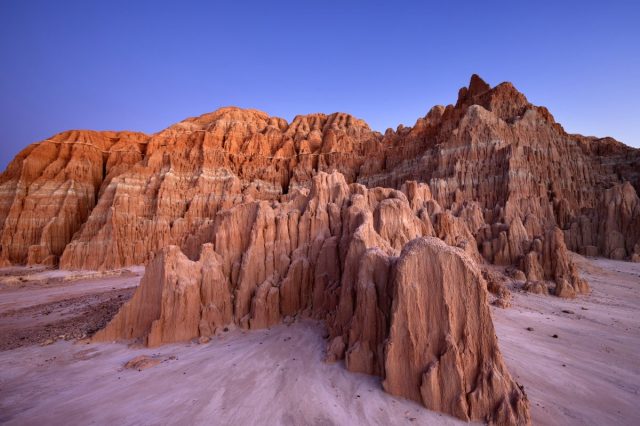
Continue north to Cathedral Gorge State Park. The cave-like formations and cathedral-like spires of this otherworldly natural wonder were created tens of millions of years ago by volcanic activity on the valley’s soft bentonite clay. Hiking trails provide more scenic views throughout the park.

Upon arrival in Pioche, check into the Overland Hotel & Saloon, where you can also grab a bite to eat. The rooms are cozy and comfortable but be aware that they are all located on the second floor and inaccessible to wheelchairs.  

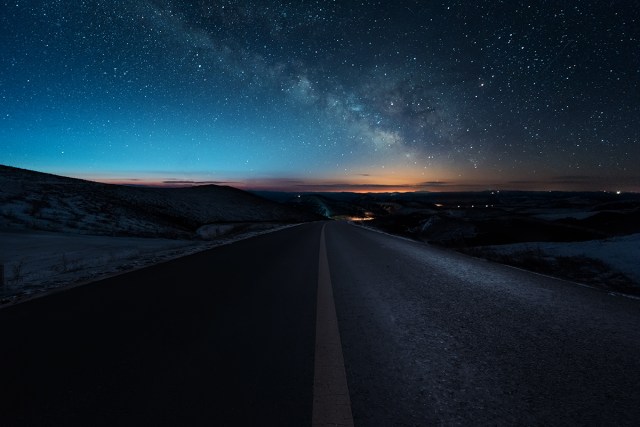
Once the sun sets and the skies turn dark, take the short drive out to Echo Canyon State Park. A recognized Dark Sky location, you are welcome to kick back and take in the view of twinkling stars and the Milky Way. The park is open 24 hours, so stay as long as you like.

starry night empty road

Hit the Road to Baker

To continue your journey, drive to Ward Charcoal Ovens State Historic Park, south of Ely. As the name implies, this park features six beehive-shaped charcoal ovens used to process silver ore from 1876 to 1879. After checking out the ovens, walk the interpretive loop trail to see a bit more of the park. There are longer trails if you prefer more of a challenge or additional exploration.

From there, drive to Great Basin National Park in Baker. Start your visit with lunch at the cafe inside the Lehman Caves Visitor Center. Then, head out on a tour of the Lehman Caves, the longest cave system in Nevada. Book your tour tickets in advance as these tours often sell out.

Upon your return to Baker, check in at the Stargazer Inn & Bristlecone General Store. This quaint property includes four traditional hotel rooms and three tiny home-style cabins. Regardless of which you choose, you’ll get a good night’s sleep. But before you do, return to the park for some breathtaking stargazing.

Start by visiting the Astronomy Amphitheater, where you can lie down on a stone bench and gaze up at the blanket of stars. You also can drive the Wheeler Peak Scenic Drive and stop at the Mather Overlook for a panoramic view. Be sure to bring a red flashlight to help you navigate when walking. The park grounds are open 24 hours, so there’s no need to rush your visit. Check the park’s schedule for ranger-led stargazing events to learn more while here.

Don’t Skip Ely

Baker doesn’t offer many eating establishments, so you may want to grab some meals in Ely. It’s about an hour-long drive between towns, so plan accordingly. Restaurant choices include Economy Drug, which has an old-fashioned soda fountain, and Margaritas, a Mexican restaurant and steakhouse located inside the Prospector Hotel & Gambling Hall. The Prospector Hotel & Gambling Hall also is a great place to stay if you want to extend your trip.

While in Ely, take time to visit the Nevada Northern Railway Museum, which is set on the grounds of a former rail yard. You’ll see artifacts from the time the railway was operational, and you can even ride the rails on one of the museum’s historic trains.

For a unique souvenir, drive out to Garnet Hill and see if you can find your own gems to take back home. At Cave Lake State Park, try to land the big one in the lake’s turquoise waters (make sure you have a fishing license), or hike some of the park trails. Once evening arrives, enjoy more stargazing from the lakeshore.

Yes, Nevada offers plenty of opportunities to see the stars far from the neon lights of Las Vegas. It’s a wonderful way to unplug and take in the area’s natural and astral beauty.

Plan your trip with a AAA travel advisor and rent your car with Hertz. AAA members can save up to 20% on Hertz rentals.

Featured image: Cathedral Gorge State Park

Subscribe to Your AAA Newsletter

Sign up and receive updates for all of the latest articles on automotive, travel, money, lifestyle and so much more!

What Is Home Equity? Why It Matters and How To Build It

You’ve likely heard that building home equity is one of the major advantages of owning a home. But you may have questions about how it works, or if building home equity makes first-time homebuying worth it. 

Below, we review what home equity is and why it’s important, and we break down some of the achievable steps you can take to grow yours. 

What Is Home Equity? 

Home equity refers to the value of your home that you own free and clear.

Building your home equity refers to increasing the value or percentage of your home that you own, usually through paying off your mortgage. 

How to Calculate Home Equity

You can calculate your home equity by subtracting your mortgage balance from your home’s current market value. 

Home Equity = Appraised Value – Mortgage balance
Home Equity Percentage = (Home Equity/Appraised Value) x 100 

For example, if the appraised value of your home is $450,000, and your mortgage balance is $100,000, your home equity is $350,000. In this instance, your home equity percentage is 78%, meaning you own 78% of your home outright. 

The Benefits of Home Equity

Building home equity is one of the most reliable ways to build wealth and grow your net worth — all from the place you live. 

Benefits of building home equity include: 

Borrowing Against Your Home’s Value

Most lenders typically allow you to borrow up to 80% of your home’s value. So, once you have a home equity percentage greater than 20% you can start borrowing money against the value of your home with a home equity loan or a home equity line of credit. 

With this, you can pay off existing debts and increase your creditworthiness — bringing positive ripple effects such as lower auto insurance rates and cheaper loans. The higher your home equity, the more money you’ll be able to take out against your home. 

Let AAA help you with a home equity loan.

Making a Profit When you Sell 

Even in a market that’s less favorable for the seller, with higher home equity, you’re more likely to be able to sell your home for a profit. You can reinvest this in your new property, increase your disposable income, or take steps toward achieving your long-term financial goals. 

Building Long-Term Wealth

Though renting offers flexibility, it does not offer the same opportunities for reinvestment as homeownership. Unlike a car, property is one of the few significant purchases that typically does not depreciate.

Generally, your house will appreciate, helping you to build long-term wealth and increase your net worth. This is especially true if the market was in the buyer’s favor when you bought, and your property value has increased significantly over time. 

With a higher network, you’ll enjoy more financial flexibility and greater accumulated wealth to leave behind to your loved ones. 

Listen to Our Podcast

For expert advice on the homebuying process, listen to Episode 7 of our podcast, Merging Into Life: Buying Your First Home.

Tune In

How to Build Wealth With Home Equity

Unfortunately, you can’t control the housing market — but there are plenty of steps you can take to help increase your home equity and accumulate wealth.

Make a Large Down Payment

The higher your down payment, the more of your home you’ll own outright and the greater your home equity. Remember, the percentage of your home financed by the bank does not contribute to home equity. 

Avoid Mortgage Insurance

Mortgage insurance is an additional charge to your mortgage payments. Without these payments, you’ll be able to pay off your principal and build your home equity faster. 

Shop for Low Interest Rates

Some mortgages offer lower interest rates than others. Shopping around can help you find the lowest rates.

Mortgages with terms shorter than the standard 30 years typically come with lower interest rates, helping you build equity more efficiently. Note that these types of loans typically come with higher monthly payments. 

Increase Property Value

Renovations increase your property’s value, thereby increasing equity. Renovations with the highest return on investment include:

  • Kitchen and bathroom remodels.
  • Energy-efficient upgrades.
  • Usable living space, like a basement conversion or deck.

Minor home improvement projects — like sprucing up your landscaping or repainting bedrooms (known as sweat equity) — might not raise your home’s value outright, but can enhance its appeal and attract more buyers.

“There are very few home improvements that increase a home’s value dollar for dollar,” said Steven Vieira, director of mortgage operations and sales for AAA Northeast. “However, there are a lot of small projects a homeowner can do, like painting garage doors and power washing the exterior, that can make your home more desirable in a competitive market. It’s recommended, particularly in situations where the condition of the home may be below the standards of the neighborhood.”

Learn more about using a home equity loan for renovations. 

Pay More on Your Mortgage

Initially, most mortgage payments go toward paying off the interest rates. After a time, payments go toward the principal and increase your home equity. 

Contact your mortgage provider if you’re able to afford higher monthly payments or are in a position to make a large one-off payment toward your mortgage. The faster you pay off your mortgage, the faster you’ll grow your home equity. 

homeowners

The Long-Term Benefits of Home Ownership

Though the housing market fluctuates, property is one of the few investments you can make that helps you build your wealth over time. 

Home ownership can feel like a big step, but investing in home equity helps you work toward your long-term financial goals, including: 

  • Greater borrowing flexibility.
  • Increased financial freedom.
  • Ability to pay off debts and increase your credit score.
  • Secure lower interest rates on new loans.

“Home ownership is the primary driver of wealth for the middle class. A homeowner’s net worth is typically 43 times that of a renter over time, according to the National Association of Realtors. It’s also the primary driver of generational wealth,” said Vieira.

Ready to learn about mortgage options and start building your home equity? Get mortgage help from AAA Northeast.

Subscribe to Your AAA Newsletter

Sign up and receive updates for all of the latest articles on automotive, travel, money, lifestyle and so much more!

Most Unhinged Pumpkin Spice Products

The arrival of fall carries with it an onslaught of pumpkin spice creations — most of which are tame variations of coffee, scented candles and plenty of baked goods. But there are some pumpkin spice products that break the mold — that make one wonder: “What exactly are we doing?” and “Does absolutely everything need to be pumpkin spice?” The answer, dear reader, we’ll leave up to you.

Here are the most unabashedly out-there pumpkin spice products on the market this fall.

Native Pumpkin Spiced Latte Deodorant

There’s drinking a pumpkin spice latte (aka PSL), and then there’s smelling like one. Native has released its limited-time scent for the second year along with other fall themed scents like Honeycrisp & Cider. If deodorant isn’t enough, the company also makes pumpkin spice scented body wash and moisturizing lotion.

Adam’s Pumpkin Spice Detail Spray

Why shouldn’t cars get in on the fun, too? This spray from Adam’s Polishes transforms its customer-favorite product into a pumpkin-scented version that makes detailing your vehicle count as a fall activity. It’s safe on gloss and matte paint, glass and chrome, so any vehicle can be turned into Cinderella’s carriage (scent-wise, anyway).

Pumpkin Spice Organic Popcorn

OK — we admit this might actually be pretty good, but the unlikely combo of pumpkin and popcorn got it a place on the list. This organic pumpkin spice popcorn from Lesser Evil features a pumpkin flavored seasoning that’s enhanced with nutmeg, clove and coconut oil so even your fall movie watching can be PSL-ified.

Pumpkin Spice Chewing Gum

Cinnamon flavored gum walked so pumpkin spice flavored gum could run. Simply Gum’s plant-based, pumpkin spice flavored chewing gum is naturally flavored with only eight ingredients and even comes with its own post-chew wrappers for when you’re done.

Pumpkin Spice Hot Sauce

Spice things up with this Drunkin’ Pumpkin hot sauce from Spicy Ninja Sauce that features kabocha squash and chocolate habanero peppers. Add to wings, hummus or your favorite homemade autumnal stew.

Pumpkin Spice Scented Dawn Powerwash Spray

Hand soap we could see. But pumpkin spice dish soap? That’s taking it to a whole new level. Part of a limited-edition trifecta of seasonal scents along with Frosted Cranberry and Fresh Pine, Pumpkin Spice scented Dawn dish spray gives off a warm and spicy fragrance that’ll have any pumpkin spice enthusiast offering to do the dishes much more often.

Swiss Miss Pumpkin Spice Hot Chocolate

Well now we’re just mismatching genres. The ultimate flavor of fall together with winter’s unofficial-but-official hot beverage? It’s so crazy it just might work.

Pumpkin Spice Latte Diamond Ring

If you like it, then put a ring on it. At least that’s what Angelic Diamonds suggests. Their Pumpkin Spice Latte Ring goes for around $13,000 and is designed to duplicate a PSL in every way possible. White diamonds, orange sapphires and emerald stones dot the rose gold ring that takes on the shape of a latte cup. Actual PSL not included.

What are you feelings about pumpkin-spiced everything? What’s the weirdest pumpkin spice product you’ve ever tried? Let us know in the comments!

Subscribe to Your AAA Newsletter

Sign up and receive updates for all of the latest articles on automotive, travel, money, lifestyle and so much more!

Jigsaw: Falling to Pieces

Move the puzzle pieces by dragging. If two pieces are the correct fit, they will snap together. For more about the game features, click the three horizontal lines on the left, above the puzzle.

Have fun!

From pumpkin festivals to peak times for leaf peeping, we cover all of the best things to do this time of year in our Fall Fun in the Northeast guide.

Subscribe to Your AAA Newsletter

Sign up and receive updates for all of the latest articles on automotive, travel, money, lifestyle and so much more!

Word Search: Best of October Baseball

When you find a word, tap or click the first letter, drag to the last letter and release. Words can run horizontally, vertically or diagonally and may go forward or backward. Spaces and hyphens between words do not appear in the grid. For more on how to play, click or tap the three horizontal lines on the left, above the puzzle.

Good luck!

Subscribe to Your AAA Newsletter

Sign up and receive updates for all of the latest articles on automotive, travel, money, lifestyle and so much more!

10 Northeast Arboretums to Visit This Fall

Throughout autumn, we witness a rippling explosion of color in the tree canopies, as touches of red and orange on a green canvas give way to a perpetually shifting glow of colors.

Leaf peeping is an enjoyable pastime and can provide the perfect excuse for a day trip. Here, we share 10 great Northeast arboretums to visit and view the fall foliage before putting away the rake for the season.

Take note that admission is free to most of these destinations, although many appreciate donations from visitors.

Need a ride? AAA members can save on Hertz car rentals.

Connecticut

Bartlett Arboretum & Gardens

Bartlett encompasses 93 acres of trails, gardens and art installations in Stamford. This arboretum grew out of a 30-acre training and research grounds for a renowned tree company. There are 2½ miles of walking trails, with stands of red maples and conifers intermixed with magnolias and nut trees. Visitors can also enjoy the themed gardens and pond.

Marsh Botanical Garden

Yale University’s 8-acre botanical garden, arboretum and greenhouses are open to the public. While many of the Marsh’s flowering plants will no longer be in bloom, there will be many colors to enjoy from the arboretum’s deciduous trees and fruit. While there, peruse one of the six greenhouses, which house many endangered and rare plants.

Fall Fun in the Northeast

Our favorite places and fall events throughout the region to make the most of fall foliage season. 

Download Now

Massachusetts

The Arnold Arboretum of Harvard University

A storied arboretum amid a storied city, the Arnold Arboretum is an emerald jewel in downtown Boston. The 281-acre preserve was designed by famed architect Frederick Law Olmsted and boasts one of the most comprehensive collections of trees. The design of the arboretum heavily favors trees native to North America over exotic species. The arboretum also hosts a robust library and archives for researchers.

The Hebert Arboretum at Springside Park

This 231-acre park in Pittsfield is an ecological treasure, with rolling hills, meadows, woodlands, streams, marshes and ponds. Like many of the arboretums on this list, it began as a country estate and still has the same charm. With 50 native tree species, it is an autumnal stopover for many migratory bird species, making for some great wildlife viewing. The arboretum also hosts guided tree-gazing and stargazing walks.

New Jersey

Frelinghuysen Arboretum

Once the country estate of George Griswold and Sara Ballantine Frelinghuysen, this Morris Township arboretum now spans 127 acres and includes the family’s original 19th-century mansion. Like several arboretums in the Northeast, this spot is on the National Register of Historic Places. On the trails, you can enjoy some 2,000 species of woodlands, meadows and manicured gardens.

Reeves-Reed Arboretum

Reeves-Reed is another Northeast arboretum created from the grounds of former country homes of wealthy 19th-century urbanites. It includes 6 acres of notable trees, including a giant sequoia, a katsura and a picturesque sugar maple. The grounds and gardens were shaped by three noted architects, including Calvert Vaux, who helped design Central Park in New York City.

kids in leaves

New York

Landis Arboretum

This 548-acre arboretum in Esperance crosses into two counties and is home to two old-growth forests. Along 8 acres of trails, tree lovers can spot plaques noting the native tree species of New York. The arboretum is also home to many rare shrub and plant species from around the world. In addition, there are unusual sculptures, including a dinosaur on the shore of a pond, and a meditation garden.

Lasdon Park, Arboretum and Veterans Memorial

In Katonah, this 234-acre park features a 30-acre arboretum with unique tree collections, including hybrid yellow magnolias and an 8-acre living laboratory dedicated to restoring the American chestnut. On the grounds, there is a tree trail that pairs each tree with a notable figure from American history, as well as several memorials honoring U.S. veterans.

New York Botanical Garden

This well-known public garden in the Bronx is ringed by beautiful, mature oaks and features a walkway of “tulip trees,” or magnolias whose blooms somewhat resemble tulips. On the 250-acre grounds, visitors can also find birch, dogwood, holly and witch hazel, among many species. The botanical garden is home to Thain Family Forest, one of the last old-growth forests in New York City. Save 20% on tickets with AAA Discounts.

Rhode Island

Blithewold Manor, Gardens & Arboretum

This 33-acre estate in Bristol offers beautiful views of Narragansett Bay. The arboretum is home to a 100-foot giant sequoia, a bamboo grove and some 500 tree and shrub species from around the world. The stewards of Blithewold have largely kept intact the original landscape design by meticulously following the architect’s handwritten notes. The trails and gardens marry a rustic feel with windswept elements of the sea.

🍁 For more fall fun, play our jigsaw puzzle: Falling to Pieces.

What’s your favorite place to view fall foliage? Share it in the comments.

Subscribe to Your AAA Newsletter

Sign up and receive updates for all of the latest articles on automotive, travel, money, lifestyle and so much more!

Road Trip to Thrift and Vintage Stores in the Northeast

For thrift and vintage enthusiasts, coming across a new place to explore is one of the best feelings – next to scoring a lucky find to bring home, of course.

The Northeast is chock-full of places to find gems from a bygone era, or just a great deal on pre-loved pieces. And whether that’s because of our rich history, sentimentality or just because Northeasterners especially love the thrill of the hunt is yet to be determined – but the why is much less important than the what and where.

So, strap on your fanny packs and get ready to thrift ‘til you drop. These are some of our favorite thrifting road trips in the Northeast, state by state.

Need a ride? Rent a car.

Connecticut

Putnam ➡️ Woodbury

Start your Connecticut thrift and vintage adventure in Putnam, where you’ll find one of the oldest antique mega-malls in the state, Antiques Marketplace. Wade through 325 dealer booths filled with 18th to 20th century pieces from furniture to the odd artifact. Depending on how early you’re starting, make a stop at Vanilla Bean Cafe for breakfast or lunch on your way toward Woodbury.

There’s so much to see in Woodbury that it even has its own antiques trail that showcases dozens of charming shops, like The Hidden Acorn, where you can browse through an intentionally curated collection of original and reclaimed antiques for the home. Make time for a visit to The Glebe House Museum & Gertrude Jekyll Garden before settling in for the evening at 1754 House, a historic inn.

Massachusetts

Boston ➡️ Worcester ➡️ Brimfield

It’s not surprising that you can get a good thrift find in a big city like Boston, but the sheer number of places to find one certainly is. First, take a wander through the Cambridge Antique Market where the five floors of vendors may just take you all day to explore. If you can visit on a Sunday, don’t miss the SoWa Vintage Market happening every week, all year-round, rain or shine.

Of course, the plentiful options in the Beacon Hill neighborhood aren’t to be missed. Check out Covet for high-end consignment or The Blessing Barn for donation-based thrift finds.

When you’re good and hungry, replenish at Tatte with coffee and a hearty lunch.

In Worcester, check out Crompton Collective, a marketplace that showcases antiques and handmade goods in an enormous space that somehow still feels homey.

You may want to plan your road trip around the biggest antique event that Massachusetts offers (and purportedly the oldest outdoor flea market in the country): the Brimfield Flea. This mega-sized market will have your head on a swivel, with literally thousands of vendors scattered among 16 open fields. You’ll find it all at Brimfield, from antique rugs, books and oil paintings to comic books, clothing, records, knickknacks galore and so much more. The flea market is open for one week, three times a year in May, July and September.

New Jersey

Montclair ➡️ Lambertville ➡️ Burlington

While treasure hunting in New Jersey, you’d be keen to start off on Bloomfield Avenue in Montclair, specifically at the Montclair Antique Center. Enjoy rows and rows of showstopping finds there before fanning out in seek of The Gypsy Farmhouse for an eclectic offering of Amish furniture, vintage textiles, architectural salvage and more.

In Lambertville, “The Antiques Capital of New Jersey,” you’ll find yourself in a vintage haven. Make a point to visit The People’s Store, where you’ll find European, American and Asian antique finds all housed within the perfect setting (that is, a building that’s 185 years old). On a Wednesday, Saturday or Sunday, take a ride to the Golden Nugget Flea Market, named for its reputation as being a gold mine for vintage finds.

Swing around to Burlington solely for the Historic Burlington Antiques Emporium where you’ll discover everything from retired amusement park fixtures to Depression-era glass and military collectibles.

New York

New York City ➡️ Hudson Valley

We’re not sure how long it would take to scour every vintage or thrift shop in New York City, but we’re certain a short road trip wouldn’t cut it. However, there are some places to definitely hit. You’ve got spots for women’s apparel like 9th St. Vintage and Cobblestones, men’s clothing finds at Monk Vintage and for all of your housewares, trinkets and stuff that simply can’t be categorized, there’s Yesterday’s News in Brooklyn and the Manhattan Art and Antiques Center downtown.

Heading out of the city, check out the Stormville Airport Flea Market on weekends in April, May, July, August, September, October and November.

Rhode Island

Providence ➡️ Smithfield

For the smallest state, Rhode Island sure packs a punch when it comes to a good thrift. Start in the capital of Providence to visit The Vault Collective, a local favorite for its curated vintage apparel. On the weekend, take a walk over to The Providence Flea, where carefully selected local vendors sell their wares along the Providence River in the summertime and indoors at Farm Fresh RI in the cooler months.

Not quite Providence but close enough, take a short ride to Pawtucket to enjoy the Rhode Island Antiques Mall for 20,000 square feet of pure vintage goodness.

Heading up to Smithfield, a stop at Antiques Alley (formerly Stillwater Antiques) is a must. You’ll be greeted at the door by a life-size Elvis before walking through winding aisles that can only be described as a larger-than-life memory lane.

What are your favorite thrift and vintage stores? Tell us in the comments.

This article has been updated and republished from a previous version.

Subscribe to Your AAA Newsletter

Sign up and receive updates for all of the latest articles on automotive, travel, money, lifestyle and so much more!

Picture-Perfect Places To See New England Fall Foliage

New England fall foliage is famous for its vibrant colors and photogenic landscapes. When the air turns cool and the leaves start to change, there’s no better place to be.

To make the most of New England leaf-peeping season, check out these Instagram-worthy spots.

Need a ride? Rent a car.

New England Fall Foliage Icons

The covered bridges of New England remain some of the most popular attractions year-round, but autumnal color takes them to the next level.

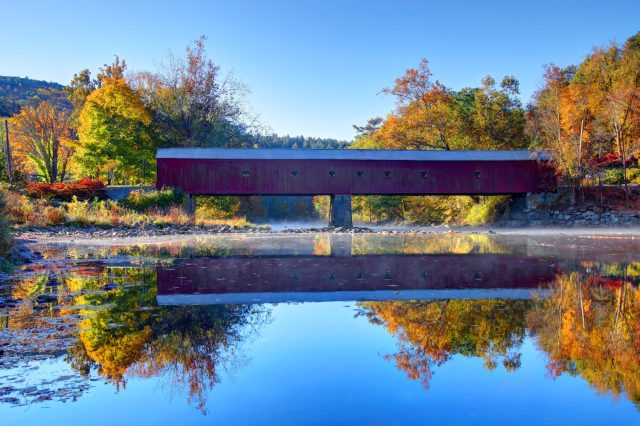
In Connecticut, the red walls of the West Cornwall Covered Bridge (pictured above) are complemented by the orange and yellow hues of surrounding trees. The reflections of the colors in the Housatonic River below add to the bridge’s scenic beauty. 

Located on State Route 16A the Honeymoon Bridge in Jackson, New Hampshire, is well-known for its Paddleford truss, once a popular design feature for covered bridges. During fall, the entrances are framed with gorgeous fall foliage, setting the stage for an iconic fall photograph.

The only covered bridge on a public road in Rhode Island, the Swamp Meadow Bridge in Foster, exudes charm that is only amplified when the seasons change. The 40-foot-long bridge’s lattice truss further enhances the beauty of the structure, making it a memorable site to behold.

Try a New Perspective

Scenic drives continue to be a favored method for New England leaf peeping but is by far not the only way to see fall foliage. For a more immersive experience, climb aboard the car of a mountain coaster and take off among the trees. At the Berkshire East Mountain Resort in Charlemont, Massachusetts, the Thunderbolt Mountain Coaster takes riders along 3,870 feet of downhill track among trees that explode with color each fall. Whether that color is a blur as you race down or you slow down enough to take it all in, it’s an experience you won’t forget.

At Mount Van Hoevenberg in Lake Placid, New York, (not technically New England but pretty close), you’ll ride the Cliffside Coaster alongside the bobsled track where Olympic athletes competed in 1980. However, instead of snow gracing the trees and grounds, you’ll be surrounded by gorgeous fall color. Take it fast or take it slow, but just make sure you take this ride during fall.

Railbiking is another up-and-coming activity in the region, which allows people of most ages and abilities to pedal their way through the trees.

foliage in pioneer valley

Timeless Views

New England is filled with historic churches that are even more beautiful during autumn.

In Middletown, Rhode Island, St. Columbia’s Chapel was constructed in the 1880s using the Gothic Revival architectural style. Its stone facade and arched windows are further accented when fall dresses up the neighboring trees.

Not far from New England, in Bridgeton, New Jersey, Deerfield Presbyterian Church’s rustic Jersey sandstone structure, circa 1771, fits right in among the colorful foliage.

And while not the oldest church in this group (it was built just 35 years ago), the Cross Island Chapel in Oneida, New York, also makes for a great photo. Billed as the world’s smallest church – there’s less than 30 square feet inside – it sits on a platform in the middle of an algae-covered pond. Its white clapboard walls provide a stark contrast to the red, orange and yellow leaves of the surrounding trees.

Where Art and Life Converge

New England features many notable sculpture gardens, all of which provide prime opportunities for taking in fall foliage. A good starting point is DeCordova Sculpture Park and Museum in Lincoln, Massachusetts. Here you can walk among 60 sculptures strategically placed on the ground’s 30 acres that includes fields, forests, gardens, landscaped lawns and terraces along the shore of Flint Pond. When fall descends, the dazzling hues of the leaves add a colorful backdrop to the sculptures.

At the Andres Institute of Art sculpture park in Brookline, New Hampshire, you can walk more than 10 miles of trails, taking in more than 100 sculptures representing more than 40 countries. When transformed by autumn, the surrounding area becomes a work of art, too.

From mountain coasters to quiet small-town strolls, the best leaf peeping in New England is all around. Get out there and enjoy it!  

What’s your favorite way to see New England fall foliage? Share it with us in the comments.

Subscribe to Your AAA Newsletter

Sign up and receive updates for all of the latest articles on automotive, travel, money, lifestyle and so much more!

What’s the Story With Headlight Glare?

Drivers are increasingly complaining about the intense LED headlight glare that comes from newer vehicles, but the issue is not as clear as one might think.

The U.S. is taking baby steps toward smart headlight systems that adjust their beams based on what is in their path and look less harsh to oncoming drivers, but they still could be years away from hitting the roads.

Why Are Headlights So Bright These Days?

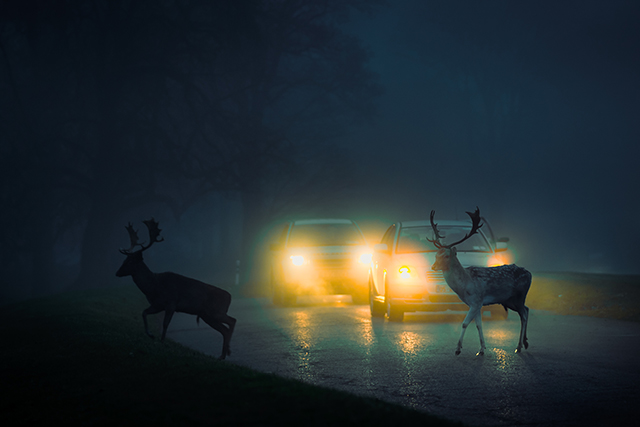
Some experts say several factors are contributing to drivers reporting glare. One is that LED lights are not brighter, but the blueish-white light emitted is more irritating to the human eye. The others relate to the position of the headlights, the height of newer vehicles and older drivers.

AAA has published numerous studies about headlights and related issues such as glare and did not find a problem, according to Greg Brannon, director of automotive engineering and industry relations for AAA Inc. “LEDs put more light on roads where people need it,” he said. “There is no evidence that LED lights are a hazard.”

Drivers Disagree

Still, drivers are reporting discomfort and being blinded by oncoming cars with LED headlights, and some are calling for them to be banned.

“There is a problem,” acknowledged Dr. John Bullough, director of the Light and Health Research Center at the Icahn School of Medicine at Mount Sinai in New York City. “There are some issues (with headlights) people are experiencing more than they did 10-to-20 years ago, and they are making more people complain. But the basic regulations for headlights and how they produce light in certain directions have been the same for several decades. Technology has changed.”

Over the past 10 years, automakers transitioned to LEDs and high-intensity discharge (HID) headlights from halogen headlights, which produce soft yellow light, which is easier on the eyes. On the plus side, LED bulbs last longer and an LED array has many small bulbs, which can be shifted in different directions to shape the beam. The white light also makes it easier to spot road markings and more closely resembles daylight.

But there are drawbacks. “They tend to make glare more noticeable and uncomfortable,” according to Bullough.

headlight glare

Calls to Regulate LED Headlights

Groups such as the Soft Lights Foundation argue that the use of LED and HID headlights “has become a source of dangerous, blinding glare,” and has an online petition asking Congress and federal agencies to regulate LEDs. More than 50,000 people have signed the petition so far.

Other factors are contributing to people experiencing headlight glare, according to Bullough. Many vehicles are higher now, so lights on SUVs and trucks shine directly into the eyes of sedan drivers, he said. “Passenger cars get a brighter splash of light.”

Also, headlights are often misaligned, and drivers don’t realize it. “Consistently, over a few decades, a lot of cars have poorly misdirected headlights,” said Bullough. “If they are too high, the beam hits (oncoming drivers) in the eyes. If they are too low, drivers can’t see much past their car.” Not all states require headlight alignment to be assessed, he added.

The aging of the U.S. population also plays a role, Brannon maintained. There were more than 51 million licensed drivers ages 65 and older in 2022, according to the latest statistics from Consumer Affairs. That is about 22% of all drivers — a big jump from 25 years ago, when they represented just 14%. “New technology looks different coming toward older drivers, when they are used to seeing a soft yellow glow,” he said. “The LED and HID lights draw drivers’ attention, and then they have a problem with a glare.”

People’s ability to see in the dark decreases every year after age 40, Brannon added, and drivers are less able to recover from glare. To cope with glare, Brannon recommended drivers modify their gaze and look at the road, not the oncoming headlights.

Smarter Headlights Are on the Way

If anything, headlights on U.S. cars should be brighter, Brannon said. The U.S. has a much lower maximum output for high beams than most countries and standards have not changed in decades. AAA research shows that 64% of American drivers do not extensively use their high beams, often out of concern for other drivers. But driving with low beams all the time can be a safety hazard. “If you are driving with low beams over 35 mph and encounter something in the road, you can’t stop in time,” according to Bullough.

Changes are coming, although slowly. More new cars in the U.S. have automatic high/low beam switching systems, which allow drivers to use their high beams all the time, because the headlights switch to low beams if they detect an oncoming vehicle.

Even more advanced technology is available, but not in the U.S., and although high-tech headlights have been approved here, it still could be years before drivers actually see them. Since 2013, Europe and most of the world have been using adaptive driving beam (ADB) headlights, which produce more light and automatically change the direction of the beam to reduce glare for oncoming drivers or pedestrians while not losing forward illumination.

Despite urging from multiple organizations, including AAA, the type of ADBs used by most of the world have not been approved for use in the U.S.

Crafting New ADBs

In 2022, the National Highway Traffic Safety Administration (NHTSA) approved ADB headlighting systems similar to what is used in other countries, but with different criteria for performance, according to Bullough.

The U.S. Department of Transportation drew up glare-proof specifications for ADB headlights, but more testing and information are required. Vehicle manufacturers are waiting for detailed specifications before starting to build and install these systems, to avoid misinterpretations and recalls, according to Bullough.

Because these headlights will be brighter, the changes also will require some adjustments by drivers, but the headlights are overdue, said Brannon. “Modern headlight systems put light where you need it,” he said. “Over time, people will become more accustomed to it.”

Need headlight maintenance? Visit your nearest AAA Approved Auto Repair Facility. Members can save up to $75 per visit — that pays for your membership! Search for AAR facilities near you.

How do you feel about headlight glare? Sound off in the comments below.

This article has been updated and republished from a previous version.

Subscribe to Your AAA Newsletter

Sign up and receive updates for all of the latest articles on automotive, travel, money, lifestyle and so much more!

Why Did My Home Insurance Rate Go Up?

Similar to why auto insurance rates go up, home insurance increases can be attributed to a variety of reasons due to no fault of the policyholder. Factoring in the economy, increases depend on where you live and who insures you.

Homeowners who have not already noticed a change in their rate can likely expect a modest increase in their next renewal.

Though some increases are unavoidable, there are a few offsets you can explore. Read on to learn more about why home insurance rates rise and what you can do to keep your monthly charge as low as possible while still getting the most from your coverage.

Connect with a AAA insurance agent to discuss coverage options and savings opportunities.

Why Do Home Insurance Rates Increase?

Value of Homes Is Higher

When home values go up, the price of claims go up too. Insurance must rise to meet it.

Homeowners will likely start to see their Coverage A amounts increasing. Coverage A reflects what it would likely cost to rebuild your home at the rate of current construction costs in the event of a total loss. Some people mistakenly compare this to the market value of their home or how their town assesses their home value for tax purposes.

“Those can be very disparate values,” said Jodi DeSantis, vice president of insurance for AAA Insurance. “It’s important to understand that [in order to] have sufficient insurance for your home during a high inflation period like the current environment.”

Find current mortgage rates, speak with an experienced home loan officer, apply for a home loan and save with AAA.

Construction Costs

Inflation is also driving up the cost to repair and rebuild homes, and home insurance prices have to keep pace. In the last five years, construction labor has increased 36.3% while building materials are up 42.7%, according to the American Property Casualty Insurance Association (APCIA).

Storms

Natural disasters and the catastrophic losses they bring are becoming increasingly common. While storms could have an impact on your insurance, it mostly depends on where you live and how likely you are to be affected by them.

What You Can Do

  • Homeowners should think about hardening and safeguarding their homes and businesses to stay ahead of potential disasters. Keep up with seasonal home maintenance, such as professional roof inspection, removing dying trees and trimming large branches away from your property, and prepare for the increased risk of perils like flooding.
  • Confirm you have enough coverage. AAA’s insurance pros recommend reviewing your policies with an agent at least once a year to make sure they are up to date. It only takes about 15 minutes and it’s free.
  • Consider updating your deductibles. If you can afford a higher deductible, it will lower your monthly premium.
  • It’s also always a good idea to keep an emergency fund.

Get A Home Insurance Quote

This article has been updated and republished from a previous version.

Subscribe to Your AAA Newsletter

Sign up and receive updates for all of the latest articles on automotive, travel, money, lifestyle and so much more!

Northeast Gas Prices Slide as Winter Blend Hits Retail

The arrival of winter blend gasoline to the regional market is helping push pump prices lower across the Northeast. Winter blend, which is cheaper to manufacture than summer blend, became available at wholesale terminals on Sept. 15. Typically, the switchover results in a modest price drop within days as the fuel makes its way to the retail market.

The price declines are being aided by crude oil prices, which remain in the low $60 a barrel range as concerns grow among market participants that planned production increases in the coming months could result in global oil oversupply. Both OPEC and the International Energy Agency (IEA) last week issued forecasts that point to more-than-expected supply in 2026, which helped send oil prices lower to end the week.

Domestically, oil supplies are far from an oversupply situation, according to the most-recent data from the Energy Information Administration (EIA). Driven by higher exports and lower imports, inventories of crude oil approached a yearly low last week, falling by a sizable 9.3 million barrels, the EIA reported. Oil holdings are now 2.2 million barrels below the comparable level of last year and more than 20 million barrels below the 5-year average.

National gasoline inventories also fell by 2.3 million barrels last week, according to the EIA. Coupled with demand rising a healthy 300,000 barrels a day to 8.8 million barrels a day, the tightening of gasoline inventories could slow the seasonal pace of price declines. Regionally, recent operational issues at PBF Energy’s 180,000 barrel-a-day Delaware City refinery could be adding some local pressure on pump prices.

“As winter blend takes over gasoline markets, drivers in the Northeast are starting to see some savings at the pump,” said Mark Schieldrop, senior spokesperson for AAA Northeast. “Tightening supplies of gasoline could be slowing the pace of price declines, but supplies are still not at levels to raise alarm, for now.”

AAA Northeast’s Sept. 24 survey of fuel prices found the current national average down 4 cents from last week ($3.20), averaging $3.16 per gallon. The national average price is a penny higher than month ago ($3.15) and 5 cents lower than this day last year ($3.21).

RegionCurrent Price*One Week AgoOne Month AgoOne Year Ago
Massachusetts$3.09$3.12$3.05$3.13
Rhode Island$3.09$3.15$3.03$3.01
Connecticut$3.16$3.17$3.10$3.13
New Jersey$3.11$3.13$3.06$3.03
New York$3.22$3.24$3.15$3.29

*Prices as of Sept 24, 2025

As of Sept. 24, Oklahoma and Mississippi have the lowest prices in the nation at $2.67 and $2.69, respectively. California and Washington hold the highest prices in the nation this week at $4.65 and $4.58, respectively.

The AAA Gas Prices website is your resource for up-to-date fuel price information. Search for average gas prices on national, state and metro levels by regular, plus, premium and diesel.

Subscribe to Your AAA Newsletter

Sign up and receive updates for all of the latest articles on automotive, travel, money, lifestyle and so much more!

Fall Foliage Train Rides in the Northeast

Leaf peepers of all ages know the joys of witnessing the changing leaves, seeing the landscape dyed in hues of red and purple and yellow. They also know that the best part of the country to witness this change is the Northeast. If you want to get some color (and I don’t mean sun) the best way to do it is on one of the Northeast’s fall foliage train rides.

Many older, underused railroads have transformed themselves into scenic railways for people who want to see the beauty of the Northeast. These scenic railways trade on nostalgia, Americana and most of all foliage. Most scenic railroads offer specific foliage-themed trips in the autumn months. There are some railroads that only run from August to November.

When you’re on a train, you aren’t distracted by the road and you aren’t moving too fast to see the trees. Fall foliage train rides go where roads don’t, plunging through autumn forests and scaling steep mountains. Visitors coming to see the foliage clog up New England roadways, and it’s hard to enjoy peeping while you’re beeping through traffic.

Adirondack Scenic Railroad

New York

The fall foliage train rides at the Adirondack Scenic Railroad wind through the forests of upstate New York in open-air cars. They provide a variety of different types of train rides, including a pumpkin patch train ride, a Halloween train ride and even a wine-and-beer-tasting foliage train that takes place at sunset.

Amtrak

In addition to travel and commuting, Amtrak offers a variety of scenic train rides tailored to the fall season. Some of their best rides for viewing foliage include their Downeaster line and their Adirondack line, which offer beautiful views of the changing landscape.

Cafe Lafayette

New Hampshire

Cafe Lafayette is a restaurant on tracks, nestled in the woods of New Hampshire. As one of only 12 dining trains operating in North America, it is a truly unique experience. Dine on a five-course meal prepared in an onboard kitchen while you enjoy the kaleidoscope of fall colors on display. A great place to enjoy your dinner is their original restored dome car.

Cape Cod Central Railroad

Massachusetts

The Cape Cod Central Railroad runs along the coastal shoreline of Massachusetts. It goes past beaches and bays, between dunes and hills, through forests and cranberry bogs. The best way to enjoy the colors of fall is perhaps on their Cape Cod Excursion ride. It even features on-board narration about the history of the area. On some of their other trips, you can enjoy lunch or dinner in a formal setting, with the scenery of the Cape as the background.

Conway Scenic Railroad

New Hampshire

Conway’s fall foliage train rides have everything from pumpkin patches to special photo opportunities. On certain excursions you can even try out Conway’s own dome car, which offers panoramic views of the changing leaves.

Essex Steam Train and Riverboat

Connecticut

The Essex Steam Train in Connecticut has many different types of narrated fall foliage train rides, including their Train and Riverboat tour. It begins in their 1920s-era locomotive and finishes with a leisurely autumn cruise on its riverboat named the Becky Thatcher. The lush and vibrant woods surrounding the Essex Steam Train provide optimal leaves to see and memories to make. But be careful out in those woods! On certain nights in October, the train plunges guests into Tracks of Terror, an immersive horror experience.

Granite State Scenic Railway

New Hampshire

The Granite State Scenic Railway offers a wide range of different fall foliage train rides throughout the season. Some trains provide catered turkey dinners for guests to dine on, while others feature trips to historic inns or farm yards. The first class cars are fitted with lounge chairs and couches, but they fill up fast. To get the best out of these train rides, it’s better to purchase your ticket in advance.

Lehigh Gorge Scenic Railway

Pennsylvania

Based in the idyllic Pennsylvania town of Jim Thorpe, the Lehigh Gorge Scenic Railway offers fall foliage train rides late into the season. Their trains weave through the Pocono Mountains, offering open-air views and live narration of the sights and sounds of autumn. The best way to experience the Lehigh Gorge Scenic Railway is to go on an early October weekend when the Pennsylvania leaves are usually at peak.

Maine Narrow Gage Railroad Co. & Museum

The Maine Narrow Gage Railroad Co. has the perfect foliage ride for leaf peepers of all ages. The benches inside face out toward the windows, giving passengers a great view of the foliage along the coast. The train is populated by museum docents who love to answer questions and educate about the history of the train and the surrounding area.

fall foliage train rides
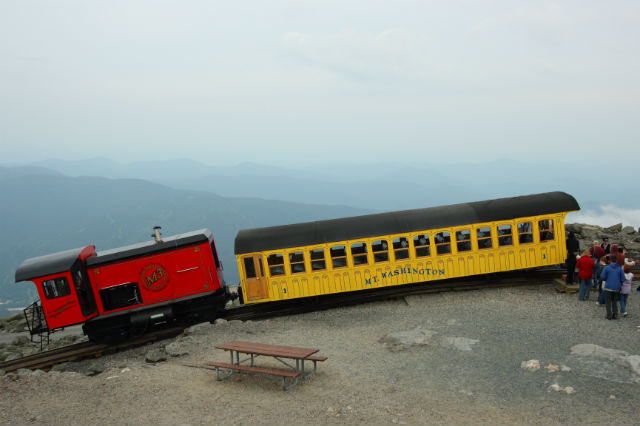
Passengers board the Mount Washington Cog Railway. (Photo: Photawa / Editorial RF / iStock Editorial / Getty Images Plus)

Mount Washington Cog Railway

New Hampshire

The Mount Washington Cog Railway is a vintage steam engine and the very first mountain-climbing cog train in the world. For its fall foliage train rides, it makes the stunning climb up Mount Washington, the highest peak in New England and the second-steepest set of train tracks in the world. Not only do you have the opportunity to see the changing leaves on the way up, but from the peak you can see all of the brilliant colors of the trees and hills for miles around.

New Jersey Museum of Transportation

On any fall day, you can head over to the New Jersey Museum of Transportation and catch amazing views of the surrounding Allaire State Park. On some October nights, however, the fall foliage train ride gets decidedly spookier. The museum’s Haunted Express night time ride has run annually for decades. It features different spooks and scares every year, and utilizes not only the railroad, but the grounds of Allaire State Park as well. Just a warning: It might not be for your younger leaf peepers.

Plan your fall foliage getaway with a AAA travel advisor.

What are some of your favorite fall foliage train rides? Share them with us below. 

This article has been updated and republished from a previous version.

Subscribe to Your AAA Newsletter

Sign up and receive updates for all of the latest articles on automotive, travel, money, lifestyle and so much more!

Merging Into Life: Sustainable Tourism Tips

SEASON 2: EPISODE 6
Episode Feedback

Sustainable travel isn’t just about skipping plastic straws — it’s about making a positive impact.


EPISODE SUMMARY

What does it really mean to travel sustainably, and can you do it without giving up the joy, spontaneity or comfort of your trip?

In this episode, host Kim Rodrigues is joined by sustainability advocate and overland travel expert Claire Martin, founder of Claire’s Footsteps. Together, they unpack what sustainable tourism actually looks like from reducing your environmental footprint to supporting local communities in meaningful ways.

Claire shares her journey from traveling by train across continents to spotting greenwashing in hotel marketing, all while offering practical, non-judgmental tips for travelers who want to do better but aren’t sure where to start. If you love to explore but want to feel better about how you do it, this episode can serve as your guide to sustainable travel, packed with accessible advice and thoughtful perspective.


KEY TAKEAWAYS
  • Sustainable travel is more than just avoiding plastic straws. It’s about environmental and social responsibility like spending your money in ways that benefit local communities, not just big tourism brands.
  • Greenwashing is real. Look for hotels and tour companies that show real receipts: clear sustainability practices, local hiring, and a tangible impact.
  • Not flying isn’t always realistic, and that’s okay! It’s about trade-offs. If you fly, balance it by using local transportation, avoiding domestic flights, and supporting local businesses once you land.
  • Small choices add up. Opt for train travel when possible, visit destinations in the off-season, hire local guides and choose locally owned restaurants and hotels.
  • You don’t have to be perfect. Sustainable travel isn’t all-or-nothing, it’s about being thoughtful, asking better questions and leaving a place better than you found it.

TRANSCRIPT

[00:00:04] Kim: Like most people, when I travel, I try to stay conscious of how much I’m spending and where I’m sending my money. I once took a trip to Puerto Rico with a couple of friends. We found this incredible tour that was pretty cheap, but when we looked into the company that was running the tour, we had to stop and think and ask, are we helping or hurting the island of Puerto Rico by booking this tour? So we did a little research. We found a local tour company where all the money would go back into the local community. From our tour guide, we learned some really cool colloquial words and interesting history that I honestly don’t think we could have gotten with the other tour company. So we booked through them instead. Sometimes it’s the little things that make a big difference. Welcome back to Merging Into Life, the podcast where we navigate everyday choices with more intention. I’m your host, Kim Rodrigues, and today’s episode is for anyone who loves to travel, but also wants to do it better for the planet and for yourself. From climate concerns to the impact of overtourism, there’s growing awareness that how we travel matters, not just to the environment, but to the people and places we visit. That’s why I’m so excited about today’s guest. We’re joined by Claire Martin, founder of Claire’s Footsteps, a platform dedicated to making sustainability accessible for all kinds of travelers. From slow travel tips to ethical tourism insights, Claire brings a grounded, approachable take to eco-conscious adventures. She’s here to help us make sense of the buzzwords, ditch the shame and take real steps towards traveling more sustainably. I’d love to start with your story. So what got you interested in traveling sustainably?

[00:01:52] Claire: I always wanted to travel. My dad lived abroad when I was younger. We used to go to Europe and my parents used to drive a lot. So we drove from the UK to Croatia one year. We drove to Austria a fair bit. So that gave me a bit of a view of traveling without flying. It was also when I went to university, I got very interested in sustainability there. So I kind of looked at how I could try and merge travel still, but also travel sustainably. And the more I learn, the more I realized how important it is to visit places responsibly and respectfully. So it’s all been a bit of a learning curve from when I was very young really, but something that’s progressed as I’ve gotten older.

[00:02:37] Kim: You often talk about how sustainable travel is more than just using less plastic, not just environmentally, but also socially and culturally as well.

[00:02:47] Claire: I’m quite passionate about this. I do believe that obviously protecting the environment, doing as much as possible to be as eco-minded as possible is incredibly important. But I also see like another pillar of sustainability and that is social sustainability. When we visit places, we are doing things that are beneficial to the communities where we want to have a positive impact somewhere rather than negative. So the social sustainability, it would be spending your money in the right kind of places, shopping at local businesses, that sort of thing, using local suppliers and places have really benefited from tourism by people coming and spending their money there. So yeah, there’s a whole a whole range of it, but I definitely see them as two types of sustainability. I see both as very, very important. And they do often intertwine, but I do think they both need to be equally considered.

[00:03:39] Kim: I really love that. You have this remarkable journey where you traveled from Bali to London without flying. That’s so wild. What inspires you to do that?


RESOURCES

Merging Into Life Homepage

Contact a AAA Travel Advisor

U.S. Ecotourism Destinations

24 Sustainable Travel Tips

How to Have a Zero-Waste Road Trip

How to Plan a Sustainable Beach Vacation

US and Canada Rail Trips That Can’t Be Missed

The Man in Seat Sixty-One

K.Rod Collective

Claire’s Footsteps


Want to Learn More? Drop Us a Note

"*" indicates required fields

This field is for validation purposes and should be left unchanged.
Subject
Name*

*The views and opinions expressed in this podcast are not necessarily the views of AAA Northeast, AAA and/or its affiliates.

Subscribe to Your AAA Newsletter

Sign up and receive updates for all of the latest articles on automotive, travel, money, lifestyle and so much more!

Merging Into Life: Your Essential Car Maintenance Checklist

SEASON 2: EPISODE 7
Episode Feedback

Basic car care every driver should know.


EPISODE SUMMARY

Most of us don’t think about car maintenance until something goes wrong, but what if a few simple checks could help you avoid disaster (or at least a blown tire)?

In this practical episode of Merging Into Life, host Zack Klapman of The Smoking Tire podcast is joined by mechanic, auto repair advocate and founder of Women Auto Know, Audra Fordin. Together, they discuss simple DIY car skills every driver should know, how to spot warning signs before they become emergencies and what to do if you find yourself stuck on the side of the road.

Whether you’re a first-time car owner or someone who hasn’t touched a tire gauge in years, this episode will help you feel more confident behind the wheel and better prepared for the unexpected.


KEY TAKEAWAYS
  • Your car provides crucial feedback. Never ignore common car warning signs. Addressing these issues immediately can prevent costly repairs and maintain your vehicle safety.
  • Regularly inspect tire pressure, measure tire tread depth, and check for sidewall damage. For maximum tire longevity and safety, most experts recommend replacing tires after six years, regardless of visible tread wear.
  • Ensure your windshield wipers are not streaking, your wiper fluid is full, and all headlights and taillights are functioning correctly.
  • In the event of a flat tire or breakdown, remain calm. Safely pull over, turn on your hazard lights, and prioritize safety. If you need to exit the vehicle on a busy road, always exit on the passenger side away from traffic.
  • Be prepared for the unexpected with a well-stocked emergency car kit. Essential items for roadside preparedness include jumper cables, a bright flashlight, a portable phone charger, a tire inflator, a comprehensive first aid kit, gloves, water and a space or thermal blanket.
  • If your vehicle feels off such as a persistent weird sound or your car pulling to one side, get it inspected by a mechanic right away. Early issue detection is the best way to save money on repairs.

TRANSCRIPT

[00:00:01] Zack: Well, when I was a young high school man, I drove a bunch of old cars. I had repaired so many things. And I remember driving one day, the oil pressure gauge suddenly went to zero, and the engine got very loud. And I pulled over right away. I knew that that was a bad thing. And I called a mechanic friend of mine. I said, what does it mean when the oil pressure gage goes to zero? And he said, it means you get to rebuild your engine. So that was an educational summer spent with very, very greasy arms. I remember the engine was so heavy. When I took it out of the car, it almost tipped over the engine hoist. The thing that’s made to pick up an engine almost fell over. My approach to car maintenance has changed a lot in the last few years because I actually do it now. If something’s a little bit wrong with my car and it’s beyond my ability to fix, I will take it to a professional. I will just suck in my pride and accept that I’m gonna swipe this credit card, and it’s gonna sting. But it will keep the car going down the road. Every year, spend a little bit of money to maintain the essential parts of that car.

Hello, and welcome back to Merging into Life, the show where we help you navigate life’s unexpected turns, including the literal ones we face every day on the road. I’m Zach Klapman, your host for the Road Ready mini series where we cover everything you need to be confident on the road. Today, we’re diving into something we all rely on, but rarely think about until it’s too late: car safety and roadside emergencies. Because let’s be real, no one plans on a flat tire, a dead battery or getting stuck on the shoulder at midnight. But knowing what to do when it happens, that’s what keeps a bad day from becoming a disaster. We’re joined by Audra Fordin, mechanic, owner of Great Bear Auto Repair and Auto Body in Flushing, Queens, and founder of Women Auto Know and Drivers Auto Know. She’s here to break down what every driver needs to know to prevent accidents, handle roadside hiccups with confidence, and hit the road fully prepared. Audra, thank you so much for joining us.

[00:02:17] Audra: I’m so happy to be here. Thanks for having me.

[00:02:20] Zack: We’re gonna jump right into it. What are the most important parts of your car to check regularly that people tend to overlook?

[00:02:28] Audra: A lot of people usually think oil changes are the most important thing, and yes, they are. But the truth is your car talks to you in so many other ways. Cars give us so many warning signs that oftentimes we overlook, like tire pressure, tread wear, wiper blades, and fluids, brake fluid and coolant, those things don’t seem so urgent until suddenly they are.

[00:02:54] Zack: When those things go wrong, you suddenly have a very big problem, right? About 90% of driving decisions are based on what we can see. So how does that affect how we maintain things like the wipers, the windshield fluid?

[00:03:08] Audra: If you think about it, if you can’t see, you can’t drive safely. Wipers are like the eyelids on your car. If they’re streaking or cracked or they’re noisy, that is your car talking to you, telling you to replace them. And the windshield washer fluid, it isn’t just water. It’s formulated to cut grease and debris to keep your view clear. So like a $10 fix can prevent a crash potentially from happening. Thinking about like being able to see, it’s also like keeping your eyes on the road and putting your phone away.


RESOURCES

Merging Into Life

AAA Roadside Assistance

AAA Approved Auto Repair Facilities

Basic Car Maintenance 101

Ask a Mechanic: Signs Your Car Needs Maintenance

When to Replace Tires: Don’t Ignore These Signs

Ask a Mechanic: When to Replace Windshield Wipers

What to Do When Your Car Breaks Down

How to Change a Flat Tire

What Are Your Dashboard Lights Trying to Tell You?

The Smoking Tire

Women Auto Know

Great Bear Auto Repair and Auto Body


Want to Learn More? Drop Us a Note

"*" indicates required fields

This field is for validation purposes and should be left unchanged.
Subject
Name*

*The views and opinions expressed in this podcast are not necessarily the views of AAA Northeast, AAA and/or its affiliates.
Subscribe to Your AAA Newsletter

Sign up and receive updates for all of the latest articles on automotive, travel, money, lifestyle and so much more!

AAA Study Finds 96% of Drivers Admit to Driving Aggressively

From speeding and tailgating to cutting off other vehicles, aggressive driving and road rage have become a near universal experience — and they appear to be contagious. A staggering 96% of drivers in a new AAA Foundation for Traffic Safety study admitted to engaging in aggressive driving behaviors over the past year.

The study included a nationwide survey of over 3,000 drivers and several focus groups. Key findings included:

  • Red light running and passing on the right top the list of aggressive behaviors. The five most prevalent aggressive behaviors were:
    • Speeding up when a traffic light is changing from yellow to red; 82% admitted to engaging in the behavior.
    • Using the right (slow) lane to pass another vehicle (68%).
    • Honking the horn when another driver does something inappropriate, rather than to avoid a crash (66%).
    • Glaring at another driver in response to something they did on the road (65%).
    • Driving 15 mph faster than the normal flow of traffic (58%).
  • Road rage occurs at alarming rates. 11% of respondents acknowledged taking violent actions, such as intentionally bumping another car or confronting another driver; 20% of respondents said that they personally know someone who has been threatened by a weapon in a road rage incident.
  • Aggressive driving is contagious. Drivers who witness higher levels of aggressive driving are more likely to drive aggressively themselves.

  • Drivers of certain vehicles are perceived to be more aggressive. Drivers of sports cars, pickup trucks and motorcycles are often seen as more aggressive. Some drivers said that they feel more powerful and dominant behind the wheel of these vehicles, and people who see their vehicles as an extension of their personality were more likely to report high levels of aggressive driving.

AAA research showed that while some aggressive driving behaviors have become more common, others have declined since 2016:

  • Cutting off another vehicle on purpose increased from 12% to 20%.
  • Honking to show annoyance or anger increased from 45% to 66%.
  • Making an angry gesture increased from 33% to 37%.
  • Tailgating another vehicle decreased from 51% to 39%.
  • Yelling at another driver decreased from 47% to 39%.

“The cycle of aggressive driving and road rage is fueling a culture where impatience and hostility are becoming the norm behind the wheel,” said Mark Schieldrop, senior spokesperson for AAA Northeast. “To help curb aggressive driving, drivers should prioritize courtesy and safety. Simple actions like using turn signals, letting others merge and offering a friendly wave can help de-escalate tension and create a safer ride for everyone.”

AAA offers the following advice to avoid aggressive driving and road rage:

  • Choose time over tension. Leaving plenty of time to get to your destination can reduce the temptation to speed or frustration you may feel if you’re stuck in traffic.
  • Breathe before you react. One deep breath can reset your drive. If you’re already upset before heading out, don’t drive until you’ve calmed down.
  • Don’t take the bait. Ignore aggressive drivers. Should you encounter an angry or aggressive driver:
    • Stay calm and don’t engage. Avoid eye contact, don’t make gestures and avoid using your horn. Never exit the vehicle to argue with or engage another driver.
    • Give space. Let the driver pass and keep your distance.
    • Protect yourself. If you feel threatened, do not drive home. Call 911 and drive to a public place.

Subscribe to Your AAA Newsletter

Sign up and receive updates for all of the latest articles on automotive, travel, money, lifestyle and so much more!

How to Avoid a Deer Collision

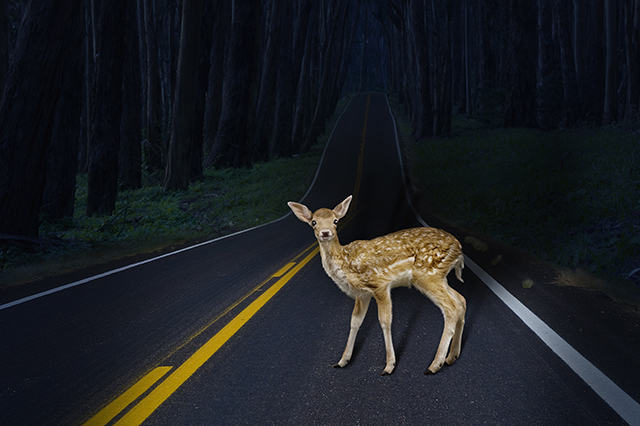
“Deer in the headlights” is a popular idiom for good reason. Between July 2023 and June 2024, nearly 2 million animal collision insurance claims were filed in the U.S., with deer accounting for the majority, according to the Insurance Information Institute.

In 2023, 235 people were killed in car crashes involving animals, according to the latest stats reported by the Insurance Institute for Highway Safety.

Because Northeast deer populations have grown dramatically over the past few decades, deer crashes have been rising steadily.

Most deer-related crashes occur between October and December, close to sunset, when they feed. These months mark deer mating season, when the animals are more active, more aggressive and more likely to cross roadways.

Making matters worse, deer populations are growing at the same time animal habitats are being encroached upon and deer and other animals are being displaced by development. This not only increases the risk of deer collisions, but also means they can occur just about anywhere, including cities and suburbs.

“Extra vigilance is required to anticipate and avoid a deer darting into the roadway, especially during evening hours,” said Mark Schieldrop, senior spokesperson, AAA Northeast. “Deer are unpredictable and can appear in front of your vehicle suddenly and without warning. Remember, if you see one deer, there’s a good chance that more deer are nearby.” 

Before you head out for your annual fall foliage road trips, study up on these tips to ensure you, your family and the wildlife stay safe.

Wear Your Seat Belt

Your chances of being injured in a deer crash are significantly higher if you don’t have your seat belt on.

Check for Signs

Maybe the most obvious but undoubtedly most helpful step is to be on the lookout for deer crossing signs. These are your primary reminders to be on alert, use caution and, if necessary, reduce your speed.

Deer crossing signs, depicted with a leaping stag, are placed by local towns and highway departments in areas known for high deer activity and/or where deer collisions have occurred. They’re usually found along heavily wooded areas like parks and forests, as well as near water.

Consider the Time of Day

While we can never predict when a deer will jump out onto the road, we do know the time of day it’s most likely to happen. The animals are most active when they are grazing, which occurs during dawn and dusk. It’s also worth noting that because deer thrive during these hours, their eyes are well-adjusted to the dark, causing bright car headlights to temporarily blind them causing them to freeze in place.

Sunrise and sunset are also particularly difficult times of day to drive because the road may be dark, or the sun’s glare could be in your eyes.

It’s crucial to be particularly vigilant when you’re driving through deer country around these times. If possible, plan your travels for a different time of day.

avoid deer collision

Stop, Don’t Swerve

If a deer is in the road in front of your vehicle, you may be tempted to swerve around it. This, however, could make the situation much worse. Deer usually will move when they see a car coming, so swerving into another lane might just put you right back into the animal’s path. Additionally, you’ll increase the likelihood of losing control of your vehicle or crashing into another car.

Use Your Horn if You Must

Deer don’t want to see you any more than you want to see them. In fact, most large forest animals are actually quite timid and will run off at the first sight of a human. However, they may get too scared to flee and instead freeze in the middle of the road. When this happens, bring your car to a stop and give the animal a moment to move. If this doesn’t work, flick your headlights on and off a few times. Only use your car horn (in short bursts) as a last resort. The noise may cause a deer to get aggressive.

Watch for Herds

You’re driving down the highway when you spot a deer galloping across the road 100 feet ahead. You’ve avoided a potential collision and now you’re in the clear, right? Not so fast. Deer seldom travel alone. If you see one, there will almost always be others nearby. Once a deer crosses, check both sides of the roadway to make sure another one isn’t following.

What to Do When You Hit a Deer

If a crash occurs, move the vehicle to a safe location if possible and call 911. Then, contact your insurance company to report any damage to your car. Take photos of the damage if you can do so safely and without entering the roadway. Damage to the car from animal crashes generally falls under a driver’s comprehensive coverage.

Have you ever encountered a deer while driving? Tell us about your experience in the comments.

This article has been updated and republished from a previous version. 

Subscribe to Your AAA Newsletter

Sign up and receive updates for all of the latest articles on automotive, travel, money, lifestyle and so much more!

Everyone Needs Life Insurance — Even If You Think You Don’t

Depending on what phase of life you’re in, life insurance might feel more like an abstract concept, not quite something you “need.” Maybe you have a good amount of savings already, or you rent your home. The bottom line is, life insurance isn’t just for folks with kids. It’s a safety net everyone should have, no matter their circumstances.

If you fall into one of these categories, it might be time to rethink if life insurance is for you.

insurance objection

In many cases, employer-provided life insurance is only a baseline.

  • If you’re no longer employed by the company, you could lose your coverage.
  • Plans tend to leave out financial planning benefits, like mortgages or college tuition.
  • Coverage is often only one or two times your salary, which is less than what you’d need for long-term security.

Even without a mortgage, your loved ones could be left with significant expenses, including:

  • Funeral or cremation costs — about $7,848 on average, according to the National Funeral Directors Association.
  • Credit card debt.
  • Medical bills.
  • Student loans. The average student loan amount for Gen Z is $22,950, per Statista.
  • Estate or legal fees.

Savings are helpful, but it’s typically not enough to cover the continued costs your loved ones may need long-term, including:

  • College tuition.
  • Ongoing medical car or unexpected health emergencies.
  • Mortgage payments. The average mortgage loan is $329,854, according to Statista.
  • Long-term care for aging family members.
  • Emergency costs like job loss.
  • Support for dependents with special needs or disabilities.

It’s true that some health issues may exclude certain policies, but it’s best not to speculate; there’s likely a policy that fits your needs.

  • Some insurers, like AAA, offer simplified life insurance — which skips the medical exam.
  • Guaranteed issue policies accept most applicants, regardless of health.

Get A Life Insurance Quote

Subscribe to Your AAA Newsletter

Sign up and receive updates for all of the latest articles on automotive, travel, money, lifestyle and so much more!

Study: Widespread Car Seat Installation Errors and Misuse Put Children at Risk 

Nothing keeps a child safer in a car than a properly installed car seat. Yet more than two-thirds of all car seats are improperly installed, and just 1 in 5 parents and caregivers seek expert help to install a seat or safely secure a child in that seat, according to new research from AAA and the National Safety Council.

In advance of National Child Passenger Safety Week, Sunday, Sept. 21 through Saturday, Sept. 27, AAA is reminding every parent and caregiver that it is critical to keep young children properly secured in a car seat appropriate for their age, height and weight — and certified experts are available to help.

“Despite their best intentions, many parents and caregivers are transporting children in car seats that won’t perform optimally in a crash due to installation errors or improper use,” said Mark Schieldrop, Senior Spokesperson, AAA Northeast. “Many parents are also moving children from rear-facing to forward-facing too soon, transitioning to booster seats too quickly and stopping child restraint use altogether far too early.”

From 2019 to 2023, more than 3.9 million children ages 11 and under were involved in car crashes, resulting in 516,000 injuries and 2,800 deaths, according to AAA’s analysis of data from the National Highway Traffic Safety Administration. When used properly, child restraints reduce fatalities by 71% for 1-year-olds and younger and by 54% for children ages 1 to 4.

Data from the National Digital Car Seat Check Form reveals that, in 2024:

  • 23% of children moved to booster seats too soon.
  • 89% of children transitioned to a seat belt too soon.
  • 81% of forward-facing car seats were not used correctly.
  • 65% of rear-facing car seats were not used correctly.

In Massachusetts, 93% of children transitioned to an adult seat belt too soon, and 22% transitioned to a booster seat too soon.

In New York, 97% of children transitioned to an adult seat belt too soon, and 22% transitioned to a booster seat too soon.

In Rhode Island, 95% of children transitioned to an adult seat belt too soon, and 20% of children transitioned to a booster seat too soon.

For parents with car seats:

  • The most common car seat installation error is a seat that’s too loose. If you can wiggle the seat more than an inch in any direction, it’s too loose. A properly installed seat should be rigid in-place.
  • Remember that booster seats are needed for children who’ve outgrown a car seat but aren’t tall enough to sit with their feet flat on the floor. If the seat belt crosses their neck, they need a booster seat to prevent serious injuries — even in minor crashes.
  • Children should remain rear-facing for as long as possible, at least until age 2.
  • To ensure proper installation, review the car seat owner’s manual and visit the manufacturer’s website, which often features helpful video instructions.
  • Seek help from a certified child passenger safety technician and/or attend a car seat check event.

AAA Northeast is a not-for-profit auto club with offices in Rhode Island, Massachusetts, Connecticut, New Jersey, New Hampshire and New York, providing nearly 6.8 million local AAA members with travel, insurance, finance and auto-related services.

Subscribe to Your AAA Newsletter

Sign up and receive updates for all of the latest articles on automotive, travel, money, lifestyle and so much more!

Car Seat Safety Tips for Expecting & New Parents

Being pregnant or the parent of a newborn child can be stressful. There are so many important things to think about when it comes to keeping your little one safe. Car seat safety is one thing you want to make sure to get right. After all, when used correctly, an estimated 325 children under age 5 are saved by car seats in a year, according to the National Highway Traffic Safety Administration (NHTSA).

Car crashes are a leading safety issue facing children, yet car seat misuse is more common than you might think. Almost 71% of all car seats inspected by Child Passenger Safety Technicians in 2024 were improperly installed and used, according to the latest research from the National Digital Car Seat Check Form database.

To ensure your safety and that of your newborn, follow these car seat safety tips from AAA’s safety experts.

car safety tips
Credit: National Highway Traffic Safety Administration

Car Safety During Pregnancy

  • Seats belts reduce traffic fatalities of front-seat passengers by 45%. Though it may get more uncomfortable as your belly grows, always wear your seat belt when driving or riding in a car.
  • Buckle up correctly. The lap belt should go under your belly and fit securely across your hips. The shoulder belt should be across your shoulder and away from your neck. The seat belt height adjuster can be moved up or down for a better fit.
  • If you are driving … Keep your belly as far away as possible from the steering wheel, while still being able to reach the pedals comfortably. Also ensure the seat is adjusted so you can see well and can sit up straight.
  • Ensure the airbags are on. Airbags help keep you and the baby safe in the event of a crash. Seat belts and airbags work together to minimize the impact of the crash.
  • If you are in a crash … It is important to seek care immediately even if you think you are not injured.

Listen to Our Podcast

Curious about car seats? For answers to all your questions, listen to Episode 4 of our podcast, Merging Into Life: Baby’s First Ride.

Tune In

Shopping for a Car Seat

One of the biggest stressors for new parents is purchasing and installing a car seat. Do your research, but don’t agonize over your choice. Every seat on the market is crash tested to meet federal safety standards. If used properly, they will protect your child in the event of a collision.

No matter your budget, all car seats (purchased new) are guaranteed to protect your most precious cargo. A more expensive seat may have enhanced comfort and cosmetic features, but the best car seat is one that is installed and used correctly every time. NHTSA offers ease-of-use ratings and a car seat finder tool to help you shop.

If you buy a new car seat online, make sure you are buying it from the manufacturer or a known retailer, and verify the site. Better yet, consider purchasing it in person from a trusted retailer to avoid unknowingly buying a counterfeit car seat.

Types of Car Seats

The most common seat that new parents will use is a rear-facing only infant seat. These seats typically accommodate a child between 30-to-35 pounds.

Once the child has outgrown their infant seat by length or weight, a convertible car seat installed rear-facing is the next step. A convertible-style car seat can be installed front or rear-facing to accommodate the needs of your growing child.

The American Academy of Pediatrics recommends children ride rear-facing as long as possible, until they reach the height and weight limit for a particular seat. Parents should be aware of their state’s law regarding car seat safety, which may also mandate how long children must remain rear-facing in their convertible seat before riding in the forward-facing position. Most convertible seats can be used in the rear-facing position with children up to 40-50 pounds.

car seat
Credit: U.S. Centers for Disease Control and Prevention

Car Seat Installation Help

There are three common mistakes when it comes to installing and using car seats, according to the National Digital Car Seat Check Form.

  • The car seat installation is too loose.
  • Failure to use the tether when installing a forward-facing car seat with either the lower anchors or seat belt.
  • Not sufficiently tightening the harness when securing a child in a car seat.

Another issue is that children often are moved out of an age-appropriate car seat before it is safe for them to transition.

The safest and most effective car seat is one that is installed properly. Always read your car seat manual and check if the manufacturer provides video instructions for installation. If you need help, talk to a certified Child Passenger Safety Technician. They are trained not only to install your car seat, but to teach you how to do it yourself.

Extra Padding

Harness covers, plush padding and other after-market products might be tempting to add to baby seats, but unless the additional accoutrements were crash tested, there is no guarantee they won’t affect the function of the seat in the event of a collision. The same goes for mirrors and sunshades. At high speeds, these objects may dislodge and become dangerous projectiles that can injure your child or other occupants in the vehicle.

Registering a Car Seat

Register your car seat by filling in and sending in the postmarked card attached with your seat or go to the manufacturer’s website to register your seat virtually. If you do not register your car seat, you may miss important recall information from the manufacturer that could impact the safety of your child.

Used Car Seats

Most child passenger safety experts agree that used car seats should not be purchased. Because you cannot guarantee the history of the seat, you also cannot guarantee that it is safe.

A used seat is only an acceptable choice if it meets the following criteria:

  • You know the history of the seat (it comes from a trusted source).
  • You can guarantee it hasn’t been involved in a collision.
  • It shows no signs of damage to the frame or harness.
  • It is not expired or recalled.

If you have questions about a used car seat, consult a Child Passenger Safety Technician for guidance.

Flying with a car seat? Check out these tips and tricks first.

Find a Child Passenger Safety Technician near you.

Subscribe to Your AAA Newsletter

Sign up and receive updates for all of the latest articles on automotive, travel, money, lifestyle and so much more!