
The Anatomy of Auto Glass

When it comes to auto glass, windshields tend to get all the attention. But there are several other types of glass around the vehicle, providing protection, a clear line of sight, a refreshing breeze and, of course, sunlight.

Vehicle windows are also made with different processes and materials depending on where they are located on the car, all of which is done to ensure they are as strong and safe as possible.

Let’s take a look at all the auto glass on a car, as well as what it’s made from and how it’s produced.

Different Types of Auto Windows

The Windshield is the front window of a vehicle, and it does much more than just protect the driver and passenger from weather conditions and debris. This glass panel is integral in ensuring the proper deployment of the airbag and in maintaining the structural integrity of the vehicle. This is why it is critical to repair a broken or chipped windshield right away. It’s not just you’re line of sight that’s comprised. Modern windshields are also commonly integrated with advanced technology, such as rain sensors and head-up displays.

Side windows are glass panes located in the vehicle doors. They retract into the door panel when opened.

Vent windows are the auto glass located directly next to side glass windows. In older model cars that did not have air conditioning, these windows could be opened to keep the cabin at a comfortable temperature. Nowadays, they are used to improve the car’s aesthetic and allow side windows to roll down farther.

Safelite AutoGlass® Has You Covered

Members save 10%* on auto glass replacement or windshield repair with code AAA10NE at checkout on safelite.com.

Book Now

Quarter glass is the last window on the side of a car, behind the side window and above the rear wheel. These windows can be stationary, vented or retractable. They provide drivers with a clearer view of their surroundings.

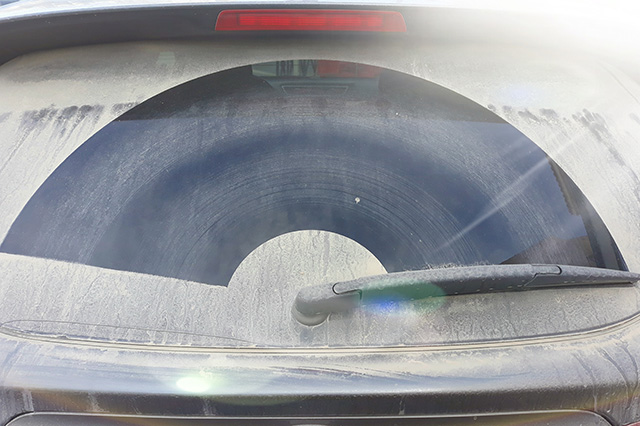
Rear Windshields are on the back of the vehicle. They, too, help secure the car’s structure. Modern rear windshields are equipped with thermal strips that run a small current of electricity to heat the glass and keep it clean and clear.

Sunroofs are a popular feature on many vehicles. These glass panels are incorporated in the car’s roof, allowing sunlight and fresh air to enter the cabin. Sunroofs can generally be tilted open on a hinge or retracted backward above the roof or into the roof liner.

Different Types of Auto Glass

There are two types of glass used in automobile manufacturing: tempered and laminated. The latter is used to make the windshield, while the former is used to produce all the remaining windows of the vehicle.

Tempered glass undergoes chemical and thermal treatment. This helps strengthen the glass, making it much more difficult to break. The second benefit of this type of glass comes into play if it does break. When this happens, tempered glass breaks into many small pieces as opposed to large shards that could injure a passenger or driver.

windshield damage

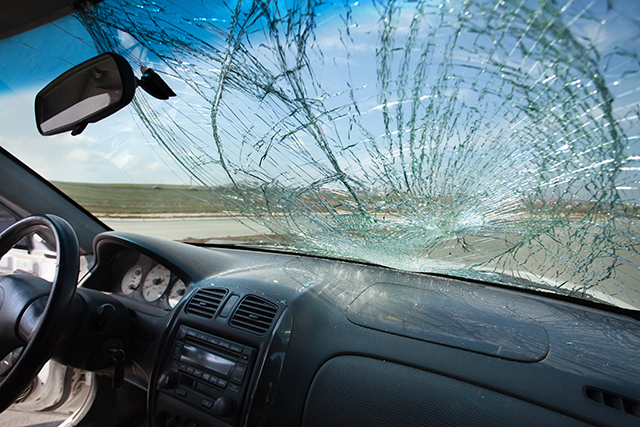
Laminated glass actually consists of two glass panels, with a plastic layer in between. This plastic layer is designed to keep the windshield together even if it breaks or cracks. If you’ve ever seen a broken windshield, you’ll notice a spider web type pattern growing out from the point of impact with the rest of the windshield maintaining its general shape. When laminated glass is struck with enough force and breaks, the plastic layer works to keep the broken pieces of glass together. This helps keep the vehicle’s structure intact and prevents dangerous pieces of glass from hitting those inside the cabin.

How Are Windshields Made?

To make a windshield, two sheets of glass are pressed together. Between them is a layer of polyvinyl butryal, a plastic-like substance. Then pressure and heat are applied to bond the three components together. The windshield is then cut to size and curved in order to fit into the frame of the car. A water and airtight sealant is applied around the frame to bond the windshield into the car.

More than just windows to look out of, the glass that surrounds us in our cars is designed to keep us as safe as possible.

Get more car safety tips. 

AAA members can save 10% on Safelite AutoGlass replacement or repair. 

Subscribe to Your AAA Newsletter

Sign up and receive updates for all of the latest articles on automotive, travel, money, lifestyle and so much more!

8 Budgeting Tips for New Homeowners

Congratulations! You’ve joined the ranks of adults who have opted into homeownership. There’s no doubt that the process can be scary and overwhelming, but the end result is so worth it.

Although you’ve just traded paying rent for creating an asset by paying a mortgage, becoming a new homeowner is fraught with many unexpected costs. It’s not just about the final total due at closing. Inevitably, you’ll be making trips to your local home improvement store, the local department stores and furniture stores to make your house a home.

With all these impending charges, you may be wondering: How do I afford all of this? It helps to come in with an understanding of where you can save money during the process.

Get a Hardware Store Credit Card

Even if you don’t have any major home improvements planned for the first few months in your new house, you will likely still need to make a few runs to the hardware store in the first days and weeks.

At minimum, you’ll want to change your locks. You might also want to add a fresh coat of paint before moving in. It’s also possible that the old homeowners may have taken an essential appliance that you’ll need to replace. The list goes on (and seemingly, never ends).

You can’t plan for everything, but you absolutely can build a solid foundation for all the spending you’re about to do by proactively signing up for a hardware store credit card at one of the big chains, which offer special financing for large purchases. Some even offer a discount.

And while we’re talking about the big chains, it’s worth noting that you don’t need brand name tools for every project. Buy discount products, especially for single-use items such as painting commodities (tarps, trays, etc.)

Use Your Network to Knock Out Projects

No one wants to be on the receiving end of those “Can you help me move?” texts but there’s something to say about helping others – and benefiting from that good karma.

Before you hire an expensive contractor or moving service, consider who in your network may be able to help you with certain tasks. You can gauge people’s interest in helping by talking about your home improvement plans and seeing who speaks up about their enjoyment of certain tasks (like painting or demolishing walls). You might be surprised by who volunteers to help without being prompted.

But even if no one volunteers, it doesn’t hurt to ask. Just make sure to provide some pizza and beer (or whatever they enjoy) as thanks while they’re helping with a task. Don’t forget to proactively offer a helping hand when they have a project that you can contribute to.

It’s worth noting that there is a vast price difference between hiring a moving service versus renting a truck and doing it yourself (if you’re moving locally). This is a no-brainer way to budget as a new homeowner if you can handle the heavy lifting.

Even if you can’t do it all on your own or you can’t convince friends to help, you could hire help from an app like TaskRabbit (or through your truck rental company) and keep costs low.

Borrow Tools You’ll Only Use Once

Another way your network can be a great resource? Sharing tools. If there’s something you know you’re going to need for one project but probably won’t use again, see if a friend can lend you one to borrow.

No matter if you are buying or borrowing your tools, it’s important to treat and store them with care. For example, if you’re buying a lot of painting supplies, make them last by taking the time to rinse off paint immediately after a painting session.

Seek Out DIY Learning Resources

Another way to curb the costs around hiring professional help is to take a DIY approach to as many projects as possible.

While there are certain tasks like plumping and electrical fixes that are best left to the professionals, seeking answers on Youtube or Google can help you troubleshoot quick fixes on your own. If you’re not sure whether a video is trustworthy, send it to a handy friend to double check and see how other users responded in the comments section.

Establish a Mail Forwarding Address

You were probably already planning to do this already through the United States Postal Service. But here’s why you should do it ASAP – discounts!

Big retailers like Amazon are quick to offer discounts to new homeowners as part of the official mail forwarding process. If you were already planning on buying new things for your house, you might as well cut down your costs by taking advantage of these deals.

AAA members can also take advantage of exclusive discounts.

budget new homeowner

Shop Around Before Making a Big Purchase

One of the biggest purchases you may initially make as a new homeowner will probably be some type of appliance. Since appliances can represent an investment of several hundred or thousand dollars, it’s imperative to do some research before buying something.

Shop Craigslist, Facebook Marketplace and Habitat for Humanity ReStores if you don’t want to be on the hook for the full retail price, but make sure that if you choose to buy something used that you know how to determine if the appliance is in good working order.

If you don’t have this expertise or don’t want to bother with used appliances, you still have options. Try shopping during major sales holidays like Memorial Day or Black Friday.

Buy Staples in Bulk

If you’ve wanted a Costco membership since your apartment rentals days, there’s good news. As a new homeowner, you finally have the room to store in bulk.

So, go ahead and buy that mega package of toilet paper, cleaning supplies and granola bars. You’ll save money in the long-term that you can reinvest in your many house projects.

Bonus tip: While you’re shopping at a big box store (or even your local grocer), ask if they have boxes that they’d otherwise throw away. It’s the perfect opportunity to inherit moving boxes that you don’t have to pay for. Or, if you have friends who recently moved near you, tell them that you’d love their boxes if they were just going to toss them.

Declutter Before Moving and Sell Your Old Stuff

Before you start packing, consider if you really want to bring everything to your new house. Over time, you’ve probably collected a bunch of things that you don’t really want, including duplicates of essential items that you may never end up using.

Take this opportunity to declutter your possessions. Doing this before you move means that you’ll have less to pack. If you have items that other people want, sell them to make some money for your upcoming home projects. Make that money go even further with a AAA and Discover CD account that earns interest.

Buying your first home will be a wild ride and it will seem like you’re bleeding money everywhere. Though you can’t plan for every curveball, you can proactively find ways to minimize your spending as a new homeowner by following this advice.

How did you cut costs and stay on budget when buying your first house? Let us know in the comments.

Subscribe to Your AAA Newsletter

Sign up and receive updates for all of the latest articles on automotive, travel, money, lifestyle and so much more!

Choosing Eyeglass Lens Options and Treatments

Not only can you choose a pair of glasses to match your personality or style, you can customize your eyeglasses to suit your lifestyle. Whether you spend hours in front of a computer screen for work or do a lot of night driving, there are lens options and treatments that can make your life easier and help preserve your eye health over time.

Making sure your glasses are functioning to the best of their ability is vital. From scratch-resistant and UV-blocking coatings to anti-glare, anti-fog and blue light filtering treatments, use this guide to discover which type of lens upgrade is right for you.

New Exclusive Offer at LensCrafters®*

Show your AAA card and save 50% off lenses with a complete pair purchase.

*Shop Now

Types of Eyeglass Lenses Through Time 

Thanks to technological advances, the lenses of modern eyewear are made from a variety of materials, each offering their own pro and cons.

Glass Lenses

The lenses of the first eyeglasses were made of glass. Although they were clear, fairly scratch-resistant and easy to see through, glass lenses were quite heavy and chipped and broke too easily. Today, glass lenses are hard to find. They also offer no protection from the sun’s ultraviolet rays.

Plastic Lenses

Plastic lenses were invented back in the 1960s, and they are still used today. Made of a plastic polymer, plastic lenses are lighter and typically less expensive compared to other lenses; however, they can scratch easily and offer no UV protection.

Polycarbonate Lenses

Polycarbonate lenses were originally made for safety glasses back in the 1980s. These glasses are even lighter, more impact-resistant and less breakable than plastic lenses, making them a popular choice for kids and sports eyewear. Due to their durability, polycarbonate lenses can be expensive. This kind of lens can also cause distortions in the peripheral vision of some wearers.

High-Index Plastic Lenses

High-index plastic lenses are some of the thinnest lenses of modern eyewear. This type of lens is powerful, lightweight and great for stronger prescriptions – meaning the days of “soda bottle lenses” are over. Because high-index plastic lenses have a higher “index of refraction,” they tend to have more lens reflection and wearers can experience more glare.

lc

Kinds of Eyeglass Lens Coatings and Treatments

Once you choose which material you would like your eyeglass lenses to be made of, you can protect your glasses – and your eyes – with different kinds of lens coatings.

Anti-Scratch Coating

No glasses are completely scratchproof, but some lenses are more prone to scratches than others. Scratch-resistant coatings – also referred to as scratch coats or hard coats – will help protect your lenses. Although they are the most impact-resistant, polycarbonate lenses are also the softest and would greatly benefit from this kind of treatment.

Anti-UV Treatment

Opting for a UV-blocking lens treatment can help protect and preserve your eye health. UV rays are harmful to eyes, and longtime exposure is associated with eye problems like cataracts, eye cancer and macular degeneration, according to the American Academy of Ophthalmology.

Although they are not a full replacement for sunglasses, wearing glasses with UV reducing lenses whenever you are outside can help protect your eyes from the sun.

Both polycarbonate and a majority of high-index plastic lenses are built with protection from UV rays. So, consider a UV-blocking treatment for glass, plastic and some high-index plastic lenses.

Anti-Glare Coating

Light reflections in lenses can reduce contrast and clarity, making it difficult to see. This can be especially troubling while driving at night. Anti-glare or anti-reflective coatings help reduce glare and sharpen vision.

An anti-glare coating is great for all kind of lenses, but this is especially helpful for high-index plastic lenses, which tend to be more reflective than others.

Blue Light Coating

While blue light does occur naturally, it is also emitted from the screens of our devices. Blue light has a shorter wavelength and higher energy, causing more strain on our eyes.

“More than half of U.S. adults – 60% – spend a minimum of six hours a day, every day on phones, tablets and computers,” according to LensCrafters. “So it’s important to practice good habits to keep your eyes safe from blue light.”

Blue light filtering lenses are great for all kinds of glasses, including prescription and non-prescription varieties.

Photochromic Treatment

Commonly known as transition lenses, photochromic lenses darken when exposed to sunlight and lighten in more shaded environments, offering some UV protection. This kind of lens treatment can be applied to a variety of eyeglass lens materials. When it comes to cons, photochromic lenses can be expensive and take some time to lighten after sunlight exposure.

Anti-Fog

Eyeglass lenses can fog when you move from a warm environment to a colder one, and vice versa. Mask wearing guidelines brought on by the COVID-19 pandemic have also led to more instances of foggy lenses, due to the condensation of one’s breath.

Foggy glasses are not just annoying; the inability to see can also be dangerous. An anti-fog coating can help keep your lenses clear.

LensCrafters created an anti-fog spray to address this issue, which is available in-store now.

Scratch-resistant, UV-blocking, anti-reflective, anti-fog and blue light reducing eyeglass lenses can help you see better and help preserve your overall eye health. Talk to your eye doctor about different lens coating and treatment options to figure out which would work best for you.

Learn more about lens options from LensCrafters. 

AAA members can get 50% off lenses with a frame purchase from LensCrafters, plus more exclusive savings on exams, frames and more.

Subscribe to Your AAA Newsletter

Sign up and receive updates for all of the latest articles on automotive, travel, money, lifestyle and so much more!

Snowbirds’ Guide to Flying Away for Winter

Note: Due to the ever-changing nature of the COVID-19 crisis, please see official websites before visiting specific states and destinations to check for restrictions or closures.

If you’re one of the many snowbirds that head south for the winter, you already decided you’ve had enough of the brutally cold Northeast winters and may be planning to head somewhere warmer full-time in your retirement.

But whether you already are a snowbird or would like to become one, you may have a few questions before you take flight. How do you prepare for the journey each year? And if you haven’t already decided on a destination, where should you go?

From checklists for preparing to leave and return to our top picks for warm weather retirement destinations, this guide may help.

Checklists for Snowbirds

Preparing

  • Schedule a check-up with your primary doctor prior to leaving.
  • Make sure your prescriptions will also be accessible in your winter home.
  • Alert your bank and your insurance company about your relocation.
  • Sign up for online banking to track finances and pay bills easily.
  • Check with your provider about pausing or paying reduced rates for cable and internet services .
  • Make sure you pack for the weather! Your destination might be warm or even hot during the day, but it might be cool at night and early morning.
  • Bring all valuable documents such as passport, driver’s license and medical, insurance and tax documents.

RV Tips

  • Have your tow vehicle and RV inspected prior to your trip.
  • Add tank cleaner to RV’s waste tanks.
  • In addition to the trip essentials like clothing and toiletries, be sure to pack:

Car Insurance

Be sure to check car registration and insurance requirements in your winter home, as they vary from state to state. A AAA insurance agent can help you with any questions you may have.

Health Insurance

Make sure you have consistent health coverage wherever you go. If you have a Medigap supplement or are enrolled in a lower-cost Medicare Advantage plan, be sure to check the specifics, as these vary by region. If you’re traveling outside the country, be sure to look into the country’s health insurance requirements.

Home Care Tips for Snowbirds – Before you Leave

Plumbing

  • Turn off your water supply so that the pipes don’t leak or burst.
  • Contact a professional about turning off the water supply for older heating systems.
  • Drain water from pipes so that they don’t freeze.
  • Drain and shut off all water faucets.

Maintenance

  • Unplug all appliances, such as toasters and lamps.
  • Empty your fridge and unplug it.
  • Remove dead trees or limbs.
  • Have roof and gutters inspected.
  • Clean your home so you don’t attract pests.

Protect Your Home 

  • Make sure your alarms have been activated and are working.
  • Store valuables in a secure location.
  • Lock external doors and windows with locks, hinges or frames that can’t be broken apart.
  • Don’t post vacation plans to social media.
  • Check out these security tips for when you are away.

Make Your Home Look Occupied 

  • Have someone remove snow from your property after snowstorms.
  • Have mail forwarded to your snowbirds residence and stop newspaper delivery.
  • Ask a friend or a relative to pick up any flyers or other papers from your front door.
  • Have exterior and interior lights come on at certain times.

In Case of Emergencies 

  • Notify the police department well in advance of your departure and give emergency notification numbers.
  • Give a trusted friend, a neighbor or a relative access to your home to monitor all systems and to be available for emergency situations.
  • Also give them your contact information and a list of local contractors in case repairs are needed.

Home Care Tips for Snowbirds – When You Return

Plumbing

  • Turn on the water.
  • Turn on the heat.
  • Check for signs of leaks or pipe damage.

Maintenance

  • End mail forwarding.
  • Resume any utilities and services you paused or ended while you were gone.
  • Clean up the house.
  • Raise the house temperature and put in a new filter.
  • Test smoke detectors.
  • Use a carbon monoxide detector.
  • Let neighbors and the police department know of your return.
snowbirds

Where to Go

Now that you know the nitty-gritty of setting up the snowbirds lifestyle, you’ll need a place to snowbird to.

What to Think About 

To narrow your location search, here are some questions you should answer:

  • How long are you staying?
  • How are you getting to your destination?
  • What type of climate do you prefer?
  • Will you rent or buy your winter home? Or will you use an RV?
  • Are you bringing your pets with you?
  • Do you want to be close to family or are you willing to travel farther for warmer weather?
  • What do you want to do at your destination?

Here are our top picks for snowbird retirement.

South Carolina

The Golf Capitol of the South, with its 380-plus award-winning courses, also offers so much more than golf. Enjoy the scenic views of lakes, hills and mountain streams and eat up local treats such as Oyster roasts and Frogmore stew as well as cuisine from all parts of the world. Our top cities:

  • Myrtle Beach
  • Pawley’s Island
  • Hilton Head

Florida

Florida cities take the top spots of almost every single “top destinations for snowbirds” list there is, and it’s not hard to guess why. From pleasant temperatures in the winter and pristine beaches to natural sites, amusement parks and lively city scenes, snowbirds will find no shortage of things to do while staying warm in the winter. Our top cities:

  • Orlando
  • Hollywood Beach
  • Winter Park

Georgia

This state is known for much more than its peaches. Providing a getaway from the hectic city life, Georgia boasts beautiful and quiet beaches along the Atlantic shore and gorgeous oaks as well as charming fishing villages. There are opportunities for hiking beautiful trails, taking in the mountain air, camping by wildlife refuges, fishing in deep saltwater and more! Our top cities:

  • Brunswick
  • Jekyll Island
  • Kingsland

Texas

So many snowbirds visit the Lone Star State that it has a special name for them: Winter Texans. With temperatures easily in the 60s and 70s during the winter months, tons of activities and tons of food you just can’t get enough of (especially the Tex-Mex and barbecue!), it’s no wonder so many snowbirds from as far north as Canada make their way to the state every year. Our top cities:

  • Austin
  • Fredericksburg
  • Galveston

Arizona

If you want to spend your winter somewhere in a snowbirds desert paradise, Arizona is the state for you. From a thriving entertainment and arts district to baseball spring training sites, Arizona is a desert paradise for snowbirds. Our top cities:

  • Glendale
  • Yuma
  • Tuscon

Nevada

Feeling lucky? It might be unusual to think of this casino-famous state as a big snowbird spot. But, the gorgeous scenery, many sunshine days, tons of entertainment, affordable meals and outdoor opportunities make Nevada attractive for many snowbirds each year. Our top cities:

  • Overton
  • Laughlin
  • Las Vegas

California

Whether it’s soaking up the sun at one or many of the gorgeous white-sand beaches, enjoying the vibrant arts scene or partying it up at the many cultural festivals, snowbirds will have no problem making the most of their time in sunny California. Our top cities:

  • Palm Springs
  • Santa Barbara
  • Cathedral City & Rancho Mirage

Top RV Snowbird Destinations

  • Florida – 71 RV parks
  • Arizona – 49 RV parks
  • Texas – 42 RV parks
  • California – 24 RV parks

Do you have tips for snowbirds that we missed? Any other locations you’d recommend? Let us know in the comments!

To find out how AAA can help you save for all your life changes and milestones, visit AAA.com/Financial. 

Subscribe to Your AAA Newsletter

Sign up and receive updates for all of the latest articles on automotive, travel, money, lifestyle and so much more!

3 Creative Ways to Display Photos

There was time where you would print out photos, toss them into any old frames and nail them to the wall, but those days are over. There are lots of creative ways to display photos and different types of photo frames you can use that can make an impression and add style to your home.

When it comes to displaying your photography, the possibilities are endless. Whether your pictures are framed, frameless or bound together in a hardcover coffee table book, it’s time to start thinking outside of the box. Here are some inspiring ideas to show off your artwork, along with a few tips for creating a display that will pop.

Quality First

Regardless of how you plan on displaying your images, always start with quality prints. While using a home printer is fast and easy it doesn’t always produce the best-looking photos or meet the size requirements for your frame. From local print shops to online photo services, there are plenty of ways you can order quality prints fast and at the price point you are looking for. You will also have way more print options from traditional photo paper to canvas to metal.

Gallery Wall

A gallery wall is a creative way to display photos and take your empty walls to the next level. The best part is that you can customize it to fit your style.

There is no right or wrong way to arrange or frame the photos. You can use a mix of different types of photo frames or sizes, or everything can match. If need help, this 9-piece gallery wall kit comes with a hanging template. Give your gallery a theme, color coordinate or make it totally random. It’s up to you!

Like frames, canvases are also a great way to display images on a gallery wall. One tip when creating your wall of art is to lay everything out in advance. And remember, anytime you are displaying art, you want to try to keep it eye level.

Go Frameless

Whether it’s through a printing service or a DIY project, there are lots of creative ways to display photos sans frame.

The company Mixtiles transforms your images into high-quality restickable tiles, allowing you to play around until you land on the perfect collage. It’s a perfect solution for the indecisive or easily bored.

Stringing up multiple images using string and clips is also a popular way to hang photos that is super easy to update. Craft one yourself or purchase one that is already made.

And if you really want to make a statement, online printing services like Shutterfly or Zazzle can print your favorite photo on just about anything, from phone cases to throw pillows. It also makes for a great gift! There’s not a grandparent on earth that would say no to a mug featuring their grandchild’s smiling face.

creative ways to display photos

Photobooks

No wall space? No problem! Photobooks are a great way to showcase a large body of work. They come in all shapes and sizes and can be customized however you like.

Artifact Uprising creates various styles softcover and hardcover books with dust jackets. Pinhole Press is another high-quality custom photo book printing service that takes more of a contemporary approach and many  different book options.

Displaying images in a photobook can be more of an investment than other methods, but they are a long-lasting keepsake.

Tell us about more creative ways to display photos in the comments.

Get more photography tips.

Kayla Mandeville is a Massachusetts-based photographer. Follow her on Instagram @k__elizabeth.

When you make a purchase through a third-party link, AAA Northeast could receive revenue.

Views expressed are the opinion of the writer and do not reflect the views of AAA Northeast.

Subscribe to Your AAA Newsletter

Sign up and receive updates for all of the latest articles on automotive, travel, money, lifestyle and so much more!

Crossword: All About the ’90s

The’90s may be gone, but the decade is anything but forgotten. From the best movies to your favorite Lip Smackers flavor, get nostalgic with our ’90s-themed puzzle.

Here are some tips to help you get the most out of your puzzle playing experience. Good luck!

Since our members are the root of everything we do, your feedback is important to us. Let us know if you run into any issues while playing, or share your ideas for future puzzles by emailing us.

Subscribe to Your AAA Newsletter

Sign up and receive updates for all of the latest articles on automotive, travel, money, lifestyle and so much more!

Handling a Market Downturn When Near or at Retirement

If you’re still years or decades away from retirement, a dip in the stock market likely doesn’t cause much concern as your savings still have plenty of time to bounce back. However, if retirement is in sight, or you’re already there, any market volatility may have you worried.

It’s important to remember that you’ll likely be retired for many years, during which your savings accounts will continue to grow. You don’t need 100% of your funds the day you retire – you’ll still have plenty of time to ride out a down market. That fact alone may not provide all the reassurance you need.

Here are a few steps you can take to make sure you’re on solid financial footing during your retirement, regardless of how the market is acting.

Analyze Your Budget

The first step in figuring out if you have enough money to get by is knowing how much money you need to get by. Complete a detailed review of all the expenses you’ll have in retirement.

This is also the time to look at your discretionary spending. Many people tend to splurge in retirement on things like vacations and home renovations. Should the market take a downturn, however, these items may need to be trimmed or eliminated until your finances improve. Having them listed out makes it easy to identify what can stay and what needs to go.

Have Emergency Cash Savings

Your retirement accounts should not be your only source of money in your later years. As soon as retirement begins to approach, or even before, you should start building up your bank account.

Having a healthy bank account can limit the amount of money you’re forced to withdraw during an economic decline. This will give your retirement funds a chance to recover. Your cash should be kept in an easily accessible bank or credit union savings account.

Diversify Your Assets

It’s always a good idea to have a healthy mix of both stocks and bonds in your portfolio. But if you’re risk averse, you may want to reconsider how much of a percentage each one takes up.

Stocks generally perform better than bonds, so it’s wise to have a good amount in order to help your savings grow as much as possible. However, with great reward comes great risk. There are a host of reasons why a company you have stock in could suffer, which would then cause the value of your stock to drop. For example, from 2007-2009, when the country was in and out of a recession, the average return percentage on stocks was 5.49, -37 and 24.46, respectively.

Bonds, meanwhile, won’t get you quite the return of stocks but they offer very little risk, particularly those backed by the U.S. government. During the same three-year stretch from ’07 to ’09, average annual bond returns styed between 5-7%.

This is all to say that if you’re seriously concerned about the market’s performance you may want to consider shifting more of your money to bonds to mitigate potential loses.

what will i do in retirement

Find a New Source of Income

The idea of picking up a new job during retirement is likely the last thing a retiree wants to hear, and rightfully so. But this new gig doesn’t need to be the grueling, 40-plus hours a week job we’re used to. A part-time or freelance position with a modest income can go a long toward surviving fluctuations in the market – and alleviating the stress of financial concerns.

But most importantly, this new revenue source doesn’t need to be a job in the traditional sense. It could come from something you’re already doing in your free time. These days, there is a host of ways to turn your hobby into a moneymaking venture. Since you’re likely to pick up new hobbies during retirement, or expand on ones you already have, this new “job” could be something already in your wheelhouse. 

Determine a Safe Withdrawal Rate

An important step in planning for retirement is figuring out an appropriate withdrawal rate – determining how much money you can take out each year without running out during your lifetime.

It has long been suggested to withdraw 4% of your savings each year, adjusted for inflation. But during lean times, you may need to give yourself a pay cut.

For example, assume you have $500,000. The 4% rule would give you $20,000 annually. But if the market takes a drop and your portfolio is now worth $400,000, that $20,000 represents 5%. To get back to 4%, you’ll need to lower your withdrawal income for the year to $16,000.

What are your tips for saving during market downturns? Let us know in the comments below.

Subscribe to Your AAA Newsletter

Sign up and receive updates for all of the latest articles on automotive, travel, money, lifestyle and so much more!

What to Know Before Buying a Condo

It’s easy to think buying a condo is just like buying a house. After all, they’re both private residences. And while there are plenty of similarities in the process of purchasing either one, there are also some very important differences to consider.

Some of these differences are beneficial to potential buyers while others may be significant hurdles to get over. If you’re in the market for a condo, make sure to consider these factors before signing on the dotted line.

What is a Condo?

Are condos more like apartments or houses? The answer is they are a little bit of both. It’s common for condominiums to be seen as synonymous with apartments since they are both private residences within larger buildings or complexes. The main difference between the two is ownership. While a single individual or company owns the entire apartment building or complex, condos are owned by the resident living in the home, just like a traditional single-family house.

Condo Mortgages

The transaction of buying a condo is very similar to buying a single-family home, meaning you’ll likely need to take out a mortgage. Condo mortgages are usually more expensive than they would be for a typical single-family house, because these units are seen as riskier investments. If the condo association as a whole is struggling financially, each individual unit could potentially lose property value.

Just like purchasing a house, buying a condo also requires a down payment. This means you’ll have to pay a sum of money upfront. In fact, condominiums usually require a larger down payment than a house, by percentage. You may need to pay up to 20% of the purchase price to secure the best condo mortgage rate. A down payment less than that could require you to take out mortgage insurance, which will add to your monthly payment.

The good news is that condos are generally less expensive than single-family houses in the same area. So, while both the percentage of your down payment and your mortgage rate may be higher, the total dollars and cents of purchasing a condo will likely be less than buying a traditional house. For this reason, they can be greater starter homes for young or first-time buyers.

Learn more about how AAA can help you with your mortgage.

Homeowners Association Fees

One of the great (and convenient) aspects of living in a condo is access to amenities. Many buildings or complexes come with shared facilities such as fitness centers and parking lots. Even better is that the upkeep of any exterior or shared facility in the complex is taken care of by the condo board. They are responsible for hiring landscapers and pool cleaners, for example.

However, condo owners are required to pay fees to help cover these costs. These fees, known as homeowners association fees, can range from a couple hundred dollars each month to a several thousand. If you live in a high-end complex with amenities such as a spa and gym, you might need to budget for higher monthly dues.

This added cost should be factored in when deciding if buying a condo is within your financial means.

buying a condo

Insurance

In most cases, condo owners are required to obtain homeowner’s insurance for their individual residence, much like a house owner would do. However, condo complexes typically have a shared master insurance policy that covers parts of the building or complex itself.

Because of this, you may only need a policy that covers the interior of your home. If so, you should be able to secure a less expensive policy than you would if you owned a single-family house. Make sure to check what is covered in the building’s master policy and what is not.

Schedule an appointment with a AAA insurance agent to learn about your coverage options. 

Freedom

When it comes to the freedom to alter your home – and live how you like – condo living falls right in between apartment renting and owning a single-family house. Because you own your home and are not renting, you’ll have more flexibility to make alterations to your condo. However, condo boards typically have some restrictions, such as the color of paint you can use on your home.

These boards also have a host of other rules residents must abide by, regarding everything from pets and quiet hours to the ages of residents and number of guests allowed. Make sure you’re okay with the board’s rules before buying.

Should you buy a condo?

Buying a condo can be a great option for many people, as long as you remember to factor in any additional costs and lifestyle restrictions. Condominiums provide many of the benefits of traditional home ownership at a lower price point and with less of the upkeep.

But most importantly, condo ownership allows you to build equity in your home just as you would with a house. When renting an apartment, much like when leasing a car, you’re paying to borrow, not to own. At the end of your lease, you’re left with no tangible asset. Once you pay off your mortgage, however, the condo is all yours.

Have you ever purchased a condo? How did the experience go for you? Let us know in the comments below.

Learn more about AAA mortgage loans and other home loan services. 

Subscribe to Your AAA Newsletter

Sign up and receive updates for all of the latest articles on automotive, travel, money, lifestyle and so much more!

What to Know About the VA Home Loan

The Servicemen’s Readjustment Act of 1944, better known as the G.I. Bill, has long been considered one of the great legislative successes of the past century. By providing benefits to those who served our country, the bill not only assisted millions of individuals, it helped spur on a post-war economy and establish an American middle class. More than seven decades later, one such benefit is still proving fruitful: the VA home loan. These loans help provide the more than 17 million active and retired military personnel with housing.

If you’re an eligible service member, a VA loan can be just want you need to start the next chapter of your life. Here’s everything you need to know.

What is a VA home loan?

A VA loan is a mortgage backed by the United States Department of Veteran Affairs. It is eligible to men and women who have or are presently serving in the United States military. Members of the Reserve or National Guard are also eligible.

While the VA does not distribute the loans, it does set eligibility requirements and financially guarantees loans that qualify under the program. Qualified third-party lenders issue the loans and a AAA mortgage specialist can guide you through the program.

How does a VA loan compare to a traditional mortgage?

The are several financial benefits of a VA home loan that make it easier for a member of the military to purchase a home. Most notably is that VA loans require no down payment. Considering the fact that saving for a down payment can be a huge hurdle in the house-buying process, this can significantly speed up the process of getting into a new home.

Interest rates on VA loans are also usually lower than traditional mortgages, and no private mortgage insurance is required. This will help keep monthly payments low.

va home loan

How do I get a VA loan?

If you believe you are eligible for a VA loan, you’ll first want to head to the VA website to ensure you meet all the requirements. You may even be surprised to find you are eligible when you thought you weren’t. For example, if you didn’t reach the minimum service requirement, you may still be eligible if your discharge was for a reason such as a reduction of force or certain medical condition.

You’ll then need to get a certificate of eligibility. You can receive one directly from the VA or your lender can request it on your behalf.

Once you’re ready to apply, contact a AAA mortgage specialist who can walk you through the application process step by step and get you on your way to home ownership.

AAA’s VA loans offer flexible credit guidelines and acceptance of lower credit scores than most loan programs. To learn more about the program or to speak to a mortgage specialist now, visit AAA.com.

Subscribe to Your AAA Newsletter

Sign up and receive updates for all of the latest articles on automotive, travel, money, lifestyle and so much more!

Podcast Pulse: Can’t-Miss Audio Dramas and Fiction Podcasts

This post is part of “Podcast Pulse,” a series featuring overviews and suggestions for all the latest and greatest podcasts. 

Audio dramas, or fiction podcasts, are different than the podcasts that I’ve recommended in this column before. As podcasting as a medium becomes more mature, podcast genres are diversifying, podcasts are growing and podcasters are telling more unique stories. Audio dramas are worlds away from the “two guys shooting the breeze” podcasts that were once inescapable. In the world of audio drama, the possibilities are endless. And as the medium of podcasting grows, audio dramas are gaining more steam.

Here are some of my favorite audio dramas and fiction podcasts, in no particular order.

Welcome to Night Vale

“Welcome to Night Vale,” written by Jeffrey Cranor and Joseph Fink, was perhaps the first breakout hit in the world of audio drama podcasting. Narrated by radio host Cecil Palmer (voiced by Cecil Baldwin), “Welcome to Night Vale” is about everyday life in a desert town. It just so happens that this particular desert town is populated by glow clouds, uncanny-looking angels, mysterious hooded figures, sentient plastic bags and secret police. “Night Vale” is meditative, imaginative and deeply weird, with a style that sits somewhere between Lemony Snicket and H. P. Lovecraft.

You don’t need to listen from the beginning, but it’s a lot more fun if you do.

Alice Isn’t Dead

Written by Joseph Fink of “Welcome to Night Vale,” “Alice Isn’t Dead” chronicles a truck driver (voiced by Jasika Nicole) searching for her wife, Alice, who had been assumed dead. As she makes her lonely drive across the country, she encounters towns that sit beyond the bounds of reality, a ravenous creature that wants her dead, and a conspiracy that could explain even more than Alice’s disappearance.

Listen from the beginning.

Tides

“Tides” opens with astrobiologist Dr. Eurus (voiced by Julia Schifini) stranded on the Earth-like moon of Fons. Created by Jesse Schuschu and Ayla Taylor, “Tides” is named for the extreme tidal waves of Fons, which haunt Dr. Eurus as she seeks higher ground and examines the otherworldly creatures of the intertidal zone. From the squelching sounds of Dr. Eurus’s boots to the occasional crackles of her audio transmission, “Tides” is a completely enveloping experience.

Listen from the beginning.

The Adventure Zone

It wouldn’t be a Podcast Pulse list if I didn’t include something by the McElroys. Like “Join the Party,” “The Adventure Zone” is an actual-play podcast in which the McElroy brothers (and McElroy father) play a tabletop role-playing game together. The first arc, Balance, features Griffin McElroy as the dungeon master, with a wizard named Taako Taaco, a fighter named Magnus Burnsides and a cleric named Merle Highchurch (voiced by Justin, Travis and Clint McElroy, respectively). It has the lighthearted goofs that the McElroys are known for, but the stories and characters are also allowed to deepen and grow over time. It is not to be missed!

You can jump in on the first episode of Balance, the first episode of Amnesty, or check out the experimental arcs, Dust and Commitment.

The Last Movie

“Tenebras Occulta” is the last movie you’ll ever see. This tense, tight series written by Terry Miles unfolds over six episodes. Radio host Nic Silver (voiced by Terry Miles) and hacker MK (voiced by Kristine Kofsky) investigate rumors about a film that drives its viewers insane. In their quest to attend a screening, they encounter cults devoted to “Tenebras Occulta,” shellshocked former crew members and strange stories behind the making of the movie.

Listen from beginning to end.

The Bright Sessions

Dr. Bright (voiced by Julia Morizawa) is a therapist whose clients just happen to have superpowers. For example: One of them can time travel and another claims to hear the voices of angels. But who is Dr. Bright, and what exactly does she want from her strange and unusual clients? Creator Lauren Shippen centers the series on recordings of Dr. Bright’s therapy sessions, making it feel like you’re listening in to something you shouldn’t.

Listen from beginning to end.

Do you listen to any audio dramas? Which are your favorites? Let us know in the comments below. 

Subscribe to Your AAA Newsletter

Sign up and receive updates for all of the latest articles on automotive, travel, money, lifestyle and so much more!

What To Do if You Have an HVAC Emergency

From central and ductless air conditioning to propane, natural gas and oil-fired heating systems, being able to properly cool and heat your home is essential. While heating, ventilation and air conditioning systems provide comfort and better indoor air quality most of the time, sometimes things can go awry.

Avoid an HVAC emergency and total system failure by recognizing the warning signs of a weakening system, knowing when to call a technician and practicing proper maintenance.

What Is an HVAC Emergency?

Living in the Northeast means hot summers and cold winters. HVAC systems are a great way to combat the elements, but normal mechanical wear and tear is sure to occur at one time or another.

When the weather is extreme, having the means to properly heat or cool your home is not only a matter of comfort. Interior temperatures can increase rapidly on a hot summer day, while a lack of heat in the middle of winter can lead to freezing pipes, discomfort for household members and other issues.

Any lack of thermal control that jeopardizes the integrity of your home or health and safety of your family is considered an HVAC emergency. Loss of internal temperature control can be especially dangerous for young children, certain pets and the elderly.

Switch and Save!

New customers get $150 in FREE heating oil.

Get Offer

Identifying Potential HVAC Warning Signs

By looking out for certain sights, smells and sounds, you can identify potential warning signs of HVAC system strain. Recognizing potential problems can leave you enough time to try and solve the issue yourself or call an HVAC system service/technician before a bigger problem or system failure occurs.

Strange Noises and Weird Smells

When it comes to your furnace, squealing or screeching noises could indicate loose bearings or a failing blower motor. Both can lead to serious mechanical problems. Other unusual sounds could be caused by an issue with your system’s airflow.

A stale or foul smell coming from your AC could be a sign of moisture or mold/mildew. A less troubling cause of AC smell could be a dirty filter. You may be able to clean or replace the filter on your own by following the manufacturer’s instructions; however, you will likely have to call a professional if your AC’s lines and ducts need to be thoroughly cleaned.

Clogs, Leaks and Unit Freezing 

AC clogs or leaks can affect the system’s condensate line, which is responsible for collecting excess water and sending it out of the system. Therefore, clogs or leaks can cause water damage or a buildup of moisture that could lead to rust and/or mold.

Outdoor HVAC units can freeze in the winter; do not use your HVAC unit if it is frozen. This could be a sign that the machine’s defrost cycle is not working properly. Common culprits include either a bad fan motor or low refrigerant charge.

Changes in Airflow and/or Air Temperature

Feeling hot or cold spots around your home could be a sign of weak or no airflow. This is one of the most common problems associated with HVAC systems, especially for older units and ones that haven’t been properly maintained. A lack of cool air could also be a result of low refrigerant levels. An HVAC technician can test for leaks and repair them.

Blown Fuses and Tripped Circuit Breakers

An overworked blower can cause blown fuses and trips in circuit breakers. If airflow is blocked from running through the unit, the most common cause is typically a dirty air filter, which forces the blower to work harder. You may need to have your air ducts inspected if the problem goes beyond the filter.

hvac emergency

HVAC Systems Checks You Can Do

If your HVAC system suddenly stops working, there are a few things you can do before calling an emergency HVAC service company.

First, check your thermostat to make sure neither the air conditioning nor heat has been turned off. Next, if you have a programmable thermostat, make sure it has power. If it doesn’t, you may need to replace the batteries. Finally, head to your circuit box and check to see whether a circuit breaker was tripped. Simply returning a lever to the on position could be enough to instantly fix the issue.

If your thermostat is on and no circuit breakers have been tripped, but your system still isn’t working the way it should, there may be an issue with your HVAC system. Calling a professional is likely your safest bet.

Petro Home Services provides prompt and professional customer service and repairs and delivers 24/7 service and support that you can rely on, no matter the season.

How To Prevent Potential HVAC Issues

Just like maintaining other appliances in and around your home, keeping things clean can go a long way in preserving the life of your HVAC system. Make sure to keep vents and registers unblocked by furniture as well as clean from dirt, dust and pet hair. If part of your system is outdoors, clear away leaves and other debris.

Other maintenance you can do on your own is changing and/or cleaning your system’s air filter if it becomes overloaded and clogged. Your HVAC system’s coils should be cleaned regularly, normally once or twice a year.

From fixing a faulty thermostat to addressing normal mechanical wear and tear and system aging, annual tune-ups can help maintain your HVAC’s efficiency and potentially extend its life. Consider enrolling in a heating and/or AC system service plan to make sure your system is well-maintained.

If your system suddenly fails, call a professional to check your HVAC unit. Use temporary fixes, like cooling off with fans and staying warm by bundling up, while you wait for your system to be fixed.

Do what you can to maintain your home heating and cooling systems and keep an eye out for warning signs of potential problems. If you notice anything concerning, contact an HVAC professional for help.

Subscribe to Your AAA Newsletter

Sign up and receive updates for all of the latest articles on automotive, travel, money, lifestyle and so much more!

AAA Photo Session: Fall Foliage

“I am so glad I live in a world where there are Octobers.” – Anne of Green Gables.

There are so many reasons to love fall photography. With fall comes cooler weather, colorful foliage, magical light and active wildlife.

No matter how you choose to capture this magical season – on a hike, in your own backyard or if you decide to hop in the car with your camera and see where the road takes you, the views are always great, the inspiration endless.

Thank You for Participating!

We asked to see your best fall foliage photos and you delivered!

Nothing compares to the spectacular show of fall colors in the Northeast and your photos prove it. Take a look at all of the submissions in the slideshow and don’t forget to check our social media channels, where we will be featuring some of our favorites.

Check out past AAA Photo Sessions and stay tuned for the next one, coming soon. 

Fall Photography Tips

Snap your best fall foliage photos ever this year with these pro tips and techniques from professional photographer Beth Mancuso.

Check Fall Color Reports 

First, you want to make sure you are seeing peak fall foliage.

Check your local fall color report to find out when leaf peeping is prime. I call Minnesota home and our Department of Natural Resources site offers a foliage report with daily updates and pictures of the various state parks and how the leaves are progressing. You can even compare with past years to try and plan your travels in advance.

The Northeast region is well-known for its grand fall color displays, so you are sure to find great foliage throughout the season. SmokyMountains.com provides a useful map of the entire United States with leaf peak predictions and current updates.

If you plan to visit a popular fall color destination, I highly recommend booking your trip up to a year in advance. Campgrounds and hotels can book quite far out. 

Recommended Gear

You want to be able to shoot wide and close-up for a variety of shots. Wide-angle lenses are great for landscapes. I recommend a 16-35mm or anywhere in between. For a zoom lens, I like 70-200mm; it is a great lens for portraits and wildlife. 

Best Time to Shoot

There is never a bad time for fall photography. I like shooting at all times of the day. A sunny day will yield brighter colors and more contrast between darks and lights. An overcast day will yield muted colors but more even light. Don’t let a rainstorm deter you from venturing out either. Storms can produce crazy clouds and rainbows. Sunset and sunrise and the hour beforehand (aka golden hour) are a must-do for beautiful, warm fall photos. 

You can find sunset and sunrise times from all over the world on this website. 

fall photography

Warm Up Your Photos

You can add warmth to your images by adjusting your camera’s white balance. This will really help make those fall colors pop. Most cameras come with preset white balance options. Look for the shade or cloudy white balance option and switch your settings to one or the other. For the best results, try them both out to see which looks better. 

You can also warm your images up later in post-processing by adjusting the white balance in a photo editing program like Photoshop or Lightroom. To do this, move the blue/yellow white balance slider towards the yellow side. 

Learn more about white balance and other camera setting options here.

Creative Fall Photography Ideas  

If you want to take your fall foliage photos from ordinary to extraordinary, try out some of these creative techniques. 

Slow Shutter Speed

Use a slow shutter to catch leaves as they fall from the trees. A slow shutter creates a blurred effect which adds some visual interest to images. In the image below, my shutter was set to 1/30 second. If there are no leaves falling, try staging it by using a tripod and throwing a few in front of the lens. I like this tripod by Rangers because it’s small and lightweight, making it perfect for travel. Alternately, if you want to freeze the motion of the falling leaves your shutter speed should be above 1/300.

fall photography

Capture the Details

When it comes to fall photography, it’s all about the leaves. Shoot the leaves close up to show the intricacy of the leaves. I recommend a large aperture for this – f/2 is a good starting point.

fall photography

Creative Framing 

Use branches and leaves to creatively frame your subject. You can even hold leaves up to your lens to aid in framing your subject.

fall photography

Find Different Viewpoints

I like to look for hikes that will take me to a higher vantage point. To research hikes, I recommend checking out AllTrails

fall photography

Fly High

If you really want a unique viewpoint, rent a drone to take with on your adventure. Make sure to check the state’s regulations on drones. A lot of State Parks frown upon it and National Parks have banned them. 

Fall is fleeting, so make sure to soak up every little moment that you can.

Get more photography tips. And for more fall fun, head over to AAA.com/FallFest

Beth Mancuso is a professional photographer. All photos are hers. 

Subscribe to Your AAA Newsletter

Sign up and receive updates for all of the latest articles on automotive, travel, money, lifestyle and so much more!

Things You Didn’t Know About Auto Glass

It’s easy to think auto glass is pretty straightforward. After all, how complicated can a window be? But there is far more than meets the eye when it comes to your vehicle’s glass features.

From playing a vital role in a vehicle’s safety to the ingenious woman who improved visibility for all drivers, here are a few things you likely didn’t know about auto glass.

Those Black Dots Have a Purpose

By the mid-1900s, car manufacturers began installing car windows with adhesive. Before this, it was done with metal attachments.

The glue did the job but didn’t look very pretty. The solution was to cover it up using a black trim. The dots are added for aesthetic purposes also. They’re positioned in a halftone pattern, getting smaller and farther apart as they move farther away from the edge of the glass. This pattern is less jarring to the eyes than a solid black line.

The trim and dots are made of ceramic paint and baked into the glass to ensure they do not deteriorate.

Safelite AutoGlass® Has You Covered

Members save 10%* on auto glass replacement or windshield repair with code AAA10NE at checkout on safelite.com.

Book Now

Safety Glass Was Created by Accident

Potato Chips. Post-it Notes. Champagne. Some of the world’s greatest inventions came about by accident. Such is the case with another creation we all use everyday: safety glass.

Safety glass is a type of glass that when struck, breaks into small fragments but does not shatter. It is nestled in a very thin layer of vinyl that allows it to keep its general shape and prevent shards of glass from flying off. Most passenger vehicle windshields are made of safety glass.

So how did this ingenious idea come about? It was all thanks to a clumsy act of a French chemist more than a century ago.

In 1903, French chemist Edouard Benedictus was working in his lab when he accidentally knocked a glass flask to the ground. Much to his surprise, he noticed that the flask did not shatter but kept its shape albeit with a spider-web type break in the glass. He came to realize that the glass flask was covered in cellulose nitrate, a transparent liquid plastic, which had not washed off. The cellulose nitrate was the key to keeping the glass intact.

At that point in history, car windshields were essentially window glass. When a vehicle was involved in a crash, the glass would shatter and injure the driver or passengers.

windshield glass

Auto Glass Is Crucial To a Car’s Structural Integrity

It’s a common misconception that windshields exist solely to protect drivers and passengers from debris and bad weather conditions. But they also play a critical role in a car’s structural integrity.

A windshield provides up to 30% of a vehicle’s structural strength. In a crash, particularly if the car rolls over, the glass supports the roof, helps the airbags deploy and prevents people from being thrown from the vehicle.

If a chip or crack damages a windshield, it becomes weakened and the safety of the vehicle is compromised.

Windshield Wipers Were Invented by a Real Estate Developer

Mary Anderson was a successful real estate developer in Birmingham, Alabama in the early 1900s. But it was a fateful trip to New York City that would ultimately etch her name in history.

Anderson was riding in a trolley car on a wet, snowy day when she noticed the driver was having trouble seeing the road through the inclement weather. Those days, streetcar drivers usually had to open their windows in the snow and rain to improve their visibility. This gave Anderson an idea for a device that would clear a windshield while a vehicle was in motion.

She came up with a prototype of spring-loaded wooden wiper arms with rubber blades. They were attached to a lever inside the vehicle that the driver could pull to release the arm and wipe away snow, rain and debris.

Unfortunately, Anderson never profited from her invention. She tried to sell the rights to the wiper blades after receiving a patent in 1903. It was rejected, as most people at the time thought the device would only distract drivers. It wasn’t until after the patent expired that Anderson’s invention became standard equipment.

Windshields Are Part of a Car’s Airbag System

Believe it or not, the windshield plays an essential role in deploying a vehicle’s airbags. Passenger airbags are designed to shoot upward and bounce off the windshield toward the passenger.

Airbags deploy with an incredible amount of power. In just a fraction of a second, the safety device can deliver up to 2,000 pounds of force. The bouncing-off technique is designed to deflect some of that power away from the passenger. To work properly, however, a windshield must be incredibly strong. If there is a crack or chip in the glass, its structural integrity is compromised and it may not absorb the force of the airbag. This could prevent the airbag from being properly deployed, putting the people inside the vehicle at greater risk of injury.

It turns out that auto glass is more interesting than you might have thought! Knowing these facts, you can look out your windows with a greater sense of appreciation.

Get more car safety tips. 

AAA members can save 10% on Safelite AutoGlass replacement or repair. 

Subscribe to Your AAA Newsletter

Sign up and receive updates for all of the latest articles on automotive, travel, money, lifestyle and so much more!

The 7 Best Highway Rest Stop Areas in America

Highway rest stops can often be seen as beacons of light for road-weary drivers. A place to relax and fuel up (both our cars and our stomachs). But no matter how grateful we are for the momentary respite from driving, it’s hard to say that rest stops are places where we want to spend a significant amount of time.

But not all highway rest stops are created equal. Some have delectable food, others have great attractions. A few even sell (believe it or not) museum-worthy art.

Here’s a look at a few of the best highway rest stop areas across America.

Note: Due to the ever-changing nature of the COVID-19 crisis, please see official websites before visiting to check for restrictions or closures.

Guilford Welcome Center

Guilford, Vt.

The Guilford Welcome Center is tucked into the southeastern corner of Vermont – a stone’s throw from the New Hampshire border and just five minutes north of Massachusetts. The welcome center feels less like a rest stop and more like a cozy retreat.

The post-and-beam barn was built in 1999 to pay tribute to Vermont’s agricultural roots. Inside, visitors will find work on display from local artists, businesses, craftspeople, furniture makers and galleries. Outside, are long stretches of green grass and a playground to keep the little ones entertained.

On most days during the summer and fall, Safety Refreshment Coffee Breaks are held in the picnic shed. During these events, Vermont non-profit groups provide coffee, drinks and snacks for a small donation. The coffee breaks move indoors during the winter months. (Currently suspended until further notice.)

There’s a lot to explore in Vermont. Fortunately, the experienced staff at Guilford can help guide the way. They’ll have all the necessary information on everything from maple sugar houses and cheese makers to camping, hiking and fishing.

Tioga Welcome Center

Tioga, Pa.

You’ll find this Pennsylvania welcome center on Route 15 southbound, just seven miles from the New York border. The rest stop does a masterful job of embracing its surroundings. The rear of the building features large windows and an exterior terrace. These provide picturesque views of the valley and Tioga River.

After hours of driving, Tioga is an ideal spot to relax, rewind and refresh. It will feel miles away from highway travel.

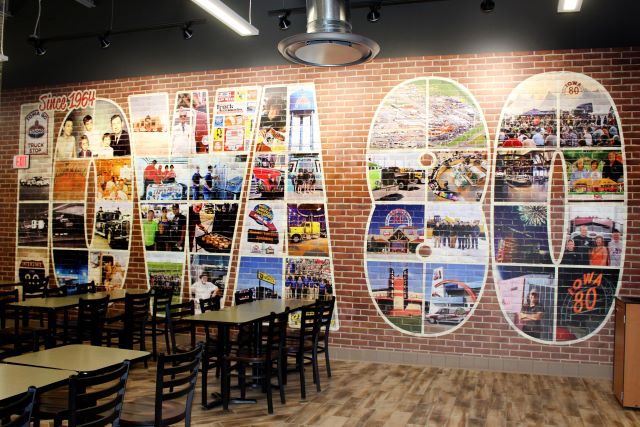
(Photo: Courtesy of Iowa 80 Group)

Iowa 80 Truck Stop

Walcott, Iowa

Iowa 80, located on the eastern edge of the state, near the Mississippi River, claims to be the largest truck stop in the world. Taking a look at a map of the place, it’s hard to argue.

Iowa 80 has all the services a person could need, even ones they probably never thought of before. The rest stop has a barber shop, dentist, chiropractor, laundry, library, gym, movie theater, and gift and convenience stores.

You may choose just to move in rather than pass by. 

Rio Grande Gorge Rest Stop

El Prado, N.M.

This rest stop on US Highway 64 is particularly noteworthy due to its proximity to — and spectacular views of — the Rio Grand Gorge. Visitors only have a short walk before catching sights of the water, canyon and local wildlife. At 565 feet above the Rio Grande River, the bridge spanning the gorge is one of the tallest in the country.

The rest stop itself is well worth your time as well. Local vendors sell all sorts of crafts including rocks, gems and jewelry. The location also has sheltered picnic tables and a pet exercise area.


View this post on Instagram


A post shared by Tamarack: The Best of WV (@tamarack_wv) on

Tamarack

Beckley, W. Va. 

Tamarack is unlike just about any other highway attraction: part rest stop, part cultural center.

Most notable is Tamarack’s fine art gallery. The David L. Dickirson Fine Arts Gallery showcases the work of more than 500 juried West Virginia artists. Every six to eight weeks, the gallery hosts a new and unique exhibition, giving artists throughout the state the opportunity to display their talents to the masses. The space proudly features a variety of subjects and mediums that truly represent the best of West Virginia. There are also more than 20,000 products for sale at Tamarack, ranging from jewelry to sculptures and much, much more.

Tamarack offers the best of Appalachian-inspired cuisine as well. Culinary events allow visitors to learn new cooking techniques and watch professional chefs at work. The education doesn’t stop at food, however. Tamarack has a resident glass blowing expert who teaches classes on the art form. Students can learn to make items such as a drinking glass, ornament or vase in just 20 to 30 minutes.

Mars Cheese Castle

Kenosha, Wis. 

Any foodie traveling Interstate 94 around the Chicago-Milwaukee area needs to make a pit stop at the Mars Cheese Castle. Since 1947, the eatery has been serving weary road travelers the finest meats, cheeses and sandwiches. It is the perfect place to refuel for the next leg of your journey.


View this post on Instagram


A post shared by South Of The Border (@sobpedro) on

South of the Border

Hamer, S.C. 

South of the Border is more of a small city than a rest stop. You could easily spend a good portion of your road trip experiencing everything it has to offer.

You’ll know you’re close to the destination once you start to see the Sombrero Tower rising from the horizon. The 200-foot-tall tower was considered the world’s largest sign until just a few years ago. During the day, guests can take a glass elevator to the tower’s observation deck for a 360-degree view of the South Carolina landscape.

Back on the ground, there’s a host of other attractions including the El Toro Arcade and numerous shops and boutiques. If it was hunger that summoned you to pull over, South of the Border has numerous dining spots such as Pedro’s Hot Tamale for a quick bite, the Sombrero Restaurant and Peddler Steak House for a sit-down meal, and of course, Pedro’s Ice Cream Fiesta for a delectable dessert.

Planning a road trip of your own? Learn about exclusive Hertz discounts for AAA members.

Subscribe to Your AAA Newsletter

Sign up and receive updates for all of the latest articles on automotive, travel, money, lifestyle and so much more!

Road Trip Gadgets For Safe and Smooth Travels

There really isn’t anything like fall in the Northeast. Especially right now with so much going on the in the world, it’s the perfect time to hit the road in your favorite hoodie, admire the stunning leaves, and perhaps even visit one of the many incredible family farms for some apple cider donuts!

As a consumer tech expert, my travels have always included practical gadgets for safe and smooth travels, especially in harsher elements. It’s worth noting that according to the U.S. Department of Transportation, 21% of vehicular accidents that occur each year are weather related.

So, get out there and enjoy the journey, but do it safely! Here are some road trip gadgets that I recommend to help you do just that during your travels.

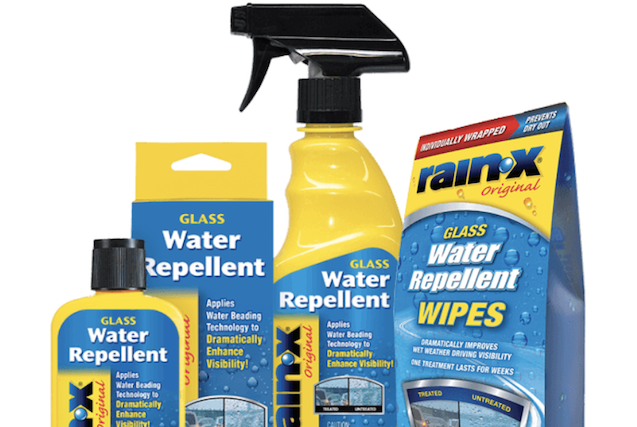
rain x - road trip gadgets

Rain-X Glass Treatment

Have you ever been on the road during a serious rainstorm and unable to see clearly through the windshield? You know how dangerous that can feel, especially on the highway. My family has used Rain-X for years, and now as an ambassador, it’s great to be able to spread the word on their array of practical products. One must-have is the Rain-X Glass Water Repellent—a preventative treatment that causes water to bead up and roll right off the windshield. It dramatically improves driving visibility in the wettest conditions. University studies have even shown that it can improve driving response time up to a full second or more, and at highway speeds, that is four car lengths of extra stopping distance!

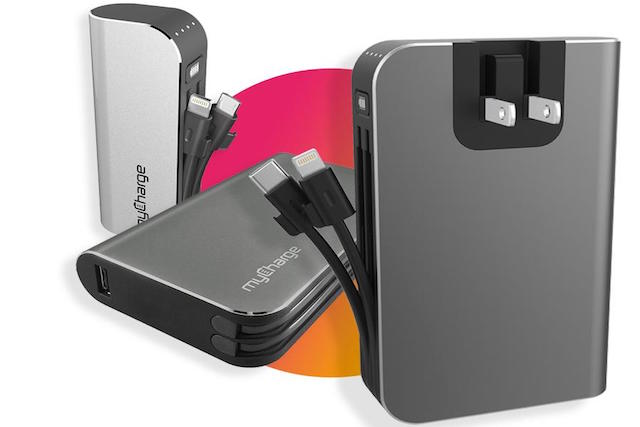
phone charger - road trip gadgets

MyCharge Hub Series Chargers

With a vast amount of smartphone chargers on the market, the MyCharge Hub Series has remained my go-to for many years. Their design differentiates itself by having the cords built right into the unit. Additionally, the charger has a standard wall plug so you can recharge the unit quickly from just about anywhere. It comes in various sized options and cord choices that can provide up to 54 hours of charge time!

apple myfind - road trip gadgets

Apple FindMy app

FindMy is a built-in app to all iOS devices. I use it regularly and have been surprised by how many of my friends did not even know it existed! With each individual’s permission, you can add friends and family to the app, and then see their exact location. It’s a fast and easy way to locate a friend or family member especially if they are traveling a great distance.

Hard Stop Brake Light - road trip gadgets

The Hard Stop Crash Reducing Brake Light

Is there anything worse than having someone right on your bumper? Get their attention quickly with the incredible Hard Stop Crash Reducing Brake Light. It’s a motion sensing gadget that monitors your braking. If this device senses a hard stop, it illuminates a steady or pulsing LED array on your back windshield. It’s very easy to install and requires no wire or cable installation. Bonus: the built-in battery lasts up to four years.

phone mount - road trip gadgets

Kenu Airframe Pro Vent Mount

Here in Massachusetts there is a hands-free law, which states that you can only use electronic devices in hands-free mode. While driving, you cannot touch a device for texting, navigating or web browsing. The Kenu airframe mount is a simple and inexpensive device that mounts your smartphone to the air vent. Kenu offers a number of sizes and styles, including those for larger phones as well as options for simultaneously charging your device wirelessly.

Katie Linendoll is an Emmy-Award Winning Consumer Tech Expert and an ambassador for Rain-X.

What road trip gadgets do you use to make your travels safer? Let us know in the comments below!

Subscribe to Your AAA Newsletter

Sign up and receive updates for all of the latest articles on automotive, travel, money, lifestyle and so much more!

End of Year Trends Worth Noting

Are You Experienced?

The newest attraction in so-called experiential entertainment has opened in Las Vegas, and it’s wild. The all-ages Area 15 complex can best be described as a psychedelic art exhibit, bazaar, carnival, food emporium, event center and retail hub all rolled into one. The art collective Meow Wolf will unveil its newest interactive exhibit, Omega Mart, at Area 15 in early 2021.

Trending

Good Riddance

Could airline change fees be a thing of the past? It sure looks that way. United first proposed the measure in August, saying it would ax change fees permanently for most of its U.S. flights. Delta Air Lines and American Airlines soon followed suit, with Alaska Airlines going one step further and eliminating change fees on U.S. and international flights. Of course, some restrictions apply, but not having to shell out $200 to switch a flight? Priceless!

Trending

Pass It On

Skiing might look a little different this season, with masks and reservations required and social distancing measures in place. But it’s also a good time to look into season passes: Many resorts are offering great deals thanks to seasons cut short by the pandemic. The Northeast Value Pass and Northeast Midweek Pass, for example, offer skiers access to more than 17 resorts, including Stowe and Mount Snow in Vermont, Wildcat and Attitash mountains in New Hampshire, and Whitetail Resort and Jack Frost in Pennsylvania. You can get more details at EpicPass.com.

Discover more #trending stories at AAA.com/Trending.

Subscribe to Your AAA Newsletter

Sign up and receive updates for all of the latest articles on automotive, travel, money, lifestyle and so much more!

Charting a New Course

It’s safe to say that many of us are looking forward to the upcoming year and (finally!) making travel plans. And now’s a great time to do just that. Lower fares, extra perks and cancel-anytime incentives are proving to be irresistible.

With requirements and restrictions changing every day, it’s hard to cut through the clutter. That’s why we put together this handy guide to help you become a more-informed consumer as you navigate the new travel landscape.

Happy planning… and don’t forget to pack hand sanitizer!

Get Inspired

You can find everything you need online. Virtual events, digital brochures, video chats and more – you can build your bucket list right from your couch. When you’re ready to travel, we’ll be ready to get you there. Visit AAA.com/Travel for more ideas.

Your travel: Charting a new course

Get Connected

AAA Travel advisors are assisting travelers with all sorts of trips. From weekends close to home to bucket-list destinations in 2021 and 2022. They know all the state- and country-specific travel requirements, so you’ll be prepared before you head to your destination. And if things change before or during your trip, you can count on your advisor to manage any changes and cancelations on your behalf. You’ll have peace of mind knowing someone is in your corner 24/7. So book now and travel later, knowing that AAA Travel advisors are always here for you. And you’ll have well-deserved vacation plans to look forward to.

What to Expect

  • Contactless payment, ticketing and check-in procedures
  • Online food ordering and delivery
  • Increased cleaning measures
  • Social distancing guidelines
  • Limited capacity at venues, attractions and restaurants
  • Fewer high-touch items in airports and hotels

Stay Informed

Certain countries and states are open to travelers with restrictions and unique quarantine measures in place.

Find a U.S./Canada COVID-19 restrictions map at AAA.com/TravelCenter. For World restrictions, visit Travel.State.Gov.

AAA Northeast has put together a series of webinars addressing traveler safety, new sanitation protocols, what to expect when traveling and more. Visit AAA.com/SmartDepart for more information.

Your travel: Charting a new course

Trending

70% of Your AAA readers have taken a domestic trip within the past year. Looking ahead, travelers are still expected to explore locally to places like the Finger Lakes and within the Northeast. Members are also looking to the Caribbean, river cruising and European vacation planning for 2021 and beyond.

Did You Know?

AAA Travel advisors are SmartDepart certified – they know country travel regulations, partner sanitization protocols and more up-to-date info to help you plan.

Are you excited to start planning for future travel? Visit AAA.com/TravelCenter

Subscribe to Your AAA Newsletter

Sign up and receive updates for all of the latest articles on automotive, travel, money, lifestyle and so much more!

Diamond Dish: American Bounty Restaurant

Diamond Designation: Three Diamond (Trendy food skillfully presented in a remarkable setting. Learn more about AAA Diamonds.)

Address: The Culinary Institute of America, Hyde Park, N.Y.

Signature Dishes: Parkerhouse Rolls and Roasted Oysters

Renowned as one of the world’s top culinary schools, a trip to the Culinary Institute of America is filled with sights and smells that will delight every food lover and wannabe chef. During a visit you can walk through the halls where many of the country’s top chefs had their start and see the culinarians of tomorrow hard at work in the kitchens.

If you happen to find yourself at the Hyde Park campus, don’t miss your chance to have a meal at one of the four restaurants. Both the kitchens and dining rooms are staffed by students, doubling as classrooms for them to put their first two years of study into practice.

Part of the CIA for nearly 30 years, the American Bounty Restaurant highlights regional and seasonal American cuisine. The always-evolving menu includes a selection of fresh and flavorful dishes where the ingredients speak for themselves, such as grilled cauliflower steak with heirloom carrot salad and garlic and herb-rubbed lamb chops with mint chimichurri. But the real star here is what comes before the meal – parkerhouse rolls.

american bounty restaurant
(Photo: Phil Mansfield)

First created at Boston’s Parker House Hotel in 1890, the bread is a Northeast specialty. At American Bounty Restaurant, the rolls are served straight out of the oven with sea salt and local butter from Ronnybrook Farm in nearby Pine Plains, N.Y. They are complimentary in the dining room and can be purchased off the menu in the restaurant’s more casual tavern room.

The farm-to-table approach is an important concept taught throughout CIA, particularly in this restaurant. Thankfully, there is no shortage of quality local ingredients in the Hudson Valley.

Restaurant Recipe Guide

Featuring more than 40 recipes and tips from top chefs and kitchens in the Northeast. Download the Restaurant Recipe Guide and get cooking!

Download Now!

“The college has a very strong relationship with regional farms and other [local] food and beverage producers,” according to Waldy Malouf, CIA’s senior director of food and beverage operations.

American Bounty Restaurant – and the 41 other teaching kitchens and bakeshops on campus – source ingredients from 60 farms within a 75-mile radius of the school.

After a tour of the campus, you will most definitely be hungry. Treat yourself to a few parkerhouse rolls.

american bounty restaurant
(Photo: Phil Mansfield)

American Bounty Restaurant’s Roasted Oysters With Shallots and Herbs

Roasting oysters on the half shell is a little different from cooking other things at high heat. The purpose isn’t so much to char and brown them as it is to heat them through – just enough for them to release all their flavorful juices and firm up slightly. These oysters are topped with a shallot and white wine butter sauce, which mixes with the oyster juices and reduces in the oven while the shallots get crisp. Six oysters make an impressive appetizer.

To keep the oysters balanced while they roast, line the baking dish with a layer of rock salt dotted with peppercorns. The salt and pepper make for a great presentation. You can buy rock salt at a hardware store. It’s inexpensive, and one bag will last you forever!

If you don’t want to make them yourself, you can order these roasted oysters at the Tavern at America Bounty Restaurant.

6 tablespoons unsalted butter
1 cup thinly sliced shallots
¼ cup dry white wine or dry vermouth
Coarse sea salt or kosher salt
Freshly ground black pepper
¼ cup chicken or vegetable broth (reduced-sodium if canned) or water
1 tablespoon snipped fresh chives
1 tablespoon chopped fresh flat-leaf parsley
Rock salt to roast the oysters on
3 tablespoons black peppercorns
24 oysters*
Lemon wedges for serving
Preheat the oven to 500 degrees.

In a heavy saucepan over medium heat, melt 4 tablespoons of the butter. Reduce the heat to low and add the shallots and wine. Cover and cook until most of the liquid is absorbed, about 4 to 5 minutes. Season with salt and pepper and add the broth and the remaining 2 tablespoons of butter. Bring to a simmer, then remove from the heat and stir in the herbs.

Cover the bottom of an ovenproof baking dish large enough to hold all the oysters with rock salt. Sprinkle the peppercorns evenly over the salt. Open the oysters, discarding the top shell. Loosen the oysters from the bottom shell, being careful not to spill their juices, and lay them in the baking dish.

Stir the shallot mixture and spoon some over each oyster. Roast until the edges of the oysters just begin to curl, about 5 to 8 minutes. Serve on the baking dish with lemon wedges.

*Buying and shucking oysters: For this recipe you need to buy live oysters with unblemished shells. When opened, the meat should be pale (its color will vary, but avoid any that are pink, as this indicates they may be off), plump and glossy and should smell like fresh seawater. If they smell off, discard them.

When you get the oysters home, scrub their shells in cold water with a brush. Store them flat on a baking sheet in the refrigerator, covered with a slightly damp paper towel and use within two days.

You can have your fishmonger shuck the oysters for you if you plan to use them immediately. Just ask him to reserve the juice so you can take it home. Before roasting, strain the oyster juice and add a teaspoon of the juice to each oyster. To shuck live oysters yourself, insert a thin-bladed knife (or an oyster knife) into the joint or “foot” of the shell and twist the blade to loosen the shell. Being careful not to spill the liquid, slide the knife along the top of the shell (not deeply enough to cut the oyster). Discard the upper shell and cut through the muscle holding the oyster to the bottom shell.

Makes 4 servings.

For more AAA-approved signature dishes, visit AAA.com/DiamondDish.

Subscribe to Your AAA Newsletter

Sign up and receive updates for all of the latest articles on automotive, travel, money, lifestyle and so much more!

Crossword: In the Kitchen

Whether you love to cook or just love to eat, the kitchen brings everyone together. Test your knowledge of food and cooking with our latest crossword.

Here are some tips to help you get the most out of your puzzle playing experience. Good luck!

Since our members are the root of everything we do, your feedback is important to us. Let us know if you run into any issues while playing, or share your ideas for future puzzles by emailing us.

Subscribe to Your AAA Newsletter

Sign up and receive updates for all of the latest articles on automotive, travel, money, lifestyle and so much more!

New York’s New Seat Belt Law Takes Effect on Nov. 1

You should always buckle up, even in the back seat. But starting Nov. 1, you’ll be breaking the law in New York if you don’t.

In August, New York governor Andrew Cuomo signed legislation that requires all passengers in motor vehicles age 16 and older to wear a seat belt. Currently, only passengers under the age of 16 are required to wear a seat belt while sitting in the back seat.

“We’ve known for decades that seat belts save lives and with this measure we are further strengthening our laws and helping to prevent needless tragedies,” Cuomo said.

New York has a proud history of being at the forefront of seat belt safety. In 1984, it became the first state in the country to pass a mandatory seat belt law. According to the New York State Department of Motor Vehicles, only 16% of individuals wore seat belts that year. In 2008, that number was up to 89%.

AAA Northeast advocated for the passage of this bill, knowing just how far seat belt usage can go in preventing injury and death. According to John Corlett, Director of Public and Government Affairs for AAA Northeast, unbelted rear seat passengers are twice as likely to be killed in a car crash and eight times more likely to be seriously injured.

“With this bill signed into law, we will help prevent tragedies and save lives in New York,” state senator David Carlucci said. “Thank you to the advocates, including AAA for their strong support of this legislation.”

According to the governor’s office, 30% of highway deaths in New York are occupants who were not wearing a seat belt. Safety experts believe that backseat seat belt use could prevent more than two-thirds of the fatalities and serious injuries resulting from car crashes.

Click here to learn more about all of AAA’s safety initiatives in the community.

Subscribe to Your AAA Newsletter

Sign up and receive updates for all of the latest articles on automotive, travel, money, lifestyle and so much more!