AAA: Check for Open Vehicle Recalls

From defective airbags to overheating batteries, millions of Americans drive each day in cars with open safety recalls that, if ignored, could have fatal consequences. In 2024 alone, there were 1,073 vehicle safety recalls affecting more than 29 million vehicles in the United States, according to the National Highway Traffic Safety Administration (NHTSA).

For Vehicle Safety Recalls Week (March 2 – 8), AAA is reminding drivers that safe cars save lives and urging all vehicle owners to check for open safety recalls. It’s also a good time to check related equipment, like tires and child car seats, for open recalls.

It’s easy to determine if your vehicle has an open recall:

  • Visit NHTSA.gov/recalls or download the SaferCar app.
  • Enter your VIN and registration card number. The VIN is located on the driver’s side corner of the windshield.
  • You can also enter vehicle equipment like trailers, tires and car seats into the SaferCar app.

If you discover an open recall for your vehicle or vehicle equipment, contact a dealership and schedule a repair as soon as possible. All safety recalls are performed at no cost to the owner.

The millions of recalls that go unrepaired can compromise safety. For example, the NHTSA reports that tens of millions of defective Takata airbags — responsible for 28 confirmed deaths nationwide — are still under recall in the United States. In 2025, there were 891 recalls affecting more than 29 million vehicles, according to a AAA Northeast analysis of NHTSA recall data. Of those, 16 recalls were dangerous enough for the NHTSA to issue “Do Not Drive” advisories for 48,371 potentially affected vehicles.

“Components like airbags, steering systems, brakes, fuel systems, sensors and wiring can prompt vehicle recalls, posing a serious safety risk,” said Jillian Young, director of public affairs for AAA Northeast. “Addressing vehicle recalls as quickly as possible can help drivers keep their vehicles running smoothly and safely, and, most importantly, save lives. Drivers should check their vehicles for open recalls at least twice a year.”

The NHTSA is also issuing a new, urgent warning to drivers of cars that had previously been involved in a crash in which the airbag deployed. Nine people have died and two others have been seriously injured in 11 crashes where the vehicle had an airbag replaced with a substandard and dangerous airbag inflator manufactured in China. According to the NHTSA, the airbags were likely illegally imported into the United States; fatalities occurred when the airbag inflators malfunctioned and ruptured, sending large metal fragments into drivers’ chests, necks, eyes and faces.

Alarmingly, these dangerous airbags will not show up by checking the VIN for open safety recalls. The following vehicle owners are at risk:

  • Owners of vehicles with salvage or rebuilt titles.
  • Owners of vehicles that were in a previous crash where airbags deployed.
  • Owners of used cars with unknown history.

The NHTSA is urging these owners to look at their vehicle history report for evidence of a previous crash or “total loss event,” prior airbag deployments, a salvage title or repairs performed at non-certified service centers. Visit NHTSA.gov for more information and resources.

Subscribe to Your AAA Newsletter

Sign up and receive updates for all of the latest articles on automotive, travel, money, lifestyle and so much more!

The Best Time of Year to Go to Disney World

When planning Disney vacations, the first question that many people ask is, “What’s the best time of year to go to Disney World?” The answer is different for every family. Are you looking for lesser crowds? Cooler weather?

I am a former Disney cast member, and I used to live right in Disney World’s backyard. From my apartment, I could hear the Magic Kingdom fireworks. And like any local, I detested waiting on lines longer than 15 minutes. I have seen every season at Walt Disney World, but which ones stand out?

Book your Disney vacation with AAA Travel. Click here or call 888-780-5185! ☎️

I’ve found that the best time to go to Disney World boils down to if it’s your first visit, what you and your family want out of your vacation, what events are important to you and how much you are willing or able to spend.

January

January is an easy and breezy month in Walt Disney World. There are still a few Christmas decorations left over, but who can complain about tinsel? Once the New Year’s Eve crowd filters out after beginning of the month, the parks are much more manageable. Take this opportunity to get on Avatar Flight of Passage in Animal Kingdom. Just remember to wear layers! The temperatures are wonky this month.

February

The beginning of February is mild in terms of crowds (and weather). In the middle of the month you’ll see a bump in crowds, because many schools in the Northeast take a week off of school for February break.

March

March is a month of moderate crowds. The sun is coming out again, and it’s the best weather Florida has to offer, but the end of March is when spring breakers start to arrive. Epcot’s Flower and Garden festival begins this month.

Listen to Our Podcast

For more tips on planning your family trip listen to Episode 2 of our podcast, Merging Into Life: Theme Park Secrets.

Tune In

April

Beware spring break. The parks will be full of families and college kids alike, trying to enjoy the season. I would avoid any holidays at the park, including Easter, if you could. The crowds are just too difficult to navigate.

May

Other than Memorial Day weekend, which is notorious for heavy crowds, May is a more moderate month. The weather is getting a little hotter, but it’s bearable.

June

Moderate to heavy crowds, and hot, hot weather. To make the most out of your June vacation, go to the parks in the mornings and evenings. Use the afternoon for a swim in the pool or a well-deserved siesta.

disney

July

The Fourth of July Fireworks in the Magic Kingdom are incredible, but that means that the park is jam-packed with people trying to see them. Folks camp out in front of Cinderella Castle as soon as the park opens just to get a good view. It’s a hot and crowded month.

August

The crowds in this month go from heavy to moderate, because August is perhaps the hottest month in Disney World. Be prepared to actually watch the Country Bear Jamboree for the sake of some air conditioning. The humidity and heat make it very uncomfortable, so even though the crowd level is going down, it might not be worth it.

September

Even though it’s still hot, September is a more peaceful month. The majority of children have gone back to school, and the parks empty out. The Food and Wine Festival at Epcot is usually going on at this time and is not to be missed. Mickey’s Not-So-Scary Halloween Party also starts in late August and picks up in September. It’s a great night for the whole family. Frequent rains come and go during this season, so remember to bring a poncho.

October

October is perhaps the best time of year to go to Disney World. The crowds are moderate, but the weather is gorgeous. The Food and Wine Festival is still going on all throughout this month, and Mickey’s Not-So-Scary Halloween Party is hitting its stride. Mickey’s Not-So-Scary is a popular party, where guests of all ages can arrive in costume and trick-or-treat around the park. You can meet rare characters, get on rides with no wait time and even see the Sanderson sisters from “Hocus Pocus.” If you can go any time of the year, early to mid-October are some of the best weeks to go to Disney World. It’s a sweet spot. Just remember to get your Not-So-Scary tickets early!

Let's plan something wonderful

Book your next trip with AAA Travel now or call 888-780-5185 to speak with a travel advisor.

Book Now

November

Early to mid-November has pretty low crowd levels, and the weather is very mild. Many rides become walk-ons during this time. Thanksgiving week and the weekend after are very crowded, however, because most people get off for work and school at that time. This is a good month to sneak in some early Mickey’s Very Merry Christmas parties.

December

This month is complicated. Very early December sees moderate crowds, and the rest of the month slowly builds and builds. The pressure comes to a head during the last two weeks of December – Christmas and New Year’s Eve are the busiest times at Disney ever. The parks can be fun at Christmastime. That’s true. The decorations are beautiful. The festivities are beyond compare. But it’s difficult to enjoy when you have less wiggle room than a sardine. If you must go during December, go early in the month.

Save on Walt Disney World park tickets with AAA Tickets.

What’s the best time of year to go to Disney World for you? Let us know in the comments below.

This article has been updated and republished from a previous version.

Subscribe to Your AAA Newsletter

Sign up and receive updates for all of the latest articles on automotive, travel, money, lifestyle and so much more!

Fenway Park Stadium Guide

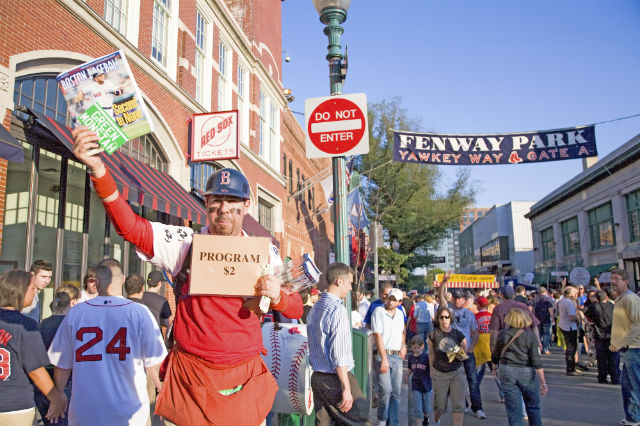
It’s easy to see why any baseball historian would cherish a day at Fenway Park. Opened in April 1912, it’s the oldest stadium in Major League Baseball, rich in iconic features from the Green Monster in left field to Pesky’s Pole in right. If you’ve never visited before, or it’s been a while, our Fenway Park stadium guide will help you make the most of your time in Boston this season.

Buying Tickets

Tickets are available online or at the stadium’s box office (open on game days two hours prior to game time until two hours after). You can also take advantage of special AAA member discounts on MLB games with AAA Tickets.

Check out the view from every section with this interactive chart.

Green Monster seats provide unique views from atop the famous 37-foot tall left field wall. Keep an eye on the park’s website for availability. You can also call 877-REDSOX-9.

If you don’t have tickets in advance, a limited number of game day tickets might be available. These tickets are sold at Gate E, 90 minutes before the game, but fans can get in line as early as five hours ahead of time. Those who purchase game day tickets must enter the park immediately.

Getting to Fenway Park

Getting around Boston can be challenging, so you’ll definitely want to give yourself extra time to get to the ballpark. Don’t worry about being too early; there’s plenty to do, as we’ve outlined below.

Brave souls who decide on driving to the stadium need to keep an eye out for one of several garages and parking lots in the area. You might find somewhere for less than $30, though you should expect the majority of options to be pricier. Advance online parking purchases are certainly worth looking into.

Riding the T – Boston’s subway system – is one of the most popular and least expensive ways to get to Fenway. The Green Line’s Kenmore Square and Fenway Park stations are just a short walk from the stadium. If you’re coming from outside the city, the MBTA’s commuter rails are a good bet. See the MBTA’s website for details.

If you’re looking to travel in style, you can always consider a Red Sox limousine package.

fenway park
(Photo: Joseph Sohm / Shutterstock)

Fenway Park Concessions and Food

You will not go hungry inside Fenway Park. After you have an obligatory Fenway Frank, everything from Italian sausage sandwiches to popcorn to Cracker Jack is just a quick between-inning stroll away. You can even get in the local spirit with options like lobster rolls and New England clam chowder.

Things are just as tasty outside the stadium, too. Restaurants and bars abound in the blocks around Fenway Park, offering plenty of opportunities to put down some seriously delicious grub. Cask’n Flagon is probably the area’s most well-known restaurant and bar. Located across the street from the stadium, it’s an incredibly popular spot before and during games, with fans often joining in raucous celebrations that echo into the street. You’ll find pizza, barbecue, steaks, sandwiches, pasta and burgers on the menu. The House of Blues is one of the best places in Boston to catch live music, be it pop, rock, metal, hip-hop, or, well, blues. It’s also a great place to eat. The restaurant and bar open at 4 p.m. on show nights, two hours before day games and three hours before night games.

fenway park
(Photo: Marcio Jose Bastos Silva / Shutterstock)

Things to Do Before and After the Game 

As if a day at the ballpark wasn’t awesome enough, a trip to Fenway Park can easily be combined with other activities to make for an unforgettable experience.

60-minute guided tours are available year-round. On game days, tours are available three hours before games. These trips include a stop on the field’s warning track and a visit to the top of the Green Monster.

If you’re visiting more than three hours before or after a Red Sox game, spend some time on Jersey Street. It’s open only to ticket-holders (another reason to buy in advance) and pre-game festivities can include live music, a stilt walker and a juggler, among other fun happenings. Here you can also swing by the official team store to pick up some Red Sox merchandise and apparel.

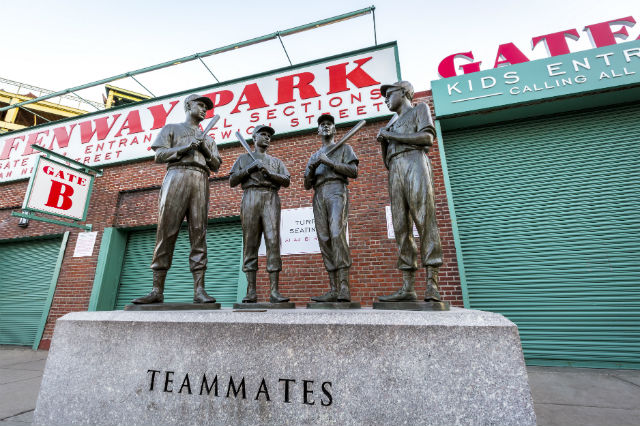
Don’t leave town without snapping a selfie at the Teammates statue near Gate B at the corner of Ipswich and Van Ness streets. It depicts former players Dom DiMaggio, Johnny Pesky, Bobby Doerr and Ted Williams.

Beyond Baseball

Of course, like most major metropolitan areas, baseball isn’t the only thing going on in Boston. If you’ve tagged along to a game to humor a significant other, or simply to check an item off your travel bucket list, Beantown is loaded with other attractions.

Two of the closest to Fenway Park illustrate the city’s diversity. Lucky Strike, on the third floor of Jillian’s Boston, offers bowling and billiards in a surprisingly stylish setting. The fun is 21-plus after 8 p.m.

For a complete change of pace, the world-class Museum of Fine Arts is about a 15-minute walk from the stadium. It’s the fourth-largest museum in the U.S., with 500,000 works spanning the globe and thousands of years of history.

Extras

Download the MLB Ballpark app before your visit. It’s an essential companion when visiting your favorite Major League Baseball ballparks. It perfectly complements and personalizes the trip with mobile check-in, social media, offers, rewards and exclusive content. Select MLB ballparks allow you to experience upgrade components and also offer mobile food ordering.

And if you need a hotel, find great rates with AAA on nearby lodging.

For helpful tips and recommendations on things to see, do and eat in and around all three Northeast Major League Baseball stadiums, be sure to check out our full Northeast Baseball Guide.

What are your favorite things to do in and around Fenway Park? Tell us in the comments.

This article has been updated and republished from a previous version. 

Subscribe to Your AAA Newsletter

Sign up and receive updates for all of the latest articles on automotive, travel, money, lifestyle and so much more!

Yankee Stadium Guide

Whether you’re visiting for the first time or are a diehard fan, our Yankee Stadium guide has you covered if you plan on seeing baseball in the Bronx this year. We show you the most practical ways to get to the stadium, how to find cheap tickets, tell you about the ballpark’s must-see features and give you a rundown of the local eateries and attractions to visit before or after the game.

Buying Tickets

There are several reputable ways to get Yankees tickets, including the official MLB website or the stadium’s box office (open on game days until the 7th inning and 9 a.m. to 5 p.m. Monday-Friday on non-game days). You can also take advantage of special AAA member discounts on MLB games with AAA Tickets.

Tip: Typically, the best deals on tickets are upper-level grandstand seats. Choose ones as close as possible to home plate. This interactive seating chart guide shows you the best seats in the house and how much they cost. In general, the sooner you get your tickets, the better.

Getting to Yankee Stadium 

Driving

The stadium highly recommends using mass transit to avoid traffic congestion and parking fees. If you must drive, give yourself extra time. The Yankees’ website has directions to the stadium from the other boroughs, Long Island, Westchester County and New Jersey. Parking lots and garages line the streets leading up to the stadium.

Walking

On a nice day, save a few bucks and park across the Harlem River near 155th Street Manhattan. The Macombs Dam Bridge spans the river and has a pedestrian walkway that you can traverse, dropping you off on 161st Street where the stadium is located.

Public Transportation

The 4, B and D trains make stops at 161st Street-Yankee Stadium and a trip from midtown Manhattan takes approximately 25 minutes. Note that the B and D only stop there at certain times of the day.

If you’re coming from outside of New York City, take the Long Island Railroad or MTA Metro-North Railroad and transfer to a subway. If riding the LIRR to Penn Station, walk one block east to the 34th Street-Herald Square subway station, where you can pick up the B or D train to the 161st Street-Yankee Stadium stop; the ride takes approximately 35 minutes. Metro-North’s Hudson line goes directly to Yankees-E 153rd Street station from Grand Central Terminal in approximately 15 minutes.

The MTA has detailed information on all public transportation options, including extra Metro-North shuttle trains and direct stops on game days and buses.

Hire a Car

Why not hire a driving service to take you to and from the stadium? This will guarantee you a relaxed and stress-free trip.

yankee stadium
(Photo: Marcho Verch / CC BY)

Yankee Stadium Concessions and Restaurants

The stadium has a wide selection of food vendors to satisfy your hunger beyond just hot dogs and fries. Spice things up with Harlem’s own fried hot bird sandwich from Marcus Samuelsson’s Streetbird stand in section 112, try a sushi burrito at Benihana in section 127 or stick with a classic hand-carved steak sandwich from Lobel’s of New York in section 134. Need something sweet? The shakes found in sections 112, 125 and 324 are hard to resist.

For a casual sit-down meal before the game, the Hard Rock Cafe is accessible from outside the stadium (ticket required). And if you really want to spoil yourself, leave a few innings early and watch the rest of the game on the TVs at NYY Steakhouse. Among the most indulgent options on the menu of dry-aged steaks and seafood, the tender 27-ounce long bone rib-eye steak arrives Instagram-ready with your name carved into the bone.

yankee stadium
(Photo: Maxim Pierre / CC BY)

Must-See Spots

The new Yankee Stadium opened its doors at the beginning of the 2009 season as a replacement for the original stadium, which operated from 1923 to 2008. The new ballpark was constructed across the street, northeast of the old location.

Memorabilia from the team’s history lives on in the New York Yankees Museum, free with a valid game day ticket. Highlights include a ball wall featuring hundreds of baseballs autographed by past and present Yankees, a showcase of World Series rings and an exhibit honoring George Steinbrenner. Located on the main level adjacent to Section 210, the museum is open 90 minutes before the first pitch through the end of the 8th inning.

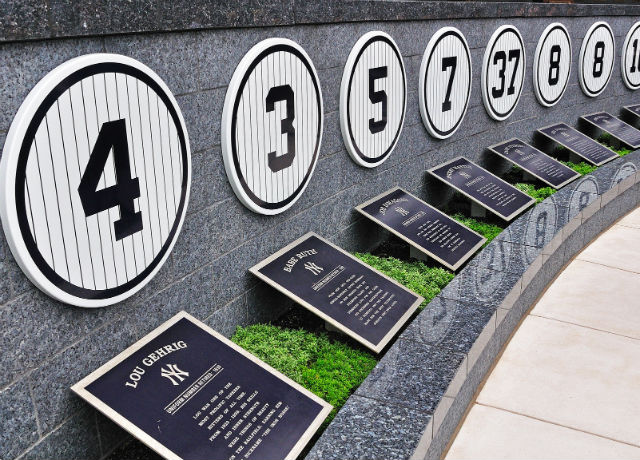
Make sure to spend some time in Monument Park, an open-air museum that contains a collection of monuments, plaques and retired numbers honoring players, including Lou Gehrig, Babe Ruth, Joe DiMaggio and Mickey Mantle.

Keep in mind that both of these attractions get crowded on game days.

Extras

Download the MLB Ballpark app before your visit. It’s an essential companion when visiting your favorite Major League Baseball ballparks. It complements and personalizes the trip with mobile check-in, social media, offers, rewards and exclusive content. Select MLB ballparks also offer mobile food ordering and seat and experience upgrade components.

And if you need a hotel, find great rates with AAA on nearby lodging.

For helpful tips and recommendations on things to see, do and eat in and around all three Northeast Major League Baseball stadiums, be sure to check out our full Northeast Baseball Guide.

What are your favorite things to do in and around Yankee Stadium? Tell us in the comments.

This article has been updated and republished from a previous version. 

Subscribe to Your AAA Newsletter

Sign up and receive updates for all of the latest articles on automotive, travel, money, lifestyle and so much more!

Citi Field Stadium Guide

Mets games are one of the hottest attractions in New York City. Check out our Citi Field stadium guide for the best ways to get there, plus what to eat before, during and after the game.

Buying Tickets

You can buy Mets tickets from the official MLB website or at the stadium’s box office (open on game days until the 7th inning and 9 a.m. to 5 p.m. Monday-Friday on non-game days). You can also take advantage of special AAA member discounts on MLB games with AAA Tickets.

Check the 3D seating map of the stadium to see what the view looks like from every section.

Getting to Citi Field

Citi Field is located within Flushing Meadows Corona Park in Queens and easy to get to.

If you plan on driving, the Mets website provides directions on how to get to Citi Field from other boroughs, Long Island, Westchester, Connecticut and New Jersey.

If you are taking public transportation, the MTA has all the details on getting to the stadium via bus or train.

And if you prefer two wheels, did you know that you could also bike to Citi Field? There are 11 bicycle parking racks surrounding the stadium where you can safely park.

Citi Field Stadium Parking 

Citi Field has lots of on-site and remote parking available. Note that only credit, debit and mobile payment (Apple Pay or Google Pay) are accepted to pay for parking.

Most of the lots open three hours prior to the game, so feel free to bring a few coolers, set up a grill and tailgate.

AAA Northeast provides free emergency services to stranded motorists in Citi Field parking areas. These services are available to all guests and include recharging drained batteries, changing flat tires and being towed to affiliated AAA Approved Auto Repair facilities. The club truck and driver will be on the premises for all home games from the seventh inning until one hour after the completion of the game.

Get more information on parking lot locations, rates, Access-A-Ride services and more.

Concessions and Restaurants at Citi Field 

Ever since opening in 2009, Citi Field has been known as a top baseball stadium food destination. It’s even been voted among the Best Baseball Stadium Food by USA Today readers for three consecutive years since 2023.

The Centerfield Promenade has fantastic dining options, including The Pizza Cupcake (which is exactly how it sounds), Dole Whip and Shake Shack.

If you’re hungry and willing to splurge a bit, you might want to spring for the Pat LaFrieda filet mignon steak sandwich. Created exclusively for Citi Field, it comes stacked with Black Angus filet mignon, melted Monterey Jack cheese and caramelized onions on a toasted French baguette. Found at stands in sections 139 and 415 and at Pat LaFrieda’s Chop House in the Delta Sky 360 Club (open to certain ticket holders).

citi field
(Photo: Scott Smith / CC BY)

Food Near Citi Field 

Outside of the stadium, Flushing is famous for its Asian restaurants. Nan Xiang Xiao Long Bao has some of the best soup dumplings in the city. You can also try out some of the delicious old-school Italian cuisine in Corona at Park Side Restaurant. Rumor has it players used to pop into Park Side frequently for post-game eats during the ’80s, so you might be able to pump the bartender for vintage Keith Hernandez gossip.

And if you have more time to spare before or after the game, take a walk to see structures left from the World’s Fair in Flushing Meadows’ Corona Park.

Can’t-Miss Moments

Visit the Mets Hall of Fame & Museum and relive some of the best moments in Mets history. See the 1969 and 1986 World Series trophies, plaques for each member of the Mets Hall of Fame and more. A must for fans of all ages, access to the museum is free to everyone with a ticket on game days.

Fans can also meet the beloved team mascots, Mr. and Mrs. Met. Visit Fan Fest in center field during select times on game days for an amazin’ photo op!

Extras

Download the MLB Ballpark app before your visit. It’s an essential companion when visiting your favorite Major League Baseball ballparks. It perfectly complements and personalizes the trip with mobile check-in, social media, offers, rewards and exclusive content. Select MLB ballparks allow you to experience upgrade components and also offer mobile food ordering.

And if you need a hotel, find great rates with AAA on nearby lodging.

For helpful tips and recommendations on things to see, do and eat in and around all three Northeast Major League Baseball stadiums, be sure to check out our full Northeast Baseball Guide.

What are your favorite things to do in and around Citi Field? Tell us in the comments.

This article has been updated and republished from a previous version. 

Subscribe to Your AAA Newsletter

Sign up and receive updates for all of the latest articles on automotive, travel, money, lifestyle and so much more!

Crossword: All About Spring

Subscribe to Your AAA Newsletter

Sign up and receive updates for all of the latest articles on automotive, travel, money, lifestyle and so much more!

What Is a Hit-and-Run?

What is a hit-and-run crash? It seems self-explanatory; it’s technically right there in the name. However, there are some details you might want to know more about, especially if you are a victim.

Hit-and-run crashes are at an all-time high, according to the latest research from the AAA Foundation for Traffic Safety.

So, who is responsible for the damages when you can’t prove fault and the other person is long gone? Can your insurance help? Read on for answers.

What Is Considered a Hit-and-Run?

Simply defined, a hit-and-run is any traffic collision in which a driver flees the scene, leaving behind property damage, bodily injury or even death. No information is exchanged between the two drivers and there is no opportunity to identify who caused the accident. It can happen anywhere a car can be driven, whether a well-traveled road or a parking lot.

Hit-and-run violations are criminal offenses. There are laws in every state that make fleeing the site of a crash illegal to varying degrees (however, most states do allow for a driver to temporarily leave the scene to get emergency help.) If caught and found guilty, and depending on the severity of the crash, drivers can potentially face loss or suspension of their license, large fines or jail time.

Hit-and-Run Insurance Claims and Coverage

If you are the victim of a hit-and-run crash and left stranded with vehicle damage or injuries, call the police immediately, file a report and notify your insurance company. It’s also smart to check if there were any witnesses that can contribute to your case.

Hit-and-run coverage varies by state and insurance carrier.

“If police ultimately can identify the culprit and they carry liability insurance, their insurance company could help pay for the damages/injuries. However, most are never identified,” said Jodi DeSantis, managing director of insurance sales for AAA Northeast. “Therefore, it is the coverages that you carry on your policy that will determine whether or not protection is available. Collision coverage would help to pay for the cost to repair your car, minus any deductible.”

Uninsured motorist and no-fault coverages may provide compensation for a hit-and-run, but also depends on state and carrier. In some cases, the driver may need to be identified for uninsured motorist coverage to kick in. It’s important to familiarize yourself with your specific coverages; a licensed insurance agent can help you interpret your contract.

Generally, hit-and-run accidents will not cause insurance rates to go up for the victim.

Schedule an appointment with a knowledgeable AAA insurance agent today.

hit and run insurance

Minor Hits

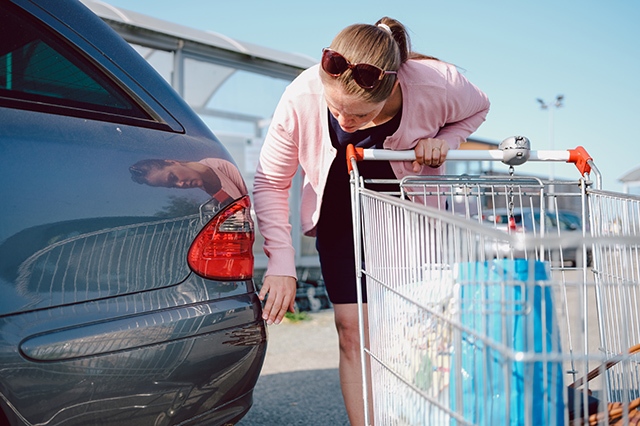
Say you’re in a parking garage and accidentally ding the car next to you with your door. If you drive away and pretend like it never happened, would that be considered a hit-and-run?

“Yes,” said DeSantis. “If the party that caused the damage does not stop, leaves the scene and does not identify themselves in any way, such as leaving a note.”

While you might get away with such a minor incident, staying at the scene or leaving a note is a polite courtesy to extend to the owner of the other vehicle.

How to Handle a Crash

If you are involved in a crash, resist your flight response and never leave the scene. Remember that while hitting another car or a pedestrian is scary, especially when there are injuries involved, it is an accident. You may not even be at fault. Fleeing is a crime. Instead, follow these steps, according to AAA.

  • Call 911.
  • Make sure you are visible to approaching drivers using hazard lights, flares or reflectors as needed. Find a safe place to stay until help arrives.
  • File a report with the police. If police do not come to the scene, you can file a report via your local police department or insurance agency.

Learn more about your insurance options with AAA.

Have you ever been the victim of a hit-and-run crash? Tell us about your experience in the comments below.

This article has been updated and republished from a previous version.  

Subscribe to Your AAA Newsletter

Sign up and receive updates for all of the latest articles on automotive, travel, money, lifestyle and so much more!

Word Search: Happy St. Patrick’s Day

Subscribe to Your AAA Newsletter

Sign up and receive updates for all of the latest articles on automotive, travel, money, lifestyle and so much more!

401(k) Rollover Mistakes to Avoid

If you are leaving one job for another, you want to ensure your 401(k) account continues to grow. When it comes to rolling over your funds, you have options. The key is to avoid common 401(k) rollover mistakes. Do your research to choose a plan that is best for you and follow all the proper steps, so you don’t get hit with a big tax bill or lose out on income growth, according to Fidelity.

To a certain extent, your age factors into what you choose to do. Cashing out a retirement account if you are under 59 1/2 (the minimum age for withdrawal established by the IRS) usually is not a good idea. If you close the account and take the money, you will have to pay income taxes and potentially a 10% early withdrawal penalty, significantly reducing the amount of money with which you will walk away.

Meeting with a financial professional to avoid any 401(k) rollover mistakes and ensure you pick the right solution can be helpful.

Sticking With Your Old 401(k)

In some cases, you can leave the money in your former employer’s plan, but that may not be the best choice. The money continues to grow, but there are limits to accessing the account. You can no longer deposit money into the account, and if you want to withdraw money, it may have to be the full amount. Plus, not all companies are open to former employees leaving money behind.

Consider rolling over your 401(k) into your new employer’s 401(k) or individual retirement account (IRA). This way you can build on what you already have. If you leave the job when you are age 55 or older, you can make withdrawals without paying any penalties, Fidelity noted.

Not all companies allow you to roll over your 401(k) into another plan. If it’s permitted and you opt for this, make sure you understand your new plan’s regulations and investment choices.

401k rollover mistakes to avoid

Not Considering an Annuity

Not investigating rolling your money into an annuity can be a mistake. You risk losing out on a more stable savings plan. You can roll over your 401(k) into an income annuity, which is a financial product designed to provide an income stream for a specified period, typically for the duration of a person’s life. Investors can either contribute a lump sum or pay into it over time — like a savings plan — and, in return, gain an income source immediately or for the future, usually when they retire.

“Among the benefits of rolling your 401(k) over to an annuity is it provides you and your family with a more secure retirement savings option while managing the risk of loss from market fluctuations,” said Christopher Perrier, director of life insurance sales for AAA Northeast. “This can serve as a guaranteed income stream for the remainder of your life.” 

Talk to a AAA insurance specialist to learn the best way to roll over your 401(k) into an income annuity.

Rolling Into an IRA Without Weighing Perks and Drawbacks

Rolling over a 401(k) to a rollover IRA, may sound easy, but that could be a mistake as well. Among the drawbacks: Investments through IRAs could be more expensive and the federal government offers more protections for 401(k)s than IRAs. Although some states offer additional protections for IRAs, according to Fidelity.

When you are 73 years old, unless you were born in 1960 or after, you will have to take required minimum distributions (RMDs) annually from the IRA account, even if you have continued to work. You won’t pay taxes or a penalty for moving the money, though, and it is still a tax-deferred account. You can also move the money to a traditional IRA, either existing or new.

Wherever you choose to transfer your money, remember to follow up to ensure there are no 401(k) rollover mistakes and that the transfer is completed. Transactions can be delayed for any number of reasons, and you want to be certain you know where your money is.

Learn more about AAA annuity products.

Subscribe to Your AAA Newsletter

Sign up and receive updates for all of the latest articles on automotive, travel, money, lifestyle and so much more!

Travel Hacks That Make Life Easier

No one knows travel like AAA travel advisors. Vacation planning, exploring the world and sharing their firsthand experiences is not just their job, it’s their passion. So, when it came to gathering the best travel hacks, we went straight to the source.

From beating jet lag and surviving long flights to navigating solo travel and packing smarter, we’ve rounded up a list of tips from more than a dozen AAA travel advisors.

Pre-Trip Planning

  • Check weather and pack accordingly. Review your destination’s forecast within a week of your departure and plan outfits based on climate.
  • Enroll in safety programs. Sign up for the U.S. Department of State Smart Traveler Enrollment Program (STEP) for added security while abroad.
  • Verify passport and entry requirements. Ensure your passport is valid for at least six months beyond your return date and review visa requirements.
  • Confirm banking details. Use a credit card without foreign transaction fees; carry a small amount of local currency for immediate expenses.
  • Look into SIM and data planning. Contact your carrier about international plans or consider a local SIM card.
  • Download useful travel apps. Install airline apps, offline maps and translation tools before departure.
  • Get your documents in order. Take photos or screenshots of important documents including your passport, health insurance card and plane tickets and store copies in your email or cloud storage.
  • Share your itinerary. Provide a trusted friend or family member with a copy of your travel plans, passport and insurance documents.
  • Leave valuables at home and skip bringing expensive jewelry to reduce risk. Even so, it’s smart to consider protecting your trip and possessions with travel insurance. From delays and cancellations to emergencies, knowing you’re covered provides invaluable peace of mind.

The Best Time to Book

  • The best time to book peak-season travel is always as early as possible. Flights and hotels sell out quickly around major holidays, and the longer you wait, the fewer options you’ll have. Booking early means better selections of flight times, seating assignments and room categories.
  • August and September are the best times to book — no later than October, because that is when prices rise.

Listen to Our Podcast

Your next adventure may be closer than you think.  Listen to Season 2, Episode 4 of our podcast, Merging Into Life: Adventure Travel for Beginners.

Tune In

The Best Ways to Get Upgrades

  • Join an airline or hotel loyalty program. The higher your loyalty status, the more likely you are to be offered an upgrade.
  • Book the class or category of cruise ship cabin or hotel room that you’ll be happy with to avoid disappointment if an upgrade is not provided. Remember, upgrades are the exception, not the norm — particularly for those without top-level loyalty status.
  • Bid for an upgrade. Some airlines and even cruise lines now allow you to bid for upgrades after booking. It can be a great way to experience business class or a balcony cabin at the fraction of the cost if your bid is accepted.  
  • Being flexible — whether it’s with your travel dates, flight times or even the hotel property — can improve your chances of an upgrade. Off-peak demand leaves more room for better opportunities.

Packing Tips

  • Travel light. Avoid checking bags when possible and leave room for souvenirs.
  • Use packing cubes for organization and zip-close bags for toiletries, medications and spare socks.
  • Don’t forget smart tech. Always bring fully charged power banks, which are essential for long travel days and tours. It’s also a good idea to place AirTags or tile trackers in your bags, just in case your bags go missing.
  • Bring a comfort kit. This can include a neck pillow, eye mask, blanket/scarf, noise-canceling headphones, lip balm and lavender spray for relaxation. Compression socks can also reduce ankle swelling and improve circulation on long flights.
  • A reusable water bottle is essential. These can be filled at airport restaurants or lounges after security. Reusable tumblers and metal straws also come in handy at resorts.
  • Healthy and portable snacks like nuts, protein bars and fruit help you to avoid relying on airline meals.
  • Bring spares. Keep a change of clothes, medications and toiletries in your carry-on in case your luggage gets delayed.
  • Just-in-case items. Bring outlet converters if you are traveling abroad. A luggage scale could help reduce airport anxiety. Pack a poncho or extra dry socks in a zip-close bag to be prepared for wet conditions.
travelers

Travel Hacks for Jet Lag

  • Avoid planning activities on the day you arrive. Jet lag is real and often unexpected. See how you feel and go from there.
  • Eat, drink water and rest.
  • Adjust your sleep schedule a week before travel.
  • Get sunlight upon arrival and avoid taking long naps, which could be difficult to recover from.

Long Flight Survival

  • Sleep prep. Align your rest with your destination’s time zone; use eye masks and noise control to sleep better.
  • Strategize your seating. Choose an aisle seat for mobility, window seat for sleeping or exit row for legroom.
  • Layer clothing. Planes fluctuate in temperature, so dress in breathable, comfortable layers.
  • Stay hydrated. Start drinking extra water the day before your flight. Avoid alcohol and excessive caffeine.
  • Keep moving. Stretch or walk every one to two hours on long flights.
  • Plan your entertainment. Download movies, shows and books. Think of the flight length in terms of movies instead of hours.

Let's plan something wonderful

Book your next trip with AAA Travel now or call 888-780-5185 to speak with a travel advisor.

Book Now

Traveling Solo

  • Always be aware of your surroundings. (This applies to all travelers, but especially for those flying solo.)
  • Use trusted transportation companies. Never get into a car with a random person who approaches you at an airport.
  • Do not hint to anyone that you are traveling alone.
  • Give your family and friends a general itinerary of your trip, so they know where you should be and when.
  • When you arrive at the hotel, ask for two room keys.
  • For international travel, don’t accept gifts” of bracelets or talk to someone with a petition. These are often scammers.

More Travel Hacks

  • Keep patience in mind. Travel delays happen; focus on enjoying the journey.
  • Carry important documents and cash in a travel belt or secure location. Did you know that foreign currency exchange is available at select AAA branches? Learn more.
  • Photograph your luggage and video your rental car before and after use.
  • Put a shoe in the safe the night before you leave so you don’t forget your valuables.
What’s your best travel hack? Share it with us in the comments below.

Subscribe to Your AAA Newsletter

Sign up and receive updates for all of the latest articles on automotive, travel, money, lifestyle and so much more!

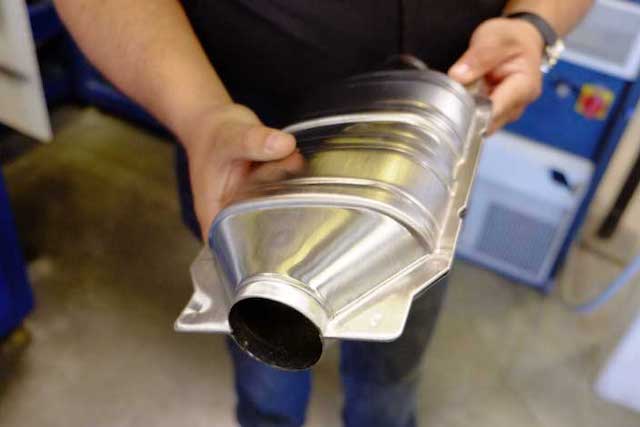
Catalytic Converter Theft Is Down, But Staying Alert Is Key

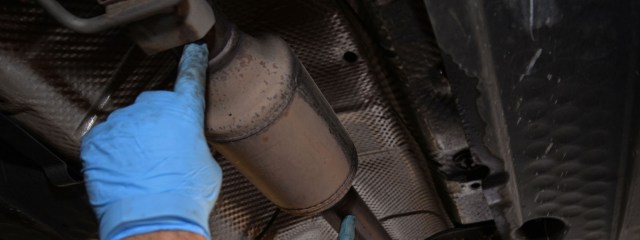
A catalytic converter is an important feature of your car’s exhaust system, limiting the amount of harmful pollutants emitted by an internal combustion engine. Unfortunately, since catalytic converters are filled with precious metals, they can be tempting for thieves to get their hands on. The good news is catalytic converter theft is on the decline.

After years of widespread catalytic converter theft, the number of reported cases was 68% lower in 2024 — dropping to 14,000 from roughly 44,000 in 2023, according to Consumer Reports.

For the reasons why, we can look to a few contributing factors.

  • Lower metal value. The value of rhodium, palladium and platinum inside the converters has decreased, reducing the profit motive for thieves.
  • New catalytic converter theft laws, Increased crackdowns on scrap yards and businesses purchasing stolen, undocumented parts.
  • Preventative measures. After becoming wise to thieving schemes, some vehicle owners are installing protective shields and anti-theft devices to their vehicles.

Although catalytic converter theft is declining, some states and car models remain at a higher risk. And replacement isn’t cheap. Depending on the type of vehicle, a new catalytic converter can cost between $1,000 and $3,500, according to the National Insurance Crime Bureau, so don’t let your guard down just yet.

why are catalytic converters stolen?

How to Tell If Your Catalytic Converter Is Stolen

A missing catalytic converter will be readily apparent as soon as you start your engine. The car will make a loud, roaring sound. You may also notice the check engine light on and the vehicle not driving smoothly.

How to Protect Your Catalytic Converter

Install an Anti-Theft Device

Installing an anti-theft device over your catalytic converter is the most effective way to prevent it from being stolen. There are several types of devices available, including shields, cages and steel cables. Check with your mechanic to see if this is would be a safe solution for your vehicle.

Etch Your License Plate Number or VIN Onto the Catalytic Converter

This step can’t stop a thief from stealing the catalytic converter, but it could deter them. If the component should get taken, the unique marking can alert potential buyers that it is stolen. This may make it more difficult to sell and less appealing to thieves. Nearly two dozen states have passed or are considering legislation that would more closely regulate the purchase of scrap catalytic converters.

Park in a Smart Spot

Whenever possible, park your car inside a closed garage or in your driveway. If you’re parking away from home, leave the vehicle in a well-lit area.

The Most Stolen Car Parts

Catalytic converters are not the only vehicle components thieves are trying to get their hands on. Here are some other commonly stolen car parts.

Tires and Wheels

Car tires and wheels check a lot of boxes for thieves. They can be easily removed in just a few minutes, they’re expensive and they’re essential for every automobile yet commonly replaced, so there’s always a market for re-selling. An easy way to protect your wheels from theft is by installing wheel locks. These are specially designed lug nuts that can only be removed with a unique wheel lock key as opposed to a standard socket.

Batteries

These don’t hold quite as much appeal as other commonly stolen car parts because used car batteries are not overly expensive. They are, however, simple to remove, making them easy targets. Installing after-market hood locks can prevent anyone from accessing the battery.

Air Bags

Air bags need to be replaced once they’re deployed, creating an ongoing demand for these safety features, and an opportunity for thieves to make money.

Tailgates

Truck tailgates can often be removed in less than a minute without the need of any tools and can fetch hundreds of dollars on the resale market. While many newer pickup models now have locking systems, owners of older trucks can install their own tailgate locks.

How Can Insurance Help?

Having comprehensive coverage on your policy will ensure you are protected from stolen car parts. Sometimes (and less confusingly) called “other than collision,” it provides coverage from damage caused by an incident other than a crash, including theft. While only mandatory if you are leasing or financing a vehicle, this inexpensive option could prove to be invaluable if you find yourself the victim of a stolen catalytic converter or other car part.

Should you need to use your comprehensive coverage, your deductible would apply.

Reach out to a AAA insurance agent to discuss your auto insurance coverage options.

This article has been updated and republished from a previous version. 

Subscribe to Your AAA Newsletter

Sign up and receive updates for all of the latest articles on automotive, travel, money, lifestyle and so much more!

AAA Northeast Offers Homeowners Tips for Assessing Post-Storm Damage 

The blizzard of 2026 is leaving a trail of downed trees and power lines in its wake, with potential damage to homes from ice and snow a concern for many. As homeowners assess damage and next steps, AAA Northeast offers guidance on some of the most common post-storm issues. 

Ice dams 

Ice dams are barriers of ice that clog gutters and prevent melting snow from properly draining off roofs. Damage from ice dams can range from ripped-off gutters and broken shingles to serious water damage affecting ceilings, walls and insulation. 

While the major accumulation from this storm presents challenges, the best way to decrease ice damming is to remove ice and snow as quickly and safely as possible. Use a roof rake to clear as much snow as you can, even if it’s just near the gutter line — and always prioritize safety. 

Standard homeowners insurance will generally cover water damage or roof damage caused by ice dams. Once damage has occurred, homeowners are typically obligated to take necessary action to limit further impact. This can include moving furniture from the path of the water entering the home. 

Fallen trees 

A standard homeowners insurance policy will cover structural damage caused by a fallen tree as well as the structure’s contents. Tree removal may also be covered by your insurance.  

If a tree falls on your property but doesn’t damage any structure, your home insurance policy might not cover debris removal except in some situations, such as a blocked driveway or accessibility structure. If a tree damages your car, it should be covered if you carry comprehensive coverage. Liability-only policies would not qualify. 

If a neighbor’s tree falls and damages your property, your own insurance would generally cover the damage; you will need to file a claim with your insurance company. In these cases, the neighbors were not necessarily negligent. It was the storm that caused the tree to fall. However, neighbors may be held liable if the tree was knowingly in poor condition or deteriorating.  

Subscribe to Your AAA Newsletter

Sign up and receive updates for all of the latest articles on automotive, travel, money, lifestyle and so much more!

How To Pass Time at the Airport

You’ve checked your gate. You’ve checked your phone. You’ve rechecked the departures board … just to be safe. Sound familiar?

Airport time has a way of stretching on in what can feel like an endless continuum, unless you know how to use it.

With a little intention (and no prior planning required), any delay or layover can become a welcome opportunity to unwind, get organized or enjoy something unexpected.

Airports have adapted well to the notion that extended waiting times can wear on even the most patient traveler. Today’s terminals offer travelers stress-free activities to help ease the time spent waiting.

Here’s a handy guide to help you discover all the best things to do at the airport and what to do during a layover, no matter how much time you have to spare.

Get through security faster. TSA PreCheck enrollment is available at select AAA branches. Learn more.

Mindfulness, Wellness and Quiet Time

Look out for nap pods, quiet rooms (sometimes referred to as quiet zones or meditation rooms) and interfaith rooms, all complimentary amenities at select airports that offer the opportunity to escape the terminal buzz and enjoy a calm, Zen experience. The San Francisco International Airport even has two yoga rooms.

For those who are sensitive to noise, crowds and the overstimulation of busy airports, sensory rooms are peaceful spaces that provide soft lighting, gentle sounds and other calming elements to support decompression and relaxation. You can find sensory rooms at airports such as New Jersey’s Newark Liberty International (pre‑ and post‑security), New York’s LaGuardia Airport (Terminal C) and Pittsburgh International Airport.

To help reduce travel anxiety, you may also want to consider downloading a guided meditation app. A short breathing session can help you reset and stay centered wherever you are.

Stay Active

Take a walk and use the terminals as a fitness loop; you’ll discover plenty of restaurants, shops and stalls that often showcase the best of the local character and charm.

At airports like Singapore’s Changi Airport, a stroll through the terminal is the main attraction, as extravagant gardens, a waterfall and an on-site aquarium that helps turn idle time into sightseeing fun.

Discover Something Cool

From the mesmerizing musical water show at LaGuardia Airport to the mini movie theater at Oregon’s Portland International Airport, you never know what you might stumble upon while waiting for your flight.

Dallas Fort Worth International Airport, San Francisco International Airport and Miami International Airport all offer curated art exhibitions to explore.

At JFK International Airport, you can travel back to the ’60s at the TWA Hotel, accessed via JetBlue Terminal 5. Enjoy the retro atmosphere with a cocktail in the Sunken Lounge, visit the TWA uniform exhibit and see what other fun things you can find!

Refresh and Rejuvenate

Airport spas are becoming increasingly common, with treatments that expand far beyond the ubiquitous massage chair. Many airport spas now provide a full range of wellness treatments, including facials, waxing and manicures and pedicures, designed to ease stress and help you feel pampered before your flight.

Eat, Sip and Repeat

Call it a culinary renaissance that has swapped fast food for fresh, inspired faire. Dining has now become one of the best airport activities.

Airports today have embraced gourmet dining experiences, enhancing everything from innovative grab-and-go options to full-service celebrity-chef restaurants. It’s not uncommon to be able to sample local flavors during a layover and enjoy craft beer and spirits.

Even if you’re only stopping through for a layover, you can still enjoy fresh pasta and gelato at Leonardo da Vinci Rome Fiumicino Airport or sample tapas at Josep Tarradellas Barcelona-El Prat Airport. Mountain Hub Gourmet at Hilton Munich Airport boasts a Michelin star, with regional specialties and thoughtful wine pairings on its four‑ and six‑course tasting menus.

Let's plan something wonderful

Book your next trip with AAA Travel now or call 888-780-5185 to speak with a travel advisor.

Book Now

Productive Things To Do at the Airport

If you’re thinking about what to do on a long layover instead of scrolling aimlessly on your phone, it can be rewarding to set some intention and turn that in-between time into a power hour.

Start by catching up on your work, texts and emails. You can also use this time to sort and organize your travel photos, clean up your inbox or back up your phone so all your memories and files are safe in the cloud.

A long layover or extended waiting time can be a great opportunity to keep your mind active in other ways, too. Play crosswords and games, read a book that’s been on your wish list or dive into a podcast, audiobook or language-learning app.

Can You Leave the Airport During a Layover?

You can leave the airport during a layover, but you want to make sure you have enough time to clear security and immigration again.

While using the extra hours for exploring is an ideal way to make a layover fun, consider airport proximity, visa rules and transit time, and plan to be back at least two hours ahead of your departure. Once that’s sorted, see if you can join a quick guided tour to make the most of your limited visit.

If you don’t want to carry your luggage around with you, airports feature left-luggage desks or, sometimes, automated lockers, both of which are available for a fee in the baggage claim area. You can also find showers and refresh stations in select private airport lounges or pay-per-use facilities.

With the right mindset, you might just turn a long stay at an airport into an unexpected highlight of your trip.

Plan your next vacation with a AAA travel advisor.
What’s your favorite way to pass time at the airport? Share your tips in the comments below.

Subscribe to Your AAA Newsletter

Sign up and receive updates for all of the latest articles on automotive, travel, money, lifestyle and so much more!

Is Home Equity Loan Interest Tax Deductible?

Have you always dreamed of installing a pool in your backyard or finally adding that guest bedroom but simply don’t have the funds on hand? Maybe, instead, you simply need to get out from underneath debt or finance an unexpected expense. Home equity loans and home equity lines of credit are just the tools for these situations. Both allow homeowners to borrow against the equity they own in their house and use the funds however they like.

You may have also heard that the interest you pay on home equity loans and credit lines is tax deductible. While this may be true in some situations, it’s not the case in all.

Is home equity loan interest tax deductible?

Whether the interest is tax deductible primarily comes down to how the funds are used. You will need to consult a tax professional for advice regarding your situation and a definitive response to this question. According to the IRS, interest on home equity loans and lines of credit is deductible only if the taxpayer who secures the loan uses the borrowed funds to buy, build or substantially improve their home.

While the IRS hasn’t defined what “substantially improve” means, it is generally considered to include anything that increases the value of your home. Think replacing a roof, adding a bedroom or remodeling a bathroom.
On the other hand, if you take out a home equity loan to pay off another debt or finance an emergency expense, for example, the interest is not tax deductible.

The same tax rules regarding home equity loan interest apply to home equity credit line interest.

Is there a cap on how much interest you can deduct from a home equity loan or credit line?

You can only deduct interest on up to $750,000 worth of mortgage debt ($375,000, if filing separately). This includes both the original mortgage used to purchase your house and the home equity loan or credit line.

How do I claim a home equity interest tax deduction?

Interest on home equity loans and credit lines can be deducted only if you itemize your tax return. If the total interest paid in one tax year is less than the standard deduction, you may be better off foregoing the itemized deduction. Consult your tax and/or financial advisor.

To claim your tax deduction, you’ll first need to gather the proper documents. You should receive IRS Form 1098 from your lender prior to tax season. This document shows how much interest you paid on your home equity loan or credit line the previous year.

You will also need to prove in the form of receipts and invoices that the funds went toward home improvements. This can include payments for materials, labor and permits, among other expenses.

Interested in learning more about home equity loans? Let your home work for you with AAA!

AAA Northeast is not a professional tax service, nor does it provide tax advice. You should always consult a tax and/or financial advisor for guidance on your specific financial situation and tax obligations.

Subscribe to Your AAA Newsletter

Sign up and receive updates for all of the latest articles on automotive, travel, money, lifestyle and so much more!

How To Prevent Medical Identity Theft

It’s a crime that can take months to detect, wreak havoc on your credit and finances and could even leave you with someone else’s unpaid medical bills.

Medical identity theft is becoming more prevalent and involves a person using stolen data to access medical services or drugs, according to Experian.

In some instances, criminals use a person’s confidential information to submit fraudulent claims to insurance companies, providers or agencies for services or equipment that were never rendered.

The impact goes far beyond financial loss. Fixing compromised medical and insurance records can take years, and unresolved errors can result in delayed care or dangerous mistakes. A doctor could give — or withhold — treatment based on medical history details, such as blood type, procedures or diagnoses, that aren’t actually yours.

Medical Identity Breaches Often Go Undetected

Among the reasons the crime is increasing is a rash of data breaches. In 2025, health care data breaches affected about 57 million people, according to the HIPPA Journal.

Medical records provide thieves with a plethora of information, including Social Security numbers, names of the health insurance companies, medical histories and home addresses. From a criminal’s perspective, data from medical identities is 20 to 50 times more valuable than information from a credit card or Social Security number, according to Experian.

Detection is also complicated, because fraudulent charges or claims can get mixed in with real patient accounts, making it hard to isolate them. On average, it takes three months to uncover medical identity fraud, and it can take as long as a year. Often the first indication is when the patient receives a bill for an unpaid medical charge they don’t recognize.

Fortify Your Defenses Against Medical Identity Theft

Here are a few tips to protect yourself against medical identity theft.

  • Be extremely cautious about sharing any medical information.
  • Ask your medical professionals what steps they are taking to secure patient information.
  • Scrutinize every bill you receive, and if you don’t recognize a charge, call the provider.
  • Check your credit report regularly, in case an unpaid bill you were not aware of was sent to collections.
  • Review your medical records once a year.
  • If you suspect fraud, alert the provider and your medical insurance company immediately.

Enrolling in an identity theft protection program such as AAA ProtectMyID, operated by Experian, can help secure your information and notify you of any security breaches. It also provides access to your credit report. The essential plan is free with AAA membership.

Among the ways ProtectMyID guards against medical identity theft and helps you recover in the event of an incident:

  • ProtectMyID monitors your accounts for questionable activity, including potential misappropriation of your health insurance information.
  • It covers theft to obtain medical care, insurance or submit fake claims.
  • Aids in resolving fraud.

Find out everything that is covered by your ProtectMyID plan.

Have you ever been a victim of medical identification theft?

Subscribe to Your AAA Newsletter

Sign up and receive updates for all of the latest articles on automotive, travel, money, lifestyle and so much more!

Air Travel Was Up in 2025, But Growth Slowed, Patterns Shifted

Domestic air travel had another record-breaking year in 2025, but American travel patterns are shifting, according to a new AAA Northeast analysis of several years of Transportation Security Administration (TSA) checkpoint data.

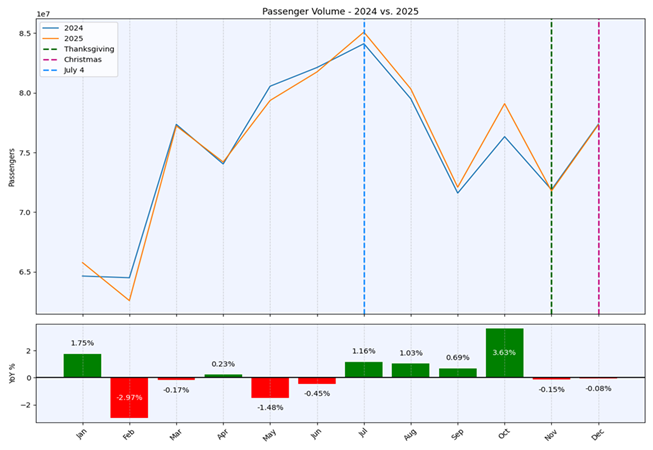
More than 906 million passengers went through a TSA checkpoint in 2025 — an increase of 2.57 million passengers over 2024 — which was a new annual record but amounts to less than 1% growth year over year. In comparison, 2024 saw a 5.3% increase over 2023, which experienced 13% growth over 2022.

Fewer people flew on Mondays and Tuesdays, which saw respective drops of 0.39% and 3% in passenger volume last year. Meanwhile, Thursdays and Sundays saw growth of 1.89% and 1.87%, respectively. One explanation might be softness in business travel early in the workweek and continued strength in leisure travel, which tends to occur closer to weekends.

Along with shifting daily trends in 2025, travel started the first half of the year slower than 2024 before rebounding around the Fourth of July holiday, and the momentum continued through October. October, in particular, saw 3% growth year over year as shoulder season travel booms in popularity.

Other insights from the AAA Northeast analysis:

  • Sunday was the busiest travel day, while Tuesday was the slowest. Travelers looking for the best prices should look for trips that begin and end on Tuesdays and Wednesdays, when passenger volumes are lighter. In 2025, an average of 2.73 million travelers went through TSA gates on Sundays while an average of 2.16 million went through on Tuesdays.
  • There were more extremely busy days with more than 3 million travelers in 2025 more than ever before. Over 3 million travelers passed through checkpoints on May 23, June 22, July 6, July 13, July 20, July 27, Oct. 10 and Nov. 30 in 2025, the TSA reported. There were only two 3 million-plus days in 2024: July 7 and Dec. 1.
  • Sundays in early summer were especially busy. June 22 and all four Sundays in July had more than 3 million passengers. If you’re looking to avoid crowds, skip Sundays in July.
  • Daily records were broken twice in 2025. The TSA reported the single highest day ever for passenger volume on June 22, when 3.09 million passengers were screened. The record was broken again on Nov. 30 with 3.13 million passengers.
  • Economic uncertainty might explain the slow start. AAA travel advisors indicate that most leisure trips are booked three to six months out. Economic uncertainty in late 2024 and early 2025 may have contributed to lagging travel numbers in the first half of the year. As consumer sentiment improved, bookings increased for the second half of the year.
  • October is booming. AAA travel advisors say October and autumn in general are increasingly popular with travelers because of deals during the shoulder season and favorable weather in many regions in the U.S. and beyond. Travelers looking to book October trips should do so as early as possible for the best deals.
  • Summer travel still dwarfs other periods. While travel volume historically spikes over Thanksgiving and year-end holidays, more people travel at the height of summer than any other time of year. TSA screened 85 million people in July compared to 71 million in November and 77 million in December.
  • A minor dip in November and December is noteworthy. Passenger volume during those months was down 0.15% and 0.08% respectively. While the decline was slight, it was possibly related to travel impacts from the government shutdown from Oct. 1 to Nov. 12. Interestingly, travel during the actual shutdown period was up 2.2% in 2025 compared to the same period in 2024. However, travel volume declined beginning Nov. 7, when the FAA ordered a reduction in flights. Passenger volume was down 6.21% between Nov. 7 and 12, 2025, compared to 2024.

Subscribe to Your AAA Newsletter

Sign up and receive updates for all of the latest articles on automotive, travel, money, lifestyle and so much more!

How Long Have You Been a AAA Member?

We asked some of our members how long they have belonged to AAA, and answers ranged from one month to 70 years! Whether it’s the pro travel planning services or the peace of mind that comes with our dependable roadside assistance, here’s how they make the most of their memberships and why they continue to renew every year.

“I might have been the youngest member of AAA. I became a member in 1951, and I was born in 1942, and I’m still a member in 2026. That makes me a member for 75 years. My father thought that I should join AAA (when I was 9) because of my interest in everything automobiles. Also, I was interested in road maps and trip planning along with roadside safety. As a fourth grader I did a class project about AAA and its value to the driving public.”

—Michael C., Westchester County, N.Y.

“I’ve been with AAA for 70 years. In 1954, I learned to drive with AAA in New York City. In 1959 I went on a seven-week AAA tour of Europe — to England, Belgium, Holland, Germany, Switzerland, Italy and France — with two weeks sailing the Atlantic coming and going. I have driven cross-country alone twice, using the AAA TripTiks and motel recommendations. I continued driving until January 2022. I am now 95 years old and miss driving.”

Joy H., Westchester, New York

“I have been a AAA member since 1973 and have been constantly pleased by the service I received for more than 50 years! Thank you!”

David K., Vermont

“During my 40-year membership, my family and I have relied on AAA for planning vacations. For many years, every time we traveled, which was often, we would go to AAA for maps and books and base our trips on AAA information.”

— Linda A., Hamden, Connecticut

“I have been a AAA member for 19 years and came to the AAA branch in Garden City, New York, with my daughter-in-law to help her surrender license plates and register a new car. There is no question when it comes to whether you go to the Department of Motor Vehicles or AAA. They are pleasant, efficient and fast. I got my license renewed here. They are courteous and knowledgeable. I use many services. I’ll be planning a trip in 2026, and I’ll come here to plan it.”

— Anthony R., West Hempstead, New York

“I’ve been a member since 2017. I’ve used the roadside services a lot. My family has used AAA to plan trips. I use the Amtrak discount a lot because my sons are in Washington, D.C. I feel very comfortable with AAA.”

Lisa K., Freeport, New York

“We have been members for at least 20 years. It’s the convenience — if you have a problem, they are there for you.”

— Oswald D., Hempstead, New York

“I’ve been a member for 25 years. I joined for the security and for the kids. I’ve primarily used the roadside services and DMV services. I’ve been happy with the services, the roadside services in particular.”

— Mike M., Long Beach, New York

“I’ve been with AAA for 30 years. We’ve gotten a lot of satisfaction out of it; it’s just an excellent organization. I’ve used it for flat tires, a dead battery and today, I’m using it for the DMV services.”

— Gail C., South Hempstead, New York

“I’m 59 and have been a member since I was 18. I use roadside assistance a lot. I have a lot of used cars, and I use the DMV services. I encourage other people to join for the DMV services.”

— Craig E., Melville, New York

“I just joined a month ago. I came in to the Garden City, New York, branch for travel services and Tom O’Hara (travel adviser) suggested I become a member. I’m planning a cruise and land trip to Greece, where I’ll be visiting family. I’ll use AAA for my car if necessary.”

— Mary N., Rockville Centre, New York

How long have you been a AAA member? Tell us in the comments.

For more stories like this — or to share your own — visit “Hey, AAA!,” our collection of member-submitted emails, photos and videos that capture the real moments AAA has been a part of.

Subscribe to Your AAA Newsletter

Sign up and receive updates for all of the latest articles on automotive, travel, money, lifestyle and so much more!

8 Tips for Better Heart Health

Cardiovascular disease is the nation’s leading cause of death, according to the American Heart Association, with societal factors such as an aging population and increasing obesity levels among the top contributors.

Are you doing all that you can to take care of your heart health?

To help people improve and maintain their cardiovascular health, the American Heart Association promotes Life’s Essential Eight.

The first four are habits that can help prevent chronic conditions that affect heart health, said Dr. Eduardo Sanchez, chief medical officer for prevention for the American Heart Association. The other four are health conditions that require attention to limit or avoid heart disease.

Life’s Essential Eight for Heart Health

Eat Healthy

Include more fruits, vegetables, lean protein and less saturated fat in your diet.

While many think they need to restrict what they eat to improve their diet, the key is to swap out less healthy foods for those that are better for you, according to Hunter Stoler, a certified health coach popular on TikTok and Instagram. These include choices with protein, fiber and healthy fats and fewer additives.

“Focus on what you could add, not remove, to achieve optimum or better health,” Stoler said. “Crowd out those (unhealthy) foods.”

For example, instead of snacking on a whole chocolate bar, have a few bites of chocolate and surround it with protein, fiber and healthy fats to fill you up.

There is a healthy swap for everything, Stoler added. Get plain Greek yogurt instead of flavored, to avoid the sugar and additives, then add fruit or protein powder. Look for chips made with fewer ingredients and healthier oils. If you want to start revamping your diet right away, start small, he said.

“Realize you don’t need a complete overhaul right away,” Stoler said. “Focus on one or two swaps you can make a week. Finish the food you have, then replace it with healthy products.”

Quit Tobacco

Stop smoking, vaping and chewing tobacco. Inhaling nicotine such as that contained in cigarettes is the leading cause of preventable death in the U.S.

Get Moving

To help stay well and regulate weight, adults should engage in at least 2½ hours of moderate exercise or 1¼ hours of vigorous exercise weekly. Children should participate in at least an hour a day of activity.

Get Enough Sleep

The American Hearth Association’s original recommendations for cardiac health were Life’s Simple Seven, until studies showed how critical adequate sleep is to maintaining heart health, said Sanchez.

Getting sufficient sleep strengthens the body, promotes healing, improves brain function and helps regulate blood pressure. Lack of sleep can raise blood pressure, a contributing factor to heart disease and strokes, according to the U.S. Centers for Disease Control and Prevention.

Adults require between seven and nine hours of sleep per night and children between eight and 12.

“Getting more sleep is a challenge for many people, but we can find ways to sleep well,” said Sanchez.

Following a regular bedtime routine and cutting back on caffeinated products and screen time in the hours before bed can help improve sleep.

Manage Weight

Maintaining a healthy weight for your height reduces the strain on your heart and lowers blood pressure. The heavier you are, the harder your heart works to circulate blood around your body. Being overweight can also lead to conditions such as sleep apnea that strain the heart. Eating a healthy diet and engaging in regular exercise can help you regulate your weight.

Control Cholesterol

Higher levels of low-density lipoprotein or LDL cholesterol in your bloodstream can cause blockages in arteries and raise the risk for a heart attack or stroke. Have your cholesterol evaluated by a doctor and if it is high, have it monitored regularly.

Manage Blood Sugar

High levels of sugar in your blood can strain your heart and lead to type 2 diabetes. Learn how to regulate your blood sugar with these tips from the American Heart Association.

Monitor Blood Pressure

High blood pressure can increase your risk for a stroke or heart attack. Regular exercise and healthy eating are among the ways to manage it. Check here for more ways to control your blood pressure.

Knowing where you stand when it comes to the Essential Eight is key to maintaining a healthy heart.

For more information about ways to maintain and improve your heart health, visit the American Heart Association website.

What heart healthy habits do you practice? Share them with us in the comments.

Subscribe to Your AAA Newsletter

Sign up and receive updates for all of the latest articles on automotive, travel, money, lifestyle and so much more!

Where to Find the Best Dumplings in the Northeast

Mmm, dumplings. Whether you like gao (crescent-shaped) or bao (purse-shaped), there is no shortage of tempting options here in the Northeast. While that’s a good thing, sometimes so many options can be overwhelming — but we have you covered.

But first: which dumplings are which?

Know Your Dumpling

  • Jiaozi: Most common type of Chinese dumpling. Crescent-shaped with opaque wrapper.
  • Siu mai: open-topped, round dumpling.
  • Xiao long bao: your common soup dumpling. “Little steamer-basket buns” in Mandarin Chinese.
  • Bao zi: general term for dumplings made with a wheat dough that resemble a bun.
  • Wontons: filling is placed in center of a square sheet of dough then sealed; similar to Italian ravioli.

How To Properly Eat Soup Dumplings

soup dumpling
Graphic by Sarah Hopkins

Where to Find the Best Dumplings by State

Connecticut

Song

West Hartford

If you’re a fan of crunchy and spicy, you’ll be happy to know that there’s a dumpling just for you at Song. Offering their twice-cooked pork bao, you get to enjoy a satisfying crispy texture as well as a yummy filling. Even better, Song offers dumplings in what’s called Chengdu style, a complex spicy flavor originating from the city in China of the same name.

Massachusetts

Dumpling House

Cambridge

With chefs from Beijing, it’s no wonder that some of the best dumplings in Boston are here at Dumpling House. Their most popular are steamed soup dumplings with pork, but their flavor offerings also include pork shrimp, crabmeat, leek, beef and celery, chicken and more.

Joyful Garden

Boston

If you want dim sum that’s inspired yet traditional, Joyful Garden has the perfect combination. Enjoy variations of steamed, baked, fried and deep-fried dim sum with filling options that are nearly endless. There are the classic flavor combos, like shrimp, beef and chicken, along with intriguing flavor profiles like lobster, spareribs, shark’s fin, taro, eggplant, turnip cake and more.

New Jersey

Dumpling Den

Fort Lee

Whatever kind of dumpling you’re craving, they have it at Dumpling Den. Want soup dumplings? They’ve got four kinds, plus a dumpling soup sampler if you can’t decide. Want just dumplings without the soup? They’ve got nine types to choose from and a sampler, as well. And if you’re into bao buns, you guessed it. They’ve got those, too (7 kinds. But who’s counting?).

Authentic Shang Hai Dumpling

Edison

Taking a note from its very name, Authentic Shang Hai Dumpling takes tried and true flavors directly from China and infuses their own flair. Enjoy an extensive dim sum menu featuring golden lava buns, egg yolk shumai, eight treasure rice pudding and more.

New York

Nan Xiang

Flushing, Manhattan and Westbury

This Michelin-recommended franchise began as a small shop in Flushing in 2006 and now is considered one of the best places for dumplings in NYC. In twenty years, they’ve prioritized the feeling of home cooked meals and infused a contemporary touch in both their recipes and restaurant décor. Everything is made to order using centuries-old techniques and fresh ingredients. Come for the chef-recommended pan-fried pork and crabmeat buns, stay for the Lucky Six soup dumplings.

Aberdeen

White Plains

Every menu item at Aberdeen is made from scratch daily, and it shows. Specializing in Cantonese cuisine and authentic dim sum, the menu has many types of dumplings rarely offered at other places. There’s shui mai, your traditional Chinese open-topped dumpling, but also cheung fun (steamed rice noodle rolls) and sui gok (deep-fried and oval shaped). This highly-rated spot shouldn’t be missed.

Rhode Island

Jayd Bun

South Kingstown

Award-winning Jayd Bun, ranked #2 in the country for Chinese cuisine, is a place you won’t find a single menu item that isn’t authentic Chinese. “No fried rice, no chicken wings or crab rangoons,” their website proudly states. Choose from pork, chicken or veggie buns, and don’t forget to pre-order by email a couple days in advance. Yes, it’s that popular.

Mokban

Providence

The best Korean dumpling, or mandu, can be found here at Mokban where flavor comes first. Enjoy your dumplings fried or steamed with your choice of filling or opt for the popular soy ginger or sweet chili dumplings. Can’t decide? The dumpling soup offers an assortment of dumplings happily suspended in a hearty beef broth with scallions, egg and sesame oil.

What’s your favorite dumpling spot? Make your voice heard in the comments.

Subscribe to Your AAA Newsletter

Sign up and receive updates for all of the latest articles on automotive, travel, money, lifestyle and so much more!

File Taxes ASAP, Get Your Refund Sooner

Tax season runs from January 26 to April 15. Why wait until the last minute?

Procrastination and Taxes

One in five Americans claim they do not feel prepared to file their taxes in 2026 and 29% admit to waiting until the last minute to file, according to a report by IPX1031. Some of the top reasons for procrastinating include not knowing the tax deadline, wanting to ensure accuracy and finding the process too complicated, stressful and time-consuming.

Filing taxes can sometimes be frustrating and confusing, but it doesn’t have to be. Getting an early start on tax season can help give you the leg up you need.

Why File Early?

Last year’s average tax refund was $3,167, according to the IRS. That’s a significant chunk of change, and you could get it earlier if you file your taxes early.

When you file early, you’ll have far less stress to deal with during tax season. Since you have time to collect all of the documents and information you need, you won’t have to suffer through the last-minute scramble.

Taking the extra time to plan ahead and assemble all the necessary documents can make your life a lot easier. As soon as your tax forms start arriving in the mail, put them in a safe place like a file box or folder. Don’t forget to save your receipts from any tax-deductible purchases throughout the year.

tax season

When you prepare ahead of time and file early, you’ll most likely submit a more accurate return. The more accurate your tax return is, the more likely you are to get the refund to which you are entitled.

Filing early can also help to avoid tax fraud. Fraudsters have a habit of submitting phony tax returns with stolen Social Security numbers early on in the season. When you file your taxes early, you can beat them to the punch.

Some people procrastinate on their taxes because they’re worried that they’ll be hit with a tax bill instead of a refund for that year. But filing early will still help even if you wind up owing money. If you’re hit with a tax bill early on in tax season, you have more time to decide what payment plan is right for you.

Need Help?

Many people wait to do their taxes because they’re intimidated by the process, but filing your taxes doesn’t have to be hard. Software like TaxAct is designed to help users navigate the complexity of taxes with ease and accuracy.

AAA members can save 25% on tax prep and filings with TaxAct.
When do you usually start doing your taxes? Let us know in the comments below.

This article has been updated and republished from a previous version.

Subscribe to Your AAA Newsletter

Sign up and receive updates for all of the latest articles on automotive, travel, money, lifestyle and so much more!