On the one hand, stubborn inflation, tariff fears and expectations for higher interest rates in the coming months are acting as headwinds for oil and gas markets, holding prices down on the assumption of weaker economic activity. On the other hand, markets reacted positively last week to stronger demand and headlines describing peace discussions in the Middle East and between Russia and Ukraine. Overall, crude oil prices ended marginally lower last week — the fourth straight week of declines — and the price for U.S.-produced oil is now 9.1% lower than in mid-January.
Meanwhile, gasoline demand rose last week to a healthy 8.57 million barrels a day, according to the Energy Information Administration. That’s an increase of 250,000 barrels a day week over week. That’s higher than the comparable weeks of 2023 and 2024, and demand so far in 2025 has outpaced last year by roughly 1%. Higher demand is music to the ears of domestic refiners, who have been increasingly concerned about the potential for an oversupply of winter-blended fuel before they officially switch to producing summer blend by April. National inventories of gasoline fell last week by 3 million barrels, which was the first drop in supplies in three months.
“Refiners are beginning the process of emptying their tanks of winter blend and transitioning to summer blend production,” said Jillian Young, director of public relations for AAA Northeast. “Historically, pump prices start climbing in the late weeks of winter, but this year, regional prices are staying put so far, thanks to cheaper oil and sizable gasoline inventories.”
AAA Northeast’s Feb. 17 survey of fuel prices found the current national average up 3 cents from last week ($3.13), averaging $3.16 gallon. Today’s national average price is 5 cents higher than a month ago ($3.11) and 12 cents lower than this day last year ($3.28).
Region
Current Price*
One Week Ago
One Month Ago
One Year Ago
Connecticut
$3.08
$3.08
$3.06
$3.27
New Jersey
$3.02
$3.04
$3.04
$3.23
New York
$3.17
$3.17
$3.15
$3.30
Massachusetts
$3.03
$3.03
$3.02
$3.19
Rhode Island
$3
$3
$2.97
$3.14
*Prices as of Feb. 17, 2025
As of Feb. 17, Mississippi and Oklahoma had the lowest prices in the nation at $2.67 and $2.71 respectively.California and Hawaii held the highest prices in the nation this week at $4.84 and $4.53, respectively.
The AAA Gas Prices website is your resource for up-to-date fuel price information. Search for average gas prices on national, state and metro levels by regular, plus, premium and diesel.
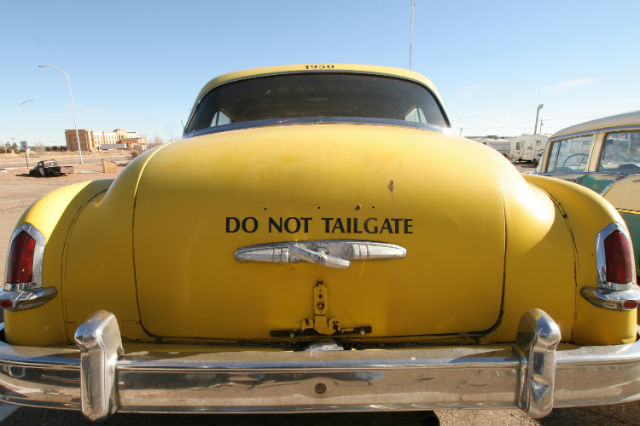
It’s frustrating when a slower driver keeps you from getting where you need to go, and it might be tempting to tailgate, but that’s never a good idea. To avoid being a tailgater all you need is an attitude adjustment and a lighter foot on the gas.
The problem comes when someone is riding your bumper so close you cringe every time you brake. You can trust your AAA insurance policy to protect you if you are involved in a crash, but these tips from the AAA Foundation for Traffic Safety will help you avoid and safely deal with tailgaters before the situation escalates.
Keep Calm and Drive On
The most important rule when dealing with a tailgater is to stay calm. That’s likely not your first reaction, but it’s the best one.
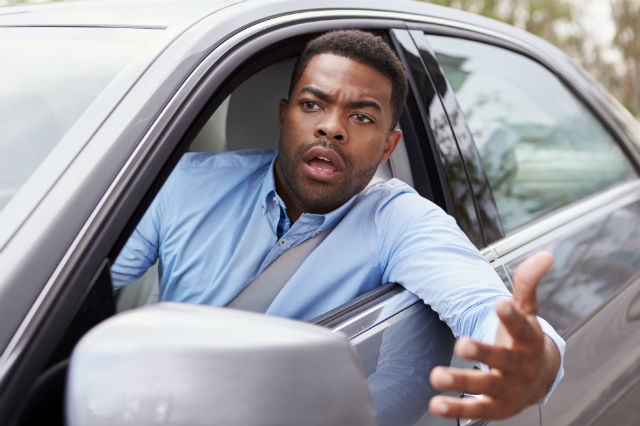
Your initial response is probably some combination of anger at the driver who is way too close and anxiety over the possibility they’ll hit you. Let those emotions pass. If you react with anger or fear and start driving erratically, you’ll only make the situation worse. Continue driving the speed limit, stay cool and obey traffic signals.
When You Need to Brake, Take it Slow
Tailgating is dangerous because it reduces the space between cars to an unsafe distance. If you suddenly hit the brakes, the tailgater may not have enough time to react and slow down before hitting your car.
If you’re being tailgated, be extra cautious when you brake. Don’t slam on the brakes for no reason – and certainly not to be spiteful. Unless it’s an emergency braking situation, brake gently. You want the tailgater to see you slowing down and have enough time to slow down as well.
If you’re on a multi-lane road and it’s safe to move to another lane, put on your turn signal and get out of the way. This is the easiest way to deal with a tailgater and end the situation. The driver behind you is being unsafe and if you can solve the problem simply by switching lanes, then do so as soon as possible. If there’s not another lane, consider turning into a parking lot.
It might be tempting to get angry at the tailgater and not let them pass. Don’t let your emotions get the best of you. Tailgating is a dangerous and aggressive driving tactic.
Aggressive driving, defined by the National Highway Traffic Safety Association as a combination of moving traffic offenses that can endanger other people or property, is often the result of road rage and a major factor in fatal highway collisions each year.
A 2009 study by the AAA Foundation for Traffic Safety based on the NHTSA’s Fatal Accident Reporting System, found that aggressive driving played a role in 56% of fatal crashes from 2003 through 2007. And according to recent NHTSA data, “following improperly” is among the top aggressive driving behaviors associated with fatal crashes.
It’s far easier to change lanes and let a tailgater pass than become one of those statistics.
Drive at a Comfortable Speed
There’s the chance you’ll be tailgated on a road where there’s no safe way to let the tailgater pass. If you’re doing the speed limit, don’t speed up. No matter how impatient the driver behind you is, do not break the law and go faster than posted speed limits.
Driving at a speed where you’re confident and in control of your car is key. Do not be pressured into driving outside your comfort zone. That’s simply swapping one unsafe situation for another.
Avoid Confrontation
You’ve been glaring at the driver in your rearview mirror for 10 minutes when there’s finally room for him to pass. Fine. Let him pass, but don’t give him dirty looks or make rude hand gestures to let him know exactly how you feel about his tailgating as he speeds away. Responding to an aggressive driver with more aggression is not a responsible way of dealing with a tailgater.
Engaging an aggressive driver could escalate the situation into something even worse. The sooner the tailgater drives away, the better.
Aggressive driving tactics like tailgating are nerve-wracking. Keep calm, don’t overreact, and let the tailgater pass when possible so everyone safely arrives at their destinations.
How do you deal with a tailgater (safely)? Tell us in the comments.
This article has been updated and republished from a previous version.
This year, tax season is running from January 27 to April 15. But even if you have some extra time, why wait?
Procrastination and Taxes
One in four Americans claim they do not feel prepared to file their taxes in 2025 and 22% admit to waiting until the last minute to file, according to a report by IPX1031. Some of the top reasons for procrastinating include not knowing the tax deadline, wanting to ensure accuracy and finding the process too complicated, stressful and time-consuming.
Filing taxes can sometimes be frustrating and confusing, but it doesn’t have to be. Getting an early start on tax season can help give you the leg up you need.
Why File Early?
Last year’s average tax refund was $2,878, according to the IRS. That’s a significant chunk of change, and you could get it earlier if you file your taxes early.
When you file early, you’ll have far less stress to deal with during tax season. Since you have time to collect all of the documents and information you need, you won’t have to suffer through the last-minute scramble.
Taking the extra time to plan ahead and assemble all the necessary documents can make your life a lot easier. As soon as your tax forms start arriving in the mail, put them in a safe place like a file box or folder. Don’t forget to save your receipts from any tax-deductible purchases throughout the year.
When you prepare ahead of time and file early, you’ll most likely submit a more accurate return. The more accurate your tax return is, the more likely you are to get the refund to which you are entitled.
Filing early can also help to avoid tax fraud. Fraudsters have a habit of submitting phony tax returns with stolen Social Security numbers early on in the season. When you file your taxes early, you can beat them to the punch.
Some people procrastinate on their taxes because they’re worried that they’ll be hit with a tax bill instead of a refund for that year. But filing early will still help even if you wind up owing money. If you’re hit with a tax bill early on in tax season, you have more time to decide what payment plan is right for you.
Need Help?
Many people wait to do their taxes because they’re intimidated by the process, but filing your taxes doesn’t have to be hard. Software like TaxAct is designed to help users navigate the complexity of taxes with ease and accuracy.
AAA members can save 25% on tax prep and filings with TaxAct.
When do you usually start doing your taxes? Let us know in the comments below.
This article has been updated and republished from a previous version.
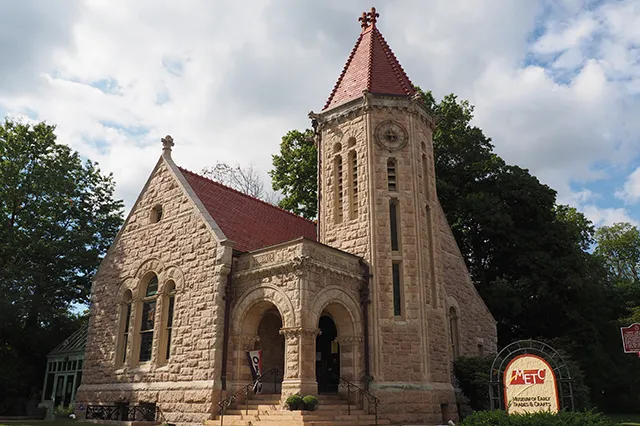
Museums exist for almost every interest. While there’s the usual natural history and art museums, there are also many Northeast museums dedicated to eccentric subjects, from puppets to stamps to sharks.
For curious visitors and unique hobbyists, here are 12 off-the-beaten-path museums in the region. Most on this list can be perused in an hour, making them good pitstop attractions. Plan your visit ahead of time, though, as admission hours of these quirky museums vary widely.
This museum houses some 3,000 puppets from around the world and regularly hosts performances, workshops and forums. Connected with the University of Connecticut’s School of Fine Arts, the Ballard Museum seeks to educate visitors about the history and future of this revered theatrical artform. Admission to the museum is free.
Here you’ll find the largest collection in the world of locks, keys, handcuffs and ornate door hardware, with many pieces of the collection made in Connecticut. Housed in what was once the headquarters for an important lock-making company, the museum also periodically hosts escape room challenges. Admission: $3-$5.
Experience 500 years of printing history, from antique printing presses to word processors. The museum houses many exhibits, including what may be the world’s only collection of phototypesetting equipment. Admission: Free for students and Haverhill Library card holders; $10-$15 for others.
This small museum is a hands-on exhibit dedicated to trolleys and other street cars. The museum is housed within the Lowell National Historical Park’s visitor center, and visitors can hop on the park service’s free trolley service at certain times of the year. If you like this museum, it is part of a larger network of streetcar museums, which includes exhibits throughout New England and New York. Admission: $2-$3, cash/check only if purchased at the museum.
This quirky museum at Regis College is born from the stamp-collecting passion of a globetrotting Catholic cardinal. It contains a large library of national and international stamps, as well as exhibits on the history of stamps and Massachusetts post offices. The gift shop will be an important stop for any stamp collector. Admission: $2-$8; $20 maximum for families.
This museum focuses on the work of past generations of New Jerseyans, from farmers to blacksmiths to millworkers. It also hosts many different hands-on learning opportunities for makers of all ages. Admission: $3-$6; $15 maximum for families.
While this museum on the Montclair State University campus is dedicated to the great, oft-quotable legacy of one of baseball’s greatest catchers, it also offers many opportunities for hands-on learning opportunities on sports science and thoughtful discussions on baseball’s racially segregated past. Admission: $10-$15; free for members of the military and Montclair students.
Hosted by the American Kennel Club, this museum highlights artwork dedicated to our canine companions. Here you will find watercolors, bronze sculptures, textile art and interactive exhibits, all focused on the foibles and exploits of four-footed best friends. Admission: $5-$15.
This roadside attraction is dedicated to a time when gas stations were full-service stops. In the mid-20th century, there were several dozen of these distinct red, white and blue art-deco service stations in the Northeast, but this is the only fully restored station left. Visitors can also explore a small showroom of antique gas station paraphernalia when it is open. Admission is free.
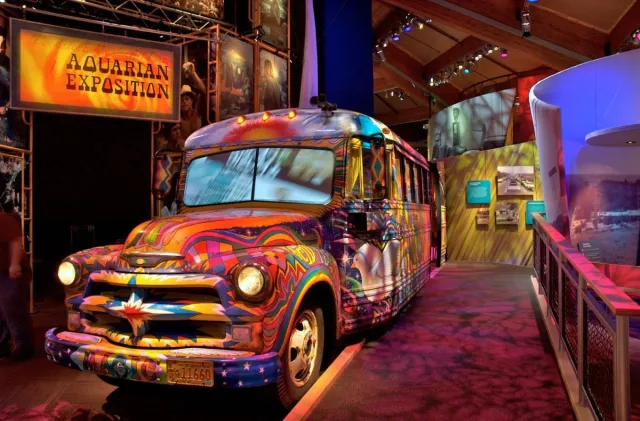
This museum is dedicated to the legacy of the Woodstock Music Festival of 1969, which took place on the same property when it was privately owned farmland. Exhibits include a lot of psychedelic artifacts, film clips of the festival and oral histories from those who were there. Bethel Woods also continues to host music festivals, of course. Admission for the museum is $5-$22.69.
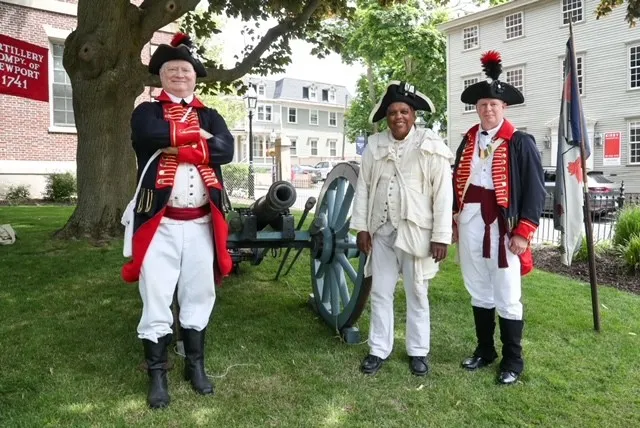
This museum is housed in the headquarters of a now-ceremonial Rhode Island militia that dates back before the American Revolution. Here, you will find an eclectic mix of military artifacts, including a bronze cannon cast by Paul Revere and VIP military uniforms from dignitaries of England, Egypt and Jordan. Admission is free.
Dedicated to advancing shark preservation through education, this small museum stakes its claim as being the first shark museum in the United States. It features artifacts from around the world, including an exhibition on the movie “Jaws” in celebration of its 50th anniversary in 2025. Admission is free.
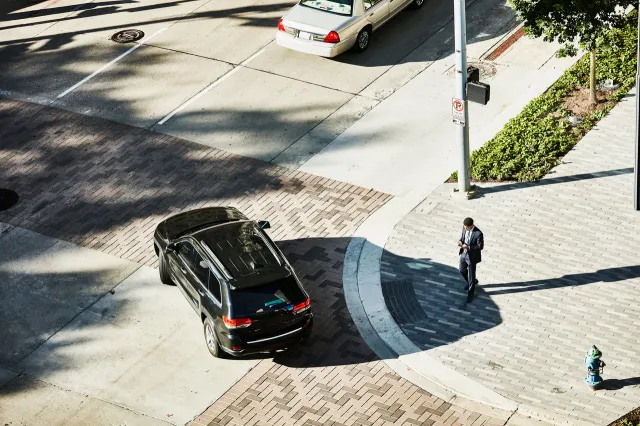
New research from the AAA Foundation for Traffic Safety reveals concerning trends in pedestrian fatalities in the U.S., which have soared by over 80% in the past 15 years. There have been 7,522 fatalities nationally in 2022, after reaching a historic low of 4,109 fatalities in 2009.
Almost the entire increase in pedestrian deaths has occurred on urban arterial roads, after dark. These busy roads are typically built to quickly move a lot of traffic in urban and suburban areas while still allowing access to local streets. This means pedestrians and vehicles often share congested roads that are not always well-lit or have appropriate sidewalks, crosswalks or traffic signals.
Researchers uncovered that a disproportionate number of these pedestrian deaths occurred in socially and economically disadvantaged neighborhoods. Many residents in these areas depend heavily on walking, especially to reach public transportation. Cities and suburbs continue to grapple with several challenges when it comes to implementing the necessary infrastructure upgrades needed to make roads safer in these communities. AAA urges planners, public health professionals, legislators and traffic safety practitioners to work together to reverse these deadly trends.
The study also identified several interconnected factors in these crashes, including a lack of safe crossing locations, high pedestrian crossing volumes and poorly lit roads without continuous sidewalks.
“Reducing the spike in pedestrian deaths requires data-driven investments made where they can have maximum impact,” said Jillian Young, director of public relations for AAA Northeast. “Drivers and pedestrians alike must behave appropriately on the road. But, to truly move the needle on safety, policymakers must invest in road improvements in communities where a disproportionate number of pedestrians are hit and killed.”
AAA recommends a Safe System approach, which considers the need to address both human and infrastructure factors, reducing crash severity through safer roads, vehicles, speeds and road users.
AAA reminds drivers to do their part as well:
Rember to stay alert. Engaging in risky driving behaviors such as speeding, texting, driving while drowsy or distracted or driving under the influence of cannabis or alcohol significantly increases the risk of a collision. Follow speed limits, keep your smartphone out of reach and only drive when sober.
Do not rely on pedestrian detection systems to prevent a crash. This technology should only serve as a backup, not a replacement for an engaged driver.
Drive with extra caution at night, as this is the riskiest time for pedestrians and when vehicle safety systems struggle the most.
Drivers are responsible for yielding to pedestrians, but those traveling on foot should also be vigilant. Pedestrians should use caution by staying on sidewalks and using crosswalks as often as possible. Always obey traffic signals, look both ways before crossing the street and do not walk and text.
“However, I believe it will do no harm to accept your invitation. It may prove an interesting experience.” —William McKinley
With those words the 25th president of the United States became the first to ride in an automobile while in office. It was the late 1800s and McKinley was accepting an invitation from O.F. Stanley, who had invented a “steam-propelled horseless carriage.”
History tells us McKinley did not enjoy his ride, which shouldn’t come as much of a surprise. After all, open-air vehicles driving on rough roads were not overly conducive to a luxurious experience. Fortunately for the commanders in chief to follow, the presidential driving experience has come a long way.
There are few, if any, vehicles that have earned as much reverence and intrigue as the presidential state car, and for good reason. Each one is both innately historic and one-of-a-kind. You do not need to be a historian or car aficionado to appreciate them.
These cars tell stories — about the presidents who rode in them and the country they oversaw.
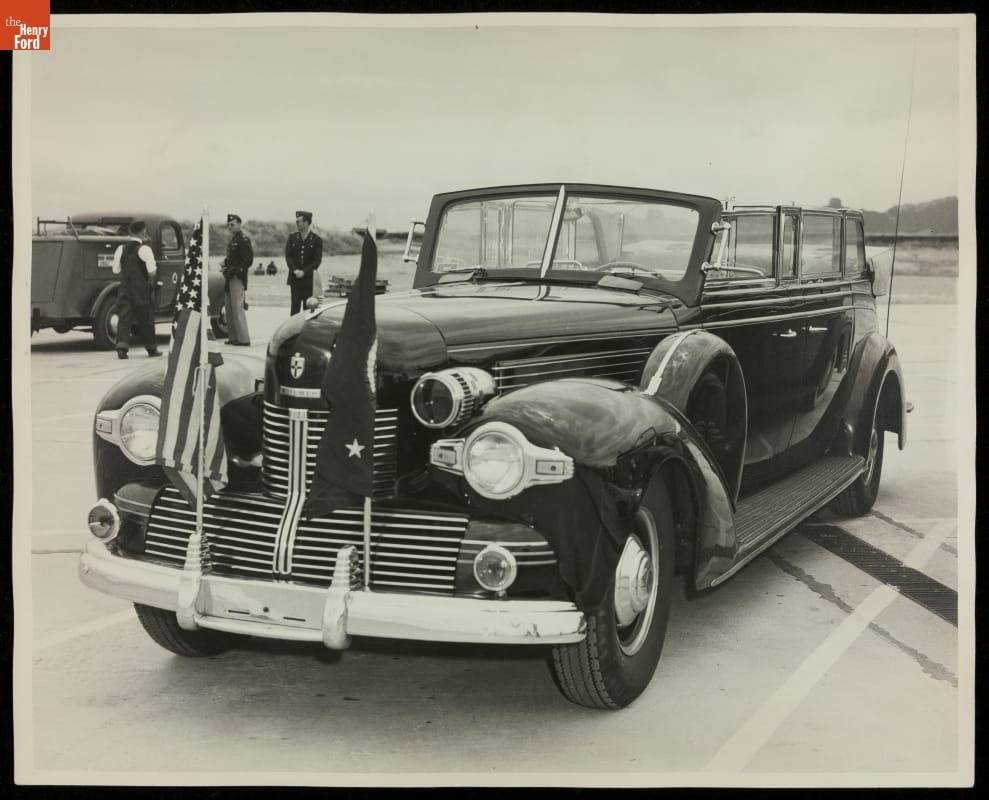
Franklin D. Roosevelt’s “Sunshine Special.” (From the Collections of The Henry Ford)
Franklin D. Roosevelt’s Lincoln Model K
During the early 1900s, U.S. presidents were driven around in standard production cars available to the general public, or at least the segment of the population that could afford such a vehicle back then. It wasn’t until Franklin D. Roosevelt’s presidency that the Secret Service began using specially built official state cars.
FDR’s tenure as president initiated the thought of customizing presidential vehicles for improved security and convenience for two specific reasons. In 1933, Roosevelt survived an assassination attempt as he was giving a speech from the back seat of his open touring car. He also needed a vehicle his wheelchair could get in and out of easily. And so, in 1939, the Lincoln K state car was introduced. Dubbed the “Sunshine Special” due to the fact FDR loved to ride with the roof down, the car came outfitted with a two-way radio as well as handles and extra-wide running boards that Secret Service agents could use to ride outside the vehicle.
After the Japanese attacked Pearl Harbor in 1941, security concerns ramped up even more. As such, the Sunshine Special went back to the factory where armored doors and bullet-resistant tires and gas tank were added. While that was happening, FDR used an armored limo that, according to the Secret Service, originally belonged to Al Capone. The Department of the Treasury had seized the vehicle years prior on a tax evasion charge.
Did you know? Theodore Roosevelt was the first president to ride in an automobile during an official procession, doing so in Connecticut in 1902.
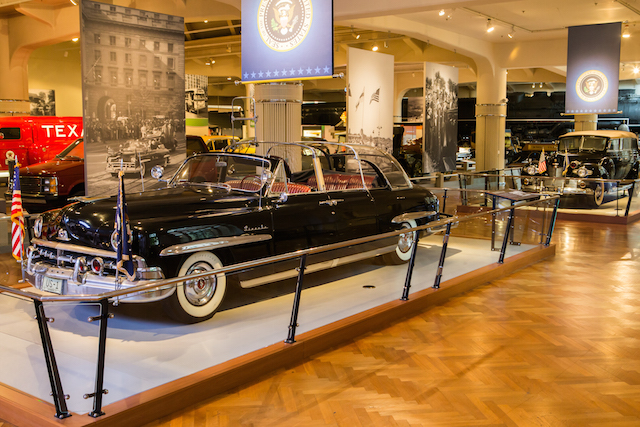
The Lincoln Bubble-Top used by Harry Truman, Dwight Eisenhower and John F. Kennedy. (From the Collections of The Henry Ford)
The Lincoln Bubble-Top
President Harry Truman inherited the Sunshine Special, but by 1950 he was allowed to choose his own car. Rumor has it that Truman held a grudge against General Motors after the manufacturer refused to give him access to their cars during the 1948 presidential campaign. Therefore, Truman stuck with Lincoln and opted for the marque’s Cosmopolitan model.
Truman used the car for the remaining two years of his presidency. However, the vehicle is more closely associated with his successor, Dwight Eisenhower. It was the 34th president that had the car outfitted with its famous bubble-top roof so that spectators could see him when the top was up.
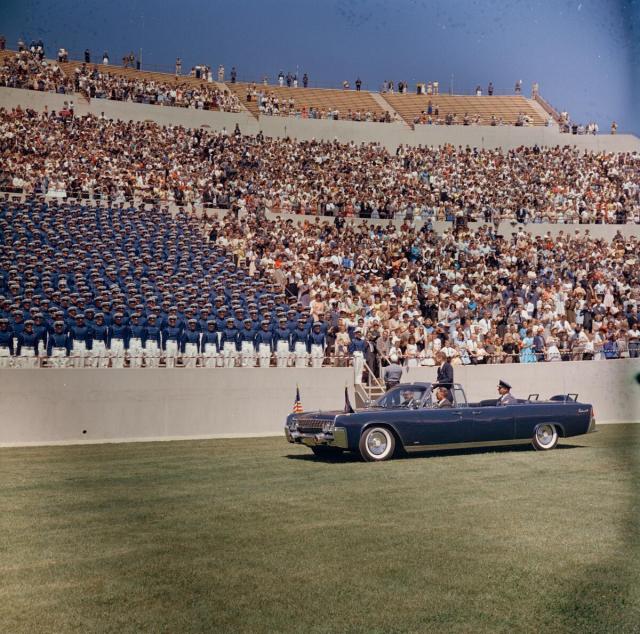
President John F. Kennedy stands in the back of the presidential limousine (Lincoln-Mercury Continental convertible) during commencement for the United States Air Force Academy in June 1963. (Courtesy of the John F. Kennedy Presidential Library and Museum)
John F. Kennedy’s Lincoln
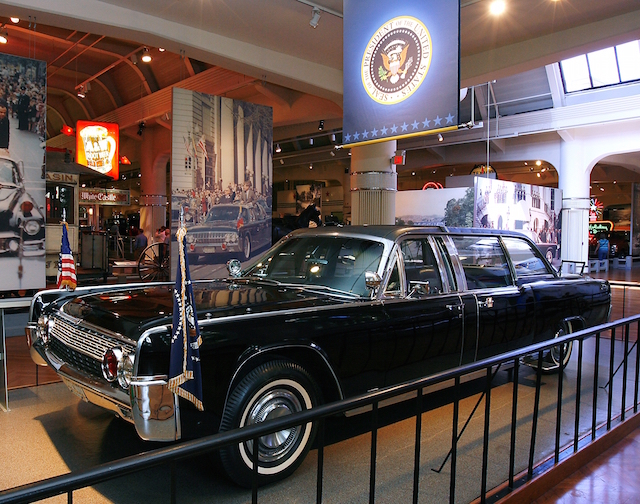
The most famous presidential state car played a role in one of the darkest moments in U.S. history — John F. Kennedy was riding in a 1961 Lincoln Continental when he was assassinated in 1963.
The car’s bold styling, featuring a low-slung body and suicide doors, personified the young, forward-thinking president. It was customized with a phone system and a mechanism that elevated the passenger seat to allow spectators a better view of the president.
But as aesthetically pleasing as the Lincoln was, it did not have any serious protective features. While the vehicle did come equipped with a clear plastic bubble-top, it was not bulletproof.
Lyndon B. Johnson’s Updated Continental
After President Kennedy’s assassination, it was clear the presidential limo needed a substantial update. The problem was, there was no time no wait for a new car. Lyndon B. Johnson needed a vehicle right away.
Instead, the ’61 Continental was stripped down and built back up stronger and more formidable than ever. Titanium was added to the vehicle’s body, the windows were bullet resistant and a permanent, bulletproof roof was installed. The car remained in use through LBJ’s presidency and into Richard Nixon’s term in office. It now resides in the Henry Ford Museum, along with several other presidential state cars. (Lincoln is a division of Ford Motor Company.)
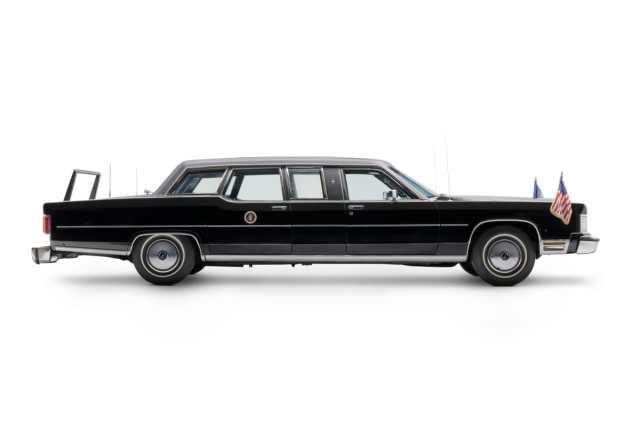
Ronald Reagan’s Lincoln Continental. (From the Collections of The Henry Ford)
Ronald Reagan’s Cadillac
Presidents Nixon, Gerald Ford, Jimmy Carter and Ronald Reagan would all use variations of the Lincoln Continental. The presidential state car didn’t see a model change until Reagan switched to a Cadillac Fleetwood limousine in 1983. (Aside from George H.W. Bush’s Lincoln Town Car, Cadillacs have been used ever since.)
Modifications of the car included a raised roof that made it easier for the president to see the crowds. The new vehicle’s introduction also ushered in new safety protocols. Beginning with the Fleetwood, presidential cars were only used for official state business and, because of security concerns, this would be the last such vehicle to be preserved.
Did you know? The Lincoln Continental was involved in three presidential assassinations or assassination attempts. In addition to JFK, the vehicle was used to rush Gerald Ford to safety during a 1975 attempt in San Francisco and was the car Ronald Reagan was getting into when he was shot in 1981.
High-Tech Limos: Modern Presidential State Cars
Security measures escalated at a considerable pace in the 1990s. President Bill Clinton’s Fleetwood did not have running boards or a sunroof for safety reasons. It did, however, have telephones, internet access and satellite communications, all of which were considered extremely high-tech to have in a car in 1993.
President George W. Bush’s Cadillac DeVille marked an important milestone in presidential car history: It was the first such vehicle not to be based on a commercial model. Instead, it was built to the specifications of the Secret Service. In fact, by 2001, Cadillac wasn’t even producing cars that could be converted into limousines. It’s speculated that the “DeVille” was actually built on the chassis of one of General Motors’ full-size SUVs. Either way, the car was equipped with an infrared night vision system, 5-inch-thick armored doors and a self-contained passenger compartment with its own secure air supply.
President Obama’s Cadillac lived up to its moniker of “The Beast,” weighing 15,000 pounds. The blast-resistant limo had Kevlar-reinforced tires and 8-inch-thick rear doors as heavy as the main-cabin doors of a Boeing 757. The vehicle also carried tanks of oxygen and bags of type AB negative blood (Obama’s blood type).
Did you know? When the president travels, all the vehicles in the presidential motorcade are transported via U.S. Air Force planes.
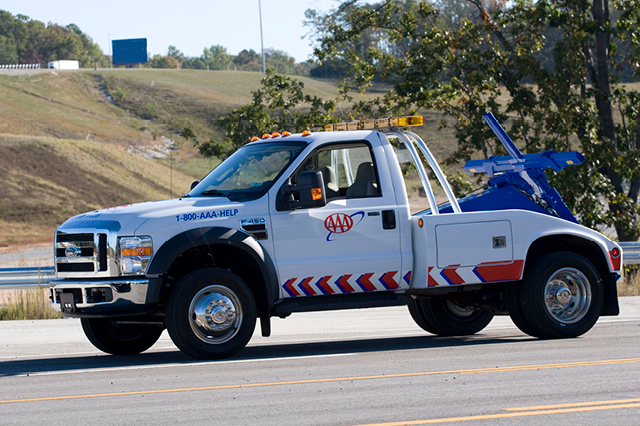
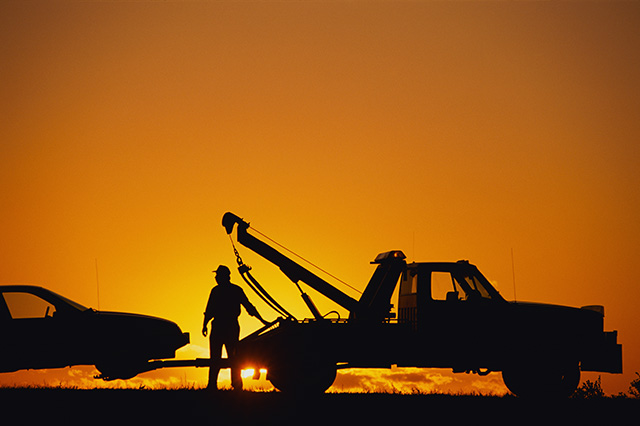
A tow truck is one thing we never think about until we need it. And try as we might, that need will come. It is almost inevitable that at some point, you’ll have trouble with your vehicle and will require roadside assistance from a tow truck service. When that time comes, it’s common to be in a stressed and panicked state. Knowing ahead of time how to find a tow truck can go a long way toward getting you and your car off the road in a safe and timely manner.
When dealing with a broken down car, there are a number of situations that require proper action, including getting off the road safely, requesting a tow truck service near you, and having you and your vehicle picked up and dropped off.
Here are the important things to know when you need to find a tow truck near you.
What should I do if my car breaks down and I need a tow truck service?
If you’re driving and your car suddenly fails, slow down and pull over to the shoulder of the road. Make sure you are out of the flow of traffic. When you are in a safe spot, request roadside assistance. Look for street signs or, if you’re on a highway, mile markers or landmarks. This will help the tow truck driver find you.
Here are some other tips to prepare for your tow truck service:
Remain with your vehicle. Under most circumstances it is safest to remain in your vehicle until a law enforcement officer or road service provider arrives.
Have your information ready. This includes your AAA membership number, the phone number where you can be reached, a description of your vehicle — color, make, model and year — and license plate number.
Verify your tow truck service provider. When your tow truck arrives, verify the name of the provider. AAA personnel should display an approved AAA emblem on their vehicles or produce identification.
Describe the situation. In addition to detailing the problems with your vehicle, make sure the service provider is aware of any circumstances that may require special towing or transport considerations, such as unusual vehicle, large number of passengers, infants and medical needs and whether your vehicle uses diesel or an alternative fuel.
You can use the AAA app to find a tow company near you and track the driver as they are on their way. Download the app now.
How far will AAA towing take my car?
Those with a basic level membership receive up to 3 miles of towing per call per year included in their membership. Plus members receive 100 miles of towing for each roadside assistance call, while premier members get also 100 miles of towing per call with one tow up to 200 miles.
How can I find a tow truck near me?
Wherever you are when when your car breaks down, AAA will come to you. There are two easy ways to request a tow truck. One is by simply calling the number on your AAA membership card. You can also request assistance online. AAA’s digital roadside assistance request system is fast and easy to use.
What should I do after my tow truck service has taken possession of my car?
Tell the service provider the repair shop where you want your vehicle taken. If you don’t have one in mind, ask the operator if there is a nearby AAA Approved Auto Repair facility.
One member is allowed to ride to the repair shop with the tech in the AAA fleet truck, but both must wear facemasks. AAA can also help to arrange transportation to get you where you’re going safely.
When word got out in 2023 that the U.S. Department of Education planned to overhaul and simplify the FAFSA, parents and colleges anticipated an easier filing experience.
But it didn’t work out that way. The new form was plagued by problems. Usually released by Oct. 1, it was delayed until December 2024 and then final award decisions were late. With no word on financial assistance, students were forced to put off finalizing their choice of schools, and colleges had to push back deadlines for deposits, a stressing situation for schools and families.
“Families need a good window to compare different offers,” noted Donald Kerr, director of student lending and college services for AAA Northeast.
Fortunately, year two is going better, said Kerr, whose department helps families complete the FAFSA form. While there was a slight delay in releasing the 2025-2026 form, some families were able to access it in November, he said. This means students will get their award letters in time to make informed decisions.
AAA Is Ready to Help
Students seeking federal grants and loans to pay for college must fill out the FAFSA form annually to determine whether they qualify for financial aid, based on their family’s income. Many colleges also use the form to decide how much aid they award students.
Last year, not only was the FAFSA’s release delayed, but many completed forms had to be reprocessed. The original FAFSA formulas did not account for increases in the cost of living and inflation, which meant that some families qualified for more aid, according to Kerr.
Among the goals of the revamp was to reduce the number of questions and make the form easier to complete, so more families would submit it and more would qualify for aid. Before the revisions, families spent as long as an hour completing the FAFSA; most people can do it now in 20 to 30 minutes, Kerr said. AAA staff can also help members complete the forms. Because the FAFSA form is available online, Kerr said he and his staff have been able to assist more people virtually.
AAA staff members strive to assist members throughout the college process, from applications to graduation, according to Kerr. AAA’s Pivotal College Years portal provides information about colleges, how to apply and careers.
“We help with the financial aid process, finances, and then, when students graduate, we provide advice about repaying student loans,” Kerr added.
The student lending and college services department may be small, but it has more than 50 years of experience in financial aid, Kerr pointed out. They also offer webinars on financial aid topics. “Besides our experience, we keep in touch with members, we prepare ahead of the season and get ready for different changes so we can give members the expertise and guidance they need,” according to Kerr. “If we don’t know something, we make sure members know where to get it. We have more ability to help more people.”
Have you recently filled out the FAFSA form? Tell us about your experience in the comments.
The price for a gallon of regular unleaded gasoline across the Northeast is holding steady thanks to falling oil prices and a 12th straight week of rising gasoline inventories.
Regional supplies of gasoline rose by 3.5 million barrels last week as cold, wintry weather kept a lid on gasoline demand, which isn’t unusual at this time of year. Supplies now stand at 700,000 barrels above the five-year average and 2.2 million barrels higher than the comparable week last year.
The price of crude oil, which accounts for more than half the cost to produce gasoline, fell last week by about 3% after President Donald Trump’s 10% tariff on Canadian oil imports was delayed by 30 days.
While supply and demand help keep prices in check in the snowy Northeast, early signs of spring are popping up in petroleum markets. Mere weeks remain before U.S. refiners begin to transition to production of summer-blended fuel, which is more expensive to produce than the gasoline served to motorists in the winter. The higher costs are beginning to appear in futures markets, with prices for March delivery of gasoline climbing last week by about 2.5%.
“Petroleum markets are in the midst of the winter doldrums as Americans drive less than any other time of year,” said Jillian Young, director of public relations for AAA Northeast. “Production has held steady all winter, which is keeping supplies up and prices down — for now.”
AAA Northeast’s Feb. 10 survey of fuel prices found the current national average up 4 cents from last week ($3.09), averaging $3.13 gallon. Today’s national average price is 7 cents higher than a month ago ($3.06) and 5 cents lower than this day last year ($3.18).
Region
Current Price*
One Week Ago
One Month Ago
One Year Ago
Connecticut
$3.08
$3.08
$3.03
$3.22
Massachusetts
$3.03
$3.02
$3
$3.16
New Jersey
$3.04
$3.06
$2.98
$3.12
New York
$3.17
$3.16
$3.13
$3.27
Rhode Island
$3
$3
$2.94
$3.10
*Prices as of Feb. 10, 2025
As of Feb. 10, Mississippi and Texas had the lowest prices in the nation at $2.67 and $2.70, respectively.California and Hawaii had the highest prices in the nation at $4.62 and $4.54, respectively.
The AAA Gas Prices website is your resource for up-to-date fuel price information. Search for average gas prices on national, state and metro levels by regular, plus, premium and diesel.
It’s unlikely that your Valentine’s Day plans include a phone call to your insurance agent, but if you are gifting a pricey piece of jewelry, you may want to pencil one in.
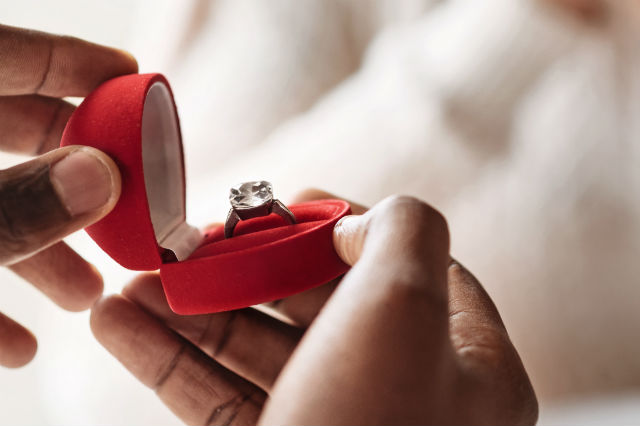
After all, ’tis the season to pop the question! Most engagements take place between Thanksgiving and Valentine’s Day, according to Wedding Wire. To protect your purchase, it’s wise to consider insuring engagement rings, wedding rings and other big-ticket gifts.
Standard homeowners and renters insurance covers belongings from fire and other perils named in a policy, but there are limits to how much money a policyholder can collect on a single piece of jewelry that has been stolen. In most policies, the “limit of lability,” on jewelry is in the ballpark of $1,500, well short of the average $5,000 spent on an engagement ring.
Buyers looking for engagement ring insurance or coverage on other valuable assets that exceeds the liability limit in their policy have two options, according to the Insurance Information Institute. You can either ask your insurance agent to increase your liability limit, or have them “schedule” an individual piece of jewelry into your coverage by purchasing what’s called a floater policy.
Scheduling each piece or item may cost more in premiums, but it offers broader protection, because the floater covers losses of any type, including accidental losses – such as dropping your ring down the drain of the kitchen sink or leaving an expensive watch in a hotel room – that your homeowners insurance policy will not cover.
Floater policies by default, are replacement cost policies, meaning the insurer will replace a piece of jewelry with an item of like kind and quality if ever it is lost, stolen or damaged. Another benefit of the floater policy is that there is typically no deductible for a jewelry claim.
You can also choose to cover your engagement ring with a specialty jewelry policy. This could be a good option for those who don’t have a homeowners or renters policy, such as adult children living with their parents.
Learn more about jewelry insurance offered through AAA.
Even if an engagement is not in your plans, you may still want to consider a floater on other high-priced purchases.
Floaters can be purchased on musical instruments, sports memorabilia collections, electronics and even family heirlooms. But first, said items must be professionally appraised or have a receipt dated within the past three years must be provided to the insurance agent, so the insurer knows what the item or items are worth.
It’s also good practice to keep an up-to-date, room-by-room home inventory, which you can catalog in a notebook or record on video. Either way you decide to do it, you want to document what you own and how much each item costs. Not only will this help you speed up claims and prove losses for your taxes, but it will also give you an idea of how much insurance you need.
There was a time when drivers had to trudge outside on cold winter mornings to give their cars a head start and warm them up for a while before leaving.
Fast forward to modern cars and improvements to fuel and fuel systems and you may be wondering: Do you still need to warm up your car? Not really.
Synthetic oil and fuel injection technology have eliminated the need for extended warm up times, said Robert Sinclair, senior manager of public affairs for AAA Northeast. Synthetic fuel can effectively lubricate the engine quickly even in frigid weather.
So, how long should you warm up your car in winter?
“After starting the vehicle, in the time that it takes to put on the seat belt, the vehicle will be ready to drive,” Sinclair said in an interview with Fox Weather.
Allowing just enough time to warm up the interior and defrost the windshield is sufficient, according to Consumer Reports. Thanks to upgrades in technology, it takes only 20 to 30 seconds to fully lubricate an engine.
At the same time, avoid going from zero to 60 immediately.
“The key is to drive the vehicle gently until the engine reaches operating temperature, which a gauge, if the car is equipped with one, will show. In fact, gentle driving helps to circulate the engine oil more effectively and warm the transmission and related components which remain cold while idling,” according to Sinclair.
Older cars that still have carburetors do need to warm up, he added. And if the car has trouble starting or doesn’t start at all, it’s time to have the battery checked.
AAA Car Battery Service will come to you wherever you are, seven days a week, to test or replace your battery.
Do EVS Need to Warm Up?
When it comes to electric vehicles, you should warm them up in freezing weather to preserve battery power and range. They may have the latest technology, but that technology prefers to be warm.
EV batteries deplete more rapidly in colder temperatures. Chemical reactions that store and release energy in the battery slow down when the temperature drops. A 2019 AAA study indicated that when temperatures fell to 20 degrees, EV driving range was reduced by 12%.
The best way to prepare your EV for wintry weather is to start it while it is still plugged into your home charger so you can warm the interior without draining the battery. Plus, you can turn down the heat while you are driving and preserve driving range. Using the HVAC system to heat a car’s interior on a 20-degree day cuts the range by about 41%, according to AAA research.
Other ways to preserve your EV’s battery power include parking the car inside, and if that is not possible, draping a cover over it.
There are plenty of reasons why you might need to reserve a rental car. Maybe you’re going on a trip for business or pleasure, could use some help with a move or need an extra set of wheels for a few days.
Understanding the reservation system before renting a car can help you avoid unexpected bumps in the road. You don’t want to start your journey getting frustrated that the rental isn’t ready yet or finding out you need additional paperwork.
To help smooth the way, we run through each step of the Hertz car rental process, from choosing the right vehicle to booking, pickup and drop-off.
It’s easy to make your reservation with Hertz. You can do it:
In person at a Hertz counter.
Over the phone.
Online.
Each step is straightforward. And don’t worry if you need help when booking online – just call Hertz and a representative will talk you through it.
When you reserve a rental car, start by selecting a pickup point. This could be in another city, state or even country. You’ll also need to designate the date and approximate pickup time. Then, put in your drop-off date and time and note if the location is the same as the pickup point.
From there, you will be able to choose the type of car to book, according to your needs. You’ll also be able to decide whether you want to prepay for the rental before you arrive or at the pickup location before you get the keys.
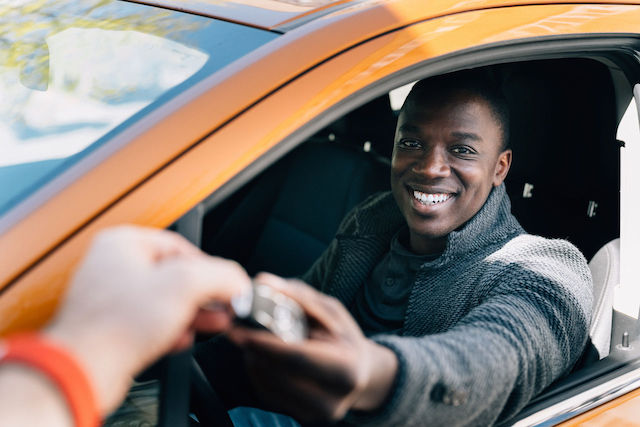
Picking Up Your Hertz Rental Car
When you arrive at the Hertz counter or branch to pick up your car, there are a few things you should know to make your experience as quick and stress-free as possible.
Make sure you arrive with all the relevant information you’ll need:
Your booking confirmation.
Your ID.
Your credit card.
The customer service advisor will need to see your driver’s license and credit card to make sure everything matches the booking.
Please turn up for your reservation on time. This ensures you’ll get everything you need within your slot, giving you enough time to ask questions, check your booking and identify any issues.
When picking up the car, it’s a good idea to check over the rental agreement before you sign and ask questions about any additional optional services offered, such as prepaid toll passes or prepaid fuel cards to get you around. It’s also recommended to walk around the vehicle and take note of any existing scratches or small dents. If you do find something, make sure it’s photographed and properly documented by the customer service advisor before you drive away.
Returning Your Hertz Rental Car
Your trip is over and now back to reality. First things first, handing back the rental car. Before returning your vehicle to the Hertz branch or counter, it’s courteous to fill up the gas tank for the next customer.
Bring your vehicle to the agreed location, allowing plenty of time for traffic and end-of-rental checks. Any applicable fees or additional charges will be confirmed at this time. Once all the paperwork is done and the car has been checked, you’re good to go.
Understanding Hertz’s Reservation Policies
When you book your rental, you will get a copy of the reservation policies. These include how to change or cancel your booking, how to pay or get a receipt/invoice and what to do if you need a refund.
Any changes or cancellations can be done through your profile on the Hertz website. If you wish to change the card you’ll be using to pay for your reservation, the booking will need to be canceled and re-booked. Please try to cancel at least 48 hours before to receive a full refund.
Any refunds will be made within five to 10 working days back into the account for the card on file.
Hertz Car Rental Reservation FAQ
Can I rent a car for someone else?
No, the primary driver and booking contact needs to be the person who will be picking up and paying for the car. You can add additional drivers if you need to in person.
Can you cancel a rental car reservation?
Yes. If you no longer need the car or want to rebook with a different card, please do so at least 48 hours before pickup. Cancellation fees may be incurred if less than 48 hours notice is given.
Is it better to reserve a rental car in advance?
Yes, advance booking ensure you’ll get the car you want, when you want it. It is always better to be safe than sorry.
When is the best time to reserve a rental car?
If possible, try not to reserve a car first thing in the morning or just before the branch closes. Mid-morning or mid-afternoon are recommended.
Are car rental reservations guaranteed?
The make and model of the car booked are not guaranteed, but a similar style will be provided.
Can a car rental company cancel your reservation?
Hertz will not cancel your rental car reservation; however, cancellation fees, late fees and no-show fees will be charged accordingly.
Like nearly any other aspect of America’s past, countless names have been lost or forgotten through the years of the automotive industry’s history. More often than not, those names belong to people of color. Black pioneers have made innumerable contributions to the car world. Here are six trailblazers that steered the industry — and society as a whole — in the right direction.
McKinley Thompson Jr.
Ford’s first Black automobile designer.
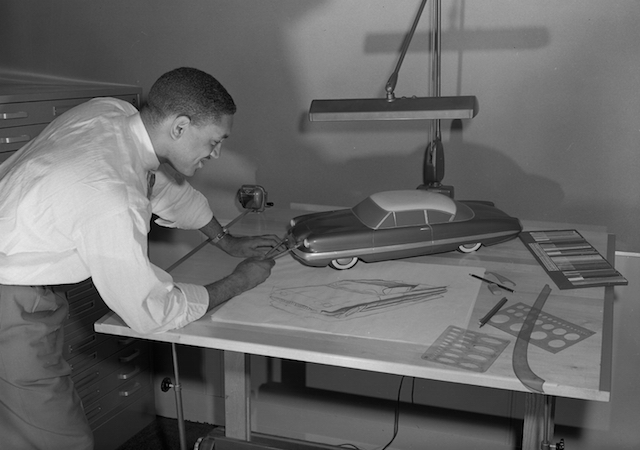
One day in 1934, while walking home from school in his hometown of Queens, N.Y., McKinley Thompson Jr. spotted a silver-grey Chrysler DeSoto Airflow. Although he was just 12 years old at the time, Thompson’s life was forever changed. “There were patchy clouds in the sky, and it just so happened that the clouds opened up for the sunshine to come through. It lit that car up like a searchlight,” he later told the Henry Ford Museum. “I was never so impressed with anything in all my life. I knew [then] that that’s what I wanted to do in life — I want[ed] to be an automobile designer.”
In the early 1950s, after serving in the Army Signal Corps in World War II, Thompson entered and won a design contest in Motor Trend magazine. His prize was a scholarship to the ArtCenter College of Design. After school, he went to work for Ford’s advanced design studio in Dearborn, Mich. With that, Thompson made history by becoming the first African American automobile designer.
One of Thompson’s first projects was contributing sketches for the Ford Mustang. His most notable contribution, however, came in 1963 when he and other Ford designers conceptualized the Ford Bronco. According to the automaker, Thompson’s work “influenced the design language that would become iconic attributes of the first-generation Bronco.
“McKinley was a man who followed his dreams and wound up making history,” said Ford Bronco interior designer Christopher Young. “He not only broke through the color barrier in the world of automotive design, he helped create some of the most iconic consumer products ever — from the Ford Mustang, Thunderbird and Bronco — designs that are not only timeless but have been studied by generations of designers.”
Garrett Morgan
Invented the three-position traffic signal.
Born in Kentucky in 1877, Garrett Morgan would go on to become one of the great inventors of his time. By the 1920s he already had several inventions under his belt, including hair refiner and an early version of the gas mask.
Morgan’s success allowed him to own an automobile (reportedly the first African American in Cleveland to do so). After witnessing a terrible accident at an intersection, an idea was sparked.
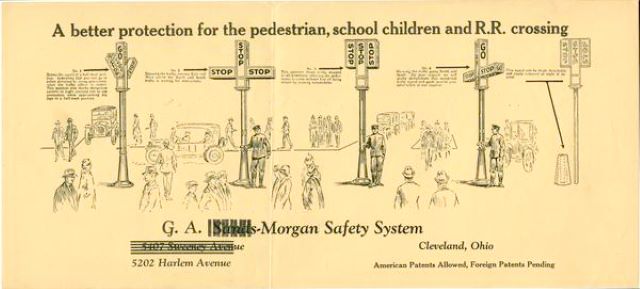
Traffic signals had already been invented but they only consisted of two signals: “Go” and “Stop.” The problem was that drivers never knew when the signal was going to switch. This caused cars to stop abruptly or still be in the intersection when vehicles traveling in other directions began to move.
(Courtesy of the Western Reserve Historical Society)
To solve this, Morgan invented a T-shaped traffic signal that had a third, “caution” signal, essentially a yellow light. When the “caution” signal was on, traffic in all directions stopped and intersections would clear. On Nov. 20, 1923, Morgan was awarded a patent for a three-position traffic signal. His original traffic signal prototype is on display at the Smithsonian’s Museum of American History.
Aside from his technical contributions to society, Morgan was a pillar in Cleveland’s African American community. He founded the Cleveland Call, one of the most important African American newspapers in the country, and was a leader in the city’s NAACP chapter.
C.R. Patterson
Founded a company that would become the first African American-owned automobile manufacturer.
Patterson learned blacksmithing and worked for a carriage maker before co-founding his own business in 1873. For the next 20 years, the company ran a successful business making expertly crafted horse-drawn carriages.
In 1893, Patterson bought out his partner and formed C.R. Patterson & Sons. When he died in 1910, his son Fredrick took over the flourishing business as the transportation business was revolutionizing. The younger Patterson began noticing an influx of “horseless carriages” on the roads and knew that automobiles were the future. C.R. Patterson & Sons produced its first car in 1915. Known as the Patterson-Greenfield automobile, it sold for $850.
Patterson & Sons quickly established itself as legitimate auto manufacturer. According to the Historic Vehicle Association, the Patterson-Greenfield model was comparable in quality and workmanship to the Ford Model T.
There are no known Patterson-Greenfield automobiles in existence today, but several C.R. Patterson & Sons Company carriages have survived. The National Museum of African American History & Culture states that Patterson & Sons remains the only African American-owned automobile company in United States history,
Charlie Wiggins
Became one of the country’s great race car drivers, despite being barred from the Indy 500.
Born in 1897, Charlie Wiggins became an expert mechanic after apprenticing at a local automobile repair shop in his native Evansville, Ind. In 1922, he moved to Indianapolis, opened his own shop and built a race car out of nothing but junkyard parts. Nicknamed the “Wiggins Special,” it was his dream to drive the car in racing’s greatest event: the Indianapolis 500. But Wiggins was denied entry because of his skin color.
Undeterred, he and several other African American drivers formed their own racing league called the Colored Speedway Association. Wiggins’ exceptional driving and top-notch cars lead him to many victories, earning him the nickname the “Negro Speed King.”
The highlight of the Colored Speedway Association circuit was the annual 100-mile Gold and Glory Sweepstakes. According to the Historic Vehicle Association, the race’s 1924 debut drew a crowd of 12,000 — the largest sporting event held for African Americans up to that point. Over the next decade, Wiggins would win three sweepstakes championships.
In 1934, driver Bill Cummings hired Wiggins to tune his car for the Indy 500. Road & Track reported that Wiggins posed as a janitor in order to elude Jim Crow laws. Thanks to Wiggins, Cummings won the Indianapolis 500 and set a track record.
Wendell Scott
Broke NASCAR’s color barrier.
Wendell Oliver Scott was born in Danville, Va., in 1921. He learned about cars from his auto-mechanic father. His first job was driving a taxi before he started running moonshine whiskey, which required him to drive fast in order to evade the police.
At the time, Danville’s racing scene was struggling with attendance. Owners thought recruiting an African American driver would help fill seats. They asked the local police for the fastest driver in town and in 1952, Scott became the first African American to compete in an official stock car race. He would go on to win 120 races in lower divisions, while continually being denied entry into NASCAR because of his race.
Then, in 1961, Scott was able to take over the auto-racing license of white NASCAR driver Mike Poston. He was officially a member of NASCAR’s top-level Grand National circuit – the first African American to do so. Just two years later, Scott became the first Black driver to win a NASCAR premier series event with a victory at the 100-mile race at Speedway Park in Jacksonville, Fla.
By the end of career in 1973, Scott had accumulated 20 top-five finishes. The NASCAR Hall of Fame, into which Scott was inducted in 2015, lists his 495 starts 32nd on the all-time list.
Scott passed away in 1990. It would be another 23 years before a second African American, Bubba Wallace, won a NASCAR race, a full half-century after Scott accomplished the feat.
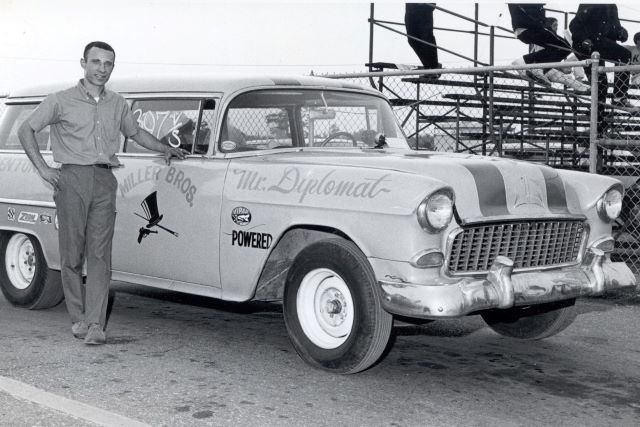
Kenny Wright, driver for Miller Bros., with a 1955 Chevrolet station wagon, NHRA V-Stock class. Wright was photographed in 1970 for "Driver of the Week" for East Coast Drag News magazine at Atco Dragway, Atco, N.J.
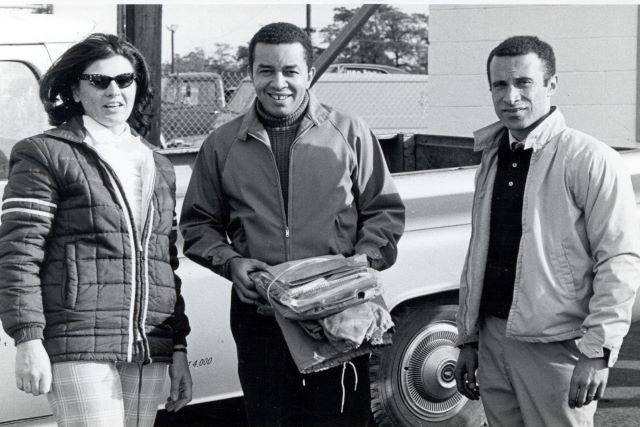
Leonard Miller (center) and Kenny Wright (right), awarded Top 10 Award at Atco Dragway, Atco, N.J., October 1970.
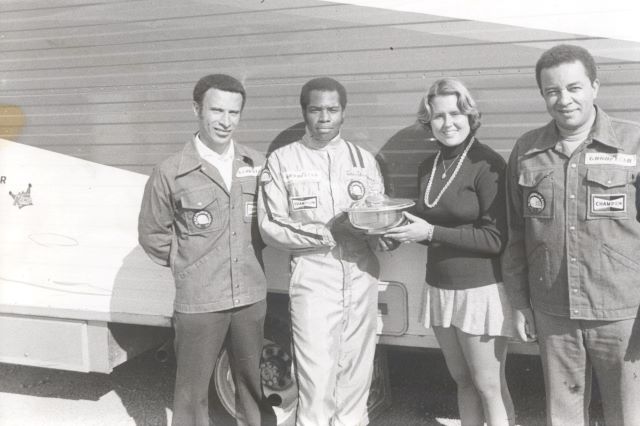
Black American Racers mechanic Kenny Wright (left), owner Leonard Miller (right) and driver Tommy Thompson awarded SCCA Northeast first place trophy in 1977.
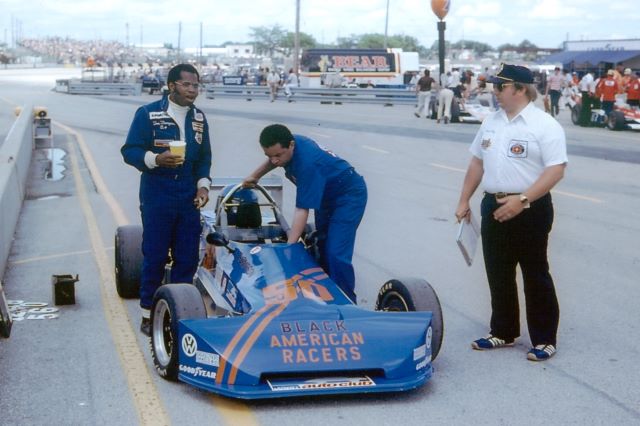
Leonard Miller with BAR driver Tommy Thompson at The Milwaukee Mile, West Allis, Wis., in 1978.
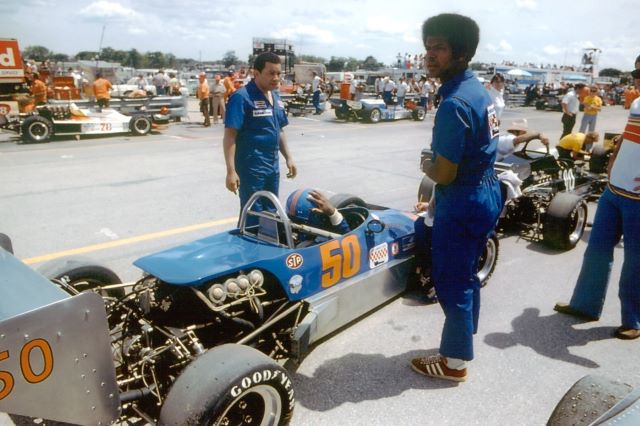
Leonard Miller with BAR engineer Ron Hines (right) and BAR driver Tommy Thompson in the driver's seat at The Milwaukee Mile, West Allis, Wis., in 1978. (All photos courtesy of the National Museum of American History, Smithsonian institution)
Leonard Miller
The first African American team owner to enter a car in the Indianapolis 500 and win a race in NASCAR.
Growing up outside of Philadelphia in the 1930s, Leonard Miller was introduced to automobiles at a young age through his mother, who worked as a housekeeper. “All of these rich, white families had all these rare cars that were beautiful and sounded good,” Miller told Smithsonian Magazine. “So, I said that was for me. And that’s what started me off to a lifetime of races.”
He would go on to pave the way for African Americans in the world of auto racing. It began when he formed Miller Brothers Racing, which won dozens of races throughout the Northeast from 1969 to 1971.
In 1972, he became the first African American owner to enter a car in the Indianapolis 500. Miller’s team was also the first Black professional race team to have a national sponsorship and to enter a Black driver in competition in England.
During this time, Miller also created the Black American Racers Association with, among others, Wendell Scott. The group promoted driver development and honored African Americans in auto racing. At its height, it included 5,000 members from 20 states and several racing disciplines.
With the help of his son, the automotive pioneer later founded NASCAR’s Miller Racing Group. The team won many races through the 1990s and early aughts. In fact, the father-son duo became the first African American team owners to win a track championship in NASCAR history with a victory at Virginia’s Old Dominion Speedway in 2005.
Homer B. Roberts was the first African American car dealer in the country but his greatest achievement occurred far away from the dealership. A veteran of World War I, Roberts was the first Black man to attain the rank of lieutenant in the United States Army Signal Corps.
Following the war, Roberts moved back to his native Kansas City and began selling cars. He specifically targeted the African American community. In 1919, he put his first ad, for seven used cars in the Kansas City Star, the prominent local Black newspaper. By the end of the year, he had closed 60 sales – all to Black drivers.
In the following years, business continued to grow. Roberts opened offices and showrooms and hired salesmen. In 1923, he opened a brand-new dealership named Roberts Company Motor Mart. Smaller automobile manufacturers saw potential in the African American market and backed his business. This helped Roberts land franchises with Hupmobile, Rickenbacker and Oldsmobile.
Hit hard by the Depression, the dealership closed in 1929 — but not before Roberts had etched his name in history.
What other Black pioneers in the automotive do you know about? Tell us in the comments below!
This article has been updated and republished from a previous version.
Is a AAA membership worth it? For generations, members have sworn by the peace mind that AAA Roadside Assistance provides, but there are even more perks and services that can make your annual membership worthwhile.
How Much Is AAA Membership?
Basic membership starts as low as $4.30 per month with a one-time $15 enrollment fee. Plus and Premier memberships go up incrementally (as do the perks), but even the highest level of membership is never more than $14 a month.
Teen drivers in your home between the ages of 16 and 19 can receive a free Associate membership for one year. Family members ages 20 and up are eligible for the same offer.
Don’t have a car but still want to enjoy AAA membership benefits? AAA Everyday membership gives you everything but roadside assistance for just $2.50 a month.
AAA Roadside Assistance may be more comprehensive than what you can get from a dealership or your insurance company. Your AAA membership will cover you in any car that you are driving or riding in. And the perks don’t end at the roadside.
AAA Battery Service can get you back on the road in a hurry. Technicians provide on-site battery testing and replacement wherever you are. Batteries come with a three-year warranty and members get a $25 discount.
If you run out of gas, AAA will deliver fuel.
For car repairs and maintenance, visit your nearest AAA Approved Auto Repair facility. Members can save up to $75 per visit — that pays for your membership!
AAA Manhattan branch. Photo by Adam Glanzman.
Branch Services
From passport photos to foreign currency exchange, there’s a lot your can do at your local AAA branch.
Select locations even offer DMV and RMV services. Make an appointment to renew your driver’s license or registration and take advantage of other offerings.
In the branch or online, you can also book your next vacation with a AAA travel advisor. These travel pros have been around the world, are experts at planning trips and will work to find you the best deals and exclusive member savings. It’s a free service with your membership, so take advantage!
AAA has policies for all of your insurance needs: Not just for auto, home and life, but also for jewelry, pets, small businesses and even classic cars. Members can save an average of $506 on car insurance over other plans. Sleep well knowing you have insurance for a special event or even an engagement ring. Agents will work with you to get you the best coverage at the best price.
Are you ready to buy a home or car? Or maybe you’re getting ready to pay for college tuition? Let AAA’s Financial Services team help you find the best loan or refinance an existing loan.
Members can call, chat online or meet with a counselor in a branch.
Discounts and Rewards
AAA members can enjoy exclusive savings on all of the services mentioned above, plus discounts on everything from entertainment and amusement parks to auto parts and restaurants.
Need a ride for your next road trip? AAA members get exclusive savings on Hertz car rentals.
More
All AAA members get free identity theft monitoring from Experian with Protect My ID.
You can also work with AAA employees on projects in your community, such as beach cleanups and volunteering in a food pantry.
So, what do you think? Is a AAA membership worth it? If you are already a member, what are some of your favorite benefits? Tell us your AAA story in the comments below.
Gasoline prices in the Northeast begin this week a hair lower than the week before, as petroleum markets digest the ramifications of a 10% tariff on Canadian oil imposed by President Donald Trump over the weekend.
Nearly 70% of U.S. crude oil imports come from Canada and Mexico, with the bulk coming from Canada. Last week, domestic refiners imported 3.7 million barrels of oil a day from Canada — more than half the 6.4 million barrels a day of total imports, according to the Energy Information Administration (EIA). While most American-made gasoline stays in the U.S. and is used by American consumers, refiners do rely on imports of crude to supplement production of gasoline and other refined products.
Before the tariff announcement on Saturday, oil and gasoline prices were trending down, with domestic crude prices falling by 2.85% to end the week after the EIA reported inventory builds of both crude and gasoline. In the Northeast, gasoline supplies increased by 1.8 million barrels and similar inventory gains were reported across the rest of the country.
“While tariffs can play a role in gas prices, they are one factor among many,” said Jillian Young, director of public relations for AAA Northeast. “Fluctuations in gas prices do depend on the price of crude oil, but also on supply and demand and other global events, so time will tell how much impact will be felt at the pump.”
AAA Northeast’s Feb. 3 survey of fuel prices found the current national average down 3 cents from last week ($3.12), averaging $3.09 gallon. Today’s national average price is 3 cents higher than a month ago ($3.06) and 6 cents lower than this day last year ($3.15).
Region
Current Price*
One Week Ago
One Month Ago
One Year Ago
Connecticut
$3.08
$3.09
$3.02
$3.21
Massachusetts
$3.02
$3.03
$3.01
$3.15
New Jersey
$3.06
$3.09
$2.93
$3.15
New York
$3.16
$3.17
$3.12
$3.27
Rhode Island
$3
$3
$2.93
$3.10
*Prices as of Feb.3, 2025
As of Feb. 3, Mississippi and Oklahoma have the lowest prices in the nation at $2.67 and $2.68 respectively.Hawaii and California hold the highest prices in the nation this week at $4.54 and $4.47, respectively.
The AAA Gas Prices website is your resource for up-to-date fuel price information. Search for average gas prices on national, state and metro levels by regular, plus, premium and diesel.
These young travelers have specific interests — and expectations — when it comes to getting away. Here are a few trends and tips to help you stay savvy.
Gen Zers are taking to the skies and roads, and they’re on a mission. These travelers (technically ages 12-27 but realistically those who are college age or older) use their personal interests to define their destination wish lists. So, they seek shorter spurts of travel, pursuing self-care, sustainability and local culture, while maximizing their financial budget.
Cady DeBlois, a AAA Northeast travel advisor, helps customers research and book their vacations after they’ve submitted an online inquiry. This is a key tool for Generation Z travelers who have grown up with computers and social media at their fingertips and who need inspiration or more information on a destination, she said, and to book airfare, accommodations and activities.
These are her top Gen Z travel trends and tips for those who want to escape for a little R & R.
Nurturing Self-Care
A lot of Gen Z travel is focused on self-care, mental health and wellness. “Their vacations will be geared toward a spa type of resort or a relaxing getaway, not as much of a party scene,” DeBois said. “For example, Cancun, Mexico. It has the reputation of this big crazy party resort. But a lot of Gen Z … would rather go to Cancun and explore the rain forest areas or stay in a resort that’s eco-friendly and do an excursion to save sea turtles, or something like that. So, it’s a lot more laid back.”
Gen Z travelers are focused on learning about and being immersed in the culture and natural surroundings of their travel destination, rather than lounging on a beach all day. It’s in these moments they find quaint local restaurants and hidden walking trails with a view, a small neighborhood museum, bookstore or cafe, and time to relish in a massage.
Flexibility and their willingness to adjust their timing is another character trait of Gen Z, and one that benefits them when it comes time to book travel. “They say, ‘I want to go away, maybe I can go anytime. What is the cheapest day that I could fly out? What is the cheapest length of stay?’” DeBlois said. “I think because they’re so flexible, they are just looking for the best value.”
Budget-Conscious Planning
Gen Z travelers are typically stricter with travel spending and expect their dollar to go further. So, they identify their budget first, which determines how far afield they can voyage, as well as their method of travel, whether plane, train or car. Based on those stipulations, they pinpoint how much time they’ll take and what they want to experience while there, she said.
Many Gen Zers book last-minute trips expecting to get a good deal, but there is limited inventory at that point, DeBlois cautions. If traveling to Europe or Greece, for example, the only airfare available on short notice will be undesirable seats or departure times, which gobble up the budget and force the rest of the trip onto a shoestring. DeBlois suggest planning in advance as best as possible, even for shorter trips.
“A lot more of Gen Z is taking multiple three- to four-night trips throughout the year instead of saving up and going away for a full week,” DeBlois said, because this can be more budget-friendly and easier to plan. “They’re just looking for the best deal.”
Social Media-Inspired but Realistic
One of the biggest barriers for this TikTok generation is seeing destinations on social media that are promoted by an influencer who may have received complimentary accommodations or food — or both. When they realize how much money it actually costs to stay at the five-star resort that the influencer is endorsing, it can be either disappointing if they can’t go, or a huge upset to their finances.
DeBlois finds that Gen Z travelers would rather go where they can afford than stretch themselves too thin.
“At the end of the day, they just want to get away and take a break from their 9-to-5. They don’t want to go into debt to travel,” she said.
Trip Recommendations
“London, Ireland, Iceland — Italy is always huge. Greece is always huge, so that is going to be the splurge just because of the cost of airfare,” DeBlois said. “Another destination that has really been taking off lately is Canada. Specifically, the Banff area near Edmonton, in Alberta. That’s definitely an Instagram-worthy destination. Even Quebec is beautiful. And it’s close enough that from here, you can drive so that’s another way to cut costs.”
Can’t find something special enough for your special someone? Don’t worry! We’ve rounded up the most romantic Valentine’s Day gift ideas for you to choose from with AAA Discounts.
Flowers are a classic way to show someone you care on Valentine’s Day. 1-800-Flowers.com has an entire section of bouquets for such an occasion, titled “Love and Romance.” You can choose from bountiful bouquets of red roses, romantic messages in bottles, elegant orchids, pink lilies and more. Add your own message to make it extra romantic.
AAA members can save at AAA.com/1800flowers. Now through 2/14, you can save up to 30% on flowers and gifts.
Audible
Looking for the perfect gift for the bookworm in your life? Audible is the leading provider of audiobooks, featuring an expansive variety of titles for every kind of reader. The gift of an Audible membership will ensure your giftee gets all the audio storytelling they crave.
Sometimes the best gift is the gift of a new experience. It’s also a great opportunity to spend some quality time together with your loved one. Get savings of up to 40% at concerts, theme parks, virtual events, museums, attractions and more!
If you want to get your sweetheart the gift of new tech, HP has something for everyone. Look into HP’s Elite laptops and desktops for business-ready performance. If you’re looking for something a little more lightweight and flexible, check out the HP Pavilion. For everyday use, an Envy laptop is a great choice for casual PC users.
Whether you’re shopping for someone who has it all or someone who just appreciates a personal touch, Personalization Mall is the place to find a one-of-a-kind gift. Everything on Personalization Mall can be customized with the giftee’s name, family name or even nickname. Some even have options for including a personal photo. You can get almost any kind of gift, like stuffed animals, kitchenware, wall art, blankets, jewelry boxes, the jewelry that goes in those boxes and so much more.
Want your gift to stick around a little longer than cut flowers? Plants.com collaborates with growers around the country to offer a healthy selection of live, beautiful plants that will instantly brighten up any space.
You can get premium gadgets and appliances without breaking the bank by utilizing Samsung’s special discount for AAA members. At the exclusive online store for AAA members, your discount will automatically be applied as you shop, and you’ll be able to see all your deals in one place. You’ll also get access to limited-time offers on phones, TVs, computers and home appliances.
One of Valentine’s Day’s most decadent treats is the chocolate-covered strawberry. With Shari’s Berries, the strawberries will come to you. Their selection of Valentine’s Day treats includes a wide assortment of chocolate-covered strawberries, edible fruit bouquets and more.
Are all your pictures together trapped on your phone? Shutterfly can help you turn your photos into keepsakes like photo books, prints, wall art, calendars, notecards and more. It’s an easy way to make sure you can hang onto your most treasured memories.
The big game is on the horizon and you’re getting ready to host friends and family to cheer on your favorite team. You’ve wiped the fingerprints from your television screen, gone shopping for snacks and started working on your three-bean dip. But have you thought about safety?
If you’re having a game day party at your house this year, keep these home insurance tips in mind.
Keep an eye on your guests.
If you’re planning to serve alcohol to your guests, keep an eye on how much they’re drinking. It is of the utmost importance that no one who has overindulged winds up behind the wheel. If someone does overdo it, make sure that they go home with a designated driver, call a taxi or hire a ride-sharing service to get them home safely.
Watch open flames on the stove and grill, and make sure they’re clean from residue before you start cooking. Have a fire extinguisher on hand in case things get out of control.
Make sure you’re storing and cooking foods at the appropriate temperatures to minimize the risk of food poisoning, and always wash your hands before and after handling food.
Ask guests beforehand if they have any serious food allergies. If so, you might want to rethink the bowl of peanuts.
Minimize falling hazards.
Before the party, make sure that the paths leading up to your house are clear of ice and other debris, so that even in the dark they can be traversed safely. Inside the house, clean up any spills as soon as possible so that nobody slips and falls.
Whenever hosting a large event, you might want to consider event insurance.
Look into umbrella coverage.
While your existing homeowners insurance policy will protect you from liability losses in some situations, you might need some additional coverage. Umbrella coverage, also known as a personal liability policy, provides extra protection for the big game and beyond.
Learn more about your homeowners insurance coverage options.
You spent months finding the home of your dreams, you put in your offer and it was accepted — but it’s not time to celebrate just yet. Before you close the deal, you need to know exactly what you’re signing up for. No house is perfect, but some defects are more costly than others to fix. Armed with the results from a defect checklist for a new house, you may be able to negotiate a lower price.
A thorough home inspection enables the buyer to have a realistic understanding of the impact of what they are getting themselves into in terms of insurability, too, according to Jodi DeSantis, vice president of insurance sales for AAA Northeast. “It might look like it’s full of character [to you], but that’s not how insurance companies might look at it.”
“Unless you are paying cash for the property, your lien holder will require you to have insurance in place before they release the money to you,” adds DeSantis. Most insurance companies have some sort of inspection requirement from an exterior inspection to an actual walk-through of the home. “The insurance company inspector probably isn’t going to pull out a ladder to climb on your roof or get into the crawlspace,” says DeSantis. “But the inspector that the homeowner hires should actually be doing that.”
A pre-purchased home inspection should be performed by a licensed professional and is meant to inform prospective homeowners about the condition of the house. Don’t make the mistake of assuming the seller is going to repair everything — or anything — the inspector finds. It is also not the inspector’s job to advise you as to whether or not you should purchase the home; they report, you decide. Before choosing an inspector, be sure to do your homework and ask the right questions.
Defects to Look For
To be sure all bases are covered by the professional home inspector’s investigation, your personal defect checklist for a new house should include the following.
Walls and ceilings
Be aware of cracks, holes, chips, wavy and uneven surfaces, missing plaster, fungus, water marks, lumps, bubbles, flaky paint, protruding nails, pipes and loose wiring.
Doors and windows
Check for damage such as missing screws or rust and gaps between door and window frames. Make sure they can be opened and closed easily and look for potential water damage due to improper installation.
Floor and tiles
Are there missing, cracked or chipped tiles? Tiles should not be slanting and there should be no gaps in the wall skirting.
Fixtures
Make sure all sinks and showers have fixtures. Ensure everything works and nothing is missing.
Pipes and plumbing
Check exposed pipes for leaks and be on the lookout for water stains on ceilings, which can signal a leak behind a wall. Low water pressure can also be a symptom of faulty plumbing.
Electricity and wiring
Look for wires without wire nuts and open junction boxes.
Drainage
Soggy areas in the yard and leaks in the basement can signal drainage issues.
Roof and gutters
Look for worn shingles and overgrown trees or landscaping that is encroaching on the roof or overhanging the structure. Basement dampness can be a sign of clogged gutters.
Foundation
Small cracks, sticking doors and windows can suggest foundation flaws.
Potential Deal Breakers
The most common issues identified on a home inspection checklist are usually the easiest and least costly to address, according to the American Society of Home Inspectors; however, they may be an indication of bigger, pricier problems.
The roof needs replacing
Home Advisor data shows the national average for a roof replacement in 2025 ranges from $5,867 to $13,209.
Hire a structural engineer to determine if the cracks you spot are serious.
Aluminum wiring
This type of wiring almost always needs to be replaced. The process can cost thousands of dollars.
Once you have your home inspection report — essentially, a custom defect checklist for a new house — you can determine if negotiations with the seller are reasonable.
Some inspectors might estimate the remaining useful life of appliances or other systems for you (this is something to ask before you hire your inspector). You can also get your own repair and replacement bids from local contractors and home improvement stores. The more due diligence you commit to upfront, the happier you will be when you take ownership of your new home with your eyes wide open.
Learn more about AAA homeowners insurance. In the market for a new home? Get a mortgage with help from AAA.
Do you have any advice to add from your home buying experience? Share it in the comments.