When Was the Last Time You Checked Your Headlights?

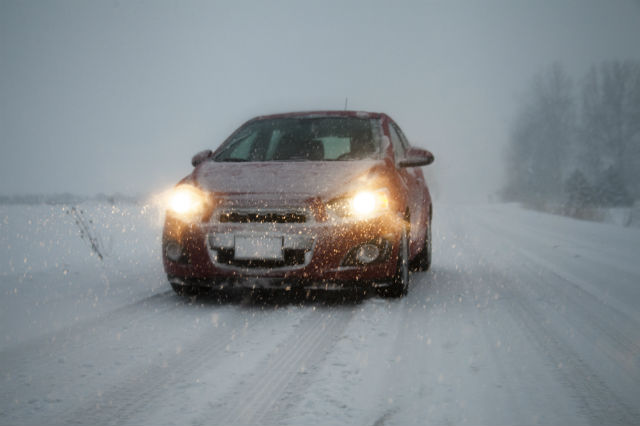
On the checklist of car maintenance items, headlights often fall to the bottom. We don’t pay them much attention until one burns out and we’re suddenly left with only a partially lit view of the road ahead. This is not only a dangerous situation, it’s illegal. Here’s how to take care of your headlights so you can safely see.

Clean your headlights.

We clean our windshields all the time. Whether it’s dirt, mud, or nine zillion bugs during a long road trip, windshields get dirty. Since we are looking directly at that mess it’s easy to notice when the windshield needs a little cleaning. Whatever is happening to your windshield is also happening to your headlights, so give them a good cleaning, too.

Some cars have built-in headlight washers so you can press a button and give them a bath without stopping. If your car doesn’t have this feature, then clean off your headlights the next time you stop for gas. It only takes a few seconds to make sure your headlights are clean enough to do their jobs so you can see the road.

Check headlight alignment.

This is tricky because it’s something that can be hard to notice. Your headlights might seem like they’re pointing straight ahead even when they’re out of alignment. Driving over potholes, across rough pavement, and especially off-road can knock your headlights out of alignment giving you a less than perfect view.

This isn’t something you can check yourself, but the professionals at a repair shop can do the job easily. Whether they seem aligned or not, have your headlights checked the next time you’re in for an oil change or any car repair. The service person can determine if they’re aligned correctly and make the necessary adjustments if your headlights are off kilter.

Clean fogged or yellowed lenses.

Most headlight lenses are made of a material called polycarbonate plastic. It’s a durable material that resists scratches, but over time, exposure to the UV rays of the sun causes polycarbonate lenses to oxidize. This results in a yellow or cloudy lens. The bulb behind that lens may be bright, but the oxidation on the lens keeps the light from getting to the road and hampers visibility. Have you ever tried to fix this problem on your own?

You can easily clean off this oxidation to improve your view and your car’s appearance. Your local auto parts store has a variety of headlight cleaning kits designed to make old headlights look as good as new. It’s simply a matter of applying a specially formulated polish to the lens and rubbing off that outer later of oxidation. Once your headlights are again shining bright, consider applying a UV-resistant coating to the lenses to keep them from getting cloudy again.

headlights

Repair surface scratches and peeling.

Headlights become scratched over time as a part of normal wear and tear. Rather than leaving the damage on your headlights, take a few minutes to remove the scratches. Much like removing the oxidation from plastic lens, removing scratches from the surface can be done with a simple kit as a part of regular car maintenance. It involves sanding the surface smooth and then polishing it back to its original shine. The kits are inexpensive and the process is a quick one.

Peeling is more complicated and can eventually cause damage to the interior of your light, particularly the electrical system when water gets inside the headlight. If you notice the surface of a headlight peeling or flaking, then take it in for repair before it causes more expensive damage. A quick visual inspection of your headlights should be a part of regular car maintenance to ensure your car’s overall good health.

Check for condensation.

If there is condensation inside a headlight or, even worse, a pool of water, then this needs to be repaired immediately. The moisture interferes with the quality of light and it can cause corrosion over time. This isn’t car maintenance you want to tackle on your own.

Have a professional repair the problem. It may be costly, but not as costly as letting it go. Remember, your lights are run buy your electrical system and water and electricity aren’t a good combination. A small leak left unchecked can cause major electrical problems and increase your repair costs. Get any water or condensation in your headlights checked out right away.

Don’t ignore dimming headlights.

If your headlights seem dimmer than usual or if you notice them dimming and brightening when you’re driving, then you need to have them checked. Dimming headlights are caused by several different problems, none of which should be ignored.

A corroded ground wire is one of the most common causes of dimming headlights. The ground wire connects to your car’s chassis and can become dirty and corroded, which will disrupt the flow of electricity to your headlights and make them dim. Other possibilities are a bad alternator or loose alternator belt. If these parts fail you could find yourself in need of roadside assistance. If you have dimming headlights, don’t wait to have the problem diagnosed.

How often do you check your headlights? Let us know in the comments below!

Learn about AAA Approved Auto Repair, Roadside Assistance and more.

Subscribe to Your AAA Newsletter

Sign up and receive updates for all of the latest articles on automotive, travel, money, lifestyle and so much more!

Parking Lot Safety for the Holiday Season

While the holidays evoke great joy, they also demand great caution. Tens of thousands of car crashes occur in parking lots and garages annually, according to the National Safety Council, and that risk goes up during the holiday season when shoppers are distracted by checking off their gift lists and rushing to get the best deals. Likewise, crime also tends to spike in parking garages and lots during December. The National Crime Victimization Survey (NCVS) noted that incidents of robbery and personal larceny increase by about 20% at the end of the year.

If you find yourself losing focus – or losing your mind – while rounding the lot searching for a spot this holiday season, keep this advice in mind.

Holiday Parking Safety Tips for Drivers

Focus on driving. Your main focus should be on parking lot safety, not finding a great parking spot.

Keep it moving. Follow traffic signs inside the parking lot and avoid sudden stops, which could get your vehicle rear-ended. If you do stop, scan for pedestrians and cars before you accelerate.

Park farther away. Areas close to the store are typically the most congested. Parking farther away will also decrease the odds that someone is waiting for your spot when you get to your vehicle. Just make sure the area is well-lit if you are shopping at night or early in the morning.

Back into spots. Backing out of a parking spot is difficult and can be dangerous, especially when you’re between two large vehicles. Backup incidents make up 9% of pedestrians deaths in parking lots, according to the National Safety Council. Backing into a spot can make it easier and safer when it’s time to leave, just make sure to check that the spots are not marked “head in only.”

Avoid road rage. Incessant honking, yelling and spot stealing are all very aggravating, but try not to let your emotions get the better of you. Don’t escalate a frustrating situation because you never know what the other driver will do. Be tolerant and forgiving and remember that the best “revenge” against someone who is driving aggressively is not to respond or engage.

Holiday Parking Safety Tips for Shoppers

What Do You Do if Someone is Following You to Your Car?

Use Reflections as Early Warning: Check store windows or car mirrors to confirm if someone is behind you without turning around.

Leverage Your Car Alarm: If you have a key fob, press the panic button before reaching your car to draw attention and deter the follower.

Keep a Barrier Between You: Position shopping carts or parked cars between you and the person as you move.

Stay Alert: Put your phone away and scan your surroundings. Awareness is your first line of defense. Eye contact with people around you can be a deterrent as it shows you are paying attention.

Trust Your Instincts: If something feels off, it probably is. Don’t ignore that gut feeling.

Stay Around Other People: Head toward a well-lit, populated area or back inside the building.

Have Your Keys Ready: Avoid fumbling at your car door—this makes you vulnerable.

Call for Help / Use Your Voice: Dial 911 or contact security immediately. If you can, share your location with a trusted person. If you feel threatened, loudly say something like “Stop following me!” to draw attention.

Carry a Legal Self-Defense Tool – Pepper spray, personal alarm, or tactical flashlight—keep it accessible, not buried in a bag.

Be Aware of Drivers

Make yourself visible. About 74% of pedestrian traffic fatalities occur when it’s dark outside, according to the National Highway Traffic Safety Administration. Wear bright clothing and walk in well-lit areas if you’re shopping early or at night. Before crossing in front of a vehicle, try to make eye contact with the driver so you know he or she can see you.

Ignore your phone. Keep your cellphone – and anything else that could be considered a distraction – in your pocket.

Pick safe spots. Walk on sidewalks and use crosswalks whenever possible. If you need to walk in the road, walk facing traffic. Do not dart across the street wherever you feel like it.

Accidents happen. Learn what to do if you get sideswiped and what is considered a hit-and-run, and know you’re well-covered with auto insurance from AAA.

Subscribe to Your AAA Newsletter

Sign up and receive updates for all of the latest articles on automotive, travel, money, lifestyle and so much more!

Top Hikes in the Northeast for All Ages and Abilities

In the spring, I’m a refreshing way to welcome the warmer weather. In the summer, I’m a healthy way of getting in essential exercise. In the fall, I’m a perfect opportunity to catch views of fall foliage. What am I?

The answer is — you guessed it — a hike!

Hiking preserves both our health and natural environment. With all of its national and state parks, woodsy trails and swampy lands, locals are gifted with plenty of opportunities for hikes in the Northeast.

The following list includes hikes in the area that range from easy, moderate to challenging levels of difficulty.

Easy Hikes in the Northeast

Alley Pond Park

Queens, N.Y.

The second-largest park in Queens has several trails that wind through forest, and along ponds and a salt marsh. Saunter on the Tulip Tree Trail, which passes the Alley Park Giant, a tulip tree that might be New York City’s oldest organism at between 350 and 450 years old.

Dogtown


Gloucester, Mass.

This conservation park on Cape Ann in Massachusetts is what’s left of a settlement from 1693, which was named Dogtown after the dogs that women kept while their husbands were fighting in the American Revolution. The park is full of dense woodland with several trails for hiking. Be sure to hike the Babson Boulder trail to see the famous boulders with words of inspiration carved into them. A notable boulder is “The Whale’s Jaw,” which it resembled before collapsing in 1989. And, yes, dogs are welcome.

Moderate Hikes in the Northeast

The Appalachian Trail

Western Connecticut

More than 50 miles of the Appalachian Trail cut a scenic swath west of the Housatonic River. There are more than 10 parking sites, from Salisbury to Kent, where hikers can leave their vehicles and set out for a day hike. See sights like the Great Falls, the “Giant’s Thumb” rock formation, the Indian Rocks outlook, the Housatonic River and more. If you’re up for a challenge, climb Bear Mountain, the state’s highest peak at 2,326 feet.

Read about one AAA member’s epic experience taking on one of the most well-known hikes in the Northeast.

Wolf Hill Forest Preserve

Smithfield, R.I.

This preserve is home to a few hiking trails, a couple of lookouts and a World War II memorial. After 30-40 minutes of following the World War II Memorial Trail, you’ll see the memorial honoring three Army Air Corps servicemen who lost their lives in an aircraft crash at the site. On your way back, you can stop at Mercer Lookout, where you’ll get a great view of the Providence skyline. If it’s a clear day, you might also catch Brayton Point in Somerset, Mass., upper Narragansett Bay and the Mount Hope Bridge in Bristol, R.I. The paths can be rocky and sometimes aren’t clearly marked; bring the appropriate sneakers or hiking boots.

hikes in the northeast

Challenging Hikes in the Northeast

Purgatory Chasm State Reservation

Sutton, Mass.

Glacial meltwater carved out this natural granite playground sometime during the Ice Age. The resulting 70-foot-high cliffs and craggy valley are a blast to climb, full of cleverly named rock formations like Fat Man’s Misery – a narrow crevasse – and the Devil’s Pulpit. Be careful after rainstorms; the rocks can be slippery. Dogs are welcome, but ensure that your dog is capable of the climbing you’ll be doing.

Ausable Chasm Adventure Trail

Keeseville, N.Y.

Ausable Chasm, known as “the Grand Canyon of the East,” provides the thrills you’re looking for on the Family Adventure Trail. It takes you through the gorge while you’re in a harness attached to a steel cable, which runs along the rock. You’ll cross over the river on cable bridges, traipse across a cargo net climb and brave the edge walks, giving you the illusion of danger, but while fully protected. This is a hike in the area for families and other groups of people who aren’t afraid of an adrenaline-pumping challenge. Closed-toe shoes are required.

Stonetown Circular

Ringwood, N.J.

Of these hikes in the Northeast, this is the most challenging, as this 10-mile loop takes you through five mountains: Little Windbeam, Windbeam, Bear, Board and Harrison. The constant up and down is what makes this hike a serious workout. Though the steep mountainside makes you work for them, the views this hike allows you to see are spectacular. You can see the Wanaque and Monksville Reservoirs from the peaks of the small, but mighty mountains. Visit any time from March until October for optimal hiking.

Have you taken on any of these hikes in the Northeast? Where are some nature hikes near you that you’d recommend? Tell us in the comments.

Any new exercise routines should be approached with caution. Consider your physical limitations and always consult your doctors.

This article has been updated and republished from a previous version.

Subscribe to Your AAA Newsletter

Sign up and receive updates for all of the latest articles on automotive, travel, money, lifestyle and so much more!

How to Properly Dispose of Motor Oil

So, you decided to become a DIY-er and change your motor oil yourself. And because you followed our guide, you completed the task flawlessly. But now you have a pan filled with used oil and no idea what to do with it. Fear not. Here’s how to properly dispose of motor oil.

Collecting Used Motor Oil

After you’ve changed your motor oil, you’ll be left with the aforementioned pan full of used oil. Some pans can be sealed shut, which makes the job easier. Otherwise, you’ll have to transfer the used oil into another container. Use the same container the oil came in if you still have it around. Otherwise, you should use a container made of polyethylene or a similar type of plastic. The container should also have never been used before. Oil that has been mixed with other fluids, such as gasoline, washer fluid, antifreeze and even water, cannot be recycled.

Once your used motor oil is in a secure container with a tight-fitting lid, it is ready for disposal.

How to Properly Dispose of Motor Oil

Most often, the easiest way to properly dispose of motor oil is to bring it back to the store you purchased it from or your local auto repair shop. Many states require service and retail businesses that sell motor oil to accept used motor oil for recycling. This service is completely free for the customer.

Occasionally, these establishments may temporarily refuse to accept used oil if their tanks are filled. However, they are required to empty these tanks in a reasonable amount of time and inform customers when they can return to drop off the used motor oil.

Some towns and municipalities accept hazardous waste, including used motor oil, as part of their recycling programs. Contact your local department of sanitation to see if this service is available and, if so, follow the instructions (including packaging requirements and protocol) for the safe and timely collection of your used motor. Don’t simply place a jug of motor oil on the curb or in your recycling bin.

Improper Disposal of Motor Oil

It’s illegal to improperly dispose of hazardous waste, including motor oil. And for good reason. Even a small amount of used motor oil can contaminate drinking water supplies and wreak havoc on the local environment.

Improper disposal of used motor oil includes throwing it out in the garbage, and dumping it on the ground, in the street or down the drain. It can result in heavy fines and even jail time.

How Is Motor Oil Recycled?

So, what happens to used motor oil? When properly disposed of, it’s recycled.

When used oil is recycled, it goes through a re-refinement process that removes any impurities the oil collected while it was being used. This essentially makes the oil as good as new – restoring it to its original quality. The process is far more environmentally friendly than procuring new motor oil.

Used motor oil can also be burned for energy production. This isn’t ideal as it only allows the oil to be used once. If properly re-refined, motor oil can be recycled repeatedly.

Looking for a service shop to drop off your used motor oil? Find the nearest AAA Approved Auto Repair facility here.

Subscribe to Your AAA Newsletter

Sign up and receive updates for all of the latest articles on automotive, travel, money, lifestyle and so much more!

Shop and Cook: Cornbread Casserole

Turkey always gets the spotlight at Thanksgiving and Friendsgiving dinner, but let’s be honest: It’s really all about the sides.

From macaroni and cheese to marshmallow-topped sweet potatoes, Thanksgiving sides offer up a variety of flavors that’ll satisfy any palate, but only one of them is so easy you don’t even need a recipe. Don’t believe us? Read on to see for yourself just how simple and delicious cornbread casserole can be. Plus, learn how to whip up some herbed compound butter to perfectly complement this dish (and lots of others.)

Shop

Preparing to make your cornbread casserole is almost as easy as making it – the ingredients you’ll need might already be in your cupboard. For the compound butter, pick up salted butter (you’ll need 1-2 sticks, depending on how much you’d like to make), garlic, parsley and green onion or chives.

For the casserole, you’ll need a 15.2-ounce can of corn kernels, a 14.75-ounce can of creamed corn, an 8-ounce container of sour cream, a large egg, melted butter and an 8.5-ounce box of corn muffin mix.

Cook

Start by preparing the compound butter, as this will take some time to solidify in the fridge. If you can, soften your butter on the countertop until it’s at a mixable consistency. Short on time? Use your microwave’s “Soften/Melt” setting to soften, but careful not to let it melt.

Once ready, add the butter to a medium mixing bowl with a tablespoon of each herb (parsley, garlic and green onion), along with salt and pepper to taste. Mix with a silicone spatula until combined, then transfer to a long sheet of plastic wrap. Shape the butter into a rough log, then roll it up into the plastic wrap, twisting the excess ends to secure. Transfer to the refrigerator for at least two hours for everything to firm up.

Now comes the easy part. The reason you won’t need a recipe after you make this for the first time is because it follows the rule of one:

  • One can of corn kernels
  • One can of creamed corn
  • One container of sour cream
  • One egg
  • One stick of butter, melted
  • One box of corn muffin mix
  • One bowl

Preheat your oven to 350 degrees. In a large mixing bowl, dump both cans of corn followed by the sour cream and egg. Mix until combined. Add the melted butter and mix well. Lastly, add the full box of corn muffin mix and stir it up. Once all ingredients are evenly distributed, pour the mixture into a greased 9-inch square baking dish or casserole pan. Bake for an hour or until the top is golden brown.

Keep warm until ready to serve, then top with a pad of the herbed compound butter. Happy Thanksgiving!

Click here for more Shop and Cook recipes and videos.

What are your favorite holiday side dishes? Tell us in the comments.

Subscribe to Your AAA Newsletter

Sign up and receive updates for all of the latest articles on automotive, travel, money, lifestyle and so much more!

Cook Up a Safe Holiday

Thanksgiving may be a day to show gratitude and eat great food, but it could also be pretty hectic and stressful, especially if you’re hosting. As you are cooking and preparing for guests, keep these Thanksgiving safety tips in mind.

Don’t Wing It

It’s easy to get distracted on such a busy day, but the kitchen is the last place you need your attention to wander. Home cooking fires are most likely to happen on Thanksgiving, according to the National Fire Protection Association.

To prevent kitchen accidents, don’t wear loose clothing, roll up your sleeves and keep an eye on cooking food. You also want to make sure your smoke alarms are working properly in advance, keep a fire extinguisher handy and know how to use it, and always keep an eye on children and pets.

Keep floors (and outdoor steps if it’s icy) from getting too slippery. Your homeowners policy should protect you if someone slips and falls in your home or on your property, but if you entertain often you may want to consider an umbrella policy. An umbrella policy can provide excess liability protection above your standard homeowners policy.

Bird Is the Word

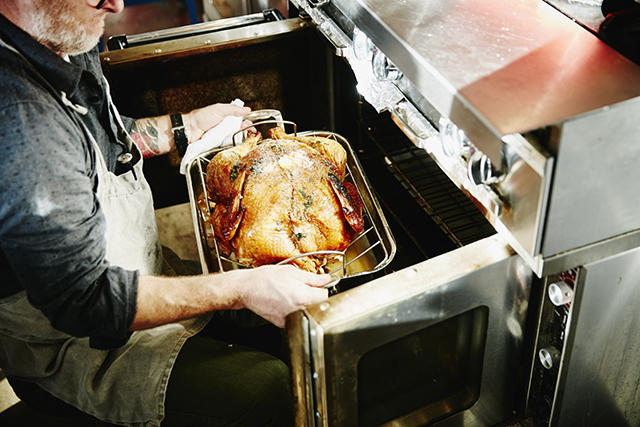
Dreaming of making that perfect dinner your guests will talk about for years to come? Giving your guests food poisoning will keep them talking, but not in the way you’d like. That turkey in your freezer may be crawling with bacteria, so it’s important to take extra precautions when preparing it. The USDA recommends thawing a frozen turkey in the refrigerator for one to two days. Always read labels for expiration dates and cooking and thawing instructions.

Wash any plates or utensils the turkey touches before using them again, and never wash the turkey itself. That just spreads bacteria onto other surfaces. The only way to kill the germs is to fully cook your turkey. The USDA recommends cooking the turkey to an internal temperature of 165 degrees and using a kitchen thermometer to ensure thorough cooking.

Get more turkey cooking tips.

Practice Safe Frying

Deep frying turkey has become a popular Thanksgiving cooking method, but when done improperly it is also one of the most dangerous. The National Fire Protection Association demonstrates how easily turkey frying can go wrong in the above video.

If you do decide to fry your turkey, take every precaution to do so safely. The U.S. Department of Agriculture recommends purchasing a turkey no larger than 12 pounds, since smaller turkeys fry up best. Set up the fryer outdoors, more than 10 feet away from your home on flat ground. Make sure the turkey is completely thawed and dry, or excess water will cause hot oil to spill over. Keep a fire extinguisher nearby, and don’t forget to watch children and pets closely while the turkey is frying.

Celebrate Responsibly

If you’ll be serving alcohol at your feast, it’s important that your guests drink responsibly. Establish designated drivers before the party starts and don’t be afraid to cut off access to alcohol.

Lock It Up

If you’re traveling to see family this Thanksgiving, make sure to keep your home safe from break-ins. Lock all doors and windows, and turn your security system on if you have one. Keep your valuables in a secure place. Never leave keys under a doormat; leave them with a nearby family member or trusted neighbor instead.

Let AAA help protect your home with a homeowners insurance policy customized just for you.

Subscribe to Your AAA Newsletter

Sign up and receive updates for all of the latest articles on automotive, travel, money, lifestyle and so much more!

There’s No Place Like Newport for the Holidays

The holiday season in Newport is a magical time. The giant Bowen’s Wharf Christmas tree is sparkling. Residents and local businesses beautify their entryways as they vie for the top prize in the annual Doorway Decorating Contest. The already ornate and distinguished mansions on Bellevue Avenue are decked to perfection. And residents and visitors alike bundle up and head out to Newport’s many holiday-themed events to enjoy this enchanting season.

Much of this magic is thanks to Christmas in Newport, a non-profit organization that helps coordinate and advertise many of the city’s holiday events, all of which are required to offer either free admission or donate the proceeds of the event to a charity. This year marks the 53rd annual Christmas in Newport celebration.

There is plenty of holiday enchantment to go around at these numerous events, spreading festive cheer throughout the city. Check out some of our favorites  

Holidays on The Classic Coast

There's no place like Newport for the holidays.

Explore Today

Sparkling Lights at The Breakers

Explore the glamour of the former Vanderbilt estate.

Runs Nov.17, 2023, through Dec.30, 2023, on select evenings; 4 p.m., 4:30 p.m., 5 p.m., 5:30 p.m. and 6 p.m.

Admission: $10-$40

Holiday lights enthusiasts would be remiss to miss the Sparkling Lights at The Breakers event, during which the 13-acre grounds of the property are bedazzled with thousands of bright lights captivating spectators as each garden is embellished in a festive theme. Features include a tunnel of light and brightly lit holiday staples, including reindeer, snowmen and Santa’s workshop. After touring the grounds, warm up on the back terrace with a hot beverage and s’mores, then head inside the mansion for an indoor tour.

Holidays at the Newport Mansions

Be awed by the gilded halls of yesteryear.

Runs Nov. 18, 2023, through Jan. 1, 2024.

Admission: Prices vary.

Continuing a grand tradition of years past, several of Newport’s notable mansions including The Breakers, Marble House and The Elms will be dressed in their holiday best in a striking tribute to the glitz and glamour of Newport’s Gilded Age. At the Breakers, visitors can find the annual poinsettia tree, constructed of 150 poinsettia plants towering an impressive 15 feet overhead in the Great Room. And don’t miss the Gilded Age holiday fashion display in the music room.

Newport Nutcracker at Rosecliff

Watch the classic holiday ballet performed in an imaginative venue.

Runs Nov. 22, 24, 25 and 26, and Nov. 28 through Dec. 1.

Admission: $139-$229

Join fellow guests on a walk through the ornately decorated rooms of Rosecliff and watch members of the Newport Contemporary Ballet perform scenes from the “The Nutcracker.” Featured scenes from the traditional ballet include the Waltz of the Snowflakes, and arabesques and pirouettes performed by the Sugar Plum Fairy in the Land of the Sweets in the Grand Ballroom.

Newport Illuminated Boat Parade

Newport Harbor sparkles with nautical holiday delight.

Nov. 24, 6 p.m.

Admission: Free

See Newport in all its holiday glory as sailboats, fishing boats and powerboats light up Newport Harbor with their festive decorations as they parade through the water, much to the joy of the many spectators on land. Some of the best viewpoints include the popular Bowen’s and Bannister’s Wharfs, where you’ll also find plenty of dining and shopping opportunities.

Sparkle! at Blithewold Mansion

Beautifully lit gardens, just a short drive from Newport.

Nov. 24 through Dec. 31, Thursday-Sunday.

Admission: $70 per four-person carload, $35 per two-person carload.

Christmas in Newport events span throughout Newport and Bristol counties. In the seaside town of Bristol, this nighttime holiday display on the grounds of the Blithewold Mansion estate is not to be missed. Follow the illuminated paths to discover holiday light displays, cozy fires in the Enclosed Garden, handmade bamboo lanterns and fun photo ops. You can add a s’mores kit to your ticket to make your trip even sweeter! Complete your experience inside the mansion and marvel at the big tree.

Newport for the holidays

53rd Annual Bowen’s Wharf Tree Lighting

Admire the glistening shimmer of Newport’s towering evergreen.

Dec. 2. The tree is lit at 6 p.m.

Admission: Free

Bowen’s Wharf’s official holiday season commencement begins at 12:30 p.m. on Dec. 2 and will include an appearance by Santa Claus and musical entertainment, including carols the whole family can sing along with. Be sure to visit the wharf’s restaurants and take some time to do some shopping. After the tree is lit, Santa Claus and Mrs. Claus will make a grand entrance onto the wharf via boat. The event is fun for all ages.

Coastal Queen’s Meet and Greet Cruise With Santa Claus

Hang with Santa in true Newport style – on the water.

Dec.17, 11 a.m. – 12 p.m.

Admission: Prices start at $20 for children aged 5-12, $35 for adults.

Hop aboard the Coastal Queen, a tour boat that offers themed excursions around Newport Harbor. This special holiday tour will feature a very important guest on board: Santa Claus! The boat ride will be child-centric and allow young ones to share their holiday wishes with the North Pole’s most infamous resident. Choose to stay inside the heated interior of the boat, or if you’re feeling adventurous, head out onto the open decks for a few minutes to take in the views. After meeting Santa and disembarking the boat, children will receive a cup of warm hot chocolate and a candy cane to complete the holiday experience.

Get in the holiday spirit. Visit Discover Newport today.

Subscribe to Your AAA Newsletter

Sign up and receive updates for all of the latest articles on automotive, travel, money, lifestyle and so much more!

‘Slow Down, Move Over’ Saves Lives

If your car has ever broken down unexpectedly, you know how dangerous and unsettling it can feel to be stuck at the roadside as cars whizz past. Roadside technicians, police officers, firefighters and rescue workers, put themselves in harm’s way to help people in that situation every day.

AAA roadside technicians Ken Young and Jay Lynk might understand the risks better than anyone. Both were involved in serious crashes that could have been prevented if drivers had simply slowed down and moved over. An average of two roadside service providers are killed each month attending to disabled vehicles along America’s roadways, and many more are injured.

“If you see someone with their lights on or even their hazards on, give them 6 inches, give them a foot. Have some compassion,” Young said. “What would you do if you hit somebody that was in your family?”

Largely due to AAA advocacy, all states and Washington, D.C., have enacted Slow Down, Move Over laws. Although they vary slightly by state, they are straightforward. Whenever approaching an incident where police, firefighters, emergency medical service crews or tow operators are working, drivers should exercise caution, decrease their speed and move over. This gives first responders more room to work and helps to maintain a safer environment for everyone.

“Despite being passed in all 50 states, 71% of Americans are unaware of Move Over laws that require drivers to reduce their speed and switch lanes before they pass disabled vehicles, emergency responders, tow trucks and service vehicles stopped at the roadside,” said Mary Maguire, vice president of public and government affairs at AAA Northeast. “Our goal is to spread awareness and save lives.”

“Ensuring the safety of our team and our members is at the core of who we are and what we do. It’s why our members trust us,” said John Galvin, president and CEO of AAA Northeast. “Our roadside technicians must first ensure they are safe, and the scene is safe, before providing service to the member.”

AAA’s #MoveOverForMe campaign aims to help motorists understand that by simply slowing down and moving to an adjacent lane they can save lives. To protect roadside workers and improve highway safety, AAA offers these precautionary tips:

  • Always remain alert. Avoid distractions and focus on the task of driving.
  • Watch for situations where emergency vehicles, tow trucks, utility service vehicles or disabled vehicles are stopped on the side of the road.
  • When approaching an emergency vehicle with lights flashing on the side of a two-lane roadway, drivers should slow down to a speed that is safe and approach with caution unless otherwise directed by an emergency worker on the scene. Some states recommend slowing to a speed that is 10 to 20 mph less than the posted speed limit.
  • On multi-lane roadways, slow down when you see the flashing lights of an emergency vehicle at the roadside and, if possible, move over into an adjacent lane. If you are unable to switch lanes, slow to a speed that is safe and reasonable. Some states recommend slowing to a speed that is 10-20 mph less than the posted speed limit.

Read more about the AAA Slow Down, Move Over initiative.

Subscribe to Your AAA Newsletter

Sign up and receive updates for all of the latest articles on automotive, travel, money, lifestyle and so much more!

Ask a Travel Advisor: Disney Rope Drop Tips

It’s no secret – Walt Disney World gets crowded. To beat the crowds and get on the most popular rides fast, many guests arrive as soon as the parks open, known as Disney rope drop.

We spoke to AAA travel advisor and Disney expert Cady DeBlois to get the hottest rope drop tips and strategies for your next vacation.


What kind of Disney guest are you?

When do you go to the parks?

Book your Disney trip with AAA Travel.

What is rope drop at Disney?

Disney rope drop is named after the rope that cast members occasionally use to block off sections of the park before they open. Even if no actual rope is present, rope drop just means the time the gates open. Then it’s time to make a beeline to your favorite ride.

What’s your rope drop strategy?

“My rope drop strategy varies by park and which rides I’m able to select with Genie+ or Individual Lightning Lane Selections that morning,” DeBlois said. “When you are staying on-property, definitely take advantage of the early entry opportunity. It can take some time to get to the parks when using Disney’s transportation, especially for Magic Kingdom. I recommend planning about an hour for travel time, even though it doesn’t usually take that long. The most important tip is to have a plan of what you are prioritizing and have a general idea of the layout of the parks to get where you need to be.”

disney rope drop - animal kingdom
Courtesy of Walt Disney World Resort

What’s your strategy for each park?

Rope Drop at Magic Kingdom: “During early entry at Magic Kingdom, the only two lands that are open are Tomorrowland and Fantasyland. I always prioritize Seven Dwarves Mine Train or Space Mountain during this time and selecting a Genie+ reservation for another ride in the park.”

Rope Dropping Animal Kingdom: “Kilimanjaro Safaris is always my No. 1 for rope drop. The animals are much more active first thing in the morning, since it isn’t too hot out yet. I love grabbing a coffee during early entry and enjoying the animal walking trails before heading over to Kilimanjaro Safaris. I would also prioritize Avatar Flight of Passage first thing in the morning.”

Epcot Rope Drop: “I love to rope drop Remy’s Ratatouille Adventure and then head over to Les Halles Boulangerie-Patisserie, a delicious bakery in the France pavilion, for some breakfast. Then I’ll make my way around World Showcase to Frozen Ever After in Norway.”

Rope Drop at Hollywood Studios: “Slinky Dog Dash and Rise of the Resistance are two of the most popular rides at this park. If they are a must-do for you, I would head there first thing for rope drop. I personally prefer to head down Sunset Boulevard to take advantage of the short wait times for Tower of Terror and Rock n’ Rollercoaster.”

Is rope dropping really worth it? Do you recommend that people go to the parks as soon as they open?

“I definitely recommend rope dropping, and I think it’s worth it. You can get so much done in a short amount of time first thing in the morning, then head back to your resort for a midday break to take a nap or enjoy the pool. On the flip side, if your family is in the parks until they close every night, it is important to get some extra rest – which might mean sleeping in a little bit. Go through the parks at your own pace, especially when you’re with children.”

Do you go left first? Or right?

“I always go left first!”

Have more Disney questions for our travel advisors? Ask away.

Save on Walt Disney World park tickets.

Share your Disney rope drop tips in the comments!

Featured image: Courtesy of Walt Disney World Resort

Subscribe to Your AAA Newsletter

Sign up and receive updates for all of the latest articles on automotive, travel, money, lifestyle and so much more!

Northeast Native American Sites for Celebrating Indigenous Culture

Many Indigenous tribes have called the Northeast home throughout time. In fact, history suggests that 10 million people lived in what would become the United States when Europeans arrived in the 15th century. There are still 25 federally recognized Native American tribes in the region today. Visit these Native American sites, including museums and historical places, to learn more about the rich and varied Indigenous culture in the Northeast.


Museums and Exhibits

Institute for American Indian Studies

Washington, Conn.

Formerly known as the American Indian Archaeological Institute, the Institute for American Indian Studies is located on the ancestral homelands of the Weantinock and Pootatuck people. It offers a variety of permanent, semi-permanent and temporary exhibits, along with workshops, lectures, book discussions and more.

Mashantucket Pequot Museum & Research Center

Mashantucket, Conn.

The Mashantucket Pequot Museum & Research Center features 85,000 square feet of permanent, indoor exhibitions, including life-size dioramas, films and interactive computer programs. Permanent exhibits featuring Indigenous people include “Arrival of the People,” “Pequot Village” and “Mashantucket Pequot Tribal Nation Today.”

Peabody Museum of Archaeology & Ethology at Harvard University

Cambridge, Mass.

The Peabody Museum at Harvard University is located on the tribal homelands of the Massachusett people, according to the museum’s website. North American artifacts make up nearly half of the museum’s collections. An exhibit specific to the Northeast includes artifacts from sites in the Boston and Cambridge, Mass., areas; Neville, N.H.; Orland, Maine, and more.

Mt. Kearsarge Indian Museum

Warner, N.H.

The Mt. Kearsarge Indian Museum is situated on Abenaki homeland. This museum sits on 12.5-acres of land, including the Medicine Woods Trail, the Betsy Janeway Arboretum and an activity area with spectacular views of the Mink Hills.

Winakung: Lenape Indian Village

Stanhope, N.J.

Located on Winakung Island in Waterloo Lake, this reproduction of a Lenape Tribe village features huts, longhouses, artifacts, walking trails and more.

Iroquois Museum

Howes Cave, N.Y.

The design of the museum itself is modeled after Iroquois longhouses, making this museum a true experience for visitors. Inside, permanent exhibits include contemporary, historical and archaeological collections.

American Museum of Natural History 

New York, N.Y.

This museum is home to several permanent exhibits dedicated to Native Americans. These include the Hall of Eastern Woodlands Indians, the Hall of Plains Indians and the Northwest Coast Hall, which opened in 1899 and was recently revitalized in partnership with Indigenous communities.

native american site
National Museum of the American Indian” by Jeffrey is licensed under CC BY-ND 2.0

National Museum of the American Indian

New York, N.Y.

Part of the Smithsonian, the National Museum of the American Indian features roughly 700 works of Native art from throughout North, Central and South America.

Ganondagan State Historic Site

Victor, N.Y.

Ganondagan State Historic Site is home to the Seneca Art & Culture Center. Here, visitors can view exhibits featuring artwork, traditional clothing and more. There’s also the Seneca bark longhouse – open during the warmer months – and walking trails.

Tomaquag Museum

Exeter, R.I.

The Tomaquag Museum was recognized with the National Medal for Museum and Library Service in 2016. Today, the museum’s featured exhibits include “Wunnegen Manootash (Beautiful Baskets),” “Wampum: Telling our Story” and “The Pursuit of Happiness: An Indigenous View.”

“Still Here” Mural

Providence, R.I.

Located on 32 Custom House St. in Providence, “Still Here” is a mural by artist Gaia in collaboration with the Tomaquag Museum, mentioned above. Commissioned by The Avenue Concept in 2018, the mural portrays Narragansett Lynsea Montanari holding a photograph of the late Princess Red Wing (Narragansett/Niantic, Pokanoket).

Indigenous Cuisine

Sly Fox Den Too

Charlestown, R.I.

A member of the Mashpee Wampanoag tribe, chef Sherry Pocknett shares and pays tribute to her culture through a menu of foraged, hunted and fished dishes, often including the three sisters of Indigenous American agriculture, corn, beans and squash. Pocknett won the James Beard Award for Best Chef: Northeast in 2023, becoming the first Indigenous woman to earn the prestigious designation.

Passamaquoddy Maple

Jackman, Maine

Owned and ran by the Passamaquoddy Tribe, Passamaquoddy maple syrup is certified organic and sustainably harvested from the tribe’s land in Maine. Harvesting maple syrup is an ancestral tradition for the Passamaquoddy people and other tribes across the Northeast and Great Lakes regions of New York.

Which of these Native American sites would you like to visit? Tell us in the comments. 

Subscribe to Your AAA Newsletter

Sign up and receive updates for all of the latest articles on automotive, travel, money, lifestyle and so much more!

Explore the Westchester Farm Trail

Westchester County has long been associated with farming and agriculture, with some of the farms in the area dating back hundreds of years. You can visit many of them on the Westchester Farm Trail, a 17-mile string of orchards and farms with activities for the whole family.

Fun and Learning on the Farm

There are plenty of opportunities to learn about Westchester County’s agricultural heritage. Join hands-on farming lessons and workshops at Hilltop Hanover Farm and Environmental Center and field tours at Stone Barns Center for Food and Agriculture in Tarrytown.

And be sure to visit Muscoot Farm in Katonah. This early 20th-century property was once a working dairy farm, but is now a Westchester Country park, open to the public 362 days a year. Bring the kids to meet the farm animals, hike the trails, explore the historic buildings and farm museum, and more

Beyond Sip to Savor

Drop by for a pint and some pub fare on the Westchester Craft Beverage Trail.

Visit Westchester

Take Your Pick

A popular destination for apple picking in the fall, Stuart’s Farm in Granite Springs is the oldest orchard in the county, offering 20 different varieties of apples. They also have Christmas trees.

If you’d like to cut your own Christmas tree, Wilkens Fruit and Fir Farm opens up several acres of Choose-and-Cut trees after Thanksgiving. With three farm markets, you can stock up on treats for your holiday celebrations there, too.

While you’re getting into the festive spirit, don’t miss Harvest Moon Farm and Orchard in North Salem. In addition to selling a bounty of seasonal produce, grass-fed beef and free-range quail and chicken eggs, it also hosts the Festival of Lights, a walk-through light show on nights through Dec. 31.

craft beverage trail

Tastings

Visit the historic White Oak Farm to have a maple syrup tasting and fill a shopping basket with locally made goods and products. The maple syrup here comes from over 2,400 tree’s local to Westchester County. As one of the few commercial sugarhouse’s in the region, the best time to visit is when they are in full production in February and March.

For another kind of tasting, purchase a passport for the Westchester Craft Beverage Trail – but make sure to use a designated driver or rideshare between locations to get home safe.  

Start planning your trip to Westchester County today.  

Featured image: Muscoot Farm

Subscribe to Your AAA Newsletter

Sign up and receive updates for all of the latest articles on automotive, travel, money, lifestyle and so much more!

Find Winter Fun in Lake Placid

As the host of the 1980 Winter Olympic Games, Lake Placid is America’s original cold weather retreat. Whether you’re racing down the slopes, strapping on your skates or warming up with some much-needed pampering and relaxation, it’s got everything you want in a winter vacation.

Winter Sports

Skis, snowboards and even bobsleds – there are a lot of ways to dash through the snow. Lake Placid offers Alpine and cross-country skiing, snowshoeing, bobsledding, skating, snowboarding and ice climbing. Its close access to Whiteface Mountain and top-of-the-line Olympic facilities makes it the ultimate destination for any winter sport you can imagine.

When the picturesque Mirror Lake freezes over, you can enjoy outdoor skating, a toboggan chute and even dog sled rides. Looking for more activities that will let you take in the gorgeous winter surroundings? Winter hiking and snowshoeing will get you up close to the natural wonders of the area, and the Skyride gondola to the Olympic Jumping Complex will give you a bird’s eye view of the Adirondacks. There are options for the whole family.

Winter Adventures Abound in Lake Placid

Après comfort, family-friendly trails, idyllic lodge living: Your next classic winter adventure is here.

Plan Today

Winter on Main Street

After a long day of carving up the slopes, unwind in downtown Lake Placid. This charming area is extra-scenic in winter, when it’s frosted with snow and the whole town comes alive. You’ll easily find a roaring fireplace to cozy up to with a mug of hot chocolate, plus plenty of mealtime options including farm-to-table dining, sweet treats, fresh seafood and breweries.

In need of some self care? You can’t throw a snowball without hitting a spa or salon. Try a deep Swedish massage, aromatherapy, a salt room session, skin treatments and more. There’s no better way to leave your vacation feeling completely rejuvenated.

Start planning your Lake Placid vacation today.

Subscribe to Your AAA Newsletter

Sign up and receive updates for all of the latest articles on automotive, travel, money, lifestyle and so much more!

Test Drive: Get Out of Town!

Being an automotive legend is not for the timid. Thankfully, the new Ford Bronco is up to the task.

This reinvention is a thoroughly up-to-date midsize SUV. It’s offered in two or four doors in trim levels from merely rugged looking to the Badlands version, with
skid plates, locking differentials and more.

Under the hood, there’s a choice of a standard 300-horsepower, turbocharged 2.3-liter 4-cylinder or our tester’s gutsy 330-horsepower, twin-turbo 2.7-liter V6. Both engines come with a 10-speed automatic transmission, (a 7-speed manual is offered with the smaller engine) and full-time four-wheel drive.

Acceleration is plentiful with the V6, but fuel economy suffers greatly. Towing capacity is a healthy 3,500 pounds. Noise from the aggressive tire tread and wind make the cabin space less than serene. But it should be tolerable for folks drawn to the Bronco mainly for its go-anywhere capability.

Figure in modern amenities, like an available 12-inch center touch screen with navigation, and you have a legend you can live with every day.

Starting Price: $39,130

MPGe (city/highway): 17 city / 17 highway ($WD/automatic)

Safety: N/A

subaru forester wilderness

Anyone who enjoys exploring the outdoors knows the urge to see what’s at the end of a random dirt road. If that sounds familiar, you’re bound to like the Subaru
Forester Wilderness
.

This rugged version of the brand’s compact crossover will go where most competitors fear to tread. Credit goes to a raised suspension with a generous 9.2 inches
of ground clearance, tires with a more aggressive all-terrain tread and a modified all-wheel-drive system.

The upgraded powertrain, built around a 182-horsepower, 2.5-liter horizontally opposed 4-cylinder, also boosts towing capacity to a useful 3,000 pounds. The downside is it takes a hit in fuel economy compared to its less rugged siblings.

Inside, this variant offers plenty of room for four adults, and a cargo bay with 69.1 cubic feet of space. A reinforced roof rack can accommodate the overflow, or a three-person roof-top tent for backcountry camping.

In short, the Subaru Forster Wilderness is the model adventure-seekers have long hoped the automaker would build.

Starting Price: $37,695

MPGe (city/highway): 25 city / 28 highway

Safety: 5 Stars

Looking for a new ride? Check out more car reviews at AAA.com/TestDrive.

Visit AAA’s Electric Vehicle platform for more information on these cars of the future.

Subscribe to Your AAA Newsletter

Sign up and receive updates for all of the latest articles on automotive, travel, money, lifestyle and so much more!

#trending: International Adventures

#GOINSEINE

The Seine River, which runs through Paris, has a long reputation of being picturesque, but polluted. However, France is on a mission to clean up the Seine in advance of the 2024 Summer Olympics. Several athletic events are scheduled to be held on the famous river, so it needs to be safe for people to swim in its waters. When the river is clean and the games are over, the Seine will be accessible for the general public to swim in as well. Paris officials are planning to open special areas designated for swimming.

Asian female tourist standing with cherry blossom tree and Mt. Fuji
NOMADNES / GETTY IMAGES

#NOLUGGAGENOPROBLEM

You might not need to bring your bags if you’re flying to Japan. Japan Airlines is launching a trial service that will let foreign travelers rent clothes to wear during their trip. Their Any Wear, Anywhere program is a sustainability initiative aimed at reducing the weight that planes have to carry. If there’s less luggage, they can use less fuel. Plus, you don’t have to worry about your clothes getting lost in transit.

#LETITGO

Tell the guards to open up the gate! Hong Kong Disneyland is scheduled to open Arendelle: The World of Frozen in November. This theme park land plunges guests into the world of the hit film “Frozen” and the enchanted land of Arendelle. Explore the city streets near the fjord, the ice palace on the North Mountain and Anna and Elsa’s castle. Frozen fiends can enjoy two new rides: Wandering Oaken’s Sliding Sleighs and Frozen Ever After.

#LIVINGISLANDS

Have you ever wanted to move to the Emerald Isle? Ireland is currently offering people as much as 84,000 euros (around $91,000) to relocate to one of its remote island communities. The Our Living Islands program plans to revitalize 30 coastal Irish islands by subsidizing the renovation of old or abandoned homes for new residents. If it’s
your dream to move to a secluded Irish village, it’s time to make that dream a reality.

For insider tips on destinations across the globe, plan your next adventure with a AAA travel advisor.

Featured image: NICOELNINO / GETTY IMAGES

Subscribe to Your AAA Newsletter

Sign up and receive updates for all of the latest articles on automotive, travel, money, lifestyle and so much more!

Thrifting Tips for a Total Wardrobe Refresh

budget wise

Thrifting is having a renaissance in the age of social media. With so many successful thrift fashion “hauls” posted to platforms like TikTok, many folks have become enchanted by the possibility of uncovering a gem or two at their own local thrift shop – a possibility that’s admittedly easier said than done.

Experienced thrifters call it “the thrill of the search” but to others, the search can feel totally overwhelming. Where do you even start? How do you know what to look for? Luckily, there are some strategies you can employ. Here are some thrifting tips to get the most out of your next secondhand shopping excursion.

Prefer an audio summary of this post? Click below to listen to this article.

Give Before You Get

Before you begin your thrift journey, it’s good to make room for all the new gems you’re about to find. First, take stock of your closet. Pull any garments and accessories that have gone unworn for at least six months, are too big, too small or simply don’t fit right and put them aside. Some items will be tough to get rid of, but it’s important to be realistic about when or if you’ll ever wear them again. If the answer is no, place them in a bag for donating. Organizations like Big Brothers Big Sisters, Savers, The Salvation Army or Goodwill are a few places to choose from.

Know Your Measurements

Because lots of thrift stores don’t have changing rooms, it’s good to know your measurements beforehand. Plus, you’ll be faced with a variety of brands from all different eras when you thrift, so it’s best to be precise.

Invest in a good measuring tape and make note of shoulder, chest, waist, hip and height measurements, so when you measure a garment in the store you’ll know right away if it’ll fit you well.

Find a great pair of jeans but forget your measuring tape at home? No problem. You can always try the viral “neck measuring hack” by placing the waistband around your neck to see if the ends meet. If they do, the jeans are likely to fit around your waist, too. Of course, this doesn’t work in all cases, but it’s good to try in a pinch!

Sometimes, you buy a skirt, dress or top that was too good to give up but doesn’t quite fit the way you’d like – but you can’t sew. Enter, the amazing micro-stitch gun. This handy tool lets you make a teeny micro-stitch into clothing that holds in place but can be easily tugged apart to remove.

Have a Plan

Most thrift stores can be overwhelming, due to their sheer size and the variety of ways they can be organized – including color-coordinated, arranged by size or type, or not organized at all. You never really know what you’re walking into, so it’s smart to go in with a plan.

Start at one end of the store and quickly snake your way through until you get to the other side. This way are able to generally assess where everything is. By the time you make your second pass, you can linger at racks that caught your interest and skip those that don’t.

In your search, make sure you’re looking at not only brand tags, but material as well. Garments made from 100% silk, cotton or linen will always be a good investment, and much more likely to last you a long time.

Explore More Online

Thrifting doesn’t just happen in-store anymore. Apps like Poshmark, eBay and Depop are a treasure trove of consigned goods that allow you to make offers and ask questions about anything that piques your interest like clothing, accessories, home goods or even secondhand tech. The downside? Lots of vintage resellers will buy from big thrift stores like Savers or Goodwill and double or triple the price, making some things unaffordable (and therefore defeating the purpose of finding a true deal). So, proceed with caution and remember that if something is out of your price range, you could likely find something similar at your local thrift with a bit of patience.

Go Often

Of course, the real secret to finding great stuff at the thrift is to go and go again. The more often you scan the racks, the more likely you are to snag a treasure before someone else does. Depending on where you shop, inventory may turnover every week or even every day, so if you don’t have luck on your first visit, it won’t be long before you can try again.

Do you have another thrifting tip to share? What’s the best item you’ve ever thrifted? Let us know in the comments.

Subscribe to Your AAA Newsletter

Sign up and receive updates for all of the latest articles on automotive, travel, money, lifestyle and so much more!

Word Search: Happy Halloween

Subscribe to Your AAA Newsletter

Sign up and receive updates for all of the latest articles on automotive, travel, money, lifestyle and so much more!

Iceland: Close By, But Worlds Away

For a long time, Iceland had been on my travel bucket list. When I finally made it there, it surprised me how accessible it is from the East Coast.

While the island country is close to the Arctic Circle, it’s not as remote as it seems. I took a direct flight from Boston and arrived in Reykjavik in less time than it takes me to fly to California.

Whether you’re in the country for just a few days or a longer stretch of time, guided tours are a popular option, especially for first-time visitors. Like most people, I was based in the capital city, Reykjavik, and headed out for daytrips to some of the country’s most dramatic sites, including spectacular hot springs, glaciers, lava fields, volcanoes and waterfalls.

The Blue Lagoon and the Golden Circle route are usually at the top of visitors’ itineraries, including mine. I was especially excited to soak in the Blue Lagoon after hearing about it from friends. Many people visit between September and April to chase after the northern lights, but that wasn’t my goal on this trip.

Let's Plan Something Wonderful

Book your next trip with AAA Travel now or call 866-423-5585 to speak with a travel advisor.

Book Now

Reykjavik

Reykjavik has a population of about 120,000. While that’s relatively small as far as capitals go, it seems large when you consider that Iceland’s total population hovers around 340,000. The cosmopolitan city is easily walkable.

Look into purchasing a Reykjavik City Card, which gives you access to a great selection of museums and galleries, unlimited bus travel, and access to the city’s thermal-fed public swimming pools. I visited one of the city pools and it was fun to mingle with locals whose daily swims and soaks are part of their routine schedule.

A visit to the Hallgrimskirkja church is a must. You won’t need directions to find it; its tall tower can be spied from almost anywhere in the city. Make sure to go to the top of the tower for amazing views.

Other places to visit in Reykjavik include Whales of Iceland, the largest whale exhibition in the world, and the historic Hofdi House, where presidents Ronald Reagan and Mikhail Gorbatsjov met to end the Cold War. And, of course, one can’t travel to Iceland without seeing the Imagine Peace Tower, the art installation by Yoko Ono, created as a beacon of world peace.

Blue Lagoon

As far back as the 12th century, Iceland discovered that its abundance of geothermal pools was a both a luxury and a benefit. Another experience one can’t travel to Iceland without having is to enjoy a variety of deliciously hot public swimming pools and natural springs. The most famous is the Blue Lagoon, which is located in a lava field about 45 minutes from Reykjavik. The water temperature fluctuates between 98 and 104 degrees.

iceland
Relax amid geothermal spas at the Blue Lagoon.
(dennisvdw / Thinkstock)

Visiting the Blue Lagoon can be an all-day affair if you choose. I only wish I had the time. I was there for a few hours, though; enough time to soak in the enormous hot spring, apply a silica mud mask to my face, and get a smoothie at the Lagoon Bar without ever getting out of the water. It was blissful.

As well as the hot springs, there are also saunas and steam rooms carved into the lava rock. After taking a break in the relaxation area, head over to the man-made waterfall to stand under it and let it work out the knots in your shoulders and back.

Golden Circle

The 200-mile-long Golden Circle drive includes three of Iceland’s best-known attractions: Thingvellir National Park, the Geysir geyser and Gullfoss waterfall. Many outfitters offer the immensely popular daytrip as an excursion, which is how I visited the sites in one day.

Thingvellir National Park is the site of Iceland’s ancient parliament, which dates to 930 and met there until 1798. It is also where the North American and Eurasian tectonic plates meet. The plates are slowly separating from each other, creating deep fissures in the ground.

Next up is Haukadalur, a geothermal area that’s home to the famous geysers Geysir and Strokkur. Wait around long enough and you’ll be rewarded with Strokkur shooting water up to 100 feet up in the air.

The last stop on the Golden Circle is Gullfoss, where the Hvita River roars down three separate drops before continuing south. On a sunny day, you might just glimpse a rainbow, like I did.

Visitors often come away from Iceland vowing to return – as did I. It’s a place I want to share with friends and family. So even though you may check it off your bucket list, Iceland might just become a destination you’ll want to experience again and again.

Contact a AAA travel advisor and plan your unforgettable trip to Iceland.

What’s on your bucket list of places to see in Iceland? Tell us in the comments below!

Subscribe to Your AAA Newsletter

Sign up and receive updates for all of the latest articles on automotive, travel, money, lifestyle and so much more!

The History of Hearses

The way people honor the dead has been a source of great interest dating back to ancient times. As such, few vehicles offer more intrigue today than the hearse – but for obvious reasons, it’s a mode of transportation we try not to think about.

Still, hearses serve an important role in society and a look through hearse history shows how our respect for the deceased has evolved. Let’s see how these casket-carrying vehicles came to be.

Prefer an audio summary of this post? Click below to listen to this article.

Why Is It Called A Hearse?

The term “hearse” is derived from the Latin word “hirpex” through the French “herse.” Both refer to a harrow, a large farming tool similar to a plow used to break up soil. So how did a vehicle carrying the deceased come to be named after a farming device? Early horse-drawn hearses consisted of a wooden framework with spikes used to hold candles. This candelabra-like structure resembled the teeth of a harrow. So, starting in the 17th century, people began using the word “hearse” to refer to carriages used to transport the deceased.

Hearse History Begins

Hearses as we know them first began to appear in the early 1900s. Interestingly, these early vehicles were powered by electric motors. In 1909, undertaker H.D. Ludlow commissioned a vehicle made from the body of a horse-drawn casket coach and the chassis of a bus. This was the first known example of a gas-powered hearse.

Such vehicles remained rare at first, as they cost significantly more than horse-drawn varieties. But as combustion engines became more powerful, funeral directors realized they could use these faster-traveling hearses several times per day. Gas-powered hearses quickly became cost effective and became the norm by the 1920s.

The same year Ludlow commissioned his internal combustion vehicle, hearse history hit another notable milestone when the Crane and Breed Company in Cincinnati introduced the first commercially built gas-powered hearse. It featured a 30-horsepower, four-cylinder engine that allowed the vehicle to reach a top speed of 30 mph.

While the hearse’s mechanics evolved quickly, improvements to its aesthetics soon followed. In 1925, the Sayers & Scovill company, also located in Ohio, debuted a landau-style hearse. This longer, sleeker vehicle was reminiscent of a limousine and quickly became more popular than the boxy hearses of the day. During this time, and up until the mid-1900s, it was common for a hearse to serve as both a funeral coach and an ambulance.

hearse history
A 1956 Comet-Oldsmobile Funeral Car (credit: Alden Jewell)

Modern Day Hearses

Hearses don’t roll off the assembly line like other cars and trucks. Instead, third-party manufacturers purchase existing vehicles and customize them into the hearses you see on the road. The vast majority of hearses made today are built from Cadillacs and Lincolns.

To begin the process, the car is cut in half and fitted onto a longer chassis, which usually sits closer to the ground than a traditional passenger car chassis. The lower height makes it easier to load and unload a casket. A fiberglass shell is then built to connect the vehicle’s front and back ends. Once the fluid lines and electrical system is reconnected, manufacturers go to work customizing the hearse for casket transportation. This includes adding features such as a long platform in the rear, bier pin plates to keep the casket in place and drapes over the windows. All this work doesn’t come cheap. A new hearse could cost as much as $100,000.

Interested in learning more about cars? Visit our auto history page for the origins of car horns, stop signs and everything in between.

Subscribe to Your AAA Newsletter

Sign up and receive updates for all of the latest articles on automotive, travel, money, lifestyle and so much more!

Spend a Moment at … The Farmer’s Daughter

The Farmer’s Daughter

716 Mooresfield Road, South Kingstown, Rhode Island

In the early 1970s, a farm named The Berry Patch took root in South Kingstown Rhode Island and became one of the state’s very first “pick your own” strawberry farms. Two decades later, the owner’s daughter Sarah Partyka opened The Farmer’s Daughter on the very same land. This heartwarmingly full-circle moment is part of what makes The Farmer’s Daughter such a special place to visit. That, and its perfectly bucolic setting.

The core values of The Farmer’s Daughter are rooted in sustainable agricultural practices, and they operate accordingly. As responsible land stewards, they recognize that healthy crops and plants stem from understanding the interconnectedness of nature, from microorganisms and pollinators to employing the help of beneficial insects and nurturing healthy soil. The entire range of plants and produce cultivated on the farm adheres to these sustainable farming methods, which explains why their output is so phenomenally stunning, between their fields of flowers to the heirloom pumpkins, squash and gourds of every shape, size and color imaginable.

As if all that wasn’t enough, the farm also features greenhouse upon greenhouse full of plants (think fiddle leaf figs, ivy vines, cacti and everything in between), seasonal home decor (most of which is color-coordinated – a dream!) pottery and so much more. Join The Farmer’s Daughter every weekend in October for the Fall Harvest Festival, featuring hayrides, games, a corn maze and plenty of edible goodies like apple cider doughnuts. It’s one of our favorite things to do in the fall.

Spend a moment with us at more of our favorite places.

Do you keep it classic with orange pumpkins or go for multi-colored varieties for your October decor? Let us know in the comments!

Subscribe to Your AAA Newsletter

Sign up and receive updates for all of the latest articles on automotive, travel, money, lifestyle and so much more!

Tips for Choosing Supplemental Dental Insurance

If your healthcare plan doesn’t offer dental coverage, or your dental care needs exceed the limits of your insurance plan, you may want to consider purchasing supplemental dental insurance.

Supplemental dental insurance is an individual or family insurance policy purchased separately from a primary dental insurance plan to help pay for fees left uncovered by that main plan. It reduces the money you may have to pay for a variety of procedures, such as root canals, and may help cut the costs of braces, dentures, and standard preventive care, such as teeth cleanings.

AAA members in Massachusetts and Rhode Island can save on dental insurance. Learn more.

Before you go about purchasing supplemental insurance of any kind, find out whether your employer offers insurance benefits for which you qualify and, if so, what those benefits are. Your employer may offer a gold-plated dental plan that will keep your smile bright and your teeth straight for very little cost to you. In that case, supplemental dental insurance may not be worth the price.

While you may be covered by a good dental plan, you still may find it worthwhile to purchase supplemental coverage for a short period. Perhaps, you’re going to need dental implants, or one of your children will need braces. You might want to buy supplemental coverage to span the time it will take to complete those treatments. Or, maybe you’ll decide to keep a supplemental plan from the time your first child is born until the time your last child graduates college and goes off on his or her own.

Supplemental dental insurance policies tend to be broad in scope and variety. They may have no annual spending limits or deductibles, no waiting periods or exclusions for previous dental conditions. You can find coverage for specific items, such as braces, by buying a base policy and adding a rider to cover the cost of all that metal and plastic going into your kid’s mouth – and all those trips to the orthodontist.

Still, you need to do a good job estimating the expected cost of the procedures you want covered so that you can determine what will be cheaper – paying out of pocket as you go, or paying a regular premium for supplemental dental insurance.

avoiding the dentist

Here are questions to ask yourself before you decide:

  • Is supplemental dental insurance important to me, given my dental history and that of my family?
  • Do I have primary dental insurance? A good primary plan will make supplemental coverage superfluous.
  • What does supplemental dental insurance cover?

Supplemental dental insurance comes in a variety of packages. Make sure what you buy is cost-effective.

  • How do my primary dental insurance plan provider and my supplemental provider coordinate their coverages and payments?
  • Coordinating benefits will affect how much you pay out of pocket, as well as a task that will require regular monitoring and paperwork on your part.
  • Are there details in these plans to which I should pay attention? Yes. There may be waiting periods before coverage starts; some plans limit what they’ll cover and how much they’ll spend annually.

Alternatives to Supplemental Dental Insurance

Insurance companies offer discount plans that guarantee members a lower payment schedule in exchange for an annual fee or monthly premium.

Medicare has limited or no coverage for vision, hearing, dental and long-term care, forcing people to purchase supplemental dental insurance absent from their basic policies. For instance, Medicare doesn’t cover routine checkups or dentures.

Low-income Americans can get dental coverage through their state Medicaid programs, which will pay for basic dental services. Otherwise, Medicare supplemental insurance policies – also known as Medigap – or a Medicare Advantage plan can help cover the cost of dental services.

If you or your family needs more dental benefits, either because you have exceeded your plan’s annual maximum or because your plan doesn’t cover a needed procedure, then you’ll likely have specific needs. If you have exceeded your annual maximum, you may want to look at picking up an HMO dental insurance plan, which features no annual limits and no deductibles.

When discussing dental treatment plans with your dentist, you may also ask what insurance options may be available to someone in your place. After all, the dentist office staff has to become an expert in the insurance marketplace to ensure its own bills are paid on time. Don’t hesitate to get your dentist’s opinion or that of the dental office manager regarding which insurance plan meets your needs.

If you don’t have a choice about what dental insurance plan you purchase, don’t panic. You can always fill in the gaps in your coverage with a supplemental dental insurance policy or a dental savings plan.

Click here to see if AAA’s dental insurance plan is right for you.

Subscribe to Your AAA Newsletter

Sign up and receive updates for all of the latest articles on automotive, travel, money, lifestyle and so much more!