As the host of the 1980 Winter Olympic Games, Lake Placid is America’s original cold weather retreat. Whether you’re racing down the slopes, strapping on your skates or warming up with some much-needed pampering and relaxation, it’s got everything you want in a winter vacation.
Winter Sports
Skis, snowboards and even bobsleds – there are a lot of ways to dash through the snow. Lake Placid offers Alpine and cross-country skiing, snowshoeing, bobsledding, skating, snowboarding and ice climbing. Its close access to Whiteface Mountain and top-of-the-line Olympic facilities makes it the ultimate destination for any winter sport you can imagine.
When the picturesque Mirror Lake freezes over, you can enjoy outdoor skating, a toboggan chute and even dog sled rides. Looking for more activities that will let you take in the gorgeous winter surroundings? Winter hiking and snowshoeing will get you up close to the natural wonders of the area, and the Skyride gondola to the Olympic Jumping Complex will give you a bird’s eye view of the Adirondacks. There are options for the whole family.
After a long day of carving up the slopes, unwind in downtown Lake Placid. This charming area is extra-scenic in winter, when it’s frosted with snow and the whole town comes alive. You’ll easily find a roaring fireplace to cozy up to with a mug of hot chocolate, plus plenty of mealtime options including farm-to-table dining, sweet treats, fresh seafood and breweries.
In need of some self care? You can’t throw a snowball without hitting a spa or salon. Try a deep Swedish massage, aromatherapy, a salt room session, skin treatments and more. There’s no better way to leave your vacation feeling completely rejuvenated.
Being an automotive legend is not for the timid. Thankfully, the new Ford Bronco is up to the task.
This reinvention is a thoroughly up-to-date midsize SUV. It’s offered in two or four doors in trim levels from merely rugged looking to the Badlands version, with skid plates, locking differentials and more.
Under the hood, there’s a choice of a standard 300-horsepower, turbocharged 2.3-liter 4-cylinder or our tester’s gutsy 330-horsepower, twin-turbo 2.7-liter V6. Both engines come with a 10-speed automatic transmission, (a 7-speed manual is offered with the smaller engine) and full-time four-wheel drive.
Acceleration is plentiful with the V6, but fuel economy suffers greatly. Towing capacity is a healthy 3,500 pounds. Noise from the aggressive tire tread and wind make the cabin space less than serene. But it should be tolerable for folks drawn to the Bronco mainly for its go-anywhere capability.
Figure in modern amenities, like an available 12-inch center touch screen with navigation, and you have a legend you can live with every day.
Starting Price: $39,130
MPGe (city/highway): 17 city / 17 highway ($WD/automatic)
Safety: N/A
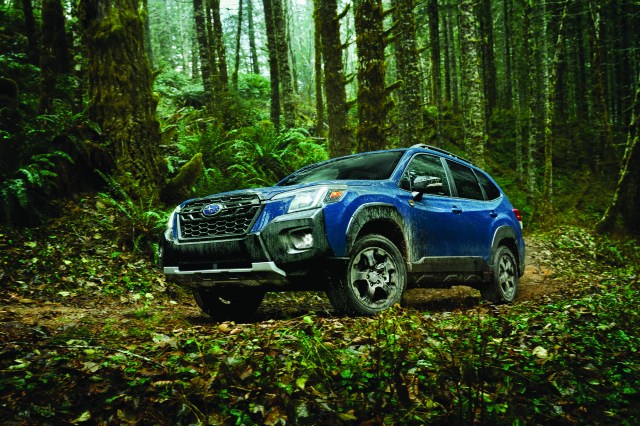
Anyone who enjoys exploring the outdoors knows the urge to see what’s at the end of a random dirt road. If that sounds familiar, you’re bound to like the Subaru Forester Wilderness.
This rugged version of the brand’s compact crossover will go where most competitors fear to tread. Credit goes to a raised suspension with a generous 9.2 inches of ground clearance, tires with a more aggressive all-terrain tread and a modified all-wheel-drive system.
The upgraded powertrain, built around a 182-horsepower, 2.5-liter horizontally opposed 4-cylinder, also boosts towing capacity to a useful 3,000 pounds. The downside is it takes a hit in fuel economy compared to its less rugged siblings.
Inside, this variant offers plenty of room for four adults, and a cargo bay with 69.1 cubic feet of space. A reinforced roof rack can accommodate the overflow, or a three-person roof-top tent for backcountry camping.
In short, the Subaru Forster Wilderness is the model adventure-seekers have long hoped the automaker would build.
Starting Price: $37,695
MPGe (city/highway): 25 city / 28 highway
Safety: 5 Stars
Looking for a new ride? Check out more car reviews at AAA.com/TestDrive.
The Seine River, which runs through Paris, has a long reputation of being picturesque, but polluted. However, France is on a mission to clean up the Seine in advance of the 2024 Summer Olympics. Several athletic events are scheduled to be held on the famous river, so it needs to be safe for people to swim in its waters. When the river is clean and the games are over, the Seine will be accessible for the general public to swim in as well. Paris officials are planning to open special areas designated for swimming.
NOMADNES / GETTY IMAGES
#NOLUGGAGENOPROBLEM
You might not need to bring your bags if you’re flying to Japan. Japan Airlines is launching a trial service that will let foreign travelers rent clothes to wear during their trip. Their Any Wear, Anywhere program is a sustainability initiative aimed at reducing the weight that planes have to carry. If there’s less luggage, they can use less fuel. Plus, you don’t have to worry about your clothes getting lost in transit.
#LETITGO
Tell the guards to open up the gate! Hong Kong Disneyland is scheduled to open Arendelle: The World of Frozen in November. This theme park land plunges guests into the world of the hit film “Frozen” and the enchanted land of Arendelle. Explore the city streets near the fjord, the ice palace on the North Mountain and Anna and Elsa’s castle. Frozen fiends can enjoy two new rides: Wandering Oaken’s Sliding Sleighs and Frozen Ever After.
#LIVINGISLANDS
Have you ever wanted to move to the Emerald Isle? Ireland is currently offering people as much as 84,000 euros (around $91,000) to relocate to one of its remote island communities. The Our Living Islands program plans to revitalize 30 coastal Irish islands by subsidizing the renovation of old or abandoned homes for new residents. If it’s your dream to move to a secluded Irish village, it’s time to make that dream a reality.
For insider tips on destinations across the globe, plan your next adventure with a AAA travel advisor.
Thrifting is having a renaissance in the age of social media. With so many successful thrift fashion “hauls” posted to platforms like TikTok, many folks have become enchanted by the possibility of uncovering a gem or two at their own local thrift shop – a possibility that’s admittedly easier said than done.
Experienced thrifters call it “the thrill of the search” but to others, the search can feel totally overwhelming. Where do you even start? How do you know what to look for? Luckily, there are some strategies you can employ. Here are some thrifting tips to get the most out of your next secondhand shopping excursion.
Prefer an audio summary of this post? Click below to listen to this article.
Give Before You Get
Before you begin your thrift journey, it’s good to make room for all the new gems you’re about to find. First, take stock of your closet. Pull any garments and accessories that have gone unworn for at least six months, are too big, too small or simply don’t fit right and put them aside. Some items will be tough to get rid of, but it’s important to be realistic about when or if you’ll ever wear them again. If the answer is no, place them in a bag for donating. Organizations like Big Brothers Big Sisters, Savers, The Salvation Army or Goodwill are a few places to choose from.
Know Your Measurements
Because lots of thrift stores don’t have changing rooms, it’s good to know your measurements beforehand. Plus, you’ll be faced with a variety of brands from all different eras when you thrift, so it’s best to be precise.
Invest in a good measuring tape and make note of shoulder, chest, waist, hip and height measurements, so when you measure a garment in the store you’ll know right away if it’ll fit you well.
Find a great pair of jeans but forget your measuring tape at home? No problem. You can always try the viral “neck measuring hack” by placing the waistband around your neck to see if the ends meet. If they do, the jeans are likely to fit around your waist, too. Of course, this doesn’t work in all cases, but it’s good to try in a pinch!
Sometimes, you buy a skirt, dress or top that was too good to give up but doesn’t quite fit the way you’d like – but you can’t sew. Enter, the amazing micro-stitch gun. This handy tool lets you make a teeny micro-stitch into clothing that holds in place but can be easily tugged apart to remove.
Have a Plan
Most thrift stores can be overwhelming, due to their sheer size and the variety of ways they can be organized – including color-coordinated, arranged by size or type, or not organized at all. You never really know what you’re walking into, so it’s smart to go in with a plan.
Start at one end of the store and quickly snake your way through until you get to the other side. This way are able to generally assess where everything is. By the time you make your second pass, you can linger at racks that caught your interest and skip those that don’t.
In your search, make sure you’re looking at not only brand tags, but material as well. Garments made from 100% silk, cotton or linen will always be a good investment, and much more likely to last you a long time.
Explore More Online
Thrifting doesn’t just happen in-store anymore. Apps like Poshmark, eBay and Depop are a treasure trove of consigned goods that allow you to make offers and ask questions about anything that piques your interest like clothing, accessories, home goods or even secondhand tech. The downside? Lots of vintage resellers will buy from big thrift stores like Savers or Goodwill and double or triple the price, making some things unaffordable (and therefore defeating the purpose of finding a true deal). So, proceed with caution and remember that if something is out of your price range, you could likely find something similar at your local thrift with a bit of patience.
Go Often
Of course, the real secret to finding great stuff at the thrift is to go and go again. The more often you scan the racks, the more likely you are to snag a treasure before someone else does. Depending on where you shop, inventory may turnover every week or even every day, so if you don’t have luck on your first visit, it won’t be long before you can try again.
Do you have another thrifting tip to share? What’s the best item you’ve ever thrifted? Let us know in the comments.
Here are some tips to help you get the most out of your puzzle playing experience. Good luck!
Since our members are the root of everything we do, your feedback is important to us. Let us know if you run into any issues while playing, or share your ideas for future puzzles by emailing us.
For a long time, Iceland had been on my travel bucket list. When I finally made it there, it surprised me how accessible it is from the East Coast.
While the island country is close to the Arctic Circle, it’s not as remote as it seems. I took a direct flight from Boston and arrived in Reykjavik in less time than it takes me to fly to California.
Whether you’re in the country for just a few days or a longer stretch of time, guided tours are a popular option, especially for first-time visitors. Like most people, I was based in the capital city, Reykjavik, and headed out for daytrips to some of the country’s most dramatic sites, including spectacular hot springs, glaciers, lava fields, volcanoes and waterfalls.
The Blue Lagoon and the Golden Circle route are usually at the top of visitors’ itineraries, including mine. I was especially excited to soak in the Blue Lagoon after hearing about it from friends. Many people visit between September and April to chase after the northern lights, but that wasn’t my goal on this trip.
Reykjavik has a population of about 120,000. While that’s relatively small as far as capitals go, it seems large when you consider that Iceland’s total population hovers around 340,000. The cosmopolitan city is easily walkable.
Look into purchasing a Reykjavik City Card, which gives you access to a great selection of museums and galleries, unlimited bus travel, and access to the city’s thermal-fed public swimming pools. I visited one of the city pools and it was fun to mingle with locals whose daily swims and soaks are part of their routine schedule.
A visit to the Hallgrimskirkja church is a must. You won’t need directions to find it; its tall tower can be spied from almost anywhere in the city. Make sure to go to the top of the tower for amazing views.
Other places to visit in Reykjavik include Whales of Iceland, the largest whale exhibition in the world, and the historic Hofdi House, where presidents Ronald Reagan and Mikhail Gorbatsjov met to end the Cold War. And, of course, one can’t travel to Iceland without seeing the Imagine Peace Tower, the art installation by Yoko Ono, created as a beacon of world peace.
Blue Lagoon
As far back as the 12th century, Iceland discovered that its abundance of geothermal pools was a both a luxury and a benefit. Another experience one can’t travel to Iceland without having is to enjoy a variety of deliciously hot public swimming pools and natural springs. The most famous is the Blue Lagoon, which is located in a lava field about 45 minutes from Reykjavik. The water temperature fluctuates between 98 and 104 degrees.
Relax amid geothermal spas at the Blue Lagoon. (dennisvdw / Thinkstock)
Visiting the Blue Lagoon can be an all-day affair if you choose. I only wish I had the time. I was there for a few hours, though; enough time to soak in the enormous hot spring, apply a silica mud mask to my face, and get a smoothie at the Lagoon Bar without ever getting out of the water. It was blissful.
As well as the hot springs, there are also saunas and steam rooms carved into the lava rock. After taking a break in the relaxation area, head over to the man-made waterfall to stand under it and let it work out the knots in your shoulders and back.
Golden Circle
The 200-mile-long Golden Circle drive includes three of Iceland’s best-known attractions: Thingvellir National Park, the Geysir geyser and Gullfoss waterfall. Many outfitters offer the immensely popular daytrip as an excursion, which is how I visited the sites in one day.
Thingvellir National Park is the site of Iceland’s ancient parliament, which dates to 930 and met there until 1798. It is also where the North American and Eurasian tectonic plates meet. The plates are slowly separating from each other, creating deep fissures in the ground.
Next up is Haukadalur, a geothermal area that’s home to the famous geysers Geysir and Strokkur. Wait around long enough and you’ll be rewarded with Strokkur shooting water up to 100 feet up in the air.
The last stop on the Golden Circle is Gullfoss, where the Hvita River roars down three separate drops before continuing south. On a sunny day, you might just glimpse a rainbow, like I did.
Visitors often come away from Iceland vowing to return – as did I. It’s a place I want to share with friends and family. So even though you may check it off your bucket list, Iceland might just become a destination you’ll want to experience again and again.
The way people honor the dead has been a source of great interest dating back to ancient times. As such, few vehicles offer more intrigue today than the hearse – but for obvious reasons, it’s a mode of transportation we try not to think about.
Still, hearses serve an important role in society and a look through hearse history shows how our respect for the deceased has evolved. Let’s see how these casket-carrying vehicles came to be.
Prefer an audio summary of this post? Click below to listen to this article.
Why Is It Called A Hearse?
The term “hearse” is derived from the Latin word “hirpex” through the French “herse.” Both refer to a harrow, a large farming tool similar to a plow used to break up soil. So how did a vehicle carrying the deceased come to be named after a farming device? Early horse-drawn hearses consisted of a wooden framework with spikes used to hold candles. This candelabra-like structure resembled the teeth of a harrow. So, starting in the 17th century, people began using the word “hearse” to refer to carriages used to transport the deceased.
Hearse History Begins
Hearses as we know them first began to appear in the early 1900s. Interestingly, these early vehicles were powered by electric motors. In 1909, undertaker H.D. Ludlow commissioned a vehicle made from the body of a horse-drawn casket coach and the chassis of a bus. This was the first known example of a gas-powered hearse.
Such vehicles remained rare at first, as they cost significantly more than horse-drawn varieties. But as combustion engines became more powerful, funeral directors realized they could use these faster-traveling hearses several times per day. Gas-powered hearses quickly became cost effective and became the norm by the 1920s.
The same year Ludlow commissioned his internal combustion vehicle, hearse history hit another notable milestone when the Crane and Breed Company in Cincinnati introduced the first commercially built gas-powered hearse. It featured a 30-horsepower, four-cylinder engine that allowed the vehicle to reach a top speed of 30 mph.
While the hearse’s mechanics evolved quickly, improvements to its aesthetics soon followed. In 1925, the Sayers & Scovill company, also located in Ohio, debuted a landau-style hearse. This longer, sleeker vehicle was reminiscent of a limousine and quickly became more popular than the boxy hearses of the day. During this time, and up until the mid-1900s, it was common for a hearse to serve as both a funeral coach and an ambulance.
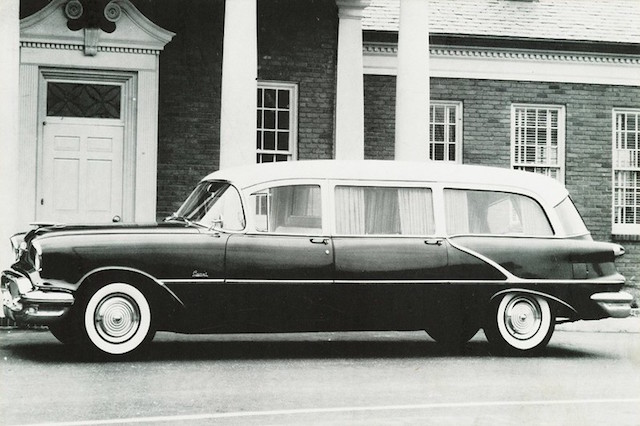
A 1956 Comet-Oldsmobile Funeral Car (credit: Alden Jewell)
Modern Day Hearses
Hearses don’t roll off the assembly line like other cars and trucks. Instead, third-party manufacturers purchase existing vehicles and customize them into the hearses you see on the road. The vast majority of hearses made today are built from Cadillacs and Lincolns.
To begin the process, the car is cut in half and fitted onto a longer chassis, which usually sits closer to the ground than a traditional passenger car chassis. The lower height makes it easier to load and unload a casket. A fiberglass shell is then built to connect the vehicle’s front and back ends. Once the fluid lines and electrical system is reconnected, manufacturers go to work customizing the hearse for casket transportation. This includes adding features such as a long platform in the rear, bier pin plates to keep the casket in place and drapes over the windows. All this work doesn’t come cheap. A new hearse could cost as much as $100,000.
Interested in learning more about cars? Visit our auto history page for the origins of car horns, stop signs and everything in between.
In the early 1970s, a farm named The Berry Patch took root in South Kingstown Rhode Island and became one of the state’s very first “pick your own” strawberry farms. Two decades later, the owner’s daughter Sarah Partyka opened The Farmer’s Daughter on the very same land. This heartwarmingly full-circle moment is part of what makes The Farmer’s Daughter such a special place to visit. That, and its perfectly bucolic setting.
The core values of The Farmer’s Daughter are rooted in sustainable agricultural practices, and they operate accordingly. As responsible land stewards, they recognize that healthy crops and plants stem from understanding the interconnectedness of nature, from microorganisms and pollinators to employing the help of beneficial insects and nurturing healthy soil. The entire range of plants and produce cultivated on the farm adheres to these sustainable farming methods, which explains why their output is so phenomenally stunning, between their fields of flowers to the heirloom pumpkins, squash and gourds of every shape, size and color imaginable.
As if all that wasn’t enough, the farm also features greenhouse upon greenhouse full of plants (think fiddle leaf figs, ivy vines, cacti and everything in between), seasonal home decor (most of which is color-coordinated – a dream!) pottery and so much more. Join The Farmer’s Daughter every weekend in October for the Fall Harvest Festival, featuring hayrides, games, a corn maze and plenty of edible goodies like apple cider doughnuts. It’s one of our favorite things to do in the fall.
If your healthcare plan doesn’t offer dental coverage, or your dental care needs exceed the limits of your insurance plan, you may want to consider purchasing supplemental dental insurance.
Supplemental dental insurance is an individual or family insurance policy purchased separately from a primary dental insurance plan to help pay for fees left uncovered by that main plan. It reduces the money you may have to pay for a variety of procedures, such as root canals, and may help cut the costs of braces, dentures, and standard preventive care, such as teeth cleanings.
AAA members in Massachusetts and Rhode Island can save on dental insurance. Learn more.
Before you go about purchasing supplemental insurance of any kind, find out whether your employer offers insurance benefits for which you qualify and, if so, what those benefits are. Your employer may offer a gold-plated dental plan that will keep your smile bright and your teeth straight for very little cost to you. In that case, supplemental dental insurance may not be worth the price.
While you may be covered by a good dental plan, you still may find it worthwhile to purchase supplemental coverage for a short period. Perhaps, you’re going to need dental implants, or one of your children will need braces. You might want to buy supplemental coverage to span the time it will take to complete those treatments. Or, maybe you’ll decide to keep a supplemental plan from the time your first child is born until the time your last child graduates college and goes off on his or her own.
Supplemental dental insurance policies tend to be broad in scope and variety. They may have no annual spending limits or deductibles, no waiting periods or exclusions for previous dental conditions. You can find coverage for specific items, such as braces, by buying a base policy and adding a rider to cover the cost of all that metal and plastic going into your kid’s mouth – and all those trips to the orthodontist.
Still, you need to do a good job estimating the expected cost of the procedures you want covered so that you can determine what will be cheaper – paying out of pocket as you go, or paying a regular premium for supplemental dental insurance.
Here are questions to ask yourself before you decide:
Is supplemental dental insurance important to me, given my dental history and that of my family?
Do I have primary dental insurance? A good primary plan will make supplemental coverage superfluous.
What does supplemental dental insurance cover?
Supplemental dental insurance comes in a variety of packages. Make sure what you buy is cost-effective.
How do my primary dental insurance plan provider and my supplemental provider coordinate their coverages and payments?
Coordinating benefits will affect how much you pay out of pocket, as well as a task that will require regular monitoring and paperwork on your part.
Are there details in these plans to which I should pay attention? Yes. There may be waiting periods before coverage starts; some plans limit what they’ll cover and how much they’ll spend annually.
Alternatives to Supplemental Dental Insurance
Insurance companies offer discount plans that guarantee members a lower payment schedule in exchange for an annual fee or monthly premium.
Medicare has limited or no coverage for vision, hearing, dental and long-term care, forcing people to purchase supplemental dental insurance absent from their basic policies. For instance, Medicare doesn’t cover routine checkups or dentures.
Low-income Americans can get dental coverage through their state Medicaid programs, which will pay for basic dental services. Otherwise, Medicare supplemental insurance policies – also known as Medigap – or a Medicare Advantage plan can help cover the cost of dental services.
If you or your family needs more dental benefits, either because you have exceeded your plan’s annual maximum or because your plan doesn’t cover a needed procedure, then you’ll likely have specific needs. If you have exceeded your annual maximum, you may want to look at picking up an HMO dental insurance plan, which features no annual limits and no deductibles.
When discussing dental treatment plans with your dentist, you may also ask what insurance options may be available to someone in your place. After all, the dentist office staff has to become an expert in the insurance marketplace to ensure its own bills are paid on time. Don’t hesitate to get your dentist’s opinion or that of the dental office manager regarding which insurance plan meets your needs.
If you don’t have a choice about what dental insurance plan you purchase, don’t panic. You can always fill in the gaps in your coverage with a supplemental dental insurance policy or a dental savings plan.
Click here to see if AAA’s dental insurance plan is right for you.
Oh, there’s no place like boat for the holidays – wait, that’s not right. In any case, a European Christmas market cruise might be the holiday vacation for you.
Christmas markets are a tradition across Europe, and have even spread to the U.S. (Bryant Park’s Winter Village, for example). They can be described as a perfect holiday scene come to life. With handmade trinkets, twinkling lights, the smell of hot cocoa in the air and perhaps some fresh-fallen snow, they’re all the things you’ve read about in storybooks, seen in movies or heard in songs.
One of the most magical ways to tour these markets is on a river cruise, often along the Rhine or the Danube. The slower pace and smaller size of river cruises allows you to travel, stress-free, through the beautiful sights of Europe at Christmastime, as you float from market to market. The best Christmas river cruises in Europe have their own festive events on board, too, like tree-trimming, gingerbread decorating and caroling.
European Christmas Market Hot Spots
Here’s a small selection of some of the most famous holiday market stops that you’ll find on many Christmas cruises.
Nuremberg
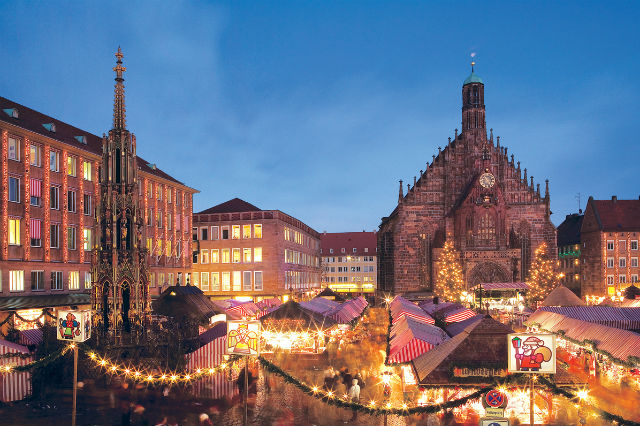
Nuremberg’s Christkindlesmarkt is perhaps the most famous holiday market in all of Europe. Enjoy a classic German Christmas with mulled wine, rum punch, Nuremberg sausages and gingerbread delicacies called “lebkuchen.” Take a ride in a stagecoach, or visit their international Market of Sister Cities. If you have little ones with you, take them to the Children’s Christmas Market, which features a merry-go-round and a Santa Claus house. You can even meet the golden-haired Christkind, a gift-giving Christmas angel.
Vienna
Vienna’s Christkindlmarkt is similar in tone and traditions to Nuremberg’s holiday market. Set against the backdrop of Vienna’s city hall, you’ll find Austrian treats like weinachtspunsch (or spiked Christmas punch). Strap on some skates and take a turn around The Little Ice Dream, the Christkindlmarkt’s very own ice-skating rink. At Christmas World, you can enjoy a carousel, a reindeer train, a Ferris wheel and more. You can also meet Austria’s version of the Christkind, the Christkindl.
Strasbourg
Strasbourg’s Christmas Market has been running since 1570, making it the oldest holiday market in Europe, and the very first of its kind in France. Strasbourg bills itself as “the capital of Christmas,” and it shows – from the amazing lights that line the city streets to the number of giant Christmas trees that appear every year. While you’re enjoying the atmosphere and the roaming Christmas choirs, you can pick up Alsatian beer steins and white Alsace stork toys for the kids.
A treasure to remember your trip by. (Photo: Uniworld River Cruises)
A Few of the Best Christmas River Cruises In Europe
AmaWaterways Iconic Christmas Markets
Sails from Nuremberg to Budapest along the Danube and hits Nuremberg, Regensburg, Passau, Melk, Vienna and Budapest. Sample holiday markets in every city and take advantage of the walking and biking tours that are offered.
Viking River Cruises Rhine Getaway
Sails from Basel to Amsterdam along the Rhine. You’ll visit Basel, Breisach, Strasbourg, Heidelberg, Koblenz, Cologne, Kinderdijk and Amsterdam. Enjoy holiday festivities on and off the boat as you tour through a variety of holiday markets. On board, you can experience live Christmas music and delicious holiday treats.
Uniworld’s Rhine Holiday Markets
Sails from Basel to Cologne along the Rhine. You’ll visit Basel, Strasbourg, Heidelberg, Mainz, Rüdesheim, Koblenz and Cologne. In addition to tours through a myriad of holiday markets, you’ll be treated to wine tastings, cooking classes, art tours and even lessons in European holiday traditions.
Uniworld’s Grand Christmas and New Year’s
Sails from Nuremberg to Budapest along the Danube. You’ll visit Nuremberg, Regensburg, Deggendorf, Passau, Salzburg, Vienna and Budapest. It’s the perfect way to string Christmas and New Year’s together, with visits to holiday markets, glass-blowing workshops, authentic Christmas celebrations, live concerts and so much more.
As you walk into the thick cloud of fog, you can’t see anything at all in front of you … all you can hear are screams. Then, when the smoke clears a little, you see it: A grotesque skeleton monster, its gnarled hands reaching out for you. There’s no escape. The only way out is through. And if you show any fear, the nightmare is only going to get worse.
For those of us who like to be scared – you know, for fun – there’s no better way to do it than at Universal Orlando’s Halloween Horror Nights. This special ticketed event, now in its 32nd year, happens after the theme park closes to regular guests for the day. The sun goes down, the smoke goes up and the terror begins. The event includes 10 haunted houses, with themes like “Stranger Things,” “Chucky,” “The Last of Us” and classic Universal monsters. Plus, there are five walk-through scare zones on pathways throughout the park and a twisted aerial art and illusion theater show called “Nightmare Fuel.”
I go to Halloween events at theme parks across the country, and Universal’s is by far the most entertaining and immersive, with incredibly well-designed costumes, special effects and sets.
In the course of one evening at Halloween Horror Nights, I dodged the stabs of a murderous doll, saw a man sell his soul to the devil, ran through the ruins of Pittsburgh escaping fungus-infested clickers and bloaters, traveled to the Upside Down to save a bunch of kids from Vecna, witnessed a violent exorcism, survived a Yeti attack (several, actually), narrowly escaped being sacrificed by blood-obsessed colonists, trawled the bone-lined corridors of the Paris catacombs, battled an evil wizard, and watched an ordinary carnival clown become an uber-villain right before my eyes.
It was delightful.
This year, the production values are higher than I’ve ever seen them. In different rooms in the mazes, you could encounter cleverly placed mirrors to make it seem like there are endless monsters after you, bursts of air that create the illusion of knives being thrown at you, mists of water meant to make you feel like you’ve just been infected with the cordyceps fungus that ends humanity in “The Last of Us,” or smells that enhance the immersion. In Universal Monsters: Unmasked, we follow the Phantom of the Opera into the catacombs beneath Paris, and smell roses when we reach the flower-laden tombs. In The Exorcist: Believer, the smells are very different, not in a good way.
Not all the Halloween celebrations happen “in the fog,” as Halloween Horror Nights fans refer to the event. The Halloween Horror Nights Tribute Store, a gift shop to end all gift shops, is open during regular park hours and doesn’t require an additional ticket. This year, the immersive multi-room experience is themed to a comic book. Upon walking into McPherson’s Collectibles, Cards & Comics, you are immediately transported to shopping rooms themed to stories in the book – a macabre Victorian cemetery, a film noir detective’s office, a corpse-filled 1950s diner and the bastion of Jack the Ripper.
If you’re a true Halloween Horror Nights fan, you can trace the lore of each room in the store to recurring storylines that appear year after year in the different mazes and scare zones, building on each other to create an entire mythology. There are also fun Easter eggs, like books on display that include the famous crocodile parade float from Universal’s annual Mardi Gras event, and Earl the Squirrel, the mascot of the park’s holiday celebrations.
The mazes are terrifyingly fun, and the “Nightmare Fuel” show features jaw-dropping pyrotechnics and physical feats; this year, like every year, I watched most of it mouth agape, wondering how the performers could possibly pull off what they were pulling off.
The Best Part
But my absolute favorite element of Halloween Horror Nights is the monstrous food the park creates to match the themes of the haunted houses. This year, I tried a spicy pineapple-ham pizza from Surfer Boy Pizza, the same combo that Argyle challenges his friends to “try before you deny” in the most recent season of “Stranger Things”; Dr. Oddfellow’s Carn-Evil Dog, a hot dog on a Funfetti bun with Kool-Aid pickles and bubblegum mustard; and a Peanut Blooder Burger inspired by Universal Monsters: Unmasked, which was a smashburger with peanut sauce and jalapeno bacon on a black “vampire bun.” Unsurprisingly, it didn’t have any garlic on it.
Halloween Horror Nights runs through Nov. 4, but it’s never too early to start planning for next year. Save on Universal Orlando admission with AAA Tickets.
Shimmering leaves, cider doughnuts, hayrides, apples, pumpkin-spiced everything. It’s glorious. But if you’re anything like us, you want to immerse yourself in nature’s finery while it lasts, soaking up every last crimson and ochre-hued leaf before the cold, gray days of winter draw near.
So we’ve put together a list of outdoor activities sure to provide amazing foliage views. Whether you prefer your views with a side of crunchy leaves underfoot, amid gorgeous, salt-scented vistas, or from high up in the trees themselves, we’ve got you covered.
(Photo: THECOG.COM)
Foliage Views by Land
Whether you’re a hiker, biker or rail-bike (more on those later!) enthusiast, the Northeast is packed with options this fall.
Go right to the transcendental source and check out Walden Pond in Concord, Mass. You can wander around the same trails as Henry David Thoreau, while checking out a replica of his one-room cabin, the original foundation and the site of his bean fields. It’s a serene spot to witness nature’s finery – and you don’t have to stay for two years, two months and two days like Thoreau did.
For pure adrenaline and rewarding vistas at the top, scramble to the top of the Beehive in Acadia National Park in Maine’s Mount Desert Island. Traipse through 3 miles of granite stairs and iron rungs and ladders and emerge with stunning views of Sand Beach and the Maine coast. The summit also makes a perfect spot post-hike lunch or snack. Just a warning: It’s not for children or folks afraid of heights. It gets steep in many places.
City-slickers might want to take advantage of Central Park’s fall foliage tree map. It takes you through the most colorful of the park’s more than 20,000 trees, from ginkos and elms to cherries, crabapples, sweetgums, maples, oaks and more.
If you’re looking for something a little different, check out a rail explorer. These pedal-powered bikes on old railroad lines let you see the foliage in a whole new way. Rail Explorers has three locations in the Northeast: one in Portsmouth, R.I., where two trails afford gorgeous views of Narragansett Bay, one in the Catskills that skirts the Esopus Creek and another in Cooperstown, N.Y.
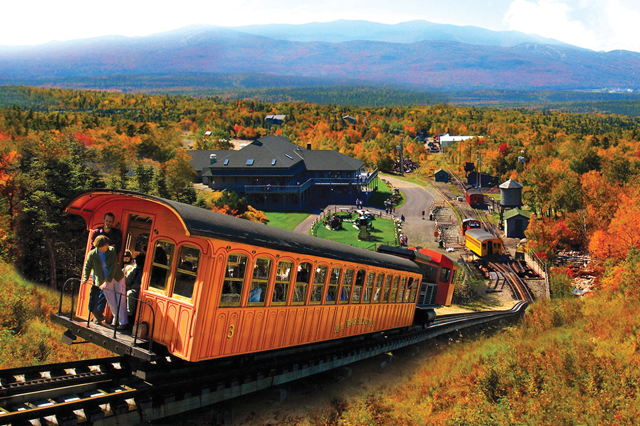
Want more mountain fun? You can’t go wrong with an excursion on the nostalgic Cog Railway, which winds its way up New Hampshire’s Mount Washington. You can choose from a steam-powered train or the more conventional biodiesel. (No extra costs for the stunning views, however.)
(Photo: Justin Cash / Getty images)
Foliage Views by Water
Enjoy your outdoor fall activities with some water views and a mimosa in hand. SeaStreak offers an all-day foliage cruise that follows the Hudson River up to quaint, Cold Spring, N.Y., for an afternoon of shopping, dining and strolling. The cruise is narrated by a professional guide and includes a full-service bar and indoor and outdoor seating.
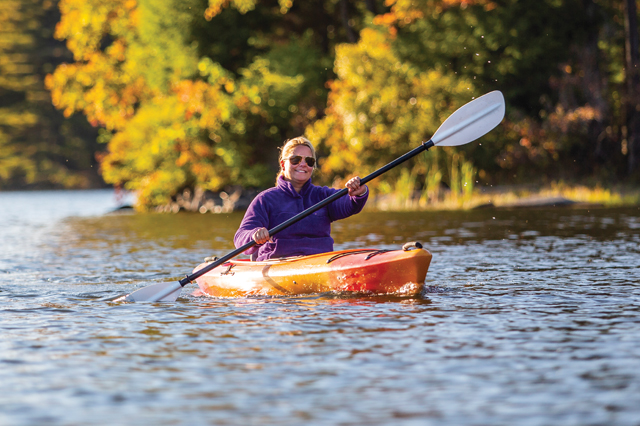
For more active city views, rent a kayak from Paddle Boston and ply down the Charles River. Or take a paddle through Waterplace Park and see the Providence, R.I., skyline from a whole new vantage point with the Providence Kayak Company.
For a nostalgic view of the Connecticut River Valley, combine a steam train ride with a riverboat excursion on the Essex Steam Train and Riverboat.
Or head up north for a historic journey through the Portsmouth, N.H., harbor and inner river area with a Portsmouth Harbor Cruises tour. The cruise takes riders through the industrial waterfront area and historical shipyards before heading to inland estuaries and beautiful views.
Zip through leaves at Zoar Outdoor in the Berkshires. (Photo: Zoar Outdoor)
Foliage Views by Air
If you’re looking for action-packed foliage views, Zoar Outdoor offers fantastic adventure packages in the Berkshires. The Zip & Dip Trip features a somewhat gentle whitewater rafting excursion down the Deerfield River, complete with a stop for a hearty lunch. You camp out in a raised cabin tent for the night (bring a sleeping bag!) and then head out on a zip line adventure through the trees that morning. A weekend spent rafting, camping and zip lining? Pure bliss!
Maybe a hot air balloon is more your style? You’ll find rides galore at Above the Clouds in Middletown, N.Y., where you can soar above the lower Hudson Valley to view the bejeweled trees from up high.
Or get right into the thick of things at the TreEscape Aerial Adventure Park in Vernon Township, N.J. Climb through aerial obstacles, rope walks, zip lines and more, all suspended amid the forest canopy.
What are some of your favorite outdoor fall activities and foliage views? Share them in the comments below.
More than 37 million tourists visit San Antonio every year. With so much to see and do, from remembering the Alamo to seeing the famed River Walk and noshing on delicious tacos, it’s easy to see why the Texas city is such a popular destination. Read on for eight things you must do to truly experience the soul of San Antonio.
Explore the San Antonio River Walk
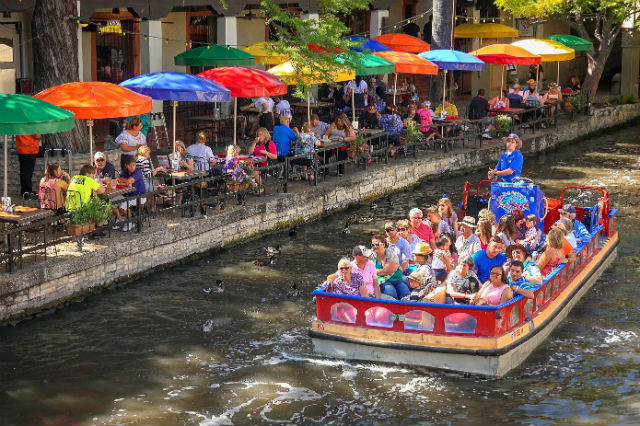
The River Walk in San Antonio is one of the most popular past times in the city and for good reason. The urban sanctuary is lined with shops, restaurants and bars, making it an easy way to spend hours exploring the 2.5-mile long path. Take a ride in a river taxi to discover hidden seating areas, magical water features and some of the best people-watching in Texas, all just one story below the bustling street level.
Tour the Alamo
Get your fill of Texas history at the Alamo, one of San Antonio’s most visited landmarks, where a group of Americans made a heroic stand against a Mexican force in 1836 during the war for Texan independence from Mexico. Included in the San Antonio Missions National Historical Park, which officially opened in 1983, it has been named a UNESCO World Heritage Site. The Alamo is free to walk around, but it’s worth booking a guided tour.
The view at La Cantera Resort & Spa. (Photo: Jeanette Zinno)
Get a Room With a View
Set on 550 acres atop one of the highest and most beautiful points in all of San Antonio, you’ll find La Cantera Resort & Spa, a AAA Four Diamond luxury hotel with 496 rooms, including 34 boutique-style villas. With nine dining options, endless pools, a gorgeous spa and two 18-hole golf courses, it has everything you could want from a vacation. For the little ones, there’s a kid’s pool and a daily camp program. If you’re traveling sans children, opt to stay on Seven, the adults only floor with a separate check-in, lounge and Alexa by Amazon in every room.
Find the Best Taco
Thanks to an undeniable influence from Mexico, San Antonio has some of the best Mexican food north of the border. Go on a self-guided taco tour; there are hundreds of taco stands and restaurants throughout the city from which to choose.
Relaxation awaits at Loma de Vida spa. (Photo: Jeanette Zinno)
Spa Time
Loma de Vida – “Hill of Life” – is a 25,000-square-foot indoor/outdoor secluded destination spa carved into the hillside with dramatic views of San Antonio’s distant cityscape. The spa boasts 15 treatment rooms, separate VIP treatment rooms with old-fashioned Cowboy bathtubs and outdoor showers for a truly Texan experience. Indulge in a tantalizing spa treatment like the Absolute Texas, a two-hour long spa treatment where you’ll be scrubbed, wrapped and massaged with local beeswax, honey and lavender.
Vineyard Visit
Believe it or not, the Lone Star State is filled with a variety of award-winning wineries. While you visit San Antonio, stop at family-run Becker Vineyards. Located in Stonewall, just an hour away from downtown San Antonio, Becker offers tastings paired with cheese and tours of the facility, where you’ll learn about the production process and hopefully get a peek at the heavenly lavender fields. Good news – the tasting room is open seven days a week.
Writer Jeanette Zinno kayaks down the San Antonio River.
Kayak on the San Antonio River
Discover a different side of San Antonio by kayaking down the San Antonio River. Rent a kayak for the day or book a trip through the historic King William District with views of the downtown skyline and old German-style mansions. Paddling this area is relatively easy and suitable for beginners, so you can sit back, enjoy the Texas weather and take in nature.
Dinner time
Led by four-time James Beard Award finalist Andrew Weissman, Signature is a restaurant that highlights the authentic flavor and spirit of Texas Hill Country, all with impeccable Southern service and charm. Local and organic ingredients influence the menu; herbs may be culled from Signature’s own backyard. Enjoy a cocktail on the mezzanine level before dinner and browse global antiques like an impressive collection of Turkish bread boards on which charcuterie is served. If you have a sweet tooth, don’t miss the Hong Kong-style sundae, made from a trio of ice creams, a macaron, pâte à choux pastry and chocolate sauce, all topped with saffron cotton candy.
Would you like to visit San Antonio? What would you like to do or see there? Tell us in the comments.
It’s finally spooky season, and what better way to celebrate than with a Halloween treat that chills to the bone? Or at least one that chills in the fridge.
These awesomely easy dirt cups are a throwback to childhood memories of a ’90s fall, when things were nostalgically simple – including the desserts. These zombie-themed dirt cups are a cinch to assemble and forever a crowd pleaser among kids and kids at heart.
Shop
Getting ingredients for your dirt cups will only take a few minutes. There’s really not much to them, which is part of what makes them so great. To make six to eight dirt cups, you’ll need to grab one 22-ounce container of chocolate pudding (or one box of instant), one 10oz container of your preferred whipped topping, a box of chocolate sandwich cookies, a box of graham crackers and, of course, gummy worms.
To decorate the top of our dirt cups we decided on a zombie theme, which included gravestones, candy bones, plastic spider rings, candy zombie hands and shovel spoons – all of which you can find in our shopping list below.
Your first step towards spooky goodness entails hand mixing your chocolate pudding and whipped topping in a medium bowl. Pro tip: Waiting for the whipped topping to defrost and soften before mixing makes it a lot easier to combine.
Next, transfer the chocolate sandwich cookies into a gallon-size zip-close plastic bag. Use a rolling pin or kitchen mallet to crush the cookies into a gravel-like texture – not as small as crumbs, but no large chunks. Repeat in a separate plastic bag with two packets of graham crackers. These can be crumbed to a sand texture.
Now that everything’s prepped, you can begin to assemble. Scoop about 3 tablespoons of the pudding and whip mixture onto the bottom of your cups, then sprinkle on cookie crumbles followed by the graham crackers. Place your desired number of gummy worms next (we did three for good measure), then repeat the pattern over again until you reach the top of your cup and finish with cookie crumbles. Once it resembles mud, dirt and sand, you’ve done it!
Now comes the most fun part: decorating your dirt cups with zombie accessories. We added gravestones at the top of each cup, followed by a smattering of candy bones and then arranged the candy zombie hands so they looked to be emerging from the depths. Tack on a spider ring to each, and there you have it – a spooky Halloween treat that’s simply to die for.
Watch how everything comes together by pressing play below.
Are these dirt cups bringing back memories for you like they did for us? Tell us your favorite spooky Halloween treat in the comments.
Have you ever wished your vacation could be even more relaxing? River cruising allows you to see the exotic lands you’ve always dreamed of without the hassle of going from hotel to hotel. Simply drift along the river and the sights come to you. Enhanced by culturally authentic experiences and meals, it is truly one of the most laid back and immersive ways to explore.
The newest river cruise ships feature state-of-the-art amenities that will make your next trip even more spectacular. Take a peek at some of the latest vessels from AAA Travel’s preferred lines.
The AmaMagdalena cruises along its namesake river.
AmaWaterways
Cruise Columbia’s Magdalena River aboard the new AmaMagdalena, which offers luxury to each of its 60 passengers. Though it’s an intimate cruise, there’s still plenty of room to move around and enjoy the heated pool, the fitness room and al fresco dining. Or you could lounge on your own private outside balcony as you watch the beautiful views go by.
AmaMelodia is another brand-new ship that sails Colombia’s Magdalena River. Featuring many of the same amenities as its sister ship, the AmaMagdalena, the AmaMelodia can carry 64 passengers.
Ever wanted to cruise the Nile? Now you can on the AmaLilia, debuting in 2024. It’s a magnificent way to explore the sights, sounds and tastes of Egypt, featuring a multi-course tasting menu, locally inspired décor and an onboard Egyptologist.
Sail the Douro river on Uniworld’s newest ship, S.S. Sao Gabriel. The ship features a pool, a lounge, restaurants and luxurious suites with butler service.
Viking River Cruises
The Viking Aton is another great new way to navigate the Nile, with a length of 236 and accommodations for 82 guests. Passengers can enjoy comfortably-appointed staterooms with French balconies and hotel-style beds. The ship’s public areas are built with an attention to light and sightlines. The sun deck has 360-degree views, and the restaurant features floor-to-ceiling panoramic windows.
Ready to go on a river cruise adventure of your own? AAA can help.
About two hours into our first e-bike ride, my wife pulled to the shoulder for a water break and rendered her verdict on the experience: “These do kind of take the ‘suckiness’ out of biking, don’t they?”
At that moment we were astride a pair of e-bikes loaned to us by Priority Bicycles and BMC Bikes, two of the dozens of manufacturers now selling electric road, mountain and special-use bikes. For our first-ever e-bike outing, we chose to ride 20 miles to a local favorite restaurant – a journey that on any other day we would have unquestionably taken by car.
Are e-bikes worth it? That’s up to you to decide.
What It’s Like to Ride an E-Bike
Rhode Island is generally flat, but the particular route we were on was one we had ridden on non-powered bikes before, so we knew it included several uncharacteristically challenging hills that could turn an otherwise pleasant ride into a bit of a slog.
The e-bikes made it easy. Big hill ahead? Click up the pedal assist for a boost that makes the climb as easy as riding on level ground. Lagging a bit on the way home? Let the onboard electric motor do a little more of the work to give your legs a break.
The first thing you need to know about e-bikes: You’re not just along for the ride. Pedaling could still be very much part of the experience, although unlike with a regular bike, you have the option to choose whether you want a little or a lot of help along the way.
“You are able to enjoy your ride with less effort and also ride farther,” said David Gloeckler, senior e-bike product manager at BMC. “It enables you to have a more relaxed and often faster commute, and of course, there are a lot of environmental benefits.”
“A big misconception is that e-bikes are cheating, or that you’re lazy if you ride one,” said Connor Swegle, co-founder of Priority Bicycles. “You still have to put in the work, but you can extend the benefits you get from riding a regular bike. If you take a 500-mile ride by e-bike, not to say it’s easy, but you can enjoy the experience more.” And, as Gloeckler pointed out, riding an e-bike is a far better cardiovascular workout than driving a car.
Not all e-bikes are created equal. Our loaners included one cruiser-style road bike and a hybrid, while electric mountain bikes and bikes designed specifically for urban environments, including commuter and cargo bikes, also help comprise the $43 billion global e-bike market.
Alicia Applegate, general manager of cycle at REI, said that e-bikes can also be a viable alternative to a car for running errands or visiting places inaccessible to larger vehicles; in the RV community, e-bikes are increasingly taking the place of towed cars or motorcycles for exploring beyond the campground.
“E-bikes make cycling accessible to a wider range of people that may be deterred by the effort needed for traditional biking,” said Applegate. “This is really beneficial to those with limited mobility and provides an opportunity for individuals to stay active and engaged with the outdoors.”
How Much Is an E-Bike?
E-bikes aren’t cheap. With prices ranging into thousands of dollars, the cost is comparable to that of a high-end conventional bicycle. And with so many different types of bikes on the market, it takes a bit of research to find the e-bike that best suits your personal needs.
E-Bike Range
On our test ride, I was pedaling along with plenty of battery life to spare when my wife raised the alarm that she was in the red. We managed to get home OK, but the brief scare was a reminder that, as with electric cars, range is an important factor to consider when buying an e-bike.
Ranges of 30-75 miles on a charge are typical. But the battery life can be affected by factors like riding conditions (hills, for example), air temperature, speed, and, of course, how often you engage the motor for assistance.
It should also be noted that improper charging and storage increases the risk of battery fire. Learn how to safely charge and store e-bikes, and how to make sure your e-bike’s battery has the appropriate certifications.
E-Bike Laws and Safety
Legally, e-bikes come in three classes, and it’s important to know which one you’re looking at because states have different rules depending upon which class you’re riding.
Class 1 e-bikes are equipped with a motor that provides assistance only when the rider is pedaling. The pedal assist stops when speed reaches 20 mph; these bikes have no throttle.
Class 2 e-bikes, dubbed “throttle-assist” e-bikes, come with a motor that can be activated using a throttle, even without pedaling. Again, the motor assistance stops when the bike reaches 20 mph.
Class 3 e-bikes provide assistance only when the rider is pedaling, but the motor can aid pedaling up to 28 mph.
We found the user learning curve to be relatively short, but e-bikes have been involved in crashes, including fatal ones. Motor assistance means that you can quickly find yourself riding along at speeds higher than you’d easily attain by your own pedal power, so extra safety precautions are in order.
“Riders should always respect that an e-bike has more power and weight than a non-powered bike,” said Gloeckler. “Every rider should take the time to learn how to brake and handle their bike, especially if they are just starting out, and always make sure the bike and safety gear are in good condition and well maintained.”
“Have a good helmet and wear it,” said Swegle, who also recommends equipping your bike with a bell or horn, front and rear lights (LED lights are typically standard on e-bikes) and a mirror. Some states specifically require e-bike riders to wear helmets, even if they don’t do the same for regular bikes.
Like bicylists, e-bike riders also need to follow the rules of the road. Keep in mind that sidewalks are generally prohibited for bikes except for young riders. AAA recommends that e-bike riders should obey traffic signals, ride with traffic and signal turns. It’s especially important for e-bike riders to yield to pedestrians, who are vulnerable in any crash with a heavier vehicle. And just because e-bike riders can go a certain speed doesn’t mean they should. Drivers and riders alike should follow the speed limit and slow their speeds in school zones and dense urban areas.
State laws about where you can ride an e-bike vary, and some states have different regulations for different classes of e-bikes. “Although e-bikes are allowed on many trails across the country, they still are not allowed everywhere,” said Applegate, who advises checking on restrictions before you head out for a road or trail ride.
Ridden responsibly, an e-bike can greatly expand your perception of what’s possible to do on two wheels – or get you back in the saddle if you previously felt that age or ability had closed the door on cycling.
“Pure joy” is one of the biggest attributes of e-biking, said Applegate. “If you have not ridden an e-bike yet, I would highly recommend trying one,” she said. “It will definitely put a smile on your face.”
Are you considering an e-bike or do you already have one? Tell us in the comments.
Let’s be honest, it’s easy to take our cars for granted. A push of a button, a pull of a lever and a step on a pedal and we can go anywhere. But behind that facade of simplicity is a complex machine made up of many different moving piece. Keeping all those pieces humming along in working order is a primary responsibility of car ownership. Not only does proper car maintenance extend the lifespan of the vehicle, it ensures the car is safe to drive. With this in mind, let’s examine how electric vehicle maintenance compares to that of a gas-powered car.
EVs have fewer parts than gas-powered cars, meaning fewer mechanical pieces that need to kept in good condition and less of a chance of anything breaking or wearing down. Because of this, EVs require less maintenance than their gas-powered counterparts.
The primary advantage of EVs, in regard to maintenance, is the lack of an internal combustion engine. Without this major piece of equipment, there is no need for common maintenance tasks like motor oil changes and engine air filter replacements. EVs also don’t require components such as radiator fluid (although some use coolant for battery management that requires periodic replacement), drive belts, sparkplugs and fuel filters, just to name a few. All of these things need to be inspected and eventually replaced in gas-powered cars.
Another major point of difference is in the brakes. EVs utilize a braking system known as regenerative braking, which converts the car’s forward momentum energy into electricity to power the motor. The system has the additional benefit of drastically reducing the wear and tear of the vehicle’s brakes and brake pads. As such, an EV’s braking system can last longer.
EV Maintenance Considerations
Less maintenance doesn’t equal zero maintenance. EV owners should keep up with their car’s recommended maintenance schedule to prolong the vehicle’s lifespan and keep their warranty intact.
All non-engine related components still need to be checked and, if needed, replaced. This includes tires, windshield wiper blades and fluid, cabin air filter, battery coolant, steering and suspension components, head and taillights and brake fluid. Like all cars, gasoline or electric, your best source of maintenance information comes from the owner’s manual.
EV Maintenance Costs
The convenience and peace of mind that come with less maintenance concerns can’t be discounted. But this benefit also adds up to real dollars and cents. The AAA’s 2023 Your Driving Costs study found EVs cost about 8 cents per mile to maintain, while the average medium sedan costs about 11 cents per mile. And when comparing total operating costs of the two over the course of 10,000 miles, there’s a savings of more than $500 per year.
As we’ve all heard, the cost of owning a car begins when you drive it off the lot. Between maintenance and repairs plus expenses like insurance, registration, taxes, financing and fuel, motorists spend an average of $12,182 each year on their cars. Getting several hundred dollars back in your pocket is no small change.
Salem needs no introduction. Most schoolchildren know that this town, one of New England’s oldest, is inextricably linked with the Witch Trials in 1692. Though it’s this notorious past that puts Salem on most tourists’ radar – especially around Halloween – this charming seaport town has a personality that’s so multi-faceted, you won’t have any trouble finding a wealth of activities year-round to thrill you and your family, from captivating art installations to nature-based sanctuaries. Come discover the many things to do in Salem, Massachusetts.
Green Spaces
Named for its stunning, white oak willow trees, Salem Willows Park is an expansive property. Enjoy the leafy shade, as you stroll on the popular half-mile-long loop trail, take in the views of sailboats moored in Salem Sound and relax on one of many benches or picnic on a grassy mound. (The gazebos are also good places to chill.) A pair of small sandy beaches provide options for either dipping your toes or just enjoying the sun. Although the park is open year-round, their small amusement area with a few rides and games only operates in the summer.
Whether you’re a bird watcher, hiker or biker, Salem Woods will satisfy your craving for nature-based excursions. Bird watching opportunities, including mourning doves, blue jays and northern cardinals are abundant all year, especially spring through fall. Also in fall, you’ll find the park’s red maple trees glorious when their leaves turn a vibrant crimson. If you enjoy rambling, tackle the moderately challenging nature trail that wanders beside wetlands, including a marsh where you might hear spring peepers or other types of frogs. The highest point – 140 feet above sea level – affords views of the Atlantic.
Creative Works
Founded near the turn of the 18th century, the Peabody Essex Museum is considered one of the largest and oldest museums in the U.S. Featuring more than one million objects, this renowned museum is home to diverse exhibits spanning the world’s cultures. It’s no wonder the main building takes up three city blocks! The new wing, which debuted in mid-2019, will delight minimalist architecture buffs with its stone slab exterior and solitary soaring window. Once inside, you’ll want to linger in the fully furnished, 200-year-old upscale family home (Yin Yu Tang) that was shipped from China and reassembled on site. On a decidedly more contemporary note, there is an exhibit spotlighting the chic wardrobe of fashion icon Iris Apfel, noted for her bold colors and sense of whimsy.
The Punto Urban Art Museum is just a 10-minute walk from downtown Salem in the El Punto neighborhood. More than 100 murals splash the facades and alleyways within a three-block radius, bringing visitors to this Latinx neighborhood populated mostly with immigrant-owned emporia. It’s certainly an eclectic collection of images, from the surreal to the cartoonish. Try to find the butterfly with giant eyes and the “magical” cat created from a kaleidoscope of colors. Local, national and international artists have turned this neighborhood into a delightful open-air museum; these creators include Brazilian artist Sipros Naberezny, who portrays his muse, Salvador Dali, as a mask- and cape-wearing superhero (“Super Dali”), and Favio Martinez, hailing from Mexico, who pays homage to Mexican mythology in his boldly hued mural.
Sea Connections
Set along a peninsula that’s connected to Salem Neck and just two miles from downtown, Winter Island Park was once a strategic locale that was the site of Fort Pickering. Today, not much remains of the 17th century ruins, but the Fort Pickering Lighthouse still stands. Waikiki Beach, with its small sandy cove, is a placid spot for sunbathing or swimming. If you bring a kayak, you can launch it from the beach here or nearby Pebble Beach to view numerous coves. Kayaks are also available to rent from Coast to Coast Paddle, which has a seasonal kiosk in Salem Willows.
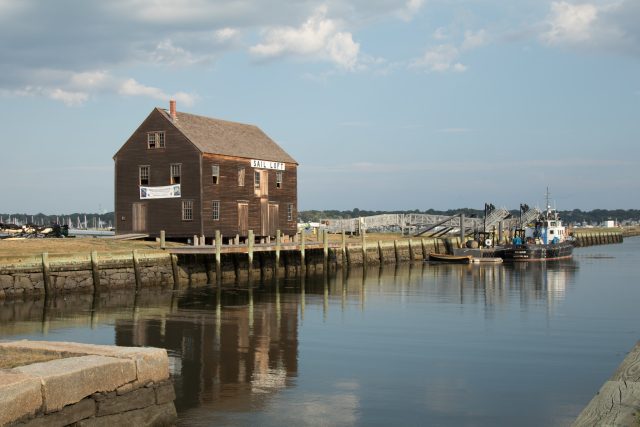
Roam around the dozen historic structures on the nine-acre expanse that makes up the Salem Maritime National Historic Site, and you’ll come away with insights into U.S. and New England’s seafaring history. Along the almost half-mile long wharf, there’s a replica of the 18th century, three-masted tall ship Friendship of Salem. (It’s currently undergoing renovation, but is open Saturdays and Sundays from 12 pm – 3 pm.) Seasonally, you’ll be able to inspect the Georgian-style Derby House, a fine example of a prosperous merchant’s home and one of Salem’s oldest brick edifices. After your visit, check out the garden in back, a recreation of a colonial revival garden with blooms and herbs that would have been available in the 18th century.
Though there’s clearly an abundance of great things to do in Salem, Massachusetts, throughout the year that don’t involve witches, we’d be remiss to omit all of them.
The 17th century dwelling known as the Witch House never actually had any witchy inhabitants, but was the home of Jonathan Corwin, who was intimately connected with the witch trials of 1692-93. As a magistrate, he interrogated several women charged with witchcraft – perhaps in this very house, according to rumors – and later, as a judge, presided over several trials where more than a dozen were hanged. Roam the quartet of fully furnished rooms to examine informative plaques and ephemera on the trials and learn more about the witch trail era, including colonial superstitions and medical treatments. You’ll see a doll known as a poppet that witches supposedly used to curse people and books with recipes involving snail water and other curatives.
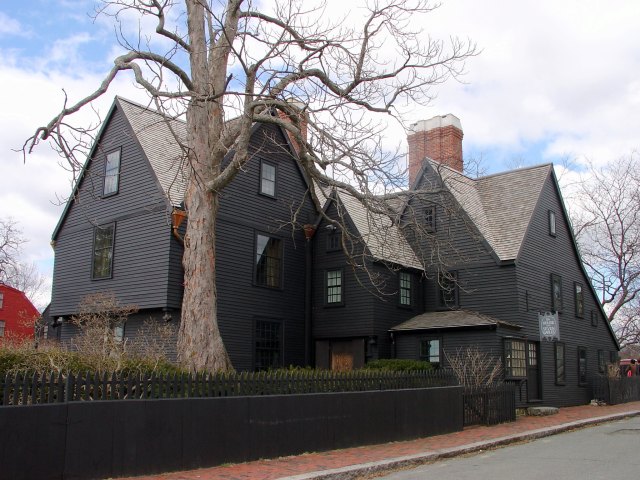
You also won’t want to miss the imposing mansion that inspired Nathanial Hawthorn to pen “The House of the Seven Gables.” Salem-resident Hawthorne visited the home often when his cousin, Susanna Ingersoll, lived there. A guided tour allows you to explore the interior with its steep hidden stairwell to the attic. There have been rumors of some paranormal activities, such as ghosts being seen, heard or felt. But don’t miss the garden with its lovely seasonal blooms, including wisteria, lilacs and roses. Find more literature-themed road trips.
Places to Eat in Salem, Massachusetts
Gulu-Gulu Cafe offers up an extensive, creative sandwich and crepe menu, with all-day breakfast sandwiches, including tofu with vegan cheddar. Why not pair a turkey, cheddar and apple butter sandwich with a craft beer?
Turner’s Seafood at Lyceum Hall is a family-run establishment noted for its fresh fish and seafood. The menu is sizable with all sorts of variations. Order your mussels in white wine and butter or with Dijon mustard and a beer cream broth.
If you’re craving Mexican food, Howling Wolf Taqueria serves up a variety of mega-size burritos. The achiote-marinated tofu burrito with mango pineapple salsa and the shrimp with mango chile puree are especially scrumptious.
Places to Stay in Salem, Massachusetts
The Salem Waterfront Hotel and Suites is conveniently located to most sights in downtown (though few rooms have water views, despite the name). The rooms are simple, yet you’ll be able to rent an iPad and enjoy a heated indoor pool.
Named for author Nathanial Hawthorne, the Hawthorne Hotel is a historic property located in downtown that exudes plenty of antique charm. If you’re into ghosts, numerous paranormal sights and sounds have been reported here.
How much life insurance do you need? The answer is different for everyone. It depends on your life, your investments and your monetary obligations.
Some might say it’s complicated, but such is the nature of a resource that is designed specifically to provide posthumous financial aid to an individual’s surviving loved ones, accounting for oftentimes decades of potential expenses along the way.
The future is impossible to predict, but life insurance asks that you do your very best to anticipate your loved ones’ every need. Think of the people in your life that you want to protect, then consider the income and expenses they would need to take care of if you were gone.
Here are a few important things to consider when thinking about your life insurance coverage needs.
Immediate Needs
Even those who put a lot of effort into planning their future can overlook the immediate financial needs that will follow their death. Expenses may include:
Funeral costs and burial.
Outstanding medical bills, especially if extra medical care is needed in the end.
Once the death benefit is distributed to your beneficiaries, they can choose to allocate the funds however they like.
Annual Income
One of the principal purposes of having a life insurance policy is to compensate for any loss of annual wages that you currently contribute to your household and ensure that your family is provided for. In many cases, you may be the sole breadwinner for your family, or you might share this responsibility with a spouse or significant other who could be thrust into financial strife without your assistance.
To maintain your family’s standard of living and ensure their financial security, you need to scale your life insurance coverage to match your annual income. Naturally, doing this accurately means accounting for years of unpaid wages in advance. If you cannot purchase enough coverage to match this total, adjust your insurance to match your desired annual income needs.
Current Assets
Depending on your financial stability, your family might be facing a financial future entirely reliant on your life insurance coverage. This certainly won’t be the case for everyone, and depending on the premium rates you are able to qualify for, you might wish to account for your other assets and investments.
By calculating the planned return of your asset portfolio, you may be able to save yourself the heartache of unnecessarily investing too much money in your life insurance policy. Sometimes, pumping too much money into your plan can be an overwhelming expense. Be sure that you don’t buy so much insurance that it begins to threaten your long-term livelihood.
Long-Term Expenses
Based on your stage of life (and that of your family members), you will need to plan out your insurance coverage accordingly. Especially if you have a whole life insurance policy, you need to account for not only your family’s lifestyle and survival – including necessities like housing, food, clothing, etc. – but also anticipate any curveballs the future will surely send your way. Coming up with an annual long-term expense figure isn’t a bad start.
As you determine this number, don’t forget to consider the rate of inflation. In addition, if you have children, include education, mortgage and other expenses that you would otherwise have provided for them, allowing you to ensure that they have little to nothing to worry about financially in your absence. Without the benefit of clairvoyance, you might not be able to pinpoint their future needs with 100% accuracy, but you can at least invest enough to cover the inevitable expenses that will arise.
All About Apples: Where to Pick ‘Em and How to Use ‘Em
It's apple-picking season! We've compiled our favorite orchards in the Northeast, plus an assortment of recipes to help you make the most of your bounty.
If you love apple picking, you know there’s nothing like the crisp fall air combined with the sights, sounds and scents of your favorite orchard. You’re probably also well aware that a trip to the orchard often leaves you with more apples than you know what to do with.
We’ve gathered some of the best places to go apple picking near you, plus helpful recipes, so you can find your new favorite orchard and reap the rewards of your harvest to the fullest.
Come for the superb pick-your-own fruits and produce, stay for the annual themed corn maze, horse-drawn hayrides and stocked farm marketplace for all the essentials. A visit to Lyman is one of our favorite fall activities.
Known for their dwarf apple trees that make for super easy picking for folks of all ages, Beardsley’s has been a fall staple since 1849. Between their 16 apple varieties and 13,000 trees, you’ll certainly have your pick!
Who wouldn’t want to pick apples on 42 acres of scenic countryside? At Treworgy Orchards, you can. Since its inception in 1983, the pick-your-own experience has been the main focus, and that dedication makes their apples some of the best in the area.
As a seventh generation family farm, McDougal Orchards specializes in growing only the highest-quality apples. That legacy paired with 346 acres and a beautiful historic home as the backdrop, apple picking here is an unmatched experience.
With just under two thousand reviews to their name, it’s clear that Tougas Family Farm is a steadfast frontrunner for apple picking in Massachusetts, and considering their beautiful grounds and quality of the apples they grow, we’d agree.
As the largest pick-your-own destination in New Hampshire, there’s certainly endless charm at Mack’s Apples, between the whimsical displays across the farm and the sheer enormity of their apple offerings.
If you’re looking for family-friendly, look no further. Masker Orchards allows you to drive right up to the apple trees you want to pick from and have your own picnic among the groves. Doesn’t get more picturesque than that!
What began as a hobby farm and quickly turned into one of the most popular in the state, Sweet Berry Farm offers a plethora of beautiful pick-your-own offerings, including flowers.
After growing fruit trees for over 90 years, it’s no surprise that the team at Barden Family Orchard are experts in their field. Enjoy a huge variety of apples to pick from surrounded by the peaceful surroundings of the western Rhode Island countryside.
At Shelburne Orchards, not only can you pick your own apples, you can also grab some pre-picked from their market or even buy your very own apple tree sapling right on the premises. Talk about a-peel-ing.
Make the Most of Your Apple Harvest
Now that you’ve gathered your goods, it’s time to enjoy! From sweet to savory, we searched the web to find a variety of fun, creative and versatile recipes to try, as well as a few standbys.
Preserving
Apples from the supermarket are alright, but they never taste as good as when they’re freshly picked from the tree. The good news is you can put that flavor into a jar and revisit it all year long. While apples are at their autumn best, cook up a big batch of applesauce or apple butter, then follow the instructions below to learn how to safely can and preserve it.
Make your jarred apple goods now and serve on Thanksgiving. To give as gifts for the holidays, customize with cute labels and dress up by placing a square of patterned fabric over the lid and fasten with a ribbon or twine.
Hot or cold, mulled or plain, apple cider is a seasonal staple. Here are a few more delicious and creative ways to drink cider this season other than straight from the glass. If you’re feeling a bit ambitious, you can even take a crack at making your own hard cider, which is easier than it sounds.
Apple Chips – a naturally sweet snack or salad mix-in. Sprinkle with cinnamon and sugar before baking for extra flavor.
Check out our slideshow to find out which apples are best for whatever you’re making.
For applesauce, soft apples are best. Try Golden Delicious, which are soft and sweet.
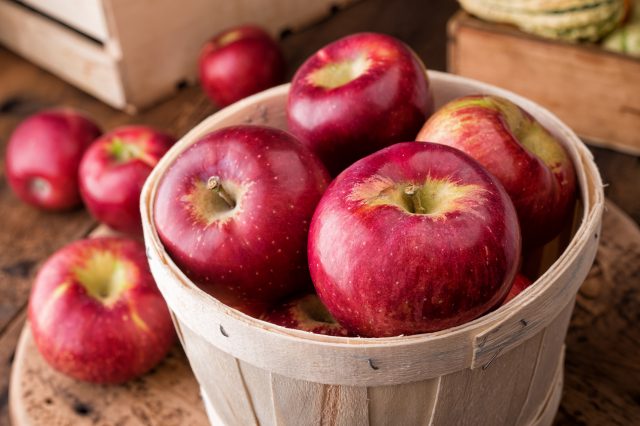
Cortland apples are also a great choice for making applesauce.
If you're making apple cider, try a blend of sweet and tart-flavored apples. For instance, you could pair a sweet Gala apple...
...with a tart Pink Lady.
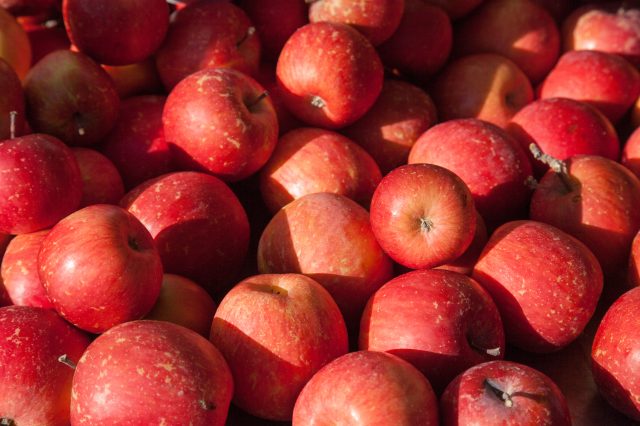
For canning purposes, you'll want your apples to be crisp. Try an apple with a mix of sweet and sour flavors, like Fuji.
Making apple butter? Like applesauce, it's better to work with soft apples like Braeburn...
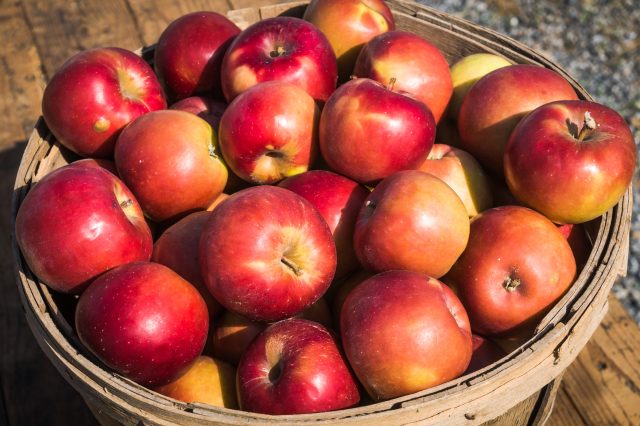
...or McIntosh.
If you're using your apples for baking, make sure to choose hardy apples that won't break down easily during the baking process. Granny Smith, which is tart and crisp, is a great apple for all kinds of baking.
Honeycrisp apples will offer a sweet and crisp bite to your baked goods.
Winesap apples are flavorful and don't break down during the baking process. Their complex flavors will make any dish special.
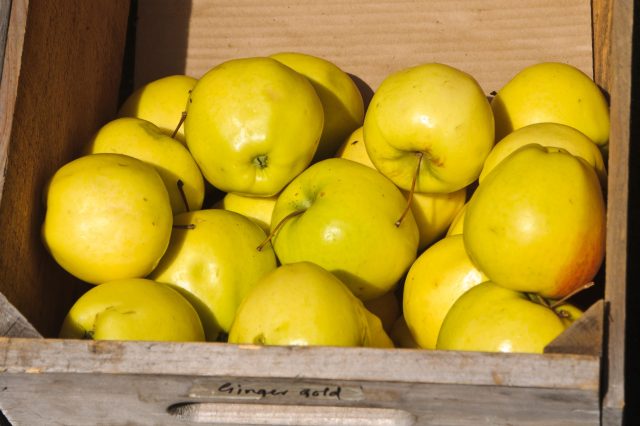
Ginger Gold apples are versatile, sweet-tart and crisp. They also keep their shape in the oven.
More Than Apple Pie
When it comes to desserts, apple pie is king. But because you probably already have a go-to apple pie recipe (even if it’s driving to the nearest grocery store or bakery to get one), we’ve provided an assortment of other apple indulgences. Deep-fried, cinnamon sugar-coated apple fries, anyone?
And since you likely picked up a jug of cider while you were at the orchard, we couldn’t complete this list without a recipe for everyone’s favorite, apple cider doughnuts!
Check out our shopping list below and make sure you have everything you need to start your apple adventure.
Which orchard are you heading to this apple-picking season? What’s your favorite apple recipe? Tell us in the comments below.