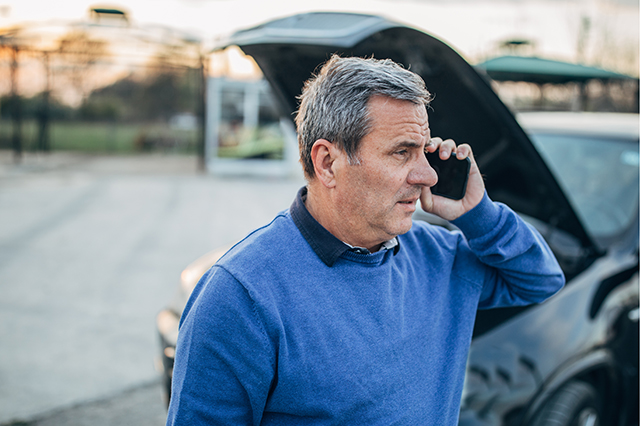
Car insurance scams are illegal schemes that involve drivers, body shops or towing companies who try to cheat the system and make money. Unfortunately, even if you have never been directly involved with an auto insurance fraud incident, all policyholders end up footing the bill through higher premiums.
“Fraud costs. It’s rampant and everybody pays as a result,” said AAA spokesman and Senior Manager of Public Affairs Robert Sinclair.
We’ve put together a list of some of the most common car insurance scams, so you can do your part to combat this widespread issue and avoid becoming a victim.
Auto Insurance Fraud Affects Everyone
Auto insurers lose at least $29 billion a year due to insurance scams, according to the most recent numbers from the Insurance Information Institute. And because it is so common, fraud is accounted for in all auto insurance policies, especially in places where it’s more prevalent.
Insurance companies determine their rates, at least partially, based on losses. So, the more losses – or claims – filed in a specific city or state, the higher premiums are likely to be. Additionally, fraud can slow legitimate claims and, in some cases, present the possibility of physical danger.
Types of Car Insurance Scams
Counterfeit airbags
In these cases, repair shops replace legitimate air bags with cheap knockoffs to save themselves money or, in more extreme cases, fill the air bag area with other materials.
Parking lot scams
If a stranger approaches you in a parking lot, claims to be with an auto repair shop and offers to provide services, whether it’s fixing a windshield or repairing a dent, don’t fall for it. This is nearly always a scam. Once the person obtains your insurance information, they can submit false claims under your policy, which you’ll later have to clear. All the while, these false claims will raise your premium.
Agent fraud
There are several common scams that involve unscrupulous agents. On some occasions, agents have been known to steal premiums outright, pocketing the money and not actually setting up the coverage. Another common fraudulent practice is known as “sliding,” in which an agent slips extra coverage that you didn’t ask for into your policy. This can add a few hundred dollars to your premium, all the while padding the agent’s commission. As always, you can avoid such scams by working with a company you know you can trust for your auto insurance needs, like AAA Insurance.
Staged accidents
Of course, some examples of fraud come from the drivers themselves. In some incidents, known as “swoop and squats,” two drivers collaborate to trap a victim. One person drives alongside the victim, while the second swoops in front of them, stops and causes a rear-end crash.
Some scams are pulled at the scenes of legitimate accidents. Drivers involved in the crash, but who are not at fault, might cause additional damage to their own vehicle to increase the claim. Lastly, be wary if you are in a legitimate crash and someone at the scene attempts to advertise the services of specific repair shops or lawyers. If you give them your information, they could submit fraudulent claims using your name.
Another type of staged accident known as a “panic stop” requires two merging traffic lanes. When one driver attempts to merge into the next lane, he is waved forward by a driver who then crashes into the victim and later claims they didn’t know the victim was going to merge.
Auto premium evasion
These scams involve customers purposefully misleading their insurance companies by providing a fake address from a lower premium area when they register their vehicles. In some other instances, drivers deliberately fail to add a new driver in their household – such as a teenager – to the family policy. These types of fraud are said to cost the auto industry billions of dollars every year.
Other scams
Some other types of insurance scams include filing more than one claim for a single injury, providing incorrect information while getting a quote, buying a policy after an accident has already occurred, filing a claim for injuries unrelated to an accident, misreporting wages lost due to accident-related injuries, reporting higher repair costs than those paid to the mechanic or falsely reporting a vehicle as stolen.
Auto Insurance Fraud Laws
Making fraudulent car-related claims is a crime in all 50 states, although punishments vary state-to-state, and a majority of them have established bureaus to conduct auto insurance fraud investigations.
Fraudulent claims can be either a felony or misdemeanor, depending on the nature and extent of the scam. “Soft fraud” refers to scams when a person exaggerates an existing claim, such as overstating the damages caused by a crash. These types of scams are typically considered misdemeanors. Auto insurance fraud penalties for such scams often include fines, jail time of up to a year, community service or probation.
“Hard fraud” occurs when a person either causes or fabricates a loss for the deliberate purpose of receiving insurance payments. These cases are nearly always considered felonies and result in much stricter insurance fraud punishments, such as incarceration in prison for a number of years.
Although there are likely numerous types of behavior that could prompt an auto insurance fraud investigation, top giveaways include claimants appearing calm and unflustered after having submitted a large claim, handwritten receipts for repairs on a covered item and someone adding to or increasing their insurance coverage before submitting a claim.
Protect Yourself From Car Insurance Scams
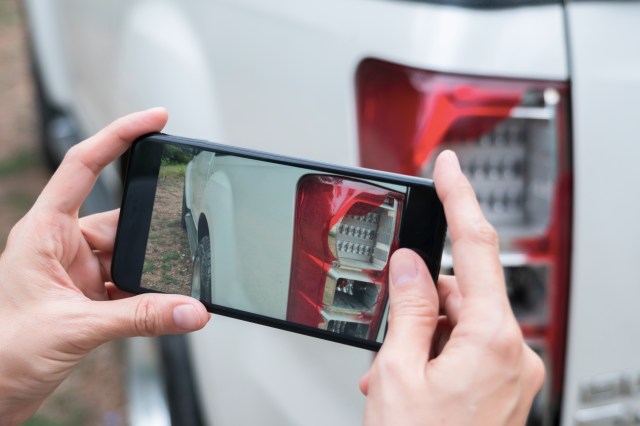
If you are involved in a crash, there are several important steps you should immediately take that can help prevent you from becoming a victim of fraud. One of the best defenses available to drivers is their camera.
“Take lots and lots of photographs – of the other vehicle, the registration and inspection stickers, of the scene, the damage, the license plate,” Sinclair said. “And, if you can, take a photograph of the other driver. Also, have as much insurance coverage as you can afford – and then some more. Get an umbrella policy in addition to your normal vehicle policy.”
At the scene of the crash, it’s also a good idea to take photos of road signs or anything else that can identify the area where the incident took place. Take notes and jot down the name, address, phone number, driver’s license number and auto insurance information of everyone involved in the crash.
A police report helps protect you against people committing fraud who might further damage their own car following the accident to pump up their claim. So, be sure to call 911.
And, as mentioned before, be wary of those who immediately appear after a crash and attempt to be helpful by advising you to take a particular service provider, whether it’s a towing company, doctor, attorney or auto body shop. Never sign a blank claims form.
Lastly, contact your auto insurance carrier immediately after the crash, regardless of whether you believe you’re at fault. Don’t admit fault to anyone at the scene.
It used to be one was the loneliest number at sea – and you paid a price for it! But today, solo cruising has never been more welcoming or affordable.
The solo cruising trend started making waves years ago, but post-pandemic it turned into a tsunami. Modern sensibilities coupled with an urge to see the world without delay, even if that means going it alone, have altered the horizon for travelers who rightly view cruising as an easy way to strike out on a solo trip. Embracing the trend, cruise lines have responded with new-builds and retrofitted ships to accommodate solo passengers.
Bear in mind, a solo cruise isn’t the same as a singles cruise. Those embarking all by their lonesome aren’t necessarily looking for love. In fact, many are married, so it’s a misconception to even assume solo cruisers are single. The trend also spans different age groups.
However, aside from wanderlust, you can count on one common denominator among travelers: Nobody likes the dreaded “single supplement” – cruise lingo for the surcharge an individual incurs when occupying ship cabins traditionally built for two paying passengers. This fee can be as much as 100% of the per-person fare, which basically amounts to solo cruisers footing the bill for phantom cabinmates. For some, it’s a gangway bridge too far.
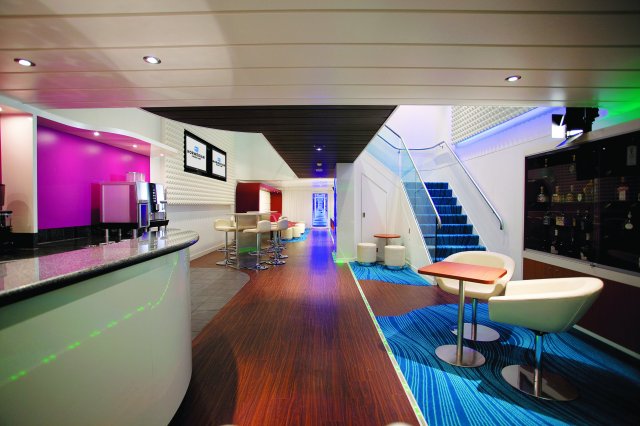
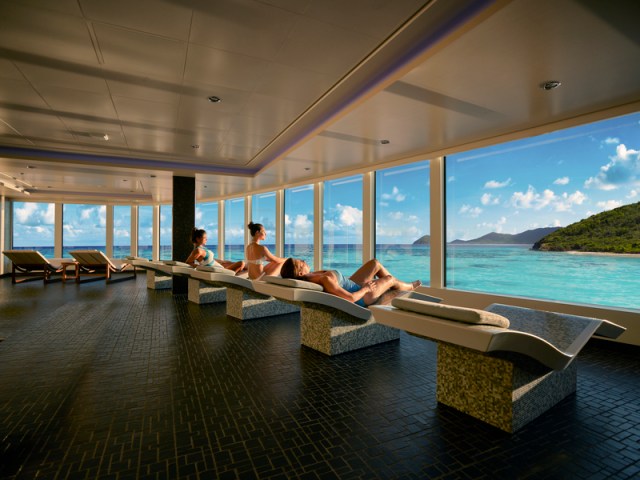
Solo Lounge on Norwegian Epic.
Norwegian Solo Cruises Set the Bar
Norwegian Cruise Line deserves kudos for recognizing the solo trend early and doubling down on it. All the line’s latest ships feature a complex of studio cabins purpose-built for solo cruisers, alleviating the need for single supplements. Equally noteworthy, the cabins are clustered around an exclusive, key-entry Studio Lounge that provides a social gathering place for solo cruisers and perks such as complimentary snacks, cocktail hours and a host to help organize activities.
For solo cruisers concerned about feeling left out or lonely, the setup delivers a surefire safety net. Plus, the studios’ chic design (think mood lighting, integrated furnishings and smart storage) adds a certain cachet. These are thoughtful spaces, not throwaway areas with individual cabins squeezed in. Still, all studios are inside accommodations (some with corridor windows or virtual portholes that reveal exterior views via LED screens). And, they always sell out fast.
The popularity of its studios prompted Norwegian to up the ante this year with the introduction of solo staterooms, including ocean view and balcony categories, across its entire fleet. When announcing the new options, in addition to its own data, the cruise line cited mind-blowing stats, including a Radical Storage study reporting a 267% increase in online searches for “solo travel” between 2020 and 2022.
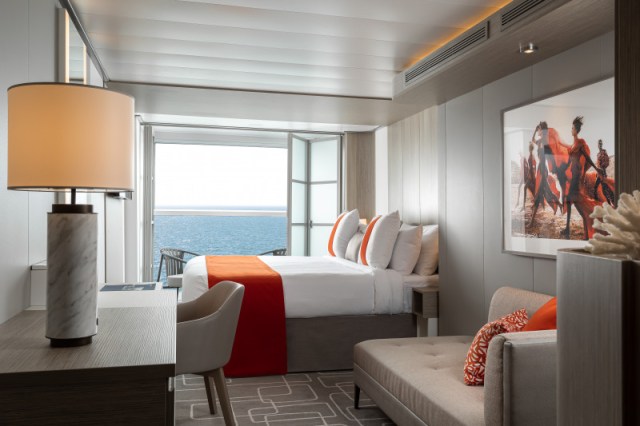
Infinite veranda on Celebrity Beyond.
More Cruise Lines With Solo Cabins
Norwegian isn’t the only line rolling out the welcome mat. Cunard used a multimillion-dollar refurbishment to add solo staterooms. Most adorn its flagship, Queen Mary 2, which sails regularly from a local homeport in New York.
Holland America prides itself on a hospitable record concerning solo cruisers, pointing to inclusive activities (even soirees with professional dance partners) and now purpose-built solo cabins on the newest pinnacle-class ships.
Celebrity boasts a perfect upward graph for increasing solo spaces, some sporting the line’s innovative “infinite veranda” (a retractable wall-to-wall window that transforms the entire living area into a veranda).
Elevating the luxe quotient, Oceania’s latest ships feature perk-laden, concierge-level solo veranda staterooms. Oceania also added solo staterooms to four older ships.
Even family-focused Royal Caribbean touts solo cabins. Some connect to standard staterooms, producing a perfect granny-suite. Princess jumped on the trend, too. Sun Princess, which launched this year, is the first in its fleet designed with solo cabins.
Riverboats rarely contain solo cabins, but American Queen Voyages does offer a few. On the other hand, riverboats, expedition vessels and luxury lines tend to be the best bet for reduced or even waived single supplement deals. Usually, these smaller ships also provide included shore excursions, always a great way for solo cruisers to safely explore destinations with others and bond over the shared experiences.
The spa on the Norwegian Bliss.
The Perks of Going on a Cruise Alone
The crux of cruising’s appeal to solo travelers is that it delivers the best of both worlds. You can travel independently, but amid the security of a larger group. The cruise line handles logistics, so the ship becomes a familiar touchstone while discovering unfamiliar destinations. Once you pick an itinerary. They facilitate the big stuff, and you fine-tune the experience.
Since you’re traveling solo, that means consulting a party of exactly one … you! No negotiating different schedules and opinions when deciding what to do. Enjoy guilt-free freedom to pursue personal interests, try new things on a whim or just do nothing at all. The independence can be self-enlightening.
Onboard, dip in and out of activities. Looking for sublime me-time? Enrichment lectures, spa treatments and endless sea-gazing await. Want more interaction or maybe a thrill? Join classes on anything from mixology and music to yoga and scuba diving. Or, on the biggest boats, try skydiving, go-kart racing, ziplining and more. Along the way you’ll meet like-minded passengers if you’re interested in socializing.
Cruising even makes dining – a stressor for some solos – easy. While you can opt to eat alone, both traditional dining (at an assigned table with the same people at the same time every night) and anytime dining (at whenever, wherever, with whomever) allow you to sit with others. Simply ask to join a large table. Plus, some specialty restaurants promise a communal vibe. You’ll find chef’s tables, teppanyaki and meal experiences that unfold like shows. For example, Celebrity’s Le Petit Chef utilizes 3D table animation to take diners on a culinary romp. Many lines facilitate group tables for solo cruisers, too.
Usually there are solo meetups and some solo-specific programming, such as a group pub crawl. Technology has eased the way for solo cruisers as well, with online forums to connect passengers prior to departing.
A solo cruise can be deliciously self-indulgent and so rewarding. You’ll feel empowered, having conquered a bit of the world on your own. If you’re unsure at first, don’t fret. Cruises are friendly. You’re on a one-of-a-kind experience, but you’re all in the same boat.
Did you know your AAA membership grants you access to your own travel team? Plan your cruise with the help of a trusted AAA travel advisor. Call 866-423-5585 to start planning today!
These web-savvy travelers are prepared with pinpointed destinations, detailed itineraries and a padded budget. Try these tips to help you find your own adventure that way too.
Millennial travelers know what they want when it comes to travel, and they aren’t afraid to scour the web for the best options, itineraries and deals to get where they want to go.
Keen to explore new countries and experiences with their extended families, including young children and older parents, these mature travelers (ages 28 to 43) with financial security don’t flock to trendy destinations because an influencer told them to. Rather, their curiosity, convenience and personal interest guide them to curate meaningful travel on a mission. And most likely, those destinations are abroad.
AAA travel advisor David Murcko, a world-traveler since childhood, says travel is very personal, so it just depends on the client, what they happen to need in the moment and their travel companions.
These are his top insights for millennial travelers who want to get away this year or – better yet – plan for next year.
Unique Destinations
The easier a destination is to access – including one or two flight layovers – the more likely millennials are to go there, Murcko said, unless “they have been saving up for a special occasion, like a graduation. Then, they say, ‘let’s go to Europe.’” Recently, Murko has found Italy, Croatia and Ireland to be some of the most popular getaways. While he highly recommends Romania and Hungary, destinations in Southeast Asia are also on the top of his list, including Vietnam and Thailand.
The Caribbean is also a hot spot for this age group seeking a carefree beach escape, while he has recently booked trips to far-flung destinations like a couple’s getaway in Japan, a honeymoon in Bora Bora and family-friendly school vacations to Walt Disney World.
“Travelers from the U.S. want to explore the country [they are visiting],” Murcko said. “I just recently helped someone who is following Taylor Swift, and they were looking at ideas, itineraries and stuff to do around Dublin.”
Millennial travelers are independent, knowledgeable with technology, and start their research as much as six months in advance, according to the analytics firm Morning Consult. So, by the time they find travel advisors like Murcko, they have their plan in place and need help tweaking and confirming final arrangements.
“I’ve had people come in with an idea, they had done research on their own, but they had too much, and they just wanted to brainstorm,” Murcko said. “It’s like they needed that assurance of, ‘Does this sound good? Have you been here?’ that sort of thing.”
Be FIT or Go Guided
Foreign Independent Travel (FIT) is the traveler’s version of DIY, where the traveler books everything themself. They select the flight, hotel, car rental, insurance and build their own package a la carte, Murcko said.
With a guided trip, however, there’s a set itinerary where the transportation and hotels are all built in and booked by an agency.
“I think what people in this age range don’t like about guided travel is the misconception that there’s no free time, which is definitely not the case. They always schedule free time for guided trips,” Murcko said. He took a guided tour in Turkey earlier this year and would recommend it whole-heartedly.
“You usually have a few hours to yourself, and you do what you want,” he adds. “Go get lost, do whatever.”
Taking Their Time
Whereas younger Gen Z travelers hop on a plane for a long-weekend trip to appease their wanderlust and maintain their modest finances, Millennials do not travel in short bursts of time. And while they are budget conscious, they are willing to spend on the ideal vacation that hits all their points. They arrive in a single country, stay for a week or two and settle in. They will try to learn about the customs and culture, and if they already speak some of the foreign language, they will try to improve their fluency while abroad.
“Millennials are not traveling to different areas, but they just stay in one place and explore, get to know some of the off-the-beaten-path stuff. They don’t hit the tourist traps. They want to see more of the culture, the history and not necessarily where everyone else goes,” Murcko said. “I always tell people, ‘When you go to a place, try to learn the culture, try to learn the customs, try to speak the language if you can.’”
Plan your next vacation with a AAA travel advisor. It’s a free service included with your membership, so take advantage!
Strong demand for home heating oil and new, tougher U.S. sanctions against Russia — the world’s second-largest oil producer — pushed crude prices up 2% last week to levels not seen since mid-August. Oil prices have risen for four straight weeks, which has led to gasoline prices in commodities markets jumping by nearly 8% over the past month.
Adding to the upward momentum is demand for both oil and gasoline. Last week, crude inventories fell by 2 million barrels to 412 million barrels. That’s 17 million barrels below last year’s figure and far below the five-year average of 440 million barrels, according to the Energy Information Administration (EIA). Meanwhile, demand for gasoline was higher than the comparable weeks of 2021 through 2024, surprising some market watchers who expected lower figures due to snow and cold, which typically suppresses demand.
The rise in pump prices is being tempered somewhat by strong inventories of gasoline. The EIA reported another large build in gasoline inventories last week as refiners maintain high output through the winter. Supplies were up 5.9 million barrels — the third straight week of inventory builds above 5 million barrels — and inventories have risen by 36.7 million barrels since mid-November. In the Northeast, gasoline stockpiles now stand about 500,000 barrels above the five-year average.
“The price for a gallon of gasoline can fluctuate week-to-week on supply and demand factors, geopolitical developments and the weather,” said Jillian Young, director of public relations for AAA Northeast. “But ultimately, the price for a barrel of crude oil is the leading indicator for gas prices.”
AAA Northeast’s Jan. 20 survey of fuel prices found the current national average up 6 cents from last week ($3.06), averaging $3.12 gallon. Today’s national average price is 7 cents higher than a month ago ($3.05) and 4 cents higher than this day last year ($3.08).
As of Jan. 20, Mississippi and Texas had the lowest prices in the nation at $2.68 and $2.71, respectively. Hawaii and California held the highest prices in the nation at $4.53 and $4.45, respectively.
The AAA Gas Prices website is your resource for up-to-date fuel-price information. Search for average gas prices on national, state and metro levels by regular, plus, premium and diesel.
With temperatures expected to dip into the single digits this week, homeowners across the Northeast might be worried about the potential for winter-related damage to their properties – and rightly so: In 2022 alone, cold weather and winter storms caused nearly $6 billion in insured losses in the United States, according to the Insurance Information Institute.
The most common types of insurance claims related to severe winter weather include frozen pipes, ice dams building up along roof edges, damage from falling trees and limbs and even house fires.
Fortunately, a few preventive measures can reduce the risk of a winter catastrophe, starting with a review of your existing homeowners insurance policy to ensure any potential disaster is covered. Water damage from a leaking pipe or an ice dam that sends water through the roof may be covered by a typical homeowners policy. But flooding caused by other events, such as rapid snow melt, may require a separate flood insurance policy.
“‘Winter storms are not typically thought of as natural disasters, but they can cause significant damage in the Northeast,” said Greg Smolan, vice president of insurance operations for AAA Northeast. “Taking preventive measures will help minimize the risk associated with winter weather.”
AAA Insurance recommends that all homeowners take these steps to effectively winterize their homes for safety and to avoid costly repairs:
Clear gutters and downspouts of debris to allow melting snow and ice to flow freely. To help prevent ice dams from forming, keep the attic well-ventilated and the attic floor well-insulated. Heat tape may also help prevent ice buildup and can facilitate melting.
To prevent pipes from freezing and bursting, insulate exposed pipes, seal cracks in outside walls near pipes, keep cabinet doors on exterior walls open and keep a slow trickle of water flowing through unprotected pipes during cold spells.
Know the location of the main water shutoff valve: If your pipes freeze, the faster you shut off the water, the better chance you have of preventing them from bursting and causing major damage.
Ensure your heating system is up to snuff by having the furnace, boiler or chimney serviced at least once a year. Be sure to have ducts, vents and filters inspected.
Check your smoke and carbon monoxide detectors: Residential fires and carbon monoxide poisonings increase in the winter as people rely on indoor fires and heating systems. Detectors should be checked at least twice a year.
Follow all safety guidelines when using supplemental space heaters to prevent electrical fires or fires caused by the placement of heaters too close to flammable materials.
Trim trees and remove dead branches: Ice, snow, wind and rain can cause weak trees and tree limbs to fall and damage your car or home – or fall on people walking on or near your property.
Clear your driveway and walkway of snow as soon as possible to prevent slips and falls.
Winter in New England brings many things, but usually snow and more snow. It’s no wonder it’s a hot spot for cold-weather enthusiasts looking to ski and snowboard. And while the Northeast as a whole is a popular hub for winter fun, there’s one area so chock-full of activities and quintessential New England charm that it should not be missed.
North Central Massachusetts, a scenic region covering over 800 square miles with 27 communities and three cities, is not only home to New England’s most accessible ski resort, but it’s also an area known for its farms, wineries, festivals, art scene, family entertainment and more. No matter how you like to spend your winter downtime, you can find it here.
Discover all that’s in store for you in North Central Massachusetts.
Skiing and Snowboarding
Whether you’re a seasoned skier/snowboarder or a novice just learning the ropes, Wachusett Mountain is an ideal place to go to experience some wintery fun. Glide down the mountain’s 27 snow-packed trails, hone your skills on the racing course or simply enjoy an après ski treat (more on that later) – the choice is yours.
Children and beginners have many options when it comes to learning how to ski or snowboard at Wachusett. Lessons are held for all ages starting as young as four years old, in addition to the option of private and adaptive lessons that cater to an individual’s specific needs. Need some new gear before you take off down the slopes? Not a problem. Wachusett’s MTNside Ski & Ride shop offers gear, apparel, accessories and fun Wachusett logo wear that you can proudly sport back home.
After all your exertion on the slopes, there’s nothing better than a warm meal and a cold drink. You’ll find everything from hot cider and coffee (at the Bullock Lodge) to casual pub fare (Black Diamond Restaurant), sandwiches with a view (O’Brian’s Deck Bar & Grill) and local craft beers (Coppertop Lounge), all at your fingertips within the Wachusett resort.
If you prefer a slower-paced winter activity, winter hiking and snowshoeing opportunities can be found all around North Central Massachusetts, like at the breathtaking Wachusett Mountain State Reservation or Leominster State Park a bit further north. Check out the Massachusetts Audubon Sanctuary, as well, for a chance to spot some of the many protected local species of mammals, birds and insects.
Ice skating fans have a plethora of skating locations in and around the North Central Massachusetts area to choose from. From outdoor lakes in Barrett Park and Leominster State Park to the indoor Veteran’s Ice Arena and Gardner Veteran’s Arena, there’s no shortage of chances to lace up those skates.
Those seeking to go ice fishing will find the perfect spot over at Asnacomet Pond where trout run abundant.
Family Entertainment
North Central Massachusetts specializes in family fun. At Great Wolf Lodge, your group can enjoy the excitement of a water park in the middle of winter, play a game (or several) of mini golf, rock climb, Build-a-Bear and so much more.
If you’re not looking for an overnight stay, there’s the popular FunStuf PlayAway, an indoor playground with lots of games, inflatable slides, a photo booth and even a giant keyboard, a la the movie “Big.” Launch Family Entertainment in the city of Leominster offer fun for all ages, including bowling, trampoline dodgeball, VR games and more. Or visit Cornerstone Ranch for a charming horse-drawn sleigh ride through the snow (open all winter long through March).
Art, Music, Culture and Entertainment
Head indoors to enjoy all kinds of fine art at one of the region’s museums. Try the Fitchburg Art Museum where the first Thursday of the month is free for everyone, or the Fort Devens Museum in Devens, a welcoming place for Veterans and their families to gather, remember and share the stories. Other great choices include the The Icon Museum and Study Center (housed in a 150-year-old gallery space that includes a terrace, tea room and performance facilities), Gardner Area League of Artists and the Winchendon History and Cultural Center, a supposedly haunted location where you can actually investigate for ghosts!
If you’re lucky enough to be in town for a concert at the Groton Hill Music Center, this nonprofit educational center is the perfect place to enjoy some of the best performances in the state, including headliners like LeAnn Rhimes and classical shows including the Vista Philharmonic and Yefim Bronfman.
Food and Drink
Arguably one of the best parts of any trip is the great food and drink you get to enjoy as you explore. From fine dining restaurants to family-friendly options, North Central Massachusetts boasts an abundance of culinary experiences.
It’s easy to work up an appetite while touring the region’s 27 cities and towns. If you start to get hungry while hiking, shopping and museum-hopping, you’re in luck! For lunch, there’s wood-fired pizza, deli sandwiches, familiar fast food options and more. And when you’re ready to relax and dine in style, options range from classic Italian to Brazilian steakhouse.
Beer lovers won’t want to miss some of the best breweries in Massachusetts. Try Wachusett Brewing Company for seasonal draughts like the Frosty Day IPA (fruity and citrusy) or the West Coast IPA (citrus and pine hop). Or visit Thirsty Robot Brewing Company, a microbrewery that specializes in imaginative and flavor-driven small batch beers and New England IPAs.
At Hardwick Vineyard & Winery, the award-winning wines are a winner with the public, as well. Enjoy a glass of Enfield Apricot, Hardwick Honey, Chocolate Raspberry or even Valley Asparagus.
For a quick snack, stop for an apple cider doughnut at one of the many local farms, like Red Apple Farm, Carlson Orchards or Bolton Orchards.
Upcoming Events
Whenever you visit, there is always something fun happening in North Central Massachusetts. Check out the events calendar for trivia, live music and more.
Start planning your North Central Massachusetts trip today.
Funded by the Massachusetts Office of Travel & Tourism.
If your idea of the perfect winter trip is a mountain full of fresh snow to play on, then this is the list for you. With challenging high peaks for the experts and bunny slopes and lessons for beginners, plus snow tubing, ice skating, cozy lodges and other fun winter activities, these are some of the best ski resorts in the Northeast for an action-packed cold-weather day trip or weekend jaunt with your crew.
Featuring 20 trails and four terrain parks, there’s plenty of snowy fun to be found at Powder Ridge. For those new to skiing or snowboarding, the designated beginner area is a great place to learn. Group and private lessons are available and they specialize in working with kids as young as 3-5 years old. For more family time, the resort also has snow tubing, snowbike lessons and rentals. After you’ve worked up an appetite, enjoy a meal at the on-site restaurant Fire at the Ridge, which often has live music.
The highest ski area in Connecticut, Mohawk Mountain’s range of options helps it to stand out as one of the best ski resorts in the Northeast. Twenty-six trails challenge all skill levels, while a broad range of programming is offered for those just starting out, including Snowhawk children’s classes (ages 5-12). Mohawk’s option to reserve equipment online in advance is an extra benefit that will get you onto the slopes faster. When you need a break, cozy up with your clan at the base lodge. Dining and lodging are located on the property.
Part of New Hampshire’s scenic White Mountains, Bretton Woods is consistently ranked as one of the best Northeast ski resorts with 63 trails, 35 glades, 10 lifts and two freestyle terrain parks. They also offer family-friendly activities like horse-drawn sleigh rides, tubing, ice skating, guided ski and snowshoe tours, Fat Bike rentals and a zipline canopy tour. And with night trails open for skiing and snowboarding, the fun doesn’t end when the sun sets.
Once you’ve worked up an appetite, there are several on-mountain dining options, plus more within the nearby White Mountain lodging accommodations, including the stunning AAA Four Diamond Designated Omni Mount Washington Hotel.
Only two hours north of Boston, Loon Mountain is a convenient choice for your next winter day trip. Loon Mountain features 403 skiable acres, 73 trails and six terrain parks covering all skill levels, to deliver the excitement and challenges that your snow-loving family craves. For even more fun, there’s ziplining, cross-country skiing, snow tubing, ice skating, snowshoeing, private and group lessons for all age groups and New Hampshire’s only Superpipe. When it’s time to wind down and warm up or grab a quick bite, there are a number of on-mountain dining options and restaurants to choose from.
Home to dozens of trails, a snow tubing area and a designated learning center, Campgaw Mountain ski area is ideal for beginners and experts alike. With numerous learning programs for children ages 4-18, your child will receive instruction targeted to his or her age and skill level.
If you prefer your skiing experience to be (a little) more horizontal than vertical, High Point offers cross-country skiers and snowshoers access to a combination of 14 miles of trails tailored to all abilities and age brackets. But don’t think you won’t be experiencing an altitude rush – living up to its name, High Point is the highest point in the state. Open based on conditions, so be sure to call ahead.
Check out some of the 167 acres dedicated to freestyling at the resort’s terrain parks, or explore ski trails covering four peaks, all of which are open for night skiing. If indoor activities are more your speed, check out the resort’s seven dining and nightlife options, or hang out by the fireplace at the Appalachian lodge.
From small hills to steep drops like Catapult, Catamount’s signature double black diamond trail (and one of the steepest in the Northeast!), there’s something for everyone on this diverse network of slopes in the Berkshires. Of the 44 trails and park areas in this top ski resort, there are 10 black diamond and double black diamond trails, two terrain parks and night skiing. If you’d rather take it easy, the Snow Sports school is perfect for kids and first-timers. Catamount offers private and group lessons starting at age 3. After you’ve worked up an appetite, there are several on-mountain dining options and a café to satisfy your stomach rumblings, as well as nearby food and lodging.
Trying to convince a friend or family member that he or she would be a natural on the mountain? With the purchase of an all-day lift ticket, Mount Peter offers a free beginner ski or snowboard lesson every weekend and holiday. Family lessons are also available. And if you’re looking to get your little one primed for those black diamonds, the KinderLand program introduces kids 3-5 to the slopes. Round-trip bus transportation is available from several points in New York City, making it an easy day trip if you don’t have a car.
Featuring 45 trails and three terrain parks, all skill levels will feel welcome at this ski resort in the Berkshires. Jiminy Peak is known as one of the best ski resorts in the Northeast for its lessons, especially the full- and half-day skiing and snowboarding programs for children. When the family is not gliding down the ski trails, don’t miss the mountain coaster, which twists and turns through the woods at speeds of up to 23 miles per hour!
Another major selling point is Jiminy Peak’s Country Inn, a ski-in, ski-out, all-suite lodge, offering reasonably priced accommodations. Vacation homes on the resort property are also a great option for larger families. Dining includes restaurants and several stop-ins where you can grab a bite or warm drink and enjoy the views.
Made up of more than 1,000 acres, featuring 162 trails and glades and on-site lodging options, Sugarloaf is the biggest ski area in New England. The trails and six terrain parks range from easy to expert, and there are group and private program options for adults and kids alike. Take a private family lesson or enjoy tubing, ice skating, snowshoeing and snowmobiling with your group. At the resort’s Anti-Gravity Complex, you’ll find even more fun stuff for the young ones, including an indoor skate park, trampolines and rock climbing. A number of dining, lodging and nightlife options are available at the resort and nearby.
The Maine sister resort of Sugarloaf, Sunday River is almost as big and just as enjoyable. With eight peaks for varying skill levels, five terrain parks, lessons for kids and adults, family-friendly shows and kids-only events, nobody has a chance of getting bored here. There are three places to stay on the property, as well as on-mountain condos, all of which boast great ski-in, ski-out locations. There are also many on-mountain dining options, plus more in the nearby town of Bethel.
Peaking at an elevation of 1,543 feet, Blue Mountain in Palmerton, Pa., provides winter adventurists with access to 40 trails. With snowmaking equipment blanketing 100% of the trails, Blue Mountain is the perfect destination when Mother Nature just hasn’t been carrying her weight. With local lodging and nearby dining locations, it’s one of the best ski resorts in the Northeast.
If you’re looking for the full resort experience, Camelback Mountain in Tannersville, Pa., is certainly one of the best Northeast ski resorts for families. You’ll leave wondering how you ever went skiing before without access to an indoor waterpark, paint-your-own pottery studio, mini-golf course and laser tag arena. All this, in combination with lodging options ranging from one-bedroom suites to lofts accommodating up to 12 of your closest friends and relatives, six dining options and a spa. When you’re ready to hit the powder, jump on one of lifts providing access to 39 trails, all of which are lit for night skiing.
Your next snowy family getaway is in the heart of Vermont’s Green Mountains at Okemo. In addition to 121 trails and six terrain parks (home to the East’s longest Superpipe), there’s the convenience of nine different slope-side accommodations to stay the weekend. Ski lessons are available for all skill levels looking to learn or improve. Kids ages 5 and under get free lift tickets. For more winter attractions the whole family can enjoy, check out the mountain coaster, snow tubing and ice hockey/skating rink.
There’s no denying that you get a lot for your dollar at this Vermont ski resort, also known simply as “Smuggs.” Located within the Mount Mansfield State Forest, it’s got 78 trails and six terrain parks for all different ski levels, cross-country skiing, snowshoeing and kids-only trails – all among acres and acres of scenic woods.
Along with acclaimed kids’ ski and snowboard programs, the (many) other perks include dining options, childcare, a teen center, tubing, airboard (inflated sled) races, ziplining, snowmobile tours, snowcat rides, evening entertainment and adventures like off-site dog sledding and ice fishing tours.
After a long day out on the slopes, retreat to one of Smuggler’s five “communities” of condos, offering one to five bedroom accommodations for families of all sizes. If you’ve had enough frozen water, you can also jump into the indoor heated pool or hot tubs. And did we mention spa treatments?
On Vermont’s highest peak, Mount Mansfield, Stowe Mountain Resort features 116 trails, a cross country and snowshoe network and five terrain parks. For expert snowboarders, there are challenging jumps and rails in the terrain parks, plus smaller obstacles for those who are just learning or working on their skills. For new skiers and snowboarders, it’s one of the best ski resorts in the Northeast.
The center of the resort is the scenic Spruce Peak Village. Here visitors can enjoy food and beverage options from sit-down restaurants to a pancake house and craft sprits from WhistlePig distillery. If you want to spend some more time indoors, have the kids take on the rock wall in the Adventure Center, go shopping, decompress at the spa and wellness center, or catch a show at the Spruce Peak Performing Arts Center. Ski-in, ski-out lodging is offered at the the Lodge at Spruce Peak.
For more winter fun, check out our favorite snowboarding destinations.
Share your favorite ski resorts in the Northeast in the comments below.
This article has been updated and republished from a previous version.
If you’re not much of a skier or snowboarder, snow tubing is a super fun way to enjoy the local slopes that doesn’t require any lessons.
Sliding down mountaintops at full speed, quick breaks for hot cocoa, time with family and friends – these are the ingredients for a perfect day. Just remember to dress appropriately – your toes and fingers will thank you!
These are some of our favorite snow tubing spots in the Northeast.
With more than 40 lighting-fast snow tubing lanes, Camelback Resort has plenty of slopes to go around. Enjoy the traditional (and always awesome) snow tubing experience or try something a little different. Snow tubing tickets are good for two hours. Galactic Snowtubing features an after-dark LED light show bound to keep everyone excited once the sun goes down. Camelback also offers skiing, snowboarding, zip lining, a mountain coaster and the indoor water park Aquatopia. Purchasing tickets online in advance is encouraged.
Visit Cobblestone Village and breeze down well-maintained slopes at top speed for a day of good times and laughs. Once you’ve reached the bottom, skip the hike back up with a Magic Carpet lift to the top. When you’ve had enough tubing for the day, try skiing or snowboarding on one of Mountain Creek’s intermediate slopes. All riders must be at least 42 inches tall to snow tube. Limited ticket quantities are available; advanced purchase required for all visits.
Zoom down six lanes of 650-foot snow-covered slopes in your own tube, or even book a kids’ snowmobile for those between the ages of 6 and 13. When you’re ready for a break, warm up with hot cocoa at Drop Zone. Advanced reservations are strongly recommended.
Windham Mountain Adventure Park also offers ice skating and, of course, skiing and snowboarding. Day and night, this park is guaranteed to keep you entertained all winter long.
The tubing runs at Powder Ridge can reach some pretty high speeds. Purchase weekday or weekend pass, or go at night for Interstellar Tubing with colorful glowing lights. When you’re done braving the cold outdoors, enjoy a warm, cozy atmosphere and a meal at the Fire at the Ridge Restaurant & Tavern right there on the resort.
Nashoba Valley’s slopes provide snowy excitement for all ages. Open Wednesday through Sunday, the Nashoba Valley’s Snow Tubing Park is the largest in New England, with 18 tubing lanes serviced by four lifts. Afterward, cozy up in the lodge and stop by the snack bar, which includes a full-service bar.
Ride forward, backward or spin down the hill – you can do it all at Cranmore’s Tubing Park. Featuring 10 lanes, you can spend the whole day whooshing down the slopes. Open every weekend through the winter.
Yawgoo Valley may be the only snow tubing park in Rhode Island, but that has nothing to do with its great reputation. The park includes seven lanes and tow ropes, which means plenty of tubing for everyone. Children need to be at least 42 inches tall to tube. Advance reservation required.
No matter where you are in the Northeast or what mountain you’re tubing down, remember to let loose. Snow tubing brings out the inner child in all of us. So when you’re flying down that snowy slope at top speed, don’t hold back any laughs or screams. Dress warm and, most of all, enjoy the time with your family and friends.
1. Play with friends! Click the person plus icon on the top left section of the tool bar to share the puzzle with others via email, text or Facebook.
2. Adjust your settings. You have the option to play your favorite crossword with or without a timer. Click the settings button in the top right corner and choose the way you want to play.
3. Need help? You can reveal a letter, full word or the entire answer grid to help you make your way to completing the puzzle. Click the reveal button on the top right corner and choose the help you need.
4. Check your errors. The best way to complete each puzzle is to make sure each answer is correct before moving onto the next clue. Click the settings button in the top right corner and turn error check mode on.
5. Once you complete the puzzle, share your results with family and friends via Twitter or Facebook.
Ready to explore? From charming coastal towns to stunning mountain views, this quiz will test your knowledge of the region’s must-see road trip destinations. See how many of these iconic spots you can name!
Whether you’re in it for fitness or fun, ice skating is guaranteed to please. Add in some frosty temps, a gorgeous outdoor venue and some hot cocoa afterward and it rises to the level of spectacular (if you’re bundled up, of course!). We’ve chosen our favorite outdoor ice skating rinks in Connecticut, Massachusetts, New Jersey, New York, Rhode Island and New Hampshire. Head to the spot nearest you and enjoy the classic winter pastime with family or friends.
Make sure to call if it’s snowing or extremely cold; some rinks will close if conditions are hazardous.
Connecticut
The Westport PAL outdoor ice skating rink offers indoor heated areas for changing, concessions and plenty of time for free skate, hockey practice and learn-to-skate and hockey lessons.
In Stamford, head over to the Steven & Alexandra Cohen Skating Center at Mill River Park for some outdoor skating fun. It’s open seven days a week. Warm up with some hot cocoa in the warming hut after your gliding session.
Massachusetts
Glide along in one of Boston’s most scenic spots at the Frog Pond in Boston Common. Here you’ll find adorable skating aids disguised as seals, skate rentals and lockers. You can even take lessons with the Skating Club of Boston. And if you’re hungry – or chilly – warm up with some snacks or a cup of hot chocolate from the Frog Pond Cafe. Skating begins in November and lasts through March. The rink is open daily except for Christmas and admission is based on the skater’s height.
New Hampshire
Want a little history mixed in with your outdoor pursuits? Then head for the Labrie Family Skate at Puddle Dock Pond at the Strawberry Banke Museum in Portsmouth. The family-friendly rink is nestled within the 10-acre living history museum and offers a learn-to-skate program for those new to the ice. In addition to free skating hours, the rink also offers adult hockey sessions. Admission to the museum costs extra.
New Jersey
In the summer, the two regulation size inline skating rinks at Central Park of Morris County are, well, just that. Come wintertime, however, they’re flooded and turned into outdoor ice skating rinks. The Parsippany park is open daily when weather permits; check the website for schedules.
New York
Sure, we could have chosen the obvious spots in New York City – Rockefeller Center or the rinks at Central Park – but there’s something magical about skating on the banks of the Hudson River with the One World Trade Center building in the background. The Rink at Brookfield Place has all that, plus skate rentals, learn-to-skate and learn-to-play-hockey packages, and instruction offered by former Olympic figure skaters Melissa Gregory and Denis Petukhov. Open daily.
Rhode Island
There’s no better way to show how much you love your family and friends by bumping into and ramming them on the coolest attraction at Providence’s BankNewport City Center outdoor ice skating rink: ice bumper cars! They’re offered daily during specified hours and must be reserved in advance. See website for the full schedule. They cost $13-$16 for 20 minutes of bumpy, jostling fun.
If skating is more your speed, don’t worry. You can still glide along the capital city, with the sparkling lights of City Hall and the Graduate Providence behind you. The rink offers skate rentals, lockers and helmets, ice hockey programming, cute penguin skate aids for little ones (and not-so-sure bigger ones) and skate-sharpening services. You can also sign up for learn-to-skate programs. Open daily.
What’s your favorite outdoor skating rink? Tell us in the comments!
Once the temperatures plummet, it’s tempting to simply hibernate indoors until spring. But why not give your senses an unforgettable treat by immersing yourself in the enchantment of a freshly snow-covered winter wonderland? Think of it: frosted pines glistening in the sunlight, the magical hush broken only by the gurgle of a partially frozen stream. Cross-country skiing is a great way to make this dream a reality, and it’s especially accessible along some of the U.S.’s abandoned railroad corridors that have been transformed into multiuse paths, known as rail trails.
When coated with snow, a rail trail becomes a paradise for cross-country skiers, fat-tire cyclists, snowshoers and hikers alike. The level or gentle grade allows people of all ages and abilities to traverse the terrain safely and be enveloped by nature. You’ll never see winter the same way again.
If you’ve been wondering about where to cross-country ski next (or for the first time), try one of these six rail trails.
Paralleling the boulder-laden Carrabassett River for some 5 miles, the Narrow Gauge Pathway is a rail trail free of snowmobiles, unlike many others in Maine, making it a gem for cross-country skiing. The path, which follows the corridor of the former Kingfield and Dead River Railroad, is groomed for classic skiing on one side, leaving a separate area for skate skiing. Huddled between the expansive Bigelow Preserve and Sugarloaf Mountain, the route courses gently uphill as it heads west from Carrabassett to Bigelow, a former railroad settlement.
Clearings offer stellar views of snowcapped mountains that soar 3,000 to 4,000 feet high, such as Avery Peak and The Horns. Don’t let the frosty temperatures deter you from stopping along the way to snack at any of the numerous picnic tables that beckon skiers to rest awhile.
This mostly level path in the Berkshires cuts through the ancestral lands of the Mohican Nation in the Hoosic River Valley. (Its name derives from a Native American word for “the pleasant river between the hills.”)
Cross-country skiers will delight in Ashuwillticook Rail Trail’s scenic treasures, from views of snow-coated Mount Greylock, the state’s highest peak, to the mallard ducks and Canada geese swimming in the portions of the Cheshire Reservoir that haven’t frozen.
If you choose to tackle the full route, you’ll be skiing about 14 miles between Lanesborough and Adams along the former corridor of the Pittsfield and North Adams Railroad. Along the way, cement whistle posts, distinguished by a white “W,” are a reminder of the past.
As you glide the 3 miles from Franklin to Northfield, with glorious views of the churning Winnipesaukee River most of the way, you’ll be following part of a route once used by the Boston and Maine Railroad, and one that honors the area’s past.
In Franklin, a former mill town, the trailhead Trestle View Park is aptly named – the trail travels under an impressive former railroad trestle. Nearby, you’ll find a 15-foot-tall, black steel flywheel that was sourced from an old textile mill’s steam engine.
One of the most unique sights on the Winnipesaukee River Trail is the 19th century Sulphite Bridge, named for the ore once transported by trains to the nearby paper factory. It’s known locally as “the upside-down bridge” because trains would run along the top deck rather than through its center.
Set along a former railway corridor that once connected New England with Lake Ontario, the Island Line Rail Trail runs 13 miles from bustling Burlington to South Hero Island.
In the summer, a ferry transits a 200-foot gap in the route to provide access to South Hero, but in the winter, the crown jewel of this route is the 3-mile-long Colchester Causeway. Cross-country skiers will likely face blustery conditions while journeying along the narrow, marble block passage that’s lined with American elms. But the experience of cruising above ice-festooned Lake Champlain and gazing at Vermont’s snow-draped Green Mountains on one side and New York’s Adirondacks on the other makes it all worthwhile.
Anglers gravitate to frozen sections of the lake near the shore where they hope to catch Northern pike or lake trout. Hang around for the jaw-dropping sunset if the weather’s fine.
Even if you don’t ski the entire 20 miles of this rail trail, you’ll have plenty of opportunities to explore some of the half-dozen attractive New England towns along the way, from Manchester to Willimantic.
The Hop River State Park Trail follows the route of the former Hartford, Providence and Fishkill Railroad. The labor required to build the corridor is especially evident as you travel through slim rock cuts formed by blasting the hillside to accommodate the tracks.
Take a moment to admire the frozen cascades created by water seeping across the rock slabs and look for the heart-shaped tracks of deer in the snow. On your way, you’ll navigate through several picturesque green spaces, including densely forested Valley Falls Park and Bolton Notch State Park, with its snow-draped outcrops.
Opened in 2019, the Ashokan Rail Trail is one of New York’s newest. Formed along the bed of the abandoned Ulster and Delaware Railroad in the mid-Hudson Valley, this 11-some-mile path between Boiceville and West Hurley features abundant and diverse scenery.
As you ski along the north shore of the Ashokan Reservoir, a major source of New York City’s drinking water, you’ll wander through corridors of trees. Crossing the 60-foot-tall Glenford Dike affords views of the snowcovered Catskill peaks across the vast reservoir.
Signs offer insights into the history and activities of this area, including the Esopus people who lived here for more than 10,000 years. At times, one of the only things piercing the silence in this snowy dreamland may be the high-pitched call of a white-breasted nuthatch.
Share your favorite places to go cross-country skiing in the comments below.
Having served as the host of the alpine skiing competitions for the 1980 Winter Olympic Games, Whiteface Mountain has Olympic-quality amenities for people who love winter sports. New to snowboarding? You can take part in one of the on-site skiing and snowboarding classes for beginners. If you already know what you’re doing on the board, however, you might want to tackle the longest single intermediate run in the Northeast. With miles and miles of groomed cruisers, side country trails and 98% snowmaking coverage, you’ll be able to snowboard to your heart’s content. If you’re taking a break, try exploring the lakeside Olympic Village or bobsledding down the Olympic track.
With ride-on progression boxes, large street-style rails and 50-foot jumps, Mountain Creek’s terrain parks are great for snowboarders of all abilities to practice their jibbing, jumps and tricks. And as the largest ski area in New Jersey, everything you need is on-site, including lodging and dining. Make the most of your trip and take a lesson, hit the slopes at night or go snow tubing. Here, they take winter fun to the next level.
It doesn’t matter if snow is in the forecast, Mohawk Mountain always has good powder on its 26 trails. It had better – the resort was founded by snowmaking pioneer Walter Schoenknecht. Snowboarding lessons and packages are available for all levels and include rental equipment, lessons and lift tickets. During your visit, take advantage of special night rates and snow tubing. Located next to Mohawk State Forest, cross-country trails for snowshoeing and cross-country skiing can also be found at the top of the mountain.
At Stowe Mountain Resort, you’ll find Mount Mansfield, the tallest mountain in Vermont, and Spruce Peak. Between the two mountains, Stowe has something for everybody. It offers ski and snowboarding lessons for newbies, four double-trails, intermediate cruisers, cross-country skiing and more. Snowboarders will especially enjoy the terrain parks featuring jumps, rails, boxes and snow features. With 116 different trails to choose from, you’ll never get bored. You can also try snowshoeing, ice skating or visiting the picturesque Spruce Peak Village
Snowboarders will go wild for the “Beast of the East,” which is home to six peaks, six terrain parks and 155 trails. It’s one of the best places to go snowboarding on the East Coast. Killington’s Woodward Mountain Park was even ranked as the No. 1 terrain park in the East by Snowboarder Magazine in 2020. One of their terrain parks, The Stash, features a 500-foot-long superpipe with 18-foot walls. Beginners can enjoy snowboarding and skiing classes and try their hand at beginner-friendly parks like the Progression Park and Lil’ Stash. It even has Snowshed, a mountain dedicated solely to beginners. With a snow season that can span from late October to late May, Killington often boasts the longest season in the Northeast.
Want to snowboard down history? Stratton Mountain Resort is widely recognized as the home of snowboarding on the East Coast, and was one of the first areas in the U.S. to allow snowboarding on its mountain. It’s the home of the first snowboarding school and the birthplace of the U.S. Open Snowboarding Championships. Here, you’ll find 99 trails, four terrain parks, skiing and snowboarding classes, snowtubing, snowshoeing, ice skating, fat bike rentals and an epic superpipe. It’s easily one of the top places for snowboarding in the world.
Sugarloaf is the biggest ski area in all of New England, featuring more than 1,000 acres and 162 trails. Intermediate to experienced snowboarders and skiers will love the lift-serviced above-treeline experience at the Snowfields and the rugged snowcat-serviced Burnt Mountain Cat Skiing. There are also six terrain parks for freestylers. Beginners won’t feel left out, though. In addition to snowboarding and skiing classes, Sugarloaf offers a range of beginner-level trails and parks. There’s also lots of other winter activities, like snowshoeing, cross-country skiing, ice skating, fat biking, ski biking and Nordic skiing.
Sunday River is about two hours away from Sugarloaf, and almost as big! It boasts eight peaks and seven terrain parks for skiers and snowboarders to choose from. The best part? All eight peaks are open to snowboarding. Don’t get intimidated, though. This is an incredibly beginner-friendly resort, with a SnowSports School that offers lessons in snowboarding, skiing and ski biking. Sunday River also features Nordic skiing, snowshoeing, snow tubing, dog sledding and even ice climbing. That’s a lot of different ways to get cold.
Nestled in the picturesque Berkshires, Jiminy Peak offers 45 trails and three terrain parks for winter sports. Check out the twisting mountain coaster, snowshoeing trails and massive fire pit. One of the coolest things about Jiminy Peak is its commitment to sustainability – it even has its own wind turbine!
Are you loony for snowboarding? Loon Mountain, located just two hours away from Boston, is home to 61 trails, six terrain parks and a superpipe. If you’re looking for even more fun, you can go zip lining, cross-country skiing, snow tubing, ice skating or snowshoeing. There are also private and group lessons for all age groups.
For those who love the snow and don’t mind the cold, these are some of the best national parks to visit in winter. Avoiding crowds and higher prices are just a few of the perks that come with visiting during the off-season.
Though whale watches might not be on the winter agenda at Acadia National Park, the snow-covered terrain offers plenty of other activities for wildlife viewing. The 45 miles of carriage roads that weave their way through the forests make for a fabulous Nordic ski adventure. Fat-tire bikes and dogs are also welcome, but not on groomed trails. Numerous hiking paths in the park and up Cadillac Mountain can be just as glorious as in the summer, and with better views of the harbor to boot since the leaves are off the trees. But the right equipment is a must; the ocean wind and granite outcroppings make for some slippery trails. Snowmobilers can explore the park on the unplowed parts of the park road, but make sure to bring your own machine; there are no rentals on Mount Desert Island. Truly intrepid visitors can take advantage of the limited number of winter backcountry campsites.
Perhaps the quintessential national park to visit in winter, Denali offers a veritable wonderland of cold weather activities. Thrill seekers can get their hearts pumping cross-country skiing or fat-tire biking along the unpaved park road. Those wanting more rugged adventures can climb into the mountains for Telemark skiing and boarding. Backcountry winter camping provides complete peace and solitude and perhaps one of Mother Nature’s best shows: the aurora borealis. The Murie Science and Learning Center, located at mile 1.4 on the park road, is open daily for information, backcountry camping permits and free snowshoe rentals.
The South Rim of this iconic national park is open year-round, and the winter just might be the best time to visit. One of the main reasons is the smaller crowds – 90% of the visitors to Grand Canyon National Park come in the summer months. That means hotel reservations, backcountry permits and lines for just about every amenity are easier to come by when the temperatures (and the prices) fall. For photographers, the angle of the sun during the colder months creates a more spectacular sunrise and sunset than in the warmer months. And speaking of temperatures, hiking up and down the trails is definitely more comfortable at 30 or 40 degrees, compared to the sweltering heat of July and August. Another plus: with fewer tourists creating noise, wildlife sightings are more frequent.
Early winter snow in Rocky Mountain National Park.
If Colorado is synonymous with winter fun, then Rocky Mountain National Park is one of the top reasons why. Summer doesn’t mean the end of hiking season here – by donning a pair of snowshoes, outdoor lovers can continue to explore the park’s snow-packed trails. For a slightly faster experience, cross-country skis are the way to go. Though the entire park is open for Nordic skiing, the west side offers better terrain and snow depth. For kids and adults alike, Hidden Valley’s sledding hill provides an afternoon of high-speed snowy sliding. Of course, because there’s no tow rope to get back to the top of the hill, sledders are bound to get tuckered out quickly.
The native wildlife puts on a nice show in the winter, when fewer tourists and less traffic mean moose and other large mammals are more likely to wander into the open. Bighorn sheep gather near Highway 34 on the park’s east side, and numerous birds, such as bright blue Steller’s jays and the iridescent magpies, make the park their winter home.
The watery byways that render this northern Minnesota park inaccessible by land during the summer months become icy highways when the rivers and lakes freeze over. Visitors can zip around on snowmobiles or explore the tranquil forest trails on cross-country skis or snowshoes. Rainy Lake Visitors Center is open year-round and offers free Nordic ski rentals for both children and adults.
Steaming hot springs, lighter crowds and a sense of traveling back to simpler times await those who visit Yellowstone National Park in winter. Most of the park’s roads close by November, so guided snowmobile tours and snow coaches are the only options to reach some of the park’s most well-known sites, such as Old Faithful. For those who want to explore under their own power – on skis or snowshoes – two lodges and several visitors’ centers are open year-round. Cross-country skiing and snowshoeing are a great way to see the park during the quieter season. A few tracked trails provide an easier jaunt, but ungroomed trails, as well as unplowed park roads, also are options.
Have you ever traveled to a national park during the off-season? Tell us your favorite national parks to visit in winter in the comments.
Last week, crude oil prices rose about $3 in response to the announcement of more U.S. sanctions against Russian petroleum products, which could significantly hamper supplies of Russian oil exports to China and India. The sanctions, announced by the U.S. Department of Treasury on Friday, are directed at two leading Russian oil companies and more than 180 sea vessels believed to be part of a shadow fleet of tankers used by Russia to circumvent existing sanctions.
Gasoline prices tend to climb alongside the cost of crude oil, but increases in pump prices are being tempered by seasonally low demand for gasoline and growing domestic inventories. Last week, refiners added 6.4 million barrels of gasoline to domestic stocks, of which 2.8 million barrels landed in the Northeast, according to the Energy Information Administration. Regional supplies are now roughly 500,000 barrels higher than this time last year.
“The rise in oil prices heightens the odds of pump prices following suit,” said Jillian Young, director of public relations for AAA Northeast. “Oil prices climbing nearly $10 a barrel over the past 30 days is starting to have a significant impact on petroleum markets, especially since gasoline prices typically start to gradually climb in the first quarter ahead of spring.”
AAA Northeast’s Jan. 13 survey of fuel prices found the current national average unchanged from last week, $3.06 a gallon. The national average price as of Jan. 13 is four cents higher than a month ago ($3.02) and a penny lower than Jan. 13, 2024 ($3.07).
Region
Current Price*
One Week Ago
One Month Ago
One Year Ago
Connecticut
$3.03
$3.02
$3.04
$3.15
Massachusetts
$3
$3
$3.02
$3.14
New Jersey
$2.99
$2.97
$2.92
$3.04
New York
$3.13
$3.12
$3.14
$3.28
Rhode Island
$2.94
$2.93
$2.95
$3.04
*Prices as of Jan. 13, 2025
Oklahoma and Mississippi have the lowest prices in the nation at $2.58 and $2.61, respectively.Hawaii and California hold the highest prices in the nation this week at $4.52 and $4.38, respectively.
The AAA Gas Prices website is your resource for up-to-date fuel price information. Search for average gas prices by regular, plus, premium and diesel on national and state levels, as well as metro areas.
Winter storms can be divisive. While some enjoy the beauty of a fresh-fallen snow, others cringe at the sight of a single flake hitting the ground.
People’s thoughts on power outages tend to be less varied. Aside from some rare, overzealous board-game enthusiasts, most folks prefer to keep their lights, appliances and heat running, especially on frigid winter evenings.
Should you lose power this winter, here are some steps you can take to stay warm.
Think ahead and have an emergency supply kit ready. You might need it at a time like this.
As soon as you lose power, close off unused rooms to consolidate and retain heat.
Wear layered clothing and use blankets or sleeping bags to stay warm.
Let faucets drip or trickle to prevent pipes from freezing bursting, which can cause extensive water damage. If you believe your pipes have frozen, call a plumber as soon as possible.
Never use generators or outdoor heating or cooking equipment, like a grill or propane heater, indoors. In addition to presenting a fire risk, it could expose you and your family to dangerous carbon monoxide.
Never heat your home using the stove or oven, either. If you use a generator, keep it outside in a well-ventilated area at least 20 feet away from any door, window or vent.
Limit your time outdoors. If you must venture outside, dress in layers and cover up any exposed skin to protect against frostbite. If your clothes get wet, replace them with dry ones.
Know how to recognize hypothermia. Warning signs in adults include shivering, exhaustion, confusion, slurred speech, memory loss and fumbling hands. In infants, signs include bright red and cold skin and low energy.
Check on your neighbors, especially older adults and young children, who are the most vulnerable to extreme temperatures.
If you’re losing heat and don’t think you can make it until the power returns, head to a relief shelter if you can make it safely. You can locate the nearest shelter by downloading the Federal Emergency Management Agency’s mobile app or texting “SHELTER” and your ZIP code to 43362 (4FEMA). For Spanish, text REFUGIO and your zip code. (Standard text message rates apply.)
If there’s any doubt the food in your refrigerator or freezer has gone bad, throw it out. Check with your insurance agent to see if your homeowners insurance policy covers food spoilage due to a power outage. If not, it’s a relatively inexpensive update that you’ll be thankful to have if you ever need it.
If the power is out for more than a day, FEMA also suggests throwing out any refrigerated medication, unless the label says otherwise. If it’s an emergency, consult with your doctor or a pharmacist first.
Getting into a car crash is overwhelming. On top of damage to your car, you may have injuries or worry about the cost of repairs. Whether you experience a major crash or a minor fender bender, the process of filing an insurance claim can be stressful. Prepare yourself by becoming familiar with the basic steps of how to file auto insurance claims.
How to File an Auto Insurance Claim
Contact the Police Immediately
Despite our best defensive driving efforts, most of us experience a crash at some point during our lives. Perhaps someone backed into your car in a parking lot or ignored a traffic signal. Regardless of the cause of the crash, here are a few tips on what you should do immediately after.
In addition to making sure everyone is safe, taking photos of damages and contacting AAA Roadside Assistance if needed, it is important to call the police right away so that injuries can be addressed and the event can be documented properly. The officer who arrives at the scene will record many of the facts that you will need for your insurance claim to be complete. These include where and when the crash took place, identifying information for the parties involved, insurance information and a description of what occurred.
Click here to learn what to do if you’ve be in a hit-and-run.
Inform Your Insurance Carrier
While the police report of your crash will not be available immediately, contact your insurance company right away. Whether you file your claim by phone, online or app, you should have your policy information on hand. During the initial filing, be prepared to provide your insurance policy number, driver’s license number and other identifying information.
A representative can explain the claims process and walk you through a series of questions regarding your crash. You will be asked to provide details of the incident as well as the date, time, parties involved and any injuries you incurred. The insurance company will request a copy of the police report when it is available as this will aid in the investigation.
In addition to taking an account of the crash, the representative will schedule a time for your vehicle to be inspected. An adjuster will come to the location of your car to write up an estimate for the necessary repairs.
Ask Questions About Coverage and Deductibles
Do you recall the details of your auto insurance coverage? Most of us pay our premiums but don’t think much about our policy until we get into a crash. Make sure to ask your insurance agent about your deductible so that you can plan financially for car repairs. Your deductible is the amount that you will owe before insurance covers the remainder. For instance, a $500 deductible means that you will owe $500 regardless of the total amount of repair needed for your car. If the other driver’s insurance company ultimately accepts fault for the crash, your deductible eventually will be returned to you.
In cases where the damage to your car is so great that it cannot be driven, you will need a rental car. Even if your vehicle incurs less damage, you will need one for the time it is at the body shop. Ask about your rental car coverage so that you stay within the limits of your policy and minimize additional cost. AAA members get exclusive savings on Hertz rentals.
Be Patient During the Claim Investigation
Once a car crash is reported, your insurance carrier will investigate to determine the nature of the crash and the severity of any damage to the individuals and vehicles involved. If there are differences between what you and the other party have reported, you may receive a call from the insurance company of the other driver. It can be stressful to recount the details of a crash repeatedly, so make sure to remain patient and calm so that you can accurately describe exactly what took place.
Track Your Insurance Claim Regularly
One of the most stressful parts of filing an auto insurance claim is waiting for it to be settled. Even the nicest rental car is no substitute for the comfort of your vehicle. Keep track of the progress on your claim, and stay in touch with those who are responsible for managing repairs. You will be back on the road in your own car faster if you answer questions promptly and remain active throughout the process.
Take Care of Your Injuries
In the aftermath of a crash, we often think about costly car repairs, but tending to injuries should be at the top of our to-do list. Keep up with appointments such as physical therapy, rest when advised and listen to your doctors. If any changes in your medical care are recommended, communicate these with your insurance carrier as well.
While safe driving can reduce the chance of a car crash, most of us will experience one at some point in our lives. Review your policy periodically, and keep these steps in mind so that filing an auto insurance claim can be as smooth as possible.
Northeast Gas Prices Mostly Stay Parked as Cold Snap Rolls In
Northeast gasoline prices this year are looking much like how they ended 2024 — but an arctic freeze currently impacting much of the United States and Europe could upset the balance.
The bitter cold, which is expected to deliver a hard freeze to oil-producing regions of the southwestern United States for the first time since 2022, has boosted crude oil prices amid a surge for home heating oil across the country and in Europe — which is facing a similar chilly forecast. Electricity demand is also expected to increase as millions crank their thermostats to cope. Overall, oil prices ended last week up about $2, and could rise further as temperatures plummet this week.
The rise in crude oil prices could begin to put pressure on the price of gasoline, but a sharp drop in gasoline demand and ballooning inventories are staving off significant hikes in our region — for now. Last week, domestic gasoline demand fell 9% to 8.1 million barrels a day, according to the Energy Information Administration. That’s in line with expectations for the post-holiday period. Meanwhile, domestic inventories grew by 7.7 million barrels, with Northeast supplies accounting for nearly 2 million barrels of the increase.
“If it weren’t for cratering demand and swelling inventories, gasoline prices could be on the upswing thanks to the impacts of severe cold,” said Jillian Young, Director of Public Affairs, AAA Northeast. “Oil and gas markets are watching for potential disruptions to production and supplies in southern areas of the United States unaccustomed to prolonged hard freezes.”
AAA Northeast’s Jan. 6 survey of fuel prices found the current national average up 4 cents from last week ($3.02), averaging $3.06 per gallon. Today’s national average price is 4 cents higher than a month ago ($3.02) and 2 cents lower than this day last year ($3.08).
State
Current Price*
One Week Ago
One Month Ago
One Year Ago
Connecticut
$3.02
$3.02
$3.05
$3.18
Massachusetts
$3.00
$3.02
$3.03
$3.18
New Jersey
$2.97
$2.91
$2.95
$3.08
New York
$3.12
$3.12
$3.15
$3.32
Rhode Island
$2.93
$2.95
$2.96
$3.06
*Prices as of Jan. 6, 2025
Today, Oklahoma and Mississippi have the lowest prices in the nation at $2.55 and $2.60, respectively.Hawaii and California hold the highest prices in the nation this week at $4.54 and $4.38, respectively.
The AAA Gas Prices website is your resource for up-to-date fuel price information. Search for average gas prices by Regular, Plus, Premium and Diesel on national and state levels, as well as metro areas.
The sober travel trend has reached every corner of the globe, from airlines serving mocktails to alcohol-free bars and dry retreats around the world.
Booze-free travel is growing every year, especially among millennials and Generation Z, who are prioritizing travel without the hangover. Tour companies, hotels and brands are capitalizing on this by offering experiences that align with dry lifestyles.
Here are some of the latest travel trends and experiences in the alcohol-free travel realm.
Mocktail Mania
Hotel chains worldwide have embraced non-drinking activities with mocktail experiences and classes for sober travelers.
AAA Three Diamond designated hotel Tempo by Hilton Times Square and other Tempo properties have a unique mocktail beverage program in partnership with Lyre’s, a zero-proof line of spirits. Halfway around the world, Jumeirah Olhahali Island Maldives offers an expert-guided, mixology master class with non-alcoholic spirits from Lyre’s (think zero-proof bourbon, whiskey, gin and rum).
Meanwhile, tour companies have expanded from pub crawls and wine tastings to mocktail classes and spirit-free tastings.
Custom Spirit-Free Hotel Offerings
Whether sober or sober curious, hotels will tailor your trip to accommodate your preferences. The newly opened Eriro in Ehrwald, Austria, is an off-the-grid haven with only nine suites. Before arriving, their team calls guests to confirm dietary requirements and beverage preferences and recommends regional and homemade non-alcoholic beverages. The culinary team even forages for fresh ingredients like pine needles and mountain herb syrups to create magical mocktails.
With the growing interest in alcohol alternatives, Hyatt has implemented the Zero Proof, Zero Judgement initiative. The program expanded its non-alcoholic menu items at hotel bars and restaurants around the U.S. The AAA Four Diamond designated Hyatt Centric Faneuil Hall Boston takes it one step further by offering a Booze-free Boston package for sober travelers. The package comes with a gift basket of non-alcoholic canned cocktails and souvenirs, a map of nearby establishments with the best booze-free drink options and a special room service delivery of a non-alcoholic turndown cocktail and dessert.
Alcohol-Free Bars
In the last few years, alcohol-free bars and destinations have started to pop up throughout the United States and beyond, offering patrons a place to gather with friends without the buzz.
New York City is home to Hekate Cafe & Elixir Lounge, a sober bar and bottle shop that hosts events like tarot card readings. Across the nation in Hood River, Ore., the Wilderton Tasting Room is the country’s first alcohol-free tasting room and distillery.
Meanwhile, Kansas City, Mo., is emerging as a destination for a sober vacation. Just a short drive from downtown, Wild Child in Shawnee is making waves with a focus on low and no-proof drinks, like its no-alcohol espresso martini and negroni. The bar even earned a spot on Bon Appetit’s list of the 11 best new bars of 2023. Mean Mule Distilling Co. is another hotspot in the area with a creative mocktail menu to provide an inclusive experience for those avoiding alcohol.
Water Tastings
Some restaurants and hotels have taken the trend further by offering water tastings. Non-alcoholic restaurant Shor in Los Angeles crafts innovative mocktails and has a unique water bar, featuring extravagant water bottles from France, Finland, Canada, Slovenia and Germany. They even have a $1,000 Swarovski crystal-encrusted bottle of Fillico Jewelry Bottle from Kobe, Japan, sourced from a natural spring.
AAA Four Diamond Epicurean Atlanta Autograph Collection offers a zero-proof, pour-of-the-month option for sober travelers. The hotel is also known for its vibrant culinary classes at Epicurean Theatre. A staple event each year is the World of Water in January, a tasting of some of the finest water from around the world with a certified water sommelier.
Sober Retreats
Skipping the booze at a wellness retreat is nothing new. However, the number of retreats catering to sober travelers is multiplying in the U.S. and abroad. The Art of Living Retreat Center is an alcohol-free oasis in Boone, N.C., offering various wellness programs. Its Ayurveda wellness cleanse and detox retreats gives visitors deep rest and rejuvenation with no aftereffects.
Aleenta Phuket, located on the Andaman Sea in Thailand, is a secluded getaway where individuals can enjoy travel without the influence of alcohol. Home to Ayurah Spa and Wellness Center, guests enjoy tailor-made holistic wellness programs with master therapists.
Zero-Proof Airplane and Minibar Options
The non-alcoholic beverage movement is taking off with airlines, too. Many airlines now offer an exciting array of virgin beverages (goodbye stale coffee and orange juice). JetBlue has added a craftmix strawberry mule mocktail and Athletic Brewing Co. non-alcoholic beer to its drink menu, Emirates Airlines advertises onboard mocktails, like a virgin mojito, and Qatar Airways’ variety includes a cranberry apple cooler.
Curious about your hotel’s mini fridge? Santo Pure, a property in Oia, Santorini, has a wellness ethos, and its suite minibars have beverages focusing on functional wellness with items like no-sugar kombucha, immunity shots and matcha tea beverages, among others. Yes, please!
Have you tried sober travel? Tell us what you think about traveling alcohol-free in the comments.
Just like the lions and leopards she observed in the wildlife reserves of Kenya, Sue Cordeira’s desire to travel remains untamed.
Until about three years ago, she had not been far from her Dartmouth, Mass., home. For the previous eight years she had cared for her paralyzed husband and travel was too difficult. When he died in February 2016, she wanted to get away. She started at her nearest AAA branch. From there, she was off to Italy two months later.
Next was the U.K., then Costa Rica, Africa, Japan, U.S. national parks and the Pasadena Tournament of Roses Parade, all on tours she booked with AAA. One trip has led to another. She chose Costa Rica while on a tour of the U.K., because of a promotional video. She chose Africa while in Italy, because she saw another traveler’s photos. So far, the Kenyan safari has been her favorite.
She’s intent on seeing the world while she is still young – 54 years old.
“It’s important for people not to wait until retirement or until the kids are out of the house. Don’t wait until you’re too old to do it,” she said.
Some of the world’s most worthy destinations require physical endurance. She’s set out in the wee hours and settled in very late at night to spot exotic animals in Kenya, climbed steep terrain in Costa Rica and zip lined through its lush jungles.
She encourages others to follow her lead: “Go where you want to go. If it’s on your bucket list, just do it.”
The mud huts of the Masai community in Kenya.
Being Part of the Experience
Cordeira has danced with Masai women in Kenya, stood almost side-by-side with an elk at the Grand Canyon and had a conversation about the Red Hot Chili Peppers with an umbrella salesman in Japan.
“That, to me, was the little experience that made the trip more memorable,” she said.
She believes immersing oneself in the culture of a destination is the best way to travel, and the tours she’s booked through AAA give her ample opportunity to do it.
In Africa, she was a welcomed guest at a Masai village.
“They live in mud huts, but they’re proud to show you their homes,” she said. “We tend to think they have very little, but we all want the same thing – to be happy – and they’re happy living their lives the way they do.”
It was also in Kenya that she ate barracuda – “It tastes like swordfish” – and goat curry – “there’s a lot of Indian influence there.” She was sprayed with muddy water by a baby elephant and licked across the face by a giraffe.
In Japan, while touring the Matsumoto Castle, she met a 15-year-old Japanese girl (now 16) who wanted to practice writing English. She asked if she could write to Cordeira in the United States.
“Now, I have a pen pal in Japan,” Cordeira said. “We write to each other about once a month.”
Traveling Solo – Sort Of
Cordeira has set out to see the world on her own, but still appreciates the company that comes with a group tour.
She’s been a solo traveler on all seven tours she’s booked through AAA since April 2016.
“People on tours welcome you. There are always people who want to scoop you up and bring you with them,” Cordeira said. “It’s a safe way to travel if you’re alone. People, especially women, should not be afraid to go alone.”
Cordeira has kept in contact with a few people she’s met along the way – fellow travelers, tour guides and her Japanese pen pal.
She said that, as a solo traveler, she develops a relationship with the people running the tours more so than other travelers, which allows for more customized experiences.
To be fair, Cordeira has taken trips completely on her own, too. She had just returned from Seattle early last fall when I caught up with her.
On an unusually clear day at the Space Needle’s observation deck, she was able to see Mount Rainier, about 67 miles away.
She admired the brilliant displays at the Chihuly Garden and Glass museum on her own. She visited Pike Place Market and delighted in some of the city’s quirky landmarks, like the Gum Wall, the Fremont Troll and Waiting for the Interurban, to name a few.
If you don’t know what those are, you really should visit Seattle.
The scrapbook page dedicated to Sue Cordeira’s visit to a vineyard at Mount Vesuvius.
Volcanic Vineyards
A familiar aroma can have the amazing power to transport you to another time and place.
For Cordeira the scent of roses is linked to a vineyard at the base of Mount Vesuvius.
She’s seated outside. Before her, a tabletop of painted tiles is set with handcrafted pottery, and neat rows of grape vines form an expansive backdrop. Rose bushes at the end of each row bloom in earnest – a good sign for the coming harvest.
The roses gauge the quality of the crop, Cordeira said. “If the rose bush is dying, you know you have to do some adjustment to the soil, or else your grapes were going to die as well.”
The vineyard owner prepared a simple lunch of the freshest ingredients.
“Everything was from within that neighborhood,” Cordeira said. “The tomatoes for the sauce were from the guy down the street, the cheese was from the guy who had cows.”
Each dish was accompanied by a selection from the winery that is distinct for its grapes grown in the same ash that buried Pompeii in A.D. 79.
This is one of the lingering memories from Cordeira’s trip to Italy.
She cherished the close of each day, when she gathered with friends on a hotel balcony overlooking the Tyrrhenian Sea for snacks and the transfixing glow the sunsets cast on the colorful buildings hugging the cliffside.
It’s All Ancient History
On the tour of Rome and the Amalfi Coast, Cordeira visited the Vatican and the Sistine Chapel, the Colosseum, Pompeii and other notable historic places, and in between savored many delicious meals.
She was awed by the ancient architecture. “We tend to think of living in our area, going to Boston, that the buildings are very old,” Cordiera said. “Here, we’re talking 250 years ago; in Italy, we’re talking 2,000 years.”
“It’s crazy. When you’re at Pompeii, and you’re walking the grounds, and you look down at the rock roads, you can see the ruts from 2,000 years ago when the chariots went through,” she said.
She admired her surroundings not only for the history but for the beauty: the exquisite architecture of basilicas built with different colors of marble, intricate mosaics made up of many tiny tiles and awe-inspiring paintings, sculptures and other art.
Happy Cows Make Mozzarella
Happy cows are hilarious. Just ask Cordeira. They also produce more milk.
Those were some insights she gathered during a visit to a mozzarella factory in Italy where the Italian Mediterranean buffalo are so well taken care of that they actually have a spa.
“It’s funny as heck the way they designed it,” she said. “It’s not like a spa we think of. They have these areas of hay like mattresses where the cows can lie down. They have these big roller brushes that constantly rotate, so you will see a cow go over and get a back rub from the brush.
“They’re not forced to be milked. They’re not forced to do anything,” she said. “The cows know where to go to be milked, but they go when they want to go.”
Now she knows the secret behind the mouthwatering mozzarella she savored during many meals in Italy, along with the fresh pasta and produce that made up every delectable dish.
To Live Like the Romans
Cordeira wishes she could bring more of Italy’s lifestyle to the United States.
Italy is beautiful not only for the remains of ancient civilization, ornate architecture, exquisite art, breathtaking vistas and delicious cuisine. Its people and way of life are beautiful as well.
For Cordiera, there was no better example than the piazzas she strolled through during down time.
“You have this expansive area with gorgeous marble fountains and people walking around having gelato, or a slice of pizza, or grabbing an espresso, or sitting out at a restaurant having lunch with friends,” she said. “I wish we had more spaces like that, where you go with a community and hang out.”
Or be by yourself amid it all – sitting at the edge of a fountain reading a book, or, again, savoring gelato.
“The gelato was fantastic, very fresh. If you got something like a peach gelato, you felt like you were eating a fresh peach,” Cordeira said. “Things can be just simply done there but taste delicious because of the fresh ingredients.”
It was the same for the pasta she enjoyed at many meals. One of her most memorable dining experiences was at a place she deemed “a little touristy,” with strolling opera singers and a performance stage.
Given three choices of pasta dishes, she chose clams in red sauce. “If it’s pasta and clams, then that’s probably what I’m going to get, because that’s what I like.”
It was followed by a cake for dessert and cookies brought to the table, “and, of course, there was wine with everything.”
Amazing Africa
Sue Cordeira at the equator in Kenya.
When the sun sets in vivid reds, yellows, oranges and colors you can’t quite describe across a vast horizon untouched by humans – that’s nirvana.
When you’re at peace amid the cacophony of wild animals – the screech of monkeys, the trumpet of an elephant, the roar of a lion – that’s paradise.
When you first spot one of the magnificent creatures of the African plains, “it’s like nothing you know,” according to Cordeira.
“Your heart starts beating faster, and you take a deep breath,” she said. “To see that first elephant come into view, you say, ‘oh my gosh. I can’t believe I’m seeing this.’
“I’m not religious, but I found it to be a very spiritual vacation,” Cordeira said about the safari tour of Kenya she booked through AAA.
Over the course of 15 days, Cordeira and a few others switched accommodations often between various reserves, each with a unique habitat, some lush and others dry.
They set out in small safari vans almost every morning and every evening, when the animals were most active.
“You’re in the safari van and the top pops up. Sometimes an elephant would be just 15 feet away,” she said.
Each surrounding offered an opportunity to see a particular species. “There’s only one reserve where you are going to see Grevy’s zebra,” the largest and most threatened of three types, she said.
No matter where they stayed, they were amid exotic animals. “It wasn’t unusual to see monkeys outside your door, baboons, warthogs … all running around. I’m sitting on my porch watching all of this going on.”
These are just some of the precious moments Cordeira will never forget.
Getting Ready for Safari
Packing was the hardest thing Cordeira had to do for her Kenyan safari vacation.
“We were allowed to bring only a 35-pound duffle bag,” said the AAA member from Dartmouth. “I suggest bringing sneakers or a comfortable pair of shoes that you don’t mind getting dirty – or even throwing away. I brought five outfits and hand-washed them as we went along.”
She needed clean clothes pretty often.
At the David Sheldrick Wildlife Trust elephant orphanage in Kenya, where she could touch elephant calves as they were bottle-fed, she underwent an “elephant baptism,” when she was doused with muddy water thrown from one animal’s trunk. She accepted it with the faithfulness of a true animal lover.
Sue Cordeira jokes that she kissed a giraffe at a sanctuary in Kenya.
Animal Encounters
What was it like to pet an elephant? Kind of like petting a baked potato, according to Cordeira. That’s how she described the feel of their gray, dry, rough skin.
She saw elephants in their natural environments, too.
“I was amazed at how silent they are. For as big as an elephant is, the way they walk, they can sneak up on you,” she said.
Cordeira and the small group she was with on an African safari tour traveled in search of wildlife and reveled in their discoveries. With the help of expert guides with keen eyes, they spotted the continent’s elusive Big Five – lion, leopard, rhinoceros, elephant and cape buffalo – within the first three days of the trip.
When she heard a male lion’s roar as its pride settled for the night, “you could feel it in your chest.”
And, at a giraffe sanctuary, where she was able to feed the “majestic” creatures, one bent its long neck toward her and licked her across the face.
“I kissed a giraffe – and I liked it,” she joked.
Polite and Tidy in Tokyo
Sue Cordeira’s scrapbook from Japan is a colorful account of the whole trip with interesting comments throughout.
Cordeira has been to quite a few cities around the world in recent years – Rome, Paris, London, Nairobi and Seattle, to name just a few. Although each was beautifully unique, some things were the same: litter, unpleasant odors and loud, busy people with little regard for those around them.
That’s why, when she first stepped onto the streets of Tokyo, she was struck by how clean the city was, and its people so polite.
“You do not see a cigarette butt or gum on any street or sidewalk,” the AAA member from Dartmouth, Mass., said. “It’s part of the culture. They consider throwing trash on the ground offensive. … For as busy a place as it is, it’s not like being in New York City or Boston or any other city, because you don’t hear the blaring traffic, horns beeping, drivers swearing at other drivers … it’s just an incredibly polite society.”
It was the same on every stop she made during a 15-day tour of Japan from Tokyo to Kyoto. It was April, she could walk amid the famously gorgeous cherry blossoms, but that was a side attraction to many wonderful cultural experiences.
In Tokyo, she visited the geisha district and the ancient and architecturally stunning temple Senso-ji, the Imperial Palace and the Kokyo Gaien National Gardens. She was an honored guest at a Chado Tea Ceremony, which she considers one of the best parts of the trip.
“The host of the ceremony chooses the artwork he wants to display based on who’s coming to visit. He chooses the bowls he will use to prepare the tea, depending on who’s coming. He chooses the sweets that are going to be served based on the time of year,” Cordeira said, noting that it was spring, so everything was light and refreshing. “They want to make sure you have a beautiful experience. It’s done with a lot of thoughtfulness, a lot of mindfulness.”
It was far from the only beautiful experience she had in Japan.
Other highlights included the culturally fascinating fish markets, the impressive face of Mount Fuji, and most of all, the food. No matter where she went, no matter what she ate – from sushi to skewered chicken and Hida beef – the food was carefully prepared and artfully presented.
“Oh my god, the food – that was the best part of the vacation,” she said.
A Trip to Suit Her Tastes
If you’re one of those people who likes to take pictures of your food, you’d be very happy in Japan.
Cordeira’s scrapbook of her vacation there last March is filled with such photos.
“Anything you get, I don’t care which restaurant you go to, it’s beautifully prepared and beautifully presented,” she said. “It looked like artwork. You don’t want to eat it – it looks so beautiful.”
But she did eat, and she savored every delicious bite.
She was already a fan of sushi and sashimi when she booked the trip with AAA, and those dishes lived up to her expectations. Other regional specialties that she sampled on a tour from Tokyo to Kyoto were unexpected.
“One night we were in Hiroshima, and they have these little okonomiyaki places all over the place. It’s basically these pancake-like things. They put cabbage in it and simple ingredients on top of it. They put this special okonomiyaki sauce, and it’s done on one of those big grills that everybody sits around, and they cook it there for you.”
In Takayama, she sampled the prized Hida beef paired with a traditional rice wine. And in Kyoto, she dined at a traditional yakitori resaurant.
“Yakitori is grilled chicken, but for the most part it’s anything that’s on a skewer,” Cordeira said. “We had family style, and they just kept bringing stuff to the table … everything from chicken thighs, chicken breasts, chicken livers … any part of a chicken you could imagine was presented to us in some way or form.”
She tried it all.
“I enjoy different types of food,” Cordeira said. “There were people who didn’t want to try anything they’d never had before, which to me is so strange. If you’re going on vacation, you want to try the food of the culture that you’re in.”
Sue Cordeira shows the Mount Fuji page in her Japan scrapbook.
In the Market for Umbrellas
Imagine a vacation so incredible that a news crew comes out to film it.
That actually happened to Cordeira.
The day that her tour group was to tour Mount Fuji turned out to be pretty special. A thick fog around the upper stations of Japan’s tallest mountain and holy site had dissipated to reveal a breathtaking view not seen in a long while.
“It was a particularly clear day, and there was just a beautiful view of the mountains. The news crews were there in the morning, so they could put it on the afternoon news,” Cordeira said.
It was an experience she will never forget, but it was far from the most impressive. At that point, she had already been to notable sites like the Imperial Palace and took in the amazing view from Tokyo Tower. She had been a guest at a traditional tea ceremony and savored the fresh and artfully prepared fish dishes one expects.
After all that, and still more to come, one thing that fascinated Cordeira the most was simply Japan’s open-air markets. She was particularly impressed by the Omicho Market, the country’s largest, with more than 200 stalls, and oldest, dating to the 1700s.
“I really enjoyed the fish markets, just to see the variety of things that people get. I just think they’re cool,” she said. “The main focus is on fish and fresh vegetables. They have other things, but the majority of it is the fish from the Sea of Japan.”
Among the other things for sale were the three umbrellas Cordeira purchased from a salesman with whom she shared an affinity for The Red Hot Chili Peppers.
A scrapbook page shows the bright and colorful surroundings of Costa Rica.
Colorful Costa Rica
They may call it a zip line “tour,” but Cordeira didn’t see much while gliding through the trees in Costa Rica – only because her eyes were closed most of the time as she held on for dear life.
She laughs about it now.
Standing on solid ground in the lush jungle areas was enough to gain a whole new perspective of the world.
When she booked the nine-day trip with AAA, Cordeira was looking for something unlike anything she’d ever done. Costa Rica delivered.
“You’re in a cloud forest, and you go to coffee plantations. There’s cruising on a river for a good part of the day, a beautiful beach, zip lining in a cloud forest … those kinds of things were all brand new for me,” she said.
She didn’t need a bird’s-eye view to notice the striking colors of the many tropical birds that surrounded her. Although she had some help from her tour manager.
“He knew his birds. He was pointing out all kinds. He knew flowers and plants and birds. He was super good with all of that kind of stuff,” Cordeira said.
There were monkeys, iguanas and caimans, too.
“There were lots of little things hanging out in the jungle, and the plants were weird. You’d have this big tree, and then hanging from the tree were little vines and then on the vine was another little plant that only lived on those vines. So, each tree would almost have its own little ecosystem going on,” she said.
“If I was just walking through that on my own, I wouldn’t notice, but having a tour manager who is from the area and loves his country and loves nature … that made it pretty neat.”
Start checking off your travel bucket list! Book your next trip with a AAA travel advisor.