Some cities are notoriously expensive to travel to and worth saving for (hello, New York City!); however, costly trips are not always in the budget. If you’re looking for a vacation but watching your wallet, we’ve gathered four of the cheapest U.S. cities to visit. Each city is fabulous and fulfilling without the high price tag.*
If you’re interested in heading to one of the cheapest cities to visit in the South Central U.S., look no further than Oklahoma City. Located smack in the middle of the Sooner State, it’s home to a plethora of museums, outdoor activities and unique accommodations, many at a bargain price. It was even voted one of the “Best Places to Go in the United States in 2022,” by Frommer’s.
If you’re interested in museums, don’t miss the brand-new First Americans Museum which celebrates the 39 tribal nations that live in Oklahoma with exhibits, artifacts and performances. Admission starts at just $15 for adults.
Explore and enjoy the city on a walk through Scissortail Park, a 40-acre urban greenspace spanning from downtown Oklahoma City to the Oklahoma River. Here you’ll find gardens, playgrounds, music venues on the lawn and a lake where you can rent kayaks and pedal boats.
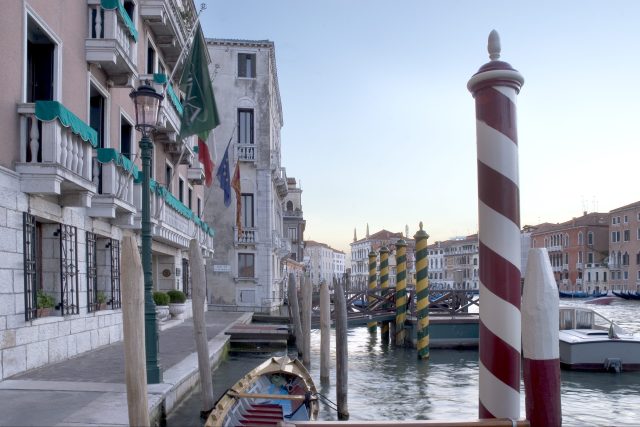
For a different perspective, take a cruise on the Bricktown Canal Water Taxi, offering narrated tours, historically themed boat rides and dinner cruises through the Bricktown entertainment district (pictured above). Prices start at $13 for adults.
Other attractions include the Oklahoma City Zoo, the National Cowboy and Western Heritage Museum and Stockyards City, a western-style town front where you can stock up on western-themed goods.
When it comes to where you’ll stay, lodging at AAA Diamond Designated hotels in the area start at $54 per night. Meals will run you about $50 for a three-course dinner for two at a mid-range restaurant.
Albuquerque may be one of the cheapest U.S. cities to visit, but it doesn’t mean it skimps on attractions and excitement. There’s plenty to do here from museums to outdoor activities, and of course, there are the famous hot air balloons.
Among the city’s most compelling attractions are the over 50 murals painted in locations throughout downtown. You can either walk the mural route or take a mural trolley tour. Either way, be sure to follow along on the MurosABQ website to learn about the paintings and their artists.
Visit the Indian Pueblo Cultural Center where you’ll find exhibits – including pottery, art and jewelry – celebrating Pueblo culture. Also on site are artists selling their wares, dance performances and the Indian Pueblo Kitchen where you can enjoy a meal inspired by Pueblo foods. Admission starts at $12 for adults.
Nature enthusiasts can hike along the Rio Grande or head to Sandia Peak, where there’s outdoor fun year-round in the Sandia Mountains. Hike and bike in the warmer months or choose to ski or snowboard during winter. Want to see the views but skip the exercise? Take the Sandia Peak Aerial Tramway to the top.
Albuquerque is famous for its hot air balloons. Whether you want to watch or hitch a ride, there’s no better time to visit than during the Albuquerque International Balloon Fiesta, which happens annually in October. Pay a visit to the Anderson-Abruzzo Albuquerque International Balloon Museum to learn all about the science and art of ballooning.
AAA-approved hotels in Albuquerque start at $70 per night. A three-course meal for two people at a mid-range restaurant will cost you about $63.
New Orleans may be best known for its Creole culture, French Quarter and robust nightlife scene, but it’s also one of the cheapest U.S. cities to visit, making it simple to navigate on a budget.
Pay a visit to the New Orleans Museum of Art where admission starts at just $15 per adult. The museum claims to be the best of its kind in the area and includes 40,000 items that focus on French and American art from the past 5,000 years. The Walda Bestoff Sculpture Garden is also on the grounds, featuring 90 statues across 11 acres.
Traveling with the kids? You’d be remiss not to head to the Louisiana Children’s Museum. Themed interactive exhibits for children include a puppet theater, sensory lagoon, book nook and crafts area. Admission starts at $16 for adults and the museum offers free entry on the second Sunday of the month.
Another destination great for the whole family is the Audubon Zoo where you’ll find 58 acres of animals including a white tiger, Komodo dragon, elephants, alligator lagoon and baby animal nursery.
AAA-approved lodging starts at just $58 per night and food costs about $68 for a mid-range restaurant meal on a weekday.
A city steeped in American history, in Philadelphia you can learn about our forefathers, as well as visit art museums, learn about science and even tour a former prison.
The infamously cracked Liberty Bell is one of the biggest attractions in Philadelphia and has served as a representation of freedom for hundreds of years. The bell sits in front of Independence Hall where the Declaration of Independence was signed. Tours of the building are free but timed entry tickets are required during regular hours in peak season.
Numerous museums are located along the Benjamin Franklin Parkway, perhaps the most notable of which is the Philadelphia Museum of Art, containing 240,000 pieces of art, some dating back 2,000 years. Admission for adults starts at $25. The Barnes Foundation is another art museum featuring paintings dating from the Impressionist movement to modern times with works by Van Gogh, Renoir and Picasso. Admission starts at $25 for adults.
The Franklin Institute is a science museum with a variety of exhibits to learn from, including its Giant Heart – big enough to walk through, interactive brain, planetarium and observatory. Adults are admitted for $23.
If you so dare, head to the Eastern State Penitentiary, one of the formally most famous (and allegedly haunted) prisons in the world. Self-guided and guided tours are available during the day and at night. Various exhibits are also on site, including infamous gangster Al Capone’s cell. Admission is $17 for adults.
Lodgings start at just $107 for a AAA-approved hotel. A three-course meal for two at a mid-range restaurant will set you back about $65.
Due to the recent I-95 collapse in Philadelphia, we recommend planning ahead before your trip by visiting www.pa.gov/i95updates for the latest detour information.
In today’s interconnected world, cyber threats loom large, and our computers and phones are prime targets. Detecting signs of hacking early is crucial to protect sensitive data and prevent further damage. Here we’ll outline key indicators to identify a compromised device and offer practical steps to fortify your digital security and minimize the risk of future hacking attempts.
Signs of Hacking
Unusual system behavior
Sudden slowdowns, frequent crashes or the appearance of unfamiliar pop-ups can indicate malicious activity. Be wary of unexpected error messages or applications running without your permission.
Unauthorized access
If your accounts are frequently locked due to suspicious login attempts or you receive notifications for unrecognized login locations, it’s possible that someone has gained unauthorized access.
Unfamiliar accounts or software
Check for unknown user accounts on your computer or unfamiliar applications installed on your phone. Hackers may create hidden accounts to maintain control over the compromised system.
Unexplained data usage or network activity
If your internet usage or mobile data consumption increases significantly without an apparent reason, it could be a sign of a compromised device sending or receiving data without your knowledge.
Strange email or social media activity
Be vigilant for unexpected outgoing emails, messages sent from your accounts that you didn’t compose or posts published without your authorization. These could indicate that your accounts have been breached.
Steps to Improve Your Online Security
Update your software
Keep your operating system, applications and antivirus software up to date. Software updates often include security patches that fix vulnerabilities exploited by hackers.
Use strong and unique passwords
Create complex, unique passwords for all your accounts. Consider using a password manager to securely store and generate passwords.
Enable two-factor authentication (2FA)
Enable 2FA whenever possible. It adds an extra layer of security by requiring an additional verification step, such as a fingerprint scan or a unique code sent to your phone.
Be cautious of suspicious emails and links
Avoid clicking on suspicious links or downloading attachments from unknown sources. Be wary of phishing attempts and carefully scrutinize emails asking for personal information or login credentials.
Back up your data
Regularly back up your important files to an external hard drive or cloud storage. In the event of a hack or system failure, you can restore your data without major losses.
Use a Firewall and antivirus software
Install reputable firewall and antivirus software to detect and block malicious activities. Keep the software updated and perform regular scans for potential threats. Consider purchasing the Norton 360 online protection package, which safeguards your computer from viruses and malware and also monitors the dark web for data breaches. AAA members receive a 50% discount on an annual subscription.
Secure your Wi-Fi network
Change the default administrator credentials on your router and use a strong password for your Wi-Fi network. Enable encryption in settings to protect your wireless communication.
Practice safe online habits
Avoid downloading files from untrustworthy websites, be cautious when sharing personal information online and limit the amount of personal data you disclose on social media.
Recognizing the signs of a compromised device and taking proactive steps to enhance your digital security is paramount in the face of growing cyber threats. By staying vigilant and implementing robust security measures, you can protect your computer and phone from hacking attempts and safeguard your valuable digital assets.
Safeguard your identity with ProtectMyID, free for AAA Members. Enroll now.
The Carolinas Museum of Aviation is set to be renamed in honor of Capt. Chesley “Sully” Sullenberger, the hero pilot behind the 2009 “Miracle on the Hudson.” US Airways Flight 1549 was headed to Charlotte, N.C., and that’s where you can find the plane today. The Sullenberger Aviation Museum will reopen in September under its new name, with additional exhibitions on advances in aviation history and STEM programs for young visitors.
#BEADIGITALNOMAD
Working from home? Why not work from abroad instead? Portugal’s new visa allows remote workers to live and work from the country for up to a year. Applicants must be from a country outside the European Union, be self employed or employed by a company headquartered outside of Portugal and earn a monthly income of at least 2,800 euros (that’s about $3,000 at time of writing). The Temporary Stay visa can be extended four times, for up to five years.
#CHEERSTO100YEARS
The Walt Disney Company is marking its 100th anniversary in 2023. Guests can look forward to new attractions, shows, merchandise and more at all the parks. Disneyland Resort’s celebrations include two new nighttime shows, a revitalized Toontown area and the opening of Mickey and Minnie’s Runaway Railway. At Walt Disney World, festivities include special character meet-and-greets and a brand-new nighttime spectacular in Epcot.
The world of aviation is flying toward a greener future. ZeroAvia, an aviation company that specializes in hydrogen-electric engines, successfully completed a test flight of the world’s biggest airplane powered by hydrogen in January. The 19-seat jet marks a huge leap forward in sustainable aviation. Virgin Atlantic is also breaking sustainability barriers. This year, it’s scheduled to fly a Boeing 787 from London to New York using only sustainable aviation fuel. The fuel is made partly of waste oils, like used cooking oil and agricultural byproducts.
The trend in personal transportation in recent years might be summed up as “smaller is better.” Take the Honda HR-V, for example. The second generation of this subcompact crossover exists for people looking for the practicality of a CR-V at a more affordable price.
Under the hood is a 2.0-liter, four-cylinder engine that puts out an adequate 158 horsepower, with a choice of front- or all-wheel drive. This powertrain delivered good fuel economy and passable performance.
Now built on the same underpinnings as the Civic, this new HR-V actually bucks the downsizing trend by growing about 9 inches longer and 3 inches wider than the original. That translates to decent room for four passengers or 55 cubic-feet of cargo.
The cabin features nicer styling and better materials than the model it replaces. The low seat height relative to other crossovers adds to the car-like feel.
Figure in a smooth ride and the Honda HR-V becomes a good choice for buyers looking for utility in a reasonably priced package.
Starting Price: $23,800
MPGe (city/highway): 25 city / 30 highway
Safety: N/A
To see what sets the Volvo XC40 Recharge apart from other compact crossovers, you need only raise the hood. You won’t find the four-cylinder gasoline engine that powers other versions of the XC40. In its place is a handy “frunk” (front trunk) that makes room for all those things you couldn’t fi t into the regular cargo hold. Elsewhere, the cabin has decent room for four adults.
Given that this is a luxury model, it came as no surprise that our test car was kitted out with the latest technology, including adaptive LED headlights; a lane centering feature also takes the fatigue out of long trips.
Powering this all-wheel-drive green machine are battery packs sandwiched under the floorboards. Given that most people rarely travel more than 100 miles a day, its 250-mile range on a full charge should be enough to get you through your daily commute. This powertrain also produces the sports car-like acceleration of battery-powered models and still manages to tow a useful 2,200 pounds.
In short, the XC40 Recharge is likely to surprise you.
The cruise industry has a longstanding reputation for embracing diversity among crew members and passengers. Within the LGBTQ+ community, Celebrity Cruises’ legacy of support has generated iconic programming and garnered numerous accolades. In recognition of Pride Month, the line ramps up its rainbow-themed activities throughout June and even hosts the largest Pride Party at Sea.
While this year marks the fifth annual Pride Party at Sea, the event was inaugurated in 2017, but postponed twice due to the pandemic. The upcoming bash promises to be bigger than ever, with Celebrity initiating festivities aboard the Pride Party at Sea flagship, Celebrity Edge, during its June 10th European cruise, and then “handing off the party baton” fleet-wide to spread the celebration across multiple hemispheres and time zones. In all, the tandem party will travel more than 10,000 miles around the world to 12 ships, featuring itineraries in places such as Alaska, Iceland, Scandinavia, Bermuda, the Caribbean and multiple regions in Europe.
Activities include ceremonially raising the Pride flag atop the ship, a parade and a pool-deck party with live music, dancing and entertainment. In step with Celebrity’s penchant for cool aesthetics, you can expect accoutrements like “mermaids” in the pool, mod lighting effects and artists that interact with guests Cirque-du-Soliel-style. Plenty of rainbow swag gets passed out. Creative bites and signature beverages abound, too. Plus, in the spirit of inclusion, the entire ship is invited to the soiree, which means officers, crew, staff and all kinds of guests come together to recognize and celebrate Pride.
The roster of multigenerational LGBTQ+ focused programming can run the gamut from themed crafting and fashion shows to Walk-for-Pride campaigns and various social hours. It’s also worth noting all Celebrity cruises, regardless of timeframe, feature the line’s popular first-night LGBTQ+ Welcome Party. Likewise, the Celebrity Weddings program has facilitated destination nuptials for same-sex couples for years. In 2018, Celebrity also made history as the first major cruise line to conduct a legal, same-sex marriage at sea.
Dedication to the LGBTQ+ community extends beyond Celebrity’s boats. The line serves as presenting sponsor of Miami Beach Pride, a festival in the city where Celebrity is headquartered. Most remarkably, Celebrity just collaborated with renowned photographers (think Annie Leibovits and Giles Duley) to establish the All-Inclusive Photo Project, the world’s first open-source photo library promoting diversity in travel marketing imagery. Not surprisingly, the line also has been recognized by the Human Rights Campaign as one of the best places to work for LGBTQ+ equality.
Clearly, Celebrity’s outreach amounts to more than trendy tokenism. Beyond all else, the shipboard result is an atmosphere that invites members of the LGBTQ+ community to simply feel comfortable being themselves and enjoy the cruise experience.
On a Celebrity voyage, guests can expect to indulge in impeccably designed spaces – everything from cabins that feature Infinite Verandas (where the touch of a button transforms the entire living space into a private, open-air perch at the water’s edge) to top-deck Lawn Clubs (where real grass grows underfoot). Sublime pool decks, spas, tech-savvy entertainment centers, art galleries, casinos and an array of elevated eateries beckon, too. Celebrity’s latest ships come with a Magic Carpet, an eye-catching venue cantilevered over the open ocean that slinks up and down the side of the ship. Among other things, it delivers spectacular alfresco dining and drinks.
Celebrity could rest on its laurels, but the future looks even brighter for LGBTQ+ passengers, because in 2024 the line plans to expand its Pride Month celebrations with more daily gatherings, guest entertainers and new attractions yet to be revealed. Plus, there will be a Pride Party at Sea on every voyage in June. That adds up to 46 cruises. Celebrity Ascent, set to debut later this year, will join the festivities, literally bringing another boatload of Pride to the high seas.
Start planning for next year’s Pride Party at Sea today.
World Ocean Day is June 8. In the spirit of protecting our oceans, learn how to be part of the solution and not the problem on your next visit to Hawaii.
The first World Ocean Day was introduced in Rio de Janeiro on June 8, 1992, and just over thirty years later, World Ocean Day is still a day centered around educating and motivating people on caring for and acting in service of the world’s oceans.
The 2023 World Ocean Day is all about supporting the 30×30 goal, which is the commitment to protecting 30% of the world’s lands, waters and oceans by 2030. At the United Nations Convention on Biological Diversity in December 2022, the 30×30 commitments were announced, and it’s a worldwide movement that you can be a part of.
Supporting habitat conservation and restoration, understanding the impact our actions have on the ocean and valuing the role nature and the ocean play in our lives are important ways each of us can help support the 30×30 goal. It can sometimes be easier to care about the nature that surrounds us and that we see every day, but it’s important to remember that caring for the planet can and should extend to our vacations.
Hawaii is a hugely popular tourist destination thanks to its natural beauty. But tourism can come at a cost, and there’s the potential to make the land and ocean around Hawaii a little bit worse for having visited. Flip the script and make Hawaii better because you decided to visit. Here are some ways to do that, including volunteer opportunities, reef-safe sunscreen and five hotels across the islands that are dedicated to sustainability. Each way brings us one step closer to the World Ocean Day goal.
Volunteer on Vacation, Get a Free Night’s Stay
“Malama”in Hawaiian means to care for, preserve and protect. The Malama Hawaii Program, launched in 2021, gives tourists opportunities to give back and care for Hawaii and come away feeling more connected to its natural beauty and culture. Plus, in exchange for volunteering just a couple hours of your time on your Hawaiian vacation, you can get perks like a free night’s stay or a resort credit at participating hotels across the islands.
The program has plenty of options for everyone’s interest, especially those who are passionate about the ocean. Help restore native Hawaiian fishponds with the Malama Loko Ea Foundation. Take the Malama ka Aina tour at Kualoa Ranch (which you may recognize from the “Jurassic Park” movies) and learn more about the area’s ecosystem from the mountain to the ocean, and help harvest taro or thatch a roof on a traditional Hawaiian house. Or grab a bucket and some gloves and help clean up the beach; you can choose to get your supplies from one of the participating hotels and visit the closest beach, or you can join a group event, like those hosted by Maui Ocean Center or Kauai Surfrider Foundation.
5 Hawaiian Hotels Going Above and Beyond for the Planet
Choosing where to stay is also a way that you can help support ocean conservation. Get to know five of Hawaii’s top hotels with robust sustainability efforts in place.
All 1 Hotels are committed to sustainability, LEED-certified and all of its U.S. properties are carbon neutral. This includes 1 Hotel Hanalei Bay on Kauai’s North Shore, just opened in February 2023. The design of the hotel echoes the natural beauty of Kauai, which is a high bar. The organic rooftop garden provides the freshest ingredients to the restaurants and helps keep the building cooler, reducing the need for air conditioning.
Moana Surfrider, a Westin Resort & Spa on Oahu, was Waikiki Beach’s first hotel, opened in 1901. Its location on the beach is unsurpassed, but it’s not just a beautiful luxury hotel with amazing views. The LEED-certified hotel has been recognized for its sustainability practices, including reducing energy and water usage, recycling everything from cooking oil to paper to cardboard, composting food and landscape waste, and avoiding aerosol cleaning products.
On the island of Hawaii, the AAA Five Diamond Desginated Four Seasons Resort Hualalai has partnered with the Hawaiian Legacy Reforestation Initiative to plant over 50,000 indigenous koa trees. Koa wood has traditionally been used by Hawaiians to build things like surfboards, outrigger canoes and ukuleles. The hotel sources much of its food from local providers. There’s also a garden and oyster pond on-site that helps supply the restaurants, and food waste is given to local pig farmers. It also hosts beach clean-ups, avoids single-use plastics and has on-site marine biologists to teach visitors about the unique pond and ocean ecosystem at the resort.
Oahu’s North Shore, known for its big waves during the winter, is home to Turtle Bay Resort. It has a solar roof on many of its buildings, and native plants make up much of the landscape. Recycling is mandated across the resort, much of the used cooking oil is converted to biodiesel and any landscape waste is mulched or composted. The resort also treats its own wastewater, which cuts down on the need for freshwater, and uses saltwater-tolerant grass on its golf course. If you want to volunteer during humpback whale season, between November and April, you can help count humpback whales off the coast for Turtle Bay’s partnership with NOAA.
AAA Four Diamond Hyatt Regency Maui Resort and Spa on Ka’anapali Beach is a LEED gold-certified property and has worked to reduce water and energy consumption and boost its renewable energy usage with solar panels. It’s another hotel that gets old cooking oil turned into biodiesel and food waste donated as pig food to local farms. When the humpbacks make their way to Hawaiian waters, educational sessions teach guests about the whales and the importance of protecting their ocean home.
Check Your Sunscreen
Wherever you decide to stay and whatever you decide to do in Hawaii, make sure you’re not harming the ocean with the sunscreen you’re using. Hawaii has banned the sale of sunscreens that contain the chemicals oxybenzone and octinoxate, which have a negative impact on coral reefs as well as the overall marine environment.
Some local ordinances ban any non-mineral sunscreens, including Maui and Hawaii counties, so make sure to bring mineral sunscreen with you. Mineral sunscreens block the sun with minerals like zinc oxide and titanium oxide.
In case you do forget to pack the right sunscreen, you can find dispensers with reef-safe Raw Elements USA sunscreen on dozens of beaches across Hawaii.
Simple things like taking time to pick up trash on the beach, wearing mineral sunscreen and staying at a place that goes above and beyond for the planet, all add up. Embody the spirit of World Ocean Day throughout the year and help care for and protect Hawaii on your next visit.
Learn how AAA Northeast is becoming more sustainable. Visit AAA.com/ESG to read about our environmental, social and governance initiatives and how we are progressing on these goals.
AAA’s sustainable travel series is written in partnership with Kind Traveler, a women-and-veteran-owned sustainable travel platform empowering travelers to make a positive impact in local communities, and contributing writer, Kristin Conard.
When drivers load an electric pickup with heavy cargo, they make the vehicle work harder, significantly reducing the truck’s range. But by how much? AAA Automotive Engineering researchers recently tested the Ford F-150 Lightning, the electric version of the iconic best-selling American pickup, to determine the impact of payload on the range. When loaded with 1,400 pounds of sandbags, 110 pounds shy of its maximum capacity, the Lightning’s range dropped from 278 miles to 210 miles, a reduction of 24.5%.
“Our testing revealed a significant range reduction, but it’s important to note that the Lightning was loaded to near its maximum capacity,” said Greg Brannon, director of AAA Automotive Engineering. “Most buyers will likely use their Lightning with a lighter load, resulting in a much smaller range reduction.”
It’s also important to remember that the driving range of all vehicles, whether gas-powered or electric, is affected by weight. And as battery technology continues to improve, EV range will likely increase. However, even with current technology, electric vehicles are still more energy-efficient than gas-powered vehicles regarding energy consumption. The Ford Lightning’s range is less than its gas-burning cousin, which may get over 500 miles per tank unloaded. Buyers concerned about EV range should consider the driving they will be doing and choose the right vehicle for their needs. The difference, for now, is that it is easier to gas and go than stop and charge.
In general, heavier payloads will reduce the range of an EV. This is because the extra weight requires more energy to move. The type of driving also plays a role. Highway driving, which typically involves higher speeds and less regenerative braking, will further reduce range. Unlike gas-powered vehicles, which perform more efficiently at highway speeds, EVs thrive in urban driving conditions due to regenerative braking from more frequent stops. Regenerative brakes capture the energy from braking and convert it into the electrical power that charges the vehicle’s high-voltage battery. This electricity can then be stored in the car’s battery or power other electrical components.
In the case of battery electric pickups used as work vehicles, permanent loads (such as equipment racks, toolboxes, and equipment trays built into the vehicle) will reduce the range at all times, even without additional cargo.
Saving money. It’s something that we all mean to do, but for one reason or another, often don’t. By focusing more on the expenses we need and a less on the indulgences we want, saving can fall to the wayside. Savings challenges make it easy to visualize and commit to reaching your goals.
These challenges are designed to help you save money over a specified period of time. Savings challenges come in all shapes and sizes, so to speak. One common type is a 52-week challenge, which requires saving a set amount of money each week over the course of a year. You can start small, saving $5 a week, then gradually move up to larger sums each week.
Aside from accumulating money for a specific financial goal, savings challenges force you to be conscientious of your expenses and spending habits. In turn, you can evaluate what goods and services you can live without and where you may be spending more than you should.
To help you on your journey, we’ve devised savings challenge worksheets for four major purchases that you’ll almost certainly need to save for: a house, college, a car and travel. By following our 52-week savings challenge, you’ll be able to bank an additional $4,400. Depending on your situation and lifestyle, that should be enough to cover a family vacation or a down payment on a car. It can also take a chunk out of your student loan debt or help fund a down payment on a new house.
Shop all the supplies you need for a perfect day of sun, sand, and surf here.
Here are some tips to help you get the most out of your puzzle playing experience. Good luck!
Since our members are the root of everything we do, your feedback is important to us. Let us know if you run into any issues while playing, or share your ideas for future puzzles by emailing us.
When starting a new life insurance policy, a number of factors play into how much a policy will cost and the level of plans available to a consumer. For smokers and other special cases, it can be a bit more complicated.
Since lifestyle and health are undeniably tied to life insurance, some people will face vastly different results once they submit an application for a new policy. In fact, they may even be denied coverage.
Let’s take a closer look at what it means for a prospective policyholder to qualify as a special case and how it can affect their premium.
Most life insurance providers require a medical exam to determine your rate. If the provider considers you to be a particularly high risk, you may be classified as a special case.
While some providers may simply deny coverage, others may allot a small percentage of their resources to high-risk applicants. Conversely, some companies will specialize specifically in high-risk cases. Essentially, it depends on the providers – many of which have their own classification systems – and the details of each applicant’s case. This might result in a lower-than-average health rating or, as we’ll discuss, higher premiums.
Here are a few of the most common kinds of special cases:
Smoking
Smoker life insurance involves its share of complications due to the health risks the habit poses. Although some providers may offer different risk classes due to the frequency or type of smoking involved, many others will not differentiate between nicotine-based cigarettes, chewing tobacco and electronic cigarettes.
Medical Conditions
Having a chronic or terminal health issue – and therefore a low health rating – is perhaps one of the easiest ways to be designated as a special case. Aside from major concerns like cancer, heart disease and strokes, this could also extend to a wide range of other ailments, including diabetes, asthma and depression. Unfortunately, applicants may have to endure a thorough underwriting process to determine if their health concern will receive a poor health rating.
The Elderly
Because of their advanced age, elderly people (the definition of which may vary from provider to provider) are often considered special life insurance cases. Though it may seem unfair to the policyholder, it’s easy to understand from a business standpoint why this is the case, as the insurance company has a far greater chance of having to yield the death benefit in the near future. For this reason, try to invest in life insurance as young as possible.
How It Affects Your Premium
Many of the conditions and circumstances that insurance companies consider special cases hinge on the question of an applicant’s overall health and well-being. The more burdened by ailments and medical complaints an individual is, the likelier it is for the provider to have to deliver a costly death benefit to the beneficiary.
When it comes to smoker life insurance, the rate is usually double compared to a non-smoker. To be considered a non-smoker, you must self-attest that you smoke less than a pack a month. If you used to smoke and quit, you are typically considered a non-smoker after a year and may qualify for a lower rate, although a physical may be required to verify.
What You Can Do
It’s no surprise that special cases tend to get assigned higher rates, compensating providers for their increased liability. Other factors – such as age, weight and occupation – can have a similar effect, though to a lesser extent than the special cases outlined above.
However, hope is not lost for policyholders who may routinely be considered special cases. Some insurance companies offer lower-cost policies focusing exclusively on the aforementioned conditions, either individually or as a combination. Under such plans, policyholders would be covered if they were ever to develop the designated condition(s). This presents a middle-ground for those at increased medical risk to obtain some form of life insurance that will account for their greatest concerns, rather than disqualifying them based on it.
Be sure to explore all your options before making any decisions regarding life insurance. An agent can help you to find the best coverage options available to you at the most reasonable rate.
Do you have any other questions about smoker life insurance and other special cases? Ask us in the comments.
Cruises have a reputation for catering to older vacationers. Or at least, they used to. In recent years, millennial and Generation Z travelers have taken the cruise industry by storm.
Why now? What changed? Here are some of the top reasons there’s been a spike in interest in cruises for young adults.
Younger generations tend to spend money on experiences, rather than things, so they travel more as a whole. An impressive 84% of millennial and Generation Z travelers would rather take a dream vacation than purchase a luxury item, according to the 2023 Global Travel Trends Report by American Express.
Ports of Call Are Calling
Cruises that feature multiple ports of call seem to be a big draw for younger travelers who want to sample a slew of different destinations on one trip.
AAA travel advisor Melinda Hardaker, a millennial who has been on four cruises herself, said part of the appeal of cruises for young adults is the ability to explore multiple destinations “while only having to unpack once.”
Book now and save on Royal Caribbean’s Oasis of the Seas. Visit three destinations in one seven-night voyage, sailing from Cape Liberty, New Jersey!
No Decisions Needed
A cruise vacation is easy to plan, with far fewer logistics to figure out than other types of travel. Young travelers appreciate the seamless experience cruising provides. You don’t have to book hotel rooms in each city you visit, figure out how you’re getting to your next destination or find your own shore excursions – it’s all included. The biggest decision is whether you should get the drink package or not.
Dining at Sea
Once upon a time, cruises were known for lackluster dining options and boring buffets. That time is long gone. Cruise lines have majorly upped their game in the dining sphere, featuring restaurants by celebrity chefs, hibachi grills, steakhouses, experiential dining options and more. Still prefer the main dining room? Get friendly with your server – they’ll wait on your table the whole trip, learning your preferences, dietary restrictions and tastes.
View of the Central Park neighborhood on Royal Caribbean’s Oasis of the Seas.
A Lot of Boat for Your Buck
Cruising is cost-effective. The price of your ticket will usually cover your room, meals in most onboard restaurants, onboard entertainment, use of the pool and room service. Some luxury cruise lines even include airfare. You will usually pay extra only for things like a drink packages, shore excursions and spa treatments.
Younger travelers who are looking for a vacation with a lot of value realize that cruises can be a comfortable way to travel for less.
Variety of Entertainment Options
There’s never a dull moment on a cruise. Entertainment options are packed in every corner of the ship, so you won’t have a chance to get hit by the doldrums.
“I’m big into musicals and performances,” said Hardaker. “So I always check out what’s happening on the ship while researching.”
Like most generations, millennials and zoomers love live music. Lounge singers, piano bars and band performances are common sights (and sounds) on cruise ships. And if you’ve got the nerve to get behind the mic yourself, don’t miss karaoke.
Some cruise lines even offer Broadway-scale performances. Royal Caribbean has featured shows like “Cats,” “Grease,” “Mamma Mia!” and “Hairspray,” and Norwegian Cruise Line has put on musicals like the new smash-hit “Six,” “Kinky Boots” and “Priscilla, Queen of the Desert.”
There’s also more interactive entertainment options, like dance-offs, trivia tournaments and escape rooms.
Attractions and Recreation
Cruise ship attractions have gotten pretty amazing in the past decade or so. You don’t need to leave the ship to have a full day of fun. From roller coasters to trapeze schools, sea days are anything but boring. Younger travelers particularly enjoy Norwegian Cruise Line’s go-karts, Carnival’s aerial SkyRide recumbent bikes and Royal Caribbean’s surfing and skydiving simulators.
Many cruises also feature classes on topics like cooking, painting and dancing. You could leave your vacation with a new skill for samba!
Tips for cruising | first cruise vacation | crusie hacks. Let me know in the comments below your favorite cruise tip! #cruisetok#cruiselife#cruisewithme
It’s no secret social media has a lot of deciding power when it comes to millennial and Gen Z travel plans. The Global Travel Trends Report unveiled that among millennial and Gen Z participants, 46% reported traveling to a destination because of Instagram, and 29% said the same about TikTok.
Young cruising influencers like Smart Cruiser and Emma Cruises are part of the thriving #CruiseTok community on TikTok. Featuring reviews, cruise tips and travel footage, their posts are not only getting more young adults interested in cruising, but showing them how to do it like seasoned passengers. It also doesn’t hurt that cruises are great vacations for photo ops.
Cruises for Young Adults: First Time Tips
“Do your research,” said AAA travel advisor Cody Jette, a Gen Z cruiser who recently completed an Alaskan cruise. “While travel advisors can provide a plethora of information, it is best to play around with the cruise line resources and really get a full understanding of how it works.”
“Just breathe,” Hardaker added. “The ship is going to offer so many things for you to do, but don’t feel rushed or intimidated. I find that while cruising, I’m a more go-with-the-flow type. Make plans but don’t plan every day. Try something new and out of your comfort zone. Have fun!”
Read about another AAA travel employee’s first cruise experience.
Podcasts can be a great way to learn new things – especially while multitasking with household chores, driving to work or simply taking a moment for yourself. There’s a podcast for essentially every topic, and money is no exception.
Why not take advantage of free financial advice from experts? Check out 10 of our favorite finance and money podcasts covering everything from paying off debt and earning passive income to saving strategies and retiring early.
“Planet Money” discusses the economy in a way that’s equally informative and entertaining. It’s witty and quirky, while also taking a journalistic approach. The podcast presents marketing case studies, answering important questions like why we tip, why grocery store layouts matter and much more.
With over 1,000 episodes ranging from an average of 20 to 30 minutes each, there’s a good chance you’ll find something that sparks your interest. New episodes are available twice a week and are hosted by various producers.
Hear stories and strategies from top business minds through this show that aims to help listeners manage their own finances and live richer, happier lives. Hosted by financial strategist and author Farnoosh Torabi since 2014, artists, authors, entrepreneurs, journalists and other industry experts from the fields of real estate, education and beyond discuss ideas about careers, money and more.
There are over 1,500 episodes of “So Money” that range from 25 to 50 minutes in length.
Incoming and current college students, as well as new graduates – and possibly their parents – might want to consider listening in on this audio show. From starting a side hustle to deciding on loan repayment plans, “The College Investor” discusses topics such as how to tackle student loan debt and start earning more money, investing and saving.
Rather than interviewing guests, host Robert Farrington distills the best content from “The College Investor” blog, presenting it in a simple, audible format. The episodes are relatively short, ranging from 5 to 30 minutes each.
J. David Stein, former chief investment strategist and money manager, hosts this podcast all about money, “how it works, how to invest it and how to live without worrying about it.” A convenient resource for anyone looking to start investing.
There are hundreds of episodes ranging from 20 to 30 minutes.
“The Dave Ramsey Show” is an especially helpful money podcast for anyone looking to get out of debt and regain control of their finances. Listeners call in to explain their financial situations and ask questions. Although Ramsey’s advice can sometimes come off as a bit harsh, his brutal honesty conveys the true seriousness debt imposes on everyday people.
Ramsey has been on the radio since 1992 and has written seven books about life and money. Podcast episodes are about 40 minutes each.
Looking to achieve financial independence? The Mad Fientist – a combination of the words finance and scientist – teaches listeners about entrepreneurship, real estate and how to retire sooner through interviews with personal finance experts.
New podcasts are posted quite sporadically, but you can explore the Mad Fientist’s 60+ podcast episodes, ranging from 20 minutes to an hour in length, dating back to 2012.
Since 2009, host Pat Flynn has held interviews with entrepreneurs, industry experts and other business professionals. With a focus on building online businesses and blogging strategies, “Smart Passive Income” is best for those looking to boost their earning potential.
Episodes average between 30 minutes and an hour. New episodes air on Wednesday.
Co-hosts Joe Saul-Sehy and OG present this Academy of Podcasters Award-winning show all about saving money, as they interview guests, play trivia and answer fans’ questions. Conversational and slow-paced, each episode sounds like friends discussing money moves, including what works and what doesn’t.
The 900+ episodes of “Stacking Benjamins” are anywhere from 50 minutes to 2 hours long.
Building financial independence is the focus of this podcast hosted by Paula Pant. Learn how making smart money decisions can help you achieve the kind of lifestyle you want to live. Pant’s slogan, “you can afford anything, but not everything,” is encouraging while still being realistic.
There are over 400 episodes ranging from 20 minutes to an hour.
Co-hosts Jonathan Mendonsa and Brad Barrett discuss how to reach financial independence, including ways to pay off debt, reduce living expenses and build passive income. The pair interviews guests and reaches out to their community for feedback and successful financial strategies.
Explore 400+ episodes ranging in length from 35 minutes to just over an hour.
Regaining control of your financial situation isn’t always easy. Although there’s no one-size-fits all strategy to paying off debt or saving, listening to a few money podcasts can help you explore different options and make a plan that works best for you.
What money management or financial advice podcasts do you listen to? Tell us in the comments below.
Itching to go on a vacation but don’t feel like dealing with the hassles of airport, bus or train travel? Time to take a road trip!
From being in charge of your own schedule to seeing sights you wouldn’t see otherwise, driving to your destination has its benefits. But, how much does a road trip cost?
Here are a few tips to keep in mind for calculating overall price and budgeting to help you plan.
It’s definitely worth considering a rental car for your road trip. It can save your personal car from the wear and tear of a long journey, and can be a great chance to test out a new ride. When figuring out the cost of your road trip, the type of vehicle you rent is definitely part of the equation. For instance, a compact sedan will likely cost less than a turbocharged sports car. To get the best deals on your rental, be sure to take advantage of exclusive AAA membership benefits through Hertz.
Hotels
The type of accommodation you choose will also impact road trip cost. You’ll pay significantly more to stay at a luxury property versus a motel or a campground. AAA Diamonds are one way to gauge what a property will cost.
If you’re calculating the expenses of taking a road trip using your own vehicle, you should consider the combined costs of maintenance, insurance, taxes, depreciation and finance costs. AAA has a handy tool to help you calculate the per mile cost of driving your car.
Gasoline
Gasoline prices change on a near daily basis, so it’s wise to make this calculation as close to your departure as possible. Research the cost of gas in the states you’re traveling through to plan the smartest route for fuel ups. The AAA Gas Cost Calculator is a good resource. The AAA Auto Club App also has a feature to find the cheapest gas.
Tolls
It’s hard to come up with a sizable road trip route that doesn’t include a toll. Calculating your expected toll costs can be tricky. There are a few apps to try, and you can research toll costs with states’ transportation departments ahead of time. No matter what you choose, don’t leave home without budgeting for these expenses.
Attractions
Your destination, how long you’ll be there and when you visit can all impact how much your road trip will cost. Disney parks, for example, price single-day tickets based on expected attendance. The busier the park will be, the more you should expect to pay. AAA travel advisors are good folks to talk to for advice on what you can expect to spend on attractions, and how might be able to use your membership to save.
What are your road trip plans this summer? Tell us in the comments.
One of the most essential aspects of being a safe driver is being aware of what’s happening on the road. If you can’t see clearly, you can’t drive safely.
Decreased visibility due to glare, rain, night driving and poor eyesight are all common factors that can affect a driver’s performance. If you’ve ever squinted at a sign while driving, you know how important clear vision can be.
If you don’t feel 100% comfortable on the road because of your eyesight, don’t risk it; schedule an annual eye exam and get lenses that will help you see clearly behind the wheel.
Eye Exams
Getting regular eye exams is an important part of being a safe driver. Whether you’re already a glasses-wearer or you’ve never had corrective lenses before, sometimes you can’t tell how much your vision has weakened over the years.
A regular eye exam helps you and your doctor monitor your changes in vision and health as you age, and it can help you identify solutions to keep your eyes healthy and your vision clear. Your doctor will be able to catch eye conditions early and make sure your vision is always in tip-top shape.
Night blindness, or difficulty seeing while driving at night, is a problem for a lot of drivers. 26.5% of American drivers declared that their vision prevents them from driving or riding in full safety at night.*
The signs of night driving issues include not being able to read road signs, inability to judge distance and speed, difficulty reading dashboard instruments, loss of side vision and difficulty adapting to the glare from other headlights. You may also see star bursts and halos around lights. With an eye exam and the appropriate pair of new glasses, your doctor will be able to address your issues and make night driving easier and safer for you.
Vision Solutions
Single Vision Lenses
The simplest solution is a good pair of single vision lenses. These are expertly tailored to your prescription, providing clear vision at every angle. They’re the most common type of prescription lens.
Progressive Lenses
Do you need glasses for distance and for reading? Progressive lenses are like bifocals without the line – they allow you to see everything you need without sporting a bifocal line or going back and forth between two different pairs of glasses. By adjusting your head, you can see three ranges of distance.
Polarized Sun Lenses
Forget about squinting behind the wheel on a sunny day of driving. Polarized sunglass lenses enhance clarity by reducing glare from surfaces like water, snow and the road. You’ll get better clarity, plus UV protection. Even if you don’t need prescription glasses, Polarized sunglasses are a good investment to protect your eyes and keep you alert on the road.
Anti-Reflective Lenses
Do you have trouble driving at night? Anti-reflective lenses help reduce the effect of glare from nighttime driving, smudges, water, dust and dirt. They sharpen your vision and help you see better on the road at night.
Blue IQ™ Clear Lenses
Blue IQ™ Clear Lenses are designed to reduce exposure to blue light from the sun and from your digital devices. These lenses filter at least 20% of blue light, which may help improve visual comfort.
Transition Lenses
Are you always forgetting to keep a pair of sunglasses in your car for especially sunny days? Try Transition lenses. These lenses quickly darken when exposed to outdoor sunlight and fade back into clear indoors, so you don’t have to change glasses.
Fashionable Frames
In a way, glasses are the ultimate accessory – they look good while doing a job that helps you to be the best version of yourself.
From subtle, clear frames to bold statements, LensCrafters offers a wide variety of styles from brands like Ray-Ban, Oakley, Michael Kors, Gucci, Burberry, Versace, Coach, Prada, Dolce & Gabbana and more, to help you find the perfect pair. Get one pair for work meetings and another for a night on the town so that you’ll be safe no matter where you’re driving. Plus, if you like how you look in your glasses, you’re more likely to wear them.
Have you ever had difficulty seeing while you were driving? Do you feel comfortable driving at night? Let us know in the comments below.
*Essilor – Eyewear Usage and Attitudes – USA – JUNE MARKETING – 2023 (n=306 respondents who declared 1. their vision prevent them from driving or riding in full safety at night) – Analysis based on “1157” regular drivers
Summer is almost here, which means those of us who are lucky enough to live in the Northeast have just one thing on our minds: the beach! Known for picturesque coastlines, relaxing atmospheres and clear, blue waters, our beaches in the Northeast are a popular destination for both locals and vacationers alike. Once you’ve packed your sunscreen and all other essentials to head down to the shore with, there’s just one last order of business: beach snacks!
When it comes to deciding what kinds of snacks to take to the beach, there are a few parameters to keep in mind: portability, lasting power and, of course, yum-factor. We’ve put together three options that check every box, and might even become your new go-to beach snack!
First on the cooler packing list: mason jar salads. Although we’ve included a recipe below, you can use any salad ingredients you’d like to create these versatile mini lunches. By stacking each ingredient inside a small mason jar, you make sure everything stays fresh and separated until you’re ready to eat. At that point, all you have to do is give the jar a shake, and voila!
Next up is a savory homemade snack mix that keeps all day (but is so delicious it probably won’t last that long). In this version, you’ll combine store-bought snack mix with a butter-Worcestershire sauce before roasting in the oven to create an irresistible nosh.
Finally, we have mixed fruit popsicles to serve as a refreshing and sweet day-cap.
Shop
In order to prepare your mason jar salads, all you’ll need is whatever you like! For ours, we went with Dijon dressing, grilled chicken, marinated artichokes, cucumber, tomatoes, red onion, yellow bell pepper, black olives, capers, feta cheese and chickpeas.
For the snack mix, we followed this recipe from Kitchn, which includes two kinds of Chex cereal, pretzels, peanuts and bagel chips. Season to your heart’s content with a whisked mixture of Worcestershire sauce, melted unsalted butter, salt, garlic powder and onion powder.
These mixed berry popsicles from Feeling Foodish combine blueberries, blackberries, strawberries, kiwi and mango with coconut water for a simple sweet treat. Freeze them overnight before packing with ice inside a hard-sided cooler.
We recommend prepping your beach snacks the day before, so everything is all set before you head out in the morning. Grabbing a bag of ice (or two) for your cooler is ideal to make sure nothing goes bad — or melts! — in the hot summer sun. Tap the play button to see how easily everything comes together:
From the causal seaside towns of the south shore to the elite streets of the Hamptons, the list of things to do on Long Island in the summer is vast and varied.
Here, summer means lazy beach days and sunsets on the boardwalk, waterfront dining and getting out and enjoying the beautiful gardens and parks in full bloom.
These summer staples are all about nostalgia, tradition and creating new memories.
Nassau County
Beach Days
When the warmer months arrive, Long Island starts to feel like one big beach town. Right after Memorial Day, flip flops and swimsuit cover-ups become almost standard attire as most people are either on their way to or from the shore on any given day. Here are 10 of our favorite local beaches.
Long Island Gold Coast Mansion.
Garden Exploration
Long Island is home to a generous number of beautiful and historic former estates, many of which are now public gardens.
At the Planting Fields Arboretum State Historic Park in Oyster Bay, guests are free to wander the grounds of the Gold Coast estate and its formal gardens and greenhouses. Old Westbury Gardens is also open for tours and self-guided exploration and offers a variety of special summer events, including regular yoga and tai chi lessons.
For a scenic walk or quiet picnic, other must-visit gardens and mansions that make for perfect Long Island day trips include Sagamore Hill, the “Summer White House” of Theodore Roosevelt, and the Bailey Arboretum, where you can stroll the estate of renowned horticulturist Frank Bailey completely free of charge.
Adventureland
Just about everyone who has grown up on Long Island has an Adventureland memory. The Farmingdale amusement park has been entertaining locals with its range of rides, attractions and games since 1962.
Conquer “Merrick Mountain”
The next time you’re on the Meadowbrook Parkway on your way to Jones Beach, look for the windmill on the top of the hill. That’s the summit of Norman J. Levy Park and Preserve, informally known as “Merrick Mountain.” A refurbished landfill-turned plant and wildlife sanctuary, you can say it’s the best looking dump around.
Great for recreation and relaxation, the park includes three miles of hiking and jogging trails, 18 exercise stations, a 500-foot fishing pier and a kayak launch into the original Meadow Brook. At its highest point of 115 feet, there are sweeping views of the Jones Beach tower, the coastal neighborhoods below, and on a clear day, the New York City skyline. Up there you’ll also find two man-made ponds, circulated by the fully functional windmill.
Look for the park’s resident herd of Nigerian dwarf goats, which can be seen resting in their pen or wandering the trails.
Waterfront Dining and Drinks
One of the perks of being on an island is the many waterfront dining options. Here are a few popular spots in Nassau County:
The Lazy Lobster, East Rockaway and Massapequa Park – Enjoy lobster rolls, tacos, fried seafood baskets and other summer favorites in a casual outdoor atmosphere. For bay views and live music, visit the East Rockaway location. Craving a lobster roll to grab and go? The small storefront in Massapequa Park satisfies.
Jordan Lobster Farms, Island Park – A Long Island classic with a backyard raw bar and seating area, indoor dining room and an attached retail store where you can buy fresh fish to take home.
Prime American Kitchen & Restaurant, Huntington – Seafood, steaks and dock views overlooking Huntington Harbor. Enjoy a meal al fresco or have a cocktail by the fire pit on a cool night.
Walls Warf, Bayville – Eat on the deck or right on the beach with views of the Long Island Sound and Connecticut in the distance.
Crescent Beach Club, Bayville – Next door to Walls Warf, the Crescent Beach Club offers the same view, but in a less casual setting.
Have an Italian Ice by the Water
Of all the things to do on Long Island in the summer, there’s nothing more refreshing on a hot day than an Italian ice and a waterfront breeze. At Bonanza’s Italian Ices in Bayville, the Bonanza family keeps up the tradition that their great grandfather established in the early 1900’s when he started selling handmade Italian lemon ices from a pushcart in Oyster Bay. Housed in a small corner shack, Bonanza’s doesn’t look like much from the outside, but the fresh handmade ices can’t be missed. Walk to the nearby Oyster Bay Harbor and have your ice with a view.
See a Show at Jones Beach
Go to a concert at Jones Beach Theater. Click here to see when your favorite performers will be in town.
But the biggest show every year at Jones Beach happens on the beach. Every Memorial Day Weekend, the annual Bethpage Airshow draws hundreds of thousands of people eager to see a roster of fighter jets, including the U.S. Navy Blue Angels, put on a breathtaking display of tricks over the water. Admission is free (except for the standard $10 parking fee). It is suggested that visitors arrive early to dodge the inevitable traffic; however, if you want to avoid some of the crowds, you can stop by the day before to watch the planes practice.
Hit the Links
Golf at one of Long Island’s many public golf courses, including the famed Black Course at Bethpage State Golf Course in Farmingdale. Considered one of the most difficult courses in the country, the Black Course hosted the U.S. Open in 2002 and 2009 and the PGA Championship in 2019.
Nassau County Museums
On rainy days or those hot summer days when being in the air condition beats being outside, museums make for perfect Long Island day trips. Here are a few to check out this summer:
Long Island Children’s Museum, Uniondale – A hands-on museum that encourages kids to let their imaginations run free. Next door, you can visit the historic Nunley’s Carousel, a treasured piece of nostalgia for anyone who grew up in the area that has been restored for future generations to enjoy.
The Cradle of Aviation Museum, Uniondale – Located beside the Children’s Museum in Uniondale’s Museum Row, this popular museum’s air and spacecraft displays honor Long Island’s role in aviation, and has a dome theater and planetarium.
Nassau County Museum of Art, Roslyn Harbor – On the grounds of the former Frick Estate, the mansion hosts rotating exhibitions in its gallery and has a sculpture garden with the works of renowned artists on its surrounding lawns. Walking trails lead to one discovery after another.
Old Bethpage Village Restoration
One of the most interesting places to go on Long Island, Old Bethpage Village Restoration allows visitors to step back in time. This “living history museum” consists of 36 houses, barns and buildings dating from 1765 through 1865, in which you’ll find costumed interpreters that deliver facts and stories about the people who occupied them. And on weekends in the summer, you can catch an old timey baseball game.
Suffolk County
Long Island Farms and Wine Country
Beginning in late May, Long Island’s farm country starts to come alive. Strawberry picking is one of the most popular things to do on Long Island in the summer, with farms like Lewin Farms that allow visitors out into the fields to harvest their own. Strawberry season is only a few weeks, but other fruits, veggies and berries soon follow.
Lavender by the Bay grows fields of lavender at their farms in East Marion and Calverton. There are serval bloom periods from late spring to early fall, but the French lavender peak in July is something you have to see (and smell!) to believe.
Summer is also the height of the season for the Long Island wine trail. There is no better staycation than sharing a bottle at one of the winery tasting rooms along the South and North Forks overlooking the vines and listening to live entertainment.
For a different way to experience Long Island wine country, bike tours such as East End Bike Tours include tastings, gourmet meals and exclusive guided stops. For an unforgettable winery experience with friends, hop aboard the North Fork Wine Wagon, a fun contraption that allows up to 14 people to pedal and sip their way through select vineyards as a professional driver steers.
The Hamptons
Spend some time like the Island’s elite, taking in some of the top beaches, food, wine and nightlife that the area has to offer.On your way, don’t forget to stop at the Big Duck.
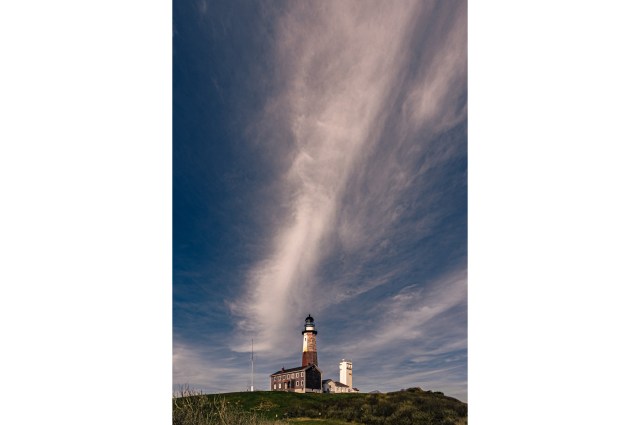
Visit a lighthouse for great photo ops and beautiful outlooks. Here are a few you can’t miss:
Montauk Lighthouse, Montauk State Park – The oldest lighthouse in New York State (authorized by President George Washington in 1792) and a National Historic Landmark, it is understandably one of the most popular destinations (and picture spots) on Long Island. Paired with the expansive scenic views of the Atlantic Ocean, it’s hard to beat. While you’re there, you can climb to the top, walk the park or visit the museum, which is located in the 1860 keepers’ house.
Fire Island Lighthouse, Captree Island – Take the 182 step tour of this iconic black and white tower and enjoy the panoramic view of the ocean and surrounding region, which extends all the way to the New York City skyline on a clear day. Of course, Fire Island is a top summer destination in itself. Take the ferry over to experience the beaches, nightlife and car-free streets of this one-of-a-kind little piece of paradise.
Horton Point Lighthouse, Southold – See the lighthouse, tour the exhibits and have a picnic on the grounds. Head 120 steps down to the beach or walk the nature trail.
Splish Splash
Fun in the sun is what it’s all about at Splish Splash water park in Calverton, which has been rated as one of the top water parks in the country.
More Fun Stuff To Do With Kids
White Post Farms, Melville –Little ones get the opportunity to hand and bottle feed goats, interact with birds in the free flight aviary and encounter more exotic animals like kangaroos and lemurs.
Long Island Game Farm, Manorville – The largest children’s zoo and wildlife park on Long Island, the Long Island Game Farm has been a part of family memories on Long island for almost 50 years. Here the kids can get up close and personal with baby animals, deer, camels and more.
Long Island Ducks Baseball, Central Islip – A fun baseball experience that comes at a much friendlier price tag than a major league game. Arrive early as Duck players sign autographs 15 minutes before starting time. Not only will the kids have a blast cheering on the Atlantic League Champions (2004, 2012 and 2013), they’ll love Quackerjack the mascot and running the bases after the game. Fireworks on select nights.
Riverhead Raceway – Built in 1949, this is one of the oldest stock car race tracks in the country and the only NASCAR stock car track in the New York metropolitan area. There are 5 to 6 racing divisions every Saturday night with an average car count of 150 cars, and special shows such as the Demolition Derby.
Fish Hatchery, Cold Spring Harbor – A former trout hatchery, this non-profit educational center teaches visitors about the freshwater ecosystems of New York. While you are here you can check out the largest living collection of fresh water reptiles, fish and amphibians in New York State, tour the two aquarium buildings and eight outdoor ponds and even feed the trout.
Outlet Shopping
Retail therapy feels even better in the pleasant outdoor setting of the Tanger Outlets in Deer Park and Riverhead. Aside from great deals on designer brands, they also have places to eat, occasional special events and both locations have a movie theater, so it’s fun for the whole family.
Go Camping
Get in touch with nature at one of Long Island’s campgrounds. Consider on one of these:
Hither Hills State Park, Montauk – A 189-site campground at Hither Hills State Park on the ocean that offers a beach as well as scenic picnic areas, fireplaces, sport fishing, bridle paths and hiking, nature and biking trails. The unique “walking dunes” of Napeague Harbor are a highlight of the park.
Wildwood State Park Campground, Wading River – 600 acres of undeveloped forest that ends on a high bluff overlooking Long Island Sound. In addition to swimming and fishing in the Sounds, visitors have access to a picnic area, playground and hiking trails.
Smith Point County Park Campground, Shirley – Suffolk County’s largest oceanfront park. A popular spot for residents and tourists alike during the summer season, the park has a beach that’s great for surfing and fishing, showers, a playground, food concessions and special events. Campsites (reservations required) and outer beach camping are available (first come, first served).
Watch Hill Marina and Campground, Fire Island – Campgrounds, including 26 sand sites are in a protected area behind the dunes just a short walk to the beach. The facilities include running water, picnic tables, grills, showers and bathrooms.
Suffolk County Museums
Vanderbilt Museum, Centerport – Tour the waterfront mansion of William K. Vanderbilt and explore the museum, which includes the thousands of marine, bird and insect specimens that he collected during his oceanic expeditions and trips around the world. Don’t miss the planetarium.
Heckscher Museum of Art, Huntington – The museum’s permanent collection includes 15-20th century American and European paintings, presented alongside limited time exhibitions and various programs, lectures and events.
Cold Spring Harbor Whaling Museum – Located in Cold Spring Harbor, which was a whaling port in the 19th Century. Highlights include a scrimshaw collection, ship models, artifacts and tools used by whalers, and New York State’s only fully-equipped 19th century whaleboat with original gear.
The Long Island Aquarium
Among numerous indoor and outdoor exhibits of marine and other wildlife, the Long Island Aquarium in Riverhead boasts a massive coral reef display, shark tank and year-round sea lion shows. The fairly small size of the Atlantis-themed aquarium allows for lots of up-close-and-personal experiences, including touch tanks and other interactive encounters such as sea lion selfies and penguin meet and greets. On a nice day, the 90 minute Atlantis Explorer Boat Tour down the Peconic River is a relaxing and educational trip.
Spend a Day in Port Jeff
And we can’t leave out a day in Port Jefferson. With a variety of restaurants (Old Fields, The Pie, The Fifth Season), fun food stops (Toast Coffee House, The Secret Garden Tea Room, Sweet n’ Savory Creperie Crepe and Rice Pudding Bar), unique shops and popular retail stores, it’s no wonder that this waterfront village is a summer hotspot. From here, you can also take the ferry to Connecticut.
Prefer a Tent? Go Platform Camping in the Everglades
Camping in the Everglades is an experience you’ll never forget. Head to the southern end of Everglades National Park. There, you can rent a canoe to take you over the water (keep an eye out for dolphins!) and toward the Pearl Bay Chickees.
Traditional chickee huts are sheltered overwater wooden camping platforms where you can set up your tent for the night – your very own rented island in the Everglades!
Beach Camping in the Florida Keys
Picture yourself waking up in the morning and unzipping your tent to the sound of waves, then spending the day swaying in a hammock or swimming at the beach. Perhaps you enjoy a glass-bottom boat ride before gathering around the campfire under a sea of stars and tucking back into your sleeping bag at night. It’s all possible at Key Largo’s John Pennekamp Coral Reef State Park.
Other tent camping sites in the Keys include Bahia Honda State Park and Long Key State Park.
If the beginning of summer on Long Island had a flavor, it would probably taste like strawberries. As June rolls around, signs on every main road on the East End point in the direction of U-Pick strawberries. It’s a quintessential mark of the season and a patiently-awaited tradition for many. Simply put, strawberry picking on Long Island is an annual must-do!
Each year, families and strawberry fans visit Long Island’s U-Pick strawberry fields in droves, eager to get their hands on the freshest, juiciest berries of the lot, and experience the distinct sweetness of just-harvested strawberries while they are at their peak. Depending on the weather, the short-lived season only lasts from late May through early July at the latest.
Like many locals, strawberry picking on Long Island has become a tradition for me. At the height of the season, Lewin Farms is an especially popular spot; from the street you can spot dozens of people lined up at the farm stand with armfuls of U-Pick strawberries destined for jam, pies, ice cream and cereal bowls.
I’ve also tried Glover Farms in Brookhaven. Watch the video below to get a peek at my visit to their strawberry fields.
When the supply is fleeting and the reward is so delicious, people are willing to put in the work for strawberries. I’ll admit, it’s hard to stop. I always find myself traveling farther and farther down the rows of bushes in search of the biggest, brightest berries I could get my hands on. And when they no longer fit in my pint, I just start eating them straight off the vine.
Bright red throughout and still warm from the sun, freshly picked strawberries taste as if they have already been marinating in sugar syrup for days. It’s almost like eating a totally different fruit from what you would find in the grocery store.
When something tastes so good naturally, it’s best to enjoy it simply. That’s Eve Kaplan-Walbrecht’s theory, farmer at Garden of Eve Organic Farm and Market in Riverhead, which offers strawberry picking. After you go strawberry picking on Long Island at Garden of Eve or any of the U-Pick fields below, you can enjoy her recipe for fresh strawberries with cream when you get home.
Fresh Strawberries With Cream Recipe provided by Eve Kaplan-Walbrecht of Garden of Eve Organic Farm & Market
Wash and hull strawberries (remove tops), cut into quarters lengthwise. Toss with a sprinkle of granulated sugar.
Mix approximately one cup whole cream (ideally from grassfed cows) with a teaspoon of vanilla extract and 1 teaspoon sugar.
Whip till stiff and spoon over strawberries. Delicious!
Eat plain, with shortbread if available, or with any fluffy vanilla flavor cake or cookie.
Strawberry Picking on Long Island: U-Pick Strawberries
Check websites and socials or call for updates on openings and hours.
Strawberries with green or white coloring do not yield as much flavor and will not continue to ripen after they are picked, so look for the biggest, reddest, juiciest ones that you can find and use them as soon as possible.
Always call the farm beforehand to make sure that their U-Pick field is ready and open when you are planning to go. Farms usually close when the weather is bad and on weekends when it is crowded they will sometimes limit supply.
Also check the farm’s website for field rules; some require you to bring your own container, while others only allow you to use the ones that they provide. They generally charge by the pint or the pound.
Strawberry picking on Long Island is only available for about a month, so go out and get them while you can! Not only is it a fun day out with the family, it is a great way to support local farms and gain a closer connection to the food we eat.
Make it a long weekend! Book a hotel on Long Island’s East End with AAA.
What’s your favorite place to go strawberry picking on Long Island? Let us know in the comments!
The best-laid plans of travelers often go awry. The weather and life – and thus travel – are unpredictable. From headaches like lost baggage to emergencies that can interrupt or cancel your trip, travel insurance can save you from the unplanned.
Increased apprehension over health outbreaks, natural disasters and fear of terrorism have caused a rise in travelers’ desire to seek extra protection from travel insurance. The COVID-19 pandemic especially increased awareness of how quickly our travel plans can change. Now more than ever it seems too high of a gamble to go without some kind of coverage.
“Travel insurance covers so many different scenarios in people’s lives,” said Wendy Marley, a AAA Northeast travel agent in the Newton, Mass., branch. “It covers their family members, travel delays, missed ports of call [for cruises] or emergencies that happen while they are traveling.”
Here’s how AAA travel insurance partner Allianz Global Assistance helps to ease top traveler concerns.
Hurricanes and Natural Disasters
June through November is a great time for travel deals, but it also happens to be hurricane season. Remember, insurance is designed to protect against the unexpected. Once a storm or weather event such as a wildfire or earthquake is tracked and/or named, it’s considered “known and foreseeable.” A policy purchased on or after the date the National Weather Service issues a warning will not cover losses related to the event.
Medical Emergencies
Unfortunately, no one’s immune to getting sick on vacation. Caroline Haylett, a AAA Northeast travel advisor in the Narragansett, R.I., branch recalls a trip where a grandfather traveling with a family of six fell ill in the Bahamas and was hospitalized for two weeks. “Not only did [travel insurance] pay for his medical bills and the transportation back to the U.S.,” Haylett said, “they also covered the accommodation for the entire family to stay abroad, as well as their airfare back home.”
Travel insurance ensures that any medical care you might need abroad does not get lost in translation. Many U.S. plans, including Medicare and Medicaid, do not cover international travel or out-of-country emergency medical transportation. Without coverage, a medical evacuation can cost more than $50,000.
Health Outbreaks
Most travel protection plans exclude losses caused directly or indirectly by an epidemic, as in the case of COVID-19. Like storms, once a health alert is issued it is considered a “known event” and excluded from coverage.
“Cancel anytime” or “cancel for any reason” insurance comes at an additional cost and provides the most options to travelers, but even these policies may include exclusions due to known events or an epidemic.
Marley has noticed an increased awareness of such travel insurance limits. “While people are more willing to take the insurance, they are more savvy in calculating their risk to the point where I send multi-levels of coverage policy quotes,” she said. “It still takes time to go over all of the benefits of insurance but most people come around once you do.”
Terrorism
Terror attacks can occur anywhere at any time, although the risk is higher in some places more than others. In order to be covered, a terror event must not occur within 25 miles of any city (U.S. or foreign) you are traveling to within 30 days of your certificate’s coverage effective date.
Before traveling anywhere abroad, check the State Department website for travel advisories on potential dangers related to health, politics and violence.
Delays and Cancellations
Delays and cancellations happen. In 2023, there were nearly 87,943 domestic flights canceled and over 1.3 million delayed, according to Bureau of Transportation Statistics. But the coverage that airlines and credit cards offer for these inconveniences is limited. With travel insurance, a covered delay can mean cash for rebooking fees, meals and accommodations. Similarly, if you are renting a car, you will get more for your dollar than what is provided by a standard car rental policy.
Tour Company Closes
What happens if the company you used to plan your trip goes out of business after you’ve already paid upfront expenses for your cruise, flight or excursions? If you make sure to secure travel insurance first, you’ll be less likely to have to pay for an experience you won’t have.
Tips
Most people purchase the one-off insurance on a per-trip basis, but if you travel a lot throughout the year (two to three times per year), you should consider an annual plan. It may work out better for you cost-wise.
Keep in mind that the earlier you buy travel insurance, the bigger your coverage window. The best time to buy is as soon as you place your initial deposit or payment for vacation. And always read over your policy carefully, including the fine print. Talk to your AAA travel advisor if you have any questions.
Travel should be as stress-free as possible. Your biggest worry should be how many 3.4-ounce liquids you can fit into the 1-quart bag in your carry-on. Let your travel insurance take on the heavier burdens.
From selecting eco-friendly lodging to opting for less carbon-intensive activities and transportation, here’s how to minimize your impact on the environment when visiting the Caribbean.
Home to some of the most beautiful beaches and landscapes in the world, the Caribbean attracts millions of tourists each year in search of sun, sand and relaxation. The hundreds of islands scattered throughout the region are more reliant on tourism than any other part of the world.
The stunning beauty of the Caribbean, however, is also vulnerable to the impacts of so many visitors. Recognizing this fact, governments and tour operators from across the islands have come together to create a variety of eco-tourism initiatives ranging from protecting biodiversity to adopting clean energy programs.
There are also several Caribbean resorts that are not only focused on sustainable operations but have also begun including environmental education and activities for guests among their offerings.
If a tropical island vacation is in your future, here’s your sustainable Caribbean travel guide.
Best Times to Travel to the Caribbean
Sunny days are what most visitors are seeking in the Caribbean and the driest months of the year here are from February through May. The wettest months, on the other hand, are June through November, which is the region’s notorious hurricane season.
You may also want to avoid visiting during the high season, which is November through April. Not only are flights to the islands more expensive, but you’ll pay a steeper price for lodging. What’s more, the burden of large numbers of tourists visiting all at once, such as during the high season, can be especially taxing for local resources and the environment.
How to Get Around
Getting to the Caribbean will likely involve a fossil fuel-intensive plane journey. But once you’ve arrived, you can minimize your environmental impact by practicing slow travel. This is an approach to exploring the world that involves picking just a few places while on vacation and staying put for several days. In the Caribbean, consider spending time on just one island, or maybe two, rather than busily island hopping.
While on an island, opt for no-carbon modes of getting around like biking, hiking and walking. You can also minimize your carbon footprint by taking local public transport.
If you do choose to visit a few different islands in the region during your vacation, consider using ferry services. For instance, L’Express connects a handful of islands including Dominique, Martinique and Saint Lucia. There’s also an inter-island ferry between Trinidad and Tobago. Similarly, Makana Ferry serves the islands of Saint Kitts, Saint Maarten and Saba.
Ethical Activities
The Caribbean is known for its abundance of outdoor activities, such as kayaking, snorkeling, hiking and biking. There is also a long list of eco-reserves and nature-filled national parks throughout the islands.
In the Bahamas, for instance, you can spend time exploring Lucayan National Park, a 40-acre preserve featuring an underwater cave system, pine forests, mangrove creeks and coral reefs. In Jamaica, don’t miss Mayfield Falls, the location of two waterfalls and about 21 natural pools. While in Turks and Caicos, explore Iguana Island (also known as Little Water Cay), which is a tiny, undeveloped island that’s a sanctuary for the rock iguana; all you’ll find on Little Water Caye are nature trails, sunbathing iguanas and pristine beaches.
Sustainable Hotels
Throughout the Caribbean, numerous hotels and resorts have adopted extensive sustainability programs and have elevated eco-friendly operations to inspiring new levels.
On Eagle Beach in Aruba, the Bucuti & Tara resort has not only been named one of the top 25 hotels in the world but also boasts being the first carbon-neutral resort in all North America. The property implements an extensive sustainability program. Highlights include having the lowest per-occupied-room electricity usage rate of all hotels in Aruba and using biodegradable and environmentally friendly detergents.
Among the most eco-friendly properties in the Bahamas is Tiamo Resort, where the 11 villas were all constructed from sustainable pine wood. Each guest villa is also elevated on stilts, which allows for natural cooling and ventilation, further minimizing the property’s environmental impact. What’s more, all property supplies are locally sourced and organic whenever possible.
The AAA Four Diamond Designated Seven Stars Resort & Spa in Turks and Caicos is also doing its part to protect the planet. Efforts include providing guests with refillable water bottles upon check-in, integrating reusable cups and biodegradable straws into its food services, hosting organized beach clean-ups and installing an underground water collection and recycling system.
The climate- and eco-initiatives at the AAA Four Diamond Jamaica Inn in Ocho Rios, Jamaica, are equally admirable. The property plans to be carbon neutral by 2025. In the meantime, Jamaica Inn is already using renewable energy, composting and recycling wastewater, and has eliminated the use of Styrofoam products on the property.
What to Eat
The cuisine in the Caribbean is as varied as the number of islands in the region. In many places, dining options are informed by a melting pot of influences including Spanish, French, English and African cultures. Throughout the region, seafood is a staple on most menus.
More recently, hotels and resorts have started incorporating foods made from their own organic gardens and locally sourced producers. On islands like Puerto Rico and St. Croix, and many places in between, climate-conscious eaters will find farm-to-table dining is becoming increasingly common. And for those visiting Turks and Caicos, don’t miss experiencing food from Seven Stars Resort & Spa’s own hydroponic, sustainable, insecticide-free container farm.
Learn how AAA Northeast is becoming more sustainable. Visit AAA.com/ESG to read about our environmental, social and governance initiatives and how we are progressing on these goals.
AAA’s sustainable travel series is written in partnership with Kind Traveler, a women-and-veteran-owned public benefit corporation empowering travelers to make a positive impact in local communities, and contributing writer, Mia Taylor.