Santa Cruz County is nestled in the geographic shadow of San Francisco and San Jose.
And that’s kind of fitting because it’s often overshadowed, at least in popular culture, by those two wildly different siblings: one an artistic free-spirit and the other, Silicon Valley, a highly caffeinated entrepreneur.
But Santa Cruz presents a different vision of California. Here, you can surf and go mountain hiking in the same day, or explore ancient redwoods before riding a heritage railroad car to an iconic amusement park on the beach.
Santa Cruz is characterized by an unhurried pace, the epitome of Northern California cool, in contrast to San Jose’s hustle. It’s both agricultural and coastal, historic and progressive at the same time. Its city is quaint, unlike San Francisco, and the county’s expansive footprint and Mediterranean climate offer a dynamic range of outdoor activities.
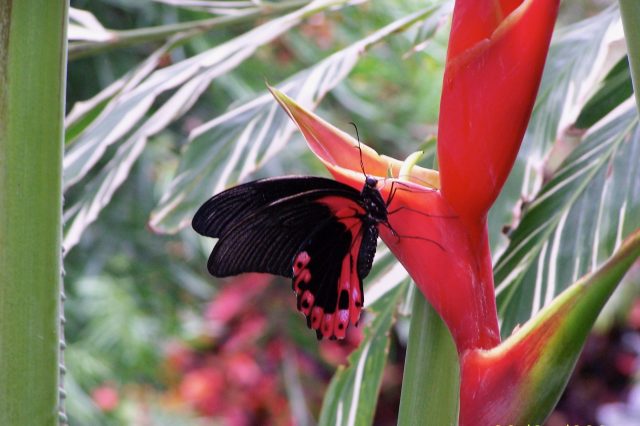
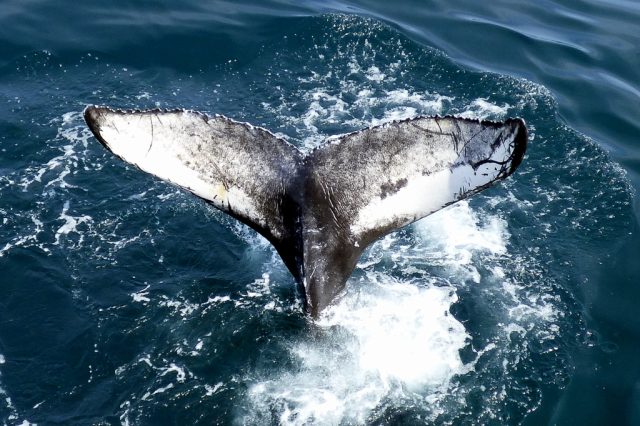
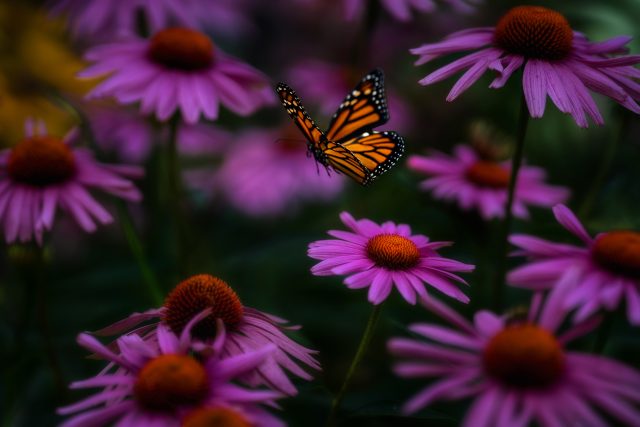
Even wildlife knows it’s a special place: Butterflies and humpback whales stop there on annual migrations down the coast. And that’s where the tale of Santa Cruz starts, along the coast, where the city’s brand was seared into popular culture.
The OG Surf City
In July 1885, three Hawaiian princes – Prince David Kawānanakoa, Prince Edward Abnel Keliʻiahonui and Prince Jonah Kalanianaʻole – hopped on some locally milled redwood planks and surfed in Santa Cruz. It was the first recorded description of surfing in California.
Ever since, Santa Cruz and surfing have become synonymous, have grown up together. The local newspaper coined the term Surf City in 1927 (a name that Huntington Beach unfairly co-opted decades later). And naturally, the city’s home to the world’s first surfing museum.
Calling Santa Cruz a “best-kept secret” is ridiculous to any surfer. Santa Cruz has 11 world-class breaks, meaning it has some of the best waves on the planet. It hosts surfing competitions such as the International Longboard Association Contest and the O’Neill Cold Water Classic – the latter a reminder that wetsuits were invented here. O’Neill Wetsuits was founded after local surfer Jack O’Neill experimented with material so he could stay in the water longer when it grew cold.
But surfing is just one facet of Santa Cruz aquatic life.
You can go whale watching pretty much any time of year. The humpback whale is an annual Monterey Bay visitor from spring to fall. And about 20,000 gray whales swim through these waters twice a year, from December to April.
Dolphins, sea otters and sea lions are also local denizens of the deep. And is there anything cuter than watching a sea otter go about its day?
As the presence of so much sea life would suggest, the fishing is pretty good, too. You can do the deep-sea thing, or head up to the mountains for freshwater fish or just cast a line off of the wharf.
An Iconic Coastline
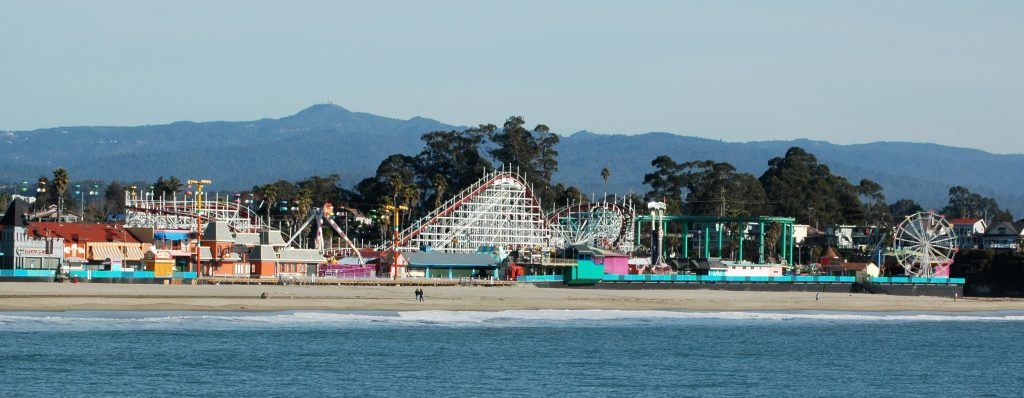
Anyone who’s seen “The Lost Boys” or “Us” will instantly recognize the iconic Santa Cruz Beach Boardwalk, California’s oldest amusement park.
The park, built along the northern shores of Monterey Bay, has been in operation since 1907. Two of its rides are registered National Historic Landmarks.
The Looff Carousel, operating since 1911, is one of only six carousels in the country with its original brass ring dispenser. The ride’s 324-pipe organ, separately constructed in the 1890s, is still intact.
Then there’s the Giant Dipper. Built in 1924, it’s one of the 10 oldest operating wooden roller coasters in the world. And it’s still thrilling visitors nearly a century later. Even by modern standards, it’s a great ride. The coaster peaks out at 70 feet and reaches 55 mph, and there are a few moments where your stomach will drop and drop again.
Taken together, the boardwalk is an experience all its own. While its architecture harkens back to a golden age, the park is no dusty museum. It’s still vibrant and a heck of a lot of fun for kids of all ages.
Naturally Speaking
If amusement parks aren’t your thing, there’s plenty more to see. Santa Cruz is replete with natural splendor.
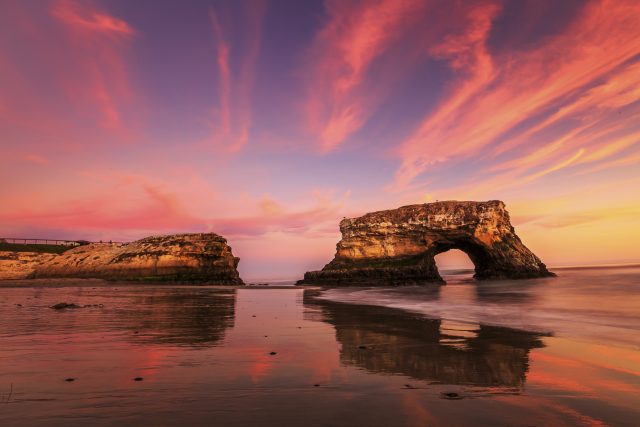
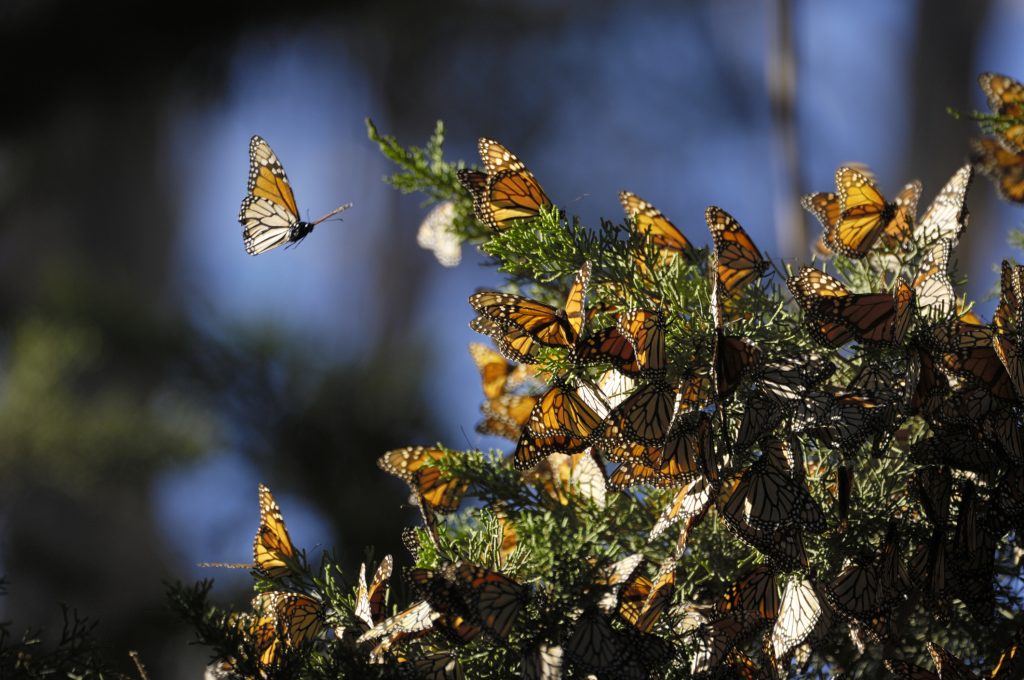
Natural Bridges State Park (named after the once-intact rock formations pictured at the top of this article) features more than just a gorgeous spot on the coast. The park’s Monarch Grove is home to migrating masses of butterflies from October through February.
There are so many butterflies at times that they form a sort of “living tree.” When you first lay eyes on them all huddled together on a branch, it looks like a mass of leaves – until each leaf flies away. The scent of eucalyptus trees permeates the grove and of course, the ubiquitous towering redwoods abound.
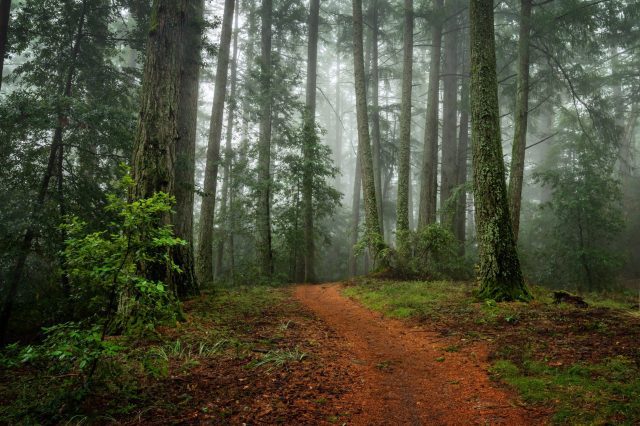
The redwoods and geography of Henry Cowell State Park are so stunning, they inspired President Theodore Roosevelt to hasten federal parkland initiatives. Old-growth redwood trees (some as old as 1,500 years) inhabit 40 of the park’s 4,650 acres, which also encompass grasslands, sand hills, and the San Lorenzo River. You may also bump into deer, bobcats, coyotes and of course banana slugs (which are, no joke, the official mascot of the University of California, Santa Cruz).
Hiking and mountain biking are also popular here given the miles of trails, and Henry Cowell is just one of many campsite opportunities. There are 14 state parks and beaches in Santa Cruz County.
Wait, There’s More
Santa Cruz offers much more than sand, surf and redwoods. Its mountains are home to more than 30 wineries including popular Ridge Vineyards and Rhys Vineyards. And the city’s downtown is packed with public art, live music venues, bars, restaurants, small shops and occasional street performers.
There’s history to explore, too. The oldest human settlement, in nearby Scotts Valley, dates back 12,000 years. The Ohlones tribe settled along the coast about 8,000 years ago. And the city’s Chinatown as well as its nearby mission, offers some more recent history lessons.
Santa Cruz should be on any tourist’s California radar, even if just for a day trip. And getting there can be half the fun. From San Jose, you’ll drive through scenic mountains toward the coast.
And Santa Cruz is just a 90-minute drive south along the stunning Pacific Coast Highway from San Francisco. If you keep driving, Big Sur isn’t far behind.
Take the hassle out of travel and book an adventure today with AAA Travel!
What’s your favorite “best-kept secret” spot? Let us know in the comments below.
Have you been thinking of adding a pet to your life? At time of writing, about 70% of American households include a furry friend – and shelters are helping more pets find homes every single day. But if you’re new to the pet adoption process, what should you expect? We spoke to the team at North Shore Animal League America, the world’s largest no-kill animal rescue and adoption organization, to find out.
Before you adopt a pet, you need to think about how that pet would fit in to your lifestyle. A pet is a big responsibility, and you need to make sure that you’ve thought everything through. Do you live in a small apartment or a house with a fenced-in yard? What do the other members of your household think about adopting? What kind of budget are you working with? Are you ready to commit to loving and caring for a new pet for the rest of its life?
“Adopting an animal is a 13-15-year commitment to caring for that pet for the rest of its life,” says the team at North Shore Animal League America. “Are you ready, willing and able to care for that animal’s needs?”
Specific animals also have specific needs – caring for a dog is different than caring for a cat. Research what your desired pet would need to make them happy, healthy and comfortable in their new home. You should also consider the age of the pet you might want. Puppies and kittens might be cute, but they’re a lot of work. Are you willing to give them the time, training and attention they need?
Once you’ve decided on the type of pet you’d like to adopt, check out your local shelter’s website and see what animals are available. North Shore Animal League America lists its pets at animalleague.org, where you can find information for potential adopters and current pet owners alike. You can also visit their campus in Port Washington, N.Y., to work with an Adoption Counselor who will help find the right animal for you.
When you adopt at a shelter, you will need to fill out an application with some information about yourself. At North Shore Animal League America, you need to be 21 years of age to adopt. You’ll be asked to provide contact information, personal references, previous experiences as a pet owner and veterinary history of your past animals (if applicable).
“Our Adoption Team will review information you provide … They’ll reach out to several personal references you provide. Finally, they’ll make sure that your plans match the best future for each animal,” said the team at North Shore Animal League America.
Shelters will most likely have an adoption fee, which can vary based on the animal you’re adopting. This adoption fee usually includes things like necessary vaccines, spaying/neutering and sometimes even microchipping. Microchips make it easier for pets to be reunited with their rightful owners if they get lost.
Who Gets Adopted?
The most popular animals at shelters are “tiny and adorable,” according to the team at North Shore Animal League America. “Most of the animals we have in our care are mixed breeds, what we lovingly refer to ‘mutt-i-grees,’ but when pure breeds are available, they don’t spend much time on the adoption floor. We regularly facilitate large rescues from puppy mills and backyard breeders, taking in dogs who had been used to mass produce puppies being sold to the public in pet stores. These dogs tend to be smaller, in-demand pure breeds.”
Out of all types of animals, the team at North Shore Animal League America wishes that more people were interested in adopting senior pets. “Adopting a senior pet can have many advantages. The puppy and kitten stages are a lot of work; older animals have established personalities and are usually housebroken, somewhat trained and well-socialized.” They also said that an “unexpected silver lining” to the pandemic was that many more people were open to adopting senior animals. Pets that might have been overlooked in the past were able to find a loving home.
The Pet Adoption Process and the Pandemic
The pandemic – especially the early months of quarantine – had a huge impact on the pet adoption process. With veterinary and shelter staff considered essential workers, people were able to continue adopting animals. Like many other animal rescues and shelters, North Shore Animal League America experienced an immense surge in adoptions during the pandemic. But the ongoing crisis also hindered their abilities to rescue animals across state lines and to raise needed funds. Fortunately, interstate animal transports were eventually allowed to resume, and they were able to substitute their fundraisers for virtual events and online donations at animalleague.org/donate.
“Notably, despite recent headlines claiming shelters across the country were seeing animals being surrendered by adopters returning to pre-pandemic work situations, North Shore Animal League America never experienced this sad phenomenon,” the team noted. “We attribute this to our vigorous application and approval process, and the personalized, one-on-one interactions between our Adoption Counselors and adopters.”
If you’re thinking of adopting an animal, you should do it. As long as you make sure you’re being responsible and doing the right thing by your pet, it will enrich your life and theirs. North Shore Animal League America likes to say that when you adopt, you save two lives: You save your pet and you open up space for them to rescue more animals.
Have you ever adopted a pet? Are you thinking of adopting now? Tell us your story in the comments below!
Learn how your pets may be covered by your auto and home insurance policies.
Is there a better way to celebrate Halloween than turning off the lights, curling up on the couch and watching a scary movie?
From horror classics to recent hits – and a few not-so-scary options – check out these Halloween movies that take place or were filmed in locations throughout the Northeast.
All of the films on this list have an average score above 50%, according to Rotten Tomatoes. The only exception is “The Amityville Horror,” which we just had to include.
Maine
Many of the films inspired by Stephen King’s stories take place in the most northern point of the U.S.
“Cujo” (1983)
When a rabid, killer canine traps a mother and her young son in their car on a hot day, escape seems nearly impossible.
“Pet Sematary” (1989)
After moving, a family learns of an eerie pet cemetery in the woods by their new home and its uncanny ability to bring the dead back to life.
“The Mist” (2007)
When a strange fog rolls over a town following a storm, it unleashes a barrage of deadly creatures, trapping the townspeople in a grocery store.
“It” (2017)
Here’s one of those times where a remake outperformed the original; the 1990’s “It” was not as well-received by critics or audiences. Both versions take place in the fictional Derry, Maine, and tell the story of kids haunted and hunted by an evil, shapeshifting creature called Pennywise. You may also want to check out the 2019 sequel, “It: Chapter 2.”
Lower New England
From Salem witches to psychics and hauntings, lower New England has helped set the scene for a number of memorable Halloween movies.
“Hocus Pocus” (1993)
Beloved by children and adults, this not-too-scary Halloween flick about three soul-stealing, sister witches has become somewhat of a cult classic. Taking place in Salem, Mass., “Hocus Pocus” is fun, creepy, quotable and takes place on Halloween.
“The Witch” (2015)
Set in 1630s New England, this film tells the story of a family wrecked by paranoia and the possibility of witchcraft after their youngest – a baby – disappears. The epitome of a slow burn, this film’s eeriness builds all the way to the end.
“Beetlejuice” (1988)
When a recently deceased couple summons Beetlejuice to help them scare a living family out of their house, they quickly question his dark methods. This creepily quirky movie by Tim Burton is a double-hitter; it took place in Connecticut but was actually filmed in East Corinth, Vt.
“The Dead Zone” (1983)
Director David Cronenberg, the king of the body horror genre, set this horror-thriller about a man with psychic abilities (played by Christopher Walken) in New Hampshire.
“The Conjuring” (2013)
This film, “inspired by true events,” follows a family living in Rhode Island as they are haunted by spirits and must seek the help of paranormal investigators.
“The Witches of Eastwick” (1987)
The lives of three women (played by Cher, Michelle Pfeiffer and Susan Sarandon) are forever changed when a mysterious character (played by Jack Nicholson) rolls into their small New England town.
“The Lighthouse” (2019)
A horror-drama by Robert Eggers (the same director as “The Witch”), “The Lighthouse” stars Willem Dafoe and Robert Pattinson as two lighthouse keepers fending off insanity. The movie is set on a remote New England island back in the 1890s.
New Jersey
The Garden State is responsible for one of the most iconic Halloween movies.
“Friday the 13th” (1980)
Another slasher, this film — and starting point for the numerous Jason Voorhees sequels and remakes — follows a series of murderers at a campground where a young boy accidentally drowned. This film is set in the fictional Camp Crystal lake in New Jersey, but it was filmed in several locations across the state, including Camp NoBeBoSco in Hardwick, Hope Moravian Cemetery and others.
“The Prowler” (1981)
Fitting under the “slasher film” category of horror, this movie follows a group of college students as a military-clad killer wreaks havoc on their small New Jersey town.
New York
New York has produced the most horror films of all the states on this list, offering a sense of setting to scary movies old and new.
“Ghost Busters” (1984)
Here’s a Halloween movie that will have you laughing, thanks to the comedic talents of Dan Aykroyd, Bill Murray and Harold Ramis as their characters try to defend New York from spirits.
“The Amityville Horror” (1979)
Based on real murders, and some supposed supernatural activity, this movie shows a family whose dream house becomes their worst nightmare. While the real Amityville house sits on Ocean Avenue in Long Island, the house filmed for the movie is actually in Toms River, N.J.
“Funny Games” (2008)
What’s interesting about this film is that it’s a frame-by-frame recreation of the 1997 original from Austria. This version was filmed in Brooklyn and Long Island and depicts the story of a family who falls victim to two sadistic men.
“Sinister” (2012)
This film lives up to its name. It follows a writer who, after discovering films of family murders in his attic, tires to uncover their secret. Some of these darker scenes were filmed in locations on Long Island while the rest was shot in Los Angeles.
“Sleepaway Camp” (1983)
Another teen slasher, this movie follows the shy Angela Baker who’s stuck at a summer camp as fellow campers and staff start dropping like flies. It was filmed in several New York locations.
“Cloverfield” (2008)
Following a group of New Yorkers, this movie uses “shaky cam” to show first-person recordings of terrifying, alien creatures wreaking havoc and destruction on NYC and its inhabitants.
“Sleepy Hollow” (1999)
Based on Washington Irving’s classic tale, “The Legend of Sleepy Hollow,” this Tim Burton movie is scarier than his previously mentioned “Beetlejuice,” featuring the ghost of a murderous headless horseman as it haunts Sleepy Hollow.
“Sisters” (1973)
Here’s a work from a director who knows how to do horror and suspense. This film from Brian De Palma is part of the Criterion Collection, a group of films honored for their cultural, visual and thematic importance. “Sisters” follows a journalist who swears she sees her neighbor viciously murder a man.
“Gremlins” (1984)
In this not-so-scary pick, a father buys his son a strange pet called a “mogwai” from a shop in Chinatown. When the rules for taking care of the creature are broken, mayhem befalls the town of Kingston Falls, N.Y.
“The Exorcist” (1973)
This supernatural horror follows a young girl as she’s possessed by a terrible evil. Once considered the scariest movie of all time, this movie was filmed in several locations, one of which was New York’s Goldwater Memorial Hospital on Roosevelt Island in East River, N.Y.
“Jaws” (1975)
Though it takes place during the summer, this adventure-thriller about a killer great white shark terrified audiences. The film’s fictional setting, Amity Island, is actually Martha’s Vineyard.
“A Quiet Place” (2018)
This mix of horror, sci-fi and thriller tells the story a family forced to live in silence to avoid being hunted by bloodthirsty monsters. It was filmed in locations throughout New York, including a bridge in New Platz.
Fun fact: The film’s sequel, “A Quiet Place Part II” (2020), was also filmed in upstate New York.
“Get Out” (2017)
This horror was filmed in Alabama, but the story takes place in a New York suburb. Following main character Chris as he meets his girlfriend’s parents for the first time, things go from uncomfortable and odd to downright disturbing. This film is a true must-see and won an Academy Award for Best Original Screenplay.
“Rosemary’s Baby” (1968)
This film is part of the Criterion Collection and a true horror classic. Shot entirely in NYC, the film follows the pregnant Rosemary as she begins to suspect her unborn child is something evil.
Pennsylvania
Pennsylvania brings us the oldest film on the list as well as some other classics.
“Night of the Living Dead” (1968)
Arguably the first ever “zombie” movie, George A. Romero wrote and directed this horror classic about seven people trapped in a farmhouse as they fight for their lives against the living dead. It was filmed in Pittsburgh and is part of the Criterion Collection.
“Dawn of the Dead” (1979)
This zombie-packed sequel to the previous entry, “Night of the Living Dead,” was shot in Pittsburgh, including the Monroeville Mall in Monroeville, Pa. Following an outbreak of carnivorous zombies, a television studio staff and SWAT team members all fight to survive.
“The Crazies” (1973)
When a manmade, insanity-causing virus takes over a small Pennsylvania town, the results are gruesome. An interesting note about this film is that its 2010 remake actually scored higher. The remake, however, was filmed in Georgia and Iowa instead of Pennsylvania.
“The Blob” (1958)
The oldest movie on this list, “The Blob” is also part of the Criterion Collection. A horror classic, this film features a gelatinous creature that consumes everything it touches, including people. Shots of the preyed-upon town were filmed in Phoenixville, Pa.
“Creepshow” (1982)
Directed by George A. Romero and written by Stephen King, this movie is an anthology telling five horrifying stories. Filming locations included Pittsburg, Philadelphia and other Pennsylvania spots as well as Ocean County, N.J.
“The Sixth Sense” (1999)
Shot mostly in Philadelphia, this film tells the story of a young boy who can see and talk to the dead. Though its twist ending has been widely known for quite some time, this iconic film is still worth a watch (or re-watch).
“The Silence of the Lambs” (1991)
This Academy Award winner and Criterion film follows the story of a young FBI agent as she interviews the cannibalistic Dr. Hannibal Lecter to gain insight about a new killer on the loose. Some scenes were filmed in Pittsburgh and other Pennsylvania locations, while others where shot in Virginia and the Bahamas.
Whether you prefer classic, recent or not-so-scary Halloween movies, there are plenty of options when it comes to horror movies from the northeast.
What are some of your favorite Halloween movies that take place in the Northeast? Tell us in the comments.
This article has been edited and expanded to include suggestions from our members.
“Interest” is a term we hear left and right. After all, just about every aspect of our financial lives is affected by interest rates. But what exactly is interest? How are interest rates determined and what effect can a high or low rate have on our financial futures?
To get a better understanding of this all-important financial practice, we compiled answers to your interest-related questions.
What Is Interest?
Interest is something that is either paid, or something that is earned.
On a loan, interest is the amount of money charged by a lender for borrowing their funds. Think of it as a fee for having access to a large sum of money earlier than you would have otherwise. Loan interest is expressed as a percentage of the amount borrowed; a number known as interest rate.
On a deposit account, interest is the amount of money you earn for having your funds on deposit. Interest on deposit accounts is known as the annual percentage yield.
What’s the Difference Between Simple and Compound Interest?
There are two types of interest: simple and compound. Simple interest affixes a set interest rate only on the principal amount of money borrowed or deposited. Compound interest, however, applies interest to the principal amount as well as any interest previously accrued.
Let’s take a look at an example to see the difference in action:
Let’s say you deposit $100 in an account with a 5% annual interest rate. In one year, your balance would be $105 regardless of whether simple or compound interest is applied ($100 in principal plus the $5 you earned in interest). After the first year, however, the two interest types diverge. With simple interest, the 5% would continue to be applied only to the $100 going forward, meaning you’d have $110 in two years.
If, however, compound interest is applied to your account, the 5% is applied to the full balance of $105, so you’d have $110.25. Over time, and depending on the account balance, compound interest can accumulate significantly more money.
The U.S. Securities and Exchange Commission’s website has a helpful compound interest calculator to see just how much money you can earn over the years.
How Are Interest Rates Determined?
The Federal Reserve sets the interest rate banks charge each other to borrow money, a number known as the fed funds rate. Financial institutions use this to formulate the interest rates they charge or offer customers.
If interest rates are low, it’s a good time to take out a car loan or mortgage. If interest rates are high, on the other hand, it could be an ideal time to deposit money into a money market account or open a certificate of deposit.
What Affects Your Interest Rates?
Financial institutions use the fed funds rate as a guideline but will usually offer customers varying interest rates. You’ll want the lowest interest rate possible when you’re taking out a loan. This way, you’ll owe the least amount of money over the lifetime of the loan.
The rate a financial institution charges you is indicative of how likely it feels you’ll be able to pay back the money. (The higher the interest rate, the lower the likelihood.) It determines the interest rates it awards through a number of factors. These include your credit score, credit history, loan type, loan term and down payment.
Can Consumers Earn Interest?
Yes! Interest is most often associated with borrowing money from financial institutions in the form of mortgages, car loans, student loans, etc. This forces debt owners to pay interest. But consumers can lend financial institutions money by depositing funds into a savings account or product such as a certificate of deposit. Such financial tools also come attached with interest rates that will grow the account balance and earn their owners money. Granted, interest rates on savings products will always be lower than on loans (the difference is how banks make money) but these accounts are an easy way to watch your money grow on its own.
Where most prefer to drive ghosts away, I drive towards them. Well, not usually; but I did recently on a road trip along the Haunted History Trail of New York State.
Despite being a skeptic at heart, I’m always up for a good ghost story, and New York has more than enough to tell. Dating back to early native inhabitants and the American Revolution to when dignitaries began to build it up to the place we know today, tales of unrested spirits in the Empire State are drawn from nearly 400 years of history.
So, with piqued curiosity and an open mind, I headed on a haunted road trip from Long Island to the Hudson Valley, through the Catskills and up to the Capital-Saratoga region to meet the ghosts of New York past.
A Trail of Fears
The Haunted History Trail of New York State was established in 2013 when Kelly Rapone of the Genesee County Chamber of Tourism noticed a growing demand – and a hefty supply – for more eccentric attractions.
I narrowed my trip to the eastern regions, but the trail stretches state-wide, featuring over 90 allegedly haunted hotels, restaurants, museums and other stops that appeal to paranormal fans, ghost hunters and those simply interested in learning more about the past.
“The trail is hugely popular,” Rapone said. “We can’t keep the brochure in stock.”
For the apprehensive, don’t let the creepy angle scare you away. The so-called haunted attractions are not outrightly frightening. In fact, the trail is a guide to some of the most beautiful and fascinating destinations in the state that you might not find otherwise. The goosebumps-inducing stories are there if you ask, and many locations offer private ghost tours.
Though the trail is a year-round attraction, fall is peak ghost-hunting season. Grab a map and try to hit as many spots as you can! Here’s a look at the places that I visited.
Miss Fanny’s Victorian Party House
(Real) Haunted Houses
Maybe you’ve heard strange noises in your house when no one was home or felt a sudden chill in the room that makes the hairs on your arms stand on end. It could be the heat knocking through the pipes or the wind, or it could be something more elusive. At the “real” haunted houses of New York, certain occurrences have no explanation.
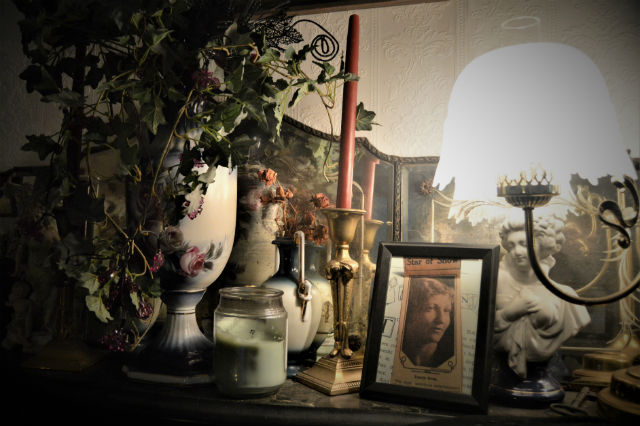
What some consider peculiar is the norm for homeowner Julia Drahos and her family at Miss Fanny’s Victorian Party House in Wappinger’s Falls. Part macabre and part kitsch, the 19th-century farmhouse feels straight out of “The Addams Family.” There’s an embalming table in the living room, a coffin in the attic and the occasional zombie mannequin in the hallway. But that’s not the weird part.
A photo of Fanny Van Wyck sits on the mantle at Miss Fanny’s Victorian Party House. Fanny’s spirit is said to be in the house.
Miss Fanny’s has a few extra house guests who often make their presence known, one of which is believed to be the home’s namesake and former owner, Fanny Van Wyck, the last of one of old New York’s most prominent families. A clip of electronic voice phenomena recorded during a paranormal investigation of the house was identified as Fanny by the granddaughter of her former housekeeper. Another EVP session revealed a total of 17 spirits roaming the property.
Julia, who is also a medium, is not afraid of her tenants. Mostly, she is pleasantly surprised by how parts of the past continually seem to reveal themselves through the supernatural. “It’s not only about the ghosts, it’s history,” she said, which she gladly preserves for Fanny and the rest of the gang by welcoming visitors into her home (by appointment only) for ghost hunts, showers, readings, ladies’ nights and other events.
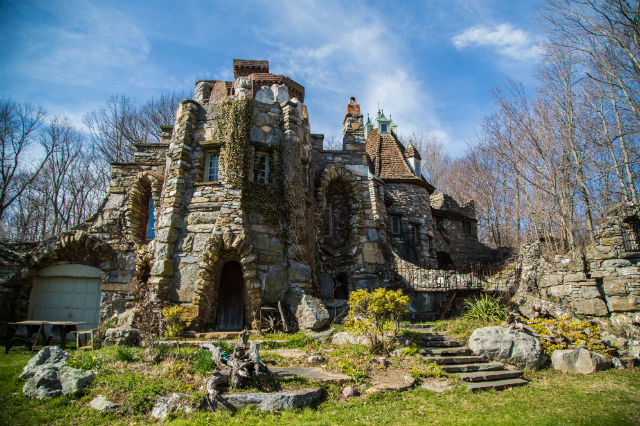
In nearby Millbrook, the owners of Wing’s Castle have reported a few strange occurrences in the past, earning it its place on the Haunted History Trail, but more than that it is an incredible live-in art piece.
Artists Toni Ann Wing and her late husband, Peter, started construction on their fortress-like home in the 1970s, and work continues to this day. Filled with antiques, museum-worthy artwork and handmade details created from recycled materials acquired mostly from the Hudson Valley region, there are intricacies to discover around every corner. Wake up to sweeping views of the Hudson Valley when you stay in one of the rooms or suites part of the bed-and-breakfast.
Tours of Wings’s Castle are currently closed to the general public for the 2021 season due to the pandemic; however, guests of the bed-and-breakfast receive a complimentary tour with their stay.
Knox Mansion
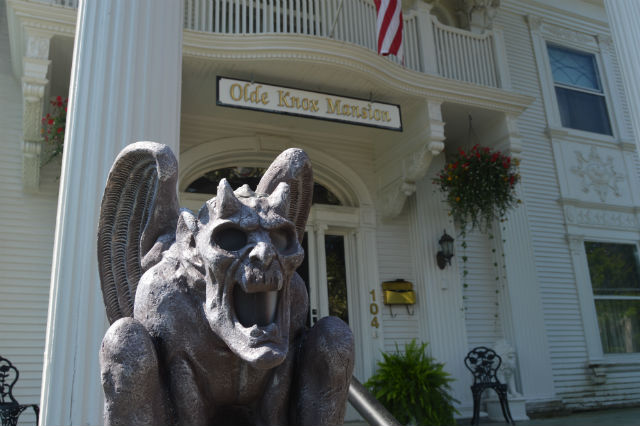
In Johnstown, the Knox Mansion is the most captivating house on the block. Built in 1889 as the home of gelatin magnate Charles Knox and his wife Rose, the historic residence tells many stories. Fortunately, owners Marty and Fawn Quinn are happy to share them.
Some of the bizarre encounters at Knox Mansion are said to have turned skeptics into believers and scared expert ghost hunters away. The energy is there as soon as you walk in; for some a light presence; for others a force that stops them dead in their tracks. Paranormal investigators believe occupant ghosts include Rose Knox, a doctor who once lived in the house, and a little girl. There is also a phantom gardener that appears to children in the yard.
Two of the mansion’s 42 rooms are available as a bed-and-breakfast, and tours are offered for small fee (appointments preferred). Halloween may be the best time to see the mansion, when it turns into a popular walk-through haunted attraction featuring themed spaces staffed by around 40 volunteers. No guarantees if the ghouls you meet are real or actors.
Mysteries at the Museums
Old Stone Fort Museum
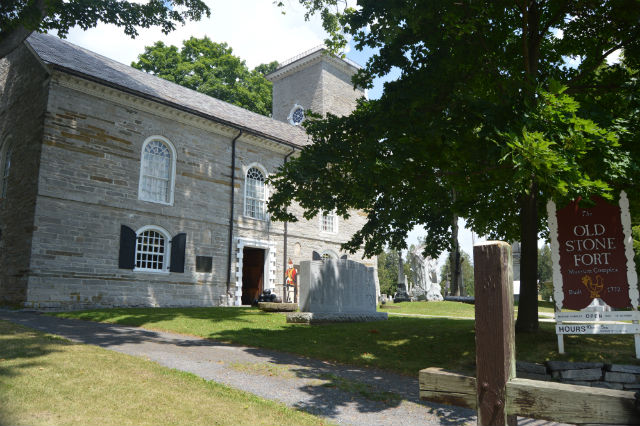
Schoharie’s Old Stone Fort Museum is a bit creepy from the onset and instantly interesting. Set inside of a former German High Reform church built in 1772, it is surrounded by a cemetery and filled with historical artifacts, and – as quite a few ghost hunters have confirmed – a few lingering spirits.
British troops attacked the building during the Revolutionary War during the Burning of the Valleys in 1780. It was one of three building in the area converted into a fort. One of the few Revolutionary war sites that have been preserved in its original form, it’s taken on a few different lives, but has been a museum since 1889. “It was our local internet (before Google),” said museum director Carle Kopecky.
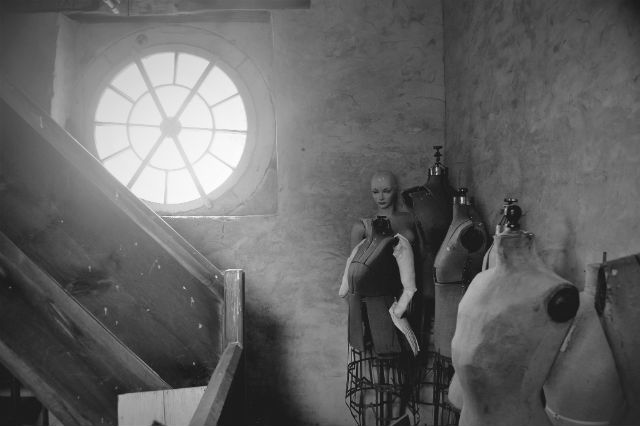
He took me up the old staircase of the church tower, a favorite stakeout for paranormal investigators, where the energy has felt so strong that some staff members can’t bring themselves past the first few steps. On our way up, we passed beams with names and dates scribbled on them that dated back to the 1800s, leading to a window (pictured above) where one psychic claimed to see a woman looking out toward the cemetery. I’m not typically sensitive to ghostly vibes, but hearing that story in the exact place that it happened gave me instant chills.
The most common repeated occurrence at the museum is the sound of footsteps on the second floor when no guests are there. “More than one person has experienced that,” Kopecky said.
For those serious about ghost hunting, the museum offers a program where paranormal investigators can request a few hours in the building overnight.
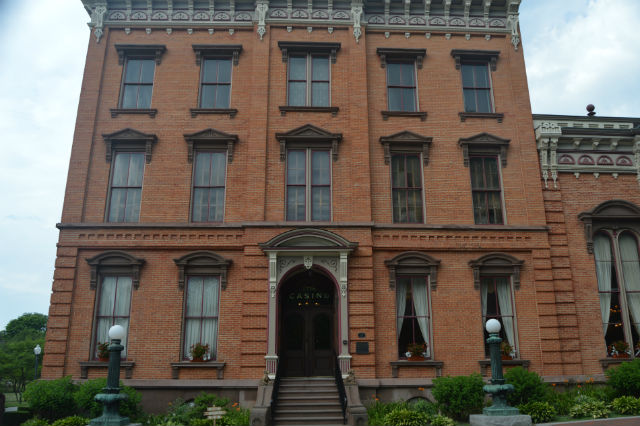
The Saratoga Springs History Museum at the historic Canfield Casino.
The Saratoga Race Course is known as “the graveyard of favorites” for its reputation of bringing down Triple Crown winners. If you are the betting type, that might be the scariest thought of all. For a thrill that’s less risky, the Saratoga Springs History Museum, located within the historic 1870s Canfield Casino in Congress Park, has a haunted reputation worth exploring.
Tour guide and museum board member Charlie Kuenzel has seen and heard his share of ghost stories. Working in the building has made a believer out of him – and all other regular employees. “Everyone has bought in,” he said.
A lot of money was won and lost at the gaming house in its day and some may still be holding out hope for a win. On occasion, Charlie has walked into the empty museum to find the roulette wheel in the second-floor gambling exhibit inexplicably spinning. Employees also frequently pick up smells of cigars and lilacs.
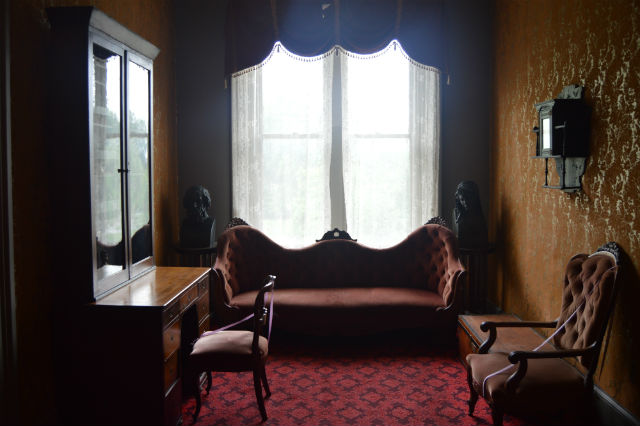
Many have claimed to see the apparition of a man sitting on this couch on the purportedly haunted third floor of the Saratoga Springs History Museum.
“The energy, without question, could be from past gamblers,” Kuenzel said, but most of the strange occurrences are attributed to the Walworth family.
The third-floor Walworth Museum, which features several replicated rooms from the home of one of Saratoga’s most influential families, is a hotbed of paranormal activity. Since its installation, guests and staff have consistently described accounts of an apparition wearing a white dress and the figure of a man sitting on a couch at the end of the hall. As confirmed by ghost hunters, the Walworths’ energy is held in their belongings. So basically, the family still thinks they are home.
Ghost tours at the museum are Monday, Wednesday and Friday at the height of racing season and on demand. At Halloween, tours ramp up and there are occasional special overnight events for those brave enough to investigate the third floor in the dark.
Naturally Creepy
The gate to Yaddo Gardens.
A short drive from the Canfield Casino, Yaddo Gardens offers a different kind of ghost tour that will leave you feeling more peaceful than spooked. The gardens are located on the grounds of the prestigious artists’ retreat Yaddo, whose notable past residents include Leonard Bernstein, Langston Hughes and Sylvia Plath.
Yaddo was the vision of financier Spencer Trask and his wife Katrina. Though their life was gilded, the Trasks were surrounded by tragedy, some of which has been entwined with legends of the gardens’ mystic vibe. One story says that the four seasons statues that stand beside the rose garden have a special aura believed to represent the four Trask daughters who died as children.
There is an unusual spirituality about Yaddo; it’s one of the reasons why the Trask family thought it would be a good place for artists. As docent Barabara Kolapakka described, “If ghosts were to be anywhere, they would be here.” The gardens were restored and are maintained by volunteers. You can visit year-round from dawn to dusk. Tours are currently unavailable.
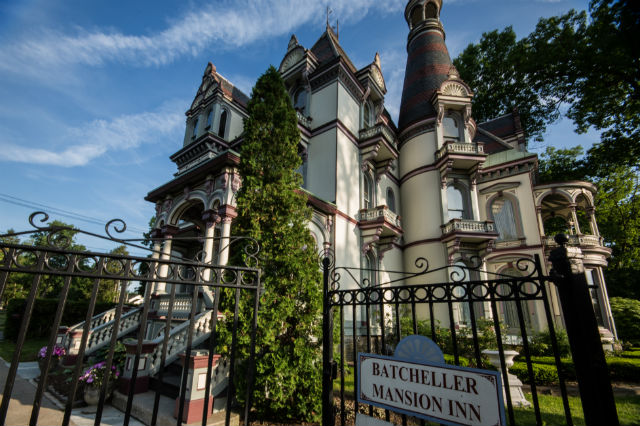
Yaddo Mansion is exclusive to the artists who work hard to get there, but you too can claim your spot at a mansion, at least for a night or two. If you’re looking for a beautiful place to stay in Saratoga Springs that also has a bit of an eerie edge, the Bathcheller Mansion Inn is architecturally and historically stunning. Once the home of prominent political figure George Batcheller, the high Victorian Gothic mansion may still be occupied by its former owner, who likes to make his presence known.
Ghost Hosts: Hotels and Restaurants With Spirit(s)
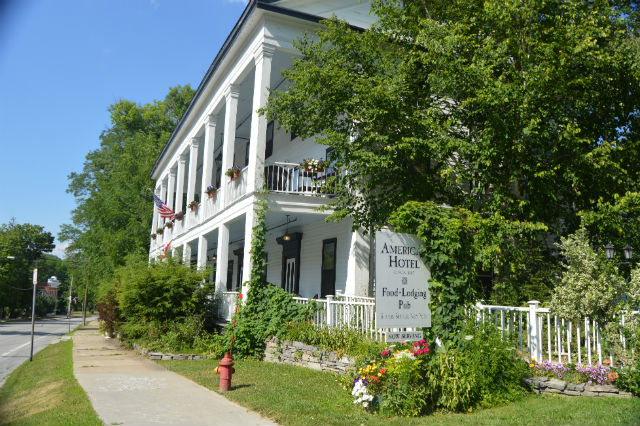
On my way back downstate, I stayed in the adorable little town of Sharon Springs at the American Hotel. It’s not listed in the Haunted History Trail brochure, but it was one of my favorite stops. An 1842 building restored after 30 years of vacancy with nine cozy rooms, antique furnishings, dining and porches on two floors, it was just the palate cleanser I needed after all the spooky places on my haunted road trip. Sharon Springs is a great little getaway in itself with shops like Beekman 1802, cafes and a spa, all within walking distance along its main thoroughfare.
While not exactly haunted, it turns out the American hotel has seen its fair share of Caspers over the years – a fact I’m glad I learned about after getting some sleep. Although listening to owner Doug Plummer tell me about them was a highlight of my trip.
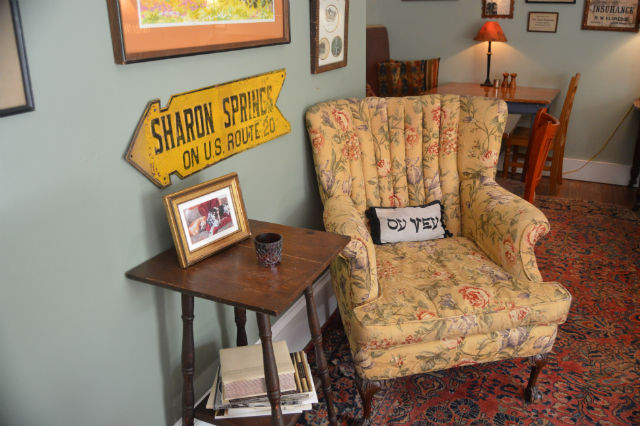
Plummer, who owns the hotel with his husband, Garth Roberts, is an amazing and animated story teller. With accents and all, he told me about the spirit of a “pissed-off rabbi” identified by a Southern clairvoyant staying over, and how she helped Doug get rid of him by way of an “Oy Vey” pillow peace offering that still sits on a couch in the lobby.
Plummer shared a sentiment from the clairvoyant that helped me to make some sense of the paranormal experiences I heard about on my trip. It was that “energy can’t be destroyed, it can only be displaced.” So, if you are ever in a room and feel inexplicably weird, it’s because something is there – whether you can see it or not – and you innately know it.
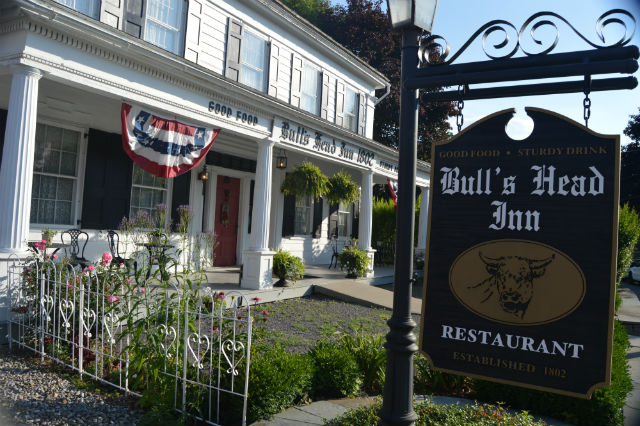
About 20 minutes away in the village of Cobleskill, the Bull’s Head Inn is the oldest building in town, and some might say, a local haunt. Constructed in 1802, its long-storied past includes being the residence of Mr. John Stacy and his wife Grace, an avid prohibitionist. All fingers pointed to her when odd activity such as slamming doors, items being pushed off tables and sightings of a woman in white began to occur around 1966 soon after a bar was installed. “When people see apparitions, they say it’s Mrs. Grace Stacy,” said owner Chris Guldner.
Most of the supernatural action happens on the second floor of the restaurant, where Guldner says ghost hunters have come in and picked up a lot of activity on their equipment. He has also experienced some odd occurrences such as seeing a kitchen sink being turned on by itself. If you are tuned into abnormal energy, you might feel it here. Either way, come for the history. Although the entire restaurant has been gutted and refurbished (check out the new Cellar Tavern), it stays true to its roots.
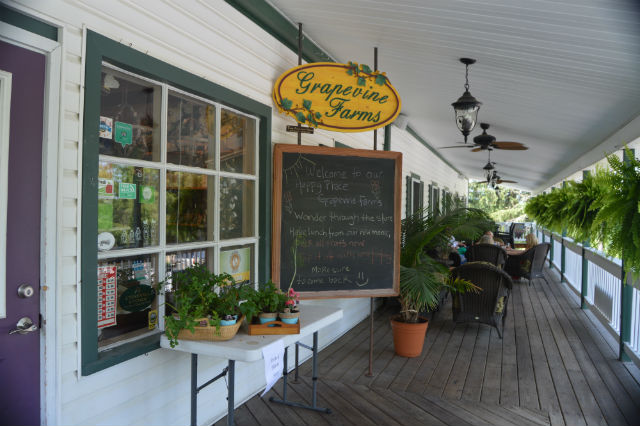
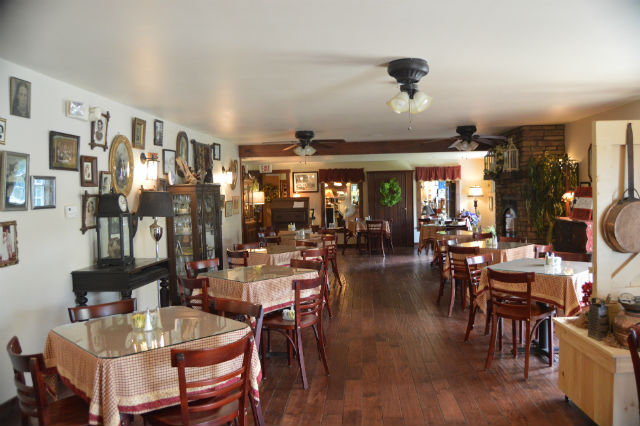
At Grapevine Farms Restaurant & Boutique, also in Cobleskill, customers often tell the owners that something feels off, especially on the third floor of the restored 1860s farmhouse. Not to fear; it’s only former owner – and resident spirit – David. The place is completely charming and homey, so it’s understandable that he wouldn’t want to leave.
For husband-and-wife team Tim and Tracy Purcell, their business is a literal extension of their home, and they treat it as such. Family photos fill the walls of the restaurant, along with personal heirlooms and mementoes, creating an atmosphere that immediately makes you feel as though you are welcomed as a friend.
The dining room at Grapevine Farms Restaurant & Boutique.
While overhauling the space they learned that David Hiltz and his wife were buried in a cemetery in the backyard. And though Tim tends not to believe in the ghost stories, he does keep the gravestones that he found on the property right where he found them as not to disturb any forces. If you would like to learn more about their spectral side, look out for special events during the Halloween season, when they will occasionally host dinners and talks featuring mediums and other paranormal experts.
Stop in for lunch daily from 11 a.m.-3 p.m. (try the chicken salad sandwich made with New York state riesling-soaked cranberries). The shops are open until 6 p.m., giving you extra time to explore the themed rooms, which range from jewelry to candles to Christmas. Hang out on the back or front porch with a glass of wine or coffee from the coffee bar and you could easily make a day out of it.
Alien Encounters
In the town of Crawford, the tiny hamlet of Pine Bush is known as the UFO capital of New York. It is best recognized for its annual UFO fair, a single day in the beginning of May that draws seven to eight thousand visitors. The fair is fun for all – lighthearted enough for those who want to dress like aliens and get a little spacey, yet serious enough for believers to not feel judged. Experiences are quite common in these parts.
During my visit I got to meet paranormal and UFO expert Linda Zimmermann. An author of 21 books on the subject to date, Zimmermann has interviewed several hundred people about their sightings and experiences and is an experiencer herself.
Having grown up in the Hudson Valley area, Zimmermann heard about UFO sighting so frequently that she thought it was normal. “I don’t think there is another location like Pine Bush,” she said. “As to why all of these sightings occur, I haven’t a clue!”
What sets Pine Bush apart from other places where UFOs have been reported is consistency. “A sighting can occur for a few seconds at a location, and then you can return to that spot every night for the next fifty years and never see anything again,” Zimmermann said. “Since the 1920s, there have been regular sightings in the Pine Bush area. In the 1980s and 90s there were sightings just about every night of the week.”
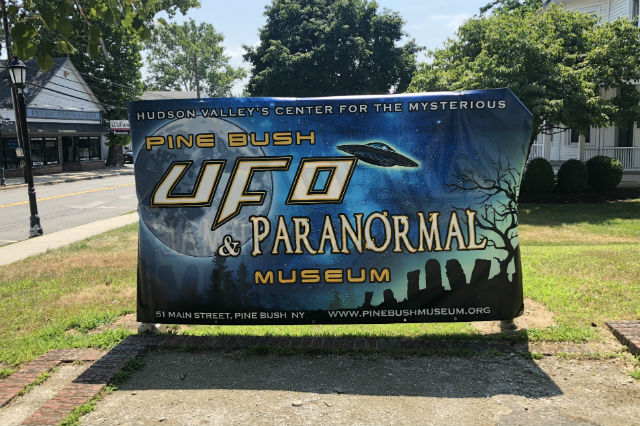
To learn more about the history of sightings in the area, be sure to check out the Pine Bush UFO and Paranomal Museum. After much demand for a year-round UFO destination, the museum made its debut at the 2018 Pine Bush UFO fair in its new permanent home at 51 Main St.
Museum director Lance Hallowell has carefully curated a collection of artifacts and research that tell the stories of happenings in and around New York and New England. In addition to learning about reported abductions (and a great photo-op for visitors to stage their own), there is also a haunted exhibit which includes an EVP room that features the summoned voices of ghosts, including those recorded right in the museum building! Dive even deeper at a lecture or Q&A session at the museum’s Paranormal Center.
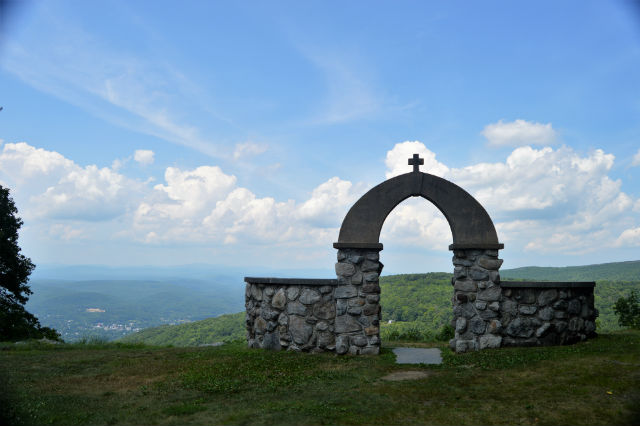
I concluded my trip at a mountain overlook beside the Cragmoor Stone Church. The mountain range is believed to be a strong lure for UFOs, but simply watching the clouds cast their shadows over the Shawangunk Ridge was enough of a thrill for me. After days of thinking about the afterlife and the extraterrestrial, it brought me right back down to Earth.
Are you interested in haunted history? Would you like to explore this side of New York? Tell us in the comments.
For many people, fall is their favorite time of year. It’s not too hot and not too cold, there’s a holiday all about eating candy and a second holiday all about eating way too much dinner, and it’s when the leaves make their colorful transition.
But if you have a house and a lawn, you might be dreading the time of year when the leaves start to fall. Landscaping fall cleanup can be a chore but it is necessary to maintain both the beauty and safety of your property.
What should you be doing to prepare your lawn and garden for winter? Here are a few landscaping tips.
Fall Leaf Cleanup
Ideally, you should clean up fallen leaves once a week. Too many leaves can damage your lawn, because deep leaf cover blocks the grass from getting sun. Some people don’t have time to do leaf cleanup every week, but try to do it on a regular basis. Don’t leave it all for one big job at the end of the season – that’s too much for anybody to handle, and your lawn will look pretty scraggly by the time you uncover it.
One of the easiest ways to deal with fallen leaves is by using a mulching mower. A mulching mower will break down leaves and filter them back into the lawn. Chopped up leaves make a tasty mulch snack for the grass. This method works best for yards that only have a slight leaf cover – too many trees and leaves will probably require you to go over your lawn a few more times with the mower. If you want you can collect your leaf scraps into a lawnmower bag and use them as nutritious mulch for other parts of your garden.
If you’d like to use a leaf blower, just be sure to do it on a dry day. Wet leaves make the task much more difficult, since they stick to the ground and to each other.
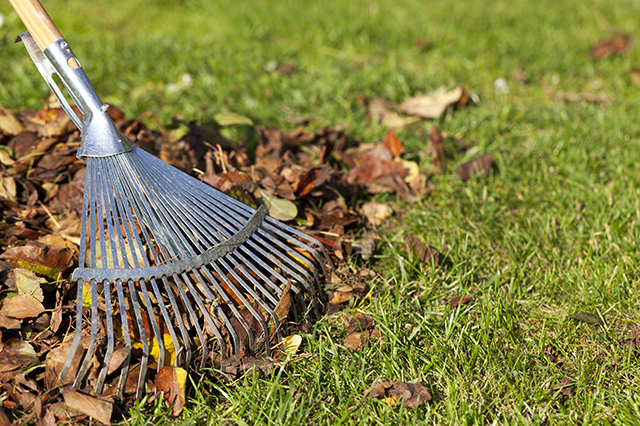
The easiest way to collect your leaves is to rake them onto a leaf tarp or drop cloth. You can drag the tarp along with you as you build up your pile, then you can deposit your collected leaves as you see fit (or as your town sees fit). It’s much easier than having to deal with a bunch of loose piles all over your yard. Even if you have to use a leaf bag, the tarp can make for an excellent funnel (with the help of another pair of hands to hold the bag). It makes the whole process a lot easier.
A wide rake that doesn’t snag on too many leaves can also make the task go a lot faster.
Another important part of leaf cleanup is clearing fallen leaves from your home’s gutters. Clogged gutters could contribute to ice damming in the winter, one of the most common winter insurance claims. Caused by snow melting on a warm roof, ice damming occurs when water runs down and freezes at the eaves. As the dams melt, they can leave water pools that can seep into your home and cause water damage. Clean gutters won’t eliminate the possibility of ice damming, but it will certainly decrease it.
Landscaping Fall Cleanup: Lawn Care
Fall is a great time to give your lawn some extra love and care, since it’s probably facing some rough winter months ahead.
This is a good time to aerate your lawn. Aerating is almost impossible to do once the ground is frozen, so you should take care of it while you’re doing landscaping fall cleanup.
An aerator is a tool that plunges out “plugs” of soil and pulls them out of the lawn, creating small holes. This helps to loosen soil that has become too densely packed, and it gives the roots some breathing room to access water, air and other important nutrients. Don’t worry about picking the plugs up – they will break down on their own and return their own nutrients to the lawn.
The easiest way to aerate is to do it when the soil is moist and it’s easy to pull the plugs out. Even though the soil is already wet, you should thoroughly water the lawn after you aerate it.
This is also the perfect time of year to fertilize your lawn and garden (which you can even do with some of the leaves you mulched earlier). Just make sure you apply your fertilizer about two or three weeks before the ground freezes. That’s when it can have the most impact, strengthening root and blade growth. After you apply fertilizer, water your lawn so that the fertilizer sloughs off the blades of grass and goes into the soil.
Trees and Branches
Leaves aren’t the only things that can fall down. In fall, you’ll have a better view of the trees and branches near your house, and you’ll be able to tell which limbs are diseased or dying. Although you can plan which limbs to prune throughout fall, it’s better to wait until very late in the season. Limbs that are pruned too early in fall could become diseased or even spur regrowth. When the cold has truly set in (mid to late November in the Northeast), then you can get to it.
But why prune your trees? Pruning can excise dying and diseased branches, it’s true, but it can also make your tree stronger and more attractive. It will also let more light onto your yard and into your house, which you’ll need as the daylight hours get shorter.
Dead and diseased branches that can fall create an insurance risk. If they just fall onto your lawn, that’s no big deal. But if they fall on your house, a car or walking pedestrian, that can be a big problem. Pruning also reduces the amount of branches that could fall during a heavy storm.
If your branches require a ladder to reach, or if you are inexperienced with sharp tools, calling a landscaper or arborist to groom your trees is the safest option.
What’s your go-to method for landscaping fall cleanup? Let us know in the comments below!
While America has a rich tradition of ghosts and ghouls, creepy tourist destinations can be found all around the world.
Sure, most travelers seek out the beauty of a botanical garden or a polished palace. But some of us search for something a bit more macabre. These creepy places can make your skin crawl, but they also reveal a lot about history. Let’s dive in.
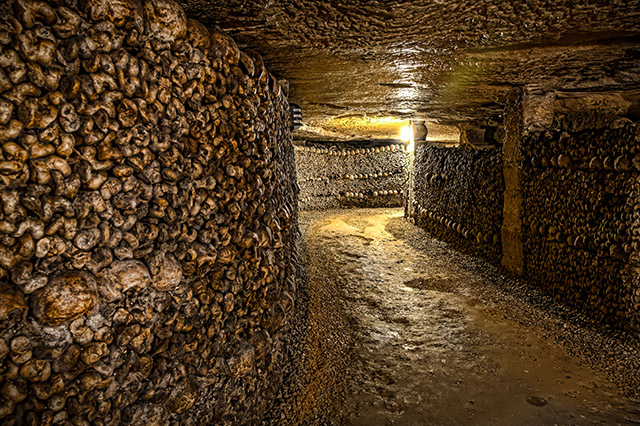
Far beneath the city of Paris, under the sewers and the metro line, lies miles and miles of winding tunnels. Also, they’re filled with human bones. The Paris Catacombs are basically an ossuary (a room decorated with skeletal human remains) filled with bones from graves that were unearthed in the 1700s. In the 18th century, Parisians were afraid that the city’s graveyards would overflow and lead to the spread of disease. As a result of this, many graveyards were dug up and their contents sent far underground into old quarry tunnels. Talk about creepy places!
Now, the Paris Catacombs are lined by walls made of tibia and skulls (smaller bones are supposedly stored behind them). The catacombs are open for tours, but don’t stray too far from your tour group. It’s all too easy to get lost in this ghost city underground.
Chernobyl Exclusion Zone – Ukraine
Chernobyl is the site of one of the world’s worst nuclear disasters. Ever since the disaster, an area of about 1,000 square miles has been declared uninhabitable due to the risk of radiation poisoning. Tours have been running through the exclusion zone for years, but since it was brought into the spotlight again with the success of the 2019 hit HBO miniseries aptly titled “Chernobyl,” the Ukraine has expressed an interest in making it an official tourist attraction. Whether that is the safest idea, is up for debate.
The most eerie place in the exclusion zone is the atomic city of Pripyat, which had been built by the USSR to house the power plant’s employees and their families. Pripyat was once an exceptionally plentiful city, with state-of-the-art schools, public gymnasiums and amusement parks. Now, it’s a ghost town. Pripyat is apocalyptic, empty and haunting. Nature has already started to reclaim the buildings and landmarks. It’s certainly a creepy place to visit and it’s enough to send a chill up anyone’s spine.
You’ve heard of the Dracula castle, but what about the home of a real-life vampire? Okay, Countess Elizabeth Bathory wasn’t actually a vampire, but she might as well have been. Cachtice Castle is the former home of Elizabeth Bathory, who in the early 1600s was accused of murdering over 600 young women. The legend was that she would bathe in the blood of her victims, but that has never been proven (or disproven, I guess). It is overwhelmingly likely that Elizabeth did commit some of these crimes, since she was never accused of witchcraft or sorcery – only murder. She also had help, as her servants were often used to lure young women to the castle.
When Elizabeth was put on trial, many of the servants who helped her were imprisoned or sentenced to death. Elizabeth herself was locked in a tower of her own castle, to live out the rest of her life in solitude. The castle was abandoned in 1708, and since then it has become a ruin. These ruins are open to the public, where you can walk in the footsteps of countless victims, their names lost to history.
Okay, so … it’s the Dracula castle. That’s what makes it one of the creepiest places on earth.
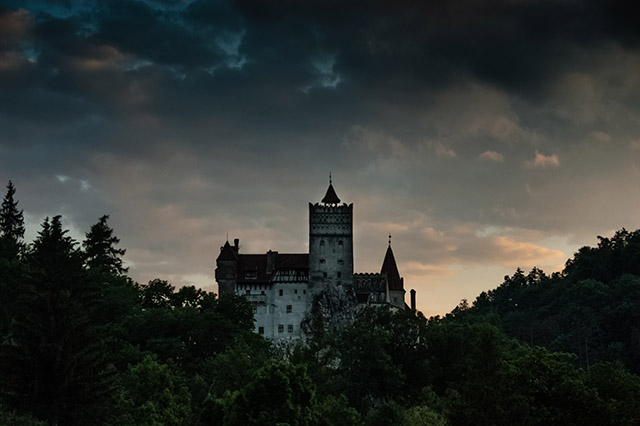
Dracula is a made-up character, it’s true, but he was clearly inspired by historical figure Vlad the Impaler (and he was no walk in the park either). While Vlad the Impaler’s actual castle lies in ruins, the castle in Bram Stoker’s “Dracula” was heavily based on the nearby Bran Castle.
Vlad the Impaler was also imprisoned in Bran Castle for a time, which is why some people have claimed that his spirit still lingers there. Whether you believe in ghosts or not, the castle still makes for a great visit.
Part folk art and part horror show, Isla de las Muñecas (translation: Island of the Dolls) in Xochimilco is famous for the hundreds of dolls covering almost every surface. The tiny island was once home to Julian Santa Barrera, who started collecting the dolls after he discovered the body of a drowned child in a nearby canal. It has been said that he collected the dolls to ward off evil spirits, or to remember the child he had found.
Now, the only residents of Isla de las Muñecas are the dolls themselves; sitting at the water’s edge, hanging in the trees and watching every step you take.
The next time you’re on vacation, check out nearby haunted spots or spooky landmarks. You never know what you might find!
What’s the creepiest place you’ve ever been to? Let us know in the comments below!
Stretching across New Hampshire and into Maine, White Mountain National Forest’s 800,000 acres of wilderness are like Valhalla to an avid nature lover. The slopes and trails in the park’s mountains and forests draw skiers, hikers, campers and virtually anyone who is eager to revel in scenic views and explore historic sites.
Whether you’re ready to venture out on foot or on skis, it all starts with a road trip through White Mountain National Park. Check out the best places to schuss, slalom and experience nature with a bit of history.
Hiking
If you like hiking, then expect to find bliss on the 1,200 miles of hiking trails — including a section of the legendary Appalachian Trail — with layover towns like Gorham, New Hampshire, at the foot of the mountains. The Tuckerman Ravine Trail, which begins in Pinkham Notch, is a popular — although challenging — way for experienced hikers to reach the 6,288-foot summit of Mount Washington for some excellent views.
The Mount Lafayette and Franconia Ridge Trail Loop is also regarded as a difficult hike, while the Sabbaday Falls Trail is easier and leads to one of the state’s most popular waterfalls. Moderate trails include Champney Brook Trail and Boulder Loop Trail, both off Kancamagus Highway. Three Ponds Trail is a combination of easy and moderate hikes and leads to a scenic pond. Moose, black bears, beavers, minks, bobcats and coyotes are among the wildlife you might spot on one of these hikes.
Skiing
If you love winter sports like skiing, snowmobiling and snowboarding, you certainly won’t be disappointed by the options in White Mountain National Park. It’s home to six ski touring areas, four alpine ski areas and 400 glorious miles of snowmobile trails. If you prefer to enjoy the winter wonderland scenery at a slower pace, opt for cross-country skiing or snowshoeing through the forest.
Popular skiing and snowboarding areas include Hermit Lake Shelters, Wildcat Mountain Ski Resort, Loon Mountain Ski Resort, Waterville Valley Ski Area, Attitash Ski Area, Black Mountain Ski Trailhead and Double Head Trailhead. At Loon Mountain, you can take to the slopes on three peaks rising up to 2,100 vertical feet. In Mount Washington Valley, the Attitash Ski Area’s two mountains, Attitash and Bear Peak, are consistently rated top ski resorts. Wildcat Mountain in Pinkham Notch offers long trails and spectacular views of Mount Washington. During the spring, Tuckerman Ravine is popular with skiers who enjoy testing themselves, an experience made even more challenging by the lack of ski lifts and need to carry your own equipment.
Top snowshoeing trails include Echo Lake Trail and Peaked Mountain Trail near Conway and Arethusa Falls Trail in Crawford Notch. Greeley Ponds Trail is ideal for backcountry cross-country skiing, and Bretton Woods Nordic Center boasts a 62-mile trail network, complete with a cabin and a yurt where skiers can stop and warm up.
Snowmobilers can rev up with self-guided snowmobile rentals and make tracks on the Meadow Brook Snowmobile and Biking Trailhead on Bear Notch Road. The Sawyer River Road Snowmobile Trailhead connects to Meadowbrook Trail and Bear Notch Road to create a loop of 25 to 30 miles.
(White Mountains New Hampshire)
Kancamagus Scenic Byway
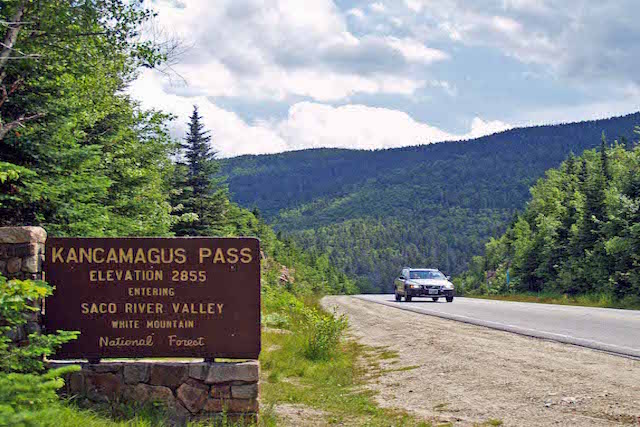
Your time on the road means colorful scenery, especially during fall leaf-peeping season. Take in the view from the comfort of your car along the Kancamagus Scenic Byway, also known as New Hampshire’s Route 112. As the northeast’s highest roadway — and one of the best places to view the area’s spectacular fall foliage — the 34.5-mile drive weaves through the forest before reaching an altitude of 2,900 feet on Mount Kancamagus. The byway takes you by quaint covered bridges, stunning scenic overlooks, rivers, dramatic gorges and mountains, and cascading waterfalls.
Historic Sites
On the historical side, you can explore remnants of stone walls, mills and logging camps throughout White Mountain National Forest. On the Kancamagus Highway in Albany, New Hampshire, one historic structure, Russell-Colbath Homestead, still stands and is open to the public. The 19th-century farmhouse gives you a chance to view historic artifacts and learn about the region’s history.
Near Bretton Woods, the Fabyan Guard Station, built in 1923 for $75 on Old Cherry Mountain Road near the Fabyan train station, is one of the eastern U.S.’s oldest remaining guard stations. Guards were posted in the one-room, 16-by-20-foot, red spruce log cabin to protect the forest.
Fall makes its presence known with a few definite signs and portents. Leaves change color from green to red and yellow, pumpkin spice lattes flow wherever coffee is sold, and temporary storefronts pop up to sell a colorful array of Halloween decor and costumes.
Now considered part and parcel of Halloween, the act of dressing up in costume dates back to the earliest records of the holiday. Long before Christianity spread throughout northern Europe, the pagan Celts of the British Isles and surrounding regions dressed in animal skins to disguise themselves from the spirits of the restless dead, who were believed to wander the Earth on Samhain (pronounced sow-in, meaning “summer’s end”). To appease the spirits, the Celts burned pyres and left sacrificial offerings to the dead, lest they remain to haunt their homes.
With the arrival of Catholicism to the British Isles, Samhain was rechristened All Hallows’ Eve (later shortened to Hallow-e’en), followed by All Saints’ Day on Nov. 1 and All Souls’ Day on Nov. 2. During this time, the poor went “souling” at the doors of more affluent neighbors, offering songs and prayers for the dead who awaited judgement in purgatory. These souls were represented by lanterns carved from turnips, each with a single candle lit inside it – an early precursor to the modern jack-o-lantern.
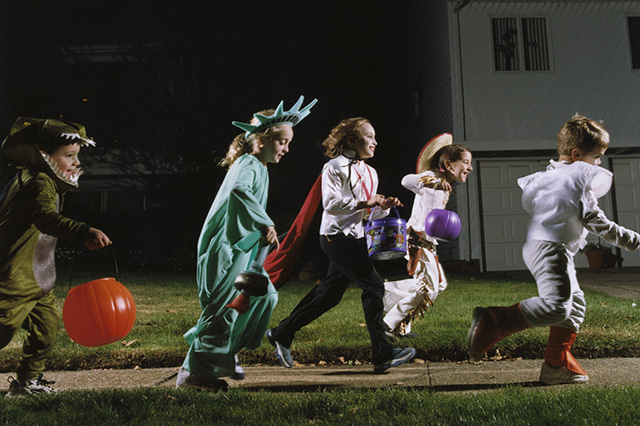
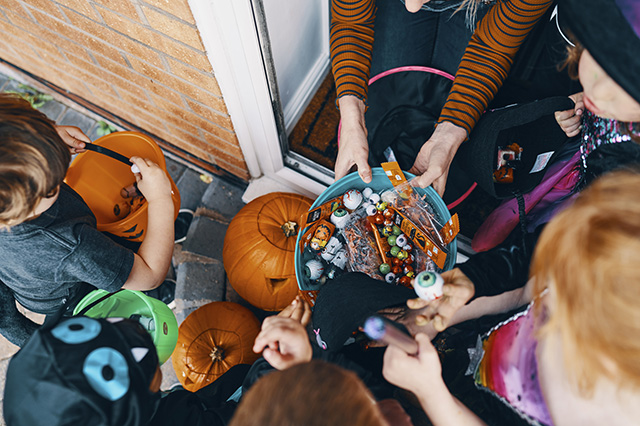
Trick-or-treating has its roots in an old Christian tradition known as “souling.”
Halloween as we know it didn’t take hold in America until the mid to late 1800s, when Irish and Scottish immigrants introduced customs such as jack-o-lantern carving and “guising,” in which children dressed in masks to visit shops and neighbors, offering rhymes and songs in exchange for nuts and candies.
While these customs derived from the older Catholic tradition of souling, Halloween had grown increasingly secular by the time it reached American soil. By 1939, guising evolved into its modern incarnation, “trick-or-treating,” in part through efforts by civic and religious organizations to mitigate the more anarchic elements of the holiday. In the original premise, the treats were offered so that costumed children would refrain from playing tricks upon stingy adults.
Early Halloween costumes were often homemade. Popular women’s magazines in the late 1800s printed instructions for costume-making, while children later gathered old clothes from attics and closets and blackened their faces with burnt cork or soot.
The modern costume as we know it first appeared on store shelves around 1910.
Commercial costume companies started to appear around 1910. The garments were made from cotton or linen, with masks most often made of waxed and painted buckram – a stiff cotton-based fabric typically used for gauze and bookbinding – and sometimes cardboard.
The Dennison Manufacturing Company in Massachusetts produced simple paper costumes, while Collegeville Costumes in Pennsylvania made clown and jester outfits using scraps of fabric left over from making flags. The Ben Cooper Company, based out of Brooklyn, N.Y., took off making costumes and sets for theatrical productions before going into the Halloween business, and later joined with another New York-based company, A.S. Fishbach, which held rights for Disney characters such as Donald Duck and Mickey Mouse.
With the commercialization of Halloween costumes, a variety of characters from the popular culture of the time, such as Little Orphan Annie, appeared alongside the traditional witches and ghosts. Starting in the 1950s, vacuum-formed plastic masks and rayon fabric costumes replaced the rougher materials of the previous era, giving Halloween a neon bright and kitschy aesthetic which can still be seen today.
Children of the 1970s and ’80s will remember these condensation-filled plastic monstrosities.
Although classic goblins, ghosts, and witches inspired some of the earliest Halloween costumes, it was not until the 1970s and 1980s that the holiday’s association with cinematic horror became truly established.
In 1988, the most popularly purchased Halloween costume character was Freddy Krueger, the dream-stalking slasher villain of the “Nightmare on Elm Street” movies, followed by Jason Voorhees of “Friday the 13th” fame, and television horror hostess, Elvira. Less frightening costume choices (depending on your point of view) included commercial mascots such as Spuds MacKenzie and the California Raisins, wisecracking sitcom puppet Alf, and even televangelists Jim and Tammy Bakker.
Halloween is seeing a renaissance of popularity among adults today, especially millennials who grew up with fond memories of trick-or-treating in the ’80s and ’90s. For many, Halloween costumes provide a sense of deep nostalgia and of liberation from the daily normal, so that wearing them may be as ritually sacred now as it was for the ancient Celts.
Leave a comment below telling us about your favorite Halloween costume memory.
Take a moment to think about the numerous ways that you use the internet. Chances are that some of the items on that list include banking, shopping, conducting business, listening to music, keeping up with current events and communicating with friends and family.
While growing connectivity serves to make many aspects of our daily lives easier, it also exposes us to the risk of theft, fraud and abuse. It’s more important than ever to learn how to stay safe online.
Identity theft is one of the fastest growing crimes in America, according to the Federal Trade Commission, with almost 10 million incidents occurring each year. And while there is no surefire way to prevent it from happening, there are certain precautions we can all take to lower our risk of falling victim to identity thieves.
It’s vital that Americans stay aware about the latest cyber threats and on top of ways to stay safe online. AAA offers the following tips:
1. Use secure passwords.
When creating a password, use a combination of letters, numbers and symbols. Avoid using words in the dictionary or personal information, such as your Social Security number or birthday. Be sure to never share your passwords with anyone. And don’t reuse them – while it may seem like a good idea to recycle passwords, using the same or similar ones for different accounts makes it easier for hackers to gain access.
2. Enroll in an identity theft monitoring service.
Be sure to keep your operating system, web browser, anti-virus, anti-spyware and other essential software up to date. Most major software companies provide free updates and patches for their users to download.
4. Know who you’re dealing with.
If someone claiming to be a representative of a company asks you to provide personal information via email, contact the company directly to verify.
5. Pay attention to URLs.
This is one of the easiest ways to stay safe online. Always double check that the URL of the website you are visiting is correct. Malicious websites sometimes use a variation in spelling or a different domain to deceive computer users.
6. Don’t open unsolicited email attachments.
Attachments can sometimes contain hidden viruses or bits of code that can access your personal information and send it to a specific individual without your knowledge. Turn off the setting to automatically download email attachments. It’s also smart to save and scan attachments with anti-virus software before opening them.
7. Be careful what you post.
Being conscious of how to stay safe online is especially important on social sites. Limit what personal information you post on social media sites and forums and be sure to never post your address, schedule or any other information that could leave you vulnerable.
8. Configure your security settings.
Use your social media site’s privacy settings to change who can view your information. Many websites allow you to share information only with certain people instead of the general public.
9. Only use secure networks when web browsing.
When accessing the Internet on a mobile device, be sure you are using a network that you know and trust. Using an unsecured network allows anyone else on that network to pull your information at will.
10. Don’t trust unknown links.
Do not click on strange links or answer suspicious questions sent through email or text message if the sender is unfamiliar.
11. Only download trusted apps.
When downloading applications for your computer or mobile device, be sure to get them from reputable marketplaces, such as the Apple App Store or Google Play.
12. Keep track of who is storing your information.
Create a list or spreadsheet to keep track of websites with which you have created accounts, particularly ones that are storing your credit card information. Delete account profiles from websites that you no longer use. The less places your information is being stored, the easier it is to identify the source of a breach.
13. Don’t share your Wi-Fi.
While sharing your Wi-Fi connection with neighbors may seem generous, it can slow down your Internet speed and allow other users to see everything on your computer.
14. Use shared computers with caution.
Never input confidential information into a public or shared computer as any user after you will have access to it. Also, be sure to check for any flash drives or disks that may have been left in by a previous user. These devices could be used to monitor your activity and store any information you do decide to input.
15. Secure your mobile devices.
Anti-virus and anti-spyware software isn’t just for your computer. Download security software onto your smartphone to protect it from malware.
Keep these tips in mind as you go about your daily internet use and stay safe online.
How many of these tips do you use to stay safe online? Let us know in the comments below!
Tailored for AAA members by Experian, ProtectMyID lets you detect and resolve identity threats with dark web surveillance, alerts, day or night fraud resolution support, and more. Stay safe online and take control of your identity.
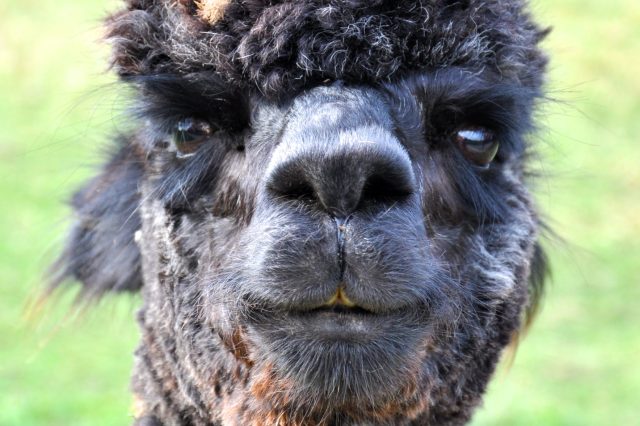
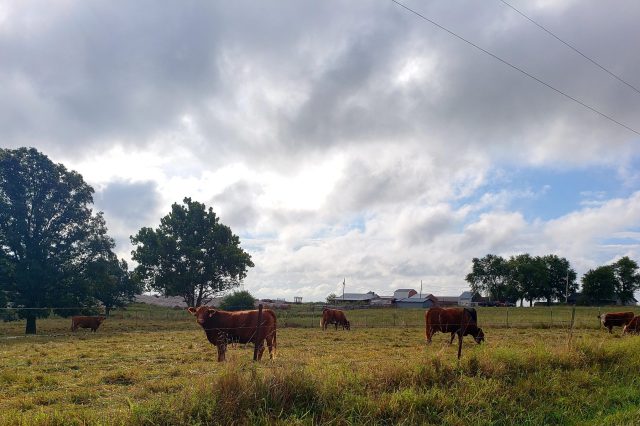
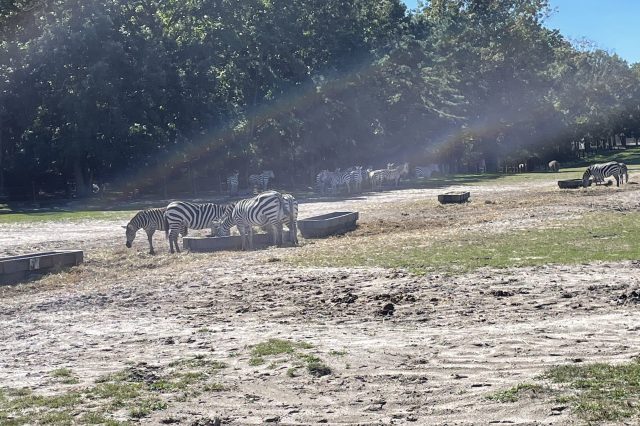
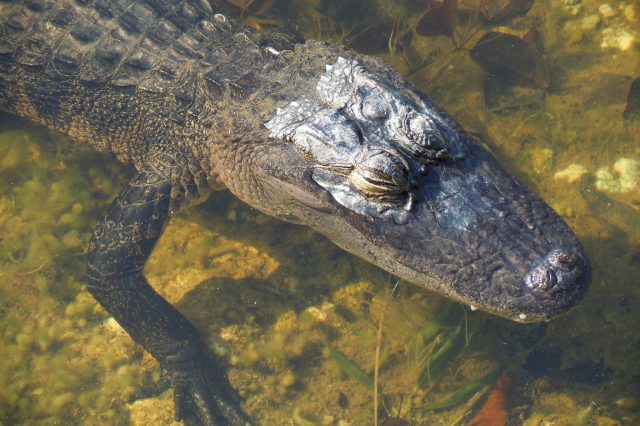
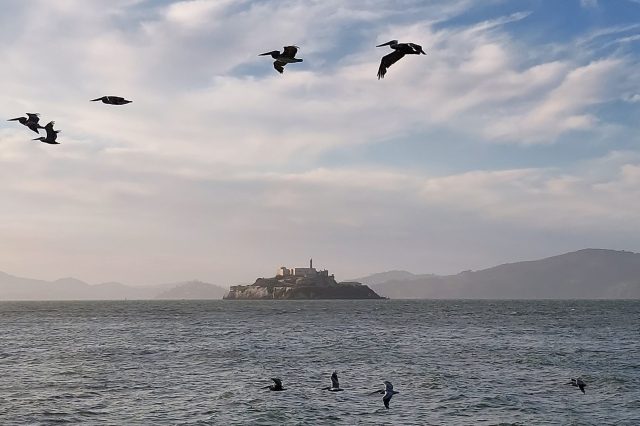
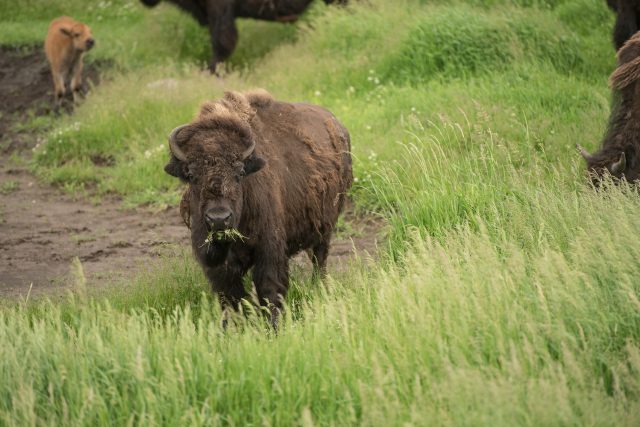
We’re wild about your wildlife photos! Flip through the slideshow below to see the creatures and critters that members photographed. Just like the bird Photo Session, this one did not disappoint.
Check our social media channels, where we will be sharing some of our favorites. Select photos may also be featured in an upcoming issue of Your AAA magazine.
Thank You for Participating!
(Vicki Hammer Rosenkrantz)
The Andover Deer. (Alisha Quezada)
Beautiful America. (Negma Sulaiman)
Zebras front and back. (Mathilde Diaz)
Looking at YOU... (Marc Wantuch)
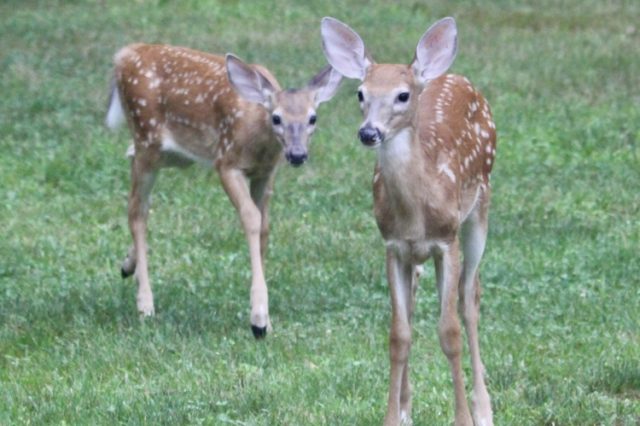
Fawn siblings. (Lynne Lavalette)
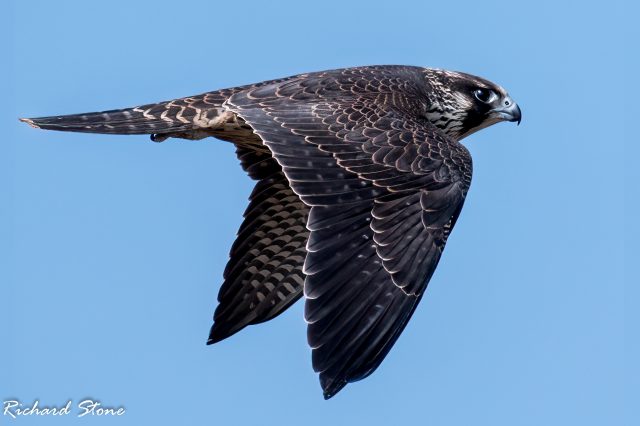
Peregrine Falcon, the fastest animal in the world. Cape Breton, Canada. (Richard Stone)
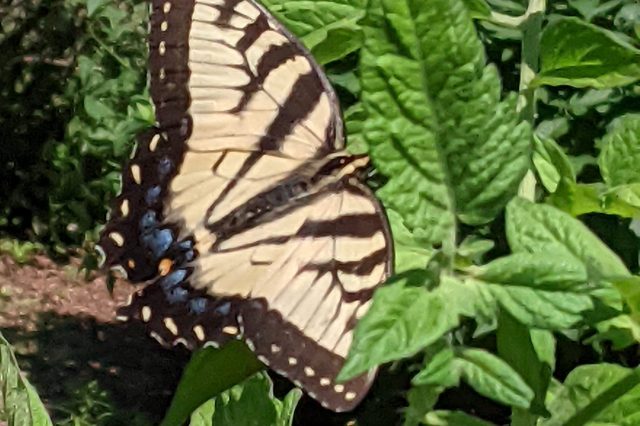
Brown's Harvest. (Luisa Pagnoni)
(Lori Phillips)
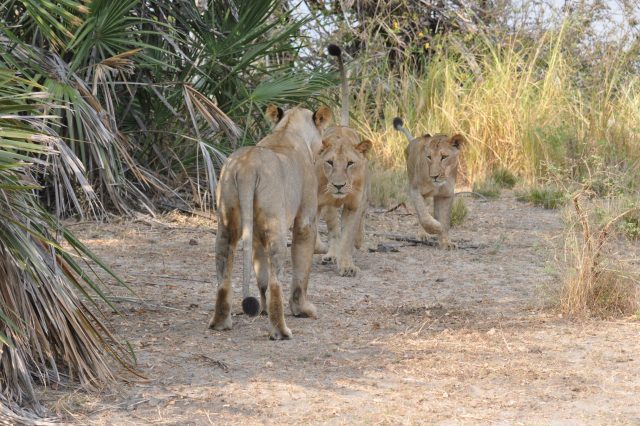
Lions in the bush in Tanzania. (Karen Mastrandrea)
Tomato love. (Juanita Estrada)
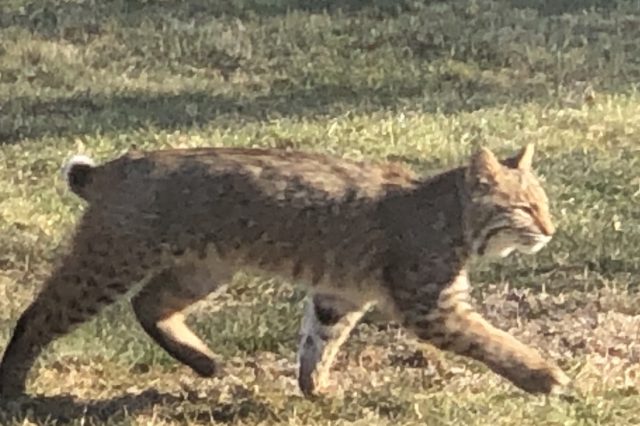
Bobcat beauty. (Joanne Ekstrom)
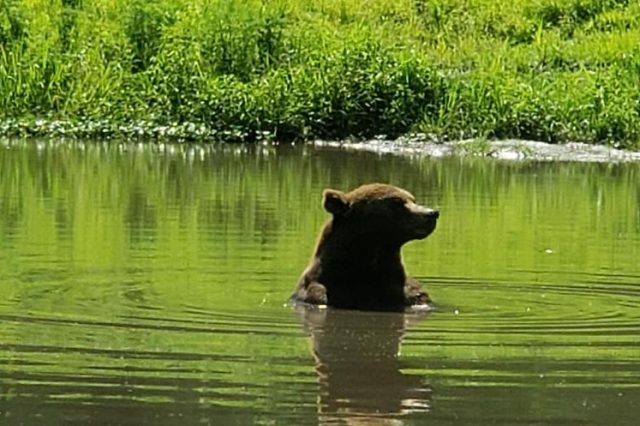
Bear in water. (Hector Troche)
Young elk. Yellowstone National Park. (Russel Henault)
Nature at its best. (Gregg Lentoni)
Humpback whale. (Greg Gale)
Hopkins Cottontail, a handsome rabbit! (Gail Brodie)
Backyard safari. (Diane Kuchta-Humphrey)
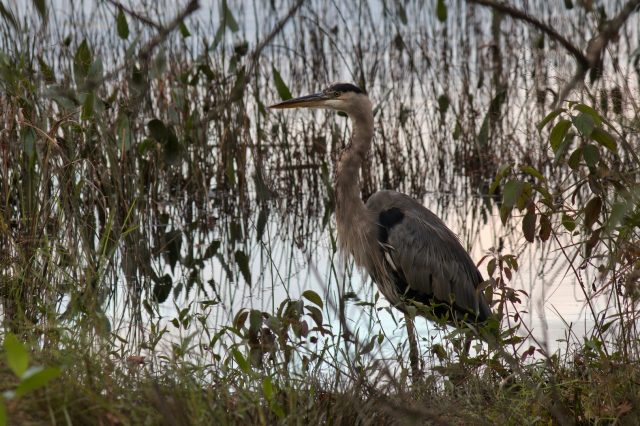
Great Blue Heron. Quaboag Pond, Brookfield, Mass. (Dean Meersman)
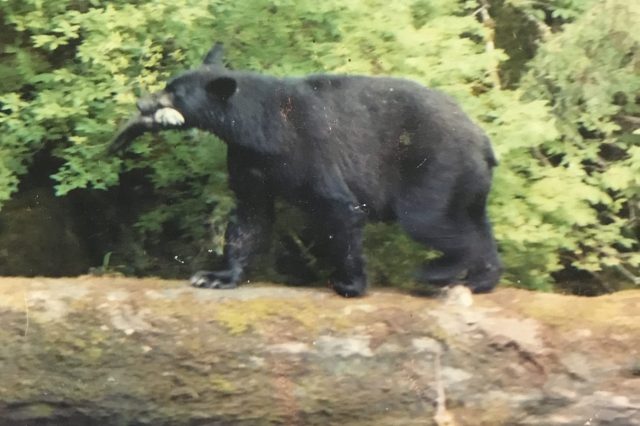
Bear with salmon in Alaska.(Betty Ennis)
Florida Keys on the wild side. (Barbara Esposito)
Fly away free. (Ann O'Meara)
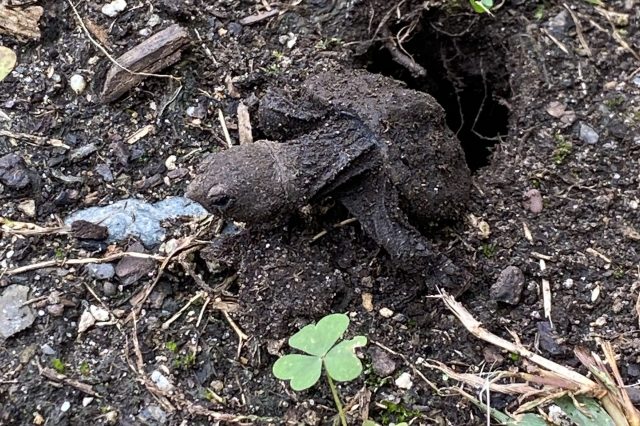
Welcome to the world, snapping turtle hatchling! (Paula Leydon)
Tips for Photographing Wildlife
Photographing wildlife is one of the most rewarding types of photography. There is nothing more exciting than capturing an animal in its element. But it could also be a challenge, requiring both skill and patience. Here are some of my top wildlife photography tips.
(Photo: Beth Mancuso)
Pick the Perfect Lens
Animals are easily spooked by human presence and may run or act defensively. Because of this, you will want to have a telephoto zoom lens to capture wildlife safely from a distance. I recommend purchasing a lens that can zoom up to at least 200mm. If you want to be able to really zoom in, look for one that can go up to 400mm or 600mm.
(Photo: Beth Mancuso)
Vary Your Focal Length
When I am photographing wildlife, I like to vary my focal length. I like to get some close intimate shots of details like teeth, paws, eyes, etc. Then, I take a wide shot that shows the wildlife in its environment.
(Photo: Beth Mancuso)
Think Fast
Wildlife can be unpredictable, so it is best to be ready to click that shutter button at any moment. This means having a fast shutter speed. I recommend being over 1/1000th of a second for slow moving wildlife and 1/2000th of a second for fast moving wildlife. An easy way to ensure that your shutter speed is fast enough is to set your camera to shoot in shutter priority mode; this setting allows you to pick the shutter speed you want, and the camera adjusts itself accordingly.
(Photo: Beth Mancuso)
Focus
It can be tricky to nail focus on a moving subject, but there are camera settings that can help you. I recommend setting your camera to continuous focus mode. Using this mode, simply focus on your subject and hold down the shutter button halfway; the camera should track the subject for you. Then, press the button down all the way when you are ready to take the picture. Some cameras have built-in animal autofocus that finds the animals eyes and locks focus.
(Photo: Beth Mancuso)
Rapid Fire
When photographing a moving subject, I recommend having your drive mode set to shoot more than a single image at a time. You can set it up to rapid fire many shots at a time when you press the button. Luckily for us, we don’t have to process film anymore! But keep extra memory cards handy just in case.
Check out past AAA Photo Sessions and stay tuned for the next one, coming soon.
What is some of the most amazing wildlife you’ve had the opportunity to capture? Tell us in the comments.
Beth Mancuso is a professional landscape and travel photographer.
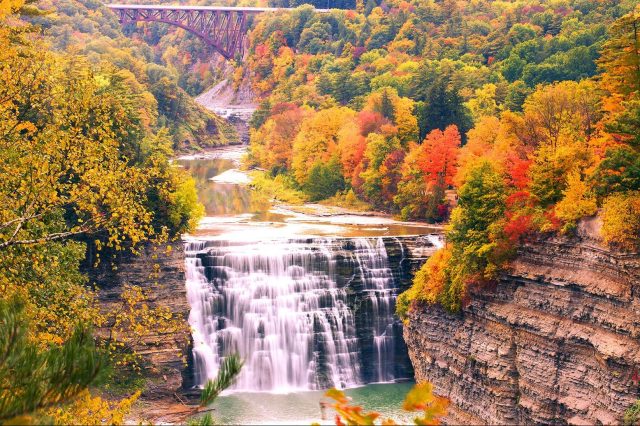
This season, chase the colors of autumn in Wyoming and Orleans Counties. In the Greater Niagara Region of New York, festive, fall-themed activities are plentiful, including hiking, cycling, paddling and world-class fishing. Local farms are offering a variety of autumn-inspired events, including apple picking, barn trails, farmers markets and more.
Discover things to do, where to stay and what to eat during your fall visit.
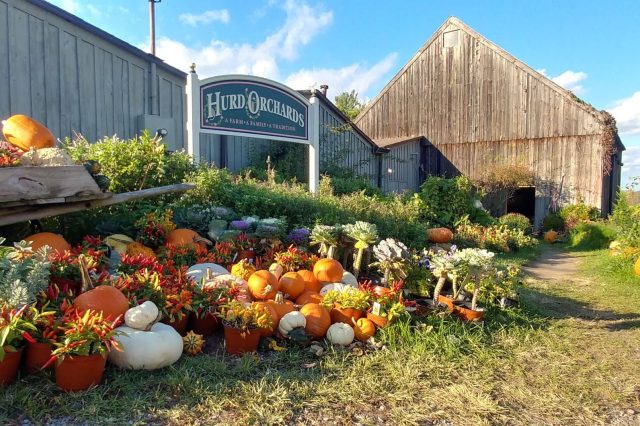
Located in Castile, N.Y., Pankow Farms is open every day, September through October, from 8 a.m. to dusk. Pankow U-Pick Orchards are home to several varieties of apples, touting Cortlands, Empire, Ida Red, MacIntosh, Northern Spy and Red Delicious, to name a few.
The Microtel Inn & Suites in Warsaw is pet-friendly with free breakfast, Wi-Fi and parking. For a more upscale feel, there’s the intimate boutique hotel, River Spring Lodge. Play mini or regular golf at Byrncliff Golf Resort & Banquets. For a rustic (but still comfortable) stay, there are cabins, tree tents and lakefront cottages at Silverlaken Glamping Resort. Browse places to stay in Wyoming County.
Where To Eat
Glen Iris Inn serves breakfast, lunch and dinner daily, along with picnics to-go. Grateful Grill has burgers, fries and drink specials. Lumberyard Restaurant offers prime rib and seafood, and it’s located minutes from Letchworth State Park. For wine, beer and spirits paired with meats, cheeses, desserts and more, there’s Ration Wine Bar.
In Orleans County, where you’ll find the Erie Canal, Lake Ontario and its tributaries, you have a little extra time to enjoy the fall colors. The foliage peak is weeks behind the rest of the state due to Lake Ontario moderating the temperatures.
Enjoy a scenic drive along quaint, rustic country roads following the Country Barn Quilt Trail of Western New York. Maps to the full trail are available at Partyka Farms in Kendall, N.Y. Try their oven-roasted pumpkin seeds while you’re there.
Where to Stay
You’ll find unique rooms at The Boutique Hotel at Bent’s Opera House, a newly restored 19th-century opera house. For a historic feel, there’s the Hart House Hotel (on the Haunted History Trail) and The Fair Haven Inn. The boutique hotel at Bald Eagle Marina on Lake Ontario and a variety of rental cottages and cabins offer spectacular views of sunsets over the water. Search lodging in Orleans County.
Where to Eat
Head to Harvest Restaurant at Bent’s Opera House for an exquisite farm-to-table experience. For great views, Zambistro has a rooftop dining area overlooking the Erie Canal, while Black North Inn is on Lake Ontario. Holley Falls Bar & Grill serves up seafood, burgers and more while being near the picturesque Holley Falls.
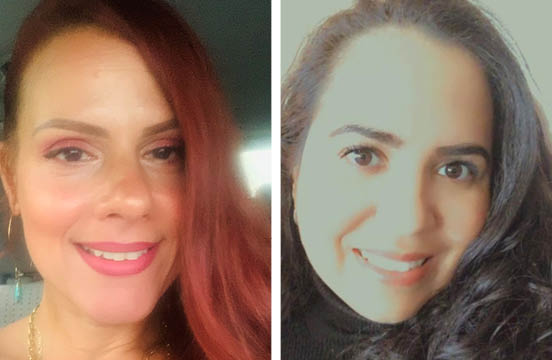
Isabel Stewart y Monica Ramirez tienen un deseo natural de ayudar a los hispanos a navegar por la sociedad mundial que hablan inglés. Se han desempeñado como intérpretes informales en sus comunidades y en sus carreras. Ahora, representarán a AAA Northeast como portavoces de los medios de comunicación bilingüe.
Stewart nació en Cuba y emigró a los Estados Unidos cuando era niña. Llegó a AAA hace cuatro años como supervisora en el centro de llamadas de asistencia en carretera, donde se convirtió en mentora y defensora de los consejeros de llamadas bilingües. Ahora trabaja como coordinadora de proyectos en operaciones de sucursales, donde trabaja en proyectos que brindan mayor accesibilidad para los miembros hispanos.
“Mis padres nunca aprendieron el idioma inglés. Tan pronto como pude hablar inglés, me convertí en su defensor de todo. Y con eso, fui testigo de la discriminación con la que tenían que lidiar con demasiada frecuencia, así como de las oportunidades perdidas por no saber el idioma”, dijo Stewart.
Como representante de seguro en Providence, Ramírez usa sus habilidades bilingües para monitorear un buzón de correo en español y llamar a los clientes que solicitan servicio.
“Emigré a los Estados Unidos desde la República Dominicana cuando tenía 13 años, puedo recordar muy vívidamente el día”, dijo. “Una vez que aprendí inglés, siempre me encontré traduciendo para alguien. Si puedo usar mis habilidades bilingües para ayudar a otros, lo haré, sin dudas”.
En su comunidad, Ramirez da un paso al frente por amigos y extraños. Ella ha traducido para las personas en la farmacia cuando tenían preguntas sobre sus medicamentos y, entre otras cosas, inscribió a un amigo en la clínica de vacunación COVID-19.
Stewart y Ramirez tienen un fuerte deseo de involucrar a la comunidad de habla hispana, razón por la cual fueron seleccionados para representar al club como portavoces de los medios bilingües, dijo Mary Maguire, Directora de Asuntos Públicos y Gubernamentales.
La profundidad del compromiso que demuestran Stewart y Ramirez las hace perfectas para el papel adicional, dijo Mary Maguire, directora de asuntos públicos y gubernamentales de AAA.
“Quedé muy impresionado con Isabel y Mónica durante sus entrevistas. Están claramente dedicadas a hacer que AAA sea accesible para una comunidad más diversa. Es algo que quieren hacer, no solo porque es divertido, sino porque es una pasión “, dijo Maguire Mary.
Ellas responderán a las solicitudes de los medios de comunicación en español en todas las formas: en cámara, por teléfono o en un comunicado escrito. Es probable que los temas principales sean la seguridad del tráfico, los precios de la gasolina, los viajes y el transporte. Las solicitudes de los medios en español están aumentando, al igual que la población hispana en todo el territorio AAA del noreste, dijo Mary. En el pasado, Asuntos Públicos ha respondido a través de traductores.
“Estoy muy orgullosa de que ahora podamos ofrecer una voz que pueden comunicarse directamente con una audiencia hispana”, dijo Maguireshe. “En mi opinión, a medida que los medios de comunicación sean cada vez más conscientes, recibiremos más solicitudes y esto fortalecerá nuestras relaciones”.
Stewart y Ramirez cubrirán principalmente las solicitudes de los medios en las áreas de Rhode Island y Massachusetts y ocasionalmente también ayudarán en otras regiones. Comparten el entusiasmo por la oportunidad.
“Espero concientizar a la comunidad latina sobre los productos y servicios que ofrecemos”, dijo Ramírez.
“Estoy ansiosa por representar a AAA y demostrar que somos una organización que hace mucho y está dispuesta a hacer mucho más por su comunidad”, dijo Stewart.
Super-low airfares are making European vacations more affordable than ever, with relaxed quarantine rules and continued border openings causing a boom in travel sales.
Airfare deals as low as $400 round-trip – even in peak periods – are available to places like Paris, Rome and Zurich, Switzerland. Prices are down over 30% from 2019, with airlines adding new flights and new routes regularly.
“These airfares will go quickly,” said Allison Villasenor, managing director of travel products, partnerships and innovation at AAA Northeast. “Travelers are awakened by the opportunity to explore again and are all moving to buy now. We expect airfares to Europe to increase in the coming months.”
AAA Travel partners like AMA River Cruises and Member Choice Vacations are seeing sales to Europe increase each month for travel in 2022. Destinations like the Danube River, Italy and Ireland are making a comeback in part thanks to travelers’ pent-up wanderlust. Adventures in destinations like Croatia and Switzerland are also top of mind for AAA members considering traveling next year.
At AAA Northeast, expert travel advisors work with members to carefully craft vacations. Their knowledge of safety protocols and great offers allow for members to travel confidently and at some of the lowest prices seen in years.
“Our advice? Seize the opportunity to invest in travel at an incredible value,” said Villasenor. “These prices won’t be around for long.”
AAA Northeast travel advisors can help members find hidden gems, travel tips and exclusive values with just a click, call or visit. Meet our advisors here and set up an appointment today.
Ready to book a European getaway? Take a peek at these special offers from AAA Northeast.
If you’re thinking of taking your studies out of the country, you’re not alone. After over a year of being on hold due to the pandemic, study abroad programs are starting to ramp up again and students are anxious for the opportunity. While there are extra challenges to navigate like travel restrictions and warnings from the Centers for Disease Prevention and Control, studying abroad is surely making a comeback.
Europe is consistently the most popular destination for U.S. students studying abroad with 44% choosing to go to Spain, Italy, the United Kingdom, France and Ireland, according to the most current data from the Institute of International Education’s Open DoorsReport and the U.S. Department of Education’s National Center for Education Statistics. Asia and Latin America are also top picks.
If you are looking for inspiration, here are some of the top spots to study abroad. And for those who want to explore a little closer to home, no worries. We’ve got you covered, too.
London is a heady mix of history, culture and unforgettable sights, including the Elizabeth Tower (which houses Big Ben), Buckingham Palace and Westminster Abbey. In your down time, you can check out various props, costumes and sets where all eight Harry Potter movies were filmed.
2. Rome
The food. The art. The historic surroundings. What’s not to love? U.S. students adore the Eternal City, too. Students spending time here can explore the treasures of the Vatican and the Basilica of St. Peter, the Colosseum, the Roman ruins and gorgeous works inside the Galleria Borghese.
3. Madrid
Artists, foodies and history buffs will find plenty to do in Spain’s capital city. The Prado Museum is home to works by Rembrandt, Titian and Rubens, while you can see Picasso’s masterpiece “Guernica” at the Reina Sofia Museum. A visit to the city wouldn’t be complete without sampling tapas and churros con chocolate in the La Latina district.
4. Paris
Thank goodness semesters last four months. Otherwise you’d run out of time trying to explore the City of Light. English and literature majors can see the haunts of ex-pats like Gertrude Stein, Ernest Hemingway and F. Scott Fitzgerald, while fans of impressionism will be entranced by the Musee d’Orsay. Of course, any visitor must set aside time to see the classic sites like the Eiffel Tower, the Louvre and Notre Dame.
5. Dublin
Spend some time in Ireland’s capital. The ancient city is home to Trinity College and the Book of Kells, while fans of James Joyce can view the sites that inspired “Ulysses” and “Dubliners.” After a visit to the Guinness Storehouse, browse the treasures inside the (free!) National Gallery of Ireland.
6. Florence
Art majors will lose their hearts in this Tuscan city. Michelangelo’s “David” is housed in the Galleria dell’Accademia, while Uffizi Gallery is full of Renaissance masterpieces, including Botticelli’s “Birth of Venus” and Titian’s “Venus of Urbino.” And for the best selfie ever, grab your phone and head west – the Leaning Tower of Pisa is just an hour’s drive away.
7. Sydney, Australia
At first glance, it’s easy to see why Australia’s largest city is a draw for U.S. students: the glorious beaches. But if you look closer, you’ll discover that it has a fascinating history, a burgeoning dining and nightlife scene and a plethora of outdoor activities to explore in your downtime, from touring the rugged coastline to exploring the wild Blue Mountains.
8. Venice
With more than 100 islands and miles of connecting canals, Venice is one of Italy’s most beautiful regions. Students here can explore the glass-making region of Murano to the city’s Grand Canal to the centrally located Piazza San Marco. Visit the Rialto market, where the locals gather to stock up on fresh fruits, vegetables and fish, to get a feel for daily life in the city.
9. Washington, D.C.
If you’d rather explore U.S. history, where better to begin than the nation’s capital. Here you can get up close with the Constitution, view the White House, U.S. Capitol and Supreme Court, and visit any number of memorials. Cash-strapped students, take heed: All of the Smithsonian’s D.C.- area museums, galleries – and even its zoo – are free.
10. Los Angeles
Inject some glamour into your studies by hitting the books in Tinseltown. You’ll never feel alone in the nation’s second-biggest city, with a population of 4 million. But L.A. is more than just Hollywood and sunny skies; you can discover the region’s natural beauty in the San Gabriel Mountains and the many beaches along the Pacific Coast.
After a great round of cardio exercise, the heart-pumping cool down is usually welcome. But do you know if it’s too much or too little?
Your heart rate is an indication.
If your heart rate is too high during exercise, you could be straining yourself, according to the American Heart Association. If it’s too low, you may not reach your fitness goals. Knowing how to calculate and monitor your target heart rate can help improve your overall fitness.
Calculating Your Target Heart Rate
First you must find your maximum heart rate. Do this by subtracting your age from 220. For example, a 20-year-old’s average maximum heart rate is 200 beats per minute. A 65-year-old’s is 155 beats per minute.
Your target heart rate should be 50 to 70% of your maximum heart rate during moderate exercise. Following the previous example, the average target heart rate of a 20-year-old would be 100 to 140 beats per minute, while a 65-year-old’s should be between 78 and 109 beats per minute.
Monitoring Your Heart Rate
Periodically check your pulse as you exercise. Place two fingers on your wrist closer to your thumb, over the blood vessels, and count your pulse for 10 seconds. Multiply that number by six to find your current heart rate.
If it’s higher than 50 to 85% of your maximum heart rate, you’re straining. If it’s lower, and the intensity of your exercise feels light, you may want to increase the intensity.
According to the American Heart Association, the more beats your heart has to take eventually takes a toll on its overall function. So, if you’re pushing yourself too hard as you exercise, your risk of developing cardiovascular disease increases.
Plus, if you monitor your heart rate, you’re more likely to notice a change in rate and regularity, which can be a sign of a heart condition.
Check with your doctor before beginning any new exercise routines.
What’s your cardio routine like? Tell us in the comments below.
For the second time in two years, AAA Northeast has helped to pass a rear seat belt law, this time in Connecticut.
Earlier this year, AAA Northeast’s Public Affairs team partnered with the Auto Club Alliance to push forward a bill that requires everyone in a vehicle to buckle up, even those in the backseat, regardless of age.
The new Connecticut seat belt law, which received bipartisan support and was signed by Governor Ned Lamont in July, goes into effect on Oct. 1, 2021. The goal behind the law is to save lives, reduce serious injuries and make the roadways in Connecticut safer for everyone.
Connecticut was one of the first states to pass a seat belt law, requiring seat belts to be worn by drivers and all front-seat passengers back in 1985. However, the state’s law only required back-seat passengers ages 16 and under to wear seat belts.
Safety belts can reduce the amount of serious traffic injuries by 50% and the number of fatalities by 60-70%, according to the Connecticut Department of Transportation.
What’s more, unbelted rear seat passengers are three times more likely to be killed and eight times more likely to be injured in a car accident compared to restrained passengers.
AAA Director of Public and Government Affairs, Alec Slatky, standing with Governor Ned Lamont, Conn. Highway Safety and others to announce the new rear seat belt law.
“Connecticut has taken a significant step to reduce serious injuries and fatalities involving unbelted rear seat passengers,” said Alec Slatky, AAA Northeast director of Public and Government Affairs. “Given the spike in roadway fatalities last year, passage of this lifesaving measure is cause for celebration.”
Discover more information about driving and transportation laws at Connecticut’s official state website, CT.gov.
Read the story about AAA Northeast’s role in New York’s new seat belt law, which took effect on Nov. 1, 2020.
Learn more about AAA-led safety initiatives in the community.
After water, tea is the second most consumed drink in the world, according to Statista. What’s more, a freshly brewed cup of tea can also pose some health benefits.
Whether you’re an avid tea drinker or just an occasional sipper, there are a wide variety of teas to explore.
Check out our guide to teas and their health benefits.
What Is Tea?
Tea comes from a subtropical, evergreen plant called Camellia sinensis, according to TeaClass by online gourmet tea retailer Adagio Teas. Camellia sinensis is native to Asia, but it is also grown in places across the globe today.
How the plant’s leaves are processed determines if it becomes black, green, oolong or white tea. Before ending up in your cup, tea leaves are generally picked and withered before being rolled. The leaves are then oxidized to varying degrees, which affects the flavor and sometimes the nutritional benefits, before finally being dried.
And though you may not need a guide to tea to tell you, it’s made into a beverage by pouring hot water over the dried buds, flowers and/or leaves of the tea plant and allowing them to steep for a specific amount of time.
The Health Benefits of Tea
“Tea contains substances linked to a lower risk for heart disease, cancer and diabetes,” according to Harvard Health Publishing. “The main health-promoting substances in tea are polyphenols, in particular catechins and epicatechins. Lab and animal studies say these molecules have anti-inflammatory and antioxidant properties. Harvard-led studies of large groups of people over time have found that tea or coffee drinkers are at lower risk for diabetes and possibly cardiovascular disease.”
Brewed tea is also low in calorie and good source of naturally occurring caffeine. Some research suggests caffeine can help prevent cognitive decline.
Guide to Tea: Varieties
You can choose your perfect cup of tea based on several factors, like flavor profile, aroma, caffeine content and more.
Darker teas typically have higher amounts of caffeine and bolder flavors compared to lighter ones. However, letting any tea steep longer will result in more flavor and caffeine to be released. Follow steeping instructions on packaging and add or subtract a minute or two to better suit your preference.
Black Tea
One if the stronger types of tea when it comes to flavor, steeped black teas can be a dark brown or reddish-brown color.
Black tea varieties include English and Irish breakfast, Earl Grey and chai. A cup of black tea typically has about 47 milligrams of caffeine – higher than a majority of other teas but generally less than a cup of coffee.
Some black teas can taste a bit astringent, which is why adding a splash of milk or a sweetener is common.
Green Tea
Fresh leaves are steamed or pan-fired in order to make green tea, according to TeaClass. Green tea is usually a pale green or yellow-green hue. Green teas can vary in flavor, tasting anything from fresh, grassy, earthy, toasty or smoky. A cup of green tea contains about 28 milligrams of caffeine.
Pro tip: You don’t want to over-steep green tea, as it can become bitter.
Matcha is a type of Japanese green tea made from powdered tea leaves. It has high levels of antioxidants and proponents claim it’s an especially healthy form of green tea.
White Tea
The least processed type of tea, white tea is also one of the most mild and delicate in flavor and aroma.
When steeped, white tea is often very pale green or yellow in color. White peony is one of the more popular types of white tea.
Oolong is a traditional Chinese tea. It is also one of the most time-consuming teas to create, according to TeaClass, since it requires repeated rolling and oxidization.
Somewhat of a mix between black and green tea, Oolang is known for being smooth. Notable richness and a floral or fruity taste are also common.
“A cup of brewed oolong tea contains small amounts of calcium, magnesium and potassium,” according to Healthline. “It also contains about 38 milligrams of caffeine.”
Pu-erh Tea
Another type of traditional Chinese tea, pu-erh is fermented.
“Depending on the type of pu’erh being made (either dark ‘ripe’ pu’erh or green ‘raw’ pu’erh), the aging process lasts anywhere from a few months to several years,” according to TeaClass.
Pu-erh tea usually comes as loose leaves or pressed shapes. This type of tea can have anywhere from 30 to 100 milligrams of caffeine, depending on the age.
Herbal Teas
Herbal teas are not made from the Camellia sinensis plant, but from dried herbs, flowers, fruits or spices.
Some popular herbal teas and their medicinal associations include:
Chamomile – sleep aid
Rooibos – anti-inflammatory
Echinacea – immune support
Ginger – nausea relief
Peppermint – digestion aid
Rosehip – vitamin C
Sage – brain health
Making Tea
There’s nothing like curling up with a warm mug of tea on a crisp morning, afternoon or evening. Discover your perfect cup of tea by trying different varieties and making them your own. Sweeteners like honey, sugar or agave nectar can help cut the acidity of certain brews.
Did you find this guide to tea helpful? If you are looking for more healthy beverages, you may also like our guide to nondairy milks.
Are you a tea drinker? Tell us your favorite kind of tea in the comments.
When’s the last time you looked at your grocery store receipt? Are your utility bills set to automatic payment so you don’t even have to think about them? The truth is, common expenses often get overlooked and disregarded. But you need to have a solid understanding of your expenses if you want to stay in a good financial position.
It may seem like the cost of something as inexpensive and readily available as a gallon of milk is inconsequential. But it’s precisely because these items are so common, and purchased so often, that even small changes can swing a budget one way or another over time. (Who knows — maybe after a review of your grocery expenses, you’ll find you can afford to upgrade to a fancy almond or oat milk.)
So, how much does a gallon of milk cost? How about internet service? We dug through the numbers to find the national average price of everyday goods and services. Take our quiz to see how well you know your prices.
How did you do? Let us know your results in the comments below!
What do you think about when you think about your legacy? Do you want to leave something behind for your children and grandchildren? How do you want people to remember you? How can you make a change in the world after you are gone?
Many people, when reflecting upon these questions, decide to leave a portion of their estate to charity. But how do you leave your estate to charity? Here’s our guide on how to leave a charitable bequest.
Choosing a Charity
If you decide to leave your estate to charity, you might have an idea in mind about what charity you should choose. Most people decide to leave money to charities for things that have touched their lives, or the lives of their loved ones. A cancer survivor might donate money toward cancer research, or a first-generation college student might donate money toward a scholarship fund.
Ask yourself what causes you care about, then do some research into the charities that support those causes. Consider the charity’s goals, mission statement and level of financial transparency before you make a choice.
A great resource for researching charities is the website CharityWatch, a watchdog group that determines a charity’s financial efficiency, accountability and fundraising tactics. You don’t want to leave all your money to a charity that might squander it. CharityWatch or other organizations like it can help you find an ethical and well-run charity. You can also consult your state consumer protection office or the Better Business Bureau.
Once you choose your charity, you can also name a back-up charity your bequest should go to if the original charity is no longer operating.
What to Leave Behind
If you plan to leave your entire estate to charity, that’s a very special and generous choice. However, most people will want to split their estate up between a charity and some loved ones. If you are only leaving some of your estate to charity, do not specify a specific dollar amount. It’s generally agreed upon that you should instead specify a percentage of your estate. This way, no matter how large or small your estate winds up being, your beneficiaries will still get the percentage that you planned for them.
Another option is to name a charity as the beneficiary of your life insurance plan, IRA or 401(k). A financial planner can help you update your plan’s beneficiary designation accordingly.
Remember that making a charitable bequest will also reduce the size of your estate – this leaves less money subject to estate taxes.
What assets would you like to leave to the charity? You can of course donate money, but you can also donate property (like real estate or some rare antiques) to the charity of your choice. Depending on the type of charity it is, the donation of property could be even more helpful than a monetary donation.
If you plan on donating property, make sure to contact the charity ahead of time and ask if there are any special arrangements that should be made.
Putting It in Writing
When you have decided on what you want to leave behind and to whom, the most important thing you can do is enlist the help of an estate planning attorney. They can make sure you do everything correctly, and don’t leave any unintentional loopholes behind. Your estate planning attorney will update (or create) your will or trust to include your bequest.
Make sure you get the correct name and address of the charity you plan on donating to. Many charities for similar causes have very similar names, and you don’t want a mix-up.
When making a charitable bequest, you can specify how you would like the money to be used. Donating to an aquarium? Maybe you want the money to go specifically to the jellyfish exhibit. Donating to a hospital? Maybe you want the money to find its way to the children’s wing. If you want to attach such strings to your donation, make sure you put that in writing in your will.
When Your Plans Are Made
After you have made all your plans and put them in writing, you don’t have to keep them to yourself. Contact the charity you plan on donating to and let them know! Many charities have legacy societies for people just like you, who plan to leave a charitable donation in their will.
This can also provide the opportunity to speak directly with the charity about how you want your money to be used, and even why you have chosen to donate in the first place. It’s a great way to get a glimpse at how your gift will impact the charity of your choice.