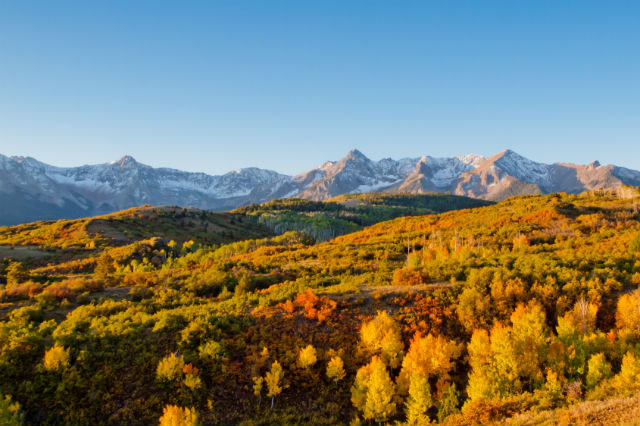
Unexpected American Foliage Spots

Contrary to popular belief, the Northeast corridor isn’t the only place to find American foliage. America is full of unexpected and wonderful places to witness the magic of autumn. As the blanket of fall covers North America, trees and other flora across the country turn into brilliant shades of yellows, oranges, purples and reds.

While the fall foliage in the Northeast is typically situated in dense forests or amid New England architecture, the fall foliage in other areas of the country is often juxtaposed against sweeping mountains, stark plateaus, red clay and wide plains.

Whether you’re a die-hard adventurer or a cross-country leaf-peeper just looking to diversify, these unexpected American foliage locations are not to be missed.

Note: Due to the ever-changing nature of the COVID-19 pandemic, please see official websites before visiting to check for restrictions or closures. 

Sedona, Arizona

Mid-October is peak foliage season for the leaves in Sedona. The elevation in Sedona makes the change in color far more dramatic than it is in most other areas of the Southwest. The best place to catch the vibrancy of the fall in Sedona is at the iconic Oak Creek Canyon. Red leaves dominate the canyon, with occasional, dramatic pops of wild yellows and oranges. Along the popular West Fork of Oak Creek hiking trail, you’ll find maples, oaks, and dozens of other deciduous trees. If you want to get some spectacular panoramic shots of American foliage, Oak Creek Vista is the perfect vantage point. You can also take a scenic drive through the canyon along Highway 89A.

The Grand Canyon

When you imagine the Grand Canyon, one of the most iconic vistas in America, you don’t usually picture its trees. But the Grand Canyon is full of them, and they come alive with color in the fall. The leaves of birches, oaks, and quaking aspens blush in harmony with the red canyon walls.

The best place to view this treasure of American foliage is from the Grand Canyon’s North Rim, which has an elevation of over 8,000 feet. The colors of the leaves hit their peak from late September to early October. Hurry up, though, because at the end of October, the North Rim closes. From the North Rim you can see trees of every shade and size. Sometimes you can even see a majestic roaming bison.
american foliage
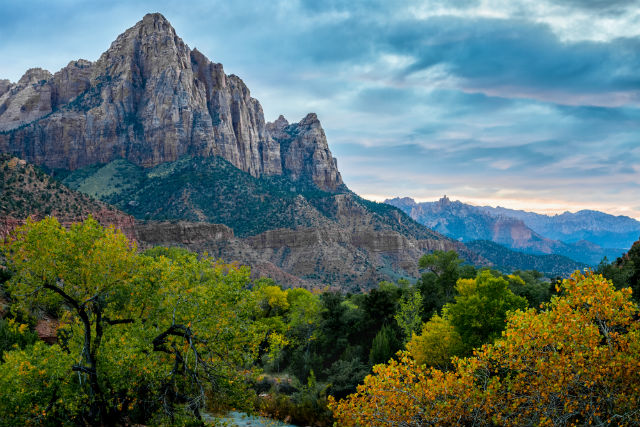
Zion National Park in the fall.

Zion National Park, Utah

Utah’s first – and most visited – national park is a wonderful place to experience American foliage. Zion National Park is already famous for its red rocks, but the colors of the park get even more dramatic in the fall. That’s when Zion lights up with red sawtooth maples, yellow Fremont cottonwoods, and a myriad of other trees. Trees gather around the curve of the Virgin River and at the foot of Angel’s Landing, and extend all throughout the vast park.

The best time to see the fall foliage in Zion would be in October and November, though altitude plays a major role in what time trees turn. The higher you go, the earlier the foliage peak is. In November, however, the park allows private vehicles to travel along the Zion Canyon Scenic Drive. If you want, you can even stay at one of their campgrounds, sleeping among the trees.

Denali National Park and Preserve, Alaska

One of the most amazing and unexpected spots to see fall foliage is the wilds of Alaska, but that’s exactly what’s in store at Denali National Park and Preserve. Denali is a national park that spans 6 million acres of Alaska. Since it’s so far north, its peak fall foliage season is from late August to mid-September. It’s a short window, but an incredibly colorful one.

During this time, the park empties out most of its tourists. The animals are also more active and easier to spot. While you’re out looking for leaves, you can also see bears, moose and caribou. In the day you can enjoy the colors of the trees, and at night you can enjoy the colors of the northern lights.

Hawaii

I know what you’re thinking: “Hawaii?” Hawaii doesn’t really have seasons, per se, other than “wet” and “dry,” but it does have some of the most beautiful American foliage. Some of Hawaii’s flowering plants and trees even resemble the colors we might see in a mainland forest in autumn. You could easily mistake groves of gold trees in bright yellow and royal poinciana trees in red for deciduous trees in autumn. African tulip trees also have large, orange clumps of flowers adorning their branches. And the very bark of the rainbow eucalyptus tree looks like autumn itself. It’s striped in green, orange, red, gold and purple all year long.

Yosemite National Park, California

Due to its extreme range of elevations, the state of California has the longest American foliage season, and the most varied change in fall colors in all of North America. One of the best places to see some of that amazing American foliage is in Yosemite National Park.

The park is densely populated with dogwoods, aspens, deer brush, white alder, cottonwood, poison oak, bigleaf maple and Yosemite’s perennial favorite: The violently red sugar maple. Leaves reach their peak from late October to early December. Sometimes, there will even be a light snowfall while there’s still some lingering autumn color.

Rocky Mountain National Park, Colorado

Rocky Mountain National Park is full of a wide range of deciduous trees like maple, oak, narrowleaf cottonwood and balsam poplars. However, their most iconic deciduous tree is the quaking aspen, which blankets the park in golden yellow every fall. The thin, round leaves of the aspen shake in the wind, making the tree appear as though it’s quaking.

A great way to see the foliage is by taking a drive down Trail Ridge Road, the highest continuous paved road in North America. With a maximum elevation of 12,180 feet, you’ll be sure to get some breathtaking views. You could also take a kayaking tour through a lake canopied with a kaleidoscope of American foliage.

If you want to see the colors at their peak, you’ll have to head to the park in mid-September. During that month you can also attend the nearby Estes Park Autumn Gold Festival, which celebrates fall in the Colorado Rockies.

To book a bespoke foliage adventure for yourself, visit AAA.com/Travel

Subscribe to Your AAA Newsletter

Sign up and receive updates for all of the latest articles on automotive, travel, money, lifestyle and so much more!

10 Características del Automóvil Que ya no Existen en los Vehículos Nuevos

¿Quién sabe qué características del automóvil les parecerán nostálgicas a los adolescentes de hoy cuando recuerden sus primeros coches? Quizá echen de menos cuando los vehículos no eran tan “inteligentes” y no se conducían solos. O tal vez echen de menos cuando conducir significaba realmente ruedas en la carretera.

Nadie sabe hasta qué punto cambiarán los automóviles en el futuro. Pero sí sabemos lo mucho que han cambiado desde su invención e incluso en los últimos 30 años. He aquí 10 características de los automóviles que ya no existen en los vehículos nuevos.

Señales de giro sonoras

¿Le parece que cada vez hay más gente que conduce durante kilómetros con los intermitentes encendidos, aparentemente planeando hacer un giro a la izquierda que nunca se materializa? Hay una razón para ello. Muchos automóviles modernos están eliminando las señales de giro sonoras. Aunque esos ruidosos clics pueden parecer molestos después de un tiempo, eso es precisamente lo que los hace útiles: te recuerdan que debes apagar las señales de giro.

Llaves

En la mayoría de los automóviles de alta gama, las llaves de metal estampadas se están convirtiendo en algo del pasado. En su lugar, los sistemas de arranque y apagado y los llaveros electrónicos se han convertido en la nueva norma. Las puertas del vehículo se desbloquean automáticamente cuando el llavero registrado está cerca, y una vez dentro, basta con pulsar el botón para arrancar. Es un gran cambio con respecto a los encendidos de llave en mano a los que la mayoría estamos acostumbrados. Fabricantes de automóviles como Mazda y Ford han creado incluso aplicaciones para ¡arrancar y desbloquear el coche a distancia mediante una aplicación de smartphone!

 Controles Simples

Enviar mensajes de texto y conducir es extremadamente peligroso, y un sistema de control complicado podría ser igual de molesto. En un estudio de AAA en 2015, los resultados mostraron que las distracciones mentales podían durar hasta 27 segundos después de utilizar los comandos de voz en determinados sistemas del automóvil. Con muchos automóviles nuevos utilizando controles de pantalla táctil, las cosas podrían ser aún más complicadas. La AAA sugiere ajustar los controles de climatización, las emisoras de radio, el GPS y otras configuraciones antes de conducir.
Maleteros Amplios

Hemos recorrido un largo camino desde las enormes moles de acero sólido de Detroit que solíamos llamar automóviles. Ahora los modelos son más elegantes y aerodinámicos que nunca. Pero eso también significa menos espacio. Muchos de los propietarios de automóviles actuales no conocen el significado de un maletero espacioso. Y a no ser que compre una minivan, puede tener que cargar algunas de esas compras semanales en el asiento trasero.

Neumáticos Extra

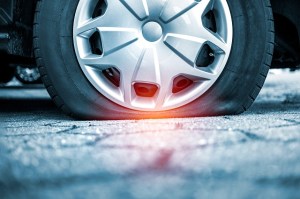
Esta es una característica del automóvil que muchos echamos de menos. Algunos automóviles ya no vienen con ruedas de repuesto de tamaño normal porque los maleteros son cada vez más pequeños. Otros fabricantes de automóviles intentan reducir el peso de los vehículos. Sea cual sea la causa, comprar un vehículo nuevo con una rueda de repuesto de tamaño completo es algo raro hoy en día. De hecho, los neumáticos de repuesto han sido sustituidos por kits de inflado de neumáticos en 29 millones de vehículos en los últimos 10 años. Pero si tiene la suerte de conseguir uno, los diminutos neumáticos tipo donut de hoy en día sólo están diseñados para ser utilizados en distancias cortas y a menos de 50 millas por hora. Incluso con neumáticos desinflados, comprar un neumático nuevo o conseguir un parche se convierte en algo bastante urgente.

Ceniceros

Equipados con encendedores eléctricos y ceniceros dentro del tablero, los automóviles antiguos eran el paraíso de los fumadores. Esos ceniceros en el automóvil eran incluso geniales para los no fumadores como el mejor compartimento para las monedas. Sin embargo, la mayoría de los fabricantes de automóviles han renunciado a los ceniceros y han optado por instalar elementos del vehículo más centrados en la tecnología, como los cargadores de teléfonos.

Antenas de Radio

Si usted recuerda cuando los coches tenían ceniceros, probablemente recuerde cuando los coches solían llevar antenas de tipo látigo. ¿Eran antiestéticas? Bastante. Pero la mayoría de la gente utilizaba esas largas antenas de radio como una oportunidad para dar a sus vehículos un poco de chispa. En su día, se podían ver innumerables colas de mapache, pelotas con caras sonrientes y otras baratijas en la parte superior de esas enjutas amenazas. Ahora la mayoría de los automóviles tienen antenas fijas mucho más cortas.

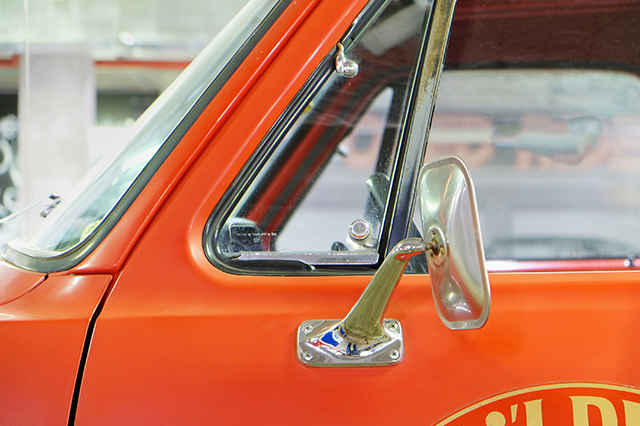
A vintage vehicle with vent windows, one of the features that no longer exist in cars.

Ventilaciones

Las lunetas de ventilación o ” aletas” son otra de esas características de los vehículos más antiguos. Las pequeñas ventanillas triangulares se encontraban tanto en el lado del conductor como en el del pasajero y podían girarse hacia dentro para obtener aire fresco. En los días que no hacía demasiado calor, se podía omitir la apertura de la ventana principal y seguir ventilando sin despeinarse. Entonces, ¿qué pasó con todas las lunetas de ventilación? Dos palabras: aire acondicionado

Ventanillas con Manivela

Los adolescentes de hoy en día probablemente no sepan lo que es una ventana manual. Pero sí, en un momento dado, la gente tenía que subir y bajar las ventanillas manualmente. Esta característica del coche es casi imposible de encontrar hoy en día y eso es probablemente porque la mayoría de la gente no los echa de menos. De hecho, los propietarios de vehículos nuevos pueden alegrarse del poder del cierre de las ventanillas. ¡Ningún niño jugará con las ventanillas traseras ante nuestra mirada!

Asientos Corridos

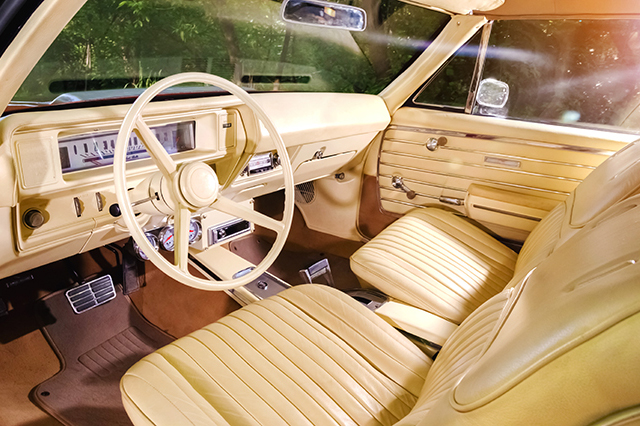
Antes de que se incluyeran los cinturones de seguridad en los coches, los asientos corridos permitían que tres personas cupieran cómodamente en la parte delantera de la mayoría de los vehículos. Incluso podría caber un cuarto pasajero si fuera lo suficientemente pequeño. Los niños de hoy nunca conocerán la sensación de ir apretados delante con mamá, papá y sus hermanos, pero los coches modernos son definitivamente mucho más seguros.

Subscribe to Your AAA Newsletter

Sign up and receive updates for all of the latest articles on automotive, travel, money, lifestyle and so much more!

Got (Plant-Based) Milk? A Guide to Nondairy Milk Options

Whether you’re looking to cut out dairy milk completely or supplement with plant-based milk to reduce calories, avoid allergens or be more green, there’s a nondairy milk option to suit your needs.

Check out this guide to the world of plant-based dairy alternatives.

Why Go for Plant-Based?

People are choosing to drink less – or completely cut out – cow’s milk for a variety of reasons, including allergies, dietary restrictions, intolerance, personal preference or ethical concerns.

Breaking Down Dairy Milk

Traditional dairy milk was once an American staple, but consumers have been buying less and less of it over the years.

“Weekly average purchases of cow’s milk declined 12% from about 0.41 gallon per household per week in 2013 to 0.36 gallon per household per week in 2017,” according to the USDA. “By contrast, purchases of almond, soy and other plant-based products increased 36% from 0.028 gallon to 0.038 gallon per household per week.”

Dairy milk is a good source of calcium, vitamin D and vitamin B12. One cup of cow’s milk also has about 12 grams of carbs, 2 to 8 grams of fat – depending on whether it’s whole milk, 1%, 2% or skim – and 8 grams of protein.

However, drinking too much cow’s may have adverse effects on the body.

Milk and other dairy products are the top source of saturated fat in the American diet, according to the Physicians Committee for Responsible Medicine. Studies have also linked dairy to an increased risk of breast, ovarian and prostate cancers.

Additional Health Reasons

People are giving up dairy milk for a variety of health-related reasons. One of the biggest is intolerance.

65% of the global population has some degree of lactose intolerance in adulthood, according to the U.S. National Library of Medicine. Ingesting dairy milk when you have an intolerance can lead to symptoms like abdominal bloating, cramps and pain, nausea, gas and diarrhea.

Another reason is public perception that plant-based milks are a healthier alternative to cow’s milks, since most plant-based milks have fewer carbs and less fat compared to dairy milk. Some people also want to avoid the antibiotics and hormones associated with some cow’s milk.

Environmental Concerns

An additional cause for the rise in nondairy milk options are environmental concerns. Many consumers are looking for products that require the least amount of resources to make – think water and land use – while producing less waste/pollution.

Cows produce a lot of methane. “Methane from livestock is the second largest source of methane emissions in the U.S., and dairy cattle alone accounted for 26% of total enteric emissions,” according to the U.S. Department of Agriculture.

Raising cows also takes a lot of space – 1.5 miles to make just one cup of cow’s milk. Growing almonds, oats and soybeans only takes about 0.09 square miles per glass.

Dairy milk also uses a considerable amount of water, 30-plus gallons per glass, compared 18 gallons for almond milk. Soy and oat milks require even less water to grow – only 1 to 3 gallons per cup.

nondairy milk options

Which Nondairy Milk Option Is Right for You?

You should decide on a nondairy milk by reading the nutrition facts and making sure the milk fits your needs. Many plant-based milks are fortified with vitamins and minerals they’re otherwise missing – like calcium – providing anywhere from 10% to 45% of your daily value.

Nutritional value and calories vary by type and brand of milk. Do your research and compare products. Finally, conduct a taste test to find your perfect glass of plant-based milk. Or try making plant-based milk at home to avoid preservatives and control sugar and salt levels.

Types of Plant Milk

Almond Milk

There are a variety of nutty, milk-like beverages to choose from – including those made from almonds, cashews, hazelnuts, macadamia nuts, peanuts and walnuts – though almond milk is currently one of the most popular.

One cup of unsweetened almond milk contains about 30 to 50 calories, 2.5 grams of fat, 1 gram of protein and 1 to 2 grams of carbohydrates, according to Healthline.

Pros: low-calorie, low-carb, good source of vitamin E

Cons: low-protein, environmental impact (water)

Other Nut Milks

If you’re looking for a nut milk with a bit more sustenance, peanut milk has more protein than almond milk – 6 grams per cup – followed by hazelnut and walnut milk, which each have 3 grams. However, peanut milk has more calories (about 150) and fat (11 grams) and little additional nutritional value, while walnuts boast omega-3s and hazelnuts have vitamin B and E.

On the other end of the spectrum, there are lower-calorie options like cashew (25 calories) and macadamia nut milks (50-70 calories). These also have a gram or less of protein and carbs and between 2 and 5 grams of fat – but you’ll also find some calcium and vitamin D.

*Nut milks should not be consumed by anyone with a nut allergy.

Coconut Milk

Despite its name, coconut is actually a fruit, making this milk a safe option for those with nut allergies. Coconut milk can be thick or thin and come in a can or a carton.

Nutritional value depends on how much water is added. Traditional, undiluted coconut milk is high in calories – mostly from fat – and a good source of vitamins and minerals like copper, iron and manganese. One cup of the thinner, more drinkable coconut milk provides about 45 calories, 4 grams of fat and little to no carbs or protein, according to Healthline.

Pros: low-calorie, low-carb (for thinned milk), relatively low water and land use

Cons: low-protein, higher in saturated fats, environmental impact (transportation)

Soy Milk

If you’re looking for the closest thing to dairy milk in terms of nutrition, soy milk is a good choice. Soy milk has all nine amino acids and as much protein as cow’s milk. It’s also a good source of potassium.

One cup of unsweetened soy milk contains 80 to 90 calories, 4 to 4.5 grams of fat, 7 to 9 grams of protein and 4 grams of carbs, according to Healthline.

Pros: complete protein, potassium, relatively low emissions and water usage

Cons: more fat, environmental impact (deforestation)

Oat Milk

Oat milk has beta-glucan, a type of soluble fiber that plays a “beneficial role in insulin resistance, dyslipidemia, hypertension and obesity,” according to the U.S. National Library of Medicine.

One cup of oat milk contains 140 to 170 calories, 4.5 to 5 grams of fat, 2.5 to 5 grams of protein and 19 to 29 grams of carbohydrates, according to Healthline.

Pros: second most protein after soy milk, little water and land use, low emissions

Cons: higher calorie, more fat

*If you have celiac disease or are gluten-intolerant, make sure your oat milk is certified gluten-free, as not all varieties are.

Rice Milk

Rice milk is the least allergenic nondairy milk, according to Healthline, making it an option for those with an intolerance to dairy, gluten, soy and/or nuts. However, it’s also the highest in carbohydrates and can raise blood sugar quickly.

“Rice milk has also been shown to contain high levels of inorganic arsenic, a toxic chemical found naturally in the environment,” according to Healthline.

One cup of rice milk contains 130 to 140 calories, 2 to 3 grams of fat, 1 gram of protein and 27 to 38 grams of carbohydrates, according to Healthline.

Pros: least allergenic, low-fat

Cons: arsenic, high-carb, low-protein, environment impact (water)

*Drinking too much rice milk is not advised, especially for young children and pregnant women.

Making a Decision

The secret to eating healthy is making sure your diet is well-balanced. If you choose to switch to dairy-free milk options entirely, consider eating plenty of leafy greens and other vegetables that contain calcium, vitamins and other nutrients your body needs.

There’s also no rule limiting you to just one type of nondairy milk. As long as you’re avoiding allergens, try switching up your plant-based milks from time to time to get a variety of nutritional benefits. Also, go for organic products to avoid pesticides and herbicides – a healthier and more environmentally-friendly choice.


Looking for more content like this? Check out our guide to plant-based meat alternatives.

What’s your favorite nondairy milk option? Tell us in the comments. 

Subscribe to Your AAA Newsletter

Sign up and receive updates for all of the latest articles on automotive, travel, money, lifestyle and so much more!

Shopping Smart at Wholesale Clubs

If you want to save some cash, shopping at a wholesale club is a great way to do it. But in order to save big time, you need to have some know-how. Here are a few tips and tricks to get the most for your money.

What Is a Wholesale Club?

A wholesale club is like a giant grocery store that sells their items in bulk. They also usually carry non-grocery products, like televisions, furniture, clothes, books and more. Customers pay an annual membership to shop at the wholesale club and gain access to their lower prices and bulk options. Many wholesale clubs look like giant warehouses, filled with pallets of different products. If you know what you should and shouldn’t buy, an annual membership will pay for itself.

Buying in Bulk

The main way customers save money at a wholesale club is by buying products in bulk bundles. Usually, buying in bulk is more cost-effective than paying the regular unit price of an item. But you should always check. When you buy something in bulk, make sure to compare the bulk price to the unit price to see how much money you’re actually saving. This will give you a better idea of which products are worth the bulk order.

Buying in bulk is a great opportunity to stock up on household essentials and dry goods. Load your cart up with cleaning supplies, paper towels, toilet paper, soap and toothpaste. Don’t forget dry pasta, dry beans, rice, sugar and other shelf-stable necessities.

Shelf stability is important to consider when you’re buying in bulk. Avoid bulk buying items with nearby expiration dates – or any expiration date at all, if it’s an item that you use infrequently. Some things, like meat, can be frozen and saved for later, but not everything. Don’t buy something in bulk unless you’re sure that you’re going to use all of it. That’s the only way that you’ll get your savings.

Before you decide which bulk items to take with you, make sure you have adequate storage space at home. Sometimes the savings aren’t worth it if the products are going to clutter up your house.

wholesale shopping

Buying What You Need

One of the best ways to save at any wholesale club (or any store at all) is to write a shopping list and stick to it. Don’t get side-tracked by anything you didn’t come to the club to purchase. You can cut down on unnecessary spending by doing one big monthly trip to the club, rather than a series of smaller trips. This will help you focus on what you need for the month, and limit the amount of impulse purchases.

Another great way to curb impulse buying is by learning the layout of the store. This might take you a few visits, but it’s so worth it. Many stores, wholesale clubs included, will scatter essential grocery items in far-flung corners so that customers are forced to browse aisles of products that they don’t need. You might be on your way to get the eggs, but there are a whole lot of TVs that you have to pass first. When you know the store layout, you can go straight to the products you want and avoid being tempted to waste your time or money on anything else.

Wholesale clubs want you to linger for a long time, browsing their shelves and spending more money. That’s why many clubs offer low-price concession stands or restaurants for members – they don’t even need to leave the store for lunch! Eating before you go will help you resist the siren call of the cheap hot dog and soft drinks.

More Ways to Save

  • Too many bulk items that you would never use all by yourself? Try splitting the cost. If you have a friend or family member who shops at the same wholesale club, you can save even more money by splitting the cost of wholesale items with them. You get half of the products, and they get the other half. Everyone wins, and nothing goes to waste! This is a great way to buy items that you otherwise would avoid due to expiration dates.
  • Research the different rewards that you may qualify for with the credit card you’re shopping with.
  • Don’t forget the store brands. In wholesale clubs, store-brand items are usually of the same or similar quality as their branded counterparts – and they come at a much lower price.
  • Get gas there! Gas can be expensive, but many wholesale clubs now have their own gas stations attached to the store. These gas stations often offer lower prices to wholesale club members. If you’re stopping by to do some shopping, definitely don’t forget to fill up your tank before you leave.
  • Learn about the different membership tiers that your wholesale club offers. Some of them offer different rewards and better deals. Getting the cheapest membership might not always be the best option for you.
  • Check to see if your wholesale club has a pharmacy department. You could be able to save on your medications. Do you wear glasses? Your wholesale club might sell them at a discounted price. Many wholesale clubs have in-store optometrists and eyeglass retailers available for their members.
  • Before you purchase a big-ticket item like a flat-screen TV or a set of outdoor furniture, do a little comparison shopping at other stores. Wholesale clubs are great for discounts on grocery items, but they don’t always have the best prices when it comes to their more expensive products. 

How do you save money at your wholesale club? Which club is your favorite? Let us know in the comments below!

Subscribe to Your AAA Newsletter

Sign up and receive updates for all of the latest articles on automotive, travel, money, lifestyle and so much more!

Why Do Different Countries Drive on Different Sides of the Road?

We all know that our friends across the pond drive on the left side of the road. But the practice is not solely British — roughly one-third of the world’s population drives on the left side of the road. In fact, traveling on the left was common dating all the way back to the Roman Empire.

The question that begs answering isn’t why do we drive on the right side of the road, but rather why did we stop traveling on the left? A quick history refresher shows why most of the world made the shift and why certain countries have not.

Early Travelers Stayed to the Left

Traveling on the left side of the road began before there were paved roads or cars – or even the thought of paved roads or cars, for that matter. Archaeological evidence suggests the ancient Romans drove carts and chariots on the left, likely so they could hold a weapon with their dominant right hands and more easily reach an enemy. The practice was kept alive in Europe all the way through the Middle Ages.

Up until the 1700s, traveling on the left side was customary, but neither exclusive nor mandatory anywhere in the world. That began to change in the second half of the century when, in 1773, the British government passed the General Highways Act, which encouraged driving on the left. The practice became law with the enactment of the Highway Act of 1835.

But other corners of Europe seemed to prefer keeping to the right. In pre-revolutionary France, the aristocracy rode on the left, with the peasantry to their right. Once the revolution started, however, nobles wanted to hide their identities and joined their fellow countrymen and women on the right side of the road. Right-side traveling became the law in Paris before the close of the 18th century.

Colonialism Spreads Driving Customs

Both Britain and France, and their respective invasions and colonialism, would prove to have an enormous effect on driving habits around the world. When Napoleon was in charge of the French army, he ordered newly conquered countries to stay to the right. (There’s a theory he preferred this method because he was left-handed.) France’s conquests covered large swaths of Europe including nations like Belgium, the Netherlands, Austria, Germany, Poland and Spain.

Great Britain was busy expanding its empire at this time, as well. As a result, it brought its left-side practice to all corners of the globe, including Australia, New Zealand, India and the West Indies. (Britain also later influenced Japan to travel on the left when British engineers helped build the country’s first railways in the late 1800s.)

sides of the road
Photo: Texas A&M Transportation Institute

Why Do Americans Drive on the Right Side of the Road?

It would be easy to think the practice of driving on the left side came over the Atlantic in the 1600s with the early European settlers. After all, America’s first Colonists in Jamestown and Plymouth were from England. But that doesn’t seem to have been the case. Albert C. Rose, who served as “unofficial historian” of the U.S. Bureau of Public Roads during the agency’s early years, found that “all available evidence seems to indicate that the RIGHT-HAND travel predominated in Colonial America from the time of the earliest settlements.”

One possible reason early Colonial Americans eschewed the left-side rule was due to, as Rose describes, a “smoldering opposition to customs of the Old World.” Remember, many English settlers were escaping persecution in their home country. Additionally, other European countries were establishing settlements in America and implementing their own practices.

But the most significant impetus for traveling on the right in America came the following century with the introduction freight wagons. These vehicles were pulled by a team of horses and usually didn’t have a driver’s seat. Operators typically sat on the rear left horse, in order to hold a whip in their right hand and be able to reach the other horses. Over time, wagon drivers naturally began to gravitate toward the right side so they would be positioned closer to the center of the road. This gave them a better view of oncoming traffic, reducing the likelihood of a collision.

By the late 1700s, staying to the right was common practice in America, yet there was still no rule or law dictating it. The first known legal requirement to do so came in 1792, when Pennsylvania enacted legislation to build a turnpike from Lancaster to Philadelphia. The document stated traffic must travel on the right side of the road. Twelve years later, New York became the first state to require right-hand travel on all public highways.

Driving on the Right, Sitting on the Left

By the start of the Civil War, the right-hand rule was followed in every state, according to the Federal Highway Administration. However, many drivers of light horse-drawn wagons both drove on the right and sat on the right side of their vehicles. They did this in order to get a better view of another potential danger: roadside ditches. Indeed, many considered running into these ditches to be more dangerous than colliding with another vehicle.

When automobiles were first introduced in the late 1800s, they were thought of as horseless wagons. As such, most American cars produced before 1910 had steering wheels on the right side of the vehicle.

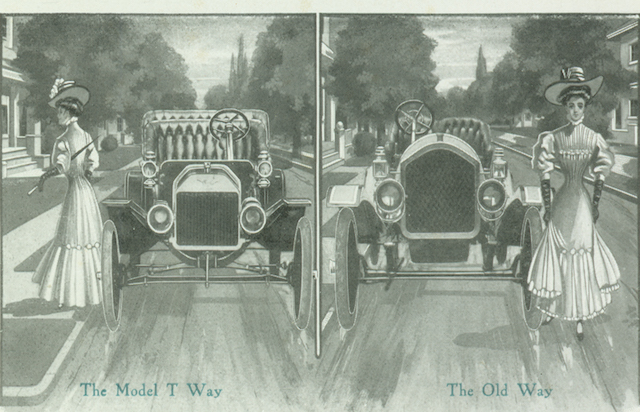
It wasn’t until Ford released the Model T in 1908 that operating a vehicle while positioned on the left side began to become common practice. The revolutionary car was one of the first automobiles to have a left-side steering wheel. Within a few years, the Model T had become so popular nearly every other automobile manufacturer was putting the driver’s seat on the left. More than a century later, the practice remains.

Want more automotive history? Head to AAA.com to learn about the origins of everything from stop signs to car horns.

Subscribe to Your AAA Newsletter

Sign up and receive updates for all of the latest articles on automotive, travel, money, lifestyle and so much more!

How to Save on Home Renovations

A home renovation, be it a single room or a complete overhaul, can do a wonder of good. Not only can you create a space with the utmost comfort and efficiency, but you can also significantly increase the resale value of your home.

But renovations are notoriously expensive and it’s easy to let them spiral out of financial control. Don’t let that happen. There are a number of ways to save money on your home renovation. Here are five strategies to consider.

Listen to Our Podcast

How to budget, plan and manage your next home improvement project. Listen to Season 2, Episode 12 of  Merging Into Life: DIY Home Renovation Guide

Tune In

Invest Some Sweat Equity

It will always be cheaper to do something yourself than pay someone else. The more of the renovation you can handle, the more money you’ll be able to save. Exactly how much of the project you can DIY will vary considerably based on your skillset and the scale of the remodeling, but even the least handy homeowners can find a place to pitch in.

The best places to focus on are the front and back ends of the projects that don’t require skilled, licensed professionals. For instance, most people are likely capable of doing some demolition work. Similarly, you might be able to handle some of the renovation’s finishing touches, such as painting or landscaping.

Two things to consider when taking on home renovation projects. First, if you have the willpower but lack the tools, you can usually rent them from hardware stores. This will prevent you from having to purchase items you may never use again. Second, if your project requires a permit, you’ll need it in hand before you start tearing down walls.

Do Your Own Transporting

If you’re not up for any home demolition work, you can get involved in your home renovation — and save some money — simply by driving. Retailers and contractors usually charge a material delivery fee for getting the necessary supplies to your house. You can eliminate this extra charge by picking up the items yourself. If you don’t have a vehicle large enough to haul the construction material and can’t borrow one, you can always rent a truck or trailer. While this may cost you a bit upfront, if you use it for a few trips, it can more than pay for itself.

Leave the Sink, Take the Savings

If you’re doing a kitchen or bathroom renovation, you may be tempted to move the location of the sink, bathtub or toilet. Unfortunately, this will be a costly move. Plumbing can often be one of the largest expenses in a home renovation. Not only will you need to pay for materials, you’ll have to hire a professional plumber to do the work.

Unless your heart is dead set on a design that requires moving one of these large features, keep them where they are and work your renovation around them. You may find that you can make other changes, like opening up a wall, that may yield greater results for a lower price tag.

save on home renovations

Add Light Without Windows

Natural light is a big selling point with homes, but cutting a hole in your house to add a new or larger window can be pricey. You may find adding a feature such as a skylight or light tube, which funnels sunlight down into the living space, to be less expensive than adding a window.

But there are tricks to brightening a room without any construction. Painting the space bright white or eggshell will reflect more light around the room. Adding a mirror or two will do the same. Even something as simple as changing the lightbulbs can help. Full spectrum bulbs are designed to emulate midday sunlight.

Shop Recycled and Reused

Few savings methods are as effective as purchasing reused items over new ones, and this strategy can reap big financial rewards on your home renovation. Resale shops, salvage yards, material auctions and the like all sell new and gently used building supplies for a fraction of the cost of major retailers. You can also check selling sites like eBay to see what people are offering. You never know what you can find!

A great place to start your shopping is at a local Habitat for Humanity ReStore. The non-profit operates more than 900 of these locations across the country. Customers can purchase everything from appliances to building materials to furniture for below retail prices. Even better — all the money goes toward helping Habitat for Humanity continue its incredible work.

Whether you’re ready to do the work now or need a bit more time to plan, it’s always a great time to start saving.

Subscribe to Your AAA Newsletter

Sign up and receive updates for all of the latest articles on automotive, travel, money, lifestyle and so much more!

La Guía Definitiva Sobre Cómo Desempañar los Cristales del Automóvil

Aparte de los conductores agresivos y los atascos de tráfico, es difícil nombrar algo más molesto que intentar desempañar los cristales durante un largo viaje al trabajo.

El vaho de las ventanas dificulta la visión de la carretera y, como una molesta abeja a una lata de refresco, siempre vuelve.

Afortunadamente, los expertos en automóviles saben cómo eliminar los cristales empañados del vehículo. Sigue leyendo para saber cómo desempañar los cristales y algunos consejos para hacerlo más rápido.

Cómo desempañar los cristales en un día frío

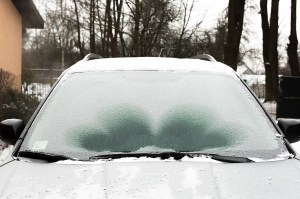
La niebla que se forma en un parabrisas es la condensación, que se crea cuando el vapor de agua en el aire cerca del cristal cae por debajo o por encima de una determinada temperatura, conocida como punto de rocío. Cuando la temperatura del habitáculo de un coche es más cálida que la del exterior, es cuando la humedad de nuestro aliento y de nuestra ropa se condensa en el interior del parabrisas y las ventanillas.

Cuando el parabrisas se empaña, muchos conductores recurren al desempañador, utilizando el calor más intenso y el ajuste más fuerte para limpiar el cristal. El aire caliente del desempañador ayuda a evaporar la humedad cerca del parabrisas, pero es sólo una solución temporal.

Si quiere evitar que se forme el vaho, los expertos recomiendan utilizar aire frío para bajar la temperatura del interior del cristal. Puedes conseguirlo soplando aire fresco por el desempañador, encendiendo el aire acondicionado (que actúa como deshumidificador) o abriendo las ventanas, si puedes tolerar una breve descarga de aire frío.

John Paul, Doctor de Automóviles de la AAA, recomienda apagar el botón de “recirculación” de su coche (simbolizado por un coche con una flecha en bucle dentro). Cuando está apagado, el coche aspira aire seco del exterior para limpiar el parabrisas, en lugar de utilizar el aire húmedo del interior del coche, que es lo que causa el problema en primer lugar.

“El otro problema que provoca la humedad en el interior del coche son las alfombras húmedas”, dijo Paul. “Siempre es una buena idea aspirar la humedad del vehículo después de una semana de entrar y salir del mismo con las botas nevadas”.

Cómo desempañar las ventanas en un día caluroso

Deshacerse del vaho en el exterior del parabrisas cuando se pone en marcha el aire acondicionado en primavera es mucho más fácil: basta con utilizar las escobillas del limpiaparabrisas. Haga clic aquí para obtener consejos sobre cómo hacer que sus limpiaparabrisas duren.

Pero si la humedad del exterior del coche hace que se empañen los cristales laterales, prueba a utilizar la lógica contraria a la que se debe hacer en un día frío. Es decir, utilizar el aire caliente, o el ajuste de refrigeración menos potente, para elevar un poco la temperatura del interior del habitáculo. Así no tendrás que subir y bajar las ventanillas cada cinco minutos o apagar y encender los limpiaparabrisas durante todo el viaje.

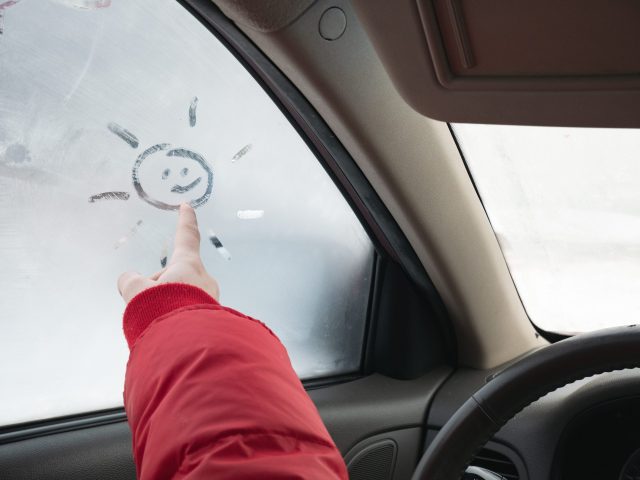
how to defog windows

Otros consejos y trucos para los cristales del automóvil empañados

Limpiar el interior de su parabrisas le ayudará a prevenir la niebla antes de que ocurra, dijo el portavoz de AAA Northeast, Robert Sinclair Jr. Es más difícil que se forme niebla en una superficie limpia, y más fácil que se forme en la suciedad y en la película que deja el tabaco, por lo que recomienda dedicar un par de minutos a solucionarlo durante el fin de semana. Para limpiar correctamente, utilice amoníaco sin espuma (asegúrese de abrir las ventanas mientras lo hace para no inhalar el producto).

Otro consejo, más inusual, proviene de YouTuber DaveHax, que recomienda mantener un calcetín lleno de arena para gatos en el tablero o cerca de él. La arena es muy absorbente y puede ayudar a contener parte de la humedad en la cabina.

Además, mantenga en el maletero las pertenencias húmedas, como un paraguas recién usado o la ropa sudada del gimnasio, si quiere reducir la cantidad de humedad dentro de su automóvil (todo ayuda).

Qué no hacer

Por último, la mayoría de la gente lo sabe, pero no está de más repetirlo: Evite limpiar los cristales del automóvil empañados con las manos. Las manos llevan aceites que se transfieren al cristal, por lo que, aunque podría desempañar temporalmente las ventanas del coche, sólo podría empeorar el problema más adelante. Mantenga un paño de microfibra dentro de su vehículo por si tiene que limpiar el parabrisas en un momento de apuro.

Y cuando limpie el parabrisas, evite rociar un producto de limpieza directamente sobre él, ya que puede salpicar el tablero y otros lugares. Pulverice la solución en una toalla de microfibra y limpie de arriba a abajo y de lado a lado, dando golpes largos. A continuación, utilice otra toalla para limpiar el exceso de spray.

Ahora que ya conoce cómo desempañar los cristales, sabrá qué hacer la próxima vez que las cosas se empañen dentro de su automóvil.

¿Tiene otros consejos y trucos para solucionar el problema de los cristales del automóvil empañados? ¡Háganoslo saber en los comentarios!

Subscribe to Your AAA Newsletter

Sign up and receive updates for all of the latest articles on automotive, travel, money, lifestyle and so much more!

4 Reasons to Visit Delaware County, N.Y., This Fall

The quiet, rural landscape of Delaware County makes it a year-round destination for those looking to escape the daily grind and get some fresh air, but it’s scenic mountain views and thriving farm country make it especially idyllic in the fall.

With covered bridges, farmers markets, cozy lodging and historic places to explore, this small slice of upstate New York offers everything you love about autumn.

Foliage Views  

City-dwellers that need a change of pace will certainly find it in Delaware County. This part of the Catskills is untouched by development, free of large retailers and box stores. Instead, you are invited to simply enjoy the great outdoors and the colorful show that nature casts onto the surrounding mountains. Whether hiking or biking along the Catskill Scenic Trail,  golfing, or paddling or fishing on a lake, there are plenty of ways to take in the view.

One spectacular outlook is at the top of Mount Utsayantha in Stamford. Climb (by foot or by car) to the top, bring a picnic and take a load off. If you are up for it, you can take the stairs to the top of the historic fire tower that sits at the summit for a 360-degree foliage-filled Catskills panorama.

Visit the Great Western Catskills

Stunning views, fresh mountain air, endless outdoor activities. Visit this fall.

Learn More

Craft Beverages and Farm-Fresh Food

Delaware County is known for its bountiful farmland. Throughout the end of October, you can scope out some of the many farmers markets available on the weekends and spend a quiet morning gathering farm- and garden-fresh goodies to take home with you. In Halcotssville, the Pakatakan farmers market takes place at the historic red round barn, one of the earliest and only remaining entirely round barns in New York State. See calendar of events for more.

Many of the restaurants in the area are also dedicated to bringing seasonal, locally sourced ingredients straight to your plate – and your glass! The growing craft beverage scene is something beer, wine, cider and spirit enthusiasts won’t want to miss. Visit a tasting room and sample your way through a flight or bottle of your choice.

delaware county
Mount Utsayantha in Stamford, New York. (Photo: Beautiful Destinations)

History

While you are in the area, take note of the history all around.

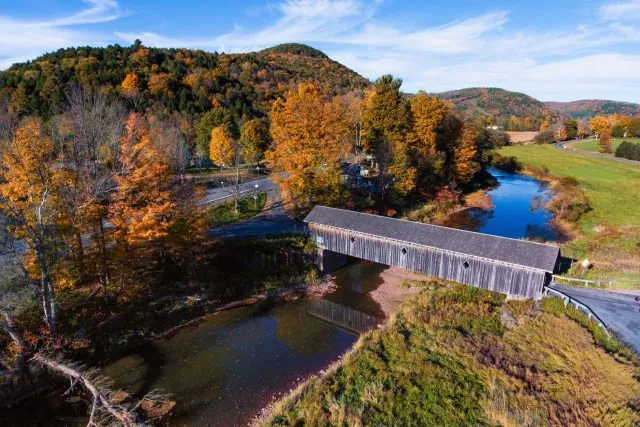
For starters, the covered bridges in Hamden, Delhi and Downsville are what autumn dreams are made of. If you are nearby, don’t miss the photo-op.

Take a walk through the past on a hike through the trails at John Borroughs Woodchuck Lodge in Roxbury and learn about the famed naturalist’s life and contributions to conservation. The Lodge itself is open for guided tours the first weekend of each month, May through October.

First established in 1846, the Hanford Mill in East Meredith is home to one of the only water-powered mills in the country still in operation. See the working sawmill, gristmill and woodworking factory in action, then visit the gift shop for some mill-made crafts and products. Currently, only individual-guided tours of the property are available and booking ahead is recommended. Visitors are welcome to explore the natural and rail trails on the property and set up a picnic by the millpond.

Lodging Options

Whether you want luxury, casual or off-the-grid accommodations for your overnights, there’s something for every kind of traveler in this part of the Catskills.

The boutique Roxbury Motel is known for its whimsical, campy and over-the-top themed rooms, drawing inspiration from the “The Wizard of Oz” to coconut cream pie. The fun continues two miles away at its sister property, the Roxbury Stratton Falls.

If you want to spend your retreat lost in nature, set up camp at one of the many campsites. Some of the farms even offer lodging. And if you are bringing-along a four-legged friend, there are pet-friendly options as well.

Find your perfect stay here.

Start planning your Delaware County trip today.

Have you ever been to this part of upstate New York? Share your recommendations for your favorite things to do and places to stay in the area in the comments below.

Subscribe to Your AAA Newsletter

Sign up and receive updates for all of the latest articles on automotive, travel, money, lifestyle and so much more!

What You Need to Know About Chip Technology in Credit Cards

As you probably know, virtually all credit cards in the United States are now equipped with EMV chips. EMV is short for “Europay, MasterCard and Visa,” the three companies who began the chip technology initiative. There are two main types of chip technology in credit cards – chip and signature and chip and PIN.

The technology has quickly become the gold standard for all credit card transactions. Here’s how it works – A small microprocessor is embedded in your credit card to store and protect your sensitive data. This information is used for all transactions, replacing the magnetic strip on the back of your credit card. The information embedded within the chip is encrypted, and therefore less vulnerable to counterfeiting and fraud.

Chip technology in credit cards has been around for a few years now, but merchants and consumers are still adjusting to the change. Here’s what you need to know about your EMV chip card.

Why is a credit card chip more secure?

EMV chip cards support dynamic authentication, which makes it much harder to copy and counterfeit. Data stored on traditional magnetic strips are static, making them much easier to skim with a card reading device. Dynamic information stored within your credit card chip must be verified by the point-of-sale device, ensuring its authenticity. Chip credit cards also generate a unique authentication code with each transaction.

In the United States, most cards use chip-and-signature technology – the secure chip in your card, combined with a signature for verification. For the added security of a signature, merchants must verify the signature on the card with the card holder’s on-site signature. This process can be subjective, based on the verification process. In many countries the EMV chip technology is used in combination with a PIN number. Because the chip-and-PIN system uses two types of objective verification, it is widely regarded as more secure than the chip-and-signature technology.

How is the EMV chip card used to make a purchase?

Instead of swiping your credit card through a card reader, the chip system requires you to insert your card into the reader, chip end first, and leave it there until your transaction is complete. For now, credit cards still have a magnetic strip on the back that can be used if the chip technology fails, but those strips will likely be phased out in the future.

chip technology

Why do chip cards take longer to process?

Consumers who are used to the simple swipe they’ve used in the past may be wondering why the chip system takes so much longer. While you’re tapping your fingers on the counter waiting patiently for your transaction to complete, the microchip in your credit card is having an encrypted conversation with the card reader. The card reader then sends an encrypted message to the bank, which approves the transaction, and sends an encrypted message back.

The whole point of the new chip technology is the added security features, and it’s these features that slow down the process.

Are there security risks with chip credit cards?

While chip credit cards are far more secure than cards with magnetic strips, there are still risks you should be aware of. Because many chip cards still contain the magnetic strip on the back, the cards are still vulnerable to fraud. To prevent skimming, credit card issuers will have to totally eliminate the card’s magnetic strip.

The biggest risk for fraud and theft in the credit card industry today is through the internet. Card-Not-Present or CNP transactions continue to rise as the online shopping market grows. Credit card account information can be gleaned through a breach in a merchant’s online security, as well as phishing scams, or when the physical card is stolen. Because there isn’t a secure card reader available for online sales, internet fraud will become the easiest way for thieves to get ahold of sensitive information.

There is also an increase in application fraud – when a criminal uses your personal information to apply for a new credit card or take over existing accounts. Instead of counterfeiting the physical card, criminals are bypassing the card altogether. Once the account is created, it’s easy to have a new EMV card mailed to them.

The future of credit card security

In addition to EMV chip technology, Visa and MasterCard have implemented extra security protocols that send users an authentication code through their cell phone before they can make a CNP transaction online.

Many credit card companies have been testing and using biometrics as part of their security protocol for credit card use. Facial-recognition software, fingerprint scans, and voice authentication have all been tested for viability within the industry, but have not been implemented on a wide scale.

Because credit card fraud costs companies billions of dollars each year, new technologies are constantly being developed and tested to make transactions more secure for consumers, merchants and banks. Chip technology is our biggest leap forward in many years, but there’s certainly more changes to come.

Have EMV chip credit cards changed the way you make purchases? Are you satisfied with the new system? Let us know in the comments section below.

Subscribe to Your AAA Newsletter

Sign up and receive updates for all of the latest articles on automotive, travel, money, lifestyle and so much more!

Podcasts That Will Blow Your Mind

Looking for a show that will shock you? These podcasts are full of mind-blowing stories that will make you gasp in disbelief, rewind to listen again and question the narratives you’ve been hearing all your life.

You’re Wrong About

Do you know what you’re wrong about? “You’re Wrong About” is a podcast concerning common misconceptions and the way stories get warped in the public eye. Writers Michael Hobbes and Sarah Marshall take turns telling each other about things like Y2K, anti-vaxxers, O.J. Simpson, stranger danger and so much more. Don’t miss their deep dive “book club” episodes covering topics like infamous celebrity memoirs and not-so-accurate books about the satanic panic.

Recommended Episodes: “Political Correctness”, The Anti-Vaccine Movement, Halloween Special: Creepy Encounters, Wayfair and Human Trafficking Statistics, The Y2K Bug, The Wardrobe Malfunction

Maintenance Phase

It’s the wellness podcast to end all wellness podcasts. In “Maintenance Phase,” Michael Hobbes from “You’re Wrong About” teams up with writer Aubrey Gordon to tackle trends and debunk myths surrounding health and wellness culture. Covering topics like “The Biggest Loser,” anti-fat bias, diet pills and snake oil, it offers a mix of infuriating facts and the relief of laughing through the pain.

Recommended episodes: Snake Oil, The Biggest Loser, The President’s Physical Fitness Test, Fen-Phen & Redux, Anti-Fat Bias

The Dropout

Young entrepreneur Elizabeth Holmes seemed to emerge out of nowhere. She dropped out of Stanford after just a few semesters to found a revolutionary blood-testing company, Theranos, and quickly became the youngest self-made female billionaire of all time. But Holmes was not all that she seemed. Theranos claimed to run hundreds of tests with just one drop of blood, but was that really true? And why did employees seem to come and go so quickly? Also, why did Holmes allegedly dress like Steve Jobs and speak with a fake deep voice? “The Dropout” is more than a corporate scandal – it’s an indictment of the medical-industrial complex as a whole. To continue following the story of Elizabeth Holmes, check out “Bad Blood: The Final Chapter,” which begins Aug. 26.

Recommended episodes: Listen from beginning to end.

The Dream

Season one of “The Dream” by Jane Marie is all about the world of multilevel marketing, or MLMs. Marie interviews a participant in the “airplane games” of the 1980s, goes deep into multilevel marketing’s alleged ties to the White House and even has a former cosmetics marketer try (and fail) to make money selling makeup through an MLM. This show is shocking, funny and sometimes even enraging. Season two explores the state of the wellness industry as Marie tries crystals, magnetic therapy, acupuncture and more.

Recommended episodes: Listen from beginning to end.

Oh No, Ross and Carrie!

On “Oh No, Ross and Carrie!,” Ross Blocher and Carrie Poppy investigate the fringes of belief – then take part in it themselves. The two hosts embed themselves in self-help workshops, sample snake oil, attempt paranormal experiences and attend spiritual ceremonies. The two skeptics go through wild misadventures on their never-ending journey to find the truth.

Recommended episodes: Ross and Carrie Are Down to Earth (Part 1): Grounding Edition, Ross and Carrie Test Their Psychic Powers: Clair Edition, Ross and Carrie Meet Dr. Elizabeth Loftus: Bad Memory Edition

Stuff You Missed in History Class

On “Stuff You Missed in History Class,” Tracy V. Wilson and Holly Frey investigate the forgotten corners and obscure characters in the margins of history. This show has a huge back catalog to trawl through – with inside jokes that have lasted for years (like the fact that their subjects keep getting exhumed). Wilson and Frey meticulously research each episode, and their joint method of reporting these forgotten stories make each episode effortlessly enjoyable.

Recommended episodes: Operation Paperclip, L.L. Zamenhof and the Hope of Esperanto, 1918 Flu Pandemic, Revisited – Part 1, The Lost Cause, Public Universal Friend

My Year in Mensa

When comedian Jamie Loftus took the Mensa exam, she didn’t think she’d actually get in. But once she did, she uncovered an alt-right underbelly of this network of “geniuses.” “My Year in Mensa” recounts online harassment, the hidden world of Mensa Facebook groups, and Loftus’ visit to the annual Mensa convention – after being blocked online by half of the people there. “My Year in Mensa” is as shocking as it is funny.

Recommended episodes: Listen from beginning to end.

Dirty John

John Meehan seemed like the perfect guy – a single, attractive doctor who wanted to take Debra Newell out on a date. But Debra’s daughters were suspicious. What was John really after? Reported by Chris Goffard of the Los Angeles Times, “Dirty John” is one of the most mind-blowing podcasts out there. Just when you think the story is winding to an end, things get even weirder.

Recommended Episodes: Listen from beginning to end.

Looking for even more podcasts? Check out our list of the best podcasts about the internet and the most bingeworthy podcasts!

Subscribe to Your AAA Newsletter

Sign up and receive updates for all of the latest articles on automotive, travel, money, lifestyle and so much more!

Why Aren’t More People Buying Electric Cars?

A recent AAA survey of electric vehicle owners found that nearly all (96%) would buy or lease another the next time they were in the market for a new car. And word has spread: Sales of EVs through the first five months of 2021 grew 150% compared to the same period last year. Even President Joe Biden voiced his support of the green technology by setting a national goal for EVs to make up half of all new vehicle sales by 2030.

Certainly, there could be no better seals of approval. Yet while buying electric cars has grown exponentially over the years, it still lags far behind that of traditional gas-powered cars. As of 2020, there were nearly 1.8 million EVs registered in the U.S., according to the Pew Research Center, three times as many as in 2016. That may seem like an impressive growth until you compare it to the 280 million cars in operation across the country. Indeed, EVs represented just 2% of the new cars purchased in the U.S. in 2020.

“Although 40 million Americans have shown interest in buying electric for their next car, actual adoption is happening at a much slower rate,” said Greg Brannon, AAA’s director of automotive engineering and industry relations.

The gap between interest in buying electric car and owning an electric car begs the question: What are the hurdles preventing the widespread adoption of EVs, and, more importantly, are they capable of being cleared?

Upfront Cost

There’s no getting around it: buying electric cars costs more, at least initially, than gas-powered cars. 

The high cost is largely a byproduct of the expensive process of manufacturing EV batteries. Fortunately, battery prices are dropping precipitously. Bloomberg found the average cost to be around $130/kWh as of late 2020, whereas they cost more than $1,000 just 10 years ago. The news outlet predicts batteries will drop to an average of $100/kWh by 2023. This number would represent an important milestone because at $100/kWh per battery, Bloomberg estimates that EVs can be manufactured and sold to a mass market at the same price as gas-powered cars.

The better news for potential EV owners is that the cost of the vehicles is already coming down. The average transaction price for all new vehicles in June 2021 was $42,282, according to Kelley Blue Book. The average transaction price for all electric vehicles was $49,766.

If consumers are able to overcome the initial higher costs, they should be able to make up that difference, if not surpass it, as EV ownership generally costs less than gas-powered cars. The money starts to come back in the form of tax credits. A federal tax credit of up to $7,500 per EV may be available depending on the model of EV as well as the owner’s tax liability. State governments also offer varying tax credits and other incentives that can further reduce the cost.

EV drivers will see additional savings over the lifetime of their ownership, as these vehicles cost less to both maintain and operate. (EVs don’t require oil changes or air-filter replacements, for example.) AAA research found, if maintained according to the automakers’ recommendations, annual EV maintenance costs $330 less than that of gas-powered cars. Then comes the all important factor of “fuel.” While electricity does cost money, it pales in comparison to the price of gasoline. As such, the power required to drive 15,000 miles per year in an EV costs an average of $546, according to AAA, less than half the price of the amount of gas required to travel the same distance.

All told, AAA found the total cost of an EV over five years and 75,000 miles of driving to be less than $600 more than owning a comparable gas-powered car.

buying electric cars
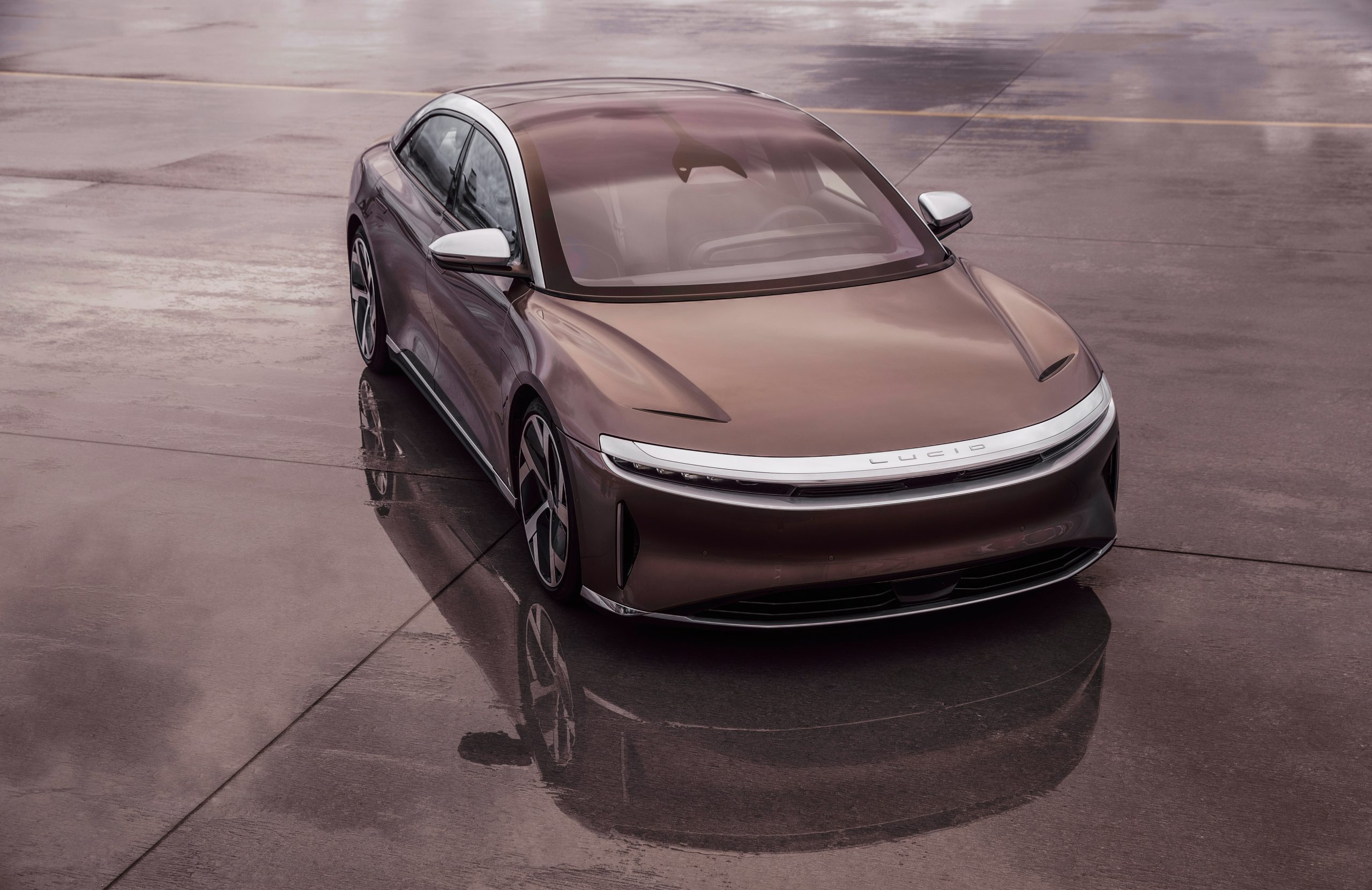
Lucid Air

Range Anxiety

A recent automotive survey conducted by Deloitte listed driving range to be the biggest concern amongst U.S. consumers regarding all-battery-powered electric vehicles.

This is one problem that, although valid, shouldn’t pose the level of concern that it does. While limited driving range used to be a major issue — not too long ago, it was difficult to find an EV that could travel more than 100 miles on a single charge — it’s becoming less so with each passing year. Today, there are numerous models that can travel 200 miles. Tesla cars, including the best-selling Model 3, feature batteries capable of more than 300 miles. The soon-to-be-released Lucid Air boasts a range of 500 miles.

Range anxiety is likely an effect of drivers simply overestimating how much power they really need. The previous year’s Deloitte survey found the majority of consumers expected EVs to travel more than 200 miles per full charge even though they traveled an average of 27 miles per day. “Range anxiety is generally only a concern to people who don’t drive electric,” said Anja van Niersen, CEO of European EV charging network Allego.

Be that as it may, driving range is still an issue for those who don’t have access to readily available EV chargers, which points to a much more significant barrier to widespread electric car adoption.

Lack of Infrastructure

The lack of public charging stations may just be the most significant hurdle to the widespread adoption of EVs in the U.S. The problem is most notable in two areas. First is with potential EV owners who don’t live in a single-family home, where most EV drivers charge their vehicles. Those who live in apartments don’t have this luxury and therefore have to charge their vehicle elsewhere. This can become a rather burdensome chore after time. Furthermore, apartment property owners are often hesitant at installing such infrastructure as it may be cost prohibitive.

Allowing the use of common outlets also poses problems. Because EV charging consumes more energy than most other residential uses, property managers would likely want residents to pay the electrical costs. This would require devising a way to monitor how much power is being used by each resident.

Loading alternative fueling station locator…

Regardless of living situations, public infrastructure is needed for all EV owners looking to make long-distance trips. There are more than 43,000 public EV charging stations in the United States, according to the Department of Energy. (If that seems like a large number, consider that there are nearly three times the number of gas stations.) But a 2019 study by the International Council on Clean Transportation found that this is just a fraction of the infrastructure needed. It estimated that 10,000 more charging stations will be required by 2025 to support EVs traveling between cities.

While EV infrastructure has a long way to go, local and federal governments appear committed to the trek. In 2019, two-thirds of U.S. mayors voiced their support of improving infrastructure even at the cost of additional parking space. More recently, a proposed trillion-dollar federal infrastructure bill is allocating $7.5 billion to fund the installation of 500,000 public charging stations across the country. If enacted into law, the legislation would be the federal government’s first-ever investment in EV chargers and, maybe, a sign of things to come.

Interested in purchasing an electric – or gas-powered – vehicle? Let AAA help get you in the perfect car for the right price with a low-interest auto loan.

Visit AAA’s Electric Vehicle platform for more information on these cars of the future.

Subscribe to Your AAA Newsletter

Sign up and receive updates for all of the latest articles on automotive, travel, money, lifestyle and so much more!

Los Lugares Más Impresionantes del Noreste

A medida que vamos retomando la idea de viajar, algo que probablemente todos buscamos son los espacios abiertos. Eso, por supuesto, significa los grandes espacios al aire libre. Y no hay mejor región para hacer turismo que el Noreste, donde los frondosos bosques cubren las onduladas colinas de cada estado y kilómetros y kilómetros de costa están cubiertos de pintorescas playas. He aquí algunos de los lugares más pintorescos del Noreste.

White Mountains
(“The White Mountain National Forest, New Hampshire, USA” by weesam2010 is licensed under CC BY-NC-SA 2.0)

White Mountains

Las White Mountains (Montañas Blancas) cubren aproximadamente una cuarta parte del estado de New Hampshire. La región alberga el Parque Nacional White Mountain, así como varios parques estatales.

La cordillera contiene numerosas rutas de senderismo que pueden llevar a cascadas y vistas panorámicas o hasta la cima. Aunque se trata de algunas de las montañas más escarpadas del Noreste, la vista desde la cima merece el esfuerzo.

Si, por el contrario, le gusta quedarse con los pies en la tierra, conduzca por la autopista Kancamagus. Este tramo de carretera de 34 millas atraviesa las montañas y discurre junto a varios ríos.

Letchworth State Park

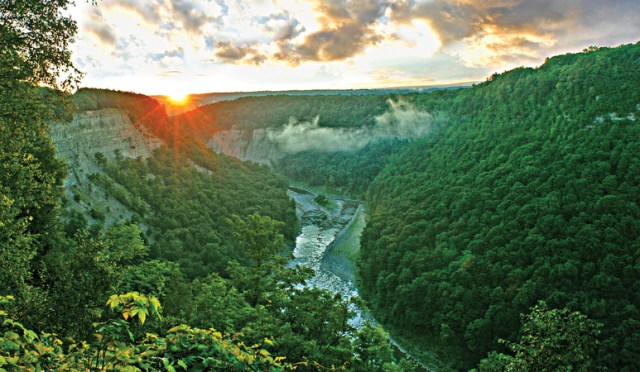
Cualquier lugar conocido como el “Gran Cañón del Este”, ciertamente tiene unos grandes zapatos que llenar. Pero Letchworth State Park, situado en el oeste de Nueva York, está a la altura.

En lugar del Colorado, es el río Genesee el que atraviesa el desfiladero, recorriendo tres grandes cascadas y alcanzando alturas de 600 pies. El parque cuenta con más de 60 millas de rutas de senderismo, lo que garantiza que podrá encontrar el mirador perfecto para presenciar las bucólicas vistas.

Heublein Tower

Heublein Tower se encuentra en la cima de Talcott Mountain en Simsbury, Connecticut. La estructura de 165 pies fue construida en 1914 y originalmente sirvió como casa de verano para una prominente familia local.

Hoy en día es conocido por ofrecer algunas de las mejores vistas del Estado de Nutmeg y más allá. Siendo una torre encaramada en la cima de la montaña de 1.000 pies de altura, los visitantes de Heublein Tower disfrutan de vistas panorámicas del valle del río Farmington, el estrecho de Long Island y los Berkshires. Incluso podrá vislumbrar el Monte Monadnock, a 80 millas de distancia, en New Hampshire.

Aquinnah Cliffs
(“Blue Moon Rising” by Massachusetts Office of Travel & Tourism is licensed under CC BY-ND 2.0)

Aquinnah Cliffs

Más allá de las casas de estilo pan de jengibre y de los centros de la ciudad con aspecto de postal, se encuentra una vista aún más hermosa en Martha’s Vineyard: Aquinnah Cliffs. La maravilla natural, tallada por los glaciares hace millones de años, se eleva desde la playa del extremo suroeste de la isla.

Los visitantes pueden caminar a lo largo de la playa para ver de cerca los acantilados de arcilla, que no se parecen a ningún tipo de formación que se pueda ver en una playa de Nueva Inglaterra. Los huéspedes también pueden tomar los senderos superiores para vislumbrar el Gay Head Light y las cercanas islas Elizabeth.

Berkshires

Berkshires, una región de montañas y bosques en el oeste de Massachusetts, es conocida desde hace tiempo como uno de los lugares más pintorescos del Noreste. Su mejor momento es cuando bajan las temperaturas, convirtiéndose en el principal destino del follaje otoñal. Su mejor opción para obtener vistas pintorescas es dar un paseo en auto por el Mohawk Trail. La carretera, ahora designada como ruta turística escénica, atraviesa las montañas Berkshire a lo largo de más de 60 millas.

Cadillac Mountain

Ninguna lista de los mejores lugares de interés turístico del Noreste está completa sin Cadillac Mountain, y por una buena razón. Durante varios meses del año, los visitantes que suben a la cima con suficiente antelación pueden ser los primeros en presenciar el amanecer en Estados Unidos.

Incluso si se pierde la luz de la mañana, un viaje a la cima de Cadillac Mountain es una expedición turística que merece la pena. Con sus 1.500 pies, es el pico más alto de la Costa Este. Los visitantes pueden disfrutar de una incomparable vista de 360 grados de la costa de Maine, junto con una exuberante vegetación y el vasto Océano Atlántico.

Lake Champlain

Puede que Vermont sea un estado sin salida al mar, pero una mirada al lago Champlain hará que se olvide del océano. Con casi 600 millas de costa y 71 islas, hay territorio más que suficiente para explorar y disfrutar de las vistas. Hay tres puentes que cruzan el lago y que conectan Vermont con Nueva York, creando la oportunidad perfecta para un viaje pintoresco.

La región circundante es igual de llamativa. Interminables árboles cubren las laderas y los cercanos Adirondacks se elevan al oeste. También hay kilómetros de senderos perfectos para una corta caminata. Los visitantes que llegan hasta el final son recompensados con vistas espectaculares hasta donde alcanza la vista.

Subscribe to Your AAA Newsletter

Sign up and receive updates for all of the latest articles on automotive, travel, money, lifestyle and so much more!

¿Por Qué los Colores Populares de los Automóviles Son tan Aburridos? Breve Historia de la Pintura de Automóviles

Los colores de los automóviles han sido históricamente dictados por la actualidad, el estado de ánimo nacional, la tecnología y las influencias culturales, lo que ha dado lugar a décadas de tonos brillantes. Sin embargo, en los últimos tiempos, los tonos apagados se han convertido en los colores más populares de los automóviles.

Un vistazo a la historia nos muestra cómo hemos llegado a los colores comunes de los autos que tenemos hoy en día.

Comienza la historia de la pintura de los automóviles

“Cualquier cliente puede tener un coche pintado del color que quiera siempre que sea negro”. —Henry Ford

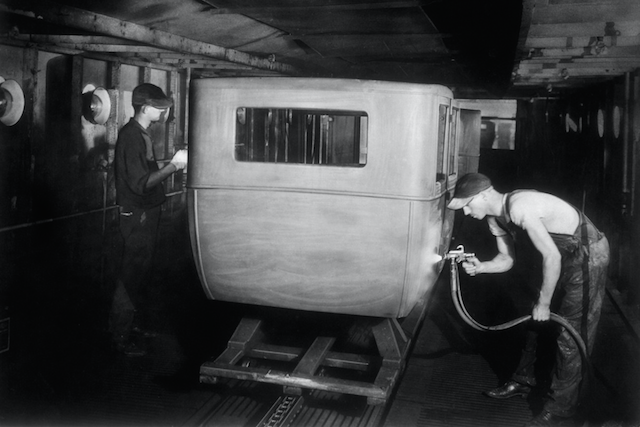
Los automóviles de finales del 1800 y principios del 1900 eran esencialmente carros motorizados, por lo que se pintaban igual que sus predecesores de transporte. Para ello se utilizó pintura al óleo aplicada a mano. La mayoría de los automóviles se pintaban de negro porque el color era duradero, barato y se secaba rápidamente.

Pero había problemas tanto con el color como con la aplicación de la pintura de los primeros automóviles. Aunque proporcionaba un acabado lujoso y brillante, pintar un automóvil llevaba semanas. Además, la pintura negra a menudo se desvanecía o amarilleaba. Como la pintura no tenía aglutinante, cuando se producía la decoloración, había que volver a pintar el auto, lo que costaba dinero.

A pesar de las famosas palabras de Henry Ford, no todos los modelos T estaban pintados de negro. De hecho, desde 1908 a 1914, el automóvil se presentó en varios colores diferentes. Pero cuando Ford implantó el proceso de fabricación en cadena, necesitaba una pintura que se secara rápidamente, de ahí el cambio al negro.

car color

Pintura Duco

Un hito importante en la evolución de la historia de la pintura para automóviles se produjo en la década de 1920, cuando la empresa DuPont desarrolló un nuevo tipo de revestimiento para automóviles. Los científicos de DuPont modificaron la nitrocelulosa, una sustancia utilizada para fabricar explosivos y películas cinematográficas, para crear una laca de baja viscosidad que pudiera rociarse en los automóviles. Esta nueva pintura, bautizada como Duco, presentaba numerosas ventajas respecto a las versiones anteriores de la pintura para automóviles.

Según el Instituto de Historia de la Ciencia, “los barnices tradicionales se astillan, agrietan, cuartean y destiñen; la laca Duco era casi invencible. Toleraba el aire, el sol, la lluvia, el barro, la humedad, el calor, el frío, el agua salada, las bacterias, la transpiración, la suciedad, los jabones y los detergentes. La mayoría de los acabados de gama baja venían en pocos colores, mientras que Duco ponía a disposición un arco iris de tonalidades”.

General Motors fue el primer fabricante en adoptar el Duco (en ese momento, GM y DuPont estaban bajo la misma dirección). La Oakland Motor Car Company de GM pintó sus coches con dos tonos diferentes de azul y una franja de competición roja o naranja, y los estrenó en el Salón del Automóvil de Nueva York de 1923. Los colores tuvieron un éxito inmediato entre el público y a mediados de la década de 1920 todas las divisiones de GM utilizaban Duco.

El color de los automóviles en los locos años 20

El auge económico de la década de 1920 supuso el aumento de la propiedad de automóviles, lo que invitó a ampliar el espectro de colores de los vehículos y a variar las tonalidades. Aunque la Gran Depresión redujo la abundancia de vehículos de colores, no impidió la evolución de la pintura de automóviles.

En la década de 1930, la pintura metálica recién creada dio a los vehículos un brillo mejorado. (Los automóviles también tenían cada vez menos aspecto de caja, y la nueva pintura ayudaba a realzar las formas curvas). La pintura metálica se hizo por primera vez utilizando escamas de pescado reales. Se necesitan 40.000 arenques para fabricar un kilo de pintura, según Consumer Reports. Las versiones menos caras de la pintura utilizaban escamas de aluminio en su lugar.

car color

Pintura de automóviles de la posguerra

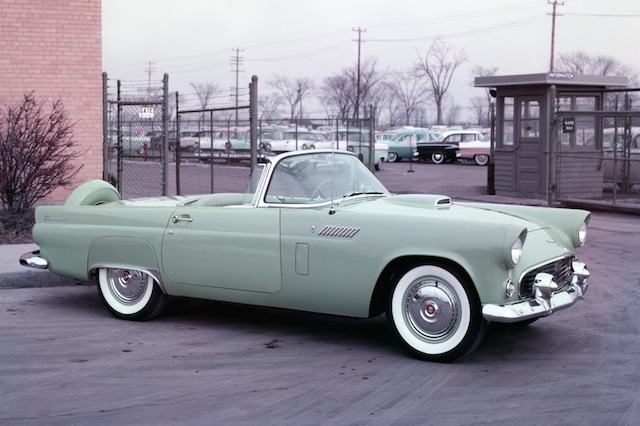
El final de la Segunda Guerra Mundial supuso un auge del consumo y del estilo, con los automóviles a la cabeza. En esta época, casi todos los grandes fabricantes de automóviles contaban con paneles de asesoramiento sobre el color que estudiaban los gustos de los consumidores y las tendencias del color en la moda y la cultura. Los coches se volvieron más llamativos con características como aletas traseras, parabrisas curvados y, por supuesto, colores brillantes. Además de las abundantes cantidades de cromo, los automóviles estaban pintados en todos los tonos del arco iris. También se hicieron populares los arreglos bicolores, en los que la carrocería y el techo de un coche se pintaban de diferentes colores.

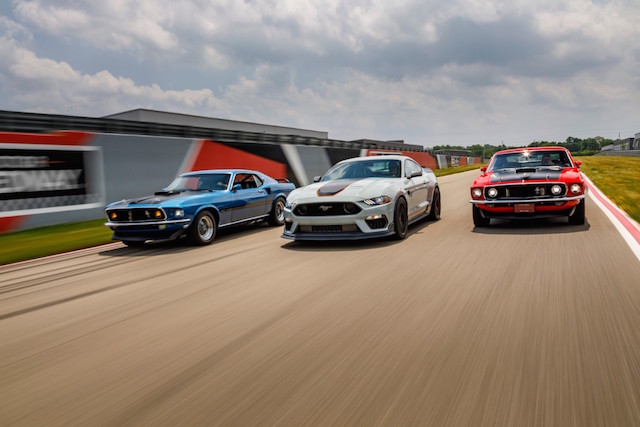
La tendencia del color continuó hasta bien entrada la década de 1960 con la aparición de los muscle cars. Estos automóviles siempre han tenido más que ver con las prestaciones que con el pragmatismo, prestándose como mejores lienzos para pinturas de colores brillantes.

La tendencia del color se detuvo rápidamente durante  la escasez de combustible de la década de 1970. Durante esta época, los propietarios de vehículos se preocuparon más por la eficiencia del combustible y el color del auto pasó a un segundo plano. Los tonos terrosos como el marrón, el tostado y el verde oscuro se hicieron populares.

¿Cuál es el color de automóvil más popular hoy en día?

El fabricante de automóviles alemán Volkswagen describió recientemente la situación actual de los colores en las carreteras de Estados Unidos: “Si uno circula por una calle estadounidense y se fija sólo en los vehículos nuevos, se le podría perdonar por pensar que está en una película en blanco y negro”.

Nadie puede discutir la verdad. Un estudio de 2019 realizado por iSeeCars que analizó 9,4 millones de vehículos que van desde los modelos de los años 2014 a 2018, encontró que el 23,9% de los vehículos eran blancos y el 23,2% eran negros. Si eres un fanático de las tonalidades coloridas, es aún más triste que los dos siguientes colores de pintura más populares, con un 15,5% y un 14,5%, sean el gris y el plateado. Esto no es una anomalía: Estos han sido los colores más comunes de los automóviles durante una década.

¿Por qué los tonos apagados son los colores más populares en los coches?

No hace mucho tiempo, desde la década del 1950 hasta la de 1970, las carreteras estadounidenses estaban llenas de automóviles de todos los colores. Entonces, ¿por qué el cambio? “El color siempre está cambiando, y nuestra percepción del color siempre está evolucionando en función de lo que vemos, de lo que observamos y de lo que vivimos”, dijo el diseñador principal de color y adornos de Volkswagen, Jung Lim “Limmy” Park. “Las preferencias de color reflejan realmente las tendencias sociales y culturales únicas e incluso la geografía [de una región]”.

Hay varias teorías sociales y culturales sobre la prevalencia de los colores más sombríos de los autos en Estados Unidos. Actualmente estamos viviendo la segunda recesión importante en una década. En tiempos de incertidumbre económica, la gente tiende a ser conservadora con su dinero. Y, aunque un color diferente en su automóvil no aumenta su costo, se sabe que la mentalidad de mantener las cosas simples y evitar cualquier cosa llamativa se ha extendido. Una tendencia similar se produjo tras la Gran Depresión hace casi un siglo.

En cuanto a las influencias culturales, hay quien sugiere que nuestras elecciones de color de los coches están definidas por nuestra obsesión por la tecnología. Apple es la empresa más valiosa del mundo y su logotipo de colores apagados es reconocido en todo el mundo. “Antes de Apple, el blanco se asociaba a cosas como los frigoríficos o los azulejos del cuarto de baño”, explica Sandy McGill, diseñador jefe de BMW DesignWorks a Motoramic.com. “Apple hizo valer el blanco”.

car color

El color adecuado para el automóvil adecuado

También ha existido siempre la creencia de que ciertos colores son adecuados para ciertos automóviles. Las camionetas son más utilitarias y no necesitan una capa de neón. Los coches deportivos de lujo, por su parte, están hechos para llamar la atención de la gente y son probablemente un espacio más aceptable para una capa de pintura amarilla brillante.

Pero los coches deportivos no han sido inmunes a la tendencia incolora. El Ford Mustang es un ejemplo perfecto. En 1967, el muscle car estaba disponible en nueve tonos de azul y dos de rosa. En la década del 1970, el marrón estaba siempre entre los tres colores más populares del Mustang, pero no se ofrece desde el año 2000. El negro, en cambio, no entró en el top 3 hasta 1994, pero se ha mantenido ahí desde entonces.

¿Cuáles serán los colores de automóviles más populares en el futuro?

Nadie puede predecir el futuro, pero sabemos que las tendencias cambian. Mientras la demanda de nuevos colores esté ahí, la oferta vendrá con ella.

Hay otra razón para tener esperanza en que las carreteras sean más vivas. Vemos gran parte de nuestras vidas a través de las imágenes nítidas y de colores brillantes de nuestros dispositivos electrónicos, por lo que no sería de extrañar que en un futuro próximo aparecieran otras tonalidades en los coches. “Todos estamos tan impactados por nuestra vida digital a través de la pandemia, y los colores que se ven principalmente están [en] su pantalla más que los objetos físicos reales”, se dijo desde Volkswagen’s Park. “El futuro se está poniendo colorido, sin duda”.

¿De qué color es su automóvil? ¿Qué colores le gustaría que volvieran? ¡Háganoslo saber en los comentarios!

Subscribe to Your AAA Newsletter

Sign up and receive updates for all of the latest articles on automotive, travel, money, lifestyle and so much more!

Driver Safety and Hearing Awareness

Sirens, horns and railroad crossing bells are just a few of the sounds we hear on the road. These everyday noises serve as alerts and warnings of what’s happening in and around our car and can affect our actions. Without them, we are left dangerously unaware and unalert. Yet, failure to pick up important sounds while driving is a reality for many drivers with hearing impairment and declining auditory abilities.

Hearing Loss and Age

Since hearing loss often happens gradually with age, you may not realize that you are not hearing the typical driving sounds as well as you used to.

Approximately 20% of Americans experience significant hearing loss, 50% of which are over the age of 75. Aging is the strongest predictor of impairment among adults, with age-related changes beginning at age 40. Since many drivers eventually face hearing loss, it’s valuable to learn more about the condition and take the necessary steps to stay safe behind the wheel.

Known as presbycusis, hearing loss due to age affects us in several ways, including a diminished ability to perceive-high frequency sounds. It is often compounded by other conditions that affect the ear such as impacted wax. When hearing in one ear is worse than the other, it is more difficult to determine the location of sounds. This can lead to driving issues such as not being able to identify the direction from which a warning sign originates and then reacting in a way that may cause a collision.

The Road to Better Hearing

Save over 40% on premium hearing aids plus receive a $200 mail-in-rebate and free charging station!

Save Now

As you age, hearing loss can be accompanied by a lessened ability to translate the sounds you do hear into meaningful information. If hearing loss is present along with any degree of confusion, memory loss or dementia, consult a medical professional for an overall health assessment.

While aging, genetic predisposition and certain medical conditions can cause hearing loss, so can noise from occupational conditions, sports events and concerts. The World Health Organization estimates that around 40% of people ages 12 to 35 could be exposed to dangerous noise levels at entertainment venues. Veterans and workers in the public safety and manufacturing sectors are especially at risk of tinnitus, a ringing or buzzing in the ears that results from exposure to loud noise, particularly over an extended period.

Tips for Safe Driving

Schedule Regular Hearing and Vision Tests

Since both hearing and vision tend to decline with age, stay current on your exams.  Schedule a hearing test at age 50 and proceed with regular exams every 3 years if results are normal. If any hearing issues are detected, have an exam every year.

Diminished auditory abilities require you to rely more on vision. Eye conditions such as glaucoma, cataracts and macular degeneration could cause difficulty with night driving, so early detection is important.

Recommendations for hearing aids and glasses may be accompanied by instructions to only drive during daylight hours and other advice designed to keep you safe.

driving hearing awareness

Stay Active and Manage Health Conditions

View your overall health as a key part of safe driving. Hearing loss may be accompanied by other age-related conditions such as neck stiffness, arthritis, and diabetes. Consider the amount of flexibility needed to look over your shoulder and parallel park on a car-lined street. Regular physical exercise in the form of walking and strength training makes it easier to manage many conditions and engage in the movements necessary for driving. If you are taking medication, check the labels and ask your doctor about side effects to avoid driving while drowsy or dizzy.

Understand and Adapt to Physical Changes

When physical changes make it more difficult to drive for any reason, adjusting your driving patterns and utilizing driver assistance technologies can help to make you more comfortable behind the wheel. Shorter trips are a good option if you experience leg cramps on long excursions. If you are in the market for a new car, consider a model with a larger dashboard display and safety features such as lane assist and collision warning systems that can help prevent accidents. Some cars also have haptic alerts such as a vibrating steering wheel to indicate when the car is drifting into another lane.

Avoid Distractions 

Everyone should avoid distractions such as using the phone while driving, but for those with hearing loss, this is even more critical. Activities that take your attention away from the road should be avoided, so take steps that allow you to drive with focus. For instance, enter your destination into the GPS system before you begin driving.  Especially consider the impact of other noises on your ability to hear. Conversations, music and road noise will distract you from hearing essential sounds.

Drive Under Good Conditions

Set yourself up for a safe trip by driving only when you feel well and alert. If you slept poorly or the road and weather conditions are not ideal, wait until the situation improves before getting behind the wheel. Even the time of day can affect how comfortable you may be while driving. For instance, rush hour may be a time to avoid due to busy intersections and high traffic.

Take a Driver Safety Course or Update Your Skills

The ability to identify and react to a potentially dangerous situation can help prevent possible collisions due to other drivers, bad weather and other hazards. A defensive driving course can help you identify these risks and teach you how to reduce the chance of an accident. Simple steps such as maintaining a good distance from the car in front of yours, braking at the appropriate time and paying extra attention at intersections help keep everyone safe. It’s always a good time to refresh your driving skills.

Rest assured that it’s possible to be a good driver even if you are experiencing hearing loss. An audiologist can help you to identify the best hearing solution for your impairment and provide customized advice.

Learn more about hearing loss solutions.

Subscribe to Your AAA Newsletter

Sign up and receive updates for all of the latest articles on automotive, travel, money, lifestyle and so much more!

Planning for Baby: Tips for New Parents

You’re expecting your first baby – congratulations! Perhaps you’re busy decorating the nursery or registering for your baby shower, as these are all fun parts of preparing to bring home a new addition to the family. But there are other important things to think about when expecting, including financial planning, life insurance and readying your cars for a little one. Consider these tips for new parents as you take on this major step in life.

Money Tips for New Parents

When it comes to financially planning for a family, Ellen Morvant, CFP®, APMA®, Ameriprise Financial Advisor with Waterfront Wealth Management, recommends that expectant parents speak with a CPA about potential tax breaks and review their employer benefits options.

“There have been some recent changes to the Child and Dependent Care Tax Credit that make it more beneficial to many families. New parents should also review their employee benefits options. Dependent care Flexible Spending Accounts or FSAs are also a great way to pay for daycare with pre-tax dollars,” Moryant said.

In addition, Moryant advocates for building an emergency fund, which she believes is essential to provide a cushion in case of the unexpected. “With a new addition to the household, the likelihood of unexpected expenses increases and the monthly fixed expenses are almost certain to increase,” she said.

Moryant recommends beefing up the typically recommended three-month reserve, especially for single income households. “If one parent is going to stay at home with the child, set a target of six months expenses for your cash reserve. This larger amount provides extra cushion in the event that the sole earner in the household experiences any disruption in their employment.”

AAA member Briana Kulik and her husband are parents to two daughters, ages five and two. She went through her own process of financially planning for her family as her children were born.

“When starting to grow our family, I knew that I wanted to lower my hours at work to part time to be able to spend time with the kids. This meant our income would be significantly altered. My husband and I figured out a monthly budget with all our expenses and what income we needed to continue to pay our bills and still live a similar lifestyle,” said Kulik.

Kulik and her husband started by adding up all the newly added expenses like childcare costs, food and clothing, and limited their spending on non-necessities like going out to dinner and shopping trips. They also refinanced their student loans. “It was difficult to cut back,” she said, “but we knew it was important for our family.”

Life Insurance

Life insurance is the kind of thing that you don’t want to think about, but it’s one of the most important things a new parent should know about. If you don’t already have a policy, your growing family may be the extra push needed to invest in one. Think about it this way: If you were no longer here, would your family be financially secure, and could your child continue to be provided for in the way you would want them to be?

Tim Boyle, life and annuity manager at AAA Northeast, says that new parents should look into life insurance as soon as possible.

“Life insurance is crucial for a new family. A life insurance policy can help fund your family’s education and future expenses. It can help preserve the future you envisioned for your children,” Boyle said. “The younger someone looks into life insurance, the better. By getting a policy when you are young and healthy, you are able to lock in the lower price for your entire life. Life insurance is flexible and can be updated as different life events like a marriage or children occur.”

AAA Northeast has several life insurance products that can benefit new parents. The first is a term policy which will protect the insured for a certain number of years with a rate that will not change during that time. The second is an indexed universal policy, which Boyle said is the best policy for combining life insurance, retirement planning and saving for college.

Learn more about getting life insurance through AAA.

tips for new parents

Car Safety Tips for New Parents

As new parents plan for their baby’s arrival, safety is sure to be top of mind, especially in your vehicle. Soon you will be carrying around some precious cargo!

Prepping one’s car and installing car seats can be confusing. Luckily there are AAA professionals like Adelle Zocher, Public Affairs Specialist at AAA Northeast, who is also a certified Car Passenger Safety technician, that can help.

Zocher said over 50% of car seats are installed wrong. That’s why it’s so important to consult with a technician.

She said the biggest mistake new parents make when it comes to car seat installation has to do with tightness. If your car has a Lower Anchors and Tethers for Children or LATCH system (which all vehicles made after 2002 have), it’s a matter of pushing and pulling in the right direction.

“I always tell people, you’re not alone if you’re doing something wrong; there’s nothing wrong with you; you just need someone to guide you and show you,” Zocher said.

“The technician educates the family on proper usage every time,” she goes on to say. “It’s not just about getting the car seat installed…it’s getting the parent involved in the process. So, it’s not an installation service. It’s an educational experience.”

Kulik said when it came to picking out and installing car seats for her children, safety was the top priority. “Thankfully, we were able to find safety information, recalls, crash test results, etc. on each individual car seat online which made choosing one a little bit easier. We installed the car seat based on the manufacturer’s instructions using the LATCH system in the car, which we were told was the safest,” she went on to say.

AAA Northeast has annual car seat clinics, but Zocher (who works out of the Hamden, Conn., office, the only AAA office with a fitting station), is also available for help by appointment.

Following these steps from financial experts, a car seat installation professional and a parent who has been in your shoes is a sure-fire way to ensure that when your little one arrives, you’ll not only be ecstatic, but also left feeling assured and prepared.

Subscribe to Your AAA Newsletter

Sign up and receive updates for all of the latest articles on automotive, travel, money, lifestyle and so much more!

What to Do When You Have a Broken Car Window

A broken car window may not seem as serious as a damaged windshield. It may not even keep you off the road. But any broken car glass leaves your vehicle susceptible – to both unrelenting Mother Nature and unscrupulous thieves. Therefore, any damaged auto glass should be repaired quickly and properly.

To help guide you through the process, here are all the steps you need to take when you have a broken car window.

Call the Police and Your Insurance Company

There are a number of ways your car window could break, including from road debris, a crash or inclement weather (read: hail). If, however, your car window was broken during the act of a crime, your first call needs to be to the police. Tell the authorities you’d like to file a police report. They may send an officer to you or simply request to describe the incident and damage over the phone.

After the police have been contacted, reach out to your insurance carrier and inform them of what happened as well. It’s crucial that you don’t touch anything – not the vehicle or anything inside – until you’ve spoken to both the police and your insurance company. It’s also good idea to take photos of your car so you have a visual record of the damage.

Clean Up Any Glass and Debris

Once the police and insurance company have the information they need, it’s safe to begin cleaning up the damage. In this case, that means removing the broken glass. Any large fragment can be picked up, carefully, by hand. For the smaller pieces, you’ll need some assistance. A vacuum will be your best tool of choice, whether of the household variety or, ideally, a shop vacuum. Clear up as much of the shattered glass as possible. Be sure to check your heat, AC or defroster, as broken glass can fall into the HVAC system and cause injury if not checked and cleared properly.

A few reminders: Always make sure to keep kids and pets away from the area until the glass is cleared, and remember to empty the vacuum of the broken glass before storing it.

Cover Your Window

With the glass removed, you now have to deal with what remains of your car window. Regardless of the severity and scope of the damage – whether it’s a crack or a completely shattered window – you should always apply a temporary cover. Open access to your vehicle could tempt potential thieves and provide an entrance for small animals, while also leaving the interior of the car susceptible to damage from snow and rain.

You may see some people use cardboard to cover a broken window. But cardboard is not waterproof, and thus, not a great option. Instead, grab some packing or duct tape as well as a garbage bag or piece of heavy plastic tarp. Cut the bag or tarp to a size that covers the entirety of the damage and use and tape it down to form a waterproof seal. If you want to make sure your car’s paint isn’t affected, pick up vehicle-safe tape at your local auto parts store.

Get Your Car Window Replaced

Your temporary window cover won’t last forever – nor should it have the chance. You should get your broken car window replaced with a new one as soon as you can. Call a trusted and certified auto glass repairer, such as Safelite AutoGlass® to install a new window. A technician will remove the door panel to access any of the window’s remaining glass, clean up any leftover debris and glass from the vehicle, insert a brand new side window, test to ensure the window functions properly, replace the door panel and get you on your way.

The entire car window replacement process can take as little as one hour and leave your vehicle looking and functioning as good as new.

Get more car safety tips. 

Subscribe to Your AAA Newsletter

Sign up and receive updates for all of the latest articles on automotive, travel, money, lifestyle and so much more!

Let’s Work Toward the Great Retention

Many organizations are worried about retaining employees as they work to influence a return to the office post Labor Day.

It’s a real problem, no doubt about that.

Fueling this concern are myriad consultant surveys inundating our Outlook Inboxes every day, giving shape and form to this post-pandemic dilemma, which folks are calling The Great Resignation.

About a third of the workforce never wants to return to an office setting, according to a survey of 30,000 Americans by The Working From Home Research Project. And around 41% of employees are considering leaving their current job, according to another recent report by Microsoft.

The “head-scratcher” moment came in reading a report from Monster.com, which reported 95% of workers are considering changing jobs. Something about that number seems … inflated.

So let’s step back for a moment, try to see past the hype and embrace the silver lining.

This inflection point can be an opportunity for organizations to embrace innovation and flexibility. It’s a chance to show that your corporate culture isn’t dependent on requiring people to spend 40 hours in a cubicle.

If the pandemic had any workplace silver lining, it’s this: Organizations proved they can be just as productive with a distributed workforce as they can when all of the conference rooms are booked.

For many employees, the newfound flexibility showed that working and spending time with family, friends and being more engaged in their community aren’t mutually exclusive. You truly can balance both while working from home.

So let’s embrace those lessons.

Fact: employees most often report they are leaving their manager, not their company. Therefore it’s on all of us as people leaders and HR professionals to change the conversation and tweak the dynamic by being more engaged with the workforce we have (and not at the expense of the talent we are told we need to find).

The exit interview is an HR mainstay, we all do them. But how many of us conduct stay interviews? How many of us are as focused on retention as attraction right now?

After all, the more talent we keep, the less talent we need to find.

Ron Arigo is senior vice president and head of human resources at AAA Northeast.

Subscribe to Your AAA Newsletter

Sign up and receive updates for all of the latest articles on automotive, travel, money, lifestyle and so much more!

¿Debe Dejar los Limpiaparabrisas Levantados en la Nieve?

Su meteorólogo favorito anuncia una mezcla invernal. La tormenta se desarrollará mientras usted está en el trabajo, provocando un miserable viaje nocturno. Cuando llega al estacionamiento de la oficina, se da cuenta de que unos cuantos de sus compañeros de trabajo han subido los limpiaparabrisas.

Es entonces cuando comienza su dilema.

¿Sigue usted el ejemplo? Si deja los limpiaparabrisas levantados, al menos sabe que no saldrá del trabajo para encontrarlos pegados al parabrisas. Pero algunos sostienen que aún así tendrá que quitar el hielo de los limpiaparabrisas.

Nuestro residente experto en automotores, el doctor de automóviles de la AAA, John Paul, no lo hace en su propio coche.

” El hecho de levantar los limpiaparabrisas y alejarlos del parabrisas facilita la limpieza del mismo si nieva”, dijo. “También elimina la posibilidad de que los limpiaparabrisas se congelen en el parabrisas”.

Pero también significa que está poniendo tensión en el resorte que sostiene los brazos del limpiaparabrisas contra el parabrisas, advierte.

Por otro lado, Robert Sinclair Jr., director de relaciones con los medios de comunicación de la AAA Northeast, cree que dejar los limpiaparabrisas puestos es una opción segura.

“No veo nada malo en ello, aunque todavía hay que limpiar la nieve del cristal”, dijo Sinclair.

En caso de que los limpiaparabrisas se queden encendidos accidentalmente, dejarlos arriba también elimina la posibilidad de que se queme el motor del limpiaparabrisas cuando arranca el coche y las escobillas intentan abrirse paso a través de la abundante nieve.

Sinclair ofrece un método alternativo para evitar que los limpiaparabrisas se congelen en el parabrisas.

“Se puede poner una manta sobre el parabrisas y poner peso con algunos ladrillos antes de una tormenta”, dijo. “A la mañana siguiente, quita la manta y el parabrisas está limpio”.

Tanto si decides levantar los limpiaparabrisas como dejarlos puestos, debes asegurarte de que funcionan correctamente antes de salir a la carretera.

  • Las escobillas deben limpiar completamente el cristal con cada pasada.
  • Sustituya cualquier escobilla que deje rayas o que se salte manchas.
  • Considere la posibilidad de instalar escobillas limpiaparabrisas para todo tipo de clima que tengan un marco de barra de plástico de una sola pieza o escobillas de invierno que envuelvan el marco metálico en una funda de goma. Ambos diseños ayudan a evitar la acumulación de nieve y hielo que puede interferir con el contacto de la escobilla con el cristal.
  • Llene el depósito de líquido limpiaparabrisas con una solución de limpieza de invierno que tenga componentes anticongelantes. Algunas soluciones de lavado de cristales están clasificadas a sólo 20 grados, pero en tiempo frío esta solución puede congelarse y dañar el sistema de lavado. Busque un líquido lavador que proteja bien por debajo de las temperaturas de congelación.

¿Qué hace usted con sus limpiaparabrisas cuando se entera de que se acerca una nevada? ¿Los deja adheridos o planos contra el parabrisas? Díganoslo en los comentarios.

No importa lo que haga con sus limpiaparabrisas, los miembros de AAA pueden ahorrar en repuestos y accesorios para automóviles en NAPA.

Subscribe to Your AAA Newsletter

Sign up and receive updates for all of the latest articles on automotive, travel, money, lifestyle and so much more!

Treehouse Hotels in New England: Hang Out in the Foliage

The absolute No. 1 item on my travel bucket list is to stay in one of the treehouse hotels in New England. The appeal lies somewhere between how being high up in the trees stirs dormant states of childlike wonder and how it induces a sensation of calmness and feeling of being one with nature. Either way, I can’t wait to do it.

Imagine viewing the splendor from within the trees, getting up-close and personal with the unique calligraphy of every distinctly painted leaf. It’s a spectacular sight to see.

Sold? Check out some bucket list-worthy treehouse hotels in New England to climb into this fall.

The Treehouse at Winvian Farm
Morris, Conn.

Winvian Farm, a luxury resort set in the Litchfield Hills, is home to several creatively themed, luxurious cabins. Perhaps the most enticing of the bunch is the Treehouse. But this isn’t the crooked treehouse you nailed together in your backyard as a kid; this two-floor suite, nestled into the trees 35 feet above the ground, has a king-size bed, fireplace, Jacuzzi tub and walk-out deck. Guests also have access to the resort’s renowned dining and spa facilities and the hotel’s outdoor activities including lawn games, fishing, canoeing and horseback riding. And that’s not even counting the full bar and sensational treetop views.

The Aviary at Wheatleigh
Lenox, Mass.

A stay in this remodeled former aviary in the Berkshires will leave you feeling free from the cage of the 9-to-5 daily grind. Guests enter the downstairs of the multilevel suite to find an elegantly decorated living room with a private terrace and surrounded by windows that bring in a ton of natural light. Guests can then climb a glass-enclosed wooden staircase to the second level, which features a luxury bedroom suspended among the trees with an attached limestone en-suite, complete with soaking tub and walk-in shower.

treehouse hotels
The tree spa at Hidden Pond. (Photo:Hidden Pond)

The Tree Spa at Hidden Pond
Kennebunkport, Maine

At Hidden Pond, you can’t actually sleep in a tree – although you could fall into a blissful slumber while lying on the massage table. But while it’s not exactly a treehouse hotel in New England, per se, the resort is comprised of tiny cottages and bungalows set in the wooded wilderness, and those who choose to venture up into the trees for a spa treatment will find the ultimate relaxation experience. The spa menu includes massages, facials and body treatments, serviced in three separate treehouse spa rooms, all connected by treetop bridges. Imagine cozying up in a warm robe after a massage and gazing out at the reds, oranges and yellows of the foliage. It’s autumn immersion at its best. The resort is loaded with other amenities, too. A few standouts include the Back Porch Bar, two pools, nightly bonfires and a shuttle to Goose Rocks Beach on the southern coast of Maine. Its memorable restaurant Earth also prides itself on delivering “farm-to-fork” freshness in every dish it makes.

The Treehouse at Moose Meadow Lodge
Waterbury, Vt.

The rustic Treehouse at Moose Meadow Lodge is a nature lover’s dream. The simple yet magnificent backcountry palace features exposed timber, a custom sink made from stones from the property, an incinerating toilet and backwoods décor throughout. Built for the rugged adventurer, the expansive treehouse features two levels, the first with a wraparound porch and the second with a queen-size loft bedroom and a walk-out deck that allows guests to step out into the changing leaves while overlooking the lake just yards away. Gaze at the beautiful woods as you ascend the circular staircase that wraps around the maple tree on which the treehouse is built. The handcrafted treehouse is built from cedar, pine, maple and hemlock and has 31 windows that give you natural light and beauty almost everywhere you look.

Harmony Hill Lodging and Retreat Center
East Meredith, N.Y.

This one is a bonus, since it too is not truly a treehouse hotel in New England, but rather a glorious getaway not too far away in upstate New York. Try your hand at glamping – glamorous camping – by booking a yurt treehouse at this retreat in Delaware County, about 90 minutes outside Albany. The yurt is set just off the ground, close enough for those scared of heights, yet far enough into the trees to immerse glampers in fall’s fantastic colors. The tents are waterproof and feature fully functional kitchens and bathrooms. Guests of the resort can rejuvenate with reiki treatments, guided meditation and spiritual mentoring.

Would you ever sleep in a treehouse hotel? Let us know in the comments below!

Plan and book your next getaway with AAA

Find more fall adventures in the Northeast at AAA.com/FallFest

Subscribe to Your AAA Newsletter

Sign up and receive updates for all of the latest articles on automotive, travel, money, lifestyle and so much more!

AAA Photo Session: The Ocean

Thank You for Participating!

This Photo Session focused on one of the most inspiring subjects for amateur and professional photographers alike. Flip through the slideshow below to see all the ocean photos we received, and don’t forget to check our social media channels, where we will be sharing some of our favorites. Select photos may also be featured in an upcoming issue of Your AAA magazine.

Ocean Photography Tips

From the motion of the waves to glistening sunset reflections, the ocean overflows with magical photography opportunities. Capture them all with these tips.

Lens Choice

If I could only bring one lens with me to photograph the ocean, I would choose a wide-angle zoom lens. My favorite range is 17-28mm. Using a wide angle will allow you to capture the wide expanse of the ocean and the sky above it.

Highs and Lows

Varying your heights when photographing the ocean will yield wildly different results.

In this first shot, I have my camera positioned low – roughly 2 feet above the water. This image shows the motion and the power of the ocean.

ocean
(Photo: Beth Mancuso)

Word of caution: If you are using a tripod in or near the water, be very careful with where you place it. The tide is always changing. I always make sure I am holding on to either my camera strap or the tripod itself.

For this photo, I got high by taking a shot from a pier. This portrays the grandness of the ocean. The tiny people help show the scale.

ocean
(Photo: Beth Mancuso)

Ebbs and Flows

The motion of the waves is what makes the ocean one of my absolute favorite places to play with shutter speed. You can use a fast shutter speed to freeze the motion of the ocean. In the image below, I zoomed in on a wave just as it was breaking. My settings were f/9, 1/320 sec, ISO 100. To freeze motion, I recommend a shutter speed of 1/300th of a second and above.

ocean
(Photo: Beth Mancuso)

To show motion, you will need a slower shutter speed. In the photo below, my settings were f/22, ⅛ sec, ISO 50. I recommend using a shutter speed of ⅛ of a second or slower to show the motion of the waves. With a shutter speed this slow you will need a tripod. If you are new to photography, I recommend putting your camera into shutter priority mode and selecting your desired shutter speed. Your camera will then pick the other settings based on the available light.

ocean
(Photo: Beth Mancuso)

Time It Right

The best time to photograph oceans is during the golden hours of the day. That means you will want to hit sunrise and sunset.

Check out past AAA Photo Sessions and stay tuned for the next one, coming soon.

Beth Mancuso is a professional landscape and travel photographer.

Subscribe to Your AAA Newsletter

Sign up and receive updates for all of the latest articles on automotive, travel, money, lifestyle and so much more!