Tips for Giving Money to Grandkids

All grandparents want the best for their grandkids and a big part of that is ensuring they’re set up financially. But with various laws, regulations and taxes to consider, it’s not always as simple as writing a check.

Fortunately, there are numerous methods and tools for grandparents to give money to their grandkids. Learn about some of the most popular and discover which one is right for you.

Open a Savings Account 

An easy and effective way to put money aside for your grandchild is funding a savings account for them. Putting money in an account when they’re still young allows the funds to grow for decades.

This is also a good way to teach your grandchild about saving, allowing them to watch the savings grow over the years.

Start a 529 plan

A 529 plan is a popular tool to assist in paying for a grandchild’s higher education. These savings accounts are opened in the child’s name but anyone can contribute to them.

The earnings in a 529 plan accumulate tax-free and no taxes are applied when the funds are withdrawn so long as the money is used for school expenses, such as tuition, fees, books and supplies. Additionally, a state tax credit or deduction is usually given to any individual who contributes to the plan.

Contribute to Their Retirement Plan

If your grandchild is older and has begun working, consider helping them out by padding their retirement account. Any person who’s earned income – even if it’s just a summer job – can open an individual retirement account. (If your grandchild is a minor, you’ll need to open a custodial IRA for them.)

You may also be interested in a Roth IRA. Funds are taxed as they are contributed to a Roth IRA, but once there, the money grows tax-free. Funding such an account when your grandchild is just entering the workforce could be an especially good idea. At this stage in their career, they’re likely not being taxed heavily and can allow the funds to grow for decades.

grandma

Utilize a UGMA/UTMA Account

The Uniform Gifts to Minors Act and Uniform Transfer to Minors Act allow individuals to give or transfer assets to underage beneficiaries. These are custodial accounts in which the assets are held in the minor’s name. This eliminates the cost and time that comes with establishing a traditional trust fund.

There are pros and cons that come with the UGMA/UTMA. Because these accounts are in the grandchild’s name, any contributions are irrevocable. Additionally, because the account is treated as the grandchild’s asset, it could impact their federal financial aid.

On the other hand, any earnings the account accumulates are tax-free up to a certain amount and while donors don’t receive a tax deduction, up to $15,000 can be given free of federal gift taxes per individual per year. Furthermore, unlike a 529 plan, there is no penalty if the funds are not used for schooling. Once handed over to the grandchild, the account’s assets can be used for anything.

Write Them Into Your Will

Although not the cheeriest task, writing a will is an effective tool for giving money to grandkids and the only way to ensure your assets go to the individuals you want to receive them. Without one, you’ll have no control over who gets what. The advantage of a will is that it won’t affect your retirement savings the way other accounts may. If you’ve put aside money for your grandchildren through other means and an unexpected cost comes up, you may not be able to get that money back without a penalty or at all.

A will also allows you to provide instructions on how the assets should be distributed. For example, you can state that your grandchild not receive an inheritance until they turn 18.

Introduce Them to a Financial Planner

If you don’t have the means to pass down money to your grandchildren – or even if you do – the best gift may be knowledge. They can learn a substantial amount in just a few hours of speaking with a professional financial advisor. Now your grandchildren know the best ways to save money themselves. This can give them a financial leg-up not just in the short-term, but the rest of their lives.

Subscribe to Your AAA Newsletter

Sign up and receive updates for all of the latest articles on automotive, travel, money, lifestyle and so much more!

AAA Car Battery Experts Answer All Your Questions

Car batteries rarely get much thought … until they die and your car won’t start. That might be why roughly 25% of roadside assistance calls AAA Northeast receives are for battery issues. But most of these issues can be avoided by being proactive about car battery maintenance. To learn how to do this, we asked our AAA car battery experts the important questions. Here are their answers.

How do you properly maintain your car battery?

Car batteries require regular maintenance to provide the longest life. This includes driving the vehicle several times per week in order to maintain a full state of charge. These should be longer trips with steady cruise speeds. “Short local trips are not optimal for longest battery life,” said Jason Carrara, AAA Northeast Technical Program Manager. “They don’t provide the complete recharging a battery needs after giving energy to start your car.”

What about battery terminals?

Battery terminals should be periodically removed and cleaned. This will ensure proper performance every time you turn the key or push the button to start your car. Electricity cannot flow properly, and your engine will not start, if terminals are corroded.

To clean battery terminals, use a memory saving device and the proper personal protective equipment and disconnect the car battery terminals from the battery posts with baking soda and water. (This valuable service can also be performed by AAA Approved Auto Repair facilities, your regular repair/maintenance shop, or AAA Mobile Battery Service.)

What happens if I accidentally drain my battery?

If you drain the battery, it needs to be recharged on a battery charger likely for several hours, sometimes even a whole day. Simply running the car for 30-60 minutes – as was a common remedy years ago – or going for a ride will usually not completely recover your battery and will shorten the life and performance ability of your battery.

“It is the cycling of a battery that causes a shortened life,” said AAA’s Car Doctor John Paul said. “If you let your vehicle battery die, such as by leaving the lights on, even after a full recharge the battery may not recover to 100 percent of its original capability.” When you get out of your vehicle lock the doors and make sure the lights are off.

How long do car batteries last?

The average battery life in the Northeast is between three to five years. As they age, batteries should be checked each year.

How do you test a car battery?

You can test the voltage with a tool called a voltmeter (buy here) to get an idea about the condition of your battery, although a voltmeter won’t give you the full picture of the overall battery condition.

You can also visit the nearest AAA Approved Auto Repair Facility for battery testing. It’s a simple check and you can even ask to have it done when you’re getting an oil change or other repair work.

How do you jump start a car battery?

If your battery dies and you need a jump start, you can always request roadside assistance. But should you need to do it yourself, here’s how:

  1. Make sure that other vehicles are at a safe distance and that you’re in a spot that’s out of danger’s way.
  2. Move both cars to face each other head-on about 18 inches apart (or as close to this as possible). Set the parking brakes, turn off the ignition and remove the keys.
  3. Open the hoods of both cars and find the battery terminals. Usually, the terminals are red or black and you will see a + (red) and – (black) sign on the top.
  4.  Tightly attach the red, positive cable clamp to the red, positive terminal of the dead battery. Next, attach the opposite end of the red, positive cable to the working vehicle’s positive battery terminal.
  5. Attach the black, negative clamp to the working car’s black, negative battery terminal but do not attach the negative clamp to the negative battery terminal of the dead battery. Instead, attach it to an unpainted metal part of the car like a bolt or the engine block. Dead batteries can produce hydrogen gas and if there’s a spark you want it away from the battery.
  6. Start the engine of the working car and let it run a minute or two before trying to start the dead car. If the car won’t turn over at first, wait a few more minutes and give it another try.
  7. Once the dead car is working again, remove the black, negative clamps and do not let them touch while the other cables are attached to the car. Then remove the red, positive clamps. Do not let the red and black cables touch. Close the hoods and stow your jumper cables. Take the car to a local repair shop and to have the battery fully charged and tested. 

AAA Car Battery Services

AAA is your one-stop-shop for all your car battery needs. Members can use roadside assistance to have their battery tested. A technician will come to you, wherever you are, and test your battery and charging system with the latest equipment. If you need a replacement, the technician can install a new battery on the spot. All AAA car batteries come with a 6-year limited warranty and members receive a $25 discount.

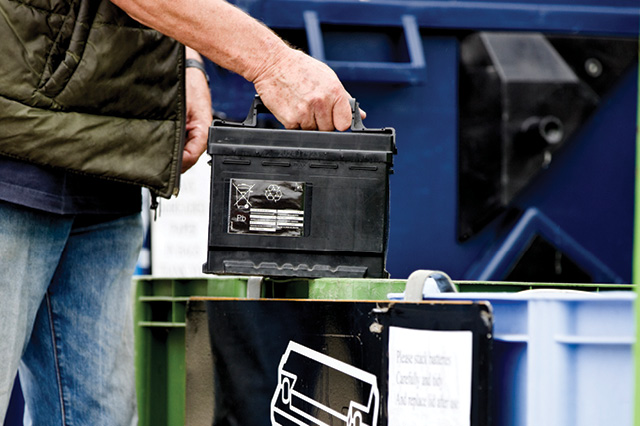
AAA recycles every old battery that is replaced so you can be ensured that yours is disposed of in an environmentally friendly way.

Learn more about AAA’s car battery service or schedule a battery testing at AAA.com/BatteryService.

AAA members can save on automotive replacement parts and accessories at NAPA.

If you have a question about your battery or any car-care issue, ask our Car Doctor John Paul here.

Subscribe to Your AAA Newsletter

Sign up and receive updates for all of the latest articles on automotive, travel, money, lifestyle and so much more!

How COVID-19 Anxiety Can Affect Your Driving

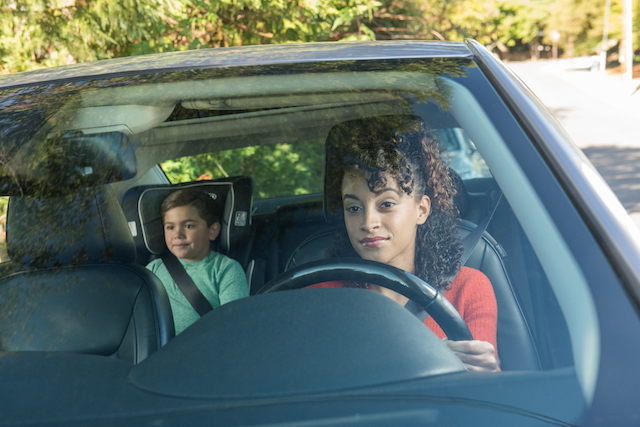
The COVID-19 pandemic has caused a great deal of stress and anxiety in many people’s lives. But when we think about anxiety, it’s almost always in the context of how it affects the major aspects of an individual’s life – their mood, behavior, relationships, career. Very rarely do we consider how anxiety can disturb the routine elements of everyday life. Take, for example, driving.

It’s common for driving to cause anxiety even under the best of circumstances. COVID-19 has only made it more rampant, and in turn, made the roadways a little less safe.

According to Kristy Cuthbert, a Graduate Student Clinician with Boston University’s Center for Anxiety and Related Disorders, the effects of the pandemic manifest themselves in two major ways. Most notably, drivers may be mentally distracted by the stresses of the pandemic that they loose focus on the road, a condition known as rumination. “If you’re sitting in your car and you’re worried about how things are going to go when you get home, if your family is going to be okay, are you bringing COVID home to your family, you find yourself off on a train of thought and it’s easy to get distracted from the drive home,” Cuthbert says.

Second is the effect the pandemic has had on workers’ commutes. Many who normally take public transportation have chosen to drive, while people who had been forced to work from home likely haven’t been behind the wheel very much over the past 10 months. Those in either scenario are now driving everyday when they’re simply not accustomed to it. “When you’re first getting behind the wheel after a long time, there is a lot of anxiety involved with that.”

AAA Northeast’s Public Affairs Specialist, Joanna Frageorgia, hosts a discussion with Kristy Cuthbert, a Graduate Student Clinician with Boston University’s Center for Anxiety and Related Disorders. Cuthbert shares about how COVID-19 related anxiety can impact drivers.

Unfortunately, there is no quick fix for anxiety. But there are some tips and tricks to help alleviate your stress when driving Cuthbert recommends a practice known as “grounding.” This technique involves engaging your senses in order to distract you from unwanted thoughts. Since the main senses you use during driving are sight, hearing and touch, Cuthbert suggests making a mental note of things you can hear (the radio), see (the red of the stop sign), and touch (the warmth of the steering wheel). “This is a way of grounding you in the present by using your senses that brings you back to the task at hand.”

More than anything, if you’re experiencing anxiety in the car or out of it, it’s important to know that you’re not alone. “Everyone is experiencing increased stress and anxiety…Hopefully that gives a sense of community and maybe it allows a little bit of that self-judgment to fall away,” Cuthbert says. “You’re not alone in this. That’s really the key takeaway.”

To learn about Cuthbert’s work or to seek assistance go to bu.edu/card. You can discover more about AAA’s traffic safety programs and resources at AAA.com/Community.

Subscribe to Your AAA Newsletter

Sign up and receive updates for all of the latest articles on automotive, travel, money, lifestyle and so much more!

Charlie Wiggins and the Gold and Glory Sweepstakes

The Indianapolis Speedway is the mecca of professional race car driving. But when Charlie Wiggins and other African-American drivers were barred from competing at the vaunted raceway, they took matters into their own hands.

Wiggins was born in Evansville, Ind., in 1897. He spent much of his childhood shining shoes outside an automobile repair shop. He eventually convinced the owner to take him on as an apprentice. Wiggins quickly became an expert mechanic. In 1922, he moved to Indianapolis, opened his own shop and began building a race car out of junkyard parts. Dubbed “the Wiggins Special,” it was his dream to drive the car in racing’s greatest event: the Indianapolis 500. Yet Wiggins was denied entry based solely on the color of his skin.

Undeterred, Wiggins and several other African-American drivers formed their own racing league, the Colored Speedway Association, which held competitions across the Midwest. Wiggins was outstanding in the new league. His exceptional driving ability coupled with the engineering knowledge to build top-notch cars propelled him to many victories and earned him the nickname “the Negro Speed King.”

The highlight of the Colored Speedway Association circuit was the annual Gold and Glory Sweepstakes, a 100-mile race on a 1-mile dirt track at the Indiana State Fairgrounds. Wiggins didn’t compete in the first event in 1924, which, according to the Historic Vehicle Association, drew a crowd of 12,000 and was the largest sporting event held for African Americans up to that point. However, over the next decade, Wiggins would win three sweepstakes championships.

Wiggins gained prominence across the racing world – and across racial lines. In 1934, well-known Indycar pilot Bill Cummings hired Wiggins to tune his car for the race. According to Road & Truck, Wiggins posed as a janitor in order to surreptitiously bypass Jim Crow laws. It worked and thanks to Wiggins’ skills, Cummings won the Indianapolis 500 and set a track record.

Two years later, Wiggins suffered a horrific accident in the Gold and Glory Sweepstakes, losing his right leg in a 13-car wreck. Afterward, he made himself a wooden leg and spent the next four decades building and repairing cars, and training mechanics. One of his proteges, Sumner “Red” Oliver, became the first official African-American mechanic in Indy 500 history as a member of the 1973 Patrick Racing Team. Unfortunately, Wiggins passed away in 1979, 12 years before Willy T. Ribbs became the first black driver to qualify for the Indy 500.

For more information on the Colored Speedway Association, pick up “For Gold & Glory” by Todd Gould, the definitive book on the African-American racing car circuit.

Subscribe to Your AAA Newsletter

Sign up and receive updates for all of the latest articles on automotive, travel, money, lifestyle and so much more!

Test Drive: Turning It up to ‘11’

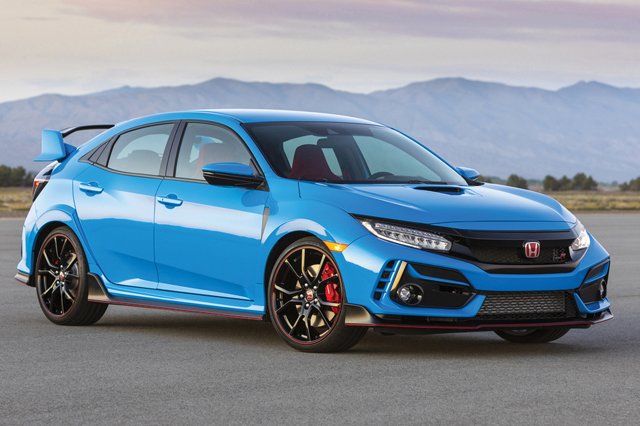
If you’re going to drive a small high-performance car, outlandish spoilers and bulbous bodywork just go with the territory. Such is the case with the Honda Civic Type R.

This top-of-the-line variant of the familiar Civic hatchback has what may be the biggest, most convoluted rear wing ever put on a production car. Which strikes me as somehow fitting, as with a 306-horsepower, 2.0-liter turbocharged four-cylinder motor under the hood, this baby can really fly.

Acceleration is abundant in any of the six-speed manual transmission’s gears (sorry, not sorry: no automatic is offered), and faster speeds arrive almost without effort. Steering is precise, and the powerful red Brembo disc brakes produce “right now” stopping power.

One other thing you may expect from a performance-oriented model is rough ride quality – and you’ll get it in Sport mode. Flip the console-mounted switch to Comfort, however, and the Type R becomes a livable daily driver. Handling is always above reproach.

Test Drive: Toyota GR Supra

In this life, things are not always what they seem. Sometimes, like in the case of the all-new Toyota GR Supra, that’s not necessarily a bad thing.

You see, this fifth-generation of Toyota’s super coupe is actually a Japanese re-engineered version of BMW’s latest Z4 convertible. That means lots of German hardware, including its gutsy 382-horsepower, turbocharged 3.0-liter engine (a new base model for 2021 comes with a 255-horsepower turbo 2.0-liter four cylinder).

One downside to this technology transfer is the slightly confounding iDrive infotainment system that uses a large console-mounted knob to control everything from navigation to the radio station.

This car is both uniquely handsome and deceptively quick. The top model’s adaptive suspension delivers a smooth ride that contributes to this effect, as does the spot-on steering.

Add a high-quality interior and the latest tech features and you have a very modern muscle car.

Looking for a new ride? Check out more car reviews at AAA.com/TestDrive.

Subscribe to Your AAA Newsletter

Sign up and receive updates for all of the latest articles on automotive, travel, money, lifestyle and so much more!

Roadside Assistance at Your Fingertips

Whether it’s virtual meetings, virtual classes, online shopping or ordering takeout, it’s likely that at least some of your daily activities are taking place online.

We’ve all pivoted to this new virtual world, which is why AAA has created an easier and faster way for you to request roadside assistance. We know how important it is to get help as quickly as possible when you’re having an issue at the roadside, and our enhanced online system is the fastest way for you to request service.

To request roadside assistance with your laptop, tablet or smartphone:

  1. Go to AAA.com/GetMoving
  2. Visit AAA.com and select “Roadside Assistance, Request Online”
  3. Download our free mobile app to your phone or other device

When you need help, the online request system will pinpoint your precise location and guide you through a simple process to request assistance in less than two minutes. All you need is your membership number, and in a few easy steps you’ll be able to tell us the service you need – a dead battery, flat tire, locked out or out of gas, or even if you’re just stuck – confirm where you are, pick the car that needs help, and then we’ll take it from there. You’ll even be able to track your service provider’s progress, and you’ll be safely back on the road in no time.

Of course, you can still request assistance anytime by calling 800-222-4357. No matter which method you use, AAA Roadside Assistance is available 24 hours a day, seven days a week, 365 days a year.

No matter what happens, we’re always here for you.

See what else AAA is doing to help members at AAA in the Community.

Subscribe to Your AAA Newsletter

Sign up and receive updates for all of the latest articles on automotive, travel, money, lifestyle and so much more!

Old (World) Meets New

With centuries upon centuries of history, stunning vistas, mountains and coastlines, and gastronomical goodies galore, Europe is a must-visit on many a traveler’s bucket list. But since much global travel is on hold (for now), we rounded up five U.S. spots that emulate the cultural richness and natural beauty of many of Europe’s most famous locales, no passport required.

Old World Meets New
Fresh powder in Lake Tahoe.

1. Lake Maggiore, Italy – Lake Tahoe

Nestled between northern Italy and Switzerland’s southern border, Lake Maggiore is a picturesque al-pine lake blessed with a mild Mediterranean climate and a stunning backdrop of the Alps. You’ll find its U.S. counterpart in Lake Tahoe, another alpine lake tucked into the Sierra Nevada range straddling Nevada and California. The four-sea-son playground features a plethora of watersports and beaches, superb ski resorts and charming hamlets. Try your luck at one of the area’s casinos, or visit Vikingsholm, a 38-room Scandinavian-style “summer home” on the shore of Emerald Bay.

Fun Fact: Both lakes are memorialized in works by two of America’s greatest writers: Lake Maggiore makes an appearance in Ernest Hemingway’s “A Farewell to Arms,” while Mark Twain wrote about the beauty of Lake Tahoe in “Roughing It.”

Old World Meets New
St. Louis Cathedral, New Orleans.

2. France – New Orleans

First founded as a French outpost in 1718, the city of New Orleans is still steeped in its Francophile roots. The sultry city – thanks in part to its blend of French, Spanish and Creole influence – has melded into a thriving epicenter of music, culture, history and Epicurean delights. Jazz fans will find their fix in any manner of clubs dotting famed Bourbon Street, while foodies can get their fill of po’-boys, gumbo, beignets washed down with strong chicory coffee, and jambalaya. Architecture lovers can revel in the staggering amount of building styles, from Creole cottages and stately townhouses to storied cathedrals and above-ground cemeteries.

Fun Fact: The mighty Mississippi River cuts a swath through the heart of the Big Easy, much like the Seine winds its way through the arrondissements of Paris.

Old World Meets New
River Street, Savannah, Ga.

3. Dublin – Savannah, Georgia

I know what you’re thinking: “Savannah? Really?” But hear me out.

Waves upon waves of Irish immigrants came to Savannah in the mid-1800s, drawn by the city’s booming economy and the famine sweeping their homeland. So much so that by 1860, Irish-born immigrants made up one in three white households in the city. Residents celebrate their Hibernian heritage every year, with celebrations, festivals and dances, culminating in the grand St. Patrick’s Day parade, second only to New York City’s in size.

Fun Fact: The city’s fountains are dyed green every St. Patrick’s Day.

Old World Meets New
Glacier Bay National Park.

4. Norwegian Fjords – Glacier Bay National Park, Alaska

Norway is home to more than 1,000 fjords, dramatic inlets ringed by steep cliffs and carved by glaciers. You can see similar seascapes at Glacier Bay National Park, 3.3 million acres of pristine land and sea tucked into The Last Frontier, untouched by human hands. Here you’ll find fjords dotted with massive glaciers that calve and tumble into the sea, snow-dusted mountains and acres upon acres of forest teeming with wildlife.

Fun Fact: The entire park, deemed a UNESCO World Heritage Site, is about the size of Connecticut.

Old World Meets New
Folly Beach, Charleston, S.C.

5. French Riviera – Charleston, South Carolina

What do you picture when you think of the French Riviera? Sun-soaked Mediterranean beaches, yachts, celebrities and palm trees? You can get the same vibes – at a fraction of the cost – in Charleston, S.C. Sixty miles of coastline? Check. Five distinct beach towns? Check. Cobblestone-lined historic byways and fresh low country cuisine? Check and check. The Holy City is also home to a thriving arts scene, with galleries sprinkled throughout aptly named Gallery Row, and tasty low-country cuisine.

Fun Fact: Charleston frequently makes the list of top American cities to visit.

Discover even more travel-related content at AAA.com/Travel

Subscribe to Your AAA Newsletter

Sign up and receive updates for all of the latest articles on automotive, travel, money, lifestyle and so much more!

How a Reverse Mortgage Can Get You Through Uncertain Times

Reverse mortgages are not something most people think about. After all, you are not eligible to receive this loan until you’ve reached 62. But if you’re coming close to retirement age and want to stay in your home for the rest of your life, it’s an option you might want to consider.

“It’s definitely something to learn about sooner rather than later,” said Steven Vieira, AAA Northeast’s director of mortgage operations and sales. “You don’t want to be in a jam where, at 78 years old, all your savings are gone, you have mounting medical bills, the house needs repairs, but you have no way of accessing the equity of your home anymore because you don’t qualify based on your income and credit situation.”

Here are a few of the benefits a reverse mortgage can provide to ensure you’re enjoying your golden years securely and comfortably.

Reverse Mortgages

A home equity conversion mortgage (HECM) is a mortgage that allows homeowners age 62 and up to gain access to the equity they have built up in their home in the form of tax-free loan proceeds.

Home equity is the difference between the value of the home and any debt owed on it from previous mortgages. For example, if your home is worth $500,000 and you owe $75,000 on the mortgage, you’ll have $425,000 of home equity.

With a traditional mortgage, you make monthly payments to pay down the debt until you no longer owe anything. But a reverse mortgage allows you to receive the equity of your home as payments, which you can choose to receive monthly, as a line of credit or as a lump sum.

A reverse mortgage will not need to be paid back until the homeowner dies or moves out of the home. When the house is sold, the proceeds are used to pay back the loan.

Financial Benefits

If you are on a fixed budget or under financial stress, a reverse mortgage can be a lifeline by ridding you of debt and increasing your monthly cash flow.

A reverse mortgage frees you from the burden of monthly payments. This can give you access to a significant amount of money each month. “Borrowers may be interested in supplementing their monthly income by setting up monthly direct deposits from their reverse mortgage,” says Julia Braun, a Reverse Mortgage Consultant for AAA. “They can customize the amount, term and even have the option of setting up a tenured monthly payment, which is guaranteed for life.”

Staying in Your Home

Many seniors want to remain in their homes for the rest of their lives. However, that’s not always possible and not just because of finances.

Some people with a reverse mortgages choose to spend a portion of the funds on updating their homes, such as renovating the kitchen or adding a patio. However, as you get older you may need to retrofit for your home to ensure you can move around safely.

The most common home improvements for seniors are installing a wheel chair ramp, adding a walk-in tub or shower, stair lift installation, widening entrances and hallways and adding handrails. Each of these jobs can cost thousands of dollars. It’d be very difficult to afford an adequate retrofit of your home on a retirement budget. But reverse mortgages remove the expensive monthly payment of a mortgage and put more funds in your own account. Now, improvements to your home are a much easier expense to pay for.

Regardless of how you may choose to have your reverse mortgage work for you, AAA is here to answer all of your questions.

Are you considering a reverse mortgage? AAA’s dedicated experts are here with trusted, and reliable step-by-step assistance along the way, all from the comfort of your own home. Speak with a AAA reverse mortgage consultant today.

Subscribe to Your AAA Newsletter

Sign up and receive updates for all of the latest articles on automotive, travel, money, lifestyle and so much more!

Tesla Will Begin Accepting Bitcoin as Payment

Electric vehicle manufacturer Tesla announced on Monday that it has purchased $1.5 billion worth of bitcoin. The company stated in the same announcement that it would begin accepting the cryptocurrency has payment for its cars.

The news came via a filing with the Securities and Exchange Commission. “In January 2021, we updated our investment policy to provide us with more flexibility to further diversify and maximize returns on our cash that is not required to maintain adequate operating liquidity,” Tesla wrote. “Moreover, we expect to begin accepting bitcoin as a form of payment for our products in the near future, subject to applicable laws and initially on a limited basis, which we may or may not liquidate upon receipt.”

The move makes Tesla the first automaker to accept bitcoin as payment and one of the largest companies in any industry to do so.

Bitcoin is the best-known and most popular form of cryptocurrency. Cryptocurrencies are digital currencies that are secured through cryptography, or coding, and only exist on the internet. They’re not owned by any central government but rather their price is determined by the supply and demand of their market.

Most cryptocurrencies rely on blockchain technology, an online ledger of all transactions across peer-to-peer networks. Like the US dollar, cryptocurrencies are a medium of exchange designed to let you store, send and receive assets without any third parties such as banks or credit card companies.

Get more automotive news. 

Subscribe to Your AAA Newsletter

Sign up and receive updates for all of the latest articles on automotive, travel, money, lifestyle and so much more!

Diamond Dish: Skytop Lodge

Diamond Designation: Four Diamond (Upscale style and amenities with the right touch of service. Learn more about AAA Diamonds.)

Location: One Skytop, Skytop, Pa. 

A stay at the Four Diamond Skytop Lodge can be as jam-packed or as restful as you please. Spread over 5,000 acres in the Pocono Mountains, the scenic luxury retreat is a nearby getaway with something for everyone. Whether dogsledding in winter, golfing in spring, hiking the grounds or indulging in a spa day at The Nest, you are going to get hungry.

Restaurant Recipe Guide

Featuring more than 40 recipes and tips from top chefs and kitchens in the Northeast. Download the Restaurant Recipe Guide and get cooking!

Download Now!

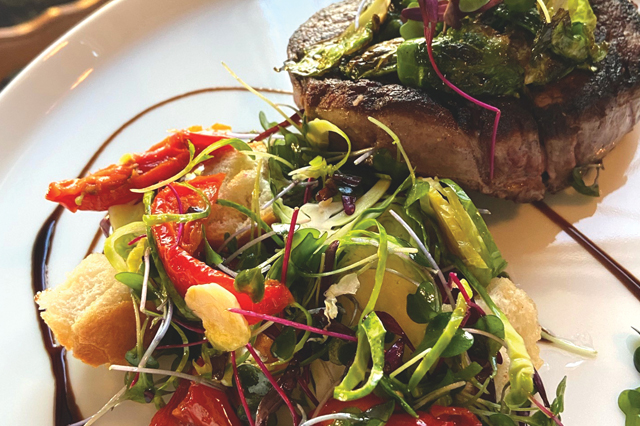
Guests and locals alike can dine at one of several restaurants on the Skytop property to enjoy great service and artfully prepared dishes with special touches, like this versatile tomato confit. To confit, or to cook in fat or a sweetened base at a low temperature, is a great way to enhance vegetables. Skytop Executive Chef Chris Chludzinski uses confit tomatoes in fall and winter when peak tomato season is over, pairing them with warm Brussels sprout panzanella salad or as a side for chicken or steak.

Tomato Confit

  • 15 to 20 Roma tomatoes (depending on their size)

Light syrup:

  • 3 sprigs fresh thyme
  • 1 teaspoon mustard seeds
  • 2 teaspoons broken star anise
  • 1 teaspoon anise seeds
  • 1 teaspoon coriander seeds
  • 2 bay leaves
  • ½ teaspoon black peppercorns
  • ½ bulb garlic, crushed
  • 1½ liters white wine
  • 1 cup sugar

To assemble and serve:

  • 2 tablespoons poaching liquid
  • Sea salt and freshly ground black pepper
  • Butter

Peel the tomatoes by first scoring an “X” on bottom ends, removing the stem cores and submerging into boiling water for 10 to 15 seconds. Shock the tomatoes in an ice bath and remove at once when cool. Working over a bowl, halve the tomatoes from the top to bottom and remove the seeds without damaging the ribs. Strain the resulting tomato juice into a bowl and reserve.

To prepare the light syrup, put the thyme, mustard, star anise, anise seeds, coriander, bay leaves, peppercorns and garlic in a sachet. Put the wine, sugar, reserved tomato juice and sachet in a pot and bring to a boil; simmer for 10 minutes.

Transfer the tomato halves to a large sheet pan and cover with the light syrup and sachet. Cover the pan with foil and poach for 1 hour in a low oven or grill. Remove foil and transfer the contents to a fresh pan to cool. Tomatoes should maintain their shape when finished.

Once cooled, place the tomatoes in a sauté pan with 2 tablespoons poaching liquid. Season to taste with sea salt and pepper. Heat the tomatoes through and reduce the liquid to a glaze, adding a small nub of butter to bind the glaze. Use the tomatoes as a component or garnish to a dish.

For more restaurant recipes, visit AAA.com/DiamondDish.

Subscribe to Your AAA Newsletter

Sign up and receive updates for all of the latest articles on automotive, travel, money, lifestyle and so much more!

Test Drive: Old & New

If there’s a small SUV model that feels like it’s been around forever, it would be the Honda CR-V.

There’s a reason for this compact crossover’s longevity – namely the way it just seems to do everything well. This fifth-generation version now sports a turbocharged 1.5-liter, four-cylinder under the hood, an engine that gives it lively performance. Better still, it does so while delivering above-average Environmental Protection Agency fuel-economy numbers.

The nicely tuned suspension does a good job of smoothing out bumps and handling winding roads with grace and composure. The brakes feel strong, although the automatic emergency braking tends to overreact.

Perhaps the CR-V’s strongest suit is its spacious interior, with generous room for four grown-ups and plenty of places to stash odds and ends.

Keeping things fresh is the debut of the CR-V Hybrid – EPA rated at 40 mpg city and 35 mpg highway – making the CR-V at once both novel and familiar.

Test Drive: Kia Seltos

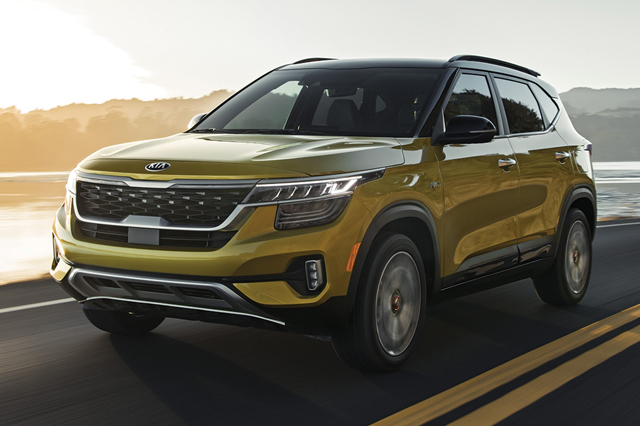
As the all-new kid on the increasingly crowded crossover SUV block, you might think it’d be hard to stand out. And yet, the Kia Seltos manages to do just that.

Built on the same underpinnings as the funkier Soul, the subcompact Seltos has a notable advantage over its sibling. Namely an available all-wheel-drive system designed mainly for bad weather.

The standard 146 horsepower, 2.0-liter four-cylinder engine should suit most buyers, but those who find it underwhelming can opt for the 175 horsepower, turbocharged 1.6-liter like that propelling the top SX model I tested. On the road it gives the Seltos more than enough acceleration for confident passing and freeway merging.

Inside, the Seltos offers a surprisingly adult-friendly back seat as well as a good-size cargo hold.

Figure in a long list of advanced safety features and the Seltos stands out as an attractive choice in a jam-packed segment.

Looking for a new ride? Check out more car reviews at AAA.com/TestDrive.

Subscribe to Your AAA Newsletter

Sign up and receive updates for all of the latest articles on automotive, travel, money, lifestyle and so much more!

Test Drive: Small but Stylish

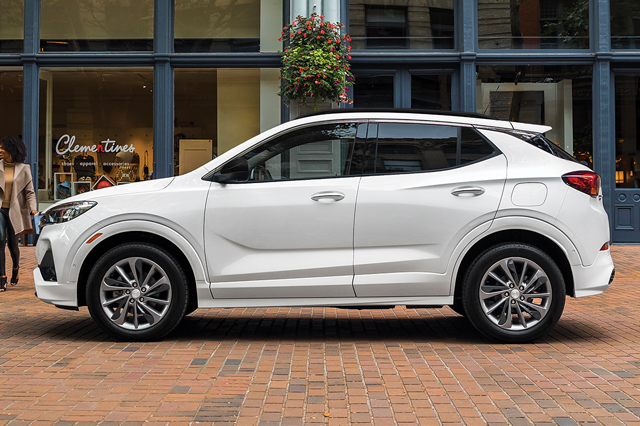
At some point in most everyone’s life they get a little tired of the same old thing and find themselves wanting something a little nicer.  This is precisely where the Buick Encore GX comes in.

The reason is simple: This subcompact crossover SUV (not to be confused with the Encore, which is an entirely different vehicle) straddles the gap between commonplace models and those from pricier high-end brands.

Slip into the driver’s seat on an Essence trim level like the version I tested, and you’ll be greeted with a long list of standard features, including Apple CarPlay/Android Auto smartphone integration.

The Encore GX is more engaging than you might expect from a Buick. The available 155-horsepower, 1.3-liter turbocharged three-cylinder engine can be noisy but produces adequate acceleration and strong Environmental Protection Agency fuel economy estimates.

Ultimately, the Encore GX is a good choice for those who want just a little more out of life.

Test Drive: Lexus UX200

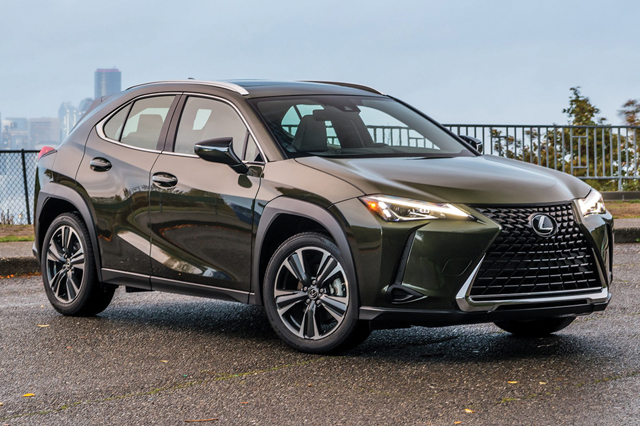
There are style-conscious people in the world, folks who notice everything from men’s wristwatches to women’s handbags. If you’re one of them, the Lexus UX 200 should make a big impression.

This littlest (and, shush!, least expensive) Lexus offers much of the brand’s upscale goodness, including a handsomely designed interior with quality materials in all the right places. The roster of advanced safety and convenience features is extensive.

One of the car’s most notable shortcomings is a frustrating center console-mounted touchpad that’s used to select items on the 7-inch screen above.

The Luxury trim level front-wheel drive UX 200 I tested delivered perfectly adequate, if somewhat uninspiring, performance from a 169-horsepower, 2.0-liter four-cylinder engine.

The good news in all this is that you don’t have to spend a fortune to impress the other style-conscious people in your life.

Looking for a new ride? Check out more car reviews at AAA.com/TestDrive.

Subscribe to Your AAA Newsletter

Sign up and receive updates for all of the latest articles on automotive, travel, money, lifestyle and so much more!

Test Drive: Watts up, Doc?

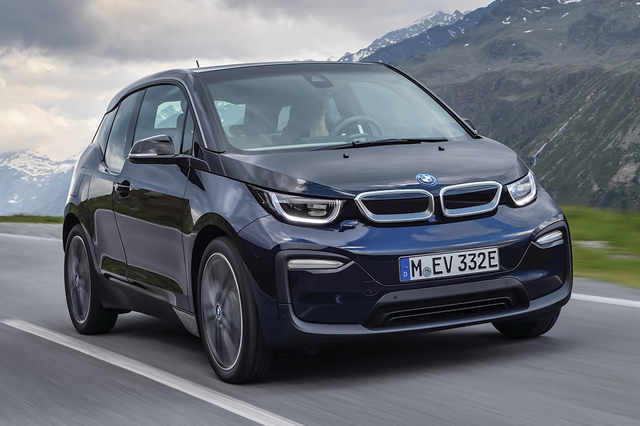
Some folks are naturally chatty. If you’re one of them and enjoy striking up conversations with complete strangers, it’s a safe bet you’ll like the BMW i3.

The reason is simple: This compact hatchback’s extraterrestrial golf cart styling is unique enough that even people who don’t know anything about cars are likely to comment on it.

BMW has poured some serious cutting-edge technology into it, starting with the body formed out of lightweight carbon fiber. Engine models include a choice between a battery-only powertrain and one with a tiny two-cylinder gasoline engine, referred to as a range-extender, that serves only to recharge the car’s batteries.

On the road, this combination of advanced materials and zippy electric drivetrain make the i3 more entertaining than you might expect.

While the BMW i3 is not a one-size-fits-all transportation solution, it makes a fine way to get around. Not to mention being a great icebreaker.

Test Drive: Chevrolet Bolt

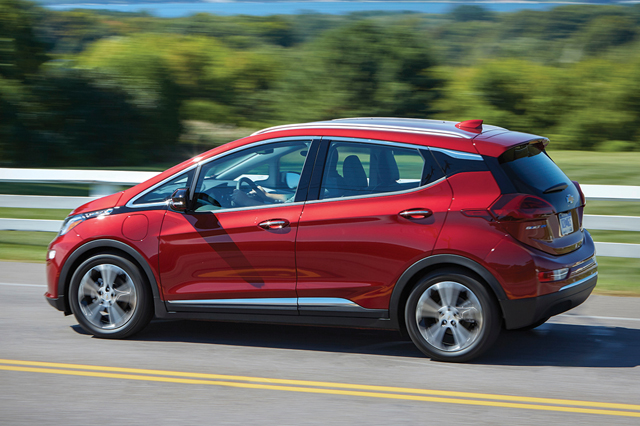
Ask most people about buying an all-electric car and you’re likely to hear a list of excuses. Well, the Chevrolet Bolt takes those arguments and negates them one-by-one.

First of all, they are not slow. The electric motor propelling this compact hatchback delivers power instantaneously the moment you step on the accelerator. It’s not a stretch to say the Bolt feels quick.

Driving range is another common anxiety. The Environmental Protection Agency lists range on a full charge at 259 miles, which should get most anybody through their day. Recharging takes about nine hours from a normal 240-volt household-style outlet, and a fraction of that time from Level 2 or 3 chargers.

The final hurdle for most people is the price tag. While the Bolt isn’t cheap, dealer incentives and government rebates can bring the price down.

All of which makes the Chevrolet Bolt a lot more attractive than you might have thought.

Looking for a new ride? Check out more car reviews at AAA.com/TestDrive.

Subscribe to Your AAA Newsletter

Sign up and receive updates for all of the latest articles on automotive, travel, money, lifestyle and so much more!

Diamond Dish: Dinosaur Bar-B-Que

Diamond Designation: Approved (Noteworthy by meeting the industry-leading standards of AAA inspections. Learn more about AAA Diamonds.)

Location: Six throughout New York .

Hatched as a mobile concession in 1983, Dinosaur Bar-B-Que grew into a quick-service joint in Syracuse, N.Y., and evolved into the seven-outpost barbecue haven that it is today, with locations in New York and New Jersey.

True to its roots as a biker joint where motorcyclists could fill up their bellies for the road, the tasty pit stop continues to be a welcome respite where anyone can unwind with a plate of comfort food.

Restaurant Recipe Guide

Featuring more than 40 recipes and tips from top chefs and kitchens in the Northeast. Download the Restaurant Recipe Guide and get cooking!

Download Now!

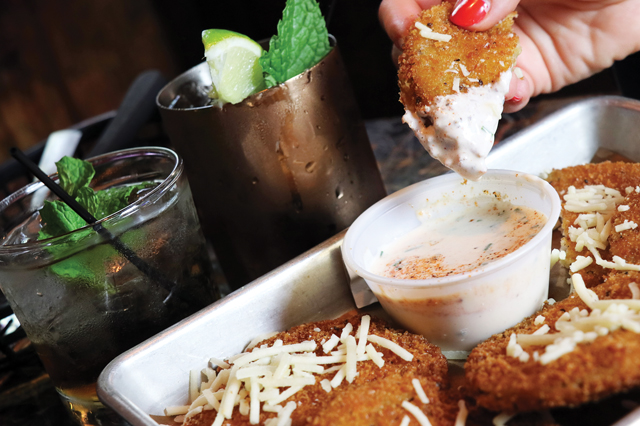
Fried green tomatoes are one of Dinosaur’s signature appetizers, leading the way for a lineup of nationally acclaimed barbecue, including pit-smoked brisket, chicken, fall-off-the-bone ribs and juicy pulled pork accompanied by great sides and sauces.

Fried Green Tomatoes

  • 4 green tomatoes
  • Cajun seasoning
  • 2 eggs
  • Pinch plus 2 teaspoons black pepper
  • 4 cups panko breadcrumbs
  • 4 teaspoons kosher salt
  • ½ teaspoon cayenne pepper
  • ½ cup vegetable oil, plus more as needed

Pecorino-Romano cheese, grated and ranch dressing, for serving.

Core the tomatoes and cut off the ends. Slice them into ¼ rounds and dry between several layers of paper towels to get rid of the excess moisture. Sprinkle lightly with Cajun seasoning on both sides.

Whisk together the eggs and a pinch of black pepper in a shallow bowl. In another shallow bowl or plate, combine the panko breadcrumbs, salt, cayenne pepper and the remaining 2 teaspoons of black pepper. Dip the tomato slices in the egg mixture and then in the breadcrumbs, pressing to coat well on both sides and around the edges. Lift the coated pieces onto a rack set over a baking sheet. Pop them in the fridge for a half-hour to set the crumbs.

Grab a heavy 12-inch skillet and heat the oil over medium heat. When the oil is hot, slide in a few tomatoes without crowding the pan. They should sizzle and bubble around the edges. Cook for 2-3 minutes on each side until brown. Take them out of the pan, then add a bit more oil and get it hot before starting a second batch.

Drain the fried tomato slices on paper towels. Arrange them around the outside edge of a plate, sprinkle with grated pecorino Romano cheese and serve with ranch dressing for dipping.

For more restaurant recipes, visit AAA.com/DiamondDish.

Subscribe to Your AAA Newsletter

Sign up and receive updates for all of the latest articles on automotive, travel, money, lifestyle and so much more!

AAA Photo Session: Winter Photography

Arctic temperatures and snow push many people inside their homes for the winter season. Not photographers! Many squeal in delight at the sight of a fresh snowfall or a frozen waterfall. While winter photography presents some unique obstacles, they can easily be overcome if you know what you are doing.

Thank You for Participating!

Thanks to all who shared a photo. Despite the freezing cold and short days of winter, the Northeast sure looks pretty dressed in a fresh coat of snow.

Take a look at all of the submissions in the slideshow and don’t forget to check our social media channels, where we will be featuring some of our favorites. You may even see your photo in an upcoming issue of Your AAA magazine!

Six Tips for Winter Photography

Check Your Exposure

The brightness of snow can sometimes throw your camera’s meter off. You can end up with an image that is too bright or too gray depending on the light that day. Always check the back of your camera to make sure you have the correct exposure. Use your exposure compensation button to increase or decrease the light.

Fresh Is Best

Snow is best captured after a fresh snowfall. Look for snow that hasn’t been trampled by feet or vehicles. This may mean waking up before the rest of the world to capture it in its pristine beauty.

winter photography
(Photo: Beth Mancuso)

Freeze Motion

If it is snowing outside and you want to capture the snowfall in action make sure you have a fast shutter speed. Anything over 1/300th of a second will freeze the motion. Use a telephoto lens and set it to your largest aperture value (ie: f/2.8 – f/4), then zoom in on your subject. Doing so will cause compression in your image which will bring the snowfall in the back and front of your image to be closer to the subject resulting in an image that shows more snowfall action.

Learn more about aperture, shutter speed and other camera settings.

winter photography
(Photo: Beth Mancuso)

Show Motion

Waterfalls are really fun to photograph in the winter especially if you catch them before they completely freeze over or when they have started to melt. To show motion in the water you will need two things a slow shutter speed and a tripod to keep your camera steady. I recommend a shutter speed of 1/6th  of a second or slower.

Heat It Up

Camera and phone batteries drain fast in cold temperatures. I recommend keeping your spare batteries and phone in an inner pocket of your coat.

Inside Out

Those who are not huge fans of the cold will argue that the ideal winter scene is the warm and cozy confines of their home. If it’s too freezing for you to venture outside, find inspiration around you. Try photographing your winter lifestyle indoors. Take pictures of the view from outside your window or capture the intricate details of frost as it forms on your window.

These days, whether you want to or not, we’ve all had to spend a lot of time indoors. The silver lining is that it’s a great time to begin a photography hobby. Look into getting a new camera, stock up on equipment or play around with taking photos with your phone. We have a bunch of photography tips right here on Your AAA to get you started.

winter photography
(Photo: Beth Mancuso)

Check out past AAA Photo Sessions and stay tuned for the next one, coming soon.

Beth Mancuso is a professional landscape and travel photographer.

Subscribe to Your AAA Newsletter

Sign up and receive updates for all of the latest articles on automotive, travel, money, lifestyle and so much more!

Plan Ahead for a Fun and Safe Ski Trip This Winter

In many ways skiing is the perfect winter activity for COVID-19 safety: It’s a fundamentally solo outdoor sport.

But while skiers and snowboarders will find the same overall experience on the slopes this year, ski areas across the Northeast are implementing a variety of pandemic safety measures that you’ll notice even before you pull into the parking lot.

Here’s what you should know when planning your ski trip.

Advance tickets (mostly) required

To meet social-distancing requirements, for example, guests are being strongly urged to buy tickets online. Some ski areas, like Killington in Vermont, Wachusett Mountain in Princeton, Mass., and New Hampshire’s Mount Sunapee and Pats Peak, are only selling tickets by advance reservation.

Killington also has outdoor kiosks for touchless pickup of lift passes.

Selling-out isn’t a problem

The good news for your ski trip is that, despite limits on ticket sales and excellent snow conditions heading into the peak of ski season, resorts report few instances of completely selling out.

Half- and full-day lift tickets remain the norm, but Wachusett Mountain has shifted to four daily sessions: morning, afternoon, early evening and late evening. The change is intended to keep skiers on the slopes and out of the facilities as much as possible, said Tom Meyers, Wachusett’s marketing director.

“If you come for a four-hour session, you’ll probably just ski for four hours and just head out” rather than stopping for food or warming up, he said.

Base lodge access

Probably the biggest changes visitors will notice during their ski trip this COVID winter are restrictions on access to base lodges and new rules for queuing, boarding and riding chairlifts, gondolas and trams to the slopes. Just like your local restaurants, ski areas are operating at reduced capacity indoors and outdoors. Ski areas like Killington in Vermont are operating at 50% of capacity indoors; at Wachusett Mountain, it’s just 25%.

Most resorts are requiring skiers to get dressed in their vehicles and head directly to the lifts; storing belongings in the lodge is generally prohibited.

“Your car is now your base lodge,” Meyers said. Reducing the number of people getting dressed indoors helps maintain social distancing and allows the resort to allocate its precious capacity to those looking to warm up with some hot food or a few minutes in front of the fire between runs, he said.

At Pats Peak, in Henniker, N.H., the layout of the lodge has been reimagined, and close to 50% of the furniture has been removed to allow for more space, said Lori Rowell, director of marketing. The ski area has added more than 30 tables to the outdoor seating area, along with additional heaters and wind blocks.

Guests can order cafeteria food from their smartphones and pick it up at an outdoor window, and a new food truck on-site is serving tacos. And while bathrooms are open in the lodge, there are also heated restrooms outdoors for those who don’t want to go inside.

At Wachusett, guests will find more outdoor warming areas equipped with propane heaters and wind screens – an especially welcome amenity for night skiing.

Also new at larger, busier resorts like Killington are free – but mandatory – parking reservations on weekends, another change aimed at controlling capacity.

ski trip

On the slopes

While you can still rent equipment or take a ski lesson, you might find the rental operation outdoors, and the size of group lessons reduced (another good argument for making reservations in advance).

Gone for now are friendly chats with strangers on the ski lift. Resorts are not only enforcing social distancing on lift lines – including keeping empty lanes between boarding gates – but also limiting each chair to members of the same party.

Single skiers will ride solo, while more chairs will go up the mountain at less than full capacity. “Because we’re not filling every chair and spacing people out, the lines look longer than they are,” said Courtney DiFiore, public relations and social media manager at Killington. In reality, “You’re not going to see a big difference in wait times because we’re limiting capacity [at the resort overall],” she said.

Apres-ski fun also has taken a hit during the pandemic.Enjoying celebratory drinks at the bar after a day on the slopes will have to wait until at least next season, live music is generally on pause, and even some traditional outdoor gatherings – like tailgating on The Beach at Mount Sunapee – have been discontinued. And most, if not all, resorts have shuttered their daycare operations.

As for masks, even if you didn’t wear one to ski before, you’ll need to now.

“Everyone has to wear a mask unless they’re skiing or riding or sitting and eating,” DiFiore said.

Save on ski resorts nationwide with special AAA member discounts

Are you planning a ski trip this year? Have you already been? Tell us about your experience in the comments. 

Subscribe to Your AAA Newsletter

Sign up and receive updates for all of the latest articles on automotive, travel, money, lifestyle and so much more!

Test Drive: Surprisingly Sporty

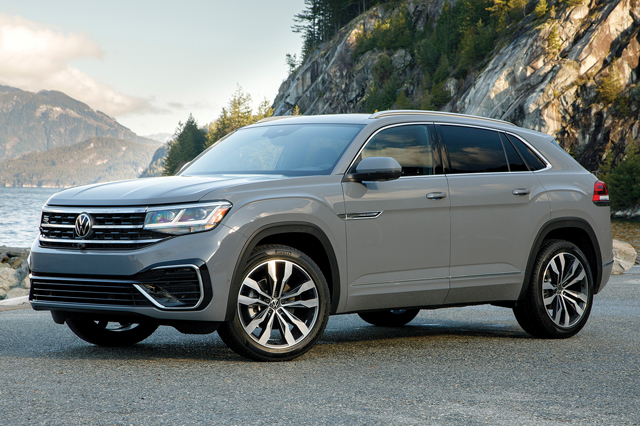
Take a popular three-row SUV, ditch the way-back seat and give it a raked rear roofline for sportier styling. Those few seemingly minor changes will net you something that looks an awful lot like the Volkswagen Atlas Cross Sport.

Based on the popular seven-passenger VW crossover, the midsize Atlas Cross Sport takes everything that’s good about its bigger brother and cuts out the excess. Inside, there’s still plenty of room for four adults.

There’s plenty of technology on offer here, too, including advanced safety features like blind-spot monitoring and rear cross-traffic alert.

Hit the highway and the available 276-horsepower, 3.6-liter V-6 provides perfectly acceptable performance (base models get a 235-horsepower, turbocharged 2.0-liter four cylinder). The independent suspension delivers a comfortable ride quality that makes the Cross Sport adept at good old-fashioned road trips.

Proving, once again, that less SUV can be more.

Test Drive: Toyota Rav4 Hybrid

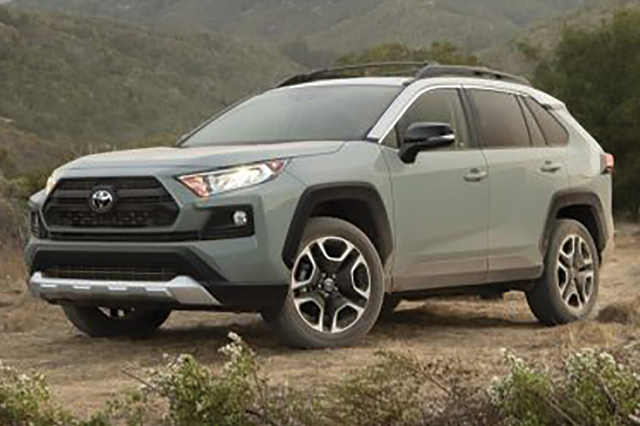
It’s one of the little-acknowledged side benefits of gasoline-electric hybrid powertrains: performance. It’s something the Toyota RAV4 Hybrid offers in abundance, and in more ways than one.

The hybrid system in this variant of Toyota’s popular compact SUV gives it the kind of shot in the arm you don’t expect in a hybrid, namely lively acceleration. With a 2.0-liter gasoline engine paired with two electric motors, including one that gives it all-wheel-drive capability, its 219-horsepower total output makes it the most powerful non-plug-in RAV4 in the lineup.

The fact that this setup also helps the RAV4 Hybrid return impressive fuel economy numbers is a bonus. The RAV4 Hybrid’s handling is very respectable and the ride quality surprisingly smooth. It also shines in its ability to accommodate the ins-and-outs of daily life with good comfort for four adults.

All things considered, the Toyota RAV4 Hybrid offers the kind of performance you rarely find in hybrids.

Looking for a new ride? Check out more car reviews at AAA.com/TestDrive.

Subscribe to Your AAA Newsletter

Sign up and receive updates for all of the latest articles on automotive, travel, money, lifestyle and so much more!

Volvo Offering $2 Million Worth of Free Cars During the Big Game

If you’re feeling lucky, or just need a rooting interest for Sunday’s big game, Volvo has you covered. The auto manufacturer announced it will be giving away $2 million worth of free cars. There is one catch: In order for the offer to kick in, either the Tampa Bay Buccaneers or Kansas City Chiefs need to score a safety.

For those unfamiliar, a safety in football occurs when one of two things happen: the offense commits a foul in its own end zone or an offensive player with the ball is tackled in their own end zone. It is not the most common play in football. What are the odds of it happening? In the 2020-21 regular season, there were 24 safeties in 256 games, so roughly 1-in-10.5. However, safeties have been more common in football’s biggest game of the year, occurring nine times in 54 games, roughly 1-in-6.

This is Volvo’s second consecutive Football Safety Sunday Sweepstakes. Last year, the company offered $1 million worth of free cars to celebrate one million lives being saved by the three-point safety belt (which was invented by a Volvo engineer). Now, it’s doubling down on its efforts.

All you need to do to enter is go to Volvo’s website and configure your dream car. If there is a safety scored during Sunday’s game, the company will draw names at random to see who is walking – or driving – away with a brand new car.

Get more automotive news. 

Subscribe to Your AAA Newsletter

Sign up and receive updates for all of the latest articles on automotive, travel, money, lifestyle and so much more!

Diamond Dish: Topper’s at The Wauwinet

Diamond Designation: Five Diamond (Leading-edge cuisine, ingredients and preparation with extraordinary service and surroundings. Learn more about AAA Diamonds.)

Location: 120 Wauwinet Rd, Nantucket, Mass.

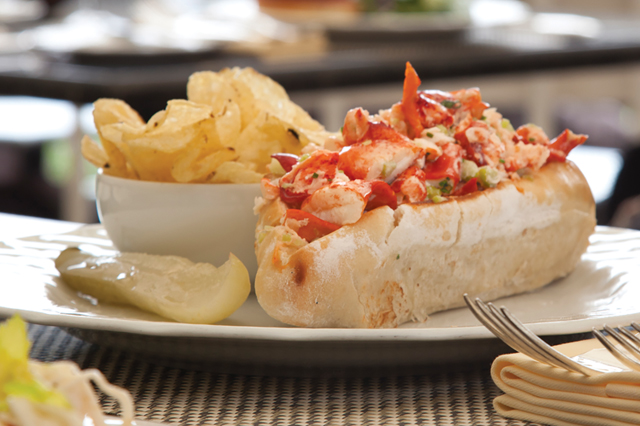
Topper’s is a can’t-miss dining spot overlooking Nantucket Bay. Led by Executive Chef Kyle Zachary, the kitchen makes the most of the local bounty with island favorites like lobster rolls and Retsyo oysters on the half shell, plucked from the water just yards from the dock.

Restaurant Recipe Guide

Featuring more than 40 recipes and tips from top chefs and kitchens in the Northeast. Download the Restaurant Recipe Guide and get cooking!

Download Now!

In a review of the property, a AAA inspector describes Topper’s as an “extraordinary gem” inside of The Wauwinet, an elegant beachside hotel. But it is the details – an upscale dining room, impeccable service, memorable prix fixe menu and wine list of 1,550 wines – that have earned it the prestigious AAA Five Diamond designation, reserved for only the best of the best. For a more casual atmosphere, grab a spot on the deck for the views of the bay under a heated awning.

Lobster Rolls

  • 1 egg, room temperature
  • 1 tablespoon Dijon mustard
  • 2 tablespoons Meyer lemon juice
  • 1 cup neutral oil, such as grapeseed or canola
  • Kosher salt
  • 1¼ pound lobster meat
  • 4 brioche buns
  • 4 leaves Boston bibb lettuce
  • Bread and butter pickles

In a mixing bowl, whisk together the egg, mustard and lemon juice. Slowly whisk in the oil. Season with salt. Dress the lobster meat with the mayonnaise.

To assemble, split four brioche buns and butter the cut side. Toast the cut side on a griddle until golden brown. Place a leaf of Boston bibb lettuce on the bottom half of each bun. Top with equal amounts of lobster salad and top with the other half of the bun. Serve with a few bread and butter pickles.

Serves 4.

For more restaurant recipes, visit AAA.com/DiamondDish.

Subscribe to Your AAA Newsletter

Sign up and receive updates for all of the latest articles on automotive, travel, money, lifestyle and so much more!

Diamond Dish: Rat’s Restaurant

Diamond Designation: Three Diamond (Trendy food skillfully presented in a remarkable setting. Learn more about AAA Diamonds.)

Location: 16 Fairgrounds Rd, Hamilton, N.J.

Set on the 42-acre Grounds for Sculpture and overlooking a recreation of Claude Monet’s “Bridge Over a Pond of Water Lilies,” Rat’s boasts one of the most stunning outdoor dining views in the Northeast. Inside, the design of the restaurant pulls inspiration from the French village of Giverny where Monet lived, and its namesake Mr. Rat from Kenneth Grahame’s “Wind in the Willows.”

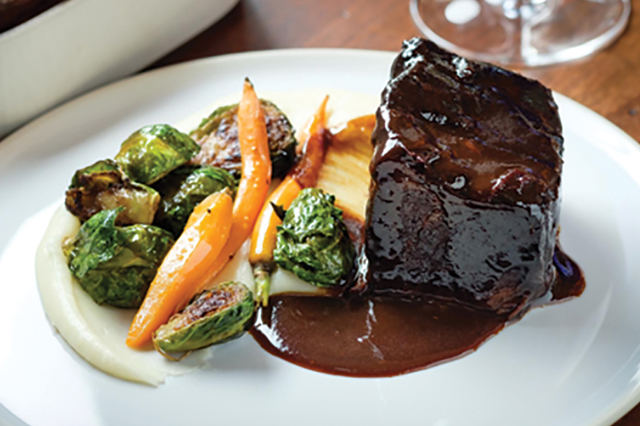
The menu offers seasonal takes on French cuisine, including the popular Burgundy-braised short ribs. Executive Chef Richard Freedman notes that the success of this dish comes down to patience. The dark, rich flavor is the result of layers of thorough and gentle browning. “If you follow these steps, you will end up with a restaurant-quality short rib that will land at the top of everyone’s list of favorite meals,” he said.

Restaurant Recipe Guide

Featuring more than 40 recipes and tips from top chefs and kitchens in the Northeast. Download the Restaurant Recipe Guide and get cooking!

Download Now!

Burgundy-Braised Short Ribs

  • 4, 10-ounce pieces of trimmed boneless beef short rib (will shrink to about 6 ounces)
  • Salt and fresh black pepper
  • 1 tablespoon canola or olive oil (enough to coat bottom of Dutch oven)
  • 1 medium Spanish onion, cut into 1-inch pieces
  • 2 medium carrots, cut into 2-inch pieces
  • 2 stalks of celery, leaves removed and cut into 2-inch pieces
  • 3 cloves of garlic, smashed
  • 2 tablespoons tomato paste
  • ½ bottle of Burgundy red wine (or suitable substitute)
  • 1-2 cups chicken broth, homemade if possible
  • 6 sprigs fresh thyme
  • 2 bay leaves

Preheat Dutch oven over a medium flame. While heating, season short ribs with salt and pepper. When the pan is hot, add the oil and gently place the short ribs in the oil to sear. Leave them to sear until a rich mahogany brown color – this will give you the best flavor. Repeat the sear on all sides.

Remove the beef and set aside. Place all the vegetables in the oil and cook until well-browned, about 10 minutes. Add the tomato paste and stir constantly, cooking until brown as well. All the browning will add up to intense, rich flavor.

Pour in the wine and stir thoroughly to release caramelization from the bottom of the pot. Reduce by about half. Add chicken broth, then add the seared beef, thyme and bay leaves. Make sure the liquid comes up at least ¾ of the height of the beef.

Heat the oven to 350 degrees. Cover the pan and place in the oven. Check after 2½ hours to see if they are tender. You should be able to cut all the way through with a plastic spoon. Give them a little squeeze with tongs – if they spring back, put back in for another 30 minutes.

When the ribs are done, remove from the liquid. Strain liquid into a wide pan and put over a high flame to reduce. It will become thicker and very rich in flavor. Strain again if necessary, using a fine mesh, if possible. Season the sauce with salt and pepper as needed. Reserve to pour over your finished dish.

Makes 4 servings.

For more restaurant recipes, visit AAA.com/DiamondDish.

Subscribe to Your AAA Newsletter

Sign up and receive updates for all of the latest articles on automotive, travel, money, lifestyle and so much more!