Top 5 Projects for DIY Home Renovation on a Budget

Interested in DIY home renovation projects on a budget that are also achievable? Sure, we all are.

Enter Keith Steier, who parlayed his job as a co-op handyman into a career that includes founding New York City’s Knockout Renovation design and build firm.

Just off a remodel of the studio kitchen for the “Rachael Ray Show” and the relocation of Knockout’s Manhattan showroom, Steier checked in with AAA Northeast to talk about the top five game-changing DIY home renovations that (almost) anyone can accomplish with a limited skill set and a limited budget.

Easy

Hang window treatments and take a shine to new light fixtures

One of the least expensive (and easiest) ways to knock out a little home renovation on a budget is by replacing older window curtains and blinds or updating outdated lighting fixtures. With just a low-powered drill-driver (or even a screwdriver), most DIY newbies should be able to easily hang new curtains or other window treatments as long as hardware is screwed directly into the wall studs or secured to the wall with inexpensive drywall anchors.

Typically sold with easy installation kits, new lighting fixtures can also be replaced with just a few turns of the screwdriver. Homeowners should always turn off power to the house when working with electrical outlets and elements, and have a comfort level with basic electrical work.

“Just hanging new curtains and lighting sconces can dramatically change the look and feel of a room,” Steier said. “It’s one of the easiest and least expensive DIY projects that still delivers great wow factor.”

Paint a new color scheme and give your cabinets a face-lift  

Paint makers are coming up with more colors and finishes for both interior and exterior house paints. When it comes to top home renovation ideas on a budget, painting can be a fun, easy and inexpensive way for DIYers to flex some muscle. Paint results will be vastly improved with proper prep, including scraping and sanding off old, flaky layers of paint, puttying up nail and tack holes and caulking where necessary.

“Painting delivers the biggest bang for the buck when it comes to visual impact,” Steier said. “Pay attention to luster and finishes like flat, semi-flat, semi-gloss, gloss and eggshell, and be thorough and patient when taping off borders.”

In addition to walls and trim, Steier says painting kitchen cabinets (both inside and outside) is quickly becoming a popular project when it comes to DIY home renovation on a budget. Cabinets can get a quick and easy face-lift by upgrading drawer pulls and handles or adding a new laminate surface to the doors, drawers and cabinet faces.

Upgrade a room with durable floor laminates 

Floors can also get a quick face-lift with inexpensive laminate kits that allow DIYers to practically peel and stick on floors that mimic the look and feel of natural wood. Floor laminates are one area where Steier recommends stretching the budget to purchase the best quality available, as inexpensive floor laminates tend to not last long, particularly in high-traffic areas.

“You can get good laminates that are really durable and then there are some that will shred and indent and look horrible just nine months down the road,” Steier said. “Double check the durability of what you’re installing and consider if and when you might want to remove the laminate before using high-performance glues and adhesives. Mistakes happen and style trends come and go, so always think about how you would reverse-engineer a project if you had to.”
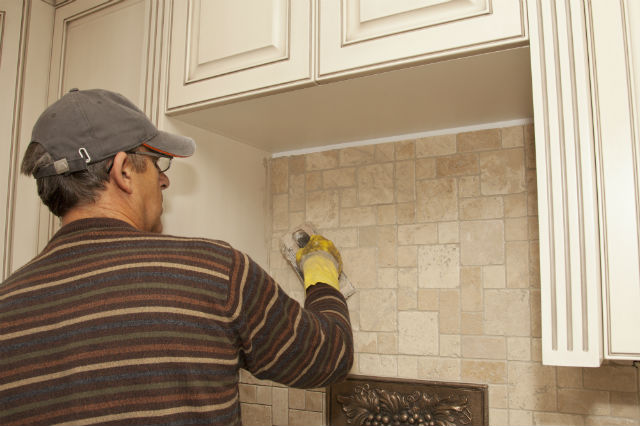
diy home renovation on a budget

Moderate

Refresh the kitchen with a new backsplash

For homeowners looking to try an intermediate-level DIY renovation, a new kitchen backsplash can take on the look of an entire remodel but still keep the budget in check.

“This is a project that’s possible for a DIY homeowner to pull off with a little more research and perhaps renting some tools,” Steier said. “Most home improvement stores sell tile grids that mimic the look of individual tile, but there is some skill involved to get really great results.”

To help guide the DIY home renovation on a budget, YouTube offers a seemingly endless library of how-to videos for nearly any project. Steier also says to be realistic about the time commitment you might need to learn and become proficient in renovation skills you see on the internet.  “You might end up needing a lot of time on your hands to complete even easier renovation projects, and as things get more complex, you are not going to find all the answers with just a few quick Google searches.”

Advanced

Enhance the bathroom with upgraded faucets

That’s especially true when it comes to plumbing renovations. The proverbial leaky faucet has flummoxed many a handy person and DIYer, and while installing new faucets and fixtures provides a major wow factor, working with water can also be extremely difficult.

“Water is an area where there’s just no room for error,” Steier said. “Use the wrong washer or forget an O-ring or get a dud replacement part and you could have a worse problem than you were trying to resolve. You can get repair and replacement kits for faucets, but make sure you can shut off the water that leads to the fixture and watch plenty of videos, because water is unforgiving. There’s no half-right.”

Installing new medicine cabinets or adding new shower treatments and surrounds are two budget-friendly bathroom upgrades that will keep you high and dry but still deliver on the renovation end.

Whatever DIY renovation projects you take on, Steier says the key to success is to take your time, have fun and don’t be afraid to call in the big guns if things go off the rails.

“There will be noise, there will be dust, there will always be a surprise or two, but enjoy it,” he said. “If you feel like you’re losing perspective, call a professional remodeler that can guide you through a renovation from the design phase to selected products, matching aesthetics and – of course – doing all of the hard work!”

We want to hear about your home projects! Tell us about a DIY home renovation that you were able to accomplish. Bonus points if it’s budget-friendly!  

Protect your home and all the hard work that you put into it with homeowners insurance from AAA. Learn more or get a quote.

Subscribe to Your AAA Newsletter

Sign up and receive updates for all of the latest articles on automotive, travel, money, lifestyle and so much more!

What Is Flight Insurance? (And Do I Need It?)

Travel insurance can cover a lot of ground, even when your holiday doesn’t include a plane (think car rental accidents or having to cancel your hotel booking because of a trip to the ER.)

But once you include flights into your holiday plans, there’s a whole lot more to consider, like delays and missed connections, trip interruptions and cancellations, lost baggage and more. Having flight insurance can protect your vacation investment and help smooth over inconveniences.

Here’s just one example: While some airlines try to minimize the pain of a delayed flight with compensation, all they are legally required to do is get you out on the next available flight. Having travel insurance means you’ll be reimbursed for accommodations, food and the trip back to the airport.

See the difference?

flight insurance

Myth: Flight Insurance Only Covers Death & Disaster

Brushing up on travel insurance terminology can clear up confusion about flight insurance and what it entails. There’s a big difference between flight accident coverage and flight insurance, which is often used interchangeably with travel insurance.

Flight accident (AD&D) coverage – also known as flight life insurance and airline accident insurance – pays out if an accident results in death, loss of limb or eyesight. But according to European travel expert Rick Steves, it’s not worth it. “(It’s) a statistical rip-off that heirs love. It’s basically a life insurance policy that covers you when you’re on the airplane,” he said. “Since plane crashes are so rare, there’s little sense in spending money on this insurance.”

That’s flight accident insurance.

Flight insurance, on the other hand, can help you escape a flight’s more mundane dangers: trip delays, cancellation fees and wayward luggage.

What Flight Insurance Can Cover

A comprehensive travel insurance policy can provide financial protection from trip cancellation, interruption and delay, whether it occurs on your end (such as an illness) or is beyond your control (such as weather). And if your luggage is lost or stolen, you can get help finding and replacing it. For even more robust coverage – highly recommended if you’re traveling abroad – you can include travel medical insurance and medical evacuation.

Purchasing travel insurance can provide travelers peace of mind, but in more tangible terms, it provides protection for those who are unable or unwilling to risk their financial investment in a trip.

Here, courtesy of the U.S. Travel Insurance Association, are just a few reasons purchasing flight insurance before your next trip would be a smart move.

  • You have to cut your trip short because of illness.
  • You have to cancel your nonrefundable trip because a family member had an accident.
  • Your flight is delayed overnight because of bad weather, and you need a hotel room.
  • You miss your cruise departure because of weather-related flight delays.
  • You can’t get home because of a hurricane, flood or other natural disaster at your destination.

The Bottom Line

Not all travel protections and insurance policies are created equal. While no one wants to spend quite as much time reviewing policies as they do planning their dream vacation, it pays to do your research and compare costs and benefits. Here are caveats and considerations to keep in mind before you fasten your seat belt.

  • Although your credit card may offer flight protection, there are exclusions galore. As millennial traveler Kate McManus notes on the travel website Matador: “Most credit card coverage is minimal and highly restrictive, limiting your reasons for cancellation to death, illness or injury or forcing you to have paid for everything with that particular card.”
  • Know the reasons insurers don’t pay out (so you can avoid them). For example, a trip cancellation requires a “covered reason.” If you get the flu, but fail to submit a physician statement form, you’ll most likely be out of luck when you file an insurance claim. Terms and conditions of your policy matter: a legal separation or divorce may be sufficient for a covered trip cancellation, but not a breakup; the death of a family member is grounds for cancellation, but the death of your beloved pet is not.
  • Be sure you’re getting the best value for your money. Beware of add-ons and pop-ups when you’re buying online, whether it’s through a cruise line or a travel website. There’s only one way to know if a policy covers your needs, and that’s to read it carefully.

Has having flight insurance ever saved the day – or a lot of money – for you? Do you have any cautionary tales about not having travel insurance when you needed it? Feel free to share your insights  in the comments section below.

Your AAA travel advisor can help you choose a travel insurance policy that’s right for you. Learn more.

Subscribe to Your AAA Newsletter

Sign up and receive updates for all of the latest articles on automotive, travel, money, lifestyle and so much more!

Wake up to Fall Foliage at a Northeast Bed and Breakfast

The Northeast is known for its spectacular fall foliage, and the beautiful rural areas around us have become essential viewing spots for many autumn travelers. Where you decide to stay on your leaf peeping adventures has a huge impact on your trip, and can turn a pleasant fall vacation into an unforgettable one. That’s why we’ve compiled a list of ten of the most impressive bed and breakfast hotels in the region.

Why stay in an ordinary hotel, when you can wake up every morning to the aroma of fresh baked pastries, the amiable chatter of other guests, and the awe and splendor of the colors right outside your window?

Explore the different accommodations listed and find the ideal getaway for couples or families. Many of our top-picks are also AAA Diamond Rated, and all received consistently high ratings online from travelers. To learn more about AAA Diamond Rating, go to AAA.com/Diamonds

Saratoga Arms – Saratoga Springs, NY

Saratoga Arms is a luxury Northeast bed and breakfast with a private club atmosphere and close proximity to many fall foliage trails. Located at the foothills of the Adirondack Mountains, Saratoga Springs is an ideal place for viewing the changing colors of the leaves. The AAA Four Diamond Rated hotel’s assortment of individually decorated rooms, many with fireplaces, add to the elegance and romance of an evening away in the fall.

Breakfast: Culinary Institute of America-trained chef. Fresh fruit, yogurt, bagels, etc. Accommodates vegan and gluten-free restrictions. Also serves small plates during the day.

Special Amenities: 24-hour exercise room. In-room safes.

Things to Do: Stop by the Saratoga National Historical Park or the National Museum of Dance.

Fun Fact: Historic Saratoga is home to the oldest horseracing track in America.

Book now.

Caldwell House Bed and Breakfast – Salisbury Mills, NY

Located in the heart of the beautiful Hudson Valley, the Caldwell House Bed and Breakfast offers a front row seat to the local fall foliage display. According to the owners, “The crunchy leaves, crisp breeze and magnificent colors take on a whole new meaning for peep-lovers.” The property features three different houses to choose from, some of which were built when Thomas Jefferson was president. Caldwell House also has a rich Irish American history and offers a unique rural New York bed and breakfast experience. The Shawangunk Wine Trail, hiking trails and the Hudson River nearby provide endless options for foliage viewing.

Breakfast:  3-course breakfast with farm-fresh ingredients. Dietary restrictions honored.

Special Amenities: 19th Century parlor and living room with marble-trimmed fireplaces. Quilted bedspreads and luxury linens.

Things to Do: Storm King Art Center is an internationally-renowned outdoor sculpture museum sitting on 500 acres of pleasant pastoral landscape, which provides another wonderful spot to gaze at the changing leaves. Horseback riding, kayaking and more are also available nearby.

Fun Fact: The Caldwell House is environmentally-friendly.

The Fern Lodge – Chestertown, NY

Nestled in the majestic Adirondack Mountains, The Fern Lodge hosts a truly secluded and intimate setting on 70-acres of forest, right alongside a sparkling, untouched lake. You won’t have to travel far to see foliage from this AAA Four Diamond Rated property; just go hiking across its endless, picturesque terrain. “The nights are cool and the days are warm – the autumn foliage is brilliant,” says Innkeeper Sharon Taylor.  “The kayaking on the lake is magnificent, the biking and hiking in the area has no equal.” Most of the available rooms are rustic-themed and perfectly charming. Aside from hiking, fall foliage can also be enjoyed from the lakeside fire pit or on the 4 p.m. boat tour of the lake.

Breakfast: Full, multi-course breakfast.

Special Amenities: Jacuzzi tubs, stone fireplaces, sauna, pool table.

Things to Do: Visit Fort Ticonderoga, go white-water rafting, or take a gondola ride up Gore Mountain.

Fun Fact: The Lodge has a 9-person theater for entertainment and mingling with other guests.

Book now.

Chateau Inn – Spring Lake, NJ  

A truly lavish inn set in the pleasant Victorian-themed town of Spring Lake. Chateau Inn is only minutes away from the white sandy shores of Spring Lake Beach. This wonderfully decorated establishment provides a unique vantage point for fall foliage viewing alongside the town lake or at nearby Divine Park.

Breakfast: Signature continental breakfast.

Special Amenities: Marble bathrooms, Jacuzzis, wood fireplaces.

Things to Do: Explore the plentiful art galleries, boutiques and antique shops in Spring Lake.

Fun Fact: In the late 19th century, Spring Lake transformed from a rural farm and fishing town to a favorite spot for wealthy Northeast industrialists.

northeast bed and breakfast
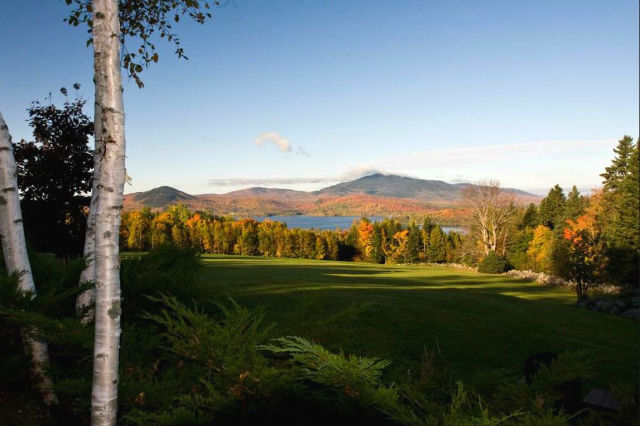
View from the Lodge at Moosehead Lake.

Lodge at Moosehead Lake – Greenville, Maine

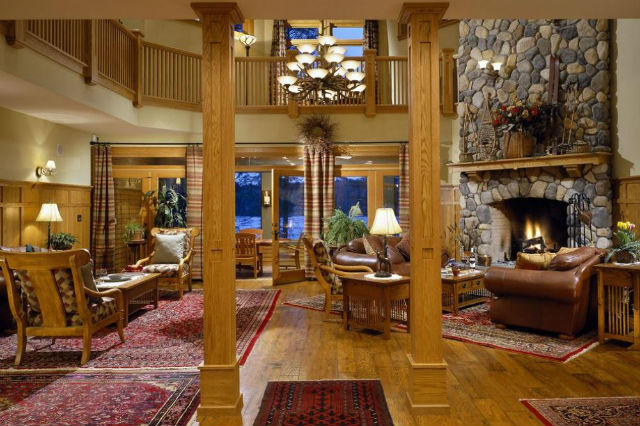
This historic AAA Four Diamond Rated Northeast bed and breakfast has been a favorite destination for travelers for over 100 years, and offers everything one can ask for in a fall foliage vacation. Each room has a different rustic flair, and some even have different themes based on local wildlife; for instance, you can stay in the Moose, Trout or Bear Rooms and admire the special furnishings. Mt. Kineo, Mt. Katahdin and the Appalachian Trail are all nearby. If you so choose, you can simply stroll along the property to see the leaves, or take a relaxing canoe trip on Moosehead Lake.

Breakfast: Hot entrees and fresh made pastries. Accommodates dietary needs. Also serves dinner.

Special Amenities: Private deck, lakeside view, antique décor. Pet-friendly.

Things to Do: Ask the Innkeepers about a Moose Safari Tour.

Fun Fact: The Lodge offers pet massages and homemade organic pet treats.

Book now.

Inn at Clamber HillPetersham, MA

This delightful New England bed and breakfast is located on a quiet estate surrounded by woods and sits right alongside the Harvard Forest. “People that have grown up in New England sometimes fail to realize just how spectacular our fall foliage is,” said owner Deni Ellis. “This area is a travel destination for fall foliage and we get travelers from all over the world with lots of Europeans.” The Quabbin Reservoir is nearby and the surrounding forests are great for hiking, biking, and bird watching. The Inn also hosts a romantic restaurant and a premium bar.

Breakfast: Fresh baked goods, pear almond pancakes and more. Caters to dietary restrictions.

Special Amenities: Each room has a different special theme, with related décor and styling. The Equestrian and Nautical Room are two examples.

Things to Do: The Magic Wings Butterfly Conservatory and Gardens is a great spot for nature lovers and families.

Fun Fact: The owners often hold popular wine tastings and whiskey tastings.

Manor House – Norfolk, CT

The romantic Manor House is a prime midpoint for exploring both the Berkshires in Massachusetts and Litchfield County in Connecticut. The Victorian Tudor mansion is also a short drive to Haystack Mountain State Park.

Breakfast: Accommodates dietary restrictions.

Special Amenities: Antique bed, fireplace and private balcony in some rooms.

Things to Do: See at concert at Infinity Music Hall or check out local fine dining, all within walking distance of the House.

Jacob Hill Inn – Seekonk, MA / RI 

Located on the border of Massachusetts and Rhode Island, Jacob Hill Inn is a fantastic place to start your fall foliage adventures. This charming establishment stands out among bed and breakfasts in the Greater Providence area and is at once upscale and traditional. “In the fall guests don’t have to leave our property to see foliage,” said Innkeeper Eleonora Rezek. “We are overlooking about 50 acres of every fall color.”

Breakfast: Fruit, yogurt, granola, juice and hot entrées.

Special Amenities: Antique décor, billiard room, tennis court, Jacuzzis and fireplace.

Things to Do: Take a quick drive to Providence and see the renowned WaterFire exhibit on the river.

Fun Fact: Jacob Hill Inn is the only bed and breakfast hotel in the Providence area to have an in-ground swimming pool, tennis courts and a 50-acre property.

Franconia Inn – Franconia, NH

Set in the secluded woods of New Hampshire, the Franconia Inn is a popular choice for a fall foliage vacation. The graceful décor and pleasant colonial architecture of the Inn makes this the perfect resting spot for your travels. The property itself is home to 107 acres of breathtaking beauty, which means you don’t even necessarily have to drive anywhere to get your fill of foliage. As for activities – fishing, horseback riding, tennis, you name it, it’s all here.

Breakfast: Full country breakfast. Eggs, waffles, bacon, etc.

Special Amenities: Game room, movie room, Jacuzzi and balcony in some rooms.

Things to Do: Hop on the Mount Washington Cog Railway nearby, a mountain-climbing train with stunning views.

Book now.

The Bartlett Inn – Bartlett, NH

The Bartlett Inn is a cozy New England bed and breakfast centrally located near White Mountain National Forest and Mount Washington, one of the prime fall foliage viewing spots in New Hampshire. The Innkeepers provide detailed routes for scenic drives in the area to see waterfalls and mountains in full display. You’ll see an abundance of colored leaves just looking out of your window as well. The area is also home to a variety of wildlife, so don’t be surprised if you see some cute critters near the Inn or on a trail.

Breakfast: Fresh fruit, omelets, sausage and more. Dietary restrictions honored.

Special Amenities: Kitchenette, fireplace, whirlpool tub. Pets welcome. Family-friendly.

Things to Do: For a family adventure, drop by the Storyland Amusement Park in Glen.

Fun Fact: Summer guests can pick their own blueberries for breakfast from the wild bushes in the yard.

Book now.

Other great bed and breakfasts in the Northeast

Clarendon Square (Boston, MA) – A boutique Boston bed and breakfast close to Boston’s South End with plentiful foliage.

Devonfield Country Inn (Lee, MA) – The Berkshires are always a good choice for viewing the leaves.

Inn at Harbor Hill Marina (Niantic, CT) – A quaint maritime village combined with wonderful fall foliage is a good reason to pick this New England bed and breakfast.

Stagecoach House Inn (Richmond, RI) – A cozy and charming spot surrounded by woodlands.

What’s your favorite fall getaway? Tell us in the comments. 

Subscribe to Your AAA Newsletter

Sign up and receive updates for all of the latest articles on automotive, travel, money, lifestyle and so much more!

Find a Renaissance Fair Near You

Late summer and early fall is Renaissance fair season in our neck of the woods. Whether you’re a ren fair newcomer or an Elizabethan junkie, it’s time to dust off your puffy shirt and don your muffin hat.

The Renaissance fair, a uniquely American pastime, exists somewhere between a state fair, a comic book convention and a living history museum. The smallest fairs last a day or a weekend in a public park, while the largest fairs can last several months and have permanent fairgrounds.

My local fair is the New York Renaissance Faire in Tuxedo Park. I love it so much that if it was even more local, I would probably be living there. Renaissance fairs appeal to me on a molecular level, targeting the parts of me that are still an 8-year-old girl reading dog-eared fantasy novels. The Renaissance fair is a fantasy, focusing on fun and festivities rather than any sort of historical accuracy. Renaissance fairs are filled with pirates, elves and fairies hobnobbing among the likes of Queen Elizabeth I and William Shakespeare.

A Renaissance fair is usually comprised of a marketplace full of merchants and artisans selling period-appropriate items and handicrafts, actors and actresses milling about the lanes in character, and entertainment on a variety of stages. The best and biggest ren fairs have a joust.

To have the most fun at a Renaissance fair, I suggest coming in costume. Peasants and pirates are the easiest ensembles to cobble together, but many fairs offer same-day costume rentals as well. It is important, however, that you don’t sacrifice your safety for historical accuracy. Make sure your costume doesn’t make you overheat in the late summer sun, and that your footwear is supportive and comfortable. Don’t tie your corset too tight!

Many fairs allow period-appropriate weapons like knives and swords, but they must all be peace-tied so that they cannot be unsheathed. Good fairs don’t let you poke each other’s eyes out, no matter how cool your new dagger is.

Here are some of the best current and upcoming Northeast Renaissance fairs this season.

The New York Renaissance Faire – Tuxedo Park, NY

The New York Ren Faire is held annually in Tuxedo Park, on weekends from August to late September. The Renaissance fair is presided over by a young Queen Elizabeth I, and protected by Robin Hood and his merry men. The Robin Hood plot line plays out in different locations over the course of the fair day, with the joust as the finale. This is a huge, sprawling fair that has permanent fairgrounds and a stable of amazing actors and performers. Take a look at my visit in the video above.

King Richard’s Faire – Carver, MA

King Richard’s Faire in Carver, MA runs on September and October weekends, including Labor Day and Columbus Day. Best of all, AAA members can save up to $4 on admission. Enjoy bards, acrobats, fire-eaters, puppeteers and more on eight different performance stages in the fictional land of Carvershire. The fair even has a big cats show, with a white lion and tiger cubs. There are plenty of opportunities for fairgoers to get involved in their variety of contests determining who will get to accompany King Richard himself on the joust dais. Check out our chat with the king and queen of the fair

The Medieval Festival at Fort Tryon Park – New York, NY

Fort Tryon Park’s Medieval Festival in New York City is a one-day-only event (Sept. 30), but it’s not small by any means. With crowds of up to 60,000 fairgoers, the festival transforms Fort Tryon Park into a bustling medieval marketplace. You can see shows, buy amazing artisan goods and interact with a variety of costumed characters. And here’s the best part: Festival admission is free.

renaissance fair
A boy enjoys some classic Renaissance fair fare! (Photo: King Richard’s Faire)

The Connecticut Renaissance Faire – Lebanon, CT

The Connecticut Renaissance Faire, otherwise known as the King Arthur Harvest Faire, has a main storyline themed around the Knights of the Round Table. That’s not all, though. Weekends from September through October, it offers a built-in live action role-playing element, which pulls you into the world of the fair and allows you to choose a class and level up your fair persona. It has the usual fair fare, like merchants and wandering characters, as well as more unique features like a living history encampment and a knight school.

New Hampshire Highland Games & Festival – Concord, NH

On Sept. 21-23, come visit one of the largest and most diverse Scottish games in North America. This fair celebrates everything Gaelic, from bagpipes to kilts to caber tosses. There is a large living history element to the festival, as fairgoers can interact with their living history Scottish encampment. There are also merchants, artisans, and authentic Scottish foods and dancers.

The Eastport Pirate Festival – Eastport, Maine

Speaking of pirate invasions, the Eastport Pirate Festival invades Maine for one weekend every September. This year, the festival will take place Sept. 6-8. Pirates have always been present in the marginalia of Renaissance fairs, but this fair puts pirates at the center. There are boat races, costume contests and a pirate ball. Prospective pirates will love the cutlass and cannon demonstrations, as well as the crowning of the pirate king and queen.

The Pennsylvania Renaissance Faire – Manheim, PA

On weekends through Oct. 27, the grounds of Mount Hope Estate play host to the Pennsylvania Renaissance Faire. Ruled over by Henry VIII and Catherine of Aragon, the fair offers over 90 stage shows to entertain and immerse fairgoers into its world. Costumed characters mill about the fair, filling the grounds with laughter, dance and song. Each weekend of the fair has a different theme, from a pirate invasion to an Oktoberfest celebration.

For information on inns and keeps in which to take shelter throughout thine journey, visit ye olde AAA.com/Hotels

Subscribe to Your AAA Newsletter

Sign up and receive updates for all of the latest articles on automotive, travel, money, lifestyle and so much more!

Where to Eat and Drink in Bimini, Bahamas

As one of the world’s top fishing destinations, Bimini, Bahamas, is celebrated for its fresh seafood dishes, including citrusy conch salad and baked crab in the shell.

When your appetite takes over, these are the dishes to try and the places to order them.

Conch Salad at a Beachside Table

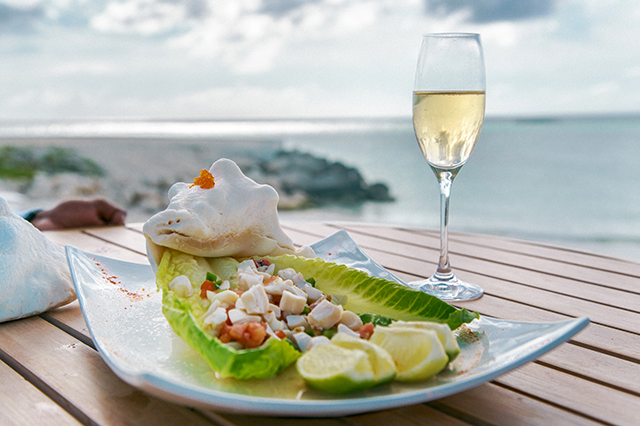
A visit to Bimini wouldn’t be complete without a taste of the island’s most popular dish, conch salad. This local favorite can be found at small shacks throughout the island including Stuart’s Conch Stand and Joe’s Conch Shack. You will also find a delicious version at Resorts World Beach Club, with endless views of the Caribbean beyond your table; pair it with a tropical hand-crafted cocktail while you take in Paradise Beach at sunset. Made with a good dose of citrus and spicy pepper sauces, conch meat plays well with green peppers, cucumbers, tomatoes, and celery.

Bahamian Fish Stew at a Welcoming Local Restaurant

With the abundance of fresh fish at their fingertips, Bahamian chefs have long been making creative dishes like fish stew. They begin with a sauce of tomato, onion and celery seasoned with spices. Ingredients vary a bit by restaurant, but all feature a base of delicious seafood such as pan-fried snapper or grouper under all that delicious sauce.

Bimini Bread French Toast at a Resort Buffet

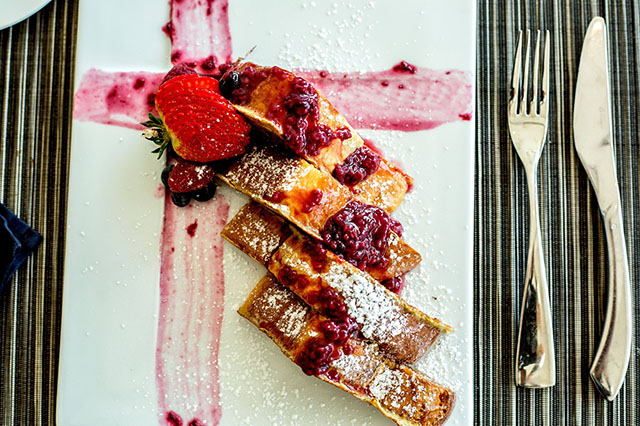
Sweeter and more buttery than a traditional loaf of bread, Bimini’s famous variety lines the shelves at local bakeries. Its soft texture makes it ideal for French toast, which is exactly how The Tides prepares it each morning. Enjoy a little slice of heaven at the breakfast buffet with powdered sugar and your favorite toppings for a twist on this sweet treat. Once your taste buds are piqued, explore the island’s bake shops to find varieties including coconut and cinnamon raisin, giving yourself a good excuse to keep enjoying the treat throughout your trip.

Getaway. Hideaway. Play Away…Every Day!

Resorts World Bimini is 750 acres of pristine Bahamas beachfront and turquoise waters. Easily accessible from Miami and Fort Lauderdale, it is the perfect midweek getaway.

Getaway Now!

Baked Crab at a Seafront Cafe

Around the island you will find plenty of cafes with laid-back atmospheres and friendly crowds. When you’re in the mood for a crunchy bite, head to one of these relaxing spots and order like a local. Crab baked in its original shell is a traditional dish that Bahamians treasure for good reason. Chefs across Bimini cook the crab and then break it apart, reserving the original shell for serving. Once the meat is stuffed into the shell with a zesty breadcrumb topping, the dish is baked until the right amount of crunch develops.  The result is a satisfying texture with just the right amount of seasoning.

Sushi at a “Top Chef ” Winner’s Venue

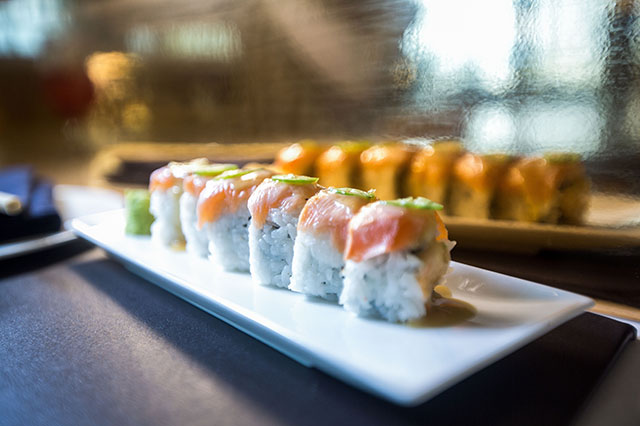
When it comes to sushi, only the freshest catch will do. That’s exactly what you will find at The Sushi Bar, a 24-seat venue offering the ultimate sea-to-table experience. At the open kitchen, led by “Top Chef” winner Hung Huynh, watch as sashimi, nigiri and a host of other Asian-inspired dishes are prepared in front of you. Try the signature Sun of a Beach roll featuring salmon, shrimp, miso honey and a sliver of spicy jalapeño. Handmade dumplings and savory noodles also top the list of must-try menu items at this intimate spot.

Bootleg Paradise Cocktail at Hemingway’s

Hemingway may have journeyed around the world, but the intimate island of Bimini was his beloved escape and favorite place to pursue big game fish. The island honors him by celebrating his legacy and cherishing works including “The Old Man and the Sea” and “Islands in the Stream.” Named after the famed writer, the in-casino sports bar at Resorts World Bimini offers casual fare with a twist, like spicy wings marinated in tamarind sauce and jalapeño tempura. The bar’s signature Bootleg Paradise cocktail includes white rum, gin, coconut, and mango vodka, for the ultimate in tropical flavors. Linger a while before testing your luck at a casino game.

Bahamian Cocktails at a Lagoon Pool Bar

Why leave the pool to order a cocktail when you can swim right up to the bar? At Oasis, you can enjoy the comfort of the water while sipping on an island cocktail like a rum-based Bahama Mama with just the right amount of fruit flavor. Of course, an island adventure wouldn’t be complete without a classic piña colada or goombay splash, each of which features a good dose of pineapple juice. Peruse the specialty cocktails on the menu to decide which tropical flavors you’re in the mood for. When you’re ready for another, just swim right up again.

Johnny Cakes at a Hotel Snack Bar

Think of johnnycakes as fluffy, pan-fried cornbread. Simple is best, and chefs around the island know how to turn butter, flour, milk and sugar into what may just become your next new craving. Of course, frying is the final step that takes the batter to golden perfection, with a crispy outside and perfectly fluffy middle. When your mid-day hunger takes over, order them at the Lobby Bar at the center of Resorts World Bimini’s hotel, which offers quick bites throughout the day and decadent desserts at night.

The vibrant culture of Bimini is as alluring as its natural beauty, making it the ideal destination for a culinary adventure. While visitors may head to the island for its famed beaches, they soon become immersed in the beat of calypso-style goombay music while they fall for the incredible flavors of its traditional cuisine.

With ten restaurants, bars, and cafes, Resorts World Bimini offers classic Bahamian specialties and innovative dishes served just steps from the Caribbean.

Subscribe to Your AAA Newsletter

Sign up and receive updates for all of the latest articles on automotive, travel, money, lifestyle and so much more!

The Best Epcot Restaurants: Eating Around the World

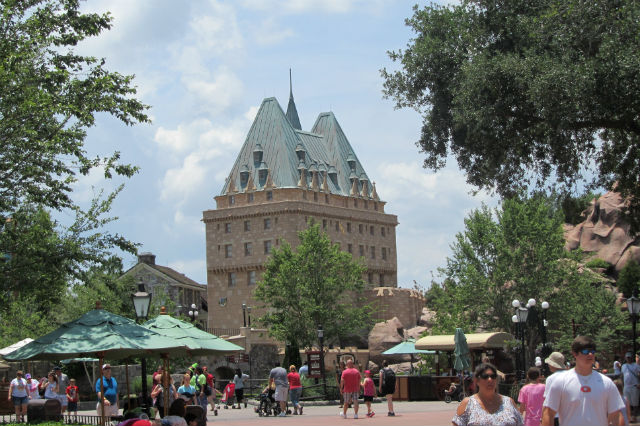
Nobody does theme park food like Disney, and no Disney park does it quite like Epcot. Epcot’s theming makes it a perfect home for delicious food from across the world. If you’re unfamiliar, Epcot is like a perpetual world’s fair, with the front half of the park (Future World) dedicated to science and innovation and the back half of the park (World Showcase) populated by a series of pavilions inspired by different countries. The best Epcot restaurants are located in World Showcase, where the main attraction is food and drink.

There are 11 pavilions in World Showcase: Mexico, Norway, China, Germany, Italy, America, Japan, Morocco, France, Great Britain and Canada. Each pavilion is home to restaurants, booths and shops filled with food from its corresponding country. With multiple dining options  Epcot’s World Showcase offers a plethora of restaurants to choose from. Here are some of our favorites, plus recommendations for the best Epcot restaurants for fireworks viewing.

Biergarten – Germany

There’s no better atmosphere for dining in Epcot than at the Germany pavilion’s Biergarten. As soon as you walk in, you’ll be transported to a charming Bavarian village at nighttime – and a polka band has just set up shop in the middle of the town square! This all-you-care-to-eat buffet is filled with rich, hearty German food that will have you going back for seconds (and maybe thirds, if you weren’t so full). Since this is a biergarten, beer flows by the liter (or half-liter). If you want to try a variety of brews, order the German beer flight. My personal favorite, however, is the Schöfferhofer Grapefruit Hefeweizen. Prost!

Via Napoli – Italy

Good pizza? In Florida? Impossible! But Via Napoli is the exception. Inside this restaurant, you’ll think you’re actually in Italy. Three gigantic pizza ovens line a whole wall, with carved faces, mouths full of fire and the names of famous Italian volcanoes. Via Napoli has delicious Italian fare no matter what you order, but come on, you should get the pizza.

Akershus Royal Banquet Hall – Norway

Akershus offers one of the best character dining experiences at Walt Disney World. You and your little ones will be treated to a meal with a rotating cast of princesses like Ariel, Belle, Snow White and more. Akershus serves traditional Norwegian food, which some pickier customers might not take to, but there are also a few more familiar options on the menu, like pasta, chicken and pork tenderloin. The kids’ menu is similarly accessible to those who are there for the princesses rather than the food.

Le Cellier – Canada

Though not quite as exotic as some other pavilions, Canada is not fooling around when it comes to its food. Le Cellier is a steakhouse with a faintly French Canadian theme, and it’s one of the most popular restaurants in Epcot. Try the filet mignon, prime rib-eye steak or maple-brined chicken breast. But don’t forget to have some poutine! Le Cellier offers both beef bourguignon and crispy soy-glazed pork belly poutine. Yum!

Monsieur Paul – France

Tucked away in the France pavilion and up a sweeping spiral staircase, Monsieur Paul is the most upscale and expensive restaurant in Epcot. The white tablecloths, abundant wine cellar and refined decor give the restaurant an air of fine dining – even though most of the patrons are sunburned theme park guests. Monsieur Paul does have a dress code, but it’s a bit more relaxed than it might have been if it wasn’t situated in the back of a theme park. As long as your clothes are in good taste and good condition, you’ll be fine. If I were you, I’d stick to the prix fixe menu, since dinner can get a little pricey. If you want a taste of France without such an exorbitant price tag, try Chefs de France, which is right downstairs.

epcot restaurants
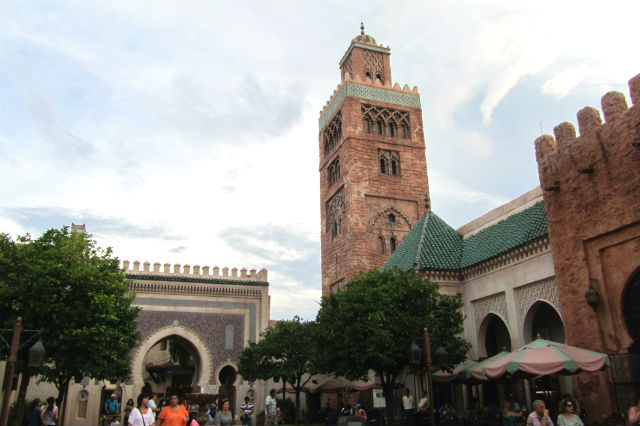
Wind your way through the Morocco pavilion to find Restaurant Marrakesh. (Photo: Marisa Perjatel)

Restaurant Marrakesh – Morocco

The Moroccan pavilion is deep, filled with secret surprises and lots of photo ops. All the way at the back of the pavilion is Restaurant Marrakesh, which serves up traditional Moroccan food. Since this restaurant is almost hidden away from the rest of the park, it’s actually not too difficult to get seated without a reservation. At Restaurant Marrakesh, belly dancers dance to live Moroccan music on the central dance floor, giving the whole restaurant the feeling of a celebration. Though there is some Americanized fare available on the menu, don’t let that stop you from trying the dishes that include couscous, roasted lamb, kebabs and tagine.

Teppan Edo – Japan

What’s dinner without a show? Teppan Edo in Epcot’s Japan pavilion is a teppanyaki-style restaurant for diners of all ages. “Teppanyaki” is a style of cooking usually referred to as “hibachi” in America. Diners are seated around a large, iron griddle (a “teppan”) while a teppanyaki chef cooks their meals right in front of them. The chefs at Teppan Edo might play with your food – performing tricks and feats of skill while they chop and grill your dinner. The adults at the table will also enjoy the wide selection of sake. Speaking of the adults at the table, check out our list of the best things to do at Disney World for adults.


Fireworks: Where to Sit

These restaurants are all well and good, but they’re INSIDE! What if you’re eating while Epcot’s nighttime show starts? Right now, the nighttime “Illuminations” show takes place over World Showcase Lagoon, the lake in the middle of World Showcase. Though Illuminations is on its way out, the new nighttime fireworks show will more than likely be in the same place.

The Rose and Crown Pub in the Great Britain pavilion has both indoor and outdoor seating, so make sure that you’re seated outdoors if it’s time for the fireworks to start.

La Hacienda de San Angel in the Mexico pavilion is on the other side of the World Showcase Lagoon, and it offers brilliant views of the fireworks through its wide windows. If you can’t get a reservation, go to La Cantina de San Angel instead – it’s Mexico’s open-air quick service restaurant, and it’s right next to the water.

Spice Road Table in the Morocco pavilion offers terrace seating right on the edge of the lagoon. It’s much easier to get a reservation here than at the Rose and Crown or La Hacienda de San Angel, since it’s not Morocco’s main restaurant (and since tapas-style dining just isn’t for everybody).

You can also view fireworks from Monsieur Paul or Tokyo Dining, but neither of them get you as close to the action as the others.

What are the best Epcot restaurants in your opinion? Let us know in the comments below!

Save on your next Disney vacation when booking with AAA.

Subscribe to Your AAA Newsletter

Sign up and receive updates for all of the latest articles on automotive, travel, money, lifestyle and so much more!

Putting Your Old Cell Phone to Good Use

Given how attached we are to our phones, you’d think we’d never want to give them up. This is not the case, however, when every few years newer, faster and sleeker models become available.

An estimated 1.5 billion cell phones were bought in 2017, according to Gartner, a tech research company. And now, many of us feel stuck with our old phones. We let them take up valuable space, gather dust and grow more obsolete by the second.

We don’t want our old phones sitting around, but we can’t just throw them away. In 2016, 44.7 million tons of electronic waste was discarded, and only 20% of it was disposed of properly, according to a U.N. study.

Old mobile phones are harmful to the environment. They were identified as hazardous waste by the Environmental Protection Agency, and disposing of them improperly risks creating accidental fires, explosions or worse.

Luckily, there are options when it comes to dealing with out-of-date devices. You can declutter, contribute less to our e-waste problem and potentially save money by donating, recycling or repurposing an older device rather than buying a new one.

It’s finally time to dig out those old cell phones and put them to better use.

Repurpose  

First, you can try giving new life to an old phone. Mobile phones without service are still able to call 911, and so your old phone could become an emergency backup. Keep it in your home, car, emergency kit or other location that will best serve you in a potential time of need. During a power outage or if your car breaks down – and your everyday phone is out of battery, broken, lost or simply left elsewhere – having a backup will come in handy. Should you decide to leave a phone in your car, it could also be used as a tracker in case your vehicle is ever lost or stolen.

An old cell phone can act as other kinds of devices too. It could replace an alarm clock, GPS, iPod or MP3 player, recorder or remote control. It could also be revamped as a gaming or security device with just a few downloaded apps.

If you’re going out somewhere and are worried your phone could get damaged by the environment – by sand on the beach, getting wet at a lake or pool or being dropped while biking, hiking or rock climbing – you can use an old phone as a temporary replacement.

Finally, you could gift it to a friend or family member. By giving an old phone to your child – either as an actual phone or limited just for e-books, music, photos etc. – you could use the opportunity to teach a lesson in responsibility.

Donate

There are many deserving causes you can donate used devices to. These organizations improve the lives of people from all walks of life, including patients, soldiers, students and victims of domestic violence. By donating, you’ll be putting your old phone to good use and helping someone in need.

Cell Phones for Soldiers

This national nonprofit works to provide “cost-free communication services and emergency funding to active-duty military members and veterans.”

According to the Cell Phones for Soldiers website, they have contributed “more than 300 million minutes of free talk time by sending more than 5 million calling cards to servicemen and women and recycling more than 15 million cell phones.”

You can help our soldiers overseas stay connected to their friends and families as well as help improve the lives of those who have already served.

Hope Phones (Medic Mobile)

This nonprofit organization strives to improve healthcare programs in the hardest-to-reach communities in Africa, Asia and Latin America. According to the Medic Mobile website, funds from donated and recycled smartphones go to “projects supporting health workers in 26 countries around the world.”

Healthcare providers use the phones to communicate about emergencies, monitor essential medicine stock, register pregnancies, track disease outbreaks faster, treat illnesses door-to-door and much more.

You can help communities around the world receive better care.

National Coalition Against Domestic Violence

The NCADV funds programming that “empowers victims of domestic violence, connects victims and survivors to helpful resources, and helps them remain free from abuse.” They also support legislation and other organizations working to stop domestic violence.

The group has kept nearly 3 million phones and over 1 million accessories out of landfills. They received a Responsible Recycling certification from the EPA, and so “the materials they collect are recycled safely, reliably and through means that minimize waste and errors,” according to their website.

You can help the NCADV work toward their vision of a national culture where everyone is free from domestic violence.

Recycle

If your old phone is broken or too outdated for repurposing or donating, it can still be recycled. Cell phones contain various precious metals, glass, plastics and other materials that can be reused and/or recycled.

“For every million cell phones we recycle, 35,000 pounds of copper, 772 pounds of silver, 75 pounds of gold and 33 pounds of palladium can be recovered,” according to the EPA.

To find a recycling facility near you, check out this interactive map.

Additionally, companies like Best Buy, HP, LG, Samsung and Staples offer a variety options for freeing yourself from old phones. These include in-store, event, mail-in or online buybacks or returns as well as recycling and donation options.

Whether you decide to donate, recycle or return your old device, run through a quick security check-list first. It’s always smart to safeguard yourself. First, be sure you’ve cancelled the cell phone’s service. Make sure there are no photos, videos, contact information or other content you’d like to keep still on the device. Delete any personal data, remove the microSD and/or SIM cards and finally reset the phone to return it to its original factory setting. If you’d like more specific information on wiping your devices clean, see Consumer Reports.

We don’t have to let our old cell phones sit idly. There are plenty of options for getting the most out of them. Put your old phones to better use.

How you have donated, repurposed or recycled an old cell phone? Tell us in the comments.  

Subscribe to Your AAA Newsletter

Sign up and receive updates for all of the latest articles on automotive, travel, money, lifestyle and so much more!

Bog Down: Visit Cranberry Bogs in Massachusetts

It’s a hot July morning and I’m driving down a winding dirt driveway in the middle of nowhere in West Barnstable on Cape Cod, wondering if I’ve taken a wrong turn. A cranberry bog should be around the next corner, I tell myself. Finally, I end up flanked by bogs on each side of the road, filled with fields of green cranberries growing in the hot sun.

I find David Ross, the owner of Cape Cod Cranberry Bog Tours, who waves me down, and I pull up next to his truck. Casually dressed in jeans and a Cape Cod Beer T-shirt, he tells me there are five bogs here that comprise some 80 acres and several varieties of cranberries. This is just one of his Cape Cod Cranberry Bog Tours properties.

Bog Life

On the sunny summer day that I visited, he tells me that the bloom season has just ended; the white cranberry flowers have turned to berries. They are small and green and some of them are beginning to show a slight tinge of red. Ross says that while visitors are usually focused on the one-day harvest in October – that seemingly magical day when the robust red berries float to the top of the water-lined bog before being rounded up – cranberry growing is a 365-day a year process.

Ross purchased the bogs in the 1980s and spent his entire first year under the tutelage of the former owner whom he affectionately refers to as the old-timer. “When I first bought this place, the old-timer would call me at five o’clock every morning and ask, ‘You ready?’,” Ross reminisces. “He was testing me, seeing if I was worthy of bog life. Every morning I’d tell him, ‘Sure am.’”

Just over the bridge, Middleboro, Mass., is known as the “Cranberry Capital.” Dawn Gates-Allen, director of member and financial services for the Cape Cod Cranberry Growers’ Association grew up in Middleboro, and cranberries are in her blood. Gates-Allen is a fourth-generation cranberry grower. “I was born into this industry and I dragged my husband into it,” she laughs. Her great-grandmother started growing bogs in Rochester and Freetown, Mass., nearly 100 years ago.

Middleboro is also home to the headquarters of Ocean Spray, which is not just a company that manufactures cranberry juice and other cranberry-related products, but is a grower-owned cooperative which the majority of Massachusetts growers belong to.

Cranberries blossom on the vine until July before they start turning into berries. (Photo: AD Makepeace).

What Is a Bog? 

Simply put, a bog is a wetland that has one continuous dyke around it, according to Glen Reid, assistant manager of cranberry operations at AD Makepeace Company in Wareham, Mass. The company was started by Abel Denison Makepeace in 1854 and now has the distinction of being the world’s largest grower of cranberries, with some 2,000 acres of operations and 14,000 acres of properties in Massachusetts.

On cranberry bog tours, here and at other farms, visitors can learn the history of cranberry bogs in Massachusetts, as well as the fruit’s unique growing and harvesting process.

Corralling cranberries on harvest day. (Photo: AD Makepeace).

Growing and Harvesting 

The cranberry vine, which is related to a rhododendron, goes dormant in the winter, and periodically the entire bog is put underwater for about two weeks so that a layer of ice will protect the developing flower buds from the elements.

Sometimes, every three years or so, a layer of sand will be spread across the bog to help the plants re-root themselves and ward off pests. As the plant will produce berries for two or three seasons, this isn’t necessary every year; in fact, some vines have been continuously producing for 100 years.

In the spring, the water is pumped out and the plants will begin to flower. “Then we bring in the bees,” says Reid. It takes two bee hives per acre (at about 40,000 bees per hive) to pollinate the flowers. Flowering continues into July, when most or all flowers have become berries.

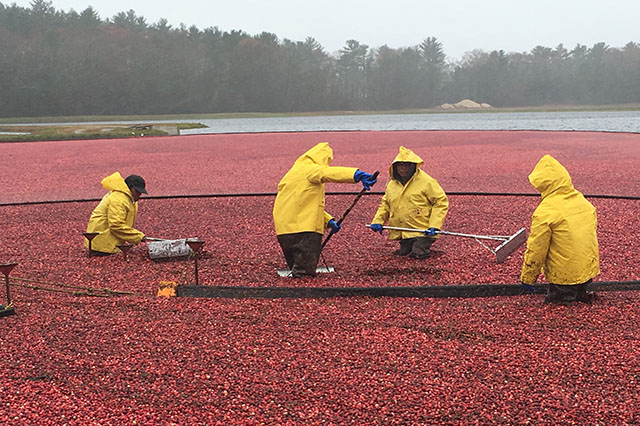
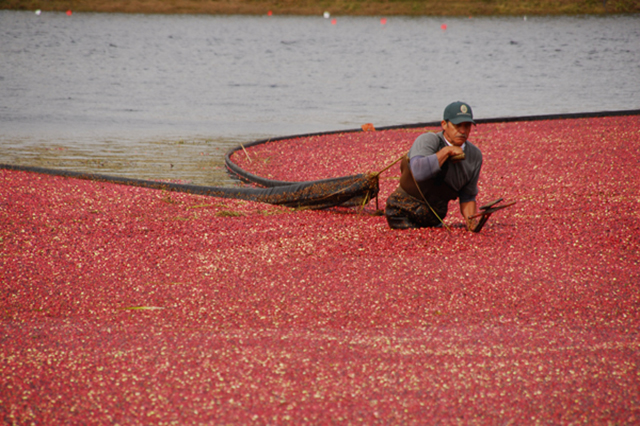
It takes until mid-September, early October for the berries to fully develop their signature red color. Then, it’s harvest time! The bog is flooded, and a picking machine – a contraption that looks like a big lawnmower – shakes up and dislodges the cranberries from the vine, causing them to float up to the top to be gathered. It’s the quintessential cranberry bog photo op.

Cranberry Bogs in Massachusetts

Due to the Covid-19 pandemic, the Cape Cod Cranberry Growers’ Association will not be having in-person tours for 2020. Check their website for virtual tours being offered during the harvest season and to plan for next year.

Individual farms may be doing tours on a small scale. See websites below for more information and safety requirements.

Chamberlain Farm
12 Friend St., Berkley
(508) 880-2817

Spring Rain Farm
692 Caswell St., East Taunton
(508) 824-3393

Stone Bridge Farm
86 Leonard St., Acushnet
(508) 951-1551; (508) 951-1902

Fresh Meadows Farm
39 North Main St. (Route 58), Carver
(508) 866-7136; (508) 840-0867

Flax Pond Farms
58 Pond St., Carver
(508) 866-2162

Edgewood Bogs
73 Tremont St., Carver
(508) 866-1149

Benson’s Pond
6 Pine St., Middleboro
(717) 202-5841

AD Makepeace Company
158 Tihonet Rd., Wareham
(508) 295-1000

Willows Cranberries
2667 Cranberry Hwy., Wareham
(508) 295-9990

P.J. Cranberries
60A Roos Rd., Sandwich
(508) 367-9951

Annie’s Crannies
36 Scarsdale Rd., Dennis

Brooks Academy Museum
80 Parallel St., Harwich
(508) 432-8089

Cape Cod Cranberry Bog Tours
The Governor Prence Inn
66 Route 6A, Orleans
(508) 237-5478

Have you ever been on a cranberry bog tour? Does it sound like something you would be interested in? Tell us in the comments!

Search AAA Discounts for savings on more nearby tours, attractions and restaurants.

Subscribe to Your AAA Newsletter

Sign up and receive updates for all of the latest articles on automotive, travel, money, lifestyle and so much more!

Debunking the Myths and Misconceptions of Organ Donation

There are more than 113,000 Americans currently waiting for a lifesaving transplant. Every 10 minutes, another individual is added to the registry and approximately 20 people die each day while waiting for the organ they desperately need to survive. What’s more heartbreaking is that these deaths are avoidable.  There is a significant shortage of registered organ donors nationwide, and rampant myths and misconceptions are keeping many people from saying yes to organ donation. The overarching truth is that one of the greatest gifts an individual can give is life.

It’s time to debunk the barriers to becoming a registered organ donor with these five common myths followed by the truth:

Myth: Doctors won’t work as hard to save my life if I am an organ donor.

Truth: This is the myth we hear the most often, when in fact it could not be further from reality. All doctors take a Hippocratic oath to save lives and are deeply committed to their duty. Organ donation is only broached once it is crystal clear that nothing more can be done to save a patient’s life.

organ donation

Donation is handled by a completely different team than the doctors working to save your life. In most cases, the emergency team will not know that you are a registered organ donor because they do not have access to the registry.

Myth: I’m too old to be an organ donor or I’m not healthy enough to be an organ donor.

Truth: Many people choose not to register because they assume that their organs are too old and will not be useable. In many cases, this is simply not true. Advancing age does not often prevent donation. In fact, the oldest donor in history was a 93-year-old woman who donated her liver in New York. The recipient is alive and well because of her selfless gift.

Do not rule yourself out. Even with an illness, you may be able to be a lifesaving organ donor. Register and allow the doctors to decide if you’re able to donate when the time comes.

Myth: All donated organs go to rich and famous people.

Truth: The organ transplant waiting list is blind to celebrity and wealth. The system is managed by the United Network for Organ Sharing, and organs are matched with recipients based on things like blood type and other medical information. Race, income and celebrity are never factors in determining who gets an organ transplant.

Myth: If I’m an organ donor, I won’t be able to have a regular funeral.

Truth: Organ donation does not disfigure the body or delay funeral arrangements. When organs are recovered for transplant, it is done with deep respect for the person and with care for the body. It is similar to any other surgery that takes place, and medical teams work hard to ensure that families can have an open casket funeral.

Myth: Organ donation is against my religion.

Truth: Most major religions support the principles of organ donation and transplantation. In fact, many consider the gift of life to be the greatest legacy a person can leave.

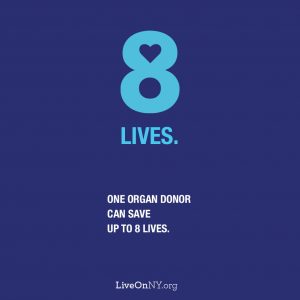
Choosing to be an organ donor means choosing to save a life and leave a lasting legacy. One person can save up to eight lives and enrich dozens more through tissue donation.  Taking a few seconds now to sign up can add many years to a person’s life down the road. To learn more about how you can register, visit LiveOnNY.org.

By Helen Irving, President & CEO- LiveOnNY

Subscribe to Your AAA Newsletter

Sign up and receive updates for all of the latest articles on automotive, travel, money, lifestyle and so much more!

How to Visit Luxury Destinations in the Northeast on a Budget

Getaways are a great way to relax, recharge and ease your mind from the daily grind. But let’s be honest: The hefty bill at the end of a trip can put a damper on things. Even money-conscious travelers can enjoy a getaway to expensive vacation spots in the Northeast. AAA Travel agent Jeffrey Pearson shared his insider tips on how to save at luxury destinations in the area.

Book a Smart Stay and Save

Summer brings warm weather, sunny days, the end of school and a bite from the travel bug. Although the summertime seems like an ideal time to get away, Pearson suggests avoiding the tourist season of any luxury destination to keep costs down.

“Visiting a luxury destination during the off-season is your best guarantee for low prices,” he said.

Many hotels offer special rates during fall, winter and spring for significantly less than during tourist season. And to get the most bang for your buck, shy away from the temptation of a weekend away.

“If you’re really looking to save, consider vacationing during the week instead of on the weekend,” Pearson said. “Weekend rates tend to be higher.”

Keep an eye out for seasonal packages at local hotels. Many hotels, like AAA Five Diamond Rated Ocean House in Watch Hill, R.I., and Thee Diamond Rated Gurney’s Montauk Resort & Seawater Spa in New York, provide amenities, one-of-a-kind experiences, resort credit and more included with your stay at certain times of the year.

Take Advantage of Affordable Eats

You want to taste the local cuisine, but you don’t want to break the bank. Pearson says the solution is to consider eating out based on your budget.

“Opt for the lunch or breakfast option instead of the pricey dinner,” he said. “The burger at the local tavern could be just as tasty as the fancy steak dinner at the trendy restaurant.”

Breakfast and lunch choices at restaurants are often cheaper meal options than eating out at the end of the day. If you’re still looking for that perfect dinner, eat a light breakfast or lunch with snacks throughout the day. You can still save a little money during the day to make for a lighter bill at night.

If you find that the call to indulge in the local food scene is just too strong, consider visiting a luxury destination during a restaurant week. Locations across the country, including Newport, R.I., and Cape Cod, host restaurant weeks annually. Enjoy multi-course, prix fixe lunches and dinners at some of the best eateries around for an affordable price, based on how much you want to spend.

luxury destinations on a budget

Enjoy Some Budget-Friendly Fun

A little research goes a long way. Pearson urges anyone planning a getaway to do their homework beforehand.

“Think about the interests of the people you’re traveling with,” he said. “If you’re traveling with kids, you don’t want to plan a day that will make them miserable.”

Additionally, you don’t want to make an itinerary that will bust your budget. There are plenty of fun activities in luxury destinations available for an affordable price or completely free of charge. Pearson recommends taking advantage of the recreational opportunities in the area, like hiking nature trails or visiting famous landmarks. Here’s some inspiration to complete your daily itineraries before your trip.

The Hamptons: Montauk Point State Park

If you’re looking for some outdoor fun on the cheap, look no further than this natural area in Montauk. There are plenty of nature trails to explore and activities to try both on land and in the water. Montauk Point State Park is a great place to get some cross-country skiing in if you’re traveling during the snowy season. The best part: Admission is charged by car.

Newport: Cliff Walk and Prescott Farm

The Cliff Walk provides stunning views of Newport’s eastern shore and winds through a portion of the grounds of the Newport mansions. Winding 3.5 miles, this National Recreation Trail is one of Newport’s most popular attractions, combing nature and history in an unforgettable walking path.

Prescott Farm, just over the line in Middletown, R.I., has ties to the American Revolution, making it a wonderland for any history buff. The beautiful gardens are taken care of by a team from University of Rhode Island’s Master Garden Program. Prescott Farm also offers workshops and youth programs seasonally.

Both attractions offer free admission.

Cape Cod: Cape Cod Potato Chip Factory

Get a chance to see how these famous kettle-cooked chips are made and manufactured daily. Located in Hyannis, the Cape Cod Potato Chip Factory provides free tours to more than 250,000 visitors every year. The self-guided tour shows how potatoes are turned into crispy chips, culminating in free samples to bring home.

The Berkshires: Berkshire Botanical Garden

Spanning 15 acres, the Berkshire Botanical Garden is one of the region’s oldest public display gardens, featuring thousands of native plants. The greenhouses and education center are open year round, where a variety of workshops and classes are held, as well as the center house, which showcases art pieces, a botanical library and more. Visit during the off-season for free admission, or on Tuesdays May 1 through Columbus Day for half-price admission.

Do you have any money-saving travel tips? Share in the comments!

Check out AAA member exclusive discounts to local attractions, restaurants and more.

Subscribe to Your AAA Newsletter

Sign up and receive updates for all of the latest articles on automotive, travel, money, lifestyle and so much more!

All Ears on Hearing Wellness

After arthritis and heart disease, hearing loss is the most common physical condition in adults. According to the National Institute on Deafness and Other Communication Disorders, approximately 37.5 million adults in the U.S. suffer from hearing loss. That equates to about one in six U.S. adults.

With the condition being so prevalent, it is important to know the causes, preventive measures and possible treatments for hearing loss.

Types of Hearing Loss

Sensorineural

When inner ears nerves become damaged and can no longer transmit signals to the brain it is referred to as sensorineural hearing loss. Noises, particularly speech, will often sound like mumbling to patients suffering from this condition. Most often, sensorineural hearing loss is permanent and is not medically or surgically treatable. However, patients can be helped with the use of hearing instruments.

Conductive

Conductive hearing loss is caused by disorders in the outer or middle ear that prevent sound from carrying to the inner ear. It can be caused by such things as an ear infection, tumor, trauma or fluid or an object in the ear (such as wax buildup). This condition causes noise to sound faint, distorted or both. Conductive hearing loss can be treated as long as it is done so early on.

Mixed

As the name implies, mixed hearing loss comprises both sensorineural and conductive components. It is an indicator that there are issues with both the inner ear as well as the outer and/or middle ear.

Causes

There is a long list of causes that can contribute to hearing loss. Some of the most common are:

Presbycusis

Presbycusis simply refers to the gradual loss of hearing that occurs as we age. According to Your Hearing Network, age-related hearing loss occurs in one out of three people over the age of 60 and two-thirds of the population over the age of 70.  Presbycusis is the most common type of Sensorineural Hearing Loss and is most commonly the result of changes in the inner ear of a person as they age.

Noise

Sudden or prolonged exposure to loud noises can damage the hair cells in your ears and lead to temporary or permanent hearing loss.

Trauma

Trauma to your ears can damage your eardrum. This includes everything from having an object get inserted into your ear, a viral infection and even experiencing pressure difference such as from plane travel or scuba diving.

Wax

Ear wax serves an important purpose to lubricate, protect and keep ears clean. However, if your body produces too much wax it can block sound from reaching your inner ear.

Oxotoxicity

Oxotoxicity refers to anything that may be toxic or damaging to the ear. This is mainly a concern as a side effect of other medications you may be taking. For example, the chemotherapy needed to treat cancer may cause hearing loss.

Diabetes

Diabetes cause circulatory issues and other conditions that can contribute to hearing loss. In fact, the National Institute of Health found that hearing loss is about twice as common in adults with diabetes compared to those who do not have the disease.

Otosclerosis

Otosclerosis is a hereditary disorder characterized by bone overgrowth in the inner ear that causes progressive hearing loss.

Lifestyle Impact

Hearing loss can have a dramatic effect on your everyday life.

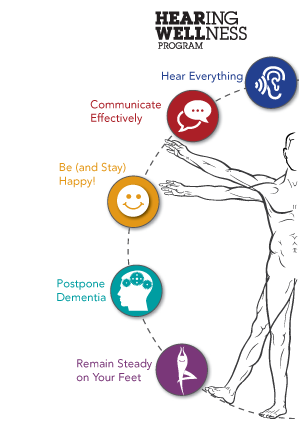
Proper hearing ability allows you to both understand and communicate with people and the world around you, which can significantly improve your quality of life. In fact, Your Hearing Network found that 36% of patients who begin wearing hearing aids experienced improved overall mental health.

But we use our ears for more than just hearing sounds. Among other roles, they play a big role in controlling our balance. Patients with hearing loss suffer falling incidents at a rate three times higher those with good hearing.

Believe it or not, good earing can also help postpone dementia. Ears don’t just hear sounds, they identify frequency, pitch, location and many other details instantly. Absorbing all this information helps keep your mind sharp. Your Hearing Network states that people with moderate or severe hearing loss have a 55% increase in risk of dementia.

Preventing Hearing Loss

The best way to treat hearing loss is to try to prevent it from happening in the first place. Therefore, you should get your hearing checked regularly. For adults over the age of 55, this means on an annual basis. Not only is early diagnosed hearing loss usually easier to treat, but it can also be an indicator for other health problems.

Loud noises and high decimals can wreak havoc on your ears. Prolonged exposure to these sounds can severely damage your hearing. If you find yourself in an environment where these noises are unavoidable, make sure to wear earplugs.

This may sound counterintuitive but avoid Q-tips and cotton swabs when removing excess ear wax. These products push wax deeper into the ear canal, blocking sound from getting to the inner ear. Instead, use ear wax removal kits that loosen the wax to be washed out. Or have a doctor remove the wax.

Possible Treatments

If you do suffer from hearing loss, there are numerous hearing aid options that can help restore your hearing. An audiologist can help you choose the one that best suits your condition and lifestyle. Find a hearing healthcare professional near you.

Get more wellness tips.

Subscribe to Your AAA Newsletter

Sign up and receive updates for all of the latest articles on automotive, travel, money, lifestyle and so much more!

Teen Driver Technology That Can Help Young Drivers Stay Safe

As a parent, there’s nothing more terrifying than having a new teen driver. Is it an exciting and tremendous milestone? Yes. Do you trust them? Yes. It’s just that you don’t trust everybody else. As an experienced driver, you recognize the countless dangers of joining others on the road. You’re worried (and rightfully so) that your child’s safety is no longer in your hands. While that’s a scary thought, there are a few ways to make this rite of passage feel less like an accident waiting to happen. By utilizing the new teen driver technology and resources available, adding a new driver to the family can be an easy and painless experience.

New teen driver technology in cars

On top of new features like blind-spot assistance, automatic parking, and other safe driver technology options, many car manufacturers are exploring ways to ensure the safety of the teen driver.

In 2016, leading manufacturers like Ford and Chevrolet hit the market with built-in teen driver technology. Ford’s MyKey system provides custom settings to help parents enforce safe driving habits including volume limits, a “Belt-Minder” that not only chimes, but mutes the speakers until the driver is buckled up, and top speed cutoffs that prevent drivers from going over certain limits. Chevrolet’s teen driver technology offers similar features and even adds on an in-vehicle driving report so parents can track their child’s performance and coach them on safe driving habits later.

But Ford and Chevrolet aren’t the only manufacturers experimenting with this new technology. Volkswagen, GMC and others are offering their own versions of teen driver tech. In the near future, it’s likely that these teen driver safety features will be the new standard for the automotive industry.

However, for a lot of households, buying a new car with all the fancy bells and whistles is not an option. Many teen drivers get a used car for their first ride (aka the glorified hooptie.) So, how do we promote safe driving habits in older vehicles? Easy – use the smartphone for good. Cellphones and driving have always been a dangerous combo, but some apps can actually help increase the teen driver safety and improve their driving habits.

teen driver

Teen driver safety smartphone apps

The Life360 app, for both Android and iOS, is designed to keep families connected – no more wondering if Billy arrived home safe or if Sarah ever reached her friend’s house. The app provides a driver safety mode that will track locations and monitor speed, sending out text message alerts for hard braking, rapid acceleration, and even crashes. There’s also 24/7 driver care support. Other apps, like AT&T’s DriveMode works to prevent distractions from silencing notifications as soon as it detects that an individual is driving. Apple has also gone in this direction and recently released a built-in update for iOS that can detect when you’re in the car and silence notifications from apps and texts. The list of safe driving phone applications can go on, and while some programs like EverDrive are more passive and monitoring than others, it’s still better to have some form of a “don’t text and drive” reminder than none at all.

AAA teen driver resources

With all this new teen driver technology, it’s easy to forget that the promotion of safe driving habits should start at home. Not only should parents lead by example, but they should be very vocal about the potential dangers of driving and how to avoid them.

AAA’s Keys2Drive provides parents with an online teen driving resource that is not only tailored for each state, but also for each phase of the new driver experience. The website helps parents find a way to discuss potential driving risks during the “get ready” phase, provides teaching methods for the “practice” phase, and offers state laws and other important info for when your teen is ready to head off on their own. There’s also a Parent-Teen Driver Agreement that can help parents lay down rules and guidelines for new drivers in their household.

Even with all these preventive measures, accidents can happen. So remember to get covered for those unexpected accidents. AAA’s auto insurance can help keep you and your family both protected and financially stable should issues arise. You’ll be able to sleep easy at night, even when your teen driver heads off on their own for the very first time.


What kind of steps do you take to protect the new teen drivers in your household? Let us know in the comments below. For more AAA Traffic Safety resources, and to learn about our safety efforts in the community, click here.  

This post was originally published in 2017 and has been updated. 

Subscribe to Your AAA Newsletter

Sign up and receive updates for all of the latest articles on automotive, travel, money, lifestyle and so much more!

AAA Is Shifting Gears

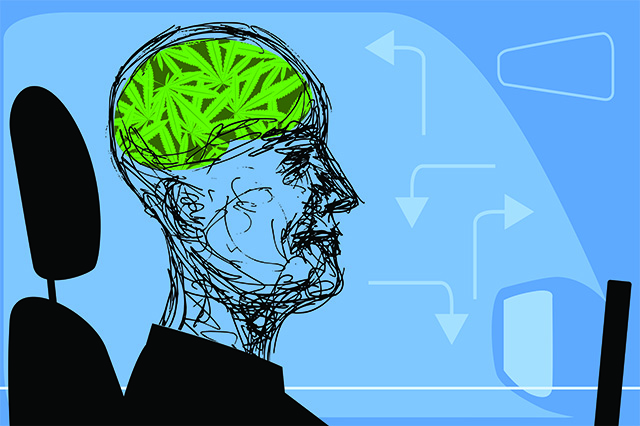
The growing threat of drugged driving, especially in states where marijuana has been legalized, is alarming, particularly with teens. According to a study by the AAA Foundation for Traffic Safety, younger drivers were more likely to say they thought it was safe to drive after using marijuana. In fact, more citations are given to teen drivers for drugs than alcohol.

That’s why our AAA Northeast traffic safety education team developed a free program to educate teens about the impact of marijuana and driving. To date, “Shifting Gears: The Blunt Truth About Marijuana and Driving” has reached over 3,000 high school students through health classes in Rhode Island and will roll out to nearby states over the next year.

Shifting Gears explores the effects of marijuana on the developing teenage brain and simulates the condition of marijuana-impaired driving by using special goggles.

It also explains that driving under the influence of marijuana is a crime.

This program has far exceeded our expectations. Not only are we educating teens, but we’re also learning a lot.

We’ve learned that teen attitudes around marijuana have shifted. Some students are very open about their drug use. Some believe marijuana is better for them than prescription drugs taken for anxiety or ADHD, because they consider it natural, even if the source is unknown and the dosage is uncontrolled.

Teens admit no one should drive drunk, but many don’t believe marijuana causes impairment.

The good news is that students are engaged in the conversations around marijuana use and driving. They’re asking questions, such as, “What impact does being high have on driving?” and “How long should I wait before driving if I have used marijuana?”

Teens are telling us they want to make safe and educated choices. Our goal is to do just that – provide information that helps keep them, and others, safe on the road.

For more information, visit AAA.com/ShiftingGears.

Subscribe to Your AAA Newsletter

Sign up and receive updates for all of the latest articles on automotive, travel, money, lifestyle and so much more!

Must-See Trending Attractions

Fly the (Eco) Friendly Skies

United airlines recently piloted its first-ever “Flight for the Planet” for World Environment Day, using biofuel, renewable resources and carbon o sets to reduce its ecological footprint. Billed as the world’s most eco-friendly commercial flight, the Chicago to Los Angeles jaunt used a 30/70% mix of biofuel and traditional jet fuel and o set its carbon emissions with carbon o set provider Conservation International. It also aimed for a zero-waste flight, using recyclable coffee cups, recyclable or compostable utensils, and beeswax lids in place of traditional plastic. The flight was part of United’s efforts to reduce its carbon footprint by 50% by 2050.

Trending: This Hotel Rocks
Seminole Hard Rock Hotel & Casino.

This Hotel Rocks

Coming soon to South Florida: the world’s first guitar-shaped hotel. It’s part of Seminole Hard Rock Hotel & Casino’s $2.2 billion plan to expand its two AAA Four Diamond Rated Florida properties. In addition to the guitar-shaped tower, the Seminole Hard Rock Hotel & Casino Hollywood will gain 800 new hotel rooms, a $125 million entertainment venue, expanded gaming, a new spa, more dining, bars, and a new day club and nightclub. The Seminole Hard Rock Hotel & Casino Tampa’s expansion includes 562 new guest rooms, more gaming, new dining venues, a bigger spa, three new swimming pools and an event center.

Trending: Aspen or Bust
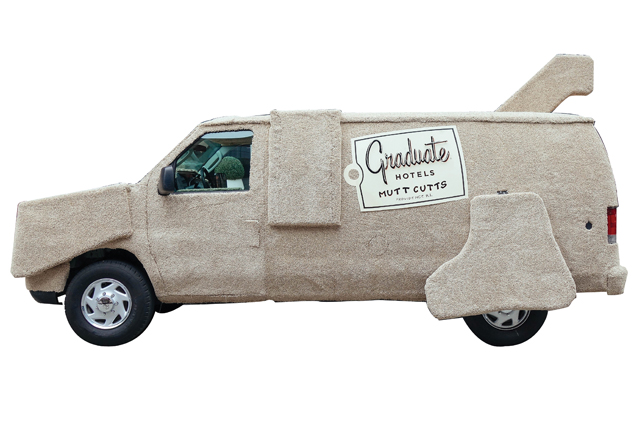
Replica of the Mutt Cutts van.

Aspen or Bust

Calling all “Dumb and Dumber” fans. To celebrate a new location in Providence, R.I., Graduate Hotels recently rolled out one heck of a welcome wagon: an exact replica of the Mutt Cutts van owned by Harry Dunne and Lloyd Christmas in the 1994 cult comedy flick. Ben Weprin, Graduate’s founder and CEO, thought it would be the perfect homage, as the film’s creators – Peter and Bobby Farrelly – hail from the Ocean State, and Harry and Lloyd drive from Providence to Aspen, Colo., during the course of the film. The Graduate van usually stops by hotel openings, football games and community events. In October it will visit State College, Pa., for the Michigan vs. Penn State football game.

Trending: A Buzzworthy Attraction
Contribute to the buzz with a kazoo.

A Buzz-worthy Attraction

Just down the road from Charleston, S.C., you’ll find a world where everything is humming and where making joyful noise is welcome; encouraged, even! Kazoobie Kazoos, America’s only plastic kazoo factory, makes everything from kazoos to kazoogles (a cross between a kazoo and a bugle) in its Beaufort facility – and the public is welcome for free weekday tours. The visits include a tour of the production facility, kazoo museum, gift shop and even the chance to make your own custom kazoo. (We’re saving our pennies for the electric kazoo.)

For more #trending, visit AAA.com/Trending.

Subscribe to Your AAA Newsletter

Sign up and receive updates for all of the latest articles on automotive, travel, money, lifestyle and so much more!

Educator Always Learns Something New on Annual Africa Trip

When Cheryl Kirschner’s middle son, Philip, left for a Peace Corps mission in Botswana last year, she booked a trip the next day to visit him with her husband, Philip. When her youngest son, Adam, decided to study abroad in South Africa a few years ago, the whole family of five, including her eldest son, Michael, traveled with him as a send-off.

Kirschner, a professor of law at Babson College in Wellesley, Mass., spends a few weeks in Tanzania each year with graduate students and previously traveled to South Africa yearly with Babson undergraduates.

You might say that Kirschner, of Newton, Mass., knows a lot about Africa. But if you do, she will correct you.

“My knowledge about Africa is really very limited. The continent is so huge and so diverse,” she said. Africa, the second-largest continent, has 54 nations and about 2,000 spoken languages.

“We know that going to Germany is different than going to Spain,” Kirschner said. “People don’t seem to think of the fact that going to South Africa is different than going to Botswana – even within Botswana.”

Back Page: Never the Same

On last year’s trip, she found Botswana’s remote Kalahari Desert region, where her son Philip is stationed, to be much like he had described. “My son said, ‘you know how when you’re parked really far from the beach, and you’re carrying a lot of stuff over sand dunes? It’s like that, only you never get to the water.’”

To find water, they headed north to the Okavango Delta and a three-night walking safari. “I have been on safari a lot but never walking. In South Africa and in Tanzania, we were in a jeep. In South Africa they carried a gun for protection. In Botswana, they don’t. You have to be quiet. You have to listen. You learn about standing downwind not upwind … That’s how we saw the female lion.”

Farther north, water is plentiful as witnessed at massive Victoria Falls. In nearby Livingstone, Zambia, British-colonial-style buildings were another notable contrast to the brightly painted metal shacks in Cape Town, South Africa, and the drab storefronts in Arusha, Tanzania, with random names like “Michelle Obama’s Coffee Shop” painted or scrawled on handmade signs.

Arusha businesses have far deeper challenges than storefront signage, as Babson’s entrepreneurial leadership students learn. Inadequate infrastructure, no access to capital and a customer base with little money are just some factors.

Some things are the same everywhere. Even amid profound economic or social struggles, as in Cape Town, “there are the joys of watching their children grow or sharing a funny story and laughing with friends,” Kirschner said.

Kirschner has made some true lifelong friends on her travels.

Tell us your AAA travel story at AAA.com/ShareYourStory.

Subscribe to Your AAA Newsletter

Sign up and receive updates for all of the latest articles on automotive, travel, money, lifestyle and so much more!

Thrive on Your Travels

Travel is good for the soul. And, with a little planning ahead, you can return from your trip with a body as healthy as the day you left.

“Even healthy individuals may need to take steps to address their health during travel,” said Dr. Elizabeth Barnett, co-director of the travel clinic at Boston Medical Center. This includes gathering contact information for your doctors, insurance company and pharmacy, plus a list of any prescription medications you may take.

At a pre-travel visit with your doctor, make sure you have an adequate supply of medications and get any vaccinations you might need.

In your travel first-aid kit, Barnett recommends carrying prescription medications in their original containers, plus a list of those medications and other supplies, including:

  • Acetaminophen or ibuprofen.
  • Anti-diarrhea medicine.
  • Anti-itch cream to treat bug bites.
  • Adhesive bandages.
  • Sunscreen.
  • Insect repellent.

When it comes to nutrition, you’ll be more likely to eat healthy with a little preparation.

“I tell all my clients to pack snacks and look at menus before dining out,” says New York-based nutritionist Amy Shapiro, founder of Real Nutrition. “The more prepared you are, the less likely you are to overeat, eat unhealthy foods or overindulge at meals.”

Check out restaurant menus and room service options online and make healthy choices before you even depart.

Shapiro’s favorite snacks to pack for the road or the plane include healthy jerky, chia bars, nuts and seeds, individual packets of nut butter, cut fruit and veggies, hard-boiled eggs and string cheese. Or look for these same options at the airport.

“Starbucks always has healthy options,” Shapiro said. “I love their egg bites and their protein box.”

At restaurants, she avoids the bread basket, focuses on protein and veggies, and limits herself to two bites of dessert “if it’s worth it.”

Complete this healthy picture by planning to get a little exercise at your destination. If the weather is fine, maybe you can take a walk. Your hotel should be able to point you in the right direction, as will the convention and visitors bureau of the city you are visiting. They might also be able to direct you to a local gym or yoga studio.

Many hotels now offer bikes you can borrow and boast top-of-the-line gym equipment, and some will even deliver gear and workout videos to your room.

Be ready, eat healthy and get moving and you’ll return home feeling fine.

To read more articles about travel-related health topics, visit AAA.com/LiveWell.

Subscribe to Your AAA Newsletter

Sign up and receive updates for all of the latest articles on automotive, travel, money, lifestyle and so much more!

Deaths Caused by Running Red Lights Reaches a 10-Year High

At least two people are killed every day in the United States by drivers running red lights…and that number is only going up.

According to a new study by the AAA Foundation for Traffic Safety, 939 people were killed in red light running crashes on U.S. roads in 2017 – a 10-year high and 28% increase since 2012. The AAA Foundation reported that 28% of crash deaths that occur at signalized intersections are the result of a driver running through a red light. Nearly half of those killed in red light running crashes were passengers or people in other vehicles and more than 5% were pedestrians or cyclists.

“The data shows that red light running continues to be a traffic safety challenge. All road safety stakeholders must work together to change behavior and identify effective countermeasures,” said Dr. David Yang, executive director of the AAA Foundation for Traffic Safety.

In the AAA Foundation’s latest Traffic Safety Culture Index, 85% of drivers said they thought running a red light was very dangerous—but nearly one third say they had done it within the previous 30 days.

So why would they take that chance? More than 40% said they didn’t think police would stop them. Nevertheless, it’s against the law and if a driver is involved in a deadly crash, it could send them to jail.

“Drivers who decide to run a red light when they could have stopped safely are making a reckless choice which puts other road users in danger,” Yang said.

Red-Light Cameras

If drivers know it’s dangerous to run red lights but still do, what is there to do about it? The Insurance Institute for Highway Safety (IIHS) found that when properly implemented, red light cameras reduced the fatal red-light running crash rate in large cities by 21%. IIHS reported that cameras reduced the rate of all types of fatal crashes at intersections with signals by 14%.

“Deaths caused by red light running are on the rise,” said Jessica Cicchino, IIHS vice president for Research. “Cameras increase the odds that violators will get caught, and well-publicized camera programs discourage would-be violators from taking those odds. Camera enforcement is a proven way to reduce red light running and save lives.”

Driver/Pedestrian Behavior

The IIHS has released a checklist for local governments to incorporate red-light cameras. But responsibility is not just on law enforcement. Changes in driver behavior are also critical to reducing the number of red-light running crashes. To prevent red light crashes, AAA recommends that drivers:

  • Prepare to Stop: Lift your foot off the accelerator and “cover the brake” when preparing to enter any intersection by positioning your right foot just above the brake pedal, without touching it.
  • Use Good Judgment: Monitor “stale” green lights, those that have been green a long time as you’ve approached the intersection. They are more likely to turn yellow as you arrive at the intersection.
  • Tap the Brake: Tap your brakes a couple of times before fully applying them to slow down. This will catch the attention of drivers who may be inattentive or distracted behind you.
  • Drive Defensively: Before you enter an intersection after the light has turned green for you, take a second after the light changes and look both ways before proceeding.

Pedestrians and cyclists should also stay safe when traveling near intersections. AAA recommends:

  • Wait: Give yourself a few seconds to make sure all cars have come to a complete stop before moving through the intersection.
  • Stay Alert and Listen: Don’t take chances and don’t wear headphones. Watch what is going on and give your full attention to the environment around you.
  • Be Visible: Stay in well-lit areas, especially when crossing the street.
  • Make Eye Contact: Look at drivers in stopped vehicles to ensure they see you before crossing the road in front of them.

To find out more about the report and other ways to prevent crashes and reduce injuries, visit aaafoundation.org.

Subscribe to Your AAA Newsletter

Sign up and receive updates for all of the latest articles on automotive, travel, money, lifestyle and so much more!

Save 10% or More at Wyndham Hotels & Resorts

Subscribe to Your AAA Newsletter

Sign up and receive updates for all of the latest articles on automotive, travel, money, lifestyle and so much more!

States With the Highest and Lowest Unemployment Rates

The current U.S. unemployment rate sits at 3.7%, according to the U.S. Department of Labor’s Bureau of Labor Statistics. That equates to about 6.1 million Americans without work.

The unemployment rate is the percentage of unemployed workers out of the total labor force. Whether someone became jobless willingly or not has no affect on their unemployment status.

“Persons are classified as unemployed if they do not have a job, have actively looked for work in the prior four weeks and are currently available for work. Persons who were not working and were waiting to be recalled to a job from which they had been temporarily laid off are also included as unemployed,” according to the BLS.

Rates are measured by the U.S. government, which releases news reports, free to the public, on a monthly basis. The following results are based on data gathered by the BLS as of July 2019.

States with the Highest Unemployment Rates

  1. Alaska
    Unemployment Rate: 6.3%
    Above U.S. Average: 2.6%
  2. District of Columbia
    Unemployment Rate: 5.6%
    Above U.S. Average: 1.9%
  3. Mississippi
    Unemployment Rate: 5.1%
    Above U.S. Average: 1.4%
  4. Arizona and New Mexico
    Unemployment Rate: 4.9%
    Above U.S. Average: 1.2%
  5. West Virginia
    Unemployment Rate: 4.7%
    Above U.S. Average: 1%
  6. Washington
    Unemployment Rate: 4.6%
    Above U.S. Average: 0.9%
  7. Kentucky, Louisiana and Michigan
    Unemployment Rate: 4.3%
    Above U.S. Average: 0.6%
  8. Illinois and North Carolina
    Unemployment Rate: 4.2%
    Above U.S. Average: 0.5%
  9. California and Nevada
    Unemployment Rate: 4.1%
    Above U.S. Average: 0.4%
  10. New York, Ohio and Oregon
    Unemployment Rate: 4.0%
    Above U.S. Average: 0.3%

Alaska is currently the state with the highest unemployment rate. It’s the largest state by area in the U.S. and has a population of almost 740,000. Additionally, Alaska contains the second coldest city in the U.S., Anchorage, which has an average winter temperature of 18.8 degrees and a record low of -38 degrees.

States with the Lowest Unemployment Rates

  1. Vermont
    Unemployment Rate: 2.1%
    Below U.S. Average: 1.6%
  2. North Dakota
    Unemployment Rate: 2.4%
    Below U.S. Average: 1.3%
  3. Iowa and New Hampshire
    Unemployment Rate: 2.5%
    Below U.S. Average: 1.2%
  4. Hawaii and Utah
    Unemployment Rate: 2.8%
    Below U.S. Average: 0.9%
  5. Colorado, Idaho, Massachusetts, South Dakota and Virginia
    Unemployment Rate: 2.9%
    Below U.S. Average: 0.8%
  6. Maine and Wisconsin
    Unemployment Rate: 3%
    Below U.S. Average: 0.7%
  7. Nebraska
    Unemployment Rate: 3.1%
    Below U.S. Average: 0.6%
  8. Oklahoma
    Unemployment Rate: 3.2%
    Below U.S. Average: 0.5%
  9. Alabama, Delaware, Florida, Kansas, Missouri and New Jersey
    Unemployment Rate: 3.3%
    Below U.S. Average: 0.4%
  10. Arkansas, Indiana, Minnesota, Montana, South Carolina and Texas
    Unemployment Rate: 3.4%
    Below U.S. Average: 0.3%

Vermont, also called the Green Mountain State, currently has the U.S.’s lowest unemployment rate. Vermont has a population of almost 630,000 and is known for its natural landscapes, including forests and mountains ideal for hiking and skiing. Vermont also produces the most maple syrup in the U.S.

According to the news release for July 2019, a majority of the industries mentioned in the report showed little change in terms of shifts in employment. Jobs in construction, government, information, leisure and hospitality, manufacturing, retail trade, transportation and warehousing and wholesale trade changed very little month to month.

Job types that saw growth are the ones you’d likely expect: financial activities, health care, professional and technical services as well as social assistance. On the other end of the spectrum, the mining industry saw a decline in July, losing about 5,000 jobs, according to the  BLS’s latest news release.

To see the rest of the U.S. unemployment rates by state, see the BLS chart, here. The data is adjusted seasonally.

Subscribe to Your AAA Newsletter

Sign up and receive updates for all of the latest articles on automotive, travel, money, lifestyle and so much more!

Bringing the Renaissance to Life at King Richard’s Faire

Ever since 1982, the realm of Carvershire has opened its gates to modern-day visitors for eight weekends of Renaissance-era fun. Nestled in the woods of Carver, Mass., “Carvershire” is the site of King Richard’s Faire, the biggest and longest-running Renaissance faire in New England.

I wanted to gain more insight into this fanciful faire, so I contacted Elizabeth Crouse, who plays Queen Anne III. The interview is edited for length and clarity.

Your AAA: What will a typical faire day be like for you?

EC: A typical faire day for me is that I will get there earlier, and everyone will be there all in costume before the gates open. We might go over some musical numbers – we have a new musical comedy this year that features the entire court!

The gates open at 10:30 and there’s a whole ceremony. The king and the court and I will be looking down on everyone (maybe harassing people) and welcoming them into the community.

There’s the one musical number twice a day, there’s jousting going on through the day that culminates in a grand joust. There’s always live entertainment and shopping – my personal favorite.

Your AAA: Do you have a favorite show at the faire?  

EC: I would have to say the Sturdy Beggars Mud Show! Last year when we came to the faire, my kids and my husband and I had such a hoot. There’s innuendos that go over the kids’ heads but will really get the adults laughing. The Washing Well Wenches are another of my favorites. Those ladies are hysterical.

Your AAA: What’s the costume like? Is it very hot?

EC: It usually is! I’m a designer, and I create different historical gowns and wedding dresses for my day job. I’ve done a lot of costume work for other faires around the nation. I have been working on this year’s costume, and I’m thrilled. Some of the fabric is the most expensive that I’ve worked with. Some of it has actual gold in the material. Still, it’s quite comfortable. The site at King Richard’s Faire is this beautiful forest, so it has a lot of shade.

Your AAA: What does Queen Anne think of the faire? Will she have a good time?

EC: Oh, of course! Queen Anne will have an excellent time! I’m thrilled to be joining this cast and to be able to entertain people – but also to be served and adored by people. As a full-time mom, going from making peanut-butter sandwiches to having someone bring me food is great.

Your AAA: Why do you think people keep coming back to the faire?

EC: There’s always something going on and something new to see. Last year I would come in costume, and every time I came I would see something different. The performers love escaping reality, and we want our guests to have a good time escaping reality too.

Have you ever been to King Richard’s Faire? What’s your favorite part of the celebration? Let us know in the comments below! 

Subscribe to Your AAA Newsletter

Sign up and receive updates for all of the latest articles on automotive, travel, money, lifestyle and so much more!