Aruba, Jamaica, Bermuda, Bahama, Key Largo, Montego…wherever your whims send you, a Caribbean cruise will get you there. While no one is going to argue that a day of leisure basking on deck in the sun is a bad thing, an excursion when you arrive at port will get you off your cruise ship and add a little variety, excitement, history or culture to your vacation. And that’s certainly not a bad thing either.
The specifics of an excursion depend on what part of the Caribbean your cruise visits: western, eastern, southern or tropical. However, any of the islands, ports and cities that your ship visits will have plenty of activities to choose from and what exists in one location will no doubt have a similar activity in another. If you are considering booking an excursion, do so early as many of the popular ones will fill up. And if you think you may change your mind, pay attention to any cancellation fees that may apply.
Dive into adventure with Caribbean cruise excursions
Get off one boat and jump onto another as you board a catamaran for a snorkel, scuba or scuba adventure. Discover a whole new world under the sea as you plunge into the crystal waters of the Caribbean, exploring coral reefs and making friends with the fishes.
For those that want to spend a little more time down under, Caribbean cruise lines offer excursions for more advanced divers. If you’re not yet scuba certified but you want to be, many cruise lines provide lessons that will teach the basics, as well as more advanced sessions. Those with open water certification can check out a shipwreck like the SS Antilla in Aruba – one of the Caribbean’s largest.
And for those that are a little more in-between, try snuba, a cross between snorkeling and scuba, without the equipment and extra training.
Meet all creatures great and small
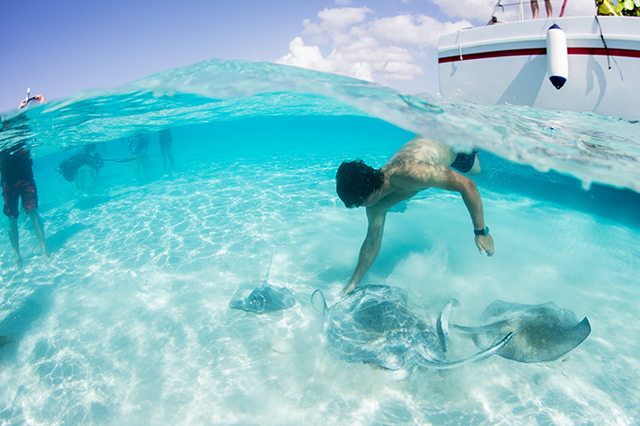
There is no shortage of wildlife that you’ll come across in the Caribbean waters, and there are excursions that will allow you to get up close and personal with some not so furry friends. Swim with stingrays in Stringray City in Grand Cayman or check out the dolphins at Dolphin Discovery in Mexico.
And…Action!
The Caribbean is nature’s playground and excursions will allow you to take advantage of and play in the sun, sea, waves and wind. Kayak where Christopher Columbus anchored outside the reef at Salt River in St. Croix or parasail, zipline, bike, run the waves, go offroading or deep sea fishing at just about every Caribbean port. You’re only limited by your nerves!
Tuck in for a history lesson
Use your time at port to learn a bit about the history and culture (and food) of the area. Many of these islands still show the influence of colonization, and certain excursions offer a glimpse into that life.
If you’re itching to stay active in Mexico, various tours allow you to get your hike on by winding through tropical jungles, discovering the breathtaking temples and structures of a pre-Colombian Mayan settlement along the way.
If you’re touring the Eastern Caribbean, a coach tour around St. Kitt’s capital, Basseterre, will teach you of the rich history of French and British imperialism. Heading further south? A tour through Curaçao takes you to the Hato Caves and the famous city center, which is a UNESCO World Heritage Site.
Caribbean cruise deals abound
Browse through the various cruise line websites and you’ll find any number of deals that will allow you to maximize your dollar on board or on shore: drink credits, excursion credits, buy one, get one. If you have flexibility with dates, timing your trip to coincide with holidays may lead you to extra specials.
A Caribbean vacation package offers a convenient way to see it all
If you have some extra time before or after you sail, vacation packages are a great option to make the transition from land to sea as seamless as possible, and to keep your vacation going! If you’re taking off from Port Canaveral, consider Disney’s packages that will give you a few extra days of magic by combining your Caribbean cruise with a trip to the Walt Disney World Resort to meet Mickey with options to accommodate every budge.
Likewise, Royal Caribbean has partnered with Universal Orlando Resort to also provide accommodation, park admission and port to resort to airport transportation, so pack your wands as you head to Hogwarts to experience The Wizarding World of Harry Potter. Amusement parks aside, wherever you disembark, post- and pre-cruise packages are available to help you keep the vacation going, and make the most of your visit to these first-class cities.
What is your ideal Caribbean cruise excursion? Tell us in the comments.
To some, life insurance is simply a safety net to secure your family’s financial future in the years and decades ahead. While this is certainly the flagship benefit of having a policy in your back pocket, it is far from the only reason to start a life insurance plan. Although some policyholders may not take full advantage of it, such coverage can be an invaluable tool when it comes to retirement planning. Life insurance and retirement planning are both key concepts when it comes to the big-picture of your finances, but they don’t have to be mutually exclusive if you know how to intertwine them in strategic ways.
Here are a few reasons your life insurance policy can help you build toward your retirement.
You can borrow money against your policy: It may not hold true for term life insurance – but, then again, neither does the long-term nature of retirement planning itself – but whole life insurance (as well as other permanent plans) provides policyholders with the ability to borrow money on the cash value of their plan. These funds can be leveraged to gradually build your retirement fund over an extended period of time, inflicting minimal damage on your life insurance coverage. How much you borrow, of course, will be entirely up to your discretion, but it only makes sense to use this inherent benefit of your plan as a building block toward a more stable financial future.
You can protect your retirement fund: Encompassing both your anticipated death benefit as well as any cash value, your life insurance policy can compensate for any lost income, essentially giving you a back-up plan in the event that your retirement funds take a hit. Even if your retirement savings are diminished for any reason, your spouse and dependents will be well-protected if you were to pass away, knowing that they have your life insurance to rely on if tragedy strikes. After all, life has a tendency to throw you a curveball every once in awhile. So having a contingency plan isn’t only the smart thing to do. It’s also the most responsible way to take care of those most important to you. Many families fail to account for their life insurance when calculating their retirement assets. Don’t make that same mistake.
You can receive certain tax advantages: If your life insurance plan does offer a cash value, you’ll be pleased to learn that borrowing from your policy can actually save you a ton in taxes. Whereas outgoing money from most retirement funds is considered taxable income, whatever you take out of your life insurance policy is exempt. Moreover, the reduction in your taxable income could put you into a lower tax bracket altogether, taking a broader approach to reducing your expenses across the board. This is just the beginning of the creative ways in which life insurance can be a money-saving boon for your retirement planning. The options you have available to you do still depend on your specific plan, but be sure to reach out to a qualified professional for help in sussing out the details.
You can preserve your cash value: Depending on your policy, the money you invest in your life insurance plan might be protected from the same kinds of losses that affect other assets, which are more vulnerable to market shift. This means that you can conceivably borrow against your policy as circumstances require without fear that your cash value will diminish over time. Your life insurance coverage can then prove to be one of the safest places to invest toward your future and, yes, effectively plan and save for your retirement years. Even if it may seem antithetical to the entire premise of life insurance, consider it one of the many benefits of investing in your family’s financial security as well as your own retirement.
Your policy is an attractive alternative fund: For all the reasons described above and so much more, life insurance is steadily growing in popularity as a smart alternative way to build your savings, especially if you’ve already significantly built up your other assets. Though it might not serve as the cornerstone of your retirement planning, your life insurance policy could very well play an integral role in building toward that end. Even so, don’t neglect its primary purpose: ensuring that you and your family are protected from whatever the future may bring. Life insurance may offer all kinds of hidden features for those looking to build their savings, but it is best viewed as a supplementary addition to your savings portfolio, albeit an increasingly useful one.
Still unsure about how life insurance can help steer your retirement planning? Let us know your thoughts in the comments section below!
Want To Retire Abroad? Here’s What You Need To Know
If you want to move to another country after you retire, there are some things you should think about first. Plus, our top eight picks for where to retire abroad.
If you’ve been exploring your options for where to retire, you may be considering heading overseas. Drawn by low costs of living, inexpensive healthcare, and a laid back lifestyle, a growing number of retirees are choosing to retire abroad.
When choosing your destination, you’ll want to consider the weather, cost of living, quality and affordability of healthcare, level of friendliness towards Americans and incidence of crime. However, deciding to retire abroad also has its own set of challenges.
Before you hop on a plane to retire abroad, here are some other factors to consider:
Will you need to obtain a visa? Some countries have specific residency requirements, like Panama’s Retirement Visa, which requires that seniors receive a regular income of $1,000 per month in order to qualify. (Learn more about visa requirements on the Department of State’s website).
If you’re moving somewhere far away, how easy or difficult will it be for you to visit kids and grandkids back in the US?
How will relocating affect your banking, assets, and investments? Are you prepared to navigate the tax filing process yourself, or hire a professional to help?
Does the country have a national health system that will cover you? Will you need to buy international health insurance? Medicare may provide limited to no coverage depending on your location.
Do you have specific medical needs that are best met in the US? Some countries may have great basic healthcare, but may not have easy access to certain drugs or procedures.
Are you prepared to learn another language and live in a culture where you may be considered an outsider?
Will you be able to buy property? Many countries have laws governing property ownership by foreigners. In Mexico, expats must go through a bank trust if they want to purchase property within 62 miles of a border or within 31 miles of a coastline.
Retiring abroad may involve a lot of details and red tape, but most retirees feel the initial hassle is worth it for the amazing benefits. Now that we’ve covered some of the nitty-gritty, let’s move on to the fun stuff! Here are our top eight picks for the best countries to retire to.
Panama
This welcoming Central American country may be the most popular haven for those who wish to retire abroad. Besides proximity to the US and fabulous beaches, Panama’s Pensionado visa program provides major discounts for retirees on entertainment, travel costs, dining, medical services, and utility bills.
Costa Rica
A retirement favorite, this Central American nation boasts stunning national parks, beautiful beaches and lush tropical rain forests. You can also enjoy urban amenities such as excellent shopping, museums and fine dining. With fabulous weather, low cost of living, great healthcare and a stable democracy, Costa Rica is worth a look!
Malta
The tiny island of Malta is home to year-round sunshine and a wealth of cultural and historic attractions. Enjoy its lively festivals, visit the nine UNESCO World Heritage Sites, play golf at the Royal Malta Golf Club, and go sailing and snorkeling to your heart’s content. World-class healthcare and an English-speaking population make this gorgeous Mediterranean island a top choice.
Malaysia
This diverse melting pot of cultures (with many English-speaking expats) boasts a robust economy, thrifty cost of living, fantastic cuisine and some of the best healthcare in the region. Pristine beaches, rich jungles and bustling urban centers make this Southeast Asian country the perfect spot for your retirement adventure.
Portugal
Whether you love medieval castles, trendy city life, playing golf year-round or relaxing at beautiful beach resorts, Portugal has got your number. The perfect blend of First World amenities and Old World charm, this country prides itself on its warm hospitality and relaxed pace of life.
Mexico
Due to its proximity to the US, Mexico has a strong expat community and has long been a favorite of retirees. With modern amenities, low prices, and plenty of outdoors activities and historic sites, Mexico has much to offer. Although crime is a concern in many cities along the U.S. border, the majority of the country is very safe.
Thailand
This exotic Southeast Asian country has a rich history and architecture, amazing cuisine and friendly locals. Connect with other expats as you explore the white sand beaches, stunning mountains and ancient temples. Affordable medical care and a rock-bottom cost of living make Thailand an attractive choice for your retirement.
Madrid, Spain.
Spain
Though not as cost-effective as less developed countries, Spain is a steal if you’re looking to settle in Europe. From sunny beaches to snow-capped mountains, picturesque villages to sophisticated cities, there are plenty of outdoors and cultural experience to enjoy. Other perks include zero sales tax, low property tax and extremely low housing prices.
We want to hear from you! What are your top picks for where to retire abroad? Let us know in the comments below.
To plan your visit to any one of these countries you might one day call home, go to AAA.com/Travel.
Enrolling in a 401(k) plan is one of the most popular and effective ways you can save, but are you really taking full advantage of your 401(k)? How can you be sure you’re getting the biggest bang for your buck?
Whether you’re already signed up or deciding whether to enroll, today we’re unpacking the 401(k) rules you need to know, plus how you can ensure you’re getting the biggest returns.
401(k) rules basics
A 401(k) is a retirement savings plan offered through your workplace. You can contribute up to $18,500 per year, plus an extra $6,000 of “catch-up contributions” if you’re age 50 or above.
With your 401(k) you are investing in mutual funds, stocks and bonds, and could typically receive a rate of return of 5 percent or more. (The average bank savings account yields an interest rate of 1 percent or less.)
One of the big perks of a 401(k) is that it’s “tax-deferred.” Your contributions are taken from your paycheck before taxes. You’ll pay taxes when you make withdrawals during retirement, but this may be advantageous if you’re in a lower tax bracket than during your career.
Another advantage is that 401(k) rules allow your employer to match your contributions up to the percentage of their choice. This is free money and, if possible, you should contribute the max amount to your 401k that will secure your employer’s full match.
401(k) withdrawals
There’s a big incentive to let your money grow. Early withdrawals will hit you with a 10 percent penalty in addition to taxes (unless you qualify for a financial hardship withdrawal).
You can begin making penalty-free withdrawals when you retire at age 55 or older. Then at age 70½, 401(k) rules state that you must start taking required minimum distributions. (Though deferring is possible if you still work for the sponsoring company.)
Types of 401(k)s
Some companies may also offer a Roth 401(k) option. You’ll pay taxes on your contributions, but your withdrawals are completely tax-free. (This makes sense if you expect to be in a higher tax bracket upon retirement.)
And if you’re self-employed (and have an Employer Identification Number) you have the option of opening an individual 401(k). This has a contribution limit of $54,000, plus an extra $6,000 if you’re 50 or above.
How to get the biggest returns
A 401(k) differs from a pension in that it allows you to choose how your money is invested. The most common investment fund options are target-date funds, mutual funds and index funds.
Your best choice? Research has shown that index funds will give you the highest returns.
Index funds are designed to track the performance of a market index like the S&P 500. They regularly outperform both mutual funds and target-date funds and have much lower account fees.
Mutual funds do give you more flexibility to fine-tune your investments, but this also comes with higher account fees.
Target-date funds have the highest account fees as they are closely managed (this also makes them a good “set it and forget it” option). You’ll get the best results from a target-date fund if you put your entire 401(k) into it, as it’s designed to have the correct proportions of risk. (Higher risk stocks are traded out for low-risk bonds as your retirement date approaches.)
As a general rule, your “expense ratio” (account fees) should be less than 1 percent, and the closer to zero the better. High account fees will cost you tens of thousands of dollars over the years.
Are your investments paying off?
Your 401(k) doesn’t need too much hands-on intervention, but you should definitely be checking your quarterly statements to make sure your investments are working for you.
Here’s what to look for on your account statements:
Contributions: Have you been contributing enough to get your employer’s full match? If not, increase your contributions so you can take full advantage of that free cash.
Account Fees: If your expense ratio is close to 1 percent, or increasing over time, invest in a cheaper fund.
Fund Performance: How is your fund performing compared to other funds of its type? If it’s underperformed consistently over the long term, consider making moves.
Holdings: Do your holdings of stocks and bonds match your desired level of risk? If you want 90 percent of your holdings to be stocks, but the percentage has shifted down to 60 percent, it may be time to “rebalance” your account.
Are you enrolled in a 401(k)? Tell us about your experience with a 401(k) in the comments below!
In the age of Instagram, quality photos are king. After all, if you went on a vacation and didn’t share at least one amazing photo of it on social media, did it ever really happen?
But seriously, if you’re like me, travel photography is about more than just building a great-looking social gallery, and it’s more personal than collecting likes. For most of us, vacations are too infrequent, too short and sometimes, once-in-a-lifetime. And since you can’t always rely on your brain, photos are the best and most vivid way to capture and relive your vacation memories over and over again.
Follow these travel photography tips and learn how you can grab some frame-worthy shots on your next trip.
Thinking like a photographer may help you take some Instagram-worthy travel shots.
Travel photography tips 101
Keep it light. Lenses, tripods and other travel photography equipment will add extra pounds and burdens that you don’t need (airport security, personal security, neck and back pain). Although they are on the expensive side, new mirrorless cameras provide professional quality photos without the weight of a traditional DSLR. And while that is something for more serious photographers to consider, the average shutterbug can rely on the latest smartphone technology. For international travel, beachy locales and theme parks, your phone may be the safest option. If you do end up bringing your trusty DSLR, keep the weight as low as possible with just one extra lens.
Practice makes for practically professional photos. If you have a new camera, be sure to familiarize yourself with its various settings. Take a bunch of practice shots to prepare for different lighting scenarios and unexpected moments. Same goes for phone cameras; learn all about the available bells and whistles on your model and play with them. Technology is becoming so advanced that phone cameras are made to auto adjust based on the environment, so you don’t have to do much.
Natural light is your friend. The best times of day to get the most interesting photos are early in the morning when the sun first comes out and just before it sets at night.
Think like a photographer. Capture landmarks and landscapes, but go beyond a simple point and shoot approach. Look for interesting shadows, movements, reflections and patterns or try a different perspective, like British photographer Oliver Curtis, whose “Volte-face” collection turned the camera around to focus on what it looked like behind major tourist landmarks such as the Taj Mahal and the pyramids of Giza. These simple touches can elevate an average photo to art. Of course, when it comes to travel photography, it’s hard to resist a good tourist cliché, so go ahead and hold up the Leaning Tower of Pisa.
Good composition. This plays off the last travel photography tip. You might be tempted to put the focus or the subject of your image directly in the middle of your photo, but don’t be afraid to try something different for a more attention-grabbing image. Nikon offers a few good composition tips, including the Rule of Thirds, a guideline for directing the eye to the most important part of a photo in the most interesting way.
Get candid. One of the best ways to capture the culture and overall spirit of a place is to take candid street photos of ordinary people just living and going about their day. If you would like to get more up close and personal for a portrait or a posed photo, make sure to ask the person for their permission first. The worst that could happen is that they say no (or they ask you to pay for it).
Don’t hog the shot. In high traffic tourist areas you can bet that there will be selfies galore. Everyone wants the same picture at the same time, so be polite and mindful of others. Whether you’re taking a picture in front of the Parthenon or of Mickey Mouse in the parade at Disney, take your photos then step back and allow others to do the same.
It’s OK to edit (a little bit). Editing or enhancing your photos is not faking it – as long as you don’t go overboard and make it look that way. Use a light hand while adjusting the brightness and contrast to bring out details and enhance the photo. And I think we all can appreciate the blemish-erasing magic of the spot healing brush.
Don’t rush. The greatest photos are rarely the result of a quick click and dash. It can be hard when you are traveling and you want to keep moving on to the next thing, but if you have some time, it’s worth it to be patient and wait for the right moment and the right light.
Back up your photos. This might be one of the most important travel photography tips on the list. You would be heartbroken if all of the photos from your trip were lost. Cloud storage is a safe bet, but you can also invest in an external hard drive and be vigilant about backing up your photos for extra assurance. If you want to be even more cautious, you can upload and back up your photos every day when you get back to your hotel in case anything happens to your camera while on vacation. Prints may seem like a thing of the past for some, but printing your best photos and putting them in an album is a great way to ensure that you can hang on to your memories for as long as possible. Services like Snapfish make it quick and easy, and they are always offering a deal.
Live in the moment. Let the time you tossed a coin behind your back into the Trevi Fountain be the memory; not the time you spent taking out tourists to get five thousand versions of every angle of the Trevi Fountain. In other words, don’t get too caught up getting the perfect shot. A picture may be worth a thousand words, but moments are irreplaceable and worth so much more.
Have any travel photography tips that you would like to share? What’s your favorite vacation photo? Tell us your story in the comments below.
Find you’re having trouble sleeping lately? Or, maybe you woke up one morning to find a rash on your shoulder? What to do, what to do? The best course will be to head to your doctor’s office. If you don’t have one, that’s a good indicator that it’s time to start looking. But you may be wondering how to find a general practitioner, or what a general practitioner even is.
The doctor for whom you’ll search will most likely be a general practitioner, someone who does not specialize in treating one part of the body or focus his or her practice on one narrow area of medicine.
A general practitioner will serve as your go-to aid for everyday health care problems such as the flu or a temporary bout of insomnia, as a conduit to the specialists you may need for more serious issues such as cardiovascular disease and for overseeing all the care you receive.
These primary care physicians will serve as your medical “home.” He or she will be the doctor you visit for most medical issues, including wellness visits, routine screenings and non-emergency illnesses. Some patient-general practitioner relationships will be short because education or work will take you from place to place and switch you from insurer to insurer. Other doctor-patient relationships can span decades.
How to find a general practitioner
There are some tried-and-true ways of finding a general practitioner. Just ask your mom or dad. Really, ask them. With any luck, the doctor they brought you to as a kid when you had the sniffles or poison ivy has a practice that also treats adults. How simple is that?
Maybe there’s a friend or co-worker you can ask. People who have had the same doctor for many years are likely to sing their praises and could be willing to find out if their doctor is accepting new patients.
If you’re flying a bit blind on this choice, maybe because you’ve recently moved, you can find general practitioners through your state’s health department – which may provide quality ratings on them – your state’s medical society, or even an internet search.
But, here’s the thing: You should get an OK from your insurer or employer’s benefits office before booking an appointment.
Insurance plans typically limit policyholders’ choice of doctors to those medical professionals under contract with them.
Many insurers also require you to choose a doctor (who will be considered your primary care physician, or PCP) from an approved list. The primary care physician will be responsible for your care, will make referrals for you to specialists, physical therapists, or other health professionals in coordination with your insurer and according to what is allowed under your insurance plan.
You should consider a family practitioner (someone who would take on your whole family as patients), a general practitioner or an internist as your primary care physician.
What you should decide is: What is most important for me or my family when it comes to primary medical care?
Depending on your gender and whether you have children, you may want to choose an obstetrician/gynecologist or a pediatrician. All of these doctors are considered primary care practitioners because they can manage your health care. Regardless of whom you choose, make sure your insurance will cover that doctor’s services before you get billed.
How do I know if a doctor is right for me?
Whether you talk to your family and friends about their doctors, or are trying to figure this out on your own, be sure to get a sense of a few things before settling on a general practitioner.
His or her personality, for instance. Do you want someone who is direct and efficient, or warmer and more conversational?
How easy is getting an appointment? How convenient is it to get to their office from home or work? What about the office hours? Or, weekend and night service? Do they use a medical laboratory nearby? Or, are you going to have to plan a separate trip to get tests done?
Once you have a short list of possibilities, you should call the doctors’ offices to learn whether they are accepting new patients and, if so, whether they accept your insurance plan.
When you go, make sure you have a list of previous surgeries or hospitalizations, as well as any major conditions or illnesses and prescription drugs. Remember to bring your insurance card and a current identification with you.
Go into this first visit with a list of questions you want answered, such as a doctor’s special practice areas, who covers the practice when he/she is unavailable or where they have hospital admitting privileges. From the moment you step in the door to a general practitioner’s office, keep your eyes and ears open. You’re less likely to visit a doctor or follow up on recommendations when the doctor and his or her staff are cold and careless.
A relationship with a doctor is one of the most important and intimate in life. You need to feel as if you trust him or her and that they are an ally in your care and well-being. The decision about who will be your primary care physician is up to you. The effort to find a general practitioner is one of the most important health care decisions you will make. Be sure to give it the care and thought it requires. Your life will be better with a doctor on whom you can depend.
What would your advice be to someone trying to find a general practitioner? What do you like about your current GP or primary care physician? Tell us in the comments below.
Get in your summer fun while you still can! Take a road trip to Connecticut to enjoy the assortment of engaging, heart-pumping and thrilling outdoor activities available throughout the state.
For those with a taste for adventure, few states across the nation are as suitable as Connecticut. Even among the natural beauty and coastal charms of New England, there’s an overwhelming assortment of engaging, heart-pumping and otherwise thrilling outdoor activities in Connecticut.
From its scenic parks and trails to more fast-paced pastimes, the state caters to every desire, offering a strong incentive to those looking to relocate or take a much-needed break from the stresses of daily life. So, before you lock in those travel plans, here are a few reasons why Connecticut needs to be on your must-visit list.
Park it up
One of the key selling points of Connecticut is its wide range of parks. While there are far too many to name here, let’s run through some of the highlights.
Kent Falls State Park: On a visit to this Litchfield Hills locale, you can trek across a covered bridge right up to the cascading falls over the Housatonic River and the shimmering reflecting pool below. Whether you’re in the mood for some fishing – this is a designated Trout Park, after all – or just want to take in the sights, it’s a worthwhile stop.
Talcott Mountain State Park: From this park’s 165-foot-tall Heublein Tower, you’ll be able to take in a 360-degree view of the surrounding landscape. Or you might opt to simply take in the museum of local history housed within the tower itself. Either way, the 1.25-mile hiking trail is sprinkled with natural wildlife, making it the perfect spot for bird-watching of picnicking.
Devil’s Hopyard State Park: This park earned its name because of the round holes in its falls, but we think you’ll agree it’s heavenly nonetheless. Looking for a place to wander, go fishing or otherwise explore the elements? Look no further as this park’s 21 campground sites and wooded surroundings position it as a great place to get away from it all.
Hiking and biking
Despite the prevalence of hiking and biking trails at the parks we’ve already mentioned, there are plenty more options in Connecticut for those looking to get moving.
Hubbard Park & Castle Craig: One of the more unique destinations in Connecticut, this one attracts crowds from all over, largely because of the stone observation platform atop Castle Craig Tower. Below, guests can explore a whopping 1,800 acres of hiking trails and picnic areas. It’s definitely something to keep in mind the next time you’re in or near Meriden.
Mattabesett Blue Trail: Not far from Middlefield, this 9-mile trail leads hikers down mountainous terrain at every turn, including some of the lushest areas around. In fact, you’d be hard-pressed to find a more comprehensive trail than this one, as its interconnected looping trails will keep you busy for hours.
Tunxis State Forest: The next time you find yourself anywhere near routes 20 and 179 in Granby, set aside some time to spend here. Of course, it’s brimming with hiking trails and mountain bike trails, but if you have energy to spare after all that, Tunxis also offers cross-country skiing, fishing, hunting and boating.
The Housatonic River.
Fit for fitness
Once you’re done hiking and biking around the wide range of parks and trails throughout Connecticut, you might be looking for an even greater shot of adrenaline.
Satan’s Kingdom State Recreation Area: In the summer months, people flock here for a ton of different activities, namely those in the water. Tubing, canoeing and kayaking are all popular choices for visitors to this New Hartford locale, as the Farmington River ideally sets the stage for vigorous workouts and lazy afternoons alike.
Hammonasset Beach State Park: This 2-mile beach bears the designation of being the largest shoreline park in the state, so you know it’s something special. In the mood for some swimming, scuba diving and saltwater fishing? Look no further. Hammonasset even offers camping, picnicking and a nature center to ensure that it has something for everyone.
Clarke Outdoors: Since we’re focusing on the many outdoor activities in Connecticut, there’s no way we would dare leave this one off our list. One of northwestern Connecticut’s greatest treasures, Clarke Outdoors gives visitors the opportunity to travel down a miles-long stretch of the Housatonic River via canoe, raft or kayak. A word of advice: Make your reservations now.
Adventure time
Athletically inclined visitors to Connecticut (clearly) have no shortage of things to do, but before we send you on your way, here are a couple more destinations worth considering.
EMPOWER Leadership Sports & Adventure Center: This Middletown locale focuses on adventure as an opportunity to build bonds between family and friends. The half-mile guided zip line canopy tour is among the most attractive features, but don’t forget to make time for the other aerial activities, such as tree-climbing and scavenger hunts.
Brownstone Exploration & Discovery Park: Here’s another adventurous spot with more options than you’ll have time to experience in one day. From rock climbing, wakeboarding, cliff jumping and scuba diving, this is the perfect place to soak in all the intense fun the outdoors can bring. Muster up your courage for the exhilarating obstacle courses, zip lines and other challenges.
Newport, R.I., is best known for its peaceful coastal views, stunning historical sites and delicious local seafood. While summer is popular for tourists, winter in Newport exudes charm, nostalgia and a peaceful quiet that warm-weather crowds don’t have the opportunity to experience.
Whether you’re planning a weekend getaway or just need a relaxing daytrip, Newport has something for everyone, no matter the season.
The Famous Mansions
No matter the season, a trip to Newport isn’t complete without a tour of the opulent mansions. Tours are given daily, showcasing these architectural marvels. You can visit The Breakers, Rosecliff and Marble House in January and February. If you’re interested in learning about the homes’ inner workings, a new underground tour explores the basement and boiler room of The Breakers, with a little history thrown in from the diary of the home’s engineer.
Indulge in Local Cuisine
Newport’s food scene is just as rich as the city’s history. Christopher Hughes, assistant branch manager at the AAA Middletown branch, R.I., and Newport native, provided some suggestions. If you want to splurge a little on your weekend away, the Dining Room at Castle Hill Inn is the “all-star Newport” place to go for dinner. Be prepared for a culinary journey at the AAA Four Diamond Rated restaurant, with the option of a three-, four- or six-course dining experience and over 800 wine selections. For a more casual experience, Midtown Oyster Bar offers local seafood dishes, along with sandwiches, salads, steaks and more.
Newport Winter Festival
New England’s Largest Winter Extravaganza, as it bills itself, is the perfect antidote for beating the winter blues. From Feb. 15-24, visitors can take part in all sorts of events, from beach polo and ice sculpting demonstrations to a mac and cheese smackdown and twinkling illuminated gardens. There’s even an ice bar – Polar Pineapples – at Gurney’s Newport Resort. Bundle up!
Seal Watch Tours
Summer isn’t the only time to head out on the water. Save the Bay hosts seal watch tours from November through April, where you can board an education vessel and observe harbor seals resting on rocks in Narragansett Bay. Opt for the two-hour excursion for a tour of Rose Island Lighthouse.
There’s no harm in hoping that you’re the next Powerball lottery winner, but responsibly managing your personal savings requires more than good luck.
The road to financial security begins with meticulous (and realistic) planning and budgeting. Whether you’re saving for college, retirement, a new car or an emergency, the first step in managing your personal savings is to set a goal. Start off by asking yourself this simple question: What’s your personal savings goal?
A savings goal is an important part of a budget.
Budget
Once you have set your goal, then you can create a budget. Financial advisers often recommend that we put aside 20 percent of our income toward savings, which includes retirement and debt. This is what’s known as the 50/30/20 rule. The gist of the rule is this: Allocate 50 percent of your income toward necessities like rent or mortgage and other living expenses. Another 30 percent should be set aside for vacations and lifestyle expenses. The remaining 20 percent should be put toward retirement and cash savings. Of course, it’s easier to adhere to this plan when you have more income to play with. But managing your personal savings – at any income bracket – can become a habit with practice.
Here’s an easy trick to start saving: Set up an automatic transfer through your payroll system. That way funds from each paycheck will go directly into your savings. Think of your personal savings as another bill. You’re essentially paying yourself and making that a priority before anything else. With automatic transfers, you don’t have to think about the money that’s being allocated to your savings.
If a 20 percent savings plan isn’t practical for your lifestyle, set aside 15 percent or whatever works for your goal and budget. Consider this: How much do you earn and what are your expenses? You’ll likely have to reassess your budget and set your financial priorities. If it’s any comfort, know that you’re not alone in this struggle. In fact many other Americans also have difficulty managing their personal savings. GOBankingRates, in partnership with The Penny Hoarder, surveyed 3,000 Americans in 2014 and found that 44.5 percent didn’t have a savings account at all. Another 28.5 percent had less than $1,000 in their savings account.
There are numerous budget apps and online calculators available through your bank which can help you manage your budget. Take advantage of them. The first step in managing your personal savings is to gain financial awareness.
Trim the fat to bolster your personal savings
With a budget in hand, you can begin eliminating unnecessary expenses. Research how you can lower your phone, electric, gas and/or other monthly expenses. Find out if you’re eligible for cost-savings programs. Keep track of your spending, and, as a rule of thumb, always live below your means. You’ll be surprised to know that some of the richest people in the world are also some of the most frugal.
Distinguish between what you need and what you want. Perhaps you need new shoes, but do you need designer ones that you really can’t afford? Instead of impulse shopping for items that are out of your budget, wait a few weeks before making a purchase. After a few weeks pass, see if you still want to make that purchase. These short-term financial goals will help you meet long-term plans like retirement and paying off your debt.
The best savings account
Now that you’ve established your financial goal and created a budget, you can move on to the next step: What’s the best savings account for you?
Choosing a bank account really depends on your personal needs. Are you looking for an account to hold your cash and accrue the highest possible interest? If so, find a personal savings account with a competitive annual percentage yield (1.20 percent or 1.15 percent). Or perhaps you want to take advantage of signup cash rewards. Banks often give new customers cash bonuses when they open a new account with a minimum balance. Do a bit of online research and find the right bank account for your needs.
While you’re looking at bank account features, you may also consider opting out of overdraft protection, especially if you’re prone to overspend and accrue overdraft fees. Over time these fees add up. That money spent on unnecessary fees could have been used toward a fun experience like a tropical getaway.
Here’s another savings tip: Open a savings account with a different bank than your checking account. Do you often transfer money from your savings to your checking under the empty promise that you’ll repay it? Having accounts at different banks makes it more cumbersome to borrow money from your savings.
Find the resources you need to make sure you’re on track with your personal savings goal. Many banks offer interactive guides and calculators to help you stay focused and meet your personal savings goals. And if you’re not sure, contact a financial planner. The experts are there to help.
Have any tips of your own for saving money? Share them with your fellow AAA members in the comments section below!
Couponers have a bad reputation for being extreme. But you don’t have to quit your job and recruit a cadre of family and friends to clip coupons to see real savings. By learning basic couponing skills you can guarantee that you’ll save money on your next shopping trip just like the pros.
Don’t be disillusioned from watching TV shows about extreme coupon enthusiasts who purchase a stockpile of shampoo, dried noodles and toothpaste for only $5.16. Couponing doesn’t have to be extreme to produce significant savings. That’s welcomed news for first-time couponers, considering how overwhelming it can be to learn couponing policies, lingo and store rules.
Before you venture out on your next shopping excursion, learn the ins and outs of couponing to help you stick to your savings plan.
Couponing basics
Are you in a need of a primer on couponing? Let’s start with the nitty-gritty: where to find coupons. There are essentially two types of coupons: store coupons and manufacturer’s coupons. Manufacturer’s coupons are found in Sunday newspaper inserts or they can be downloaded from various websites like Coupons.com, RedPlum.com, SmartSource.com and many others.
Everyone coupons differently, but veteran couponers swear more savings come to those who subscribe to the Sunday edition of the newspaper, which is filled with coupon inserts. You can also find coupons directly on the manufacturer’s websites. Search for deals on products you need, and then send those coupons to your phone to digitally scan them at checkout. If you have a printer, print the coupons out and organize them in a binder or folder. Coupon websites will also often display paper coupons and tell you which inserts they ran in and what date they were published.
Store coupons work the same as manufacturer coupons.
Store coupons work the same way as manufacturer’s coupons. Store coupons are available on the retailer’s websites like CVS, Target, Wal-Mart, Kroger and more. They can also be “clipped” via apps like Grocery iQ, Checkout51 and SnipSnap. Take your printout of the coupon to your store’s checkout or send the coupon electronically to your store’s loyalty card. To discourage scams, most websites only allow you to print two coupons per computer. Couponers get around this by using two different computers to print four coupons, if they’re buying multiples.
Want more coupons? Check the store aisles next to your favorite products or find coupons on the backs of products, where they can be peeled off or cut out. Don’t forget to grab “Catalina” coupons, which are printed by the cashier and given with your receipt. Devote a couple weeks to collect and organize all of your coupons.
It’s time to go shopping
To double up on your savings, matching sales with your coupons. The process is a lot simpler nowadays than when your grandma couponed. Utilize websites like thekrazycouponlady.com or grocerysmarts.com to match your coupons with sales.
Another way to maximize your savings is to get the store’s sales ads and mark off the items you want. Then search online for manufacturer or store coupons for those specific sales items. Before you go to the store, make a shopping list and bring all of your coupons. Remember that coupons have expiration dates. Carefully read your coupons to be clear about expiration dates and the restrictions, which are written in small print.
More couponing tips
Most extreme couponers recommend going to many different stores to increase savings. But set realistic goals for your savings plan, especially if you’re new to couponing. Focus on one store and make sure you understand that store’s coupon policy. Kroger, for example, won’t let you stack manufacturer’s coupons with e-coupons. Other stores have different policies. Have a hardcopy or electronic copy of the store’s coupon policy with you in case your coupons can’t be scanned. And keep an eye on the checkout screen as you’re being ringed up.
Here’s another tip of the trade: Use coupons for smaller sized items and travel-sized products to get the most savings. Let’s say you have a Scope coupon for 99 cents off and the travel size scope is $1. You just paid a penny for the Scope. Items that are always a good bang for your buck are nonperishables that you use often like toilet paper, tissues and toothpaste.
The savings doesn’t end after you leave the store. Many apps now give shoppers rebates and redeemable reward points. With the iBotta app you can unlock rebates before you go to the store. The ShopKick app gives you reward points that add up to free gift cards.
While it’s exciting to save money, be strategic with your coupons and only buy only things you need. Otherwise you’re wasting money. A case of candy may be on sale for $2.99 and you have coupon for $1 off, but do you really need junk food even if it’s only $1.99?
Don’t waste unnecessary time and effort couponing. Think about the energy, gas money and time that goes into couponing when you factor in any savings. The saying “time is money” is true, especially when it comes to couponing.
Do you have any advice for couponing newbies? Tell about your tips or experiences with coupons in the comments section below.
The legalization of marijuana is gaining popularity within the U.S. A recent Gallup poll found that 66 percent of Americans support marijuana legalization. More than half of the states have legalized marijuana use to some extent. Of the six states in the AAA Northeast footprint, only Massachusetts has legalized the recreational use of marijuana. But...
The legalization of marijuana is gaining popularity within the U.S. A recent Gallup poll found that 66 percent of Americans support marijuana legalization. More than half of the states have legalized marijuana use to some extent.
Of the six states in the AAA Northeast footprint, only Massachusetts has legalized the recreational use of marijuana. But there have been recent pushes to legalize it in both New York and New Jersey.
Traffic crashes increased by 6 percent in states that legalized recreational marijuana when compared to neighboring states, according to recent studies by the Insurance Institute for Highway Safety and the Highway Loss Data Institute.
AAA, which opposes the legalization of marijuana for recreational use due to traffic safety concerns, has launched new initiatives aimed at combating drugged driving.
One program sponsors drug recognition expert courtroom training, which helps sharpen the presentation skills of experts and prosecutors to strengthen their courtroom arguments related to impaired-driving cases.
“Drug recognition experts are facing even greater challenges when it comes to drugged driving,” said Mary Maguire, director of public and legislative affairs for AAA Northeast. “And AAA Northeast is committed to helping law enforcement meet those challenges.”
The other program focuses on educating teenage drivers.
“More citations are given to teen drivers for drugs than alcohol,” said Diana Imondi, traffic safety programs manager for AAA Northeast.
Imondi helped develop a new curriculum covering driving and marijuana use. It will be taught in Rhode Island high school health classes this year before being rolled out to other nearby states.
Click here to learn more about the dangers of impaired driving.
The bad news: Your luggage is delayed, lost or battered beyond recognition. What can make you feel better? Having travel insurance.
Comprehensive insurance for a trip — which can include protection from unexpected expenses incurred by issues such as flight delays, trip interruptions, and medical treatment—provides more than just “peace of mind” when the things that can go wrong do go wrong. It provides financial protection.
Baggage insurance basics
What is baggage insurance, exactly, and why would you need it if the airline already covers lost and stolen luggage?
According to the experts at AAA travel insurance partner Allianz, “’Baggage insurance’ is a general term for travel insurance benefits that can protect your bags and possessions while traveling.” It’s often part of a more comprehensive travel insurance package, but not always; be sure to check when you’re comparing insurers and policies.
Airlines can and do cover luggage that’s delayed, lost or damaged, but (obviously) aren’t responsible for luggage troubles that may occur during your trip — when you’re backpacking in Peru or traveling via rail on a city-by-city tour of Italy. Coverage throughout your journey is one of the key benefits in having a travel insurance package with baggage benefits.
What airlines are responsible for
Getting baggage benefits in your travel insurance policy is a good idea even if you’re planning a flight in/flight out holiday with a single destination, offering more robust protection than you might get from the airline. Here’s the low-down of what airlines are responsible for, straight from the U.S. Department of Transportation:
If a passenger’s bag is delayed, airlines will pay reasonable expenses the passenger incurs while he or she waits for the delayed bag.
If a passenger’s bag is damaged because of rough handling, airlines will pay for the repairs or negotiate a settlement to pay the passenger the depreciated value.
If a passenger’s bag is lost, airlines will reimburse the passenger the depreciated value of his or her lost belongings.
The key phrase above is “reasonable expenses.” Elsewhere on the site, the DOT notes, “You and the airline may have different ideas of what’s reasonable, however, and the amount it will pay is subject to negotiation.”
Other items to keep in mind:
The airline liability ceiling, currently at $3,500 adjusted for inflation every two years. Liability for international flights, about $1,675 at the time of this being written, is actually set by the Montreal Convention using a “currency surrogate that floats daily.” (You’d have to check the IMF to check current values.)
These are the maximums. If the value of your stuff (depreciated) is less than the liability limit, you’ll get the lesser amount.
As a small consolation, if your luggage is actually lost (rather than delayed), your checked baggage fee will be refunded. (This may seem like a “well, of course!” kind of thing, but this is a new rule.)
Bolster your protection with baggage insurance for a trip
The protections airlines provide have two things going for them: They’re free (or rather, included in the price of the ticket) and their reimbursements may be sufficient for some passengers.
But it’s still a good idea to bolster that coverage by purchasing travel insurance that includes luggage benefits. Here’s why:
It covers your entire trip, not just the parts that take place at the airport.
Airlines offer depreciated values for items, not what it would cost to replace them. Travel insurance protection could provide reimbursement for replacement of items lost or stolen.
While travel insurance companies do have exclusions, airlines have long lists of items they will not cover — and you may not care to engage in a lengthy process of “negotiation” with them if you disagree about what expenses are “reasonable.”
Keep in mind that even travel insurance policies have their limits and that big-ticket items, like expensive jewelry and electronics, may be better protected under your homeowner’s insurance. As always when researching policies, know what you need covered and read the fine print to determine whether the coverage will be sufficient.
Do you have any personal stories about delayed, lost or otherwise trouble-plagued luggage? Did having travel insurance help you out? (Or did it make you wish you’d gotten the travel insurance?) Share any tips or insights you may have in the comments section below.
Your AAA travel advisor can help you choose a travel insurance policy that’s right for you. Learn more.
Preparing your car for winter is one thing, driving in wintry conditions is another. We asked two experts – Cristy Lee, of Motor Trend Network’s “All Girls Garage,” and Danny Kok, chief instructor at AMG Driving Academy – for some tips on navigating icy roads. Advice from Cristy Lee “Your car’s handling is very different in...
Preparing your car for winter is one thing, driving in wintry conditions is another. We asked two experts – Cristy Lee, of Motor Trend Network’s “All Girls Garage,” and Danny Kok, chief instructor at AMG Driving Academy – for some tips on navigating icy roads.
Advice from Cristy Lee
“Your car’s handling is very different in snowy, icy or wet conditions. Stay off the brakes more than usual when it’s snowy or icy outside. Learn how to apply just the right amount of gas and how to steer away from trouble instead of slamming on the brakes, which can be dangerous. If you keep a safe distance between your vehicle and the one in front of you, you can just as easily avoid a crash by steering around the obstacle.”
Advice from Danny Kok
“If you must drive in winter weather, reduce your speed and steer gently. It’s the quick maneuvers that tend to get you into trouble. Think “how would I walk in these conditions” and drive with that level of carefulness. Always keep two hands on the wheel and look and steer in the direction you want to go.”
The Healthiest Fast Food Options Based on Calories
Whether you’re having fast food because of what’s in your wallet, how much time you have, your kids or (admit it) a craving, it doesn’t always mean having to commit to the subsequent heavy, greasy guilt trip that inevitably comes with it.
I’m going to go out on a limb and say that part of deciding to eat at fast food restaurants is making peace with the fact that you’re not going to be eating your healthiest meal. And that’s fine occasionally – so long as it doesn’t become too much of a habit. Everything in moderation is often the best policy when it comes to leading a healthy lifestyle.
But if you’re counting calories, fast food healthy choices do exist, believe it or not. Although the healthiest fast food options are not always as obvious as you might think.
Whether you’re having fast food because of what’s in your wallet, how much time you have, your kids or (admit it) a craving, it doesn’t always mean having to commit to the subsequent heavy, greasy guilt trip that inevitably comes with it.
Yes, you can still go to your favorite fast-food or fast-casual restaurants and eat well. We’ve outlined a few of the healthiest fast food options at 10 popular chains to prove it.
Counting calories
First things first, let’s understand some basics about calories. All of the following fast food healthy choices are based on calories, so what exactly is a calorie and why do we count them?
A calorie is a unit of energy that your body obtains from eating or drinking something. Ideally, you want to strike a balance where you are putting in as much energy as you lose in a day because if you consume more than you burn, the excess could be stored as fat. Check out the video below to learn more:
It makes sense why calorie counting is the focus of so many diet plans, but it’s important to note that is not the only thing you should consider if you want to lose weight healthily.
Per the most recently published Dietary Guidelines for Americans (2015-2020), women should consume an average of around 2,000 calories per day, while men should have about 2,500.
These are estimates based on average weight, physical activity and muscle mass, they are not absolutes. Depending on factors such as your age and activity level, you may require more or less calorie intake in a day. Take this Dr. Oz quiz to help you to determine the perfect calorie range for your metabolism.
Based on key recommendations highlighted in the guidelines, a healthy eating pattern also limits saturated fats, trans fats, added sugar and sodium.
Within your calorie limit, it is suggested that you should consume:
Less than 10 percent of calories per day from added sugars
Less than 10 percent of calories per day from saturated fats
Less than 2,300 milligrams per day of sodium
Choose wisely. Some salads have just as much, if not more, calories than a hamburger.
Salad does not always mean healthy
One point to keep in mind once you’ve been lured into the glow of the golden arches – or bell, or smiling colonel – or whatever glow it may be, is not to be fooled by the common misconception that salads are usually the healthiest fast food options on the menu.
After you’ve factored in the amount of sugar and fat in some heavy salad dressings – not to mention all the fried bits that may be tossed into it – salads can easily have just as much, if not more, calories than a basic hamburger.
Take, for example, the pecan crusted chicken salad at TGI Fridays. With mixed greens, kale, dried cranberries, mandarin orange, pecans, celery, blue cheese, pecan-crusted chicken breast and balsamic vinaigrette, it doesn’t sound so bad, does it?
Well, one full serving contains 1,080 calories. That’s basically half of all the calories you should consume in an entire day in a salad. The Jack Daniel’s flat iron steak (without sides), on the other hand, only has 589 calories. So if it’s any consolation, sometimes you’re better off just going with the steak (you know you want to, anyway).
The healthiest fast food options
Now let’s get to the good stuff. As of the publishing of this post, here are some of the top fast food healthy choices on the menus of 10 popular restaurants based on calories. All nutritional information has been obtained from each restaurant’s menu.
MCDONALD’S
Breakfast
Fruit ‘n Yogurt Parfait: 150 calories / 2 g fat / 70 mg sodium
Egg White Delight McMuffin: 260 calories / 8 g fat / 750 mg sodium
So now you know. You can have your fast food and be healthy, too. But try not to overthink it too much. If you’re routinely exercising and otherwise making smart food and lifestyle choices every day, an occasional cheat or treat is well-deserved.
Were you surprised to find out about some of these healthiest fast food options? Are you curious about the items at any other fast food restaurants? Tell us in the comments.
The best of the best – That’s what you can expect from AAA’s Four and Five Diamond hotels and restaurants. Having inspected restaurants and hotels for decades, AAA knows a thing or two about luxury and comfort. Four Diamond hotels and restaurants represent just 3.9 percent of nearly 59,000 AAA Approved and Diamond Rated establishments.
The highest ranked properties (AAA Five Diamond hotels and restaurants) take things to the next level, offering guests pure luxury and sophistication, countless amenities and restaurants that serve leading-edge cuisine in extraordinary surroundings. Only 183 establishments (120 hotels and 63 restaurants) have earned their place on the 2017 Five Diamond Award list. That’s just 0.3 percent of Approved properties.
Explore four standout Diamond Rated properties in the Northeast below, including one of AAA’s Five Diamond hotels.
All manor of treasures in West Orange, New Jersey
The Manor, in West Orange, NJ, has maintained its Four Diamond Rating annually since 1988. It’s the longest streak statewide and among the longest of any Four Diamond restaurant in the U.S., Canada, Mexico or the Caribbean.
The Manor is surrounded by 20 acres of manicured gardens and enjoys the tranquility of an adjacent 400-acre reserve. Guests can enjoy a la carte and buffet dining, and traditions like Sunday brunch and a Manor buffet offering lobster on select evenings.
Jewels of top quality found in Rhode Island
“Newport.”
For a long time, that was the answer you’d get if you asked Rhode Islanders to name their state’s most opulent tourist spot.
In recent years, however, Watch Hill – a village in southern Westerly – has become an increasingly well-known luxury destination. It’s a summer retreat for pop star Taylor Swift and home to Ocean House, the only property in Rhode Island to earn the prestigious AAA Five Diamond rating.
The Watch Hill Inn. (Photo: Watch Hill Inn)
The community’s reputation keeps getting better, too. The Watch Hill Inn, managed by the same company that owns Ocean House, received the AAA Four Diamond Rating for the first time this year.
Originally opened as Narragansett House in 1845, the inn was renovated in 2014. It’s designed for younger families, couples and those seeking contemporary accommodations. Each suite (there are 21 in all) features a full kitchen and access to washing machines and dryers, making it a good bet for longer stays. Watch Hill Inn guests also enjoy use of a putting green and private beach at Ocean House, among other perks.
Where else but a castle for exquisite jewels on Long Island
You don’t need to visit Europe to spend a night in a castle. You don’t even need an airline ticket.
Although Long Island is an unusual place to see a castle, that’s exactly what you can find in Huntington, NY. Oheka Castle Hotel and Estate is the second largest private home in America and is listed on the National Register of Historic Places.
Like all AAA Four Diamond properties, guests can expect a refined and stylish hotel with upscale physical attributes, extensive amenities and high degrees of hospitality, service and attention to detail. Oheka Castle Hotel and Estate cost the equivalent of $158 million in today’s currency when it was built about 100 years ago as the summer home of wealthy financier Otto Hermann Kahn.
Guests can stay in one of 32 luxurious rooms or suites, many of which offer scenic views of the 23-acre estate, which has been featured on screen in movies like “Citizen Kane” and on television including the CBS series “Madam Secretary.”
There’s treasure in the Connecticut hills
If you need a respite from the hustle and bustle of New York City, the Litchfield Hills of northwestern Connecticut are calling. Just a three-hour drive from Manhattan or Boston, the rural, scenic area is a perfect place to unwind.
And, if you’d like to do so in luxury, you’ll find a property unlike any other. Winvian Farm, in Morris, is the only AAA Five Diamond hotel in Connecticut. It’s also home to the state’s only Five Diamond restaurant.
Guests stay in one of 18 individually designed cottages spread among the 113-acre resort. How individual? Accommodations range from a fully restored 1968 helicopter to a treehouse 35 feet in the air. Other options include a golf cottage with carpets that form fairways and putting greens, a music cottage with a patio screened by a giant marimba, and an artist cottage with easels, canvas and paint.
Guests can enjoy farm-to-table menus in the fire-lit, 18th century dining room at the Restaurant at Winvian Farm.
Have you ever stayed in a Four or Five Diamond hotel or dined at a Four or Five Diamond restaurant? Tell us about your experience in the comments below!
For a complete list of Diamond Rated properties throughout the U.S., Canada and the Caribbean, visit AAA.com/Diamonds.
English is spoken so widely in so many countries that you may never need to utter a foreign word or phrase on your travels abroad. And even in those areas where English is not widely spoken, you can always play it safe and stick close to your tour guide.
But if you don’t speak the language in the country you’re visiting—and you’re not part of an organized tour—knowing a few key foreign phrases can go a long way towards making your trip easier and more enjoyable.
The trick, according to blogger Jason Lengstorf, is to know just enough to get by. “For a short trip—for instance, five days in Milan—there’s very little chance I’ll really learn the language,” writes Lengstorf, an American who’s freelanced in more than a dozen countries abroad. “Instead, I choose to focus on the words and phrases that meet the minimum requirements for functioning in that country.”
Foreign phrases 101: the essentials
As a stranger in a strange land, you’ll be relying on the kindness of others. All of the polite first words you were taught as a toddler (“Say ‘please’!” “Say ‘thank you’!”) are the ones you’ll need to know—especially since, in addition to asking for actual information or directions, what you are also hoping for is patience and goodwill.
Along with hello, please, and thank you, apologetic words and phrases will also prove the most helpful. These include I’m sorry, Excuse me, and I’m sorry, I don’t speak (insert foreign language here).
Also essential, when stringing together a foreign phrase with the words “please” and “thank you,” are Yes, No, Help and Call the police/American consulate. (More on this last one later.)
Asking for things
You’ll want to know how to say I would like/May I have and Where is, in addition to some of the things you know you’ll want or need, such as: the check/bill, Wi-Fi password, coffee (the way you like it), water, the museum you’ve come to see, the rest room, the bill, and so on.
Keep in mind that you can memorize a whole list of things you may need directions to, but in many cases a better question than “Where is…” is Can you point me to/Can you point me in the direction of…. Because unless you preface your question with, “I’m sorry, I don’t speak (your language),” what you’ll likely get is a set of directions that will make no sense at all to you.
Emergencies, cheat sheets & apps
Many articles on useful foreign phrases for travelers will include terms for an emergency, such as Help! Call a doctor! and Where is the hospital? Again, these may or not prove helpful when concerned locals try to help you. And, even if they don’t quite qualify as emergencies, you may have needs, desires and requests that may require a little explaining, such as your nut allergy or preference for organic foods.
When miming and pointing to things doesn’t work and attempts at foreign phrases fail, it’s good to have a back-up plan—high tech, low tech or no tech. Before you leave on your trip, type up a list of phrases you think you’ll need—from “My wallet was stolen at the museum” to “If the doctor says I need medical evacuation, here is my travel insurance information.”
You can also whip out your English/foreign language dictionary, check Google translate on your phone, or use an app such as iTranslate Voice, Microsoft Translator, or Translate Pro. (The experts at Trip Savvy believe the latter is worth its price: “Languages are automatically detected and a conversation can be held without pressing any buttons.” Con: It requires an internet connection.)
Foreign phrases 102: personal strategies
Here are a few top tips from travel experts and clever bloggers:
“My strategy to ensure I’ll always be able to find something to eat is to figure out how to translate “ham and cheese” and then pick items off the menu that feature those words.” — Jason Lengstorf
“’My (name of language) is not good, but…’ followed my attempt to communicate. This will cause the locals to tune in to you, knowing that they might have to put their thinking caps on. Or, they will start talking with you in English if they know how.” —Roamingwrangler.com
“’No thank you, I’m just looking for now.’ Especially in fancier (French) shops, salespeople are seen as experts. They want to help you find what you need. If you’re just browsing, the above sentence can come in handy.” —Fluentu.com
Tell us, s’il vous plaît, what foreign phrases have you found to be most useful in your travels abroad? Share your tips and best insights in the comments section below.
You’ve decided to take to the open waters and opt for a cruise vacation. That’s great! But, now what? Cruise travel can seem overwhelming for first-timer, and your mind may be swirling with questions from simply how to book a cruise, to what you should pack to how you spend your free time.
How to book a cruise: Before you go
How to book a cruise?
You can book directly with the cruise company, or you can go through a travel professional or travel agency that can help organize everything for you, including pre- and post-cruise accommodations, airport transportation or city tours should you decide to extend your stay in your port city.
Who can come on a cruise?
Cruise travel is for everyone, from Grandma and Grandpa to little John and little Jane. Cruises have a plethora of activities that cater to any interest and all ages. Also, special accommodations can be made for those with special needs or are handicapped. Please contact your cruise line as far in advance as you can so that they can be prepared to welcome you to make your trip most enjoyable.
What information do I need to book a cruise?
When you’re ready to book a cruise, the last thing you want to do is end up scrambling for information! Booking your cruise will go much more smoothly if you have the following information readily available:
• The itinerary you want to reserve
• The number of adults and children (under 18) who will occupy each room
• The birthdates, addresses and phone numbers for each person in your travel party
• Payment information.
Do I need to bring my passport?
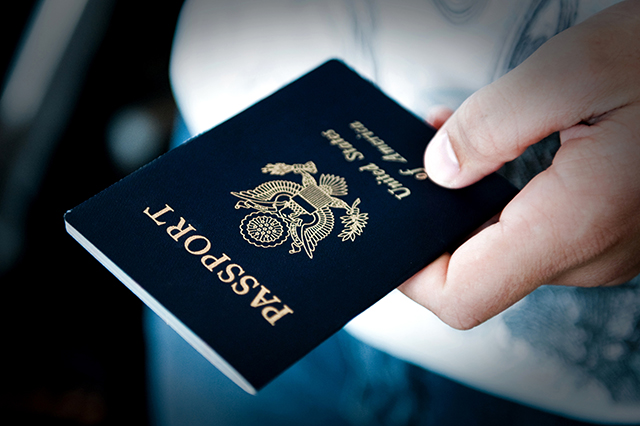
Because each country has its own entry requirements, depending on your country of citizenship, and each company has its own policies, you should check with your travel agent or cruise company for any specific requirements prior to showing up at port. It is recommended that you carry a valid passport, as well as a photocopy of the identification for your cruise, packed separately. If you show up without the proper and necessary documentation, you may not be permitted to board without it and, worse, you most likely won’t be eligible for a refund.
Do I need a visa?
Depending on your country of citizenship and your cruise itinerary, visas may be necessary. Contact a travel professional or your cruise line to check applicable visa requirements.
I’ve booked my cruise. What happens if I have to cancel?
Before you book your cruise, be sure to read the terms and conditions because each company’s cancellation policy is different. If you think there is a chance that you may have to cancel, check to see if your company has a cruise protection plan, which may offer more of a refund in the event of cancellation. For example, Holland America will refund up to 90% of eligible amounts paid if you purchase their Cruise Protection Plan Platinum Plan.
How do I get from the airport to the port?
Cruise travel is meant to be seamless, and cruise companies make it easy to both air and hotel accommodations and transfers all together. Even if you’d prefer to book your own air travel, you can still contact your cruise company to get you from the airport to port and back again. Norwegian, Celebrity and Royal Caribbean all have services to ensure you get to the port on time. Contact your cruise company to arrange pick-up and drop off.
How early should I get to port to board my cruise?
Luckily, most cruise lines have online check in that you can complete a few days before you’re set to sail to make embarkation go more smoothly. In any case, it’s recommended that you arrive no later than one hour prior to your scheduled embarkation time. If you haven’t completed check-in online, arrive earlier, no later than two hours before you’re set to board.
To avoid missing your boat due to unexpected travel delays, it’s best to arrive in town the day before embarkation. However, if you plan to travel into town the day your cruise leaves, try to plan to arrive in town no later than noon.
Do I need travel insurance?
Because many health insurance plans do not cover the cost of medical care at sea, in foreign countries or for air evacuation, it’s recommended that you secure travel medical insurance prior to travel in order to be reimbursed for services rendered in the event that you become ill.
I’m pregnant. Can I still cruise?
Most cruise lines do not permit passengers to sail past 24 weeks. Check with your cruise lines for specific date requirements, and note that you may need a letter from your doctor.
Time to pack: What to bring on a cruise
What do I pack?
Packing for any vacation can be stressful, but be sure to consider the climate of where you’re headed on your itinerary, and the type of activities and excursions that you have or for which you may sign up. The rule of thumb is that cruise wear is casual, whether on ship or at port, so bathing suits, sundresses, shorts, tank tops and pool wear are perfectly acceptable. However, keep in mind that some of the restaurants on board won’t permit pool or lounge wear, so smart casual is suggested for dinners. Your ship may host a gala or formal night, so packing one black tie or cocktail outfit for fancy dress may be recommended.
How much can I pack?
A good rule of thumb is that you may pack two pieces of luggage, not more than 50 pounds each. It’s a good idea to pack a carry-on to get you through the first day on the ship since your luggage may not arrive in your room until later that day. Also, remember to not pack your passport, medications, cruise documents or airline tickets in your checked luggage since you may not have access to it all the time. And finally, because staff will need to collect your luggage the night before disembarkation, you’ll use your carry-on for sleepwear and toiletries for your last night at sea.
What if I need to do laundry?
Cruise ships often have coin operated self-service launderettes.
What can I not bring aboard?
Weapons, explosives, drugs, alcohol and large sporting equipment are generally not permitted. Most beverages, with the exception of baby food/formula and special medications are also not permitted. Check with your cruise line for specifics.
Can I bring alcohol?
Cruise companies have strictly adhered to alcohol policies, but they vary across cruise lines, so be sure to check the rules of yours before you leave. Holland America allows each guest over 21 years of age is permitted to bring one bottle of wine or champagne in carry-on luggage. Disney Cruise allows two bottles per guest. Note that corkage fees may apply to bottles consumed outside your stateroom, and that can range from $18 to $25 per bottle. Beer, boxed wine, or other liquors and spirits are generally not permitted on board.
Can I bring my pet?
Unfortunately, with the exception of service animals, pets are not allowed on board.
Are gratuities included? Do I bring cash for that?
Typically, a daily service charge is automatically added to your shipboard account, which may be adjusted as you see appropriate at the end of your trip. This ranges from $13.50 to $18 per person, per day, depending on the company and your stateroom. However, it is appropriate to tip other service member such as bell staff, so you may want to bring some local currency for such an occasion or any other incidentals that you buy at port.
Cruise dining is for everyone, even the pickiest eaters! From extensive buffets to themed specialty restaurants, poolside lounges to room service, you will not starve! If your ship has assigned dining times, you will receive your dining times and seating assignment upon arrival. Also, remember that you don’t have to dine in the main dining room every night and can take advantage of other options on board. Cruise lines have upped their dining games, and some have partnered with celebrity chefs. With Guy Fieri on Carnival, Jaime Oliver on Royal Caribbean, Jacques Pépin on Oceania and Curtis Stone on Princess you’ll be treated to truly unique dining experiences! Note that certain restaurants may require reservations or additional fees. Also, children may not be permitted in some dining rooms.
Can dietary restrictions and preferences be accommodated?
It is recommended that you submit any special meal requests prior to sailing when you book and confirm upon arrival. Meal requests made too close to your sail date may not be able to be accommodated.
What is there to do on board?
You’re only limited by your imagination! Cruises feature an extensive list of activities for all hours of the day, from fitness classes, movies under the stars, comedy shows, spas, luxury shopping and even nightclubs! Each evening, you will receive a schedule that contains the next day’s activities, weather and general ship information. And, to ensure that you get the best selection of times and services, book spa services before you board.
Do I need cash on board? How do I pay for purchases?
All shipboard expenses will be charged to your account with the method of payment you’ve designated upon arrival.
Is there internet on board?
Going on a cruise is the perfect opportunity to truly disconnect since there isn’t usually free internet on board, but cruise companies offer internet packages for purchase. If your ship uses a satellite connection, be aware that it may be impacted by inclement weather or other physical obstacles, such as glaciers if you’re sailing through Alaska. Be prepared for it to not work as well as internet does at home. Internet cafes located in common areas may be your best and cheapest bet.
Will I have cell phone service at sea?
Your phone may not have service at sea. Some cruise providers, such as Norwegian’s CellAtSea™, have special services to provide uninterrupted coverage. Check with your phone carrier to see if your phone will work, and to be aware of any international roaming charges that you may incur.
How do I book shore excursions?
You can book shore excursions when you book your cruise, or with the concierge once you’ve boarded.
How far in advance do I have to book shore excursions?
Because some excursions and tours have limited capacity and fill up quickly, you should book them early before you set sail.
Do I have to book excursions?
Certainly not! Staying on board while docked at port is the perfect opportunity to enjoy some quiet time on the ship. If you do want to get off ship, many ports of call have plenty for you to explore on your own.
What kind of shopping deals are available on board?
Now that you know how to book a cruise, while you’re on board, you should go ahead and book your next one! It’s often on board when cruise companies will offer the best deals. For example, while on board Holland America, you can receive up to $400 per person shipboard credit, good for your next
Holland America Line cruise. Celebrity gives you the option to “cruise now” with special deals that include reduced deposits, onboard credit and flexible cancellations or “cruise later” and decide the when later.
What are some of your best practices for cruise travel and tips for how to book a cruise? Tell us in the comments.
To book your next cruise vacation with AAA, visit AAA.com/Cruises.
There's a lot of misinformation and misunderstanding about identity theft and protection. Learn the truth about some of the most common identity theft myths.
Identity theft myths lead people to become content about their level of protection from identity theft. And that’s not good.
You’ve probably taken some measures like updating your privacy settings, signing up for alerts via your credit card or taking extra care with what you reveal about yourself online. But these measures alone aren’t enough. You need complete monitoring that gives you total peace of mind.
Here are the 10 most common myths about identity theft and the truths behind them.
1. I don’t need monitoring. I’m protected through my credit card alerts.
Fact: This is one of the top identity theft misconceptions. While these alerts notify you of suspicious activity related to a specific card, they can’t do the same for your medical or tax return records. This type of service deals with only one type of fraud rather than all types.
2. The enrollment process takes too long.
Fact: People might think the process of protecting your identity is a long and tiring one, like waiting in the doctor’s office. Fortunately, it doesn’t take a whole lot of time. Enrollment for identity theft protection services like ProtectMyID from AAA and Experian takes less than five minutes, either through the phone or online. Even better? ProtectMyID Essential is free for all AAA members. For extra coverage, you can upgrade to the Deluxe or Platinum level.
3. I was a data breach victim years ago, but I don’t have to worry about my data being stolen now.
Fact: This identity theft myth is rooted in the belief that once thieves take data, they got what they wanted. But, fraud committed based on data that is two to six years old has increased by almost 400 percent over the past four years. Up to $3.7 billion has been stolen as of 2016, according to a 2017 Javelin strategy and research presentation.
4. I don’t know if I can trust a company to monitor my identity.
Fact: Not all identity protection services are alike. For example, Experian is a global leader in cutting-edge credit monitoring and identity security. AAA has partnered with Experian to bring the best-class monitoring product to its members.
5. Even if the service is free, it’s probably free to get you through the door. Then, you have to pay.
Fact: This is not the case with all identity theft monitoring services. ProtectMyID, including the free Essential coverage, is offered by AAA with Experian with no trial period as long as you’re a current AAA member. Plus, you won’t get spammed with a ton of emails when you sign up.
6. I’m nervous about entering my Social Security number online.
Fact: Experian’s site utilizes state of the art security to encrypt and protect your personal information. Members may also choose to enroll in ProtectMyID via telephone.
7. I have bad credit, so I’m not at risk.
Fact: Identity theft thieves these days are after more than your finances. They also commit medical identity theft and use that identity or those identities to file false insurance claims and buy drugs. It’s important to protect all aspects of your life, not just your finances.
8. I can monitor the accounts myself.
Fact: This identity theft myth is dangerous because it assumes protecting one’s identity is a one person job. This couldn’t be further from the truth. Self-monitoring is possible with your currently existing accounts. But, thieves also use information they take to create accounts in your name with different post office boxes or addresses. You could have accounts that not even you know about.
9. I’m extremely careful with my information. Identity theft will never happen to me.
Fact: As with the previous myth, this misconception about identity theft assumes that protecting one’s identity is a one-person job. But, identity theft is currently the fastest growing crime in the United States. In 2017, there were 16.7 million identity theft victims in the US. This is up 8 percent from 2016 per Javelin Strategy and Research. On top of that, this trend is projected to be even worse in the future.
10. Identity theft happens to only adults, not kids.
Fact: Children are just as vulnerable to identity theft as adults, if not more so. In fact, identity fraud impacted one million children in 2017. Child identity theft is also one of the fastest growing crime areas in relation to credit fraud, according to Javelin Strategy and Research. If you haven’t talked with your kids about identity theft, now would be a good time to do so. Click here for seven simple ways you can protect your child from identity fraud.
Identity theft and fraud can be annoying or frightening to experience. But, with the right fraud and theft protection, you can be rest assured that you’ll be kept safe.
Have you or someone you know experienced identity theft? What steps have you taken to protect your identity? Let us know in the comments!
Learn more about how Experian’s ProtectMyID Essential can give you the peace of mind you’re looking for.
Who knows what car features today’s teenagers will find nostalgic when they reminisce about their very first cars? Perhaps they’ll miss when vehicles weren’t so “smart” and didn’t drive themselves. Or maybe they’ll miss when driving actually meant wheels on the road.
Nobody knows how drastically automobiles will change in the future. But we do know how much they’ve changed since their invention and even in the past 30 years. Here are 10 car features that no longer exist in new vehicles.
Audible turn signals
Does it seem like more and more people are driving for miles with their turn signals on, apparently planning on making a left turn that never materializes? There’s a reason for that. Many modern cars are phasing out audible turn signals. While those noisy little clicks might seem annoying after a while, that’s exactly what made them useful – they reminded you to switch off your turn signals.
Keys
On most higher-end cars, stamped metal keys are becoming a thing of the past. Instead, start/stop ignitions and electronic key fobs have become the new norm. Vehicle doors automatically unlock when the registered key fob is nearby, and once inside, you simply push the button to start. That’s a big change from the turn-key ignitions most of us are used to. Car manufacturers like Mazda and Ford have even created apps to remotely start and unlock your car using a smartphone app!
Simple controls
Texting and driving is extremely dangerous, and a complicated control system could be just as distracting. In a 2015 AAA study, results showed that mental distractions could last up to 27 seconds after using voice commands on select in-car systems. With many new cars using touch-screen controls, things could get even trickier. AAA suggests putting climate controls, radio stations, GPS and other settings in place prior to driving.
Spacious trunks
We’ve come a long way from massive hulks of solid Detroit steel we used to call cars. Now models are sleeker and more aerodynamic than ever. But that also means less room. Many of today’s car owners don’t know the meaning of a spacious trunk. And unless you’re buying a minivan, you can expect to pack some of those weekly groceries in your back seat.
Spare tires
Here’s a car feature that many of us miss. Some cars don’t come with full-size spare tires anymore because trunks are getting smaller. Other car manufacturers are trying to reduce vehicle weight. No matter what the cause, buying a new car with a full-size spare is a rare occurrence these days. In fact, spare tires have been replaced by tire inflator kits on 29 million vehicles in the last 10 model years. But if you’re lucky enough to get one, today’s tiny doughnut tires are only designed to be used for short distances and under 50 mph. Even with run flat tires, buying a new tire or getting a patch becomes pretty urgent.
Ashtrays
Equipped with electric lighters and ashtrays inside the dashboard, old cars were a smoker’s heaven. Those in-car ashtrays were even great for non-smokers as the ultimate coin compartment. However, most car manufacturers have shied away from ashtrays and opted to install more tech-focused car features, like phone charger ports.
Radio antennas
If you remember when cars had ashtrays, then you probably remember when cars used to sport whip antennas. Were they unsightly? Kind of. But most people used those long radio antennas as a chance to give their cars a little spunk. Back in the day, you could spot countless raccoon tails, smiley face balls and other neat trinkets on top of those wiry menaces. Now most cars have much shorter fixed antennas.
Vent windows
Vent or “wing” windows are another one of those car features staple to older cars. The small triangular windows were found on both the driver and passenger sides and could be rotated inward to get some fresh air. On days that weren’t too hot, you could skip opening the main window and still get some ventilation going without messing up your hair. So, what happened to all the vent windows? Two words: air conditioning.
Hand-cranked windows
Today’s teenagers probably don’t know what a hand-cranked window is. But yes, at one point in time, people had to manually roll their windows up and down. This car feature is almost impossible to find nowadays and that’s probably because most people don’t miss them. In fact, new car owners can rejoice in the power of the window lock. No children will play with the back windows on our watch!
Bench seats
Before seat belts were included in cars, bench seats allowed three people to fit comfortably in the front of most vehicles. You could even fit a fourth passenger if they were small enough. Today’s kids will never know the feeling of squeezing up front with mom, dad and their siblings, but modern cars are definitely much safer!
Can you think of some other car features that no longer exist in new vehicles? Tell us in the comments!