Hitting the road can be a nice way to travel. You can leave when you like, choose your route, stop when you want to and avoid airplane food and airport security. Just make sure you get a good night’s sleep before you go.
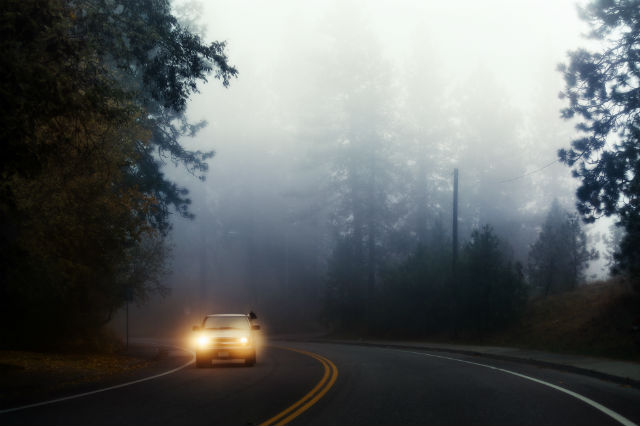
Research from the AAA Foundation for Traffic Safety estimates that 6% to 11% of reported motor-vehicle crashes and 16% to 21% of fatal crashes likely involve drowsy driving. Fatigue impairs your driving skills, affecting your judgement and reaction time, just like being drunk, drugged or distracted.
And while the majority of Americans know it’s risky to drive drowsy, most do it anyway. In a recent survey by the National Sleep Foundation (NSF), 60% of adult drivers and 85% of teen drivers admitted to getting behind the wheel while sleepy.
Missing even a couple of hours of sleep can increase your risk of a crash. So, what’s a road tripper to do?
Sleep to Prepare
The tactics that we usually employ to stay awake (think: turning up the volume on the radio, drinking coffee or putting the windows down for fresh air) are merely short-term solutions that will eventually fade. The only way to effectively rid yourself of drowsiness is to get a good night’s rest before any road trip, long or short.
Time it Right
Late morning, late afternoon and early evening are when we’re most alert, according to the NSF, with drowsy-driving accidents most likely to happen during early morning and late-night hours. Time your drive for your most wakeful hours, and make sure to take a break every two hours or 100 miles.
Buddy Up
Travel with an alert passenger and take turns driving.
Mind Your Meds
Pain relievers, antihistamines and other medications can make you drowsy and impair your ability to drive. Pay attention to those warnings on the label and time your dosage accordingly.
Nap-a-Latte
Sleep expert Michael Breus suggests this trick for getting the most out of a rest stop nap: First, avoid eating any heavy foods. Next, quickly consume your caffeinated beverage of choice. When you finish your last sip, set your alarm and take a 20-minute nap. The caffeine will hit your system in 20-25 minutes.
Seek Out Nap-Friendly Stops
It’s recommended to schedule a break from driving every two hours or 100 miles, but multiday trips require much longer stretches of rest. Try to choose a hotel with rooms away from the street. Bring your own pillows, white-noise options and keep the blackout curtains completely closed.
Know when to pull over. If you find yourself repeatedly yawning, unable to keep your eyes open, driving too close to the car in front of you or drifting into other lanes, it’s time to pull off the road and get some rest. You just might save yourself from being one of the 6,400 people who die each year in drowsy driving accidents.
Have you ever caught yourself getting sleepy behind the wheel? What are your tricks for staying awake and alert on long drives? Share with us in the comments.
Movie lovers have been seeking out the locations of cinematic scenes ever since Burt Lancaster and Deborah Kerr memorably made out in the Hawaiian surf in 1953’s “From Here to Eternity.”
You can still recreate that little piece of Hollywood history at Halona Beach Cove in Oahu, Hawaii, and that’s just one leg of a feature-length journey around the globe to destinations made famous on film.
“Die Hard”
Fans of this action film turned Christmas tradition know that Nakotomi Plaza is almost as big a star as Bruce Willis. In real life, the very recognizable 34-story skyscraper is the Fox Plaza building in downtown Los Angeles.
“Dirty Dancing”
Although meant to be a midcentury Catskills resort, the fictional Kellerman’s Mountain House featured in the Patrick Swayze/Jennifer Grey coming-of-age classic was shot in the Blue Ridge Mountains of Virginia at the Mountain Lake Lodge, which hosts special “Dirty Dancing” weekends throughout the year.
Photo: ROCKY89 / GETTY IMAGES
“Game of Thrones”
Over the course of eight epic seasons, “Game of Thrones” film crews moved from Iceland to depict the snowy North, to Dubrovnik, Croatia (pictured), to portray King’s Landing – most infamously in Queen Cersei’s infamous walk of shame in Season 5.
Fans of the show should also visit the city of Girona in the Catalonia region of Spain, both inspiration and shooting locale for Braavos. And a number of scenes, including Castle Ward (Winterfell in the series), were shot in Northern Ireland, which has an official Game of Thrones Studio Tour.
Photo: BEN QUEENBOROUGH / GETTY IMAGES
“The Gilded Age”
This hit HBO series that brings Victorian-era wretched excess exquisitely to life was filmed extensively on location in Newport, Rhode Island, most notably the Bellevue Avenue mansions.
Among the palatial homes featured in the series – or “summer cottages,” as the Astors and Vanderbilts demurely referred to them – are The Breakers, The Elms (pictured), Marble House, Rosecliff and Chateau-sur-Mer, all of which can be seen on tours arranged by the Preservation Society of Newport County.
Ian Fleming’s famous 007 has traveled around the globe in 27 films made over the course of more than 60 years. But Fleming had a soft spot for Jamaica, where he lived and wrote most of his James Bond books, and the film producers repeatedly returned to the island to film.
The association between Jamaica and Bond starts right at the beginning in 1962’s “Dr. No,” when the beautiful Honey Ryder strides out of the surf at Ocho Rios’s Laughing Waters Beach to meet Sean Connery’s Bond.
Other famous 007 locations in Jamaica include the Jamaican Swamp Safari Village in Falmouth, the Half Moon Resort in Montego Bay (“Live and Let Die”) and Dunn’s River Falls (“Dr. No”).
Photo: IMAGEBROKER / GERHARD ZWERGER-SCHONER / GETTY IMAGES
“The Lord of the Rings” Trilogy
Peter Jackson’s original “Lord of the Rings” trilogy and his subsequent interpretation of J.R.R. Tolkien’s “The Hobbit” were showcases for the natural beauty of New Zealand. Visitors to the North Island of New Zealand can visit the actual Hobbiton. Various scenes from the movies also were shot on Mount Victoria and Kaitoke Regional Park, near Wellington.
On the South Island you’ll find Mount Sunday (pictured), the site of the Rohan city Edoras, the “Ford of Bruinen” on the Arrow River and the Waiau River, where Frodo and company paddled away from Lothlorien at the beginning of the quest to destroy the One Ring.
“Pirates of the Caribbean” Series
The opening scene of the first “Pirates of the Caribbean” movie where the Royal Navy “almost captured Captain Jack Sparrow,” was filmed in Wallilabou Bay in St. Vincent and the Grenadines. Remnants of the original set remain there. And the island where Jack and Elizabeth are marooned is Petit Tabac Cay in the Tobago Cays, also part of the Grenadines. On the lush island of Dominica, you’ll find the rope bridge Jack Sparrow fled across in “Dead Man’s Chest” over the Titou Gorge; the island served as the location for a variety of scenes in the second film.
“Stranger Things”
The Duffer Brothers’ ‘80s horror-style Netflix series is set in fictional Hawkins, Indiana, but was largely filmed in and around Atlanta, Georgia. Emory University is where Hawkins National Laboratory was filmed, Patrick Henry High School in Stockbridge is Hawkins High School and Middle School and the (closed) Gwinnett Place Mall in Duluth, stands in for Hawkins Starcourt Mall.
“The Walking Dead”
Zombies and survivors shuffle across the country in this long-running series – which just wrapped up after 12 seasons – but most of the filming took place in rural Georgia. The fortified town of Alexandria was shot in the small city of Senoia and has become the main pilgrimage destination for fans of the show. Nic and Norman’s restaurant in downtown Senoia is co-owned by series star Norman Reedus.
“Ted Lasso”
The Richmond Greyhounds of this soccer comedy starring Jason Sudeikis are fictional, but the real London suburb of Richmond was the filming location for scenes outside of Ted’s apartment, near 9½ Paved Court. The Hayes & Yeading United Football Club in Hayes, England, is the location for Greyhounds practices, while home games are staged at Selhurst Park Stadium, the actual home of the Premier League’s A.F.C. Crystal Palace soccer team. Prince’s Head Pub in Richmond is the series’ fictional Crown and Anchor.
“The White Lotus”
Mike White’s satirical HBO series that follows the rich, the climbers and the ordinary people they trample on was filmed in two Four Seasons resorts that stood in for a pair of fictional “White Lotus” resorts: the Four Seasons Resort Maui at Wailea in Hawaii in its debut season, and the San Dominico Palace in Taormina, Sicily, in season 2.
Photo: RICHARD SCHAFER / EYEEM / GETTY IMAGES
“Yellowstone”
The sprawling Yellowstone saga has spun off two prequels (1883 and 1923), with scenes shot from Texas to Montana and Utah. The ancestors of rancher John Dutton begin their journey in the stockyards of Fort Worth, Texas – now a popular park and entertainment district, while 1923 was largely filmed in Butte, Mont.
The coming 1944 story will film in the Bitterroot region of western Montana. As for “Yellowstone” itself, the standing sets for the Dutton Ranch are located on the private Chief Joseph Ranch near Darby, Mont., but can be seen from the road. Other stops for fans include Glen’s Cafe in Florence and Ruby’s Cafe in Missoula.
March is Women’s History Month, a time to reflect on all that women have accomplished throughout our country’s history. One of the most important events in women’s history took place in the Northeast: The Seneca Falls Convention, held in Seneca Falls, N.Y., in 1848, was the first U.S. women’s rights convention.
If you want to revisit this important chapter in women’s history, Seneca Falls is the place to go. Here are some of the top sites to visit in and around the area.
Women’s Rights National Historical Park
The Women’s Rights National Historical Park is home to Wesleyan Chapel – where the convention was held, the Waterwall at Declaration Park, the Elizabeth Cady Stanton House and a visitor center.
More than 300 early feminists, including Stanton, Lucretia Mott and Frederick Douglass, attended the Seneca Falls Convention, considered to be the beginning of the American women’s rights movement. The chapel was a meeting place for abolitionists and political activists, so for the feminists who lived in Seneca Falls it was the logical place to stage their convention.
The Waterwall at Declaration Park is a 100-foot-long water feature inscribed with the words of the Declaration of Sentiments, the founding document of the women’s rights movement which was drafted at the convention. The water feature and surrounding park is intended to invite the viewer to reflect on these important words and how far we have come since then.
You can also visit the Elizabeth Cady Stanton House, the home of the convention’s organizer and the primary author of the Declaration of Sentiments. She called her home the “Center of the Rebellion.”
Park rangers offers talks and guided tours of the park to highlight various sites and provide historical context.
Seneca Knitting Mill
National Women’s Hall of Fame
Located in the historic Seneca Knitting Mill, the National Women’s Hall of Fame celebrates important, innovative and inspiring American women. It holds special exhibits on inductees like Maya Angelou, Emily Dickinson, Helen Keller, Coretta Scott King, Rosa Parks, Eleanor Roosevelt, Sojourner Truth, Harriet Tubman and more. The hall includes a research center, complete with a library and archival materials about the inductees. You can also learn about the history of the Seneca Knitting Mill itself, the women who worked there, and how Seneca Falls became the site of such radical change.
Seneca Falls Heritage Area
The Seneca Falls Heritage Area preserves the history of the town of Seneca Falls, and examines the role it played in the reform movements of the 19th century. It also preserves the classic main street and several historic homes. The Heritage Area Visitor Center offers a historical overview of the town and the wider Finger Lakes region. You can learn about the development of the Finger Lakes, the rise of waterpower, the Erie Canal, the local industries, the history of transportation and, of course, the women’s rights movement. Their Women’s Rights and Reform section even includes a life-size statue of Elizabeth Cady Stanton sitting at her writing desk. It’s a great place to get a quick overview of everything that’s taken place in Seneca Falls, and the lasting impact of those movements.
Nearby Sites
Seneca Falls isn’t the only women’s history landmark in upstate New York. If you have time, Rochester also has many sites dedicated to the women’s suffrage movement, including the National Susan B. Anthony House and Museum, Frederick Douglass-Susan B. Anthony Bridge and Mt. Hope Cemetery, the final resting place of many suffragettes and abolitionists.
Want to walk in the footsteps of another woman who made history? The Harriet Tubman National Historical Park isn’t too far away. Auburn is home to Harriet Tubman’s home, the Harriet Tubman Visitor Center, the Tubman Home for the Aged and the Thompson Memorial African Methodist Episcopal Zion Church.
These days, you don’t have to wander far to hear the buzz about sustainable travel. In fact, 81% of travelers believe it is important, according to recent data. Sure, vacationers still want the thrill of trying new foods and standing in awe of architectural wonders, but they also want to be responsible while visiting their bucket-list destinations.
So, how can you ensure your next trip positively impacts the planet, its people and wildlife?
Our suggestion: Leave the logistics to the local pros and dive deeper with a conscious group travel package, like the new and exclusive Impactful Travel itineraries from AAA Travel and Trafalgar.
The team of travel specialists put their heads together to focus on:
Slow travel. Conscious travel means staying longer in each city. The result? Deeper connections with each place and fewer carbon-emitting transportation days.
Green hotels. Sustainable travelers stay in beautiful hotels with small carbon footprints. Rest your head at a Travelife Sustainability Gold-certified historic grand dame in Dublin. Or maybe you prefer a solar- and thermal-powered boutique hotel on a lake in northern Italy?
Conscious travel experiences. You can be a better traveler by prioritizing authentic connections with locals. Imagine strolling through town with a local guide who is also a sustainability advocate. Picture farm-to-table spreads. Or browse a handpicked list of excursions directly tied to the United Nations Sustainable Development Goals.
Impactful travel is trendy, but AAA Travel thinks it’s here to stay. Now is the time to start planning your next dream trip, and the Impactful Travel collection makes that possible. Choose between two of Europe’s dreamiest locales: Ireland or Italy.
Here’s a sneak peek.
Photo courtesy of Trafalgar.
Flavors of Northern Italy
Who’s up for eight splendid days exploring the best of northern Italy? The journey begins with a bike tour of Milan. Pedal through the Piazza del Duomo on your way to Galleria Vittoria Emanuele II, Italy’s oldest active shopping galleria. Even if you’re not in the mood to browse the dizzying array of shops, the iron-and-glass ceiling will impress.
From Milan, the road leads to a walking tour with a local in Verona, followed by hikes along the coastal cliffs of Cinque Terre and Lake Maggiore. Dreaming of mouthwatering Italian food? The trip includes plenty of that, too, of course, with stops at a lakeside lemon house, biodynamic vinegar and wine sampling, and truffle tasting at a local agriturismo.
This trip’s signature experiences include:
Supporting responsible production by learning about (and tasting!) traditional, locally made Italian balsamic vinegar in Modena.
Supporting responsible local agriculture by enjoying a meal with locals Fabio and Alexia at Villa Toscanini. Locally sourced ingredients only!
Supporting a local eco-friendly business with dinner at an organic agriturismo run solely on thermal and renewable energy. Don’t miss a post-supper photo opp with the grazing donkeys!
Photo courtesy of Trafalgar.
Icons of Ireland
This jam-packed, eight-day adventure on the Emerald Isle focuses on the country’s incredible landscapes and wildlife. Of course, travelers want to see Dublin and Kilkenny, the Cliffs of Moher and Aran Islands – and you will – but the real stars are the memory-making experiences along the way.
The trip begins in Dublin. Get your bearings on a walk through Trinity College, then meet your guide for a brief city tour before feasting at a local restaurant. The next day, you’ll hit the trails for a hike through lush Wicklow National Park with your group’s environmentalist guide. Breathe in the invigorating fresh air before heading back to the city, where you’re free to wander and enjoy live music and hearty Irish food.
The rest of the itinerary includes one gem after another: Kilkenny, Killarney, the Ring of Kerry, Cliffs of Moher, and more. Ireland is a feast for the senses, and the Icons of Ireland tour invites you to savor it all while also supporting sustainable businesses and initiatives throughout the country.
This trip’s signature experiences include:
Supporting the sustainable use of Ireland’s fragile marine life by taking a seaweed foraging walk with a local advocate and educator at Atlantic Irish Seaweed.
Supporting local business by enjoying an award-winning, organic smoked fish dinner at a family-run Irish smokehouse.
Supporting responsible food consumption by visiting DK Connemara Oysters, a small-scale, family-run farm on the leading edge of sustainability and biodiversity in Ireland.
Are you interested in impactful travel? Space is limited, so contact your local AAA Travel advisor to book today.
Planning a European voyage can be overwhelming, especially when you don’t know where to start. Between the sheer number of countries to visit, iconic sights to see and ways to get there, the possibilities are never-ending. Which, when it comes to cruising, is the best part. Why? You won’t have to choose.
Cruising through Europe allows you to see it all – and get plenty of perks and unforgettable experiences along the way. We’ve narrowed down the top reasons why sailing through Europe with Norwegian Cruise Line is the best way to go.
The Itineraries
Norwegian Cruise Line is all about doing things on your own terms. And with over 295 unique itineraries across northern Europe, the Mediterranean and the Greek Isles, there are no limits to what you can do. Explore the Baltic Sea like a Viking, stroll through picturesque Santorini, have the best pasta of your life in Italy and so much more. With Norwegian, it’s all up to you.
Itinerary lengths range from five days to 15 or more, with many of them featuring a total of zero sea days, giving you the coveted opportunity to waste no time immersing yourself in your chosen destination. You’ll even find that some itineraries to Europe have two ports of call in a single day, so you won’t miss a thing.
Being able to depart from one of 16 cities allows for lots of convenient wiggle room, too. Choose from Lisbon to Athens, Barcelona, Venice, Stockholm, Paris and many more.
Exploring takes time. That’s why, on average, Norwegian Cruise Line spends 32% more time in ports of call compared to other cruise lines, ensuring that you’re not just visiting a location – you’re experiencing it.
With an average of nine hours spent per port, you’ll have time to see the sights, taste the cuisine, take in the culture and maybe even do a little souvenir shopping. You can also connect with informative local guides through Norwegian’s own excursion portal, Go Local, where you’ll have the opportunity to participate in a wide range of activities like touring “Game of Thrones” filming locations in Dubrovnik or hunting for black truffles in Provence. Choose from literally thousands of excursions for all price ranges and activity levels.
Love a location so much you can’t wait to go again? Overnight stays allow guests to have two days in the same port, doubling the time spent at particularly experience-dense locations where you may need more time to check off bucket list items. This way, you can indulge and relax at the Blue Lagoon today and save exploring Reykjavik for tomorrow. Or explore the historic ruins of Athens today and save the white sandy beaches of Rhodes for tomorrow. You get the idea.
The Ships
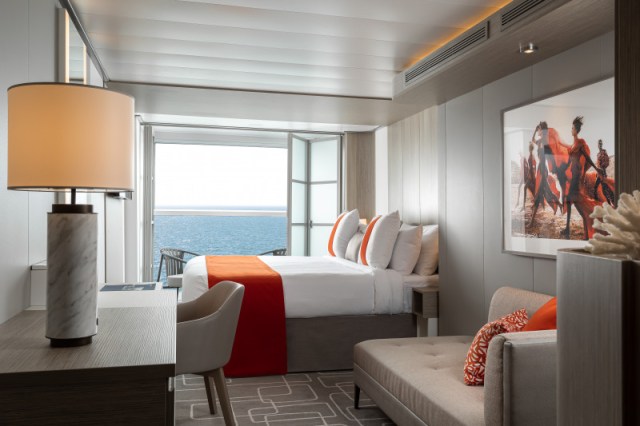
When you go to Europe with Norwegian Cruise Line, you sail on the newest ships in their European fleet: Norwegian Viva and Norwegian Prima. Both ships aren’t just new; they’re custom-built for lavish comfort, convenient amenities and jaw-dropping views. The spacious and modern staterooms are certainly a plus, as well.
When it comes to food and dining, the choice is yours in more ways than one. With Norwegian’s Freestyle Dining, guests have the freedom to pick when they want to eat and where without fixed dining schedules or pre-assigned seating. Whether you’re in the mood for pub fare, buffet-style or a white tablecloth atmosphere, you’ll find it on your ship.
Want to be even more free? Signing up for the Free at Sea offering lets you breeze through your vacation worry-free and wallet-free. This enhanced guest experience gets you free open bar, free specialty dining, free excursions, free Wi-Fi, free extra guests and even free airfare for a second guest joining you. What’s not to love?
When you’re not experiencing the best a location has to offer or dining on board, there is a surplus of entertainment to take part in, so boredom always has the night off. Enjoy everything from live performances to deck parties. There have even been guest-participation shows like “Deal or No Deal” and “Wheel of Fortune” featured, giving you a plethora of options for fun every night or your stay!
Find your perfect European trip with Norwegian Cruise Line and AAA Travel.
If you're in the market for a new car, you may want to consider GAP insurance. Learn more about this optional coverage and how it could save you money.
Experiencing an auto theft or total loss is hard enough, what if it also meant having to pay the outstanding balance of your car loan on your own?
Most standard auto policies will only cover the depreciated value of the car or its current market value at the time of your claim. Since cars begin to lose their value the moment you drive them off the lot, what’s covered by insurance will generally always be less than the amount you financed.
This is where GAP insurance, or guaranteed asset protection, comes in.
What Is GAP Insurance and What Does It Cover?
“This optional endorsement will provide coverage for the difference between the actual cash value of your vehicle at the time of loss and any greater amount you may be legally obligated to pay to the financial institution,” explains Jodi DeSantis, vice president of insurance sales for AAA Northeast. In other words, it covers the “gap” between the two.
Getting coverage is easy. “Your car dealer may offer to sell you GAP insurance on your new vehicle. However, most car insurers also offer it, and they typically charge less than the dealer,” according to the Insurance Information Institute. “On most auto insurance policies, including GAP insurance with collision and comprehensive coverage adds only about $20 a year to the annual premium.”
GAP protection is often required on a leased vehicle. It is also recommended if:
Your down payment was less than 20%.
You financed for 60+ months.
You purchased a car or truck that depreciates faster than average.
Negative equity from an old car is rolled into your new loan.
“Some carriers do limit or cap the coverage to a percentage of the actual cash value of the vehicle, so it is important to discuss and understand the details of this coverage as well as the cost with your insurance agent,” said DeSantis.
Other Types of Loan Debt Protection
GAP isn’t the only way for borrowers to get peace of mind when taking out a personal loan. Unexpected changes in life can become even more stressful when you’re thinking about how to settle outstanding loans. Debt protection programs can provide some financial security against unforeseen circumstances.
Loss of life coverage can protect a co-borrower if the primary borrower dies during the life of a loan. Disability coverage can help cover payments if the borrower is injured or sick and unable to work during the life of a loan. And if a borrower loses their job during the life of a loan, job loss protection can help.
Finding that your auto settlement is not going to cover the full value of what you owe on your vehicle is not a surprise you want to encounter in the middle of a claim and shopping for a new car. GAP insurance could save you both the headache and out-of-pocket expense of paying off your loan.
When it comes to Northeast sports destinations, you probably think of Fenway Park and Madison Square Garden. But did you know the region is home to at least a half-dozen sports halls of fame? And maybe you forgot there’s a local city that hosted two Olympic Games?
The Northeast is home to some of the most legendary venues in all of sports, as well as a long list of historical locations that should be on any sports fan’s bucket list.
From the Finger Lakes to downtown Boston, the Ivy League to Major Leagues, here are a few of the unbeatable sports road trips in the Northeast.
The National Baseball Hall of Fame
Upstate New York
For such a tucked-away region, the Finger Lakes has an abundance of must-visit sites for any sports fan. Those looking to catch the action live can watch world-class racing at Watkins Glen International Speedway or see future Major Leaguers take the field for the Syracuse Mets and Rochester Red Wings.
If it’s a look into the past you’re after, head to the tiny town of Canastota, where you’ll find the International Boxing Hall of Fame. Speaking of halls of fame, a short drive east will take you to Cooperstown, home of the National Baseball Hall of Fame and Museum. Further east is the Saratoga Race Course, one of the country’s oldest sports venues. It still holds elite horse races from July through September. Just down the street is the National Museum of Racing and Hall of Fame.
No sports road trip through upstate New York is complete without a journey up north to Lake Placid. Home of the 1932 and 1980 Olympics, the city offers a perfect combination of past and present. The Olympic Museum takes a look back at those aforementioned Winter Games, including the legendary “Miracle on Ice” hockey game. Meanwhile, the Olympic Center offers guests the opportunity to show off their own athletic prowess in skiing, snowboarding, ice skating, and even bobsled and skeleton.
The International Tennis Hall of Fame
Connecticut-Rhode Island Shoreline
For a road trip that’s as scenic as it is sports heavy, cruise alongside the Long Island Sound and Narragansett Bay in the neighboring states of Connecticut and Rhode Island. Start in New Haven, home of the Yale Bowl, one of the most historically important sports venues in the country. The National Historic Landmark is the second oldest active college stadium in the United States. From there, drive west along I-95 as it traces the Sound. About 20 minutes inland from New London is the town of Uncasville, site of the Mohegan Sun Arena. Not only is this venue the home court of the WNBA’s Connecticut Sun, it also hosts many NCAA basketball games.

For your final stop, drive over state lines and cross the bay to the coastal city of Newport. Known best for its harbors and gilded mansions, Newport is also home to the International Tennis Hall of Fame. The museum celebrates the careers of more than 260 tennis players and exhibits almost 2,000 artifacts.
Fenway Park is the most storied ballpark in the country, and an absolute must-see spot for any sports fans (yes, even you Yankees fans!). TD Garden, home of the Boston Celtics and Bruins, is well worth a visit, too, even if one of the local teams isn’t playing. The arena is home to the Sports Museum, a half-mile of exhibits celebrating all things Boston sports. The greater Boston area is also the site of several famous football venues, including Gillette Stadium, Harvard Stadium and Boston College’s Alumni Stadium.
Western Massachusetts
Not to be forgotten, Massachusetts’ Western end has some formidable sports destinations of its own. First and foremost on that list is, of course, the Naismith Memorial Basketball Hall of Fame. This Springfield institution, located on the banks of the Connecticut River, comprises 40,000 square feet of space dedicated to basketball history, with shrines to more than 400 hall of famers.
Just up the road in Holyoke is the lesser-known International Volleyball Hall of Fame. While you may not find any household names here, you will be able to see how volleyball began as a gymnasium game at a Holyoke YMCA and turned into a global sport.
It’s not all about the past in Western Massachusetts. The area is home to a litany of current-day athletes, including those playing for the Springfield Thunderbirds hockey team, and the Valley Blue Sox and Westfield Starfires minor league baseball teams.
The Billie Jean King National Tennis Center
New York City’s Outer Boroughs
Madison Square Garden may be the world’s most famous arena – and is always well worth the price of admission – but there are plenty of other great sports sites to take in away from the hustle and bustle of Manhattan.
The outer borough of Queens, for example, comes alive as the weather warms. The New York Mets begin their season at Citi Field in March. Right next door, the Billie Jean King National Tennis Center plays host to the U.S. Open in August and September. In between, Belmont Park (technically in Nassau County, but right on the border) is the site of the final leg of horse racing’s Triple Crown.
In neighboring Brooklyn, the Barclays Center is the home of the NBA’s Nets and WNBA’s Liberty. Down by the shore, you can catch the Brooklyn Cyclones play next to the Coney Island boardwalk. You’ll find more baseball, this time of the major league variety, in New York’s most northern borough. No sports road trip to the Big Apple is complete without a visit to iconic Yankee Stadium in the Bronx.
These sports road trips will take you all over the Northeast – better make sure you have the proper set of wheels. AAA members can save on Hertz rentals.
This article has been updated and republished from a previous version.
Newport, R.I., is a city with many hues, but in April, color it yellow.
Already home to a host of attractions and palate-pleasing restaurants, the city plans to “get daffy” throughout the month for the annual Newport Daffodil Days, featuring nearly 1.5 million of the yellow flowers in bloom, merrymaking and food festivals.
The celebration kicks off at noon April 6 at Clarke Cook House on Bannister’s Wharf with a blast of musket fire from the Artillery Company of Newport and a string of daffodils cut by Ms. Daffodil and Newport’s Mayor Xaykham Rexford Khamsyvoravong. After opening ceremonies, the fun and music continue as the annual Daffy Doggy Paw-rade trots off to Queen Anne Square for the daffiest dressed dogs (and humans) competition. Don’t miss all the store windows resplendent with daffodil decorations.
The following week, hundreds of runners will be “cheered” by fields of 60,000 waving daffodils during the Newport Rhode Races April 13, which include a full marathon, half marathon and a 5K that begin at Easton’s Beach.
If you enjoy a slower pace, stroll the “yellow carpet” for photo opportunities at Miantonomi Park, home to Newport’s largest daffodil field on April 14 and get messy at the Lemon Pie Slam-down and a Daffy Dust-up Color Run. Also not to be missed are Bike Newport’s bike decorating contest, storytelling, food trucks and music.
Bicyclists can “petal-on” April 20 to view Newport’s fields of daffodils, including a private garden with more than 20,000 blooms, welcoming cyclists dressed in yellow and riding decorated bikes. Family fun awaits at Salve Regina College’s I Scream ice cream social and Daffy Puppet Show just off the Cliff Walk, next to a large field of daffodils – naturally.
On April 21, the famous Driving Miss Daffodil car rally of more than 50 decorated cars and drivers meet up at Easton’s Beach then cruise through Newport, arriving at Second Beach in Middletown for Audrain’s popular Cars & Coffee gathering.
Nearby Bristol joins in the fun as well, with Blithewold Daffodil Days between April 13 and April 21. Celebrate daffodils and enjoy other spring events, such as teas, concerts and workshops.
Besides daffodil viewing, Newport has lots of other attractions, indoors and out.
Who says you need to wait until summer to cruise? Newport has plenty of options if you want to get out on the water. Springtime is a great time for Coastal Queen Cruises, and it kicks off the season with its Daffodil Lighthouse Cruises in April. The tours include views of Lime Rock, Goat Island, Rose Island and Castle Hill lighthouses. Each tour is narrated by a local guide and every seat has a panoramic view. Beginning in May, get ready to sip and sail with Lighthouse & Mimosa Cruises. Start your day with a tropical drink as you cruise up close to the many lighthouses surrounding Newport Harbor.
For night-time entertainment, Coastal Queen offers evening cocktail and event cruises that also depart from Newport.
Ready for exercise and scenic views that include gardens, meadows, farms and the ocean? Hike along any of the seven trails in the 300-acre-plus Norman Bird Sanctuary in nearby Middletown. More than 230 species of birds have been observed at the sanctuary.
Time to Eat and Drink
When it comes to dining, there is nothing like fresh seafood and adult beverages. More than 50 breweries, featuring more than 150 selections of beers, take over Fort Adams State Park April 20 during the Newport Beer Festival.
The soon-to-open Save the Bay Aquarium allows visitors to spend time with local sea life without getting wet. Save The Bay is moving its Exploration Center and Aquarium to the first floor of the Gateway Transportation and Visitors Center, and it has undergone extensive renovations. The organization’s goals are to protect and purify Narragansett Bay so both sea life and people can enjoy it. The aquarium features many educational programs.
Love tennis? Then you will love the International Tennis Hall of Fame. Founded in 1880, the hall of fame, its museum and grounds long have been Newport highlights. Currently on display are almost 2,000 objects from the International Tennis Hall of Fame’s collection of more than 30,000 artifacts and hundreds of thousands of images, videos and publications, according to the hall of fame. Visitors can enjoy assorted interactive displays, and yes, it even has tennis courts.
No visit to Newport is complete without tours of the town’s opulent summer homes known, of course, as the mansions. Step back in time to when the nation’s wealthiest citizens spent their summers in luxury and threw lavish parties.
Where to Stay
Newport has plenty of hotel options, including newcomers Gardiner House and Pell JDV, and the newly renovated Newport Harbor Island Resort and Wayfinder Newport. Find places to stay.
Have you been dreaming of a Celtic adventure? Put your plans in good hands by tapping into a network of locals. Dublin-based Brendan Vacations specializes in fully customizable Ireland and Scotland trips. You pick your travel style – drive yourself, hire a driver or go by train. However you choose to go, you can expect a thoughtfully handcrafted and customized itinerary.
Self-Drive Road Trips Through Ireland or Scotland
A self-drive vacation might seem like the epitome of self-reliance, but it pays to tap into the local experts for advice on the best places to stay, eat and play in Ireland and Scotland.
The beauty of self-drive itineraries is that they’re so customizable. Do you dream of cycling the trails of Ireland’s Great Western Greenway? Or maybe you fancy a journey that covers Scottish icons like Edinburgh Castle and Loch Ness? You can do all that and more. Your guides will tailor your road trip to you interests, budget and timetable. There is no one-size-fits-all itinerary. These are just a few examples of popular routes you can take.
Skye Bridge connects the Isle of Skye to the Scottish mainland.
Ireland’s Hidden Gems
A road trip hugging Ireland’s rugged coast is a feast for the imagination. Kick off the journey in Dublin. Between tales from your local guide and exciting tidbits from the city’s hop-on, hop-off tour, you’ll get a solid grasp of the history and culture of Ireland’s vibrant capital. After that, it’s off to Cork, Dingle, Galway and more. Highlights of this 13-day road trip include a day spent wandering the coast of Westport with a local expert, a jaw-dropping stretch of road through The Burren National Park and a stop at Burren Perfumery.
Scotland Explorer
This nine-day self-drive tour of Scotland begins at the boundary of Edinburgh’s Old and New Towns. Spend two days and nights exploring the narrow cobblestone streets with a local guide before hopping in the car for your great adventure. Though this road trip itinerary is infinitely customizable, the standard plan includes stops in St. Andrews – the so-called home of golf, Inverness, the Highlands around Loch Ness and the Bonnie Banks of Loch Lomond.
The Isle Awakens
Fans of Star Wars, this Celtic road trip is for you! Did you know scenes from “Star Wars: The Last Jedi” were filmed at Malin Head, the northernmost point in Ireland? Explore that and more on this fun self-drive. The 11-day trip begins in Dublin, through Belfast, then along the winding roads of the Antrim Coast and north to Malin Head. Each stop includes opportunities to connect with local guides and rest your head in boutique hotels steeped in Irish history and culture. Toward the end of the trip, you’ll take in the atmosphere of a galaxy far, far away as you visit the fishing village of Portmagee, where Luke Skywalker and Rey collide in “Star Wars: The Force Awakens.”
Whether you’re relaxing in the dining car with a wee dram of whiskey or simply watching the rolling emerald hills of Ireland glide past your compartment’s window, traveling by rail means relishing the journey.
Of course, train travel is perfect for a few hours, but not everyone enjoys sleeper trains. That’s why the Celtic travel experts at Brendan Vacations dreamed up locally hosted rail trips – a balanced blend of romantic train travel and on-the-ground excursions with experienced local hosts.
Here are a few ways you can explore Ireland or Scotland by rail.
Ireland’s Sparkling Gems
On an eight-day adventure through Ireland, you might spend one day riding the rails from Dublin to Killarney, where a local host will meet you at the lively Killarney Towers Hotel. Bond over an evening of live music or a hearty supper of corned beef and cabbage before heading out the next morning toward rugged landscapes and charming villages. A few culture-rich days later, it’s “All aboard!” at Galway Train Station for your journey back to Dublin.
Scotland’s Cities & Natural Landscapes
A week-long exploration of Scotland’s cities and natural landscapes wouldn’t be complete without Edinburgh’s The Johnnie Walker Experience, followed by a scenic train ride into the Scottish Highlands. There will be a guide to greet you in Inverness, where you’ll see beloved icons like Eilean Donan Castle and the coastlines of the Isle of Skye together.
Ireland’s Local Charm & Ancient Culture
A six-night whirlwind Irish holiday wouldn’t be complete without a local guide leading you through the highlights of Dublin and a rail journey through Ireland’s Golden Vale. Enjoy the perfect combination — the freedom to enjoy the journeys with your family and friends paired with the comfort and security of knowing there’s always a local guide to meet you at your next destination.
Of all the alluring qualities of the Northeast, the historical significance of locations throughout the region may be its most impressive. Whether it’s sites where our country was founded or homes of some of America’s greatest minds, no other place in the country rivals the Northeast in quantity and quality of historical destinations. Here are a few historic road trips in the Northeast well worth the drive.
No city in the country rivals Philadelphia when it comes to national historical significance. It was the original capital of the United States and where the Constitution and Declaration of Independence were signed.
That history is on full display throughout the country’s sixth-largest city. Must-see landmarks include Independence Hall, where both of the aforementioned signings took place, and the Liberty Bell. Both sites are free to visit.
To get the most out of this historic road trip, follow the Official Trail of Philadelphia’s Historic District. Aside from Independence Hall and the Liberty Bell Center, this tour takes you past 21 other sites including the Betsy Ross House, the Declaration House, where Thomas Jefferson wrote the Declaration of Independence and Elfreth’s Alley, America’s oldest continuously inhabited street.
Just 30 minutes outside the city sits Valley Forge National Historical Park. The 3,500 acres of monuments, meadows and woodlands commemorate the sacrifices of the Continental Army. Valley Forge was the site of the army’s 1777-78 winter encampment during the Revolutionary War.
Gettysburg National Military Park
About 2.5 hours west of Philadelphia is the Gettysburg National Military Park. The Battle of Gettysburg, fought in July 1863, is widely considered one of the most important events in the Civil War. The Northern victory turned the war in the Union’s favor for good. The Civil War’s bloodiest battle served as the inspiration for President Abraham Lincoln’s immortal Gettysburg Address.
The site is now a National Military Park operated by the National Park Service. Every weekend from April to October, the park puts on living history demonstrations. Visitors can explore the camps, talk with historians and watch experts demonstrate the tools, tactics and firepower of the two armies.
Enclosed within the park is also the George Rosensteel Collection, one of the largest collections of Civil War relics in the United States, and the Eisenhower National Historic Site. Consisting of a house and farm adjacent to the battlefield, this residence served as a weekend retreat for President Eisenhower and a meeting place for world leaders.
Hartford, Conn.
Destinations important to our country’s formation don’t need to be the center of a historic road trip. History encompasses all aspects of humanity – including the arts. That’s why a drive to Hartford, Conn., should be on your list.
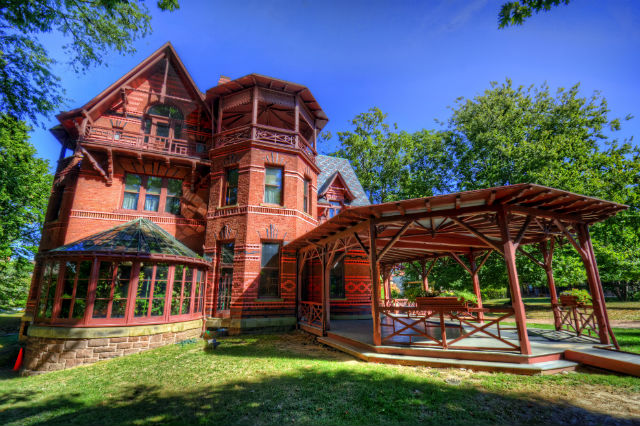
Connecticut’s state capital has a storied history of cultivating literary talents. Maybe the two most notable examples are Mark Twain and Harriet Beecher Stowe. The pair lived right next door to each other in the late 1800s. Today, those homes serve as museums to two of the country’s greatest scribes.
Mark Twain and his family relocated to Connecticut in 1871. Three years later, they moved into their newly constructed house, where they would live until 1891. Twain wrote many of his most famous books during this time, including “The Adventures of Tom Sawyer,” “Adventures of Huckleberry Finn” and “A Connecticut Yankee in King Arthur’s Court.” The house is available to see through guided tours and also hosts a variety of programs and events.
Harriet Beecher Stowe, the author of “Uncle Tom’s Cabin,” lived in a Victorian Gothic cottage in Hartford for the last 23 years of her life. In 1924, Stowe’s grand-niece Katharine Seymour Day purchased the house and spent years collecting manuscripts and objects connected to her famous relative. In 1968, the Harriet Beecher Stowe House opened to the public as a museum. It includes galleries and interactive spaces, and houses thousands of books, pamphlets, manuscripts and images related to Stowe.
The Mayflower II at Plimoth Plantation.
Boston
The best way to see all of the historic sites in Boston is to follow the Freedom Trail. This 2.5-mile route winds its way past 16 nationally significant historic sites. These include museums, churches, meeting houses, burying grounds, parks, a ship and historic markers. Notable destinations on the Freedom Trail include Paul Revere’s house, the site of the Boston Massacre, and Old North Church, where, leading up to the American Revolution, two lanterns were lit as a signal from Paul Revere that the British were marching to Lexington and Concord. It’s a historic New England road trip you won’t forget!

Speaking of the 17th century, about one hour outside of Boston is the town of Plymouth. Not only can visitors see the Plymouth Rock and various other historic landmarks, they can also visit Plimoth Plantation. This living history museum tells the stories of 17th-century English settlers and members of the Wampanoag tribe.
Scranton, Pa.
Scranton may not come to mind when thinking about historic American locations. But the northeastern Pennsylvania city played a critical role in the industrial history of the country.
In the mid-1800s, brothers George and Seldon Scranton combined several smaller railroads to form the Delaware, Lackawanna and Western Railroad. This turned Scranton into an early transportation hub. This locomotive history is immortalized at the Steamtown National Historic Site, a museum dedicated to Scranton’s pioneering railroad past.
Scranton also has a storied history in other trades that helped industrialize America. The Anthracite Heritage Museum commemorates the region’s history of coal mining, its related industries and the immigrant culture of northeastern Pennsylvania. Visitors also have the opportunity to tour a coal mine that originally opened in 1860. You’ll take a mine car down 300 feet to explore the winding underground tunnels and learn all about the methods used in deep mining’s history.
What are your favorite historic road trip destinations in the Northeast and beyond? Tell us in the comments below!
Need a ride? Learn about exclusive Hertz discounts for AAA members.
Trade your winter blues for clear-blue water. The Bahamas beckons, offering an idyllic escape from the Northeast. As the closest Caribbean destination to the U.S., travelers can feel a world away without the commitment of a long-haul flight.
It’s Easier to Get to Now
Accessing this island paradise has never been easier, thanks to a surge in new airlift options, including those from major hubs like New York and Boston. JetBlue added new daily nonstop flights from New York’s LaGuardia Airport to the Bahamas capital, Nassau, in 2023.
The 16 Bahama Islands, each with its own character, truly offer something for everyone. Whether they’re couples seeking a romantic getaway on Paradise Island, parents in search of eco-adventures for the whole family on Grand Bahama Island or hobbyists exploring unique boating, diving or fishing excursions throughout the Out Islands, there are hidden gems and attractions tailored to every traveler.
Island Time Accommodations
With hotel renovations in Nassau like the historic British Colonial Hotel, reopened in December, as well as the new Goldwynn Resorts & Residences, the Bahamas is rich with improved and modern offerings.
Bahamian Cultural
From its lively music to its and bright handmade crafts and clothing, the beauty of the Bahamas transcends its natural surroundings. Sample culinary staples like fish fry and conch salad, visit the monuments and museums in downtown Nassau and connect with the friendly locals – you are invited to experience it all.
No matter which island (or islands) you visit, the Bahamas is sure to provide a culturally enriching, adventure-filled and rejuvenating vacation for all who visit.
From how long renewing your passport will take to how much one will cost, our Passport FAQ is helpful for seasoned travelers and adventure newbies alike.
Getting your passport has always been a time-consuming process, but in recent years it has taken even longer. It could now take eight to eleven weeks to get your passport or five to seven weeks for an expedited passport, according to the State Department.
“If you want to travel this year, check your passport now,” said Chuck Nardozza, managing director of travel sales at AAA Northeast. He also advises travelers to check the passport status of everyone in your travel party, share your passport status with your travel advisor and book travel that ensures your return date is at least six months before your passport is set to expire.
Even if you think you’re not going abroad anytime soon, it might be wise to renew your passport sooner rather than later.
Here are some common passport FAQs that new international travelers should be familiar with.
What is a passport for?
A passport is a document that allows the holder to travel internationally. It is also occasionally used as a means of identification, and often more trusted than other forms of ID. A passport is absolutely necessary for travel to or from the U.S.
Where do I get a passport?
You can apply for a passport by mail in some situations, and at passport acceptance facilities like designated local post offices, public libraries and other types of government offices. Find one near you.

You can mail your passport paperwork to the closest National Passport Processing Center.
If you are getting a new passport or a passport for a child, you will need the DS-11 form.
If you are renewing your passport, you will need the DS-82 form.
If you are changing your passport info, such as spelling or name change, you will need the DS-5504 form.
A passport is required for any air travel outside the U.S. (Photo: Montri Thipsorn / Shutterstock)
How much does it cost?
For a child’s passport book (DS-11), the application fee is $100 and the processing fee is $35. For an adult’s first passport (DS-11), the application fee is $130 and the processing fee is $35. For an adult passport renewal (DS-82), the application fee is $130 and there is no processing fee.
What do I need to bring with me to get a passport?
An important inclusion on any passport FAQ list is a completed DS- form, which you can download from travel.state.gov. There are form-fillable PDF versions as well as printable versions you can fill out by hand.
You will also need evidence of U.S. citizenship such as a valid or expired U.S. passport, a U.S. birth certificate, a consular report of Birth Abroad, a Certificate of Naturalization or a Certificate of Citizenship. Any one of these official documents will do.
The passport office will also require a photocopy of the front and back of your chosen document to keep for their files.

At the passport office, you will need to present ID, such as an undamaged U.S. passport, a driver’s license, a certificate of naturalization or citizenship, a government employee ID, a U.S. military or military-dependent ID, a valid foreign passport or Mexican Consular Identification. Naturally, they will require a photocopy of the front and back of your ID as well.
You need to provide a passport photo that meets U.S. passport photo requirements, such as sizing, background and facial expression.
If you have a special circumstance, you might also need accompanying paperwork. Take a look at the comprehensive list of special circumstance documents at travel.state.gov.
How do passport photographs work?
It is not really recommended to take a passport photo yourself, as the rules and regulations are so strict. Some post offices and pharmacies offer passport photo services. Fortunately, in addition to this passport FAQ, AAA also offers passport photo services at many branch locations, making the process much easier for AAA members.
In a passport photo, your head must be facing the camera with a neutral facial expression. You cannot be taking up too much or too little of the frame, and you must be wearing “neutral clothing.” You have to be standing in front of a plain white background, with no glasses and no non-religious hat or head coverings. The shadows can’t even be too extreme. The photo must have been taken within the past six months, and it must be printed in color. The dimensions are 2 x 2 inches.
Can I retake my picture?
The only way to change the photo on your passport is to renew your entire passport with a DS-82 form and a new picture. Usually, you don’t have to change your picture unless your appearance has drastically changed since the time of the last photo. Most physical changes over the course of 10 years are considered very minor by Border Patrol agents.
What passport services does AAA offer?
As noted above, AAA branch offices have passport and immigration photo services, with special pricing for AAA members. Though AAA does not issue passports or process passport applications, DS- forms are available at all branch offices. AAA branch offices can also help you with many passport FAQs in person.
How long does it take to get a passport?
It usually takes approximately 8 to 11 weeks for routine service. It might take longer, so give yourself some wiggle room by applying as early as you can.
Can I rush my passport to get it faster?
You can usually get an expedited passport within five to seven weeks by mail or by visiting an acceptance facility.
Travelers with a life-or-death emergency can make an appointment at a passport agency or center to receive a passport within within 72 hours. You still have to do all of the paperwork, and you have to present proof of the emergency.
Looking for more ways to speed up the process? You can also use RushMyPassport, an expedited passport courier service. You simply fill out the appropriate paperwork, mail it to RushMyPassport via FedEx, and your documents are hand-carried to the U.S. Department of State. There is an extra fee for this service, but AAA members receive an exclusive discount.
How long does my passport last?
If you were 15 or younger when you received it, it will last five years. If you were 16 or older when you received it, it will last 10 years.
How do I correct or change information on my passport?
If you require a correction for the gender listed on your passport, you must re-apply using form DS-11. You will need to present photo ID, a new passport photo, proof of your legal name change and a medical certificate that states you are either in the process of transitioning or have already transitioned.
If you are changing your name, you must re-apply using form DS-5504. You will need to present your old passport, an original or certified document of your name change and a new passport photo.
To correct a data or printing error, you must use form DS-5504. You will need your incorrect passport, a passport photo and evidence of error. There are usually no fees to correct such errors.
Does my child need a passport for international travel?
Yes. It does not matter how old they are. They need one.
Both parents must be present to sign the passport application, or the absent parent or guardian can sign a statement of consent. The child also needs to appear with the parents in person for the application.
Do I need a passport to go to Mexico or Canada?
Yes. You need a passport for international travel even within North America. You can also use a passport card if you are traveling by land or sea. New York residents can use a DMV-issued Enhanced Driver License to return to the U.S. by land or sea from Canada, Mexico and some countries in the Caribbean.
A passport card is a smaller and less expensive version of a passport. It is about the same size as a driver’s license. It is meant for people who live near borders and regularly have to cross them. Passport cards are only applicable for travel to and from Canada, Mexico, the Caribbean and Bermuda. They cannot be used on any international flights – only by land or sea.
What happens if my passport gets stolen or lost while abroad?
Contact the nearest U.S. embassy or consulate and tell the consular officer about your lost or stolen passport. Provide staff with your travel details so that they can help you get a new passport.
You will need a new passport photo, ID, evidence of U.S. citizenship, a travel itinerary, a DS-11 passport application, a DS-64 statement regarding a lost or stolen passport, a police report if available or applicable and the normal passport fees.
Follow the heavenly scent of freshly baked cornbread, fried-to-perfection catfish and collard greens and you’ll find yourself right at Kin’s front door. Located in downtown Providence, Kin is a place for good food and family. In fact, owner Julia Broome named the restaurant as such so that everyone who enjoyed a meal there feels like they belong, just like family.
Broome opened Kin after just a year of planning amidst the pandemic, when she decided to follow her lifelong dream of opening a restaurant. Inspired by watching her mother and great-grandmother cook growing up, Broome’s vision for Kin became a reality in March 2021. These days, Kin’s still serving up a mouthwatering menu and has created a space that feels just as homey as the food is delicious.
Joining the ranks of other superb soul food spots in the Northeast, Kin establishes its own embodiment of Southern comfort food with flavorful takes on classic dishes like po boys, blackened salmon, mac and cheese and candied sweet potatoes. Come for brunch on Sundays from 11 a.m. to 3 p.m. and sample all the sweet and savory offerings from shrimp and grits to Fruity Pebble French toast. If lunch and brunch aren’t enough, Kin also hosts After Hours on Saturday evenings that features local DJs and a special mini menu. Events like R&B sing-along brunches and trivia also grace their space, so make sure to check their calendar each month and reserve your spot in advance.
Our recommendation: Don’t miss the Chicken + Waffles and collard greens with just the right amount of kick. They were out of biscuits when we visited, but we’ll be back to try!
Have you ever wanted to dig into a podcast filled with so much tension that it feels like you’re watching a movie? These podcasts paint vivid pictures with words as they take the listener through narratives full of twists and turns.
Amanda is dying. Or is she? “Scamanda” follows the tale of Amanda C. Reilly, a wife, mother and blogger who told everyone that she had been diagnosed with cancer. Amanda built an online empire dedicated to following her cancer journey. But was it all an elaborate hoax? Truth really is stranger than fiction, especially when you can’t tell the two apart.
This miniseries from podcast “In the Dark” chronicles the stories of royal fugitives from Dubai. Why did these women run, and what happened to them when they were caught? Journalist Heidi Blake weaves a tense and compelling narrative from their stories of escape, survival and courage.
“Sold a Story” dives deep into the state of literacy education in the English-speaking world. Host Emily Hanford explores the changes in how we teach reading and why the education system might be going in the wrong direction. If we’re truly teaching kids how to read, why are so many of them falling behind? “Sold a Story” interviews parents, children, teachers and education specialists to find out what’s going on between the pages.
In 1986, Jacob Wideman murdered fellow teenager Eric Kane on a summer camp trip. By 2016, he was released from prison on parole. So how did he wind up back behind bars? “Violation” by journalist Beth Schwartzapfel untangles the complicated history surrounding the case, including interviews with Jacob and his father, famous writer John Edgar Wideman. This true tragedy feels almost literary as “Violation” tries to make sense of it all.
“The Turning” is a podcast about iconic figures and the people who devoted their lives to them. Season one recounts the stories of women who became nuns to follow Mother Teresa. Season two covers the inner workings of the New York City Ballet under George Balanchine. Both feature a tangle of emotions, conflicted memories and personal triumphs.
Did you know that you can read “Dracula” in real time? Well, kind of. Bram Stoker’s famous novel is made up of letters, diary entries and articles, each featuring a date. “Re: Dracula” transforms this classic tale into a tense audio drama, releasing entries the same day they’re featured in the book.
When comedian Jamie Loftus took the Mensa exam, she didn’t think she’d get in. But once she did, she discovered a darker side of the organization. “My Year in Mensa” recounts online harassment, the hidden world of Mensa Facebook groups, and Loftus’ visit to the annual Mensa convention – after being blocked online by half of the people there. “My Year in Mensa” is as shocking as it is funny – just beware the frequent airhorn sound effects.
“Radio Rental” is a podcast about real-life horror stories, told by those who lived them. Although the stories are real, the podcast is hosted by a video store clerk named Terry Carnation, played by Rainn Wilson. This framing device provides some much-needed levity when the stories get a little too close to home. “Radio Rental” is all about close calls, mysterious strangers, weird memories and last-minute twists.
“Killed,” billed as “the podcast that brings dead stories back to life,” chronicles news and magazine stories that never made it in front of readers. Host Justine Harman interviews the journalists involved to find out why their stories were killed and what they did next. It’s an exploration of the stories that almost got buried for good, and the reporters who wouldn’t stop digging.
In seasons one and two, investigative podcast “The Dream” tackled pyramid schemes and wellness scams. In the long-awaited season three, they’re exploring the world of self-help and life coaching. Host Jane Marie’s journey across the different seasons tells the story of someone searching for meaning, and not always finding it. But she’s not afraid to let the search continue.
What happens when you turn someone’s life story into entertainment? Jess Shane’s podcast, “Shocking, Heartbreaking, Transformative,” is an experiment in upending the typical rules of making a documentary. She auditions prospective subjects, solicits their opinions on her work and even pays them for their time. But is it enough?
Do you have a favorite podcast? We’re always looking for new recommendations. Tell us about it in the comments below!
Spring fever is starting to kick in and a visit to North Central Massachusetts is just what the doctor ordered. With sprawling forests in bloom, country roads to trek and charming towns to explore, residents and guests alike are invited to discover this New England gem.
Shed your down jacket for a T-shirt and head out into the open air. The fish are biting, the birds are chirping and the sun is shining longer. As Mother Nature begins to paint the hillsides with beautiful green foliage, you don’t want to miss the show.
In North Central Massachusetts, now is the time that rock climbers start heading to the slopes of Crow Hill. Even canoers and kayakers are getting in the water as the ice melts from all the lakes and ponds. And golfers can finally get back into the swing of things.
For those who want to hold onto winter for just a little longer, there’s still skiing into early April at Wachusett Mountain.
Country Roads
The warmer days bring the hikers, bikers, runners and walkers back out to Wachusett Mountain State Reservation, a historic site offering 17 miles of trails. It’s also dog-friendly, so bring your best friend! If you want the view without the work, you can take your car straight up to the summit of the mountain, for a breathtaking 360-degree look at the landscape in bloom.
Ice cream stands and farmers markets are opening in the villages and towns. Berry fields and orchards start to welcome visitors as they get ready for their seasonal bounty. And garage sales and antique markets are abuzz with activity once again. For shoppers, spring sales begin at all the quaint shops. For foodies, restaurants and all local craft breweries return to offering outdoor seating for those warmer days and nights.
It’s all waiting for you in North Central Massachusetts!
Financial expert Neale Godfrey and Shannon McLay, CEO of the NYC-based personal financial planning service Financial Gym, offer tips on what you need to have in your “toolbox” to build a budget that works for you.
Draft Up a Plan
Write down your goals. Think about the short term (a new car, student loans, vacations, a rainy-day fund), then think about the long term (buying a house, your kid’s college fund or retirement). How much money will you need to accomplish those plans? “Put a price tag in today’s dollars next to each item. Then figure out how many years you will need to save for that,” says Godfrey.
Use an online budgeting calendar or crunch the numbers yourself. When diving into the figures, McLay advises to start with your net monthly income – aka your take-home pay after taxes and deductions. Factor in fixed expenses such as rent and mortgage, debt payments and utilities. Then, determine savings and debt repayment goals and spend what is left over. You may find that you need to earn more.
Find Tools That Work for You
From apps to handwritten spending journals, envelope systems or spreadsheets, how you choose to keep track of your money is a personal preference. “Don’t be afraid to experiment with different options until you find one that works for you,” McLay said. “I usually recommend clients give budgeting methods at least a month if not a whole quarter before they decide if it’s for them.”
Keep a Motivator Close By
To resist temptations like online shopping that might upset your budget, Godfrey suggests keeping a picture of your goal nearby, such as a school photo of your child as a phone screensaver. “A quick glance at your phone might be a gentle reminder that a cool outfit will not get you closer to your goal of dancing at your child’s college graduation.”
Get to Work
Budgets fail for a variety of reasons, but McLay finds that a common fault is setting goals that are too ambitious. If you want to make meaningful progress, remain realistic about your income and expenses, and be accountable for your spending habits.
This article has been updated and republished from a previous version.
What’s even better than receiving a love note on Valentine’s Day? Receiving a love note you can eat!
These simple but scrumptious pastries might look labor-intensive but are relatively easy to assemble and bake quickly. With just a bit of patience and finesse, they’ll be ready in under 35 minutes.
Pillsbury premade refrigerated pie crust (pack of two)
Raspberry jam or preserves
1 egg
Powdered sugar
Flour for dusting
Prep and Bake
Preheat your oven to 425 degrees. Prepare a baking sheet with parchment paper.
Before you begin assembling your love notes, make sure the premade pie crust dough is soft enough to work with, but still cold to the touch. Try leaving it in a warm spot on the counter for about 15 minutes to achieve the ideal consistency.
Once your dough is ready, roll it out onto a lightly floured flat surface. Use square cookie cutter to make five squares from the dough. Repeat with the second premade pie crust dough. Don’t toss the leftover scraps; we’ll need those next.
Set aside your ten dough squares and use the remaining dough to make your hearts. If your scraps of dough aren’t large enough, combine them all into one tight ball and roll out flat with a rolling pin. With a small heart-shaped cookie cutter, cut out ten hearts.
If you still have remaining dough after this step, create another ball and cover with plastic wrap. This can be placed into the freezer and used again for other recipes!
Now that you have your squares and hearts, it’s time to assemble your letters. Take one dough square and turn it clockwise so that it resembles a diamond shape. Take a scant tablespoon of raspberry jam and place in the center (the less jam the better at this stage, as you can always add more later.)
Fold the left side of the diamond towards the center, followed by the right. Then, fold the bottom of the diamond upwards so that it sits on top of the left and right piece. If they’re not staying in place, dab some water on the undersides of the dough corners and re-stick. The top flap will stay unfolded. Lastly, take a dough heart and place right on top of all three folds. Press down gently so the jam peeks out of the top of the “envelope.”
After all love notes have been assembled, place onto a baking sheet about an inch apart. Whisk one egg and lightly brush over each pastry, careful not to touch the jam. Bake for 20 minutes or until golden brown. Allow to cool, then dust with powdered sugar. Add more jam to the tops, if needed.
Serve warm and enjoy!
Click here for more Shop and Cook recipes and videos.
How are you spending your Valentine’s Day this year? Let us know in the comments!
There’s a lot to think about when planning a wedding. Beyond the venue, the dress and tux fittings, the cake tastings and bachelor/bachelorette parties, there’s your life together as a married couple.
This wedding planning guide will help kickstart your plans for the big day and beyond with tips on saving money, insurance considerations and more.
Getting Started
Start by making a good old-fashioned list. Brainstorm what you and your spouse want on your special day and jot it down. Include the over-the-top requests you’ve been dreaming of since you were a kid like a castle honeymoon or writing your own vows. You’ll be surprised at how much easier your vision will come together when all your ideas are in one place.
Get yourself a wedding planning notebook if it helps. Think about things like the time of year you want to get married, how many people you want to invite, if you want a destination wedding and the big one – what is your budget?
It wouldn’t be a proper wedding planning guide without a section on budget.
Nailing down a budget can seem like the most unromantic part of planning a wedding, but setting your monetary limits and goals as soon as possible will help you to prioritize and allocate your finances wisely. You don’t want to start your life together financially struggling ever after.
Some of the largest wedding costs include the reception venue (which may include food and beverage), the band/DJ, florist, photographers and plane tickets for a destination wedding/honeymoon. Weigh these expenses and decide what is worth saving and splurging on. If venue prices are a little too crazy, you may want to opt for a wedding in your parents’ backyard instead. If you can’t find a photographer within your price range, maybe there’s a friend that’s willing to volunteer.
Wedding Money-Saving Tips
Once you have an idea of the type of wedding you want to have and where you’d like to honeymoon, you can start putting money aside.
Shaun McGee, vice president of financial services for AAA Northeast, suggests opening a dedicated savings account. “Covering such a large expense can seem like a dauntless task, but it is achievable. Opening a high-yield, online savings account and contributing to it through payroll deduction is a great way to reach your goal,” he said.
Here are a few more simple tips to keep in mind to save and stay within your set budget.
A longer engagement could mean more time to save. We know you can hardly wait to tie the knot but having an extended period to save could make it easier to make all your wedding dreams come true. Break down how many months you have until your wedding and decide on a weekly or monthly savings goal. Implement this with simple changes like skipping your daily $5 latte or cooking at home more.
Use tools. There are lots of convenient money saving apps that can help you track your spending and saving. Keep each other accountable and have fun with it.
Have your wedding cake and eat it too. You can skip a few luxuries here and there without sacrificing your overall vision. While all the upsells will be tempting, your wedding will still be amazing without the ice cream sundae station. You can still have your dream Ireland castle honeymoon, too, you just may need to shave off a few days or opt for three- or four-star accommodations instead of an extravagant resort.
Wedding and Honeymoon Money Spending Tips
Ask all your wedding purveyors how you can cut costs. They know that everyone’s budget is different and will work with you. For example, the date you choose could make a huge difference in price as weekdays are generally less in demand and less expensive. Also, the type of reception. If the cost per plate is too much for a sit-down dinner, you may want to consider having a cocktail party or a brunch instead.
Planning your honeymoon flights on certain days can also significantly cut the cost of your tickets, saving you hundreds, if not thousands, of dollars. Do your research and be sure to compare different dates when booking. Keeping your trip domestic will also be less expensive.
AAA travel advisors that specialize in destination weddings and honeymoons are available to assist with all the details and find you as many savings as possible. Find your Agent of Honor today.
Another smart spending tip for your wedding is to rent instead of buying your jewelry, tux or wedding dress. Sample sales can also save you some big bucks. If you’re buying a wedding dress, buy it well in advance (at least 8-10 months ahead) to avoid rush fees on shipping and alterations.
Overall, it’s pretty easy to find deals and sales on almost all things wedding and honeymoon-related. Sign up for newsletters for brands you like, follow their social media accounts and grab all the latest wedding and honeymoon magazines.
Protecting Your Wedding
When you’re planning for the best day, you don’t want to have to think about the worst, but life and the weather are unpredictable. If something happens that is out of your control – like a snowstorm or hurricane – that forces you to cancel or postpone your wedding, event insurance can be a life safer. It can also protect you from financial losses if one of your vendors calls out sick or if someone gets hurt.
You hopefully won’t need to use your event insurance, but at least you can have peace of mind knowing that it’s there. Start by requesting a quote.
You may want to consider travel insurance for your honeymoon or group travel insurance if you’re planning a destination wedding. Your travel agent can help you get a plan in place.
And don’t forget about your rings! Wedding ring insurance is also a good idea to protect your bands from loss, left or damage. AAA Insurance can help you find the right jewelry insurance policy. Get a quote today.
After the Big Day …
Time to do some adulting! Marriage is a major life event that merits a review and update of your insurance policies.
“One way newlyweds can save money on their insurance is to combine auto policies,” says Emily Buckley, AAA Northeast senior insurance agent. “Most of the time this means going from a single- to multi-vehicle policy, which allows you to qualify for a multi-car discount.”
This may be also good time to look into an umbrella policy. This liability insurance provides coverage above and beyond the limits of your car and property policies. “When you and your spouse combine policies, it’s important to understand that you’re also combining your funds,” Buckley said. “The perfect policy to protect your lifestyle? An umbrella!” Umbrella insurance covers the policyholder and members of the family/household, making it especially practical for homeowners and married couples.
And of course, life insurance. While you are combining your finances, take a look at your life insurance policies. If you already have a term plan, this is an opportunity to convert it to a whole plan. And if you don’t have a policy yet, now is a good time to look into one.
Congratulations! As you prepare for this milestone event, remember to keep your budget in mind, take an organized and thoughtful approach to planning and don’t get too caught up in the details. Most importantly, enjoy this exciting time.
In the Northeast, you don’t have to go that far before you run into history. And the Northeast is full of historic sites that celebrate Black stories and culture.
The Amistad, which sails up and down the Long Island Sound between New Haven, Bridgeport and New London, Connecticut, is a replica of the original Spanish schooner La Amistad where the 1839 uprising took place. In the winter months, you can find it docked on the wharf at the Mystic Seaport Museum. The floating classroom outlines the slave rebellion, the landmark Supreme Court case that followed and the history of the civil rights movement from 1841 to the present.
While you’re in the area, you can check out other sites that played a role in the case, like the Austin F. Williams Carriagehouse and House, the First Church of Christ and the New Haven Green. There’s also an Amistad memorial in New Haven, which depicts uprising leader Sengbe Pieh (also known as Joseph Cinque) and honors the brave African people who took part in the rebellion.
After spending about a decade in Ontario, Canada, former slave turned American abolitionist Harriet Tubman moved back to the U.S. and settled in Auburn, New York, with her family. The Harriet Tubman National Historical Park consists of Harriet Tubman’s home, the Harriet Tubman Visitor Center, the Tubman Home for the Aged and the Thompson Memorial African Methodist Episcopal Zion Church.
The Tubman Home for the Aged was a home for elderly African Americans that Tubman herself opened, and where she lived from 1911 until her death in 1913. The Thompson Memorial African Methodist Episcopal Zion Church was the church she attended while living in Auburn.
While you’re in Auburn you can also visit the Fort Hill Cemetery, where Tubman is buried, and pay your respects.
New York is full of sites that played important roles in the Underground Railroad. The Niagara Falls Underground Railroad Heritage Center is located near the former International Suspension Bridge, a route used by many on the Underground Railroad who sought freedom in Canada.
The Heritage Center tells the story of these freedom seekers, as well as free African American residents, abolitionists and others who helped them along the way. For many, this represented the last leg of the journey, the last river to cross before they were free. At the Niagara Falls Underground Railroad Heritage Center, their stories live on.
The Museum of African American History, which has locations in Boston and Nantucket, is New England’s largest museum dedicated to the history, culture and contributions of African Americans. Here, you can discover over 3,000 historic objects, including rare photographs, prints and artifacts.
After your visit, consider a stroll through historic buildings on the museum’s Boston Black Heritage Trail. The trail is a walking tour of pre-Civil War sites important to Beacon Hill’s free African American community. On this free guided or self-guided walking tour, you can visit sites like the Charles Street Meeting House, the George Middleton House, the Abiel Smith School and more.
Author and civil rights activist W.E.B. Du Bois’s familial and childhood home is memorialized at the W.E.B. Du Bois National Historic Site in Great Barrington, Massachusetts. Though the home is no longer standing, the 5-acre site offers a self-guided interpretive trail, a commemorative boulder and the original foundations of the house. You can also take the self-guided Great Barrington Walking Tour, which identifies sites around Great Barrington that were important or influential to W.E.B. Du Bois.
Inspired by his mother’s original collection of artifacts related to African American history, Jeffrey Fletcher opened the Ruby & Calvin Fletcher African American History Museum in Stratford, Connecticut in 2021. At the museum, visitors can see a wide collection of historic artifacts ranging from the period of slavery all the way up through the civil rights movement.
Founded in 1976, the African American Museum in Philadelphia was the first museum built by a major U.S. city dedicated to the life and work of African Americans. The museum tracks the art, culture and history of African Americans from the pre-Colonial era to the present day. The exhibits are constantly being rotated and updated, so it’s a great museum for multiple visits. The museum focuses both on local history and the wider scope of the Black experience in America.
Have you ever been to one of these historic sites or museums? Are there any sites that we forgot to mention on our list? Let us know in the comments below!