The future of self-driving cars is a hot topic in the automotive industry, and rightfully so. In theory, unmanned vehicles have the ability to revolutionize transportation.
A widespread use of autonomous vehicles could have dramatic societal effects including the reduction of traffic fatalities (94% of which are caused by human error, according to the National Highway Traffic Safety Administration), a dramatic improvement in traffic flow and providing mobility to the elderly and disabled.
Although the public has yet to fully embrace the idea of riding in a car without a human driver, technology companies and car manufacturers have been focused on getting these vehicles on the road. But where are we today and what does the future of autonomous vehicles hold?
Levels of Autonomy
To understand where self-driving car technology stands now and where it may get to in the future, we first need to establish what exactly makes a car autonomous. As defined by the Society of Automotive Engineers and adopted by the U.S. Department of Transportation, there are six levels of driving automation ranging from 0 (fully manual) to 5 (fully autonomous).
Level 0 (No Driving Automation)
These cars are manually controlled without any automation.
Level 1 (Driver Assistance)
The lowest level of automation is defined as a vehicle that features at least one driver-assistance system. An example of this is cruise control, which keeps a safe distance between you and the car ahead of you by using radars and/or cameras. A feature like this falls under the driver assistance umbrella and not automation because it still requires a human to control other aspects of driving, such as steering.
Level 2 (Partial Driving Automation)
Level 2 consists of a vehicle that has combined automated functions, such as steering and acceleration. A common example is autopilot, which controls the speed of the car and can also detect lane markings to keep the car in the proper lane. This level still requires a driver that monitors the environment at all times.
Level 3 (Conditional Driving Automation)
The jump to level 3 is when we start to get to vehicles that are truly automated – meaning they can essentially make their own decisions. Level 3 cars have what are known as environmental detection capabilities. They take in information through a system of cameras and radars and can then perform most driving tasks. Human drivers are still required and must be ready to take control of the car.
Level 4 (High Driving Automation)
Level 4 vehicles are able to perform all driving functions but only in certain conditions. These cars are usually unable to operate autonomously in un-mapped areas or in severe weather conditions.
Level 5 (Full Driving Automation)
These vehicles will be able to perform all driving tasks under all conditions.
The Current State of Self-Driving Cars
The technology behind autonomous vehicles has come a long way in short amount of time. Level 2 and 3 autonomy are becoming widely available in cars today. Tesla’s Autopilot and Cadillac’s Super Cruise are considered two leaders of such technology.
More and more states are allowing self-driving cars on public roads. This has led to leading an increasing number of companies entering the space, including May Mobility, Optimus Ride and Argo AI. Other industries currently employing AVs include senior citizen facilities and food and package delivery companies.
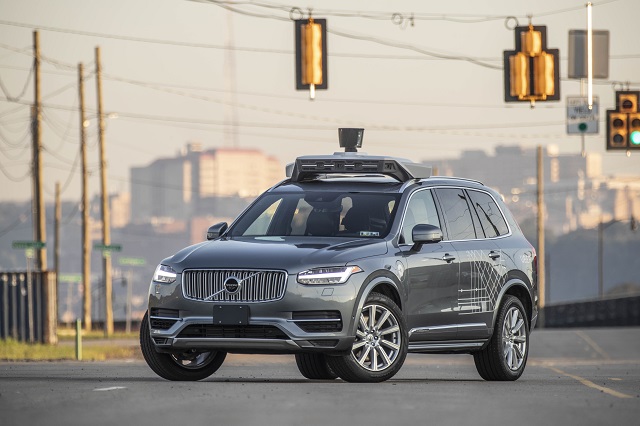
The most notable players in self-driving cars, however, may be ride sharing services. Lyft has partnered with Google parent company Alphabet’s self-driving car unit Waymo to offer self-driving rides in some parts of the country. Uber has done the same.
The Future of Self-Driving Cars
Although many major manufacturers have invested heavily in autonomous vehicles, don’t expect to find self-driving cars at the dealership any time soon. According to the University of Michigan’s Center for Sustainable Systems, the majority of industry experts predict level 4 AVs to be available around 2030.
There are a host of technological, safety and legislative hurdles that still need to be cleared. Currently, there are no national standards or guidelines for self-driving cars. Additionally, new concerns have been raised recently over cyber security. It has been found that autonomous vehicles can be susceptible to malicious software. So, while self-driving technology has progressed significantly of late, it’s a very real possibility that we will never see level 5, fully automated cars.
How do you feel about self-driving cars on the road? Concerned? Excited? Let us know in the comments below.

Related Articles



Trending Articles




NEWEST ARTICLES