Test Drive: Off-Roading in Style

The latest in a long line of Land Rover Defenders is a classy beast that would look good pulling up to the toniest valet stand. That said, it ultimately shines brightest when you leave the civilized world behind. That’s because the Defender’s ruggedly handsome sheet metal wraps advanced mechanicals and electronics that make it quite possibly the most off-road capable model you can buy.

The four-door Defender 110 I tested (a two-door Defender 90 is also available) came propelled by an available 395-horsepower, inline-6. This powertrain delivered surprisingly satisfying acceleration but relatively poor fuel economy.

Ride quality and handling on pavement are both better than you’d expect from a tall four-wheel-drive vehicle. Off-road there’s a whopping 11.5 inches of ground clearance and the ability to ford as much as 35 inches of water.

Add a comfortable, upscale interior filled with top-quality materials, high-tech features and a generous 78.8 cubic feet of cargo space and you have a go-anywhere SUV that will help you leave civilization in the rearview mirror.

MPG (City/Highway): 17/22

2022 Jeep Wrangler Rubicon 4xe

Jeep Wrangler 4xe

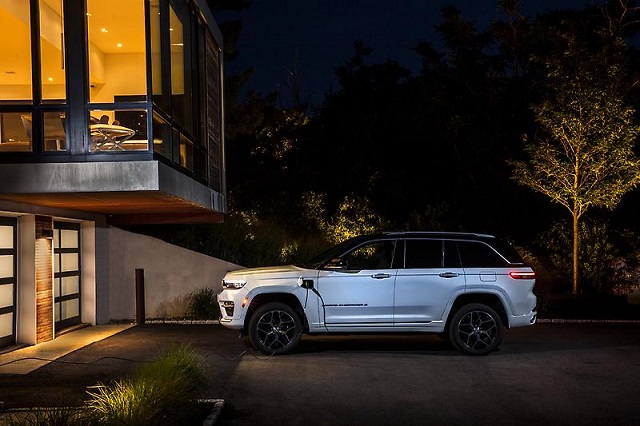
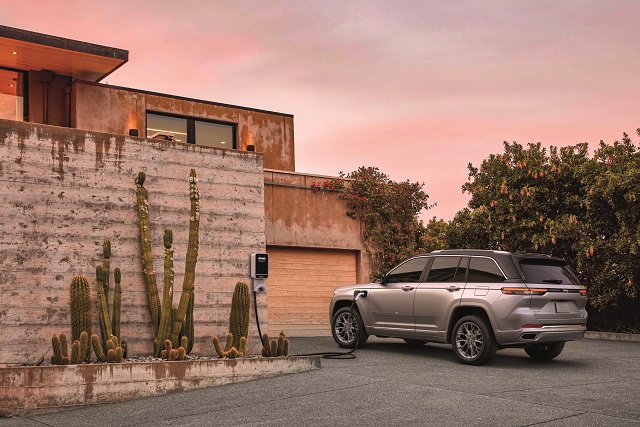
The classic Jeep is a machine purpose-built to go to remote places other SUVs would rightly fear to tread. Now comes a new hybrid version, known officially as the Jeep Wrangler 4xe, that’s designed to go there in an environmentally friendly manner.

Exploring this new green frontier starts with a plug-in hybrid powertrain built around a turbocharged 2.0-liter, 4-cylinder engine mated to an electric motor. As you’d expect, a rugged four-wheel-drive system is standard, as is a low-range gearbox for when the going gets tough. Perhaps the coolest feature of this setup, though, is that it can propel the Wrangler up to 21 miles on battery power alone.

Otherwise, the Wrangler 4xe is thoroughly familiar. The Unlimited model I tested had four doors that made for much easier rear-seat access and a removeable soft top with a slick power-operated sunroof.

In all, the Jeep Wrangler 4xe is an intriguing choice for those who want both serious off-road capability and eco-bragging rights, but it is definitely not right for everyone.

MPGe: 49

Looking for a new ride? Check out more car reviews at AAA.com/TestDrive.

Subscribe to Your AAA Newsletter

Sign up and receive updates for all of the latest articles on automotive, travel, money, lifestyle and so much more!

Test Drive: “Born In The USA” Pickups

Buying “Made in America” products has taken off in the last year or so. This helps make the all-new Toyota Tundra the right truck at the right time.

That’s because the third generation of this full-size pickup was completely designed, engineered and manufactured in the U.S. It’s also full of American ingenuity, like a rear suspension that uses coil springs for improved ride and handling. Available air suspension also helps automatically level the truck when toting heavy loads. Speaking of which, maximum towing capacity is a robust 12,000 pounds.

Power comes from a choice of two twin-turbocharged, 3.5-liter V6 engines, including a hybrid version boosting output to 437-hp with a 36 kW electric motor. Under the hood of the Limited model we drove, this powertrain delivered enough performance that no one is going to miss the outgoing V8.

There’s more clever innovation inside. Highlights include a 14-inch central touchscreen, multiple camera displays and an expansive panoramic sunroof. Add a complete list of advanced safety features and you have a powerful new reason to buy American.

Hyundai Santa Cruz

If we were to sum up the new Hyundai Santa Cruz in a single succinct phrase, it might be, “expect the unexpected.”

The most obvious way that idea plays out on this Alabama-built compact pickup is in its styling. Simply put, it’s like nothing else on the market.

Aesthetics aside, the four-door Santa Cruz had a lot going for it. The 281-hp, 2.5-liter turbocharged 4-cylinder propelling our top-of-the-line Limited test truck (base models get a 191-hp, non-turbo 2.5-liter) delivered peppy performance and decent fuel economy. The suspension gives it a surprisingly good ride quality and solid handling.

The passenger cabin was handsome and offered car-like comfort and amenities for front-seat occupants, though touch-sensitive audio/climate controls were hard to use. The downside of the Santa Cruz’s compact dimensions is a tight rear seat best suited for kids.

Out back, the four-foot bed is also on the small side. A hard tonneau cover and lockable under-bed “trunk” are handy touches in everyday use, however.

Taken together, these elements make the Santa Cruz a pickup you wouldn’t have expected to like.

MPG (City/Highway): 21/27 (2.5L turbo AWD)

Looking for a new ride? Check out more car reviews at AAA.com/TestDrive.

Subscribe to Your AAA Newsletter

Sign up and receive updates for all of the latest articles on automotive, travel, money, lifestyle and so much more!

Test Drive: The Anti-SUVs

Even the most adventurous among us don’t want to be driving the kids in a SUV that looks like it escaped from the set of “Mad Max.” This is where the Subaru Outback Wilderness comes in.

This buff version of the compact all-wheel drive wagon features the kind of functional upgrades you might do yourself if you didn’t mind voiding the warranty. We’re talking all-terrain tires, a beefier suspension with 9.5 inches of ground clearance, and a front skid plate. There are also a few upgrades that would be hard to replicate, including a more capable AWD system.

While there are gnarly trails where the Outback Wilderness would be out of its depth, it performed admirably on dirt fire roads. On the pavement this ruggedized variant delivered the same smooth, quiet ride as its standard cousin. The 2.4-liter, horizontally-opposed turbocharged 4-cylinder delivered all the performance we could hope for.

Inside offers plenty of room for four and a week’s worth of camping gear, making it the model you want if you’re leaving civilization behind post-apocalypse.

MPG (City/Highway): 22/26; Safety: 5 Stars

2022 Volvo V90

Volvo V90 Cross Country

Can a station wagon be sexy? One look at the Volvo V90 Cross Country and we decided the answer is a resounding ‘Yes!”

The midsize V90 Cross Country’s svelte silhouette is propelled by a 295-hp 4-cylinder that’s both supercharged and turbocharged. While this engine design is unusual, we found the supercharger adds oomph at low speeds, while the turbo gives this family hauler a noticeable kick as speed builds.

The V90 Cross Country features all-wheel drive and raised suspension with a healthy 8.3 inches of ground clearance. Handling on the pavement is also better than you’d expect, making it a pleasure to drive.

Finally, just in case you think looks and practicality are mutually exclusive, know the V90 Cross Country’s upscale interior offers good passenger room, and a 69 cubic foot cargo area that’s larger than many crossovers. If you need to tote still more stuff, this wagon will tow up to 3,500 pounds when properly equipped.

All that aside, the real appeal remains watching heads turn as you drive by.

MPG (City/Highway): 22/29

Looking for a new ride? Check out more car reviews at AAA.com/TestDrive.

Subscribe to Your AAA Newsletter

Sign up and receive updates for all of the latest articles on automotive, travel, money, lifestyle and so much more!

Top True Crime Podcasts

Ever since the massive success of “Serial,” true crime podcasts have been a staple of the medium. People love to listen to stories of murder and mayhem while they’re sitting in traffic, idly shopping or running on a treadmill at the gym.

What is it about true crime that makes it so perfect for audio? There’s just nothing that satisfies people quite like a good, old-fashioned scary story. Here are the best true crime podcasts that will give you shivers, scares and even a laugh or two.

“Criminal”

Criminal is a great introduction to podcasting in general. Phoebe Judge’s expert reporting and hypnotizing voice will get anyone hooked onto this show about crimes, criminals and those who are affected by them. “Criminal” is about the crime stories that get lost between the cracks; the marginalia of true crime. Judge reports on crime stories that include curiosities like a superstar poodle, a woman who claimed to hear war secrets from ghosts, a bully who terrorized an entire town and the origin of the phrase “420.”

“My Favorite Murder”

The last time I wrote about “My Favorite Murder,” I was writing about it as a comedy podcast. That’s one of the main joys of this crossover hit: it’s either and it’s both. Hosts Karen Kilgariff and Georgia Hardstark are wildly enthusiastic true crime fans, who chat about famous crimes as well as stories sent in by their listeners. These listener submissions, or “hometown murders,” as they call them, warrant their own mini episode every week and shed light on crimes that most people have never even heard of. “My Favorite Murder” isn’t just a podcast – it’s a community.

“RedHanded”

In a similar vein to “My Favorite Murder,” you’ll find “RedHanded,” another chatty true crime podcast. In “RedHanded,” hosts Suruthi Bala and Hannah Maguire pick one true crime story to tell together. Many similar true crime podcasts will have one host tell the story while the other listens and interjects, but the “RedHanded” formula allows for deeper research and more thoughtful analysis from both hosts. Although they’re not afraid of making jokes sometimes, “RedHanded” can get pretty serious and gruesome. These stories are not for the faint of heart.

“Detective”

Garnsey Sloan covers the life and career of one retired law enforcement officer per season on Investigation Discovery’s podcast, “Detective.” Sloan’s extensive interviews explore what it takes to be a detective, and what sort of people wind up wearing the badge. Lt. Joe Kenda, Detective Garry McFadden and Detective Rod Demery have all had unbelievable lives, and they all have stories to tell.

podcast search

“In the Dark”

In the Dark,” hosted and reported by Madeleine Baran, is a haunting podcast that examines the disappearance of an 11-year-old boy named Jacob Wetterling, and the long legal fallout of that disappearance. “In the Dark” is not a podcast about mystery or the joys of amateur sleuthing. It’s a podcast about how unexplained tragedies and law enforcement errors can affect a community for a lifetime. Season 2 of “In the Dark” follows another miscarriage of justice – the case of Curtis Flowers, who was tried six times for the same crime.

“Uncover” Season One: “Escaping NXIVM”

CBC reporter Josh Bloch is catching up with a childhood friend, Sarah Edmonson, when she reveals that she’s just escaped a cult. NXIVM (pronounced “nexium”) was a sprawling network of multilevel marketers, self-help groups and faux-feminist empowerment programs in upstate New York and Canada. Edmonson tells the story of how she went from sitting in a circle and talking about professional development to being blindfolded and branded in a bizarre ceremony. Bloch takes us through the history of founder Keith Raniere, the development of NXIVM and the aftermath of Edmonson’s explosive tell-all with the New York Times. While you’re there for “Escaping NXIVM,” check out the other seasons of “Uncover,” like “The Village,” “Satanic Panic” and “Brainwashed.”

“Dirty John

Dirty John” is one of the most gripping true crime podcasts ever, and it’s not even about a murder. Well, not really. Presented by the Los Angeles Times and hosted by investigative reporter Christopher Goffard, “Dirty John” tells the story of Debra Newell and her new boyfriend, John Meehan. When Debra’s daughters expect that John isn’t all that he seems, their lives go off the rails. Fast.

“Generation Why

Justin Evans and Aaron Habel love to talk about crime, and on “Generation Why,” they analyze some of the most famous and chilling crimes in history. They are not only interested in who committed a crime and how, but in the motive behind the crime (in a nod to their title).

“Gangster Capitalism: The College Admissions Scandal”

Sometimes there’s a dark side to the American dream. “Gangster Capitalism” is about white-collar crime and corruption in a society where money and status is everything. The first season of “Gangster Capitalism” focuses on the “Varsity Blues” college admissions scandal, which saw wealthy parents paying scammers and professional test-takers to get their underperforming kids into elite schools. The most shocking parts of the podcast are the actual transcripts of conversations between the parents and the head scammer, Rick Singer. Singer sold his scheme as a “side door” to elite colleges – for parents who were wealthy enough to afford him, but not wealthy enough to “donate” millions to their school of choice. What does this scandal say about the current state of college admissions in America? “Gangster Capitalism” hopes to find out. Later seasons of “Gangster Capitalism,” “The NRA” and “Jerry Falwell Jr. and Liberty University” are also worth a listen.

For more podcast recommendations, check out the full Podcast Pulse archives. 

Do you have a favorite true crime podcast? Tell us about it in the comments below!

Subscribe to Your AAA Newsletter

Sign up and receive updates for all of the latest articles on automotive, travel, money, lifestyle and so much more!

Start a New Valentine’s Day Tradition This Year

Valentine’s Day is one of the most interpersonally fraught holidays we celebrate in America. It’s as though the pressure of a midnight New Year’s Eve kiss lasted for a whole day. Those who are in relationships feel the pressure of celebrating the day to the fullest, and those who aren’t in relationships feel the pressure of making sure everybody knows they’re fine. It’s fine, really. I’m fine. It’s fine!
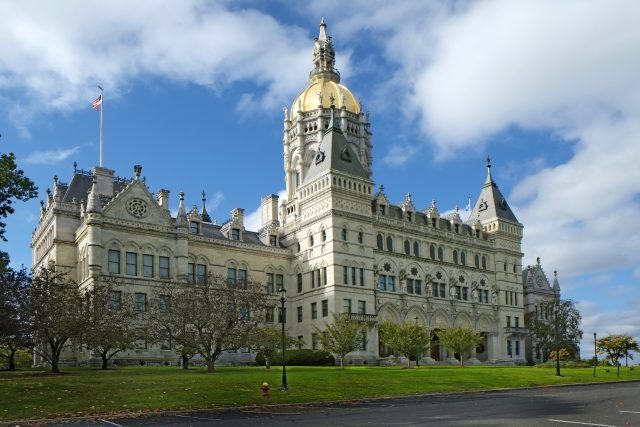
You don’t have to be planning something romantic or even typical for Valentine’s Day. This year, you can start a new Valentine’s Day tradition for yourself and for your loved ones.

Valentine’s Day Traditions for You and Your Date

If you have a significant other when Valentine’s Day rolls around, you might be thinking of going the same old dinner-and-chocolates route. But restaurant meals during Valentine’s Day can be overpriced and overcrowded. Here are some nontraditional Valentine’s Day ideas for how you and your partner can shake it up.

Treat yourselves to a movie marathon. There’s no better way to mark the holiday than with your favorite romantic comedies. Order some takeout, buy some wine and kick your feet up while you watch Tom Hanks and Meg Ryan fall for each other again and again.

Make a special home-cooked meal. Cooking together is a great way to bond – not to mention, it’s a lot more cost-effective than a pricey prix fixe Valentine’s Day menu. Make plans to prepare a special meal together. With some candles, it can be even more romantic than a night out. Sign up for a Home Chef meal subscription with your AAA discount code and save.

Try something new. Is there something the two of you have wanted to do, but never had a reason to try? Valentine’s Day is your chance! Try an escape room, take a painting class together or head to a nearby rock climbing gym.

valentine's day traditions

Valentine’s Day Traditions for You and Your Friends

Valentine’s Day is about celebrating all kinds of love and there’s no reason you shouldn’t spend it with your BFFs.

Celebrate Galentine’s Day. Galentine’s Day, first popularized by the show “Parks and Recreation,” is a holiday celebrated on or near Feb. 14 (it’s Feb. 13 in the show). Galentine’s Day is all about celebrating female friendships – ideally over brunch. If you’re not a “gal,” don’t worry! Friends of any gender will love a little appreciation. A Winc wine subscription is the perfect gift.

Have a singles dinner party. Single on Valentine’s Day? Don’t worry, a lot of other people are too. A singles dinner party or potluck is a great way to commiserate (or celebrate) with your other single friends. And who knows? Maybe there’ll be a spark.

For You and the Kids

Kids like Valentine’s Day just as much as grownups do – and what’s not to like? It’s a holiday that’s mostly about receiving heart-shaped boxes of chocolate. Here’s how to celebrate Valentine’s Day with the little ones in your life this February.

Make them feel special. Parents can make their kids feel special by setting aside a moment that’s just for them. Try splitting up and doing single parent/single child outings, like daddy/daughter or mommy/son dinners. Giving a child one-on-one time with a parent can make them feel important and seen. A dinner with the whole family can also be a great way to celebrate the love you all have for each other.

Do your babysitting duty. Whether you’re single or in a relationship, a great way to pay it forward on Valentine’s Day is by babysitting for friends or family members. Parents of young children don’t often get time to go out for dinner together and by babysitting you can give them the gift of a night off. Meanwhile, you can watch “Frozen” with the kids, read a little bit of “Harry Potter” and maybe even let them sneak some sweets. The love and gratitude you will receive from their parents will put any date to shame.

How to Celebrate Valentine’s Day on Your Own

Enjoy your own company this Valentine’s Day! Use it as an excuse to step back and treat yourself to some self-care.

Treat yourself. Feel free to splurge a little and get something nice for yourself, something you’ve been wanting for a while. Cook or order your favorite meal – and don’t forget dessert! Then it’s time to light some candles and read a good book (or watch a good movie).

Have a DIY spa night. Spend Feb. 14 pampering yourself by turning your house into your own personal spa. Enjoy a bath bomb or a sugar scrub, try a new face mask, smell good smells, listen to some chill music. Let yourself relax and enjoy your personal time.

Looking for Valentine’s Day gifts? Save on presents with AAA Discounts. Or check out our storefront full of Valentine’s Day gift ideas

How are you spending this Valentine’s Day? Tell us about your Valentine’s Day traditions in the comments below.

Subscribe to Your AAA Newsletter

Sign up and receive updates for all of the latest articles on automotive, travel, money, lifestyle and so much more!

Driving the Oregon Coast to San Francisco

On my 48 States in 48 Days tour in 2020, I had penciled in the coast of Oregon. My plan was to stay in Newport, Ore., drive down the coast to Redwood National Park in California and then over to Redding, Calif., for the night.

But three days before I got to Oregon, I became concerned about forest fires, specifically about one near Redding. I called the hotel I had booked, and the front desk clerk told me, “according to a firefighter staying here, the fire is moving away from town.” Not wanting to be stuck in a fire, or even take a room from an evacuee or firefighter, I changed my route.

In October 2021, I decided to complete the portion of the trip I missed in 2020. I flew from Boston to Seattle, changed planes, and then flew to Portland, Ore. If I were to do it again, I would just fly to Seattle and drive to Oregon from there. By the time I changed planes in Seattle, I could have been in Oregon and also seen the Washington coast along the way.

The Oregon Coast

In Portland, I picked up a one-way rental car and headed to Seaside, Ore., a cute little coastal town not far from Washington. One thing I couldn’t do previously, because of the COVID-19 pandemic, was hang out and talk to people at dinner. I got the chance to this time at a little restaurant in Seaside. The Red Sox were in the playoffs and I got to watch a game. Baseball is a good sport to watch while you wait for your dinner: There is never any hurry or clock to worry about.

I had nine different stops on my list, the highlight being the little town of Cannon Beach. I had been to Cannon Beach once before, in 1999, when I had a weekend free on a business trip. I always thought it was a cool town. Back then, I went to a state park and started talking with a guy who was going surfing. He said he expected more surfers that day, and because of safety, he didn’t want to go in the water without someone being there. He asked me if I could stay and watch him for a while. I declined, saying I had places to be – which I really didn’t. I have felt bad about that ever since.

On this trip, I stopped at the same state park. When I pulled up to the same spot, two surfers were getting their gear on. I told them the story from 1999, and the woman absolved me of my guilt, saying I didn’t need to watch them.

The rest of the day I wound my way down U.S. Route 101, stopping at beaches, overlooks, lighthouses and the Sea Lions Cave – but all the sea lions left in August to go feed, and wouldn’t be back until May.

I spent the night in the little town of Reedsport, Ore.

Masks were still required inside almost everywhere in Oregon, and the compliance was very good.

Redwood National and State Parks

My first stop the next day was over an hour away. So, I took off in the dark, and when the sun came up, I stopped at Cape Blanco Lighthouse in Oregon, then continued down the coast. Much of the trip was along the ocean and view after view was amazing.

Shortly after crossing into California, I stopped at Jedediah Smith Redwoods State Park in Crescent City, picked up a map and got advice on where to stop and see the redwoods. I got off at the recommended stop and walked through Big Tree Wayside on a half-mile walk. Later I stopped at Lady Bird Johnson Grove, named for the former first lady because of her environmental efforts.

After the park, I stopped in Eureka for lunch at an all-you-can-eat barbecue place. There were some big eaters there, but I stopped at a half-chicken and kept heading south. At one point I saw a sign for the “famous drive-through tree.” Thinking it was something I should see, I made the detour. I don’t think it’s the same tree I have seen in pictures. My little rental car just squeezed through. But I guess it was worth the $10 to know I drove through a tree. From there, I headed to the coast on Route 1. It was a fun drive on an amazing winding road with hairpin turns and switchbacks. I stopped for the night at the coastal town of Fort Bragg. The northern California coast is just an extension of the beauty seen in Oregon.

Interior California to the Doorstep of Yosemite National Park

I didn’t have a lot of sites to see the next day. It was all about getting over to the east side of Yosemite National Park to get ready for the final day of my trip. The drive had a little bit of everything.

Going east from the coast, I went back over the mountains to find tight turns, logging trucks and impressive forests. After that, I was in agriculture country, surrounded by what looked like almond and olive trees. Continuing east, it was over the Sierra Nevadas though the area impacted by the Caldor Fire, south of Lake Tahoe. From there, I looped through Nevada for more high plains. There was some recent fire damage and even some snow on the side of the road. I stopped for the night in the small town of Lee Vining east of Yosemite National Park.

My mask report for California is all over the place. In Fort Bragg, all the places had mask mandates. Then I stopped for coffee at a convenience store about an hour away. Even though the sign said masks were required, nobody inside was wearing one. I asked the clerk, and she said the manager did not require them. Further east, I stopped in Folsom, near the state capital of Sacramento, to meet an old friend for lunch. There were lots of upscale restaurants and shops and no mask requirements in sight. In Lee Vining, it was back to mask requirements everywhere. I couldn’t figure it out, so I just walked around with my mask in my pocket and tried to do what I thought was right.

El Capitan
El Capitan in Yosemite National Park.

Yosemite

The next day I was able to check off one of the places big on my must-see list.

First, I grabbed breakfast at a little cafe near my hotel. Then I drove through Yosemite National Park from east to west, ending up at the base of El Capitan. Fortunately, a friend recommended I bring binoculars. I was standing at the base, where I heard climbers but didn’t see them. Using the binoculars, I was able to find them about halfway up the face. I didn’t have time to see all the sites in the park, but the drive took about three hours so I got a good feel for the park.

I ended my trip in San Francisco, where I met friends from grade school and junior high for dinner, a good end to a good trip.

I still have the excited feeling to see something new every day when I travel through this country. When that feeling ends, I guess it’s time to stop traveling.

Nate Williams is a AAA member from Massachusetts. We welcome member stories. Click here to submit yours.

Subscribe to Your AAA Newsletter

Sign up and receive updates for all of the latest articles on automotive, travel, money, lifestyle and so much more!

Hidden Gems: 5 Florida Beaches That Offer Sweet Seclusion

From the Atlantic coast to the Gulf of Mexico, there’s a Florida beach for every kind of beachgoer. If you prefer your sun and surf with less crowds, there are miles of hidden gems that offer the peaceful coastal tranquility you are looking for.

Dry Tortugas National Park

For the ultimate private retreat, head to the most remote beach in Florida at Dry Tortugas National Park. From the quiet of Historic Fort Jefferson to the living reef just begging to be explored with a snorkel, this far-flung Florida beach will leave you feeling refreshed and reflective. The quiet, crystal-clear waters and complete calm are second to none.

You can ride the ferry back to the mainland, but if you choose to camp, you’ll enjoy the night under a blanket of stars, drifting to sleep to a soundtrack of rolling surf.

santa rosa beach
Santa Rosa Beach (Photo: Patrick Farrell and Peter W. Cross)

Santa Rosa Beach

Perched on Florida’s sunny panhandle, Santa Rosa Beach welcomes tourists with rippling emerald waters and sand so white it looks like glittering sugar.

Though Florida’s Emerald Coast is popular, it’s still possible to find a secluded spot along the 26 miles of pristine beaches. If you need a break from the sun, the area boasts other peaceful retreats as well. Stroll into Point Washington State Forest from Santa Rosa Beach or tuck into a delicious dinner at one of South Walton County’s dining establishments.

Exactly Where You Need To Be

Find the adventure you’ve been craving on a Florida vacation.

Be Here

Caladesi Island State Park

Just off the coast of Clearwater Beach lies Caladesi Island State Park. It’s both a sleepy paradise and a hideout for herons, egrets, and other starlets of the Great Florida Birding Trail.

You’ll need to allow at least half a day for a visit to this slice of white powder and mangrove forests. You can access the park only by boat. Fortunately, a ferry runs regularly from Honeymoon Island, yet another of Florida’s hidden, glittering coastal gems.

st george island
St. George Island (Photo: Summer Gonzalez)

St. George Island

A trip to St. George Island will feel like stepping onto one of the last unspoiled beaches in the country. The sandy coast of the island has won countless accolades as one of the most beautiful beaches in the United States.

What makes St. George even more special is that the island is protected against high-rise buildings or national chains. The relaxed community is instead punctuated by charming cottages, local inns and delights such as Aunt Ebby’s Ice Cream, Weber’s Little Donut Shop and Paddy’s Raw Bar.

Bahia Honda State Park

Turn south toward the Florida Keys – Big Pine Key, specifically – to spread a beach blanket on your slice of private paradise. Bahia Honda State Park, like many of Florida’s other state parks, offers the chance to bask in the sun next to impossibly clear waters while a gentle breeze keeps you cool.

Bahia Honda State Park has gained popularity over the last few years, so it might not be correct to call it “hidden.” However, the park can close when it reaches capacity, so you should always be able to find a personal retreat on the beach. And if the energy of couples and families on the sand isn’t serene enough, grab your snorkeling gear and immerse yourself in the inimitable calm of the park’s emerald waters.

Start planning your Florida vacation today.

Subscribe to Your AAA Newsletter

Sign up and receive updates for all of the latest articles on automotive, travel, money, lifestyle and so much more!

Deputy Secretary Polly Trottenberg Discusses Infrastructure Act

In November, Congress passed the Infrastructure Investment and Jobs Act, a $1.2 trillion piece of legislation aimed at improving and modernizing all aspects of the country’s failing infrastructure. The historic, bipartisan bill is nothing if not comprehensive, addressing everything from transportation to broadband internet.

To get a better understanding of what’s in the bill and how it will affect the safety and mobility of motorists, we sat down with Polly Trottenberg, Deputy Secretary of the U.S. Department of Transportation. As the department’s number two official as well as New York City’s former transportation commissioner, Trottenberg has a keen understanding of the Northeast’s transportation problems and how the Infrastructure Bill aims to fix them.

How will the Infrastructure Bill make our roads and cars safer?

polly trottenberg

We are experiencing close to 40,000 people a year dying on our roadways in the United States. It’s unacceptable. We’re soon going to be putting out a new roadway safety strategy because part of this is going to be investments, but there are a lot of other tools in the toolkit: engineering, design and a bunch of other things we’re going to be doing, education.

Within the bill there are some incredible opportunities. First of all, The Federal Highway Administration just released their $52 billion in annual apportionments for state Department of Transportations (DOT). The things they’re really focusing on – that they’re hoping state DOTs will prioritize in terms of formula dollars – are making sure our existing roads and bridges are in good condition and safe.

Then there are several very specific programs targeted at safety within the bill. One that I think is the most exciting is called Safe Streets and Roads for All. It’s a $6 billion program. It’s money that goes to local governments, counties, NPOs, tribes. A lot of very interesting roadway safety things are happening at the local level. A lot of cities have adopted Vision Zero and are doing a lot of local things on the ground. These are going to be funds particularly targeting areas where we see a lot of fatalities. One area we really want to work on is roadway safety in tribal areas Unfortunately in the United States, there is a disproportionate number of crashes and fatalities in tribal communities.

Safe Streets and Roads for All will build on a lot of work that U.S. DOT has done and a lot of other DOTs around the country have done. We hope it’s going to be really innovative and impactful. There are a couple other programs. There’s a $1 billion SMART grant program to look at ways cities can use technology for roadway safety. There’s another $1 billion program for active transportation – making sure we’re focusing particularly on vulnerable roadway users like cyclists and pedestrians. I think this amount of resources and attention is really going to be transformative for roadway safety.

Talk about the importance of promoting and increasing electric vehicle use and how this bill addresses those issues. 

This is a part of the bill that has been a priority for the president and has been a huge centerpiece for the Biden administration. This administration is really committed to combating climate change and I think you see that infused in policy work across the board.

Clearly one of the big priorities is to electrify the transportation sector. Transportation is the largest emitter of greenhouse gases. The bill contains $7.5 billion altogether, a network of 500,000 EV chargers, and then on the DOE side, $65 billion to do upgrades on the transmission system. The actual, physical charger is but a small piece of the whole electric transmission system you need to make this work. The exciting part for us at the DOT is the creation of a joint program office with the DOE. Traditionally our two agencies have not always worked that closely on a lot of things, but on EVs we’re going to have an incredibly close relationship so that we’re thinking through both the electrical infrastructure, the charging infrastructure, and standing up the program with private sector participation and industry participation to really make the owning and operating of an EV as easy as a combustion engine automobile.

Part of that that’s going to be our focus is designating EV corridors. Funding will go to states to start installing electric chargers and then we’re going to have a discretionary program as well. We’re particularly going to look at areas where the private sector is not going to jump to right away, either rural or low income, areas where public dollars can really make a big difference.

Parts of the country you might not expect have really started to show big leadership on EVs. Oklahoma, traditionally a fossil state but has also been a state that has taken an incredible leadership role in building out a statewide electric vehicle charger system. There’s some great state examples around the country but I think for DOT and DOE, this is going to be one of the most extraordinary, groundbreaking work we’re going to do and we really hope to make that transition to an electrified transportation sector something that really can happen within a number of years.

One of the hurdles to widespread EV adoption has been the high cost of these cars. Does the bill address this?

[There is legislation] being debated in congress on making the ownership of EVs financially viable with tax credits and other things for those who are purchasing a car the cost would be comparable. It is an incredibly important priority for us that EV charging infrastructure be broadly available to all Americans with a focus on equity communities.


View this post on Instagram


A post shared by The White House (@whitehouse)

One project in the Northeast that has garnered attention is modernizing Amtrak’s Northeast Corridor. What will this look like?

One statistic I like to give is that this bill contains $66 billion overall for passenger rail. That is more funding than Amtrak has received in its entire 50-year history. It is beyond a generational investment.

The creation of the Northeast Corridor Commission brought together the U.S. DOT, the Federal Railroad Administration, all the key state DOTs from the northeast corridor states as well as the commuter rails — sort of all the key players that need to work together in the northeast corridor. They have spent a lot of years preparing for this moment, thinking through a whole suite of projects – how to sequence them in terms of dollars, in terms of where you put the work force. When you’re working on the rails you can’t just do everything all at once, you need to have a great sequence. A ton of groundwork has been laid for meeting this moment.

We’re now going to have $6 billion directly for northeast corridor investments, and we’re ready to spend it on some fantastic projects. Then there’s something called the federal-state partnership, which is going to be another $36 billion eligible for projects all over the country, but we think a good amount of those funds will also go towards the northeast corridor. As for the types of projects that Amtrak is looking at – you’ve heard a lot about the Hudson Tunnel but there’s also tunnel in Baltimore that predates the Civil War. So, there are some of those basic maintenance projects and then there are projects I think that are going to bring real time savings. If you’re someone who travels the northeast corridor in any mode, making train travel something that is more reliable and faster is a nice alternative for people. And if you are a driver, it’s going to get more people off the roads and onto rails.

In terms of the northeast corridor, this is sort of the moment we’ve been waiting for where good years of planning and intergovernmental work have been done, the dollars have arrived, and I think it’s going to be transformational.

How will federal and local governments work together to implement the bill’s initiatives?

The president has appointed former New Orleans Mayor Mitch Landreu to head up the administration’s implementation efforts for the entire bill. He has been giving that very question a lot of thought – how do we at the federal level work closely with states and local counties and tribes to both make sure all those entities are educated about the different programs and funding possibilities, and make this process as user friendly and non-bureaucratic as we can? The mayor wrote all 50 governors and gave them a preview of some of his thinking and asked them all to potentially appoint a statewide coordinator to help interface with the federal government on this very process.

We’re trying to work with states on what we think are some of the key administration priorities, but this bill also has by some estimates up to $200 billion in discretionary funds that will be available to states but also to local governments, airport authorities, transit agencies, a whole bunch of different entities around the country. The states will have a big hand in investing some of these dollars but we’re going to be working with all kinds of entities all over the country. A lot of the dollars will flow locally, which as a former local official I can say, I think will spur a lot of great investment and innovation.

The bill doesn’t contain enough money to cover all the country’s infrastructure needs, leaving mostly state officials with the task of deciding which get funded. In the past, these decisions have left certain communities behind. Is there concern that could happen again?

Something Secretary Buttigeg has talked a lot about is looking for ways we can help knit communities where the interstate system has done real damage, has divided and isolated them, back together and reconnect those residents to jobs and opportunities.

The bill also is going to follow some key guidance that has been important for the Biden administration since day one. We have a big executive order on equity and a big executive order on something we call Justice40, we have one on climate change too. Focusing on those questions has been big for us from day one. If you look at our discretionary programs this past year like INFRA and RAISE, we made climate and equity big priorities. We made them things that we really looked for in the projects we awarded dollars to. Climate and equity are two of our big north stars, for DOT, safety is another big north star and it’s really infused our work since day one.

When will we begin to see tangible results from the Infrastructure Bill?

Money is already starting to go out the door. The FHA has already put out a $52 billion apportionment to the states, which is going to have the states jumpstarted. We’re starting to put out both grant awards. Coming this year, you’re going to start to see solicitations for some of our repeat and new grant programs.

I was in the Obama administration back when we did the recovery act. There was a lot of talk about things being shovel-ready, but the country was in a very difficult economic state and there really was an emphasis on getting dollars out the door, making sure we’re really stimulating the economy. We will be doing a tremendous amount of that with this bill, but we are always trying to make generational investments here. There are going to be some shovel-ready, but we want a lot of shovel-worthy. There will be projects we’re doing up front, but some are going to take some years. We want to make sure for the precious dollars that we’re being entrusted with, that we’re producing incredible results – that we’re building projects that are transformational, that are generational and that really meet the needs of communities all over the country.

Visit AAA’s Electric Vehicle platform for more information on these cars of the future.

Subscribe to Your AAA Newsletter

Sign up and receive updates for all of the latest articles on automotive, travel, money, lifestyle and so much more!

Hidden Effects Winter Weather Can Have on Your Car

You may already know about, or have experienced firsthand, car batteries‘ propensity to die in the winter or how regular tires don’t grip snow-covered roads particularly well. Unfortunately, these issues are just the tip of the iceberg when it comes to the long list of harmful effects winter weather has on your car.

Some of these lesser-known problems are simple inconveniences while others can result in serious damage to your vehicle. But don’t panic just yet. Where there’s a will there’s a way, and there are indeed tips and tricks you can utilize to block the blow winter wants to deliver your car.

Lower Fuel Economy

If it feels like you’re making more trips to the gas station during the winter, you’re probably right. Fuel economy in a conventional gasoline vehicle decreases between 10% and 33% when the temperature drops, according to the U.S. Department of Energy. The reasons for the lackluster performance are plentiful:

  • Idling while your car warms up gets 0 miles per gallon, lowering your vehicle’s mpg.
  • Winter gasoline grades yield slightly less energy per gallon.
  • Driving slower (due to snow- and ice-covered roads) reduces fuel economy.
  • Four-wheel drive requires more fuel.
  • Colder air is denser, creating greater resistance against a moving car.

Solution: You won’t be able to completely ward off winter’s effect on your fuel tank but there are a few easy steps that can help. If possible, keep your car in a garage to prevent the engine and cabin from getting too cold. It takes less energy to keep your car warm than to get it warm, so this will go a long way in easing the burden on your engine. It will also eliminate the need for idling as you wait for car to warm up. Other helpful tips include removing any accessories that could increase wind resistance and combining trips so you spend less time driving with a cold engine.

Driving Range Reduction

It’s not just gas-powered cars that don’t move as well in the winter – electric vehicles can’t conquer the same distances in cold weather that they can in warmer months. One AAA study found the average driving range of an electric car decreased by about 40% when the temperature drops to 20 degrees. All this is the result of a lithium-ion battery that gets overly taxed in frigid temps.

Solution: Just as with gas-powered cars, you’ll be better off if you can keep your electric vehicle in a garage. This will save the battery from exerting a significant amount of power heating the car. Charging your battery more often, warming up the vehicle while it’s plugged in and utilizing eco-mode features are a few other ways to increase your electric vehicle’s driving range in the winter.

Learn more about how electric vehicles perform in the winter

winter car damage

Sluggish LCD Screens

Many of today’s cars come equipped with liquid crystal display screens, better known as LCD. Just like other fluids, the molecules in these liquid crystals don’t move quite as fast when subjected to cold temperatures. Therefore, you’ll find your vehicle’s touchscreen to be sluggish and less responsive during the winter.

Solution: There’s little you can do to prevent this problem except wait for your car to warm up. The good news is that once the temperature rises, your screen will be humming along just like before.

Frozen Fuel Lines

Unless you live in the Arctic Circle, you likely will never need to worry about your gasoline freezing. However, any water moisture in the fuel lines can freeze, inhibiting fuel intake and preventing gasoline from reaching the engine.

Water can get into the lines if water vapor enters the fuel take. As the tank warms, the vapor undergoes condensation, creating water droplets that mix with the fuel and travel to the car’s engine.

Solution: Keep your gas tank as full as possible during the winter. There will be no room for air, or water vapor, if the tank is full of gasoline. Use a gas line antifreeze if you suspect there is water in the fuel tank.

winter car damage

Decreased Tire Pressure

A common theme among cold-weather automotive problems is the issue of molecules contracting. As we’ve seen, this commonly occurs to a vehicle’s fluids, but it’s also true about air, as in the air in your tires. When the temperature drops, the air contracts and tire pressure decreases. Tires can lose between one-half and one pound of air pressure with every 10-degree dip in temperature. An under-inflated tire will wear down faster, negatively impact your car’s handling and fuel economy, and is more prone to a blowout.

Solution: While you can’t prevent your tire’s air pressure from dropping, you can prevent it from becoming a problem. It simply requires checking your air pressure more often and inflating your tires as needed.

Yes, you can wash your car during the winter. Here’s how

Damaged Undercarriage

It’s no secret that the weather can wreak havoc on a vehicle’s exterior. But what’s out of sight is often out of mind, meaning your vehicle’s undercarriage can easily be forgotten about. This is particularly troublesome during the winter when snow, ice and salt can rust and corrode the metal components under your vehicle’s floor.

Solution: Make sure to clean the undercarriage when washing your car (which you should do at least monthly). Check out these tips on how to wash your car in winter.

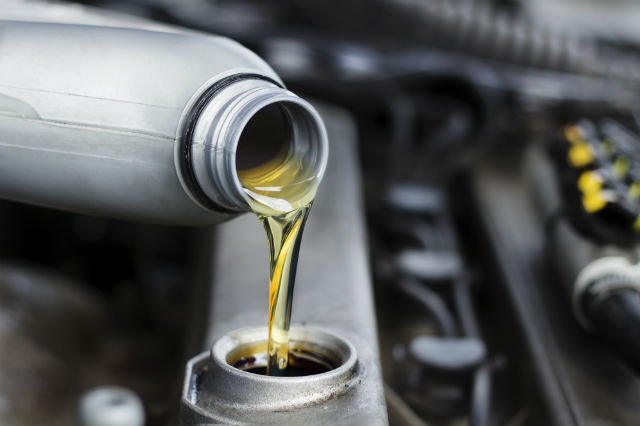
Thick Motor Oil

Motor oil becomes thicker when the temperature drops and doesn’t circulate as easily. This makes the starter motor use more energy and the car’s oil pump work harder.

Solution: Your best bet is to switch to a low-viscosity synthetic oil. Consult your owner’s manual as the manufacturer may recommend a cold-weather oil.

Save your car from winter’s wrath with AAA Battery Service. Book your appointment today to have a AAA battery technician come to you, test your car battery and, if needed, install a new one.

Get more automotive maintenance tips or leave your questions in the comments below. 

Subscribe to Your AAA Newsletter

Sign up and receive updates for all of the latest articles on automotive, travel, money, lifestyle and so much more!

Your Guide to Common Snow Melt Solutions

As soon as the first snowflake falls, homeowners are already thinking about how to remove the ice and snow from their property. But did you know that snow melt solutions, especially rock salt, can damage your outdoor surfaces?

When spring arrives, and the effects of the brutal winter become more apparent, homeowners are often surprised to see pitted driveways, cracked walkways and deteriorated wood decking.

Here is our guide to the most common forms of ice melt, and the pros and cons of each, according to Consumer Reports.

Calcium Chloride

This is the fastest-acting ice melt of the bunch. If you’re a homeowner in a time crunch, this is the ice melt for you. But be cautious – calcium chloride can harm grass and plants when over-applied, and can cause minimal to moderate damage to asphalt and concrete.

Sodium Chloride

Also known as rock salt, sodium chloride is the most common – and inexpensive – choice. But it’s also the most likely to damage your concrete, asphalt, wooden, brick, stone and metal surfaces. It’s especially dangerous to newer concrete; Consumer Reports recommends that you don’t use rock salt on concrete less than 1 year old. In addition, rock salt is lethal to pets if ingested.

Magnesium Chloride

This is another snow melt to use if you’re pressed for time. It’s environmentally-friendly, safer for pets and more effective than rock salt. However, magnesium chloride can cause even more damage to asphalt or concrete than rock salt.

Potassium Chloride

Pet owners often choose potassium chloride because it’s one of the safer ice melt options. As far as benefits go, potassium chloride is more or less the same as magnesium chloride, but safer for your asphalt and concrete. However, exercise caution if you have a pet with kidney disease; ingesting this ice melt can be lethal to pets that suffer from the disease.

Urea/Carbonyl Diamide

This is also a common snow and ice melt for pet owners. It’s also the least likely to cause damage to your asphalt or concrete, and one of the most inexpensive options next to rock salt. However, it’s the least effective – with urea, you sacrifice efficiency for caution.

Protect your home with homeowners insurance from AAA.

Subscribe to Your AAA Newsletter

Sign up and receive updates for all of the latest articles on automotive, travel, money, lifestyle and so much more!

On the Road Across the Canadian Border

I woke up in Bangor, Maine, on Sept. 20, 2021 with excitement for an adventure ahead, an open road to someplace new and an opportunity to use my passport for the first time in two years.

Canada had just opened to American tourists in August, and I was on my way from my Massachusetts home to see two provinces on a four-day trip.

The requirements for entering Canada were: 1. Download the Arrive Can app and upload pictures of your vaccination card; 2. Get a COVID test within 72 hours of your visit; and 3. Be willing to accept a random COVID test at the border and a rapid COVID test at the Prince Edward Island border.

It was with confidence and a backup plan that I got tested the previous morning and headed to Bangor for the night to wait for my results, which I received the next morning. I tested negative, and after a front desk clerk printed the results out for me, I was off to New Brunswick, Canada.

When Canada first reopened, the lines at the border were miles long. On this day in late September, I drove right up, showed my documentation, submitted to a random COVID test and was on my way. I was happy to get tested, I feel grateful that the Canadian government has a plan and protocol for letting us visit.

Inside Canada

My first stop was for coffee and a walk around St. Andrew’s by-the-Sea. Just over the border from Maine, St. Andrews, is a cute little village known for being Canada’s first seaside resort. Next stop was the largest city in the province, St. John. I had lunch and visited the three sites I had planned, the Reversing Falls, the city market, and Irving Nature Park. The stops were nice, but didn’t take me long, so I headed up the coast to Fundy National Park. In the little town of Alma, I got to see large fishing boats sitting on crates to keep them out of the mud at low tide. The tides here are so huge that the top of these boats was below the pier, amazing. The boats plan their daily fishing schedule based on the tides.

The next day I stopped at Hopewell Rocks, an iconic Bay of Fundy tide location. The tide is 46 feet here. I got lucky. Low tide was at 8 a.m. and I arrived in time for the 9 a.m. opening of the park.

long bridge
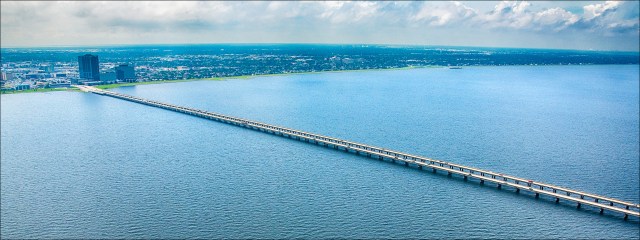
A scenic view of the Prince Edward Island bridge in Canada.

Prince Edward Island

My travel style is get to where I’m going, see it, get back on the road. Just after 10 I was headed to Prince Edward Island. To get to PEI, I crossed an 8-mile bridge. It’s really something to see, it helped that the weather was perfect that day. Once across, I had to stop for a COVID rapid test. The island has kept COVID at bay with its ability to control who comes in. I did hear at dinner that there was a recent uptick in COVID, traced to a school, so they had put back in place mask mandates. Since I didn’t get a call about my rapid test, and my border test results came back negative (that’s three tests in three days for me), I was free to explore PEI.

My wife has a friend who has spent a lot of time in PEI. Her husband emailed me a detailed list describing a three-hour drive I could take and get a good feel for the island. I followed the itinerary, starting with a restaurant in Charlottetown, where I probably had the best fish and chips ever. PEI is just amazingly beautiful, and it helps that the weather was perfect and there are not a whole lot of tourists around.

One of the things I couldn’t do last year on my “48 states in 48 days” trip is hang out and talk to people. That night I picked up some good information at a restaurant while having dinner. The first was from a guy who grew up on Prince Edward Island. When I told him I was thinking of driving to Cape Breton Island the following day, he said he had been there once in his life, during high school. His team had a sporting event, and they drove there overnight – it was five or six hours away. The second piece of information was that New Brunswick had instituted a new travel policy that day to cut down on COVID. Everyone had to apply to travel through the province.

I confirmed the distance to Cape Breton, and quickly ruled out trying to make it there and back to New Brunswick in one day. So, it’s now a destination for a future trip. On the second piece of information, I was able to download the form I needed, attach my vaccination record, and submit it to the province for approval to travel.

Now that I had extra time in Prince Edward Island, I went back over my list of things to see in and decided to backtrack on some of the places I missed. I don’t think I have ever been to a more picturesque place. Everything is just stunning from the color of the houses to the boats, to the landscape and the ocean. I was so glad that I slowed down to appreciate what was in front of me, rather than rush off to the next destination.

Back in New Brunswick

In Fredericton, New Brunswick, I had to show my vaccination card at the hotel and at every restaurant I went into. It is the capital of the province and a nice little city on the river. I walked along the river and crossed over on a bike bath converted from a rail line.

Do you think Canadian’s are nice? Yesterday before dinner, a guy walking down the street saw me about to put money in a meter, and he said “don’t waste your money. They don’t collect after 5.” I replied that the meter said to pay until 6 p.m. (It was 5:30.) He told me “don’t worry about it, they are all union and don’t work after 5.” The next day, as I was paying at another meter, a women walked by, pointed to a nearby parking lot and said: “It’s a lot cheaper, over there.”

My final day was the drive from Fredericton back to my home just outside of Boston, an easy six-hour drive. The roads in Canada are good and uncrowded at that time of year. I noticed they are not big on rest areas, but it was no problem finding gas stations and anything else I needed right off the highway.

If you are looking to use your passport, want to get the feeling of excitement for new places, and want to visit a nice area, I recommend New Brunswick and Prince Edward Island.

Subscribe to Your AAA Newsletter

Sign up and receive updates for all of the latest articles on automotive, travel, money, lifestyle and so much more!

How to Beat the Winter Blues

No matter how pretty a snow-covered landscape may look, it’s easy to come down with a case of cabin fever during the winter season. Don’t let a little chilly air get you down! Tell Jack Frost to get lost with these tips on how to beat the winter blues.

[Note: This content is for informational purposes only and is not intended to be a substitute for professional advice, diagnosis, or treatment.]

Get Moving

It’s easy to skip your workout when the cold weather hits, but heart-pumping activities can make you feel better both physically and mentally. Take the time to appreciate the season with winter-exclusive activities, like ice skating, skiing and snowshoeing. Even clearing your car and driveway of snow will help get your mind and body moving. If the great outdoors isn’t for you, try bowling, walking around your local mall or take a yoga class.

Don’t forget to don your warm layers for any outdoor activity. The American Heart Association recommends starting with a layer of high-performance sportswear to pull moisture from sweat and snow off your skin. Follow up with a fleece layer, and finish with a thin waterproof layer. And remember to stay hydrated.

Eat Smart

Winter was made for food that warms you from the inside out. The NZ Nutrition Foundation recommends a hot bowl of soup or stew for a chilly day indoors, especially those loaded up with lots of vegetables, beans and protein. Oily fish like salmon are a good source of vitamin D, which helps to boost the immune system when we can’t get our daily dose of sunlight.

Make sure to use garlic in your dishes as well. Garlic has been shown to fend off diseases, keeping you healthy and happy during cold and flu season. For the most benefits, chop garlic and let it stand 10-15 minutes before cooking.

If you’re new to cooking at home or just have trouble thinking of recipes, Home Chef is a subscription box that provides everything you need to create delicious meals, from fresh ingredients to step-by-step instructions. Bonus: AAA members can save on their first four boxes.

how to beat the winter blues

Start Something New

A new hobby is a sure-fire way to beat the winter blues. Get crafty and teach yourself to knit or crochet a warm scarf or hat, test out new recipes in the kitchen or spruce up your home with organizing and decorating projects. Get the whole family involved for some cold weather bonding. Snowman-building competition, anyone?

Chill Out

Sometimes the best thing you can do for yourself is nothing. Take time to sit by fire, brew up a cozy cup of tea and get lost in a good book. Mental reset: check!

Plan a Getaway

The perfect cure for cabin fever is thinking about your next vacation. AAA travel advisors are always at the ready to help plan your future dream trips.

What are your tips for beating the winter blues? Share them in the comments.

Subscribe to Your AAA Newsletter

Sign up and receive updates for all of the latest articles on automotive, travel, money, lifestyle and so much more!

Office Sweet Office


Creativity, collaboration, celebration.

It’s difficult to define those “three Cs” of human resources – impossible to measure and put a concrete value on – but you can feel it when they’re gone.

And as work-from-home became the norm over the past two years, many organizations found those intangibles tough to replicate in a virtual setting.

Businesses across the world are grappling with when to bring their employees back to the office. But equally important is ‘how’ to do it. Because leaders are going to have to work that much harder to give employees a good reason to return.

Morale can be easy to ignore in the best of times, yet it comes into stark contrast in the worst. And if your organization did ignore those issues at the peak, your valley is that much deeper and your climb back up will be that much harder.

How will your organization create an environment that convinces people it’s better to be at the office than at home?

Is it the physical space itself? Should you remodel your offices to make it more of a destination, the kind of place people will want to be?

Or will the pull of camaraderie, of human connection, do the job? Research shows that those with a good friend at work are much less likely to quit.

In a way, working remotely means having a more rigidly structured schedule. It’s not meetings that cause teams to bond, if you think about it. It’s what happens before and after a meeting when you really get to know each other, joke around, talk about your weekend, whatever.

Other types of professional growth take a big hit with a distributed workforce as well. Think about mentoring, how is that getting done? Is it even happening at an informal level anymore?

We all know the time to bring everybody back isn’t far off. Omicron appears faster and not as virulent as its predecessor. So, what will get people excited to return? What are you doing to say, ‘Now’s the time and this is the place!’

Your organization’s success post-pandemic may just depend on the answer.

Ron Arigo is senior vice president and head of human resources at AAA Northeast.

Subscribe to Your AAA Newsletter

Sign up and receive updates for all of the latest articles on automotive, travel, money, lifestyle and so much more!

AAA Photo Session: Clouds

When it comes to taking photos, it’s good to have your head in the clouds. Whether puffy and white, wispy and weird or all dressed up in the colors of a sunrise or sunset, clouds captivate and often entice us to pick up our cameras.

Thank You for Participating!

Browse through all of the photos we received during January’s cloud-themed Photo Session in the slideshow below, and don’t forget to check our social media channels, where we will be sharing some of our favorites. Some photos may also appear in an upcoming issue of Your AAA magazine.

Tips on Photographing Clouds

Clouds can either make or break a photo. When there are no clouds in the sky it produces a somewhat boring image, but the right amount of clouds can make for a stellar shot. Here are tips for capturing happy little clouds.

cloud photo
(Photo: Beth Mancuso)

Underexpose

Most of the time the sky is going to be brighter than the rest of your image. If you are relying on auto mode, you are probably going to end up with skies that are blown. This means that you lose the detail in the sky and part of your image will appear white. To combat this from happening, you will want to shoot in manual or aperture priority mode and underexpose.

Underexposing your shot by one stop will give you a better chance of retaining the details of the sky. Once you blow the highlights you can’t get them back, but if your image is underexposed you can lift the shadows and exposure when editing to bring out the fine points.

Bracket

Another option is to bracket your image. This means taking at least three different shots at varying exposures and then merging them together later when you are editing. So, you would take one shot underexposed to capture the sky and the highlights, another shot that is exposed at zero to capture the midtones and finally an overexposed shot to capture the details in the shadows.

Most cameras have bracketing built into it, you just have to turn it on. Also note that a tripod is recommended for bracketing. It makes it easier to merge the images together when all your shots line up.

Filters

You can try a graduated neutral density filter. These filters will be darker on the top half of the filter to help you get a more even exposure throughout your image. The caveat with these is that it will darken everything including any buildings, trees or people that may be in front of your sky. They work best when you have a clean horizon line.

Shutter Speed

cloud photo
(Photo: Beth Mancuso)

If you want your clouds to be crisp in detail and look exactly as your eyes see them, you will want to choose a shutter speed that is fast enough to not catch any movement in the clouds. I recommend anything above 1/100th of a second.

cloud photo
(Photo: Beth Mancuso)

If you want to show motion in your clouds you will need a tripod, neutral density filter and a long shutter speed. I often use a 10 stop neutral density filter and 30-second exposure. You can go even longer than 30 seconds if you have a remote to fire your camera. The result is clouds streaking across your sky in a very painterly way.

Check out past AAA Photo Sessions and stay tuned for the next one.

Beth Mancuso is a professional landscape and travel photographer.

Subscribe to Your AAA Newsletter

Sign up and receive updates for all of the latest articles on automotive, travel, money, lifestyle and so much more!

Unique Museums of the Northeast

The Northeast is home to some of the finest, most well-regarded museums in the country. Places like the Metropolitan Museum of Art, American Museum of Natural History and Museum of Fine Arts immediately come to mind. But these cultural monuments are by no means the only Northeast locales where history, art and other interesting collections are on full display.

The region is, in fact, blanketed with a countless number of smaller, often more unique museums. They’re found both in big cities and tucked-away towns, on the coast and off the beaten path. Each one is dedicated to something you won’t likely see at any another museum. Here are just a few unique museums in the Northeast.

International Cryptozoology Museum

Portland, Maine

We know you probably already know this, but for the uninformed, cryptozoology is the study of animals whose very existence is unsubstantiated (think the Loch Ness Monster). If this subject sounds intriguing, you’ll want to head to Portland, Maine, home of the International Cryptozoology Museum. Here, you’ll find countless artifacts of undiscovered creatures, including what the museum claims are actual hair samples of Abominable Snowmen and Bigfoot. Other exhibits focus on local folklore beasts such as the Jersey Devil and Montauk Monster.

American Classic Arcade Museum

Weirs Beach, N.H. 

If you’ve got an itch for a bit of childhood nostalgia, a trip to the American Classic Arcade Museum should soothe your symptoms. Occupying the entire second floor of the Funspot arcade, the museum is the largest shrine dedicated to arcade games in the world. In total, it houses roughly 200 pinball and arcade games, most originating from the 1970s and ’80s. In fact, you won’t find any made after 1987. What you will find are all the classics, including Tetris, Space Invaders and, of course, Pac-Man.

unique museums

Eric Carle Museum of Picture Book Art

Amherst, Mass. 

Dr. Seuss (who himself has a fascinating Massachusetts museum to his name) is not the Northeast’s only famed children’s book author and illustrator. Eric Carle, of “The Very Hungry Caterpillar” fame as well as some 70 other books, was born and raised in Syracuse, New York, before settling in western Massachusetts as an adult. It’s the latter region, specifically Amherst, where he and his wife established the Eric Carle Museum of Picture Book Art in 2002. The museum, which is the only one in America dedicated exclusively to book picture art, includes rotating galleries of work by famed illustrators such as Maurice Sendak and the aforementioned Theodor Seuss Geisel.

Celebrate the New Year. Let’s Go!

Save up to 40% off the base rate.

Book Today

Nantucket Shipwreck & Lifesaving Museum

Nantucket, Mass. 

You can’t talk about New England’s past without delving into the region’s storied maritime history. While there are a plethora of well-known museums dedicated to the topic, one off-the-beaten-path-site is sure to peak any visitor’s interest. The Nantucket Shipwreck & Lifesaving Museum features more than 5,000 artifacts related to the region’s famous shipwrecks and rescues dating back to the 19th century. As an added bonus, the museum’s location at the edge of Folger’s Marsh provides photo-worthy views of Nantucket island.

PEZ Visitor Center

Orange, Conn. 

Did you know the iconic PEZ candy’s U.S. base is right in our own backyard? In 1973, the Austria-based PEZ company built its American production facility in Orange, Connecticut, just outside of New Haven. The site remains fully operational to this day and, fortunately for us, has since added a visitor center.

The tourist attraction, which just celebrated its 10th anniversary, contains the largest public collection of PEZ memorabilia in the world. You’ll also find viewing windows to get a firsthand look at how these sweet, collectible treats are made.

The Audrain Automobile Museum

Newport, R.I. 

In 2014, Newport’s century-old Audrain Building was renovated into an exhibition space to house the Audrain Automobile Museum, one of the most unique collections of cars on the East Coast. Within its walls, visitors will find more than 150 of the rarest automobiles and motorcycles in history, ranging from the early 1900s through present day. The museum puts on three to four new exhibits each year covering a wide array of themes, from the history of electric cars to modern day supercars. It also serves as host to a variety of events, including the Audrain Newport Concours & Motor Week.

unique museums

The National Museum of Mathematics

New York, N.Y.

If you’re anything like us, you believe it’s mathematically impossible for math to be fun. Well, one trip to the National Museum of Mathematics will dispel that notion for good. The two-story site in the heart of Manhattan is part science fair and part playground. It’s all designed to illuminate the role mathematics plays in nearly every aspect of life, from sports and art to nature and architecture. And yes, every exhibit is interactive so be sure to bring your kids – or your inner child!

It’s a Wonderful Life Museum

Seneca Falls, N.Y.

Tucked away in picturesque Seneca Falls is a unique museum honoring one of the greatest films ever made. Opened in 2010, the It’s a Wonderful Life Museum is filled with memorabilia from the 1946 classic. These include items from the personal collections of director Frank Capra as well as several of the film’s cast members.

You may be asking yourself what Seneca Falls has to do with “It’s a Wonderful Life.” Although the movie was shot in California and takes place in the fictional town of Bedford Falls, New York, many believe the Finger Lakes city was the inspiration for the film’s setting. Capra notably visited the Seneca Falls while he was writing the screenplay.

The Paranormal Museum

Asbury, N.J.

Asbury Park may be best known for its famous boardwalk or as Bruce Springsteen’s stomping grounds. But the seaside town is also home to a place with a little less cheery disposition. The Paranormal Museum, a part of the Paranormal Books & Curiosities, is a space dedicated to, for lack of a better word, oddities. You’ll find relics, haunted objects, even a wall of Ouija boards. The museum also offers ghost tours through Asbury Park’s haunted grounds.

Need a ride to get to these Northeast museums? AAA members can save up to 20% on Hertz rentals.

What are your favorite museums in the Northeast? Tell us in the comments. 

Subscribe to Your AAA Newsletter

Sign up and receive updates for all of the latest articles on automotive, travel, money, lifestyle and so much more!

Out There: Seeing Alaska on a Holland America Cruise

We know because we’ve been: “Out There” is a series of inspiring travel spotlights from AAA Travel advisors and employees.

Alaska has proven to be an extremely popular and exciting destination in recent years, and it’s no wonder why. 

With a nickname like the Last Frontier, Alaska’s jaw-dropping mountains, stunning coast and unique wildlife give travelers an exhilarating sense of discovery. 

One of the best ways to get the most out of a trip to Alaska is to see it from shore to shore on a cruise. Specialized Alaska cruises can bring you from close encounters with humpback whales to lush forests like few other vacations can. 

AAA Travel advisor Caroline Haylett ventured to Alaska on a Holland America cruise. Follow along to hear about her adventure.

Tell us a little about yourself.

My name is Caroline Haylett. I am a AAA Travel advisor at our Narragansett, Rhode Island, branch.

I have over six years of travel experience. I have been to Egypt, California, Tennessee, Kentucky, Pennsylvania, Wyoming, Seattle, Las Vegas, Orlando, Ireland, Peru, Iceland, Alaska, Germany, France, Switzerland, Amsterdam, and the Bahamas.

I have been on all sorts of trips, notably cruises with Holland America, Viking River, Royal Caribbean, as well as guided tours with Brendan Vacations and AAA Vacations.

Tell us about your Alaska cruise with Holland America

I’m excited to share our first experience of Alaska! My husband and I flew into Seattle a day early to explore the city and to make sure we arrived in time to board the ship the next day. We had half a day to explore. We went to the original Starbucks and the iconic Space Needle! 

We found that our seven-day Alaskan cruise aboard Holland America Nieuw Amsterdam was the perfect way to experience Alaska’s beauty and wildlife, explore a few of its cities and get a taste of the state’s history. We spent a couple of days sailing through the inside passage and made our first stop in Juneau. We took the Mount Roberts Tramway up the mountainside where we enjoyed the incredible scenery and Alaska’s rainforest! 

alaska

After shopping around Juneau, we went on another adventure. We successfully collected a few flakes of gold during our gold-panning excursion at Gold Creek. Then, we went to Gold Creek Salmon Bake for supper. We got to see salmon spawning, a beautiful waterfall and warmed up at the bonfire.  

From Juneau, we sailed overnight to Glacier Bay National Park. We woke up to the most amazing views. We learned from a park ranger that the Glacier Bay National park covers 3.3 million acres of mountains, glaciers, rainforest and deep fjords. We had so much fun sitting on our balcony watching in awe as we floated by several glaciers. We saw bald eagles, otters, seals and whales in the distance.  

Later that afternoon we booked a Spasski River Valley wildlife and bear search excursion in the Icy Strait Point. We saw a grizzly bear, black-tailed deer, Alaskan husky puppies, bald eagles and salmon. 

The next morning, we arrived in Sitka where we booked a city tour. The tour consisted of the Alaskan rapture center, Sheldon Jackson Museum, Totem Pole National Park and the Historical Russian Orthodox church.  

Our final stop was a full day in Ketchikan, where we boarded a cruise ship to view the misty fjords. Learning about the wildlife and the history of the area was an added bonus and made for an unforgettable day. We then went shopping in Ketchikan and stopped at the Famous Fish House for lunch. We ordered a pound of Alaskan crab legs – they were worth every penny. Our Alaskan adventure was everything we could have asked for and much more.  

What was it like to cruise with Holland America?

We had a Veranda Spa room, and some of the on-board activities included Bingo, a casino, lectures, a magic show, comedy, ballet, live music and pools. As far as restaurants, we went to Rudi’s Sel de Mer and Pinnacle Grill. Both were amazing! 

Plan your next trip with AAA Travel.

Subscribe to Your AAA Newsletter

Sign up and receive updates for all of the latest articles on automotive, travel, money, lifestyle and so much more!

Exploring Montauk in the Winter

Stretching 118 miles from one end to the other, Long Island lives up to its name. But those who choose to make the trek out to the island’s easternmost point are surely rewarded, and that prize is Montauk. Although known as a summertime hot spot, noted for its remarkable beaches, fishing and exciting nightlife, a getaway to Montauk in the winter could prove to be just as memorable, if not more.

As the surf shops and beachside bars close their doors and the crowds go flip-flopping back home, the East Hampton hamlet becomes a beach resort in hibernation, transformed into a sleepy nautical town almost overnight. Suddenly Montauk is quieter – less “Hamptons” and more obtainable.

Take a trip to The End this winter season, where you can bundle up for a stroll along some of Long Island’s best beaches, eat local seafood, indulge in relaxing spa treatments, and when the day is over, cozy up by the fireplace at a top hotel (while enjoying off-season rates).

From what to do to where to say and eat, this is your guide to Montauk in the winter.

Getting There

Driving is the most direct route. Best of all, when visiting Montauk in the winter you’ll avoid the dreaded Hamptons traffic that everyone groans about during peak summer months. Need a ride? Use your AAA membership to get a discount on Hertz car rentals.

If you prefer someone else do the driving, reserve your spot on the Hampton Jitney, which departs from several locations in New York City to the east end of Long Island and Montauk year-round. You could also take the LIRR.

montauk in the winter
Gurney’s Seawater Spa in Montauk. (Photo: AAA Hotels)

Montauk Hotels Open in Winter: Our Top Picks

Montauk Manor

Set on a hilltop overlooking Gardiner’s Bay and Block Island Sound, there is no shortage of spectacular views at this English Tudor-style condominium resort hotel. Room and suite accommodations are available, as well as amenities including an indoor pool, private health club and spa. But after a day of exploring the area, there’s no better place to warm up than by the fireplace in the Manor’s elegant grand lobby. Reserve your spot for the Murder Mystery Weekend, which happens every year in Montauk in winter.

Born Free Suites By The Sea

Experience the Hamptons comfortably, at Dune Resorts’ Born Free Suites by the Sea, where the majority of rooms come with full kitchens. Search for shells along the beach, located just feet away, or walk into town to experience the lull of Montauk in the winter. Also operated year-round in nearby Amagansett are Dune Resorts’ nearby properties Windward Shores and Sea Crest Resort.

Gurney’s Montauk Resort & Seawater Spa

A blend of modern sophistication and beachside cool, Gurney’s is Montauk as you imagine it. Many of the rooms, suites and cottages have sweeping ocean views, which you can enjoy from your private veranda. For the ultimate in relaxation, enjoy marine-enhanced treatments at the seawater spa, featuring an Olympic-size seawater pool with warm, filtered water pumped in from offshore. A good meal is never too far off at one of resort’s several eateries.

FIND AND BOOK A HOTEL IN MONTAUK

winter getaways from nyc

Montauk Things to Do

Montauk Point Lighthouse

Take a trip to the famous Montauk Point Lighthouse. The working lighthouse is the oldest in New York State and a National Historic Landmark. Walk the grounds, tour the museum and shop in the gift shop. The lighthouse closes for the season at the end of November but the views from Turtle Hill at ground level are equally stunning.

Montauk Point State Park

Montauk Point State Park is the end of The End, affording picturesque ocean views of where the Atlantic meets Block Island Sound. Walk the beach or hike the nature trails (bring a canine companion along if you wish – leashed dogs are allowed), or cross-county ski when it’s snowy. Hunting and fishing are available when in season and with permits. And die-hard surfers can hit the waves all winter long.

Seal Watching 

Montauk in winter is also the prime place and time for seal watching; search on your own or go on a seal walk, led by state park naturalists to top observation areas throughout the winter. Find more top seal watching spots on Long Island.

Second House Museum

Built in 1797, Second House is the oldest building still standing in Montauk. It is one of the original three residences constructed on the eastern tip of Long Island after the lighthouse keeper’s quarters, made to house cattle and sheep shepherds when Montauk was pastureland. The museum, operated by the Montauk Historical Society, provides a look back into the area’s past.


View this post on Instagram


A post shared by Montauk Brewing Co. (@montaukbrewco) on

Wine and Beer Tasting

The North Fork of Long Island gets all the glory for its extensive wine country but the South Fork boasts quite a few great wineries as well. On the drive up or on your way back home, stop and relax with a tasting at Duck Walk Vineyards Southampton, Wölffer Estate or Channing Daughters.

For a tasting experience right in Montauk, visit the laid-back Montauk Brewing Company to sample its handcrafted beers.


View this post on Instagram


A post shared by Montauk Bake Shoppe (@mtkbakeshoppe) on

Restaurants in Montauk

Here are a few more places to get a taste of Montauk in the winter.

Montauk Bake Shoppe: Order a few goodies to take back home or bring to your hotel. All are baked fresh on-site. Don’t leave without trying a jelly croissant (you can thank us later).

Surfside Inn: Accompanied by a year-round country inn, this homey restaurant fittingly serves a menu of fresh seafood and comfort foods for lunch and dinner.

John’s Pancake House: A favorite of locals and tourists alike. Though always busy, off-season you won’t have to wait as long for a table.

Candied Anchor: Grab a bag of sweets for your travels from this cute little gourmet candy shop.

Harvest on Fort Pond: Enjoy the sunset on Fort Pond from your table accompanied by family-style Italian cuisine inspired by Montauk seafood. In the warmer months, chefs use ingredients from the on-site garden.

Have you ever been to Montauk in the winter? Tell us in the comments. 

Plan a Montauk getaway with AAA Travel

Subscribe to Your AAA Newsletter

Sign up and receive updates for all of the latest articles on automotive, travel, money, lifestyle and so much more!

History of the Snowplow

Watching snow dance down to Earth on a winter’s eve is one of the season’s great treats. Whatever joy can be seized from such a sight, however, is almost immediately dashed the next morning if you find your street hasn’t been plowed. After all, a snowed-in road makes car travel all but impossible – a fact proven true when we trace the history of snowplows back to the beginning.

How did people traverse the snow before plows? What happened when early snowplows weren’t enough? What does the subway have to do with any of this? Let’s clear a path to the answers.

Early Snowstorms

“The Indians near an hundred years old affirm that their fathers never told them of anything that equalled it.” –Henry David Thoreau on the Great Snow

Recorded history of blizzards in the Northeast begins with the Great Snow of 1717, which sounds like something pulled from the pages of the Old Testament. Snow fell for weeks, according to the New England Historical Society, up to 25 feet high in some places. Locals burned furniture when they ran out of wood and coal. Animal populations were nearly wiped out. Transportation was nearly impossible, with post boys forced to abandon their horses and deliver mail on snowshoes.

Future storms wreaked similar havoc on society. By the 1800s, commerce was booming and companies relied on frequent deliveries. Without any public snow removal practices in place, however, residents and merchants were responsible for clearing their own streets. This slowed transportation down to a crawl and forced most wintertime travel to be done on foot.

history of the snowplow
A snowplow-equipped train travels through Union Square. (Courtesy of the Library of Congress.)

The Snowplow Arrives

The first snowplow patents were issued in the 1840s, according to the National Snow & Ice Data Center. Yet it would take nearly two decades for the invention to be put into practice. The first known use of a snowplow was in Milwaukee in 1862. Early iterations of the new technology involved a plow being attached to a horse-pulled cart. By this time, carts and wagons were often equipped with ski-like runners for easier traveling over the snow. Front-end plows also helped trains clear snow during their routes.

Horse-drawn snowplows became more and more popular over the years, but were far from a perfect solution. Snowplows were able to clear main streets but in doing so created large heaps of snow that blocked smaller side roads as well as sidewalks. In some instances, stores became completely barricaded with snow. Even travelers that could get by complained the plows created dangerous, uneven surfaces.

In response, cities hired horse-drawn carts and shovelers to work in tandem. Instead of piling up the snow, they dumped it into rivers. In the 1880s, New York City constructed elevated railways, providing citizens with a new form of winter transportation that wouldn’t be affected by snow accumulation.

history of the snowplow
A motor car gets pulled out of the snow on a Long Island highway. (Courtesy of the National Oceanic and Atmospheric Administration.)

Subways and the Blizzard of 1888

Snow removal history took a big step forward after the Blizzard of 1888 paralyzed much of the Northeast. Up to 4 feet of snow fell, with citizens abandoning their vehicles in the street and elevated trains coming to a halt. In the storm’s aftermath, cities were forced to devise more effective snow removal strategies. They realized taking action before and during a storm was a more efficient method than plowing after all the snow had fallen.

The 1888 blizzard also made the idea of underground railroads, which had been considered by some Northeastern cities, more attractive. Boston opened the first subway system in America before the close of the century. New York City was close behind, debuting its underground trains in 1904.

history of the snowplow
A snow loader clears the street of Newport, R.I., in the 1930s. (Courtesy of the Newport Public Library.)

Snowplows in the 20th Century

As we entered the 1900s, snowplows were still mostly operated by horse-pulled carts, but with automobiles entering the scene, that wouldn’t stay the case for long. The first snowplow built specifically for a motorized vehicle was manufactured by Pennsylvania’s Good Roads, Inc., in 1913. It was used by New York City’s Street Cleaning Bureau.

To remove the snow from the street, cities added steam shovels, cranes and railway flatcars to their fleets. Another major milestone occurred in 1920, when the city of Chicago unveiled a snow loader, which utilized a conveyor belt to lift snow up off the street and into a dump truck stationed below. Many cities purchased snow loaders soon after.

The increase in vehicle ownership only ramped up the demand for snow-free roads. Governments were forced to mobilize their snowplow fleets in as little as 4 inches of snow, according to the National Snow & Ice Data Center. As time went on, locations like parks, shopping centers and industrial centers became ubiquitous. These required property owners to invest in private snow removal equipment. In turn, a market for smaller, customizable snowplows was born, one that has only grown today.

Snowplows’ Day in the Sun

In recent years, snowplows have gotten their fair share of glory away from the icy roads they call home. In 1982, a snowplow played a prominent role in, of all things, a football game. During Week 14 of the NFL season, the Miami Dolphins traveled to a snow-covered New England to take on the Patriots. The game was scoreless heading into the fourth quarter as both teams were stifled by the harsh conditions.

Toward the waning minutes, the Patriots had a chance to kick a field goal. Just before the attempt, New England’s head coach ran after the snowplow operator, who just happened to be a prison inmate on a work-release program, and ordered him to clear a spot for the kicker to kick from. Prior to this, the plow had only cleared the yard markers. The field goal was successful and the Patriots won, 3-0, in what would go down as the “Snowplow Game.”

We’d be remiss if we did not include the humble snowplow’s greatest claim to pop culture fame. We’re referring of course to the iconic 1992 Simpsons episode, “Mr. Plow,” in which Homer enters the snowplowing business. Among its many gifts, the show provided us with the short yet memorable “Mr. Plow” jingle that is still playing in our heads 30 years later.

Most recently, snowplows have been the center of some lighthearted fun in several corners of the country. In 2020, the Minnesota Department of Transportation created a contest to name eight of the state’s snowplow trucks. Winning entries, decided by the public, included Plowy McPlowFace, Snowbi Wan Kenobi, F. Salt Fitzgerald and Darth Blader. In appears Minnesota was on to something, as several other states have since joined in the fun, including Colorado, Connecticut, North Dakota and Vermont.

Snowplows do a lot of good, but if you’re parked in their path you could get snowed in. Learn how to dig your car out. There are also some potential dangers of snowplowing for snowplow operators and property owners. Find out what they are and how your insurance can protect you.

If you enjoyed learning the history of snowplows, head to our auto history section for more interesting stories. 

Subscribe to Your AAA Newsletter

Sign up and receive updates for all of the latest articles on automotive, travel, money, lifestyle and so much more!

Must-Visit Connecticut Winter Getaways

While falling temperatures lure many people into dreaming of a tropical beach vacation, traditional warm-weather getaways still have a lot to offer visitors in the off-season. During this time of year, you can find reduced rates at premier hotels and less crowds at tourist sites.

There may be no better off-season destination in the Northeast than the Connecticut coast, which combines history, picture-perfect scenery and top attractions. Here are three of the top Connecticut towns to explore this winter.

Old Saybrook

Located where the Connecticut River meets the Long Island Sound, Old Saybrook is one of the state’s oldest towns, having been incorporated in 1854. That history is on full display with numerous museums and parks celebrating the town’s past.

Fort Saybrook Monument Park is a 17-acre park complete with storyboards that detail the history of the Saybrook Colony, which was founded in 1635. Visitors can also enjoy the park’s panoramic views of the Connecticut River.

The General William Hart House, built in 1767, was once the home of the Revolution-era political and military figure. The property is now listed on the National Register of Historical Places. Visitors can tour the property, including its award-winning historical garden.

Aside from its historical sites, Old Saybrook also has a thriving cultural scene. One notable former resident is actress Katharine Hepburn, who moved to the town as a child. Old Saybrook has honored the Academy Award winner by renaming its cultural arts center after her. Known as The Kate, the center is located in a historic theater that was also formerly the town hall. It presents a full repertoire of cultural and performing arts programming for all ages.

When you get hungry, visit one of Old Saybrook’s delectable seafood restaurants like Fresh Salt and afterward head to the 30 Mile Brewing Company. The brewery is all about variety, serving everything from stouts and double IPAs, to saisons and sours, meaning it has something for everyone.

connecticut in winter

Mystic

No Connecticut winter getaway is complete without a visit to the quintessential New England town of Mystic. Nestled along both sides of the Mystic River, the town is one of Connecticut’s premier vacation destinations. It is best known as home of two of the area’s most-visited attractions: the Mystic Seaport and the Mystic Aquarium.

Founded in 1929, the Mystic Seaport Museum is the country’s leading maritime museum. It is the home of four National Historic Landmark vessels, including the Charles W. Morgan, which holds the distinction of being the last wooden whaleship in the world.

The museum’s maritime gallery is the nation’s foremost art gallery specializing in contemporary marine art and ship models. The Mystic Seaport Museum also holds special events, workshops and classes suitable for people of all ages throughout the year.

Mystic Aquarium’s indoor and outdoor exhibits allow visitors to get up close and personal with thousands of creatures including African penguins, rescued seals and New England’s only beluga whales. Make sure to catch the complimentary sea lion show to see these fascinating animals in action. The aquarium has numerous exhibits and events going on year-round.

But Mystic is much more than just these two unique locations. Need some retail therapy after all that exploring? Olde Mistick Village is home to more than 30 unique shops selling everything from Christmas ornaments to Tibet Himalayan handmade crafts to fudge, candy and specialty foods.

Olde Mistick is also the perfect place to grab a meal as it’s home to some of Mystic’s finest restaurants including Jealous Monk and Pink Basil. Afterward, head to the Village’s multi-theatre arts and movie cinema to complete your night out on the town.

East Lyme

Nestled along the center of Connecticut’s coastline is the town of East Lyme. It is a popular summer destination with its long stretch of public beaches, but is just as enticing during a Connecticut winter.

Much like other towns in the area, East Lyme boasts an impressive history, no better exemplified than by the Thomas Lee House and Little Boston School. Constructed circa 1660, the Thomas Lee House is Connecticut’s oldest wood-frame house. In 1914 the house was sold to the East Lyme Historical Society, which continues to offer tours of the estate.

The Little Boston School House was built on the Lee family property in 1805 after then-owner Elisha Lee deeded land to have the building erected. The school was restored to its early-20th-century appearance and opened to the public in 1973.

More history is on display at the Samuel Smith Farmstead. Built in 1685, the building represents a perfect example of a Colonial-era, gambrel-roof house. Free tours are available of the property, which also includes a barn and farm.

Speaking of barns, no visit to East Lyme is complete without a stop at the Book Barn. This hidden gem has a collection of more than 500,000 books spread out between four locations, all within one mile of each other.

FIND & BOOK A HOTEL WITH AAA IN CONNECTICUT

What’s your favorite Connecticut winter destination? Tell us in the comments. 

Subscribe to Your AAA Newsletter

Sign up and receive updates for all of the latest articles on automotive, travel, money, lifestyle and so much more!

16 Winter Day Trips From NYC

Don’t let the cold temperatures and slushy roads prevent you from going on one of these winter day trips from NYC. There are so many ways to stay busy this season.

Our list includes excursions that require you to embrace the cold and others that are warm and relaxing respites from the frosty weather. And while most of them make for a great day out, a few are out-of-state or offer lodging to justify an extended weekend visit.

Note: Due to the ever-changing nature of the COVID-19 pandemic, please check official websites before visiting to check for restrictions or closures.

Relaxing Winter Day Trips From NYC: Resorts and Spas 

Spa Castle
College Point, N.Y.

During the winter months, this Queens sauna and spa is a hot spot for those seeking a warm and relaxing respite from the cold. The site features spa pools, saunas, a fitness center, sleeping room and a meditation room. There’s also a beauty spa and hydrotherapy pools as well as a juice bar and light dining options.

Mohonk Mountain House
New Paltz, N.Y.

Located in a Victorian castle along Lake Mohonk, highlights at this resort include trails, a spa, outdoor and indoor pools, an ice rink and views for days. There are a variety of dining options, and afternoon tea and cookies in the  fireside lounge. Day access to the Mountain House and property is available to those with advance dining or spa reservations. A winter sports day pass can also be purchased, which includes equipment rental fees for ice skates, snowshoes and other activities.

Whiteface Lodge
Lake Placid, N.Y.

Located in Adirondack Park, this resort features 6 million acres of recreation area and has a movie theater, bowling alley, ice skating, full-service spa, fitness center, wellness classes, saunas, steam rooms, hot tubs and restaurants. Its buildings, accented with wood-beamed exteriors and cast iron fireplaces, reflect 19th century architecture. Visitors can try out the slopes on Whiteface Mountain or drop by the Olympic Museum.

Gurney’s Montauk Resort and Seawater Spa
Montauk, N.Y.

Only 4 miles from the Montauk train station, this oceanfront resort showcases the best of the beach in the off-season, making it one of the best winter day trips from NYC. It features a full-service spa with heated indoor saltwater pool and gym, as well as a cocktail lounge and several restaurants. While you are in town, discover more ways you can enjoy your day in Montauk in the winter.

Fun For the Kids 

Bounce! Trampoline Sports
Locations throughout N.Y.

Filled with wall-to-wall trampoline courts, this 50,000-square foot-emporium in Long Island features trampolines that reach to the ceiling, a bungee ride and a dodgeball court. Kids can jump into foam blocks or play on inflatable obstacle courses in the safe space. But perhaps the most fun is in trying to slam-dunk basketballs.

WonderWorks
Syracuse, N.Y.

Described as an “amusement park for the mind,” this site features more than 100 hands-on science exhibits and attractions, laser tag, a ropes course and a 4D motion ride. Other activities include virtual sports, creating three-dimensional images and Xtreme 360 Bikes.

Legoland Discovery Center Westchester
Yonkers, N.Y.

Among millions of Lego bricks, there’s tons of fun stuff to do at Legoland Discovery Center at the Ridge Hill shopping center in Yonkers. With a 4D cinema, indoor Lego playground and a mini New York City replica, this interactive indoor attraction is another one of the best winter day trips from NYC, especially for children ages 3-10. Save up to 30% at Legoland Discover Center with your AAA discount.

CoCo Key Water Resort
Mt. Laurel, N.J.

Who says the pool is closed for the winter? This indoor water park features an aquatic jungle gym, wading pool, large water slides, a lazy river, mini pool with a basketball court, adults-only whirlpool, an indoor-outdoor spa and eateries. Overnight packages are available for onsite lodging.

winter day trips from nyc

Winter Sports

Windham Mountain
Windham, N.Y.

Windham Mountain Ski Resort offers 54 trails for skiers, six terrain parks, snow tubing slope, ice skating, 3 miles of trails for cross-country skiing and snowshoeing, a mini snowmobile park and more.

Ice Climbing With Alpine Endeavors
New Paltz, N.Y.

Allow expert guides to show you the top spots for ice climbing in the region from November through mid-April. All equipment is provided and instructions are customized to the experience level of your group. If you prefer your feet on the ground, Alpine Endeavors also leads winter hikes and snowshoe treks.

Fahnestock Winter Park
Carmel, N.Y.

Featuring nearly 10 miles of machine-groomed trails through a 16,000-acre preserve, Clarence Fahnestrock Winter Park is a great spot for cross-country skiing and snowshoeing. The winter sports zone includes a base lodge that offers hourly rentals of skis, show shoes, sleds and inner tubes, as well as hot chocolate and other snacks that can be enjoyed in front of the fireplace.

Greek Peak Mountain Resort
Cortland, N.Y.

Ski resort Greek Peak has activities for those planning to spend time outdoors and those who seek an escape from the freezing temperatures. You can ski on the mountain’s 32 trails from December through mid-March. There’s also snow tubing and an indoor water park with a whitewater wave pool, rapids, slides and a hot spring.

Find more family-friendly ski resorts in the Northeast.

Nature-Filled Winter Day Trips From New York 

Stamford Museum and Nature Center
Stamford, Conn.

Originally a private estate, the 118-acre museum now houses a 10-acre working farm and Tudor-style museum. There is also a gallery featuring exhibitions, an interactive nature center, outdoor trails, a large planetarium, four-story observatory with a research telescope, playground and an otter pond. The center also offers seasonal exhibits, festivals, children’s programming and camps.

Lakota Wolf Preserve
Columbia, N.J.

Being surrounded by a pack of wolves in the woods might not sound like the most appealing winter activity, but it is if you’re visiting New Jersey’s Lakota Wolf Preserve, which cares for wolfs, foxes and bobcats born in captivity. Visitors can meet some of the wolves in a fenced-in area and tour the site as well, making this one of the best winter day trips from NYC for animal lovers.

Long Island Seal Watching Cruise
Freeport, N.Y.

Midwinter is a great time for spotting harbor and gray seals on Long Island. The two-hour cruise is led by onboard naturalists who tells visitors about the biology and behavior of seals and other sea creatures that might be spotted during the cruise. Reservations are required.

Minnewaska State Park Preserve
Kerhonkson, N.Y.

Known for its lakes and waterfalls that become dramatic icescapes during the winter, Minnewaska State Park has 23,000 acres that include 25 miles of footpaths and 35 miles of carriage roads. You can also take a 3-mile hike led by the site’s environmental educator that stops at Awosting Falls. Snowshoes can be rented per day, and the site has a $10 vehicle entry fee.

Which one of these winter day trips tickles your fancy? Let us know in the comment section. 

Plan and book your next winter trip with AAA.

Subscribe to Your AAA Newsletter

Sign up and receive updates for all of the latest articles on automotive, travel, money, lifestyle and so much more!